Poland

Malbork – Europe’s Largest Gothic Castle

Malbork Castle sits on the east bank of the Nogat River, a tributary of the mighty Vistula River.

Malbork Castle sits on the east bank of the Nogat River, a tributary of the mighty Vistula River.

My first general awareness of Malbork Castle came from a Lufthansa flight magazine on a trip to Europe. Immediately I though “this is a place I need to visit” and in August 2013 I was able to do so with my family. Malbork is about 30 km (18 miles) southeast of Gdansk, Poland and can be visited by car or train from Gdansk.

Places we visited in Poland in 2013.

Places we visited in Poland in 2013.

This huge castle is one of Poland’s greatest tourist attractions. We were astounded at its size. We were “running” and it took us close to three hours to visit.

The massive gate entrance to the Middle Castle - Malbork.

The massive gate entrance to the Middle Castle – Malbork.

Malbork was built by the Teutonic Knights (a German religious order of monk-warriors founded during the Third Crusade to Jerusalem) and Malbork was their headquarters and seat of the Grand Masters for 150 years starting in 1309 (construction on the castle started in the 1370’s). World War II inflicted significant damage to parts of the castle, but it is largely intact and restored.
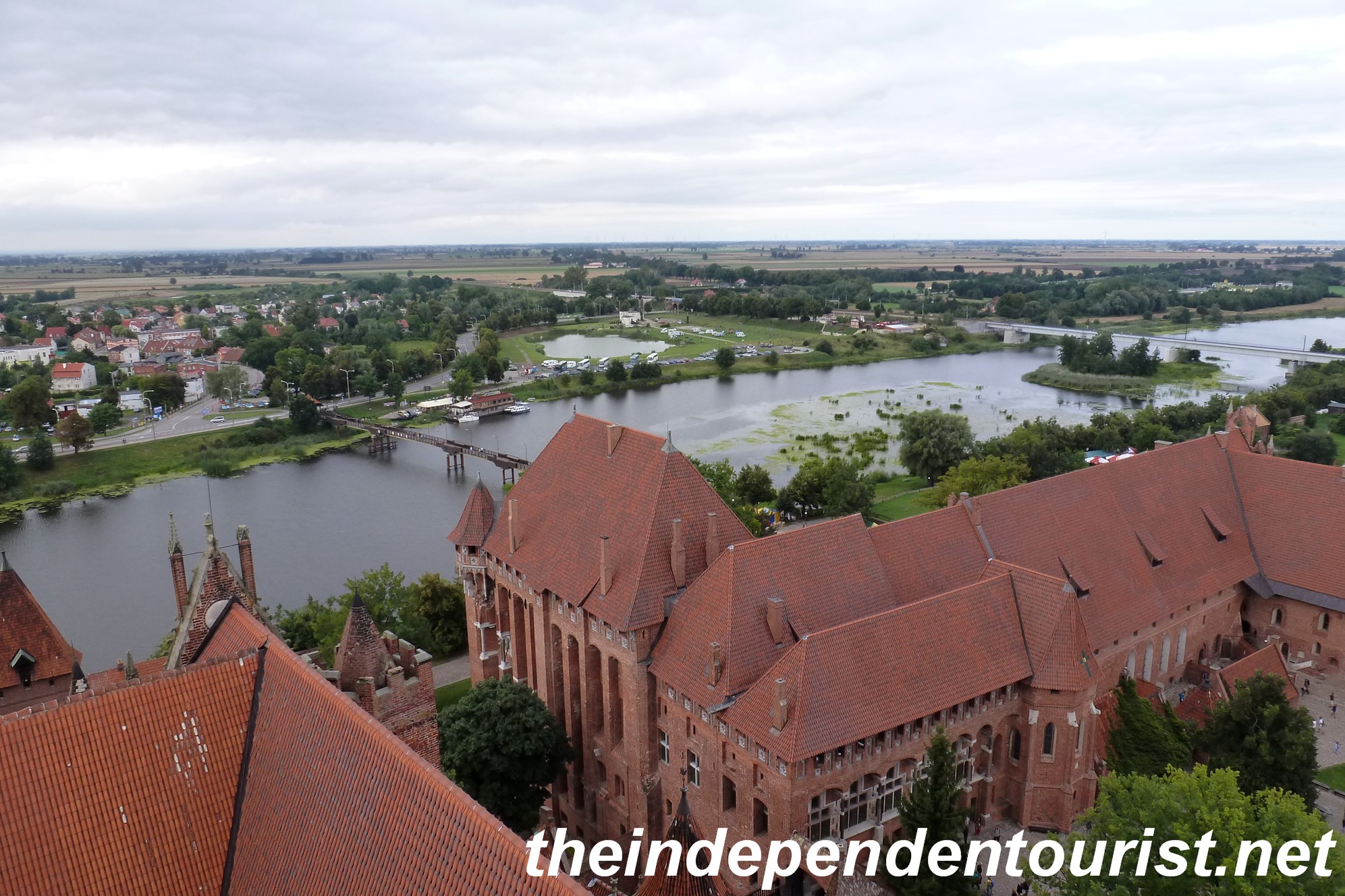
A view taken from the Main Tower of the High Castle, overlooking the Palace of the Grand Masters, Middle Castle and the Nogat River.
A view taken from the Main Tower of the High Castle, overlooking the Palace of the Grand Masters, Middle Castle and the Nogat River.

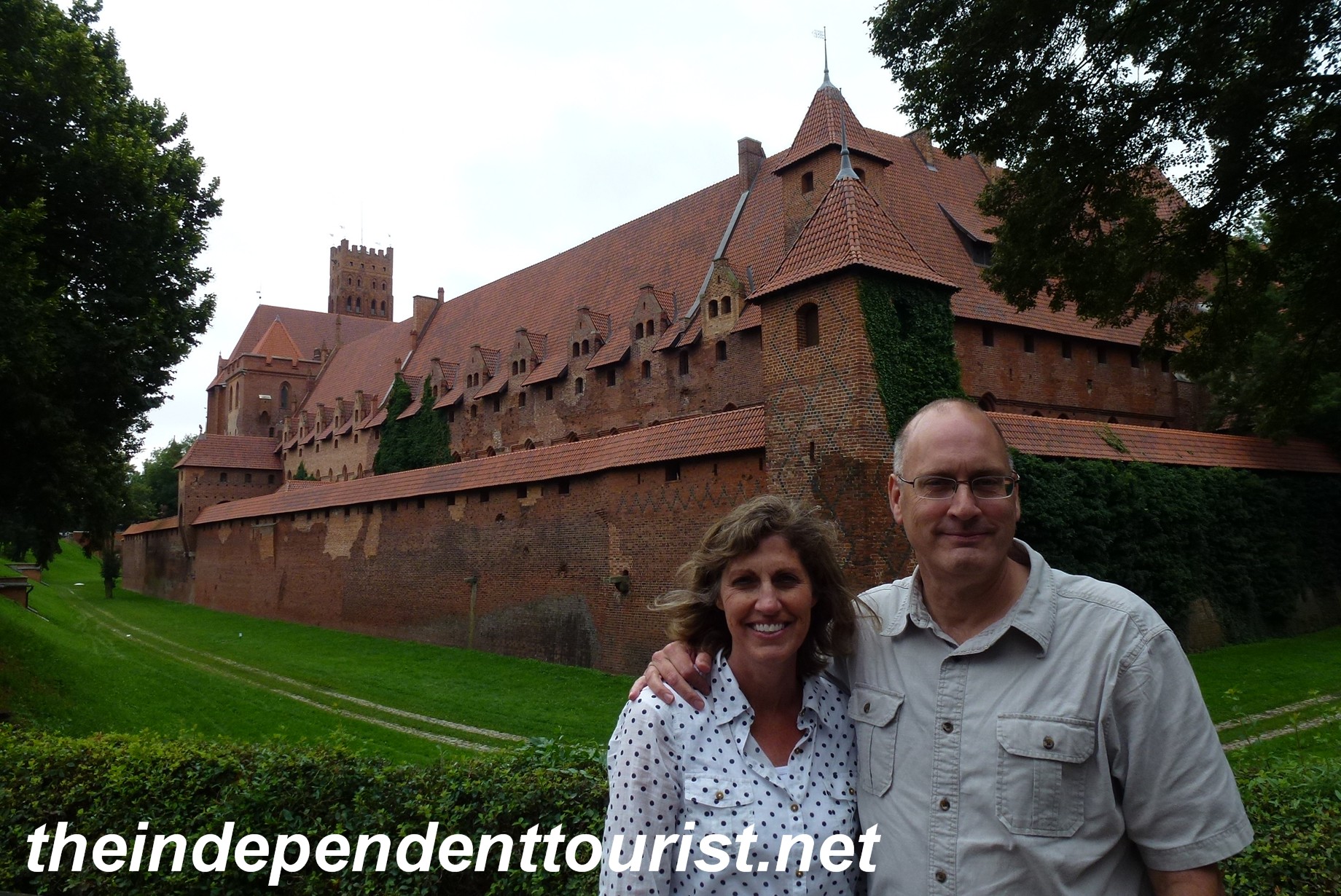
A view of the eastern side of the Middle Castle at Malbork.

A view of the eastern side of the Middle Castle at Malbork.

The primary structures include the High Castle (the stronghold), the Middle Castle (kitchens, rooms for entertaining guests and the Palace of the Grand Masters), and outer walls and buildings. Main sights include the Grand Master’s Palace, the Great Refectory, the High Castle Courtyard and St. Mary’s Church, including St. Anne’s Chapel underneath the church.
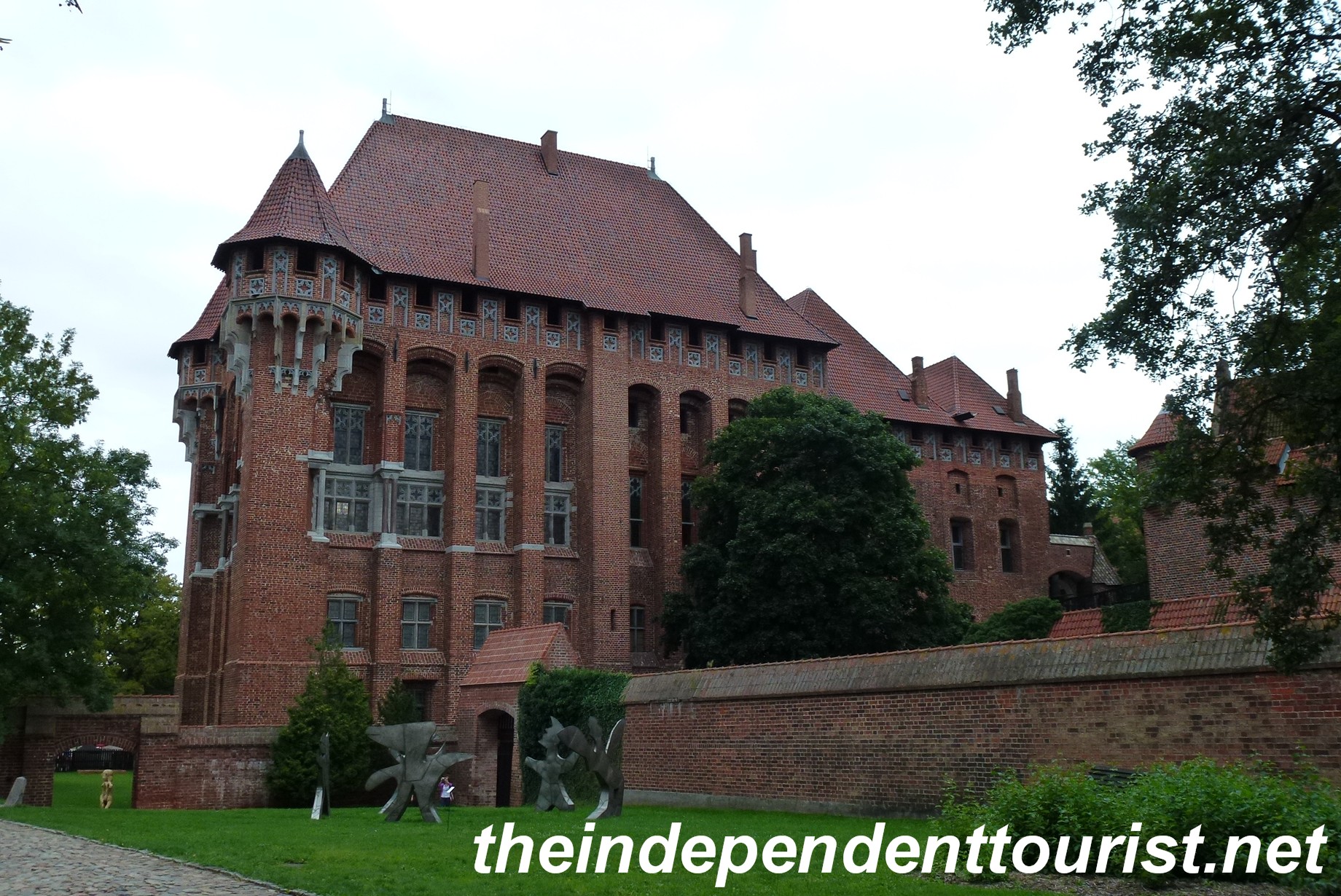
Exterior of the Grand Master's Palace.

Exterior of the Grand Master’s Palace.
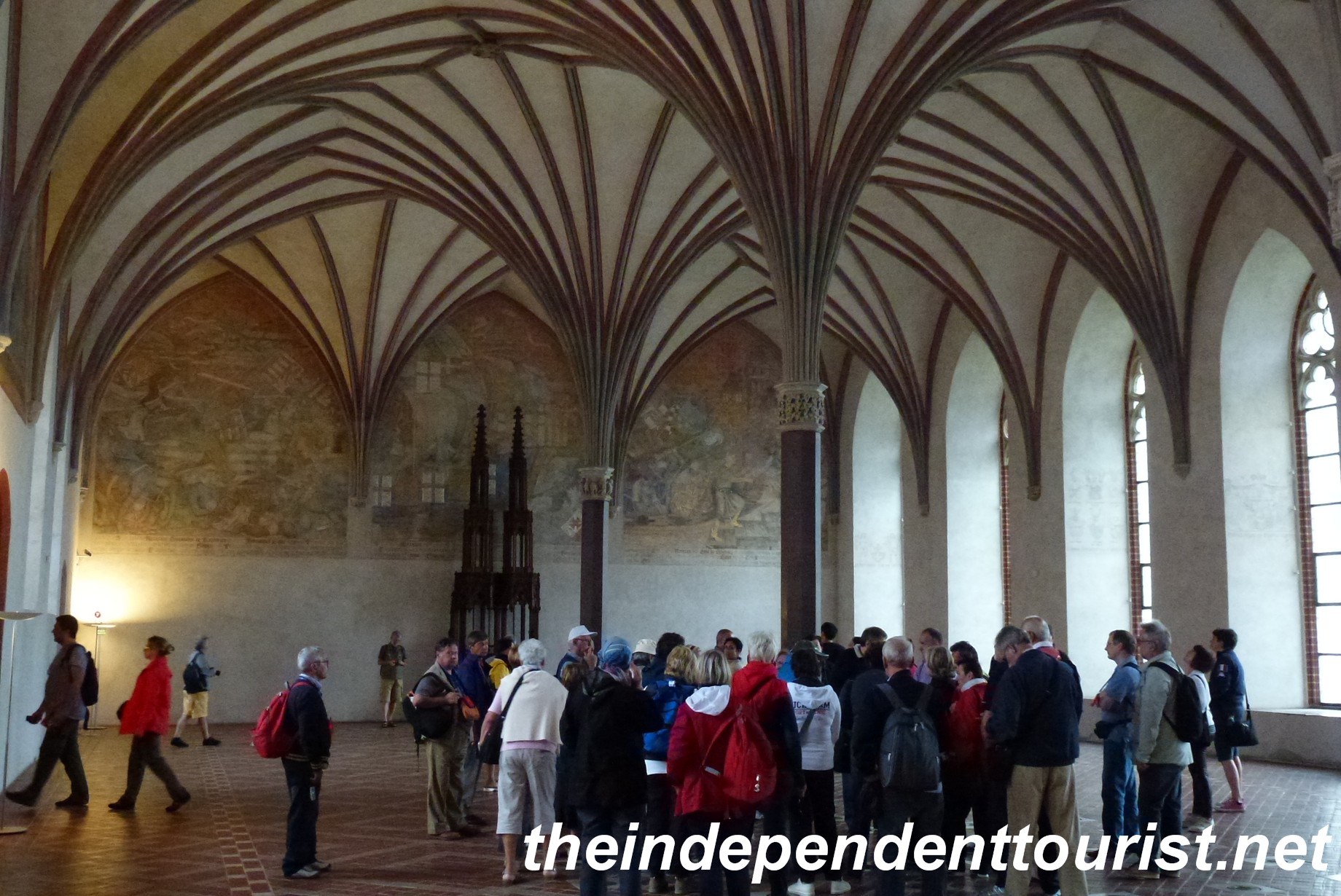
The Great Refectory, Middle Castle - Malbork. Largest Gothic interior of its kind in Central Europe. Used for banquets and entertaining.

The Great Refectory, Middle Castle – Malbork. Largest Gothic interior of its kind in Central Europe. Used for banquets and entertaining.

The Chapter Room (where business would be conducted) in the High Castle - Malbork.

The Chapter Room (where business would be conducted) in the High Castle – Malbork.
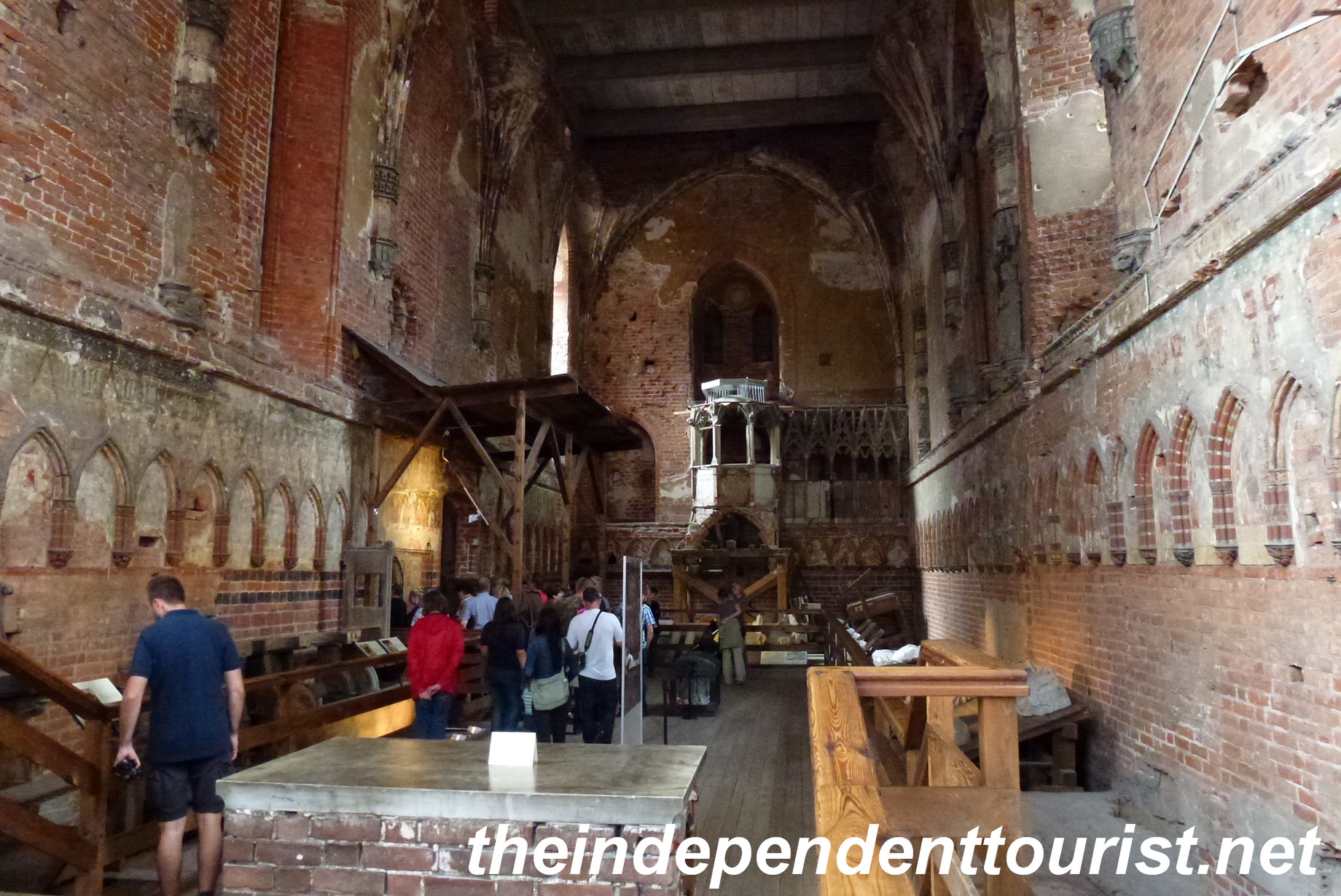
St. Mary's Church, not completely restored from WW II damage.

St. Mary’s Church, not completely restored from WW II damage.

The Last Supper frescoe in St. Mary's Church.

The Last Supper frescoe in St. Mary’s Church.

Tombs of the Grand Masters in St. Anne's Chapel.

Tombs of the Grand Masters in St. Anne’s Chapel.
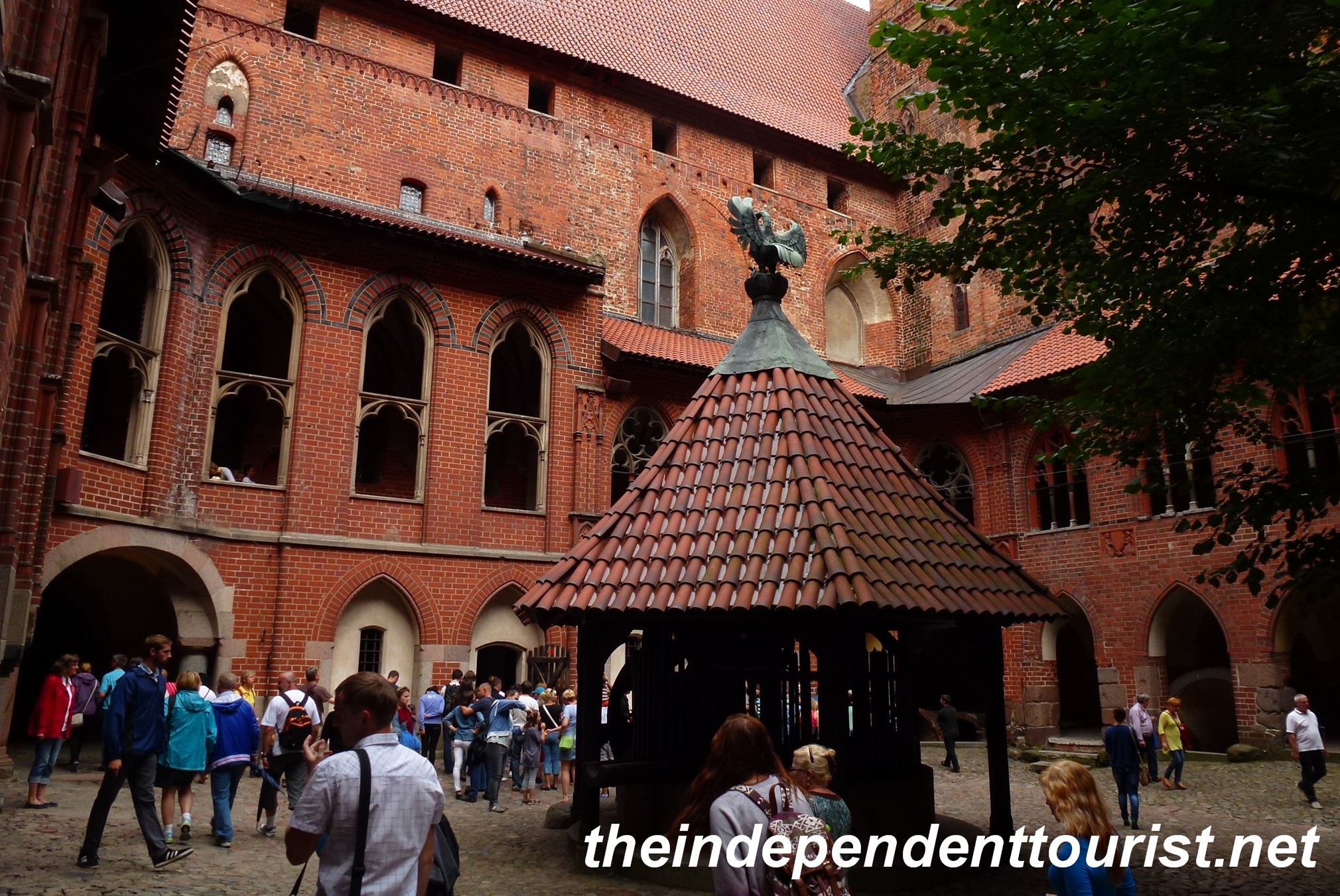
Courtyard and well in the High Castle - Malbork.

Courtyard and well in the High Castle – Malbork.

Be sure to visit the walls on the south side of the castle. There are interesting displays of medieval machinery and excellent views of the castle buildings and towers from here.

The Latrine Tower on the southwestern corner of the castle grounds. Used for exactly what it sounds like! There was originally water below the tower for "flushing."

The Latrine Tower on the southwestern corner of the castle grounds. Used for exactly what it sounds like! There was originally water below the tower for “flushing.”

There are other Teutonic castles in northern Poland and in another post I will share images of two more, but Malbork is the grandest by far.

Sources: Plaques at Malbork Castle, Top Spot Guide: Malbork Castle –  The World of the Teutonic Order, by Marek Stokowski.

Gdansk – A Gateway to Poland

A word about Poland in general…We took a road trip through Poland in 2013, after completing a Northern European cruise which began and ended in Copenhagen. I really knew little about the country, but Malbork Castle and the Auschwitz Concentration Camps (near Krakow) were definitely on my bucket list. The more I studied our trip plans, the more excited I got. Poland has a lot to offer – great sights, food, and people. It’s easy to get around, the roads are good. We found prices a lot lower than Western Europe, at least for now. If you get a chance, visit this marvelous country.

The waterfront of Gdansk. At the far right is the Gdansk Crane, a medieval crane that used people in huge wheels (like hamsters) to power the crane and load or unload ships.

The waterfront of Gdansk. At the far right is the Gdansk Crane, a medieval crane that used people in huge wheels (like hamsters) to power the crane and load or unload ships.

We started our car tour of Poland by flying into Gdansk from Copenhagen. Gdansk is in the north central part of the country, near the coast of the Baltic Sea. Gdansk has a population of about 450,000. It was founded in the 10th century and became the largest city in Europe in the 16th – 17th centuries as a major trading hub and port. Much of Poland was under Teutonic (German) influence in the 1300’s and hence there are many Teutonic Knight castles, especially in the north central part of the country, the greatest being Malbork, just south of Gdansk about 40 miles. I will cover Malbork in a separate post.

Hyacinthus' Tower in Gdansk, built in 1400.

Hyacinthus’ Tower in Gdansk, built in 1400.

World War II took a huge toll on Poland, with Germany on the western border and Russia on the east. Gdansk and many other cities were bombarded heavily, but Gdansk has been restored beautifully and its Royal Way (the main street) is one of the most beautiful in Europe.

The Green Gate, built in the 1560's. Entrance to the Royal Way from the waterfront. Former Polish president Lech Walesa had his offices here.

The Green Gate, built in the 1560’s. Entrance to the Royal Way from the waterfront. Former Polish president Lech Walesa had his offices here.

A view of the Royal Way in Gdansk. Kings would make their way from one end of the city to the other via this street.

A view of the Royal Way in Gdansk. Kings would make their way from one end of the city to the other via this street.

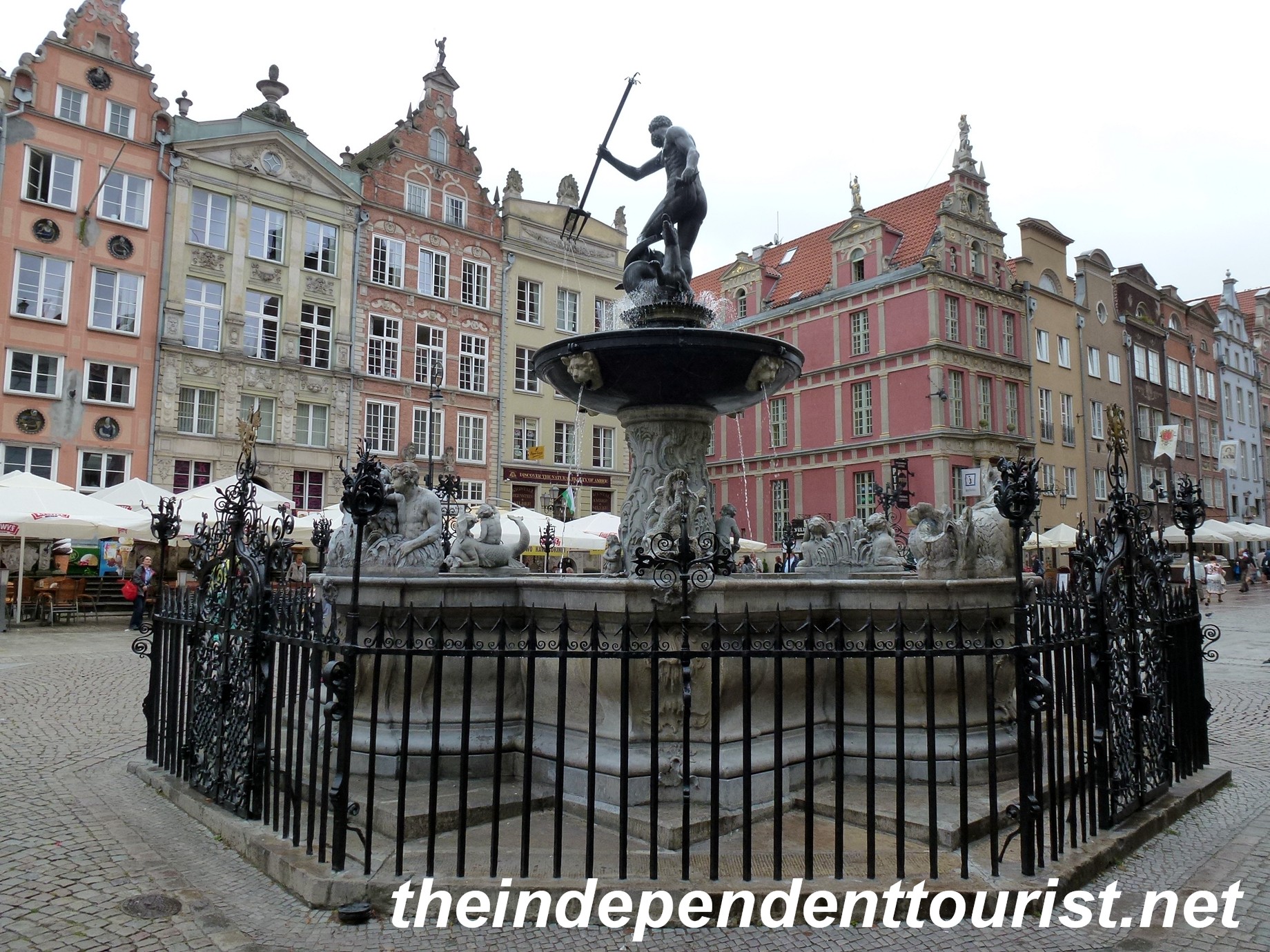
Neptune's Well. A key symbol of Gdansk, located on the Royal Way. The bronze statue was cast in 1615 and the Well became operational in 1633.

Neptune’s Well. A key symbol of Gdansk, located on the Royal Way. The bronze statue was cast in 1615 and the Well became operational in 1633.

The 15th century Torture House (foreground) and Prision Tower, at the opposite end of the Royal Way. Public executions were held here. Now home to the Amber Museum.

The 15th century Torture House (foreground) and Prision Tower, at the opposite end of the Royal Way. Public executions were held here. Now home to the Amber Museum.

I found the city to be charming, with lots of interesting buildings, huge churches and picturesque settings. If you want to buy amber jewelry, this is the place, there are lots of shops and Poland is known for its amber trade.

Bones of early Christians (about 997 AD) underneath the early 13th century St. Catherine's Church, one of Gdansk's oldest.

Bones of early Christians (about 997 AD) underneath the early 13th century St. Catherine’s Church, one of Gdansk’s oldest.

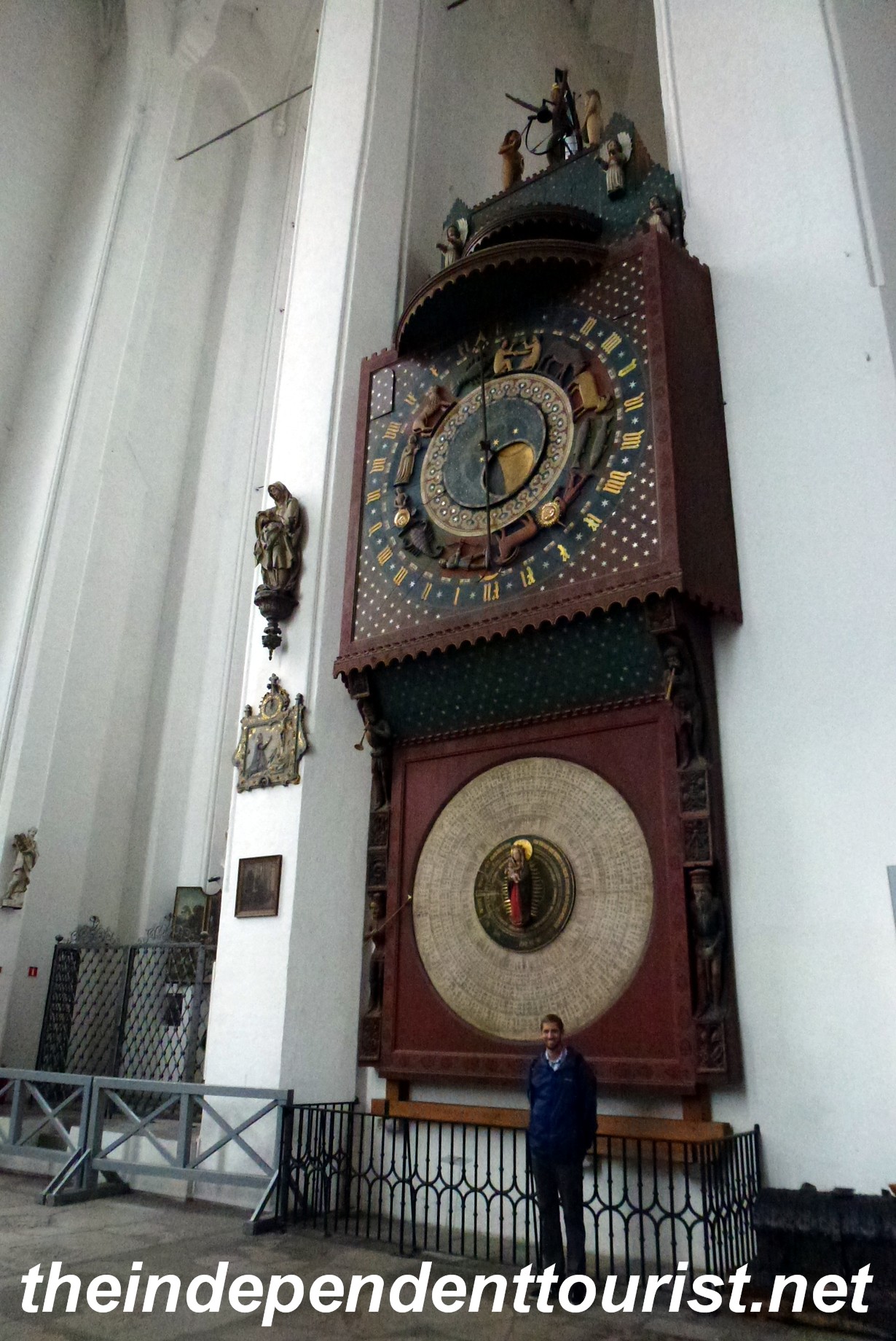
A 15th century Astronomical clock in St. Mary's church, one of the largest red brick churches in the world.

A 15th century Astronomical clock in St. Mary’s church, one of the largest red brick churches in the world. Begun in 1343. 25,000 people can fit inside.

ulca Mariacka Street. The huge St. Mary's Church is in the distance.

ulca Mariacka Street. The huge St. Mary’s Church is in the distance.