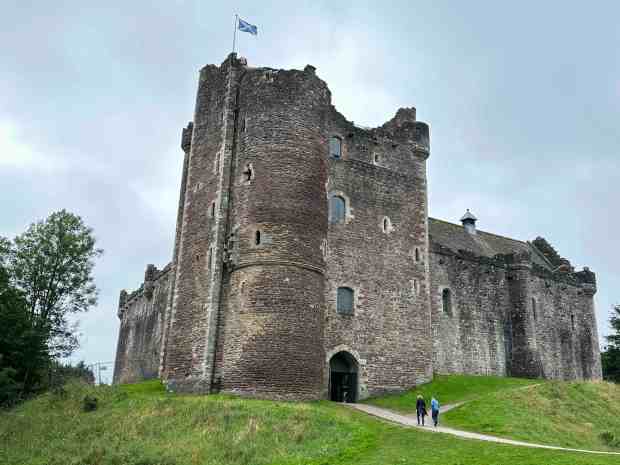
Doune Castle is about eight miles northwest of Stirling, Scotland (home of another famous and historic Scottish castle).
Doune Castle is definitely worth a visit, and has gained popularity on the tourist circuit over the last several years due to its use as a setting for the TV series “Outlander” as Castle Leoch.
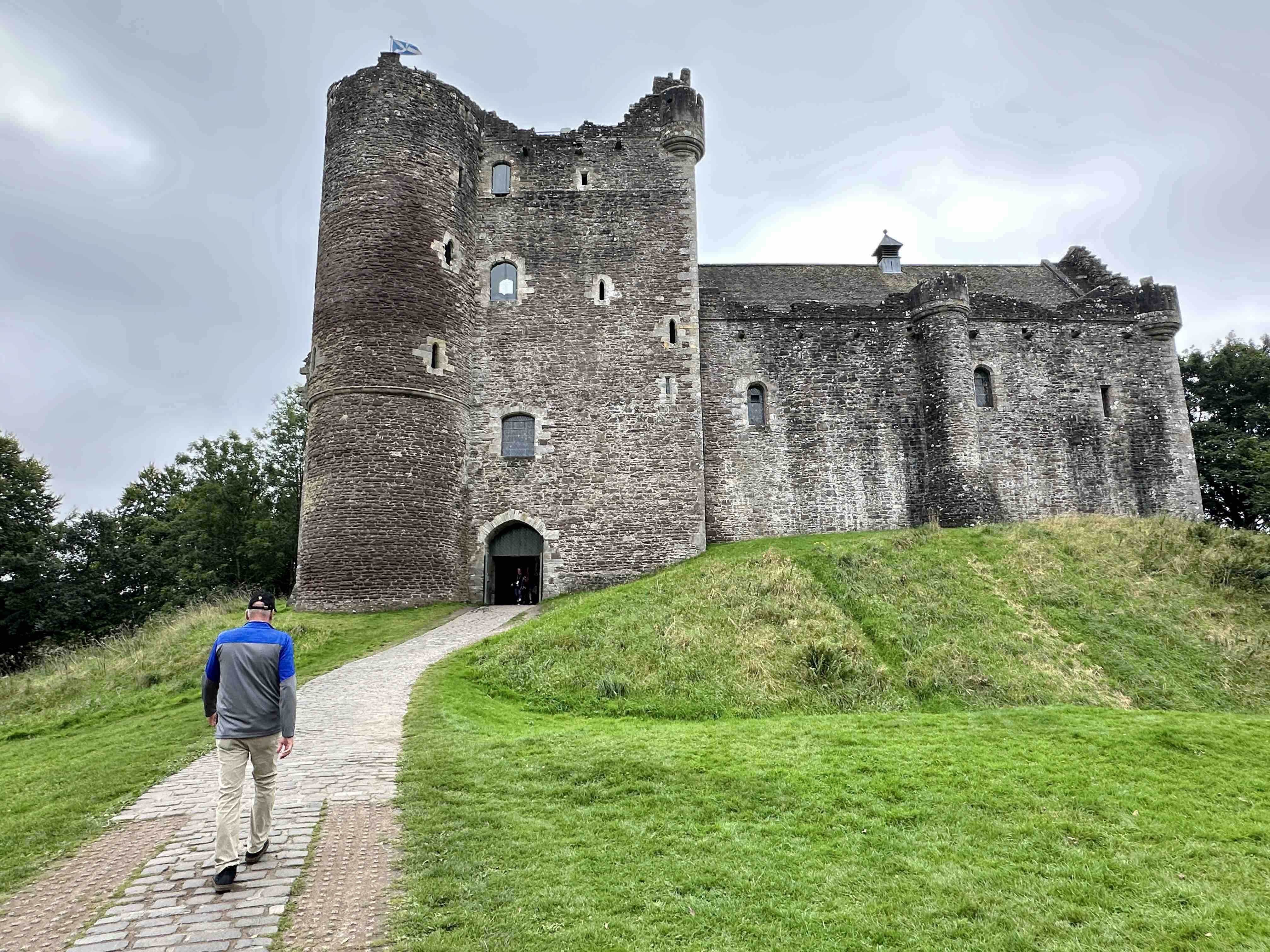
Walking on the pathway to the castle entrance.
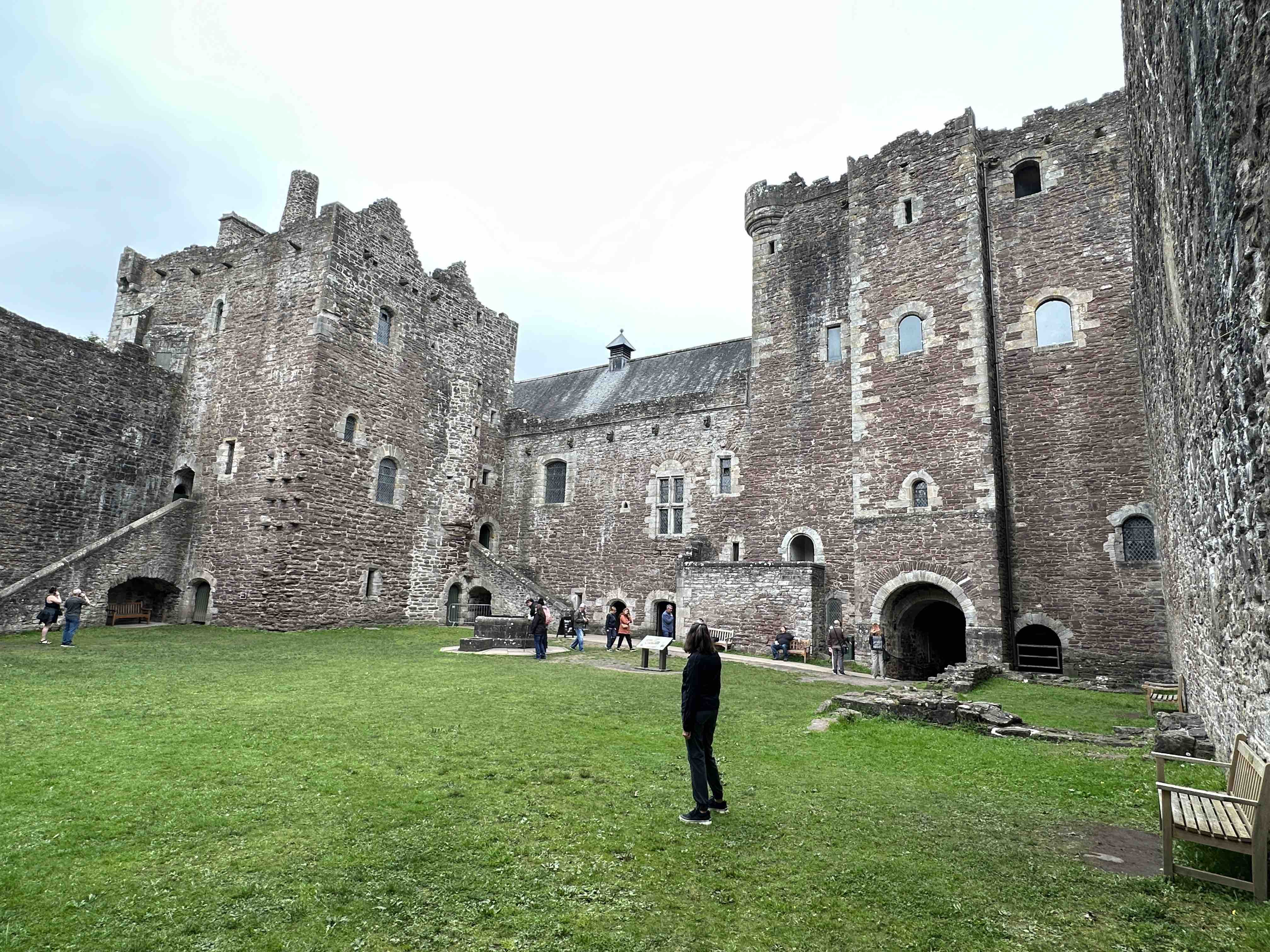
Robyn admiring the inner courtyard of Doune Castle.
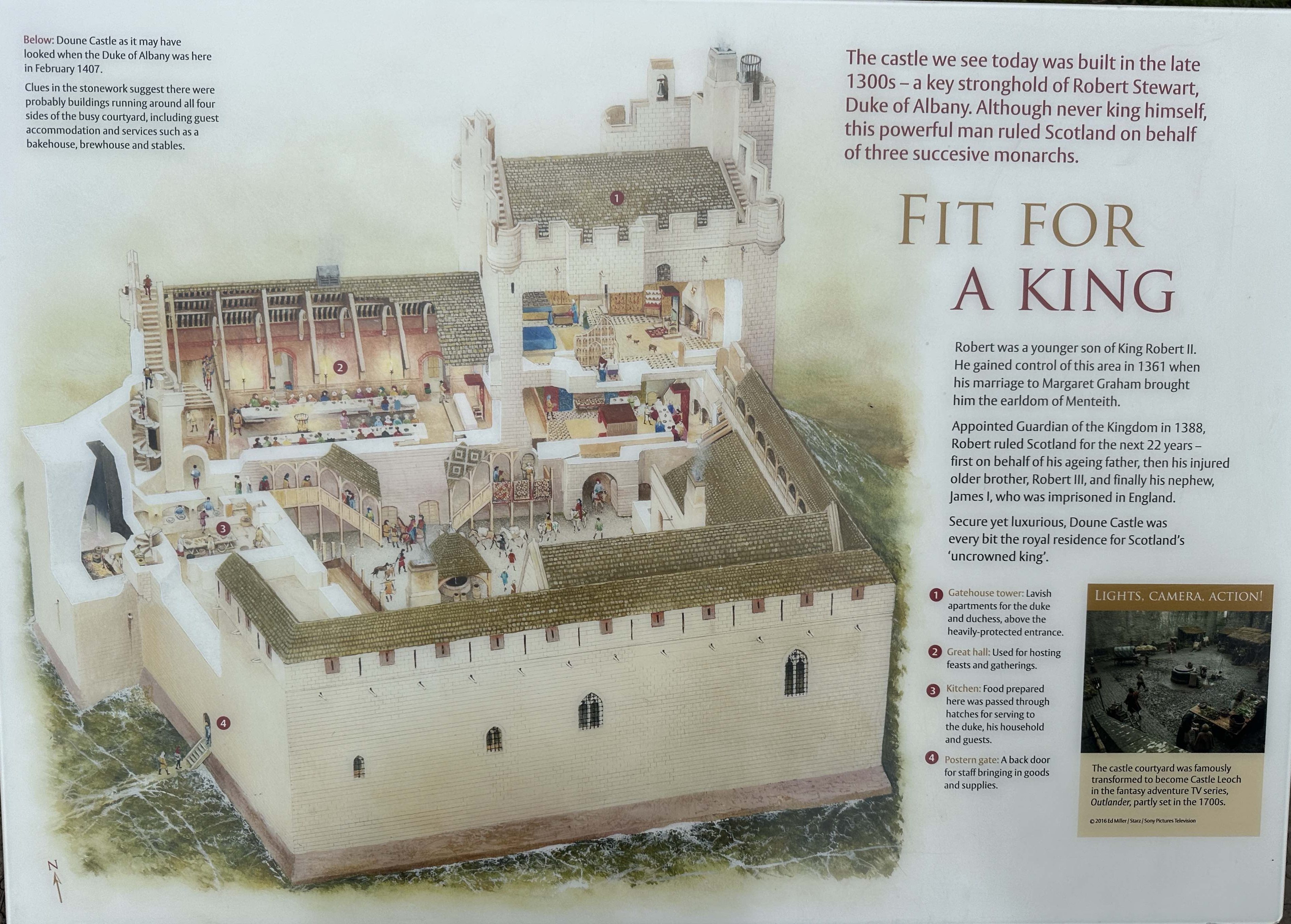
The castle dates from the 13th century, although much of what we see today dates from the 14th century. It was home to Robert Stewart, Duke of Albany, who ruled Scotland for 22 years athough he never crowned as king (he ruled on behalf of other family members who for various reasons were not able to actually rule themselves).
This sign at the castle provides some interesting information about the castle’s layout and history.
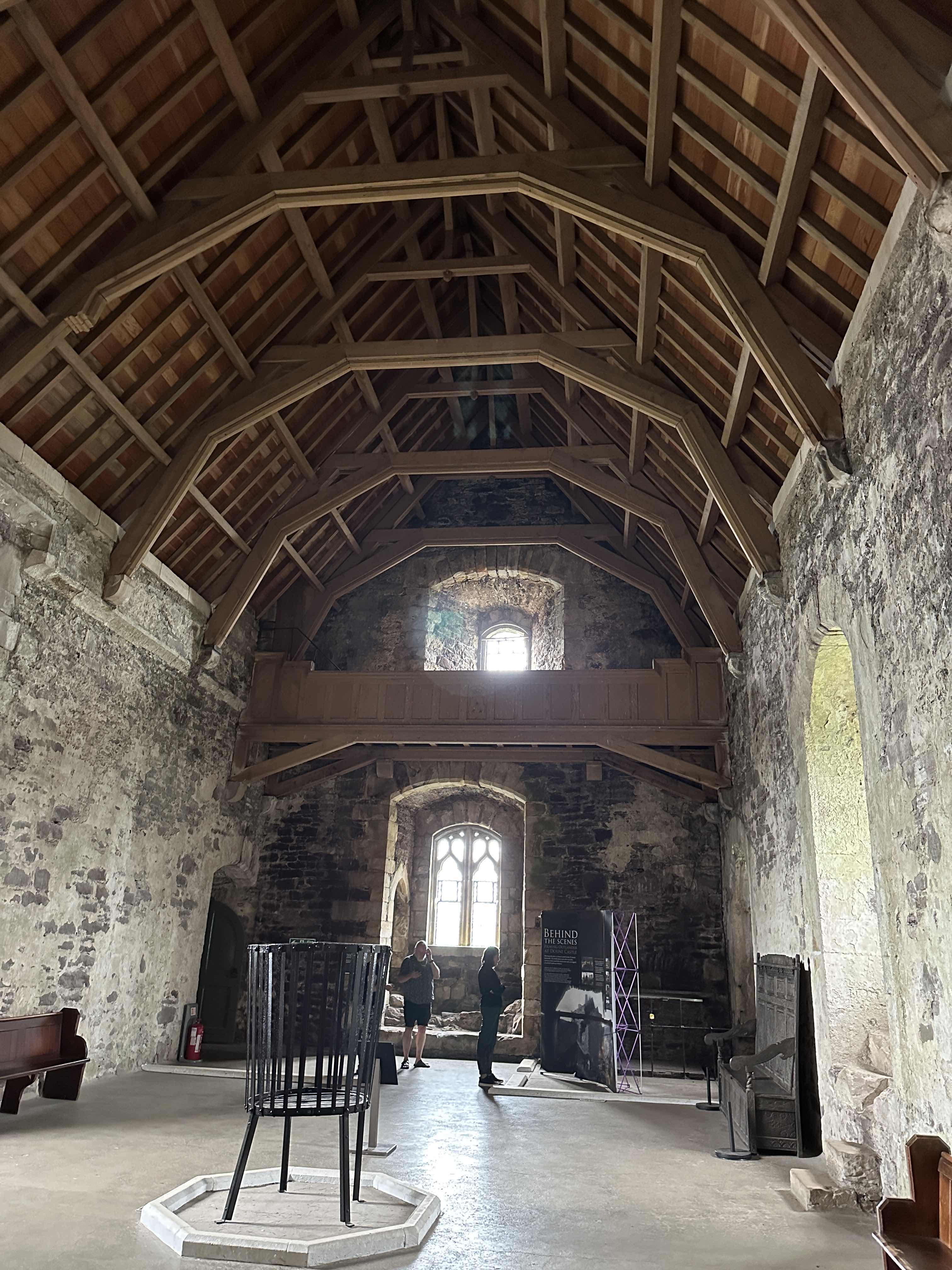
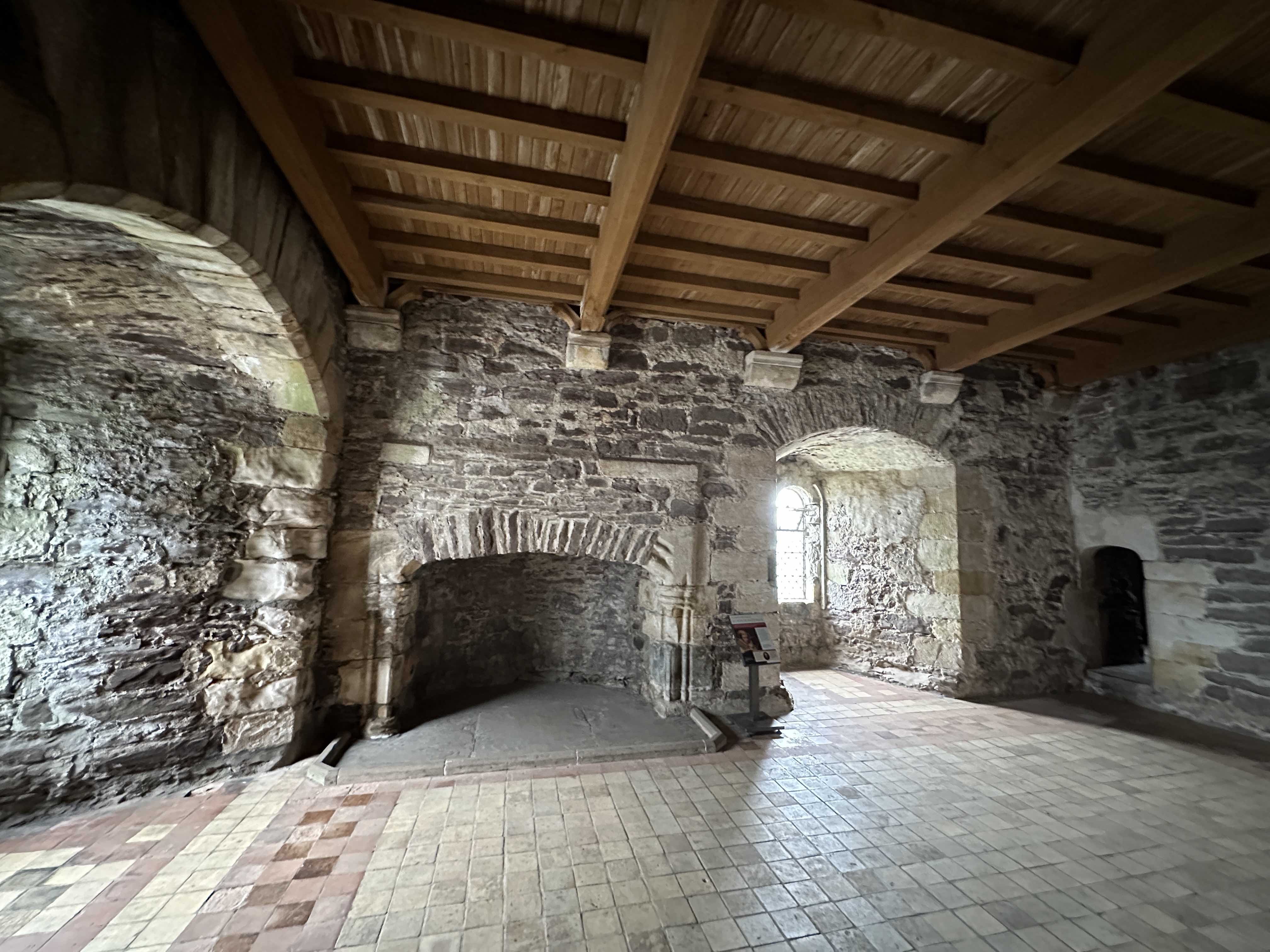
Interior views of Doune Castle, including the Great Hall (left) and a chamber where Mary, Queen of Scots likely stayed during her numerous visits to the castle in the 16th century.
Doune Castle is part of the Historic Environment Scotland pass, which will save you significant money on entry fees if you’re visiting several historic sites during your visit to Scotland.
If you visit Stirling, take a few extra minutes to drive the short distance to Doune Castle!
On Scotland’s east coast lies a dramatic 16th-century castle ruin that isn’t on the tourist radar. New Slains Castle is north of Aberdeen, Scotland near the village of Cruden Bay. Built on cliffs above the sea, it has a similar feel and setting to Dunnottar Castle (also on Scotland’s east coast but south of Aberdeen) and Dunluce Castle in Northern Ireland. I’ve visited a lot of castles and really loved this one with its eerie atmosphere – the waves crashing on the rugged coastline, mossy walls and staircases, and enough remaining of the various rooms to give a good feel for the castle’s layout. We half expected to see Dracula’s coffin in one of the rooms! Actually, Bram Stoker (the author of Dracula) mentions the castle in a couple of his other novels, and it may have been an inspiration for him. The castle has an interesting history, you can learn more about it here.
There is a small car park just off the road about 1/2 mile from the castle. A long gravel walkway leads to the castle. There are no entry fees, even though it is part of Historic Environment Scotland.
Walking to New Slains Castle from the car park.
Above: Exterior views of New Slains Castle.Above: Interior views of the castle. You can walk up the stairways to the upper levels, but be careful – there are no railings and the steps lead to right drop-offs over the seaside cliffs or into rooms with non-existent floors – no barriers to walking off the edge! It was interesting to see the old beams for the floors still in place.Left: The Independent Tourist with his daughter at New Slains Castle. Right: Walking through the ancient hallways of the castle.
View of the castle’s grand entrance – looking north. They had some amazing coastal scenery through the picture windows!
Robyn overlooking the rugged Scottish coastline at New Slains Castle.
If you are doing a driving tour of Scotland I highly recommend stopping by New Slains Castle!
The 14th-century Craigmillar Castle is just south of the city of Edinburgh, Scotland and near the hill known as Arthur’s Seat. The good news is that the castle was not busy at all when we visited in late August – we pretty much had the whole place to ourselves even though it is so close to Edinburgh.
View of the skyline of Edinburgh from Craigmillar Castle. Arthur’s Seat is the hill on the right.
If you’re looking for things to do and see near Edinburgh, Scotland I recommend Craigmillar Castle. This castle was put “on the map” as one of the settings used in the TV series “Outlander”. More importantly, Mary, Queen of Scots stayed here in November 1566 while seeking some peace and security, only 8 months before her forced abdication in July 1567.
Below are some images of the castle. The castle is not large, it consists of an outer courtyard, inner courtyard, tower (or keep) and two sets of rooms on either side of the tower from the 16th and 17th centuries.
Layout of Craigmillar Castle.
Above left – west side of Craigmillar Castle (view of the 17th century Gilmour range). Above right – outer courtyard and main entrance to the inner Castle courtyard.Above left – exterior of the 16th-century East range connecting to the tower. Right – stables in the Gilmour (17th-century) range.Left – kitchen ovens. Right – Gallery room, part of the 16th century East range.Left – the dungeon, which would have been very dark and damp. Right – passageways in the tower.
So, if you want to escape the crowds in Edinburgh, visit Craigmillar Castle! We had a rental car which made the visit very easy, there is a small car park at the castle ticket office. Travel Tip: If you are going to visit several historical sites in Scotland, consider purchasing the Explorer Pass from Historic Environment Scotland. You pay one fee and then have free access to many historical sites (including Craigmillar Castle), the Pass is valid for 14 consecutive days.
Dunfirmline is only 18 miles from Edinburgh and makes a great day-trip destination combined with Blackness Castle. Dunfirmline is a very important city in Scottish history (it was essentially the capital of the Kingdom of Scotland from the 11th century to the 15th century) and today the town has almost become a suburb of Edinburgh, growing quite rapidly over the past 10-15 years. In addition to being the final resting place for several royal figures, Dunfirmline is the birthplace of Andrew Carnegie, the titan of the U.S. steel industry who emigrated with his family to Pittsburgh, PA when he was 12 years old.
Views of Dunfirmline’s main street. The 19th-century building with the beautiful tower is the seat of the local city government.
We visited Dunfirmline on our way to St. Andrews and so while we did not have a lot of time in the town, we were able to see the Abbey and walk through the main town before driving to St. Andrews.
Dunfirmline Abbey and Palace
View of Dunfirmline Abbey’s graveyard.
Dunfermline’s Abbey houses the remains of seven Scottish Kings and other royals, including the famous Robert the Bruce who died in 1329 and was the last king to be buried here. Robert the Bruce is known for his major victory over the English at Bannockburn, Scotland in 1314 (Bannockburn battlefield can be visited near Stirling, Scotland and is well worth a stop). Robert’s heart was taken to Melrose Abbey, which I will write about in a separate post (he wanted his heart taken to the Holy Land, but it never made it). The grounds of the Abbey include a few remaining walls of a 12th-century royal palace, ruins of the huge refectory and nave of the original Benedictine Abbey and a newer 19th-century rebuilt section after part of the original Abbey collapsed and fell into disrepair in the 1600’s and 1700’s.
At the top of the Abbey’s tower, you can see the inscription “King Robert The Bruce” on the four sides.
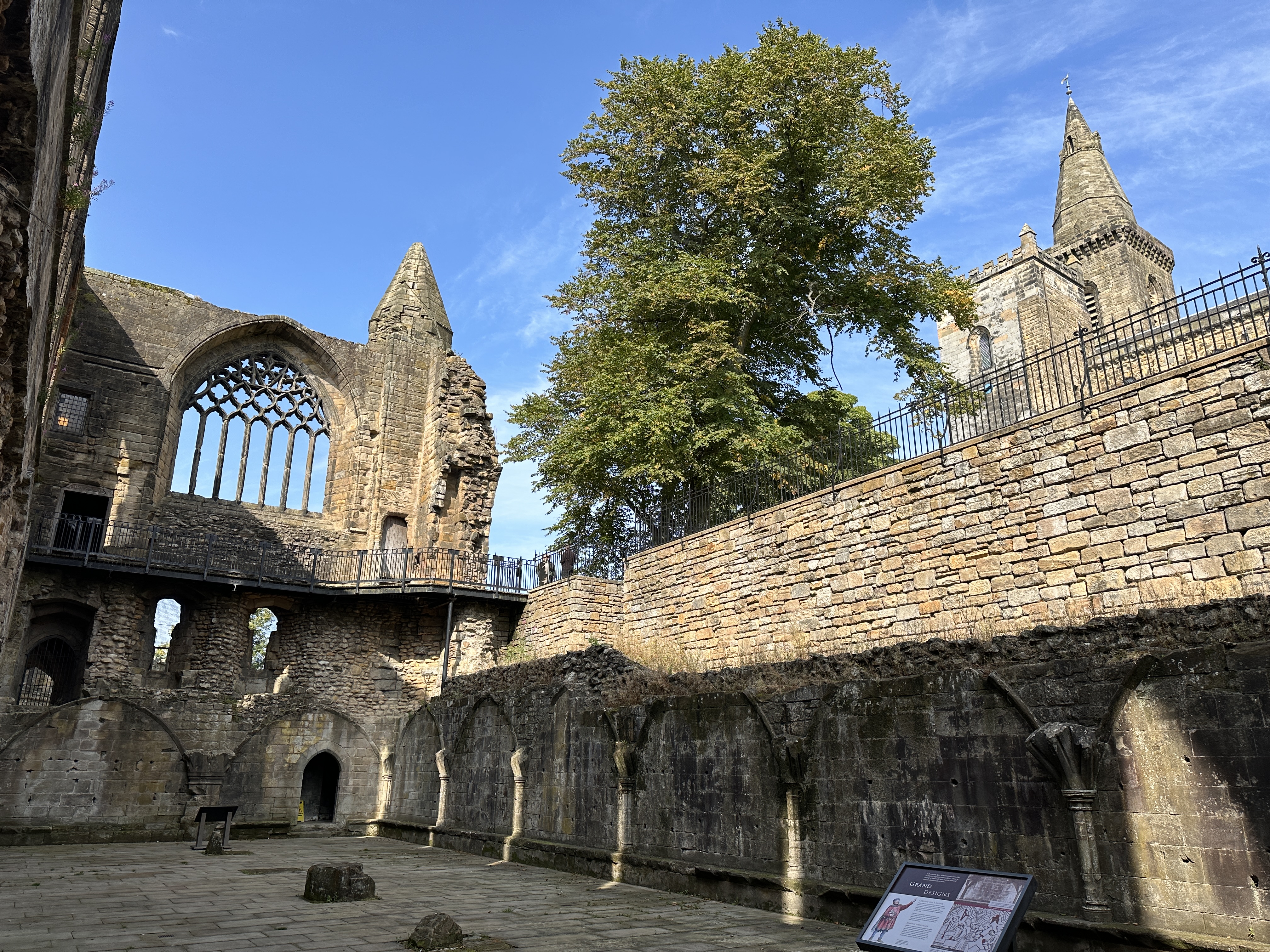
Connected to the Abbey are the ruins of the Benedictine Refectory and Palace.
This nave is the oldest part of the Abbey, dating back to the 12th century. The pillars reminded me of Durham Cathedral in England and after some research I know why – some the stonemasons that worked on Dunfirmline had previously worked on Durham Cathedral. There are some other connections between the two towns and structures as well.Left – a likeness of Robert the Bruce based on scientific imaging. Right – Robert’s tomb, now housed in the 19th-century reconstructed part of the Abbey.
Above – the western facade of the old Abbey.
Views of the ruins of the Benedictine Abbey’s three-story refectory.Left – Some interesting information on the monk’s refectory. Right – Another view of the refectory’s 3 story wall.Walls remaining of Dunfirmline’s once magnificent Palace and the old Benedictine Abbey.
If you’re in Edinburgh and would like a short side trip to explore the countryside, Dunfirmline is a great stop. We found a car park close to the Abbey and there were just a few visitors at the Abbey in late August, even though Edinburgh was packed during that same time.
Less than an hour’s drive northwest from Carlisle, England is the 13th century Caerlaverock Castle. Standing on the edge of Scotland, near the Solway Firth, this castle once guarded an important gateway into Scotland.
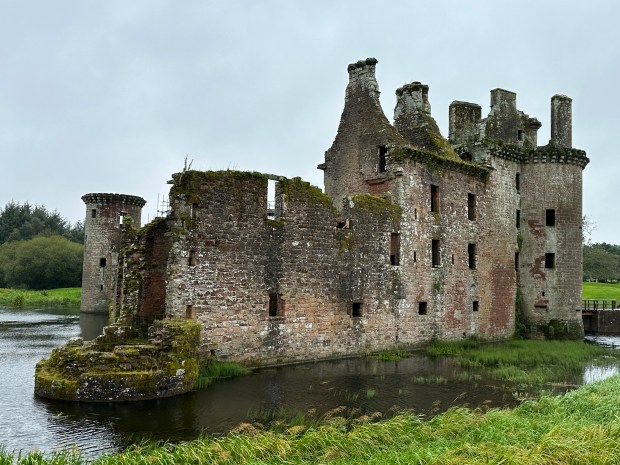
A view of the triangular-shaped Caerlaverock Castle.
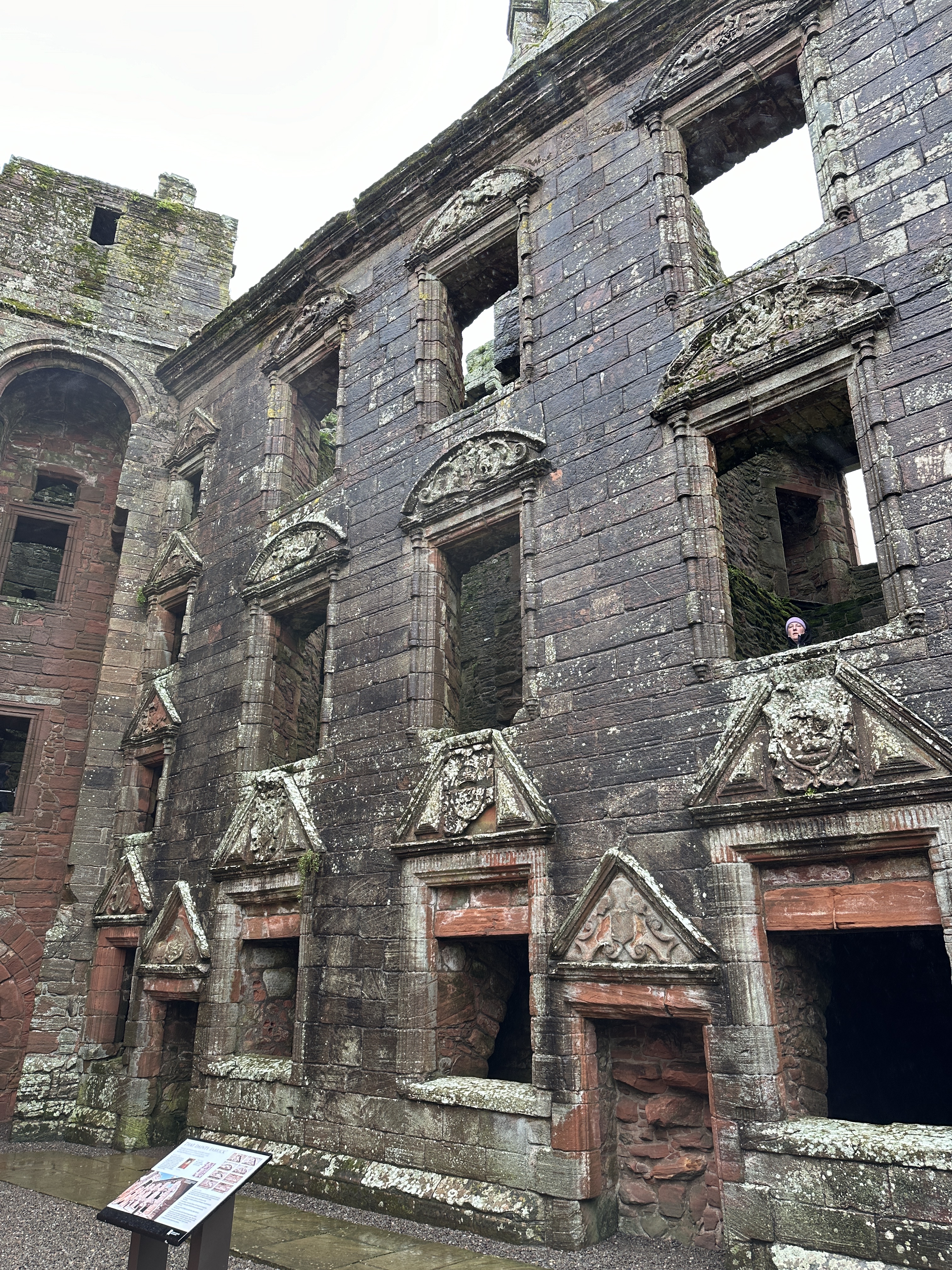
The castle we see now is actually the “new castle” built about 50 years after the “old” castle, which has been partially excavated, south of the current castle.
A view of Caerlaverock’s moat.
In 1300 King Edward I besieged and captured the castle, the first of several sieges. As with many castles, Caerlaverock underwent numerous renovations, including a 17th century addition in the interior courtyard which is still visible today.
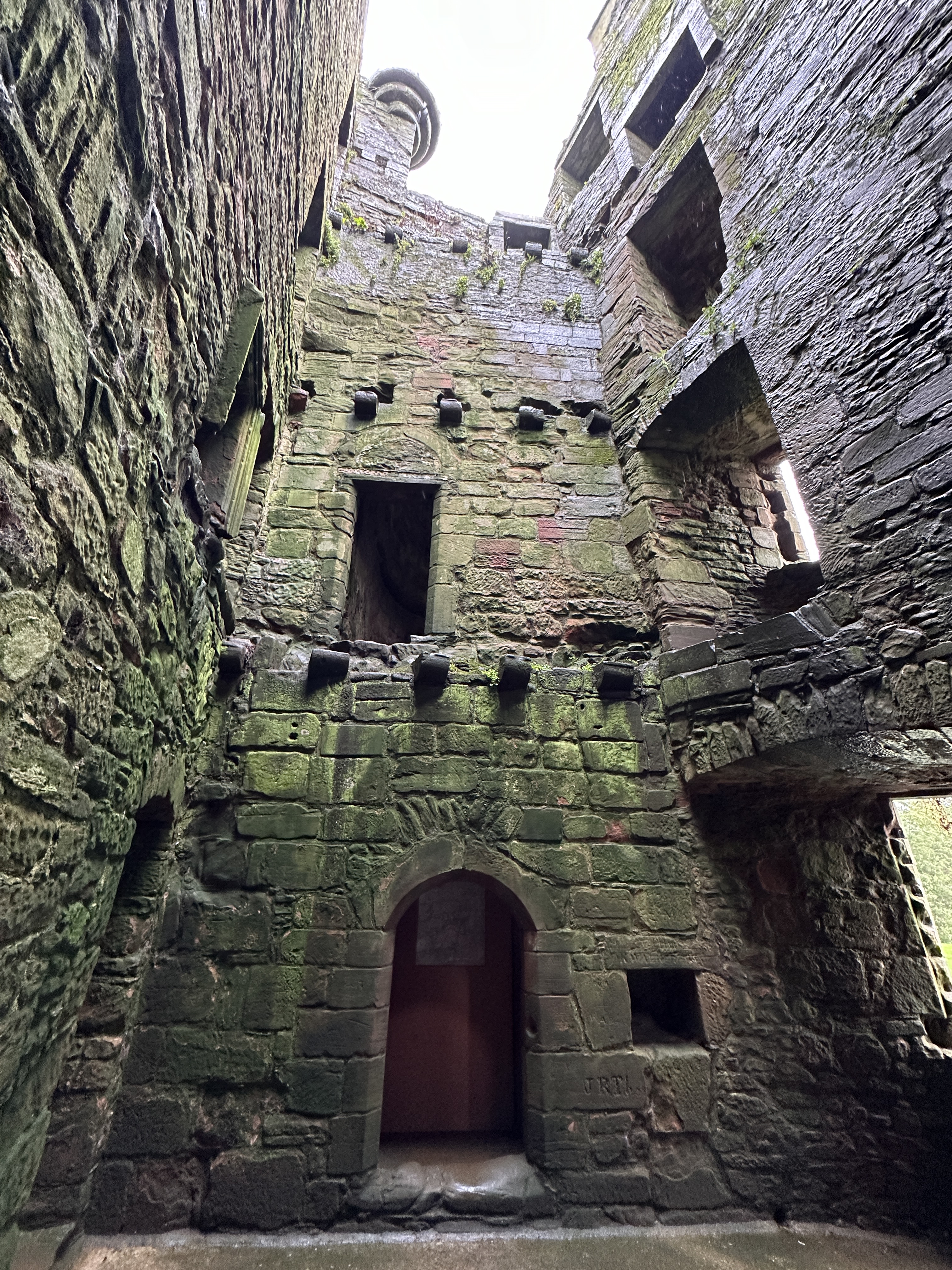
Views of the 17th century castle room additions – making it much more comfortable for the many residents and servants. As many as 30 people shared a bedroom!
If you’re in the Carlisle area, I recommend visiting Caerlaverock Castle. A rental car is the easiest way to visit. There is a small museum on the site as well as restrooms and a gift shop. If you plan on visiting multiple historical sites in Scotland, consider getting a Historic Environment Scotland membership or pass – we got the 14-day Explorer pass and it was a great value by paying for itself after visiting just a few sites (including Stirling Castle and Edinburgh Castle). All other visits using the pass were then free.








 The Independent Tourist