Toledo – One of Spain’s Most Atmospheric Cities

View of the old town of Toledo. The Cathedral is on the left and the Alcazar is on the right.

View of the old town of Toledo. The Cathedral is on the left and the Alcazar is on the right.

Toledo is one of my favorite places in Spain, I think partially due to the setting. Toledo sits on a steep hill above the River Tagus (Tajo), which encircles about two thirds of the old city. The streets are narrow and the city’s walls, gates and bridges give it a real medieval feel.

The narrow streets of old Toledo.

The narrow streets of old Toledo.

The old walls of Toledo.

The old walls of Toledo.

Toledo is only about 72 km (45 miles) from Madrid, making it possible to visit as a day trip from Madrid. However, I would suggest staying at least overnight to enjoy the ambience of this town. A walk at sunset around the perimeter of the city is very romantic and peaceful.

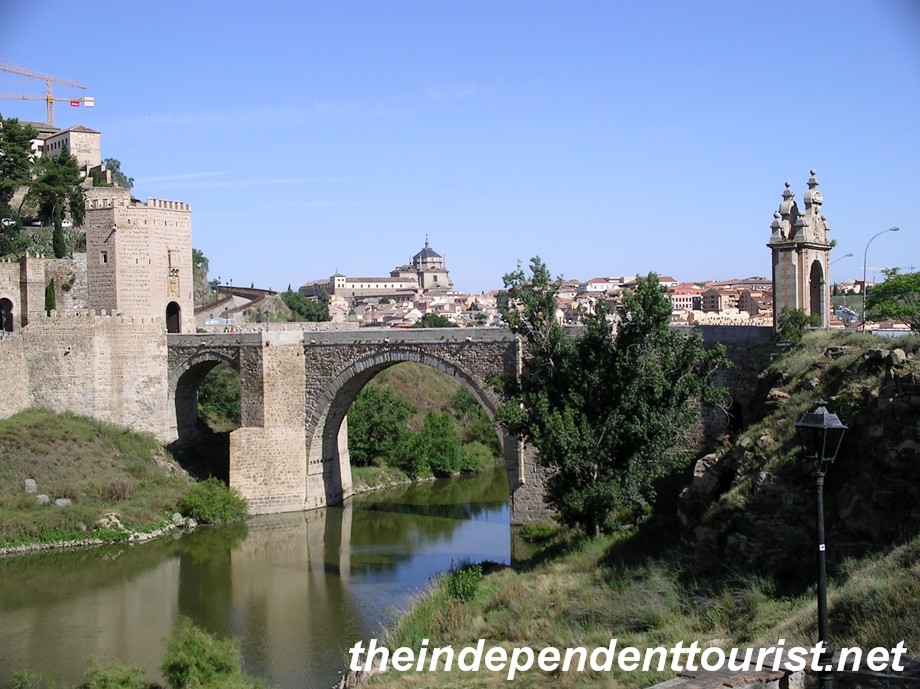
One of the several bridges over the River Tagus in Toledo.

One of the several bridges over the River Tagus in Toledo.

There is plenty to see, including the 13th century Cathedral which has both Gothic and Baroque elements, the 15th century Franciscan Monasterio de San Juan de los Reyes (one of the great monasteries of Europe), the rebuilt Alcazar (castle) and many other churches. We also enjoyed just wandering the hilly narrow streets and around the old town’s walls. For additional good views, consider the tram ride that goes around the far bank of the Tagus River.

The main entrance to the Toledo Cathedral. The building is so huge, it's hard to get a good picture from the narrow streets of the old city.

The main entrance to the Toledo Cathedral. The building is so huge, it’s hard to get a good picture from the narrow streets of the old city.

The Toledo Alcazar sits high on the hill, rebuilt after the Spanish Civil War (1936-1939). It's now an interesting museum.

The Toledo Alcazar sits high on the hill, rebuilt after the Spanish Civil War (1936-1939). It’s now an interesting museum.

The Monasterio de San Juan de los Reyes is in the upper left, which was part of the old Jewish Quarter of the city.

The Monasterio de San Juan de los Reyes is in the upper left, which was part of the old Jewish Quarter of the city.

Due to its history as home to Christian, Jewish and Muslim cultures over the centuries, Toledo has a unique atmosphere – feeling a bit like Jerusalem as well as medieval Europe. Originally, the Romans settled here, followed by the Visigoths in the 6th century and then the Moors in the 8th century. Toledo was also home to the famous artist El Greco (“The Greek”) in the 16th century. We stayed in the heart of the old town at the Hotel Santa Isabel which has a great view from its rooftop.

A view of the Cathedral at night from our hotel rooftop.

A view of the Cathedral at night from our hotel rooftop.

Driving is a nightmare in the old city, so take advantage of the large parking lot outside the northern perimeter near the bus station, and just hike up into the old town.

Gdansk – A Gateway to Poland

A word about Poland in general…We took a road trip through Poland in 2013, after completing a Northern European cruise which began and ended in Copenhagen. I really knew little about the country, but Malbork Castle and the Auschwitz Concentration Camps (near Krakow) were definitely on my bucket list. The more I studied our trip plans, the more excited I got. Poland has a lot to offer – great sights, food, and people. It’s easy to get around, the roads are good. We found prices a lot lower than Western Europe, at least for now. If you get a chance, visit this marvelous country.

The waterfront of Gdansk. At the far right is the Gdansk Crane, a medieval crane that used people in huge wheels (like hamsters) to power the crane and load or unload ships.

The waterfront of Gdansk. At the far right is the Gdansk Crane, a medieval crane that used people in huge wheels (like hamsters) to power the crane and load or unload ships.

We started our car tour of Poland by flying into Gdansk from Copenhagen. Gdansk is in the north central part of the country, near the coast of the Baltic Sea. Gdansk has a population of about 450,000. It was founded in the 10th century and became the largest city in Europe in the 16th – 17th centuries as a major trading hub and port. Much of Poland was under Teutonic (German) influence in the 1300’s and hence there are many Teutonic Knight castles, especially in the north central part of the country, the greatest being Malbork, just south of Gdansk about 40 miles. I will cover Malbork in a separate post.

Hyacinthus' Tower in Gdansk, built in 1400.

Hyacinthus’ Tower in Gdansk, built in 1400.

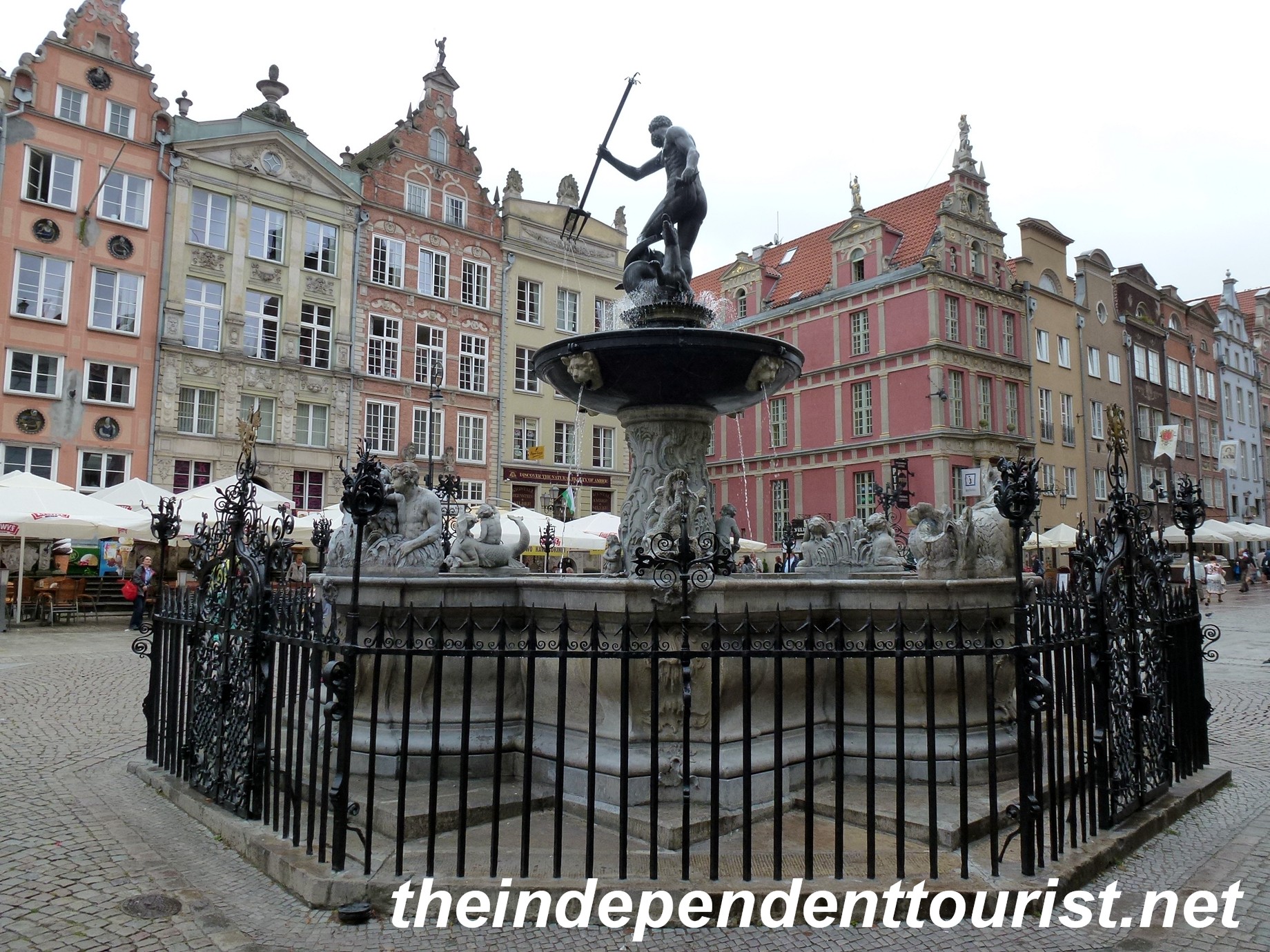
World War II took a huge toll on Poland, with Germany on the western border and Russia on the east. Gdansk and many other cities were bombarded heavily, but Gdansk has been restored beautifully and its Royal Way (the main street) is one of the most beautiful in Europe.

The Green Gate, built in the 1560's. Entrance to the Royal Way from the waterfront. Former Polish president Lech Walesa had his offices here.

The Green Gate, built in the 1560’s. Entrance to the Royal Way from the waterfront. Former Polish president Lech Walesa had his offices here.

A view of the Royal Way in Gdansk. Kings would make their way from one end of the city to the other via this street.

A view of the Royal Way in Gdansk. Kings would make their way from one end of the city to the other via this street.

Neptune's Well. A key symbol of Gdansk, located on the Royal Way. The bronze statue was cast in 1615 and the Well became operational in 1633.

Neptune’s Well. A key symbol of Gdansk, located on the Royal Way. The bronze statue was cast in 1615 and the Well became operational in 1633.

The 15th century Torture House (foreground) and Prision Tower, at the opposite end of the Royal Way. Public executions were held here. Now home to the Amber Museum.

The 15th century Torture House (foreground) and Prision Tower, at the opposite end of the Royal Way. Public executions were held here. Now home to the Amber Museum.

I found the city to be charming, with lots of interesting buildings, huge churches and picturesque settings. If you want to buy amber jewelry, this is the place, there are lots of shops and Poland is known for its amber trade.

Bones of early Christians (about 997 AD) underneath the early 13th century St. Catherine's Church, one of Gdansk's oldest.

Bones of early Christians (about 997 AD) underneath the early 13th century St. Catherine’s Church, one of Gdansk’s oldest.

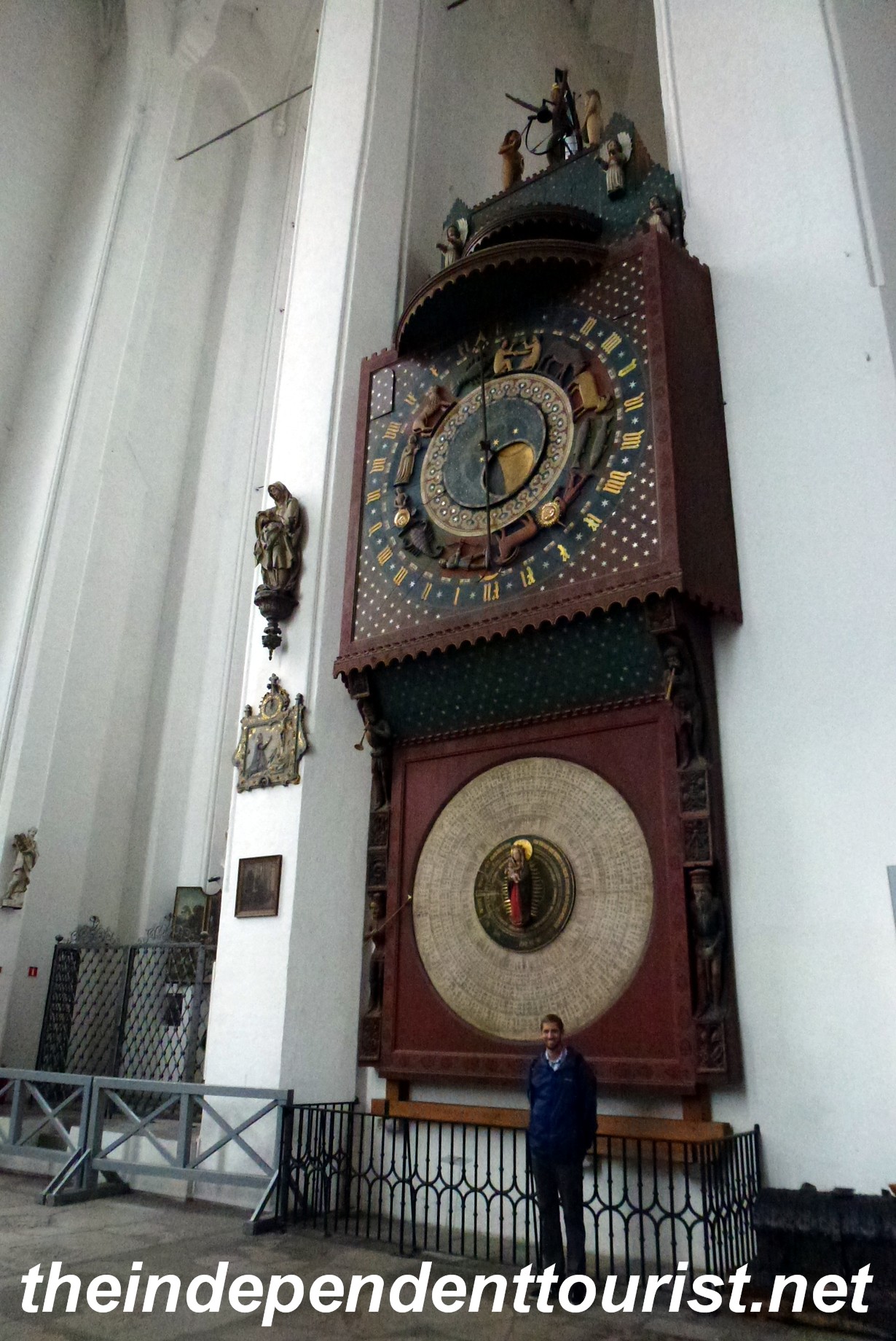
A 15th century Astronomical clock in St. Mary's church, one of the largest red brick churches in the world.

A 15th century Astronomical clock in St. Mary’s church, one of the largest red brick churches in the world. Begun in 1343. 25,000 people can fit inside.

ulca Mariacka Street. The huge St. Mary's Church is in the distance.

ulca Mariacka Street. The huge St. Mary’s Church is in the distance.


Dendara Temple – An Interesting Day Trip from Luxor, Egypt

From Luxor there are a couple day-trip options—one is to Edfu Temple which is about 71 miles south and the other is Dendara Temple which is about 37 miles north. It was a toss-up for us since both temples were built about the same time, but because Dendara was closer we decided to visit it.

A side view of Dendara Temple.

A side view of Dendara Temple.

We went “local” and took a train from Luxor to Qena, the closest town and train stop to Dendara. I think if we had tried to go by taxi the police might not have let us go, since Dendara is in a travel-restricted area, or they would have at least required a police convoy, thus limiting our flexibility on timing. However, we had no problem buying train tickets and we were the only Caucasians on the train – the first class section (such as it was) was almost empty.

My brother-in-law and I on the train to Qena.

My brother-in-law and I on the train to Qena.

The friendly locals helped us to be sure we didn’t miss our stop. From the tiny train station (I wish I had a picture – there was a pile of rubble in the middle of the “terminal”) we got a couple taxis to the temple site about 3 miles away.

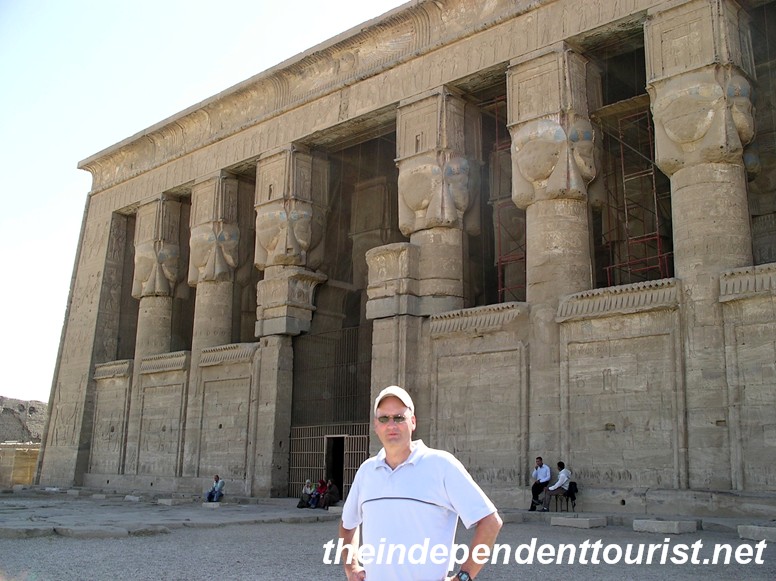
The front of the Dendara Temple.

The front of the Dendara Temple.

The temple was begun at the end of the 30th dynasty, at the very end of Egypt’s Pharaonic period (about 300 BC) and construction continued into Roman times (Egypt became a Roman province in 30 BC).

The Temple of Isis, built by the Roman Emperor Augustus (30 BC - AD 14).

The Temple of Isis, built by the Roman Emperor Augustus (30 BC – AD 14).

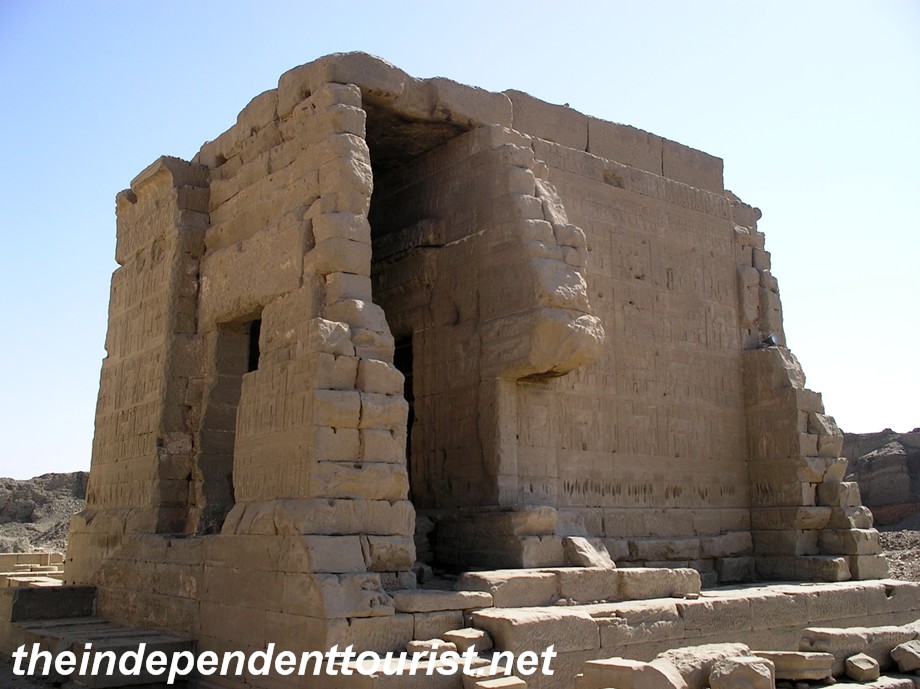
The Roman Mammisi - another small temple on the site of Dendara.

The Roman Mammisi – another small temple on the site of Dendara.

Dendara was buried under the sand until the 19th century, and therefore is nearly intact from 2000 years ago. It is dedicated to the goddess Hathor, the goddess of pleasure and love.

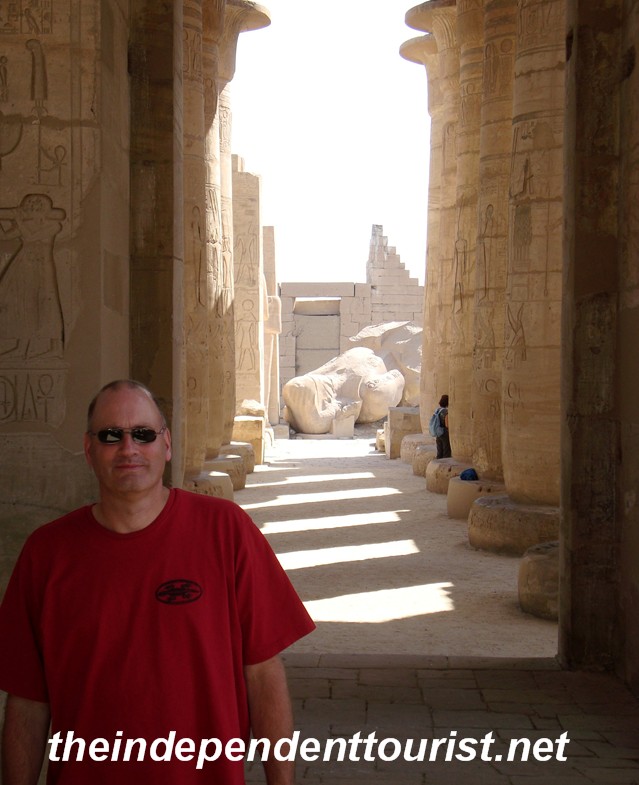
One of the great halls at Dendara Temple. As can be seen by the size of the people in the background, the temple is large.

One of the great halls at Dendara Temple. As can be seen by the size of the people in the background, the temple is large.

One of the chapels with intracately carved reliefs at Dendara.

One of the chapels with intracately carved reliefs at Dendara.

There are halls, storerooms, chapels and crypts. One of the things I enjoyed was crawling through the tight spaces in the crypt to get to some of the rooms underneath the main structure – this was a blast.

Robyn in a tight crawl space going down to the crypt.

Robyn in a tight crawl space going down to the crypt.

In the crypt at Dendara Temple - we were the only people down there.

In the crypt at Dendara Temple – we were the only people down there.

There were almost no tourists except for a few local school students.

A group of students taking a picture with my sister.

A group of students taking a picture with my sister.

There was a small visitor shop on the site, and a few people selling trinkets. My type of place – very quiet!

Fountains Abbey and Rievaulx Abbey, Two of North England’s Finest Medieval Ruins

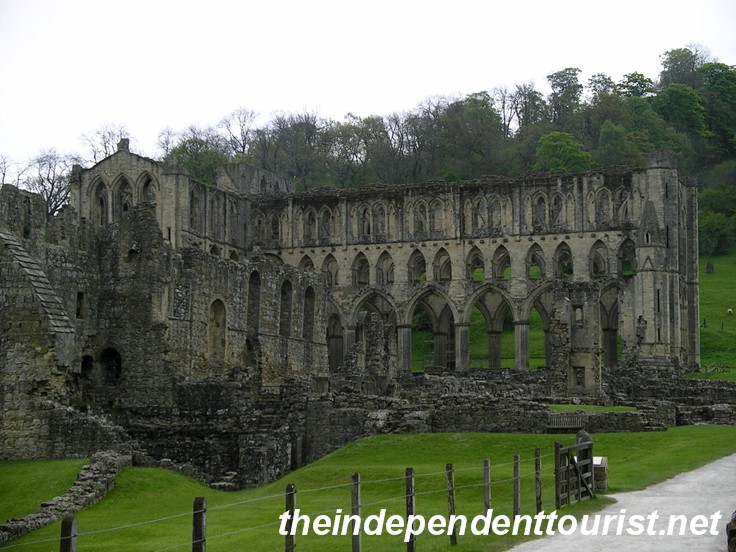
A view of Fountains Abbey.

A view of Fountains Abbey.

Northwest of the great city of York, England are the medieval abbey ruins of Fountains and Rievaulx. These were Cistercian monasteries, a religious order of the Catholic Church that traces its foundation to St. Bernard of Clairvaux (France) in the 1100’s. Bernard was a strong charismatic leader and was directly involved in the founding of these abbeys in England.

Fountains and Rievaulx are north/northwest of York, England.

Fountains and Rievaulx are north/northwest of York, England.

In order to withdraw themselves from the world, the Cistercian order looked for rural, secluded places to establish themselves and even today these ruins are in remote, quiet valleys with small rivers running nearby. The Order emphasized manual labor and self-sufficiency, which often required enlisting local lay personnel to help with all the work of running a monastery and producing crops and the herds of animals. I love walking through these ruins and wondering what life would have been like a thousand years ago at one of these monasteries.

Fountains

Fountains Abbey was the oldest and richest of the medieval Cistercian monasteries in England, started in about 1132. Its name is taken from six springs that were located here along with the River Skell, all of which provided the monastery with plenty of water.

A beautiful old stone bridge over the River Skell at Fountains.

A beautiful old stone bridge over the River Skell at Fountains.

The Cistercian monks were very industrious and the wealth of the abbey was due to great herds of sheep— the wool was sold to traders in Italy and Flanders (Belgium). This is a large abbey with lots of ruins to explore. Fountains is just 31 miles from York.

A view of the transcept of the church at Fountains.

A view of the transcept of the church at Fountains.

The main nave of Fountains church.

The main nave of Fountains church.

The lay person refectory (dining/dormitory area) and storage area at Fountains. Nearly intact from medieval times.

The lay person refectory (dining/dormitory area) and storage area at Fountains. Nearly intact from medieval times.

Rievaulx

Rievaulx Abbey was also founded in about 1132. It is located 81 miles from York and sits near the River Rye in a very secluded spot. At its peak, it had 140 monks and 150 laypersons but by 1380 there were only 15 monks living here, due to a number of problems affecting the abbey.

A view of the main church at Rievaulx.

A view of the main church at Rievaulx.

A view through the nave of Rievaulx Abbey.

A view through the nave of Rievaulx Abbey.

It closed (or better stated, was destroyed) in 1538 as part of King Henry the VIII’s dissolution of the monasteries. Today it is a beautiful ruin. The main walls of the church’s nave and exterior walls of the refectory are well preserved.

One more view of Rievaulx Abbey.

One more view of Rievaulx Abbey.

A view of Rievaulx Abbey (and monk's refectory to the left).

A view of Rievaulx Abbey (and monk’s refectory to the left).

Karnak, Egypt – “The Most Perfect of Places”

Entrance to Karnak along the Avenue of the Sphinxes (which runs all the way from Luxor).

Entrance to Karnak along the Avenue of the Sphinxes (which runs all the way from Luxor).

Karnak is Egypt’s greatest temple complex and is considered the most important Pharaonic site after the Pyramids of Giza. It was also the most important place of worship in Egypt from approximately 1500 – 1000 BC. It was called “Ipet-Isut” meaning “The Most Perfect of Places.” Karnak was built over a period of about 1,300 years, starting around 2125 BC.

Remants of the original paintings in the Great Festival Hall of Tuthmosis III.

Remants of the original paintings in the Great Festival Hall of Tuthmosis III.

During the reign of Ramses III, 80,000 people worked at or on the complex as laborers, servants, guards, priests and many other functions.

The huge Hypostyle Hall at Karnak.

The huge Hypostyle Hall at Karnak.

Note the size of the people in the distance - Karnak Temple is on a huge scale.

Note the size of the people in the distance – Karnak Temple is on a huge scale.

Karnak's Sacred Lake, where priests purified themselves.

Karnak’s Sacred Lake, where priests purified themselves.

Temple of Ramses III at Karnak.

Temple of Ramses III at Karnak.

The scale of the site (about a square kilometer) is massive and there’s a lot to explore here. Be sure to take the time to go to some of the outer ruins. Karnak is just 2 kilometers north of Luxor (see my post on Luxor here), also on the east bank of the Nile. Both Luxor and Karnak can be visited in one day.

Statues of Karnak at night.

Statues of Karnak at night.

There is an evening sound and light show that was quite good. The show included walking through the massive complex at night, which was a blast and gave the place an entirely different feeling.

Sources: Information at Karnak Temple, DK Eyewitness Travel Egypt, Lonely Planet Egypt.

Overlooking the Karnak Temple Complex and Sacred Lake at night.

Overlooking the Karnak Temple Complex and Sacred Lake at night.

Three Things To See in Oslo, Norway

We visited Oslo in August 2013. Even though Oslo is Scandinavia’s oldest capital (founded in 1048), the center felt more modern than many European cities, and the city seemed to be a jumble of many architectural styles.

The Grand Hotel in Oslo. Where winners of the Nobel Peace Prize stay when receiving their awards.

The Grand Hotel in Oslo. Where winners of the Nobel Peace Prize stay when receiving their awards.

Oslo is very different from Stockholm and Copenhagen, partly due to a more “small town” atmosphere and less of the grand European architecture than the other two capitals. I grew up in a small town in western Washington State, called Poulsbo.  It was known as “little Norway” and every year we had a “Viking Fest” (festival) since many of town’s original settlers in the 1800’s were from Norway. After visiting Oslo, I now get it—the setting of the city surrounded by forested rolling hills located on a 60 mile-long fjord (or bay) felt very familiar to me.

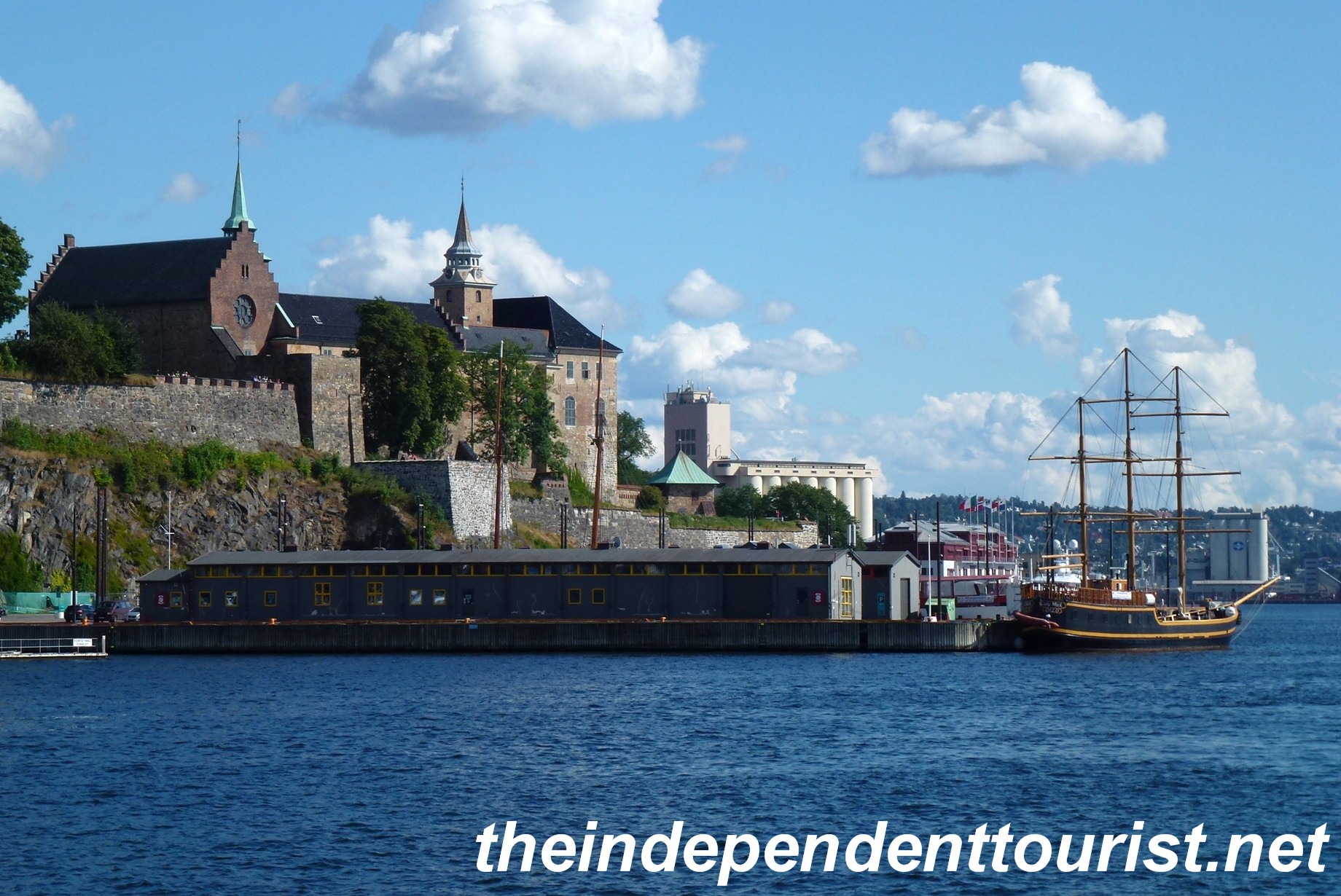
A view of Oslo's harbor from Akershus Fortress.

A view of Oslo’s harbor from Akershus Fortress.

Since our visit was part of a Northern European cruise, we only had a day. We saw a lot, and I highly recommend these sights.

Viking Ship Museum.  The Viking age lasted from 800 to 1050 AD. They ruled the seas with their fast, well-built ships and explored all the way to North America and as far south as the Mediterranean Sea. To see these original, near-perfectly preserved ships from the 9th century was quite exciting.

The Oseberg Ship - from 850 AD. The largest ship on display at the museum.
The Oseberg Ship – from 850 AD. The largest ship on display at the museum.

These ships were tombs for noblemen, and covered over in burial mounds with their jewelry, weaponry and other items. Except for grave robbers that took the valuables shortly after the burial, the ships were left totally intact and the wood was preserved due to the blue clay and turf used.  The ships were excavated between 1867 and 1904.
The museum has many other artifacts in addition to the ships. This beautifully carved sled is from the 9th century.
The Gokstad Ship, from 900 AD.

Akershus Fortress. The fortress dates from the 1290’s. In a grassy square on the property is a plaque recalling several executions that took place here by the Nazis in World War II. A number of Norwegian royal families are buried here. Even if you don’t go inside, the grounds offer a great view of Oslo’s harbor.

A view of the Akershus Fortress in Oslo Harbor.
Courtyard of Akershus Fortress.

Vigeland Sculpture Park. If you enjoy odd nude statues in all kinds of configurations and emotions, this is your park. The statues depict human life from birth to death. There are stone, iron and bronze statues here by Gustav Vigeland. It is a beautiful, large park and definitely worth seeing.

Doing our best impression of the bronze sculptures.
A few of the many sculptures at Vigeland Park.

Other tips: Oslo is a very expensive city, a can of Coke will cost you $6. The “hop on, hop off” bus was a good way to get around to the major sites. August was a great time to visit; the weather was beautiful and warm.

August is a good time to enjoy the outdoor cafes in Oslo.

August is a good time to enjoy the outdoor cafes in Oslo.

Windsor Castle – England’s Largest Castle

A statue of Queen Victoria outside Windsor Castle.

A statue of Queen Victoria outside Windsor Castle.

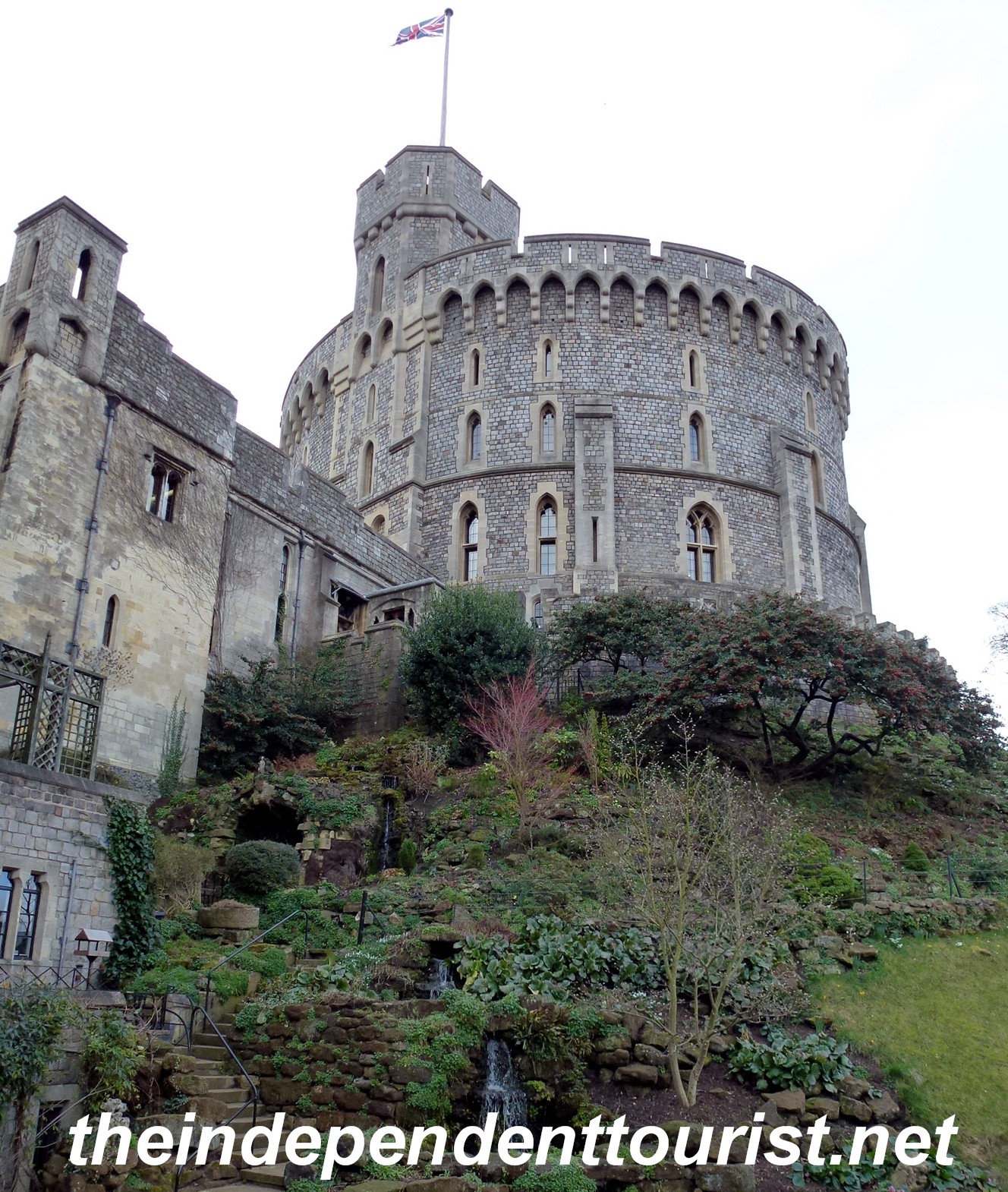
If you only have time to visit one castle in England, it should be Windsor, located just 25 miles west of London and only 8 miles from Heathrow Airport. It’s easy to get a bus to Windsor from the airport. Windsor is the largest inhabited castle in the world and the largest castle in England, with 1,000 rooms to keep track of (and clean).

Tourists gathering for a Changing of the Guard ceremony at Windsor Castle.

Tourists gathering for a Changing of the Guard ceremony at Windsor Castle.

William the Conqueror started a castle on these grounds in 1070, and the castle has been a home of England’s royalty ever since.

The Keep at Windsor Castle. Its rooftop is open during the summer (I was there in February).

The Keep at Windsor Castle. Its rooftop is open during the summer (I was there in February).

St. George’s Chapel is the highlight of a visit, and even though it suffered major damage from a huge fire in 1992, it looks great today. The restoration was painstaking, the replacement wooden beams were carved and fitted using medieval tools and methods.

The exterior of St. George's Chapel.

The exterior of St. George’s Chapel.

Albert Memorial Chapel in St. George's Chapel at Windsor Castle.

Albert Memorial Chapel in St. George’s Chapel at Windsor Castle.

In this chapel lie the tombs of many of England’s royalty. One of my favorite sights was seeing the huge sword of Edward III (from about 1348). It has to be about 6 feet long – I can’t imagine using it in battle!  Edward III was born at Windsor Castle and began the military campaigns in France that started the Hundred Years War.

A stairwell in Windsor Castle.

A stairwell in Windsor Castle.

Windsor is a “working” castle, and since it is the part-time residence of Queen Elizabeth II, security is tight and pictures inside the castle are almost impossible. It’s also worth strolling through the town, which is quite picturesque, sitting next to the Thames River.

The "Crooked House" of Windsor.

The “Crooked House” of Windsor.

A view of the Thames River in Windsor.

A view of the Thames River in Windsor.

The Sights of Copenhagen – Part 3

In my final post on Copenhagen, I will share a few more sights we visited. Copenhagen has so much to offer, it seems around every corner there’s another interesting building, monument or museum. It’s worth just wandering along the canals and streets to see what you can discover.

Nyhavn means “new harbor” in Danish and dates from the 17th century. It was a significant port in Copenhagen until the early 1900’s. Like many port areas, it was a bit seedy in its heyday but now has been restored and is a popular area for tourists, with many restaurants and cafes. Hans Christian Andersen, the Danish author and poet lived here for 18 years.

The Nyhavn district. Lots of restored 17th and 18th century houses and old ships along the canal.

The Nyhavn district. Lots of restored 17th and 18th century houses and old ships along the canal.

Radhus Square. The Radhus is the Copenhagen City Hall. Although it looks older, it was built at the beginning of the 20th century. This square, right next to the world famous Tivoli Gardens, is a very popular people watching and restaurant spot.

The Radhus is on the right. Great area for strolling and people watching.

The Radhus is on the right. Great area for strolling and people watching.

Christiansborg Palace. This is the center of the Danish government, used by the Danish parliament, Supreme Court, Prime Minister and the monarchy. The first castle was constructed here in 1167, and some of the ruins from this castle remain preserved and open to tourists underneath the current structure. Although some parts are older, most of the palace we see today was constructed in the early part of the 20th century.  Having been to many palaces, we did not take a tour.

Christiansborg Palace is huge, this is the visitor's entrance side.

Christiansborg Palace is huge, this is the visitor’s entrance side.

Christiansborg Plaza, near the Palace.

Christiansborg Plaza, near the Palace.

Marble Church or Frederik’s Church. This impressive Lutheran church contains the largest dome in Scandinavia. It reminded us just a bit of St. Peter’s in Rome, but of course not nearly on the same scale. It has an interesting history. Construction started in the 1700’s but it sat as an unfinished shell for about 150 years, until the late 1800’s, due to a lack of funds to finish construction.

The interior of the Marble Church.

The interior of the Marble Church.

The Marble Church (large domed building) from Amalienborg Palace Courtyard.

The Marble Church (large domed building) from Amalienborg Palace Courtyard.

A panoramic view of Amalienborg Palace and Courtyard.

A panoramic view of Amalienborg Palace and Courtyard.

Visitors can climb to the top of the dome for a great view of Copenhagen, but plan on doing this in the afternoon, it was not open yet when we visited in the late morning. Amalienborg Palace, the winter home of the Danish royal family surrounds a huge courtyard leading up to the entrance of the church, making this an impressive sight.

Visiting Luxor, Egypt

About 400 miles (640 km) south of Cairo sits the city of Luxor, on the Nile River. This was one of my favorite spots in Egypt, since there is so much to do here. We arrived by overnight train from Cairo. We didn’t get much sleep on the train, but the sleeper car accommodations were fine and it was a fun way to travel at least once.

Arriving in Luxor after an overnight ride from Cairo.

Arriving in Luxor after an overnight ride from Cairo.

The interior of our sleeper car for the overnight ride to Luxor from Cairo (there is a bed that folds down above the couch).

The interior of our sleeper car for the overnight ride to Luxor from Cairo (there is a bed that folds down above the couch).

Luxor makes a good base for exploring the region. There is a lot to do in this area, we spent 4 days and could have easily spent more.  For a map of places we visited in Egypt, click here.

Luxor is on the east bank of the Nile, and in addition to the temple at Luxor, the huge Karnak temple complex is just two kilometers north along the Corniche (I will do a separate post on Karnak). There are lots of restaurants along the Corniche, and it’s fun to sit outside in the evening watching the sun set over the Nile. You can walk or get a carriage (bargain hard!) or bicycle to take you between the two temples.

My sister, brother in-law and father in-law taking a ride from Luxor to Karnak.

My sister, brother in-law and father in-law taking a ride from Luxor to Karnak.

Just across the west bank of the Nile is the Valley of the Kings, among many other tombs and temples. A bit farther afield, but doable by day trips, are the temples of Dendara (north) and Edfu (south). This post will concentrate on Luxor itself.

Luxor Temple

The temple sits close to the bank of the Nile and is in the heart of the town.

The First Pylon, or entrance to Luxor Temple.

The First Pylon, or entrance to Luxor Temple.

It dates to the time of Amenhotep III (who reigned 1390 – 1352 BC) and was already a tourist site by the time of the Greeks and Romans!

Statues of Ramses II, in the Courtyard of Ramses II.

Statues of Ramses II, in the Courtyard of Ramses II.

The Colonnade of Amenhotep III at Luxor Temple.

The Colonnade of Amenhotep III at Luxor Temple.

The temple site was rediscovered and excavated in 1881, having been covered by sand and silt over the centuries. A small village had sprouted up on top of the temple and even today there is a mosque from this time still enclosed within the temple ruins, an odd juxtaposition.

A chamber of the Luxor Temple with hieroglyphic writings.

A chamber of the Luxor Temple with hieroglyphic writings.

The Avenue of the Sphinxes, which connected Luxor with Karnak.

The Avenue of the Sphinxes, which connected Luxor with Karnak.

I strongly suggest visiting the temple at Luxor first and then visiting Karnak. Luxor is great, but the scale and size of Karnak is so massive, it makes Luxor almost seem puny, so work your way north. Also, Luxor Temple is lit up at night and is quite striking. Be sure to visit then too.

Luxor Temple at night.

Luxor Temple at night.

Taking a carriage ride through the markets of Luxor.

Taking a carriage ride through the markets of Luxor.

A local market in the outskirts of Luxor.

A local market in the outskirts of Luxor.

Both temples can be easily seen in a day, leaving time to wander through the interesting markets in Luxor and maybe taking a dip in your hotel’s pool afterwards.

The Sights of Copenhagen – Part 2

There’s lots to see in Copenhagen, here’s part two of a three-part series.

The Round Tower was built between 1637 and 1642, and was used as an astronomical observatory until 1861 by the University of Copenhagen. It’s 114 feet tall and offers a good view of the Copenhagen skyline. There is still an observatory at the top, and it is open during the winter months and a limited period in the summer (I would think the lights of Copenhagen would interfere with the celestial views at night?).

The Round Tower is in the heart of Copenhagen.

The Round Tower is in the heart of Copenhagen.

The sloping circular walkway winds its way to the top of the Round Tower.

The sloping circular walkway winds its way to the top of the Round Tower.

Visitors can take the circular walkway to the top for great views throughout the year.

View of Copenhagen from the Round Tower. The church in the center is The Church of Our Lady, discussed below.

View of Copenhagen from the Round Tower. The church in the center is The Church of Our Lady, discussed below.

The Round Tower is also very close to the 17th century Rosenborg Slot (castle) right in the heart of Copenhagen.

View of Rosenborg Castle (center right) from the Round Tower.

View of Rosenborg Castle (center right) from the Round Tower.

The Church of Our Lady (Vor Frue Kirke). This is the national cathedral of Denmark and several churches have been built on this spot since the 1200’s.  Many coronations of Danish kings have happened here. The current edifice dates from 1829. This church has the famous Bertel Thorvaldsen’s marble statues of Christ and the apostles.

St. Peter, holding the keys of the Kingdom.

St. Peter, holding the keys of the Kingdom.

Statue of St. Paul in the The Church of Our Lady.

Statue of St. Paul in the The Church of Our Lady.

The Christus statue in The Church of Our Lady.

The Christus statue in The Church of Our Lady.

These works are very impressive and beautiful. Having seen a replica of the Christus at the Mormon Visitor’s Center in Salt Lake City I was very interested in seeing the original in Copenhagen.

Twizy by Renault. The Twizy, a small electric car built by Renault has a range of about 60 miles. Given how tight the seating area is, I wouldn’t want to go much farther than 60 miles! Ok, this isn’t specific to Copenhagen, but in such a compact city it would be a good way to get around! There was a promotion going on and my wife and son had to check it out.

The two-seater Twizy car.

The two-seater Twizy car.

Bicycles are a primary means of transportation throughout Copenhagen. The terrain is flat and bikes are much easier to park and maintain than cars in this city.

Ubiquitous bycicles in Copenhagen.

Ubiquitous bycicles in Copenhagen.

The Little Mermaid. I had imagined that this bronze sculpture would be more in the heart of Copenhagen, and was surprised that it’s located a bit north of the downtown (still within walking distance if you like long walks) and not too far from where the cruise ships dock.

The Little Mermaid contemplates life sitting on a rock right next to the shore.

The Little Mermaid contemplates life sitting on a rock right next to the shore.

This statue is the symbol of Copenhagen and always has a crowd around it, even though it’s fairly small and not all that exciting!

St. Alban’s Church (The English Church). This is a 19th century Anglican Church, built in the late 1800’s for the considerable English population in Copenhagen.  It definitely has the look and feel of a British countryside church.

St. Alban's Church and Gefion fountain.

St. Alban’s Church and Gefion fountain.

Some of the building materials (such as the roof tiles) are from England. Next to the church is Gefion fountain, celebrating the Norse goddess, Gefion.