California

A Short Visit to Sequoia and Kings Canyon National Parks

Overview

After a few days in Yosemite National Park in California we drove south through Fresno and then east, climbing the hills up into Sequoia and Kings Canyon National Parks via Highway 180 that enters Kings Canyon National Park from the northwest. These two Parks adjoin one another. We spent two nights in Sequoia National Park and that was just enough time to see the major sights. Sequoia National Park felt very quiet compared to Yosemite, even with pretty full campgrounds and regular shuttle buses operating. It’s all relative!

Map of Kings Canyon and Sequoia National Parks.

The giant sequoias are unique to this area, with climate conditions that are perfect for their growth over thousands of years. These trees are also naturally resistant to fire, disease and insects due to the high concentration of tannin in the sequoia’s bark. In the Parks, you will see evidence of fire and how the trees have survived.

Below are a few highlights of our visit.

General Grant Tree (Kings Canyon NP)

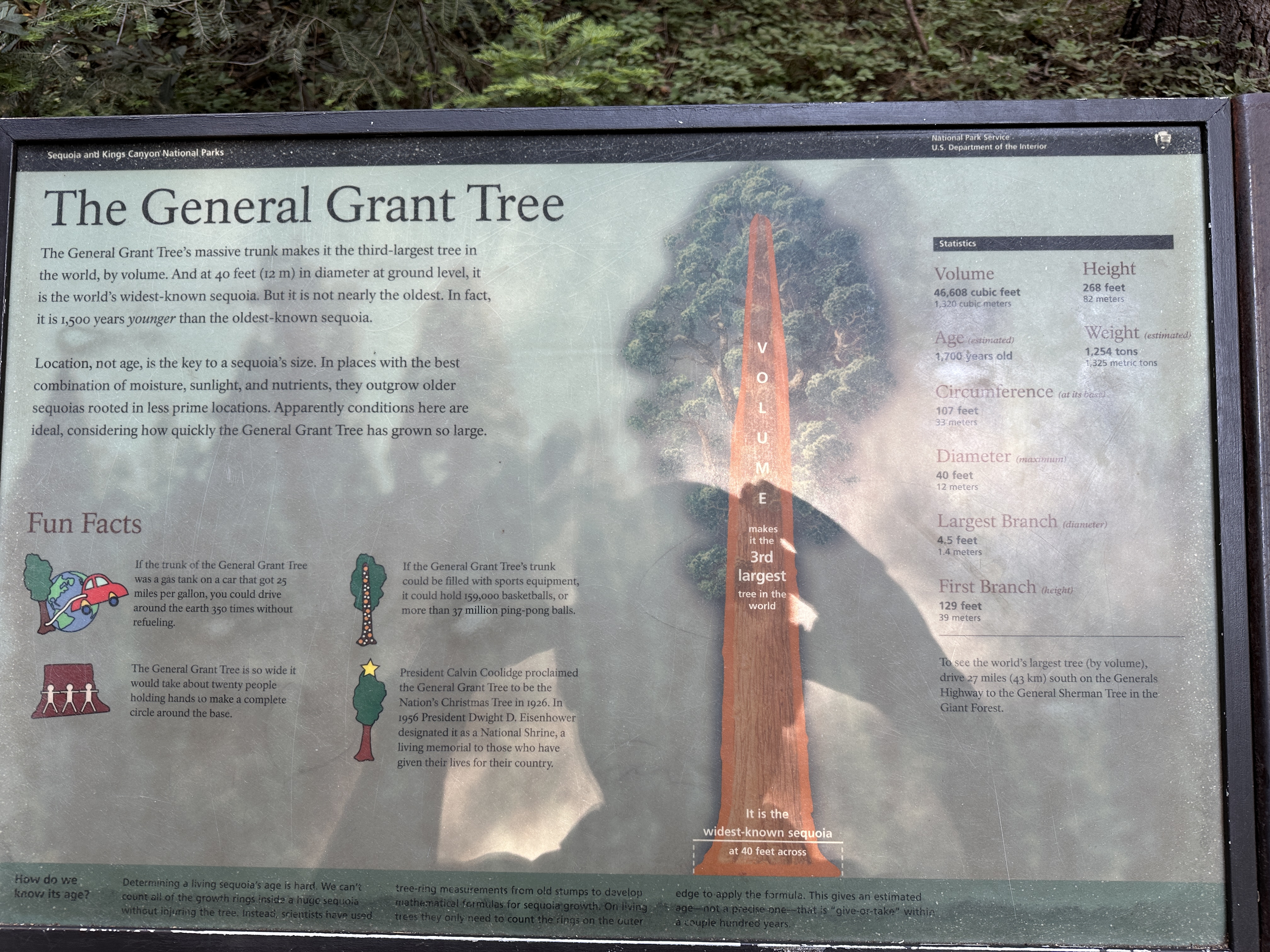
The General Grant tree was not far from the entrance to Kings Canyon and we made this our first stop. General Grant is 40 feet wide at its base, the widest-known sequoia tree and “just” 1,700 years old (some sequoias are 1,000 years older!). It was proclaimed to be the Nation’s Christmas tree in 1926. Good thing they didn’t cut it down! Other fun facts are shown in an image below.
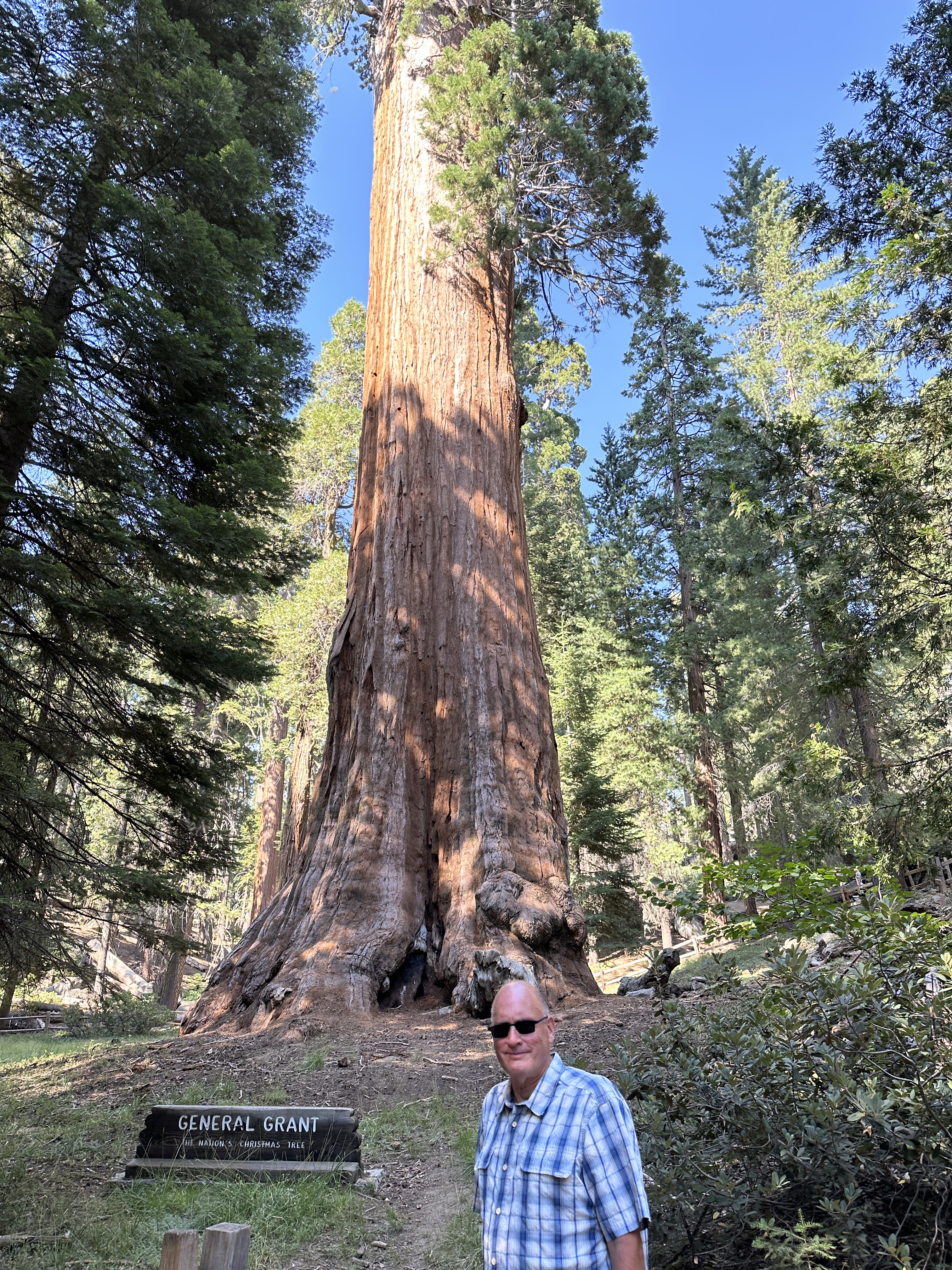
The General Grant Tree in Kings Canyon National Park is the 2nd (or 3rd, depending on which literature you read) largest tree by volume in the world.
A few facts about the General Grant Tree.

Since we arrived late in the afternoon, after visiting General Grant we drove to Lodgepole Village and Campground in Sequoia National Park, passing through a small burn area at the entrance.

The Northwest entrance to Sequoia National Park, on the Generals Highway.

After getting settled in camp, we enjoyed a great park ranger talk that evening at the nearby amphitheater where we learned a great deal about the local black bear population (we learned that that black bears can be white, brown as well as black!).

General Sherman Tree

During the summer, shuttles operate between Lodgepole Village/Visitors Center and Moro Rock, so rather than drive and try to find parking at each stop, we took the shuttle, a very convenient way to go.

Our first stop was the General Sherman Tree, the largest tree in the world by volume, it’s 2,200 years old. A half-mile trail from the shuttle stop leads to General Sherman and provides access to other nearby trails.

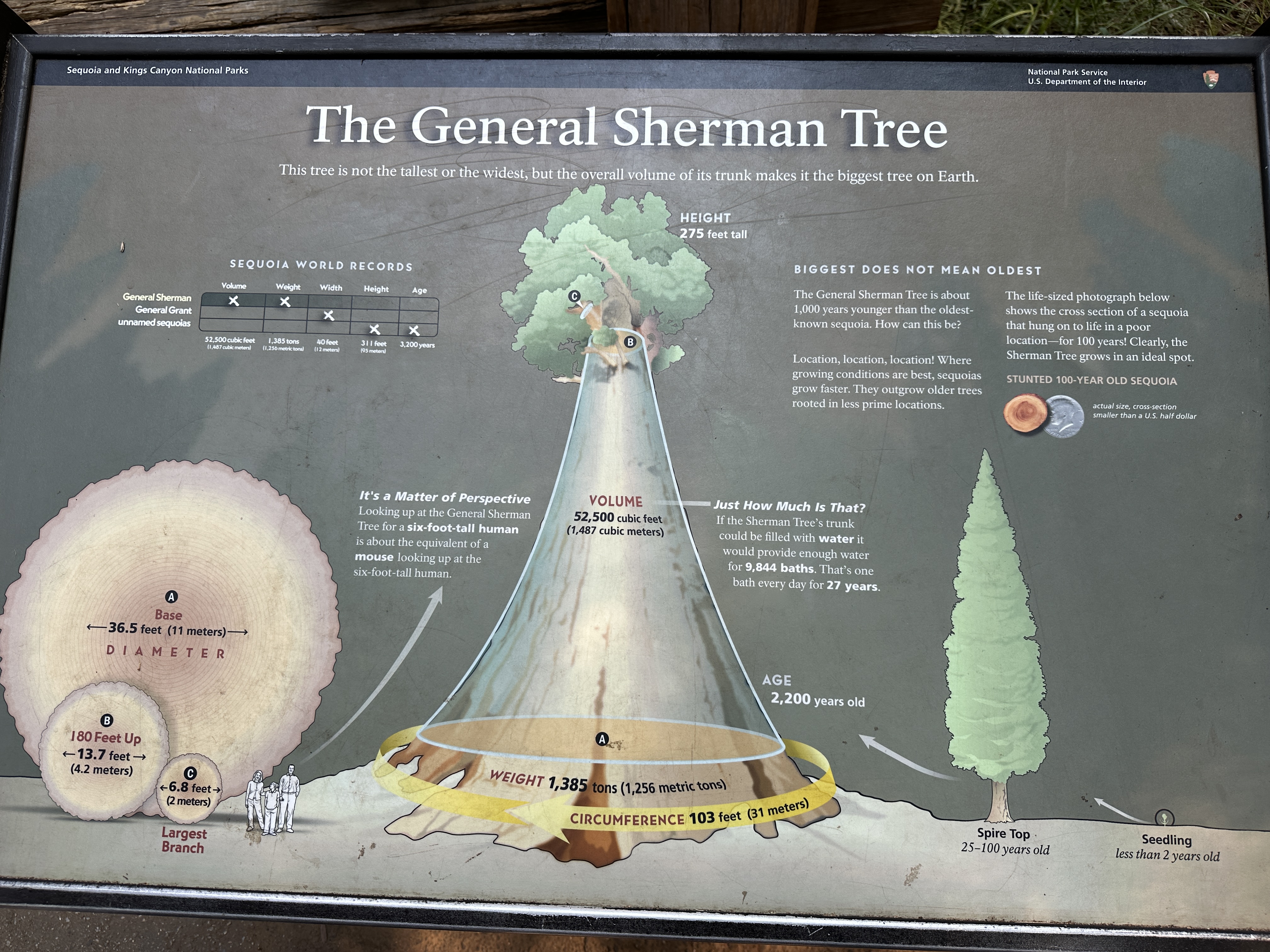
A few fun facts about the General Sherman tree.

Big Trees Trail

A short distance south of General Sherman is the Big Trees Trail, a 1/2 mile loop that will take you on a tour of some of the other massive sequoias in the Park. Everywhere you look are these giant trees, making you feel very small! Also, along another 1/4 mile path, you can visit the Giant Forest Museum where the geology and history of these trees and area is explained.

Near the Big Trees trail we saw a couple bears – we were a little way off and they didn’t pay much attention to us.

Moro Rock & Tunnel Log

Continuing south from Big Trees Trail, and a short drive off the main road is Moro Rock. You can climb to the top via a 1/4 mile stairway taking you 300 feet up this granite dome for some amazing views of the surrounding mountains.

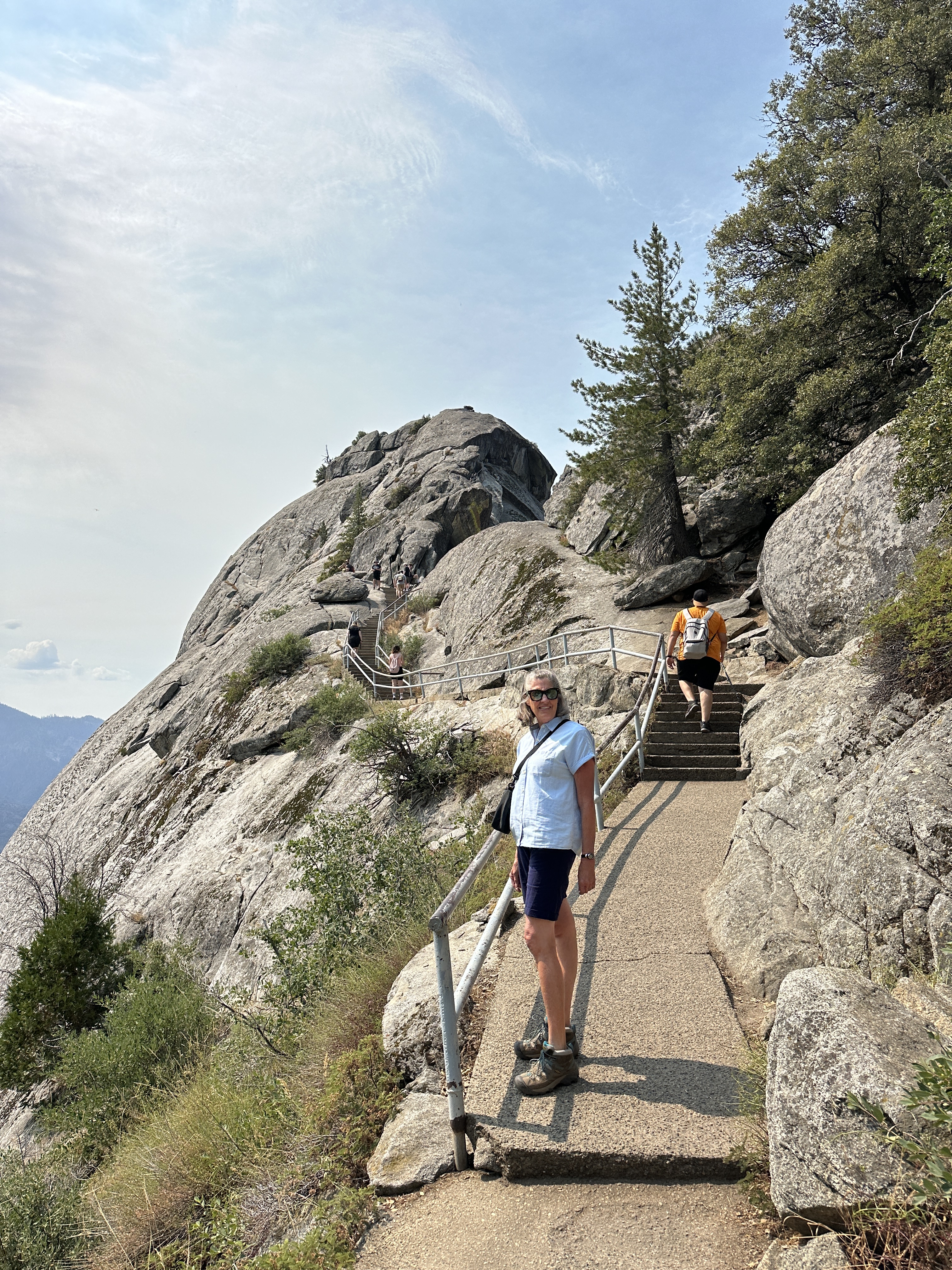
View of Moro Rock.
Stairway up Moro Rock.
View from the top of Moro Rock, looking east. Mt. Whitney, the tallest mountain in the continental U.S., is at the eastern edge of Sequoia National Park (not quite visible here).
The shuttle also travels past “Tunnel Log” near Moro Rock. Our camper van is too tall to take this tunnel, but if you have a car, go for it!

We camped at Lodgepole Campground in Sequoia NP, a good location for visiting the primary sights in the Park. Lodgepole Village has showers (although they are not the cleanest showers I’ve seen), laundry facilities and a small cafe and convenience store. As with Yosemite, we planned ahead (3-4 months) to ensure we got our campsite reservations.

Entrance to Lodgepole Campground.

Unfortunately we did not have time to really explore Kings Canyon National Park, I wish we could have. Please note there is really only one road into the primary area of Kings Canyon National Park (north of Sequoia NP) and it’s a pretty long drive. My recommendation would be to spend a least one night in Kings Canyon and then two nights in Sequoia National Park. Plan enough time for your visit, the roads are not fast, as with other roads in the area, they are windy, narrow and slow. We exited the Park on the southwest corner via Highway 198 towards Visalia and Bakersfield.

Visiting Yosemite National Park – Some Images and Tips

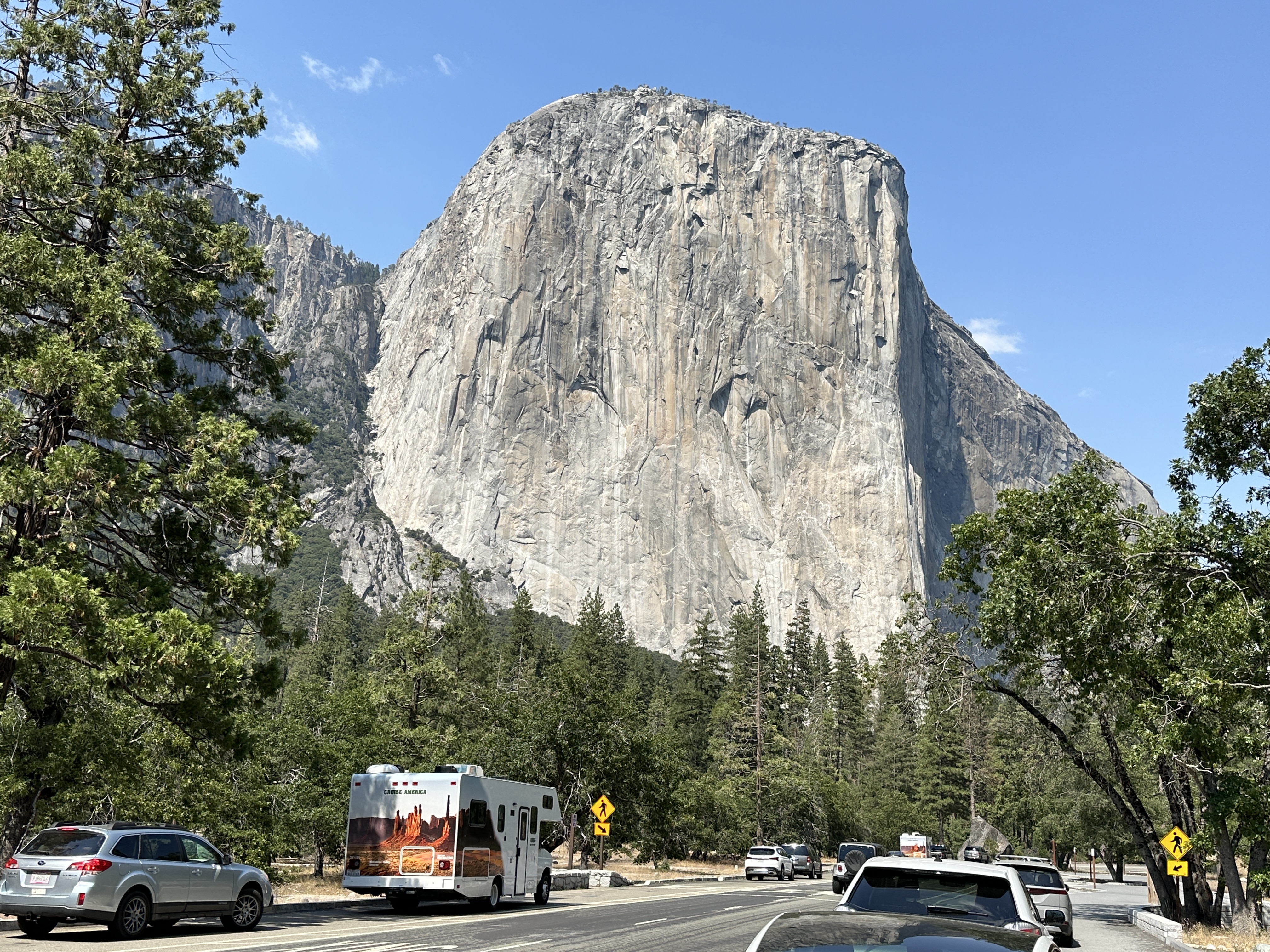
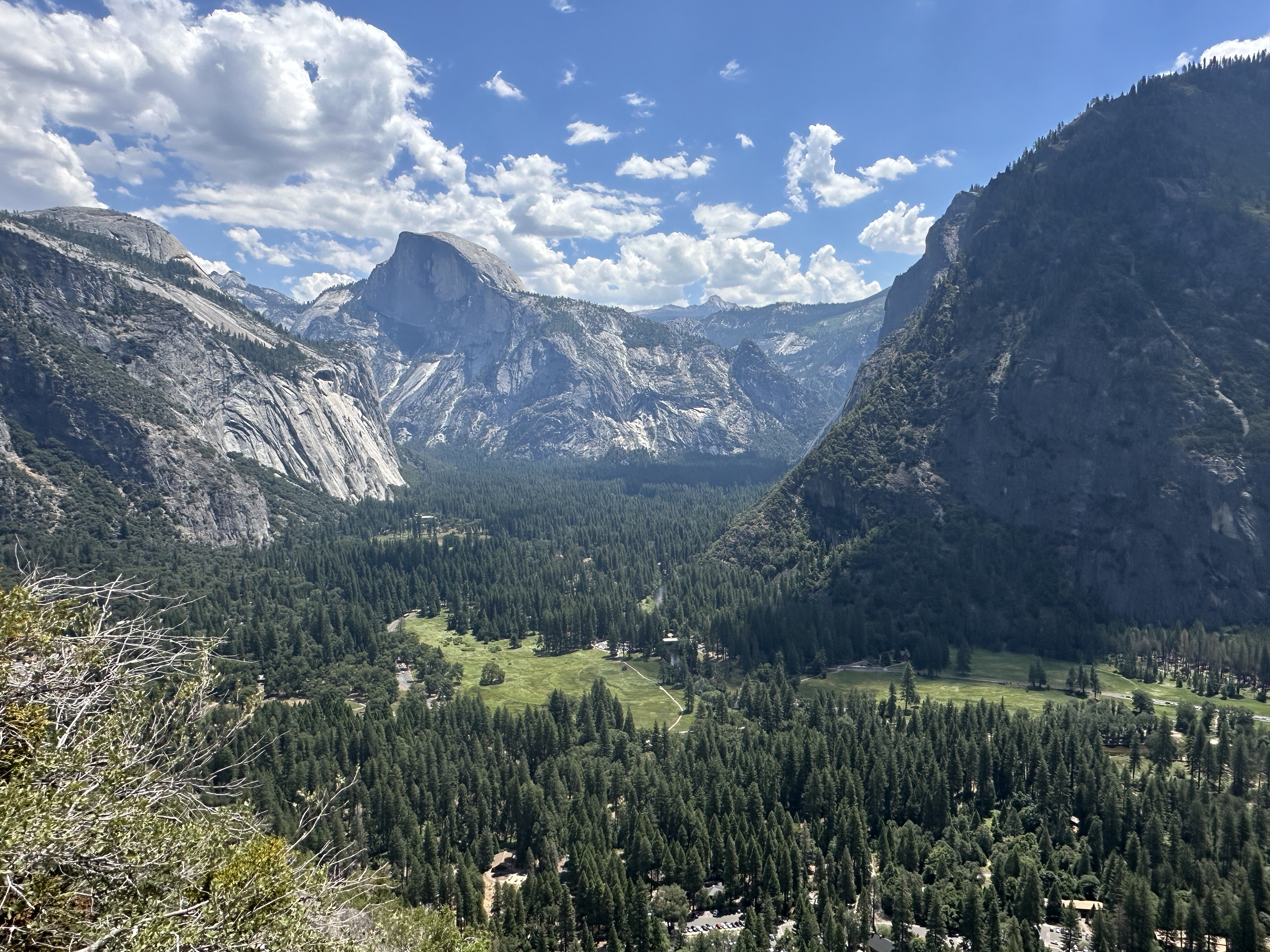
As much as I’ve traveled within the U.S., once place I’d never visited until this year was Yosemite National Park in California. When we bought a camper van last year we put Yosemite on our list as one of the places we definitely wanted to visit. Yosemite is certainly one of the most stunningly beautiful places I have ever been, and the world knows it. You will find many Californians here (of course), plus people from around the world – we heard a lot of different languages being spoken on the trails and around the sights.

Yosemite Falls

You can hike to the base of Lower Yosemite Falls if you don’t mind scrambling over big granite boulders – it was fun!

Merced River

Glacier Point Road

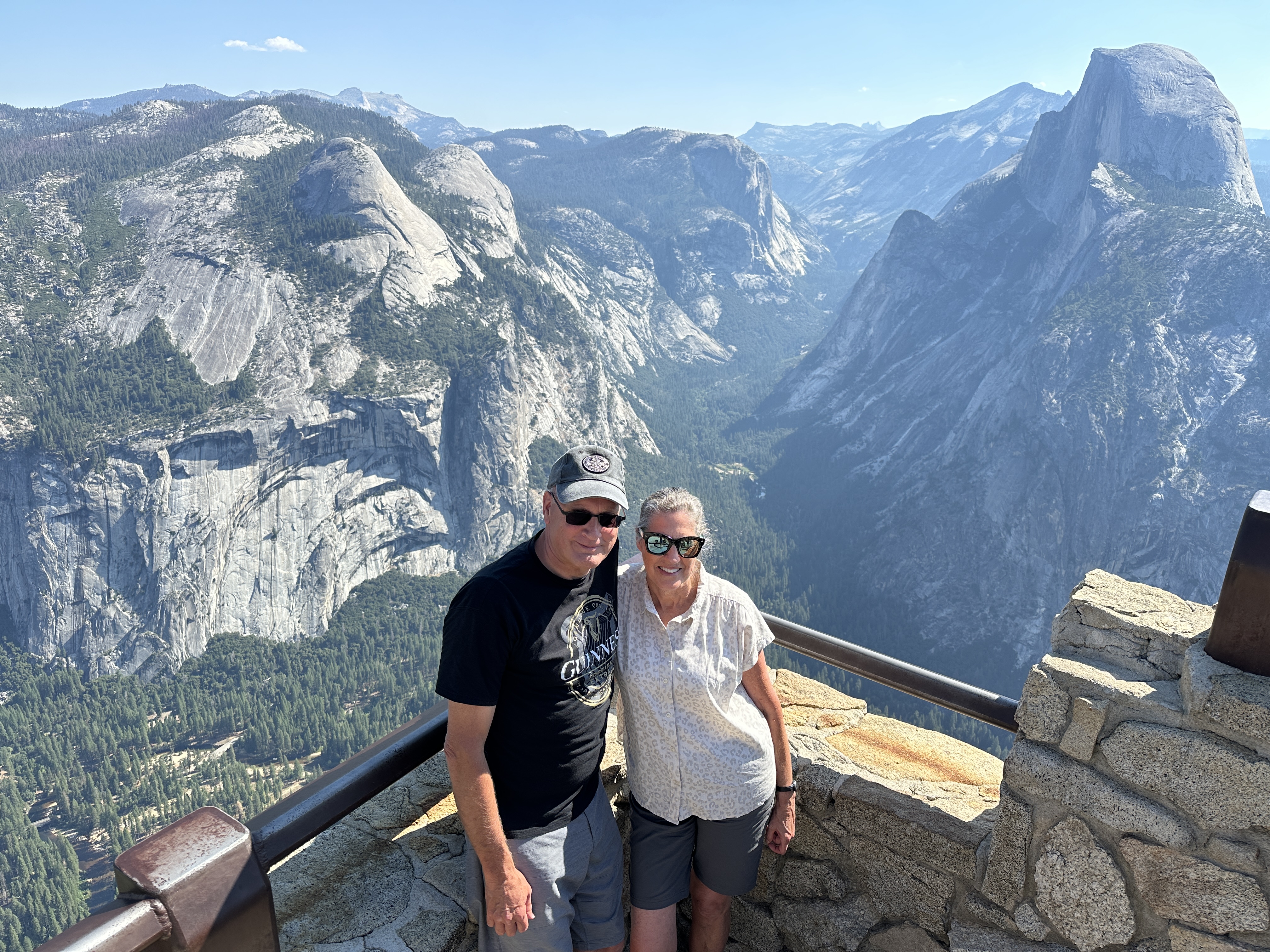
This 30 mile (or so) drive from Yosemite Valley is so worth it! The views from Glacier Point are awe-inspiring. If you plan ahead, you can get a tour shuttle up to the Point and take a steep one-way hike down to the Valley (about 4 miles). If I had been smart, we would have done this – the shuttle was already full when I called just a day or two in advance. There’s lots of parking at Glacier Point, but it does fill up – the good news is that people are coming and going all day long. There’s also a small gift shop and restrooms at the Point.

This was the view (called Tunnel View) coming down from Glacier Point- every spot is a “Kodak Moment!”

Mirror Lake

Another great short hike (or bike ride most of the way) in Yosemite Valley (from Upper Pines campground) is to Mirror Lake, formed by Tenaya Creek. The lake is seasonal and in July it was more of a wide spot in the Creek, but with nice sandy play area!

Tips for Camping In Yosemite

If you want to camp within Yosemite and especially within Yosemite Valley, you need to plan (way) ahead. We started looking at campgrounds in February for a July trip and learned there is a four month rolling reservation window, meaning we had to book our campsite in March for July dates. We wanted to be in the Yosemite Village area, right in the heart of Yosemite Valley for my first visit (my wife had visited Yosemite as a child with her parents on several occasions). We spent 3 nights/2 full days in the Park. This was long enough to give us a good introduction to Yosemite. If you wanted to hike a lot of trails and explore the far reaches of the Park, then you might want to spend a week here.

Camping in Yosemite Valley has its pluses and minuses. The main plus is that you are very close to the well-known Yosemite attractions, the main minus is the lack of solitude. Even if you book (on recreation.gov) at the right time and date (at 7 am Pacific exactly 4 months from the date of your planned visit) there is no guarantee you will get a camping spot, they fill up within seconds of being released. We were lucky and were able to get a spot in Upper Pines Campground, right next to the Merced River, almost directly below Half Dome and within minutes of many Valley attractions. I wish I had taken photos of the campground. Don’t expect privacy – the campgrounds are always full, the spots are close together with a few pine trees scattered about. Bear lockers are provided and essential. While the campgrounds have the standard restrooms and water spigots, I don’t believe any of the campgrounds have RV hookups (e.g., water, electricity, sewer), but they do have dump stations where you can take care of your RV’s needs. There are several small stores in the Valley where you can get supplies and snacks, and several restaurants as well.

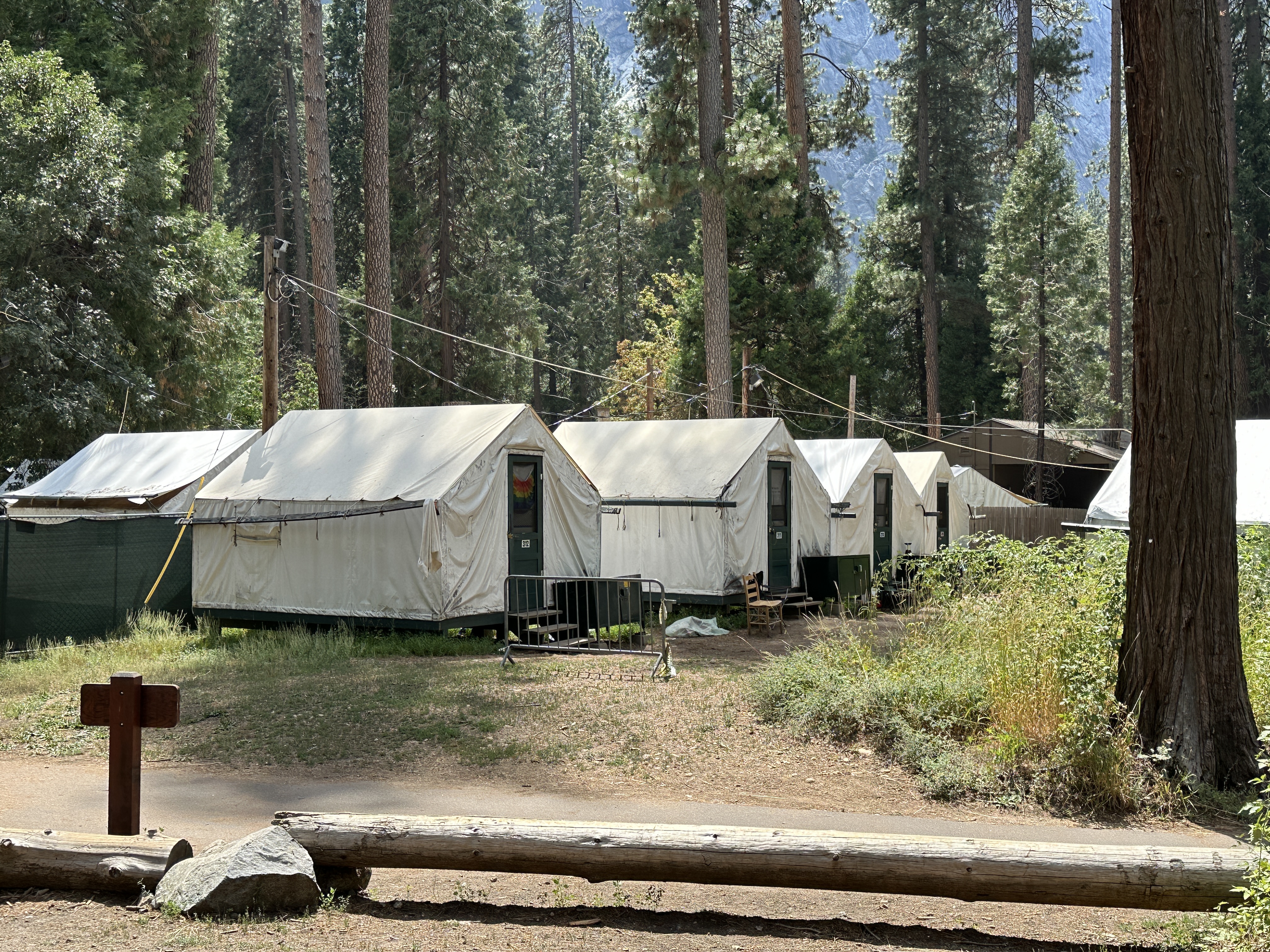
In addition to typical tent/RV campgrounds, you will find other accommodation options in the Park – from luxurious lodges to cabins, established tent communities and prison-like bunks in semi-open cinder block structures that have a table and not much else (the least appealing option in my mind, these are located in Housekeeping Village).

Some of the canvas tent accommodations available at Curry Village in Yosemite National Park.

Since we were on an extended camping trip (having also visited Lake Tahoe and Sequoia National Park as part of the same trip), access to laundry and shower facilities was helpful, these can be found at Curry Village and Housekeeping Village.

Getting Around

Given the volume of traffic and day trippers into Yosemite, car parking can be a challenge. If you can, bring your bicycle and leave your car or truck at the campsite, bikes are a great way to get around Yosemite Valley, the Village and adjacent hiking trails. I was glad we brought our bikes. You can also rent bicycles there.

Other Tips

The roads in Yosemite National Park are narrow, steep and windy, so driving is slow–it’s a big Park, so plan your time accordingly. During the summer months, if you do not have a camping (or other accommodation) reservations inside the Park you will need a timed reservation just to enter the Park, even for a day visit. The lines to enter the Park on a summer morning can be long (miles long). We came in via the Big Oak Flat entrance on the western side of the Park in the afternoon and had no wait. We left via the southwest entrance (Wawona, near Fish Camp) and saw a very long line of cars waiting to enter the Park at around 9 am. There are public buses that come to Yosemite as well from neighboring towns, and this might be an option depending on how long you want to stay.

I know my comments above may scare you away from visiting Yosemite, but in spite of the crowds, it is definitely worth the effort, just plan ahead and figure out your best options.