Independent Travel in Egypt

The Best Places to Visit in Egypt for Active Travellers

(Guest post by Colton Davis).

(Post Featured image credit: Photo by Osama Elsayed on Unsplash)

Many holidaymakers flock to Egypt for its pretty beach resorts which offer sun, sea, sand, and plenty of relaxation. For active travellers who prefer to stay busy, these quiet beach resorts are less appealing. Let’s take a look at three destinations in Egypt that have lots of fun activities on offer to appeal to energetic travellers.

1. Cairo

Photo by Omar Elsharawy on Unsplash

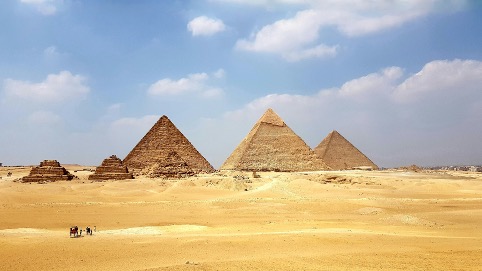
Cairo is Egypt’s capital city and it has a huge array of attractions to visit. Those who love to be on the go will certainly stay busy in Cairo. The Giza pyramid complex, which lies on the outskirts of the city, is by far the most popular historic site, but wandering around the ancient structures in the baking heat is not for the fainthearted. There’s also the Fortress of Babylon, the Mosque of Muhammad Ali, Abdeen Palace, Giza Zoo, and a vast range of museums to explore. Even strolling around the Egyptian Museum in Cairo requires some stamina due to the sheer scale of the collection; there are around 120,000 antiquities on display here. Cairo’s position on the Nile also allows for active travellers to try their hand at kayaking and rowing to see a different side to this sprawling city.

2. Marsa Alam

Marsa Alam is a scenic resort town that lies on the Red Sea’s western shore and although its beaches are lined with sun loungers and umbrellas, there’s far more to do than simply relax. The town is considered one of the best destinations in the world for kitesurfing. Its waters are relatively flat and see plenty of sunny, windy days that are perfect for kitesurfing, particularly between September and April when average temperatures range between 18 and 29.5°C (64 – 85 F). The waters in Marsa Alam are very clear and there are beautiful natural barrier reefs to explore if you’re into diving or snorkelling. You might even get the chance to see sea turtles, dolphins, and dugongs (sea cows). If you love water sports or enjoy trying new activities, Marsa Alam is a fantastic destination.

3. Luxor

Photo by Dilip Poddar on Unsplash

Luxor is a fascinating city best known for its proximity to the Valley of the Kings and the Valley of the Queens, two royal burial sites that have played an important role in our understanding of ancient Egypt. More than 150 tombs have been excavated across the two sites, including that of Pharaoh Tutankhamun. On the opposite bank of the river, there’s the Karnak temple complex to explore. This is an enormous 247-acre site that was developed over the course of 1,500 years by 30 successive pharaohs. There are many more temples and monuments in Luxor to explore, such as the Ramesseum, the Colossi of Memnon, and the Memorial Temple of Hatshepsut, as well as some excellent museums such as Luxor Museum and the Mummification Museum. You’ll need to be on the go throughout your stay in Luxor for a chance to see all the sights.

Egypt is the perfect destination for an active holiday

There’s so much to see and do in Egypt that it’s the perfect holiday destination for active travellers. Choose one of these three cities as your base or consider travelling around the country to experience all that Egypt has to offer.

Exploring Dahshur and Saqqara – Egypt as it was a Hundred Years Ago

If you’d like to get away from the crowds in Cairo, and feel almost like you’re an early explorer in Egypt, take a short trip to Dahshur and Saqqara. These are “don’t miss” sights and an easy day trip (the furthest site, Dahshur, is about 23 miles south from Cairo, we hired a driver and van from Cairo to take us to these sights).

Dahshur

Dahshur originally contained 11 pyramids, and the oldest are the main attractions. The Red Pyramid and the Bent Pyramids were built around 2600 BC, making them slightly older than the pyramids of Giza. They are almost as large as the more famous pyramids at Giza, both are only about 14 feet shorter than the Pyramid of Khafre (the 2nd highest pyramid at Giza). They were the first “true” pyramids the Egyptians built.

The Red Pyramid - picture perfect with a camel!

The Red Pyramid – picture perfect with a camel!

The Bent Pyramid was built first, and the builders learned during construction that they had to lessen the steepness of the angle of the sides due to stability issues and the adjustment gives the pyramid its unique shape.

The Bent Pyramid - not accessible to tourists.  The angle was reduced from 54 to 43 degrees due to stress and instability.

The Bent Pyramid – not accessible to tourists. The angle was reduced from 54 to 43 degrees due to stress and instability.

The Red Pyramid is open to the public, the Bent Pyramid is not, since it is on a military reservation.  I loved visiting the Red Pyramid—it looks untouched with sand still covering the huge stone blocks part way up the sides and inside we had the interior chambers all to ourselves.

The corbelled ceilings in the Red Pyramid chambers. Hard to get a good perspective with a photo.

The corbelled ceilings in the Red Pyramid chambers. Hard to get a good perspective with a photo.

The entrance to the Red Pyramid is in the distance.

The entrance to the Red Pyramid is in the distance.

Saqqara

Just about 6 miles north of Dahshur is Saqqara, the burial site for the ancient city of Memphis, just a short distance away. This was a burial ground for 3,500 years, and was largely buried in sand until the mid-1800’s. Saqqara is home to the Step Pyramid, built in 2650 BC, and it is the oldest stone monument in Egypt and quite possibly the world.

My in-laws in front of the Step Pyramid. The pyramid's interior is not open or safe enough for visitors.

My in-laws in front of the Step Pyramid. The pyramid’s interior is not open or safe enough for visitors.

The Step Pyramid was part of a progression in construction technology that led to the smooth-sided, near perfectly-dimensioned pyramids of Dahshur and Giza just a hundred years later.

The entrance to the Tomb of Mereruka, one of the many tombs at Saqqara.

The entrance to the Tomb of Mereruka, one of the many tombs at Saqqara.

Inside the Tomb of Mereruka, there are 32 chambers in this tomb.

Inside the Tomb of Mereruka, there are 32 chambers in this tomb.

Inside the Pyramid of Teti at Saqqara (about 2300 BC) - note the Pyramid Texts on the walls.

Inside the Pyramid of Teti at Saqqara (about 2300 BC) – note the Pyramid Texts on the walls.

Saqqara is a huge site, you will have to pick and choose what you see, and some tombs may be closed on a rotating basis. There were a few tour buses here, but not many, and since the site is spread out, you may find yourself enjoying the tombs on your own. Be prepared to stoop, crawl, and get a bit dusty in entering some of the tombs – part of the fun!

The Pyramids of Abu Sir, looking north from Saqqara. The most northern one, Pyramid of Sahure, was open to tourists at the time, not sure if it still is.

The Pyramids of Abu Sir, looking north from Saqqara. The most northern one, Pyramid of Sahure, was open to tourists at the time, not sure if it still is.

References: Lonely Plant Egypt and DK Eyewitness Travel Egypt

Egypt – Go Now

The great Sphinx at Giza.

The great Sphinx at Giza.

The news websites and TV stations flash scenes of angry crowds, fires and riots in Cairo and Americans stay away. What we don’t understand is that the news is focusing on a very small part of the country and even a very small part of Cairo.  Although it was a few years ago, we did a self-guided tour of Egypt and had a great time.

My wife and mother-in-law at the Luxor Temple.

My wife and mother-in-law at the Luxor Temple.

With the current political situation in Egypt many people would probably not consider a visit let alone a self-guided tour, and yet now is a good time to go, because there are far fewer tourists.  Over a series of posts I will share the highlights of our trip, but in this post I will provide a few tips and overview of our route (below):

  1. Getting around. I am a pretty brave car driver in other countries, but I have my limits. I will not drive in Cairo. I think Cairo traffic takes top prize in chaos, perhaps on par with India, and perhaps even more so. Our modes of transportation on our trip took various forms: we hired drivers for day trips, flew on Egypt Air (a great airline), and took a couple trips on trains, including an overnight train (in a sleeper cabin) from Cairo to Luxor—which was a fun experience.

    Arriving in Luxor after an overnight ride from Cairo.

    Arriving in Luxor after an overnight ride from Cairo.

    Interior of a train sleeper cabin. (A bed folds down above the seats).

    Interior of a train sleeper cabin. (A bed folds down above the seats).

    Making reservations on Egypt Air’s website for internal flights in Egypt was a bit of a nightmare. The Egypt Air New York office only wants to deal with the lucrative overseas flights.  Once we got to Egypt, it was easy to go into a local Egypt Air office and make changes, get seat assignments, etc. Cairo taxis are a bit of a challenge, in that there are no meters, and you have to guess what to pay the driver, or try to negotiate a fare before you hop in.

    Eating dinner with our driver (on left) and his colleague after a day of touring Cairo.

    Eating dinner with our driver (on left) and his colleague after a day of touring Cairo.

  2. Safety. Except for one taxi incident that my sister experienced in Cairo, where the driver acted a bit threatening and wanted more money (even though my brother-in-law had paid generously), the people were very friendly, and helpful. There were Tourist police (in white uniforms) in many locations and they provided directions and helped us cross very busy streets (cars are king, and pedestrians take their lives in their hands).

    Tourist police at the Pyramids of Giza.

    Tourist police at the Pyramids of Giza.

    We never feared for our safety, and walked the streets of Cairo and other locations at night.  In fact, the night scene is more lively when families and children come out to play (probably due to the generally hot climate).

    Cute Egyptian children.

    Cute Egyptian children.

  3. Tipping. Plan to give lots of tips (backsheesh). The local population lives on these tips, and the tips amount to perhaps 50 cents in many cases. You’ll find many locals at the tourist sites want to show you a few things and expect a tip in return.
  4. Best time to visit.  We visited during early November, and found the weather to be great.  Warm enough to go swimming, but cool enough to wander through the desert sights and not die of heat exhaustion.
  5. Cost. Egypt is inexpensive for the most part, especially if you’re doing a visit on your own. We stayed in a decent hotel in Luxor for 18 (USD) per night.  It was not fancy, but was a decent hotel. About 5 Egyptian Pounds to the USD.

    Purchasing some fruits from a street vendor (great oranges!).

    Purchasing some fruits from a street vendor (great oranges!).

  6. Standard of Living. Egypt is a poor country, and not the cleanest country.  We saw piles of trash in different places and dead animals occasionally. There are many unfinished buildings and others that are falling apart. It’s all just part of the experience.

    Typical housing in Cairo.

    Typical housing in Cairo.

    Street scene in Alexandria.

    Street scene in Alexandria.

  7. Culture shock.  When we flew from Luxor to Sharm el-Sheikh (Sinai Peninsula), we felt like we were entering another world. Sharm felt like Cancun and everything was far more expensive (similar to US prices). The Sinai Peninsula is completely different than the rest of the country. However, the hotel prices in Naama Bay (next to Sharm el-Sheikh) were still pretty good, my sister and her husband got a nice hotel room (Tropicana Rosetta) with a great pool for $50/night.

    Pool at the Tropicana Rosetta Hotel in Naama Bay.

    Pool at the Tropicana Rosetta Hotel in Naama Bay.

Itinerary

We spent about two weeks in Egypt. We started in Cairo for about 3 days, then took the train to Luxor and spent 4 days there, then flew to Sharm el-Sheikh for about 3 days, then flew back to Cairo and drove out to Alexandria for 2 days, then took  a train back to Cairo before flying home.

Major locations visited in Egypt.

Major locations visited in Egypt.