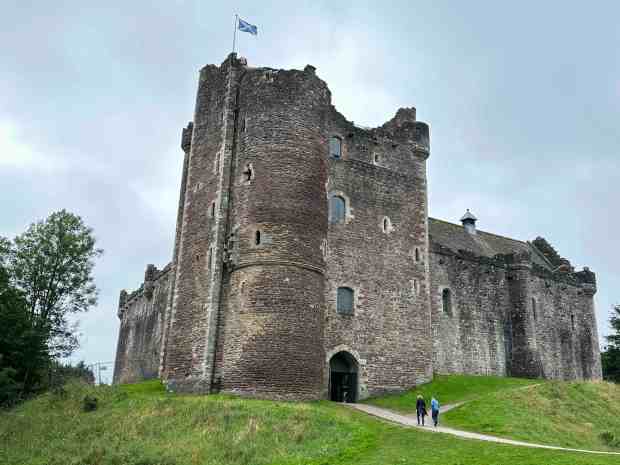
Doune Castle is about eight miles northwest of Stirling, Scotland (home of another famous and historic Scottish castle).
Doune Castle is definitely worth a visit, and has gained popularity on the tourist circuit over the last several years due to its use as a setting for the TV series “Outlander” as Castle Leoch.
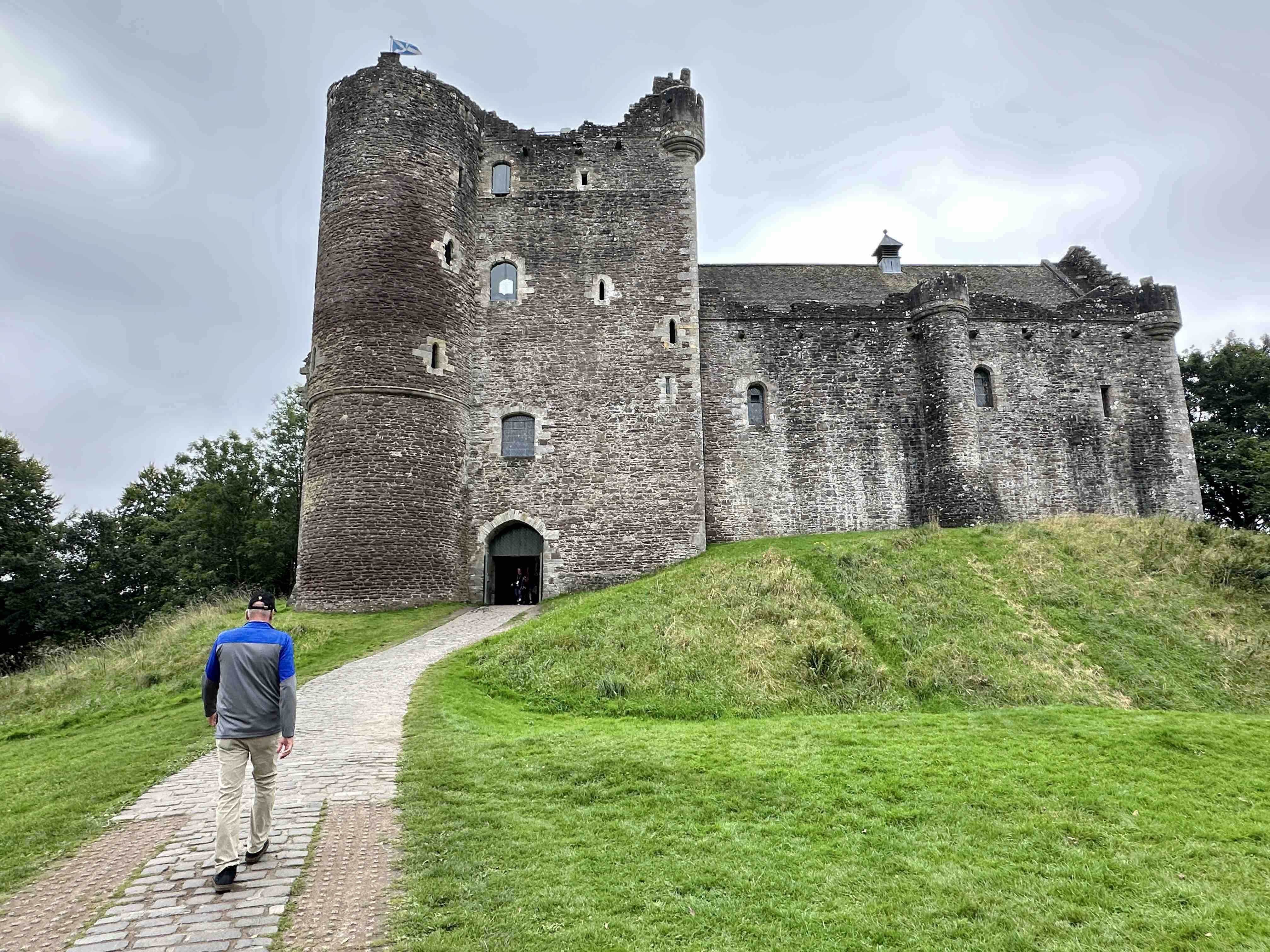
Walking on the pathway to the castle entrance.
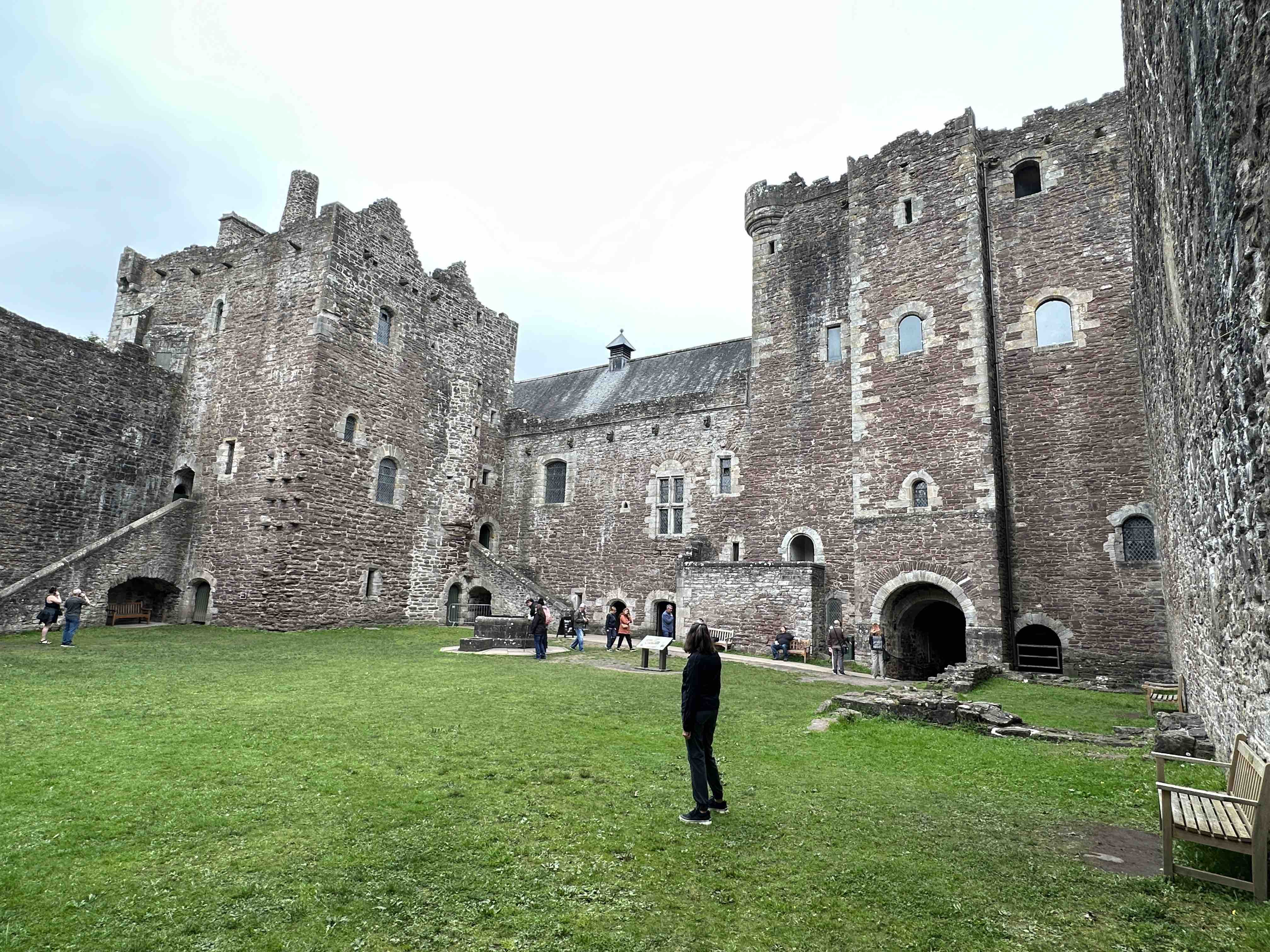
Robyn admiring the inner courtyard of Doune Castle.
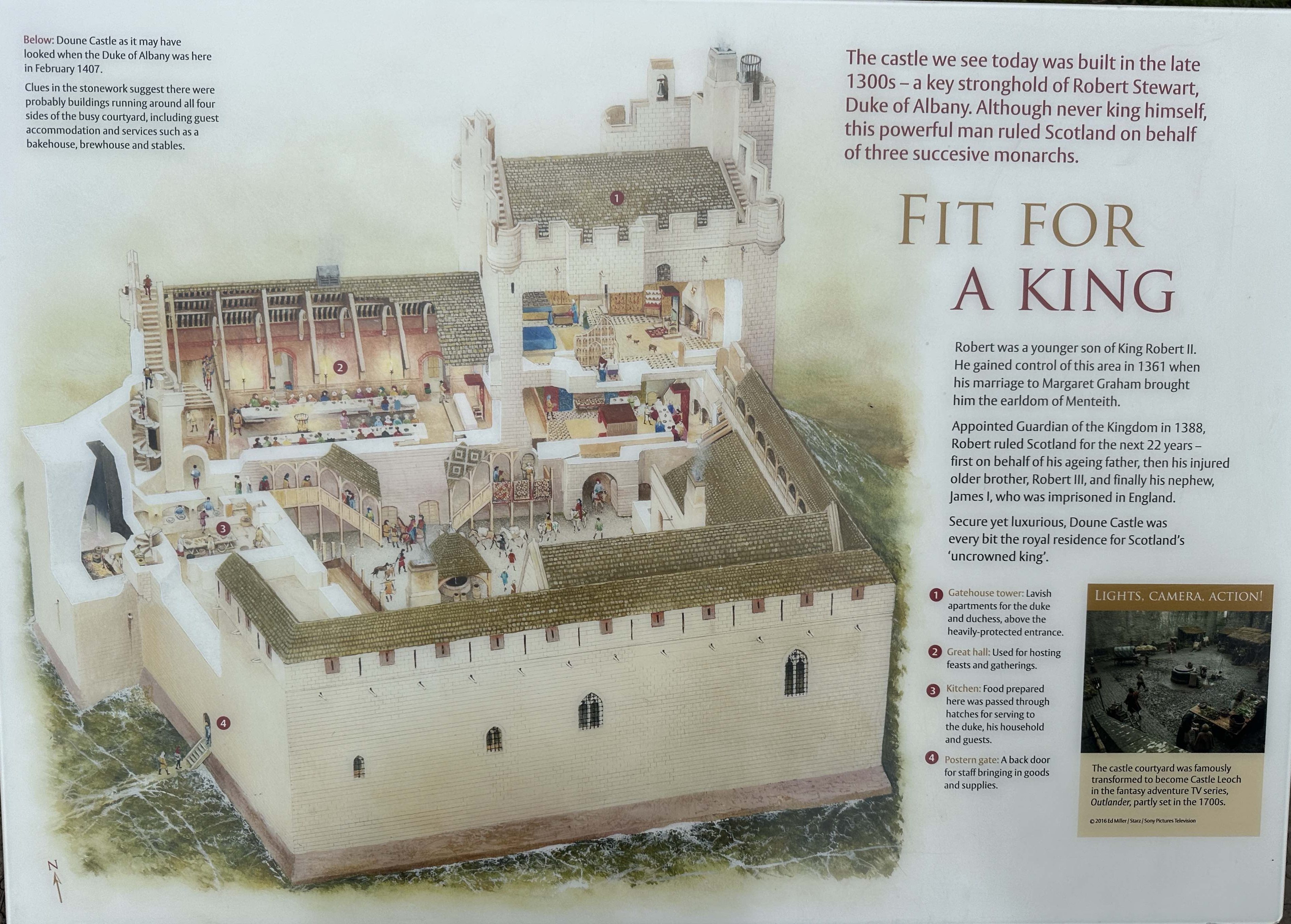
The castle dates from the 13th century, although much of what we see today dates from the 14th century. It was home to Robert Stewart, Duke of Albany, who ruled Scotland for 22 years athough he never crowned as king (he ruled on behalf of other family members who for various reasons were not able to actually rule themselves).
This sign at the castle provides some interesting information about the castle’s layout and history.
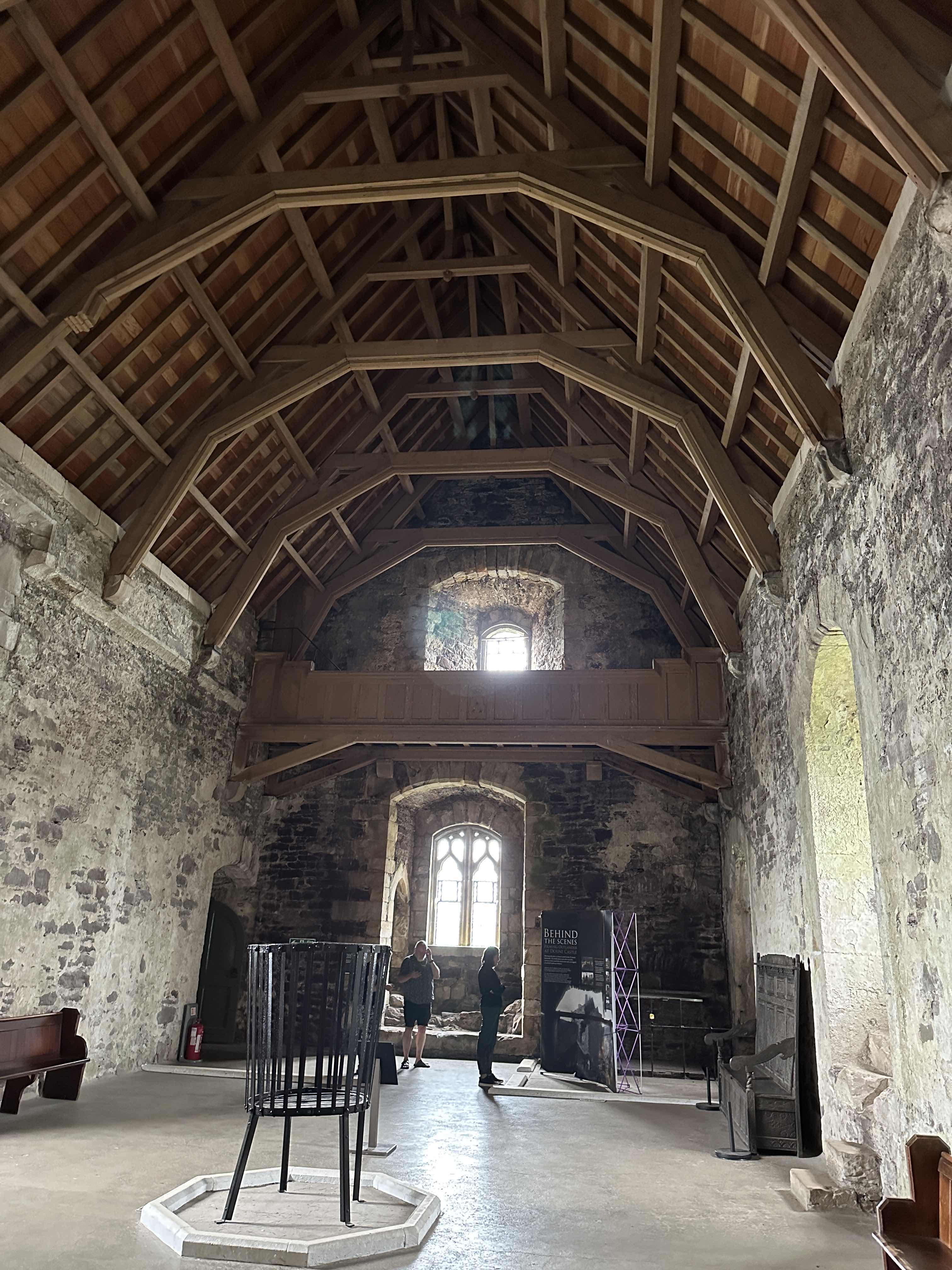
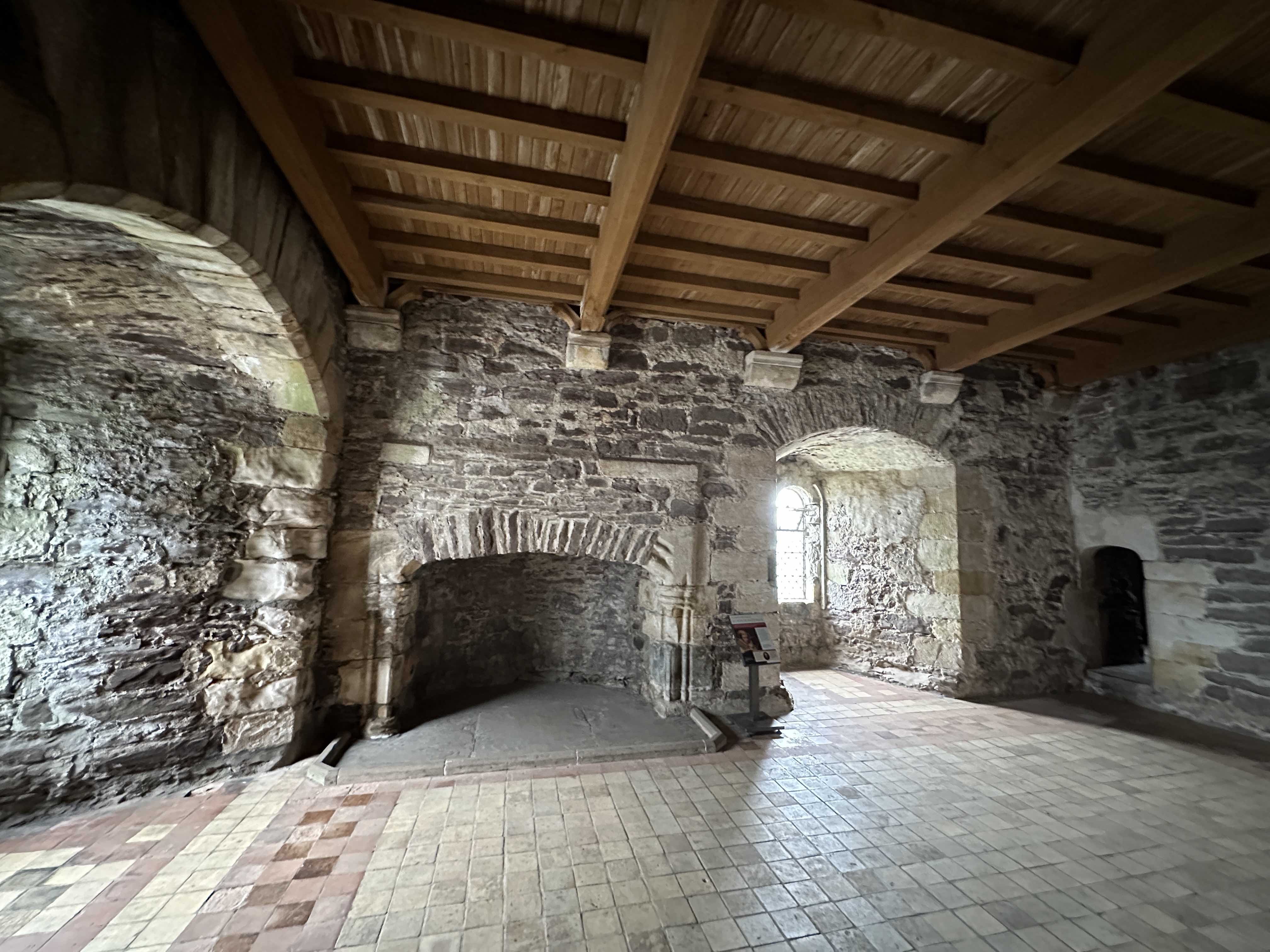
Interior views of Doune Castle, including the Great Hall (left) and a chamber where Mary, Queen of Scots likely stayed during her numerous visits to the castle in the 16th century.
Doune Castle is part of the Historic Environment Scotland pass, which will save you significant money on entry fees if you’re visiting several historic sites during your visit to Scotland.
If you visit Stirling, take a few extra minutes to drive the short distance to Doune Castle!
The 14th-century Craigmillar Castle is just south of the city of Edinburgh, Scotland and near the hill known as Arthur’s Seat. The good news is that the castle was not busy at all when we visited in late August – we pretty much had the whole place to ourselves even though it is so close to Edinburgh.
View of the skyline of Edinburgh from Craigmillar Castle. Arthur’s Seat is the hill on the right.
If you’re looking for things to do and see near Edinburgh, Scotland I recommend Craigmillar Castle. This castle was put “on the map” as one of the settings used in the TV series “Outlander”. More importantly, Mary, Queen of Scots stayed here in November 1566 while seeking some peace and security, only 8 months before her forced abdication in July 1567.
Below are some images of the castle. The castle is not large, it consists of an outer courtyard, inner courtyard, tower (or keep) and two sets of rooms on either side of the tower from the 16th and 17th centuries.
Layout of Craigmillar Castle.
Above left – west side of Craigmillar Castle (view of the 17th century Gilmour range). Above right – outer courtyard and main entrance to the inner Castle courtyard.Above left – exterior of the 16th-century East range connecting to the tower. Right – stables in the Gilmour (17th-century) range.Left – kitchen ovens. Right – Gallery room, part of the 16th century East range.Left – the dungeon, which would have been very dark and damp. Right – passageways in the tower.
So, if you want to escape the crowds in Edinburgh, visit Craigmillar Castle! We had a rental car which made the visit very easy, there is a small car park at the castle ticket office. Travel Tip: If you are going to visit several historical sites in Scotland, consider purchasing the Explorer Pass from Historic Environment Scotland. You pay one fee and then have free access to many historical sites (including Craigmillar Castle), the Pass is valid for 14 consecutive days.
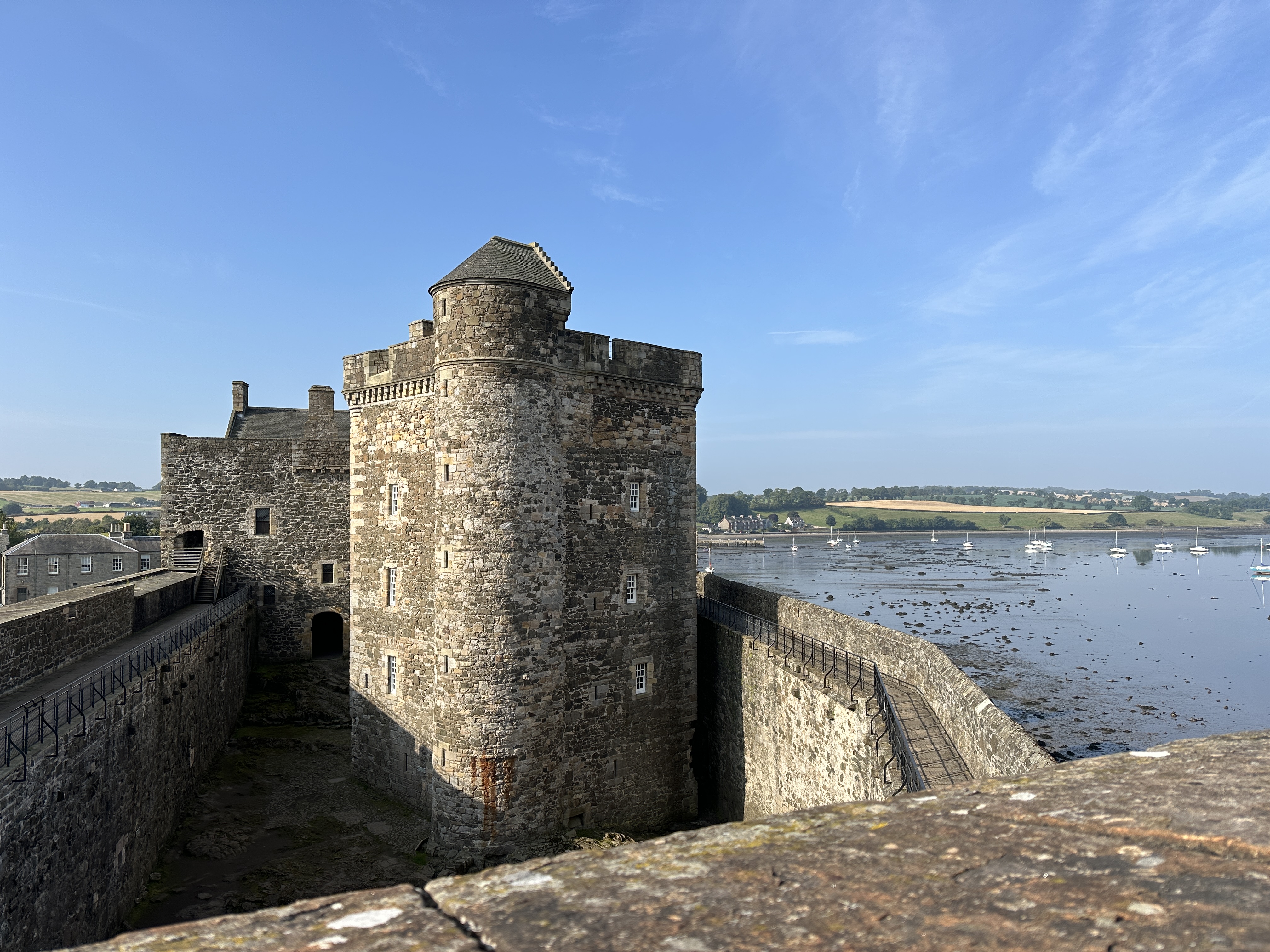
Blackness Castle is only 17 miles west of Edinburgh, Scotland and makes a great day trip, especially combined with a visit to Dunfermline, the final resting place of Robert the Bruce (highly recommended, more information will be forthcoming on Dunfermline in future posts). The 15th century castle has gained fame in recent years as a filming location for the TV show “Outlander”. However, the castle has served as a filming location for movies as well. The castle sits on a prominent point on the Firth of Forth and was a strategic location for protecting the nearby village which was a major port in past centuries. It also served as a prison starting in the 1500’s and as a munitions depot.
The castle is unique for its ship bow-shaped defensive walls facing the Firth of Forth.
A little hard to tell, but the castle walls on the left form a sharp bow-shaped point, very appropriate giving the setting on the water!
Another view of the castle from the “bow”.
Robyn admiring the tower keep “Prison Tower” of Blackness Castle.
An informational sign indicating the use of the central tower (keep) as a prison for many years, especially for “high status” prisoners.
Interior views of Blackness Castle.These images show the rocky foundation on which Blackness Castle is built. In the image on the left, note the stairway carved out of the rock.
We visited Blackness Castle in early September. We got there as it opened and pretty much had the whole castle to ourselves. Compared with busy Edinburgh, Blackness Castle’s quiet surroundings were a nice change of pace.




 The Independent Tourist