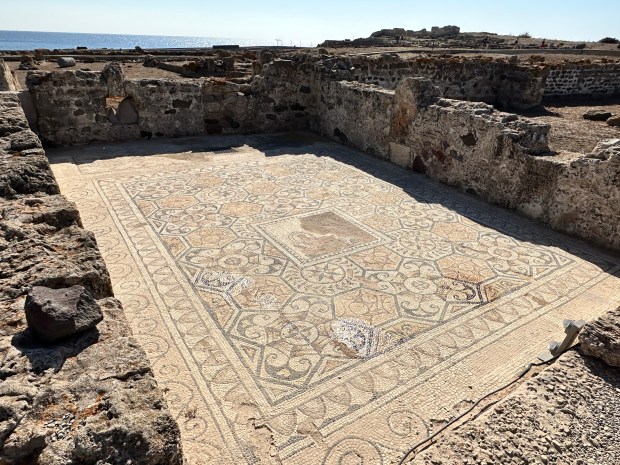
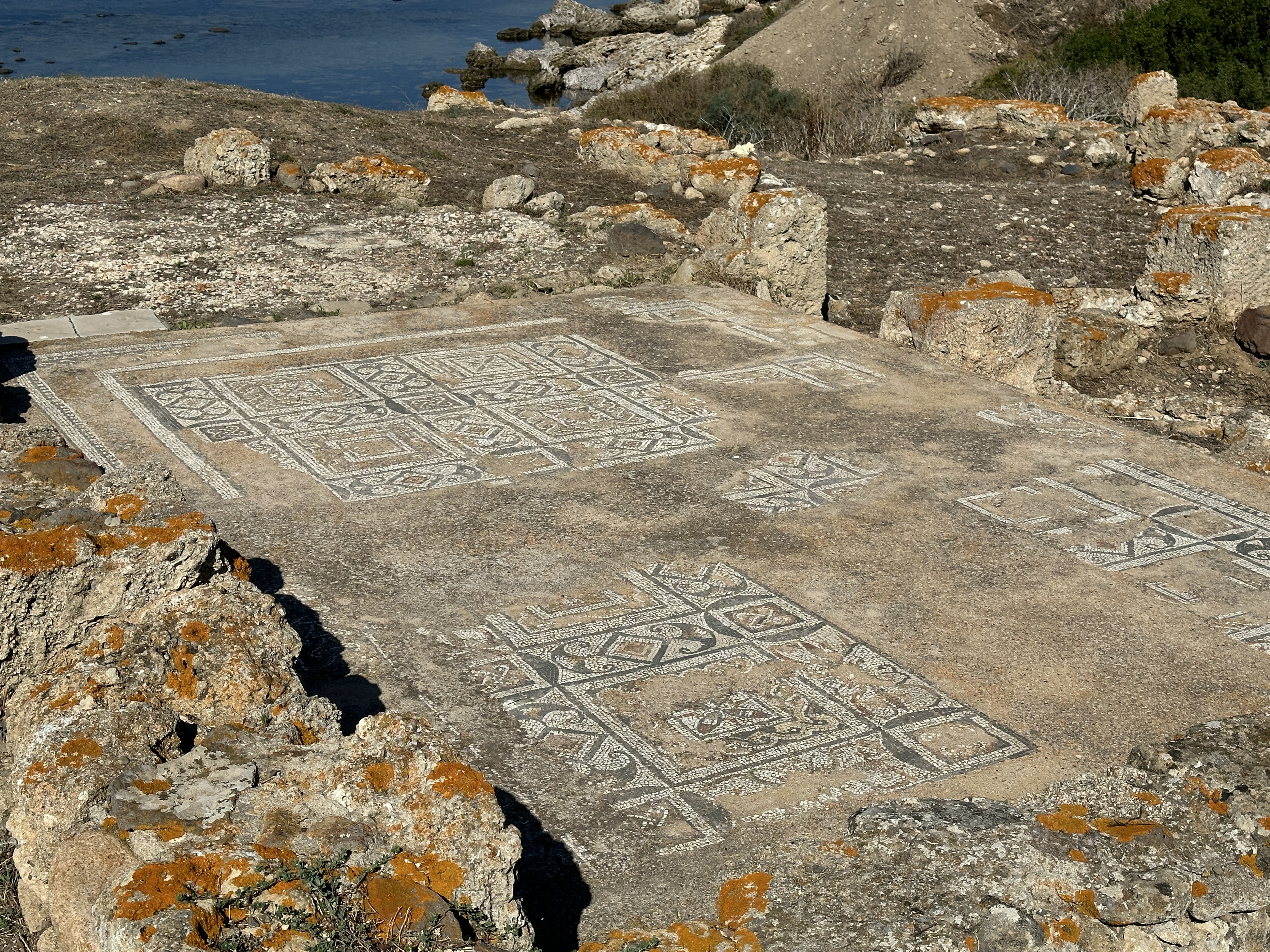
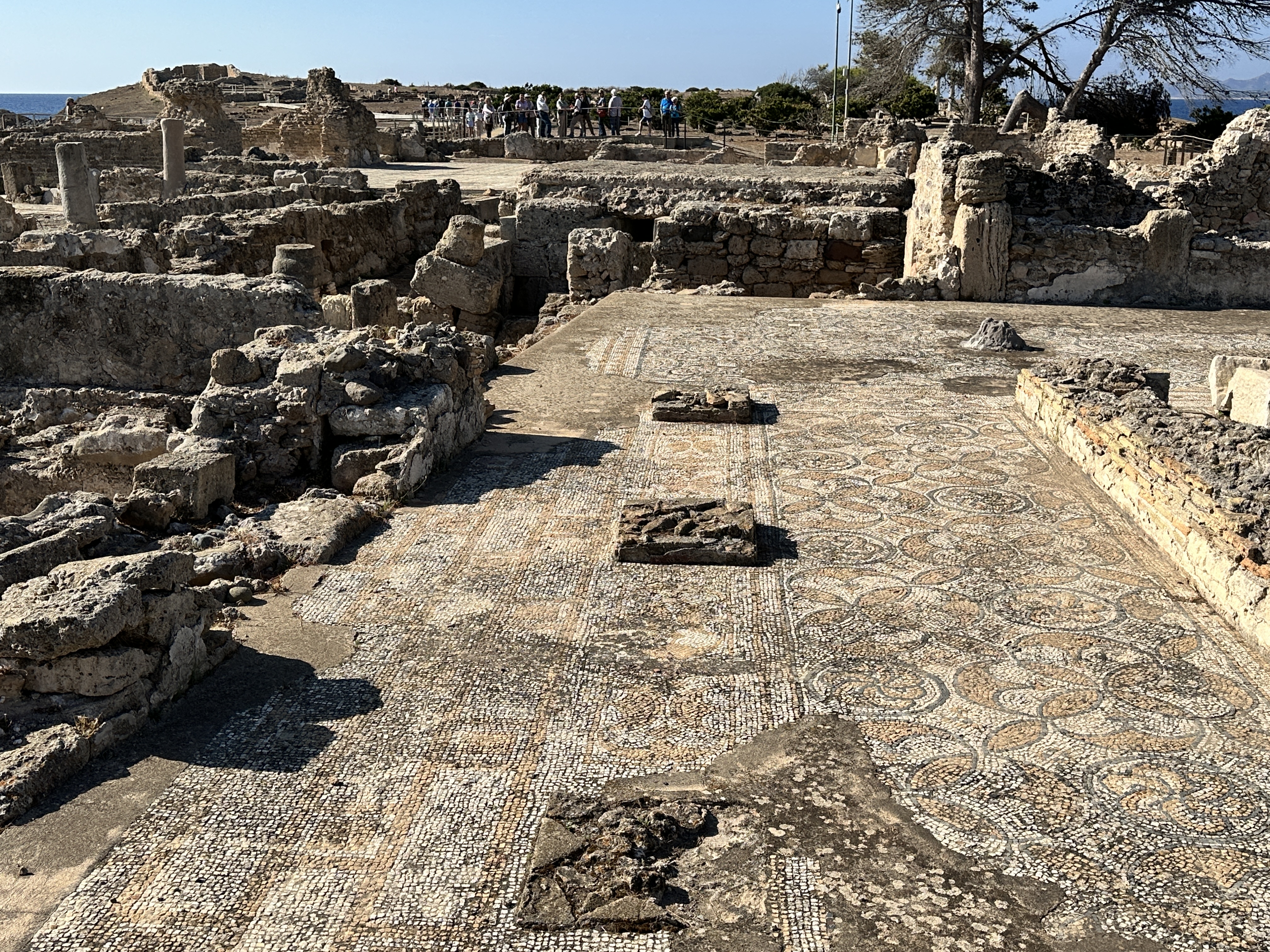
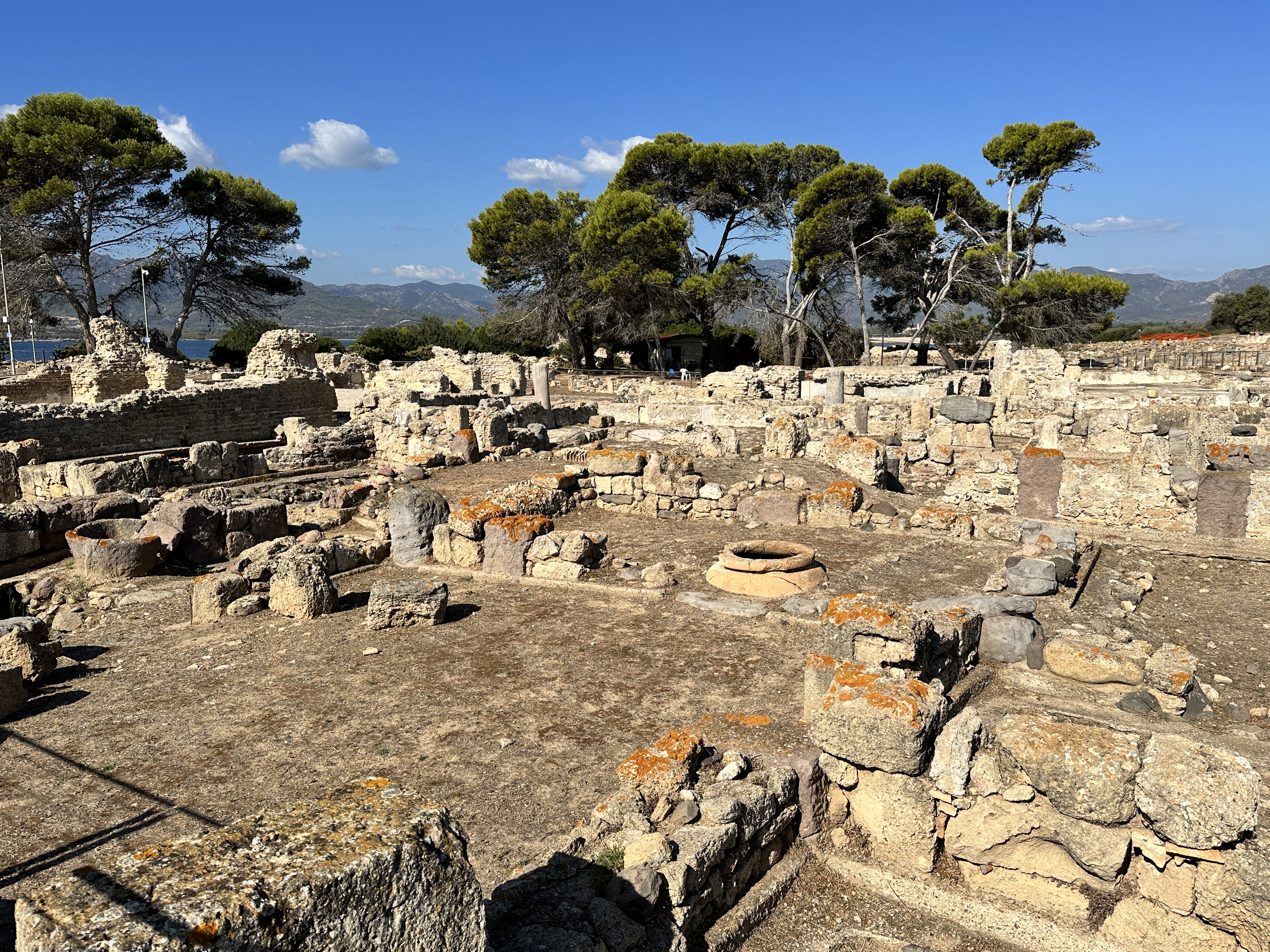
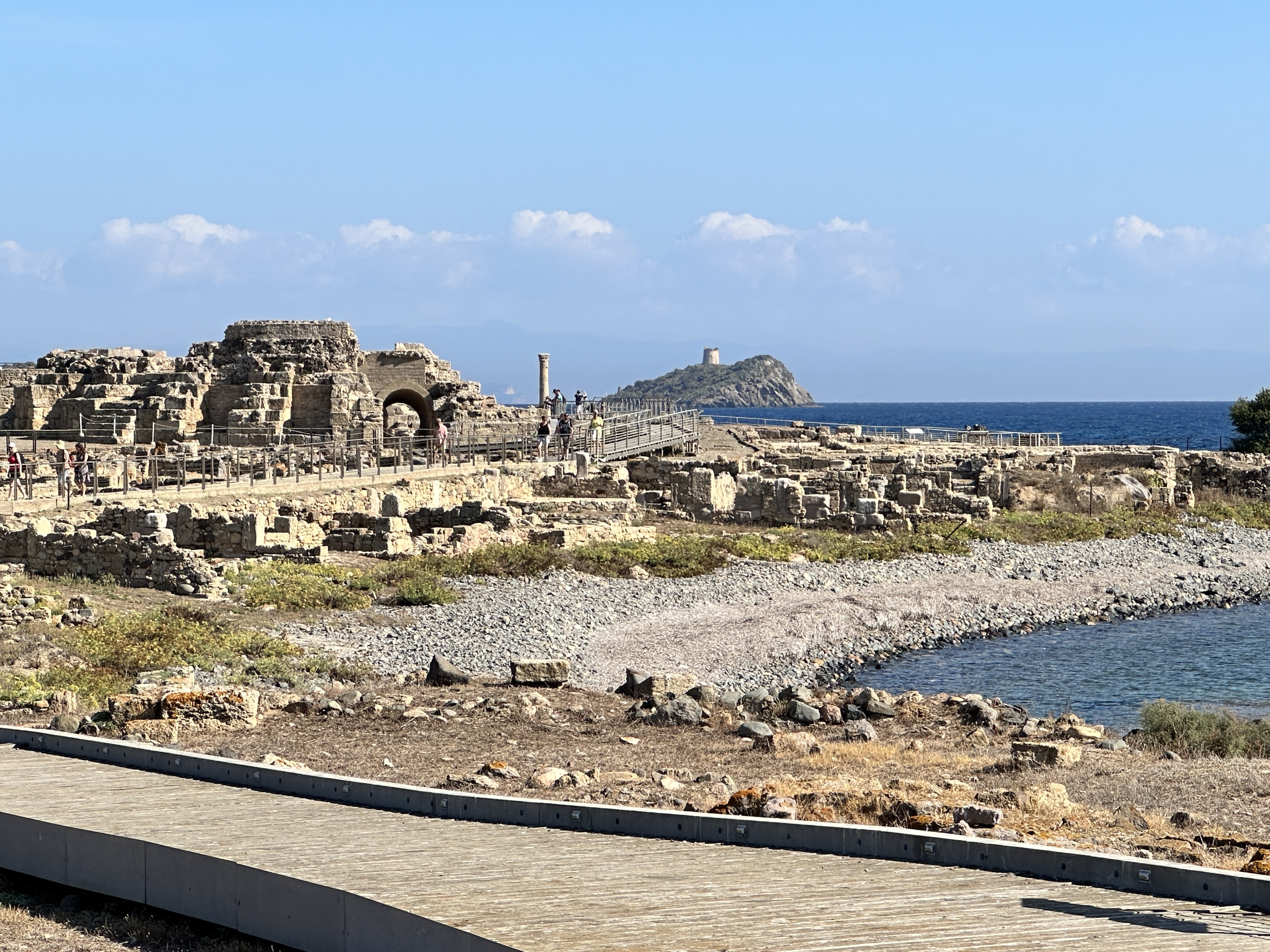
The Nora Archeological Site is only about 45 minutes (48 km or 25 miles) west of Cagliari and makes a nice half-day trip, whether you are staying in town or on a one-day visit with a cruise ship. The origins of the settlement date back to Phoenician times around the 8th century B.C. The city flourished for over four hundred years starting during the first and second centuries B.C. during the Roman age. It must have been quite wealthy due to its ideal position on the coast of Sardinia, perfect for trading. The use of that wealth is demonstrated by the extensive mosaic floors that can still be seen as part of homes and public areas.
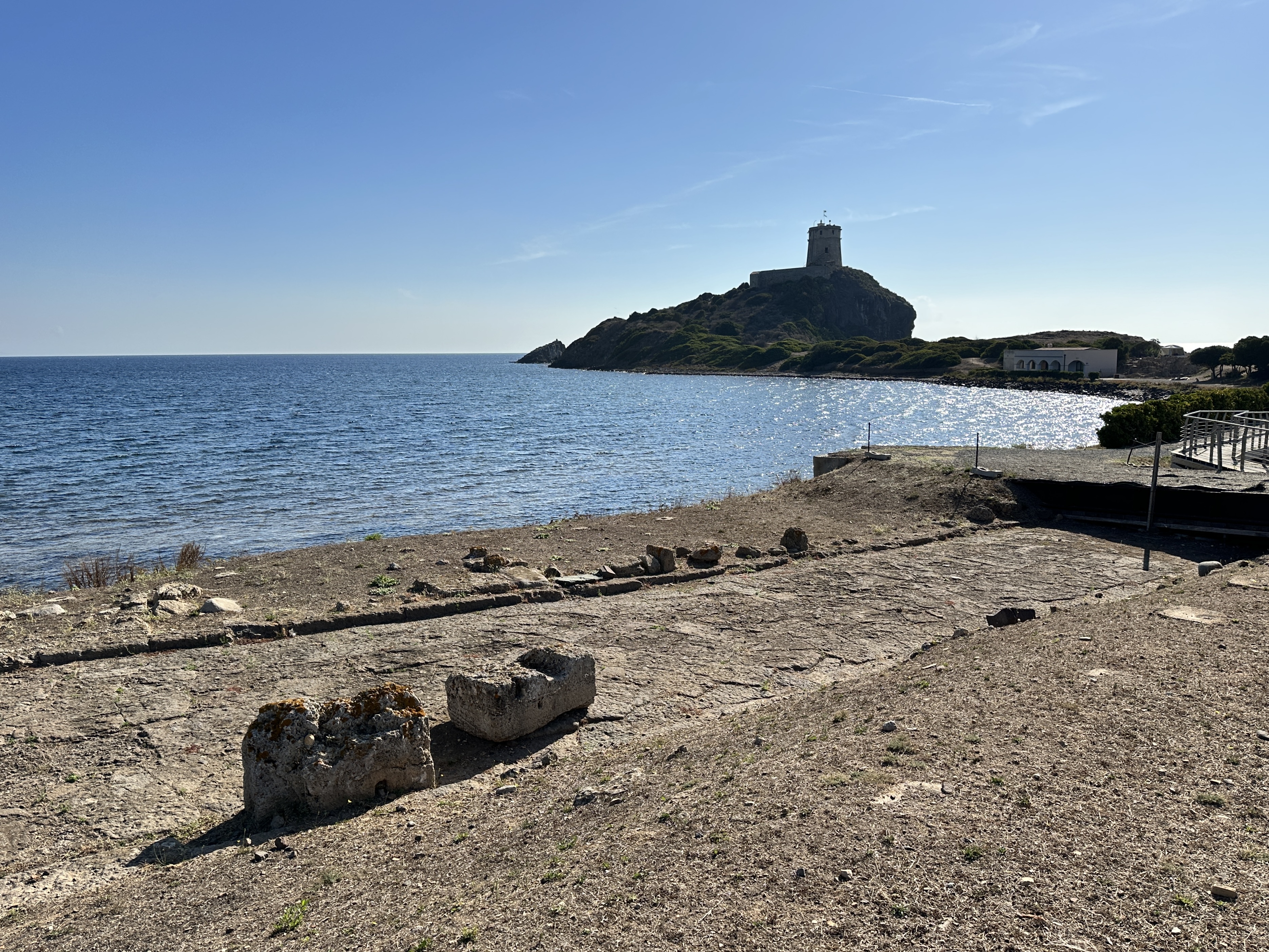
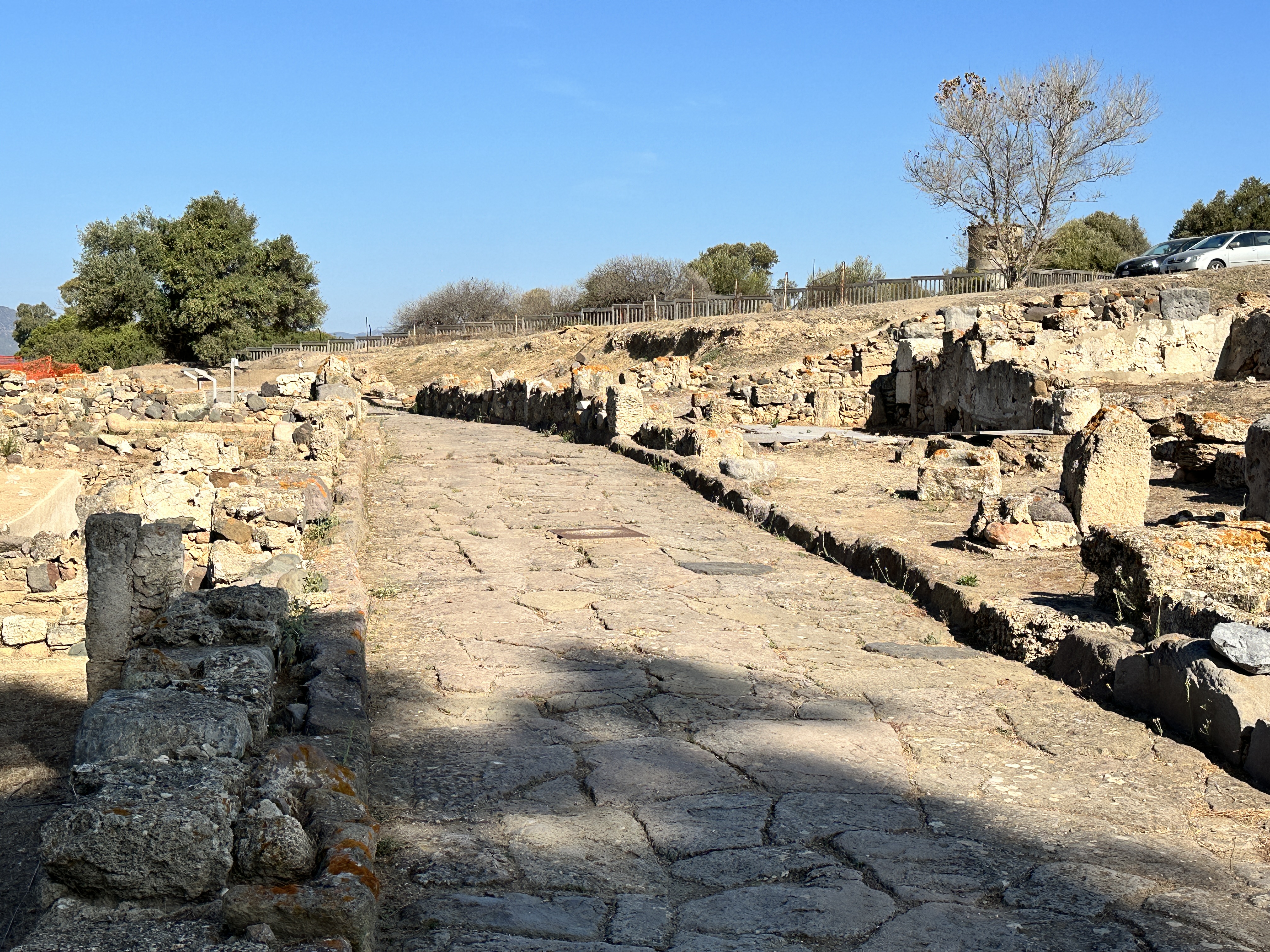
The ancient Roman road leading into Nora is overlooked by the 16th-century Torre del Coltellazzo.
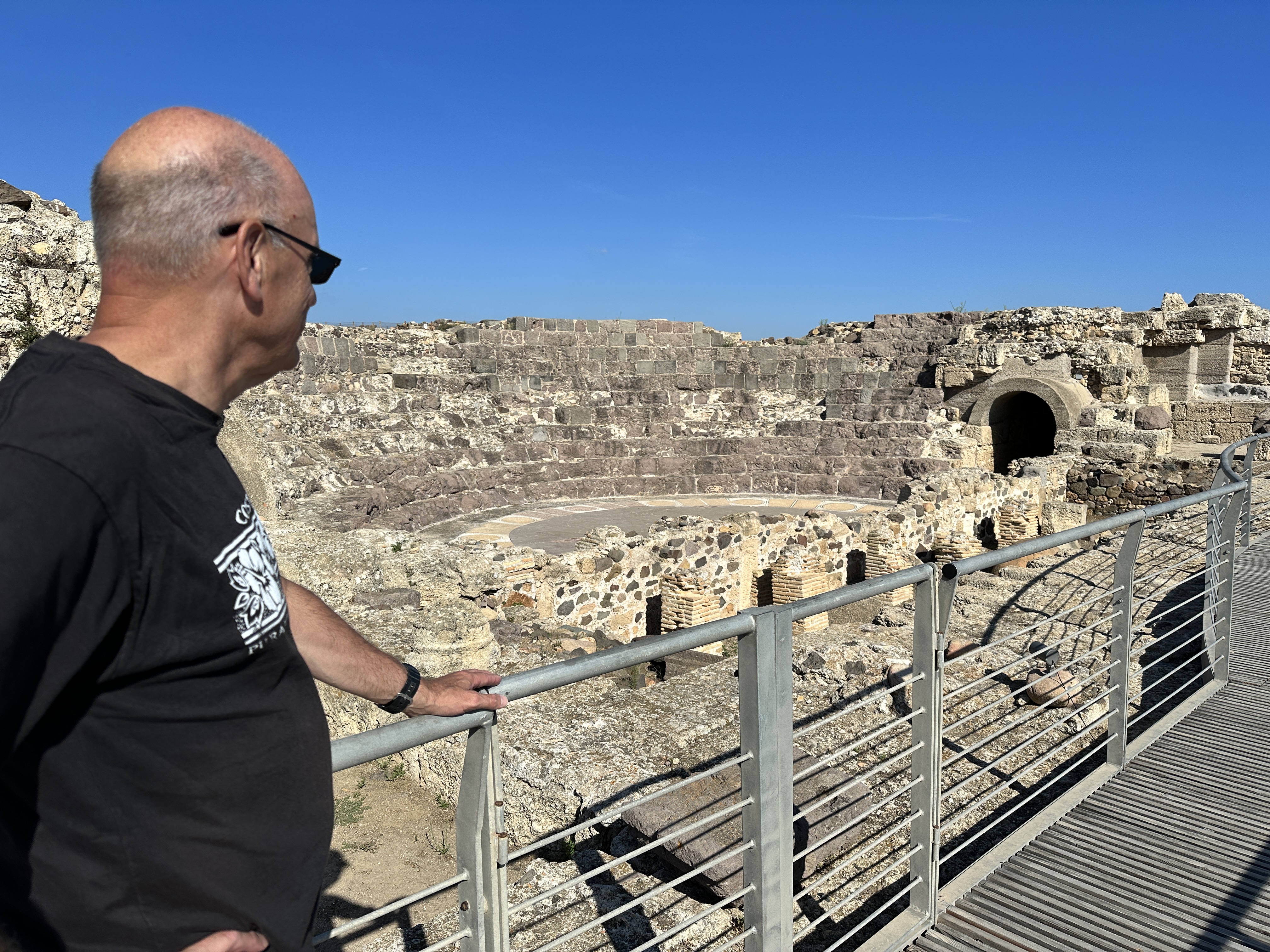
The ruins of the 1st century A.D. theater at Nora.
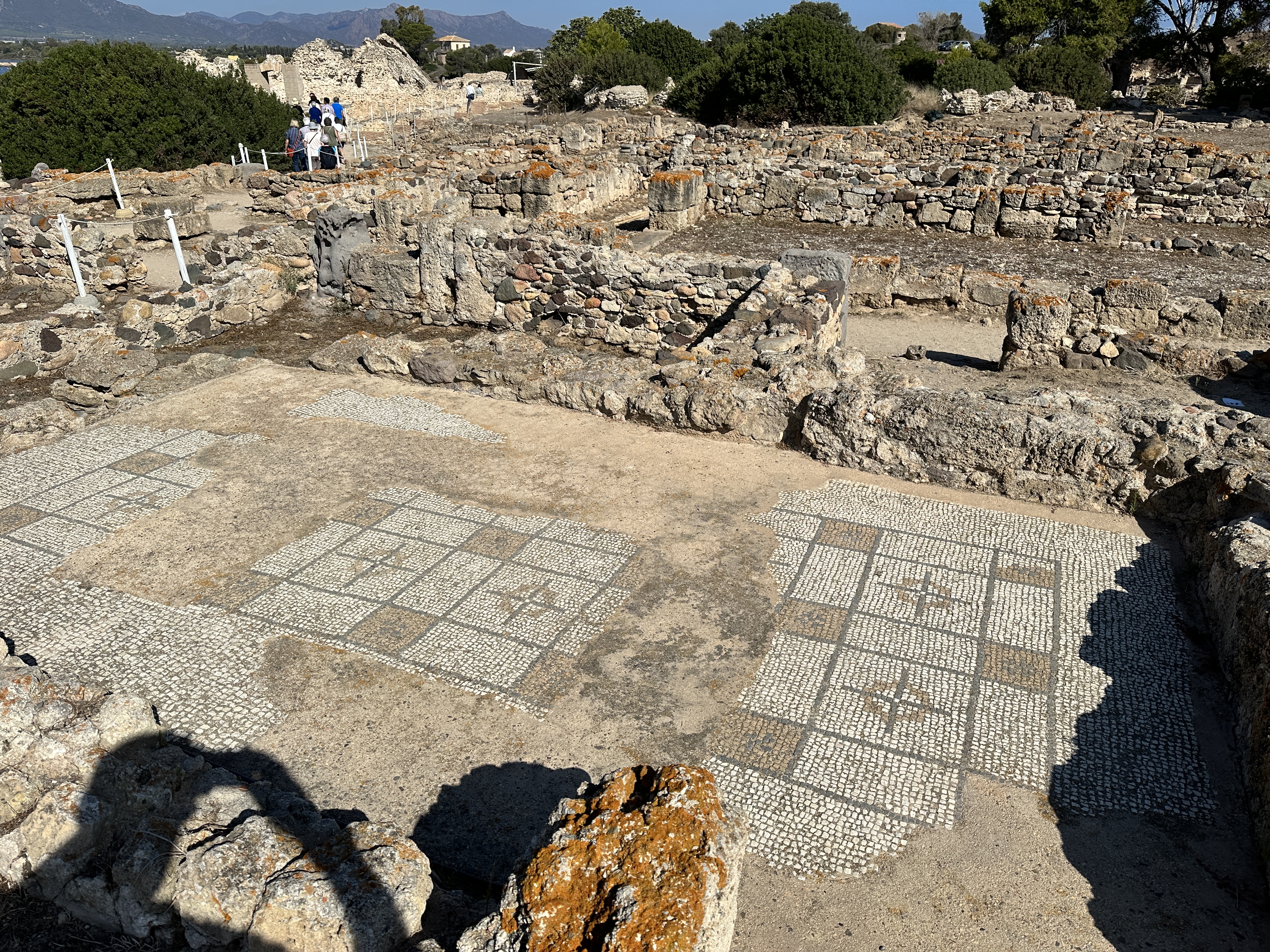
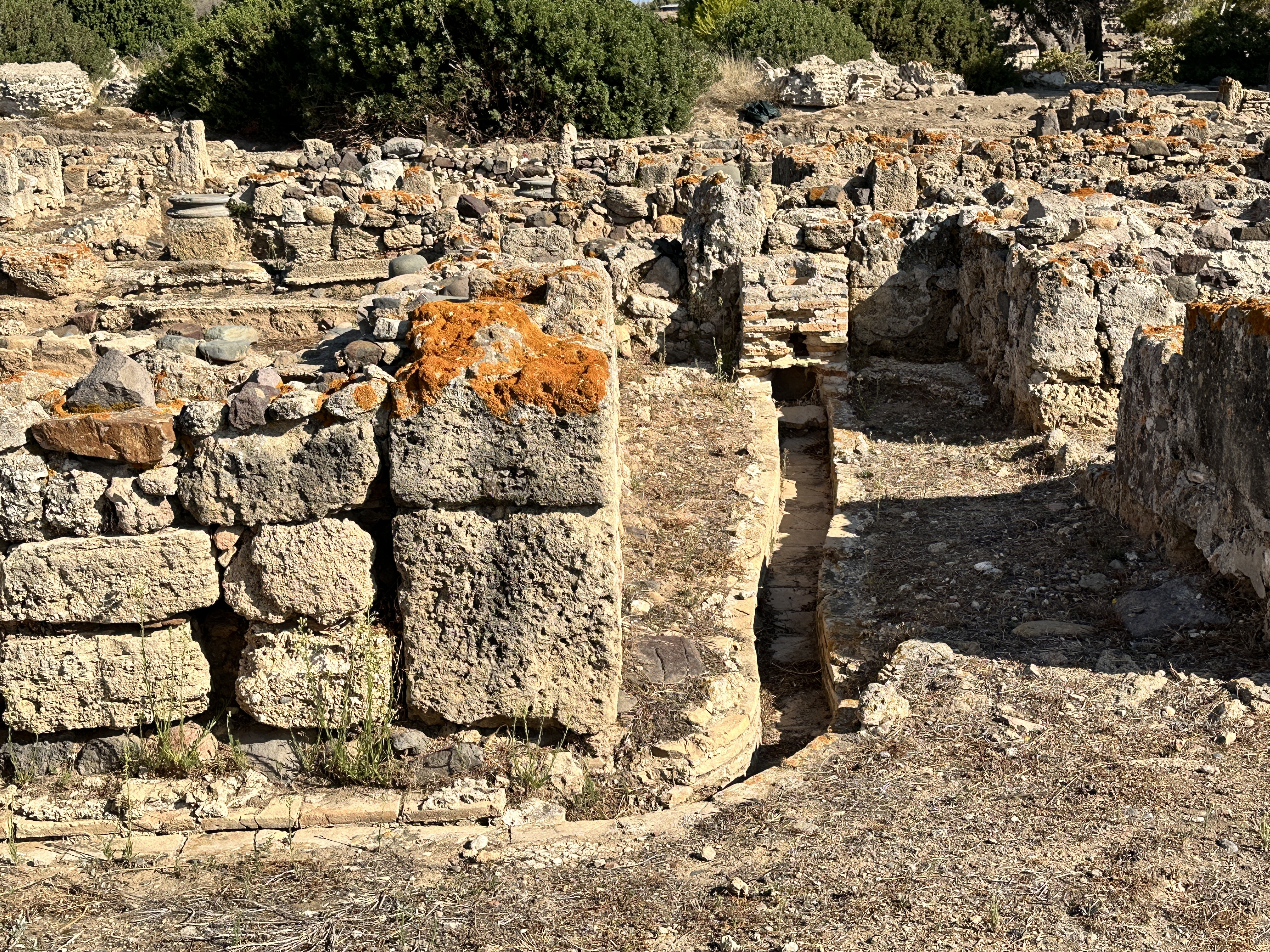
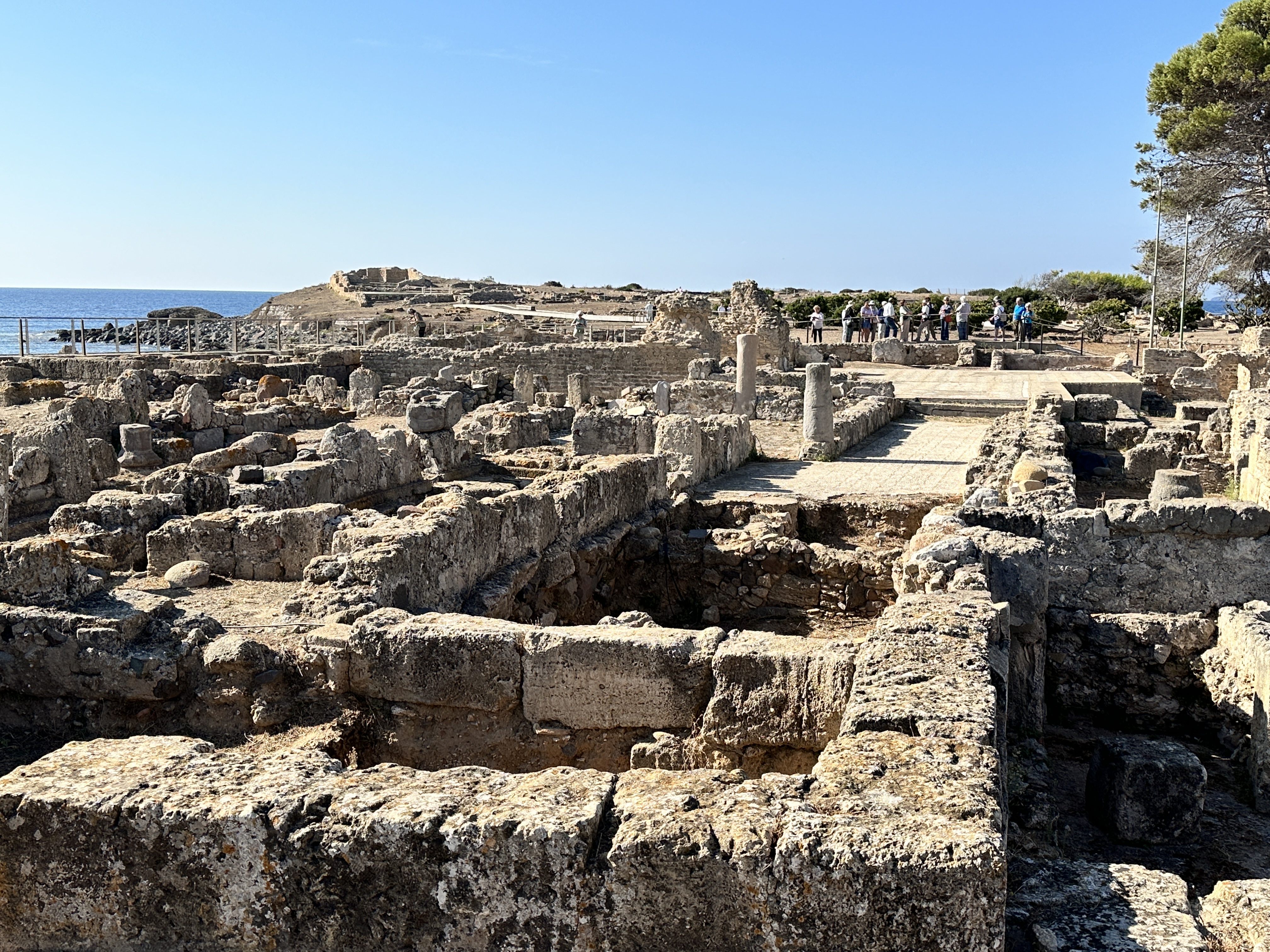
Above – Examples of the beautiful mosaics found at Nora Archeological Site.Above – other views of Nora – left: an example of a drainage system; right – mosaic floors surrounding one the city’s temple foundations.Additional views of Nora – shops area and a street through the center of town.
The large cauldrons may have been used for storage, making of wine, washing or perhaps other uses.
Nora, along with Tharros are worthwhile archeological sites to see during your visit to Sardinia. So take a break from the beautiful beaches and learn something about Sardinia’s fascinating cultural history.
Oristano is not likely to be on the main tourist route in Sardinia, Italy especially if time is limited. However, if you have the time, you should definitely check it out. There is a lot to do in this region of Sardinia. Here are the main sights we visited. In addition to the sights listed below, there are ancient Nuragic sites not far from here. For a map of Sardinia and to learn more about these sites, see my post here.
Is Aruttas Beach
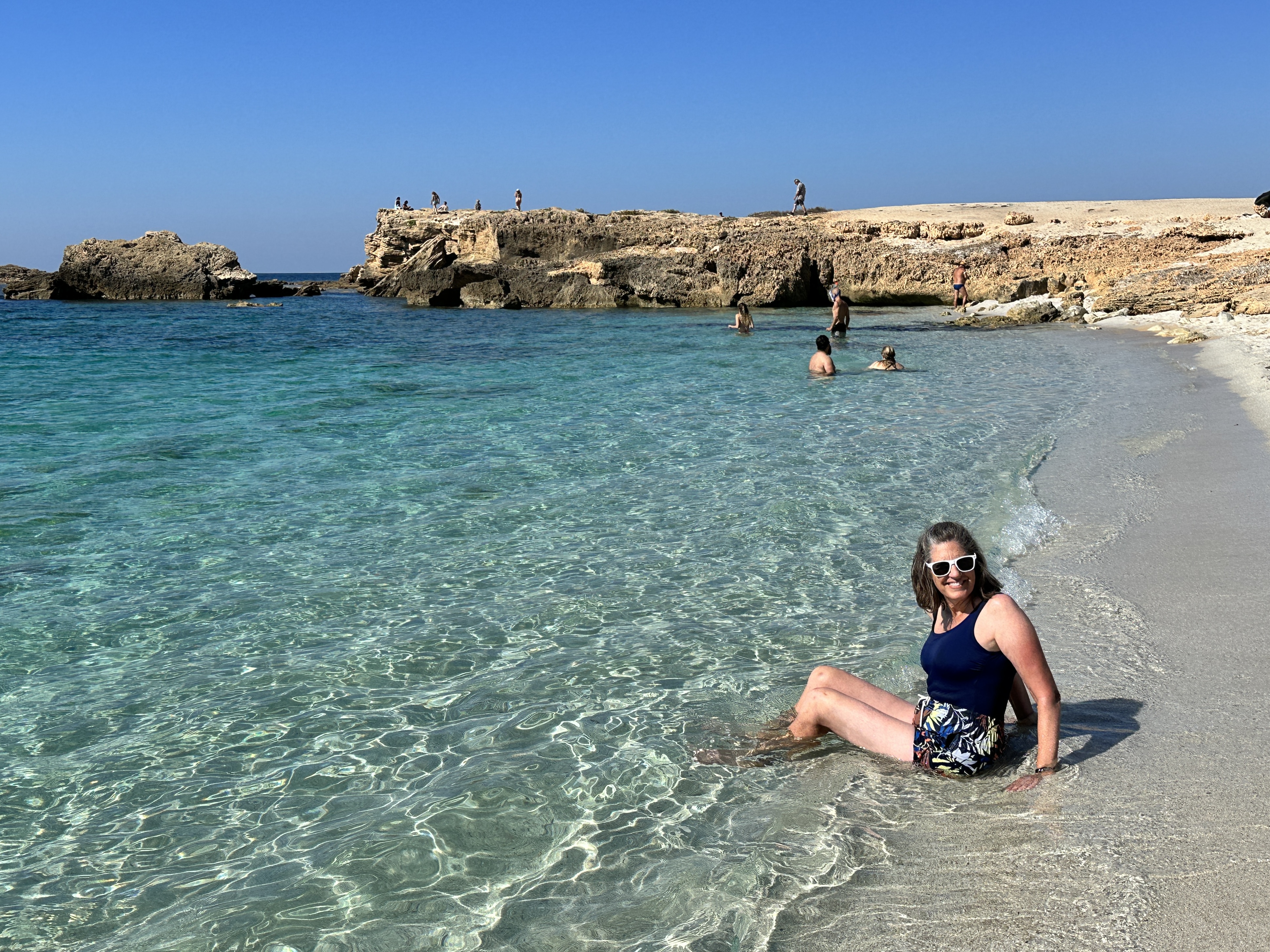
This beach on the Sinis peninsula is about 22 km (13 miles) from Oristano and one of the region’s most famous. There is a large parking lot and a refreshment stand near the beach. The quartz sand on this beach is amazing, I wish I had taken a close-up of it – it looks like translucent rice. Just another perfect beach in Sardinia! As with all beaches in Sardinia, it is a crime to remove the sand – be sure to leave the sand where it belongs on the beach for others to enjoy!
Views of Is Arutas Beach.
Tharros Roman Archeological Site
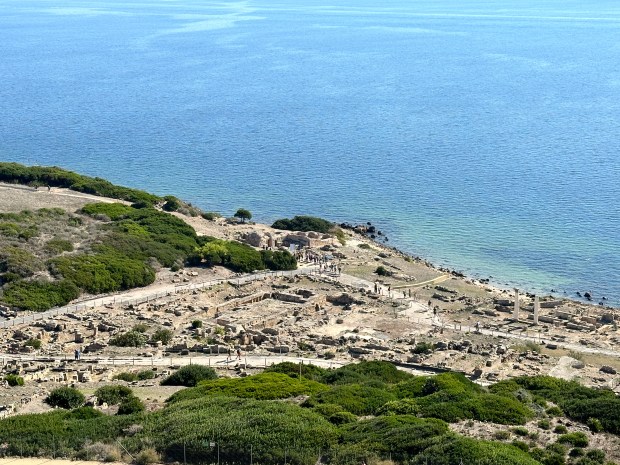
Tharros was occupied for nearly 2,000 years, from the 8th century BC to about 1050 AD. It sits near the end of the Sinis Peninsula, and it’s a spectacular setting.
A view of the ruins of Tharros and the late 15th-century San Giovanni Tower, which you can climb for a small additional fee.
Additional views of the ruins of Tharros.
This gorgeous beach is a stone’s throw from Tharros. Roman ruins, a 15th- century Spanish Tower and beautiful beach – what more could you ask for?!
Fordongianus Roman Archeological Site
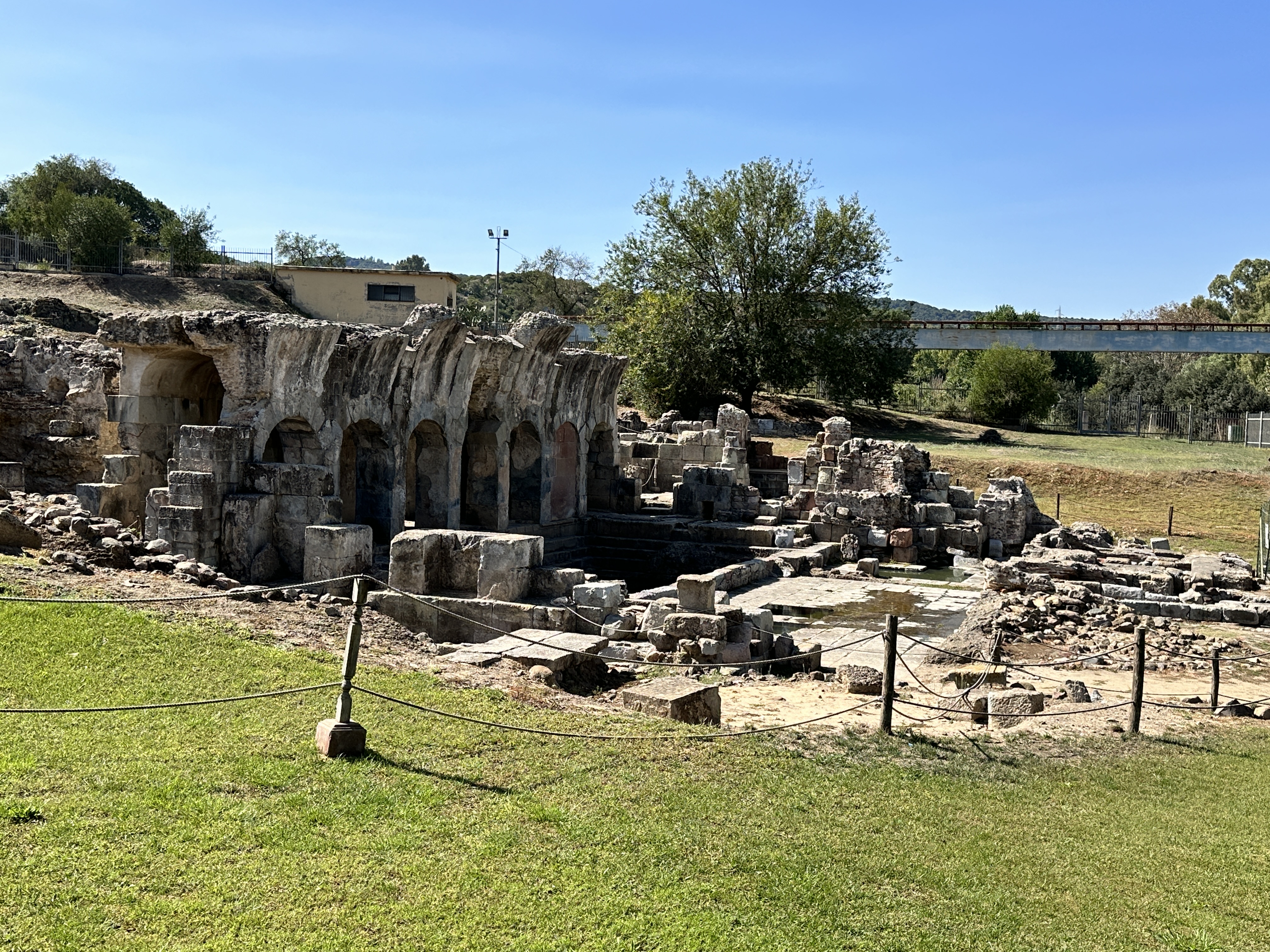
The water still runs warm from the natural springs at the 1st century AD Fordongianus Roman Baths. This site is about 25 km (14 miles) northeast of Oristano. We stopped by on our way into Oristano, but we arrived during siesta time so we had to settle for looking at the Baths through a wire fence, which actually offered some pretty good views. There is a fee to visit the Baths.
Fordongianus Roman Baths.
Just outside Fordongianus is this pretty 12th & 13th century Romanesque church, dedicated to San Lussorio, who was martyred by the Emperor Diocletian in 304 AD.
San Giovanni di Sinis Church
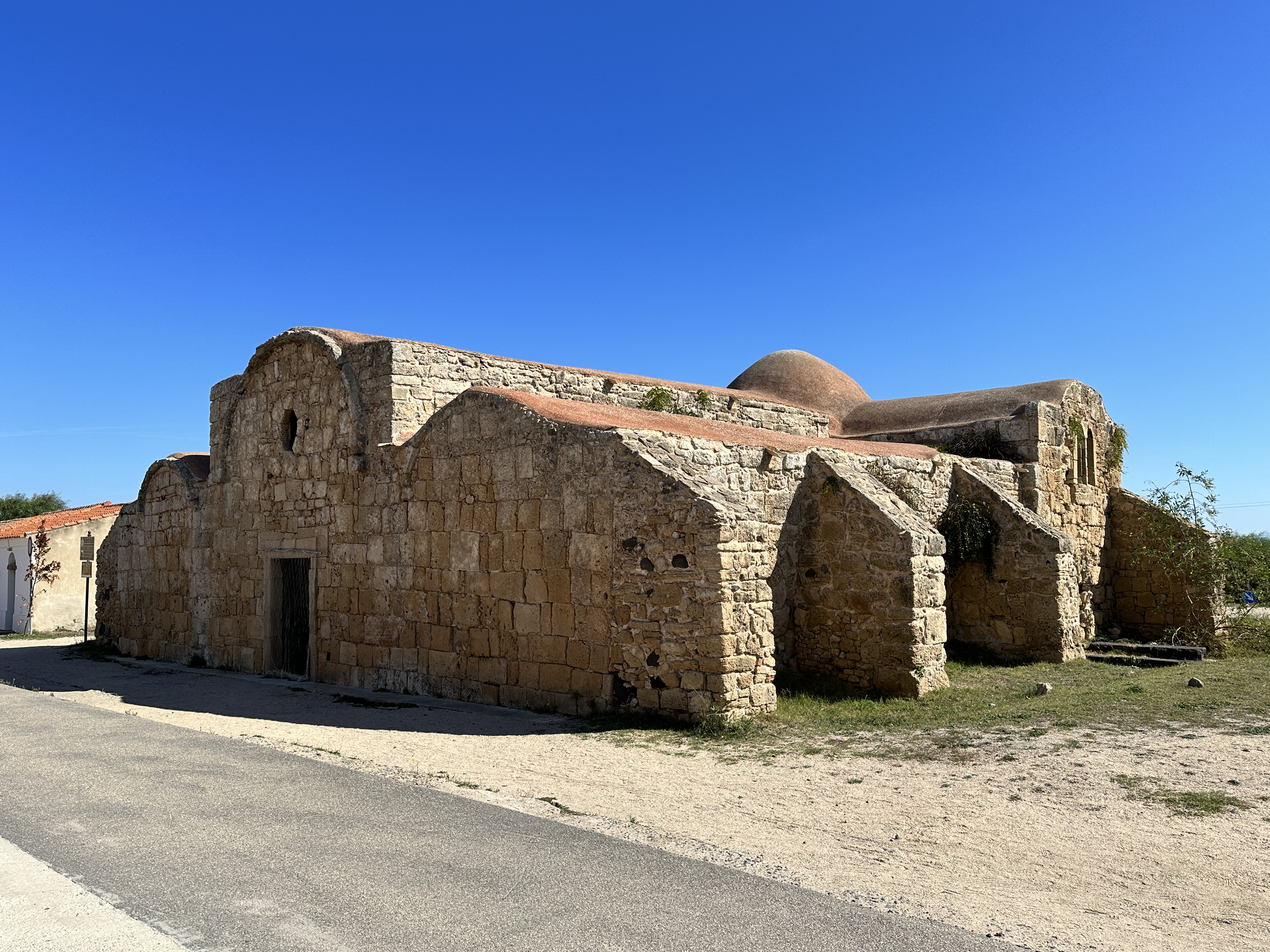
This interesting little church is right near the entrance to the Tharros archeological site. It is one of the two oldest churches in Sardinia, originally dating back to the 6th century – it still retains some of its Byzantine characteristics, such as the red roof. The present structure dates from the 9th and 11 centuries. The church sits in an ancient burial area. The church was free to enter and was definitely worth a stop.
San Giovanni di Sinis Church.
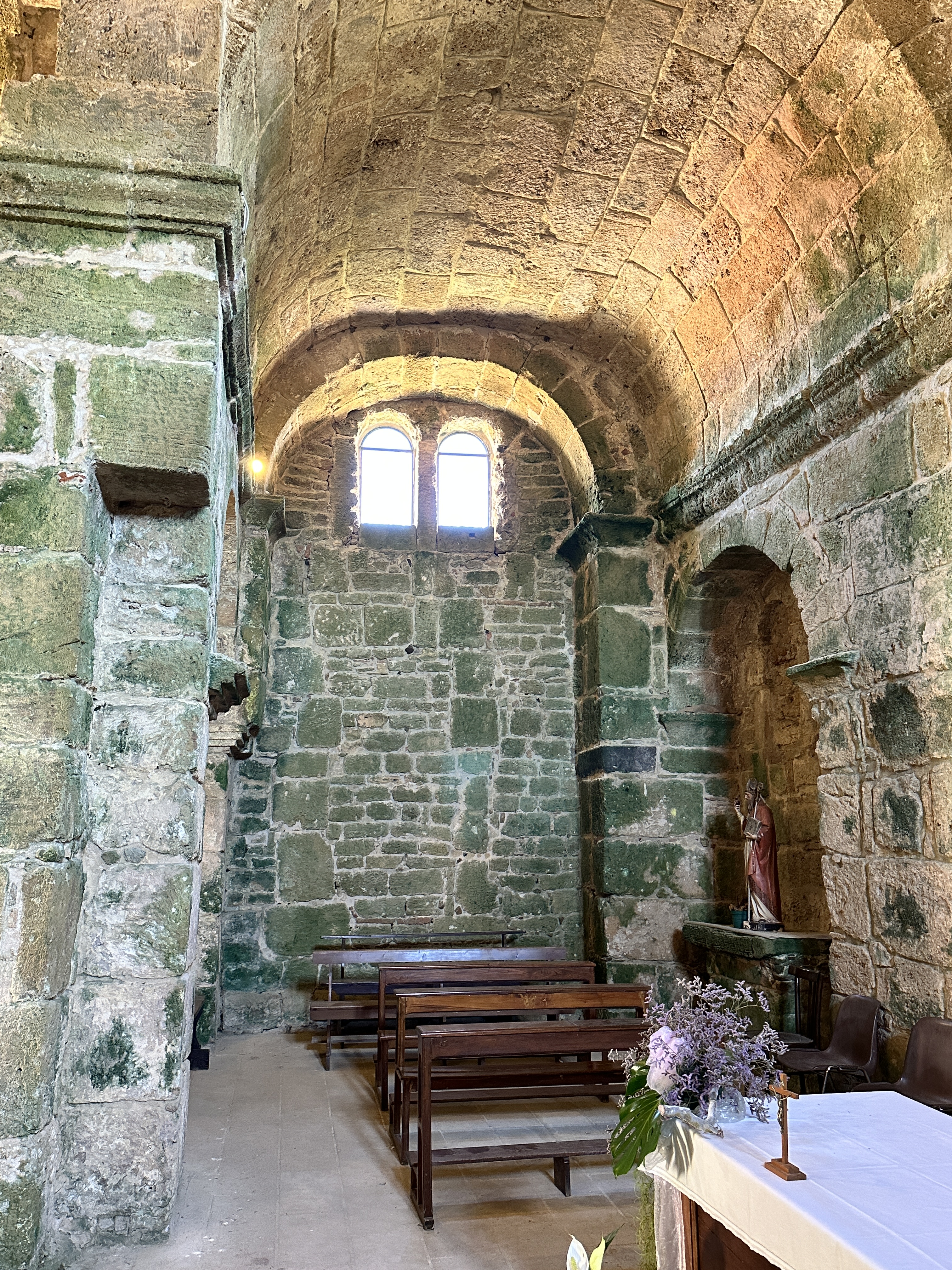
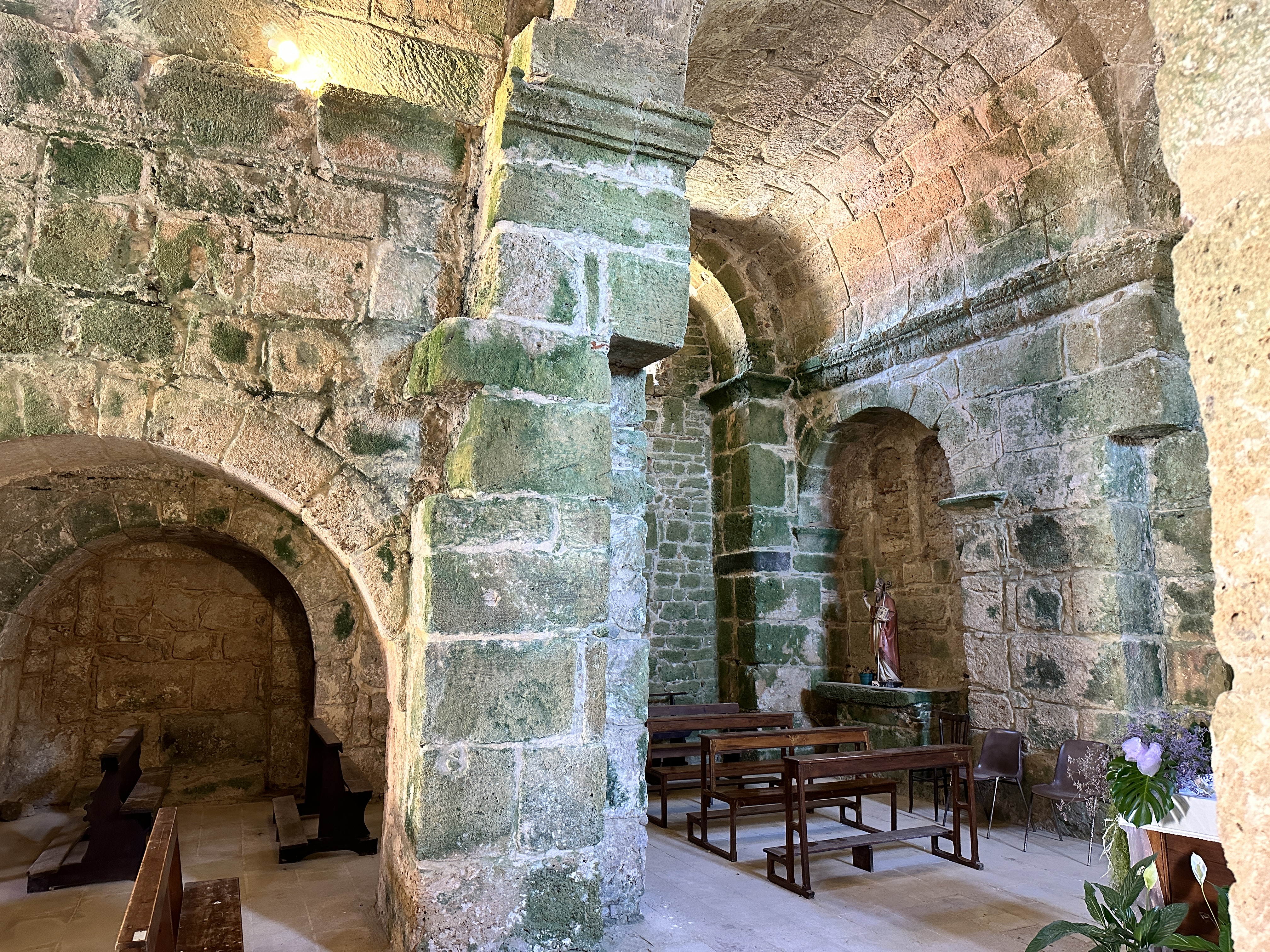
Views of the interior of San Giovanni di Sinis Church, with green algae covering some of the ancient stone walls.
San Salvatore
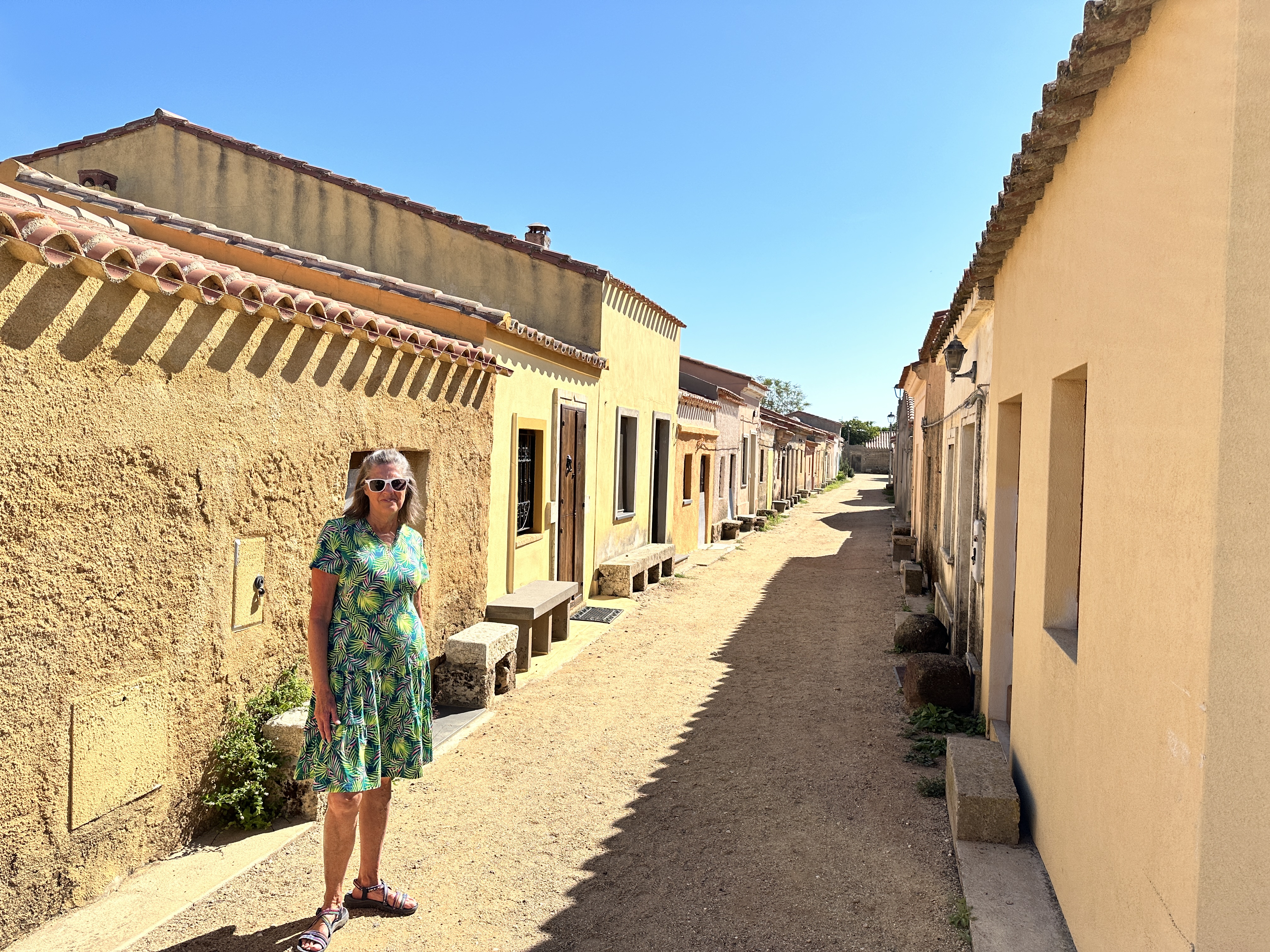
San Salvatore, also close to Tharros, is a spaghetti-western filmset from the 1960’s. It has the feel of a old western U.S. ghost town. The town opens its dwellings’ doors during September each year to house pilgrims for the Festa di San Salvatore, a celebration focused on the village’s small church, which sits over the ruins of a Nuragic period (~1,500 BC) vault. It looked to us like there might be a few permanent residents here, we saw some homes that looked lived in.
Views of San Salvatore.
Oristano Town
Oristano seemed to us to be a pretty quiet town, without fewer tourists compared to other locations in Sardinia, even though there is much for the tourist to see in the vicinity. We enjoyed walking the streets in the evening without any throngs of tourists. It is a perfect place to call “home” during your stay in this part of Sardinia.
The 13th-century Torre di Mariano II was Oristano’s nothern gate, one of the few remains of the city’s medieval defenses.
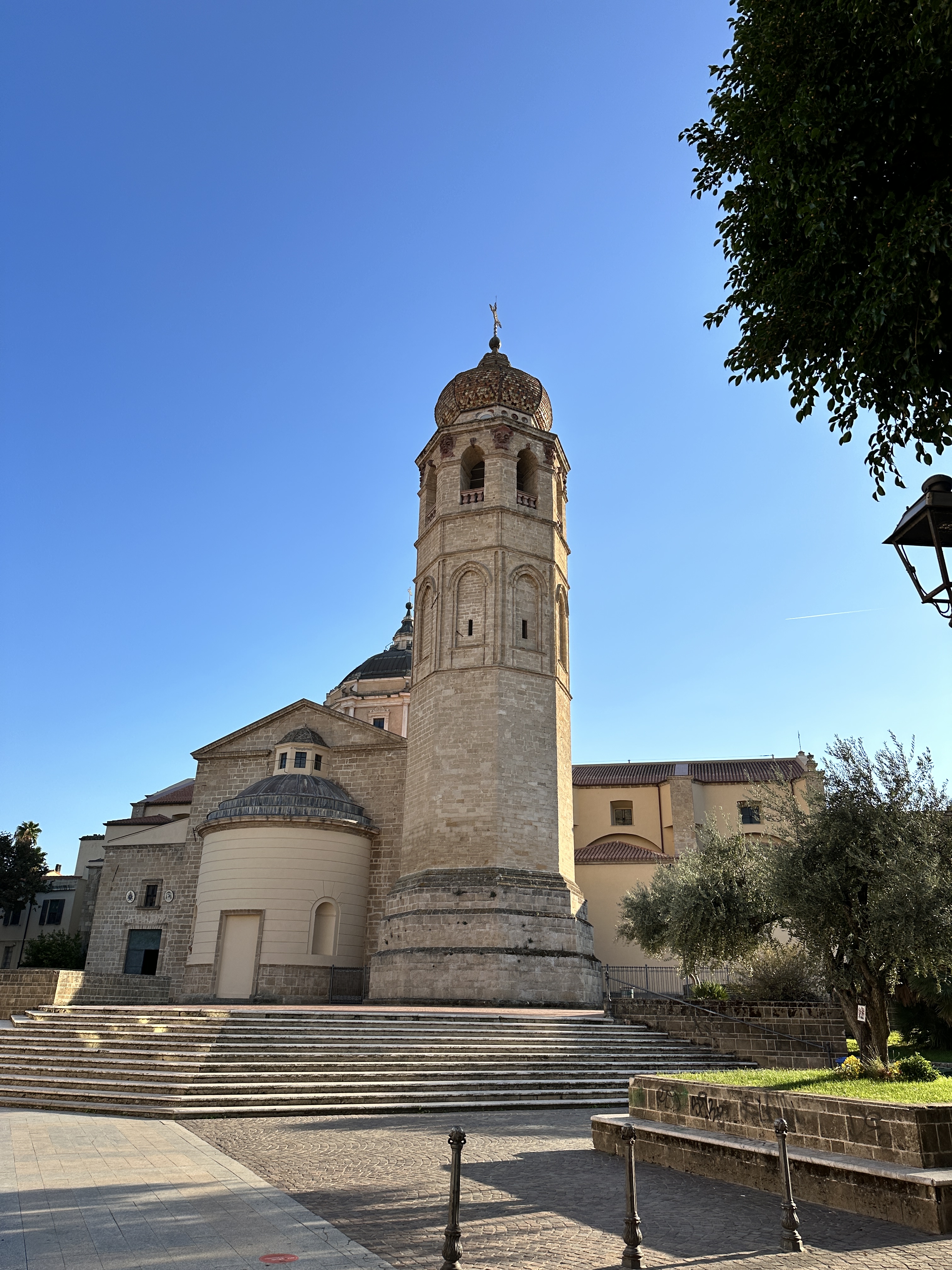
Views of the Catedrale di Santa Maria Assunta. The 14th century bell tower still stands. The rest of the current structure is 18th century.Left – Torre di Portixedda, part of Oristano’s original medieval walls. Right – street scene in central Oristano.









 The Independent Tourist