When most people think of Barcelona, Spain they think of Gaudi’s architectural wonders, such as the beautiful Sagrada Familia. However, the Gothic Quarter of Barcelona deserves your attention too. Here are just a few highlights.
The streets of the Gothic Quarter are fun to wander, there is something of interest around each corner.
Barcelona’s Gothic Cathedral (La Seu)
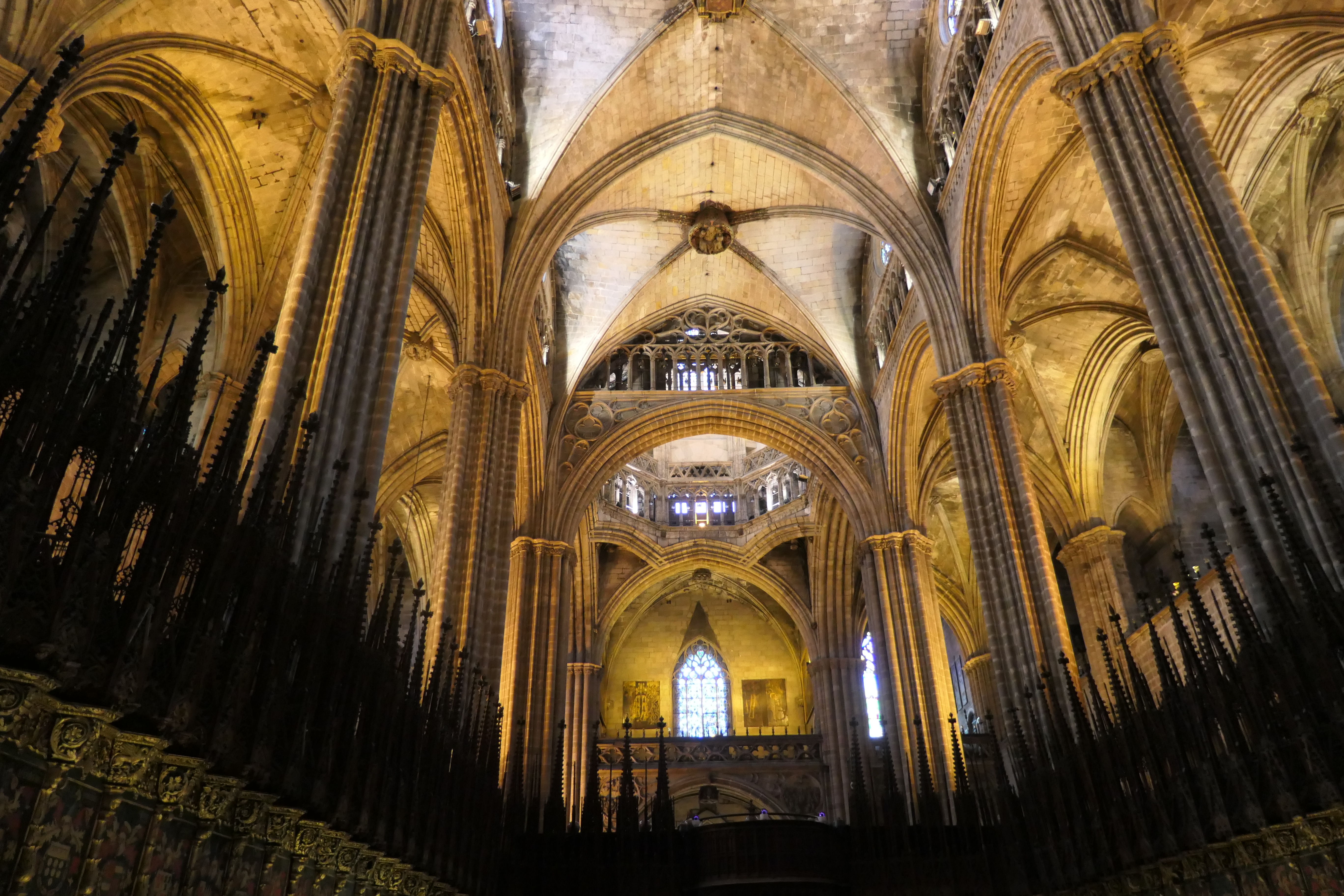
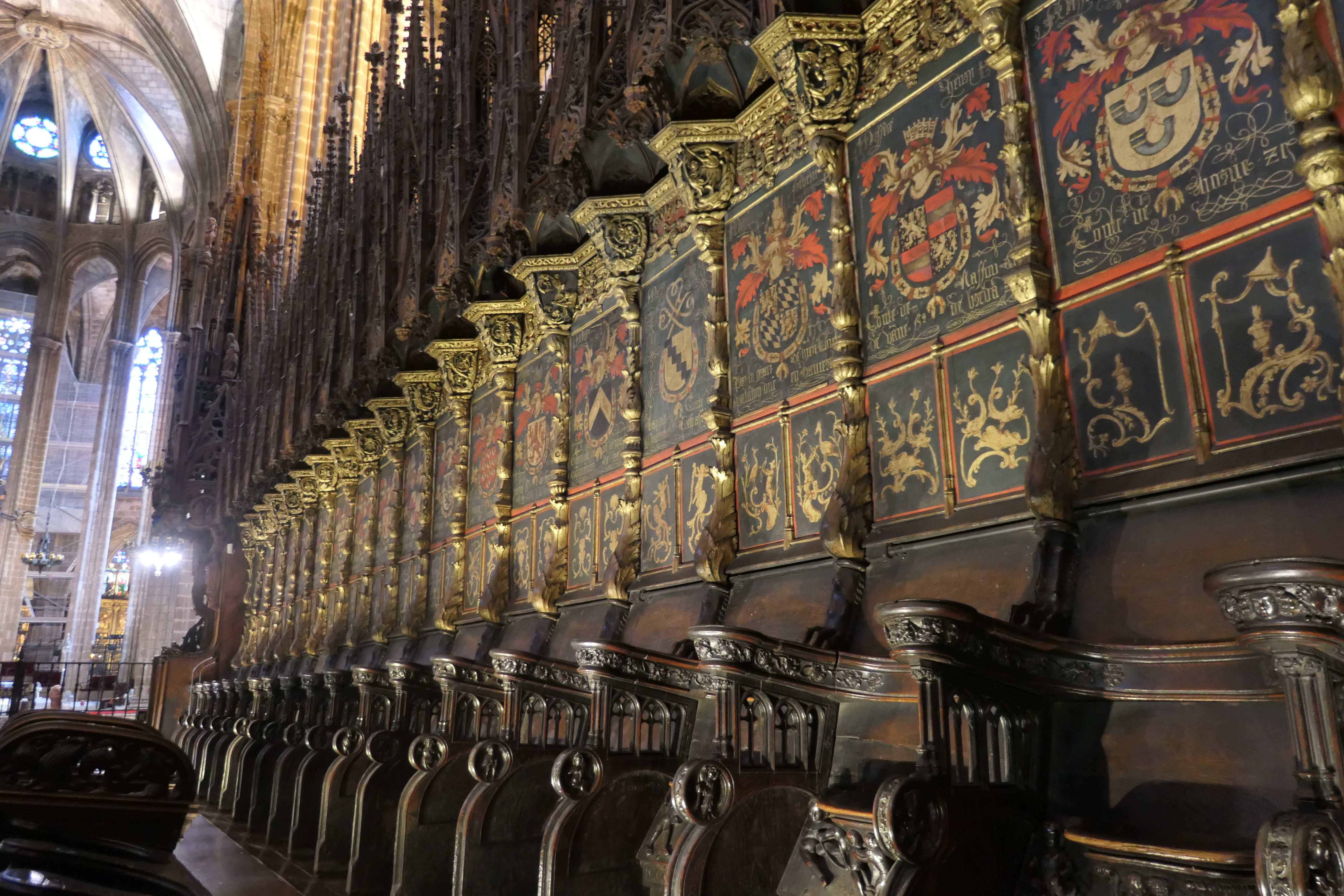
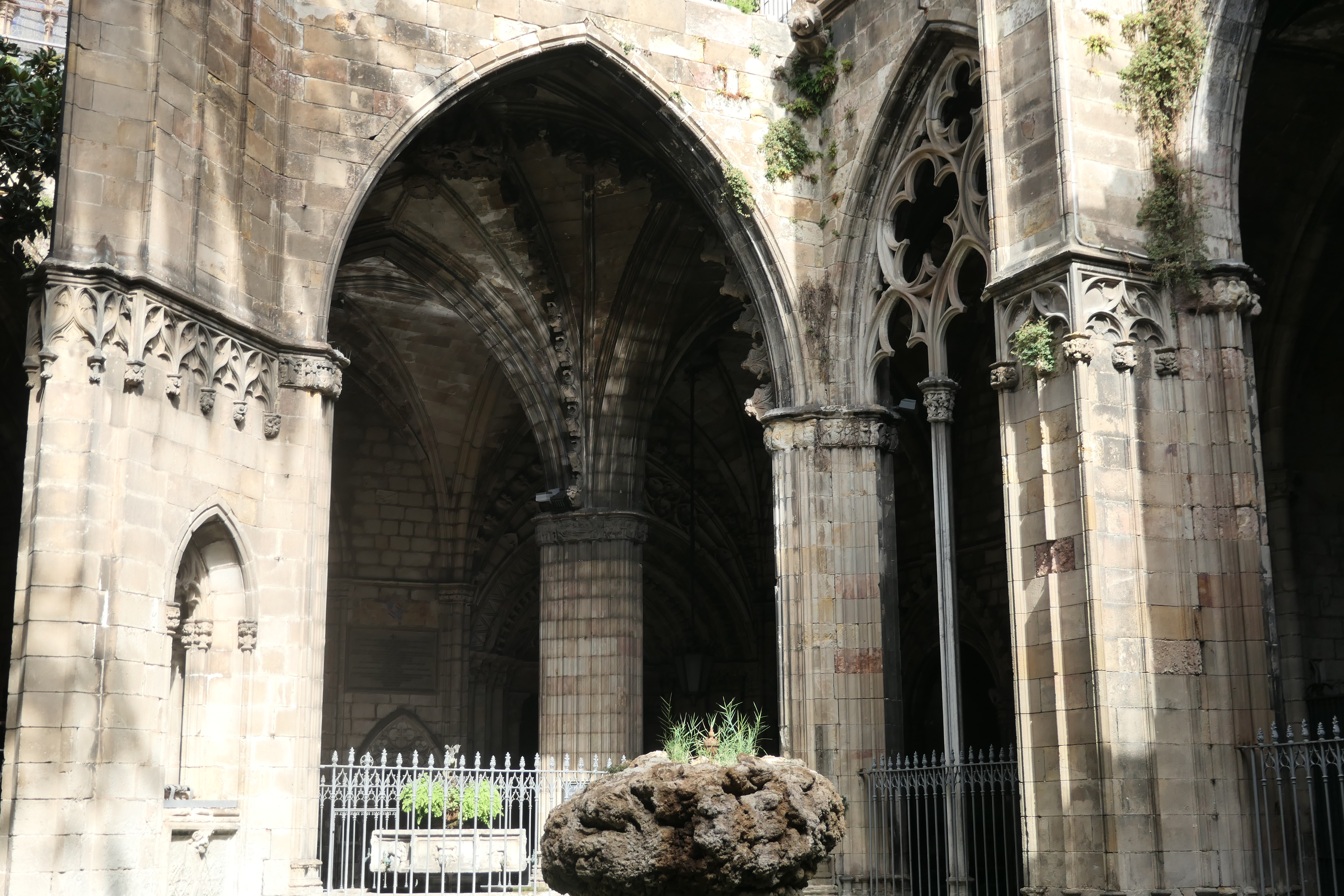
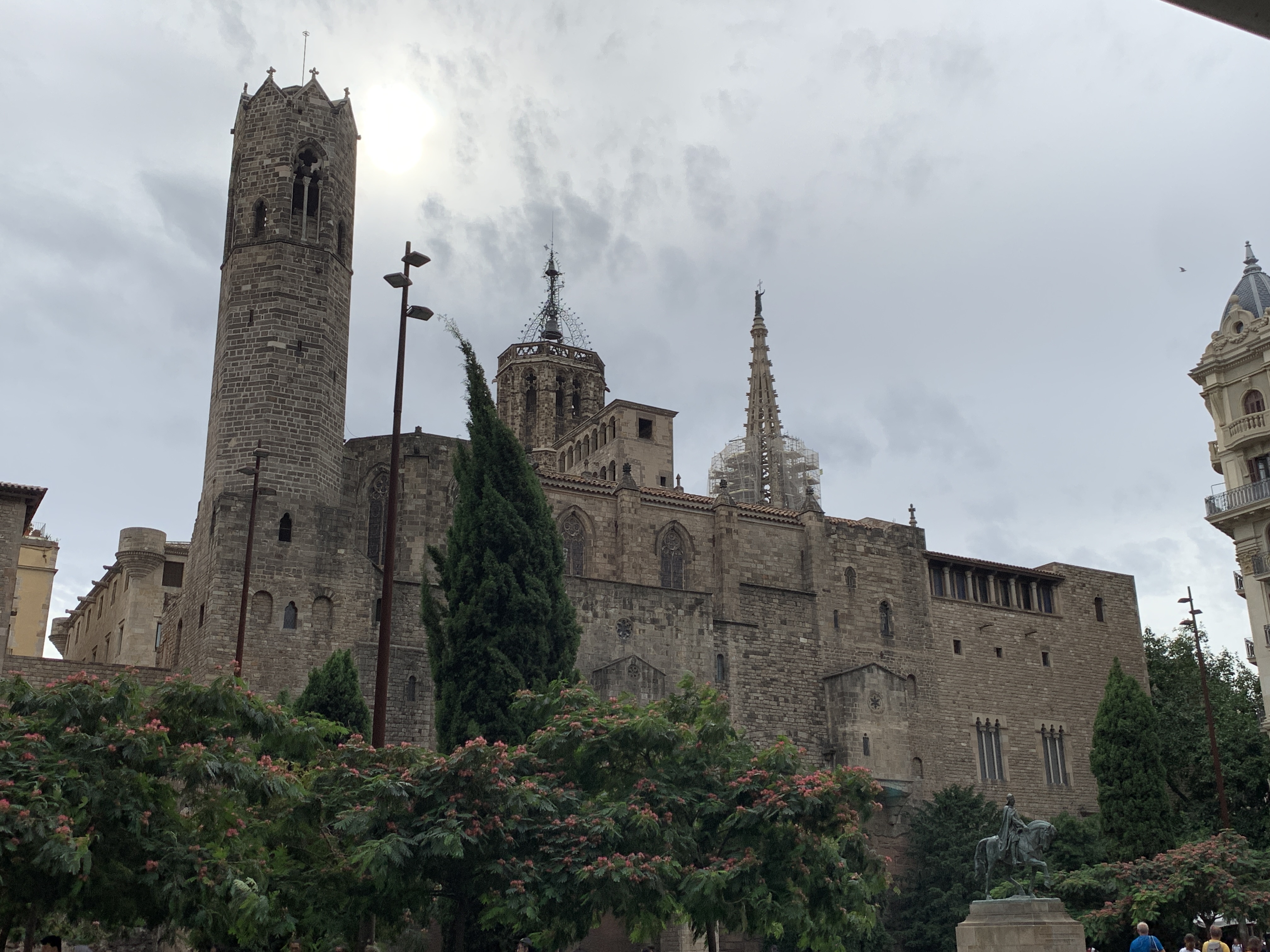
The 14th-century cathedral is beautiful and worth a visit – check out the main interior (nave), choir, side chapels, crypts, cloister, and chapter house. You can also do a rooftop walk of the Cathedral for a great view overlooking the Gothic Quarter of Barcelona. There was some restoration work going on while we were visiting the Cathedral.
The main facade of Barcelona’s Gothic Cathedral.
Above – interior views of Barcelona’s Cathedral, including the nave and beautifully painted choir stalls.Left – Crypt of Saint Eulalia, Barcelona’s patron saint, constructed at the start of the 14th century. Right – the beautiful and peaceful cloister.
Palau Reial Major
The 14th-century Royal Palace in the Gothic Quarter is right next to the Cathedral. It houses some interesting displays and provides a great overview of the history of Barcelona.
Exterior view of Palau Reial Major. It is now a museum.
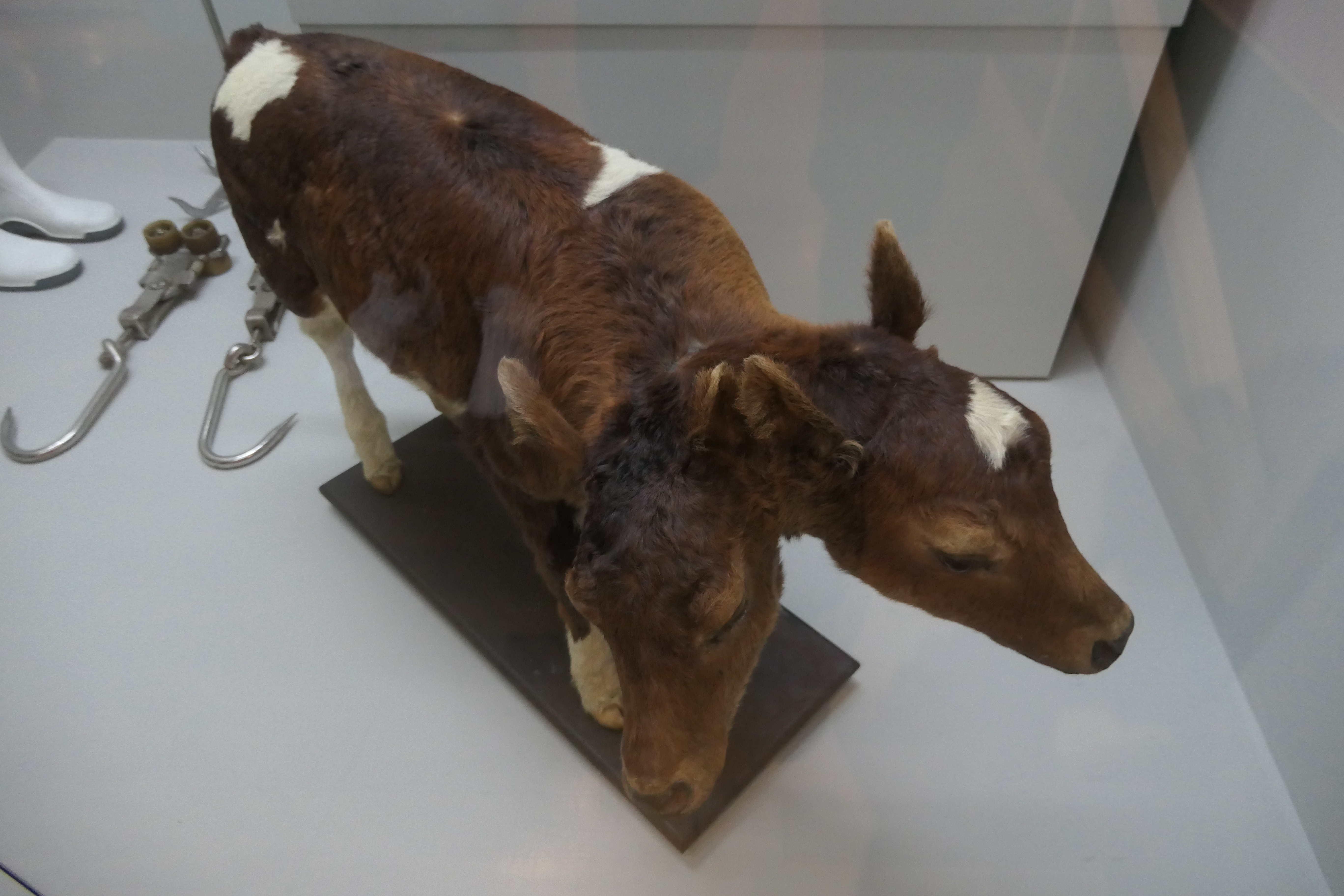
A two-headed calf in the museum and various displays of Catalan history at the Palau Reial Major.
Barcino – The Roman City
Right underneath your feet in the Gothic Quarter are the partially excavated ruins of Barcino, the 1st century B.C. Roman settlement on which modern Barcelona was built. The Barcelona History Museum has done an excellent job creating displays and building walkways over the old streets, houses, and craft shops of Barcino, now all underground. The explanatory signs are in English as well as other languages and are very informative. Wine making and fish processing were important industries in Barcino.
A 3rd-century salted fish tank – alternate layers of chopped fish and salt were left to marinate in these tanks for 20 days – yum!
Wine vats in Barcino.
Other views of Roman Barcino. On the right is an ancient baptismal font.
Other Sights Near the Gothic Quarter
Just down the street (Via Laietana) from the Gothic Quarter is the harbor waterfront (Marina Port Vell) of Barcelona, with a large plaza (Plaça de Correus), numerous cafes, walking paths and gorgeous yachts everywhere. Marina Port Vell calls itself “the premier superyacht marina in Barcelona” and they aren’t kidding!
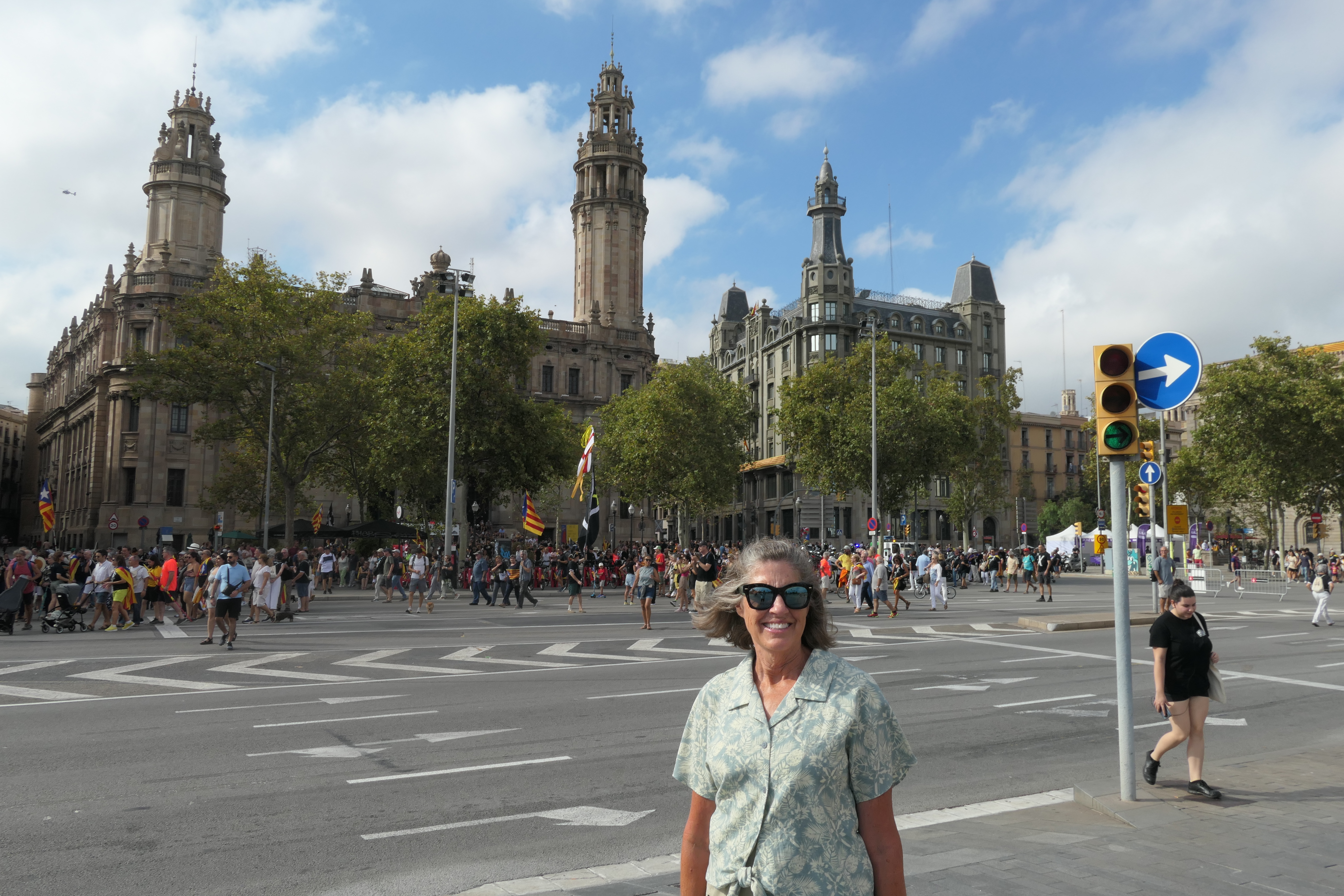
Robyn in front of Plaça de Correus.
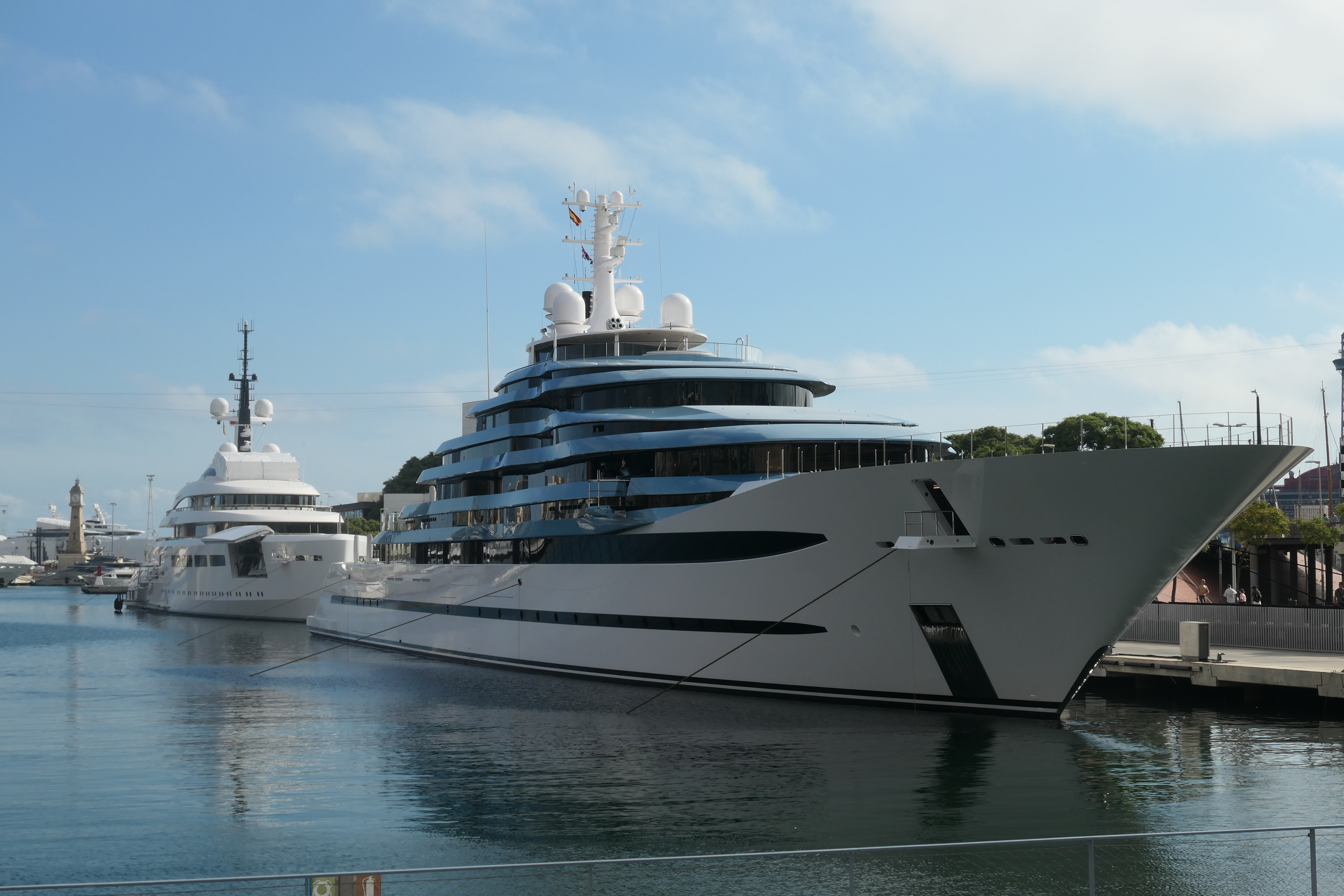
A couple of the amazing yachts at Marina Port Vell. I’d really like to cruise the Mediterranean Sea in one of these!
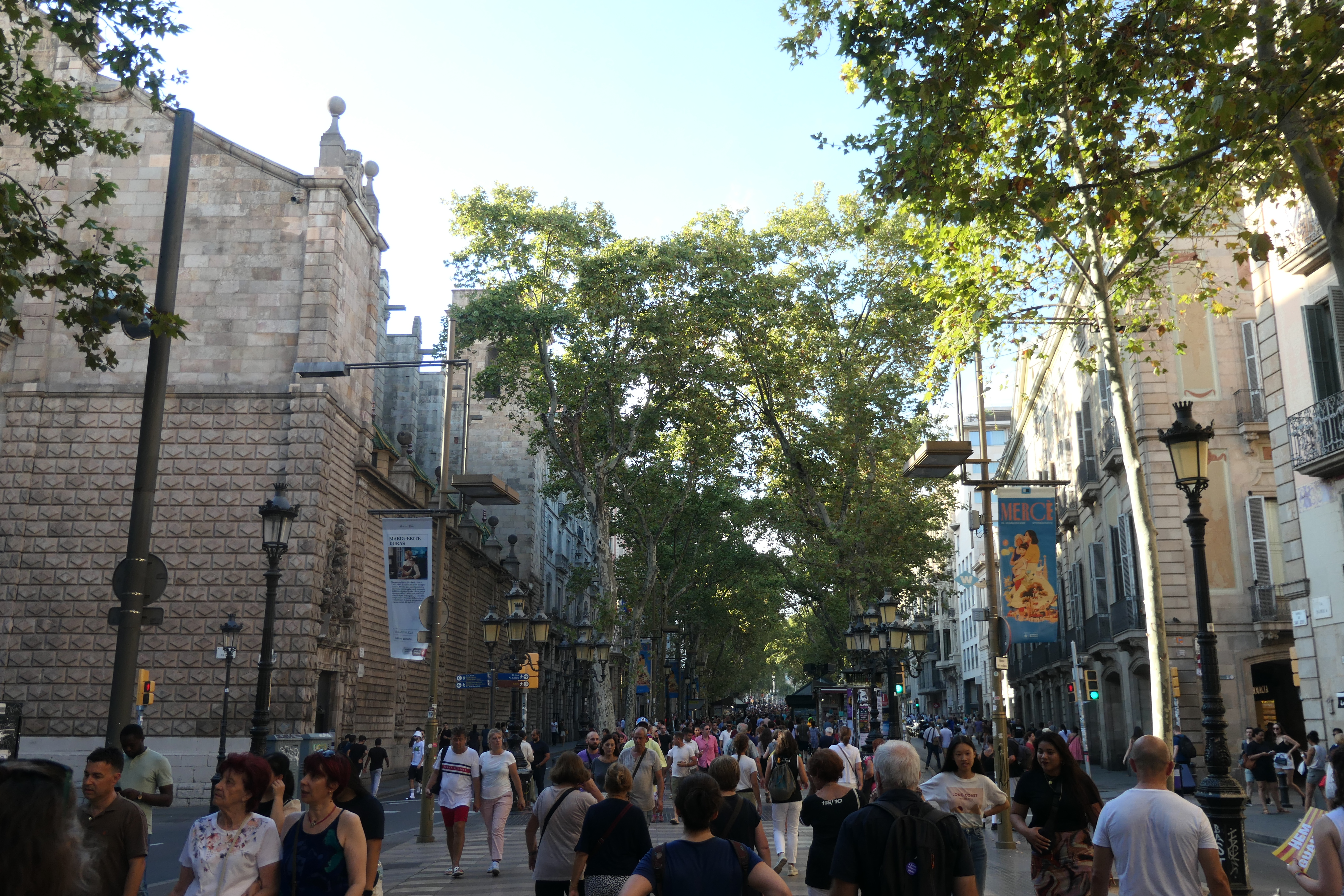
Las Ramblas is the main pedestrian thoroughfare in downtown Barcelona. Great for people watching, viewing architectural points of interest and grabbing a meal. We made our tour reservations to visit Montserrat Monastery (outside of Barcelona) at a tourist information booth on Las Ramblas.
Everywhere you turn there is interesting architecture to be seen in Barcelona. These images are of the exterior of Palau de la Musica Catalana.
Note: We spent a full half-day in the Gothic Quarter after arriving on a morning flight from Menorca. Our second day was spent touring the Gaudi sights, and our third day was spent visiting Montserrat Monastery. It was a perfect 3 days in Barcelona! We stayed in Casa Mathilda right in the heart of Barcelona, an excellent small hotel within walking distance of many sights and the metro (subway) system.
Following an awesome 10-day trip to the islands of Mallorca and Menorca, Spain, we flew to Barcelona directly from Menorca to spend a few days there before heading home. This was our first time in Barcelona. There is a lot to do in here, and we decided to take one day and visit several sights that represent the influence Antoni Gaudi (1852 – 1926) had on the architecture of this beautiful city. He was an extraordinary architect and designer who incorporated design elements he found in natural forms (such as the shape of shells and trees) into his architectural work – hence the unique elements you find in his buildings.
Please note it is worth planning ahead and getting your tickets for the sights below in advance, especially during the summer months. We were in Barcelona in October and the city was quite busy with tourists.
La Sagrada Familia
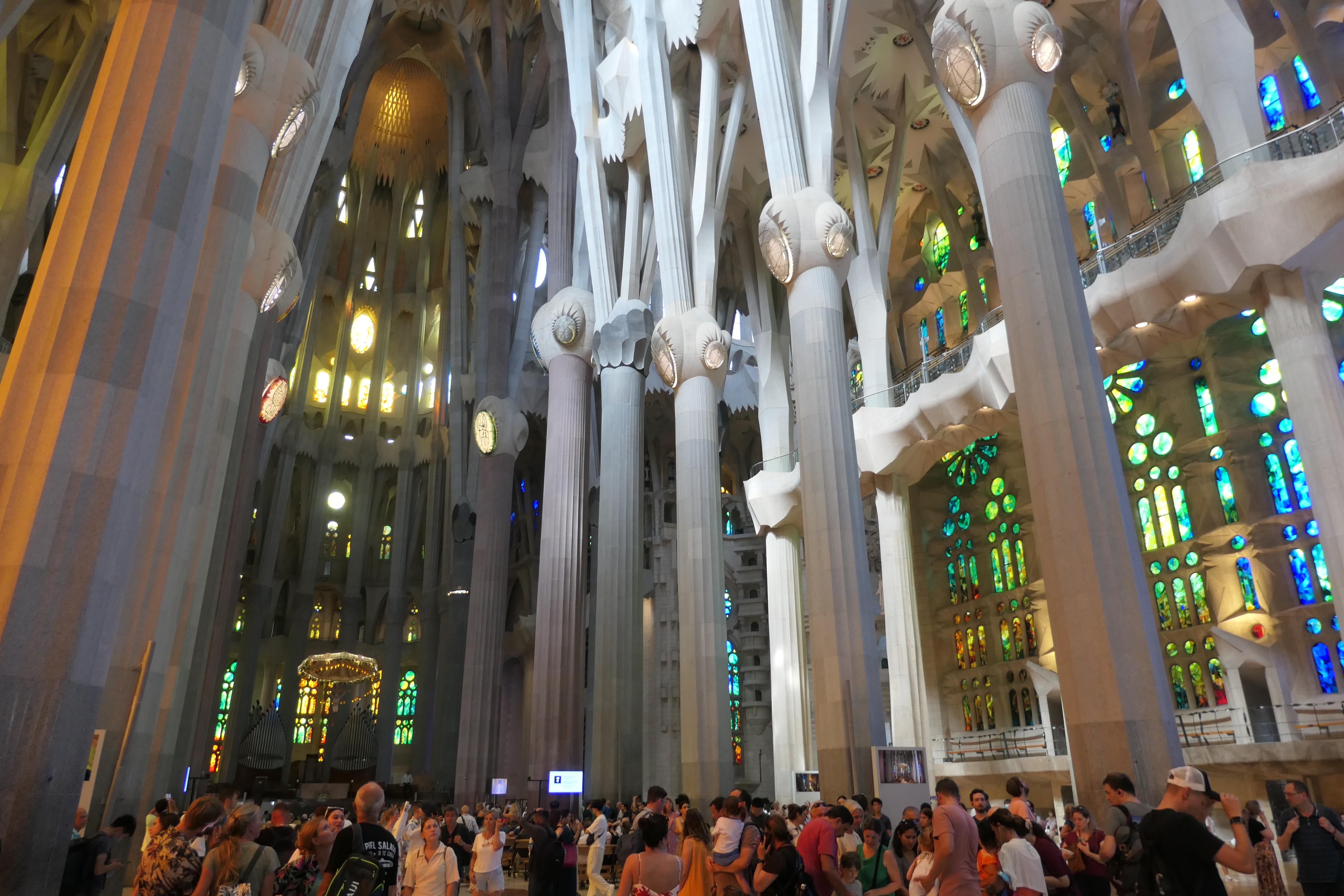
This is likely the most famous landmark in Barcelona (as attested by the large crowds) and is the largest unfinished Catholic Church in the world. This church has been under construction since 1882. The hope was to complete its construction by 2026, the centennial anniversary of Gaudi’s death; however it is likely to extend beyond this date. The Church has a layout similar to a typical medieval European Gothic Cathedral, but the interior design is very unique. The completion of the tallest spire, the Jesus Christ spire, will make La Sagrada Familia the tallest church in the world (approximately 173 meters).
Side note: We paid for a “tower view” as part of our entry ticket and were disappointed. Very little was visible – you could see a little bit of construction work going on and some obstructed views of Barcelona, but that was about it. Perhaps at some point there will be a view or tour available from the top of the tallest spire – now that would be worth it!
Views of the exterior of La Sagrada Familia.Views of the central nave. The columns look like trees. The interior is very light and airy with the soaring ceiling and stained glass windows.Views of the Nativity façade over one of the main entrances – you can study the detail and various images for hours! It is difficult to get an image that captures the essence (and detail) of the whole façade. The Nativity façade was largely completed during Gaudi’s lifetime – he wanted to set an architectural example for others to follow who would be completing this work after his passing.
Park Güell
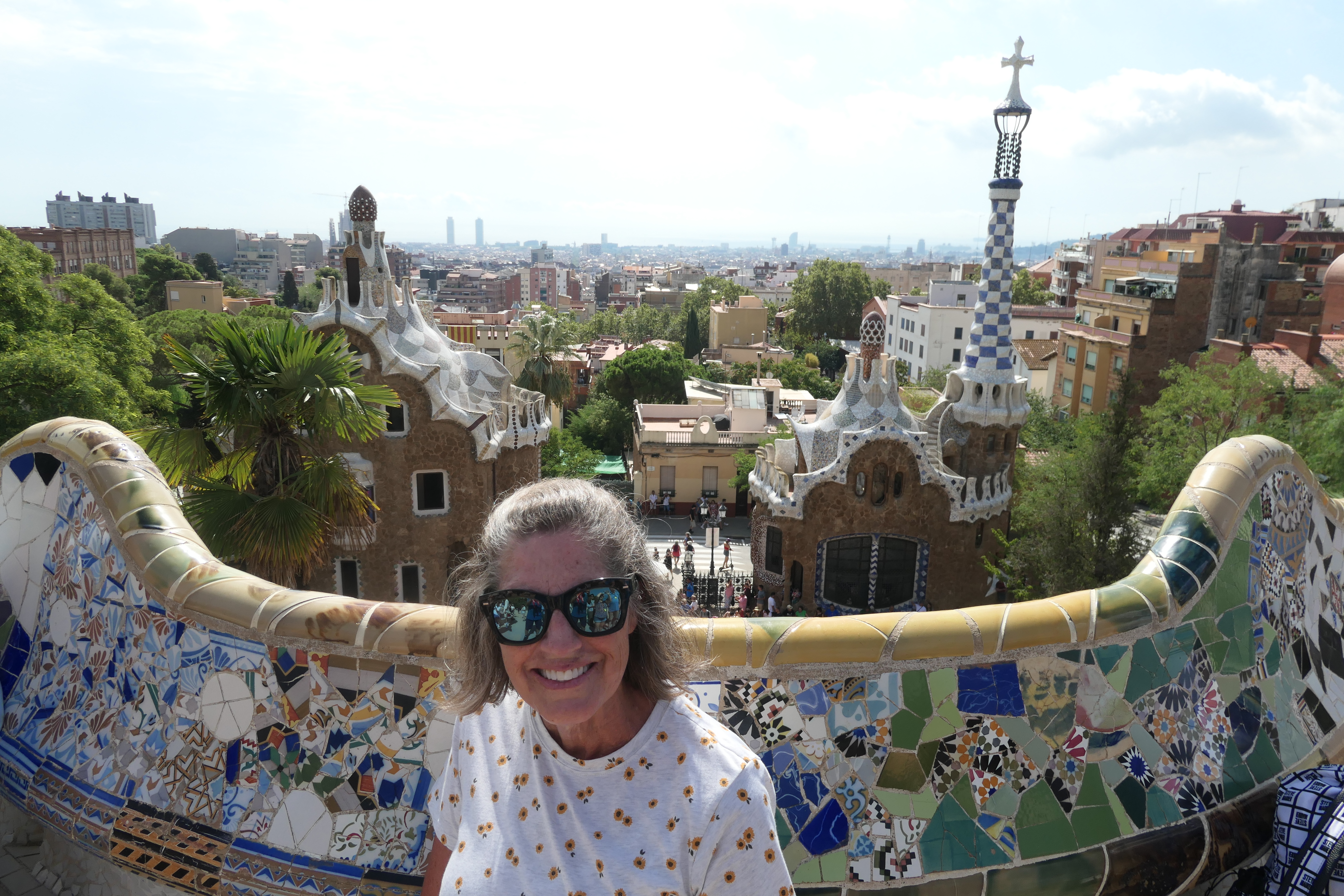
This famous park on a hill overlooking the main part of Barcelona, was named for Eusebi Güell, who partnered with Gaudi on several projects. Park Güell was originally going to be a residential neighborhood and Gaudi was commissioned by Güell to design it, in the early part of the 1900’s. Rather than becoming a residential neighborhood, this area became a park, and like La Sagrada Familia, it is now a major tourist attraction. The Park has many interesting architectural design features and it is worth a couple hours to just wander and explore. The Park reminded me a bit of a gingerbread house – you can imagine all the various features found in the park being part of a fairytale land!
Note: The park does require a ticket and they do sell out, so plan your visit in advance.
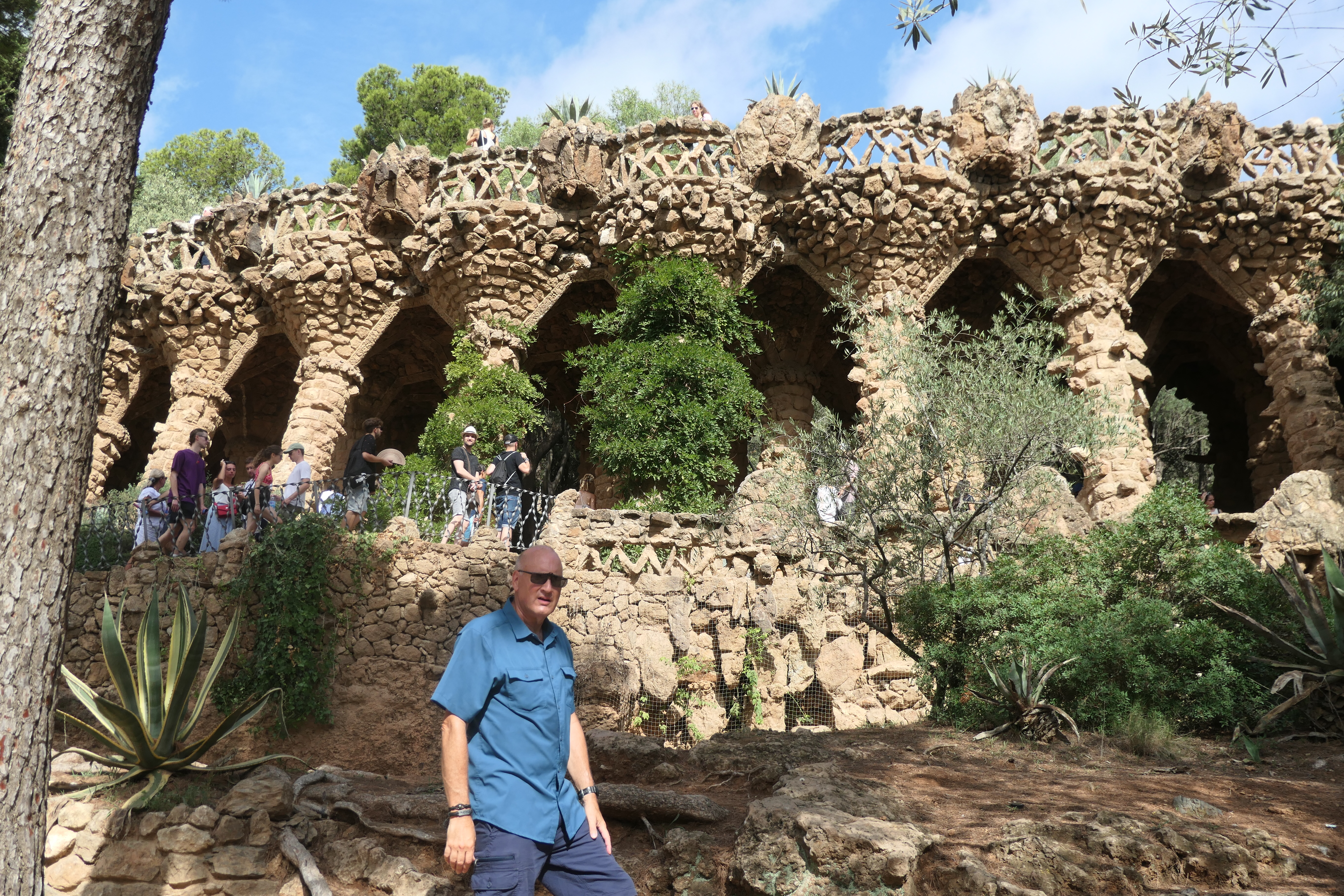
Views of Park Güell. View of downtown Barcelona (left) and the Hypostyle Room (right).Other interesting features of the park – highly decorated viaducts that were going to be residential streets.
The Portico of the Washerwoman, a famous landmark in the Park.
La Pedrera – Casa Milà
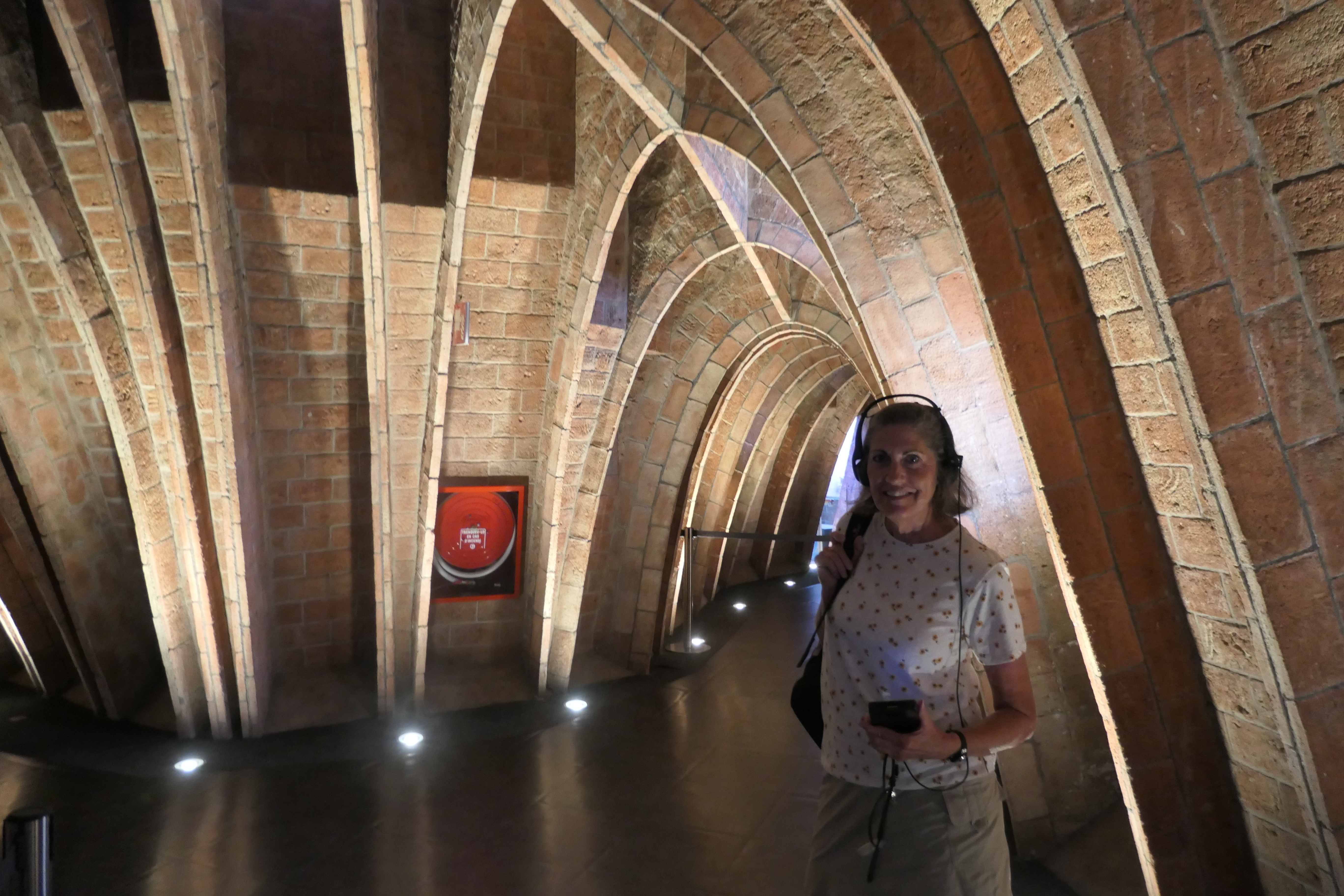
About 10 blocks southwest of La Sagrada Familia is Passeig de Gràcia, a street on which are located several buildings showcasing Gaudi’s designs, including La Pedrera – Casa Milà, the last private residence designed by Gaudi (built 1906 – 1912), now an apartment building that represents how Gaudi envisioned living quarters. In addition to the apartment rooms, I highly recommend going to the attic and then the rooftop. The attic is a small museum showcasing how they designed the support structure for the building and the rooftop is unique and provides some great views of La Sagrada Familia. I also recommend getting the audio tour, it will help immensely with understanding the things you see.
Exterior view of La Pedrera – Casa Milà. (The striped flag hanging down the front of the building is of Catalonia, the region of Spain that Barcelona is part of).
Interior apartment view of La Pedrera – Casa Milà. We loved the decor and features like early 1900’s appliances.
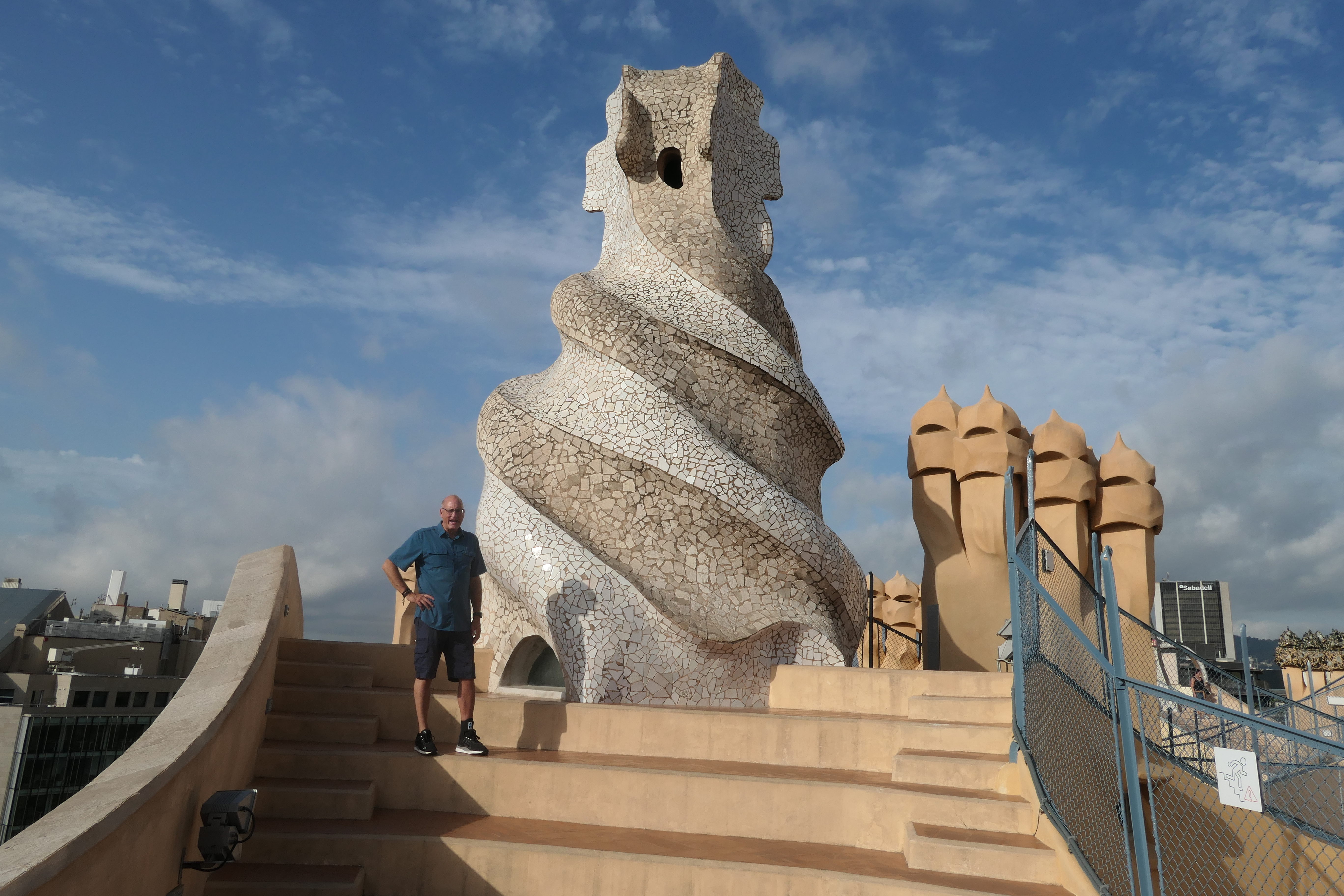
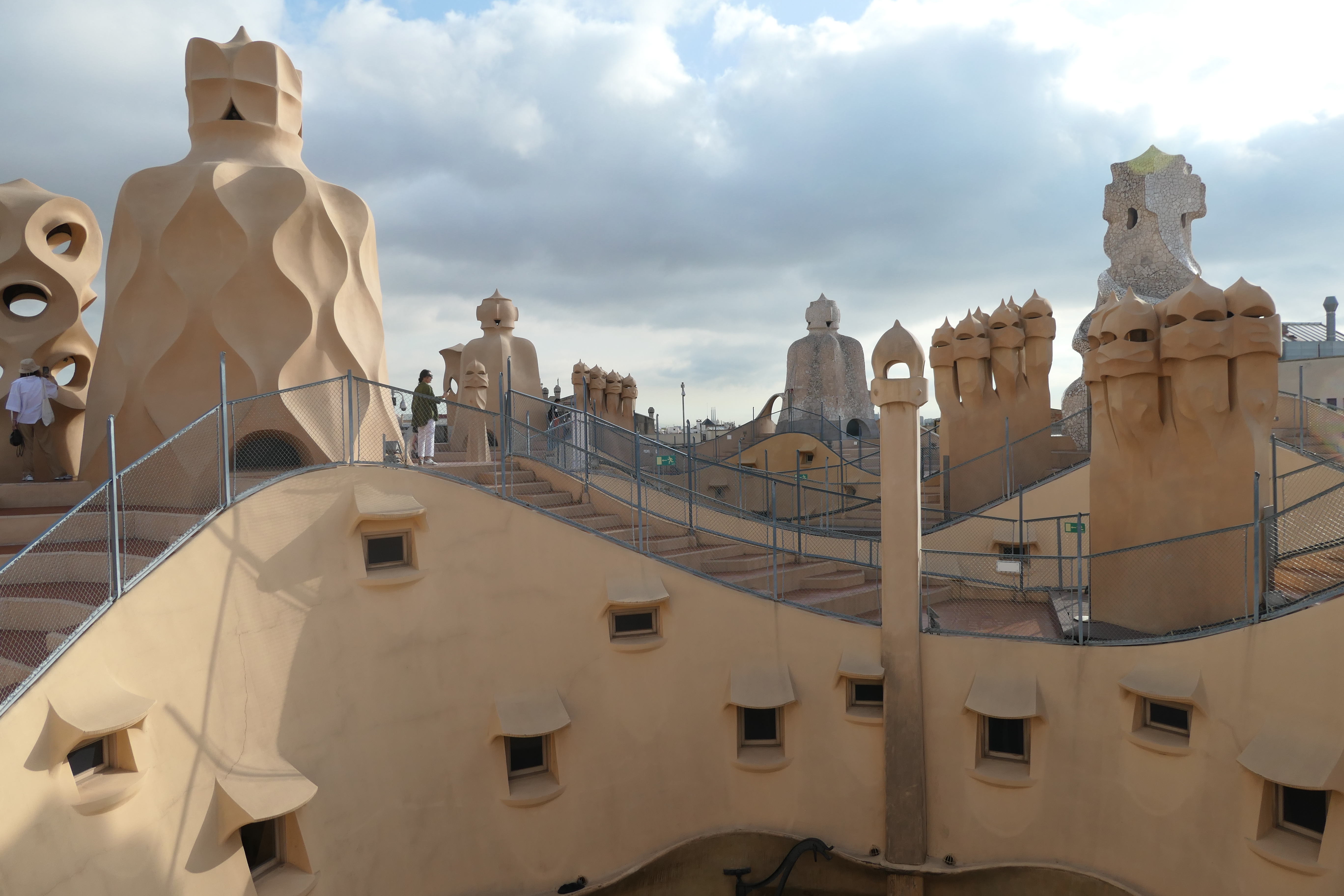
Views of the attic architecture and furniture displays at La Pedrera – Casa Milà.Rooftop views of La Pedrera – Casa Milà.
Casa Batlló
Just down the street from La Pedrera – Casa Milà is Casa Batlló, another Gaudi creation. In the attic museum of La Pedrera – Casa Milà you learn how Gaudi renovated the original building to create what we see today as Casa Batlló. You can also tour this building, we did not do so, it’s just a question of how many Euros you feel like spending in a day seeing Gaudi’s architecture!
A street view of Casa Batlló, another Gaudi masterpiece, remodeled according to his designs (not hard to tell!).
While there’s a lot to see in Barcelona, Spain there’s also a lot to do outside this beautiful city. We were only in Barcelona for three days and decided to spend one of those three days visiting the famous monastery of Montserrat, known as Santa Maria de Montserrat.
Getting There
There are various ways to get to Montserrat, you can take a train from Barcelona, drive a car, hike up the steep hills (as pilgrims have done for centuries), or take a tour. We decided to take the easy route by joining a day-tour from Barcelona. We made our reservation at a tour kiosk on the beautiful Las Ramblas street in Barcelona. The tour bus drove us up to the head of the valley right below Montserrat and then we took a steep train ride (Cremallera Rack Railway) the rest of the way up the mountain.
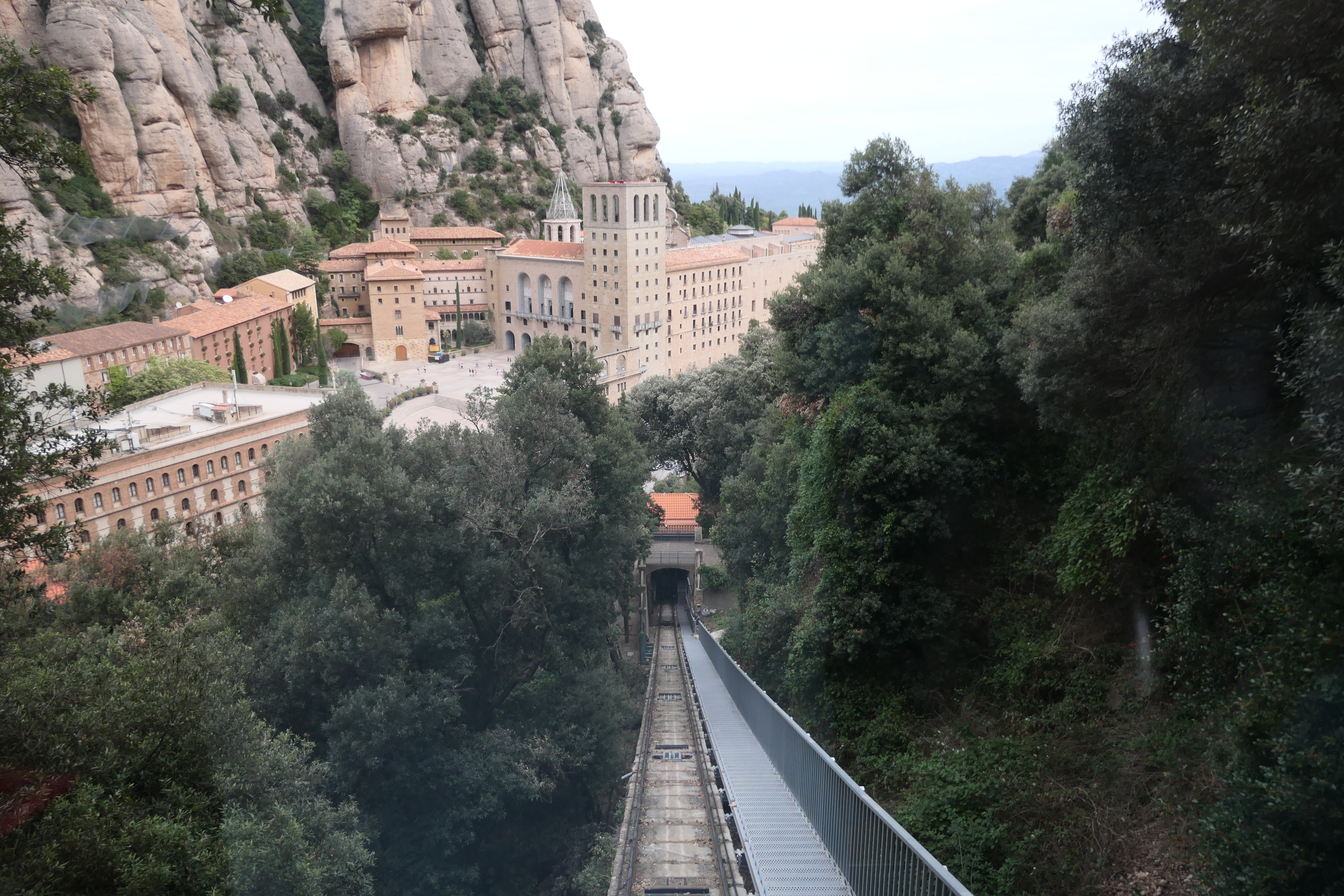
A view of the Rack Railway Station where we took the train up the steep mountain side to the Montserrat Monastery.
On the return, our tour bus met us at the bus parking area next to the Monastery and we drove all the way back down to Barcelona. The bus ride was about one hour each way. I think we had about 3 1/2 hours to visit the monastery, which was enough time to visit the Basilica where the Black Madonna is housed, visit the various shops, walk up to the St. Michael’s Cross overlook/viewpoint (fairly steep but paved most of the way), take the Sant Joan funicular (super steep!) behind the monastery to a spectacular viewpoint and access point for the hiking trails high above the monastery, and to be back to the Basilica in time enough to get in line to (hopefully) see the Boys Choir perform. Reservations are now required to see the Boys Choir and our tour did not include those reservations – our tour guide warned us of that fact when we got on the bus. However, we waited in a line in front of the Basilica shortly before the afternoon performance and we were able to get in and find seats at the last minute.
Monastery
One of the best features of the monastery is its striking setting in the Montserrat mountains. It was originally founded in 1025, and I can see why it was founded here – a protected site that is not easy to get to and pretty easy to defend! The Monastery has a long and famous history, it’s been a pilgrimage site for a thousand years because of the Black Madonna, housed prominently in the Basilica.
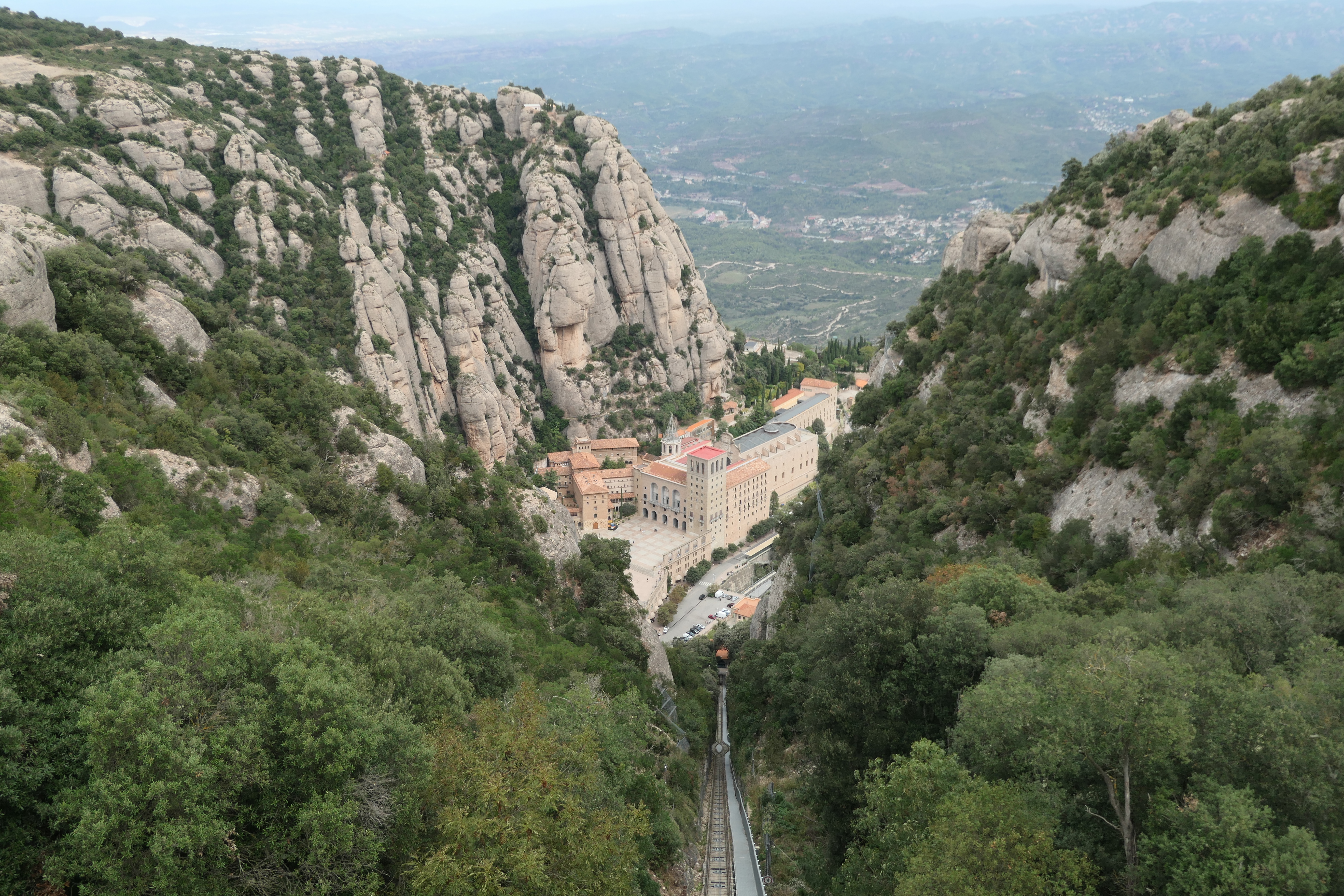
View of Montserrat Monastery from the Sant Joan Funicular.
Above – various views around the Monastery grounds, including the entrance to the courtyard of the Basilica (left), and Monastery Hotel (right).
A very interesting statue of a knight – his eyes followed you left or right – you could swear they moved!
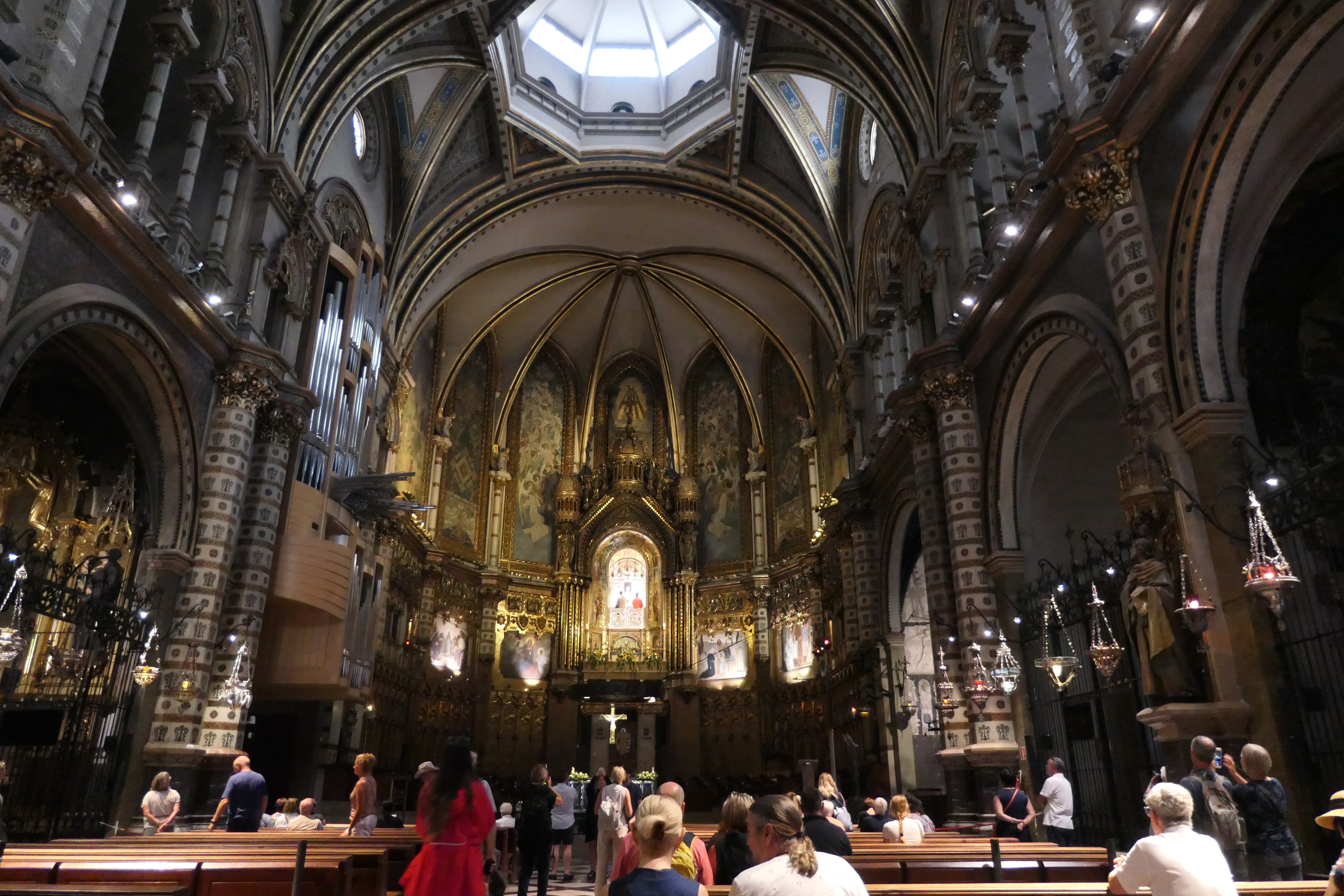
The Basilica courtyard (left) and interior (right) – the Black Madonna is in the upper center of the image – it was hard to get a good zoom-in photo in this light. You can buy a ticket to get a closer look.
One of Montserrat’s Benedictine Monks.
More about Montserrat’s history can be found here. In addition to a day trip, you can stay overnight at the hotel on the Monastery’s grounds if you wish.
Montserrat Boys Choir
Montserrat Monastery is home to one of the oldest boys’ choirs and music schools in Europe, dating back to the 14th century. It’s called Escolania de Montserrat. More information on the choir can be found here. We were so glad that we were able to see them perform. We visited in October and they were doing a couple of performances that day, and luckily we were able to get into the Basilica for their afternoon performance, in perfect timing with our tour visit.
A view of the Boys Choir at Montserrat’s Basilica.
A short video of the Boys Choir performance.
Views From Around the Monastery
Sant Joan Funicular
You can buy a ticket to take the steep funicular ride up the hill behind the Monastery. I highly recommend this if you have time. The views are incredible, and you can hike all around the tops of these mountains.
View from the top of the funicular at Montserrat Monastery.
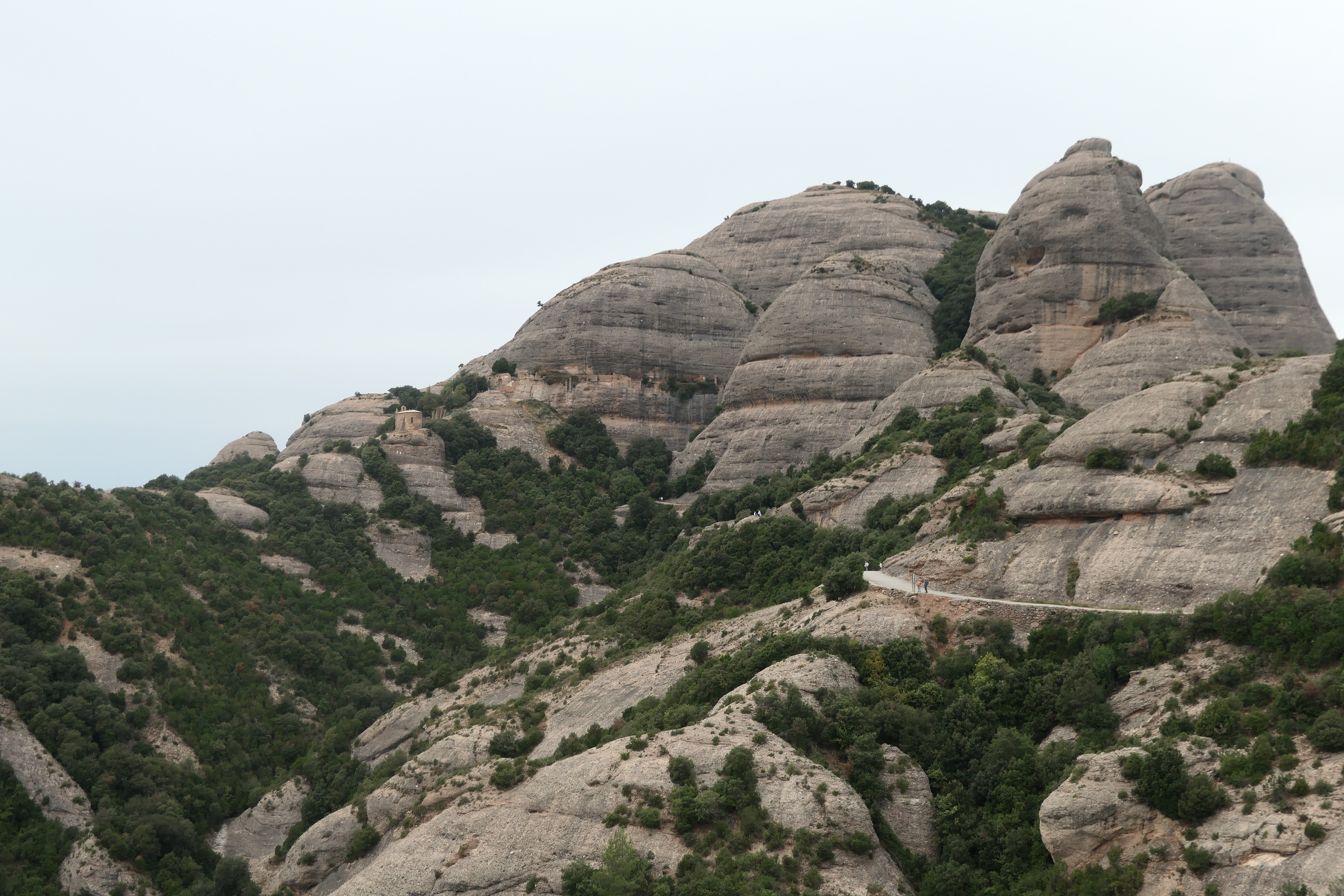
View looking west from the top of the Sant Joan’s Funicular at Montserrat. There are a number of trails in the area, including pilgrimage routes down to the Monastery. We went a short distance on several trails just to check them out, but we didn’t have time to explore the area too much. We loved the interesting rock formations – the mountains reminded us of the Front Range (part of the Rocky Mountains) near Denver, Colorado.
St. Michael’s Cross Viewpoint
A short steep hike from the Monastery takes you to St. Michael’s Cross, also known as Creu de Sant Miquel, which has a commanding view of the Monastery and the valley below. The trails are well sign-posted.
Visiting Santa Maria de Montserrat is a great way to spend a day in the Barcelona region. If time allows, definitely make the visit!
In addition to beautiful beaches, Menorca, Spain has some interesting and scenic towns to explore. During our short visit, we mixed in visits to the island’s towns, historic sites and beaches. The island is small and it only takes about 45 minutes by car to get from one end of the island to the other. Since the island is not large, any of these towns would be a good “home base” during your stay in Menorca. We decided to say in Cala Galdana, more of a resort area for our first time in Menorca which was also a good choice.
Map showing the relative locations of the major towns in Mencorca.
Ciutadella de Menorca
Ciutadella is located on the western end of Menorca and was a busier town than Mahón (discussed below), although that may have been due to the time of day we visited (early evening). Ciutadella is home to the main ferry route connecting Menorca to Mallorca. The town is ancient, dating back to the Carthaginians (~300 BC), and has a long (and at times sad) history, particularly in the 1500’s when the town came under siege by the Turks, who took the survivors and sold them into slavery in Constantinople (Istanbul).
This windmill stands out as a primary landmark as you enter Ciutadella.
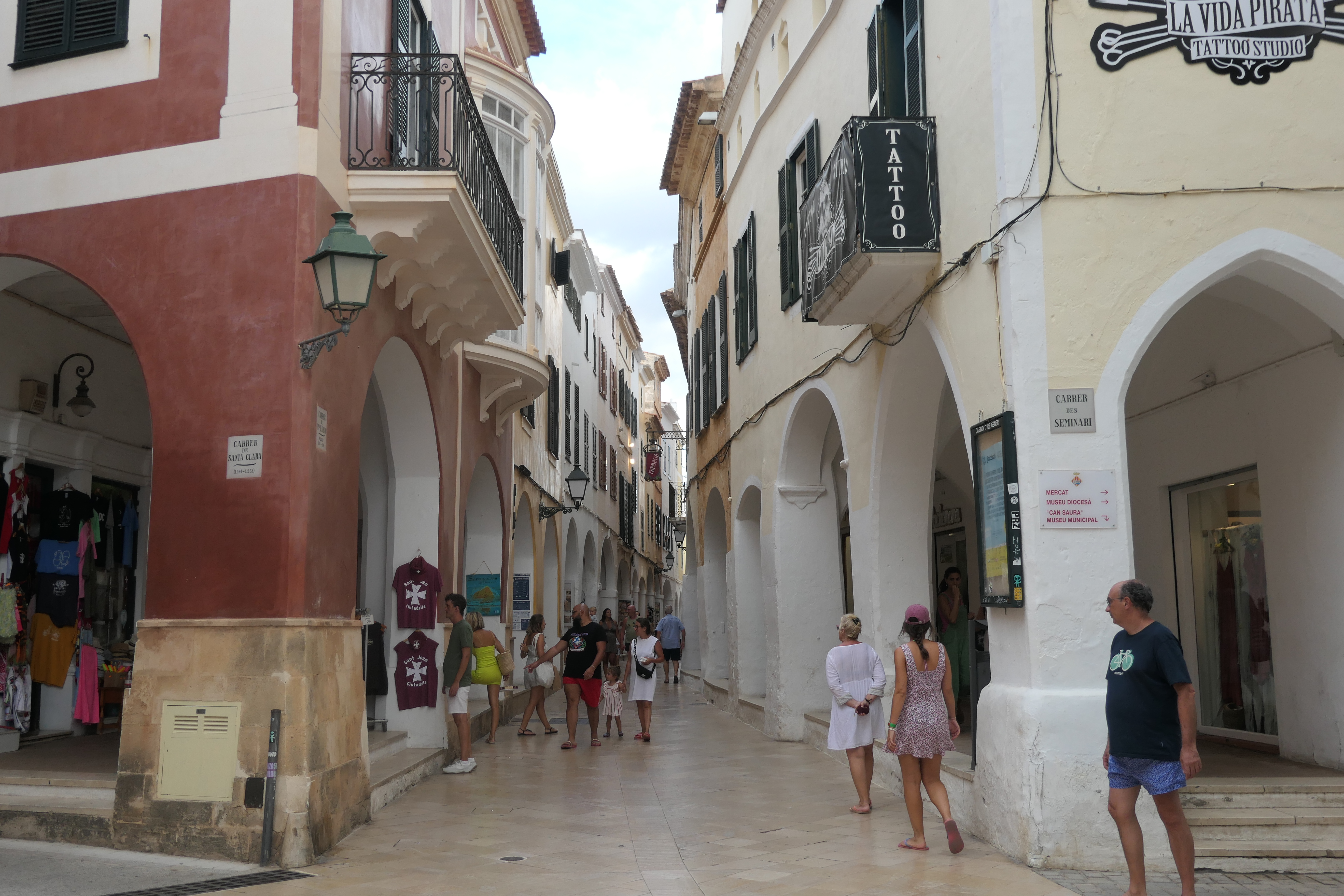
Street scenes in Ciutadella. There are some lovely pedestrian arcaded streets and shops and interesting architecture to be admired in Ciutadella.
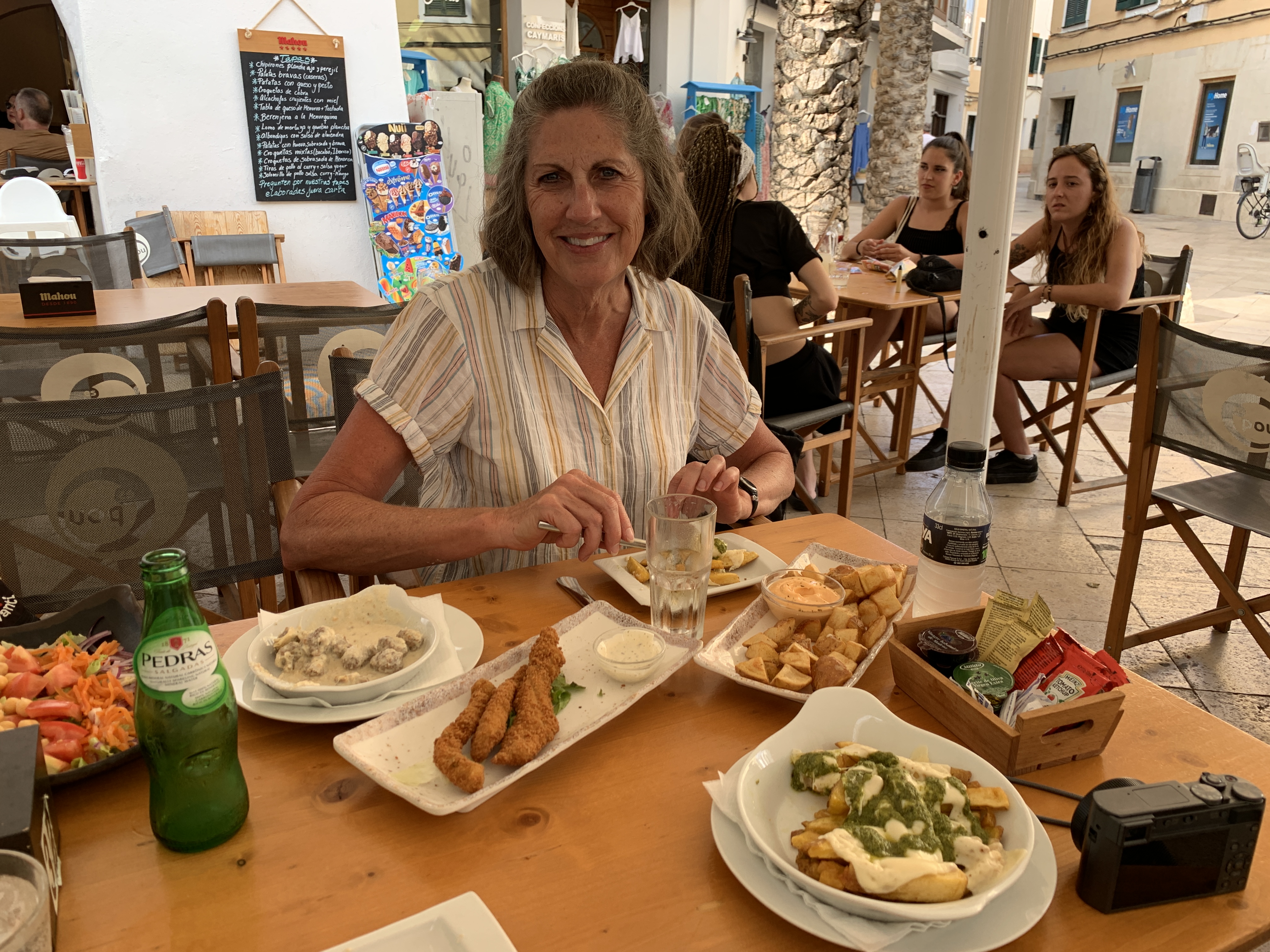
We enjoyed a great tapas meal in Ciutadella!
Mahón (or Maó)
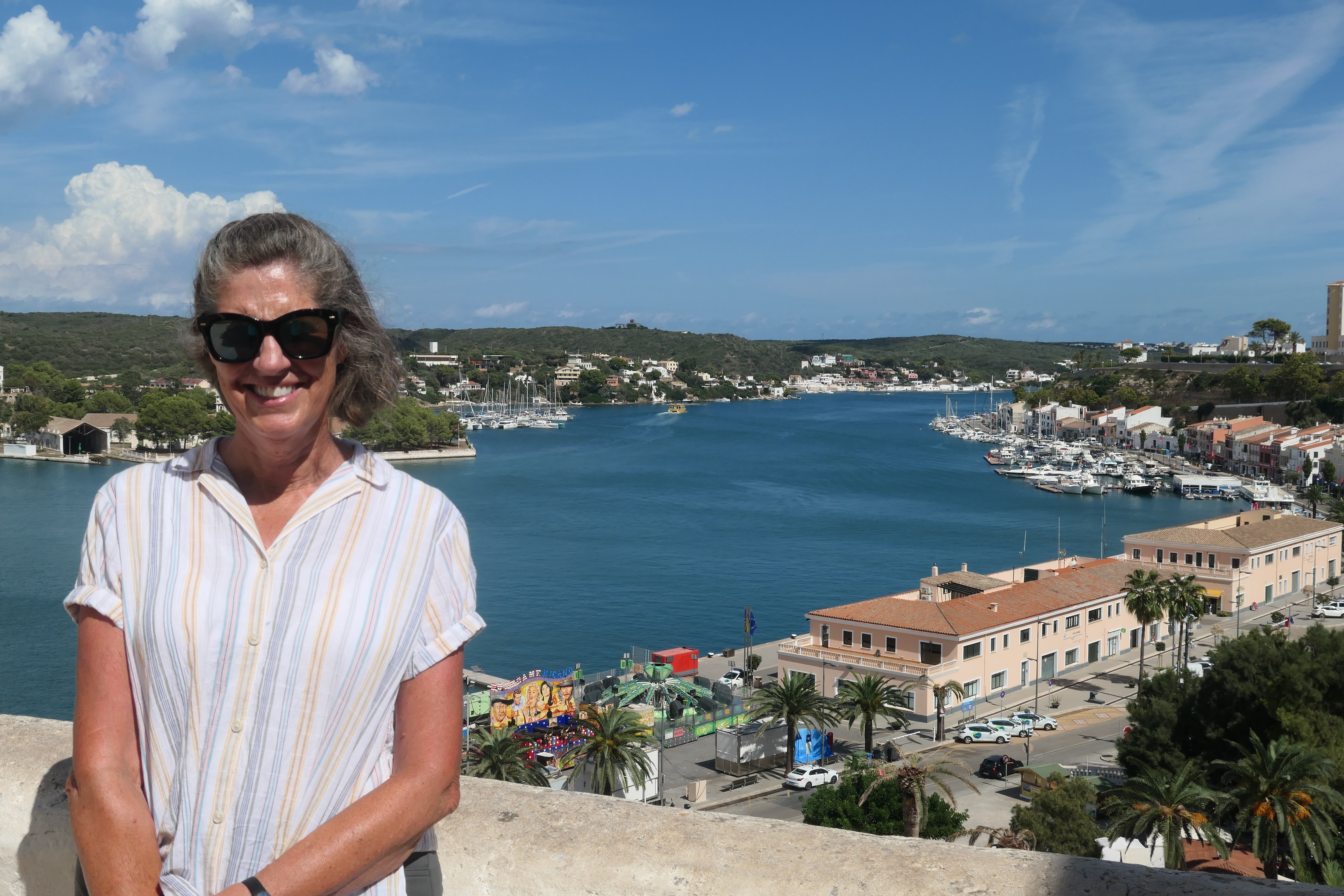
Mahón is the largest town in Menorca and the island’s capital, located on the eastern edge of the island. It’s also the location of the island’s airport if you fly here. The town is quite pretty, with a lovely setting and harbor. There are some rumors that the word mayonnaise originated here! We found the town to be pretty quiet, with few tourists wandering about. Numerous boat tours are available from Mahón and perhaps most tourists were out for the day.
We had fun wandering the streets along the harbor and admiring the yachts at berth and enjoying some great gelato! Nearby are a number of prehistoric sites that may be visited.
Views of Mahón‘s Harbor.Street scenes in Mahón.
Binibeca (or Binibeca Vell)
Binibeca is a white town on Menorca’s southeast shore that is relatively new but looks like an old fishing village! It reminded me a bit of the Greek islands. It certainly makes for a postcard view. The town was built in 1968, and is in a great location – close to Mahón and yet it feels somewhat remote. The area near Binibeca is a growing tourist spot, with many small hotels/resorts and homes popping up nearby in the years since the village was built. In addition, there are numerous beaches and coves within a short distance if you want to enjoy the warm clear water.
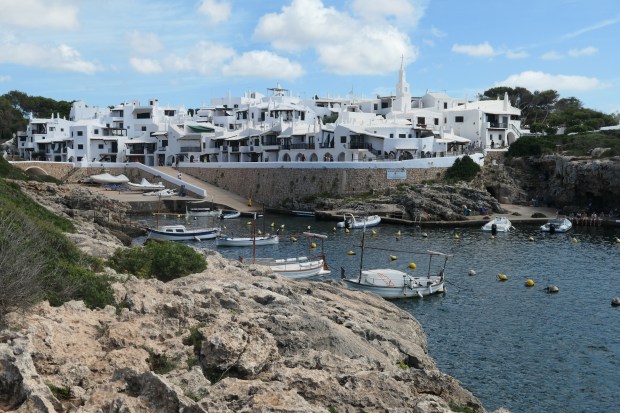
View of Binebeca and its small harbor.
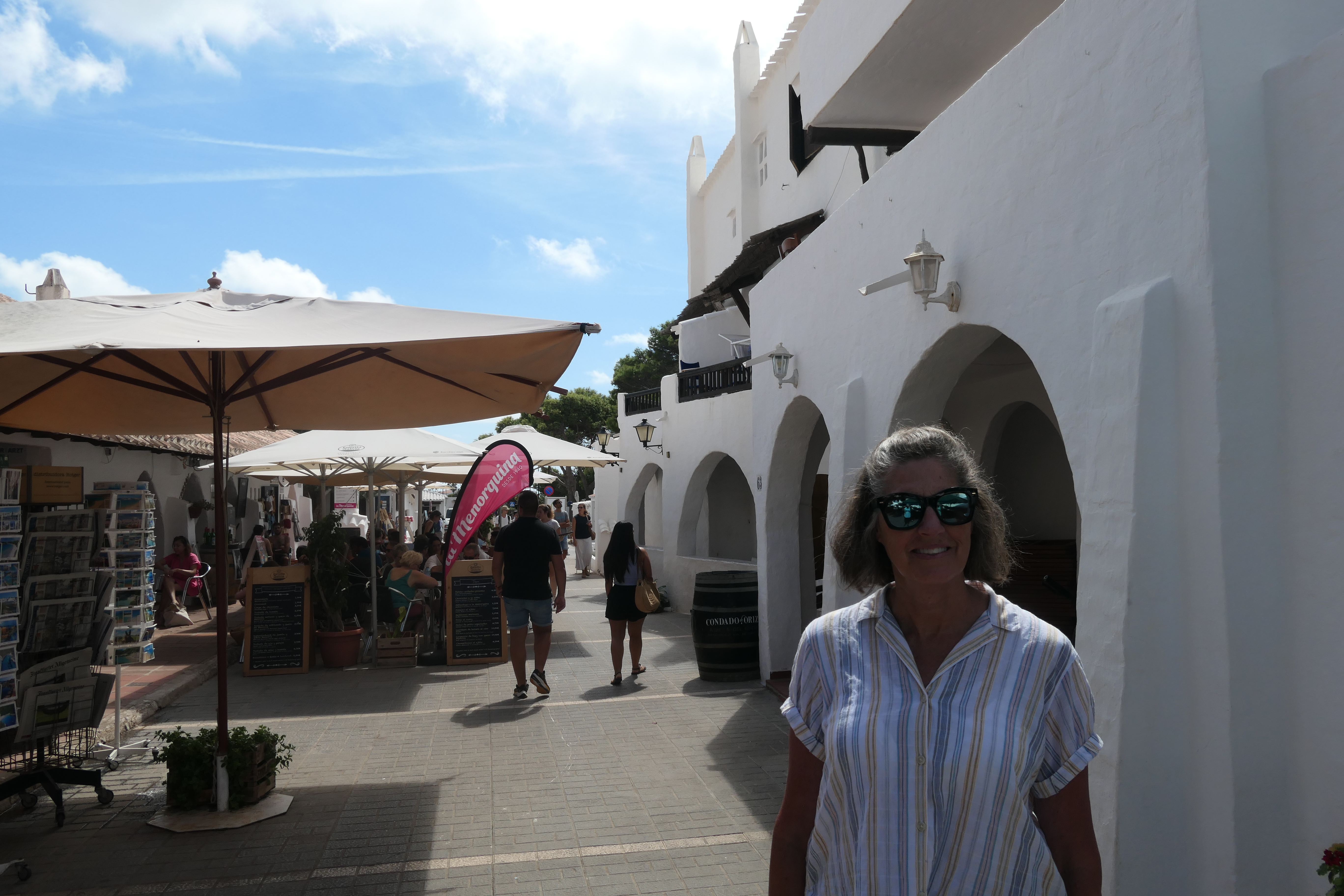
Views of Binibeca. It would be hard to find a more uniform-looking town anywhere in Europe!
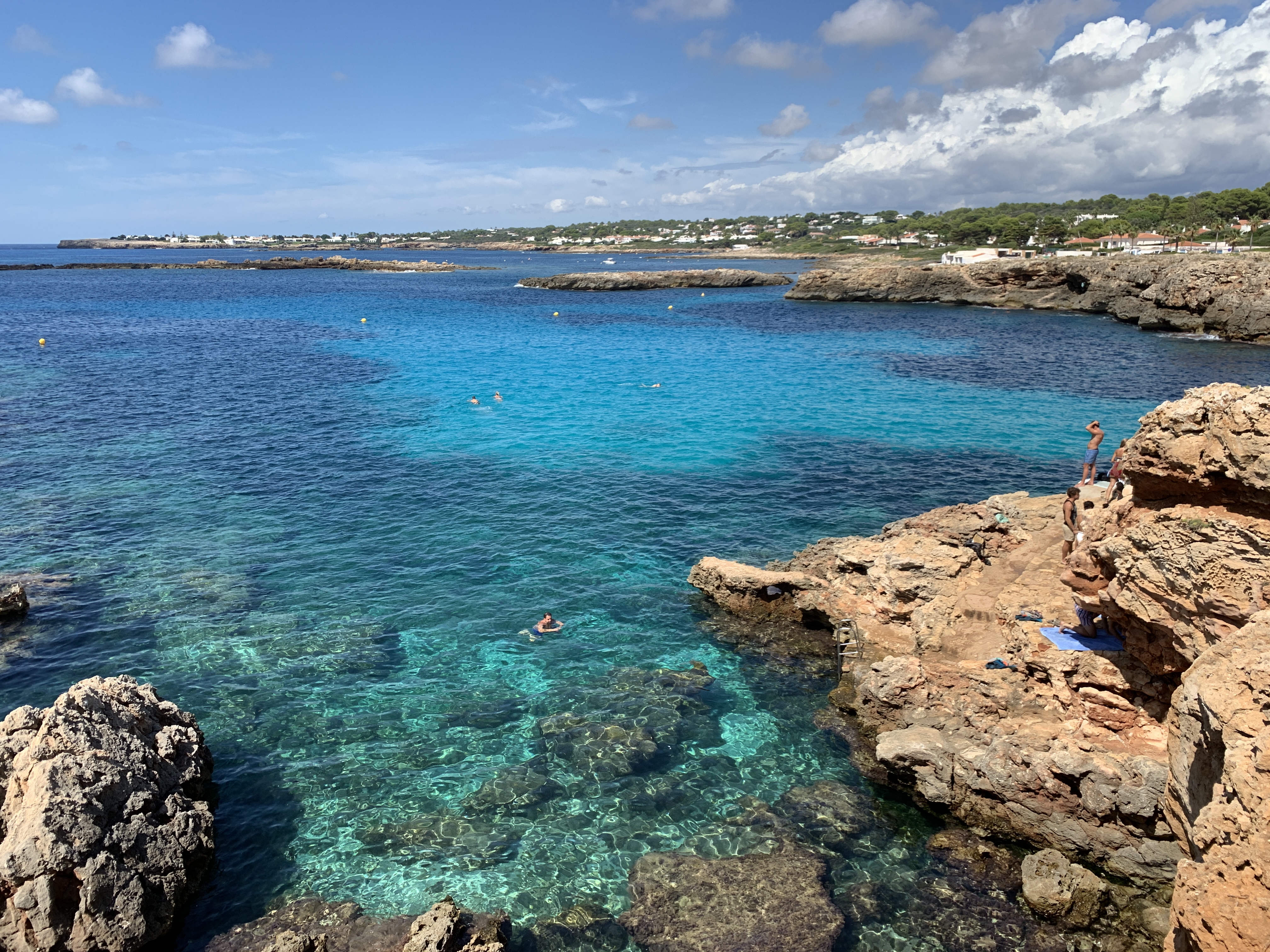
A short walk from Binibeca will take you to some amazing coves and clear water – inviting you to stay and take a dip! We came back on another day and took advantage of these clear, warm waters.
Fornells
Fornells is the only major town on Menorca’s north shore and would make a great home base for visiting Menorca, if you want to enjoy a quieter experience and slower pace. Unlike Binibeca, this is an authentic fishing village and it’s known for its great seafood restaurants.
View of Fornells’ harbor.
Street scenes in Fornells.
Residences and vacation homes near Fornells on Menorca’s north shore – this area had a “California coast” feel.
One doesn’t have to go far from Fornells to find a great beach – Cala Tirant is just a couple kilometers as the crow files from Fornells, or an 8 km (4.5 mile) drive.
Like the other Balearic Islands, Menorca, Spain is blessed with some amazingly beautiful beaches and coves. Since we were in Menorca for only 4 days, we couldn’t visit all of its glorious beaches, but we did get to swim at several and see others during our (too) short stay. Listed below (in no particular order) are beaches & coves we were able to visit.
Primary beaches we visited are shown in red font.
Note: Someone asked me about encounters with jellyfish in Mallorca and Menorca – there was only one place we saw any jellyfish and that was at Cala Mitjana on Menorca (described below). They were brown (not the technical name) jellyfish and harmless.
Cala Galdana
We stayed in Cala Galdana on the southern shore of Menorca–it is a lovely large cove, with a wide protected sandy beach, hotels, restaurants and tourist activity businesses nearby, a perfect spot to call home while you explore the island. The beach has numerous chairs and umbrellas for rent and the water is shallow and calm, making this a very family-friendly place to swim and enjoy the sun. Another plus of this location are the walking trails (part of the historic Cami de Cavalls) along the coast in either direction from Cala Galdana to other amazing places such as Cala Turqueta or Cala Mitjana. The trails are well signposted and point out the distance and direction of your destination (it’s a good idea to get a local island map). Make sure you are adequately prepared if you walk these trails – have plenty of water, sun protection, sturdy shoes and energy snacks.
Left image – view of Cala Galdana from our apartment/hotel balcony. Right image – view of the harbor/channel area of Cala Galdana.
The Comitas Florimar hotel where we stayed in Cala Galdana. The rooms were large and had kitchen facilities.
Additional views of Cala Galdana’s beach area.
Walking along Menorca’s coastal trail (Cami de Cavalls).
Cala Turqueta
This may be Menorca’s most famous beach. From Cala Galdana, it is just a few kilometers (6.4 km, or 4 miles) west by trail if you’re up for a little hike. The advantage of taking the trail to Cala Turqueta is that you avoid the parking problem. The Cala Turqueta parking area fills quickly (we arrived before 8 am and were turned away) and if you can’t get a spot you must drive back to the island’s main road and then down another road to another car park (Son Suara Beach – see below) and then hike from that car park along the coastal trail back to Cala Turqueta. I know this sounds a bit complicated, it’s because there is no coastal road connecting many of the beaches by car, you must use the main east-west road in the middle of Menorca as the main car route and then take the north-south spur roads that lead to the various beaches and coves. It’s not a huge issue, just be prepared to sometimes walk at least a couple of kilometers on the trails as noted above. The only route that connects the entire coastline is the non-motorized trail circumnavigating the island. In fact, a number of beaches can only be reached via the trail.
Bottom line, however you manage to get to Cala Turqueta, it is worth the effort!
Cala Turqueta – get here early if you want a little quieter experience.
Above and below – views of Cala Turqueta, Menorca.
Cala Mitjana
Cala Mitjana is less than 2 km (~1 mile) east of Cala Galdana via the walking trail and is very beautiful also. Since we walked, I’m not sure about the car park situation, but probably similar to Cala Turqueta – arrive early to get a spot if you need to drive here.
Views of Cala Mitjana from the coastal trail.
Cala Mitjana – just another lovely day at the beach!
Binibèquer Vell (Binibeca Vell)
I’ll share more about this unique town in another post, but this region of Menorca (southeast coast) has some great beaches and coves. It was one of my favorite spots on Menorca. We found this beautiful cove (below) just outside of the town of Binibeca Vell as we were exploring the area. It looked so inviting we came back another day specifically to swim here!
A cove near Binibeca Vell – the water is so clear – bring your snorkel gear!There are several ladders on the cliffs making it easy to get into and out of the water.Yours truly enjoying the warm, clear water near Binibeca Vell!
Some of Menorca’s Other Beaches
There are so many stunning beaches in Menorca – below are a few others we visited during our various exploration travels.
Cala Tirant – this beach is on the north shore, near the town of Fornells. Wide, open and I’m guessing it wouldn’t feel crowded even on a busy day.
Views of Cala Tirant, on the north shore of Menorca.
Son Bou – this popular beach is on the southern shore of Menorca, and close to the Torre d’en Galmés prehistoric ruins if you want to mix a little culture in with your beach day. There are also some 6th century church ruins right next to the beach.
Son Bou Beach.
Cala des Talaier – another beautiful small cove and beach on the southern coast, between Son Saura and Cala Turqueta.
Cala des Talaier – just off the walking path on the way to Cala Turqueta from Son Saura beach and parking area.
Son Saura – another amazing, wide, shallow and calm beach area on the south coast of Menorca.
Son Saura Beach, on the path from the Son Saura parking area to Cala des Talaier and Cala Turqueta.One really needn’t go any further than here to have a perfect beach experience!
I hope I have convinced you that you don’t have to go to Hawaii for great beaches – the Mediterranean Sea and specifically Mallorca and Menorca are blessed with an abundance of beautiful, safe, white sandy beaches and some of the clearest, warmest water you will ever find!
Menorca, Spain has about 1,500 prehistoric sites – a higher concentration per square kilometer than any where else in the Mediterranean Sea, this is why Menorca is known as an “open air museum”. Numerous ancient stone structures dot the island, especially the southern half. A map of many of the sites can be found here. A number of these sites have been quite well preserved, considering they’ve been around for nearly 3,000 years! The Talayotic (or Talaiotic) period (when many of these structures where built) was lasted from about 1200 B.C. to 123 B.C. (when the Roman conquest took place).
The locations in brown font indicate the four prehistoric sites discussed below.
While Menorca’s beaches are incredible (more on these in a future post), it’s also fun to explore other sights on the island, and we decided to visit four of these prehistoric ruins during a “day off” from the beach. These archeological sites typically charge a small fee and provide informational brochures for your visit. Why did I choose these particular sites? I just did a little research on Menorca’s prehistoric ruins and decided on these four as reasonable sampling of what can be visited relatively easily. The road signage on the island to these historical sites is quite good.
Naveta des Tudons
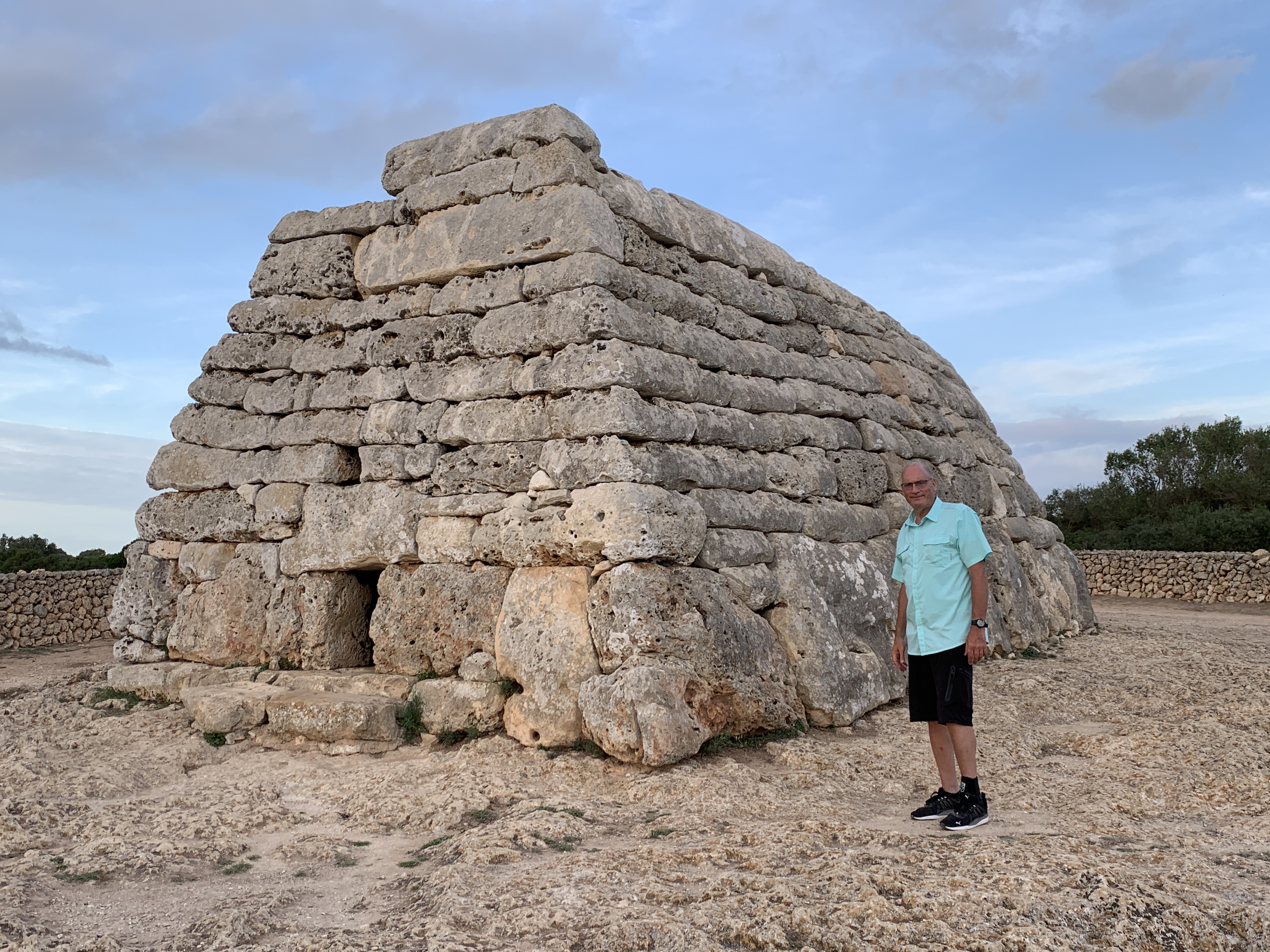
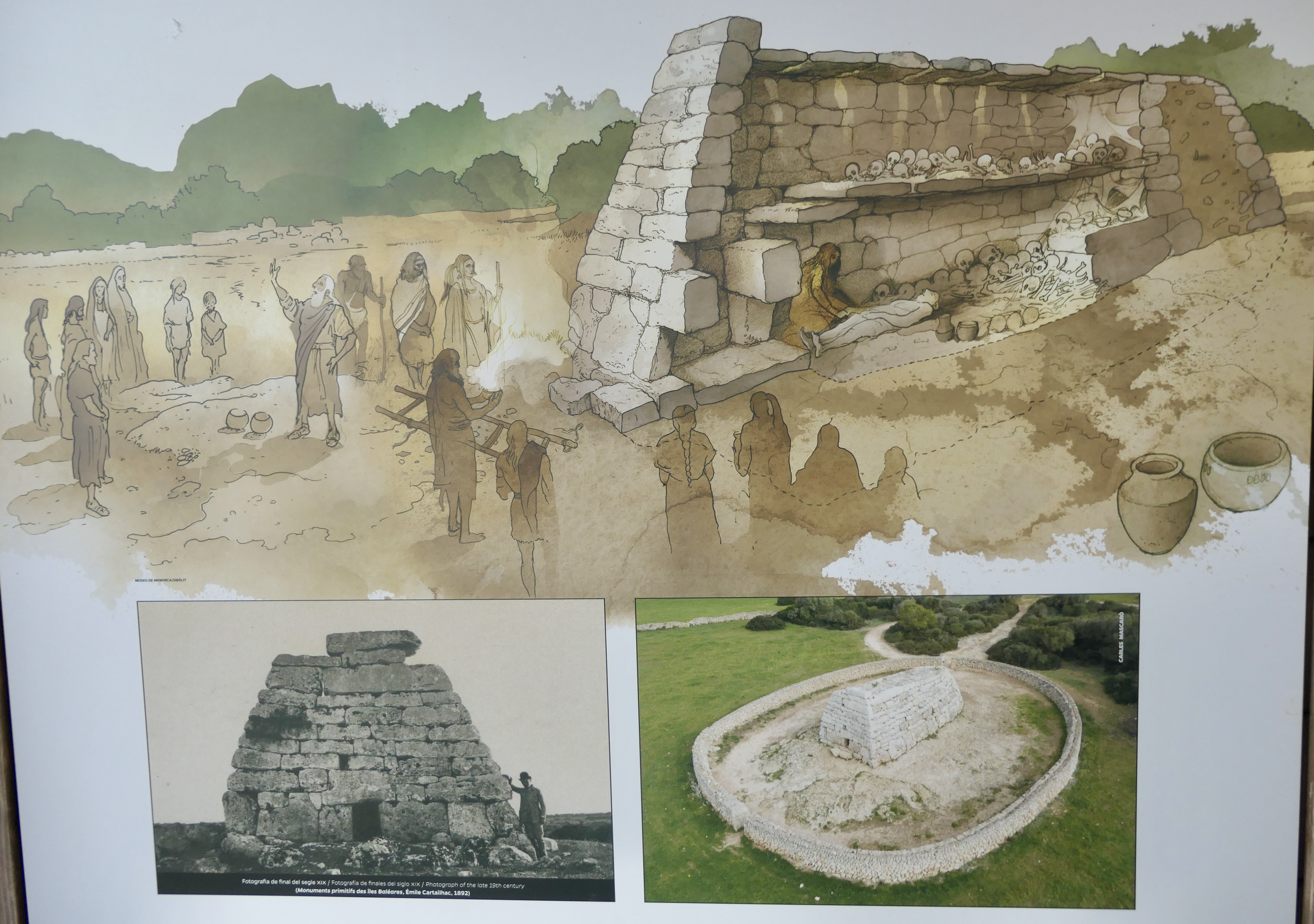
This ruin is on the western side of the island, not far from the city of Ciutadella. Navetas are tombs that are unique to Menorca, and are typically one to two levels high and round or elongated. Naveta des Tudons is the largest of all known Navetas on the island and is considered the oldest existing building in Europe. It dates from 1000 – 800 BC, and was in use for about 500 years. Archeologists found the remains of over 100 individuals inside. We had the site to ourselves late one afternoon.
A view of the front of the Naveta. Note the careful stone fitting and placement work.
This image shows the burial ceremony and process and the layout of the interior of Naveta des Tudons.
These images show a side view and end view of the Naveta. Interesting stone work can be noted in both views.
Trepucó
The settlement of Trepucó is one of the largest on the island, covering an area of around 49,240 square metres. However, what can be viewed today is only a small part of the site, dating from 1200-700 B.C. It is located near Mahón (or Maó) on the eastern side of the island.
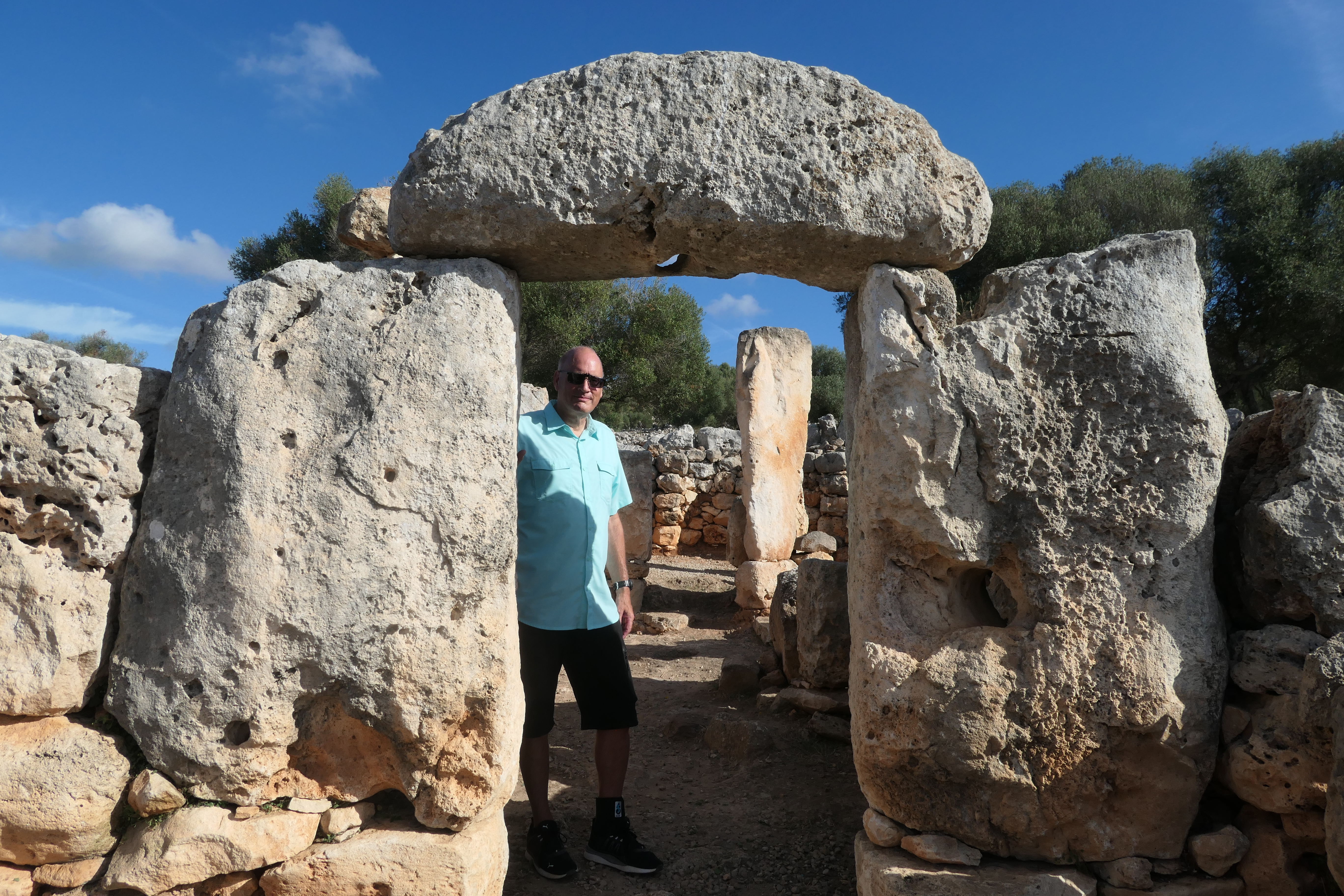
This taula in Trepucó one of the largest on Menorca. Taulas are usually seen as a standing stone combined with a horizontal slab resting on top, forming a large T-shaped monument. Archaeologists suggest these monuments were used to represent Talaiotic deities, occupying central positions in sanctuaries where rituals were performed.Thirty-three taula enclosures are known but only seven retain their vertical taula.
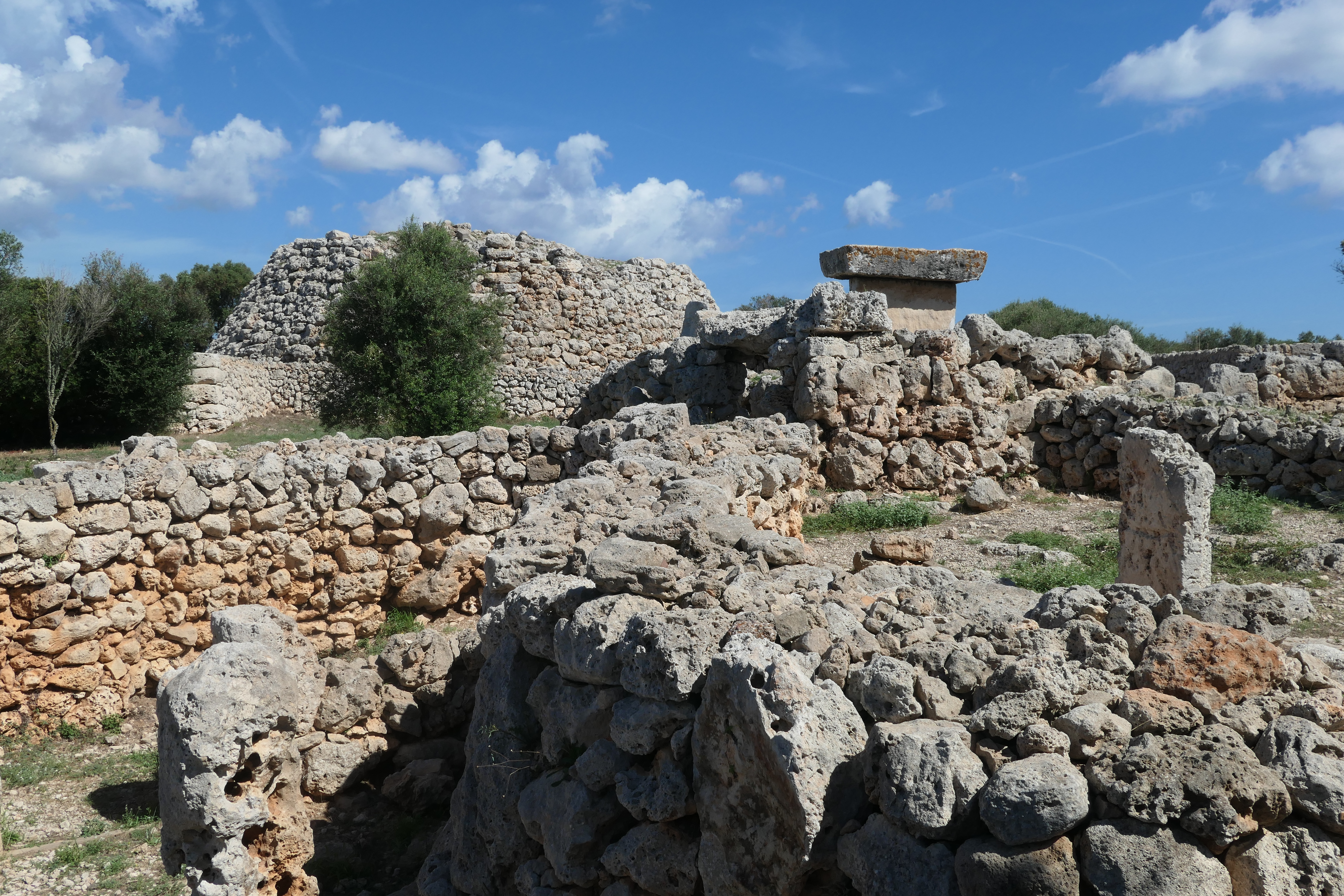
Other views of Trepucó, showing the domestic dwellings. Some areas were occupied into the Middle Ages, and still retain much of their original structures.
Talatí de Dalt
This ruin is only 4 km (or about 2 miles) from the city of Mahón (or Maó) on the eastern side of Menorca. It’s about the same age as the other talaiotic ruins on the island, and reached its peak between the 4th and 2nd century B.C.
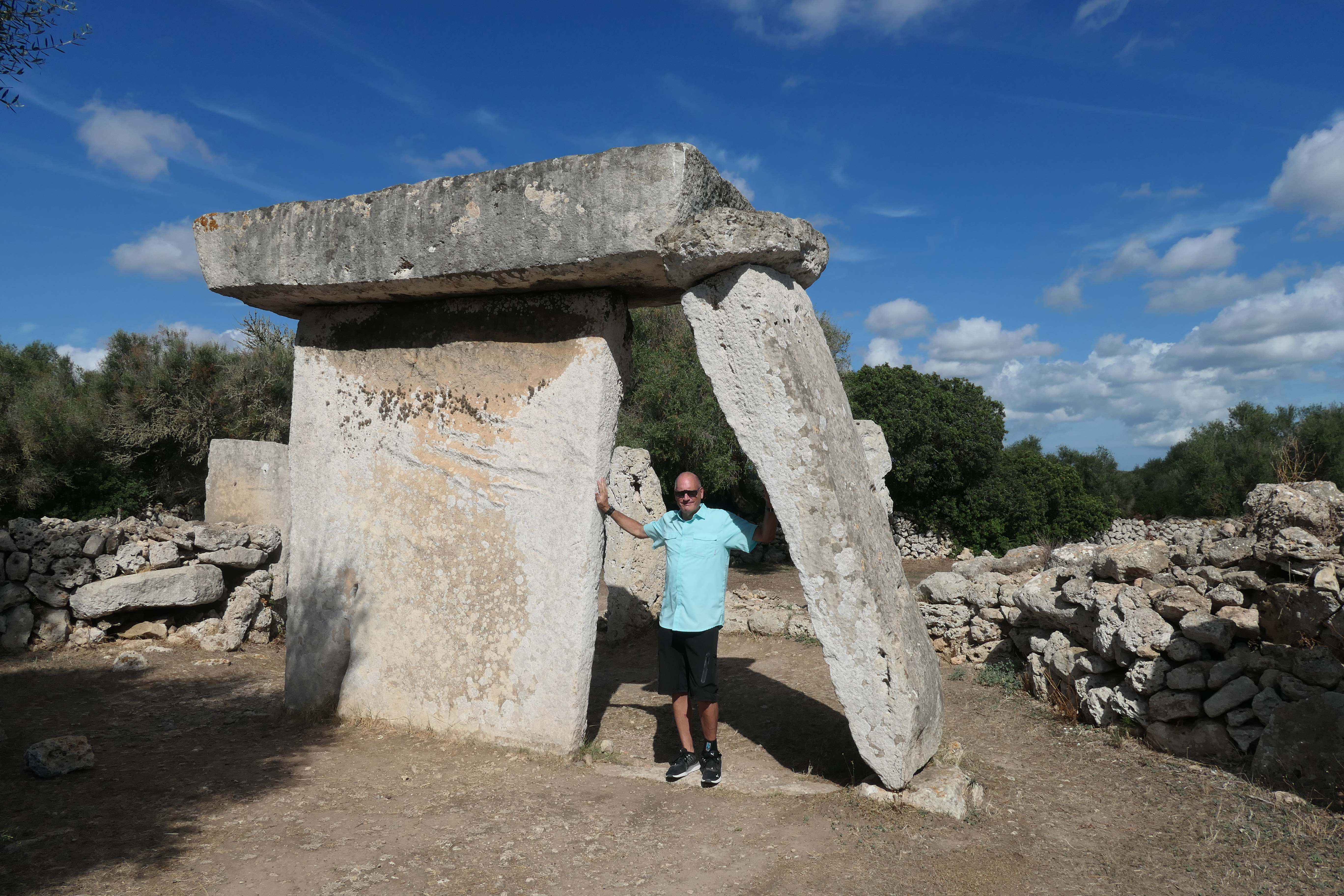
The taula in Talatí de Dalt. I don’t know if there is an explanation for the diagonal support – perhaps it’s been there since the beginning.
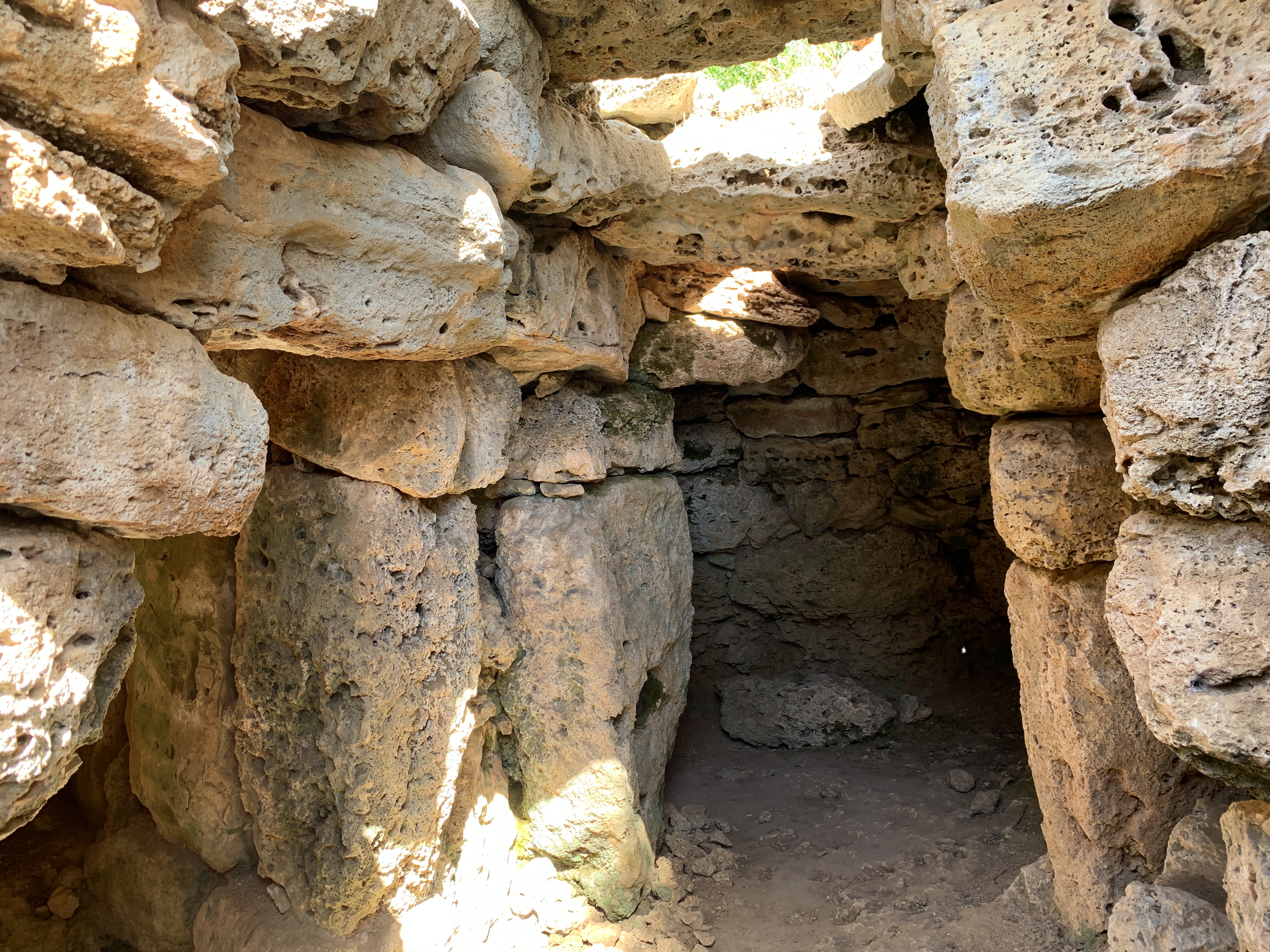
Talatí de Dalt is interesting because there are a number of cave-like chambers and corridors to explore.
This talayot (or talaiot) at Talatí de Dalt is representative of those found in many of Menorca’s ruins – their function is not completely understood – they may have been watchtowers, meeting places, or related to other ceremonial events.
Torre d’en Galmés
Torre d’en Galmés was probably my favorite of the Talayotic prehistoric sites we visited, due to its immense size and location. Lots of ruins to explore here. It is located in south-central Menorca, not far from Son Bou beach. It is believed that Torre d’en Galmés was a principal site and had oversight of many of the other settlements.
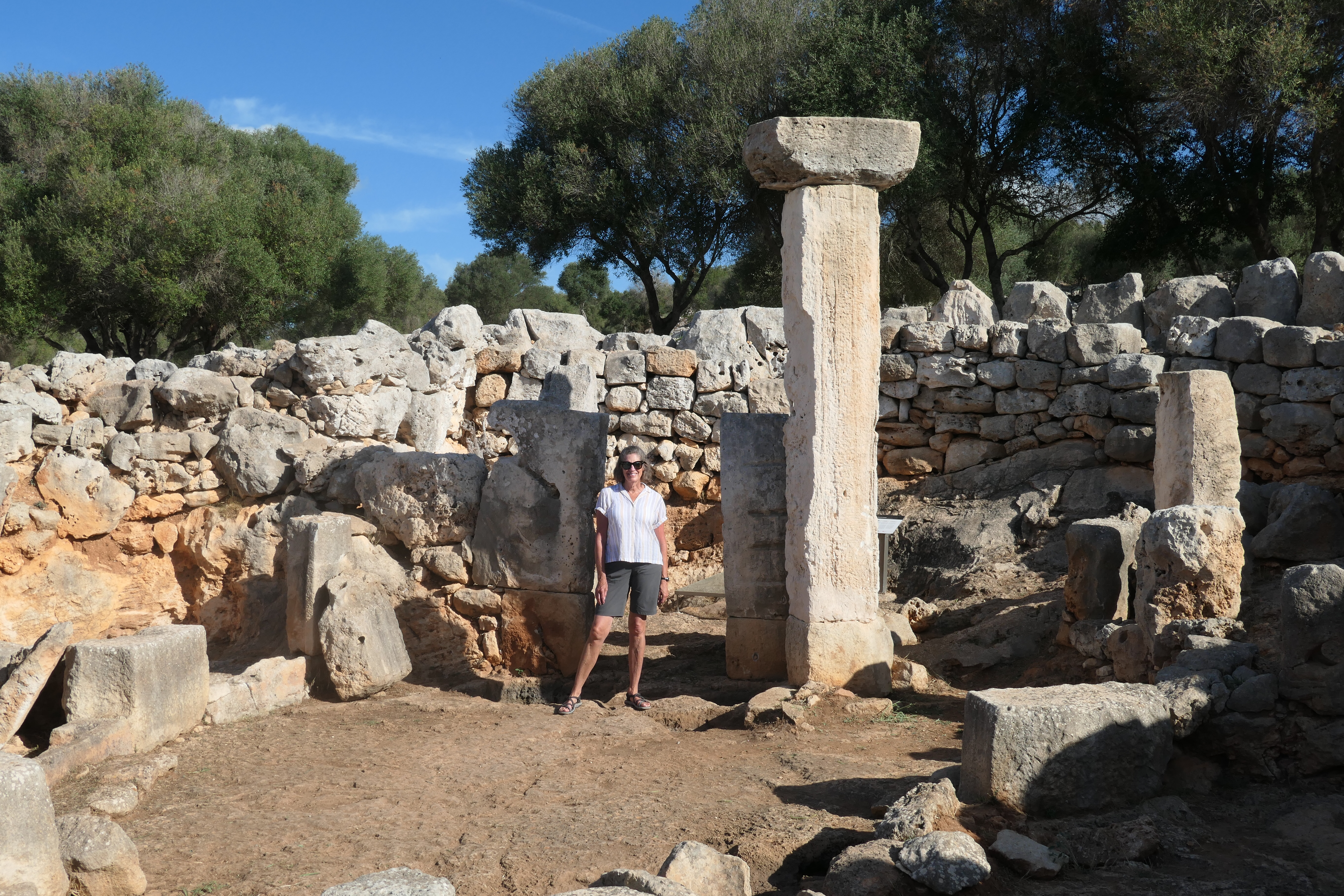
Torre d’en Galmés.Note the taula on the left, one of several in Torre d’en Galmés.
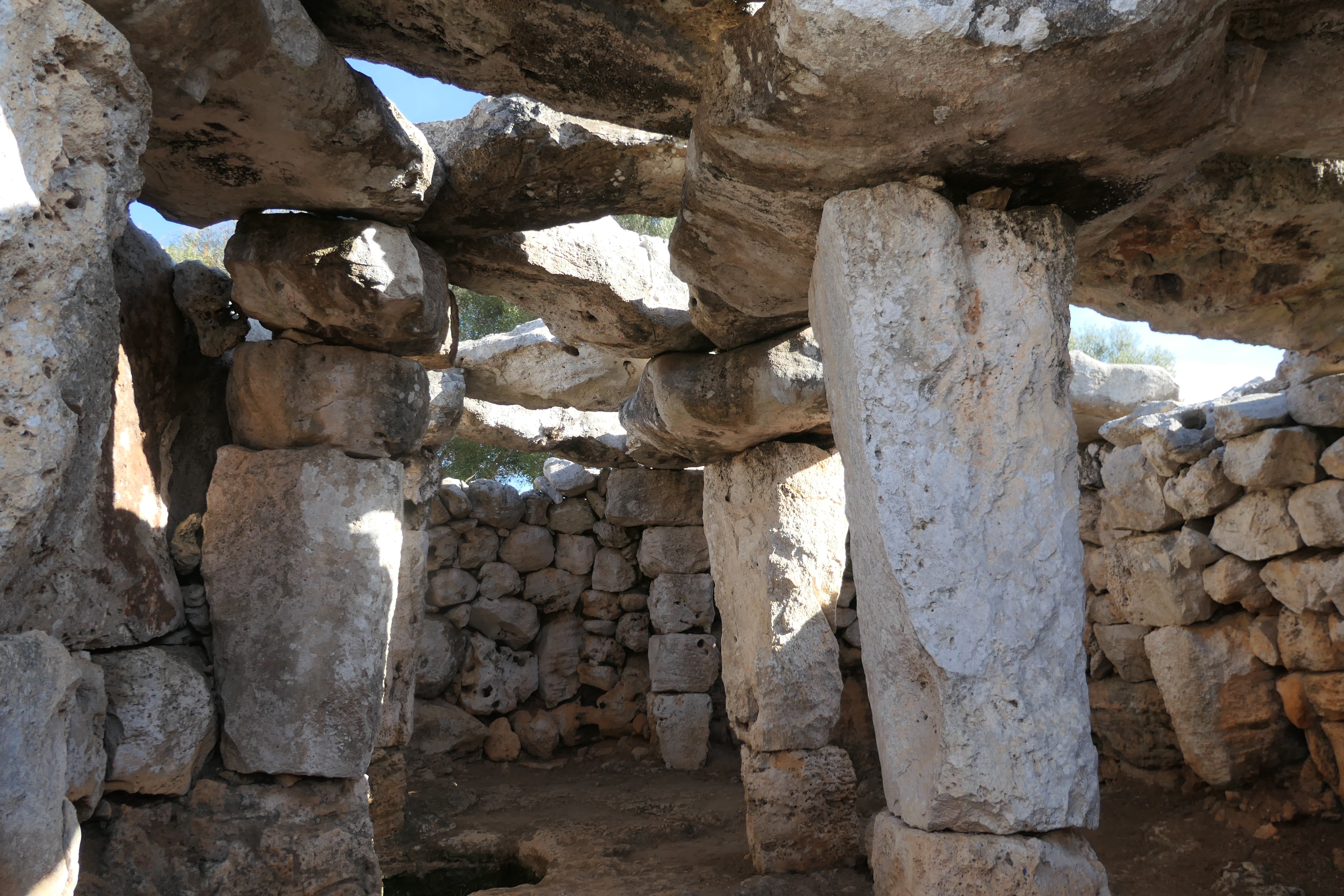
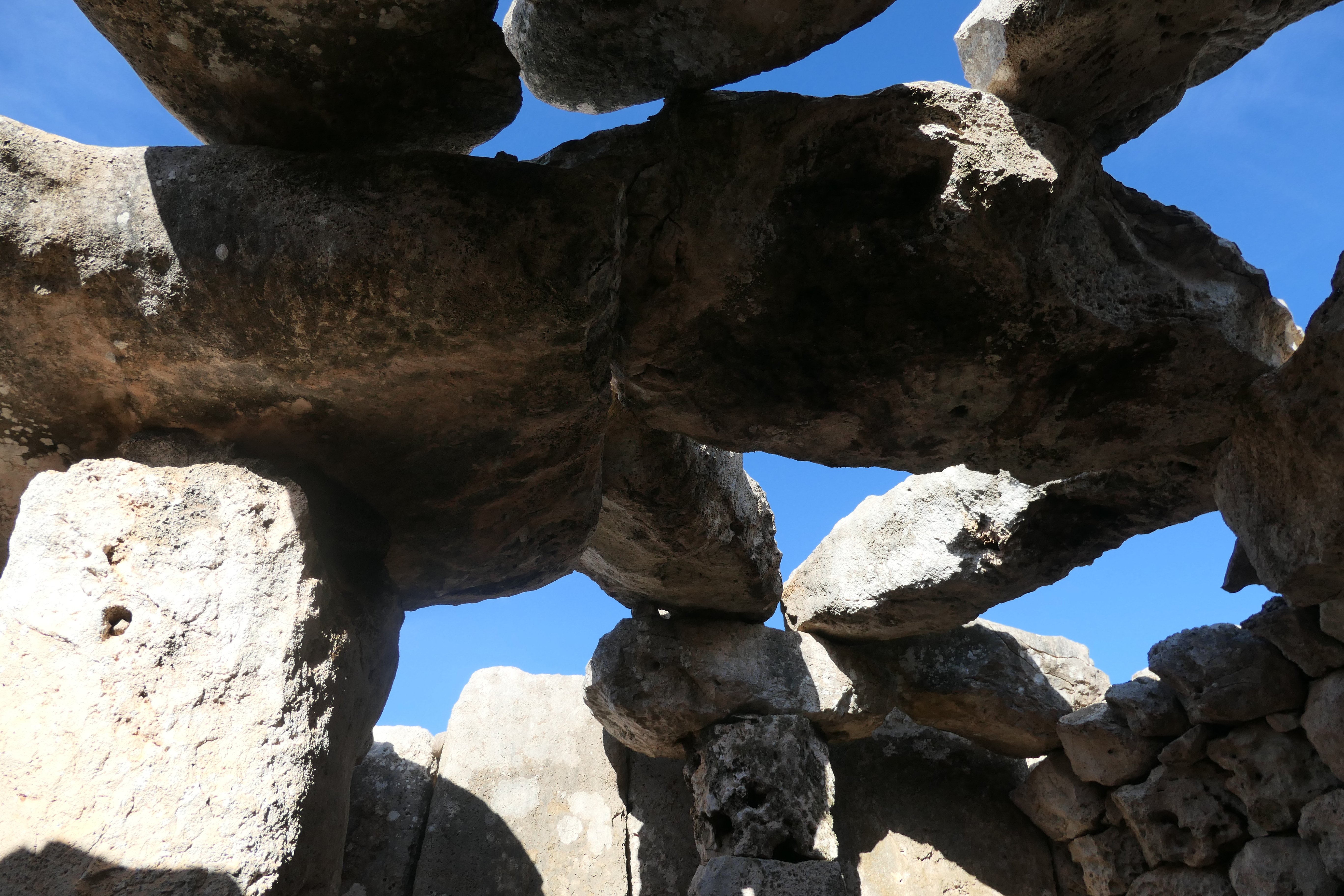
I loved these hypostyle chambers with the stone roof supports. However, I’m not sure I’d want to be in one of these rooms during an earthquake!Above – Other views of Torre d’en Galmés.In addition to above-ground structures, there are a number of below-ground chambers in Torre d’en Galmés as shown above.
If you get a chance and can tear yourself away from the beach for a day, don’t miss Torre d’en Galmés, or any of the other Talayotic sites on Menorca – they are the premier prehistoric ruins in the Balearic Islands, if not the entire Mediterranean Sea.
When planning our trip to Spain’s Balearic Islands, we decided to visit Menorca in addition to Mallorca and I’m so glad we did! Menorca is quite different than Mallorca – much smaller in geographic size and population, with rolling hills (vs Mallorca’s mountains) and fewer, quieter roads. Yet Menorca has amazing beaches, quaint towns and other interesting sights definitely worth checking out. I will be sharing posts on all these sights in the coming weeks!
This map shows the locations of places we visited while on Menorca. More information to come soon in future posts.
I say “somewhat quieter” in this post’s title because even though the local population is only 1/10th of Mallorca’s (about 100,000 people live on Menorca vs. about 1 million on Mallorca), tourists (especially Europeans) have discovered Menorca and some of the most popular beaches can get pretty crowded during the summer months. You need to plan ahead (like going to the beach early (7 am) to get close parking spots or waiting until the late afternoon (5-6 pm)). That said, there are so many beach/cove options you won’t have trouble finding a spot to lay down your towel, even if it’s not where you originally planned to go.
This gorgeous beach, Son Saura, was largely ignored as tourists walked further on the coastal trail to the more famous Cala Turqueta (we’re guilty as charged!).
Menorca Travel Tips
Menorca is on of the three primary Balearic Islands, and only 43 nautical miles (80 km or 50 miles) from Mallorca. The other primary island is Ibiza, which is a little more geographically separated from Mallorca and Menorca (although closer to mainland Spain) and we did not visit it.
Location of Menorca relative to Mallorca, Ibiza and mainland Spain.
Getting There: Menorca is a short flight (about 20-30 minutes) or ferry ride from Mallorca. We flew to save time, and the flight was enjoyable because you could see a lot of the island from the flight path. You can also fly to Menorca directly from Barcelona and other locations.
Transportation: We rented a car on Menorca and this was a convenient way to get around, since we wanted to explore as much of the island as we could in 4 days. The roads are in good condition and fairly quiet, there’s not a lot of traffic. There is a bus system, but since we didn’t use it I don’t know how convenient or frequent the buses are.
Where to Stay: There are many options and we decided to stay in an apartment in the Cala Galdana area on the south coast. Besides being a beautiful location with a lovely beach, it was easy to get from Cala Galdana to almost anywhere on the island in less than an hour, including some amazing coves and beaches that are just short hikes away along a coastal trail.
View of Cala Galdana from the pool area of the Comitas Floramar Aparments, where we stayed.
There were a number of hotels, restaurants and shops in Cala Galdana, including various tour agencies for diving and other water-related activities. I think the best swimming beaches are on the southern coast, since they seem more protected than the north shore.
Menorca’s main towns of Ciutadella and Mao (or Mahón) are on either end of the island and seemed less tourist-oriented. However, they were both fun to explore and lovely towns. It seems that most tourists make their home base in one of several main resort locations on the south coast, except for the town of Fornells on the north shore, which has its own vibe and is a tourist hub as well. We noticed at least one campground not far from Cala Galdana.
Island Trail System: There is a trail system (Cami de Cavalls) than circumnavigates the island along the coast and provides access to many of the beaches and coves. There are signs along the trail indicating distances (in kilometers) between major beaches and towns.
The coastal trail is shown on this map – the green route that circles the entire island on the coast. No motorized vehicles allowed on this trail system.
We found the trails very useful. If one parking area was full, then we just parked at another accessible parking area and took the trail back to our desired beach – it may mean a slightly longer walk, but the tradeoff is enjoying the coastal scenery.
View from the south coastal trail on the way to Cala Turqueta.
If you want a little quieter getaway in the Mediterranean Sea, Menorca may be your spot! In future posts, I will share information on the island’s sights – beaches, towns and amazing prehistoric ruins.
Note: Featured Image is Cala Mitjana, just a few kilometers east of Cala Galdana.
Our final stop in Mallorca was the north coast. We based ourselves near Alcúdia and were very happy with the location.
Alcúdia and the various sites mentioned below are located in the northern part of Mallorca.The starred locations indicate our places of stay.
The old walled town of Alcúdia is at the base of a small peninsula that divides the northern coast into the Bay of Pollença and the Bay of Alcúdia. The peninsula itself has some lovely beaches (more on this below). On the eastern side are many hotels, modern shops and busier beaches, kind of like a Miami beach area. We decided to base ourselves on the quieter western side of Alcúdia, at the PortBlue Club Pollentia Resort. The resort is right across the coastal road following the bay of Pollença and is only a couple kilometers from Alcúdia.
The Port Blue Club Pollentia Resort & Spa pool.
Bay of Pollença, view from our hotel.
Alcúdia
Nothing like having medieval walled towns next to glorious beaches – my perfect combination! The late 13th century walled town of Alcúdia is really lovely and sits in a prime location, between two bays with picturesque coves and beaches close by. It’s no wonder this town was a target of pirates in the 16th century. You can spend the day at the beach and then wander into the old town for dinner. There is a large car park on the eastern side of the town walls.
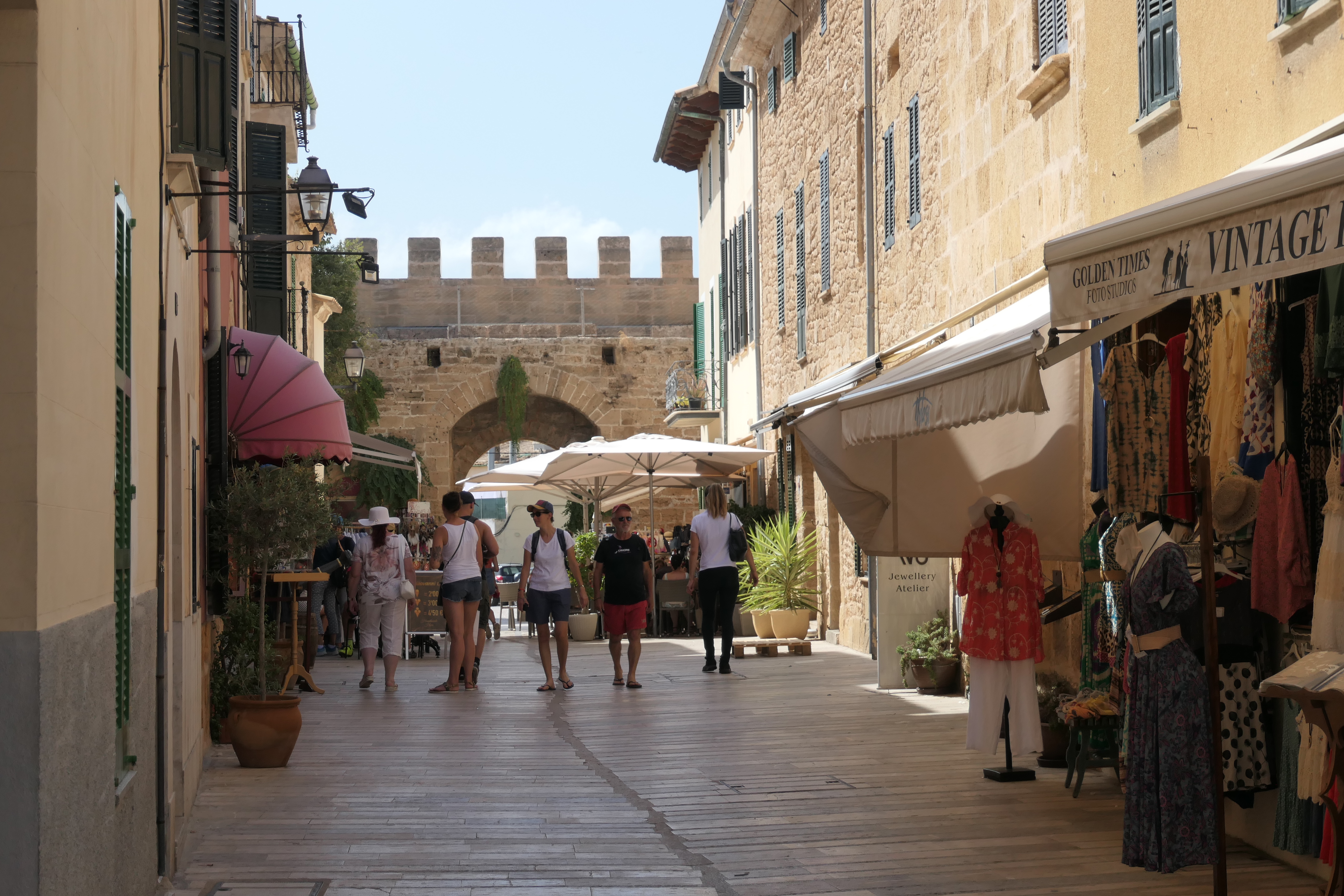
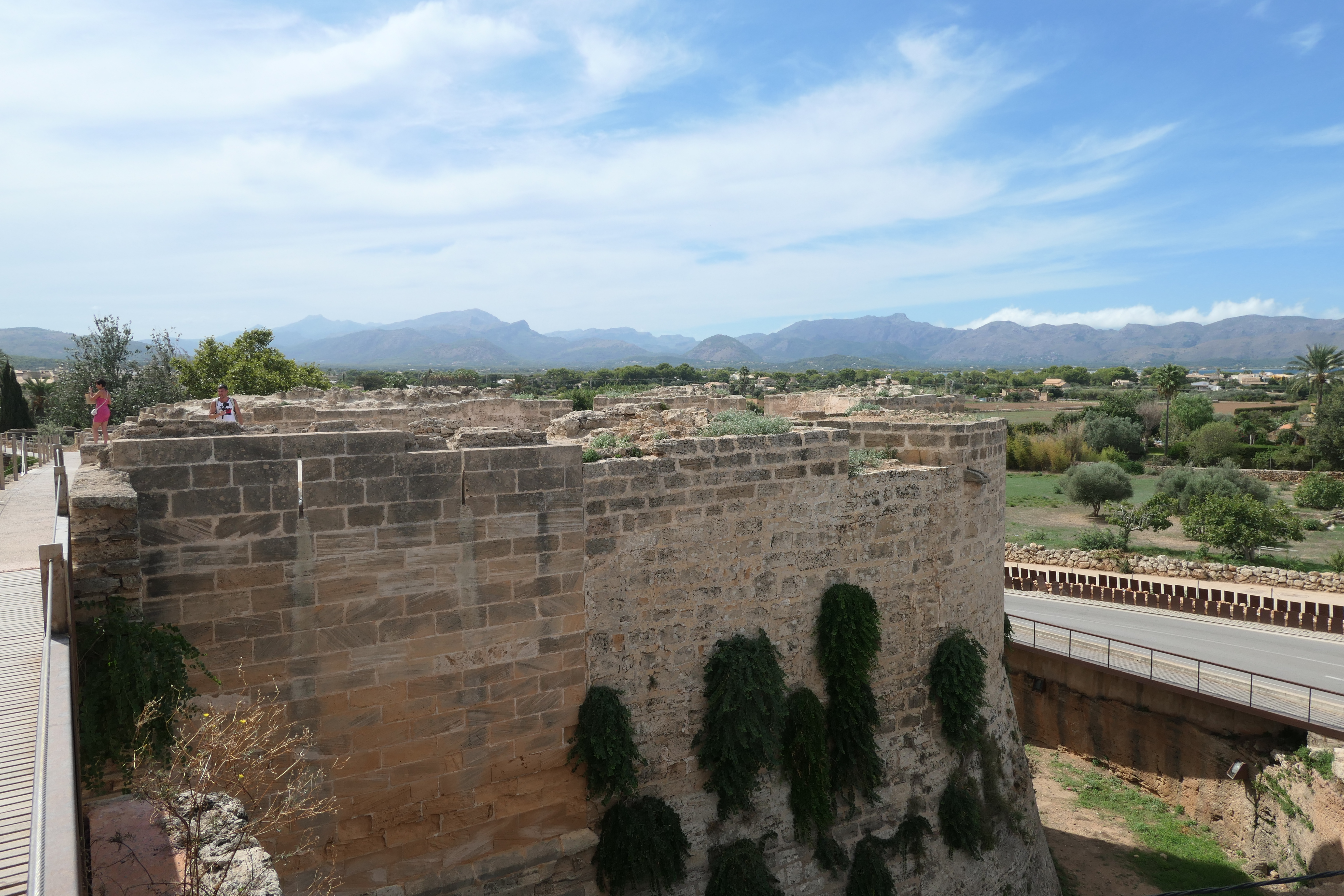
Views of Alcúdia’s gates and walls.Street views of Alcúdia.You can walk a good portion of Alcúdia’s walls for views of the surrounding countryside and town.
Beaches and More Beaches
S’illot Beach is on the peninsula near Alcudia. Its pebbles make for a clean beach experience (no sand to get trapped in your clothes or towel!) and the little island is fun to snorkel around.Sant Joan Beach on the left (near S’illot Beach above) and Formentor Beach on the right (at the far end of Bay of Pollença, near Mirador de Es Colomer).
Mirador de Es Colomer
A popular thing to do in the evening before the sun sets is to take a drive past the Bay of Pollença to the very northwest corner of the island for some spectacular views of the Bay of Pollença and Formentor area. We did this on a whim one evening and really enjoyed the amazing setting and views. The road is steep and narrow – be forewarned. Parking can be a bit of challenge, but be patient and you’ll find a spot. There is a lighthouse further out on the point, but the road to it was closed during our visit.
The dramatic views from Mirador de Es Colomer.
It’s hard to capture the height of the cliffs at Mirador de Es Colomer – it’s probably 1,000 feet straight down to the water.
The Ruins of Pollentia – A Roman City
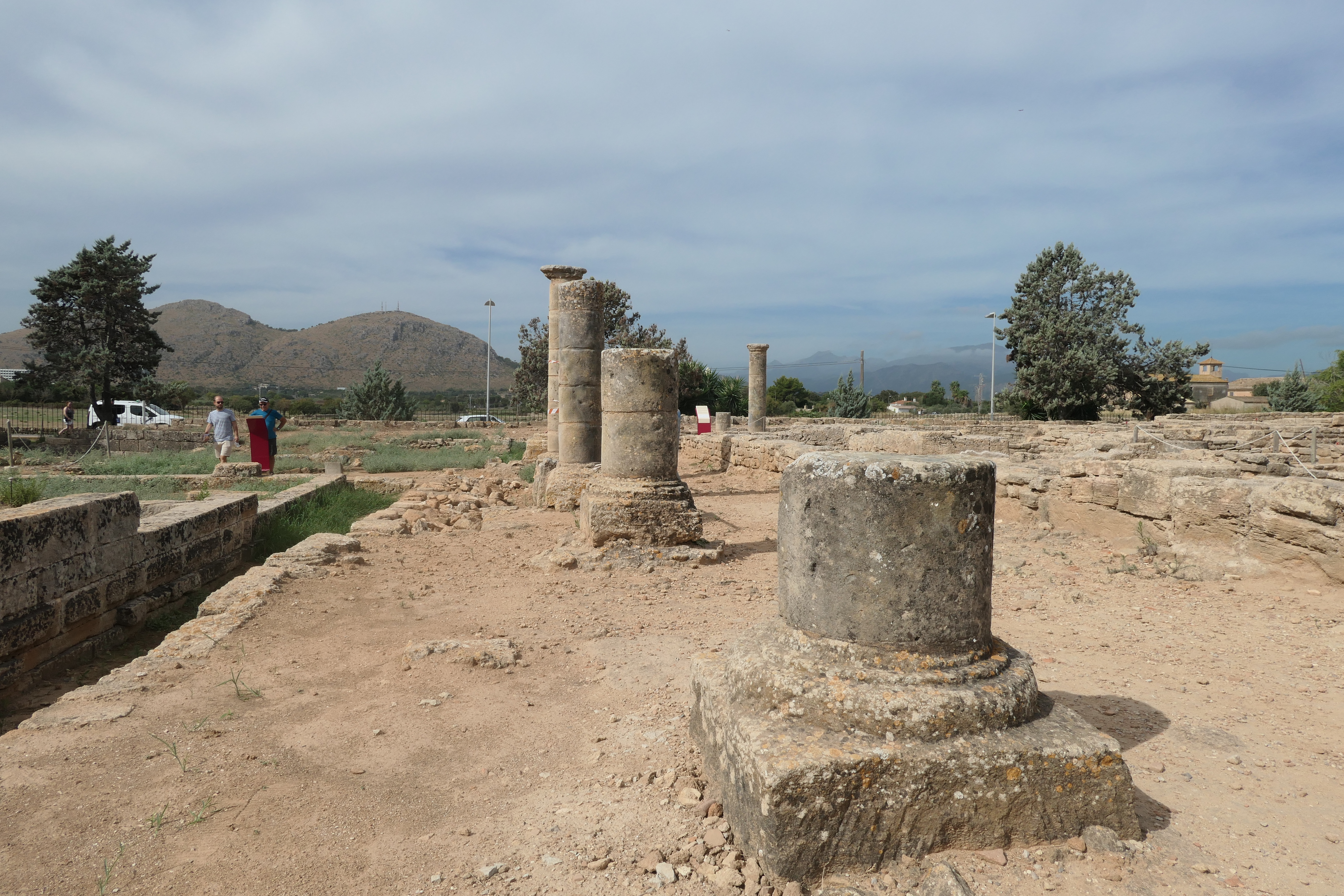
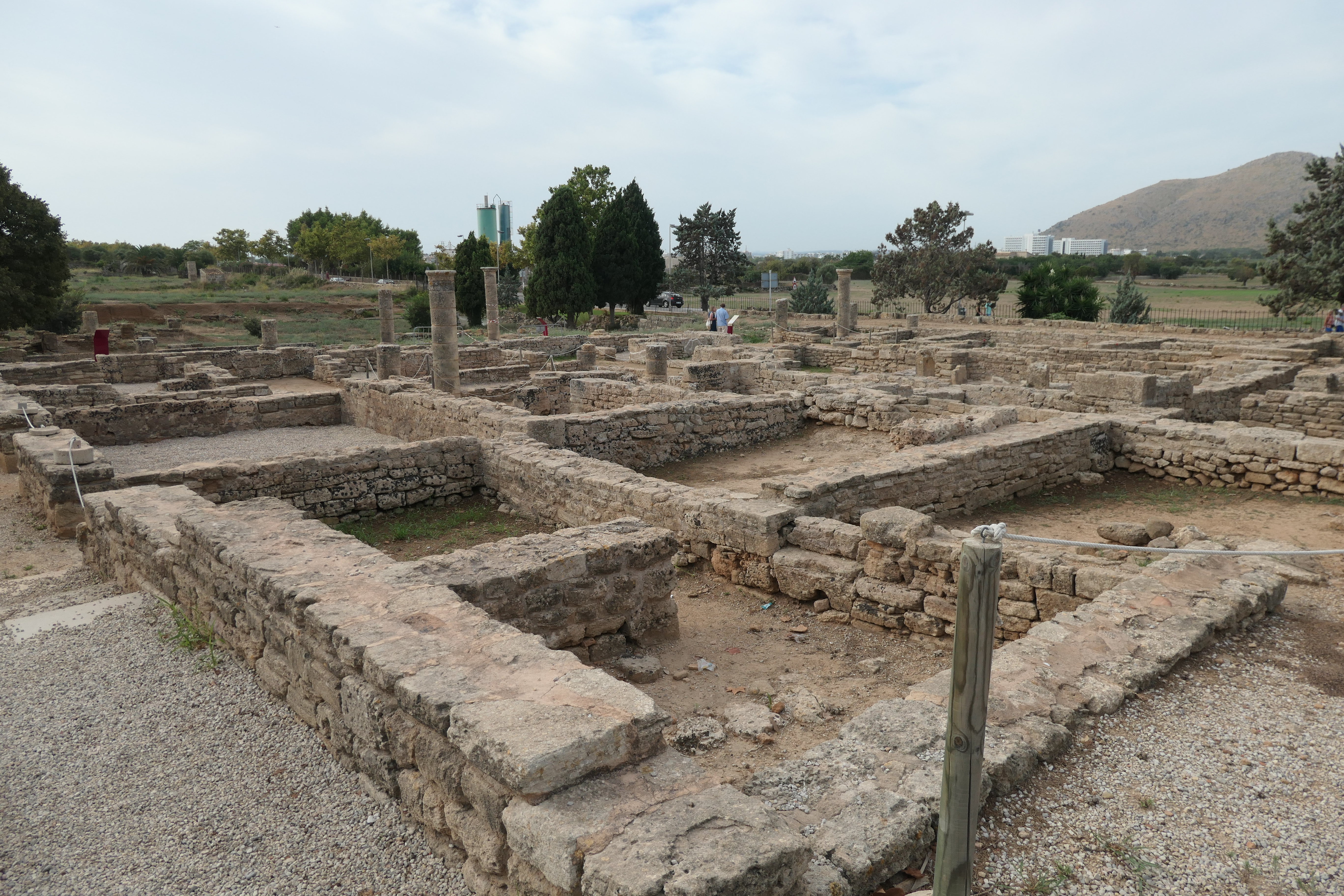
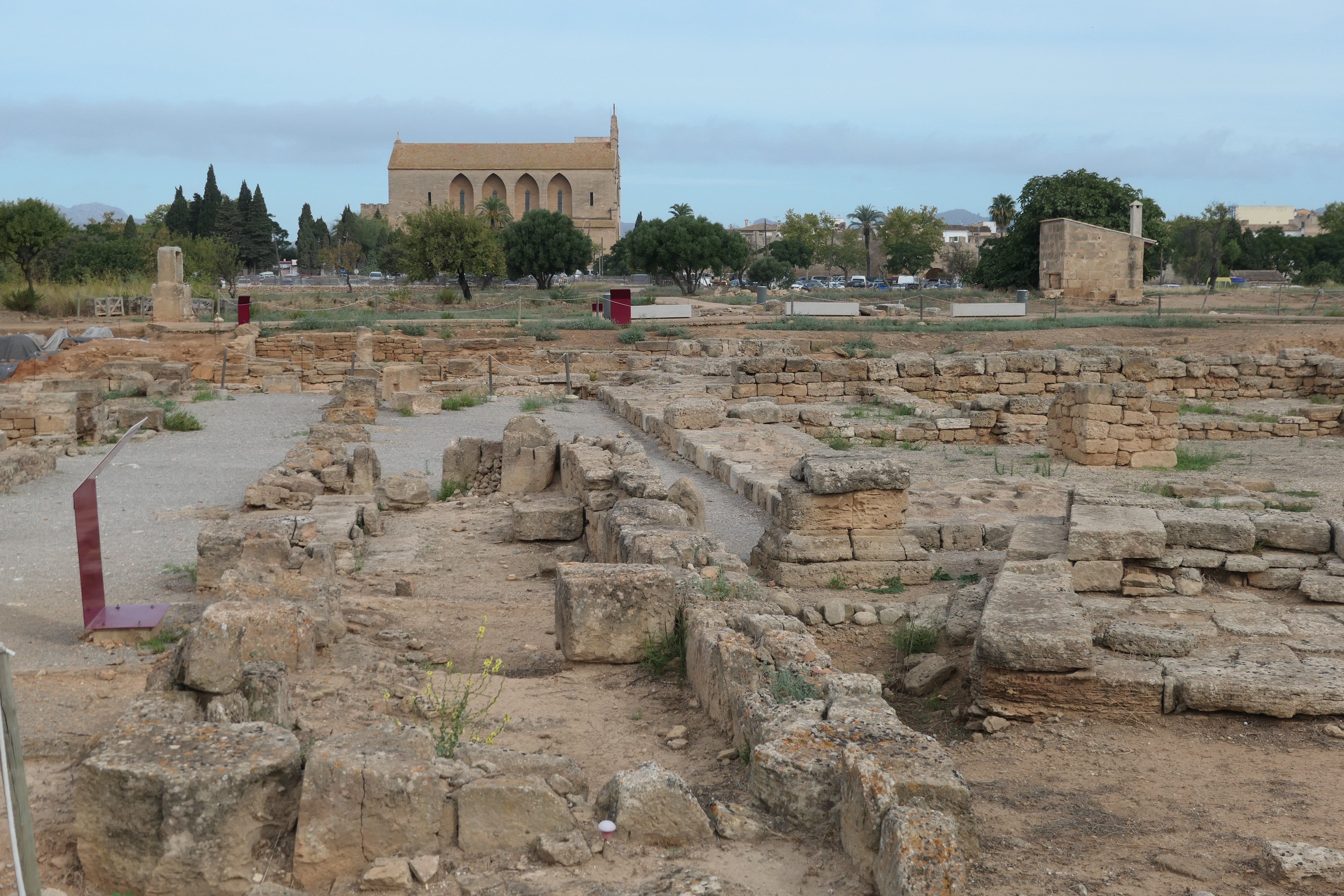
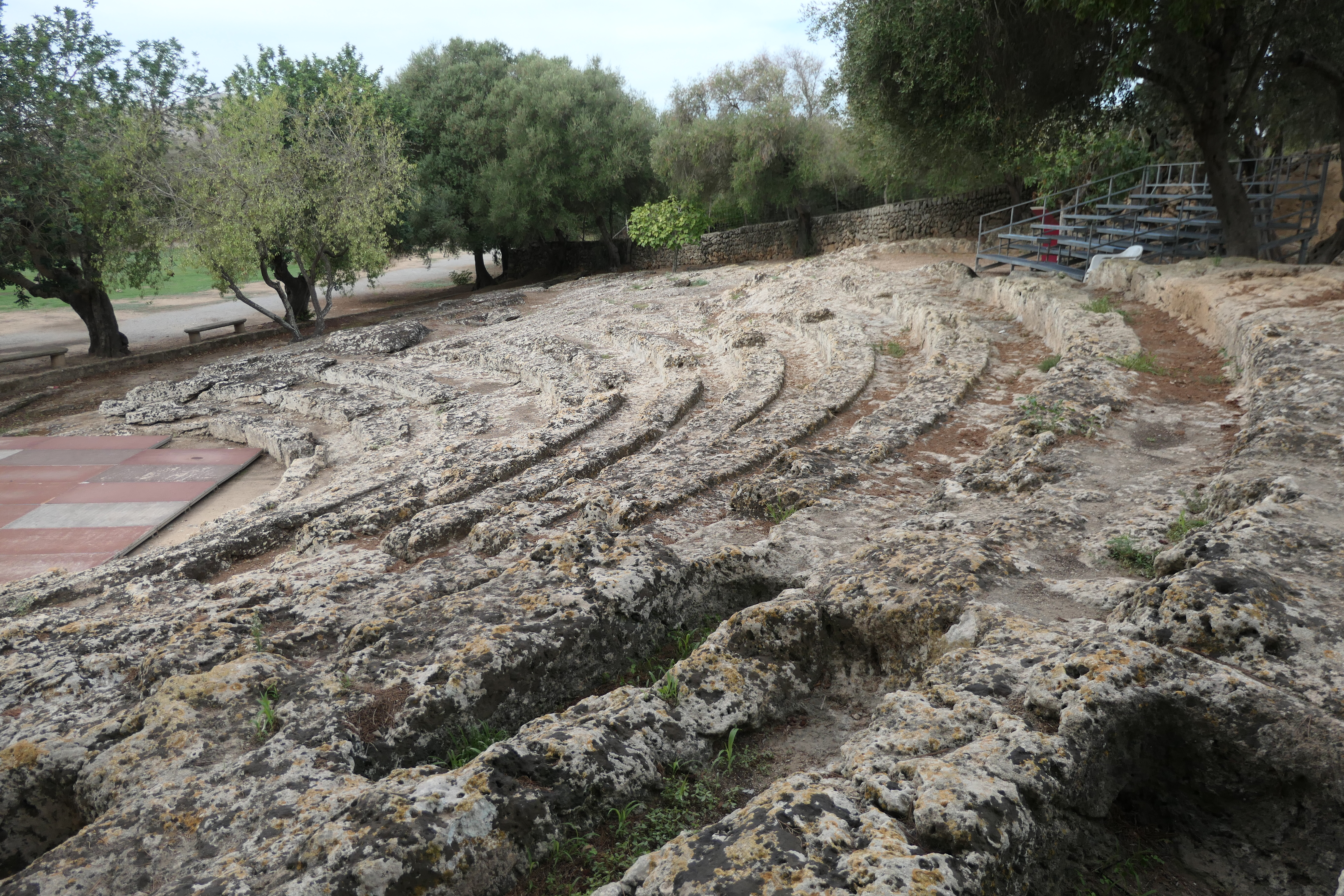
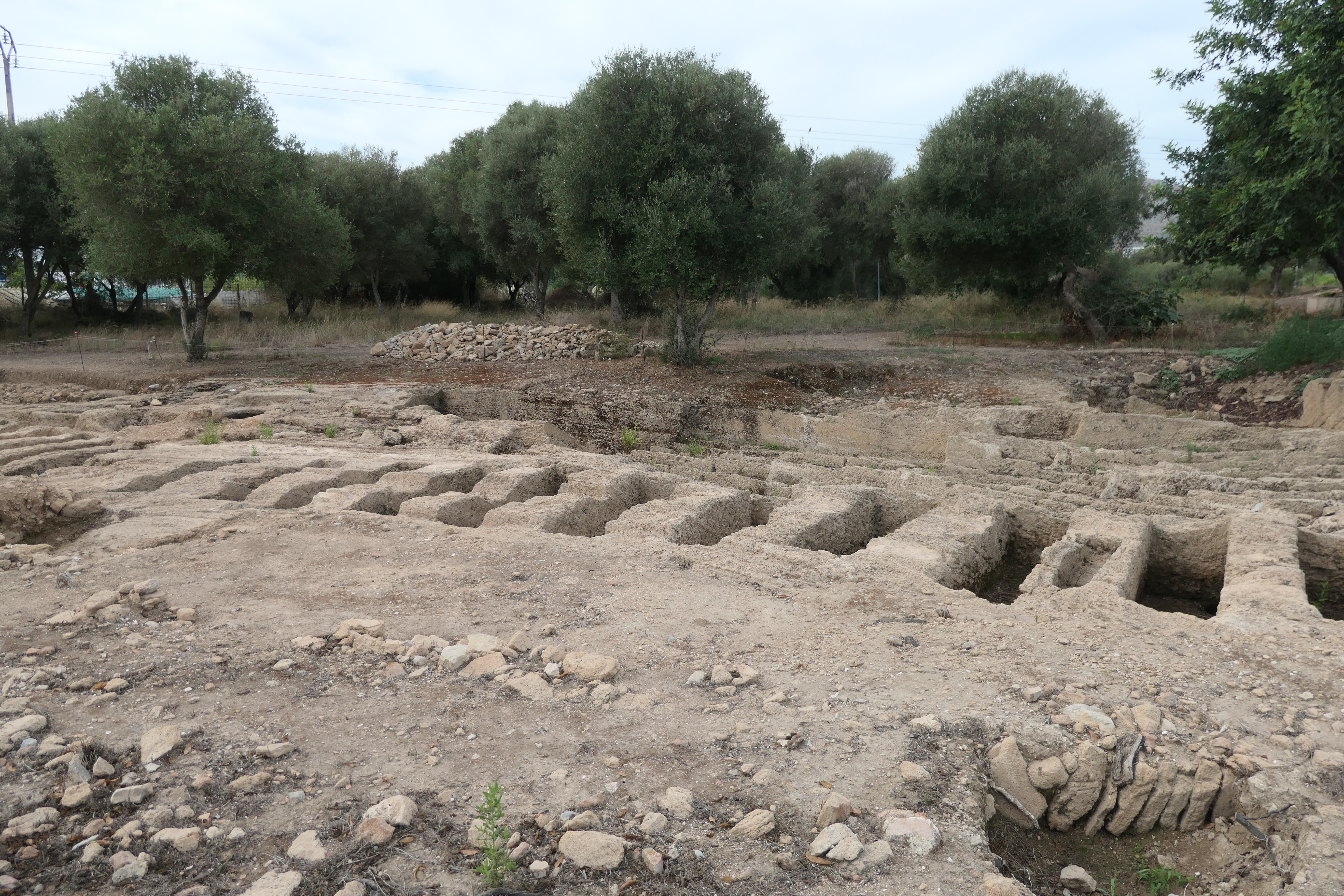
Just outside the walls of Alcúdia are the ruins of the Roman town of Pollentia. Pollentia was the most important Roman settlement in the Balearic Islands and was founded around 121 B.C., a strategic location for a port city. It’s definitely worth a visit.
Views (above) of Pollentia Forum (main plaza) Ruins.Left to Right: Pollentia’s theater, water drainage system and medieval-era necropolis.
Lluch Monastery
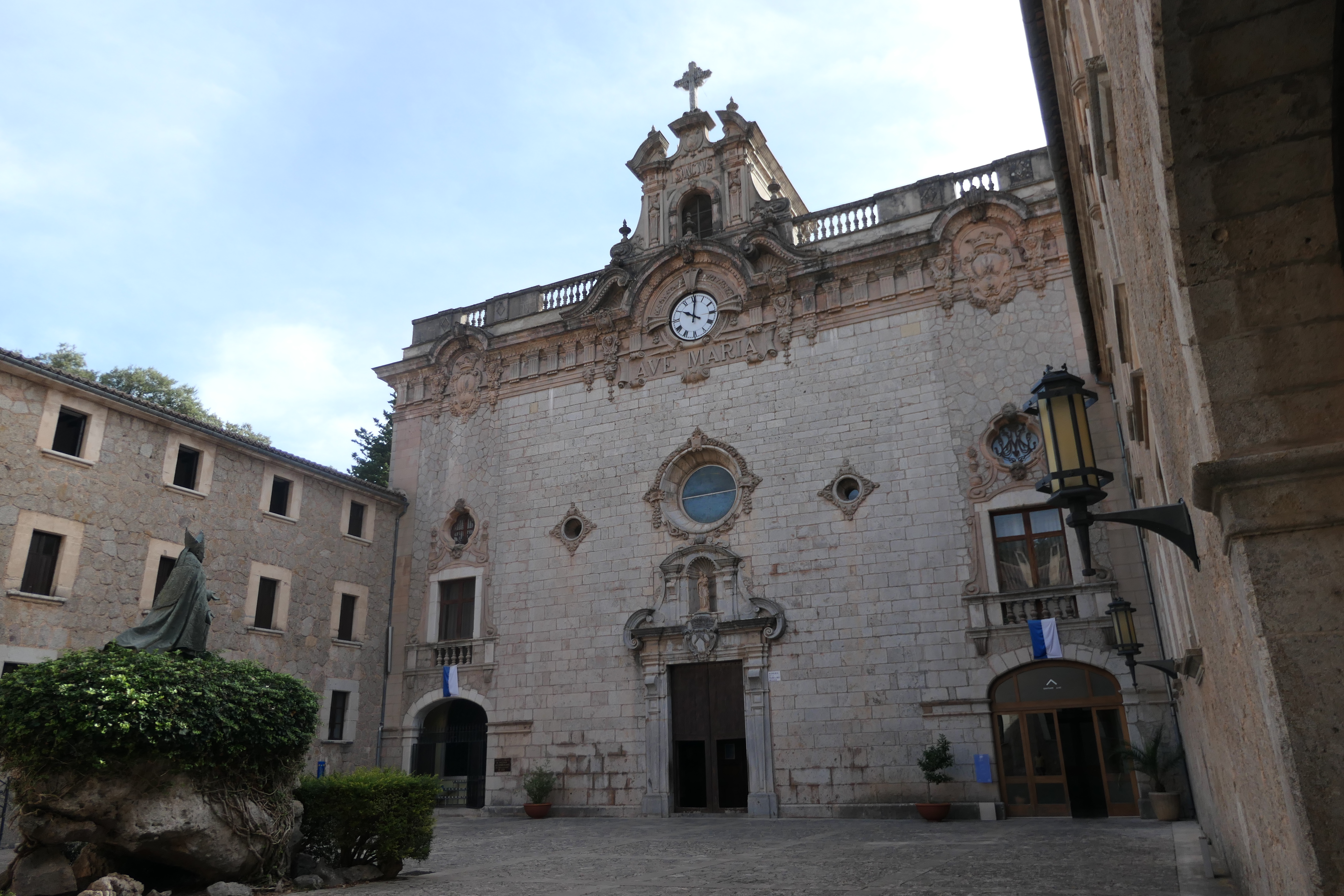
A little further from Alcudia south and west (about 30 km or 19 miles) is the 17th century Lluch Monastery, a major pilgrimage site and important religious sanctuary in Mallorca. We visited Lluch Monastery on our way back to the Palma airport as we were leaving Mallorca. It is located in the rugged Tramuntana Mountains. As the informational image notes below, the monastery receives more than a million visitors a year!
Here’s a short history of Lluch Monastery.
Exterior views of Lluch Monastery.Interior views of Lluch Monastery.
The north coast of Mallorca really is magical – with its nice hotels, beautiful beaches, a medieval walled town, Roman city ruins, a historic pilgrimage site and dramatic coastline drive and views, I’m not sure how it gets any better than this for an independent tourist!
Although most tourists to Mallorca, Spain flock to the beach or the mountains to bike on their holidays in Mallorca, there are several “off the radar” spots to visit if you’d like to spend a quieter day during your stay. These three towns and nearby sites are relatively close to each other in the north-eastern part of the island and make good short stops if your traveling from the east coast to the north coast, which is exactly what we were doing. See other posts on Mallorca here.
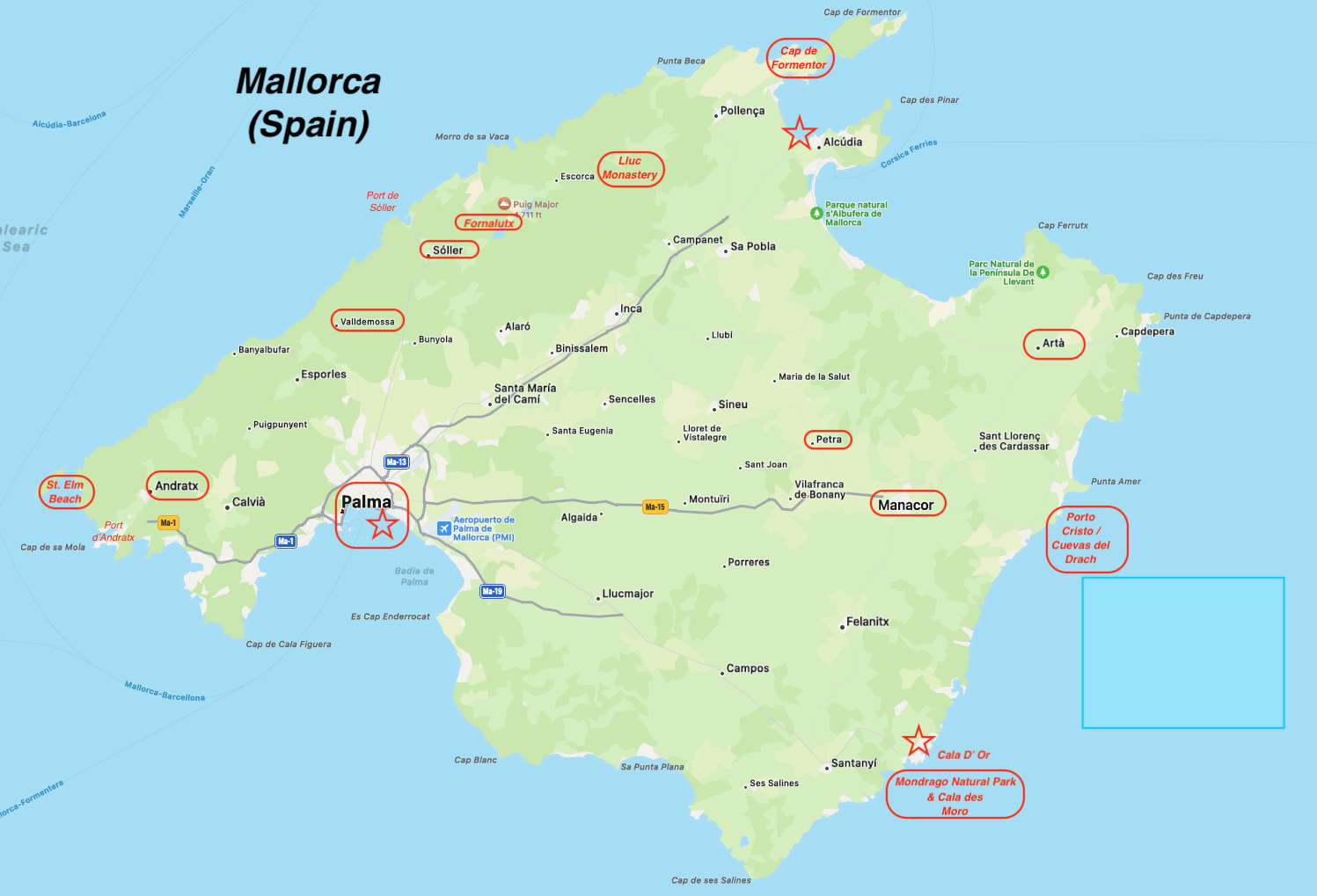
Locations of Manacor, Petra and Artà – center right in image.
Manacor
If you enjoy professional tennis, you may have heard of Rafael Nadal, a former #1 ranked tennis player and winner of 22 Grand Slam Men’s Singles titles, including 14 French Open titles. Just amazing. Manacor is his home town and he has built a tennis academy there, just on the outskirts of town. We stopped by to take a look and visit the Academy store to pick up some souvenirs. The academy appeared fairly quiet while were there (September) and the facility was in the midst of expansion. If you or your children or friends are looking for some serious game improvement, this might be your place!
There are multiple clay courts and hard courts at the academy plus dorm rooms, instruction rooms and workout areas. Not a bad place to spend a week or two brushing up on your tennis game!
While there is more to Manacor than tennis, this was our main stop.
Petra
This little town is the birthplace of Franciscan Friar Junípero Serra, born in 1713, who made it all the way to what later became the state of California and established missions that led to the founding of the cities of San Diego and San Francisco. He represented the Catholic Church on what was known as the Portolá expedition (1769–1770).
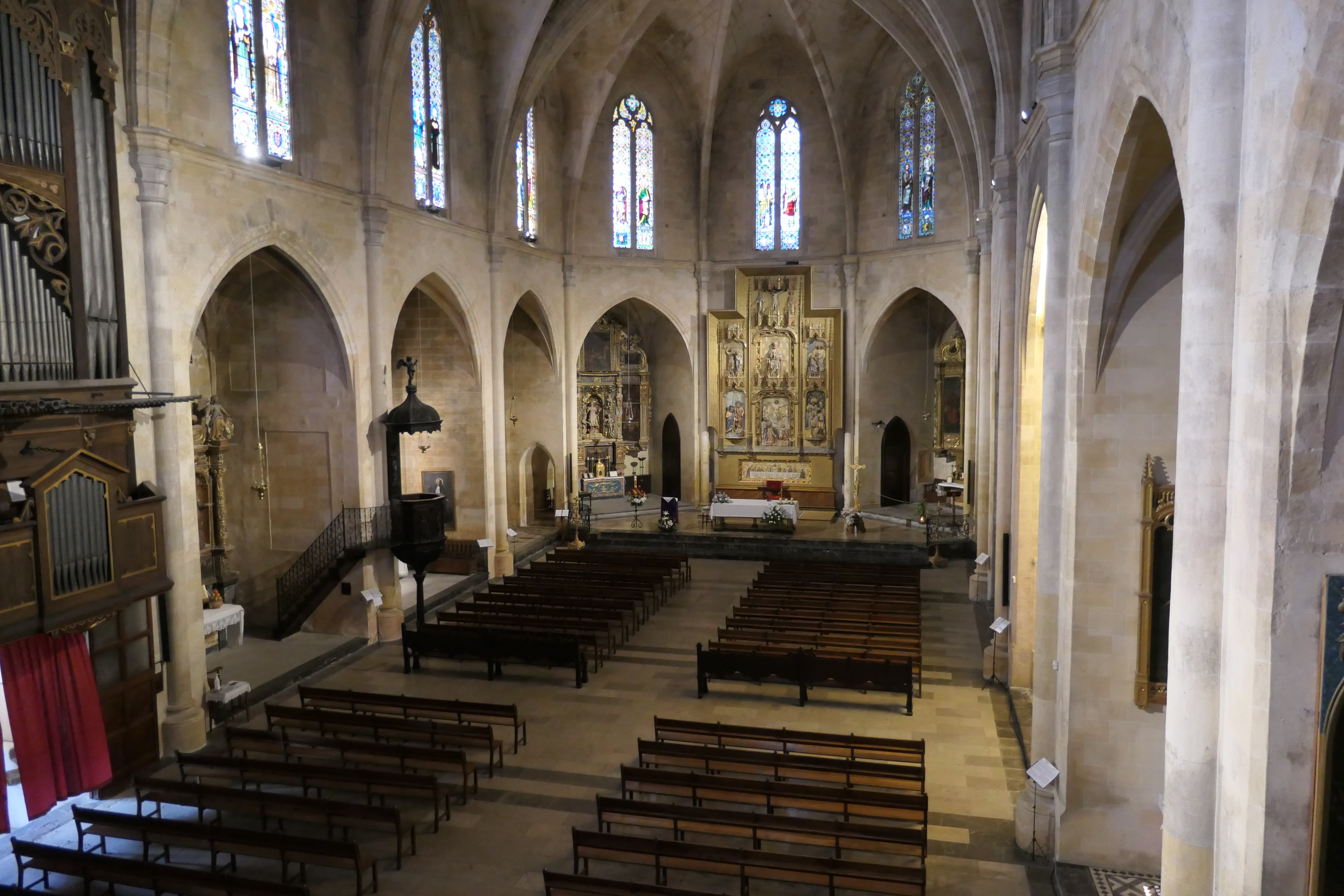
Parish Church of Sant Pere in Petra, where Fray Junípero Serra was baptized.
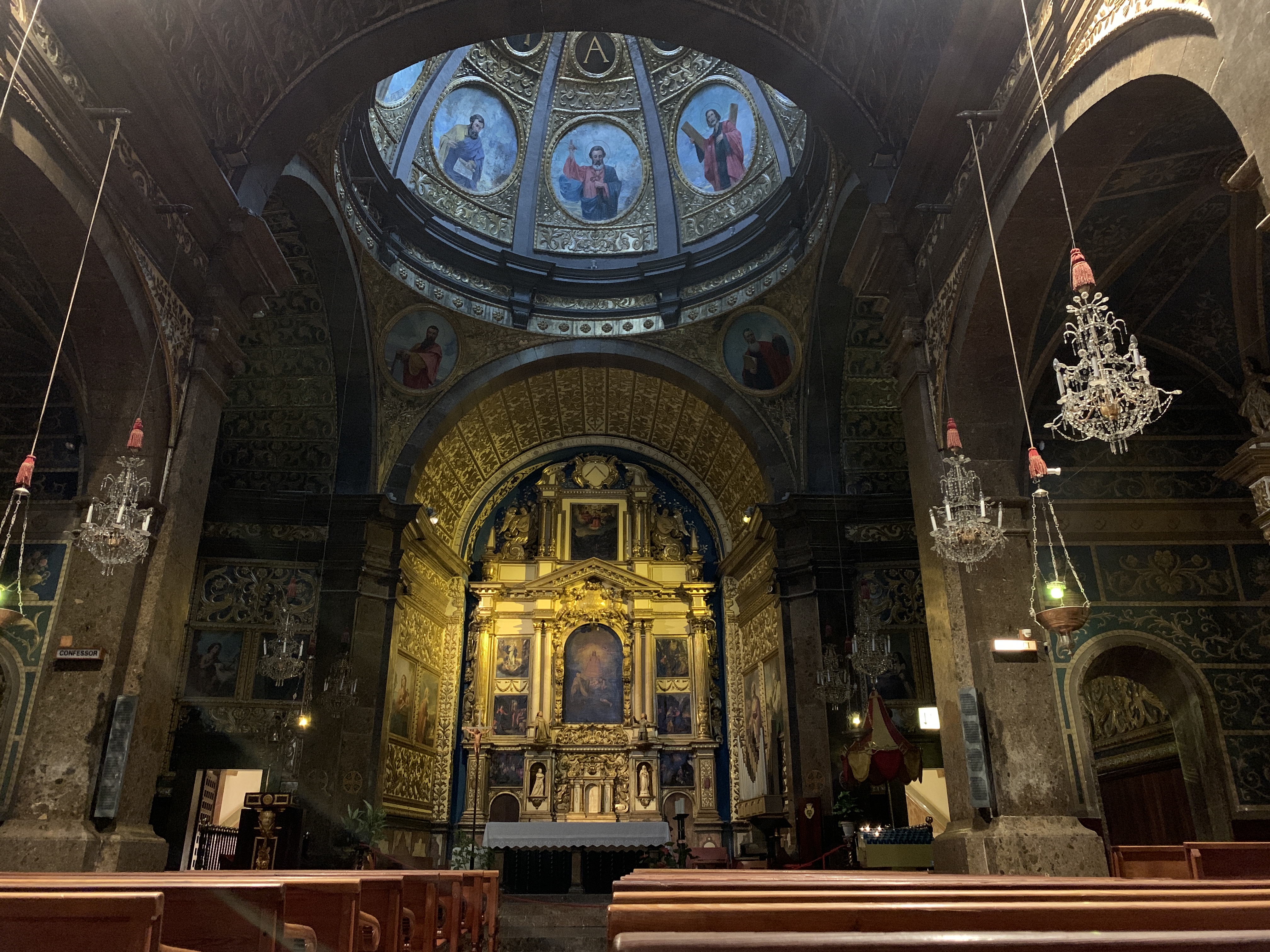
Interior of Sant Pere Parish Church.Other views of Sant Pere.
Just outside of Petra, you can visit Bonany Monastery/Sanctuary, which sits on a hill (elevation 1,000 ft) above Petra and affords a lovely view of the island’s interior landscape. Signs from the town will lead you on the narrow road up to the monastery.
Views of the surrounding countryside and town of Petra from Bonany Sanctuary.
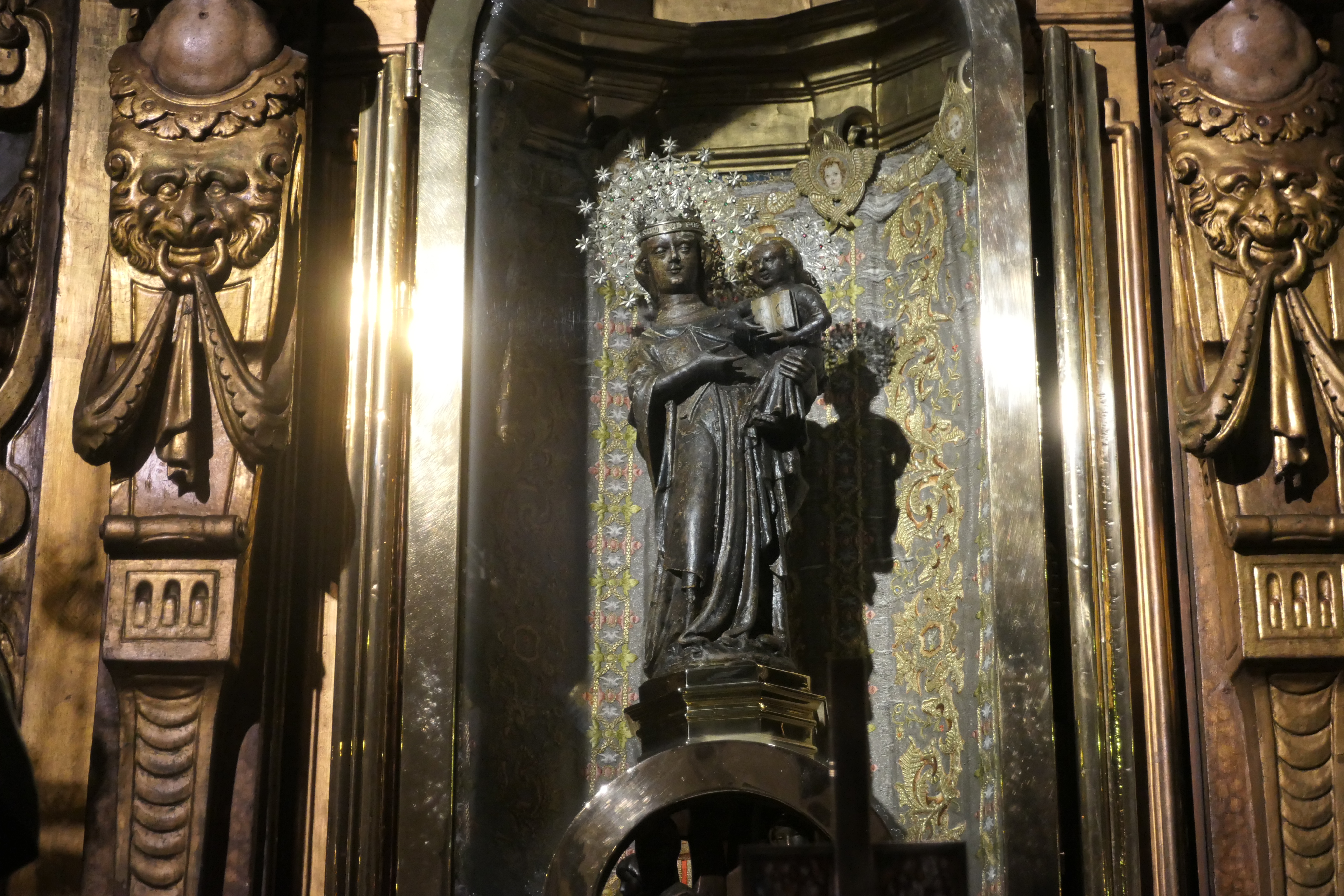
The monastery and church date to the 17th century when locals would ascend the hill to pray for rain for growing their crops, and a statue of the Virgin Mary was found on the hillside. The main church’s hours are short (10 am – 2 pm), so arrange your visit accordingly if you’d like to go inside. I believe the Sanctuary also offers some accomodations if you’d like to have some solitude during your stay on Mallorca.
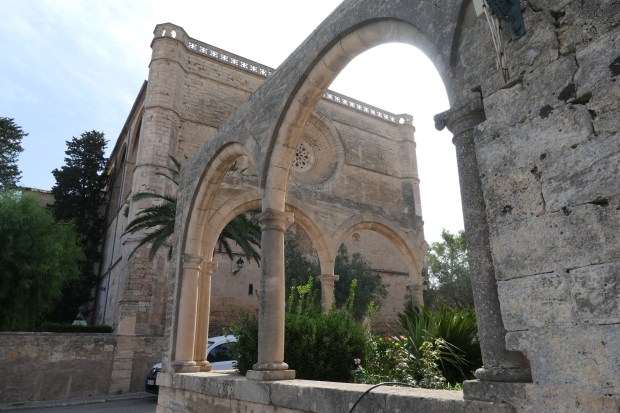
View of the Bonany Monastery.
Other views of the Bonany Monastery.Inside the Monastery, through a viewing glass are these tiny outdoor scenes – quite interesting! Someone went to a lot of work to create these.
Artà
Artà is a larger town than Petra but still easy to cover on foot and only 15-30 minutes from some lovely beaches on the northeastern shore of Mallorca.
Artà’s pedestrian main street.
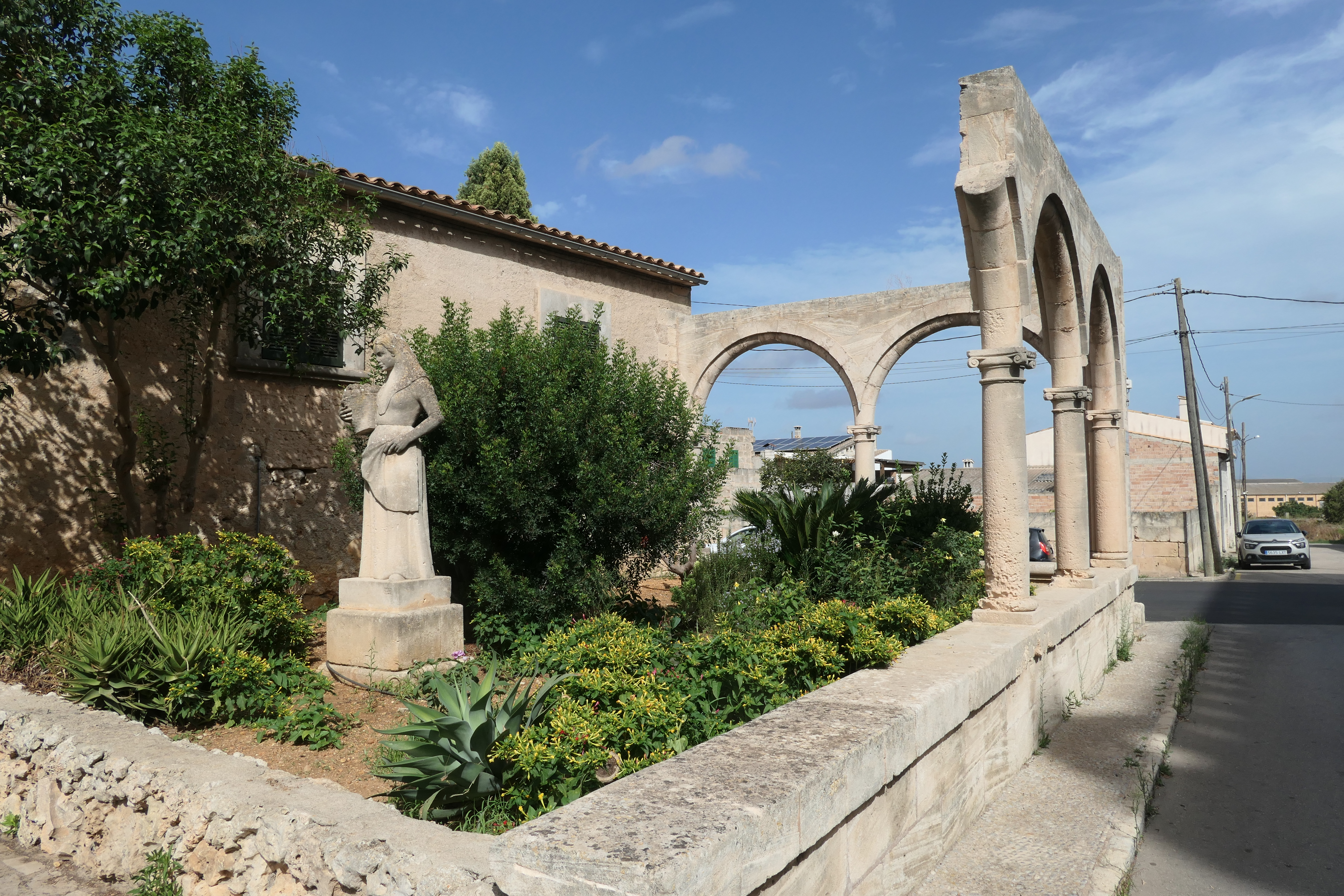
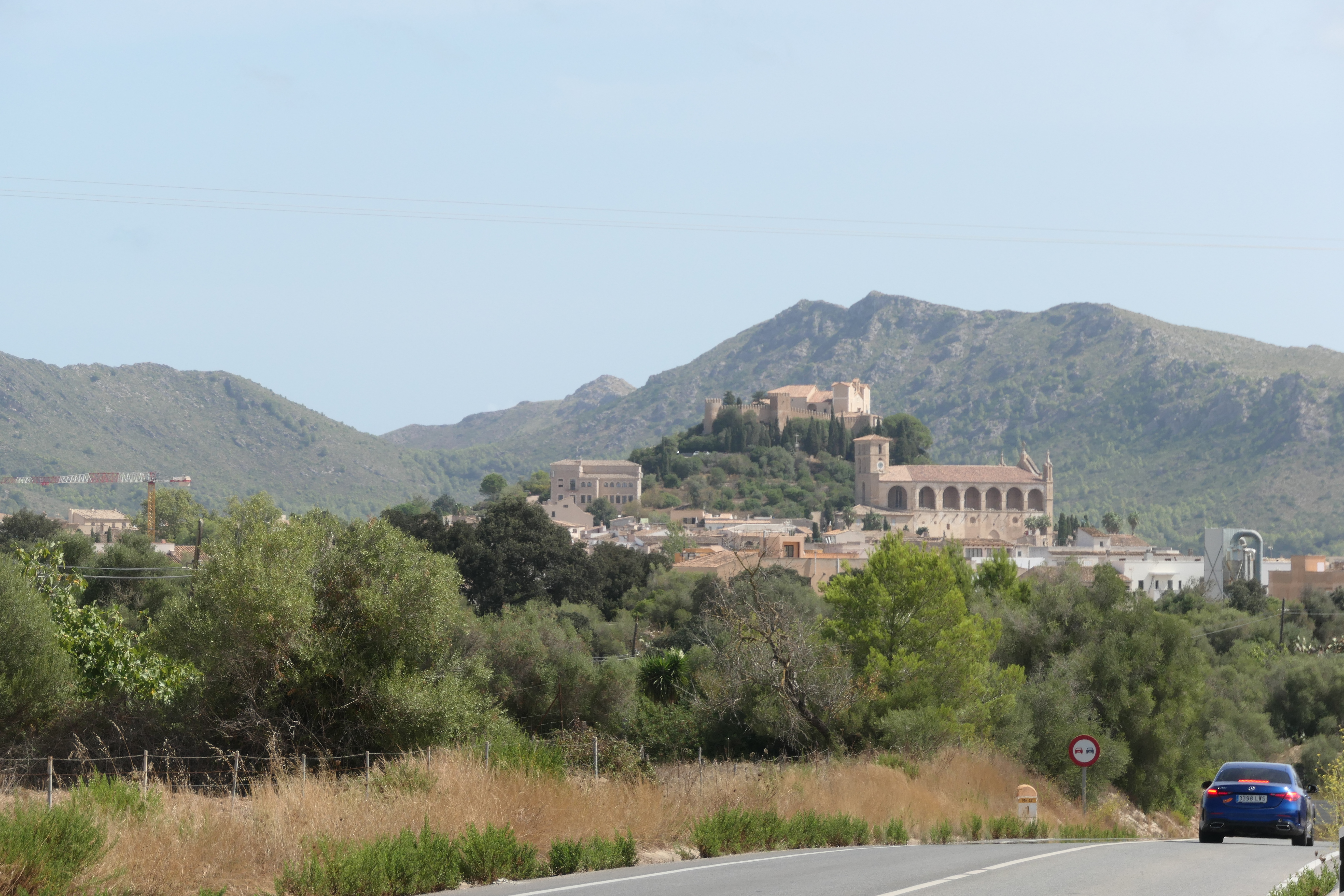
Artà has a nice pedestrian street with fun and classy shops that leads towards the hill topped by the Sanctuary of San Salvador (Sant Salvador) with medieval walls surrounding it; this is one of the town’s main sights.
The town of Artà with the Sanctuary of San Salvador dominating the hilltop.
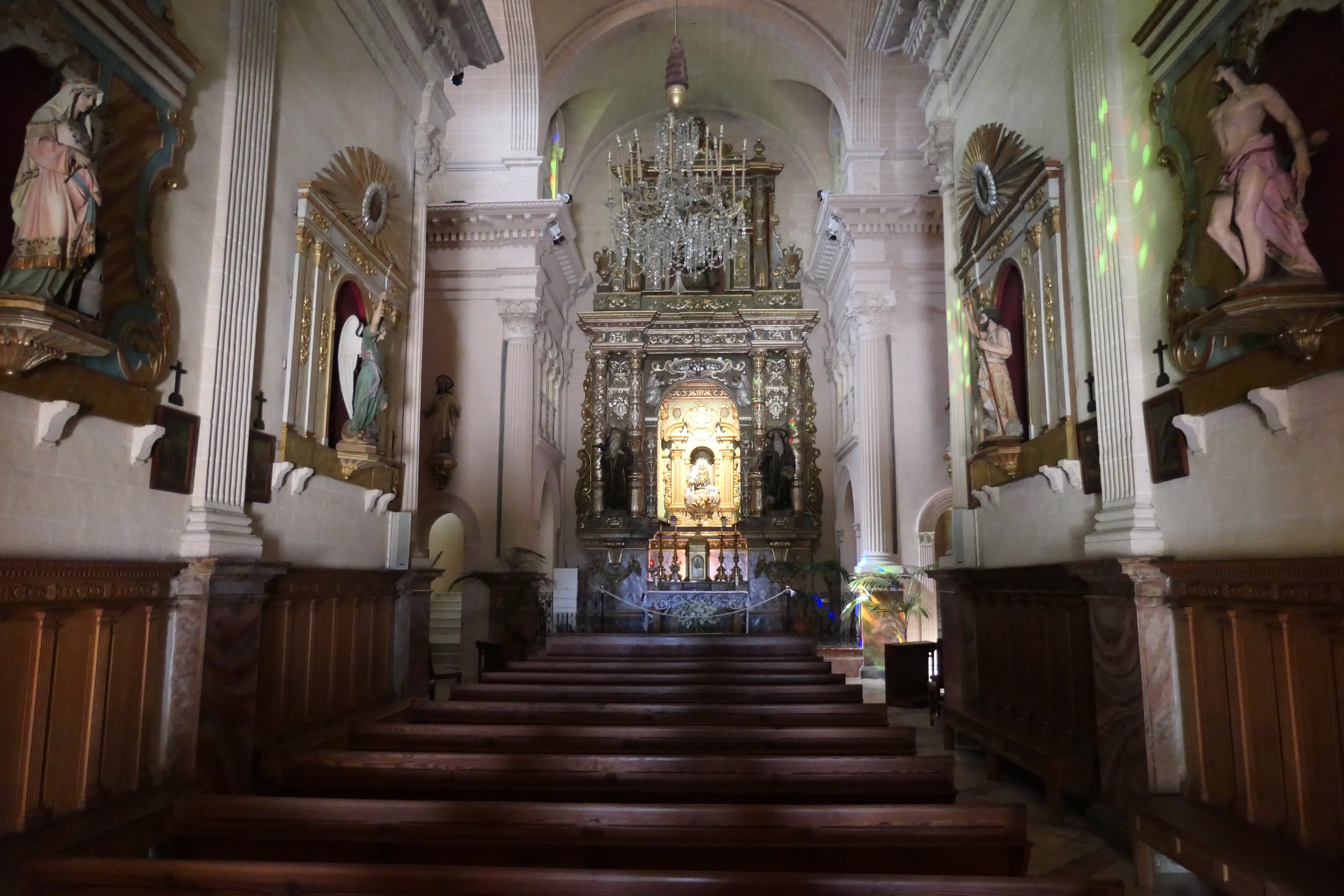
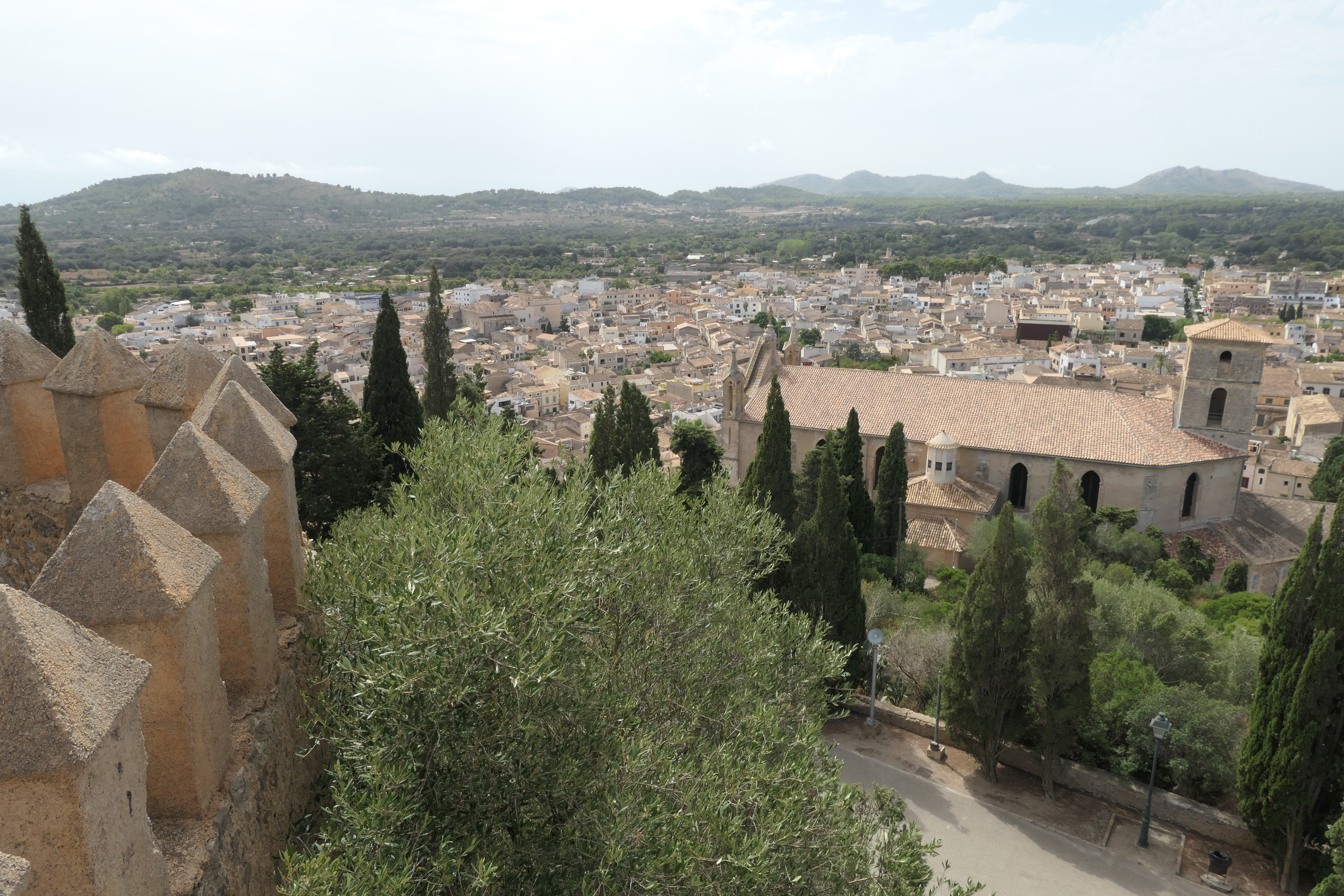
The walls of Artà – including the view of the town from the top.Another landmark church in Artà is The Church of the Transfiguration of the Lord, dating from the 16th century (views above and below).Inside The Church of the Transfiguration of the Lord they have an interesting museum, it is worth a visit.
Ses Païsses
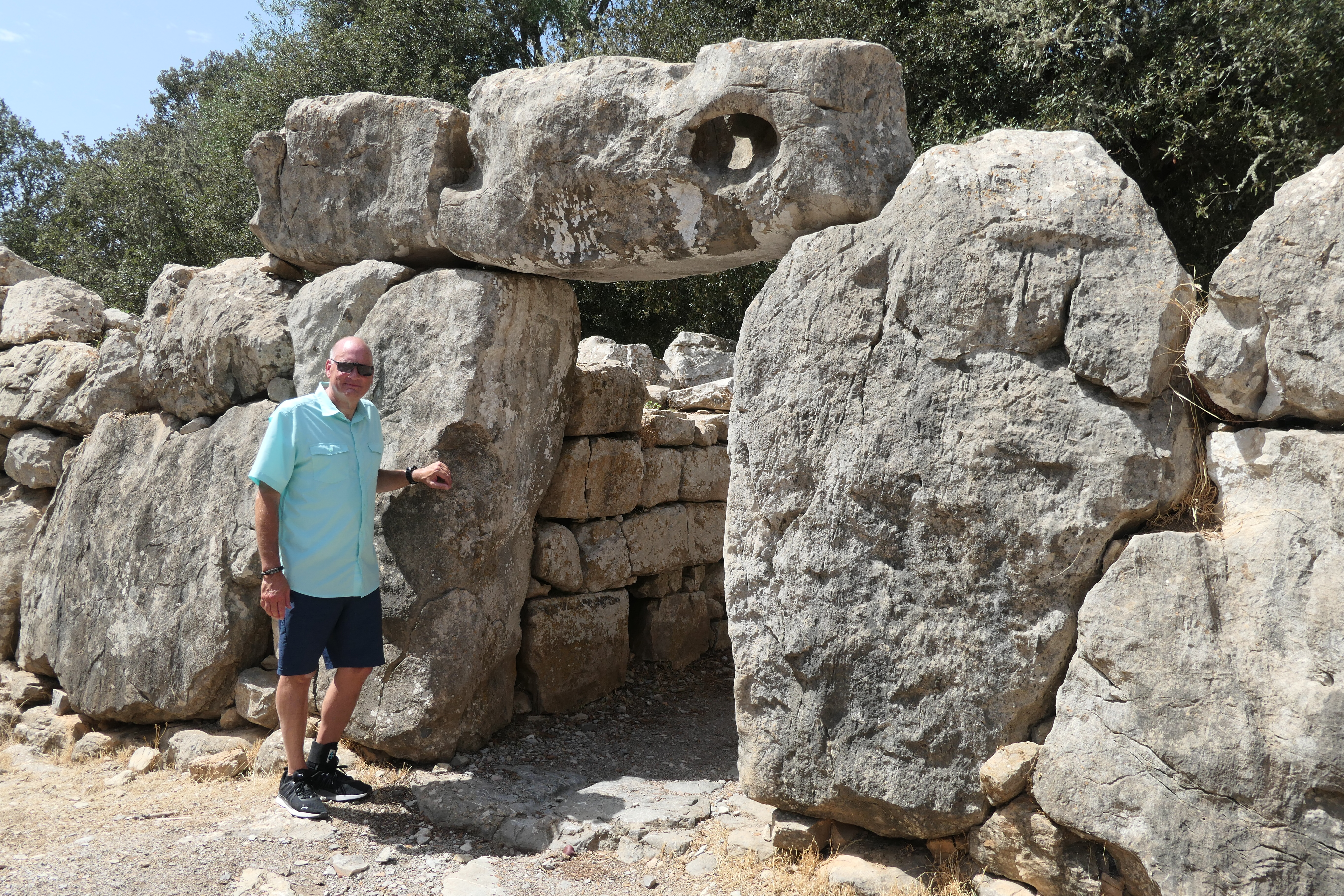
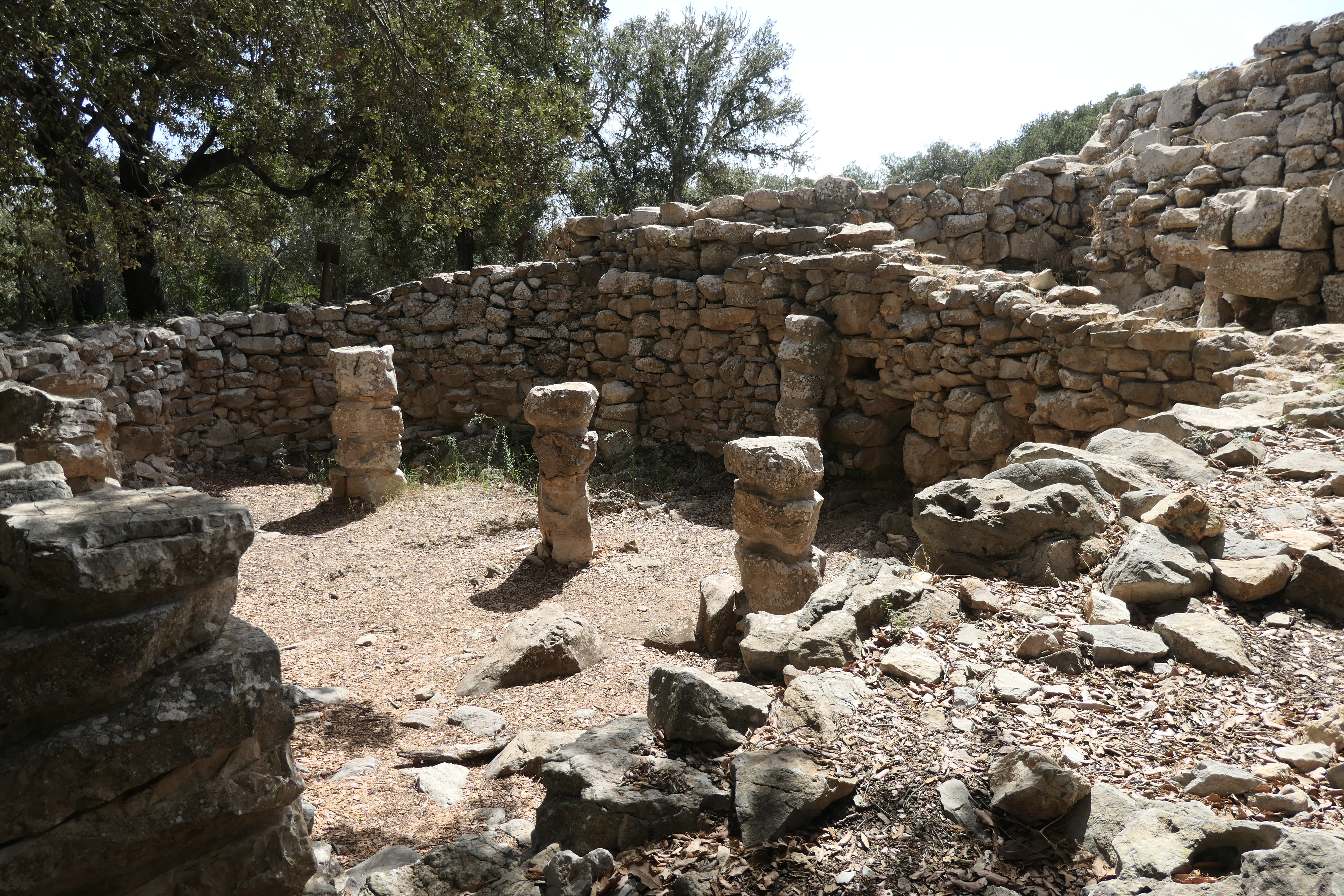
While exploring one of the shops in Artà, I saw a post card with a photo of some prehistoric ruins and I inquired about those ruins, and learned about Ses Païsses, a Bronze Age (approximately 900 BC) settlement, which is less than 2 km (or less than a mile) outside of Artà. This is one of the most important prehistoric sites in Mallorca and the Balearic Islands for that matter. This was an unexpected find and we enjoyed seeing this site. Ses Païsses was a prelude to what we were going to see in Menorca, which is home to a number of interesting prehistoric sites.
The entrance to Ses Païsses.
Other views of Ses Païsses.
Artà would make a great place to call home for a night or two if you plan to visit this part of the island. We stopped here for a couple hours on our way to Alcúdia, our last stay on Mallorca.
One of the most well-known tourist sites in Mallorca are the Drach Caves (Cuevas del Drach, or Caves of the Dragon), located on the eastern coast in the town of Porto Cristo (see my post here for information on nearby beautiful beaches). The caves are known for having one of the largest underground lakes in the world (Lake Martel).
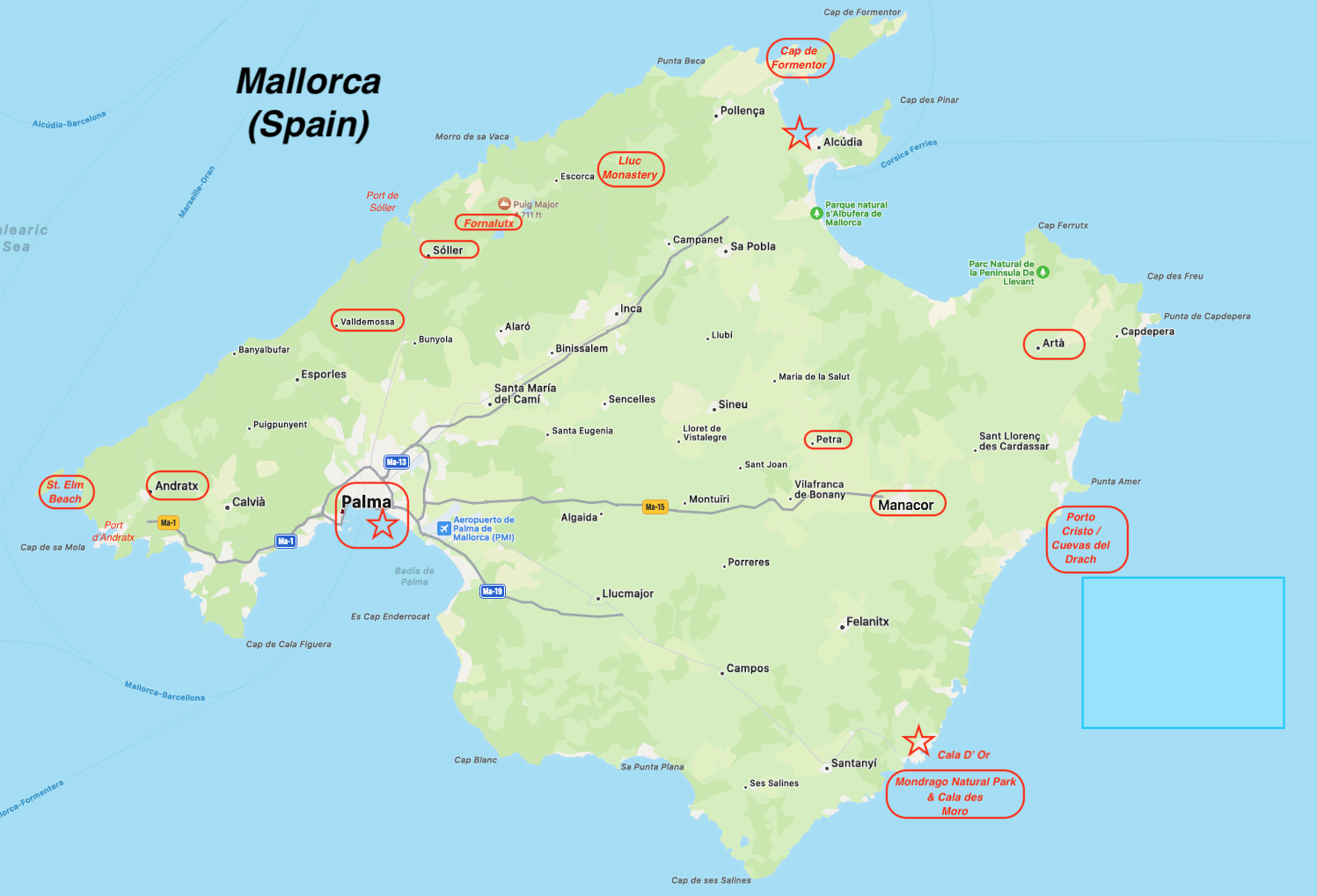
The Drach Caves are located on Mallorca’s eastern coast near Porto Cristo. (The starred locations indicate where we stayed on the island).
Drach Caves
Given the caves’ popularity as a cruise shore excursion and for other tourists on the island, it would be wise to purchase your tickets in advance here. Bring a light jacket, the air can be very cool. I highly recommend getting in line early for your appointed entry time so you can be one of the first ones into the caves for the best photos and to be one of the first to get on your boat ride at the end. You may be with 200+ other people at your tour time. We were staying in Cala D’ Or, only 28 km (17 miles) south of Porto Cristo, a convenient spot for visiting this part of Mallorca.
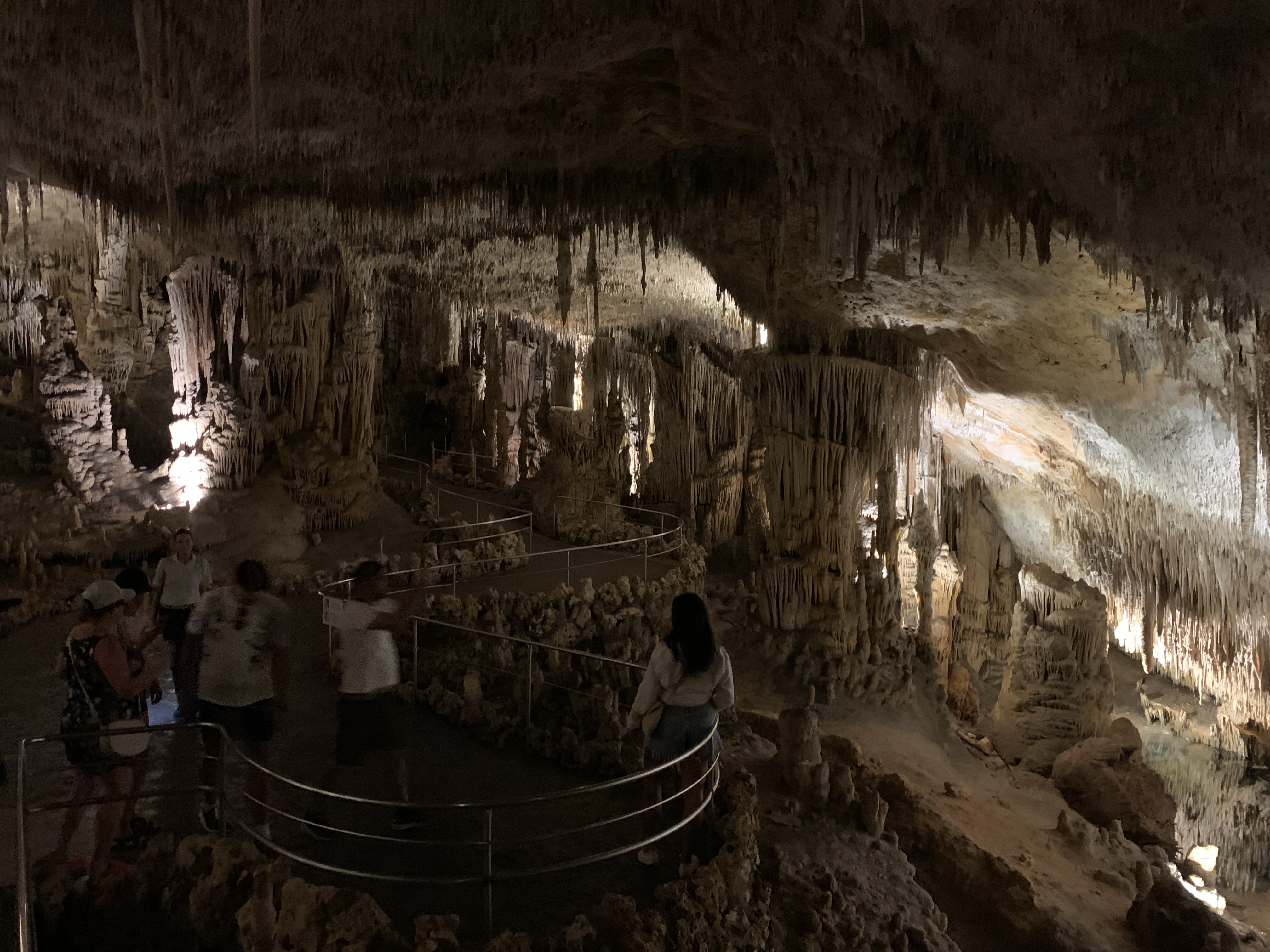
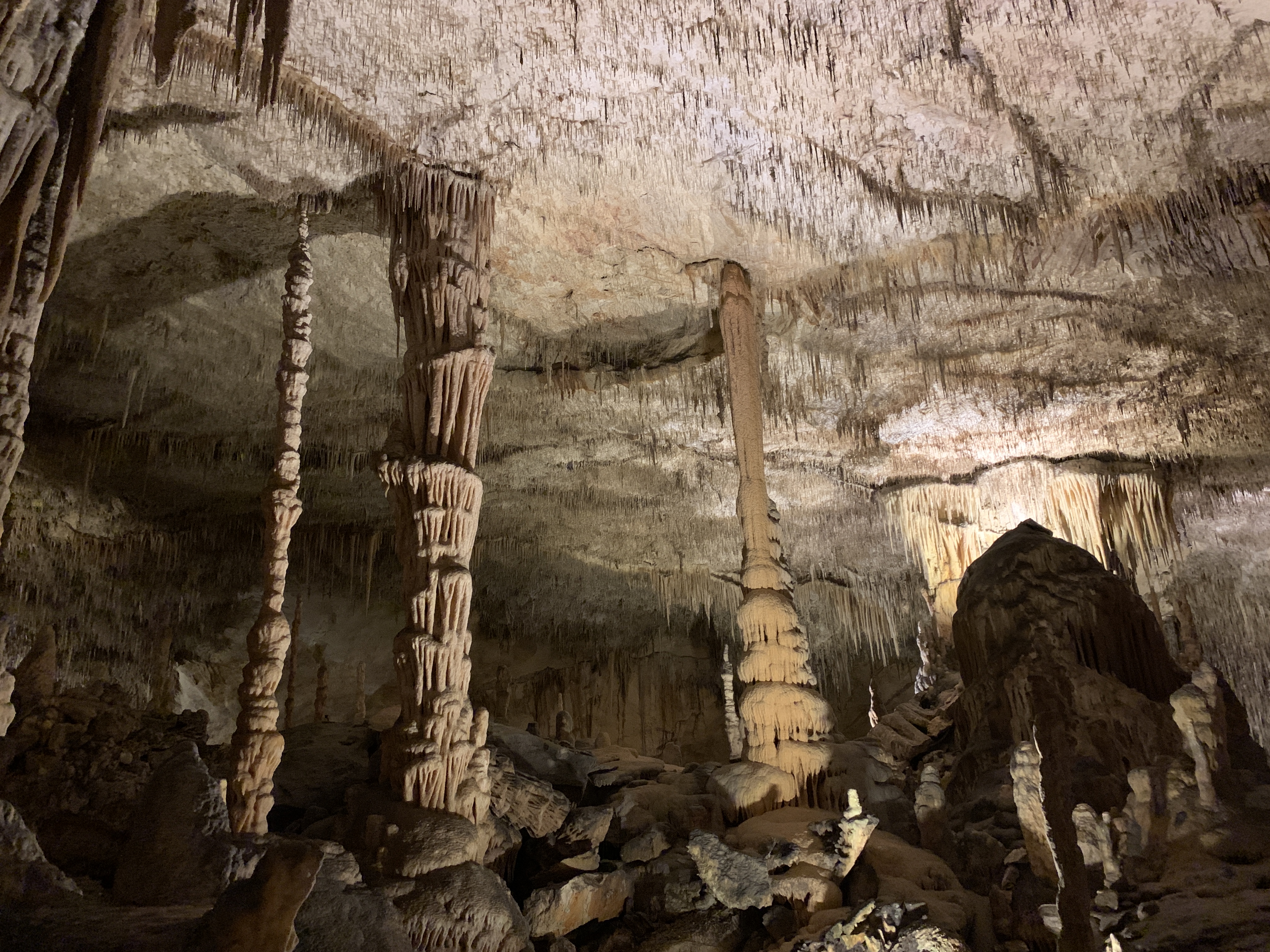
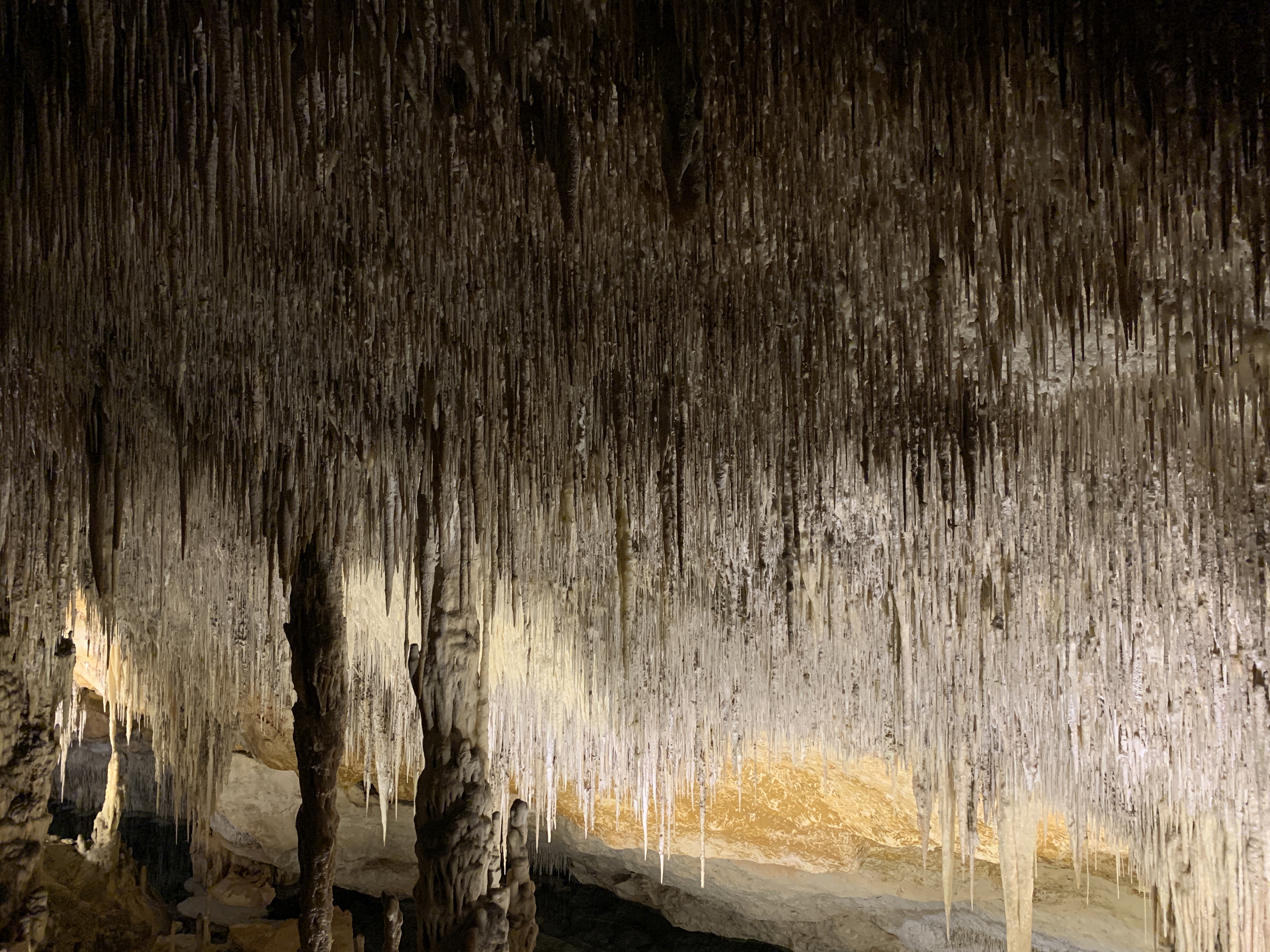
The walking paths through the caves.The astonishing formations created over millennia in the caves.Small pools of crystal-clear water in the Drach Caves.
At the end of the walking tour of the caves, you are seated in stadium area by the underground freshwater lake (Lake Martel) – it is a spectacular setting. A boat with strings of lights appears from around a bend in the lake and live classical music is played (violin, flute & organ as I recall) as the boat sails past you in this unreal setting – kind of like “Phantom of the Opera”! Note: You are not allowed to take photos or video of the performance – they are very particular about this!
Following the performance, you have the opportunity to take a short rowboat ride to the exit path for your own “boating on the underground lake” experience. Or, if you wish, you can just walk on a path towards the exit if you’re in a hurry, since it takes a while to ferry 200-300 people by boat (there are multiple boats but each only holds about 10 people).
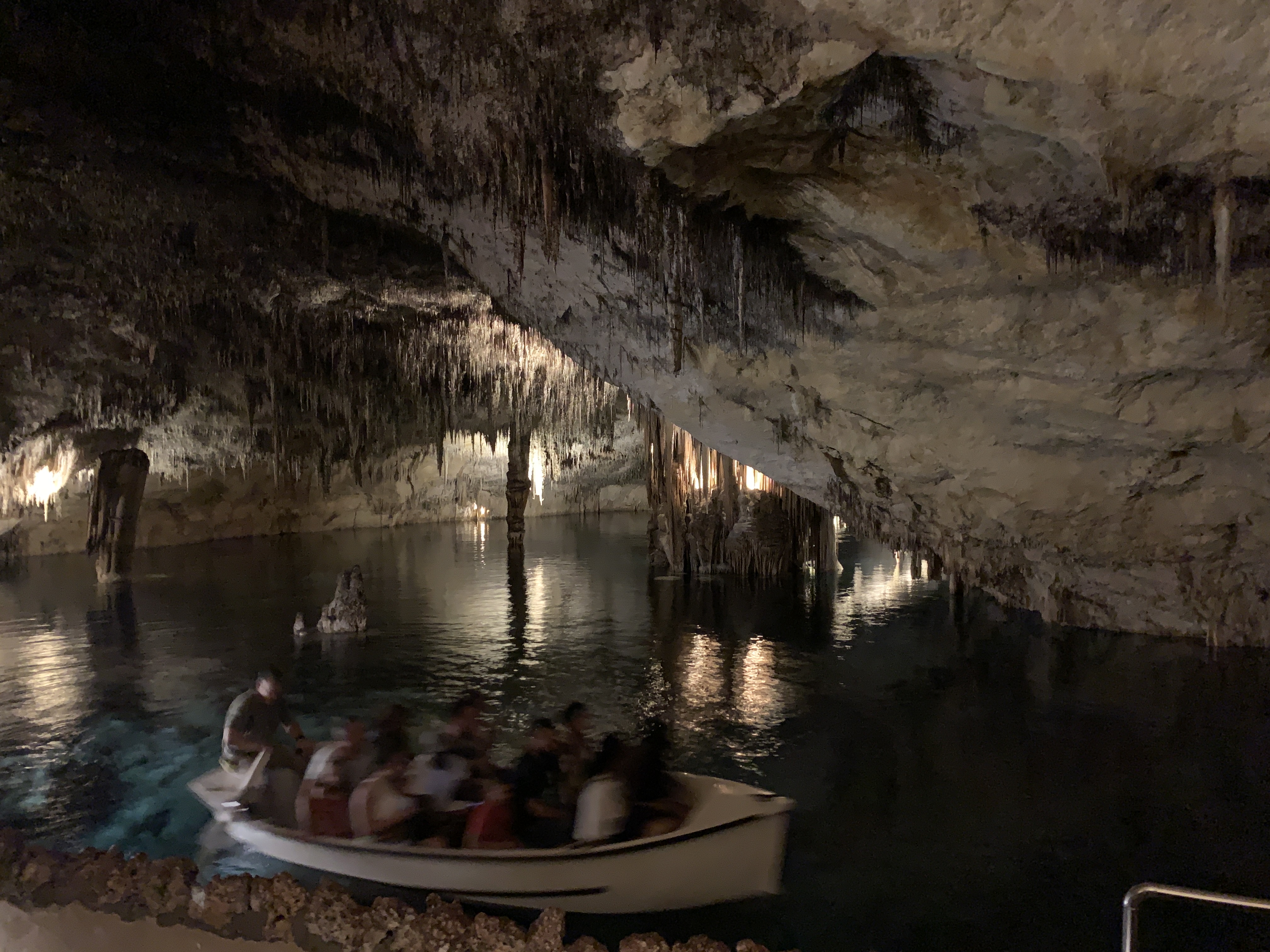
The underground lake and a boat taking passengers on a ride to the exit path at the end of the tour.
After your visit to the caves, if you want to make a day of it, there is a small cove for swimming next to the caves entrance. Bring your swimsuit (always good advice wherever you are on Mallorca!).
This lovely cove is just a short walk from the Drach Caves parking area.
Although the caves are very touristy, I highly recommend a visit. It’s not often you get to boat on a underground lake and watch a classical music performance in such an amazing setting.
















































































 The Independent Tourist