A Visit to Chittorgarh Fort

A view of Chittorgarh Fort from the city of Chittor.

A view of Chittorgarh Fort from the city of Chittor.

This huge fortress complex is largely off the tourist map. It is located about 306 km (190 miles) south of Jaipur on the way to Udaipur (another 116km or 72 miles south). Chittorgarh sits atop a striking plateau above the modern town of Chittor (“garh” means fort).

Local residents of Chittorgarh Fortress.

Local residents of Chittorgarh Fortress.

It is the largest fort complex in India, and the plateau is 6 km long, which is largely uninhabited (except by monkeys and a small village near the entrance) and open for exploration.

One of the gates (Ram Pol) into Chittorgarh.

One of the gates (Ram Pol) into Chittorgarh.

There are several stunning towers, temples and palaces at the fort as well as reservoirs and other structures. A number of the buildings date to the 12th and 13th centuries. The fort was sacked at least three times (from the 1300’s to the 1500’s) and the female residents chose to perform the ritual of jauhar (burning to death) each time rather than being taken prisoner.

A view of the ruins of 15th century Rana Kumbha Palace.

A view of the ruins of 15th century Rana Kumbha Palace.

Another view of Rana Kumbha Palace.

Another view of Rana Kumbha Palace.

The Tower of Victory (Jaya Stambha), built in the 1400's. Dedicated to the Hindu god Vishnu. You can climb the tower for a good view of the whole area.

The Tower of Victory (Jaya Stambha), built in the 1400’s. Dedicated to the Hindu god Vishnu. You can climb the tower for a good view of the whole area.

Detail of the Tower of Victory.

Detail of the Tower of Victory.

Due to the few visitors here, we found the locals and (mainly Indian) tourists very friendly, wanting you to take their pictures and to show you around.

A young couple who wanted their picture taken at the top of the Victory Tower.

A young couple who wanted their picture taken at the top of the Victory Tower.

A Jain Temple at Chittorgarh.

A Jain Temple at Chittorgarh.

Another Jain Temple at Chittorgarh. The tower (Kirti Stambha) was built in the 12th century.

Another Jain Temple at Chittorgarh. The tower (Kirti Stambha) was built in the 12th century.

One of Chittorgarh's reservoirs.

One of Chittorgarh’s reservoirs.

A pavilion in a small lake at Chittorgarh.

A pavilion in a small lake at Chittorgarh.

This was an unplanned stop on our way to Udaipur suggested by our driver. Since it’s a fairly long drive to Udaipur we spent only about 90 minutes here, but it would be easy to spend a few hours exploring all the various ruins and sights. Well worth a visit!

Heidelberg, Germany – A Great Day Trip from Frankfurt

On our way from the U.S. to Morocco we had an eight hour layover at the Frankfurt airport. Rather than just wait the entire time at the airport, we decided to take a train to Heidelberg, an interesting town about 90 km (56 miles) south of Frankfurt. While there are several ways to get there, including an airport (Lufthansa) shuttle, we opted for the train.

Heidelberg is a university town (Heidelberg University, founded in 1386) nestled in a narrow valley along the Neckar River. It has a quaint old section (called Altstadt), with some walls, gates, historical buildings including a castle and market squares. The origins of Heidelberg go back at least to Roman times.

A view of Alstadt (Old Town) from the Castle grounds.

A view of Alstadt (Old Town) from the Castle grounds.

Things to See

We are fortunate that Heidelberg escaped serious damage in World War II. It was not bombed by the Allies and the retreating German army destroyed part of the Old Bridge, but that was about all.

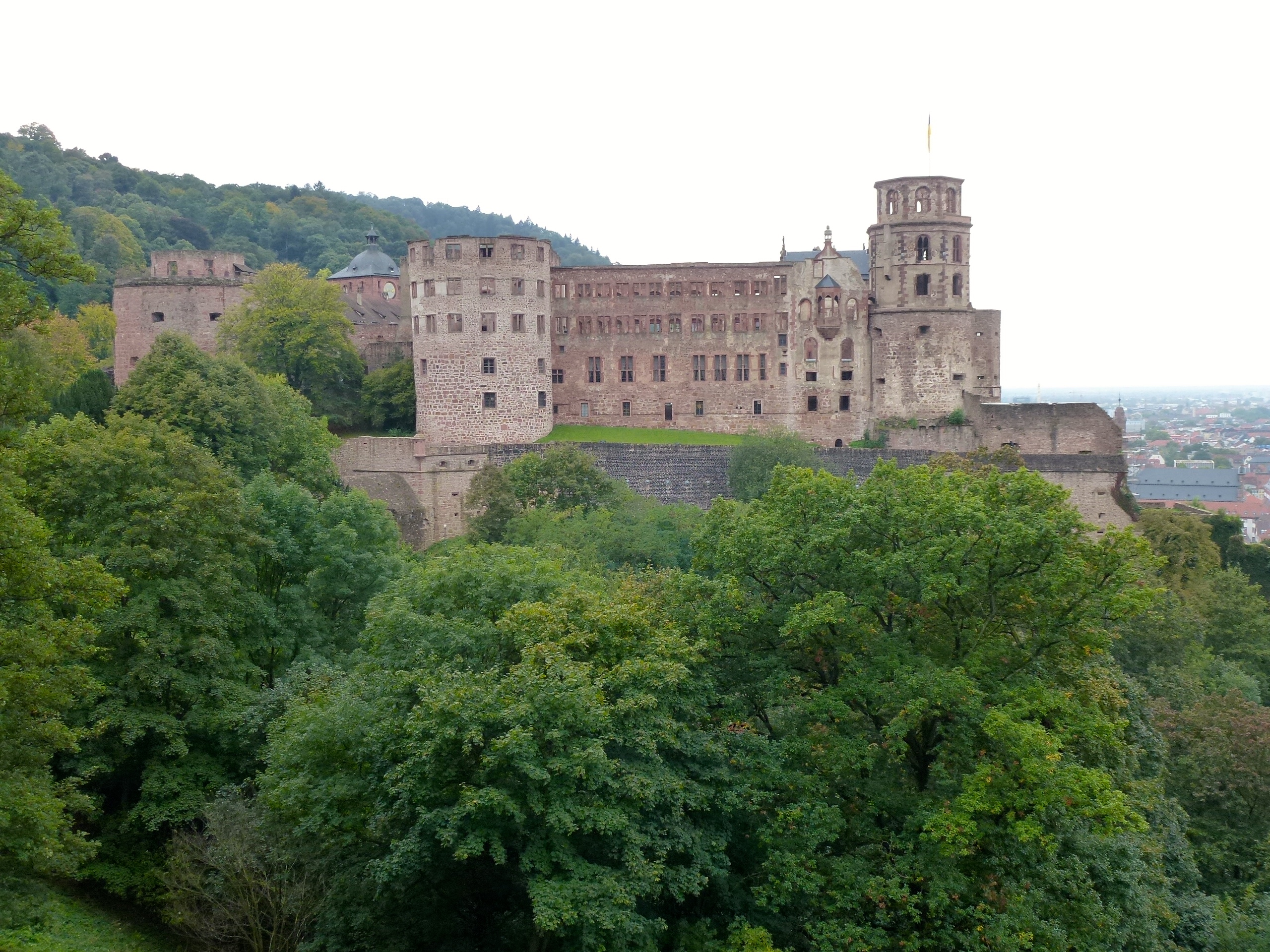
Castle (Heidelberger Schloss). The castle is a bit of a mish mash of several different building eras. The original castle dates back to the mid 1100’s, but was destroyed and rebuilt over the centuries. It sits on the steep hillside over looking the old town and the river.

A view of Heidelberg Castle from Altstadt.

A view of Heidelberg Castle from Altstadt.

Another view of Heidelberg Castle from the gardens.

Another view of Heidelberg Castle from the gardens.

There are some lovely gardens surrounding the castle that provide good views. Having been in many castles, and given our short stay, we did not go inside.

A clock tower on the castle grounds.

A clock tower on the castle grounds.

Old Bridge (Alte Bruecke). This 18th century bridge provides a great view of the town, just walk underneath the Bridge Gate and onto the bridge for excellent photo opportunities.

A view of the Neckar River and the Old Bridge from the Castle Gardens.

A view of the Neckar River and the Old Bridge from the Castle Gardens.

The Bridge Gate.

The Bridge Gate.

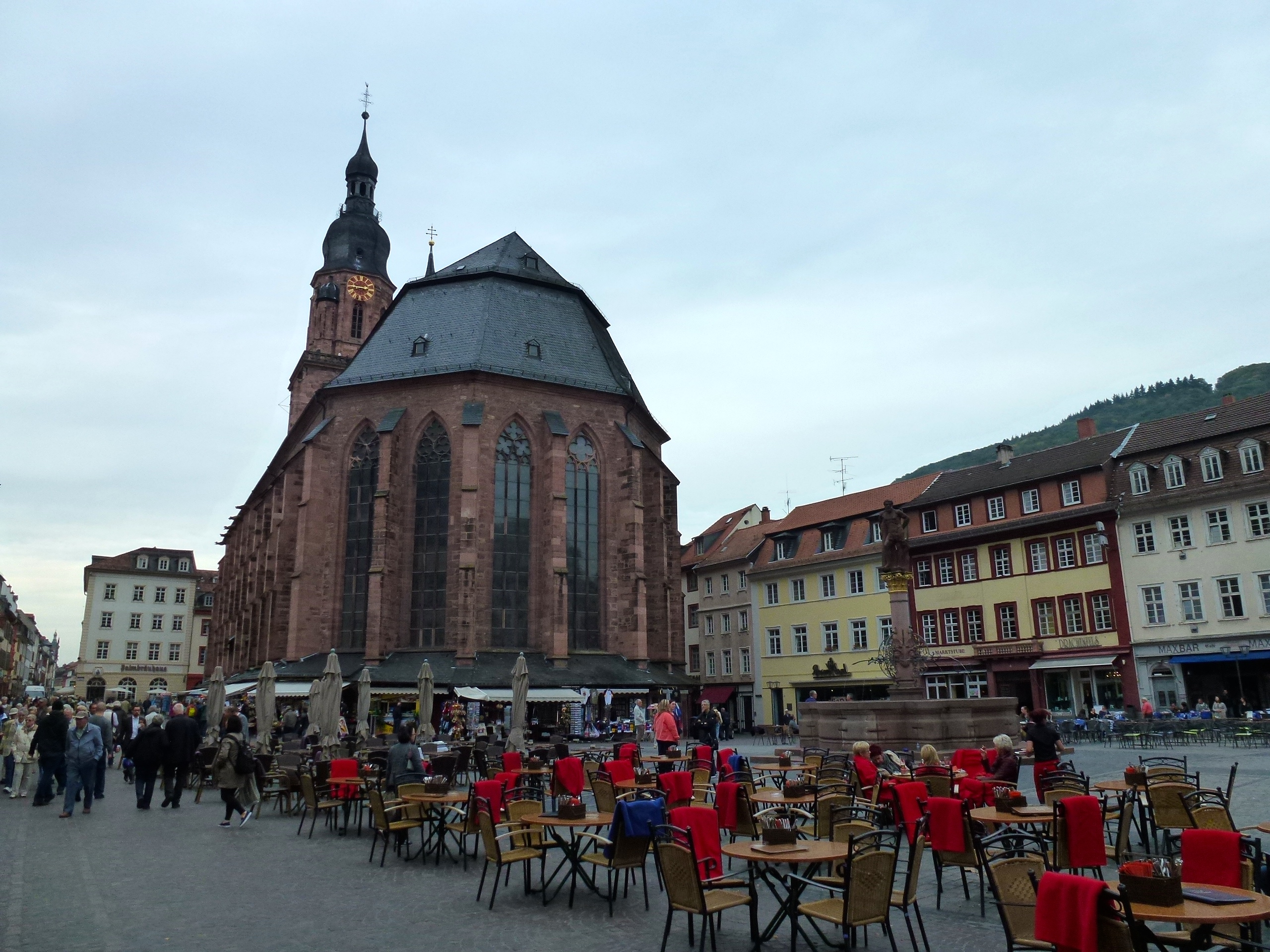
Church of the Holy Spirit. In the Marktplatz (square) the church dominates the setting. Lots of great restaurants around the square. We ate a good traditional meal at a restaurant on the square, just across from this church.

The Church of the Holy Spirit sits in the middle of the Marktplatz surrounded by shops and restaurants.

The Church of the Holy Spirit sits in the middle of the Marktplatz surrounded by shops and restaurants.

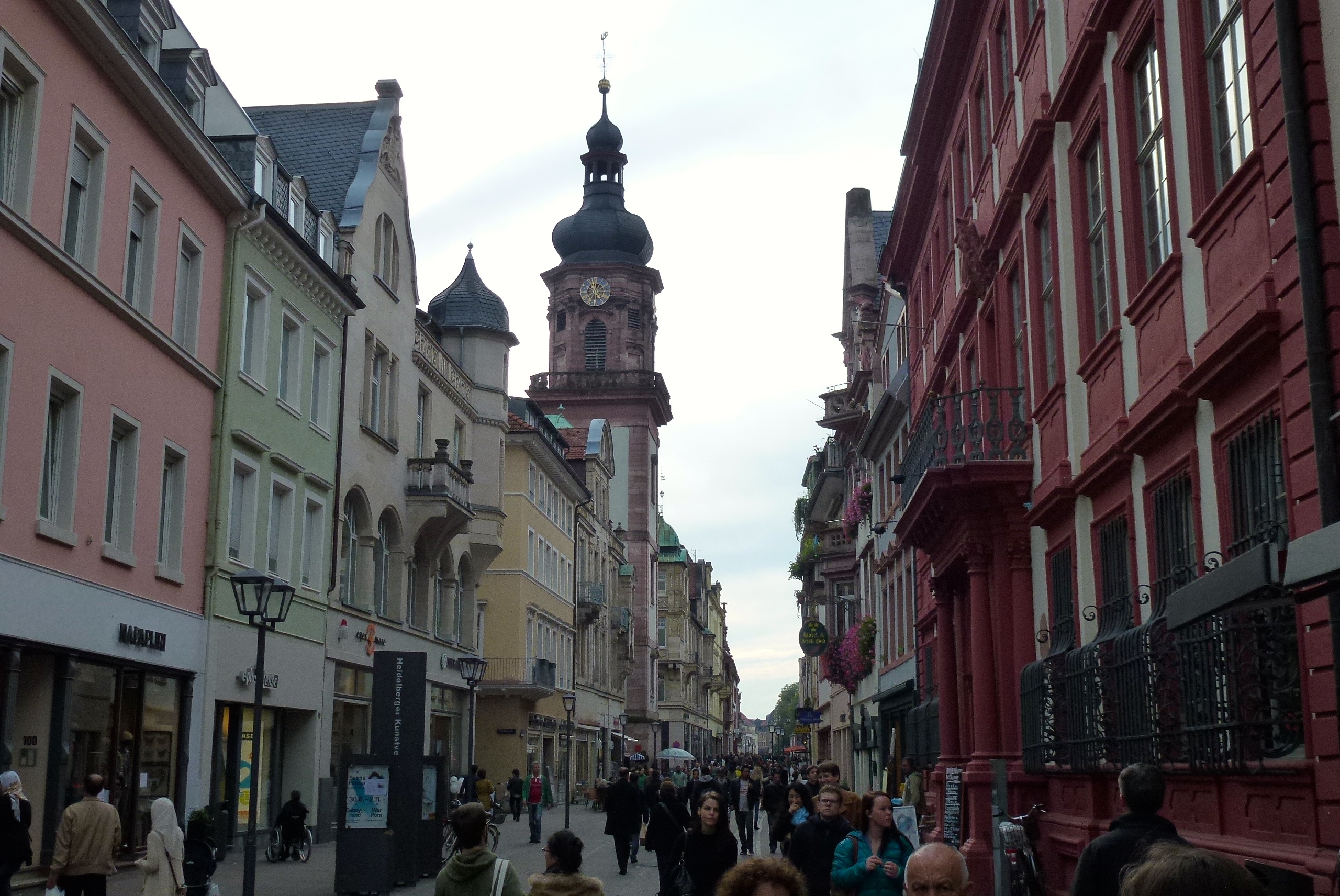
Hauptstraße. This is the main shopping thoroughfare that connects Altstadt with the modern city. Lots of quaint shops selling trinkets, gelato, and German baked goods.

Tasty schneeballen (snowballs), a German pastry.

Tasty schneeballen (snowballs), a German pastry.

Looking west down the Hauptstraße.

Looking west down the Hauptstraße.

There are a number of other old historical buildings to see, including the Rathaus (Town Hall), stables, students prison, other old university buildings (most of the university is now on the other side of the river), and a Witch’s Tower.

Old Heidelberg's Rathaus is behind me.

Old Heidelberg’s Rathaus is behind me.

We love quaint European towns and Heidelberg is another great one to visit, even if just for a few hours.

Logistics. The train was about 50 euro ($65 at the time) per ticket. You have to transfer trains once (in the nearby city of Mannheim). The whole trip takes about 75 minutes each way, depending on the connection time in Mannheim. Go to the train information and ticket office located below the arrivals terminal at the Frankfurt airport. They can provide you with an itinerary, timing and your tickets. Don’t get off the train in Heidelberg until you arrive at the main (Hauptbahnhof) station.

The historic center is a long walk or a short bus ride east of the train station. We took the bus (#3) to the Old Town from the train station and then walked back (which took about 25 minutes). We did the whole round trip from Frankfurt airport, including dinner, in about 5 hours.

Morocco – The World’s Movie Set

Thankfully, Morocco is a country that is not yet overrun by tourists. It is a land of surprising variety, including a long coastline along the Mediterranean Sea and Atlantic Ocean, high rugged mountains (which get snow in the winter), vast deserts, and amazing jagged gorges, oases and beautiful ksars (villages) and kasbahs (noble person’s “castle” or home).

The Atlas Mountains.

The Atlas Mountains.

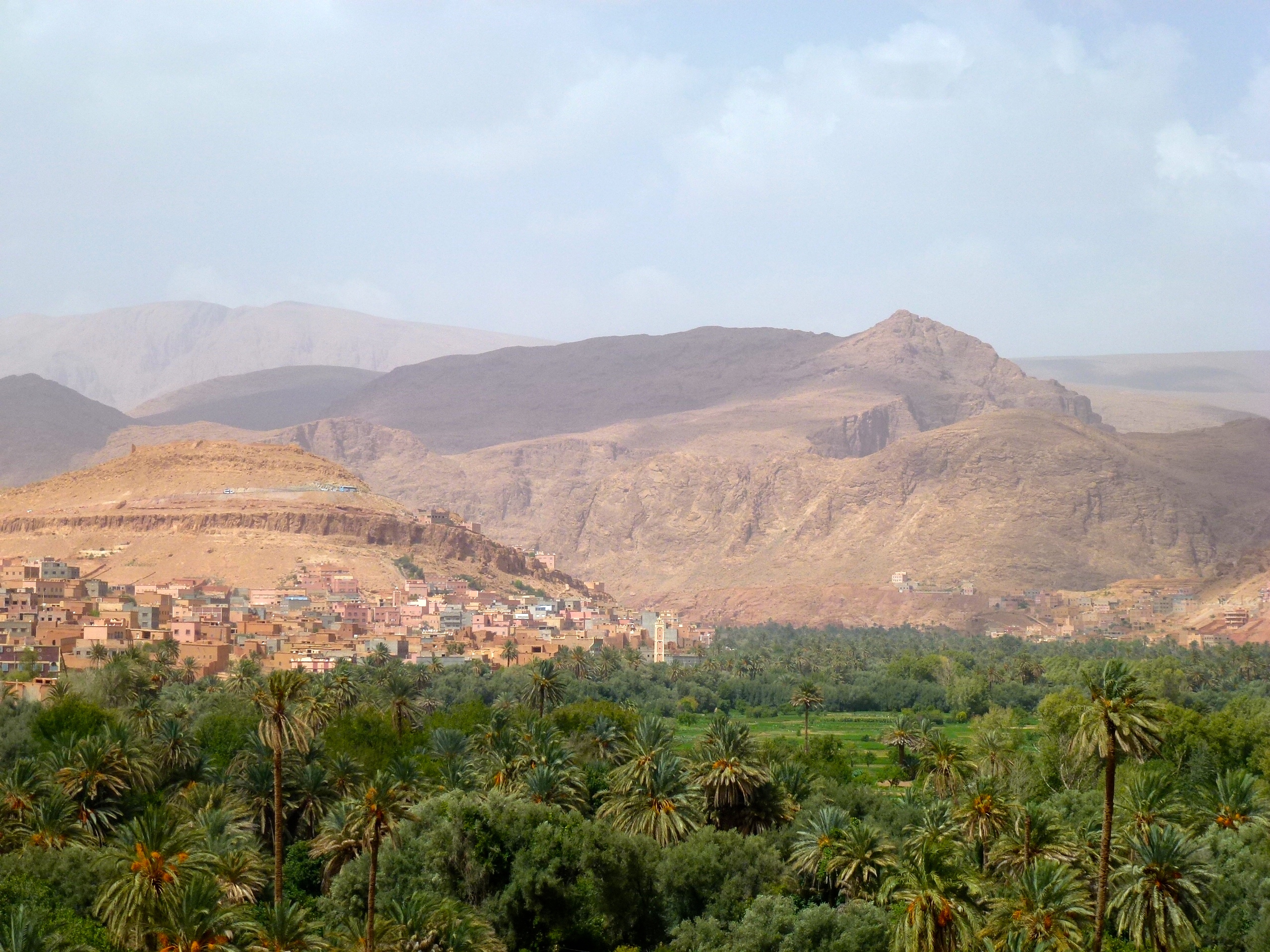
The stark contrast of the green palms with the dry mountains near Todra Gorge.

The stark contrast of the green palms with the dry mountains near Todra Gorge.

Given the beautiful natural scenery, ancient cities, villages, and friendly people, it’s not surprising that Morocco hosts a lot of movie crews.

A movie studio in Ouarzazate.

A movie studio in Ouarzazate.

Gladiator, The Mummy, The Son of God, Kingdom of Heaven, Black Hawk Down, Alexander, Sodom and Gomorrah and many other movies set in historical and Middle East locations have Moroccan backdrops.

Tamdaght Kasbah, near Ait Ben Haddou, where the surrounding countryside  and ksars were used in the filming of the movie Gladiator, with Russell Crowe.

Tamdaght Kasbah, near Ait Ben Haddou, where the surrounding countryside and ksars were used in the filming of the movie Gladiator, with Russell Crowe.

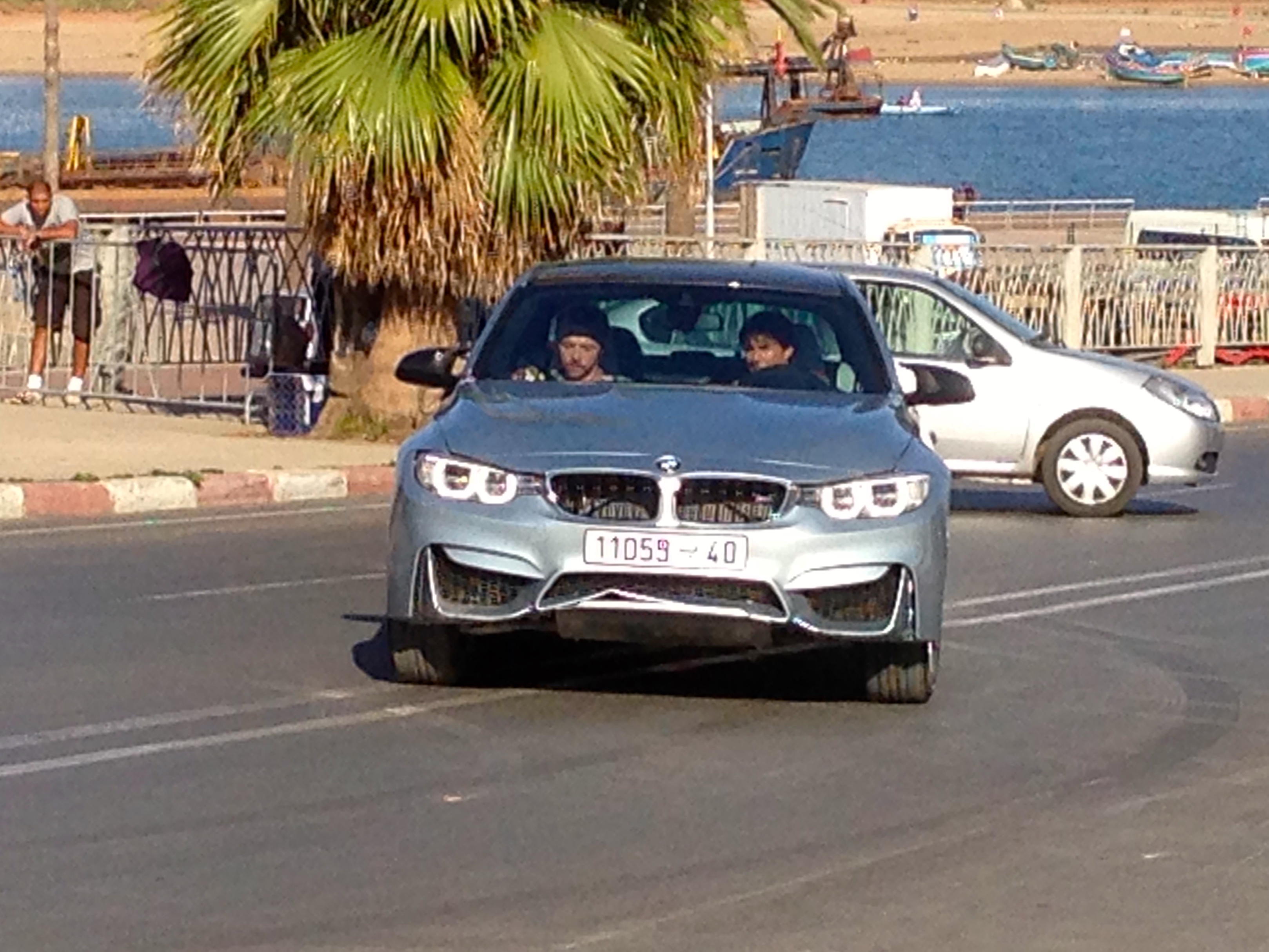
In fact, while we were there, Tom Cruise and Simon Pegg were filming the next Mission Impossible movie in Rabat, the capital city. We just happened to come upon some chase scenes being filmed in the old part of Rabat with Tom Cruise at the wheel of a BMW.

Tom Cruise at the wheel with Simon Pegg next to him, filming in Rabat.

Tom Cruise at the wheel with Simon Pegg next to him, filming in Rabat.

Most of the tourists seemed to be hanging out in Fez and Marrakech. Outside those locations the country felt almost untouched.

We highly recommend Morocco as a bucket list destination. Here are some things to know if you decide to visit Morocco:

Parlez vous français? In addition to Arabic, many Moroccans speak French, since Morocco was a French colony for many years. When locals first meet you, they will assume you speak French. It’s certainly possible to get by on English, but you may end up using a lot of gestures to get your message across. A little French vocabulary (if not Arabic) is valuable, or brush up on your Berber, also spoken in many mountain areas.

The lower two lines are in Berber, in the holy town of Moulay Idriss.

The lower two lines are in Berber, in the holy town of Moulay Idriss.

Getting Around. Morocco is not a difficult country to navigate on your own. Auto is the best way to see the country. The roads generally are in very good condition and signs are in Arabic and French, so they are not hard to read. Except in the towns, roads are well signposted.
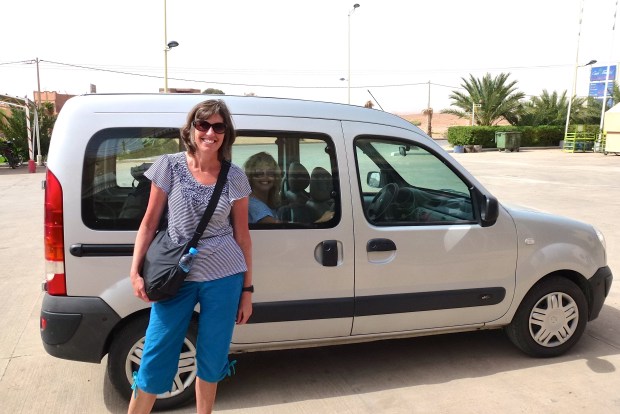
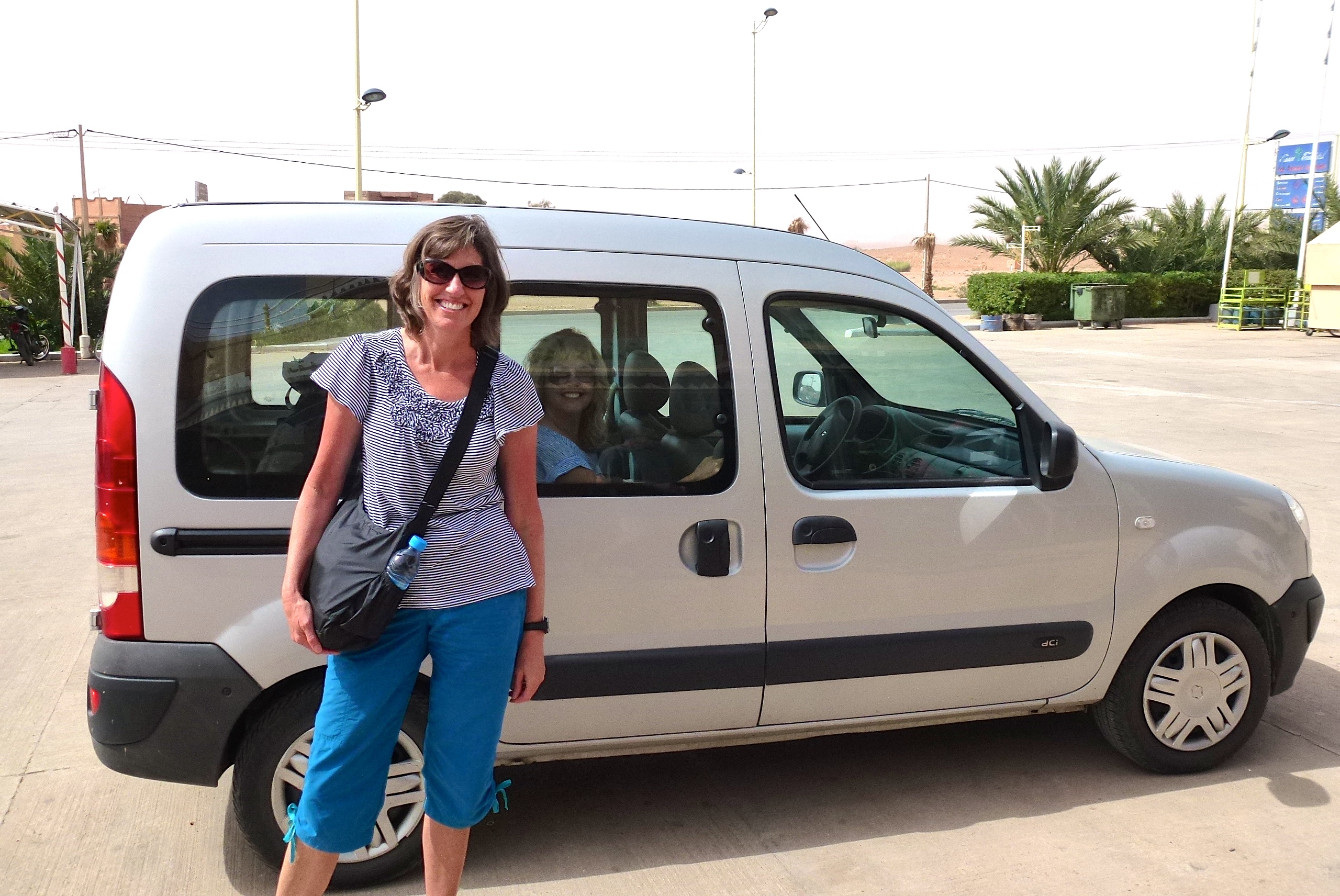
Our rental car in Morocco.

Our rental car in Morocco.

In the towns and cities, drive carefully – you see all kinds of vehicles and foot traffic (although autos have the right of way), call ahead to your accommodation for specific directions and you should not have any problems.
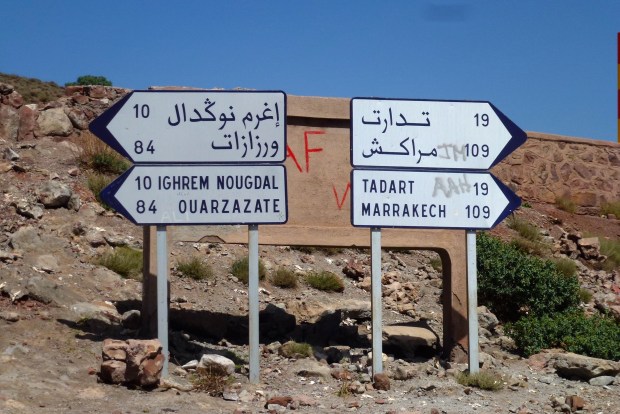
Typical road sign.

Typical road sign.

Note: There are speed traps along the highways so be careful and stick to the speed limit, even if its open road. We spent two weeks driving around the country, being very careful with our speed. On our last day I got nailed with a speeding ticket, in a ridiculously slow section of road outside a small town. The police have radar cameras and you will be fined on the spot, so carry some cash. My ticket cost about $35. Gas at the time was about $4 gallon. We had a diesel powered vehicle and got great mileage. Traveling continuously for two weeks cost us about $150 for diesel.

Locations we visited in Morocco are highlighted. We flew in and out of Casablanca.

Locations we visited in Morocco are highlighted. We flew in and out of Casablanca.

There are a few trains, but only between the larger cities. The other way to see the country would be with a tour group. We did not see many large tour buses, mainly smaller groups in vans.

Accommodation and Cost. The country is relatively inexpensive for accommodations (most common are small guest houses called Riads). Most of our Riads were about $75/night for very nice rooms, most with breakfast included and wifi.

Typical Riad room, this one is in Rabat.

Typical Riad room, this one is in Rabat.

Every host was very kind and observed the local custom of offering tea and biscuits on arrival.
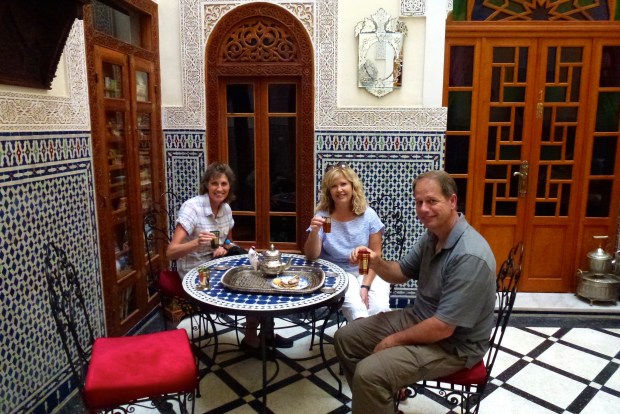
The tea and biscuit welcome at our Riad in Fez.

The tea and biscuit welcome at our Riad in Fez.

Our room in Fez.

Our room in Fez.

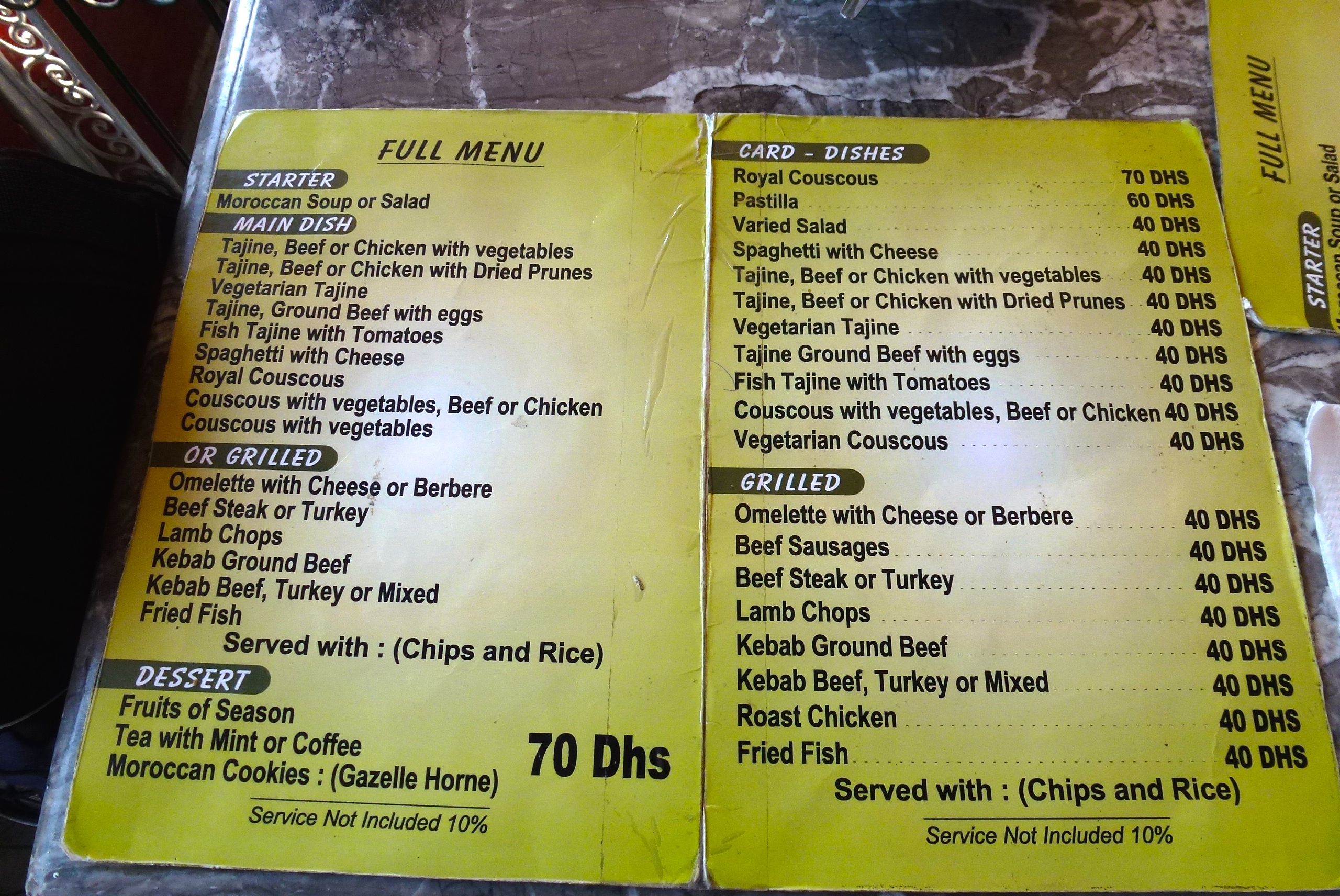
Food. We thought the food was decent (and inexpensive), it’s just pretty much the same everywhere you go. Most restaurants serve the same kinds of food: brochettes, salads, frites (fries), and tajines (clay pot slow cooked dishes).

Typical Moroccan meal - the food is generally very good.

Typical Moroccan meal – the food is generally very good.

Typical Moroccan menu.

Typical Moroccan menu.

After a couple weeks, it gets a bit monotonous. There is the occasional Pizza Hut or McDonald’s, but they are just in the big cities.

Religious Observance. The prevailing religion is Islam. Most mosques and some monuments are off limits to tourists, but other shrines are open to tourists. Your guidebook can point these out.

Mausoleum of Moulay Ismail, one of the few active Muslim shrines that non-muslims may visit, in the city of Meknes.

Mausoleum of Moulay Ismail, one of the few active Muslim shrines that non-muslims may visit, in the city of Meknes.

It’s a good idea to be aware of the local festivals that may be occurring during your visit. We had a very interesting one while we were there that I will explain in a future post.

Baksheesh. Plan on paying lots of small tips for all kinds of services (porting your luggage, getting directions, etc.). This is similar to Egypt and India and many other less developed countries.

Safety and Other. The country felt very safe, we never had any cause to worry. Follow the usual precautions of protecting your valuables, knowing your surroundings and not displaying expensive jewelry or loads of money. The larger cities are somewhat chaotic (for example, crowds, rubble, interesting smells), but not nearly to the extent one finds in India.
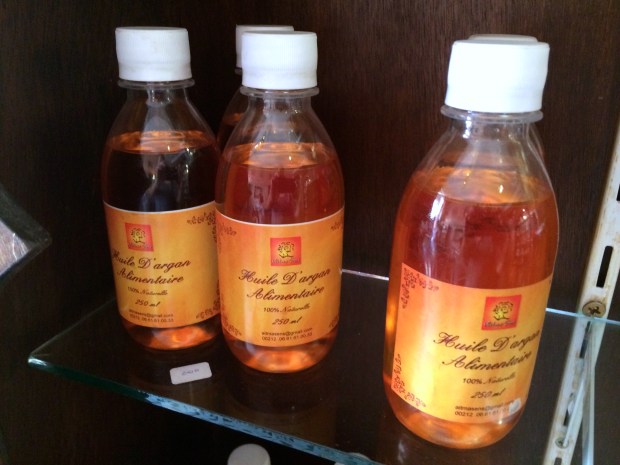
Argan oil for sale - used for a number of skin and hair applications.

Argan oil for sale – used for a number of skin and hair applications.

Shopping is good for certain things – ancient sea fossils, argan oils, spices and leather goods can be found in abundance.

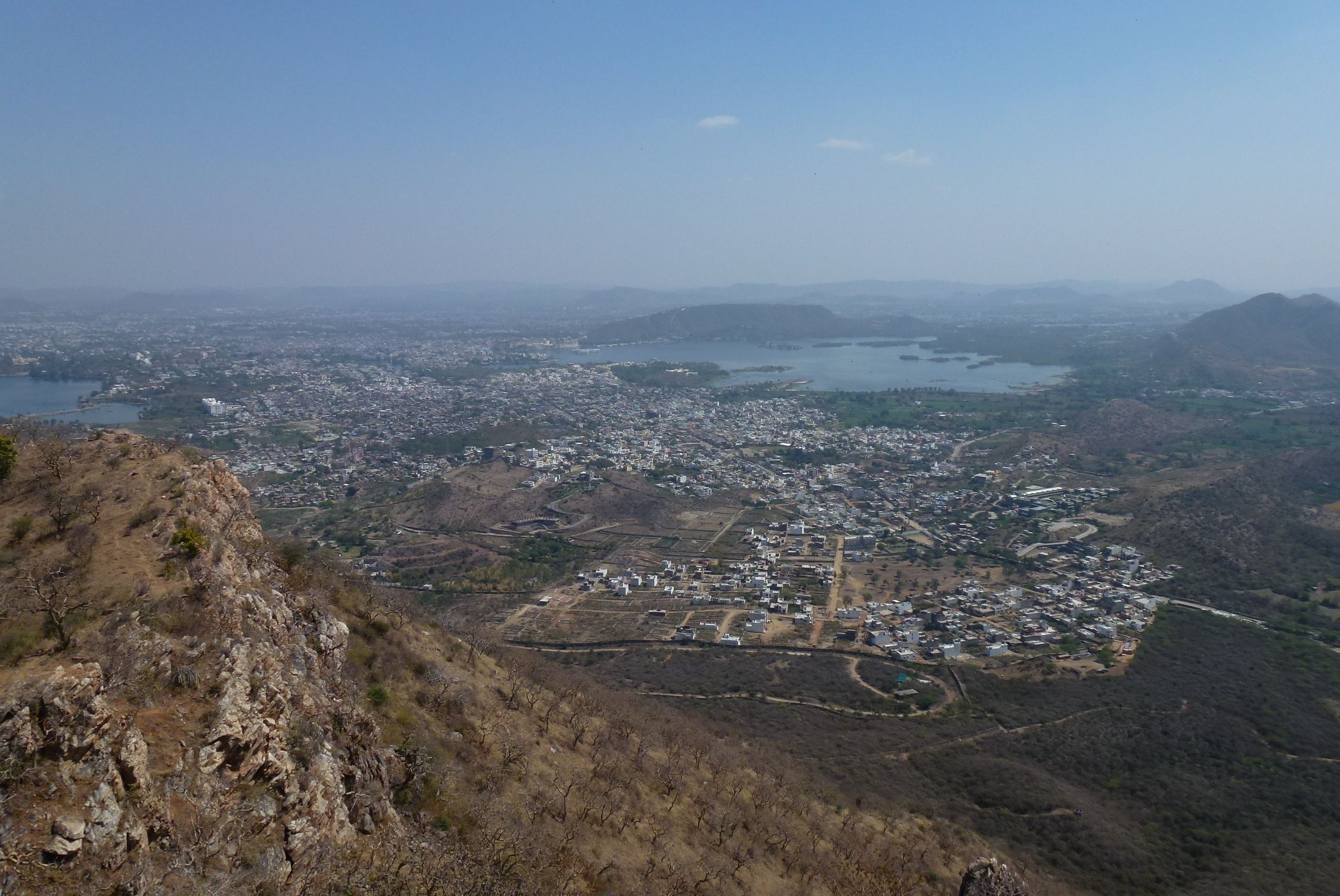
Jaipur, India – The Pink City

One of the great cities in Rajasthan, India is Jaipur. It is known as the “pink city” due to the color of the buildings as well as the walls and city gates surrounding the central area.

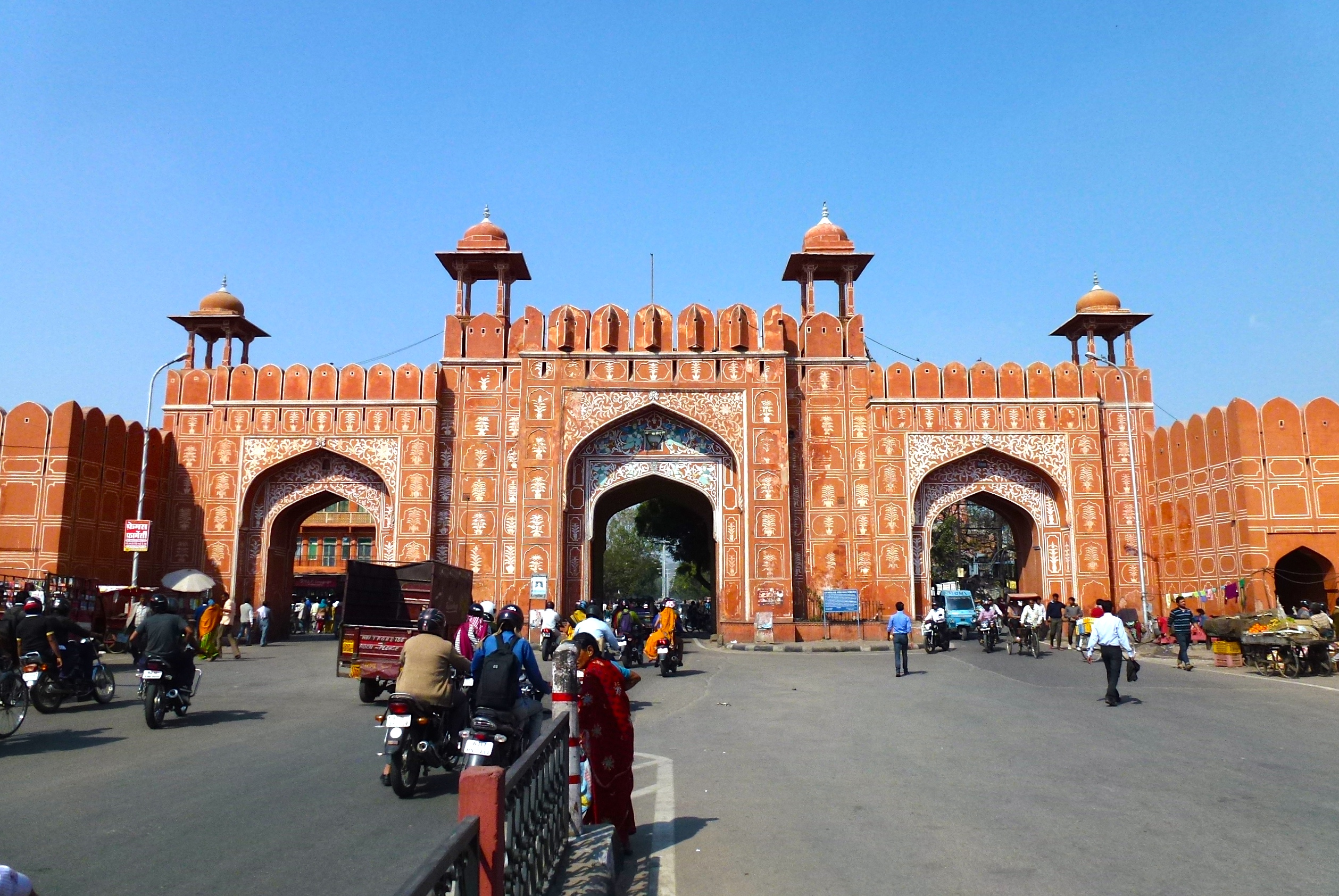
Ajmeri Gate, leading into central Jaipur. The color of the gates and walls, as well as buildings in the central area give the city its nickname.

Ajmeri Gate, leading into central Jaipur. The color of the gates and walls, as well as buildings in the central area give the city its nickname.

Jaipur is one of the most visited cities in India since it is not too far from New Delhi and Agra (home of the Taj Mahal), and forms a triangle of tourist destinations with these two other cities.

Here’s a few key attractions in Jaipur:

Amber Fort

While there is a lot to see in Jaipur itself, there’s no question that the tourist sight is Amber Fort, located about 7 miles (11 km) north of town.

The Jal Mahal (Water Palace) on Man Sagar Lake was used for royal duck shooting parties in the mid 18th century.

The Jal Mahal (Water Palace) on Man Sagar Lake was used for royal duck shooting parties in the mid 18th century.

Leaving Jaipur, you wind past Man Sagar Lake and through the mountains for a short distance until all-of-a-sudden it appears sitting on a hill to your left. The golden-hued fort looks like a movie set rather than an actual historical palace. The fort is the former capital of Jaipur State and is the one sight that cannot be overlooked when visiting Jaipur.

A view of Amber Fort. If you look closely, you can see the elephants with their red coverings making their way up to the gate.

A view of Amber Fort. If you look closely, you can see the elephants with their red coverings making their way up to the gate.

The highly decorated Ganesh Pol, a three story gate connecting the outer courtyard to the private apartments.

The highly decorated Ganesh Pol, a three story gate connecting the outer courtyard to the private apartments.

Construction began in 1592 on the current fortress, built on the remains of an earlier (11th century) fort. Amber Fort is divided into 4 main sections, and each is a bit unique in its architecture.

The courtyard of the Palace of the Raja Man Singh, one of the four main sections of the Amber Fort.

The courtyard of the Palace of the Raja Man Singh, one of the four main sections of the Amber Fort.

You have to be patient and wander around a bit to see it all. We hired a guide and he pointed out some interesting things. After we finished the tour, we wandered around on our own, and found other great views.

Another beautiful courtyard in Amber Fort (Jaigarh Fort is in the distance on the hill).

Another beautiful courtyard in Amber Fort (Jaigarh Fort is in the distance on the hill).

There are three main ways up to the fort – by foot, jeep or elephant. Of course most tourists take the elephant ride, and so did we. The elephant can take two passengers at a time. Given the popularity of the elephant transportation, expect a wait of 20 – 30 minutes in line. Although this is definitely doing the touristy thing, it’s a once in a lifetime experience and was fun. By Indian standards, it’s not cheap – 900 rupees or about $15, a small local fortune.

The elephants and tourists make their way up to the Amber Fort.

The elephants and tourists make their way up to the Amber Fort.

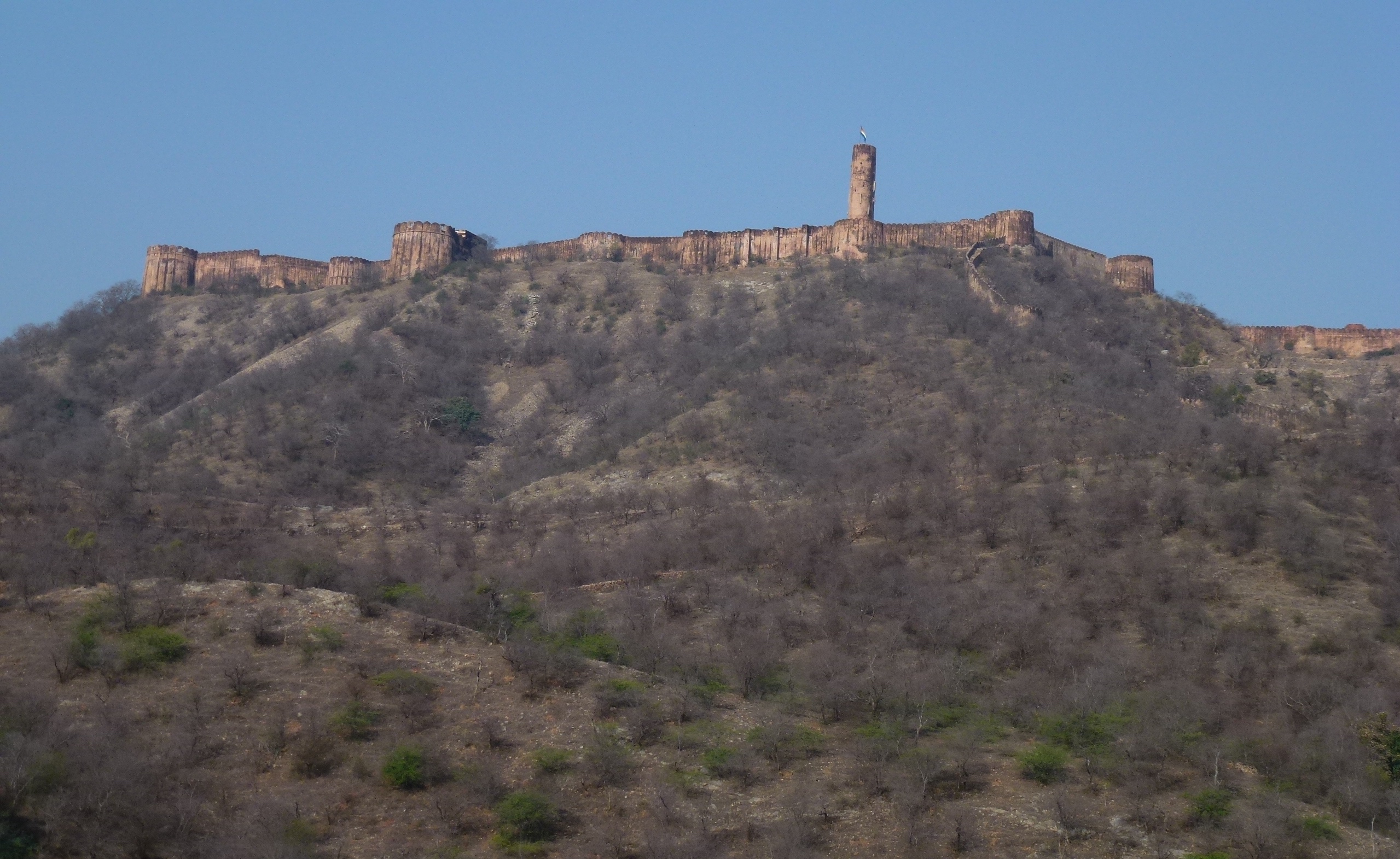
There is another, older fort (Jaigarh) above the Amber fort, but time did not allow for us to hike up there (about 1 km uphill from the Amber Fort).

Jaigarh Fort, which sits above Amber Fort.

Jaigarh Fort, which sits above Amber Fort.

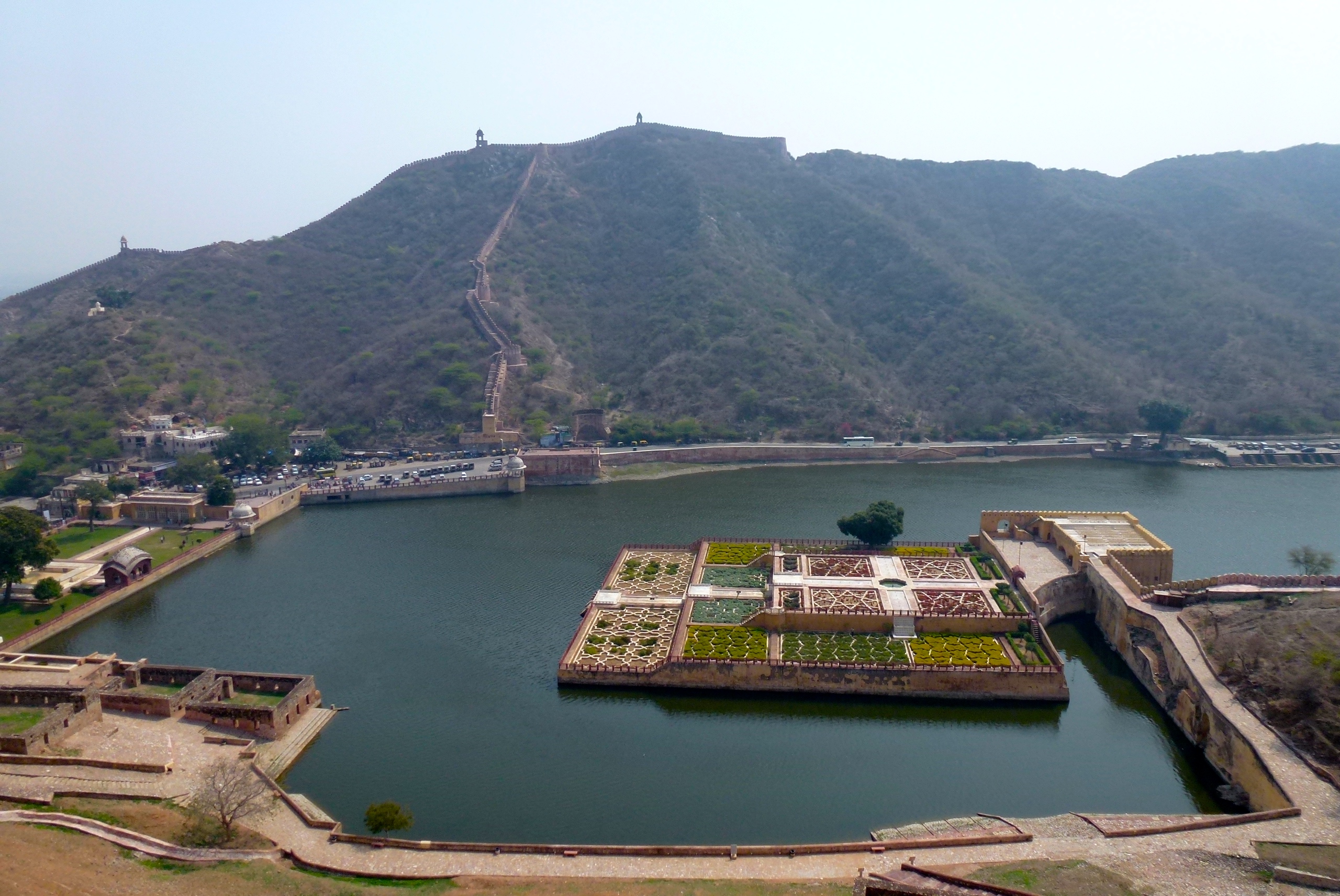
The view from Amber Fort is astounding with mountains, huge walls snaking around the hillsides, as well as seeing Maota Lake below.

Looking down on Maota Lake, with the gardens of Kesar Kyari Bagh. The lake provided water for the fort. The walls protecting the region can be seen in the distance.
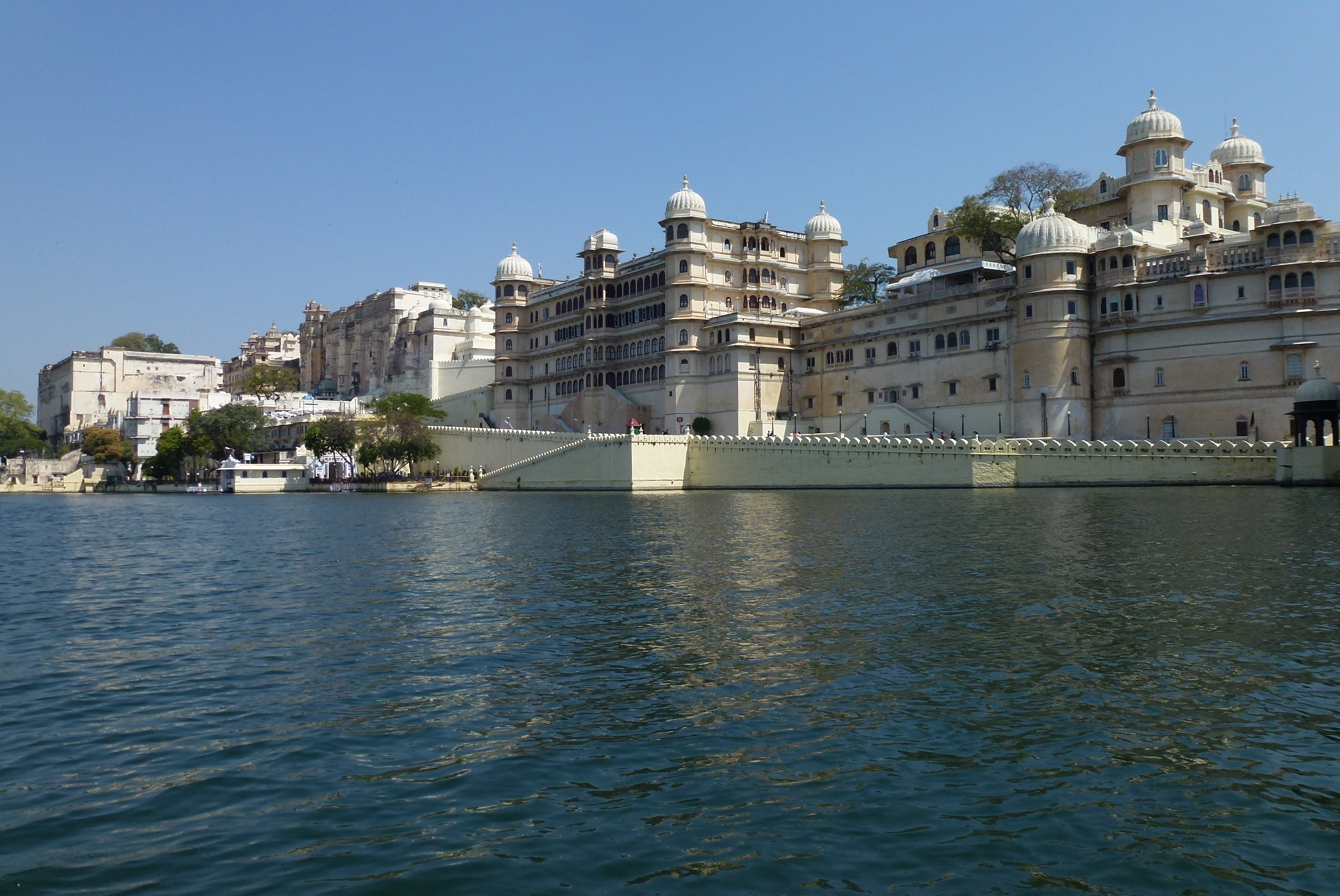
Looking down on Maota Lake, with the gardens of Kesar Kyari Bagh. The lake provided water for the fort. The walls protecting the region can be seen in the distance.

Hawa Mahal (Palace of the Winds)

With its pink façade, the Hawa Mahal is the photogenic centerpiece of Jaipur. It is unusual in that it is five stories high but only one room in width. Its purpose was to allow the veiled ladies of the harem to view city life unnoticed from the streets below. It was built in 1799.

The Hawa Mahal in Jaipur.

The Hawa Mahal in Jaipur.

City Palace

Right next to the Hawa Mahal, this Palace was built in the early 18th century, and is now a museum with paintings and manuscripts. Since we had just visited Amber Fort, we did not take the time to visit this Palace.
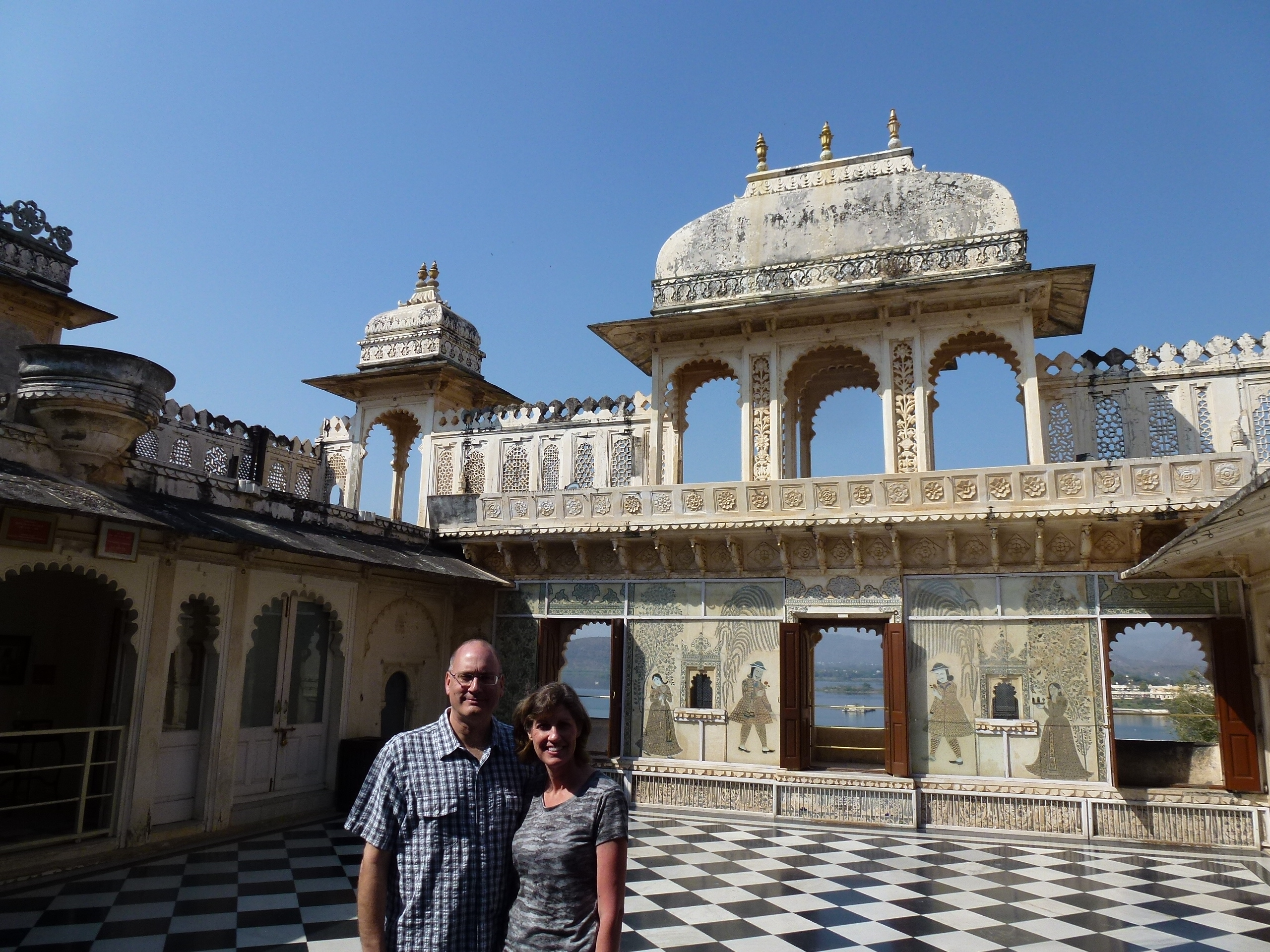
City Palace lies straight ahead through this gate.
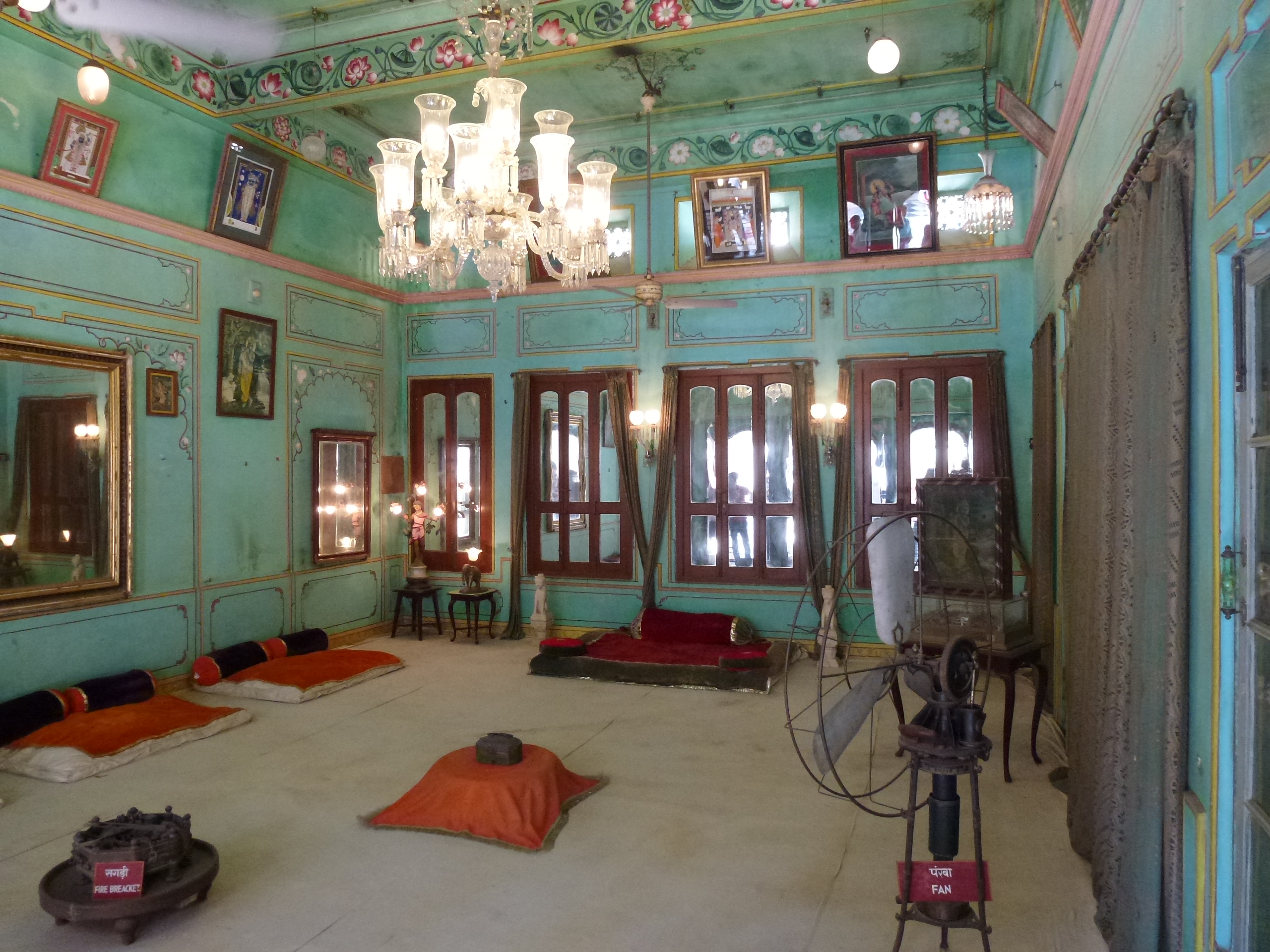
City Palace lies straight ahead through this gate.

Jaipur is also known as shopping mecca for jewelry and precious and semi precious gemstones. There are a lot of jewelry and gem shops just outside the main walls. Bring your money and shopping list!

We also walked around the heart of the city – busy area which is organized by crafts in sections. Just a teeming mass of shops, workers and every day life going on.

Rows of shops in the central district of Jaipur.

Rows of shops in the central district of Jaipur.

Helsinki for a Day

When it comes to Northern Europe tourist destinations, Helsinki, Finland probably doesn’t jump off the map. However, as part of a Northern European Cruise, we enjoyed a (rainy) day there. There’s enough to keep the tourist entertained.

A view of a Swedish-influenced street in Helsinki.

A view of a Swedish-influenced street in Helsinki.

Finland has an interesting history, with a culture and language that is very distinct from its Scandinavian and Russian neighbors, even though it was under Swedish rule for six centuries and then ceded to Russia in the early 1800’s. There are very obvious Swedish and Russian influences in Helsinki from fortresses to street names and churches.

Here are a few of the interesting sights:

Suomenlinna Fortress. The Swedish built this fortress (they called it Sveaborg) in the 18th century, when Finland was part of the Swedish kingdom. It can be reached by a short (15 minute) ferry ride (the terminal is near Market Square, just a short distance from Senate Square).

King's Gate, built in 1753-54, the ceremonial gateway to the fortress.

King’s Gate, built in 1753-54, the ceremonial gateway to the fortress.

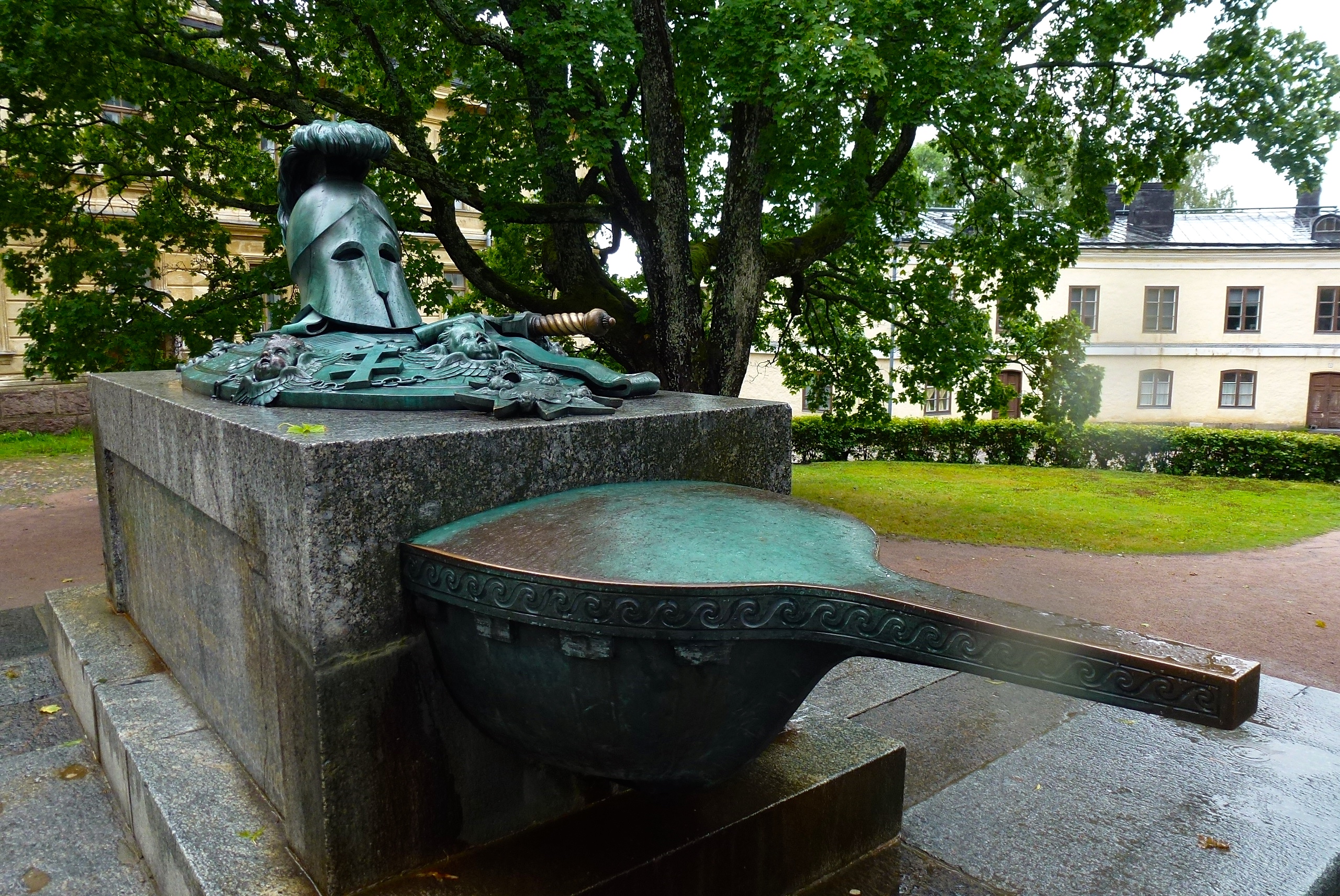
A bronze sculpture in the fortress.

A bronze sculpture in the fortress.

The fortress contains defensive walls, gates, gun emplacements, tunnels, courtyards, a prison, museums, beaches, churches and park areas, as well as shops and cafes. A useful printed guide can be obtained at the ferry terminal.

One of the fortress's cannons.

One of the fortress’s cannons.

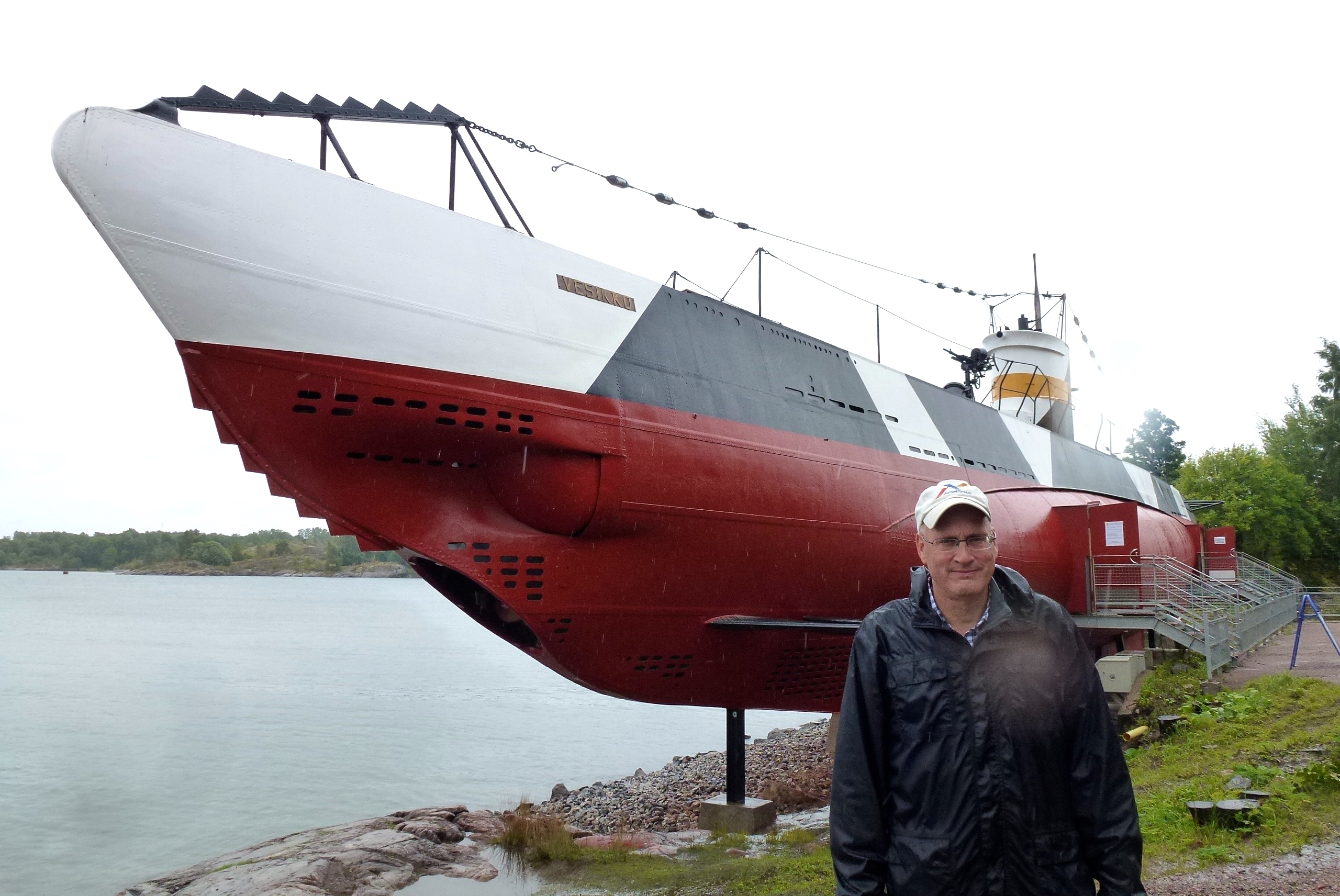
The Vesikko submarine, a Finnish sub built in the 1930's that saw action in World War II. The sub is now a museum.

The Vesikko submarine, a Finnish sub built in the 1930’s that saw action in World War II. The sub is now a museum.

A sign saying tourists are not welcome at the prison labor camp in the fortress!

A sign saying tourists are not welcome at the prison labor camp in the fortress!

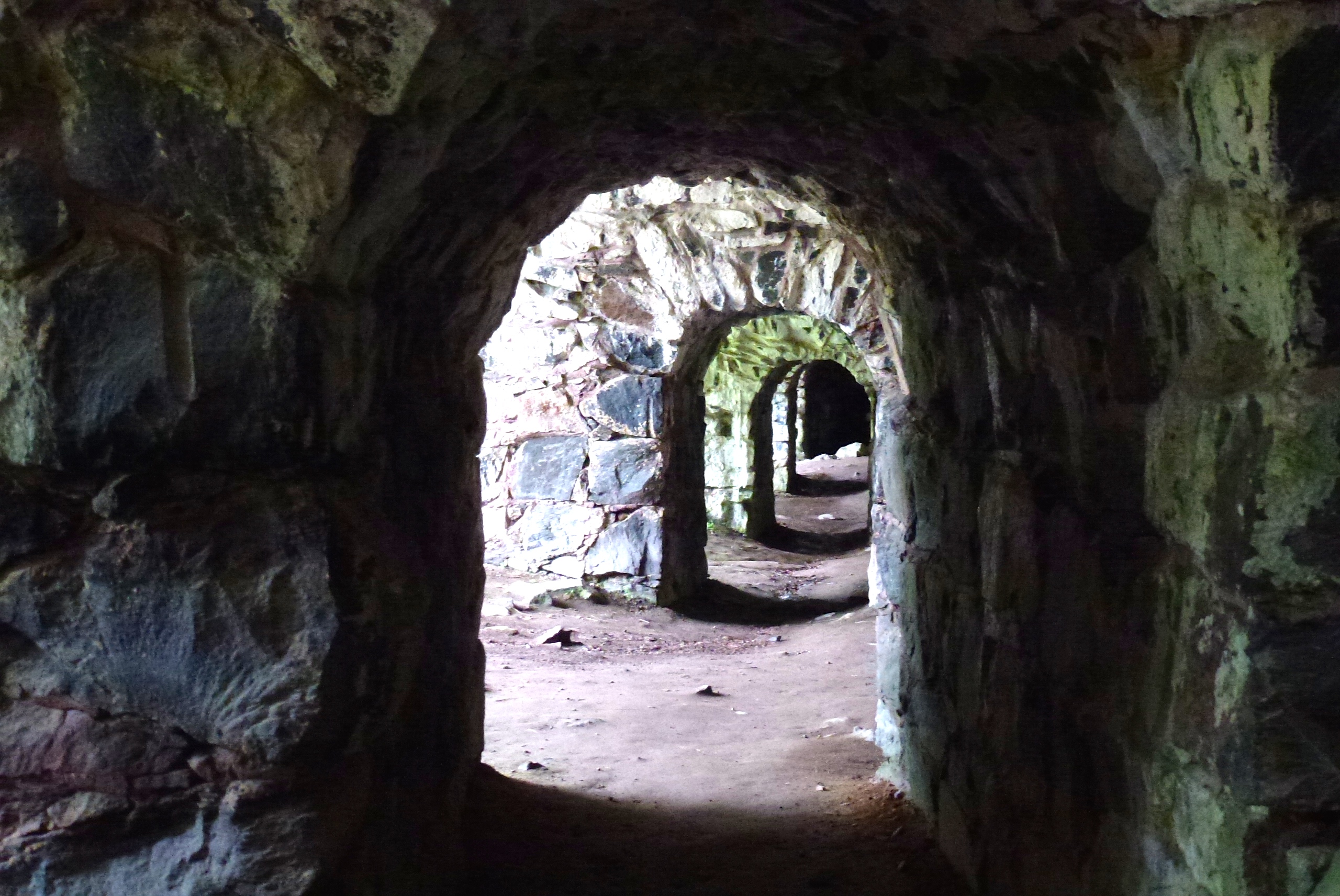
One of the tunnels underneath the fortress defensive walls.

One of the tunnels underneath the fortress defensive walls.

Today the Fortress is used for cultural events and conventions in addition to being a great place to picnic and experience a bit of Finnish history.

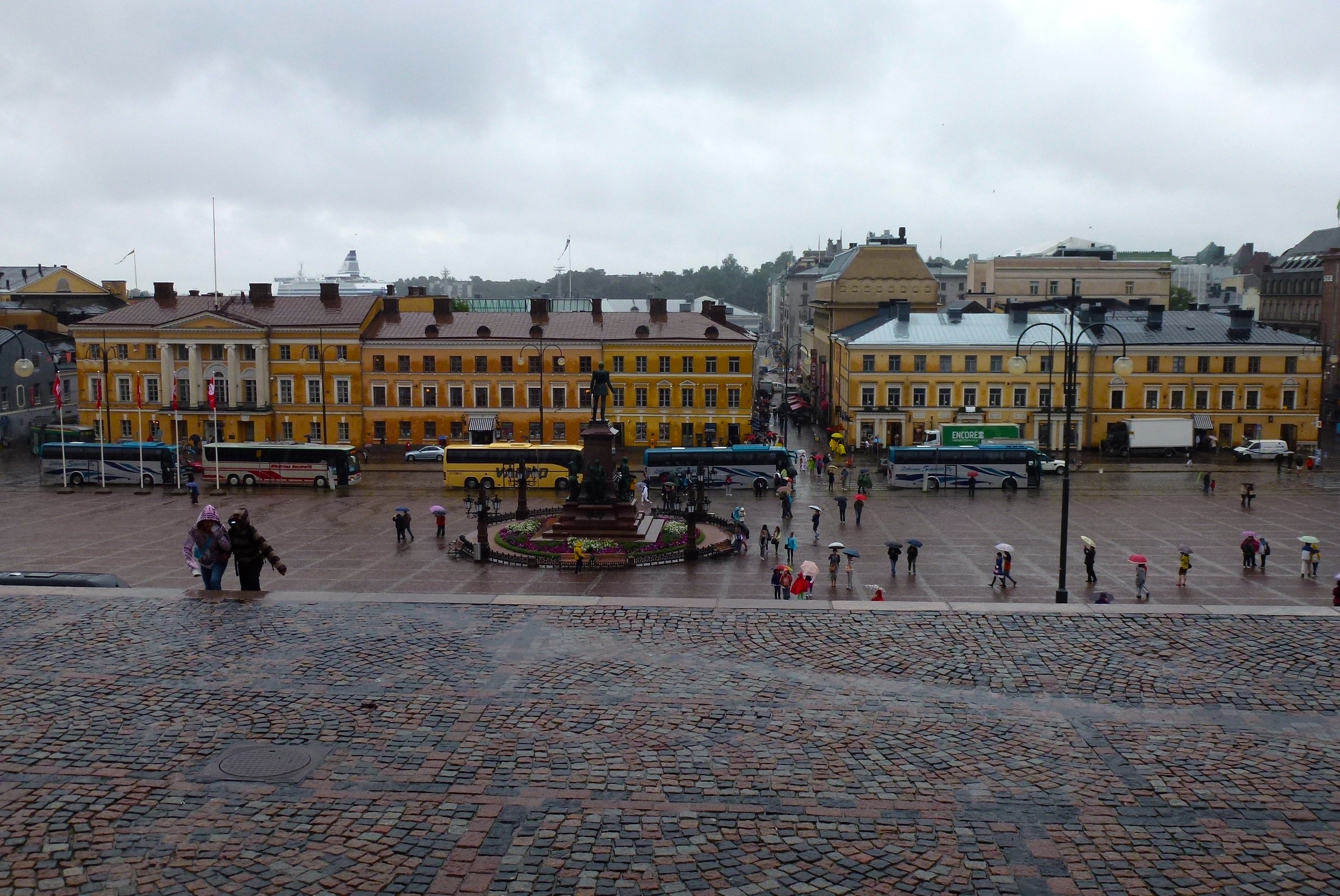
Senate Square. This is Helsinki’s central square, surrounded by 19th century neo-classical buildings.

Helsinki Cathedral overlooks Senate Square. The statue is Emperor Alexander II, unveiled in 1894.

Helsinki Cathedral overlooks Senate Square. The statue is Emperor Alexander II, unveiled in 1894.

Another view of Senate Square.

Another view of Senate Square.

Temppeliaukio Rock Church. This church was completed in 1969. It’s unique in that it was carved right into bedrock. It must have been a massive undertaking. It’s worth visiting for the unusual setting.

A panorama view of the Temppeliaukio Rock Church.

A panorama view of the Temppeliaukio Rock Church.

Another view of Temppeliaukio Rock Church.

Another view of Temppeliaukio Rock Church.

Uspenski Cathedral. This church is a reminder of Russian influence in Helsinki. It is the largest Eastern Orthodox Church in Western Europe. It was completed in 1868. It is quite beautiful inside.

Exterior view of Uspenski Cathedral.

Exterior view of Uspenski Cathedral.

Interior view of Uspenski Cathedral.

Interior view of Uspenski Cathedral.

Johanneksen (St. John’s) Church. A Lutheran church, built in the late 1800’s and the largest stone church in Finland by seating capacity (seats 2,600 people). It stands out in the Helsinki skyline with twin towers that are 243 ft. in height.

Exterior view of Johanneksen Church.

Exterior view of Johanneksen Church.

An interior view of Johanneksen Church.

An interior view of Johanneksen Church.

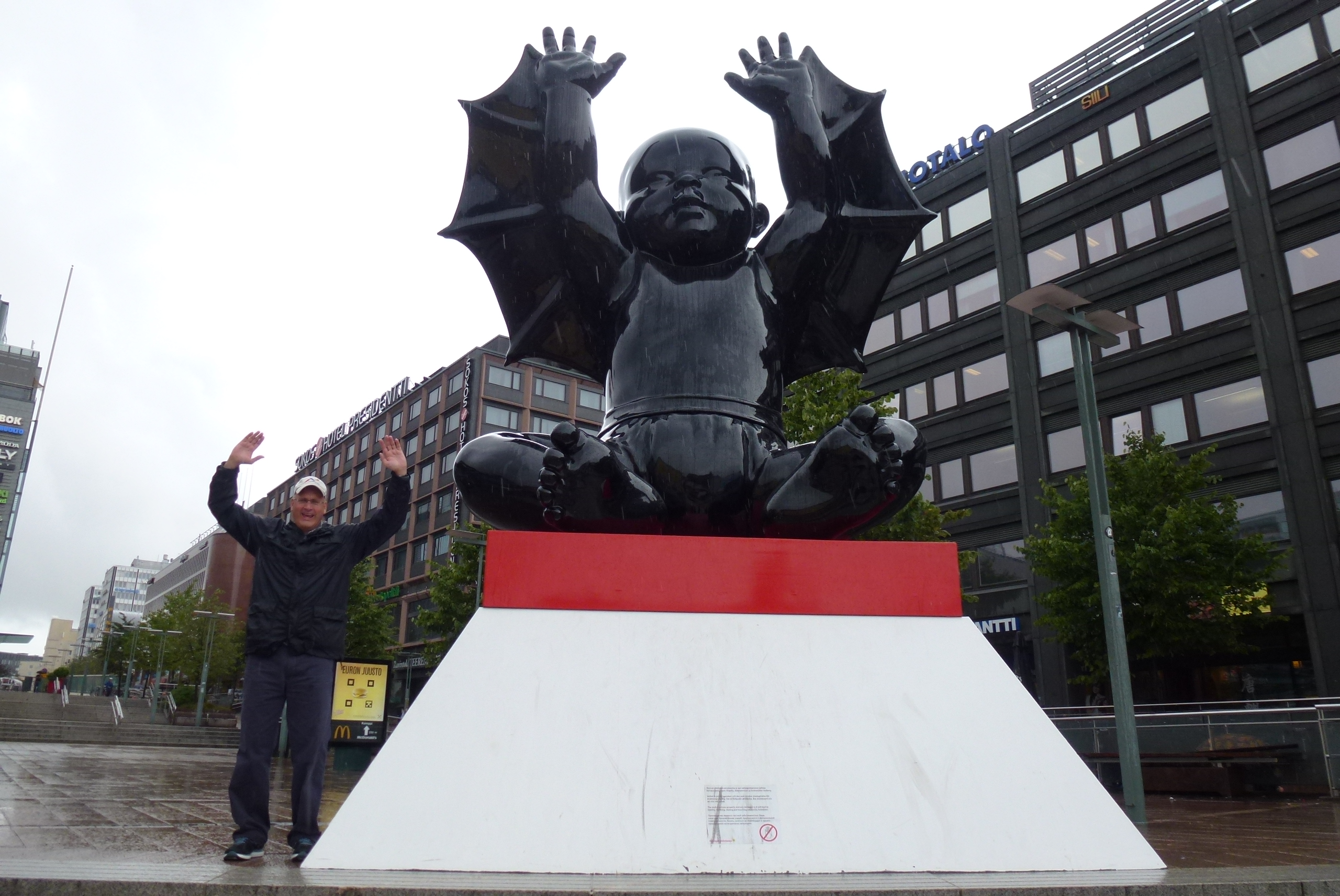
Bat Baby (aka Angel-Demon Statue). One of the more strange sculptures I’ve seen. It’s from 2009 and part of an exchange with the Triumph Gallery in Moscow and Volker Diehl Gallery in Berlin.

The Angel-Demon sculpture in Helsinki.

The Angel-Demon sculpture in Helsinki.

Two Days in Delhi, India

New Delhi is the capital of India and has a lot to offer the tourist. It is a good place to start your tour of India since New Delhi is a major airline gateway into the country. Delhi is an ancient city and has been the capital of India off and on for hundreds of years. During their rule, the British made Delhi their capital in 1911. New Delhi and Old Delhi are contiguous and are one huge sprawling city. However, many of the main tourist sites are grouped in relative proximity to one another, some in New Delhi and others in Old Delhi. For a map of places we visited in India, click here.

A street scene in Delhi, with an auto rickshaw passing street dwellers. Poverty is found everywhere.

A street scene in Delhi, with an auto rickshaw passing street dwellers. Poverty is found everywhere.

Almost anywhere you go, you will see decaying ruins of tombs, temples, mosques, other monuments and overwhelming poverty. Here are a few highlights, and the main things we saw over two days:

Humayun’s Tomb. Humayun was the 2nd Mughal (Islamic) emperor and reigned during the early 1500’s. If the tomb’s shape looks familiar, it’s for good reason. This tomb was the forerunner of the Taj Mahal. The site is large, with a well manicured landscape and a number of other interesting buildings. For more information, see my detailed post on Humayun’s Tomb here.

Humayun's Tomb. The symmetry and structure are similar to the Taj Mahal.

Humayun’s Tomb. The symmetry and structure are similar to the Taj Mahal.

Purana Qila (or Old Red Fort). This site became the capital of Mughal India in 1526 during the Emperor Humayun’s reign. There are massive walls surrounding the site, just like at the Red Fort (see below). Inside, there are only a few buildings remaining, although the gardens and landscaping also add to the atmosphere.

The main gate into Purana Qila.

The main gate into Purana Qila.

The Sher Mendal in Purana Qila. Humayun used this building as a library. In 1556, he heard the call to prayer, and in a hurry, he fell and sustained major injuries while on his way down the stairs. He died 3 days later.

The Sher Mendal in Purana Qila. Humayun used this building as a library. In 1556, he heard the call to prayer, and in a hurry, he fell and sustained major injuries while on his way down the stairs. He died 3 days later.

The Red Fort. This fort dates from the early 1600’s and was founded by Shah Jahan, the builder of the Taj Mahal. The wall surrounding the fort is 18 meters high (60 ft).

The massive walls and western entrance into the Red Fort.

The massive walls and western entrance into the Red Fort.

The entrance to the Emperor's reception hall in the Red Fort.

The entrance to the Emperor’s reception hall in the Red Fort.

There are a number of interesting structures inside such as temples, reception rooms and out-of-place barracks built by the British during their occupation of India in the mid 1800’s. Note that there is also a “Red Fort” in Agra. Both are interesting, but I found the Red Fort in Agra perhaps a little bit more intriguing with more of the original architecture in tact.

Chandni Chowk. On the western border of the Red Fort is this chaotic market area. If you want to get a feel for the “real” India, take a rickshaw ride through Chandni Chowk, a busy marketplace with bazaars that seem to be mainly frequented by locals. Our car driver negotiated a couple of bicycle rickshaw rides for us and this was a great way to tour the bazaars.

Our rickshaw driver in Chandni Chowk.

Our rickshaw driver in Chandni Chowk.

We loved just observing the bustle of everyday life and also found some good spice shops here. There was a large weekend market going on while we were there. I could scarcely believe the volume of goods – shoes, clothes, handbags and other items that were on display!

A street scene in Chandni Chowk.

A street scene in Chandni Chowk.

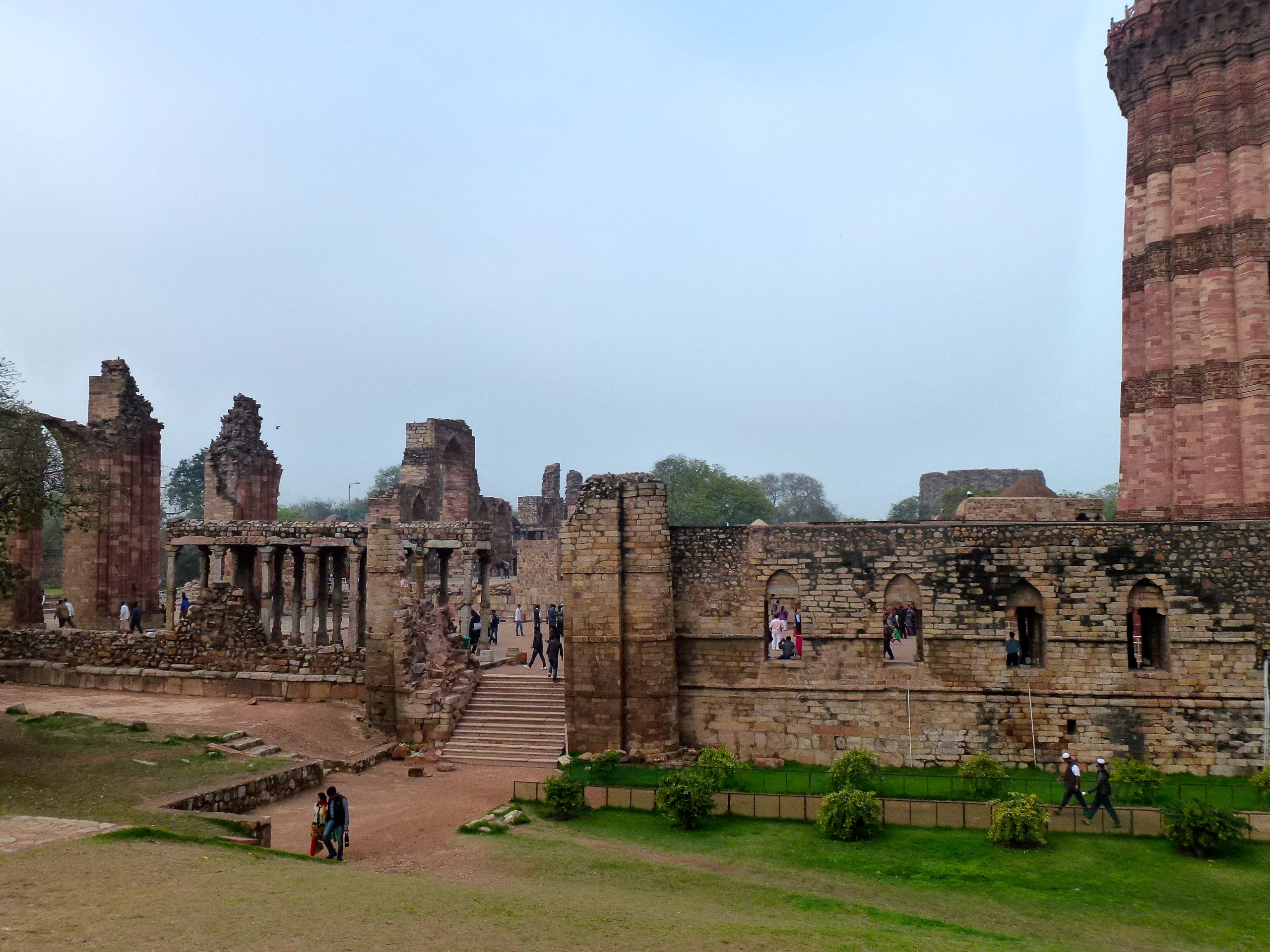
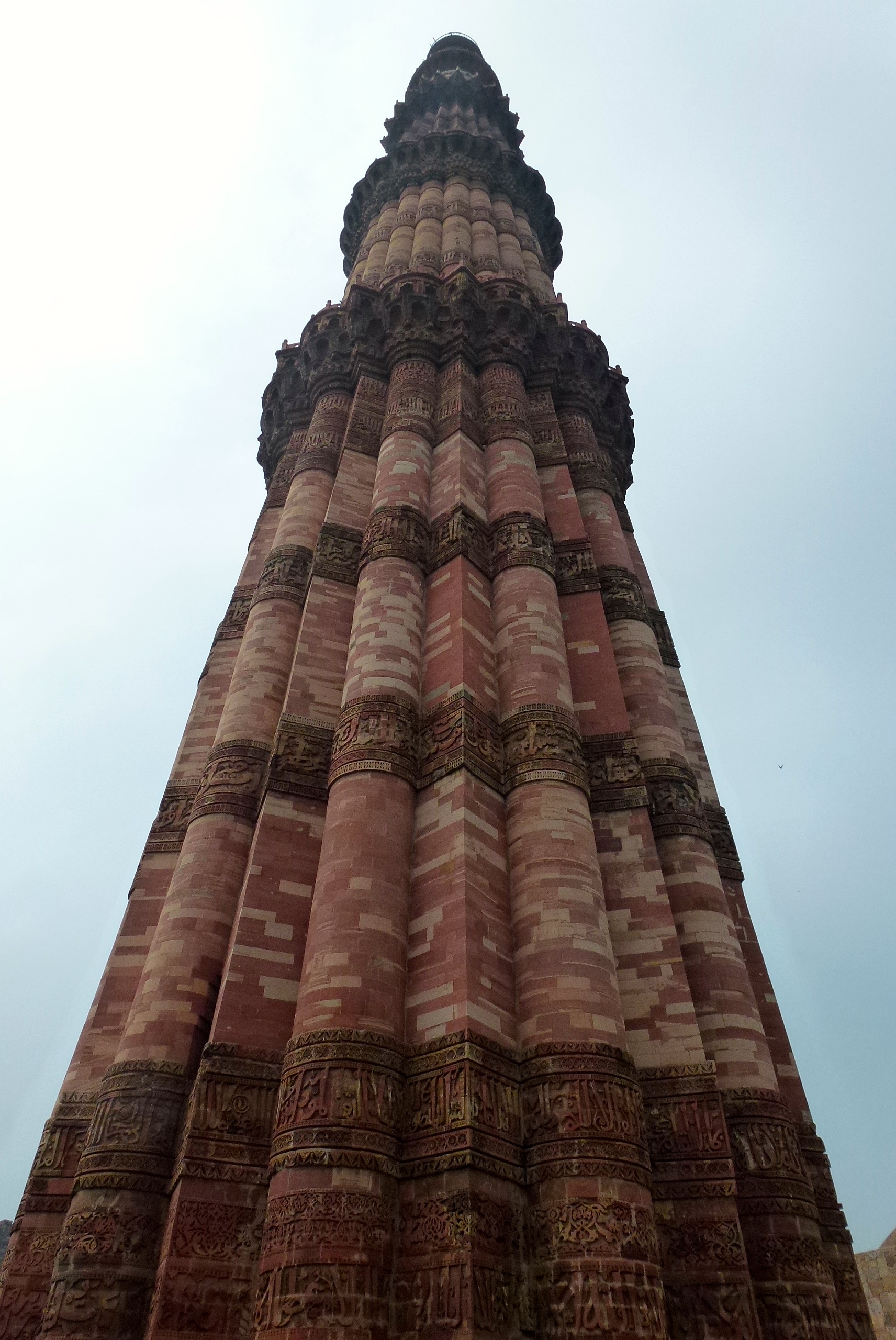
Qutb Minar. I love historical sights and Qutb Minar does not disappoint. The structures (tombs, monuments and mosques) located here date from the late 1100’s. Although the site is known as Qutb Minar, the name refers specifically to the landmark tower and minaret (named after Sultan Qutb-ud-din). There are signs posted in English at most of the major structures.

A view of some of the ruins of Qutb Minar.

A view of some of the ruins of Qutb Minar.

The Qutb Minar Tower.

The Qutb Minar Tower.

Mehrauli Archeological Park. Near Qutb Minar is a spread out, park-like area with numerous tombs, palace buildings, mosques, and other structures. This site is largely off the tourist radar. The historical buildings are connected via a system of well-marked trails. If you have the time and are visiting Qutb Minar, it’s worth another hour or two to visit this nearby Park.

The exterior porch of the Jamali-Kamali Mosque in Mehrauli Park.

The exterior porch of the Jamali-Kamali Mosque in Mehrauli Park.

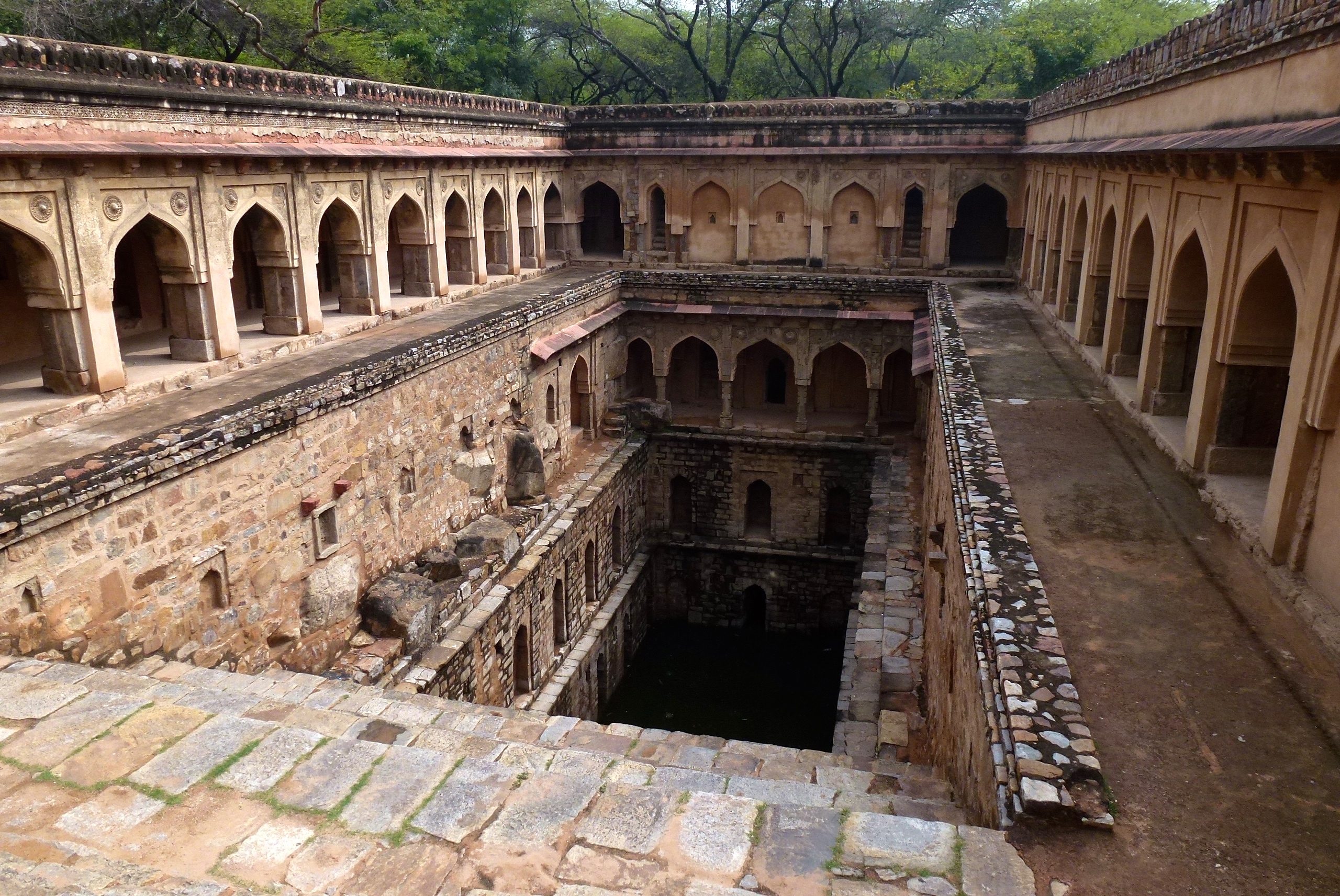
An elaborate well (Rajon-ki-Baoli) in Mehrauli Park.

An elaborate well (Rajon-ki-Baoli) in Mehrauli Park.

In addition to the above, you can also do a “drive by” of Delhi’s modern government buildings, commemorative arches, memorials, and other locations such as upscale Connaught Place (with stately buildings, shops and restaurants).

The memorial to Mahatma Gandhi, the leader of the Indian independence movement (from British rule).

The memorial to Mahatma Gandhi, the leader of the Indian independence movement (from British rule).

India Gate, which pays tribute to India's soldiers who have sacrificed their lives in several of India's conflicts.

India Gate, which pays tribute to India’s soldiers who have sacrificed their lives in several of India’s conflicts.

Getting Around. We just hired a driver for the day. A good local agency to work with is Kumar Tourist Taxi Service. It is also possible to hire taxis from location to location, or autorickshaws. Delhi does have a metro (subway) system as well. There is LOTS of traffic, so it will take time to get from one sight to another. Don’t try to do too much in one day. We were able to accomplish the above in two full days.

Where to Stay. We stayed at the 76 Friends Colony B&B located in South New Delhi. The host was very friendly and the rooms were large and pleasant. They can also arrange transportation for you if desired; however, their rates were relatively high compared to Kumar’s (above).

Visiting St. Petersburg, Russia

As part of a Northern European cruise in 2013, we visited St. Petersburg, Russia. This was one of my favorite stops–it was my fist time in Russia and I was excited to see the city that I had heard so much about over many years. Because there is so much to do here, the cruise ship (Princess Cruises) stayed overnight and this allowed us two full days in port. St. Petersburg was the capital of tsarist Russia, and the sights are numerous and stunning, providing a sense of the power and wealth of the Russian Tsars. This wealth and power were of course major reasons for the 1917 communist revolution.

Listed below are the main sights we visited over the two days.

DAY ONE:

Peterhof Palace

Peterhof Palace. Known as the 'Russian Versailles'. In good weather, visitors can take a hydrofoil along the Gulf of Finland from St. Petersburg to the Palace.

Peterhof Palace. Known as the ‘Russian Versailles’. In good weather, visitors can take a hydrofoil along the Gulf of Finland from St. Petersburg to the Palace.

Catherine Palace

The gilded Ballroom of Catherine Palace.

The gilded Ballroom of Catherine Palace.

Exterior view of Catherine Palace, the summer residence of the Tsars. Constructed in the 1700's. It's located about 25 km from St. Petersburg.

Exterior view of Catherine Palace, the summer residence of the Tsars. Constructed in the 1700’s. It’s located about 25 km from St. Petersburg.

St. Isaac’s Cathedral

The gold dome of St. Isaac's Cathedral is one of the largest in the world, covered with 220 lbs of gold. The cathedral was commissioned in 1818 and completed 30 years later.

The gold dome of St. Isaac’s Cathedral is one of the largest in the world, covered with 220 lbs of gold. The cathedral was commissioned in 1818 and completed 30 years later.

Church of the Spilled Blood

The church's name comes from the fact that it was built on the spot where the Tsar Alexander II was assassinated on March 1, 1881.

The church’s name comes from the fact that it was built on the spot where the Tsar Alexander II was assassinated on March 1, 1881.

Drive around St. Petersburg

Our tour host drove us around various other locations in St. Petersburg, including this monument and government building where the G20 summit was hosted by President Putin in 2013.

Our tour host drove us around various other locations in St. Petersburg, including this monument and government building where the G20 summit was hosted by President Putin in 2013.

DAY TWO:

Canal Cruise on the Neva River

There are numerous canals and rivers in St. Petersburg. A 90 minute boat cruise is a great way to see the city from a different angle.

There are numerous canals and rivers in St. Petersburg. A 90 minute boat cruise is a great way to see the city from a different angle.

Hermitage Museum

The beautiful staircase in the Hermitage Museum. The Hermitage was the winter palace of the Tsars. The Museum contains art works that rival any other museum in the world.

The beautiful staircase in the Hermitage Museum. The Hermitage was the winter palace of the Tsars. The Museum contains art works that rival any other museum in the world.

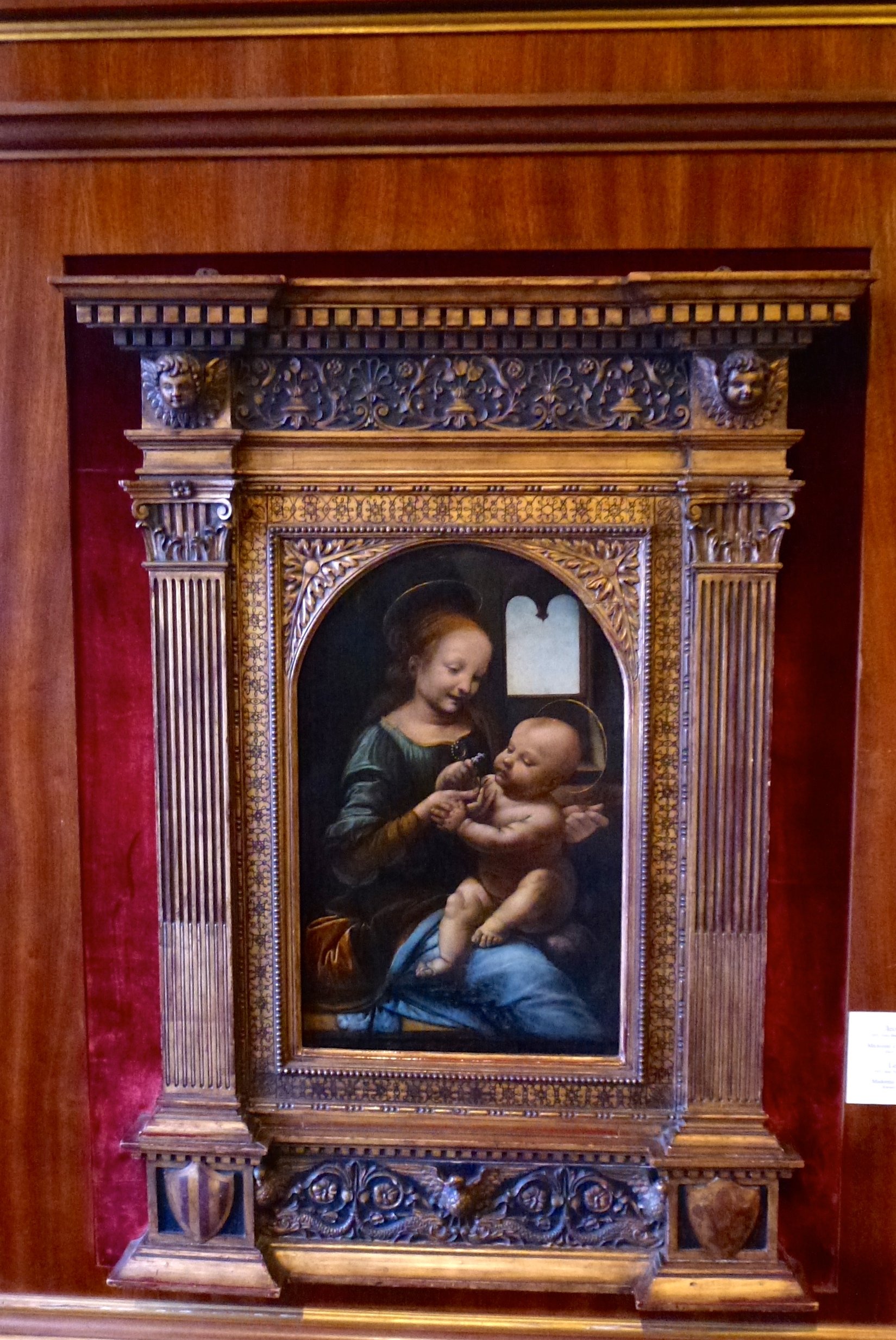
Madonna and Child by Leonardo Da Vinci, in the Hermitage Museum.

Madonna and Child by Leonardo Da Vinci, in the Hermitage Museum.

Peter & Paul Fortress

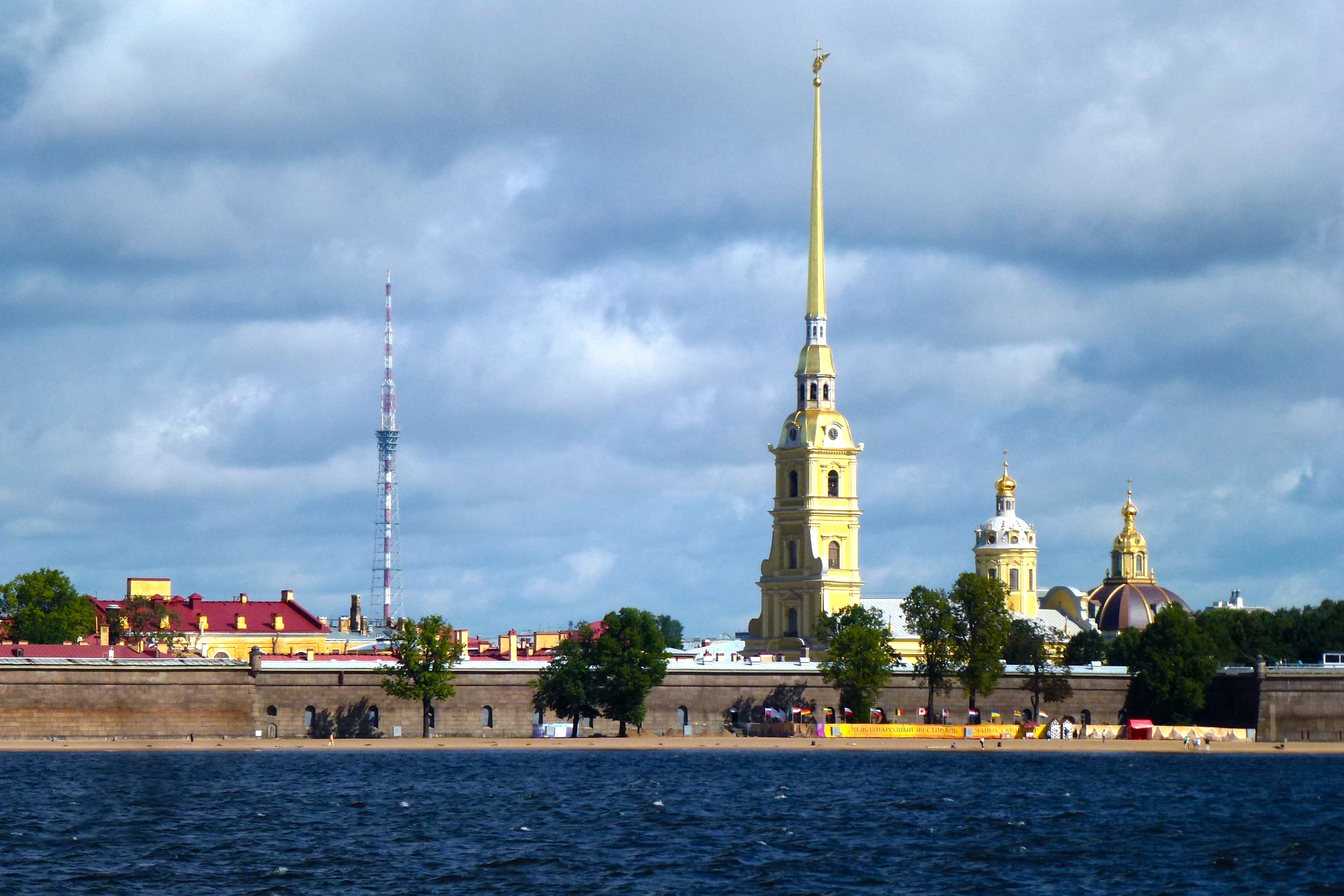
A view of the Peter & Paul Fortress from the Neva River. This fortress was built to protect the city from Swedish attack and was used for holding political prisoners. The tall spire and tower identify  the Sts. Peter and Paul Cathedral.

A view of the Peter & Paul Fortress from the Neva River. This fortress was built to protect the city from Swedish attack and was used for holding political prisoners. The tall spire and tower identify the Sts. Peter and Paul Cathedral.

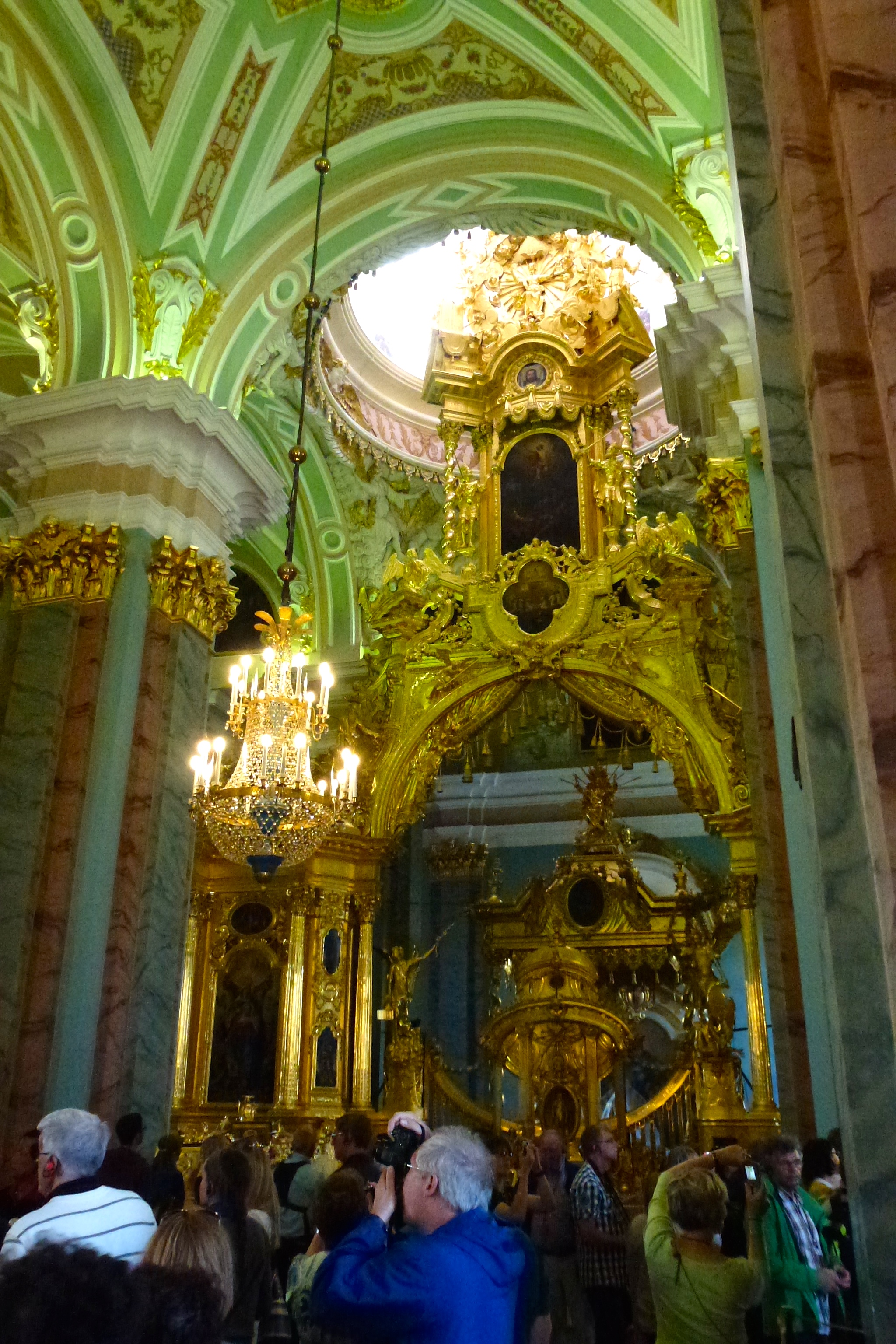
An interior view of the Sts. Peter and Paul Cathedral within the Peter & Paul Fortress. The tombs of many Tsars and their families are located here, including Peter the Great.

An interior view of the Sts. Peter and Paul Cathedral within the Peter & Paul Fortress. The tombs of many Tsars and their families are located here, including Peter the Great.

Yusupov Palace

Yusupov Palace (also known as Moika Palace) was one of 57 (yes, 57) palaces owned by the extremely wealthy Yusupov family, who were members of the Russian nobility. This is the "Bedroom of the Princess", one of many elaborately decorated rooms in this palace.

Yusupov Palace (also known as Moika Palace) was one of 57 (yes, 57) palaces owned by the extremely wealthy Yusupov family, who were members of the Russian nobility. This is the “Bedroom of the Princess”, one of many elaborately decorated rooms in this palace.

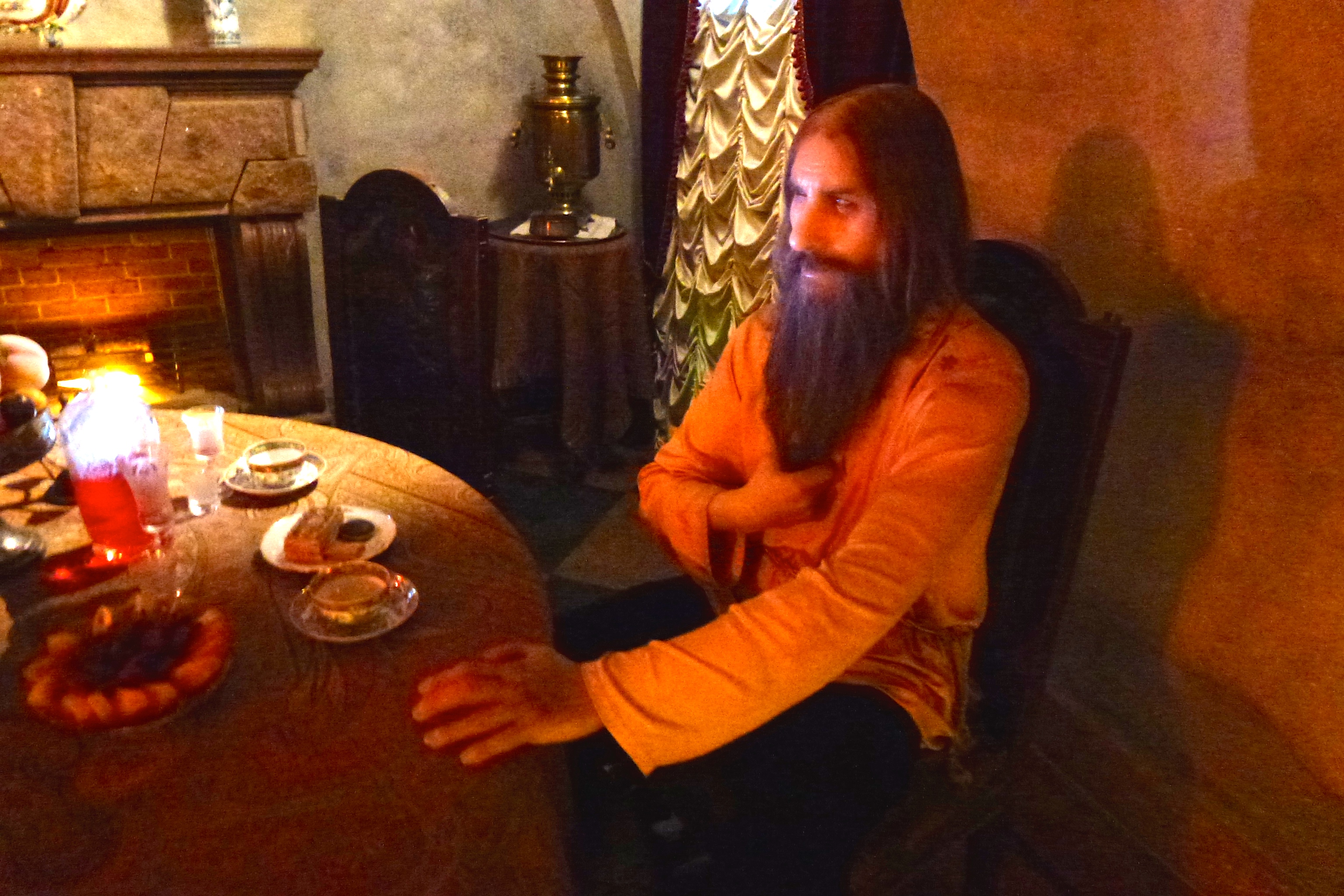
Part of Yusupov Palace is a museum about the murder of Grigori Rasputin, which took place at the palace in 1916. He was a mystic and an advisor to the Romanov family, the last Tsars of Russia. He grew too powerful and in this scene his enemies plot his death.

Part of Yusupov Palace is a museum about the murder of Grigori Rasputin, which took place at the palace in 1916. He was a mystic and an advisor to the Romanov family, the last Tsars of Russia. He grew too powerful and in this scene his enemies plot his death.

This parlor was the setting of the last meal and murder of Rasputin. He wielded too much influence and was greatly feared. Invited to a meal at the Yusupov Palace, he was given enough poison with his food to kill five men, and yet was not fazed. He was also shot several times, and still had enough strength to try to escape. He finally died in a courtyard outside the Palace.

This parlor was the setting of the last meal and murder of Rasputin. He wielded too much influence and was greatly feared. Invited to a meal at the Yusupov Palace, he was given enough poison with his food to kill five men, and yet was not fazed. He was also shot several times, and still had enough strength to try to escape. He finally died in a courtyard outside the Palace.

Practical Information

History: Read Nicholas and Alexandra by Robert K. Massie before going. It will give you some background on the tragic story of the last Tsar of Russia and the beginning of the Russian Revolution in 1917.

Weather: Even in August, it was cool. St. Petersburg is located on the Gulf of Finland in the Baltic Sea. Our first day was rainy and very windy. The second day was sunny and perhaps in the mid 60’s F.

Tours: Rather than take one of the cruise tours, we arranged our tour through TJ Travel, based on a recommendation of friend who had visited previously. They were excellent hosts, and the cost was about 35% cheaper than a cruise-arranged tour.

Entry: Russia requires visiting tourists to have visa (must be obtained prior to your trip), or by being a part of an official tour group with your cruise (by showing the appropriate documents). This is the only way you’re going to be able to get off the cruise ship. Passport control is taken seriously even for cruise ship visitors and eats up 15-20 minutes each way (entry/exit) on both days.

The Fortified City of Fatehpur Sikri

Fatehpur Sikri was the capital of the Mughal Empire in India between 1571 and 1585 during the reign of Emperor Akbar. The city is a collection of architecturally beautiful buildings with numerous intricate carvings, expansive connecting courtyards and gardens.

The perfectly manicured Ladies Garden at Fatehpur Sikri.

The perfectly manicured Ladies Garden at Fatehpur Sikri.

The Emperor lived large – he had more than 5,000 concubines, played games with slave girls as the game board pieces on a large courtyard and hosted lavish banquets and concerts.

The Emperor Akbar would play pachisi (ancient Indian game) in this courtyard with slave girls dressed in colorful clothes as pieces. The Panch Mahal is the five story edifice in the background which has a total of 176 columns.

The Emperor Akbar would play pachisi (ancient Indian game) in this courtyard with slave girls dressed in colorful clothes as pieces. The Panch Mahal (in the background) is five stories and has a total of 176 columns, many of which are unique.

The Birbal Bhavan, an intricately carved building inside and out, believed to be the residence of Akbar's senior queens.

The Birbal Bhavan, an intricately carved building inside and out, believed to be the residence of Akbar’s senior queens.

The Lower Haramsara. The rings in the lower right and extending beyond separated the living quarters of 200 female servants living here, who were for palace business only.

The Lower Haramsara. The rings in the lower right and extending into the distance separated the living quarters of 200 female servants living here, who were for palace business only.

The Diwan-i-Khas (Hall of Private Audiences) with its magnificently carved central column. Akbar is believed to have stood on top of this column and debated with scholars and ministers who stood at the ends of the four bridges extending out from the center.

The Diwan-i-Khas (Hall of Private Audiences) with its magnificently carved central column. Akbar supposedly stood on top of this column and debated his scholars and ministers who stood at the ends of the four bridges extending out from the center.

Exterior view of the Diwan-i-Khas.

Exterior view of the Diwan-i-Khas.

Inside the Palace of Jodh Bai, the home of Akbar's Hindu wife (said to be his favorite).

Inside the Palace of Jodh Bai, the home of Akbar’s Hindu wife (said to be his favorite).

The Ornamental Pool (Anup Talao), used for water storage and private functions by the Emperor.

The Ornamental Pool (Anup Talao), used for water storage and private functions by the Emperor.

Fatehpur Sikri did not last long as a capital due to a poor water supply. We are now left with the magnificent buildings and grounds that seem perfectly intact from almost 500 years ago. Adjacent to the palace complex is the huge Jama Masjid (mosque), completed about the same time as the palaces and worth visiting. Plan on at least two hours to visit both sights.

The immense courtyard of the Jama Masjid (mosque). The marble inlay work found around the structures is said to have inspired similar work at the Taj Mahal less than 100 years later.

The immense courtyard of the Jama Masjid (mosque). The marble inlay work found around the structures is said to have inspired similar work at the Taj Mahal less than 100 years later.

The white marble tomb of Shaikh Salim Chishti. You can visit the perimeter and gaze inside.

The white marble tomb of Shaikh Salim Chishti. You can visit the perimeter and gaze inside to the intricate lattice work.

Practical Notes: Fatehpur Sikri is located 35 km (22 miles) west of Agra and can be done as a day trip from Agra, or as we did, a stop between Agra and Jaipur. If you are coming by car or bus, there is a car park with the usual trinket stalls and very persistent vendors (they’ll remember you as you return to the car park) about a kilometer or so away from the old city, which sits on a small hilltop just to the north of the car park. There is a shuttle that takes you up to the old city and lets you off between the city gate and the mosque. There are lots of signposts in English next to the main buildings. As with almost every tourist location in India, guides can be hired for a few dollars if desired or you can get an audio guide. We just relied on the signposting and our Lonely Planet book.

Reference: Lonely Planet India Guidebook.

Warsaw Part II – Warsaw Under Nazi Occupation

Poland suffered terribly in World War II. The War began in Poland on September 1st, 1939 with the simultaneous German invasions of Gdańsk and Warsaw. By early October, Polish resistance was eliminated. Shortly thereafter, the Soviet Union moved into eastern Poland and the country was partitioned between the two powers. On the Soviet side, millions of Poles were sent to Siberia and on the German side Polish Jews (there were originally three million) were rounded up into ghettos or sent to concentration camps.

In Warsaw alone 800,000 Poles died as a result of the terrors of World War II, more than double the entire number of U.S. casualties. Although much of Warsaw was rebuilt after the War, there are remnants of this dark period left for the tourist to explore.

The Mausoleum of Struggle & Martyrdom

In this building, the feared secret state police of Nazi Germany (“The Gestapo”) tortured and interrogated thousands of Poles who were accused of crimes against the Nazi state or suspected of having valuable information.

A street view of The Mausoleum of Struggle & Martyrdom. This museum is free.

A street view of The Mausoleum of Struggle & Martyrdom. This museum is free.

The Gestapo officer's desk.

The Gestapo officer’s desk.

The tortures were many and varied, they included being beaten with a variety of instruments, or being hung upside down with water pumped into the nose, the use of electric shocks, being burnt with irons, and sometimes being forced to watch while a family member was tortured.

A display of various interrogation/torture devices.

A display of various interrogation/torture devices.

The rooms are well sign-posted in English and when you realize you are in the exact spot where so many innocent people suffered, it is a moving experience.

Cells in the museum.

Cell doors in the museum.

Prisoners were kept in cells like this (and chained as shown) and sometimes interrogated for weeks or months--often with little food, sometimes ill, often beaten and without a bed.

Prisoners were kept in cells like this (and chained as shown) and sometimes interrogated for weeks or months–often with little food, sometimes ill, often beaten and without a bed.

Prisoners would wait in these chairs for questioning, sometimes for days. They were not allowed to fall asleep, talk or move. If you violated the rules you might be beaten to death.

Prisoners would wait in these chairs for questioning, sometimes for days. They were not allowed to fall asleep, talk or move. If you violated the rules you might be beaten to death.

The Warsaw Ghetto

As a way of controlling the Jewish population, in 1940 the Germans built a ghetto compound in Warsaw by erecting walls with barbed wire down the middle of streets.

A portion of the Warsaw Ghetto wall.

A portion of the Warsaw Ghetto wall.

Information about the Warsaw Ghetto is posted on the wall.

Information about the Warsaw Ghetto is posted on the wall.

About 360,000 local Jews and 90,000 Jews from other locations were moved here. During the summer of 1942, 300,000 Jews were transported to the Treblinka death camp and gassed. The ghetto was systematically destroyed in 1943 after the remaining occupants were killed or moved to various concentration camps. Today, there is very little left to see, except for a bit of the wall with information plaques.

This building is a survivor from World War II. The facade is pockmarked with bullet holes. It's located on Ul Próżna street, just a few blocks from the Ghetto wall.

This building is a survivor from World War II. The facade is pockmarked with bullet holes. It’s located on Ul Próżna street, just a few blocks from the Ghetto wall.

Monument to the Warsaw Uprising

This is one of the most important landmarks in Warsaw. It commemorates the August 1, 1944 uprising by the Poles against the German Army, just as the Germans were losing ground to the advancing Soviet forces from the east. The Poles fought bravely for 63 days and actually were successful to start, but they were eventually overwhelmed by the Germans. Hitler destroyed the city in retribution for the uprising and about 200,000 Poles were killed. The Soviet Army could have actually helped the Poles, but Stalin told his army to stand down and let the Germans destroy the Polish resistance, to take any “fight” they had left in them, in preparation for the Soviet and communist takeover of the country early in 1945.

The bronze sculpture shows the Polish fighters emerging from the brickwork of their ruined city and descending into the city sewers, which were used as an underground communications system. It was unveiled on August 1, 1989, 45 years after the uprising.

The bronze sculpture shows the Polish fighters emerging from the brickwork of their ruined city and descending into the city sewers, which were used as an underground communications system. It was unveiled on August 1, 1989, 45 years after the uprising.

While modern Warsaw is far removed from the horrors of World War II, I was glad to see the remaining bits of history, so that those of us who now visit have an opportunity to remember and honor those who gave their lives defending their country from tyranny.

Reference: Lonely Planet Poland Travel Guide

Sights of Warsaw – Part I

Warsaw is Poland’s largest city and the country’s capital. It has a number of sights to entertain the tourist. If I had to make a choice and could only visit either Krakow or Warsaw, I would pick Krakow. However Warsaw is still quite interesting and we found it easy to spend a couple days wandering the sights prior to our departure from Poland. For a map of places we visited in Poland, click here.

A decorative ledge support staring down on us in Warsaw Old Town.

A decorative ledge support staring down on us in Warsaw Old Town.

This post will focus on some of the general tourist highlights and my follow-up post will focus on several key World War II sights in Warsaw.

A fountain in the Saxon Gardens, Warsaw's first public park (early 18th century). The park is modeled on the gardens at Versailles, France.

A fountain in the Saxon Gardens, Warsaw’s first public park (early 18th century). The park is modeled on the gardens at Versailles, France.

Warsaw is a big city, but it has an extensive tram and bus system, which are pretty easy to navigate. Any of the hotels will have a good map with the primary tourist destinations highlighted. You can find about any kind of food in Warsaw.

One of our delicious meals in Warsaw.

One of our delicious meals in Warsaw.

In addition to traditional Polish fare, we found an excellent Indian restaurant on the Royal Way.

Palaces

There are a number of palaces in Warsaw and the two below are just a sample.

Wilanów Palace

This is a very impressive 17th century palace, a tiny bit reminiscent of Versailles, but on a much smaller scale. It was a summer residence of the Polish king.

A view of Wilanów Palace, with its beautiful gardens.

A view of Wilanów Palace, with its beautiful gardens.

Another view of Wilanów Palace.

Another view of Wilanów Palace.

The best and most impressive views are on the eastern side, which leads down to a lake. Be sure to visit the manicured gardens.

Palace on the Water

Located in the expansive Łazienki Park, this late 17th century palace was also a summer residence of the Polish king, Stanisław August. It is built on a narrow lake.

An exterior view of the Palace on the Water.

An exterior view of the Palace on the Water.

It was undergoing some restoration work during our visit, but is still very impressive.

Interior view of the Palace on the Water.

Interior view of the Palace on the Water.

The Park itself is definitely worth wandering for its the impressive gardens and fountains, and they\Park has Chopin concerts in the summer.

Old Town

Warsaw has a historic center, but unfortunately the original Old Town was flattened by the Germans in World War II in retribution for the Polish uprising (more on that in my next post).

The Royal Way leads north into Old Town from modern Warsaw.

The Royal Way leads north into Old Town from modern Warsaw.

The Royal Palace (on the right) is at the entrance to Warsaw's Old Town. It has been reconstructed since World War II.

The Royal Palace (on the right) is at the entrance to Warsaw’s Old Town. It has been reconstructed since World War II.

The Barbican. A main medieval gate into Old Town Warsaw.

The Barbican. A main medieval gate into Old Town Warsaw.

A horse-drawn carriage on a street in Old Town Warsaw.

A horse-drawn carriage on a street in Old Town Warsaw.

The Old Town has been restored over the past 50 years, although I found the restoration a little less impressive than Gdansk. I think my impression was affected by the construction work going on in one of the main squares during our visit that made the area a bit less atmospheric.

Visitants’ Church (Visitation Sisters’ Church of St. Joseph)

The world renowned Polish composer and pianist Frédéric Chopin (1810 – 1849) is a local hero. This church, right on the Royal Way that leads to Old Town is significant since Chopin played the organ here. The Visitants’ Church was constructed in the mid 1700’s and survived the bombings of World War II.

The Baroque exterior of the Visitants' Church.

The Baroque exterior of the Visitants’ Church.

Interior of the Visitants' Church.

Interior of the Visitants’ Church.

There is also a Chopin Museum nearby, but we did not make it to the museum. Also along the Royal Way are some other interesting churches.

St. Anne's Church, considered the most ornate church in Warsaw. It escaped major damage in World War II.

St. Anne’s Church, considered the most ornate church in Warsaw. It escaped major damage in World War II.

Church of the Holy Cross. It contains an urn with the remains of the heart of Frédéric Chopin, which was brought here from Paris after his death, according to his wishes.

Church of the Holy Cross. It contains an urn with the remains of the heart of Frédéric Chopin, which was brought here from Paris after his death, according to his wishes.