Day trips from Athens

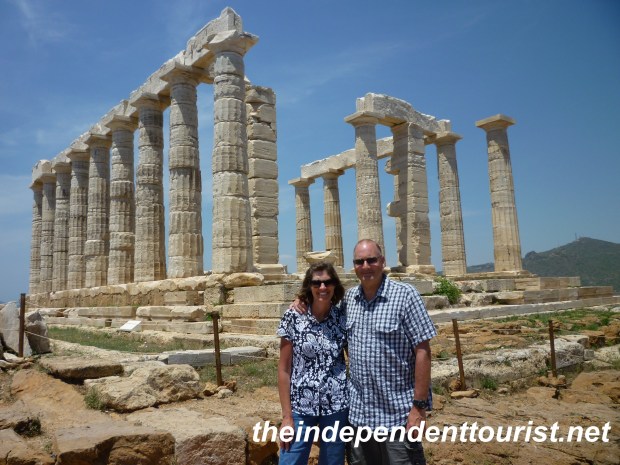
Temple of Poseidon, Greece.

Day Trips from Athens – Temple of Poseidon

Temple of Poseidon, Greece Map.

The Temple of Poseidon is about an hour south of Athens by car.

South of Athens, at the end of a peninsula, lies the town of Sounion, and the majestic ruins of the Temple of Poseidon on a cliff overlooking the sea.  It’s about a one hour drive from the city and about a half hour from the Athens airport.

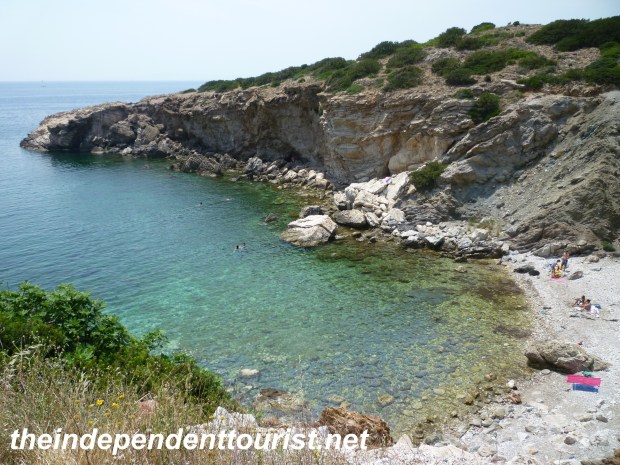
The west coast of the peninsula is a long string of beautiful coves and beaches. The closer to Athens one gets the busier the beach, especially on weekends. We were there on a Sunday in June, and the northern beaches were packed, but those nearer to Sounion were pretty quiet.

Sounion, Greece

The bay and beach of Sounion

Beach, Sounion, Greece

One of the many coves and beaches near Sounion

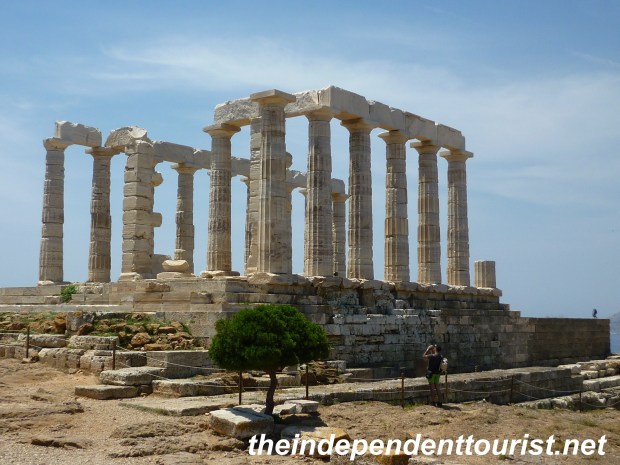
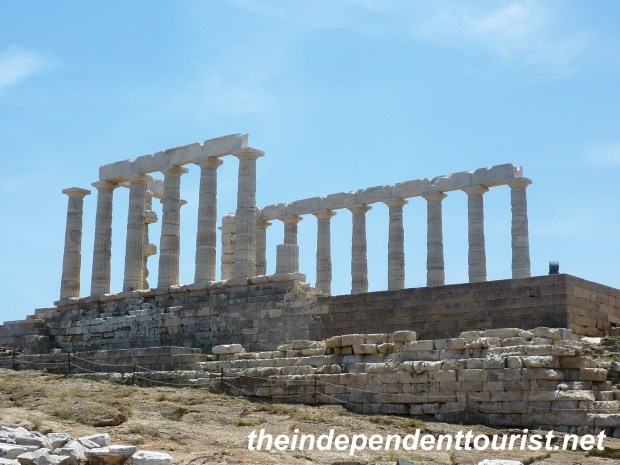
The temple was built between 444 and 400 BC.  It is quite well-preserved with 15 original columns still standing. Anciently, to sailors returning to Athens, the Temple of Poseidon was a landmark that indicated they were almost home.

Temple of Poseidon, Greece

Temple of Poseidon

Temple of Poseidon, Greece.

View of Temple of Poseidon from the stoa.

Temple of Poseidon, Greece

The original Doric columns of the Temple of Poseidon.

The best way to visit this area is with a rental car. If you are picking up a rental car at the Athens airport or dropping one off, and have a few hours, take the time to visit this area. We’re glad we did.

Treasury, Delphi, Greece

Day Trips from Athens – The Ancient Sacred Site of Delphi

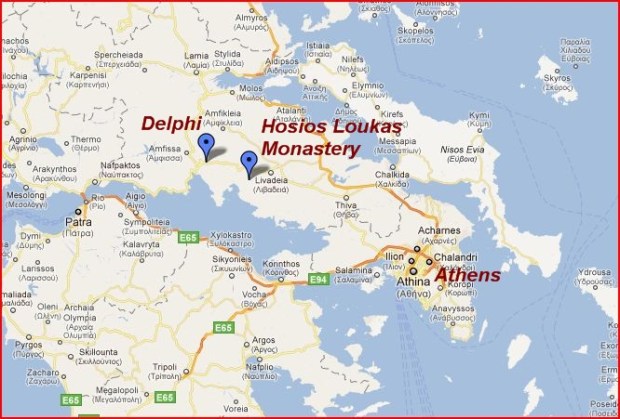
Delphi Greece Map, Day Trip from Athens

Delphi is about 2.5 hours northwest of Athens.

About 190 km northwest of Athens is the ancient center of the world, Delphi. We drove up from Athens (via a stop at Hosios Lukas monastery—see separate post). We stayed at the Hotel Varonos located on one of the two main streets in modern Delphi. This hotel has nice rooms, with decent size bathrooms, and our room had a good view of the large valley leading from the sacred city to the Gulf of Corinth in the distance to the south.
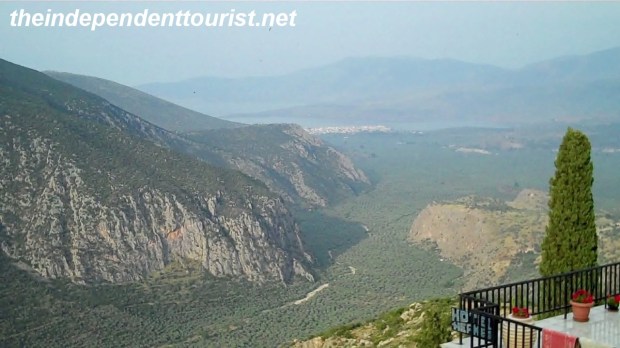
Delphi Greece Valley

Valley by Delphi with olive tree groves.

Although this post is entitled “Day Trips from Athens,” I highly recommend staying overnight in Delphi if possible, rather than doing a day trip from Athens.
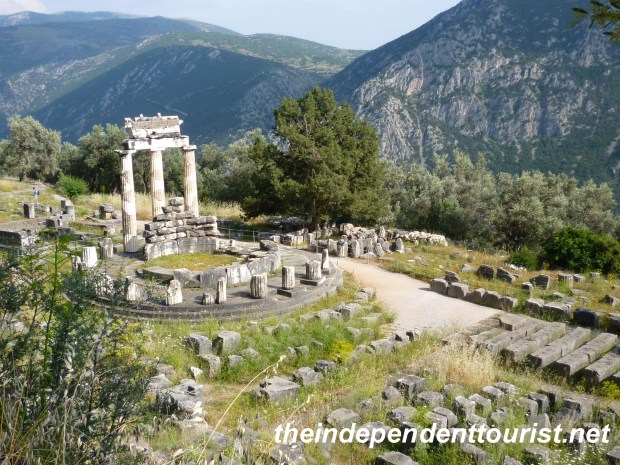
Tholos, Delphi, Greece

Tholos – Delphi (about 400 BC).

We did our visit in two increments–we visited the lower site (known as the Sanctuary of Athena), which is free of charge and therefore has less restricted visiting hours, upon our arrival in the afternoon. The lower site contains what may be the most famous sight in Delphi, the circular Tholos (about 400 B.C.) which is part of the Temple of Athena Pronaia. There are other ruins in the lower site also, including other structures associated with the temple, and a gymnasium foundation and circular pool.

The next morning we visited the main upper site. By staying in town, we were able to be at the gates of the ancient site early enough to avoid the crowds and enjoy the stunning ruins in peace. Please note that as of June 2011, the main site’s hours were shortened (closing earlier in the afternoon–around 3 pm) due to government cost-saving measures. When the gate opened at 8:30 am the line was short–perhaps about 10 people. One can walk from the modern town to the ancient ruins in no more than 10 minutes, along the main road which ancient Delphi straddles. Parking is limited (just a few small lots along the curving road), providing another reason to get there early before the tour buses take over.
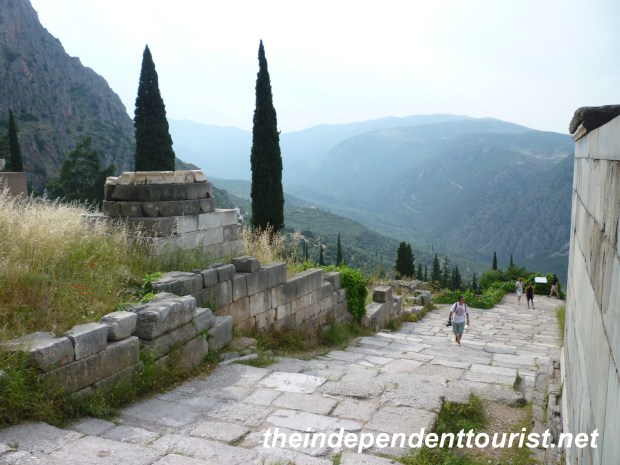
Sacred Way, Delphi, Greece

Numerous offerings of the faithful were placed along the sides of the Sacred Way
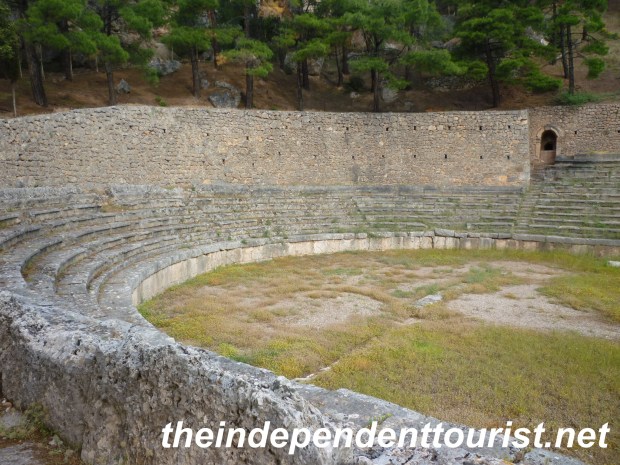
Stadium, Delphi, Greece

Delphi Stadium (2nd century BC).

After purchasing tickets (€6 each) at the entrance,we hiked along the Sacred Way all the way up to the stadium, which is the highest ruin on the hill (Delphi sits on a steep slope), and then worked our way down through the various monuments, taking in the grandeur of the setting and ancient ruins.
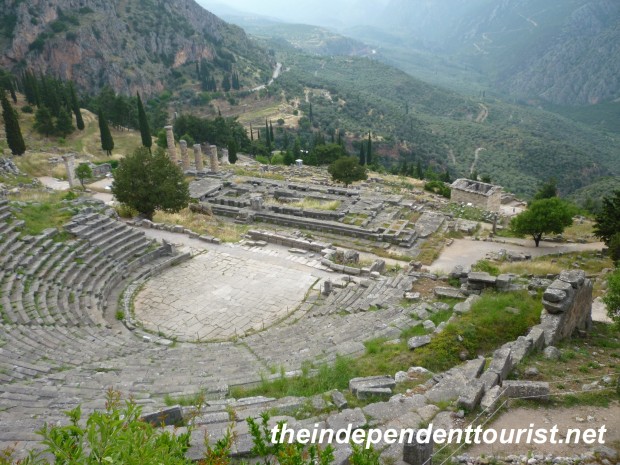
Roman Theater, Delphi, Greece.

The Roman Theater (seated 5,000) with a lovely view.

The location of ancient Delphi is quite beautiful, on a slope surrounded by mountains, and near a small spring (the Castalian Fountain). The fountain was used for purification anciently. From the well-preserved theater, the view overlooking the valley is a treat. There is also museum at the site, which we did not take time to visit.
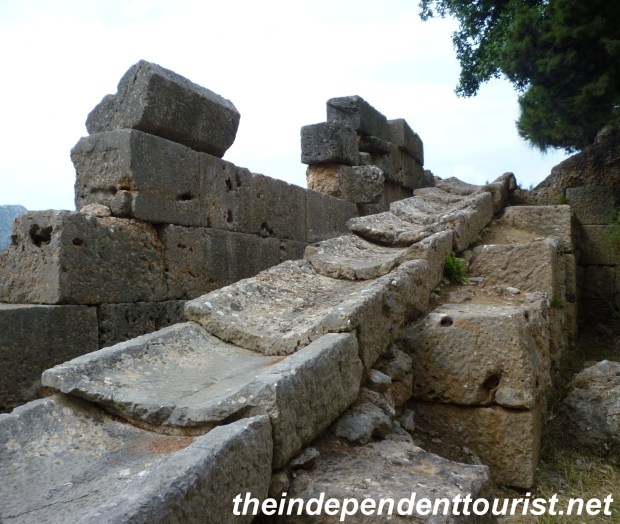
Delphi, Greece.

Stone drainage channel near Sacred Way.

Short History
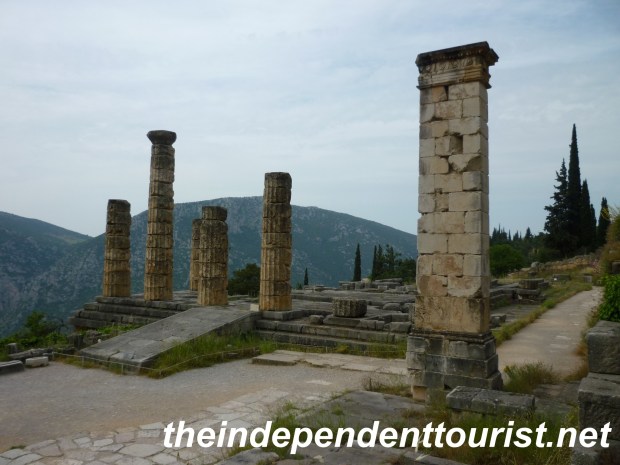
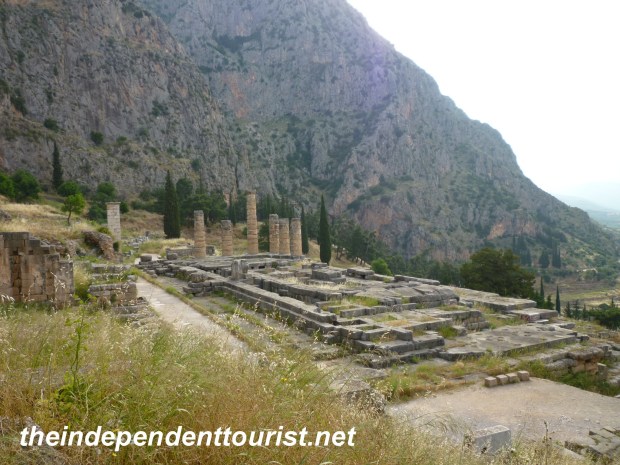
Temple of Apollo, Delphi, Greece.

Another view of Temple of Apollo.

Although the area was originally settled by the Mycenaeans around 1500 BC, the worship of Apollo began in 7thcentury BC. The sovereign god of Delphi was Apollo, who guaranteed the enactment and observance of sacred laws, which were at the heart of the purpose of the great Oracle and sacred sanctuary. Government leaders and ordinary people from all over the Mediterranean region would come to the Sanctuary to seek the assistance of Apollo in matters of state and even personal problems. In order to hear a prophecy, the petitioner had to pay a special tax, go through a purification process and offer sacrifices. Greek cities also made offerings, housed in the many temple-like treasuries along the Sacred Way.
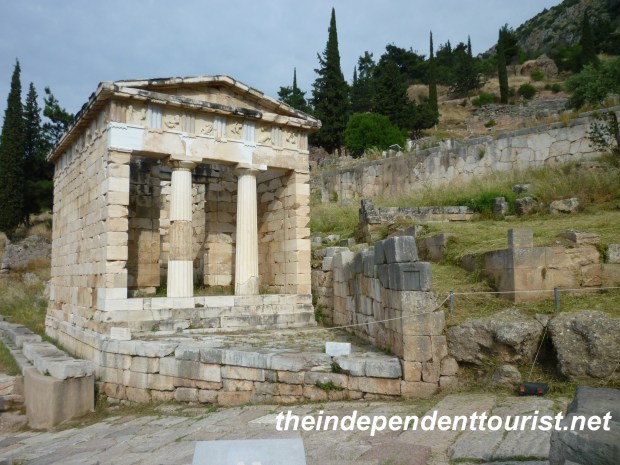
Treasury, Delphi, Greece

Athenian Treasury – Delphi.

Temple of Apollo, Delphi, Greece.

Temple of Apollo, Delphi.

The famous Oracle, believed to be in a sanctuary below the Temple of Apollo, would inhale the earth’s vapors (through a gap in the ground) and chew on bay leaves (Apollo was associated with the bay or laurel tree), then go into a trance and would provide unintelligible prophecies. Priests would interpret the prophecies, but their interpretations were often vague. Delphi, along with the rest of Greece, came under Roman domination in 146 BC. The riches of the city must have been amazing at their height. These riches were looted Roman leaders by several times, but owing to the vastness of its treasures, even during the reign of Constantine the Great (324-337 AD) there were still many works of art which were transported to Constantinople. The Oracle continued to function until 394 AD when pagan religious practices were largely abandoned as Christianity spread in the Roman Empire. The site of Delphi was buried over the centuries by earthquakes and landslides and a village was built on the top of the ruins. Eventually (late 1800’s) the modern village was relocated, and more thorough excavations by the French brought to light the incredible archeological artifacts visible to tourists today.
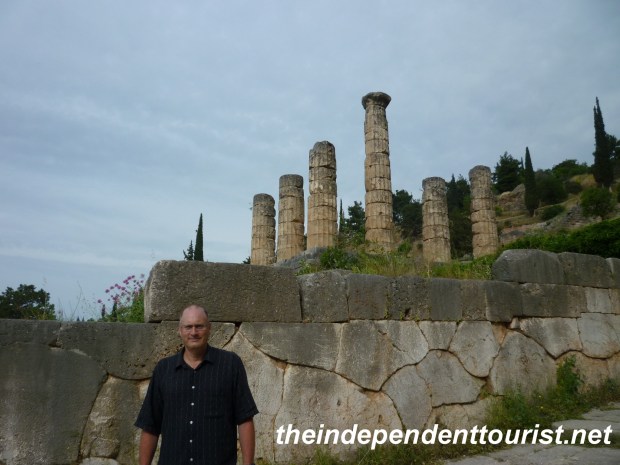
Temple of Apollo, Delphi, Greece.

The retaining wall of the Temple of Apollo – impressive for its careful construction, note how polygonal stones fit together (4th century BC).

Reference: Delphi: The Archeological Site and the Museum, published by D. Haitalis, Athens, Greece, 2008.
Day Trips from Athens – Hosios Lukas Monastery

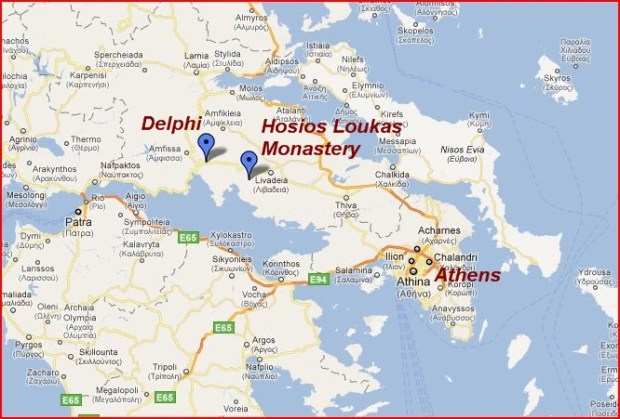
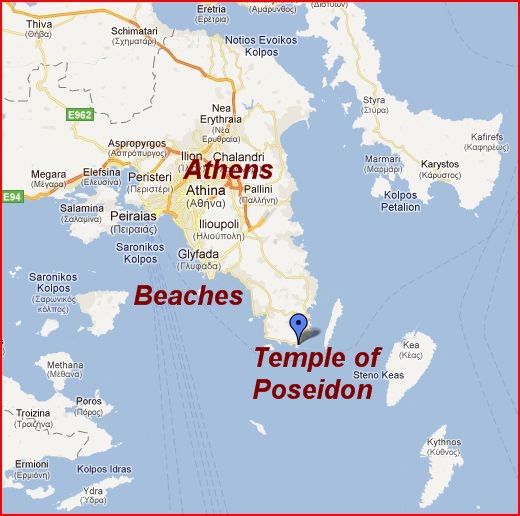
Map of day trips from Athens

Location of Hosios Lukas Monastery, about 2 hours from Athens.

Hosios Lukas Monastery is on the way to Delphi from Athens (about 152 km northwest), and takes about two hours by car. One of the advantages of renting a car is visiting sites like Hosios Lukas, which most bus tours bypass on their way to Delphi. Upon our arrival at the Athens airport (from Naxos Island) we rented a car from Auto Union through Economy Car Rentals, a European car rental consolidator. They met us at the airport upon our arrival and drove us to their off airport office.

Hosios Loukas Monastery (9)

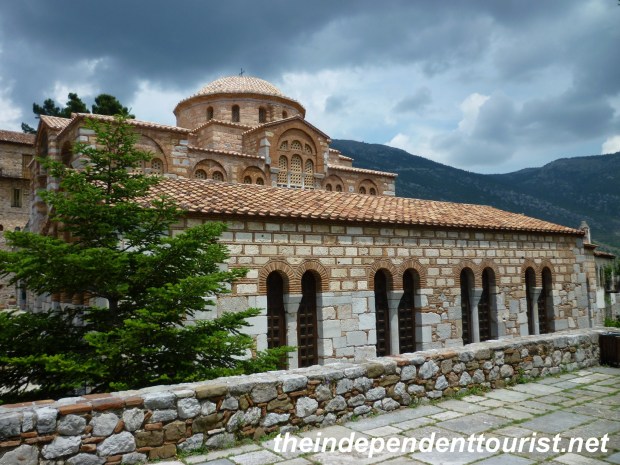
View of the Refectory – Hosios Lukas Monastery.

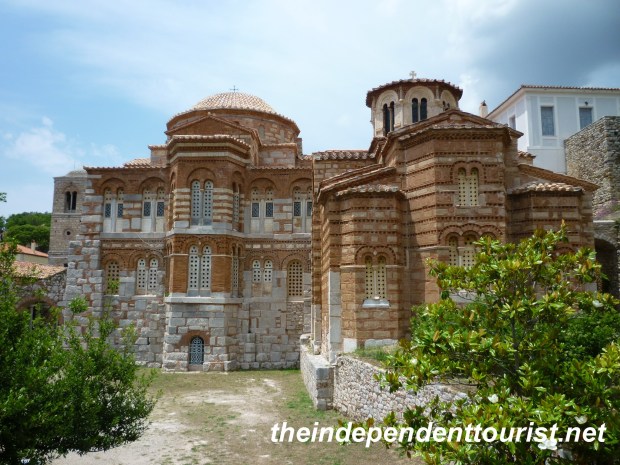
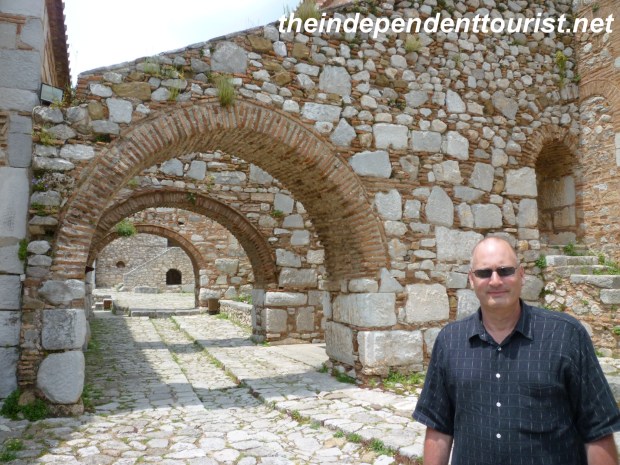
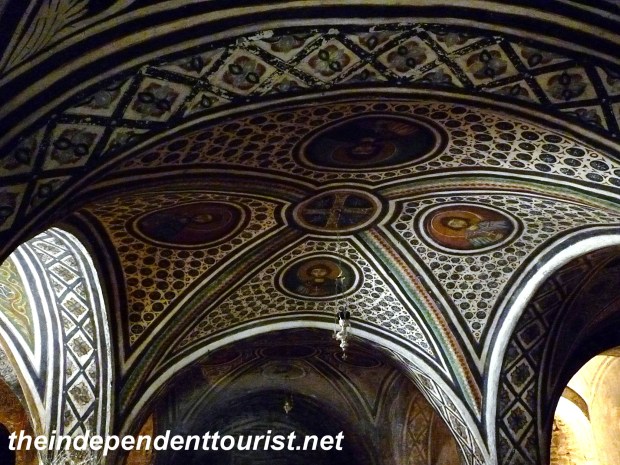
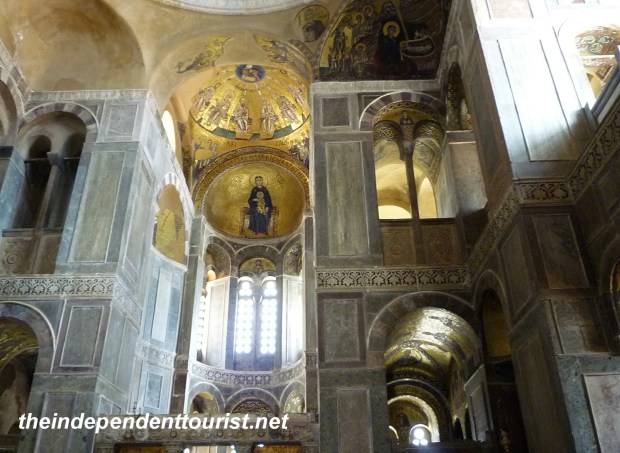
The monastery is just south of the town of Distomo, and about a 15 minute detour from the main route between Athens and Delphi. The monastery is an excellent example of Byzantine architecture and is known for its gold mosaics, wall paintings of the Katholikon (main) church, and 11th century frescoes in the crypt. Unfortunately, some of the mosaics were destroyed in an earthquake in 1593, but even so many remain. In addition, the monastery’s beautiful exteriors are a mix of red brick and huge stone blocks (from the nearby ancient Greek site of Steirion).

Hosios Lukas Monastery, Greece.

The beautiful stone work on the exterior of Hosios Lukas Monastery.

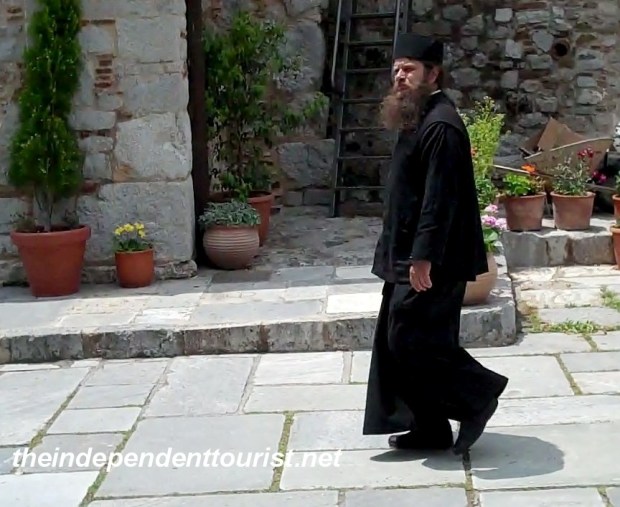
The site is on the slope of Mt. Elikon overlooking a green valley with high peaks all around. The monastery is still inhabited by a few monks.

Hosios Lukas Monastery, Greece.

The flying buttresses of the Hosios Lukas Church (note the stone work).

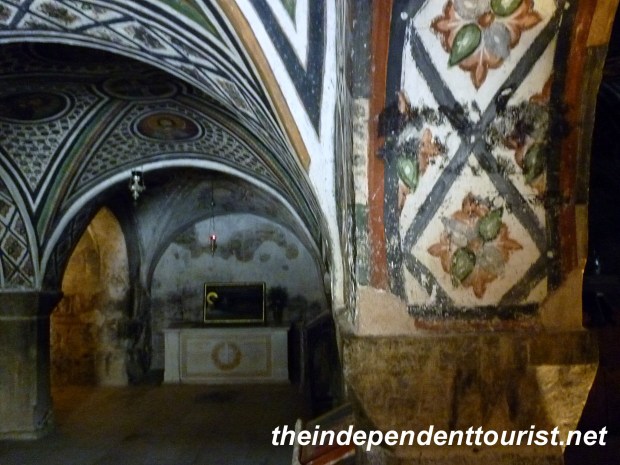
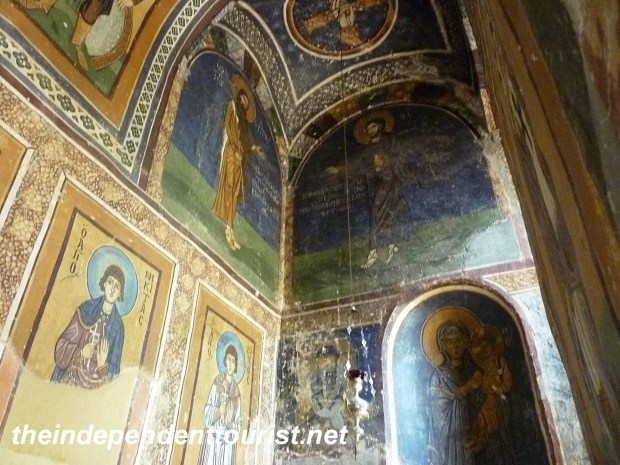
The monastery was founded in 961, and is named for Luke the Hermit (born 896 AD), who was from nearby Delphi. When he was 49 years old, he settled on the spot of the current monastery, and lived there until his death in 953. He became famous for his prophecy of the liberation of Crete from the Arabs, which was realized within 20 years of his prophecy. His tomb is in the crypt below the main church. We are able to walk into the crypt and wander through the paintings without supervision.

Hosios Lukas Monastery, Greece.

The tomb of Lukas in the crypt of main church

Crypt, Hosios Lukas Monastery, Greece.

The 11th century frescoes in the main church crypt.

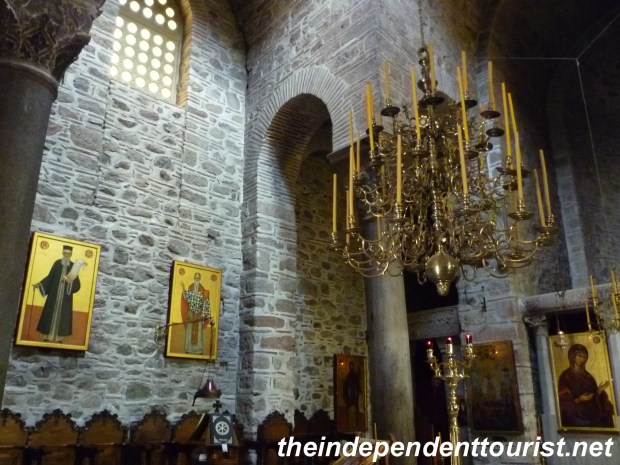
Most of the monastic buildings visible today date from the 11thcentury or later. The Hosios Lukas church became a model for other Greek churches of the period. A second smaller church, called Church of the Panaghia (Church of the Virgin Mary, or Church of Theotokos) is connected to the main church on the northeast corner. This church was started during Lukas’ lifetime, but was not finished until two years after his death. While it has a more austere interior, it still has some great wall paintings. In the connection between the two churches are relics of Loukas, including his hand bones.

Hosios Lukas Monastery, Greece.

Interior mosaics of Hosios Lukas Church.

Hosios Lukas Monastery, Greece.

Interior paintings of Hosios Lukas Church (11th century).

Hosios Lukas Monastery, Greece.

Church of the Panaghia interior.

Other interesting buildings are near the northeast entrance to the monastery, around the courtyard–including a stable, monk cells, and a hearth room blackened by soot from the warming fires over the centuries.

Hosios Lukas Monastery, Greece.

Monk walking the grounds of the monastery.

Hosios Lukas is only about 30 minutes from Delphi and well worth the stop. There is no entry fee and relatively few visitors, which made the visit very enjoyable.

References:  The Monastery of Hosios Lukas, Brief Illustrated Archaeological Guide, by Paul Lazarides, Hannibal Publishing House, Athens (no date given).

Fodor’s Greece Travel Guide, 2010.