europe

Mallorca (Majorca) and Menorca (Minorca) – Spain’s Well-Kept Secret Islands (at least from Americans)

My wife and I love exploring the Mediterranean’s host of magical islands for so many reasons, but as of 2022, we had not yet visited Spain’s share of these islands and so we decided to take a September trip to Mallorca and Menorca (with few days in Barcelona on our way home). September was a perfect time to go – the water was still warm and the days long enough to allow plenty of exploring, with fewer tourists than might be found in July or August. United Airlines started offering seasonal direct service to Palma, Mallorca from Newark, NJ in the summer of 2022. I think that was a fabulous decision, even though locals may not agree! 
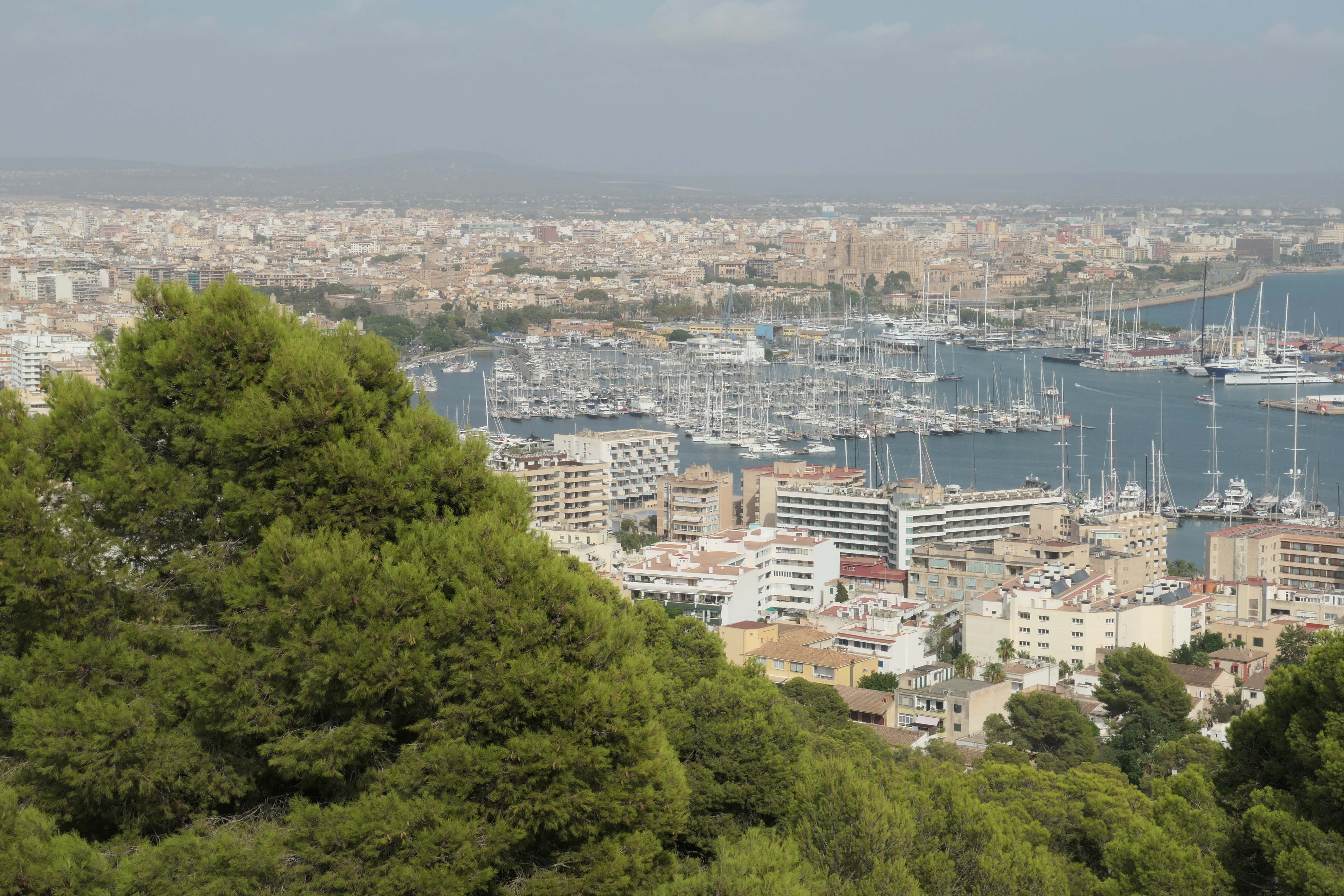
A view of Palma, Mallorca.

In this post, I’ll provide a short overview of these two islands and in future posts go into more detail on each.

Why Mallorca and Menorca?

As mentioned above, we love the Mediterranean – the beautiful coastlines, ancient and medieval-era historical sites, incredible beaches and the variety of cultures and languages to be found throughout the region. We also love that these (Mallorca and Menorca) islands don’t really seem to be on US tourists’ European vacation maps yet, at least not to the same degree as a London, Paris or Rome.

One of the many beautiful coves on the island of Mallorca. Like many of these coves, it takes a little hiking to get here.

However, please don’t think that the islands are void of tourists – that’s hardly the case. Car parks for the most accessible beautiful beaches and coves fill up fast – you have to get there early (or arrive late in the day) if you want a convenient parking spot. It seems that most of the tourists to these islands come from Germany and the UK, although cruise ships also visit Palma. Cycling on the narrow winding roads through the mountains of Mallorca is a favorite pastime in addition to hiking, 4 wheeling, and of course all kinds of water sports.

When driving in Mallorca, one needs to be careful of the cyclists sharing the road.

Even with all the tourists, it’s still possible to visit little towns on both islands and pretty much be the only tourists in sight.

The scenic town of Arta in the northeast corner of Mallorca – few tourists here.

Mallorca and Menorca are quite different from one another. Mallorca is larger, more mountainous, with a significantly larger population (about half of which live in the Palma area) and caters to more tourists, who tend to stay put in specific regions of the island. Menorca is smaller in size and population with fewer tourists, and feels more rural. Both islands offer stunningly clear turquoise water, incredible coves and beaches – some of the prettiest anywhere on the planet – and interesting historical sites and towns.
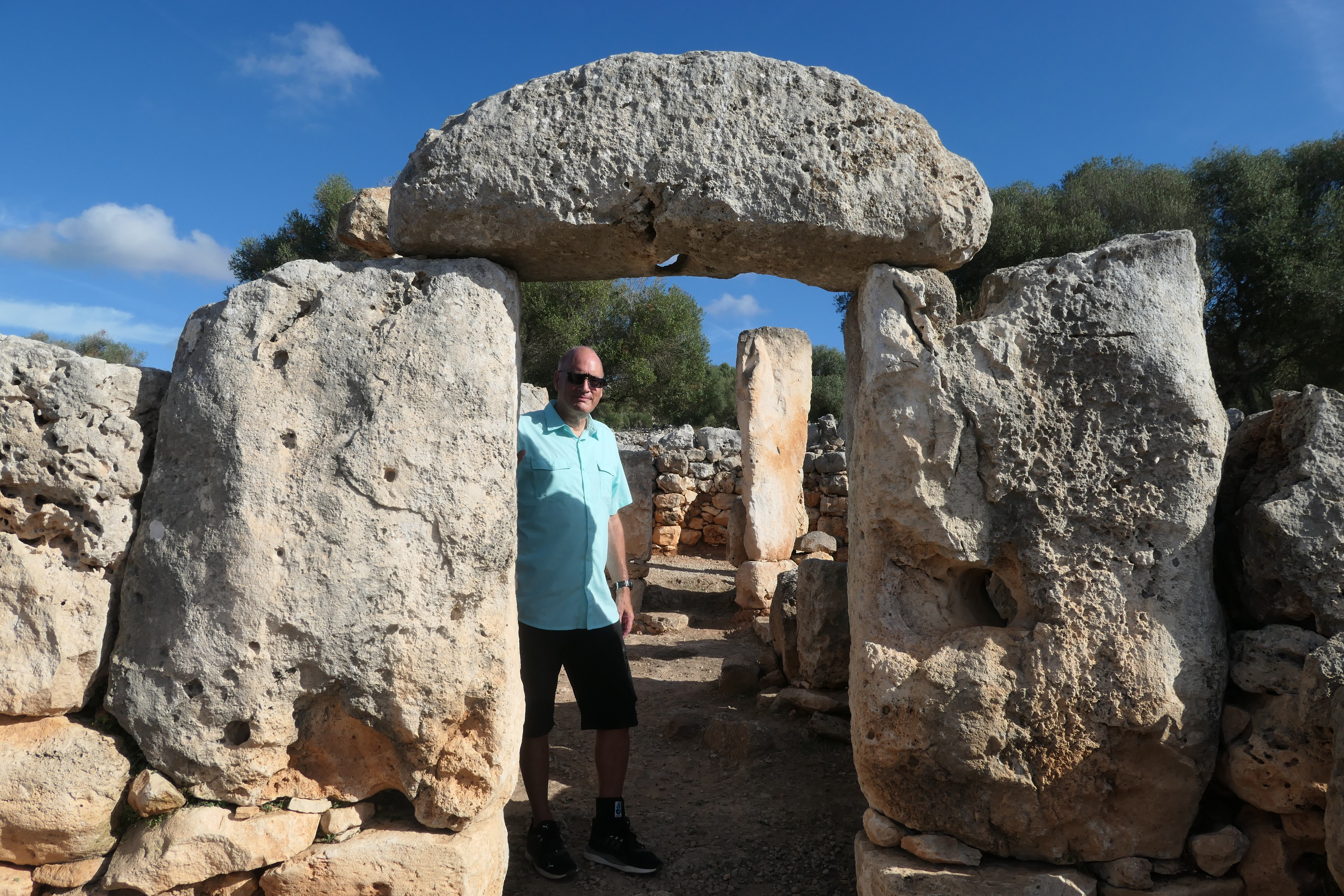
Torre d’ en Galmes, one of Menorca’s many prehistoric ruins.

Where are Mallorca and Menorca?

Mallorca and Menorca are two of the three primary Balearic islands, belonging to Spain, the other being Ibiza. Ibiza has a reputation as a real “party” island and we preferred a bit different experience. Plus, as stated above, we could fly directly to Palma from the US. Mallorca and Menorca are close together geographically and it’s easy to get from one island to the other (just a 30 minute flight), or by taking a longer ferry ride.

Mallorca and Menorca are in the western Mediterranean Sea. It is a short flight from Barcelona to Mallorca or Menorca – about an hour (approximately 158 miles or 255 km). We flew to Barcelona from Menorca for a few days at the end of our stay and then directly from Barcelona to Washington, D.C.

Be on the lookout for many more posts to come about these beautiful islands!
Visiting “The Most Serene Republic of San Marino” – Europe’s 3rd Smallest Country

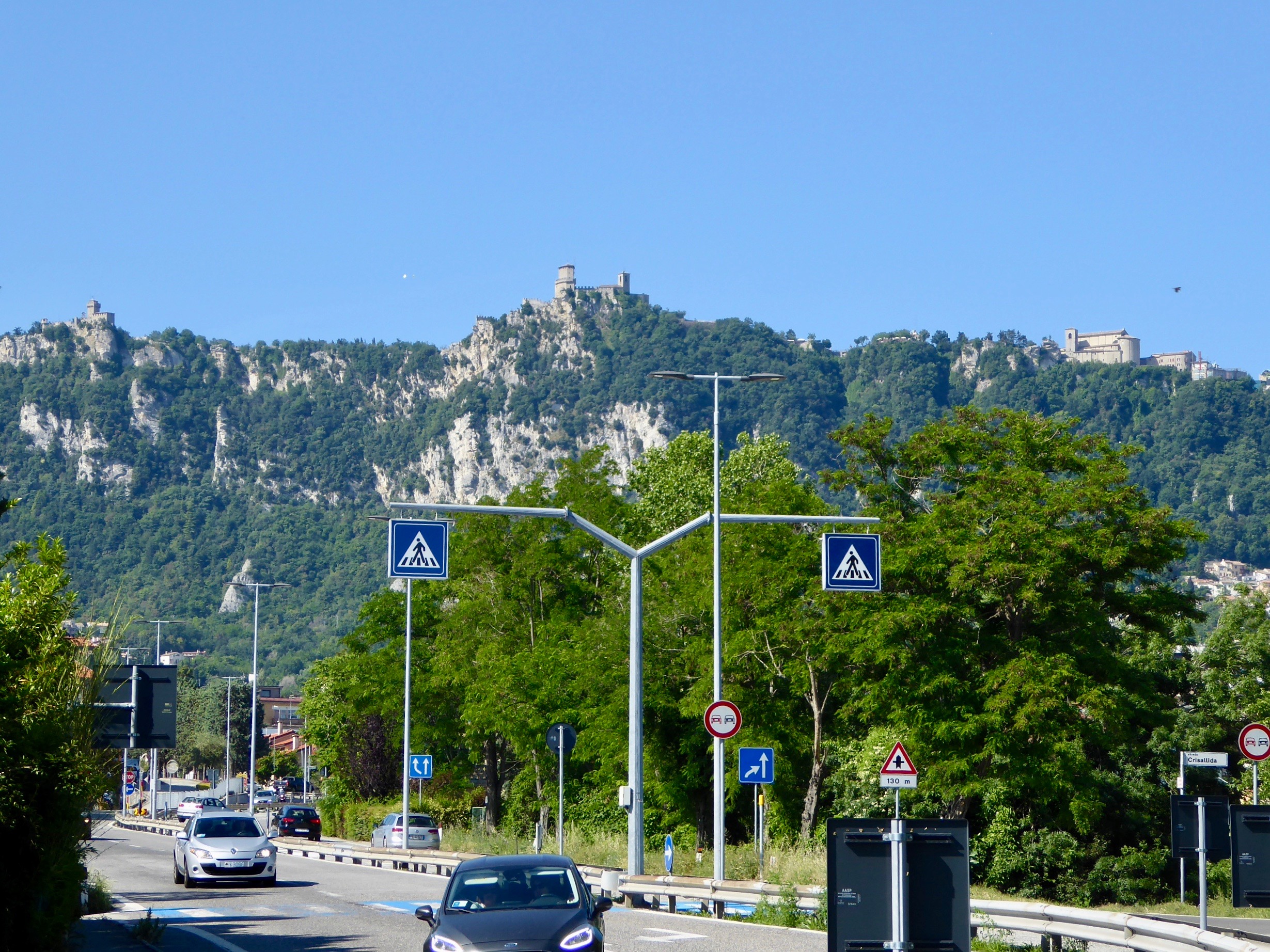
As a day trip from Ravenna, we drove south about 78 km (48 miles) to the hilltop Republic of San Marino. As we sped down the motorway, we could see the striking Monte  Titano in the distance and wondered if it was the little country of San Marino. Sure enough, it was, and what a sight. San Marino’s location is one of the most scenic spots in the Italian peninsula, and the country lives up to its formal name.

Mt. Titano, San Marino, Italy

A view of the Monte Titano and the fortifications of Guaita Castle as you approach from Borgomaggiore, the largest town in San Marino.

San Marino is the oldest Republic in Europe. It is only 7 miles (12 km) across at its widest spot (about 23 sq. miles overall), and the 3rd smallest country in Europe (after the Vatican and Monaco) and the 5th smallest country in the world. You can learn more about this little country here. Other than a bridge noting the border you would have no idea you’ve entered a different country.

San Marino0

The road border crossing. San Marino on the left, Italy on the right.

From the border on the eastern side, we drove up (and up) the mount until we reached a parking area right below the town of San Marino.

San Marino3

One of the car parks below the town of San Marino. We had no trouble finding a parking spot in May. You can also take a cable car to the top of Monte Titano.

From the car park we walked up into the town of San Marino, which like so many old walled European towns is very enchanting.

City Gate, San Marino, Italy

One of the old gates into the hilltop town of San Marino.

San Marino, Italy

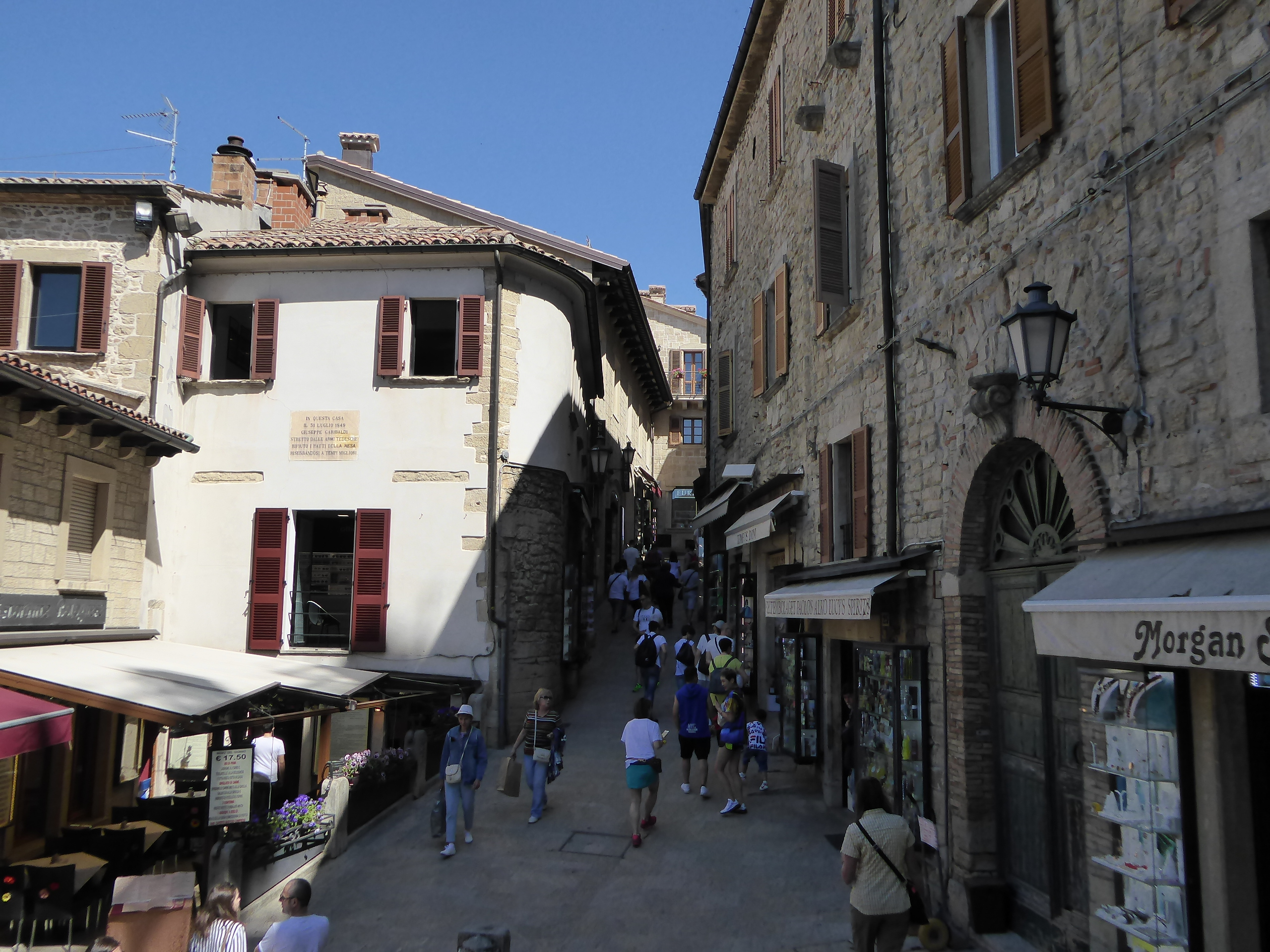
Nearly every street in San Marino provides a postcard view.

San Marino, Italy

Another street scene in San Marino.

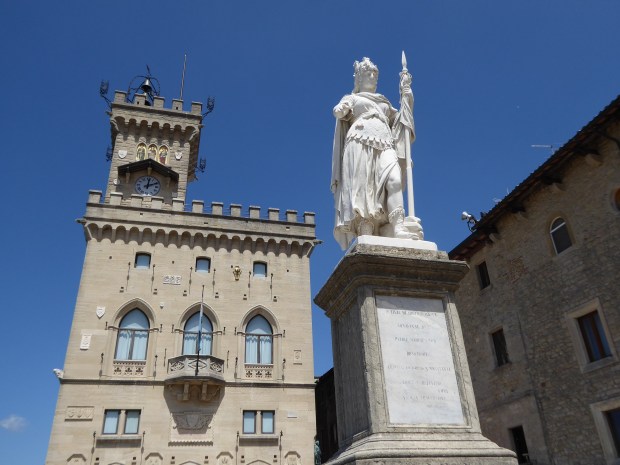
As you climb the narrow streets, you will come to Liberty Square, the main plaza in San Marino and the seat of the national government.

Public Palace, San Marino, Italy

A view of the Public Palace, home of San Marino’s General Council or Parliament, and other government officials. Under this square are ancient water cisterns, extremely important for a fortified hilltop medieval citadel.

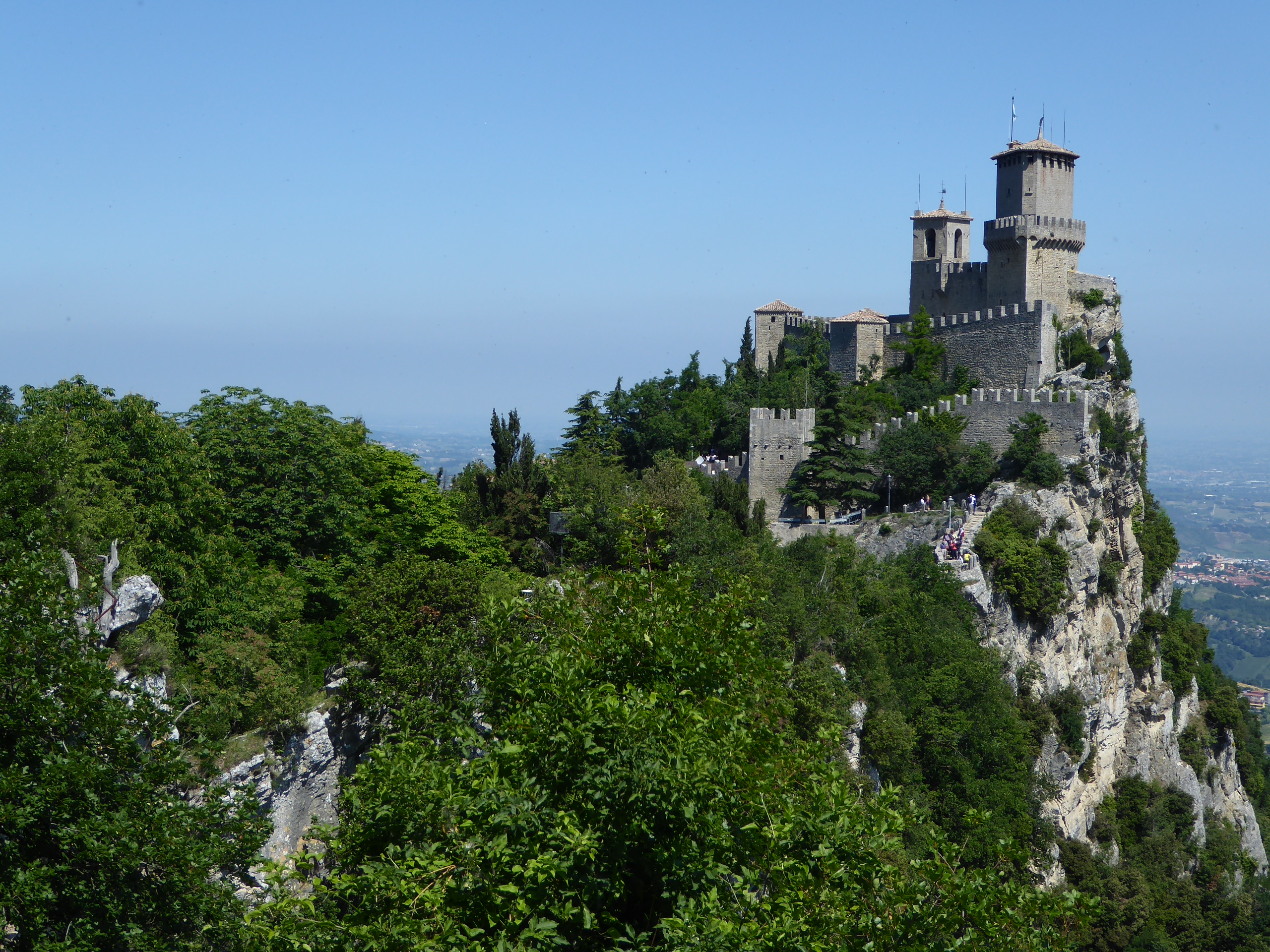
One of the most striking features of San Marino is its amazing fortress, Guaita, that sits at the top of the town, on the eastern cliff edge of Monte Titano. The fortress consists of three towers, you can buy a ticket that allows you access to all three.

Guaita Fortress, San Marino, Italy

This view is from the 2nd tower of Guaita Fortress, looking north to the main or 1st tower, also called Rocca Tower.

Guaita Fortress, San Marino, Italy

This view is also from the 2nd tower, looking south to the 3rd tower on the next hilltop ridge. The surrounding countryside is beautiful in May.

Guaita Fortress, San Marino, Italy

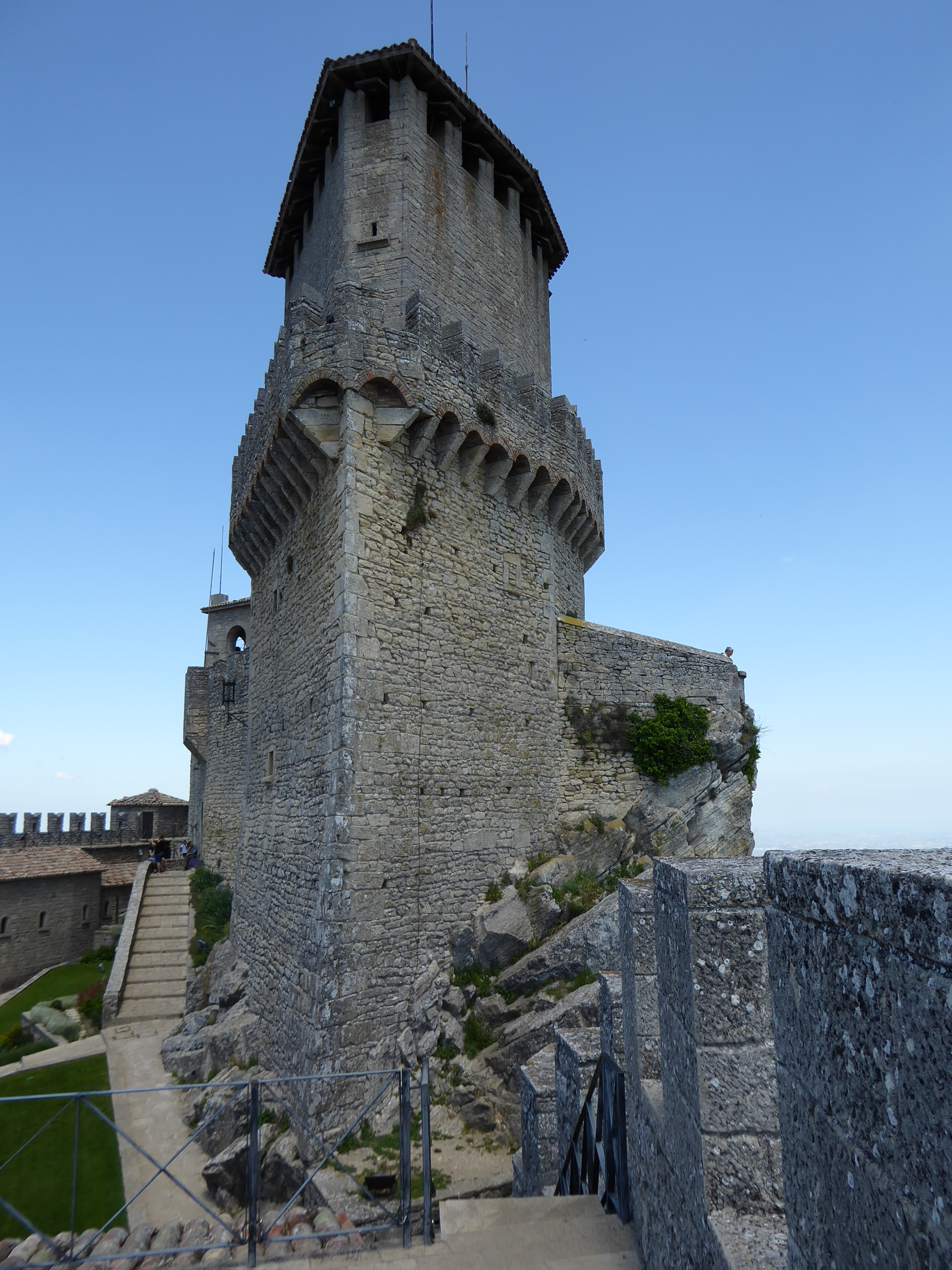
This is a close up view of the 2nd tower of Guaita Fortress.

I have to say the view from the fortress of the surrounding countryside is one of the most beautiful views in Italy.

Guaita Fortress, San Marino, Italy

Climbing up to the Rocca tower from the 2nd tower.

Guita Fortress, San Marino, Italy

The main tower (known as Rocca Tower) of Guaita Fortress, is built on top of a narrow rock outcropping on Mt. Titano. You climb up a narrow steep stairway to get to the top.

Guaita Fortress, San Marino, Italy

The fortress grounds are well manicured.

San Marino, Italy

View of San Marino and the surrounding countryside from the top of the Rocca tower.

Guaita Fortress museum, San Marino, Italy

Inside Guaita Fortress is a small museum and a prison.

Guaita Fortress, San Marino, Italy

One of the prison cells in Guaita Fortress. The paintings were done by 19th century prisoners. Prisoners had to pay for their keep here, and punishments were harsh. The “rack” and lashings were commonly used. In 1821, San Marino abolished these forms of punishment. The death penalty was outlawed by San Marino’s Parliament in 1848.

San Marino takes its name from a monk, Saint Marinus, who fled persecution by the Roman Emperor Diocletian in the 3rd century CE and came to this (at the time) remote spot. The mountain (Monte Titano) was given to him in appreciation for his acts of healing. Saint Marinus died in 301 CE.

Mt. Titano, San Marino

This wooden stairway leads up to the little cave-like area where Saint Marinus lived. It is on the north side of Monte Titano.

Saint Marinus Cave, San Marino, Italy

The lovely view from Saint Marinus’ cave, looking northeast to the Adriatic Sea in the distance.

Basilica of Saint Marinus, San Marino, Italy

The 19th century Basilica of Saint Marinus, in the town of San Marino is built on the remains of a medieval church and contains an urn with the bones of Saint Marinus, which were found in the 1500’s.

If your travels take you down the east coast of Italy, be sure to visit San Marino. You can see a new country, take in incredible views, visit a great medieval fortress and town, all in one place!

Torre Asinelli and Torre Garisenda, Bologna, Italy

Bologna – the Other Italian City with Leaning Towers

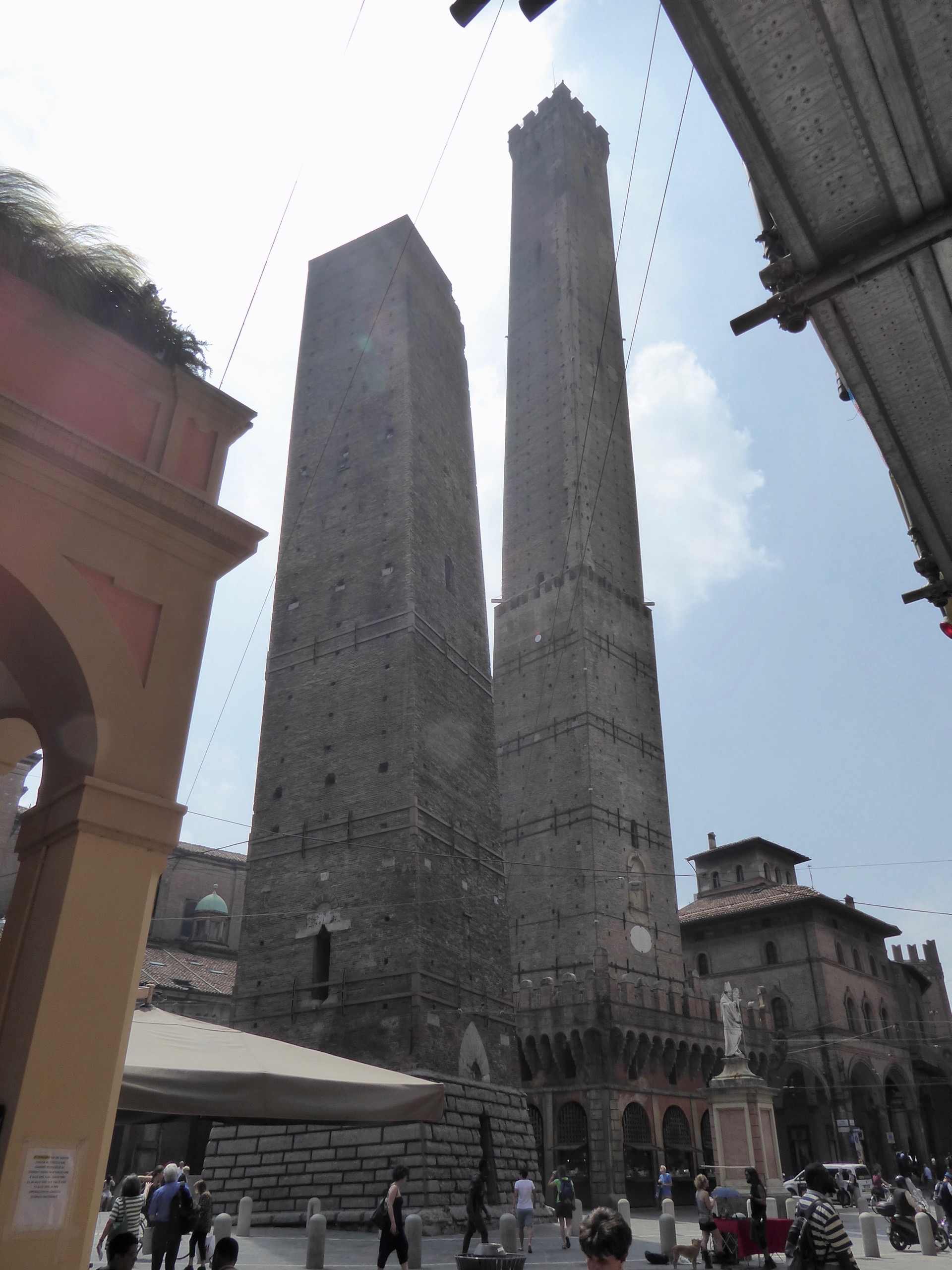
We all have heard about the leaning tower in Pisa, Italy, but have you heard of the leaning towers in Bologna? While these towers may be less famous, they are the signature feature of this beautiful city, which is located roughly halfway between Florence and Venice. Two of the most famous towers in Bologna are Torre Asinelli and Torre Garisenda, which are mere feet from each other. These towers were built in the 12th century by two important families, trying to outdo each other by the height of their towers, as a way of demonstrating their power and wealth.

Torri degli Asinelli e Garisenda, Bologna, Italy

The Asinelli and Garisenda towers. It is difficult to get a photo of these two towers given the proximity of all the surrounding buildings.

The tallest, Asinelli, can be climbed, but get your ticket in advance. We got ours on my phone while waiting in line, not knowing how busy it would be and we were lucky to get a ticket for an immediately available time. These towers are probably the busiest spot in Bologna from a tourist standpoint. Otherwise, Bologna is fairly quiet.

Asinelli Torre, Bologna, Italy

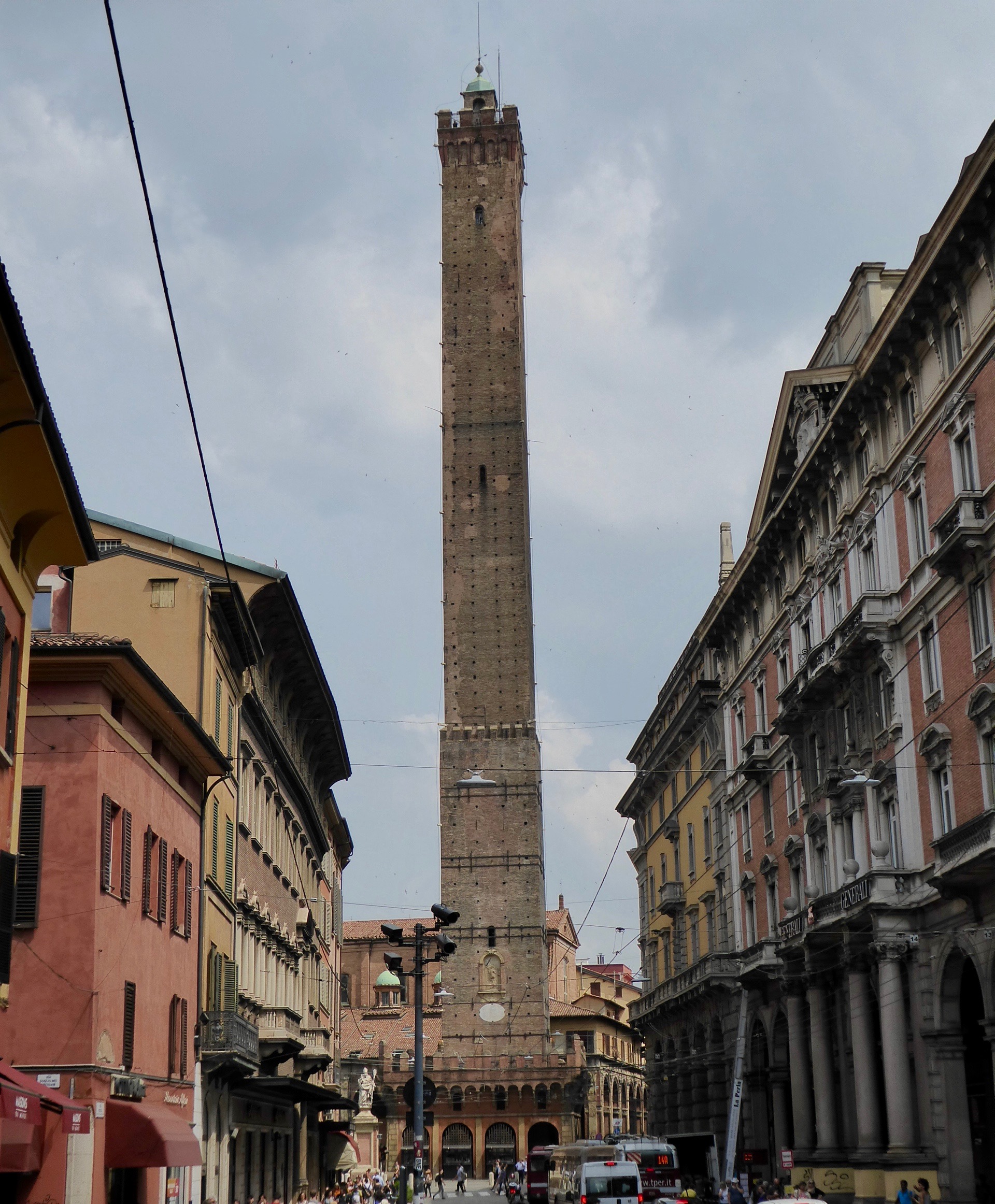
A view of the Asinelli Torre. As can be seen, it leans a bit to the left in this photo.

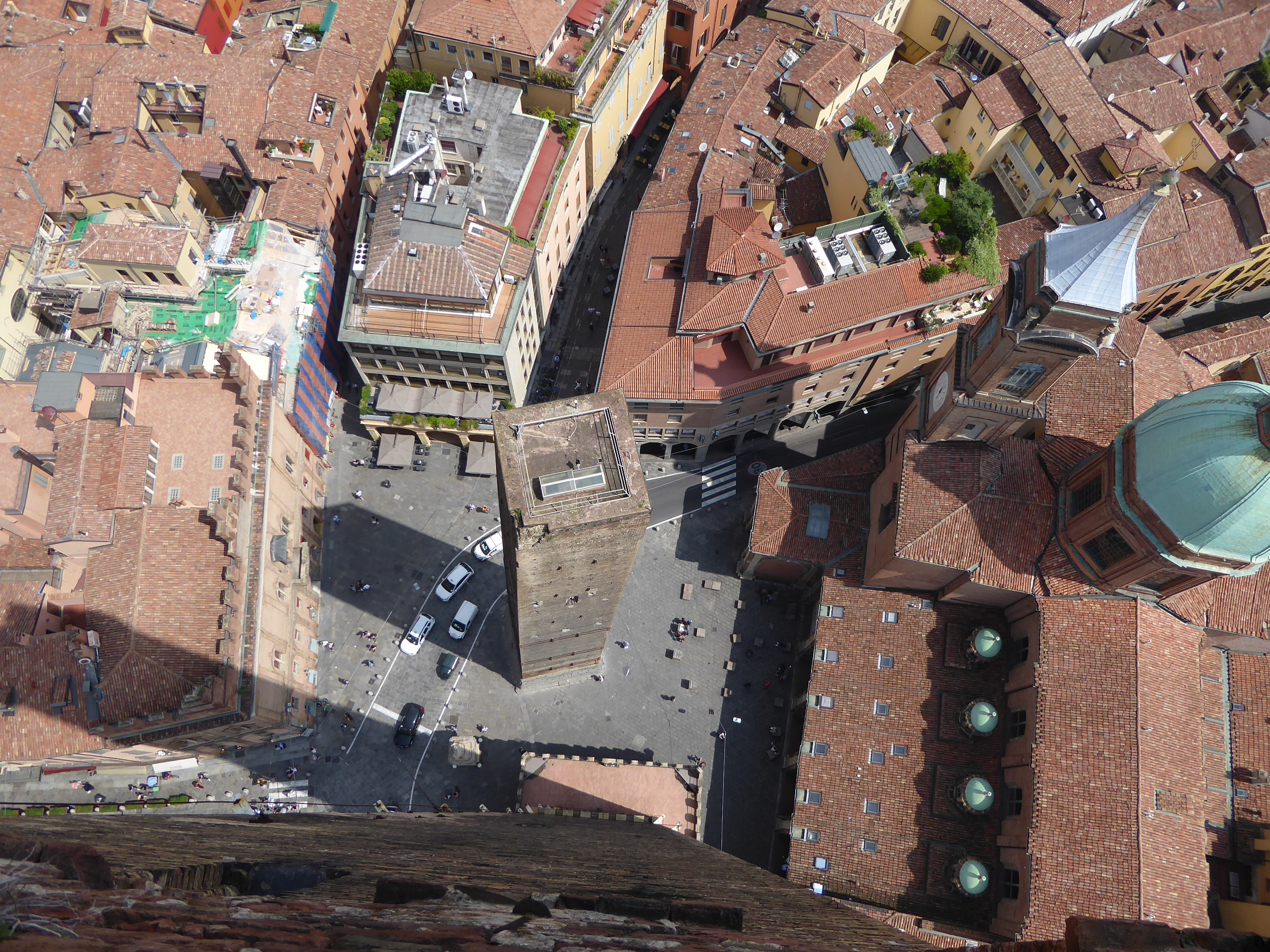
From the top, you get an amazing view of Bologna and look down on the Torre Garisenda, which had to be shortened by about 36 feet in the 14th century due to its significant lean.

Asinelli and Garisenda towers, Bologna, Italy

Looking down from the top of Asinelli tower towards the Garisenda tower.

Bologna, Italy

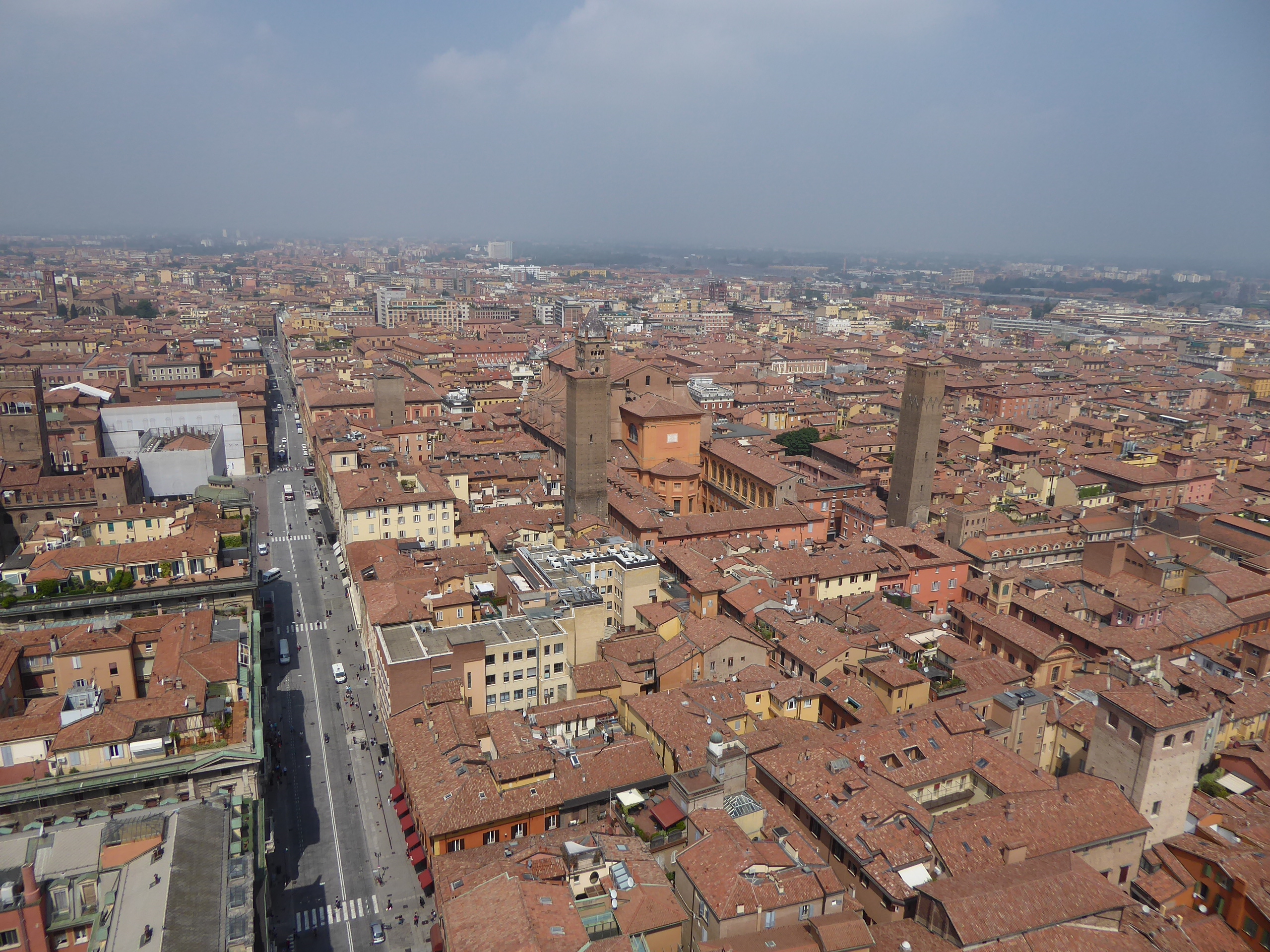
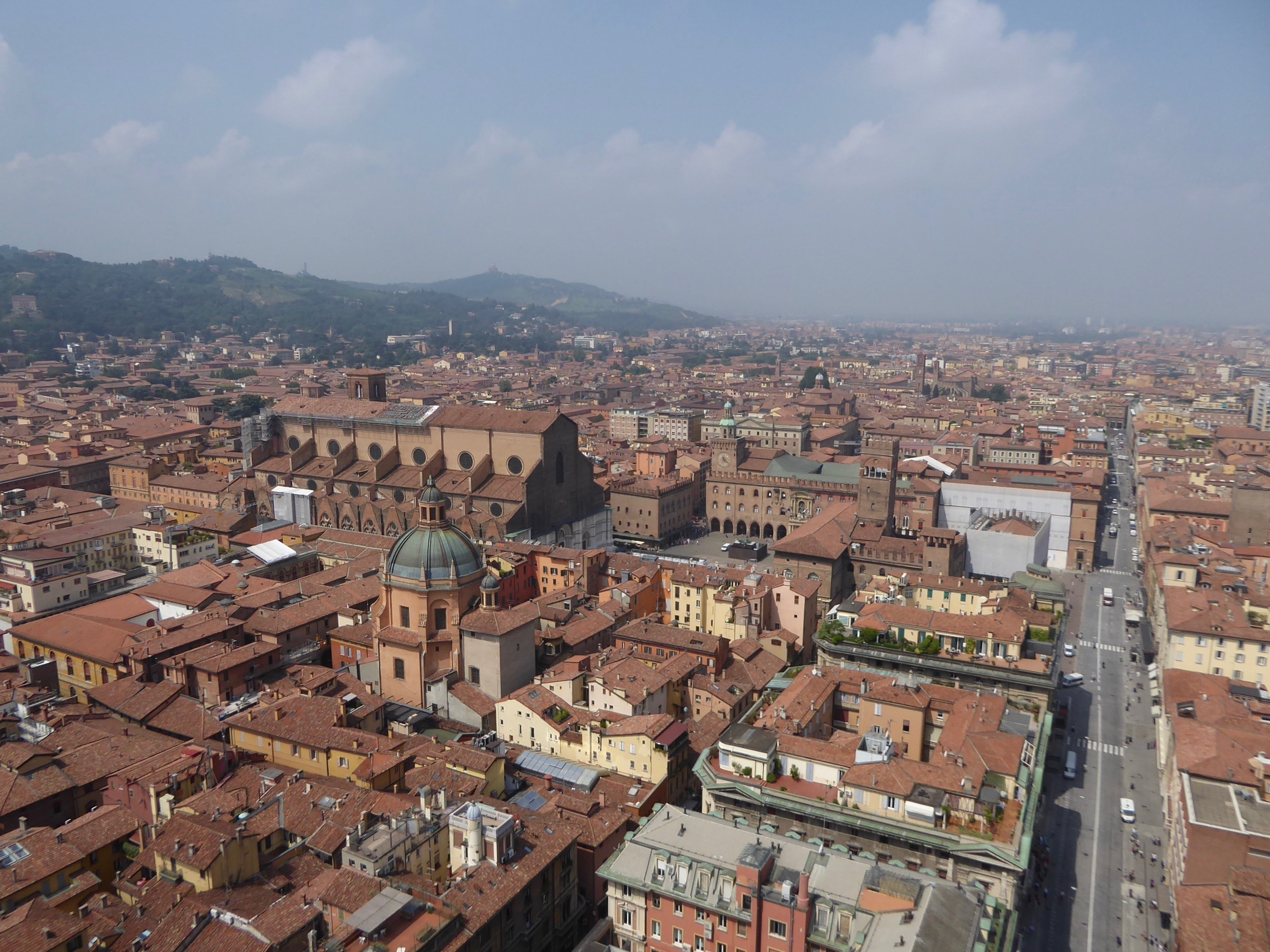
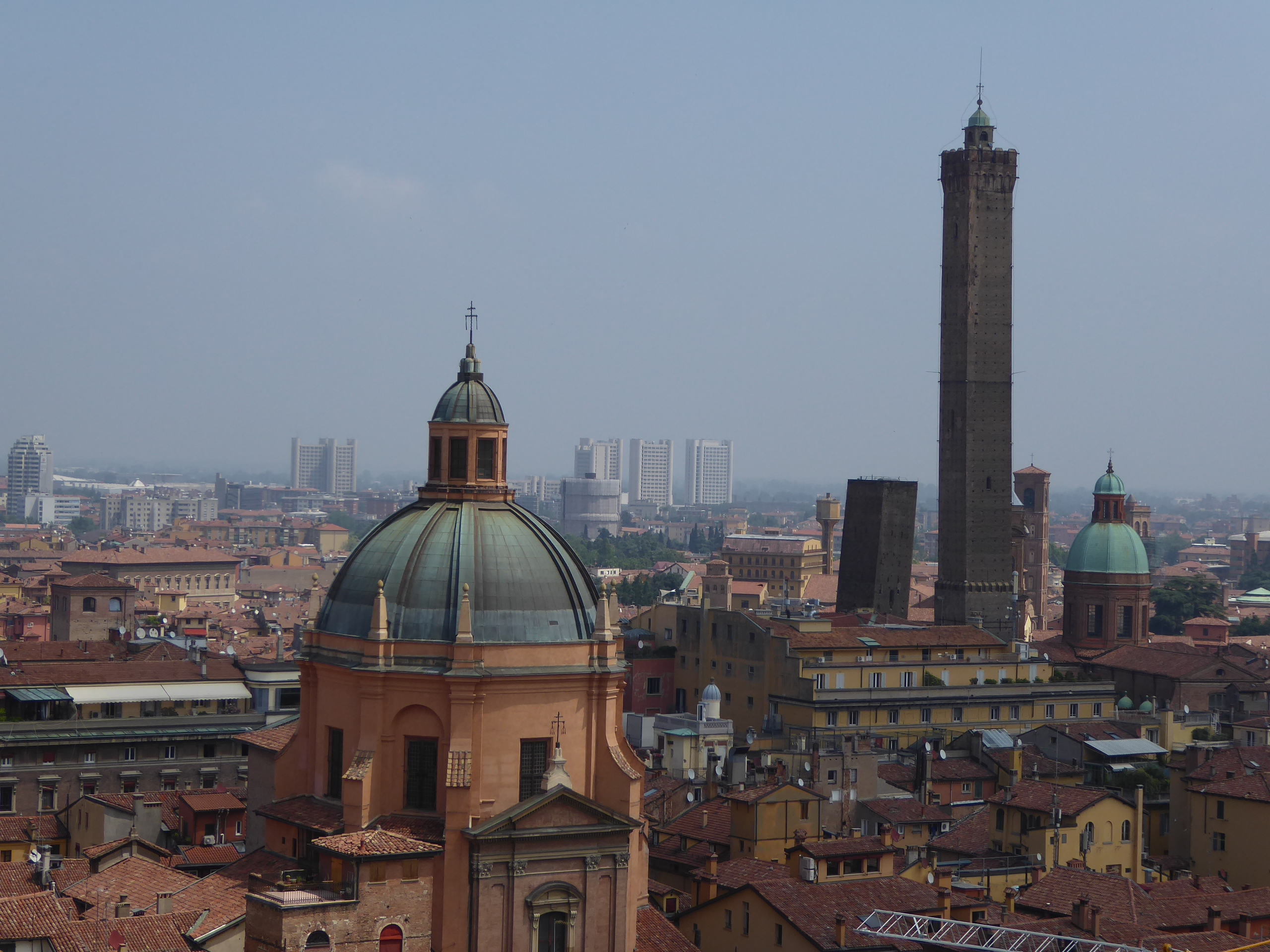
A view of Bologna’s skyline and a few other surviving towers from the top of Torre Asinelli. At one point there were 200 towers in Bologna, they must have been quite a sight.

Bologna, Italy

Another view from the top of Torre de Asinelli looking towards San Petronio Church, which can also be climbed for a great view of the leaning towers, shown below.

Torre Asinelli, Bologna, Italy

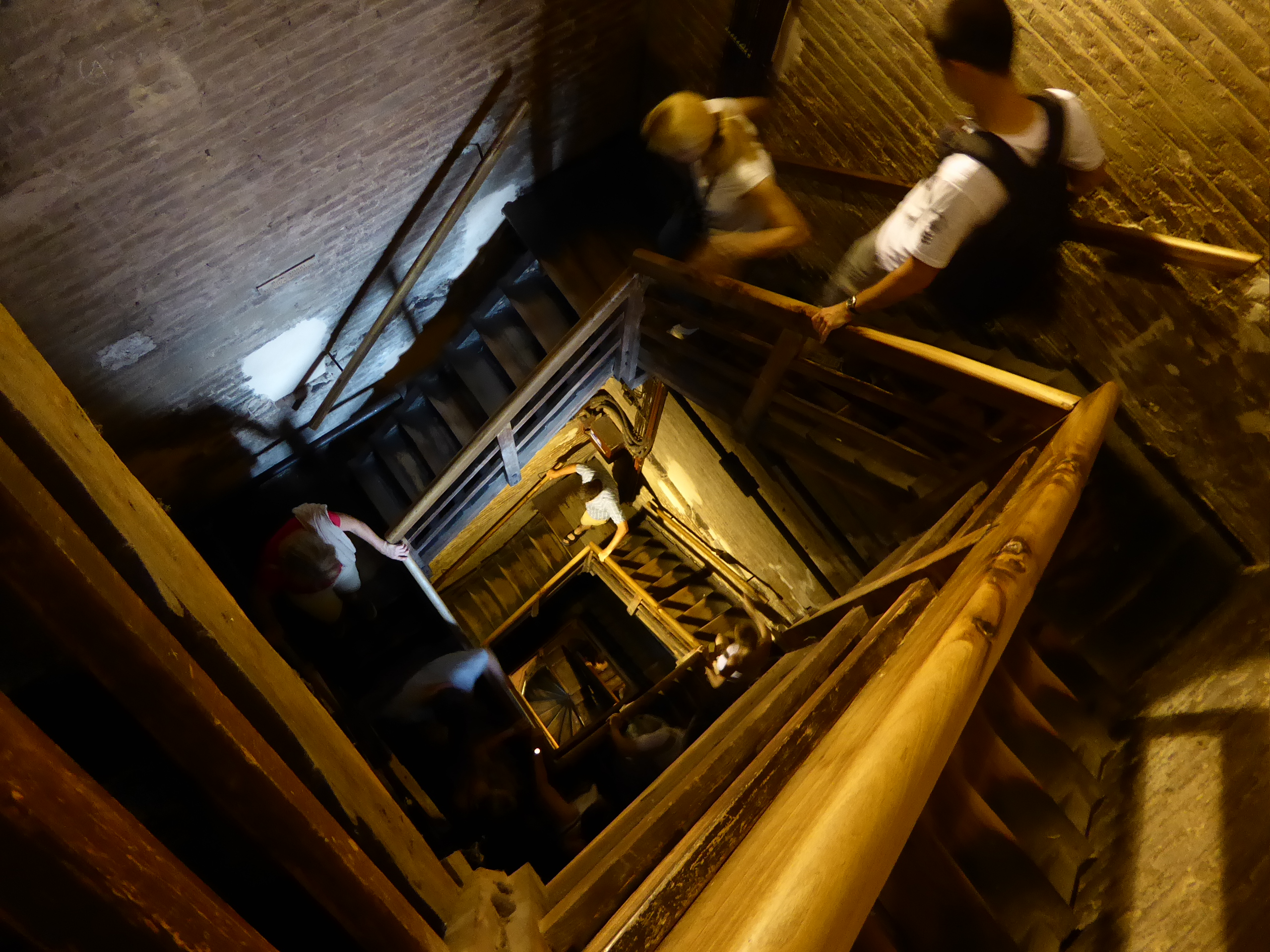
A view of some of the 500 steps descending from the top of Torre Asinelli.

Torre Asinelli and Torre Garisenda, Bologna, Italy

A view of the Torri degli Asinelli e Garisenda towers. Torre Garisenda (the shorter) leans 10 feet off of vertical. Torre Asinelli is 318 feet high and the fourth highest medieval tower in Italy.

In addition to the towers, there are lots of other fun sights to visit in Bologna. Several of these are described below.

San Petronio Basilica

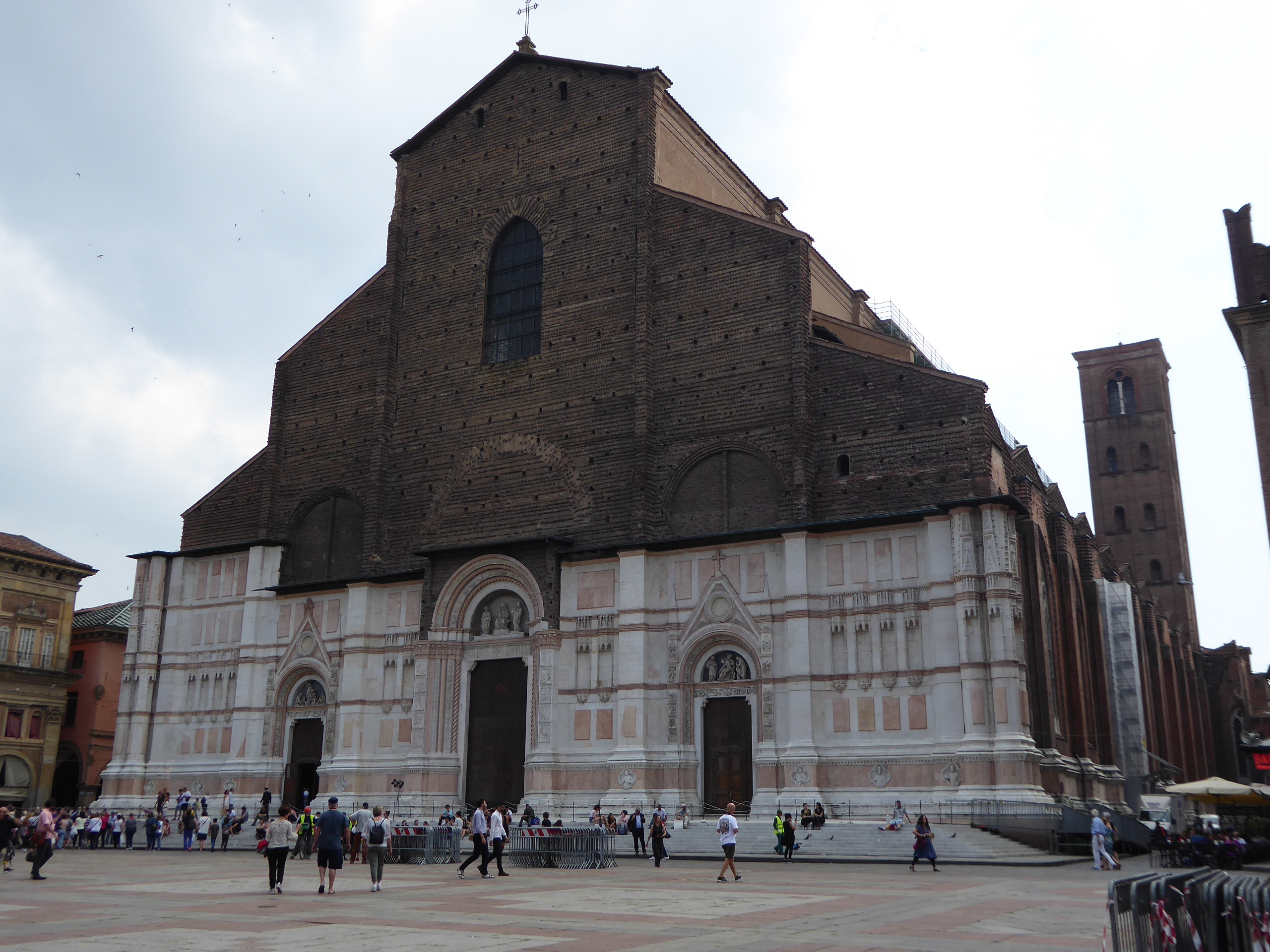
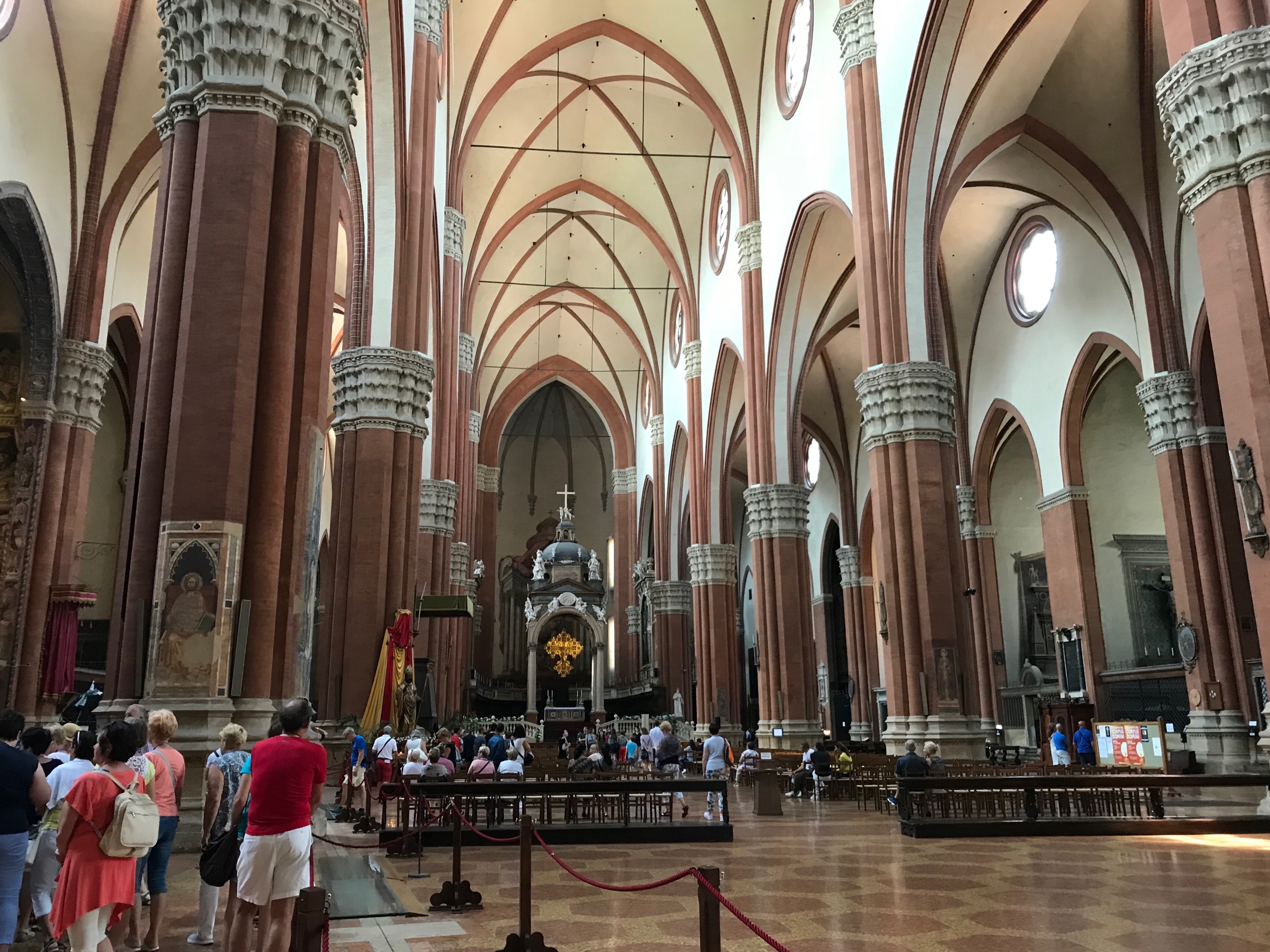
This church, named after Saint Petronius, who was bishop of Bologna in the 5th century, was founded in 1390 and was originally intended to be larger than St. Peter’s Basilica in Rome. Funding for the building was diverted for other purposes and the church was scaled down and never fully completed.

San Petronio, Bologna, Italy

Exterior view of San Petronio. The facade was never finished.

San Petronio Church, Bologna, Italy

The immense interior of San Petrino, with 22 chapels off the main aisle. A bit hard to see, but in the lower left of the photo is a meridian line, drawn by the astronomer Cassini in 1655, providing a precise solar method to determine a day of the year.

Piazza Maggiore, Bologna, Italy

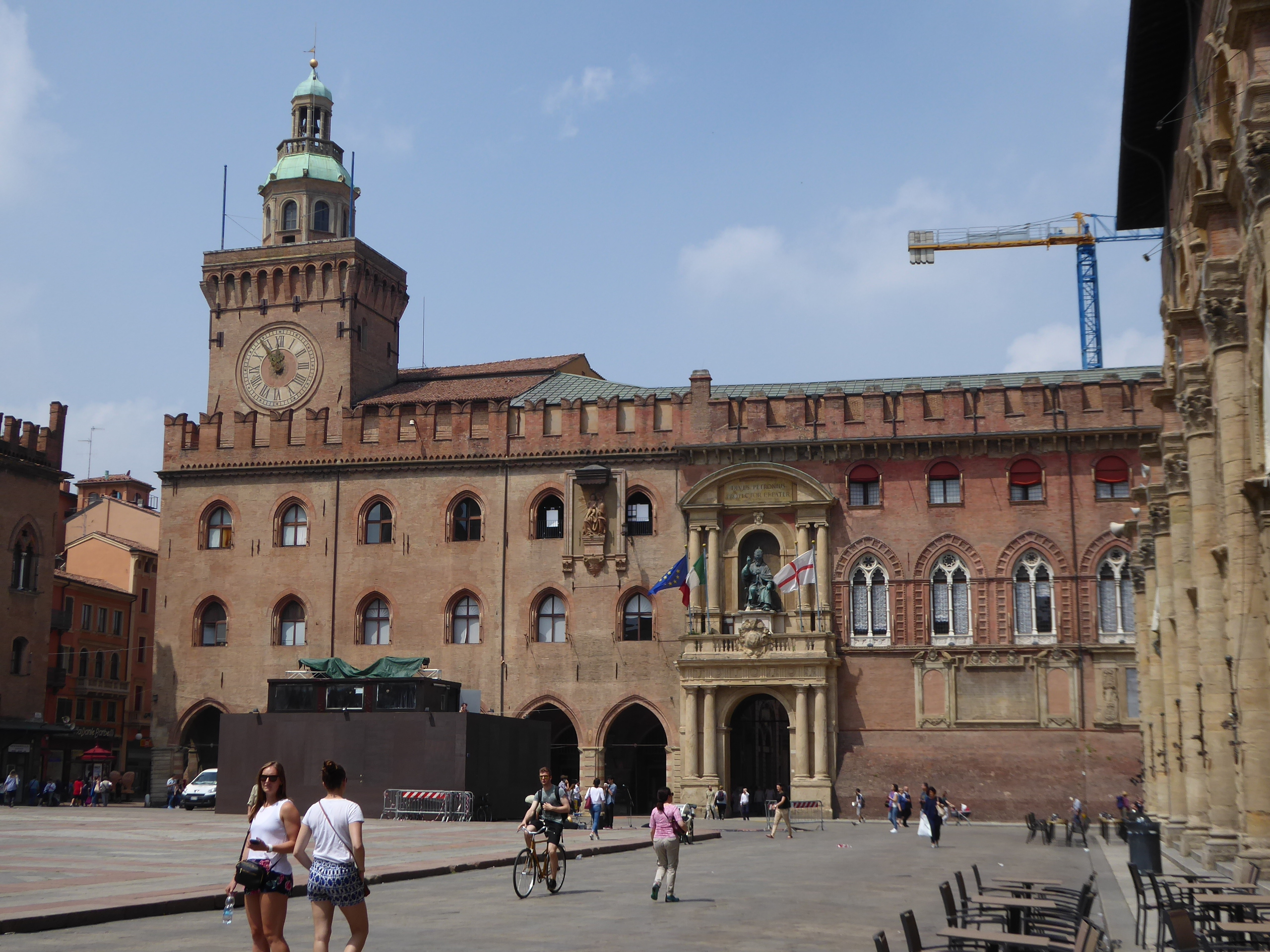
Piazza Maggiore, next to the San Petronio Basilica.

Abbazia di Santo Stefano

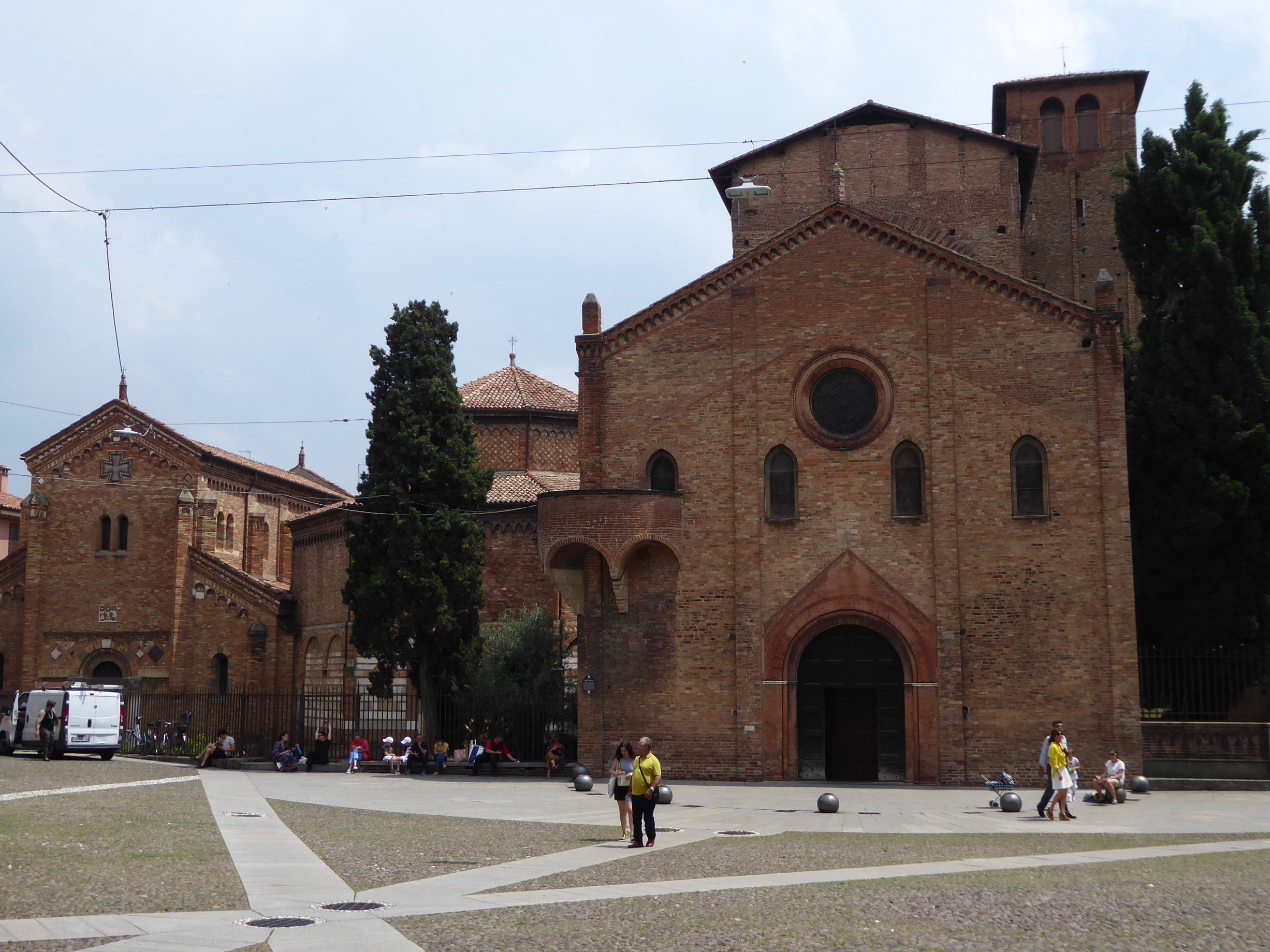
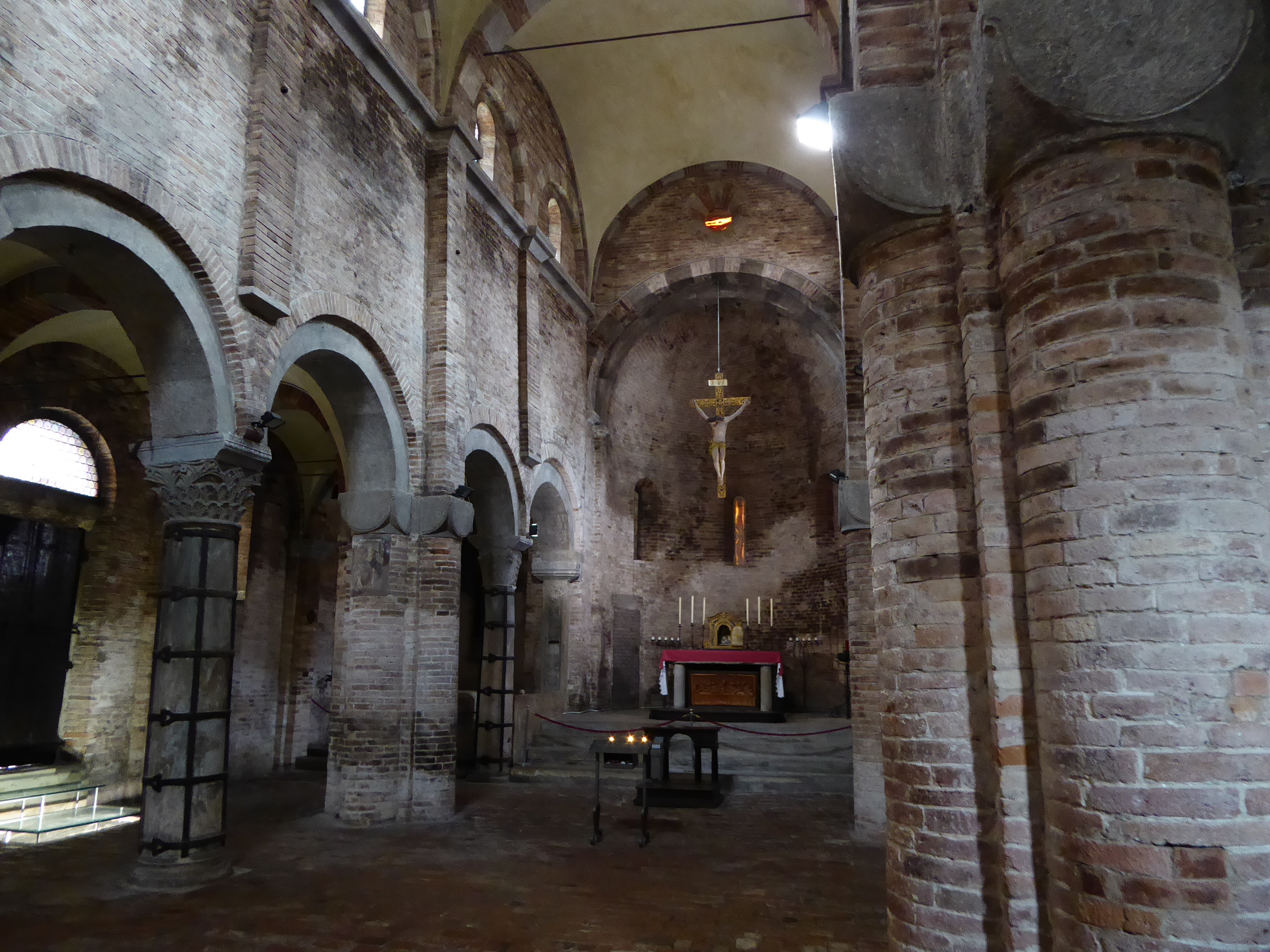
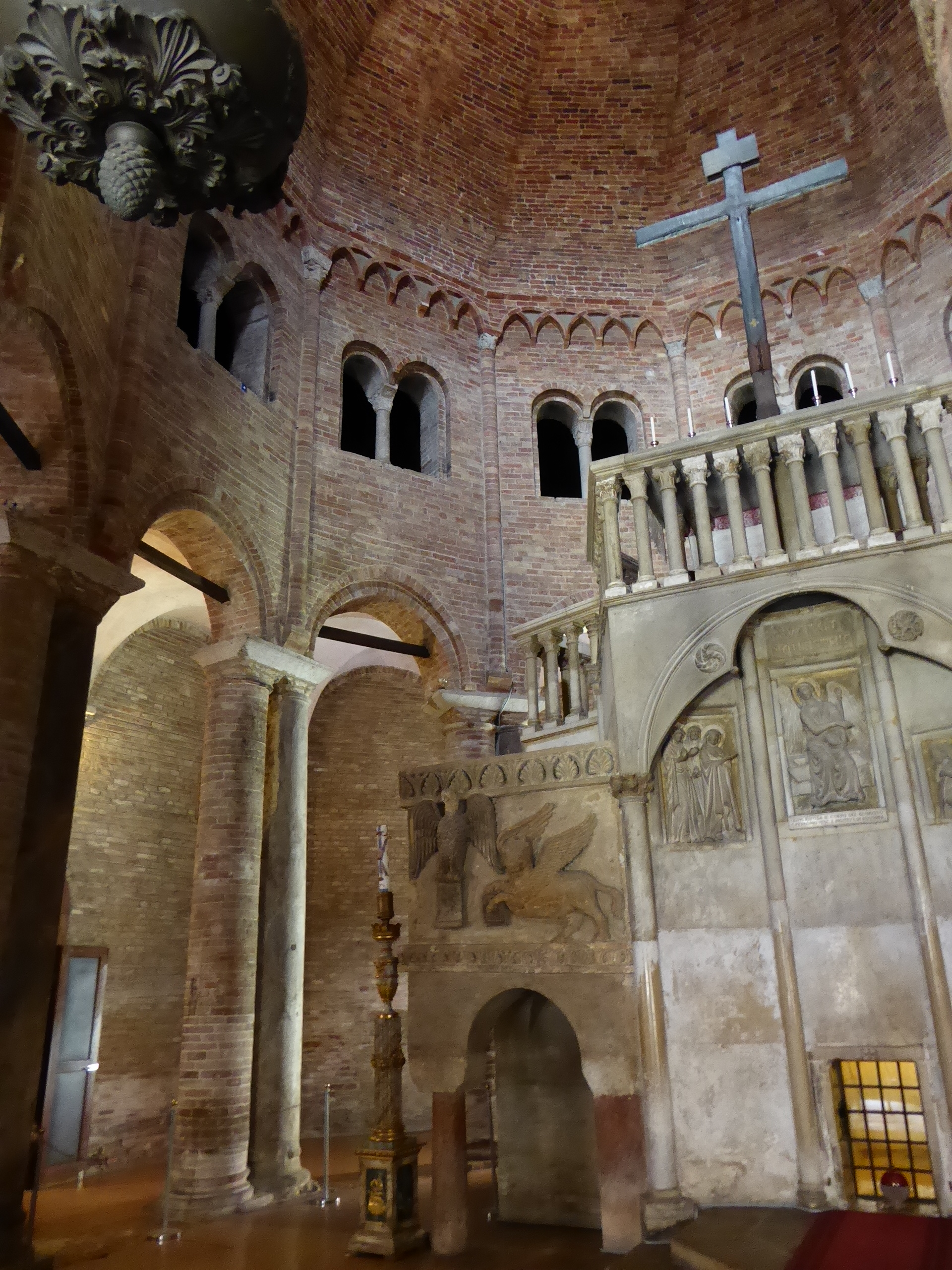
A connected maze of four medieval churches, known as Abbazia di Santo Stefano, was one of my favorite sights in Bologna. There is a long history of churches on this site, originally dating back to about 80 CE. Over a thousand years, the site expanded with additional chapels and other structures.

Abbazia di Santo Stefano, Bologna, Italy

Exterior view of Abbazia di Santo Stefano, located just a short walk from the leaning towers.

Abbazia di Santo Stefano, Bologna, Italy

The 11th century church of the Crocifisso, part of the Abbazia di Santo Stefano complex.

San Sepolcro, Abbazia di Santo Stefano, Bologna, Italy

San Sepolcro, containing the tomb of Saint Petronius, is polygonal in shape, not unlike the Holy Sepulcher in Jerusalem.

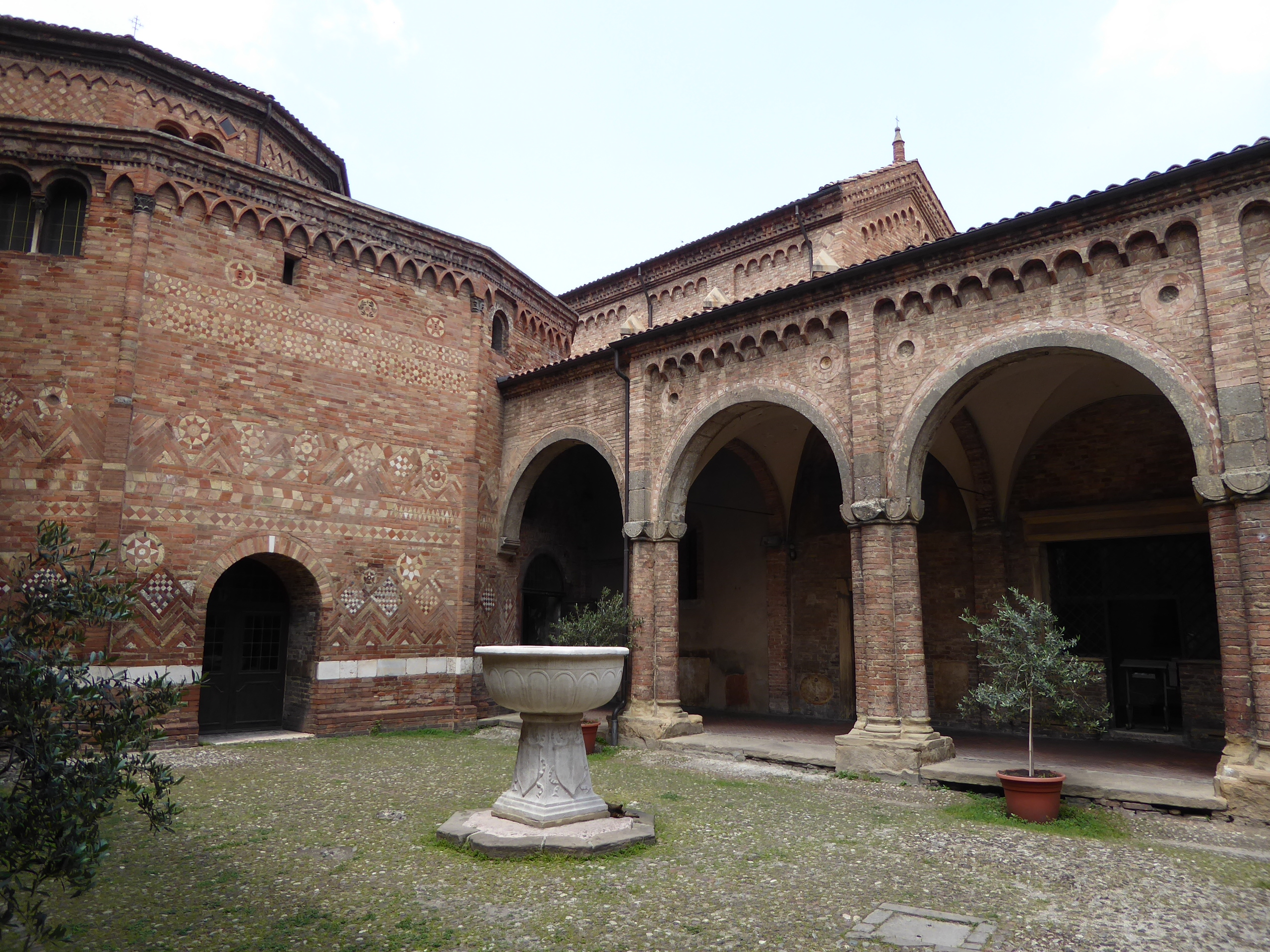
Abbazia di Santo Stefano, Bologna, Italy

One of the courtyards in Abbazia di Santo Stefano. Note the intricate brick design on the exterior of the San Sepolcro.

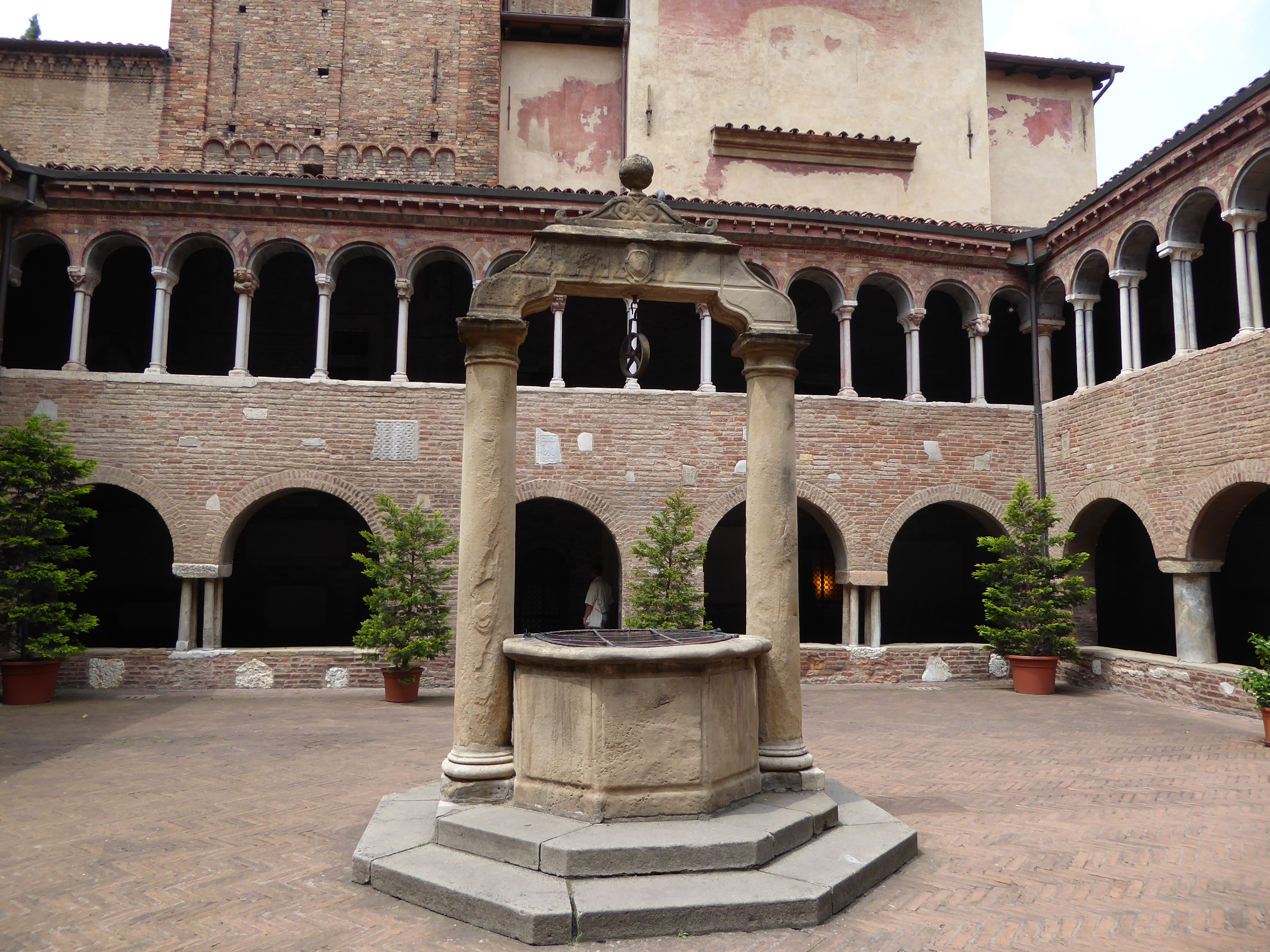
Fontana di Pilato, Abbazia di Santo Stefano, Bologna, Italy

The Fontana di Pilato in another courtyard of Abbazia di Santo Stefano, with a basin from the 8th century.

Bologna University

Bologna is home to the oldest university in continuous operation in Europe, founded in 1088. A few rooms are open to the public and a couple of these are shown below.

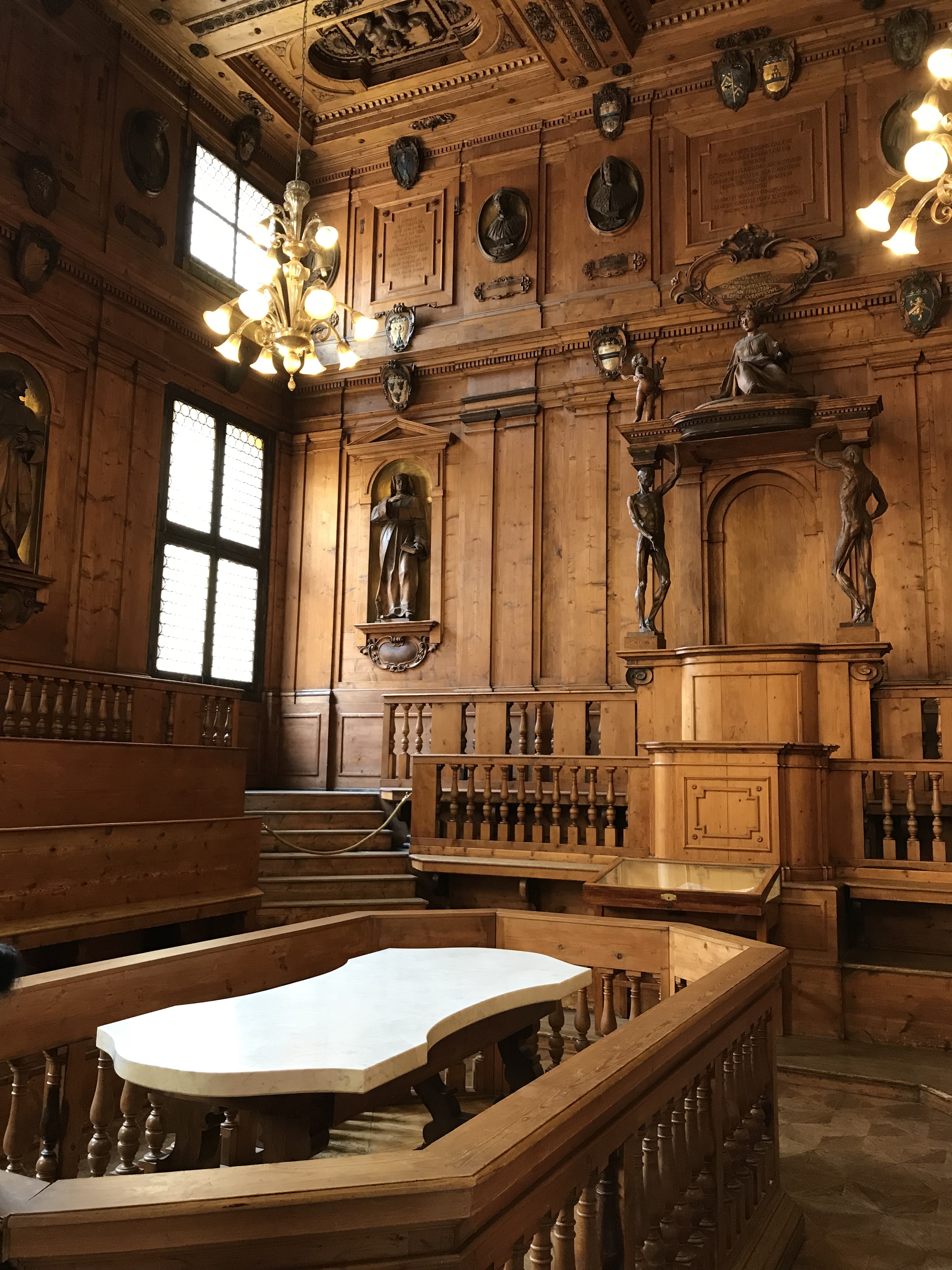
Anatomy Theater, Bologna University, Bologna, Italy

This is the Anatomy Theater, the cadaver would lie on the table shown for dissection and study by students in the surrounding galleries.

Anatomy Theater, Bologna University, Bologna, Italy

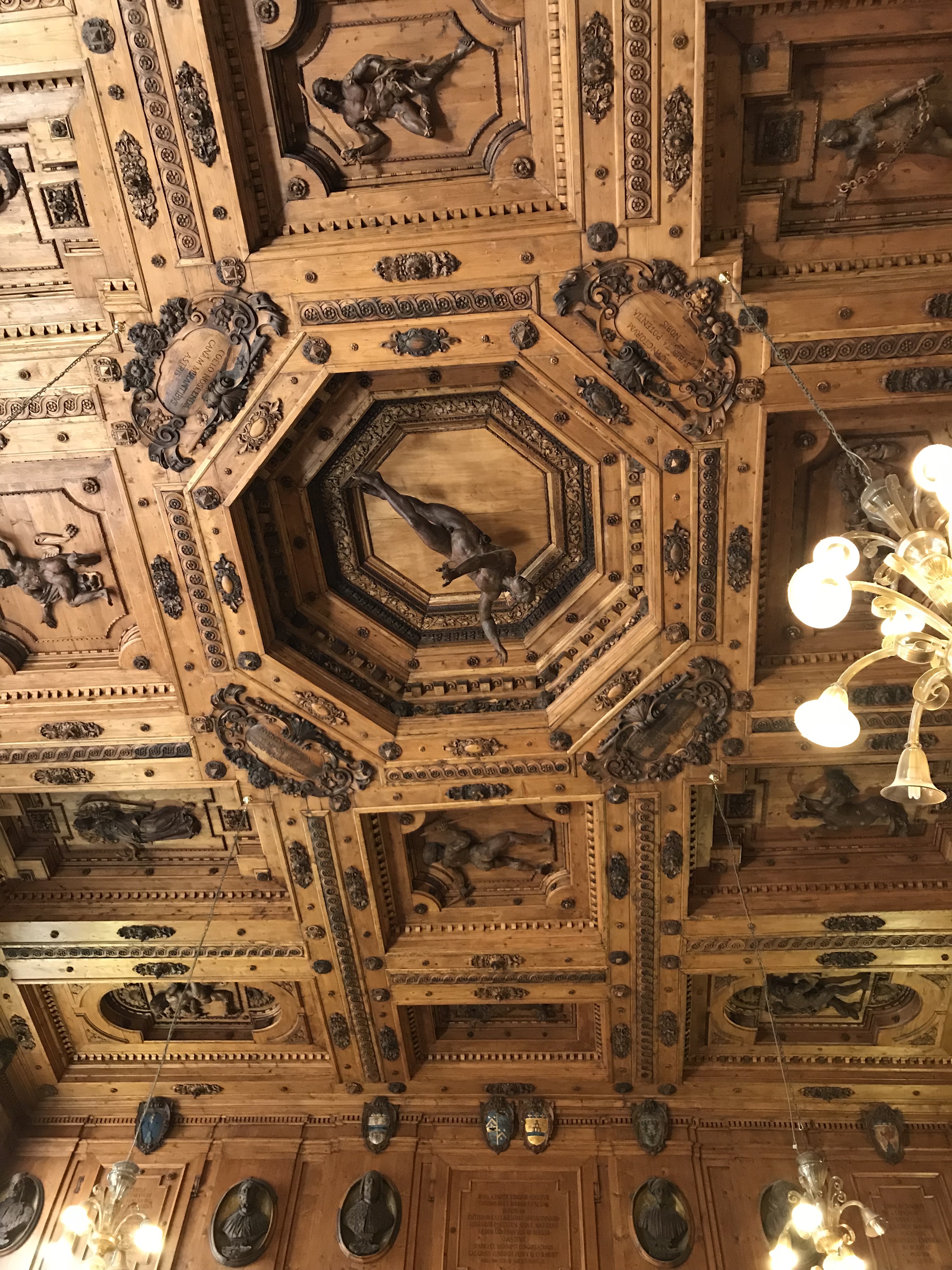
The “3-D” ceiling of the Anatomy Theater at Bologna University.

Stabat Mater Hall, Bologna University, Bologna, Italy

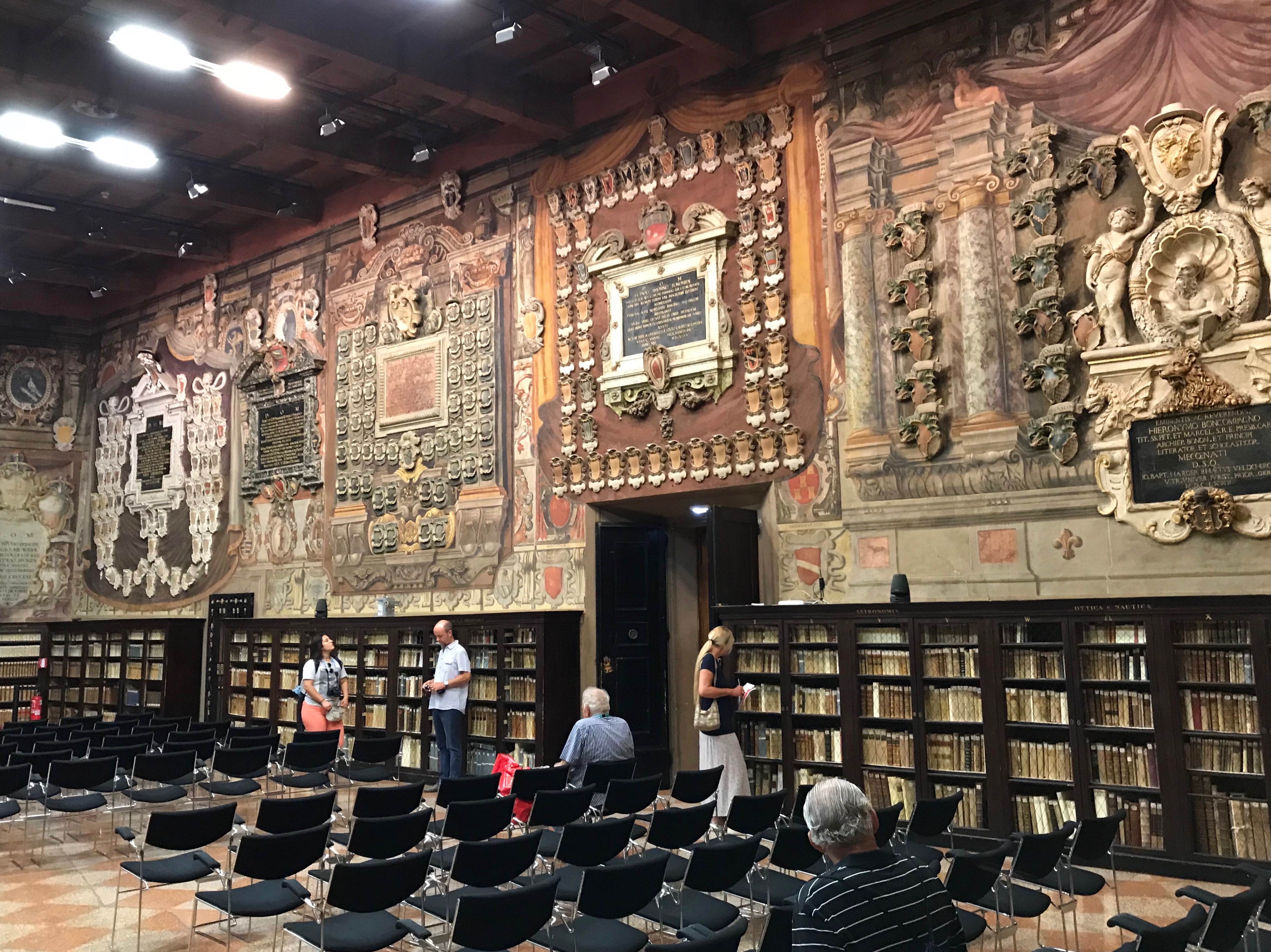
Stabat Mater Hall, a former reading room for law students.

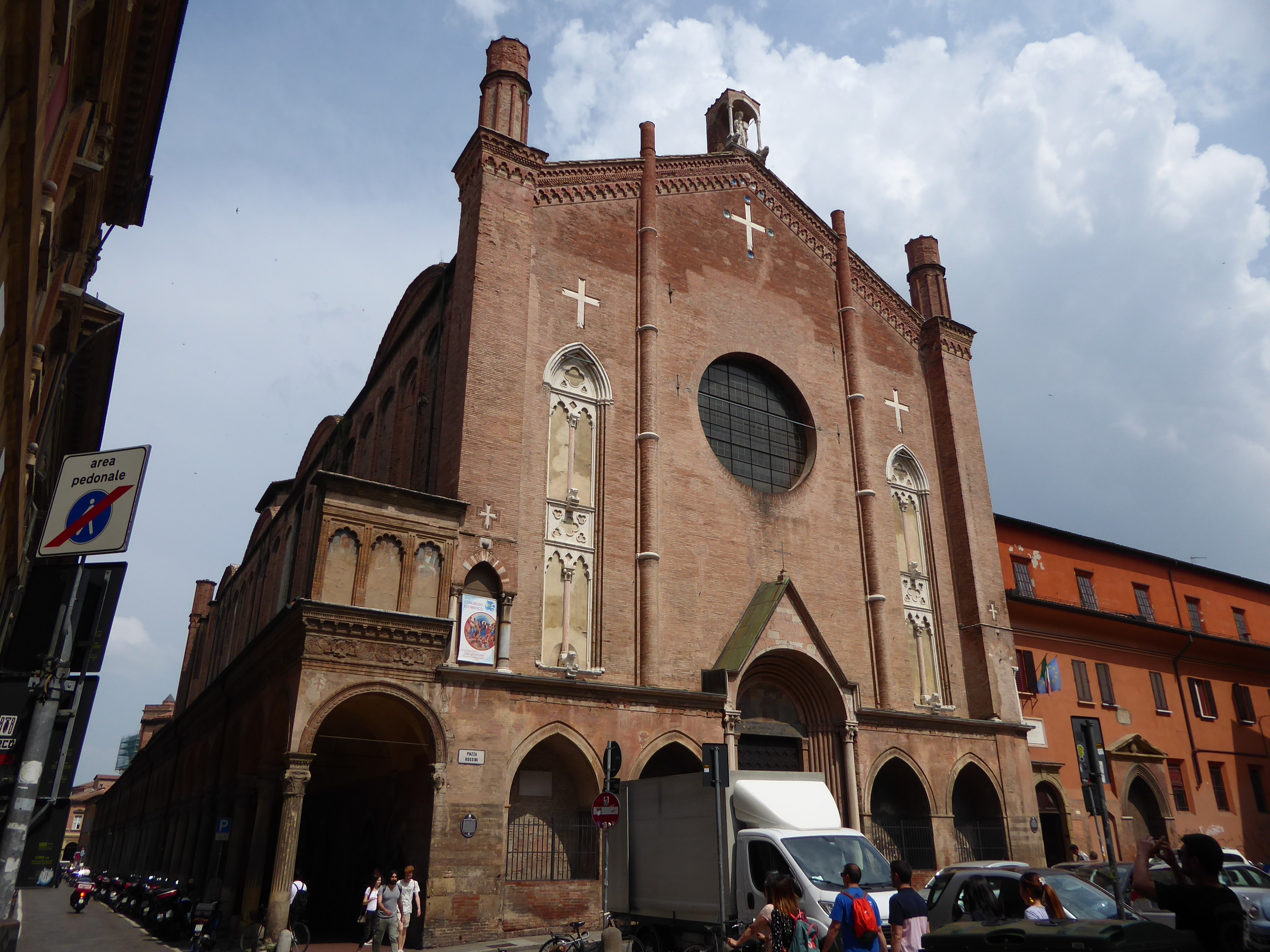
San Giacomo Maggiore Church

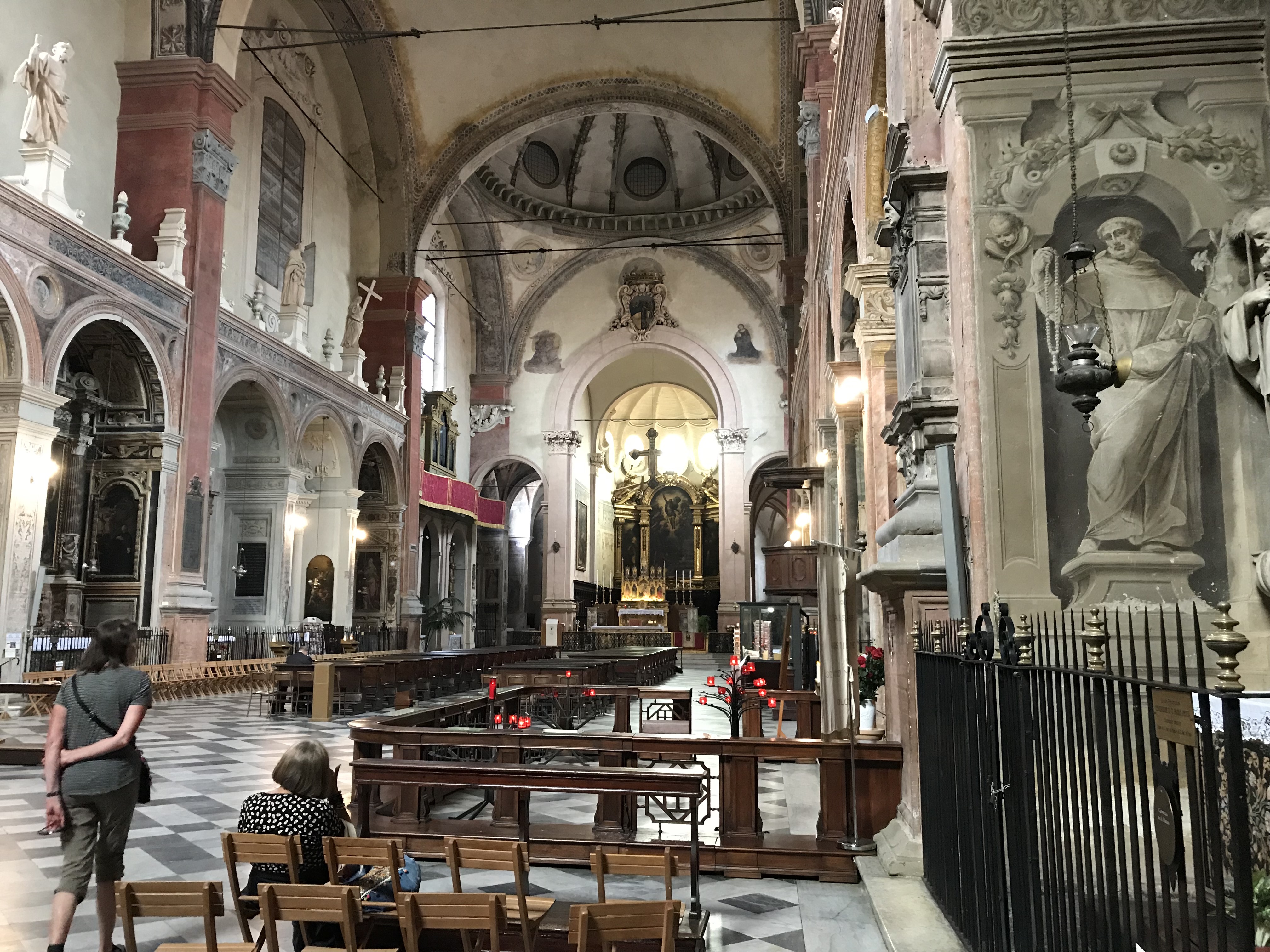
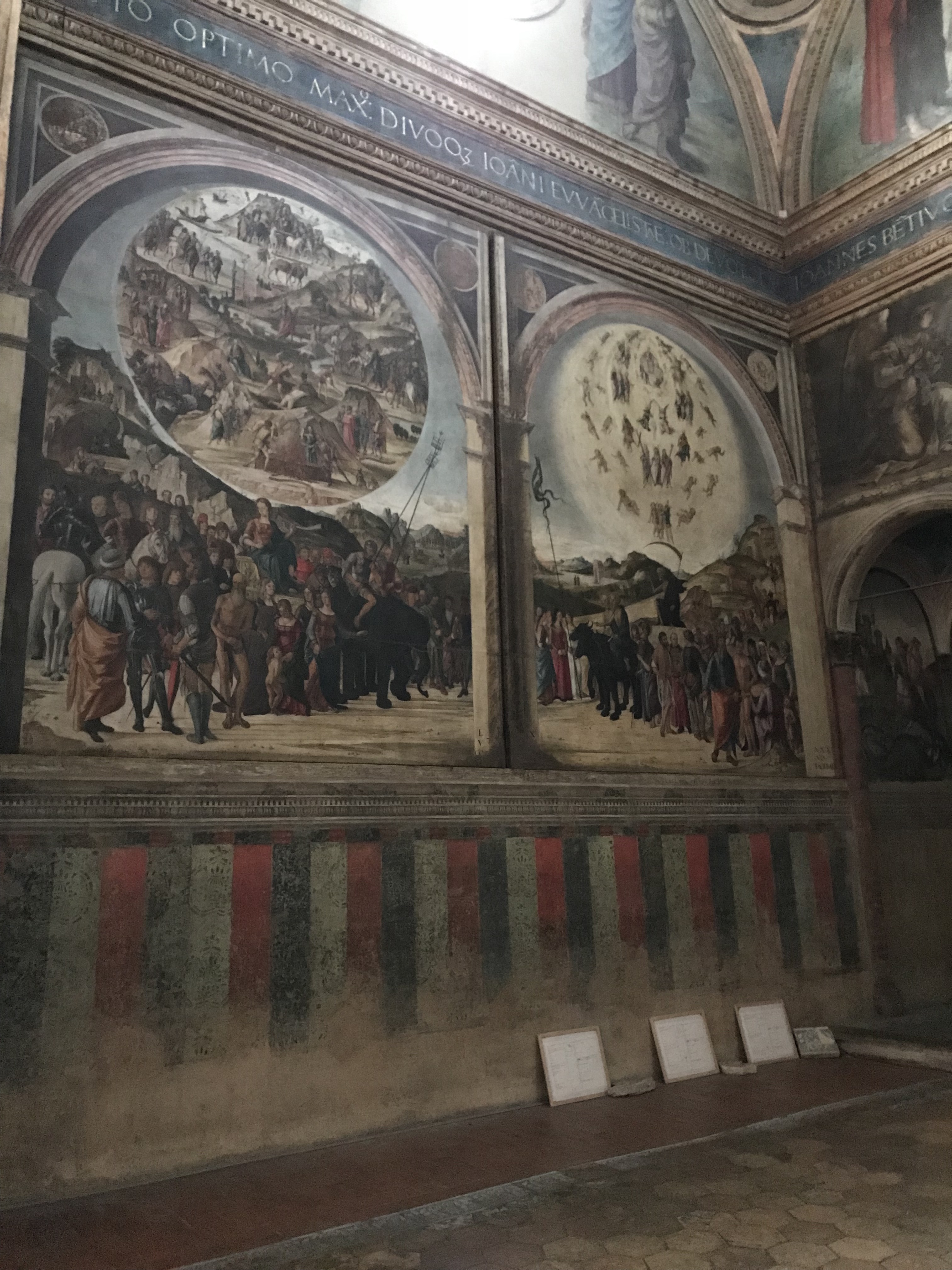
Another beautiful church, not too far from the towers is the 13th century San Giacomo Maggiore Church. The Bentivoglio family chapel within, consecrated in 1486, has famous 15th century frescoes.

San Giacomo Maggiore Church, Bologna, Italy

Exterior of the San Giacomo Maggiore church, with its porticoed walkway on the left side, so common in Bologna.

San Giacomo Maggiore Church, Bologna, Italy

The interior of the San Giacomo Maggiore church. The church contains numerous famous works of art.

Bentivoglio chapel, San Giacomo Maggiore Church, Bologna, Italy

A view of the Bentivoglio family chapel, with the famous “Triumph of Death” fresco by Lorenzo Costa (1483).

Bologna is a great city to visit with a lot to interest the tourist, and yet it receives far fewer visitors than its more famous neighbors to the north and south respectively, Venice and Florence. If you want to stay in a smaller city, Bologna can be done as a day trip from Ferrara, about 52 km (32 miles) to the north.

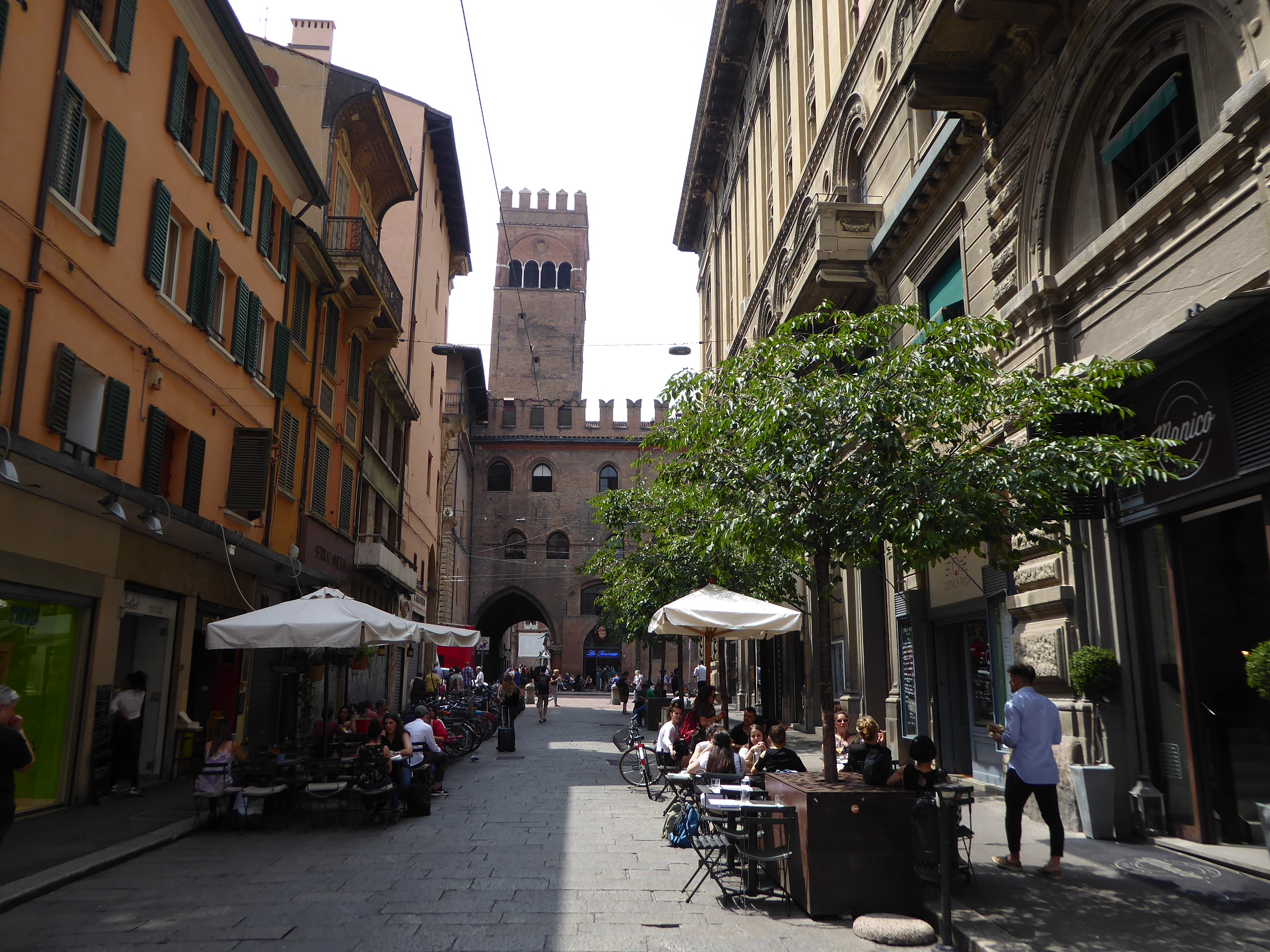
Bologna, Italy

Street scene in Bologna, with the 13th century Palazzo del Podesta at the end of the street.

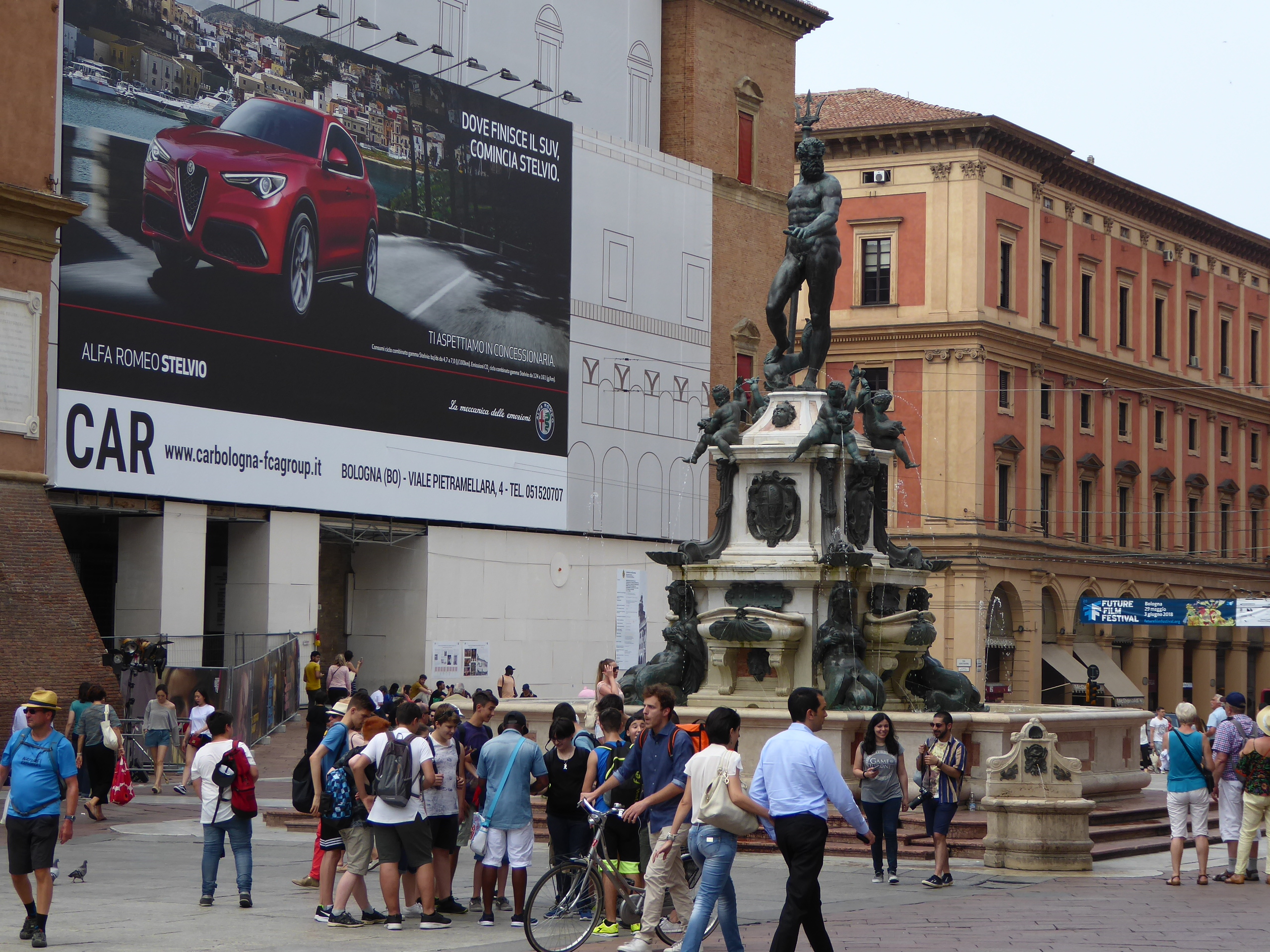
Neptune's Fountain, Bologna, Italy

Neptune’s Fountain, (1566), another famous landmark in Bologna.


Three Great Stops Along the Romantic Road in Germany

The Romantic Road, which winds its way through scenic old towns from central to southern Germany, covers a distance of almost 400 km (250 miles). It was a medieval trade route and several towns were at crossroads on that route.

This post will cover two of those scenic towns and the world famous Neuschwanstein Castle.

Rothenburg ob der Tauber. Rothenburg (located on the Tauber river and hence its name) is definitely one of the most interesting (and popular) small towns in Germany. It was saved from destruction during World War II by an American general, who, knowing of its historical significance, agreed not to bombard the town if it surrendered, which it did. Thank goodness. It retains its medieval feel, and there are lots of quaint buildings; most of which were built before 1400.

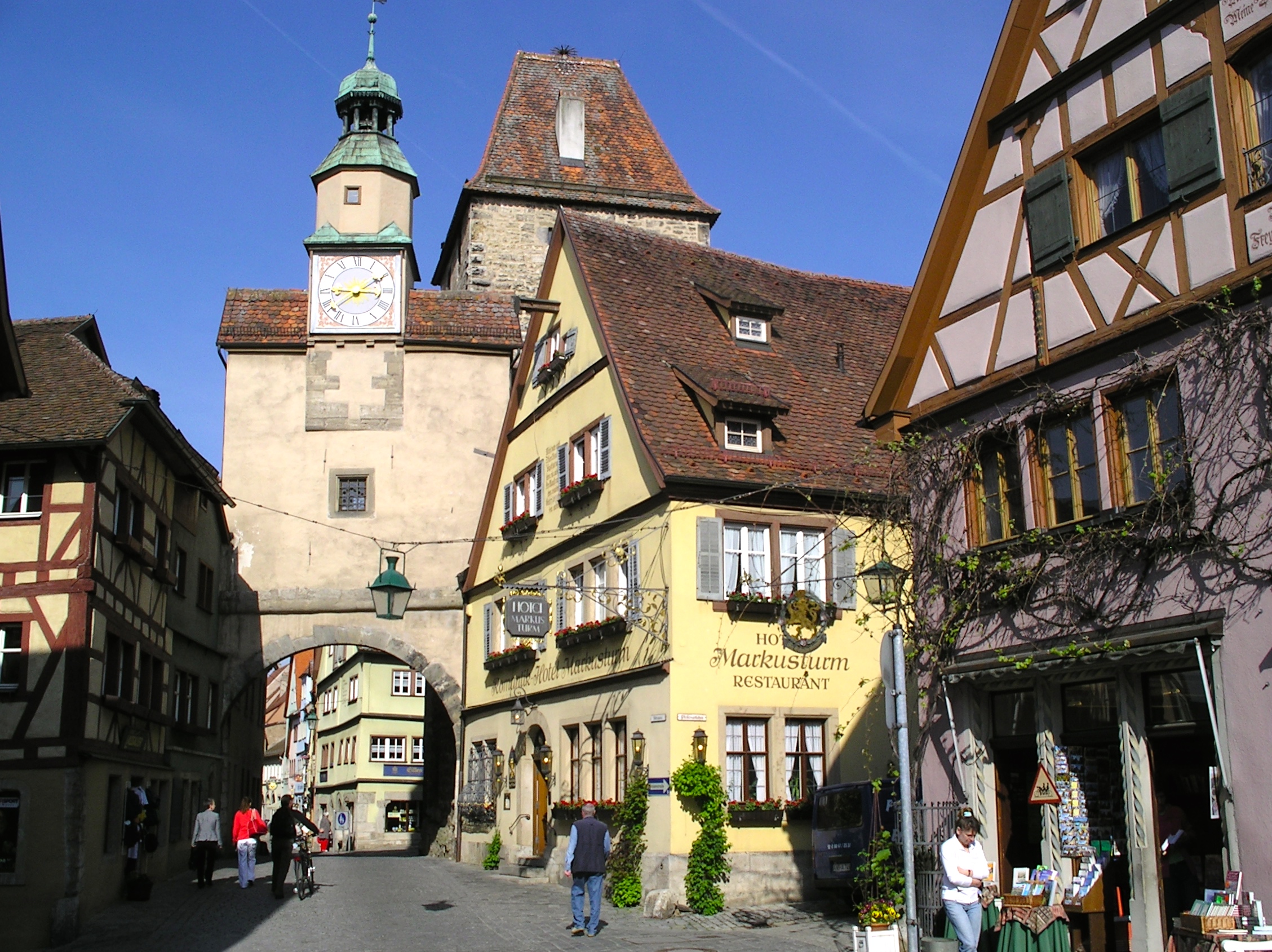
rothenburg_germany-6

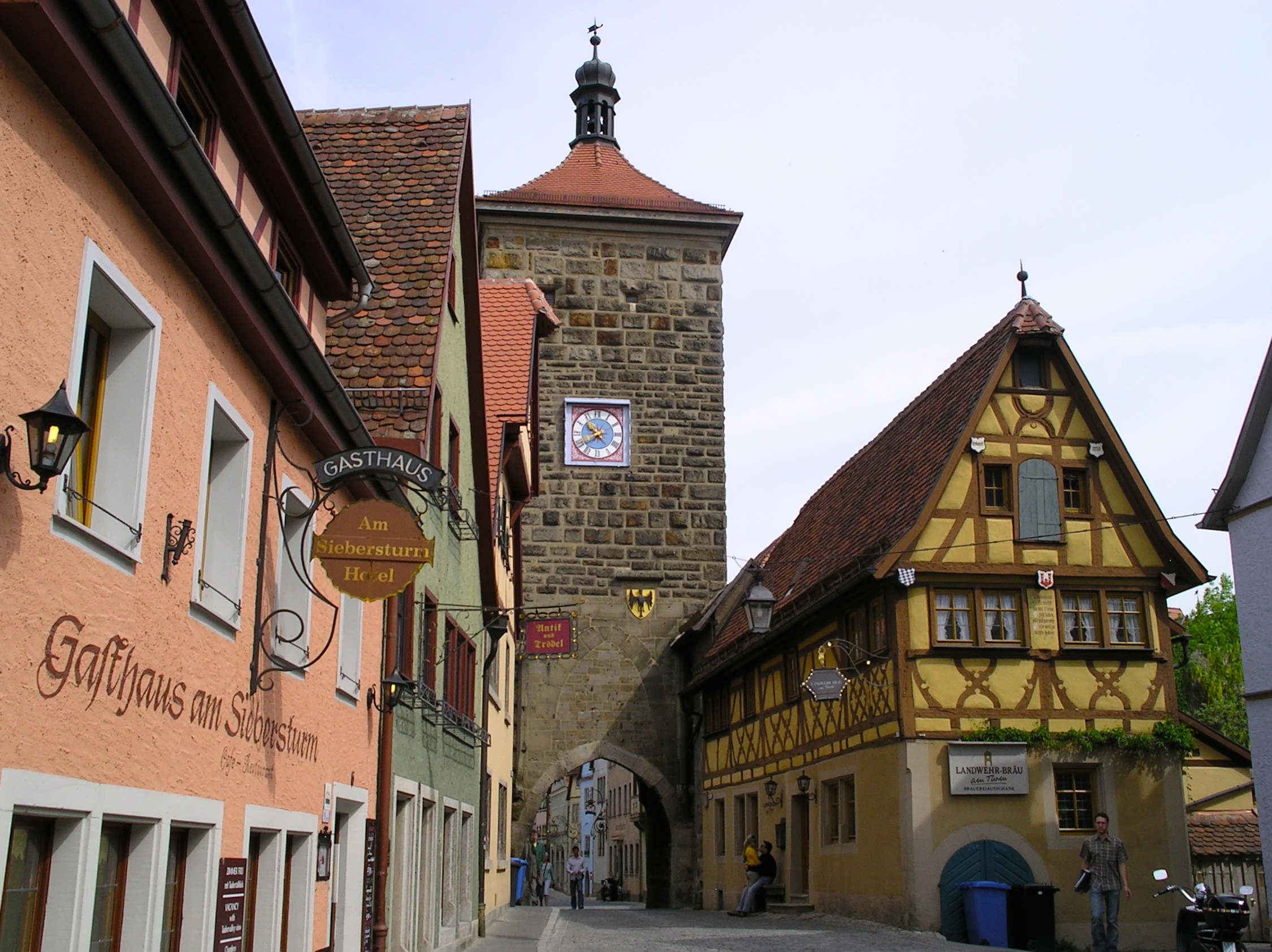
Every street is a postcard view in Rothenburg.

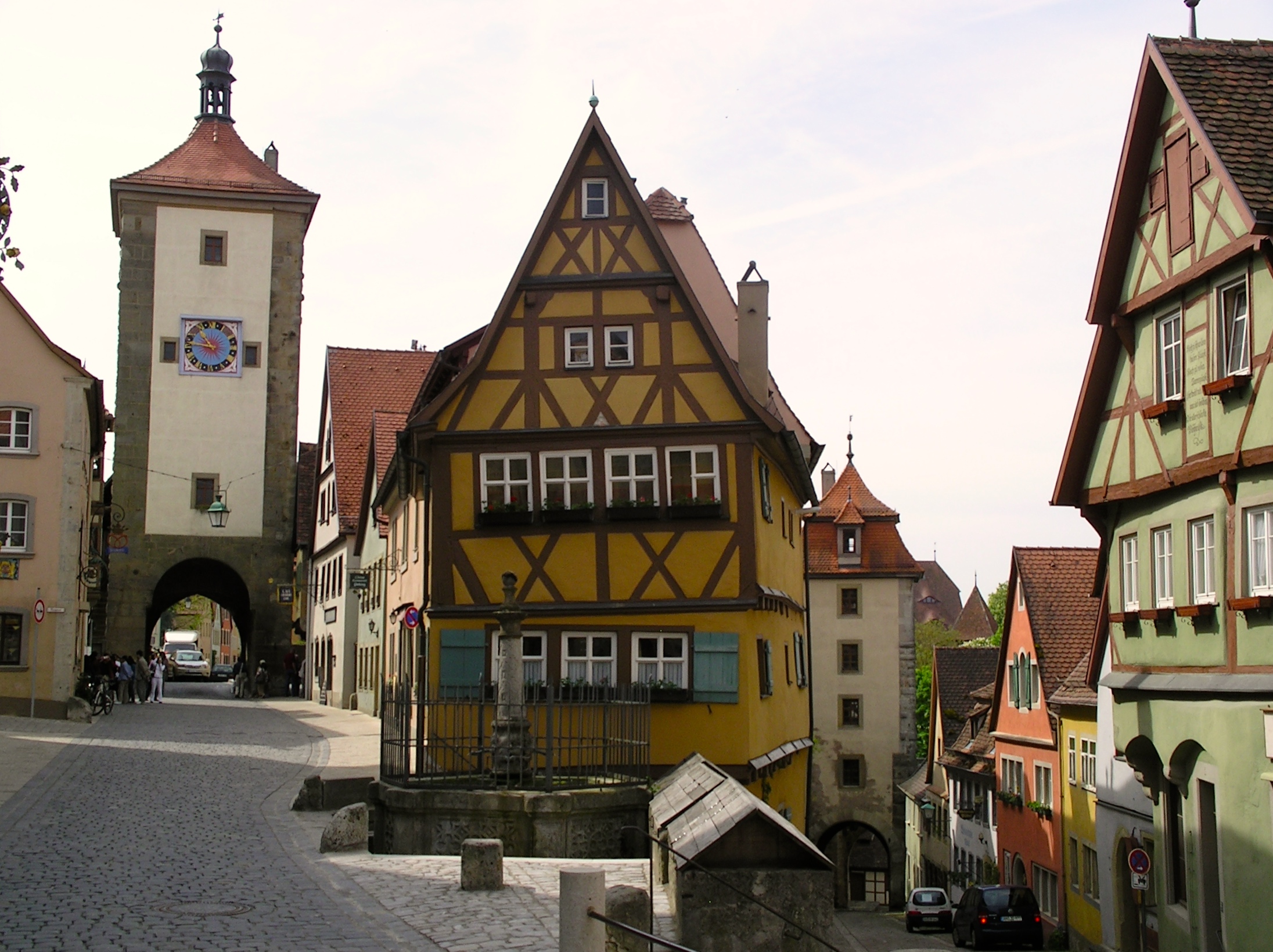
rothenburg_germany-12

One of the most famous street scenes in Rothenburg.

The most popular time to visit Rothenburg is December. It has a famous Christmas festival and market. With a little snow it would a picture-perfect Christmas village. We visited during the summer and had no complaints.

rothenburg_germany-10

Another view of Rothenburg. There was an older inner section of the medieval town and hence why there are so many gates.

rothenburg_germany-8

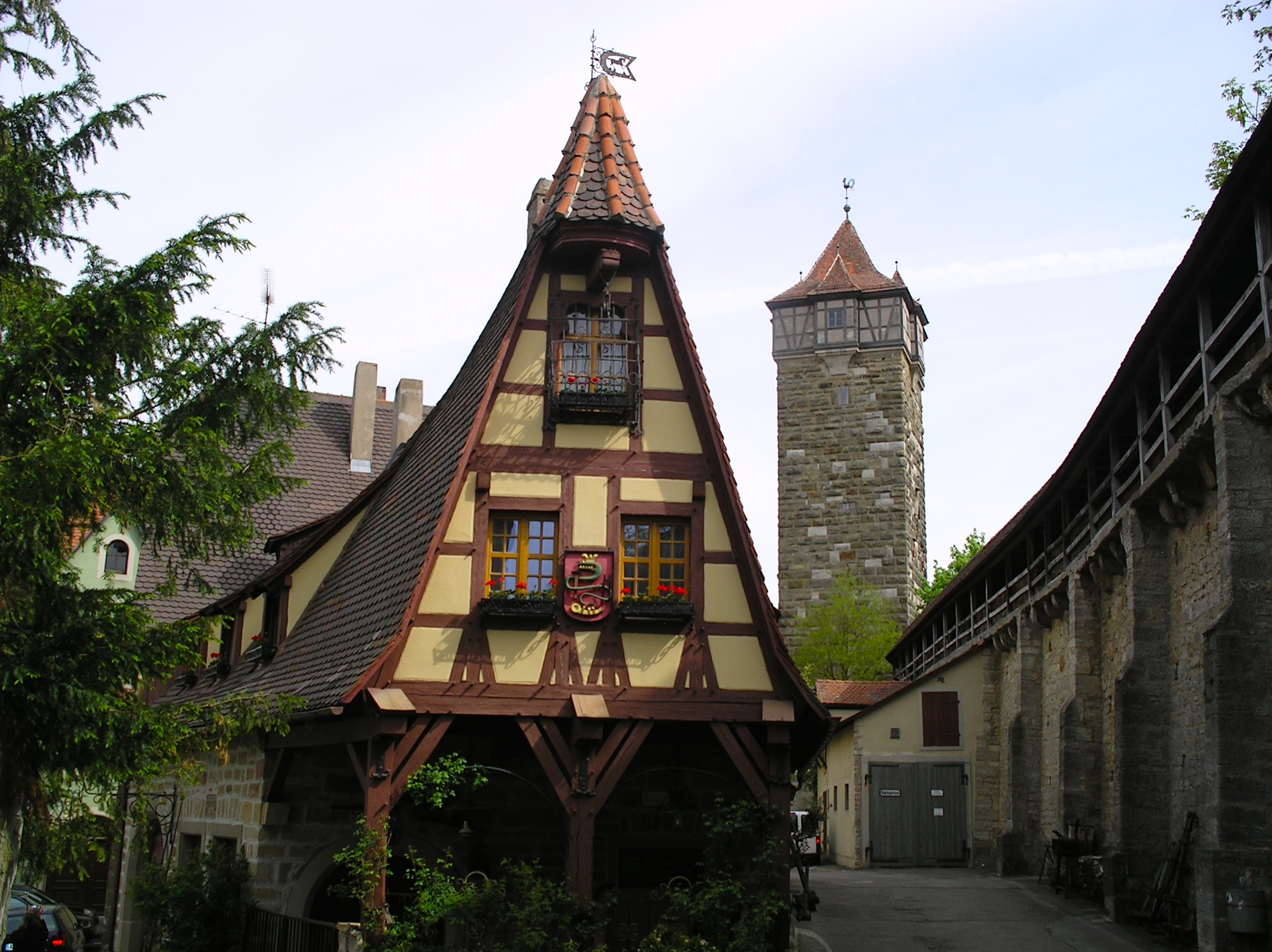
A timbered house, tower and section of the medieval wall in Rothenburg.

There are several “don’t miss” things to do in Rothenburg:

  1. Walk the town’s surrounding medieval walls on an old boardwalk.
  2. Visit Medieval Crime and Punishment Museum, which contains all kinds of creative medieval torture instruments.
  3. Take the Night Watchman’s tour. Hans Georg Baumgartner has been doing these tours for years, and they are a blast. He tells a bit about the history of Rothenburg with lots of humor as he walks you around the old town at dusk. He conducts tours in English and German at different times.
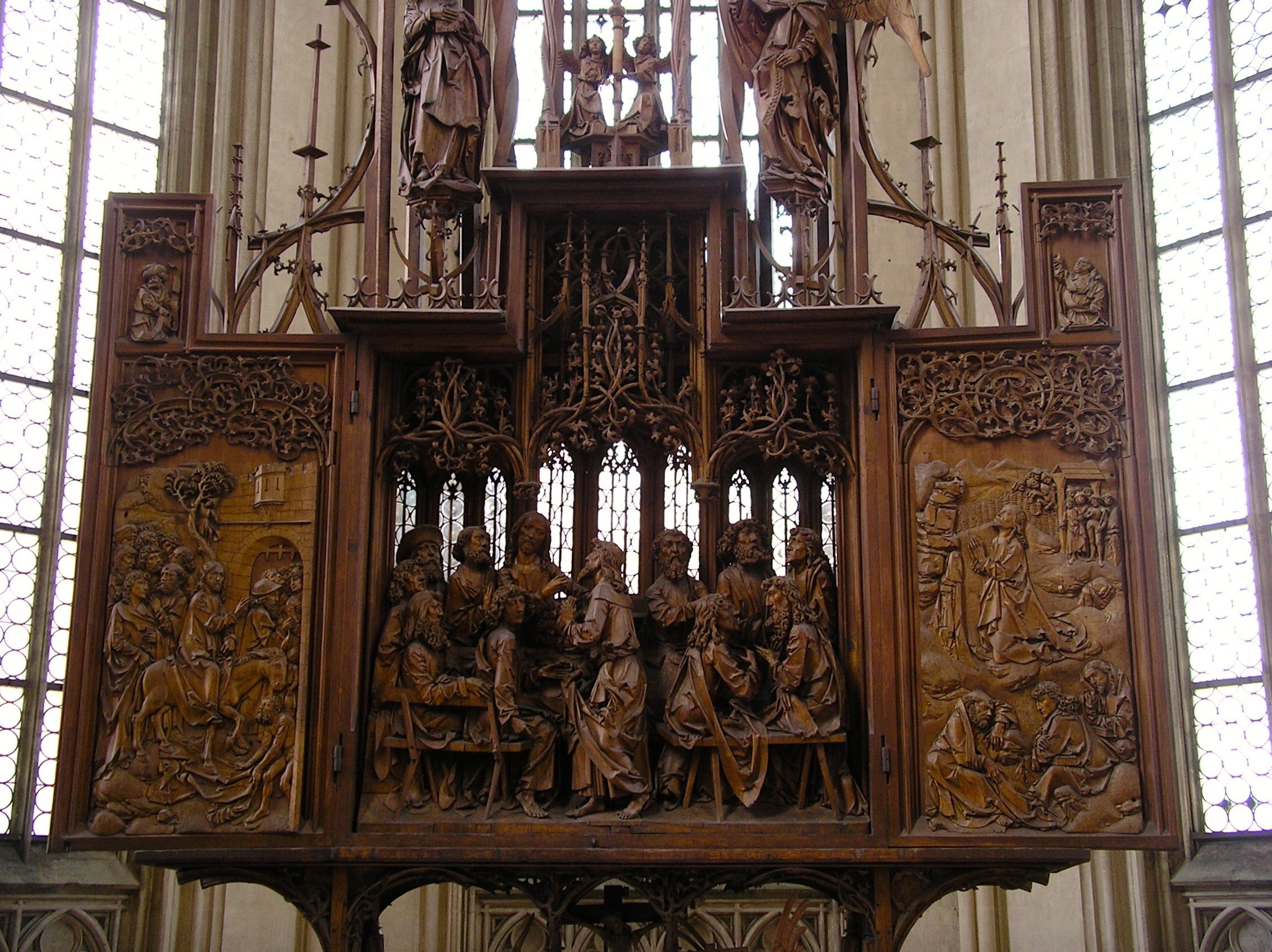
  4. Visit St. Jakob’s Church, which houses the Riemenschneider wood carving (Altar of the Holy Blood, 500 years old and 35 feet high).

rothenburg_germany-4

Hans Georg Baumgartner starting his Night Watchman’s tour in Rothenburg.

rothenburg_germany-13

The famous Altar of the Holy Blood by Tilman Riemenschneider. The carving took 5 years (1499-1504) to create. It’s located in the 14th century St. Jakob’s church in Rothenburg.

Dinkelsbühl. This great town is considered Rothenburg’s “little sister” and is only 49 km (30 miles) south of Rothenburg.

dinkelsbuhl_germany-6

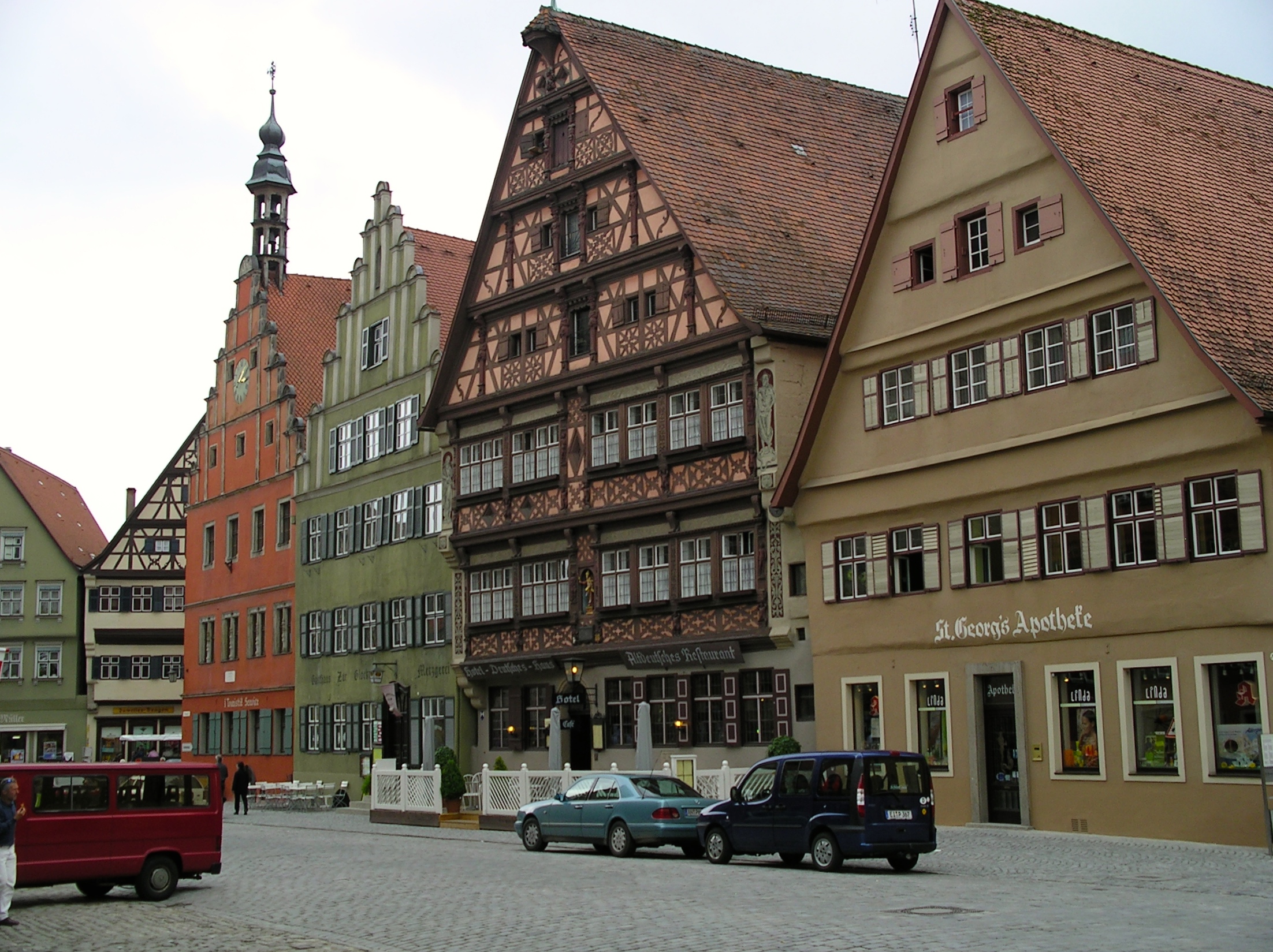
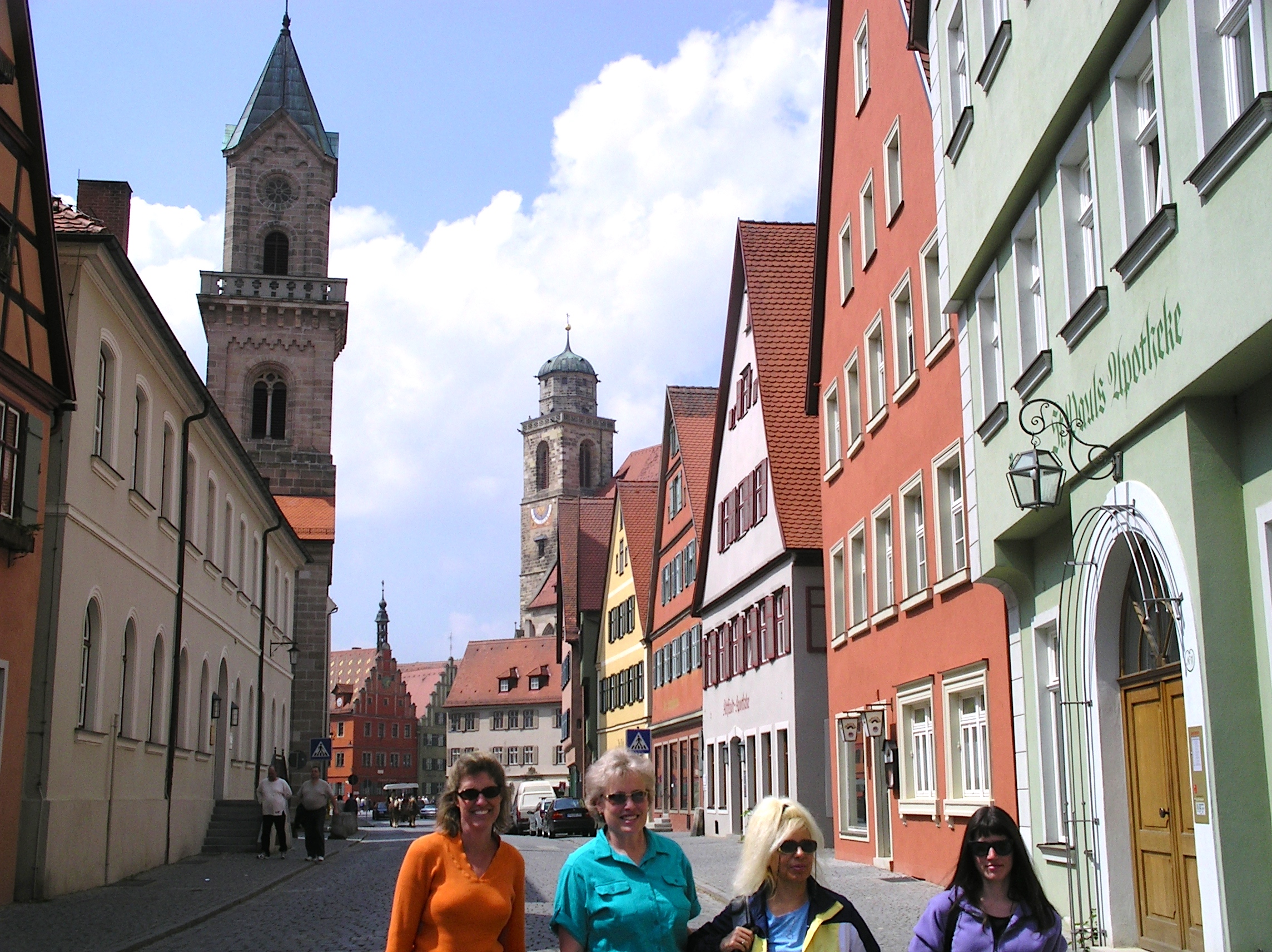
Street scene in Dinkelsbühl.

It has a moat, towers, gates, timbered buildings and a medieval wall surrounding the town (which, in addition to Rothenburg, is one of the few remaining in Germany). We found Dinkelsbühl a bit less touristy than Rothenburg. Amazingly it also miraculously escaped damage in World War II, except for a broken window in St. George’s Minster.

dinkelsbuhl_germany-4

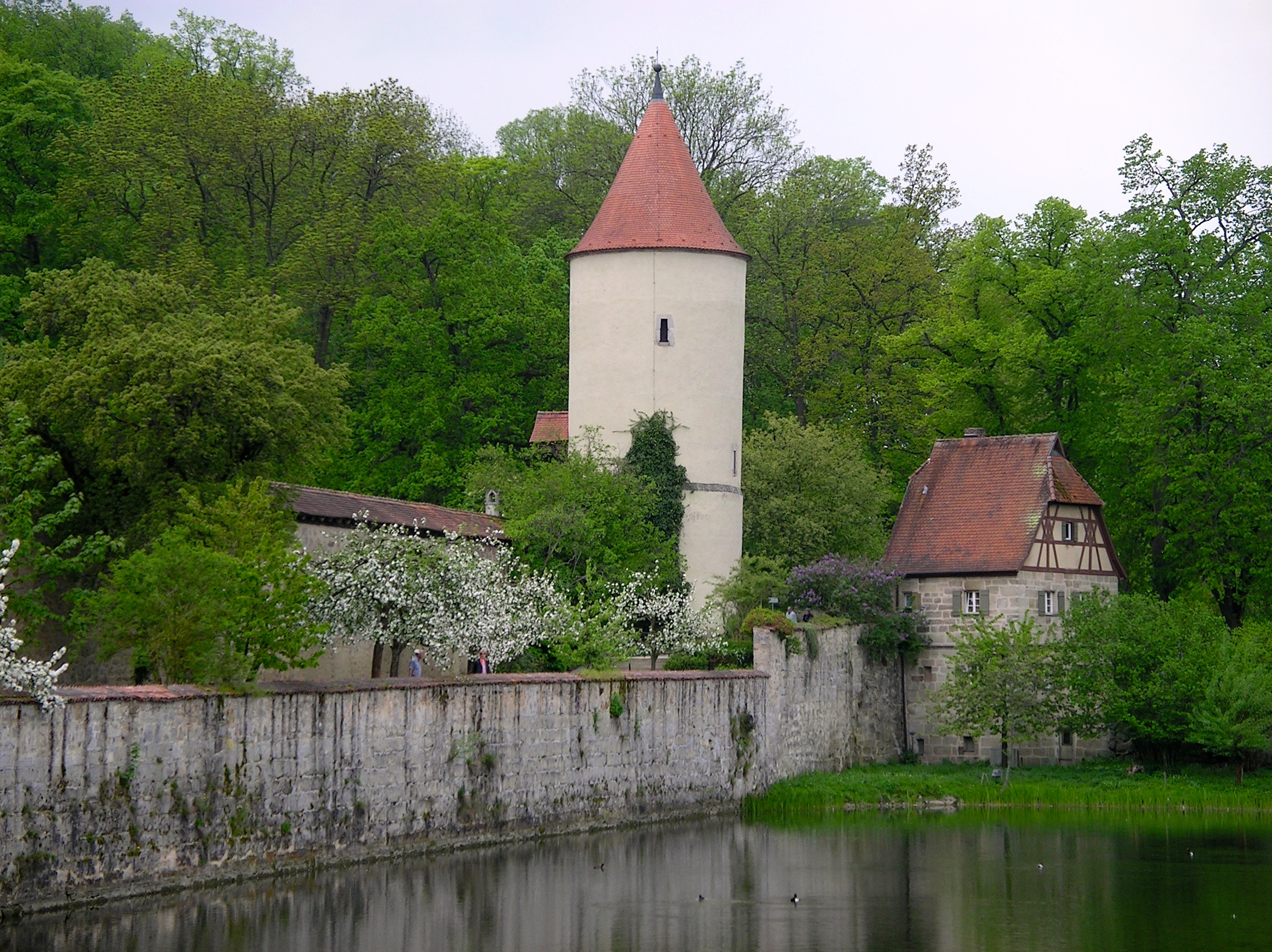
A tower, moat, and wall surrounding Dinkelsbühl.

dinkelsbuhl_germany

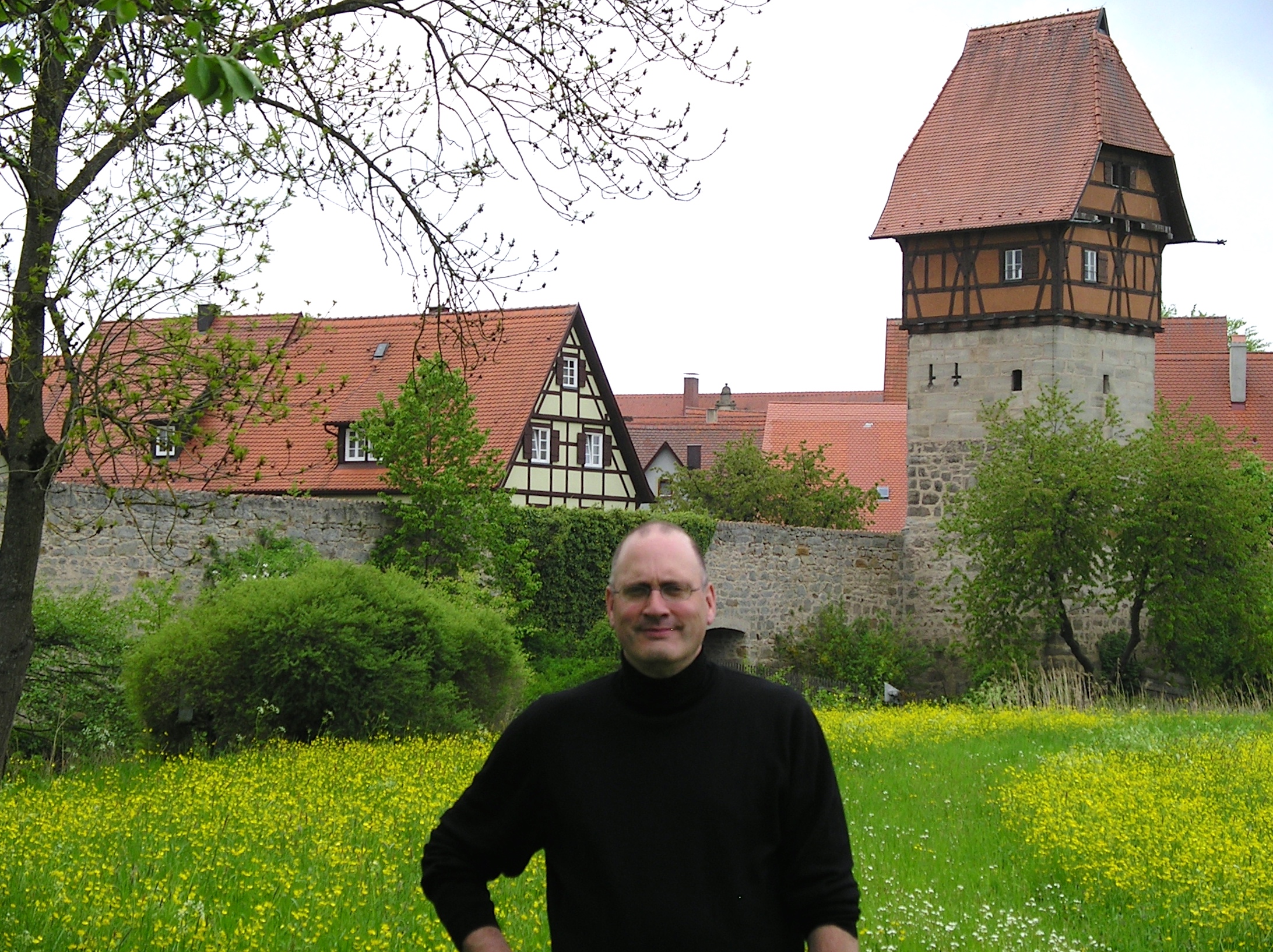
One more scenic view outside the walls of Dinkelsbühl.

Don’t miss climbing the tower connected to the 15th century St.George’s Minster. The tower was originally a 12th century free standing structure, but later became part of the church structure.

dinkelsbuhl_germany-2

The tower of St. George’s Minster is in the distance.

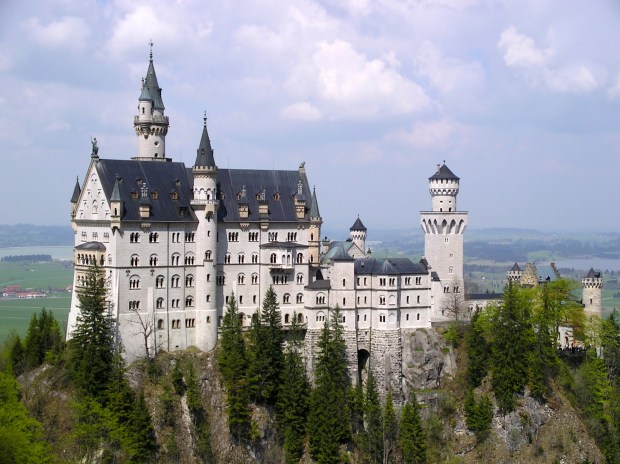
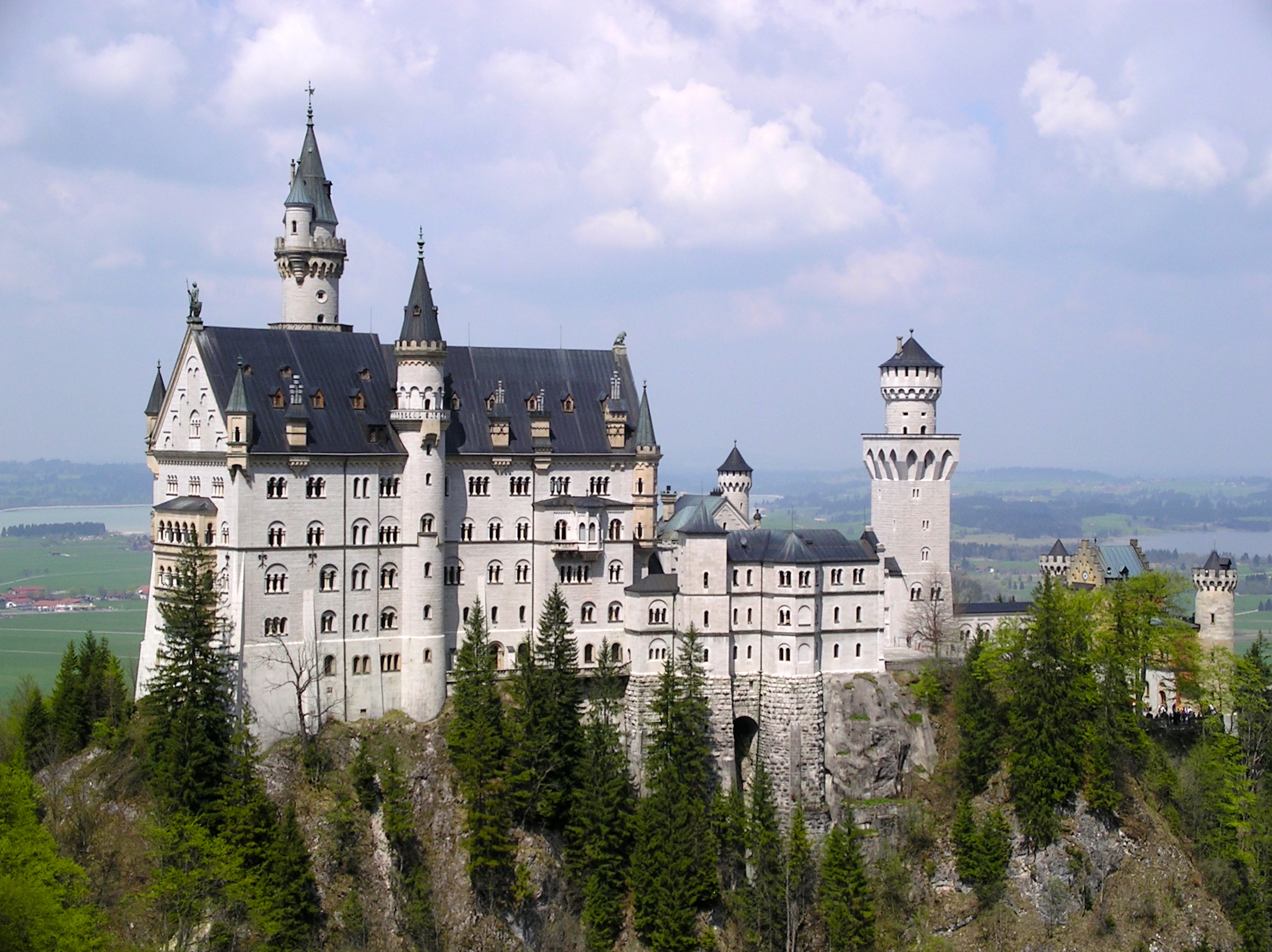
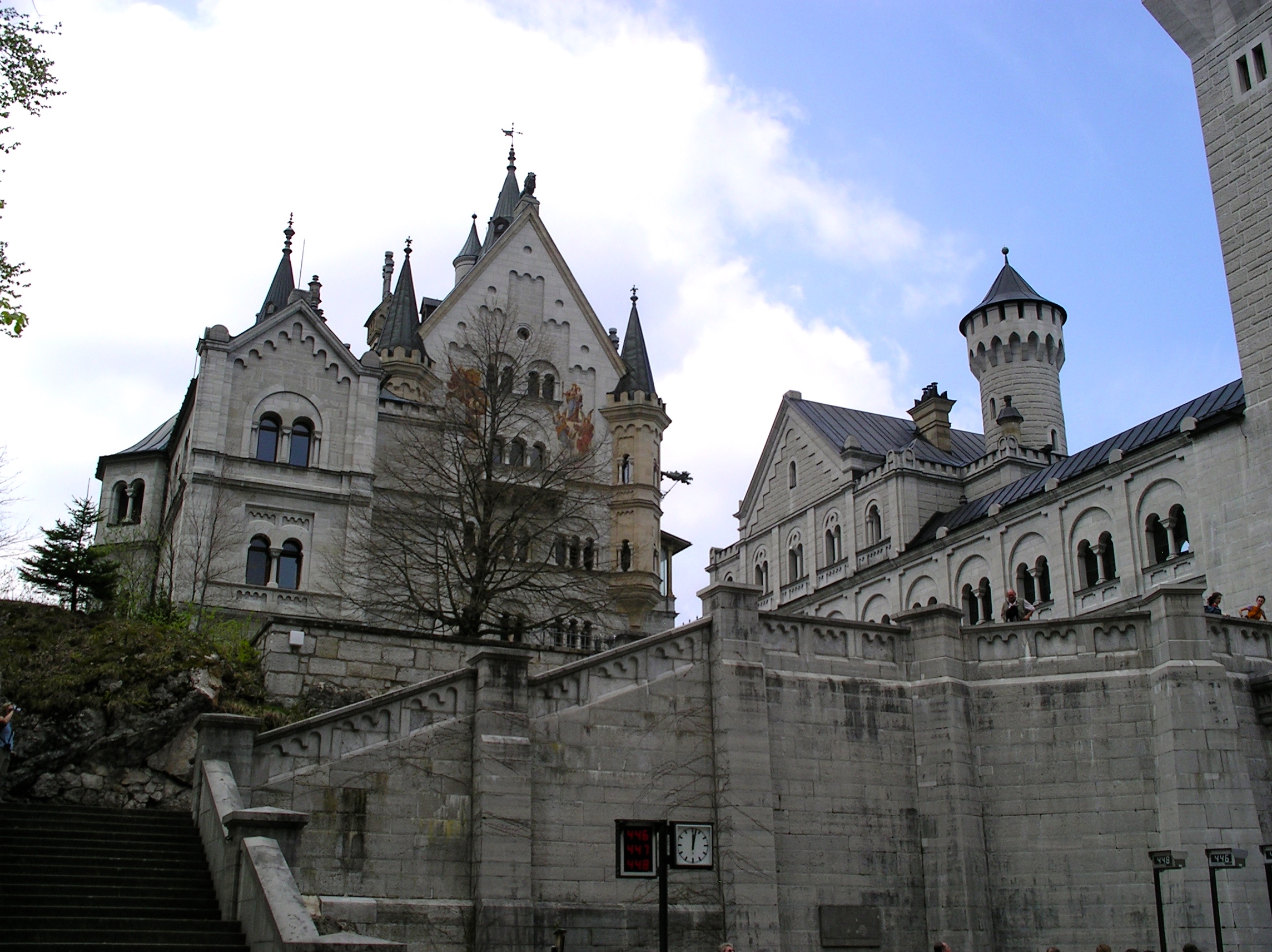
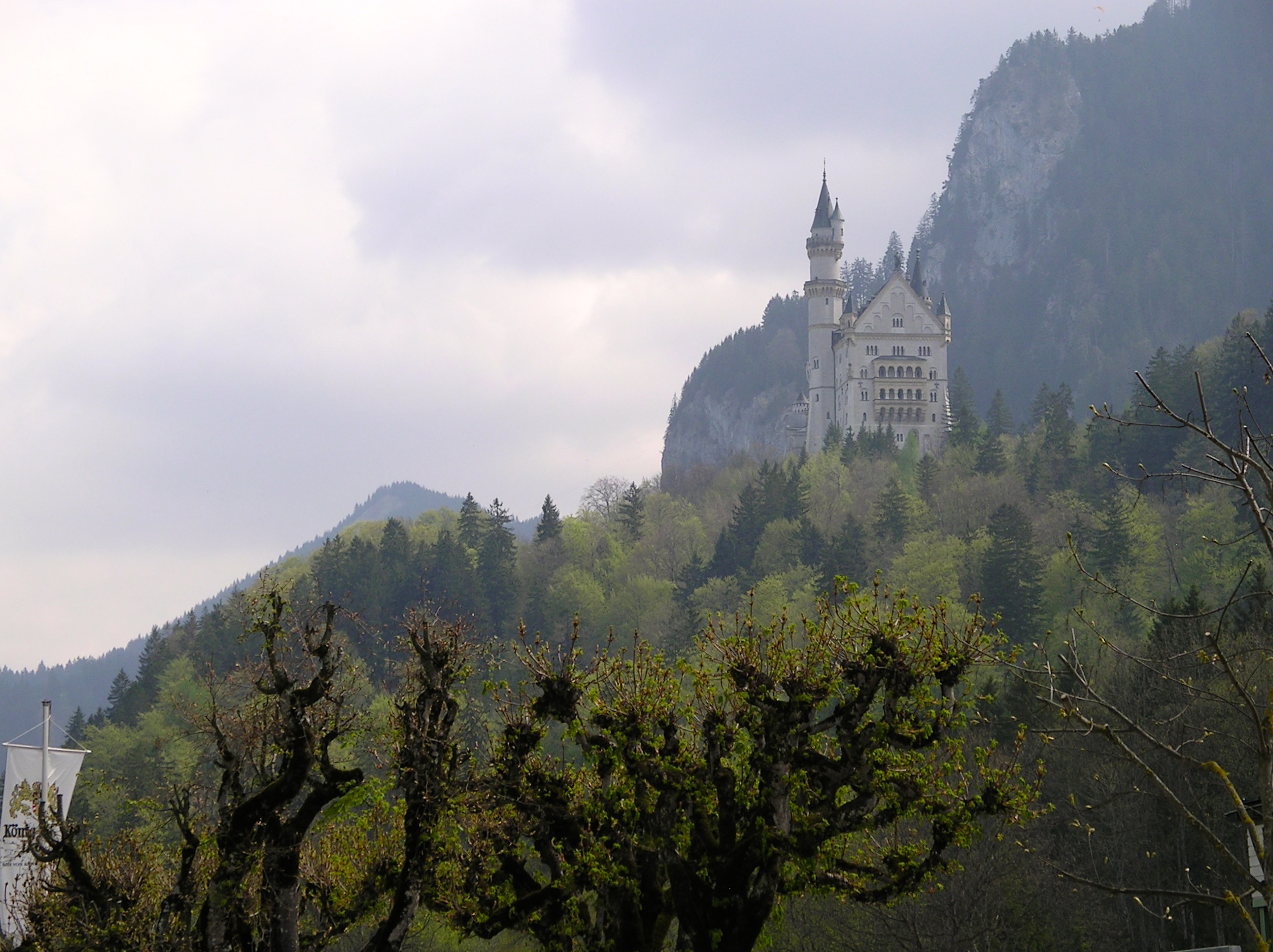
Neuschwanstein Castle. Just about everyone has seen a picture of this castle, nestled against the Bavarian Alps. This well-known castle marks the southern end of the Romantic Road, near the town of Füssen.

neuschwanstein-castle_germany-8

This image of Neuschwanstein was taken from Mary’s Bridge, a short hike to the south of the castle.

It’s been said that this castle was the inspiration for Cinderella’s castle at Walt Disney World. The castle was constructed by King Ludwig II, King of Bavaria in the late 1800’s.

neuschwanstein-castle_germany-4

Interior courtyard view of Neuschwanstein Castle.

He died at age 41 in 1886, having lived in his dream castle (a 17 year project) only 172 days! Only about one third of the interior was finished at the time of his death, it remains unfinished to this day.
neuschwanstein-castle_germany-5

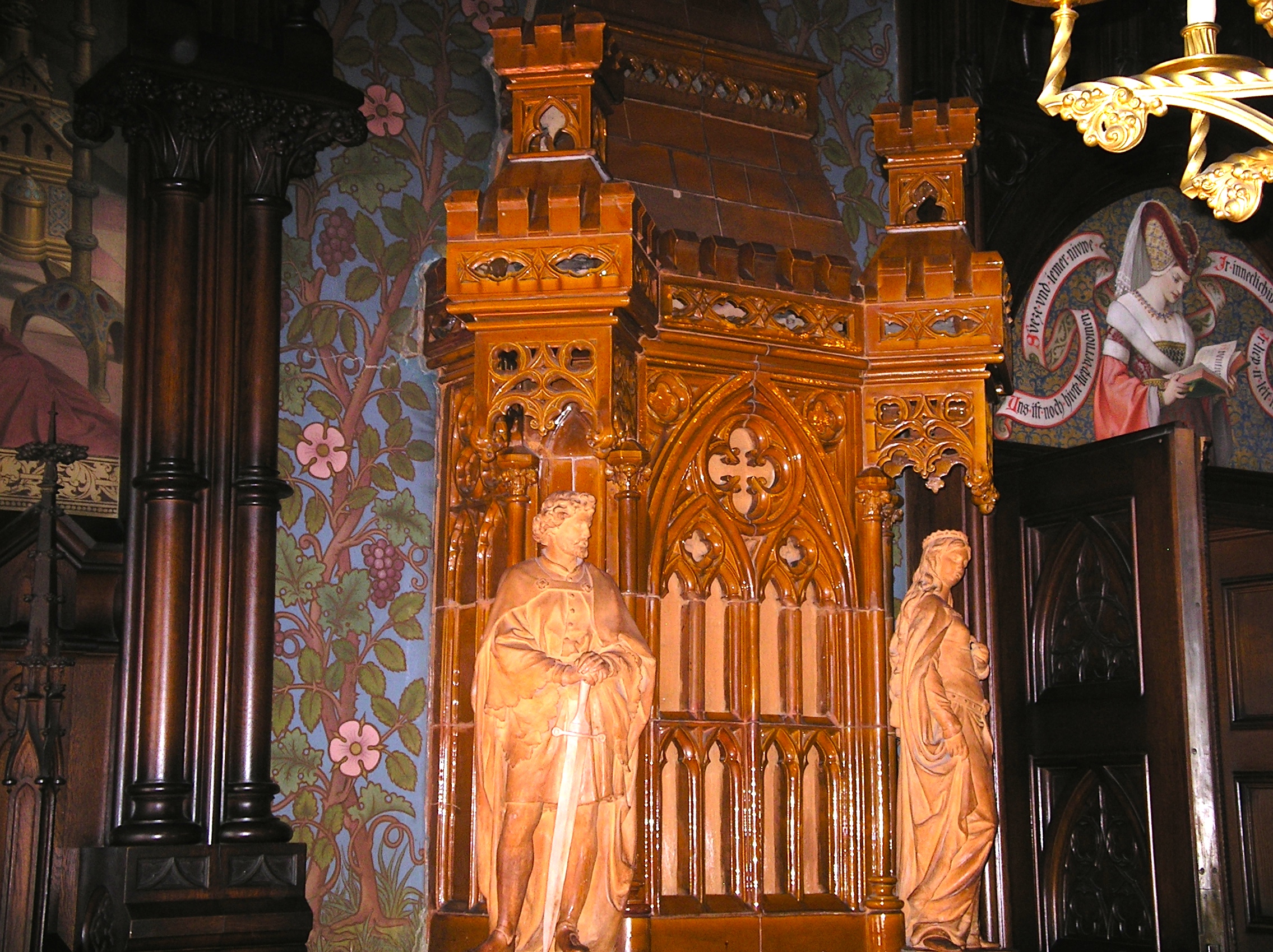
Interior view of Neuschwanstein castle. The two figures represent the story of Tristan and Isolde, a romantic 12th century story, inspired by Celtic legend.

neuschwanstein-castle_germany-3

Looking up at Neuschwanstein Castle from the road you hike up (or take by carriage) to get you to the entrance.

While I prefer older, “real” castles, Neuschwanstein is a beauty and was built on the site of an older medieval castle. To get the best postcard view of this castle nestled in the mountains, you really have to be in a low flying airplane or helicopter. Also in the same area is the older Hohenschwangau Castle, which you see first as you arrive, but we did not take the time to visit it. Be forewarned – this area is mobbed by tourists, so plan your visit well in advance and ensure you get your tours and tickets set before arriving.


The Isle of Corsica – One of the Hidden Gems of France – Part 1 of 3

When we mentioned to friends that we were going to Corsica, the typical response was “where is Corsica?” Even though it’s part of France, relatively few people in the U.S know much about this island. For the record, Corsica is just north of Sardinia (another great island, which belongs to Italy) and is closer to Italy than it is to France.

Screen Shot 2016-03-20 at 4.17.36 PM

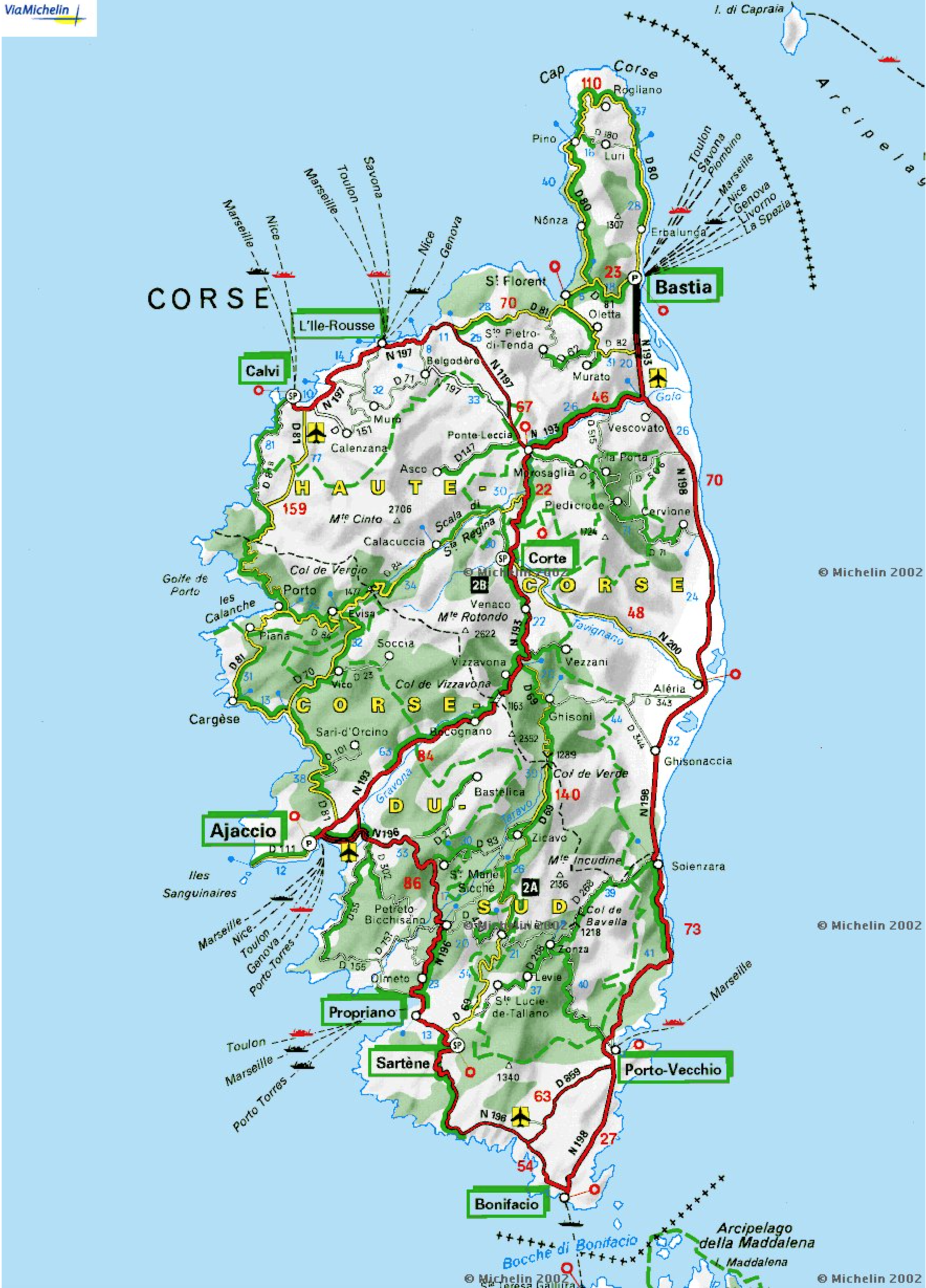
A map of Corsica. We started in Ajaccio on the west coast and ended in Bastia on the northeast coast.

Corsica is a relatively remote part of France and Europe—it’s rugged, mountainous, and sparsely populated, especially in the interior. Corsica has had a tumultuous history, with several nations (such as Spain and France) and medieval city states (such as Pisa and Genoa) staking their claim here over the centuries. Even today, the island is a very independent part of France, and there have been separatist struggles over the years. As a tourist, there is very little evidence of this, except for some banners or signage in the interior villages of the island.

Ajaccio Corsica (4)

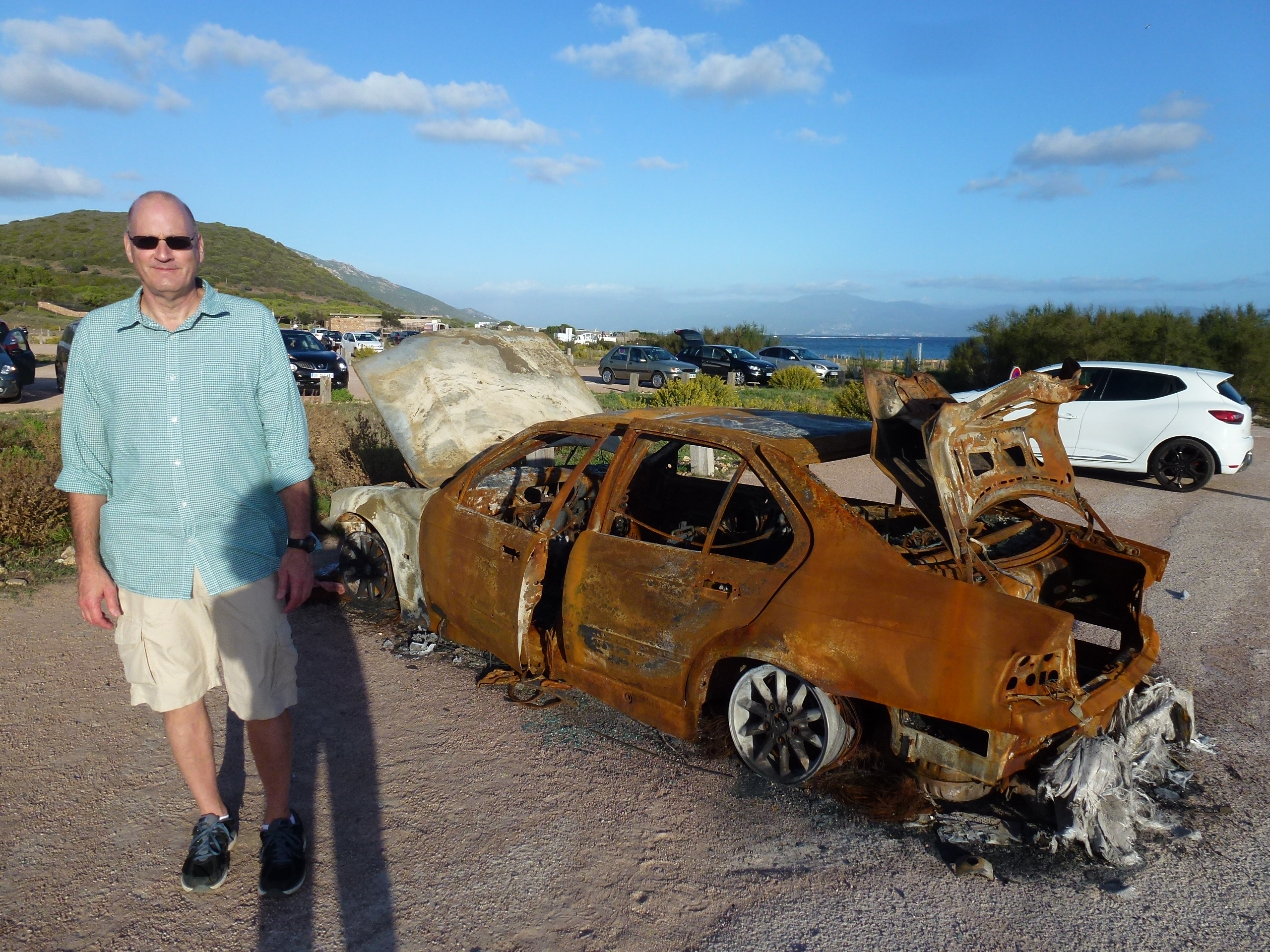
A burned out car near Ajaccio – evidence of the Corsican mob? Hard to say.

As a sign of its independent roots, Corsica has its own language (more similar to Italian, although everyone speaks French also), and road signs are in French and Corsican.

Bonifacio Corsica (106)

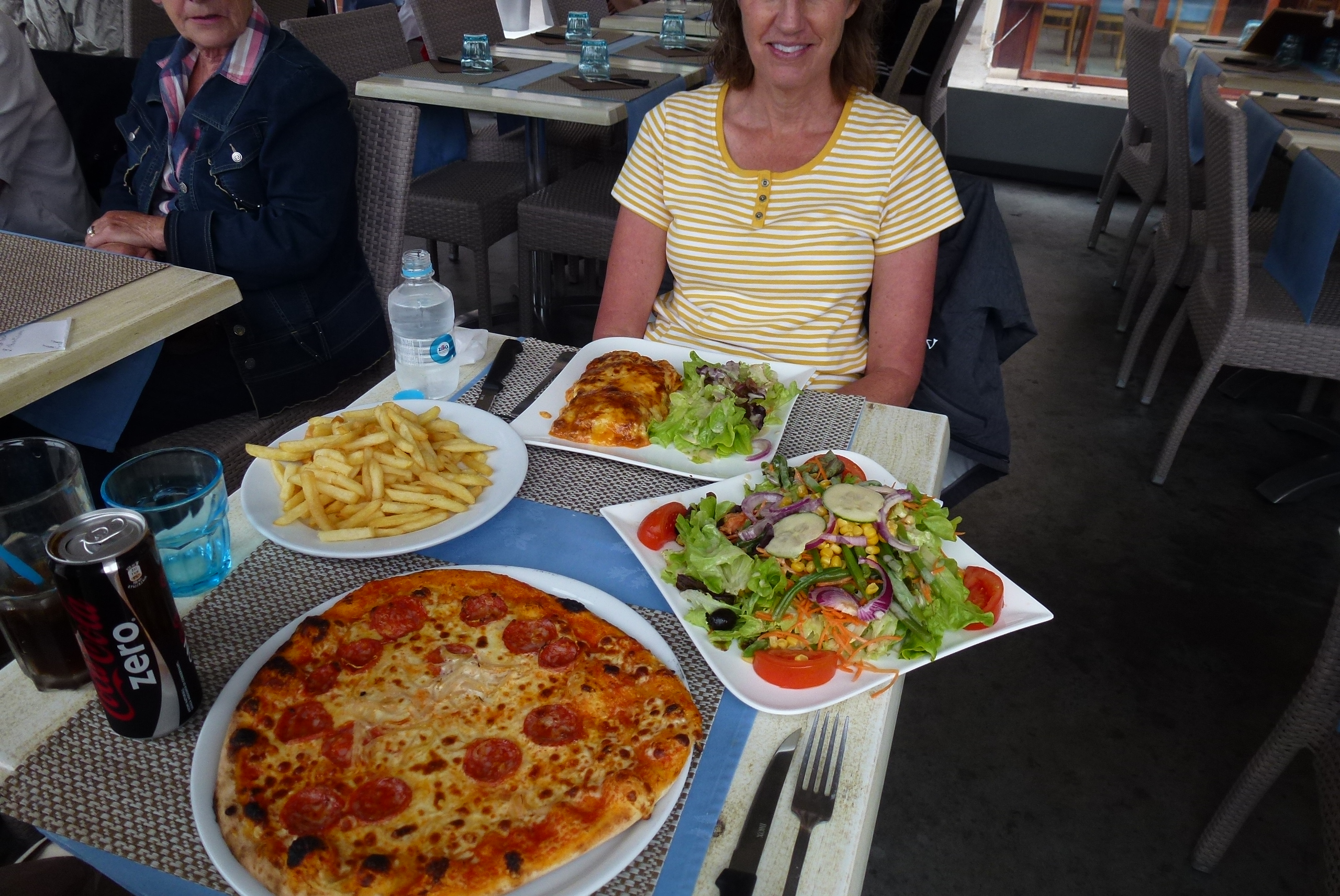
An example of the excellent food found in Corsica – with heavy Italian influence.

Corsica offers the tourist a large variety of things to do: hiking, climbing, four wheeling, mountain scenery, kayaking, beautiful beaches, prehistoric sites and some very cool old fortified towns with huge bastions. We visited in October, and while the island was quieter, the weather was still good. During the summer, the towns on the coast are a magnet for sailboats and yachts from all over Europe.

We spent about a week on Corsica, starting our visit in Ajaccio and then taking a clockwise one-way route through the island. We rented a car and although distances aren’t far, the roads are winding and fairly slow. Luckily the local drivers were pretty patient with us as tourists, but I pulled over to let them pass every chance I got.

Ajaccio. We flew in to Ajaccio from Nice. It was a good place to start our trip. Ajaccio is the capital of Corsica and the birthplace of Napoleon Bonaparte. It has a quaint old quarter, situated on a bay on the west coast of the island.

Ajaccio Corsica (15)

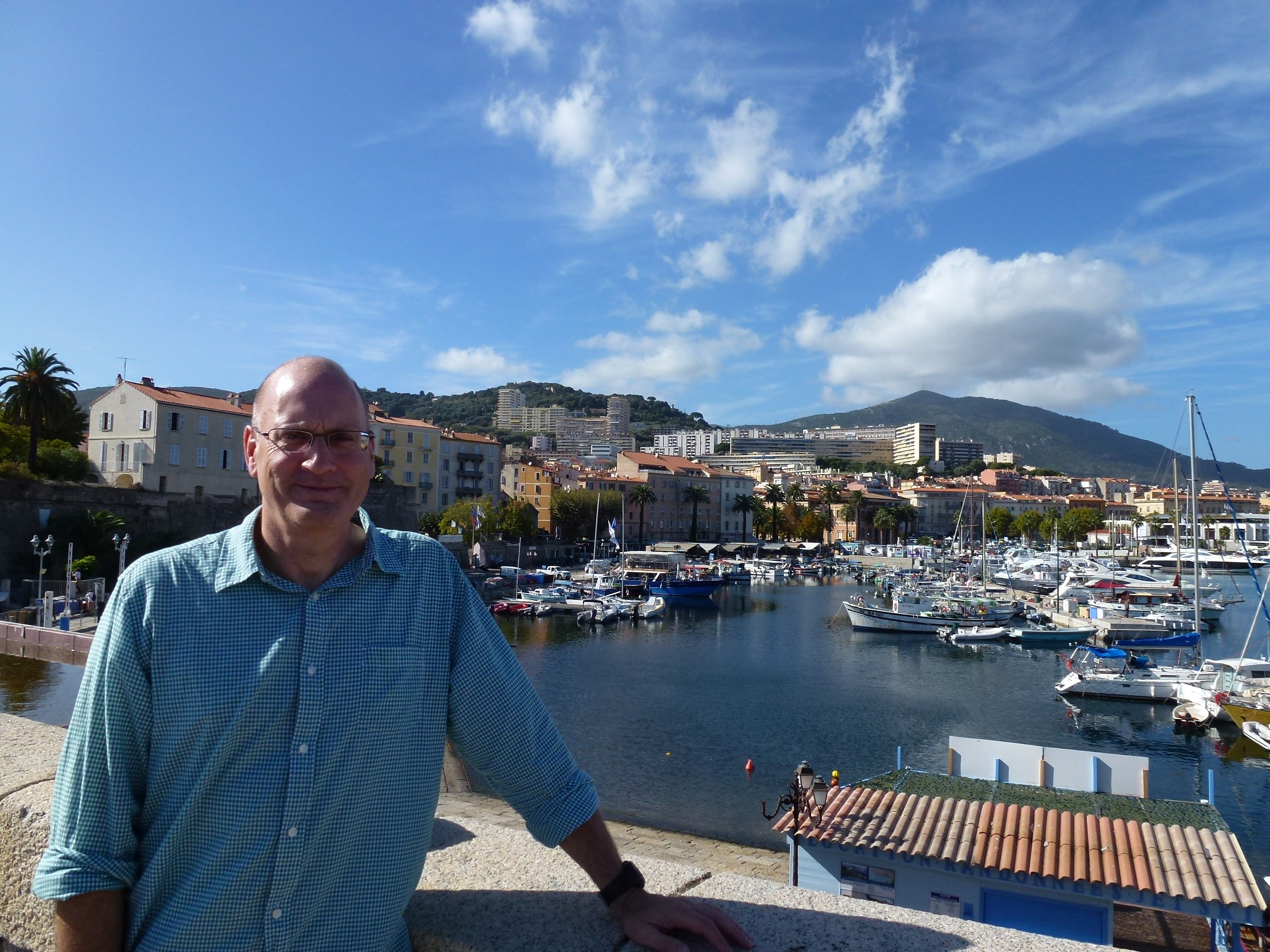
A view of Ajaccio’s harbor.

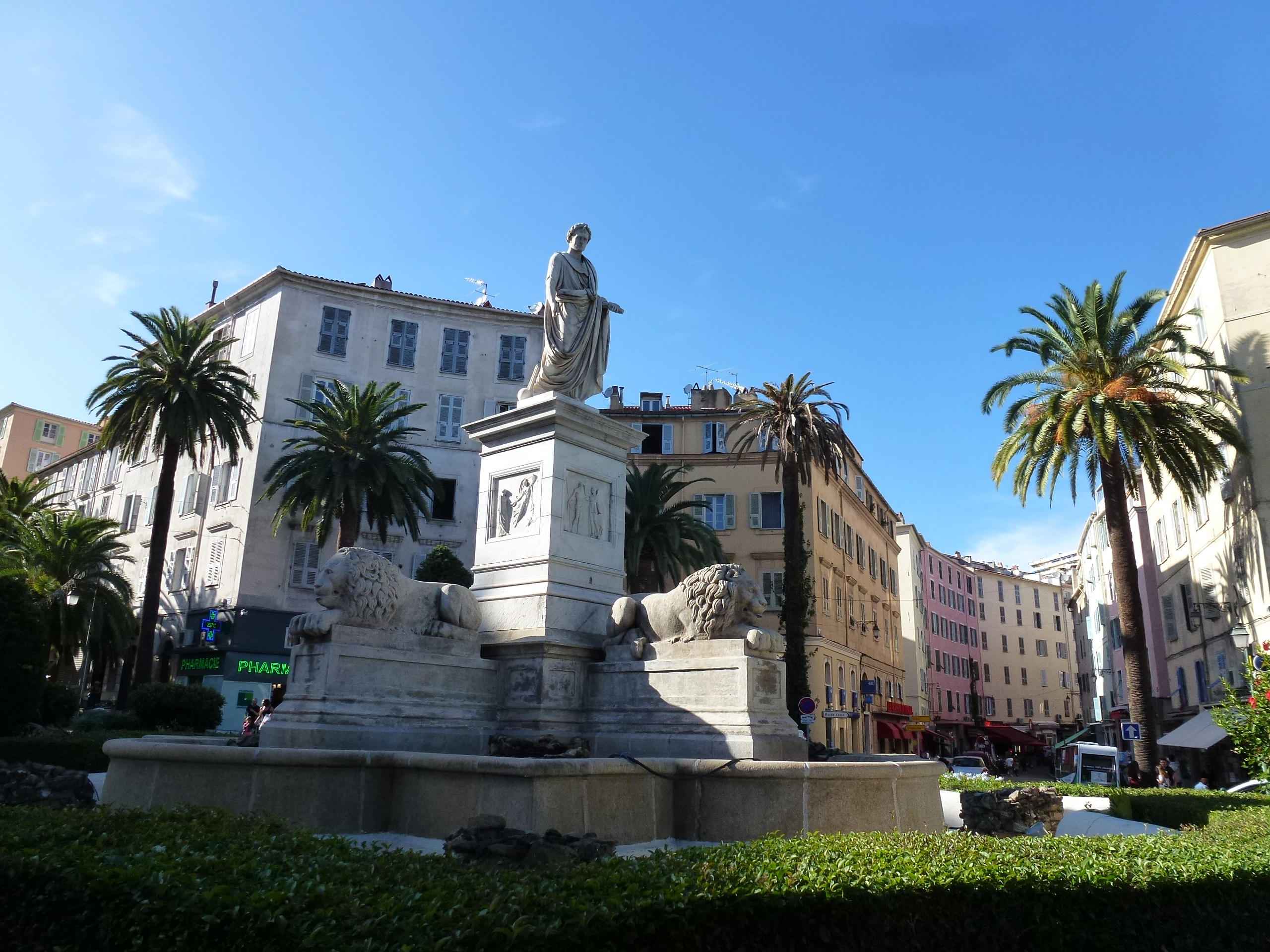
Napoleon, the early 19th century emperor of France, looms large over Ajaccio, his image can be found in several spots in Ajaccio.

Napoleon Statue Ajaccio Corsica (26)

Statue of Napoleon in the form of a Roman emperor in old town Ajaccio.

One of the main sights in Ajaccio is Napoleon’s home and the church where he was baptized.

Bonaparte House Ajaccio Corsica (14)

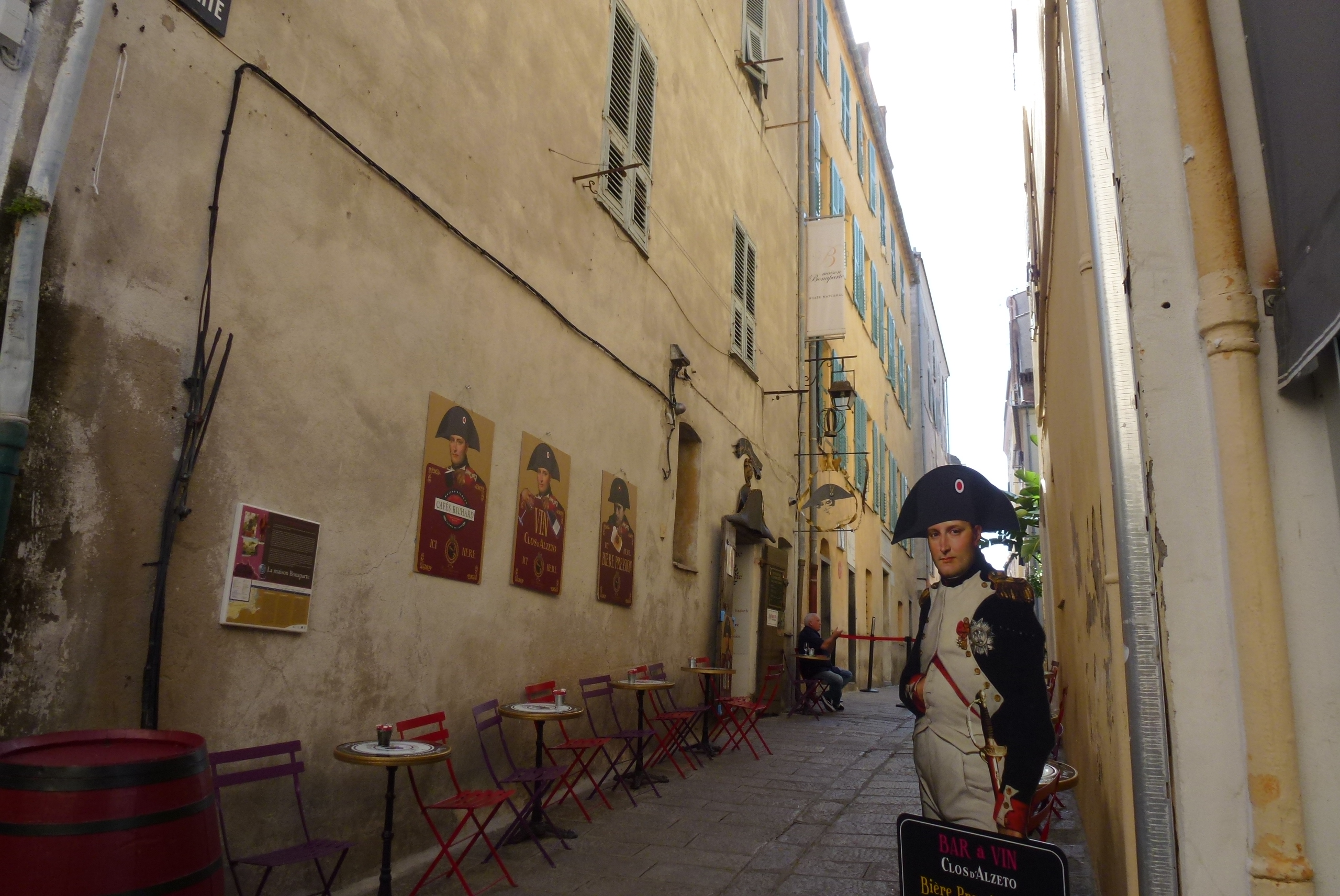
The street in Ajaccio where Napoleon was born. His house is the building with the green shutters behind his caricature.

Ajaccio Cathedral Corsica (20)

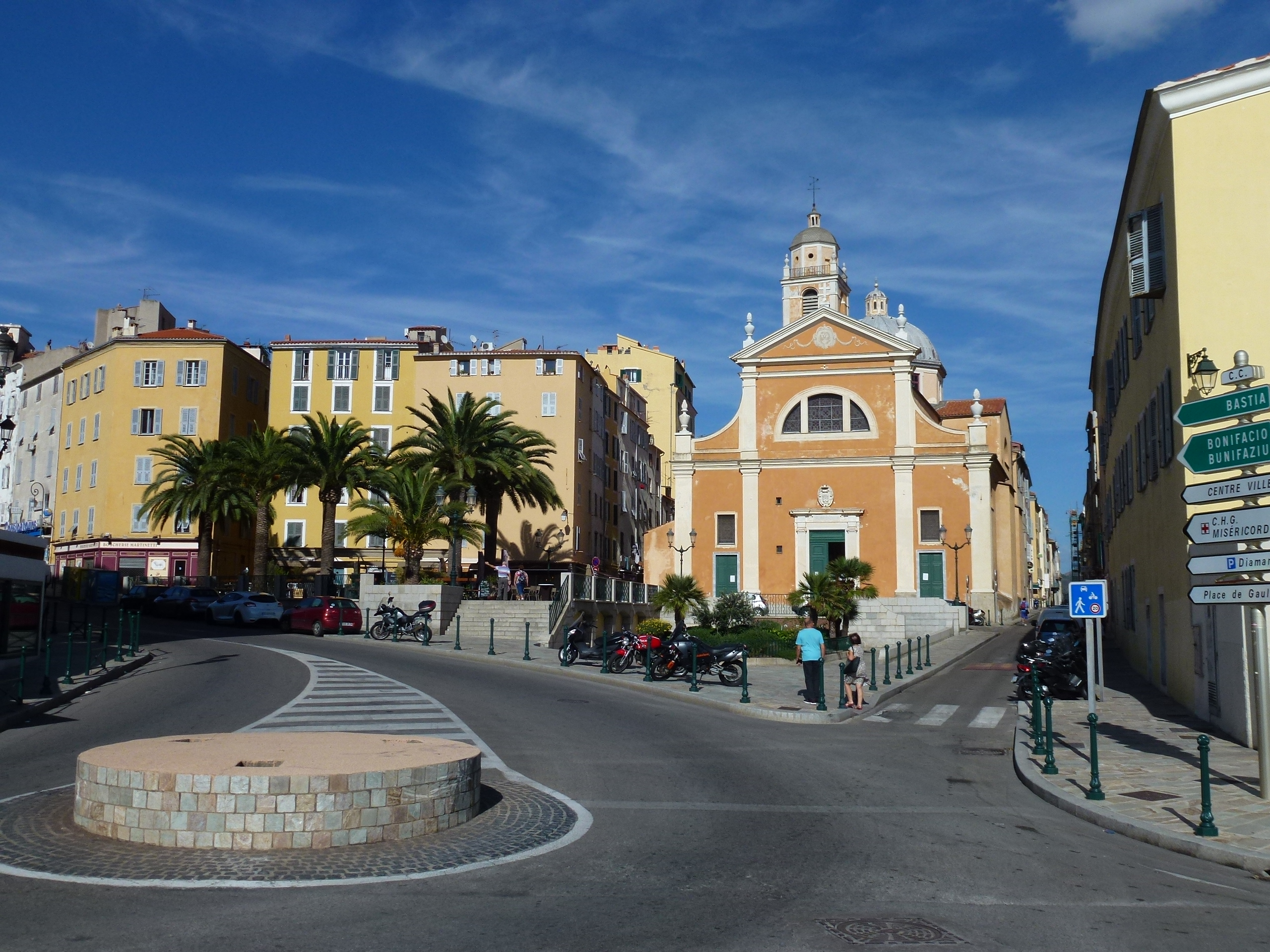
The orange hued Ajaccio Cathedral, where Napoleon was baptized.

Like many costal Corsican towns, Ajaccio has a 15th century fortress guarding the entrance to the protected bay. The fortress is still used by the military and therefore is off limits to tourists.

Ajaccio Corsica (19)

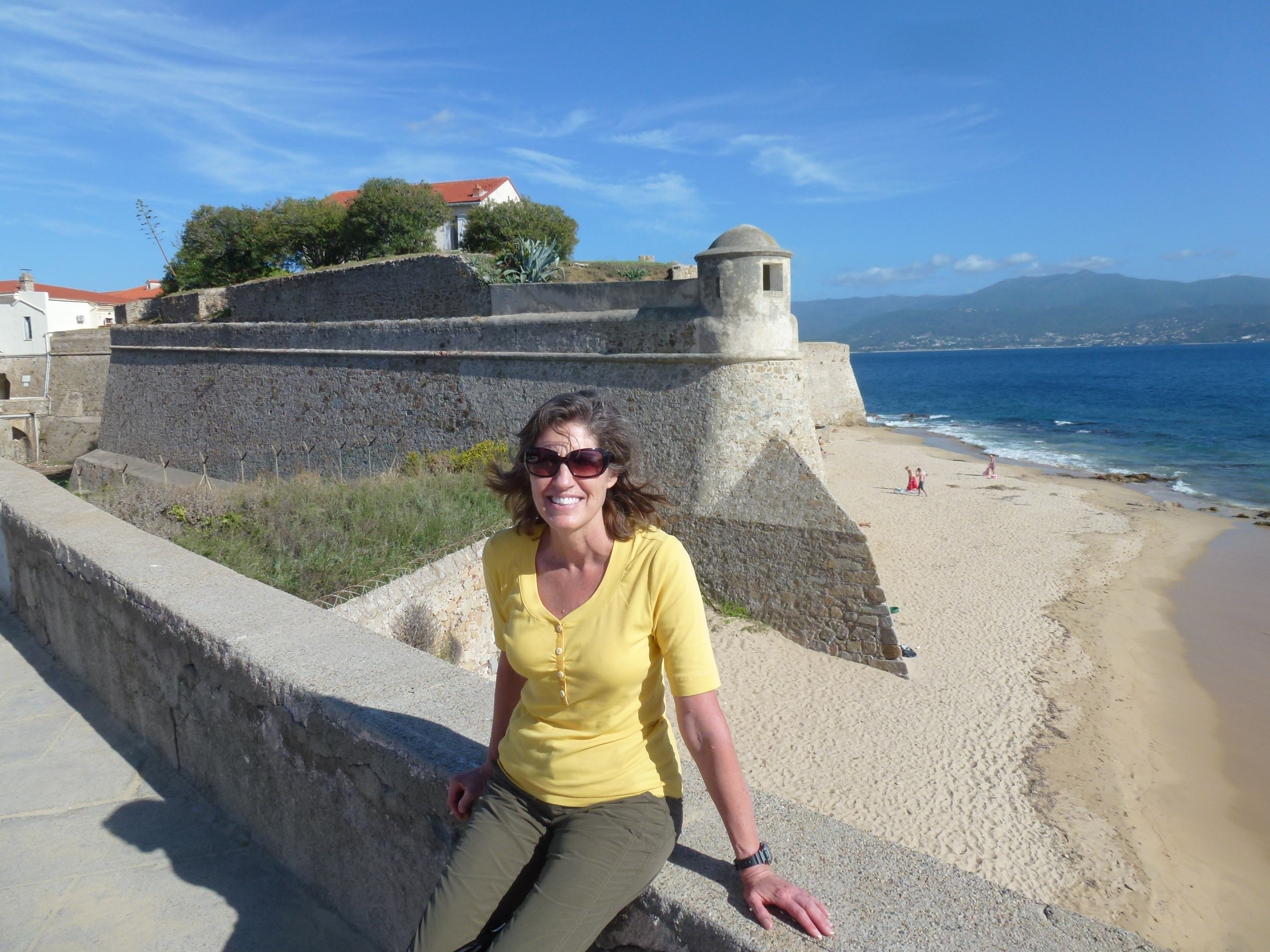
Ajaccio’s Citadelle or fortress, built originally by the Genoese, housed resistance fighters during World War II.

Coastal and Mountain Scenery. We took a day trip north of Ajaccio through the mountains and along the coast. It is a stunningly beautiful island, and even in October I was impressed how green the island is. We had just one day of rain during our visit.

Ota Corsica (2)

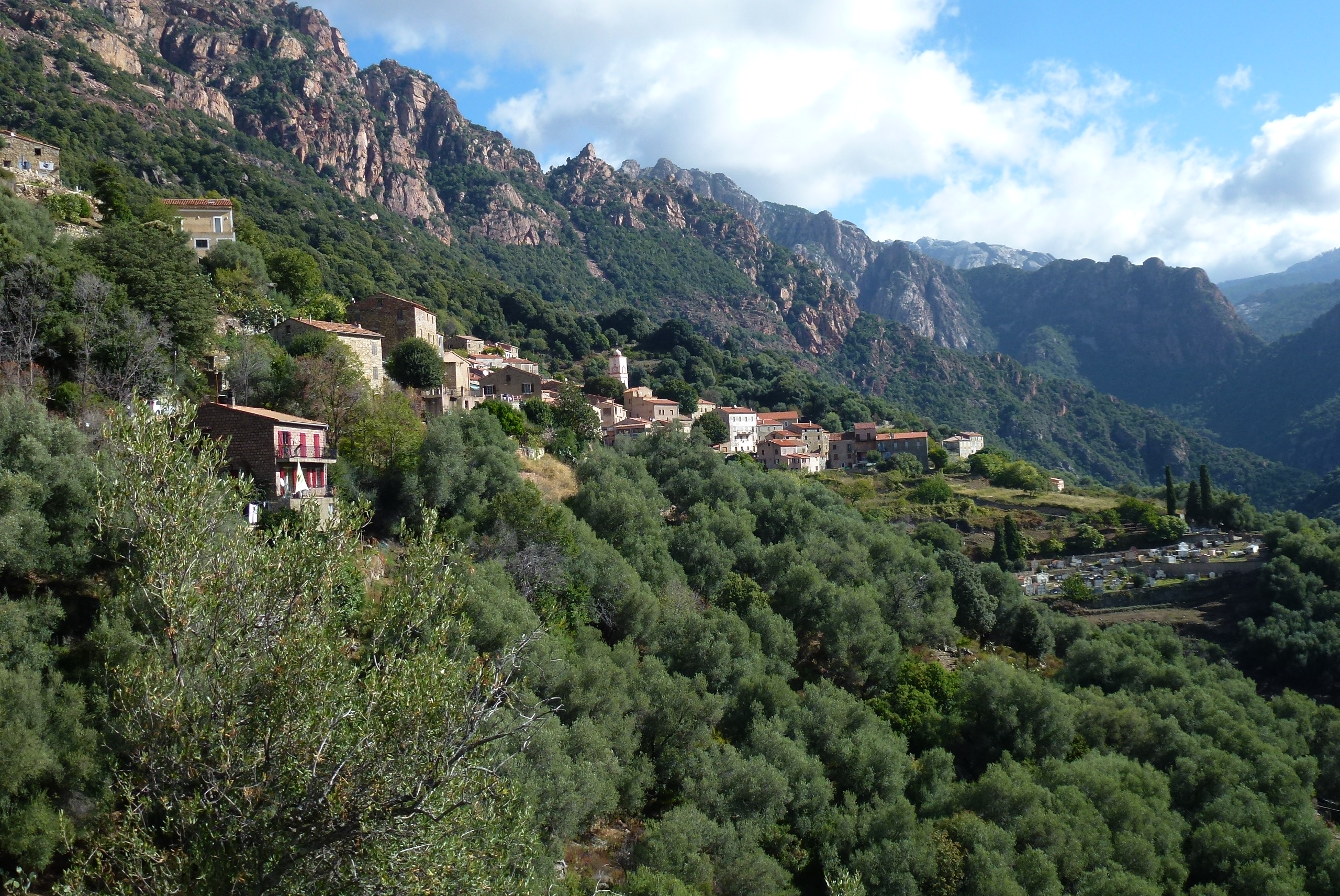
The village of Ota, near the Spilonca Gorge, a mountain park and hiking area.

There are little villages nestled high on the steep hillsides. The backcountry has some great trails and rushing rivers. The coastline of Corsica is a mix of rugged terrain and secluded beaches.

Corsica (11)

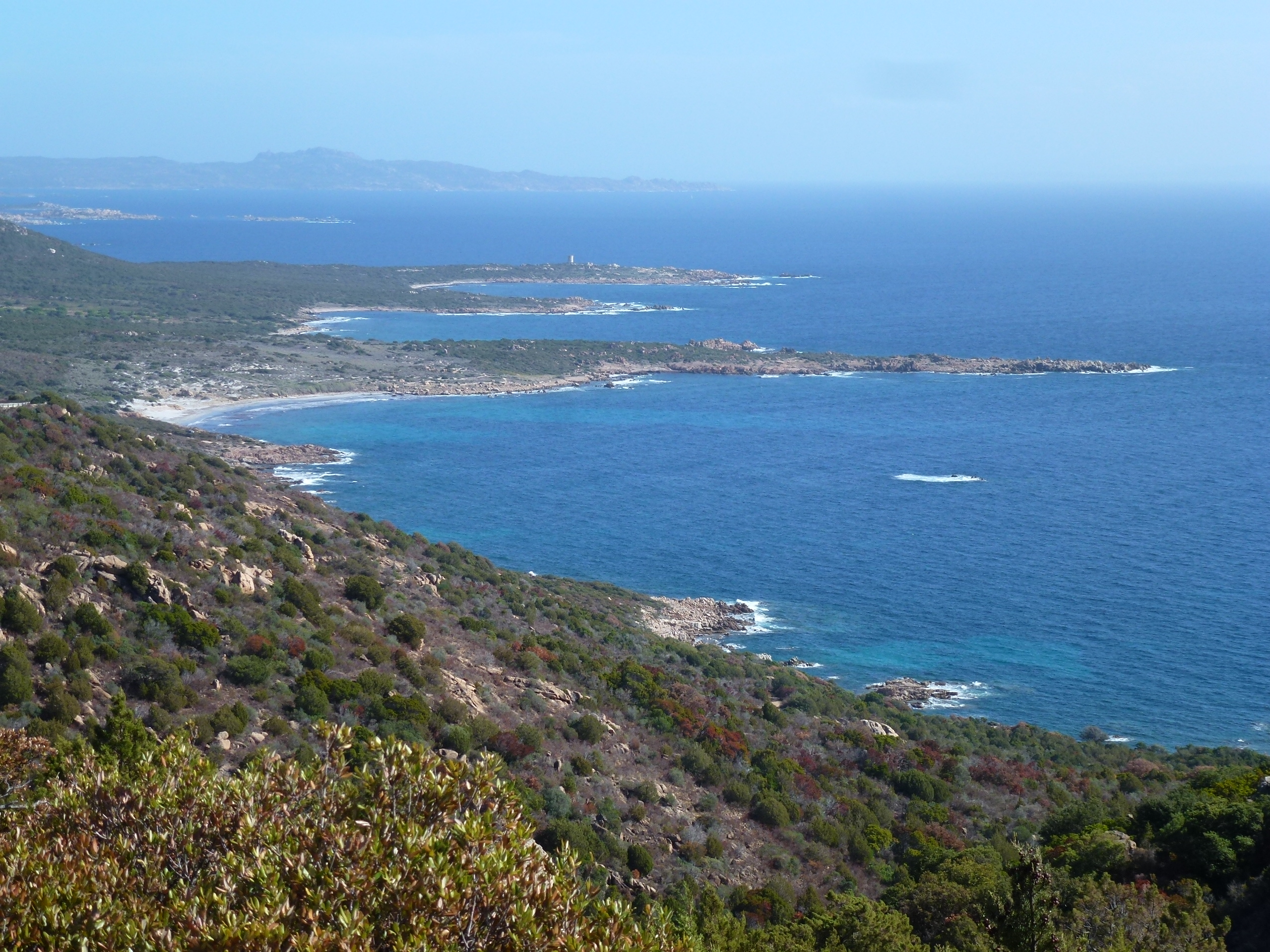
The beautiful coastline on the southwestern side of Corsica. In the distance is the island of Sardinia.

Towers. There are 15th and 16th century towers dotted all along the coast, 91 of them in total, which were watch towers on the lookout for pirates and also light houses for the Genoese sailors.

Tour de la Parata Ajaccio Corsica (7)

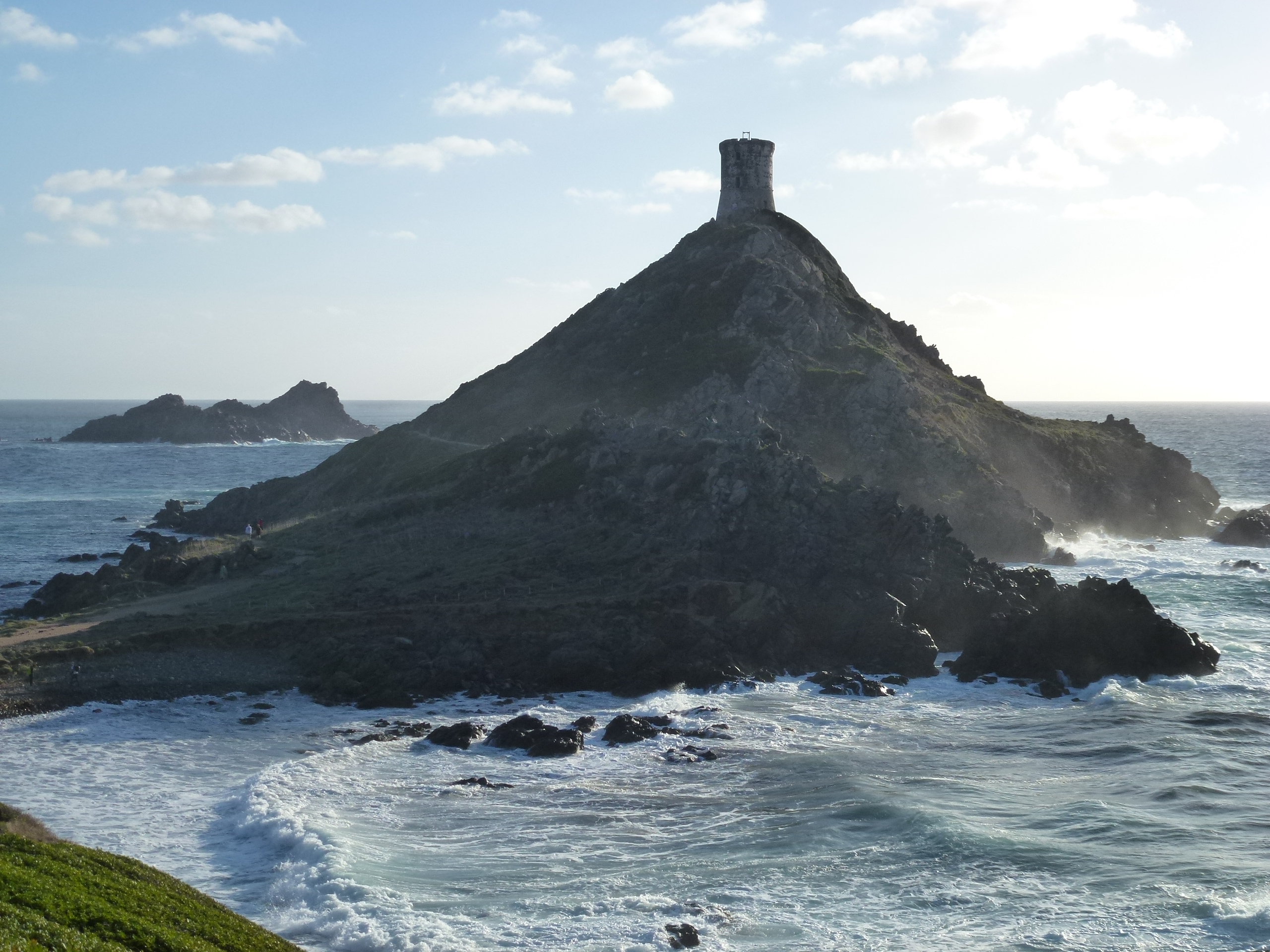
This tower, called Tour de la Parata is close to Ajaccio.

Porto Corsica (3)

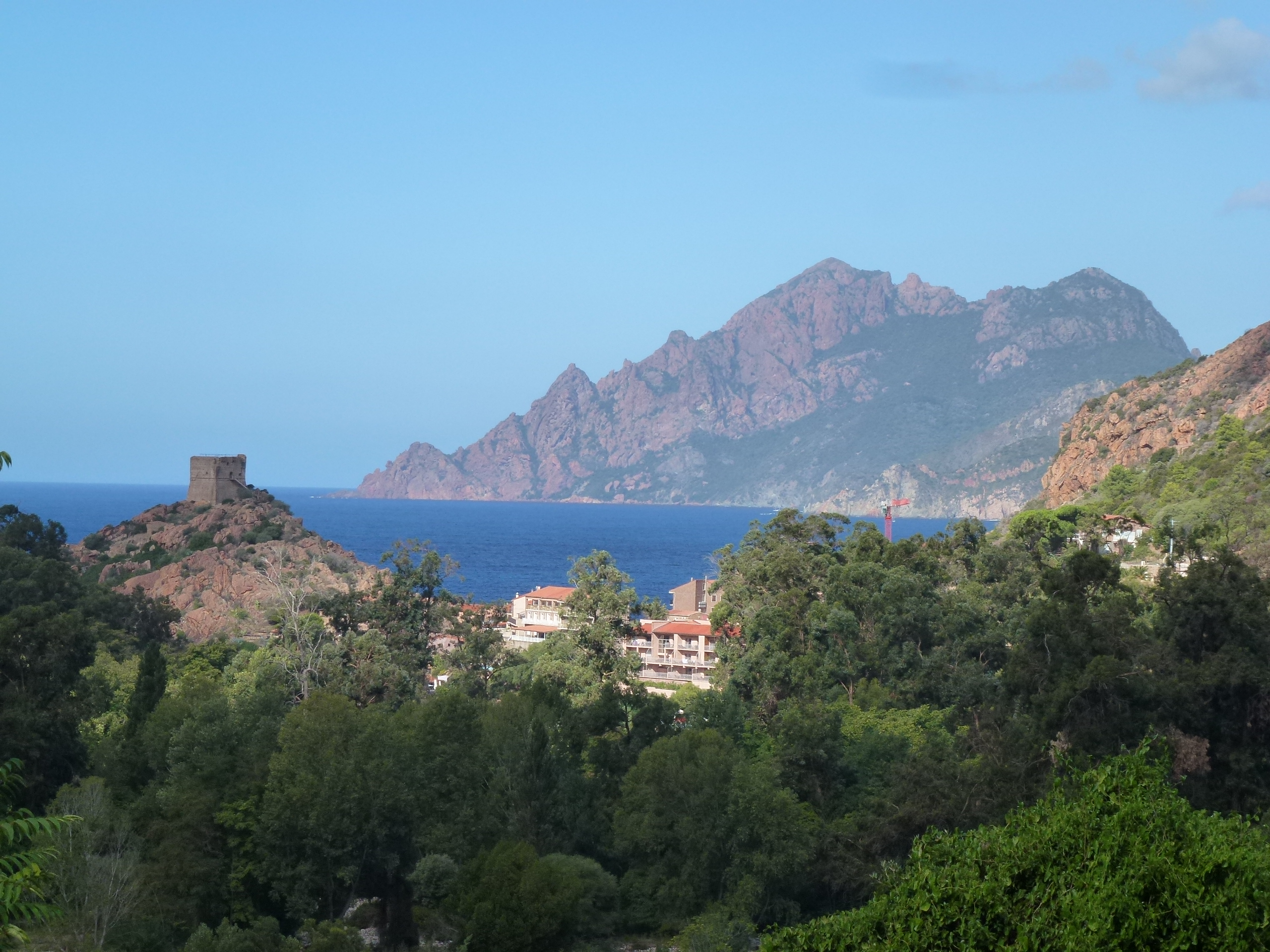
A view of the small town of Porto, north of Ajaccio, with its 15th century tower (left side of image).

Corsica

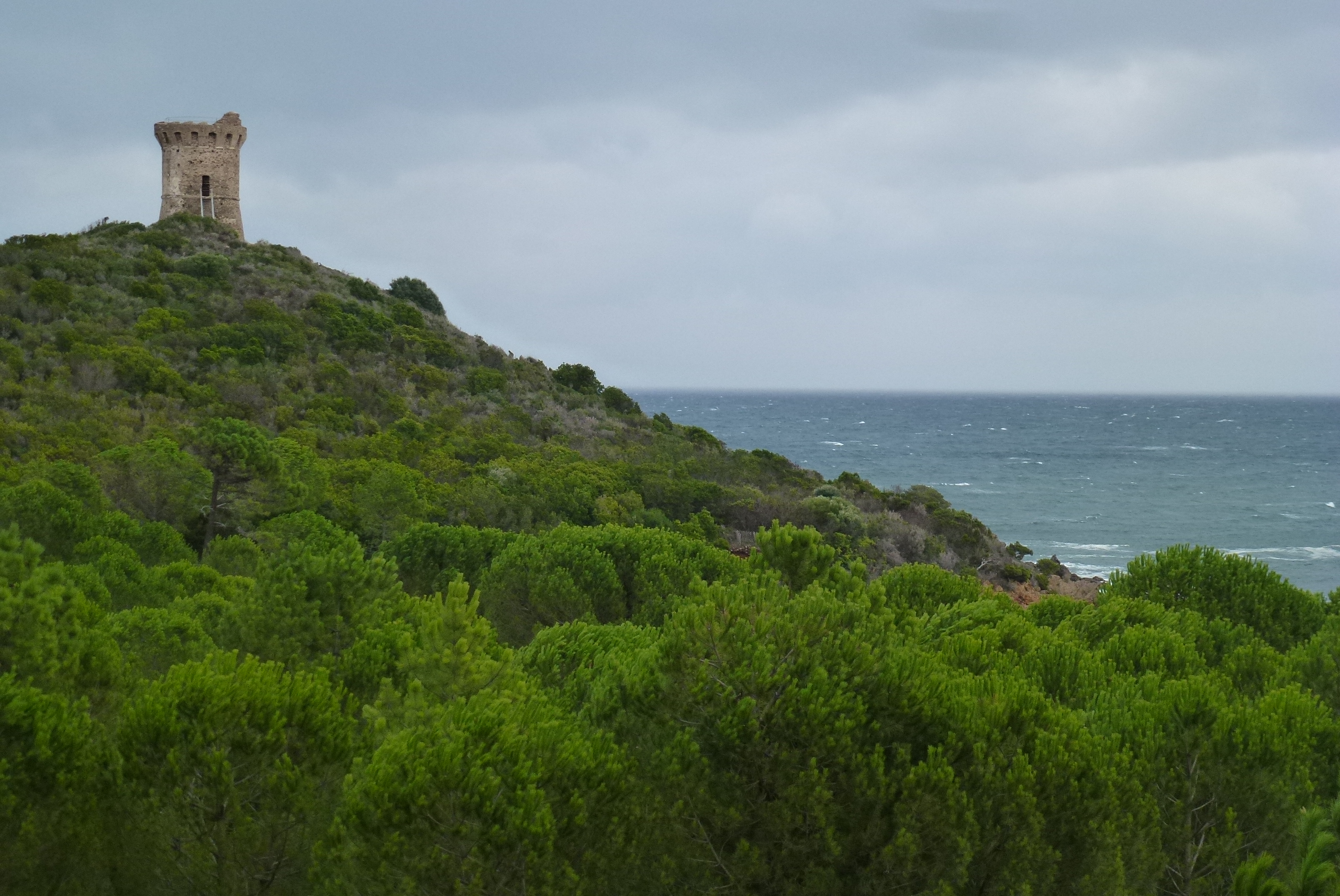
Another tower along the west coast of Corsica.

Many of the towers are not accessible, but a few are. They give the coastline a unique feel, standing as they have for centuries against the wind and the waves.

Pisan Churches. Also throughout the island are tiny churches from the medieval era, many built by the Pisans in the 12th and 13th centuries. Each is unique, but the style is generally familiar to what one finds in northern Italy.

Bastia Corsica (52)

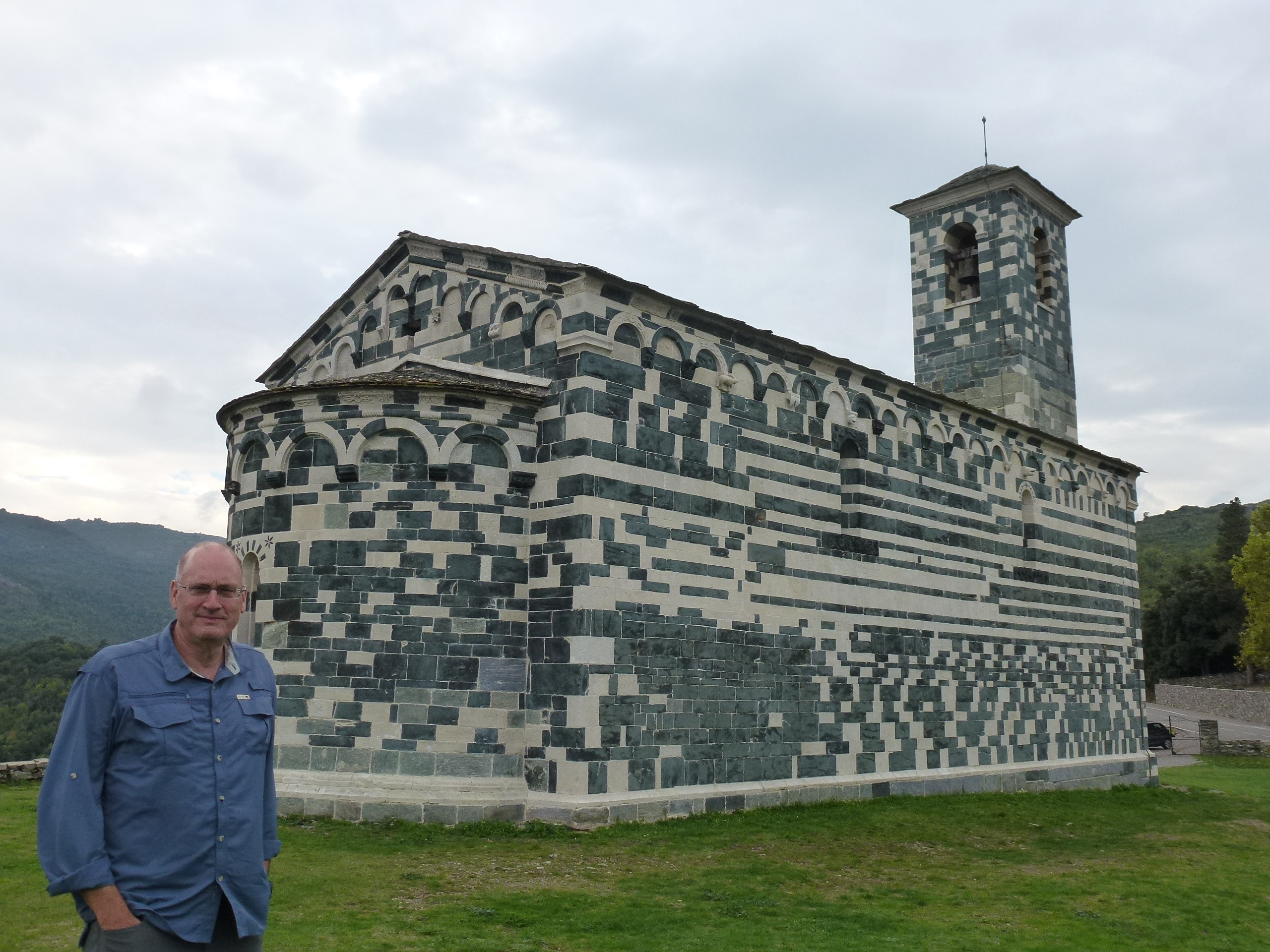
The little 13th century Saint Michel de Murato church near Bastia.

Bastia Corsica (54)

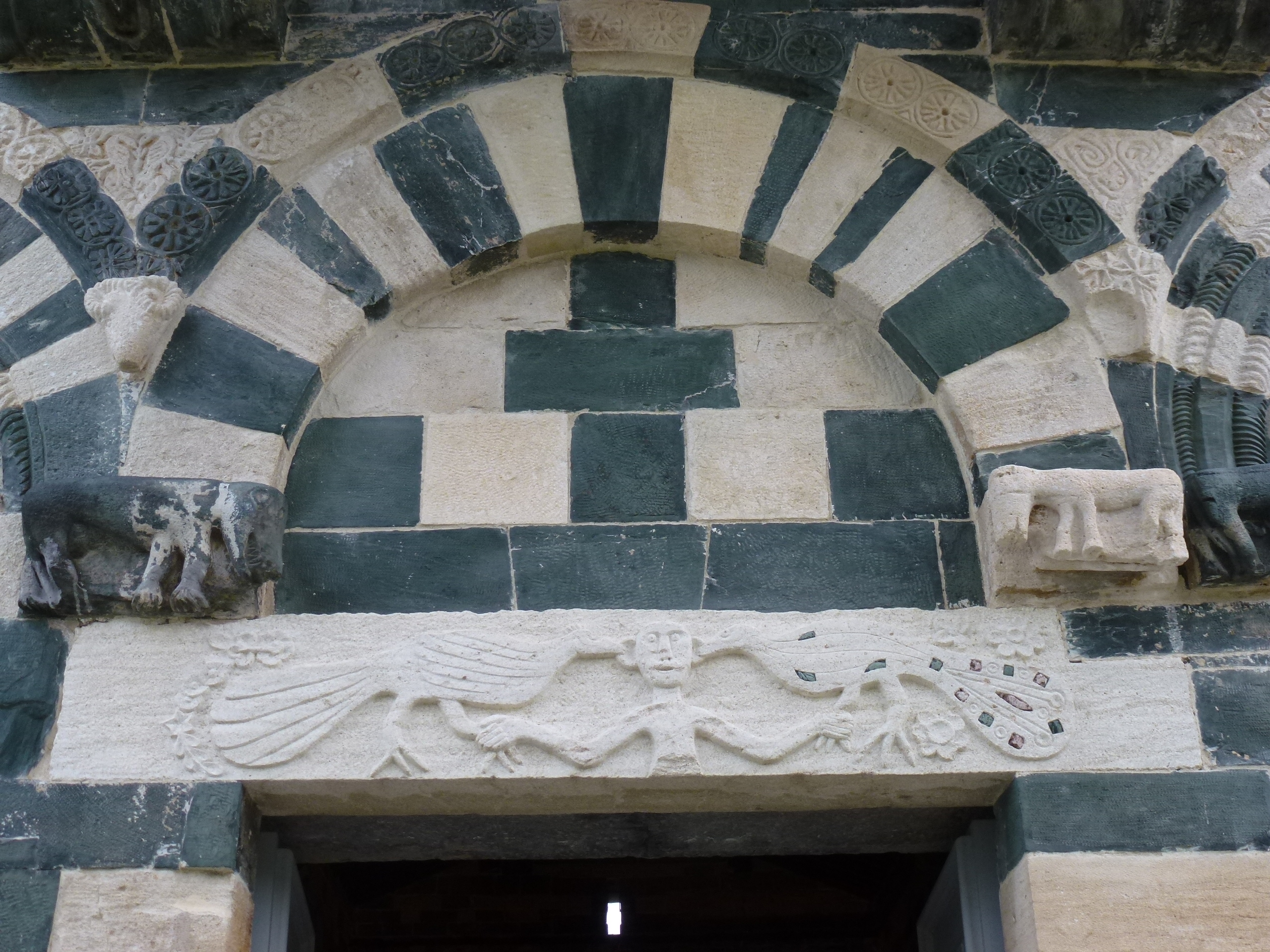
A close-up of one of the carvings on the exterior of Saint Michele de Murato.

Eglise de la Trinite et de San Giovanni Aregno Corsica (5)

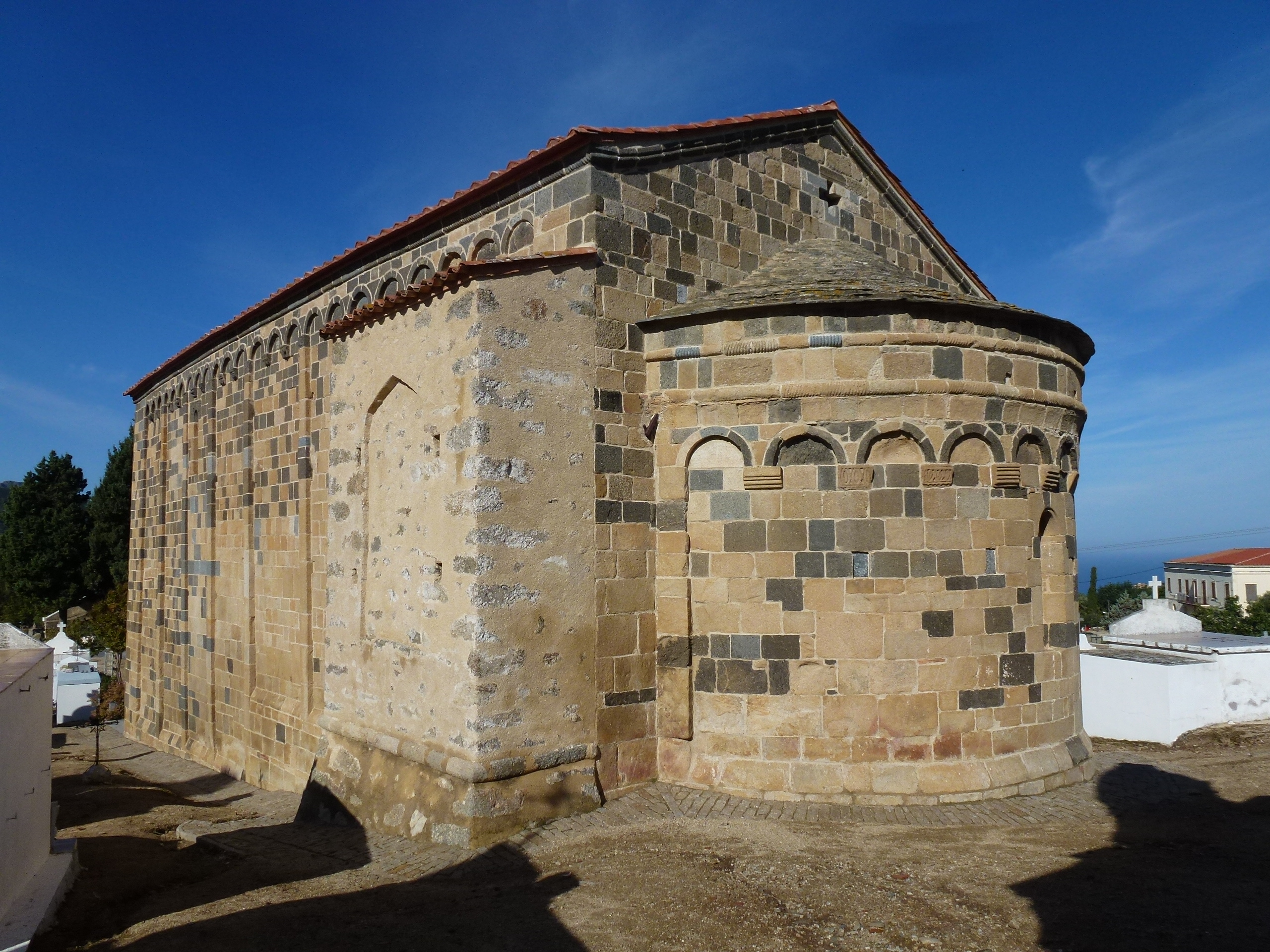
This 12th century church, Eglise de la Trinite et de San Giovanni, is near Aregno, Corsica.

Bastia Corsica (4)

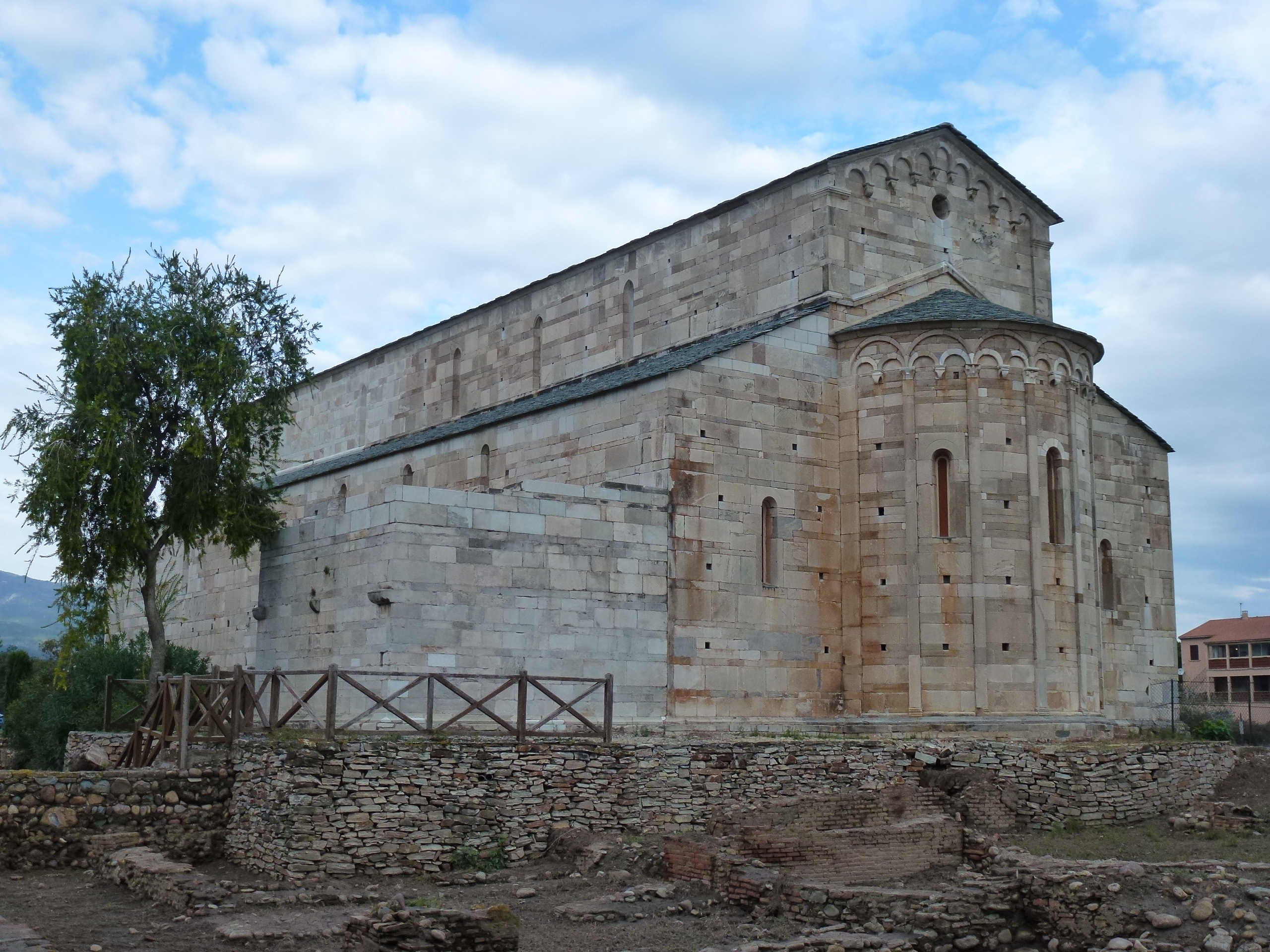
La Canonica. This little church was built by the Pisans in 1119 on the site of a 4th century basilica. It sits next to some Roman ruins, near Bastia.

In parts 2 and 3 of my posts on Corsica, I will review other sights and towns as we traveled south and east around the island.

The Canary Islands – Part I

Overview

If you want to visit a part of Europe that most Americans aren’t familiar with, consider the Canary Islands, an archipelago of 7 islands belonging to Spain located off the west coast of Africa. We wisely decided to visit the Canary Islands following our two weeks in nearby Morocco. We visited two islands (Gran Canaria and Tenerife), which are two of the largest and most developed islands. There are direct flights from Casablanca to the Canaries.

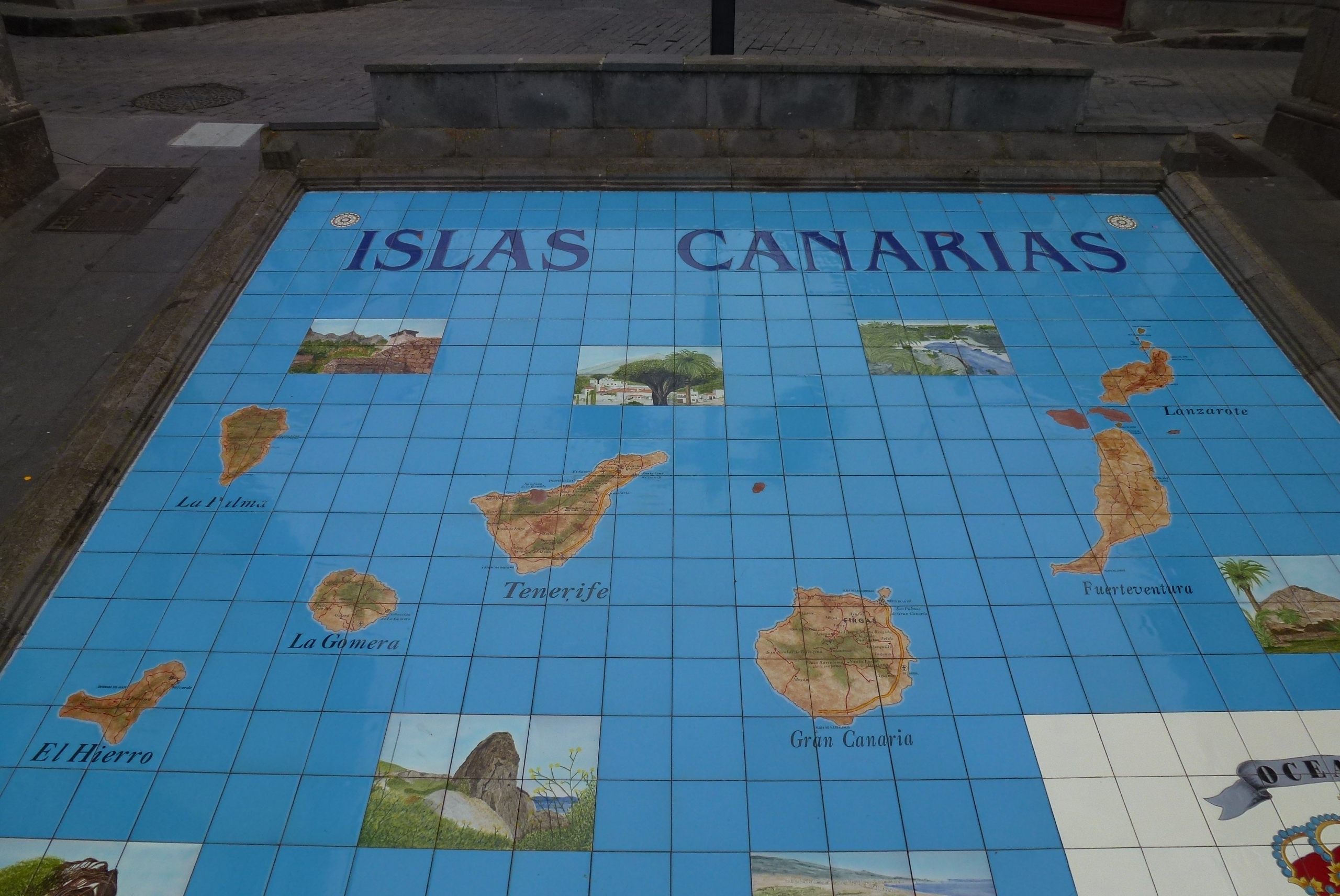
Firgas (1)

A map of the Canary Islands. We visited Gran Canaria (the circular island in the lower center) and Tenerife, to the northwest of Gran Canaria.

Even though these two islands house most of the local population, you can find remote and quiet areas very quickly. We really enjoyed this part of our trip. The difference between Morocco and the Canaries was a bit of a culture shock (the pace of traffic, roads, lifestyle, etc.), and we felt we were stepping from one world to another after our 1.5 hour flight.

Gran Canary Scenery (5)

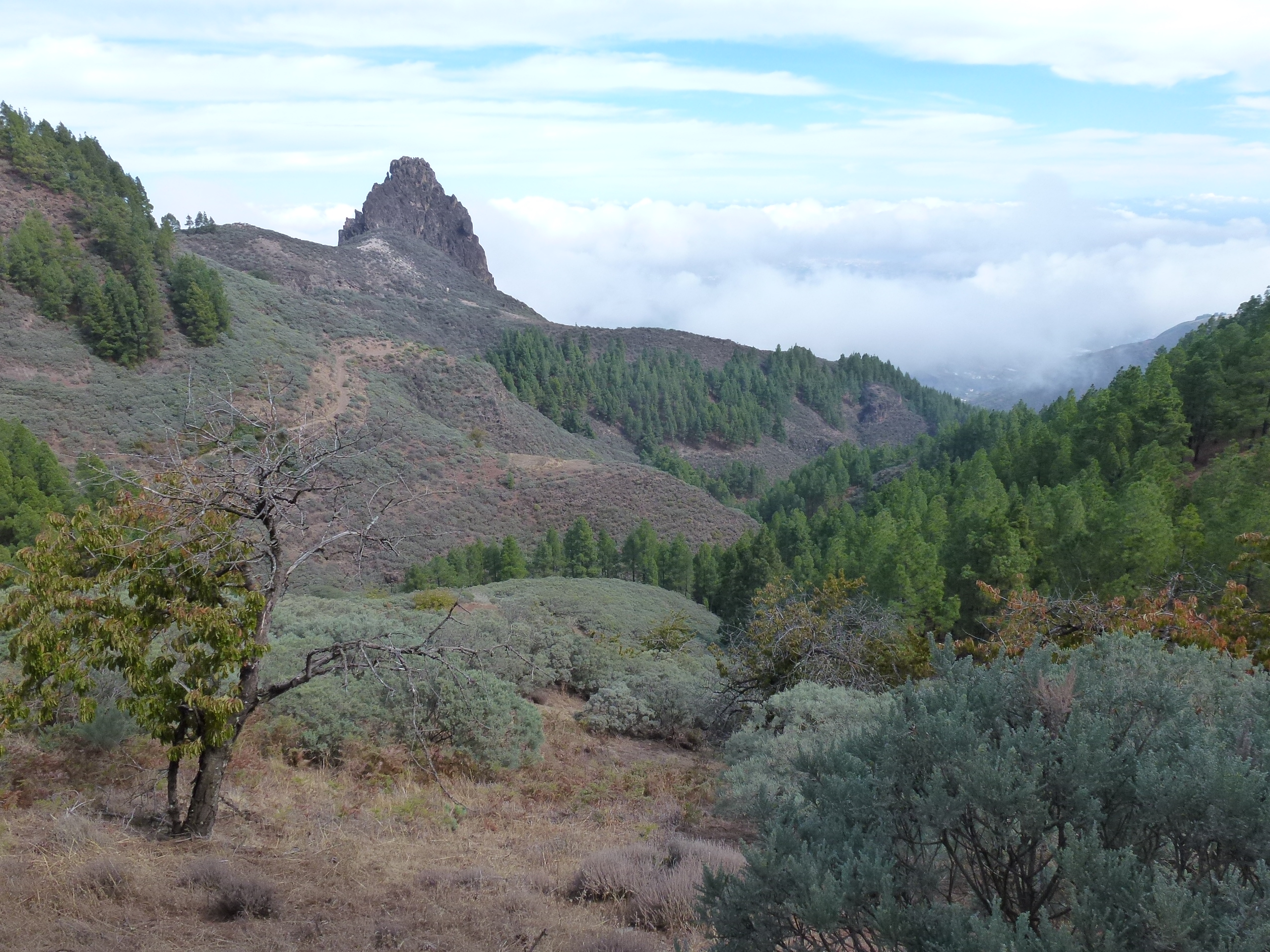
The landscape of Gran Canaria, near the caldera of the volcano that was the island’s origin. The elevation here is about 6,000 feet.

For a combination of rugged volcanic mountains, loads of hiking trails, beautiful beaches and small quaint European towns, the Canary Islands are hard to beat.

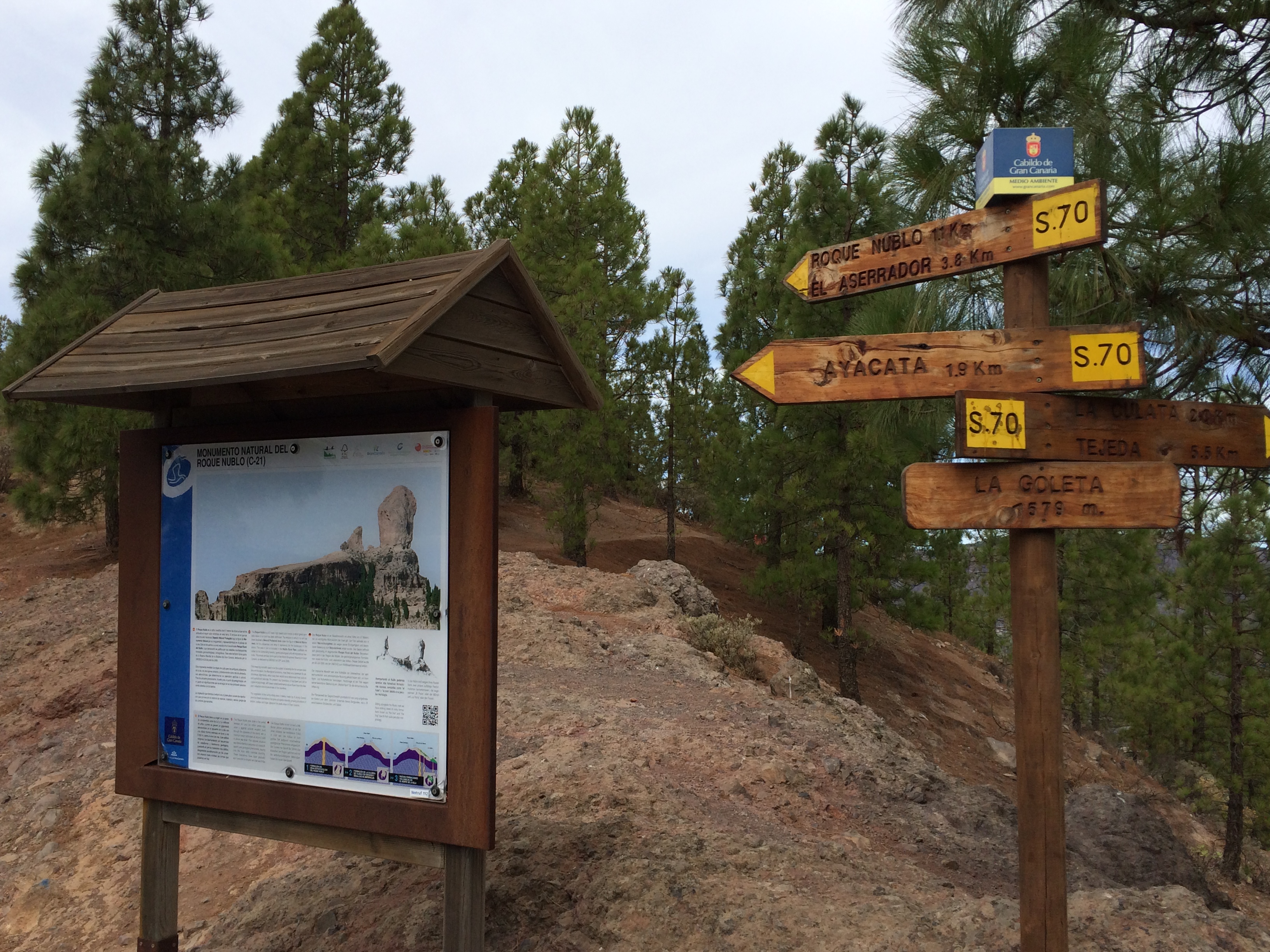
Gran Canaria Hiking Sign

A sign showing hiking trails in the mountains of Gran Canaria.

The Canaries are only about 100 miles (depending on the island) off the coast of Western Sahara, a region of Africa administered by Morocco. While Spanish is the primary language, the high number of tourists (and residents) from the UK make English more common than in mainland Spain. Even though these islands are close to the Sahara Desert, they have a mild climate and pleasant temperature all year long. The climate zones vary greatly within each island and from island to island due to changes in elevation and the prevailing winds. Some areas are a bit desert-like, other areas are forested and green, and you’ll find everything in between.

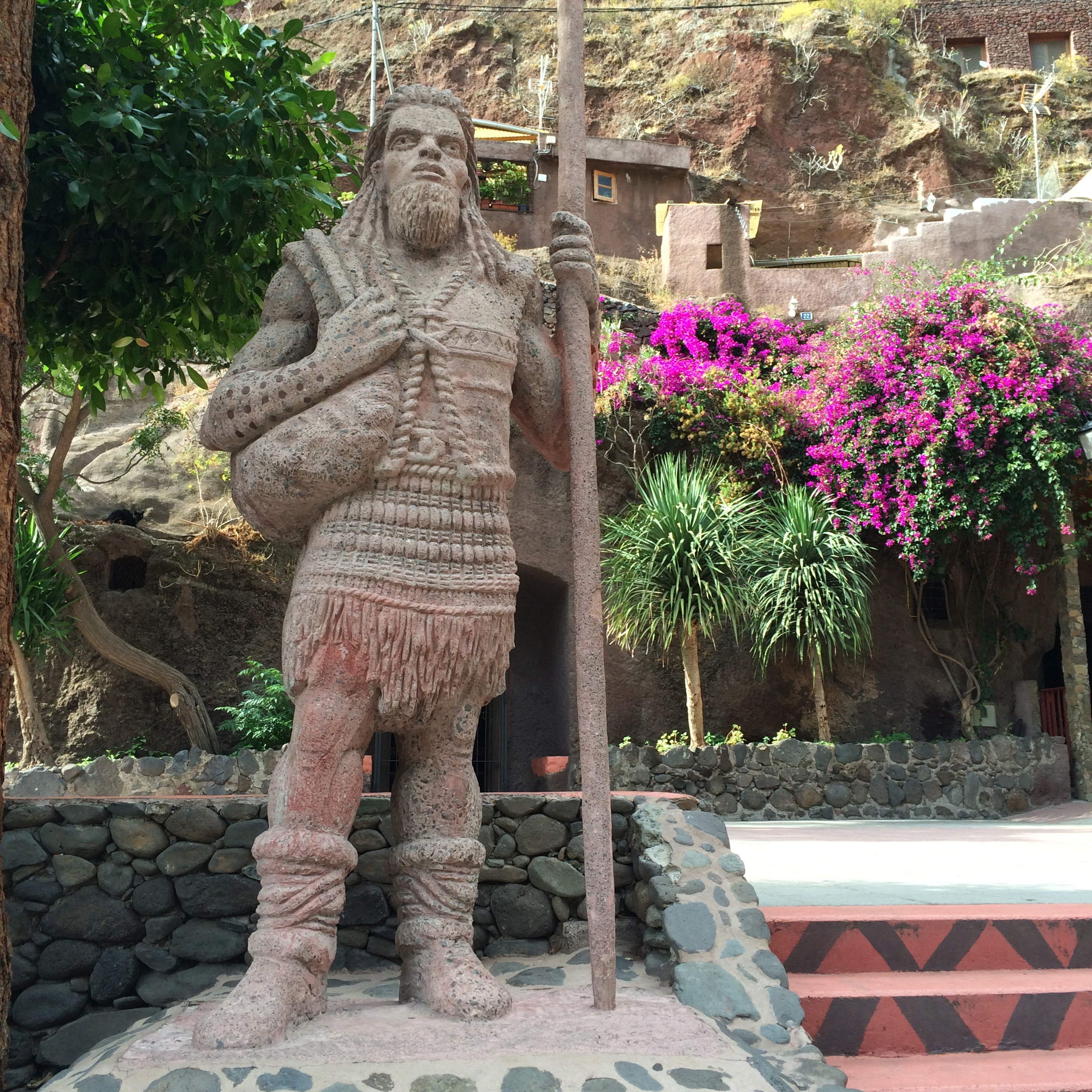
Gran Canaria Guanches (2)

The Guanches were the native people of the Canary Islands, who were essentially wiped out during the Spanish conquest of the Canary Islands.

To get around each island we rented a car (the roads are good, although sometimes more narrow than mainland Europe). To get from island to island there are numerous flights as well as ferries (we flew to save time).

I’ll share a bit about Gran Canaria in this post and then share more about Tenerife in my next post.

Gran Canaria

This island (and its largest city, Las Palmas) is the capitol of this region of Spain and the main business hub for the Canaries. Although the island is not big (about 35 miles diameter), many of the roads are narrow, steep and winding, so it takes longer than you might think to get across the island. There is one major freeway on the eastern shore.

Las Palmas Playa de las Canteras (45)

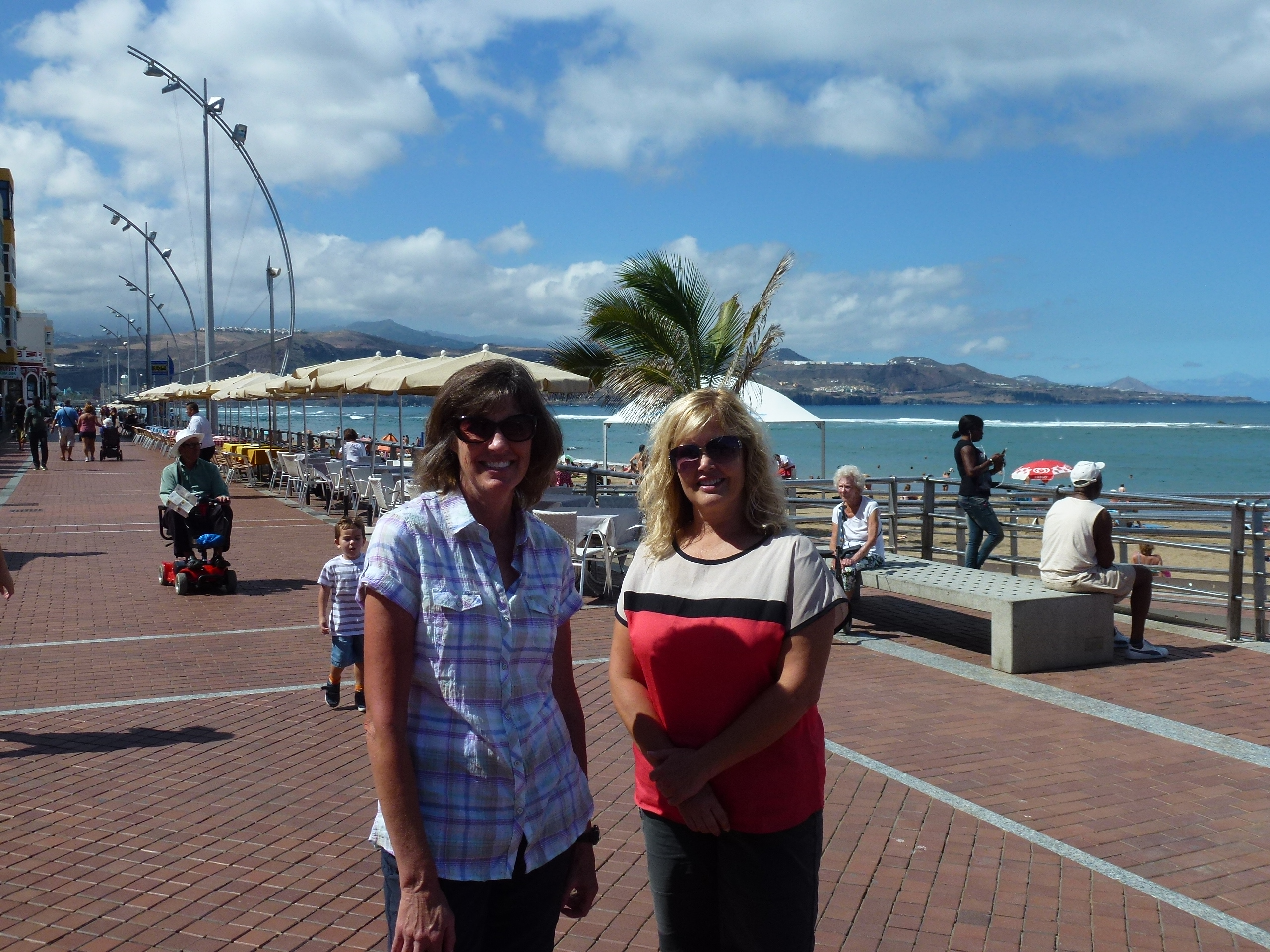
One of the main beaches and boardwalks in Las Palmas, Playa de las Canteras.

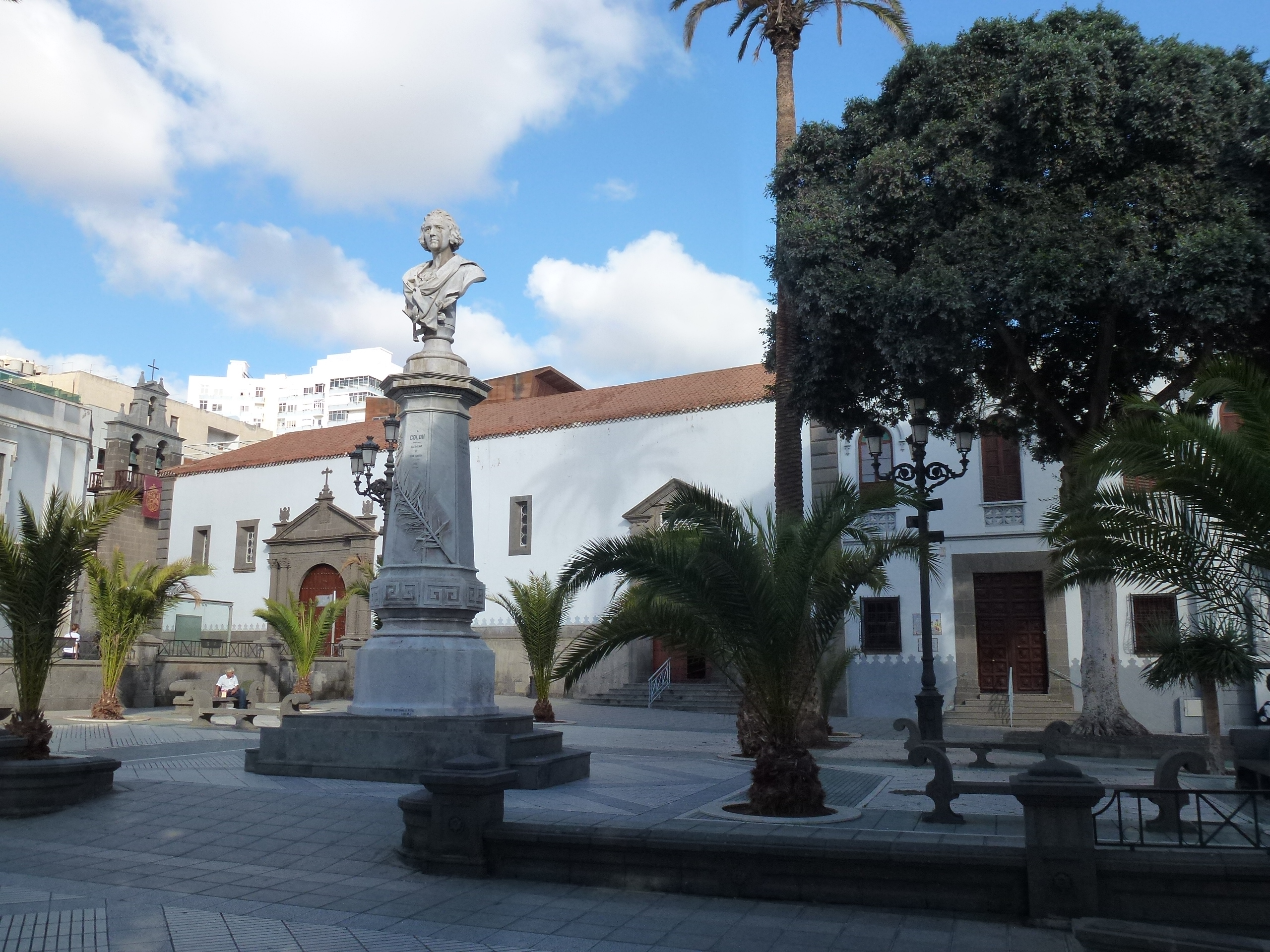
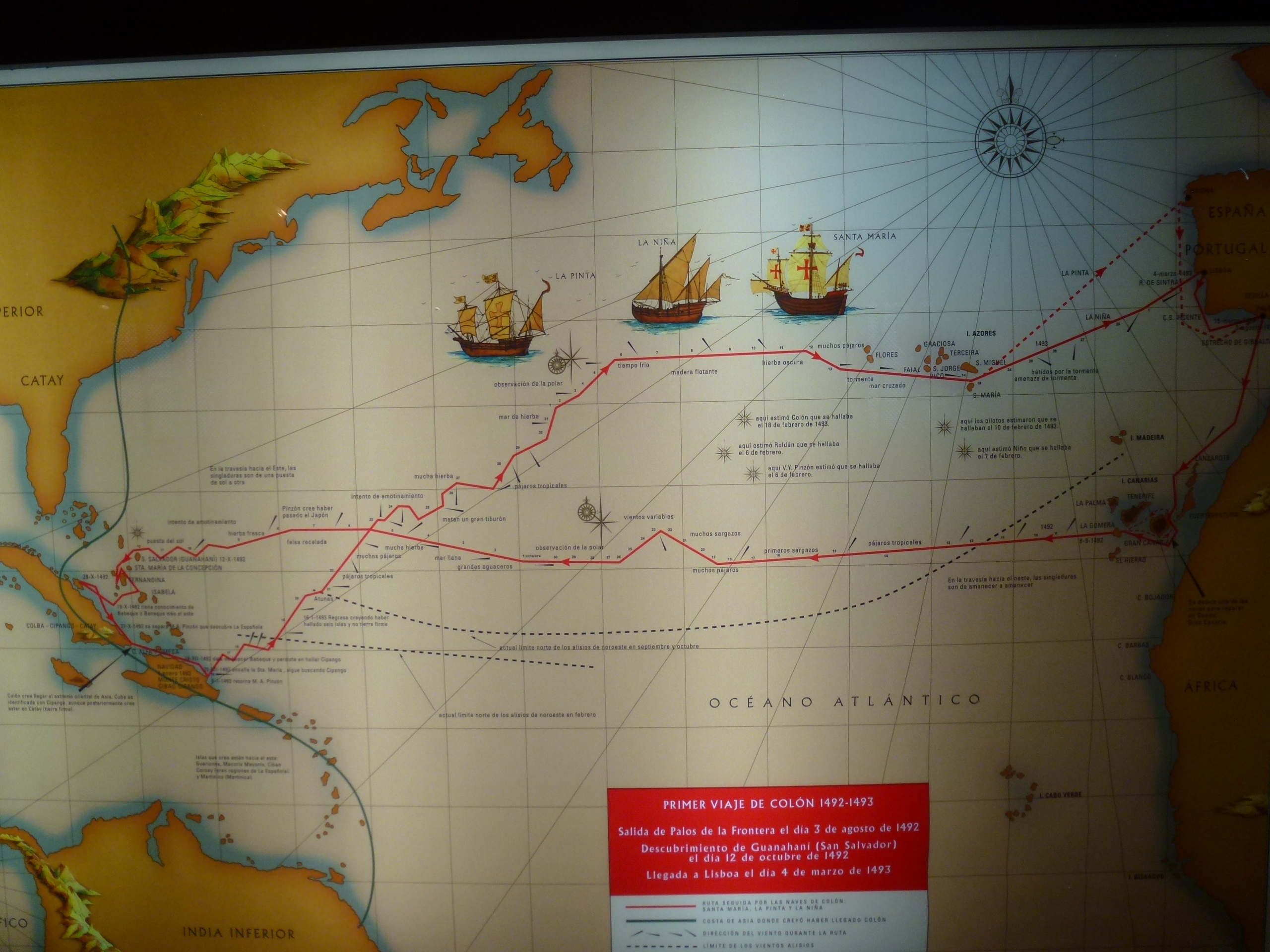
Columbus visited Las Palmas to take on supplies on his first voyage to the New World.

Las Palmas (23)

Statue of Columbus in Las Palmas.

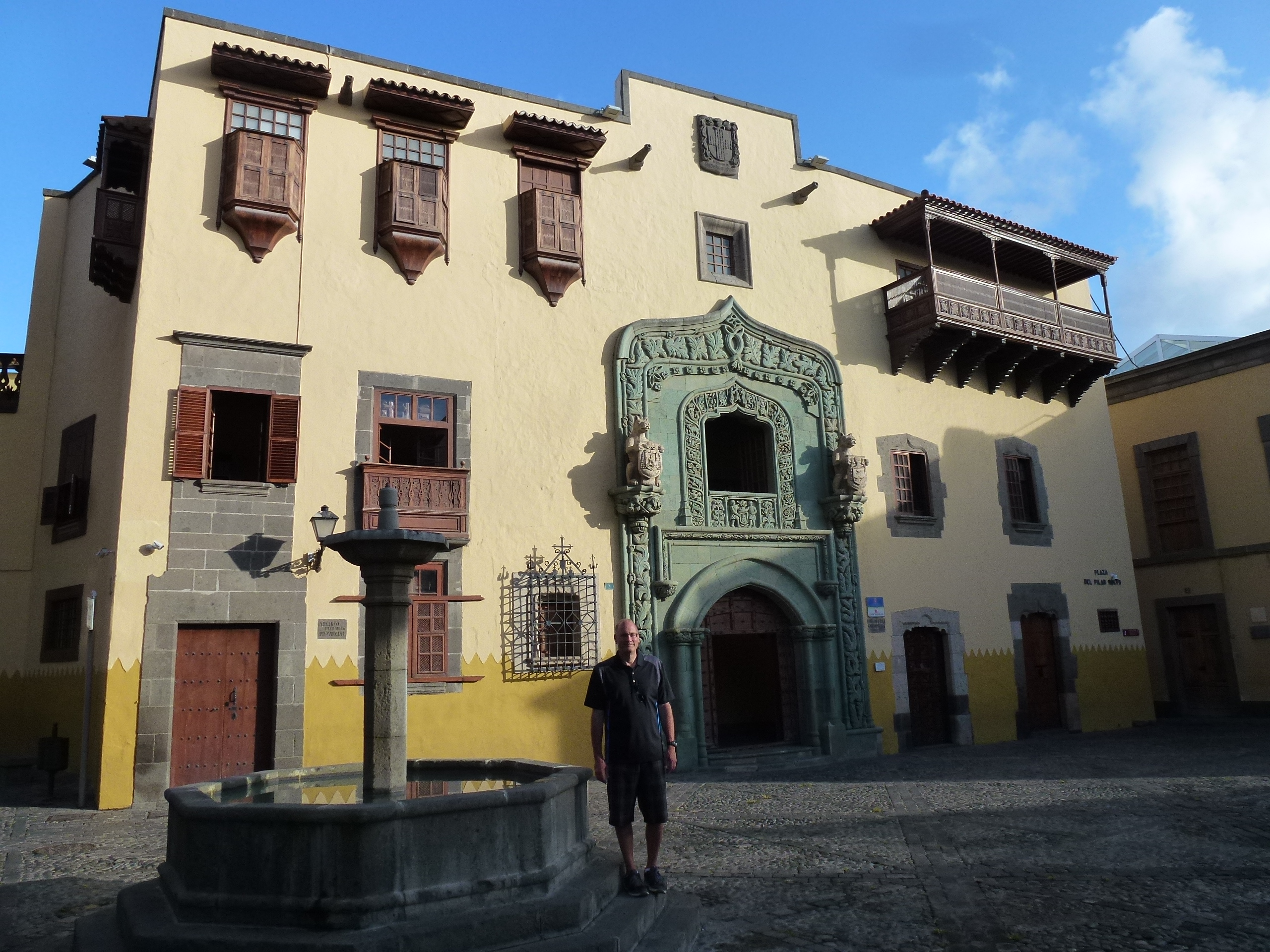
There is an excellent museum about his voyages and world exploration at the end of the 15th century. He also is believed to have lived in this building as well.

Las Palmas Casa de Colon (19)

The exterior of the Museo de Colon (Christopher Columbus Museum) in Las Palmas.

Las Palmas Museo de Colon (7)

A map showing the route of Columbus’ first voyage – 1492-1493. He stopped in Las Palmas on his way to the new world.

Las Palmas Museo de Colon (14)

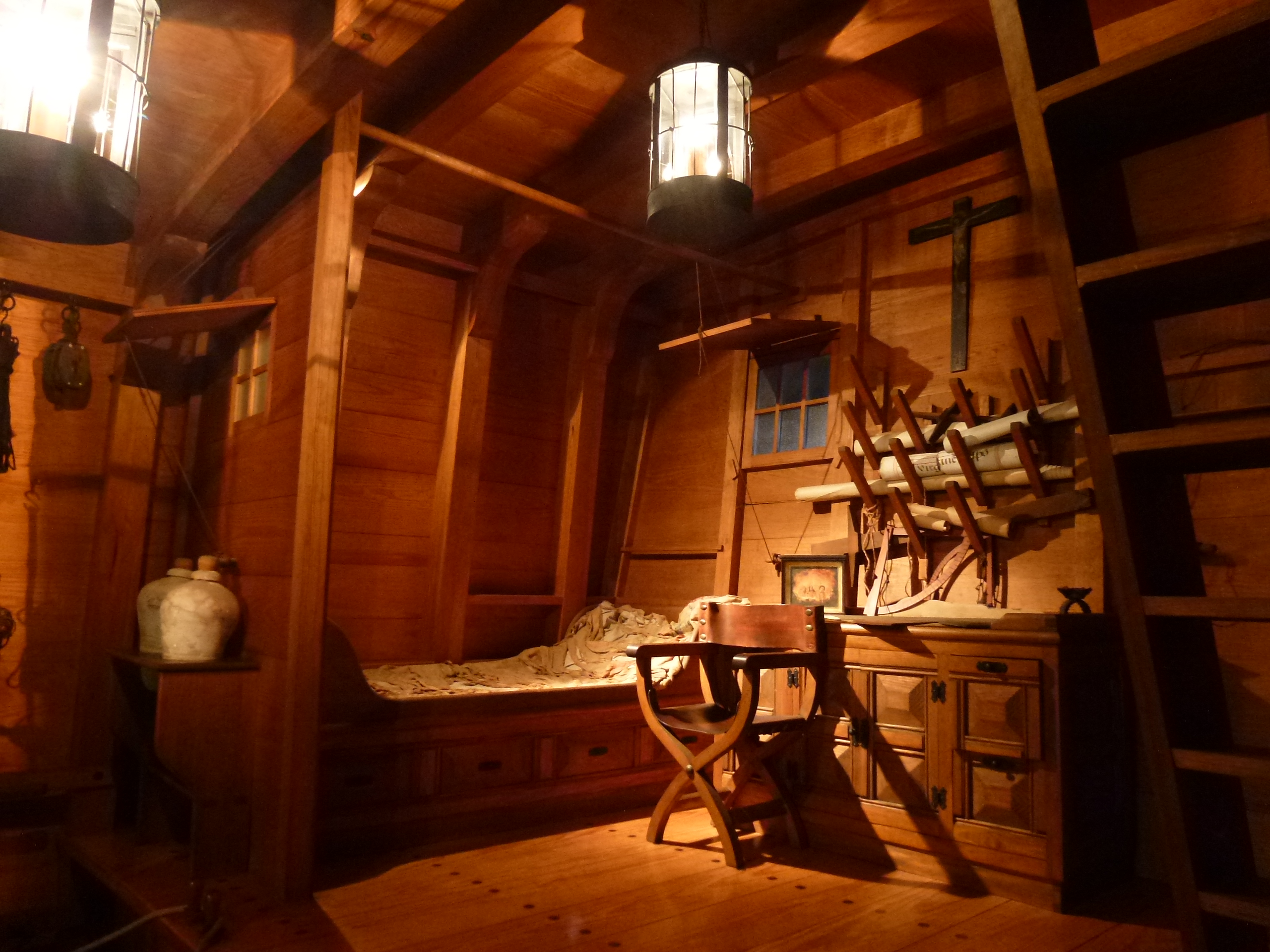
One of the exhibits in the Museo de Colon, showing the interior of a sailing ship of Columbus’ era.

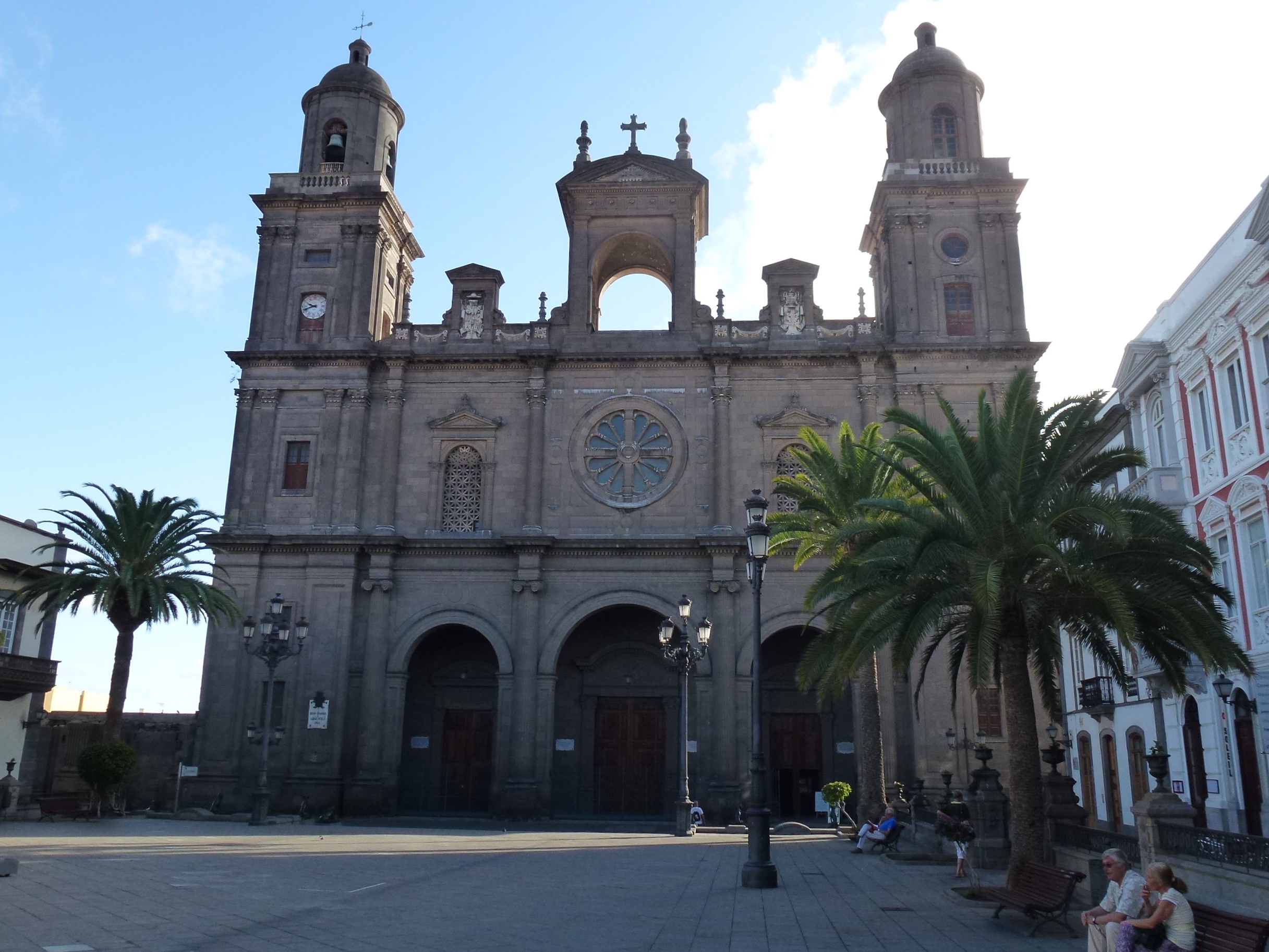
There are other sites to visit in Las Palmas as well, including a great cathedral.

Las Palmas Catedral de Santa Ana (14)

Las Palmas Cathedral – Catedral de Santa Ana. Located near the Museo de Colon.


Las Palmas Catedral de Santa Ana (12)

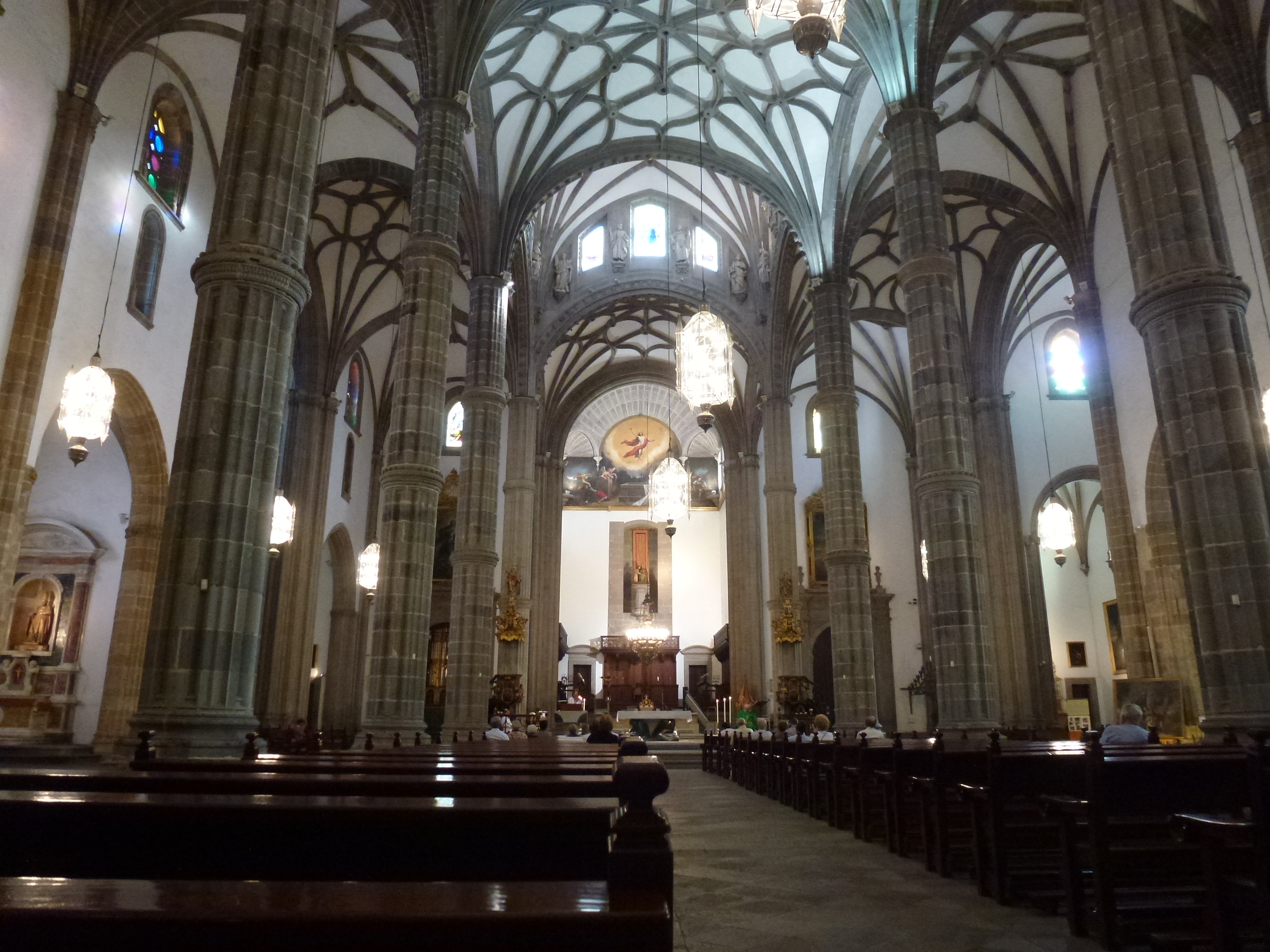
Interior of Catedral de Santa Ana.

Beyond Las Palmas, there is a whole island to explore, with small quaint towns and rugged mountains.

Arucas (7)

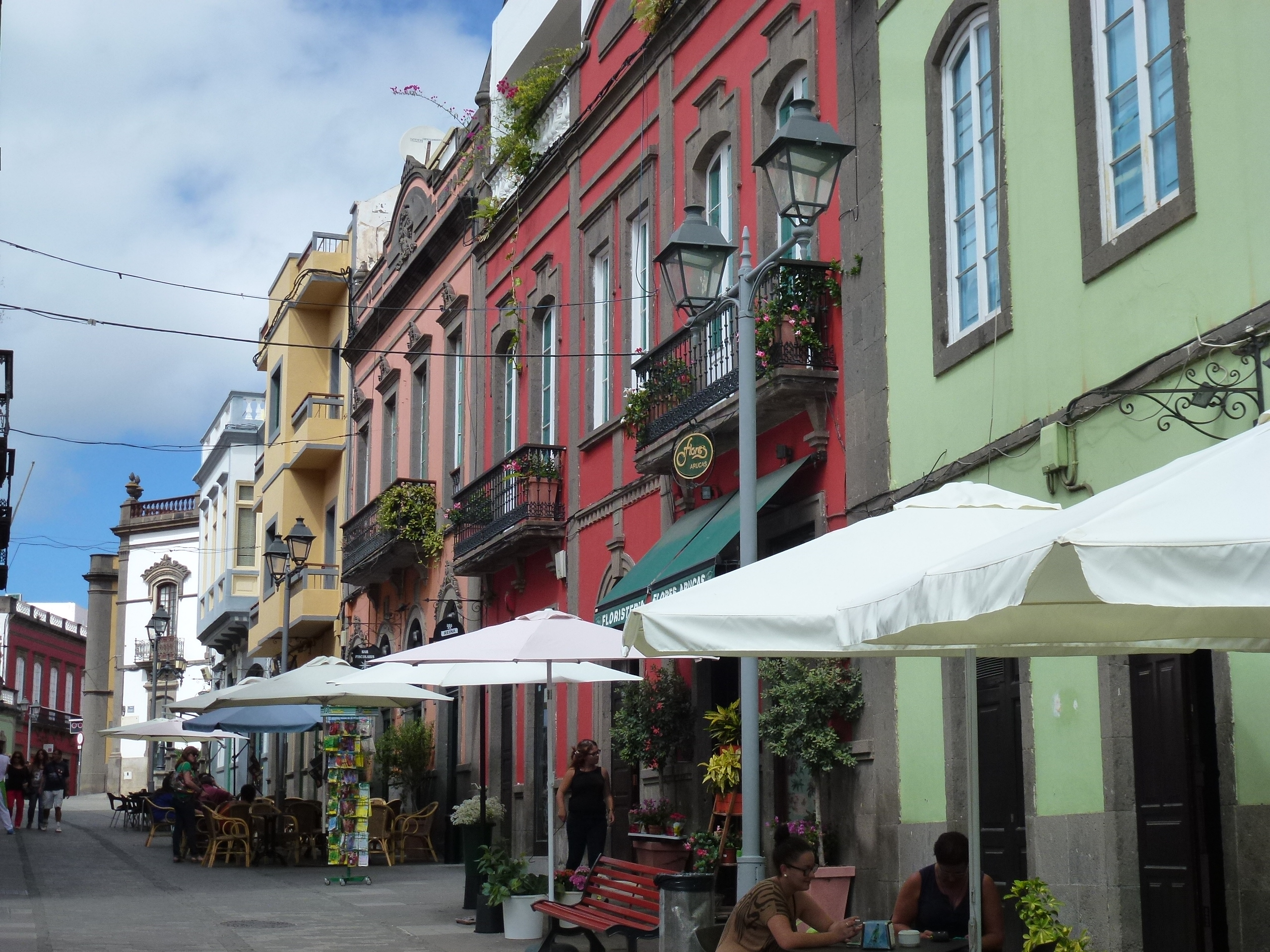
The town of Arucas on Gran Canaria

Arucas Iglesia de San Juan Bautista (4)

In the town of Arucas, there is a Gothic church (Iglesia de San Juan Bautista), which is not old, but quite beautiful and will remind visitors of the great cathedrals of Europe.

A couple other cute towns are Teror (don’t let its name frighten you away!) and Firgas.

Teror (3)

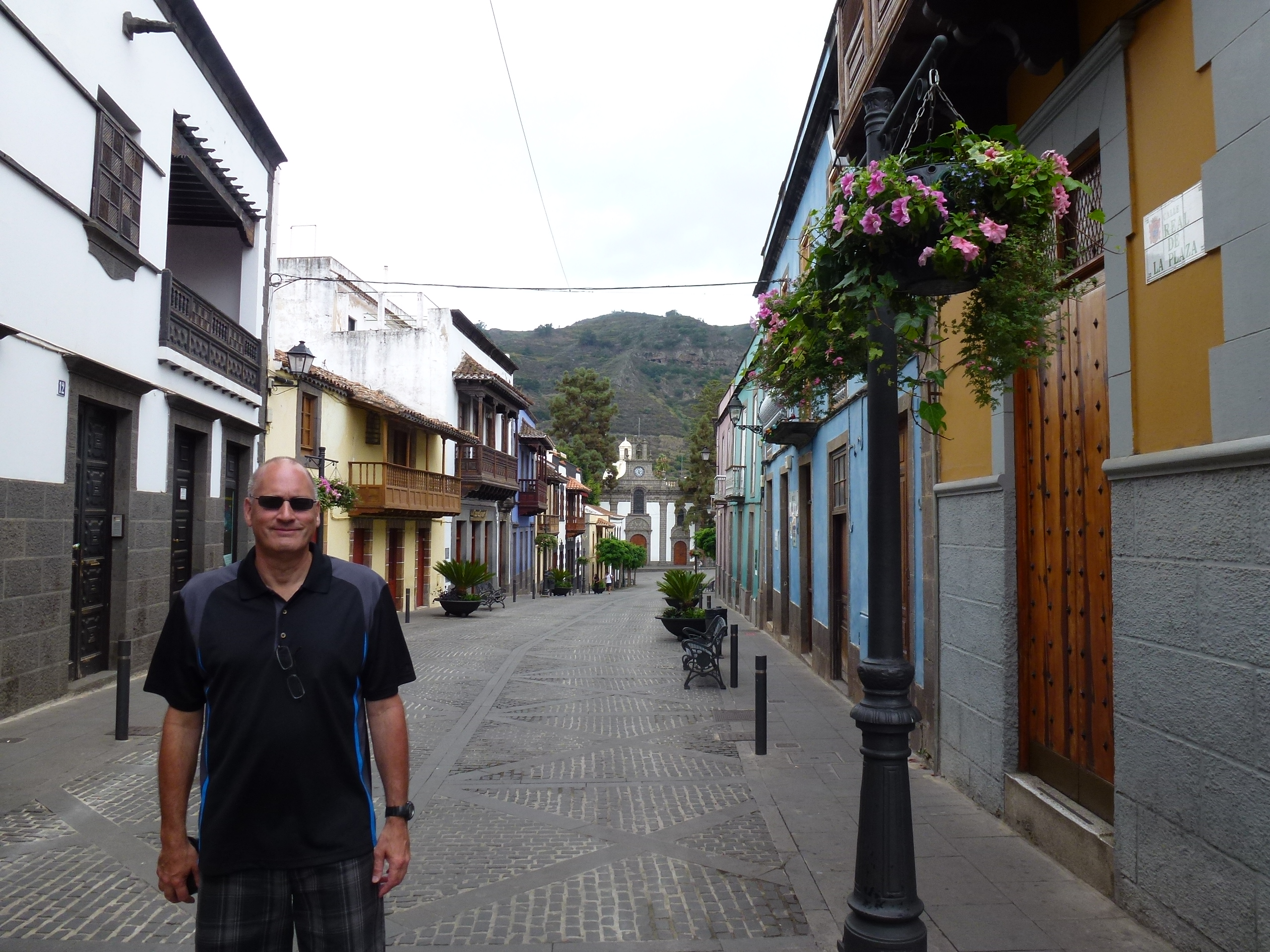
Street in the town of Teror.

Teror Basilica (6)

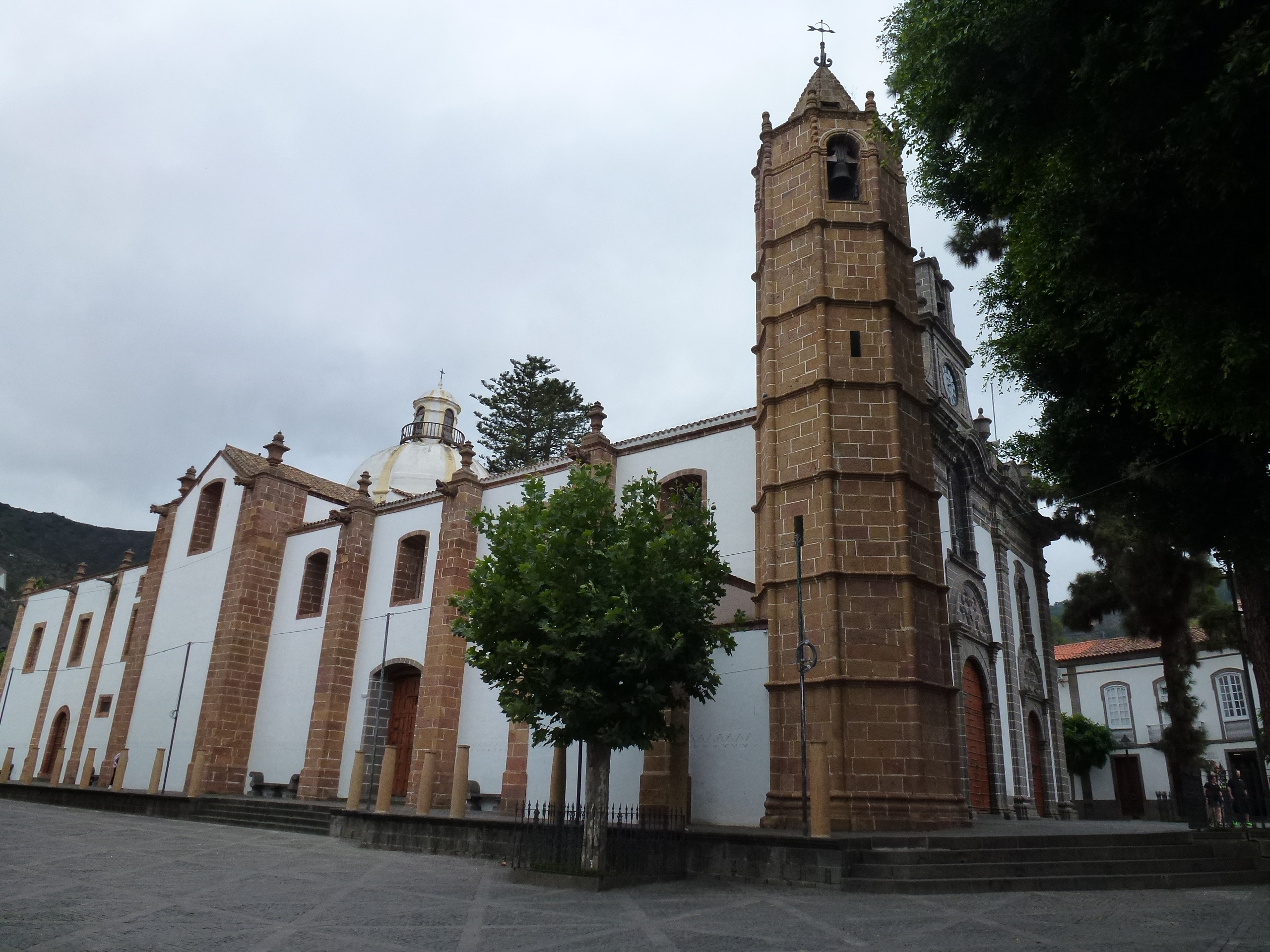
The Basilica of Teror, quite beautiful inside.

Firgas (3)

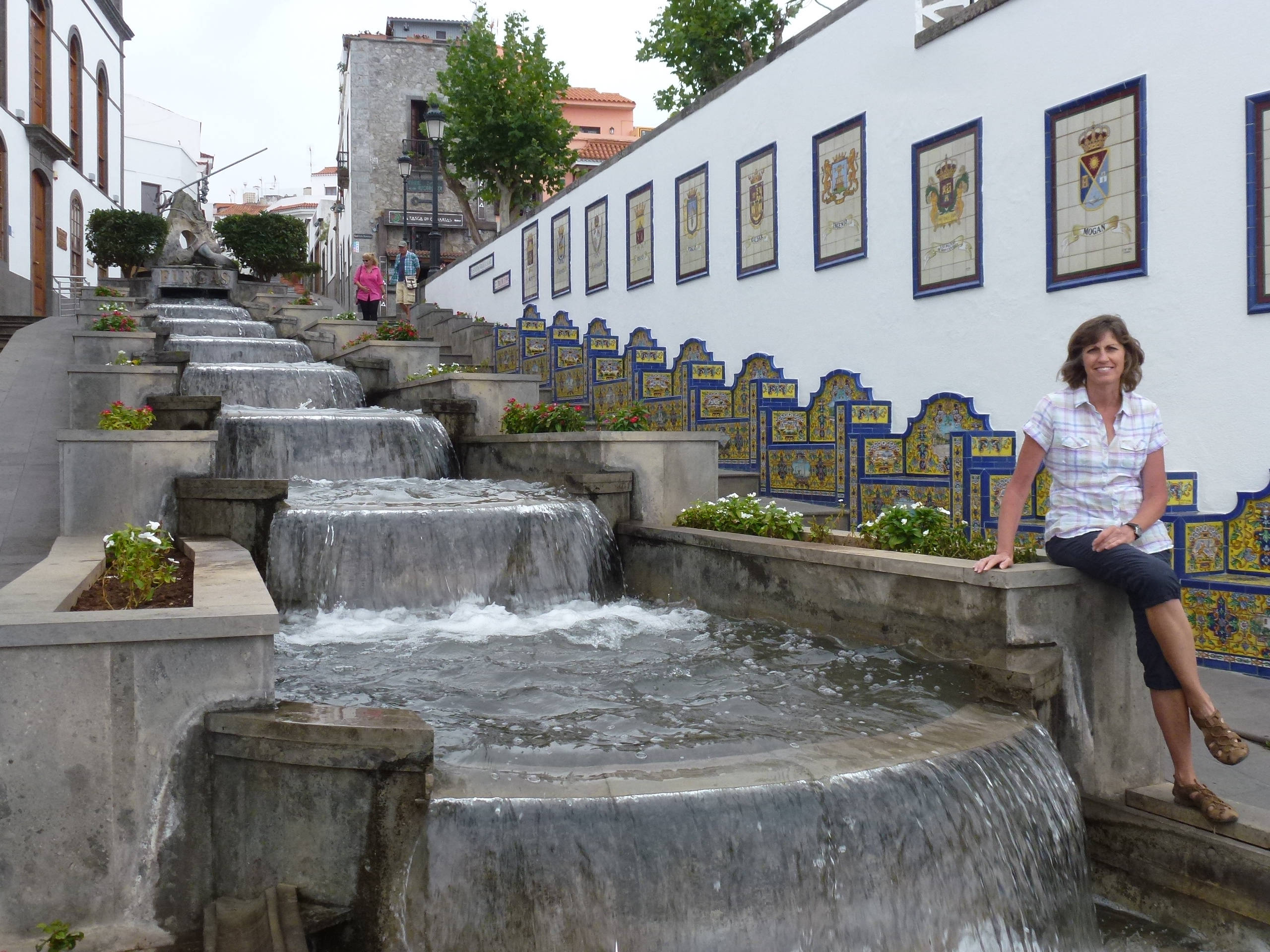
Many of these little towns have some sort of iconic site. Firgas, not far from Las Palmas, has a waterfall cascading down a street.

The southern shore of Gran Canaria has high cliffs that are an imposing sight and a lovely fishing village, Puerto de Mogan.

Puerto de Mogan (6)

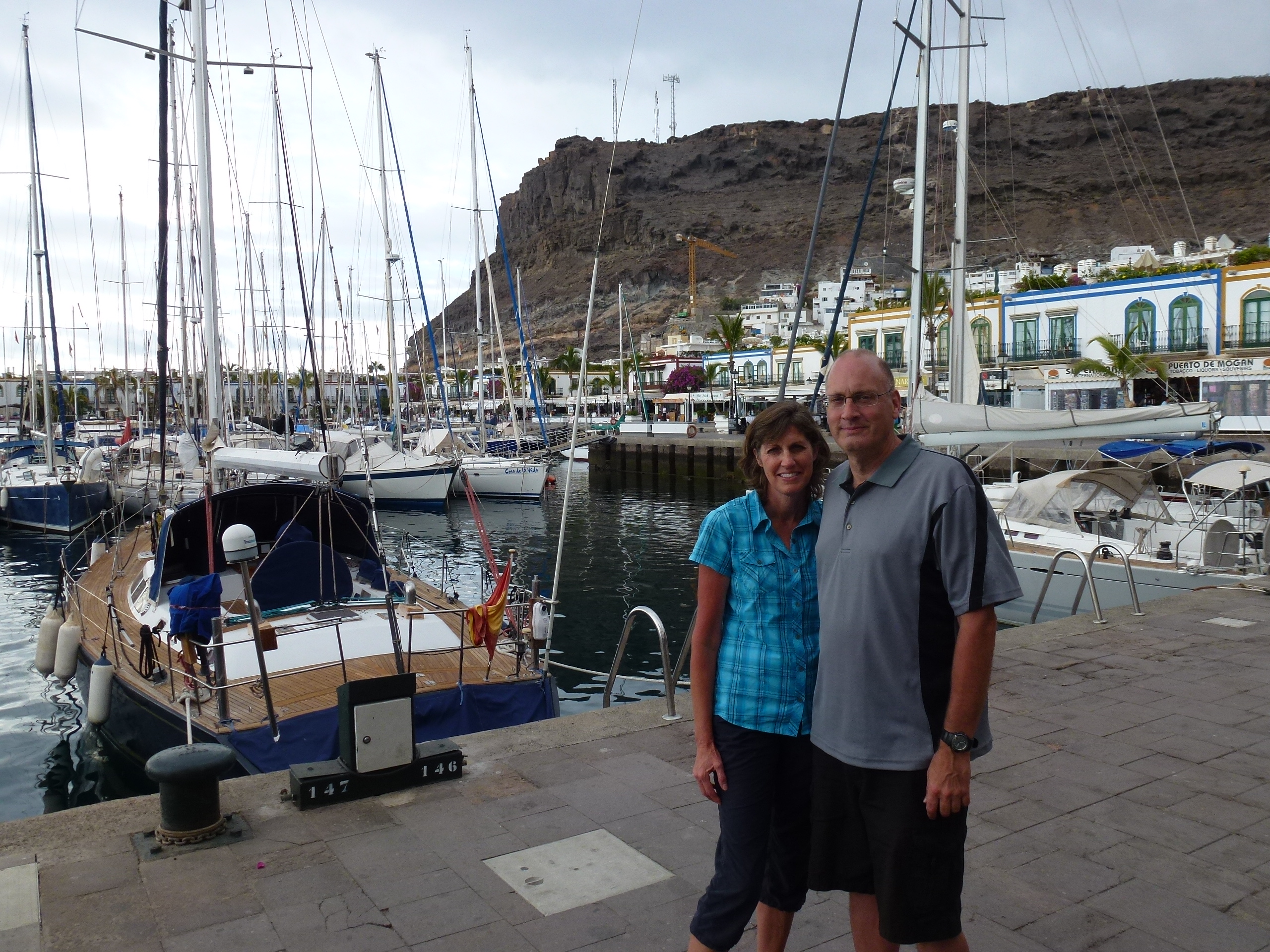
Puerto de Mogan is an upscale little village on the southern shore of Gran Canaria.

The landscape at the higher elevations reminded us of our home state – Colorado.

Pozo de las Nieves (4)

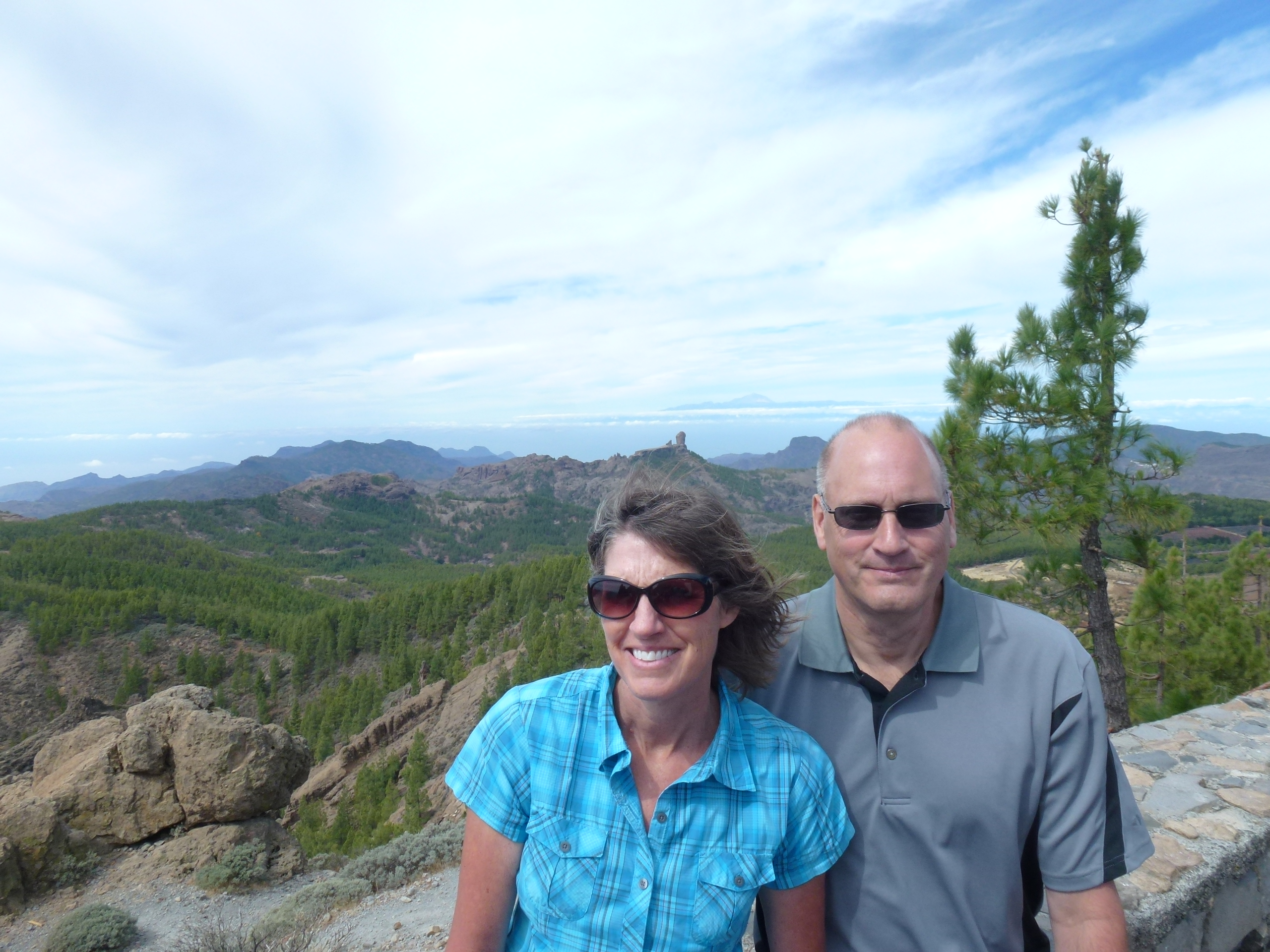
This spot is known as Pozo de las Nieves, and is the highest spot on Gran Canaria. It offers views of the island of Tenerife, which can (barely) be seen above our heads. Also, just over Robyn’s head is Roque Nublo, a famous landmark and sacred spot to the Guanches (the native population).

Roque Nublo (11)

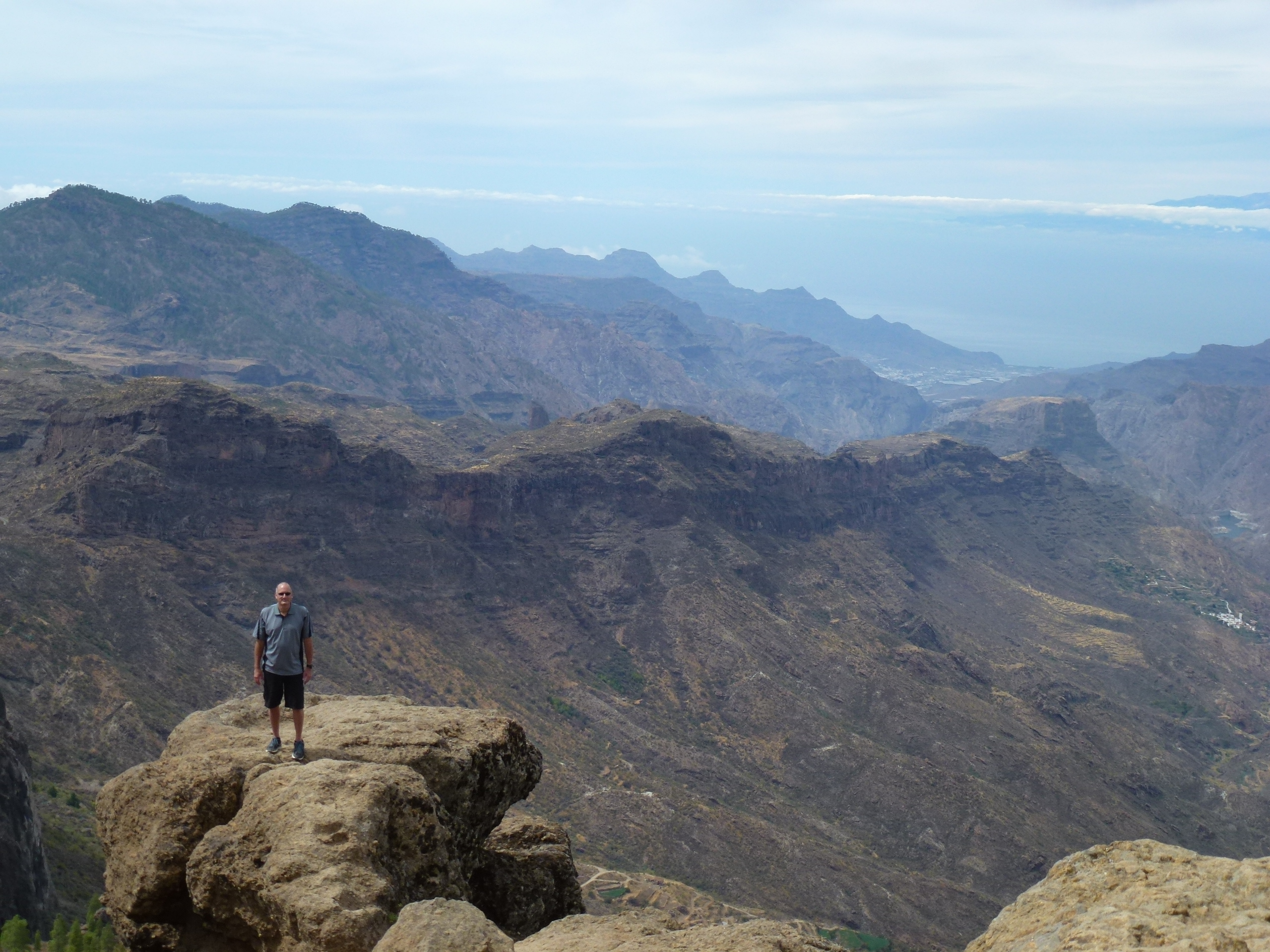
Another view of the rugged volcanic landscape found on Gran Canaria, near Pozo de las Nieves.

Grand Canaria is a gateway to the Canary Islands and definitely worth a few days of your time. In my next post, I will share some information on Tenerife, another “hot spot” in the Canaries.


Visiting St. Petersburg, Russia

As part of a Northern European cruise in 2013, we visited St. Petersburg, Russia. This was one of my favorite stops–it was my fist time in Russia and I was excited to see the city that I had heard so much about over many years. Because there is so much to do here, the cruise ship (Princess Cruises) stayed overnight and this allowed us two full days in port. St. Petersburg was the capital of tsarist Russia, and the sights are numerous and stunning, providing a sense of the power and wealth of the Russian Tsars. This wealth and power were of course major reasons for the 1917 communist revolution.

Listed below are the main sights we visited over the two days.

DAY ONE:

Peterhof Palace

Peterhof Palace. Known as the 'Russian Versailles'. In good weather, visitors can take a hydrofoil along the Gulf of Finland from St. Petersburg to the Palace.

Peterhof Palace. Known as the ‘Russian Versailles’. In good weather, visitors can take a hydrofoil along the Gulf of Finland from St. Petersburg to the Palace.

Catherine Palace

The gilded Ballroom of Catherine Palace.

The gilded Ballroom of Catherine Palace.

Exterior view of Catherine Palace, the summer residence of the Tsars. Constructed in the 1700's. It's located about 25 km from St. Petersburg.

Exterior view of Catherine Palace, the summer residence of the Tsars. Constructed in the 1700’s. It’s located about 25 km from St. Petersburg.

St. Isaac’s Cathedral

The gold dome of St. Isaac's Cathedral is one of the largest in the world, covered with 220 lbs of gold. The cathedral was commissioned in 1818 and completed 30 years later.

The gold dome of St. Isaac’s Cathedral is one of the largest in the world, covered with 220 lbs of gold. The cathedral was commissioned in 1818 and completed 30 years later.

Church of the Spilled Blood

The church's name comes from the fact that it was built on the spot where the Tsar Alexander II was assassinated on March 1, 1881.

The church’s name comes from the fact that it was built on the spot where the Tsar Alexander II was assassinated on March 1, 1881.

Drive around St. Petersburg

Our tour host drove us around various other locations in St. Petersburg, including this monument and government building where the G20 summit was hosted by President Putin in 2013.

Our tour host drove us around various other locations in St. Petersburg, including this monument and government building where the G20 summit was hosted by President Putin in 2013.

DAY TWO:

Canal Cruise on the Neva River

There are numerous canals and rivers in St. Petersburg. A 90 minute boat cruise is a great way to see the city from a different angle.

There are numerous canals and rivers in St. Petersburg. A 90 minute boat cruise is a great way to see the city from a different angle.

Hermitage Museum

The beautiful staircase in the Hermitage Museum. The Hermitage was the winter palace of the Tsars. The Museum contains art works that rival any other museum in the world.

The beautiful staircase in the Hermitage Museum. The Hermitage was the winter palace of the Tsars. The Museum contains art works that rival any other museum in the world.

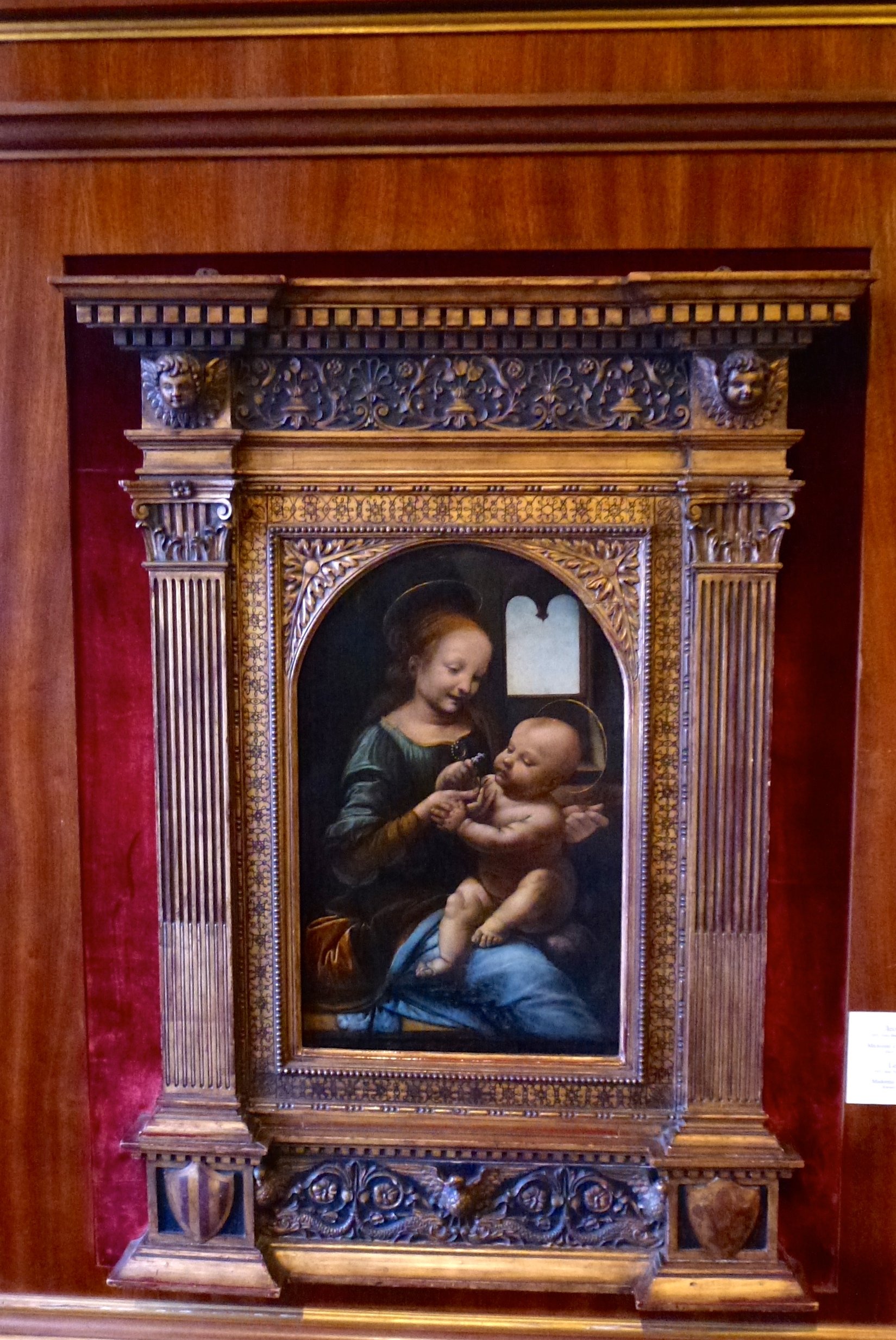
Madonna and Child by Leonardo Da Vinci, in the Hermitage Museum.

Madonna and Child by Leonardo Da Vinci, in the Hermitage Museum.

Peter & Paul Fortress

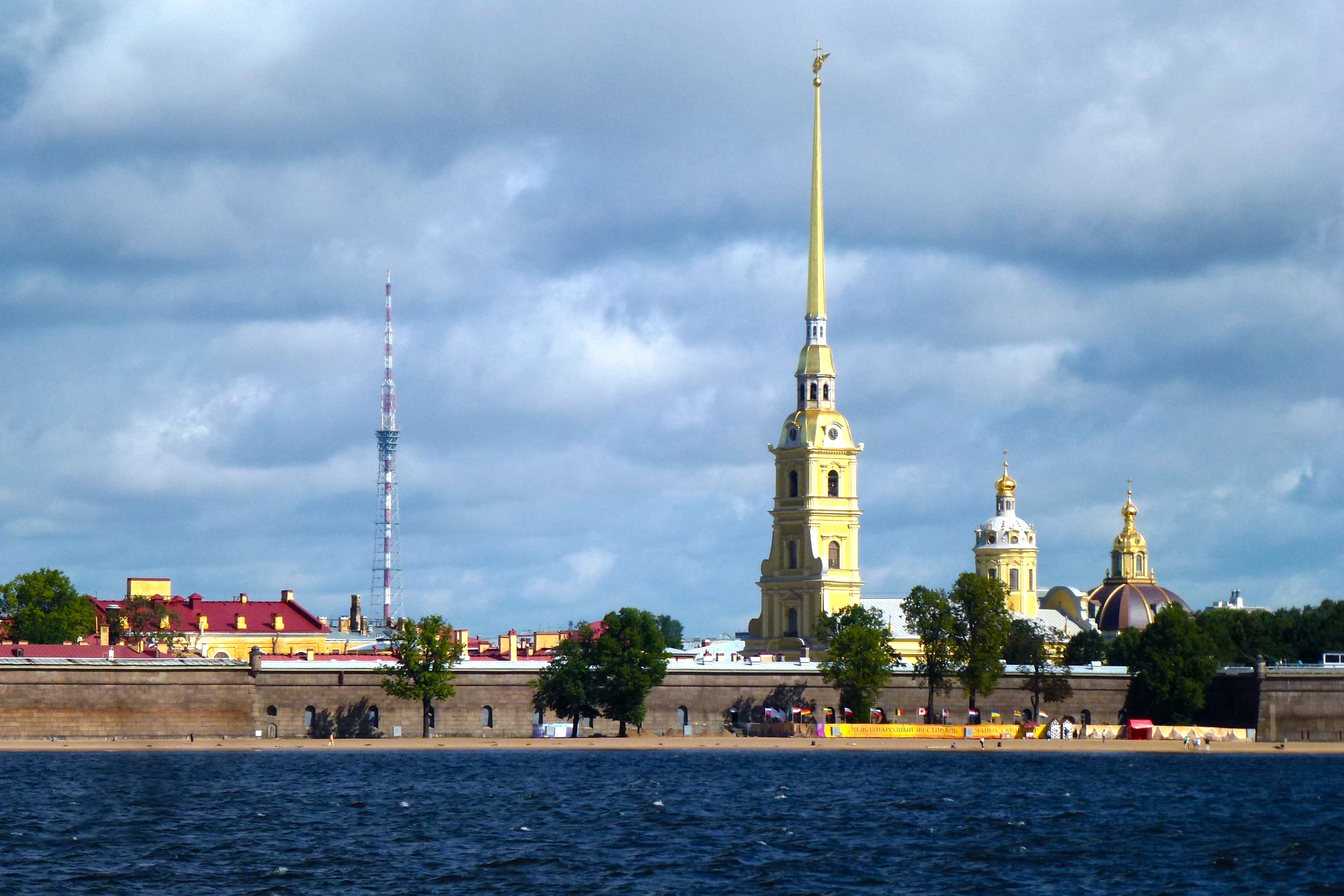
A view of the Peter & Paul Fortress from the Neva River. This fortress was built to protect the city from Swedish attack and was used for holding political prisoners. The tall spire and tower identify  the Sts. Peter and Paul Cathedral.

A view of the Peter & Paul Fortress from the Neva River. This fortress was built to protect the city from Swedish attack and was used for holding political prisoners. The tall spire and tower identify the Sts. Peter and Paul Cathedral.

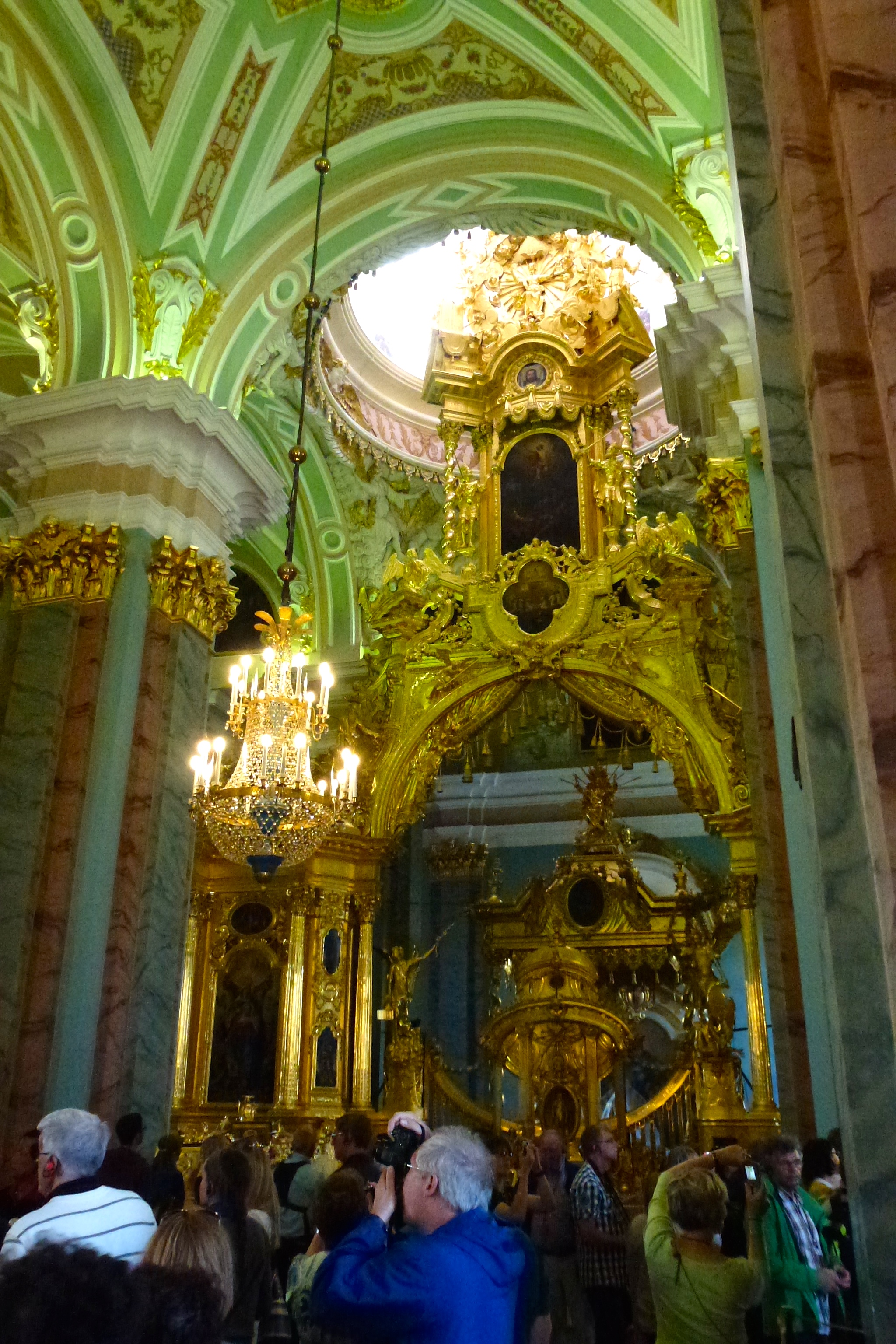
An interior view of the Sts. Peter and Paul Cathedral within the Peter & Paul Fortress. The tombs of many Tsars and their families are located here, including Peter the Great.

An interior view of the Sts. Peter and Paul Cathedral within the Peter & Paul Fortress. The tombs of many Tsars and their families are located here, including Peter the Great.

Yusupov Palace

Yusupov Palace (also known as Moika Palace) was one of 57 (yes, 57) palaces owned by the extremely wealthy Yusupov family, who were members of the Russian nobility. This is the "Bedroom of the Princess", one of many elaborately decorated rooms in this palace.

Yusupov Palace (also known as Moika Palace) was one of 57 (yes, 57) palaces owned by the extremely wealthy Yusupov family, who were members of the Russian nobility. This is the “Bedroom of the Princess”, one of many elaborately decorated rooms in this palace.

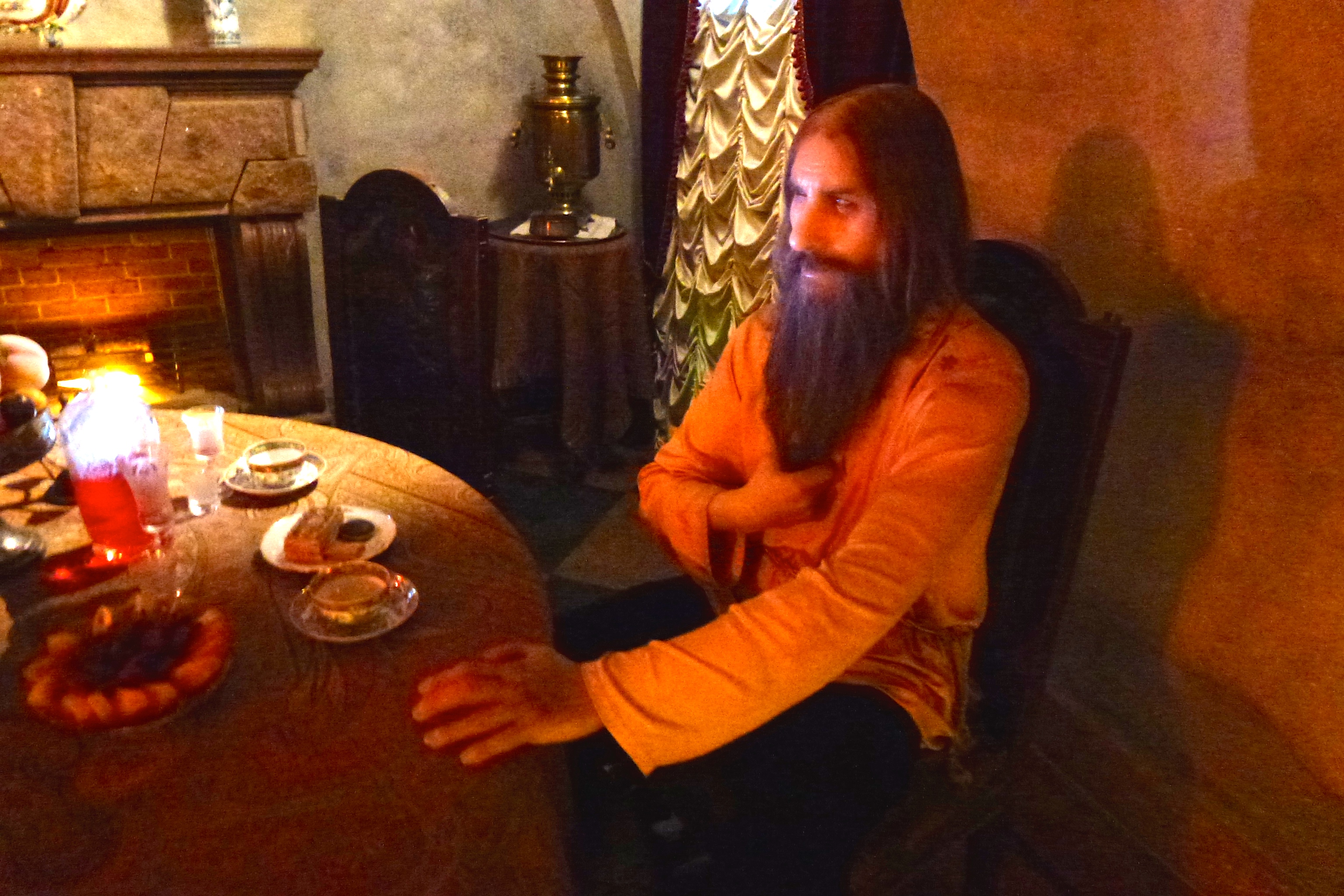
Part of Yusupov Palace is a museum about the murder of Grigori Rasputin, which took place at the palace in 1916. He was a mystic and an advisor to the Romanov family, the last Tsars of Russia. He grew too powerful and in this scene his enemies plot his death.

Part of Yusupov Palace is a museum about the murder of Grigori Rasputin, which took place at the palace in 1916. He was a mystic and an advisor to the Romanov family, the last Tsars of Russia. He grew too powerful and in this scene his enemies plot his death.

This parlor was the setting of the last meal and murder of Rasputin. He wielded too much influence and was greatly feared. Invited to a meal at the Yusupov Palace, he was given enough poison with his food to kill five men, and yet was not fazed. He was also shot several times, and still had enough strength to try to escape. He finally died in a courtyard outside the Palace.

This parlor was the setting of the last meal and murder of Rasputin. He wielded too much influence and was greatly feared. Invited to a meal at the Yusupov Palace, he was given enough poison with his food to kill five men, and yet was not fazed. He was also shot several times, and still had enough strength to try to escape. He finally died in a courtyard outside the Palace.

Practical Information

History: Read Nicholas and Alexandra by Robert K. Massie before going. It will give you some background on the tragic story of the last Tsar of Russia and the beginning of the Russian Revolution in 1917.

Weather: Even in August, it was cool. St. Petersburg is located on the Gulf of Finland in the Baltic Sea. Our first day was rainy and very windy. The second day was sunny and perhaps in the mid 60’s F.

Tours: Rather than take one of the cruise tours, we arranged our tour through TJ Travel, based on a recommendation of friend who had visited previously. They were excellent hosts, and the cost was about 35% cheaper than a cruise-arranged tour.

Entry: Russia requires visiting tourists to have visa (must be obtained prior to your trip), or by being a part of an official tour group with your cruise (by showing the appropriate documents). This is the only way you’re going to be able to get off the cruise ship. Passport control is taken seriously even for cruise ship visitors and eats up 15-20 minutes each way (entry/exit) on both days.

Kraków, Poland – One of Europe’s Finest Cities – Part 1

When people think of great European cities, the standard list includes Paris, London and Rome, which of course all certainly belong on the list. Not too many people would name Kraków, and largely because they don’t know much about it.

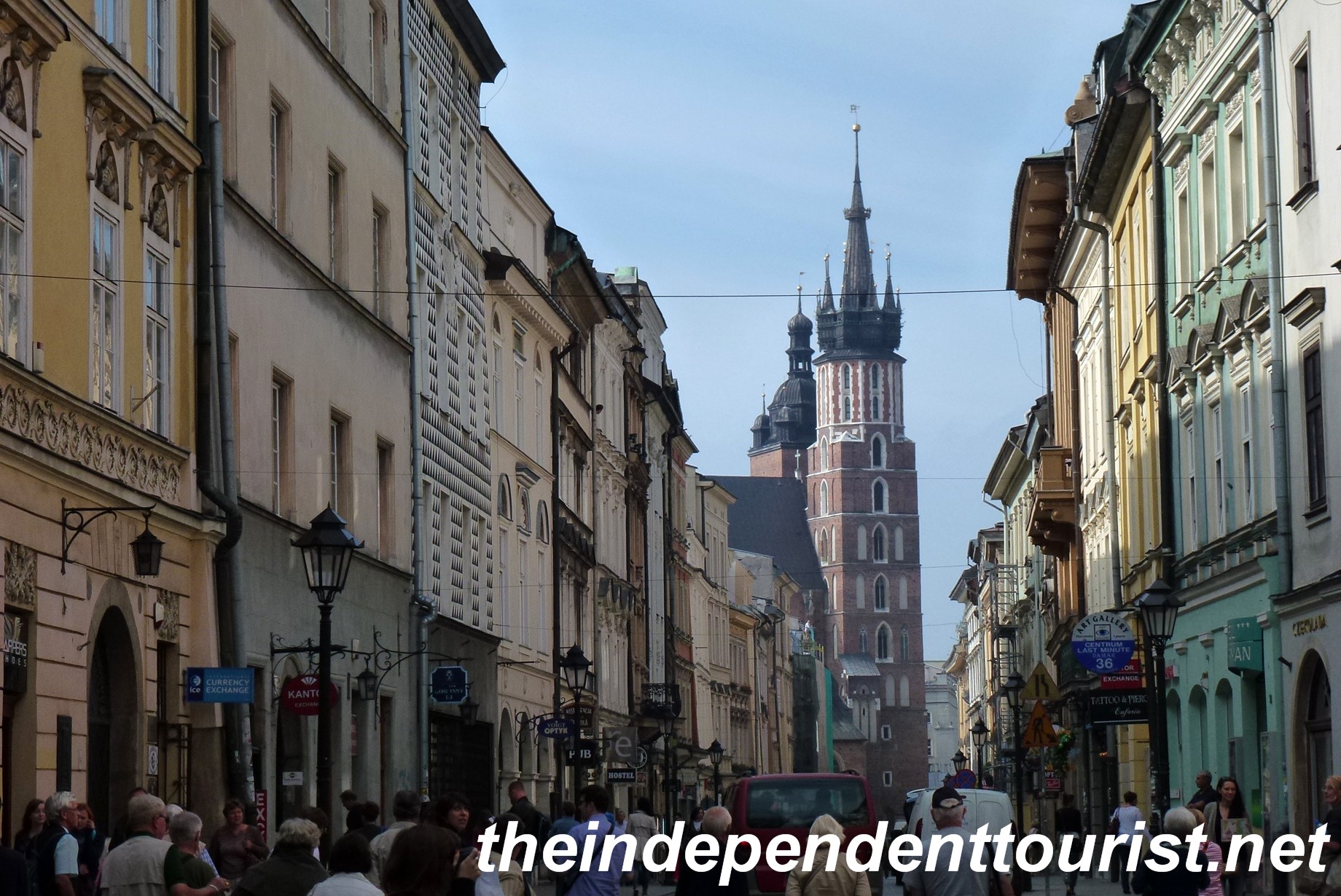
The Royal Way in Kraków, which is the main thoroughfare through the old town. Very little vehicular traffic allowed in the old town, making it a pleasant place to walk.

The Royal Way in Kraków, which is the main thoroughfare through the old town. Very little vehicular traffic allowed in the old town, making it a pleasant place to walk.

Kraków was our favorite city in Poland and it’s one of our favorite cities in Europe. We love it because there are many things to see, it has a very classy feel to it, the people were wonderful, we had a great place to stay and the food (if you like hearty fare) was excellent. Kraków is a large, modern city, but the charming old town is relatively compact.

Our perfect apartment in Krakow, just a few minutes by foot from the old town. It is called Krakow Parkside Apartments. Highly recommended.

Our perfect apartment in Krakow, just a few minutes by foot from the old town. It is called Krakow Parkside Apartments. Highly recommended.

This is the first of three posts on Kraków. This great city also makes a good base for exploring the remains of the infamous Auschwitz Death Camps as well, which are located about 66 km (41 miles) west.

For a map of places we visited in Poland, click here.

Below are a few of the things that make Kraków a great place to visit. The list of things to see could go on and on, with a number of other museums, churches, statues and other historic places that we simply did not have time to visit.

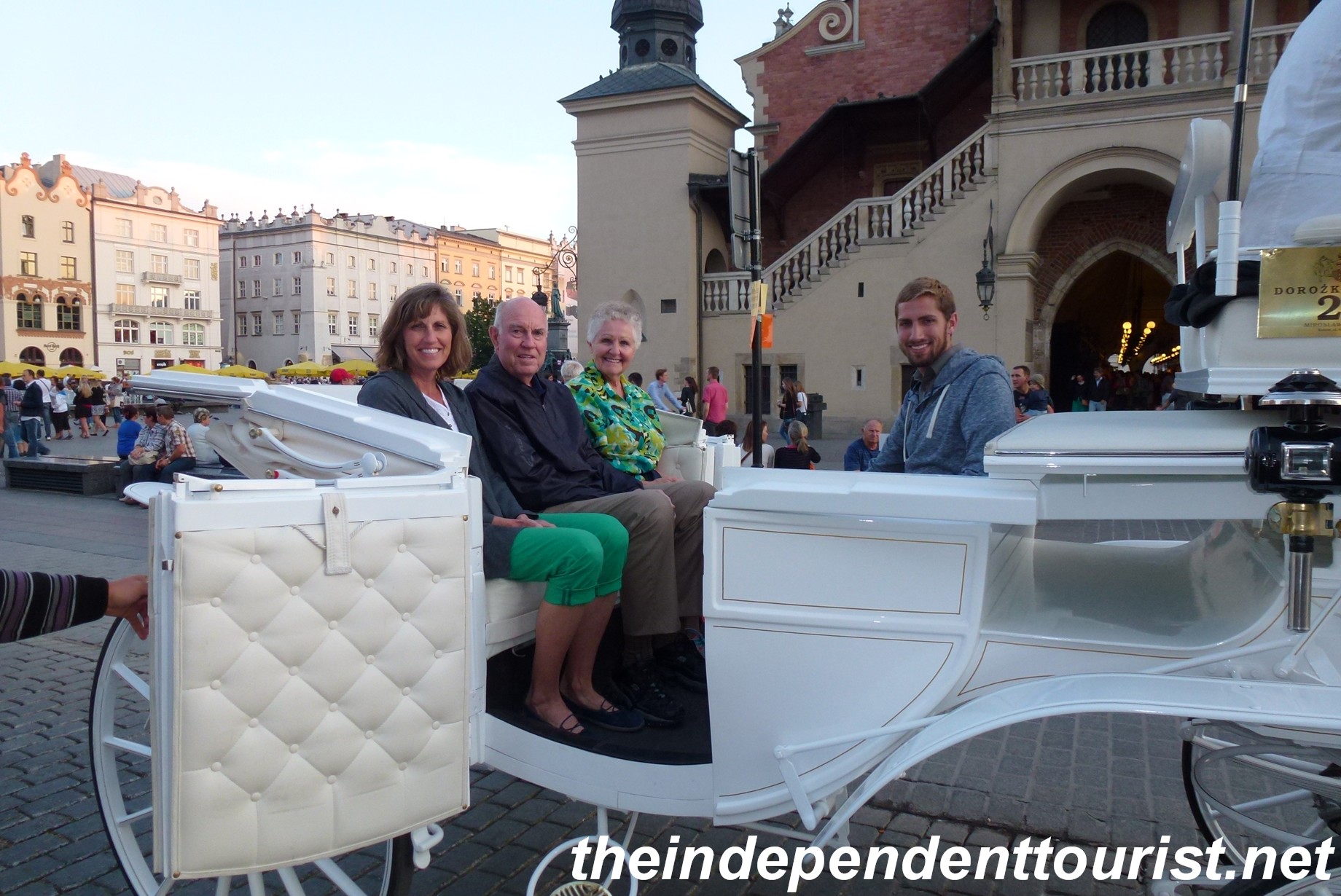
Horse Carriage Rides. A highlight of visiting Kraków is taking a carriage ride around the old town. The rides start in Rynek Square and go to the north edge of old town before heading to south to Wawel Castle and returning to the Square.

The stately horse carriages in Rynek Square.

The stately horse carriages in Rynek Square.

The ride cost about $10 US per person. It was a fun way to see the city and to enjoy the atmosphere. The carriages, drivers and horses are dressed up and ready to show you the town.

Getting ready for our ride.

Getting ready for our ride.

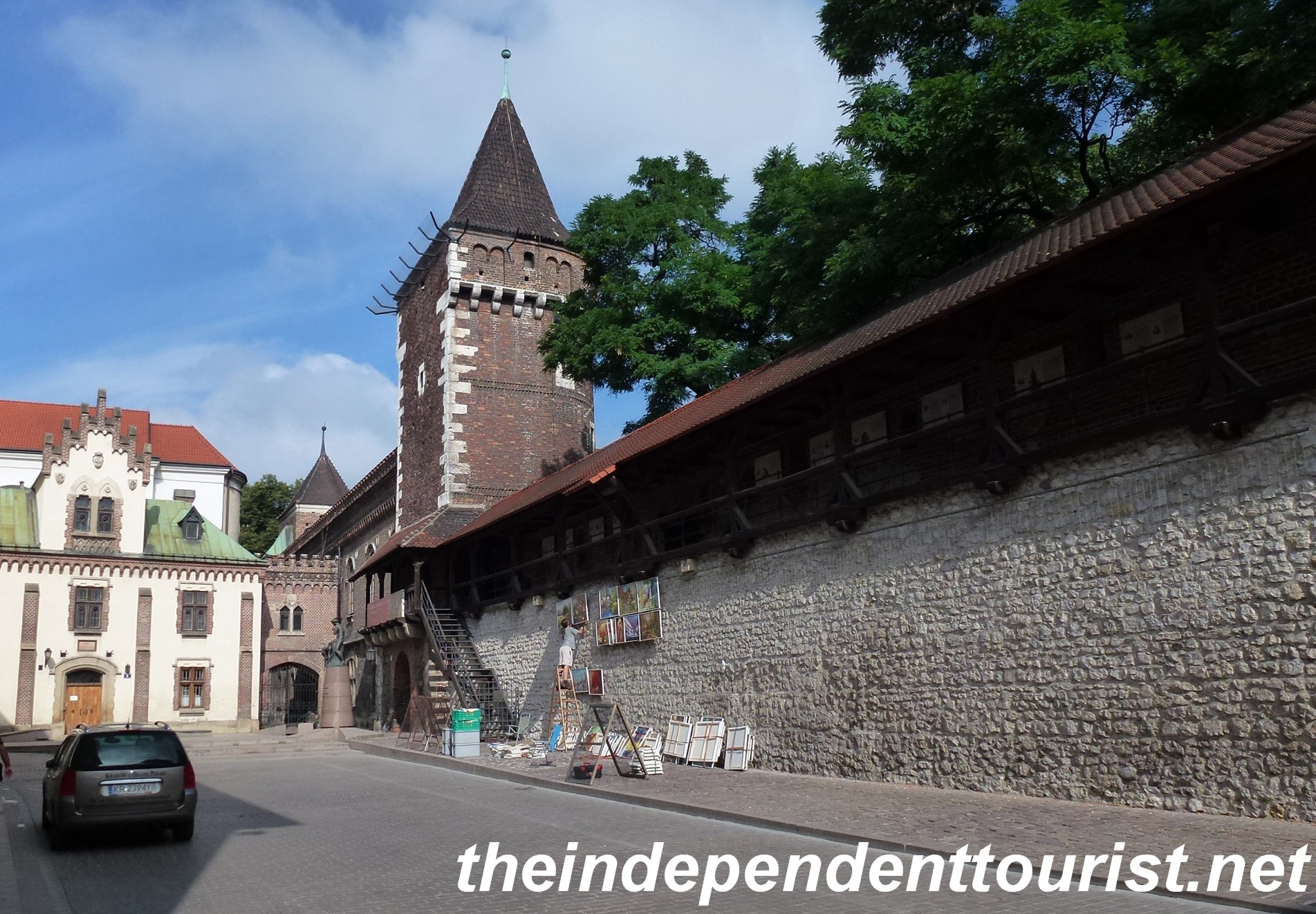
Kraków Fortifications. Much of the original city was destroyed in the 13th century by the Tatar invasions. The walls and towers we see today were built afterwards in the 13th – 15th centuries.

The Barbican, one of the few surviving structures of its kind in Europe. It was built around 1498. It has seven turrets, 130 loopholes (for firing arrows) and the walls are 3 meters thick. It helped defend the Florian Gate, which is part of the remaining defenses on the north side of Kraków's old town.

The Barbican, one of the few surviving structures of its kind in Europe. It was built around 1498. It has seven turrets, 130 loopholes (for firing arrows) and the walls are 3 meters thick. It helped defend the Florian Gate, which is part of the remaining defenses on the north side of Kraków’s old town.

What remains of these fortifications is on the north side of the old town. Although many of the old walls were torn down in the 19th century, there is a ring-shaped park and walking paths that encircle old Kraków, following the foundations of the city walls.

Part of the old city walls, near the Florian Gate, the only one of the eight original gates remaining.

Part of the old city walls, near the Florian Gate, the only one of the eight original gates remaining.

For a pleasant stroll and variety in exploring the town, take advantage of these paths.

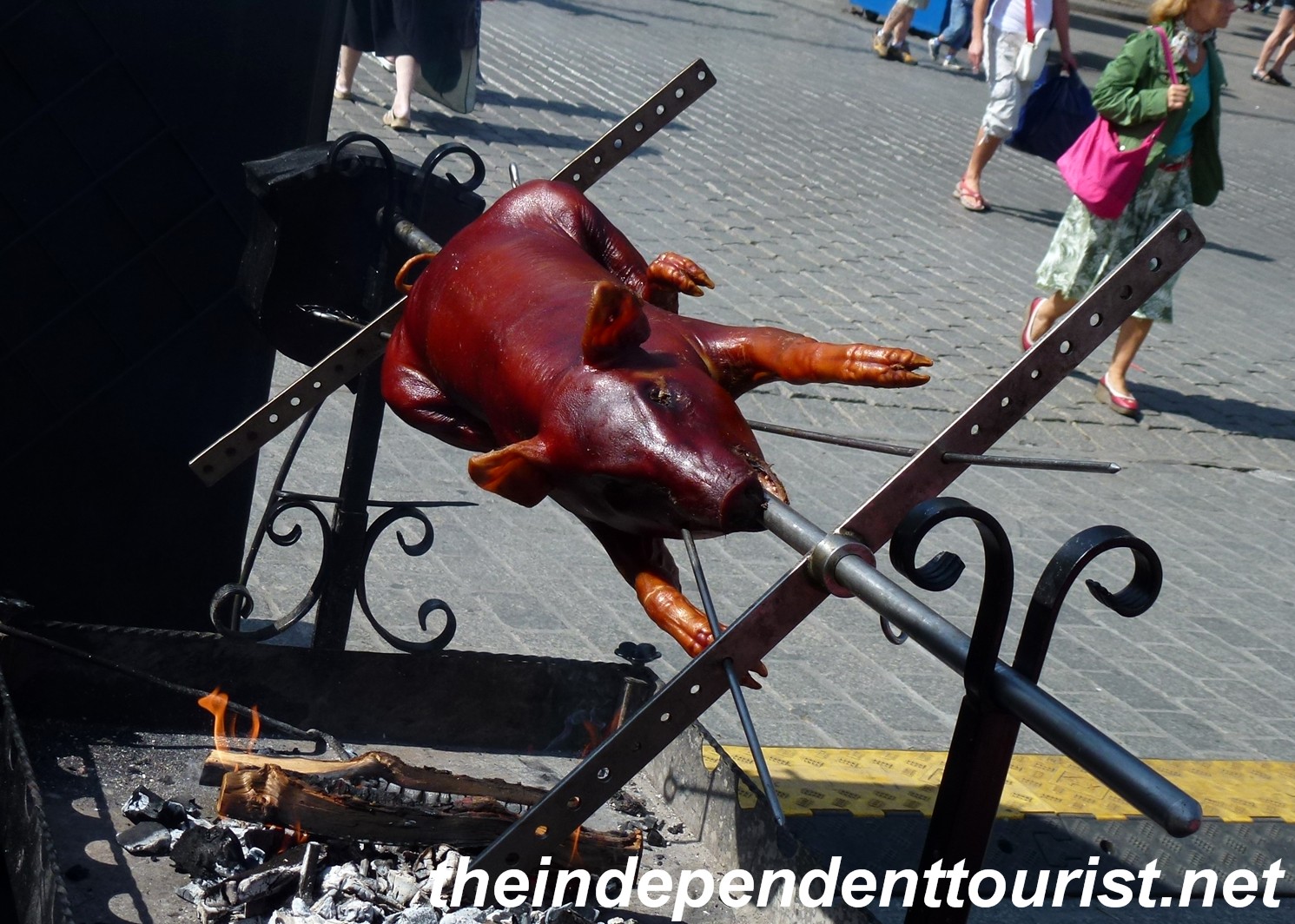
Rynek Główny (Square). This is the heart of old Kraków and is the largest medieval square in Europe. Its layout was drawn up in 1257. During our visit, there was a festival going on, with lots of music, dancing, and numerous food stalls – we found it hard to pass any of these up! Sausages, potatoes, breads, deserts and other Polish specialties were to be found everywhere.
A roasting pig on Rynek Square.

A roasting pig on Rynek Square.

The tower on the left is the only remaining part of the 15th century Town Hall. On the right is the Cloth Hall, both are in the central part of Rynek Square.

The tower on the left is the only remaining part of the 15th century Town Hall. On the right is the Cloth Hall, both are in the central part of Rynek Square.

Also in Rynek Square is the Cloth Hall, which was the center of Kraków’s medieval clothing trade. There are numerous shops here (and a good place to get gelato), as well as the ticket office and entrance for the “Rynek Underground” exhibit, which provides an extensive view of excavated ruins underneath the Square, and exhibits of medieval life in Kraków.

A view of some of the medieval ruins in the extensive underground displays. Hard to get good photos, pretty dark down there.

A view of some of the medieval ruins in the extensive underground displays. Hard to get good photos, pretty dark down there.

Come to the Square at night for special atmosphere. There are lots of good restaurants around the Square.

Rynek Square at night.

Rynek Square at night.

St. Mary's Church with its uneven towers faces Rynek Square.

St. Mary’s Church with its uneven towers faces Rynek Square.

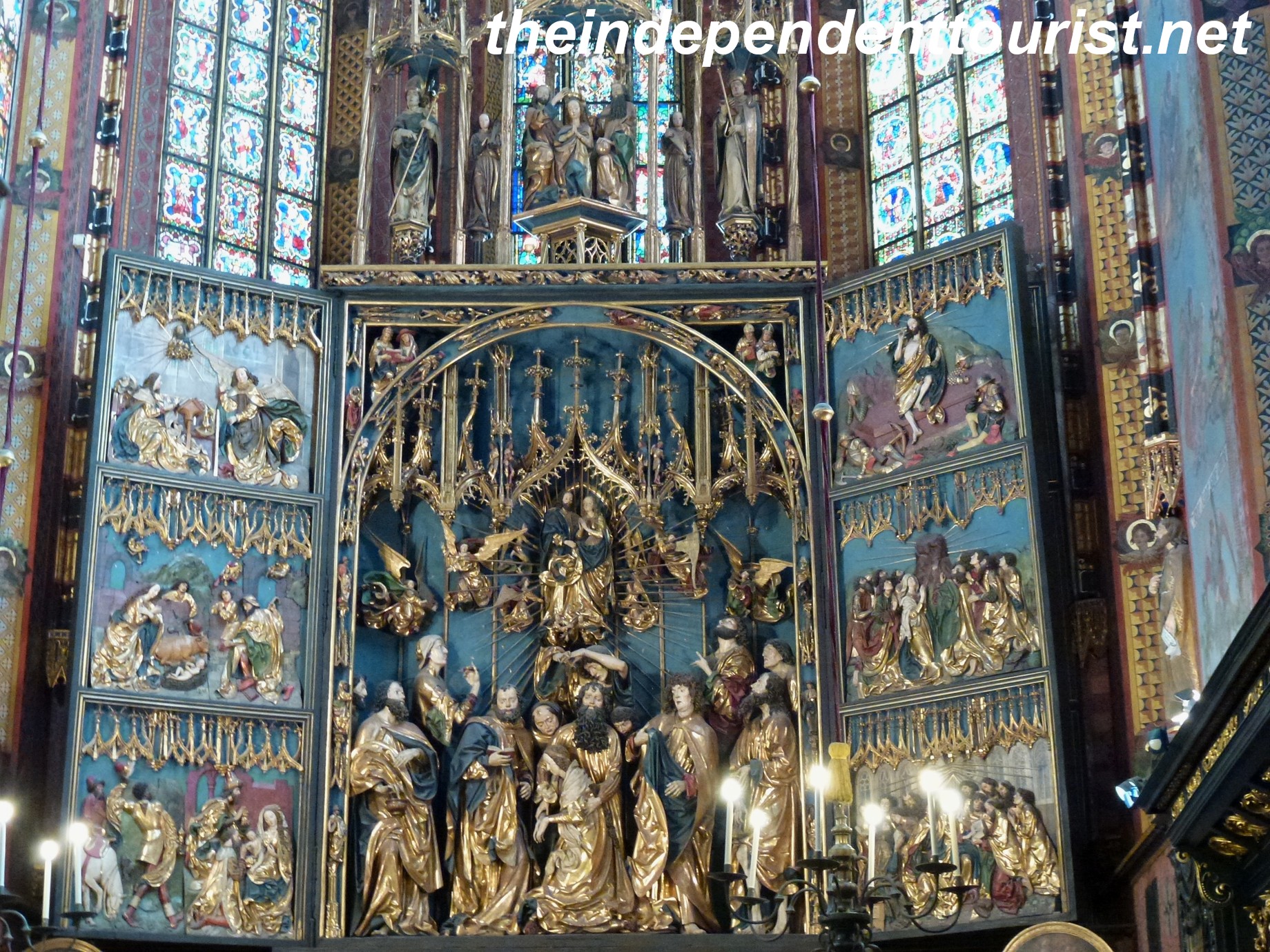
Rynek Square is also the location of St. Mary’s Church, one of the most beautiful churches in Poland (and Europe for that matter). It is home of the Veit Stoss wood-carved pentaptych (three panel) altarpiece which took 10 years to complete and was consecrated in 1489. It is magnificent, and is considered one of the most important pieces of medieval art of its kind.

The marvelous Veit Stoss pentaptych in St. Mary's Church, Krakow.

The marvelous Veit Stoss pentaptych in St. Mary’s Church, Krakow.

The pentaptych is only opened at certain times during the day, so check across the street (to the south of the visitor’s entrance) for times and tickets.

Another view in St. Mary's Church - it takes awhile to absorb all the artwork in this church.

Another view in St. Mary’s Church – it takes awhile to absorb all the artwork in this church.

Church of SS Peter & Paul. This is a Jesuit church dating back to 1583. It’s on the Royal Way from Rynek Square to Wawel Castle, and has statues of the 12 apostles on columns at the front gate.

Church of SS Peter & Paul. Note the statues of the 12 apostles in front.

Church of SS Peter & Paul. Note the statues of the 12 apostles in front.

We were able to attend a concert in the large open interior on a Sunday evening, with a talented ensemble playing a number of classical compositions, including Vivaldi, Chopin, Bach, Mozart, Handel and others. This was particularly delightful given the setting and acoustics of the church.

The musicians at our concert in the Church of SS Peter & Paul

The musicians at our concert in the Church of SS Peter & Paul

In future posts I will share some images of Wawel Castle and the Jewish Quarter, including Schindler’s Factory (recall the epic Steven Spielberg movie “Schindler’s List”).

Reference: Lonely Planet Travel Guide – Poland


Tallinn, Estonia – A Medieval Gem

If Tallinn were located in France or Germany it would be overrun with tourists. Since it’s on the Baltic coast of Estonia, most tourist traffic comes via cruise lines and only over the summer, which is how and when we visited in 2013. I love historical places and Tallinn is high on my list of great medieval towns. It’s also a UNESCO World Heritage Site.

A view of Old Town Tallinn (Toompea Hill) from St. Olav's Church (described below).

A view of Old Town Tallinn (Toompea Hill) from St. Olav’s Church (described below).

The city was founded in 1154, and the historic part of town hasn’t changed much in over the past 600 years. Old Town is about a 10-minute walk from the cruise ship pier and has a number of things to see (including one of the weirdest tourist sights I’ve visited).

The Old Town is walled with a number of towers, gates and narrow streets.

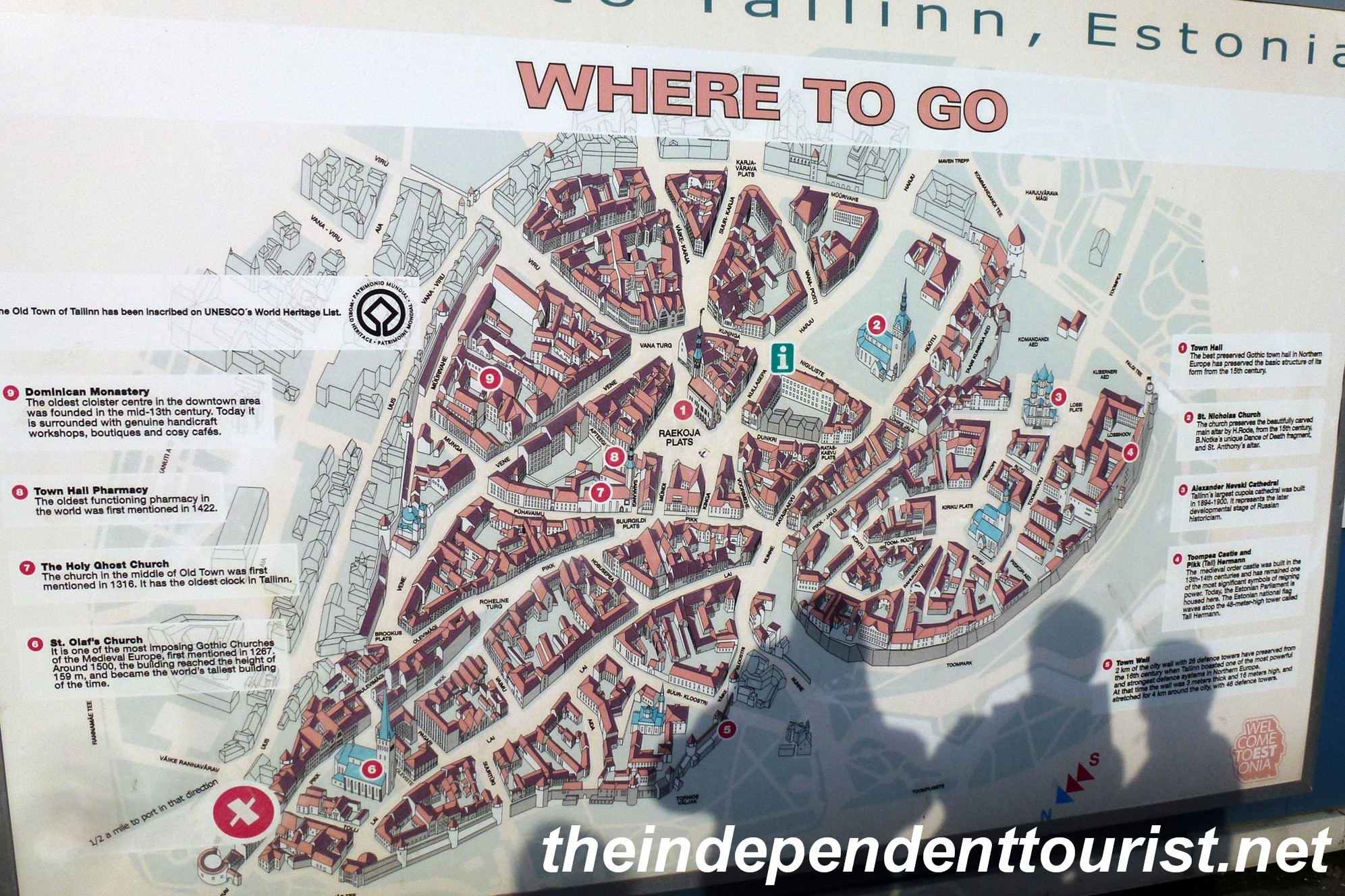
A large map of Tallinn Old Town greets cruise ship visitors.

A large map of Tallinn Old Town greets cruise ship visitors.

Here are a few of Tallinn’s interesting sites:

Toompea Hill. The “Upper Town” is the setting for Tallinn’s oldest church (St. Mary’s Cathedral), a Russian Orthodox Cathedral (Alexander Nevsky Cathedral) and Toompea Castle, which is the home of Estonia’s Parliament. The Hill provides great views of the Lower Old Town.

Exterior view of the Cathedral of St. Mary, Estonia's main Lutheran church. Originally built in 1233.

Exterior view of the Cathedral of St. Mary, Estonia’s main Lutheran church. Originally built in 1233.

The interior of the Cathedral of St. Mary.

The interior of the Cathedral of St. Mary.

The Alexander Nevsky Russian Orthodox Cathedral was built in 1900, and although it's not ancient, it has a number of beautiful mosaics and is a testament to Russian influence in this country.

The Alexander Nevsky Russian Orthodox Cathedral was built in 1900, and although it’s not ancient, it has a number of beautiful mosaics and is a testament to Russian influence in this country.

Town Hall and Square. The Town Hall as built in the early 1400’s and is the best preserved Gothic town hall in Northern Europe.

The Town Hall and Square. The center of Old Town Tallinn.

The Town Hall and Square. The center of Old Town Tallinn.

Old Town Walls and Towers. Two kilometers of the old walls are still standing. Just walking around these walls is a pleasure, and several towers are open as small museums, with underground passages that can be explored near Toompea Hill.

Fat Margaret (or Stout Margaret) Tower. This is the first sight most visitors see, the tower guards a main entrance into the Old Town and is now a Maritime museum.

Fat Margaret (or Stout Margaret) Tower. This is the first sight most visitors see, the tower guards a main entrance into the Old Town and is now a Maritime museum.


Part of the Old Town towers and walls, an area called Towers Square.

Part of the Old Town towers and walls, an area called Towers Square.

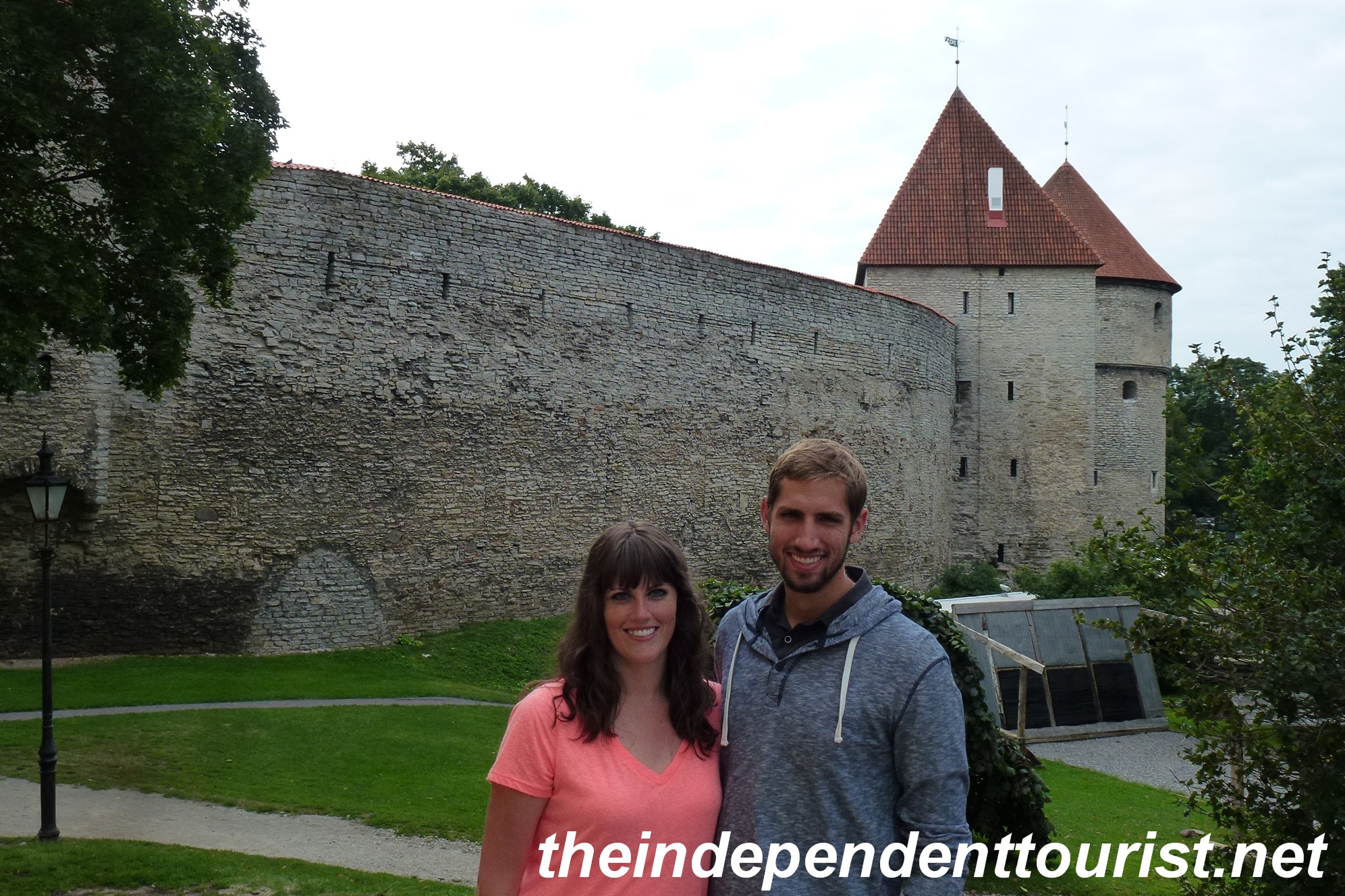
My daughter and son by another part of the walls. The walls are 4 meters wide in this area.

My daughter and son by another part of the walls. The walls are 4 meters wide in this area.

Old Town Streets. It’s worth just wandering the streets to see what you come across – there are many lovely shops and old buildings to wander around.

St. Catherine's Passage, one of Tallinn's most picturesque streets and home to St. Catherine's Guild, a collection of craft workshops housed in 15th -17th century rooms.

St. Catherine’s Passage, one of Tallinn’s most picturesque streets and home to St. Catherine’s Guild, a collection of craft workshops housed in 15th -17th century rooms.

Street scene in Old Town, Tallinn.

Street scene in Old Town, Tallinn.

The entrance to the House of the Brotherhood of the Black Heads, a guild of unmarried German merchants that had responsibility for the town's defenses in medieval times.

The entrance to the House of the Brotherhood of the Black Heads, a guild of unmarried German merchants that had responsibility for the town’s defenses in medieval times.

St. Olav’s Church. For about 75 years (1549 – 1625) this 14th century Gothic church was the tallest building in the world. You can climb the tower for great views of the Old Town and surrounding area. The spire is 124 m (406 ft) high.

View of Tallinn's walls and towers from Toompea Hill. St. Olav's Church has the tall spire on the right.

View of Tallinn’s walls and towers from Toompea Hill. St. Olav’s Church has the tall spire on the right.

St. Olav's Church - it's hard to get a good picture - such a tall building in a compact space.

St. Olav’s Church – it’s hard to get a good picture – such a tall building in a compact space.

Taking the stairs up the tower at St. Olav's Church.

Taking the stairs up the tower at St. Olav’s Church.

Patarei Prison. This fortress, which was turned into a prison in 1920, warrants its own blog post. It is about a 15-minute walk from the Old Town and inside it looks like the prisoners just walked out – bedding, books and all kinds of things were left behind. The prison was closed in 2002 and is now a museum (of sorts). More to come on this fascinating place!

My new cell at Paterei Prison!

My new cell at Paterei Prison!

Malbork – Europe’s Largest Gothic Castle

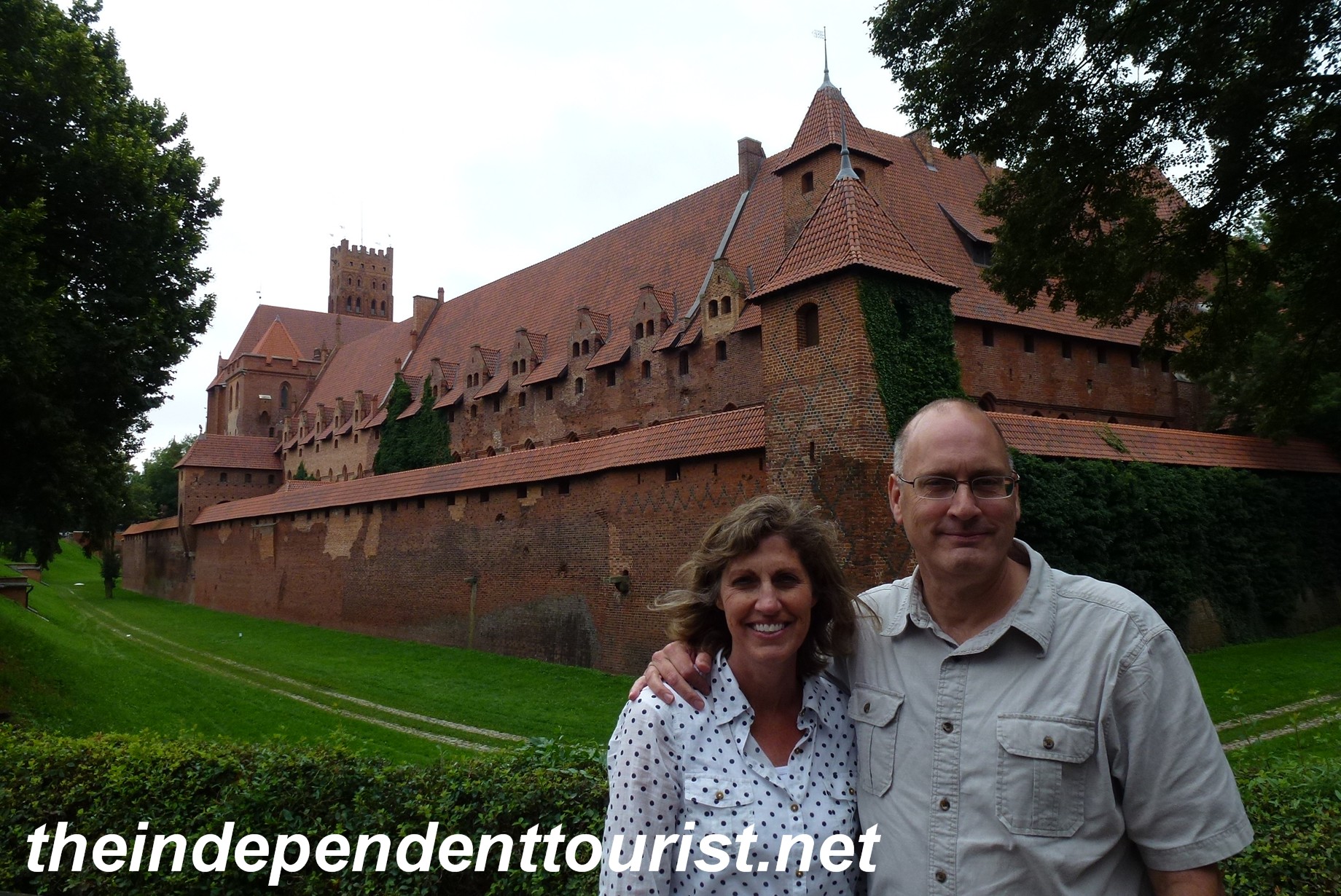
Malbork Castle sits on the east bank of the Nogat River, a tributary of the mighty Vistula River.

Malbork Castle sits on the east bank of the Nogat River, a tributary of the mighty Vistula River.

My first general awareness of Malbork Castle came from a Lufthansa flight magazine on a trip to Europe. Immediately I though “this is a place I need to visit” and in August 2013 I was able to do so with my family. Malbork is about 30 km (18 miles) southeast of Gdansk, Poland and can be visited by car or train from Gdansk.

Places we visited in Poland in 2013.

Places we visited in Poland in 2013.

This huge castle is one of Poland’s greatest tourist attractions. We were astounded at its size. We were “running” and it took us close to three hours to visit.

The massive gate entrance to the Middle Castle - Malbork.

The massive gate entrance to the Middle Castle – Malbork.

Malbork was built by the Teutonic Knights (a German religious order of monk-warriors founded during the Third Crusade to Jerusalem) and Malbork was their headquarters and seat of the Grand Masters for 150 years starting in 1309 (construction on the castle started in the 1370’s). World War II inflicted significant damage to parts of the castle, but it is largely intact and restored.

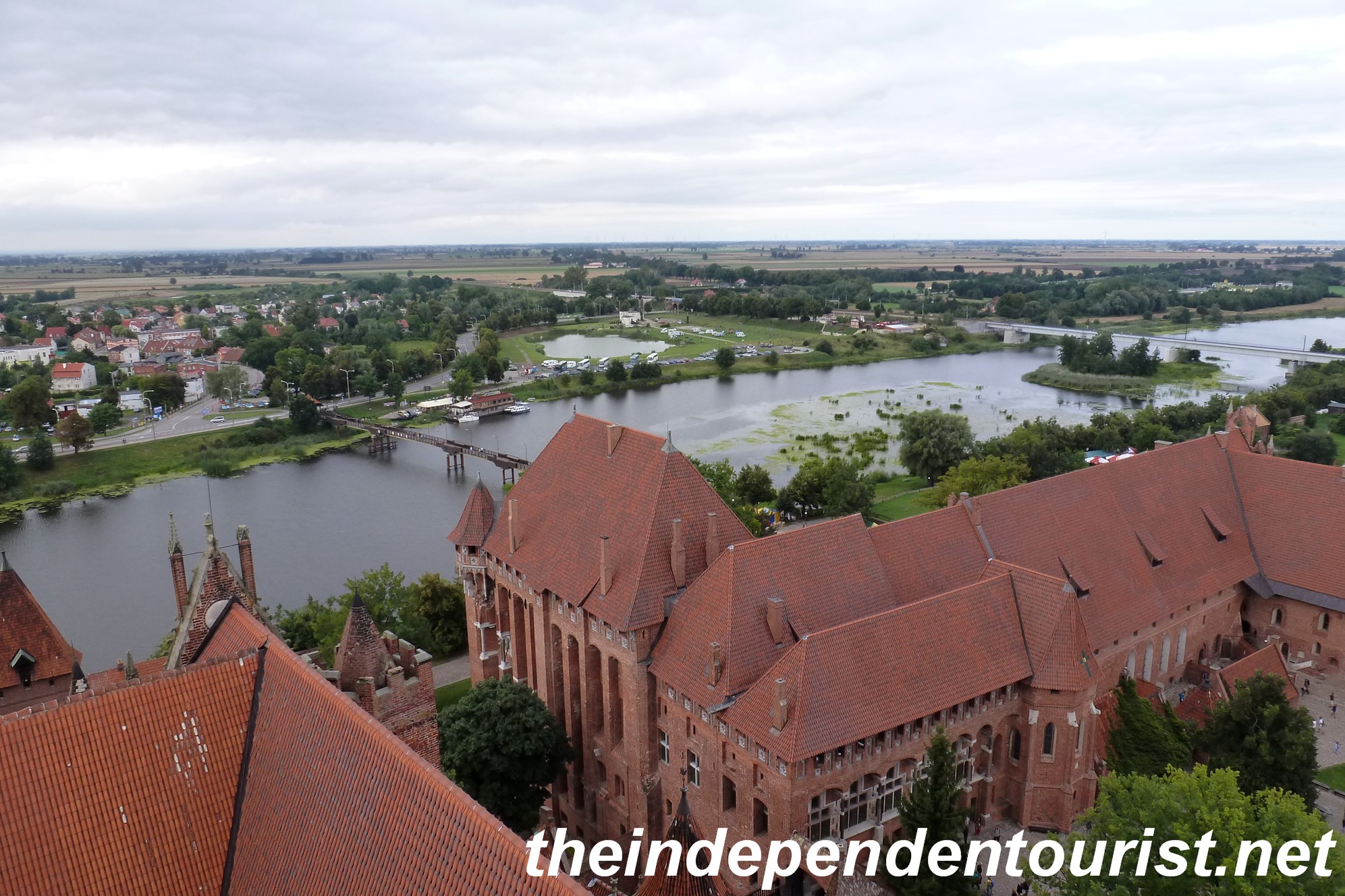
A view taken from the Main Tower of the High Castle, overlooking the Palace of the Grand Masters, Middle Castle and the Nogat River.

A view taken from the Main Tower of the High Castle, overlooking the Palace of the Grand Masters, Middle Castle and the Nogat River.

A view of the eastern side of the Middle Castle at Malbork.

A view of the eastern side of the Middle Castle at Malbork.

The primary structures include the High Castle (the stronghold), the Middle Castle (kitchens, rooms for entertaining guests and the Palace of the Grand Masters), and outer walls and buildings. Main sights include the Grand Master’s Palace, the Great Refectory, the High Castle Courtyard and St. Mary’s Church, including St. Anne’s Chapel underneath the church.

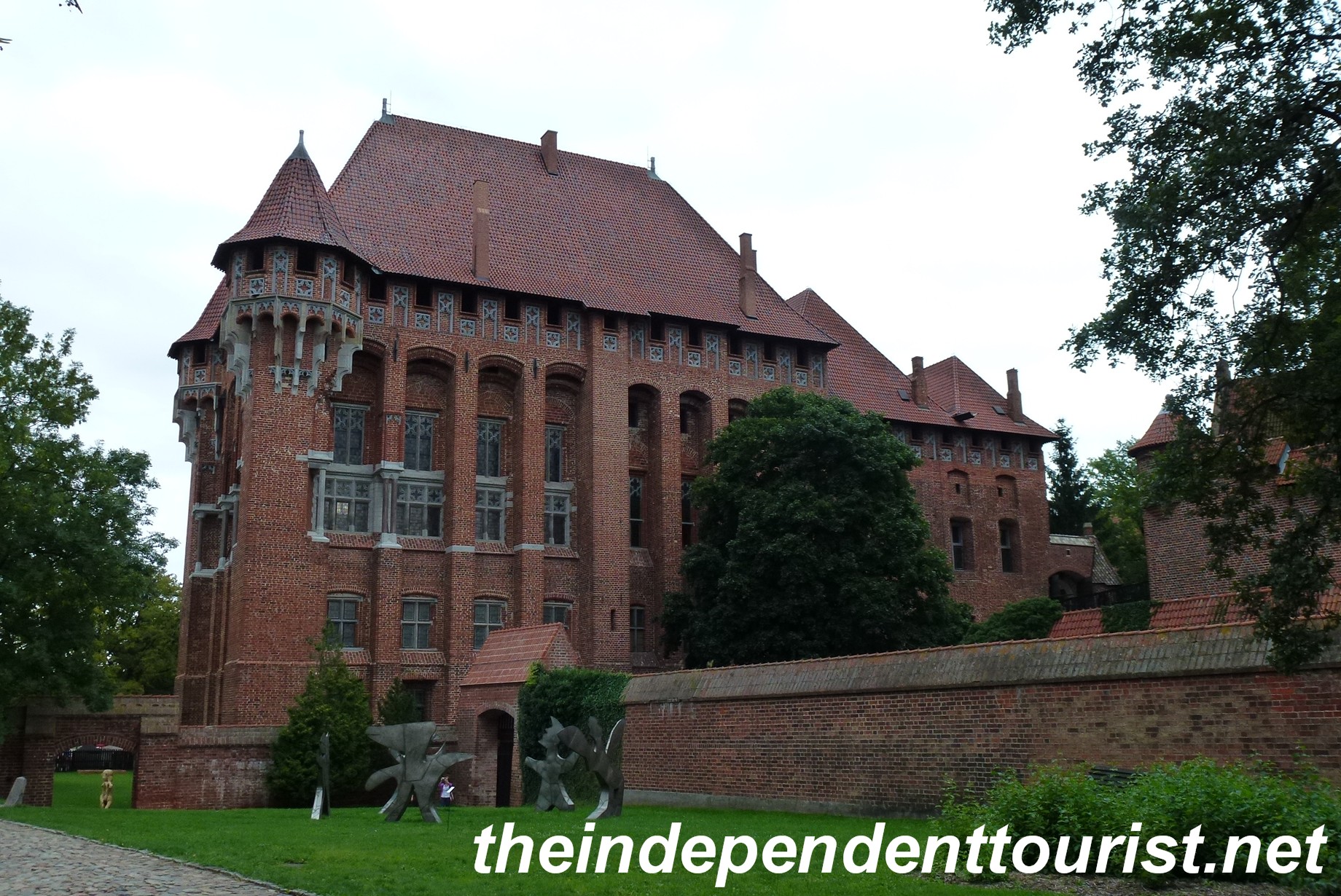
Exterior of the Grand Master's Palace.

Exterior of the Grand Master’s Palace.

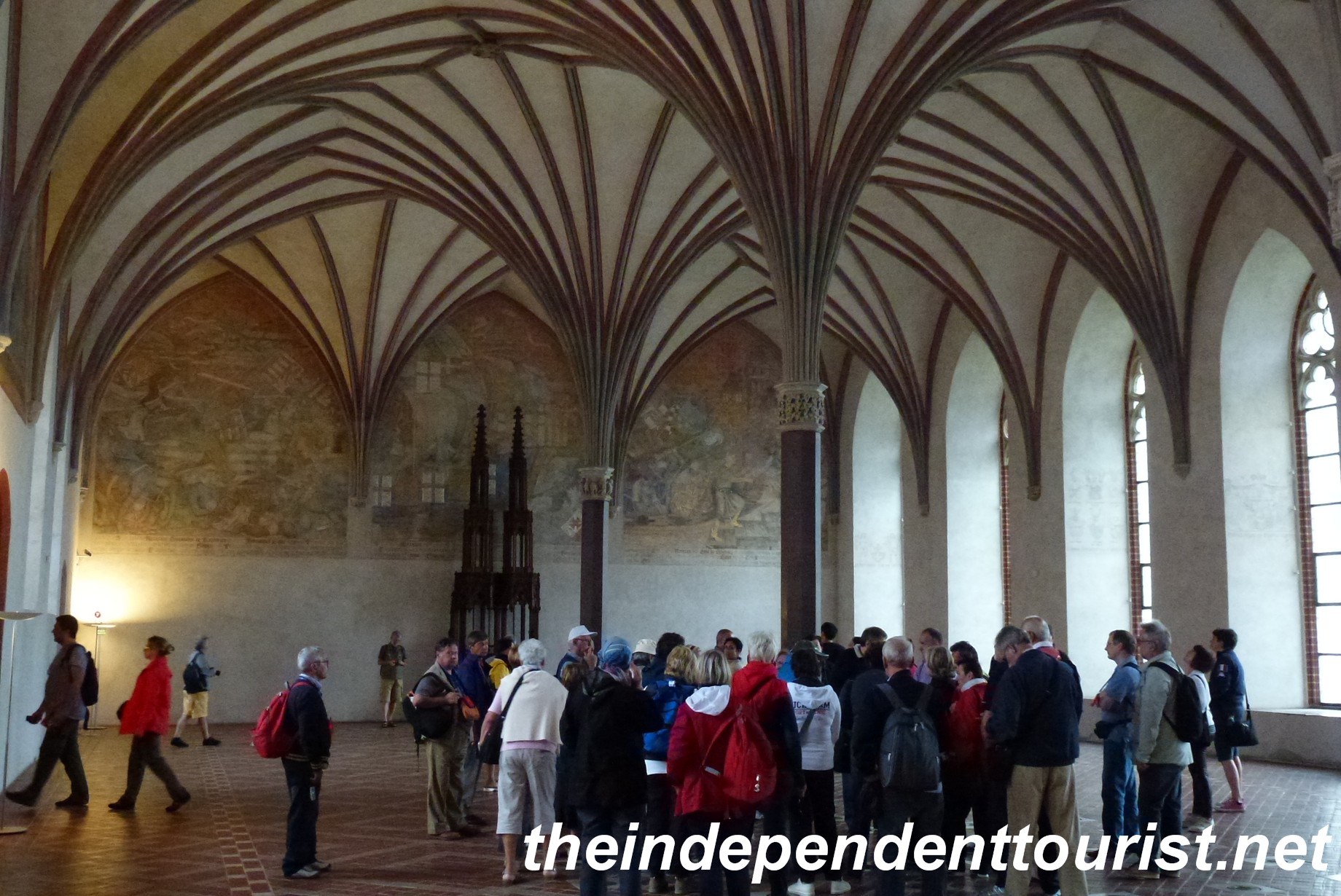
The Great Refectory, Middle Castle - Malbork. Largest Gothic interior of its kind in Central Europe. Used for banquets and entertaining.

The Great Refectory, Middle Castle – Malbork. Largest Gothic interior of its kind in Central Europe. Used for banquets and entertaining.

The Chapter Room (where business would be conducted) in the High Castle - Malbork.

The Chapter Room (where business would be conducted) in the High Castle – Malbork.

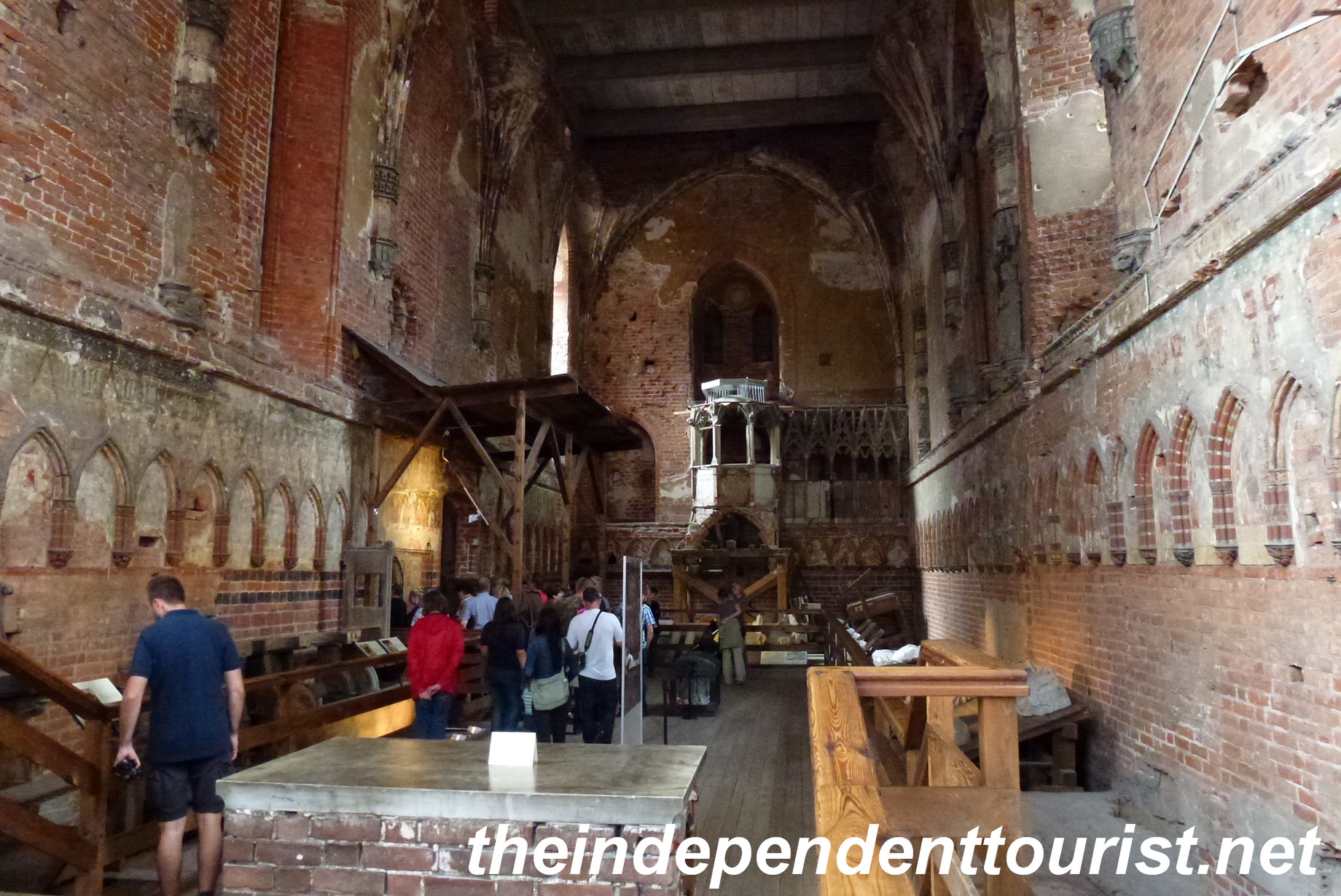
St. Mary's Church, not completely restored from WW II damage.

St. Mary’s Church, not completely restored from WW II damage.

The Last Supper frescoe in St. Mary's Church.

The Last Supper frescoe in St. Mary’s Church.

Tombs of the Grand Masters in St. Anne's Chapel.

Tombs of the Grand Masters in St. Anne’s Chapel.

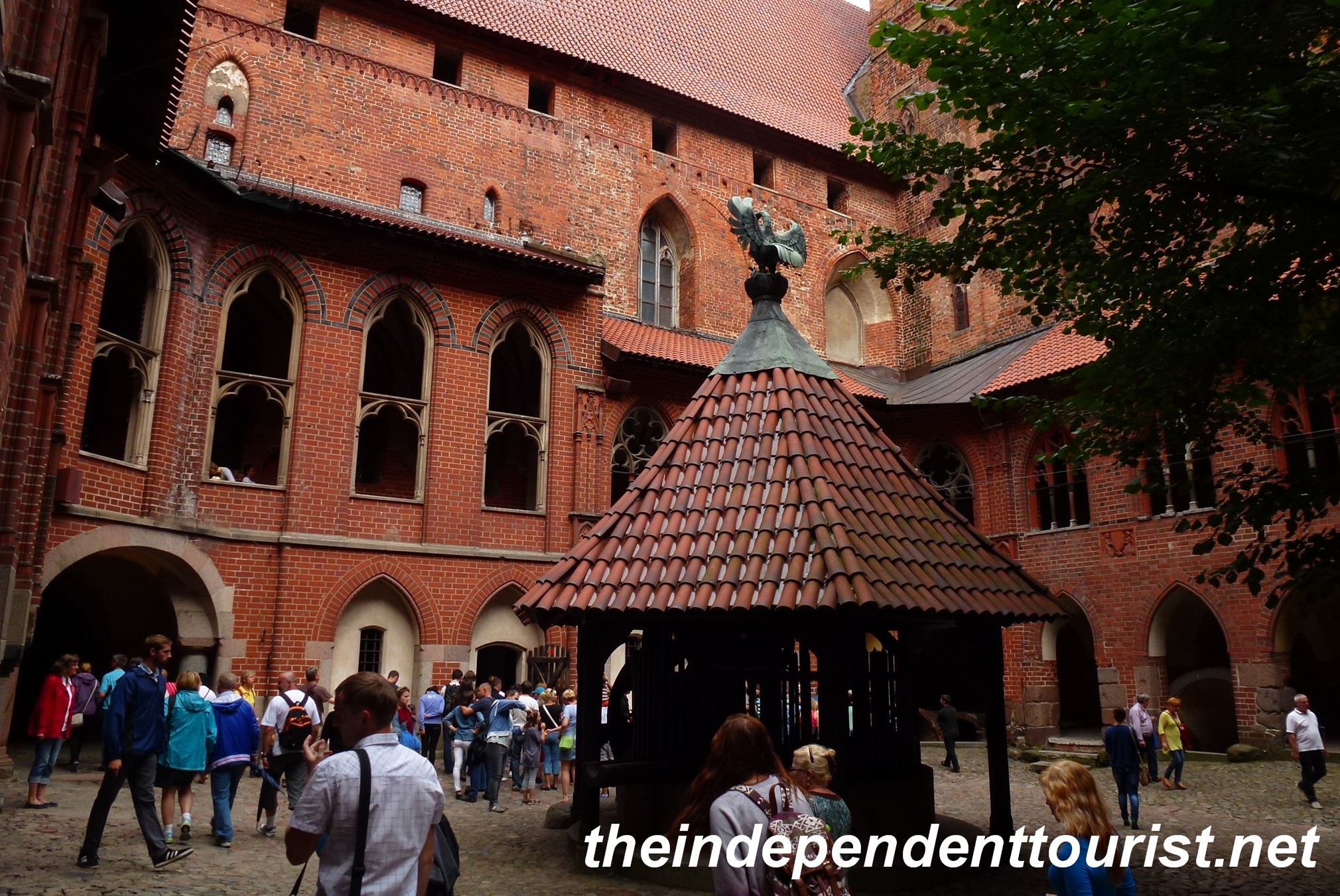
Courtyard and well in the High Castle - Malbork.

Courtyard and well in the High Castle – Malbork.

Be sure to visit the walls on the south side of the castle. There are interesting displays of medieval machinery and excellent views of the castle buildings and towers from here.

The Latrine Tower on the southwestern corner of the castle grounds. Used for exactly what it sounds like! There was originally water below the tower for "flushing."

The Latrine Tower on the southwestern corner of the castle grounds. Used for exactly what it sounds like! There was originally water below the tower for “flushing.”

There are other Teutonic castles in northern Poland and in another post I will share images of two more, but Malbork is the grandest by far.

Sources: Plaques at Malbork Castle, Top Spot Guide: Malbork Castle –  The World of the Teutonic Order, by Marek Stokowski.