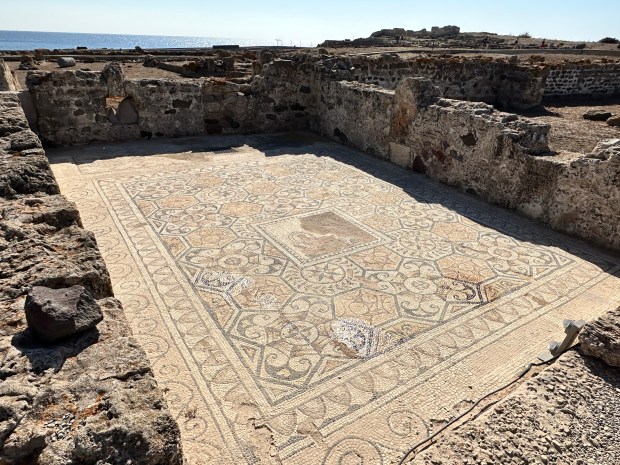
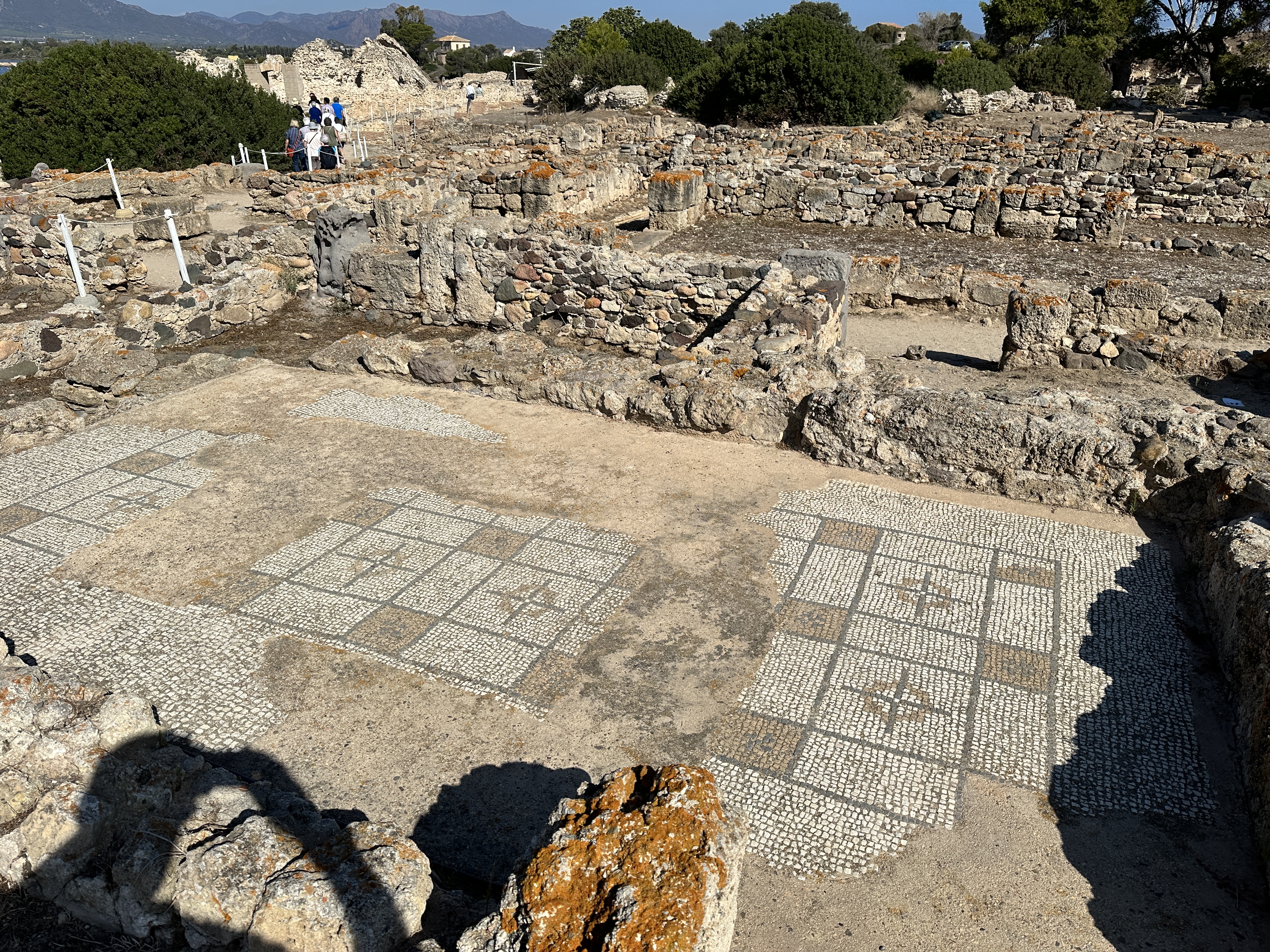
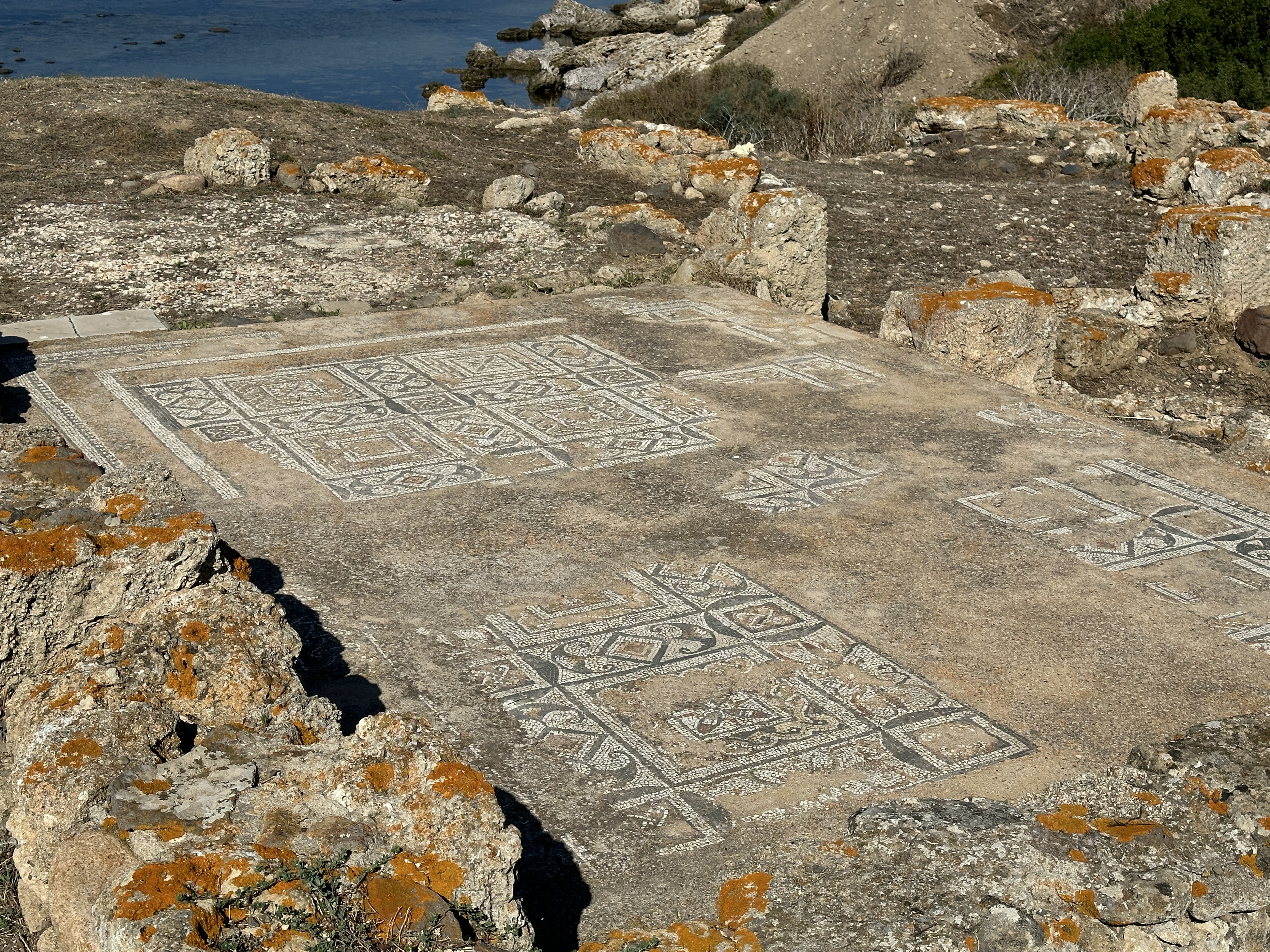
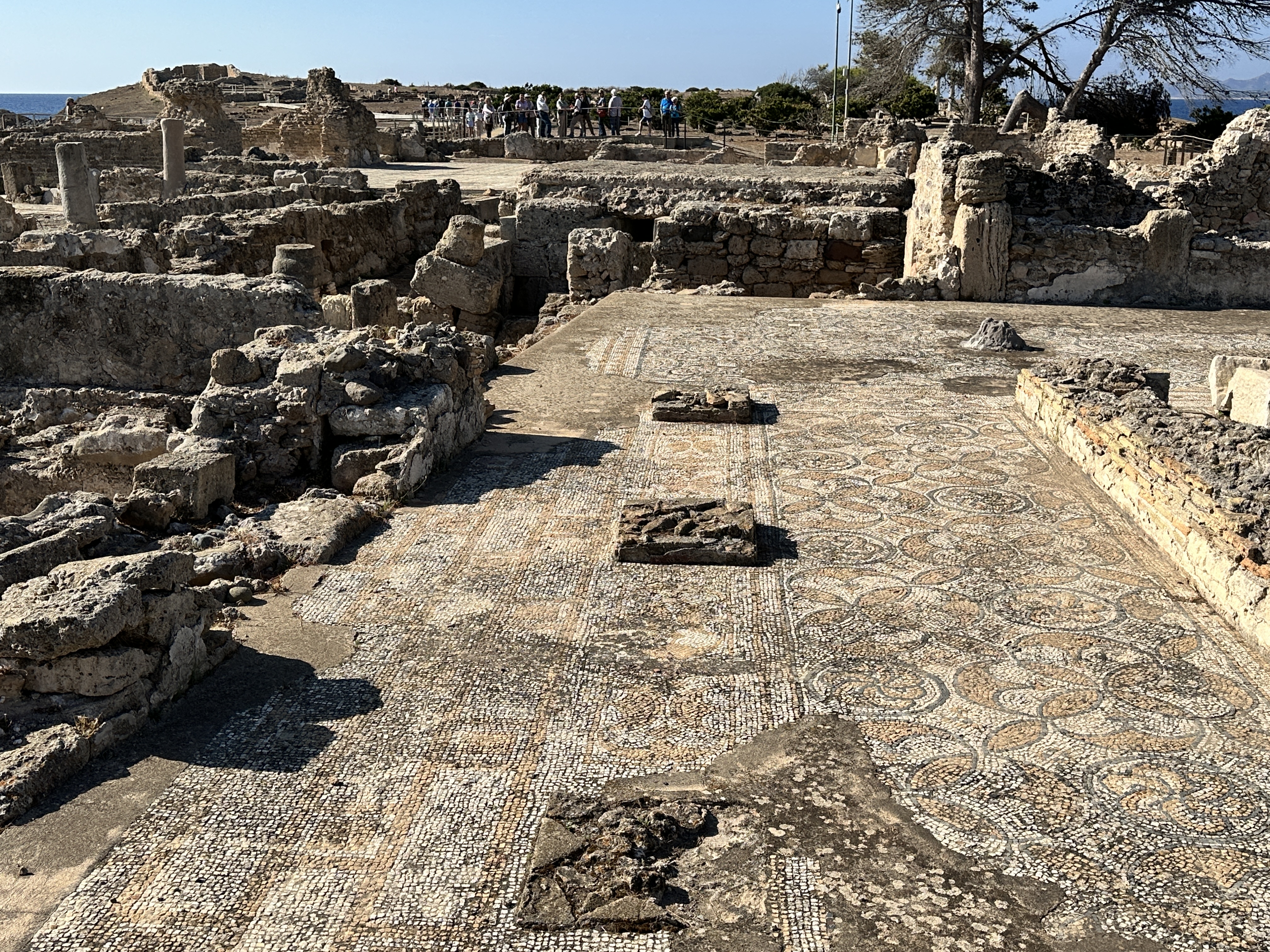
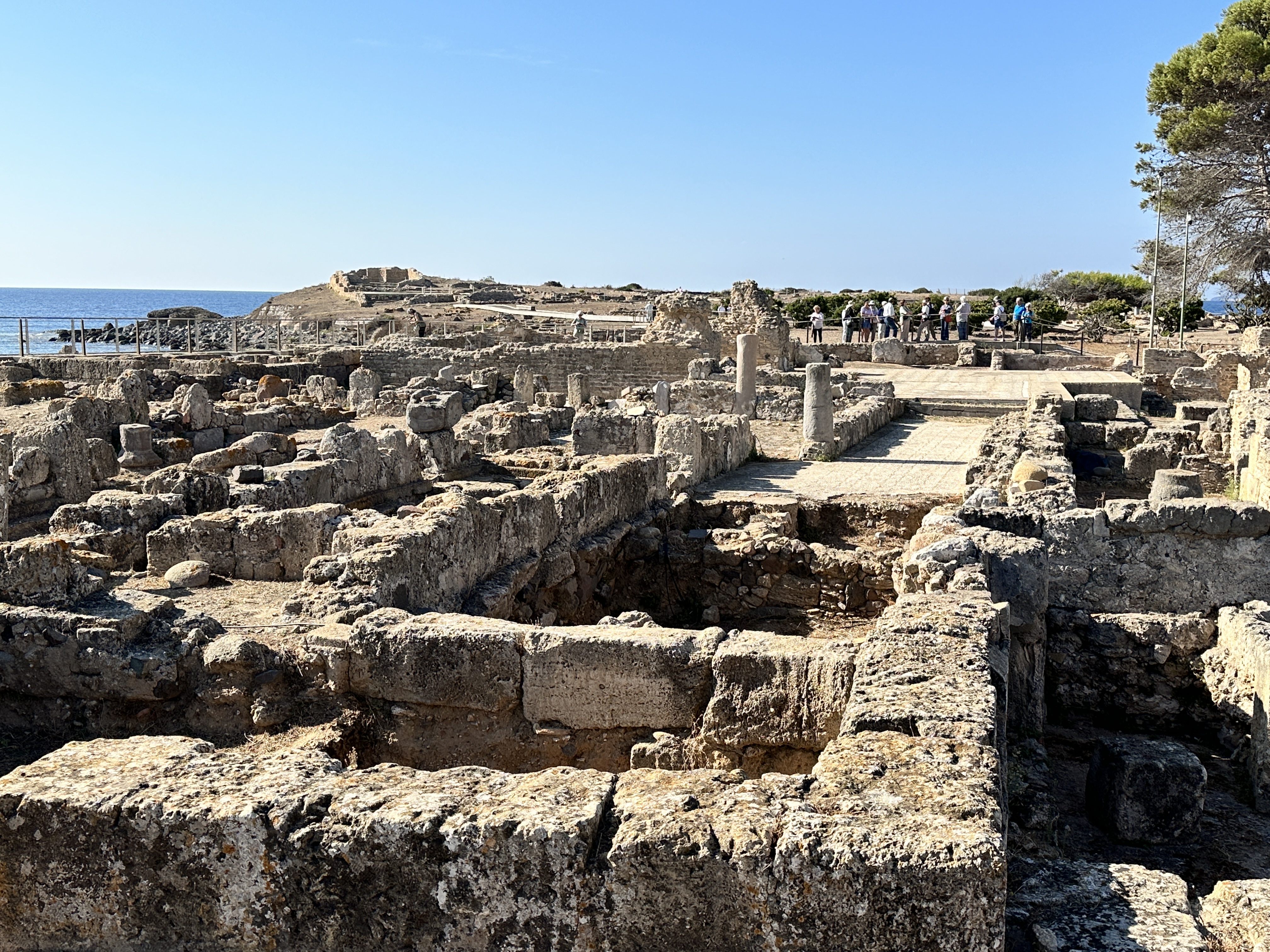
The Nora Archeological Site is only about 45 minutes (48 km or 25 miles) west of Cagliari and makes a nice half-day trip, whether you are staying in town or on a one-day visit with a cruise ship. The origins of the settlement date back to Phoenician times around the 8th century B.C. The city flourished for over four hundred years starting during the first and second centuries B.C. during the Roman age. It must have been quite wealthy due to its ideal position on the coast of Sardinia, perfect for trading. The use of that wealth is demonstrated by the extensive mosaic floors that can still be seen as part of homes and public areas.
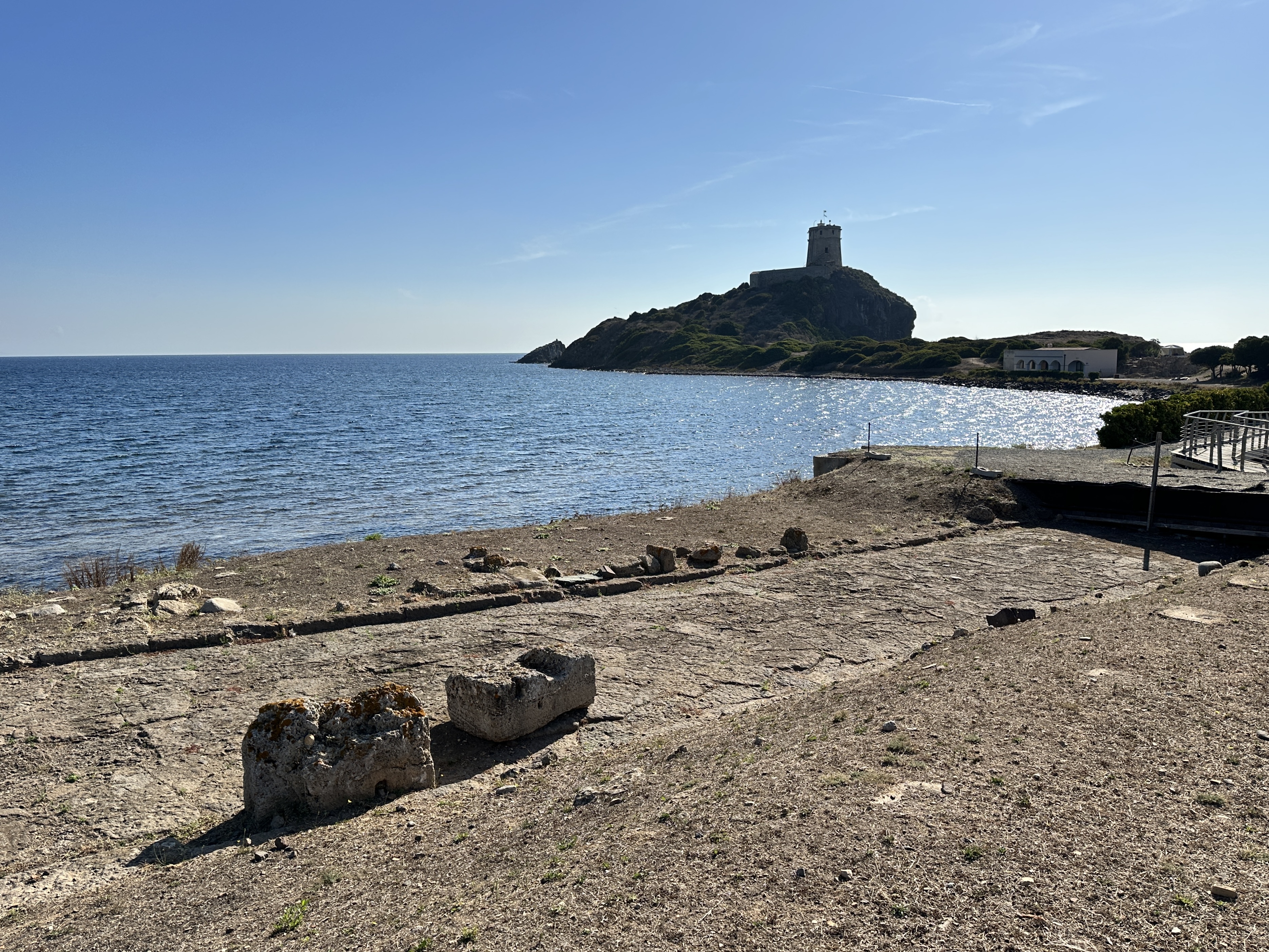
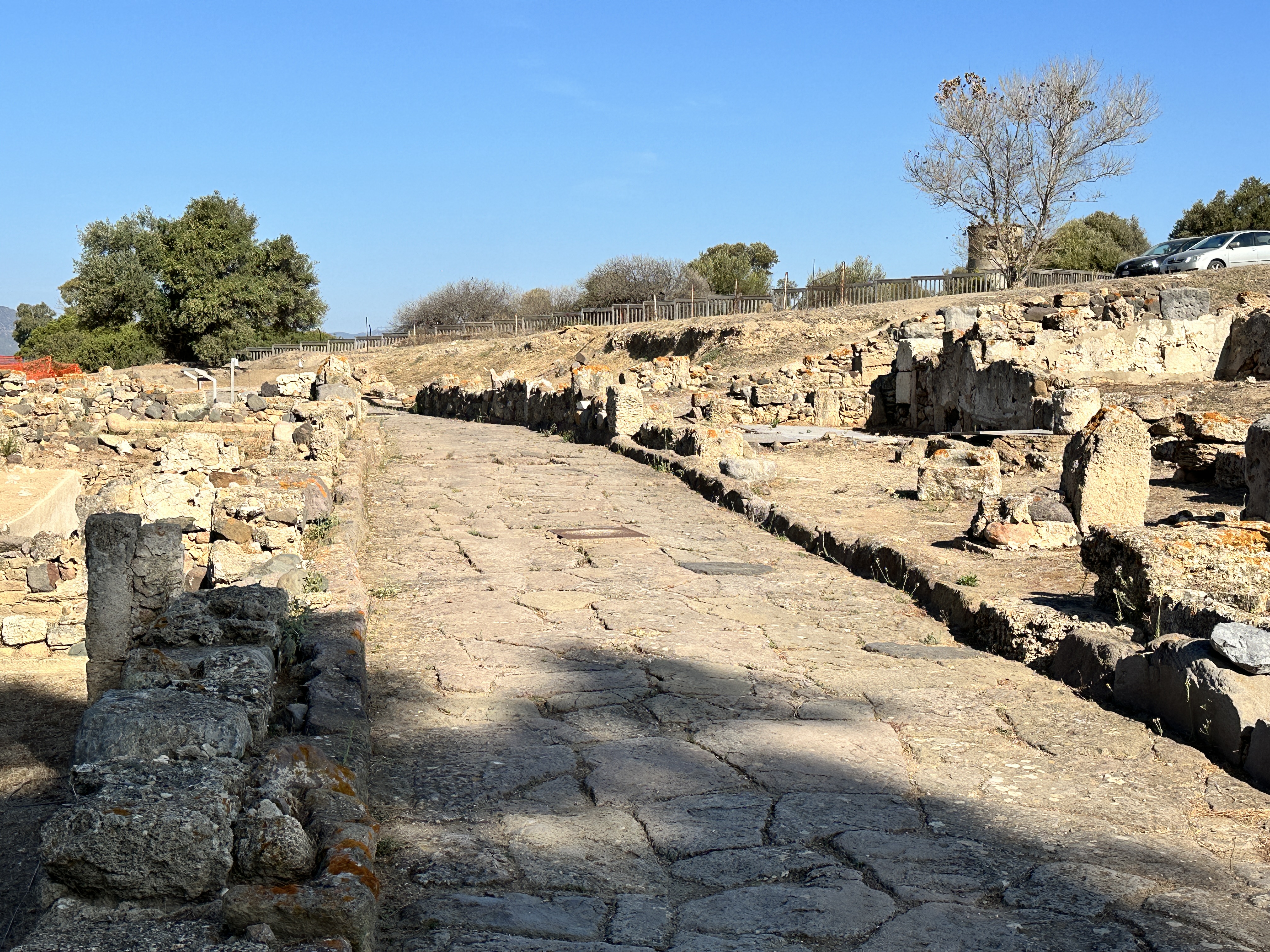
The ancient Roman road leading into Nora is overlooked by the 16th-century Torre del Coltellazzo.
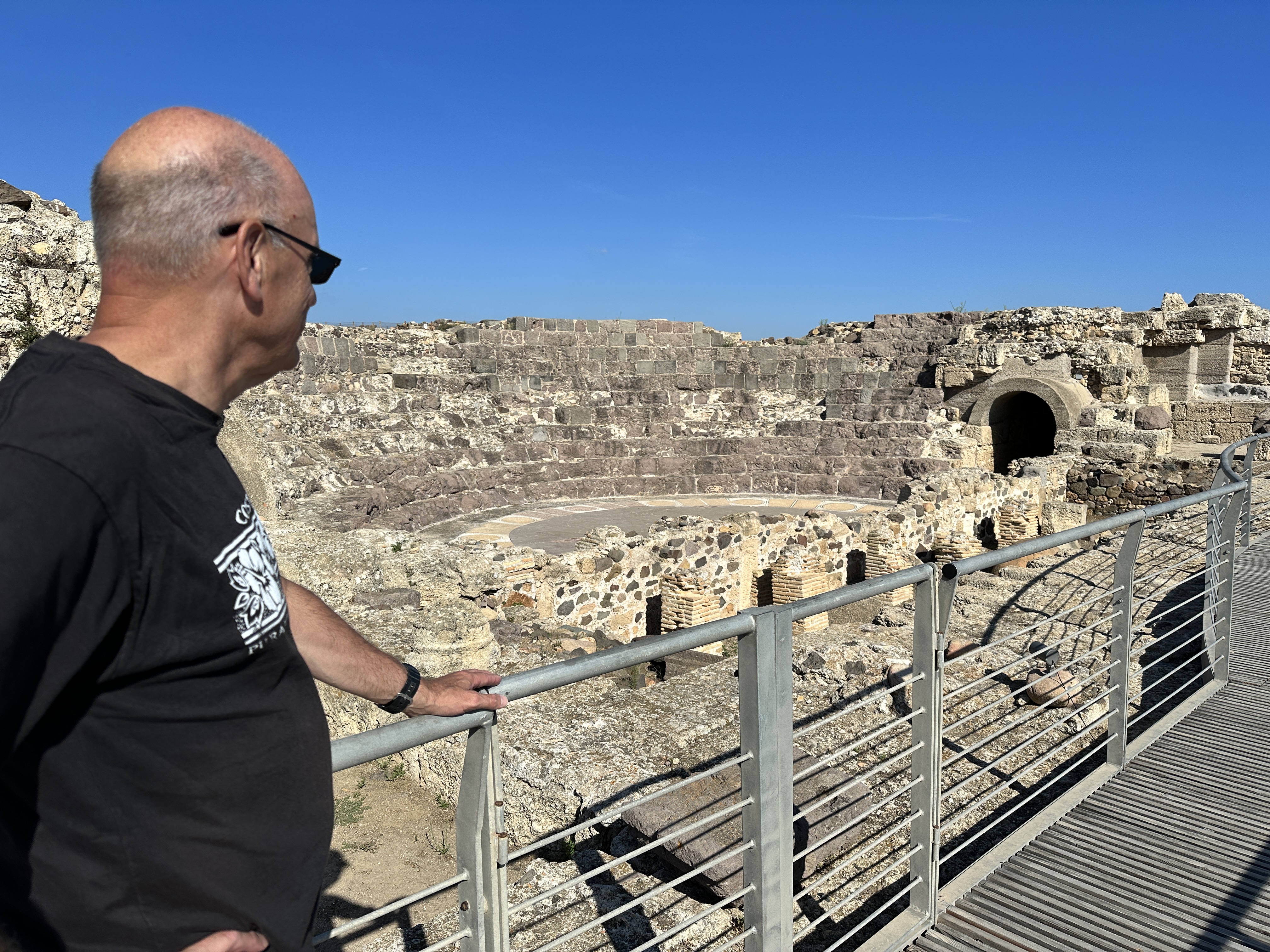
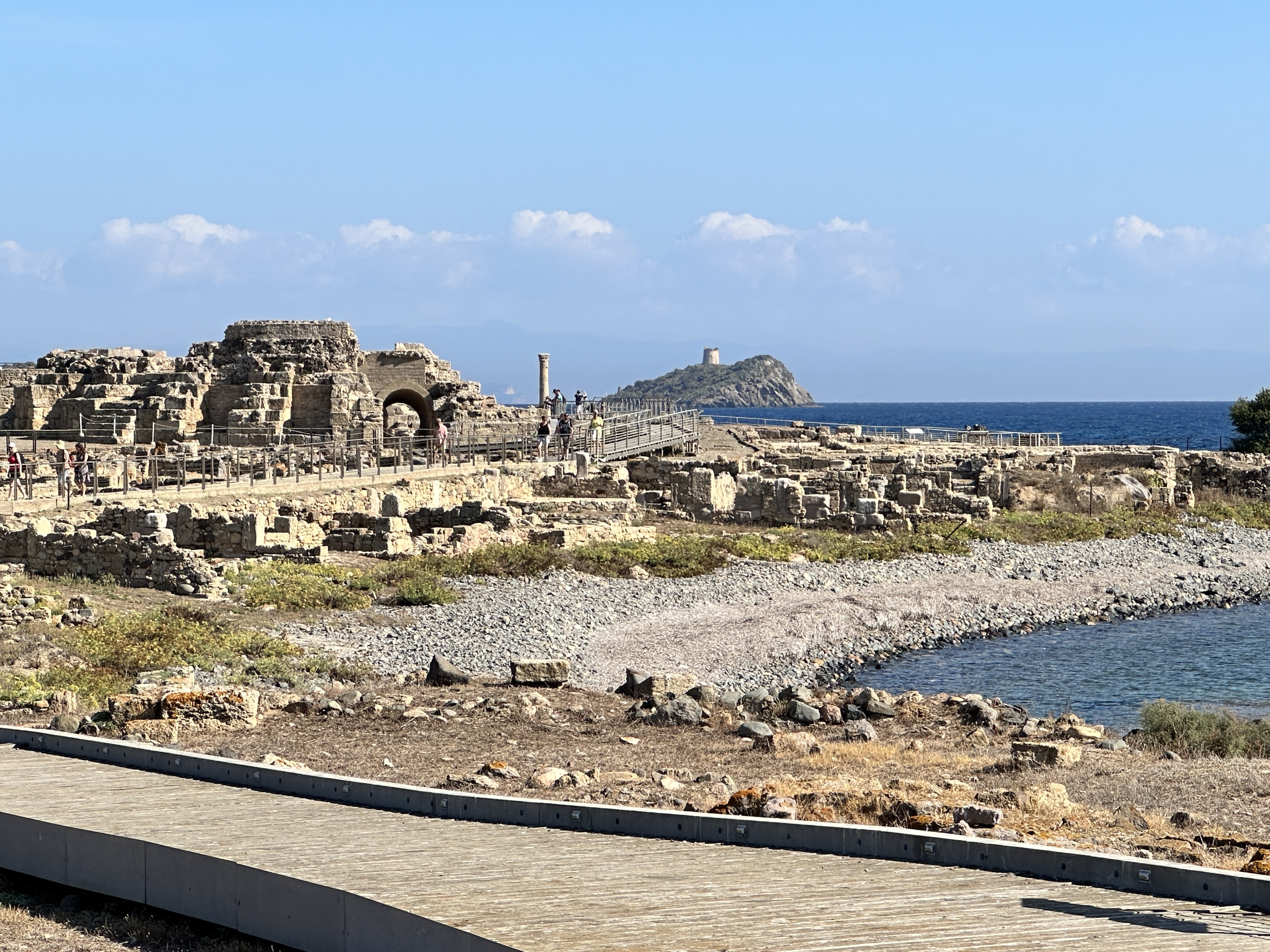
The ruins of the 1st century A.D. theater at Nora.
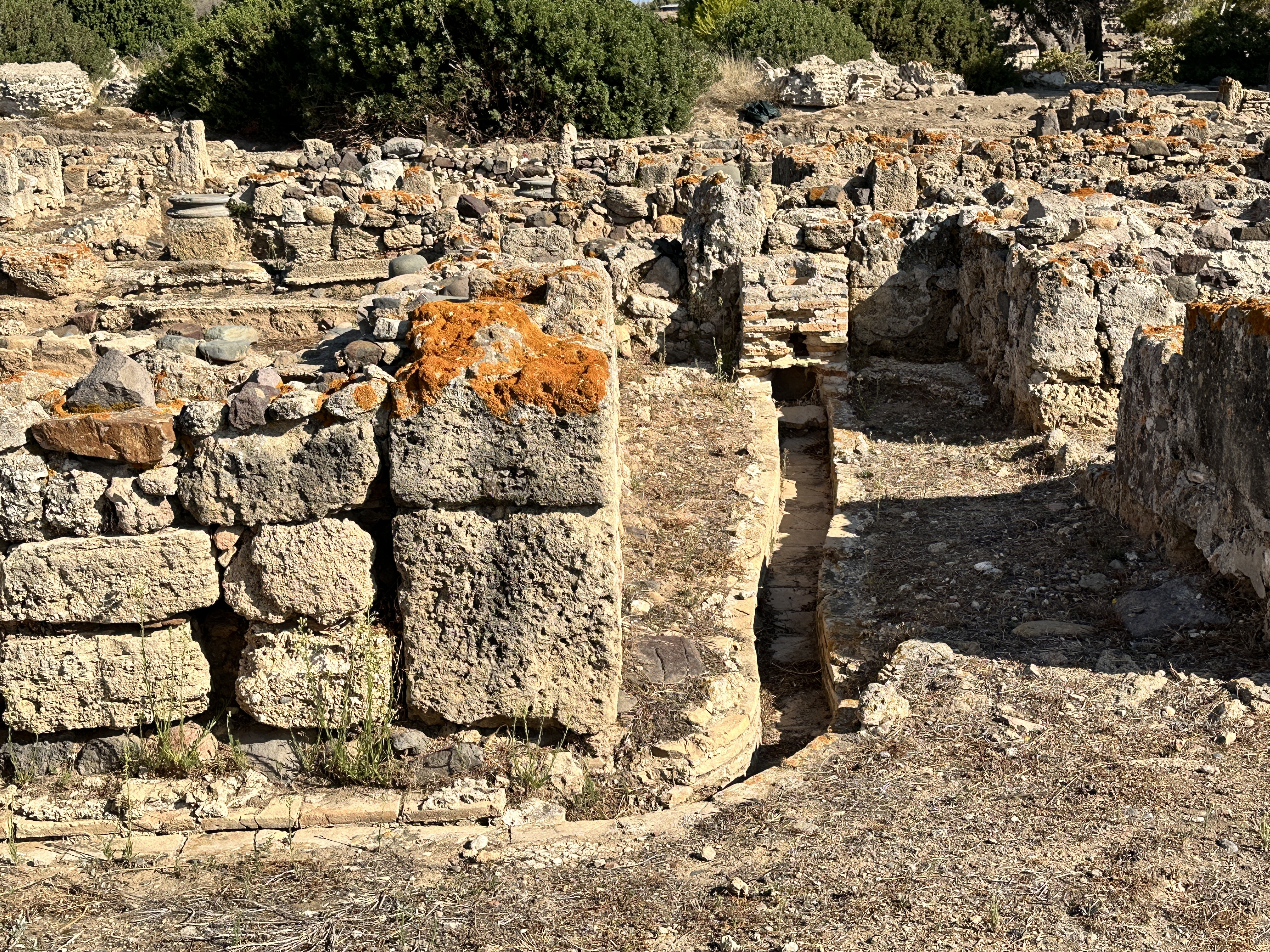
Above – Examples of the beautiful mosaics found at Nora Archeological Site.Above – other views of Nora – left: an example of a drainage system; right – mosaic floors surrounding one the city’s temple foundations.Additional views of Nora – shops area and a street through the center of town.
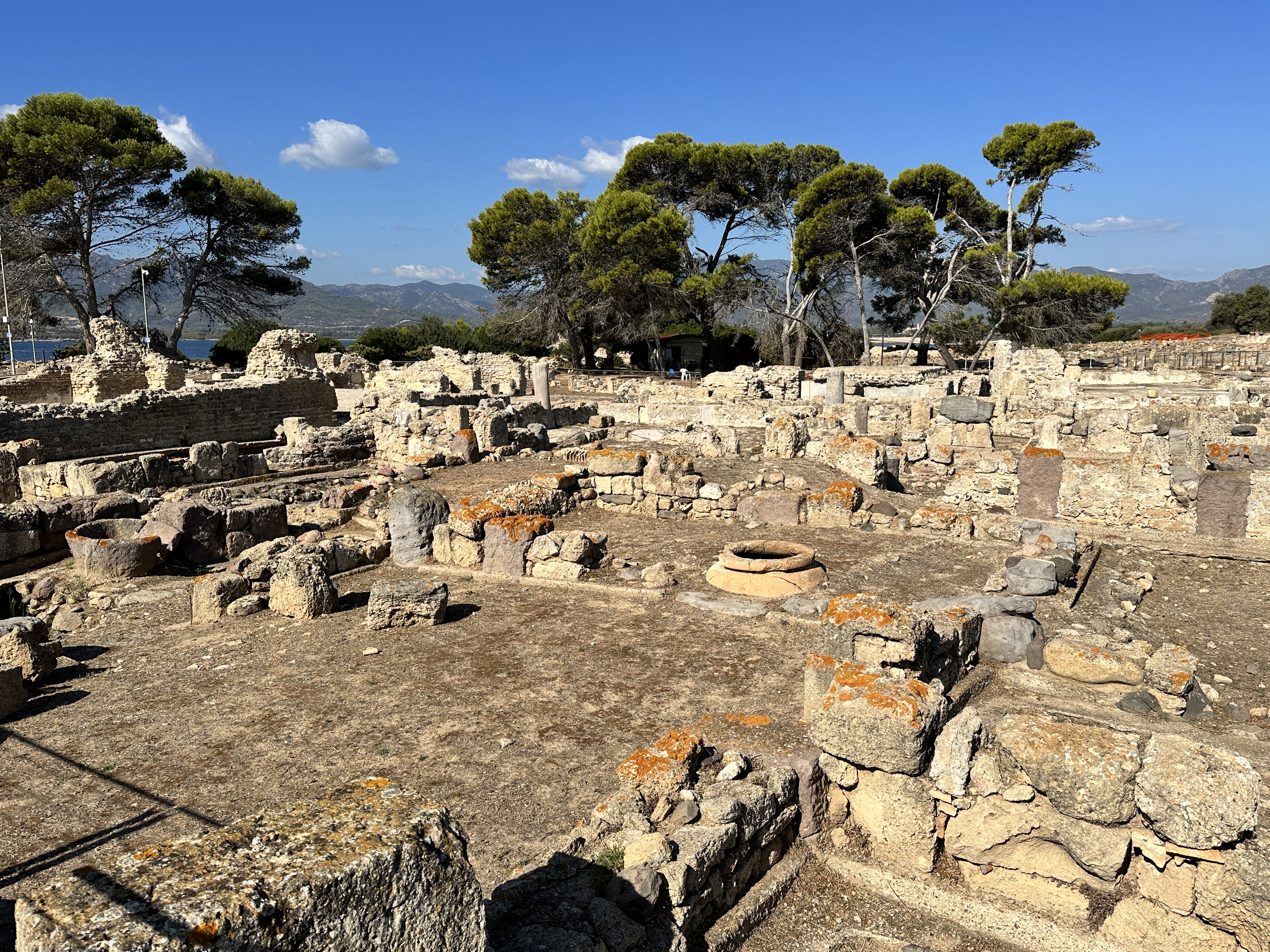
The large cauldrons may have been used for storage, making of wine, washing or perhaps other uses.
Nora, along with Tharros are worthwhile archeological sites to see during your visit to Sardinia. So take a break from the beautiful beaches and learn something about Sardinia’s fascinating cultural history.
If you enjoy archeology, Sardinia, Italy should be high on your list of places to visit. There are a number of Bronze Age (approximately 1900 BC to 730 BC) settlements throughout the island. The main towers of these settlements are called Nuraghe (essentially ancient towers/castles surrounded by small villages) and they are unique to Sardinia. According to Wikipedia, more than 7,000 of these structures have been found on the island. Very little is known about the people who inhabited these structures or what they used these structures for.
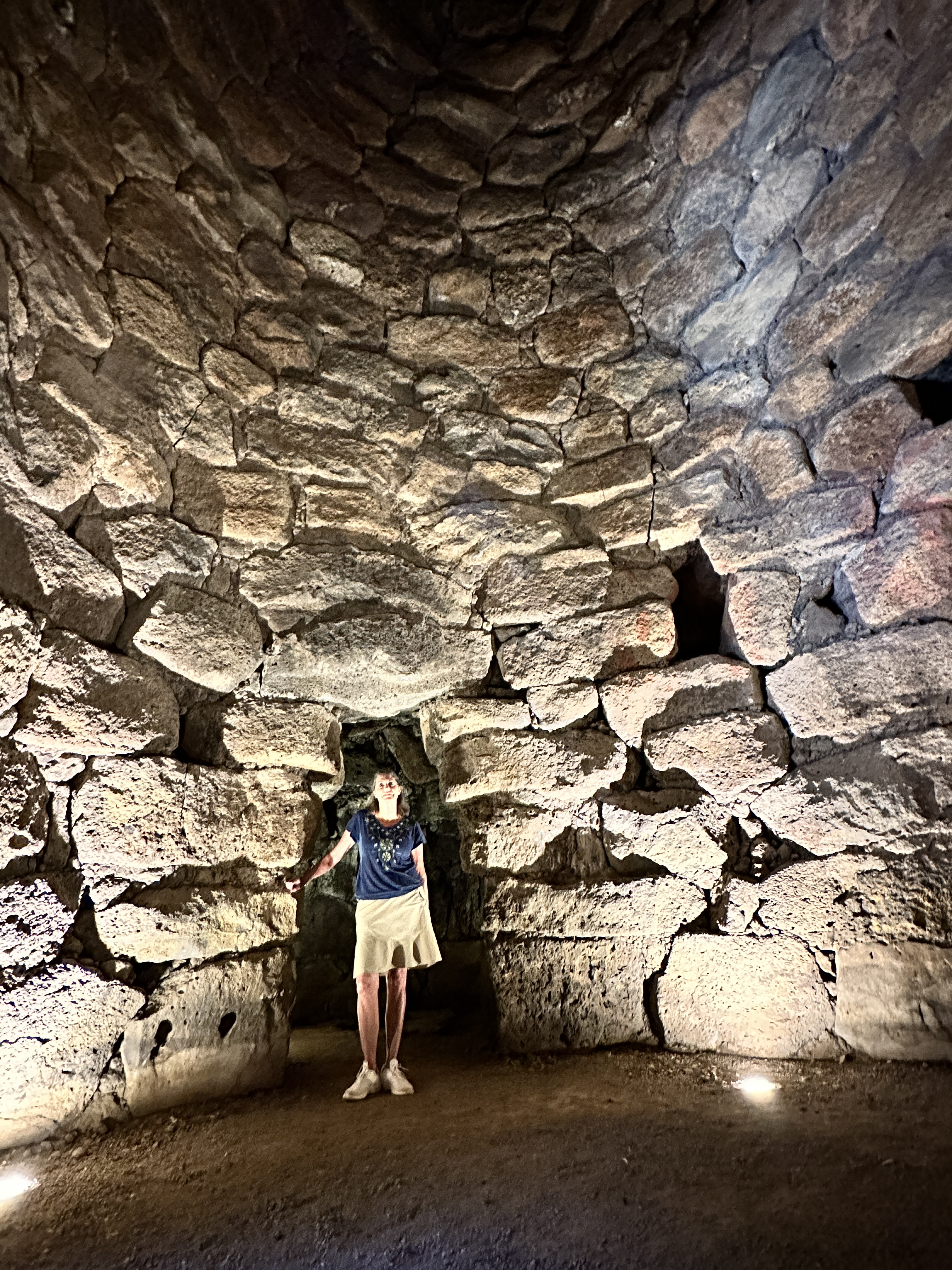
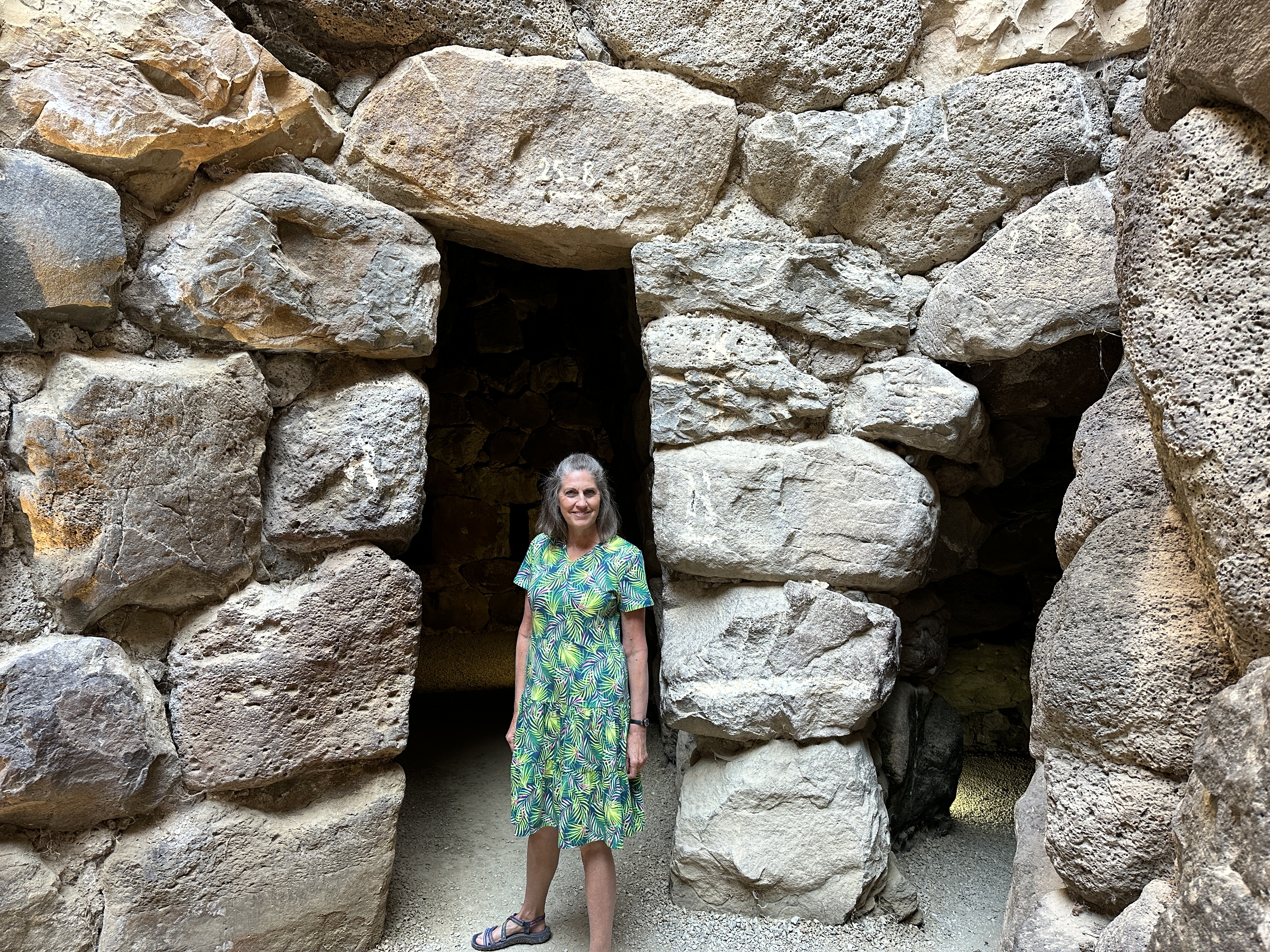
Amazingly, a number of Nuraghe are in an excellent state of preservation and can be visited, including the interiors. The stone work is quite incredible and standing in these 3,000 year-old rooms and climbing the stairways of these towers was a fun experience, not unlike visiting the ancient pyramids of Egypt. Most sites allow you to visit the structures on your own, the only one that required a guide was Su Nuraxi Barumini, one the largest of these settlements in Sardinia. As with many ancient archeological sites, the builders in Sardinia understood much about astronomy and were close observers of the night sky.
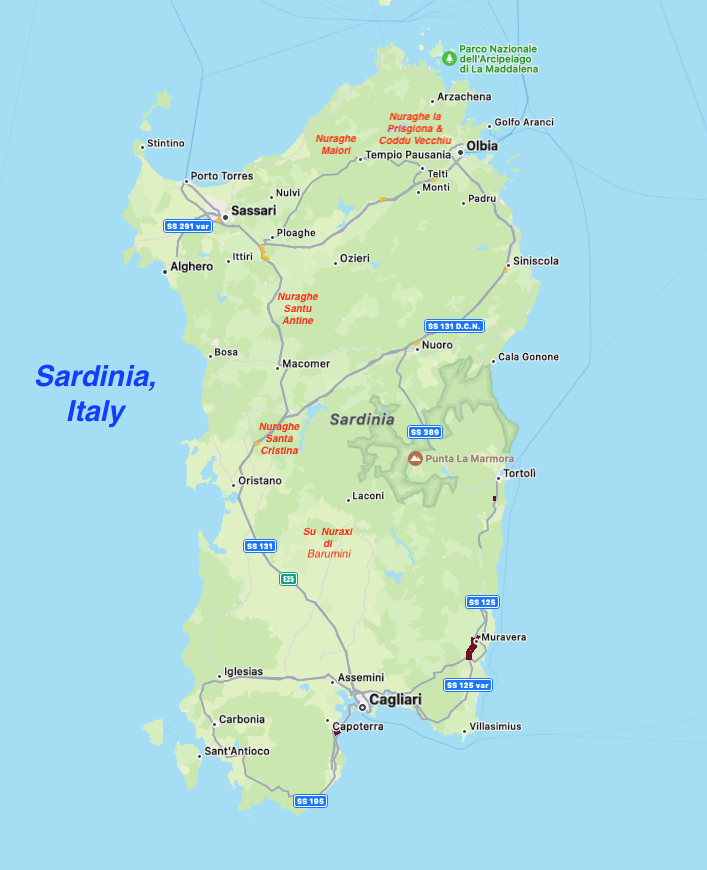
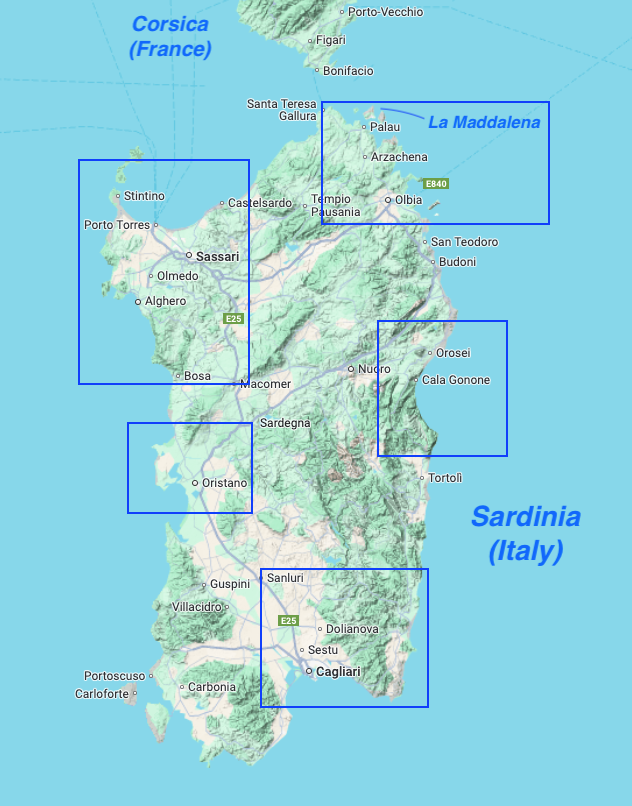
The approximate location of the Nuraghe sites we visited are shown on the map of Sardinia above.
We visited 5 Nuraghe sites, which provided a nice sampling of Sardinia’s rich Bronze Age history.
Below is a brief overview of the sites we visited.
Nuraghe la Prisgiona & Coddu Vecchiu
Nuraghe la Prisgiona was one of the smaller nuraghe sites we visited. There are a number of interesting archeological sites near Arzachena, Sardinia (including this one), a person could easily spend a day or more exploring all the nearby sites.
Within walking distance of Nuraghe la Prisgiona is Coddu Vecchiu, called the Giants Tomb. The tomb is from the same era and part of the Nuraghic civilization, about 1800 BC.
Nuraghe Majori – Complete with Bats!
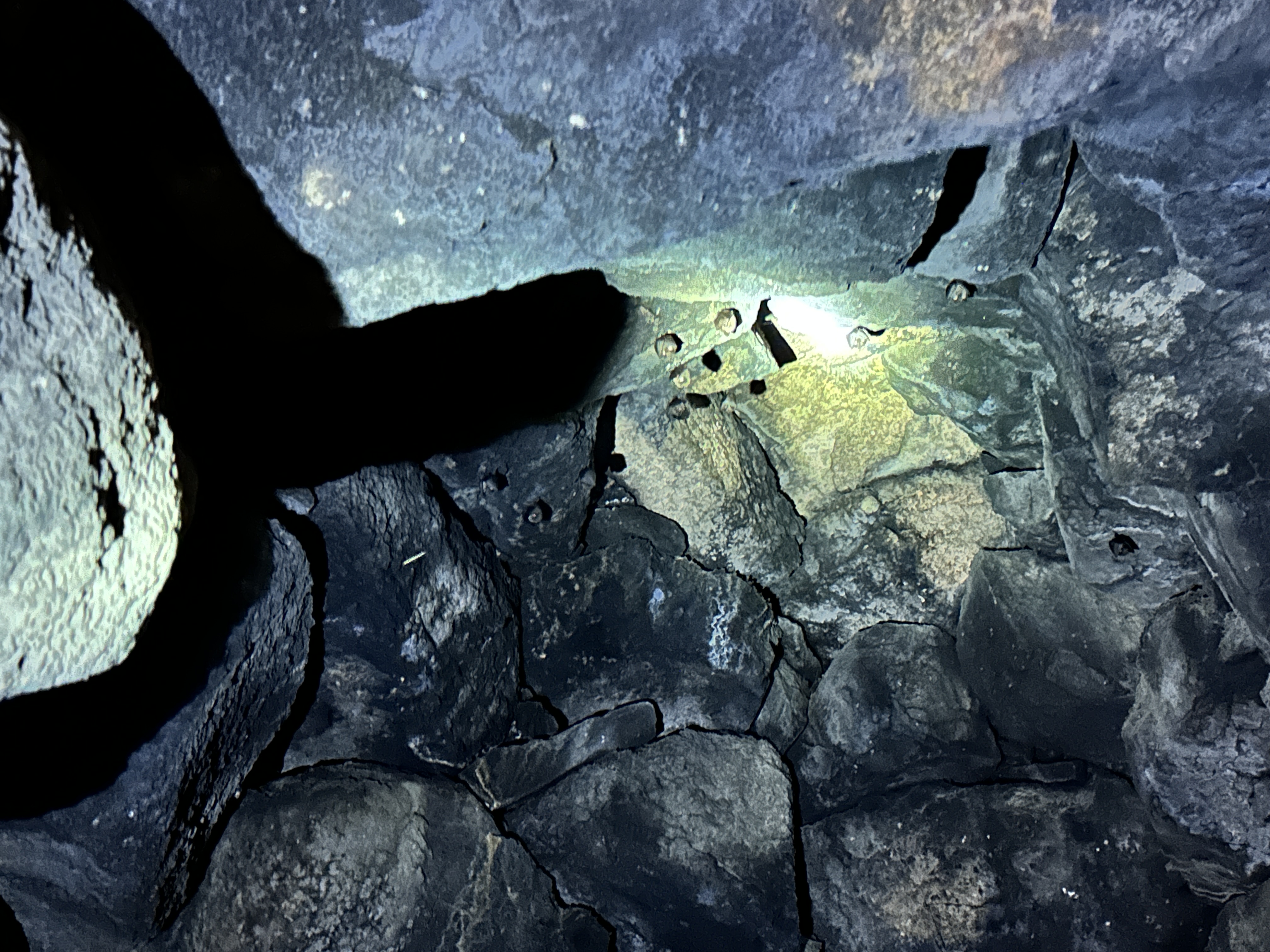
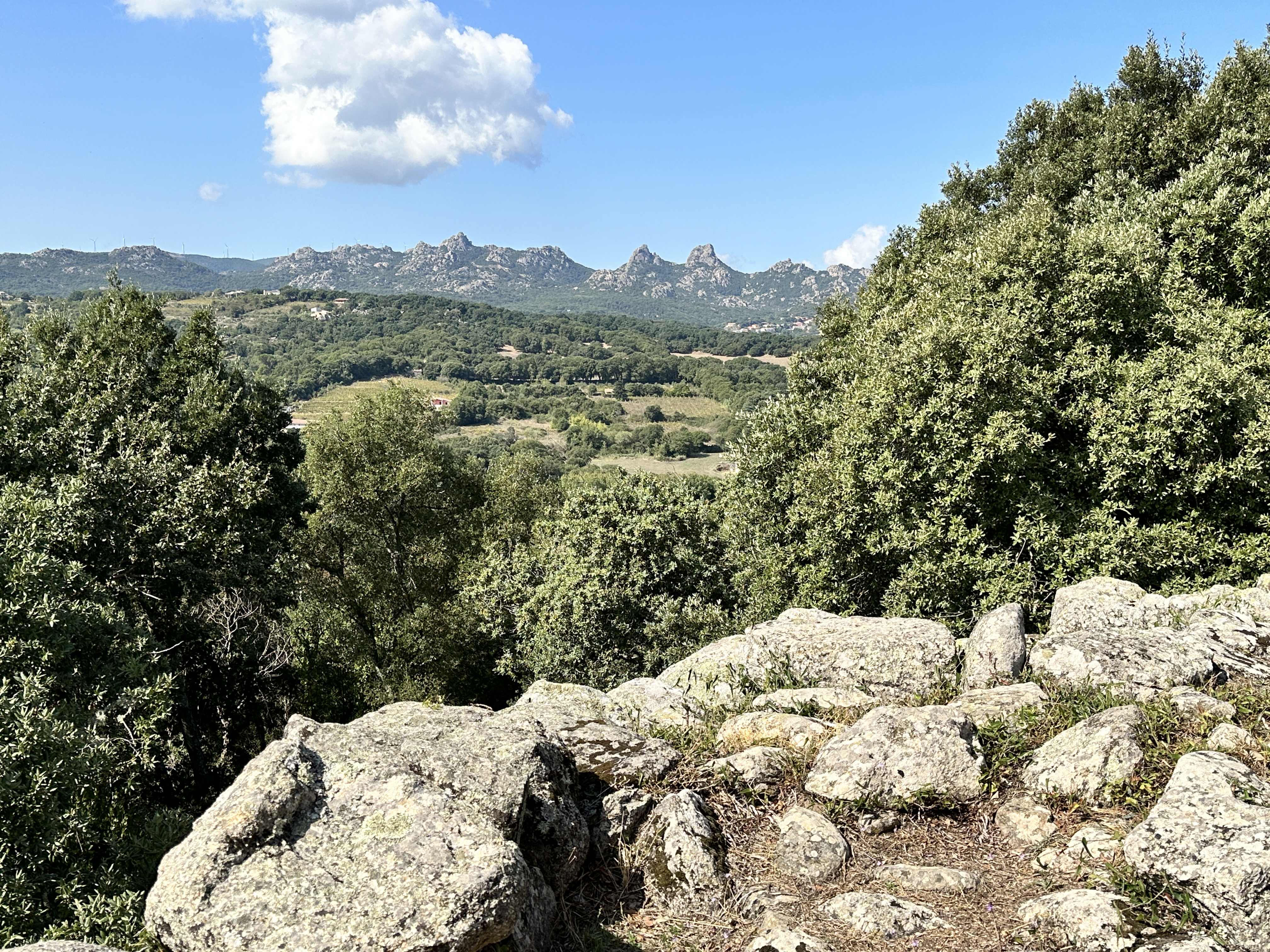
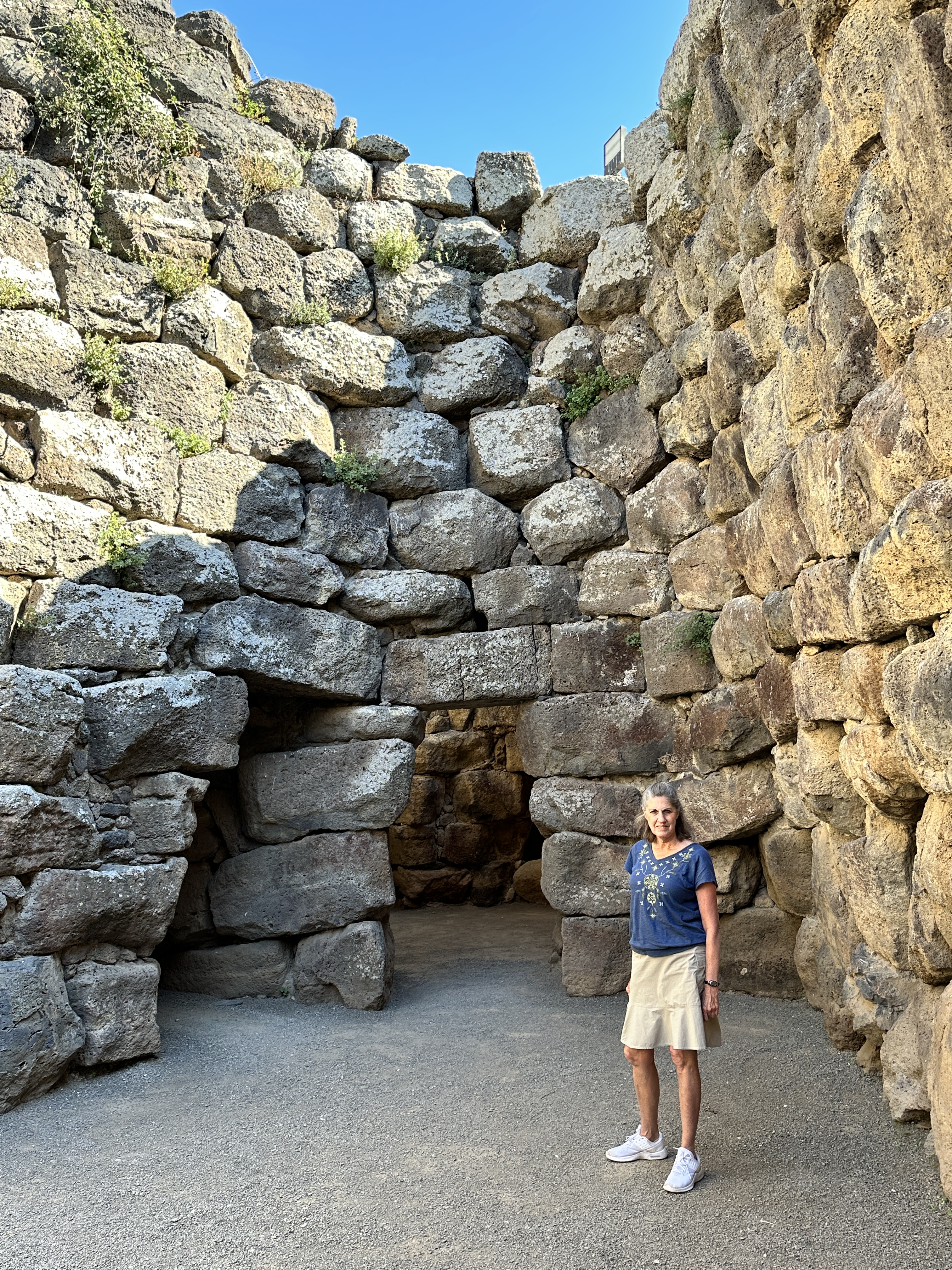
Nuraghe Majori is another small Nuraghe site. At the ticket office, they give you a flashlight so you can see the bats inside the main tower – right photo above: look closely to see the bats hanging from the roof interior.Left – Majori Nuraghe tower, Middle – one of the Nuraghe wall entrances, Right – view of the surrounding countryside. Most Nuraghe occupy a strategic location, such as a hilltop.
Nuraghe Santu Antine
A view of Nuraghe Santu Antine from the exterior. It doesn’t look that impressive or large from the exterior; however we were surprised how large and extensive the interior was once we entered.
Nuraghe Santu Antine – courtyard views – including a well in the left photo above.Interior views of Nuraghe Santu Antine – tall room, passageway, and stairway to 2nd level.
Nuraghe Santa Cristina
Santa Cristina may have been my favorite site, perhaps because there is so much to see here. There are Nuraghe ruins, including a fascinating ancient well, and medieval-era buildings also. It has been a site used for religious purposes for centuries.
Sacred Well
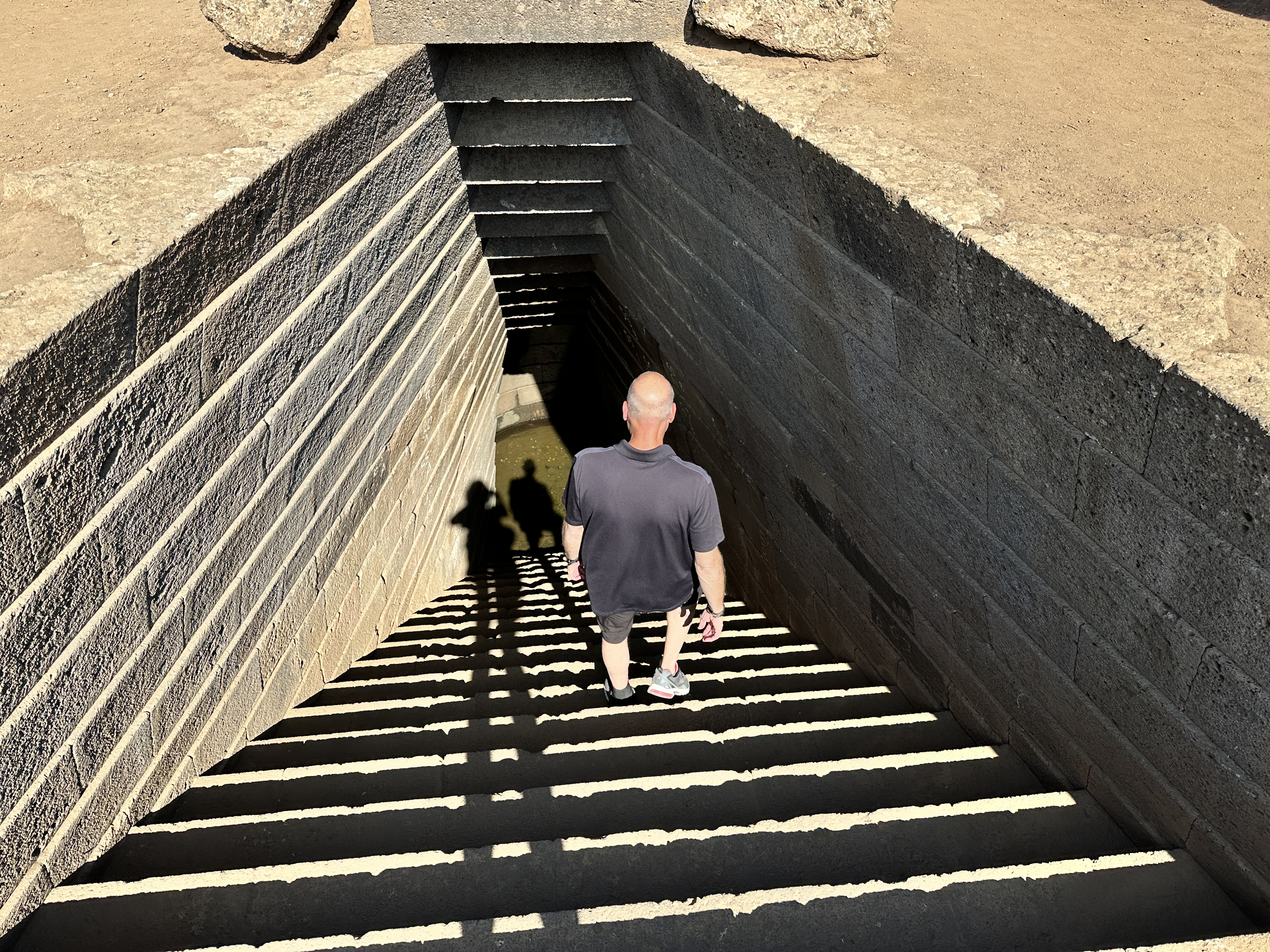
Sacred Well from ground level. I was amazed how the stones and stairway have held up over 3,000 years – the Well dates from the 11th century BC.
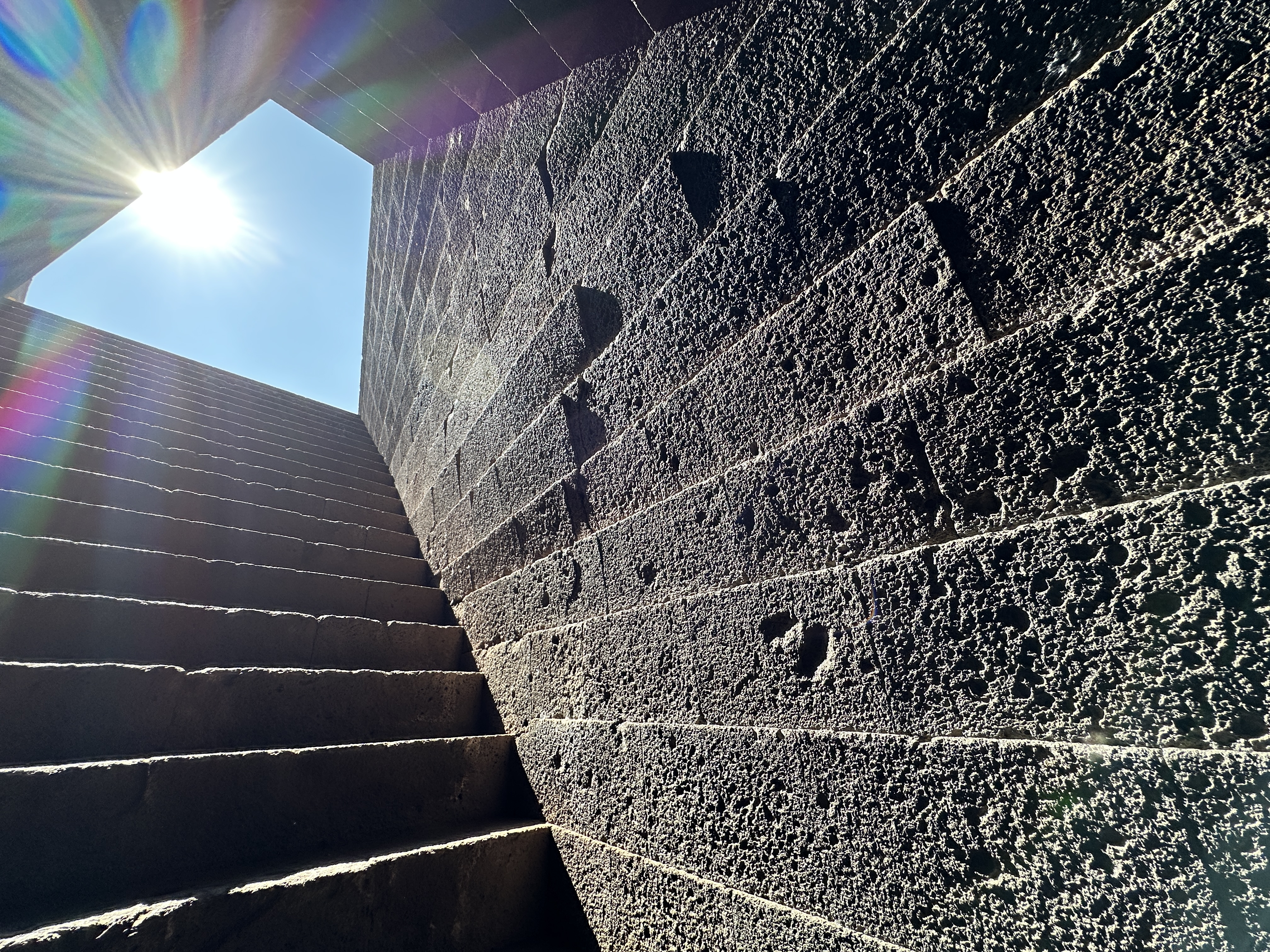
View from the bottom of the well stairway.
Above – images at the bottom of the Sacred Well. Note the precise stone work.
Nuraghe
Nuraghe at Santa Cristina, part of the same complex as the Well and the Medieval village.
Medieval Church
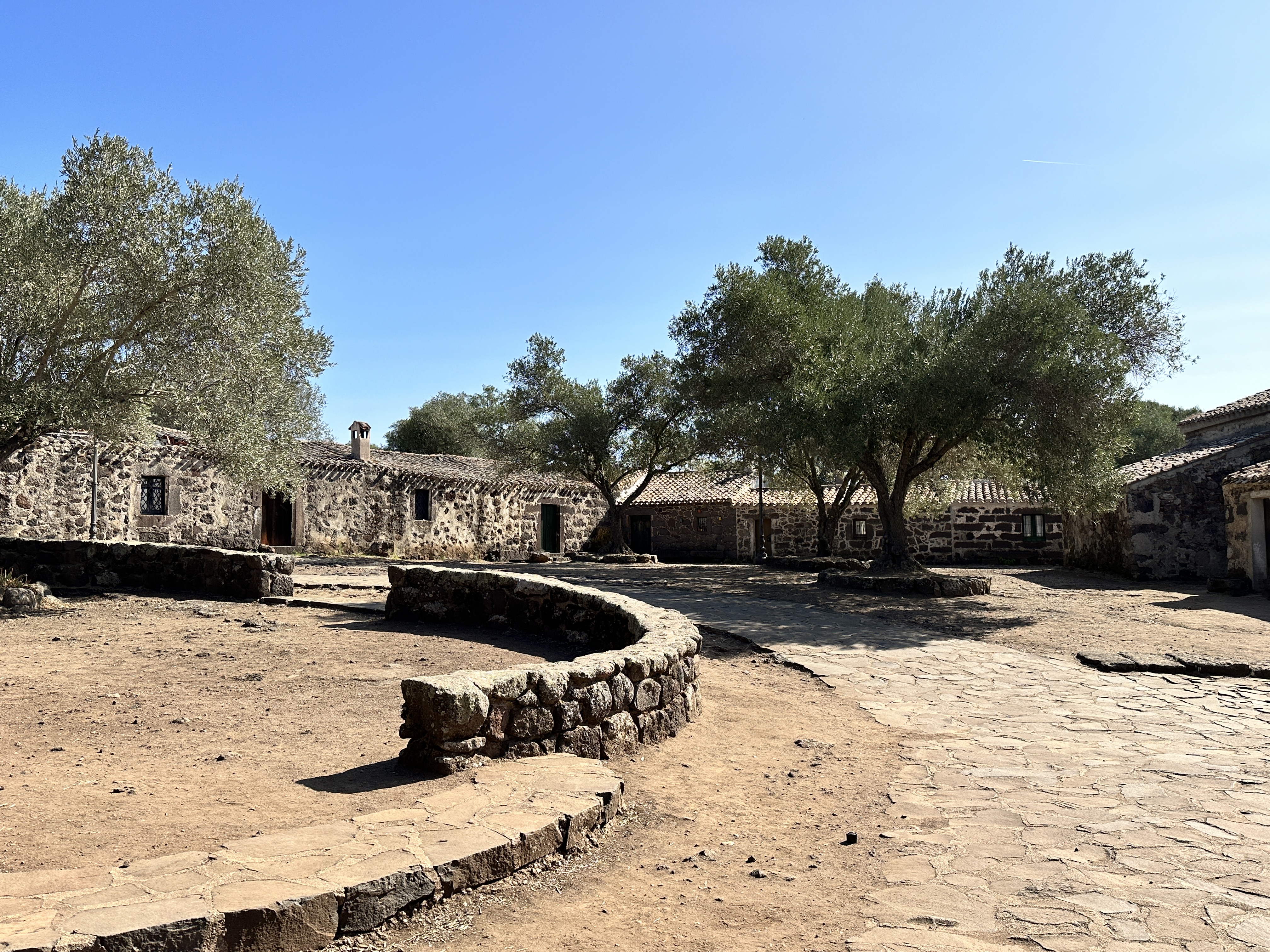
Left – The little church at Santa Cristina was built around 1200 AD. Right – Monks’ quarters next to the church. These structures are between the Sacred Well and the Nuraghe. Be prepared to do a little walking at Santa Cristina.
Su Nuraxi di Barumini
Su Nuraxi di Barumini is one of the largest, if not the largest Nuraghe site in Sardinia. It is a World Heritage Site, and when you purchase your ticket you must join a group with a guide to visit. Our tour guide was very kind and patient, he explained the features of the site in French and English, given the mix of our small group.
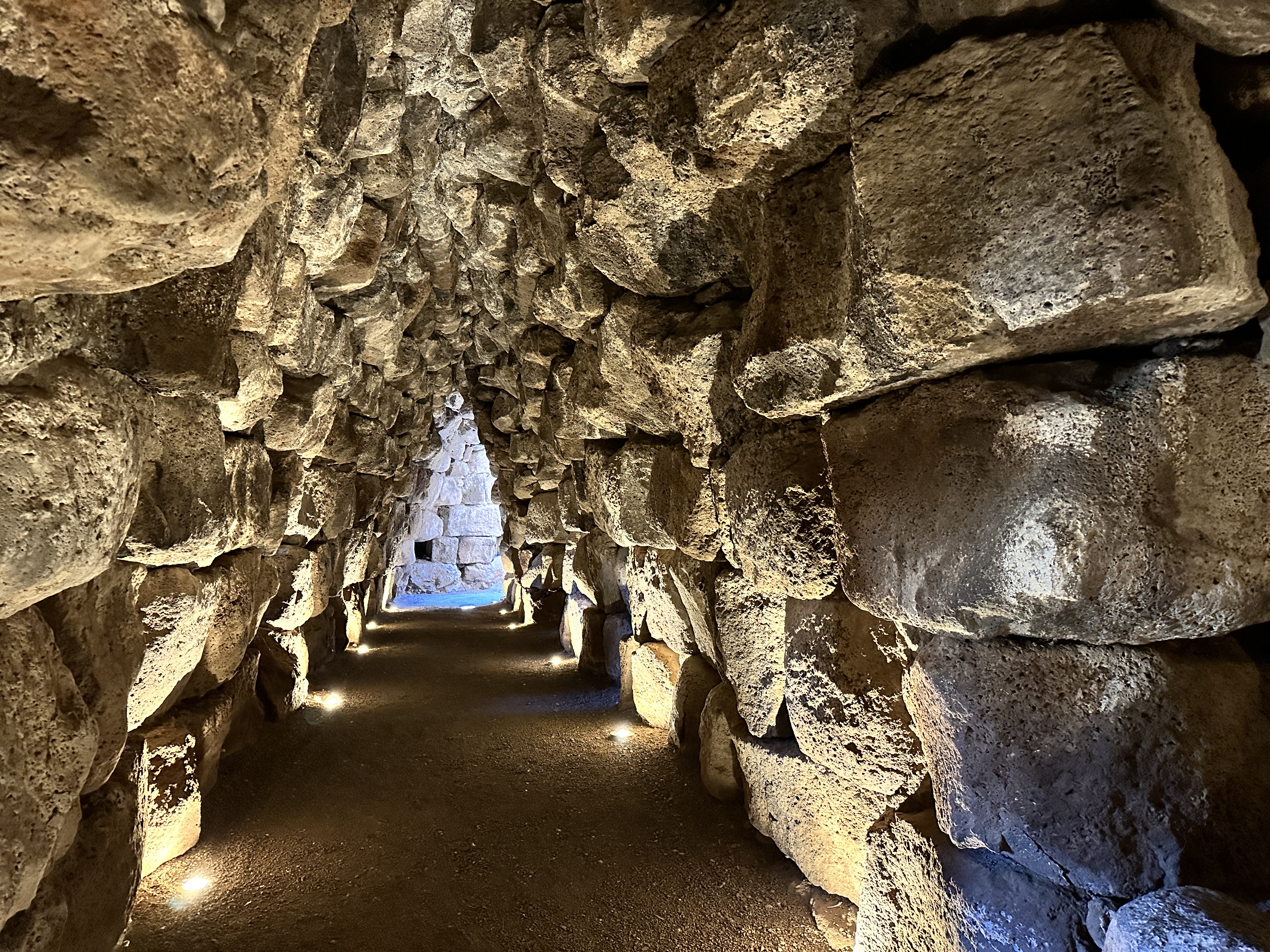
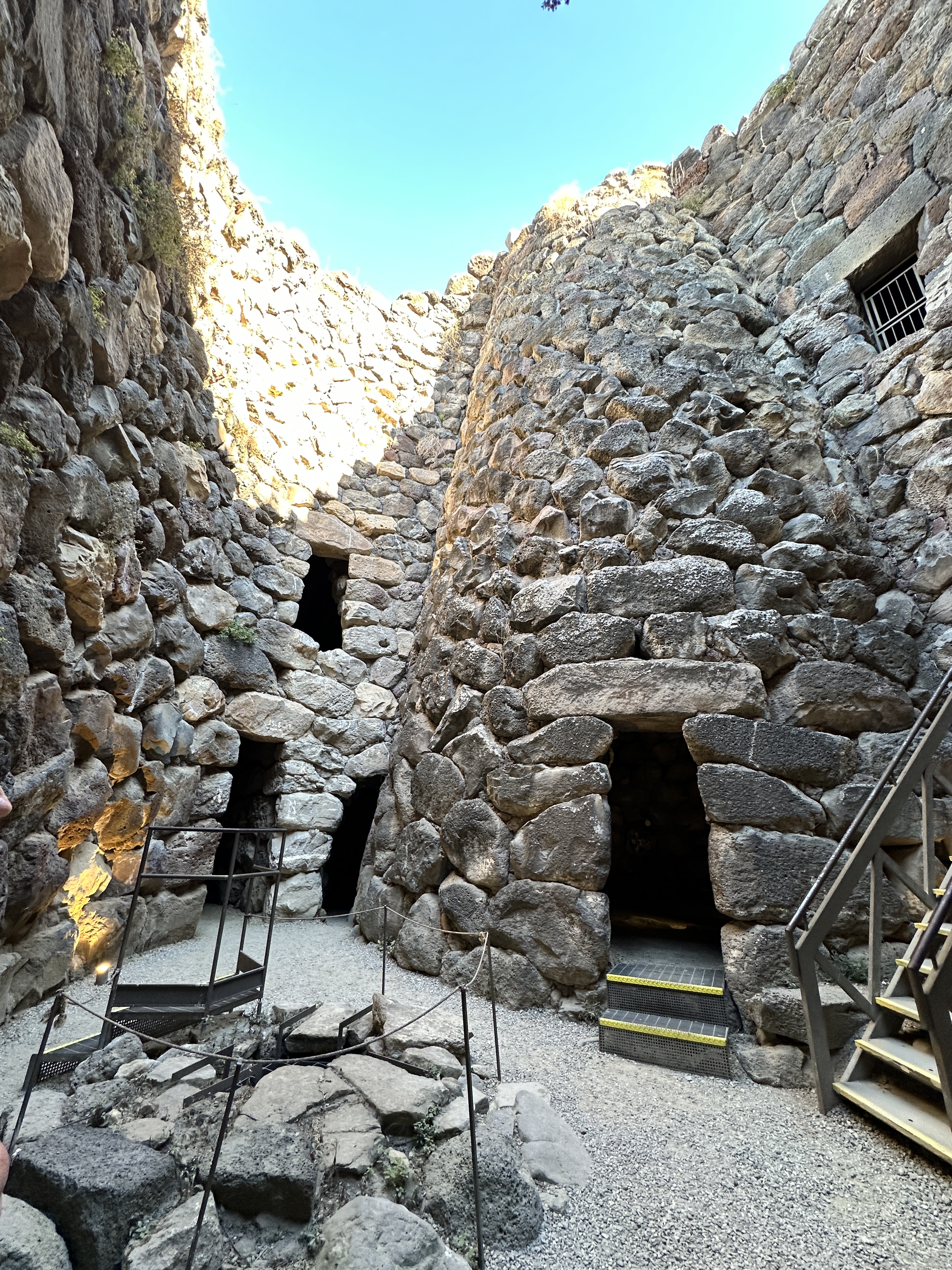
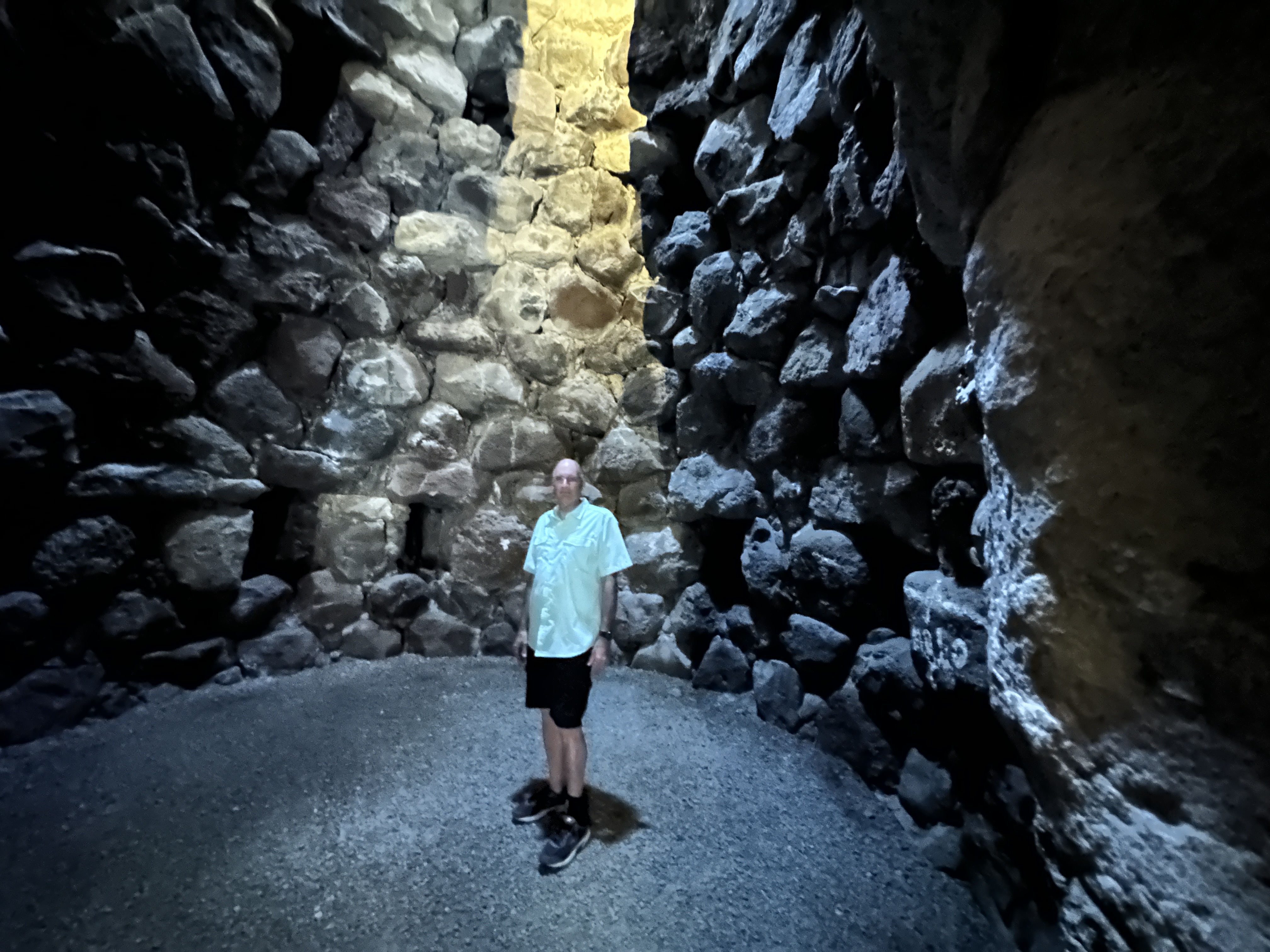
Above left – the main tower of Su Nuraxi from a distance. The image in the center shows what the Nuraghe looked like in its prime – very similar to a medieval castle. Right – the village dwellings below the main tower.Above – views of the village ruins.Images of the doorways and courtyard of Su Naraxi.Above – interior passage ways and rooms of Su Naraxi.
In addition to the glorious beaches of Sardinia, it is certainly worth your time to visit a few of the fascinating archeological sites. Be careful in the structures. Some of the stairway stones are very slick and trust me, it’s easy to slip. Also, watch your head, many of the passageways are short and narrow. The sites we visited were well sign-posted, had parking available and are well-maintained.
As I have mentioned is previous posts, we LOVE the islands of the Mediterranean. They are some of my favorite destinations in world. After visiting Mallorca and Menorca (which belong to Spain), the next island on our list was Sardinia (part of Italy). We had been to Sardinia’s northern island neighbor, Corsica (part of France) years ago and from the beautiful southern coastal town of Bonafacio we could see Sardinia in the distance, only about 12 km (7.5 miles) away. We visited Sardinia in October, which is a great time to go – the water was still warm and the crowds were limited.
This map of Sardinia shows the five main regions we visited in Sardinia.
I will be sharing more posts on our Sardinian adventures soon, but first here are some things you may not know about about this beautiful island.
1. Sardinia is part of Italy
Although an autonomous region, Sardinia is definitely Italian. Some Americans have never heard of Sardinia and really have no idea that it’s part of Italy. The Sards have their own language but of course speak Italian, English, and other European languages quite fluently. It was easy for us to get by on English and a few Italian phrases. The food and gelato are wonderful, as in other regions of Italy.
2. Sardinia is big, and a relatively sparsely populated island
This is important to keep in mind when planning a trip – allow two or three weeks to see the whole island or if you have less time, perhaps concentrate your time in one region. Sardinia is the 2nd largest island in the Mediterranean (just slightly smaller than Sicily) but has just 1/3 of Sicily’s population. It is about 170 miles long and 90 miles wide. We covered a lot of ground in two weeks, but still did not see everything (see map above), including the southwest coast.
3. Sardinia boasts some of the most stunningly beautiful coastline (and water) in the world
Cala Goloritze, Gulf of Orosei, accessible only by boat or a 3.5 km hike. The color of the water was the most incredible turquoise hue I’ve ever seen.
Sardinia has an embarrassment of beaches – no matter where you are on the island, you’re close to some of the best beaches in the world. The Gulf of Orosei on the eastern side of the island has a breathtaking coast although it’s not easily accessible, except by boat or via some steep hiking trails.
4. There are hundreds of incredible beaches, many of which are undeveloped and uncrowded
La Pelosa Beach, near Stintino, Sardinia. You must make a reservation for this beach if visiting during high season. It is worth the hassle (which is not a big deal nor expensive).
Some beaches might have a refreshment stand, a few might be close to some resorts, but often there are no hotels or condos anywhere to be seen. Admittedly, there are (just a few) beaches that are so popular you must have reservations during the high season or can only be accessed with a guide, and there a few beaches that are not accessible at all – due to preservation efforts, speaking of which…
5. Sardinians take their beach sand seriously
From pink sand beaches to shiny quartz sand beaches to powdery white sand, the sand is beautiful everywhere. However, don’t even think about taking a sample home with you. You will be fined. You are also required to have mats underneath your beach towels so as to not inadvertently trap sand and take it home in your towels.
Spiaggia Rosa, on Budelli Island (near La Maddalena). You cannot set foot on this pink sand beach, they are protecting it for future generations. However you get a view of it from a boat tour, as in this photo.
Example of the fine quartz sand and pebbles found in Sardinia.
6. A car rental is essential
Unless you plan to go straight from the airport to a resort and straight back to the airport or plan on a tour by a group bus, a car is the only way to really see the island and reach some of the beaches and tourist sites. Some sights or hiking trails are remote. Since the island’s population is sparse, driving was not a problem – I did not feel rushed or on edge with crazy drivers pushing me to speed up or forcing me to get out of the way.
7. Sardinia offers something for everyone
Friendly, welcoming locals – check. Beautiful beaches – check. Warm, clear water – check and check. Charming medieval towns – check. Fascinating ancient historical sights – check. Remote mountains, rock climbing, forests and hiking trails – check, check, check and check. Diving – check. Excellent food – check. What more could a person want?
A view of Alghero, on the northwest coast of Sardinia, a beautiful medieval town, one of our favorites on Sardinia.
Nurhage La Prisigona Historical Site (14th century BC), near Arzachena, Sardinia.
8. Sardinia has its own island get-aways
As funny as it may sound, Sardinia can be considered a ‘mainland’ and just off its coast (such as the northeast coast) lie an archipelago of islands (the main island is La Maddalena – see map above) accessible by only ferry and smaller boat, some of which are part of a national park. These islands are home to some of the best beaches and best hikes anywhere in Sardinia.
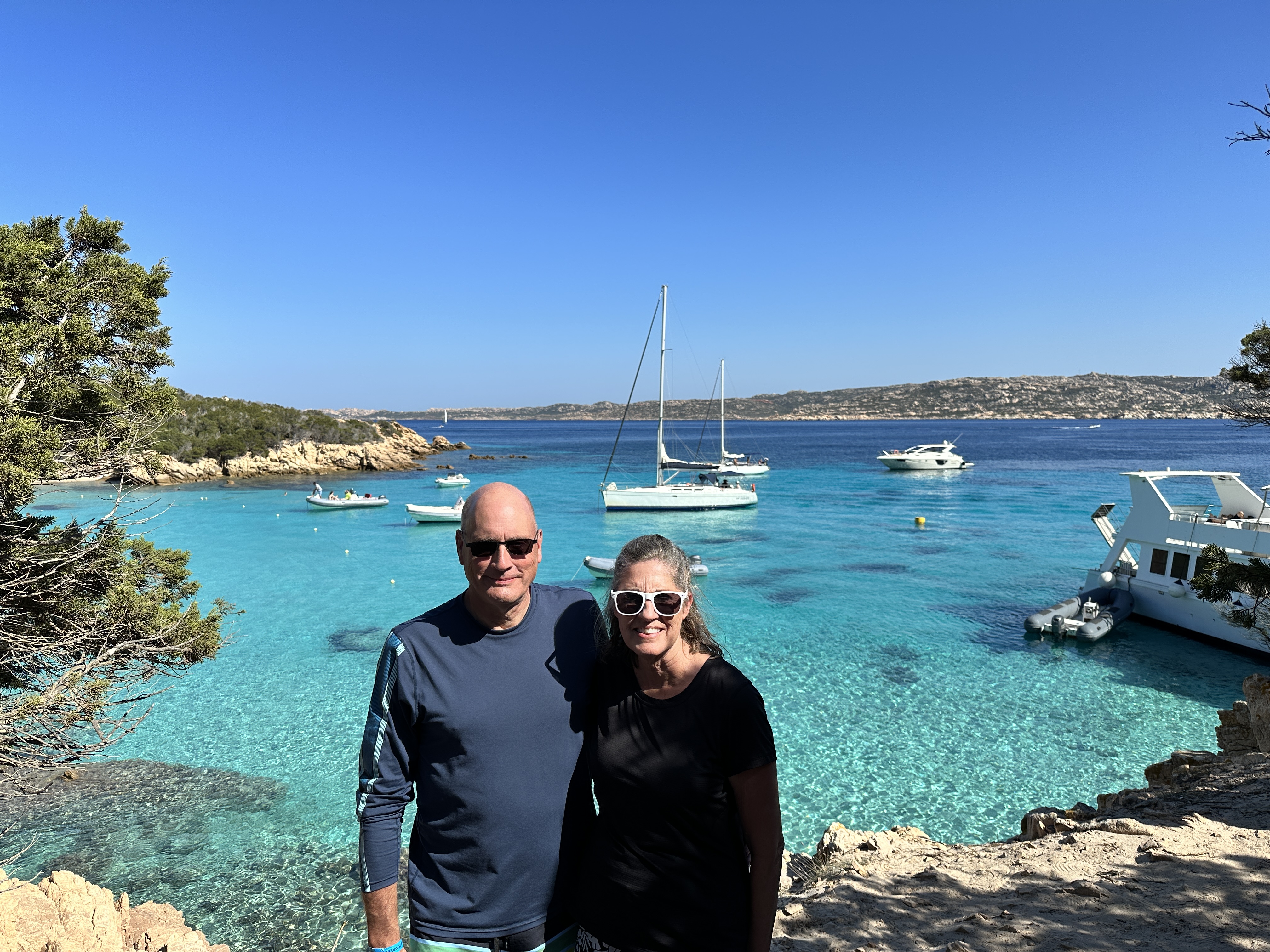
The island of Spargi, part of the La Maddalena Archipelago. We could have stayed here our whole trip!
9. Sardinia is not just for the jet-setting crowd
In the 1960’s Coasta Esmeralda was popularized and has since become a jet-setting hotspot. This part of the northeast coast (near Olbia) certainly has some beautiful beaches and coastline. While you will find big yachts, high-end real estate, retail and eating establishments here, this is just one small enclave of the island. The rest of the island seems unfazed (and untouched) by the movie star and billionaire crowd.
View of Porto Cervo, the center of Coasta Esmeralda.
10. Go Now
Sardinia isn’t quite on the main tourist map yet, although posts like this don’t help! The majority of visitors are Italian (this is their backyard!), followed by French and Germans. On one of our boat tours, we were with some Swiss and Belgian tourists. We ran into a few tourists from the U.S., but not many. Very few tourists seem to explore the whole island, there are lots of “untouched” little mountain villages and quiet beaches to find solitude if that’s your thing.
The cute little village of Gavoi in north central Sardinia.
Word is getting out, so go now! Here’s one of my recommended websites for great information on Sardinia tourism. I read almost every post Claudia has written, very helpful. Of course, I will be publishing information on each region of Sardinia we visited over the course of the coming weeks.
Note: Featured image – Cala Marilou, Gulf of Orosei




















 The Independent Tourist