Italy

Visiting Nora: A Roman Treasure on Sardinia’s South Coast

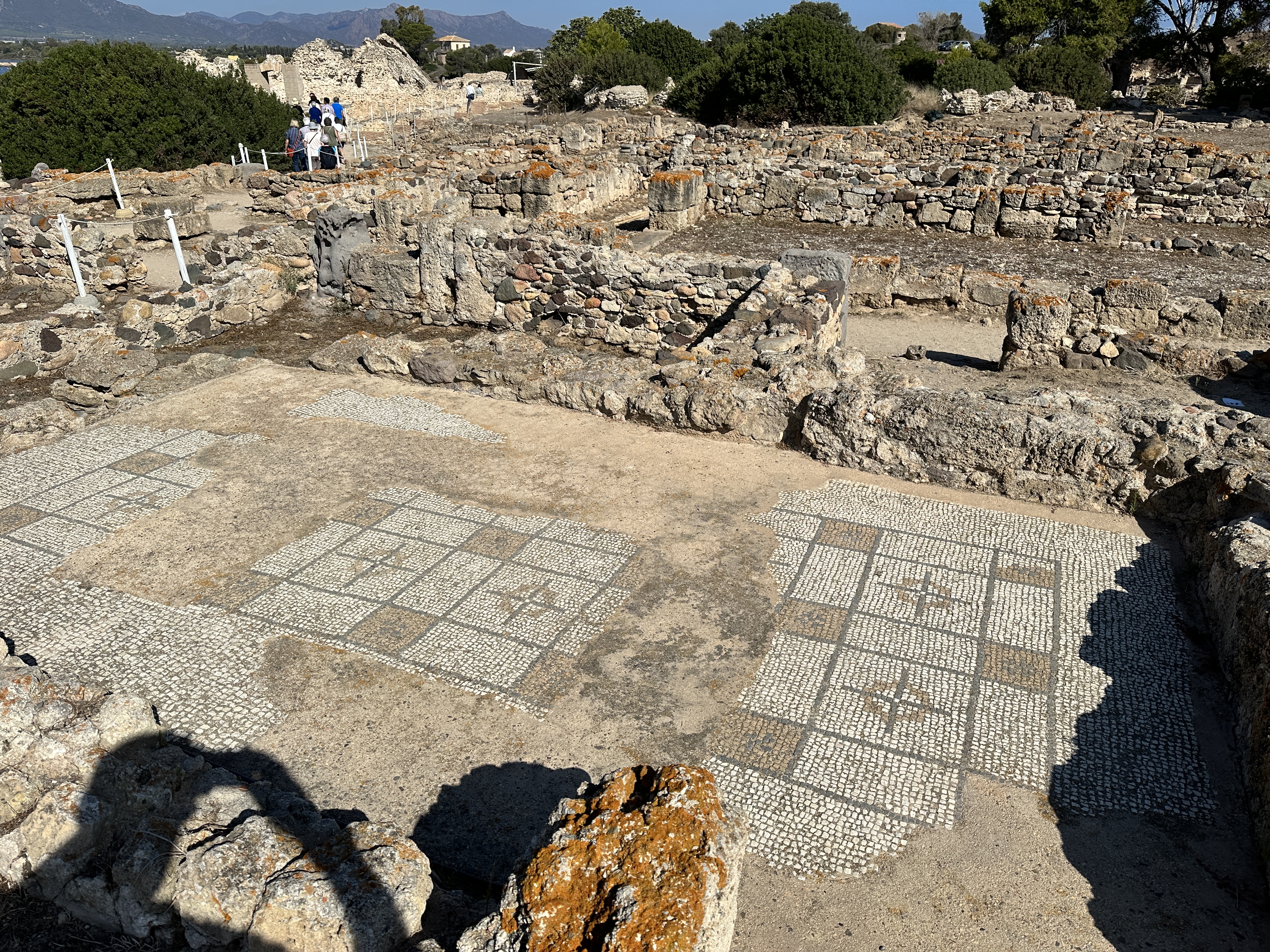
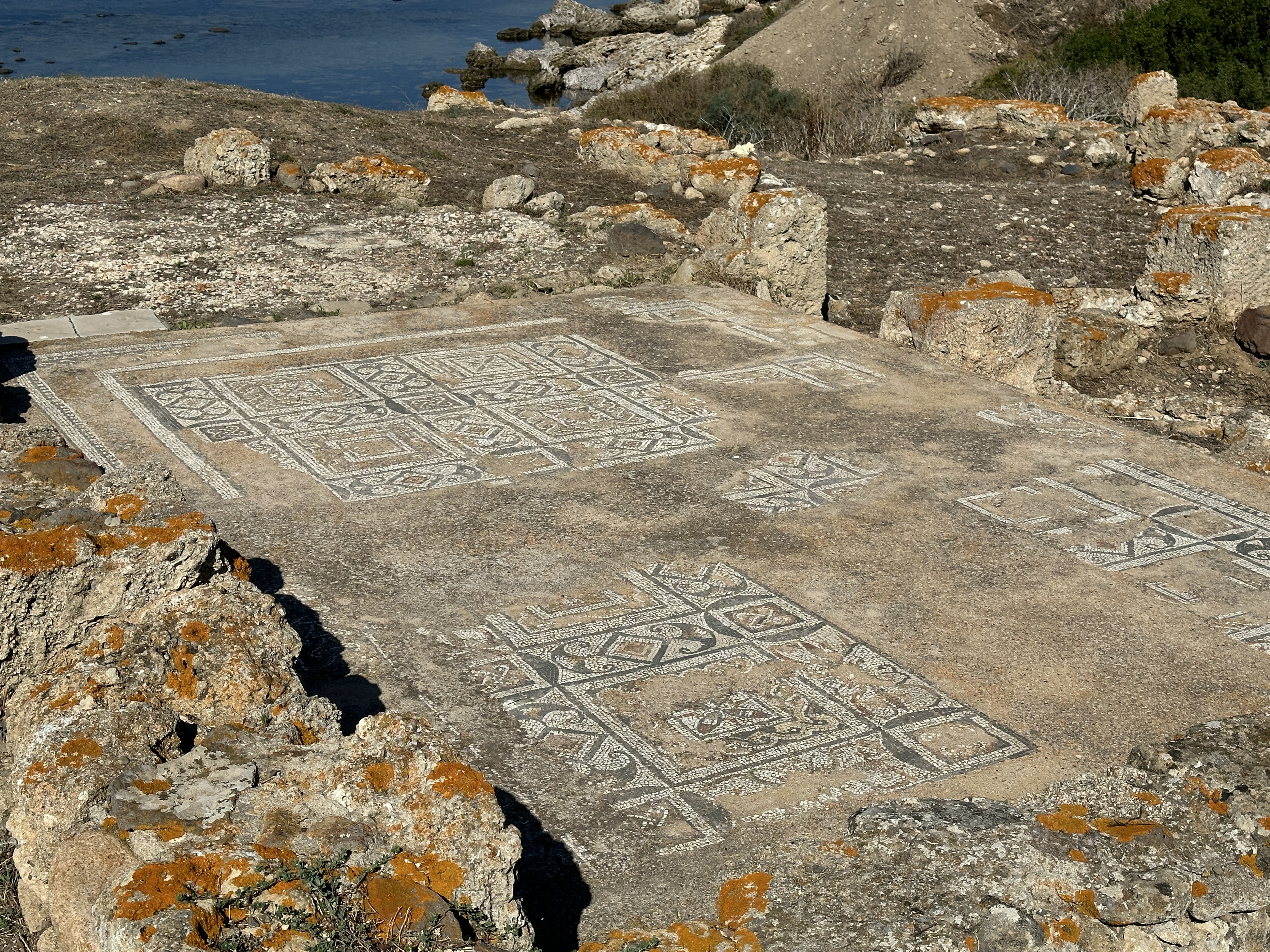
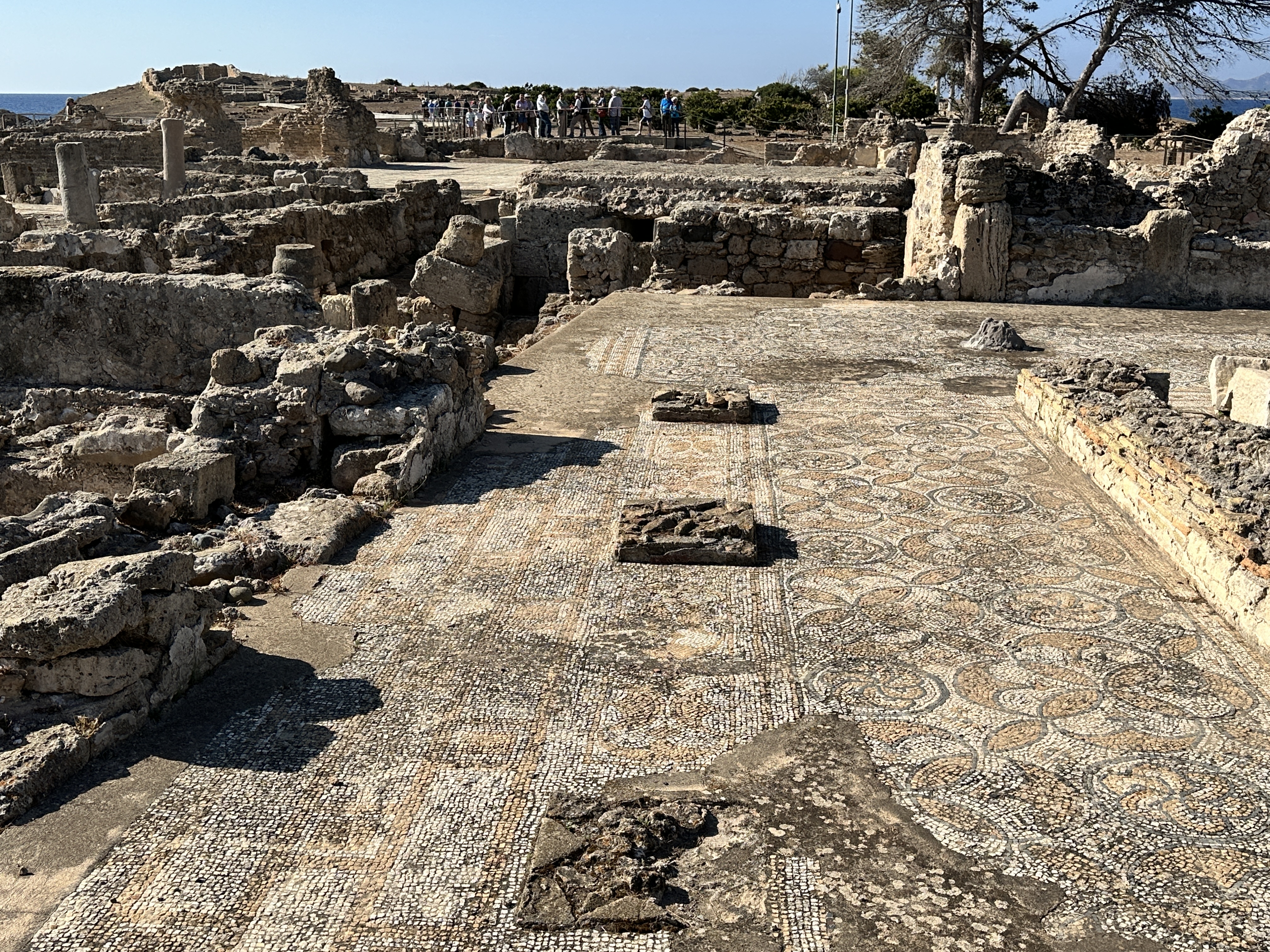
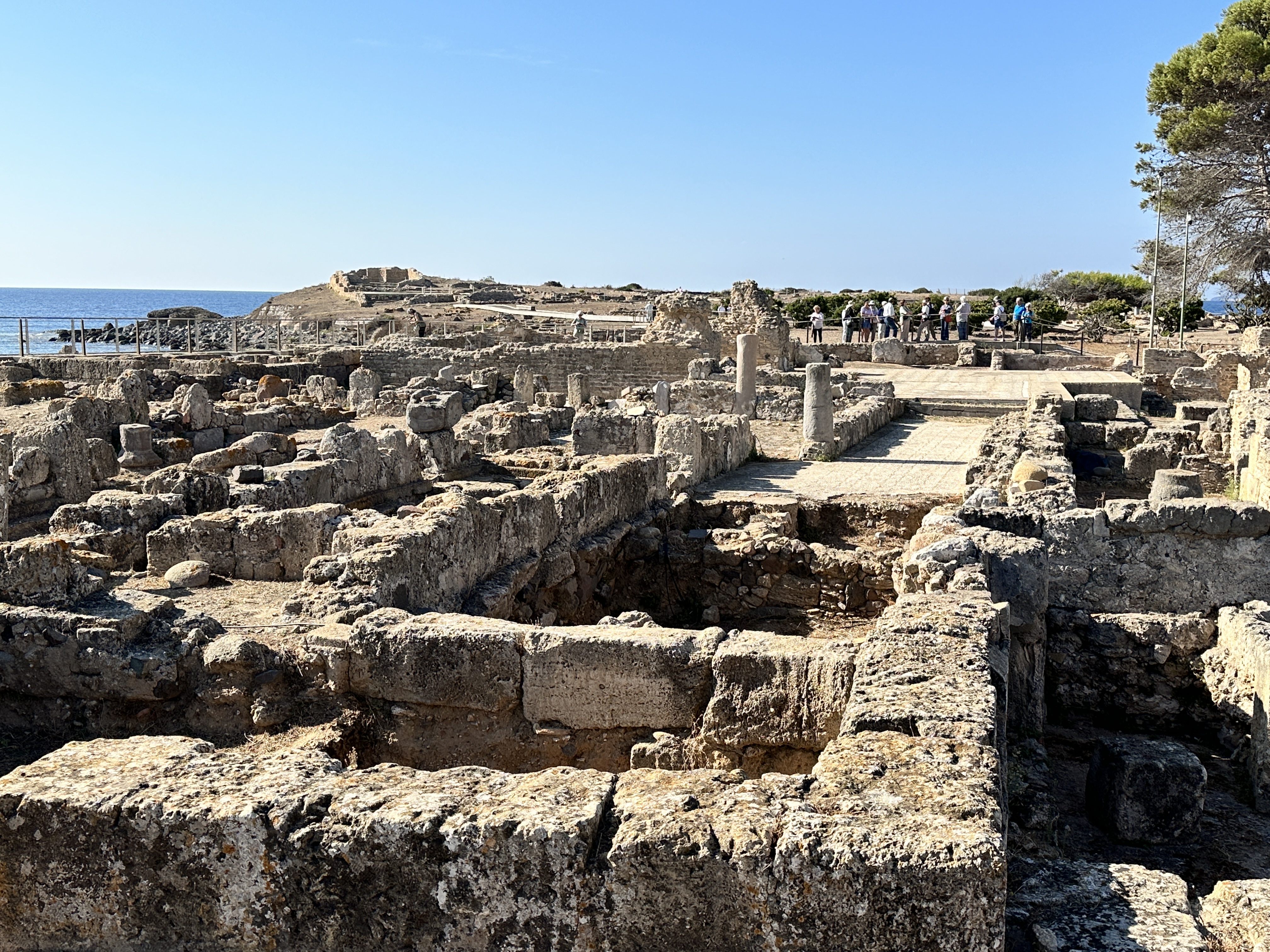
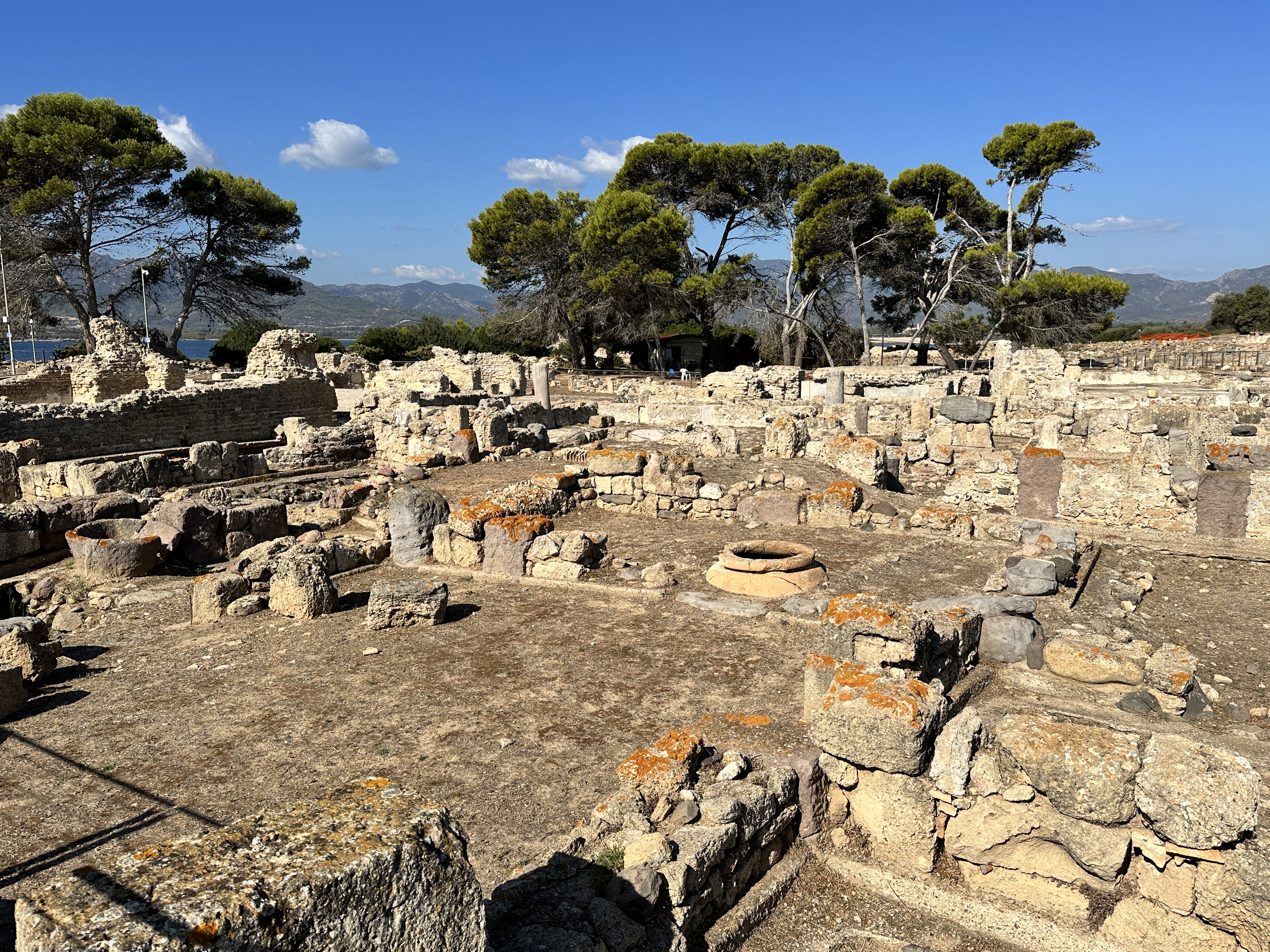
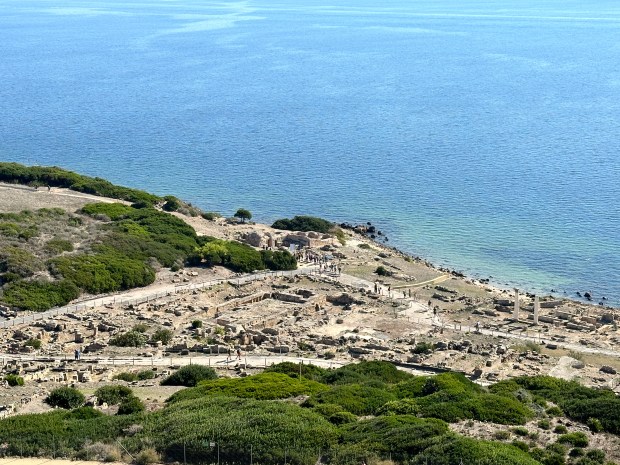
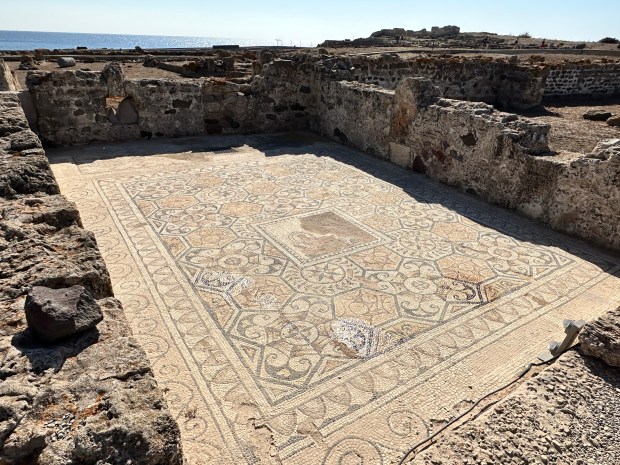
The Nora Archeological Site is only about 45 minutes (48 km or 25 miles) west of Cagliari and makes a nice half-day trip, whether you are staying in town or on a one-day visit with a cruise ship. The origins of the settlement date back to Phoenician times around the 8th century B.C. The city flourished for over four hundred years starting during the first and second centuries B.C. during the Roman age. It must have been quite wealthy due to its ideal position on the coast of Sardinia, perfect for trading. The use of that wealth is demonstrated by the extensive mosaic floors that can still be seen as part of homes and public areas.

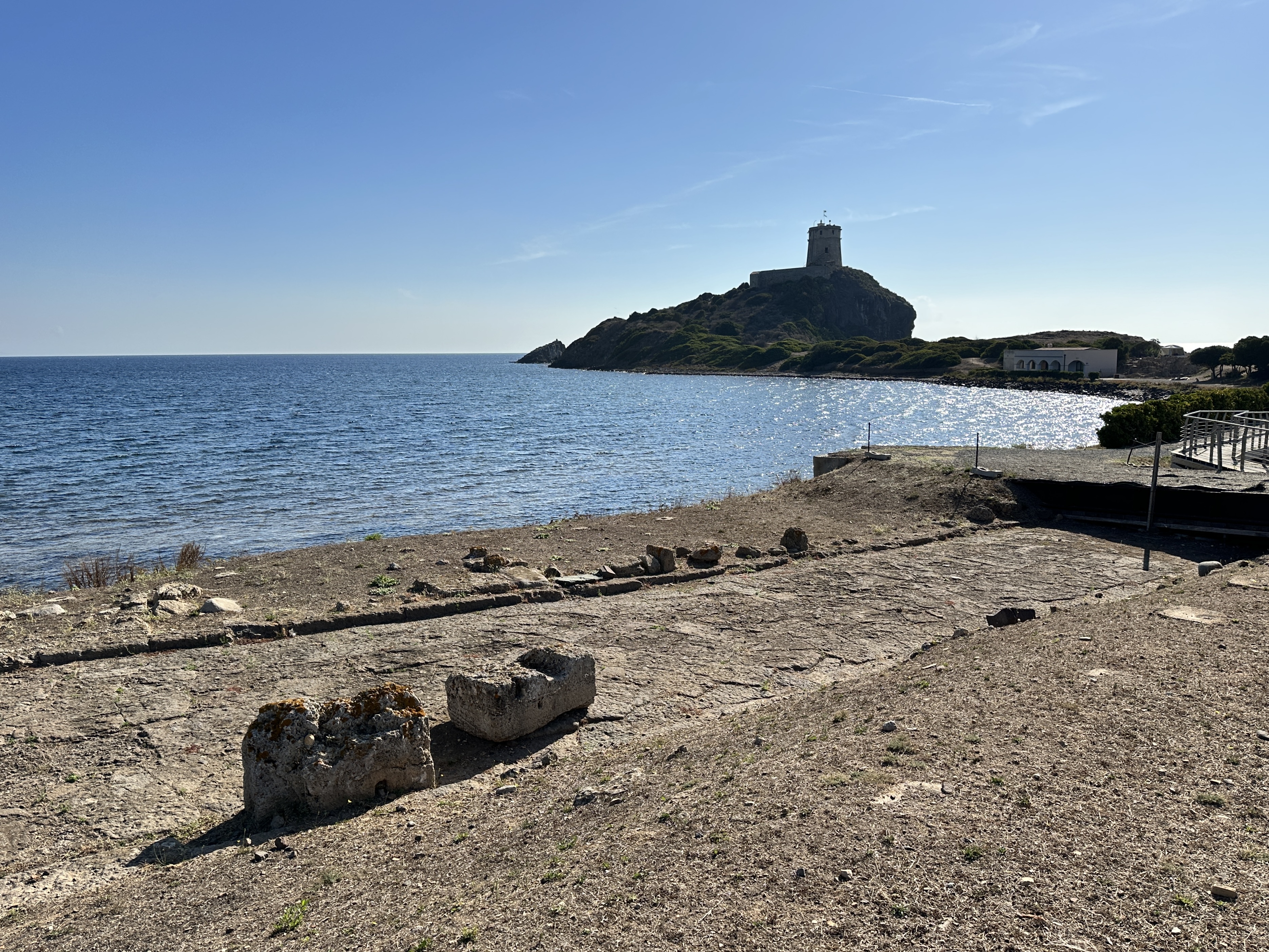
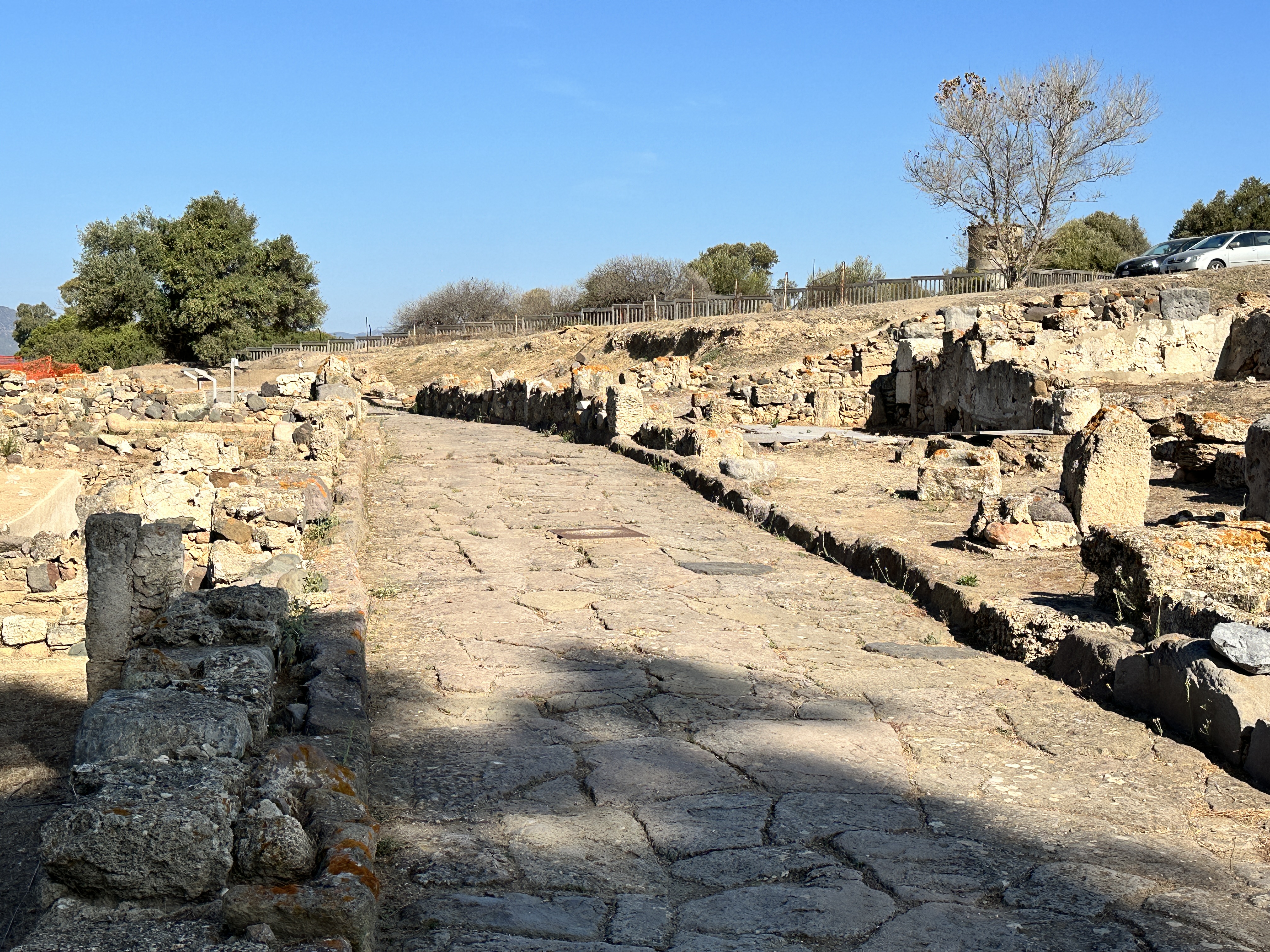
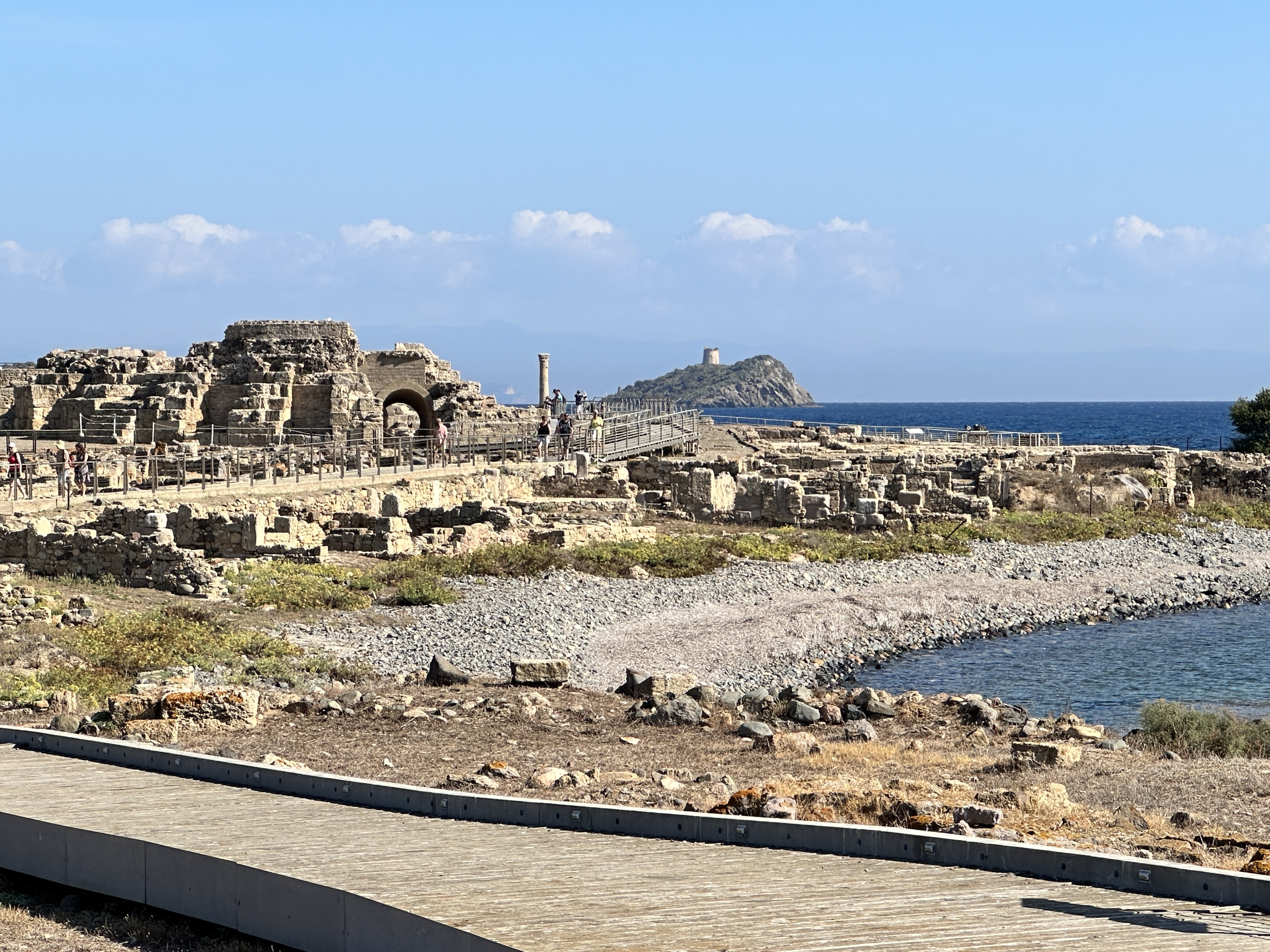
The ancient Roman road leading into Nora is overlooked by the 16th-century Torre del Coltellazzo.
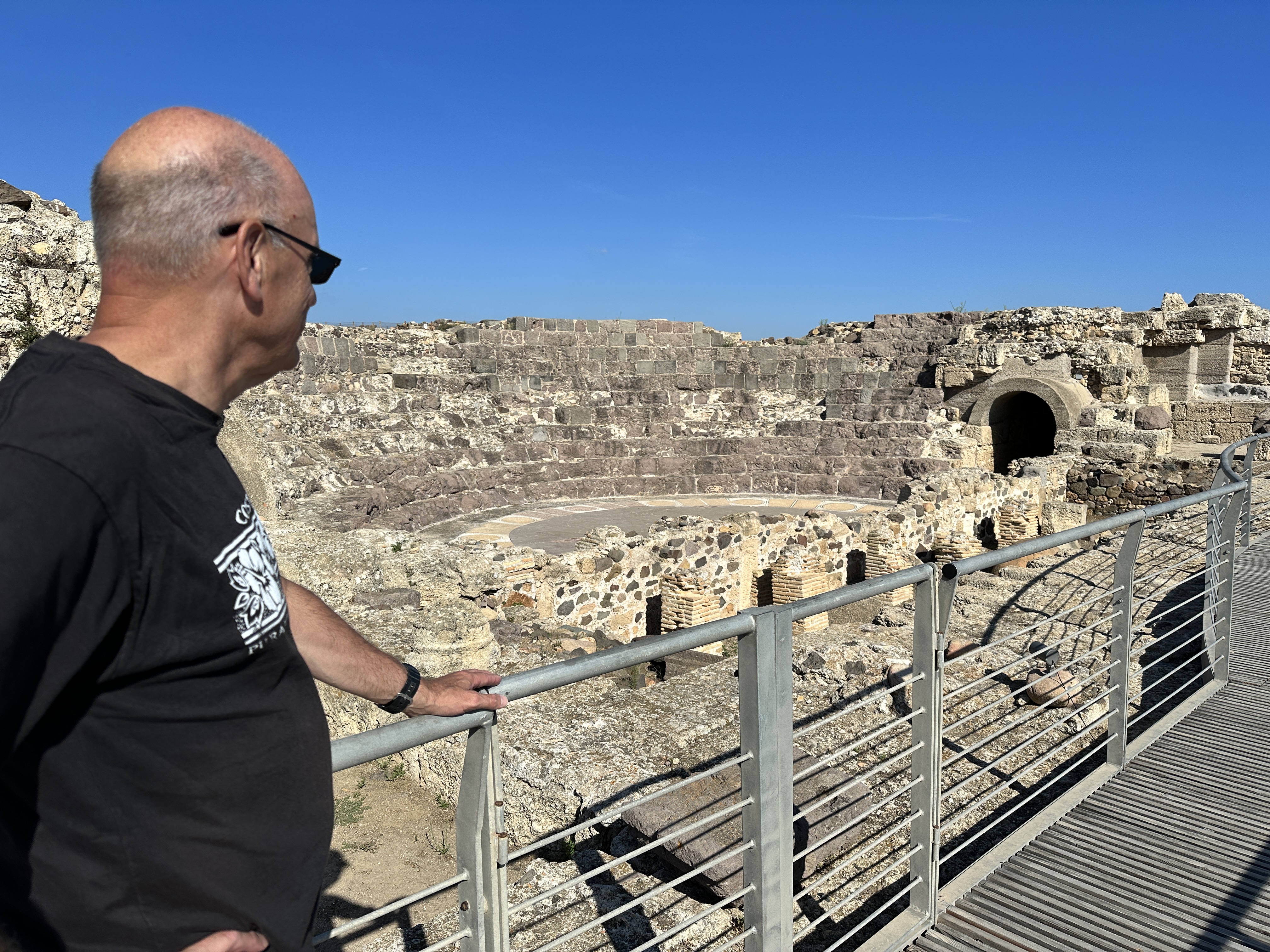
The ruins of the 1st century A.D. theater at Nora.

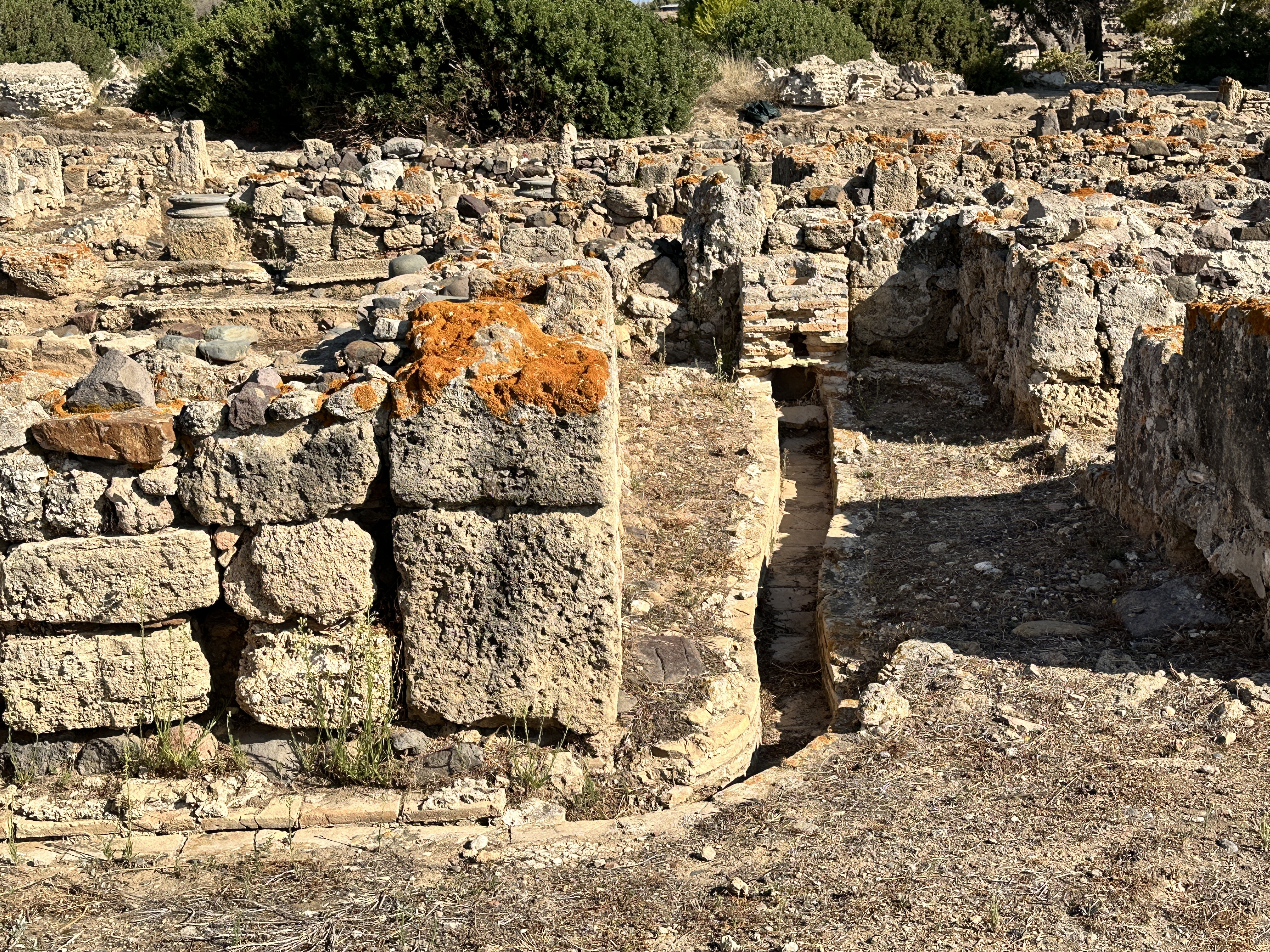
The large cauldrons may have been used for storage, making of wine, washing or perhaps other uses.

Nora, along with Tharros are worthwhile archeological sites to see during your visit to Sardinia. So take a break from the beautiful beaches and learn something about Sardinia’s fascinating cultural history.

Villasimius – One of My Top Destinations in Sardinia

Villasimius is one of my top three locations for tourists in Sardinia, Italy (the other two would be the Gulf of Orosei, which I will write about shortly) and the La Maddalena Archipelago which you can learn about here. Villasimius is about an hour by car (62 km) southeast of Cagliari, Sardinia’s capital.

Villasimius is at the very southeast tip of Sardinia.

There are around 20 fantastic beaches near Villasimius, plus there is a golf course nearby and a number of vacation rental options in the area.

Main street in Villasimius.

We stayed in a little villa just outside of town. The landlord met us in town and led us out to the villa. Even though you are only 62 km from Cagliari, this part of the island is pretty rural and quiet.

The courtyard and pool at our villa in Villasimius. Breakfast was served on the patio (left side of photo).
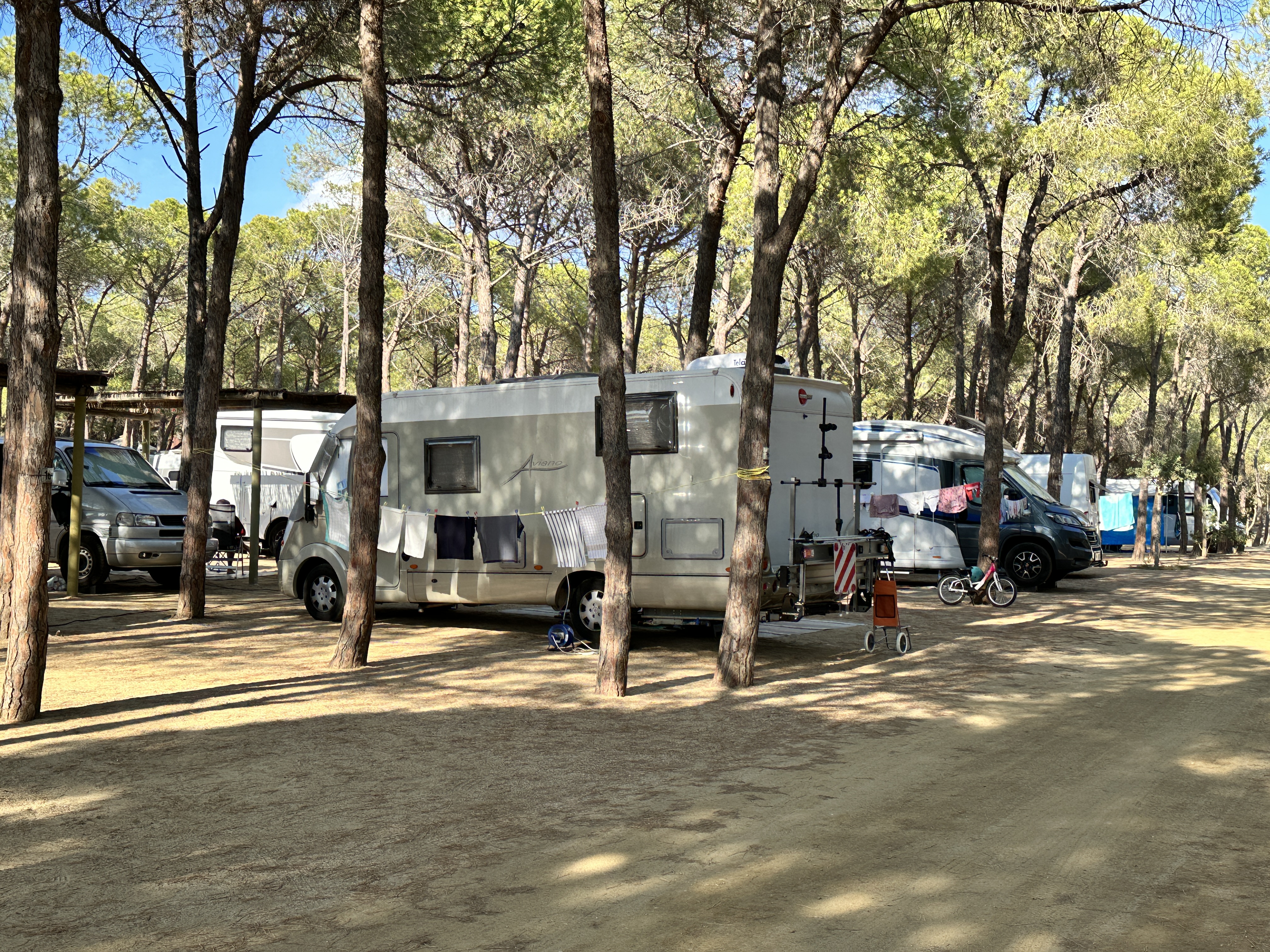
RV’s are a popular option in Sardinia too. This RV park was just outside Villasimius.

Villasimius Beaches

We visited a few beaches during our two-night stay. It would have been easy to spend a week here.

After a hard day at the beach, there was nothing like a delicious dessert crepe in the town of Villasimius to end another perfect day!

5 Unique Food Festivals Around the World You Need to Attend

If you love traveling and eating (let’s be honest, who doesn’t?), then food festivals are your dream come true. They’re the perfect combo of culture, chaos, community and of course, calories. But not all food festivals are created equal. Some are super local, others are ridiculously extravagant, and a few are just so quirky that you can’t help but grab a fork (and maybe a raincoat) and dive in.

Whether you’re into cheese rolling, fiery spice challenges, or want to slurp noodles in the middle of a lantern-lit street, we’ve got the bucket-list-worthy festivals you need to know about.

Get ready to drool, laugh, and maybe even book a flight. Here are 5 unique food festivals around the world you absolutely need to attend.

1. La Tomatina – Buñol, Spain

Okay, let’s kick things off with a festival that’s not just about food it is food. Or more precisely, throwing it. La Tomatina is the world’s largest food fight, and it goes down in the tiny Spanish town of Buñol every August.

Picture this: tens of thousands of people packed into narrow streets, wearing goggles and white shirts, absolutely drenching each other in overripe tomatoes. Sounds messy? Oh, it is. But it’s also insanely fun.

How It Works:

  • Trucks roll in loaded with over 100 metric tons of squishy tomatoes.
  • A jamón (Spanish ham) is placed on top of a greasy pole. When someone climbs it and grabs it, the tomato-throwing chaos begins.
  • For one hour, it’s a full-on tomato war. Then, fire hoses come in to wash everyone and the streets off.

Why You’ll Love It:

Besides being wildly entertaining, La Tomatina is a sensory overload in the best way possible. After the tomato storm, the town turns into a massive street party with paella, cold drinks, and live music.

Pro Tip: Don’t wear anything you care about. That tomato juice isn’t coming out.

2. Night Noodle Markets – Australia

Let’s switch gears to something a little less intense (and a lot more delicious). If you find yourself Down Under between October and November, you have to hit the Night Noodle Markets in Sydney or Melbourne.

This vibrant, open-air Asian street food festival turns local parks into a glowing paradise of lanterns, sizzling woks, and savory goodness.

What You’ll Find:

  • Dishes from across Asia: think bao buns, pad thai, pho, dumplings, ramen, Korean fried chicken you name it.
  • Fusion magic: Laksa-loaded fries? Kimchi tacos? Yes, please.
  • Craft beers, cocktails, and bubble tea to wash it all down.

It’s like taking a food tour through Asia without leaving the city.

Why You’ll Love It:

There’s something magical about slurping noodles under lanterns while live music plays and the smell of garlic and sesame floats through the air. Plus, the festival is totally cashless, just tap and chow down.

Pro Tip: Go early. The lines for the trendiest stalls get loooong, and you’ll want to try everything.

3. Cheese Rolling Festival – Gloucestershire, England

Let’s be honest: British cuisine doesn’t always get the best rep. But one thing they do incredibly well? Cheese. And they’re willing to risk their lives for it.

Every spring, the Cooper’s Hill Cheese Rolling Festival takes place in Gloucestershire, and it’s every bit as bizarre and glorious as it sounds.

What Happens:

  • A 9 lb wheel of Double Gloucester cheese is rolled down a steep hill.
  • Dozens of brave (or slightly unhinged) people throw themselves down after it.
  • First person to cross the finish line at the bottom wins the cheese.

It’s wild. It’s muddy. And yes, people actually get hurt. But it’s also one of the most uniquely British things you’ll ever see.

Why You’ll Love It:

Even if you don’t join the chase, it’s worth going just for the spectacle. There are stalls with local food and cider, and everyone’s in a great mood probably because they’re either eating cheese or watching people tumble down a hill for it.

Pro Tip: Don’t run unless you’ve signed the waiver. Watching from the sidelines with a sandwich is a perfectly respectable choice.

4. Salon du Chocolat – Paris, France

This one’s for the sweet tooths (or is it sweet teeth?). If chocolate is your love language, then Salon du Chocolat is basically your soulmate. Held annually in Paris, it’s the world’s largest event dedicated entirely to chocolate and cocoa.

Yes, it’s as dreamy as it sounds.

What’s Inside:

  • Over 500 participants from 60 countries, including top chocolatiers, pastry chefs, and cocoa producers.
  • Workshops, demos, tastings, and even chocolate fashion shows are, yes, actual clothes made of chocolate.
  • Chocolate sculptures are so beautiful you’ll question whether it’s legal to eat them (spoiler: it is).

You’ll learn everything from bean-to-bar production to fancy ganache techniques. And you’ll probably leave with a suitcase full of treats.

Why You’ll Love It:

Aside from the obvious chocolate overload, Salon du Chocolat is surprisingly educational. You’ll discover ethical cocoa farming, meet artisans, and even try rare single-origin bars. And the vibe? Pure Willy Wonka.

Pro Tip: Don’t go on an empty stomach you’ll think you can eat it all. You can’t. (Trust me, I tried.)

5. Pizzafest – Naples, Italy

When it comes to iconic food cities, Naples might just top the list. It’s the birthplace of pizza, after all. And every September, it throws an epic celebration known as Pizzafest.

Ten days of pure, cheesy, crusty heaven.

What’s Cookin’:

  • Dozens of pizzerias from Naples (and beyond) set up shop along the city’s seafront.
  • Thousands of pizzas are baked in traditional wood-fired ovens.
  • You’ll get everything from the classic Margherita to crazy, modern twists with truffle cream or fried dough.

There’s also music, fireworks, pizza-making workshops, and contests for the best slice.

Why You’ll Love It:

Pizzafest is unapologetically joyful. The locals are proud, the pies are piping hot, and the vibe is pure Naples. If you’re a true pizza nerd, this is the pilgrimage you’ve been waiting for.

Pro Tip: Pace yourself. It’s tempting to try every stall in the first hour, but that’s a rookie move. You’ve got ten whole days to eat your way through pizza paradise.

Bonus Mention: Albuquerque International Balloon Fiesta – New Mexico, USA (With a Side of Green Chile)

Okay, this one isn’t a food festival per se, but it deserves a mention because of the way food plays into the overall experience. Every October, Albuquerque fills the sky with hundreds of hot air balloons during its world-famous Balloon Fiesta and on the ground? It’s a feast of New Mexican flavors.

We’re talking:

  • Green chile everything: burgers, fries, tamales, and even green chile lemonade.
  • Navajo fry bread topped with sweet or savory goodness.
  • Local coffee, cinnamon buns the size of your face, and roasted corn on the cob.

There’s something about eating spicy food while watching giant balloon animals float above your head that just feels… right.

Food Festivals: A Feast for the Senses (and Your Passport)

Here’s the thing: food festivals aren’t just about food. They’re about culture, people, stories, laughter, and a shared love of things that taste amazing. Whether you’re rolling in tomatoes, chasing cheese, or swirling chocolate on your tongue, you’re doing more than eating, you’re experiencing something unforgettable.

So if you’re planning your next adventure, skip the tourist traps and try a food fest instead. You’ll meet locals, discover new dishes, and maybe even fall in love with a flavor you never expected.

Oh, and a pro tip for the plane ride home? Don’t forget to pack snacks. Something like Farmer Jon’s microwave popcorn makes for a great travel buddy when you’re reminiscing about all the wild and wonderful food you’ve tasted on your trip.

Final Thoughts: Bring Your Appetite (and Your Camera)

Let’s be real. Most of us travel for food anyway. So why not build your whole trip around it?

There’s something magical about eating a bowl of noodles under the stars in Sydney, or clinking glasses of wine after a pizza tasting in Naples. It’s about connection between cultures, people, and your taste buds.

Note: Image courtesy of: https://www.freepik.com/
A Few Historic Sites in Cagliari You Must Visit

Located at the south end of Sardinia the city of Cagliari is the island’s capital, main city and port. Its population is roughly 150,000. Some cruise lines do make a port call at Cagliari. My recommendation would be to give the city itself 1-2 days and spend the rest of your time in Sardinia elsewhere because there is so much to see on this lovely island, one of Italy’s many treasures.

Unfortunately we didn’t get to do a lot of sightseeing in Cagliari; I had eight hours of business webinars to facilitate from my hotel room which took a chunk of the two days we had planned for our visit here. In spite of my work commitments, we still were able to get out and see a few things in Cagliari.

Cripta Santa Restituta

This church doesn’t look like much until you enter the crypt, and then you realize what a historical gem it is. The crypt is a natural limestone cavern that has a history dating back about 3,500 years to an era of pagan worship. The crypt is named for Restituta, a martyr who made cavern her home in the 5th century. You can see a few faded frescoes from the 13th century and World War II – era graffiti when local residents used the crypt as an air-raid shelter. This crypt was definitely a highlight of our time in Cagliari.

View of the Church above the Cripta Santa Restituta.

Thirteenth century fresco of John the Baptist in Cripta Santa Restituta.

Tuvixeddu Necropolis

If you’d like to see something a bit off the tourist radar, check out Tuvixeddu Necropolis. It is on the edge of the older part of Cagliari and does not seem to get many visitors. There is no fee to visit, and the walking paths are used by locals taking their dogs for a walk. For some reason, the informational placards have been allowed to fade and are hard to read. I understand you can get a tour guide to assist you with your visit and that could be very helpful. There are about 1,000 tombs here, originally developed in the 6th to 3rd centuries BC by the Carthaginians and then reused in Roman times. These tombs were also used as air-raid shelters in WWII. The necropolis is definitely worth a visit! A few images below.

This image shows how deep some of the rock tombs are – I’m guessing this one is about 15 feet deep, over twice my height. Other are deeper. I would love to explore these, but it’s clear the local authorities don’t want you doing that from the signs and access barriers.

Bastione San Remy

This 19th-century structure is one of Cagliari’s iconic locations. From the terrace, you are rewarded with a sweeping view of Cagliari and the shoreline. There are a number of restaurants below Bastione San Remy, this is a good area to wander in the evening as the sun sets.

View of Cagliari from the Bastione San Remy.
View of Bastione San Remi from the street level.
The terrace archway at Bastione San Remi.

Il Castello

This is Cagliari’s hilltop citadel, surrounded by huge walls with several towers and gates. The interior of the citadel seemed pretty quiet – there is a university here and cathedral and some small squares, but not many tourists!

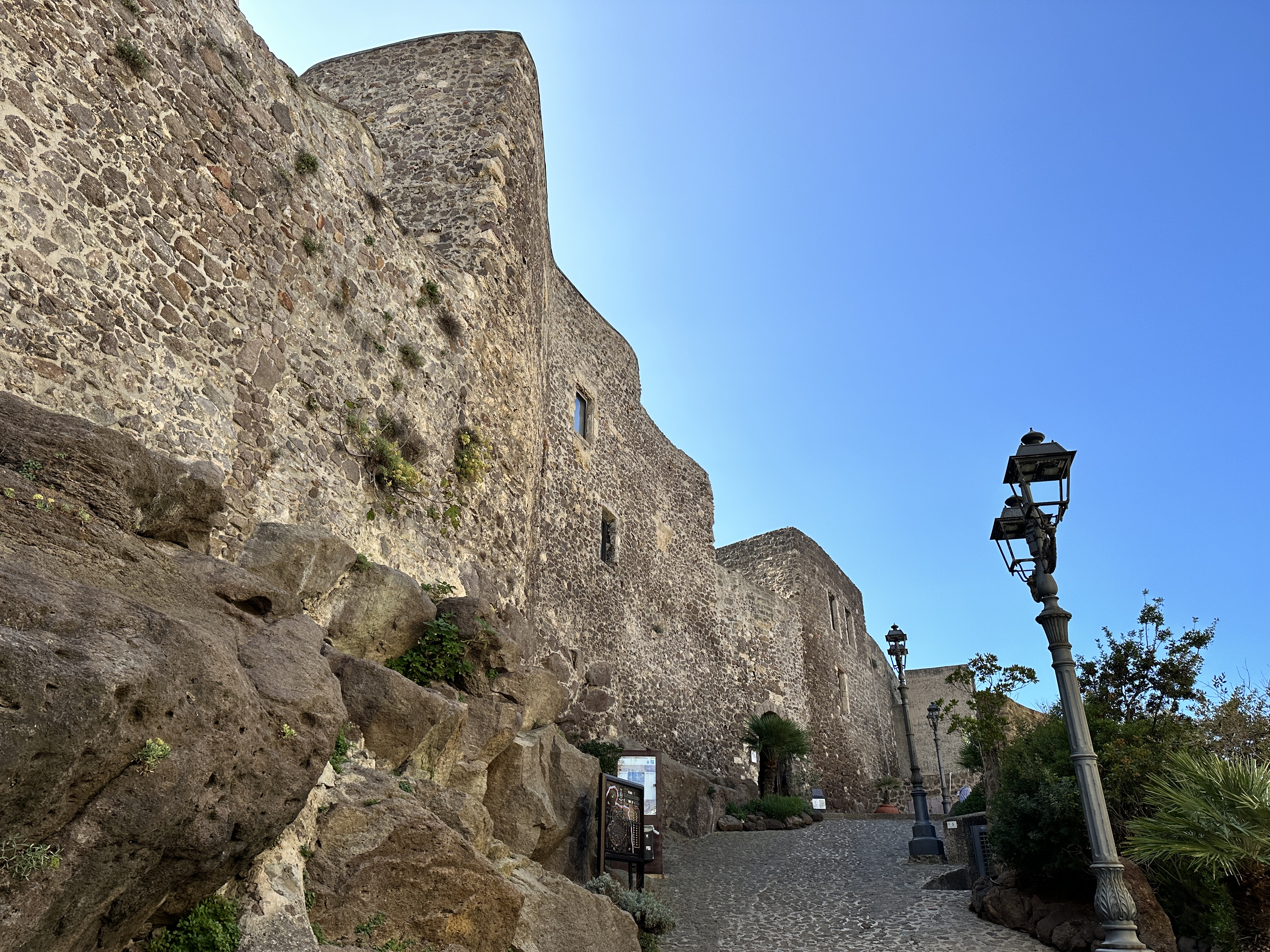
The massive walls of the Il Castello, Cagliari.

Other Views of Cagliari

This is about the only view I could get of the Roman amphitheater in Cagliari, which dates from the 2nd century AD. Unfortunately, it was closed during the time of our visit for restoration work. The amphitheater is just outside the Il Castello.

I would have also liked to visit Poetto Beach – just to the south of Cagliari’s old town. It looks lovely. However, we had visited many other beaches in Sardinia so we decided to prioritize our time to see the city’s other sights.

Hotel

We stayed at the Palazzo Tirso hotel in Cagliari, a beautiful hotel right on the waterfront and close to everything we visited above. The service was excellent and the room was very comfortable. I wanted to ensure I had good internet capability and I needed an early check-in, so we chose this hotel. Definitely recommended!

The pool and lounge area on the rooftop of the Palazzo Tirso Hotel.

Outside Cagliari

There are several other interesting sights not too far from Cagliari that could make nice day-trips, including the ancient Su Nuraxi di Barumini (which you can read more about here). Also, the Roman settlement of Nora (west of Cagliari) is definitely worth visiting and the fantastic resort area of Villasimius, southeast of Cagliari – with so many beautiful beaches it’s hard to know where to begin! I will be posting about Nora and Villasimius soon.

Top Sights to Explore Around Oristano, Sardinia

Oristano is not likely to be on the main tourist route in Sardinia, Italy especially if time is limited. However, if you have the time, you should definitely check it out. There is a lot to do in this region of Sardinia. Here are the main sights we visited. In addition to the sights listed below, there are ancient Nuragic sites not far from here. For a map of Sardinia and to learn more about these sites, see my post here.

Is Aruttas Beach

This beach on the Sinis peninsula is about 22 km (13 miles) from Oristano and one of the region’s most famous. There is a large parking lot and a refreshment stand near the beach. The quartz sand on this beach is amazing, I wish I had taken a close-up of it – it looks like translucent rice. Just another perfect beach in Sardinia! As with all beaches in Sardinia, it is a crime to remove the sand – be sure to leave the sand where it belongs on the beach for others to enjoy!

Tharros Roman Archeological Site

Tharros was occupied for nearly 2,000 years, from the 8th century BC to about 1050 AD. It sits near the end of the Sinis Peninsula, and it’s a spectacular setting.

A view of the ruins of Tharros and the late 15th-century San Giovanni Tower, which you can climb for a small additional fee.

This gorgeous beach is a stone’s throw from Tharros. Roman ruins, a 15th- century Spanish Tower and beautiful beach – what more could you ask for?!

Fordongianus Roman Archeological Site

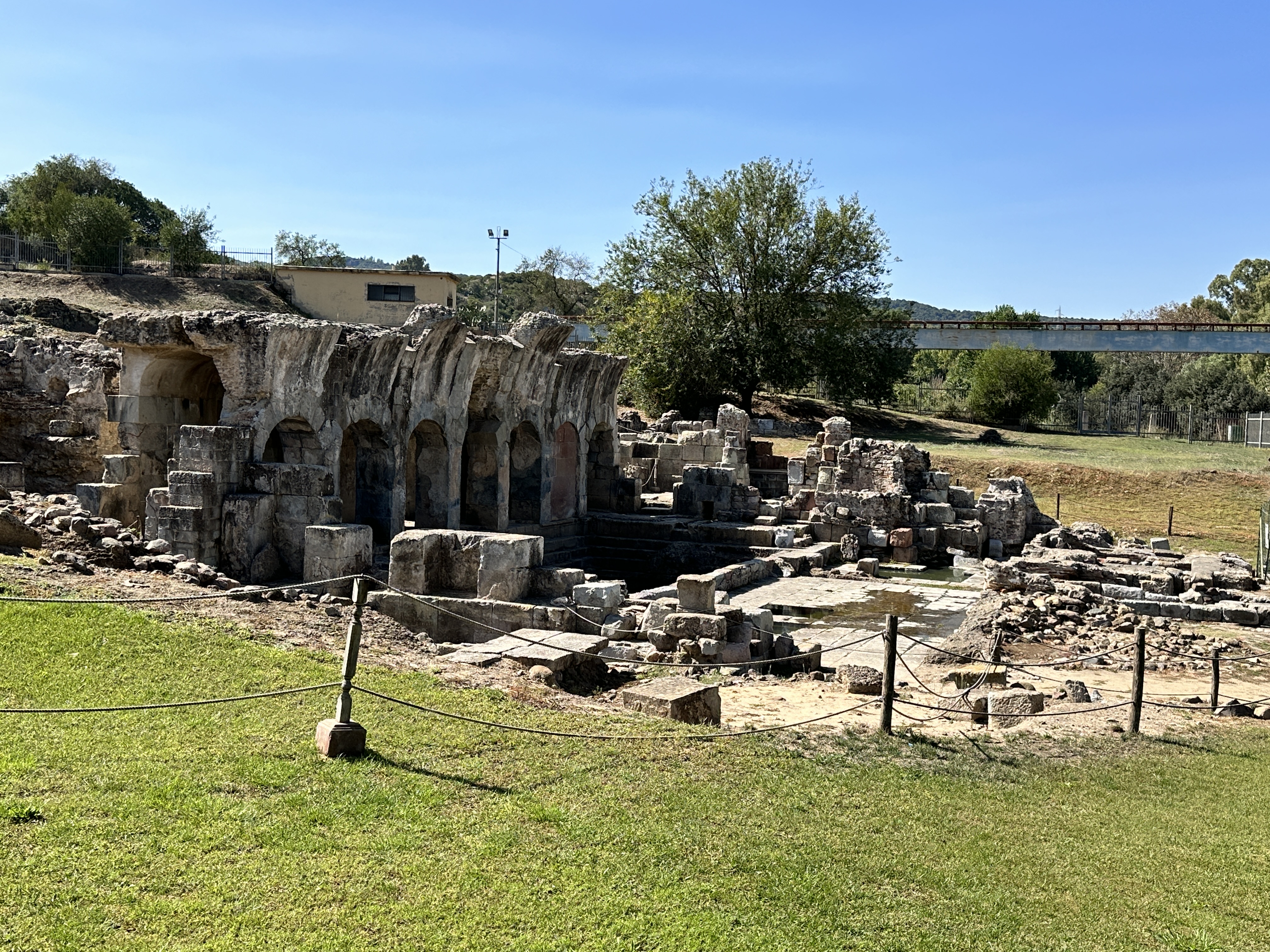
The water still runs warm from the natural springs at the 1st century AD Fordongianus Roman Baths. This site is about 25 km (14 miles) northeast of Oristano. We stopped by on our way into Oristano, but we arrived during siesta time so we had to settle for looking at the Baths through a wire fence, which actually offered some pretty good views. There is a fee to visit the Baths.

Just outside Fordongianus is this pretty 12th & 13th century Romanesque church, dedicated to San Lussorio, who was martyred by the Emperor Diocletian in 304 AD.

San Giovanni di Sinis Church

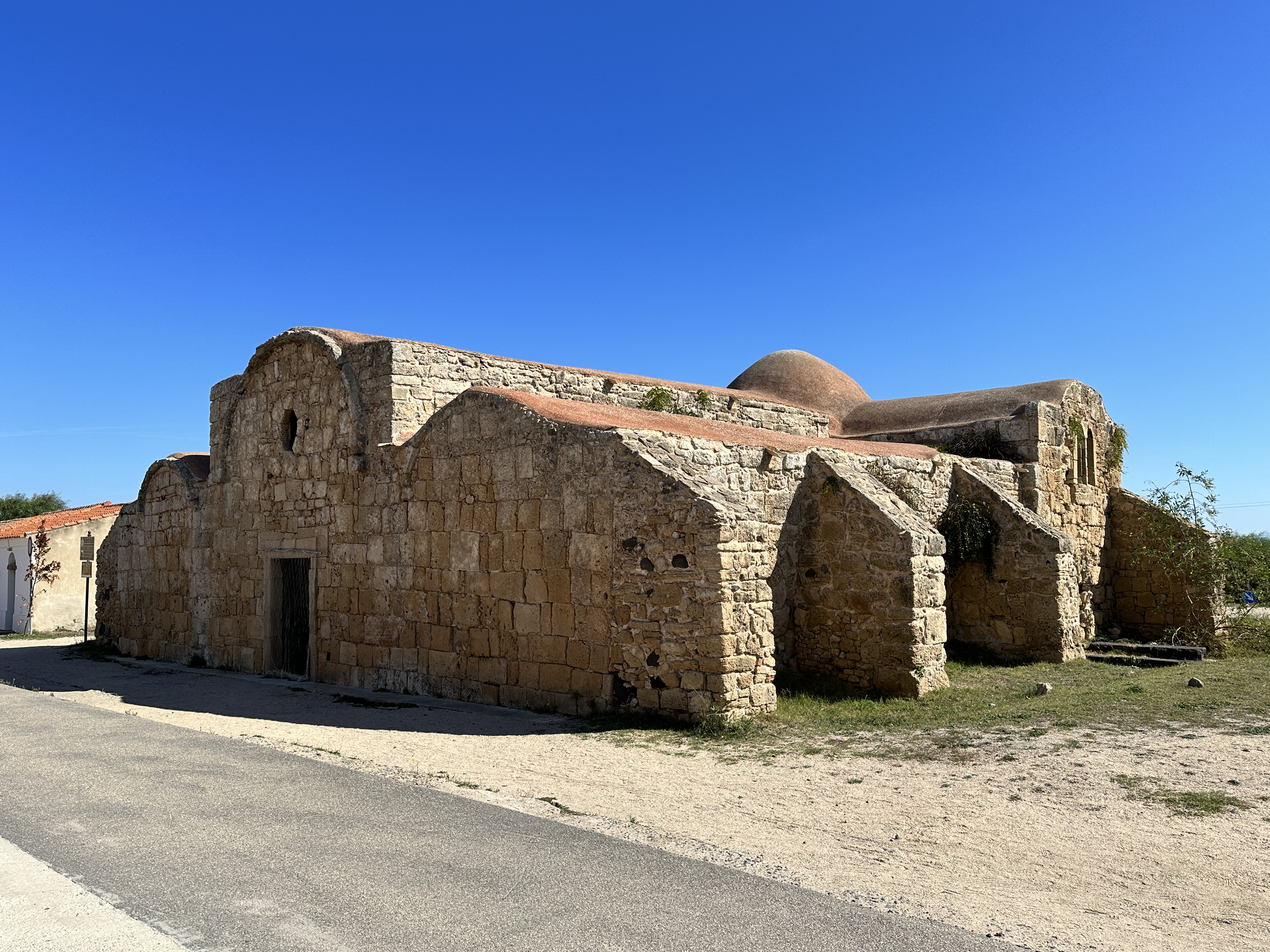
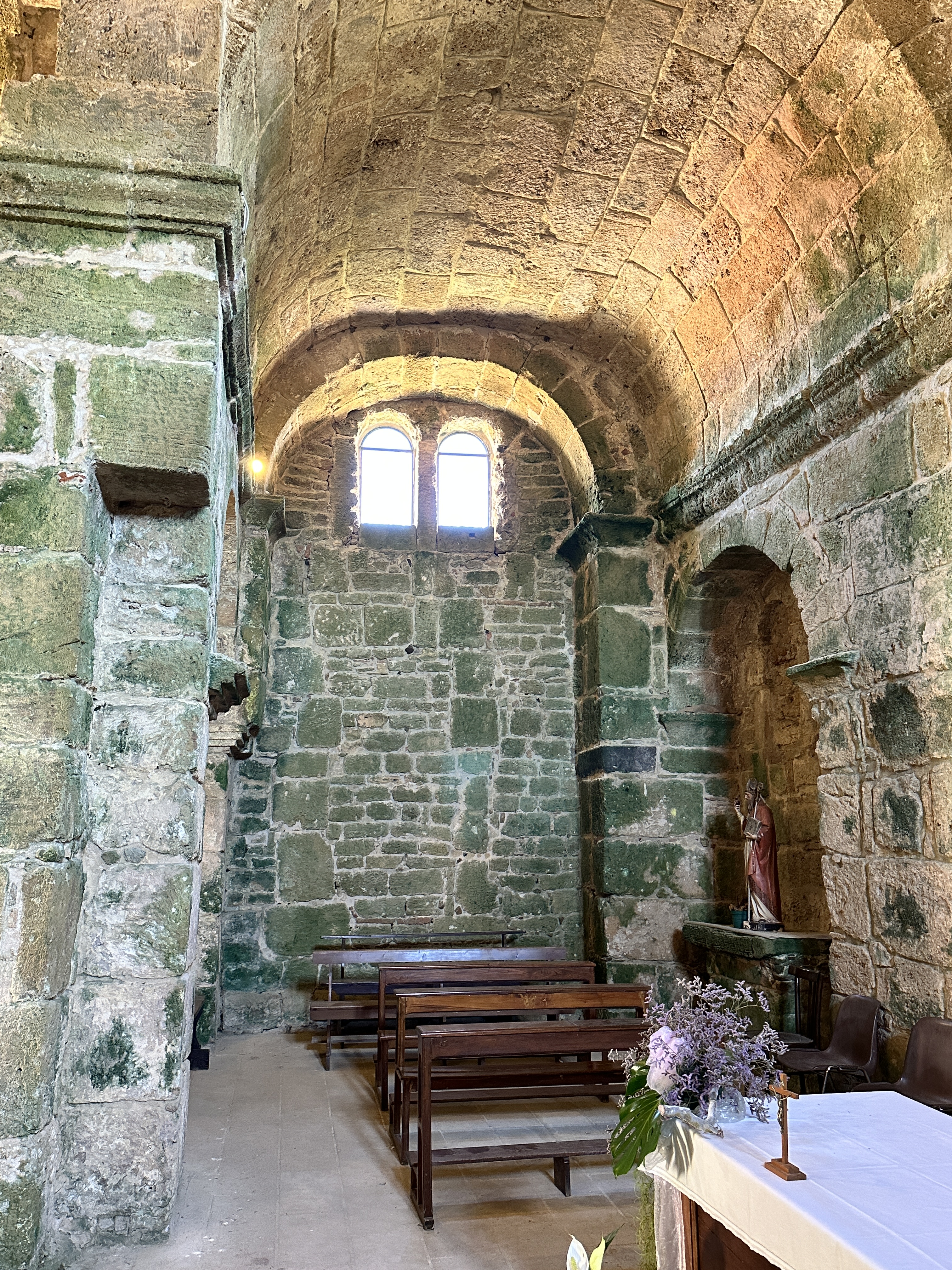
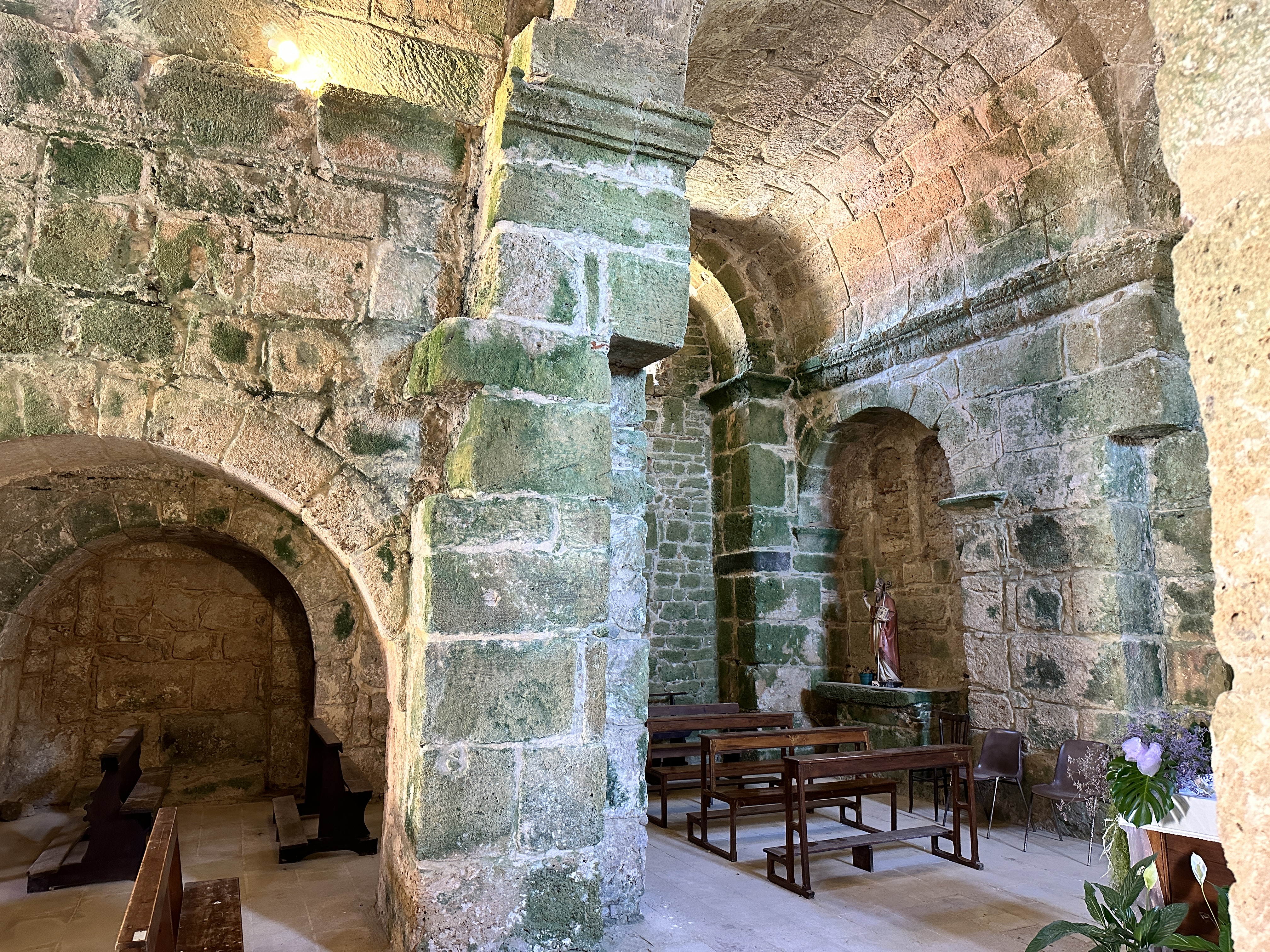
This interesting little church is right near the entrance to the Tharros archeological site. It is one of the two oldest churches in Sardinia, originally dating back to the 6th century – it still retains some of its Byzantine characteristics, such as the red roof. The present structure dates from the 9th and 11 centuries. The church sits in an ancient burial area. The church was free to enter and was definitely worth a stop.

San Giovanni di Sinis Church.

San Salvatore

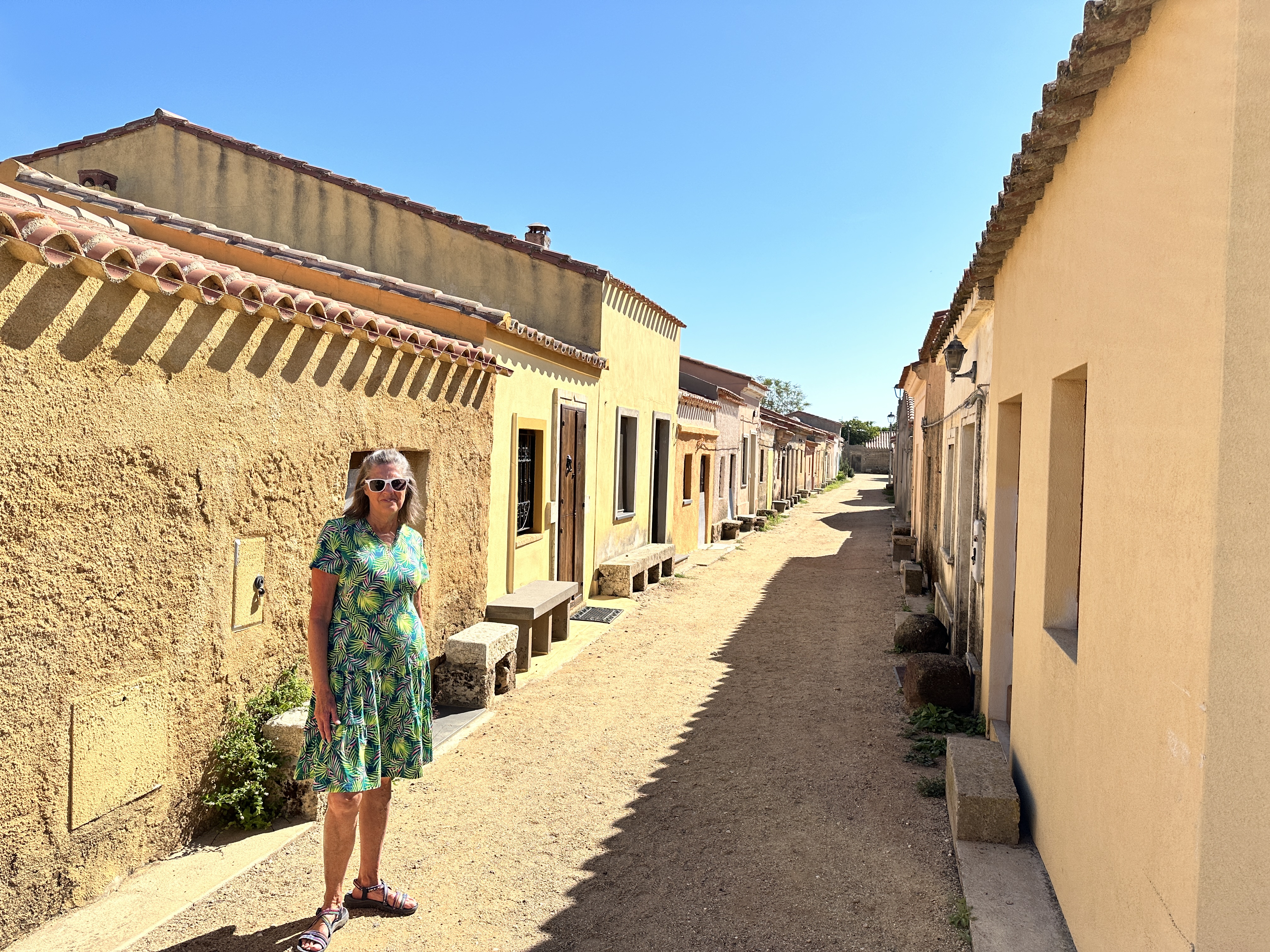
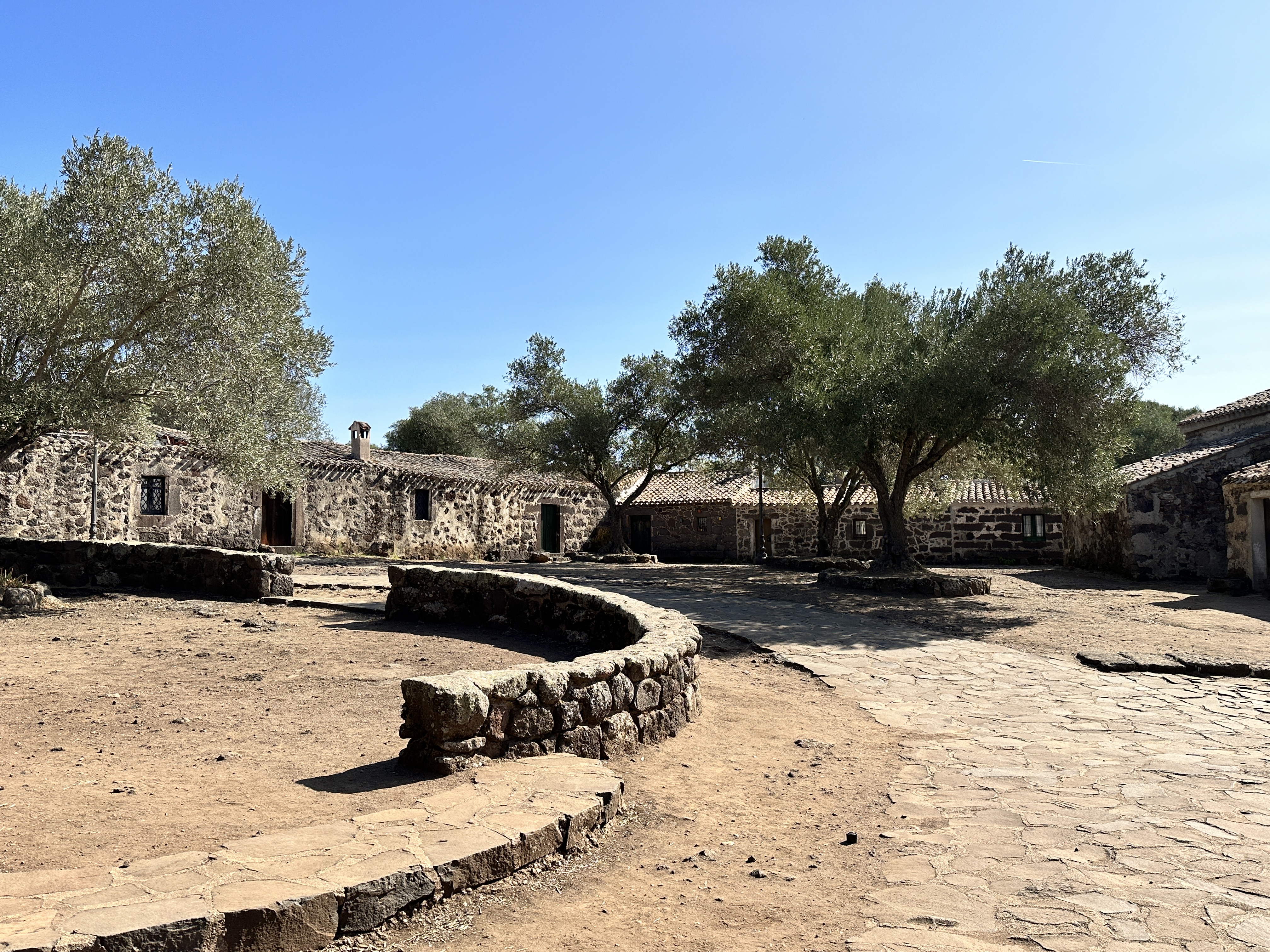
San Salvatore, also close to Tharros, is a spaghetti-western filmset from the 1960’s. It has the feel of a old western U.S. ghost town. The town opens its dwellings’ doors during September each year to house pilgrims for the Festa di San Salvatore, a celebration focused on the village’s small church, which sits over the ruins of a Nuragic period (~1,500 BC) vault. It looked to us like there might be a few permanent residents here, we saw some homes that looked lived in.

Oristano Town

Oristano seemed to us to be a pretty quiet town, without fewer tourists compared to other locations in Sardinia, even though there is much for the tourist to see in the vicinity. We enjoyed walking the streets in the evening without any throngs of tourists. It is a perfect place to call “home” during your stay in this part of Sardinia.

The 13th-century Torre di Mariano II was Oristano’s nothern gate, one of the few remains of the city’s medieval defenses.

Bosa, Sardinia – A Great Day Trip from Alghero

About one hour south of Alghero by car (45 km or 28 miles) is the town of Bosa, home to Sardinia’s only navigable river (the Temo River). We visited Bosa as a day trip from Alghero and we made it part of an interesting loop drive – visiting Basilica della Santissima Trinità di Saccargia on the way (see below) and Nuraghe Santu Antine. It’s possible to visit all three sights in one day if you get going early from Alghero. (For a general map of the regions we visited in Sardinia, click here).

Bosa is an ancient town, it was established by the Phoenicians and continued to grow under the Romans. It’s easy to see why, Bosa is an ideal port location – close to the coast and at the mouth of the Temo River.

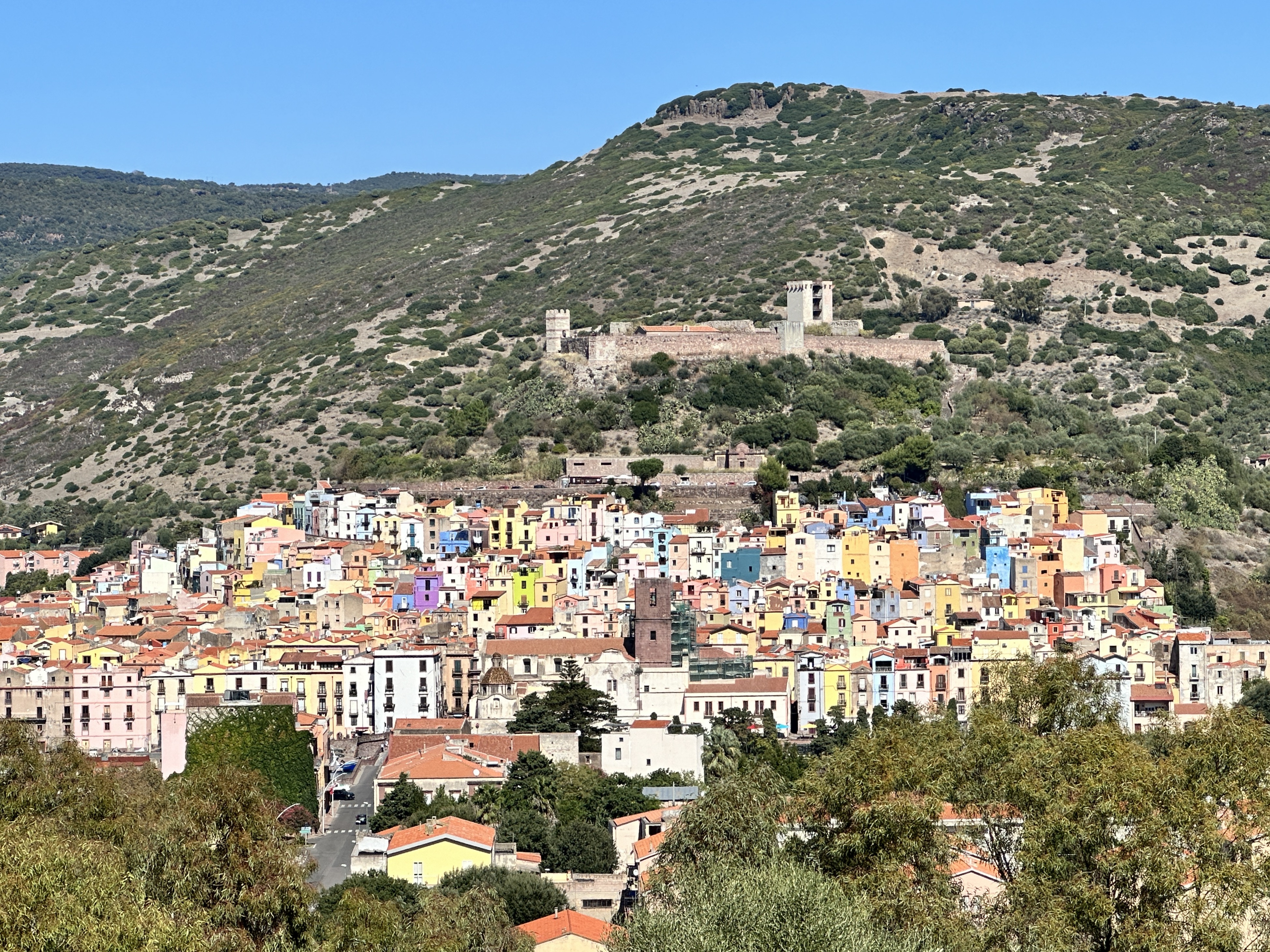
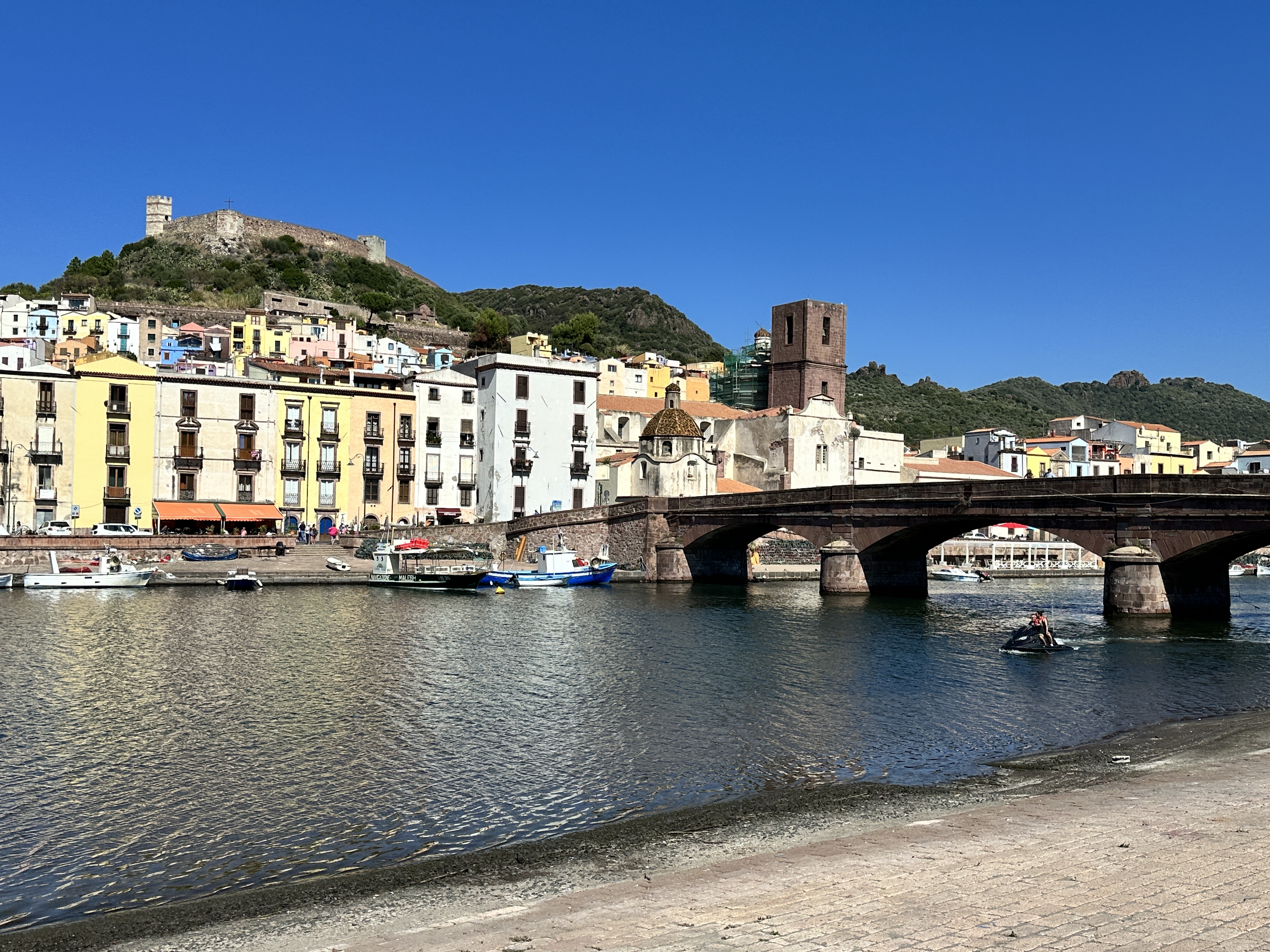
View of Bosa and its 13th century castle as seen from our drive into town.

Malaspina Castle

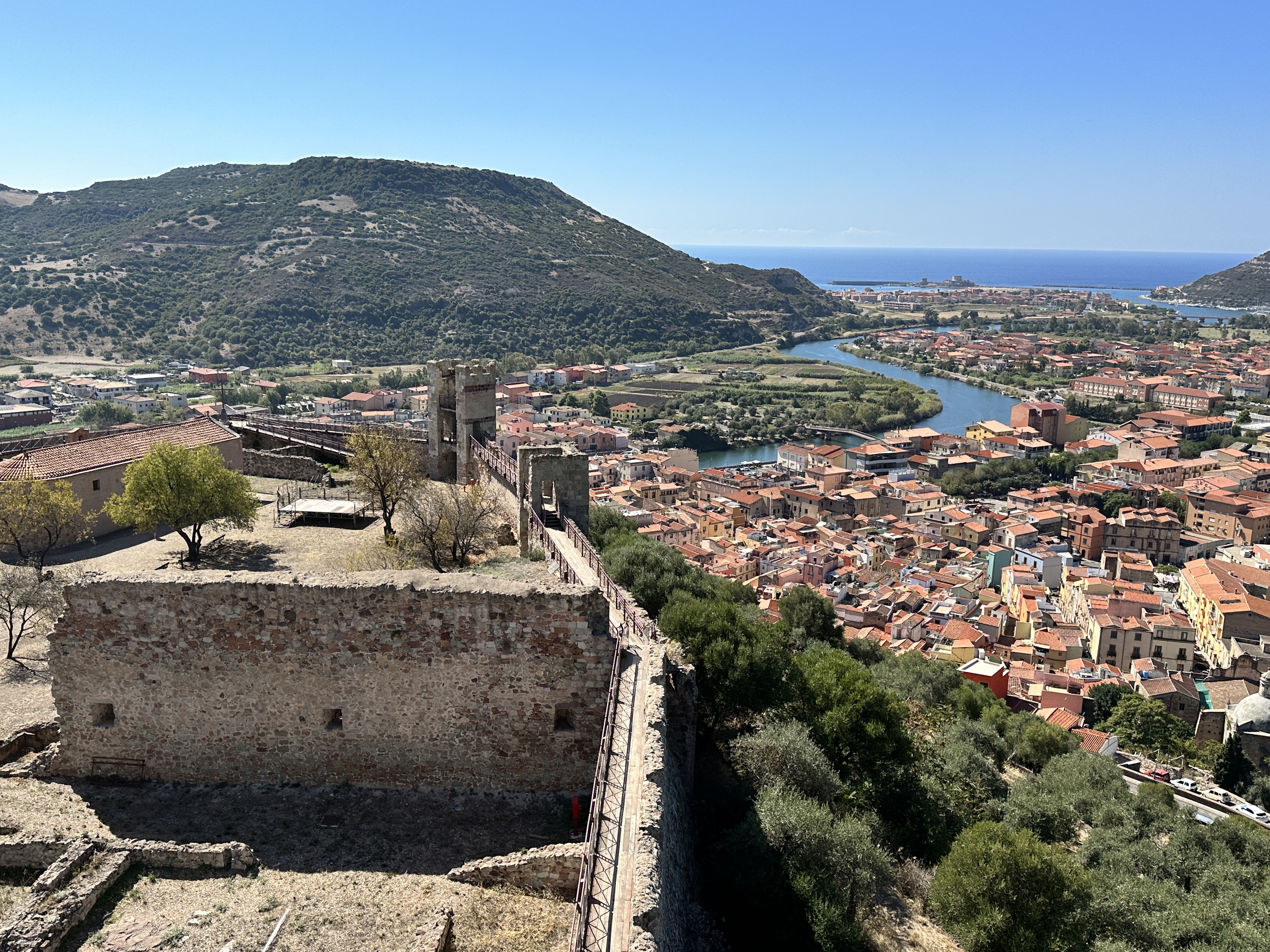
One of the main sights in Bosa is Malaspina Castle. You can drive up to the castle and park just below it. Even then, you have a steep walk up into the Castle. There is not much left of the Castle other than the walls (which you can walk), a few towers (which you can climb) and the 14th century Chiesa di Nostra Signora di Regnos Altos, which has some lovely frescoes.

14th century frescoes of Saints in the Chiesa di Nostra Signora di Regnos Altos, within the walls of Malaspina Castle.

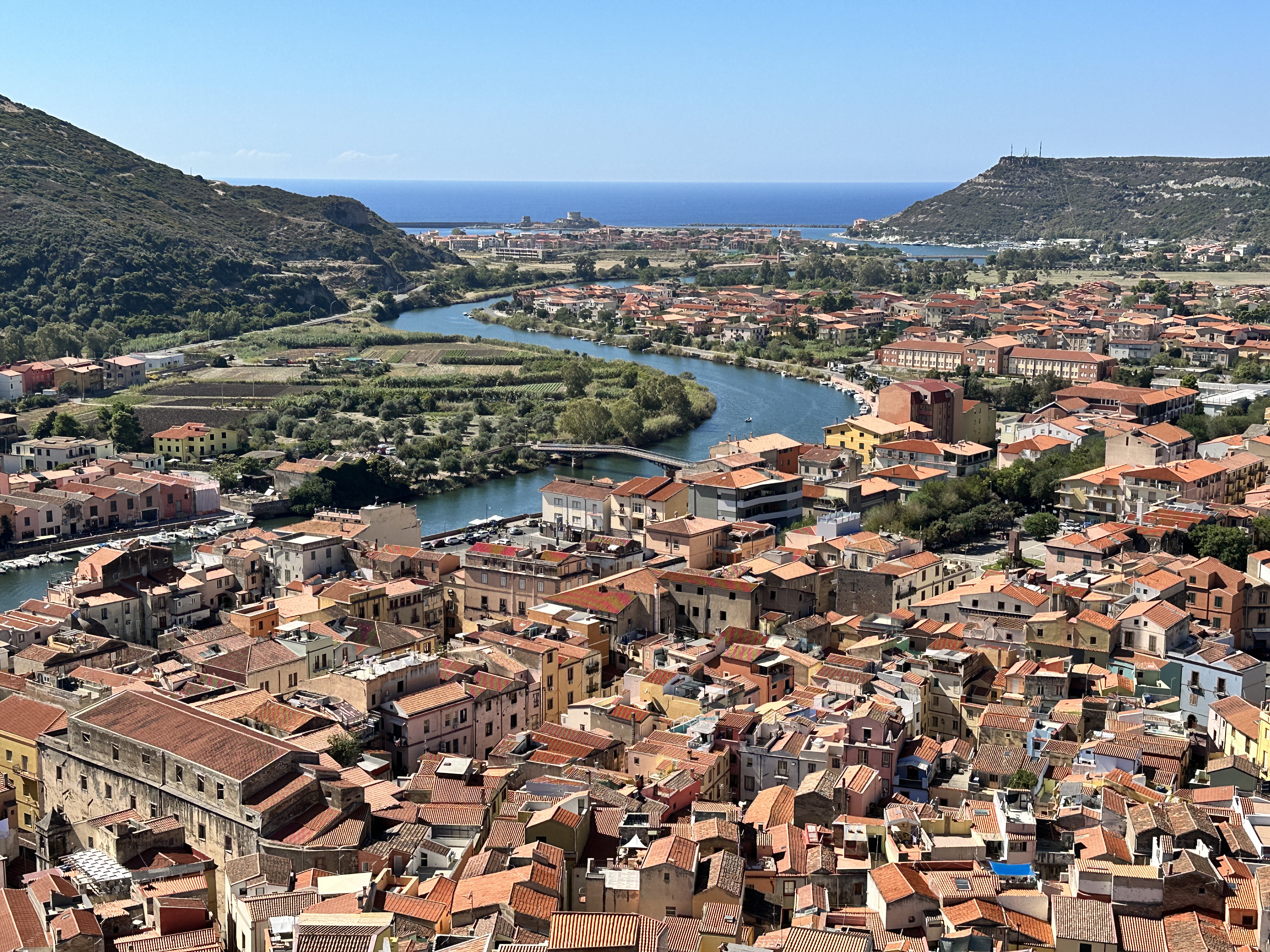
A postcard view of Bosa with the Malaspina Castle in the distance, the old town across the river, and Ponte Vecchio spanning the Temo River. We parked for free near this spot, just a short walk from the old town.

St. Peter’s Church

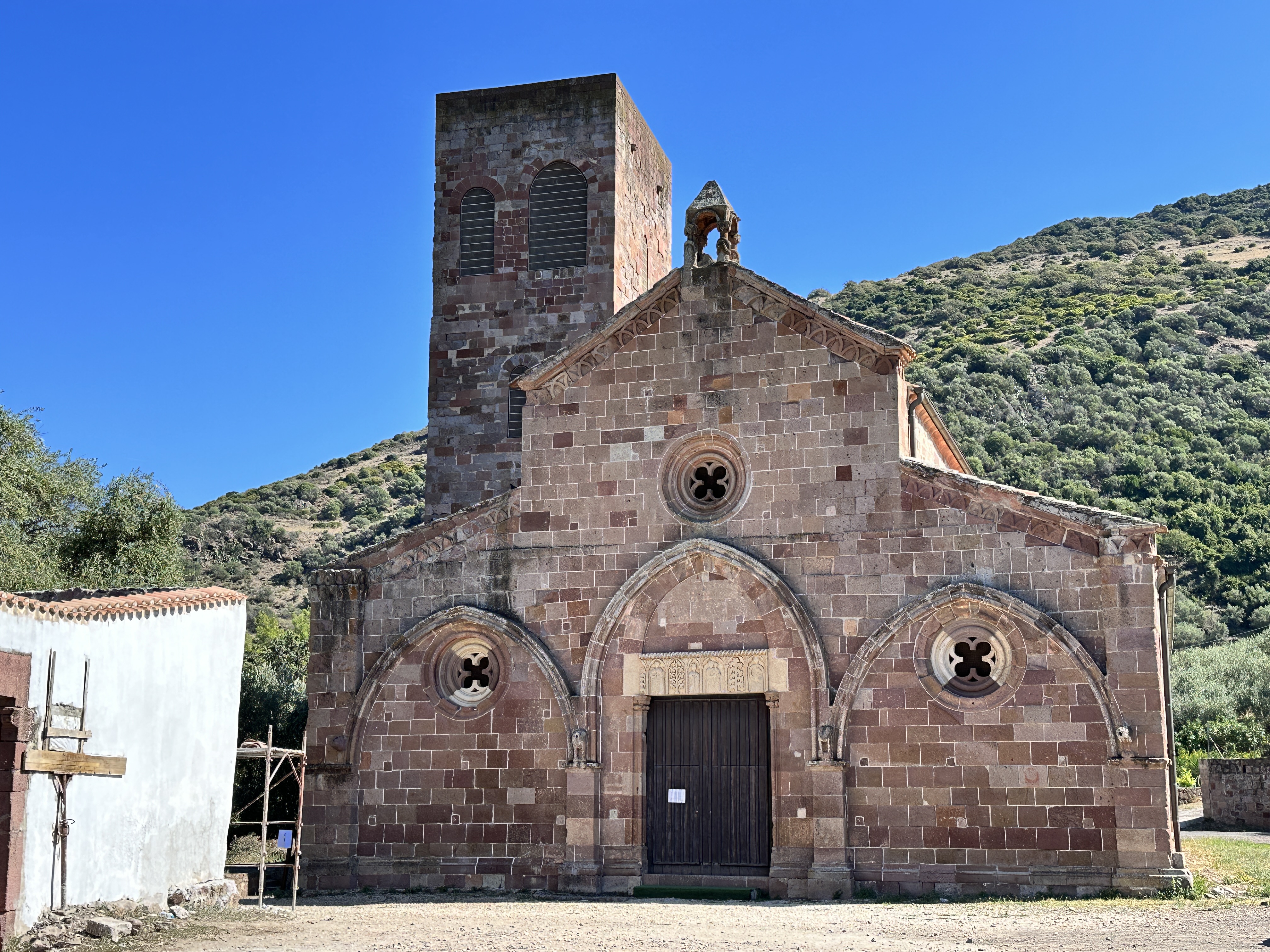
Just outside Bosa along the south shore of the Temo River is St. Peter’s Church, which dates from the second half of the 11th century. The Church can be visited, but was closed at the time of our visit. There is information posted about the Church near the entrance.

On the Drive to Bosa: Basilica della Santissima Trinità di Saccargia

The Church of the Holy Trinity Saccargia is about a 40-minute drive (50 km or 31 miles) from Alghero. It is well worth the “detour” to visit this fascinating 12th century Pisan-style basilica on the way to Bosa. The abbey was built on the site of a pre-existing monastery, of which there are some scant ruins.

About 20 minutes south of The Church of the Holy Trinity Saccargia is the ancient archeological site of Nuraghe Santu Antine, also a very worthwhile stop before turning southwest on your drive towards Bosa. Since I covered our visits to Sardinia’s ancient Nuraghe in another post, I won’t comment further on it here.

After our visit to Bosa, we drove north along the west coast of Sardinia back to Alghero. It was a scenic, beautiful drive and the perfect end to another perfect day in Sardinia.

One of My Favorite Corners of Sardinia

La Pelosa Beach

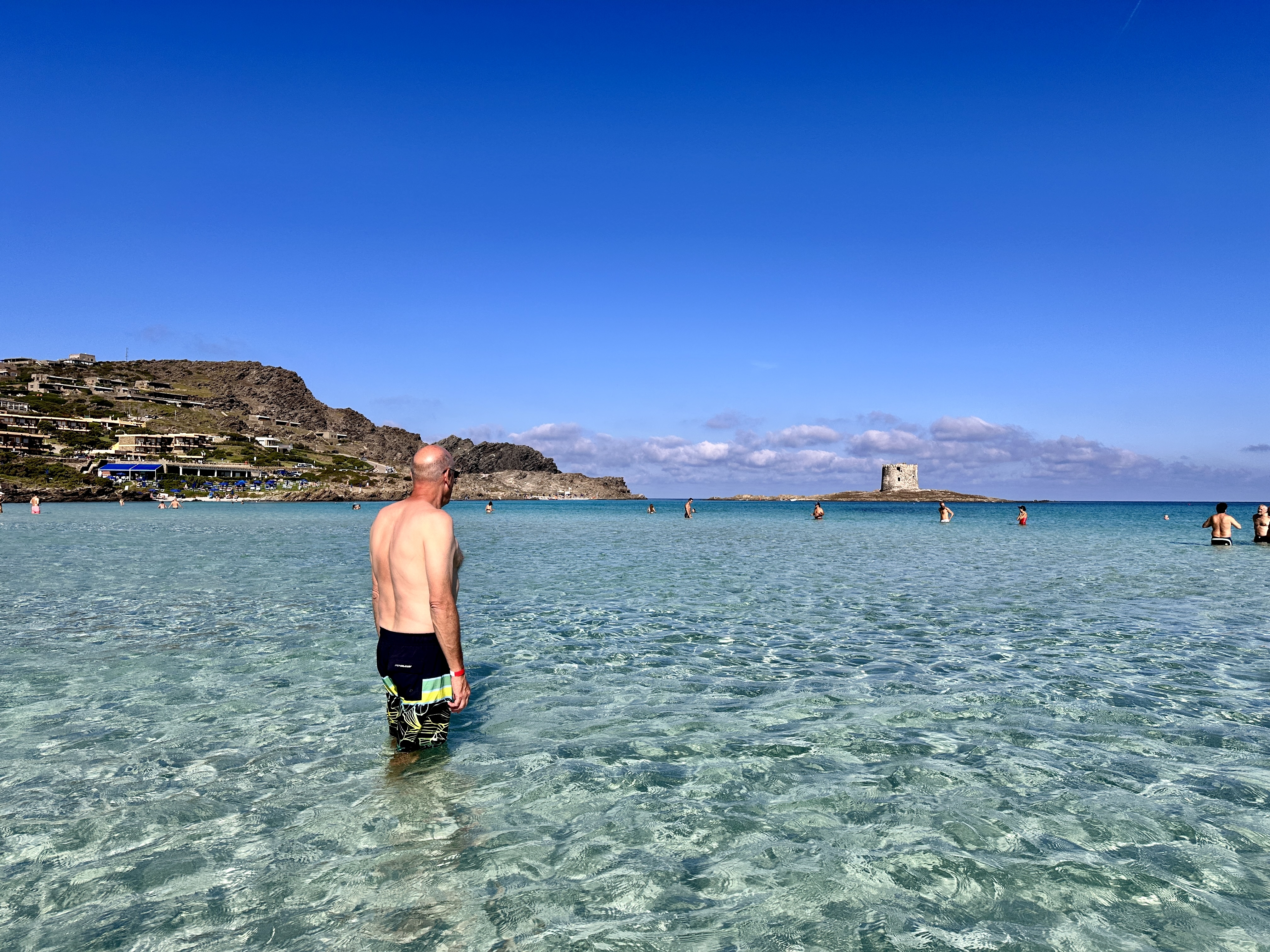
The island of Sardinia, Italy has so many lovely beaches it’s difficult to narrow down the list of “best beaches” but one that would have to be near the top is La Pelosa, near Stintino on the north west coast of Sardinia. This beach is so popular that you need to make reservations to visit it during the busy season (May – October). The reservations are not expensive nor difficult. To my knowledge, this is the only beach in Sardinia that requires a reservation. When you see it, you will understand why it is so popular.

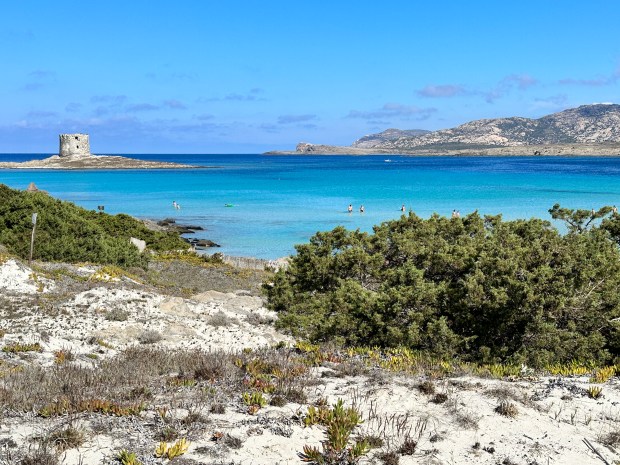
La Pelosa Beach, with its signature 16th century Aragonese Tower overlooking this beautiful bay.

One of the boardwalks leading down to La Pelosa Beach.

There is paid parking along the street facing the beach – be sure to pay – you don’t want to get back to your parking spot after a lovely day at the beach and find your vehicle has been towed away! I recommend getting here early in the morning or later in the afternoon, not only will the beach be a little less busy, but convenient parking will be more plentiful too. We visited in early October, after an overnight stop in Castelsardo. The water was still warm and the beach was fairly busy, but it did not feel overcrowded at all. To check in at the beach, there is a kiosk where you get a wristband after showing your reservations on your phone or a hardcopy. Be sure to bring towel mats as well, to avoid taking home the precious sand – Sardinia is focused on keeping their beautiful sand where it belongs – on the beach.

Alghero

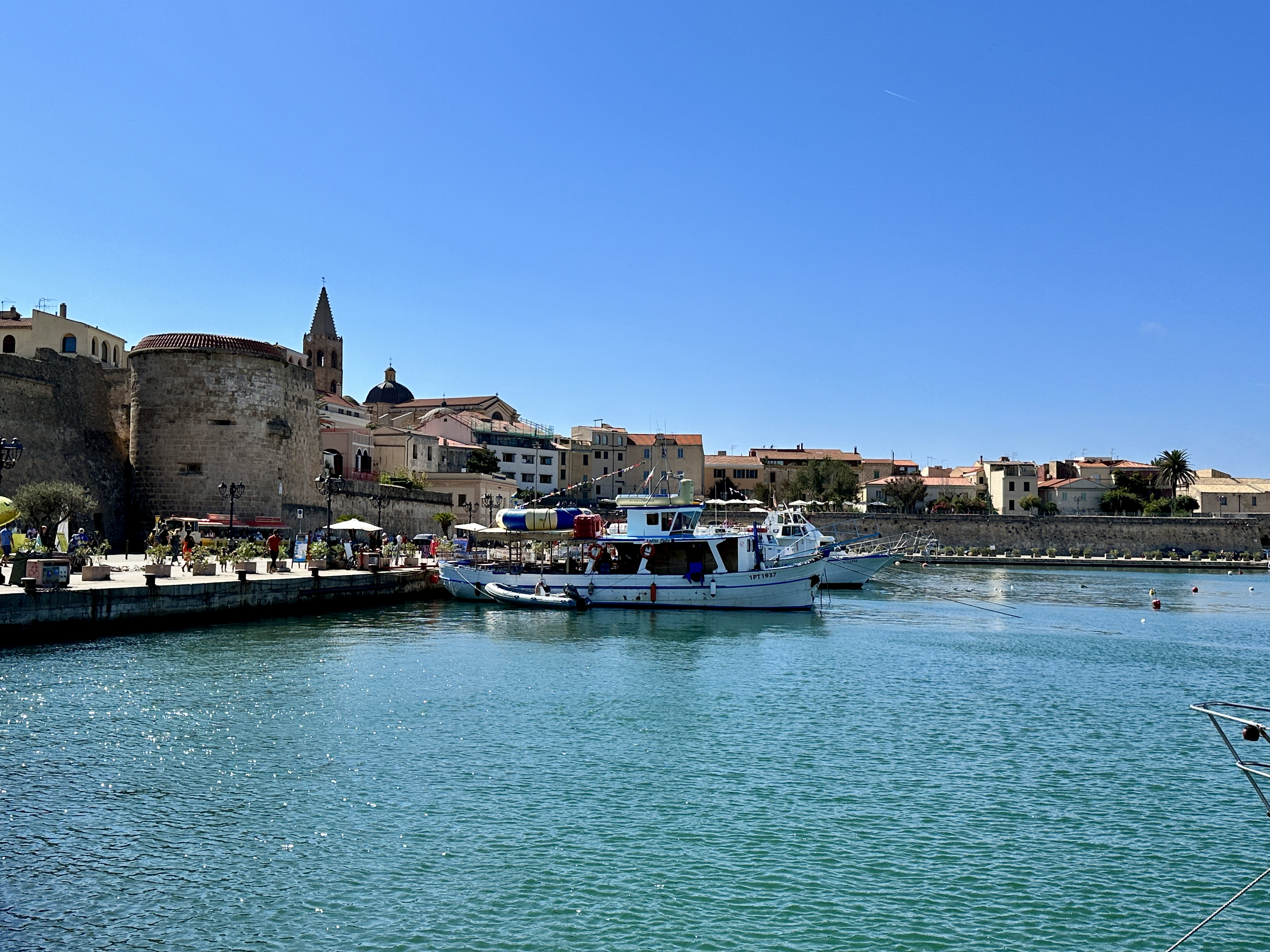
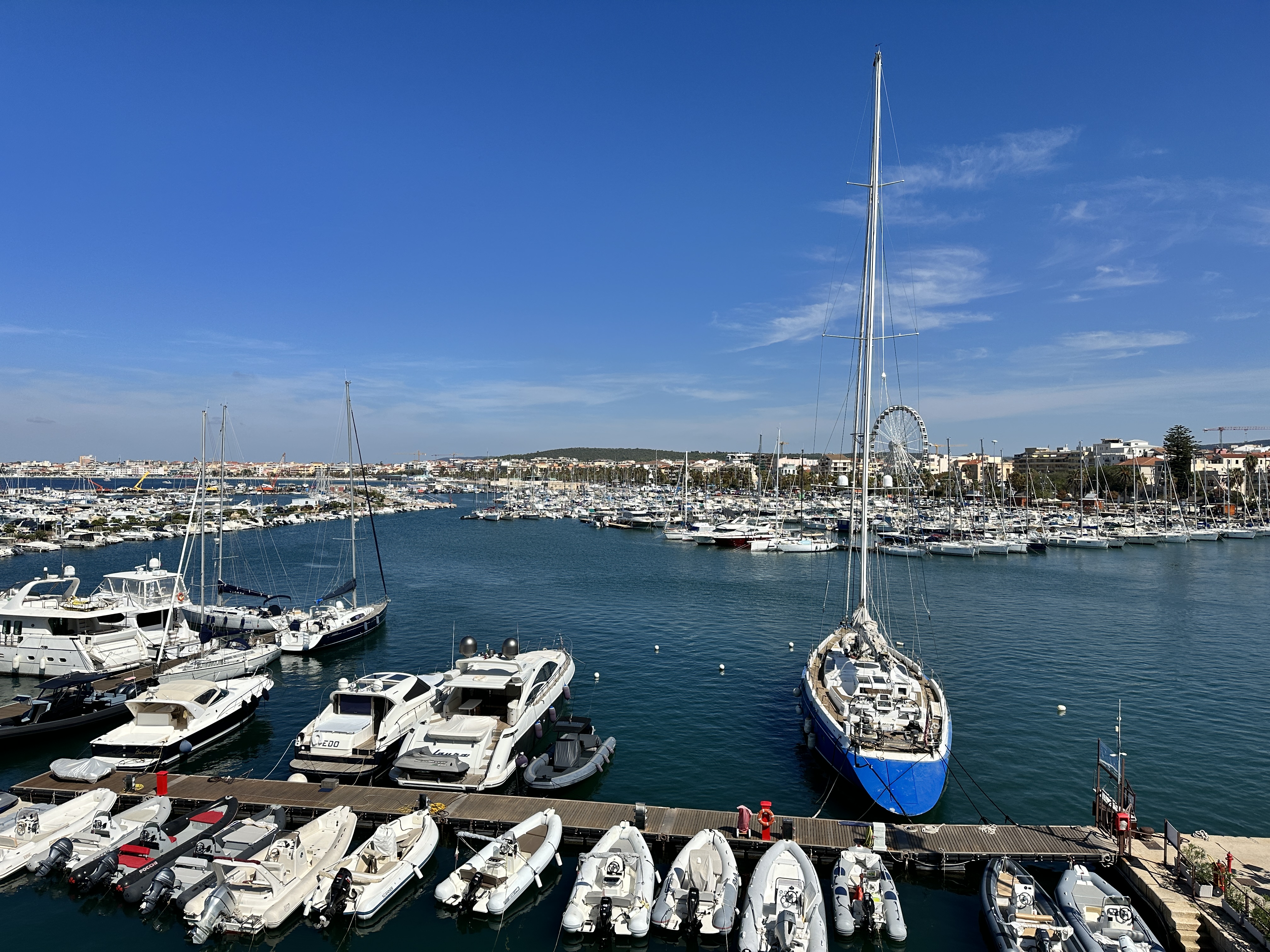
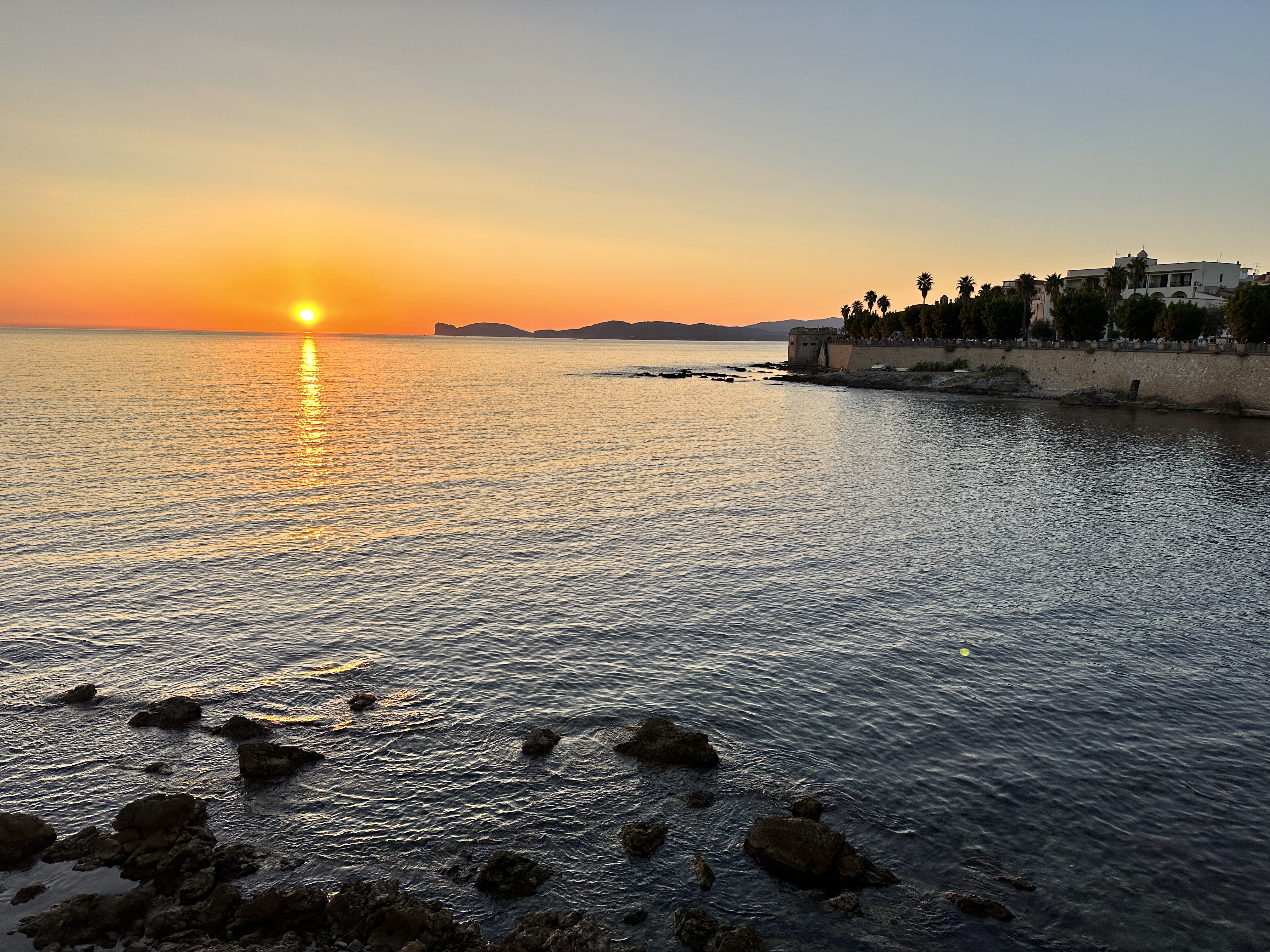
Less than an hour south of La Pelosa Beach is Alghero. Alghero was probably my favorite town in Sardinia. The combination of its magnificent setting and harbor, a beautiful old town with medieval towers and walls, and lively evening scene made this a perfect spot to stay for a few nights. We rented a lovely apartment that was just a ten minute walk from the old town.

A view of Alghero’s Old Town from the Harbor.

Alghero’s lively Old Town.
A great view of Alghero’s Old Town walls and towers.

Castelsardo, Sardinia – A Great Stop along Sardinia’s North Coast between Costa Esmeralda and Alghero

Castelsardo is a very picturesque little town on the north coast of Sardinia and worth an overnight stop if convenient in your travels, or a least a short visit on your way to other destinations. For us, we stopped here overnight on our way to the magnificent beach at La Pelosa (near Stintino, on the very northwest tip of Sardinia) and then on to Alghero.

Castello dei Doria

The 13th century castle at the top of the hill in Castelsardo is named after the Genoese family who was entrusted with its care. It is open to visitors and there are a few rooms you can visit with various displays, including the Museum of Mediterranean Interweaving.

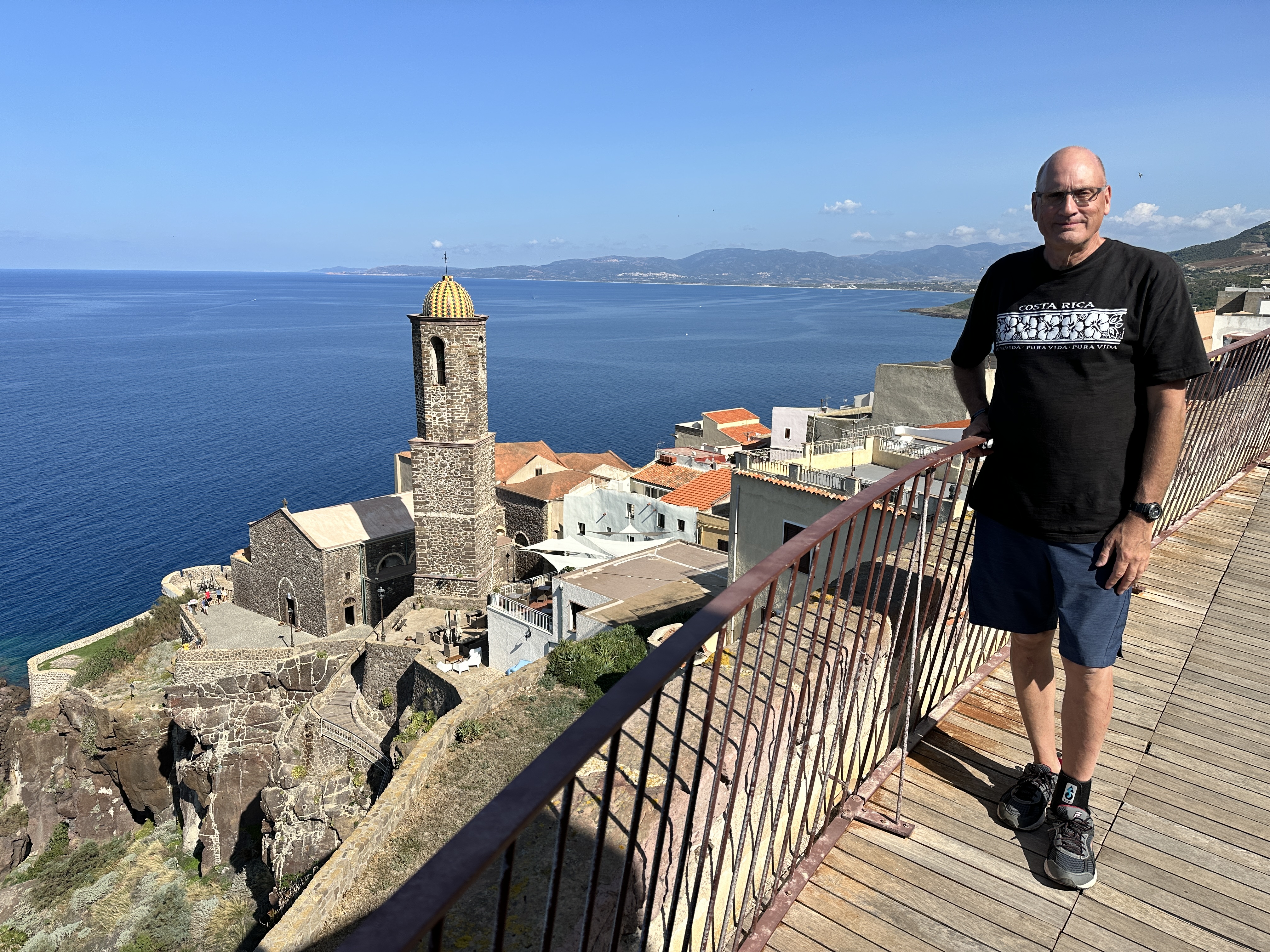
A view from the top of Castello dei Doria.

Street Wandering

As with any small European town, it is fun to just wander the narrow, steep streets. Our hotel was on one of these little streets. There was plenty of car parking outside the old town on the sea side of Castelsardo.

View of Castelsardo’s 16th century Cathedral, with a magnificent view of the Mediterranean Sea and Sardinian coast line in the distance.
I loved this image of an old 1st story floor/ceiling, in a visitor’s center near the Castle. I can’t imagine trying to build anything that would be square and level in those days!
Some of the other 16th buildings near the Cathedral in Castelsardo’s old town.

Elephant Rock

Just off a road leading into Castelsardo from the east is this interesting volcanic rock formation, aptly named “Elephant Rock”. What is even more interesting is that within this rock there are two pre-nuragic tombs, dating to a time before Sardinia’s Nuraghe were built, likely 5,000 or more years ago. We just pulled off the side of the road to take a look.

Just outside of Castelsardo is this interesting volcanic rock containing ancient tombs, aptly name “Elephant Rock”.
Don’t miss beautiful Castelsardo if you have the chance!

Explore Sardinia’s Ancient Nuraghe: A Bronze Age Adventure

If you enjoy archeology, Sardinia, Italy should be high on your list of places to visit. There are a number of Bronze Age (approximately 1900 BC to 730 BC) settlements throughout the island. The main towers of these settlements are called Nuraghe (essentially ancient towers/castles surrounded by small villages) and they are unique to Sardinia. According to Wikipedia, more than 7,000 of these structures have been found on the island. Very little is known about the people who inhabited these structures or what they used these structures for.

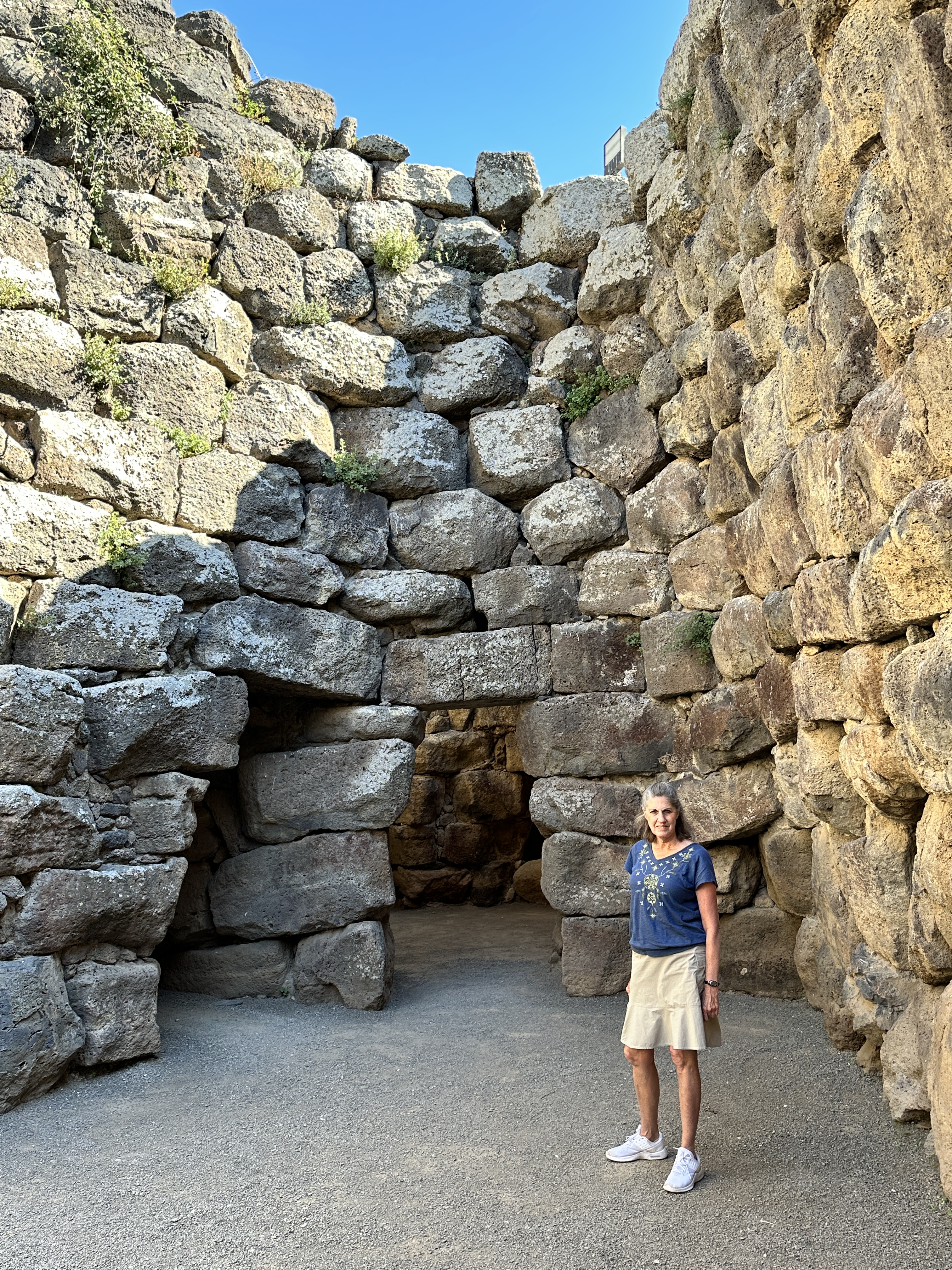
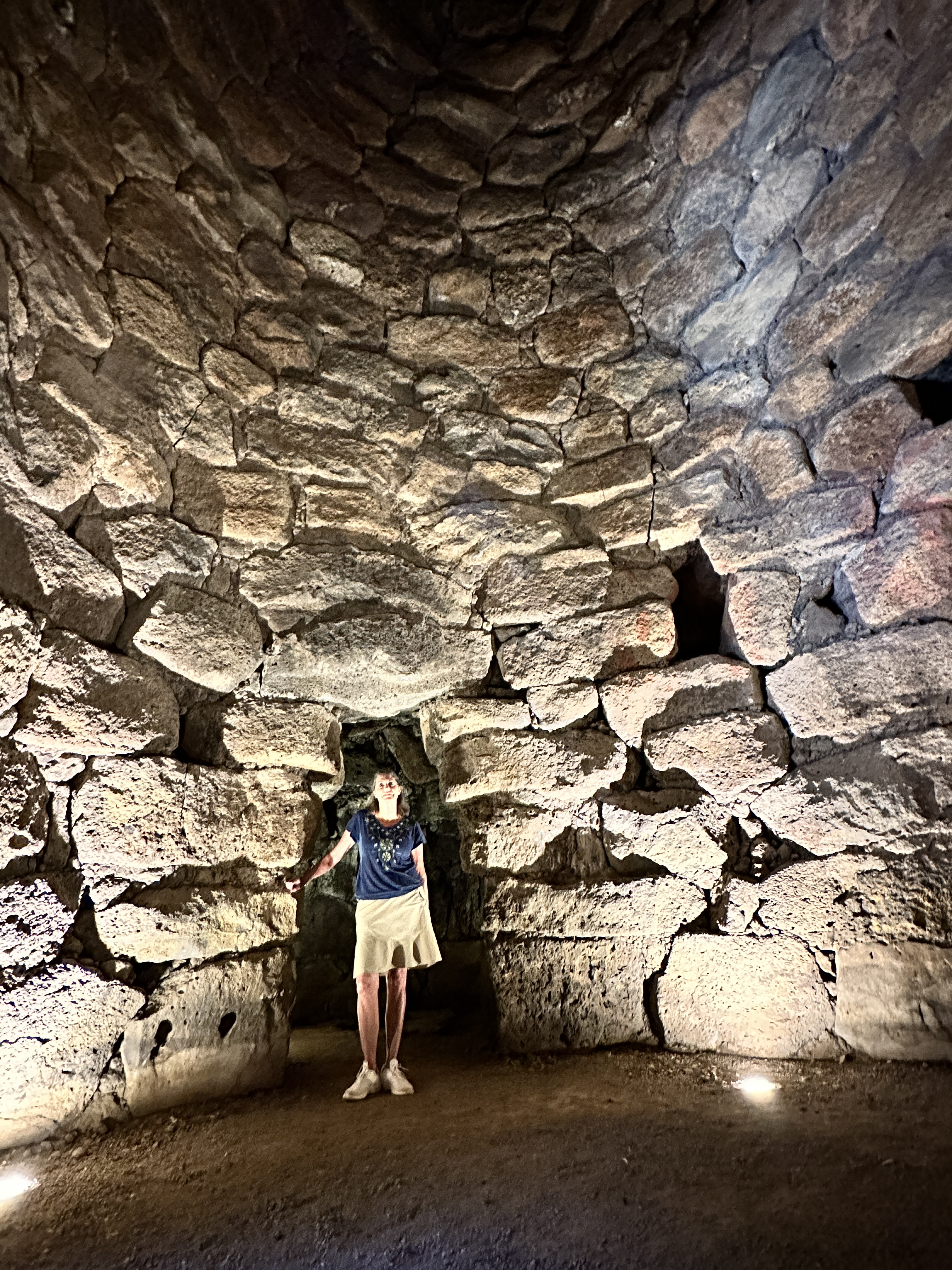
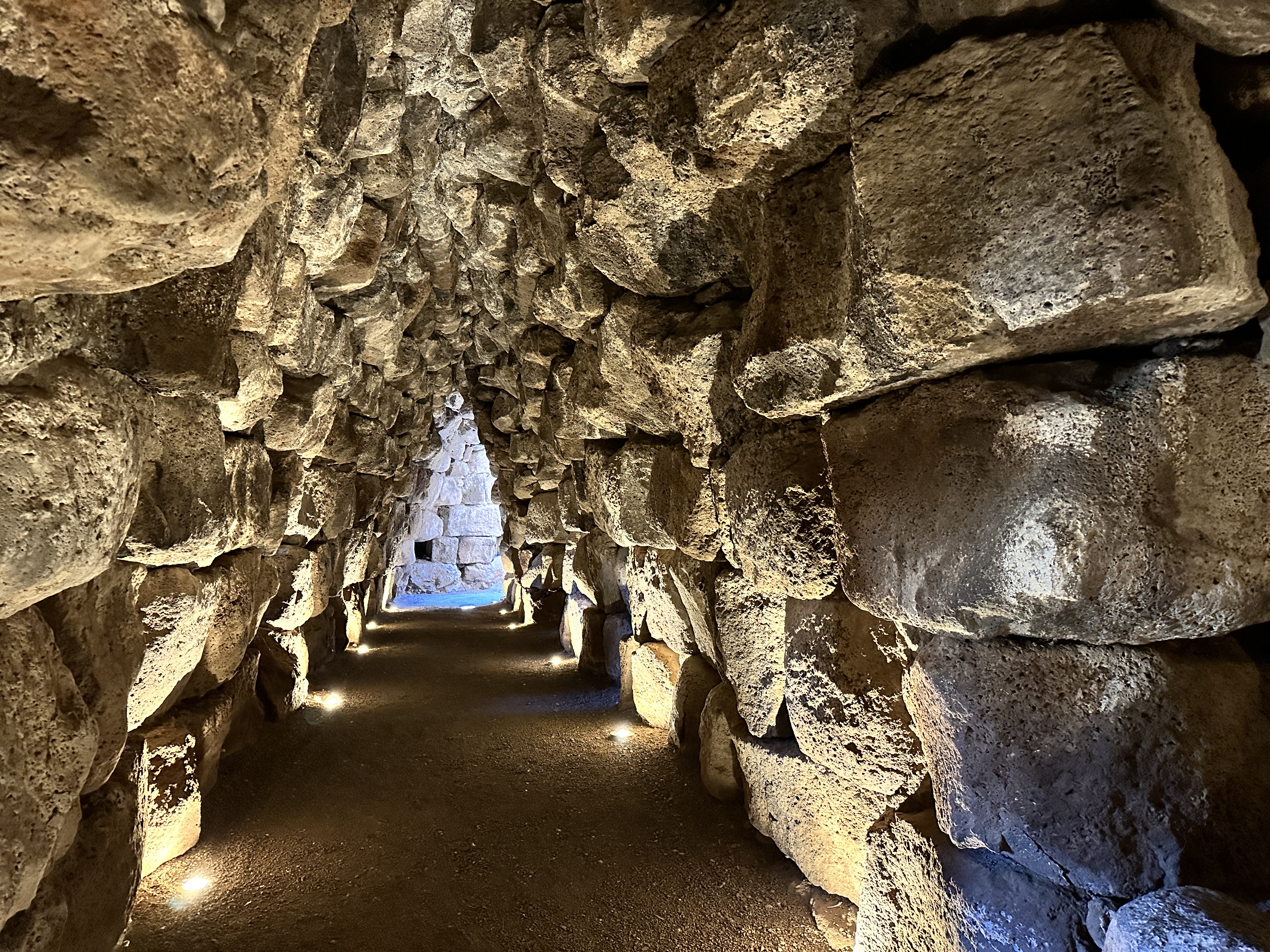
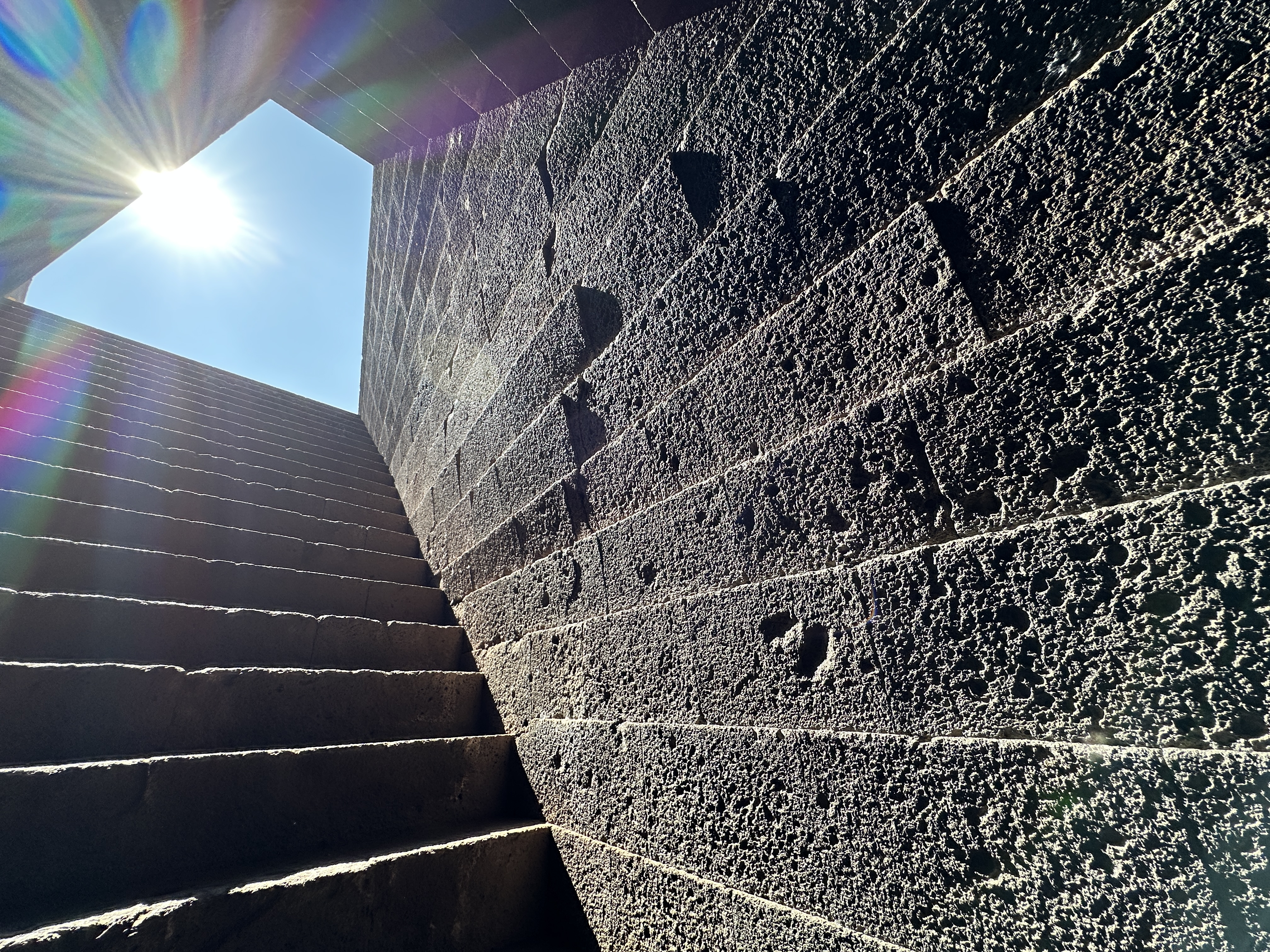
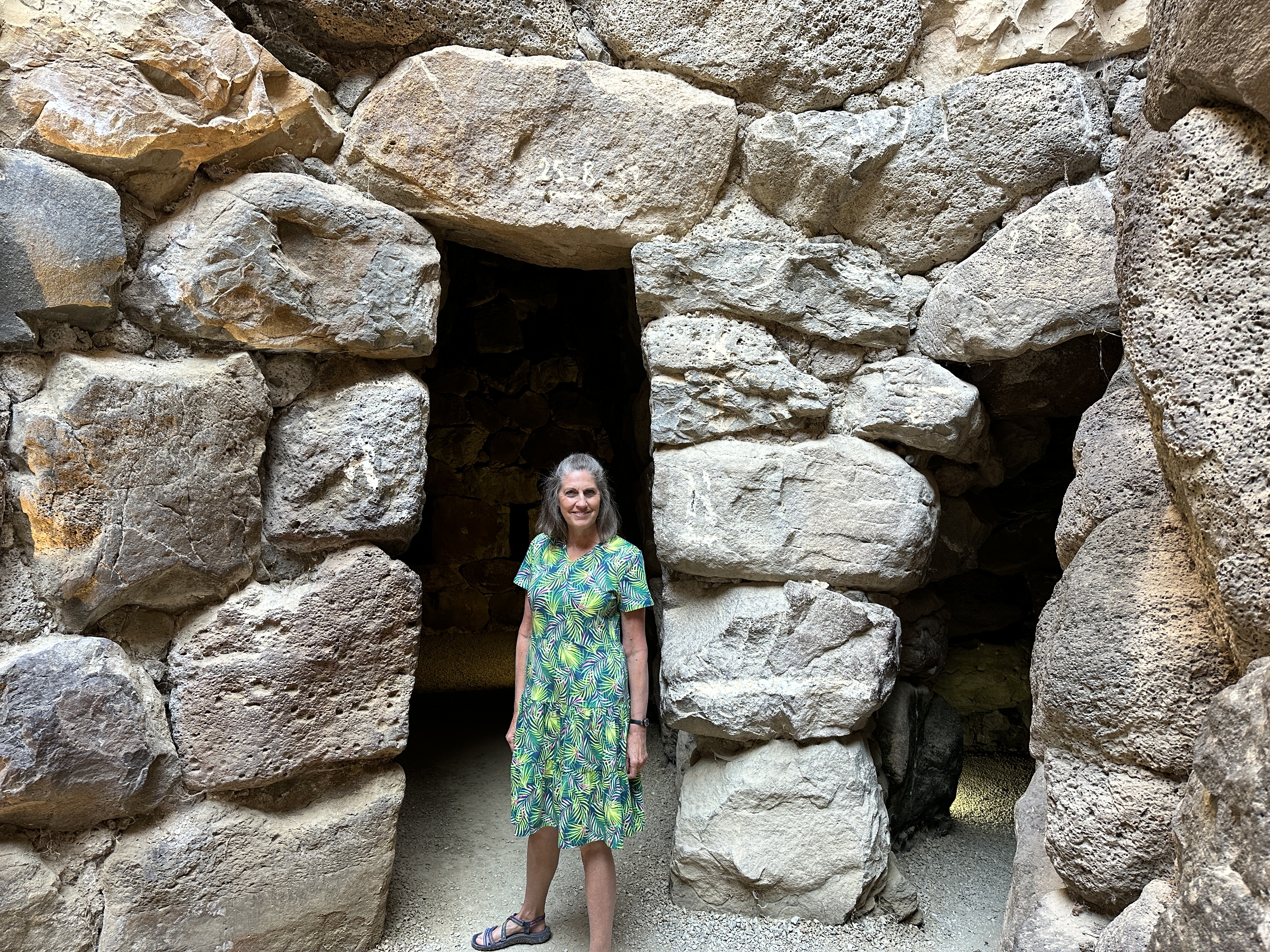
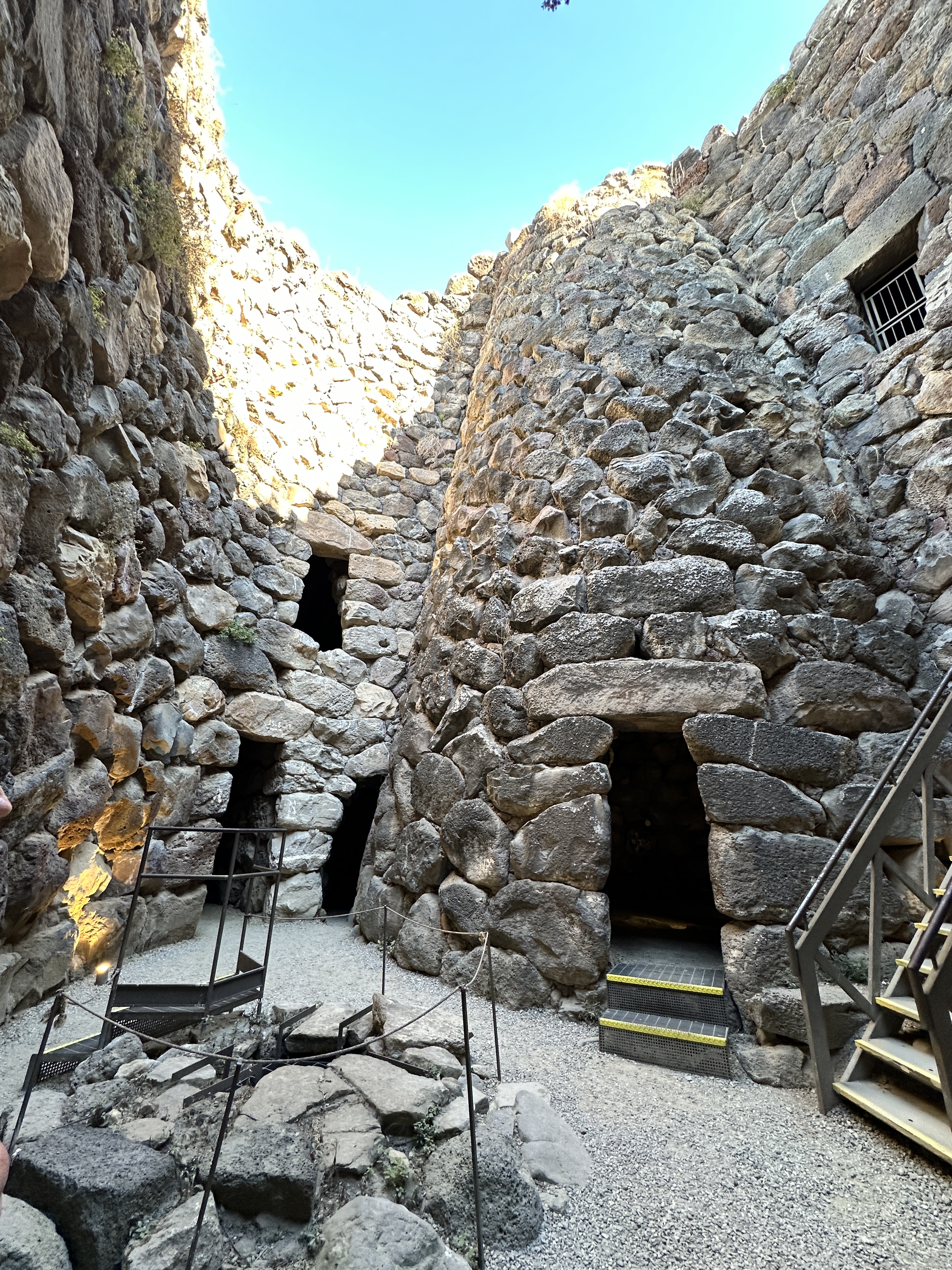
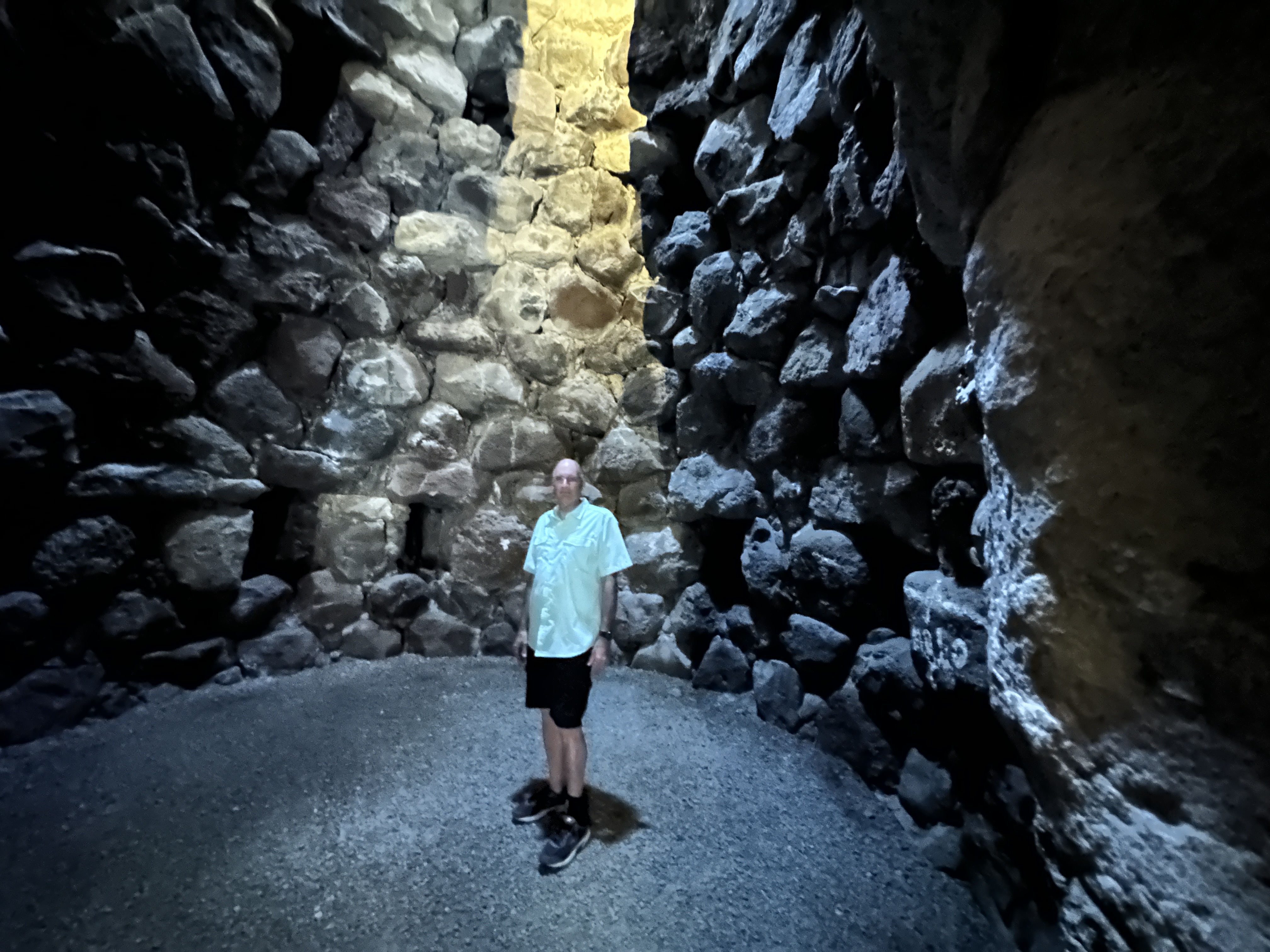
Amazingly, a number of Nuraghe are in an excellent state of preservation and can be visited, including the interiors. The stone work is quite incredible and standing in these 3,000 year-old rooms and climbing the stairways of these towers was a fun experience, not unlike visiting the ancient pyramids of Egypt. Most sites allow you to visit the structures on your own, the only one that required a guide was Su Nuraxi Barumini, one the largest of these settlements in Sardinia. As with many ancient archeological sites, the builders in Sardinia understood much about astronomy and were close observers of the night sky.

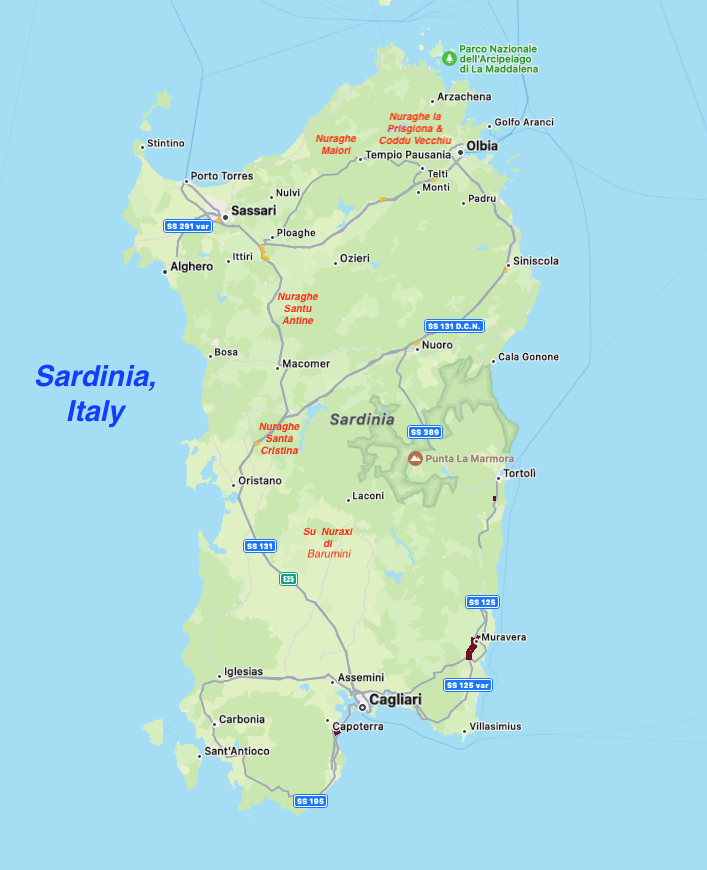
The approximate location of the Nuraghe sites we visited are shown on the map of Sardinia above.

We visited 5 Nuraghe sites, which provided a nice sampling of Sardinia’s rich Bronze Age history.

Below is a brief overview of the sites we visited.

Nuraghe la Prisgiona & Coddu Vecchiu

Within walking distance of Nuraghe la Prisgiona is Coddu Vecchiu, called the Giants Tomb. The tomb is from the same era and part of the Nuraghic civilization, about 1800 BC.

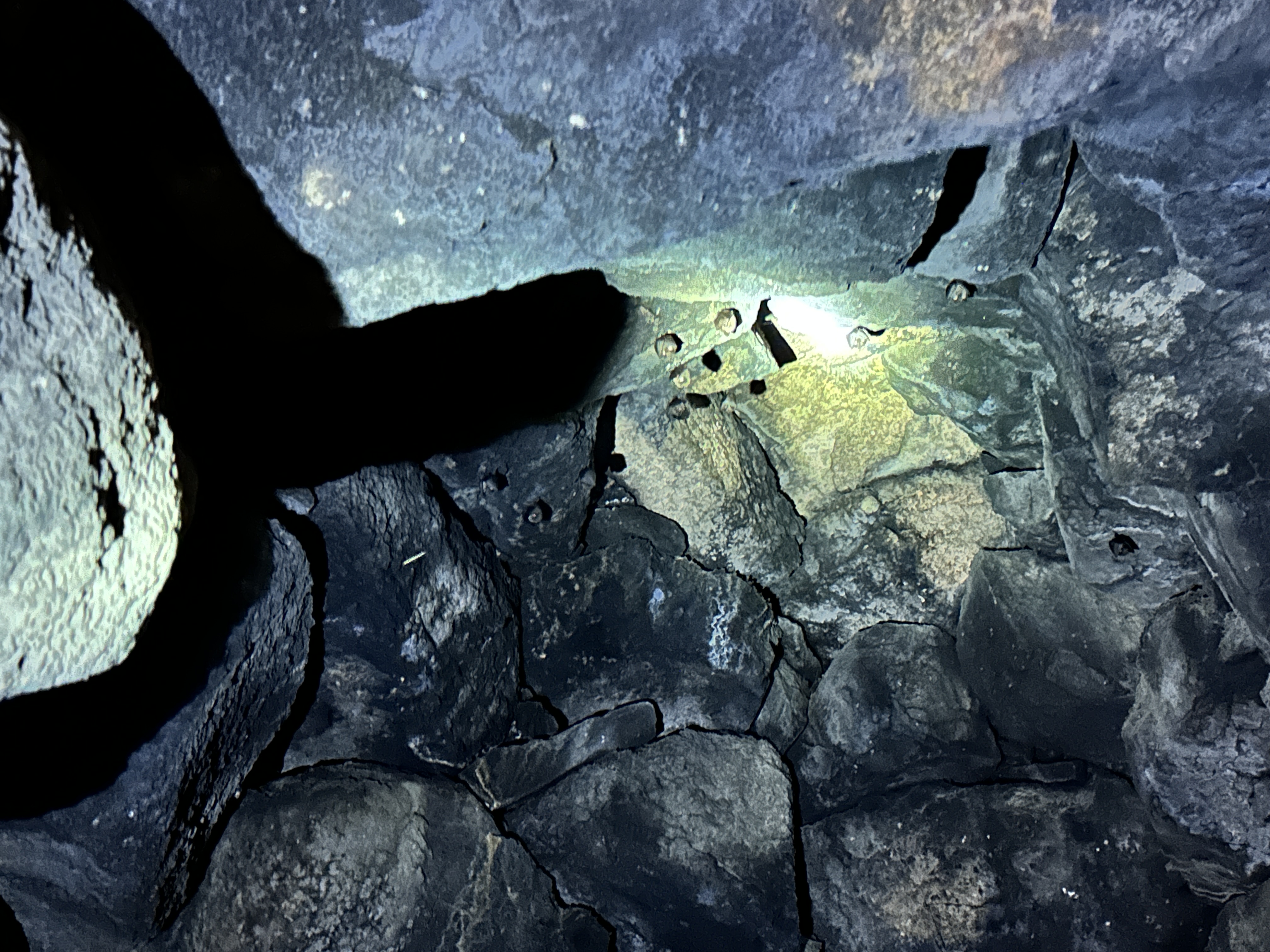
Nuraghe Majori – Complete with Bats!

Nuraghe Santu Antine

A view of Nuraghe Santu Antine from the exterior. It doesn’t look that impressive or large from the exterior; however we were surprised how large and extensive the interior was once we entered.

Nuraghe Santa Cristina

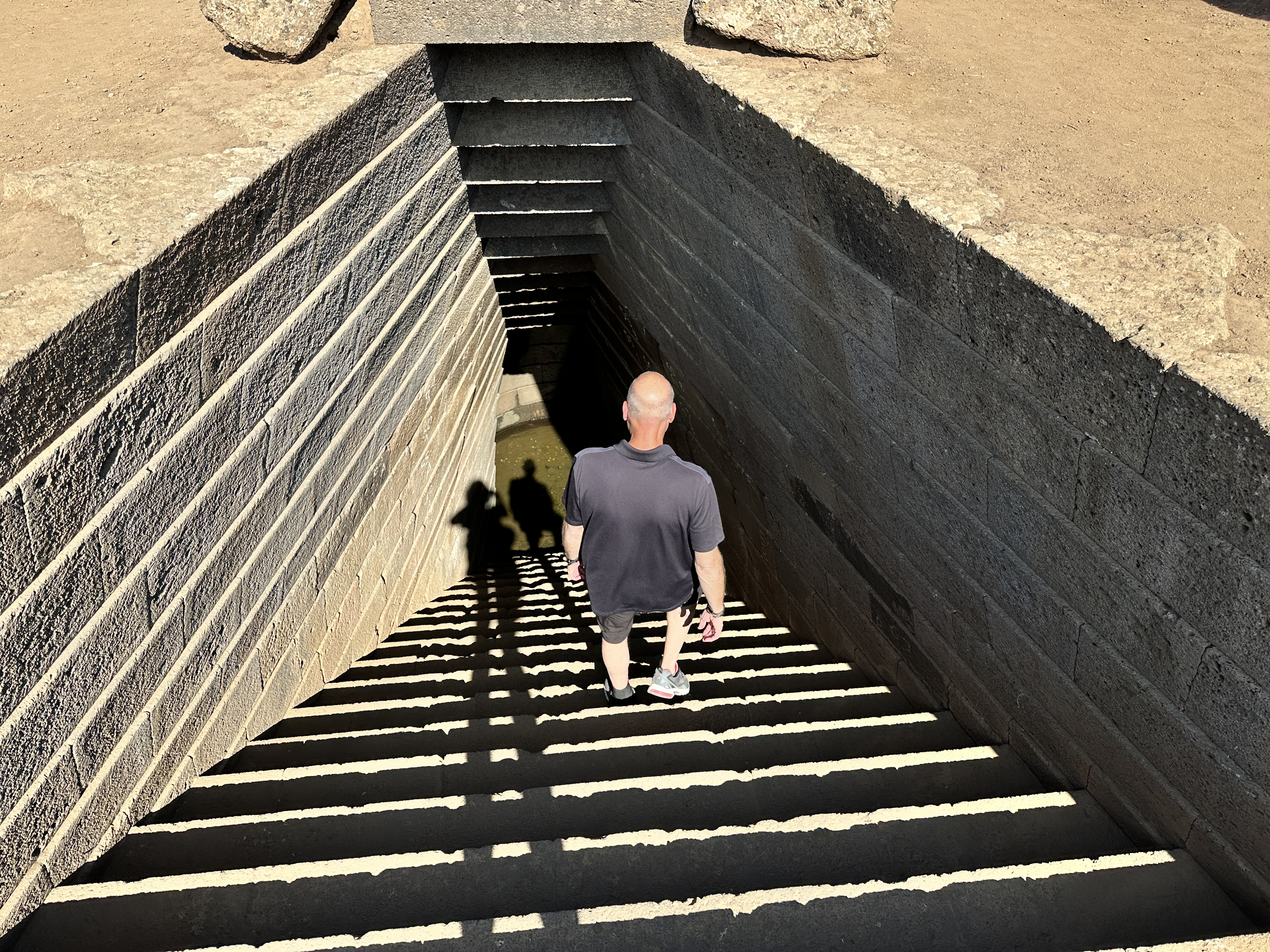
Santa Cristina may have been my favorite site, perhaps because there is so much to see here. There are Nuraghe ruins, including a fascinating ancient well, and medieval-era buildings also. It has been a site used for religious purposes for centuries.

Sacred Well

View from the bottom of the well stairway.

Nuraghe

Medieval Church

Su Nuraxi di Barumini

Su Nuraxi di Barumini is one of the largest, if not the largest Nuraghe site in Sardinia. It is a World Heritage Site, and when you purchase your ticket you must join a group with a guide to visit. Our tour guide was very kind and patient, he explained the features of the site in French and English, given the mix of our small group.

In addition to the glorious beaches of Sardinia, it is certainly worth your time to visit a few of the fascinating archeological sites. Be careful in the structures. Some of the stairway stones are very slick and trust me, it’s easy to slip. Also, watch your head, many of the passageways are short and narrow. The sites we visited were well sign-posted, had parking available and are well-maintained.

A Magical Three-Day Visit to the La Maddalena Archipelago of Sardinia

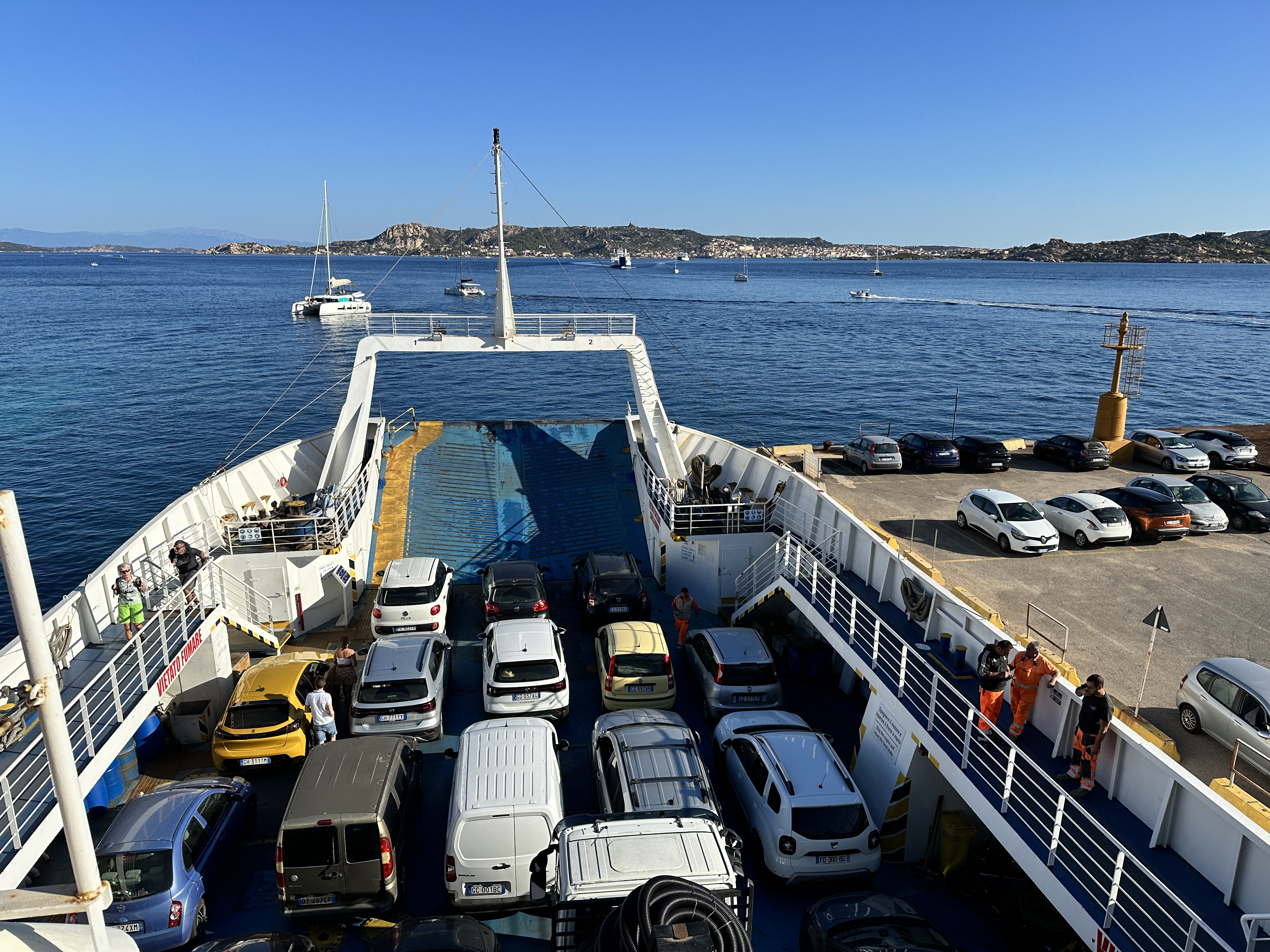
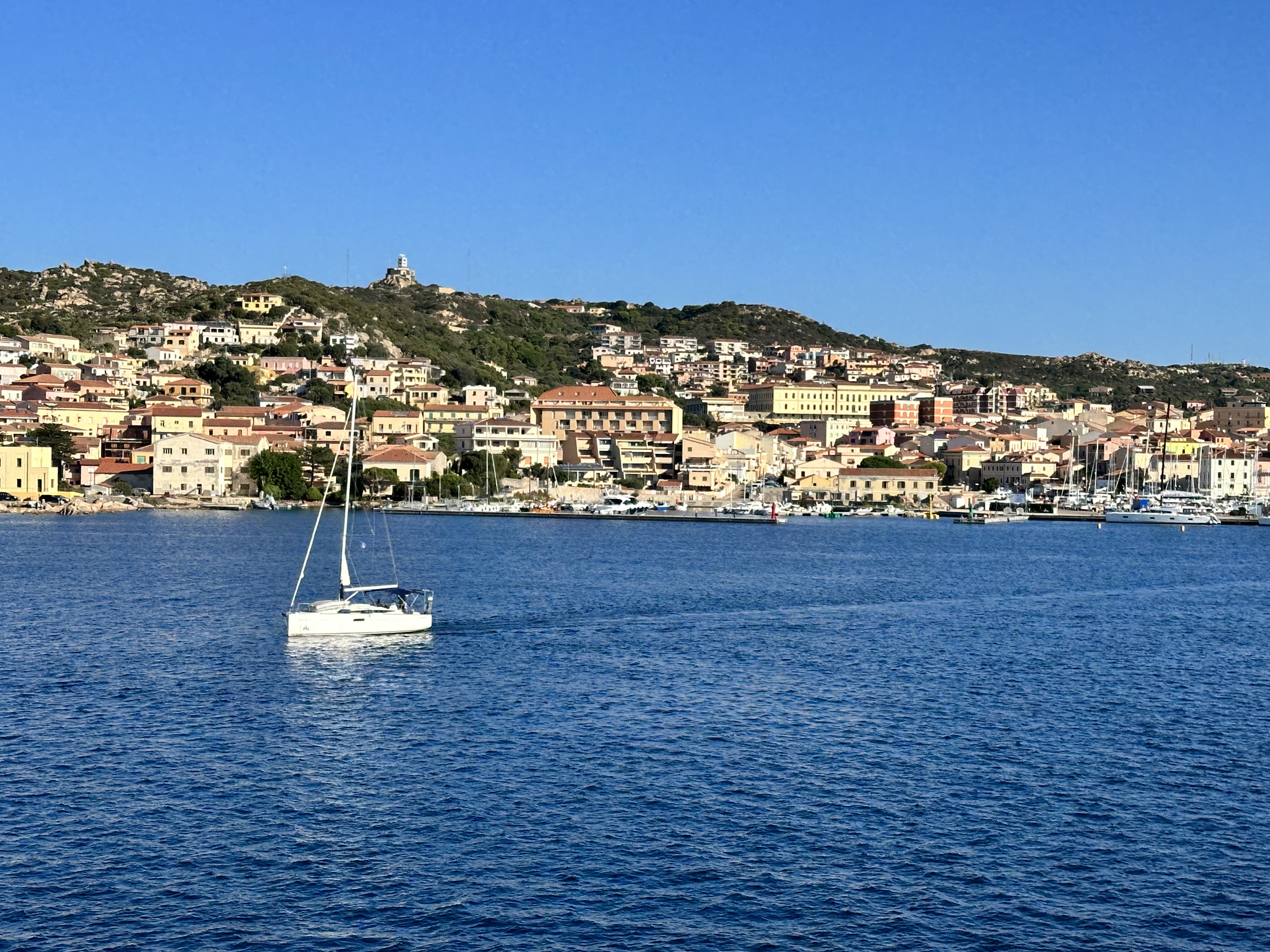
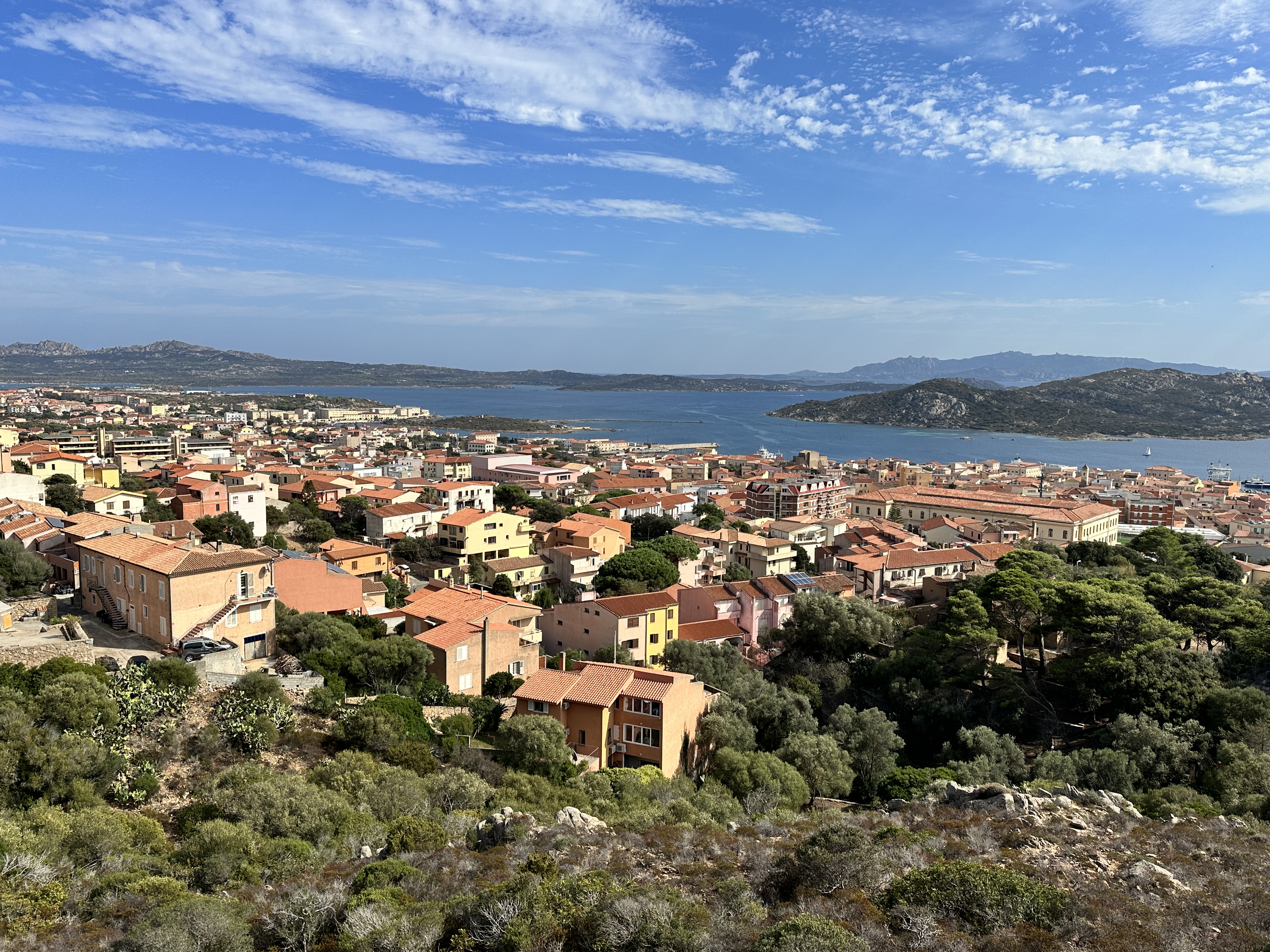
From our start in Olbia and Sardinia’s Costa Esmeralda, we traveled north a short distance and took (with our rental car) the 15-minute ferry ride from Palau over to La Maddalena Island and town, which is part of the La Maddalena Archipelago, located at the very north east edge of Sardinia, Italy. We spent 3 nights on La Maddalena, which gave us enough time to see La Maddalena Island, Caprera Island (reached by bridge from La Maddalena) and then a day-trip boat tour of some of the other islands in the Archipelago. I’ll share a bit about each day below.

La Maddalena

We caught a morning ferry to La Maddalena from Palau, no reservations were needed in October and the ferries run continuously all day. A round trip ticket for car and passengers was about 40 Euro.

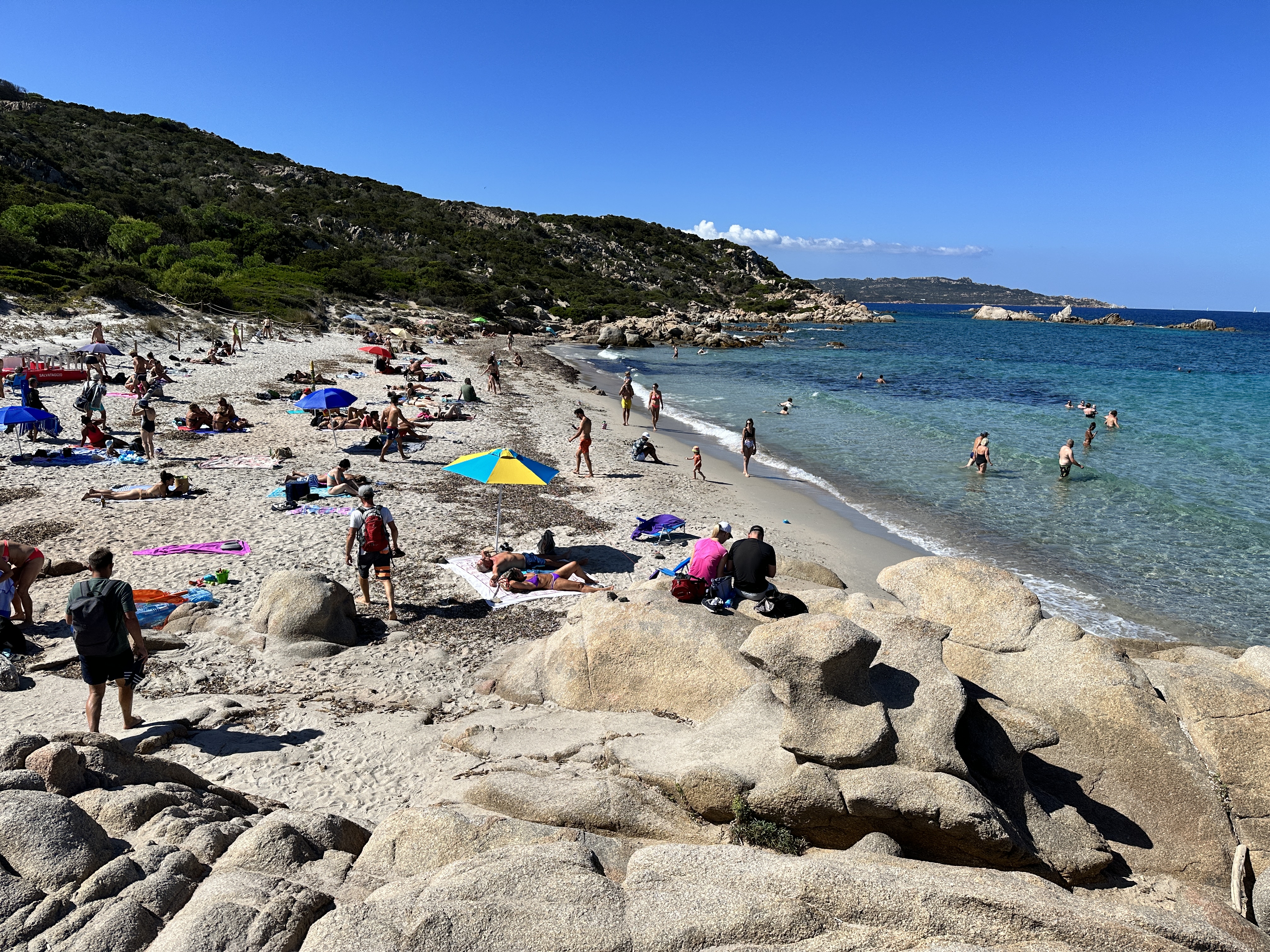
Upon arrival. we immediately headed for Cala Francese beach, not far from the main town and then explored a few other beaches around the island before checking into our hotel later in the afternoon. La Maddalena is not big, you could probably drive around the island in 30 minutes or less.

Cala Lunga, at the northern tip of La Maddalena.

The town was fun to explore, and many boat tours are offered from the harbor.

Caprera Island

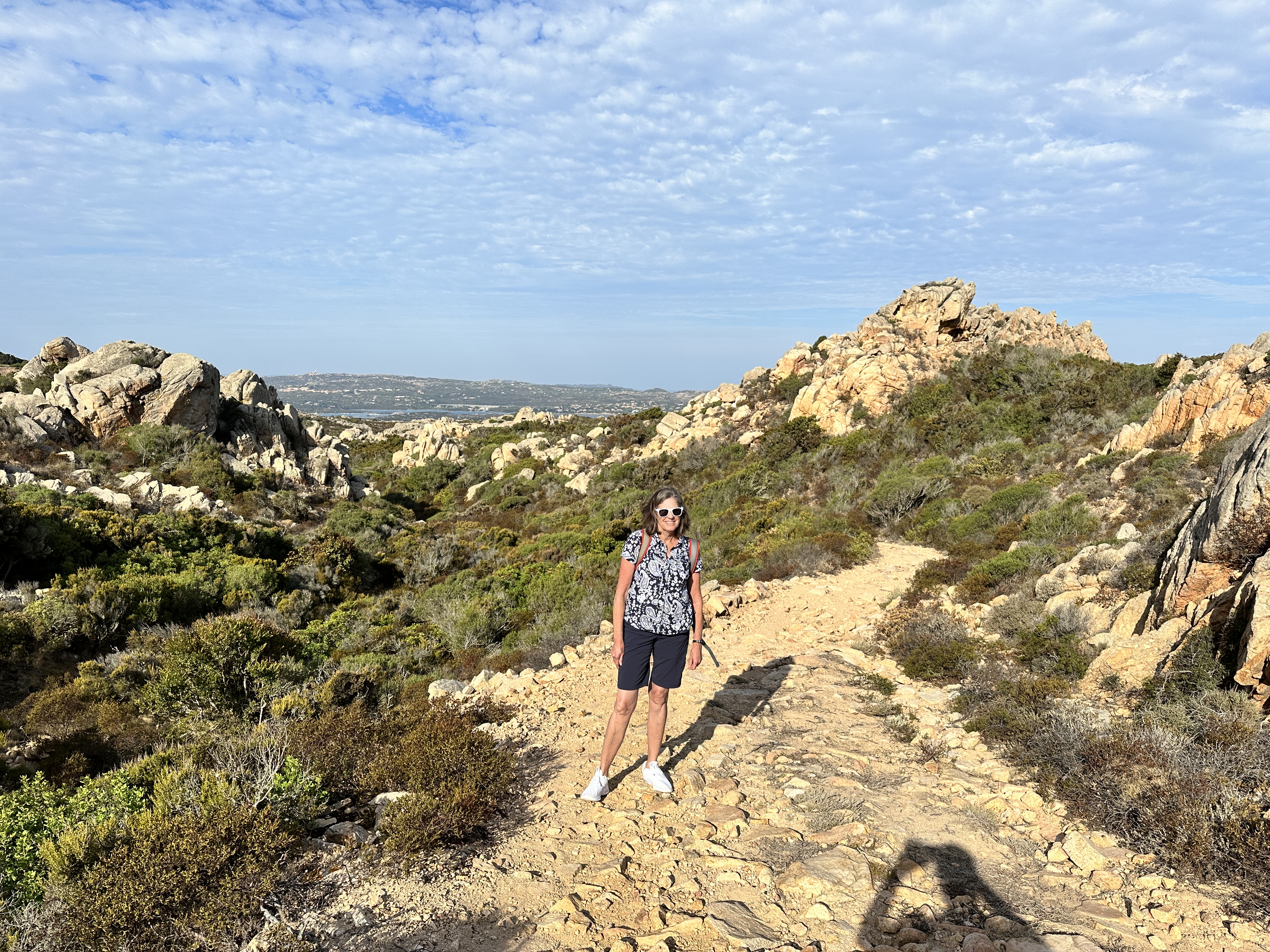
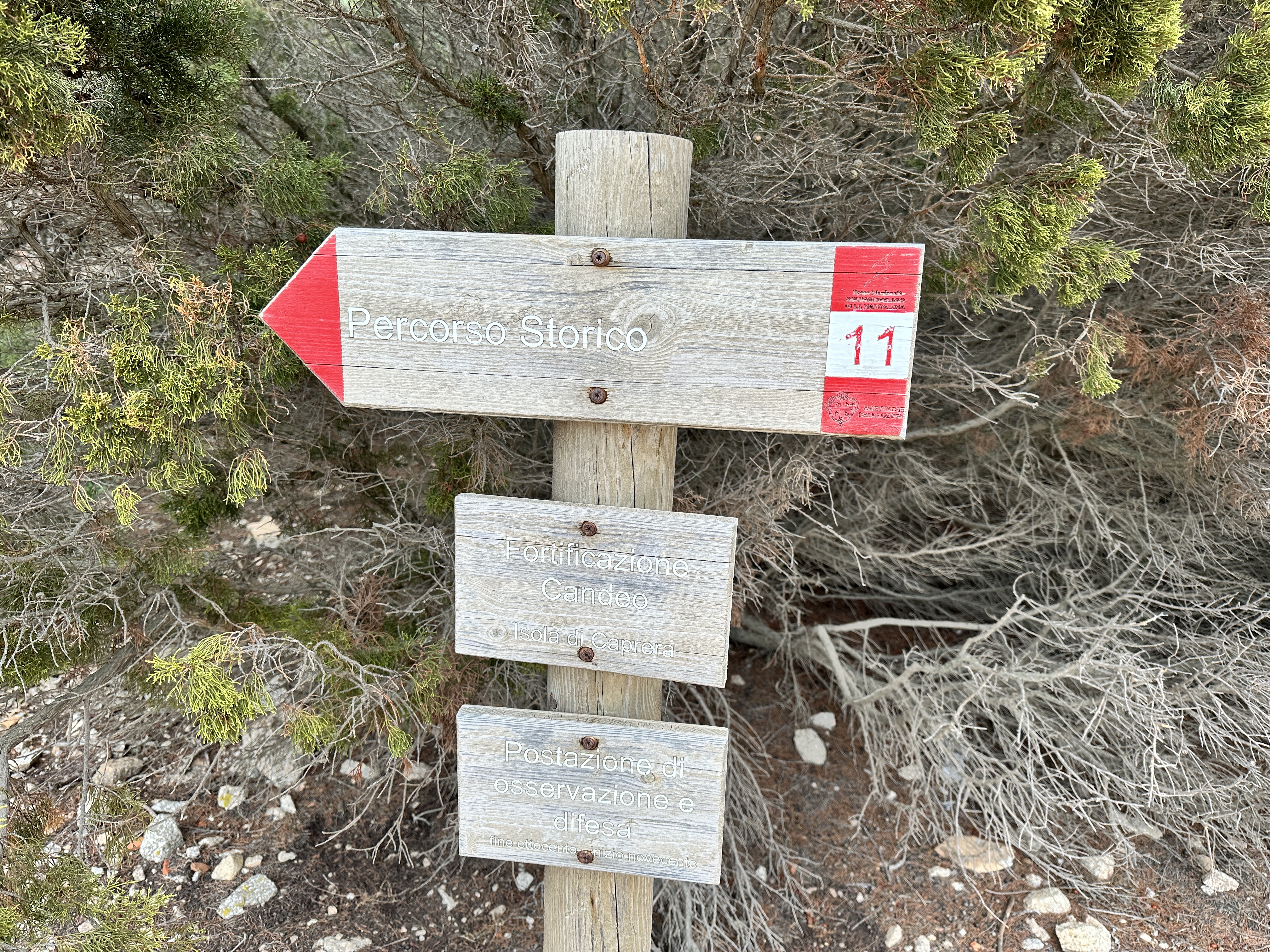
After a wonderful day on La Maddalena, we decided to spend our second day on Caprera, an island connected to La Maddalena via a bridge. Caprera is far less populated, and largely National Park land. There are numerous beaches and hiking trails and to start our day we decided to do a hike on the north end of the island, to the Batteria de Candeo, a really interesting site.

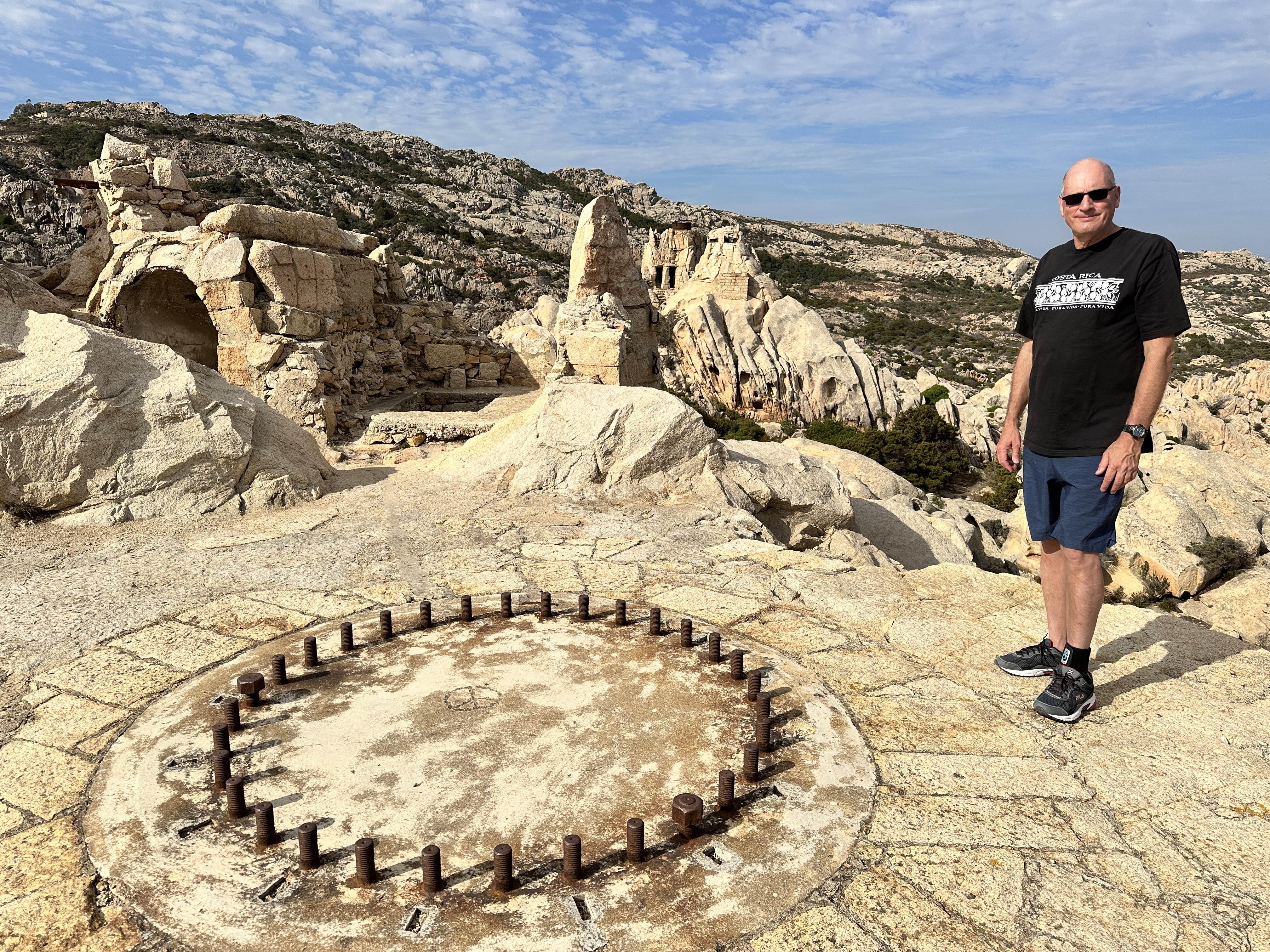
At the north end of Caprera is the military site of Batteria de Candeo, an anti-aircraft and ship emplacement built between World War I and World Ward II. It was built from the natural rock in the area and was well camouflaged – even today it looks like part of the natural landscape except for the doorways.

There are some beaches on the south end of the island also, such as Spiaggia Due Mari, for example. We visited the south end and spent a while lounging on Spiaggia Due Mari beach after our hike, but unfortunately I did not capture a photo!

Note: I had wanted to visit Cala Coticcio beach on Caprera, one of the most famous beaches in Sardinia. The only way to visit is with a guide (they limit access to this beach to preserve its natural state). I reserved a date with the guide, but I also needed a Park pass, and for some reason this was difficult to do online, so I gave up and cancelled our visit to this particular beach. It is a fairly long hike to Cala Coticcio and if we had done that hike, we would not have had time to do the hiking discussed above. I think it’s just a trade off on how you want to spend your time. As shown above, there are other stunning beaches and sights that don’t have the limitations of Cala Coticcio.

Day Trip Boat Tour

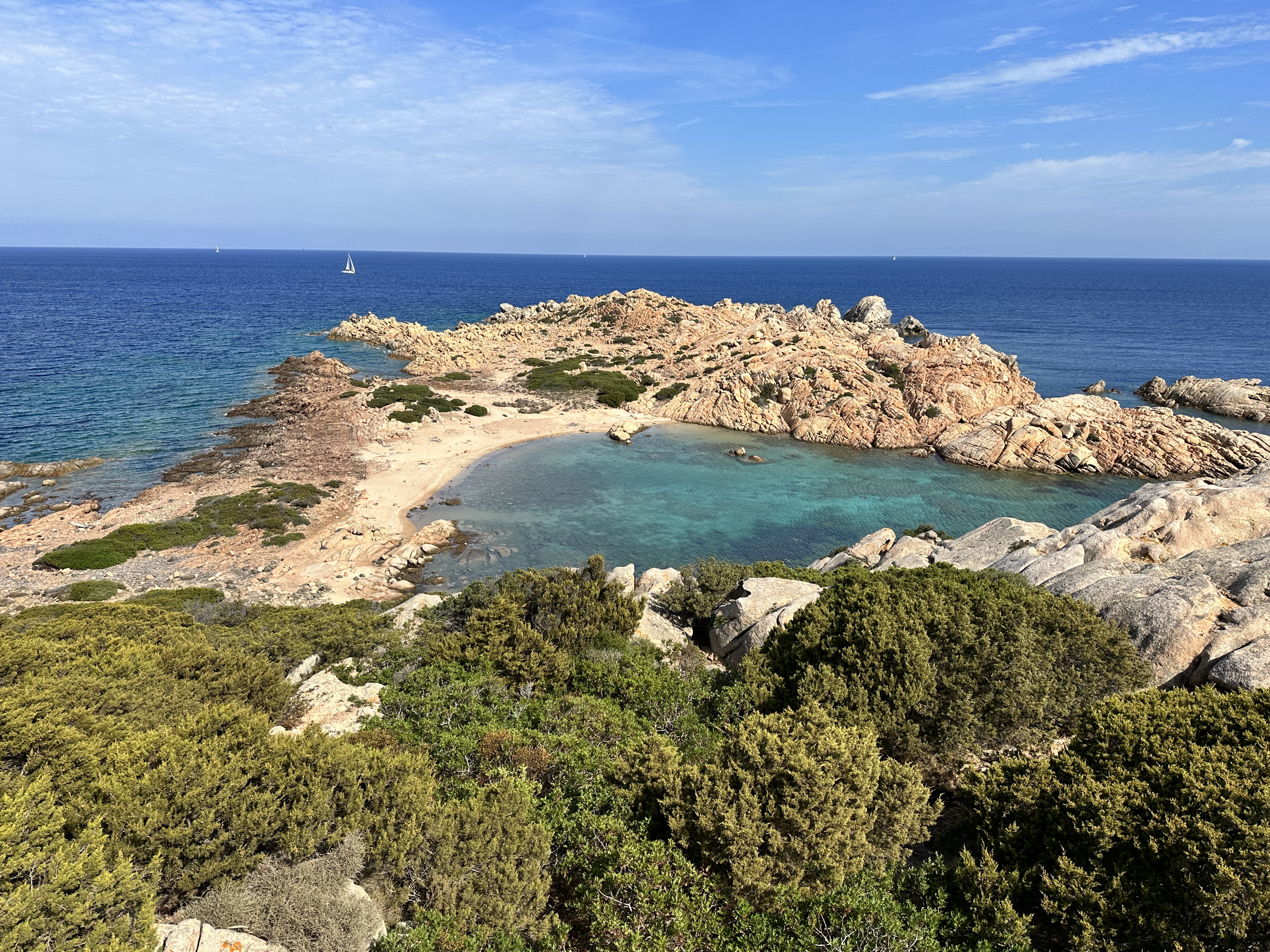
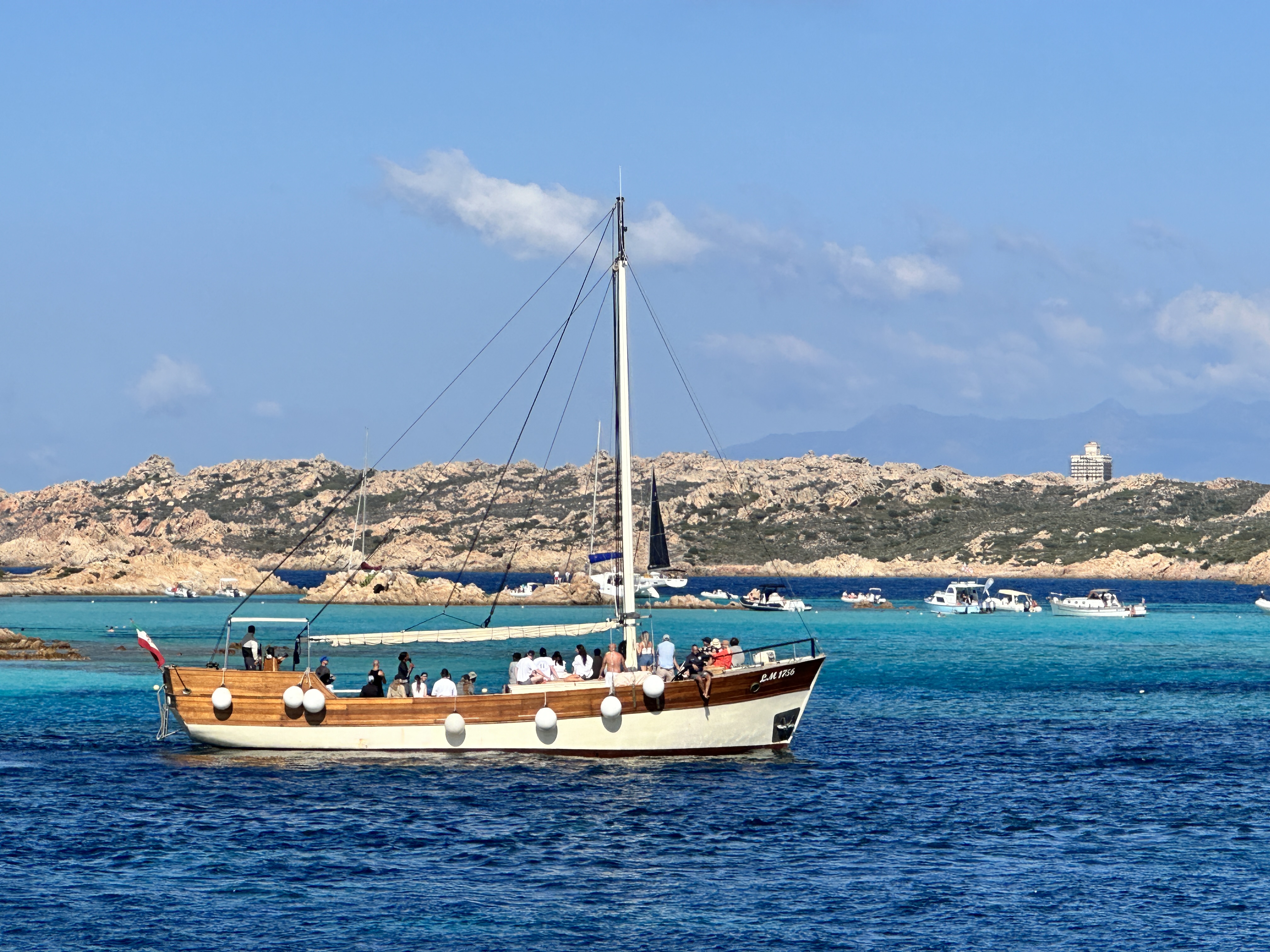
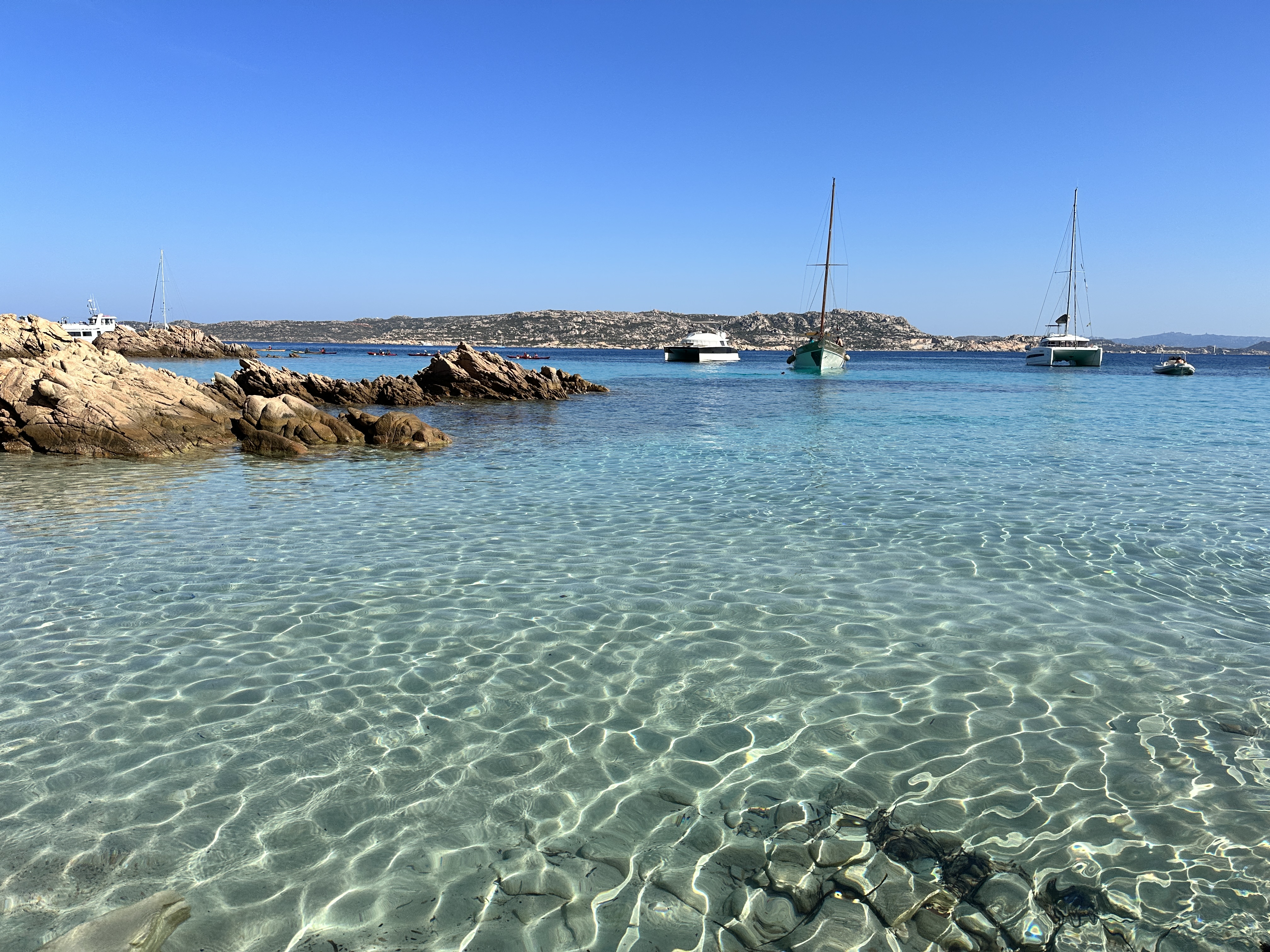
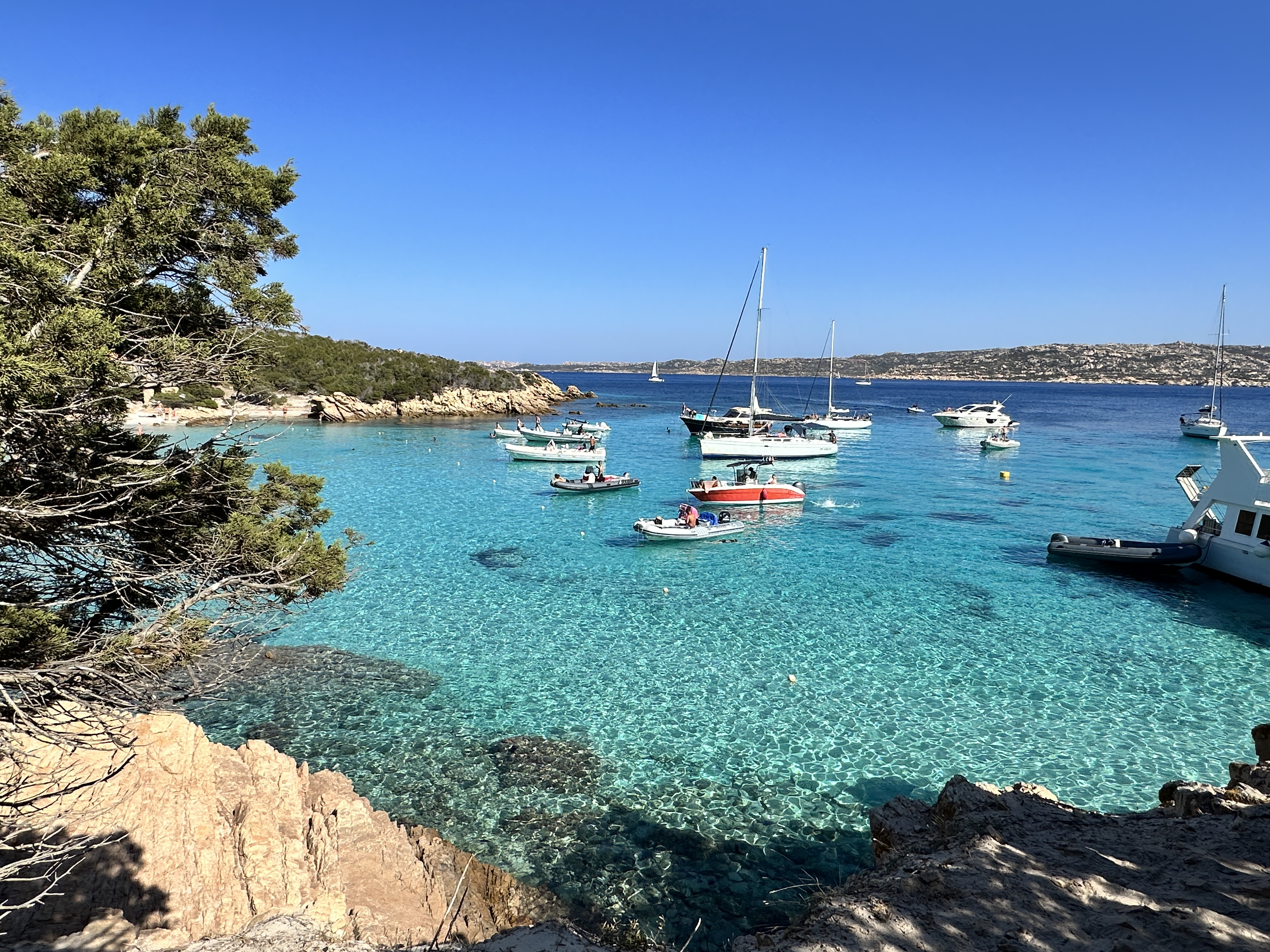
On our final day in La Maddalena, we decided to do a 6-hour boat tour of some other islands in the La Maddalena Archipelago and we’re glad we did. Below are photos from our various stops during the boat tour. It was a perfect day.

As with every other region of Sardinia, it would be easy to spend a week or more in these islands. The water was super clear, and the beaches were beautiful. If you go to Sardinia, don’t miss La Maddalena!