About one hour south of Alghero by car (45 km or 28 miles) is the town of Bosa, home to Sardinia’s only navigable river (the Temo River). We visited Bosa as a day trip from Alghero and we made it part of an interesting loop drive – visiting Basilica della Santissima Trinità di Saccargia on the way (see below) and Nuraghe Santu Antine. It’s possible to visit all three sights in one day if you get going early from Alghero. (For a general map of the regions we visited in Sardinia, click here).
Bosa is an ancient town, it was established by the Phoenicians and continued to grow under the Romans. It’s easy to see why, Bosa is an ideal port location – close to the coast and at the mouth of the Temo River.
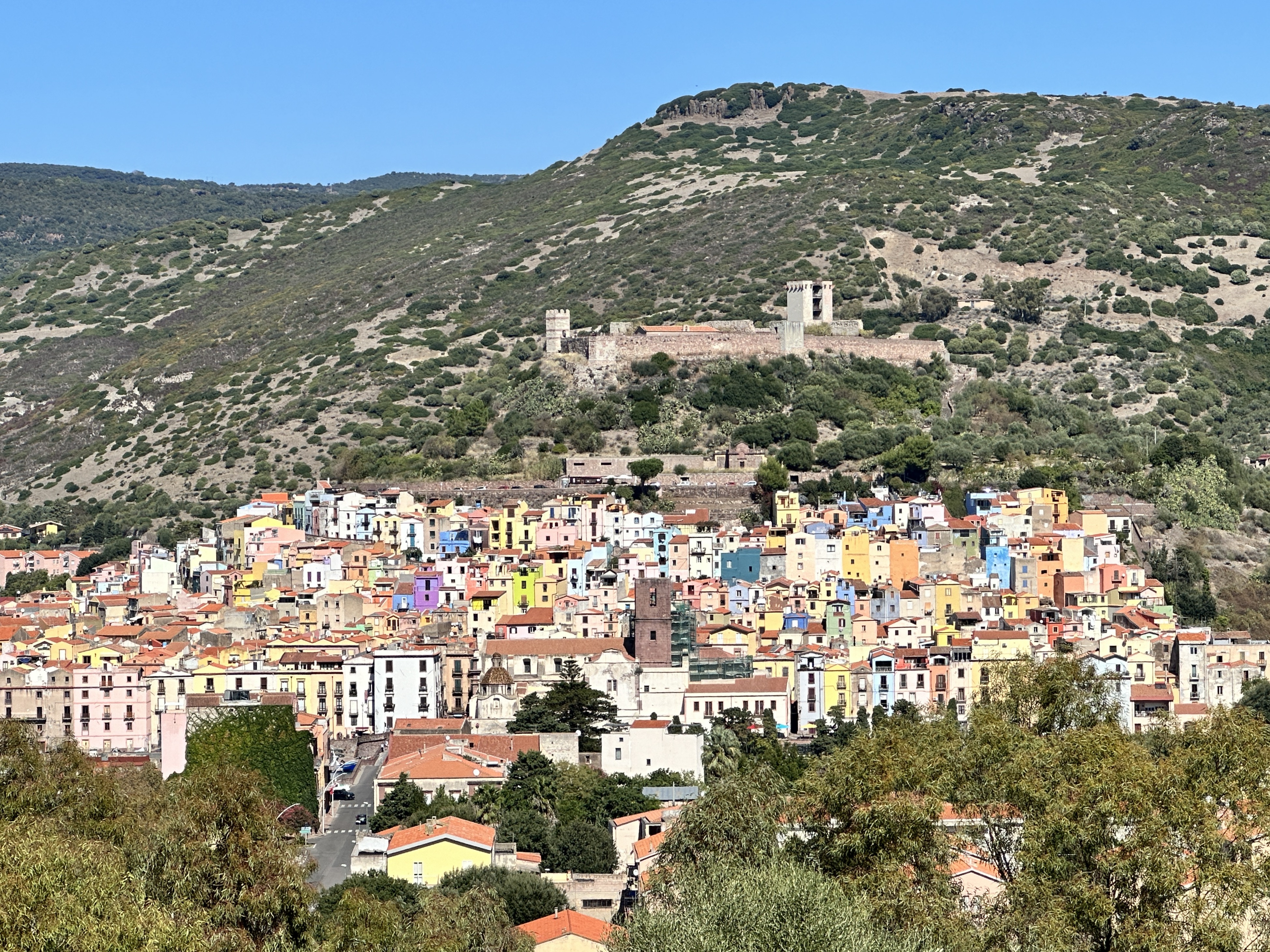
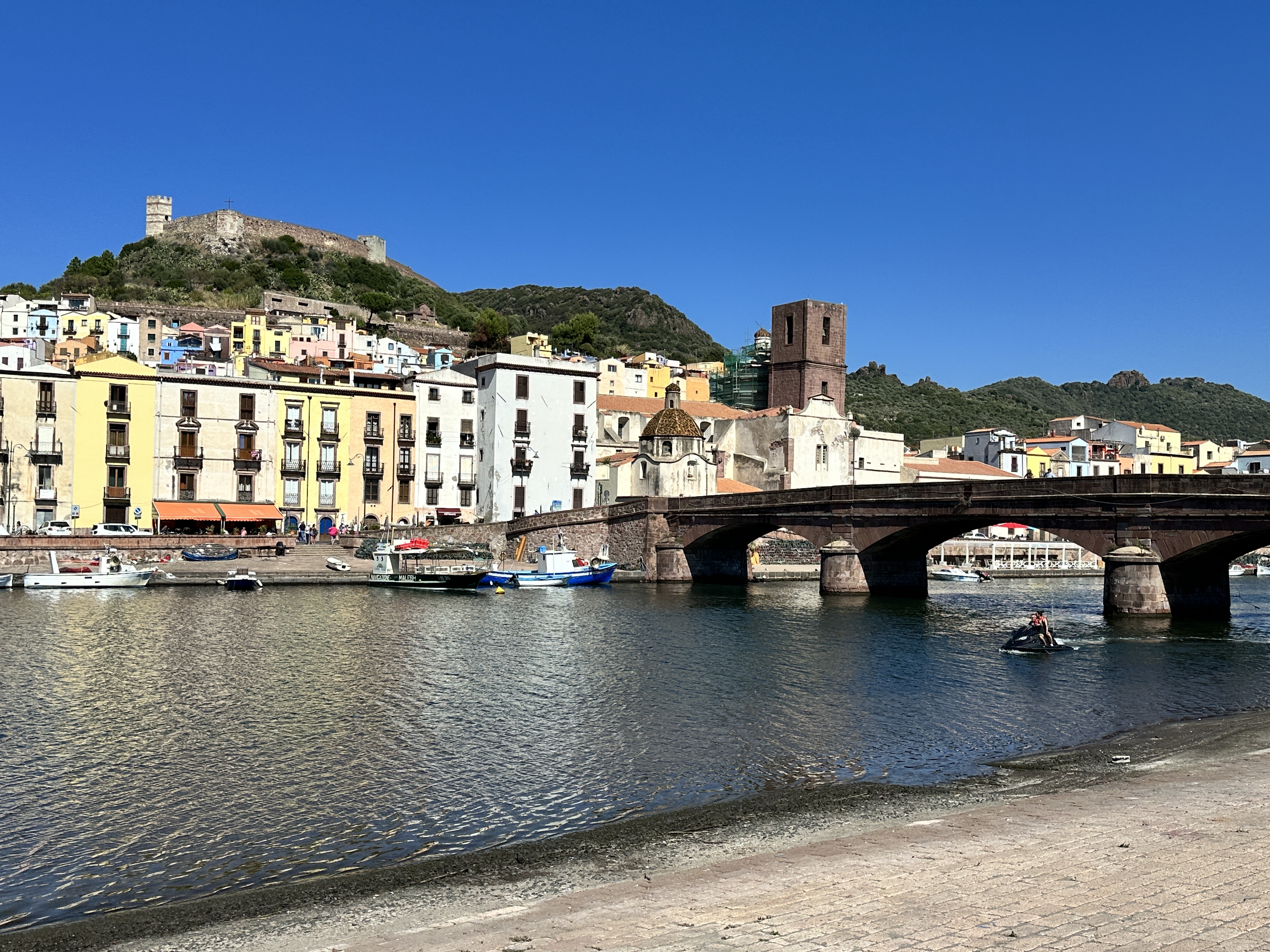
View of Bosa and its 13th century castle as seen from our drive into town.
Malaspina Castle
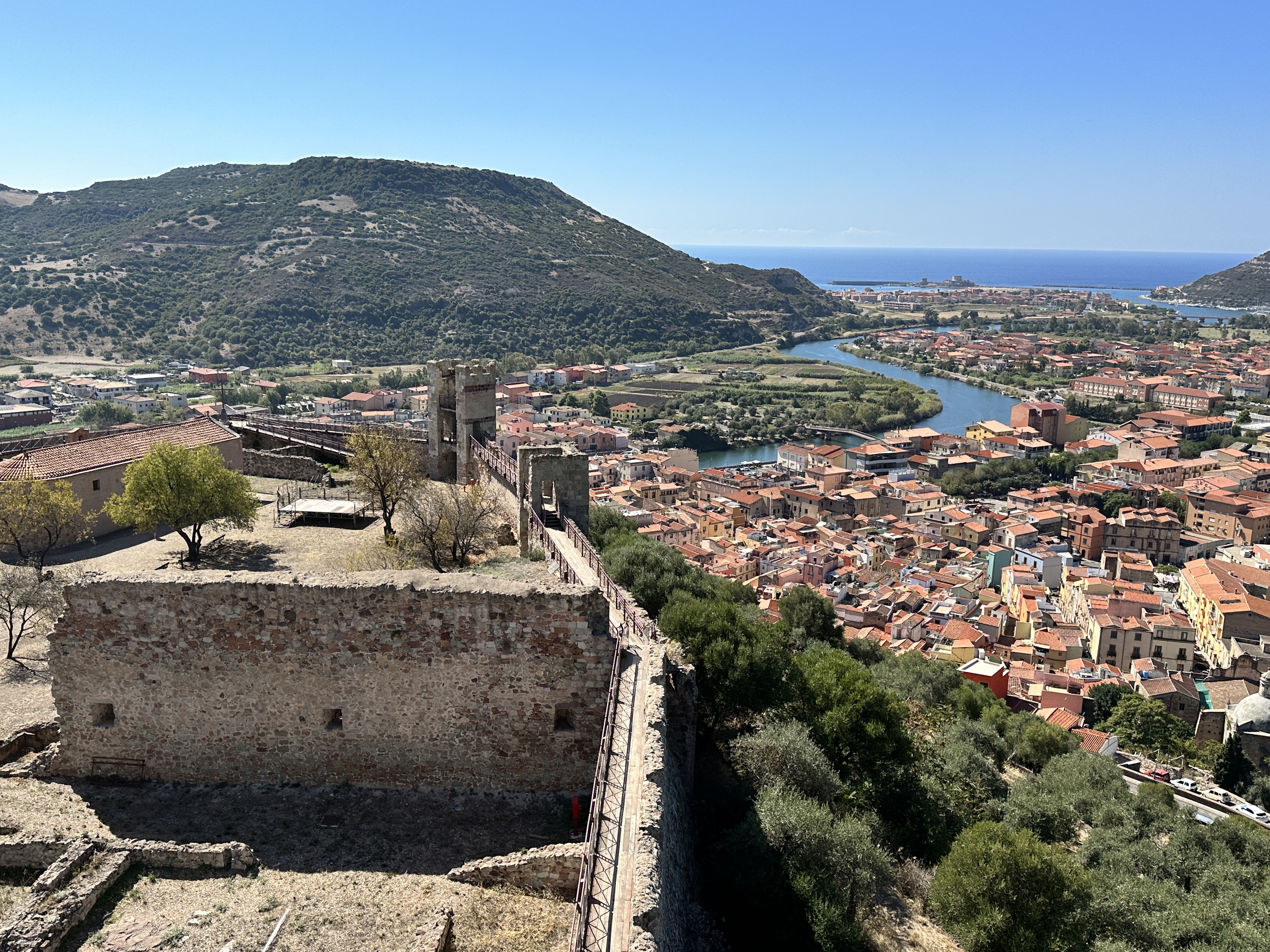
One of the main sights in Bosa is Malaspina Castle. You can drive up to the castle and park just below it. Even then, you have a steep walk up into the Castle. There is not much left of the Castle other than the walls (which you can walk), a few towers (which you can climb) and the 14th century Chiesa di Nostra Signora di Regnos Altos, which has some lovely frescoes.
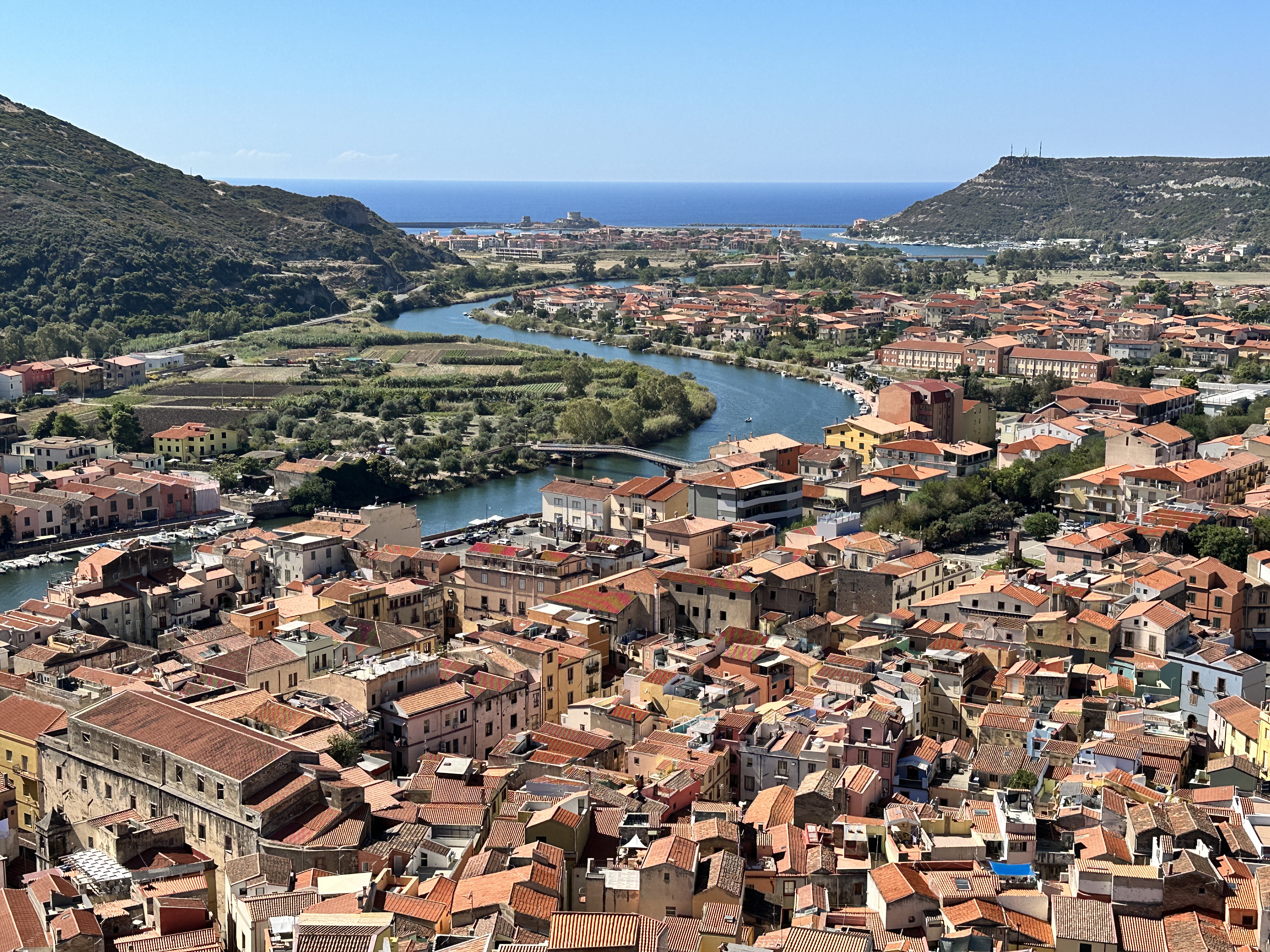
The view of Bosa from Malaspina Castle, built in the 12th and 13th centuries by a Tuscan noble family to protect Bosa from pirate raids.
14th century frescoes of Saints in the Chiesa di Nostra Signora di Regnos Altos, within the walls of Malaspina Castle.
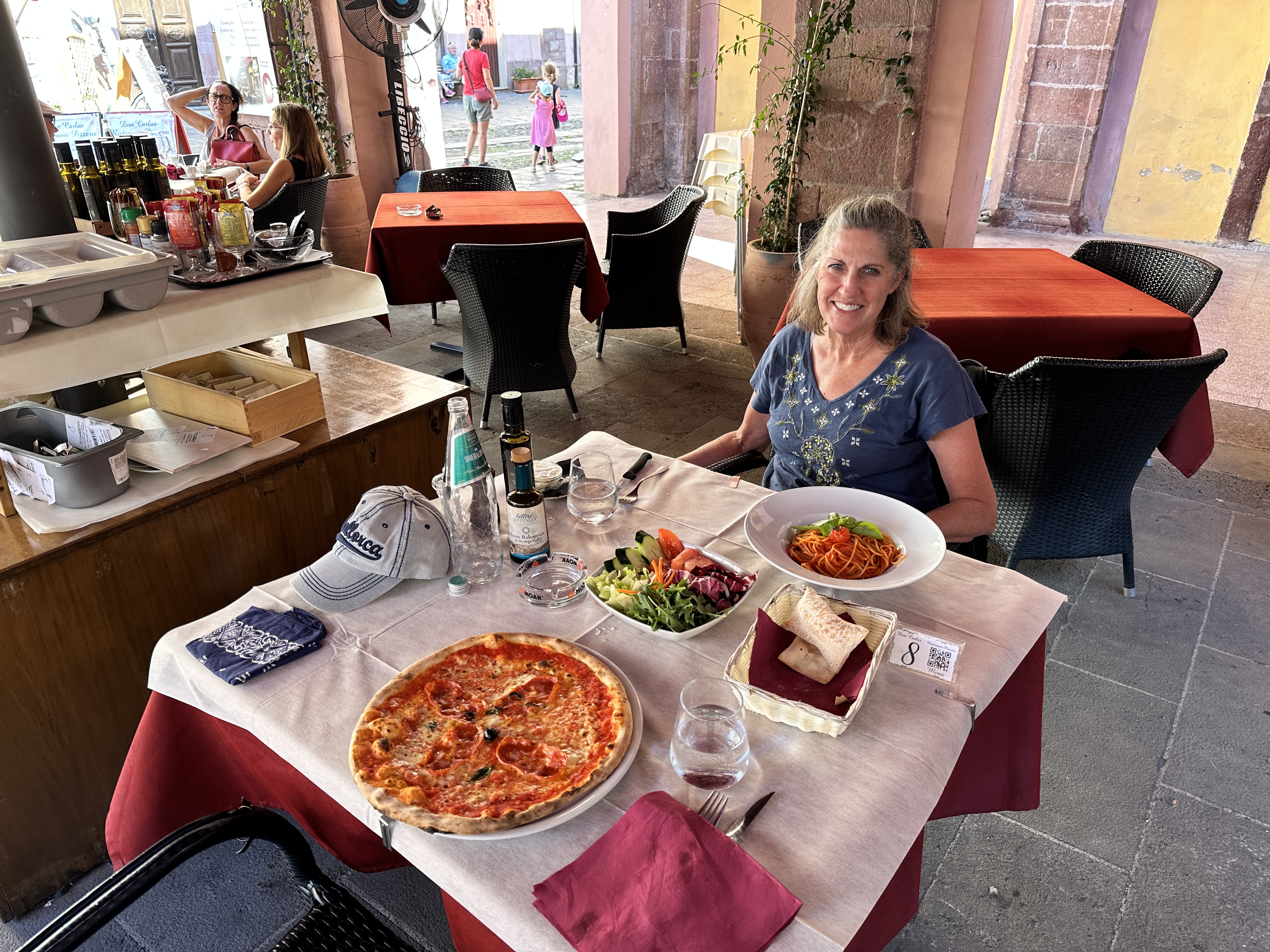
The old town of Bosa is a delight to wander, and as is possible in every Italian town, we enjoyed some great food!
A postcard view of Bosa with the Malaspina Castle in the distance, the old town across the river, and Ponte Vecchio spanning the Temo River. We parked for free near this spot, just a short walk from the old town.
St. Peter’s Church
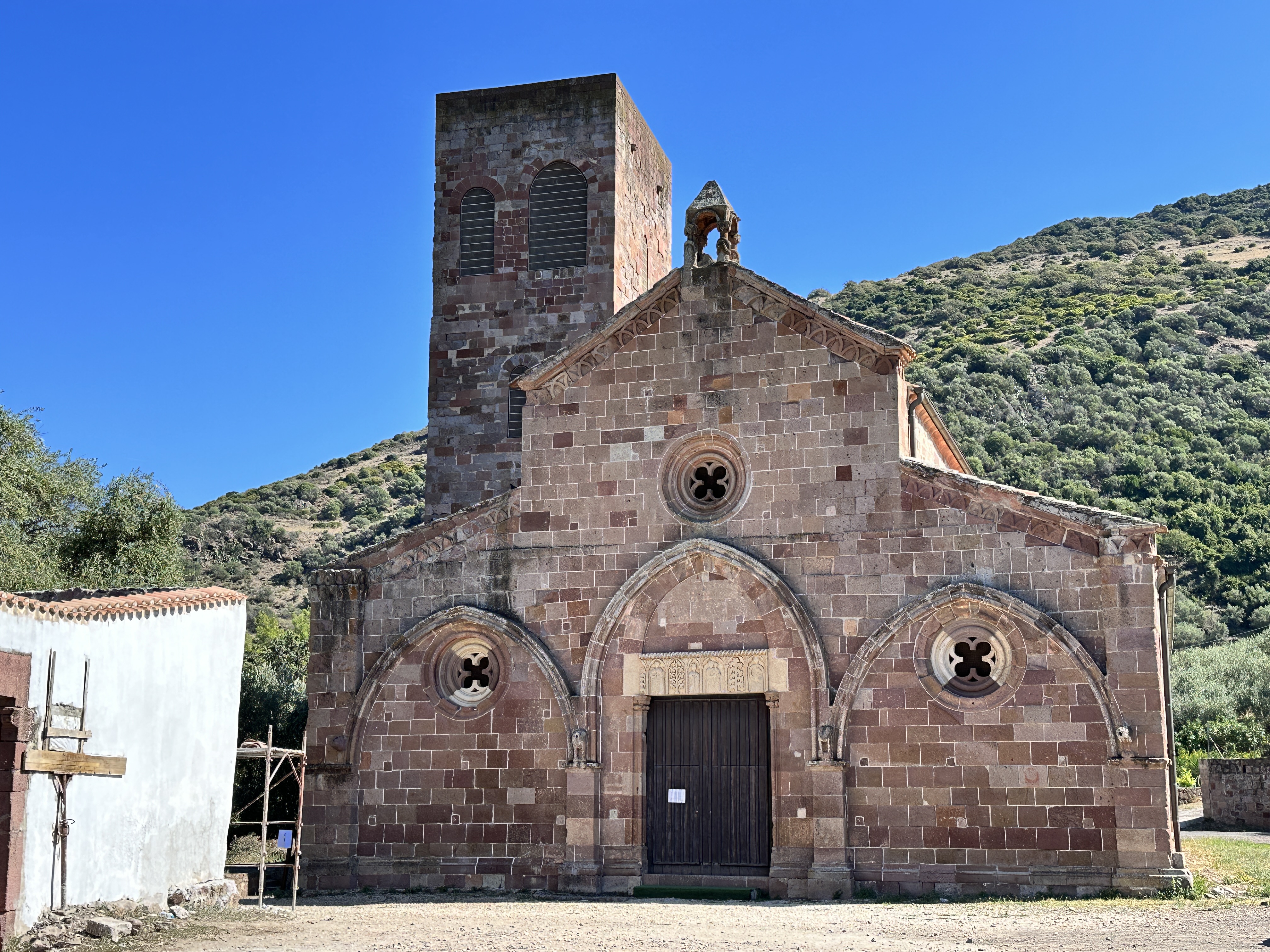
Just outside Bosa along the south shore of the Temo River is St. Peter’s Church, which dates from the second half of the 11th century. The Church can be visited, but was closed at the time of our visit. There is information posted about the Church near the entrance.
Views of St. Peter’s Church outside Bosa. The image on the right is a snapshot of a signpost at the Church, to at least provide a glimpse of the interior.
On the Drive to Bosa: Basilica della Santissima Trinità di Saccargia
The Church of the Holy Trinity Saccargia is about a 40-minute drive (50 km or 31 miles) from Alghero. It is well worth the “detour” to visit this fascinating 12th century Pisan-style basilica on the way to Bosa. The abbey was built on the site of a pre-existing monastery, of which there are some scant ruins.
Views of the exterior of The Church of the Holy Trinity Saccargia, constructed of alternating layers of white limestone and dark volcanic rock.Views of The Church of the Holy Trinity Saccargia’s nave. The frescoes are from the second half of the 12th century – amazingly well-preserved.Some interesting figures in the church – left – a face in the wall of the nave and right – cows carved into a pillar on the portico. Some believe the name of the Church comes from the Sardinian word for “cow with the spotted hide”, but this is not likely. The land surrounding the church is rural and probably has been perfect grazing pasture for centuries.
About 20 minutes south of The Church of the Holy Trinity Saccargia is the ancient archeological site of Nuraghe Santu Antine, also a very worthwhile stop before turning southwest on your drive towards Bosa. Since I covered our visits to Sardinia’s ancient Nuraghe in another post, I won’t comment further on it here.
After our visit to Bosa, we drove north along the west coast of Sardinia back to Alghero. It was a scenic, beautiful drive and the perfect end to another perfect day in Sardinia.
The island of Sardinia, Italy has so many lovely beaches it’s difficult to narrow down the list of “best beaches” but one that would have to be near the top is La Pelosa, near Stintino on the north west coast of Sardinia. This beach is so popular that you need to make reservations to visit it during the busy season (May – October). The reservations are not expensive nor difficult. To my knowledge, this is the only beach in Sardinia that requires a reservation. When you see it, you will understand why it is so popular.
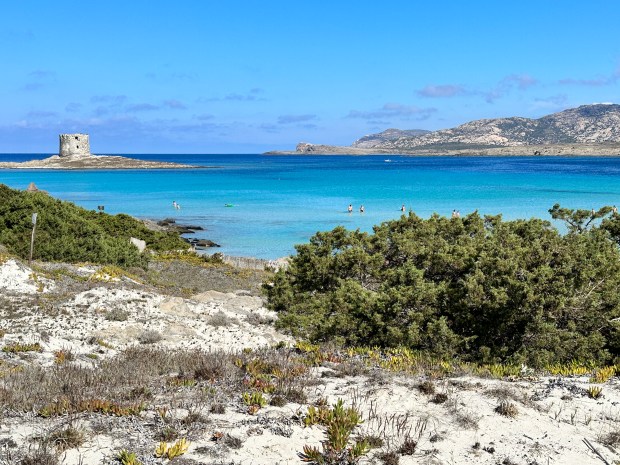
La Pelosa Beach, with its signature 16th century Aragonese Tower overlooking this beautiful bay.
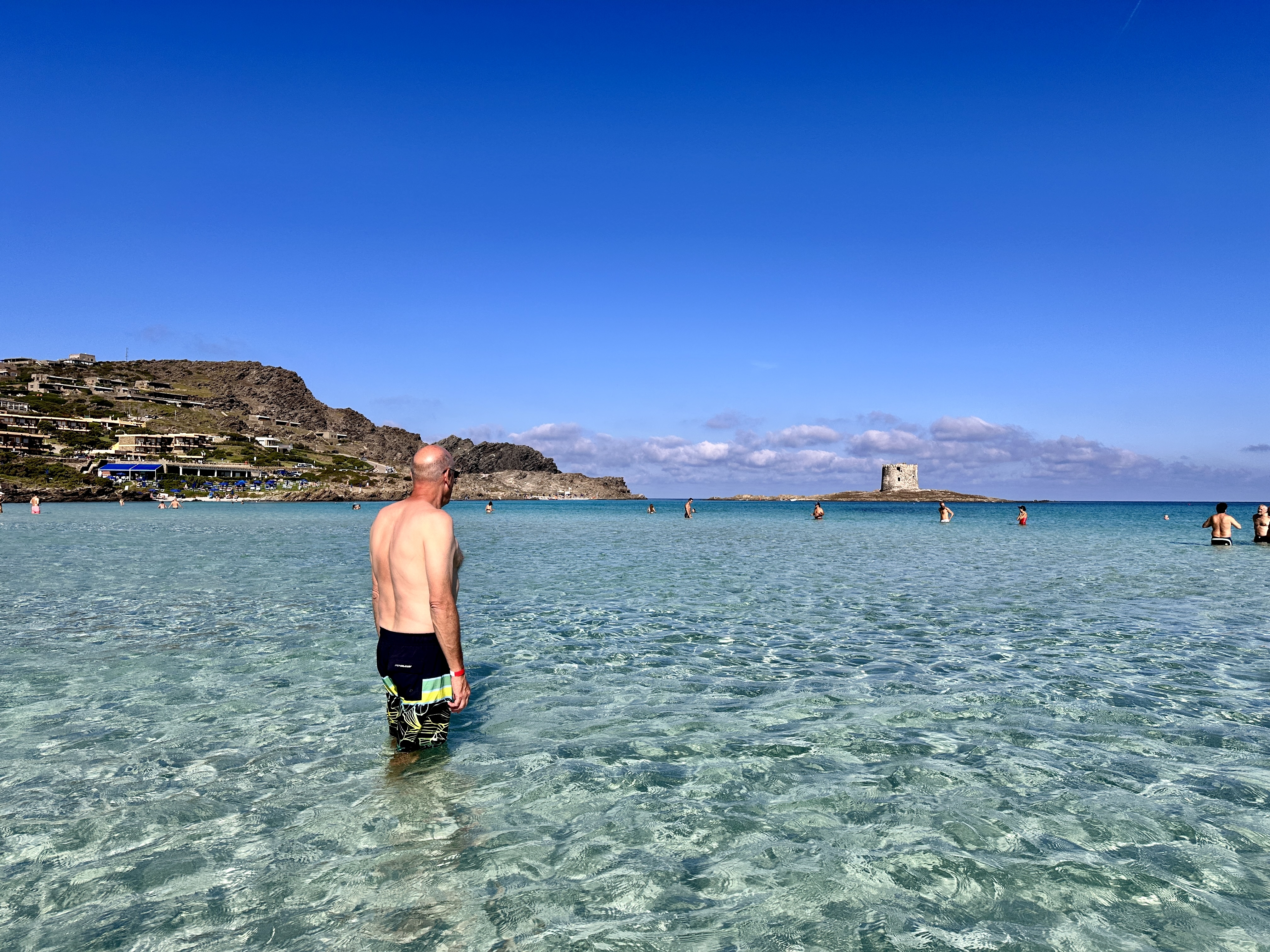
Other views of La Pelosa Beach, Sardinia.The water is calm and very shallow at La Pelosa, you can walk out a long way and the water may still not be up to your waist, making this a perfect beach for young children.
One of the boardwalks leading down to La Pelosa Beach.
There is paid parking along the street facing the beach – be sure to pay – you don’t want to get back to your parking spot after a lovely day at the beach and find your vehicle has been towed away! I recommend getting here early in the morning or later in the afternoon, not only will the beach be a little less busy, but convenient parking will be more plentiful too. We visited in early October, after an overnight stop in Castelsardo. The water was still warm and the beach was fairly busy, but it did not feel overcrowded at all. To check in at the beach, there is a kiosk where you get a wristband after showing your reservations on your phone or a hardcopy. Be sure to bring towel mats as well, to avoid taking home the precious sand – Sardinia is focused on keeping their beautiful sand where it belongs – on the beach.
Alghero
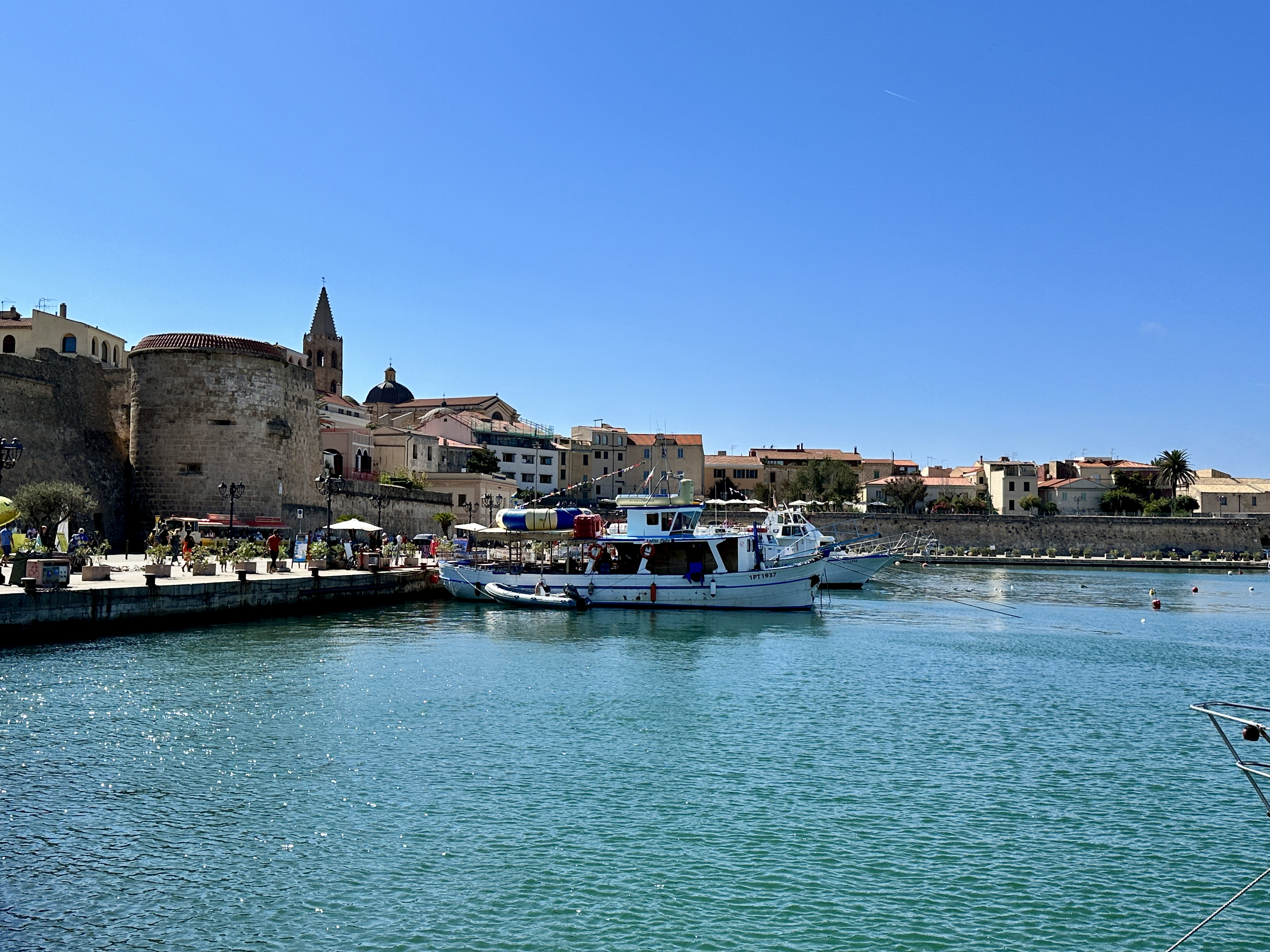
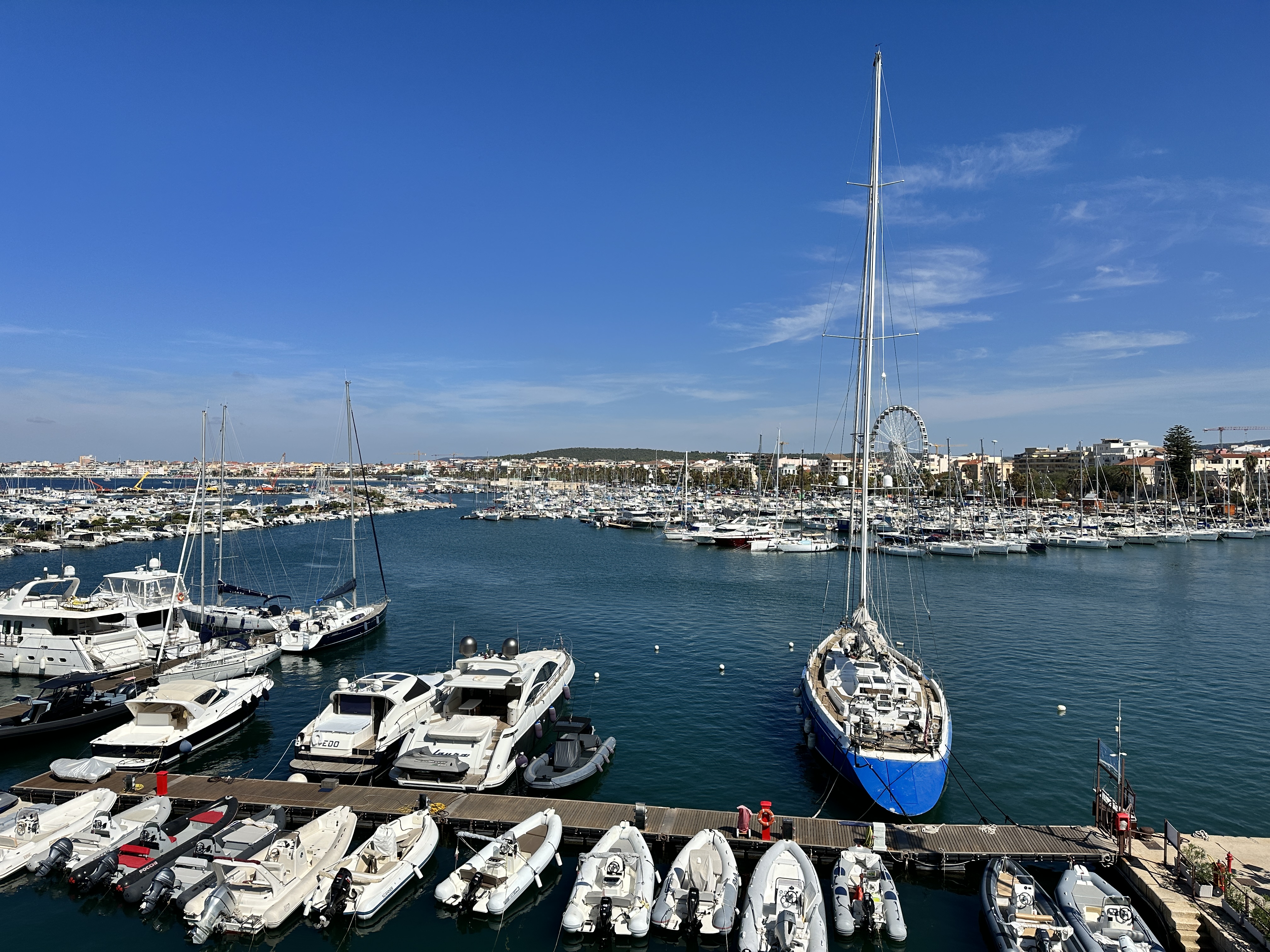
Less than an hour south of La Pelosa Beach is Alghero. Alghero was probably my favorite town in Sardinia. The combination of its magnificent setting and harbor, a beautiful old town with medieval towers and walls, and lively evening scene made this a perfect spot to stay for a few nights. We rented a lovely apartment that was just a ten minute walk from the old town.
A view of Alghero’s Old Town from the Harbor.
Views of Alghero’s Harbor from the city walls.
Alghero’s lively Old Town.
A great view of Alghero’s Old Town walls and towers.
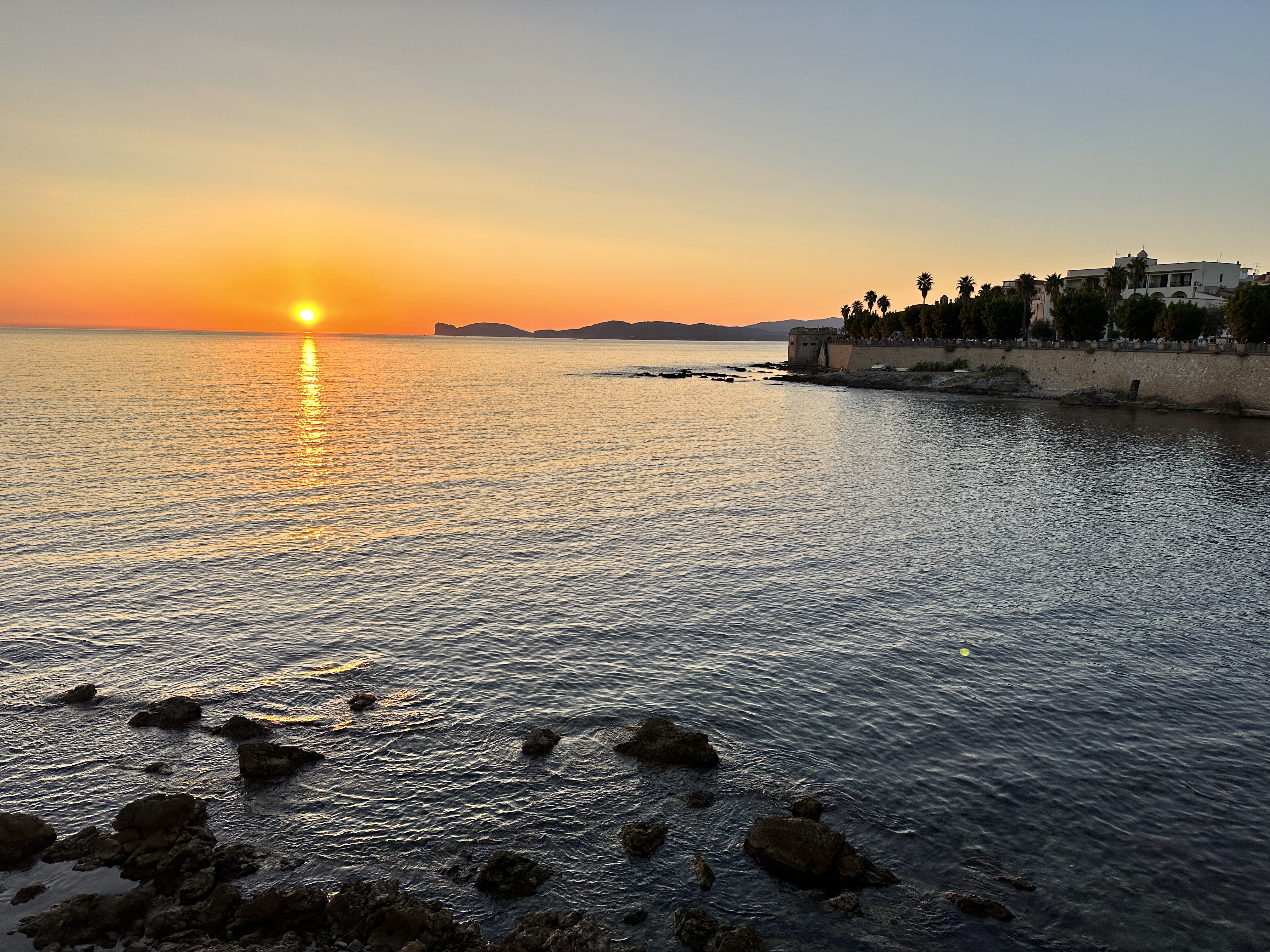
Alghero’s city walls are a perfect place to watch the sunset after another glorious day on this wonderful island.
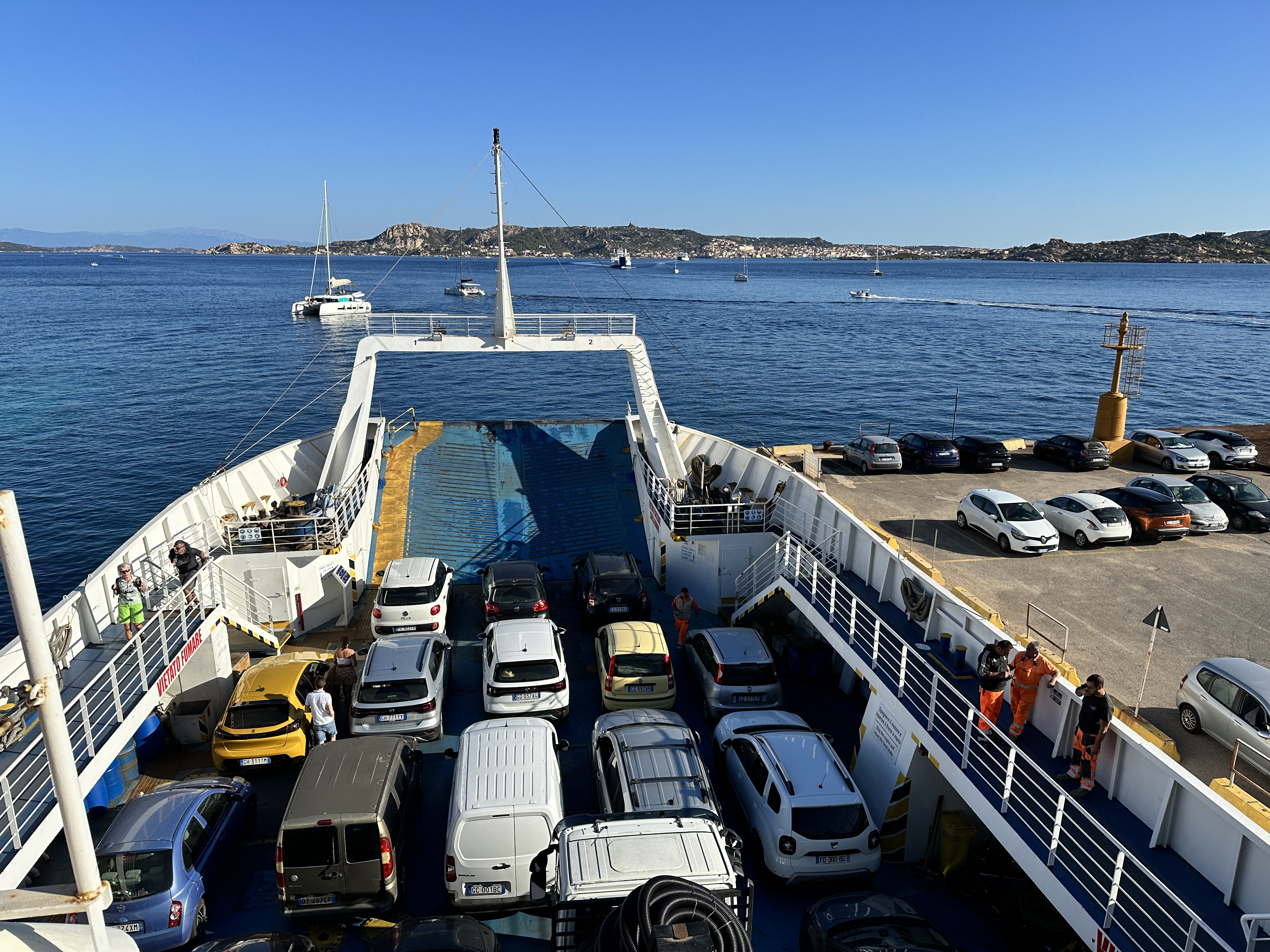
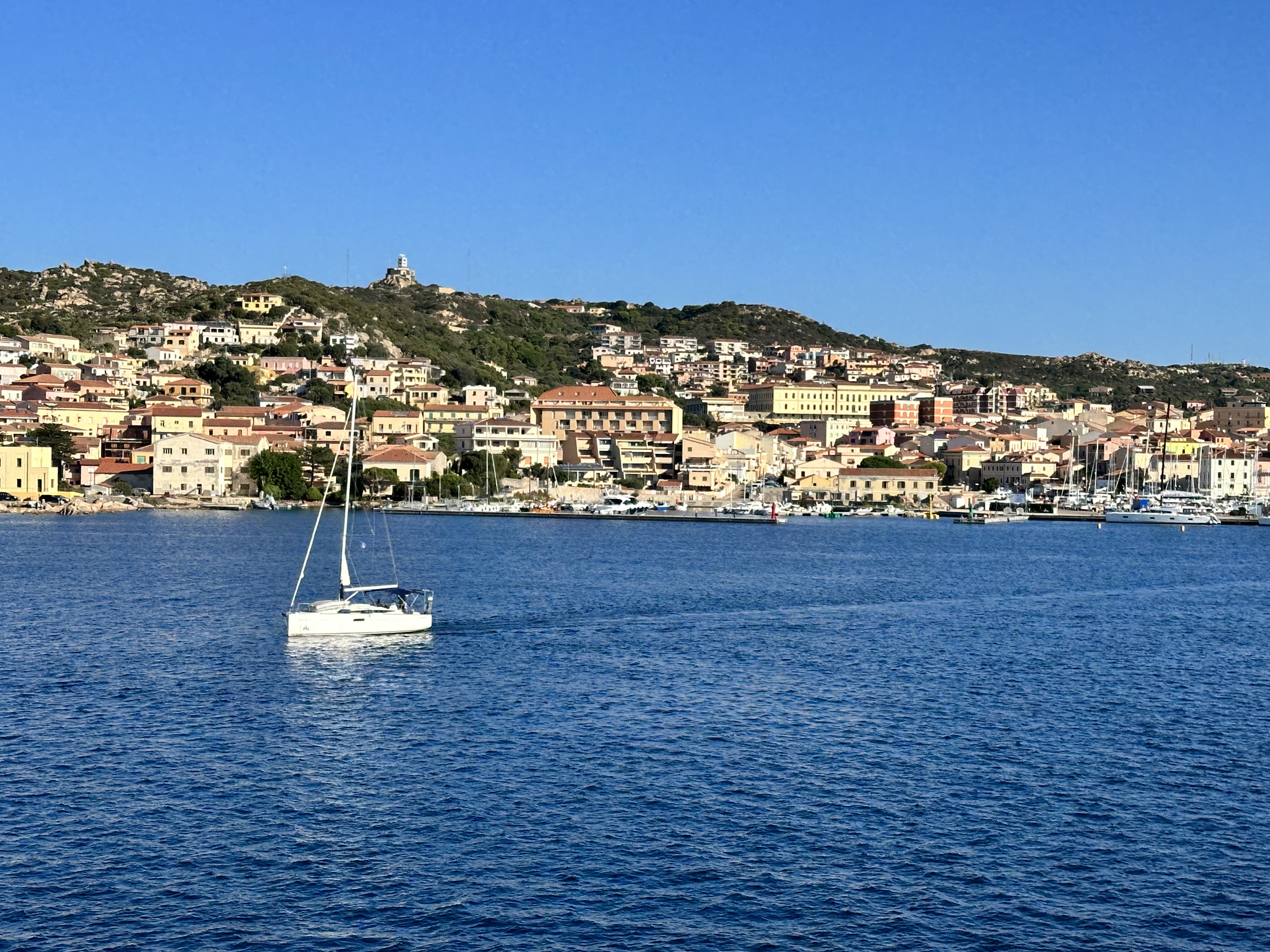
From our start in Olbia and Sardinia’s Costa Esmeralda, we traveled north a short distance and took (with our rental car) the 15-minute ferry ride from Palau over to La Maddalena Island and town, which is part of the La Maddalena Archipelago, located at the very north east edge of Sardinia, Italy. We spent 3 nights on La Maddalena, which gave us enough time to see La Maddalena Island, Caprera Island (reached by bridge from La Maddalena) and then a day-trip boat tour of some of the other islands in the Archipelago. I’ll share a bit about each day below.
La Maddalena
We caught a morning ferry to La Maddalena from Palau, no reservations were needed in October and the ferries run continuously all day. A round trip ticket for car and passengers was about 40 Euro.
Left – our ferry, with La Maddalena in the distance. Right – a view of La Maddalena town and harbor from the ferry.
Upon arrival. we immediately headed for Cala Francese beach, not far from the main town and then explored a few other beaches around the island before checking into our hotel later in the afternoon. La Maddalena is not big, you could probably drive around the island in 30 minutes or less.
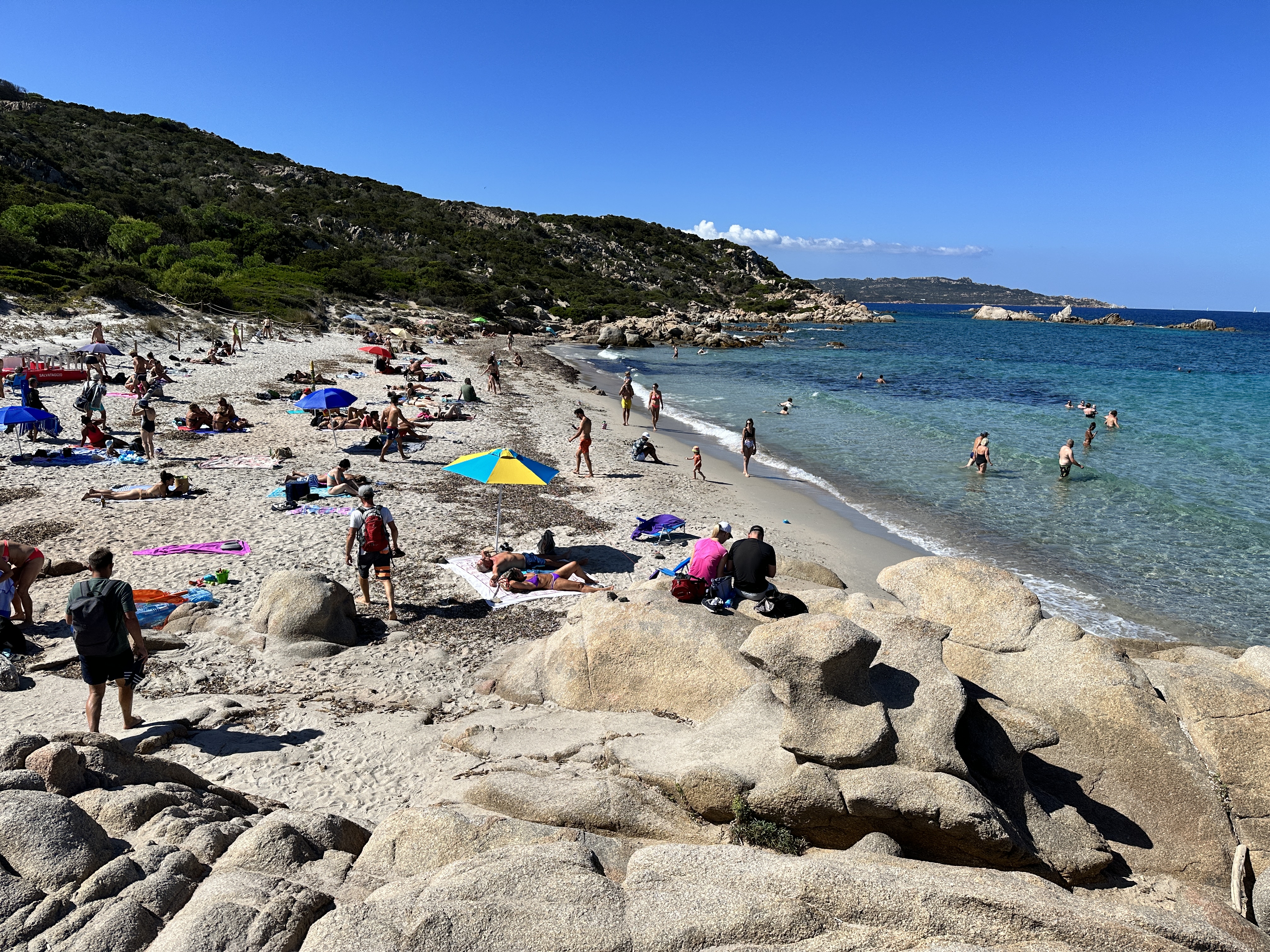
Above – Cala Francese, on the southwest coast of La Maddalena. You have to take a very short drive on a dirt road to get to the parking area and then walk on a trail for 5 minutes to get to the beach.Left – Spiaggia Bassa Trinita, Right – Spiaggia del Cardellino, both beaches are on the northwest coast of La Maddalena.
Cala Lunga, at the northern tip of La Maddalena.
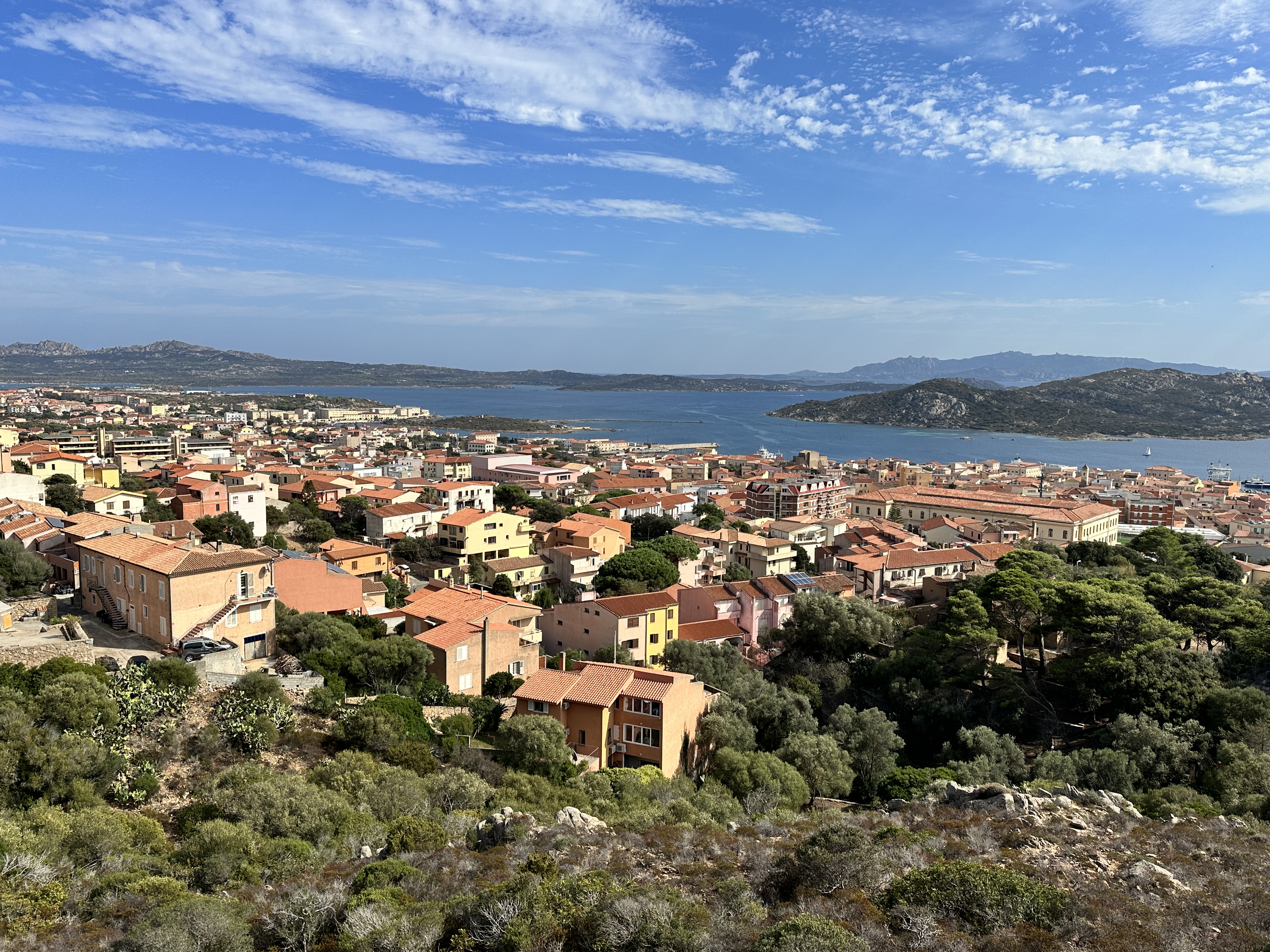
Left – Spiaggia di Cala Spalmatore, on the eastern side of La Maddalena. Right – a view of La Maddalena town as we drove back after our tour of the island.
The town was fun to explore, and many boat tours are offered from the harbor.
Caprera Island
After a wonderful day on La Maddalena, we decided to spend our second day on Caprera, an island connected to La Maddalena via a bridge. Caprera is far less populated, and largely National Park land. There are numerous beaches and hiking trails and to start our day we decided to do a hike on the north end of the island, to the Batteria de Candeo, a really interesting site.
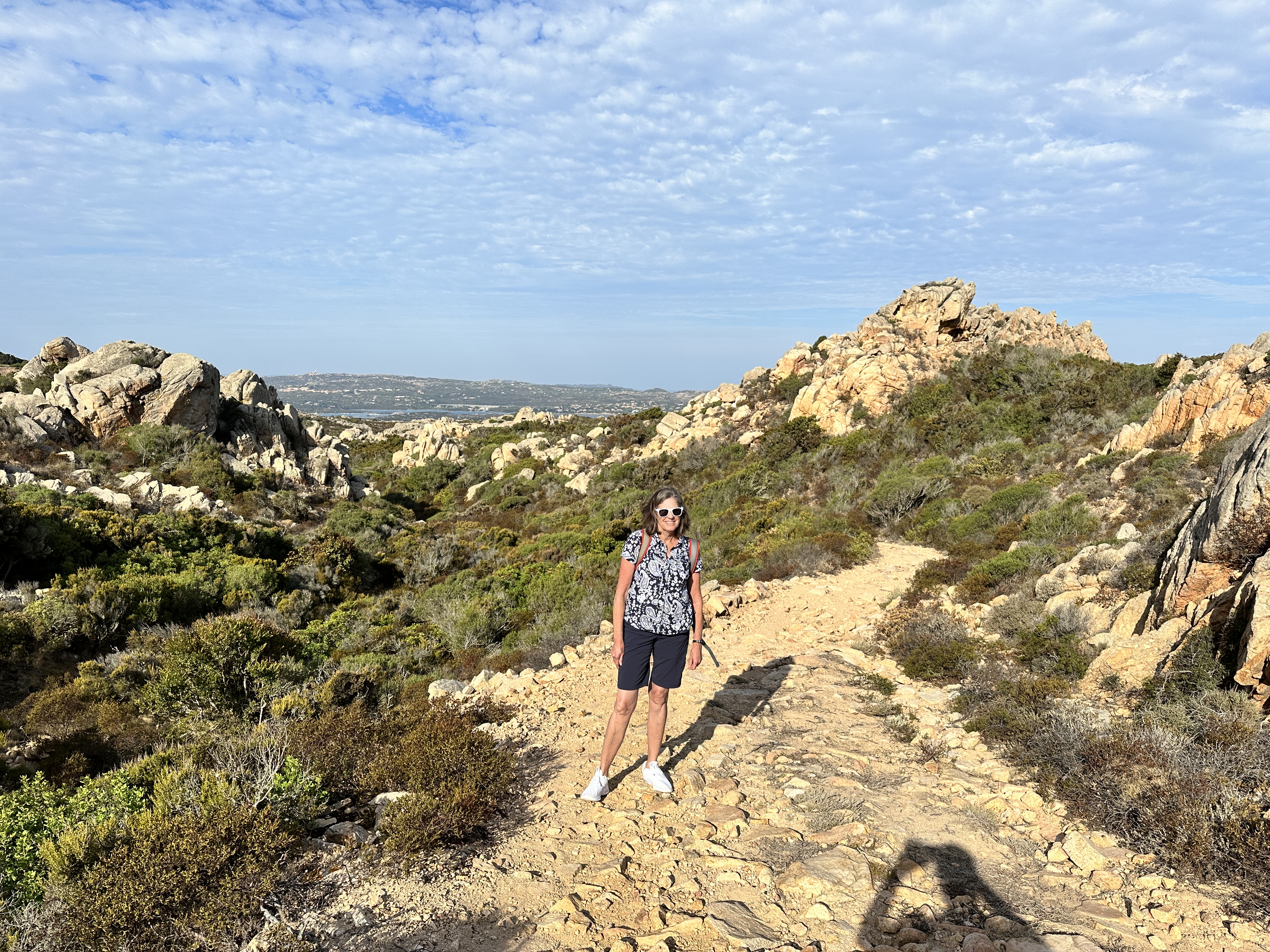
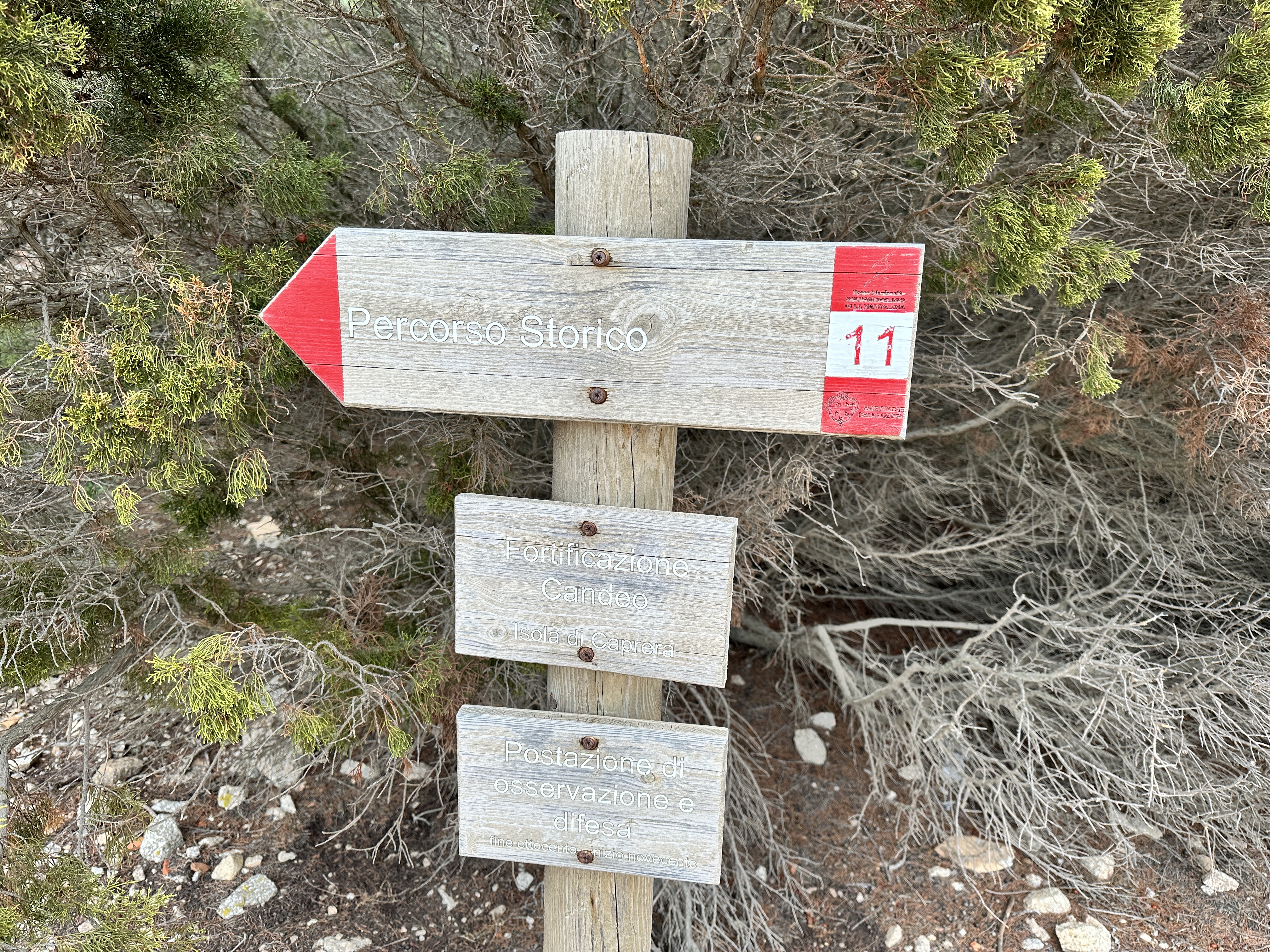
There are numerous trails criss-crossing the northern end of Caprera, and they are well signposted. There were very few people on the trails, we pretty much had them to ourselves.
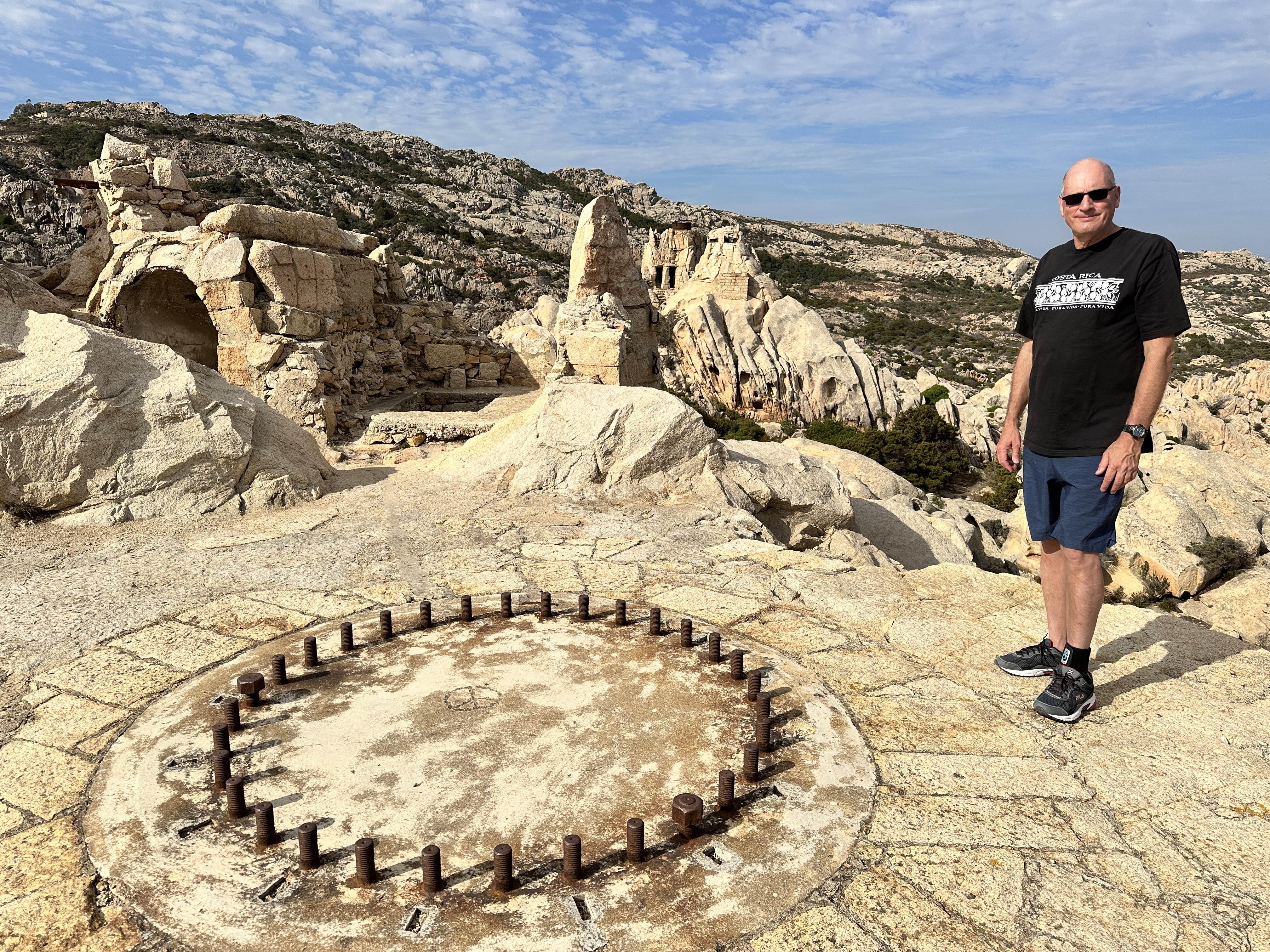
At the north end of Caprera is the military site of Batteria de Candeo, an anti-aircraft and ship emplacement built between World War I and World Ward II. It was built from the natural rock in the area and was well camouflaged – even today it looks like part of the natural landscape except for the doorways.
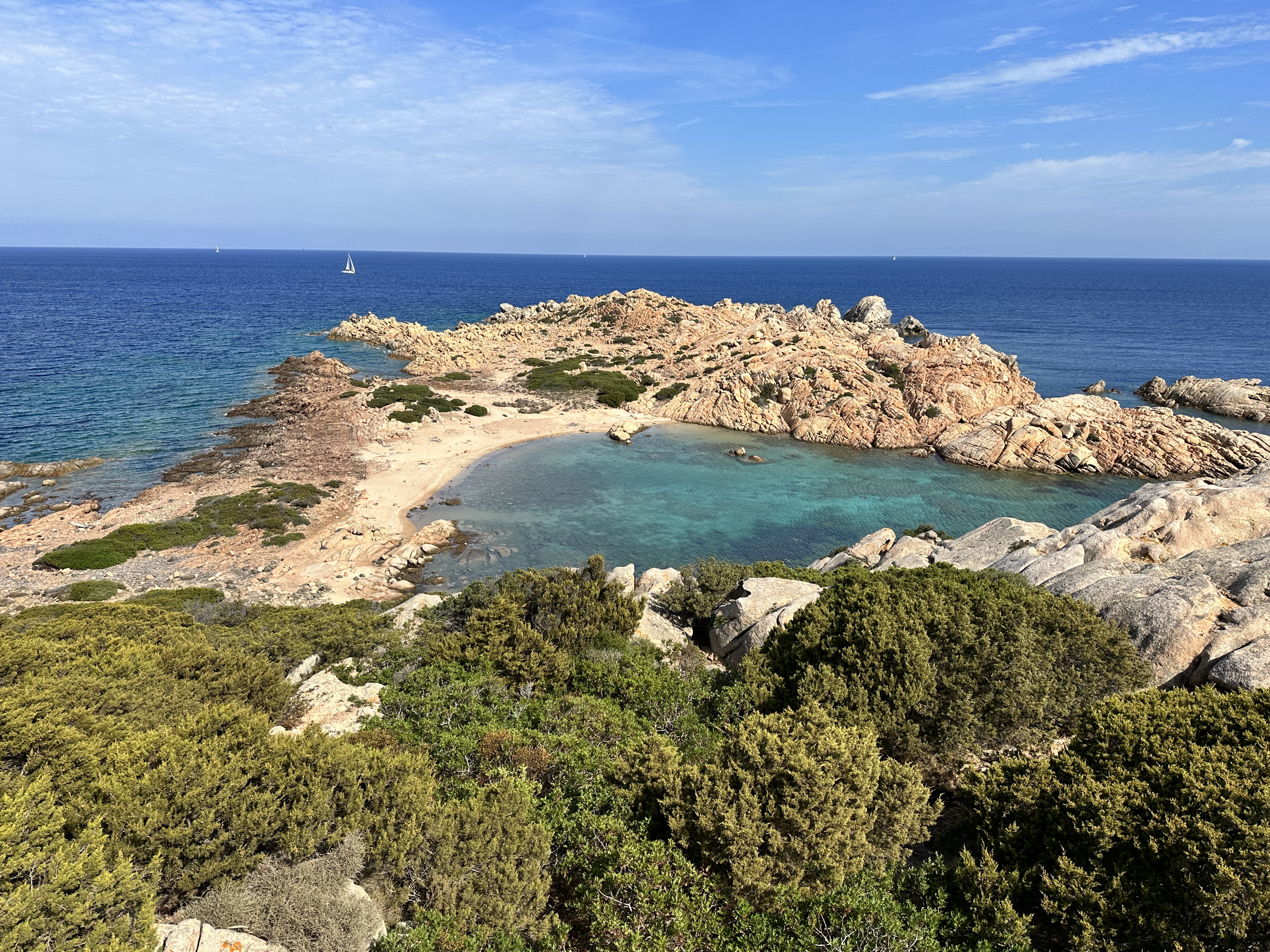
Other views of Candeo. Candeo can be accessed via the Caprera trail system.Other views and beaches accessed from the trail system in Caprera – left to right: Cala Crucitta, Cala Nepoletana, Cala Caprarese.
There are some beaches on the south end of the island also, such as Spiaggia Due Mari, for example. We visited the south end and spent a while lounging on Spiaggia Due Mari beach after our hike, but unfortunately I did not capture a photo!
Note: I had wanted to visit Cala Coticcio beach on Caprera, one of the most famous beaches in Sardinia. The only way to visit is with a guide (they limit access to this beach to preserve its natural state). I reserved a date with the guide, but I also needed a Park pass, and for some reason this was difficult to do online, so I gave up and cancelled our visit to this particular beach. It is a fairly long hike to Cala Coticcio and if we had done that hike, we would not have had time to do the hiking discussed above. I think it’s just a trade off on how you want to spend your time. As shown above, there are other stunning beaches and sights that don’t have the limitations of Cala Coticcio.
Day Trip Boat Tour
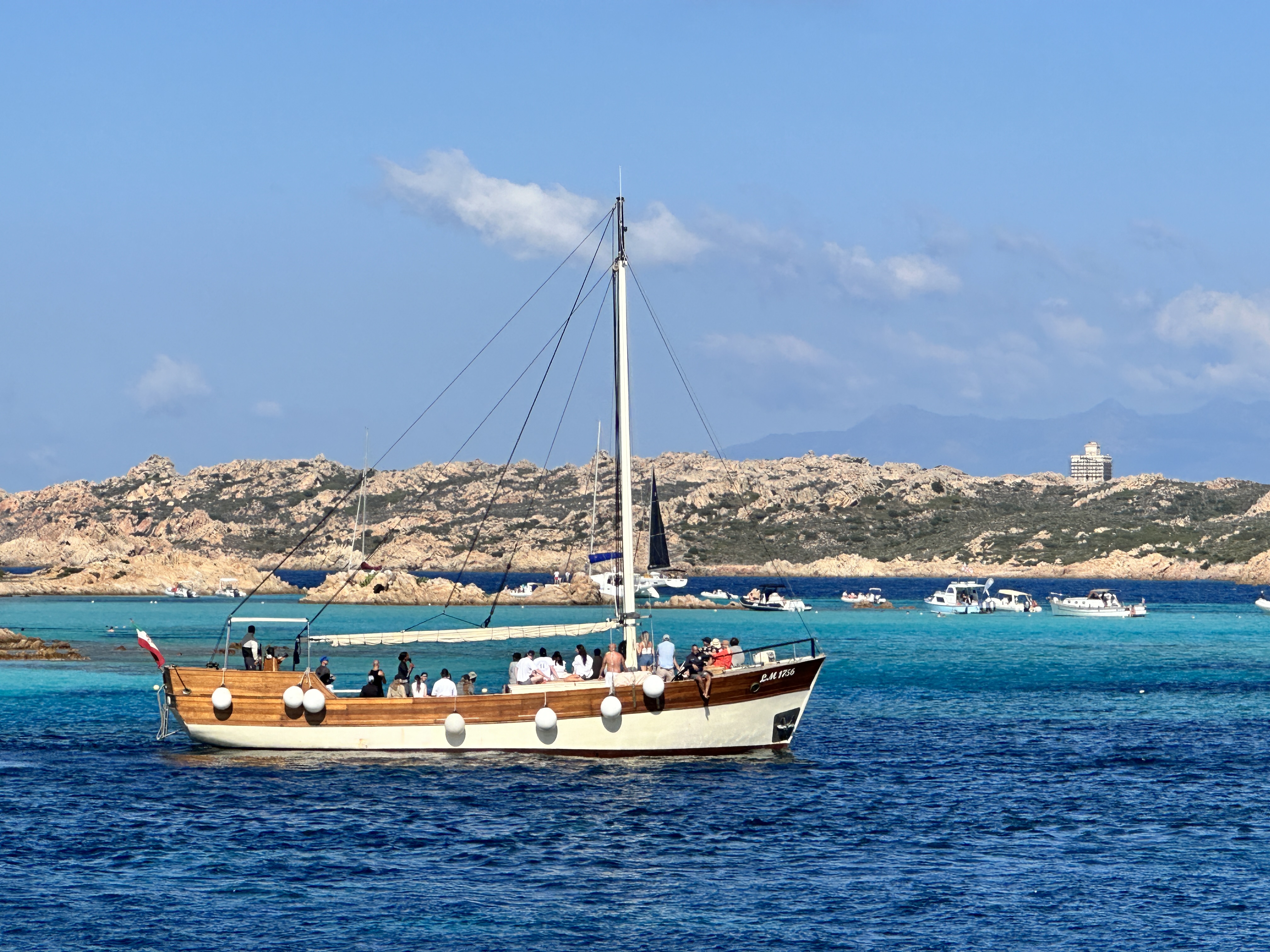
On our final day in La Maddalena, we decided to do a 6-hour boat tour of some other islands in the La Maddalena Archipelago and we’re glad we did. Below are photos from our various stops during the boat tour. It was a perfect day.
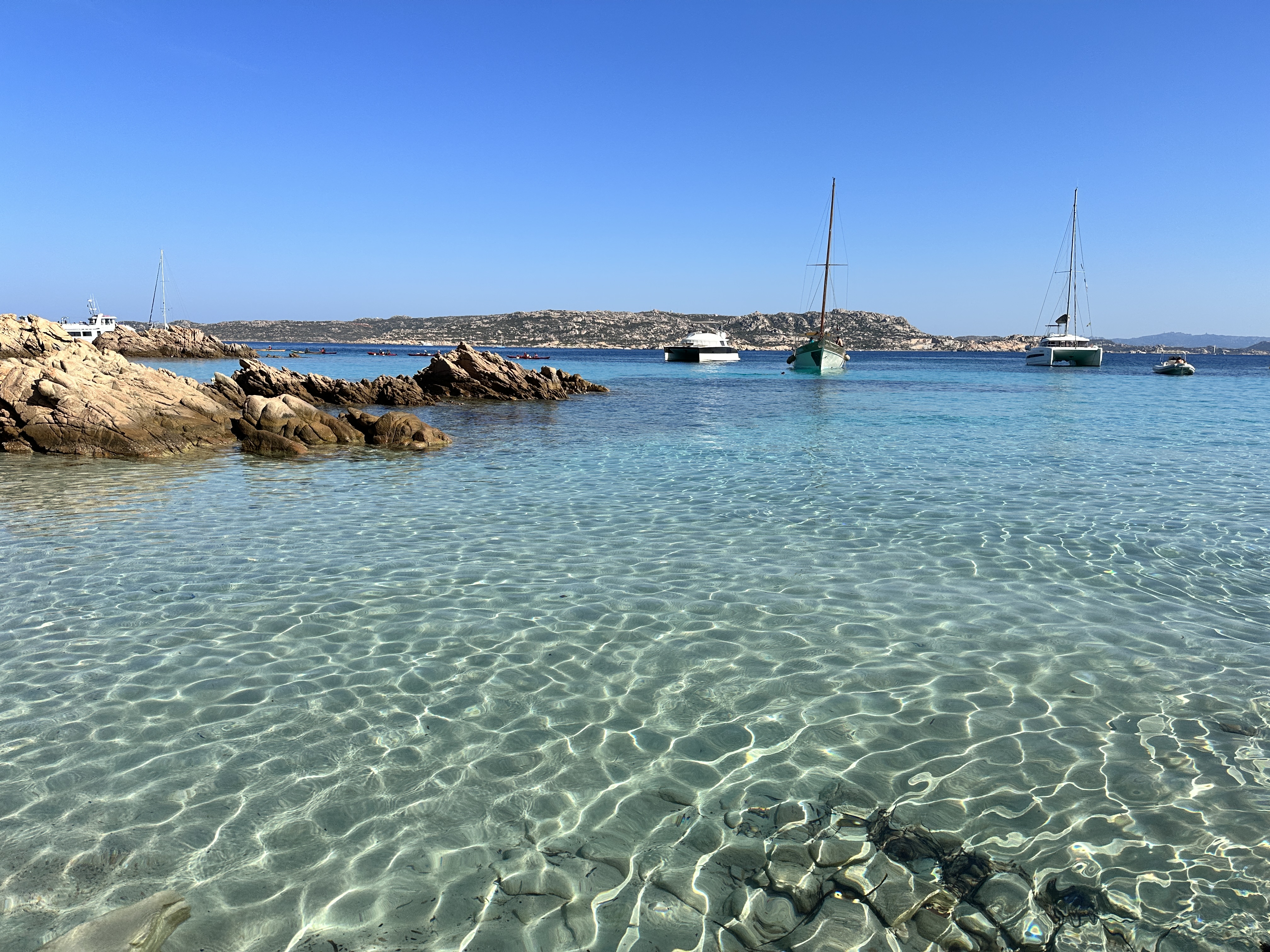
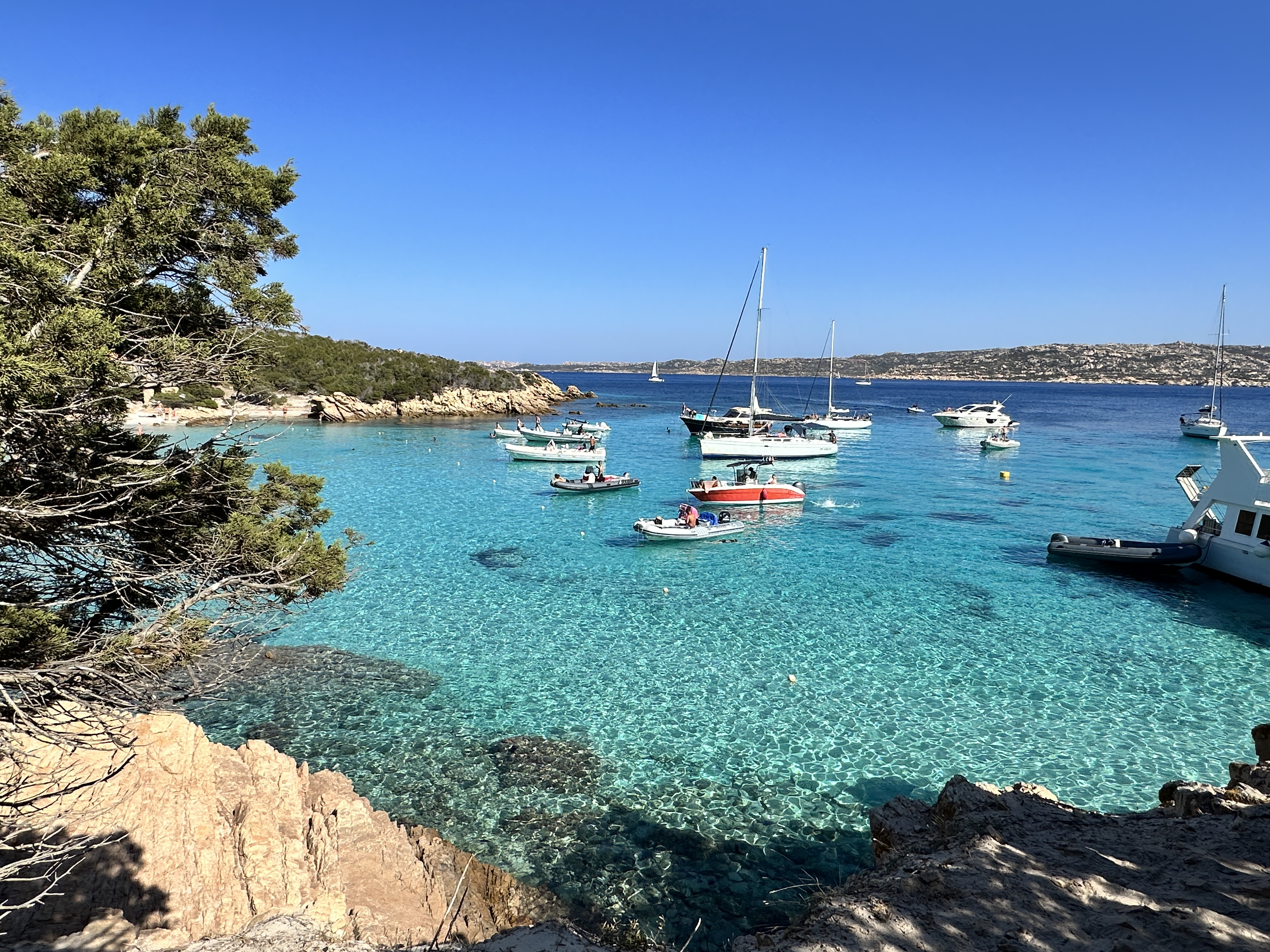
Buddelli Island and Pools – Buddelli Island is known for its pink sand beach (above left – small photo), but you cannot access the beach directly, they are trying to preserve and rehabilitate the pink sand. However, we did jump off the boat and swim in what they call the “Buddelli Pools” nearby – beautiful protected water.Santa Maria Island (above), we stopped at this island and beach for about 90 minutes. Spargi Island (above and below), the beaches here were stunning. We were able to swim and lounge for about two hours.Two more views of Spargi Island – with the wild boar terrorizing visitors on the left – we were warned to not bring food on the beach – the boar wandered around the beach area and were pretty aggressive in rummaging through beach bags! Another view of Spargi’s coves on the right – what a setting!
As with every other region of Sardinia, it would be easy to spend a week or more in these islands. The water was super clear, and the beaches were beautiful. If you go to Sardinia, don’t miss La Maddalena!
We started our Sardinia vacation by flying (from Frankfurt) into Olbia on the northeast coast of Sardinia. This was a great place to begin (and end) our Sardinian adventures. Olbia is ideally situated near the famous Costa Smeralda and the La Maddalena Archipelago, as well as other costal towns, archeological sites and beaches. (See here for an overview of regions we visited in Sardinia, we toured the island in a counter-clockwise route).
Olbia
While not a major tourist destination itself, Olbia has a lovely old town and is situated on a beautiful harbor. We spent our first night here, enjoying dinner in one of the many restaurants on the main pedestrian street and browsing the vendor booths lining the harbor promenade – a very festive atmosphere.
Views of Olbia and harbor, with Tavolara Island (right), the mountainous island with more beautiful beaches in the far distance.
The next morning we drove north toward Porto Cervo, the heart of Costa Smeralda, stopping at beaches along the way. Our first day started out cool, windy and slightly rainy, but by the afternoon it was warm and sunny. The weather didn’t stop us from enjoying the sights along the coast and wasn’t a factor for the rest of our trip.
Costa Smeralda
Costa Smeralda got its name and started becoming fashionable in the early 1960’s, due to development efforts led by Prince Karim Aga Khan. It’s maintained that status ever since. Our stay here was brief, given the many areas of Sardinia we wanted to visit. Below are a few images of the beautiful coastline of this region.
This sign, along the coastal road from Olbia to Porto Cervo lets you know you’re entering the fabled Costa Smeralda.
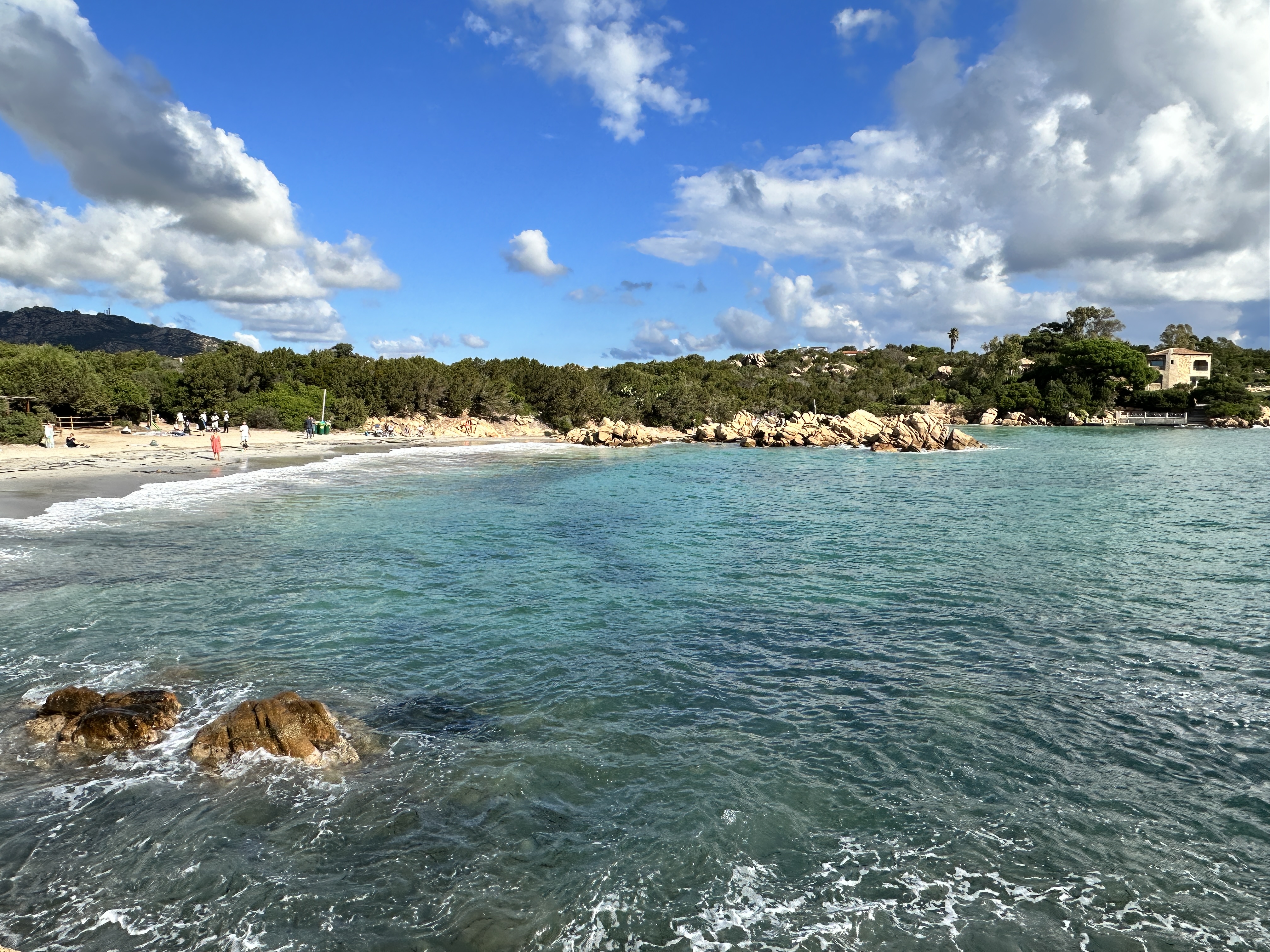
Capriccioli Beach
Spiaggia Principe, considered Sardinia’s most famous beach (although it’s only one of hundreds as beautiful), on Costa Esmarelda.
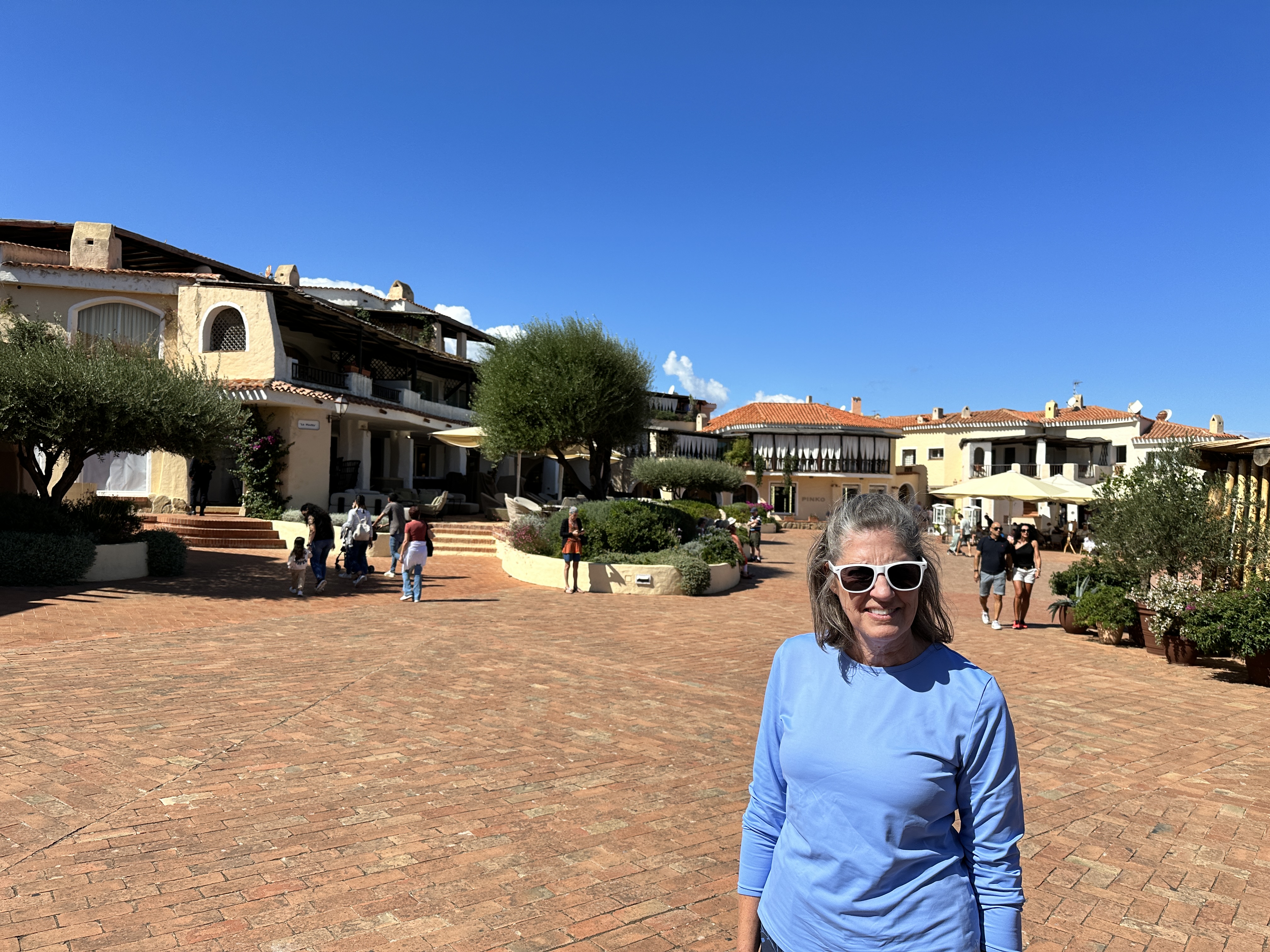
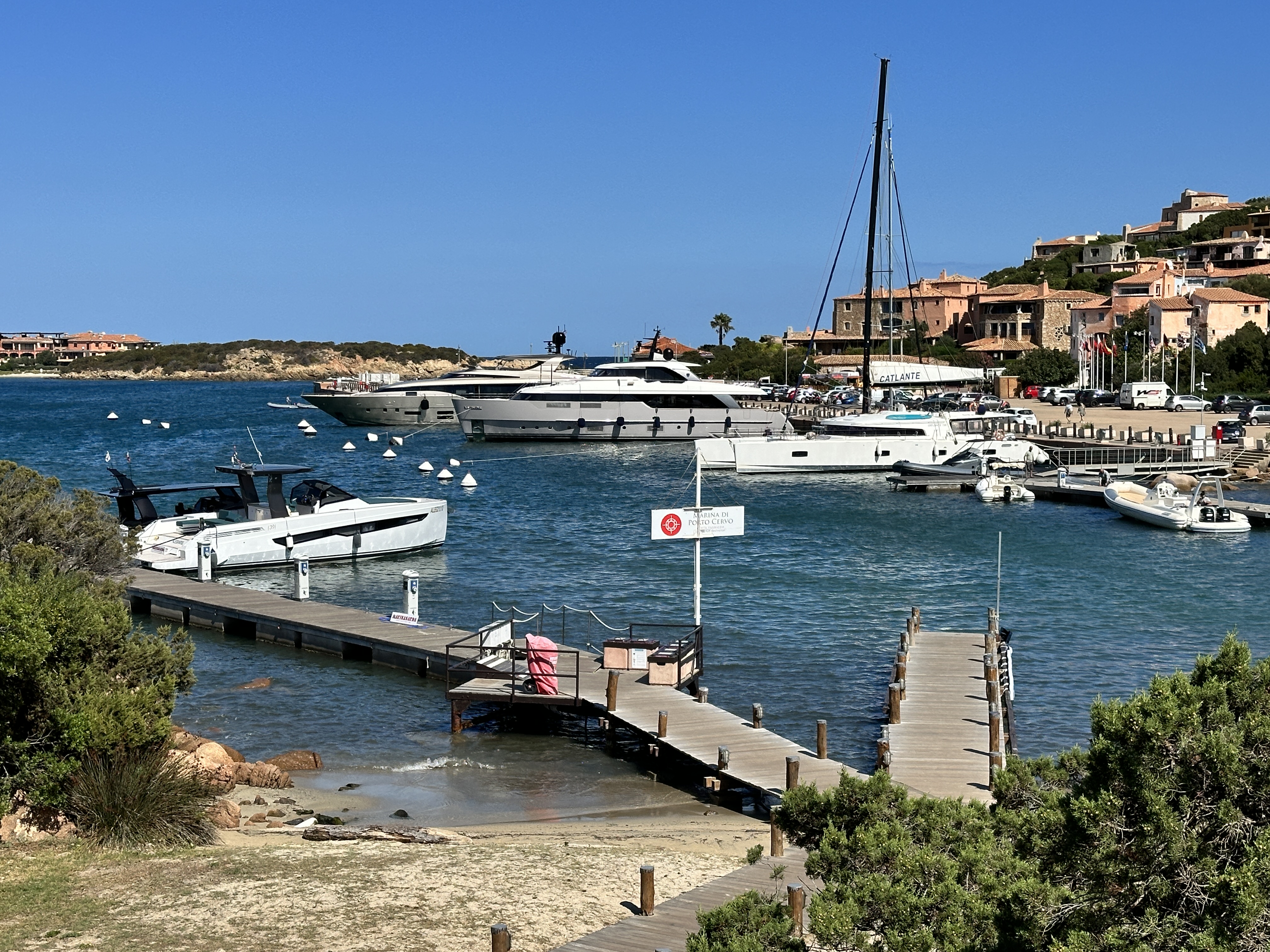
Porto Cervo, the center of Costa Smeralda, was pretty quiet in early October. We enjoyed walking around the harbor and the town, with many expensive shops.
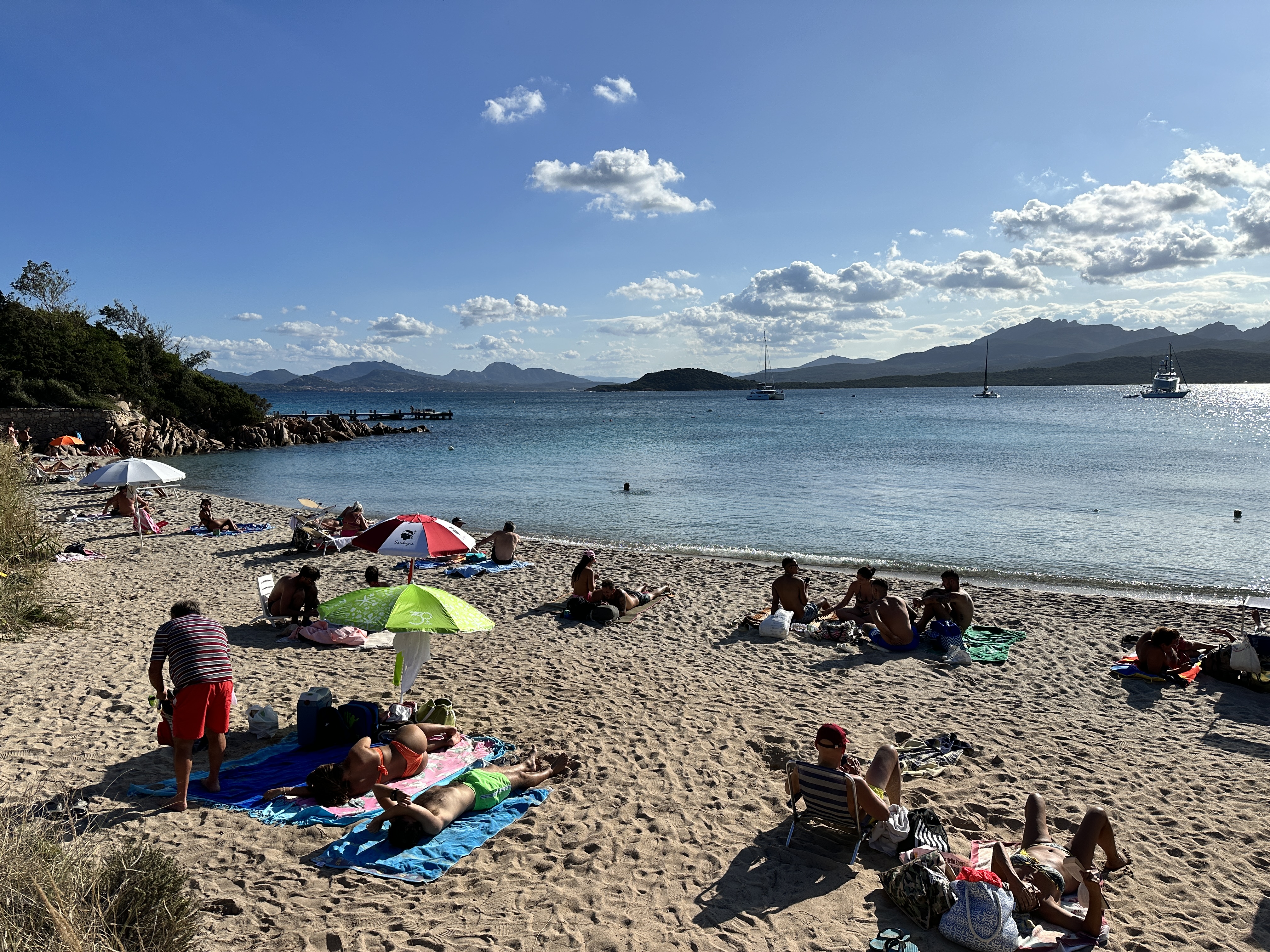
The calm, clear waters of La Celvia Beach, south of Porto Cervo.
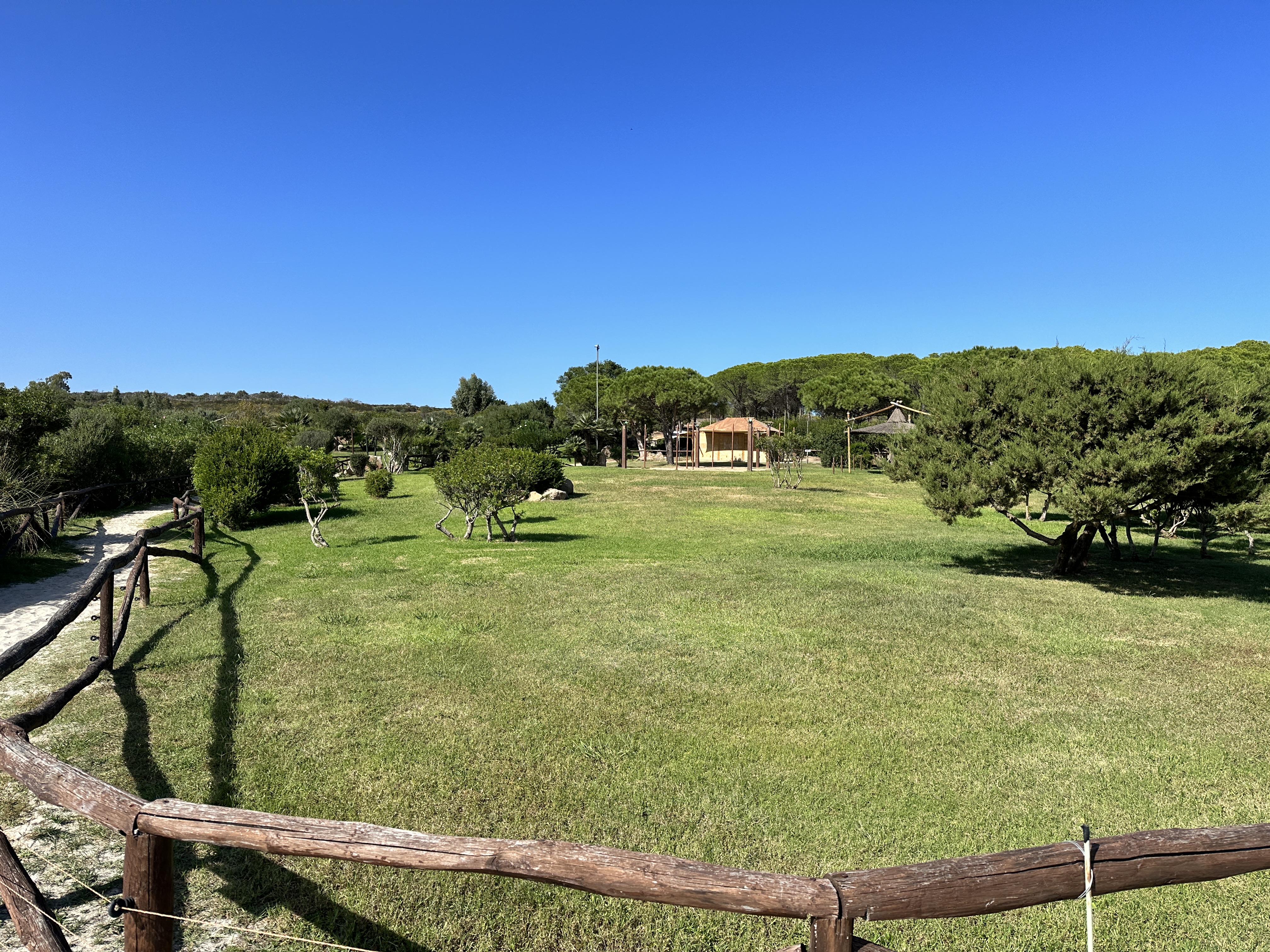
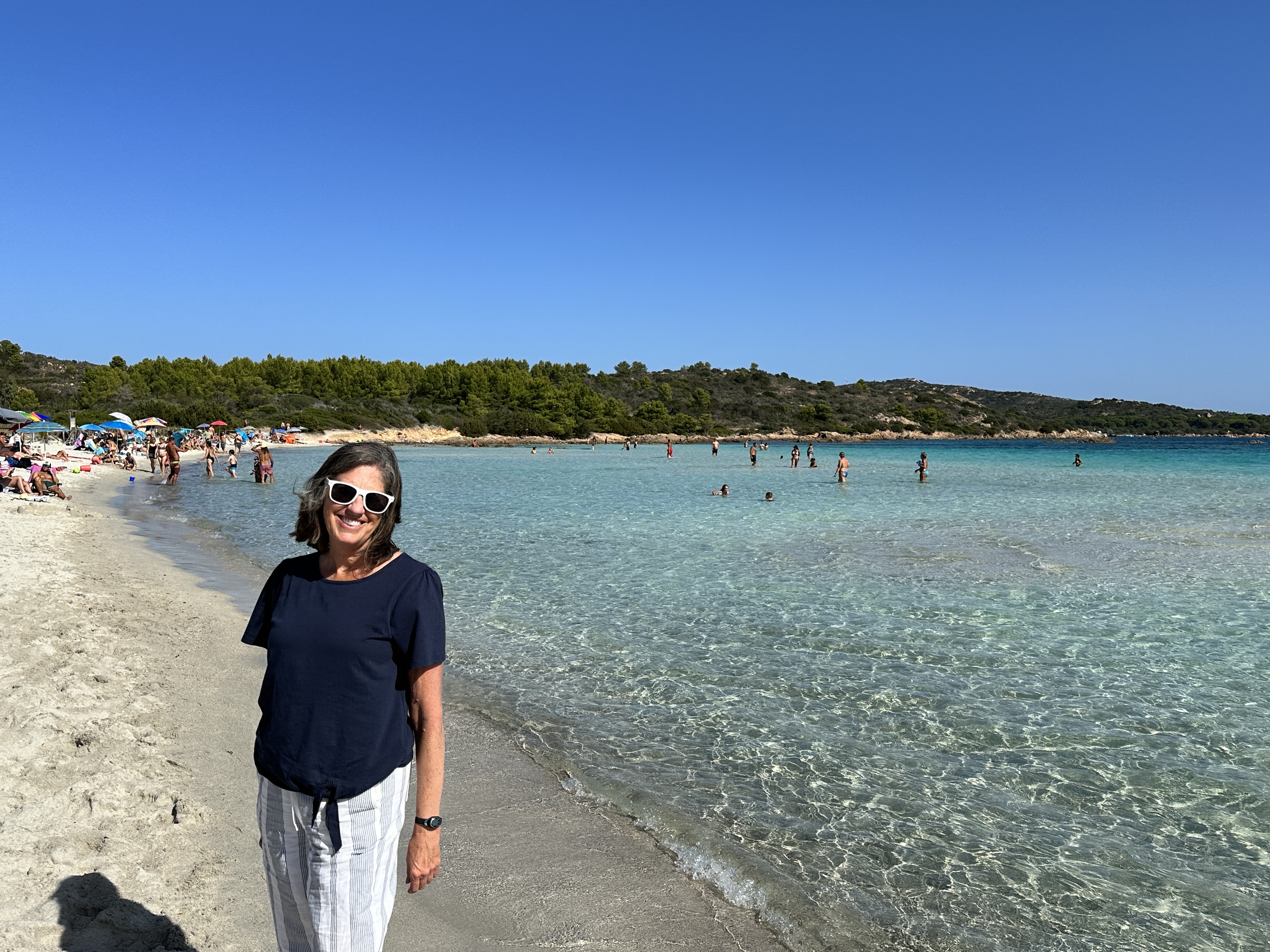
La Celvia beach (left and above), was just a short distance from our hotel in the Costa Smeralda resort area of Cala di Volpe (above right), and near a golf course as well as Capriccioli and Spiaggia Principe beaches. What more could you ask for!Although not directly part of Costa Smerelda, Spiaggia Cala Brandinchi, near San Teodoro, not far south of Olbia, is another great beach and park, with some lawn area just behind the beach for games or picnics. We were flying out of Sardinia shortly after our visit here and so we didn’t get to enjoy this beach for long!
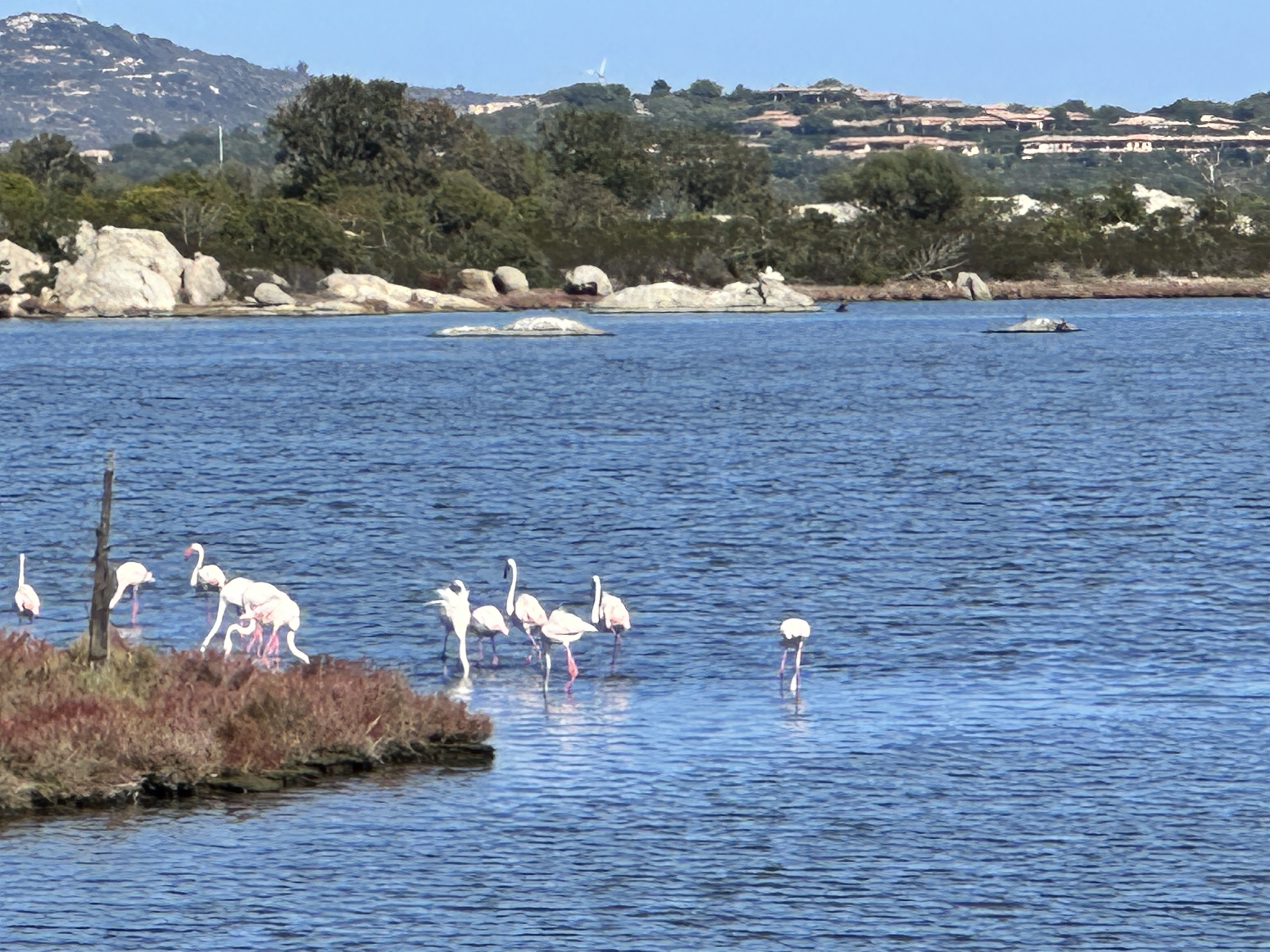
Real pink flamingoes near San Teodoro!
As with any region of Sardinia, it would be easy to spend your whole vacation right in (or around) Costa Esmeralda. If you want to live here, be ready to open your checkbook. It’s one of the most expensive regions in Europe and given its allure, it’s easy to see why.






























 The Independent Tourist