Mallorca Spain

Mallorca’s Magical North Coast

Our final stop in Mallorca was the north coast. We based ourselves near Alcúdia and were very happy with the location.
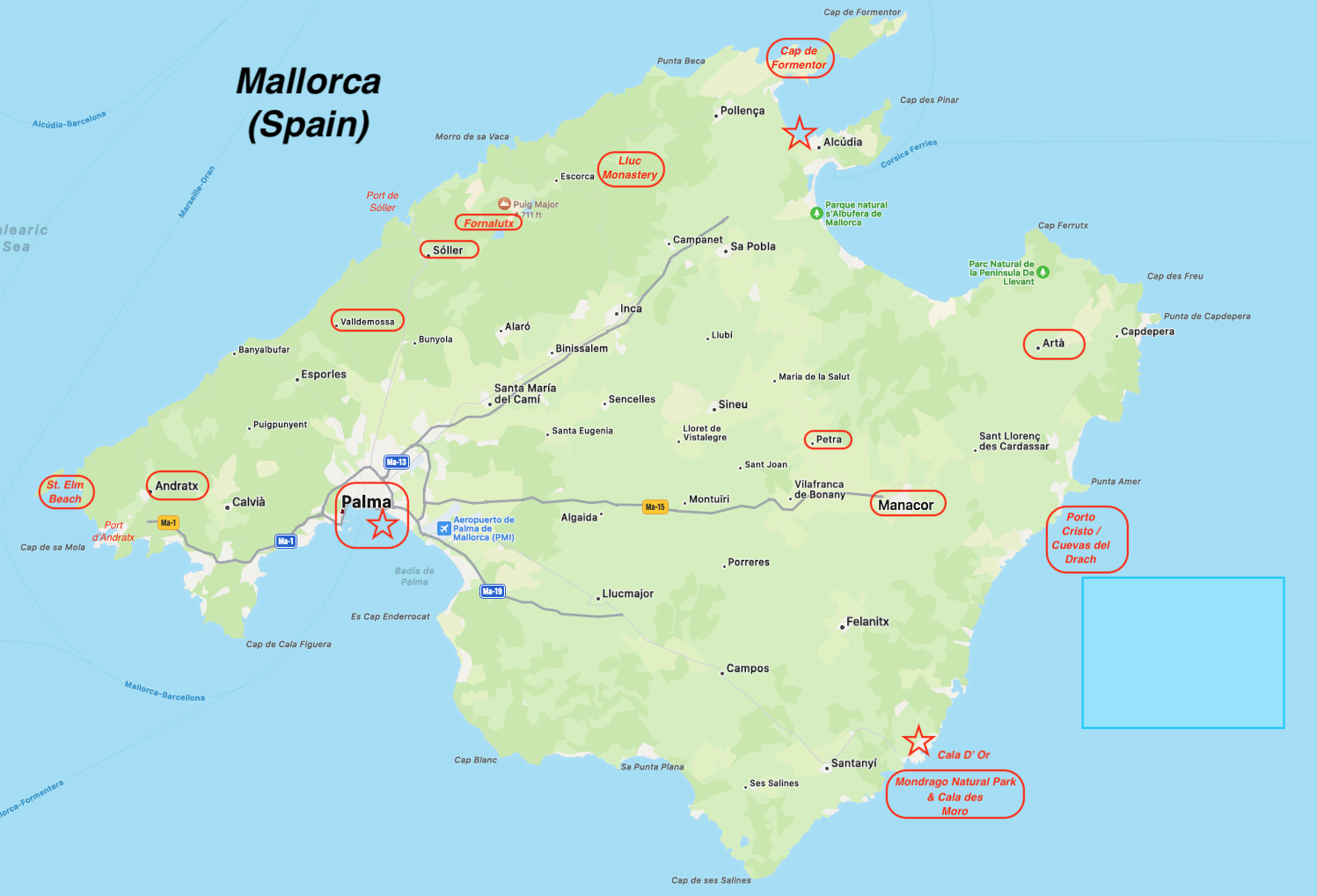
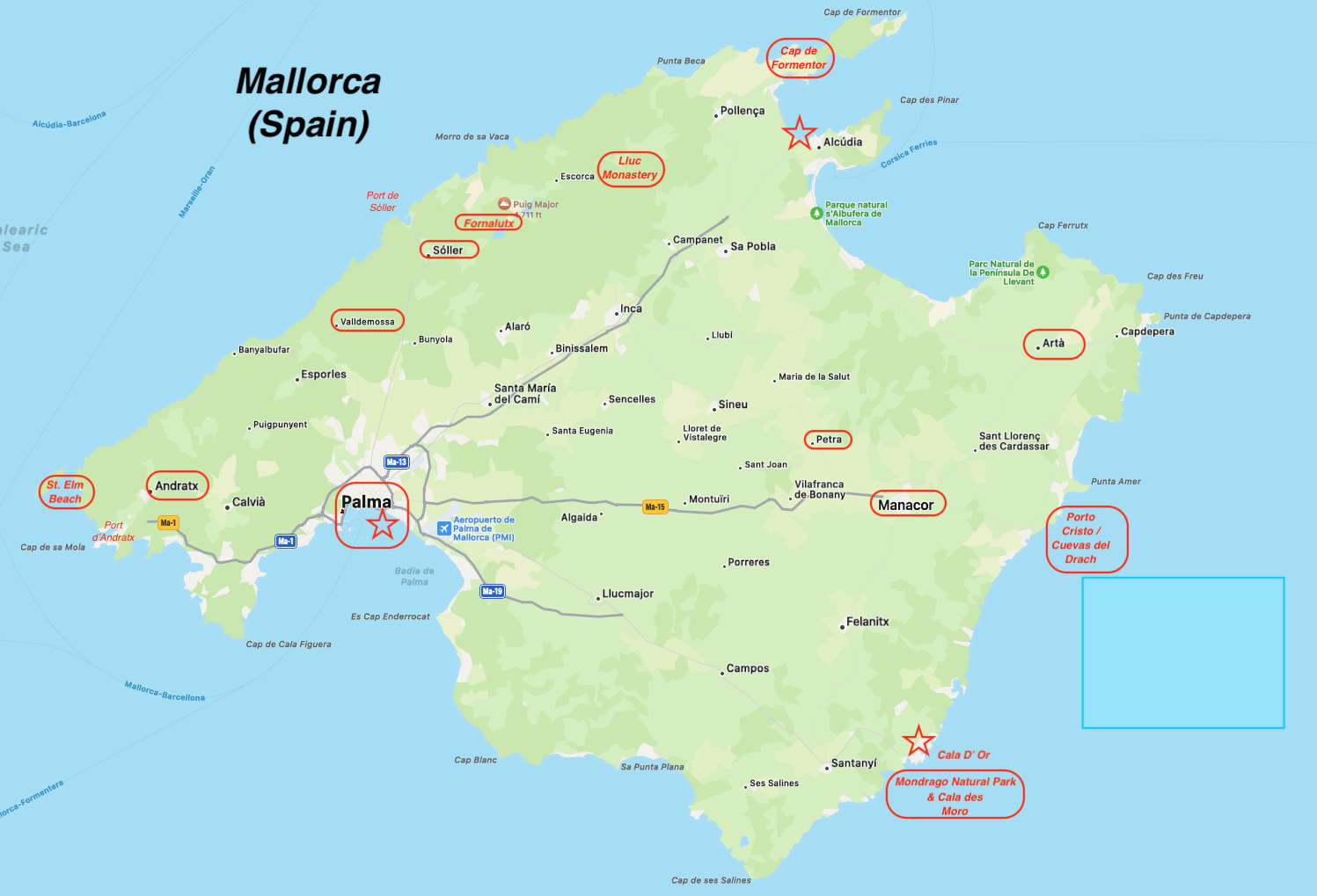
Alcúdia and the various sites mentioned below are located in the northern part of Mallorca. The starred locations indicate our places of stay.

The old walled town of Alcúdia is at the base of a small peninsula that divides the northern coast into the Bay of Pollença and the Bay of Alcúdia. The peninsula itself has some lovely beaches (more on this below). On the eastern side are many hotels, modern shops and busier beaches, kind of like a Miami beach area. We decided to base ourselves on the quieter western side of Alcúdia, at the PortBlue Club Pollentia Resort. The resort is right across the coastal road following the bay of Pollença and is only a couple kilometers from Alcúdia.

The Port Blue Club Pollentia Resort & Spa pool.
Bay of Pollença, view from our hotel.

Alcúdia

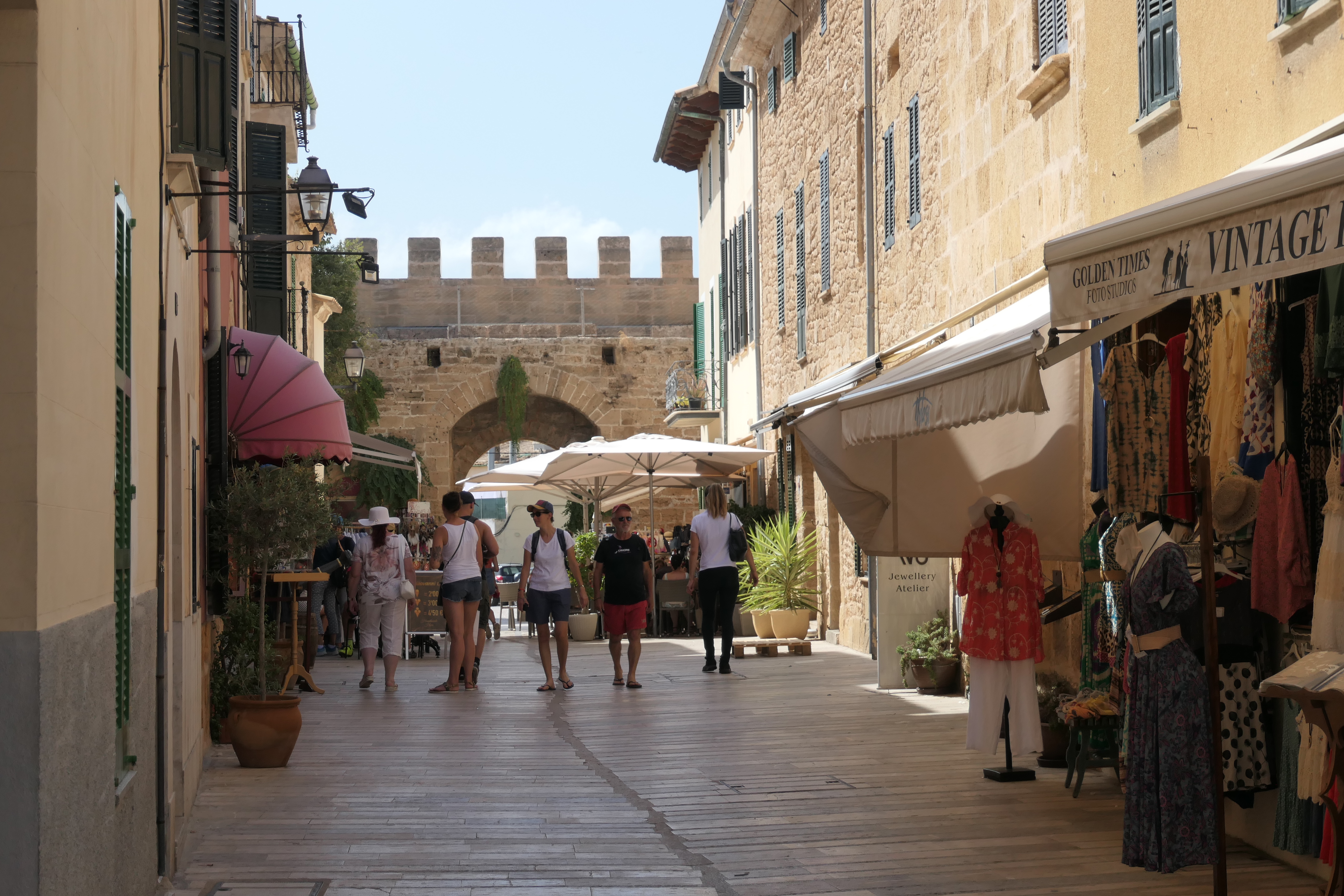
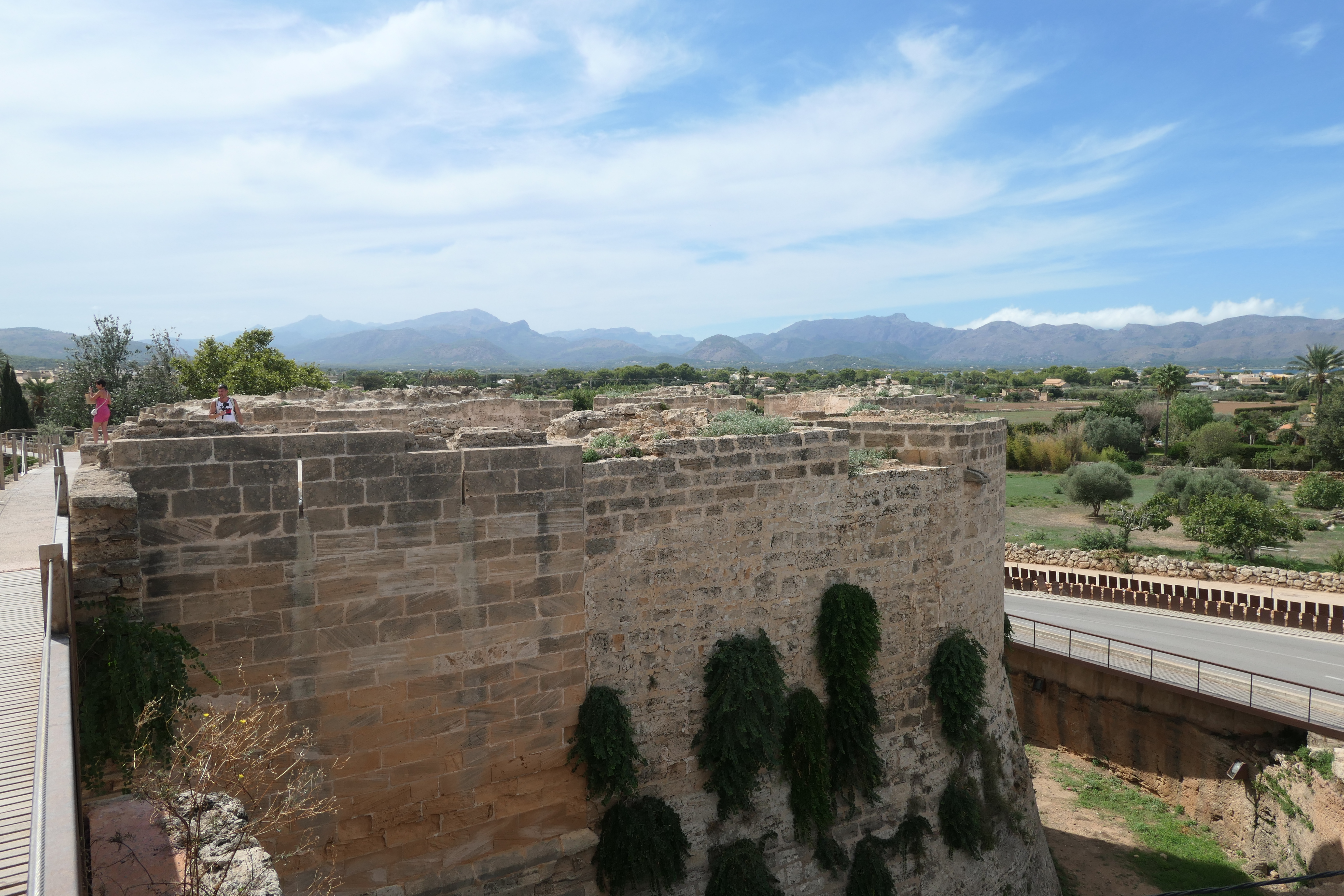
Nothing like having medieval walled towns next to glorious beaches – my perfect combination! The late 13th century walled town of Alcúdia is really lovely and sits in a prime location, between two bays with picturesque coves and beaches close by. It’s no wonder this town was a target of pirates in the 16th century. You can spend the day at the beach and then wander into the old town for dinner. There is a large car park on the eastern side of the town walls.

Beaches and More Beaches

Mirador de Es Colomer

A popular thing to do in the evening before the sun sets is to take a drive past the Bay of Pollença to the very northwest corner of the island for some spectacular views of the Bay of Pollença and Formentor area. We did this on a whim one evening and really enjoyed the amazing setting and views. The road is steep and narrow – be forewarned. Parking can be a bit of challenge, but be patient and you’ll find a spot. There is a lighthouse further out on the point, but the road to it was closed during our visit.

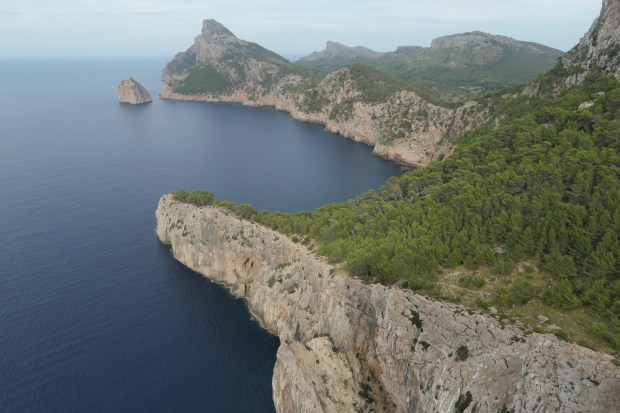
It’s hard to capture the height of the cliffs at Mirador de Es Colomer – it’s probably 1,000 feet straight down to the water.

The Ruins of Pollentia – A Roman City

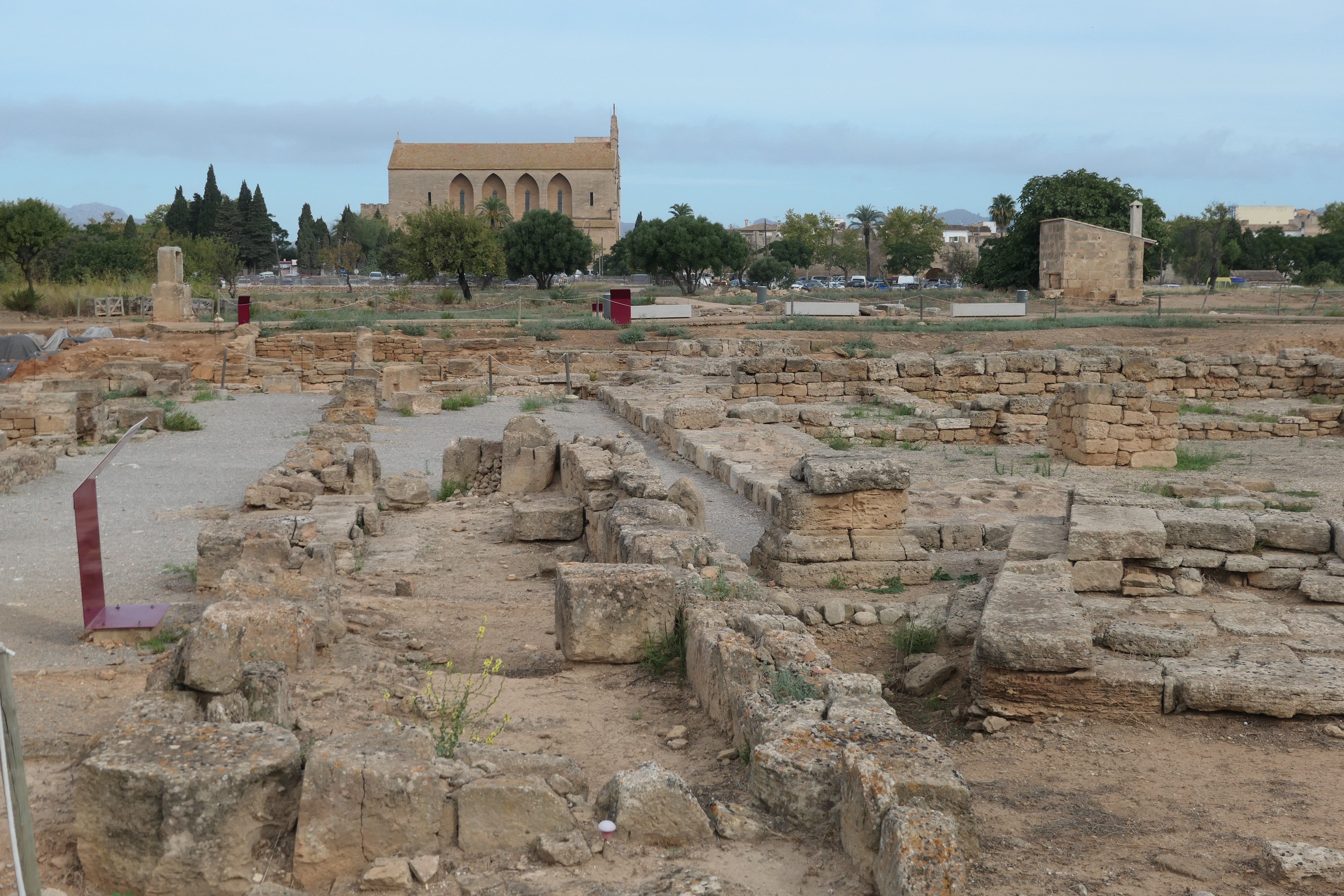
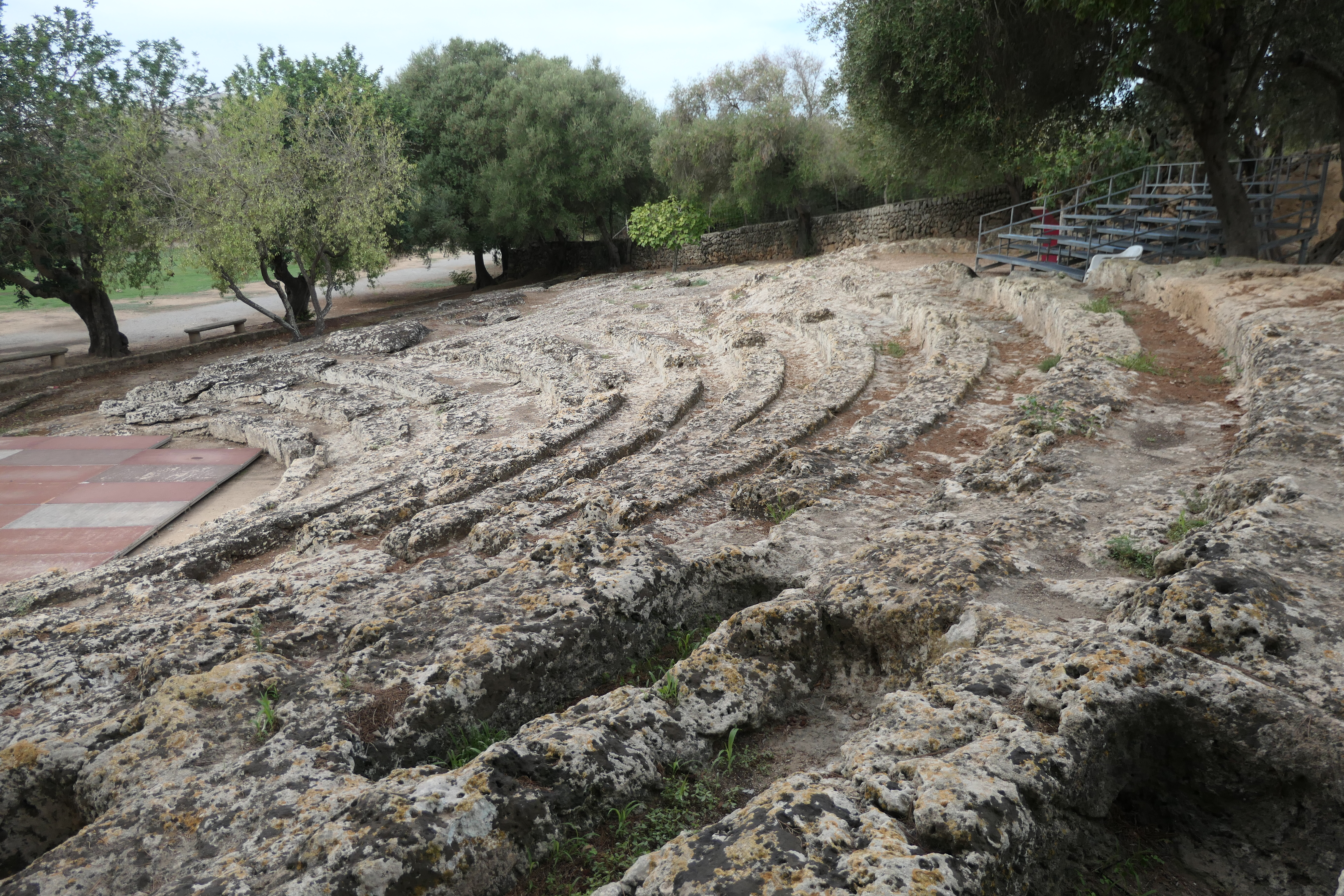
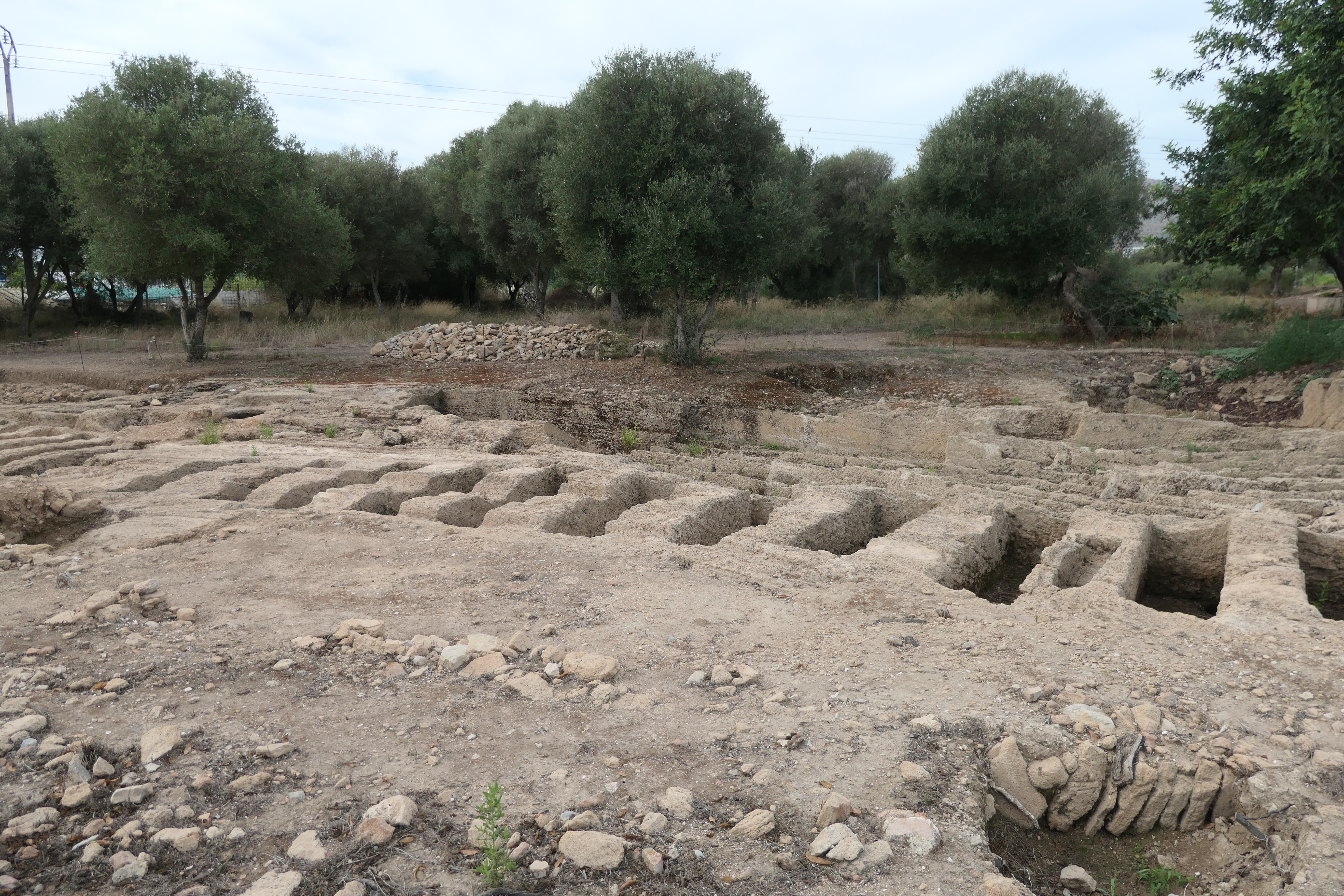
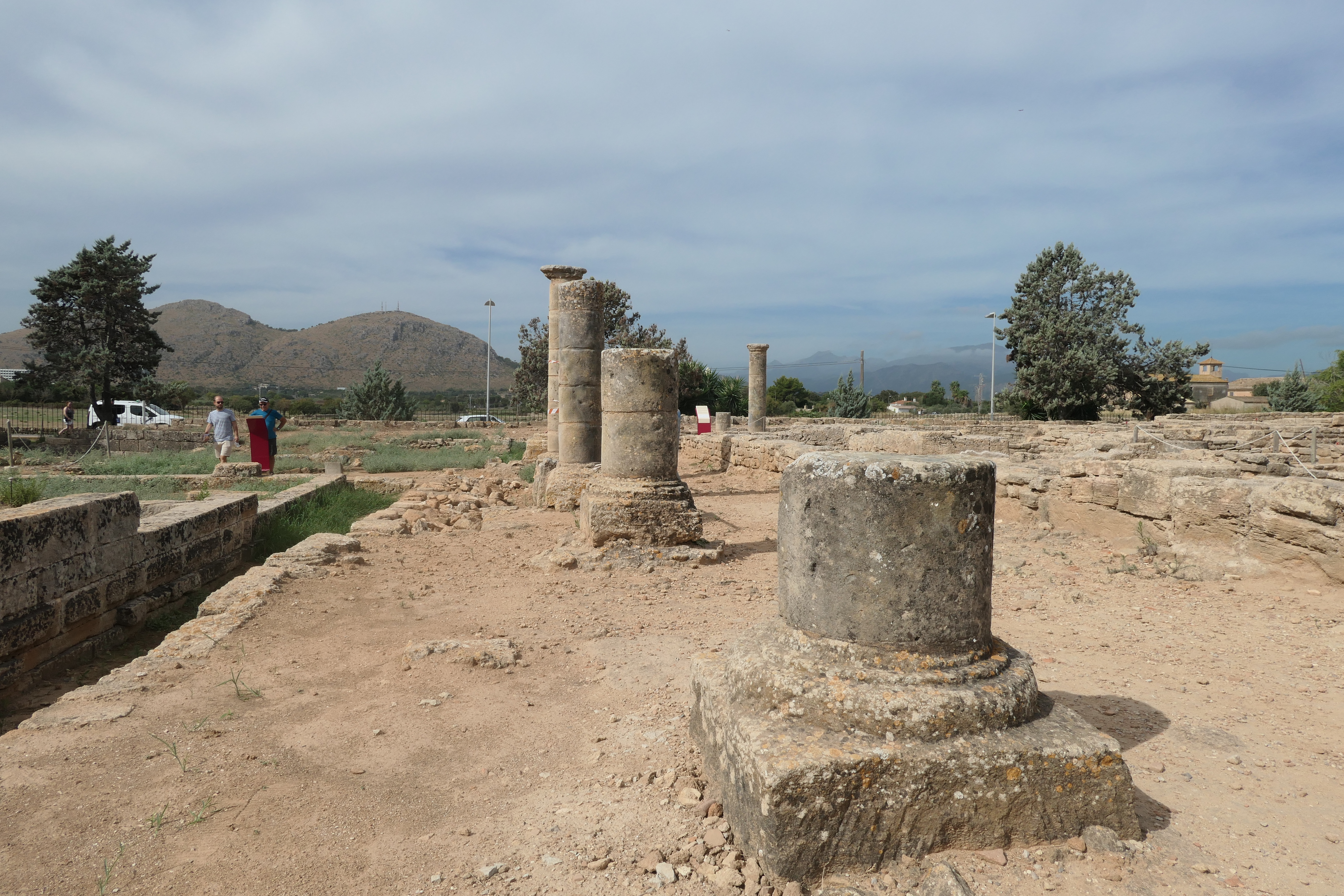
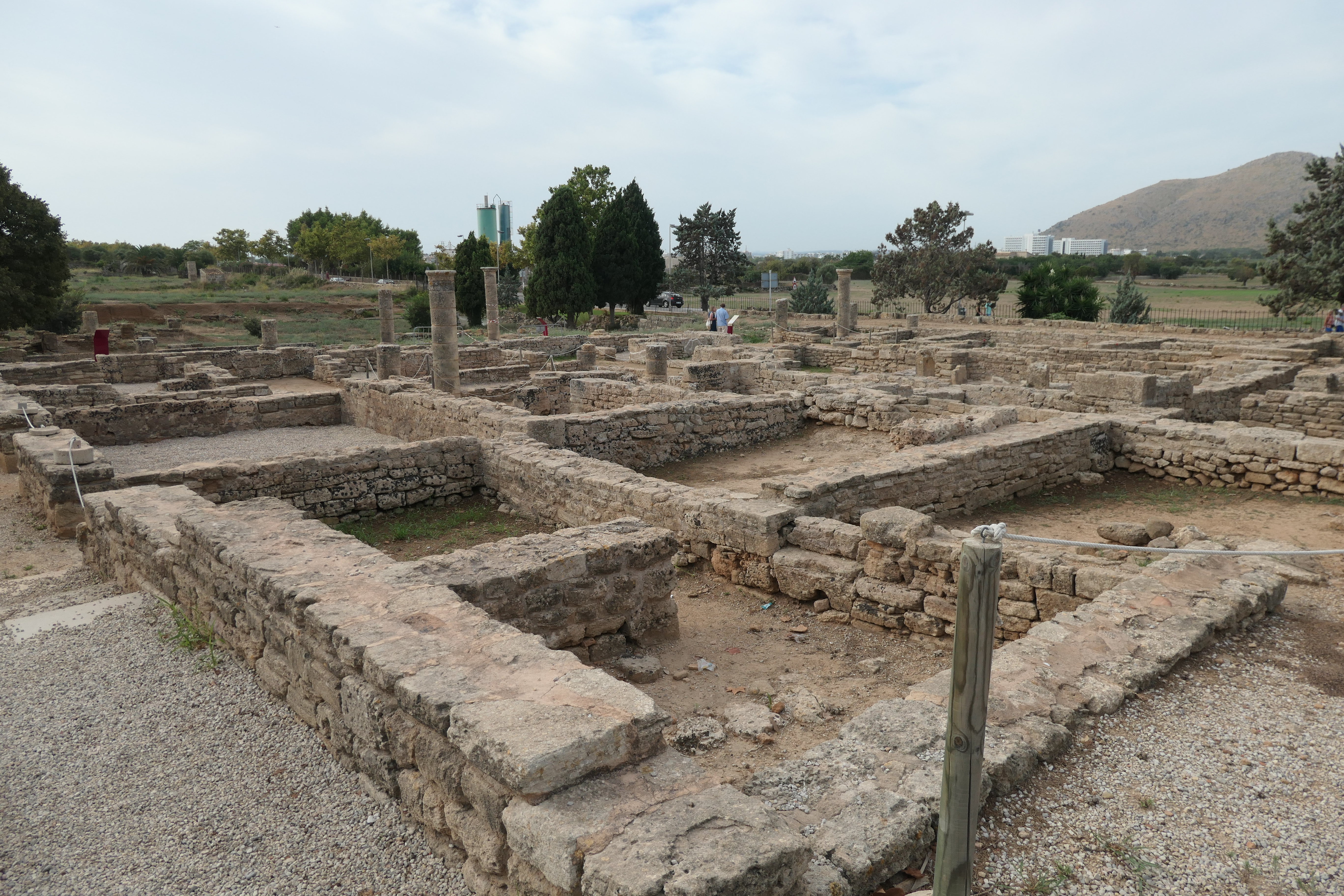
Just outside the walls of Alcúdia are the ruins of the Roman town of Pollentia. Pollentia was the most important Roman settlement in the Balearic Islands and was founded around 121 B.C., a strategic location for a port city. It’s definitely worth a visit.
Lluch Monastery

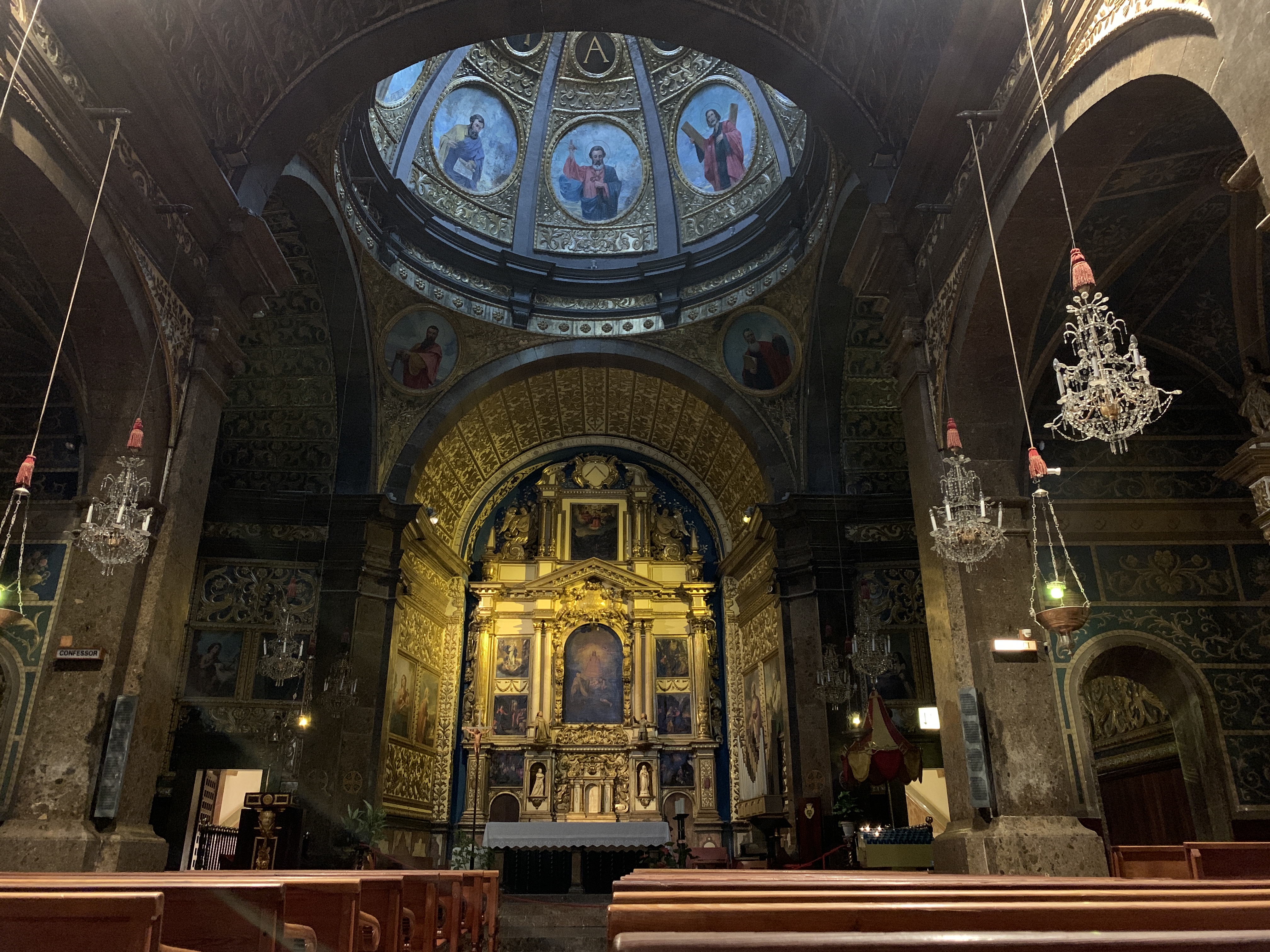
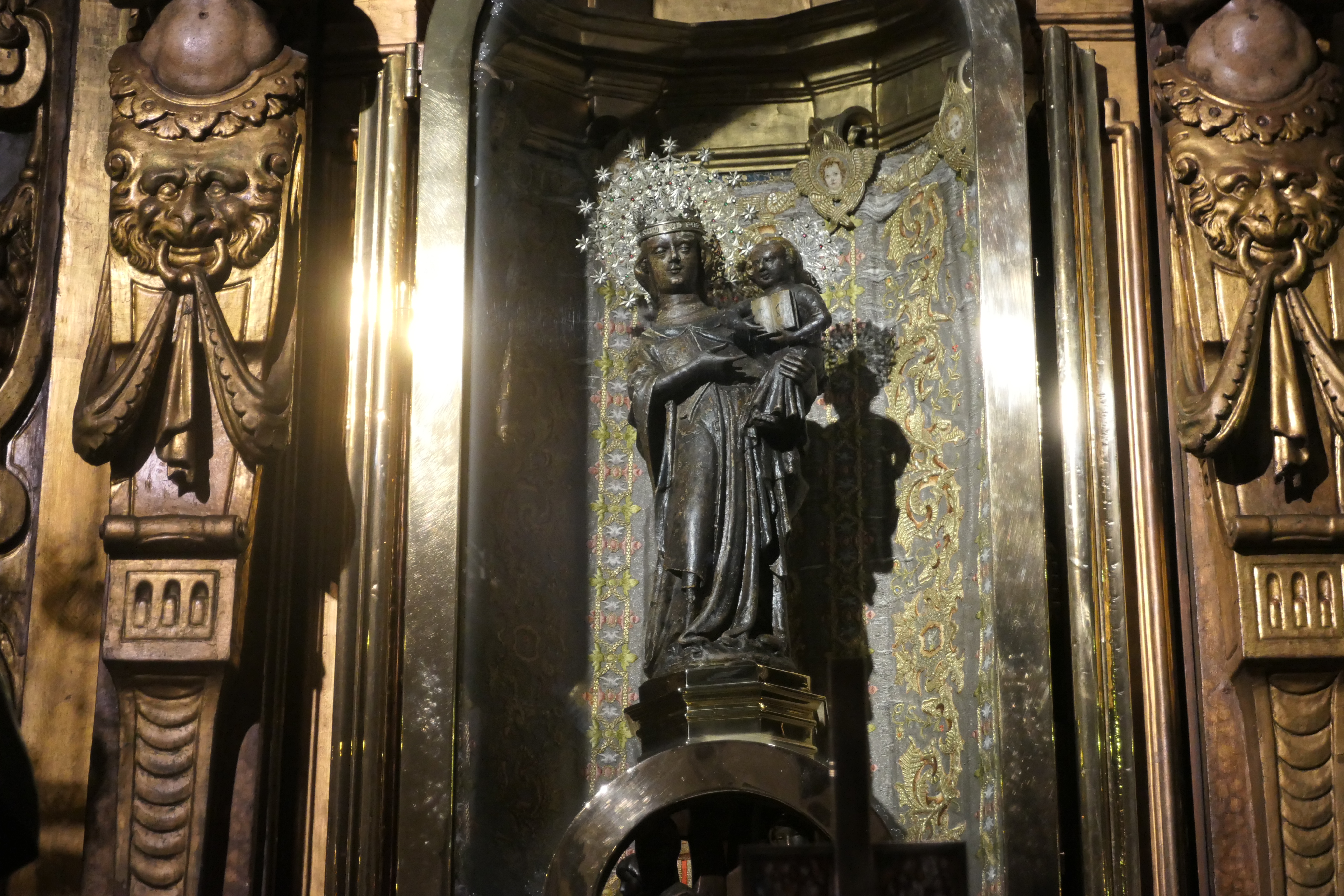
A little further from Alcudia south and west (about 30 km or 19 miles) is the 17th century Lluch Monastery, a major pilgrimage site and important religious sanctuary in Mallorca. We visited Lluch Monastery on our way back to the Palma airport as we were leaving Mallorca. It is located in the rugged Tramuntana Mountains. As the informational image notes below, the monastery receives more than a million visitors a year!

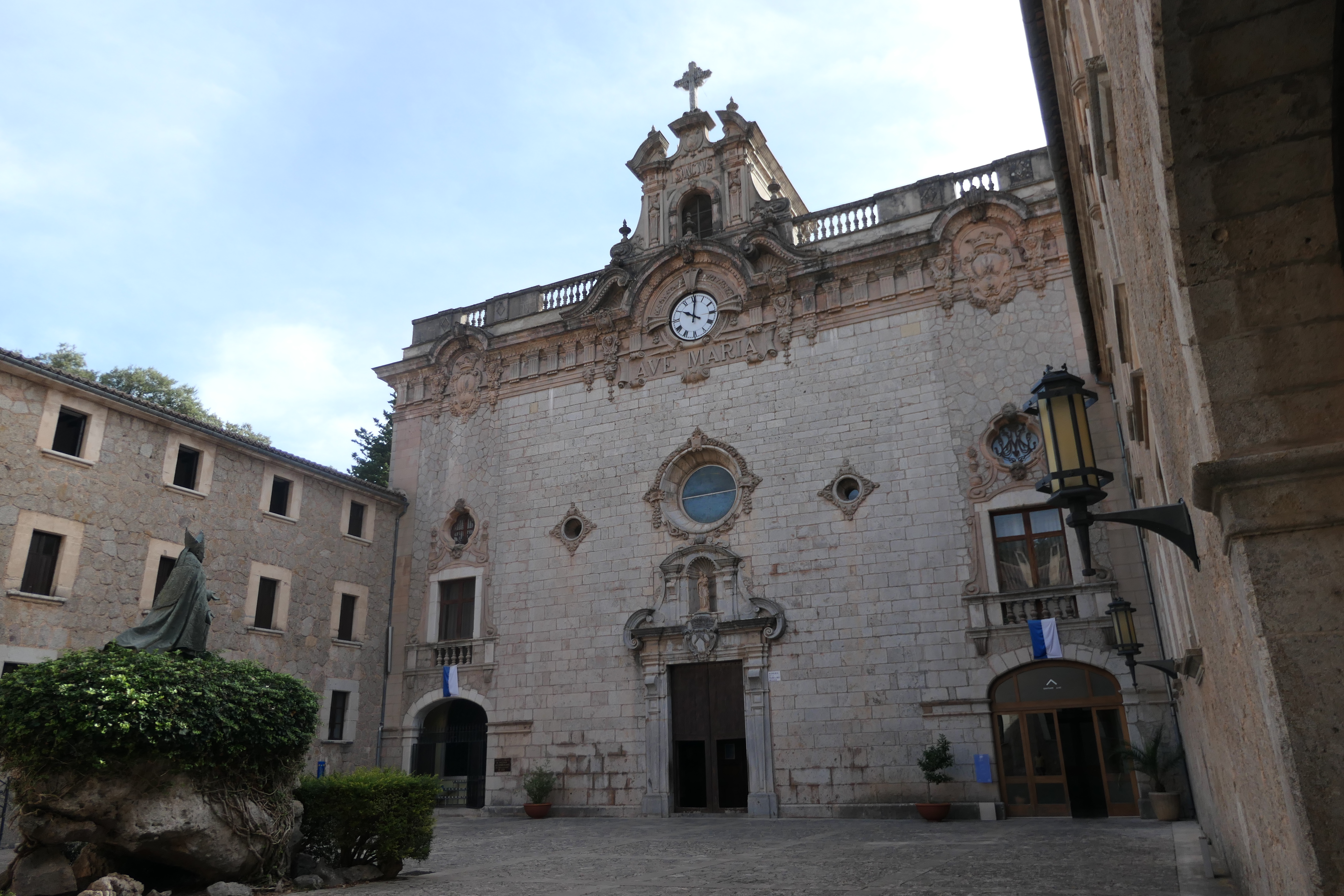
Here’s a short history of Lluch Monastery.

The north coast of Mallorca really is magical – with its nice hotels, beautiful beaches, a medieval walled town, Roman city ruins, a historic pilgrimage site and dramatic coastline drive and views, I’m not sure how it gets any better than this for an independent tourist!
Three Quiet Inland Sights in Mallorca

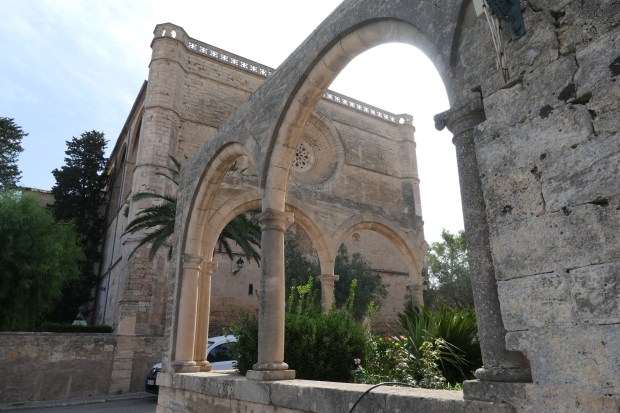
Although most tourists to Mallorca, Spain flock to the beach or the mountains to bike on their holidays in Mallorca, there are several “off the radar” spots to visit if you’d like to spend a quieter day during your stay. These three towns and nearby sites are relatively close to each other in the north-eastern part of the island and make good short stops if your traveling from the east coast to the north coast, which is exactly what we were doing. See other posts on Mallorca here.

Locations of Manacor, Petra and Artà – center right in image.

Manacor

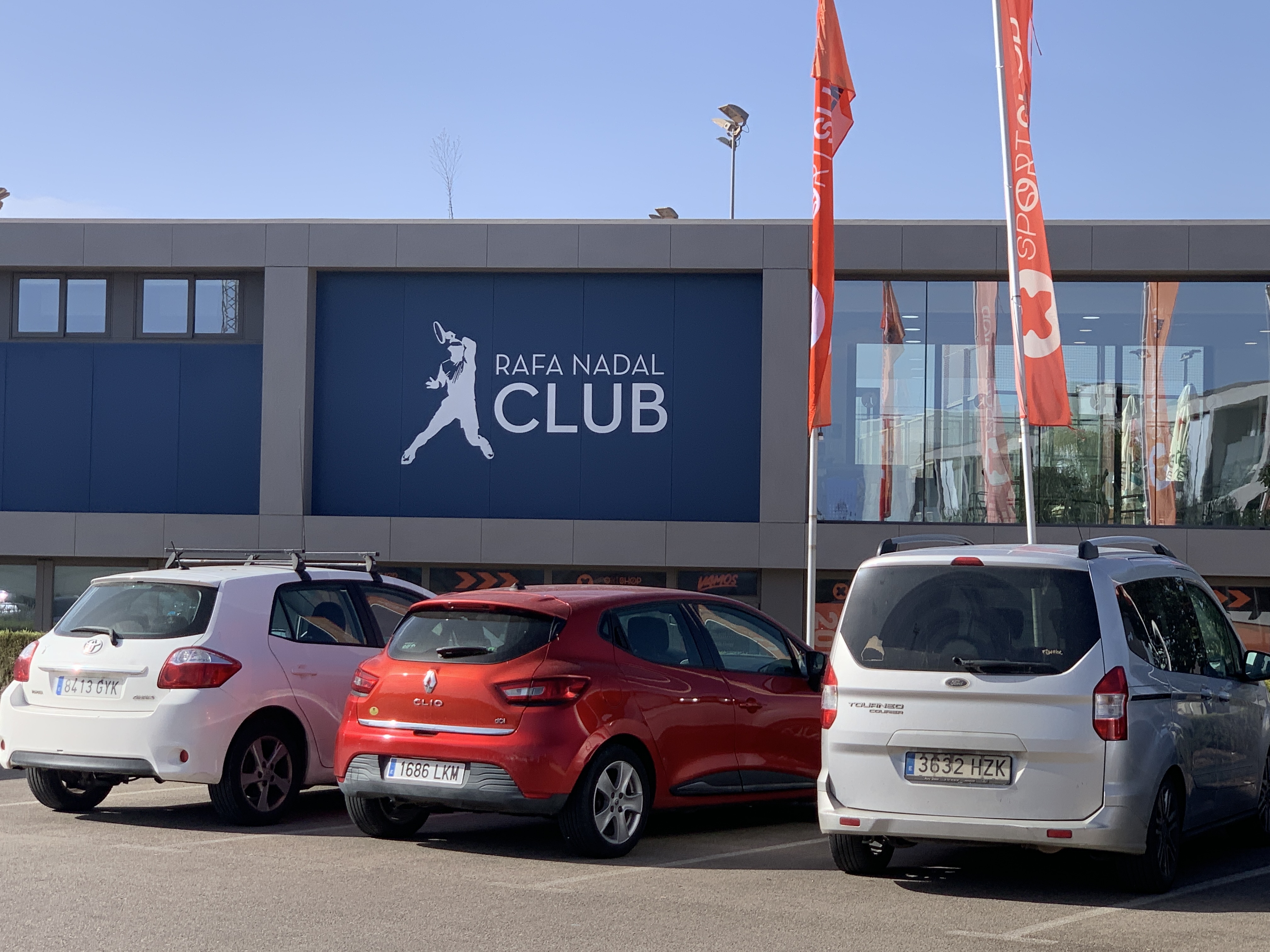
If you enjoy professional tennis, you may have heard of Rafael Nadal, a former #1 ranked tennis player and winner of 22 Grand Slam Men’s Singles titles, including 14 French Open titles. Just amazing. Manacor is his home town and he has built a tennis academy there, just on the outskirts of town. We stopped by to take a look and visit the Academy store to pick up some souvenirs. The academy appeared fairly quiet while were there (September) and the facility was in the midst of expansion. If you or your children or friends are looking for some serious game improvement, this might be your place!

While there is more to Manacor than tennis, this was our main stop.

Petra

This little town is the birthplace of Franciscan Friar Junípero Serra, born in 1713, who made it all the way to what later became the state of California and established missions that led to the founding of the cities of San Diego and San Francisco. He represented the Catholic Church on what was known as the Portolá expedition (1769–1770).

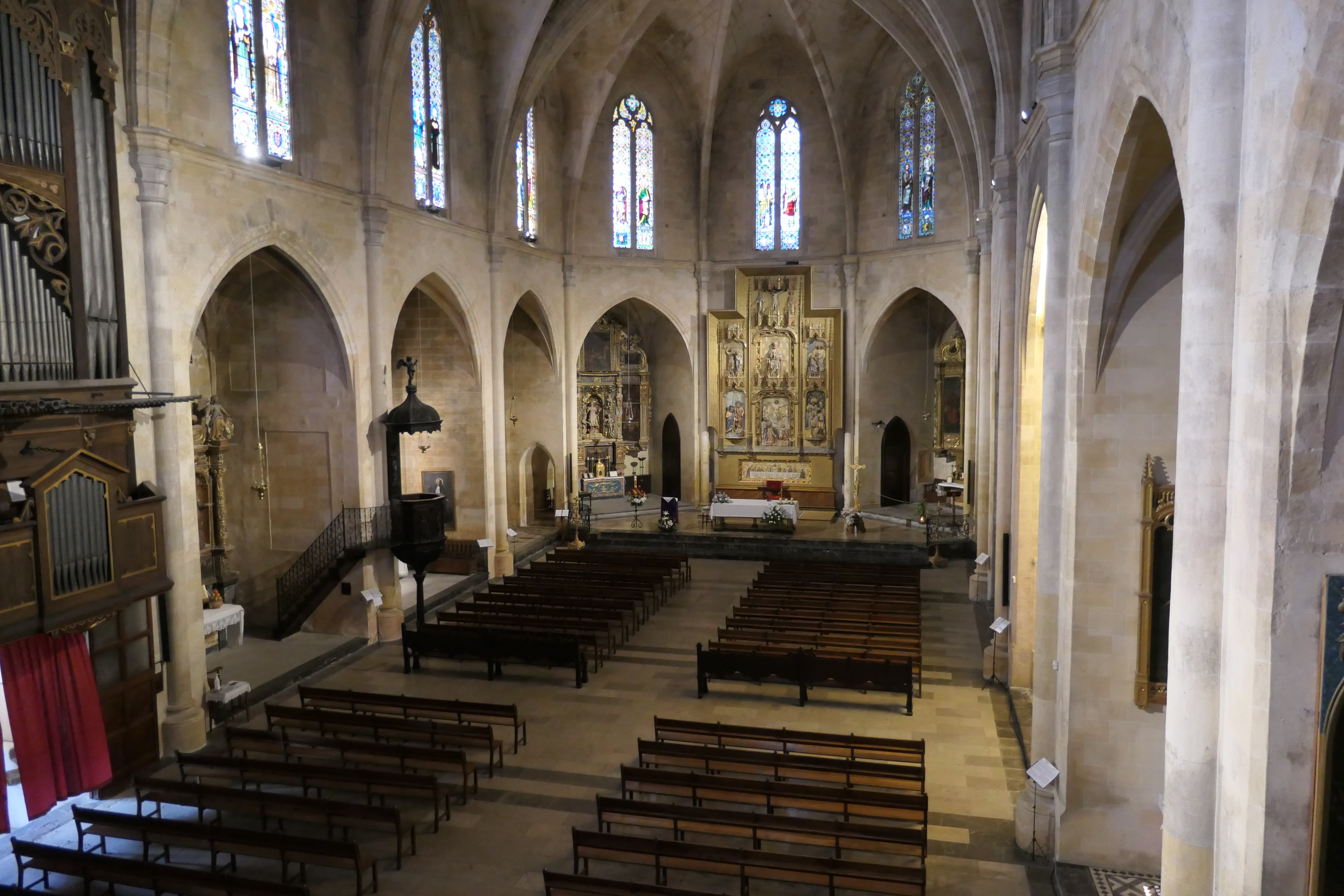
Parish Church of Sant Pere in Petra, where Fray Junípero Serra was baptized.

Just outside of Petra, you can visit Bonany Monastery/Sanctuary, which sits on a hill (elevation 1,000 ft) above Petra and affords a lovely view of the island’s interior landscape. Signs from the town will lead you on the narrow road up to the monastery.

The monastery and church date to the 17th century when locals would ascend the hill to pray for rain for growing their crops, and a statue of the Virgin Mary was found on the hillside. The main church’s hours are short (10 am – 2 pm), so arrange your visit accordingly if you’d like to go inside. I believe the Sanctuary also offers some accomodations if you’d like to have some solitude during your stay on Mallorca.

View of the Bonany Monastery.

Artà

Artà is a larger town than Petra but still easy to cover on foot and only 15-30 minutes from some lovely beaches on the northeastern shore of Mallorca.

Artà’s pedestrian main street.

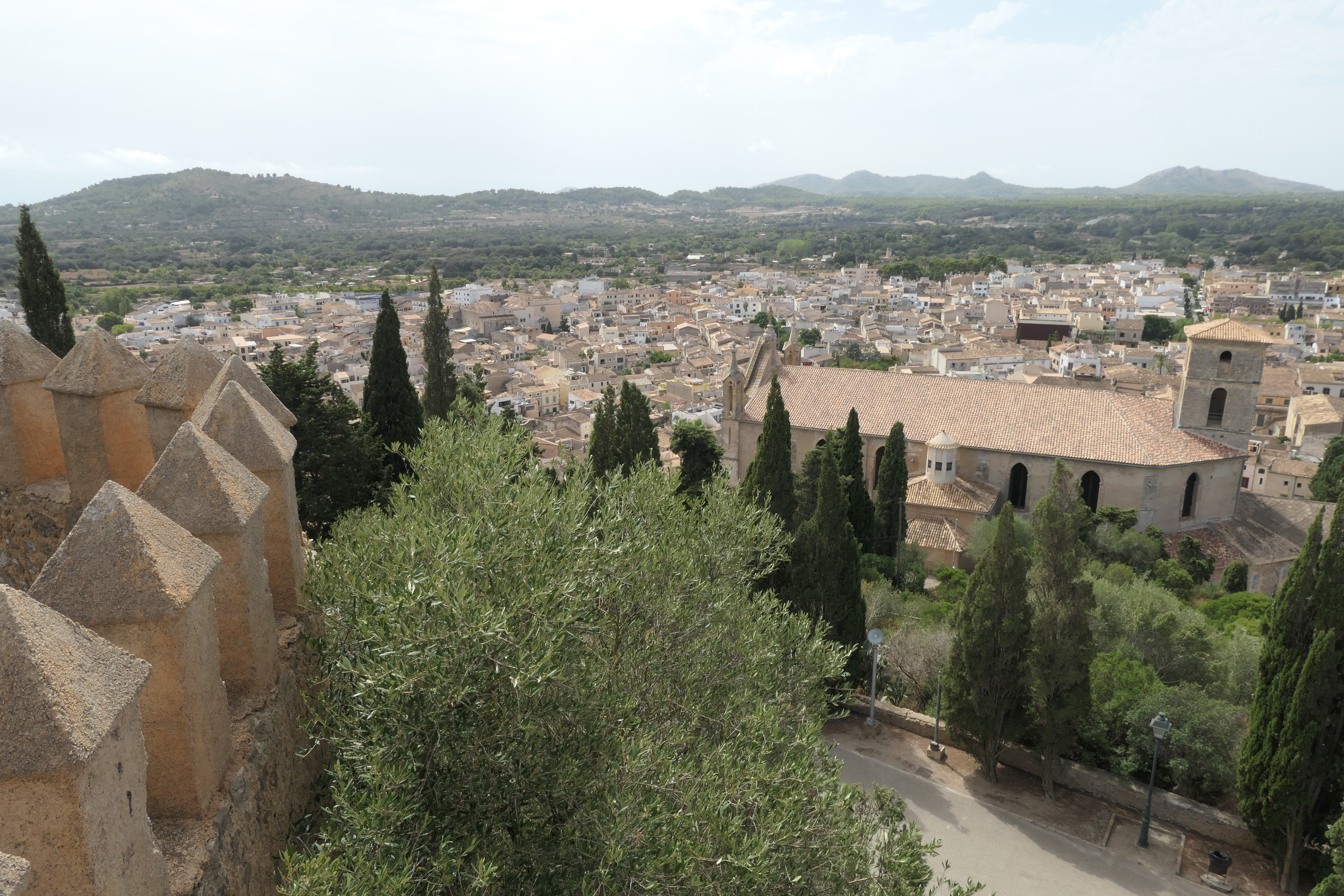
Artà has a nice pedestrian street with fun and classy shops that leads towards the hill topped by the Sanctuary of San Salvador (Sant Salvador) with medieval walls surrounding it; this is one of the town’s main sights.

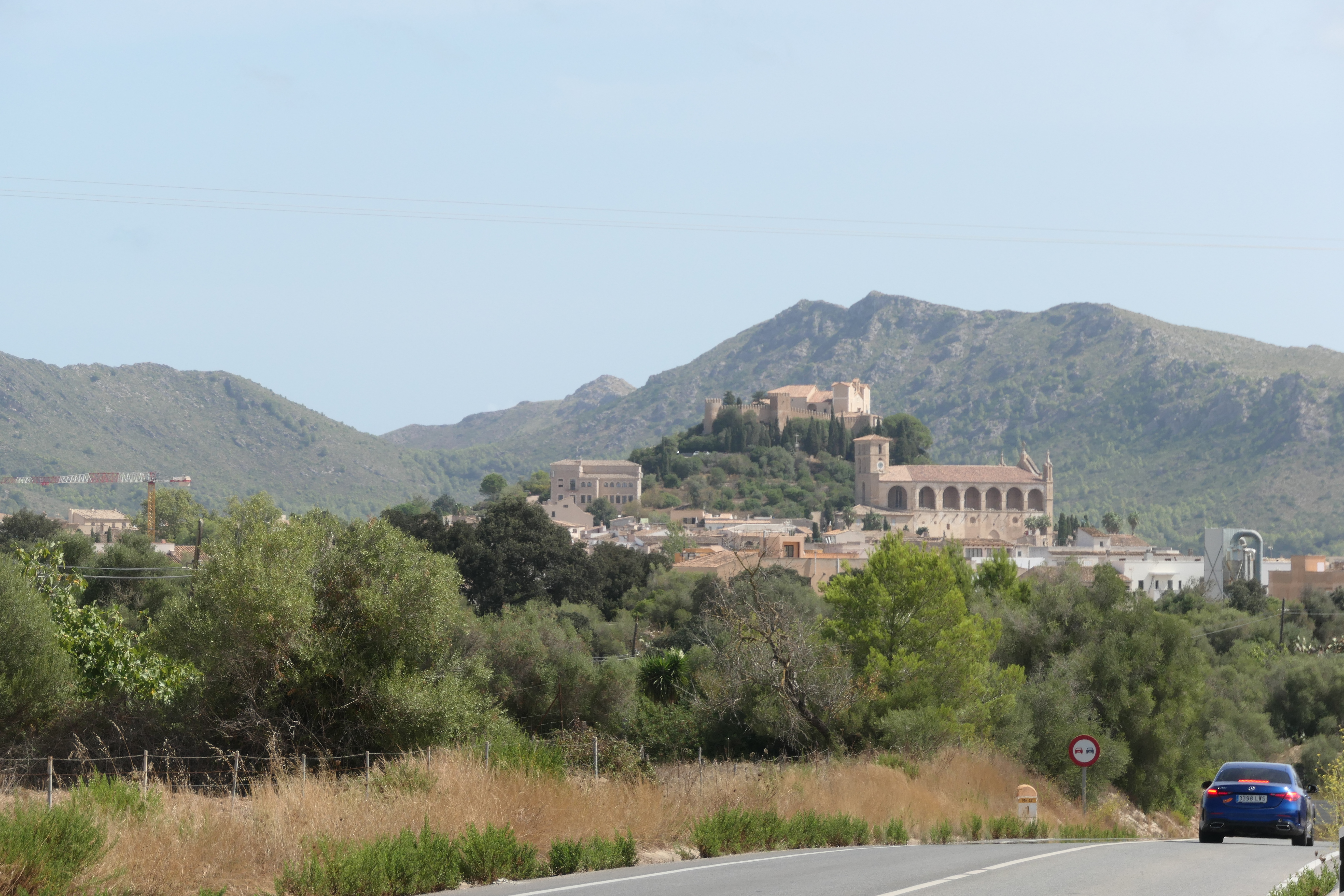
The town of Artà with the Sanctuary of San Salvador dominating the hilltop.

Ses Païsses

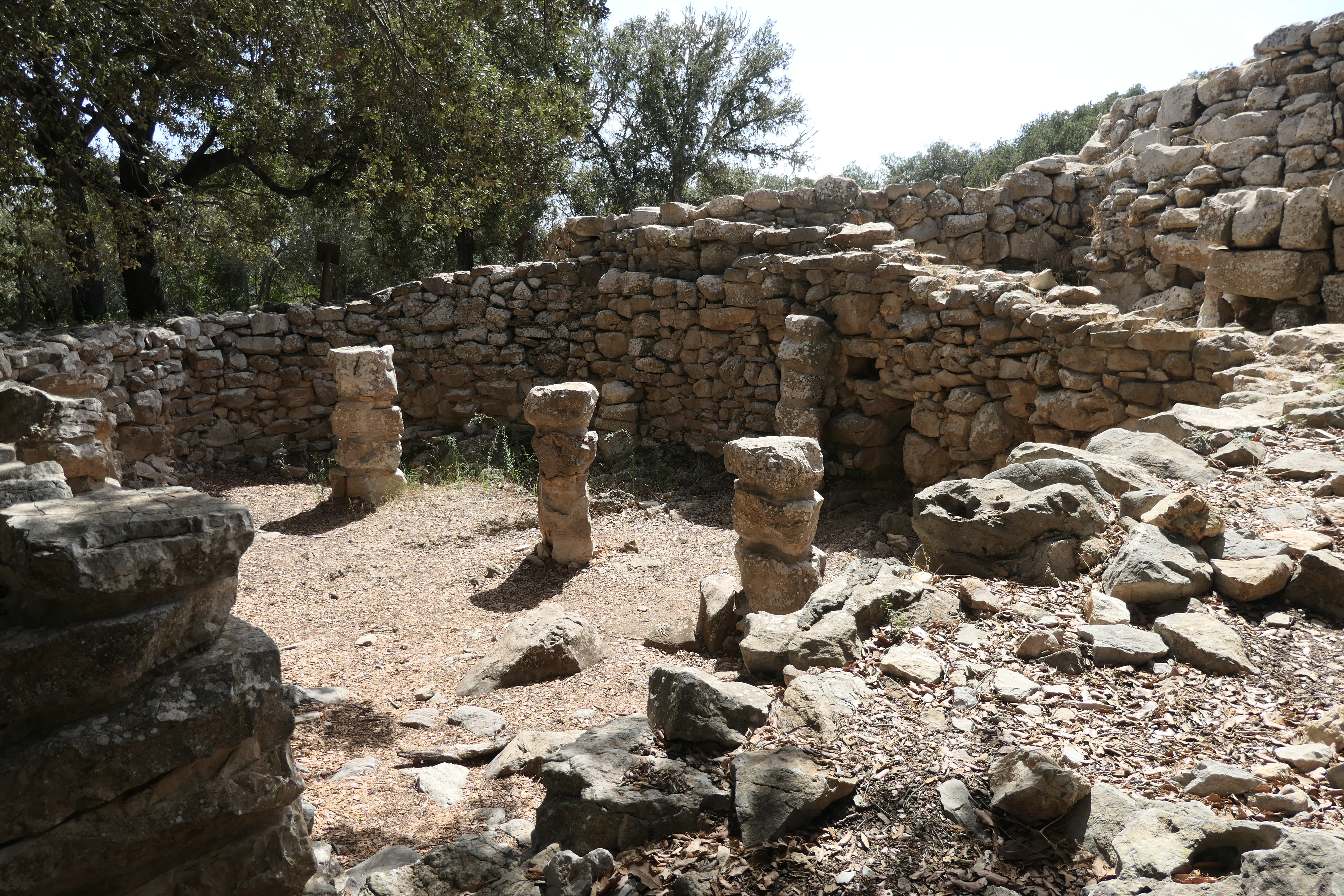
While exploring one of the shops in Artà, I saw a post card with a photo of some prehistoric ruins and I inquired about those ruins, and learned about Ses Païsses, a Bronze Age (approximately 900 BC) settlement, which is less than 2 km (or less than a mile) outside of Artà. This is one of the most important prehistoric sites in Mallorca and the Balearic Islands for that matter. This was an unexpected find and we enjoyed seeing this site. Ses Païsses was a prelude to what we were going to see in Menorca, which is home to a number of interesting prehistoric sites.

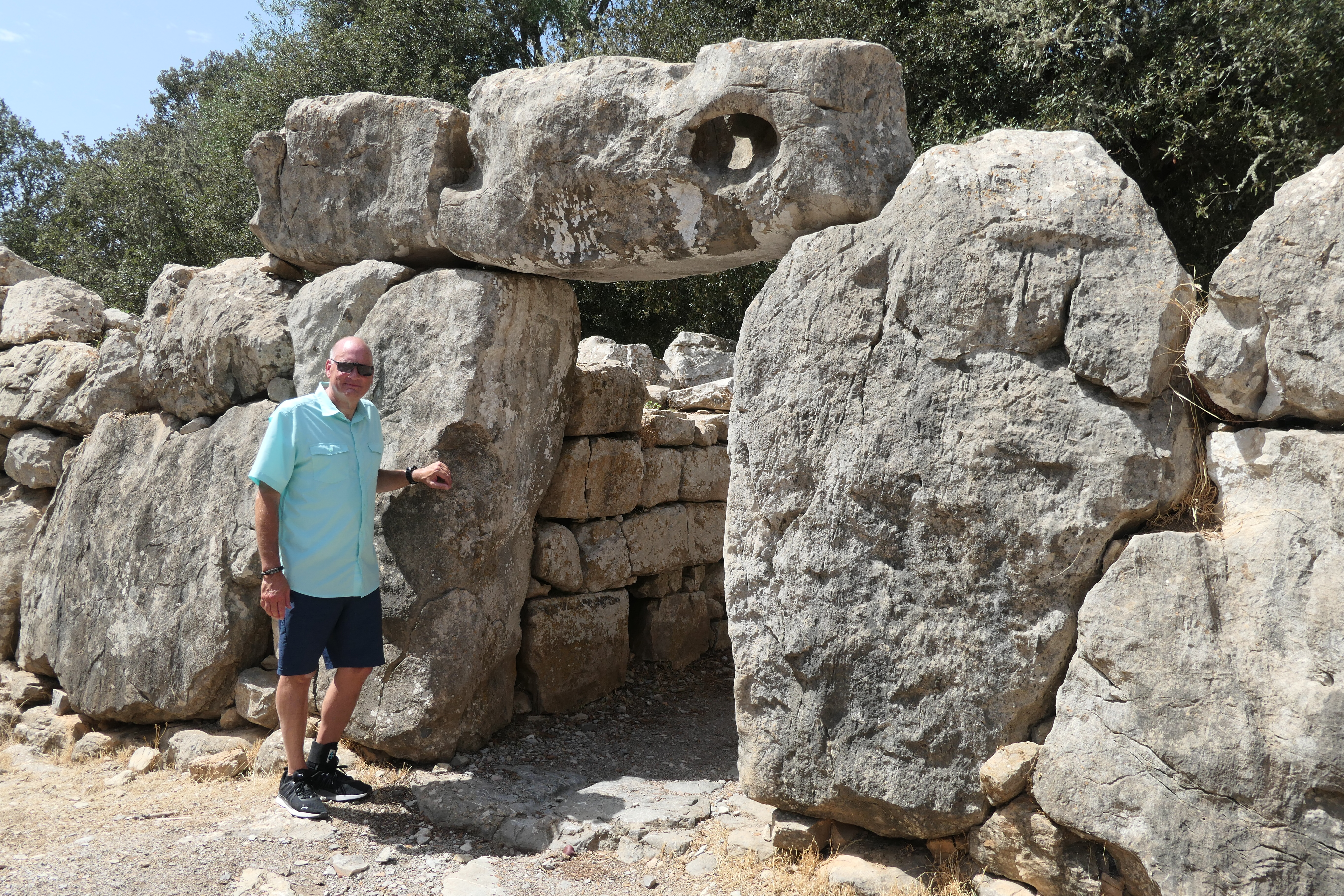
The entrance to Ses Païsses.

Artà would make a great place to call home for a night or two if you plan to visit this part of the island. We stopped here for a couple hours on our way to Alcúdia, our last stay on Mallorca.

Visiting Mallorca’s Drach Caves

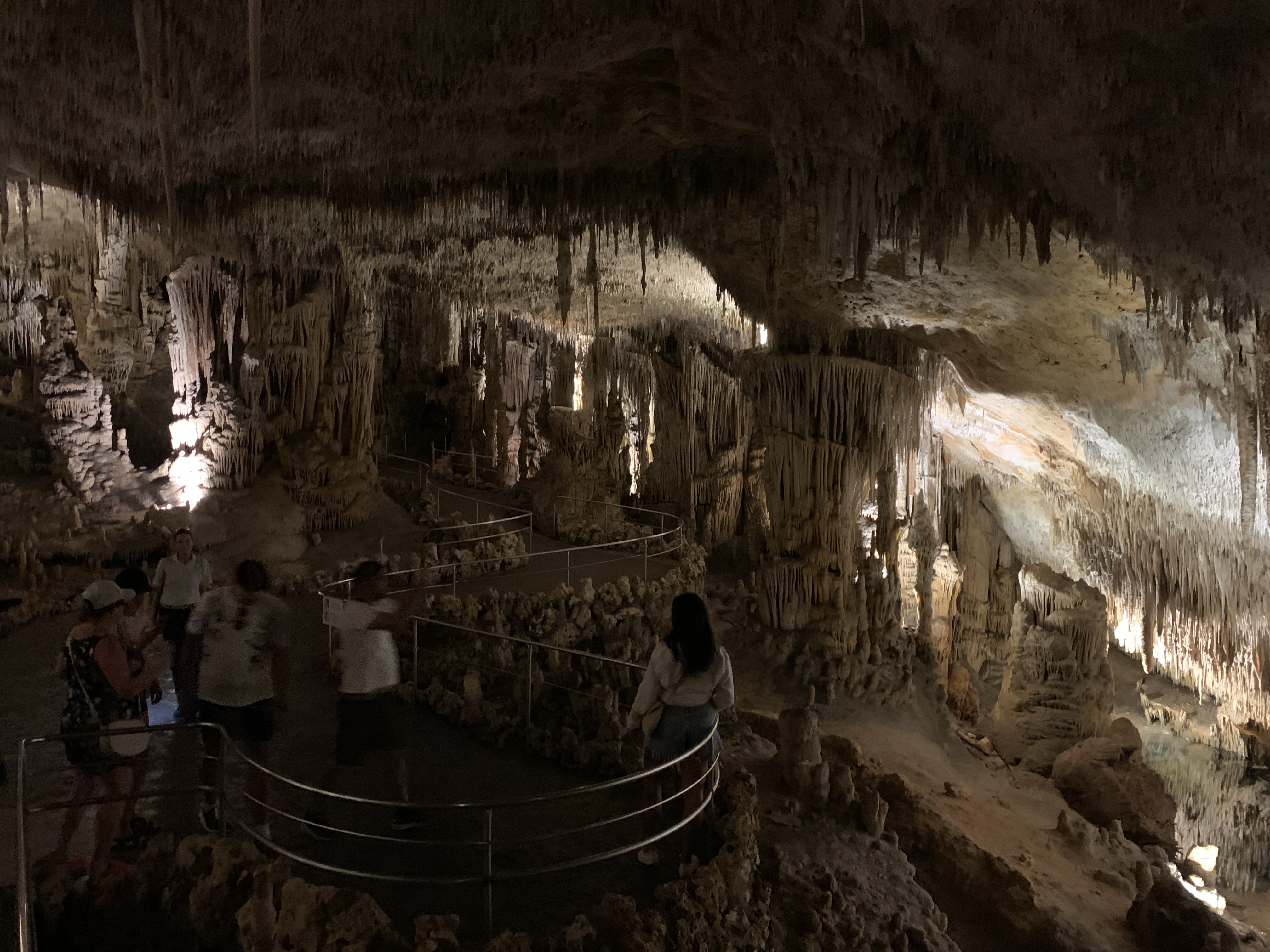
One of the most well-known tourist sites in Mallorca are the Drach Caves (Cuevas del Drach, or Caves of the Dragon), located on the eastern coast in the town of Porto Cristo (see my post here for information on nearby beautiful beaches). The caves are known for having one of the largest underground lakes in the world (Lake Martel).

The Drach Caves are located on Mallorca’s eastern coast near Porto Cristo. (The starred locations indicate where we stayed on the island).

Drach Caves

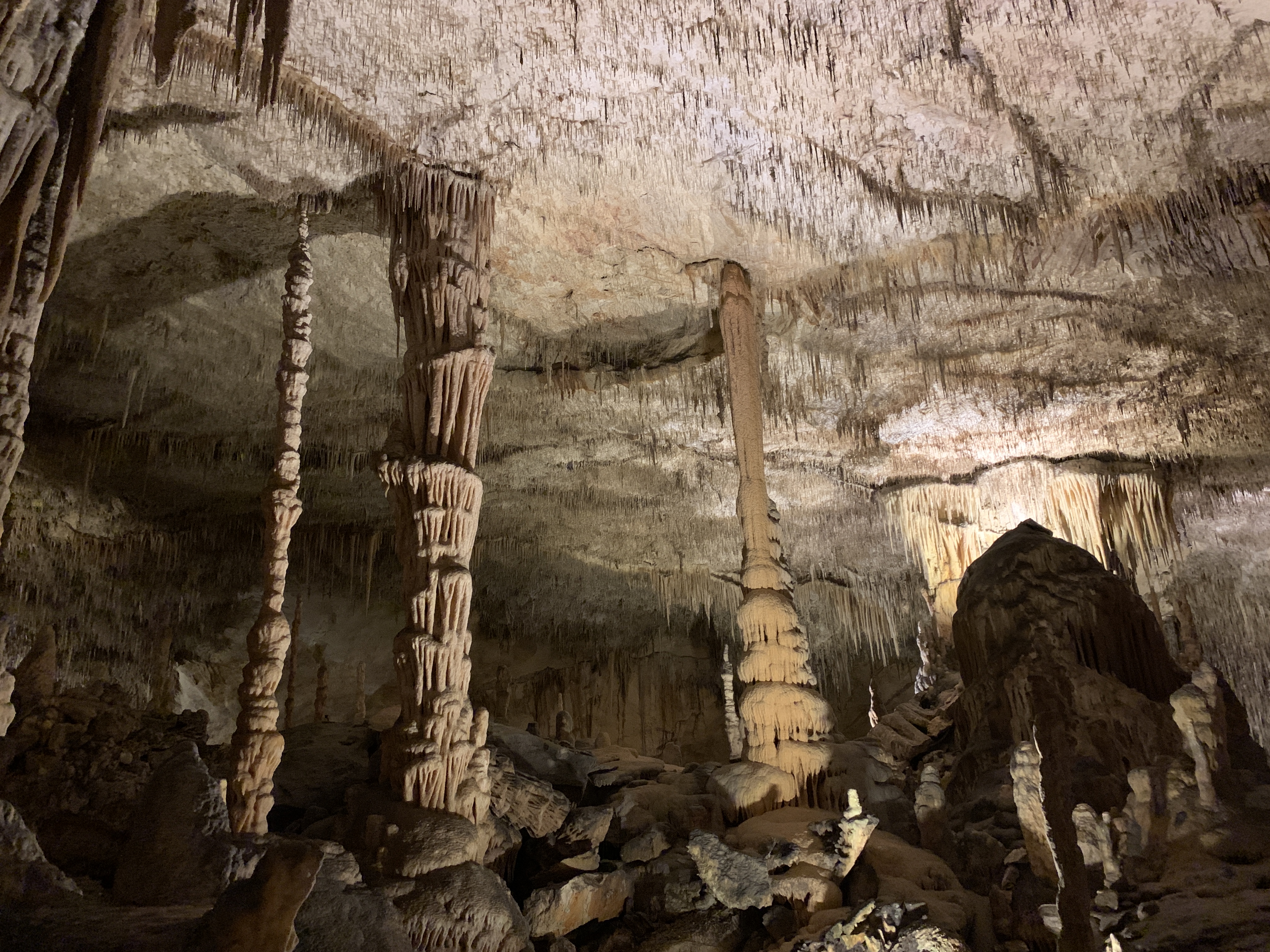
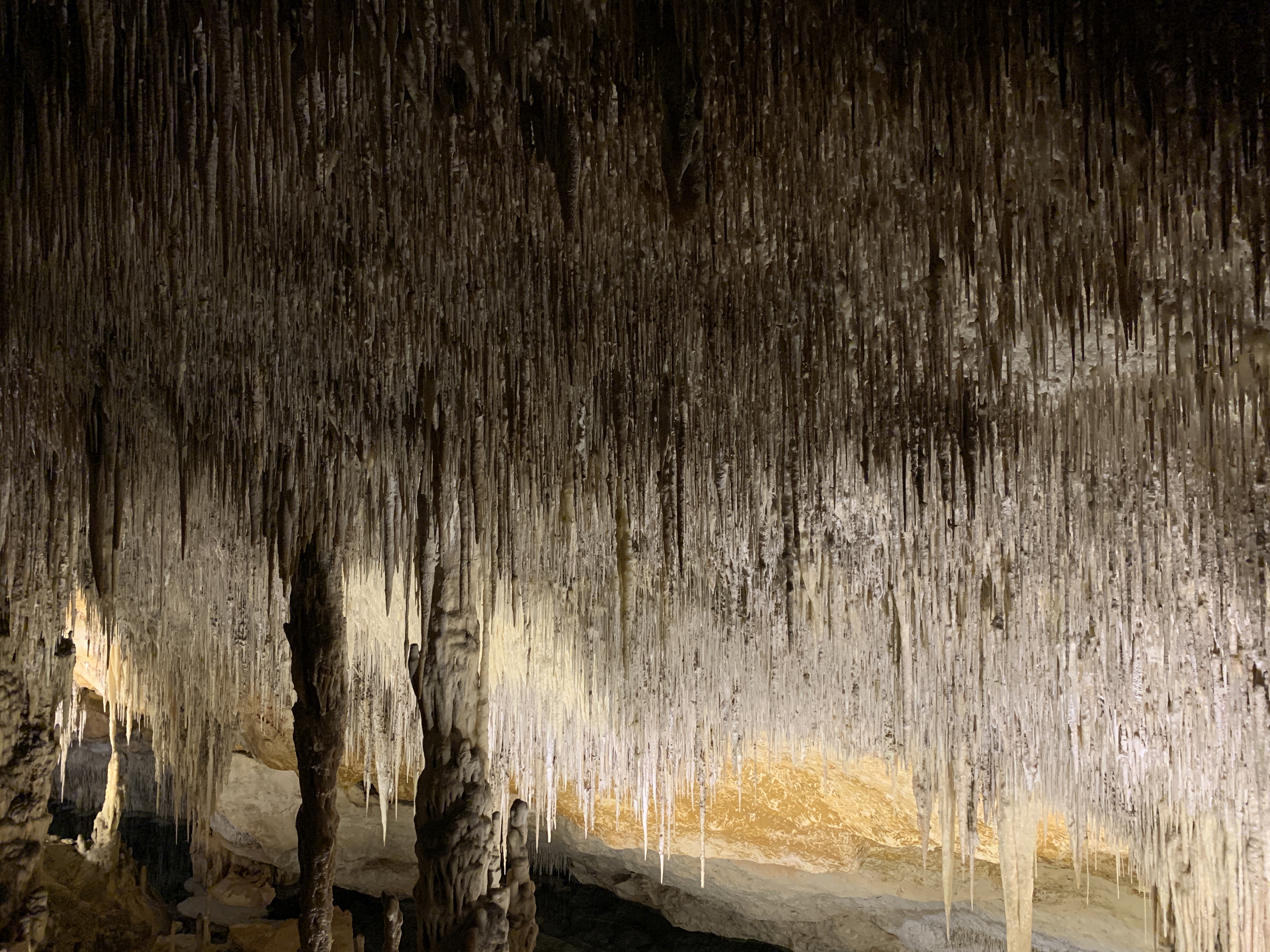
Given the caves’ popularity as a cruise shore excursion and for other tourists on the island, it would be wise to purchase your tickets in advance here. Bring a light jacket, the air can be very cool. I highly recommend getting in line early for your appointed entry time so you can be one of the first ones into the caves for the best photos and to be one of the first to get on your boat ride at the end. You may be with 200+ other people at your tour time. We were staying in Cala D’ Or, only 28 km (17 miles) south of Porto Cristo, a convenient spot for visiting this part of Mallorca.

At the end of the walking tour of the caves, you are seated in stadium area by the underground freshwater lake (Lake Martel) – it is a spectacular setting. A boat with strings of lights appears from around a bend in the lake and live classical music is played (violin, flute & organ as I recall) as the boat sails past you in this unreal setting – kind of like “Phantom of the Opera”! Note: You are not allowed to take photos or video of the performance – they are very particular about this!

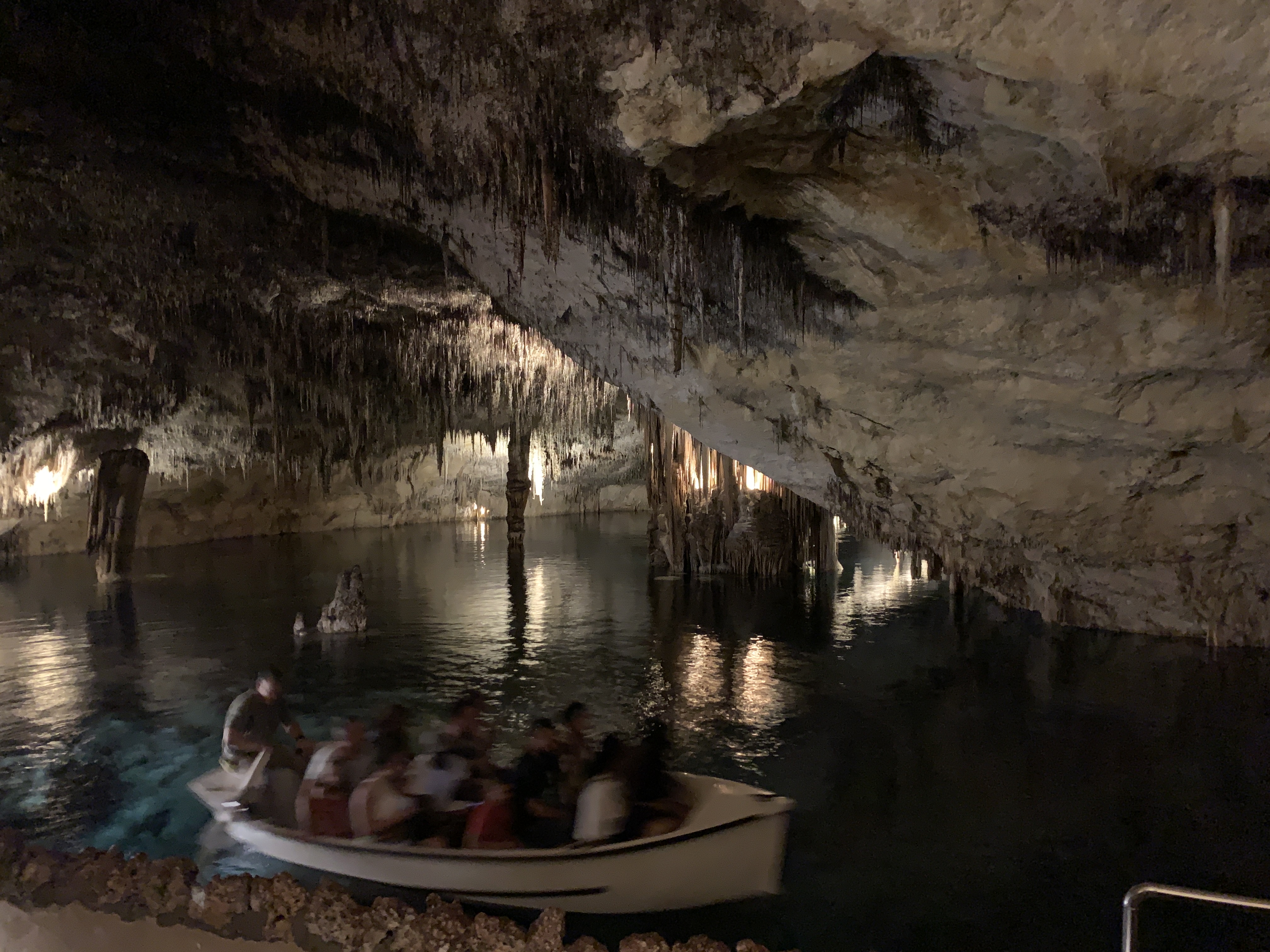
Following the performance, you have the opportunity to take a short rowboat ride to the exit path for your own “boating on the underground lake” experience. Or, if you wish, you can just walk on a path towards the exit if you’re in a hurry, since it takes a while to ferry 200-300 people by boat (there are multiple boats but each only holds about 10 people).

The underground lake and a boat taking passengers on a ride to the exit path at the end of the tour.

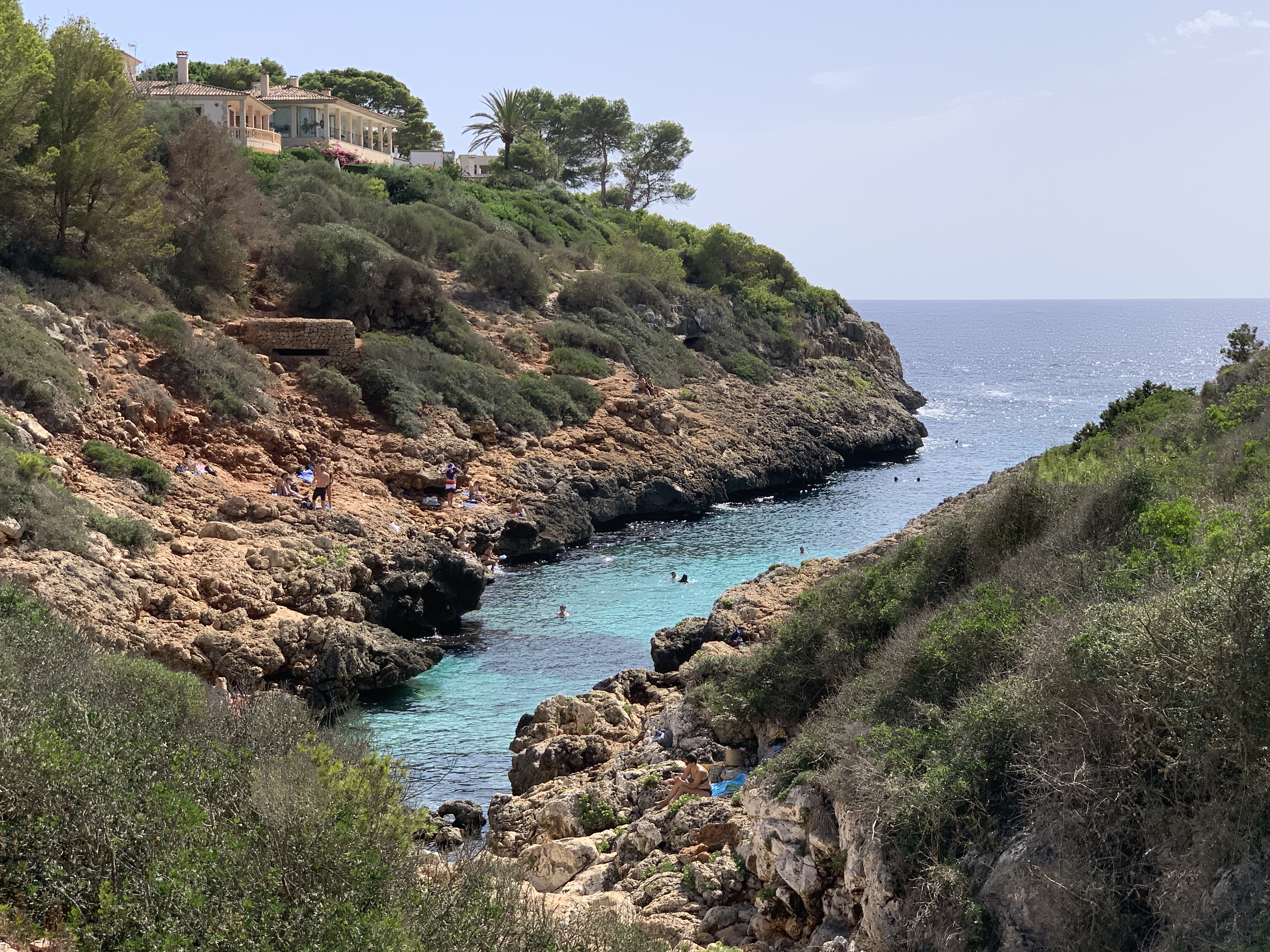
After your visit to the caves, if you want to make a day of it, there is a small cove for swimming next to the caves entrance. Bring your swimsuit (always good advice wherever you are on Mallorca!).

This lovely cove is just a short walk from the Drach Caves parking area.

Although the caves are very touristy, I highly recommend a visit. It’s not often you get to boat on a underground lake and watch a classical music performance in such an amazing setting.

Mallorca’s Southeast Coast – Home to Some of Its (and the World’s) Most Beautiful Beaches

After enjoying the Palma area and exploring the north/west coast of Mallorca, we moved on to our 2nd stop, Cala d’Or, a great location to explore the leeward side of Mallorca. The southeast coast is dotted with beautiful coves and beaches (I think there are over 100), many of which require a bit of a hike to get to, while others are easily accessible by car.

Alua Soul Hotel – Cala d’Or

We stayed at the Alua Soul Hotel in Cala d’Or, and we were not disappointed. The hotel property surrounds a small cove (Cala Egos, to which the public also has access) and is in a perfect location for exploring this beautiful part of Mallorca.

Cala Egos – this is the view from our room at the Alua Soul Hotel – I think I could have stayed here forever!
Cala d’Or has lots of shops and restaurants, this particular shopping/restaurant area was very close to our hotel.

Cala d’Or is a major boat harbor and tourist hub (although it did not feel all that crowded – the hotels and condos are spread out and tucked behind the various hills and coves). If you get tired of the beach, there are lots of other things to do here, such as renting ATV’s, going on fishing or sailing expeditions and many other activities to keep you and your family or friends entertained!

Mondragó Park

Near Cala d’Or is Mondrago Park (Parc natural de Mondragó). This nature park has lots of parking (fee required), wide beaches, snack vendors and restrooms. The beaches and shallow water are great for families. There are two beach areas connected by a trail (just a 5 minute walk between the two beaches). Speaking of families, let me point out that these are “European” beaches, which means you will likely encounter some topless sunbathers, as with most beaches in Mallorca (or any Mediterranean island for that matter). However, the protocol is that everyone covers up at the snack bars, going to/from the restroom, beach, etc.

If you’re after a little more solitude, this little cove is also in Mondragó Park.

Cala des Moro

This is perhaps the most famous (and beautiful?) beach and cove on Mallorca. Arrive early (like by 8 or 9 am) to enjoy a quieter beach experience and to find parking. You walk south from the parking area off the main road through a small residential neighborhood and just keep working your way to the coastline. It’s about a 20 minute walk/hike from the parking area to the beach – be prepared for a steep descent/ascent into/out of the cove. Just follow the crowd. At the top of the cove, there was an enterprising drink/snack vendor. I will say this is one of the most scenic beaches I’ve ever seen. The water is warm and the color is about the prettiest turquoise shade possible.

Cala des Moro, Mallorca

Other Beautiful Beaches

Further up the coast from Cala d’Or, the coves & beaches just keep on coming….here are two other examples that are near Porto Cristo, 28 km (17 miles) north of Cala d’Or and easily accessible by car (parking is next to the beach in both cases). Porto Cristo is the home of Cuevas del Drach (Drach Caves) which I will share more about in my next post!

Cala Anguila

Cala Anguila

Cala Mendia

Cala Mendia

No matter where you choose to stay while in Mallorca, be sure to visit the south/east coast of this beautiful island.

Beyond Palma – Touring Western Mallorca – Part 1

From our base in Palma, we did a couple of day trips through the western part of Mallorca. The north/western shore of Mallorca is rugged and this mountainous area (known as the Serra de Tramuntana), is Mallorca’s “backbone”, with narrow winding roads, steep hills, dramatic coastline and several quaint medieval villages. As mentioned in my Overview of Mallorca, bicyclists are everywhere – some are just out for fun while others do serious training here.

Andraxt and Port Andraxt

Andraxt was our first stop along the southwest coast from Palma. We skipped the touristy and trendy Magaluf area, (a short distance from Palma), and decided to check out the quieter southwestern end of the island. As with a number of coastal towns on Mallorca, the town of Andraxt and its port share the same name and are just a few kilometers apart. Hundreds of years ago, the inland town separated from the port provided some protection against raids by pirates. Andraxt and Port Andraxt is one such example. It was interesting to see the difference between the two – Port Andraxt is the modern tourist hub with sleek yachts in the harbor and the old town of Andraxt is nestled in the hills and feels like it’s from a completely different era.


The old town of Andraxt with Port Andraxt in the distance – it was very difficult to find a place to get a photo of the town and port!
St. Elm Beach

Not far from Andraxt was St. Elm Beach, about a 45 minute drive from Palma. St. Elm is a small resort town at the very tip of southwestern Mallorca. We spent a couple hours enjoying the scenery and beach here. There was a small car park just across the street from the main beach and behind the beach is a line of restaurants and shops facing the beautiful bay, with the uninhabited islet of El Pantaleu just offshore.

Another view of St. Elm Beach and islet of El Pantaleu

Banyalbufar

North and east along the coast from St. Elm is the municipality of Banyalbufar, with dramatic coastline as shown above in this post and with one of the many scenic medieval towers in Mallorca keeping watch over the coast.

Torre del Verger – a watchtower in Banyalbufar.

Miramar Monastery

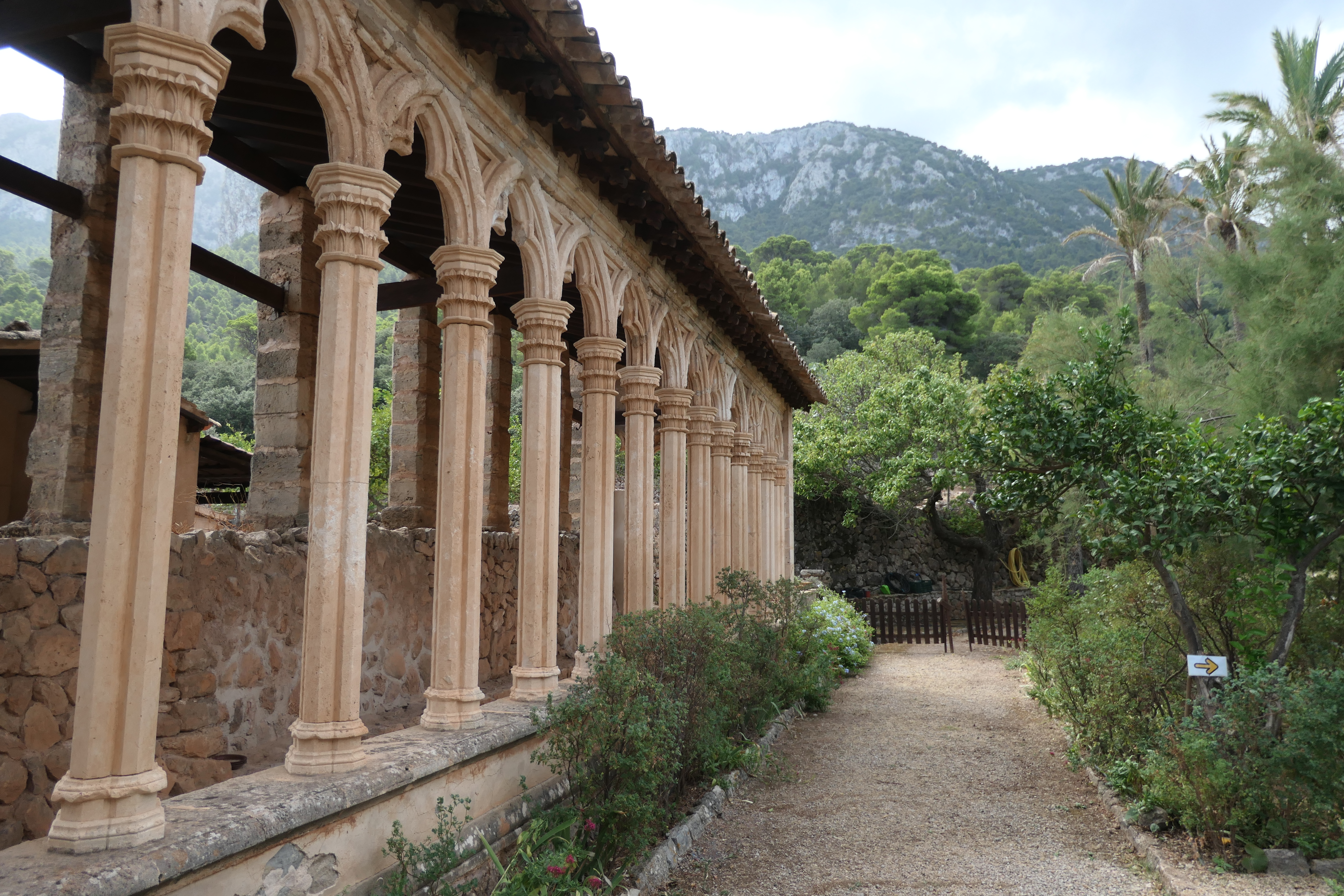
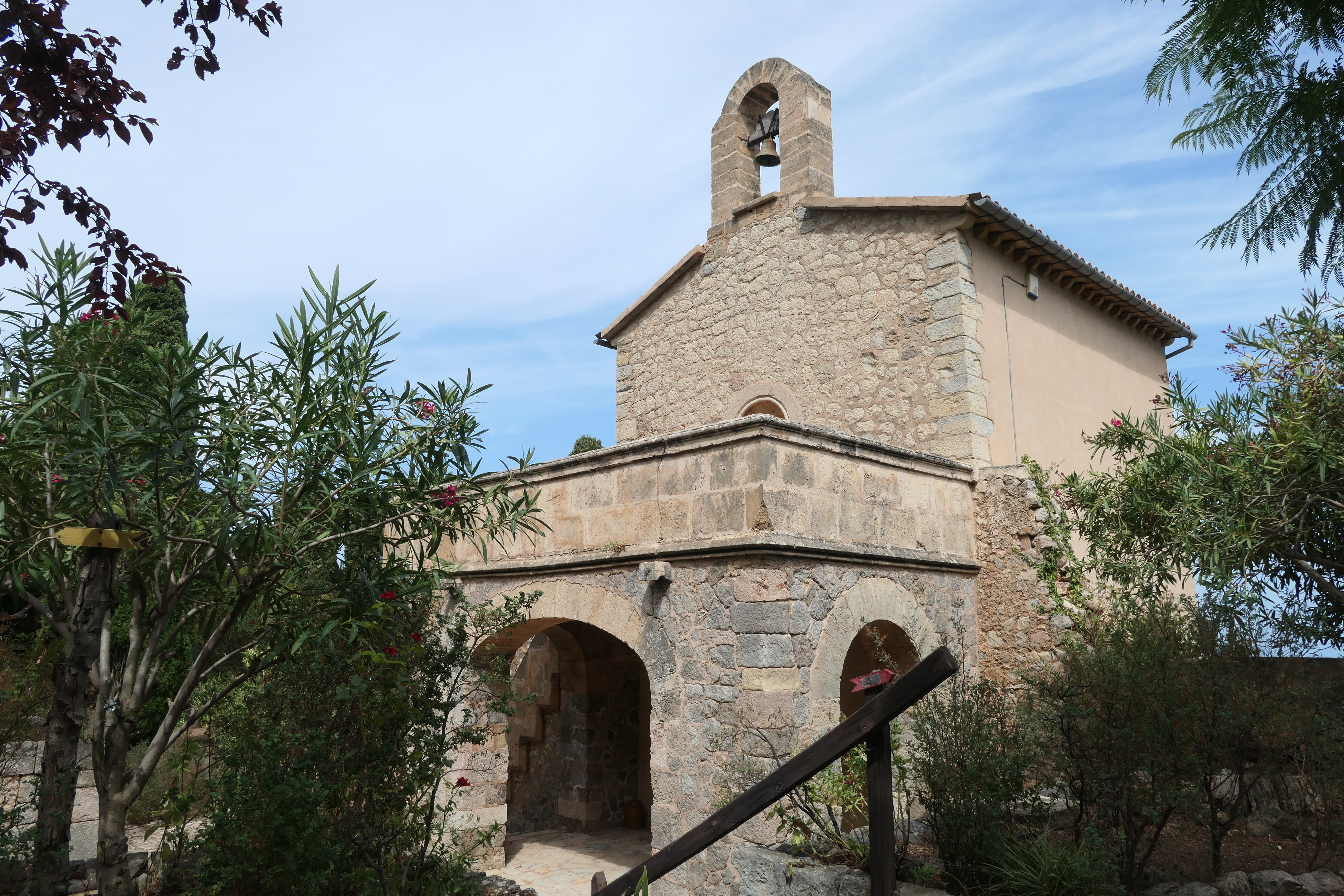
Situated between Valldemossa and Deia, this 13th century monastery is worth a visit – the views from its terraces are lovely. There’s not much left of the original monastery, but there are a few buildings, a small museum and gardens to provide an idea of what life was like for the early inhabitants – monks who were learning Eastern languages in order to take the gospel to the Moors.

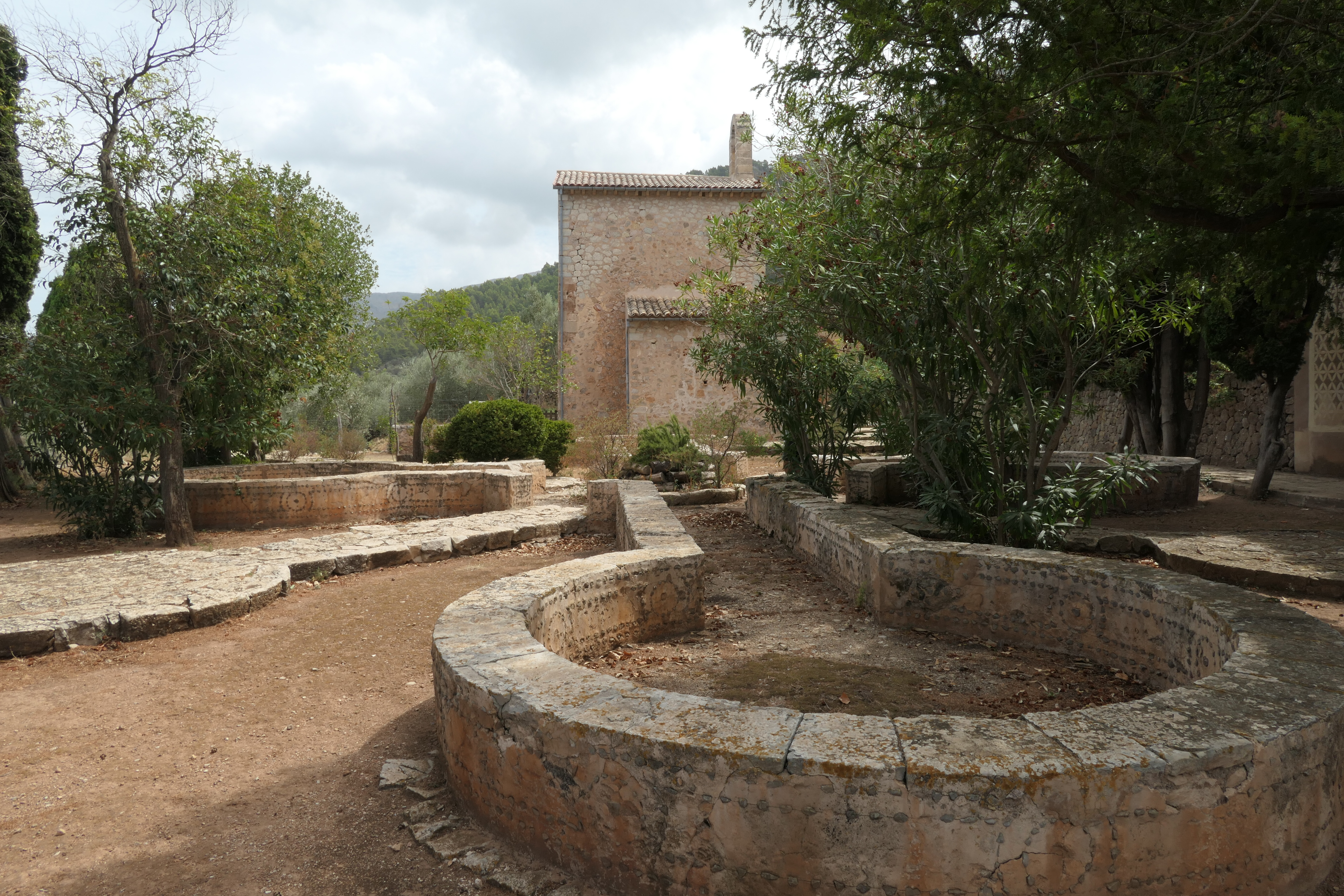
Old olive presses and other machinery at Miramar Monastery.
Coastline view from the garden terraces at Miramar Monastery – a fantastic peaceful setting.

Deia

Not far from the Miramar Monastery is this little village, perched on a hilltop on the western coast of Mallorca, which has an outsized reputation as a real hot spot. In fact, it’s so busy that we could not find any place to park as we drove by the town. Deia is known for its scenic setting, quaint streets, magnetic star power (lots of music and movie stars have hung out here), and beautiful cove and beach. Traffic was stop and go along the road passing near the town, everyone was looking for a parking spot, just like us. We really wanted to stop and I did a couple passes by the town, but the tiny car parks were continually full. The road is so narrow with cliffs on both sides that you cannot pull off the side of the road. We gave up and just took this picture out of the car window! Maybe you’ll have better luck. Perhaps later in the season or another time of day would have been better (we were there in early September).
The picturesque village of Deia, Mallorca.

In my next post, we’ll explore the villages of Valldemossa and Sóller, two other very beautiful and historic towns on Mallorca’s western coast.

Mallorca (Majorca) and Menorca (Minorca) – Spain’s Well-Kept Secret Islands (at least from Americans)

My wife and I love exploring the Mediterranean’s host of magical islands for so many reasons, but as of 2022, we had not yet visited Spain’s share of these islands and so we decided to take a September trip to Mallorca and Menorca (with few days in Barcelona on our way home). September was a perfect time to go – the water was still warm and the days long enough to allow plenty of exploring, with fewer tourists than might be found in July or August. United Airlines started offering seasonal direct service to Palma, Mallorca from Newark, NJ in the summer of 2022. I think that was a fabulous decision, even though locals may not agree! 

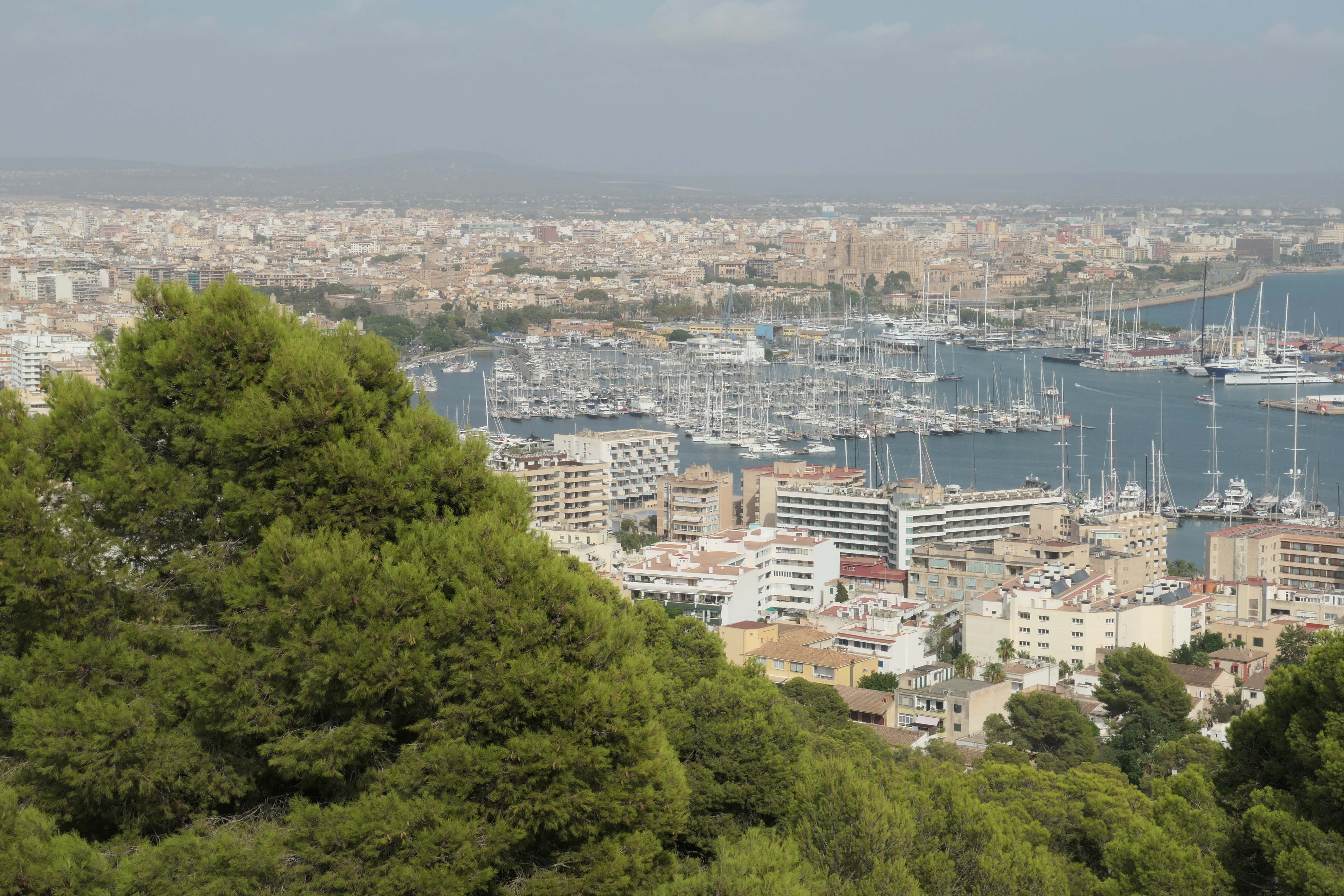
A view of Palma, Mallorca.

In this post, I’ll provide a short overview of these two islands and in future posts go into more detail on each.

Why Mallorca and Menorca?

As mentioned above, we love the Mediterranean – the beautiful coastlines, ancient and medieval-era historical sites, incredible beaches and the variety of cultures and languages to be found throughout the region. We also love that these (Mallorca and Menorca) islands don’t really seem to be on US tourists’ European vacation maps yet, at least not to the same degree as a London, Paris or Rome.

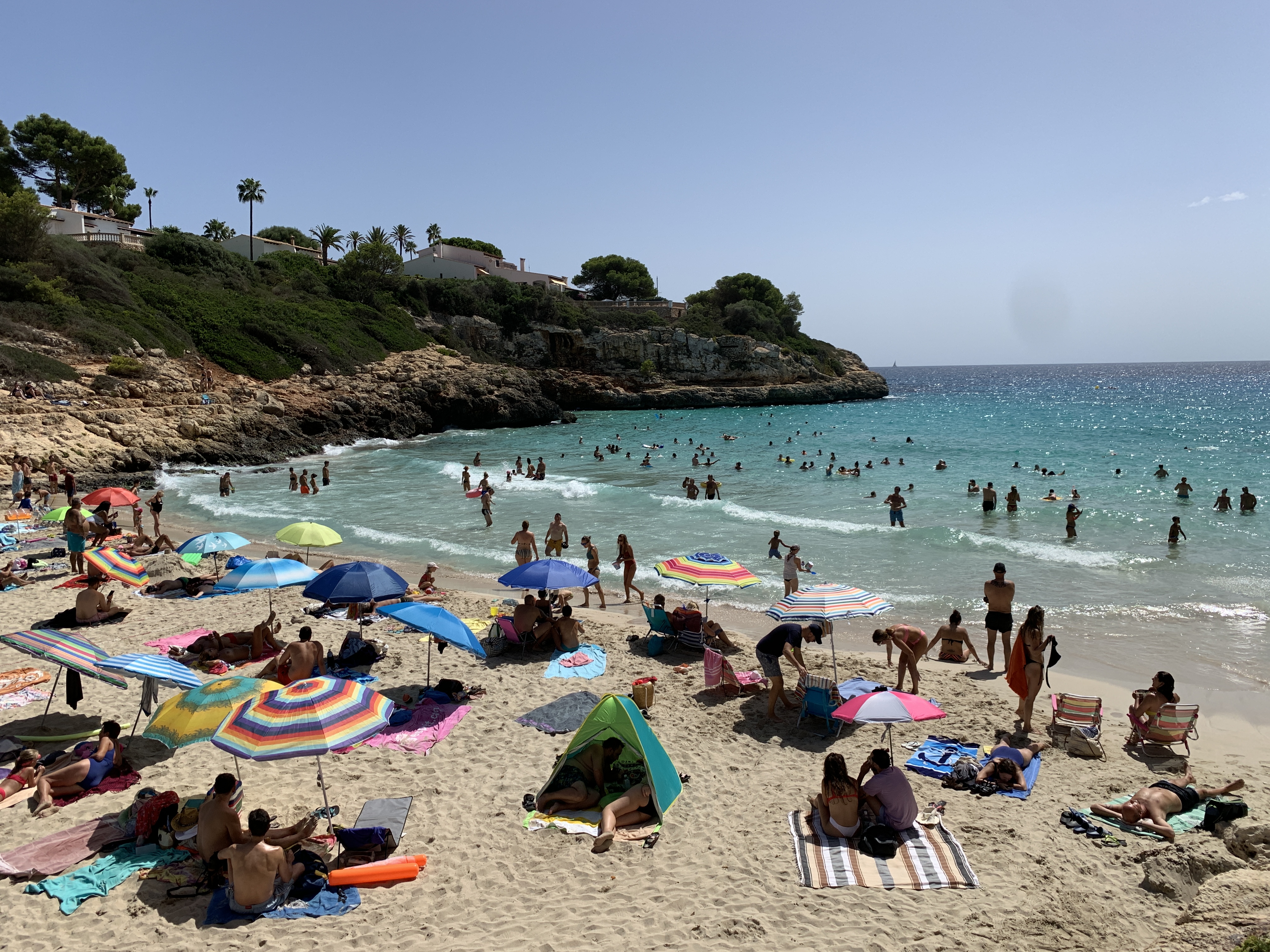
One of the many beautiful coves on the island of Mallorca. Like many of these coves, it takes a little hiking to get here.

However, please don’t think that the islands are void of tourists – that’s hardly the case. Car parks for the most accessible beautiful beaches and coves fill up fast – you have to get there early (or arrive late in the day) if you want a convenient parking spot. It seems that most of the tourists to these islands come from Germany and the UK, although cruise ships also visit Palma. Cycling on the narrow winding roads through the mountains of Mallorca is a favorite pastime in addition to hiking, 4 wheeling, and of course all kinds of water sports.

When driving in Mallorca, one needs to be careful of the cyclists sharing the road.

Even with all the tourists, it’s still possible to visit little towns on both islands and pretty much be the only tourists in sight.

The scenic town of Arta in the northeast corner of Mallorca – few tourists here.

Mallorca and Menorca are quite different from one another. Mallorca is larger, more mountainous, with a significantly larger population (about half of which live in the Palma area) and caters to more tourists, who tend to stay put in specific regions of the island. Menorca is smaller in size and population with fewer tourists, and feels more rural. Both islands offer stunningly clear turquoise water, incredible coves and beaches – some of the prettiest anywhere on the planet – and interesting historical sites and towns.

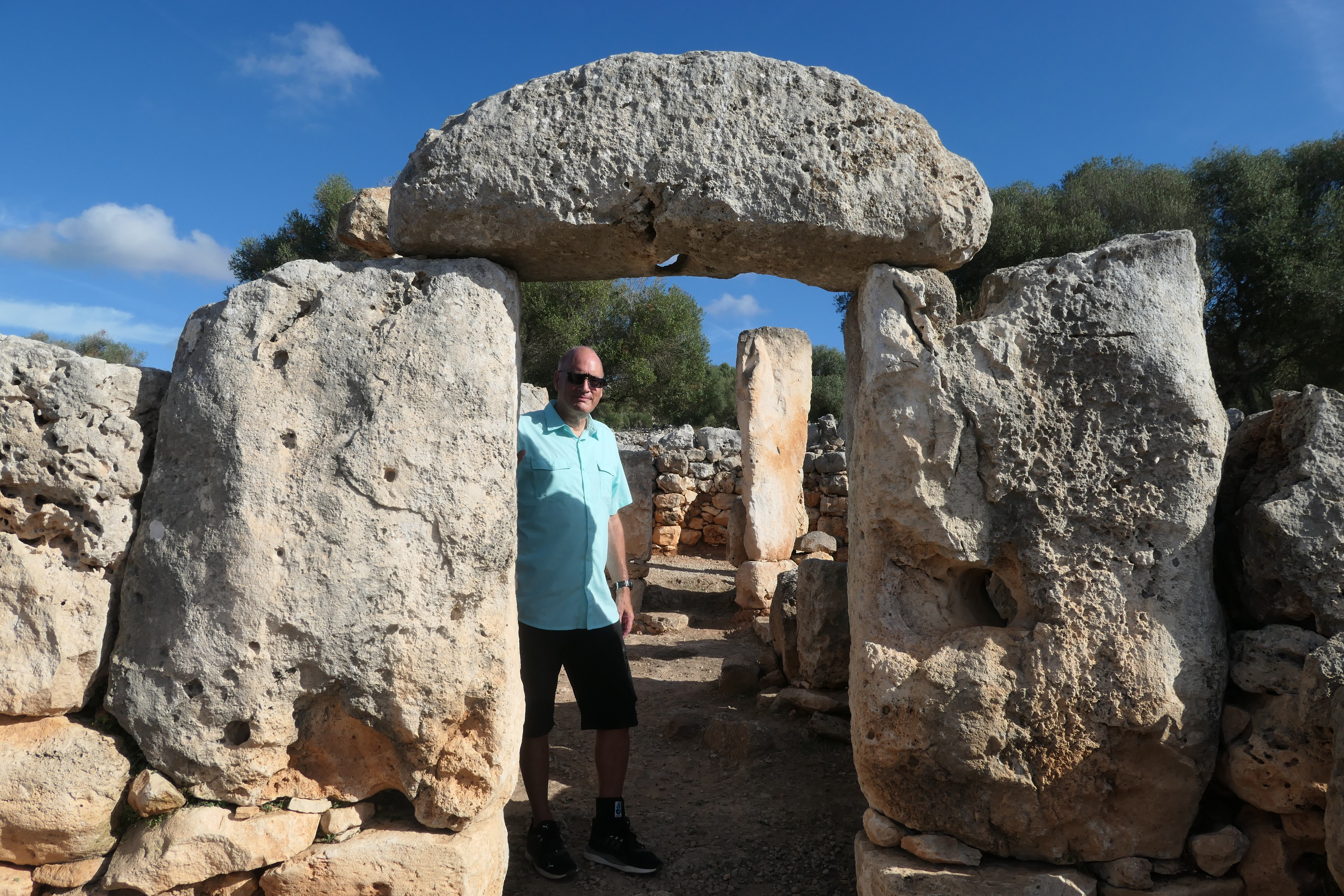
Torre d’ en Galmes, one of Menorca’s many prehistoric ruins.

Where are Mallorca and Menorca?

Mallorca and Menorca are two of the three primary Balearic islands, belonging to Spain, the other being Ibiza. Ibiza has a reputation as a real “party” island and we preferred a bit different experience. Plus, as stated above, we could fly directly to Palma from the US. Mallorca and Menorca are close together geographically and it’s easy to get from one island to the other (just a 30 minute flight), or by taking a longer ferry ride.

Mallorca and Menorca are in the western Mediterranean Sea. It is a short flight from Barcelona to Mallorca or Menorca – about an hour (approximately 158 miles or 255 km). We flew to Barcelona from Menorca for a few days at the end of our stay and then directly from Barcelona to Washington, D.C.

Be on the lookout for many more posts to come about these beautiful islands!