Menorca Spain

Menorca’s Amazing Prehistoric Ruins

Menorca, Spain has about 1,500 prehistoric sites – a higher concentration per square kilometer than any where else in the Mediterranean Sea, this is why Menorca is known as an “open air museum”. Numerous ancient stone structures dot the island, especially the southern half. A map of many of the sites can be found here. A number of these sites have been quite well preserved, considering they’ve been around for nearly 3,000 years! The Talayotic (or Talaiotic) period (when many of these structures where built) was lasted from about 1200 B.C. to 123 B.C. (when the Roman conquest took place).

The locations in brown font indicate the four prehistoric sites discussed below.

While Menorca’s beaches are incredible (more on these in a future post), it’s also fun to explore other sights on the island, and we decided to visit four of these prehistoric ruins during a “day off” from the beach. These archeological sites typically charge a small fee and provide informational brochures for your visit. Why did I choose these particular sites? I just did a little research on Menorca’s prehistoric ruins and decided on these four as reasonable sampling of what can be visited relatively easily. The road signage on the island to these historical sites is quite good.

Naveta des Tudons

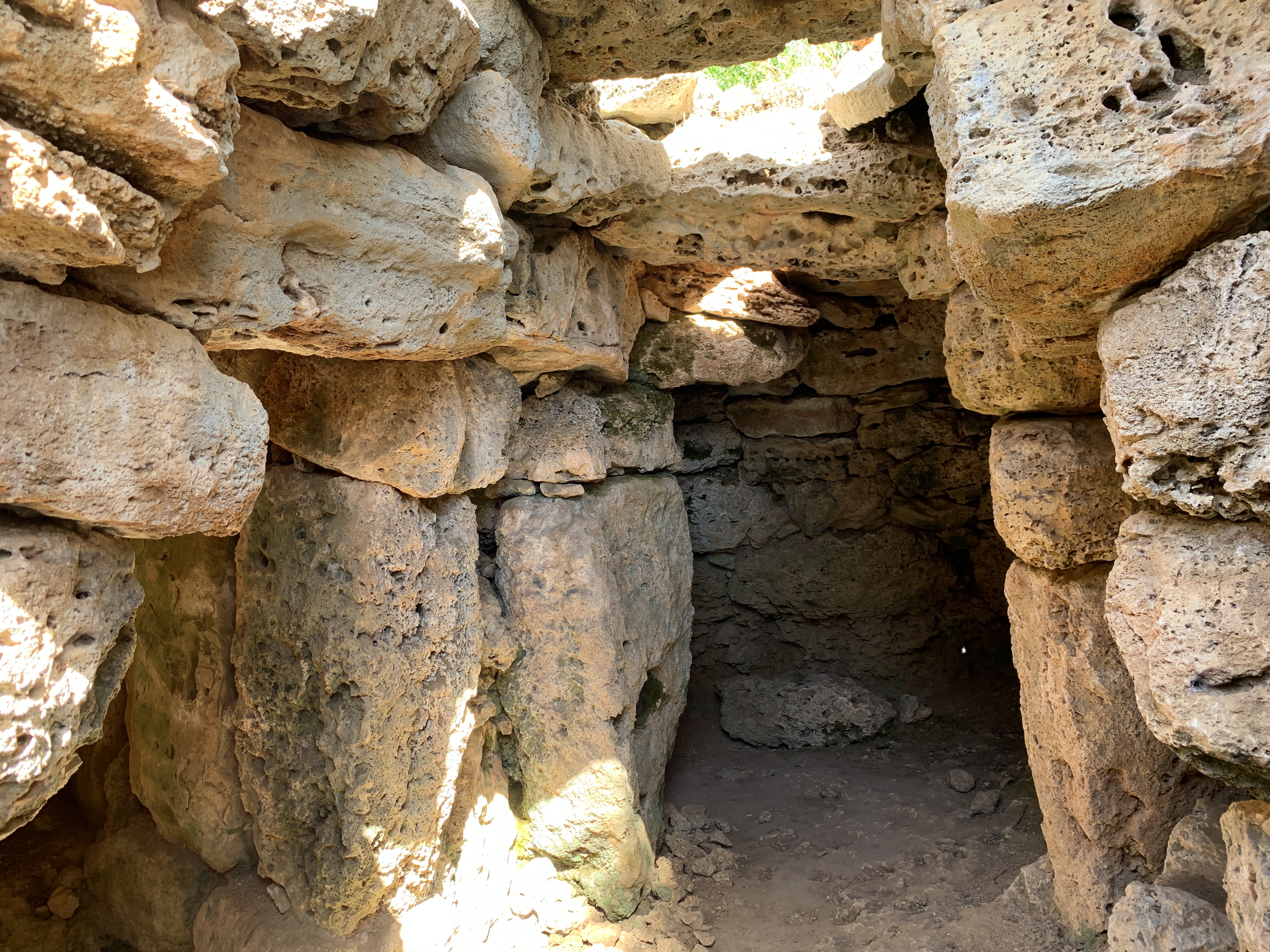
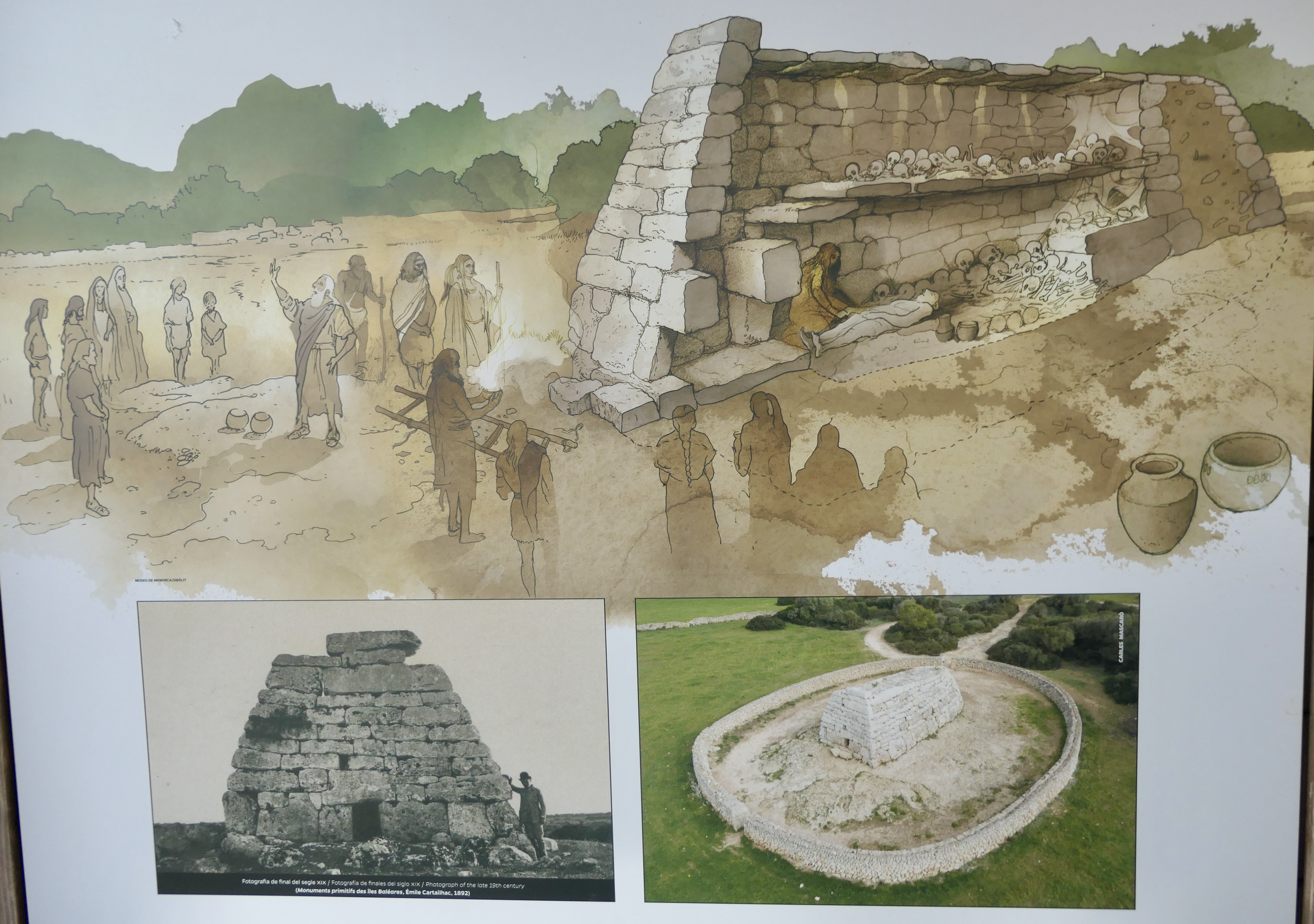
This ruin is on the western side of the island, not far from the city of Ciutadella. Navetas are tombs that are unique to Menorca, and are typically one to two levels high and round or elongated. Naveta des Tudons is the largest of all known Navetas on the island and is considered the oldest existing building in Europe. It dates from 1000 – 800 BC, and was in use for about 500 years. Archeologists found the remains of over 100 individuals inside. We had the site to ourselves late one afternoon.
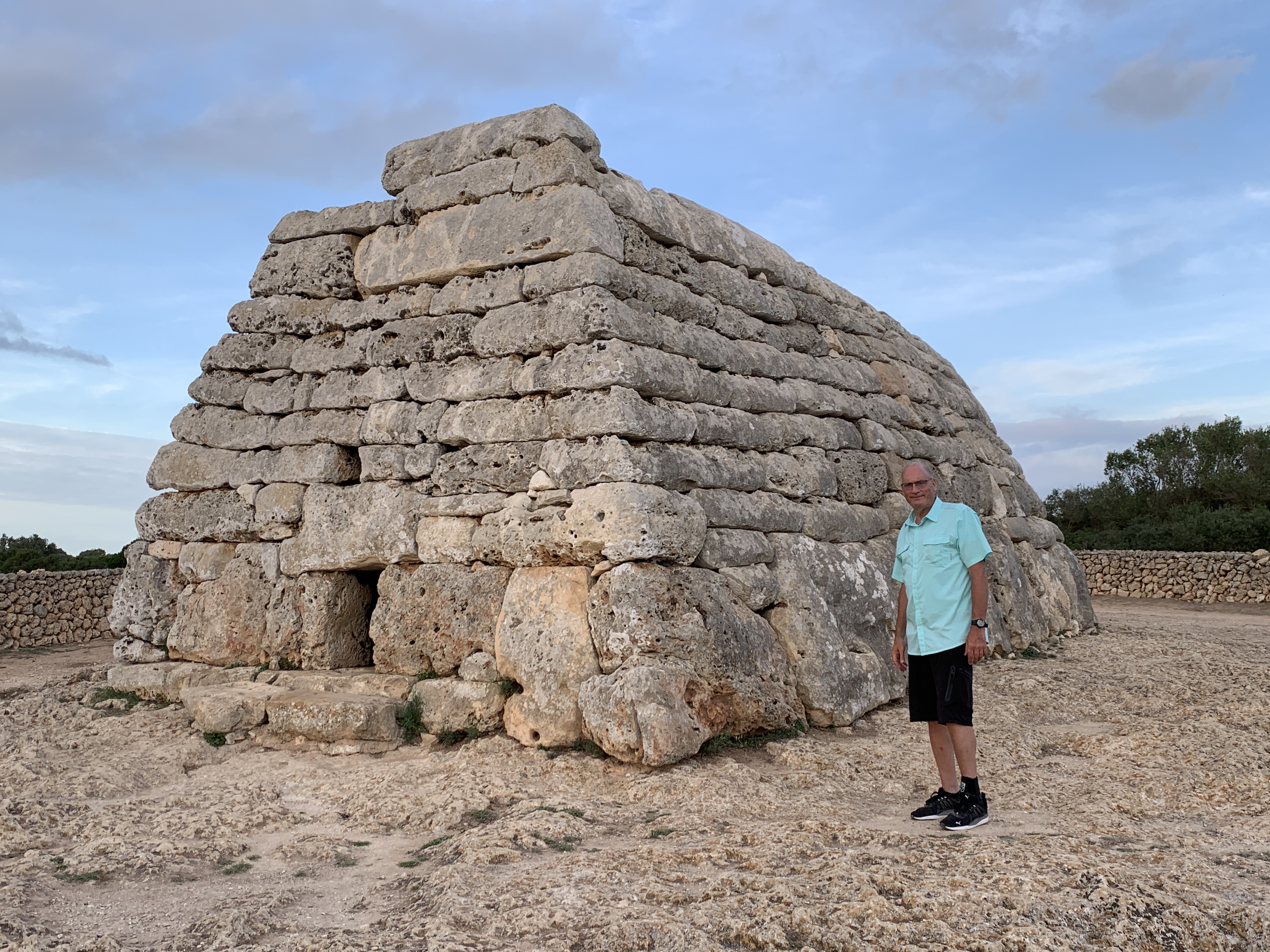
A view of the front of the Naveta. Note the careful stone fitting and placement work.
This image shows the burial ceremony and process and the layout of the interior of Naveta des Tudons.

Trepucó

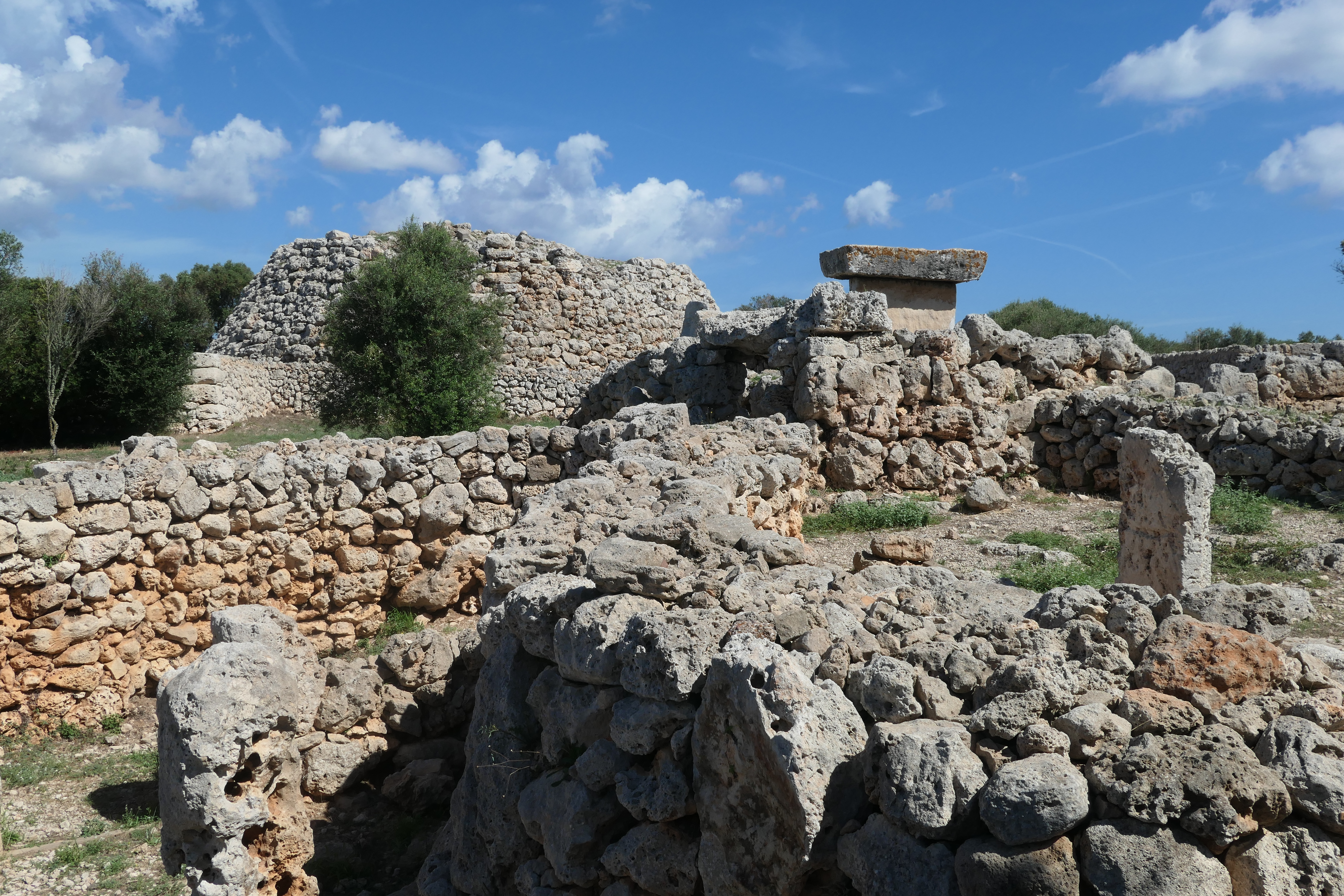
The settlement of Trepucó is one of the largest on the island, covering an area of around 49,240 square metres. However, what can be viewed today is only a small part of the site, dating from 1200-700 B.C. It is located near Mahón (or Maó) on the eastern side of the island.

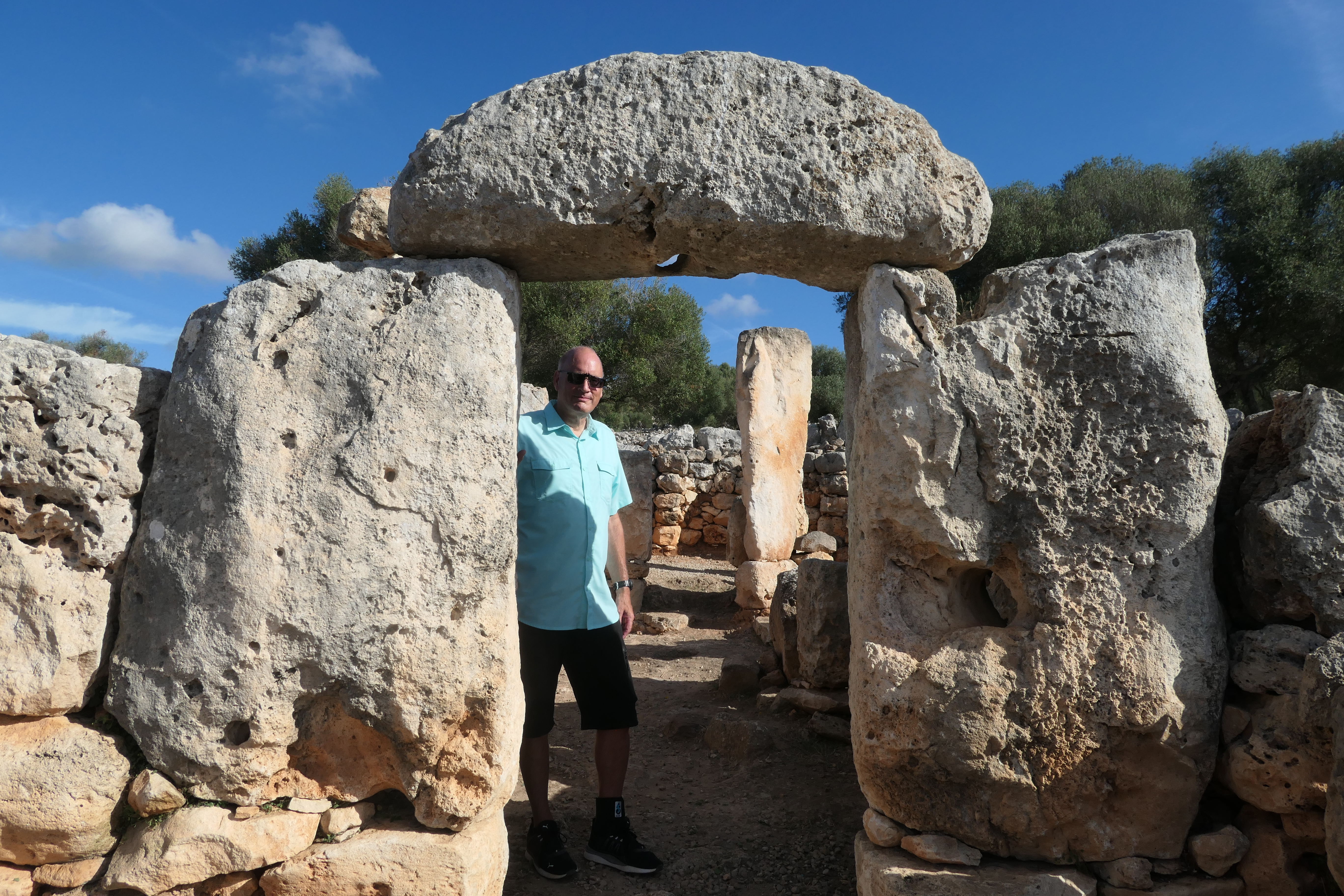
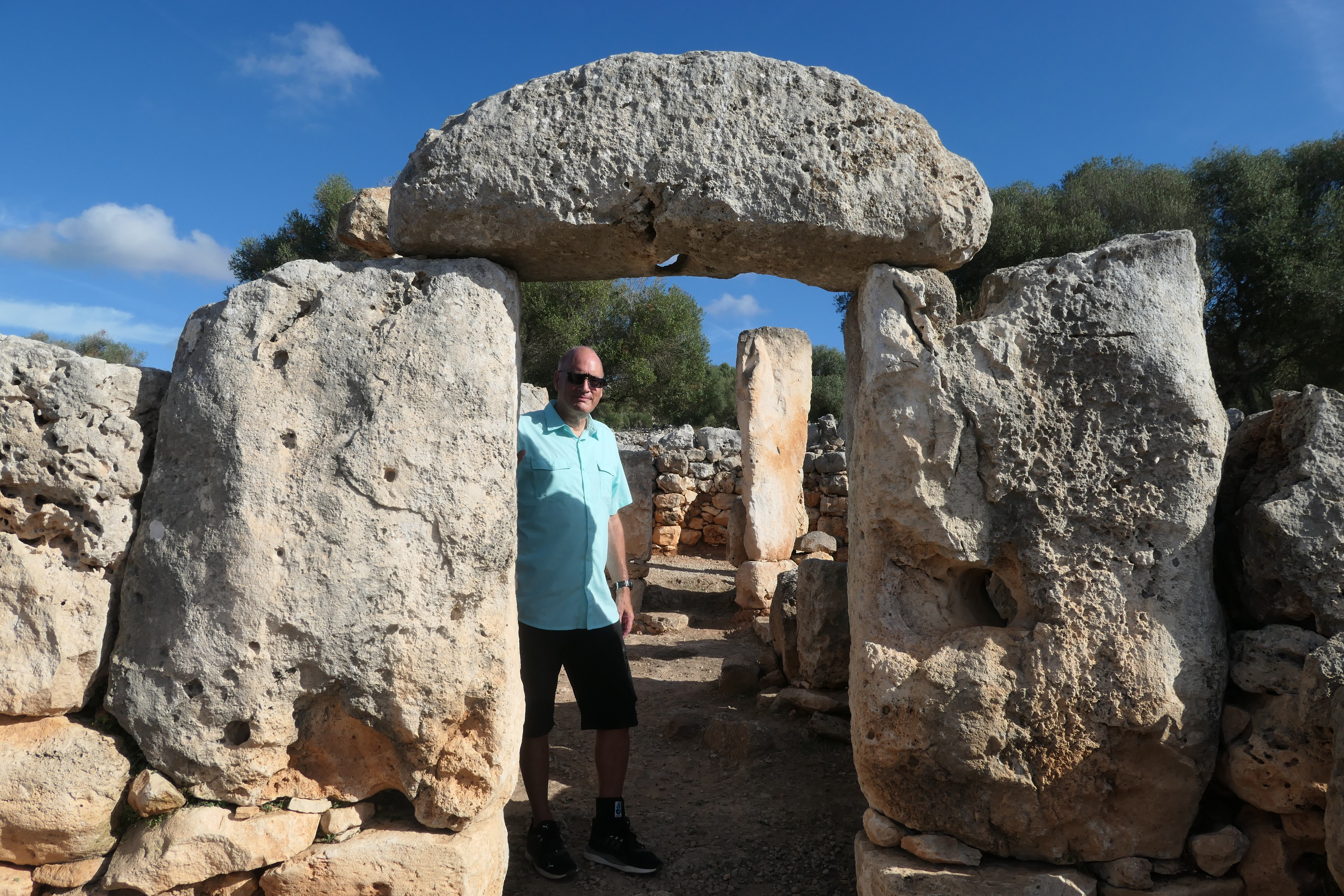
This taula in Trepucó one of the largest on Menorca. Taulas are usually seen as a standing stone combined with a horizontal slab resting on top, forming a large T-shaped monument. Archaeologists suggest these monuments were used to represent Talaiotic deities, occupying central positions in sanctuaries where rituals were performed. Thirty-three taula enclosures are known but only seven retain their vertical taula.

Talatí de Dalt 

This ruin is only 4 km (or about 2 miles) from the city of Mahón (or Maó) on the eastern side of Menorca. It’s about the same age as the other talaiotic ruins on the island, and reached its peak between the 4th and 2nd century B.C.
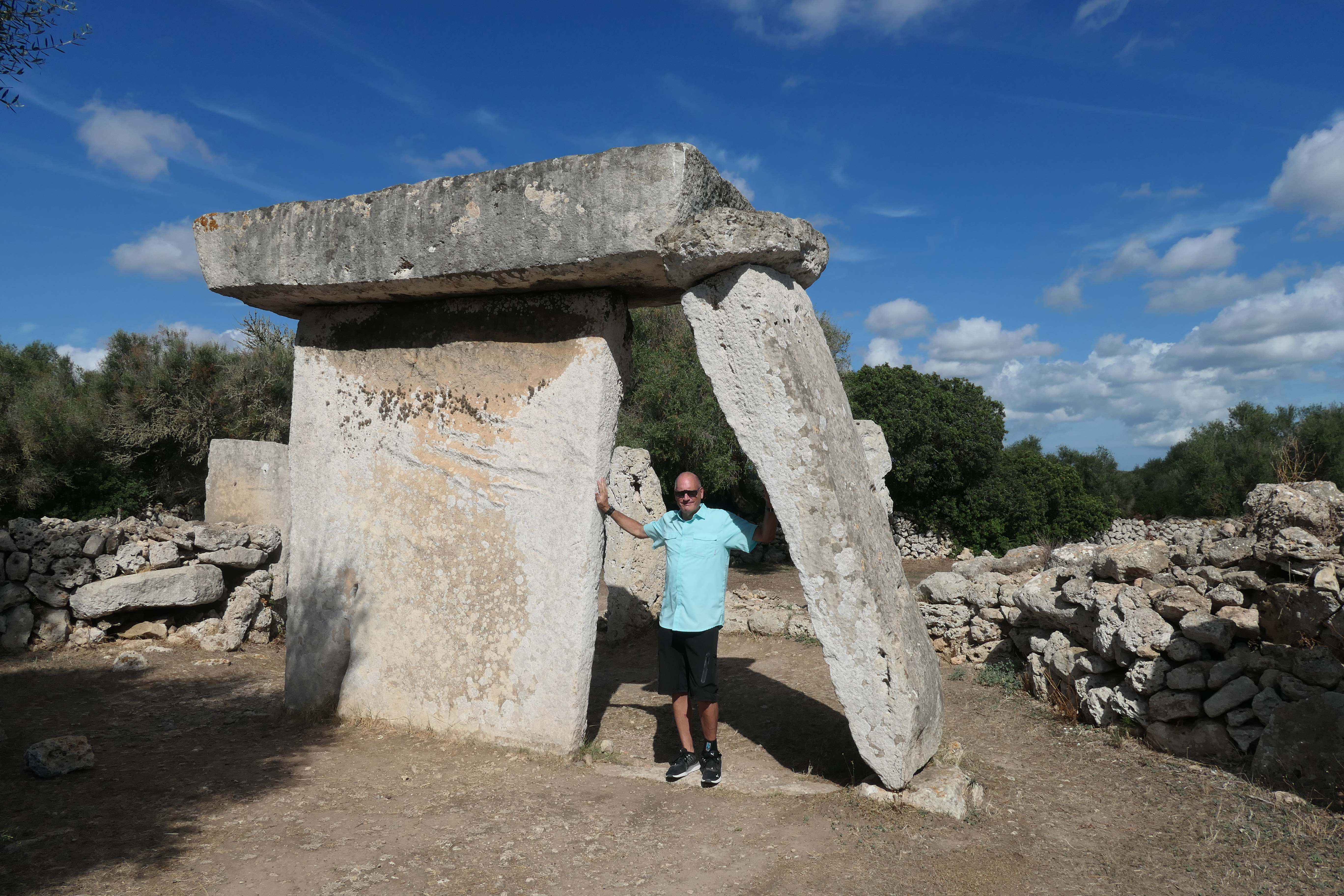
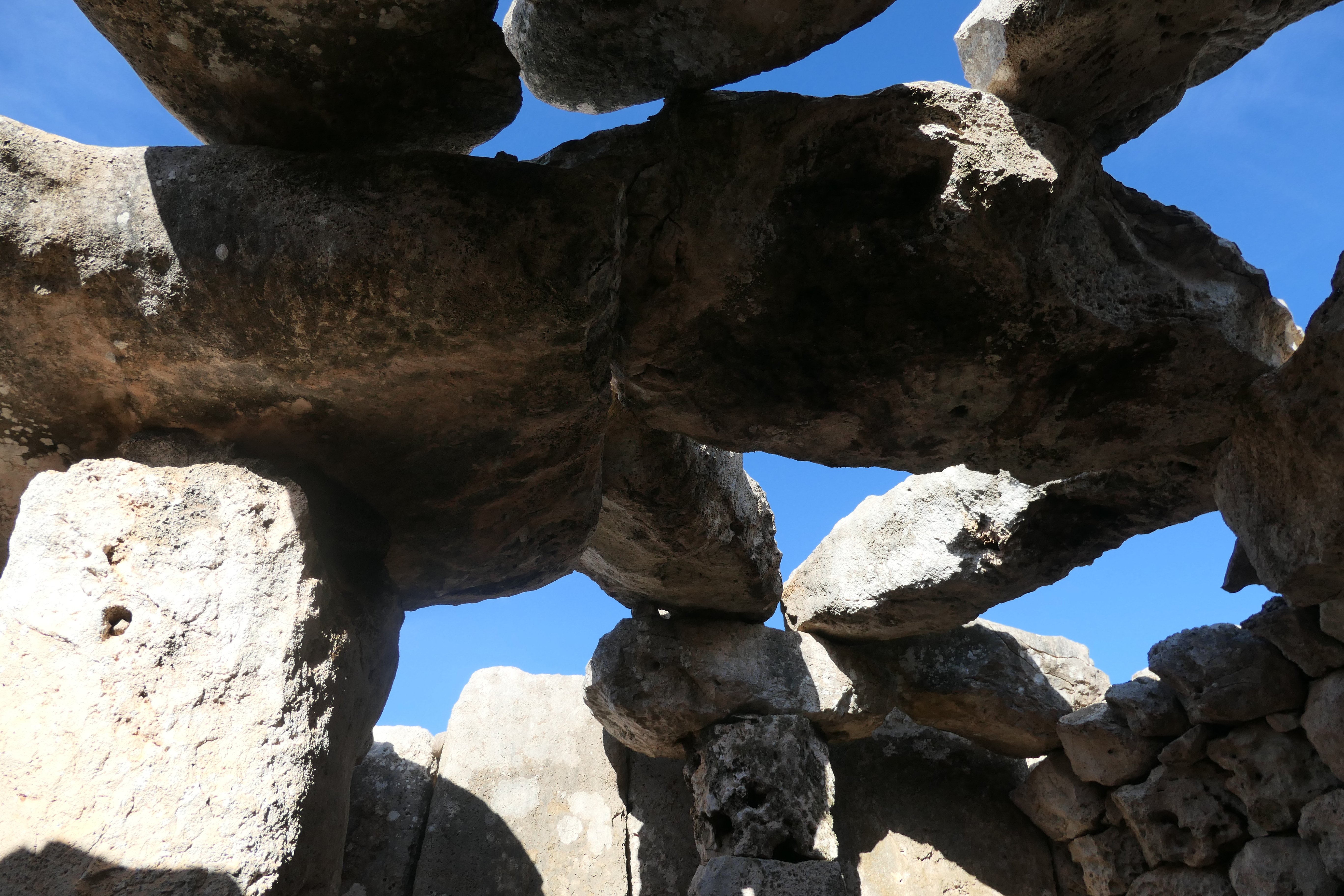
The taula in Talatí de Dalt. I don’t know if there is an explanation for the diagonal support – perhaps it’s been there since the beginning.
This talayot (or talaiot) at Talatí de Dalt is representative of those found in many of Menorca’s ruins – their function is not completely understood – they may have been watchtowers, meeting places, or related to other ceremonial events.

Torre d’en Galmés

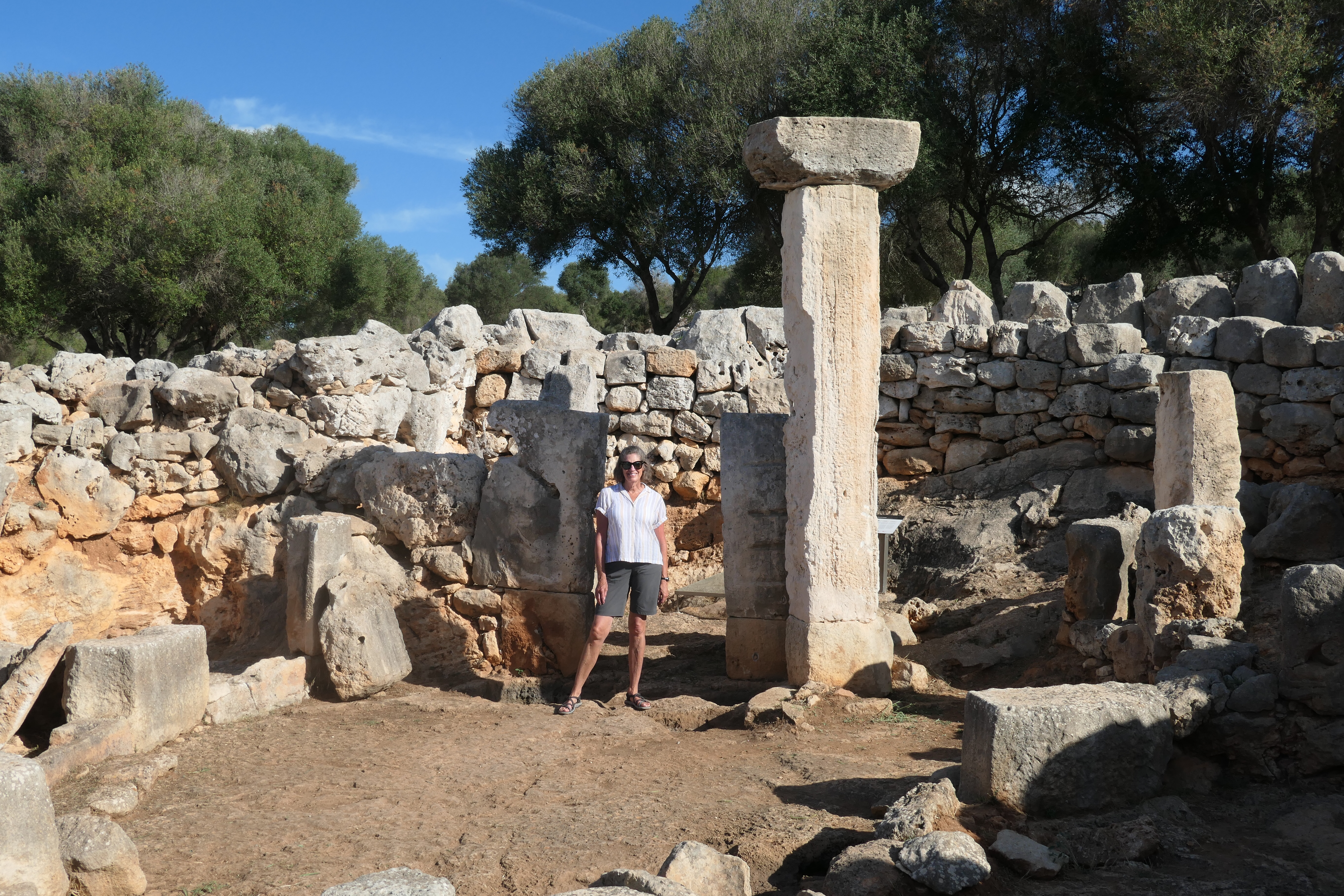
Torre d’en Galmés was probably my favorite of the Talayotic prehistoric sites we visited, due to its immense size and location. Lots of ruins to explore here. It is located in south-central Menorca, not far from Son Bou beach. It is believed that Torre d’en Galmés was a principal site and had oversight of many of the other settlements.

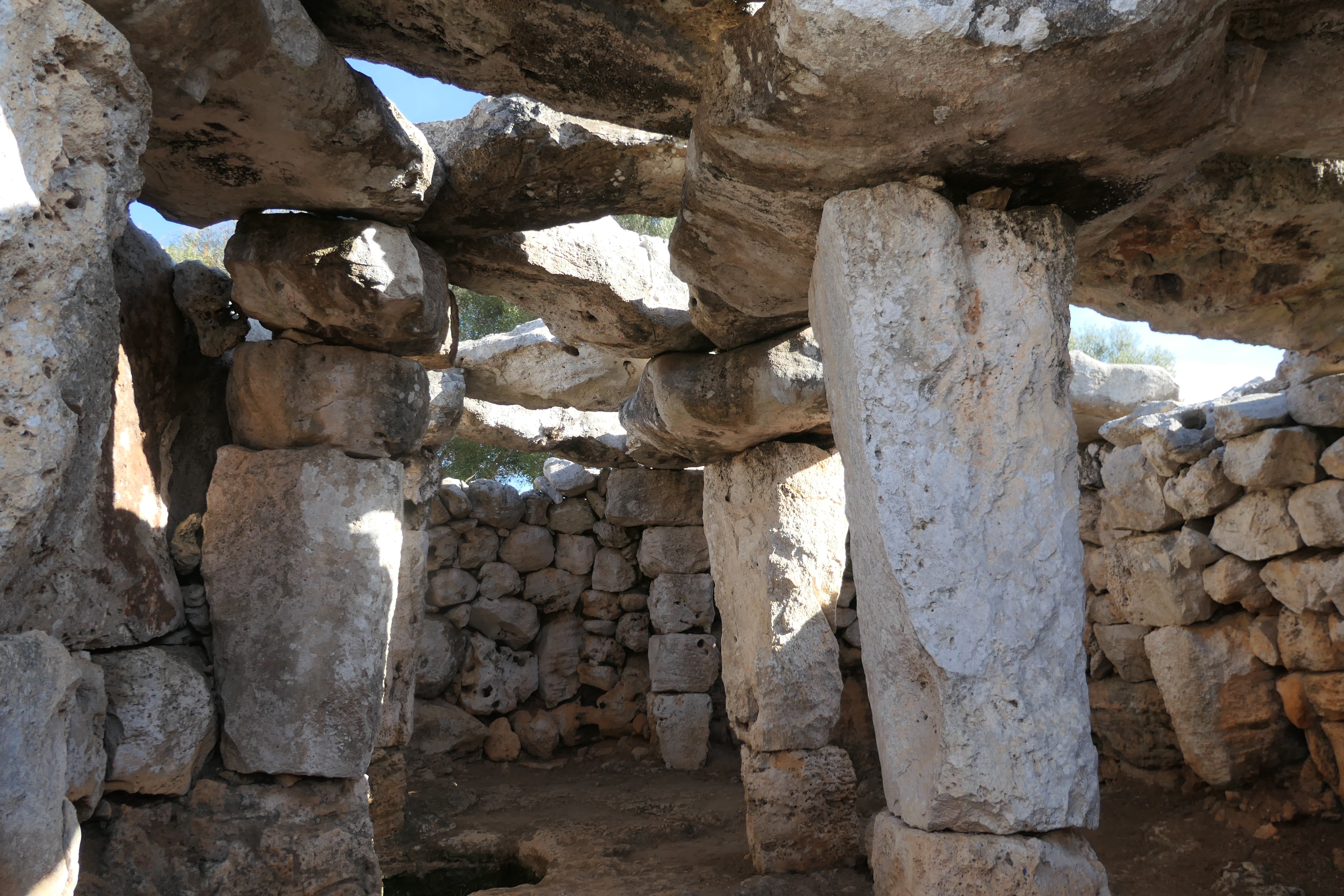
Torre d’en Galmés. Note the taula on the left, one of several in Torre d’en Galmés.

If you get a chance and can tear yourself away from the beach for a day, don’t miss Torre d’en Galmés, or any of the other Talayotic sites on Menorca – they are the premier prehistoric ruins in the Balearic Islands, if not the entire Mediterranean Sea.

Mallorca (Majorca) and Menorca (Minorca) – Spain’s Well-Kept Secret Islands (at least from Americans)

My wife and I love exploring the Mediterranean’s host of magical islands for so many reasons, but as of 2022, we had not yet visited Spain’s share of these islands and so we decided to take a September trip to Mallorca and Menorca (with few days in Barcelona on our way home). September was a perfect time to go – the water was still warm and the days long enough to allow plenty of exploring, with fewer tourists than might be found in July or August. United Airlines started offering seasonal direct service to Palma, Mallorca from Newark, NJ in the summer of 2022. I think that was a fabulous decision, even though locals may not agree! 

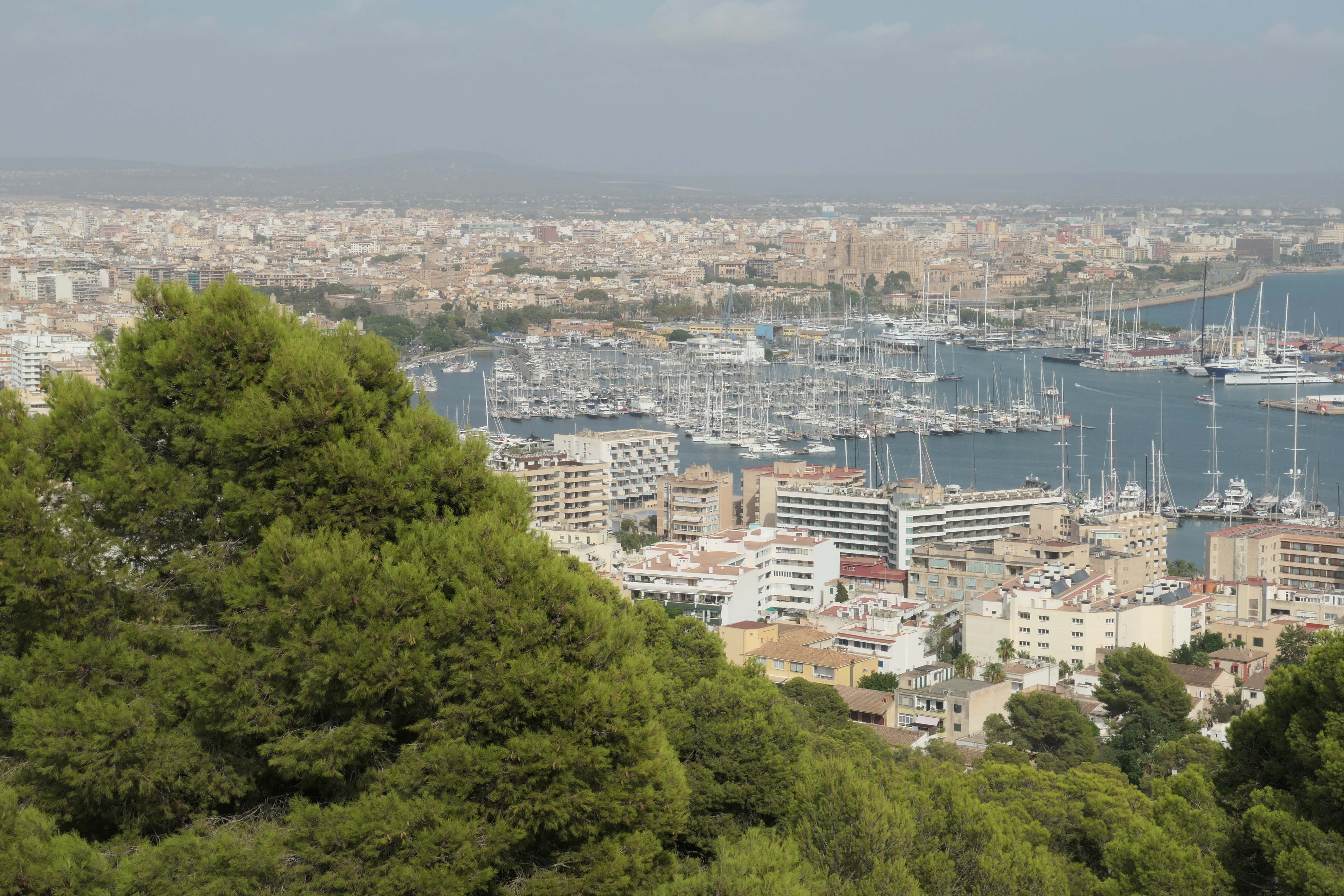
A view of Palma, Mallorca.

In this post, I’ll provide a short overview of these two islands and in future posts go into more detail on each.

Why Mallorca and Menorca?

As mentioned above, we love the Mediterranean – the beautiful coastlines, ancient and medieval-era historical sites, incredible beaches and the variety of cultures and languages to be found throughout the region. We also love that these (Mallorca and Menorca) islands don’t really seem to be on US tourists’ European vacation maps yet, at least not to the same degree as a London, Paris or Rome.

One of the many beautiful coves on the island of Mallorca. Like many of these coves, it takes a little hiking to get here.

However, please don’t think that the islands are void of tourists – that’s hardly the case. Car parks for the most accessible beautiful beaches and coves fill up fast – you have to get there early (or arrive late in the day) if you want a convenient parking spot. It seems that most of the tourists to these islands come from Germany and the UK, although cruise ships also visit Palma. Cycling on the narrow winding roads through the mountains of Mallorca is a favorite pastime in addition to hiking, 4 wheeling, and of course all kinds of water sports.

When driving in Mallorca, one needs to be careful of the cyclists sharing the road.

Even with all the tourists, it’s still possible to visit little towns on both islands and pretty much be the only tourists in sight.

The scenic town of Arta in the northeast corner of Mallorca – few tourists here.

Mallorca and Menorca are quite different from one another. Mallorca is larger, more mountainous, with a significantly larger population (about half of which live in the Palma area) and caters to more tourists, who tend to stay put in specific regions of the island. Menorca is smaller in size and population with fewer tourists, and feels more rural. Both islands offer stunningly clear turquoise water, incredible coves and beaches – some of the prettiest anywhere on the planet – and interesting historical sites and towns.

Torre d’ en Galmes, one of Menorca’s many prehistoric ruins.

Where are Mallorca and Menorca?

Mallorca and Menorca are two of the three primary Balearic islands, belonging to Spain, the other being Ibiza. Ibiza has a reputation as a real “party” island and we preferred a bit different experience. Plus, as stated above, we could fly directly to Palma from the US. Mallorca and Menorca are close together geographically and it’s easy to get from one island to the other (just a 30 minute flight), or by taking a longer ferry ride.

Mallorca and Menorca are in the western Mediterranean Sea. It is a short flight from Barcelona to Mallorca or Menorca – about an hour (approximately 158 miles or 255 km). We flew to Barcelona from Menorca for a few days at the end of our stay and then directly from Barcelona to Washington, D.C.

Be on the lookout for many more posts to come about these beautiful islands!