In addition to beautiful beaches, Menorca, Spain has some interesting and scenic towns to explore. During our short visit, we mixed in visits to the island’s towns, historic sites and beaches. The island is small and it only takes about 45 minutes by car to get from one end of the island to the other. Since the island is not large, any of these towns would be a good “home base” during your stay in Menorca. We decided to say in Cala Galdana, more of a resort area for our first time in Menorca which was also a good choice.
Map showing the relative locations of the major towns in Mencorca.
Ciutadella de Menorca
Ciutadella is located on the western end of Menorca and was a busier town than Mahón (discussed below), although that may have been due to the time of day we visited (early evening). Ciutadella is home to the main ferry route connecting Menorca to Mallorca. The town is ancient, dating back to the Carthaginians (~300 BC), and has a long (and at times sad) history, particularly in the 1500’s when the town came under siege by the Turks, who took the survivors and sold them into slavery in Constantinople (Istanbul).
This windmill stands out as a primary landmark as you enter Ciutadella.
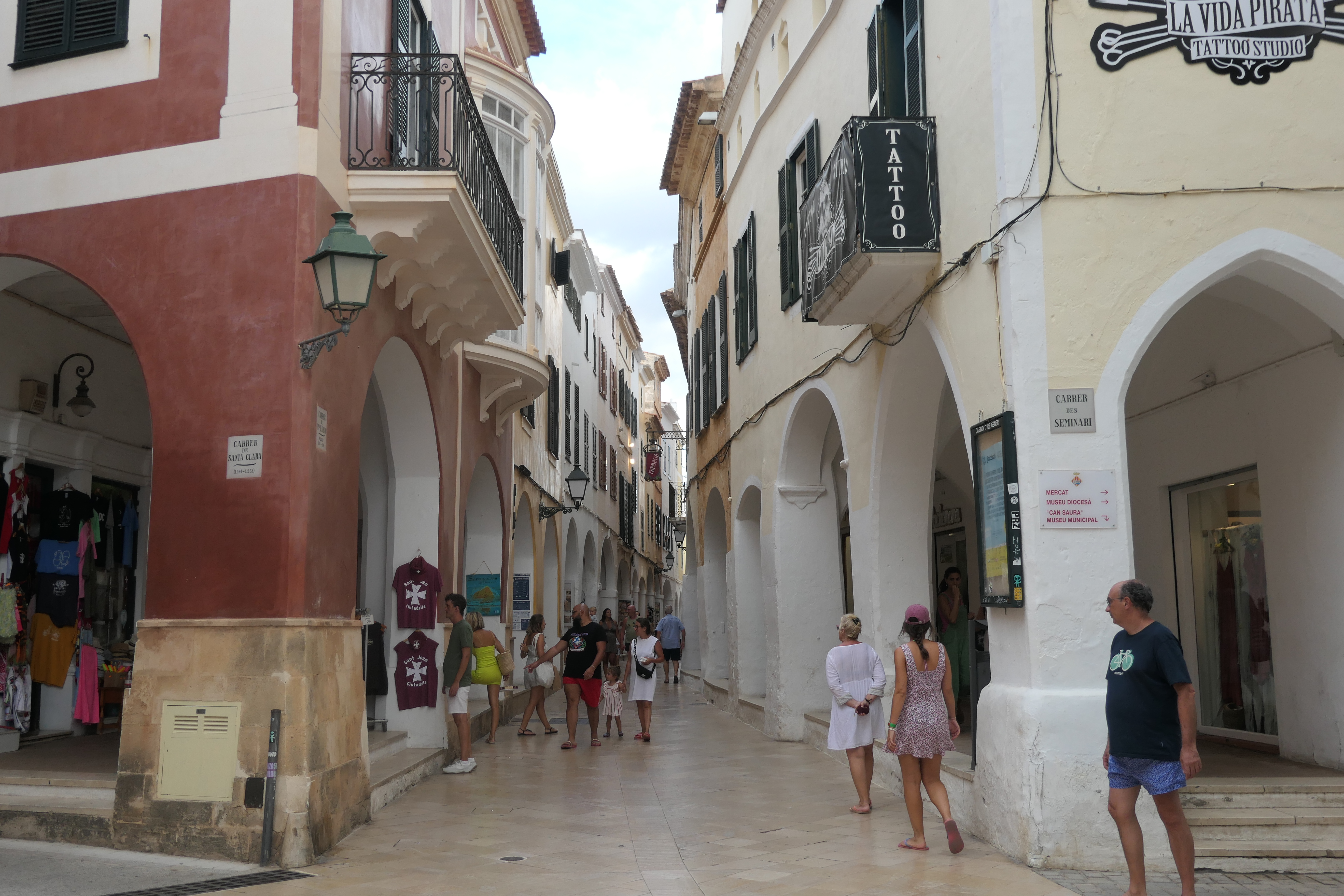
Street scenes in Ciutadella. There are some lovely pedestrian arcaded streets and shops and interesting architecture to be admired in Ciutadella.
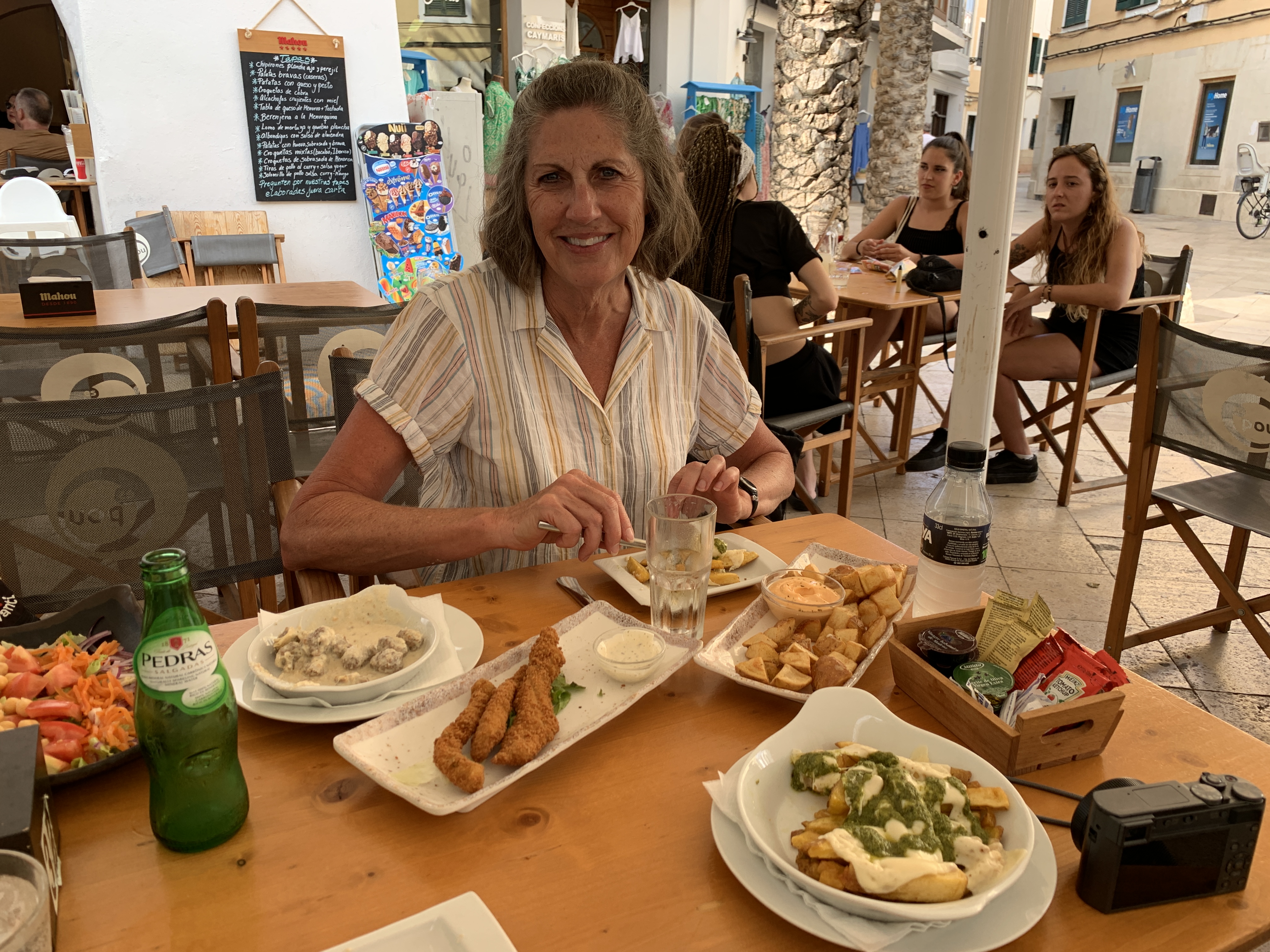
We enjoyed a great tapas meal in Ciutadella!
Mahón (or Maó)
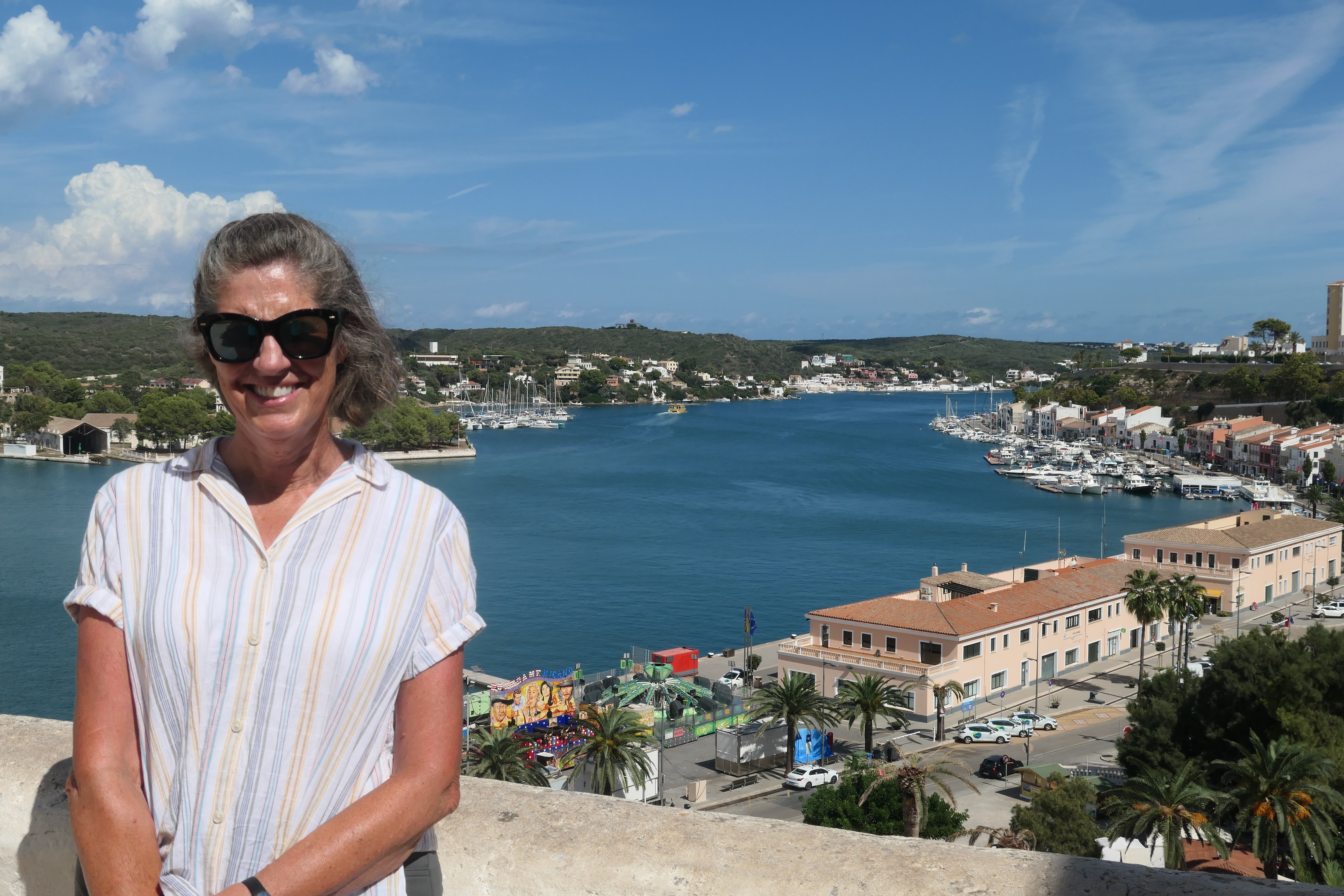
Mahón is the largest town in Menorca and the island’s capital, located on the eastern edge of the island. It’s also the location of the island’s airport if you fly here. The town is quite pretty, with a lovely setting and harbor. There are some rumors that the word mayonnaise originated here! We found the town to be pretty quiet, with few tourists wandering about. Numerous boat tours are available from Mahón and perhaps most tourists were out for the day.
We had fun wandering the streets along the harbor and admiring the yachts at berth and enjoying some great gelato! Nearby are a number of prehistoric sites that may be visited.
Views of Mahón‘s Harbor.Street scenes in Mahón.
Binibeca (or Binibeca Vell)
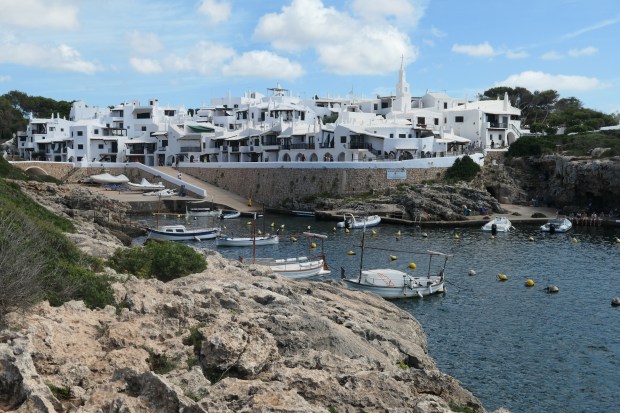
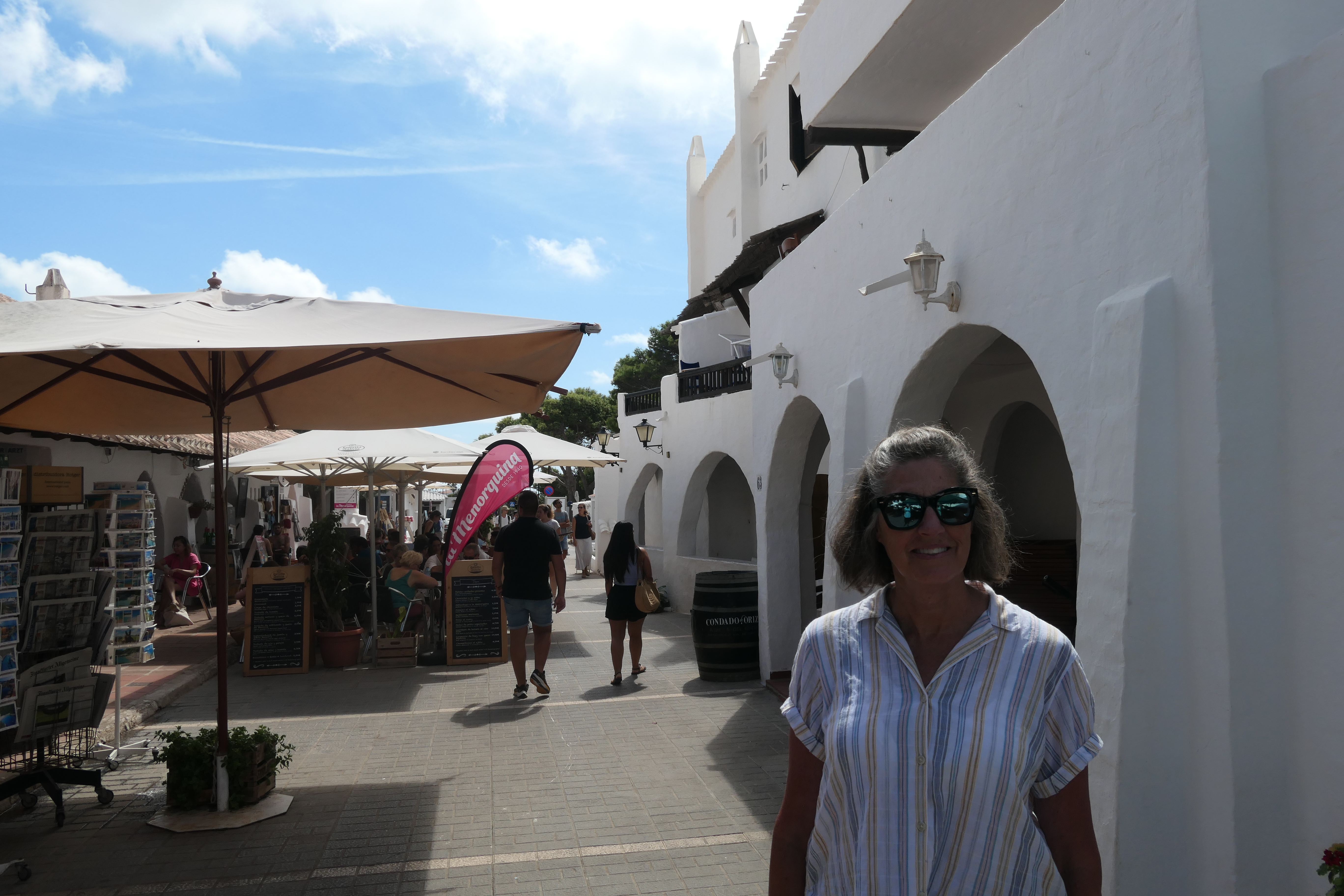
Binibeca is a white town on Menorca’s southeast shore that is relatively new but looks like an old fishing village! It reminded me a bit of the Greek islands. It certainly makes for a postcard view. The town was built in 1968, and is in a great location – close to Mahón and yet it feels somewhat remote. The area near Binibeca is a growing tourist spot, with many small hotels/resorts and homes popping up nearby in the years since the village was built. In addition, there are numerous beaches and coves within a short distance if you want to enjoy the warm clear water.
View of Binebeca and its small harbor.
Views of Binibeca. It would be hard to find a more uniform-looking town anywhere in Europe!
A short walk from Binibeca will take you to some amazing coves and clear water – inviting you to stay and take a dip! We came back on another day and took advantage of these clear, warm waters.
Fornells
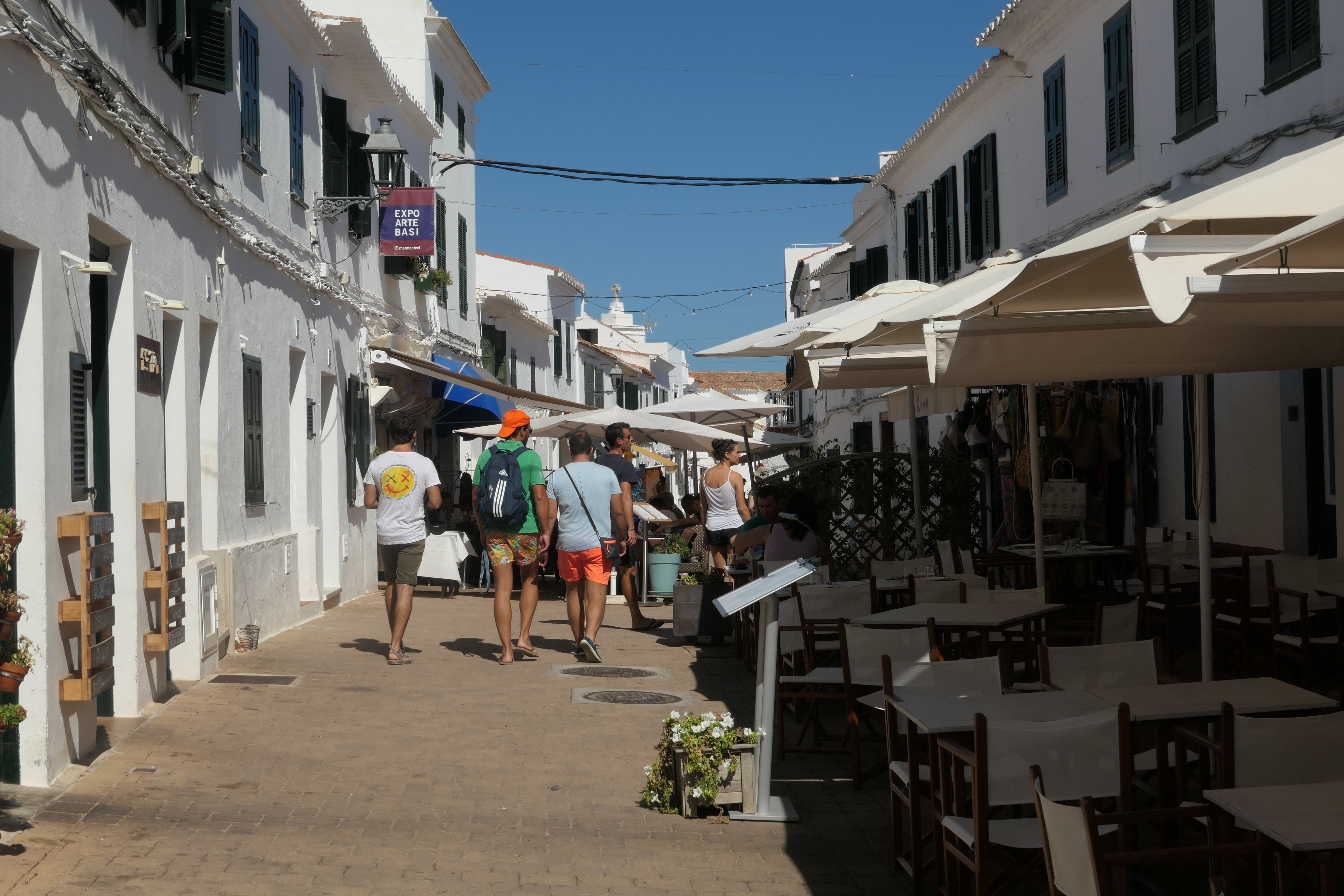
Fornells is the only major town on Menorca’s north shore and would make a great home base for visiting Menorca, if you want to enjoy a quieter experience and slower pace. Unlike Binibeca, this is an authentic fishing village and it’s known for its great seafood restaurants.
View of Fornells’ harbor.
Street scenes in Fornells.
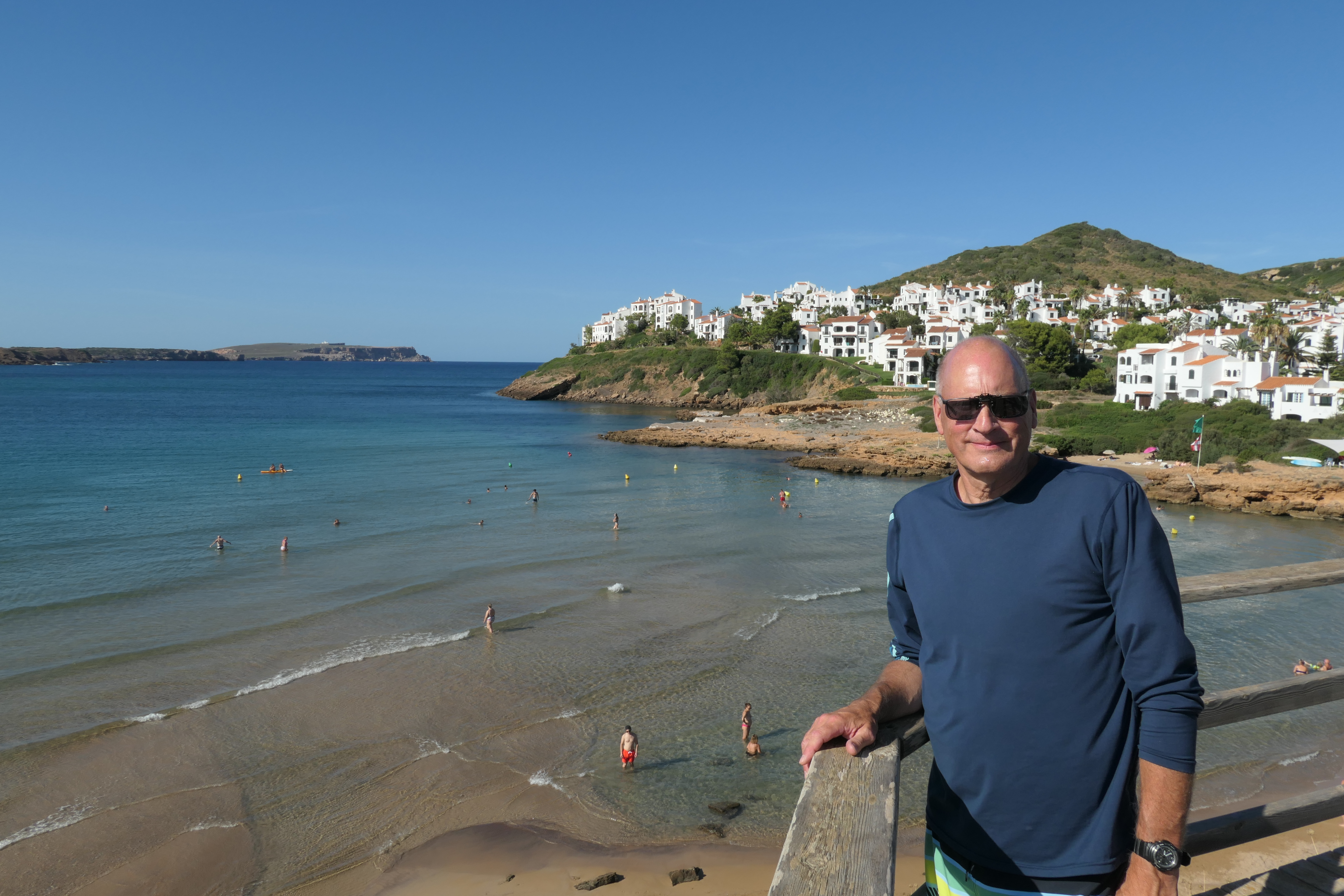
Residences and vacation homes near Fornells on Menorca’s north shore – this area had a “California coast” feel.
One doesn’t have to go far from Fornells to find a great beach – Cala Tirant is just a couple kilometers as the crow files from Fornells, or an 8 km (4.5 mile) drive.
Like the other Balearic Islands, Menorca, Spain is blessed with some amazingly beautiful beaches and coves. Since we were in Menorca for only 4 days, we couldn’t visit all of its glorious beaches, but we did get to swim at several and see others during our (too) short stay. Listed below (in no particular order) are beaches & coves we were able to visit.
Primary beaches we visited are shown in red font.
Note: Someone asked me about encounters with jellyfish in Mallorca and Menorca – there was only one place we saw any jellyfish and that was at Cala Mitjana on Menorca (described below). They were brown (not the technical name) jellyfish and harmless.
Cala Galdana
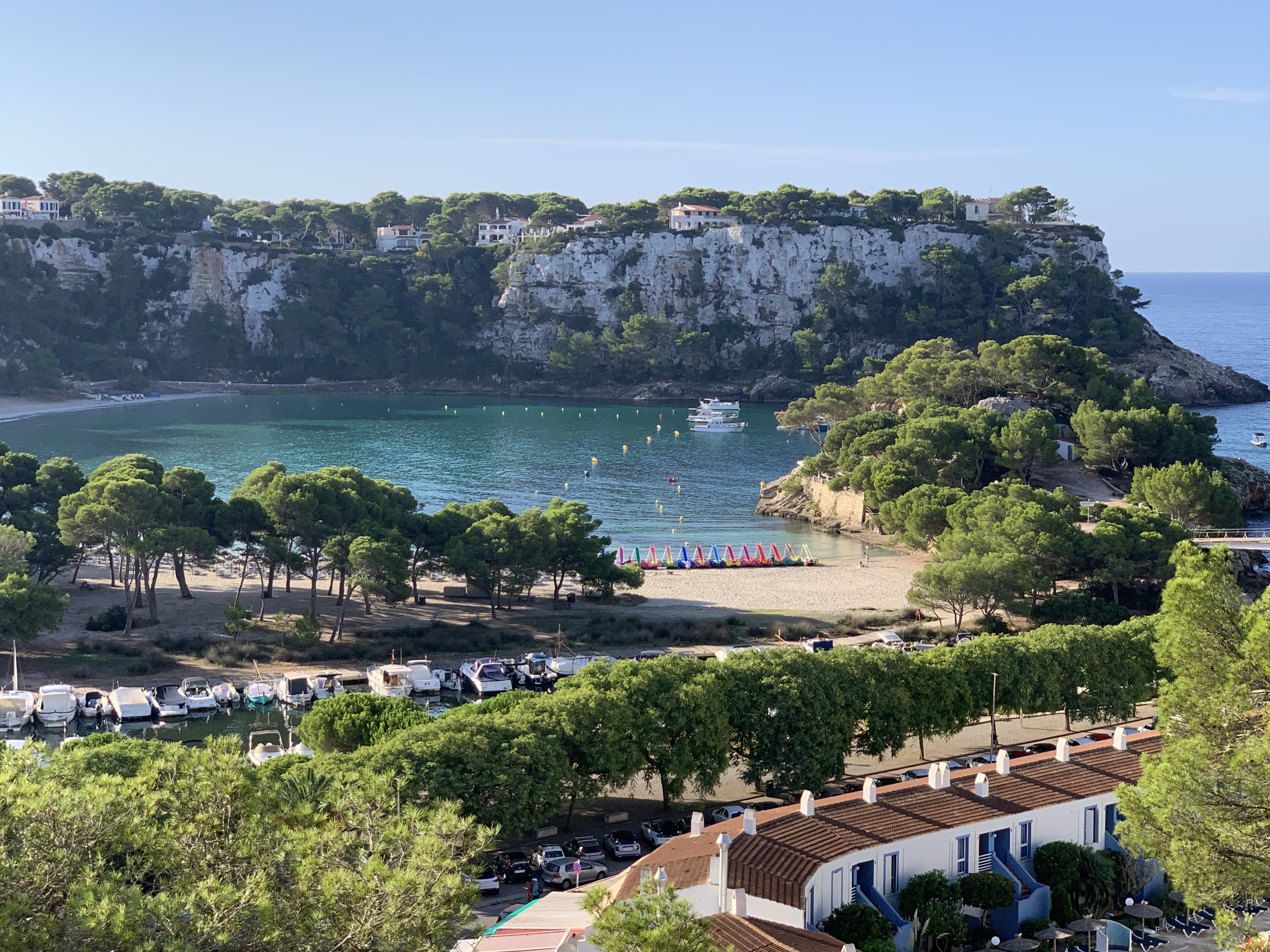
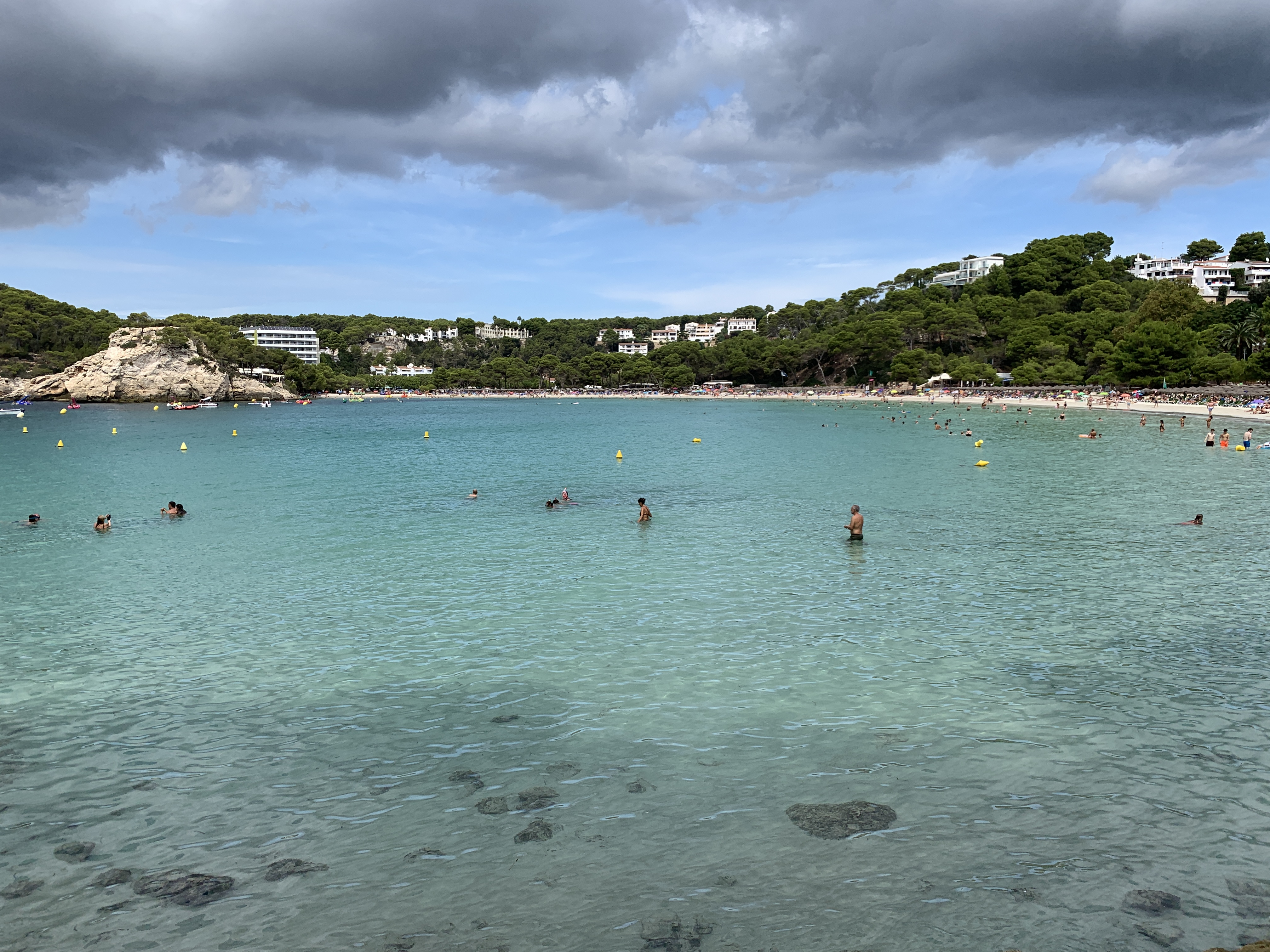
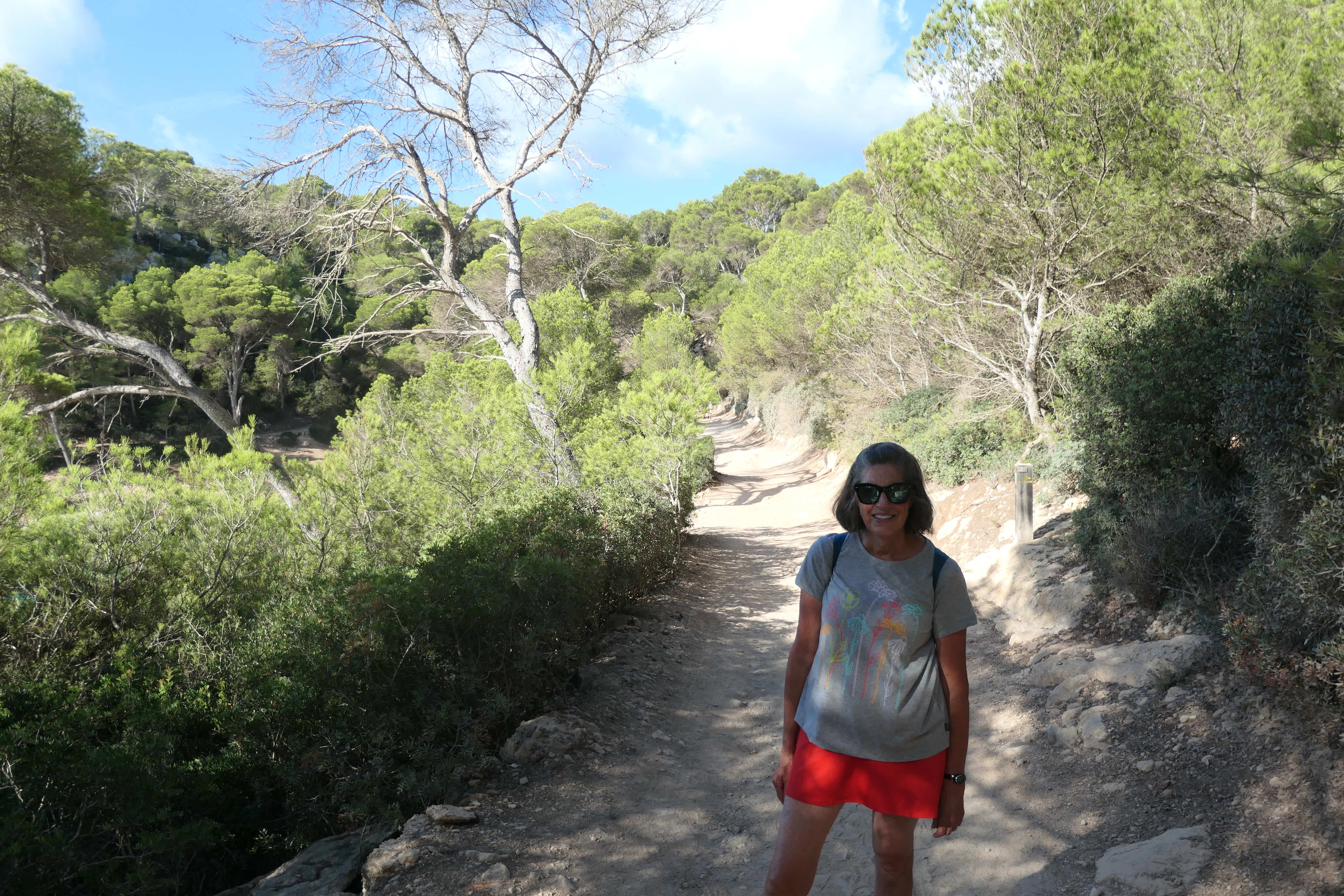
We stayed in Cala Galdana on the southern shore of Menorca–it is a lovely large cove, with a wide protected sandy beach, hotels, restaurants and tourist activity businesses nearby, a perfect spot to call home while you explore the island. The beach has numerous chairs and umbrellas for rent and the water is shallow and calm, making this a very family-friendly place to swim and enjoy the sun. Another plus of this location are the walking trails (part of the historic Cami de Cavalls) along the coast in either direction from Cala Galdana to other amazing places such as Cala Turqueta or Cala Mitjana. The trails are well signposted and point out the distance and direction of your destination (it’s a good idea to get a local island map). Make sure you are adequately prepared if you walk these trails – have plenty of water, sun protection, sturdy shoes and energy snacks.
Left image – view of Cala Galdana from our apartment/hotel balcony. Right image – view of the harbor/channel area of Cala Galdana.
The Comitas Florimar hotel where we stayed in Cala Galdana. The rooms were large and had kitchen facilities.
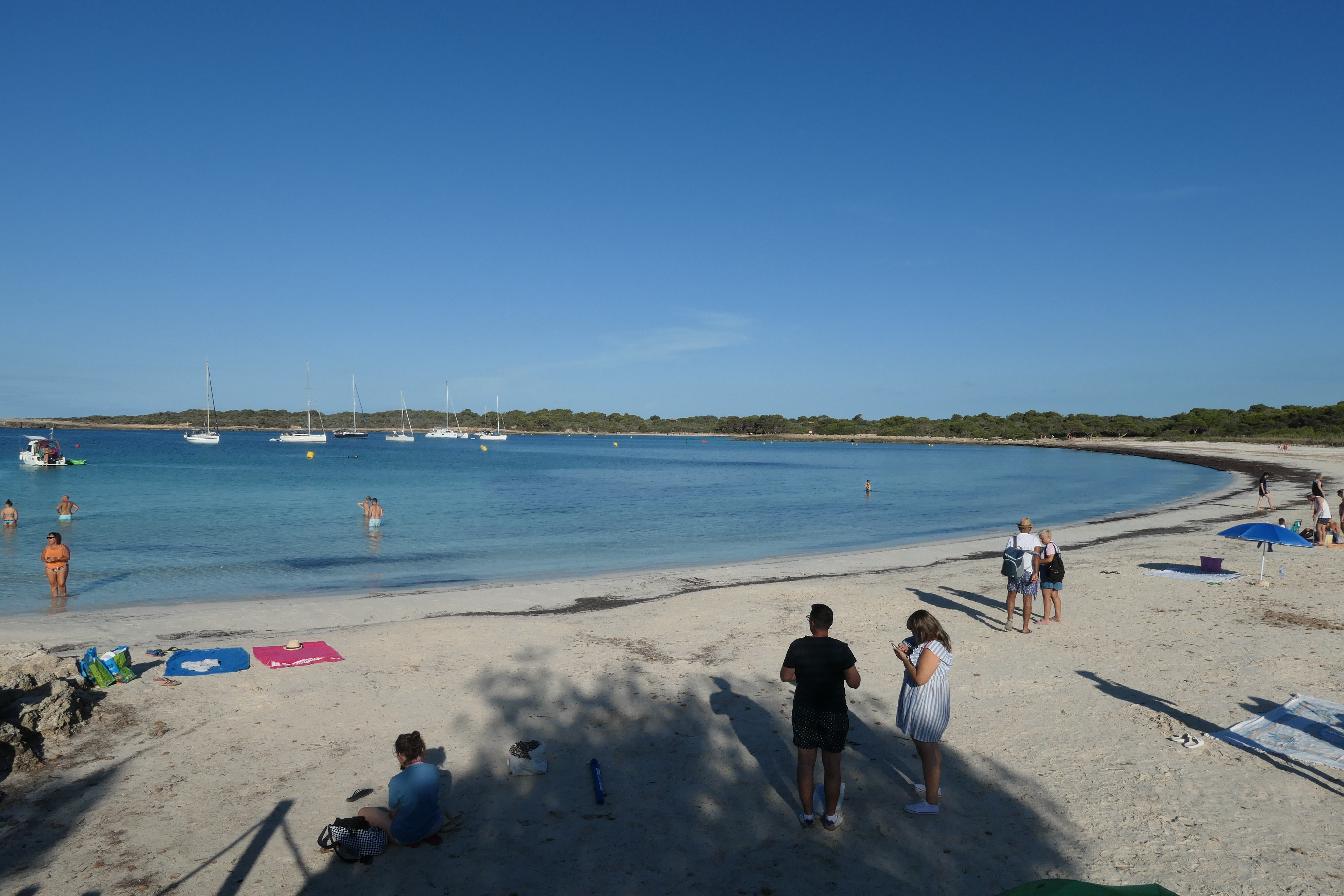
Additional views of Cala Galdana’s beach area.
Walking along Menorca’s coastal trail (Cami de Cavalls).
Cala Turqueta
This may be Menorca’s most famous beach. From Cala Galdana, it is just a few kilometers (6.4 km, or 4 miles) west by trail if you’re up for a little hike. The advantage of taking the trail to Cala Turqueta is that you avoid the parking problem. The Cala Turqueta parking area fills quickly (we arrived before 8 am and were turned away) and if you can’t get a spot you must drive back to the island’s main road and then down another road to another car park (Son Suara Beach – see below) and then hike from that car park along the coastal trail back to Cala Turqueta. I know this sounds a bit complicated, it’s because there is no coastal road connecting many of the beaches by car, you must use the main east-west road in the middle of Menorca as the main car route and then take the north-south spur roads that lead to the various beaches and coves. It’s not a huge issue, just be prepared to sometimes walk at least a couple of kilometers on the trails as noted above. The only route that connects the entire coastline is the non-motorized trail circumnavigating the island. In fact, a number of beaches can only be reached via the trail.
Bottom line, however you manage to get to Cala Turqueta, it is worth the effort!
Cala Turqueta – get here early if you want a little quieter experience.
Above and below – views of Cala Turqueta, Menorca.
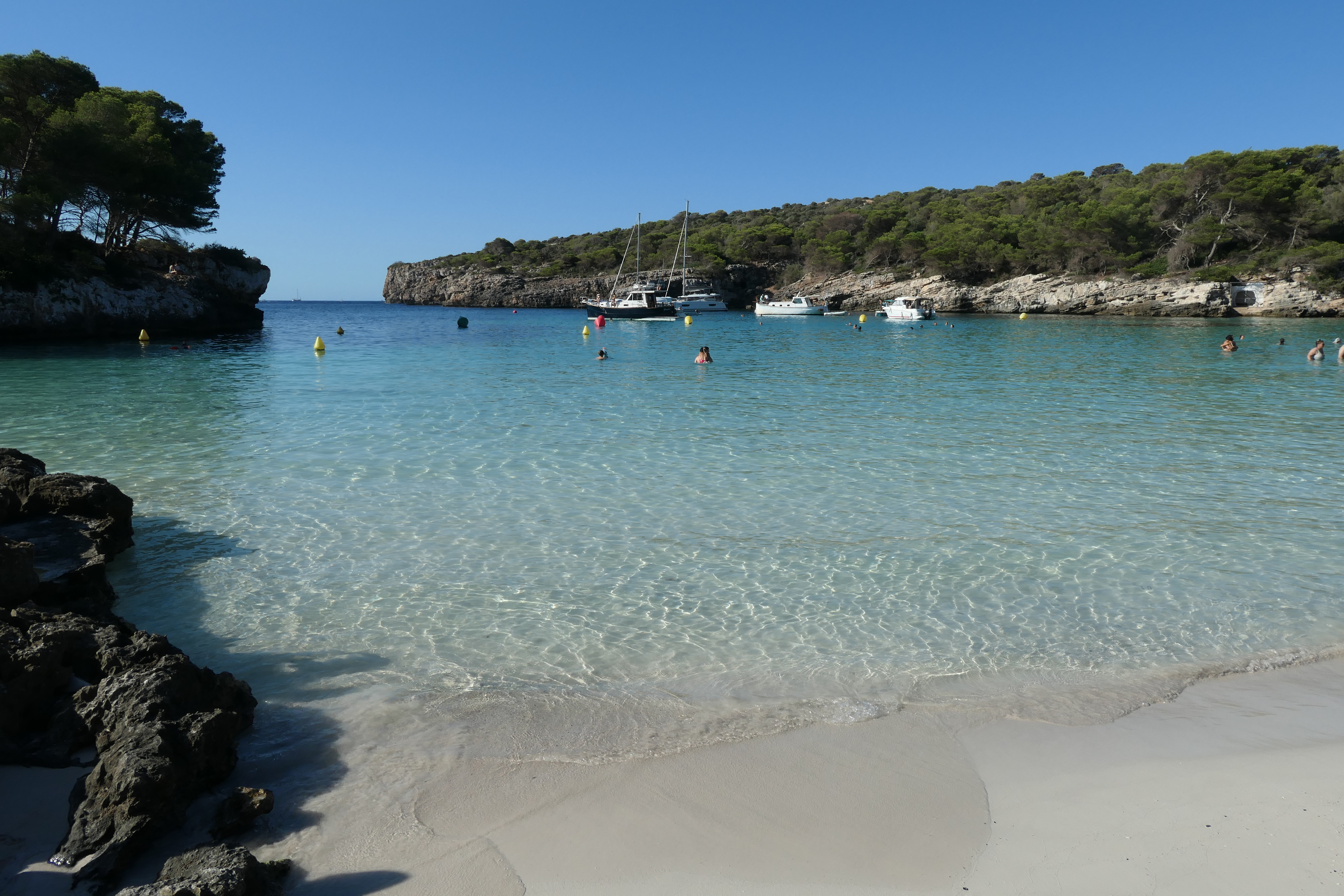
Cala Mitjana
Cala Mitjana is less than 2 km (~1 mile) east of Cala Galdana via the walking trail and is very beautiful also. Since we walked, I’m not sure about the car park situation, but probably similar to Cala Turqueta – arrive early to get a spot if you need to drive here.
Views of Cala Mitjana from the coastal trail.
Cala Mitjana – just another lovely day at the beach!
Binibèquer Vell (Binibeca Vell)
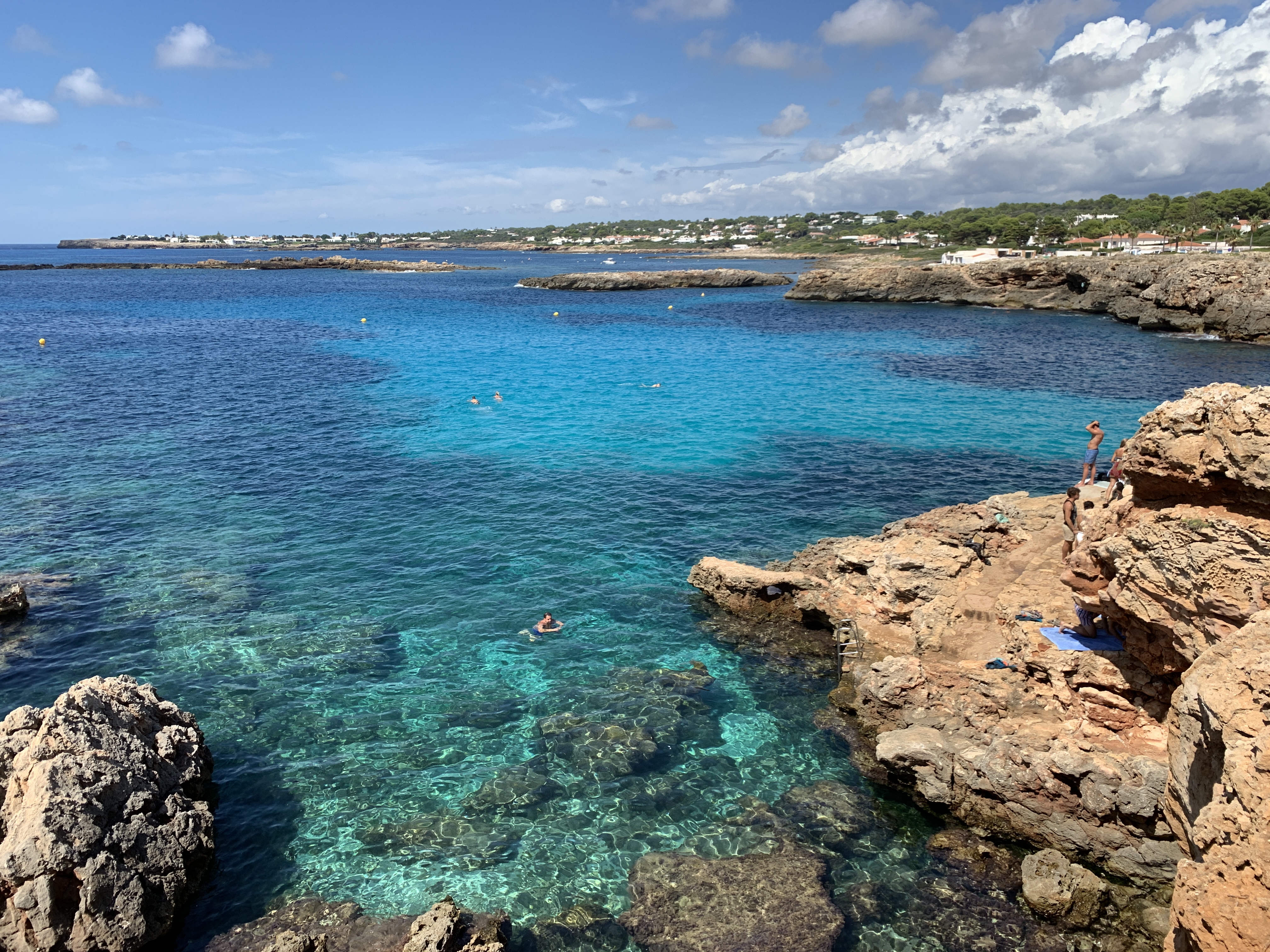
I’ll share more about this unique town in another post, but this region of Menorca (southeast coast) has some great beaches and coves. It was one of my favorite spots on Menorca. We found this beautiful cove (below) just outside of the town of Binibeca Vell as we were exploring the area. It looked so inviting we came back another day specifically to swim here!
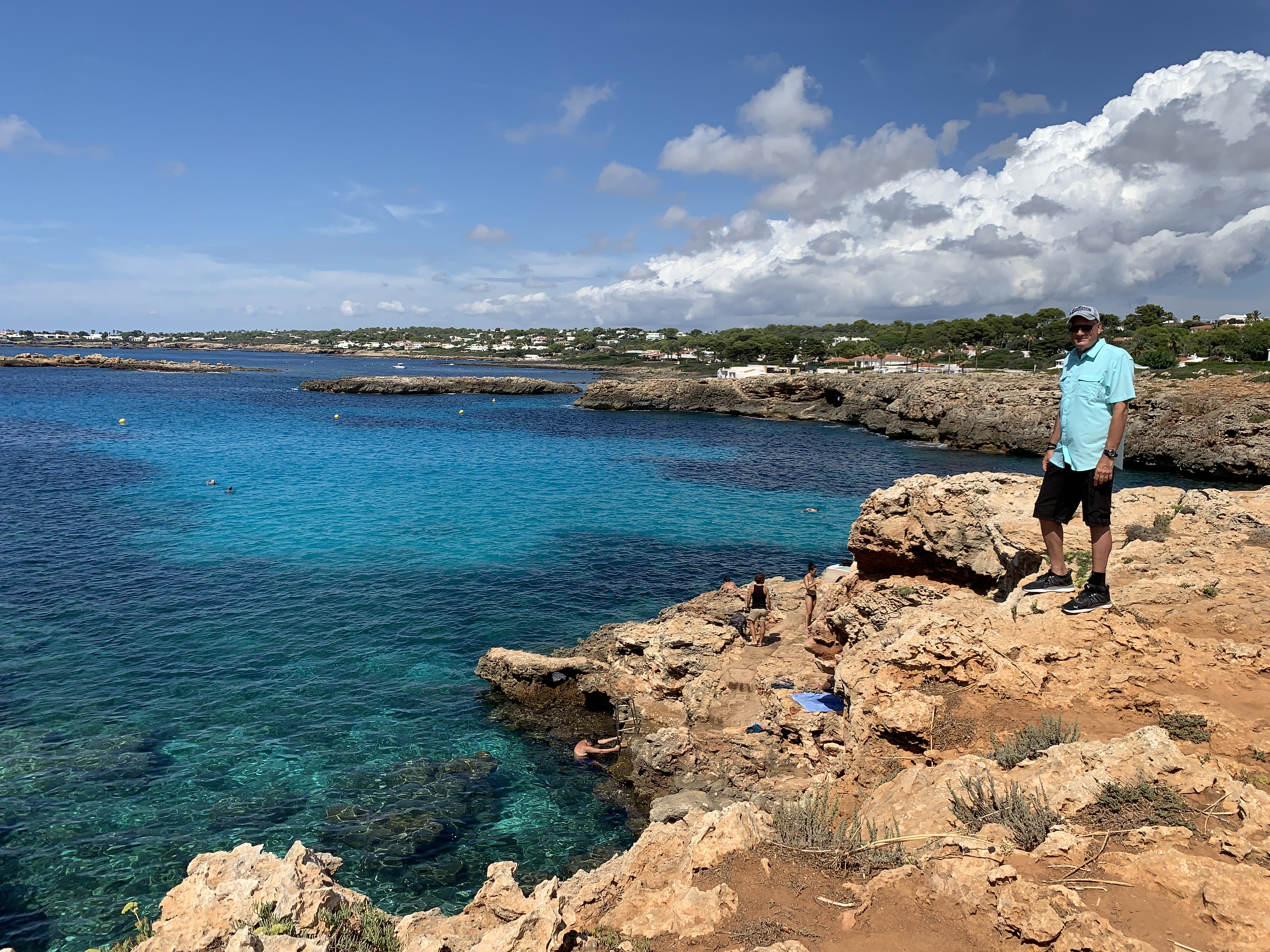
A cove near Binibeca Vell – the water is so clear – bring your snorkel gear!There are several ladders on the cliffs making it easy to get into and out of the water.Yours truly enjoying the warm, clear water near Binibeca Vell!
Some of Menorca’s Other Beaches
There are so many stunning beaches in Menorca – below are a few others we visited during our various exploration travels.
Cala Tirant – this beach is on the north shore, near the town of Fornells. Wide, open and I’m guessing it wouldn’t feel crowded even on a busy day.
Views of Cala Tirant, on the north shore of Menorca.
Son Bou – this popular beach is on the southern shore of Menorca, and close to the Torre d’en Galmés prehistoric ruins if you want to mix a little culture in with your beach day. There are also some 6th century church ruins right next to the beach.
Son Bou Beach.
Cala des Talaier – another beautiful small cove and beach on the southern coast, between Son Saura and Cala Turqueta.
Cala des Talaier – just off the walking path on the way to Cala Turqueta from Son Saura beach and parking area.
Son Saura – another amazing, wide, shallow and calm beach area on the south coast of Menorca.
Son Saura Beach, on the path from the Son Saura parking area to Cala des Talaier and Cala Turqueta.One really needn’t go any further than here to have a perfect beach experience!
I hope I have convinced you that you don’t have to go to Hawaii for great beaches – the Mediterranean Sea and specifically Mallorca and Menorca are blessed with an abundance of beautiful, safe, white sandy beaches and some of the clearest, warmest water you will ever find!
Our final stop in Mallorca was the north coast. We based ourselves near Alcúdia and were very happy with the location.
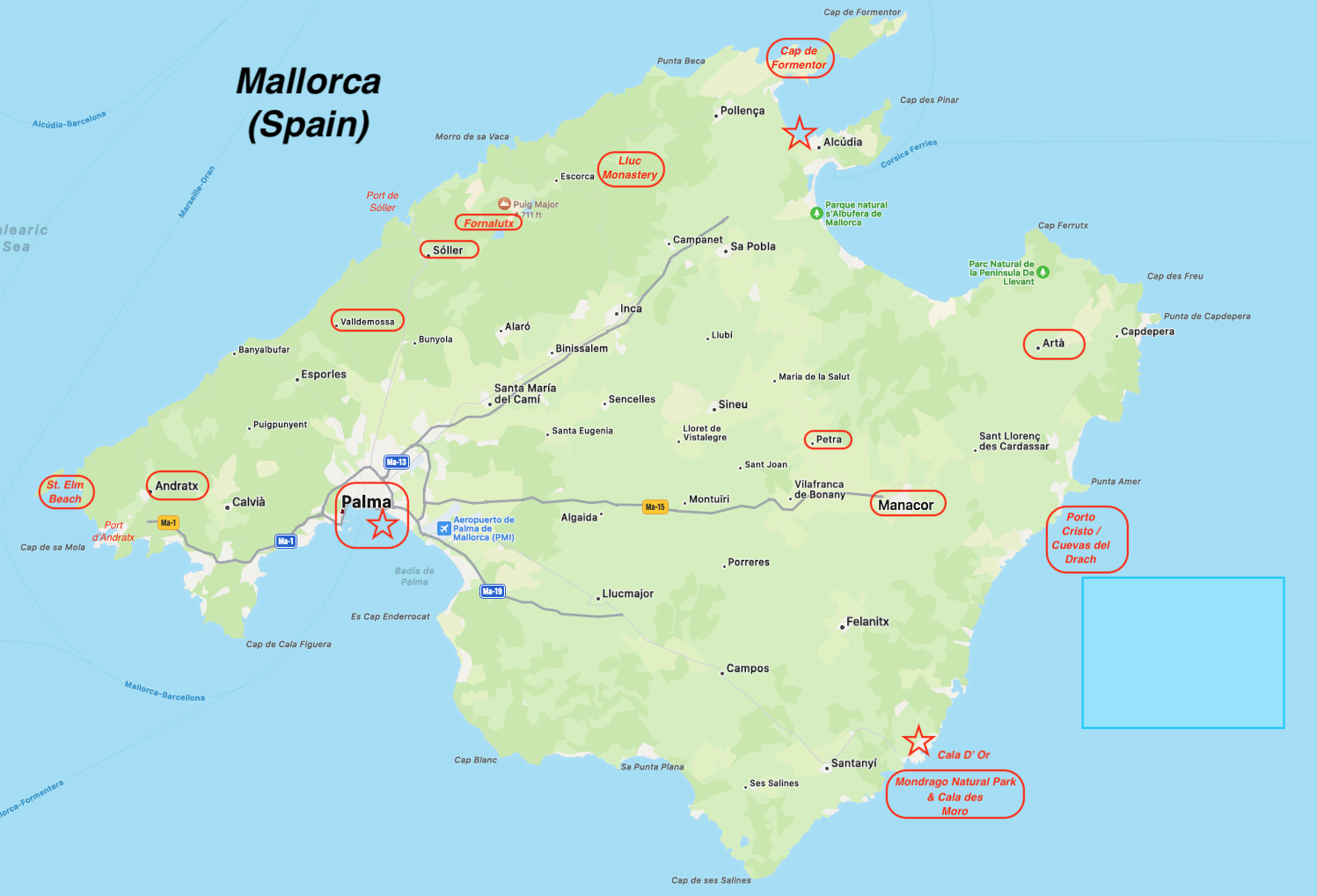
Alcúdia and the various sites mentioned below are located in the northern part of Mallorca.The starred locations indicate our places of stay.
The old walled town of Alcúdia is at the base of a small peninsula that divides the northern coast into the Bay of Pollença and the Bay of Alcúdia. The peninsula itself has some lovely beaches (more on this below). On the eastern side are many hotels, modern shops and busier beaches, kind of like a Miami beach area. We decided to base ourselves on the quieter western side of Alcúdia, at the PortBlue Club Pollentia Resort. The resort is right across the coastal road following the bay of Pollença and is only a couple kilometers from Alcúdia.
The Port Blue Club Pollentia Resort & Spa pool.
Bay of Pollença, view from our hotel.
Alcúdia
Nothing like having medieval walled towns next to glorious beaches – my perfect combination! The late 13th century walled town of Alcúdia is really lovely and sits in a prime location, between two bays with picturesque coves and beaches close by. It’s no wonder this town was a target of pirates in the 16th century. You can spend the day at the beach and then wander into the old town for dinner. There is a large car park on the eastern side of the town walls.
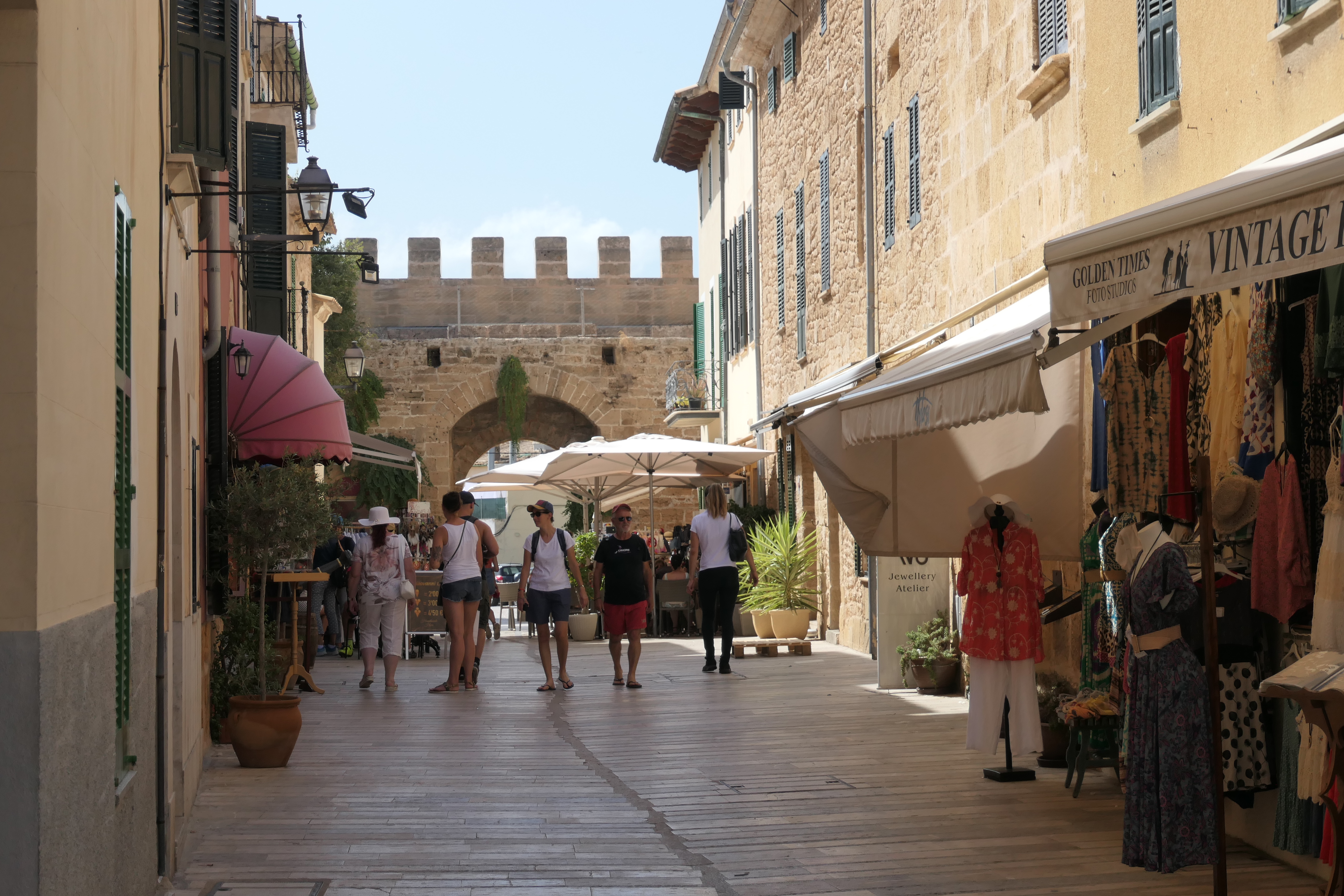
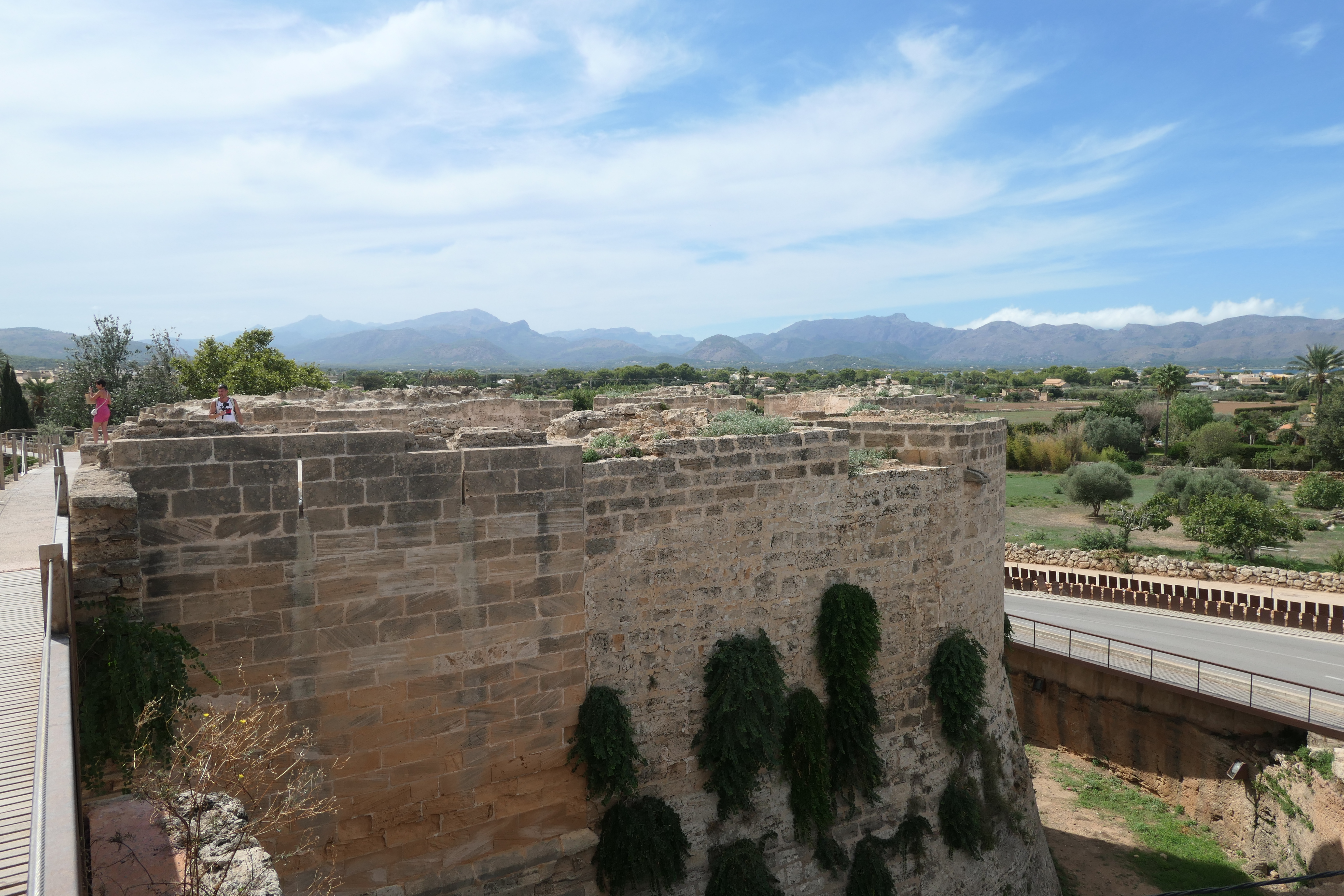
Views of Alcúdia’s gates and walls.Street views of Alcúdia.You can walk a good portion of Alcúdia’s walls for views of the surrounding countryside and town.
Beaches and More Beaches
S’illot Beach is on the peninsula near Alcudia. Its pebbles make for a clean beach experience (no sand to get trapped in your clothes or towel!) and the little island is fun to snorkel around.Sant Joan Beach on the left (near S’illot Beach above) and Formentor Beach on the right (at the far end of Bay of Pollença, near Mirador de Es Colomer).
Mirador de Es Colomer
A popular thing to do in the evening before the sun sets is to take a drive past the Bay of Pollença to the very northwest corner of the island for some spectacular views of the Bay of Pollença and Formentor area. We did this on a whim one evening and really enjoyed the amazing setting and views. The road is steep and narrow – be forewarned. Parking can be a bit of challenge, but be patient and you’ll find a spot. There is a lighthouse further out on the point, but the road to it was closed during our visit.
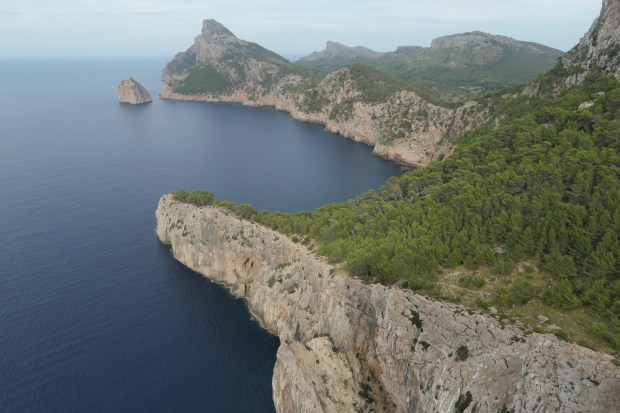
The dramatic views from Mirador de Es Colomer.
It’s hard to capture the height of the cliffs at Mirador de Es Colomer – it’s probably 1,000 feet straight down to the water.
The Ruins of Pollentia – A Roman City
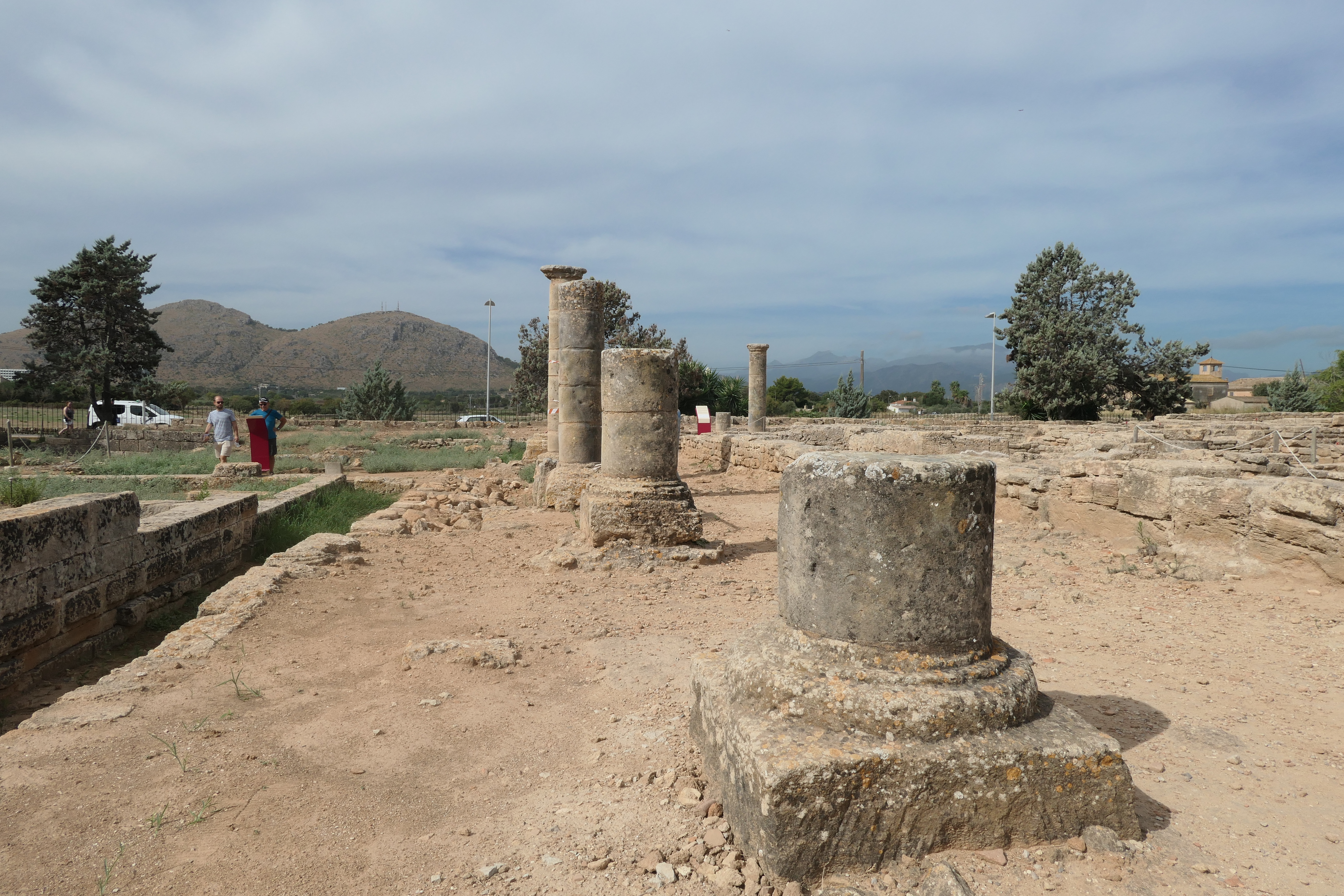
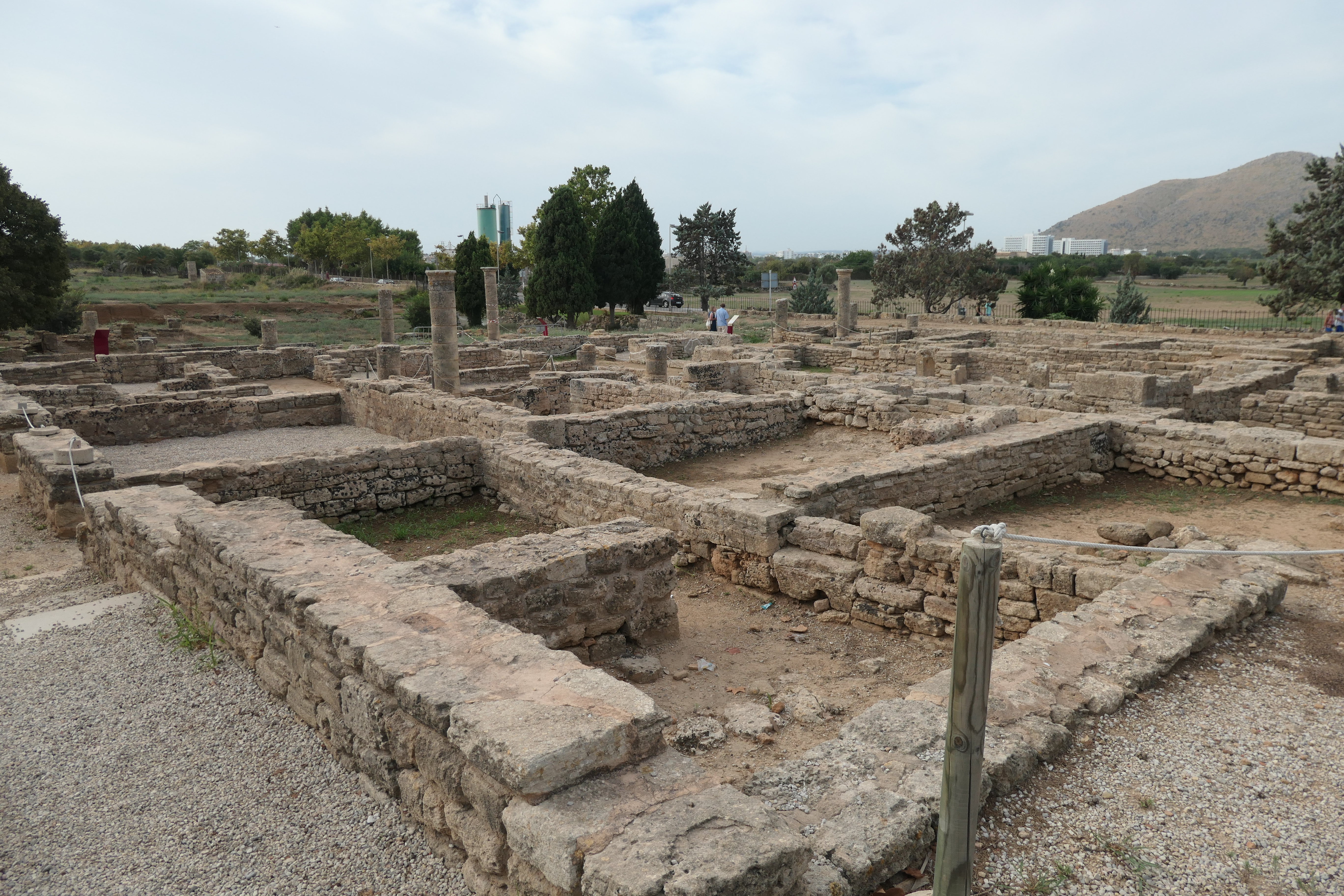
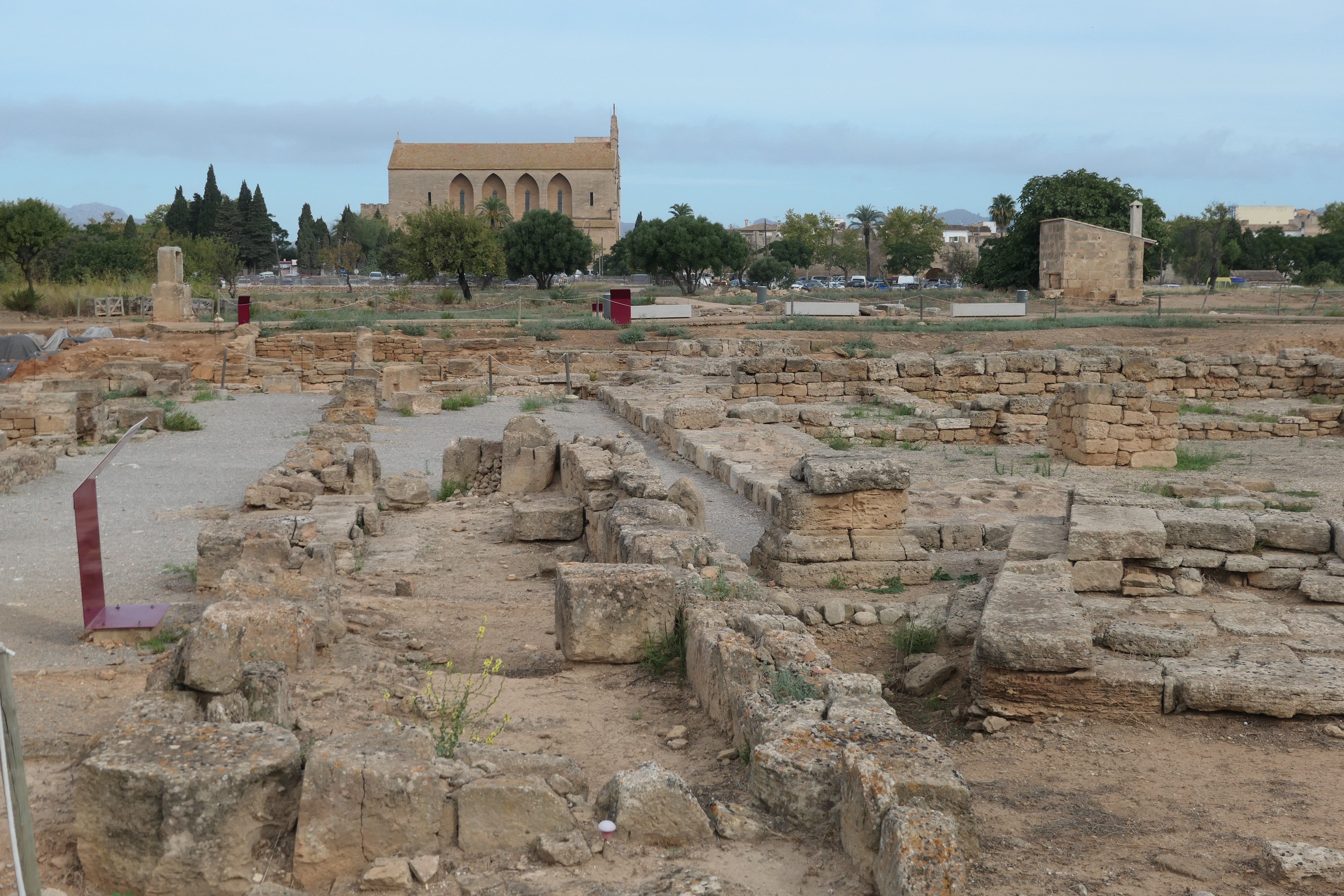
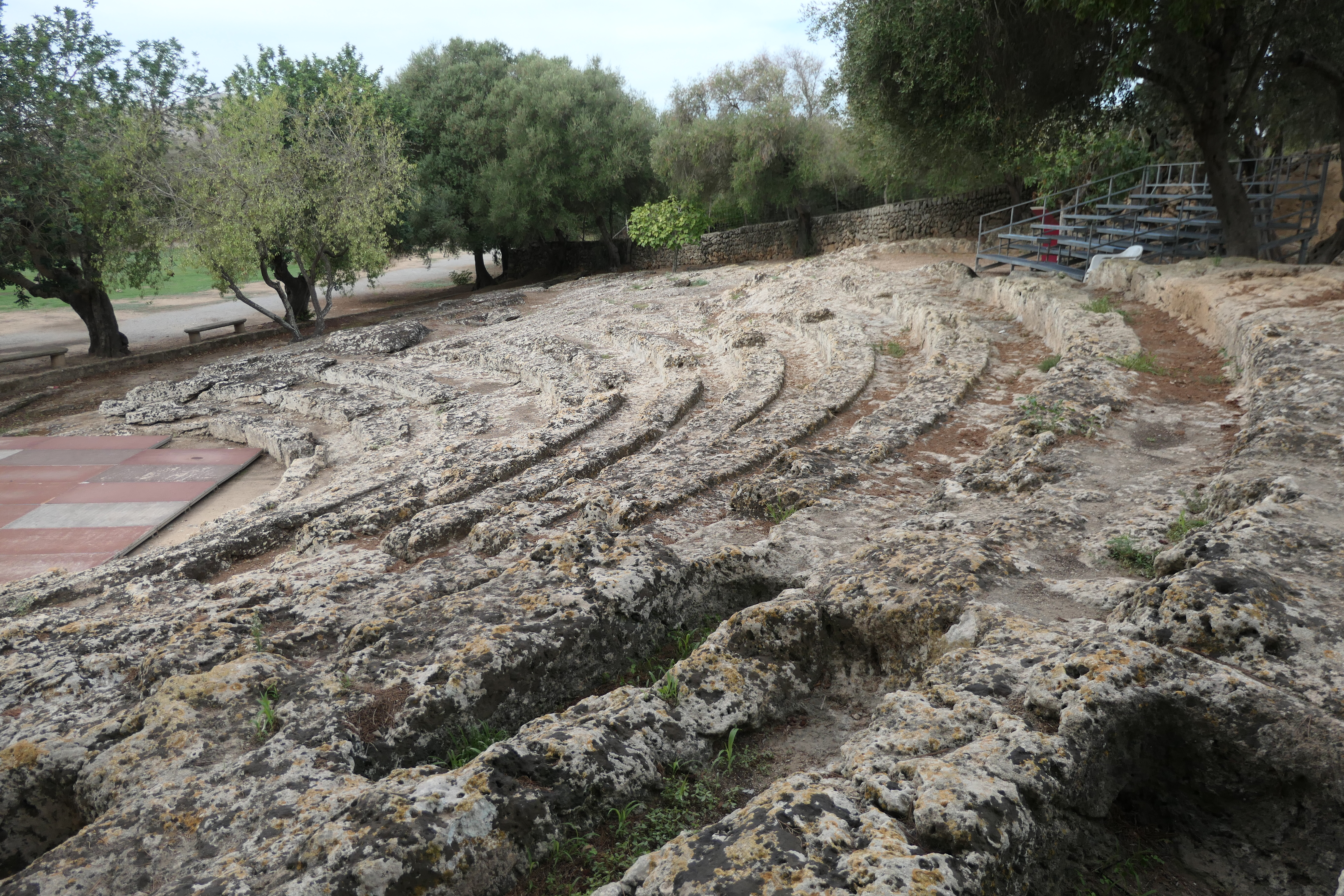
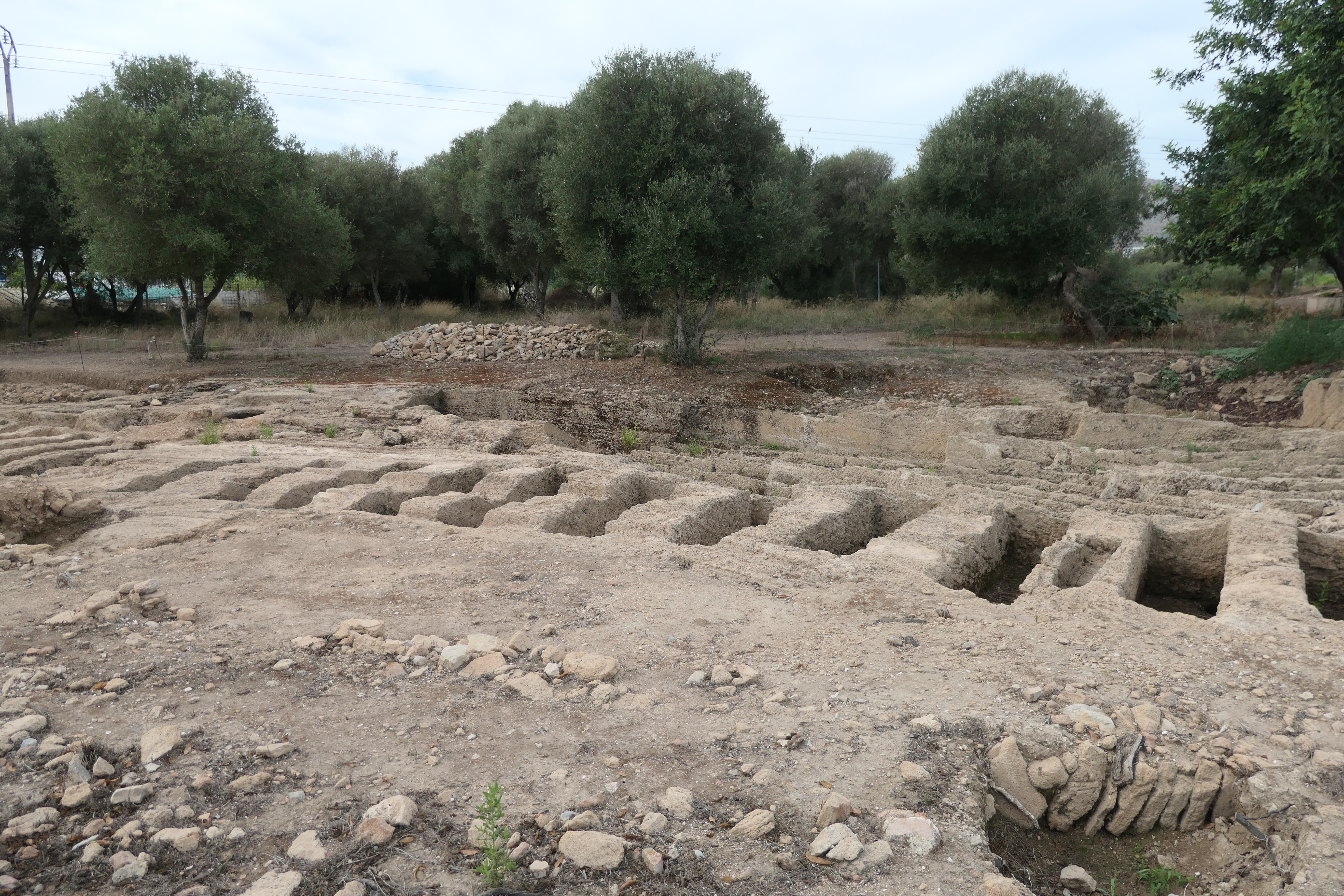
Just outside the walls of Alcúdia are the ruins of the Roman town of Pollentia. Pollentia was the most important Roman settlement in the Balearic Islands and was founded around 121 B.C., a strategic location for a port city. It’s definitely worth a visit.
Views (above) of Pollentia Forum (main plaza) Ruins.Left to Right: Pollentia’s theater, water drainage system and medieval-era necropolis.
Lluch Monastery
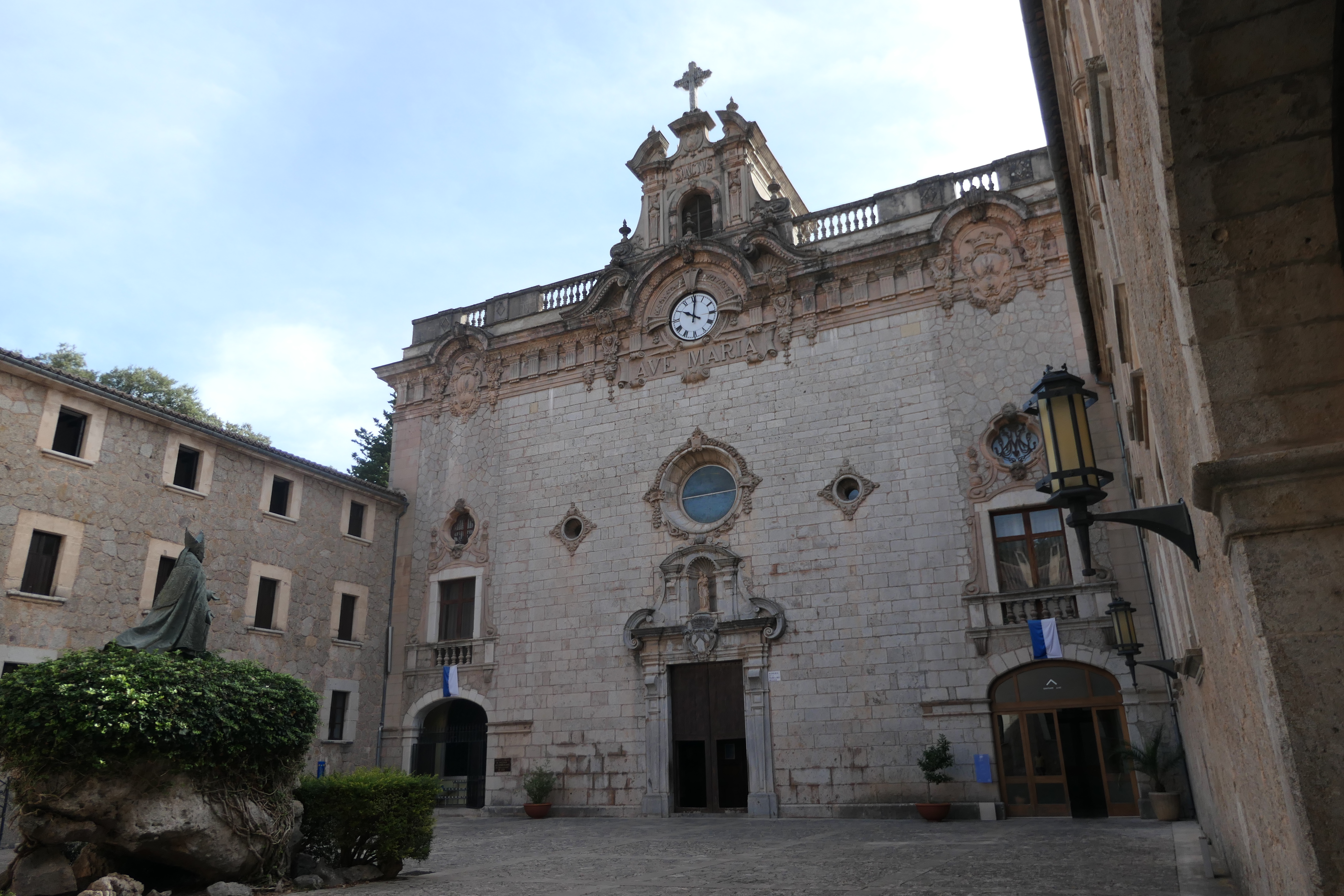
A little further from Alcudia south and west (about 30 km or 19 miles) is the 17th century Lluch Monastery, a major pilgrimage site and important religious sanctuary in Mallorca. We visited Lluch Monastery on our way back to the Palma airport as we were leaving Mallorca. It is located in the rugged Tramuntana Mountains. As the informational image notes below, the monastery receives more than a million visitors a year!
Here’s a short history of Lluch Monastery.
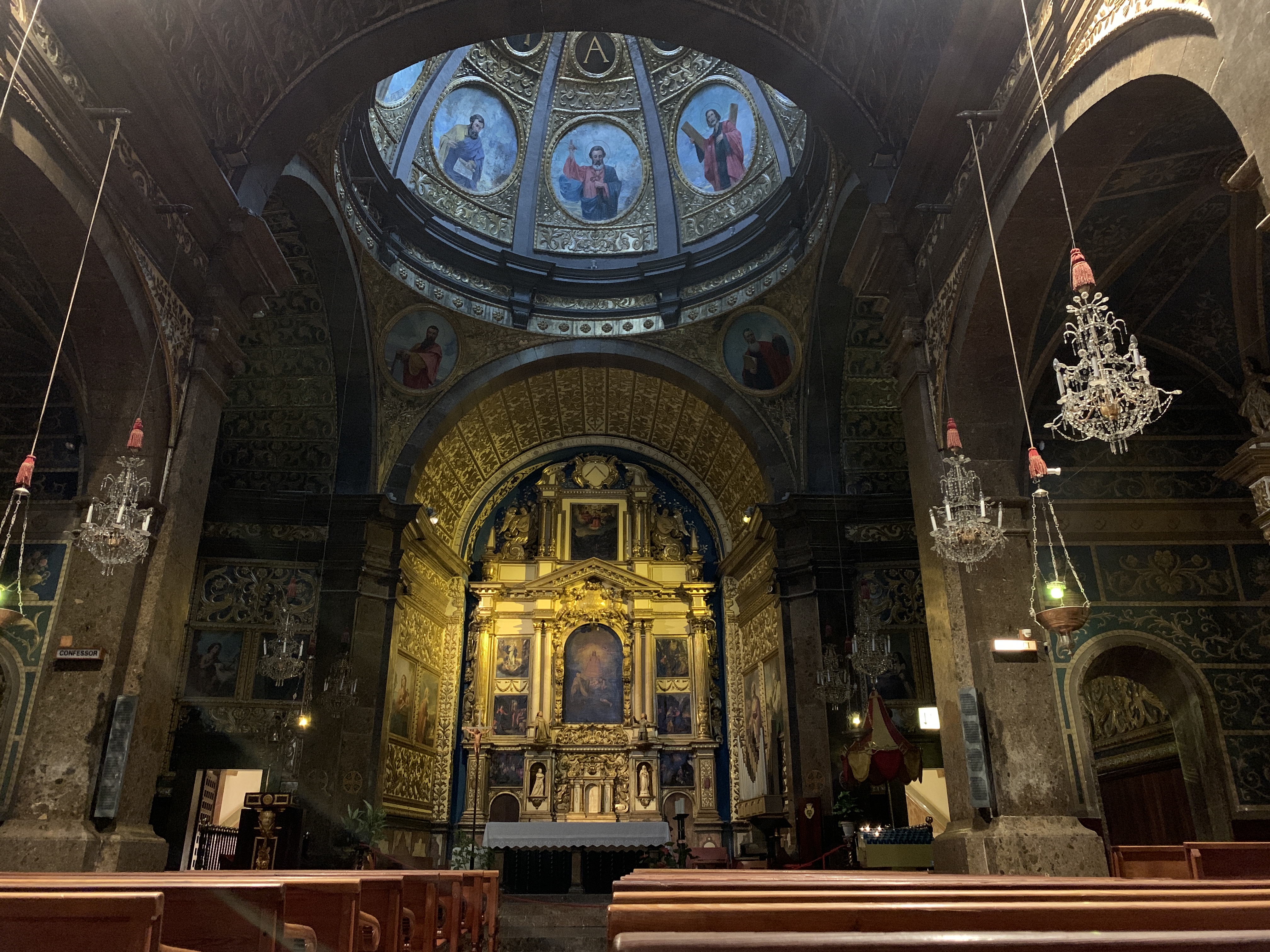
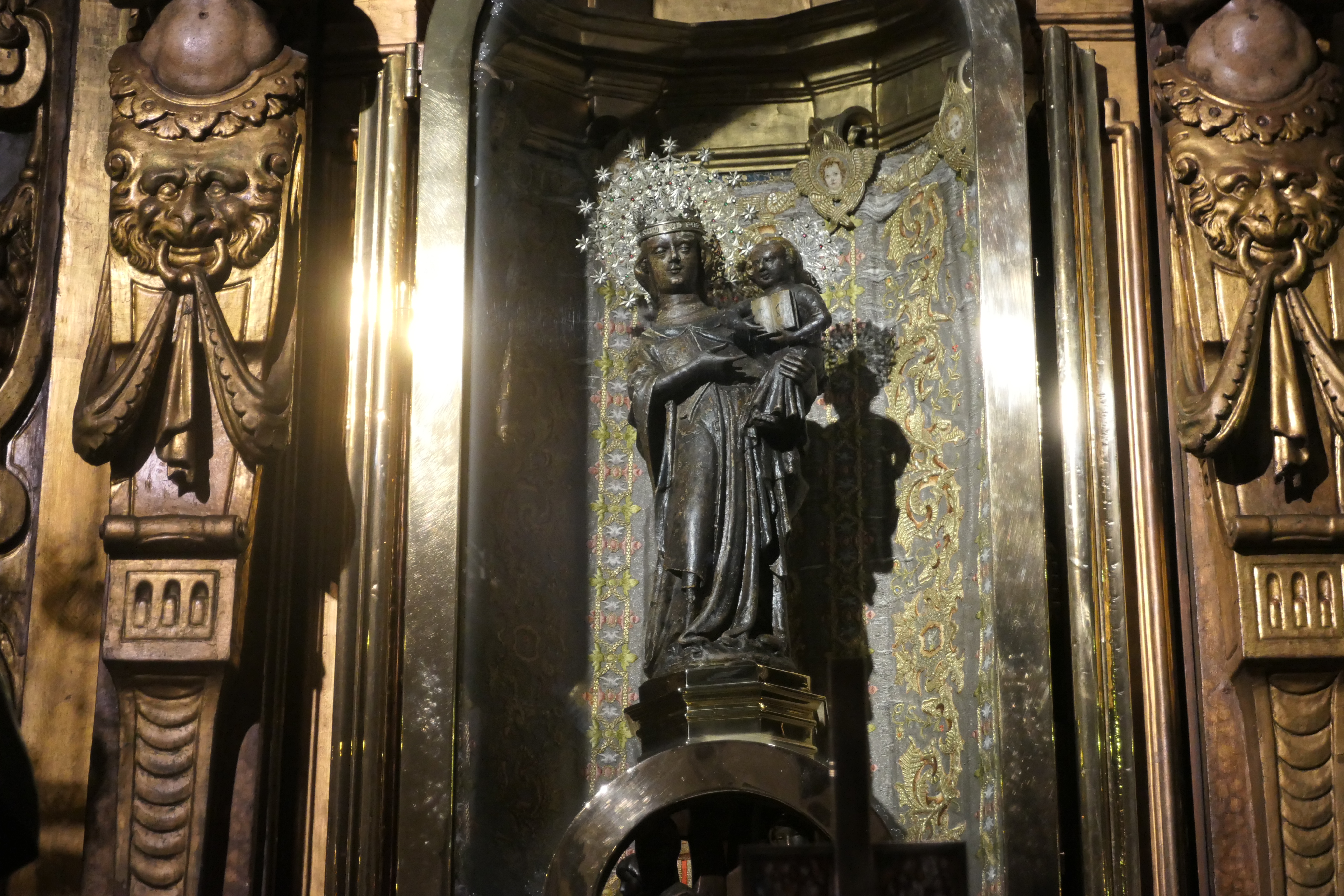
Exterior views of Lluch Monastery.Interior views of Lluch Monastery.
The north coast of Mallorca really is magical – with its nice hotels, beautiful beaches, a medieval walled town, Roman city ruins, a historic pilgrimage site and dramatic coastline drive and views, I’m not sure how it gets any better than this for an independent tourist!
My wife and I love exploring the Mediterranean’s host of magical islands for so many reasons, but as of 2022, we had not yet visited Spain’s share of these islands and so we decided to take a September trip to Mallorca and Menorca (with few days in Barcelona on our way home). September was a perfect time to go – the water was still warm and the days long enough to allow plenty of exploring, with fewer tourists than might be found in July or August. United Airlines started offering seasonal direct service to Palma, Mallorca from Newark, NJ in the summer of 2022. I think that was a fabulous decision, even though locals may not agree!
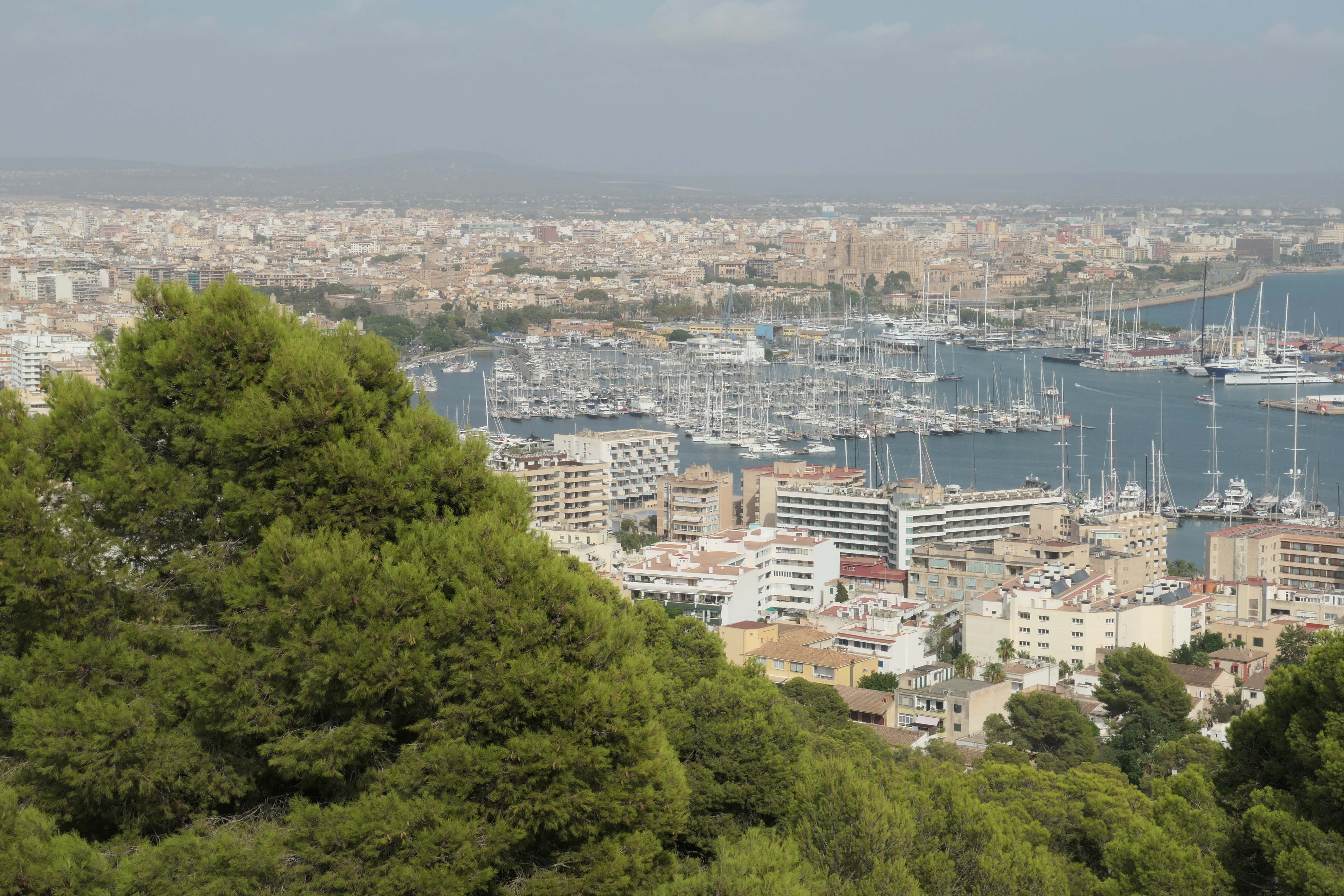
A view of Palma, Mallorca.
In this post, I’ll provide a short overview of these two islands and in future posts go into more detail on each.
Why Mallorca and Menorca?
As mentioned above, we love the Mediterranean – the beautiful coastlines, ancient and medieval-era historical sites, incredible beaches and the variety of cultures and languages to be found throughout the region. We also love that these (Mallorca and Menorca) islands don’t really seem to be on US tourists’ European vacation maps yet, at least not to the same degree as a London, Paris or Rome.
One of the many beautiful coves on the island of Mallorca. Like many of these coves, it takes a little hiking to get here.
However, please don’t think that the islands are void of tourists – that’s hardly the case. Car parks for the most accessible beautiful beaches and coves fill up fast – you have to get there early (or arrive late in the day) if you want a convenient parking spot. It seems that most of the tourists to these islands come from Germany and the UK, although cruise ships also visit Palma. Cycling on the narrow winding roads through the mountains of Mallorca is a favorite pastime in addition to hiking, 4 wheeling, and of course all kinds of water sports.
When driving in Mallorca, one needs to be careful of the cyclists sharing the road.
Even with all the tourists, it’s still possible to visit little towns on both islands and pretty much be the only tourists in sight.
The scenic town of Arta in the northeast corner of Mallorca – few tourists here.
Mallorca and Menorca are quite different from one another. Mallorca is larger, more mountainous, with a significantly larger population (about half of which live in the Palma area) and caters to more tourists, who tend to stay put in specific regions of the island. Menorca is smaller in size and population with fewer tourists, and feels more rural. Both islands offer stunningly clear turquoise water, incredible coves and beaches – some of the prettiest anywhere on the planet – and interesting historical sites and towns.
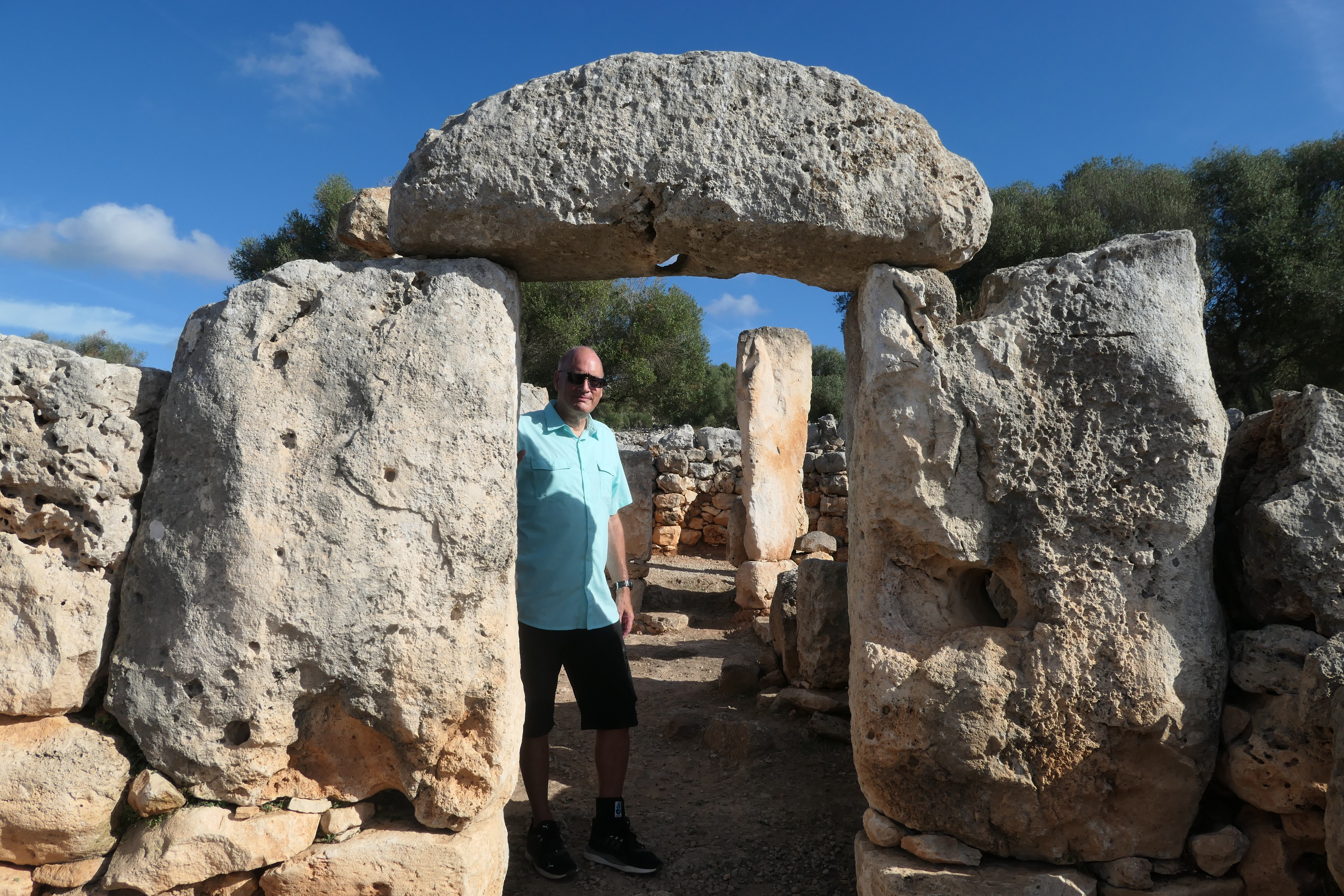
Torre d’ en Galmes, one of Menorca’s many prehistoric ruins.
Where are Mallorca and Menorca?
Mallorca and Menorca are two of the three primary Balearic islands, belonging to Spain, the other being Ibiza. Ibiza has a reputation as a real “party” island and we preferred a bit different experience. Plus, as stated above, we could fly directly to Palma from the US. Mallorca and Menorca are close together geographically and it’s easy to get from one island to the other (just a 30 minute flight), or by taking a longer ferry ride.
Mallorca and Menorca are in the western Mediterranean Sea. It is a short flight from Barcelona to Mallorca or Menorca – about an hour (approximately 158 miles or 255 km). We flew to Barcelona from Menorca for a few days at the end of our stay and then directly from Barcelona to Washington, D.C.
Be on the lookout for many more posts to come about these beautiful islands!






























 The Independent Tourist