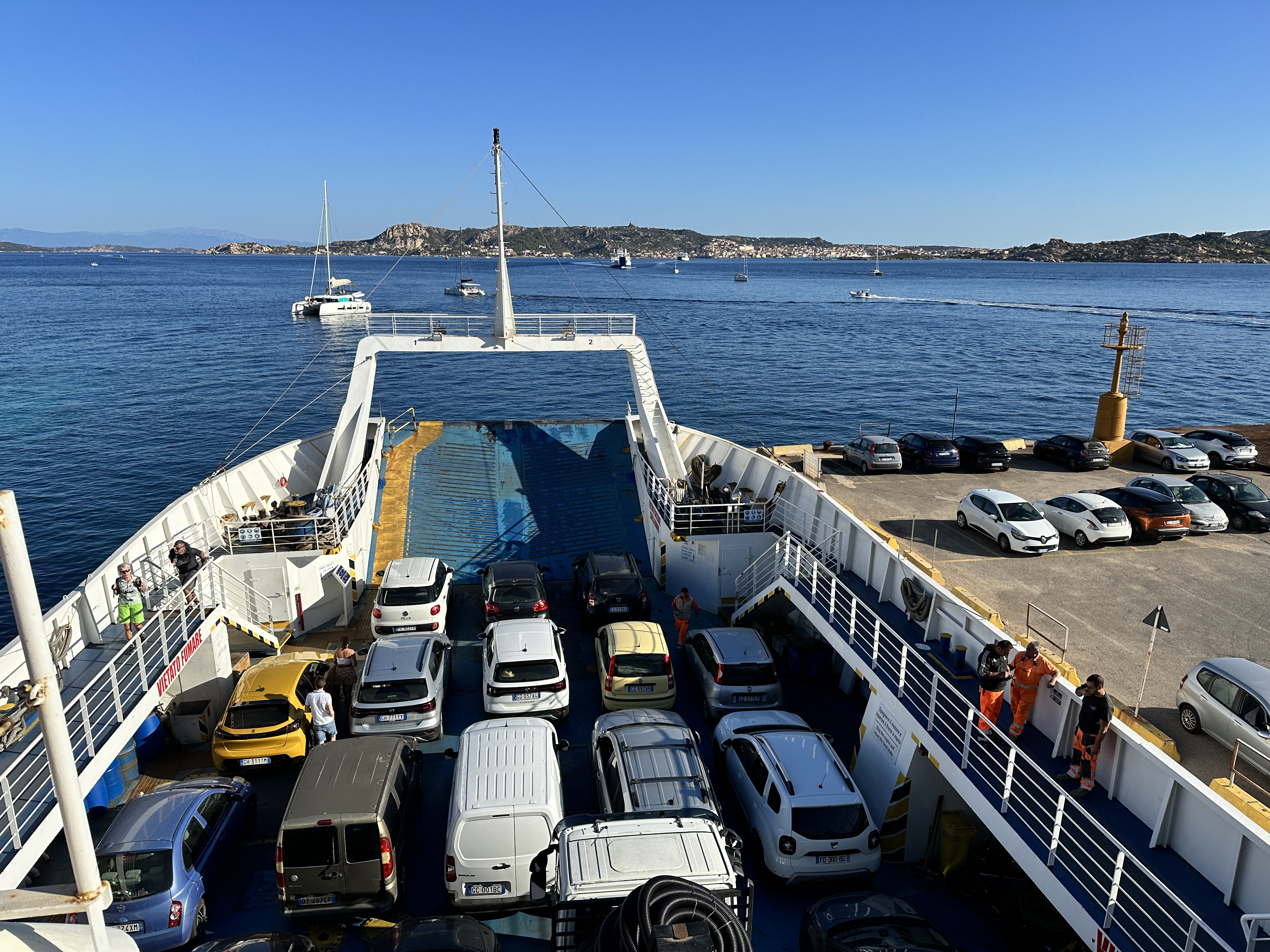
From our start in Olbia and Sardinia’s Costa Esmeralda, we traveled north a short distance and took (with our rental car) the 15-minute ferry ride from Palau over to La Maddalena Island and town, which is part of the La Maddalena Archipelago, located at the very north east edge of Sardinia, Italy. We spent 3 nights on La Maddalena, which gave us enough time to see La Maddalena Island, Caprera Island (reached by bridge from La Maddalena) and then a day-trip boat tour of some of the other islands in the Archipelago. I’ll share a bit about each day below.
La Maddalena
We caught a morning ferry to La Maddalena from Palau, no reservations were needed in October and the ferries run continuously all day. A round trip ticket for car and passengers was about 40 Euro.
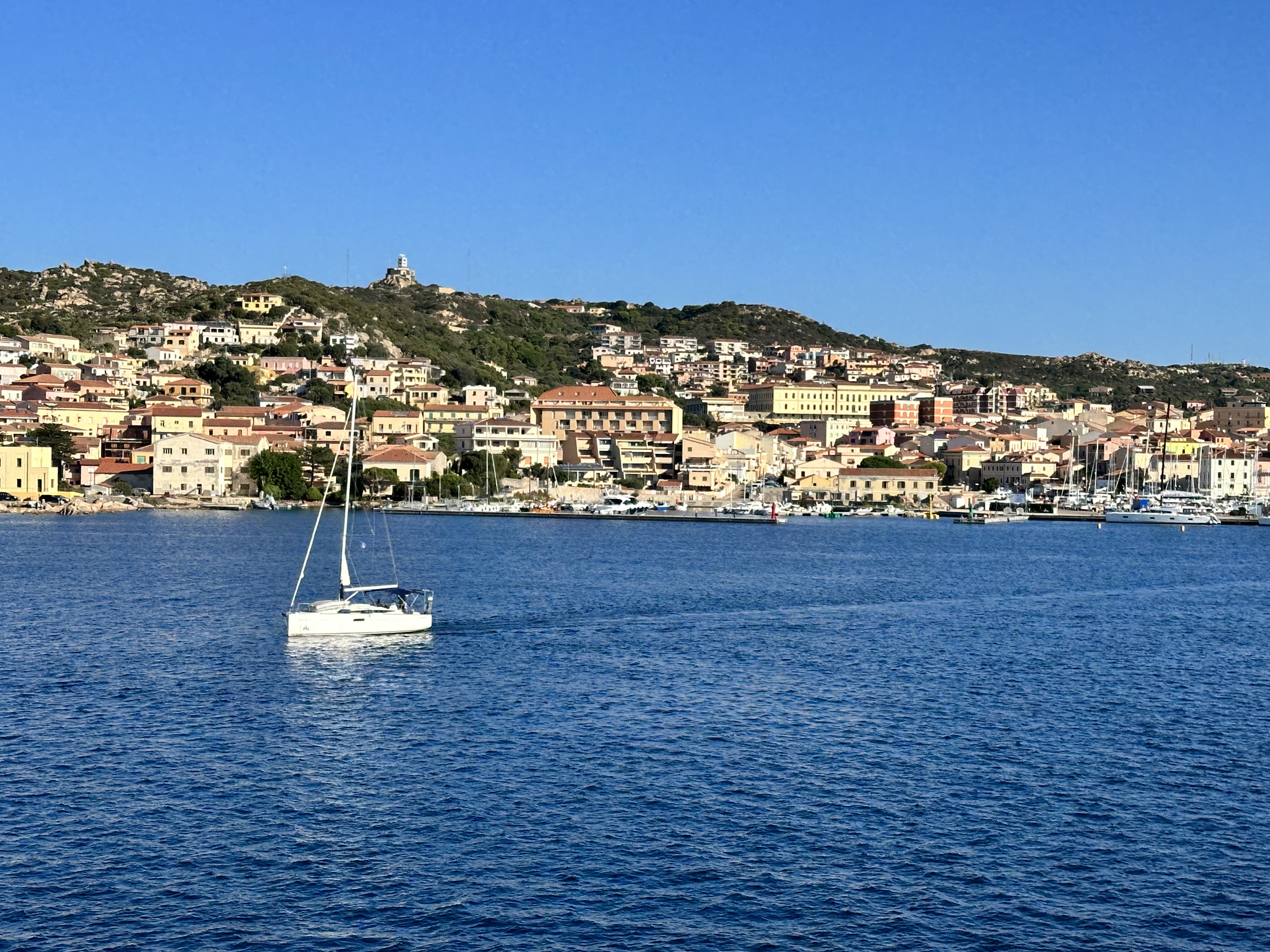
Left – our ferry, with La Maddalena in the distance. Right – a view of La Maddalena town and harbor from the ferry.
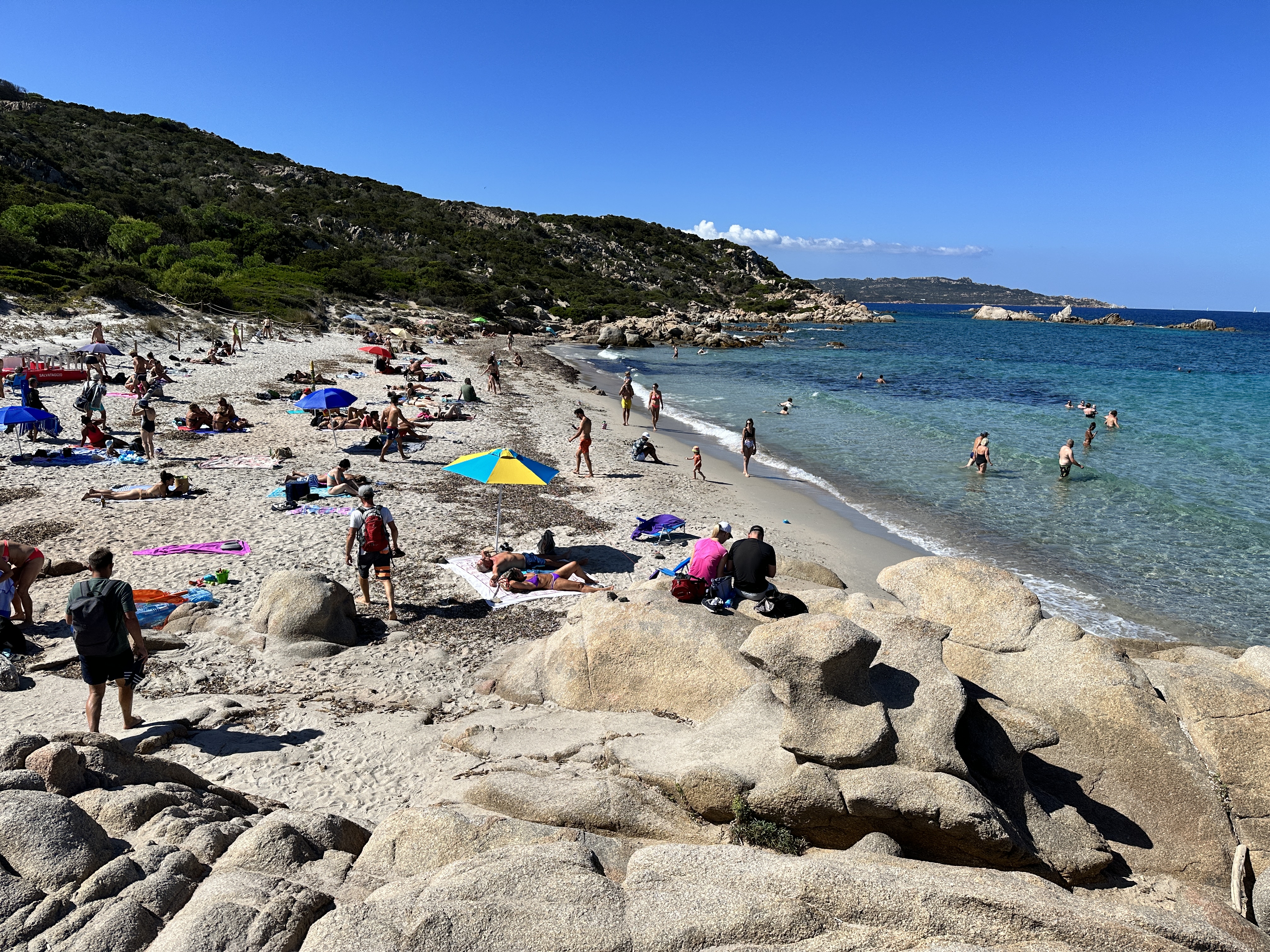
Upon arrival. we immediately headed for Cala Francese beach, not far from the main town and then explored a few other beaches around the island before checking into our hotel later in the afternoon. La Maddalena is not big, you could probably drive around the island in 30 minutes or less.
Above – Cala Francese, on the southwest coast of La Maddalena. You have to take a very short drive on a dirt road to get to the parking area and then walk on a trail for 5 minutes to get to the beach.Left – Spiaggia Bassa Trinita, Right – Spiaggia del Cardellino, both beaches are on the northwest coast of La Maddalena.
Cala Lunga, at the northern tip of La Maddalena.
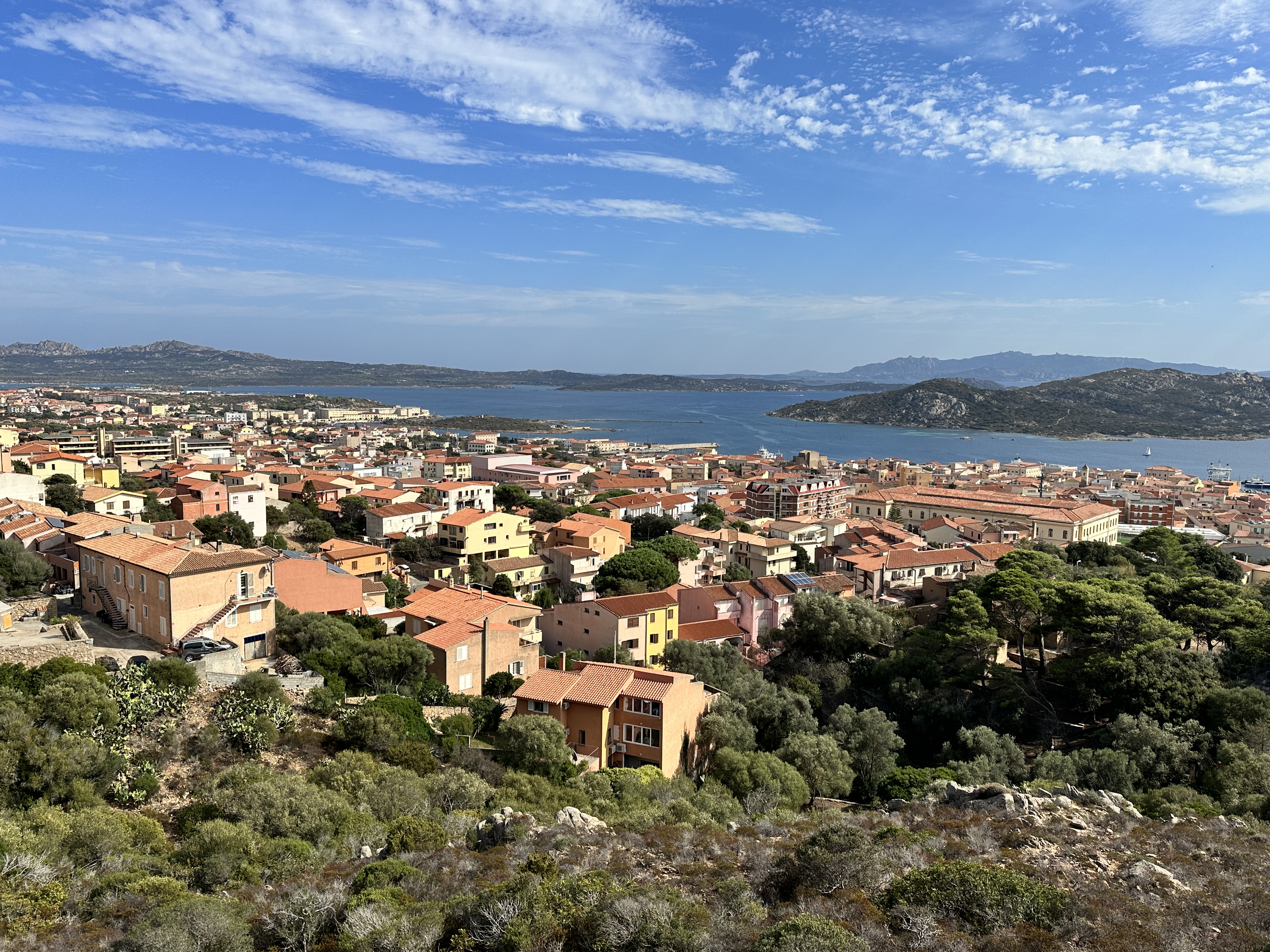
Left – Spiaggia di Cala Spalmatore, on the eastern side of La Maddalena. Right – a view of La Maddalena town as we drove back after our tour of the island.
The town was fun to explore, and many boat tours are offered from the harbor.
Caprera Island
After a wonderful day on La Maddalena, we decided to spend our second day on Caprera, an island connected to La Maddalena via a bridge. Caprera is far less populated, and largely National Park land. There are numerous beaches and hiking trails and to start our day we decided to do a hike on the north end of the island, to the Batteria de Candeo, a really interesting site.
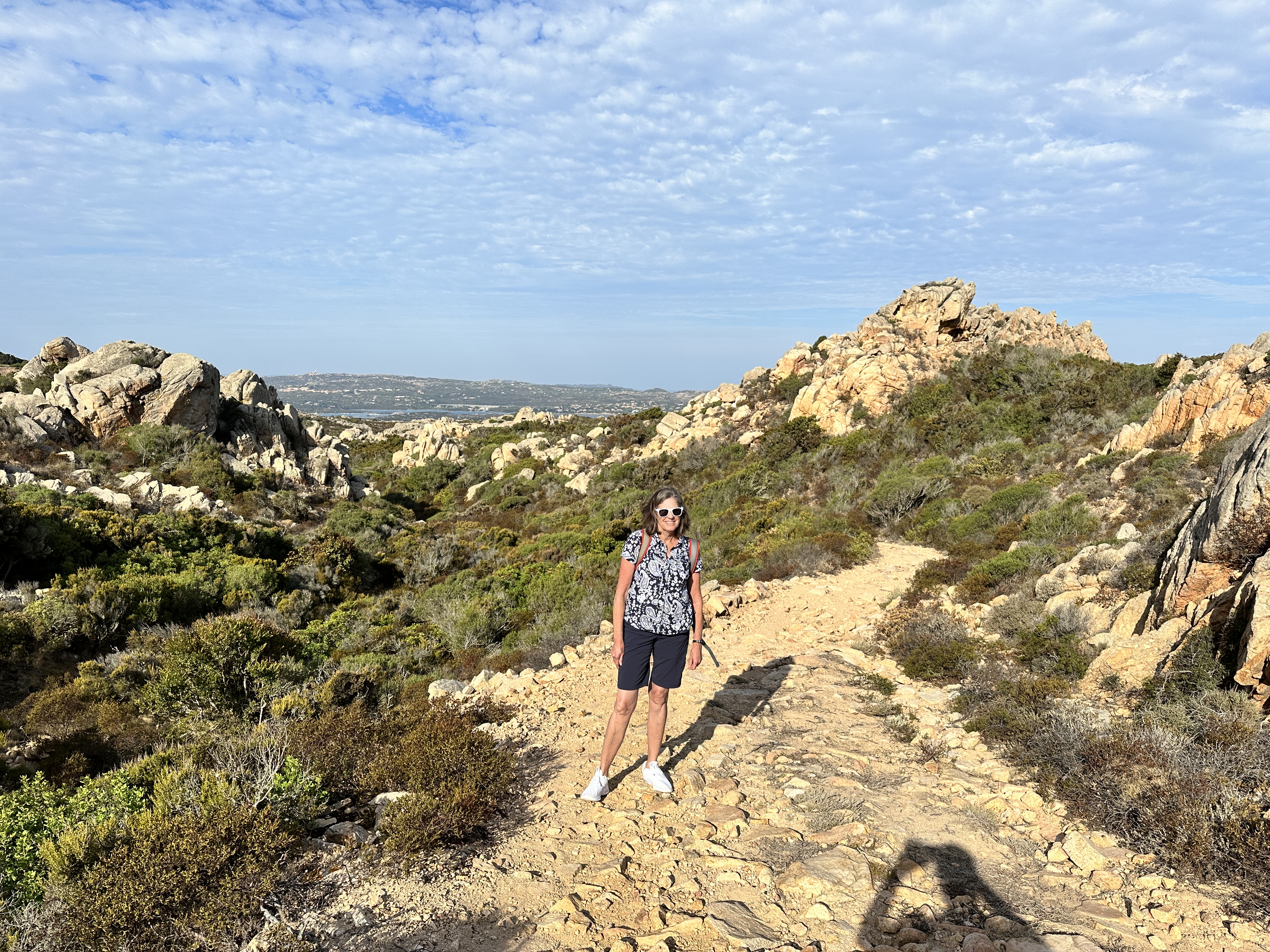
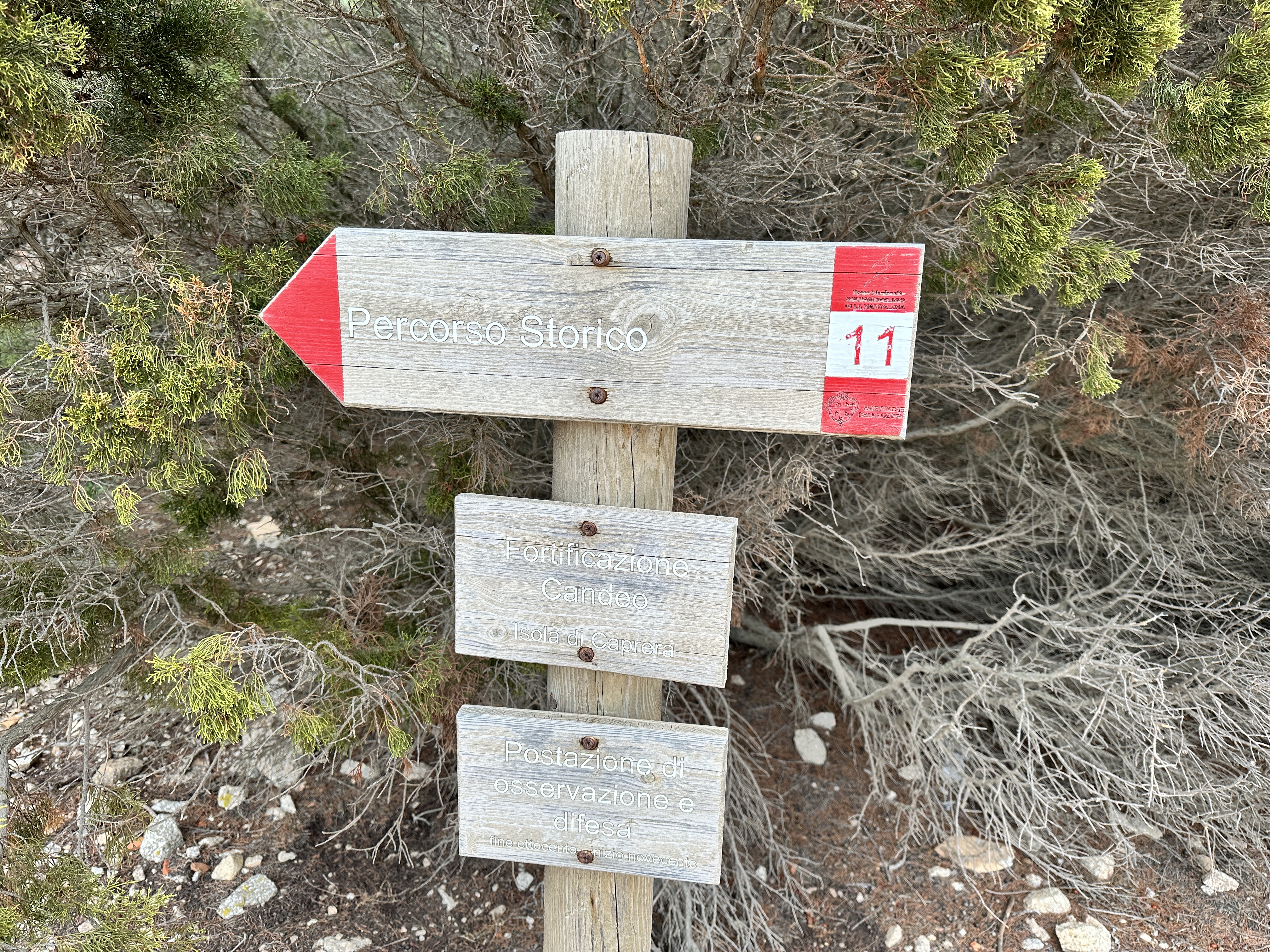
There are numerous trails criss-crossing the northern end of Caprera, and they are well signposted. There were very few people on the trails, we pretty much had them to ourselves.
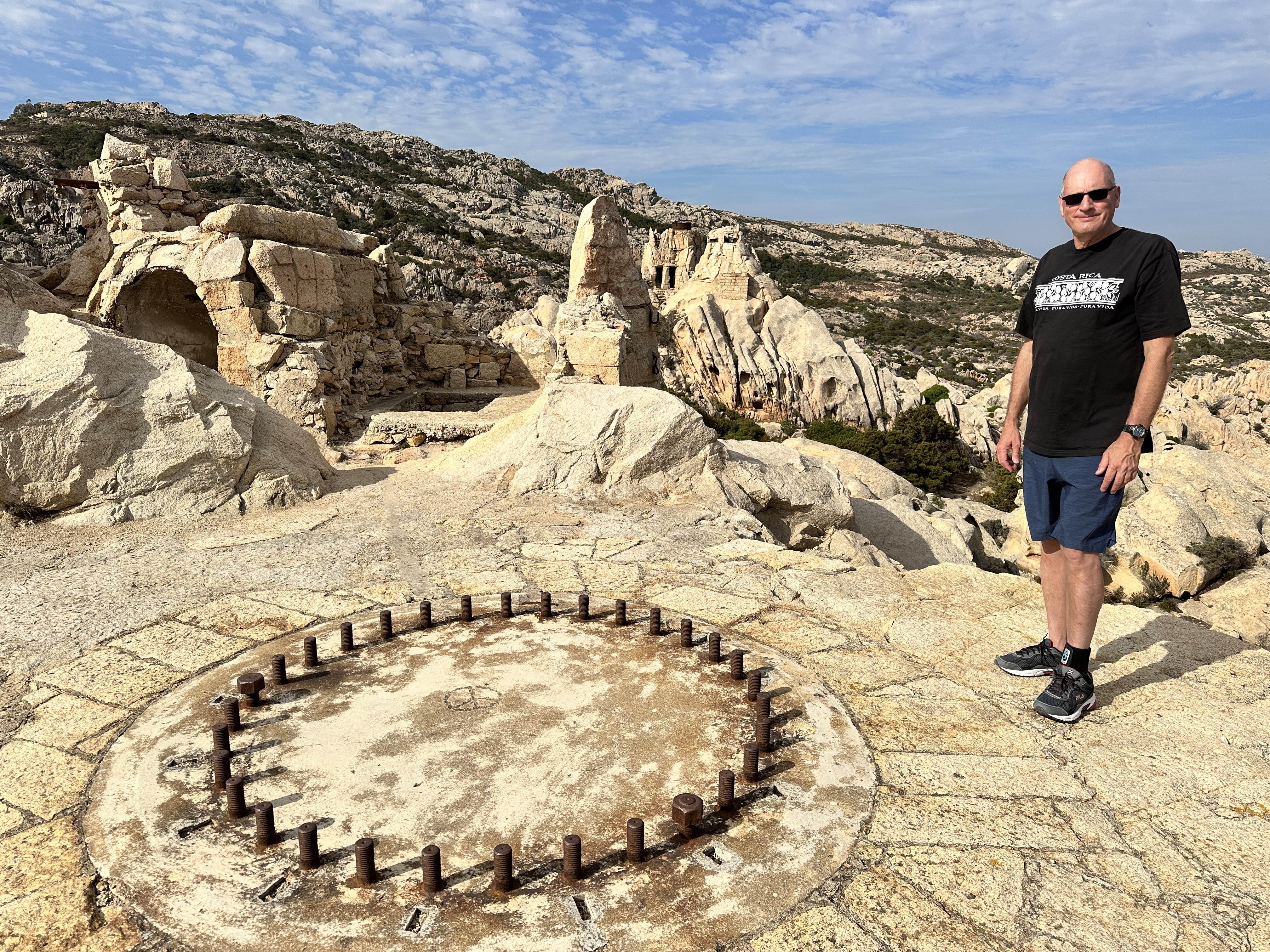
At the north end of Caprera is the military site of Batteria de Candeo, an anti-aircraft and ship emplacement built between World War I and World Ward II. It was built from the natural rock in the area and was well camouflaged – even today it looks like part of the natural landscape except for the doorways.
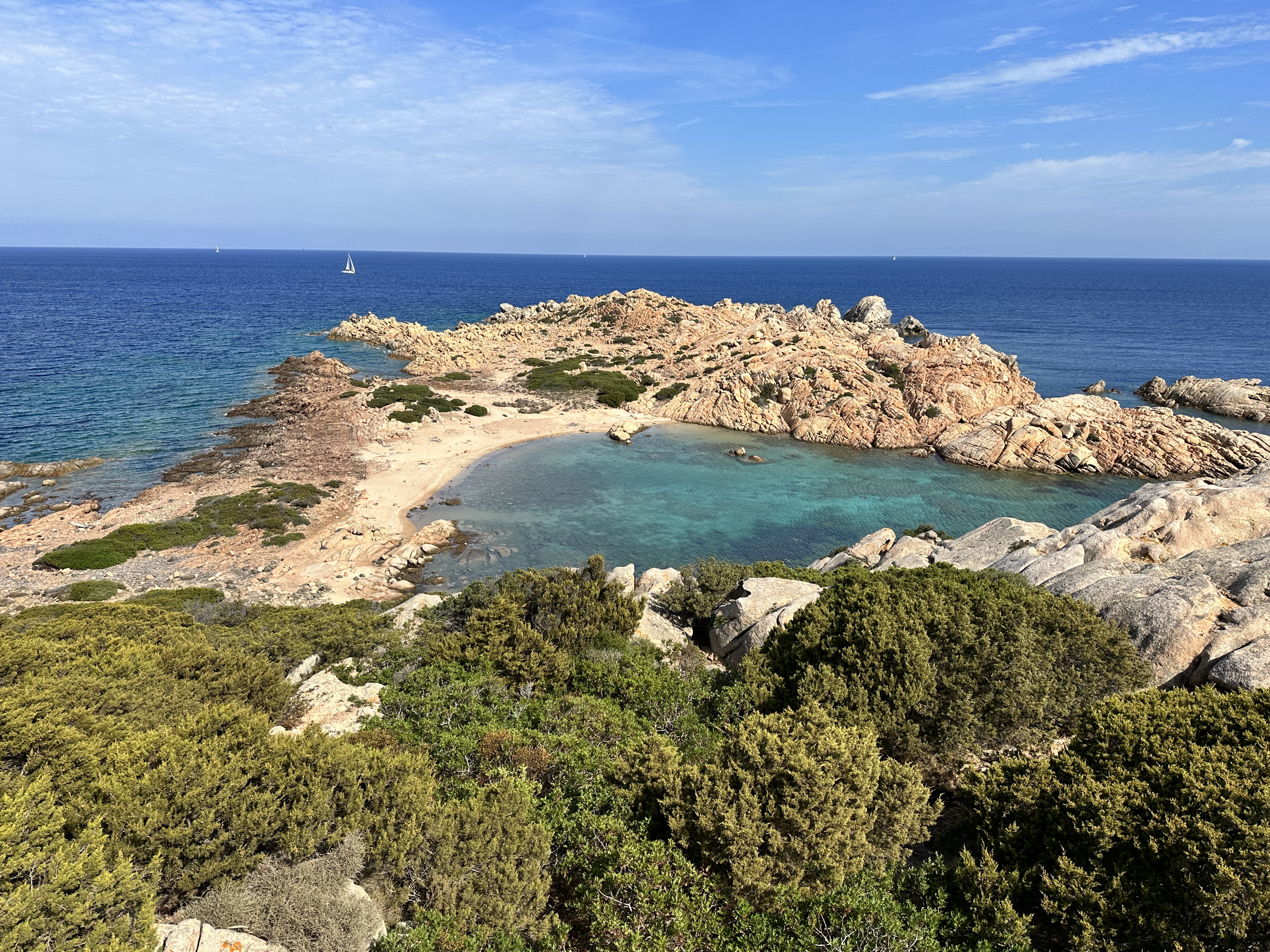
Other views of Candeo. Candeo can be accessed via the Caprera trail system.Other views and beaches accessed from the trail system in Caprera – left to right: Cala Crucitta, Cala Nepoletana, Cala Caprarese.
There are some beaches on the south end of the island also, such as Spiaggia Due Mari, for example. We visited the south end and spent a while lounging on Spiaggia Due Mari beach after our hike, but unfortunately I did not capture a photo!
Note: I had wanted to visit Cala Coticcio beach on Caprera, one of the most famous beaches in Sardinia. The only way to visit is with a guide (they limit access to this beach to preserve its natural state). I reserved a date with the guide, but I also needed a Park pass, and for some reason this was difficult to do online, so I gave up and cancelled our visit to this particular beach. It is a fairly long hike to Cala Coticcio and if we had done that hike, we would not have had time to do the hiking discussed above. I think it’s just a trade off on how you want to spend your time. As shown above, there are other stunning beaches and sights that don’t have the limitations of Cala Coticcio.
Day Trip Boat Tour
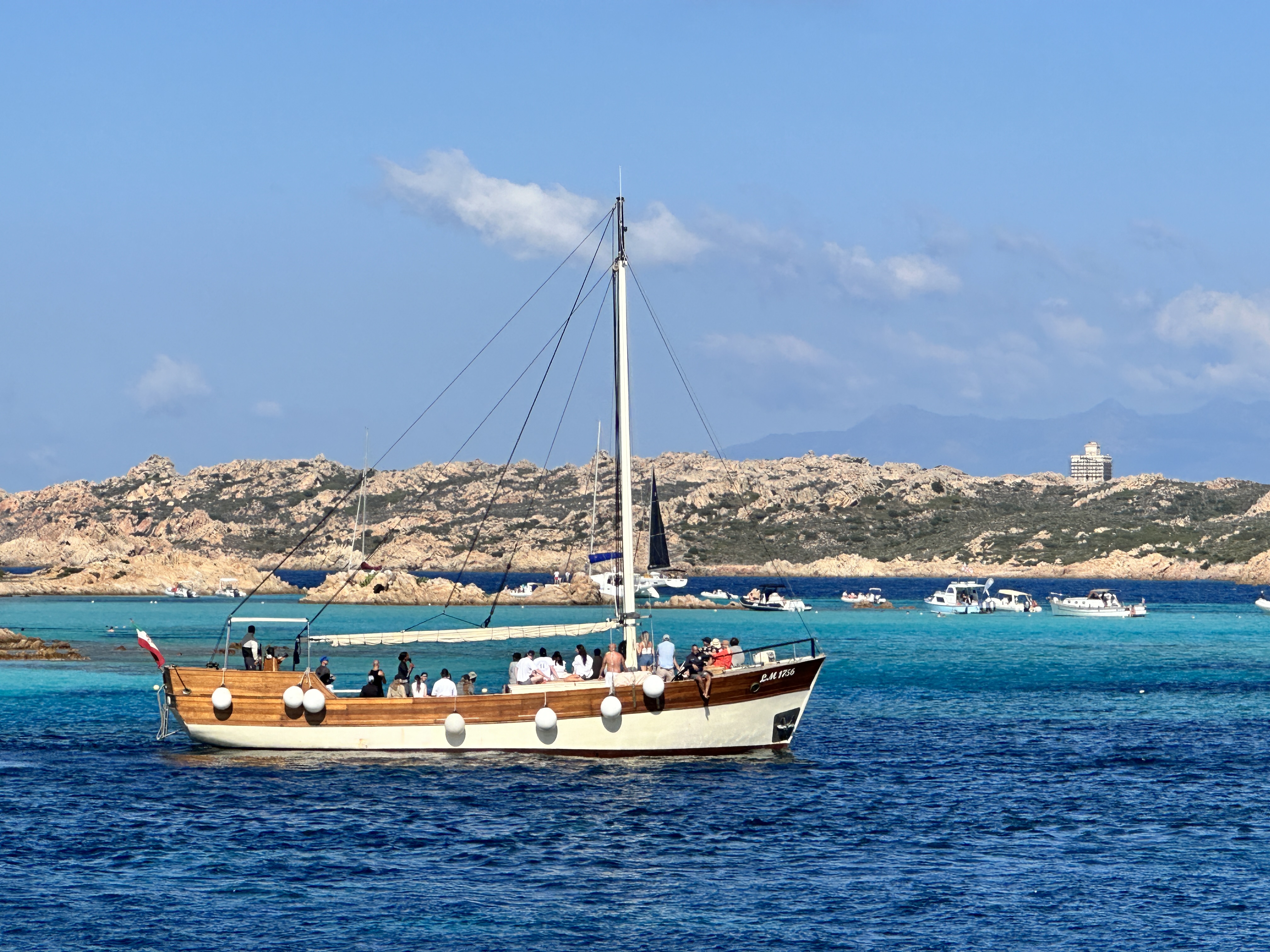
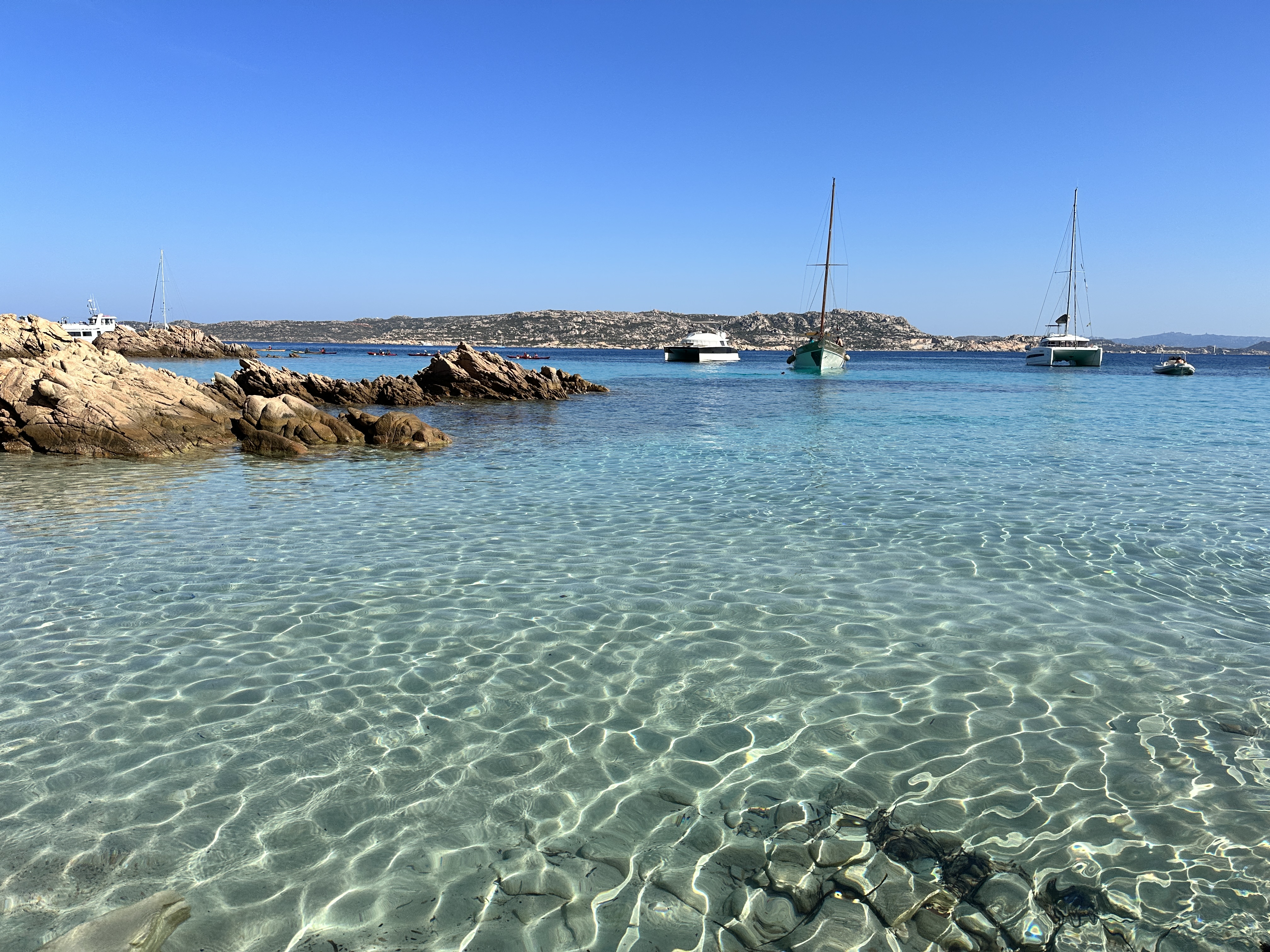
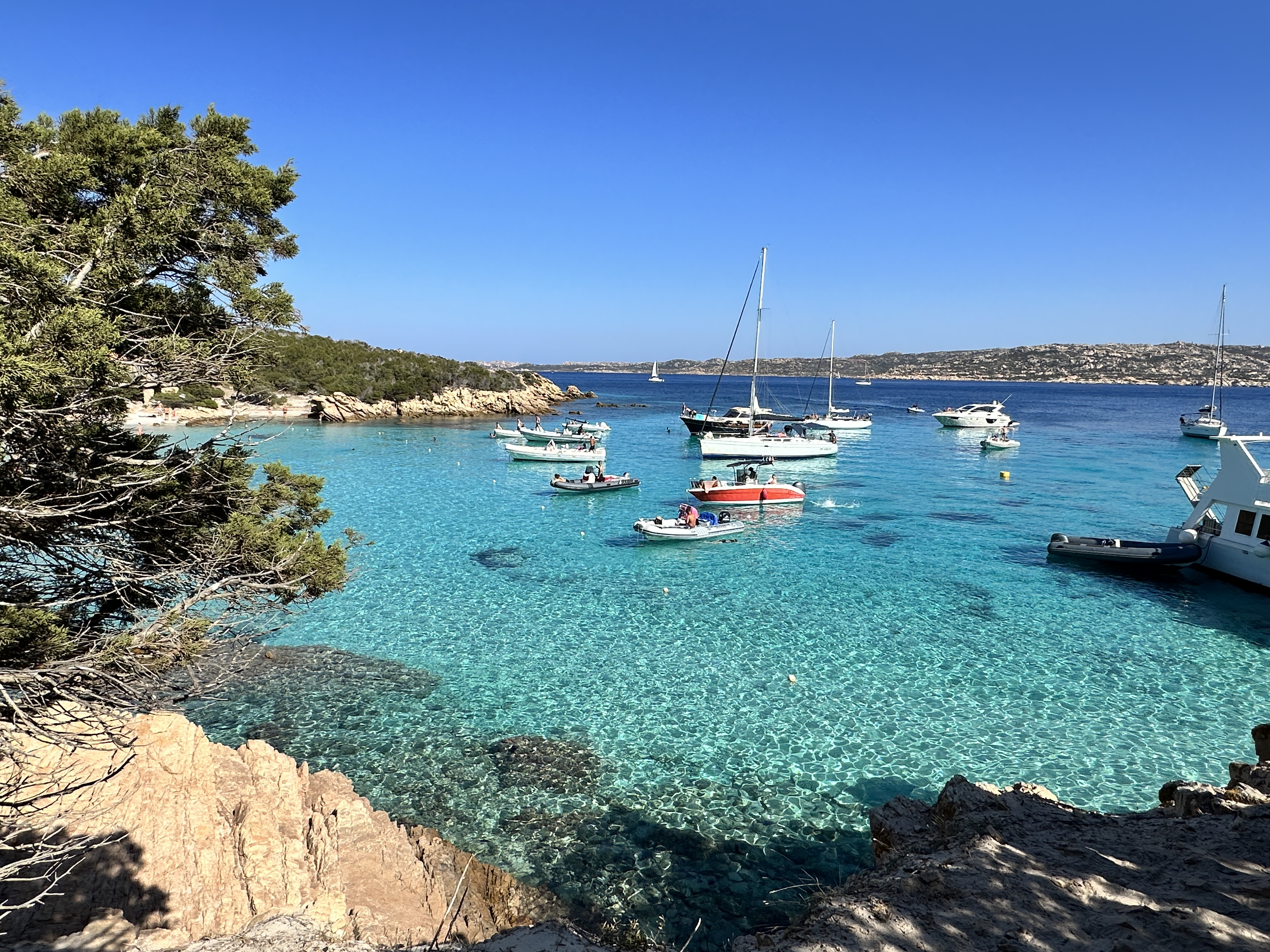
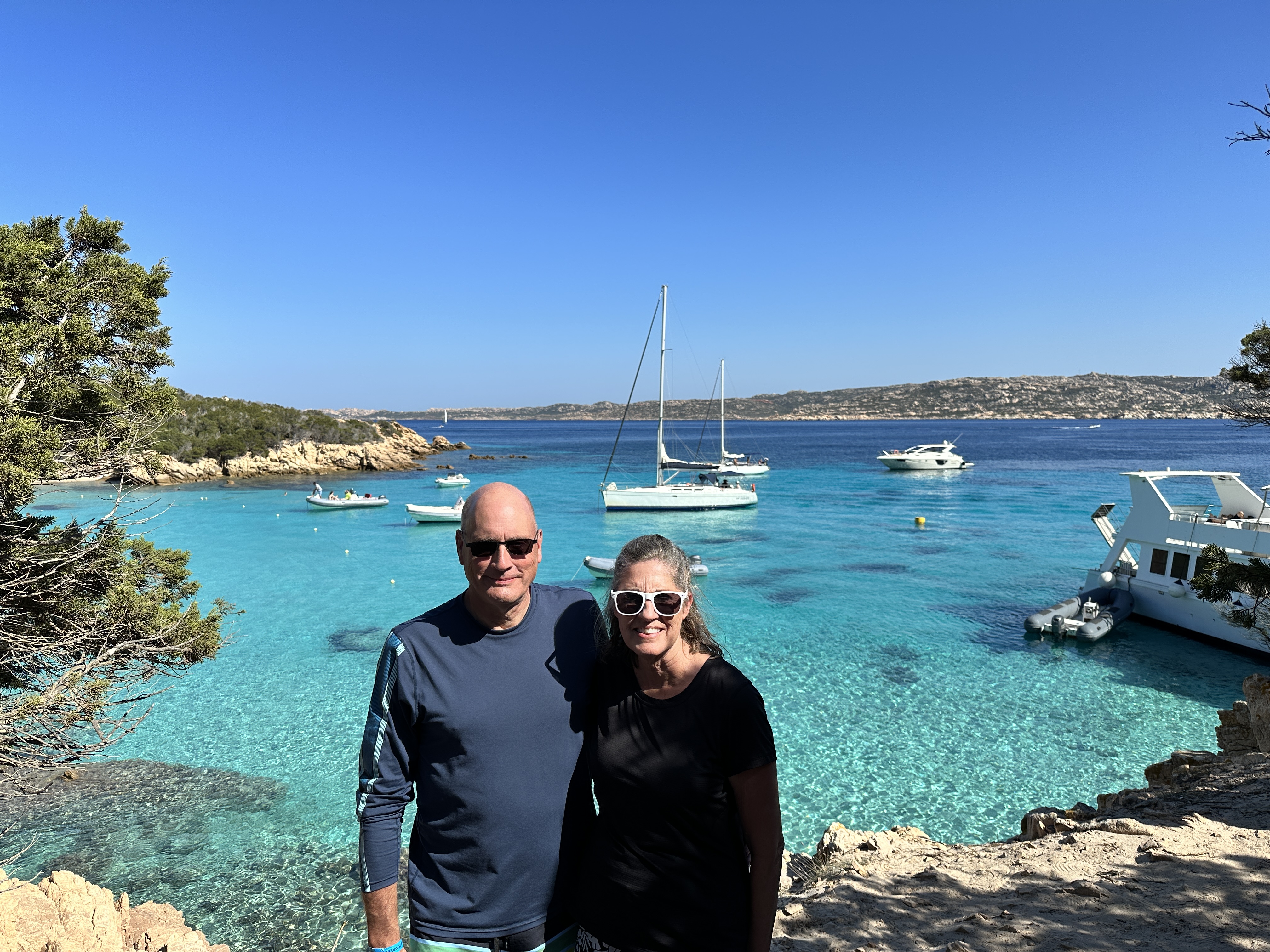
On our final day in La Maddalena, we decided to do a 6-hour boat tour of some other islands in the La Maddalena Archipelago and we’re glad we did. Below are photos from our various stops during the boat tour. It was a perfect day.
Buddelli Island and Pools – Buddelli Island is known for its pink sand beach (above left – small photo), but you cannot access the beach directly, they are trying to preserve and rehabilitate the pink sand. However, we did jump off the boat and swim in what they call the “Buddelli Pools” nearby – beautiful protected water.Santa Maria Island (above), we stopped at this island and beach for about 90 minutes. Spargi Island (above and below), the beaches here were stunning. We were able to swim and lounge for about two hours.Two more views of Spargi Island – with the wild boar terrorizing visitors on the left – we were warned to not bring food on the beach – the boar wandered around the beach area and were pretty aggressive in rummaging through beach bags! Another view of Spargi’s coves on the right – what a setting!
As with every other region of Sardinia, it would be easy to spend a week or more in these islands. The water was super clear, and the beaches were beautiful. If you go to Sardinia, don’t miss La Maddalena!
As I have mentioned is previous posts, we LOVE the islands of the Mediterranean. They are some of my favorite destinations in world. After visiting Mallorca and Menorca (which belong to Spain), the next island on our list was Sardinia (part of Italy). We had been to Sardinia’s northern island neighbor, Corsica (part of France) years ago and from the beautiful southern coastal town of Bonafacio we could see Sardinia in the distance, only about 12 km (7.5 miles) away. We visited Sardinia in October, which is a great time to go – the water was still warm and the crowds were limited.
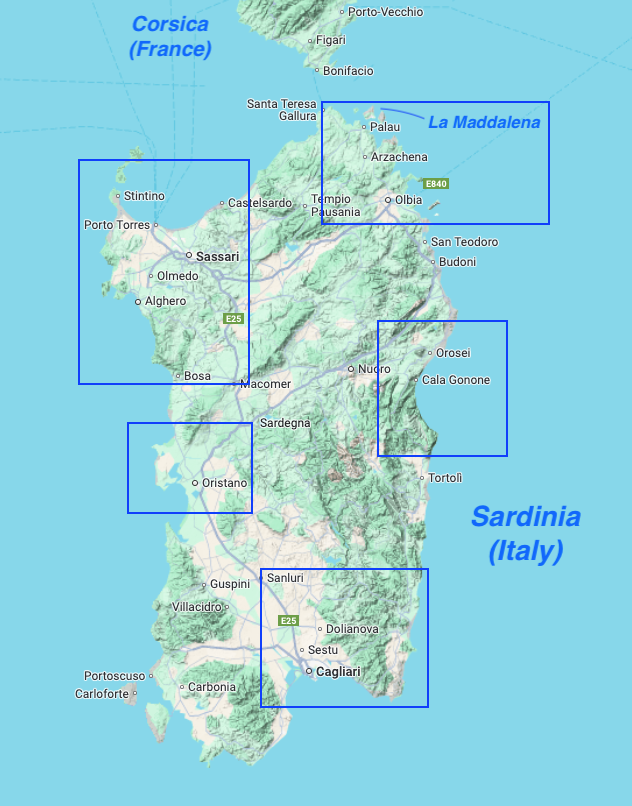
This map of Sardinia shows the five main regions we visited in Sardinia.
I will be sharing more posts on our Sardinian adventures soon, but first here are some things you may not know about about this beautiful island.
1. Sardinia is part of Italy
Although an autonomous region, Sardinia is definitely Italian. Some Americans have never heard of Sardinia and really have no idea that it’s part of Italy. The Sards have their own language but of course speak Italian, English, and other European languages quite fluently. It was easy for us to get by on English and a few Italian phrases. The food and gelato are wonderful, as in other regions of Italy.
2. Sardinia is big, and a relatively sparsely populated island
This is important to keep in mind when planning a trip – allow two or three weeks to see the whole island or if you have less time, perhaps concentrate your time in one region. Sardinia is the 2nd largest island in the Mediterranean (just slightly smaller than Sicily) but has just 1/3 of Sicily’s population. It is about 170 miles long and 90 miles wide. We covered a lot of ground in two weeks, but still did not see everything (see map above), including the southwest coast.
3. Sardinia boasts some of the most stunningly beautiful coastline (and water) in the world
Cala Goloritze, Gulf of Orosei, accessible only by boat or a 3.5 km hike. The color of the water was the most incredible turquoise hue I’ve ever seen.
Sardinia has an embarrassment of beaches – no matter where you are on the island, you’re close to some of the best beaches in the world. The Gulf of Orosei on the eastern side of the island has a breathtaking coast although it’s not easily accessible, except by boat or via some steep hiking trails.
4. There are hundreds of incredible beaches, many of which are undeveloped and uncrowded
La Pelosa Beach, near Stintino, Sardinia. You must make a reservation for this beach if visiting during high season. It is worth the hassle (which is not a big deal nor expensive).
Some beaches might have a refreshment stand, a few might be close to some resorts, but often there are no hotels or condos anywhere to be seen. Admittedly, there are (just a few) beaches that are so popular you must have reservations during the high season or can only be accessed with a guide, and there a few beaches that are not accessible at all – due to preservation efforts, speaking of which…
5. Sardinians take their beach sand seriously
From pink sand beaches to shiny quartz sand beaches to powdery white sand, the sand is beautiful everywhere. However, don’t even think about taking a sample home with you. You will be fined. You are also required to have mats underneath your beach towels so as to not inadvertently trap sand and take it home in your towels.
Spiaggia Rosa, on Budelli Island (near La Maddalena). You cannot set foot on this pink sand beach, they are protecting it for future generations. However you get a view of it from a boat tour, as in this photo.
Example of the fine quartz sand and pebbles found in Sardinia.
6. A car rental is essential
Unless you plan to go straight from the airport to a resort and straight back to the airport or plan on a tour by a group bus, a car is the only way to really see the island and reach some of the beaches and tourist sites. Some sights or hiking trails are remote. Since the island’s population is sparse, driving was not a problem – I did not feel rushed or on edge with crazy drivers pushing me to speed up or forcing me to get out of the way.
7. Sardinia offers something for everyone
Friendly, welcoming locals – check. Beautiful beaches – check. Warm, clear water – check and check. Charming medieval towns – check. Fascinating ancient historical sights – check. Remote mountains, rock climbing, forests and hiking trails – check, check, check and check. Diving – check. Excellent food – check. What more could a person want?
A view of Alghero, on the northwest coast of Sardinia, a beautiful medieval town, one of our favorites on Sardinia.
Nurhage La Prisigona Historical Site (14th century BC), near Arzachena, Sardinia.
8. Sardinia has its own island get-aways
As funny as it may sound, Sardinia can be considered a ‘mainland’ and just off its coast (such as the northeast coast) lie an archipelago of islands (the main island is La Maddalena – see map above) accessible by only ferry and smaller boat, some of which are part of a national park. These islands are home to some of the best beaches and best hikes anywhere in Sardinia.
The island of Spargi, part of the La Maddalena Archipelago. We could have stayed here our whole trip!
9. Sardinia is not just for the jet-setting crowd
In the 1960’s Coasta Esmeralda was popularized and has since become a jet-setting hotspot. This part of the northeast coast (near Olbia) certainly has some beautiful beaches and coastline. While you will find big yachts, high-end real estate, retail and eating establishments here, this is just one small enclave of the island. The rest of the island seems unfazed (and untouched) by the movie star and billionaire crowd.
View of Porto Cervo, the center of Coasta Esmeralda.
10. Go Now
Sardinia isn’t quite on the main tourist map yet, although posts like this don’t help! The majority of visitors are Italian (this is their backyard!), followed by French and Germans. On one of our boat tours, we were with some Swiss and Belgian tourists. We ran into a few tourists from the U.S., but not many. Very few tourists seem to explore the whole island, there are lots of “untouched” little mountain villages and quiet beaches to find solitude if that’s your thing.
The cute little village of Gavoi in north central Sardinia.
Word is getting out, so go now! Here’s one of my recommended websites for great information on Sardinia tourism. I read almost every post Claudia has written, very helpful. Of course, I will be publishing information on each region of Sardinia we visited over the course of the coming weeks.
Note: Featured image – Cala Marilou, Gulf of Orosei


















 The Independent Tourist