On our last full day in Sardinia, Italy we decided to take a small boat tour along the eastern coastline, specially the Gulf of Orosei. All of Sardinia was amazing, but this day-trip was icing on the cake. The coastline is amazing – towering cliffs and some of the prettiest beaches and water anywhere on the planet.
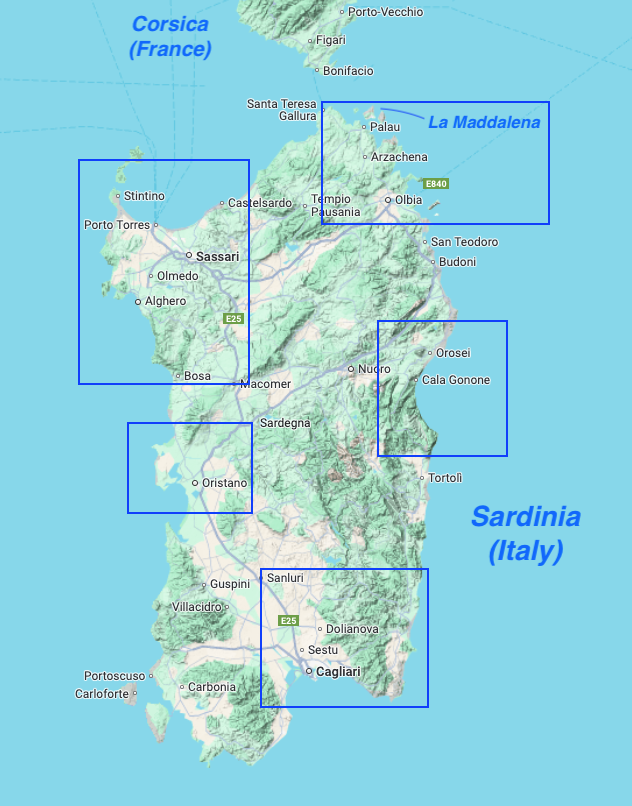
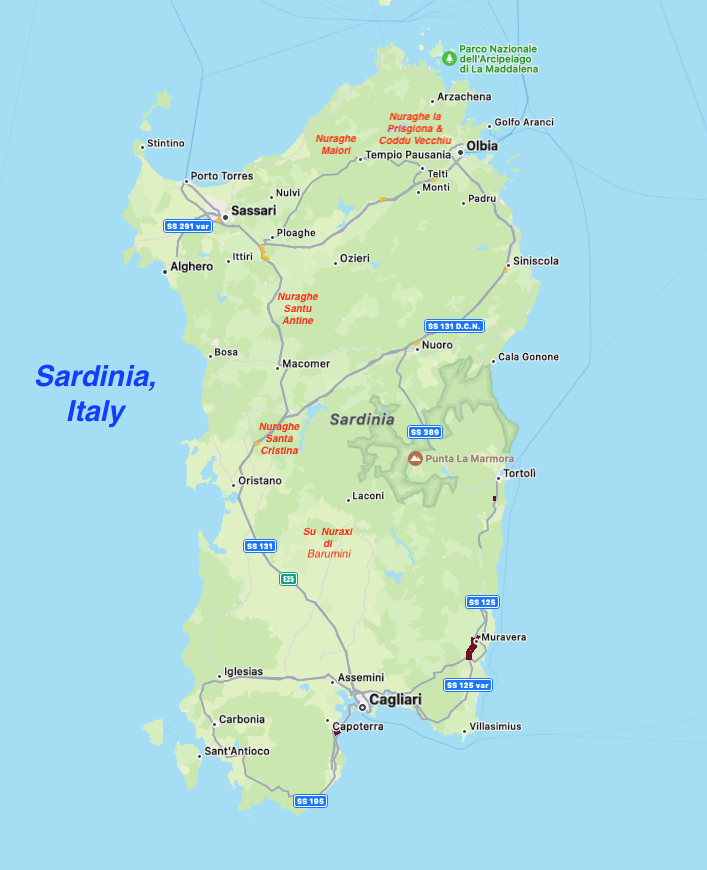
This maps show the general regions we visited in Sardinia. The Gulf of Orosei is on the central east coast.
We stayed two nights in the small town of Santa Maria Navarrese, a perfect spot from which to take the boat tour and a lovely place to visit in itself. Our visit was in late September and early October, after the summer crowds were gone but yet still warm enough for boating and swimming.
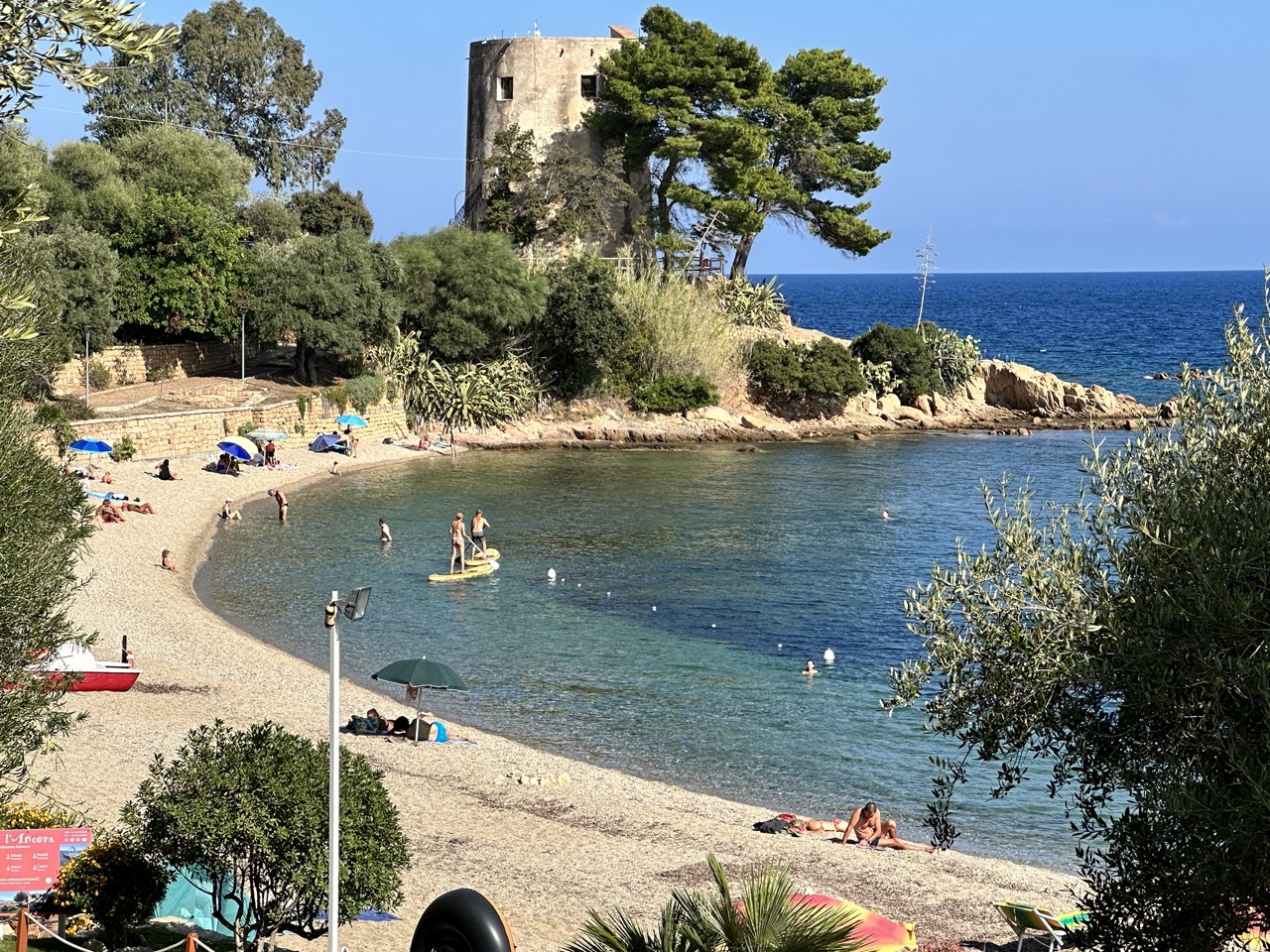
A view of Santa Maria Navarrese’s own beach, right next to the small town.
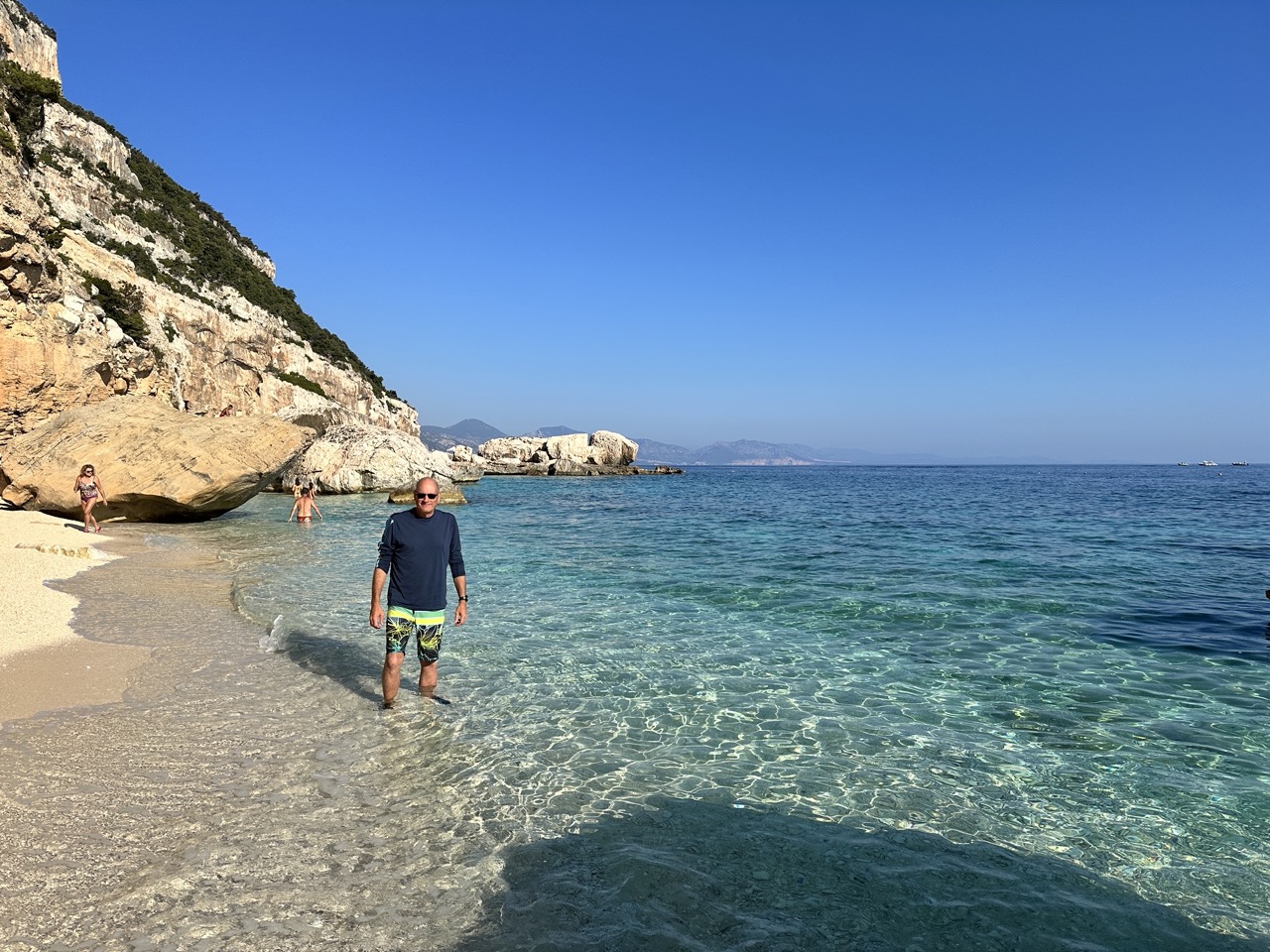
Below are a few of the images captured during our full-day boat trip. Our boat held about 10 people, which was perfect. We visited a few secluded sea caves and coves before visiting some of the more popular beach and swim stops.
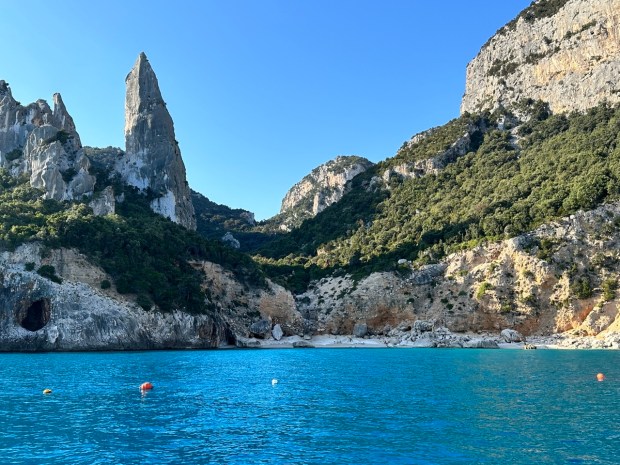
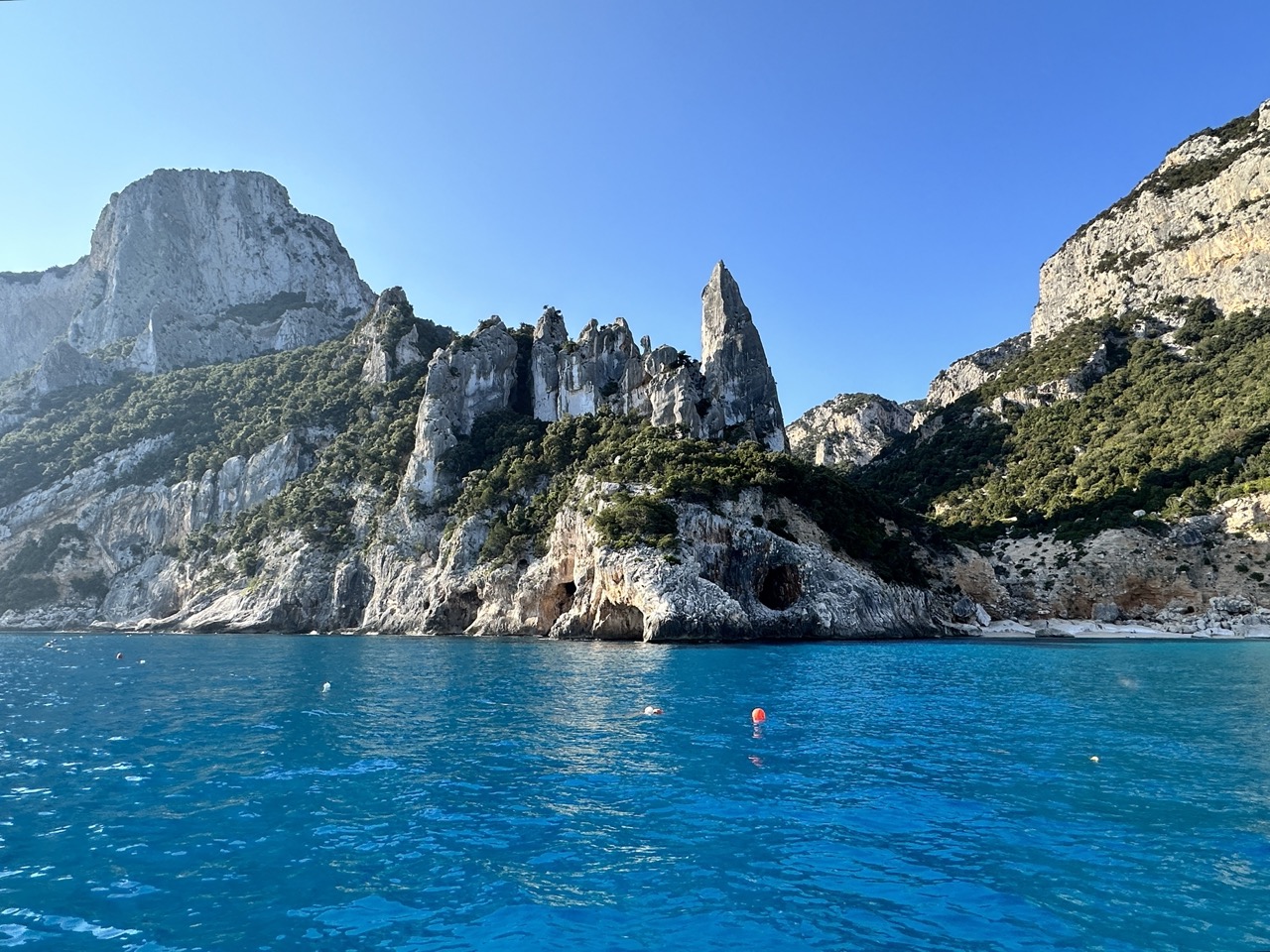
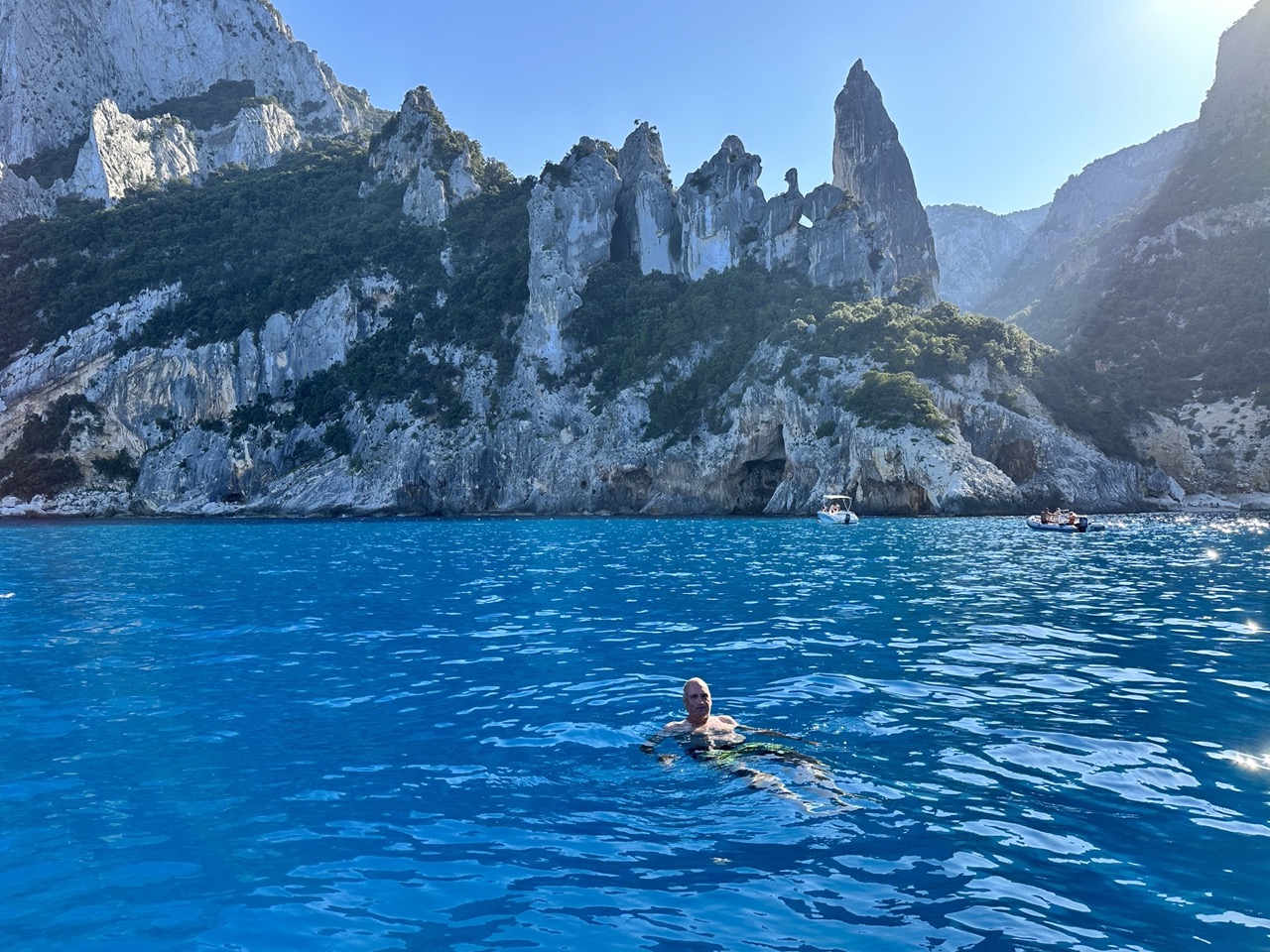
One of the postcard images of Sardinia, Cala Goloritzè. You can take a pretty steep and long hike down to the beach, but we opted for the boat tour to get this view. The boats do not land on the beach (I believe they are forbidden to do so), but do allow time to swim in the area.
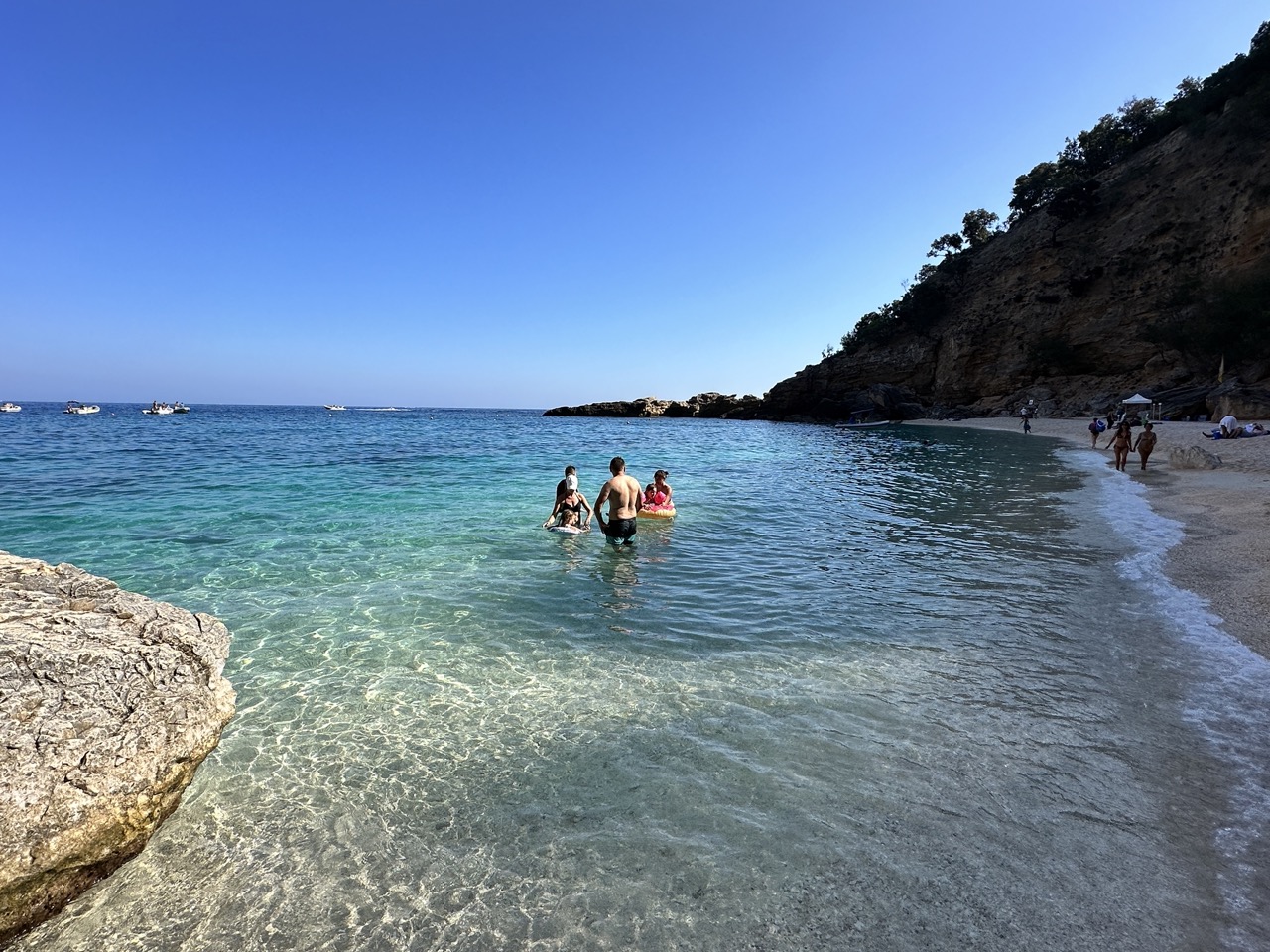
We stopped by Cala Goloritzè again in the afternoon for a swim, on our way back to Santa Maria Navarrese. I cannot adequately describe the beauty of the turquoise water.
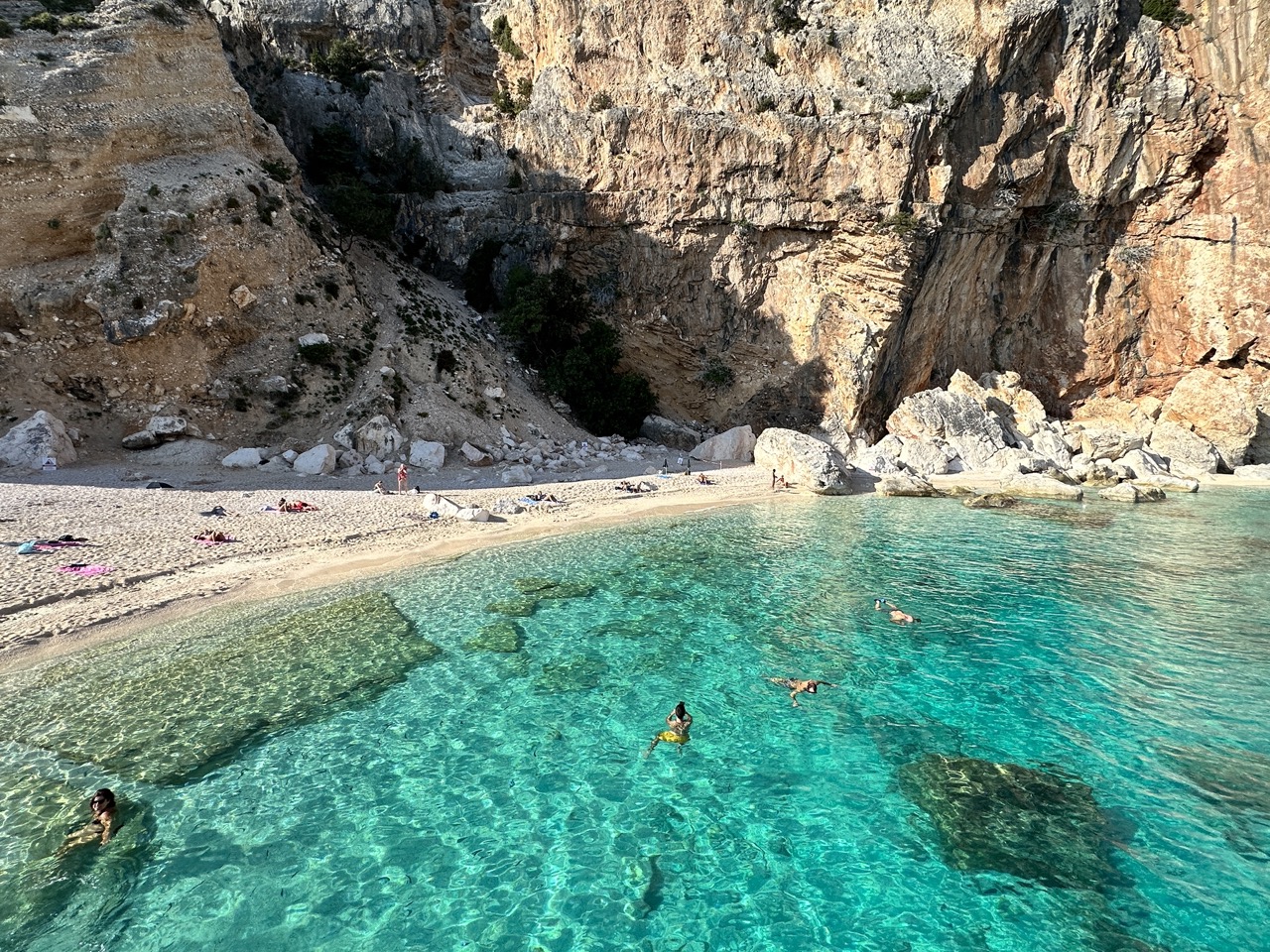
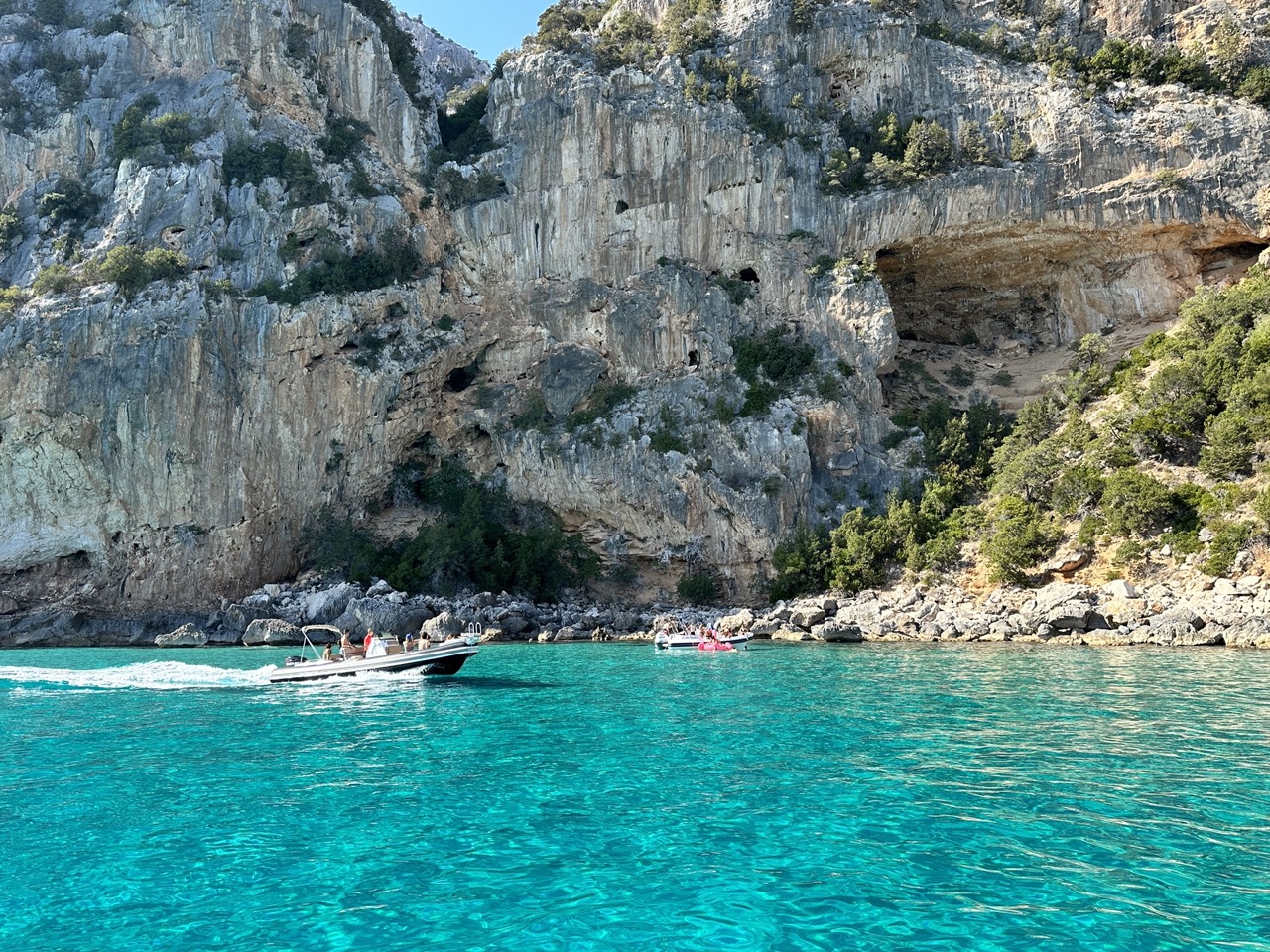
A view of Cala Marilou, one of my favorite stops along the Gulf of Orosei. What made it a favorite is that there are several beaches and coves to explore, such as shown below.
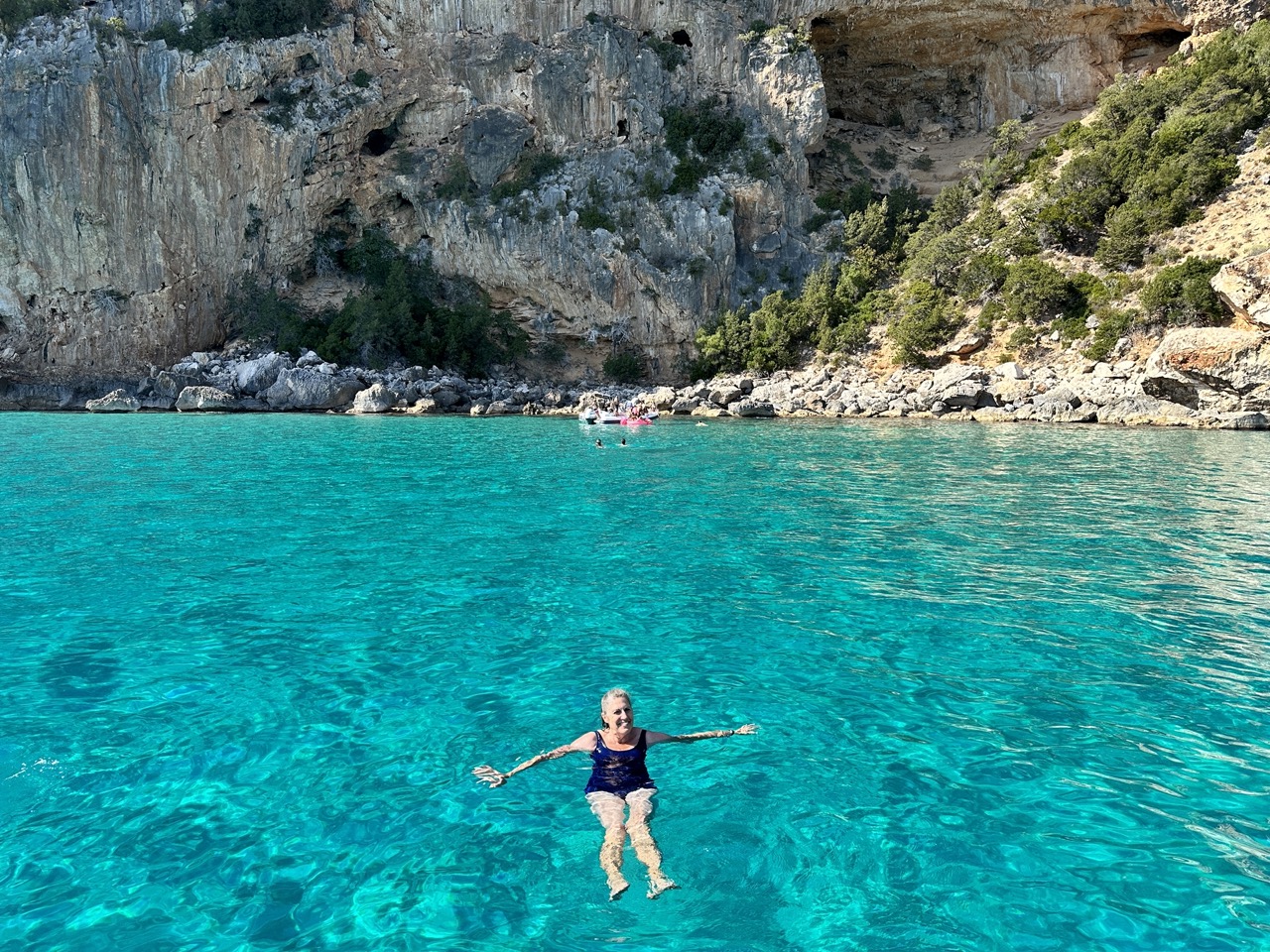
Another part of Cala Marilou, a small cove of stunning cliffs and beautiful water.
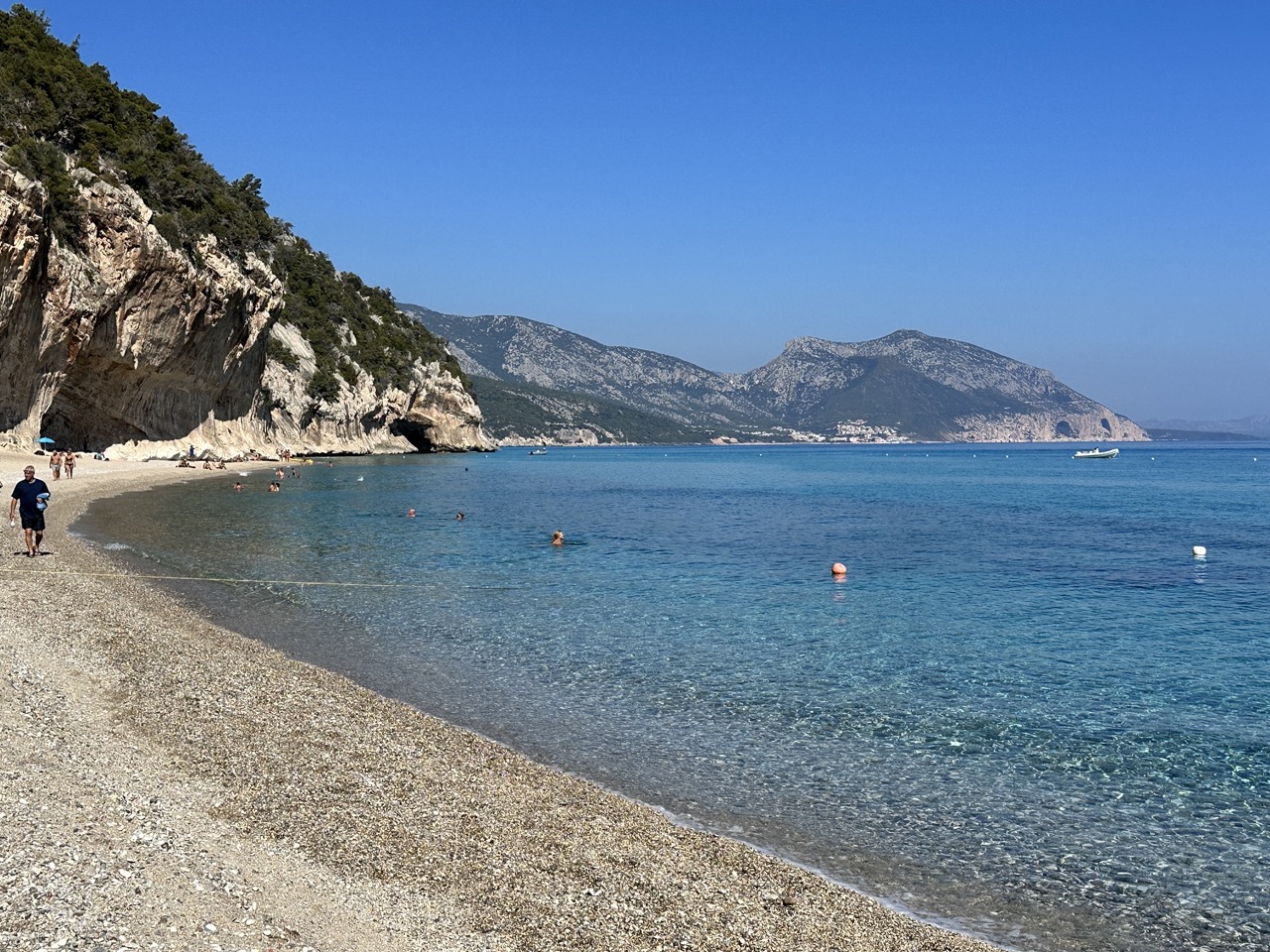
A view of Cala Luna, we stopped here over lunch time. There is a small bar and cafe behind the beach area.
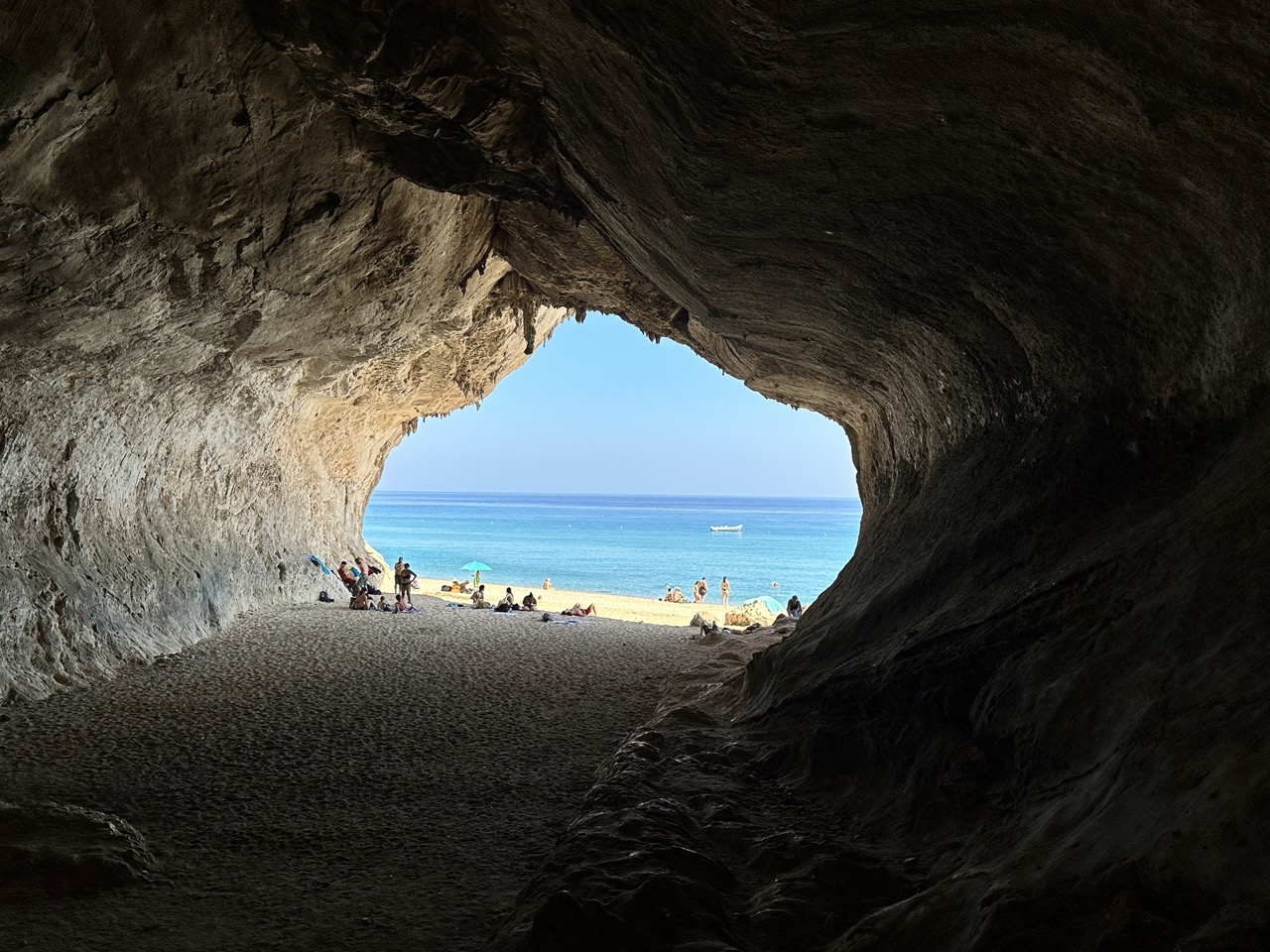
A large cave on the beach at Cala Luna – a great place to get out of the sunshine if needed!
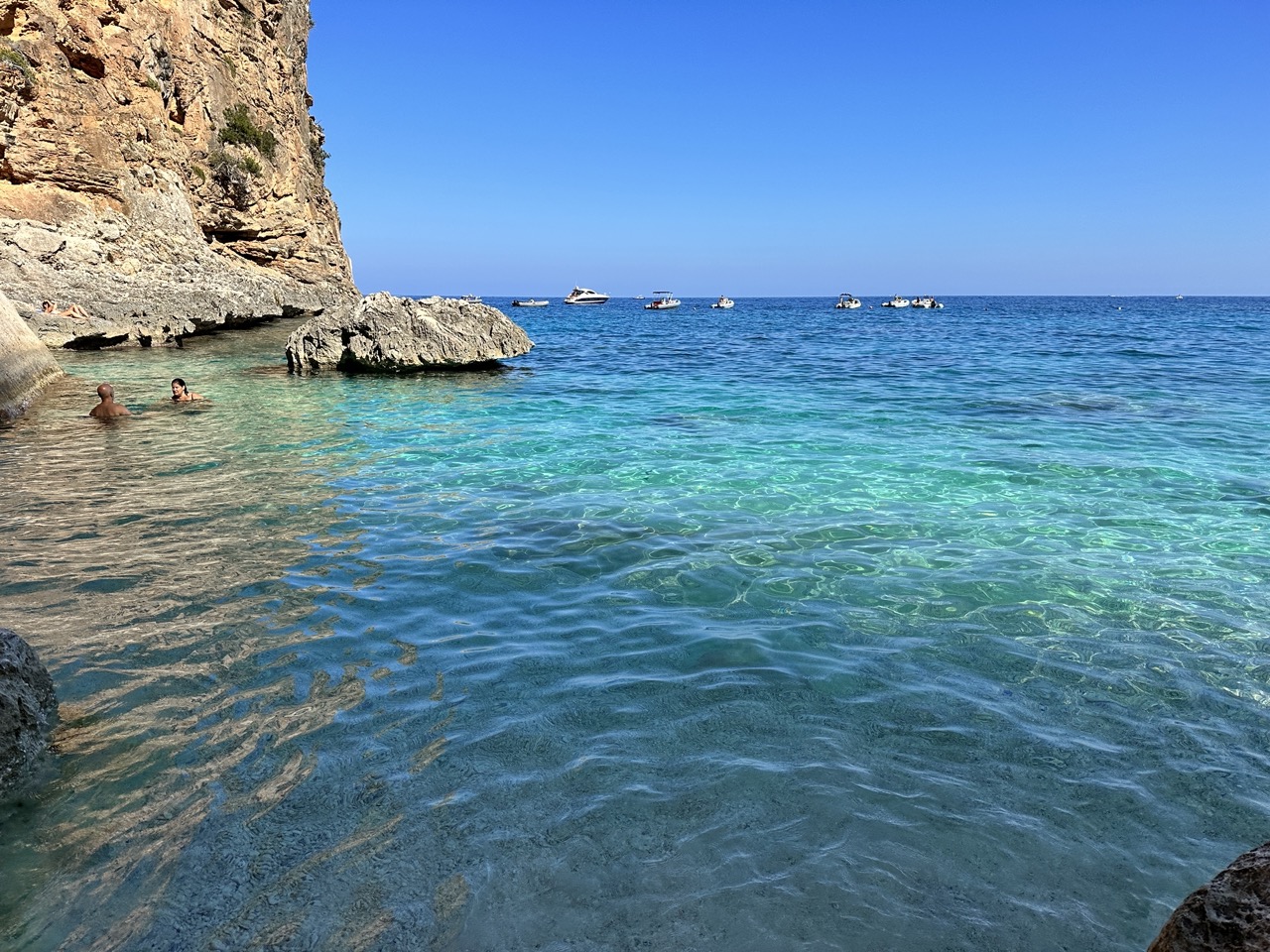
Above – another swim stop along the coastline of the Gulf of Orosei.One of our last stops of the day, Cala Biriola.
Oristano is not likely to be on the main tourist route in Sardinia, Italy especially if time is limited. However, if you have the time, you should definitely check it out. There is a lot to do in this region of Sardinia. Here are the main sights we visited. In addition to the sights listed below, there are ancient Nuragic sites not far from here. For a map of Sardinia and to learn more about these sites, see my post here.
Is Aruttas Beach
This beach on the Sinis peninsula is about 22 km (13 miles) from Oristano and one of the region’s most famous. There is a large parking lot and a refreshment stand near the beach. The quartz sand on this beach is amazing, I wish I had taken a close-up of it – it looks like translucent rice. Just another perfect beach in Sardinia! As with all beaches in Sardinia, it is a crime to remove the sand – be sure to leave the sand where it belongs on the beach for others to enjoy!
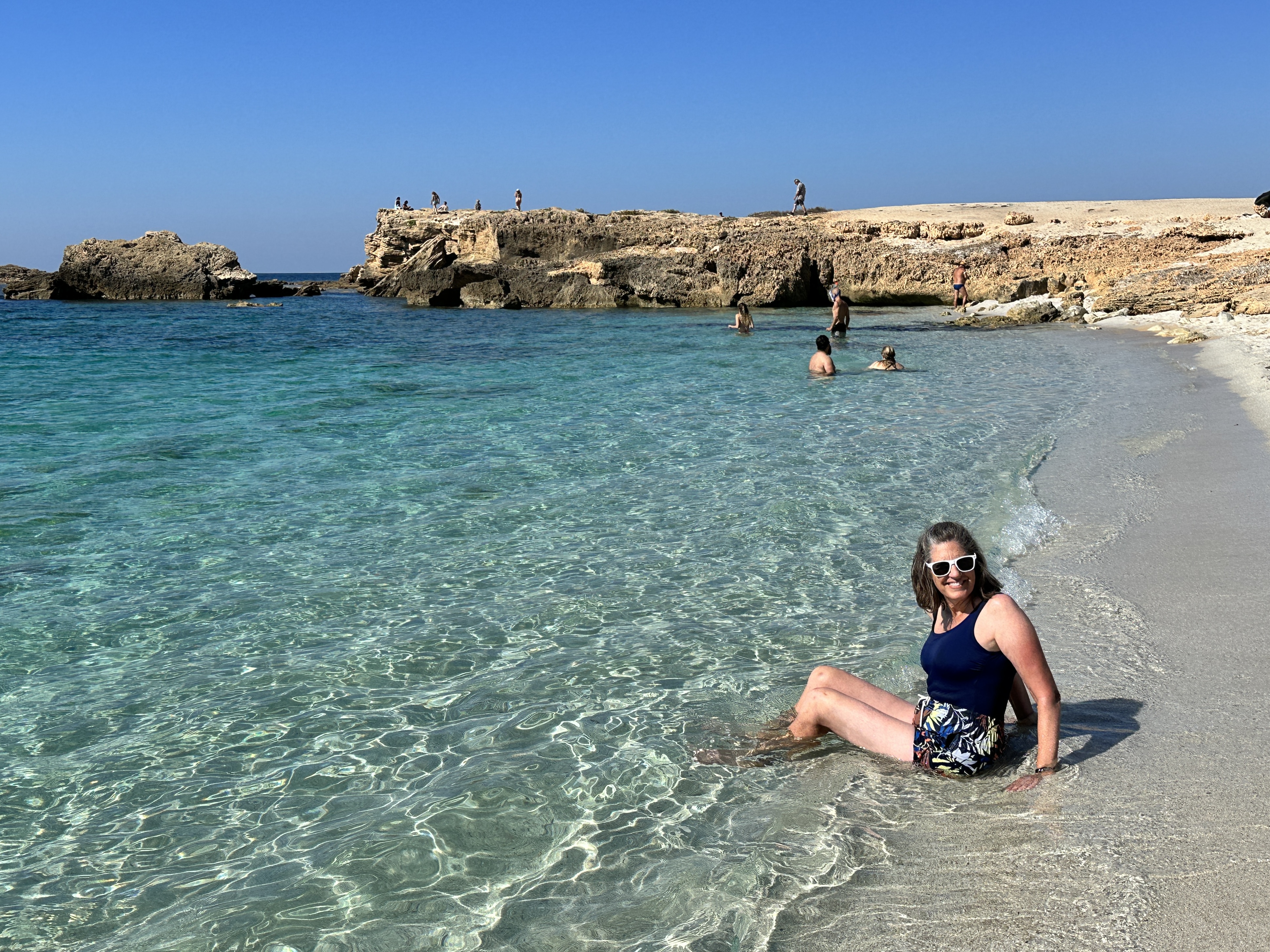
Views of Is Arutas Beach.
Tharros Roman Archeological Site
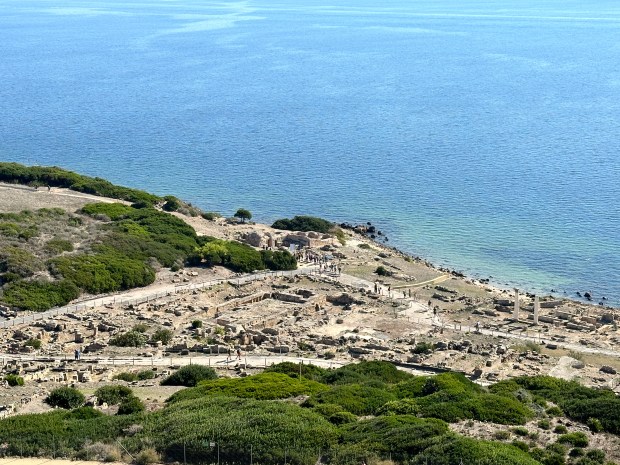
Tharros was occupied for nearly 2,000 years, from the 8th century BC to about 1050 AD. It sits near the end of the Sinis Peninsula, and it’s a spectacular setting.
A view of the ruins of Tharros and the late 15th-century San Giovanni Tower, which you can climb for a small additional fee.
Additional views of the ruins of Tharros.
This gorgeous beach is a stone’s throw from Tharros. Roman ruins, a 15th- century Spanish Tower and beautiful beach – what more could you ask for?!
Fordongianus Roman Archeological Site
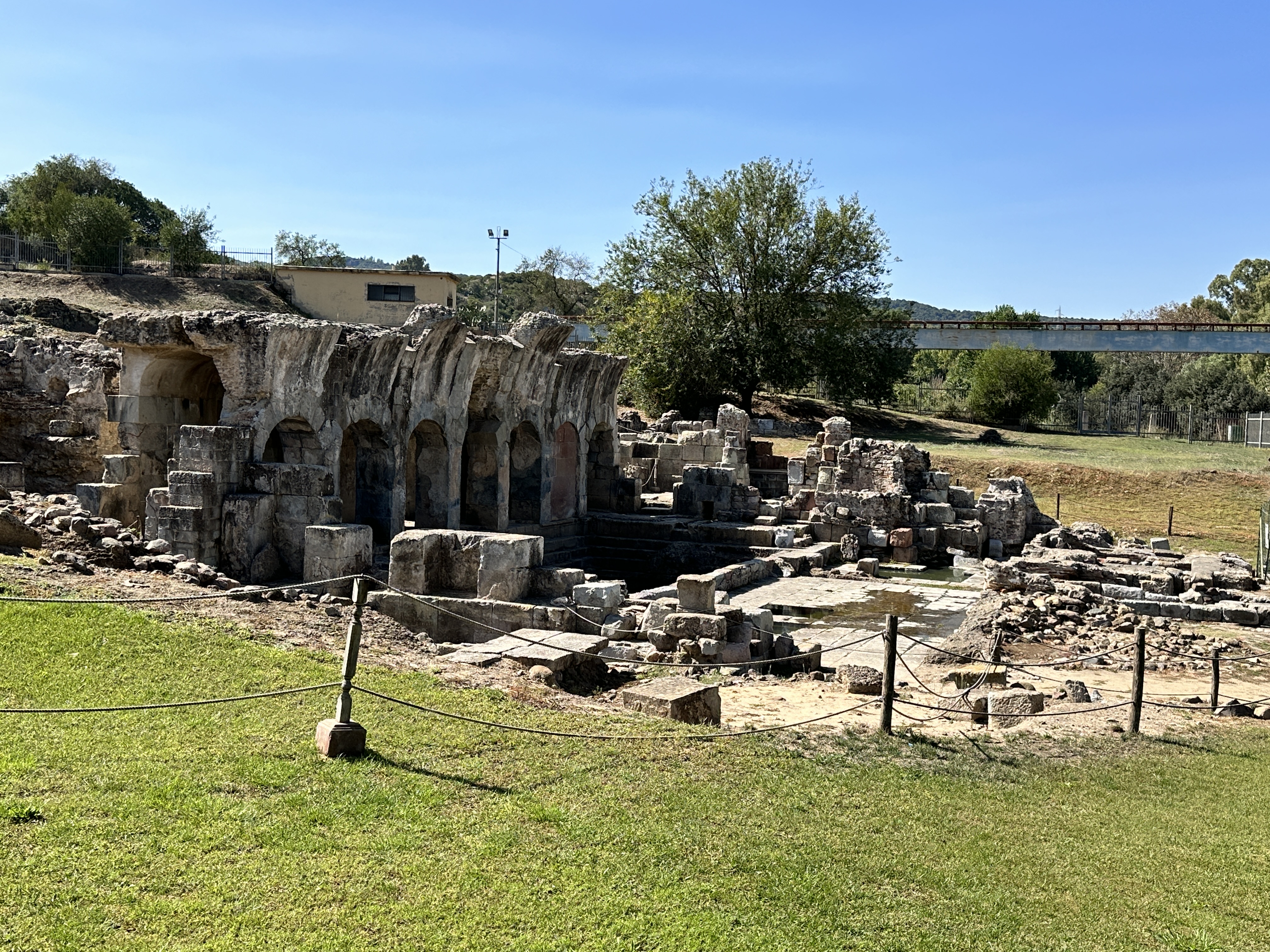
The water still runs warm from the natural springs at the 1st century AD Fordongianus Roman Baths. This site is about 25 km (14 miles) northeast of Oristano. We stopped by on our way into Oristano, but we arrived during siesta time so we had to settle for looking at the Baths through a wire fence, which actually offered some pretty good views. There is a fee to visit the Baths.
Fordongianus Roman Baths.
Just outside Fordongianus is this pretty 12th & 13th century Romanesque church, dedicated to San Lussorio, who was martyred by the Emperor Diocletian in 304 AD.
San Giovanni di Sinis Church
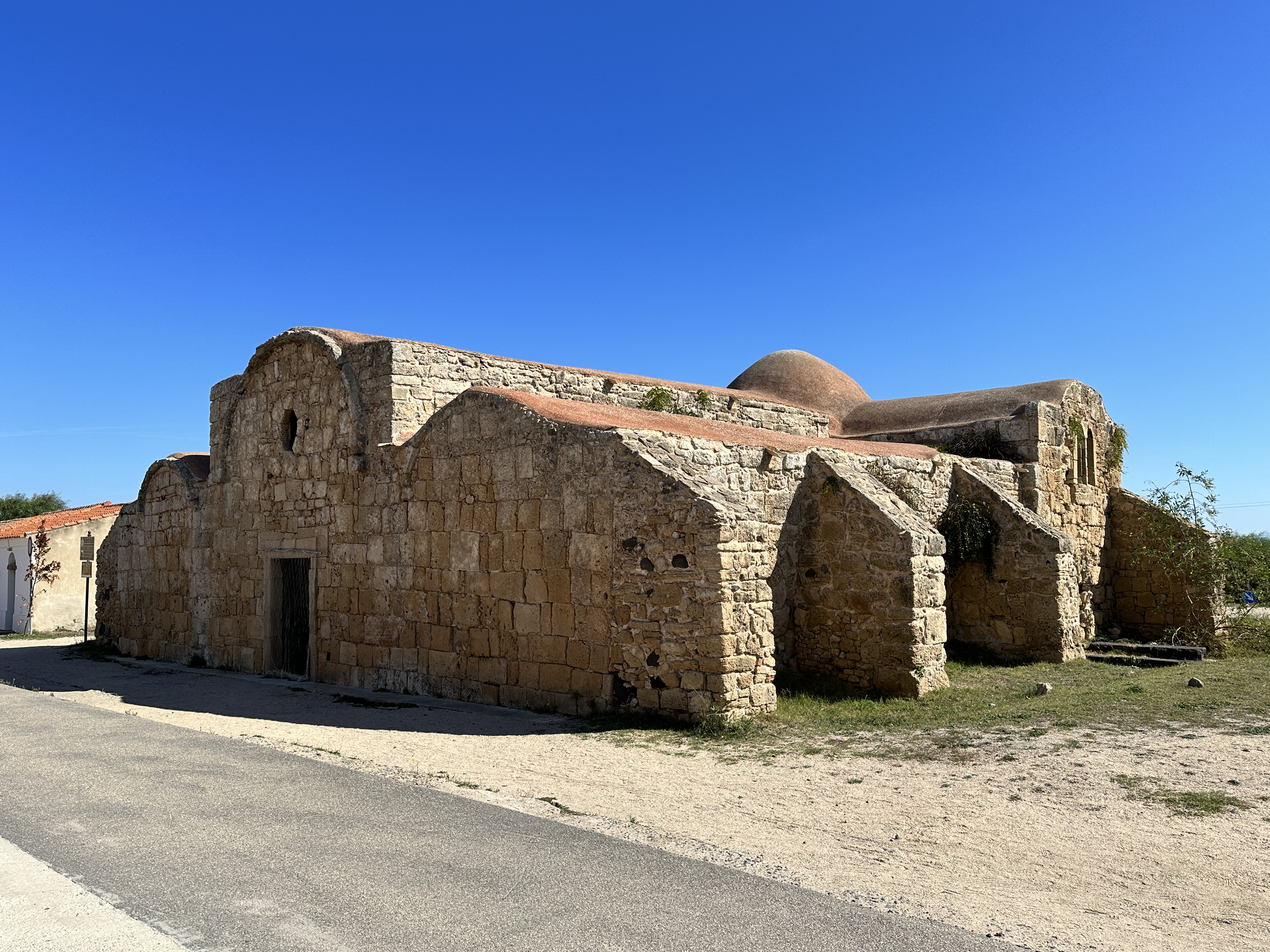
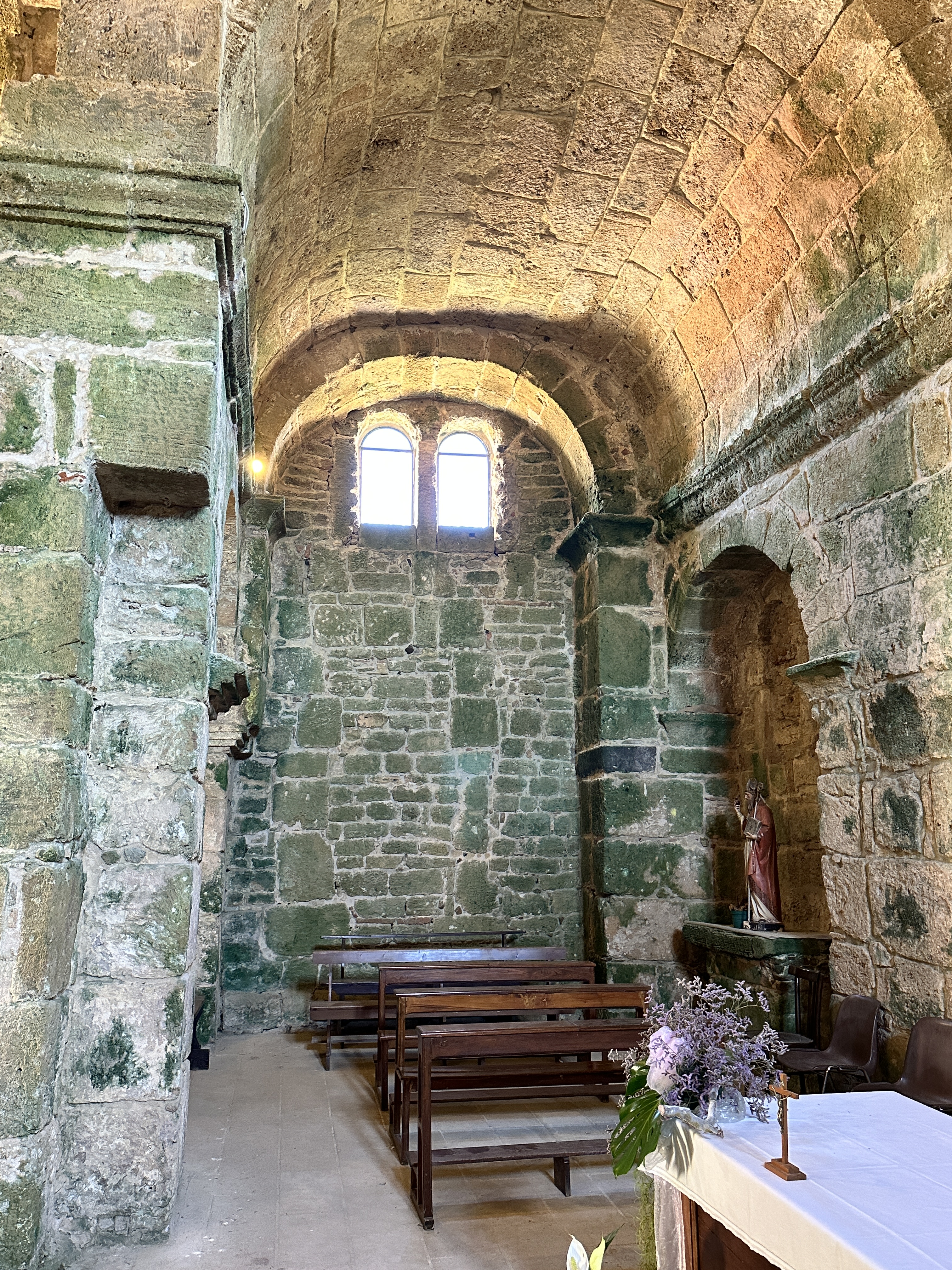
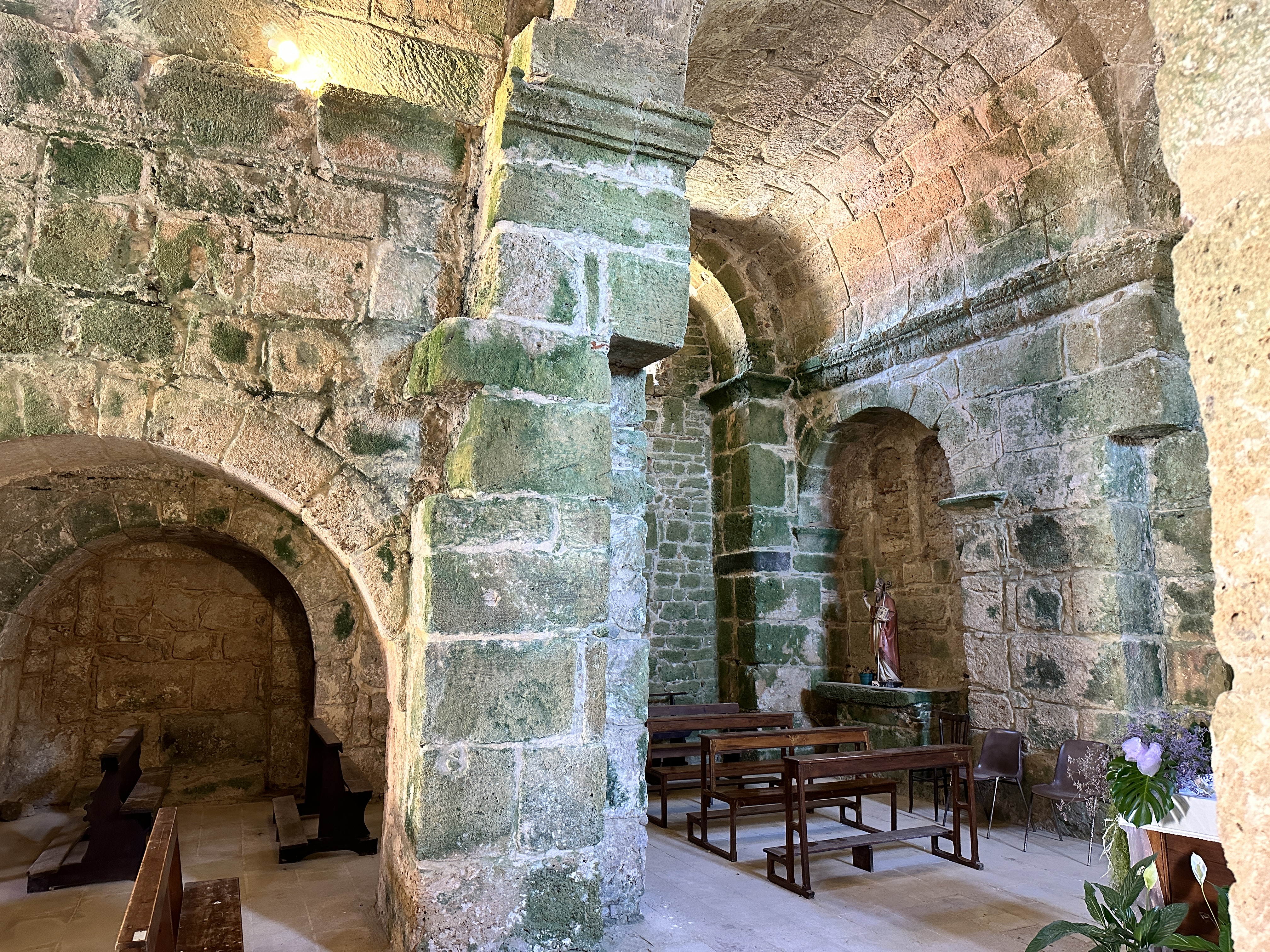
This interesting little church is right near the entrance to the Tharros archeological site. It is one of the two oldest churches in Sardinia, originally dating back to the 6th century – it still retains some of its Byzantine characteristics, such as the red roof. The present structure dates from the 9th and 11 centuries. The church sits in an ancient burial area. The church was free to enter and was definitely worth a stop.
San Giovanni di Sinis Church.
Views of the interior of San Giovanni di Sinis Church, with green algae covering some of the ancient stone walls.
San Salvatore
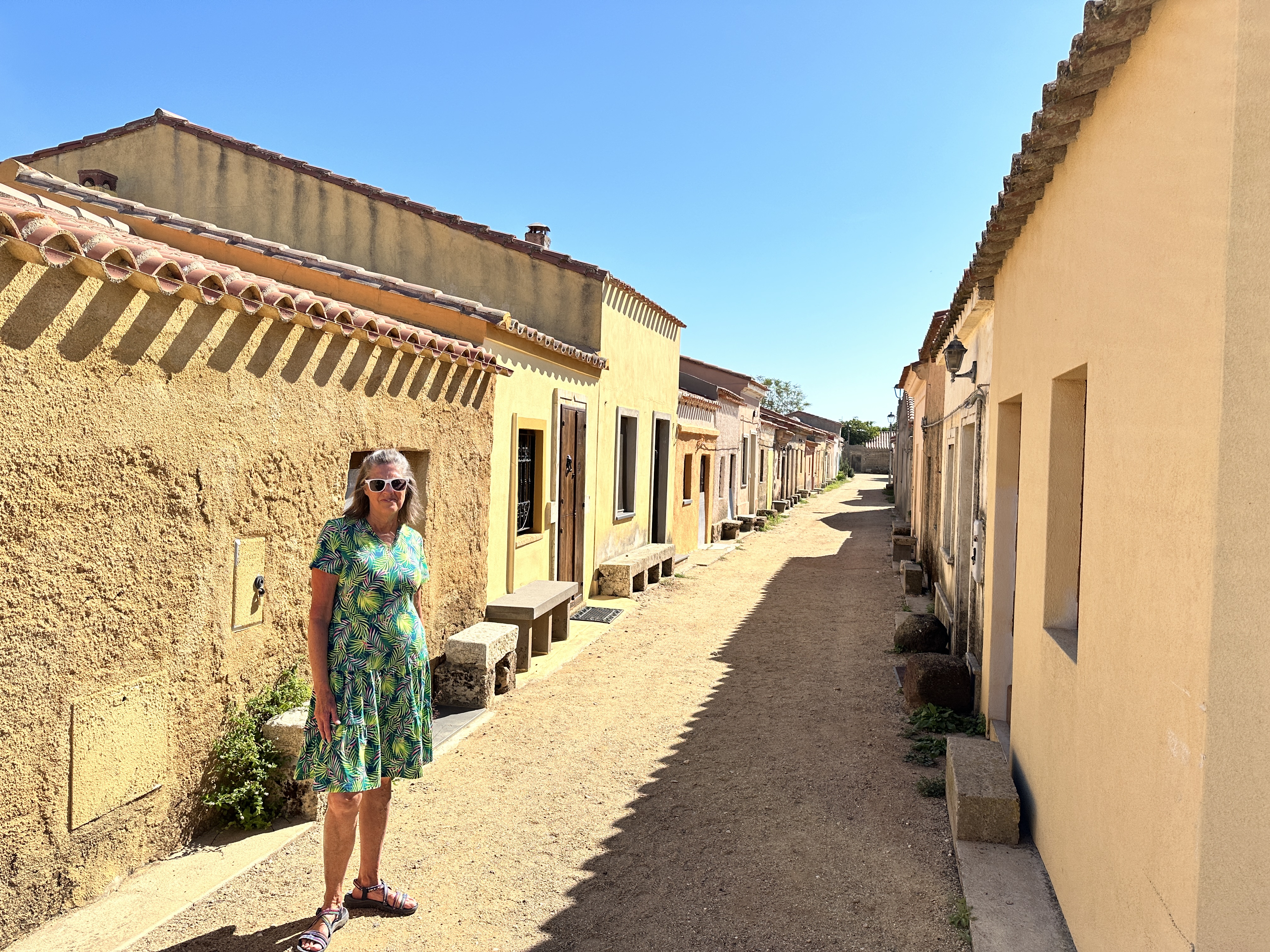
San Salvatore, also close to Tharros, is a spaghetti-western filmset from the 1960’s. It has the feel of a old western U.S. ghost town. The town opens its dwellings’ doors during September each year to house pilgrims for the Festa di San Salvatore, a celebration focused on the village’s small church, which sits over the ruins of a Nuragic period (~1,500 BC) vault. It looked to us like there might be a few permanent residents here, we saw some homes that looked lived in.
Views of San Salvatore.
Oristano Town
Oristano seemed to us to be a pretty quiet town, without fewer tourists compared to other locations in Sardinia, even though there is much for the tourist to see in the vicinity. We enjoyed walking the streets in the evening without any throngs of tourists. It is a perfect place to call “home” during your stay in this part of Sardinia.
The 13th-century Torre di Mariano II was Oristano’s nothern gate, one of the few remains of the city’s medieval defenses.
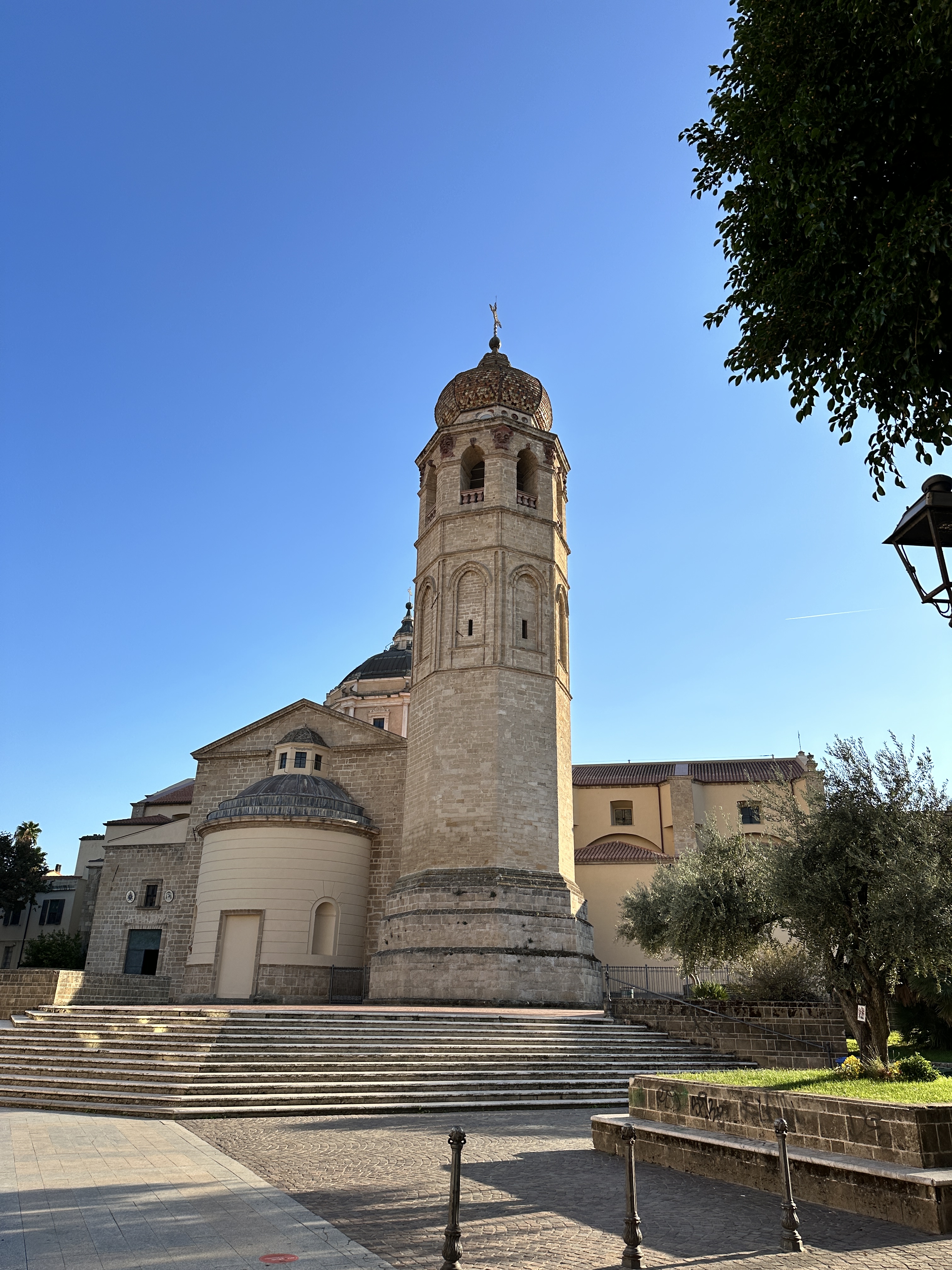
Views of the Catedrale di Santa Maria Assunta. The 14th century bell tower still stands. The rest of the current structure is 18th century.Left – Torre di Portixedda, part of Oristano’s original medieval walls. Right – street scene in central Oristano.
The island of Sardinia, Italy has so many lovely beaches it’s difficult to narrow down the list of “best beaches” but one that would have to be near the top is La Pelosa, near Stintino on the north west coast of Sardinia. This beach is so popular that you need to make reservations to visit it during the busy season (May – October). The reservations are not expensive nor difficult. To my knowledge, this is the only beach in Sardinia that requires a reservation. When you see it, you will understand why it is so popular.
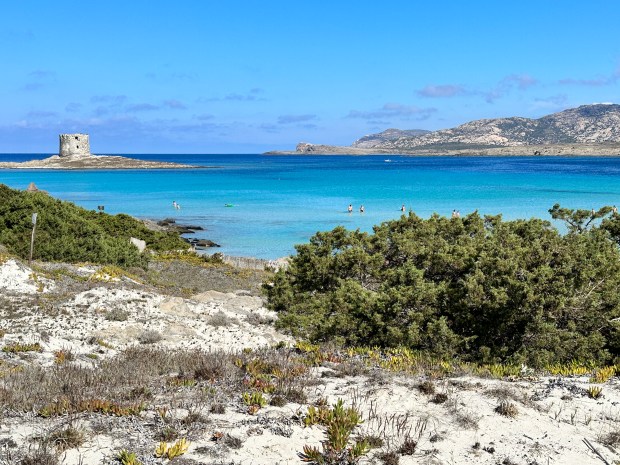
La Pelosa Beach, with its signature 16th century Aragonese Tower overlooking this beautiful bay.
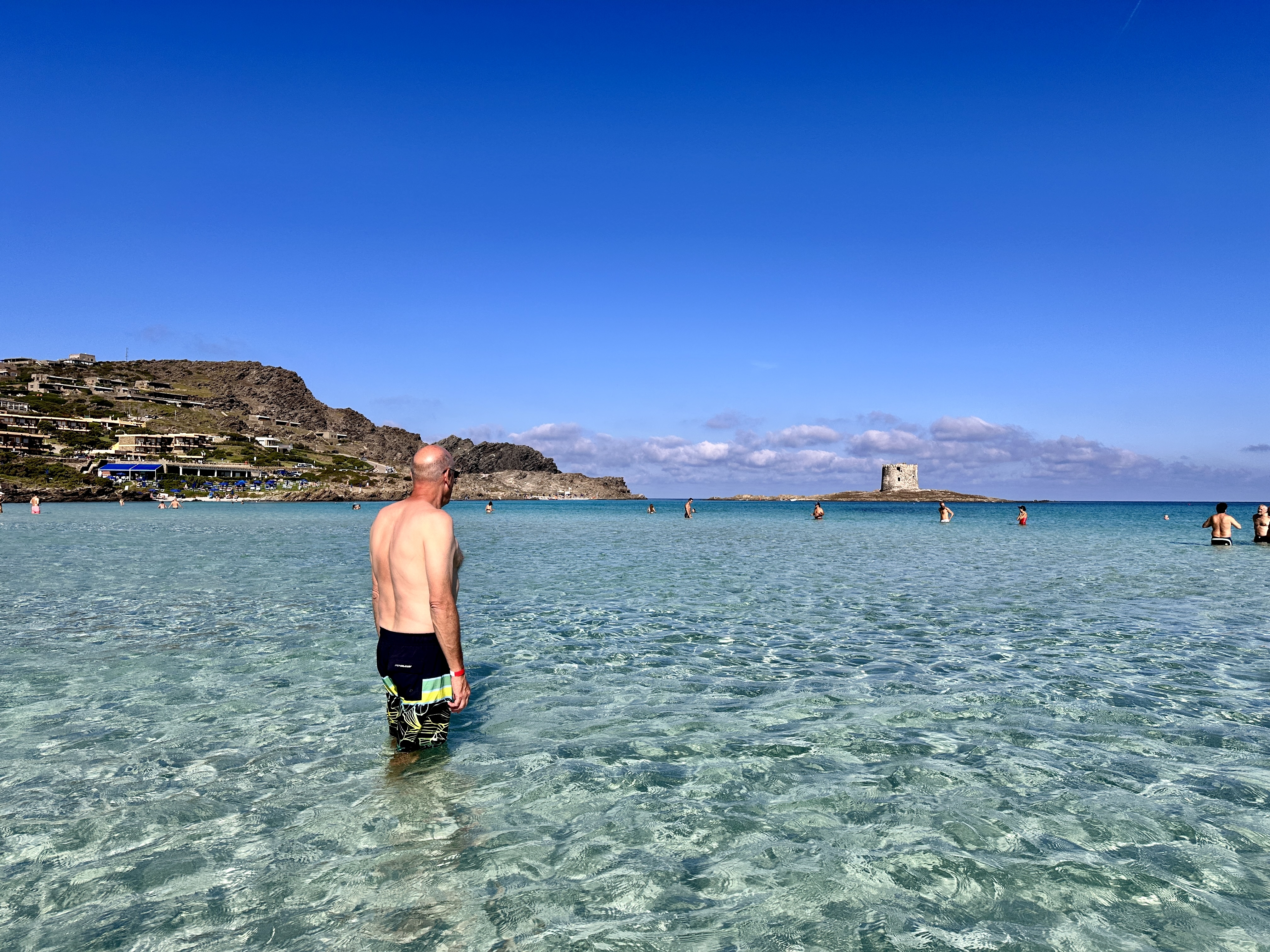
Other views of La Pelosa Beach, Sardinia.The water is calm and very shallow at La Pelosa, you can walk out a long way and the water may still not be up to your waist, making this a perfect beach for young children.
One of the boardwalks leading down to La Pelosa Beach.
There is paid parking along the street facing the beach – be sure to pay – you don’t want to get back to your parking spot after a lovely day at the beach and find your vehicle has been towed away! I recommend getting here early in the morning or later in the afternoon, not only will the beach be a little less busy, but convenient parking will be more plentiful too. We visited in early October, after an overnight stop in Castelsardo. The water was still warm and the beach was fairly busy, but it did not feel overcrowded at all. To check in at the beach, there is a kiosk where you get a wristband after showing your reservations on your phone or a hardcopy. Be sure to bring towel mats as well, to avoid taking home the precious sand – Sardinia is focused on keeping their beautiful sand where it belongs – on the beach.
Alghero
Less than an hour south of La Pelosa Beach is Alghero. Alghero was probably my favorite town in Sardinia. The combination of its magnificent setting and harbor, a beautiful old town with medieval towers and walls, and lively evening scene made this a perfect spot to stay for a few nights. We rented a lovely apartment that was just a ten minute walk from the old town.
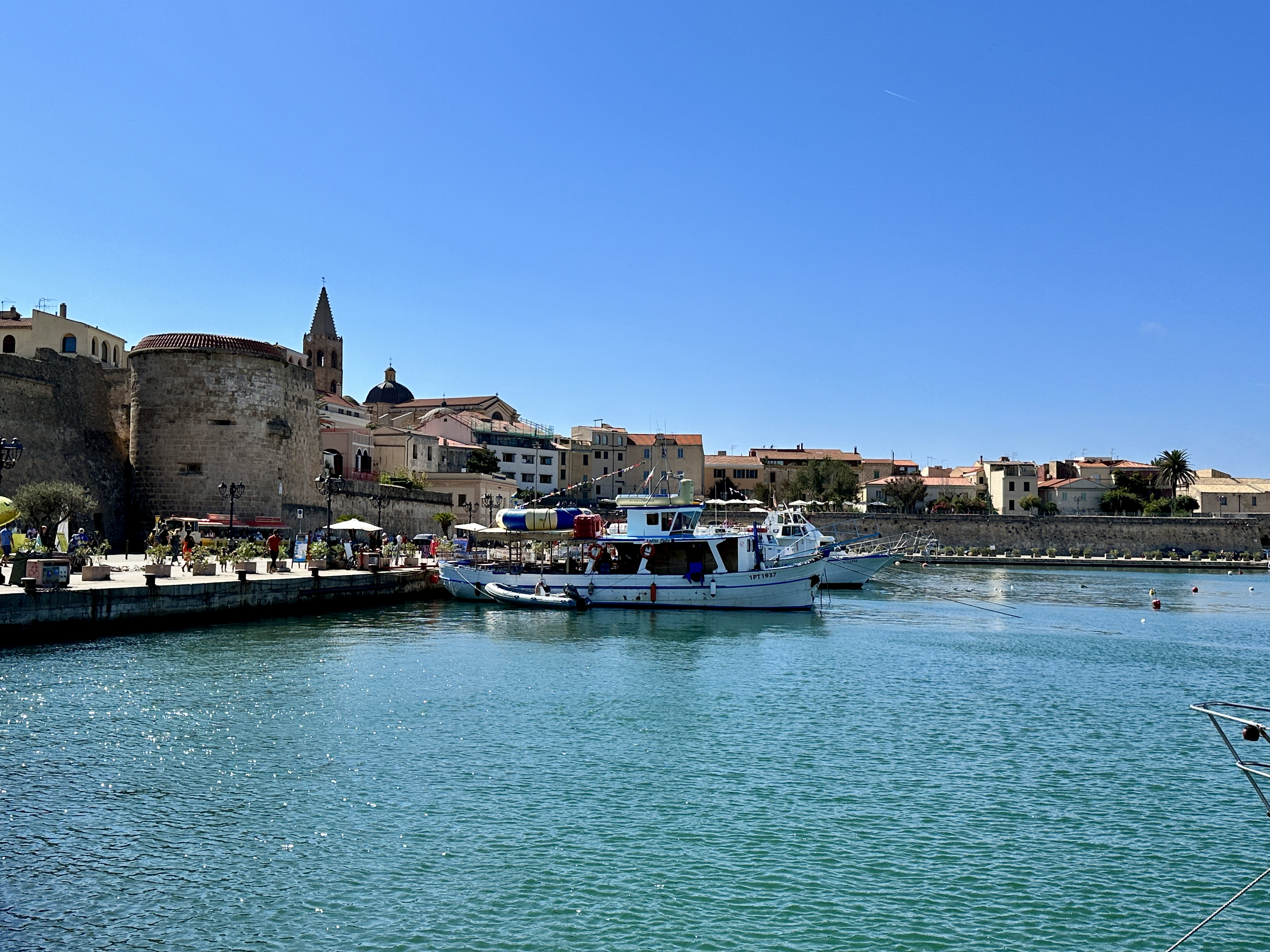
A view of Alghero’s Old Town from the Harbor.
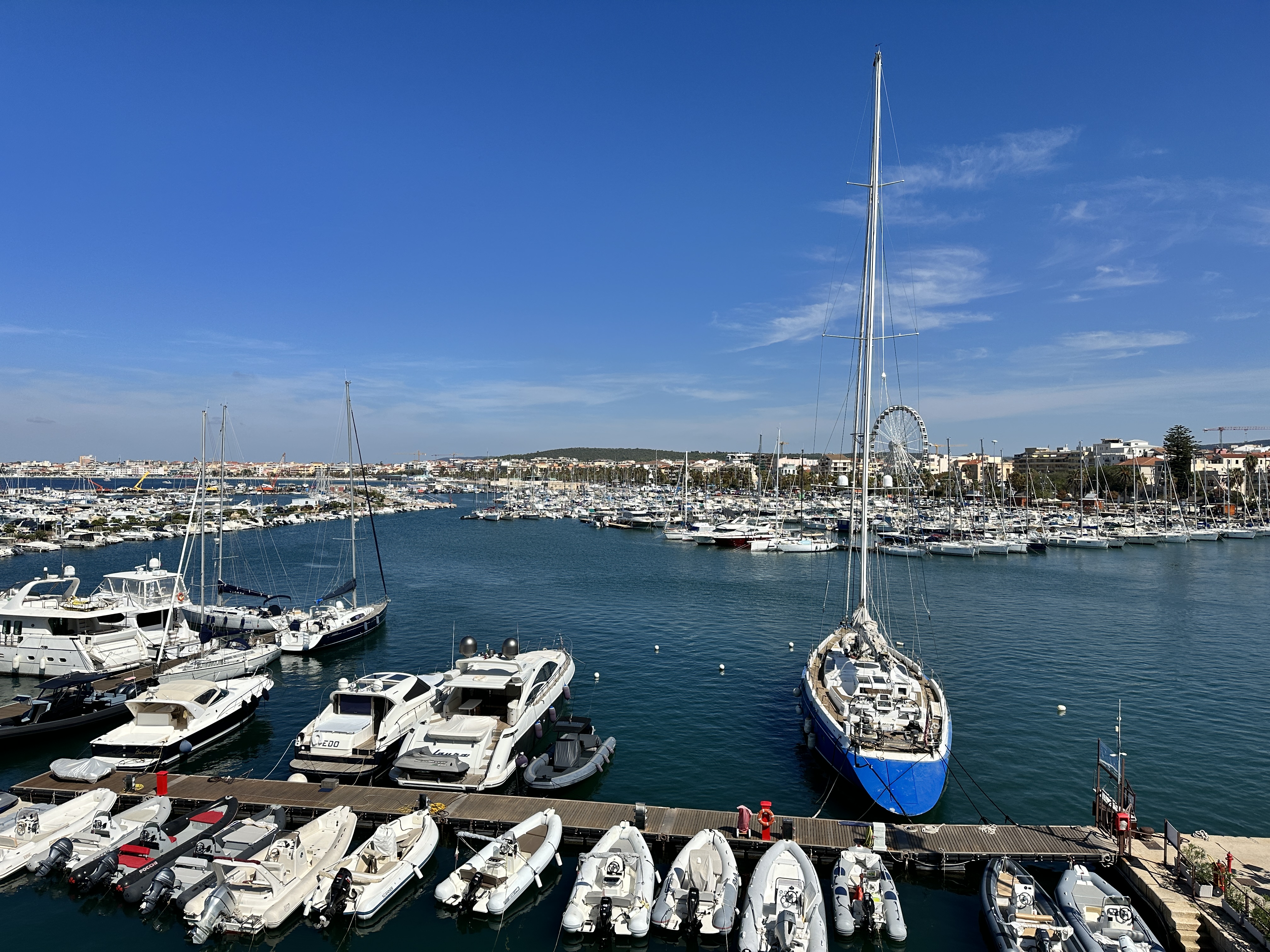
Views of Alghero’s Harbor from the city walls.
Alghero’s lively Old Town.
A great view of Alghero’s Old Town walls and towers.
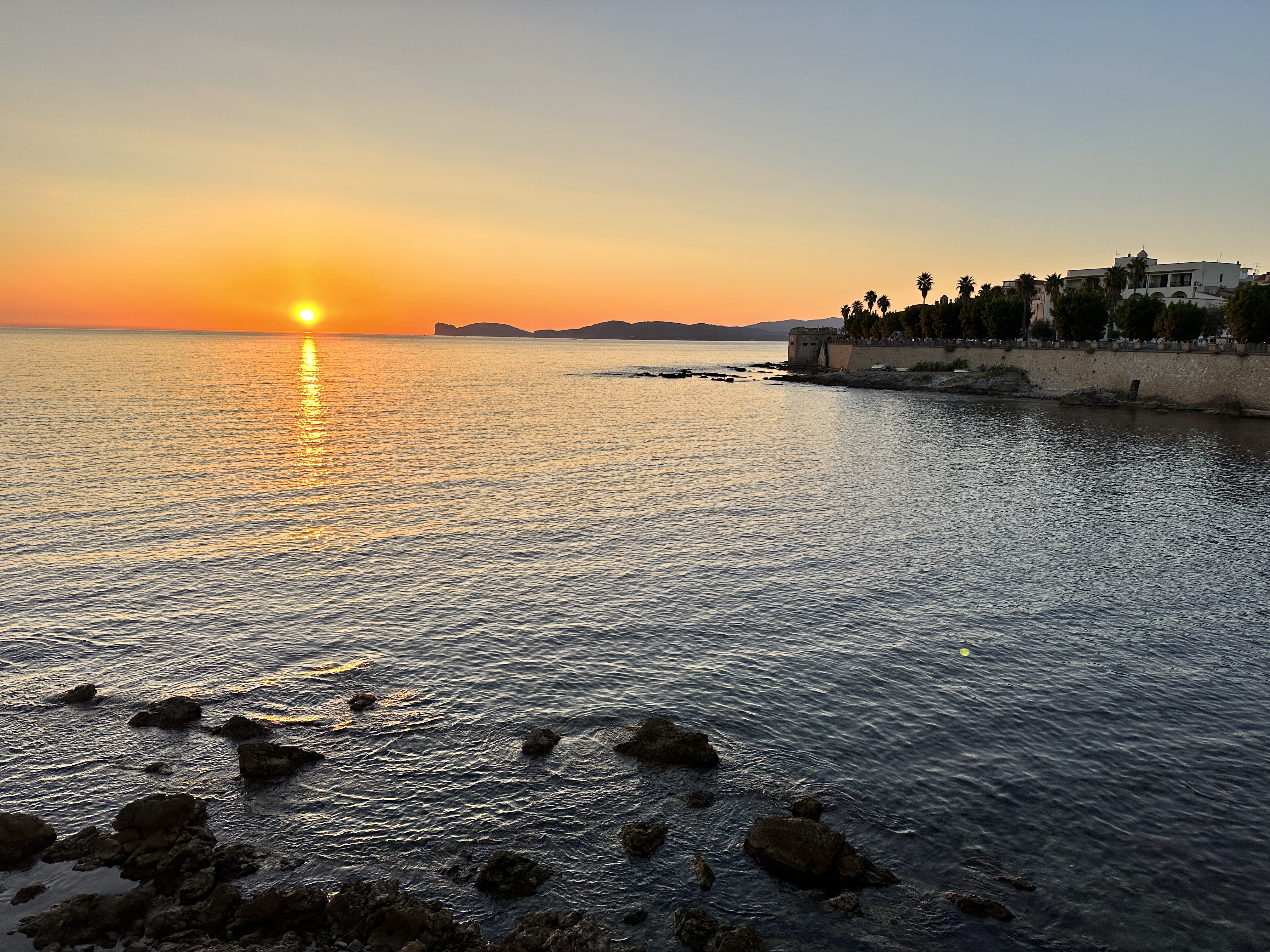
Alghero’s city walls are a perfect place to watch the sunset after another glorious day on this wonderful island.
If you enjoy archeology, Sardinia, Italy should be high on your list of places to visit. There are a number of Bronze Age (approximately 1900 BC to 730 BC) settlements throughout the island. The main towers of these settlements are called Nuraghe (essentially ancient towers/castles surrounded by small villages) and they are unique to Sardinia. According to Wikipedia, more than 7,000 of these structures have been found on the island. Very little is known about the people who inhabited these structures or what they used these structures for.
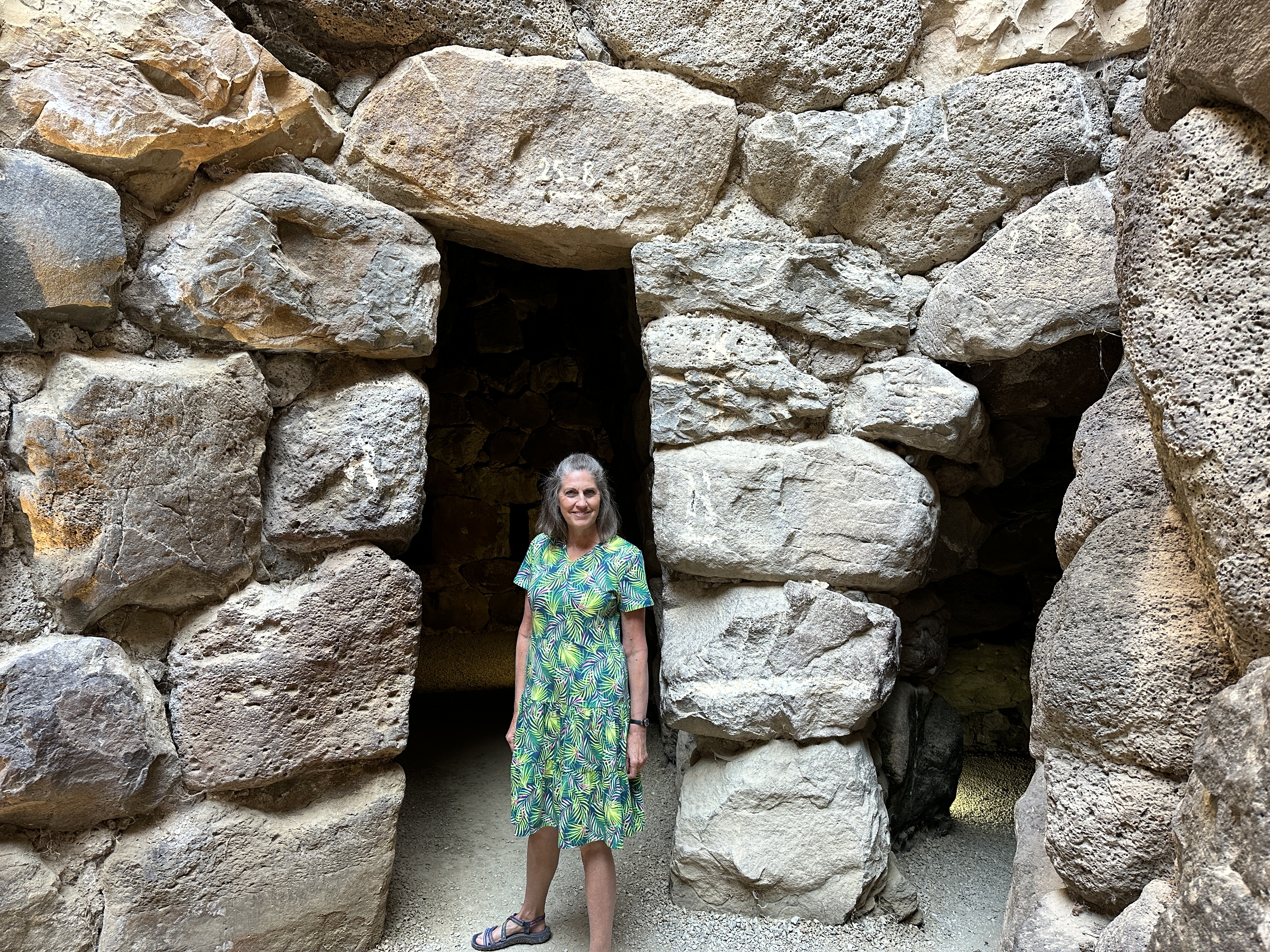
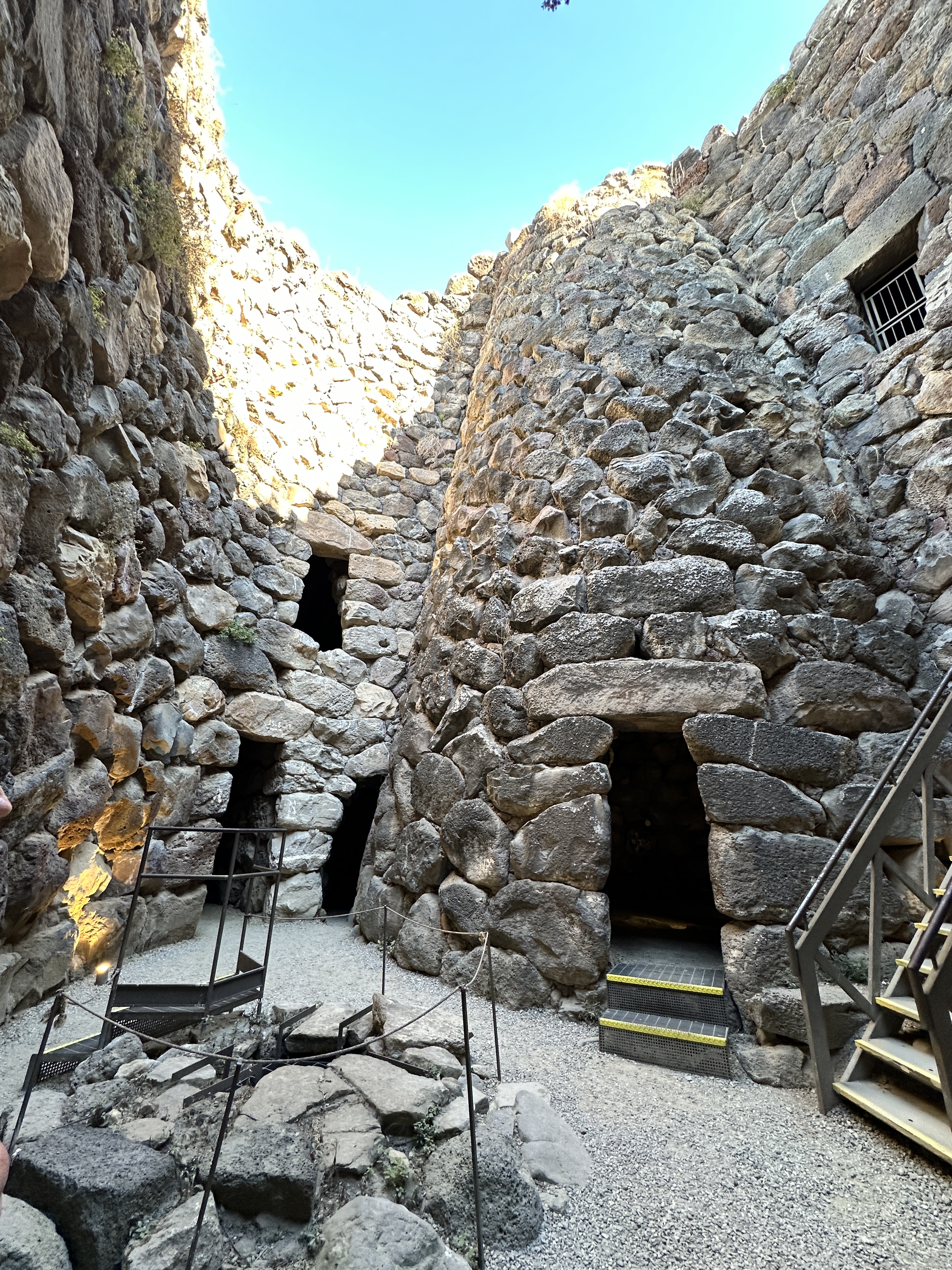
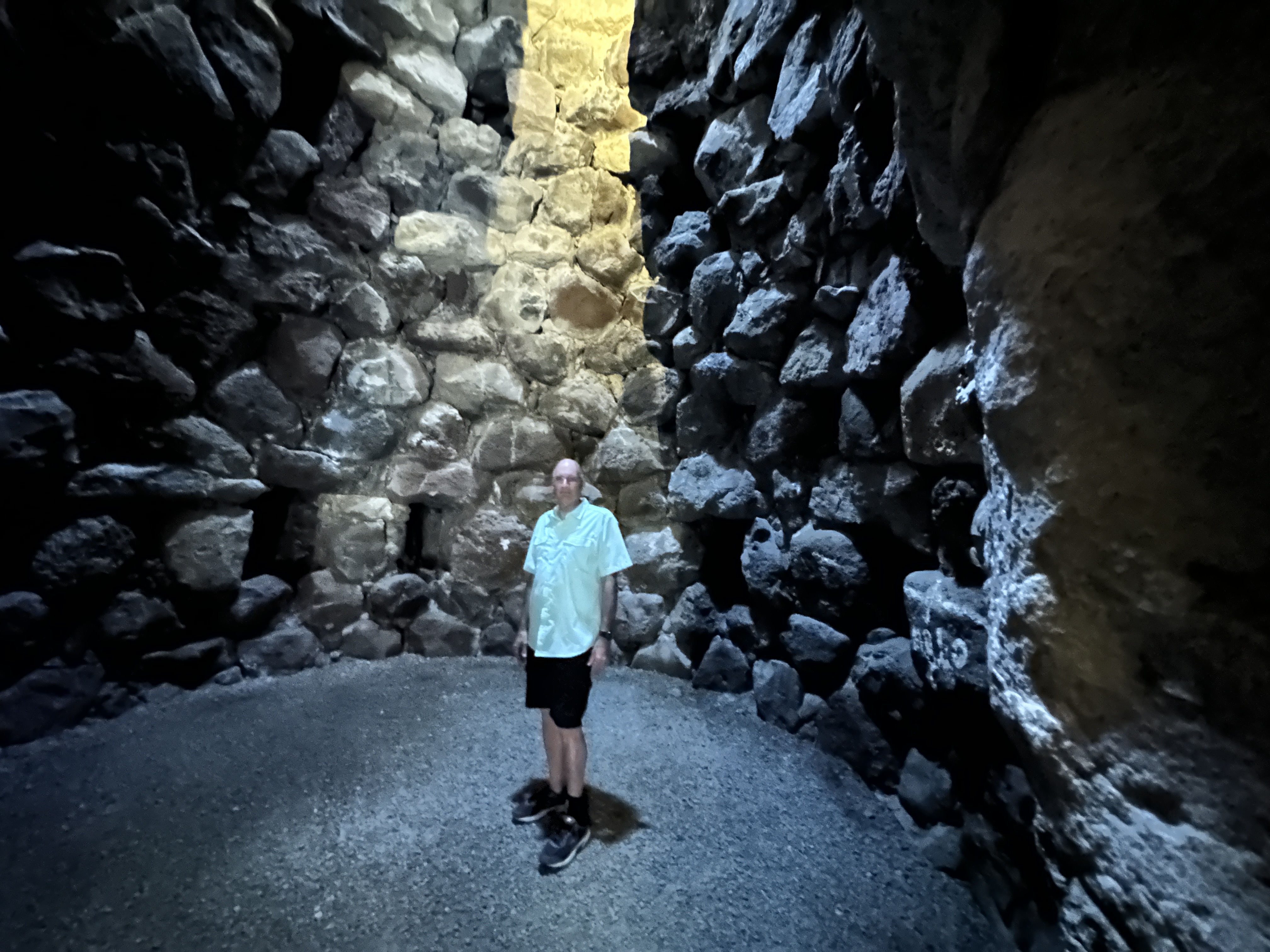
Amazingly, a number of Nuraghe are in an excellent state of preservation and can be visited, including the interiors. The stone work is quite incredible and standing in these 3,000 year-old rooms and climbing the stairways of these towers was a fun experience, not unlike visiting the ancient pyramids of Egypt. Most sites allow you to visit the structures on your own, the only one that required a guide was Su Nuraxi Barumini, one the largest of these settlements in Sardinia. As with many ancient archeological sites, the builders in Sardinia understood much about astronomy and were close observers of the night sky.
The approximate location of the Nuraghe sites we visited are shown on the map of Sardinia above.
We visited 5 Nuraghe sites, which provided a nice sampling of Sardinia’s rich Bronze Age history.
Below is a brief overview of the sites we visited.
Nuraghe la Prisgiona & Coddu Vecchiu
Nuraghe la Prisgiona was one of the smaller nuraghe sites we visited. There are a number of interesting archeological sites near Arzachena, Sardinia (including this one), a person could easily spend a day or more exploring all the nearby sites.
Within walking distance of Nuraghe la Prisgiona is Coddu Vecchiu, called the Giants Tomb. The tomb is from the same era and part of the Nuraghic civilization, about 1800 BC.
Nuraghe Majori – Complete with Bats!
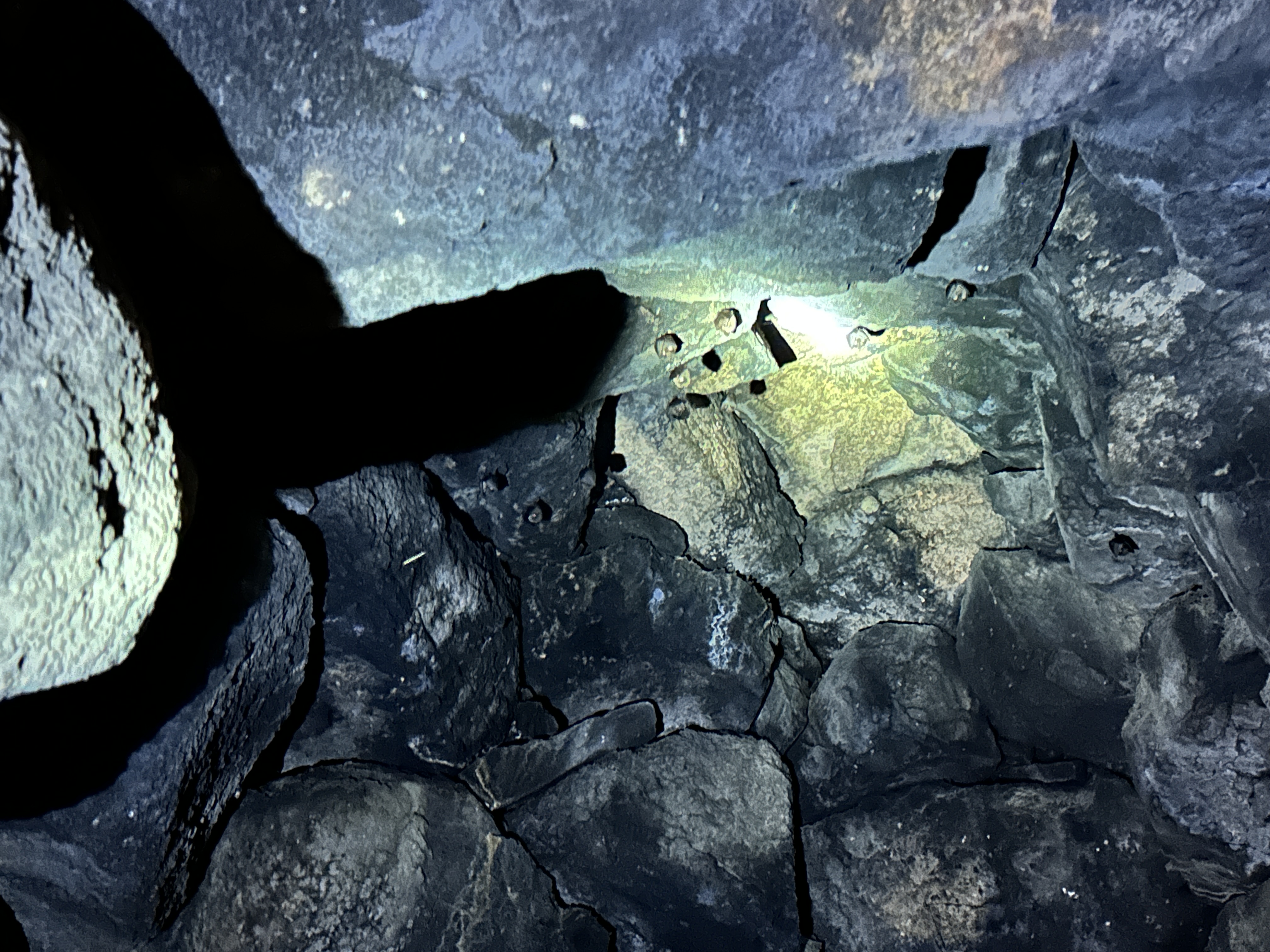
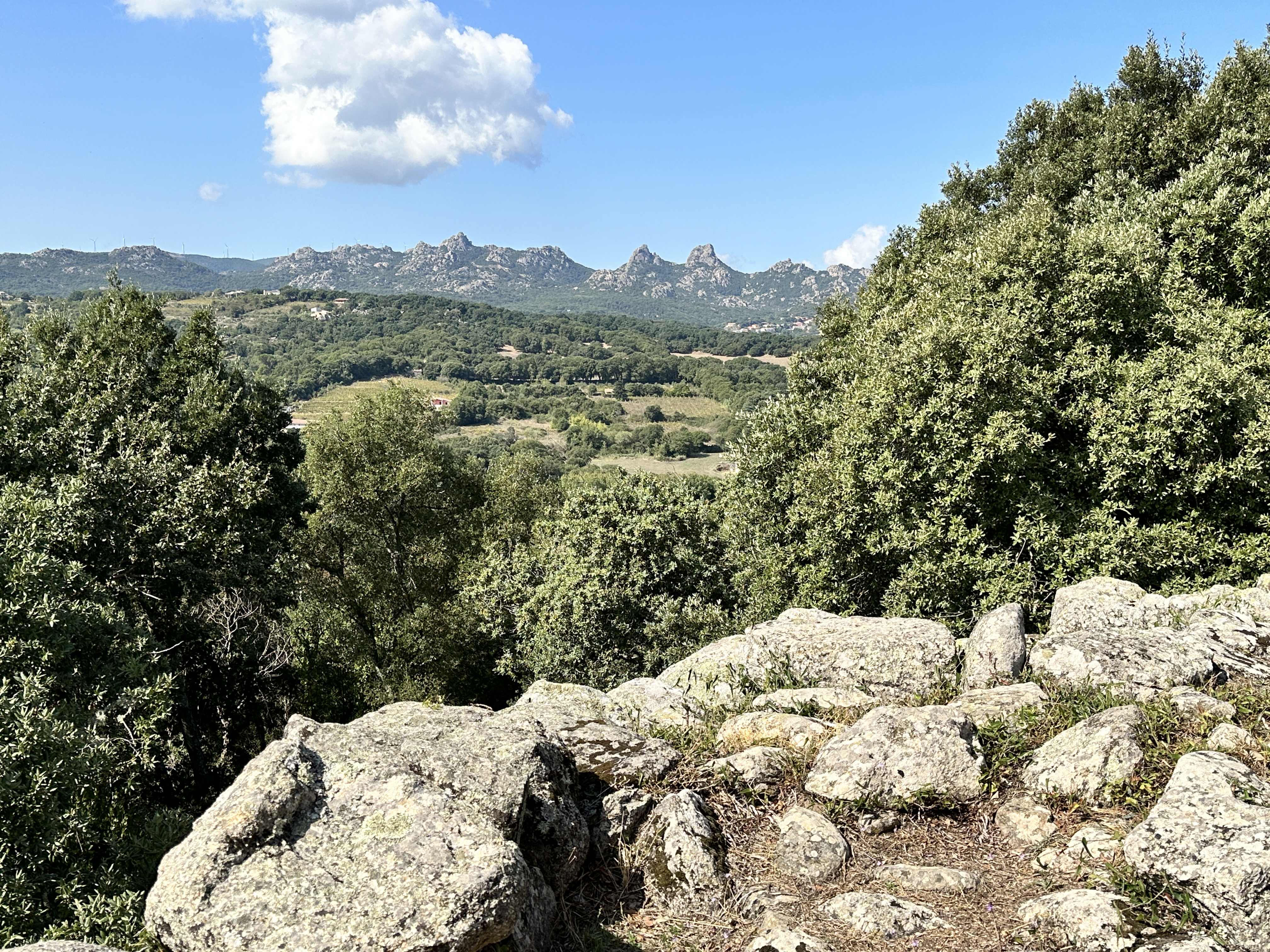
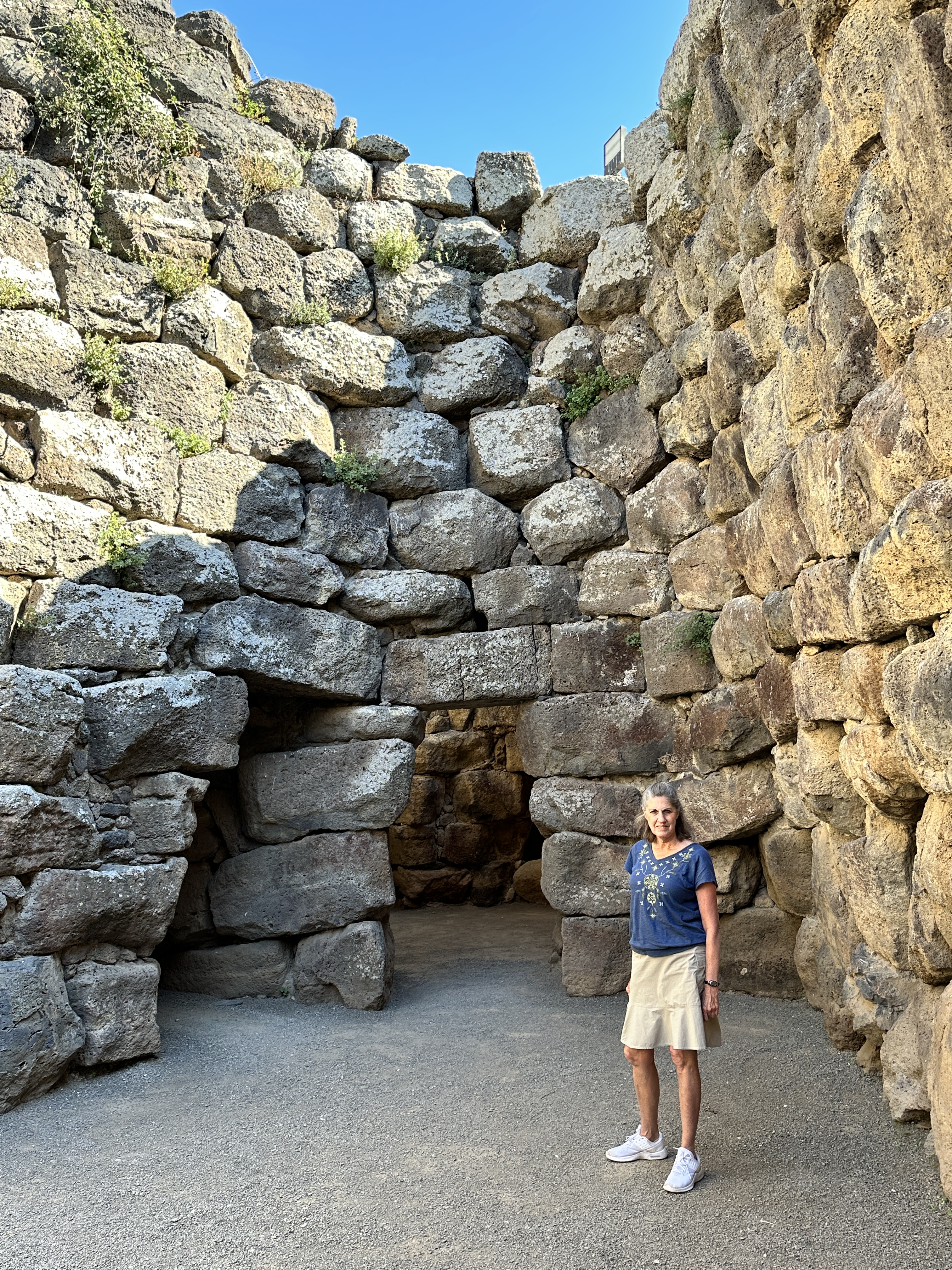
Nuraghe Majori is another small Nuraghe site. At the ticket office, they give you a flashlight so you can see the bats inside the main tower – right photo above: look closely to see the bats hanging from the roof interior.Left – Majori Nuraghe tower, Middle – one of the Nuraghe wall entrances, Right – view of the surrounding countryside. Most Nuraghe occupy a strategic location, such as a hilltop.
Nuraghe Santu Antine
A view of Nuraghe Santu Antine from the exterior. It doesn’t look that impressive or large from the exterior; however we were surprised how large and extensive the interior was once we entered.
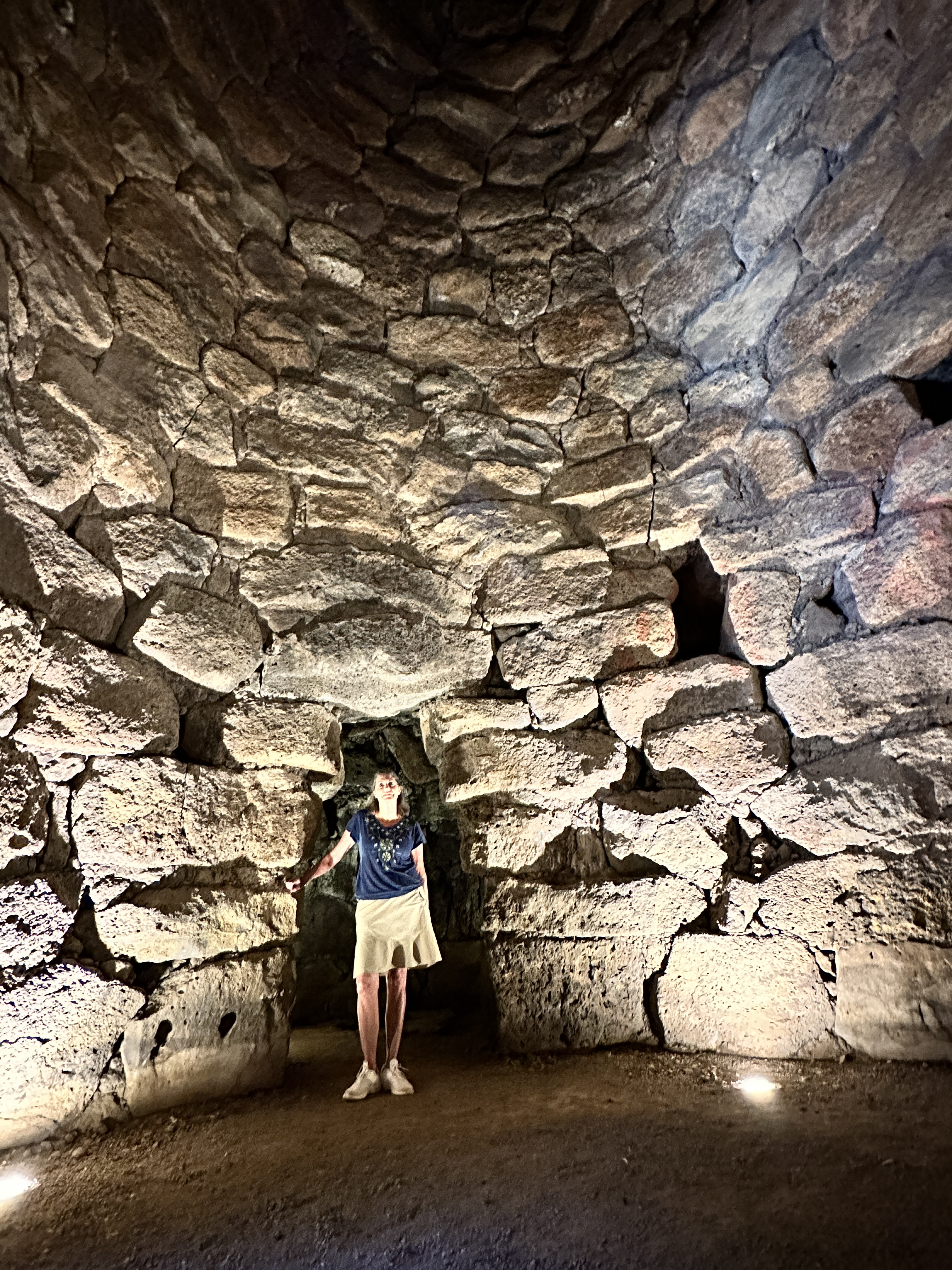
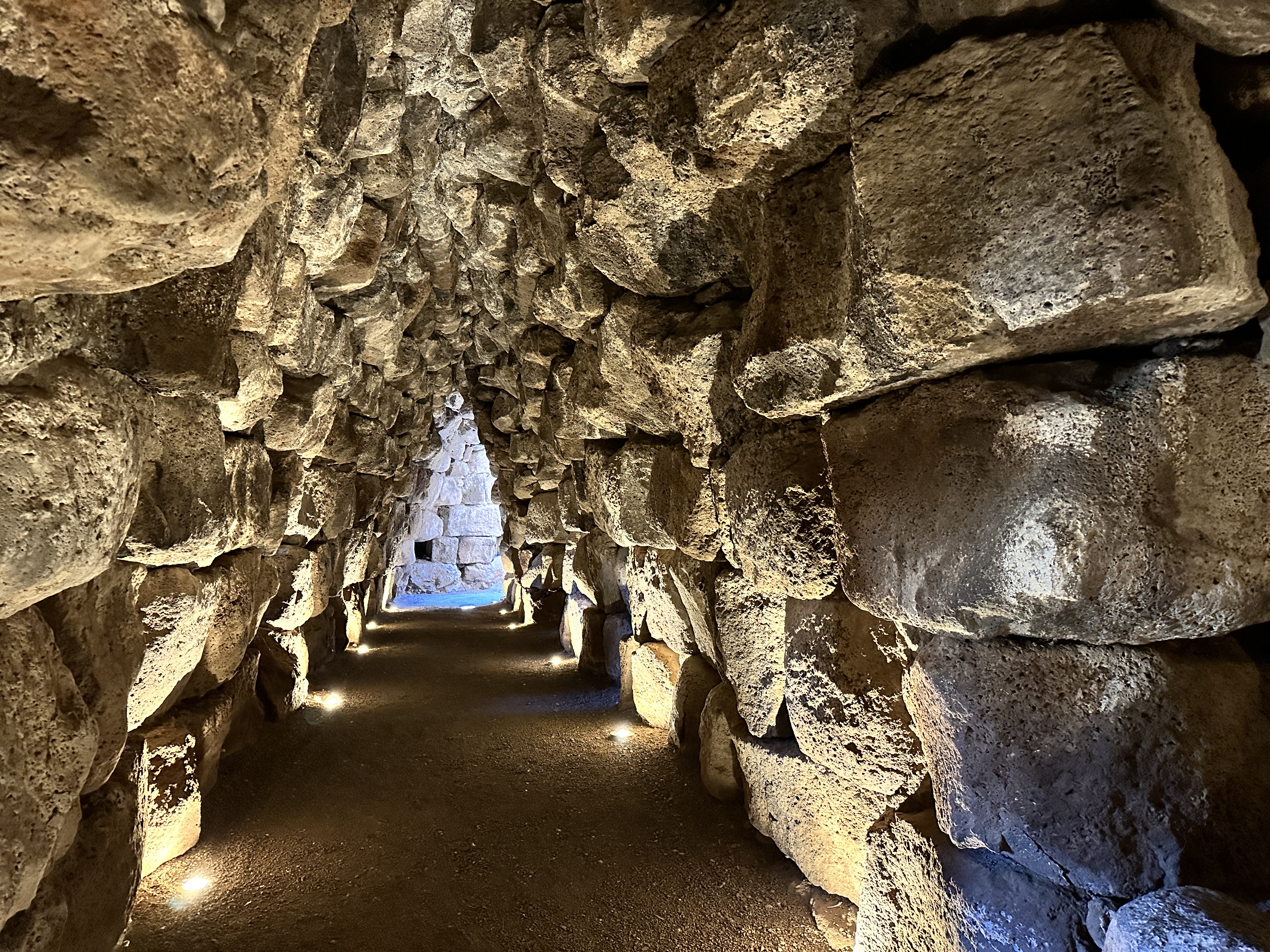
Nuraghe Santu Antine – courtyard views – including a well in the left photo above.Interior views of Nuraghe Santu Antine – tall room, passageway, and stairway to 2nd level.
Nuraghe Santa Cristina
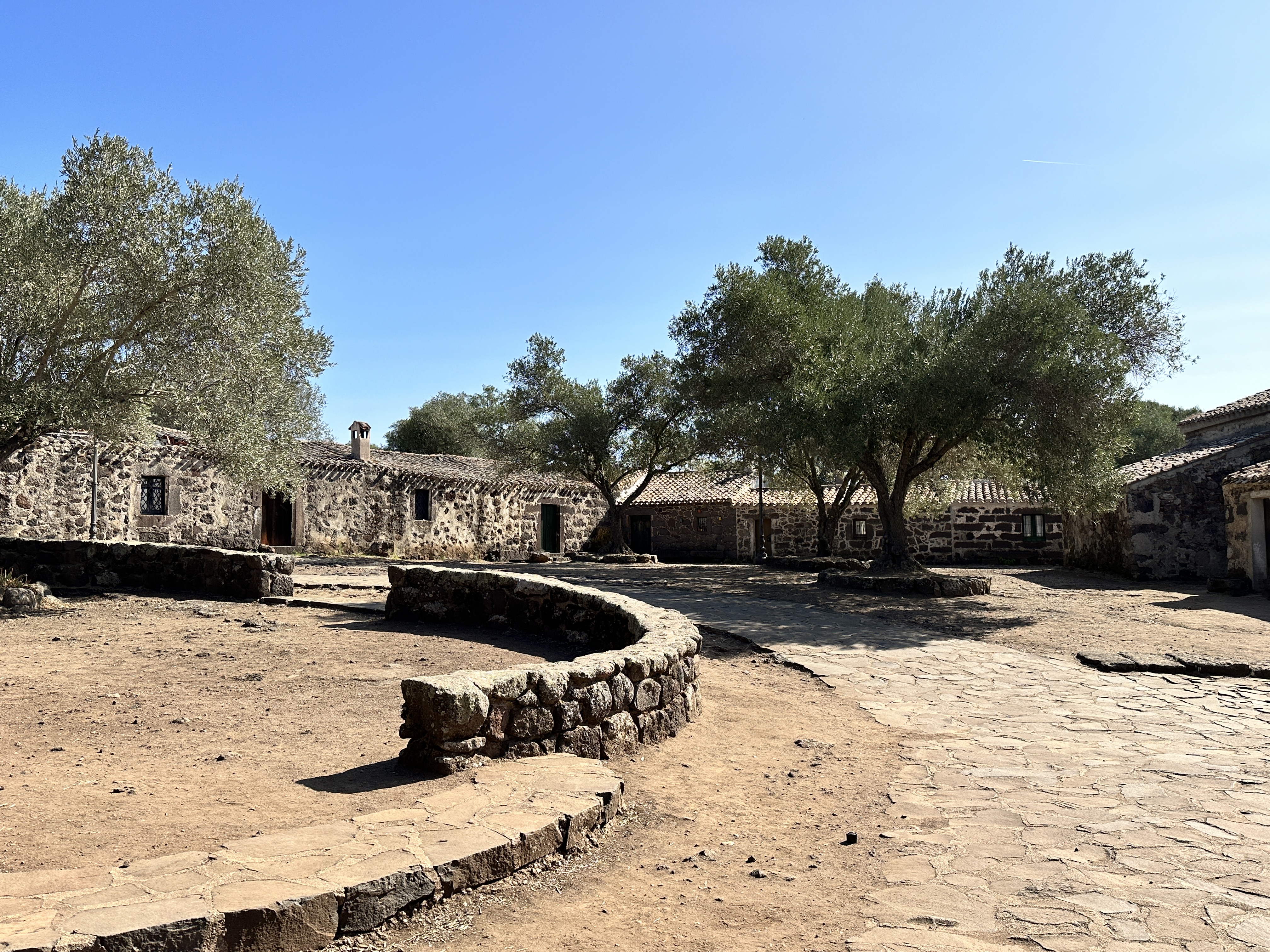
Santa Cristina may have been my favorite site, perhaps because there is so much to see here. There are Nuraghe ruins, including a fascinating ancient well, and medieval-era buildings also. It has been a site used for religious purposes for centuries.
Sacred Well
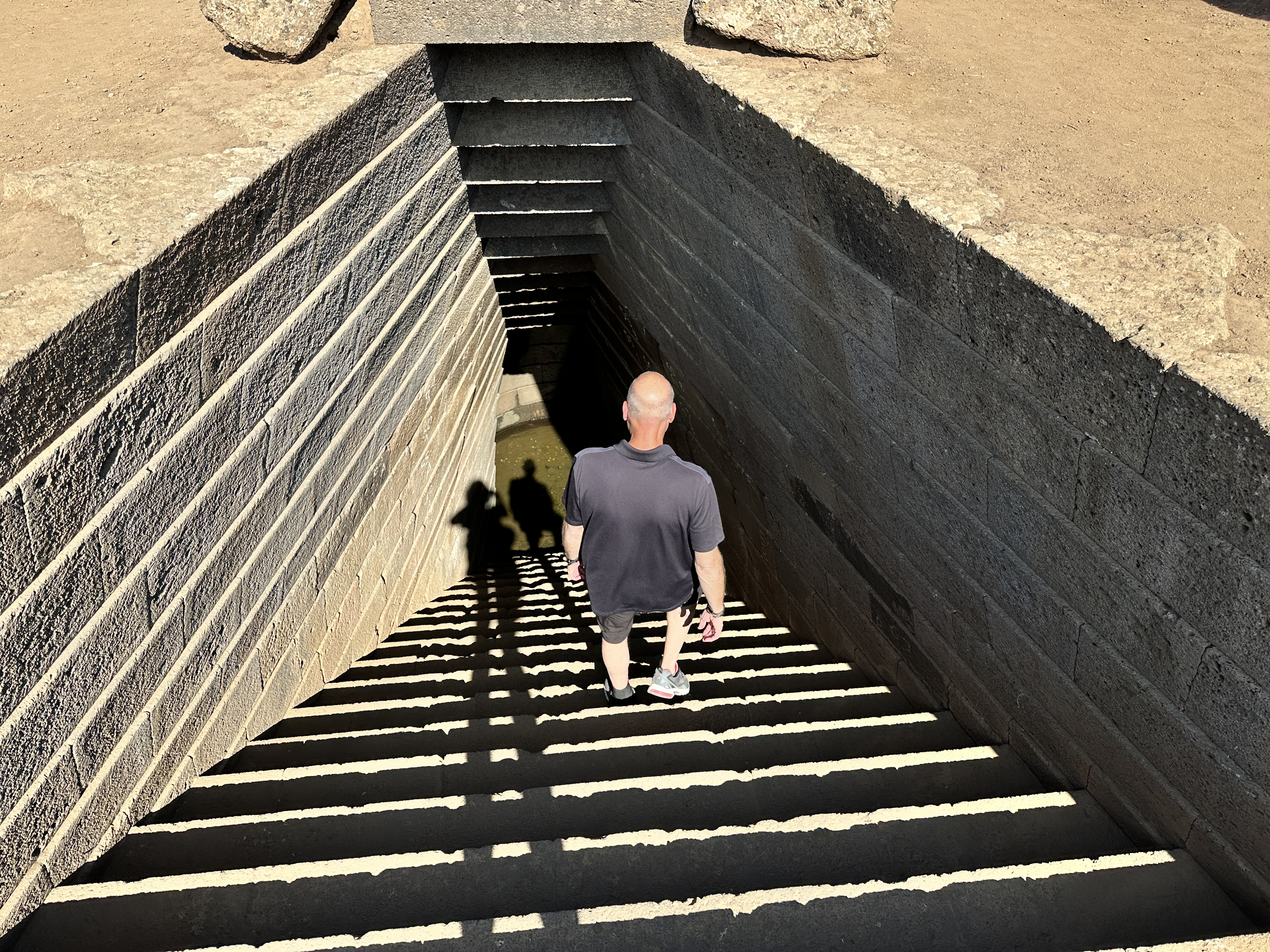
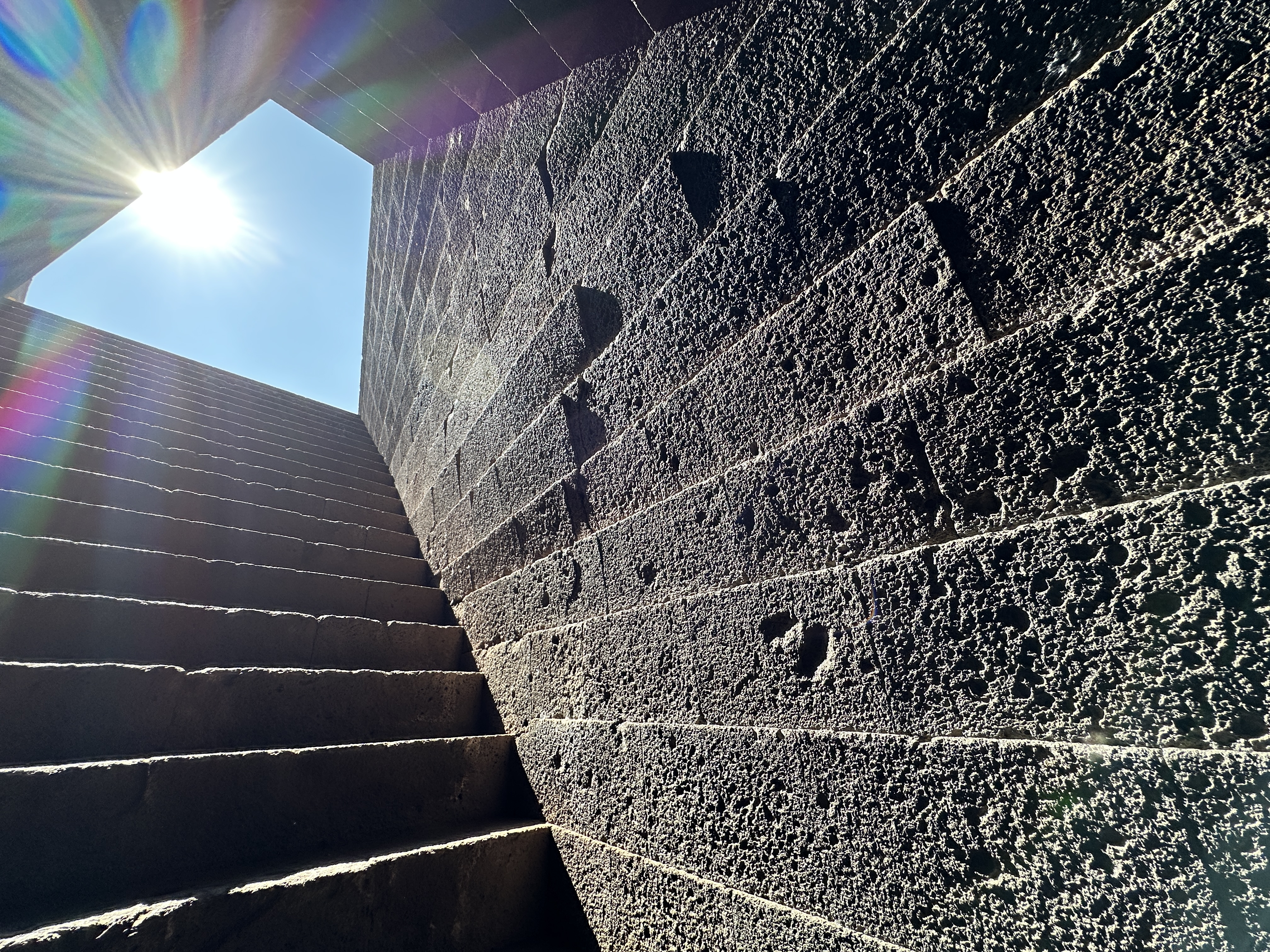
Sacred Well from ground level. I was amazed how the stones and stairway have held up over 3,000 years – the Well dates from the 11th century BC.
View from the bottom of the well stairway.
Above – images at the bottom of the Sacred Well. Note the precise stone work.
Nuraghe
Nuraghe at Santa Cristina, part of the same complex as the Well and the Medieval village.
Medieval Church
Left – The little church at Santa Cristina was built around 1200 AD. Right – Monks’ quarters next to the church. These structures are between the Sacred Well and the Nuraghe. Be prepared to do a little walking at Santa Cristina.
Su Nuraxi di Barumini
Su Nuraxi di Barumini is one of the largest, if not the largest Nuraghe site in Sardinia. It is a World Heritage Site, and when you purchase your ticket you must join a group with a guide to visit. Our tour guide was very kind and patient, he explained the features of the site in French and English, given the mix of our small group.
Above left – the main tower of Su Nuraxi from a distance. The image in the center shows what the Nuraghe looked like in its prime – very similar to a medieval castle. Right – the village dwellings below the main tower.Above – views of the village ruins.Images of the doorways and courtyard of Su Naraxi.Above – interior passage ways and rooms of Su Naraxi.
In addition to the glorious beaches of Sardinia, it is certainly worth your time to visit a few of the fascinating archeological sites. Be careful in the structures. Some of the stairway stones are very slick and trust me, it’s easy to slip. Also, watch your head, many of the passageways are short and narrow. The sites we visited were well sign-posted, had parking available and are well-maintained.
We started our Sardinia vacation by flying (from Frankfurt) into Olbia on the northeast coast of Sardinia. This was a great place to begin (and end) our Sardinian adventures. Olbia is ideally situated near the famous Costa Smeralda and the La Maddalena Archipelago, as well as other costal towns, archeological sites and beaches. (See here for an overview of regions we visited in Sardinia, we toured the island in a counter-clockwise route).
Olbia
While not a major tourist destination itself, Olbia has a lovely old town and is situated on a beautiful harbor. We spent our first night here, enjoying dinner in one of the many restaurants on the main pedestrian street and browsing the vendor booths lining the harbor promenade – a very festive atmosphere.
Views of Olbia and harbor, with Tavolara Island (right), the mountainous island with more beautiful beaches in the far distance.
The next morning we drove north toward Porto Cervo, the heart of Costa Smeralda, stopping at beaches along the way. Our first day started out cool, windy and slightly rainy, but by the afternoon it was warm and sunny. The weather didn’t stop us from enjoying the sights along the coast and wasn’t a factor for the rest of our trip.
Costa Smeralda
Costa Smeralda got its name and started becoming fashionable in the early 1960’s, due to development efforts led by Prince Karim Aga Khan. It’s maintained that status ever since. Our stay here was brief, given the many areas of Sardinia we wanted to visit. Below are a few images of the beautiful coastline of this region.
This sign, along the coastal road from Olbia to Porto Cervo lets you know you’re entering the fabled Costa Smeralda.
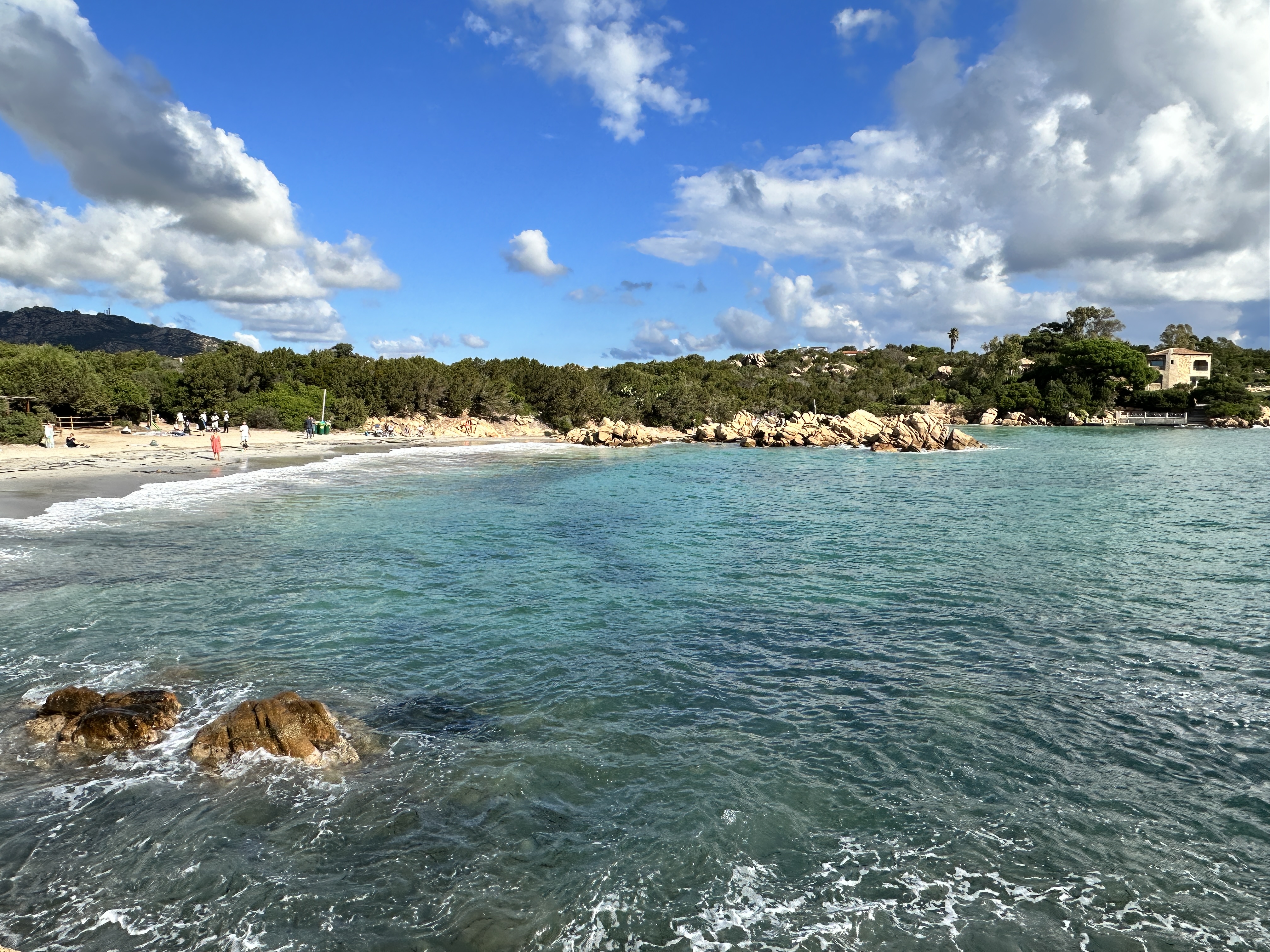
Capriccioli Beach
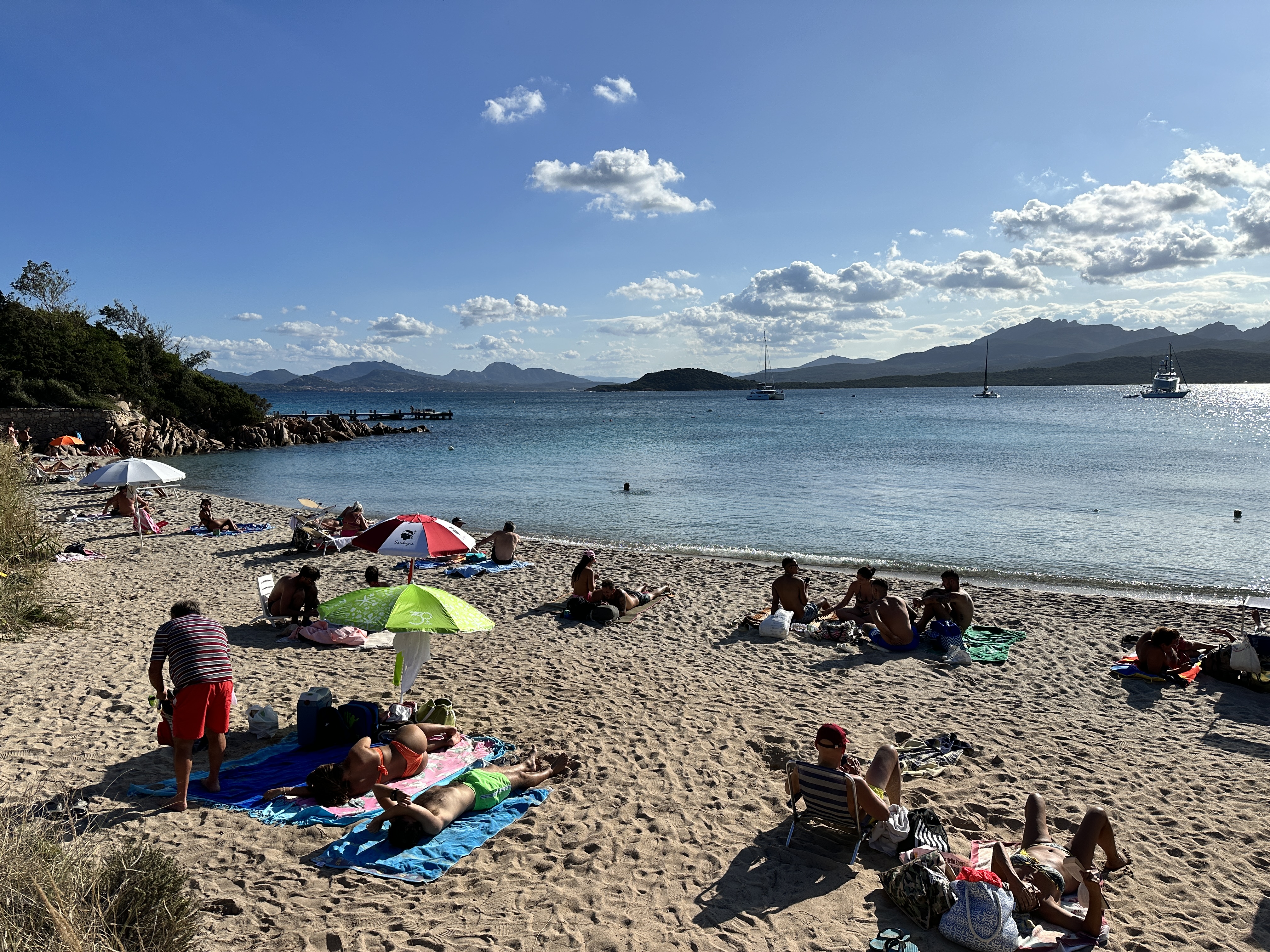
Spiaggia Principe, considered Sardinia’s most famous beach (although it’s only one of hundreds as beautiful), on Costa Esmarelda.
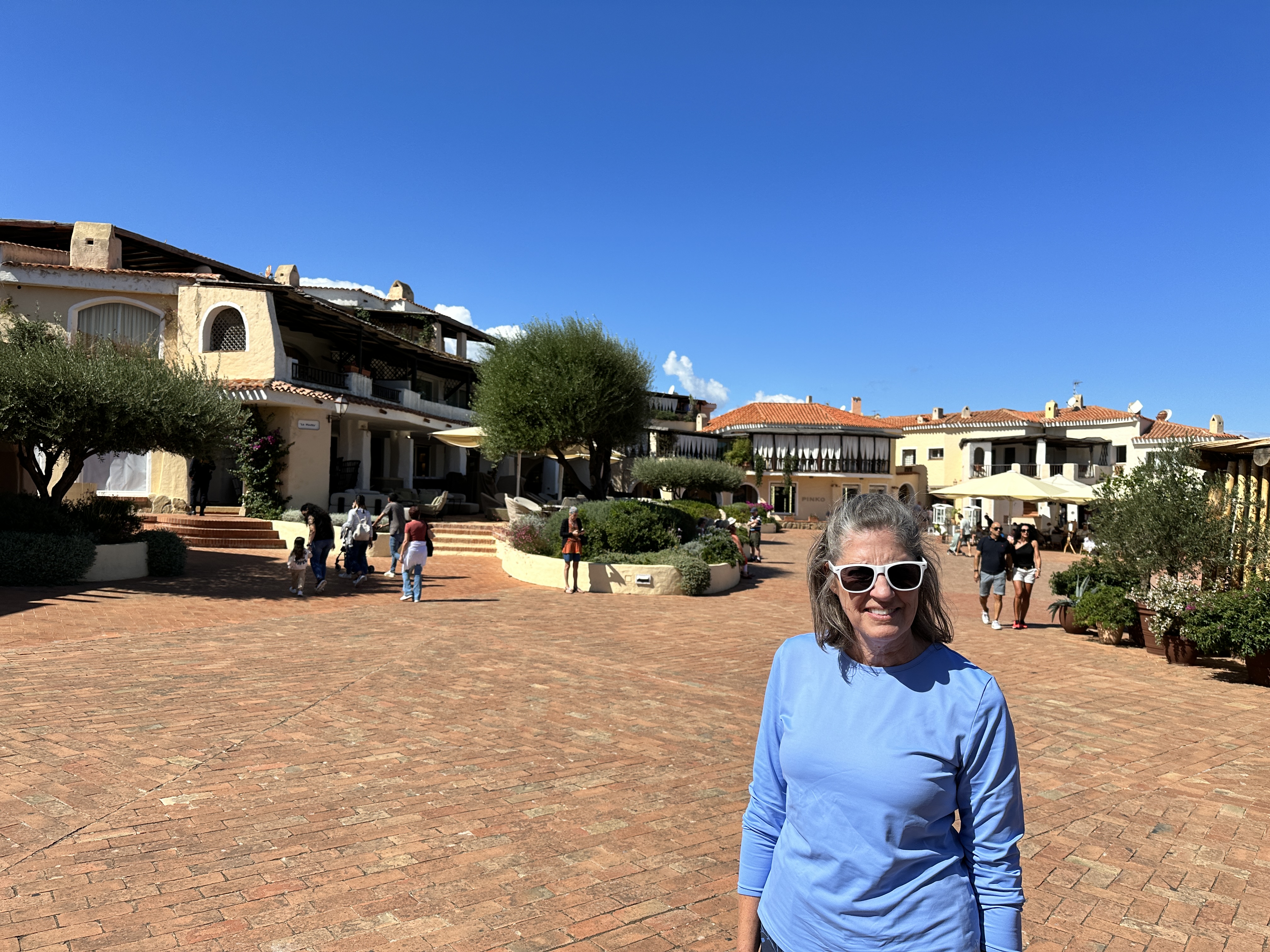
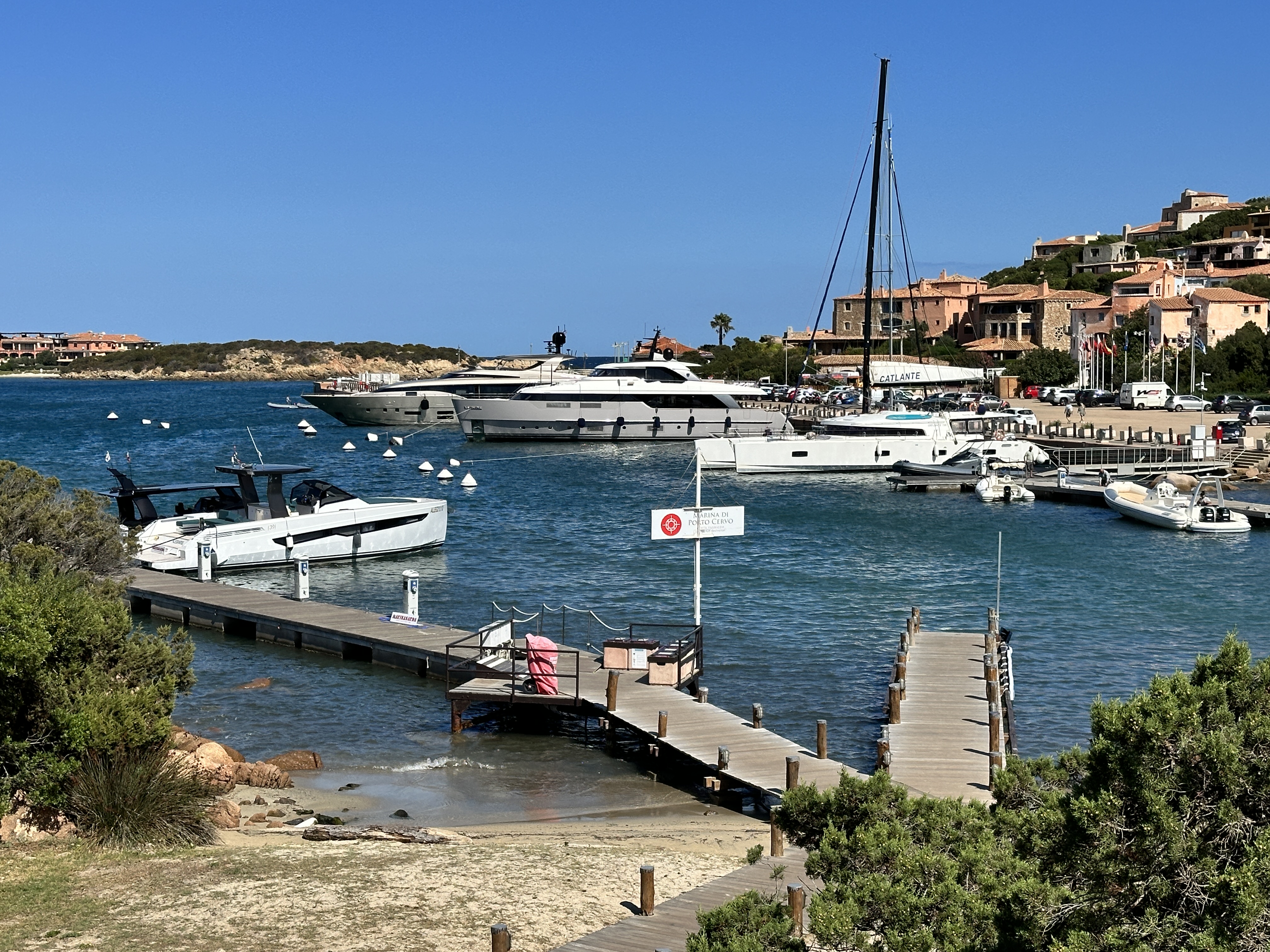
Porto Cervo, the center of Costa Smeralda, was pretty quiet in early October. We enjoyed walking around the harbor and the town, with many expensive shops.
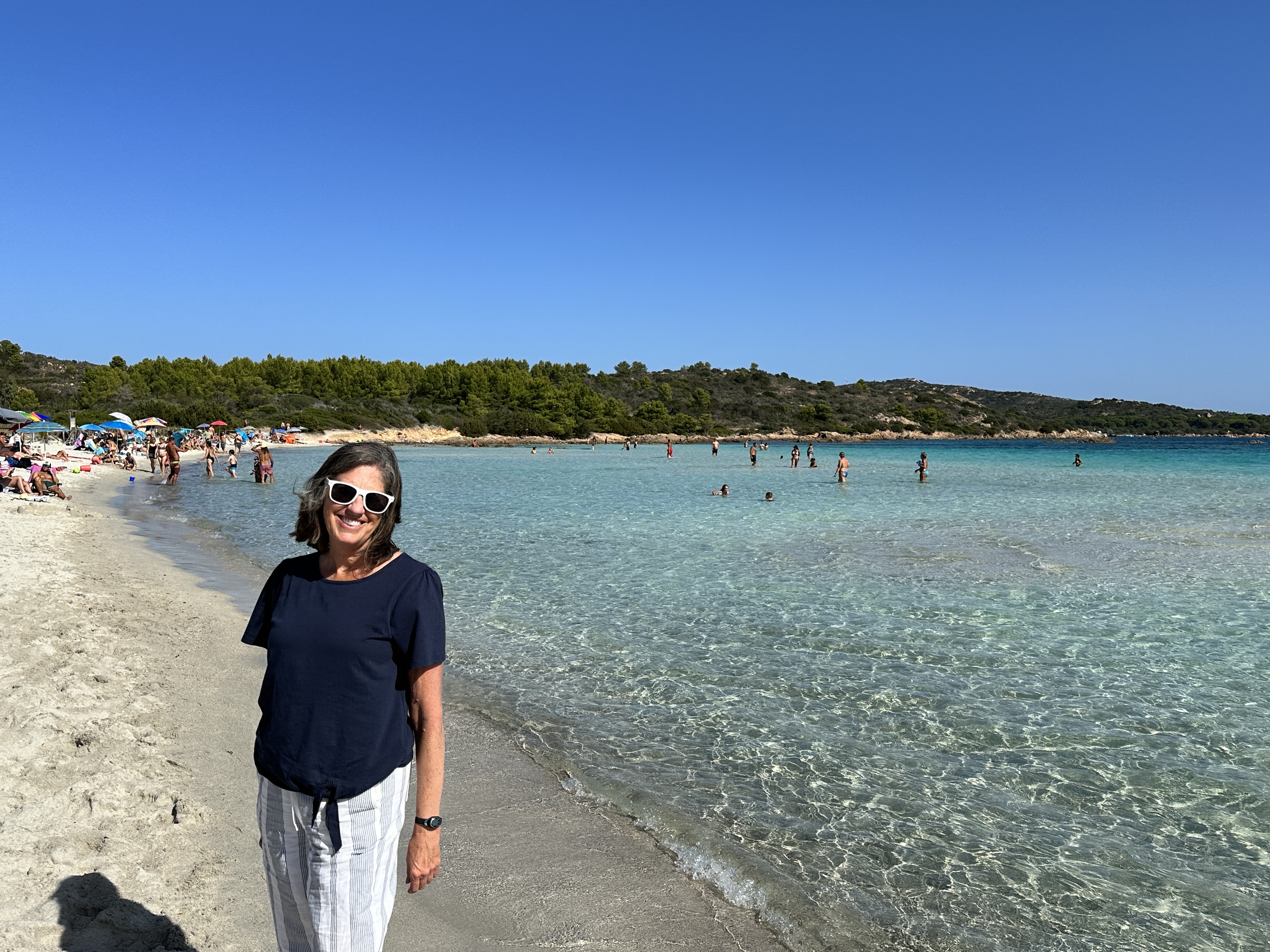
The calm, clear waters of La Celvia Beach, south of Porto Cervo.
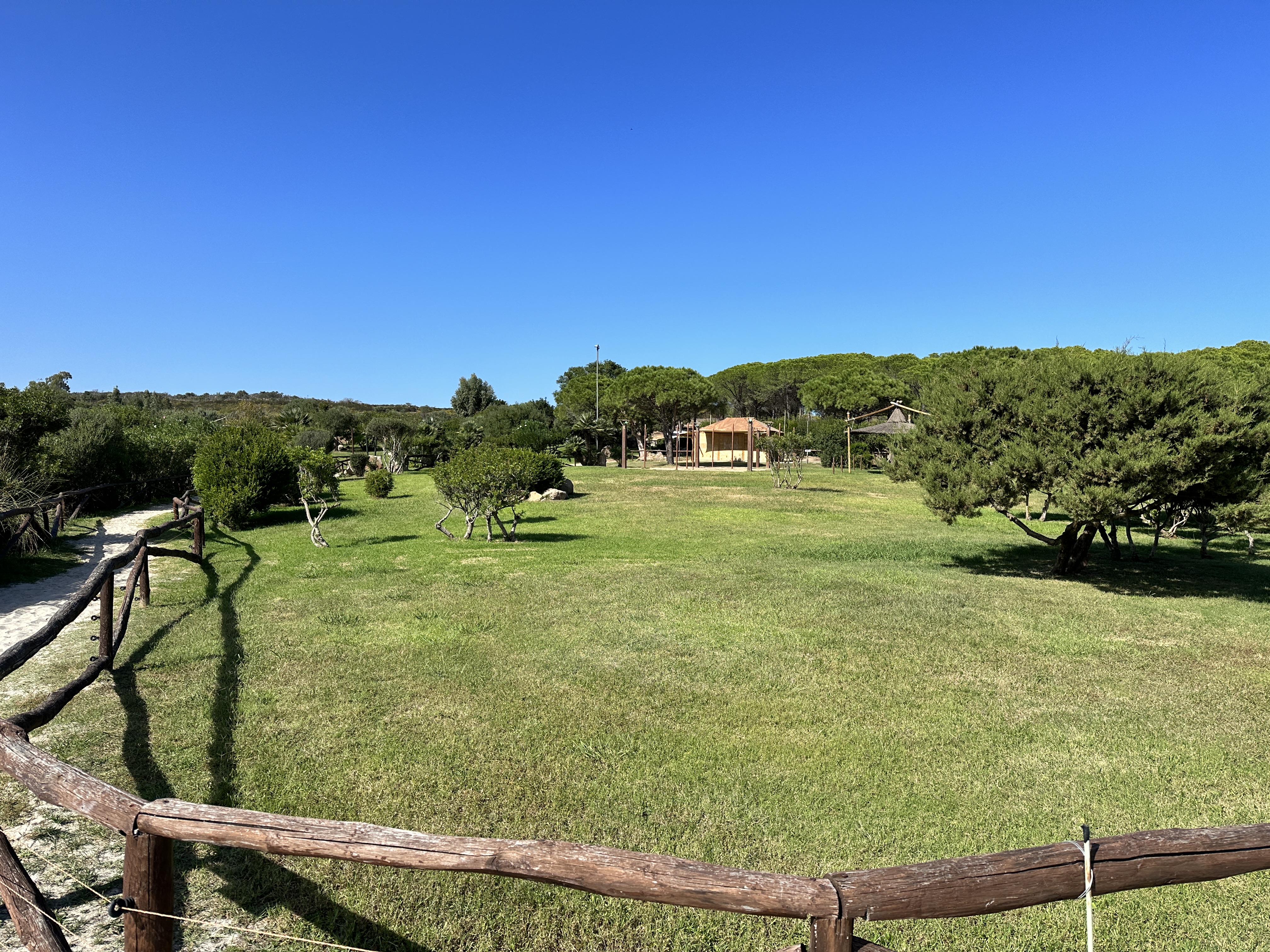
La Celvia beach (left and above), was just a short distance from our hotel in the Costa Smeralda resort area of Cala di Volpe (above right), and near a golf course as well as Capriccioli and Spiaggia Principe beaches. What more could you ask for!Although not directly part of Costa Smerelda, Spiaggia Cala Brandinchi, near San Teodoro, not far south of Olbia, is another great beach and park, with some lawn area just behind the beach for games or picnics. We were flying out of Sardinia shortly after our visit here and so we didn’t get to enjoy this beach for long!
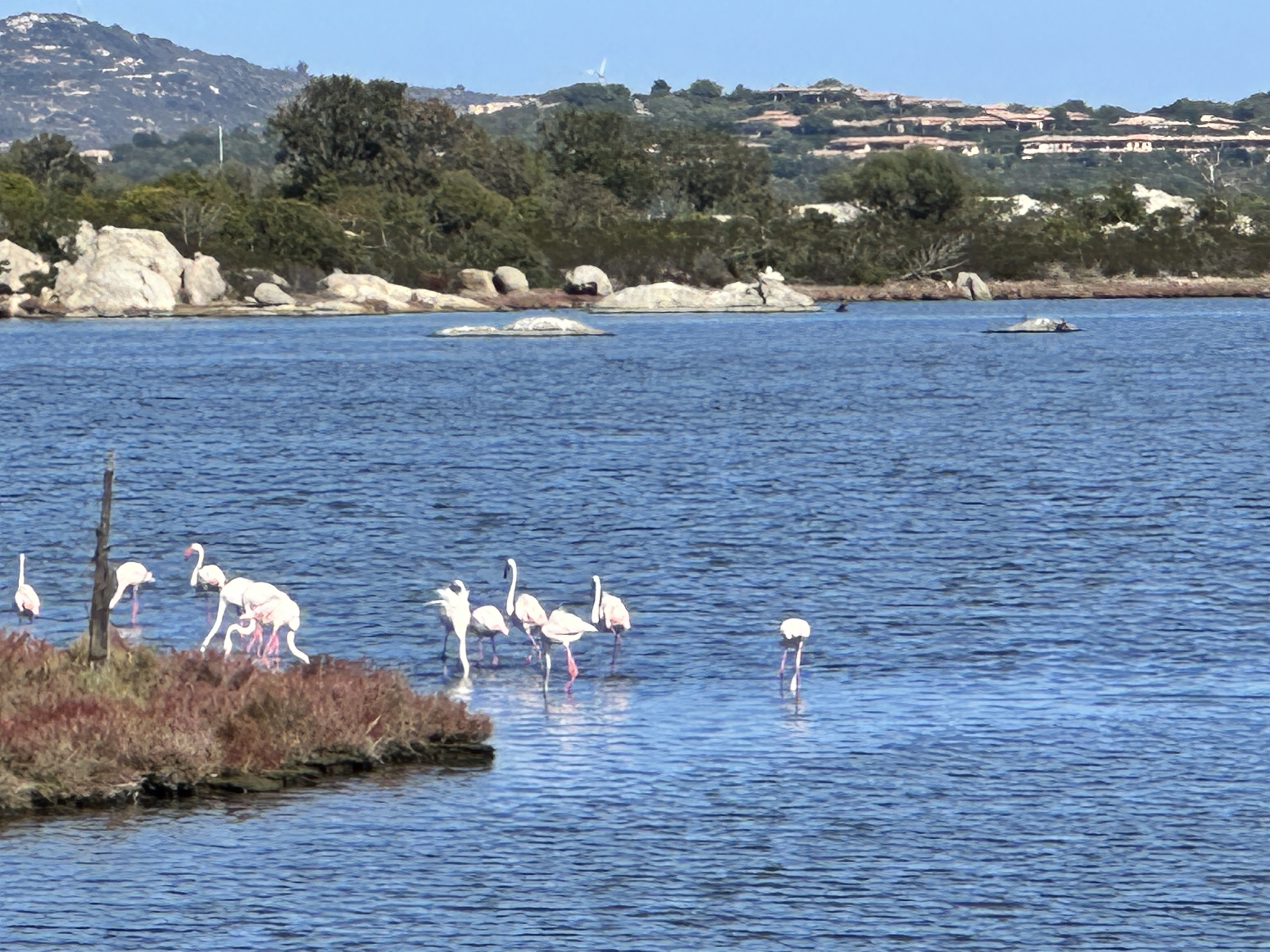
Real pink flamingoes near San Teodoro!
As with any region of Sardinia, it would be easy to spend your whole vacation right in (or around) Costa Esmeralda. If you want to live here, be ready to open your checkbook. It’s one of the most expensive regions in Europe and given its allure, it’s easy to see why.


































 The Independent Tourist