Author: Paul Terry

I love to travel. I've been fortunate to visit about 75 countries so far. I prefer to travel independently to get off the beaten path a bit. I also try to find good deals to make my travels more affordable.

Images of Machu Picchu

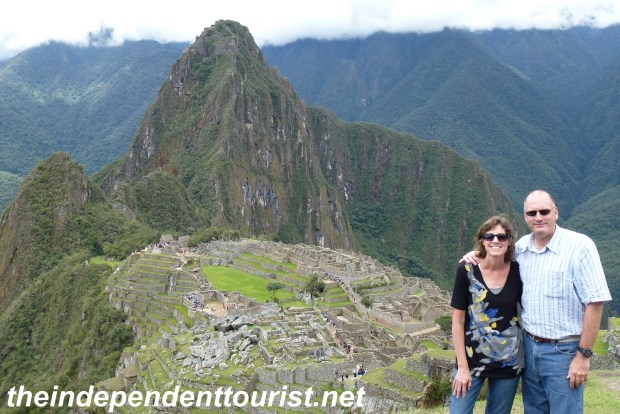
In my post “Machu Picchu–A Practical View” I explained the logistics of our visit. In this post I’ll share some of the photos of this incredible engineering marvel, hidden for centuries (thank goodness!) from the world’s view. A North American archeologist and explorer, Hiram Bingham, “discovered” Machu Picchu on July 24, 1911 (locals of course knew of its existence).

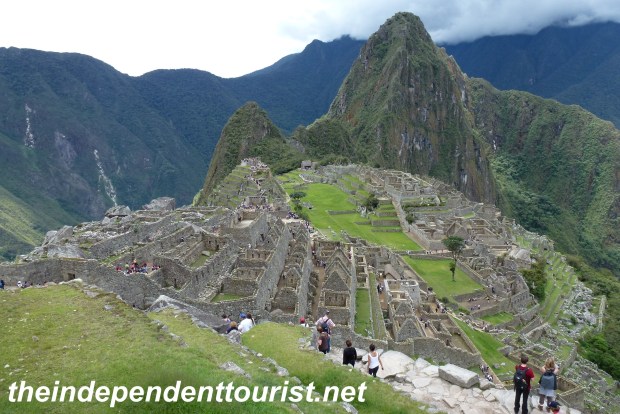
A view of the urban area of Machu Picchu – the ceremonial area is on the left and the residential area is on the right.

Construction

I was surprised by the varied construction techniques. In some places, each stone is fit perfectly with those next to it. In other cases, the construction is more rough, not unlike what one sees in medieval castles in Europe. The Inca understood that trapezoidal shapes are stronger than square shapes, and doorways, windows and carved niches are almost all trapezoidal in shape.

The main entrance to the city of Machu Picchu
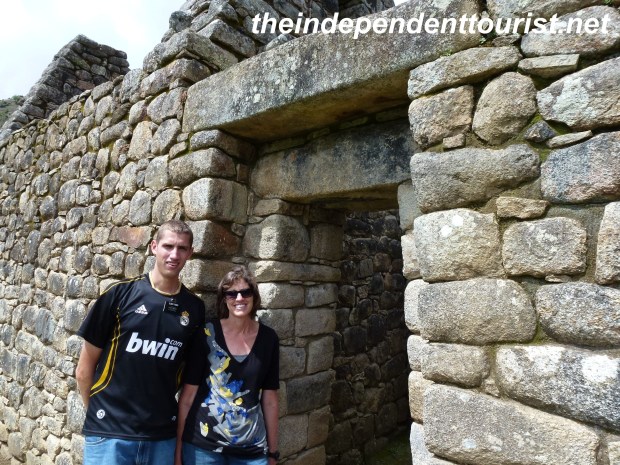
Trapezoidal entryways and doors are found throughout Machu Picchu, which were much stronger and more resistant to earthquake damage.

Examples of varied construction techniques in the walls.
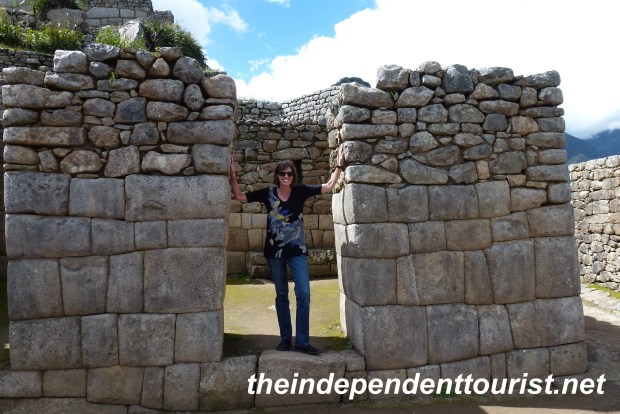
An interesting wall–the lower part is constructed of carefully cut and fitted stones and the upper part is much more hastily built.

Another example of the varied building techniques–note the trapezoidal niches and post extensions in the background.

Water System

There is a spring on the hill of Machu Picchu and the Incas utilized it to the fullest extent to provide water to the crops and the inhabitants.  They used the law of gravity to provide a running water supply.

Carved channels for water flow–another engineering masterpiece.

Temple of the Sun

One of the most important buildings in Machu Picchu is the Temple of the Sun. It is quite unique in its construction due to the rounded walls, in addition to the windows that align with the summer and winter solstices.
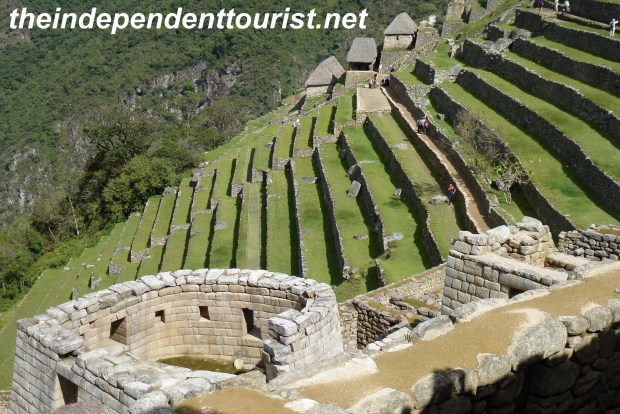
The Temple of the Sun in the foreground–the windows are aligned perfectly with the summer and winter solstices. This building was Hiram Bingham’s first discovery at Machu Picchu. In the distance are the terraced agricultural fields.

Stairway and chambers directly below the Temple of the Sun. Named the “Royal Tomb” by Hiram Bingham, although the function is unknown.

The Agricultural Area

Machu Picchu is divided into two main zones, the urban zone and the agricultural zone, which is the purpose of the extensive terraces.  A birds-eye view would show that the majority of land area of Machu Picchu was terraced (I didn’t have an airplane!).

Looking up at some of the many terraces.

The Urban Zone

The urban zone is really two main areas:  The Sacred Plaza with temples and ceremonial places, and the residential area, which has 109 stairways containing about 3,000 steps, and a sophisticated canal system.  This city clearly had great urban planners!

The Sacred Plaza

Temple of the Three Windows, in the ceremonial part of the city, called the Sacred Plaza. Note that these windows are carved from huge stones.

The near-perfect stone work on the outside of the “Main Temple” – thought to be a temple due to the extremely careful construction

Residential Area

We found the residential side of the city quieter (fewer tourists) than the ceremonial/Sacred Plaza side, probably partly due to the vast size of the residential area.
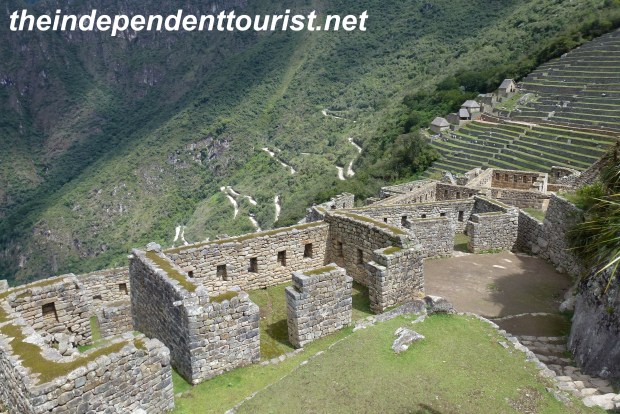
A view of the residential area, agricultural terraces, and the winding dirt road leading up to Machu Picchu from Aguas Calientes.

A view (in the opposite direction from the picture above) of the residential area, additional terraces, and Waynapicchu (in the background).

One of my favorite images of Machu Picchu, looking toward the residential area.

If you have the opportunity to visit this world wonder, do it!

Information Source: Machu Picchu, Sacred City of the Incas, by Mayer Joel Abanto, 2009.

Machu Picchu—A Practical View

The approximate train route from Cuzco to Machu PIcchu

Most people visit Peru for one reason, to see the Inca site of Machu Picchu. We visited in October 2011, and I can say, having visited many of the world wonders, it is one of the most stunning sites in the world, for both the ruins and the natural scenery. However, be aware that it is expensive to visit and a bit more difficult to do so without crowds. Given the timing of our trip, we had to follow the typical tourist visit approach, which is: take a morning train from Cuzco (actually Poroy), then a bus shuttle up to Machu Picchu from the last train stop, and then the bus shuttle and train again back to Cuzco. We had about 3 ½ hours at the site, which was long enough for a good visit of the main ruins.

Poroy Train Station

I hope my comments on visiting will be helpful:

Cost: Visiting Machu Picchu from Cuzco is not cheap. Total costs will be about $200/person, including a taxi to Poroy train station from Cuzco, using the least expensive train, and the entrance fee. See below for more details. ($1 USD = 2.8 Nuevo Soles.)

Boarding our train to Machu Picchu

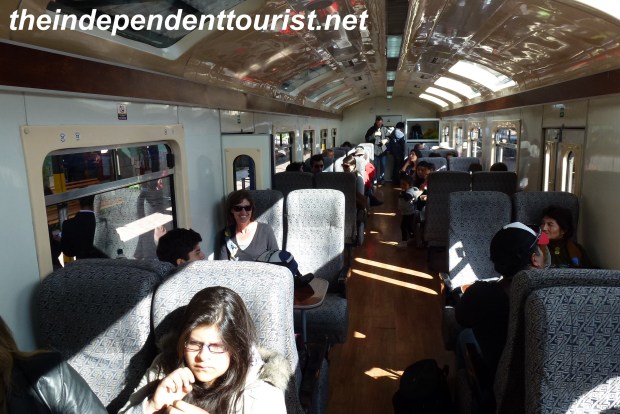
Trains. The only way to get to Aguas Calientes (the small town just below Machu Picchu) is via train. The road ends in Ollantaytambo. There are 3 train options: a)“Expedition” formerly called the “Backpacker;” b) Vistadome; and c) the extremely expensive Hiram Bingham (about 4x the cost of the other trains). All trains leave from Poroy station, about a 15 minute taxi ride up a steep hill north of Cuzco (taxi cost was 15-40 NS each way depending on your bargaining skills). We took the Expedition train to Aguas Calentes and the Vistadome on the return trip, to have the experience on each of these trains. The Expedition train cost about $55 US per person (one way), and is very decent. The seats are reasonably comfortable, but since you are facing another pair of seats across a table, the legroom is so-so. The Vistadome costs about $75 US (one way) per person and the seats and legroom are much more comfortable. They also provide little snack on this train and a small fashion show (of course encouraging you to buy the items showcased). The Hiram Bingham train comes with lavish meals and luxury seating. The train trip takes about 3 hours. Purchase your tickets well ahead of time. In October, we bought ours just two days prior to our visit (at the Peru Rail kiosk in the Lima airport) and our train options were more limited, due to many seats being already full. Visit Peru Rail for more information.

View of the Sacred Valley on our train ride to Machu Picchu

The Expedition Train

The Vistadome Train

While there are different times for train departures (although the schedules are pretty similar), ours left Poroy at about 7:30 am, and arrived at Aguas Calientes at about 10:45 am, with one short stop in Ollyantaytambo. Our return train left about 4:45pm.

Machu Picchu site tickets. Tickets must be purchased ahead of time, they are not available at the site entrance, although I understand they can be purchased in Aguas Calientes. We bought ours in Cuzco the day before our visit. The tickets are about $60 per person; they are valid for one day only.

View of the ancient city of Machu Picchu

Shuttle bus from Aguas Calientes to Machu Picchu. After getting off the train in Aguas Calientes, you wind through a series of tourist/trinket stalls, and make your way over to the shuttle bus departure point. The shuttle buses leave more or less continually with the arrival of the trains, and cost 40 NS (about $14 per person) for the round trip. The shuttle bus takes another 20 minutes to climb the narrow switch backs up to the entrance to Machu Picchu. One can also walk up (and down) the winding, steep dirt road to the site entrance. We wanted to save our energy for hiking at the site itself. Even in October, Machu Picchu was filled with tourists.

The town of Aguas Calientes, the end of the train tracks, at the base of Machu Picchu

I was a bit surprised how busy it was, even well after the northern hemisphere summertime. From what I have heard, the only relatively quiet times at Machu Picchu are January/February, which is the height of the rainy season. We had good weather the day of our visit.

Waynapicchu (aka Huayna Picchu)

The ideal visit to Machu Picchu would include hiking up to Waynapicchu (the steep mountain behind the main site), for the ruins on this peak and the views. But to do so requires getting to Aguas Calientes the night before. The only times allowed to hike up to Waynapicchu are at 7 and 10 am, and the number of visitors is limited to 200 for each time slot. As of now, the only tourist trains leave Cuzco in the morning, so a day would be spent lounging in Aguas Calientes in order to get into Machu Picchu first thing the following morning for the hike to Waynapicchu.

Waynapicchu is on the peak directly behind the city of Machu Picchu

Rather than traveling all the way by train from Cuzco to Aguas Calientes, it is possible to get on the train at Urubamba (new stop) or Ollantaytambo, which would be a shorter trip, by driving to these towns in the Sacred Valley. Both towns have hotels. Ollantaytambo has some interested Inca ruins also, and is the starting point for the Inca Trail, a whole other way to see several others sites and to see Machu Picchu.

Other Tips:

  • Buy a good guidebook on Machu Picchu, and explore on your own, you will see more and will learn as much. There is only so much information known about the Inca, and a guidebook will cover the key points and main historical spots. In addition, there are small guidebooks available for purchase at the entrance which we found useful.
  • Right after the main entrance, turn left and follow the path up the hill for a great, classic overlook to the main city (designated as the “long route”, one of several main routes through the site). This path also goes by where the Inca trail joins the main site.
  • The main site is most crowded in the public building areas, which are on the left-hand side as you enter and overlook the main city. The right side, which is mostly a housing area, seemed to have far fewer visitors and provides some beautiful overlooks to the valleys below and the mountains surrounding the site.

Travel guidebooks—which ones are best?

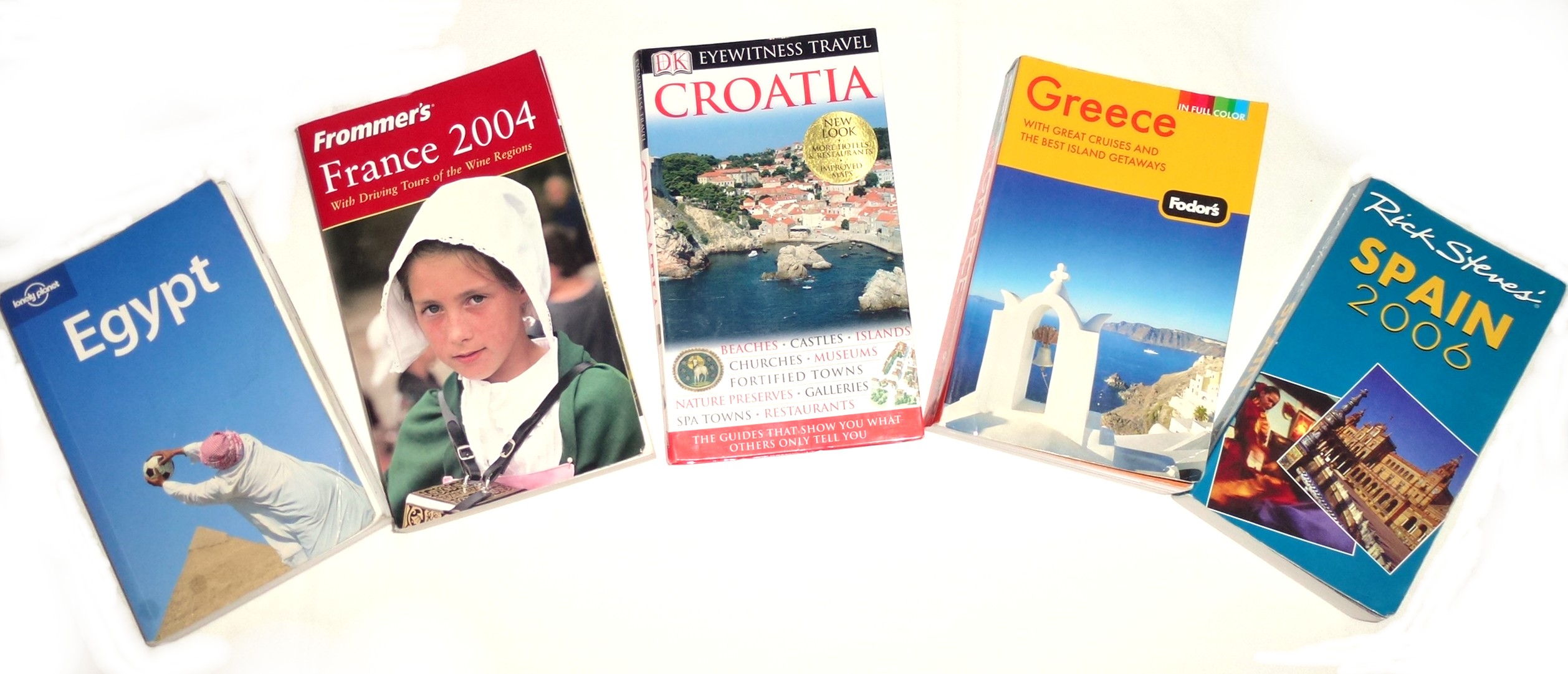
You’re starting to plan your upcoming vacation to Europe and find yourself looking at several different guidebooks. You notice that Rick Steves, Fodors and Frommers all provide guidebooks of your chosen destination, but which one should you buy? Which book would provide the most helpful information as you are travelling?

Throughout my travels I’ve used a lot of different guidebooks. I’ve found that purchasing two different travel guidebooks for a given location is valuable, because no one author or travel service provides everything. I describe my non-existent “perfect guidebook” below, and my likes and dislikes of each travel book (using as my reference hard copies rather than ebook versions).

My perfect travel guidebook would contain the following:

  • Lots of practical information. By “practical” I mean: How do I get around? For example, in a country like Croatia, understanding the ferry system is critical and complicated—the ferry websites are a nightmare. What should I know to avoid mistakes and how do I make my time efficient? Can I drive myself? Road conditions? What is the location like? Assume I’m a first-time visitor—what should I be prepared for? What do I need to know before I board the plane—what do you wish you knew before you went? Tell me the best tips for “bypassing the crowds.”
  • Get me out of the city. If it’s a guidebook on the UK, don’t spend half the book telling me about London.
  • Sites. Why should I go there? What does it look like? How do I get there? What are opening hours? Key historical or other interesting facts? Tell me about interesting “less discovered” spots that most tours bypass.
  • Hotels. A few pros and cons about listed hotels are helpful, especially related to cleanliness, location and availability of car parking.
  • Food. Don’t spend too much time on food. I can figure that out, and most of the time I will worry more about location convenience to where I am staying or going than special cuisine.
  • Language. I’ve never understood why most guidebooks insist on trying to teach me complicated phrases, the answers to which I wouldn’t understand anyway. Give me a few basic words, numbers 1-10, and a few common food items so I can figure out a menu, politely greet and thank people and purchase entry tickets in their own language.

Here are some of the more common travel guides and my thoughts about each:

Pros: DK Eyewitness Travel provides a very comprehensive review of a country or region. Great color pictures of locations. Excellent graphical depictions and explanations of key sites. I love the regional maps and references to locations. Whenever possible, I like to combine an Eyewitness book with another book that provides more detailed practical info.

Cons: Due to high quality printing, books are heavy to carry. Practical information (see my thoughts above) is limited.

Pros: Fodor’s is a pretty good compromise between DK Eyewitness’ comprehensiveness and the practical information of Rick Steves’. Good hotel information and recommendations. Decent restaurant recommendations.

Cons: Limited historical information for historical sites.

Pros: Rick Steves offers lightweight “newsprint” type of paper, so books are light and easy to carry. Good recommended walking tours and hand-drawn maps of sites, pointing out interesting features. Good practical information for sites listed. Always notes the local “Tourist Information” offices for further information upon arrival.

Cons: Not comprehensive. Information only covers locations Rick feels are important. If a town or site is not on Rick’s itinerary, then forget about it. For example, we found his book on Spain quite limited. Spain is a large country, with many interesting small towns and sites that are completely bypassed in Rick’s book.

Pros: Lonely Planet is also lightweight. I like the recommended travel itineraries for 1, 2 or 3 weeks, which help identify and prioritize key sites. Good hotel/hostel information. Good transportation information. Pretty good site historical and practical information about locations.

Cons: Few, if any pictures. Maps are small and less user-friendly.

Frommers has improved over the years. In the past, I was disappointed by the lack of pictures and specifics about many locations.

Pros: “Star system” for rating sites, helping to prioritize must-see locations.

Cons: Not comprehensive, some locations left out of the books.

Inca Sites near Cuzco

In the hills above and north of the city of Cuzco are several great Inca ruins. Saqsayhuamán, Tambomachay, Puka Pukara and Q’enqo are all quite near each other, and just off the road on the way to Pisac. Allow a half-day to visit these sites. A tourist ticket to visit these ruins and a museum in Cuzco, plus a number of sites in the Sacred Valley costs 130 NS (about $46, for non-locals). The ticket can be purchased in Cuzco or at your first stop. Unfortunately it’s “all or nothing,” you cannot purchase individual site tickets.

Inca sites near Cuzco

The tour agencies around the main plaza (Plaza de Armas) in Cuzco charge 25 NS for a “city” tour which includes the four sites above, and one site in Cuzco [the Temple of the Sun (called Qorikancha) in the Santo Domingo Church]. Please note that Qorikancha costs an extra 10 NS. For some reason, all the tours seem to be in the afternoon, and by the time we got to the last site it was getting dark (and raining). If I had it to do over again, I would recommend just hiring a taxi for the day to go to the local sites near Cuzco, which would allow you to proceed at your own pace, and visit during the less crowded time of day.

This church (Santo Domingo) is built on the Inca Temple of the Sun, and parts of the original structure remain inside

Sacsayhuamán

The most impressive site is Sacsayhuamán, which must have been incredible before much of it was destroyed by the Spaniards. Even still, huge, perfectly cut stone walls remain. There are also excellent views of Cuzco from Sacsayhuamán. The construction on this site began in the 1440’s, and it’s believed 20,000 workers were required to cut and assemble the massive stone work.

A view of the walls of Sacsayhuaman (Cuzco in the distance)

The massive cut stones of Sacsayhuaman

Tambomachay

We also visited Tambomachay, which is further along on the same road north of Cuzco. According to our guide, there are 320 Inca sites around Cuzco, 90 of which are water-related, and Tambomachay is the most important. It contains precise stone work over a natural spring, and may have been used for rituals involving water.

The Inca site of Tambomachay

A view of the fountains at Tambomachay

There are two other sites along this same road, Puka Pukara and Q’enqo, which are part of the tourist ticket. Right before it started raining hard, I got a picture of Puka Pukara in the last few seconds of sun.  Very little is known about this ruin, it is likely that it was a fort protecting the entrance to the Sacred Valley sites. We drove past Q’enqo since it was getting dark and pouring rain (after a beautiful day), but this is a site with zig-zag channels, which were believed to be for llama blood and depending on the flow of the blood, a prediction on the quality of the harvest would be made.

The fort of Puka Pukara

On the way back to the main plaza in Cuzco, our tour bus took us to some tourist shops, with a large variety of goods (near Q’enqo).  We found lots of alpaca sweaters, hats, gloves, and many other clothing items, as well as various trinkets. These shops were some of the better ones we saw on our trip. If you want high quality items, visit the store Arte Peru Joyerias, just to the west of the Plaza de Armas. This is where we bought our authentic baby alpaca sweaters.

Cuzco – A Great Base for Exploring the Inca World

The Cathedral of Cuzco at night (built in 1550; interesting 16th century artwork and artifacts in this cathedral)

Cuzco, Peru is known as the jump-off spot for visiting Machu Picchu. However, it is an interesting town in and of itself and there are several impressive Inca ruins very close to the city. In fact, parts of the city are built on Inca foundations, including the huge cathedral. Although there are tourists milling around the town, it still feels like a “real” Peruvian city, with locals going about their daily business, and buying and selling food and other items in some interesting markets.

One of the many markets in Cuzco--this one is selling cuy (guinea pig)!

A local woman and her child in Cuzco

There are many flights daily between Lima and Cuzco—flight lasts about one hour. I watched the landscape change from the barren desert mountains of Lima to the green, cultivated and forested mountains surrounding Cuzco. Even though Cuzco is a fairly large city, I found the air very clear and refreshing compared to Lima.

Cuzco is about a one-hour flight from Lima

Travel information about Cuzco and surrounding area:

  • One USD = 2.8 Peruvian nuevo soles (NS) as of October 2011.
  • A tourist ticket to visit the close-by Inca ruins and a museum in Cuzco, plus a number of sites in the Sacred Valley costs 130 NS (for non-locals). The ticket can be purchased in Cuzco or at your first site. Unfortunately it’s “all or nothing,” you cannot purchase individual site tickets.
  • Plan to stay at least three days in Cuzco: Day 1-visit Inca sites close to Cuzco and in the town–called the “city tour” which doesn’t really cover much of the city itself; Day 2-a train trip to Machu Picchu; Day 3-sites around the Sacred Valley. These three day trips will be covered in separate posts.

    View of Cuzco from the Inca site of Saqsayhuaman

  • There are tour agencies everywhere around the main plaza (Plaza de Armas) in Cuzco. We did a “city” tour for 25 NS per person and a Sacred Valley tour for 35 NS per person (the tour fee covered transportation only, and fees will be similar at all tour agencies). If I had it to do over again, I would recommend just hiring a taxi for the day to go to the local sites near Cuzco, which would allow you to proceed at your own pace. For the Sacred Valley visit, a tour agency is probably best—hiring a taxi for the distances covered would be very expensive, and since directions/signs are not very clear, renting a car on your own might be somewhat challenging; in addition, trying to park a rental car in Cuzco would be a nightmare—the old city streets are very narrow, and I did not see any parking garages.

    Architecture in Cuzco (note the decorative wooden balconies)

    Evening at the Plaza de Armas (main square) in Cuzco

  • Restaurants. There is a huge variety and we found ourselves drawn to two restaurants with very good quality dishes: Tratoria Adriano and Chef Maggie, which are just off the Plaza de Armas. Both restaurants serve Italian fare and other dishes.
  • Hotels. Many options in all price ranges. We found Llipimpac hotel on Booking.com for $61/night for a triple. It was decent, with hot water (not always a given if you travel on a budget) and breakfast. They even had a large selection of DVDs you can borrow for free if you feel like spending an evening in your room (we found many in English).

    Llipimpac Hotel, Cuzco

  • Be prepared for all kinds of weather at this altitude (10,500 feet). When the sun is out, Cuzco is warm. When the sun goes down, or in cloudy weather, you’ll want a jacket. Rain showers are common, so bring an umbrella or rain jacket. We did not notice any ill effects from the altitude, but if you do, vendors sell coca tea, candy and cookies everywhere.

    Getting a shoe shine

Exploring North Central Peru – Gocta Falls (aka “Gojta”)

A house in Cocachimba

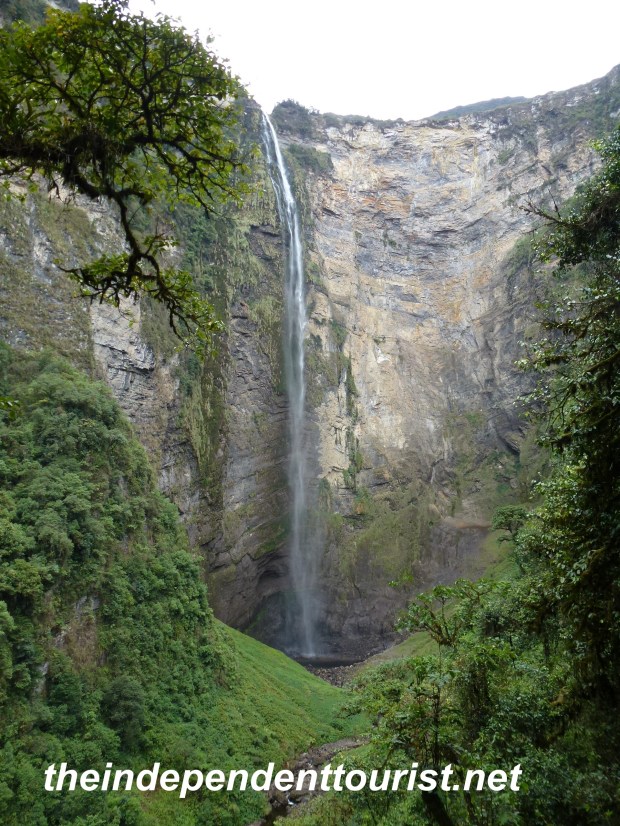
On our 2nd day in Chachapoyas we decided to go to Gocta Falls. These falls (a series of two) are the 3rdhighest in the world. The lower falls is about 500 meters in height, and the upper falls is about 200 meters high. In the travel blogs I had read prior to our trip, it was difficult to know how accessible the falls were. As it turned out, they were pretty easy to get to. As we had done the day before, we went to the main square in Chachapoyas and arranged with a different tour company (simply to spread our business) for transportation to the falls. We paid 30 NS per person for the car and driver and also paid a 5 NS entry fee ($1 USD = 2.8 nuevos soles).

The village of Cocachimba, start of the Gocta Falls trail

On the trail...

Getting closer to the falls...

The lower falls as we arrive...

We were the only ones going to the falls that day, and had a private car and driver. The drive took us north of Chachapoyas about 1 hour (of which only 11km is gravel) to the small village of Cocachimba, where the hike began. The well-maintained trail is 5.3km in length, and it took us about 2 hours to get to the falls. Along the way, there are various signs promoting ecotourism and pointing out some of the natural surroundings (local birds for example). The falls are visible from near the trailhead, and if one did not feel like hiking, just viewing them from the distance would be possible. The trail goes up and down a lot through many ravines, but is not difficult.

The huge falls dwarf our son, Sean...

Standing at the base of the falls, looking straight up 1500 feet is quite spectacular. We had the falls to ourselves. There was a small group of German tourists hiking down as we were going up, and we saw just a few other people along trail. This was a very quiet and an enjoyable experience in the natural beauty of Peru.

A sign for Facebook in the remote village of Cocachimba!

Gocta Falls is 1 hour north (by car) of Chachapoyas

Exploring North Central Peru – Kuelap (“qway-lap”)

On the 2.5km hike to Kuelap

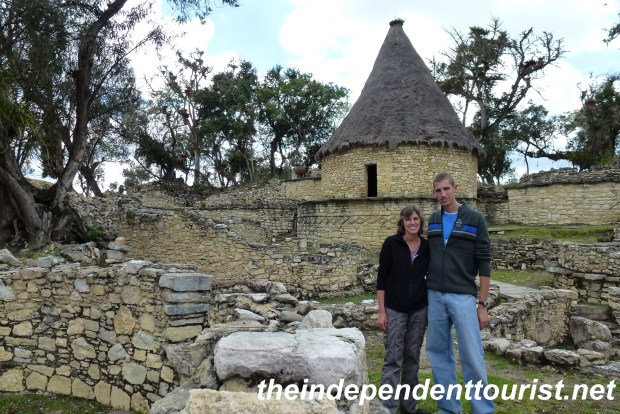
Housing area in Kuelap-the only restored structure on the site

If you’re looking for a less-discovered, uncrowded ancient historical site in Peru, consider Kuelap. It is located 45 miles (which takes about 2.5 hours due to a gravel road most of the way) south of Chachapoyas. The road is much improved from several years ago, when rains would make it nearly impassable. Our tour group included 13 people in a minivan. The tour cost 60 NS (1 USD = 2.8 nuevos soles) per person, and included lunch and the entry fee (10 NS). Most of the tourists were from Peru and other South American countries. When we arrived at the site, we were pleased to see just a few other minivans. After arriving at the parking lot, we hiked about 2.5 km up to the site itself.

The scenery from the mountaintop fortress of Kuelap. The dirt road seen near the bottom of the picture is the road to the site

The massive walls surrounding Kuelap

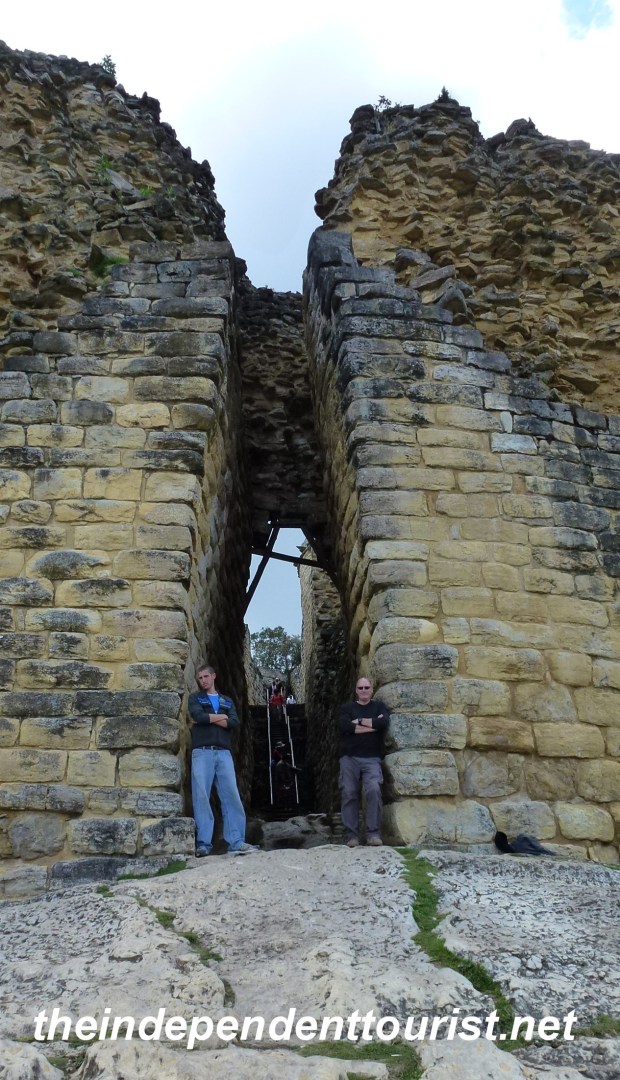
One of the main entrances to the site

Hiking up into the fortress

I knew little about Kuelap, but enough to know it is one of the great sights in Peru and I wanted to see it. Kuelap dates to the 6th(?) century AD, constructed by the Chachapoyan people, who apparently were warriors, given the defensive nature of Kuelap. We don’t know much about these people, but they were described as a “tall and fair” people by the Inca—supposedly blonde and blue-eyed, and even today I understand that there are some people in the area that fit this description, but they are not European descendants. They were eventually conquered by the Inca around 1472, and Kuelap was inhabited until 1670 when it was abandoned during the Spanish Conquest. It is one of the largest pre-Inca ruins in existence, set on a 10,000 foot mountain top ridge. Massive walls (reaching up to 60 feet high) surround the site, which is 600 meters in length. It is believed that about 2,500 – 3,000 people inhabited about 400 or more homes (most of which are circular) in the site. The site’s construction reminded me of castles in Europe—well built, but not to the exacting standards of the Inca. Based on the skeleton remains and large numbers of skull surgeries at Kuelap, archeologists believe a “medical” school was located here.

Templo Mayor (observatory? prison?)

Another view of the ruins in Kuelap

Decorative stonework in Kuelap buildings

The surrounding mountain scenery is beautiful, and from Kuelap, one is at equal height with most of the surrounding mountains.

Our tour van and restaurant for lunch

A great lunch - Lomo Saltado

Kuelap is 2.5 hours south (by car) of Chachapoyas

Visit now before this incredible site welcomes crowds like those at Machu Picchu!

Exploring North Central Peru—Chachapoyas

Chachapoyas is an 8-9 hour (285 miles) bus ride east from Chiclayo

The countryside of Chachapoyas (on the way to Kuelap)

Chachapoyas is a whitewashed town of about 25,000 located in a very interesting and beautiful part of Peru. It would be easy to spend 4-5 days touring the area—we spent two, exploring Kuelap ruins and Gocta Falls. A green, mountainous area, Chachapoyas is located between the very dry northwest part of Peru and the Amazon jungle region to the east.

Getting on the bus to start our overnight journey to Chachapoyas

To get to Chachapoyas, the logistics are as follows: a flight from Lima to Chiclayo, followed by an overnight (about 9 hour) bus ride from Chiclayo to Chachapoyas. Another option would be a flight from Lima to Cajamarca and then an 10 hour bus ride (mainly on a dirt road from what I understand) to Chachapoyas. There are no commercial flights to Chachapoyas, although there is a small airport where some small charter flights operate.

The comfortable semi-cama bus seats

The bus ride is not quite as bad as it might seem. The operator was Movil Tours. The bus is a double-decker, with more comfortable seats on the lower level and typical long-haul bus seats on the upper level. While the bus makes a few short stops, they are only to pick up and drop off passengers. Seats in the economy (upstairs) section cost 45 nuevos soles (NS) and 75 NS in the first class section. A small dinner (not too exciting) was served, with one movie shown (in Spanish of course). ($1 USD = 2.8 NS).

Hotel Vilaya in Chachapoyas

Our room at Hotel Vilaya--about $35/night (checking in at 6 am!)

The bus from Chiclayo arrives in Chachapoyas at about 6 am. Upon arrival, we asked for hotel recommendations, and took a taxi for 2 NS to the hotel, and got a triple room on the spot for 100 NS per night, with (very) early check-in being no problem. There are several decent, but certainly not fancy hotels in the town. After getting cleaned up, we then ventured down to the main square to arrange a tour to Kuelap which left at 8:30 am. The tourism industry here is just developing and at this time of year (October), it was no problem getting a hotel, or booking a tour. There are at least a half-dozen tour agencies on the main square, and from what we could tell, they all offer similar tours and at similar rates. The main tours in the area include: Kuelap, Gocta Falls, Revash, Karajia, Laguna de los Condores, and Quiocta Caves.

One of several tour operators on Plaza de Armas, Chachapoyas

Pedestrian street, Chachapoyas

Plaza de Armas, Chachapoyas

Four Hours in Indonesia

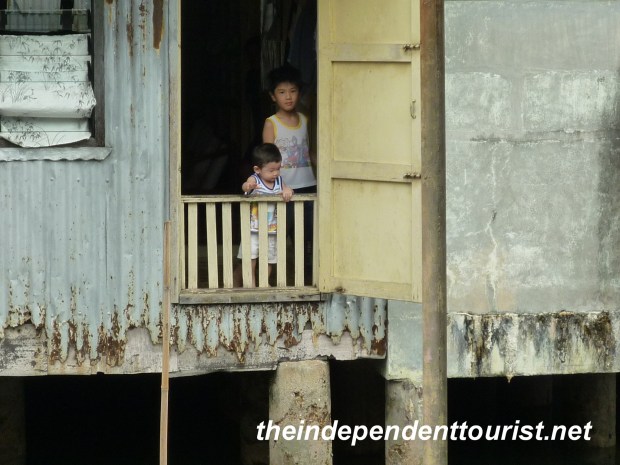
Kids at home in Tanjung Pinang, Bintan

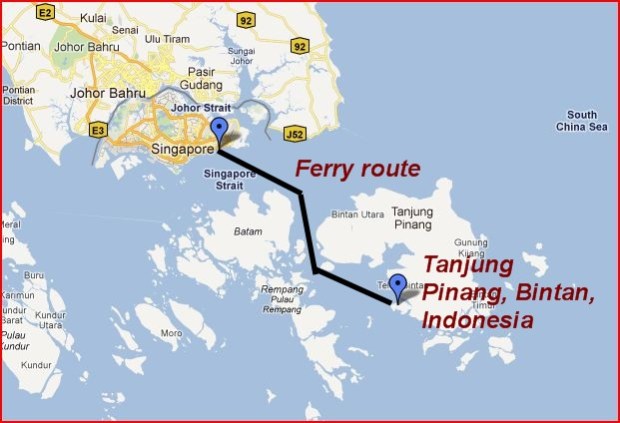
Ferry route to Tanjung Pinang from Singapore (about 2 hours)

On my last trip to Singapore I took a day-trip to Indonesia, since several islands are so close to Singapore. I had a choice of either Batam or Bintan islands, both of which are just a ferry ride away. As I searched the internet for information about both islands, I was surprised at how little information was available on the logistics and what to do on such a trip.

Here is some information I wish I had known…

Which island?

  • Batam. Batam is closer to Singapore and a little easier to get to (see ferry information below). However, I didn’t see much on the internet that enticed me about Batam. There are shopping malls, some modern mosques and temples, and factories, but not much in the way of historical sites from what I could tell.
  • Bintan.Bintan is divided into two very different parts: the beach resorts on the north side of the island and the “real” Indonesian southern side. I wasn’t interested in beach resorts, and wanted the real thing. From what I had seen on the internet, Tanjung Pinang (TP) looked like a very interesting, authentic Indonesian town, and is the primary ferry port on Bintan. I decided against my hotel concierge’s advice (I think he was more concerned about convenience and safety than I was) and went to Bintan. I was very glad I did. Upon arrival, most tourists have a bus waiting to take them to the north shore resorts. I noticed one other person from the U.S. on our ferry ride over and the rest appeared to be Singaporean or Indonesian.

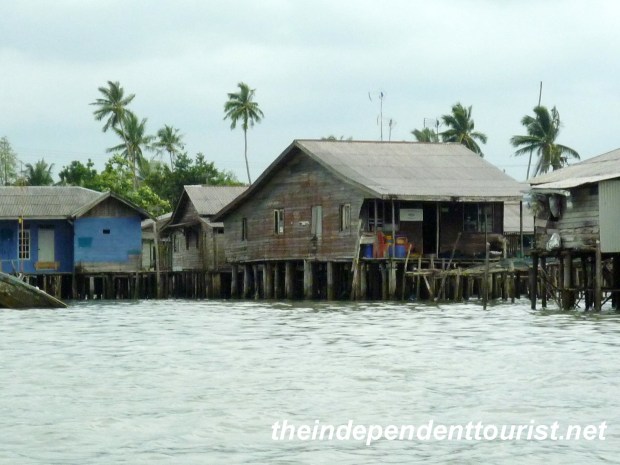
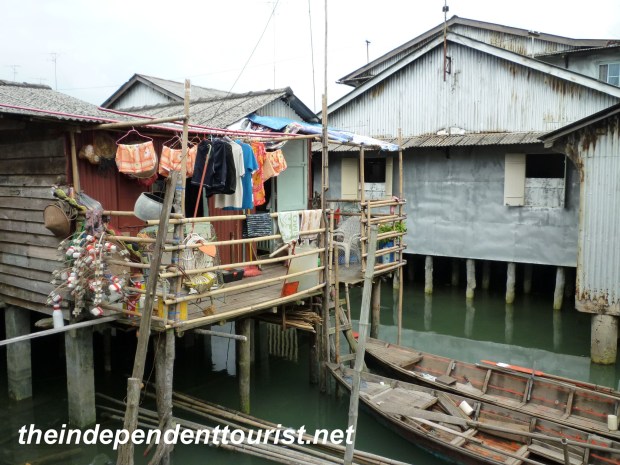
    Typical house on stilts in Tanjung Pinang

What about Indonesian visas (for U.S. visitors)?

  • As of September 2011, visas for U.S. citizens are purchased on arrival at the TP Ferry terminal. Cost was $10 USD, or $16 Singapore (Sing) dollars. Given the current exchange rate of 1 USD = 1.28 Singapore dollars, having exact US change (no change available) is a better deal. The visa document takes up an entire page of the passport, and is valid for 7 days.

What about language?

  • In my short stay on Bintan, English was hard to come by—I had to make a lot of gestures and do some writing of numbers. What a refreshing immersion just two hours from Singapore.

What about ferries?

  • Most ferries to Batam leave from the HarbourFront Ferry Terminal (southern tip of Singapore, by Sentosa Island resort) and are very frequent, about once per hour. Batam is only about a 45 minute ferry ride.
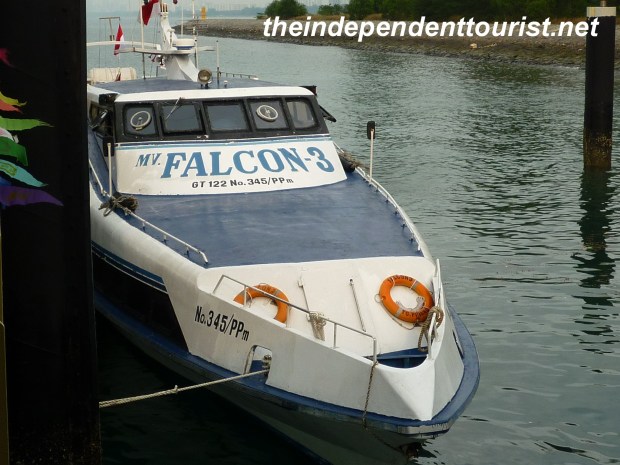
  • Ferries to Tanjung Pinang, Bintan leave from Tenah Merah Ferry Terminal, which is near the Changi International airport, on the southeastern side of Singapore. There are 3-4 ferries per day in each direction. I caught the 8:50 am ferry from Singapore to Bintan. Several ferry lines serve Bintan, mine was Falcon Ferries. I did not make reservations ahead of time; I simply got to the Ferry terminal about 90 minutes prior to my desired departure time to ensure I could get a seat on a Saturday morning—which was no problem—the ferry was probably 50-60% full. I understand the ferries are very full on Singapore holiday weekends, so plan ahead if that will be the case. I didn’t find the ferry websites too user-friendly, and it was easier just to go the terminal to purchase a ticket. The round trip cost was 50 Sing dollars or about $38 US. Don’t forget your passport! The journey took about 2 hours. The ferry served bottled water (free) and had some snacks available for purchase.

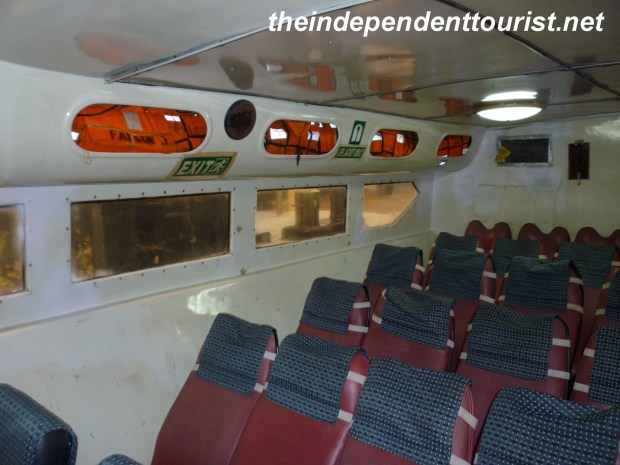
    Falcon Ferry Interior

    Our Ferry to Bintan, Indonesia

  • One other important note: You must confirm your return ferry trip by going to a local TP travel agency (best to do immediately upon arrival). The agency information is given with your ticket purchase. There is a small fee for this transaction (equivalent to $1.50 US). I decided to return on the 2:00 pm ferry, giving me about four hours on shore, which was perfect for my interests. Keep in mind that there is a one hour time change between the two countries, (Indonesia is one hour earlier than Singapore). My return ferry was only about 10% full.

What else?

  • There is an Indonesian departure tax (about $1.50 US) that must be paid at the Ferry terminal prior to going through security and immigration.

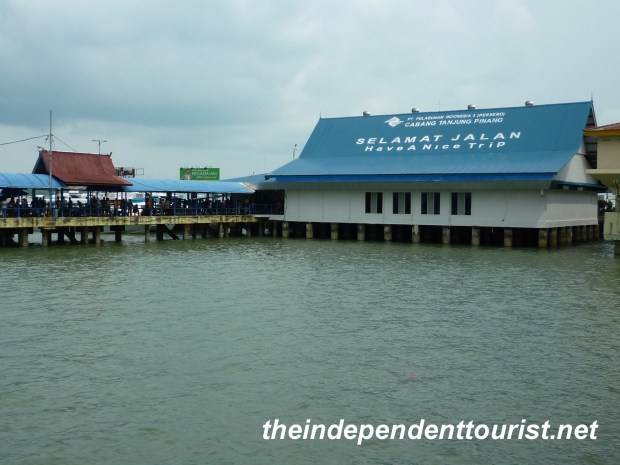
    Ferry Terminal, Tanjung Pinang

  • Indonesia is very inexpensive (although I am sure the resorts are not) compared with Singapore. Sing dollars seemed to be accepted about anywhere.
  • Food. I did not sample the local fare, since I did not want to spend time eating when I had only a few hours to explore, and I did not see much in the way of restaurants, just outdoor food stalls, and I was not sure of the sanitary conditions. I have eaten Indonesian food in other locations and enjoyed it.
  • Hotels. Since I took a day trip, I can’t speak about the TP hotels, although I saw one or two modest-looking hotels in my wandering through town.
  • There is a pier next to the ferry terminal with small boats (holding about 15 people) that take passengers to Penyengat Island (within view of TP) with the Sultan of Riau Grand Mosque. I didn’t figure this out until I was leaving, but it would be fun to take this ride next time.

What to do on Bintan?

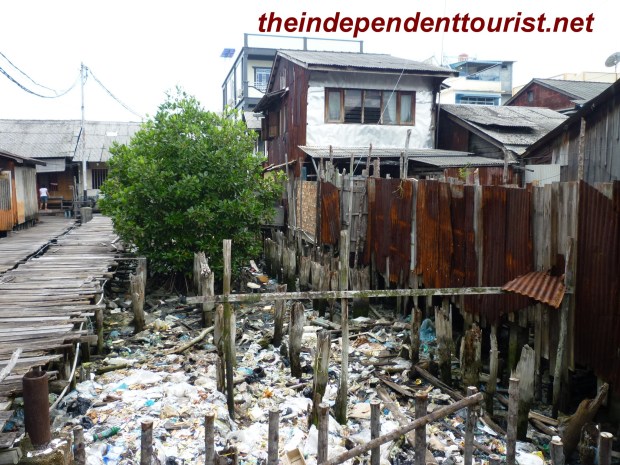
  • I had no guide book on Bintan and finding information on the internet or even in Singapore was somewhat difficult. So, I “winged it” and decided to simply wander around the town of TP and see what I found. Bintan has had a reputation in the past of being a center of prostitution for those coming from Singapore, but I was glad to see no overt evidence of this upon my arrival. I was the only Caucasian (and tourist from what I could tell) wandering around the town, and received many stares, and invitations for scooter taxi rides. I was cautious with my small backpack, but never felt any concern for my safety. The longer I wandered around the more comfortable I got. Coming from Singapore, TP was a shock and quite fascinating. I was a bit shocked by the poorer conditions (and trash heaps under the stilt houses)—a huge contrast to the sparkling clean, vibrant and wealthy Singapore—and I was also fascinated by how different the culture and town felt from anything in Singapore.

    No need for regular trash pick-up!

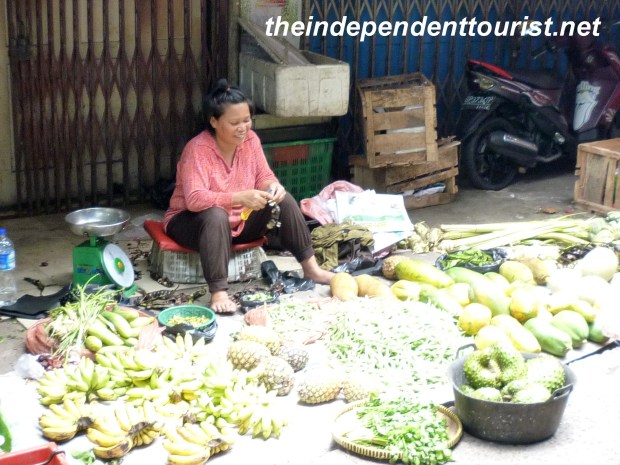
    Fresh fruits and vegetables in Tanjung Pinang

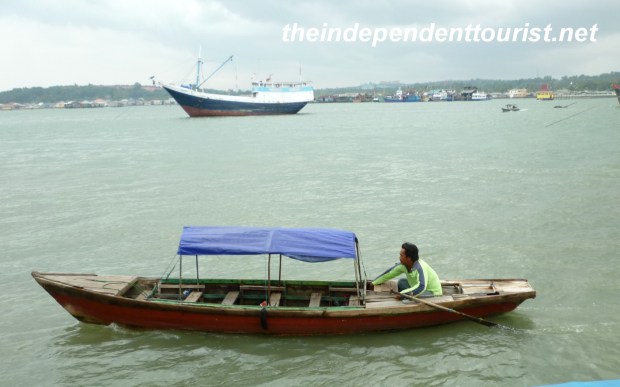
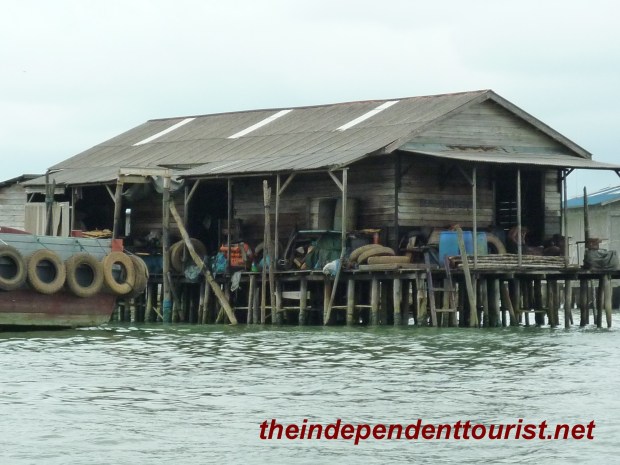
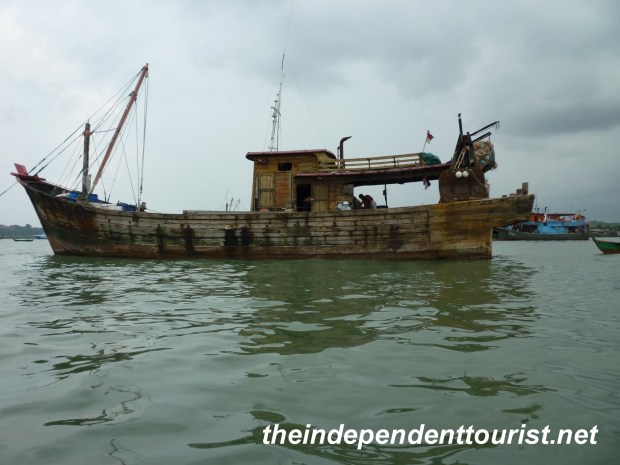
  • Harbor. I wandered down a street and found myself at the edge of the harbor, perhaps a quarter mile away from the ferry terminal. There were little rickety wooden boats with small in-board motors waiting to take locals across the bay. Through hand waving and some writing, I arranged a private “tour” (45 minutes) of the harbor for about $10 Sing dollars. I highly recommend this little tour—seeing the old, large wooden fishing boats (with a style totally different than what I had seen elsewhere) anchored (and in some cases looking like abandoned ghost ships) in the harbor was fascinating, along with the homes and warehouses built on stilts in the middle of the bay.

    My harbor cruise boat

    House on stilts in Tanjung Pinang Harbor

    Fishing boat, Tanjung Pinang Harbor

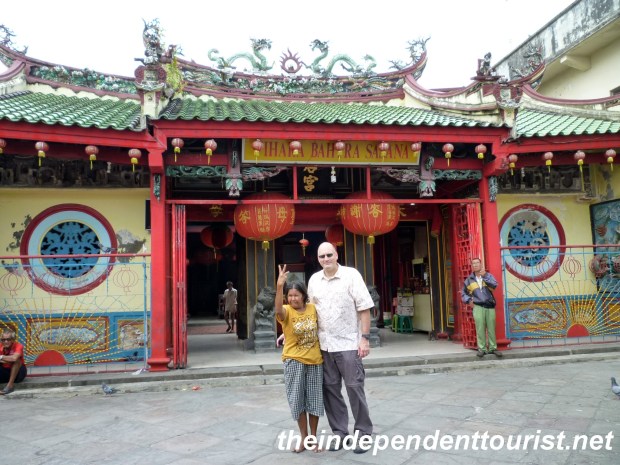
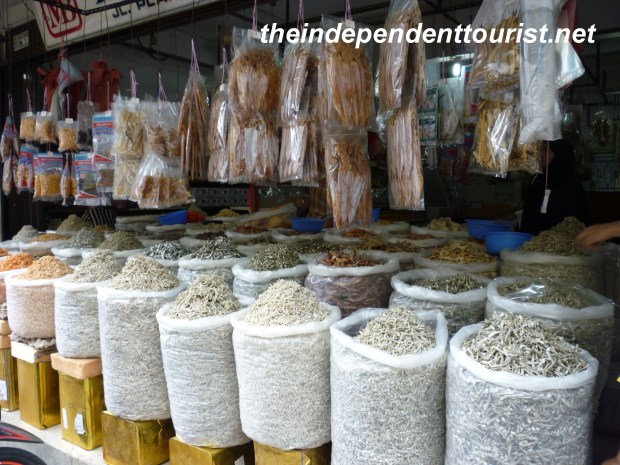
  • Street wandering. Just wandering the streets with the shops was fun. Spices and every type of little dried fish (and other unrecognizable seafood) was available. I also went to a Buddhist temple and got a tour from a little lady who made a lot of gestures and grunts about what I was seeing.

    Buddhist Temple Tanjung Pinang

    Bales of little dried fishes

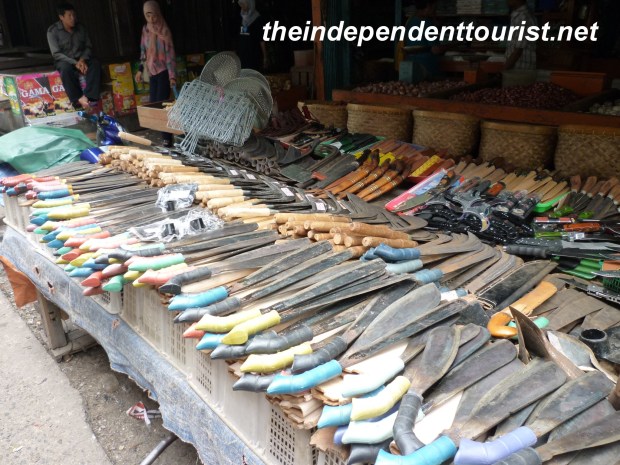
    Looking for a machete? Lots of choices!

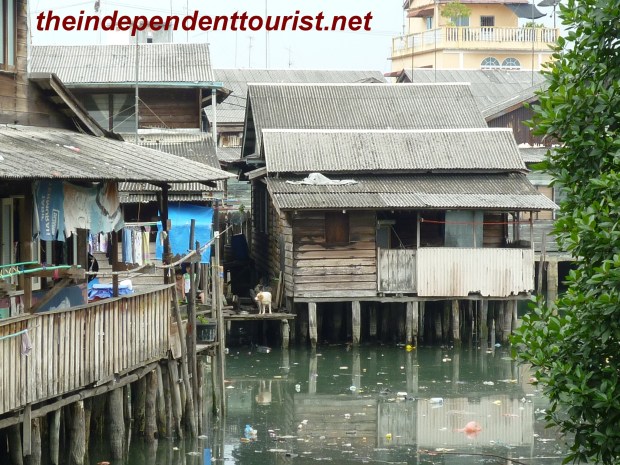
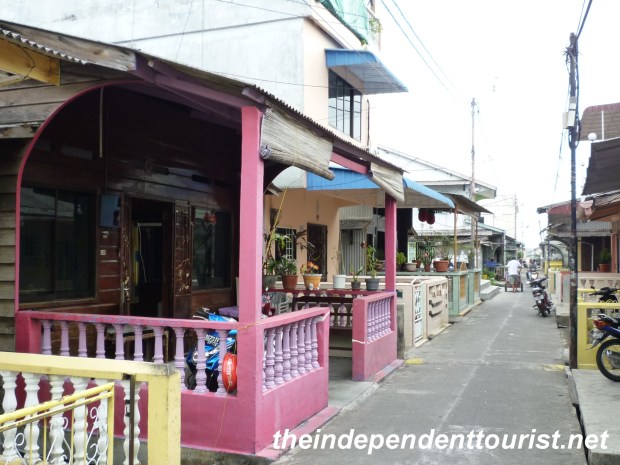
  • Houses on stilts. Further into the town I found a housing area, and realized that the whole neighborhood was over the water. I wandered through back alleys and enjoyed seeing how the “average” Indonesian lived in TP, over the water, with wooden and sometimes cement stilt foundations, with no lawns to mow or cars to park.

    Waterfront property in Tanjung Pinang

    Hard to believe this street is over the water...

    Tanjung Pinang neighborhood on stilts

If you have an extra day while in Singapore and want a completely different experience, take a day trip to Bintan. It was a blast. Plan about 10 hours total for the adventure mentioned above.

A Day in Athens – Part II

In addition to the “hidden gems” mentioned in the Part I post, we were able to see the following sights visited in our day-long stay in Athens.

The Ancient Agora

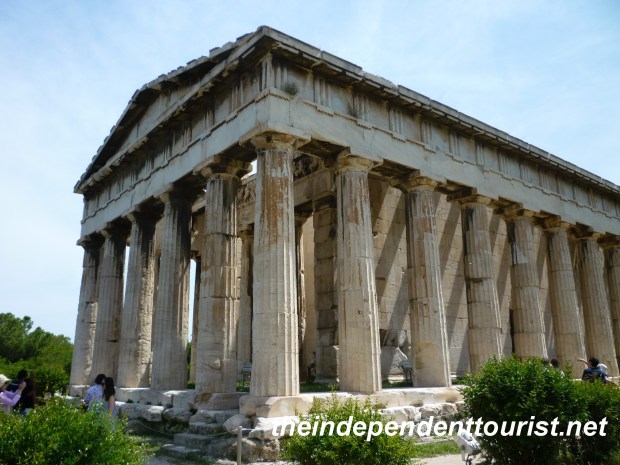
The Ancient Agora was the ancient commercial hub of Athens and contains the best preserved temple, the Hephaistion, which is a wonderful example of Doric architecture, and a little older than the Parthenon. On my first trip to Athens in the 1980’s you could actually walk into the temple. It is now roped off, but at least still accessible from the outside and beautiful. The Agora is worth time to wander among the ruins and has good views of the Acropolis just to the south. It also contains the reconstructed Stoa of Attalos II, which is now a museum.

Temple of Hephaistion, Athens

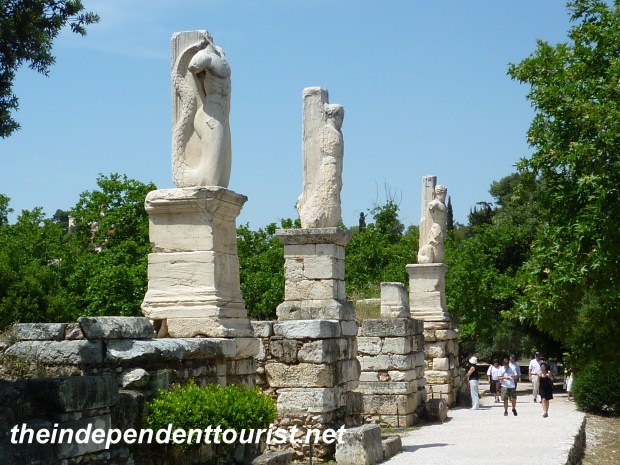
Ancient Agora, Athens

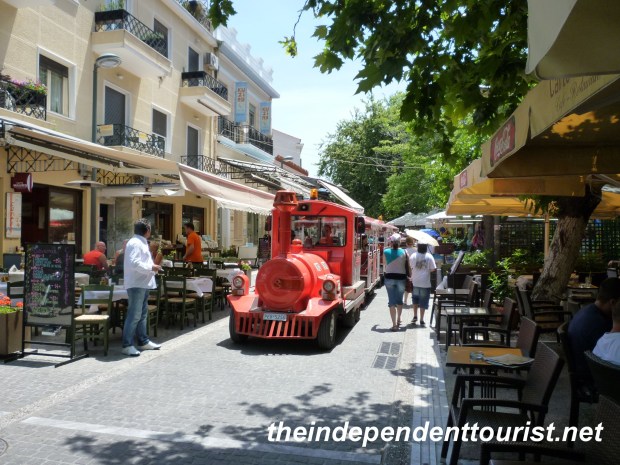
Right outside the Agora is Adrianou Street, filled with restaurants along the quiet street, overlooking the Agora.

Little train on Adrianou Street, Monastiraki (just outside of Ancient Agora)

Plaka & Monastiraki Square

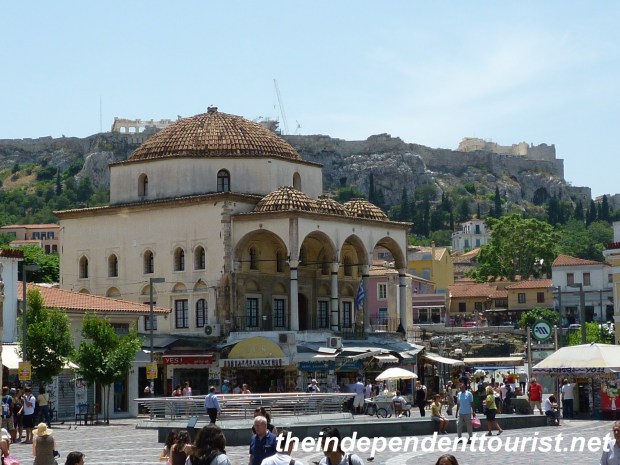
The Plaka area, right below the eastern side of the Acropolis, is full of restaurants, shops and quaint hotels. This is a great area to stay if you wish to be close to the heart of Athens. Monastiraki Square is near the Agora and is another lively older neighborhood dating from the Turkish occupation (18thcentury).

Tzistarakis Mosque, Monastiraki, Athens (18th century), (Acropolis in background)

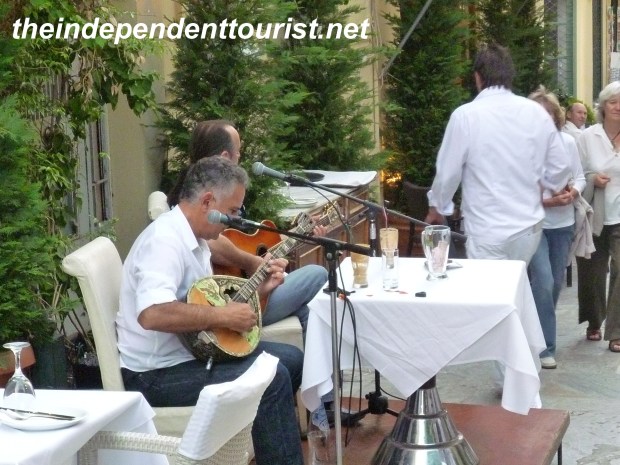
Music in the streets of Plaka, Athens

Temple of Olympian Zeus

To the east of the Acropolis just outside the Plaka area, is the “new” part of ancient Athens, defined by Hadrian’s Gate, which dates to 132 AD. It has a number of Roman-era ruins, including the huge Temple of Olympian Zeus. Construction began on this colossal monument in 515 BC, and was originally made of limestone. Some of the building materials ended up being used in building Athens’ fortification walls.  The marble temple was begun in the 4thcentury BC, but progress was slow with long periods of inactivity, and it was not completed until much later–Caesar Augustus and finally Hadrian saw to its completion 124 – 132 AD. Hadrian loved the Greek culture and was well-respected in Athens. Statues of Zeus and Hadrian were worshipped here as co-equals. (reference:  plaques on site)

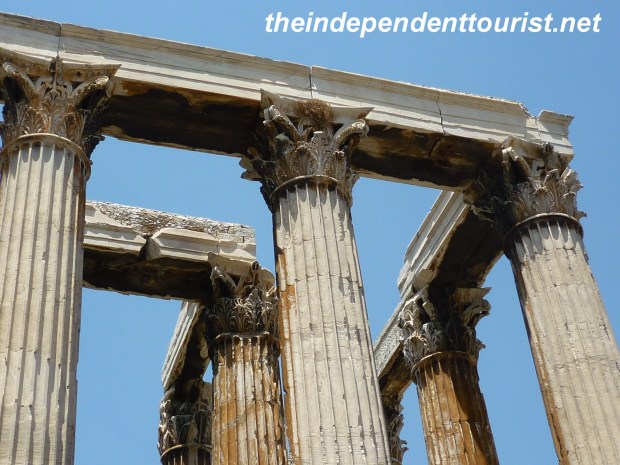
Detail of Corinthian Columns, Temple of Olympian Zeus, Athens

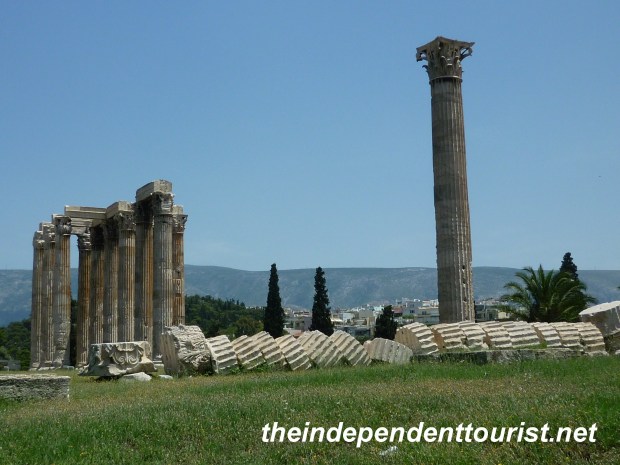
The fallen column (caused by storm in 1800's) of Temple of Olympian Zeus

It was one of the largest temples of the ancient world. Of the original 104 columns 16 survived until 1852 when a storm took one column down, which has been laying in sections ever since.

There are also some minor ruins dating back to the golden era of Athens.

Syntagma Square

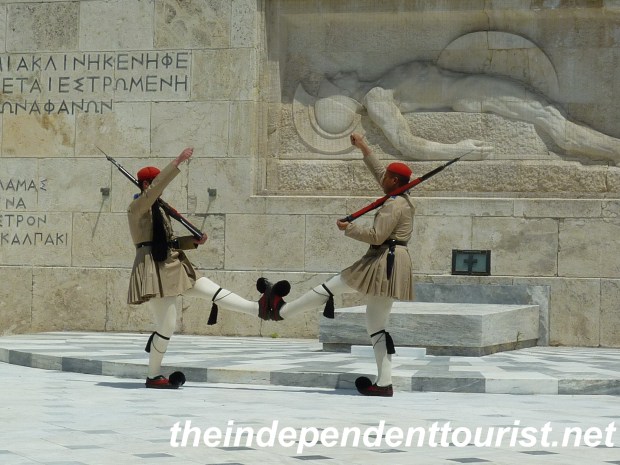
This square is within a short walk of the Acropolis and is currently “ground zero” for the anti-government demonstrations on the economic policies. In front of the parliament building (formerly a palace) is the Tomb of the Unknown Soldier and the changing of the guard ceremonies.  It is worth stopping by here to see the uniformed guards do their very solemn and perfectly timed routine.

Tomb of the Unknown Soldier, Syntagma Square, Athens (note sculpture of fallen soldier in background)