India

Udaipur – Considered the Most Romantic Spot in India

One of the most pleasant places to visit (and considered the most romantic) in India is the city of Udaipur (for a map of locations we visited in India click here). The city sits on the shores of Lake Pichola, which adds a peaceful element to the setting.
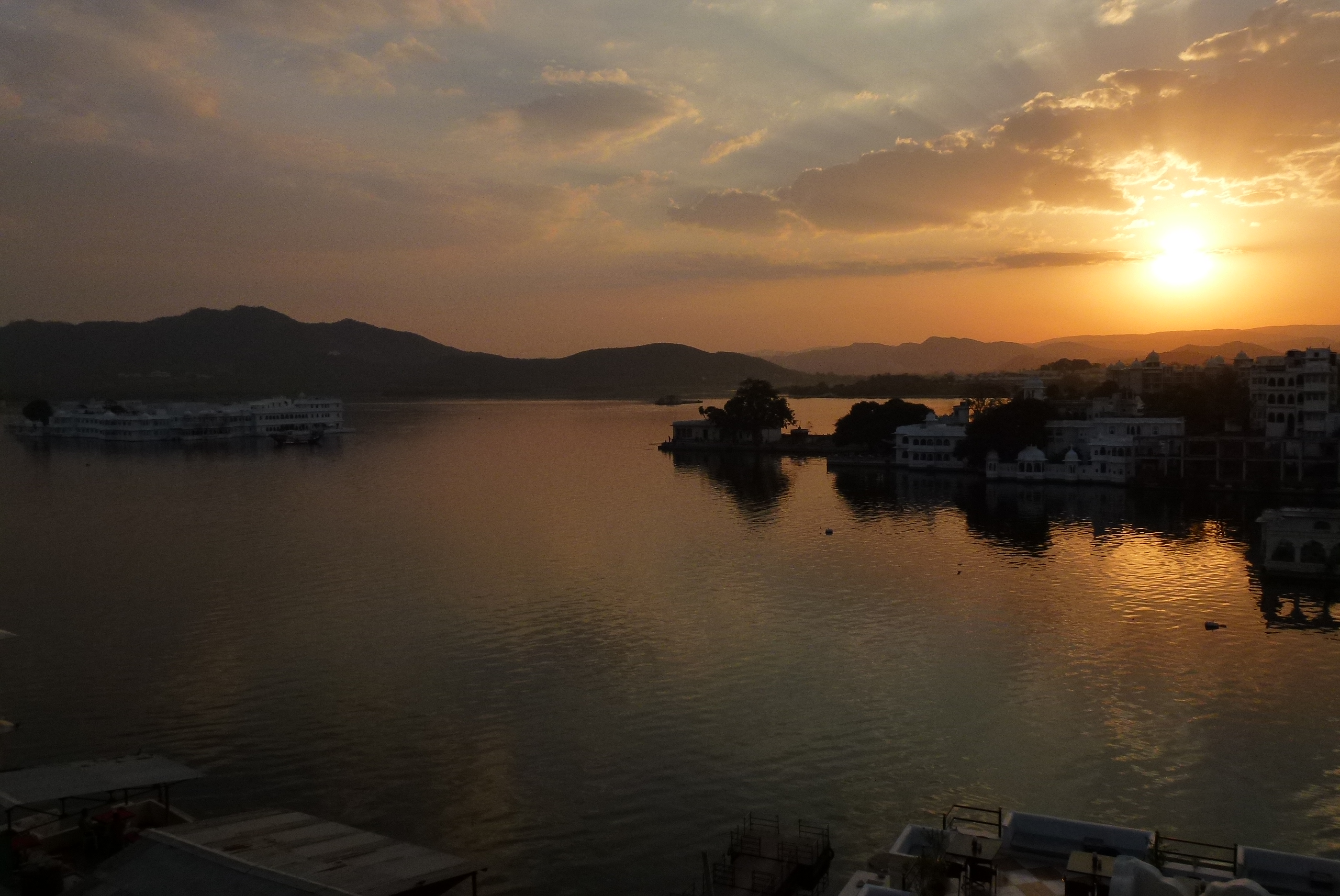
A sunset view of Lake Pichola from our hotel rooftop.

A sunset view of Lake Pichola from our hotel rooftop.

We enjoyed our breakfast time sitting on the rooftop of our hotel overlooking the calm lake waters and the isolated Lake Palace Hotel. Udaipur (and specifically the Lake Palace Hotel) became a popular tourist destination after its use as a setting in the James Bond film “Octopussy” with Roger Moore. If you’re dying to see the movie again, it plays nightly at a number of restaurants in the old part of town near the shore of Lake Pichola. I think the restaurant owners would go crazy after seeing the film over and over!
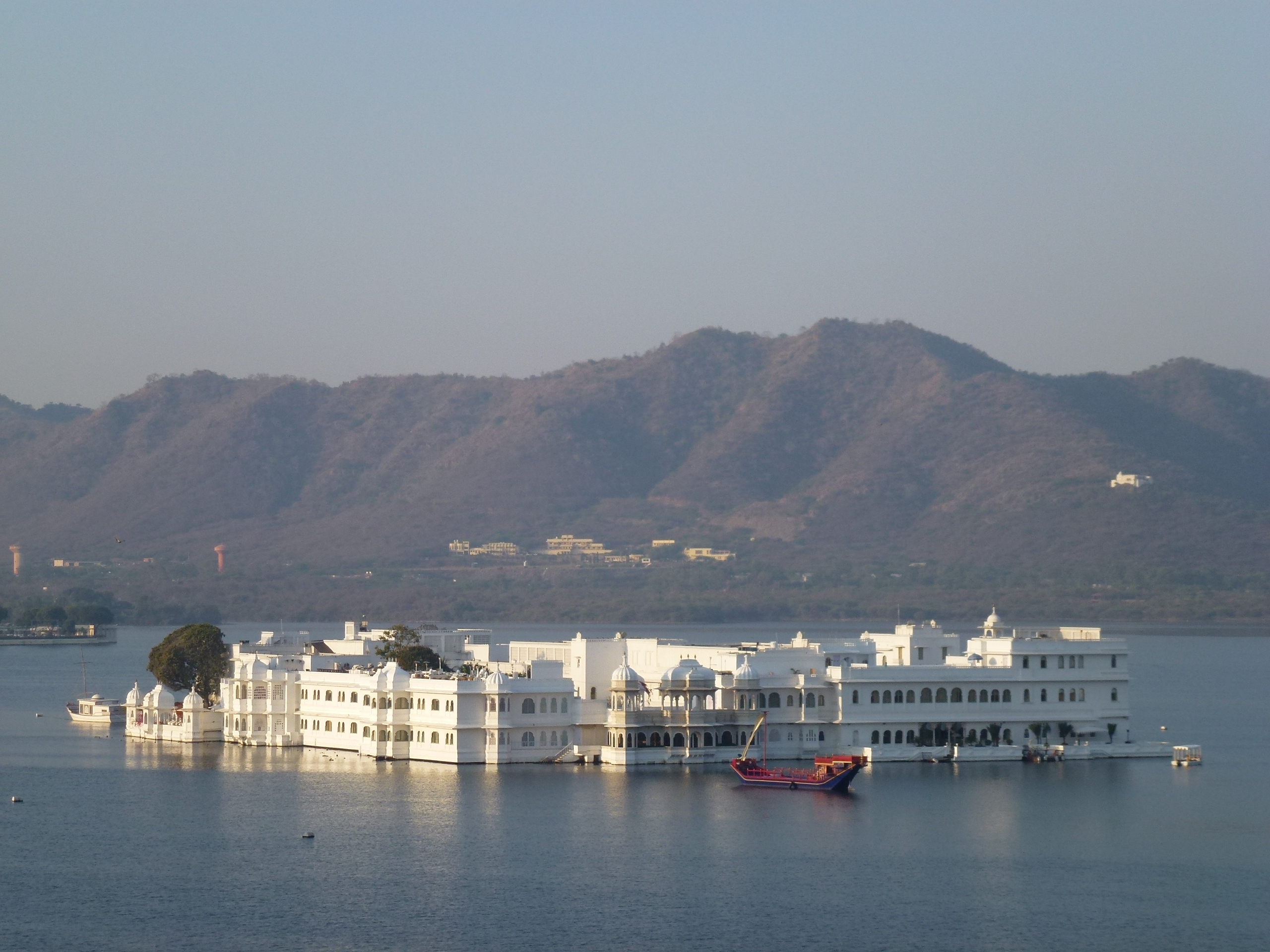
Lake Palace Hotel in Lake Pichola.

Lake Palace Hotel in Lake Pichola.

Although our hotel (Jaiwana Haveli) was good and in a perfect location, in hindsight, I wish we would have spent one night at the world famous Lake Palace Hotel, even though its room rates are pricey ($300 to $1,400 US/night depending on the season). Having a reservation is the only way you can visit the hotel. It was built in 1754 and was originally a summer royal residence. It became a hotel in the 1960’s. Even though the setting is serene, you’re still in India. The local population uses the lake as a bathing and laundry room. It’s a major contrast – one of the world’s most exclusive hotels within a few hundred yards of people who have few material positions taking care of life’s daily needs.

Teeth brushing and bathing in Lake Pichola.

Teeth brushing and bathing in Lake Pichola.

Women washing and bathing in Lake Pichola.

Women washing and bathing in Lake Pichola.

You can visit Jagmandir Island, just a bit further out in the lake, on which is located another small palace and tower. It’s a lovely setting and the site is used for weddings and receptions. It is worth visiting just for the boat ride to and from the island which provides excellent views of the City Palace, Lake Palace Hotel and surrounding mountains.

The elephant statues greet you as you arrive on Jagmandir island.

The elephant statues greet you as you arrive on Jagmandir island.

The beautiful gardens on Jagmandir Island in Lake Pichola.

The beautiful gardens on Jagmandir Island in Lake Pichola.

City Palace & City Palace Museum. The City Palace dominates the lakefront and is the primary tourist sight in Udaipur. It is a fantastic place with beautiful artwork in mirrors, paintings and tiles. It is Rajasthan’s largest palace and dates from the 16th century.
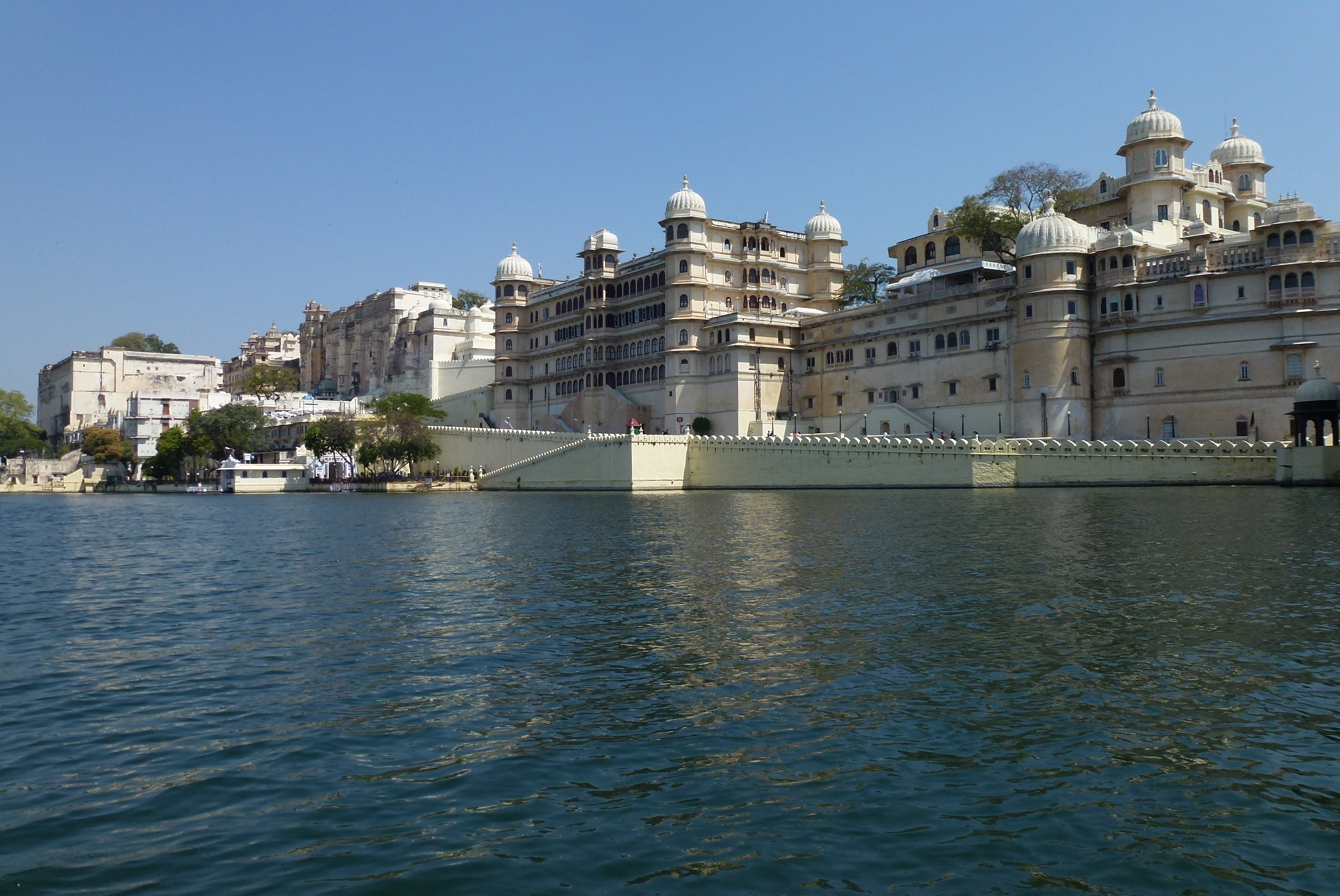
A view of City Palace from the lake.

A view of City Palace from the lake.

City Palace night view.
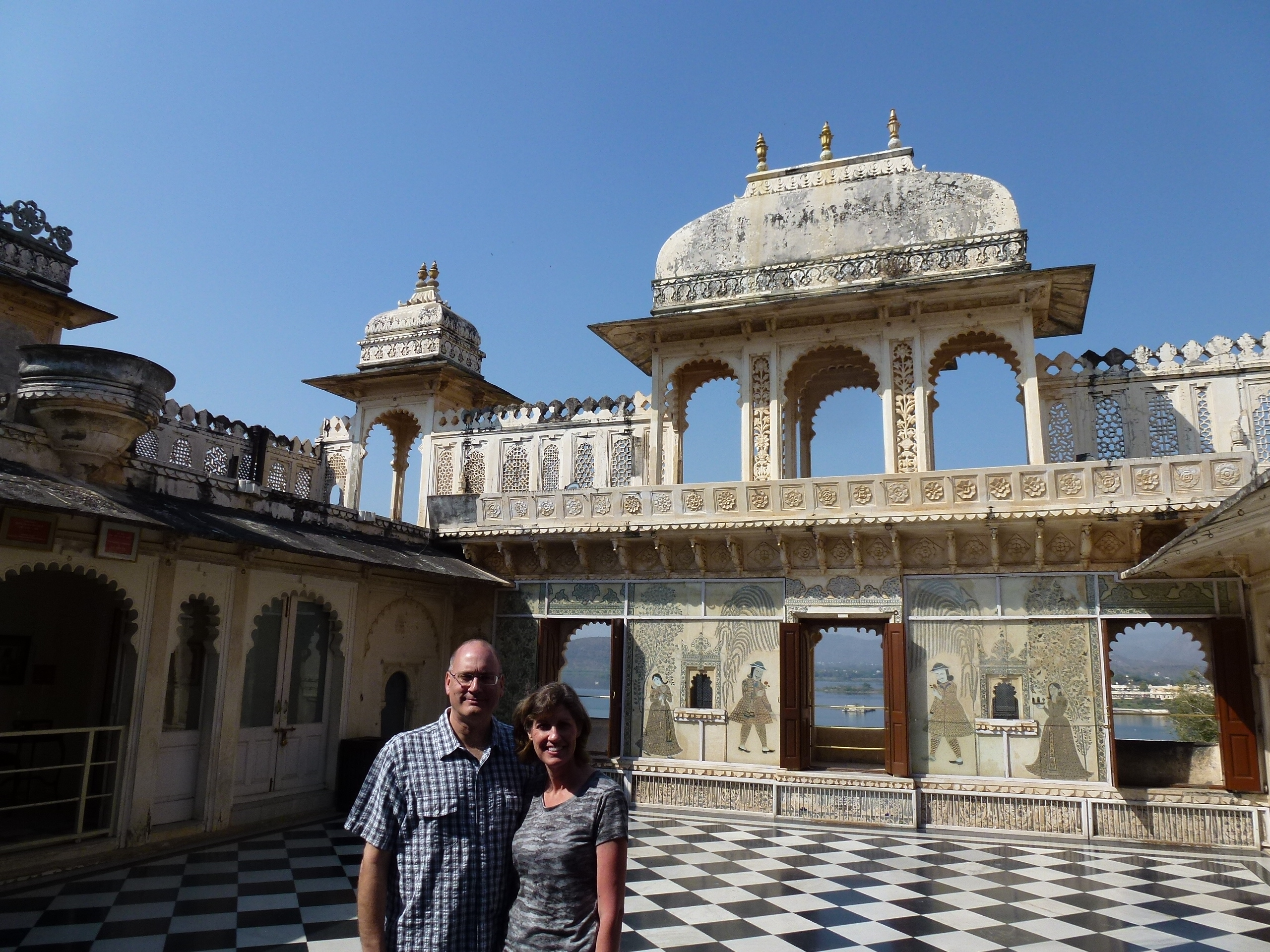
City Palace night view.

A courtyard at City Palace.
A courtyard at City Palace.

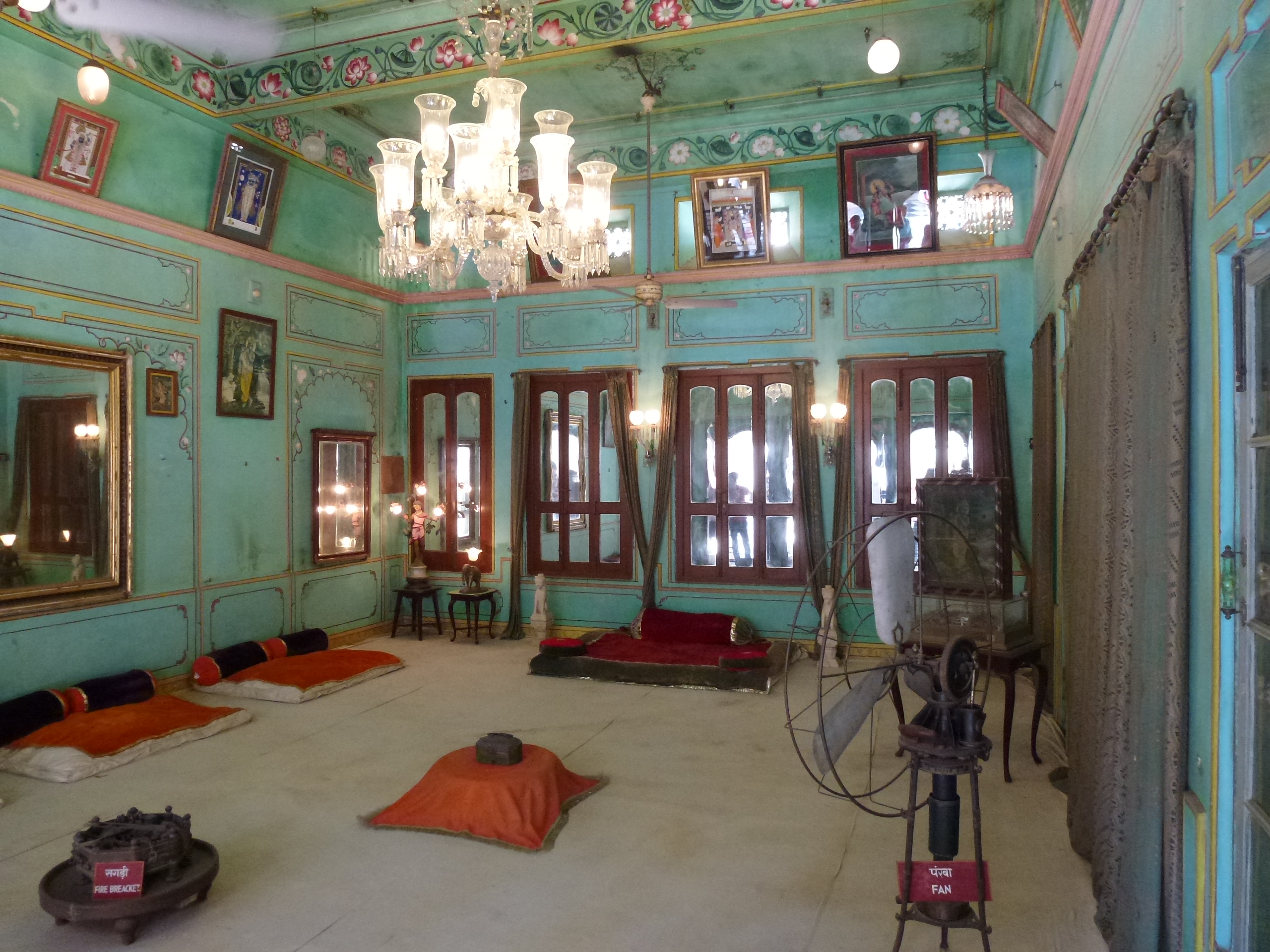
One of the audience rooms at City Palace.

One of the audience rooms at City Palace.

The Peacock Courtyard - with intricate artwork.

The Peacock Courtyard – with intricate artwork.

The peacock - symbol of Rajasthan. The feathers are all inlaid colored stone.

The peacock – symbol of Rajasthan. The feathers are all inlaid colored stone.

Colored mirror decor in City Palace.

Colored mirror decor in City Palace.

Another reception area in City Palace - it has an English "Wedgwood" look.

Another reception area in City Palace – it has an English “Wedgwood” look.

Next to the City Palace is the Crystal Gallery. It houses a collection of rare crystal furniture, which has an interesting story behind it. Maharana Sajjan Singh ordered the crystal pieces from F&C Osler & Co in England in 1877. The maharana died before it arrived, and all the items stayed forgotten and packed up in boxes for 110 years. Once the crystal was recovered it was put on display here. Officially, I couldn’t take photos in this museum, so the quality is poor, but you can get an idea of the crystal furniture’s beauty.

A crystal love seat and "coffee" table.

A crystal love seat and “coffee” table.

A crystal canopy bed.

A crystal canopy bed.

Jagdish Temple. This Hindu temple sits in the middle of the old town and it’s hard to miss. We got a short tour by a local worshipper during an evening service. The temple was built in 1651. The town has narrow twisting streets and alleyways, a tiny bit reminiscent of Europe.
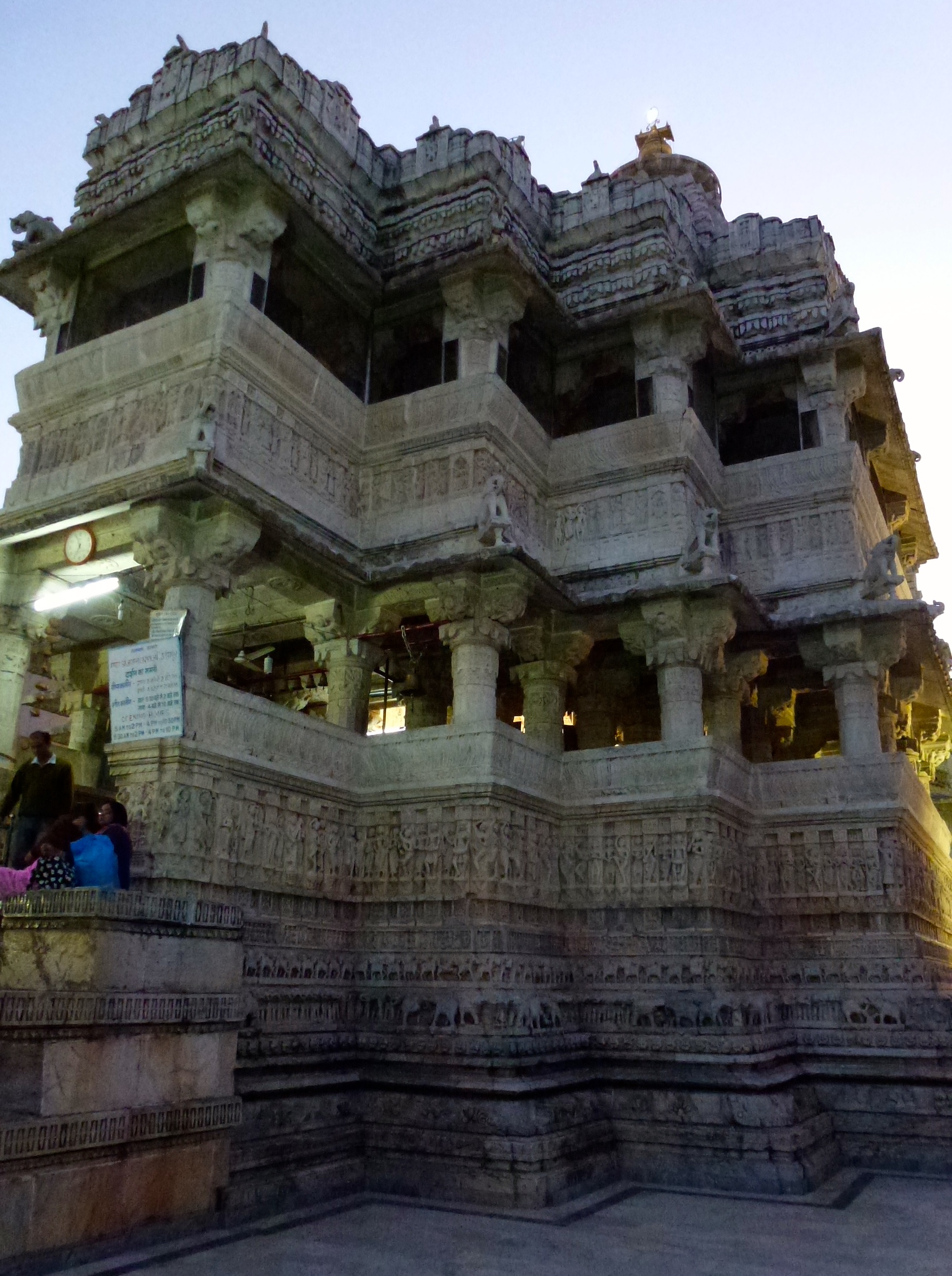
An evening view of Jagdish Temple.

An evening view of Jagdish Temple.

Udaipur is also a great location to shop for textiles and jewelry. We enjoyed wandering the narrow streets and myriad of shops. There’s a lot to see in the surrounding area as well. I’ll cover those sights in a separate post.
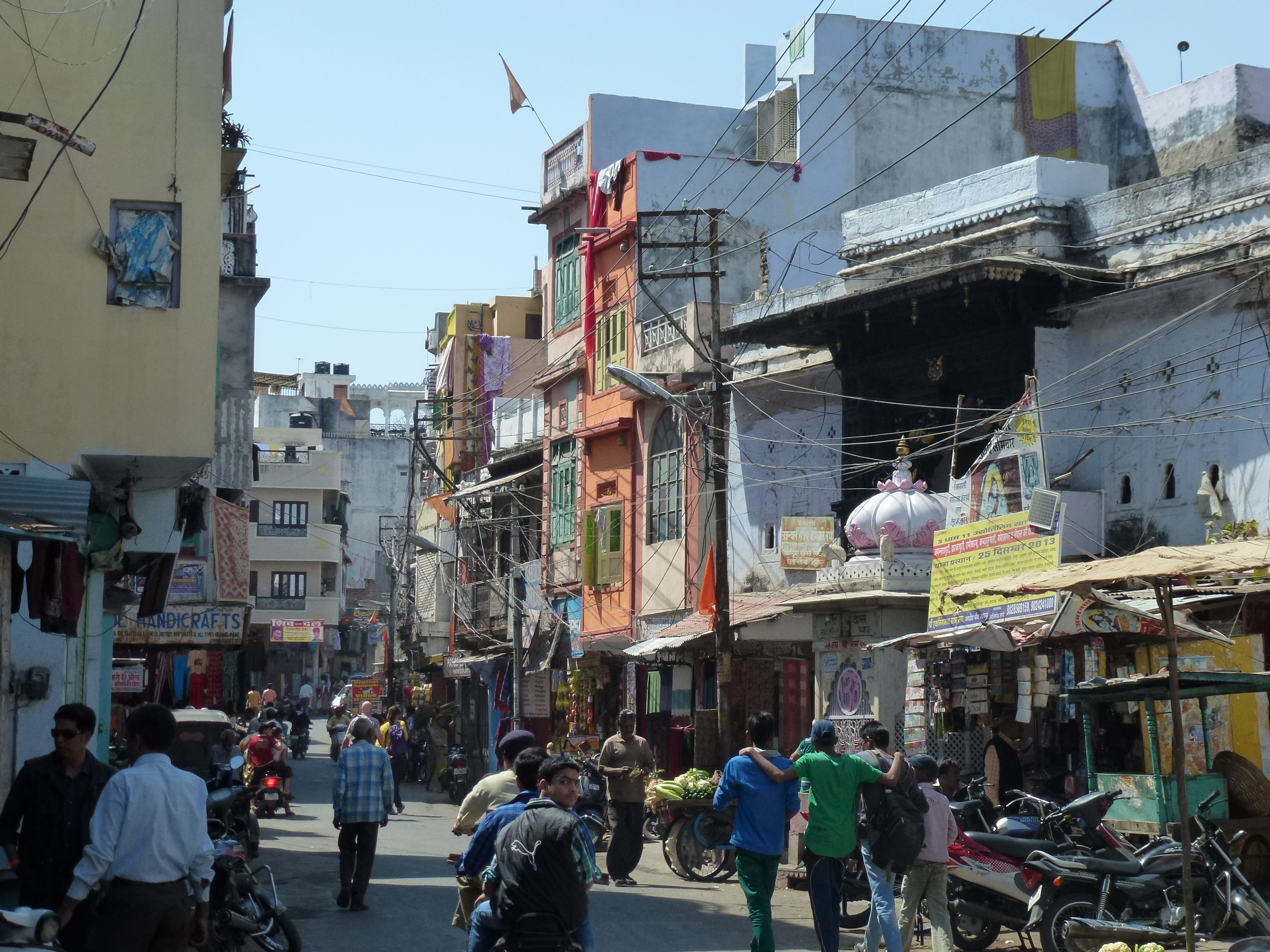
Street scene in Udaipur.

Street scene in Udaipur.

A colorful textile store in Udaipur.

A colorful textile store in Udaipur.

A Visit to Chittorgarh Fort

A view of Chittorgarh Fort from the city of Chittor.

A view of Chittorgarh Fort from the city of Chittor.

This huge fortress complex is largely off the tourist map. It is located about 306 km (190 miles) south of Jaipur on the way to Udaipur (another 116km or 72 miles south). Chittorgarh sits atop a striking plateau above the modern town of Chittor (“garh” means fort).

Local residents of Chittorgarh Fortress.

Local residents of Chittorgarh Fortress.

It is the largest fort complex in India, and the plateau is 6 km long, which is largely uninhabited (except by monkeys and a small village near the entrance) and open for exploration.

One of the gates (Ram Pol) into Chittorgarh.

One of the gates (Ram Pol) into Chittorgarh.

There are several stunning towers, temples and palaces at the fort as well as reservoirs and other structures. A number of the buildings date to the 12th and 13th centuries. The fort was sacked at least three times (from the 1300’s to the 1500’s) and the female residents chose to perform the ritual of jauhar (burning to death) each time rather than being taken prisoner.

A view of the ruins of 15th century Rana Kumbha Palace.

A view of the ruins of 15th century Rana Kumbha Palace.

Another view of Rana Kumbha Palace.

Another view of Rana Kumbha Palace.

The Tower of Victory (Jaya Stambha), built in the 1400's. Dedicated to the Hindu god Vishnu. You can climb the tower for a good view of the whole area.

The Tower of Victory (Jaya Stambha), built in the 1400’s. Dedicated to the Hindu god Vishnu. You can climb the tower for a good view of the whole area.

Detail of the Tower of Victory.

Detail of the Tower of Victory.

Due to the few visitors here, we found the locals and (mainly Indian) tourists very friendly, wanting you to take their pictures and to show you around.

A young couple who wanted their picture taken at the top of the Victory Tower.

A young couple who wanted their picture taken at the top of the Victory Tower.

A Jain Temple at Chittorgarh.

A Jain Temple at Chittorgarh.

Another Jain Temple at Chittorgarh. The tower (Kirti Stambha) was built in the 12th century.

Another Jain Temple at Chittorgarh. The tower (Kirti Stambha) was built in the 12th century.

One of Chittorgarh's reservoirs.

One of Chittorgarh’s reservoirs.

A pavilion in a small lake at Chittorgarh.

A pavilion in a small lake at Chittorgarh.

This was an unplanned stop on our way to Udaipur suggested by our driver. Since it’s a fairly long drive to Udaipur we spent only about 90 minutes here, but it would be easy to spend a few hours exploring all the various ruins and sights. Well worth a visit!

Jaipur, India – The Pink City

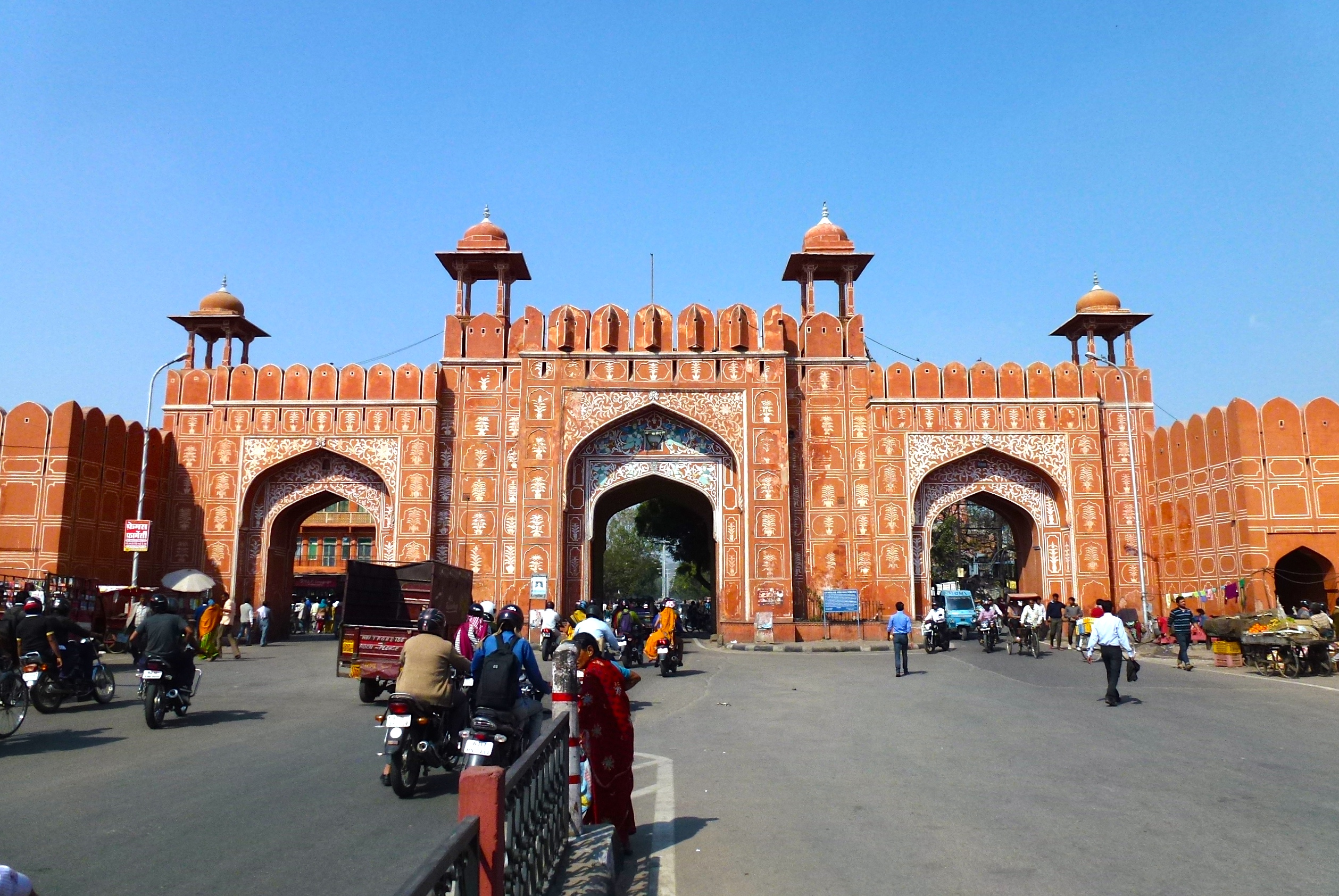
One of the great cities in Rajasthan, India is Jaipur. It is known as the “pink city” due to the color of the buildings as well as the walls and city gates surrounding the central area.

Ajmeri Gate, leading into central Jaipur. The color of the gates and walls, as well as buildings in the central area give the city its nickname.

Ajmeri Gate, leading into central Jaipur. The color of the gates and walls, as well as buildings in the central area give the city its nickname.

Jaipur is one of the most visited cities in India since it is not too far from New Delhi and Agra (home of the Taj Mahal), and forms a triangle of tourist destinations with these two other cities.

Here’s a few key attractions in Jaipur:

Amber Fort

While there is a lot to see in Jaipur itself, there’s no question that the tourist sight is Amber Fort, located about 7 miles (11 km) north of town.

The Jal Mahal (Water Palace) on Man Sagar Lake was used for royal duck shooting parties in the mid 18th century.

The Jal Mahal (Water Palace) on Man Sagar Lake was used for royal duck shooting parties in the mid 18th century.

Leaving Jaipur, you wind past Man Sagar Lake and through the mountains for a short distance until all-of-a-sudden it appears sitting on a hill to your left. The golden-hued fort looks like a movie set rather than an actual historical palace. The fort is the former capital of Jaipur State and is the one sight that cannot be overlooked when visiting Jaipur.

A view of Amber Fort. If you look closely, you can see the elephants with their red coverings making their way up to the gate.

A view of Amber Fort. If you look closely, you can see the elephants with their red coverings making their way up to the gate.

The highly decorated Ganesh Pol, a three story gate connecting the outer courtyard to the private apartments.

The highly decorated Ganesh Pol, a three story gate connecting the outer courtyard to the private apartments.

Construction began in 1592 on the current fortress, built on the remains of an earlier (11th century) fort. Amber Fort is divided into 4 main sections, and each is a bit unique in its architecture.

The courtyard of the Palace of the Raja Man Singh, one of the four main sections of the Amber Fort.

The courtyard of the Palace of the Raja Man Singh, one of the four main sections of the Amber Fort.

You have to be patient and wander around a bit to see it all. We hired a guide and he pointed out some interesting things. After we finished the tour, we wandered around on our own, and found other great views.

Another beautiful courtyard in Amber Fort (Jaigarh Fort is in the distance on the hill).

Another beautiful courtyard in Amber Fort (Jaigarh Fort is in the distance on the hill).

There are three main ways up to the fort – by foot, jeep or elephant. Of course most tourists take the elephant ride, and so did we. The elephant can take two passengers at a time. Given the popularity of the elephant transportation, expect a wait of 20 – 30 minutes in line. Although this is definitely doing the touristy thing, it’s a once in a lifetime experience and was fun. By Indian standards, it’s not cheap – 900 rupees or about $15, a small local fortune.

The elephants and tourists make their way up to the Amber Fort.

The elephants and tourists make their way up to the Amber Fort.

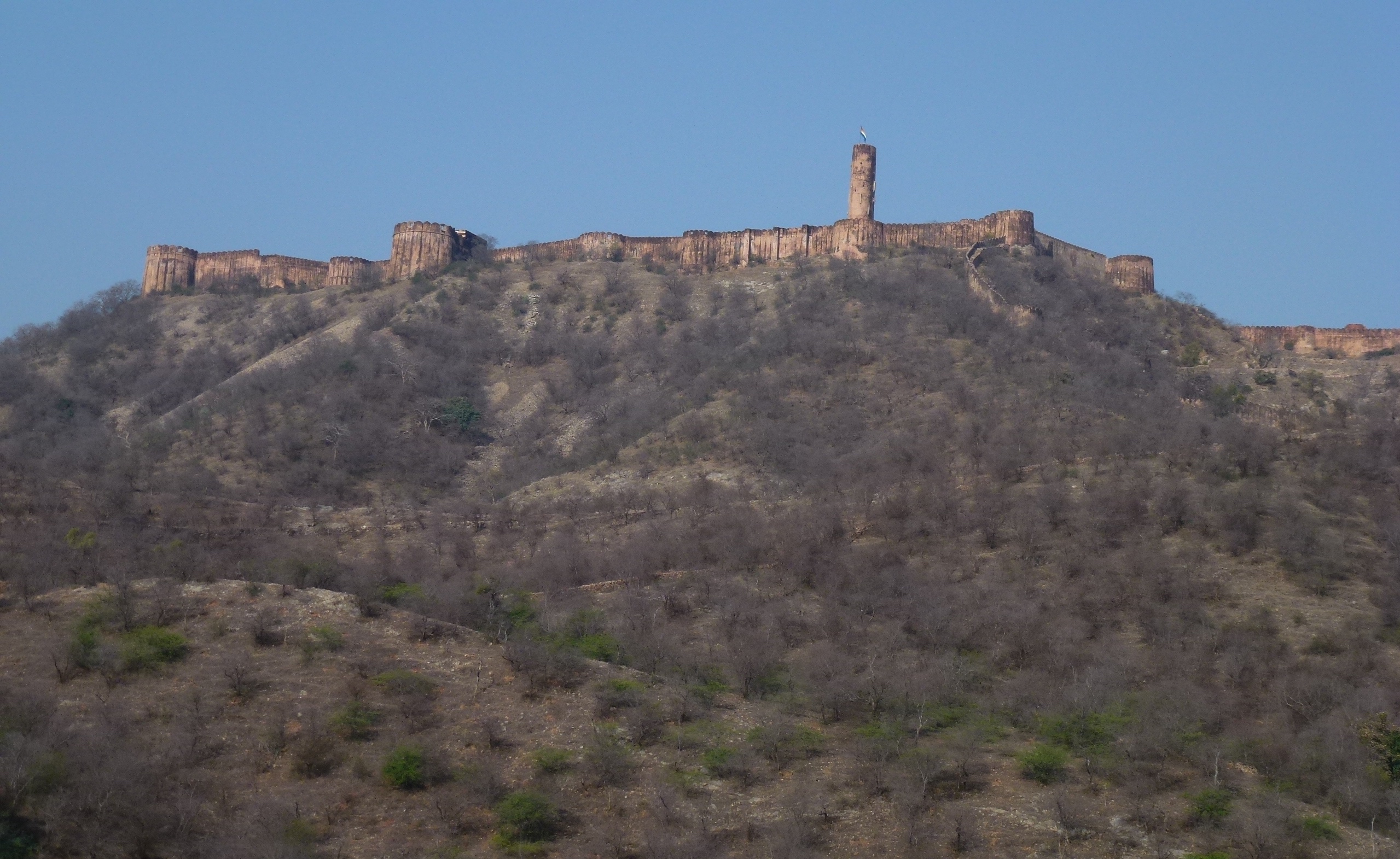
There is another, older fort (Jaigarh) above the Amber fort, but time did not allow for us to hike up there (about 1 km uphill from the Amber Fort).

Jaigarh Fort, which sits above Amber Fort.

Jaigarh Fort, which sits above Amber Fort.

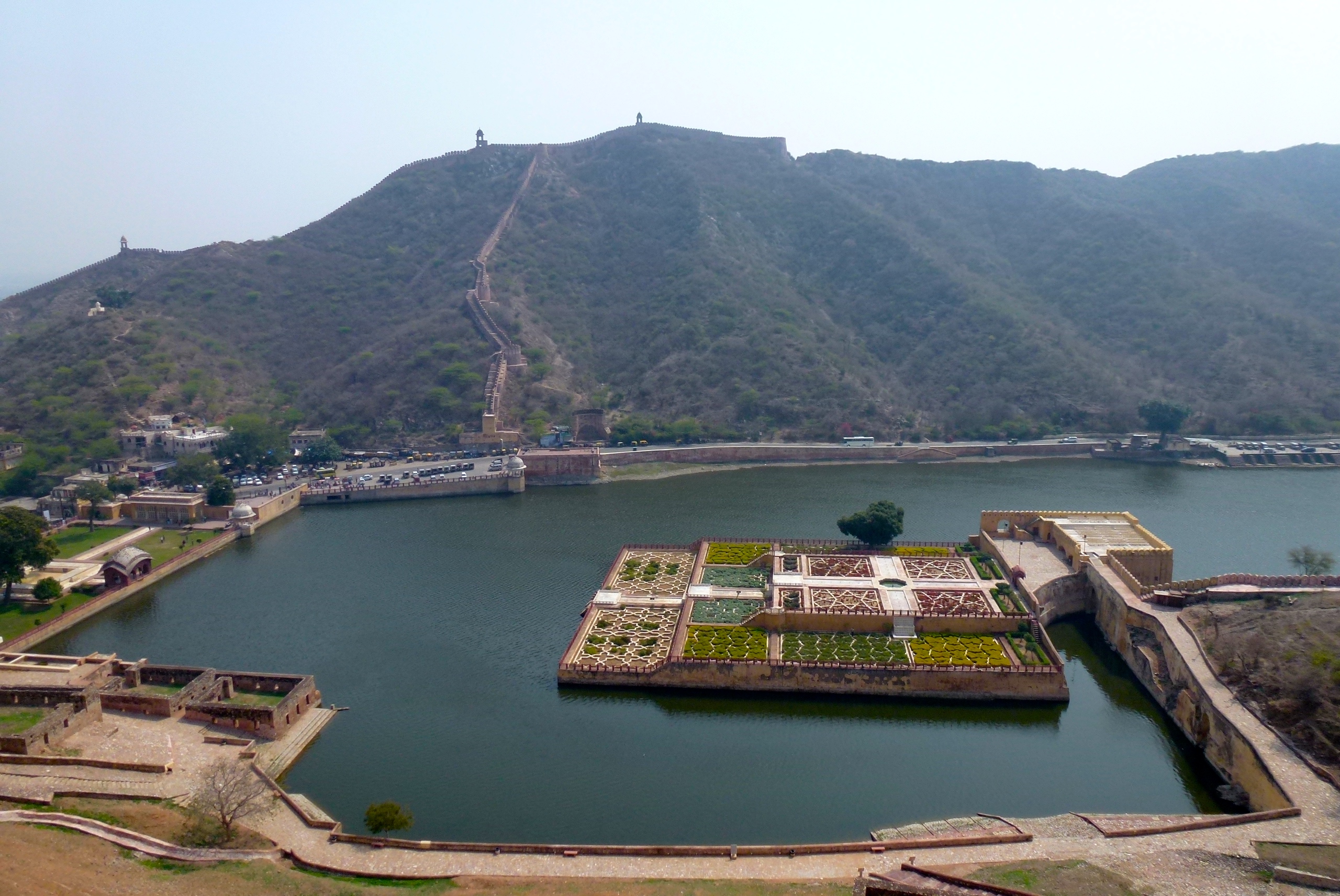
The view from Amber Fort is astounding with mountains, huge walls snaking around the hillsides, as well as seeing Maota Lake below.

Looking down on Maota Lake, with the gardens of Kesar Kyari Bagh. The lake provided water for the fort. The walls protecting the region can be seen in the distance.

Looking down on Maota Lake, with the gardens of Kesar Kyari Bagh. The lake provided water for the fort. The walls protecting the region can be seen in the distance.

Hawa Mahal (Palace of the Winds)

With its pink façade, the Hawa Mahal is the photogenic centerpiece of Jaipur. It is unusual in that it is five stories high but only one room in width. Its purpose was to allow the veiled ladies of the harem to view city life unnoticed from the streets below. It was built in 1799.

The Hawa Mahal in Jaipur.

The Hawa Mahal in Jaipur.

City Palace

Right next to the Hawa Mahal, this Palace was built in the early 18th century, and is now a museum with paintings and manuscripts. Since we had just visited Amber Fort, we did not take the time to visit this Palace.

City Palace lies straight ahead through this gate.

City Palace lies straight ahead through this gate.

Jaipur is also known as shopping mecca for jewelry and precious and semi precious gemstones. There are a lot of jewelry and gem shops just outside the main walls. Bring your money and shopping list!

We also walked around the heart of the city – busy area which is organized by crafts in sections. Just a teeming mass of shops, workers and every day life going on.

Rows of shops in the central district of Jaipur.

Rows of shops in the central district of Jaipur.

Two Days in Delhi, India

New Delhi is the capital of India and has a lot to offer the tourist. It is a good place to start your tour of India since New Delhi is a major airline gateway into the country. Delhi is an ancient city and has been the capital of India off and on for hundreds of years. During their rule, the British made Delhi their capital in 1911. New Delhi and Old Delhi are contiguous and are one huge sprawling city. However, many of the main tourist sites are grouped in relative proximity to one another, some in New Delhi and others in Old Delhi. For a map of places we visited in India, click here.

A street scene in Delhi, with an auto rickshaw passing street dwellers. Poverty is found everywhere.

A street scene in Delhi, with an auto rickshaw passing street dwellers. Poverty is found everywhere.

Almost anywhere you go, you will see decaying ruins of tombs, temples, mosques, other monuments and overwhelming poverty. Here are a few highlights, and the main things we saw over two days:

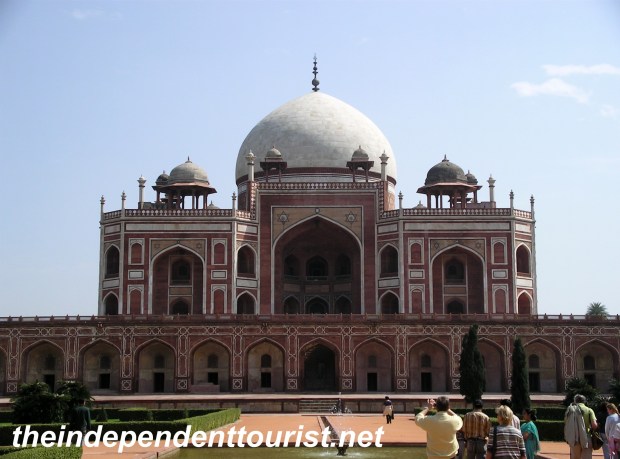
Humayun’s Tomb. Humayun was the 2nd Mughal (Islamic) emperor and reigned during the early 1500’s. If the tomb’s shape looks familiar, it’s for good reason. This tomb was the forerunner of the Taj Mahal. The site is large, with a well manicured landscape and a number of other interesting buildings. For more information, see my detailed post on Humayun’s Tomb here.

Humayun's Tomb. The symmetry and structure are similar to the Taj Mahal.

Humayun’s Tomb. The symmetry and structure are similar to the Taj Mahal.

Purana Qila (or Old Red Fort). This site became the capital of Mughal India in 1526 during the Emperor Humayun’s reign. There are massive walls surrounding the site, just like at the Red Fort (see below). Inside, there are only a few buildings remaining, although the gardens and landscaping also add to the atmosphere.

The main gate into Purana Qila.

The main gate into Purana Qila.

The Sher Mendal in Purana Qila. Humayun used this building as a library. In 1556, he heard the call to prayer, and in a hurry, he fell and sustained major injuries while on his way down the stairs. He died 3 days later.

The Sher Mendal in Purana Qila. Humayun used this building as a library. In 1556, he heard the call to prayer, and in a hurry, he fell and sustained major injuries while on his way down the stairs. He died 3 days later.

The Red Fort. This fort dates from the early 1600’s and was founded by Shah Jahan, the builder of the Taj Mahal. The wall surrounding the fort is 18 meters high (60 ft).

The massive walls and western entrance into the Red Fort.

The massive walls and western entrance into the Red Fort.

The entrance to the Emperor's reception hall in the Red Fort.

The entrance to the Emperor’s reception hall in the Red Fort.

There are a number of interesting structures inside such as temples, reception rooms and out-of-place barracks built by the British during their occupation of India in the mid 1800’s. Note that there is also a “Red Fort” in Agra. Both are interesting, but I found the Red Fort in Agra perhaps a little bit more intriguing with more of the original architecture in tact.

Chandni Chowk. On the western border of the Red Fort is this chaotic market area. If you want to get a feel for the “real” India, take a rickshaw ride through Chandni Chowk, a busy marketplace with bazaars that seem to be mainly frequented by locals. Our car driver negotiated a couple of bicycle rickshaw rides for us and this was a great way to tour the bazaars.

Our rickshaw driver in Chandni Chowk.

Our rickshaw driver in Chandni Chowk.

We loved just observing the bustle of everyday life and also found some good spice shops here. There was a large weekend market going on while we were there. I could scarcely believe the volume of goods – shoes, clothes, handbags and other items that were on display!

A street scene in Chandni Chowk.

A street scene in Chandni Chowk.

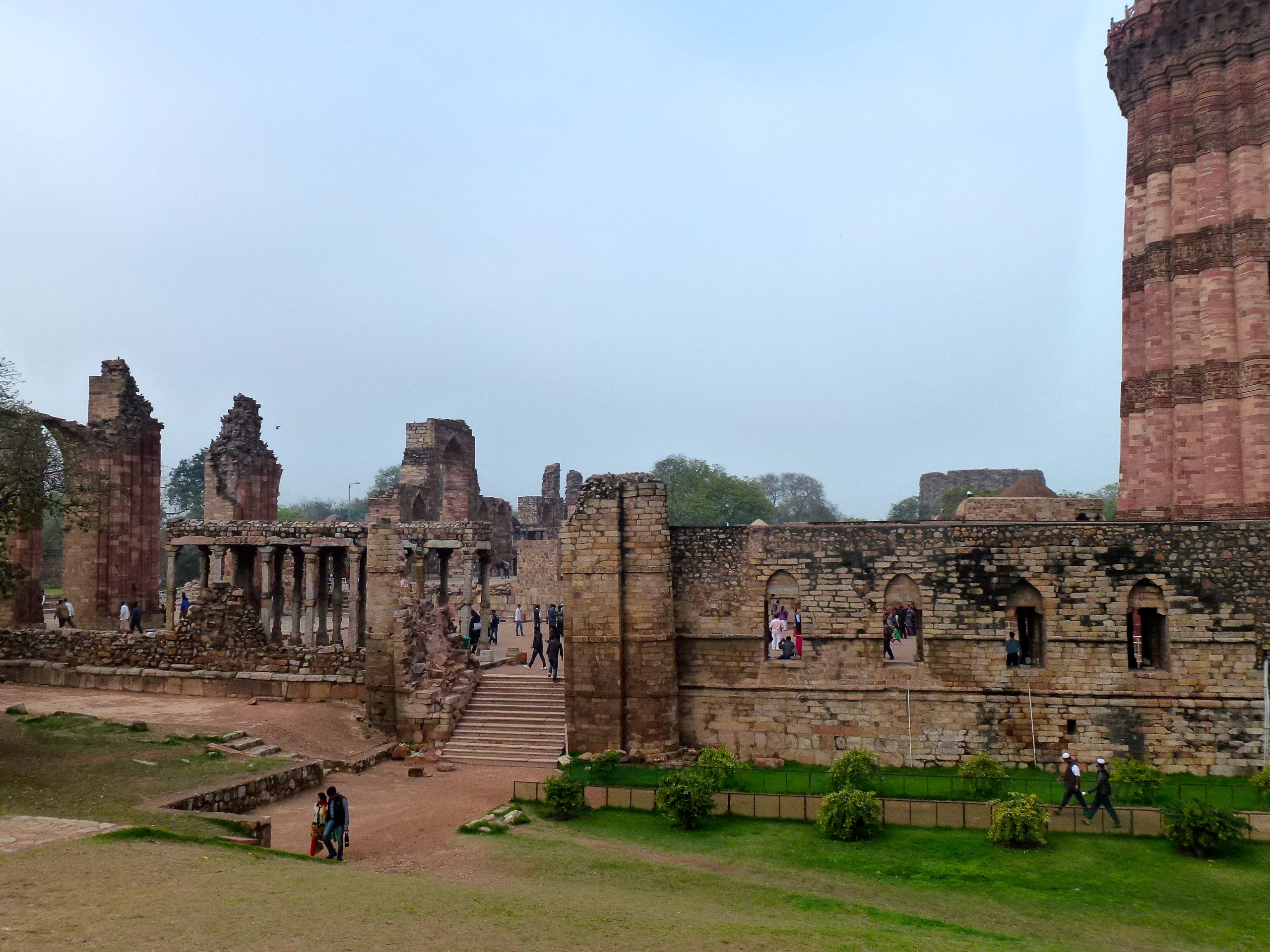
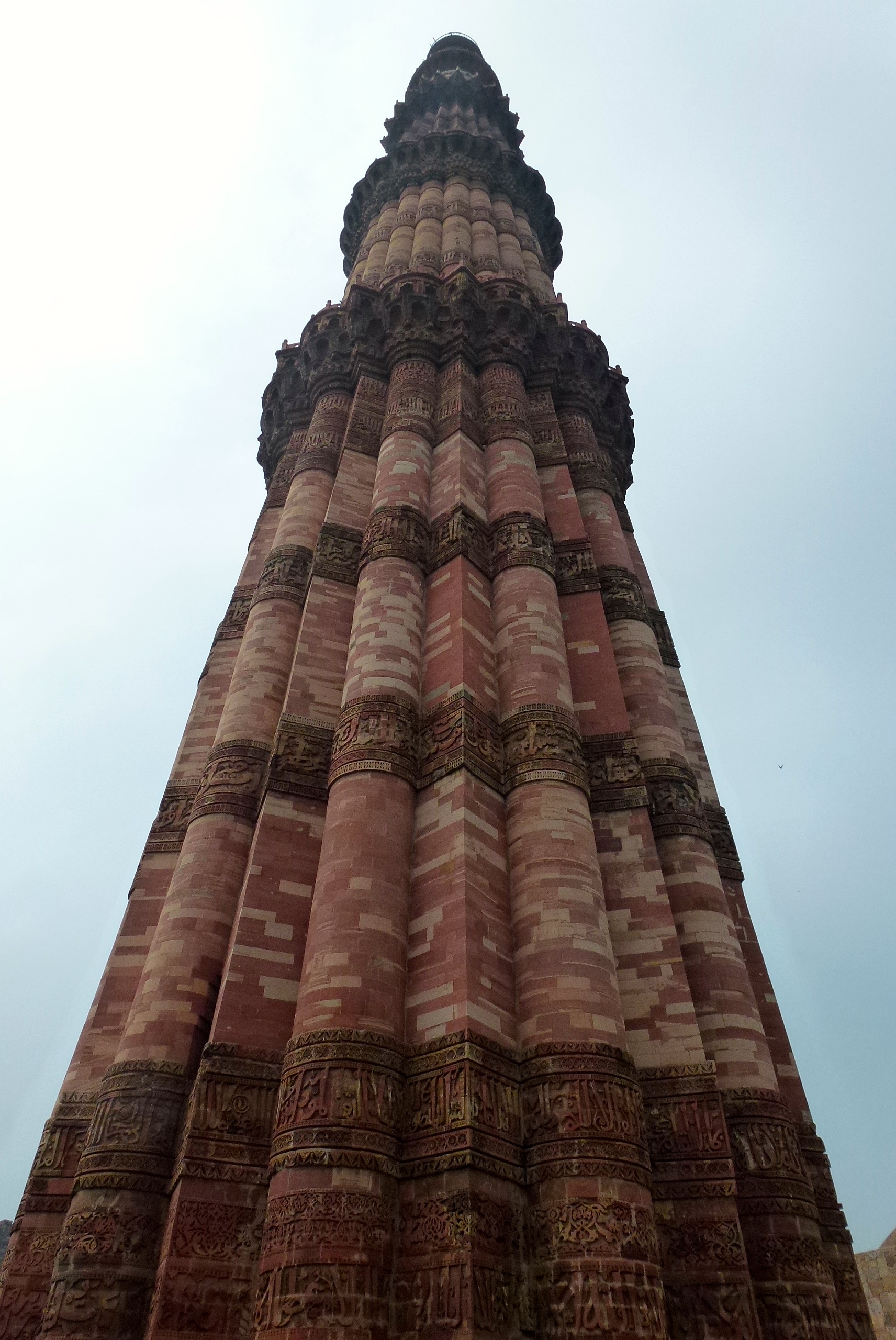
Qutb Minar. I love historical sights and Qutb Minar does not disappoint. The structures (tombs, monuments and mosques) located here date from the late 1100’s. Although the site is known as Qutb Minar, the name refers specifically to the landmark tower and minaret (named after Sultan Qutb-ud-din). There are signs posted in English at most of the major structures.

A view of some of the ruins of Qutb Minar.

A view of some of the ruins of Qutb Minar.

The Qutb Minar Tower.

The Qutb Minar Tower.

Mehrauli Archeological Park. Near Qutb Minar is a spread out, park-like area with numerous tombs, palace buildings, mosques, and other structures. This site is largely off the tourist radar. The historical buildings are connected via a system of well-marked trails. If you have the time and are visiting Qutb Minar, it’s worth another hour or two to visit this nearby Park.

The exterior porch of the Jamali-Kamali Mosque in Mehrauli Park.

The exterior porch of the Jamali-Kamali Mosque in Mehrauli Park.

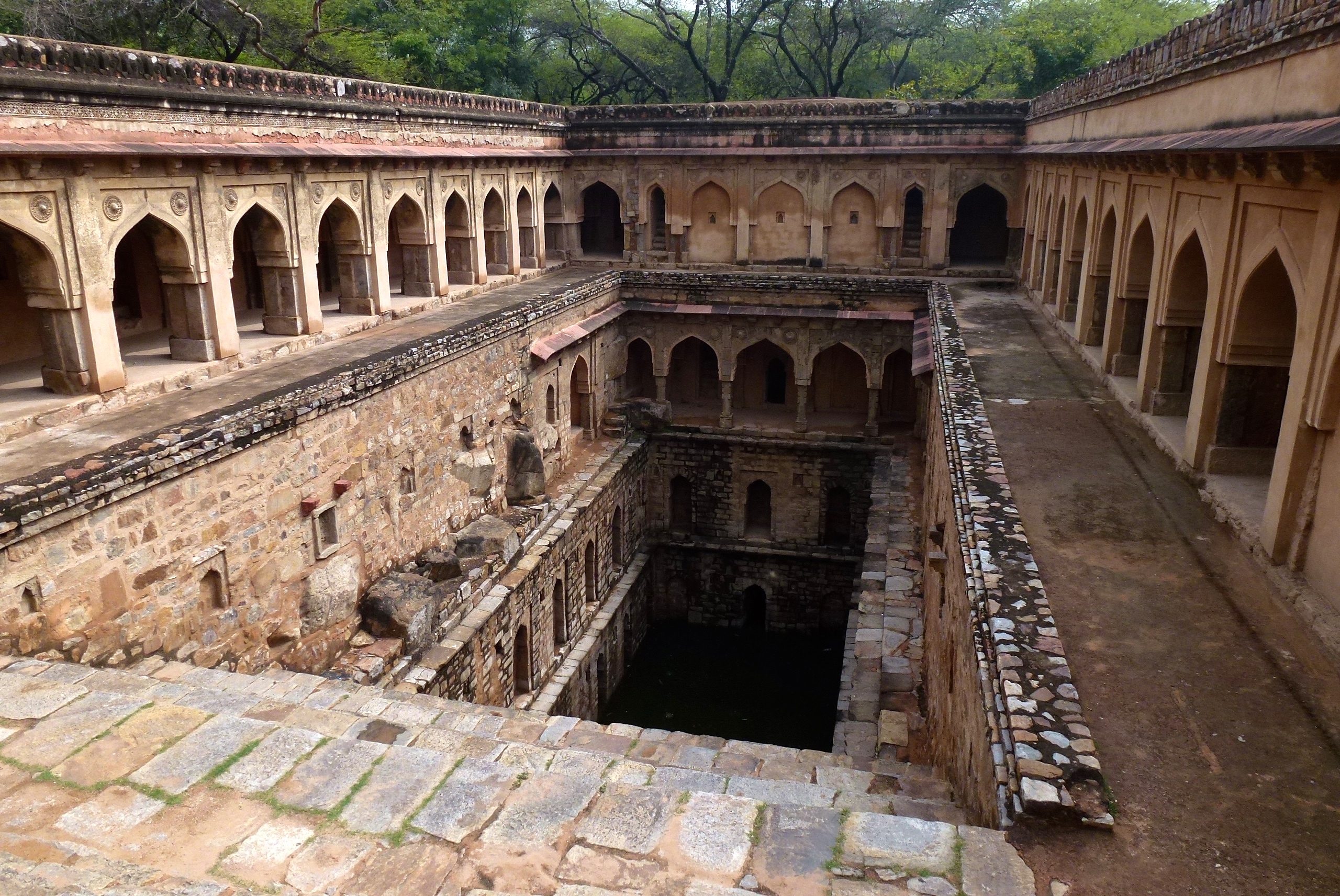
An elaborate well (Rajon-ki-Baoli) in Mehrauli Park.

An elaborate well (Rajon-ki-Baoli) in Mehrauli Park.

In addition to the above, you can also do a “drive by” of Delhi’s modern government buildings, commemorative arches, memorials, and other locations such as upscale Connaught Place (with stately buildings, shops and restaurants).

The memorial to Mahatma Gandhi, the leader of the Indian independence movement (from British rule).

The memorial to Mahatma Gandhi, the leader of the Indian independence movement (from British rule).

India Gate, which pays tribute to India's soldiers who have sacrificed their lives in several of India's conflicts.

India Gate, which pays tribute to India’s soldiers who have sacrificed their lives in several of India’s conflicts.

Getting Around. We just hired a driver for the day. A good local agency to work with is Kumar Tourist Taxi Service. It is also possible to hire taxis from location to location, or autorickshaws. Delhi does have a metro (subway) system as well. There is LOTS of traffic, so it will take time to get from one sight to another. Don’t try to do too much in one day. We were able to accomplish the above in two full days.

Where to Stay. We stayed at the 76 Friends Colony B&B located in South New Delhi. The host was very friendly and the rooms were large and pleasant. They can also arrange transportation for you if desired; however, their rates were relatively high compared to Kumar’s (above).

The Fortified City of Fatehpur Sikri

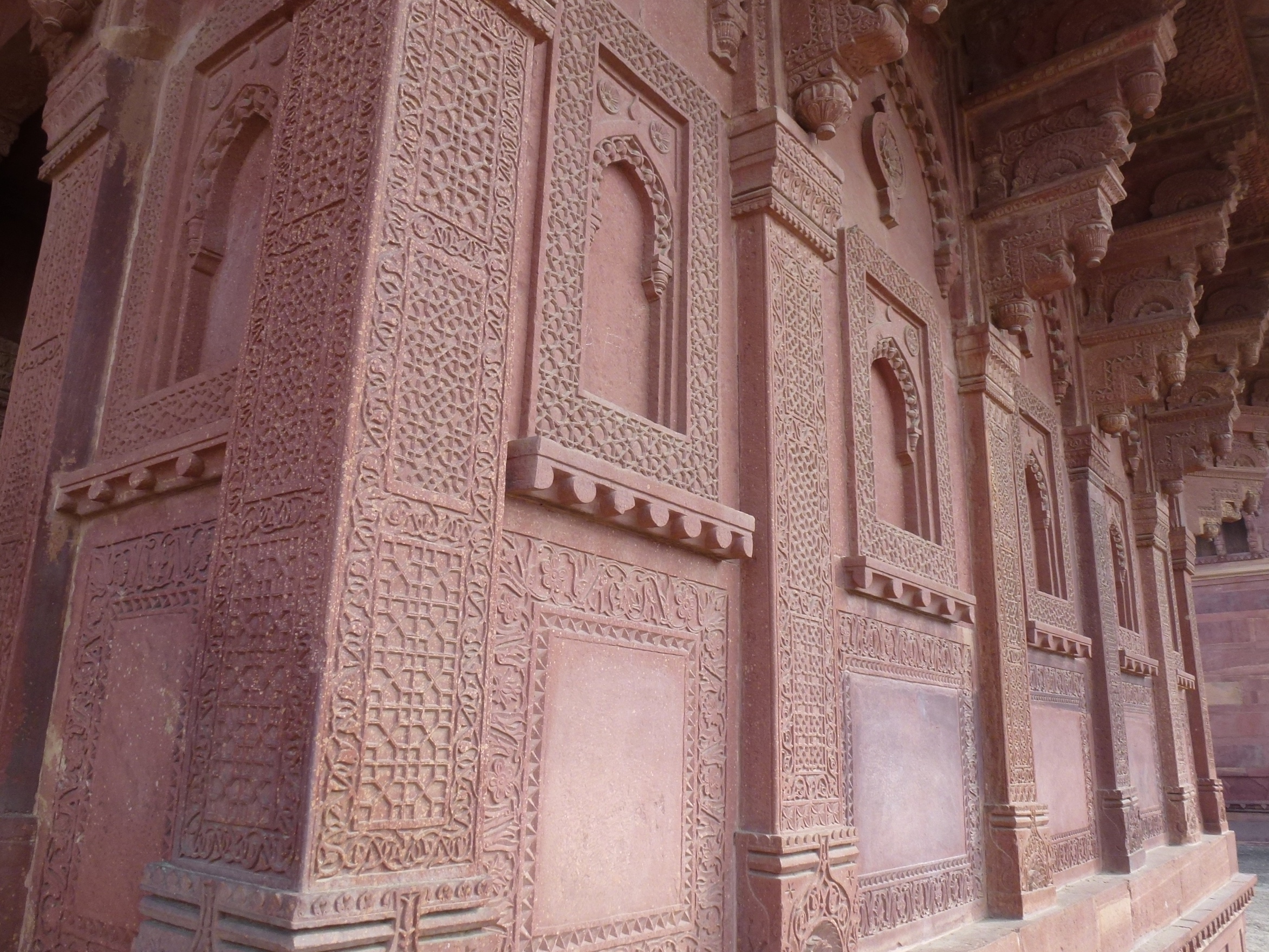
Fatehpur Sikri was the capital of the Mughal Empire in India between 1571 and 1585 during the reign of Emperor Akbar. The city is a collection of architecturally beautiful buildings with numerous intricate carvings, expansive connecting courtyards and gardens.

The perfectly manicured Ladies Garden at Fatehpur Sikri.

The perfectly manicured Ladies Garden at Fatehpur Sikri.

The Emperor lived large – he had more than 5,000 concubines, played games with slave girls as the game board pieces on a large courtyard and hosted lavish banquets and concerts.

The Emperor Akbar would play pachisi (ancient Indian game) in this courtyard with slave girls dressed in colorful clothes as pieces. The Panch Mahal is the five story edifice in the background which has a total of 176 columns.

The Emperor Akbar would play pachisi (ancient Indian game) in this courtyard with slave girls dressed in colorful clothes as pieces. The Panch Mahal (in the background) is five stories and has a total of 176 columns, many of which are unique.

The Birbal Bhavan, an intricately carved building inside and out, believed to be the residence of Akbar's senior queens.

The Birbal Bhavan, an intricately carved building inside and out, believed to be the residence of Akbar’s senior queens.

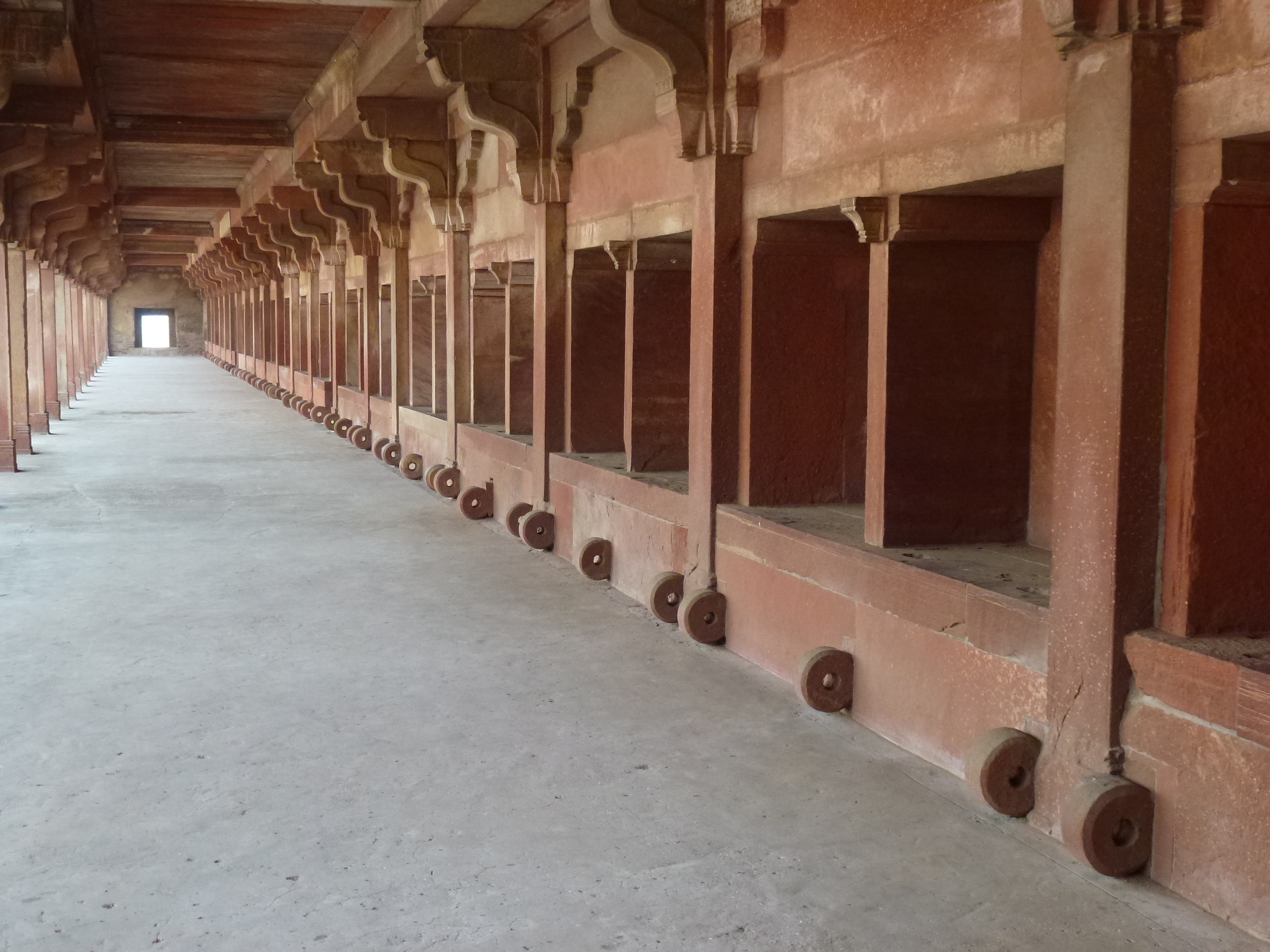
The Lower Haramsara. The rings in the lower right and extending beyond separated the living quarters of 200 female servants living here, who were for palace business only.

The Lower Haramsara. The rings in the lower right and extending into the distance separated the living quarters of 200 female servants living here, who were for palace business only.

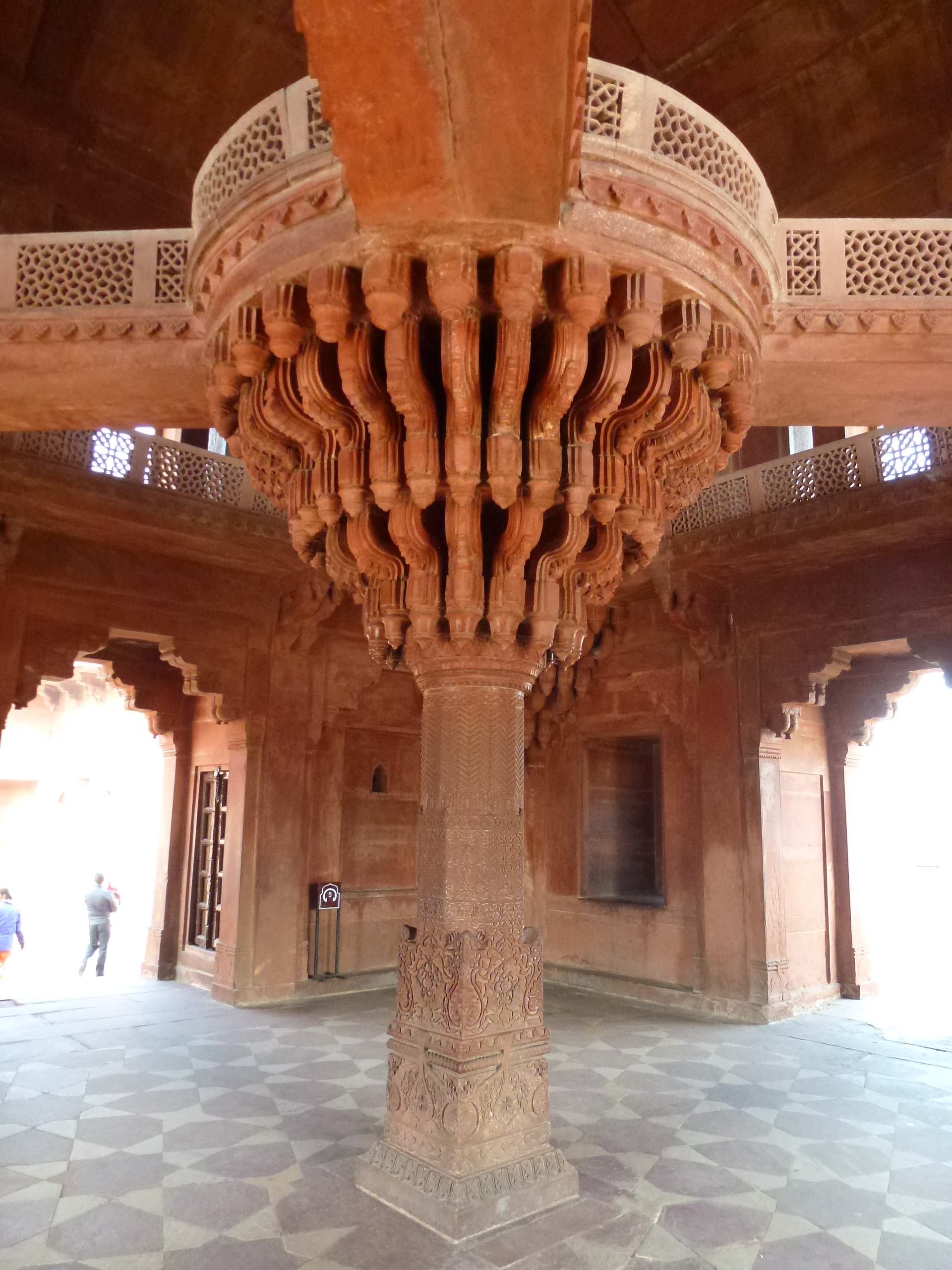
The Diwan-i-Khas (Hall of Private Audiences) with its magnificently carved central column. Akbar is believed to have stood on top of this column and debated with scholars and ministers who stood at the ends of the four bridges extending out from the center.

The Diwan-i-Khas (Hall of Private Audiences) with its magnificently carved central column. Akbar supposedly stood on top of this column and debated his scholars and ministers who stood at the ends of the four bridges extending out from the center.

Exterior view of the Diwan-i-Khas.

Exterior view of the Diwan-i-Khas.

Inside the Palace of Jodh Bai, the home of Akbar's Hindu wife (said to be his favorite).

Inside the Palace of Jodh Bai, the home of Akbar’s Hindu wife (said to be his favorite).

The Ornamental Pool (Anup Talao), used for water storage and private functions by the Emperor.

The Ornamental Pool (Anup Talao), used for water storage and private functions by the Emperor.

Fatehpur Sikri did not last long as a capital due to a poor water supply. We are now left with the magnificent buildings and grounds that seem perfectly intact from almost 500 years ago. Adjacent to the palace complex is the huge Jama Masjid (mosque), completed about the same time as the palaces and worth visiting. Plan on at least two hours to visit both sights.

The immense courtyard of the Jama Masjid (mosque). The marble inlay work found around the structures is said to have inspired similar work at the Taj Mahal less than 100 years later.

The immense courtyard of the Jama Masjid (mosque). The marble inlay work found around the structures is said to have inspired similar work at the Taj Mahal less than 100 years later.

The white marble tomb of Shaikh Salim Chishti. You can visit the perimeter and gaze inside.

The white marble tomb of Shaikh Salim Chishti. You can visit the perimeter and gaze inside to the intricate lattice work.

Practical Notes: Fatehpur Sikri is located 35 km (22 miles) west of Agra and can be done as a day trip from Agra, or as we did, a stop between Agra and Jaipur. If you are coming by car or bus, there is a car park with the usual trinket stalls and very persistent vendors (they’ll remember you as you return to the car park) about a kilometer or so away from the old city, which sits on a small hilltop just to the north of the car park. There is a shuttle that takes you up to the old city and lets you off between the city gate and the mosque. There are lots of signposts in English next to the main buildings. As with almost every tourist location in India, guides can be hired for a few dollars if desired or you can get an audio guide. We just relied on the signposting and our Lonely Planet book.

Reference: Lonely Planet India Guidebook.

Ten Tips for Visiting India on Your Own

We toured India in March 2014. While I had visited the country once before on business, we decided to explore more of this fascinating country as tourists.

Why go?

Before our trip, I had several people ask me “why are you going to India (for vacation)?” In response, I would say the following: We love to experience the variation that exists in our world. To us, vacations are not just about lying on the beach (which certainly we enjoy), but also about getting to experience cultures that are different from our own.

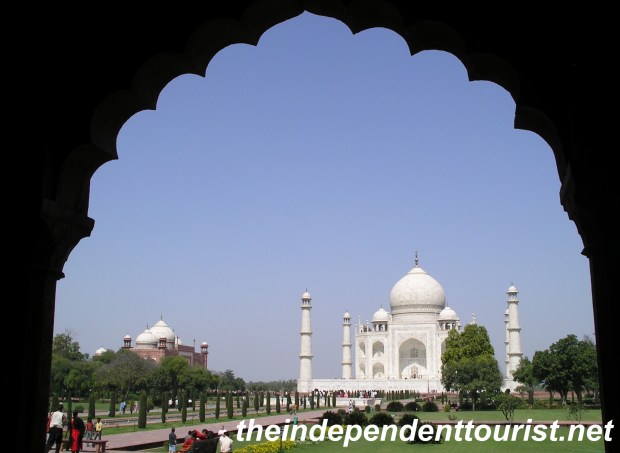
The Taj Mahal is only one of many incredible sights in India.

The Taj Mahal is only one of many incredible sights in India.

India is an amazing country with some of the most stunning sights in the world. Add to that the cultural and religious diversity, the history, and the landscape, and for us those were enough reasons to go. We were not disappointed.

I will say that India is a bit more of a challenging country to visit on your own than some other places. Below are a few tips that should help make your visit enjoyable.

Decide on a region to visit. There is a reason they call India the “subcontinent” – it’s big. While it’s possible to fly between major destinations all over the country, this eats up time and money and takes away from some of the cultural aspects gained while traveling through the countryside. We decided to concentrate mostly on the state of Rajasthan. It’s the most popular tourist region in India, and we figured it would be a good introduction to the country.

Our major destinations in India. We drove between the locations in the north, and then flew from Jodhpur to Mumbai and Aurangabad.

Our major destinations in India. We drove between the locations in the north, and then flew from Jodhpur to Mumbai and Aurangabad.

We flew in to New Delhi and out of Mumbai with Rajasthan being the main focus in between. Rajasthan (which is in the northwest part of the country) has a lot to offer and is home to many incredible 15th century forts (or Indian castles).

The amazing Amber Fort in Jaipur. It looked so surreal, like a movie set prop rather than a real palace.

The amazing Amber Fort in Jaipur. It looked so surreal, like a movie set prop rather than a real palace.

Determine your mode(s) of transportation. Traveling by train or bus certainly would be inexpensive, but there are a lot of hassles associated with train travel in particular – such as needing advance reservations (due to the volume of passengers traveling by train), navigating the details of the Indian train system website from the U.S., and then the logistics of getting from the train station to your hotel and to the various sights. Air travel is good in India. The local airlines and airports are efficient and good, with newer planes and on-schedule departures and arrivals. We took a few internal flights when needed.

The modern airport in Aurangabad.

The modern airport in Aurangabad.

Recommendation: Get a car and driver. Originally, I was going to hire a car and driver to get us from one location to the next, and then get another car and driver at the next stop. However, as it worked out, after a conversation with the company who drove us to Agra from New Delhi, we gave them our whole itinerary for the two weeks in Rajasthan and agreed on a price of $700, inclusive of the driver, comfortable van (there were four of us plus our luggage), gas, tolls, parking fees, etc. Quite a deal.

Our van and driver (Bhuipnder) for our two weeks in Rajasthan.

Our van and driver (Bhuipnder) for our two weeks in Rajasthan.

This meant we had our own personal chauffeur to navigate the Indian traffic and roads (quite an experience), take us to all the sights, recommend restaurants, etc. Visit www.kumarindiatours.com for more information. Splitting this cost by two couples meant our transportation for two weeks and about 1,600 kilometers or so (1,000 miles) was $350. We gave the driver about a 10% tip at the end of the trip.

Visit between November and March. We went at the end of March, and the weather was perfect. Even out in the Thar desert, the temperatures were just in the mid 80’s F. If you go later than this, you will end up being scorched in the desert or sweating in the oppressive humidity. The monsoon rains start in July or so.

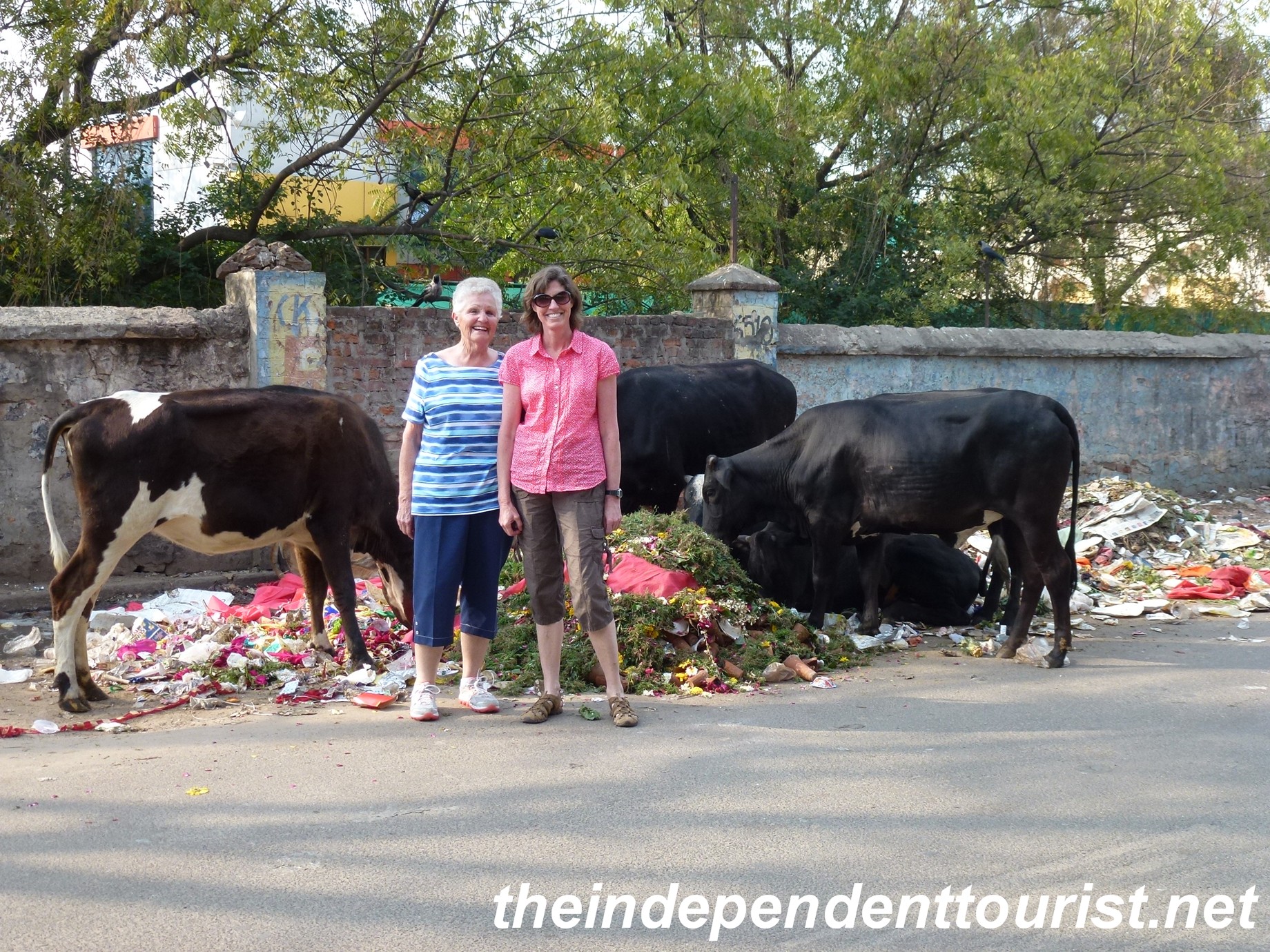
Brace yourself for overwhelming poverty, chaos and crowds. The juxtaposition of incredible wealth next to destitute poverty is jarring. Although the economy of India is growing quite rapidly, there are millions of people living on next to nothing. Many towns look like they have been ‘bombed out’. There is rubble everywhere and numerous dilapidated or unfinished buildings. Some roads end all-of-a-sudden with no explanation/signage. You will see pigs going through piles of trash, cows, rickshaws, elephants, camels, and everything else you can imagine on or beside the roads.

Cows grazing on the street in Jaipur.

Cows grazing on the street in Jaipur.

Taking a rickshaw ride through the busy Chandni Chowk area of Delhi.

Taking a rickshaw ride through the busy Chandni Chowk area of Delhi.

The crowds I’m talking about are the locals. India has over one billion people and in the major cities the streets are teeming with seas of local folks buying, selling, wandering, eating, washing, urinating, sleeping and just living.

Women bathing and washing by Lake Pichola in Udaipur.

Women bathing and washing by Lake Pichola in Udaipur.

Learn to like (if you don’t already) Indian food. The Indian dishes (which we already loved) were great and there were typically two cuisine choices on the menus: Indian and Chinese. The Chinese dishes were good too. You might occasionally find pizza. Due to the variety of religions in India, you won’t find a lot of beef or pork.

Some examples of the yummy food - combinations of Indian and Chinese dishes are common.

Some examples of the yummy food – combinations of Indian and Chinese dishes are common.

Vegetarian dishes were very common and good. We did not have a problem with any food-related illnesses. Grocery stores are hard to come by, most locals buy their supplies from small markets. You can find little kiosks for snacks and drinks, but don’t expect to see a Safeway grocery store or Carrefour.

Dress conservatively but comfortably. The temperatures of our locations were in the 70’s and 80’s, I wore shorts most places, but in a few temples, long pants were appropriate. For women, capris and shoulder-covering tops are a good choice. Avoid calling too much attention to yourself.

The stunning Jain temple of Ranakpur was one of the sites where very conservative clothing is expected.

The stunning Jain temple of Ranakpur was one of the sites where very conservative clothing is expected.

Even tourist areas are non-touristy. Probably one of our biggest surprises was that even in cities with major tourist sites, the cities beyond the tourist attractions were just regular chaotic Indian towns.

The local market in Jodhpur.
The local market in Jodhpur.

While locals will want to take you to rug, jewelry and clothing shops, for the most part you’ll be hard pressed to find many “tourist traps” that often accompany major sights. We were surprised that Agra, the home of the world-renowned Taj Mahal, (except near the parking area for the Taj), was pretty much like any other Indian city, even with some dirt roads.

Take reasonable safety precautions. In our three weeks visit, we never felt in danger in any way, and felt very comfortable walking around even crowded streets and markets, including at night. However, be smart—don’t wear expensive jewelry, keep your wallet, money and phone protected. Be aware of your surroundings and keep track of your personal items just as you would in any populated area. I took a small laptop and iPad on the trip and when I didn’t have them with me, I just locked them up in my suitcase at the hotel. We did not have any problems.

Tipping is everything to the locals. Be prepared to tip small amounts for just about any type of courtesy or service. This is how many people make their living.

Humayun’s Tomb – Precursor to The Taj Mahal

Humayun’s Tomb and the lovely surrounding grounds.

In New Delhi, India, on the eastern side of the city, near the Yamuna River is Humayan’s Tomb.

New Delhi is in north central India.

It is a short walk from the Oberoi Hotel, one of the finest hotels in the city (I thoroughly enjoyed the excellent service and room–stay there if you can).

Location of Oberoi Hotel, Humayun’s Tomb, and Purana Qila.

Humayun was 2ndMughal (meaning Muslim, also spelled Moghul or Mugal) emperor. The Mughal emperors were generally able military leaders and were accomplished in many of the arts and sciences. Although Humayun was considered less of an effective military commander than his father (Babur, the first Mughal emperor), he did have a passion for astronomy and astrology and organized the empire’s administrative matters based on the planets (for example, Tuesday, governed by Mars, was given to matters of justice). His reign spanned 25 years, although 15 of the 25 years were spent in exile, including time in Persia, a culture which was to have great influence on the architecture of the Mughal Empire. Humayun returned to the throne in 1555 with the help of a Persian army, but his return was short-lived—he died less than a year later.

The similarity in style to the Taj Mahal is unmistakable.

The tomb was built in 1569 for Humayun by his widow, Haji Begum. It was the first mausoleum built for a Mughal emperor, and became the model for the incredible Taj Mahal, built about a century later, located 130 miles south in Agra, also on the Yamuna River (see my post on the Taj Mahal).

Note the fine stonework on Humayun’s Tomb.

The mausoleum is constructed of red quartzite, red sandstone and white marble inlay. The style of dome was influenced by Persian architecture and was an engineering feat for its time due to the height and shape. It was the first dome of its type in India (known as Hindustan) at the time. The dome is made of marble, and is a double dome, the interior dome being lower and more in line with the other interior heights. The influence of the Persian architecture is also evident in the 3 great arches on each side of the mausoleum.

On the well-manicured grounds there are several other smaller tombs and mosques dating from the same time period.

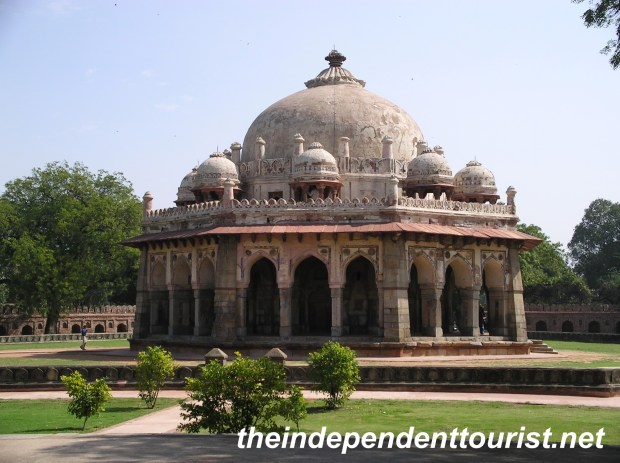
Isa Khan’s Tomb, on the grounds of Humayun’s Tomb (built in 1547).

Afsarwala Mosque & Afsarwala Tomb on the grounds of Humayun’s Tomb (built in 1560).

Purana Qila

Humayun also founded a city, now known as Purana Qila (Old Fort), about 5km north from where his tomb is located. Sher Shah, who deposed Humayun for 15 years, built a city on the foundations of Purana Qila. In addition to the walls, there is a mosque built by Sher Shah which is still standing. I did not have time to visit this site other than take a picture from the outside.

The Old Fort (built approximately in 1538).

The walls of the Old Fort.

Reference: World Heritage Series, Humayun’s Tomb & Adjacent Monuments, Good Earth Publications, New Delhi, 2002.

View of Taj Mahal, Agra, India.

A Day in Agra

Map of New Delhi and Agra.

Location of Agra, India.

I visited New Delhi, India on business in March.  It was a good time of year to visit; the weather was quite pleasant–low 80’s F and low humidity. I knew that New Delhi might be as close as I would ever get to the world-renowned Taj Mahal, so I arrived from the U.S. very early Saturday morning to allow myself to recuperate and get to Agra, the city where the Taj Mahal is located, before beginning business on Monday. I was traveling with two business colleagues, and we arranged for a driver to take us to Agra on Sunday. Agra is about 130 miles south of New Delhi.  At the time, it cost about $180 total for the driver (who was our guide also) and the van for the day. It is also possible to fly between the two cities or take a train.

We had originally been discouraged from traveling to Agra that Sunday; due to Holi Festival (celebrating the “triumph of good over bad”) the locals believed our travel might be disrupted by the celebrations.  Actually, it turned out to be a good day to go–the traffic was light, and we found the celebratory crowds to be no problem. We also got to see many people drenched in pastel colors, and we (and our van) got a little splash of color ourselves (learn more on my upcoming “Street Scenes of India” post). Our drive took about 2.5 hours each way, and it was exhilarating to say the least—with cars speeding towards us in our lane, and bicycles, carts, and even elephants on the road and in the towns we passed through.

Taxi to Taj Mahal.

Riding to the Taj Mahal entrance.

We arrived in Agra about 11 am. As we walked to the Taj Mahal entrance, young children were offering all kinds of items for sale.  I bought a little jade elephant and a book. The omnipresent poverty is heartbreaking, and whenever I could buy a little something to help out, I did. The entrance fee to the Taj was about $20, which is incredibly steep in India, but more than worth it.

The term “Taj Mahal” means “Crown Palace” and it doesn’t begin to describe this world wonder. Agra was the capital of the Mughal (Muslim) Empire for over a century. The Shah Jahan, a Mughal emperor for 30 years (1628-1658) built the Palace in memory of his beloved wife of 19 years, Mumtaz Mahal, to immortalize her after her untimely death, at age 39 during the birth of their 14th child (!)  It is said that before her death she requested her husband create a symbol of their love for their posterity. I don’t think she would be disappointed in his attempt to honor her wishes.

The Taj is on the banks of the Yamuna River. The stunning white marble was quarried 230 miles away in Makrana, Rajasthan state.  The 35 different types of precious inlaid stones were imported from all over Asia and the Middle East.

Entrance to Taj Mahal.

Entrance Gate to Taj Mahal.

The entrance gate to the Taj Mahal is quite a sight itself. There are two rows of 11 white pinnacles on the rooftop representing the 22 years it took to construct the mausoleum.

View of Taj Mahal.

First view of the Taj Mahal.

As the Taj Mahal comes into view, its brilliant white marble is almost blinding in the mid-day sun. It has to be the most beautiful man-made monument in the world. The Taj exudes an awe and reverence today, even 350 years later.

Taj Mahal.

Taj Mahal

Before entering the plinth of the Taj, shoes are removed or covered with slip-on covers, both as a symbol of respect and to keep the plinth and Taj clean. Prior to visiting, I knew very little about the vast inlaid stone work in the marble that is part of the exterior and interior decorations.

Detail of Taj Mahal, India.

Detail of Taj Mahal

Some of the inlaid stone is done in thin multiple layers, and is only visible in certain lighting. Floral patterns come into full bloom when the light shines through the layered stone work.

Detail of marble work at Taj Mahal.

Detail of marble work on Taj Mahal.

I cannot comprehend the effort and expense that went into the Taj’s construction. Even the river flow was altered for the construction. Part of the beauty of the Taj is its total symmetry–the buildings, courtyard and gardens are all balance and symmetrical in their design. The four minarets at each corner of the plinth surrounding the Taj Mahal are constructed in such a way that if they ever fell, they would not damage the main structure.

Inside, in the main level are replicas of the tombs of Shah Jahan and his wife (the actual tombs are located in the crypt below the main level and are not accessible). There are also four rooms inside the mausoleum that were planned for other members of the royal family.

Visitors at Taj Mahal.

Visitors stroll on the plinth, mosque in background

There are two identical buildings, both mosques, on either side of the Taj. Most pictures do not focus on them, but they are beautiful red sandstone creations in themselves.

Interestingly, Shah Jahan was going to build a replica of the Taj Mahal in all black marble, as his own mausoleum, but did not live long enough to make this dream a reality. He was imprisoned by his son Aurangzeband spent his lastfew years at the Agra Red Fort, not far up the river from the Taj.

View of Taj Mahal, Agra, India.

Our last view of the Taj Mahal

Since we just had the one day, we only had time to visit the Taj Mahal and do a little local rug shopping nearby, before returning to New Delhi. Please note that marble jewelry boxes and other souvenirs representative of the Taj Mahal can be purchased much more cheaply in other locations—ask a local where the best deals are. There a number of other interesting sites in Agra, including the Agra Red Fort (1565), and other exquisite tombs, but none can compare to the Taj Mahal.

I am indebted to Rajaram Panda, Mittal Publications, New Delhi 2007, for the historical and factual information about the Taj Mahal in this post.