Mumbai – The Gateway to India

Our last stop in India was Mumbai. We really didn’t know what to expect. Having read books like “Shantaram” by Gregory David Roberts, and seen movies like “Slumdog Millionaire”, we had expected a more chaotic and grimy city with vast slums, but what we found was a vibrant, modern and quickly changing city. The city center has a bit of a European feel, probably not surprising given the British colonial influence during the 19th and 20th centuries.

While there is no question that poverty is widespread, the city also has beautiful parks, shops, restaurants and promenades.

Mumbai (2)

One of the many elegant buildings in Mumbai.

Mumbai_Kamala Nehru Park (3)

A beautiful beach area in Mumbai – in the exclusive part of the city.

Mumbai_Hanging Garden

This is an interesting park. It’s built over the top of huge water storage tanks.

Mumbai_Dharavi Slum (11)

A typical apartment building in Mumbai.

We were in Mumbai for two days, which gave us enough time to get a feel for this fascinating city. Through our hotel, we hired a driver to give us a tour of some of the key sights.

Below are the main places we visited:

Victoria Terminus Station (Chhatrapati Shivaji Terminus). This visually stunning building is a major landmark of Mumbai. As one of Mumbai’s main train stations, it is a busy place. The exterior is a weird combination of Gothic and Moorish design.

Mumbai_Victoria Terminus (3)

A view of Victoria Station in Mumbai.

Mumbai_Victoria Terminus (7)

Another view of Victoria Terminus Station.

Gateway of India. This is another landmark of Mumbai, and was built to commemorate the landing of the King and Queen of England in 1911. Construction started in 1913 and was finished 11 years later. It was the ceremonial entrance to India for Viceroys and Governors of Bombay (Mumbai). The last British troops to leave India in 1948 passed through the Gateway on their way out.

Mumbai_Gateway of India (1)

The Gateway of India, on the shores of the Arabian Sea.

Mumbai_Taj Mahal Hotel (2)

The elegant Taj Mahal Hotel, near the Gateway of India.

The Dharavi Slum. These are probably the most common images that come to mind when thinking of Mumbai. If you’ve seen the movie Slumdog Millionaire, the setting for much of the movie is the slum from which the protagonist comes (and which are close to the Mumbai airport).  Also, the book Shantaram, which is about an Australian man running from the law, describes the author living in the slums of Mumbai while making friends both with locals and foreigners.

Mumbai_Dharavi Slum (21)

Many of the slum dwellings have exterior latrines that drop waste directly into the canal.

Mumbai_Dharavi Slum (12)

Another view of the slums– don’t drink the water!

Mumbai_Mini Pakistan (6)

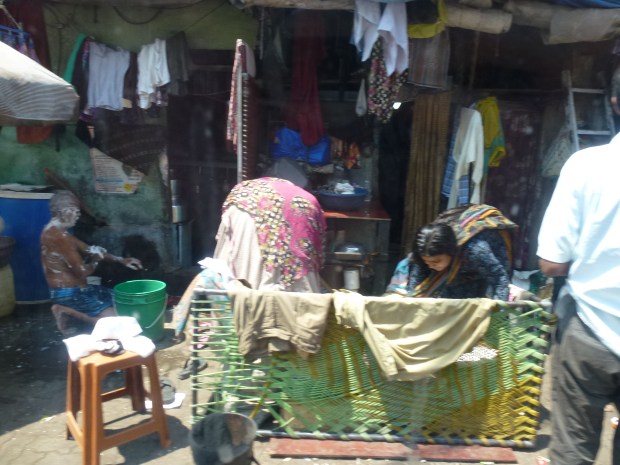
Life on the streets in Mumbai – note the gentleman bathing out of a bucket.

While these slums still exist, they are shrinking as the government bulldozes old neighborhoods and puts the population into new high rise accommodations. It’s likely that one day the slums will be just a memory.

Contrary to what might be a typical perception, these slums are a beehive of hard work and productivity. We saw industrious people everywhere working with all kinds of materials: metal, glass, leather, cloth, dyes, and pottery clay to name a few.

Mumbai_Dharavi Slum(Recycling) (25)

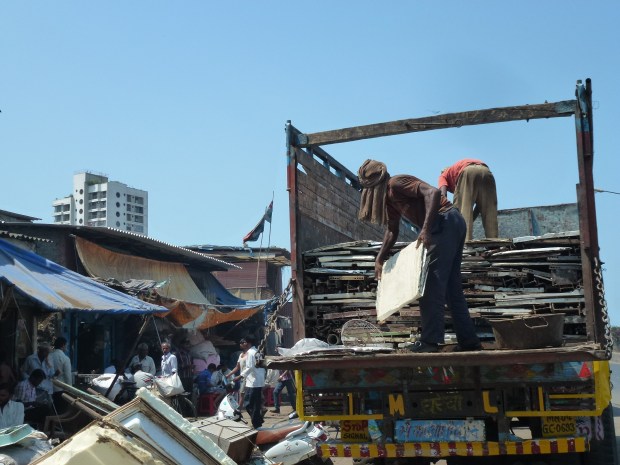
Metal items being loaded on a truck.

Many items are being prepared for recycling and very little, if anything, is wasted.

Mumbai_Dharavi Slum (Recycling) (22)

Recycling washing machines in the slums.

The people working here seemed to be very willing to let us wander around and check out their shops and working environment.

Mumbai_Dharavi Slum (Pottery) (5)

Mixing the pottery clay.

Mumbai_Dharavi Slum (Pottery) (4)

A pottery worker in Dharavi slum.

The Fishing Village. Another area of industry in Mumbai is the fishing village. Boats and nets are everywhere and the smell of the sea is strong here. Not an area where I’d want to relax on the beach, but an interesting stop!

Mumbai_Fishing Village (9)

A view of the fishing village.

Mumbai_Fishing Village (6)

On the “beach” at the Fishing Village. I wouldn’t want to swim here, but we did see a gentleman swimming in from his boat (actually you can see his head right behind my head to the right).

Mumbai_Fishing Village (8)

Colorful fishing boats with a contrast of housing in the background.

The Laundry (Dhobi Ghat). This was one of the most fascinating parts of our tour. Huge volumes of clothing and other items from hotels are hand laundered here.

Mumbai_Dhobi Ghat (clothes washing) (5)

The huge outdoor laundry.

Mumbai_Dhobi Ghat (clothes washing) (4)

A worker washing clothes.

Mumbai_Dhobi Ghat (clothes washing) (1)

Another view of the laundry. Not sure I’d want my clothes washed here…

Clearly there is a system, but the volume of washing and variety of activity going on here boggles the mind. There are many laborers working in the various basins of water – washing, rinsing, and hanging clothes out to dry.

Leopold’s. This popular restaurant and bar figures prominently into the book “Shantaram” and therefore we had to stop by. It’s always fun visiting a place that you’re read about and seeing it in real life.

Mumbai_Leopold's Cafe (2)

Leopold’s Restaurant–pretty good food here!

The Mani Bhavan. This was Mahatma Gandhi’s residence in Mumbai. The whole residence has been turned into an excellent museum, containing exhibits about his life, with many pictures, displays and documents with the writings of this remarkable man who used nonviolence to have so much impact on obtaining India’s freedom from Britain.

Mumbai_Mani Bhavan (Gandhi Museum) (1)

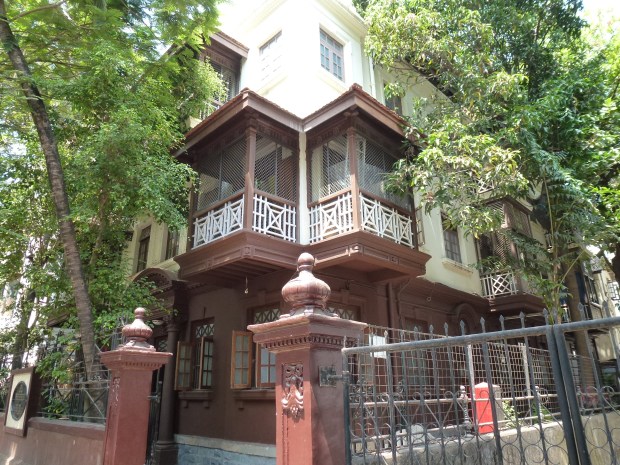
The Mani Bhavan, Gandhi’s residence in Mumbai, now a museum of his life.

Mumbai_Mani Bhavan (Gandhi Museum) (8)

A room where Gandhi would sit and weave his cloth.

Although the rest of India offers so much to the tourist, a visit wouldn’t be complete without a stop in Mumbai.

Marrakech to Essaouira – Goats in Trees and the Moroccan Coast

The last town we visited in Morocco was the coastal city of Essaouira, as a day trip from Marrakech. It was a 2.5 hour drive each way (177 km or 110 miles). The highway was good and you see some interesting sights along the way (see below). While we had a rental car, you can also find a bus tour out of Marrakech.

Morocco has a long coastline (1835 km or 1140 miles) and Essaouira was one of two stops we made along the coast (the other being Rabat). Most of our itinerary took us to vast and varied interior of this fascinating country.

Moroccan Coast (2)

An old mosque on the coastline just north of Essaouira.

The Moroccan coast does offer spots for surfing, swimming and windsurfing; however, since we were going on to the Canary Islands (which has some terrific beaches), we did not spend a lot of time on the coast in Morocco.

Essaouira Beach (29)

You can take a camel or horse ride along the beach.

Essaouira had a unique feel, with 18th century ramparts that give the town a Mediterranean European feel.

Essaouira (12)

A view of Essaouira’s ramparts.

Essaouira (21)

Cannon and an old gate along the ramparts.

Essaouira has a quaint old quarter with numerous restaurants and artisan shops.

Essaouira (6)

A gated entrance into the old part of Essaouira.

Essaouira (7)

One of the narrow alleyways in old Essaouira.

Essaouira (8)

One of the many shops found in old town of Essaouira.

Essaouira (16)

Fishing boats in Essaouira’s old port.

Essaouira is the third largest fishing port in Morocco. In the 18th century, it was a major trading port with Europe, along with Tangier.

One of the most interesting sights we saw was on our way to Essaouira. There are numerous argan trees along the highway, and imagine our surprise when we saw goats standing in the argan trees!

Goats in Trees (2)

Goats in the argan trees, seen right off the road between Marrakech and Essaouira.

The goats climb the trees, and eat the argan fruit. The seeds/nuts are then “pooped out”, and then processed into argan oil, a highly valued ingredient in many hair care and other products for which Morocco is famous. Next time you get shampoo with argan oil, you’ll know where it comes from!

Marrakech (or Marrakesh) – The Hub of Morocco

One of the most visited cities in Morocco is Marrakech, and with good reason. There is a lot to do and see here. Marrakech was the crossroads of North African trade routes and the capital of Morocco for centuries. The city dates back to the 12th century.

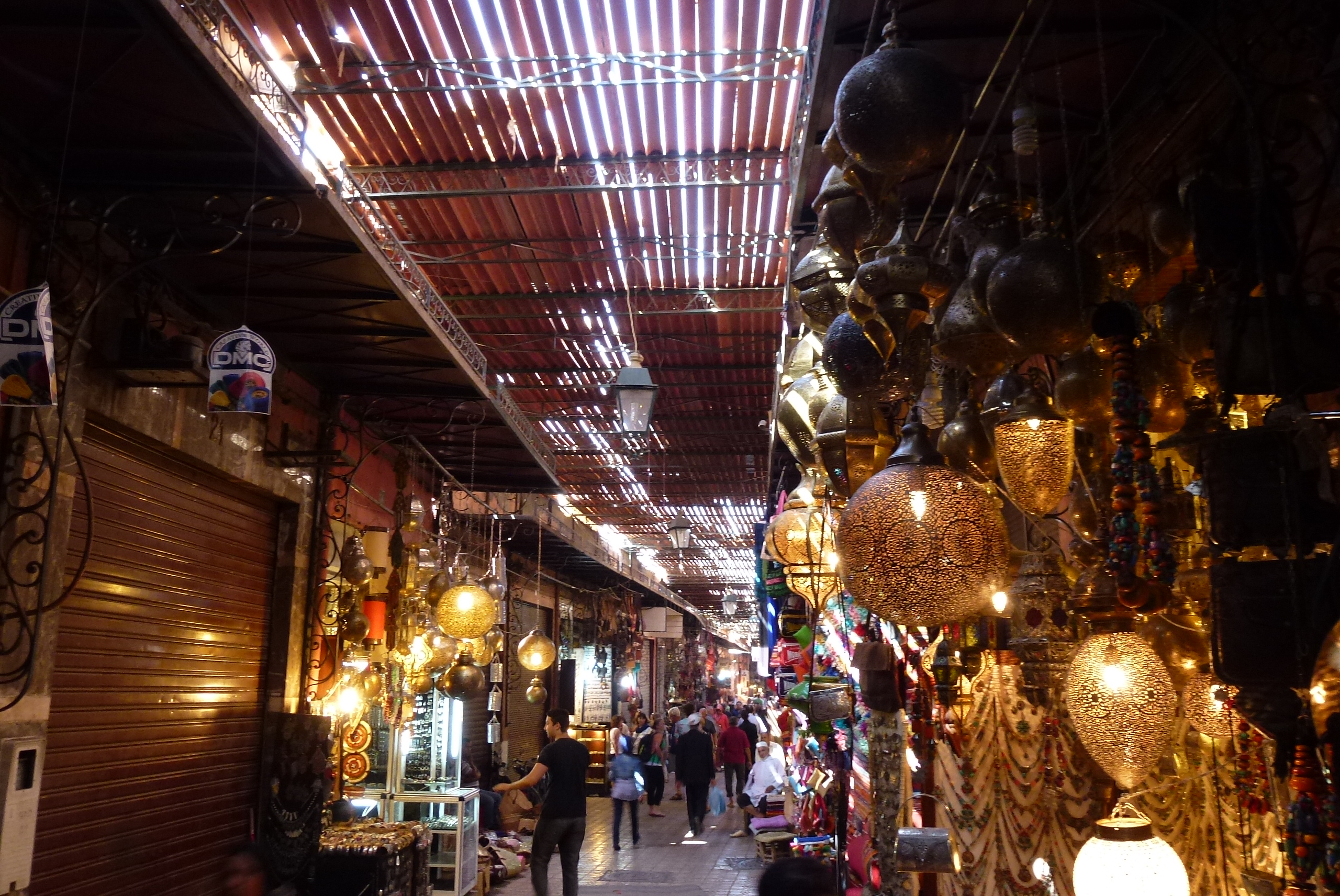
A street scene in the Medina of Marrakech.

A street scene in the Medina of Marrakech.

Like many old Moroccan cities, the oldest part (called the Medina) of Marrakech is surrounded by a wall with numerous gates. Inside the gates are a maze of narrow alleys and interesting sights.

You have your choice of lamps at this shop in Marrakech's Medina.

You have your choice of lamps at this shop in Marrakech’s Medina.

Outside the Medina, you’ll find the modern Marrakech with beautiful apartment buildings, trendy shopping boutiques and even McDonald’s. It’s like two completely different worlds.

We happened to arrive on the day of Eid al-Adha (Festival of Sacrifice), an Islamic holiday where thousands of sheep all over the country meet their maker, and families cook and share the meat – almost like Thanksgiving! In the city on this day there were small fires everywhere with roasted (and burnt) sheep flesh (including heads and entrails) – what a wonderful smell greeted us!

Some of the sheep fires. Hard to describe the sights and smells through a photo.

Some of the sheep fires. Hard to describe the sights and smells through a photo.

Loads of hides from the freshly slaughtered sheep.

Loads of hides from the freshly slaughtered sheep.

By the end of the next day, most of this celebration mess was cleaned up and the city was pretty much back to normal.

Here are some of the major sights:

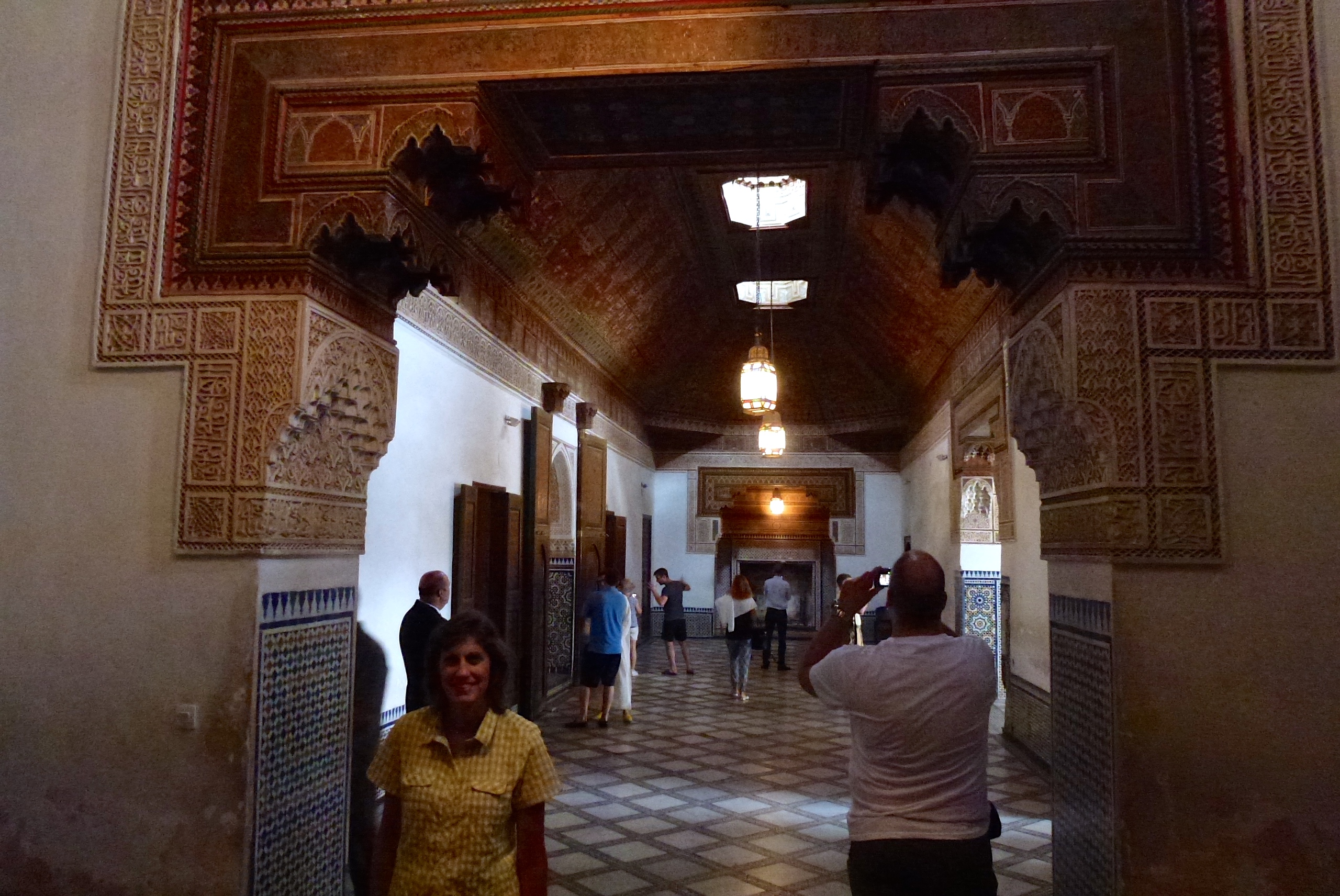
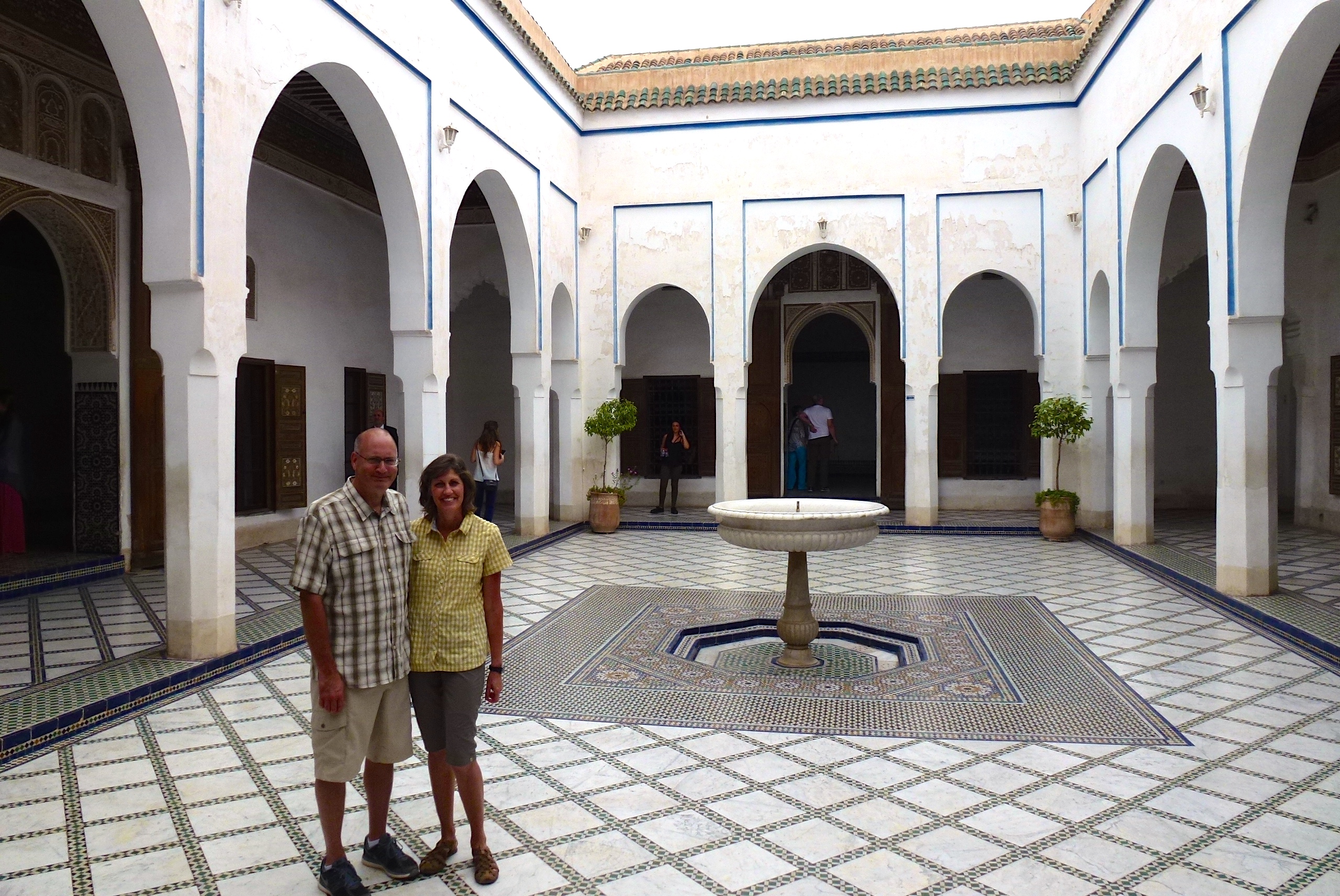
Bahia Palace. This palace is not old by Marrakech standards (mid 1800’s) but is beautiful and contains a number of interesting chambers. It was built for grand advisors to the sultan.

One of the reception rooms in Bahia Palace.

One of the reception rooms in Bahia Palace.

One of the many beautifully decorated ceilings in Bahia Palace.

One of the many beautifully decorated ceilings in Bahia Palace.

In the Harem courtyard. Four wives and 24 concubines inhabited this part of the palace.

In the Harem courtyard. Four wives and 24 concubines inhabited this part of the palace.

The quarters of the

The quarters of the “favorite wife”.

El Badi Palace. This huge palace complex is a testament to the wealth gained from the African caravan routes that came through Marrakech. It was built in the late 16th century and is largely in ruins now, but does retain its huge outer walls and some other remnants of structures worth visiting.

A view of the walls and an entrance into the El Badi Palace ceremonial grounds.

A view of the walls and an entrance into the El Badi Palace ceremonial grounds.

The large pool at El Badi Palace.

The large pool at El Badi Palace.

What a place it must have been in its heyday! One of the treasures housed on the grounds is the original minbar (or pulpit) from the Koutoubia Mosque (discussed below). It is an incredible work of art, with thousands of intricate wood designs and carvings, which took eight years to complete. It was crafted in the 1100’s.

The 12th century minbar - eight years in the making! An incredible piece of art and history.

The 12th century minbar – eight years in the making! An incredible piece of art and history.

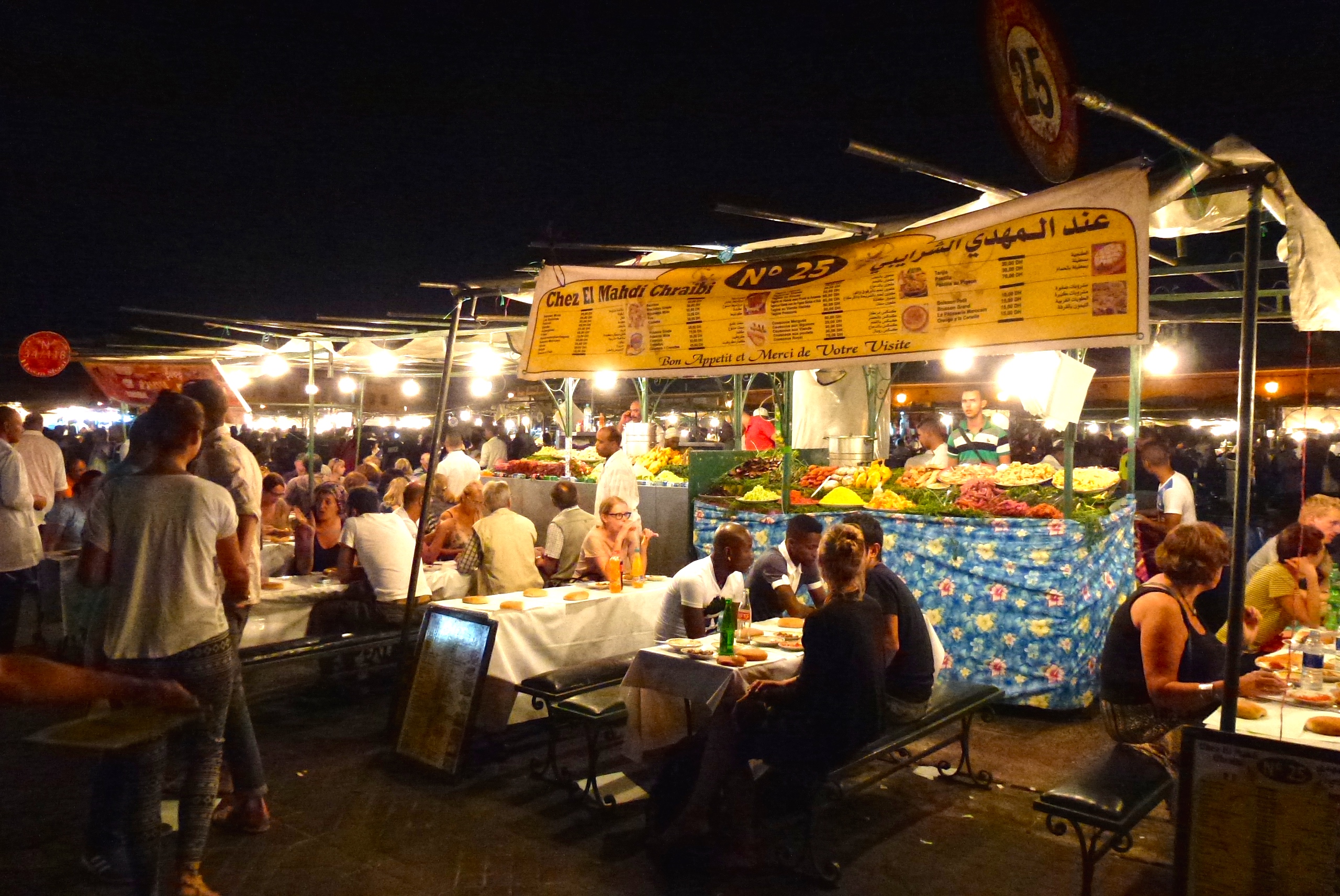
Jemaa el Fna (The Main Square). This is an open area in the center of the Medina and the hub of Marrakech nightlife. It was interesting to watch it come alive as the sun set.

Sun setting over the Jemaa el Fna.

Sun setting over the Jemaa el Fna.

Food stalls in Jemaa el Fna.

Food stalls in Jemaa el Fna.

This is a city that comes out at night in the main square – with numerous food stalls, snake charmers, a variety of other entertainers, games and all kinds of locals and tourists mingling. A number of surrounding restaurants provide a view over the square, but eating at one of the food stalls is a bit cheaper and provides a good option to rub shoulders with fellow travelers and locals.

Koutoubia Tower & Mosque. Considered the “most perfect minaret” in North Africa and the symbol of Marrakech. The Mosque is not open to tourists, but there are lovely gardens around the mosque. This is an old structure, dating back to the late 12th century.

A view of the Koutoubia Tower.

A view of the Koutoubia Tower.

The Souks. These are mainly just north of the Jemaa el Fna and are fun to wander through. There are hundreds of shops containing all kinds of goods. One wonders how they all stay in business. They are more or less organized by craft. Early morning or late afternoon are the best times to visit.

One of the alleys in the Marrakech souks.

One of the alleys in the Marrakech souks.

City Gates. Bab Agnaou was one of the two original entrances to the citadel or Kasbah of Marrakech – which was the main royal residence or fortress.

The Bab Agnaou gate.

The Bab Agnaou gate.

Saadian Tombs. Near the Bab Agnaou is the Kasbah Mosque and the Saadian Tombs. These beautiful tombs were constructed by the same dynasty (the Saadians, who ruled Morocco from 1554 to 1669) that built the El Badi Palace.

The Kasbah Mosque and minaret.

The Kasbah Mosque and minaret.

Interior detail of the Saadian Tombs.

Interior detail of the Saadian Tombs.

There is usually a line for viewing these tombs, but it moves pretty quickly. Have your cameras ready so you can take your pictures before others are pressing for their turn.

Practical Information: We stayed at a lovely riad (Riad Alnadine), which are old wealthy merchant houses turned into guest residences in the center of the Medina. It’s owned and run by a French couple and was comfortable, with a great rooftop terrace for breakfast and relaxing and enjoying the open air.

Our lovely French hosts and traveling companions in Marrakech, in the courtyard of their riad.

Our lovely French hosts and traveling companions in Marrakech, in the courtyard of their riad.

While no visit to Morocco would be complete without a visit to Marrakech, be sure to visit other parts of this fascinating country. We spent a day and a half exploring the city and then took another day trip to the coastal city of Essaouira (highly recommended) which I will share in a separate post.

Reference: The Lonely Planet Guide to Morocco

At the Edge of the Sahara – the Dunes of Erg Chebbi

From Fez we made our way south through the Atlas Mountains and on to Merzouga (about 9—10 hours by car, split over 2 days) which is one of the main desert outposts in Morocco (the other being near Zagora, even further southeast).

The drive down to Merzouga was interesting, with a varied contrasting landscape of mountains, desert, and oases with occasional kasbahs along the road.

Driving through the forest in the Atlas Mountains.

Driving through the forest in the Atlas Mountains.

An abandoned kasbah on the way to Merzouga.

An abandoned kasbah on the way to Merzouga.

One of the many contrasts on the way to Merzouga - palmeries (oases) with the desert background.

One of the many contrasts on the way to Merzouga – palmeries (oases) with the desert background.

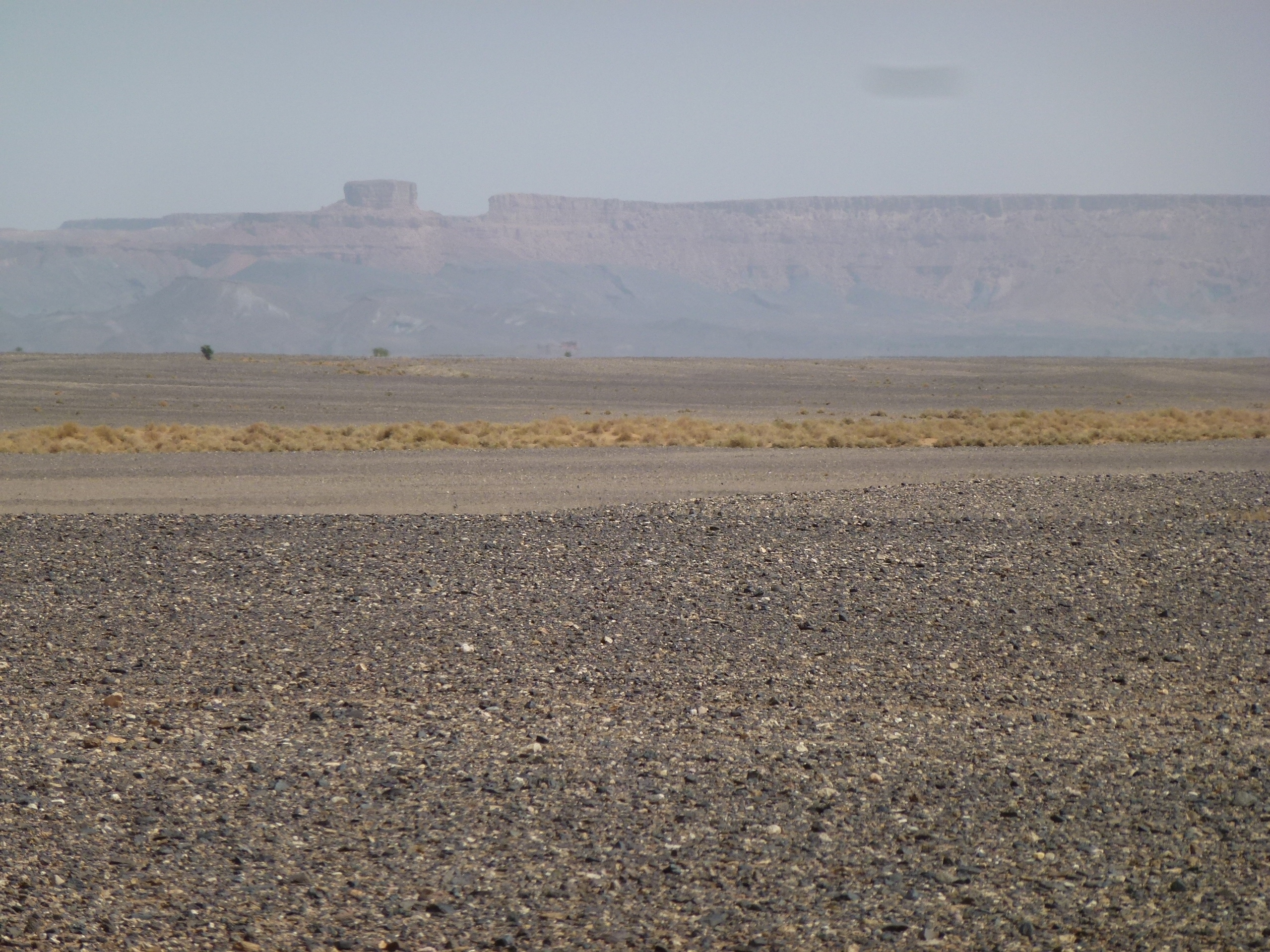
Right before reaching Merzouga the landscape turns pretty bleak.

Right before reaching Merzouga the landscape turns pretty bleak.

Merzouga is a small town with dirt roads. It has a few shops, but other than that, it’s pretty quiet out there, and you feel like you’re way out in the country.

A view of Merzouga from the top of our hotel.

A view of Merzouga from the top of our hotel.

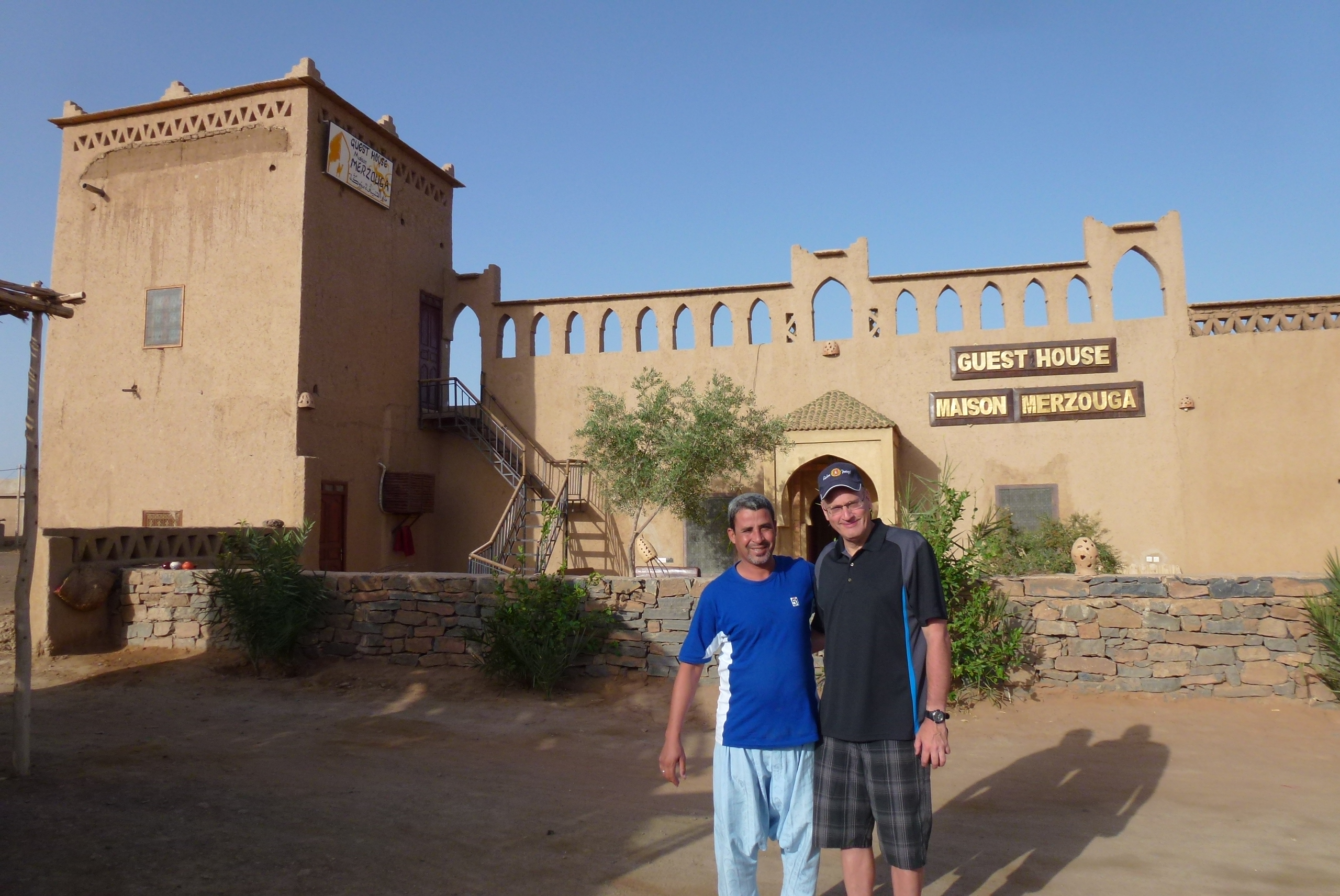
Our guest house in Merzouga. The owner helped us arrange a day tour and camel ride.

Our guest house in Merzouga. The owner helped us arrange a day tour and camel ride.

Our room in Merzouga - very comfortable, with adobe-type walls and tile floor.

Our room in Merzouga – very comfortable, with adobe-type walls and tile floor.

The pool at our hotel, which we enjoyed in the afternoons.

The pool at our hotel, which we enjoyed in the afternoons.

We spent two nights in Merzouga with a day in between on a desert tour followed by a camel ride in the evening. There were a handful of other tourists, but it was pretty quiet in this part of the country, at least in October. Our desert driver was great, and spoke pretty good English.

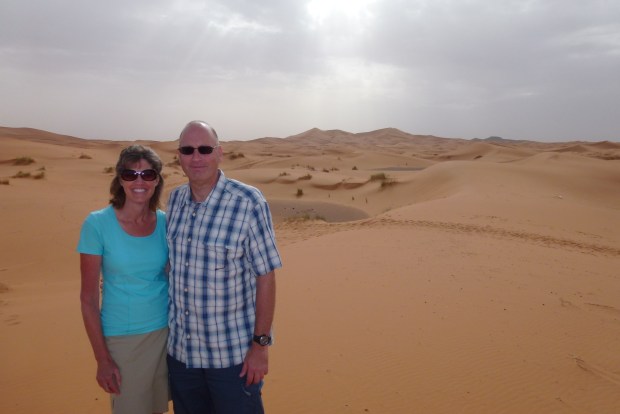
Our driver with our wives. He was very helpful and provided a good overview of the area.

Our driver with our wives. He was very helpful and provided a good overview of the area.

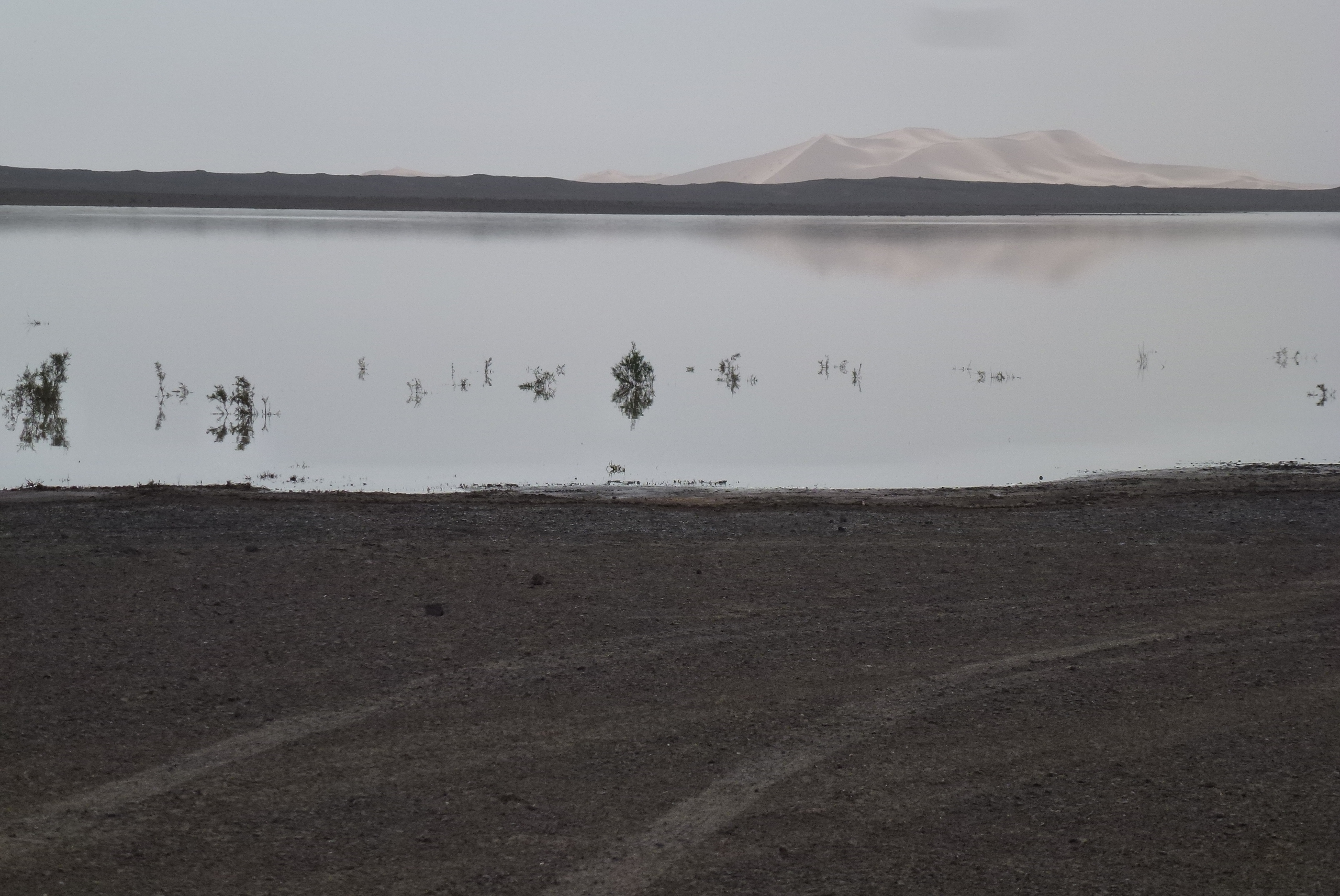
Not a mirage - an actual lake in the desert. They had some rain recently. It's several feet deep.

Not a mirage – an actual lake in the desert. They had some rain recently. It’s several feet deep.

An abandoned mining community in the desert.

An abandoned mining community in the desert.

One of the desert mines - they mined quartz and lead.

One of the desert mines – they mined quartz and lead.

A berber camp in the desert.

A berber camp in the desert.

A berber grave yard. No names, but the gender is determined by the placement of the headstones.

A berber grave yard. No names, but the gender is determined by the placement of the headstones.

Ancient sea life fossils in the desert - they are found throughout Morocco. Obviously at one time most of this country was a sea bed.

Ancient sea life fossils in the desert – they are found throughout Morocco. Obviously at one time most of this country was a sea bed.

Children showing us their homemade dolls and other trinkets.

Children showing us their homemade dolls and other trinkets.

A well. Surprisingly, the water table is pretty high - water is found just a few feet below the dunes!

A well. Surprisingly, the water table is pretty high – water is found just a few feet below the dunes!

Merzouga is close to the Algerian border (only about 8 miles away).

The Algerian border is the high ridge in the distance.

The Algerian border is the high ridge in the distance.

As shown above, there is a lot more to see than just towering sand dunes (which are also cool). We got to see a variety of things, and it was a fun way to spend the day.

Riding our camels into the dunes.

Riding our camels into the dunes.

A view of the Erg Chebbi dunes at sunset.

A view of the Erg Chebbi dunes at sunset.

Don’t miss the desert experience when visiting Morocco!

A Visit to Hearst Castle

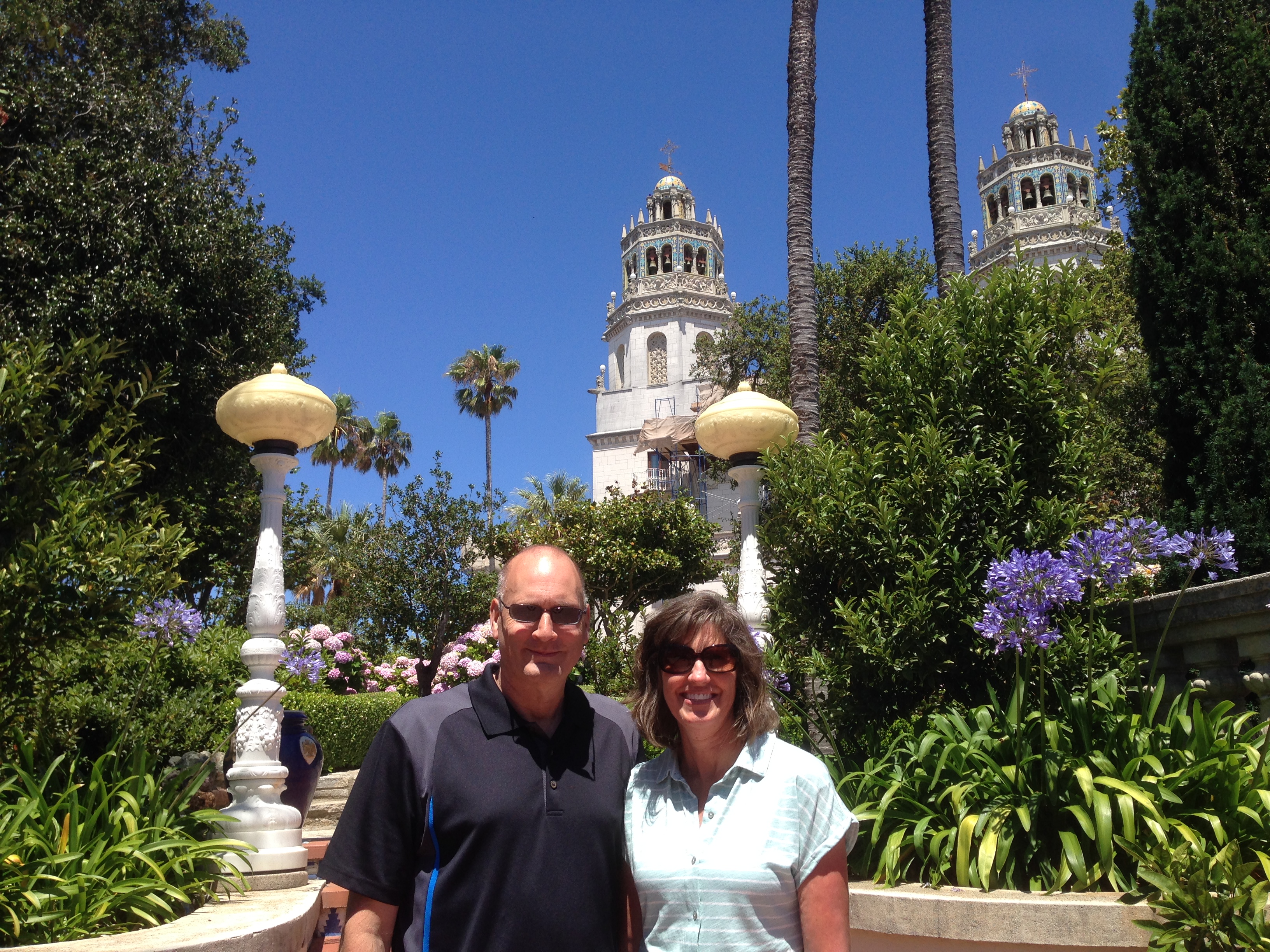
The castle grounds are beautiful.

The castle grounds are beautiful.

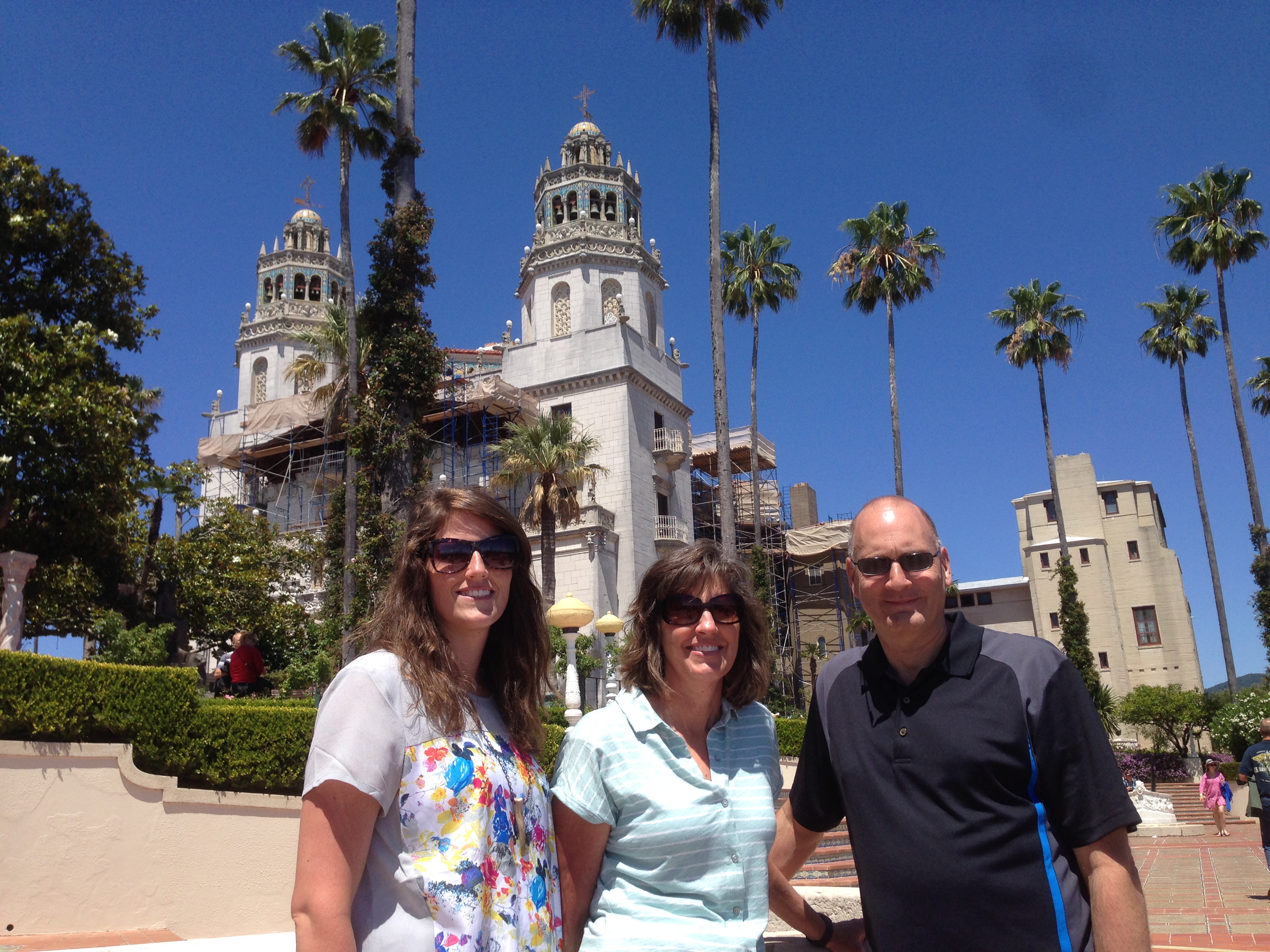
If you want to visit a castle and not leave the U.S., Hearst Castle is your place. Although not old compared to the castles of Europe, Hearst Castle reminded me of those magnificent structures and for good reason.

Another view of the castle exterior.

Another view of the castle exterior.

Hearst Castle is now a California state park. The setting is superb, in the hills overlooking the California coastline, near the small town of San Simeon, about half way between San Francisco and Los Angeles.

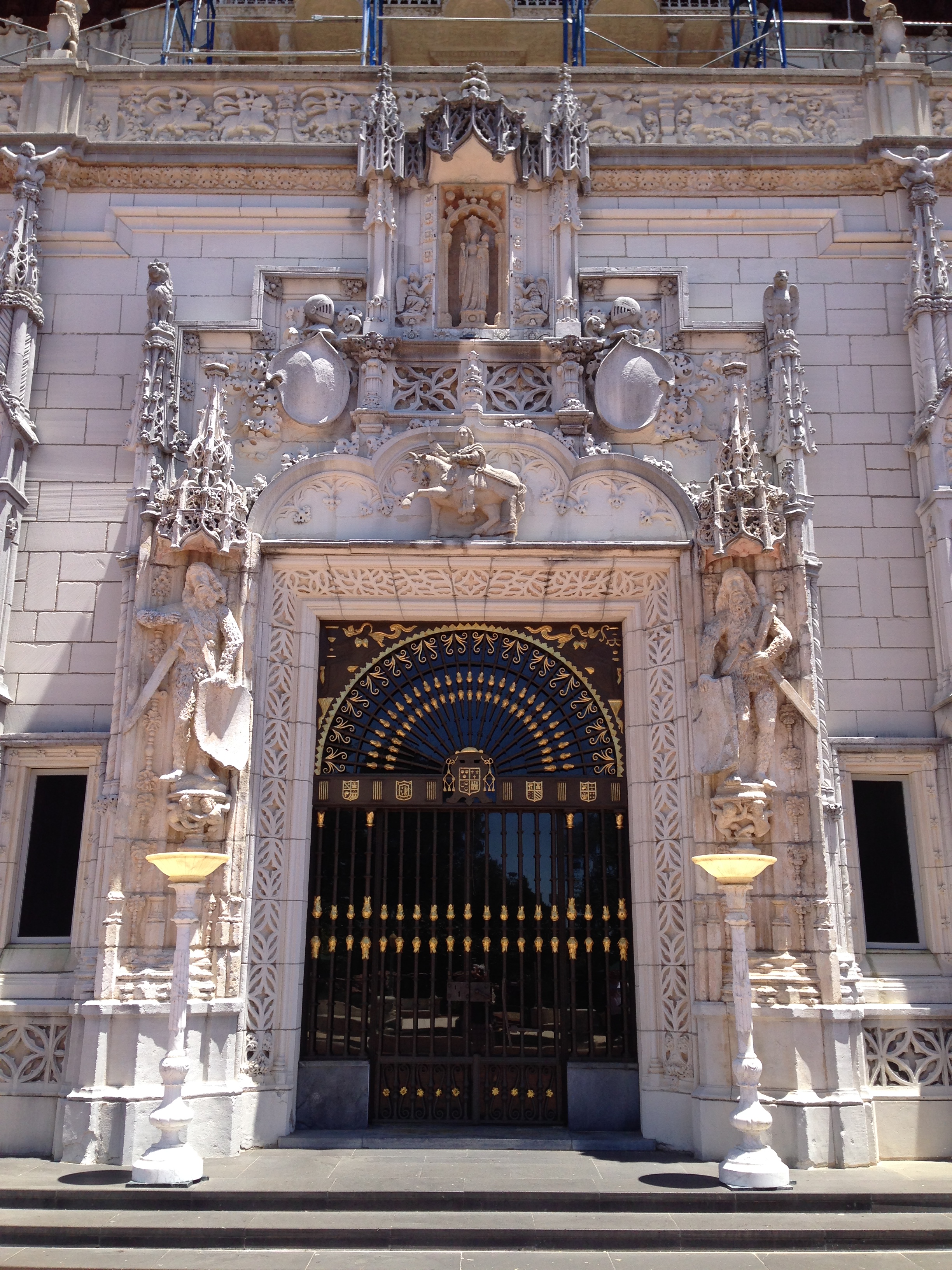
One of the entrances to the castle.

One of the entrances to the castle.

Much of the interior décor was imported from Europe and the mansion is essentially a museum with priceless works of art from all over the world.

The grand reception room. Where arriving guests would have gathered.

The grand reception room. Where arriving guests would have gathered.

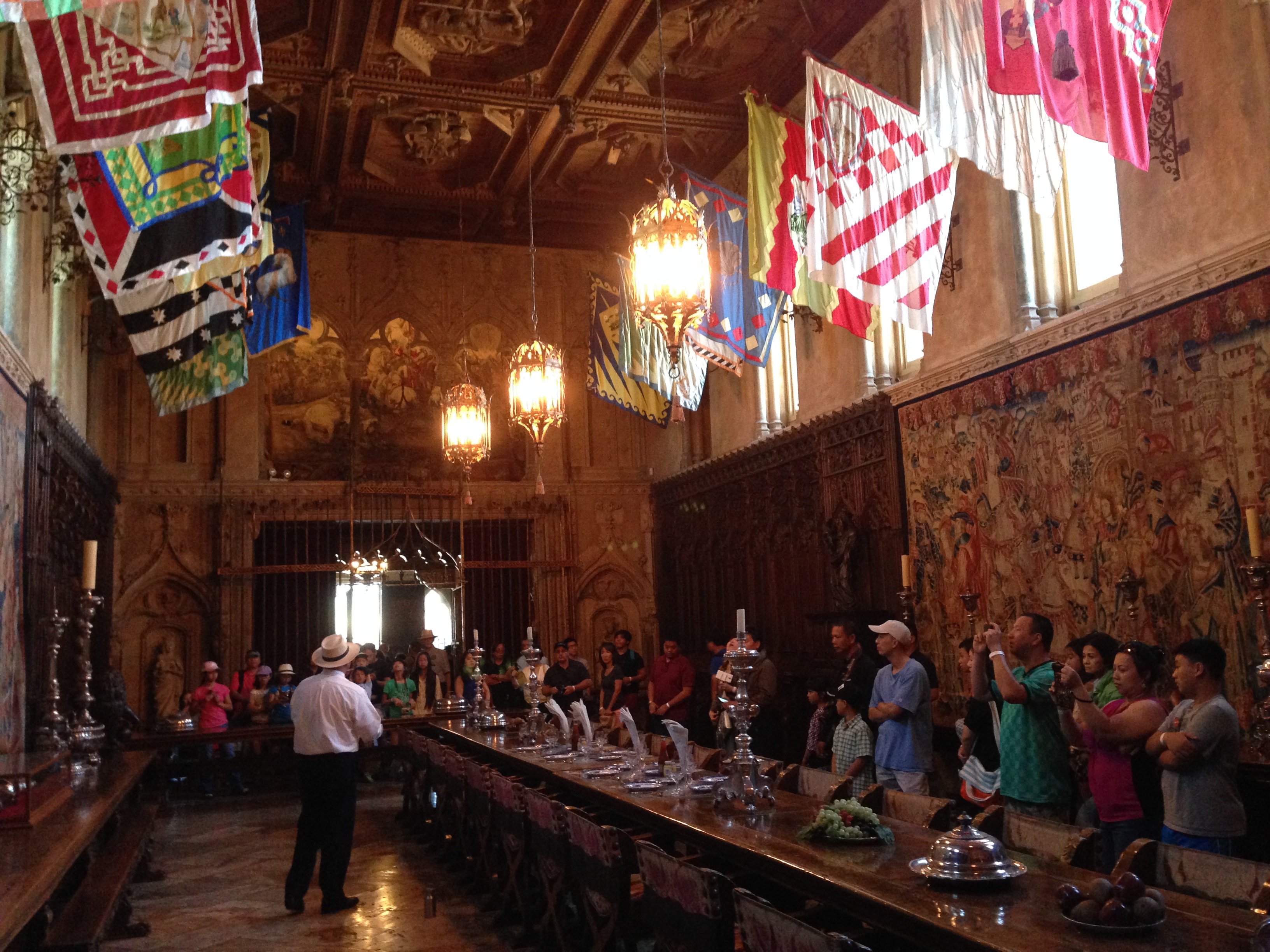
The dining hall.

The dining hall.

A parlor for after dinner drinks and smoking.

A parlor for after dinner drinks and smoking.

William Randolph Hearst (1863 – 1951) was a publishing magnate (newspapers, magazines) and spent a good part of his vast fortune building Hearst Castle on property where he had spent his youth camping with his family. His desire to build the castle began early. At about 10 years of age, he accompanied his mother on a year-long trip to Europe and gained a love for and fascination with European architecture, art and culture.

Billiard room.

Billiard room.

Unusual for the time, he hired a woman, Julia Morgan as his architect to design and oversee construction of the castle. Construction started in 1919 and continued for almost 30 years—to this day it is not complete. Hearst kept changing his mind and expanding his vision of what the castle and grounds should be. The engineering and logistics required to build the mansion in these hilltops and in this relatively remote location boggle the mind.

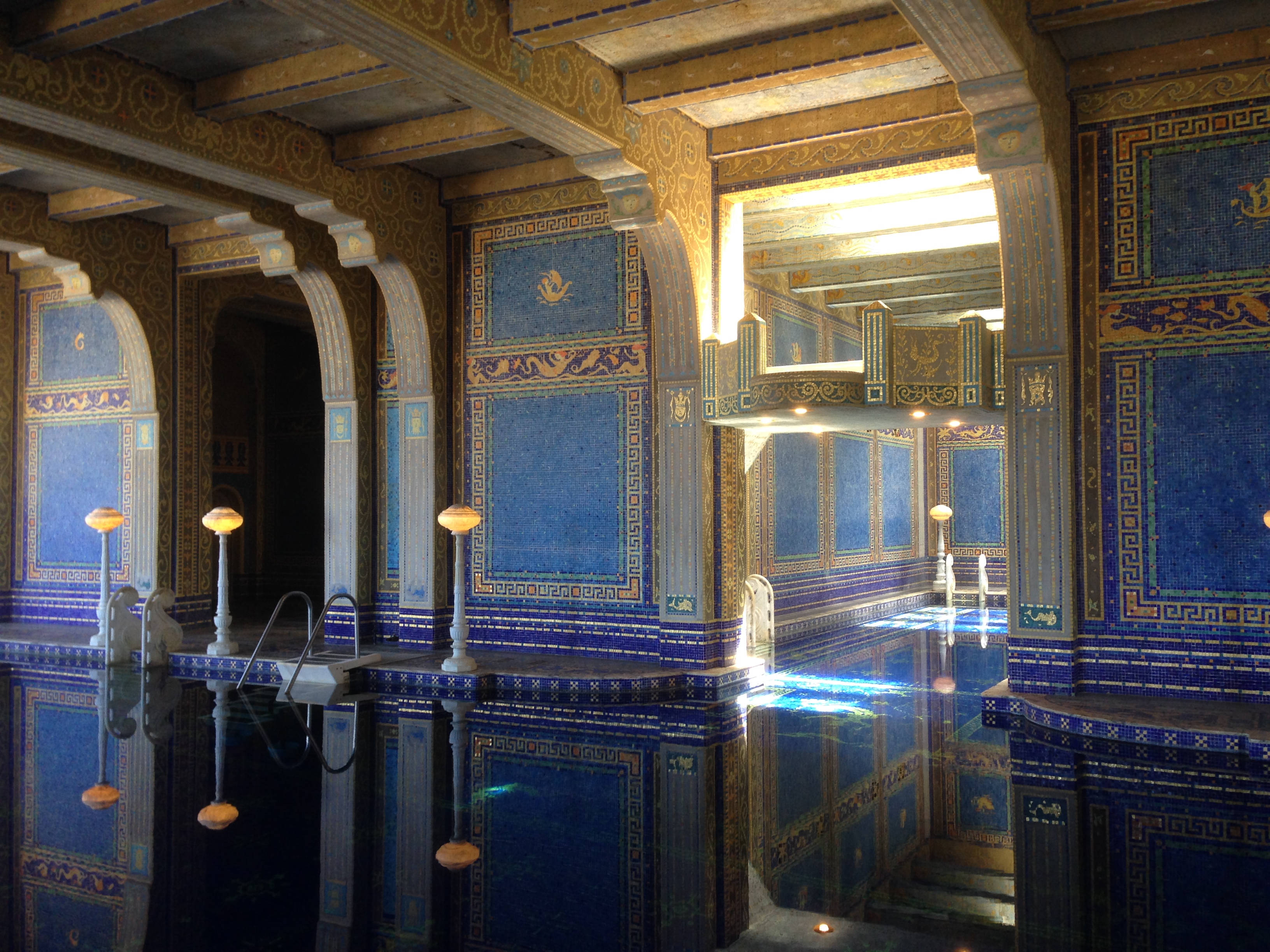
The indoor Roman pool, located underneath the tennis courts. There are more than a million Murano glass tiles here, some with a layer of gold leaf inside. The pool is 81 ft. long.

The indoor Roman pool, located underneath the tennis courts. There are more than a million Murano glass tiles here, some with a layer of gold leaf inside. The pool is 81 ft. long.

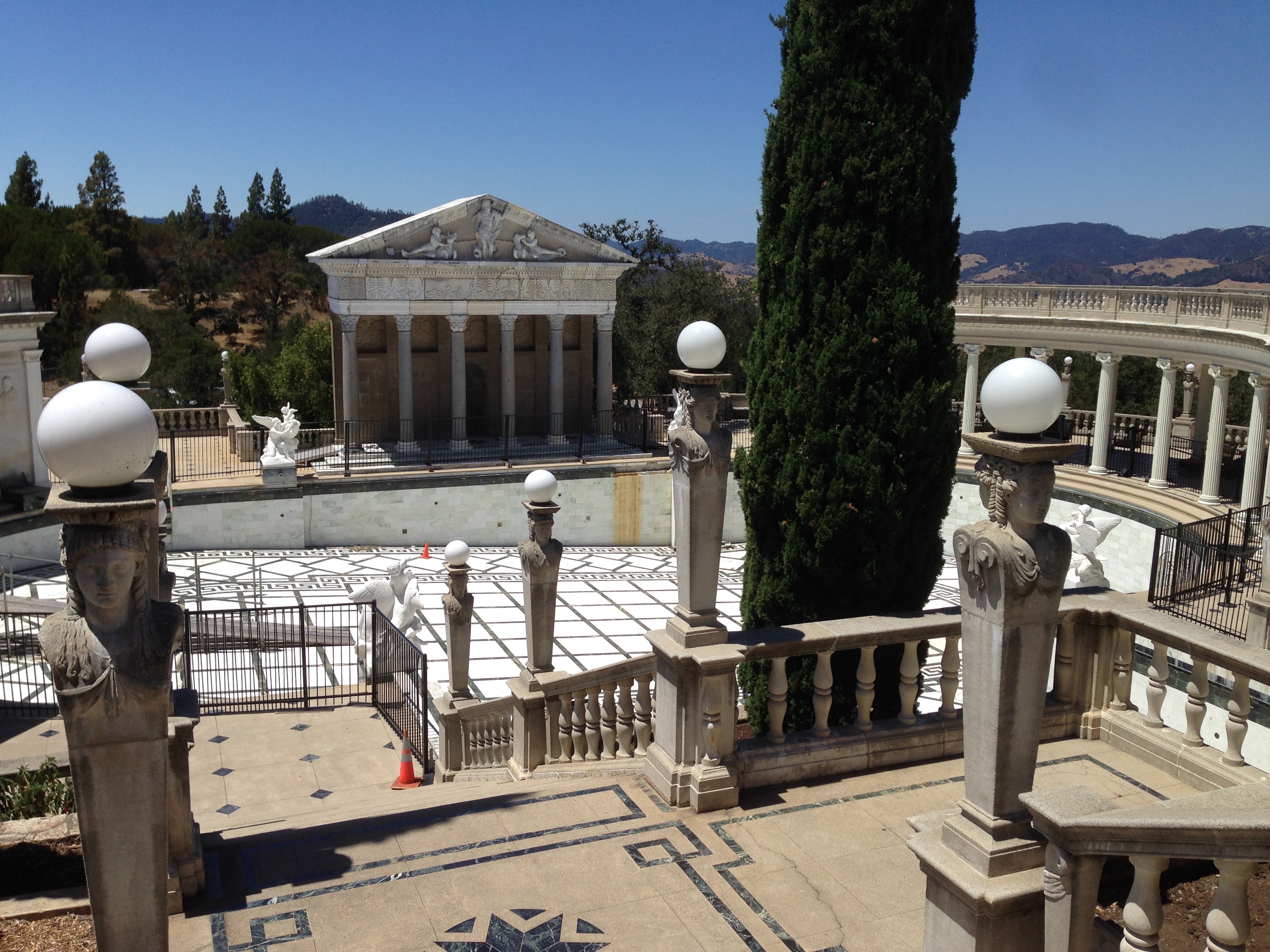
The famous Neptune Pool, with statues and Roman columns from Europe. The pool is undergoing some repair work currently.

The famous Neptune Pool, with statues and Roman columns from Europe. The pool is undergoing some repair work currently.

Inside the theater room for showing the latest Hollywood productions. Charlie Chaplin was a frequent guest at the castle.

Inside the theater room for showing the latest Hollywood productions. Charlie Chaplin was a frequent guest at the castle.

He even built an airstrip to make it easier to bring in supplies and guests. Hearst hosted the elite of Hollywood, political leaders and many others here. It was an incredible honor to be invited to Hearst Castle during its heyday.

One of the guest

One of the guest “cottages” as Hearst Castle.

Practical information:

Information on the castle can be found here. There are 3 main tours offered. Although the location is somewhat remote, Hearst Castle receives (and is prepared for) hoards of visitors. They have a large visitor’s center, museum and huge IMAX theater with a film about the building of the castle. Your ticket provides a specific time for your tour and buses take you from the visitors center up the road (about 15 minutes) to the castle. Plan on 2-3 hours for your visit. Also, about 3 miles north of San Simeon is a elephant seal beach area, where we saw probably 30 or more seals enjoying the sun and sand. It’s well worth the 10-minute drive to see these huge creatures laying on the beach enjoying the comfortable surroundings.

Elephant seals on the beach just north of Hearst Castle.

Elephant seals on the beach just north of Hearst Castle.

The World Heritage Sites of Ajanta and Ellora Caves – Part II

In my last post I shared our visit to the Ajanta Temple Cave complex in central India. In this post I will cover the Ellora Caves and the Daulatabad Fortress. The Ellora Caves are about 105 km (60 miles) north of Aurangabad (which is about 217 miles northeast of Mumbai).

As outstanding as the Ajanta Caves are, the Ellora Caves, which are carved out of solid rock, are even more stunning. While they don’t have the ancient temperas (paintings) seen in Ajanta, the magnificence of the structures and intricacies of the carvings—formed and shaped with rudimentary tools out of a rock escarpment is truly an amazing sight. These temples, monasteries and chapels were carved over five centuries starting with the Buddhist caves around 600 AD. There are 34 caves in all. The monks were clearly master stone masons.

Known as Cave 32, this is a Jain temple at the northern end of the Ellora complex.

Known as Cave 32, this is a Jain temple at the northern end of the Ellora complex.

Cave 15, a Hindu temple.

Cave 15, a Hindu temple.

The “granddaddy” structure is the Hindu Kailasa temple, which is the largest and grandest structure of the Ellora complex and the world’s largest monolithic structure. It is dedicated to Lord Shiva. It took 7,000 laborers about 150 years to create this magnificent temple.

The entrance to the Kailasa Temple.

The entrance to the Kailasa Temple.

Kailasa Temple from the courtyard.

Kailasa Temple from the courtyard.

One more view of Kailasa Temple - the people around the base give an indication of the enormous size.

One more view of Kailasa Temple – the people around the base give an indication of the enormous size.

A detail of Kailasa Temple showing some of the original paint decorations.

A detail of Kailasa Temple showing some of the original paint decorations.

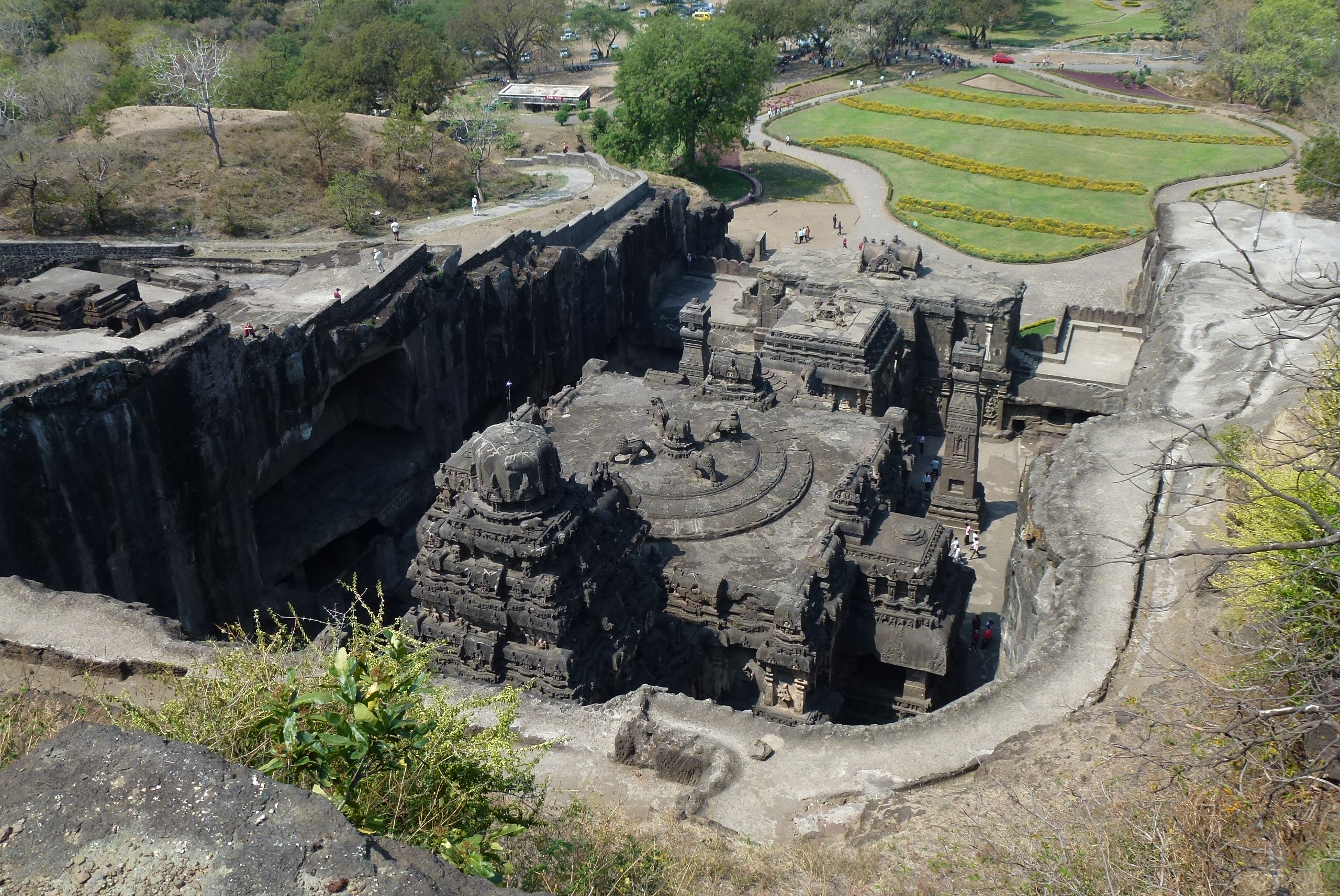
Although very few do it, it is worth hiking up behind the temple to look down on the structure from above and to get a better feel how this temple emerged from a cliff side of rock (go to the right of the temple entrance and hike up the hill). Imagine taking a hammer and chisel and starting to chip away at the hard ground, and having to precisely carve to create this masterpiece – one mistake and the structure would have to be redesigned – there is no forgiveness working in the solid rock.

A view of the Kailasa Temple from above - imagine just a rock hillside and starting to hammer and chisel away at the rock with this beautiful structure in mind.

A view of the Kailasa Temple from above – imagine just a rock hillside and starting to hammer and chisel away at the rock with this beautiful structure in mind.
A closer look at Kailasa Temple from above.
A closer look at Kailasa Temple from above.

Practical Information: There are Buddhist, Hindu and Jain Cave groupings within the complex. We started at the north end (Jain caves) and worked our way south (Hindu caves are in the middle and Buddhist caves are in the southern grouping). The caves stretch over a 2 kilometer (about 1.2 mile) length of rock escarpment, so be prepared for some walking. You can have your driver drop you off at the north end and work your way south on foot. The main car park is near the Kailasa Temple, in the middle of your route. Guides are available if desired. The Ellora Caves are closed on Tuesday, so plan your visit accordingly.

Daulatabad Fortress

This fortress can be seen right off the road on the way to the Ajanta Caves. Since the Ajanta caves are closer to Aurangabad, it’s probably best to visit this Fortress on the same day as the Ajanta caves. The Fortress dates back to the 1100’s and was continually developed over the next several centuries.

One of the gated entrances to Daulatabad Fortress.

One of the gated entrances to Daulatabad Fortress.

A minaret at Daulatabad Fortress.

A minaret at Daulatabad Fortress.

A deep moat - another defensive feature inside the Fortress.

A deep moat – another defensive feature inside the Fortress.

One of the most fun things we did was to go through a literal “bat cave” on the way to the top. This is a long tunnel (perhaps 50 yards or more length) that is completely dark (bring a flashlight) and the thought of knowing that there are thousands (no joke) of bats hanging right over your head was an experience!

The entrance to the "dark passage" which is long, winding and full of bats. It was purposely designed to confuse enemies seeking to take the fort.

The entrance to the “dark passage” which is long, winding and full of bats. It was purposely designed to confuse enemies seeking to take the fort.

A few of the bats visible just inside the entrance to the dark passage.

A few of the bats visible just inside the entrance to the dark passage.

Bring a hat unless you want to take a chance on getting bat dung in your hair!  You definitely hear the thousands of bats and near the entrance you can see them in the little light that is available. This tunnel is not for the faint of heart.The Fortress covers a huge area and can be best appreciated from climbing up to the top structure that sits on the highest point encircled by the walls – the walls spread out in each direction for miles.

After surviving the dark passage - we're hiking up to the top of the Fortress. Some of the extensive walls and defensive fortifications are visible in this image.

After surviving the dark passage – we’re hiking up to the top of the Fortress. Some of the extensive walls and defensive fortifications are visible in this image.

Reference: Lonely Planet Guide to India.

The World Heritage Sites of Ajanta and Ellora Caves – Part I

Although we didn’t know it at the time, we saved some of the best sights in India for the last part of our trip. From the desert city of Jaisalmer we drove back to Jodhpur and then flew to Aurangabad (via an overnight connection in Mumbai). Aurangabad is about 217 miles northeast of Mumbai.

Aurangabad is the gateway to the world-renowned Ajanta and Ellora Caves – both of which are incredible ancient temple complexes.

A road scene on our way to Ajanta.

A road scene on our way to Ajanta.

The two temple complexes are very different. The Ajanta Caves are largely carved INTO rock, the Ellora Temples are carved OUT OF rock.

A view of the path to the Ajanta Caves - you can see how they are carved into the rock face. Some entrances are more elaborately carved than others.

A view of the path to the Ajanta Caves – you can see how they are carved into the rock face. Some entrances are more elaborately carved than others.

This post will focus on the Ajanta Caves, which were part of a Buddhist monastery complex. The oldest caves date back to the 2nd century BC, and additional ones continued to be hewn out of the rock until the 6th century AD.

My mother-in-law getting a ride from porters up to the caves.

My mother-in-law getting a ride from porters up to the caves.

When the temples at Ellora were emerging from the rock, Ajanta began to decline and was eventually forgotten until the 1800’s when it was discovered by chance by a British hunting party. The paintings (actually temperas, which use pigment with a binding substance like egg yolks) are amazing, but are mostly kept in very low illumination to keep them from fading and being further destroyed.

An example of the cave paintings.

An example of the cave paintings.

There are about 30 caves, most of which are accessible, they are numbered and are more or less in order as you visit them. We visited about 10 of the caves. There are plaques (in English) outside each cave that provide some information, and then you are free to wander inside.

An example of the plaques outside each cave.

An example of the plaques outside each cave.

Interior view of Cave #1 with its tempera decorations. Amazing to think that these paintings are almost 2,000 years old.

Interior view of Cave #1 with its tempera decorations. Amazing to think that these paintings are almost 2,000 years old.

Interior view of Cave #2.

Interior view of Cave #2.

A large Buddha in Cave #6.

A large Buddha in Cave #6.

Exterior view of Cave #17.

Exterior view of Cave #17.

The 'Sleeping Buddha' in Cave #26.

The ‘Sleeping Buddha’ in Cave #26.

The incredible interior of Cave #26. Remember, all this was carved out of solid rock.

The incredible interior of Cave #26. Remember, all this was carved out of solid rock.

One other view in Cave #26.

One other view in Cave #26.

Cave #24 - unfinished, giving a feel for the work required to carve just one of these beautiful temples.

Cave #24 – unfinished, giving a feel for the work required to carve just one of these beautiful temples.

In some caves there are guards present, to ward off flash photographs and to ensure the safety of the old paintings. The caves are in a horseshoe shape around a bend in a river. To get an overlook of the area, hike up to the viewing point at the bend of the river.

A view of some of the Ajanta caves from the hill above the river. Similar to the view the British hunting party would have seen.

A view of some of the Ajanta caves from the hill above the river. Similar to the view the British hunting party would have seen.

You’ll also see some waterfalls and lakes in the distance. What a stunning setting for the Ajanta Caves!

Practical Information: We hired a taxi to take us to the Ajanta Caves for the day. The driver waited patiently for us and returned us to our hotel that afternoon. The cost was about $20 US. The Ajanta Caves are about 105 km (60 miles) north of Aurangabad and the Ellora Caves are only about 30 km (18 miles) north of Aurangabad. Both sights could probably be visited in one very long day; however, to allow sufficient time, we visited them separately on two consecutive days. We were able to combine a visit Daulatabad Fortress the same day as the Ellora Caves, which was well worth the stop (I will cover both of these locations in my next post).

Fascinating Fez – Part 2

In addition to those sights mentioned in my first post on Fez, Morocco here are a few others. We enjoyed getting a feel for “real” life in Fez.

Tanneries. One of the highlights of a visit to Fez is a visit to the tanneries. These tanneries are world famous and a real sight to behold. They were the commercial backbone of Fez for hundreds of years. The process hasn’t changed much in all that time, although more sophisticated chemical treatments are used more frequently now rather than the natural dyes used in the past. The workers pass down their knowledge and skills from one generation to the next.

An overlook of Chouwara Tanneries. The white vats in the foreground contain pigeon dung, used to clean the skins.

An overlook of Chouwara Tanneries. The white vats in the foreground contain pigeon dung, used to clean the skins.

If you want to gain a new appreciation for your own job, just observe the workers here for awhile. Although fun to watch, I can’t imagine what life would be like standing in these vats day after day breathing in the strong odors and working in these conditions for a lifetime.

The large Chouwara tannery is located on the southern side of the Medina and while there aren’t signs pointing the way, just ask anyone for directions. There are several viewing areas located above leather goods shops. The proprietors will provide you with mint leaves to alleviate the smells.

A closer look at the Chouwara Tanneries. The workers are constantly moving from vat to vat to keep the skins moving through the process.

A closer look at the Chouwara Tanneries. The workers are constantly moving from vat to vat to keep the skins moving through the process.

Once you have observed the tanning process and workers, you then exit through the huge shops where can buy high quality leather jackets, purses and other leather goods for a pretty reasonable price. Surprisingly, there was no pressure to buy anything. My guess is that with the volume of tourists coming here, the shops do a pretty good business.

We happened by chance upon the Gueliz tannery located in the heart of the Medina. Our book seemed to downplay a visit here but Gueliz was actually a lot of fun and a more intimate experience, since you can walk through the middle of the tanning “factory” and among the workers treating the hides.

The recently skinned sheep hides await the first step in the processing.

The recently skinned sheep hides await the first step in the processing.

A worker in the vats at Gueliz tannery. I am really glad I don't have his job!

A worker in the vats at Gueliz tannery. I am really glad I don’t have his job!

Colored sheep hides laying out to dry. These will be made into shoes, purses and other goods.

Colored sheep hides laying out to dry. These will be made into shoes, purses and other goods.

A worker doing some final processing of the leather before it turns into a product for sale.

A worker doing some final processing of the leather before it turns into a product for sale.

At this tannery there was a Berber side and an Arab side, an arrangement probably dating back among these ethnic groups hundreds of years. We met some Berber families who accompanied their husbands to Fez to work here and were staying at a “hotel” (if you can use that word to describe the living quarters).

The Berber

The Berber “hotel” where families of the tannery’s workers are housed.

Craft shops. On a hillside right behind and above the Gueliz tannery was a craft shop area. When we first entered, we thought it was a slum community and what we found in reality was a beehive of industry – wool, leather, woodworking, and many other crafts. People were everywhere producing and refurbishing many goods.

The craft shops area in Fez.

The craft shops area in Fez.

In the craft shop area - wool, wool everywhere!

In the craft shop area – wool, wool everywhere!

The Jewish Quarter (Mellah). This is an old part of Fez that doesn’t have any sights per se but was fun to wander around, seeing all the old decrepit buildings and signs of a thriving Jewish community.

A view of a main street in the Jewish Quarter, known as Mellah (

A view of a main street in the Jewish Quarter, known as Mellah (“salt” in Arabic).

Fez had a pretty good size Jewish community in the 17th – 19th centuries and there are remnants from this era – some unique architecture, a few Hebrew signs, Stars of David, synagogues and cemetery.

A sign noting this building is a 17th century synagogue.

A sign noting this building is a 17th century synagogue.

Look closely at the decorations on the 2nd story and you'll see a Star of David, and note the year - 1531.

Look closely at the decorations on the 2nd story and you’ll see a Star of David, and note the year – 1531.

It is now an area inhabited by poor Muslim immigrants from the countryside.

Shuttered windows in the Jewish Quarter, which are unique features of this area.

Shuttered windows in the Jewish Quarter, which are unique features of this area.

There are still a few Jewish families here, although most emigrated to Casablanca, France or Israel after Morocco gained its independence from France in 1956.

We had a great hotel in Fez, called Dar Dalila. It was in the Medina, but in a quiet section near the exterior Medina wall. The interior was beautiful and our room was large and comfortable. I highly recommend this location. Nearby was a covered car park since a car is pretty much useless in the Medina.

The reception room in Dar Dalila.

The reception room in Dar Dalila.

Our room in Dar Dalila.

Our room in Dar Dalila.

Fez is definitely one of the highlights of a visit to Morocco and one of the most unique and fascinating places to visit in the world.

Reference: The Rough Guide to Morocco.

Fascinating Fez – Part 1

There’s so much to see in Fez I’m breaking this post into two parts. We arrived in Fez from Meknes (about 43 miles or 69 km). Fez was one of four imperial capitals of Morocco and was regarded as one of the holiest cities in the Islamic world due to its connection with Moulay Idriss who founded the city the late 8th century (see my post here for a little information on him). Travelers have been coming to Fez for a 1,000 years, its reputation as a center of learning religious heritage was known far and wide. Fez is a large city, and like most Moroccan cities it has a newer part (Ville Nouvelle) built by the French during their colonization period and an older section (the walled portion of the old city known as the Medina), which is huge, and is split into two parts (Fez el Bali and Fez el Jedid). Fez’s Medina is called the most complete medieval city in the Arab world. The streets and narrow alleyways wind all over and are intriguing to wander – don’t be surprised if you get a bit lost.

An centuries-old water clock in Fez. It has 12 windows and the outside is being restored, but no one really knows how it functioned.

An centuries-old water clock in Fez. It has 12 windows and the outside is being restored, but no one really knows how it functioned.

There are maps of the Medina available and the locals will help you out too. All kinds of fun things lurk behind almost every corner. We wandered into a small tannery area by accident (I was just peeking through a gate) and got a fascinating tour.

A hidden leather working area near a small tannery run by Berbers in old Fez.

A hidden leather working area near a small tannery run by Berbers in old Fez.

At another point we were taken up on top of a person’s house for a great view over the city.

A view of Moulay Idriss II's tomb from the roof top of a local's home we visited.

A view of Moulay Idriss II’s tomb from the roof top of a local’s home we visited.

The entrance to the tomb of Moulay Idriss II, a holy site in Islamic culture. He was the son of the founder of Fez and lived in the 9th century. He established Fez as a place of refuge for muslims retreating from Spain and other places.

The entrance to the tomb of Moulay Idriss II, a holy site in Islamic culture. He was the son of the founder of Fez and lived in the 9th century. He established Fez as a place of refuge for muslims retreating from Spain and other places.

Here as some of the highlights of Fez (more to come in another post). Walls and Gates. If you love medieval settings as much as I do, Fez will take you back in time. There are huge gates and walls everywhere and I didn’t figure out how they all connect. We wandered outside the walls in a few sections to get a feel for their extensiveness.

One of the main gate towers of Fez, known as Bab Sagma.

One of the main gate towers of Fez, known as Bab Sagma.

The gate known as Bab Boujeloud.

The gate known as Bab Boujeloud.

A market by the walls of Fez.

A market by the walls of Fez.

Merenid Tombs. Just outside the walled city on a hillside are the ruins of the Merenid tombs, former rulers of Fez in the 13th century. While the ruins aren’t much, the views overlooking the old city are terrific. There are 365 mosque minarets in Fez, but we didn’t try to count them.

A view of Fez and its old walls from the Merenid Tombs.

A view of Fez and its old walls from the Merenid Tombs.

Ruins of the Merenid Tombs.

Ruins of the Merenid Tombs.

Medersas. Medersa means “place of study”. These were student colleges and used largely as residence halls, since most teaching would be done in the mosques. Fez was a great center of learning and the architecture of these halls is stunning. We visited two. The layout is similar – a main courtyard, student cells, prayer hall and oratory. Medersa Bou Inania. This is one of the highlights of a visit to Fez. The dark cedar wood, tile work and stucco is beautiful. This building is the city’s only building still in religious use that non-muslims are permitted to enter. It was built in the 14th century.

Detail of the intricate carvings at Medersa Bou Inania.

Detail of the intricate carvings at Medersa Bou Inania.

A view of the courtyard of Medersa Bou Inania.

A view of the courtyard of Medersa Bou Inania.

Medersa el Attarine. This building was completed in 1325 and is also beautiful.

The courtyard of Medersa el Attarine.

The courtyard of Medersa el Attarine.

Another view of the courtyard of Medersa el Attarine showing the tile work.

Another view of the courtyard of Medersa el Attarine showing the tile work.

The narrow alleys of the Medina. As mentioned above, just wandering around the old Medina is fun. There are also a few squares where the locals gather.

The buildings are almost touching in this narrow Fez Medina alleyway.

The buildings are almost touching in this narrow Fez Medina alleyway.

Another alleyway in the Medina.

Another alleyway in the Medina.

A small square in the old Medina - Place en Nejjarine. There is a large museum in the background.

A small square in the old Medina – Place en Nejjarine. There is a large museum in the background.

Another small square, called Place Seffarine with copper pottery being created.

Another small square, called Place Seffarine with copper pottery being created.

In my next post, we’ll explore the tanneries – one of the most interesting sights to behold anywhere in Morocco and also the Jewish Quarter, a dilapidated part of Fez that is pretty much off the tourist radar. For a map of locations visited in Morocco, click here.

Jaisalmer – A Desert Mirage in Western India

A view of the walls and towers of Jaisalmer Fort.

A view of the walls and towers of Jaisalmer Fort.

From Jodhpur we drove to Jaisalmer, a city in the Thar Desert near the Pakistani border, about 177 miles (285 km) from Jodhpur. The old part of Jaisalmer is contained within the extensive walls of the fort that sits on a hill, rising above the desert. It has a different feel than other parts of India, due to the desert location. The ancient fort city was founded back in 1156 and is still inhabited by 3,000 people. Jaisalmer had a strategic position in the 16th century, it was on the camel train routes between India and Central Asia. The fort city has narrow alleyways, with apartments, temples and shops practically stacked on top of each other.

Entering Jaisalmer Fort through a succession of four gates on the northeastern side,

Entering Jaisalmer Fort through a succession of four gates on the northeastern side,

There’s a lot to do in this desert fortified city, here are the primary things we visited:

Jain Temples 

There are a number of Jain Temples within the fort. They take advantage of every inch of space within such a confined area. (Practical tip: Since you cannot wear shoes in the temples, bring your own “slipper socks” – otherwise your bare feet will get quite dirty).

Chandraprabhu Temple. This temple was built in 1509 and has many intricately sculpted pillars. It is small, with a couple circular levels and rotunda ceiling.

Interior view of Chandraprabhu Jain Temple.

Interior view of Chandraprabhu Jain Temple.

Rikhabdev Temple. Like many structures within the fort, space is tight around this temple. Take the time to soak in the beautiful intricate carvings and shrines. This temple and the one below also date from the 16th century.

The narrow confines of the Rikhabdev Jain Temple.

The narrow confines of the Rikhabdev Jain Temple.

Parasnath Temple. Another Jain Temple in the fort city is Parasnath. There are various interesting shrines made of various materials (including metal) and an underground library with ancient manuscripts, all tucked away in the corners and below the structure – a bit like a maze.

The magnificent entrance to the Parasnath Jain Temple.

The magnificent entrance to the Parasnath Jain Temple.

Wandering the Fort City. There are some great restaurants and shops hidden in the nooks and crannies of the alleyways of the old fort city. The vendors are friendly and we purchased some excellent paintings of desert scenes from one artist.

One of the narrow streets in the fort city.

One of the narrow streets in the fort city.

The Fort Palace. Just inside the northeastern gates is the Fort Palace. It was the home of the rulers of Jaisalmer and contains some beautifully restored 18th century rooms.

This is the Jaisalmer Fort Palace - it is worth touring, not only for the interior views but also the views of the old fort city from its upper levels.

This is the Jaisalmer Fort Palace – it is worth touring, not only for the interior views but also the views of the old fort city from its upper levels.

A bedroom in the Fort Palace.

A bedroom in the Fort Palace.

View of the fortified city from the Palace.

View of the fortified city from the Palace.

Kothari Haveli. In the fort city and on the northern perimeter there are several well preserved 19th century Havelis (rich merchant homes). We visited one of them. The family who lived here gained their fortune in brocade and jewelry. An audio guide and signage in the rooms provide a good understanding of life in the 19th century for the upper class.

The internal courtyard of Kothari's Patwa-Haveli Museum.

The internal courtyard of Kothari’s Patwa-Haveli Museum.

One of the richly decorated rooms in the Haveli.

One of the richly decorated rooms in the Haveli.

Bada (or Bara) Cenotaphs. Just 6 km outside of Jaisalmer are a series of royal cenotaphs or memorials. There is a great view to be had of Jaisalmer fort as you drive back towards the city from here. Very few tourists visit these cenotaphs, which are slowly crumbling into the surrounding sand.

Just outside the city are the Bada Bagh Cenotaphs. These are memorials to the royal families of Jaisalmer.

Just outside the city are the Bada Bagh Cenotaphs. These are memorials to the royal families of Jaisalmer.

Gadisagar Lake. This lake, on the outskirts of Jaisalmer, was the city’s main water supply hundreds of years ago. It has some interesting ruins around the shores and in the lake. The lake stands out as a refreshing spot in this dry desert landscape.

A view of Gadisagar Lake.

A view of Gadisagar Lake.

Thar Desert. Just about 20 miles (30 km) south of Jaisalmer are some accessible dunes of the Thar Desert. We spent an evening out in the desert riding camels, enjoying the sunset view and a dinner with a dancing show.

Women gathering water at a well in the desert - almost a biblical scene of life in the  desert.

Women gathering water at a well in the desert – almost a biblical scene of life in the desert.

Robyn giving her camel a rest.

Robyn giving her camel a rest.