The Fortified City of Fatehpur Sikri

Fatehpur Sikri was the capital of the Mughal Empire in India between 1571 and 1585 during the reign of Emperor Akbar. The city is a collection of architecturally beautiful buildings with numerous intricate carvings, expansive connecting courtyards and gardens.

The perfectly manicured Ladies Garden at Fatehpur Sikri.

The perfectly manicured Ladies Garden at Fatehpur Sikri.

The Emperor lived large – he had more than 5,000 concubines, played games with slave girls as the game board pieces on a large courtyard and hosted lavish banquets and concerts.

The Emperor Akbar would play pachisi (ancient Indian game) in this courtyard with slave girls dressed in colorful clothes as pieces. The Panch Mahal is the five story edifice in the background which has a total of 176 columns.

The Emperor Akbar would play pachisi (ancient Indian game) in this courtyard with slave girls dressed in colorful clothes as pieces. The Panch Mahal (in the background) is five stories and has a total of 176 columns, many of which are unique.

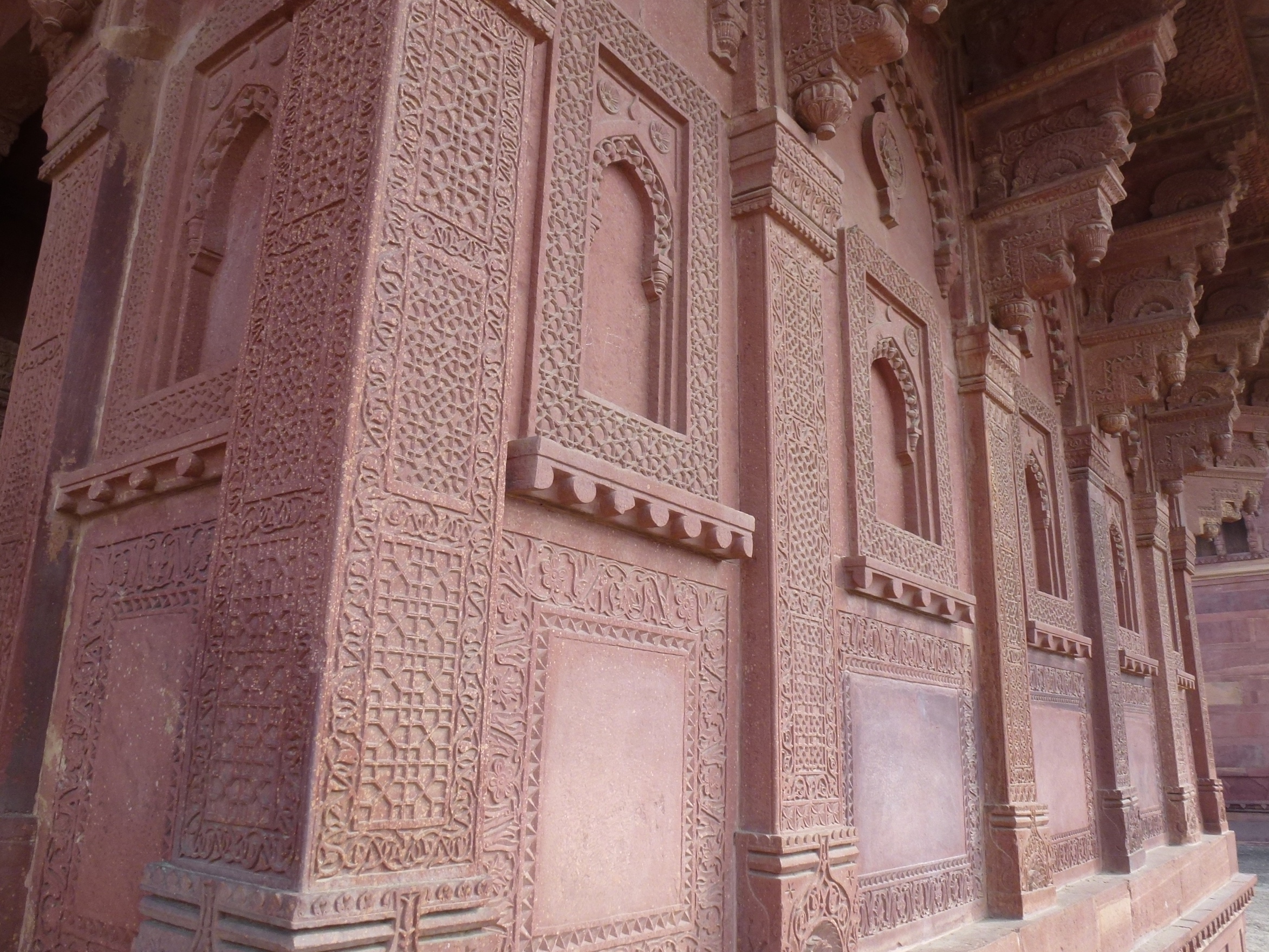
The Birbal Bhavan, an intricately carved building inside and out, believed to be the residence of Akbar's senior queens.

The Birbal Bhavan, an intricately carved building inside and out, believed to be the residence of Akbar’s senior queens.

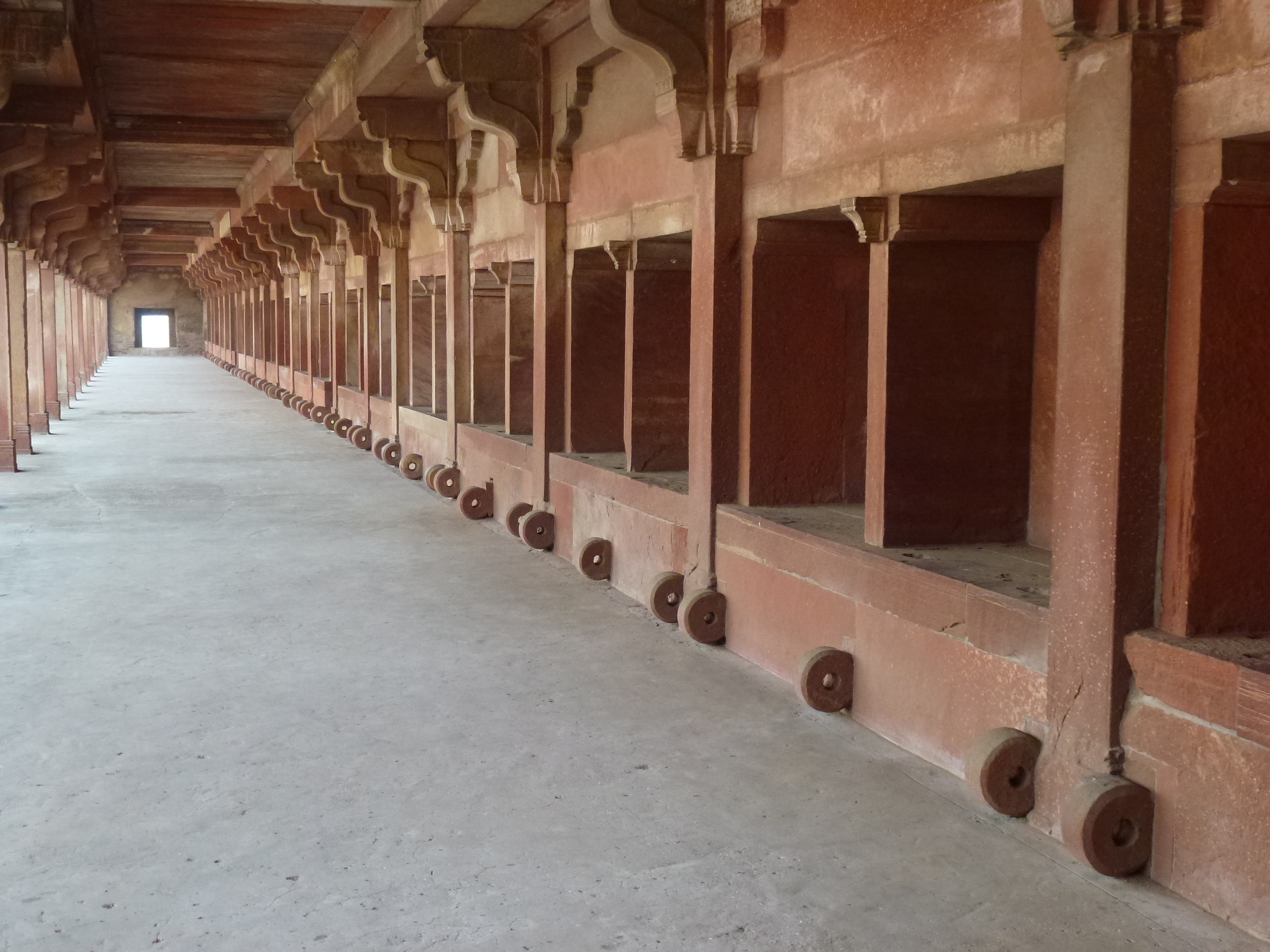
The Lower Haramsara. The rings in the lower right and extending beyond separated the living quarters of 200 female servants living here, who were for palace business only.

The Lower Haramsara. The rings in the lower right and extending into the distance separated the living quarters of 200 female servants living here, who were for palace business only.

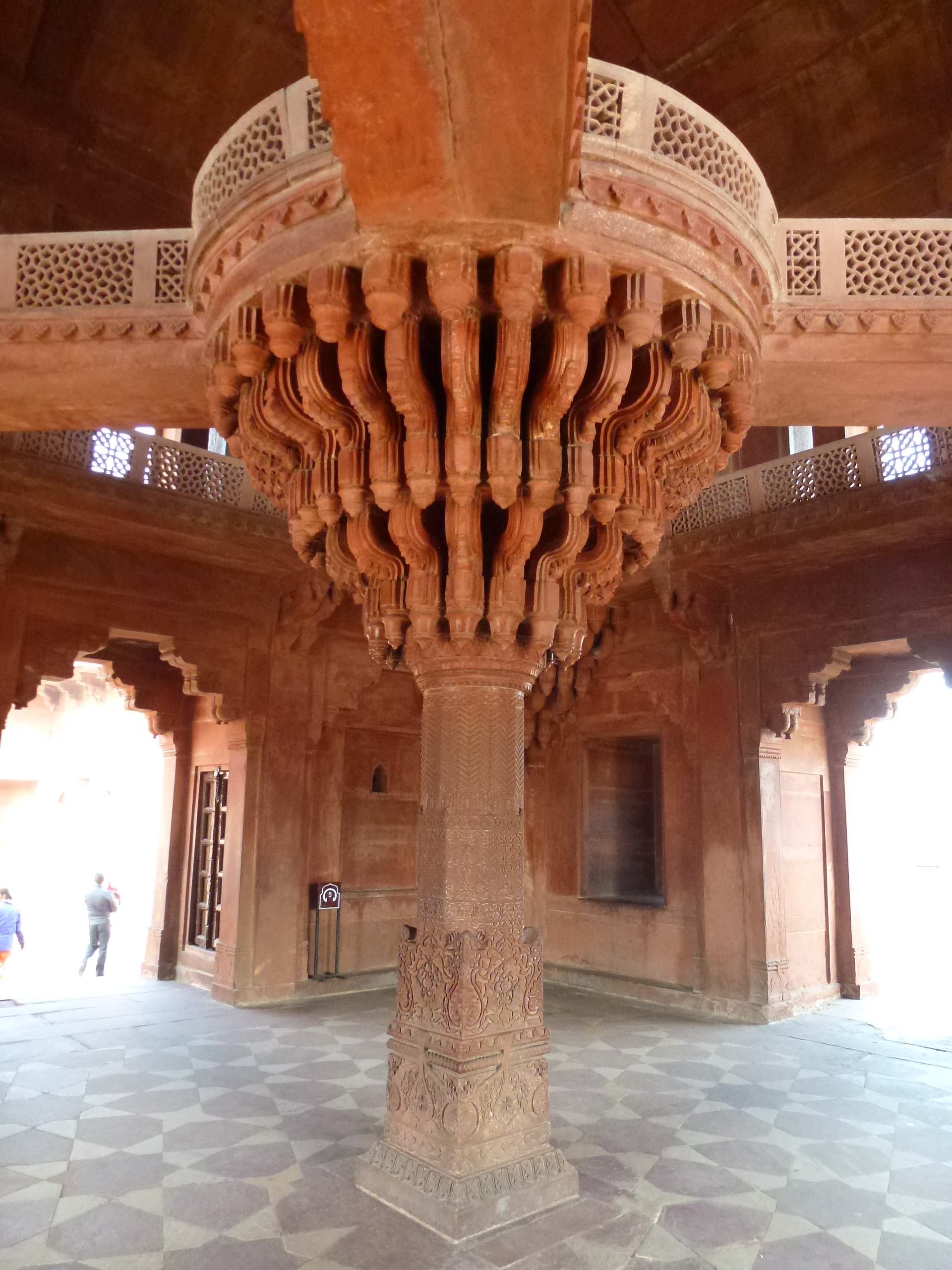
The Diwan-i-Khas (Hall of Private Audiences) with its magnificently carved central column. Akbar is believed to have stood on top of this column and debated with scholars and ministers who stood at the ends of the four bridges extending out from the center.

The Diwan-i-Khas (Hall of Private Audiences) with its magnificently carved central column. Akbar supposedly stood on top of this column and debated his scholars and ministers who stood at the ends of the four bridges extending out from the center.

Exterior view of the Diwan-i-Khas.

Exterior view of the Diwan-i-Khas.

Inside the Palace of Jodh Bai, the home of Akbar's Hindu wife (said to be his favorite).

Inside the Palace of Jodh Bai, the home of Akbar’s Hindu wife (said to be his favorite).

The Ornamental Pool (Anup Talao), used for water storage and private functions by the Emperor.

The Ornamental Pool (Anup Talao), used for water storage and private functions by the Emperor.

Fatehpur Sikri did not last long as a capital due to a poor water supply. We are now left with the magnificent buildings and grounds that seem perfectly intact from almost 500 years ago. Adjacent to the palace complex is the huge Jama Masjid (mosque), completed about the same time as the palaces and worth visiting. Plan on at least two hours to visit both sights.

The immense courtyard of the Jama Masjid (mosque). The marble inlay work found around the structures is said to have inspired similar work at the Taj Mahal less than 100 years later.

The immense courtyard of the Jama Masjid (mosque). The marble inlay work found around the structures is said to have inspired similar work at the Taj Mahal less than 100 years later.

The white marble tomb of Shaikh Salim Chishti. You can visit the perimeter and gaze inside.

The white marble tomb of Shaikh Salim Chishti. You can visit the perimeter and gaze inside to the intricate lattice work.

Practical Notes: Fatehpur Sikri is located 35 km (22 miles) west of Agra and can be done as a day trip from Agra, or as we did, a stop between Agra and Jaipur. If you are coming by car or bus, there is a car park with the usual trinket stalls and very persistent vendors (they’ll remember you as you return to the car park) about a kilometer or so away from the old city, which sits on a small hilltop just to the north of the car park. There is a shuttle that takes you up to the old city and lets you off between the city gate and the mosque. There are lots of signposts in English next to the main buildings. As with almost every tourist location in India, guides can be hired for a few dollars if desired or you can get an audio guide. We just relied on the signposting and our Lonely Planet book.

Reference: Lonely Planet India Guidebook.

Warsaw Part II – Warsaw Under Nazi Occupation

Poland suffered terribly in World War II. The War began in Poland on September 1st, 1939 with the simultaneous German invasions of Gdańsk and Warsaw. By early October, Polish resistance was eliminated. Shortly thereafter, the Soviet Union moved into eastern Poland and the country was partitioned between the two powers. On the Soviet side, millions of Poles were sent to Siberia and on the German side Polish Jews (there were originally three million) were rounded up into ghettos or sent to concentration camps.

In Warsaw alone 800,000 Poles died as a result of the terrors of World War II, more than double the entire number of U.S. casualties. Although much of Warsaw was rebuilt after the War, there are remnants of this dark period left for the tourist to explore.

The Mausoleum of Struggle & Martyrdom

In this building, the feared secret state police of Nazi Germany (“The Gestapo”) tortured and interrogated thousands of Poles who were accused of crimes against the Nazi state or suspected of having valuable information.

A street view of The Mausoleum of Struggle & Martyrdom. This museum is free.

A street view of The Mausoleum of Struggle & Martyrdom. This museum is free.

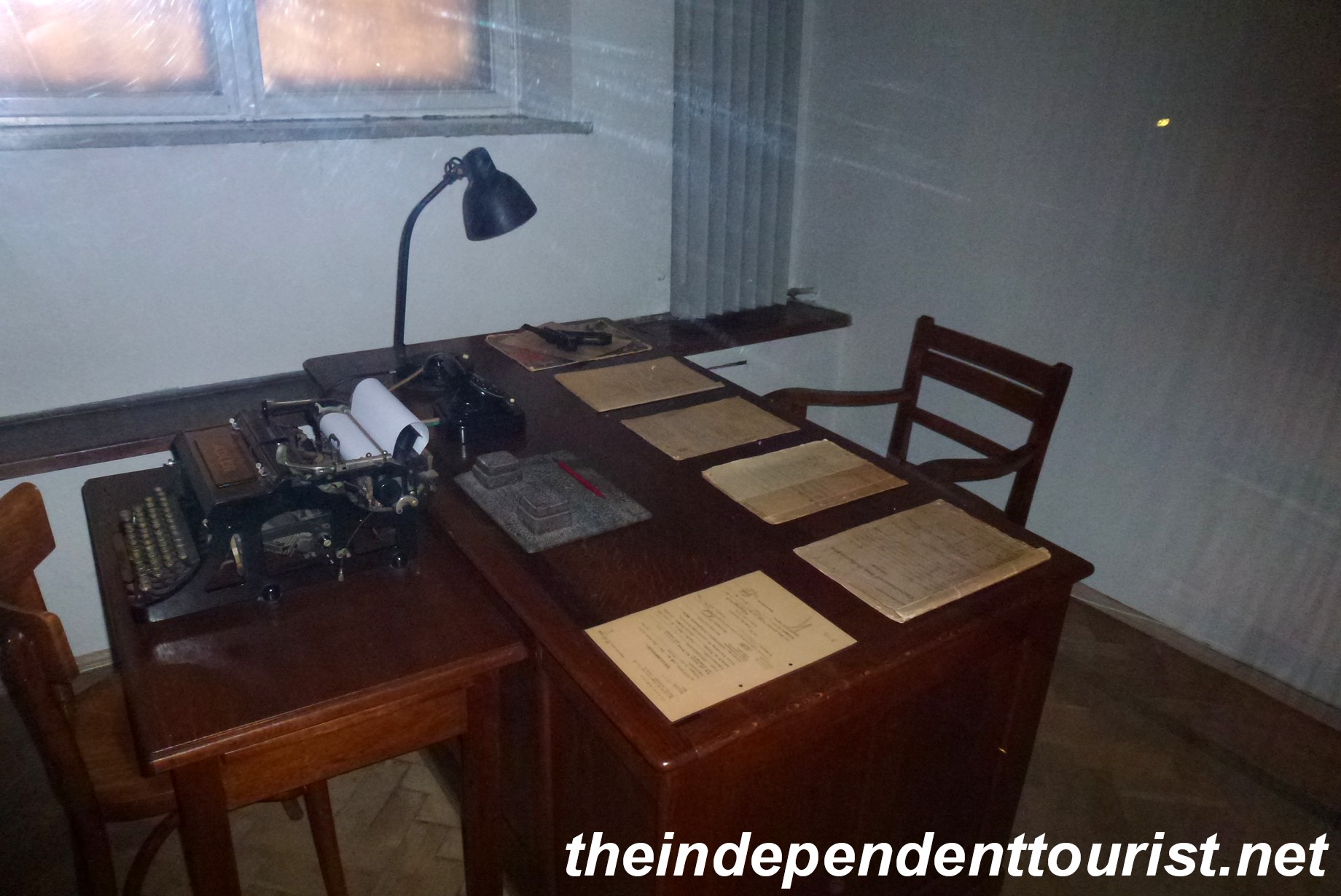
The Gestapo officer's desk.

The Gestapo officer’s desk.

The tortures were many and varied, they included being beaten with a variety of instruments, or being hung upside down with water pumped into the nose, the use of electric shocks, being burnt with irons, and sometimes being forced to watch while a family member was tortured.

A display of various interrogation/torture devices.

A display of various interrogation/torture devices.

The rooms are well sign-posted in English and when you realize you are in the exact spot where so many innocent people suffered, it is a moving experience.

Cells in the museum.

Cell doors in the museum.

Prisoners were kept in cells like this (and chained as shown) and sometimes interrogated for weeks or months--often with little food, sometimes ill, often beaten and without a bed.

Prisoners were kept in cells like this (and chained as shown) and sometimes interrogated for weeks or months–often with little food, sometimes ill, often beaten and without a bed.

Prisoners would wait in these chairs for questioning, sometimes for days. They were not allowed to fall asleep, talk or move. If you violated the rules you might be beaten to death.

Prisoners would wait in these chairs for questioning, sometimes for days. They were not allowed to fall asleep, talk or move. If you violated the rules you might be beaten to death.

The Warsaw Ghetto

As a way of controlling the Jewish population, in 1940 the Germans built a ghetto compound in Warsaw by erecting walls with barbed wire down the middle of streets.

A portion of the Warsaw Ghetto wall.

A portion of the Warsaw Ghetto wall.

Information about the Warsaw Ghetto is posted on the wall.

Information about the Warsaw Ghetto is posted on the wall.

About 360,000 local Jews and 90,000 Jews from other locations were moved here. During the summer of 1942, 300,000 Jews were transported to the Treblinka death camp and gassed. The ghetto was systematically destroyed in 1943 after the remaining occupants were killed or moved to various concentration camps. Today, there is very little left to see, except for a bit of the wall with information plaques.

This building is a survivor from World War II. The facade is pockmarked with bullet holes. It's located on Ul Próżna street, just a few blocks from the Ghetto wall.

This building is a survivor from World War II. The facade is pockmarked with bullet holes. It’s located on Ul Próżna street, just a few blocks from the Ghetto wall.

Monument to the Warsaw Uprising

This is one of the most important landmarks in Warsaw. It commemorates the August 1, 1944 uprising by the Poles against the German Army, just as the Germans were losing ground to the advancing Soviet forces from the east. The Poles fought bravely for 63 days and actually were successful to start, but they were eventually overwhelmed by the Germans. Hitler destroyed the city in retribution for the uprising and about 200,000 Poles were killed. The Soviet Army could have actually helped the Poles, but Stalin told his army to stand down and let the Germans destroy the Polish resistance, to take any “fight” they had left in them, in preparation for the Soviet and communist takeover of the country early in 1945.

The bronze sculpture shows the Polish fighters emerging from the brickwork of their ruined city and descending into the city sewers, which were used as an underground communications system. It was unveiled on August 1, 1989, 45 years after the uprising.

The bronze sculpture shows the Polish fighters emerging from the brickwork of their ruined city and descending into the city sewers, which were used as an underground communications system. It was unveiled on August 1, 1989, 45 years after the uprising.

While modern Warsaw is far removed from the horrors of World War II, I was glad to see the remaining bits of history, so that those of us who now visit have an opportunity to remember and honor those who gave their lives defending their country from tyranny.

Reference: Lonely Planet Poland Travel Guide

Sights of Warsaw – Part I

Warsaw is Poland’s largest city and the country’s capital. It has a number of sights to entertain the tourist. If I had to make a choice and could only visit either Krakow or Warsaw, I would pick Krakow. However Warsaw is still quite interesting and we found it easy to spend a couple days wandering the sights prior to our departure from Poland. For a map of places we visited in Poland, click here.

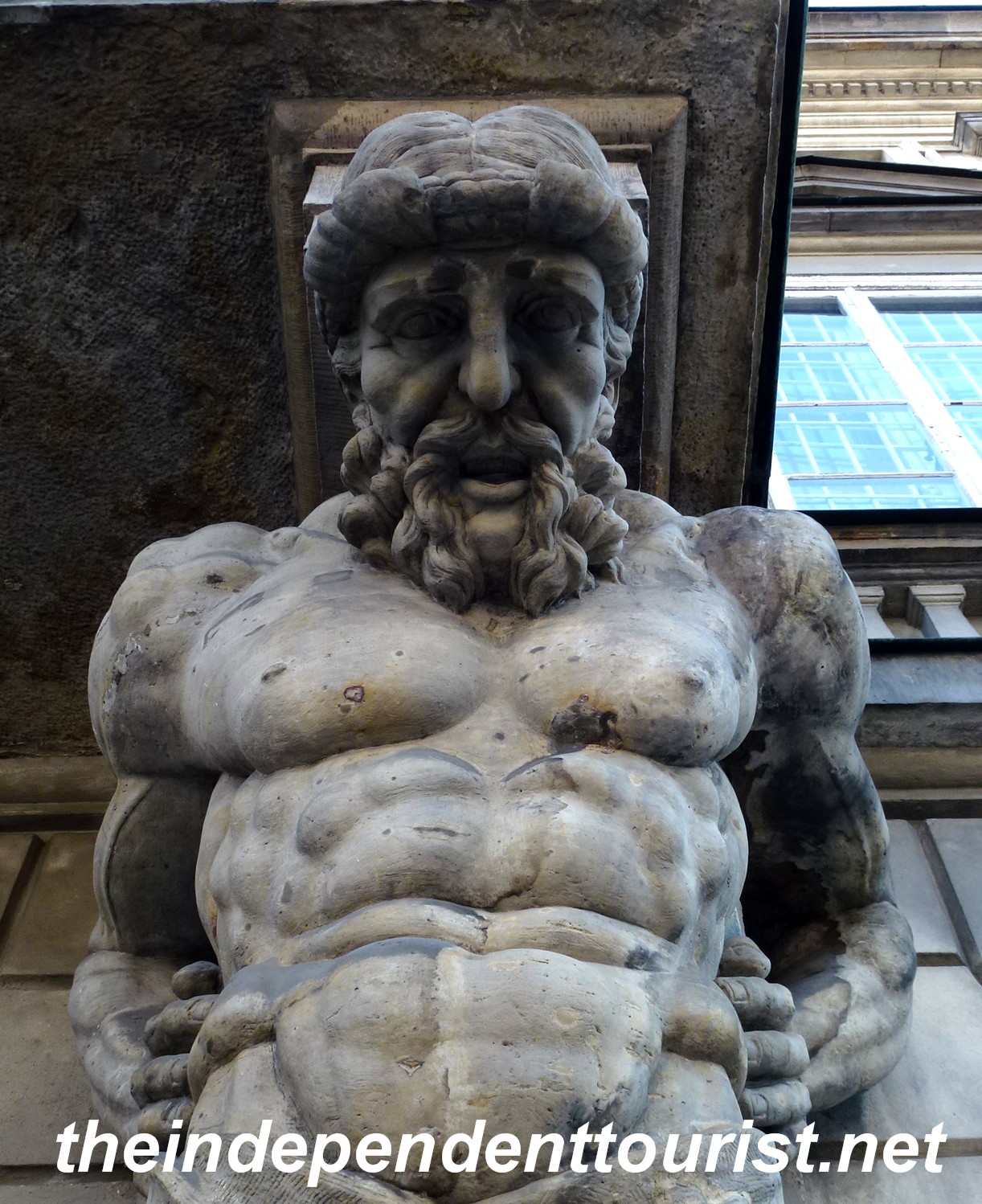
A decorative ledge support staring down on us in Warsaw Old Town.

A decorative ledge support staring down on us in Warsaw Old Town.

This post will focus on some of the general tourist highlights and my follow-up post will focus on several key World War II sights in Warsaw.

A fountain in the Saxon Gardens, Warsaw's first public park (early 18th century). The park is modeled on the gardens at Versailles, France.

A fountain in the Saxon Gardens, Warsaw’s first public park (early 18th century). The park is modeled on the gardens at Versailles, France.

Warsaw is a big city, but it has an extensive tram and bus system, which are pretty easy to navigate. Any of the hotels will have a good map with the primary tourist destinations highlighted. You can find about any kind of food in Warsaw.

One of our delicious meals in Warsaw.

One of our delicious meals in Warsaw.

In addition to traditional Polish fare, we found an excellent Indian restaurant on the Royal Way.

Palaces

There are a number of palaces in Warsaw and the two below are just a sample.

Wilanów Palace

This is a very impressive 17th century palace, a tiny bit reminiscent of Versailles, but on a much smaller scale. It was a summer residence of the Polish king.

A view of Wilanów Palace, with its beautiful gardens.

A view of Wilanów Palace, with its beautiful gardens.

Another view of Wilanów Palace.

Another view of Wilanów Palace.

The best and most impressive views are on the eastern side, which leads down to a lake. Be sure to visit the manicured gardens.

Palace on the Water

Located in the expansive Łazienki Park, this late 17th century palace was also a summer residence of the Polish king, Stanisław August. It is built on a narrow lake.

An exterior view of the Palace on the Water.

An exterior view of the Palace on the Water.

It was undergoing some restoration work during our visit, but is still very impressive.

Interior view of the Palace on the Water.

Interior view of the Palace on the Water.

The Park itself is definitely worth wandering for its the impressive gardens and fountains, and they\Park has Chopin concerts in the summer.

Old Town

Warsaw has a historic center, but unfortunately the original Old Town was flattened by the Germans in World War II in retribution for the Polish uprising (more on that in my next post).

The Royal Way leads north into Old Town from modern Warsaw.

The Royal Way leads north into Old Town from modern Warsaw.

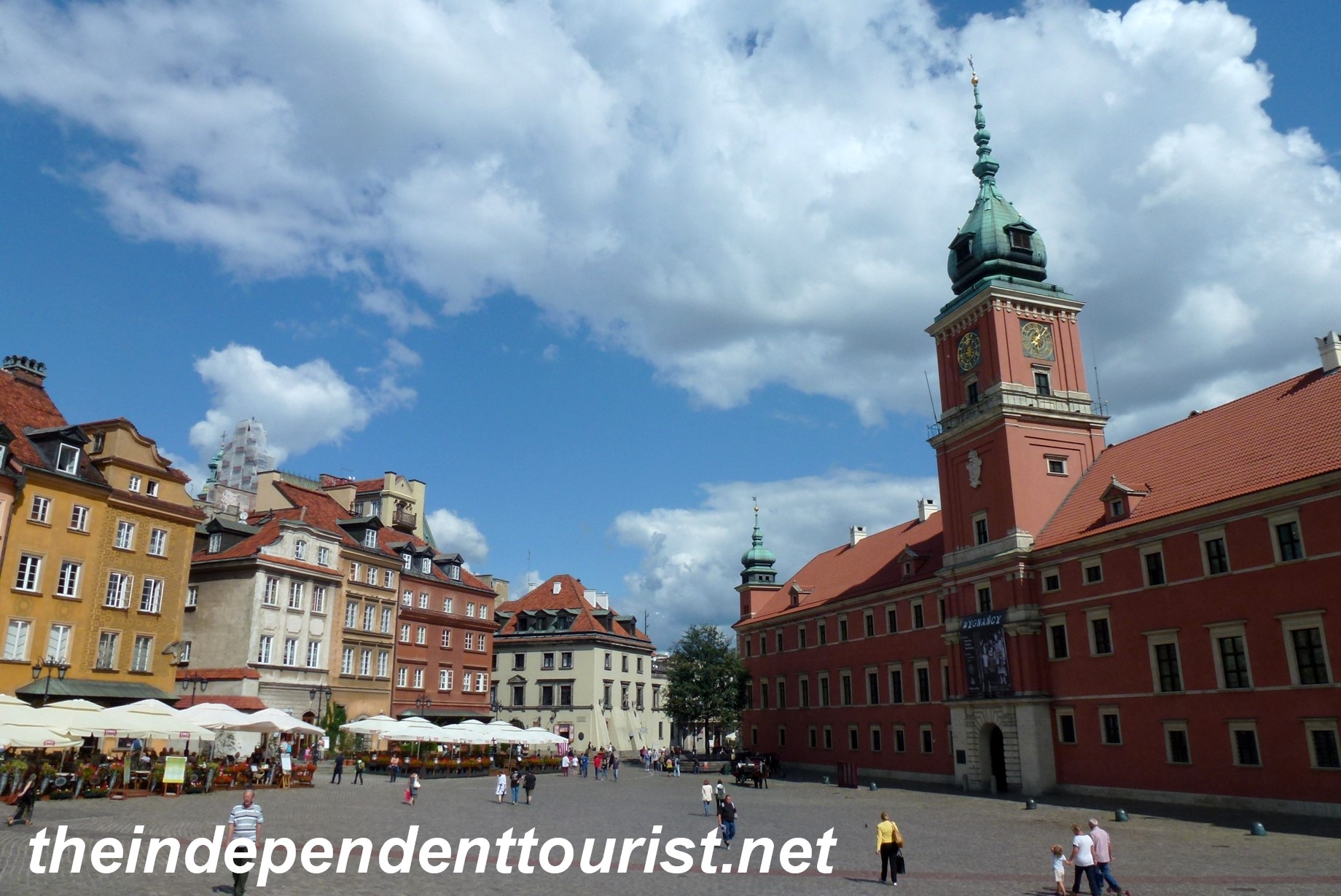
The Royal Palace (on the right) is at the entrance to Warsaw's Old Town. It has been reconstructed since World War II.

The Royal Palace (on the right) is at the entrance to Warsaw’s Old Town. It has been reconstructed since World War II.

The Barbican. A main medieval gate into Old Town Warsaw.

The Barbican. A main medieval gate into Old Town Warsaw.

A horse-drawn carriage on a street in Old Town Warsaw.

A horse-drawn carriage on a street in Old Town Warsaw.

The Old Town has been restored over the past 50 years, although I found the restoration a little less impressive than Gdansk. I think my impression was affected by the construction work going on in one of the main squares during our visit that made the area a bit less atmospheric.

Visitants’ Church (Visitation Sisters’ Church of St. Joseph)

The world renowned Polish composer and pianist Frédéric Chopin (1810 – 1849) is a local hero. This church, right on the Royal Way that leads to Old Town is significant since Chopin played the organ here. The Visitants’ Church was constructed in the mid 1700’s and survived the bombings of World War II.

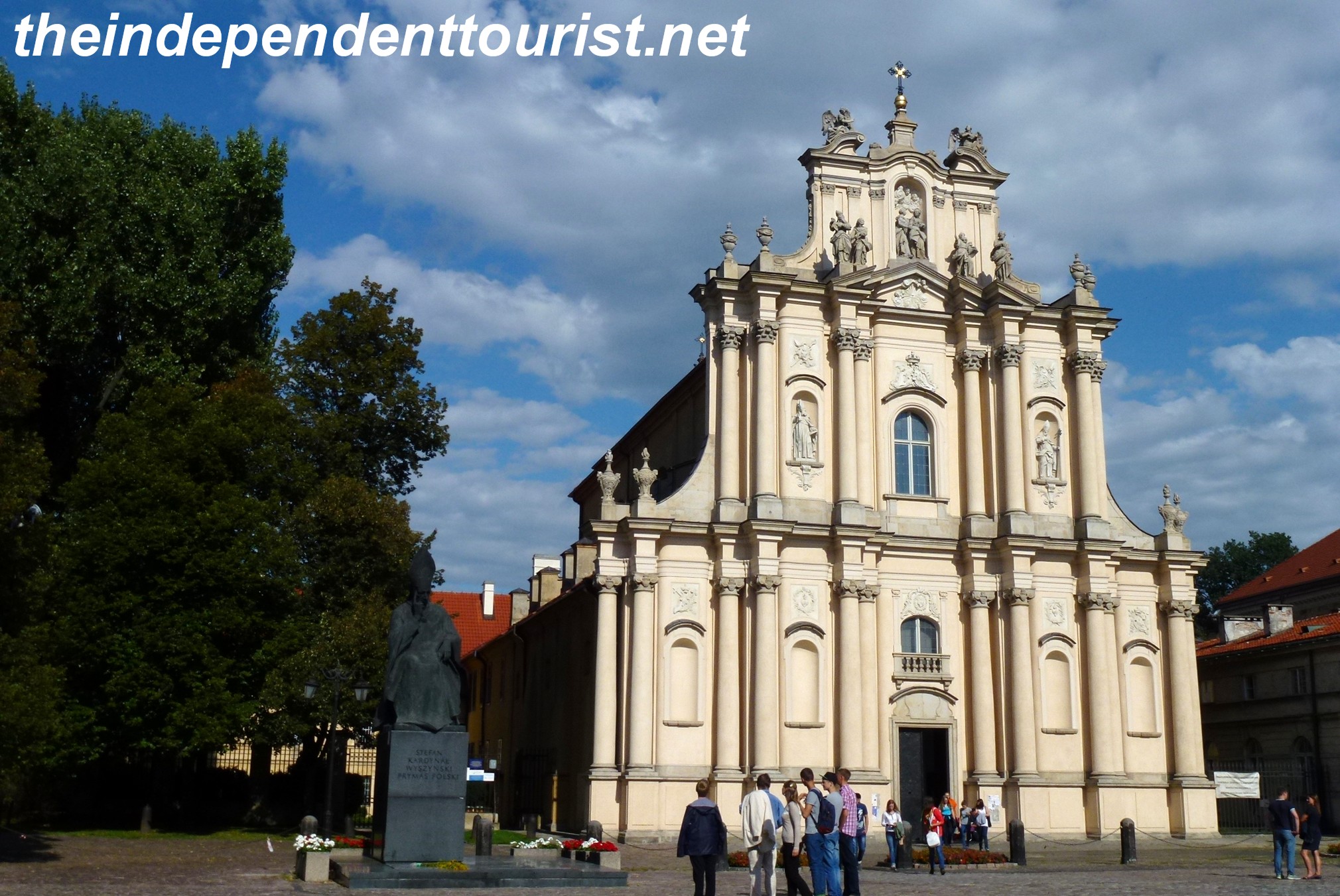
The Baroque exterior of the Visitants' Church.

The Baroque exterior of the Visitants’ Church.

Interior of the Visitants' Church.

Interior of the Visitants’ Church.

There is also a Chopin Museum nearby, but we did not make it to the museum. Also along the Royal Way are some other interesting churches.

St. Anne's Church, considered the most ornate church in Warsaw. It escaped major damage in World War II.

St. Anne’s Church, considered the most ornate church in Warsaw. It escaped major damage in World War II.

Church of the Holy Cross. It contains an urn with the remains of the heart of Frédéric Chopin, which was brought here from Paris after his death, according to his wishes.

Church of the Holy Cross. It contains an urn with the remains of the heart of Frédéric Chopin, which was brought here from Paris after his death, according to his wishes.

Picturesque Sights along the Lot River in South Central France

The Lot River region of France is filled with many beautiful sights –natural scenery, attractive villages and historical sights. The sights below are south of the beautiful town of Sarlat-la-Caneda and north of the city of Toulouse.

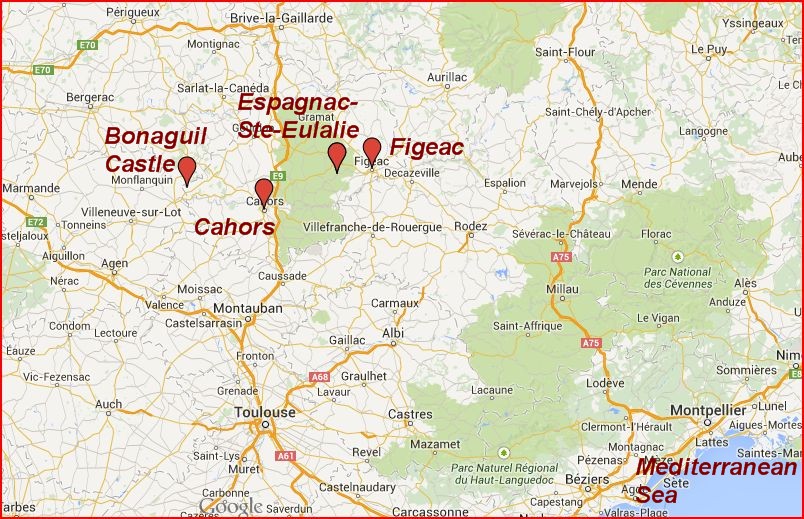
The sights in this post are in a small area just north of Toulouse, France.

The sights in this post are in a small area just north of Toulouse, France.

Bonaguil Castle

Bonaguil Castle is 60 km (37 miles) to the west of Cahors. It was one of the last defensive medieval castles built. Although it was originally constructed in the 1300’s, it was extensively rebuilt at the end of the 15th century.

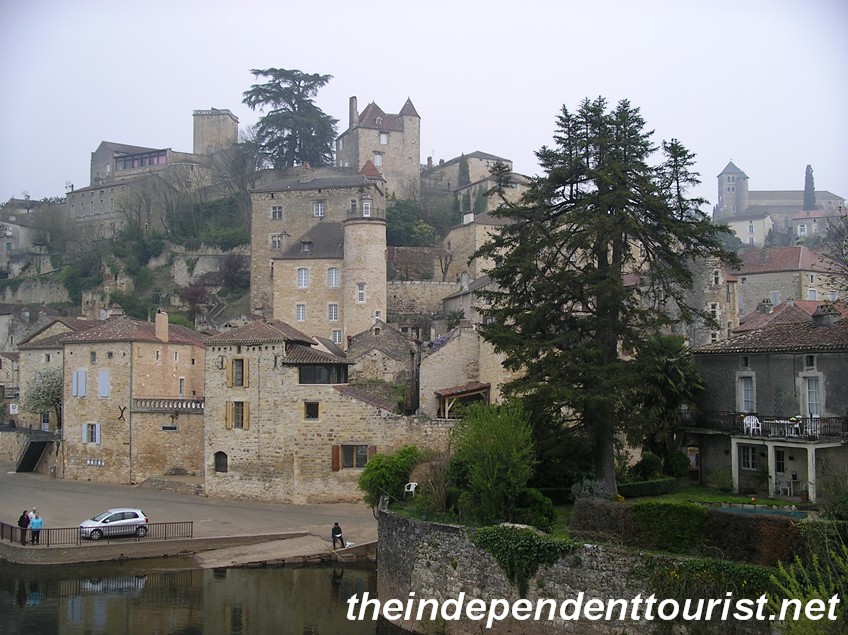
A view of Bonaguil Castle from the village.

A view of Bonaguil Castle from the village.

A view of the entrance to Bonaguil Castle.

A view of the entrance to Bonaguil Castle.

The moat around Bonaguil Castle.

The moat around Bonaguil Castle.

The castle sits in a very picturesque spot on a hillside overlooking a tiny village. Underneath the front edge (closest to the town) of the castle are some interesting tunnels. Be sure to explore them.

Looking down from the castle ramparts.

Looking down from the castle ramparts.

Puy –l’Evêque

Just a scenic little village on the Lot River, near Bonaguil Castle. Worth a short stop to wander the charming streets.

One of the many quaint streets in Puy l'Eveque.

One of the many quaint streets in Puy l’Eveque.

A view of the town from the Lot River.

A view of the town from the Lot River.

Cahors

Cahors is a 2,000 year-old town. Its famous fortified medieval bridge (Pont Valentre) over the River Lot is one of the most photographed monuments in all of France. It has 7 pointed arches spanning the river and three towers.

The medieval bridge crossing the Lot River in Cahors.

The medieval bridge crossing the Lot River in Cahors.

Another view of the bridge (Pont Valentre) in Cahors.

Another view of the bridge (Pont Valentre) in Cahors.

It was built between 1308 and 1360.There is also a great cathedral here, the Cathédrale de St-Etienne.

Figeac

Another picturesque town along the Lot River, with number of small hotels, making this town a good base for exploring the area.

A view of the town of Figeac.

A view of the town of Figeac.

In the center of Figeac.

In the center of Figeac.

Just outside of town are a number of picturesque villages, including Espagnac-Ste-Eulalie (see below).

A village outside of Figeac.

A village outside of Figeac.

An old mill outside Figeac.

An old mill outside Figeac.

Espagnac-Ste-Eulalie

This is a tiny village with a beautiful 12th century Priory of Notre-Dame-Ste-Eulalie and an elaborate bell tower.

The beautiful hamlet of Espagnac-Ste-Eulalie.

The beautiful hamlet of Espagnac-Ste-Eulalie.

Ten Tips for Visiting India on Your Own

We toured India in March 2014. While I had visited the country once before on business, we decided to explore more of this fascinating country as tourists.

Why go?

Before our trip, I had several people ask me “why are you going to India (for vacation)?” In response, I would say the following: We love to experience the variation that exists in our world. To us, vacations are not just about lying on the beach (which certainly we enjoy), but also about getting to experience cultures that are different from our own.
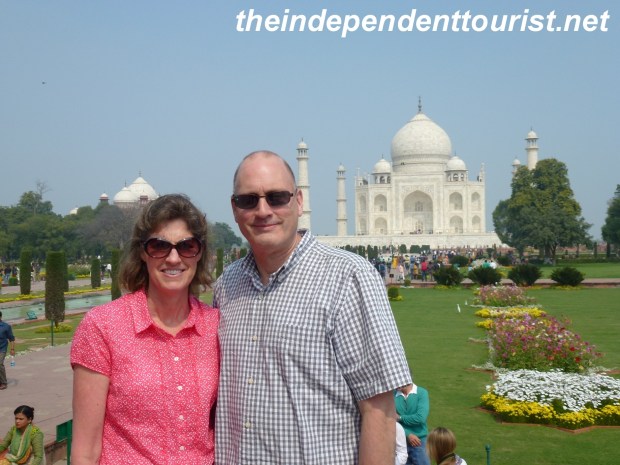
The Taj Mahal is only one of many incredible sights in India.

The Taj Mahal is only one of many incredible sights in India.

India is an amazing country with some of the most stunning sights in the world. Add to that the cultural and religious diversity, the history, and the landscape, and for us those were enough reasons to go. We were not disappointed.

I will say that India is a bit more of a challenging country to visit on your own than some other places. Below are a few tips that should help make your visit enjoyable.

Decide on a region to visit. There is a reason they call India the “subcontinent” – it’s big. While it’s possible to fly between major destinations all over the country, this eats up time and money and takes away from some of the cultural aspects gained while traveling through the countryside. We decided to concentrate mostly on the state of Rajasthan. It’s the most popular tourist region in India, and we figured it would be a good introduction to the country.

Our major destinations in India. We drove between the locations in the north, and then flew from Jodhpur to Mumbai and Aurangabad.

Our major destinations in India. We drove between the locations in the north, and then flew from Jodhpur to Mumbai and Aurangabad.

We flew in to New Delhi and out of Mumbai with Rajasthan being the main focus in between. Rajasthan (which is in the northwest part of the country) has a lot to offer and is home to many incredible 15th century forts (or Indian castles).

The amazing Amber Fort in Jaipur. It looked so surreal, like a movie set prop rather than a real palace.

The amazing Amber Fort in Jaipur. It looked so surreal, like a movie set prop rather than a real palace.

Determine your mode(s) of transportation. Traveling by train or bus certainly would be inexpensive, but there are a lot of hassles associated with train travel in particular – such as needing advance reservations (due to the volume of passengers traveling by train), navigating the details of the Indian train system website from the U.S., and then the logistics of getting from the train station to your hotel and to the various sights. Air travel is good in India. The local airlines and airports are efficient and good, with newer planes and on-schedule departures and arrivals. We took a few internal flights when needed.

The modern airport in Aurangabad.

The modern airport in Aurangabad.

Recommendation: Get a car and driver. Originally, I was going to hire a car and driver to get us from one location to the next, and then get another car and driver at the next stop. However, as it worked out, after a conversation with the company who drove us to Agra from New Delhi, we gave them our whole itinerary for the two weeks in Rajasthan and agreed on a price of $700, inclusive of the driver, comfortable van (there were four of us plus our luggage), gas, tolls, parking fees, etc. Quite a deal.

Our van and driver (Bhuipnder) for our two weeks in Rajasthan.

Our van and driver (Bhuipnder) for our two weeks in Rajasthan.

This meant we had our own personal chauffeur to navigate the Indian traffic and roads (quite an experience), take us to all the sights, recommend restaurants, etc. Visit www.kumarindiatours.com for more information. Splitting this cost by two couples meant our transportation for two weeks and about 1,600 kilometers or so (1,000 miles) was $350. We gave the driver about a 10% tip at the end of the trip.

Visit between November and March. We went at the end of March, and the weather was perfect. Even out in the Thar desert, the temperatures were just in the mid 80’s F. If you go later than this, you will end up being scorched in the desert or sweating in the oppressive humidity. The monsoon rains start in July or so.

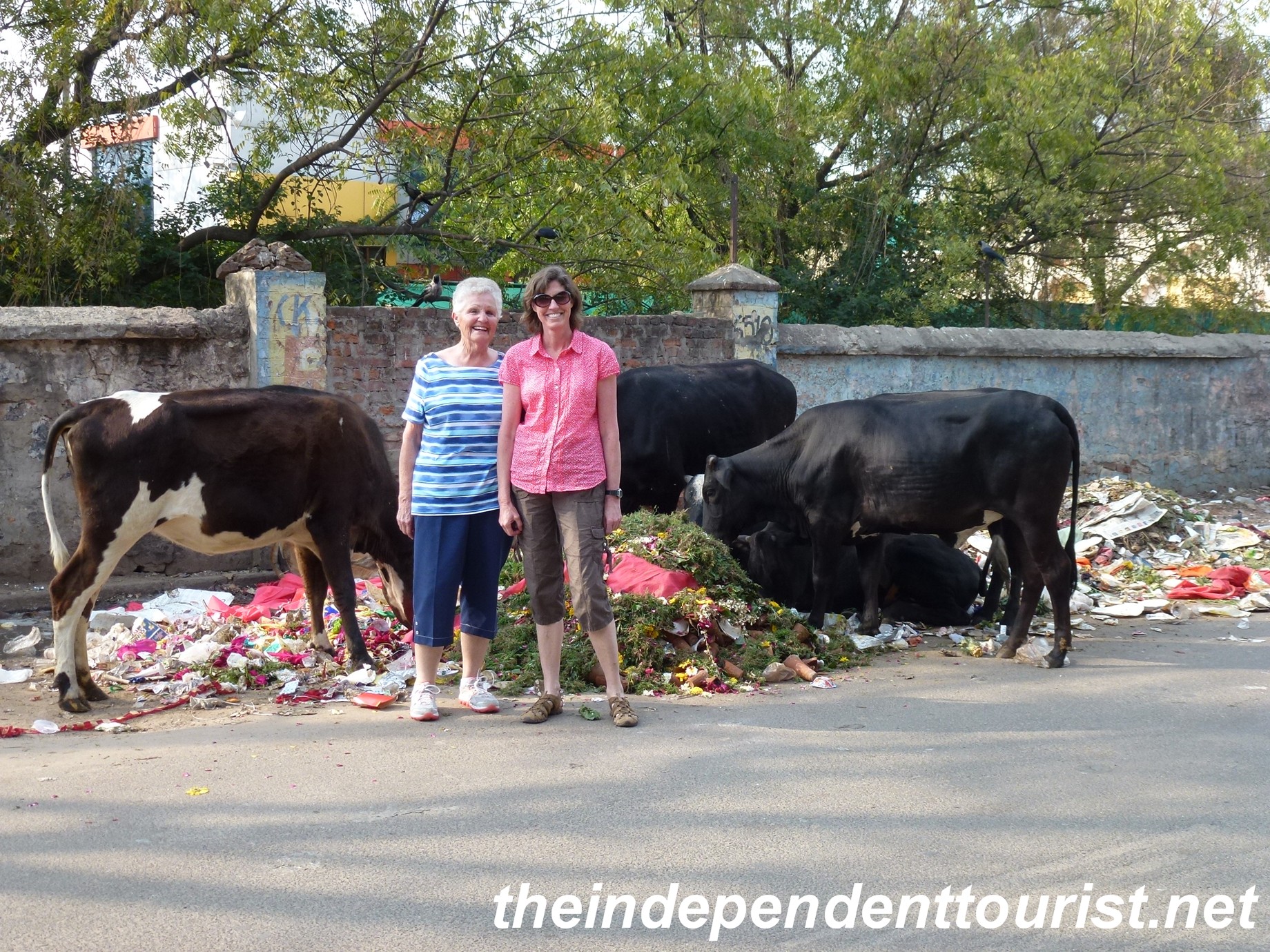
Brace yourself for overwhelming poverty, chaos and crowds. The juxtaposition of incredible wealth next to destitute poverty is jarring. Although the economy of India is growing quite rapidly, there are millions of people living on next to nothing. Many towns look like they have been ‘bombed out’. There is rubble everywhere and numerous dilapidated or unfinished buildings. Some roads end all-of-a-sudden with no explanation/signage. You will see pigs going through piles of trash, cows, rickshaws, elephants, camels, and everything else you can imagine on or beside the roads.

Cows grazing on the street in Jaipur.

Cows grazing on the street in Jaipur.

Taking a rickshaw ride through the busy Chandni Chowk area of Delhi.

Taking a rickshaw ride through the busy Chandni Chowk area of Delhi.

The crowds I’m talking about are the locals. India has over one billion people and in the major cities the streets are teeming with seas of local folks buying, selling, wandering, eating, washing, urinating, sleeping and just living.

Women bathing and washing by Lake Pichola in Udaipur.

Women bathing and washing by Lake Pichola in Udaipur.

Learn to like (if you don’t already) Indian food. The Indian dishes (which we already loved) were great and there were typically two cuisine choices on the menus: Indian and Chinese. The Chinese dishes were good too. You might occasionally find pizza. Due to the variety of religions in India, you won’t find a lot of beef or pork.

Some examples of the yummy food - combinations of Indian and Chinese dishes are common.

Some examples of the yummy food – combinations of Indian and Chinese dishes are common.

Vegetarian dishes were very common and good. We did not have a problem with any food-related illnesses. Grocery stores are hard to come by, most locals buy their supplies from small markets. You can find little kiosks for snacks and drinks, but don’t expect to see a Safeway grocery store or Carrefour.

Dress conservatively but comfortably. The temperatures of our locations were in the 70’s and 80’s, I wore shorts most places, but in a few temples, long pants were appropriate. For women, capris and shoulder-covering tops are a good choice. Avoid calling too much attention to yourself.

The stunning Jain temple of Ranakpur was one of the sites where very conservative clothing is expected.

The stunning Jain temple of Ranakpur was one of the sites where very conservative clothing is expected.

Even tourist areas are non-touristy. Probably one of our biggest surprises was that even in cities with major tourist sites, the cities beyond the tourist attractions were just regular chaotic Indian towns.
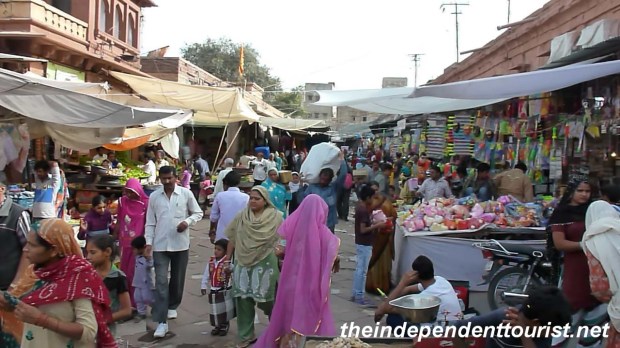
The local market in Jodhpur.

The local market in Jodhpur.

While locals will want to take you to rug, jewelry and clothing shops, for the most part you’ll be hard pressed to find many “tourist traps” that often accompany major sights. We were surprised that Agra, the home of the world-renowned Taj Mahal, (except near the parking area for the Taj), was pretty much like any other Indian city, even with some dirt roads.

Take reasonable safety precautions. In our three weeks visit, we never felt in danger in any way, and felt very comfortable walking around even crowded streets and markets, including at night. However, be smart—don’t wear expensive jewelry, keep your wallet, money and phone protected. Be aware of your surroundings and keep track of your personal items just as you would in any populated area. I took a small laptop and iPad on the trip and when I didn’t have them with me, I just locked them up in my suitcase at the hotel. We did not have any problems.

Tipping is everything to the locals. Be prepared to tip small amounts for just about any type of courtesy or service. This is how many people make their living.

Auschwitz – Birkenau

The main gate to Auschwitz-Birkenau. The trains full of Jews and others from across Europe would stop either outside this gate or pass through to unload their unfortunate passengers.

The main gate to Auschwitz-Birkenau. The trains full of Jews and others from across Europe would stop either outside this gate or pass through to unload their unfortunate passengers.

In my previous post, I shared some photos and thoughts about Auschwitz I, the well-known “original” Auschwitz concentration camp. Auschwitz II (or Auschwitz-Birkenau) is located just 3 kilometers from Auschwitz I and was designed more specifically as a death factory and for some, a slave labor camp. More than 1.1 million people passed through here, about 700,000 of which were immediately sent to the gas chambers. When the Soviet Army liberated the camp in January 1945, only 7,000 inmates were left alive.

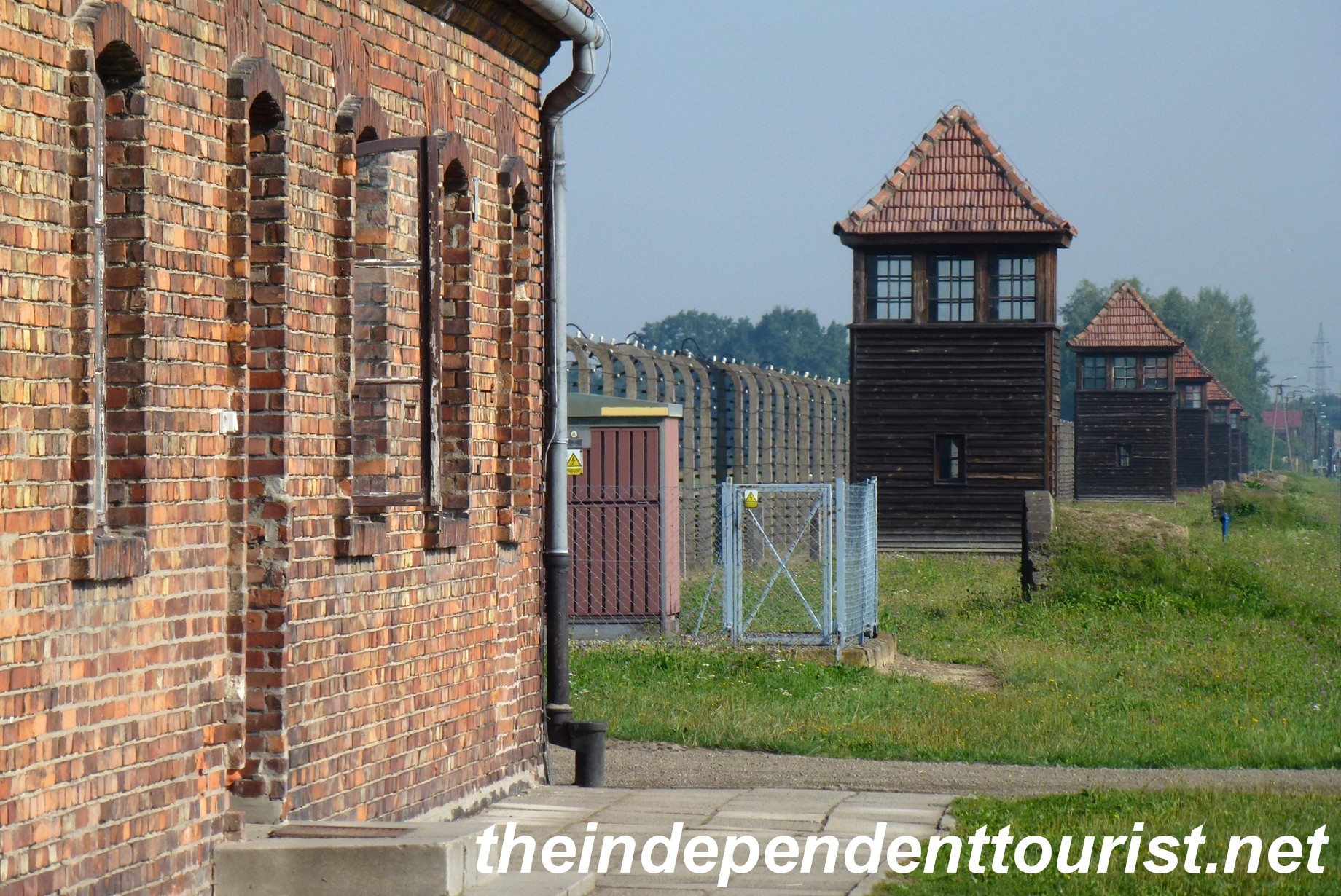
Guard towers along the 12 kilometers of fence at the camp.

Guard towers along the 12 kilometers of fence at the camp.

The camp could hold about 100,000 people at any given time. Below I provide some images in more or less the order of the process of events that happened to those who suffered this terrible fate.

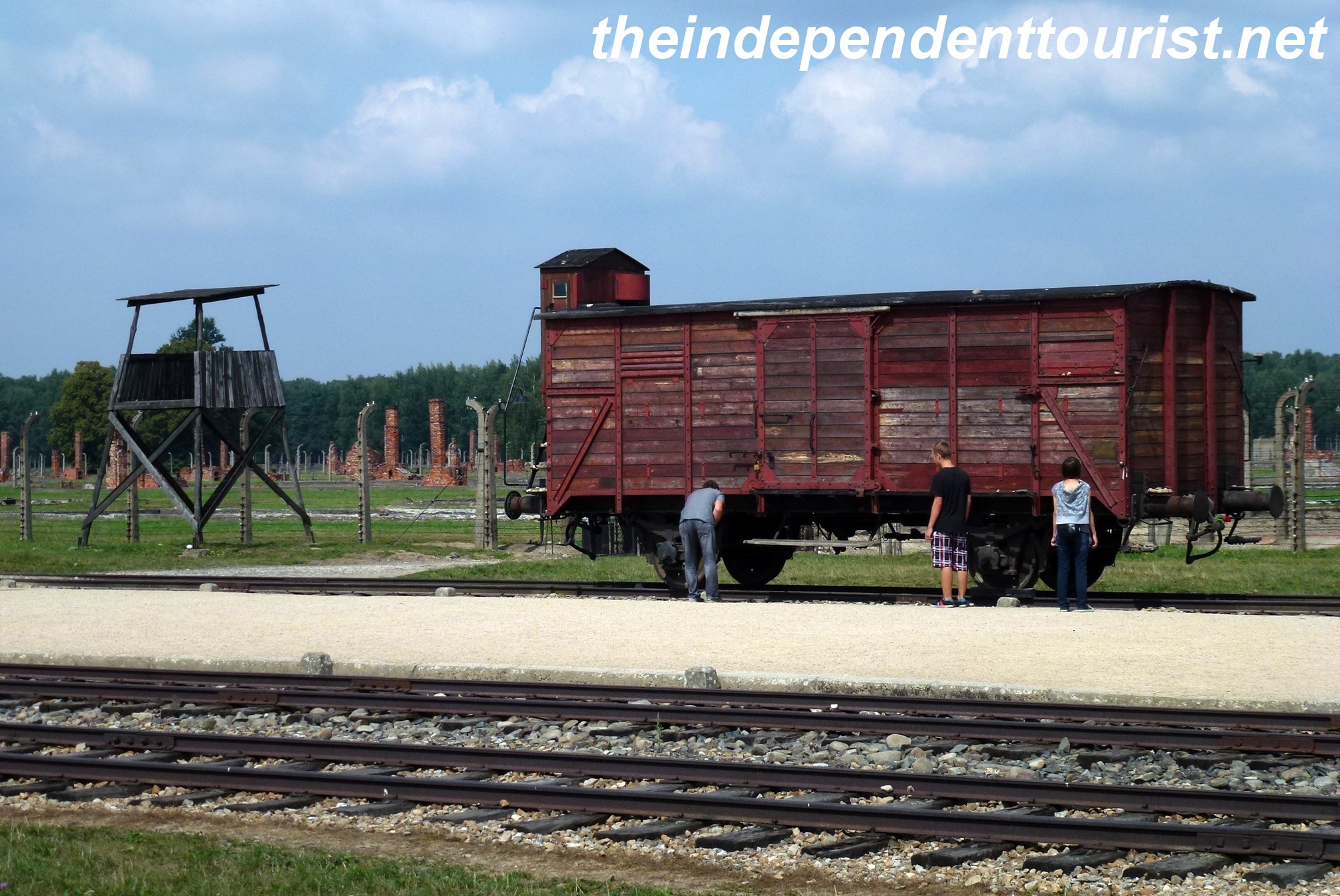
An example of a freight car that would bring the prisoners to the camp. The prisoners would unload at this spot after long and cramped journey, and after a quick examination, most would be herded to the gas chambers.

An example of a freight car that would bring the prisoners to the camp. The prisoners would unload at this spot after long and cramped journey, and after a quick examination, most would be herded to the gas chambers.

The road from the train unloading area to the gas chambers and crematoria where hundreds of thousands walked to their deaths.

The road from the train unloading area to the gas chambers and crematoria where hundreds of thousands walked to their deaths.

After walking the long road, the victims would wait in these peaceful woods for their turn in the gas chambers.

After walking the long road, the victims would wait in these peaceful woods for their turn in the gas chambers.

A photo of the victims waiting patiently in the woods for the end.

A photo of the victims waiting patiently in the woods for the end.

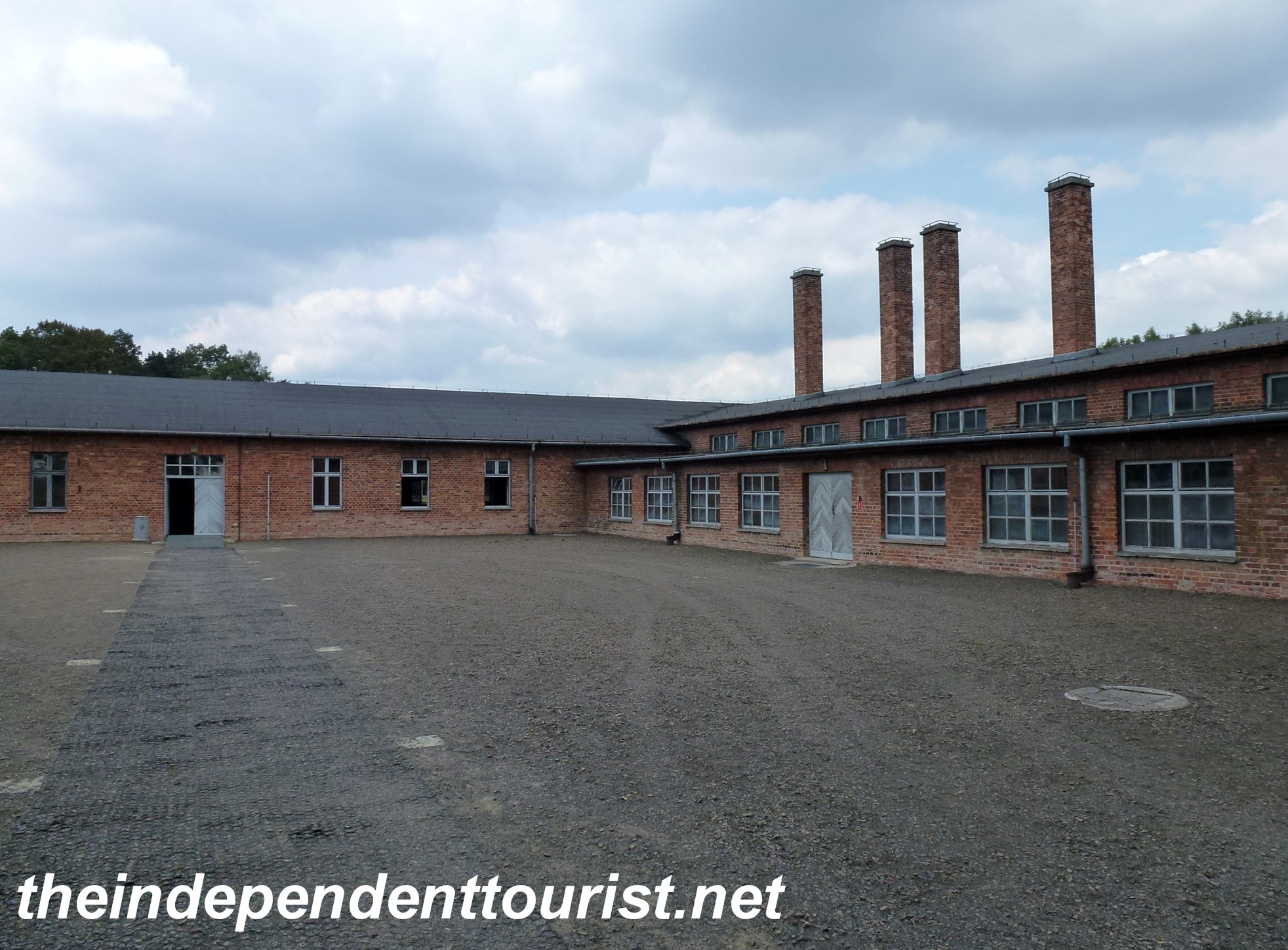
A picture of the crematoria where the bodies would be burned after gassing.
A picture of the crematoria where the bodies would be burned after gassing.

The ruins of Crematoria II. The building was blown up by the Nazis to try to cover up its purpose.

The ruins of Crematoria II. The building was blown up by the Nazis to try to cover up its purpose.

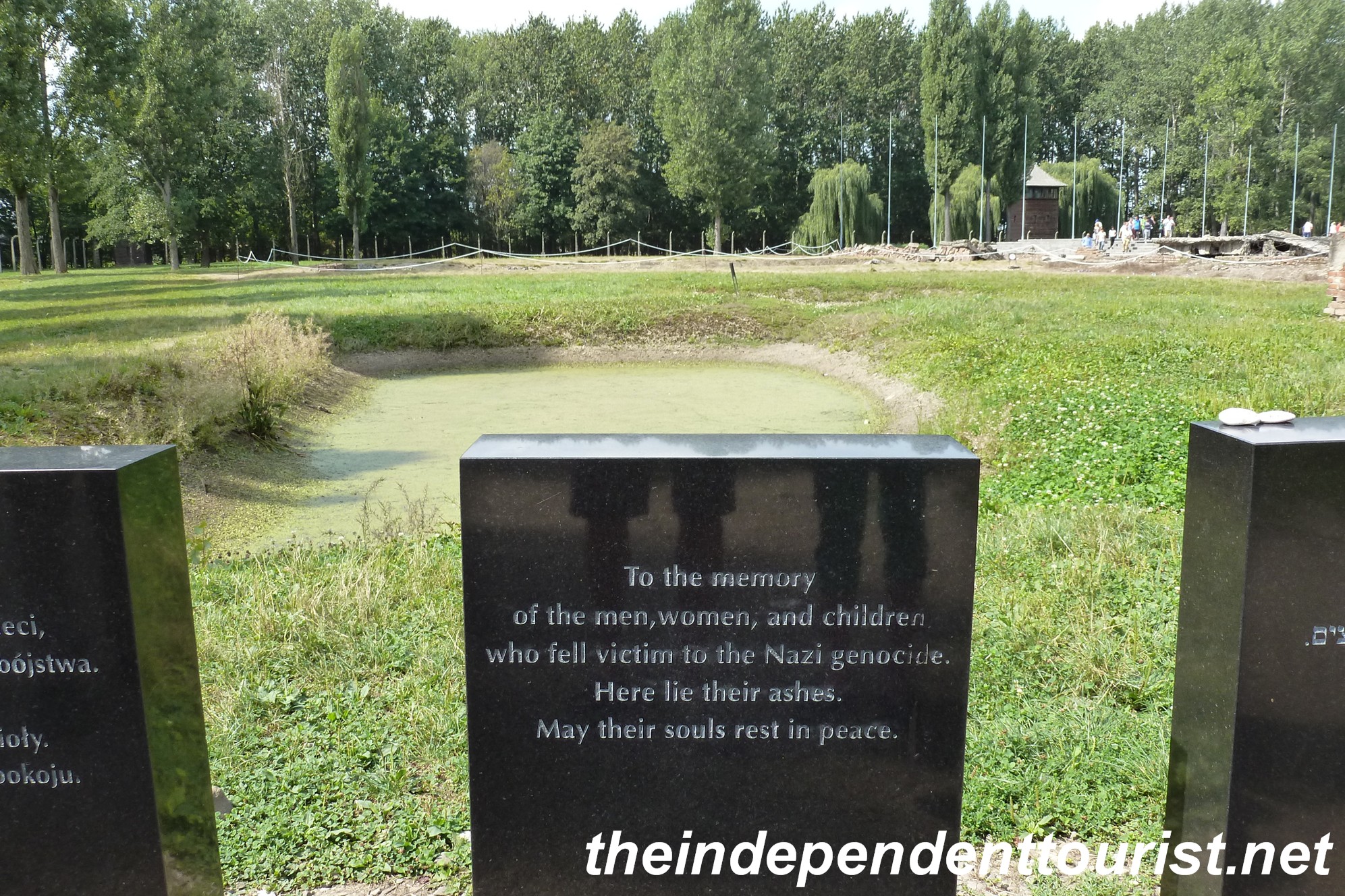
A plaque noting the pond in the background, where the ashes of thousands were dumped from the crematoria.

A plaque noting the pond in the background, where the ashes of thousands were dumped from the crematoria.

If you were "fortunate" enough to be selected for slave labor, you were processed through this building where you were stripped, shaved, tattooed, showered and given your prison uniform. All of your remaining  possessions were taken away.

If you were “fortunate” enough to be selected for slave labor, you were processed through this building where you were stripped, shaved, tattooed, showered and given your prison uniform. All of your remaining possessions were taken away.

Many women were housed in these brick barracks, with 8 prisoners to a "shelf" covered by rotting straw in a swampy area with no actual floor other than hardened dirt.

Many women were housed in these brick barracks, with 8 prisoners to a “shelf” covered by rotting straw in a swampy area with no actual floor other than hardened dirt.

Most men where housed in these wooden barracks, some of which were horse stables originally.

Most men where housed in these wooden barracks, some of which were horse stables originally.

Inside the wooden barracks. 1,000 men would be housed in a building that previously held 52 horses.

Inside the wooden barracks. 1,000 men would be housed in a building that previously held 52 horses.

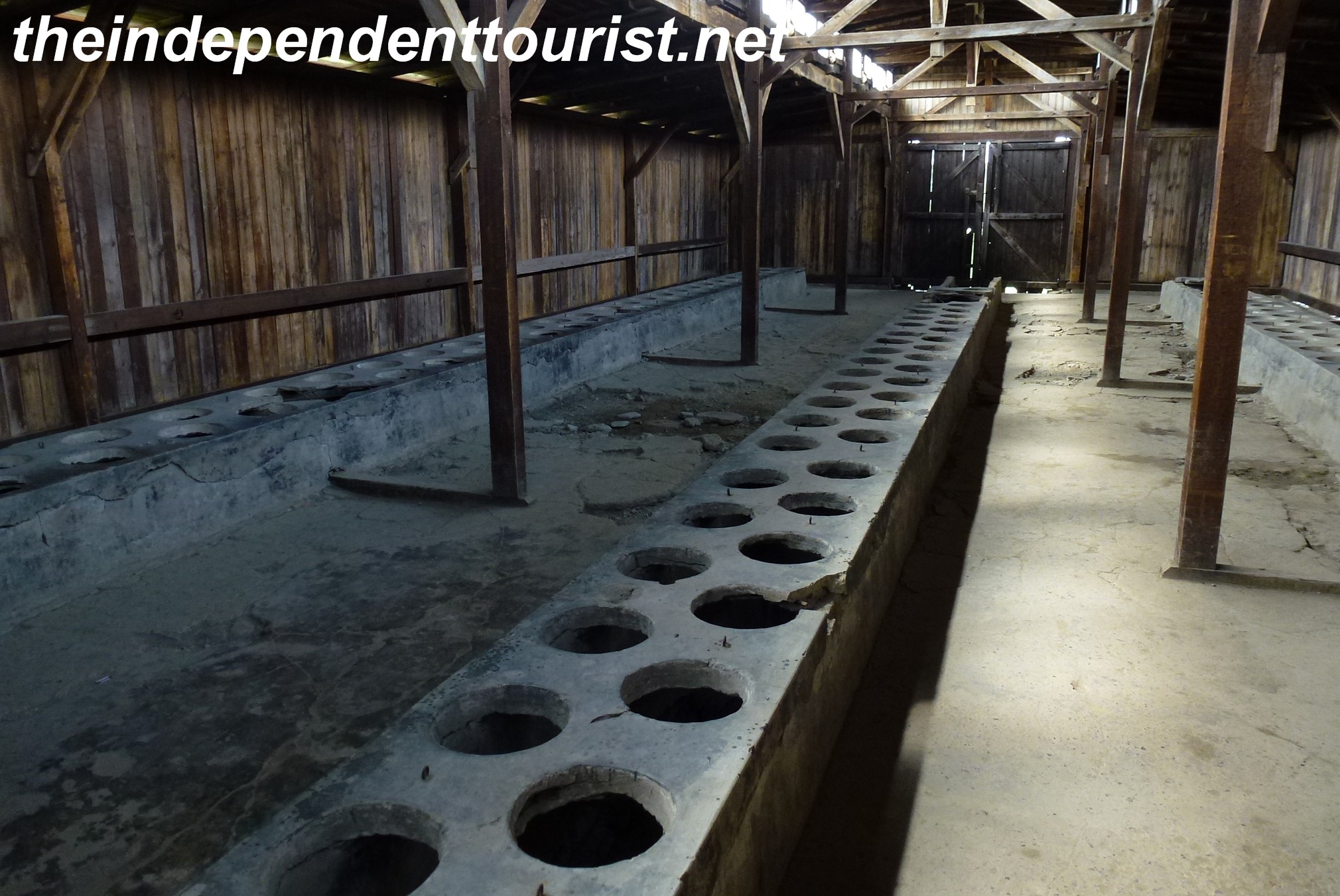
The latrines in the barracks. I can't imagine the horror of the living conditions.

The latrines in the barracks. I can’t imagine the horror of the living conditions.

The literal end of the rail line, between Crematoria II and III. On this spot there is now the International Monument to the Camp Victims.

The literal end of the rail line, between Crematoria II and III. On this spot there is now the International Monument to the Camp Victims.

Practical Information:

I would highly suggest starting your visit at Auschwitz I and then driving over to Auschwitz II to continue your tour (lots of parking available outside the camp). The excellent map and guide book you can purchase at the first camp will provide a good overview and directions at Auschwitz II, which is a huge site (425 acres, 98 buildings with ruins of 300 more–be prepared for a lot of walking). Also, Auschwitz II is very well sign posted (as is Auschwitz I), providing information (and some photos) in English, Hebrew as well as Polish and German.

A Visit to Auschwitz

The main gate with its archway which says "Freedom Through Work" or "Work Makes You Free". New arrival prisoners would pass under this sign and hear a "orchestra" playing. Every day thousands would march out to their slave labor assignments and return carrying their dead fellow prisoners.

The main gate with its archway which says “Freedom Through Work” or “Work Makes You Free”. New arrival prisoners would pass under this sign and hear a “orchestra” playing. Every day thousands would march out to their slave labor assignments and return carrying their dead fellow prisoners.

Auschwitz is one of the most infamous and well known set of Nazi concentration camps from World War II. There are actually two main camps open to tourists, known as Auschwitz I and Auschwitz II (or Auschwitz-Birkenau). This post will focus on Auschwitz I. I will share more about Auschwitz-Birkenau in a separate post.

One of the fence lines at Auschwitz I. The building behind me was where the confiscated belongings of the prisoners were kept, along with the supplies of the poison gas.

One of the fence lines at Auschwitz I. The building behind me was where the confiscated belongings of the prisoners were kept, along with the supplies of the poison gas.

Auschwitz I was originally a Polish Army barracks and was turned into a concentration camp in 1940 on the orders of Heinrich Himmler, after the fall of Poland in 1939. The first prisoners were mainly Polish men who were political prisoners of the Third Reich.

Eventually others were sent here, including Polish women, Jews from all over Europe as well as Soviet prisoners of war. Soviet POW’s came to number about 10,000 starting in 1941 and were sectioned off in the camp to certain blocks (buildings). Within 5 months, 9,000 had died, due to hunger, brutality, exposure to freezing weather or being gassed.

In the center of this area, the SS officer in charge of the roll-call would receive reports of the prisoners present. If anyone was missing, the prisoners would have to stand at attention until the SS were satisfied, regardless of the weather and sometimes for 12 hours or more.

In the center of this area, the SS officer in charge of the roll-call would receive reports of the prisoners present. If anyone was missing, the prisoners would have to stand at attention until the SS were satisfied, regardless of the weather and sometimes for 12 hours or more.

The gallows, where many prisoners were hung as a warning to others. In July 1943, 12 Poles were hung, suspected of helping 3 prisoners escape.

The gallows, where many prisoners were hung as a warning to others. In July 1943, 12 Poles were hung, suspected of helping 3 prisoners escape.

Anne Frank (whose diary as a young girl about life in hiding from the Nazis in Amsterdam has been widely published) was held here but was later transferred to Bergen-Belsen camp where she died. Her father, Otto, somehow survived Auschwitz and returned to Amsterdam after the War. Another famous prisoner was Viktor E. Frankl, who wrote the book Man’s Search for Meaning based on his experiences at Auschwitz.

The crammed barracks. Sometimes 200 people were crowded into rooms mean to house 40 or 50 people.

The crammed barracks. Sometimes 200 people were crowded into rooms mean to house 40 or 50 people.

Lavatories at Auschwitz I.

Lavatories at Auschwitz I.

Some photos of victims at Auschwitz I.

Some photos of victims at Auschwitz I.

All in all, about 400,000 men, women and children were sent to Auschwitz I. At any given time, 13,000 – 16,000 would be housed in the camp. Due to the horrific conditions as well as the outright execution of numerous prisoners, the mortality rate was high, about two-thirds of the prisoners did not survive.

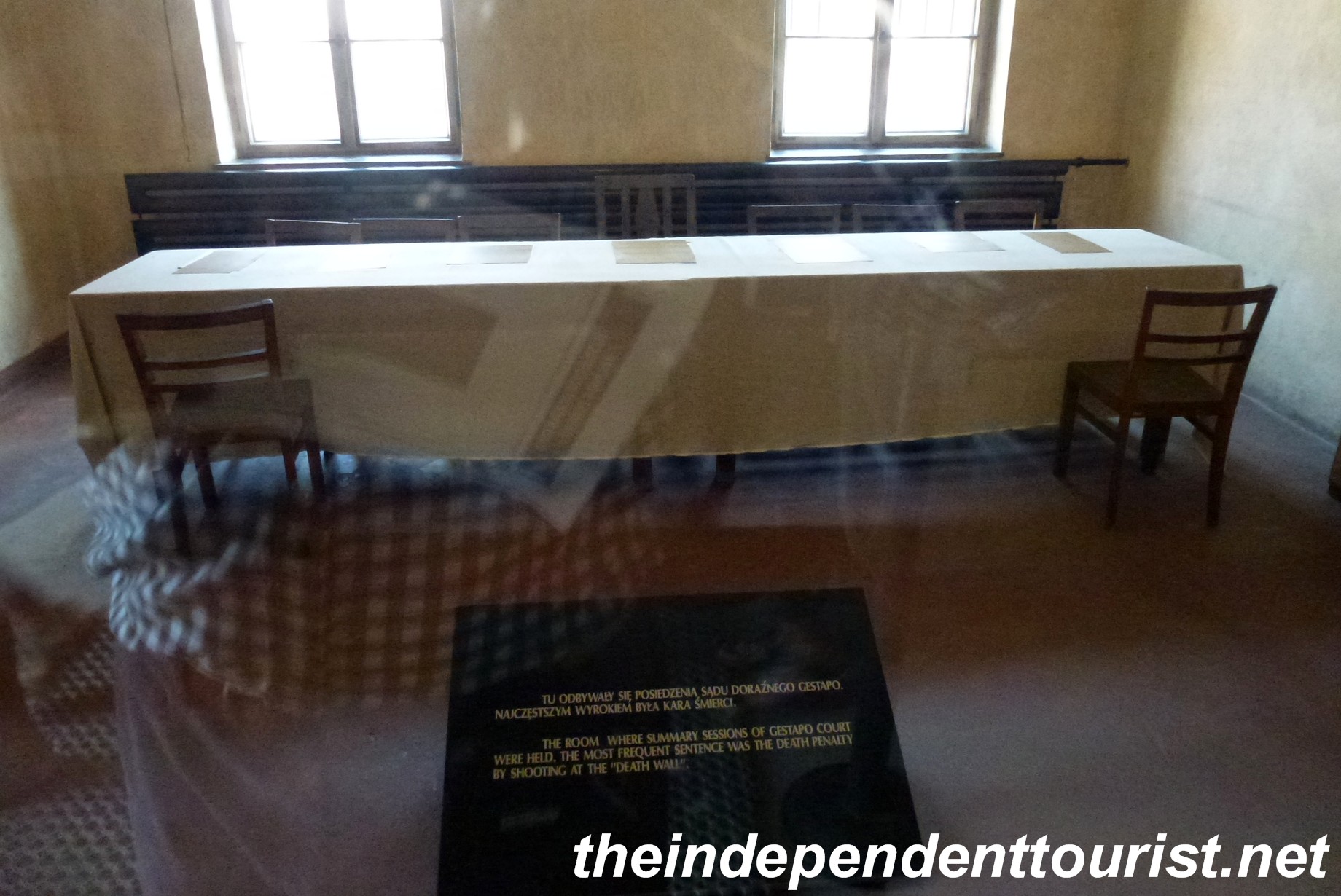
The room where execution decisions were made. (The poor picture quality is due to reflections on the glass in front of the room).

The room where execution decisions were made. (The poor picture quality is due to reflections on the glass in front of the room).

The infamous yard bertween cell Blocks 10 and 11. Block 11 was known as the "death block." Prisoners were tortured and shot here. From 1941 to 1943 several thousand were shot by the SS on this spot. Floggings also took place here and torture, such as being hung from a post by your wrists tied behind you. In the basement of cell Block 11 are a number of torture rooms. We were not allowed to take pictures inside that area.

The infamous yard bertween cell Blocks 10 and 11. Block 11 was known as the “death block.” Prisoners were tortured and shot here. From 1941 to 1943 several thousand were shot by the SS on this spot. Floggings also took place here and torture, such as being hung from a post by your wrists tied behind you. In the basement of cell Block 11 are a number of torture rooms. We were not allowed to take pictures inside that area.

This was the only concentration camp where prisoners were tattooed to aid in identification due to the large number of corpses.

There were 700 attempted escapes, about 400 were recaptured. If a Polish prisoner escaped, his family was rounded up and sent to Auschwitz, and made to stand under a sign indicating why they had been arrested, as a warning to other prisoners.

Initially, the mass killing of Jews was not part of the purpose of Auschwitz; it wasn’t until about 1943 that the Germans started perfecting their gassing techniques and killing Jews by the hundreds of thousands in Auschwitz-Birkenau. However, Auschwitz I was one of the experimental locations for large scale gassing operations.

Originally an ammunition bunker, this room became a gas chamber during the years 1941 – 1943. Thousands were gassed here, some immediately upon their arrival, including Jews, Soviet POW’s and some Polish prisoners as well.  Pellets of Zyklon B were dropped through the ceiling.

Originally an ammunition bunker, this room became a gas chamber during the years 1941 – 1943. Thousands were gassed here, some immediately upon their arrival, including Jews, Soviet POW’s and some Polish prisoners as well. Pellets of Zyklon B were dropped through the ceiling.

The ovens at Auschwitz I, which each could burn 2-3 corpses at a time and up to 350 per day. In July 1943, the burning of corpses stopped as the killing operations were moved to Auschwitz II.

The ovens at Auschwitz I, which each could burn 2-3 corpses at a time and up to 350 per day. In July 1943, the burning of corpses stopped as the killing operations were moved to Auschwitz II.

Practical Information:

Auschwitz (Oświęcim is Polish) is about 67 km (41 miles) southwest of Kraków and can be done as a day trip. We visited on our way into Kraków from Częstochowa. Allow at least four hours to see both camps, which are about 3 km (2 miles) from each other. Get your tickets and guide maps (essential) at Auschwitz I which is right next to the town. Auschwitz-Birkenau (also called Auschwitz II) is a much larger site, slightly farther out of town. Tours are available, but we felt the guidebooks did a great job explaining the history and operations of the camps. Also note if you get to Auschwitz I after 10 am (as I recall) you’ll be required to take a tour and won’t be able to walk around on your own. In Auschwitz I, many of the barrack buildings house different exhibits on life in the camp, the history of the holocaust, and experiences of different cultures and countries during the War.

Be forewarned: A visit here is gut-wrenching and depressing. However, the exhibits and information are well organized and almost overwhelming. Understanding this dark period of the world’s history is important so that we will never allow something like this to happen again.

References: Site plaques and brochures from Auschwitz. For an excellent review of the history of Auschwitz, read Auschwitz: A New History by Laurence Rees.


Patarei Prison – One of the Strangest Tourist Sites I’ve Visited

The entrance sign to the prison.

The entrance sign to the prison.

Just a 15-20 minute walk from the Old Town of Tallinn, Estonia is Patarei Prison, which was in use from 1920 to 2002. After paying a small entrance fee (about 3 euros), you can wander the dark (and I mean dark) hallways, decrepit cells, infirmary, library, offices, execution rooms and other areas.

My wife and son near the entrance to Patarei Prison.

My wife and son near the entrance to Patarei Prison.

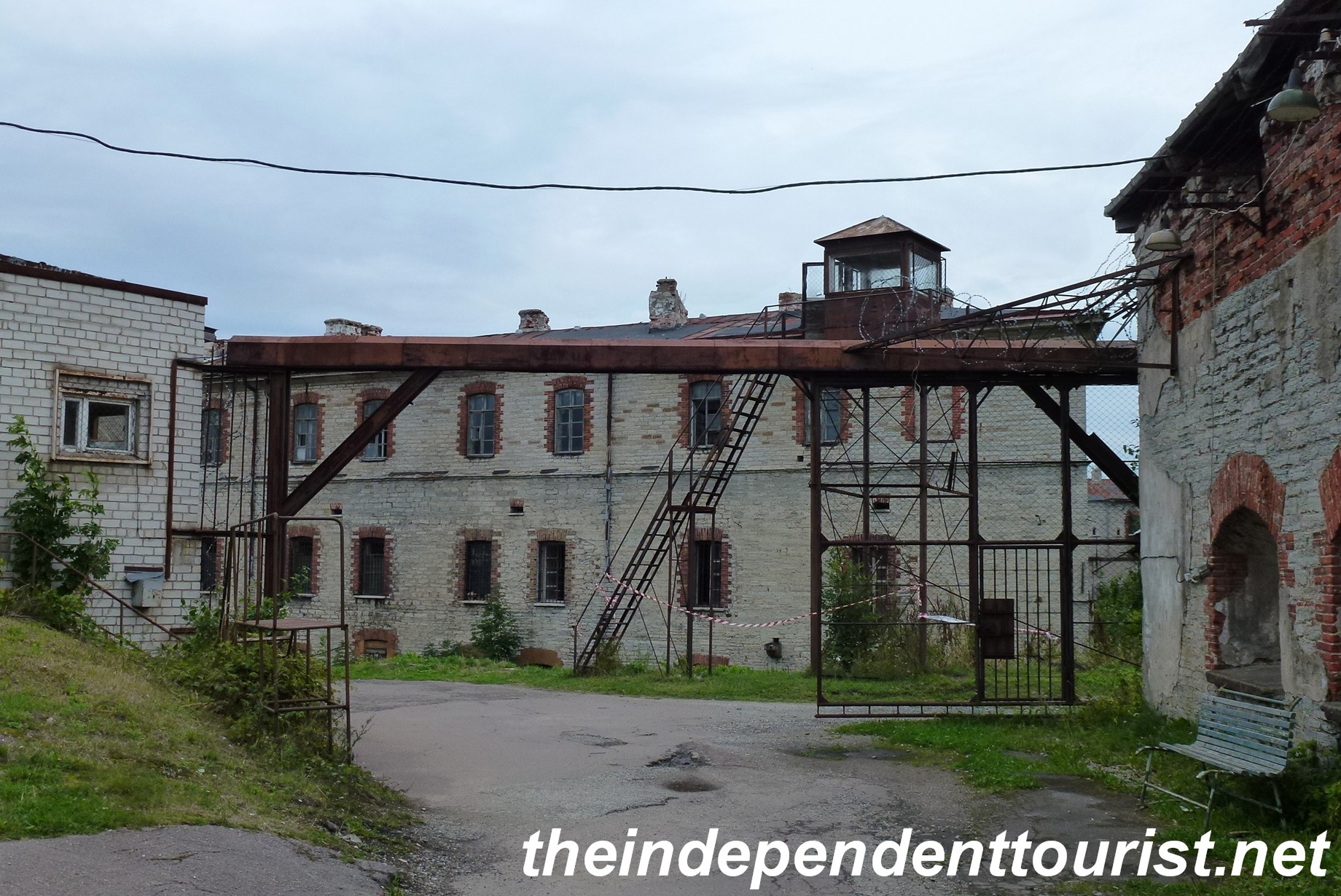
Another view of the prison grounds and buildings.

Another view of the prison grounds and buildings.

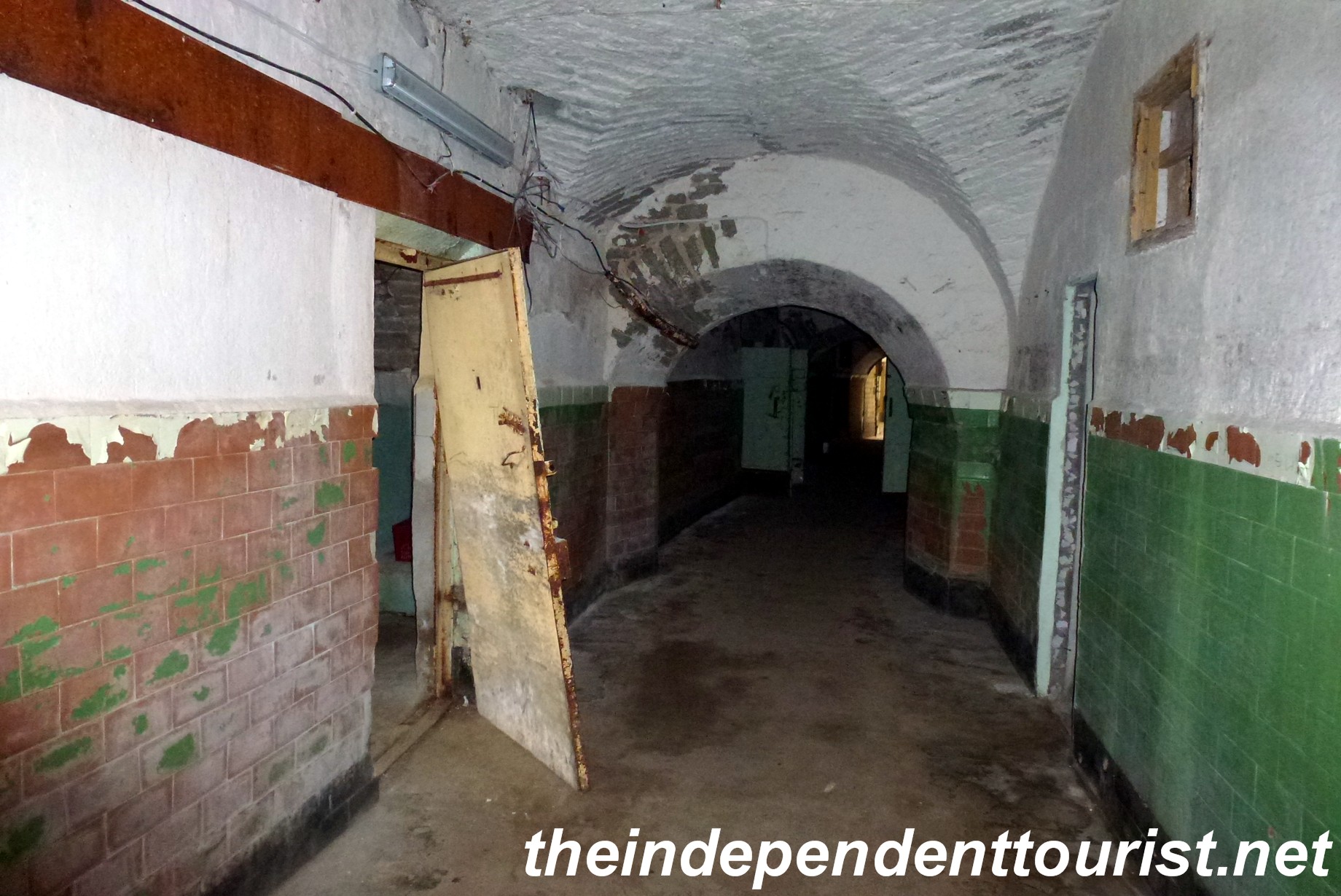
One of the prison's hallways, Notice how it's curved, this was a feature of the original fortress from the 1800's, so a shot could not be fired straight a long distance.

One of the prison’s hallways, Notice how it’s curved, this was a feature of the original fortress from the 1800’s, so a shot could not be fired straight a long distance.

A cell door with a small opening for sliding food to the prisoner.

A cell door with a small opening for sliding food to the prisoner.

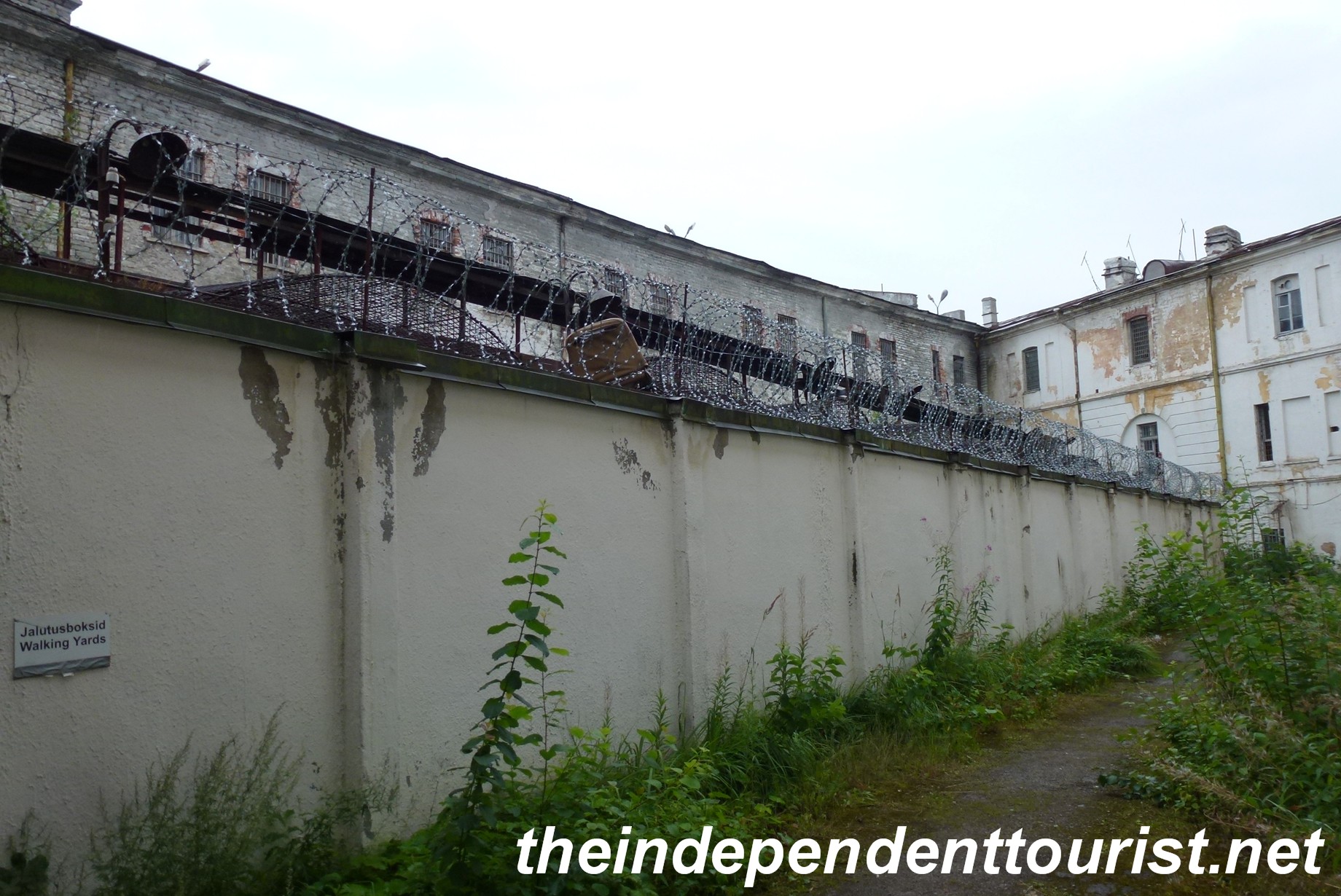
This is the courtyard and up until World War II the prisoners could walk in open space here. After the start of the Soviet occupation, the open-roof cells to the left were built. Prisoners would be crammed in these small "boxes" for an hour of fresh air.

This is the courtyard and up until World War II the prisoners could walk in open space here. After the start of the Soviet occupation, the open-roof cells to the left were built. Prisoners would be crammed in these small “boxes” for an hour of fresh air.

As can be seen from the images below, it’s as though the prisoners just up and left everything where it was, in its “natural” state. The fact that a visitor can wander through these buildings (which have no light other than the daylight coming through the windows) with no escorts is quite unusual.

One of the cell blocks with a lot of left over clothes and other items.

One of the cell blocks with a lot of left over clothes and other items.

The library - a number of books still on the shelves.

The library – a number of books still on the shelves.

The infirmary - I think I'll keep my own doctor and medical plan!

The infirmary – I think I’ll keep my own doctor and medical plan!

A small guidebook is available at the entrance, and a few rooms are sign posted, but for the most part you’re left with your imagination.

Toilet area - comfy!

Toilet area – comfy!

One of the cell areas - note the bedding and pillows still in place.

One of the cell areas – note the bedding and pillows still in place.

Many prisoners were held here while awaiting trial. Hundreds of people were also executed at the prison, the last execution taking place in 1991. One of the rooms used for shooting people was later painted over in brown paint to hide the blood stains.

One of the execution rooms. Hangings and poisonings took place here. Note the floorboards in the center of the picture, these would allow for the person to fall enough distance to complete the hanging.

One of the execution rooms. Hangings and poisonings took place here. Note the floorboards in the center of the picture, these would allow for the person to fall enough distance to complete the hanging.

The prison faces the sea, and was originally a fortress built to protect the city of Tallinn in 1840. It’s been open as a Cultural Park since 2007 to preserve the memory of what life was like for some unfortunate people during the Soviet occupation.

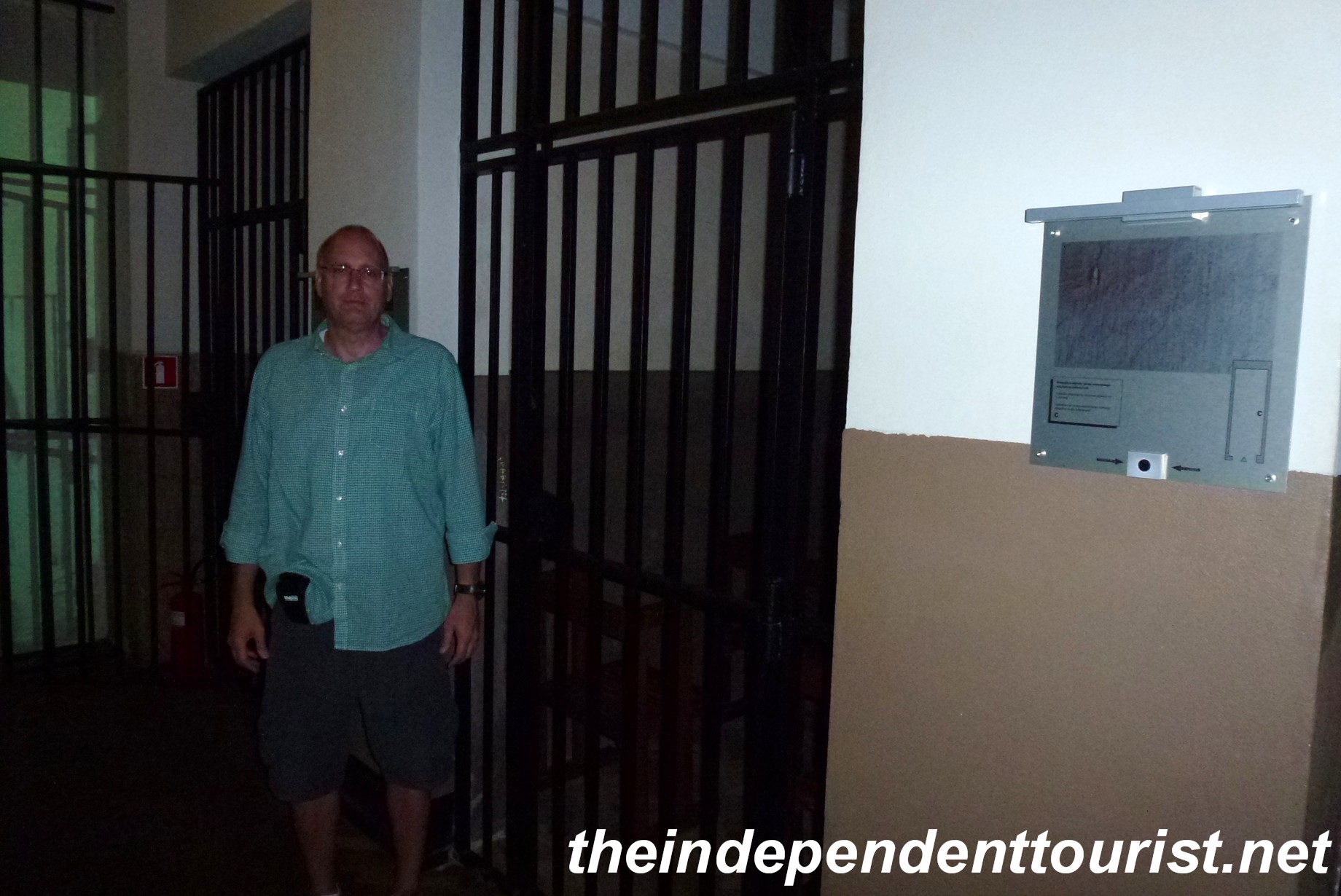
One of the guard's quarters.

One of the guard’s quarters.

For more information, visit: http://www.patarei.org.

Kraków—Part 3—Schindler’s Factory and the Jewish Quarter

The front facade of Schindler's Factory.

The front facade of Schindler’s Factory.

One of the highlights of a visit to Kraków is a stop at Schindler’s Factory, on the southeastern edge of the city in the district of Podgórze.  Oskar Schindler was immortalized in Steven Spielberg’s movie Schindler’s List (1993) as the man who saved about 1,200 Jews during World War II by employing them in his factory making goods for the German military.

Sign in front of the Factory Museum. "Whoever saves one life, saves the world entire."

Sign in front of the Factory Museum. “Whoever saves one life, saves the world entire.”

Photos of Jews saved by Oskar Schindler.

Photos of Jews saved by Oskar Schindler.

A photo of Oskar Schindler (left).

A photo of Oskar Schindler (left).

“For some, war leaves no choice; for others it makes choosing a must. A small gesture can yield irreversible consequences. It can either save a life or ruin it.” (A quote from the Schindler museum)

The factory building is still standing and is now an excellent museum, describing the invasion and occupation of Poland by Nazi Germany (1939 to 1945) and daily life in the huge Jewish Ghetto of Kraków, where thousands of Jews were crammed into tiny quarters after their homes and possessions were confiscated by the Nazis. There are numerous pictures, exhibits, stories and displays of what life was like during the Nazi occupation. I really can’t imagine the constant terror of not knowing what will be your fate – will you live through the night, will your family be taken from you, or will you be shot to death on a whim?

Prior to my visit, I had hoped to see the actual factory floor as an exhibit, but all that remains of the actual factory are a few machines, Schindler’s office and some of the goods manufactured in the factory. However, the well-organized museum is definitely worth visiting. Plan a few hours to see and absorb all the information.

Schindler's office and desk.

Schindler’s office and desk.

Some of the products Schindler's Factory produced.

Some of the products Schindler’s Factory produced.

One of the metal-working machines from Schindler's Factory.

One of the metal-working machines from Schindler’s Factory.

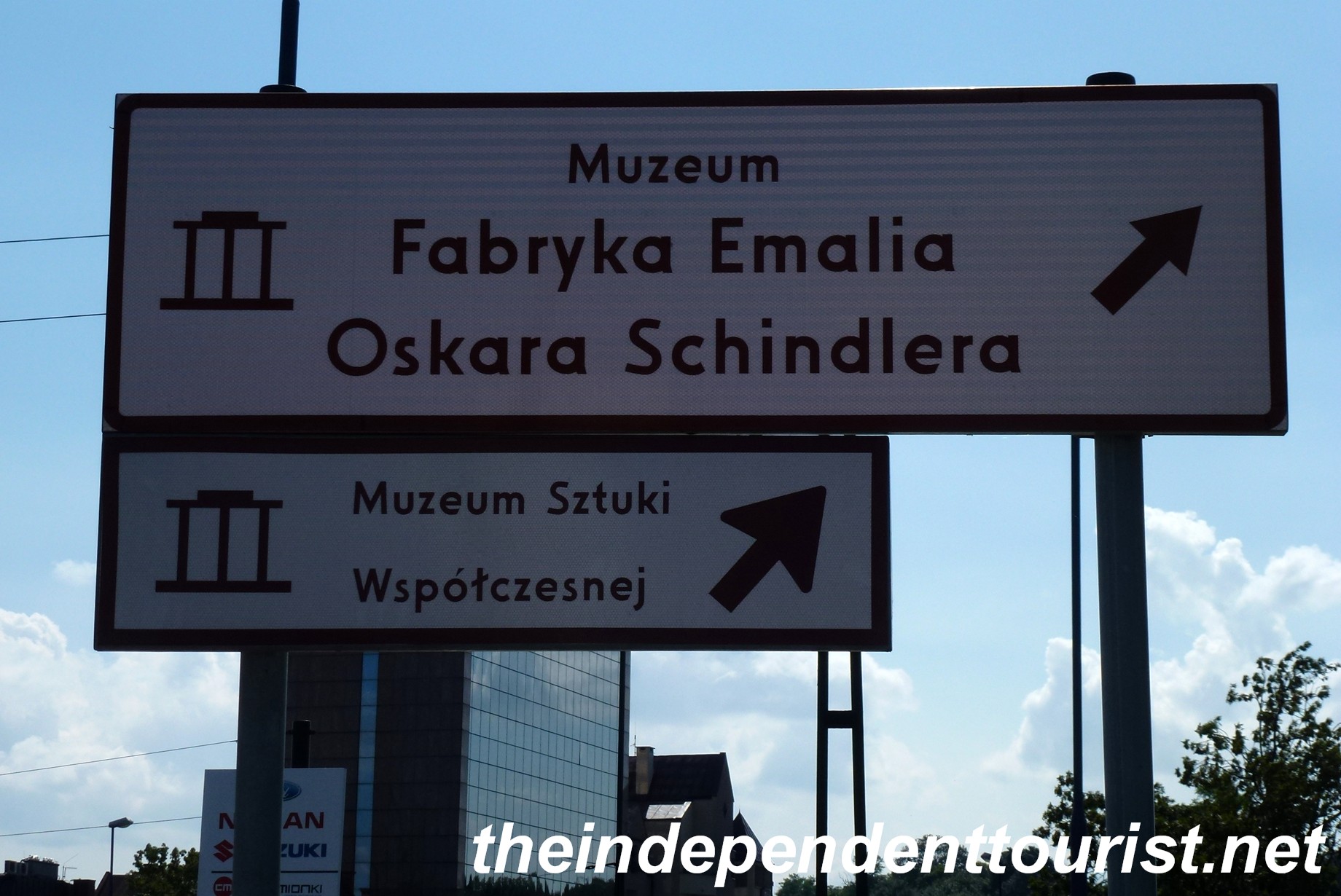
Schindler’s Factory is a long walk from the center of Kraków, or take a tram from the main post office in the Old Town. There are signs marking the way to the Factory from the tram stop.

A sign pointing the way to Schindler's Factory.

A sign pointing the way to Schindler’s Factory.

Jewish Quarter

The Kraków district of Kazimierz (in between Old Town and Podgórze) is known as the Jewish quarter and it was a vibrant area prior to the deportation and extermination of the Jewish population during World War II.

ul Szeroka. The wide street or square that is the heart of the Jewish Quarter.

ul Szeroka. The wide street or square that is the heart of the Jewish Quarter.

Only about 10% of the Jews living in Kraków survived the war. The community has undergone something of a revival since the release of Schindler’s List.

The Remuh Cemetery. Dates from the mid-16th century. Many of the tombstones were buried to avoid desecration. One of the best-preserved Renaissance Jewish cemeteries in Europe.

The Remuh Cemetery. Dates from the mid-16th century. Many of the tombstones were buried to avoid desecration. One of the best-preserved Renaissance Jewish cemeteries in Europe.

Remuh Synagogue. The smallest synagogue in this area. Completed in 1558.

Remuh Synagogue. The smallest synagogue in this area. Completed in 1558.

Isaac's Synagogue interior. Kraków's largest synagogue, completed in 1644. A close inspection reveals the original wall paintings.

Isaac’s Synagogue interior. Kraków’s largest synagogue, completed in 1644. A close inspection reveals the original wall paintings.

We enjoyed visiting the synagogues, wandering the streets and squares in this community. On some of the houses, information is provided on the families who lived there during World War II and their fate.

Reference: Lonely Planet Travel Guide – Poland

Kraków – Part 2 – Wawel Castle

A miniature layout of Wawel Castle. The main castle and cathedral are at the far end of the display.

A miniature layout of Wawel Castle. The main castle and cathedral are at the far end of the display.

One of the premier tourist sites in Kraków is Wawel Castle, located on a hill above the Vistula River on the southern edge of the old town. Wawel Castle was the home of the Polish kingdom for about 500 years (12th century to 16th century).

A view of Wawel Castle from the Vistula River.

A view of Wawel Castle from the Vistula River.

A great way to see Wawel Castle's exterior is by a carriage ride.

A great way to see Wawel Castle’s exterior is by a carriage ride.

The Bernardyńska Gate to Wawel Castle.

The Bernardyńska Gate to Wawel Castle.

Although a few foundation remnants of the original Castle still exist, what we see today is mainly from the 16th century. Wawel suffered many attacks and lootings by the Swedish and Prussian armies over the centuries. It underwent significant restoration after World War I. Although the Castle sits on a bit of a hill, it cannot be seen from the main square in old Kraków.

The arcaded courtyard of Wawel Castle.

The arcaded courtyard of Wawel Castle.

One of the ceilings in Wawel Castle.

One of the ceilings in Wawel Castle.

In the Hall of the Senators, with its magnificent Biblical tapestries.

In the Hall of the Senators, with its magnificent Biblical tapestries.

In the Hall of the Deputies - although it's hard to tell, this is an image of the ceiling with 30 individually carved human heads, representing the cycle of life from birth to death. There were originally 194 carved heads (completed around the year 1535), these 30 are all that remain.

In the Hall of the Deputies – although it’s hard to tell, this is an image of the ceiling with 30 individually carved human heads, representing the cycle of life from birth to death. There were originally 194 carved heads (completed around the year 1535), these 30 are all that remain.

A major draw to the castle grounds is Wawel Cathedral, where numerous royal coronations and funerals have taken place. Inside, many of the tombs of Polish kings are seen. The current Cathedral dates from 1364, and is the third church on the site.

The exterior of Wawel Cathedral has a number of interesting facades.

The exterior of Wawel Cathedral has a number of interesting facades.

One of the chapels in Wawel Cathedral.

One of the chapels in Wawel Cathedral.

Another view of Wawel Cathedral, with its ornate decorations.

Another view of Wawel Cathedral, with its ornate decorations.

The Castle is very busy, so plan ahead – we bought our tickets the day before we wanted to visit, and each ticket has a specific entry time (you can wander the grounds for free). There are five different ticket options, so you have to decide what you want to visit, such as the State Rooms, the Royal Private Apartments, the Crown Treasury & Armory, Oriental Art Exhibit, or Lost Wawel (where you see some of the old original foundations and other artifacts found at Wawel from ancient times). We toured the State Apartments and really enjoyed the artwork and beauty of the ornate chambers.

Note that backpacks are not allowed in the interior rooms, and must be checked into a locker. Due to severe restrictions on photographs, it’s almost impossible to take pictures inside the Castle and the Cathedral – I captured just the few above. So, you’ll have to take my word for it…visiting Wawel Castle and Cathedral are must-dos on a visit to Kraków.