The Sights of Copenhagen – Part 1

Copenhagen is a great city for tourists with lots to see in a relatively compact area. We spent about a day and a half exploring the town, walking everywhere. With all the canals and harbors, Copenhagen reminded me (just a tiny bit) of Amsterdam, but it definitely has its own personality and character.

Christianshavn

This is a neighborhood located across a large canal on the east side of the old town and originally was part of the fortifications of Copenhagen.

This district is home to Christiania, or Freetown Christiania, a bohemian community having some autonomy from Copenhagen, and Denmark, for that matter. The community is one of Copenhagen’s most famous sights.

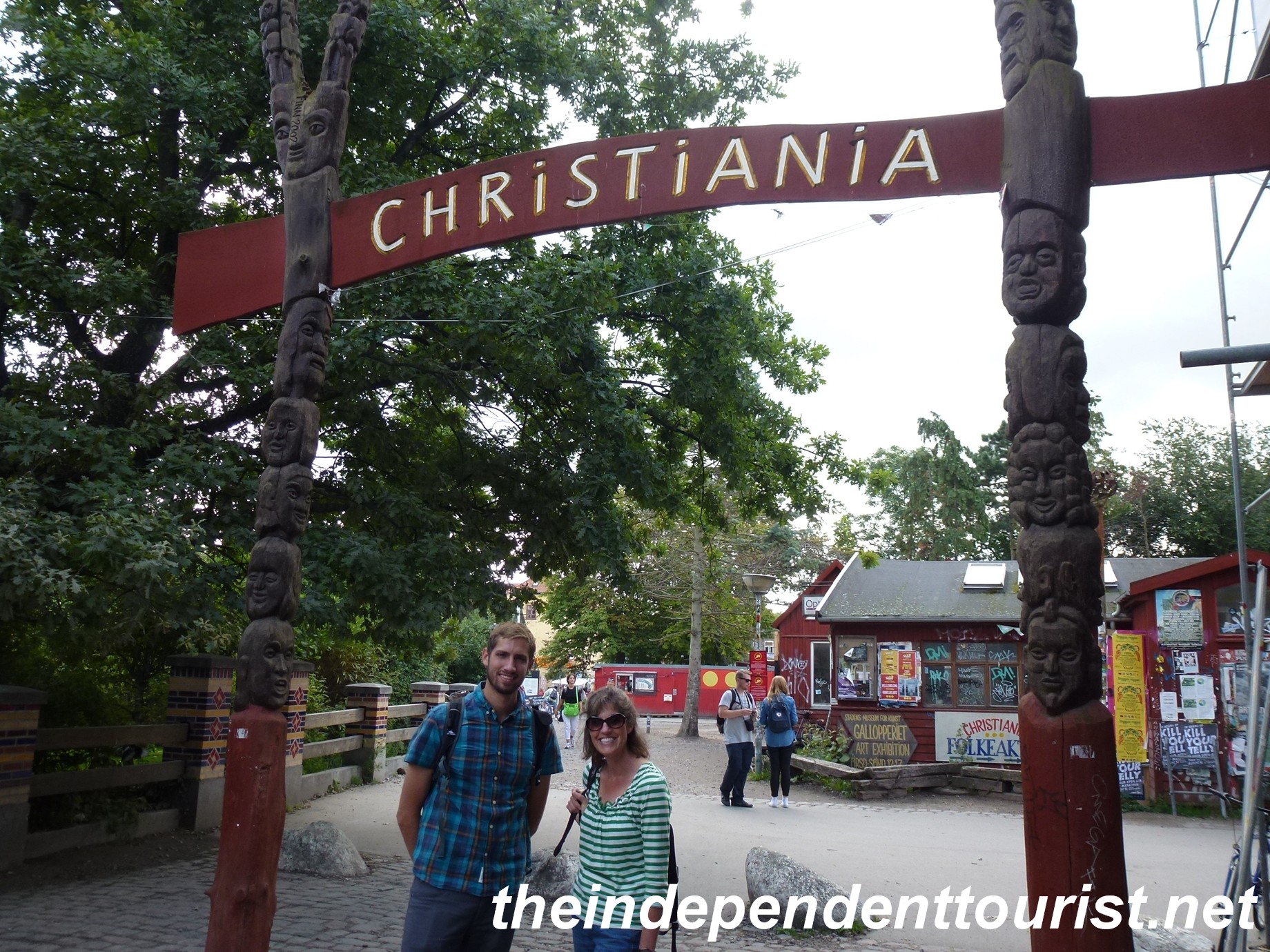
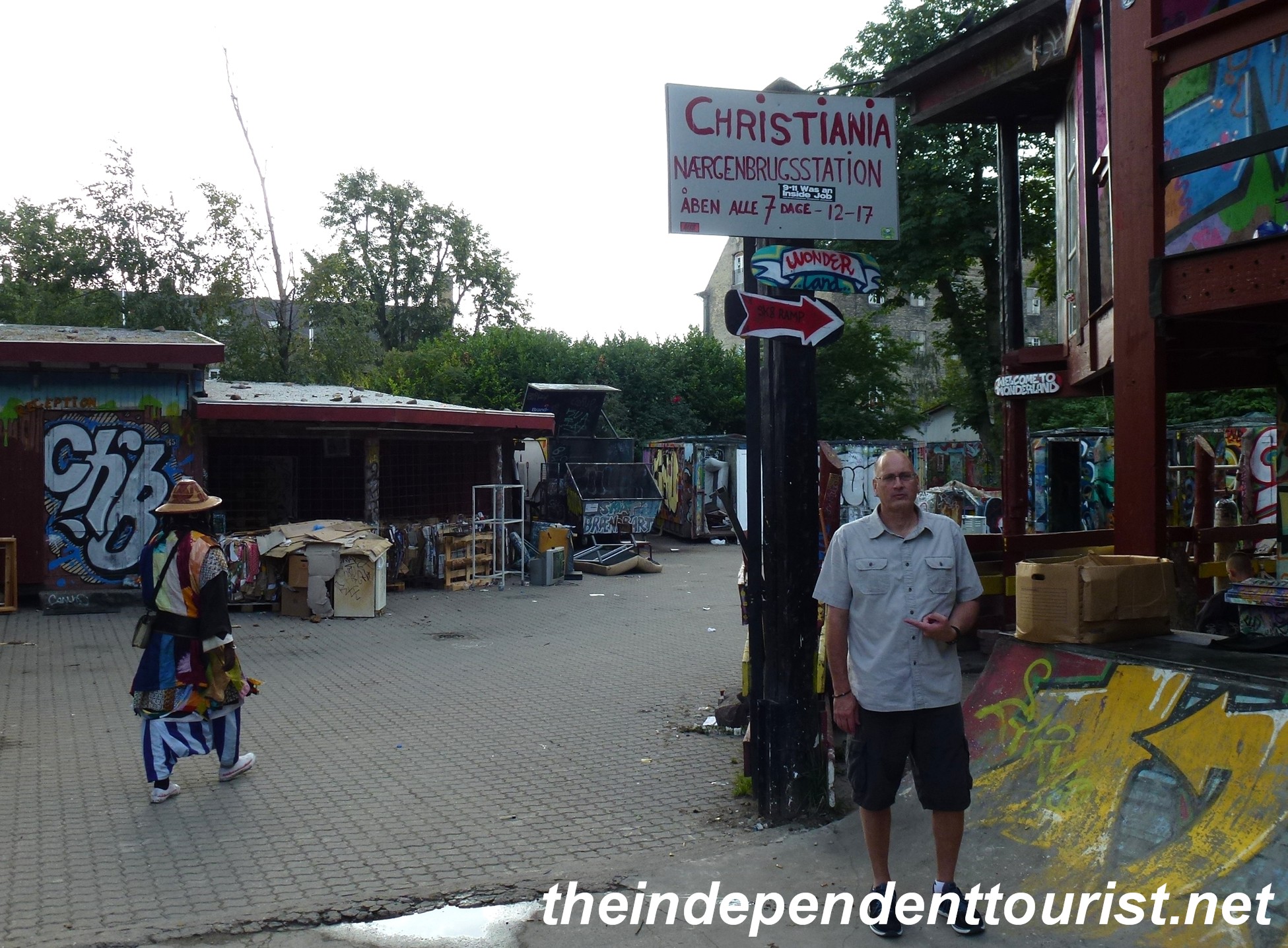
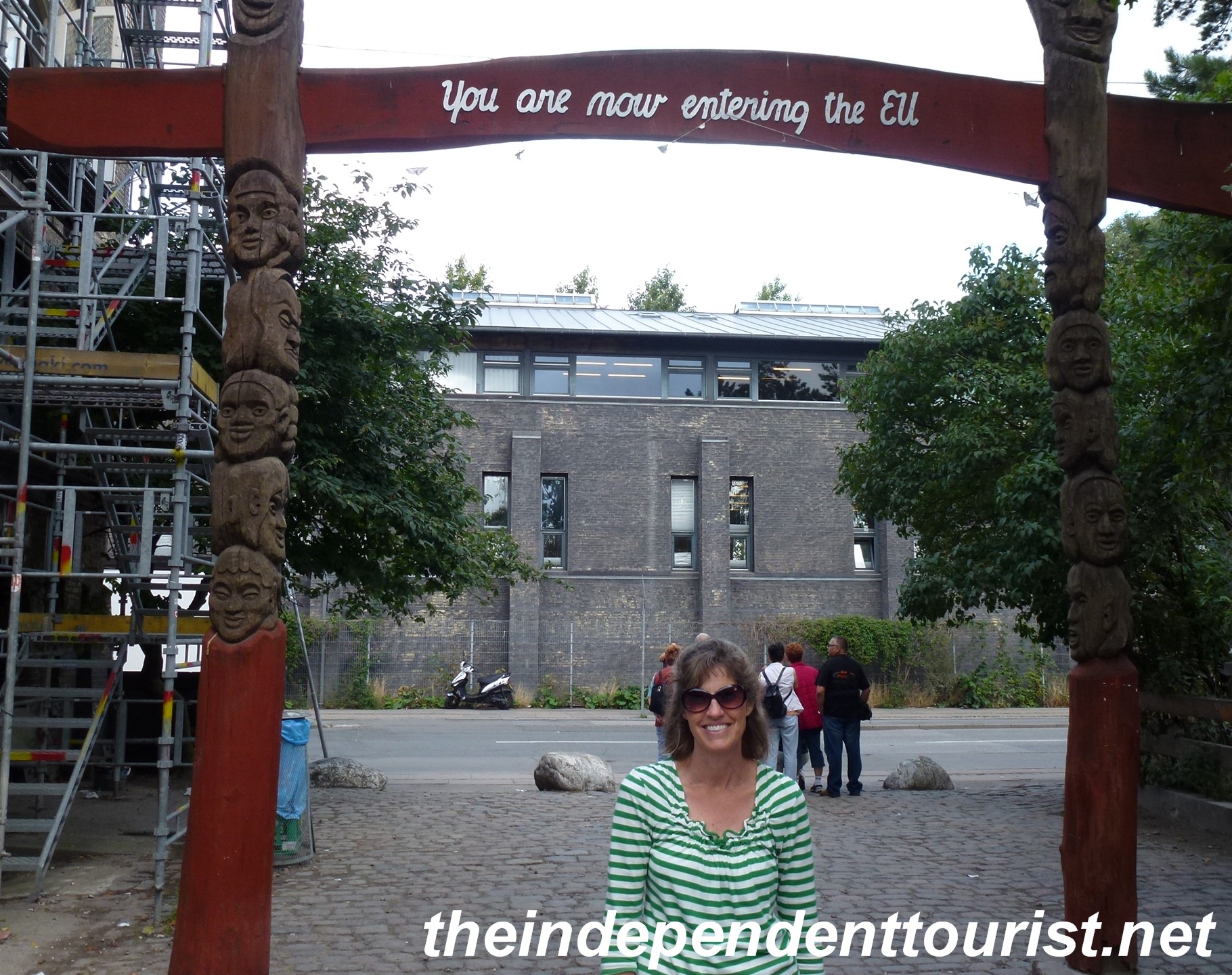
The "border" into Christiania.

The “border” into Christiania.

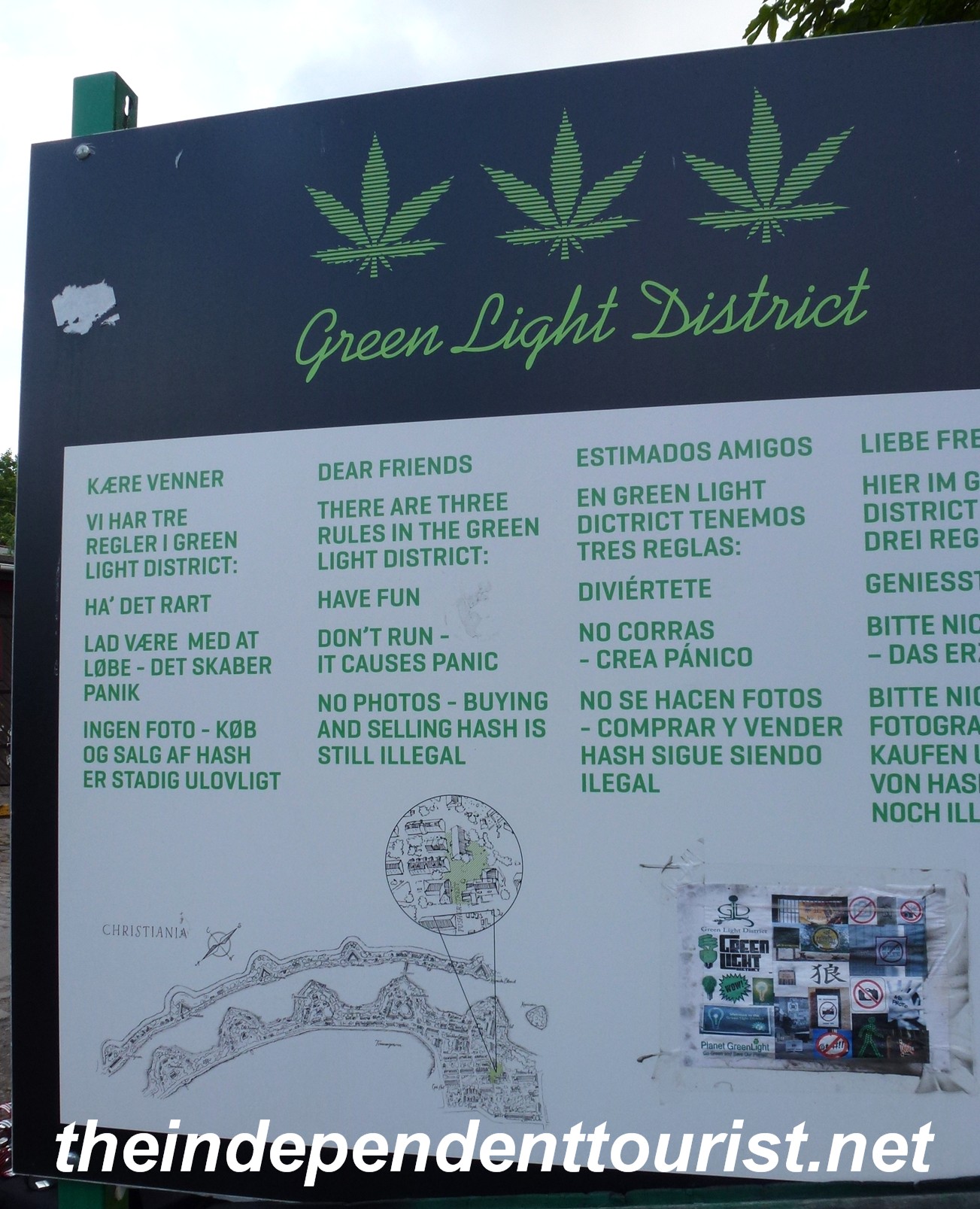
A sign in four languages welcoming visitors to Christiania and explaining the rules.

A sign in four languages welcoming visitors to Christiania and explaining the rules.

One of Christiania's residents on the left side of the picture.

One of Christiania’s residents on the left side of the picture.

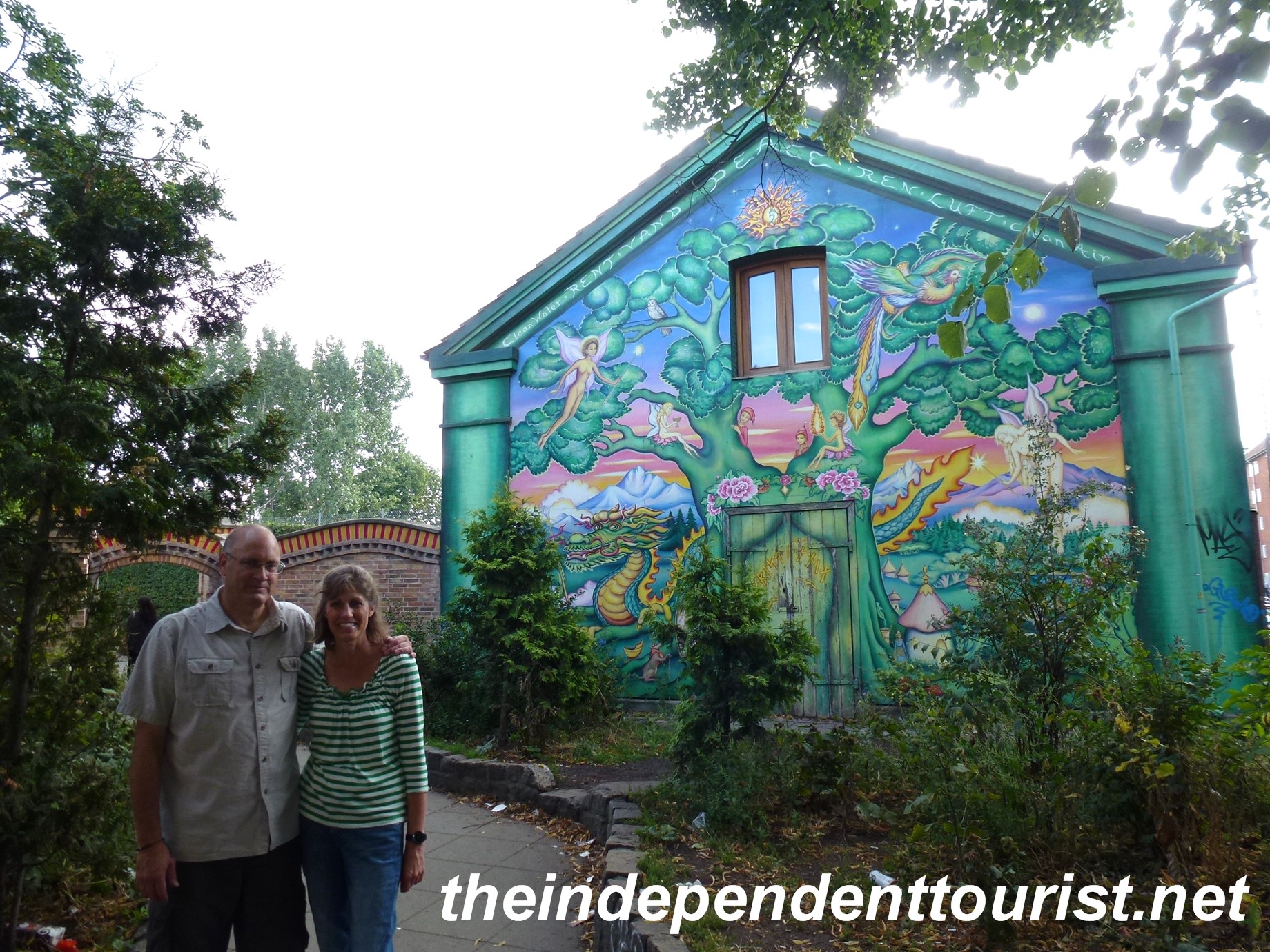
One of the many colorful buildings in Christiania.

One of the many colorful buildings in Christiania.

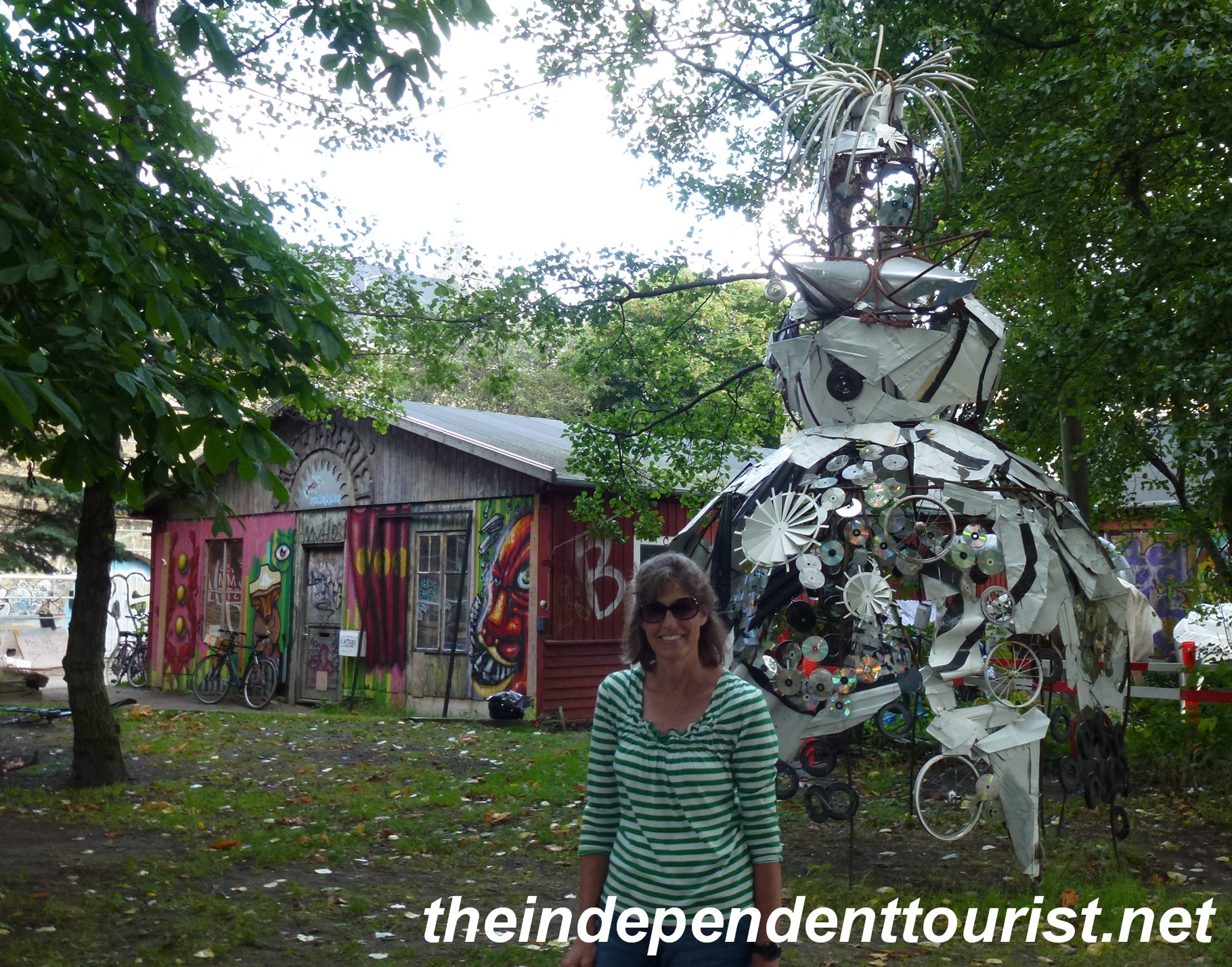
Robyn stands by a creative sculpture in Christiania.

Robyn stands by a creative sculpture in Christiania.

If you’re looking to see something different than the normal historical tourist sites, this is the place. Photographs are forbidden in the main part of the community (to keep the “citizens” from being recorded or identified since there is an active “soft drug” trade here). There are ongoing legal battles between the community and the Danish government.

This sign is only partially joking!

This sign is only partially joking!

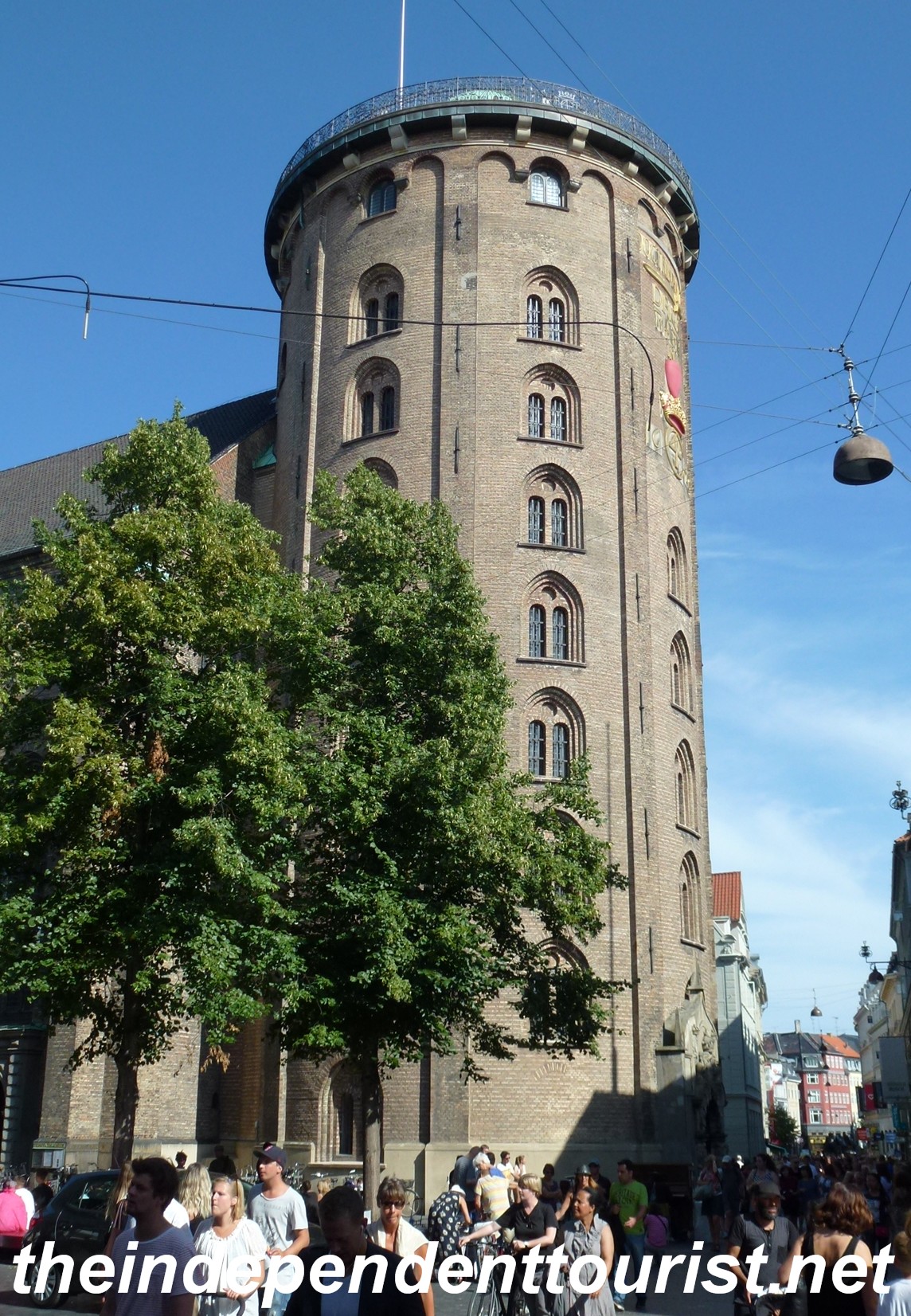
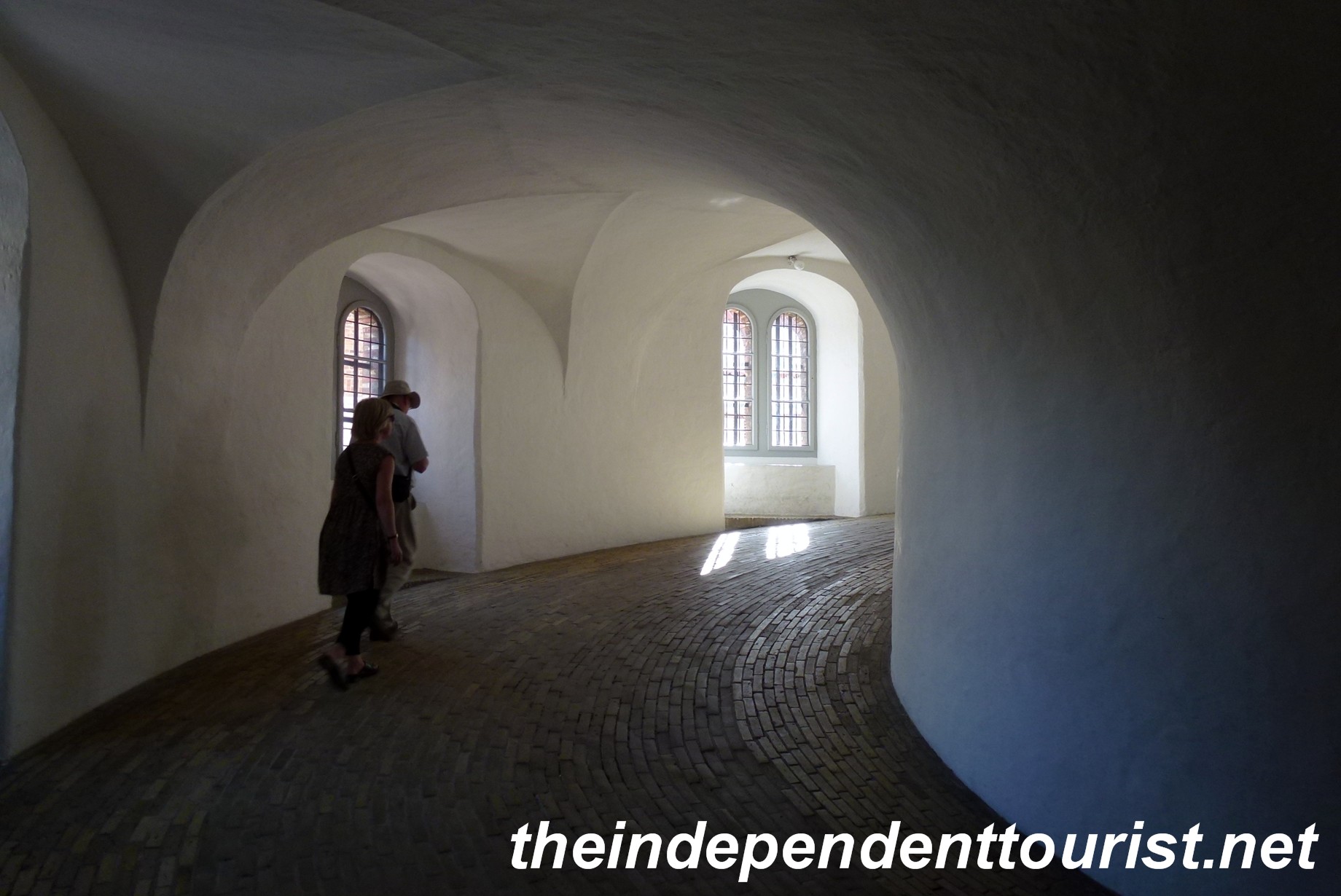
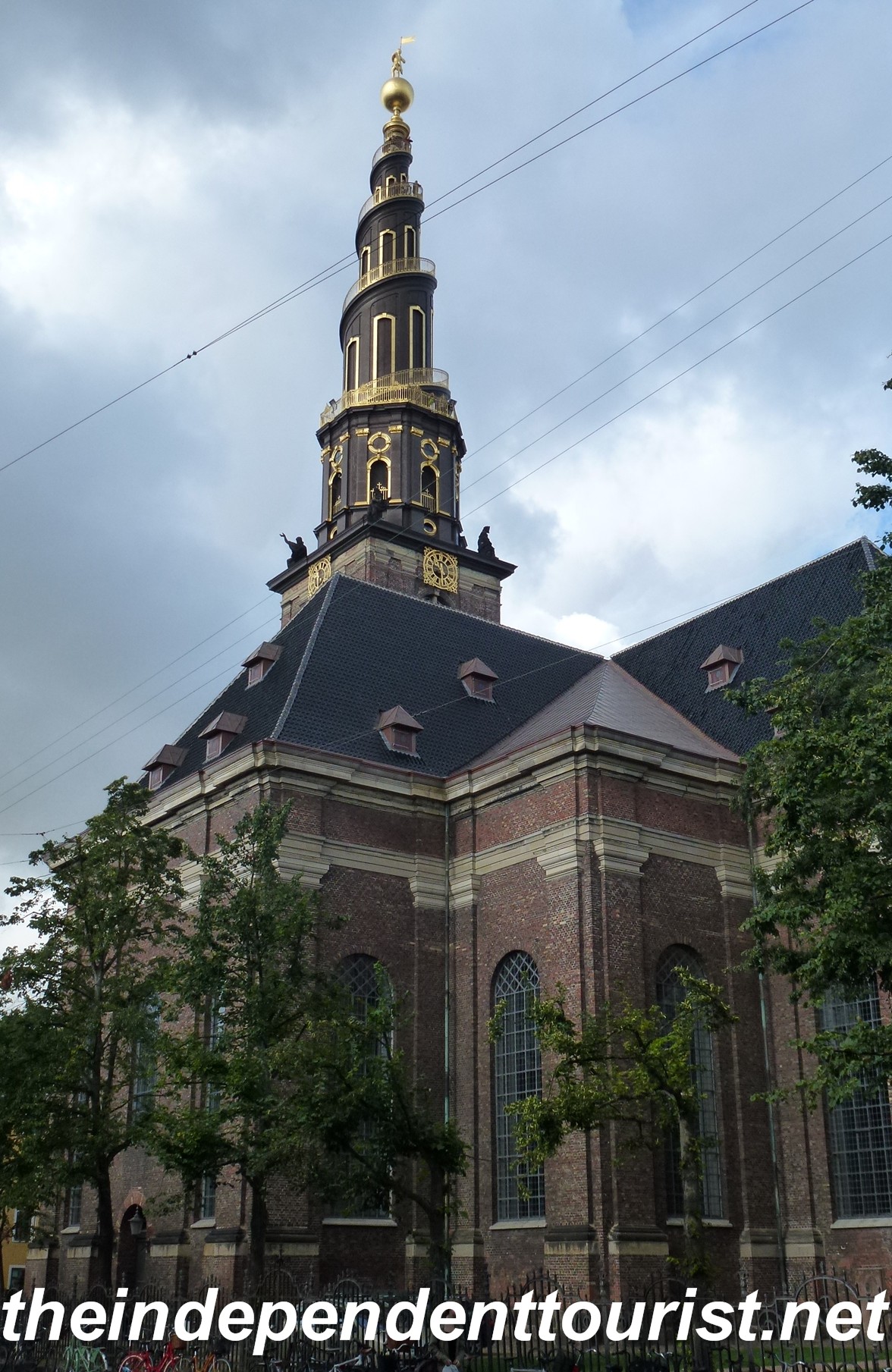
Our Savior’s Church.  The tower of this church dominates Christianshavn, and is one of the taller structures in Copenhagen.  Part of the climb up the tower is inside and then the last part takes you outside, as the steps circle the round tower and narrow to nothing at the very top, giving great views of Copenhagen.

A view of Our Savior's Church, just a few blocks from Christiania. Note the round tower and the stairway circling to the top.

A view of Our Savior’s Church, just a few blocks from Christiania. Note the round tower and the stairway circling to the top.

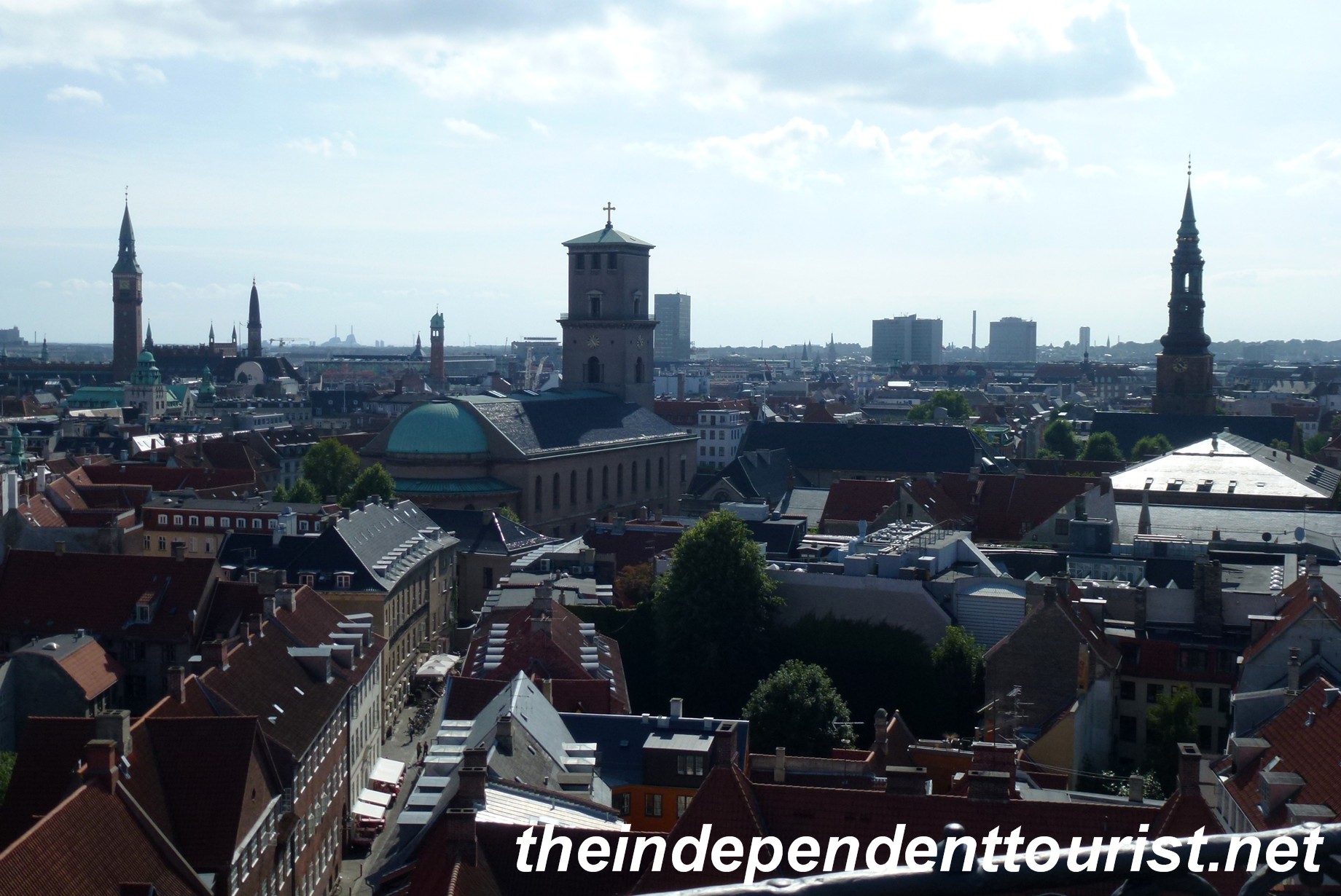
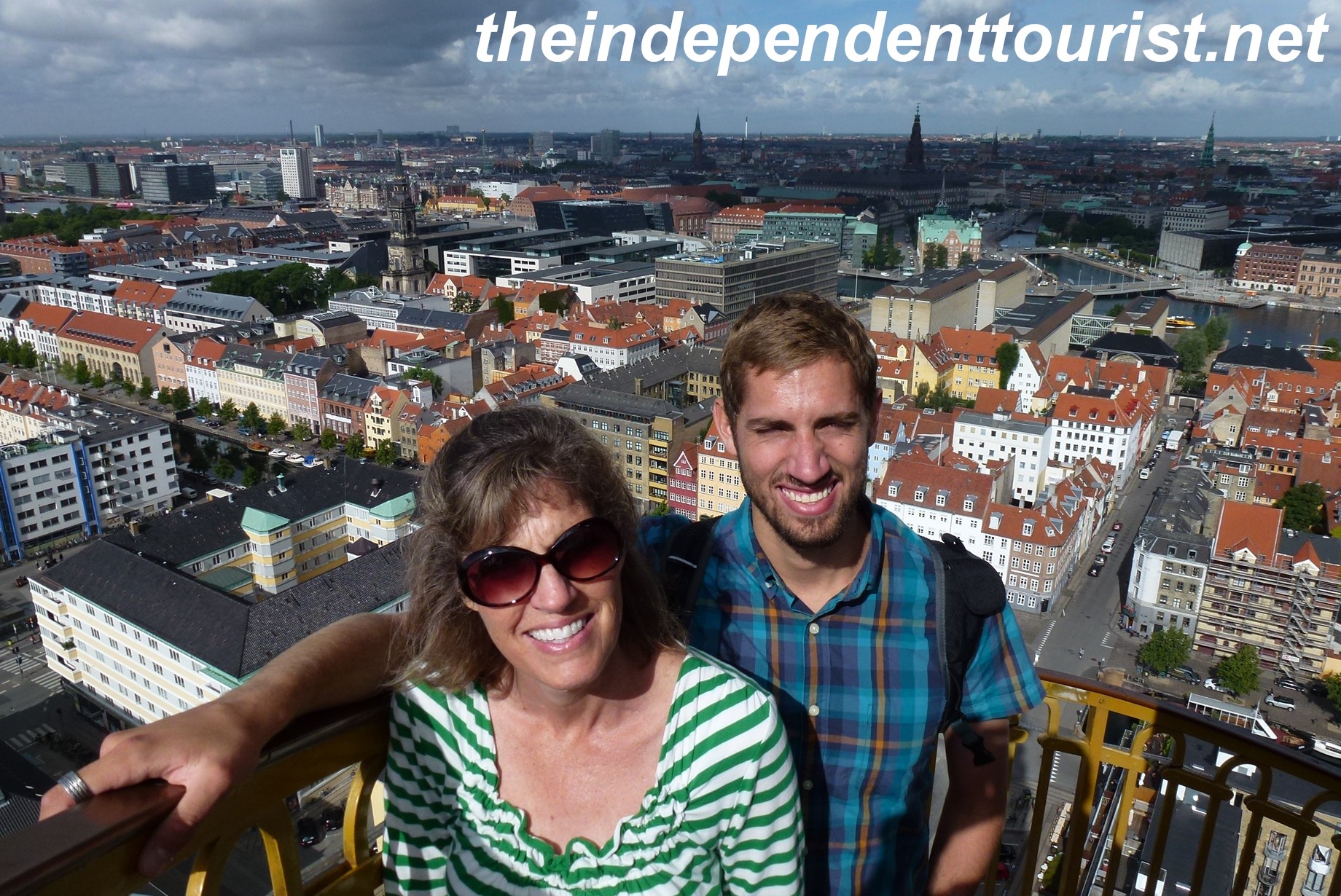
Robyn and Sean on the tower's outside stairs overlooking downtown Copenhagen (looking west).

Robyn and Sean on the tower’s outside stairs overlooking downtown Copenhagen (looking west).

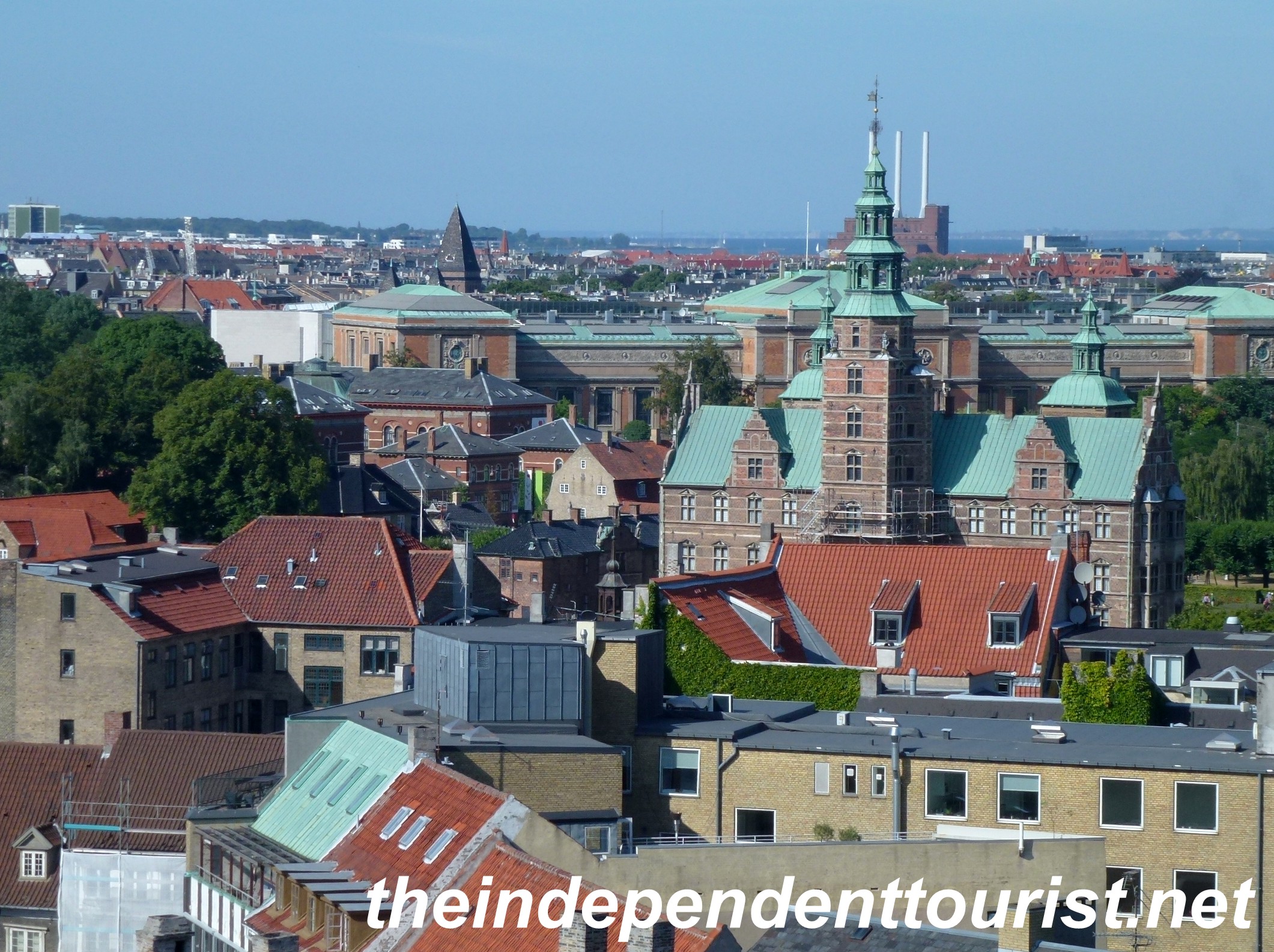
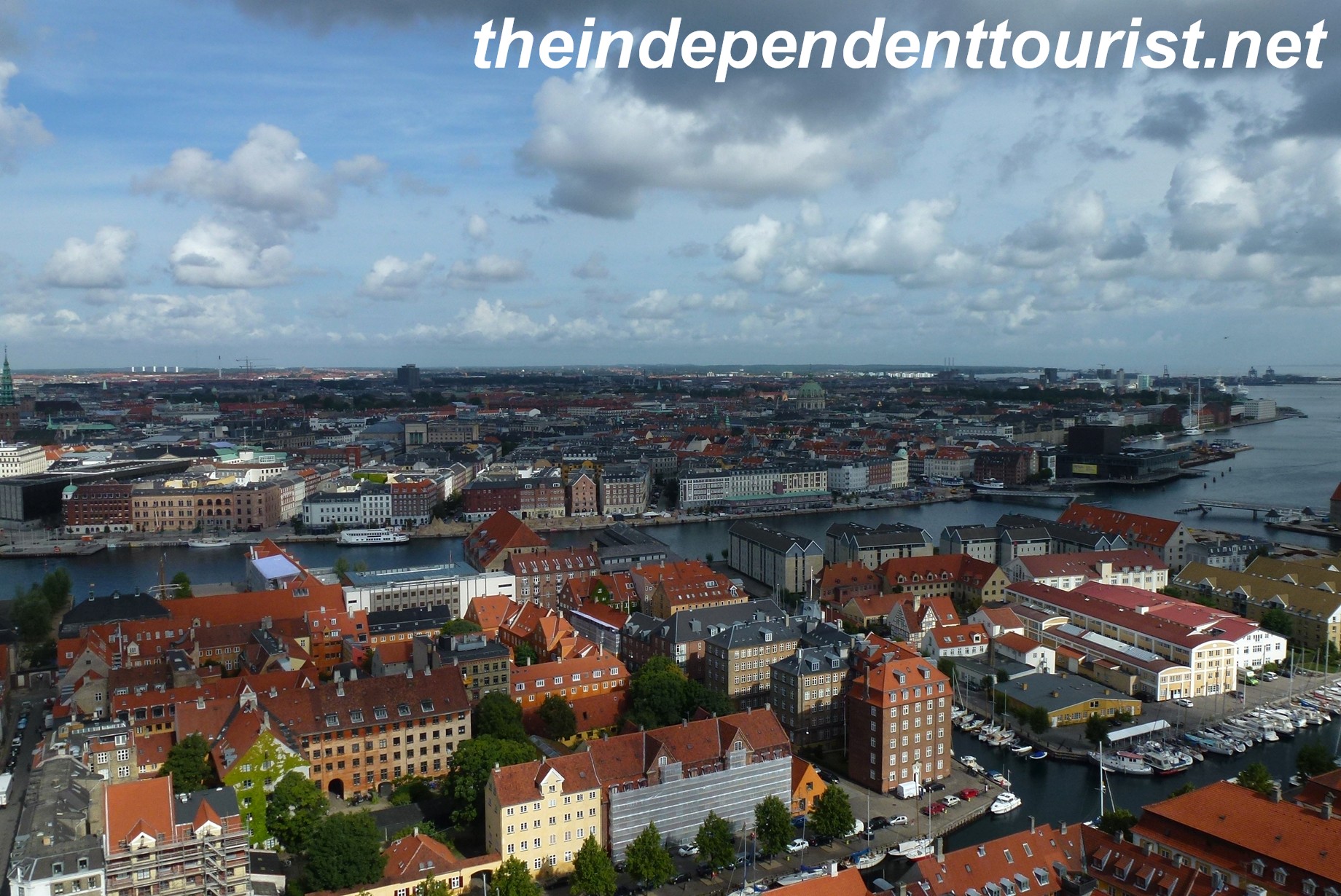
Another view of Copenhagen from Our Savior's Church tower, looking northwest. Cruise ships dock in the upper right of this photo, which is close to the "Little Mermaid" statue.

Another view of Copenhagen from Our Savior’s Church tower, looking northwest. Cruise ships dock in the upper right area of this photo, which is close to the “Little Mermaid” statue.

There was a funeral going on in the church, so we couldn’t go inside the church itself. The church building was completed in the late 1600’s, and the tower was completed in 1752.

Practical Notes: The main train station is only about two stops (15 minutes) from the airport and has storage lockers (lower level), which are handy if you’re in transit or looking to store your luggage prior to boarding a cruise ship. The main train station is very conveniently located, right next to Tivoli Gardens, one of the world’s first amusement parks, which opened in 1843. Given all the other sights to see, we did not spend time here. We stayed at the Marriott hotel, just a few blocks east of the train station, a great location for tourists.  Be forewarned that Copenhagen is expensive, but perhaps slightly less so than its other Scandinavian counterparts, Oslo and Stockholm. Denmark uses the Danish Krone (DKK), not the Euro as its currency.

Exploring Dahshur and Saqqara – Egypt as it was a Hundred Years Ago

If you’d like to get away from the crowds in Cairo, and feel almost like you’re an early explorer in Egypt, take a short trip to Dahshur and Saqqara. These are “don’t miss” sights and an easy day trip (the furthest site, Dahshur, is about 23 miles south from Cairo, we hired a driver and van from Cairo to take us to these sights).

Dahshur

Dahshur originally contained 11 pyramids, and the oldest are the main attractions. The Red Pyramid and the Bent Pyramids were built around 2600 BC, making them slightly older than the pyramids of Giza. They are almost as large as the more famous pyramids at Giza, both are only about 14 feet shorter than the Pyramid of Khafre (the 2nd highest pyramid at Giza). They were the first “true” pyramids the Egyptians built.

The Red Pyramid - picture perfect with a camel!

The Red Pyramid – picture perfect with a camel!

The Bent Pyramid was built first, and the builders learned during construction that they had to lessen the steepness of the angle of the sides due to stability issues and the adjustment gives the pyramid its unique shape.

The Bent Pyramid - not accessible to tourists.  The angle was reduced from 54 to 43 degrees due to stress and instability.

The Bent Pyramid – not accessible to tourists. The angle was reduced from 54 to 43 degrees due to stress and instability.

The Red Pyramid is open to the public, the Bent Pyramid is not, since it is on a military reservation.  I loved visiting the Red Pyramid—it looks untouched with sand still covering the huge stone blocks part way up the sides and inside we had the interior chambers all to ourselves.

The corbelled ceilings in the Red Pyramid chambers. Hard to get a good perspective with a photo.

The corbelled ceilings in the Red Pyramid chambers. Hard to get a good perspective with a photo.

The entrance to the Red Pyramid is in the distance.

The entrance to the Red Pyramid is in the distance.

Saqqara

Just about 6 miles north of Dahshur is Saqqara, the burial site for the ancient city of Memphis, just a short distance away. This was a burial ground for 3,500 years, and was largely buried in sand until the mid-1800’s. Saqqara is home to the Step Pyramid, built in 2650 BC, and it is the oldest stone monument in Egypt and quite possibly the world.

My in-laws in front of the Step Pyramid. The pyramid's interior is not open or safe enough for visitors.

My in-laws in front of the Step Pyramid. The pyramid’s interior is not open or safe enough for visitors.

The Step Pyramid was part of a progression in construction technology that led to the smooth-sided, near perfectly-dimensioned pyramids of Dahshur and Giza just a hundred years later.

The entrance to the Tomb of Mereruka, one of the many tombs at Saqqara.

The entrance to the Tomb of Mereruka, one of the many tombs at Saqqara.

Inside the Tomb of Mereruka, there are 32 chambers in this tomb.

Inside the Tomb of Mereruka, there are 32 chambers in this tomb.

Inside the Pyramid of Teti at Saqqara (about 2300 BC) - note the Pyramid Texts on the walls.

Inside the Pyramid of Teti at Saqqara (about 2300 BC) – note the Pyramid Texts on the walls.

Saqqara is a huge site, you will have to pick and choose what you see, and some tombs may be closed on a rotating basis. There were a few tour buses here, but not many, and since the site is spread out, you may find yourself enjoying the tombs on your own. Be prepared to stoop, crawl, and get a bit dusty in entering some of the tombs – part of the fun!

The Pyramids of Abu Sir, looking north from Saqqara. The most northern one, Pyramid of Sahure, was open to tourists at the time, not sure if it still is.

The Pyramids of Abu Sir, looking north from Saqqara. The most northern one, Pyramid of Sahure, was open to tourists at the time, not sure if it still is.

References: Lonely Plant Egypt and DK Eyewitness Travel Egypt

Visiting Fredriksborg and Kronborg Castles – A great day trip from Copenhagen

If you have an extra day in Copenhagen, or have most of the day before boarding your northern European cruise ship departing from Copenhagen, visit these two castles. We are able to see both in about a 7 hour round trip from Copenhagen by renting a car at our hotel (Marriott). The rental company (Sixt) delivered the car to the hotel and picked it up upon our return, a great service.

Fredriksborg Castle

This castle is located about 40 km northwest of Copenhagen in the small town of Hillerød. The castle dates from 1560 but most of what we see today is from the early 1600’s.

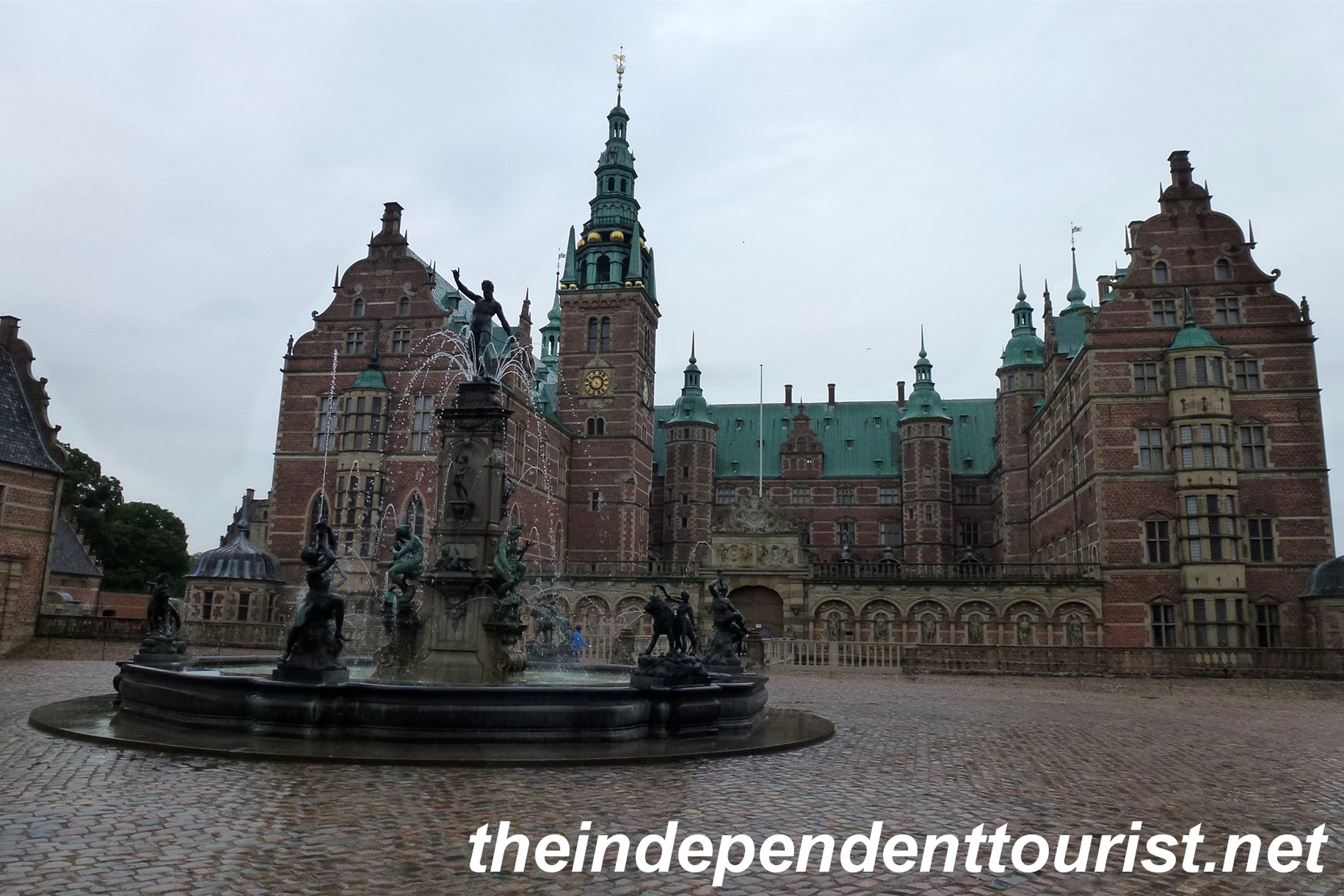
A view of Fredriksborg Castle from the fountain courtyard.

A view of Fredriksborg Castle from the fountain courtyard.

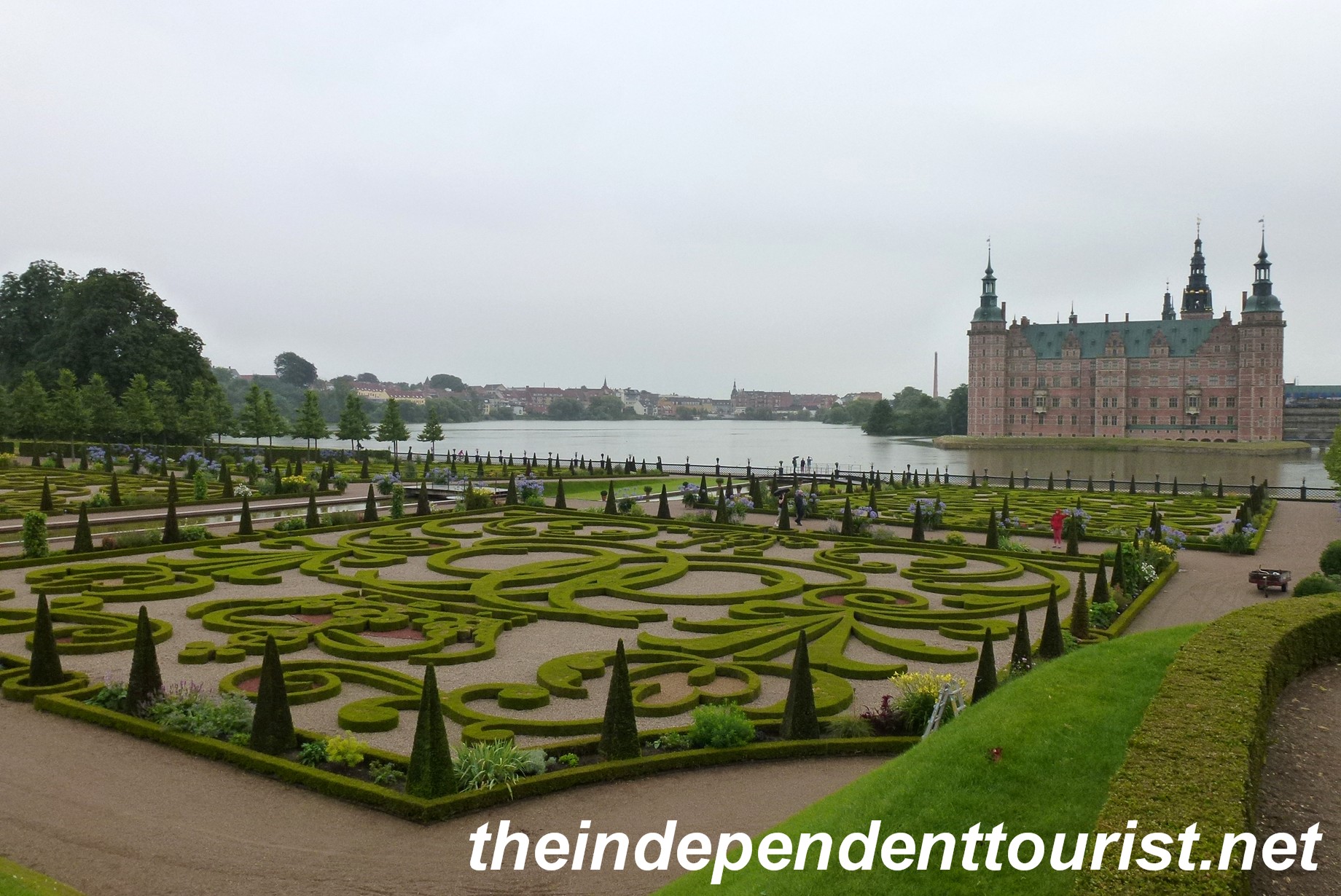
Fredriksborg slot (as castles are called in Denmark) was more of a palace than a military stronghold. It has some beautiful gardens and huge lake surrounding it.

A view of Fredriksborg castle, lake and gardens.

A view of Fredriksborg castle, lake and gardens.

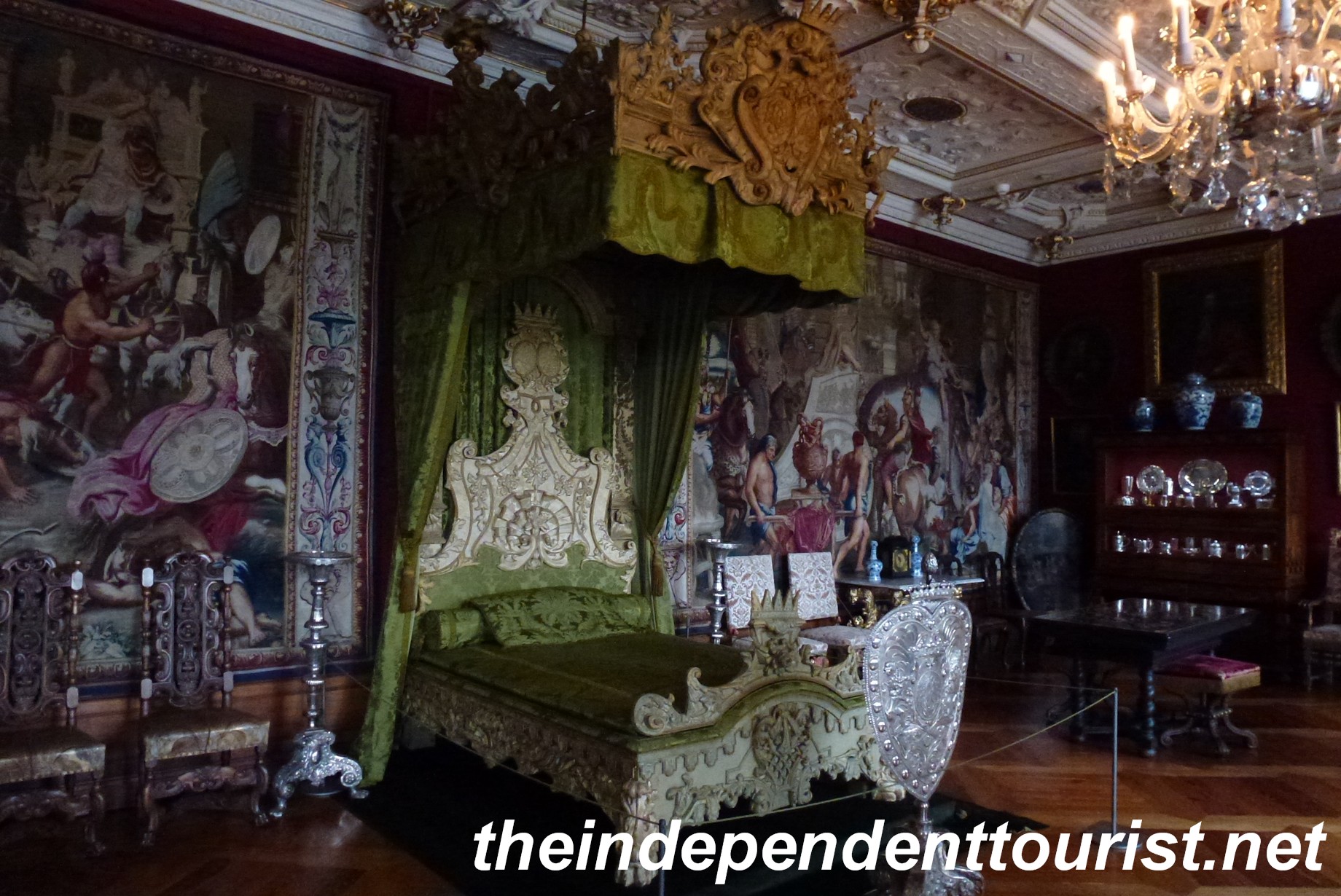
Bedroom chamber at Fredriksborg Castle.

Bedroom chamber at Fredriksborg Castle.

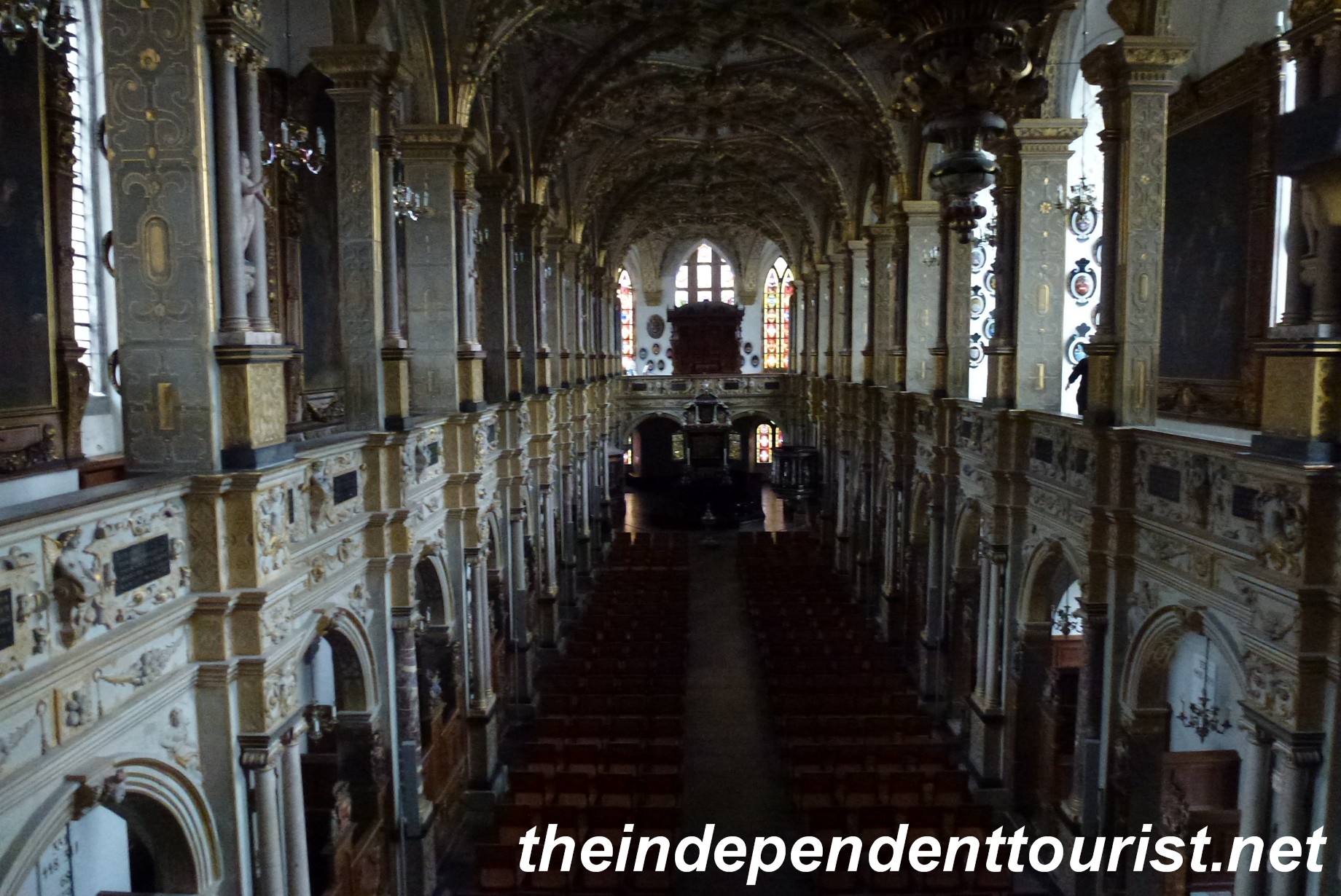
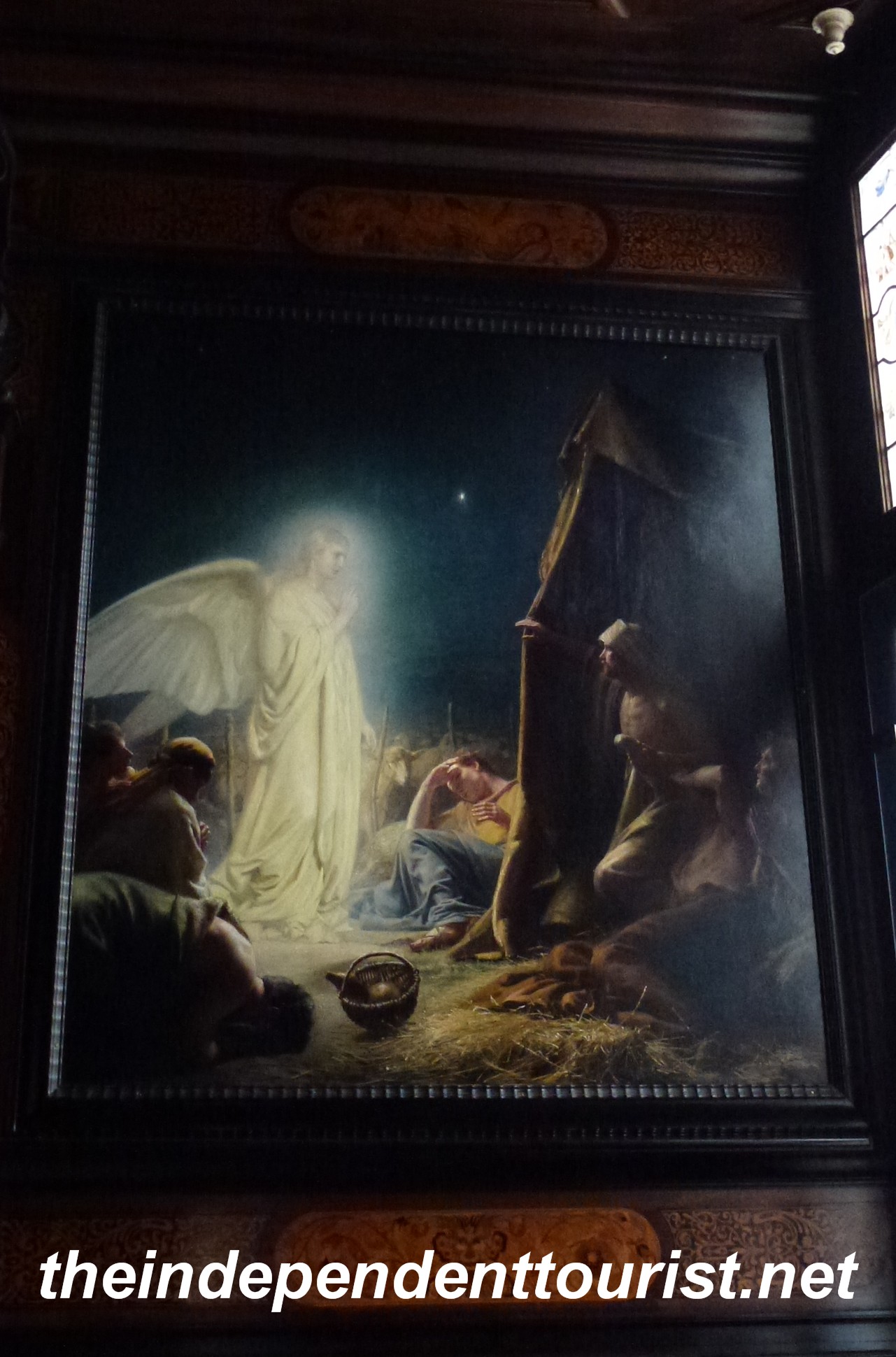
The castle’s interior decorations are elegant. The collection of Carl Bloch paintings in an anteroom of the stunning chapel are probably the most famous interior feature.

The chapel at Fredriksborg Castle.

The chapel at Fredriksborg Castle.

The subjects of the twenty three paintings include scenes from Christ’s life. They were painted over the years from 1865 to 1879. The room is kept fairly dark, making good photos without flash hard to capture.

One of the Carl Bloch paintings in Fredriksborg Castle.

One of the Carl Bloch paintings in Fredriksborg Castle.

Kronborg Castle

This castle is not as ornate as Fredriksborg, the interior being much starker, and it definitely served a military purpose, guarding a key sea route into the Baltic Sea.

Exterior view of Kronborg Castle.

Exterior view of Kronborg Castle.

Kronborg slot, in the town of Helsingør is about 24 km northeast of Hillerød, and 47 km north of Copenhagen, on a narrow strait separating Denmark and Sweden.

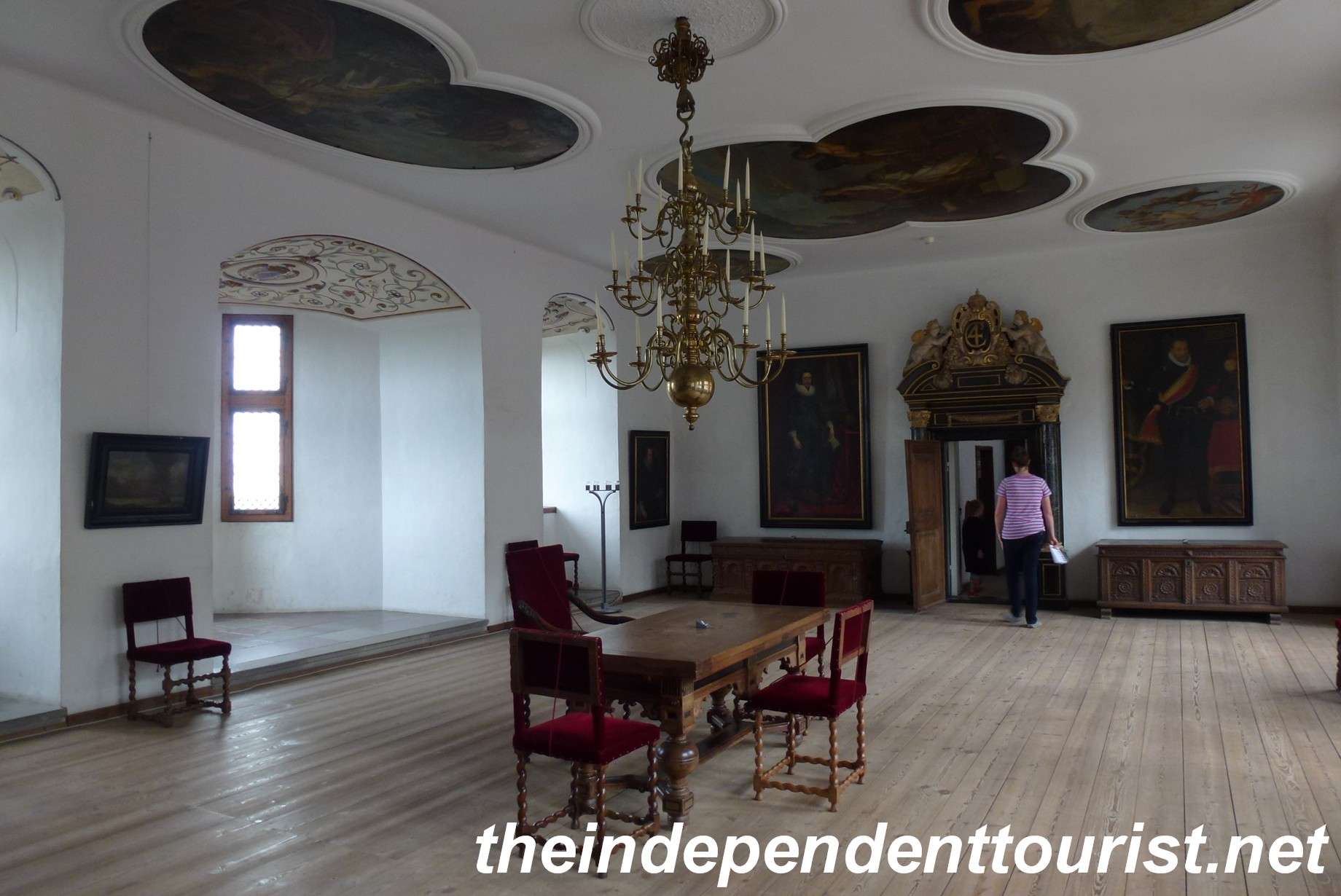
Interior of Kronborg Castle.

Interior of Kronborg Castle.

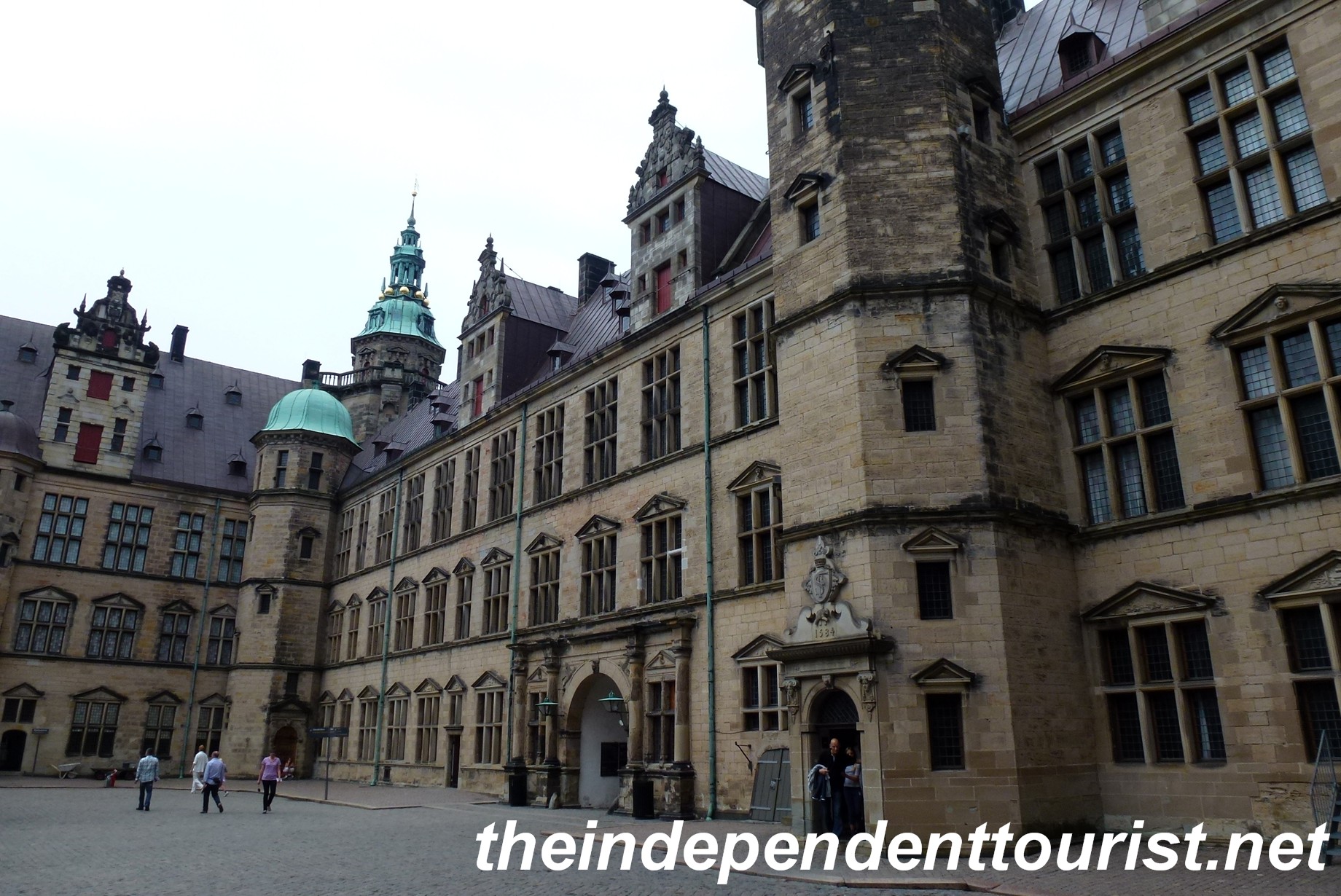
The inner courtyard of Kronborg Castle.

The inner courtyard of Kronborg Castle.

Kronborg’s claim to fame is that it was the setting (called Elsinore) for Shakespeare’s play Hamlet.

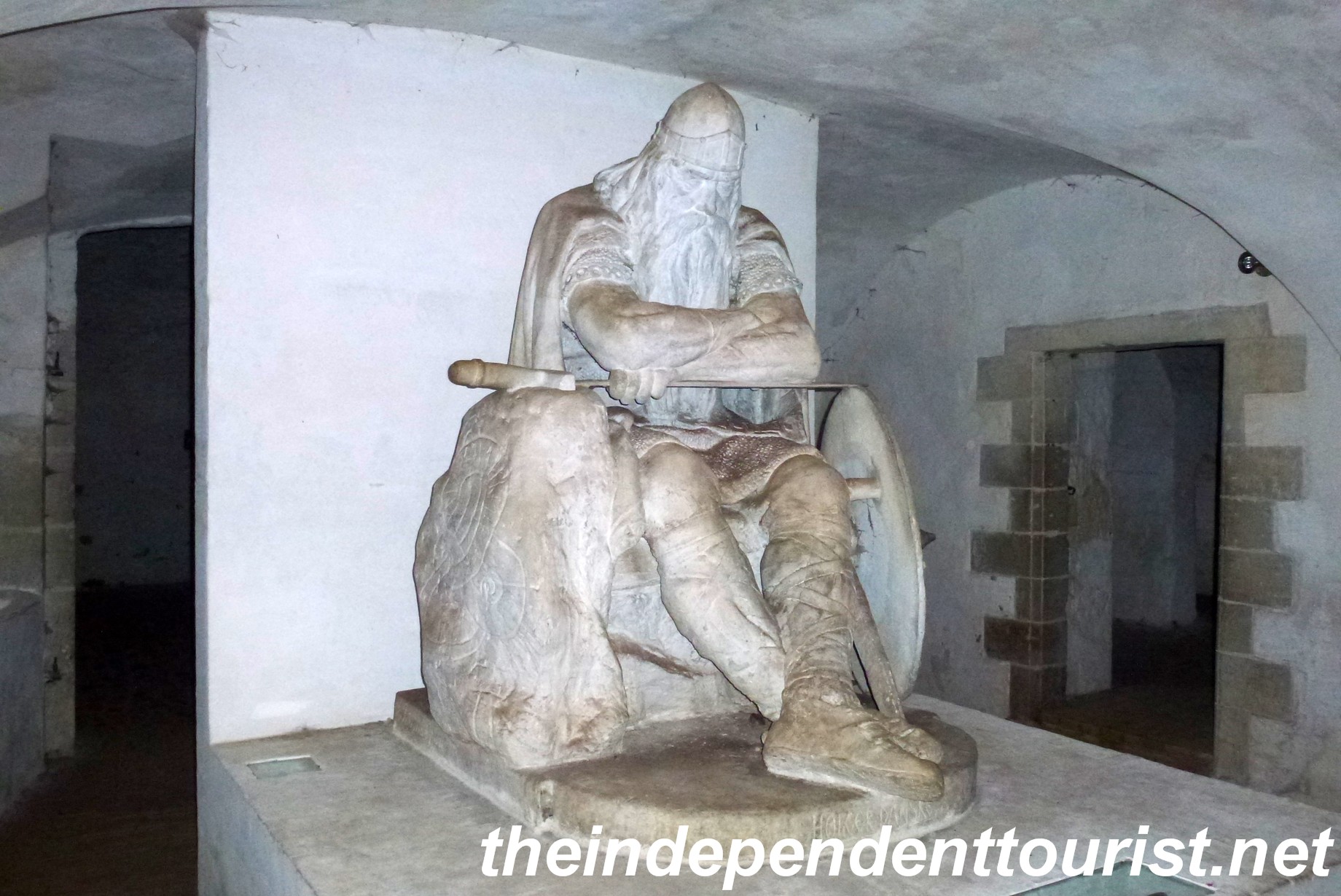
Statue of Holger the Dane underneath Kronborg Castle. The sleeping viking is to awaken and rescue Denmark in its hour of need.

Statue of Holger the Dane underneath Kronborg Castle. The sleeping viking is to awaken and rescue Denmark in its hour of need.

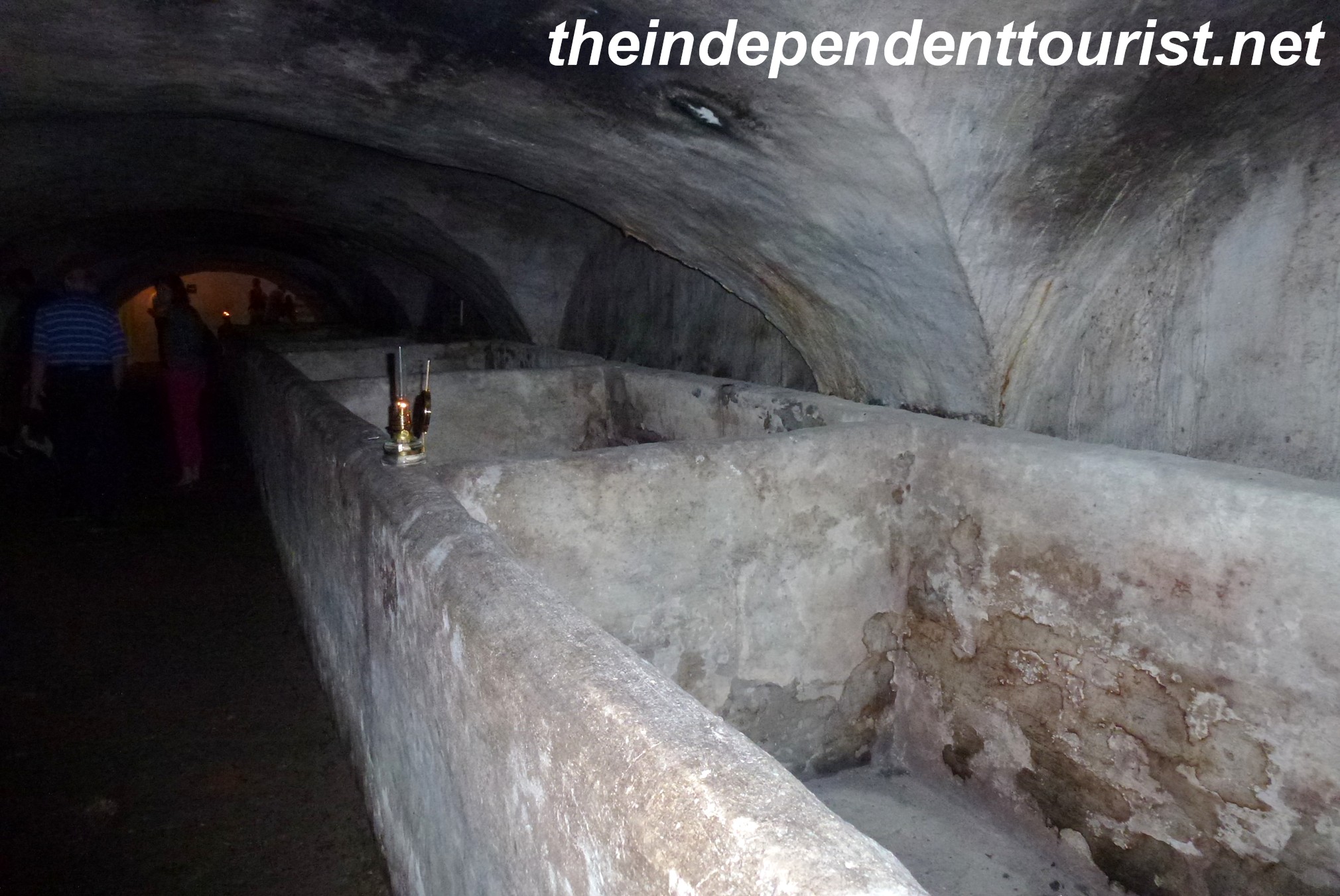
The castle was originally constructed in 1420, but was rebuilt and renovated several times since. Be sure to visit the casemates, the eerie foundations underneath the huge castle.

The underground storage bins and casemates of Kronborg Castle.

The underground storage bins and casemates of Kronborg Castle.

Images of Segovia, Spain

Spain is the fourth most-visited country in the world based on volume of international tourists (after France, US and China) and yet many parts of the country seem less “overrun” by tourists, possibly because it’s relatively large country. In future posts, I will share a few of the “hidden” treasures of Spain.

Just 92 km (57 miles) northwest of Madrid is the beautiful town of Segovia, which does receive its fair share of tourists, and it’s easy to see why – going from one end of the old town to another, we get to see a nearly perfectly preserved Roman-era aqueduct, great Gothic cathedral and fairy-tale Alcázar (castle).

The 1st century Roman aqueduct in Segovia. It was still in use until the late 19th century!

The 1st century Roman aqueduct in Segovia. It was still in use until the late 19th century!

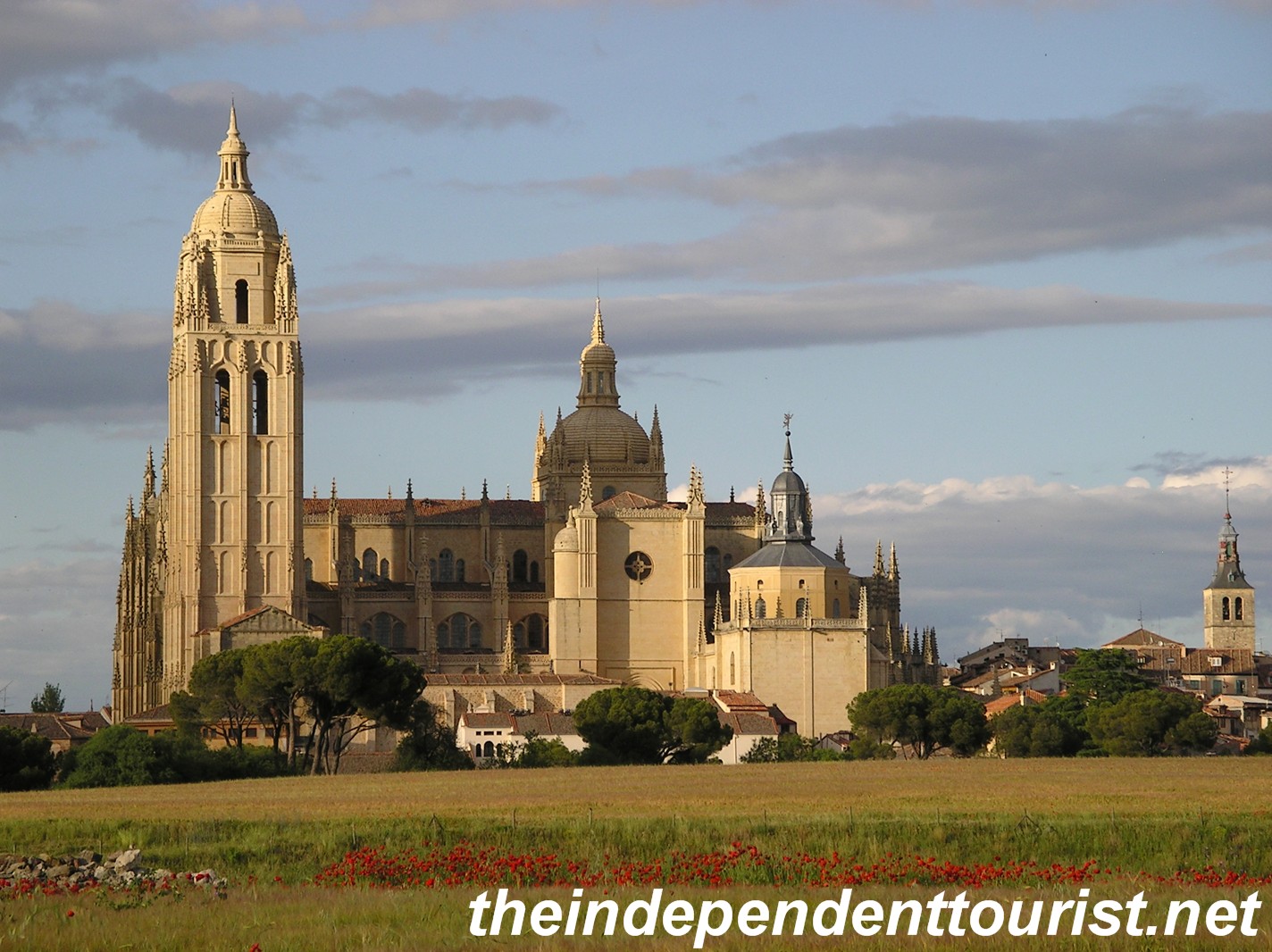
A view of the 16th century cathedral in Segovia--the last great Gothic cathedral in Spain. There are beautiful Belgian 17th century tapestries here.

A view of the 16th century cathedral in Segovia–the last great Gothic cathedral in Spain. There are beautiful Belgian 17th century tapestries here.

One of my favorite personal photos ever - taken from the west side of town, the rays of the late afternoon sun on the Segovia cathedral.

One of my favorite personal photos ever – taken from the west side of town, the rays of the late afternoon sun on the Segovia cathedral.

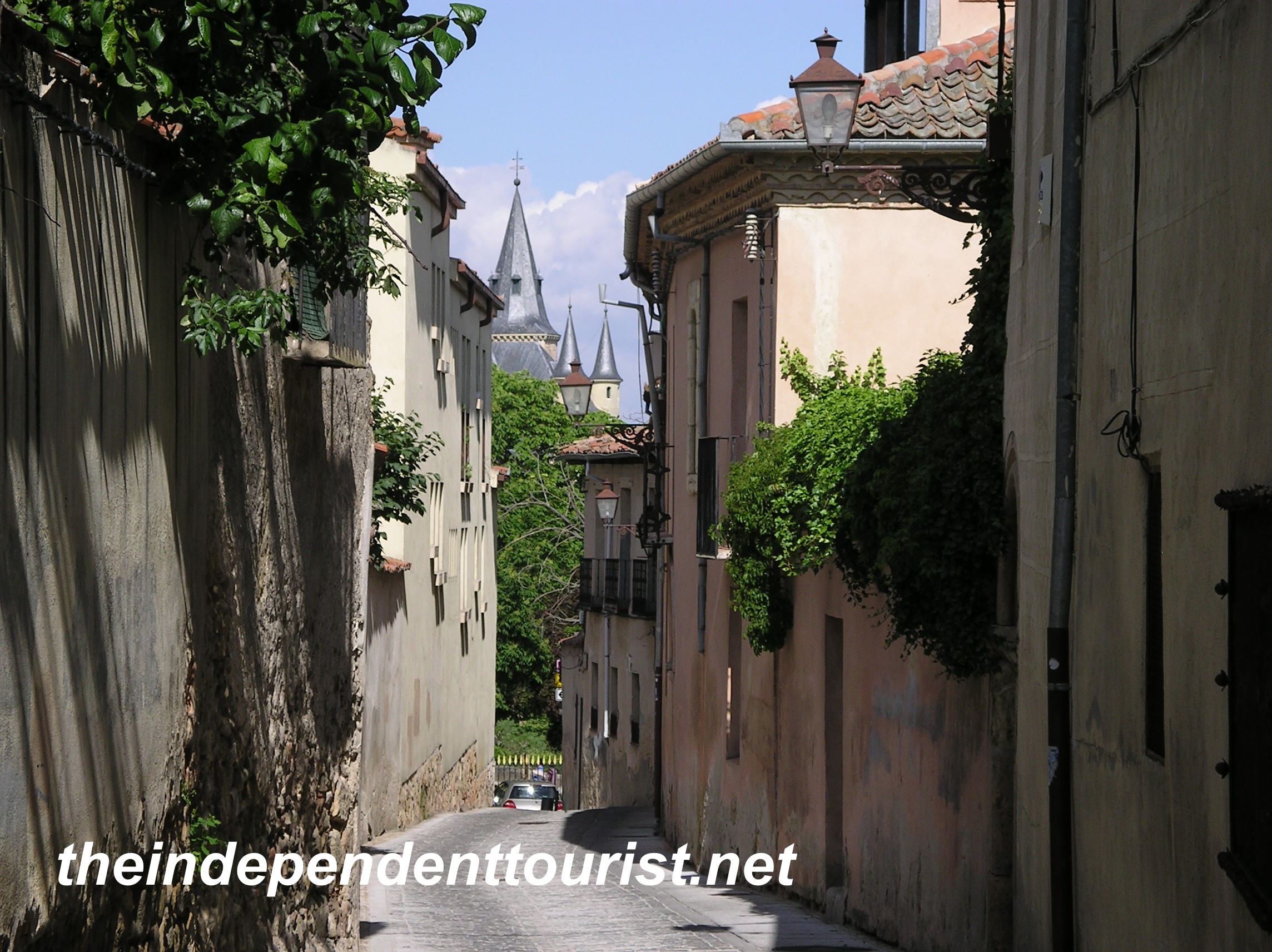
One of the narrow lanes in the old city of Segovia - the Alcazar lies ahead.

One of the narrow lanes in the old city of Segovia – the Alcazar lies ahead.

The great Segovia Alcazar. Rebuilt after a fire in 1862. This image is taken from an old Templar Knights church (Church of Vera Cruz) outisde the city walls.

The great Segovia Alcazar. Rebuilt after a fire in 1862. This image is taken from an old Templar Knights church (Church of Vera Cruz) outside the city walls.

Inside one of the halls in the Alcazar.

Inside one of the halls in the Alcazar.

The Vera Cruz Templar church - from the early 13th century. Well worth a visit itself and for the views of the Alcazar (just behind the church).

The Vera Cruz Templar church – from the early 13th century. Well worth a visit itself and for the views of the Alcazar (just behind the church).

On the way from Madrid, be sure to stop by El Escorial too, about half way between Madrid and Segovia (see my post on El Escorial here).

The Vasa Museum – One of Stockholm’s Must-Do Sights

An unforgettable stop in Stockholm, Sweden is the Vasa museum, which was on our must-do list this summer when we visited Stockholm.  This busy museum is home to one of Stockholm’s main attractions— the perfectly preserved 17th century warship Vasa, which sank on its maiden voyage right out of the Stockholm shipyard on August 10, 1628.

The bow of the Vasa. Entering the museum and seeing this ship is an unforgettable experience.

The bow of the Vasa. Entering the museum and seeing this ship is an unforgettable experience.

Work commenced on the Vasa in 1626. Commissioned by Swedish King Gustav II Adolph, the Dutch master shipwright Henrik Hybertsson was tasked with building the Vasa, which was to have two gun decks—a sign of Sweden’s growing naval power. Henrik died a year later and his assistant, Hein Jacobsson completed the task. Unfortunately the ship’s beam was too narrow to support two decks of cannon, causing the Vasa to be top heavy and unseaworthy.

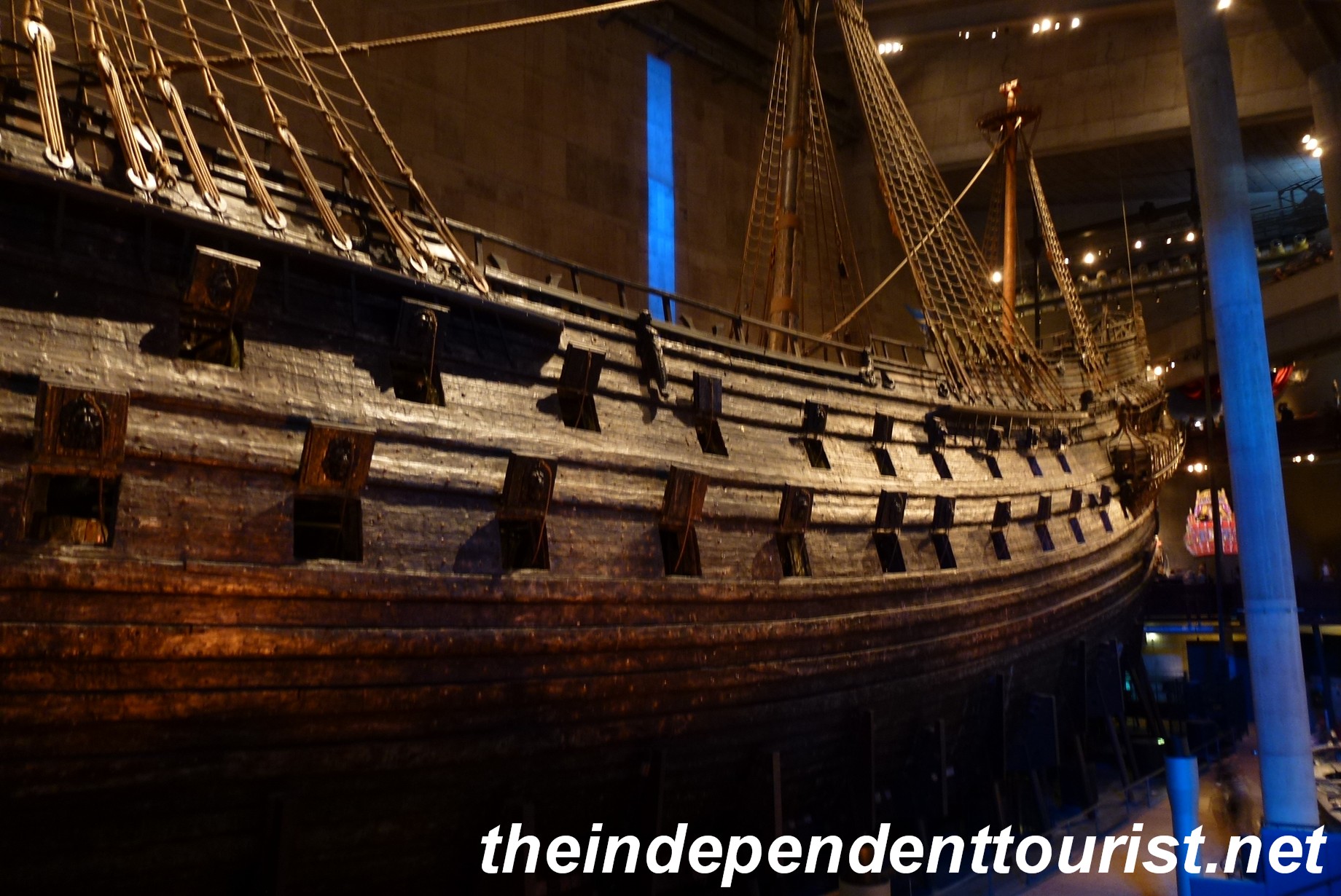
The fateful two rows of cannon ports can be seen on the port side of the Vasa.

The fateful two rows of cannon ports can be seen on the port side of the Vasa.

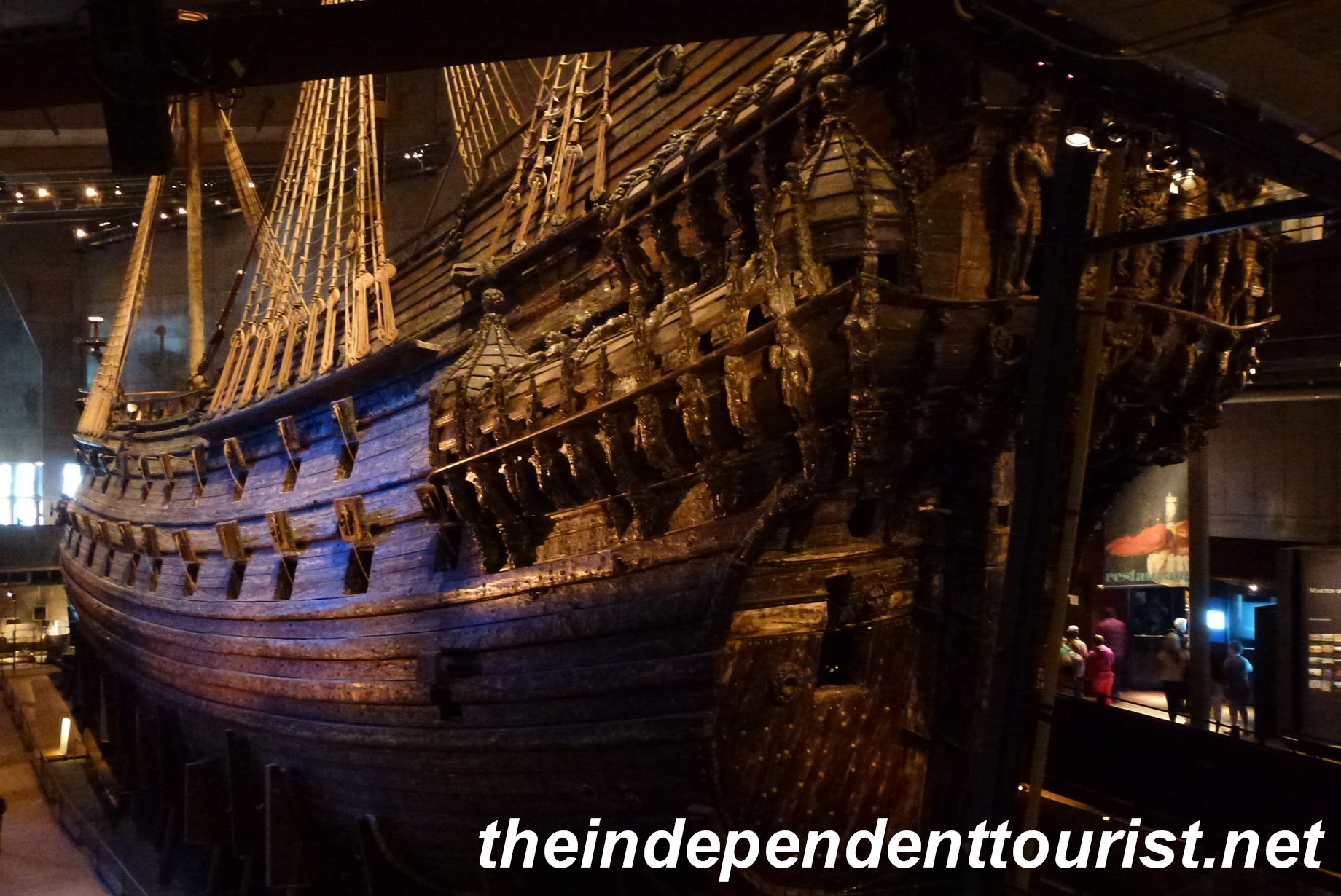
The intricate carvings on the stern of the ship.

The intricate carvings on the stern of the ship.

On August 10th, the ship had only sailed a few hundred meters before being hit by two squalls. The first caused the ship to lean, but it righted itself. The second squall caused the ship to list heavily, taking on water through its gun ports and sinking shortly thereafter. Fifty people perished in the sinking with sails set and flags flying. The ship settled at the bottom of the Stockholm harbor, eventually covered in mud and preserving it for over 300 years.

A view of the Vasa from the port stern side--note the huge rudder at the rear.

A view of the Vasa from the port stern side–note the huge rudder at the rear.

The ship was finally raised in 1961, 95% intact. The reduced salinity of the Baltic Sea kept worms from eating the wood, allowing us to now go back in time and see an actual naval ship from the 1600’s. The ship is so perfect that is doesn’t look real, you think you’re on a movie set for the Pirates of the Caribbean.

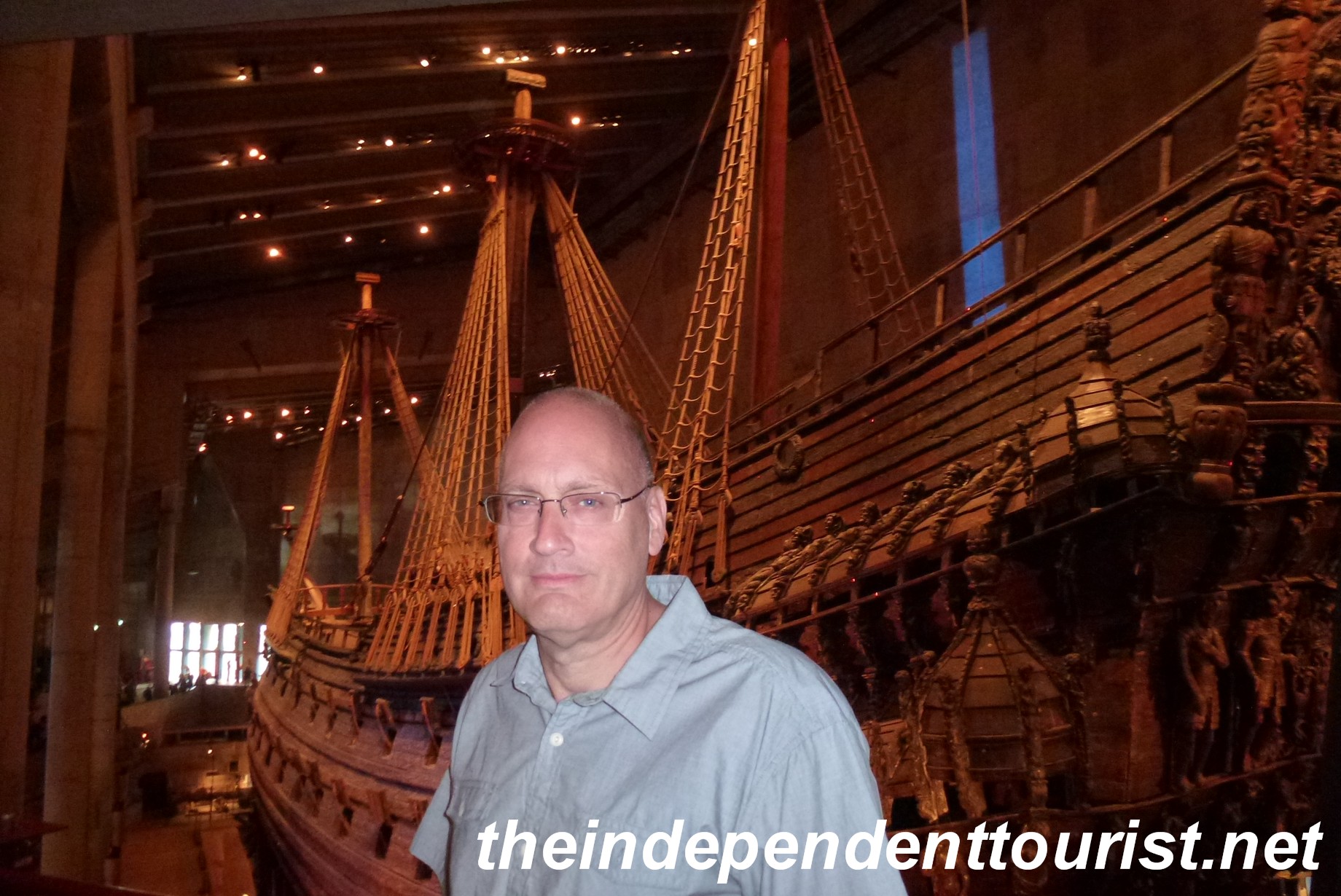
On one of the upper floors overlooking the Vasa.

On one of the upper floors overlooking the Vasa.

The museum has four floors providing multiple views of the Vasa from all angles and contains a number of exhibits on naval life in the 1600’s and items recovered from the Vasa. A hop-on, hop-off boat takes you to the museum and numerous other sights in Stockholm.

The Vasa museum, right on Stockholm's harbor.

The Vasa museum, right on Stockholm’s harbor.

Castles of Southern Wales – Part II

The country of Wales has much to offer and attracts fewer tourists than other parts of Great Britain. The sights below are not far from Cardiff, the largest city and capital of Wales. For a map of places visited in Wales click here.

Caerphilly Castle. Caerphilly Castle is just north of Cardiff (about 6 miles). It is the largest castle in Wales and the 2nd largest castle (in area) in Britain. Construction on Caerphilly began in 1268 and its design changed the direction of castle architecture in Britain due to its use of several revolutionary defensive features, including its massive rings of concentric walls and a sophisticated system of moats and lakes.

Entrance to Caerphilly Castle.

Entrance to Caerphilly Castle.

Interior of the Great Hall, Caerphilly Castle.

Interior of the Great Hall, Caerphilly Castle.

The immense lake surrounding Caerphilly Castle.

The immense lake surrounding Caerphilly Castle.

Near the entrance are some great examples of siege engines—they are huge, and must have caused a lot of damage by hurling huge projectiles hundreds of yards. The main features of Caerphilly are the walls, towers, Great Hall and water-filled moats. Well worth a stop!

Raglan Castle. Raglan Castle, located northwest of Cardiff about 32 miles, is interesting in a number of ways. It was one of the last “medieval” castles built in the UK, with initial construction having begun in 1432 on the Great Tower (which is really after the medieval era).

The gatehouse range - the entrance to the castle since the 1460's. An imposing sight to visitors in the 1400's and today.

The gatehouse range – the entrance to the castle since the 1460’s. An imposing sight to visitors in the 1400’s and today.

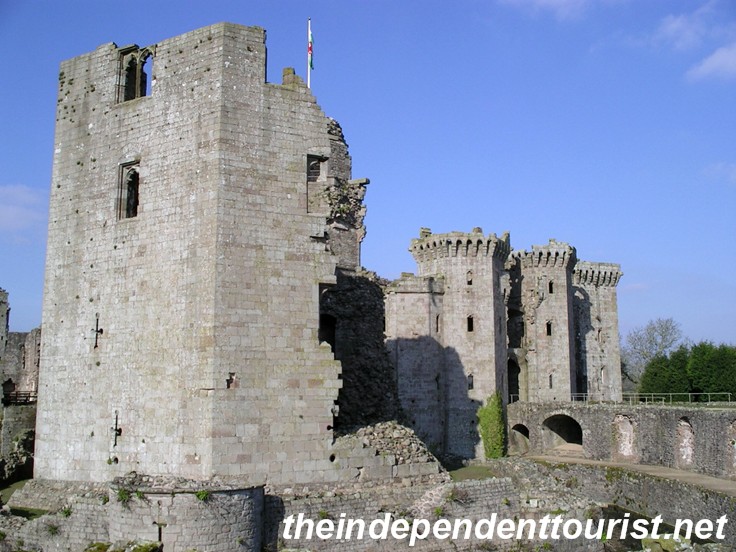
The remants of the Great Tower (center left), the first edifice constructed at Raglan. It withstood heavy attacks during the civil war in 1646.

The remants of the Great Tower (center left), the first edifice constructed at Raglan. It withstood heavy attacks during the civil war in 1646.

Also, the main castle was built separately from the stronghold, or keep (called the Great Tower), rather than the typical medieval arrangement of the castle walls and living quarters extending from and surrounding the keep.

The Pitched Stone court at Raglan. It was the domain of the household staff--containing kitchens, pantries, and offices.

The Pitched Stone court at Raglan. It was the domain of the household staff–containing kitchens, pantries, and offices.

The Fountain Court. The main residences, chapel and main Hall were located here.

The Fountain Court. The main residences, chapel and main Hall were located here.

Additionally this castle was transformed in the early 17th century into an Elizabethan mansion with extensive terraced gardens, fountains and a man-made lake, rivaling many of the great palaces of its time. While the gardens and lake have not survived to the present day, their traces can still be seen. I really enjoyed visiting this castle – it is large and has a number of interesting features and (ruined) rooms. Most of the castle we see today were constructed in the 1400’s and 1500’s.

Tintern Abbey. Ok, it’s not a castle, but Tintern Abbey, about 36 miles from Cardiff and just 5 miles north of Chepstow along the River Wye is a classic medieval abbey ruin.

An exterior view of Tintern Abbey from the monk's working areas.

An exterior view of Tintern Abbey from the monk’s working areas.

Another exterior view of Tintern Abbey.

Another exterior view of Tintern Abbey.

The soaring interior space of the great church with the green grass floor and the elegant architecture with towering columns and intricate windows frames is a beautiful sight.

Interior of Tintern Abbey.

Interior of Tintern Abbey.

Another interior view of Tintern Abbey, note the fine window detail.

Another interior view of Tintern Abbey, note the fine window detail.

I love medieval abbeys as much as I do medieval castles. Tintern was a Cistercian abbey, originally founded in 1131, and the present church we see today was built between 1269 and 1301. In its prime, up to 400 monks lived at Tintern and the abbey was an economic hub of the area for 400 years, overseeing vast agricultural production and other activity.

There are a number of other ruins to see in the monastery (living quarters, infirmary, and chapter house) in addition to the church. There’s lots of good informational signage around the site.

Castles of Southern Wales Part I

Like northern Wales, southern Wales has some outstanding castles and other interesting historical sights, all within a small geographic region. The Romans settled this area around 48 AD, and their influence can still be seen in a number of ruins.

Chepstow Castle is one of the oldest surviving castles in Britain. Construction started on its great tower around 1081, just 15 years after William the Conqueror landed in southern England and changed the course of English history.

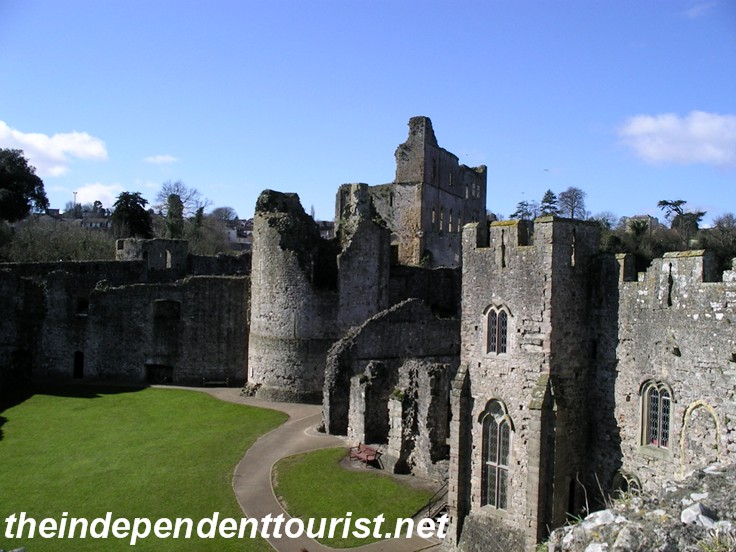
A view of Chepstow Castle, with Marten's Tower in the center and the well-fortified twin tower main gatehouse on the right. These are late 12th century castle additions.

A view of Chepstow Castle, with Marten’s Tower in the center and the well-fortified twin tower main gatehouse on the right. These are late 12th century castle additions.

The Lower Bailey of the castle. Domestic accomodations such as kitchens, latrines, other chambers are located here.

The Lower Bailey of the castle. Domestic accomodations such as kitchens, latrines, other chambers are located here.

If you love medieval castles, Chepstow doesn’t disappoint. It sits on a sheer cliff over the River Wye, near the mouth of the Severn River, on the border of Wales and England.

This image shows the Great Tower and how it and the castle walls sit right on the edge of the cliff over the River Wye.

This image shows the Great Tower and how it and the castle walls sit right on the edge of the cliff over the River Wye.

The castle was built to defend William’s newly conquered territory from the Welsh.

A view inside the Great Tower, a three story building, quite tall in its day. The builders used Roman stone blocks in its construction.

A view inside the Great Tower, a three story building, quite tall in its day. The builders used Roman stone blocks in its construction.

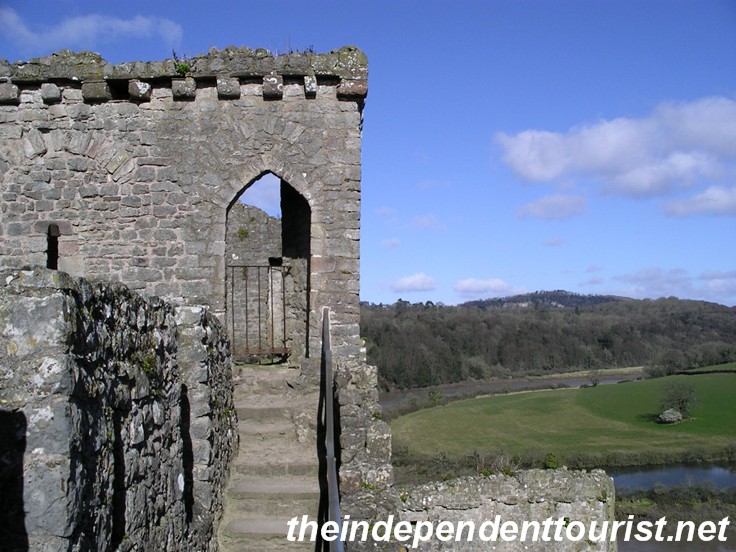
A view of the Welsh countryside and River Wye from the Upper Barbican of Chepstow Castle.

A view of the Welsh countryside and River Wye from the Upper Barbican of Chepstow Castle.

Chepstow is a large castle, with four distinct courtyards or sections. Supplies were brought to the castle via the River Wye using a hoist into storage rooms cut into the solid rock below the main castle.

Another view of Chepstow Castle.

Another view of Chepstow Castle.

I highly recommend a visit to this castle, one of my favorites in Britain.

Caerleon Fortress. Just west of Chepstow near the town of Newport is Caerleon Fortress, a Roman army site founded in 75 AD, home to one of the three permanent legions in Britain.

The foundations of the barracks and latrines at Caerleon.

The foundations of the barracks and latrines at Caerleon.

What remains are the foundations of the barracks and latrines (laid out with Roman efficiency), an amphitheater and ruins of the baths.

The amphitheater at Caerleon.

The amphitheater at Caerleon.

The amphitheater is still used for various events. The site is definitely worth a visit, and provides a feel for life in the Roman army in Britain.

Cardiff Castle. Cardiff is only 13 miles west of Newport and 32 miles west of Chepstow. Located right in the heart of the city of Cardiff, the castle grounds are impressive and surrounded by a large wall. There isn’t much remaining of the medieval castle other than the walls of the octagonal keep which sits on a high mound (motte) in the middle of the castle grounds.

The keep at Cardiff Castle.

The keep at Cardiff Castle.

There are some other beautiful neo-Gothic buildings that are part of Cardiff Castle. In addition, exhibits show part of an old Roman wall, and other items since this was the site of a Roman fort around 50 AD.

Visiting the Hagia Sophia and Blue Mosque – Two of Istanbul’s Greatest Treasures

Two not-to-be missed spots in Istanbul are the Hagia Sophia (also spelled Aya Sofya) and the Blue Mosque. They are conveniently located near each other in the Sultanahmet area of Istanbul, which was the heart of ancient Constantinople.

The Hagia Sophia. Without a doubt, this nearly 1,500 year old building is one of the greatest structures ever built. The great Byzantine Emperor Justinian consecrated the Hagia Sophia (Church of the Holy Wisdom) in 537 AD. It was originally a Christian church (the center of the Byzantine or Greek Orthodox church), and became a mosque in the 15th century after the Ottoman Empire conquered Constantinople.

An exterior view of the Hagia Sophia. In the center right of the picture is the mausoleum of Murat III (died 1599) who had 103 children!

An exterior view of the Hagia Sophia. In the center right of the picture is the mausoleum of Murat III (died 1599) who had 103 children!

The huge bronze doors through which the emperor would enter the church.

The huge bronze doors through which the emperor would enter the church.

Byzantine Emperors were crowned here for centuries.

The spot where Byzantine Emperors were crowned for almost 1,000 years.

The spot where Byzantine Emperors were crowned for almost 1,000 years.

The Hagia Sophia became a museum in the 1930’s. Having read some of the history of the Byzantine Empire it was a thrill for me to stand in a place that has witnessed so much history and to take in the massive open space under the dome. It has undergone some modifications over the centuries to help fortify and stabilize the walls due to the weight of the dome over the nave. The main dome is 185 ft high and 104 ft in diameter. Imagine building something like this in the 6th century…

The incredible nave of the Hagia Sophia.

The incredible nave of the Hagia Sophia.

A building that is 1,500 years old has some pillars that are no longer vertical!

A building that is 1,500 years old has some pillars that are no longer vertical!

A detailed view of several of the 67 columns in the 2nd floor gallery.

A detailed view of several of the 67 columns in the 2nd floor gallery.

The Venetians pillaged the Hagia Sophia in 1204 as part of the very strange 4th crusade, which ended up attacking Constantinople (center of the Eastern Roman Empire) rather than defending the Holy Land. If you’ve read Dan Brown’s latest novel, Inferno, you will recognize that the Hagia Sophia plays a role in the story.

The Hagia Sophia contains the tomb of the Venetian Doge, Dandolo. He was 90 years old, blind and was the first to breach the defenses of Constantinople in 1204.

The Hagia Sophia contains the tomb of the Venetian Doge, Dandolo. He was 90 years old, blind and was the first to breach the defenses of Constantinople in 1204.

There are a number of beautiful mosaics, a few from the 6th century and many from the 10th century onwards, many of which are on the 2nd floor. I was surprised at how the crowds visiting the Hagia Sophia thinned out when we ventured upstairs into the surrounding gallery.

An 11th century mosaic of Christ with Emperor Constantine IX and his wife, Empress Zoe.

An 11th century mosaic of Christ with Emperor Constantine IX and his wife, Empress Zoe.

A 10th century mosaic of the Virgin Mary and Child with the Emperor Constantine on the right presenting the model of the new city of Constantinople and on the left the Emperor Justinian presenting a model of the new church, Hagia Sophia.

A 10th century mosaic of the Virgin Mary and Child with the Emperor Constantine on the right presenting the model of the new city of Constantinople and on the left the Emperor Justinian presenting a model of the new church, Hagia Sophia.

Since this is THE sight in Istanbul, the lines can be long. To avoid the lines, get the Museum Pass, which is sold in the plaza near the Hagia Sophia. As of September 2012, it cost 72 TL (Turkish Lira, about 2 TL to 1 USD) and is good for 72 hours. It allows you to bypass the crowds in line for individual tickets, saves money over the individual entry fees and gives you priority entrance into the Hagia Sophia and many other attractions.

The buttresses helping to reinforce the walls of the Hagia Sophia. The visitor's entrance is on this (western) side.

The buttresses helping to reinforce the walls of the Hagia Sophia. The visitor’s entrance is on this (western) side.

The Blue Mosque. This mosque is another common image of Istanbul and is located just to the south of the Hagia Sophia.

A view of the Blue Mosque from Sultanahmet Square, between the Hagia Sophia and the Blue Mosque.

A view of the Blue Mosque from Sultanahmet Square, between the Hagia Sophia and the Blue Mosque.

It is called the Blue Mosque due to the stunning blue tile work in the interior.

The beautiful tiled dome of the Blue Mosque, looking up from the floor.

The beautiful tiled dome of the Blue Mosque, looking up from the floor.

Men washing before worshiping in the Blue Mosque.

Men washing before worshiping in the Blue Mosque.

This is a “working” mosque, and therefore visitors are only allowed at certain times of the day around the Muslim worship services.

An interior view of the Blue Mosque.

An interior view of the Blue Mosque.

The Blue Mosque was built in 1609 – 1616. If you visit, wear appropriate clothing and be respectful of the Islamic faith by following the guidance/rules (taking off of shoes, women wearing a head covering, etc.). There is no cost for visiting the mosque. Take time to appreciate the artwork and architecture of this huge building.

The courtyard of the Blue Mosque. The courtyard is about the same size as the Mosque itself. Note the cascade of domes above the courtyard.

The courtyard of the Blue Mosque. The courtyard is about the same size as the Mosque itself. Note the cascade of domes above the courtyard.

Castles of Northern Wales – Part II

Caernarfon Castle. Probably the finest castle in Wales and one of my favorite in the UK. Unlike many castles, it does not occupy a high ridge or mountain top, but rather is set strategically at the mouth of the River Seiont and the Menai Straight on the western coast of Wales.

A view of Caernarfon Castle from across the River Seiont.

A view of Caernarfon Castle from across the River Seiont.

The town of Caernarfon, like Conwy, is enclosed by walls with the castle in a corner of the fortifications.

The Exchequer Gate, the main entrance into the the medieval village of Caernarfon.

The Exchequer Gate, the main entrance into the the medieval village of Caernarfon.

For a map of castles visited in Wales click here.

Construction began in 1283 and was not yet complete when building efforts stopped in 1330. Caernarfon is famous for a number of reasons, not the least of which is due to it being the site of the investiture of Prince Charles as the Prince of Wales in 1969 by Queen Elizabeth. The future king of England is of course the father of Prince William and Prince Henry, known in the British military as ‘William Wales’ and ‘Henry Wales’. The first Prince of Wales, who became Kind Edward II in 1307, was born here (if you’ve seen the movie ‘Braveheart’ he is depicted as the weak heir to King Edward I) and in 1911 the investiture of Prince Edward took place here (he was an uncle of Queen Elizabeth, who became Edward VIII, but abdicated the crown and never became king) .

The  Granary Tower (center left) overlooks the Upper Ward and the investiture site of Prince Charles.

The Granary Tower (center left) overlooks the Upper Ward and the investiture site of Prince Charles.

The Eagle Tower (center right) and Lower Ward. Greatest of all the castle's towers, it contains several apartments.

The Eagle Tower (center right), and Lower Ward. Greatest of all the castle’s towers, it contains several apartments.

Caernarfon is a massive castle and has many interesting features, including octagonal (rather than round) towers and red brick bands in the walls that are reminiscent of the famous Walls of Constantinople (Istanbul), which was on purpose. The town of Caernarfon was a Roman settlement anciently, and some ruins of the Roman days are still present, not far from the castle. Just about all the towers are open for visiting, with various exhibits and great views from the viewing platforms. There are many corridors to explore too. I really loved this castle.

The Well Tower on the left and Chamberlain Tower on the right. The great hall was in front of and below the Chamberlain Tower.

The Well Tower on the left and Chamberlain Tower on the right. The great hall was in front of and below the Chamberlain Tower.

The town of Caernarfon is about 22 miles west of Conwy (see my post on Conwy Castle here).

Harlech Castle. About 30 miles south of Caernarfon is Harlech Castle. This was another of King Edward I’s fortresses in northern Wales. Construction began in 1283, the same year as Caernarfon and Conwy castles. Harlech castle sits on a rock outcropping high above the surrounding landscape, with the sea visible in the distance.

A view of Harlech Castle - with its commanding position, it would have been very difficult to attack.

A view of Harlech Castle – with its commanding position, it would have been very difficult to attack.

The view from Harlech Castle's walls. The Irish Sea is in the distance.

The view from Harlech Castle’s walls. The Irish Sea is in the distance.

In the 13th century the coastline was just below the castle, allowing access to supplies from ships during times of siege, which were not uncommon in this castle’s history.

The interior ward of Harlech Castle. The main entrance is to the right.

The interior ward of Harlech Castle. The main entrance is to the right.

The original gateway into Harlech Castle.

The original gateway into Harlech Castle.

The longest siege was 7 years during the ‘War of the Roses’ (the long battle for the English crown in the 15th century). The castle has a great setting and history, but does not contain as many rooms and interior features as Caernarfon or Conwy castles.

Castles of Northern Wales – Part I

If you want to see some of the best medieval castles in the United Kingdom, visit Wales, a very small country in the western part of the United Kingdom. There is a concentration of castles in northern and southern Wales. In addition, there are Roman ruins and lovely medieval abbeys and churches.

A map of locations I visited in Wales.

A map of locations I visited in Wales.

Wales receives far fewer tourists than England and Scotland, and yet has some of the most beautiful natural scenery and greatest historical treasures in the UK.

Northern Wales has a dense collection of castles, since it was the frontier of the English kingdom in medieval times. King Edward I established a number of castles here in the 1200’s to defend the newly conquered Welsh territory at the conclusion of the second war of Welsh independence.

Rhuddlan Castle, not far from Conwy and a headquarters for King Edward I during his conquest of Wales.

Rhuddlan Castle, not far from Conwy and a headquarters for King Edward I during his conquest of Wales.

Even today, Wales feels more remote and “wild” than England. I recall driving at night through the middle of the country on my way to Hereford and not seeing lights from cars or villages for many miles.

The rugged Snowdonia area of northern Wales.

The rugged Snowdonia area of northern Wales.

The best way to get around this small country is by car. Be forwarned that the roads are narrower than England and many are pretty much just one-lane winding country roads.

Conwy Castle. With a great setting at the mouth of the Conwy River, Conwy is one of the UK’s most classic castles and it is quite intact, with a number of towers and rooms to explore. Conwy castle and the town walls were begun in 1283 and completed in 1287.

A view of Conwy Castle from the town walls.

A view of Conwy Castle from the town walls.

The outer ward of the castle with the great hall at the right.

The outer ward of the castle with the great hall at the right.

The great hall is unique in that it is bent to conform to the natural land formation. The walls around the town are intact and add to the charm of this small town. “The smallest house in Britain” is also located in Conwy. Unfortunately I didn’t know about it until after I had left!

A view of Conwy Castle and town.

A view of Conwy Castle and town.

Another view of Conwy Castle.

Another view of Conwy Castle.

The walls surrounding the town of Conwy.

The walls surrounding the town of Conwy.

Beaumaris Castle. Just 23 miles from Conwy is Beaumaris Castle located on the Isle of Anglesey. The castle is unique for a couple reasons – it was never finished and it is considered one of the most outstanding examples of medieval castle architecture. The moat at the entrance is picture perfect.

The exterior and moat of Beaumaris Castle.

The exterior and moat of Beaumaris Castle.

A view of the interior courtyard of Beaumaris Castle.

A view of the interior courtyard of Beaumaris Castle.

Another interior view of Beaumaris Castle.

Another interior view of Beaumaris Castle.

The construction of the castle began in 1295. There are many dark narrow corridors to explore, and a chapel.

One of the many dark corridors in the walls of Beaumaris Castle.

One of the many dark corridors in the walls of Beaumaris Castle.

The chapel at Beaumaris Castle.

The chapel at Beaumaris Castle.

For students of medieval castle architecture this castle is a gem, since the fortifications (particularly the entrance) showcase the defensive strategy of medieval warfare.