Castles of Northern Wales – Part I

If you want to see some of the best medieval castles in the United Kingdom, visit Wales, a very small country in the western part of the United Kingdom. There is a concentration of castles in northern and southern Wales. In addition, there are Roman ruins and lovely medieval abbeys and churches.

A map of locations I visited in Wales.

A map of locations I visited in Wales.

Wales receives far fewer tourists than England and Scotland, and yet has some of the most beautiful natural scenery and greatest historical treasures in the UK.

Northern Wales has a dense collection of castles, since it was the frontier of the English kingdom in medieval times. King Edward I established a number of castles here in the 1200’s to defend the newly conquered Welsh territory at the conclusion of the second war of Welsh independence.

Rhuddlan Castle, not far from Conwy and a headquarters for King Edward I during his conquest of Wales.

Rhuddlan Castle, not far from Conwy and a headquarters for King Edward I during his conquest of Wales.

Even today, Wales feels more remote and “wild” than England. I recall driving at night through the middle of the country on my way to Hereford and not seeing lights from cars or villages for many miles.

The rugged Snowdonia area of northern Wales.

The rugged Snowdonia area of northern Wales.

The best way to get around this small country is by car. Be forwarned that the roads are narrower than England and many are pretty much just one-lane winding country roads.

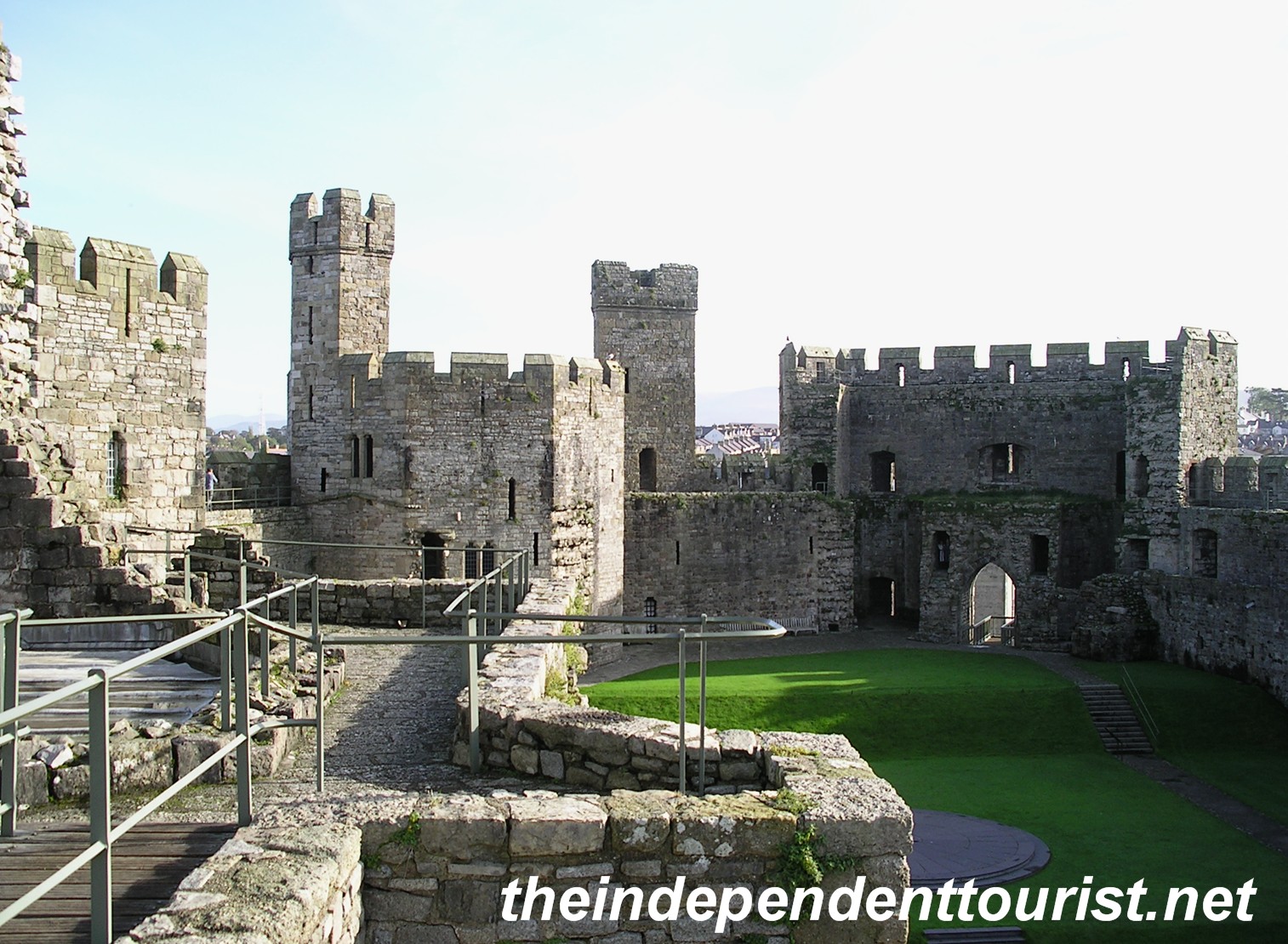
Conwy Castle. With a great setting at the mouth of the Conwy River, Conwy is one of the UK’s most classic castles and it is quite intact, with a number of towers and rooms to explore. Conwy castle and the town walls were begun in 1283 and completed in 1287.

A view of Conwy Castle from the town walls.

A view of Conwy Castle from the town walls.

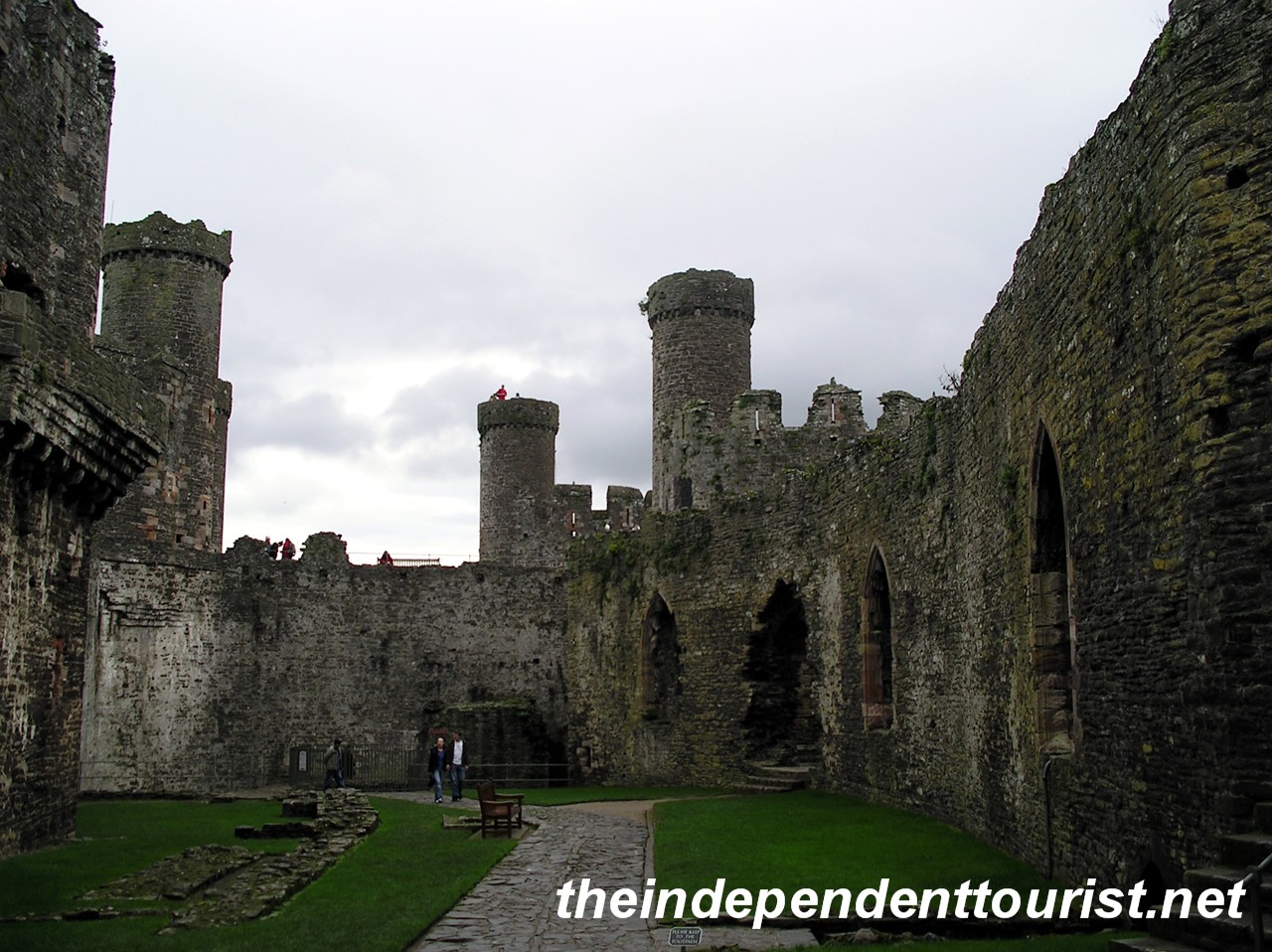
The outer ward of the castle with the great hall at the right.

The outer ward of the castle with the great hall at the right.

The great hall is unique in that it is bent to conform to the natural land formation. The walls around the town are intact and add to the charm of this small town. “The smallest house in Britain” is also located in Conwy. Unfortunately I didn’t know about it until after I had left!

A view of Conwy Castle and town.

A view of Conwy Castle and town.

Another view of Conwy Castle.

Another view of Conwy Castle.

The walls surrounding the town of Conwy.

The walls surrounding the town of Conwy.

Beaumaris Castle. Just 23 miles from Conwy is Beaumaris Castle located on the Isle of Anglesey. The castle is unique for a couple reasons – it was never finished and it is considered one of the most outstanding examples of medieval castle architecture. The moat at the entrance is picture perfect.

The exterior and moat of Beaumaris Castle.

The exterior and moat of Beaumaris Castle.

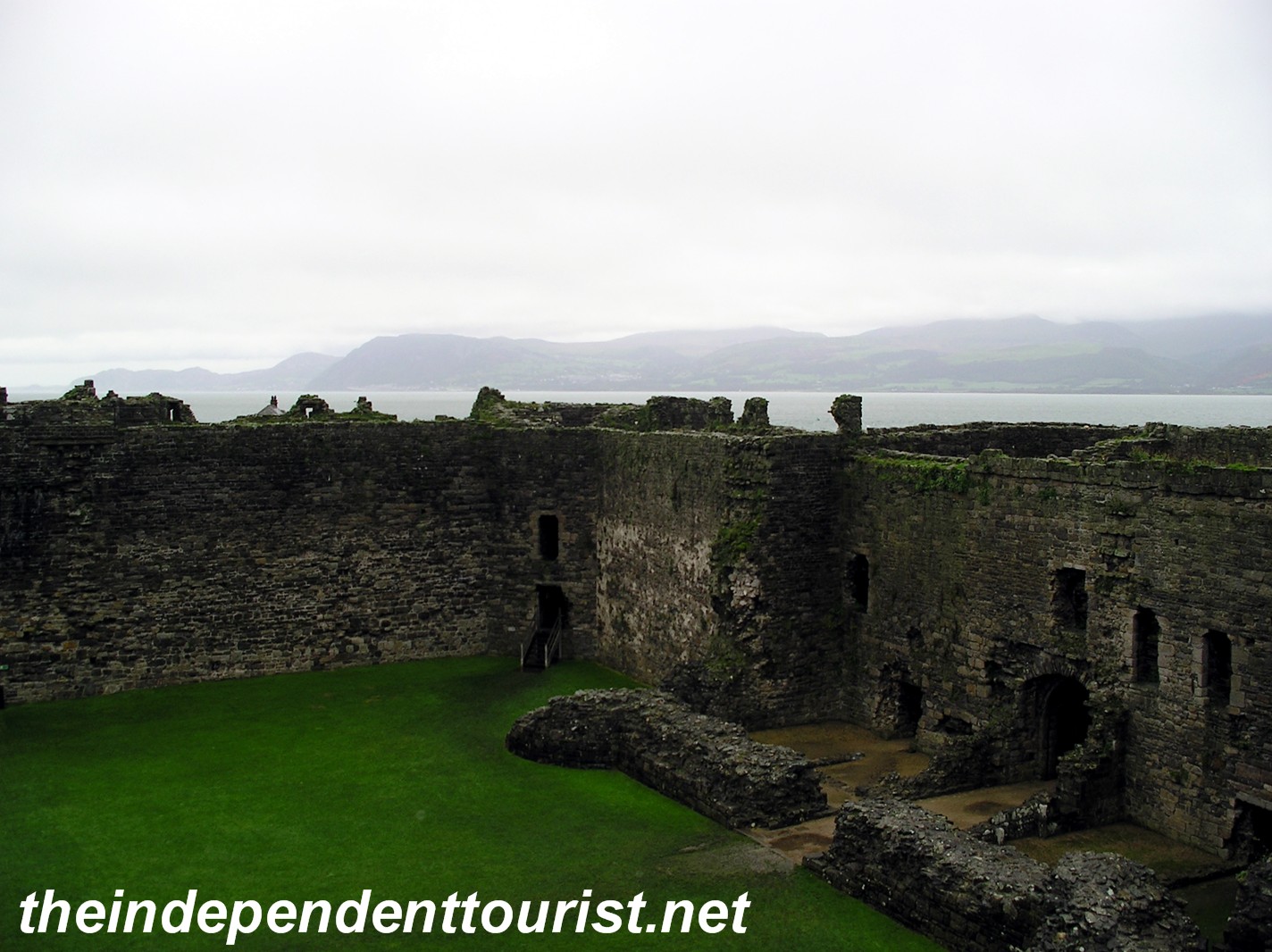
A view of the interior courtyard of Beaumaris Castle.

A view of the interior courtyard of Beaumaris Castle.

Another interior view of Beaumaris Castle.

Another interior view of Beaumaris Castle.

The construction of the castle began in 1295. There are many dark narrow corridors to explore, and a chapel.

One of the many dark corridors in the walls of Beaumaris Castle.

One of the many dark corridors in the walls of Beaumaris Castle.

The chapel at Beaumaris Castle.

The chapel at Beaumaris Castle.

For students of medieval castle architecture this castle is a gem, since the fortifications (particularly the entrance) showcase the defensive strategy of medieval warfare.

Topkapi Palace – One of Istanbul’s Must-Do’s

One of the major highlights of Istanbul, the Topkapi Palace was built between 1459 and 1465 by the Ottomans just after their final conquest of Constantinople. This palace was the seat of power of the Ottoman Empire for 400 years. The palace is laid out around four courtyards, the first courtyard being outside the main gate.

The Gate of Salutations, the main entrance into the Topkapi Palace and Second Courtyard.

The Gate of Salutations, the main entrance into the Topkapi Palace and Second Courtyard.

The palace is located just to the northeast of the Haghia Sophia, and commands wonderful views of the Bosphorus Strait from the innermost (Fourth) courtyard.

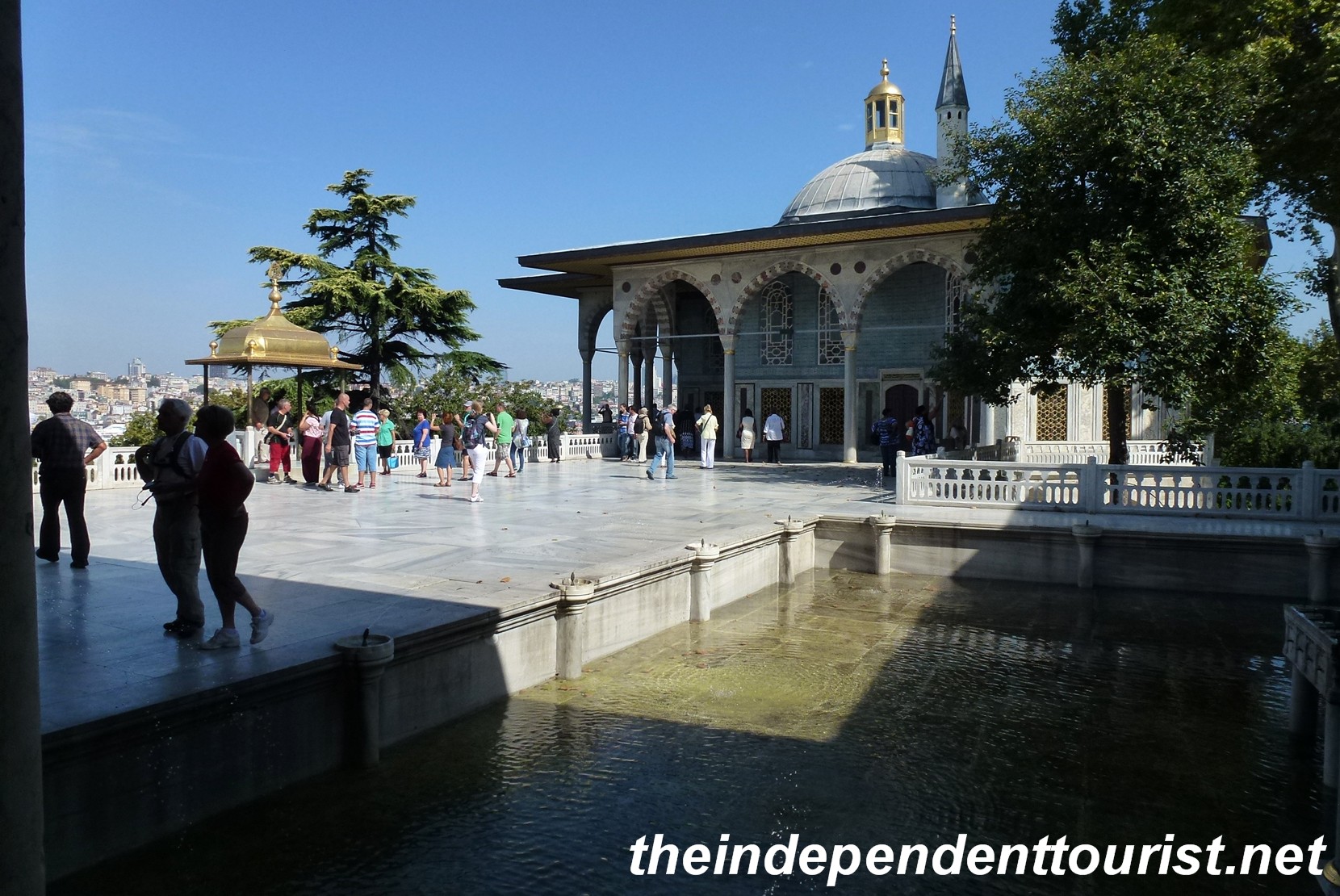
The Baghdad Pavilion (center-right) was built in 1639 to commemorate the capture of Baghdad by the Sultan Murat IV. The small golden dome to the left is where the sultan would break his fast after the month of Ramadan.

A view of the Fourth Courtyard. The Baghdad Pavilion (center-right) was built in 1639 to commemorate the capture of Baghdad by the Sultan Murat IV. The small golden dome to the left is where the sultan would break his fast after the month of Ramadan.

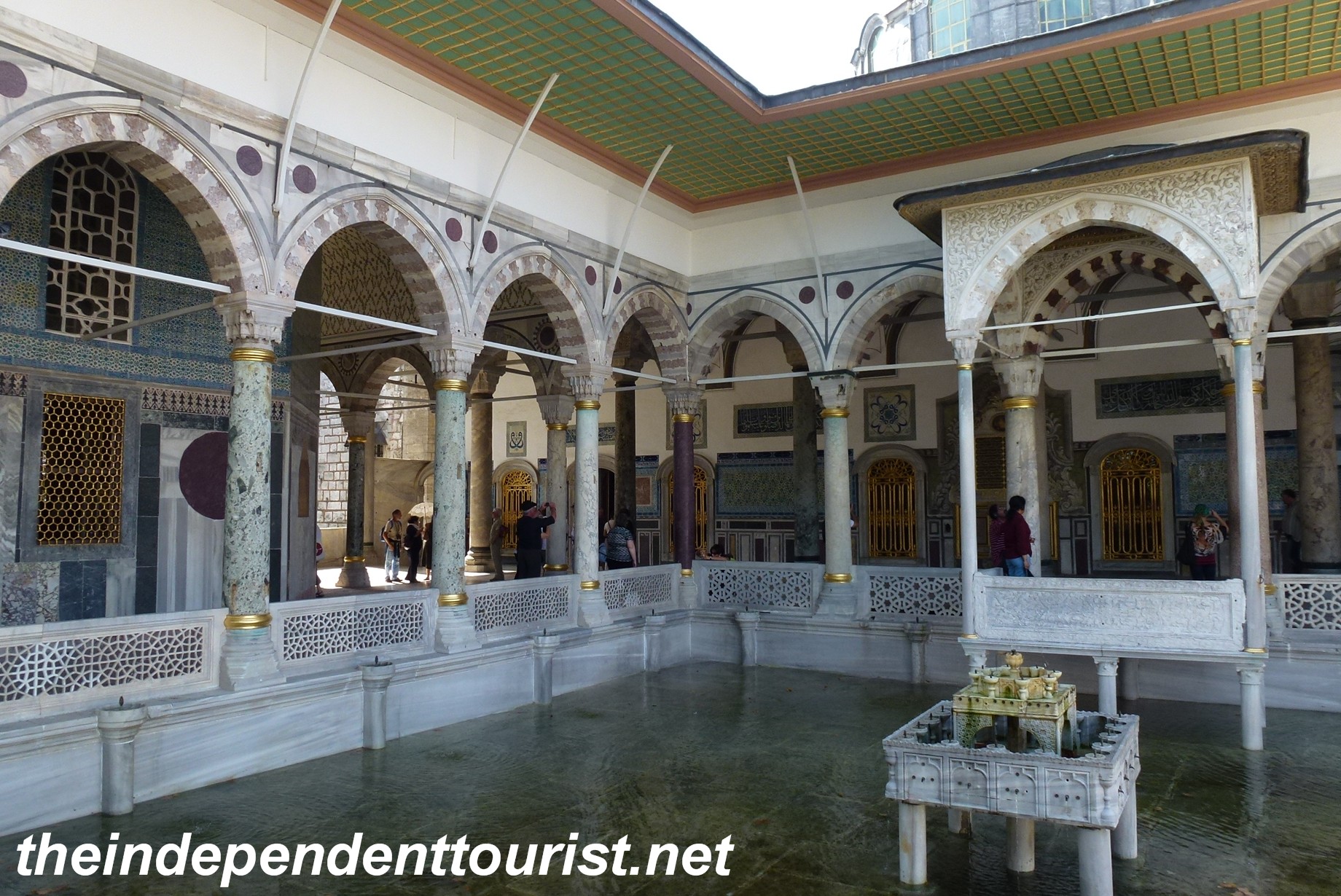
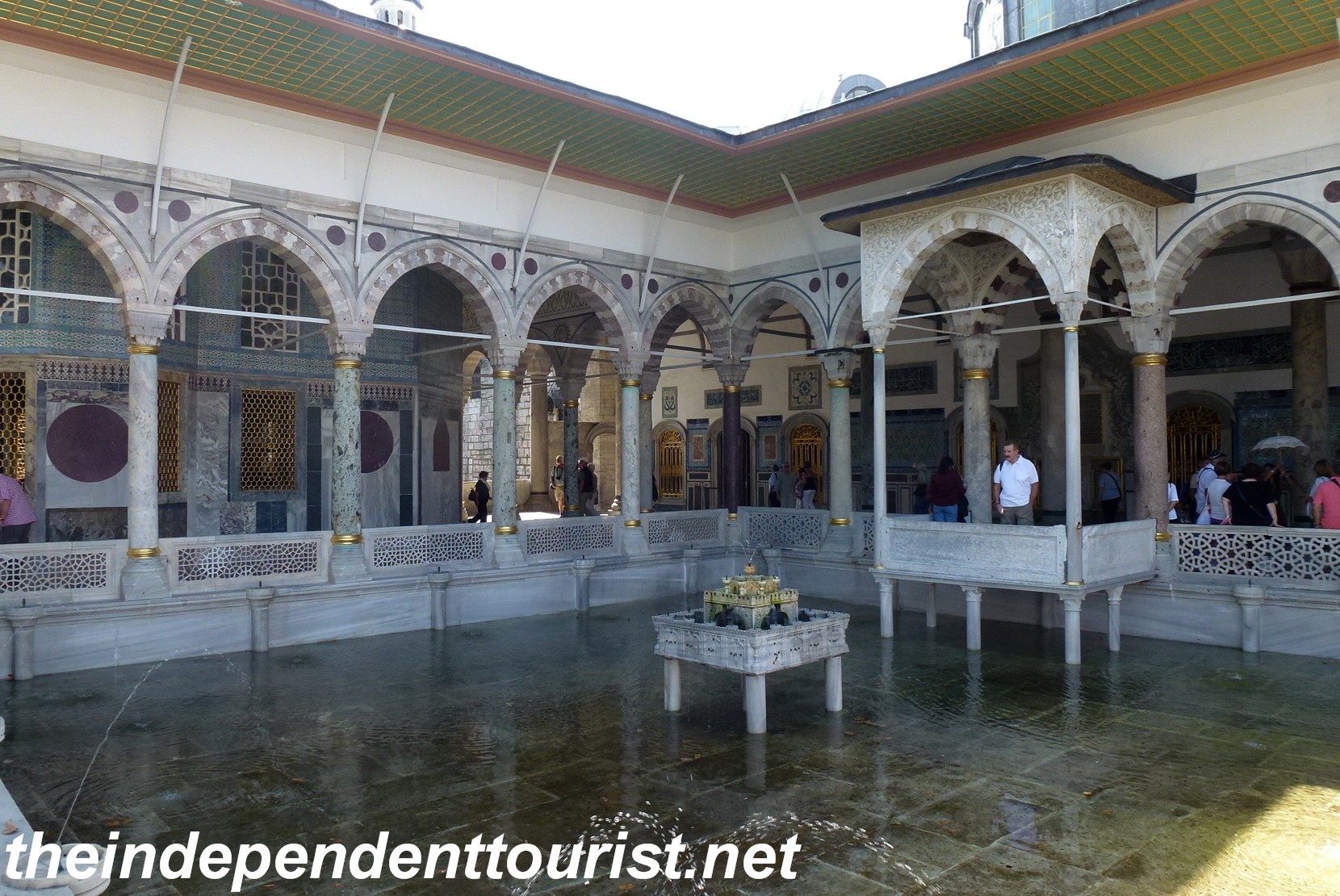
The Fourth Courtyard and pool at the palace.

Another view of the Fourth Courtyard and pool at the palace.

Allow at least 3 hours to visit the palace, which offers (in addition to a number of palace rooms) several museums displaying the amassed wealth of the sultans over the centuries, including a treasury with stunning precious jewels, another containing weapons, and separate museums with manuscripts and a very interesting collection of clocks. No pictures are allowed in the museums.

Our friends in the Third Courtyard at the palace, the Library of Ahmet III (built in 1719) is behind them.

Our friends in the Third Courtyard at the palace, the Library of Ahmet III (built in 1719) is behind them.

Numerous items which belonged to the Prophet Mohammed are found in the Pavilion of the Holy Mantle, which makes the Topkapi Palace one of the most sacred pilgrimage sites of the Islamic faith.

The Pavililon of the Holy Mantle, which contains sacred relics of the Prophet Mohammed.

The Pavililon of the Holy Mantle, which contains sacred relics of the Prophet Mohammed.

The Harem rooms provide some insight into life in the palace. The Harem contained about 1,000 women (essentially slaves) brought from all over the Ottoman Empire. Their dream was to become a favorite of the sultan and to bare him a son which might lead to marriage and higher status. The Harem was ruled by the sultan’s mother, who was the most powerful woman at the palace.

Dormitory of the Harem Eunichs. Dates from the 16th century.  The eunichs worked in service of the Harem. The more senior eunichs lived in the lower floor. They were recruited from all over the Ottoman Empire to serve in the palace. They supervised the quarters of the female population, and became more influential in state affairs in the 17th and 18th century.

Dormitory of the Harem Eunichs. Dates from the 16th century. The eunichs worked in service of the Harem. The more senior eunichs lived in the lower floor. They were recruited from all over the Ottoman Empire to serve in the palace. They supervised the quarters of the female population, and became more influential in state affairs in the 17th and 18th century.

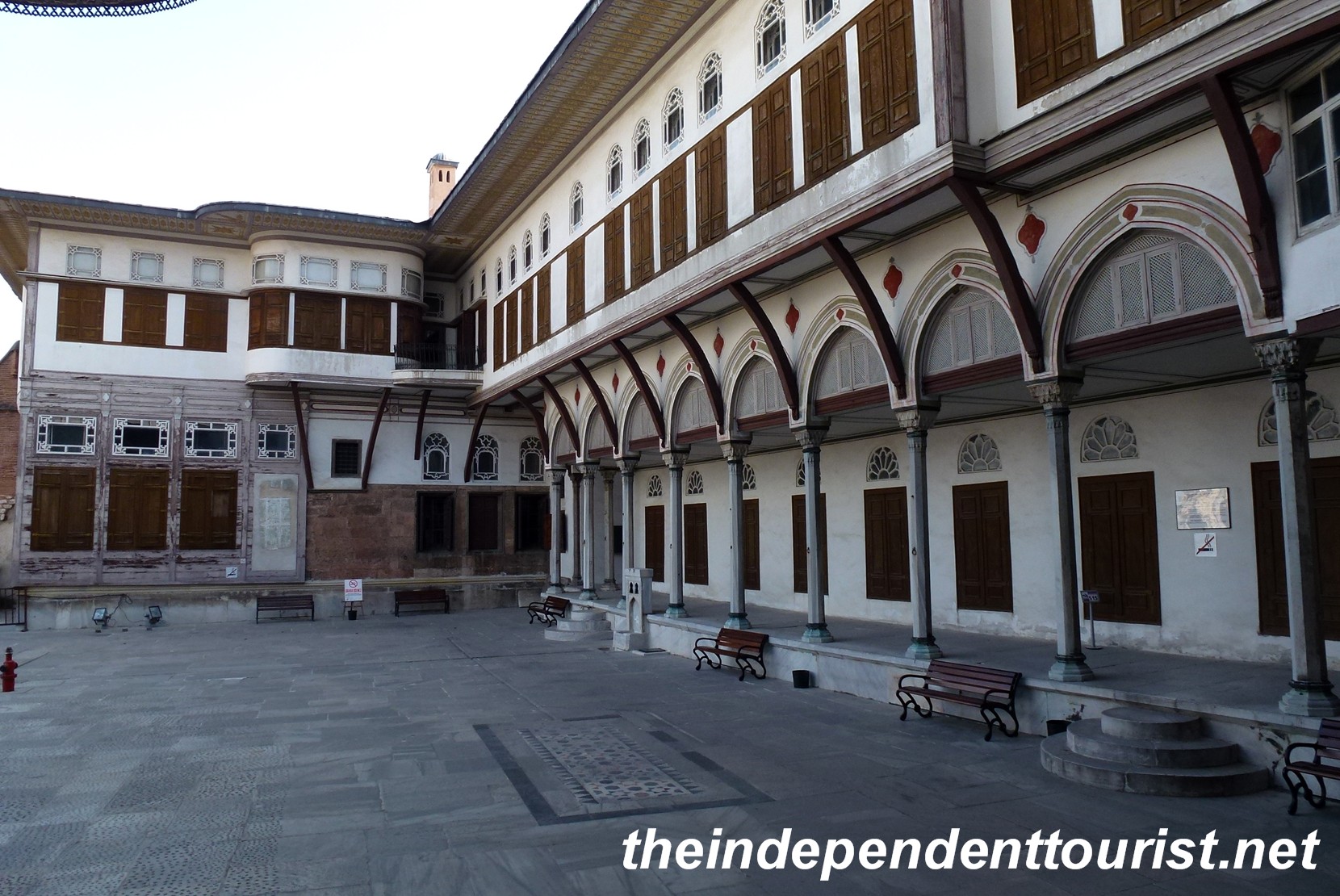
This is where the Harem favorites lived, hoping to bear the sultan a son.

This is where the Harem favorites lived, hoping to bear the sultan a son.

Another view of the Courtyard of the Faviorites in the Harem.

Another view of the Courtyard of the Faviorites in the Harem.

The Apartment of the Queen Mother, the most powerful woman in the Harem.

The Apartment of the Queen Mother, the most powerful woman in the Harem, and an extremely powerful member of the Ottoman Empire. She influenced political life in the empire, and regulated the relations between the sultan, his wives and children.

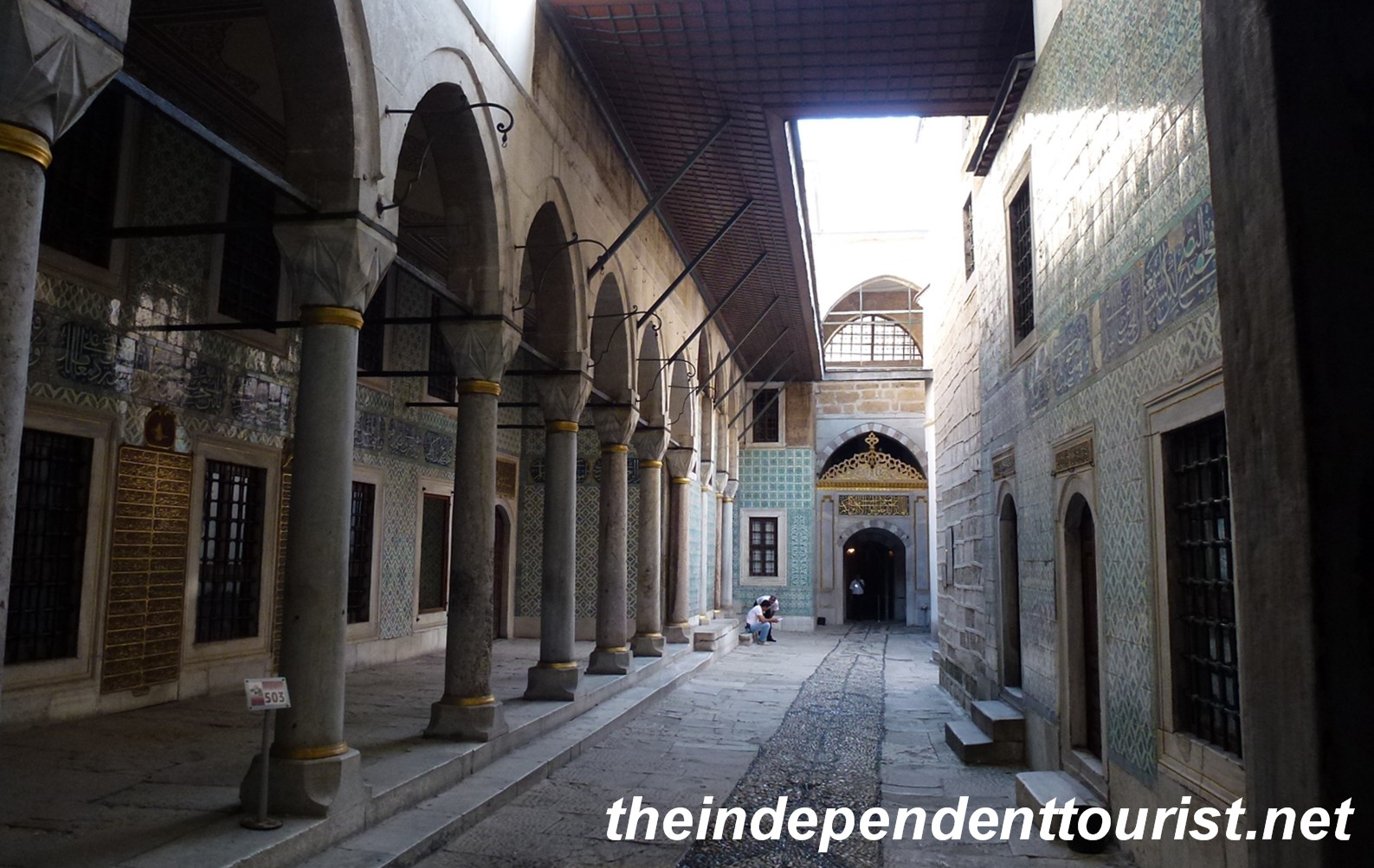
Summer Pavilion (Circumcision Room) Room built in 1640, circumcision ceremonies of the crown princes were held here. Some of the most beautiful tile work in the palace is in this room.

Summer Pavilion (Circumcision Room)
Room built in 1640, circumcision ceremonies of the crown princes were held here. Some of the most beautiful tile work in the palace is in this room.

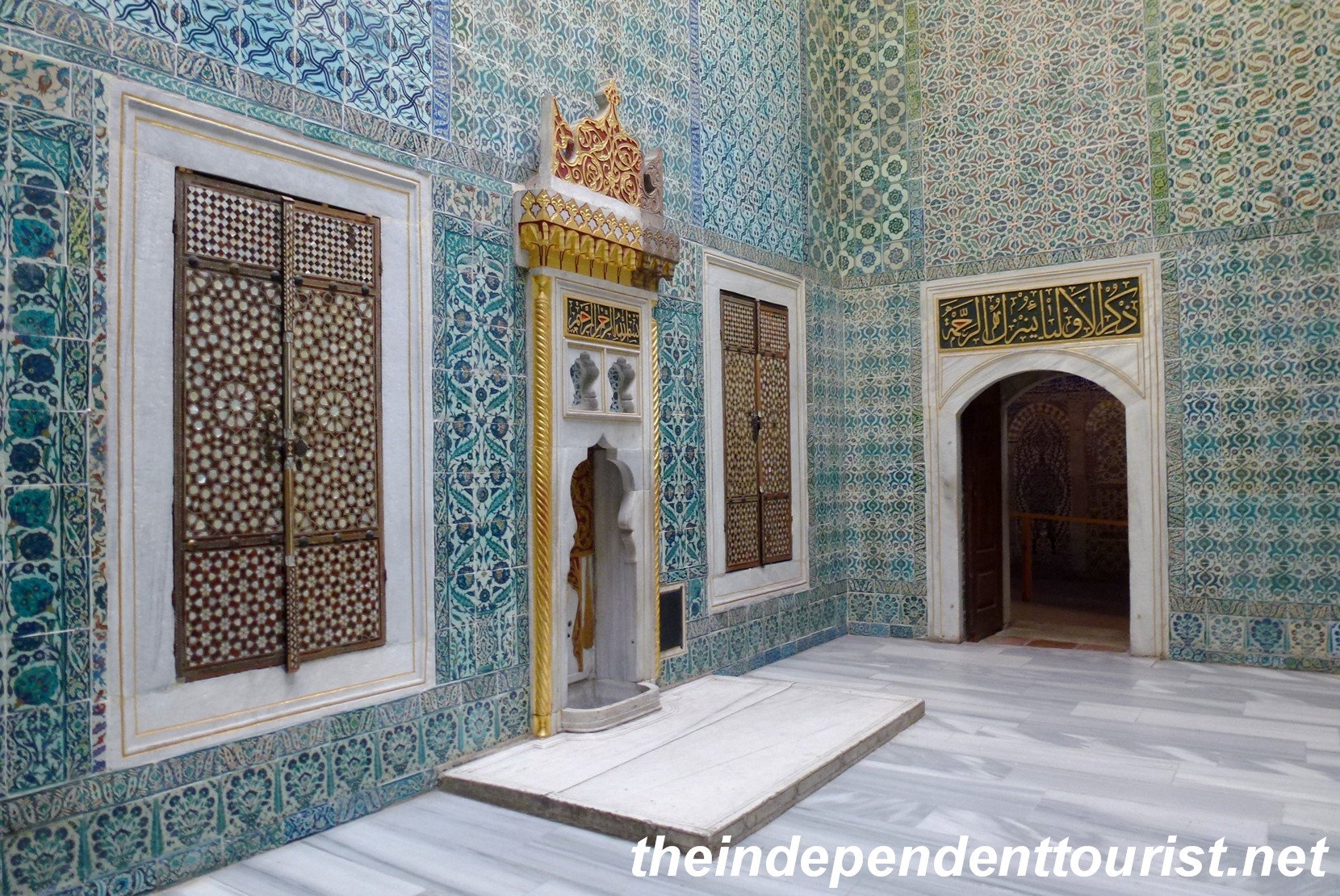
The Hall with a Fountain. This beautiful vestibule is where the princes and consorts of the Sultan would wait before entering the Imperial Hall.

The Hall with a Fountain.
This beautiful vestibule is where the princes and consorts of the Sultan would wait before entering the Imperial Hall.

Another view of the Hall with a Fountain room.

Another view of the Hall with a Fountain room.

A visit to the palace requires two separate fees and tickets, unless you get the Museum Pass in Istanbul which is good for 72 hours and allows entry to multiple sites and immediate access to the sites without waiting in line. The cost of the pass is about $36 USD. There is a kiosk right outside the Haghia Sophia. The Topkapi Palace gets very crowded with tour groups, so I highly suggest arriving before the palace opens.  We were the first ones into the Harem and had the rooms to ourselves.

The beautiful tile work in the palace.

A close-up of the beautiful tile work in the palace.

References: Plaques throughout the Topkapi Palace and DK Eyewitness Travel Turkey.

Oradour-sur-Glane: Remember

The town center of Oradour-sur-Glane.

The town center of Oradour-sur-Glane.

A news article this past week caught my attention about the little town of Oradour sur Glane in south central France, near the city of Limoges. For most of us, the name of this town would not hold any meaning and yet it’s the sight of one of the greatest tragedies in WW II, the brutal murder of 642 men, women and children.

Oradour-sur-Glane is 23 km northwest of Limoges, France.

Oradour-sur-Glane is 23 km northwest of Limoges, France.

My wife and I, my brother and parents-in-law had the privilege of visiting this village memorial a few years ago.

My brother on a main street of Oradour-sur-Glane.

My brother on a main street of Oradour-sur-Glane.

Here’s a short version of what happened:

On 10 June 1944, four days after the Allied invasion of Normandy, approximately 150 Waffen-SS soldiers entered the tranquil village of Oradour-sur-Glane. Under the pretense of an identity check and then a search for weapons, the soldiers divided the inhabitants, the women and children were marched over to the church and the men were divided into six groups and led to different barns in the town.

The SS used machine guns and hand grenades to disable and kill the women and children. The church was then set on fire, even though many of the women and children were still alive.

A plaque on the church in memory of the women and children who died here.

A plaque on the church in memory of the women and children who died here.

A view of the church where the women and children were shot and burned.

A view of the church where the women and children were shot and burned.

The men’s fate in the barns was similar, they were shot in the barns and badly wounded, but while some were yet alive the soldiers piled wood and straw on the bodies and set the barns on fire.  One woman and 5 men somehow escaped.

A plaque on one of the buildings where men were shot and burned.

A plaque on one of the buildings where men were shot and burned.

After killing all the townspeople that they could find, the soldiers set the whole town on fire and early the next day, taking stolen goods from the houses, they left. Many of the soldiers then worked their way up to Normandy where a number of them were killed fighting the Allies in the early days of the Normandy invasion.

On the orders of General Charles de Gaulle, the town was not rebuilt and the whole village now stands as a memorial to this terrible tragedy.

A treadle sewing machine in someone's home.

A treadle sewing machine in someone’s home.

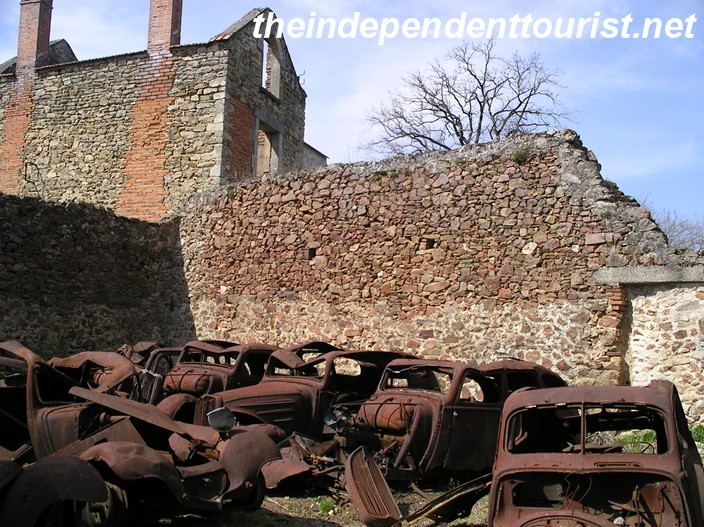
Remains of autos in a garage.

Remains of autos in a garage.

Remnants of another home with what looks like an oven and bed (lower right corner).

Remnants of another home with what looks like an oven and bed (lower right corner).

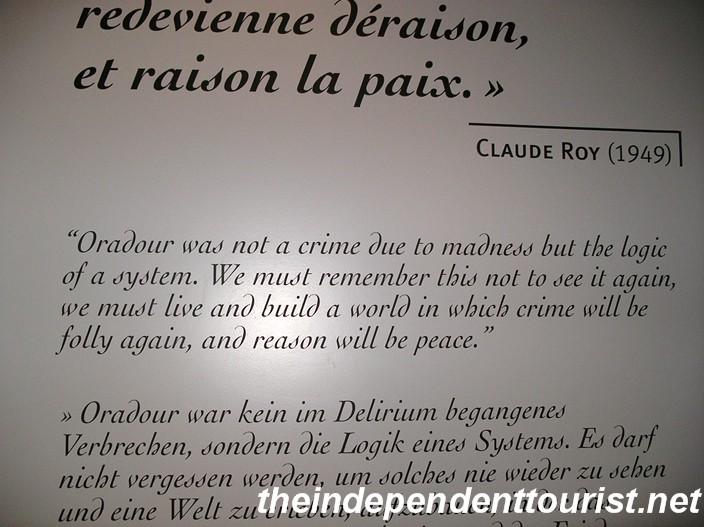
A powerful quote by Claude Roy (1949) in the Visitor's Center.

A powerful quote by Claude Roy (1949) in the Visitor’s Center.

You park at a visitors center and a walking tunnel takes you under the road and over to the village where plaques mark the spots and in most cases denote the numbers of those who died that terrible day.  This ghost town, left untouched for almost 70 years, greets every visitor who enters with only one English word:  Remember.

References: Materials at the Visitor’s Center, Oradour sur Glane.

Istanbul – One of the World’s Great Cities and the Center of the Byzantine Empire

Istanbul sits astride two continents, Europe and Asia, divided by the Bosphorus strait, which links the Black Sea with the Mediterranean.

A view of the Bosphorus from the Topkapi Palace. Europe is on the left, and Asia is on the right.

A view of the Bosphorus from the Topkapi Palace. Europe is on the left, and Asia is on the right.

It would be easy to spend a week in this city, we spent the last 3 days of our visit to Turkey here, and were able to get a good feel for the wonders it has to offer. Known as Constantinople in Byzantine times, the city became known as Istanbul after the Ottomans finally conquered the city in 1453. I have read a fair amount about the 1,000 year history of the Byzantine Empire and really looked forward to seeing the location where so many historical events had taken place. For a map of places we visited in Turkey, click here.

A view of Seraglio Point (part of the old city) in Istanbul from our Bosphorus cruise.

A view of Seraglio Point (part of the old city) in Istanbul from our Bosphorus cruise.

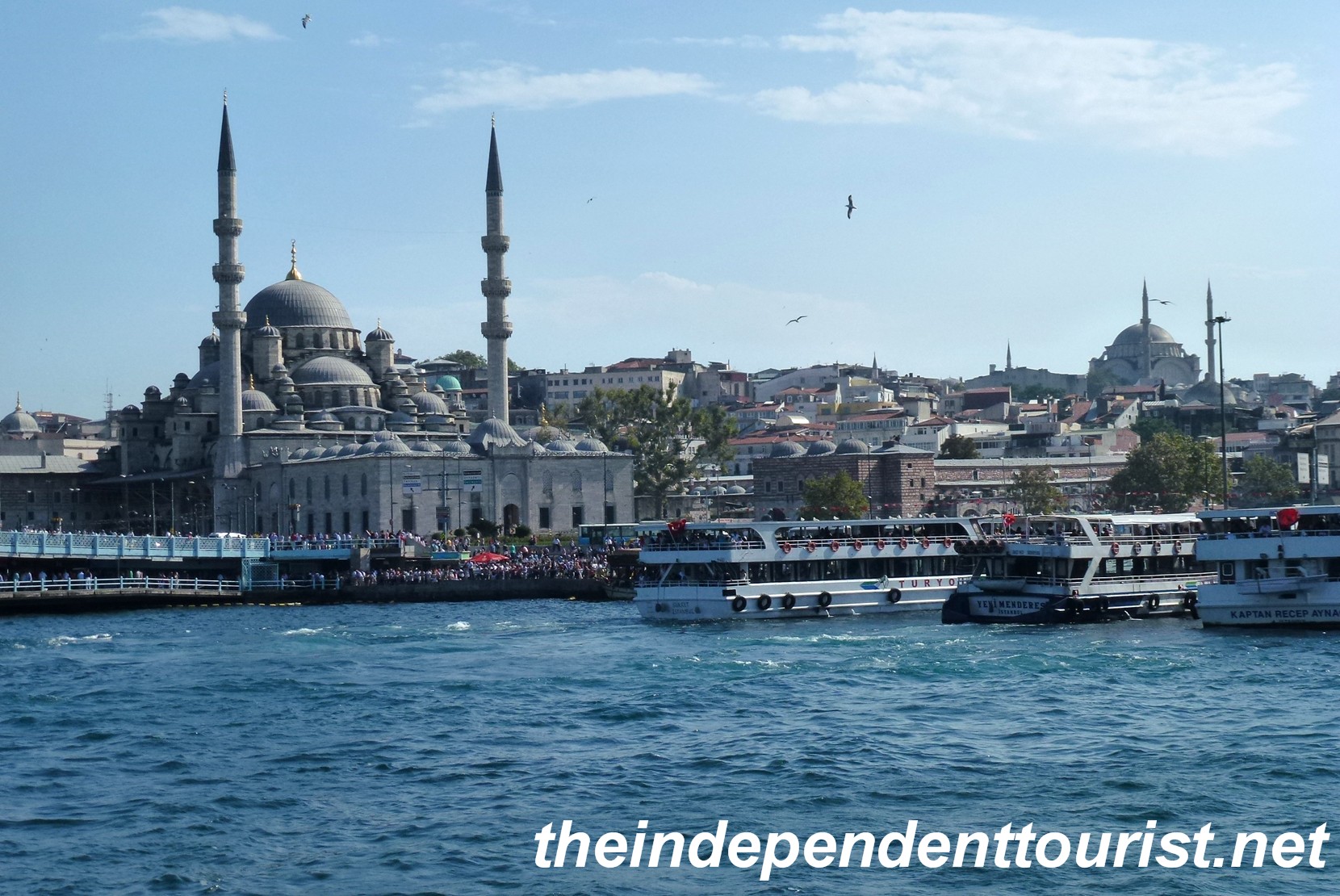
The Golden Horn. The Galata Tower is on the hill. Underneath the bridge in the distance are many seafood restaurants.

The Golden Horn. The Galata Tower is on the hill. Underneath the bridge in the distance are many seafood restaurants.

There are remnants of the Byzantine Empire along with many structures from the early days of the Ottoman era.

The Byzantine Empire was an extension of the Roman Empire, with Constantinople becoming a second Roman capital in AD 324 when it was founded by the Emperor Constantine. As the Western Roman Empire (Rome) declined, the Byzantine Empire (and specifically Constantinople) flourished due to its strategic location and excellent defensive geographical position, until the Ottomans finally breached the great walls in 1453.

There are lots of things to see, here are the main places we visited:

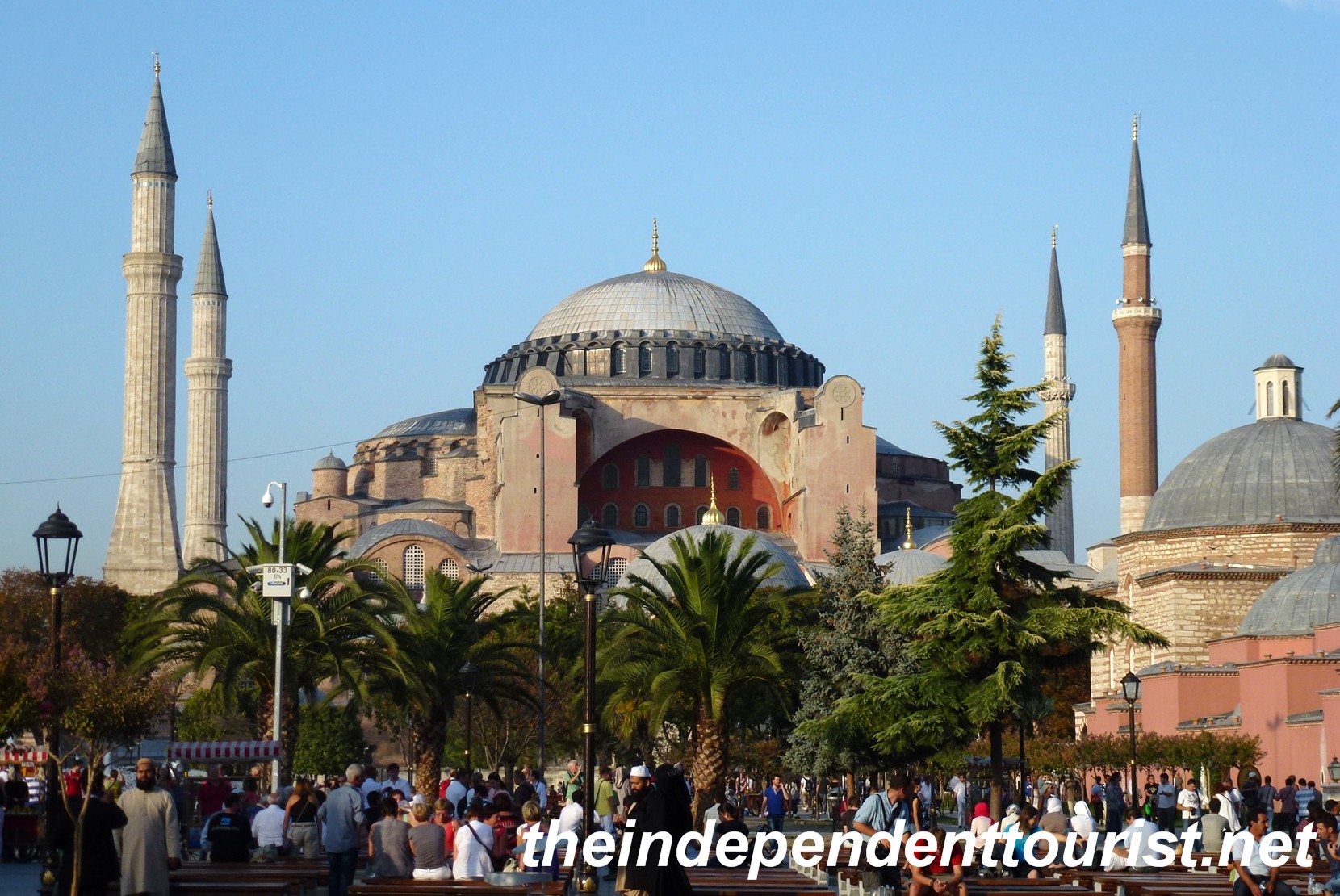
The Haghia Sophia (Aya Sofya). One of the largest and greatest structures ever built–over 1,400 years old–its size still boggles the mind. This was the place of coronations of Byzantine Emperors and it was converted into a mosque in Ottoman times. It’s now a museum, with the building itself being the main attraction. I will cover more about the amazing Haghia Sophia in a separate post.

The 1,400 year-old Haghia Sophia Church.

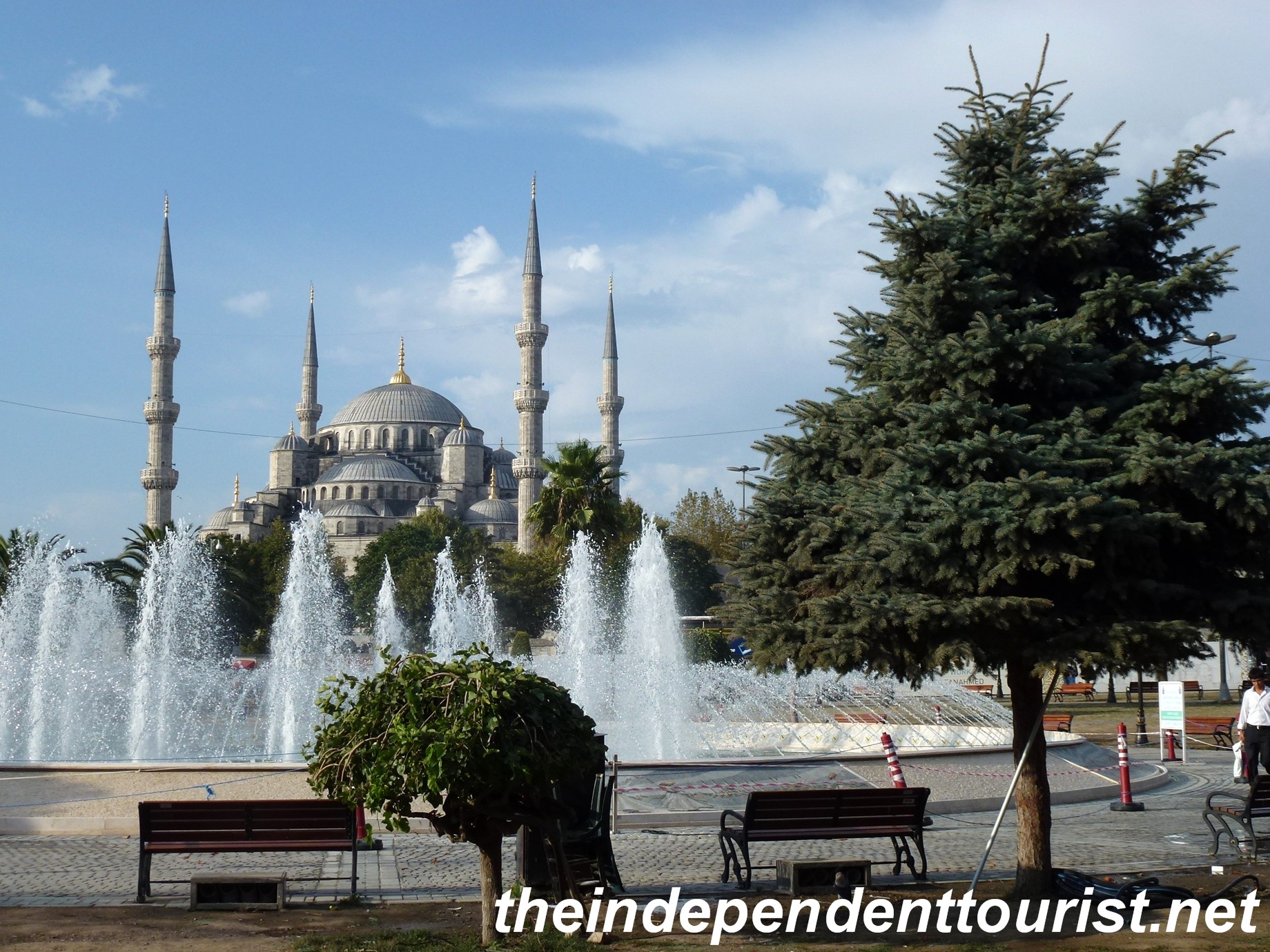
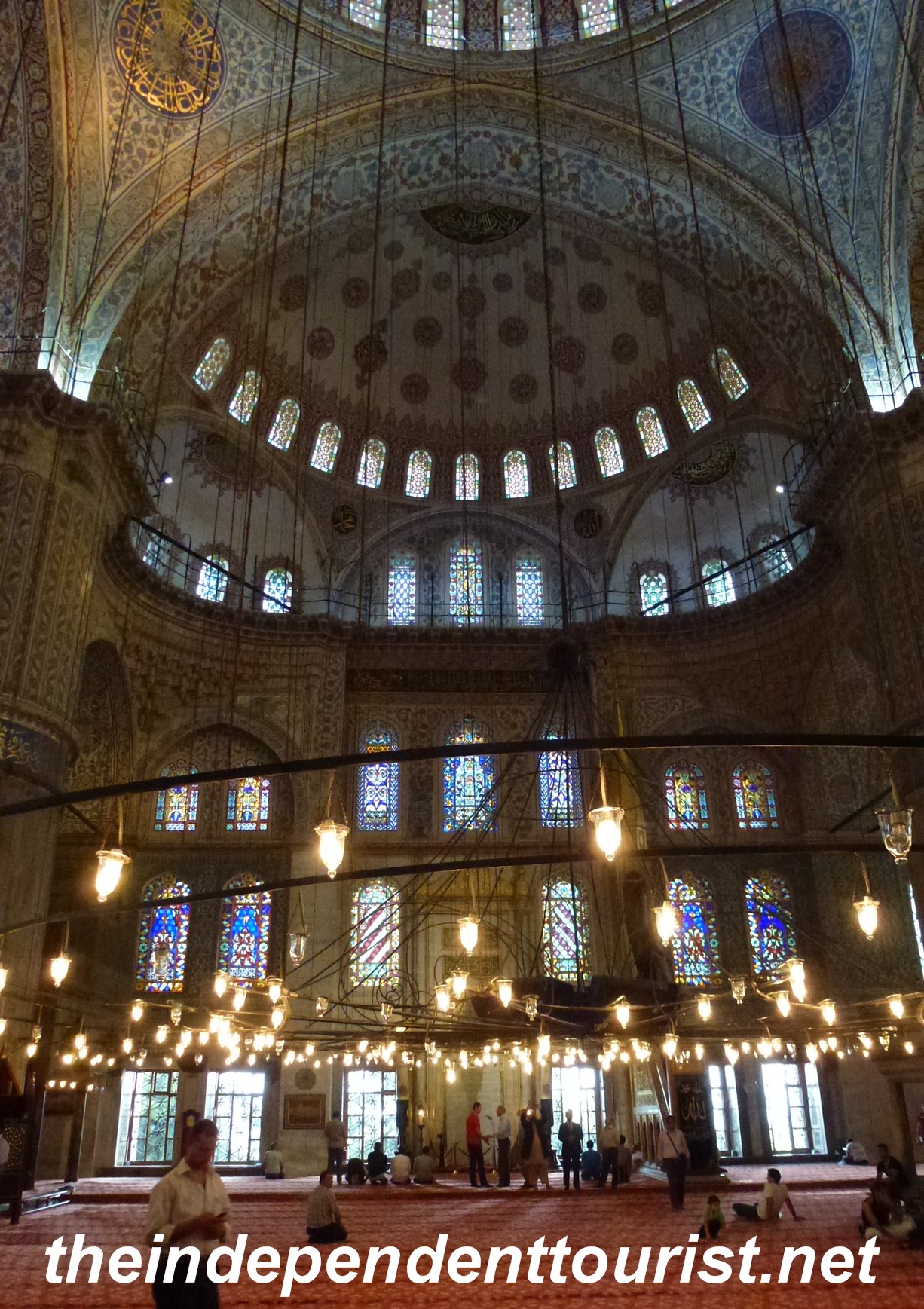
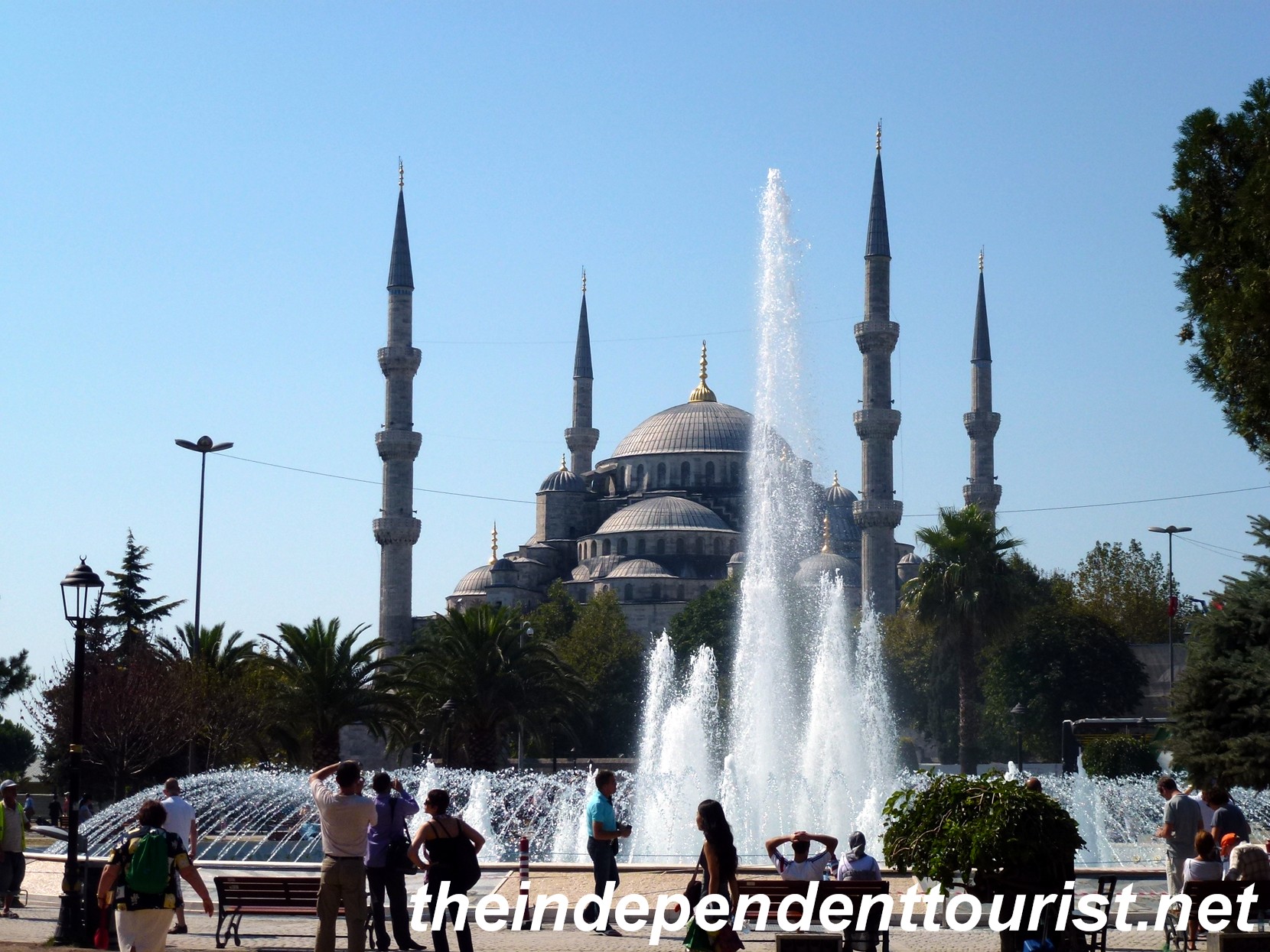
The Blue Mosque. One of Istanbul’s most famous mosques (built 1609 – 1616), located near the Haghia Sophia. Its name comes from the beautiful blue tile work inside. More about the Blue Mosque in a separate post.

The famous Blue Mosque.

The Basilica Cisterns. This underground structure dates back to the time of Justinian (6th century) and was an underground water storage facility for Constantinople, supplying the needs for the huge city and insuring water supplies in times of siege. There are 336 marble columns and the water source was 19 km away. Going down into this dark cavernous structure with water still flowing was fun–look for the two Medusa head bases–the Byzantines must have decided they would make great building blocks!

A view in the cisterns. The lighting is quite dark, giving the place an eerie feel.
A view in the cisterns.
One of the two Medusa heads in the Cisterns - the other is upside down.

One of the two Medusa heads in the Cisterns – the other is upside down.

Bosphorus Cruise. Taking a cruise up the Bosphorus to get a better view of the European and Asian side of Istanbul is a traditional must-do, our cruise went up as far as the Fortress of Europe (about 1/3 the way to the Black Sea). There are cruises which last all day and go up to the Black Sea and back. I don’t think this long of a cruise would be worth the time investment.

The Fortress of Europe--staging area for the final assult on Constantinople.
The Fortress of Europe–staging area for the final assult on Constantinople.

Walls of Constantinople (Theodosian Walls).  Built from 412-422 AD by Theodosius II, these walls protected the landward side of Constantinople for a 1,000 years.  The Hop On/Hop Off bus goes past much of the old walls if you want a view.

The Theodosian Walls of Constantinople.

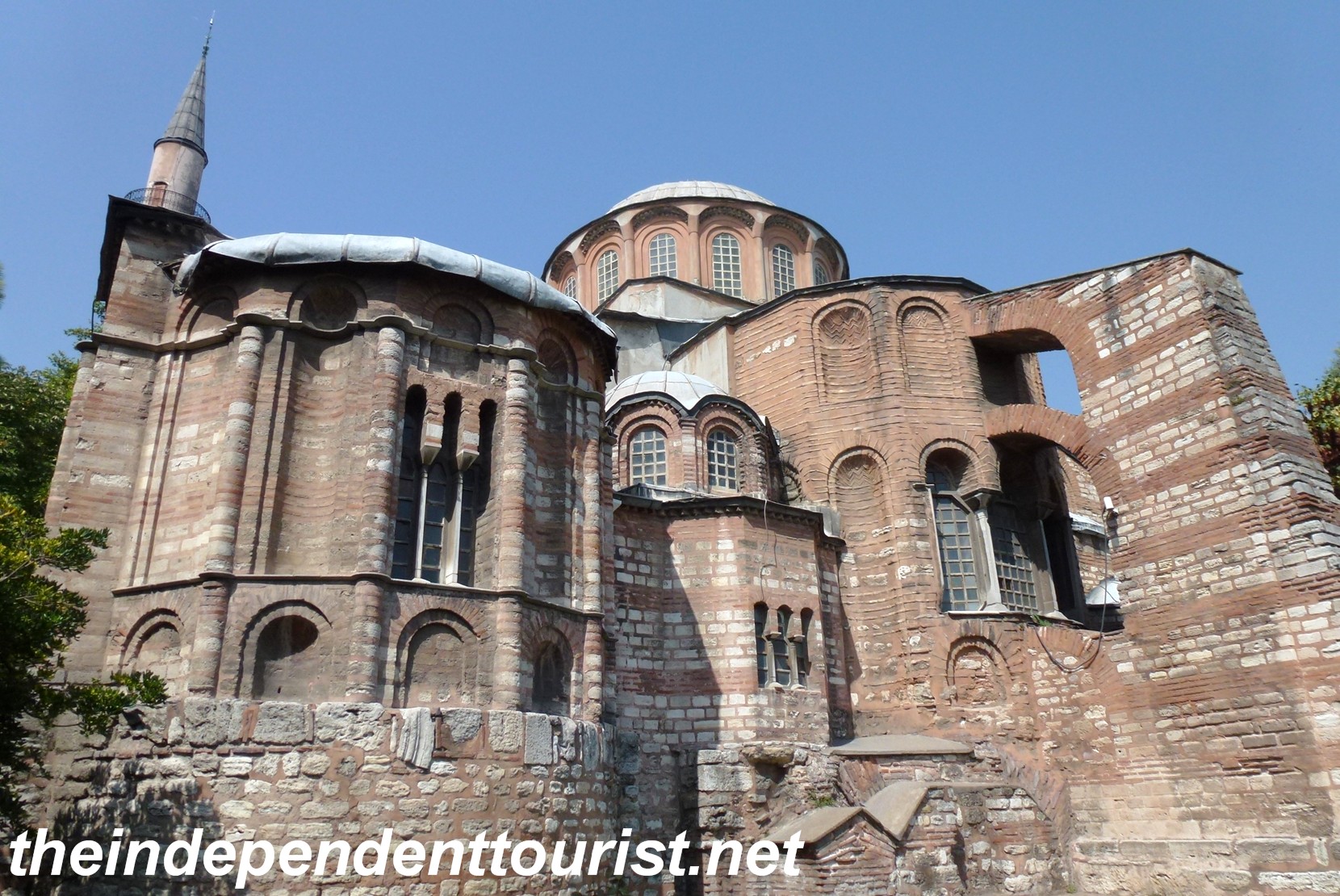
Church of St. Saviour in Chora.  This beautiful church is a little further out from the main old city attractions. Located near the Theodosian Walls, the interior of this church has many beautiful mosaics from the Byzantine era. We took the “Hop On/Hop Off” bus to reach the walls and church.

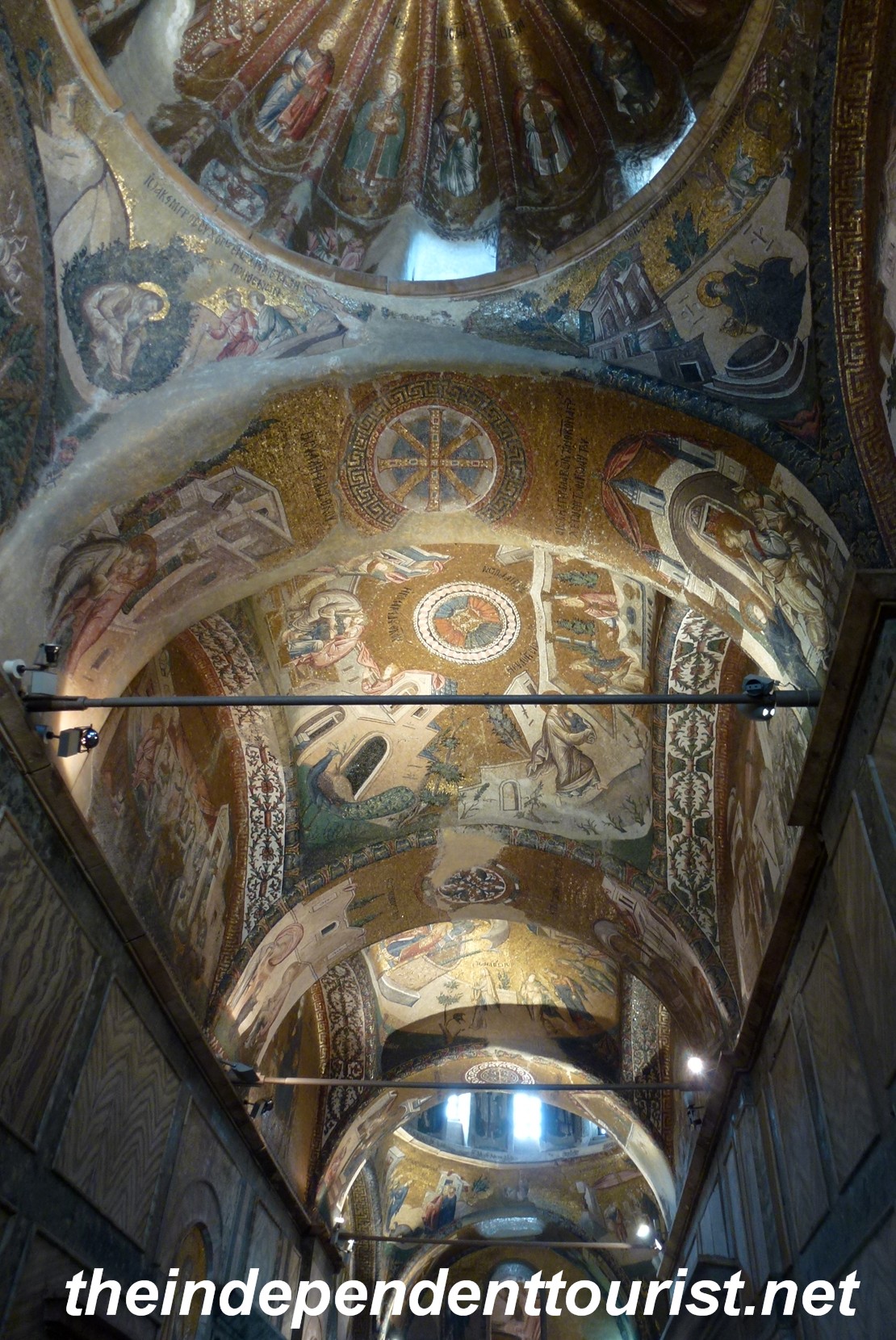
14th century mosaics in the Chora Church.
The Chora Church. 11th century, remodeled in the 14th century.

The Grand Bazaar. With over 3,000 shops, you can get lost in this maze.  The Bazaar is organized into sections (jewelry, gold and silver, leather goods, etc .). With so many shops, I’m not sure how they all stay in business. The stalls begin to look the same after a while, and we only spent about 45 minutes jostling among the crowds.

One of the many passageways in the Grand Bazaar.

The Topkapi Palace. In my opinion, along with the Haghia Sophia, this is a “must do” in Istanbul. Built between 1456-1465, shortly after the conquering of Constantinople by Mehmet II. This huge palace complex with its incredible treasures and stunning architecture gives you an idea of the splendor of the Ottoman sultans. I will cover the Topkapi Palace in a separate post.

The Fourth Courtyard Pool at the Topkapi Palace.

Practicalities

First, stay in the old city (specifically Sultanahmet) if possible. We stayed in a little hotel (Hotel Tulip House) that was no more than 10 minutes’ walk to the Hippodrome area (near the Haghia Sophia, Blue Mosque, etc.) making it very convenient to many of the major sights and to the Golden Horn for boat rides and restaurants. I do not recommend renting a car in the city—parking and navigating the extremely narrow streets would be a nightmare.

The Tulip House Hotel in Sultanahmet, Istanbul.

Second, get the Museum Pass. As of September 2012, it cost 72 TL (Turkish Lira, about 2 TL to 1 USD) and is good for 72 hours after your first entry. It allows you to bypass the crowds in line for individual tickets, saves money over the individual entry fees and gives you priority entrance into the sights such as the Haghia Sophia, Topkapi Palace (including Harem Apartments and museums), Chora Church, and several other museums. There was a kiosk right outside the Haghia Sophia to buy the Pass.

Third, there are trams and buses for getting to other locations around town and they are pretty cheap and easy to navigate. The old city is hilly.

Fourth, find some time to just wander around. After leaving the Grand Bazaar, we wandered the nearby streets and enjoyed viewing daily Turkish life.

Street scene near the Grand Bazaar.

Sintra – You Won’t Get Bored Here

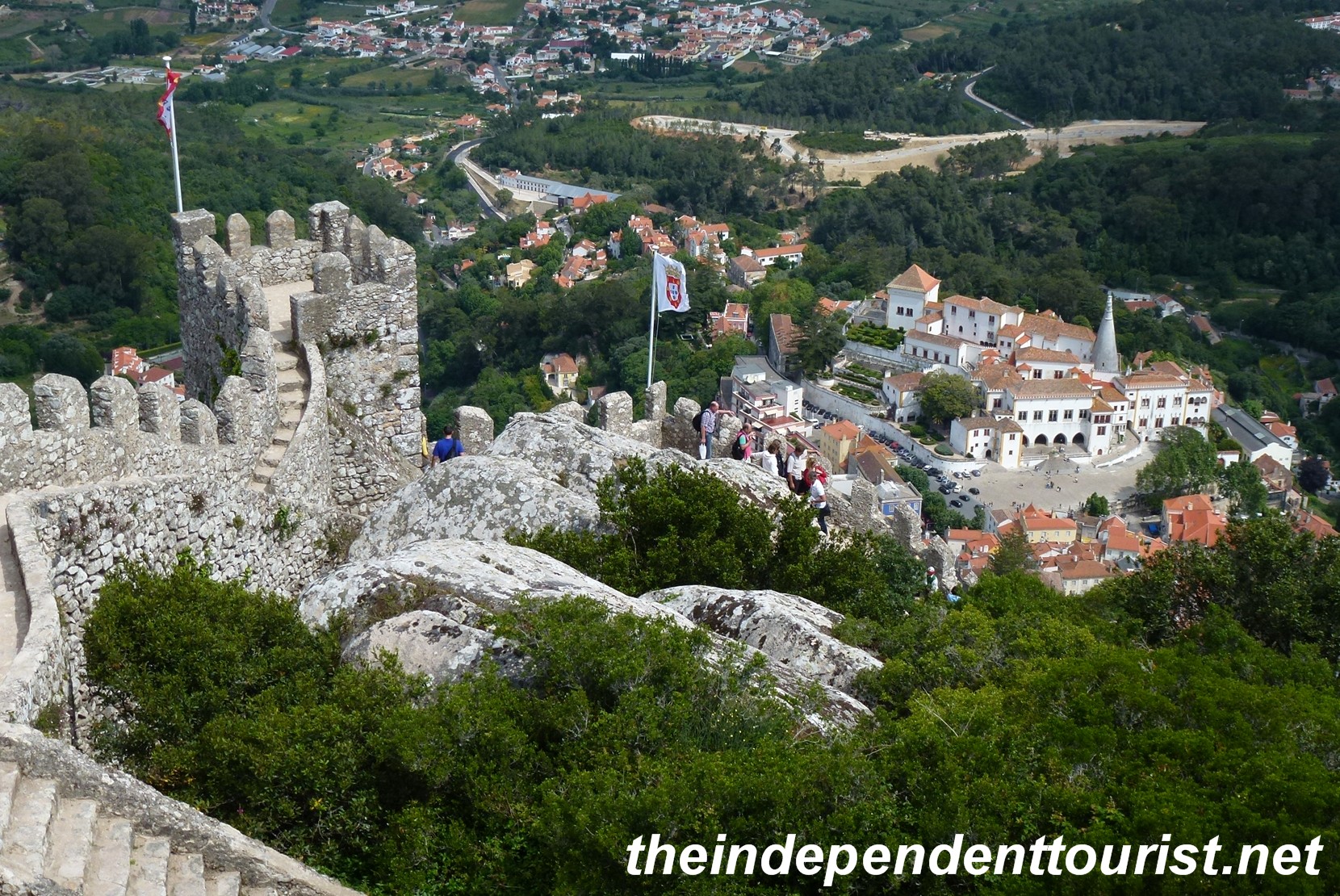
A view of the Palacio Nacional de la Pena from the Moorish Castle.

A view of the Palacio Nacional de la Pena from the Moorish Castle.

Sintra, Portugal is packed with interesting sights and is only about 45 minutes by commuter train from Lisbon. I took a day trip to this enchanting town over a weekend.  I wish I had had another day at least. There are at least six primary sights to visit in this town, and in my available 2/3 of a day, I chose to visit two of them, the Moorish Castle ruins and the Palácio da Pena (Palácio Nacional de la Pena), since it’s a postcard landmark of Portugal. (For a map of Lisbon and surrounding area, click here.)

Sign listing all the sights in Sintra.

Sign listing all the sights in Sintra.

Other options to visit are discussed below.

Sintra has been the playground of royalty and the rich and famous for centuries, hence the collection of very interesting and unique sights here.

Moorish Castle (Castelo dos Mouros) Ruins

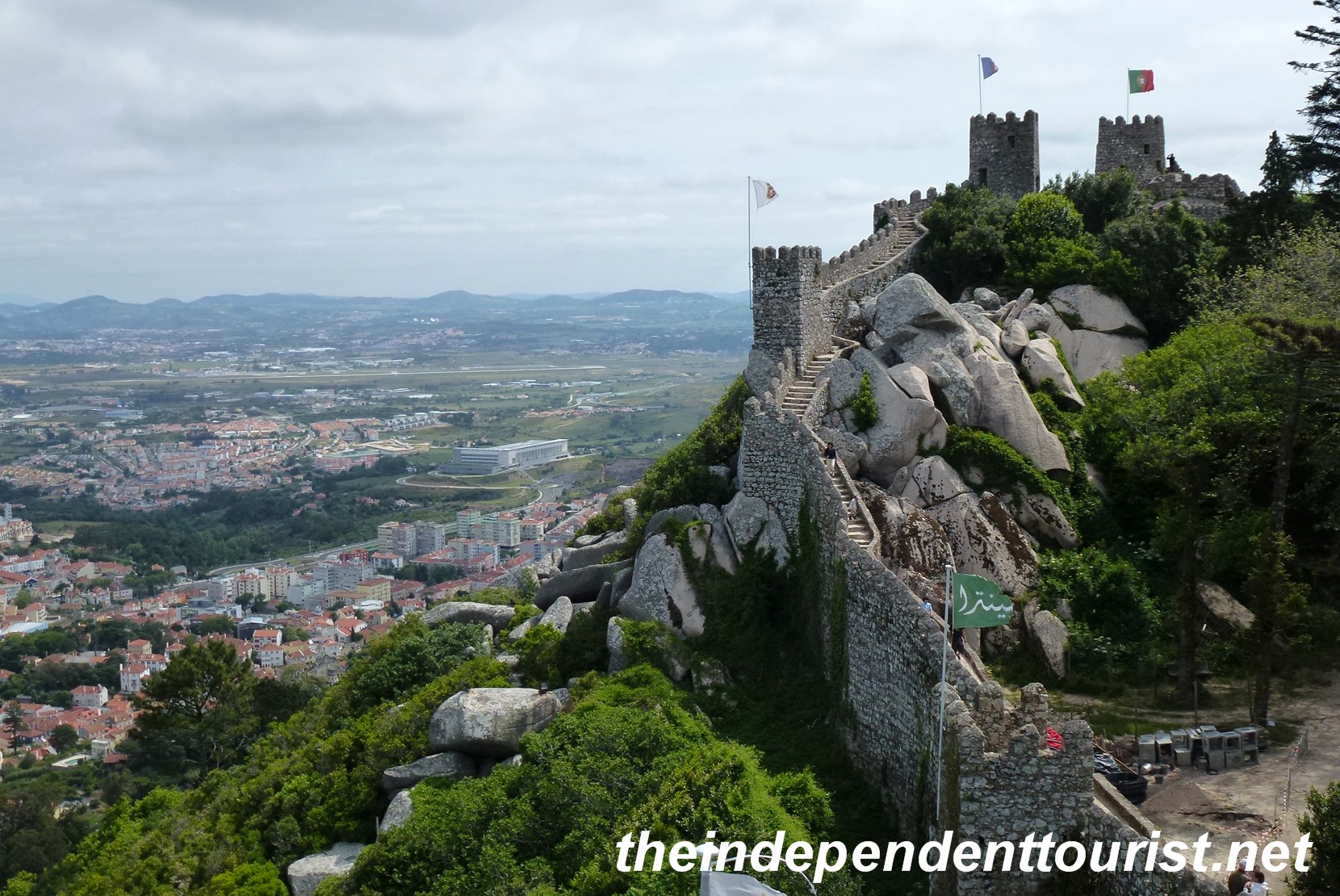
On the Moorish castle ramparts.

On the Moorish castle ramparts.

Another of the defensive towers at the Moorish Castle (Atlantic Ocean in the distance).

Another of the defensive towers at the Moorish Castle (Atlantic Ocean in the distance).

A view of Sintra and beyond (looking northeast) from the castle walls.

A view of Sintra and beyond (looking northeast) from the castle walls.

The ruins (9th century) have a commanding view of Sintra and out to the Atlantic Ocean.  I recommend visiting here if for no other reason than for the views.  There is not much left of an actual castle, but the defensive walls and towers have been restored and make for a great walk, with LOTS of stairways up and down the hilly terrain. Wear comfortable shoes and bring water.

Palácio da Pena

This structure looks like something out of Disneyland. It sits on the site of an old monastery built in 1503, which was later largely destroyed by earthquakes and lightning.

View of the palace from the extensive wooded surroundings.

View of the palace from the extensive wooded surroundings.

Parts of the old monastery have been incorporated into the current structure which was built in 1844, as a romantic ideal of royal palaces—it’s a blend of Gothic, Moorish, Renaissance and Baroque influences, not unlike the fanciful Neuschwanstein castle in Bavaria. The reason to visit is mainly the interesting blend of architecture and less for the historical value.

Another view of the interesting architectural styles at Pena Palace.

Another view of the interesting architectural styles at Pena Palace.

Be forewarned, pictures are NOT allowed inside and cameras are everywhere. I didn’t notice the cameras and took a couple pictures, and then two seconds later a security guard was after me and made me delete the pictures off my camera. First time that’s ever happened to me. The extensive trails and grounds of the Palace are worth exploring, there are some good views of the Palace available from the wooded trails on the grounds.

In addition to these two sights, here are other major highlights in Sintra:

Palácio Nacional de Sintra: Home to the Portuguese monarchy for eight centuries. A lot of the visible artwork today was completed between 1505 and 1520.

Looking down on Palácio Nacional de Sintra (middle right of picture) from the castle walls.

Looking down on Palácio Nacional de Sintra (middle right of picture) from the castle walls.

Palácio de Monserrate: Built on the ruins of a 16th century chapel and a neo-gothic palace and transformed in 1856 by a Brit, Francis Cook, this palace is heavily influenced by Moorish and Gothic architecture. There is an extensive botanical collection and beautiful gardens here.

Quinta da Regaleira: A very weird palace, built in 1904, with lots of tunnels on the grounds and full of symbolism in the elaborate decorations.

Convent of the Capuchos: A 16th century (dates to 1560) Franciscan hermitage, showing life as a friar with chapels, living areas, dormitories, and a library built into a hillside.

Practicalities 

The train to Sintra leaves from the Rossio Station in downtown Lisbon, right next to the Rossio plaza. The train makes a number of stops, but the journey still only takes about 45 minutes, and trains leave every 30 minutes. The historical center of Sintra is just a 5 minute walk from the train station.

View of Sintra.

View of Sintra.

The sights are relatively close to one another; however Sintra is hilly and even after you arrive at a site by bus or taxi, there are some steep walks in front of you, at least up to and through the Castle ruins and around Pena Palace. Bus 434 will take you from the train station to Pena Palace. If you enjoy walking, take the bus up to Pena and walk back down to the town. You can get individual or combination tickets for the various sights. It cost €16 per person for the Moorish Castle and Palácio da Pena.  For more information on this area check out:  http://www.parquesdesintra.pt.

Ancient Pergamum – One of Turkey’s Most Dramatic Sites (and the seat of Satan)

How I love going to a new location and seeing another great ancient ruin! As we drove into the modern city of Bergama, we looked up high on a hill behind the city and the first thing we saw is ancient Pergamum’s theater, dramatically situated on a very steep slope. For a map of sites visited in Turkey click here.

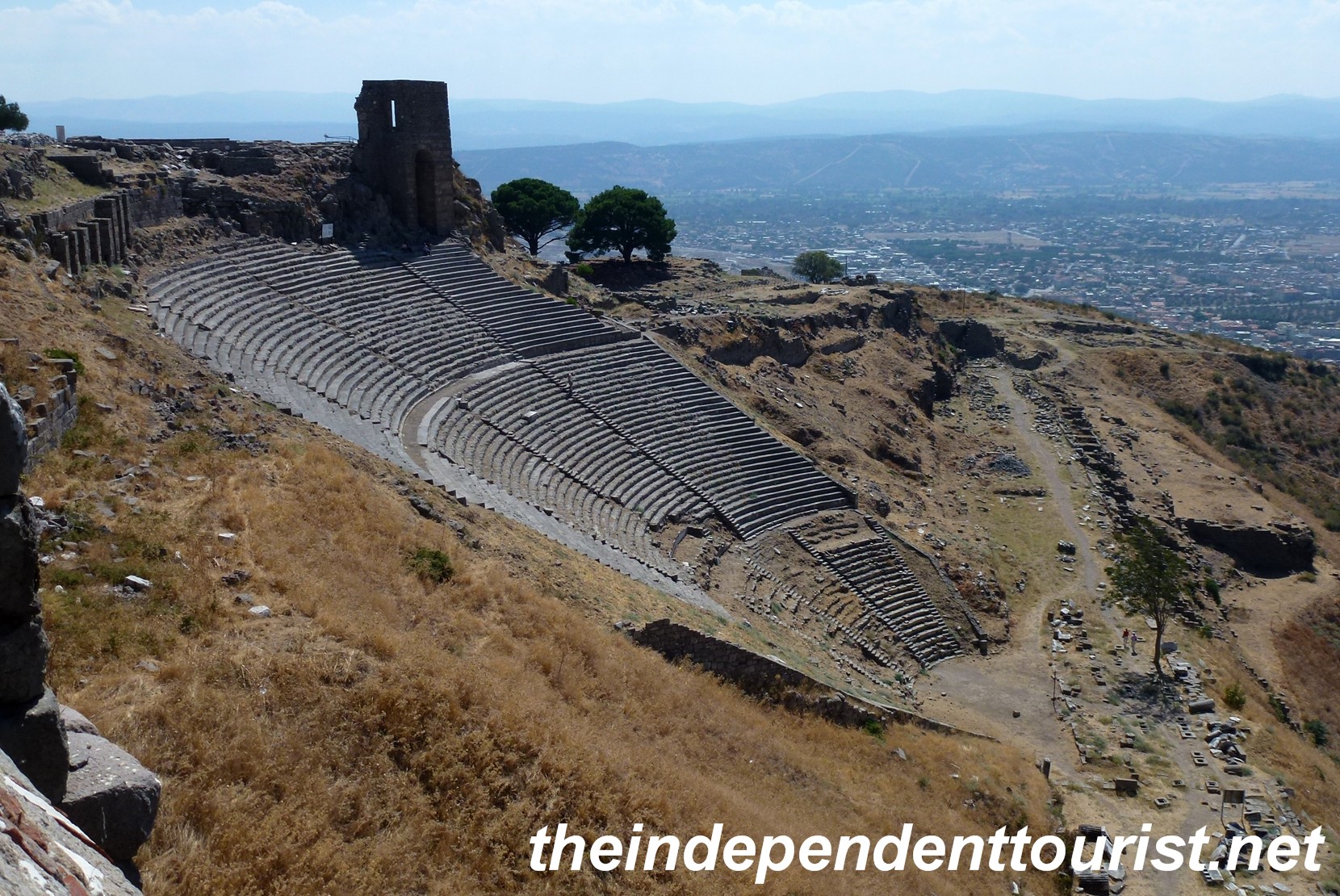
The theater at Pergamum. It could seat 10,000 people.

The theater at Pergamum. It could seat 10,000 people.

Exploring the theater at Pergamum.

Exploring the theater at Pergamum.

As usual, the Greeks picked an excellent natural setting for a theater, with a view that extends for miles. The acropolis of Pergamum covers a steep hilltop, and a lot of Greek and Roman civil engineering work went into creating a level building area.

These archways are part of the hillside infrastructure to support the Temple of Trajan and other buildings at Pergamum.

These archways are part of the hillside infrastructure to support the Temple of Trajan and other buildings at Pergamum.

Ruins of the Temple of Trajan, started during the reign of the Roman Emperor Trajan, 98 - 117 AD.

Ruins of the Temple of Trajan, started during the reign of the Roman Emperor Trajan, 98 – 117 AD.

Another view of the Temple of Trajan.

Another view of the Temple of Trajan.

Pergamum was settled by the Greeks in the 8th century BC, and ruled by one of Alexander the Great’s generals around 320 BC. It became part of the Roman Empire in 133 BC. Pergamum was a great center of learning, and had a huge library of 200,000 scrolls that were (probably unfortunately) given to Cleopatra by Marc Antony as a wedding gift in 41 BC.

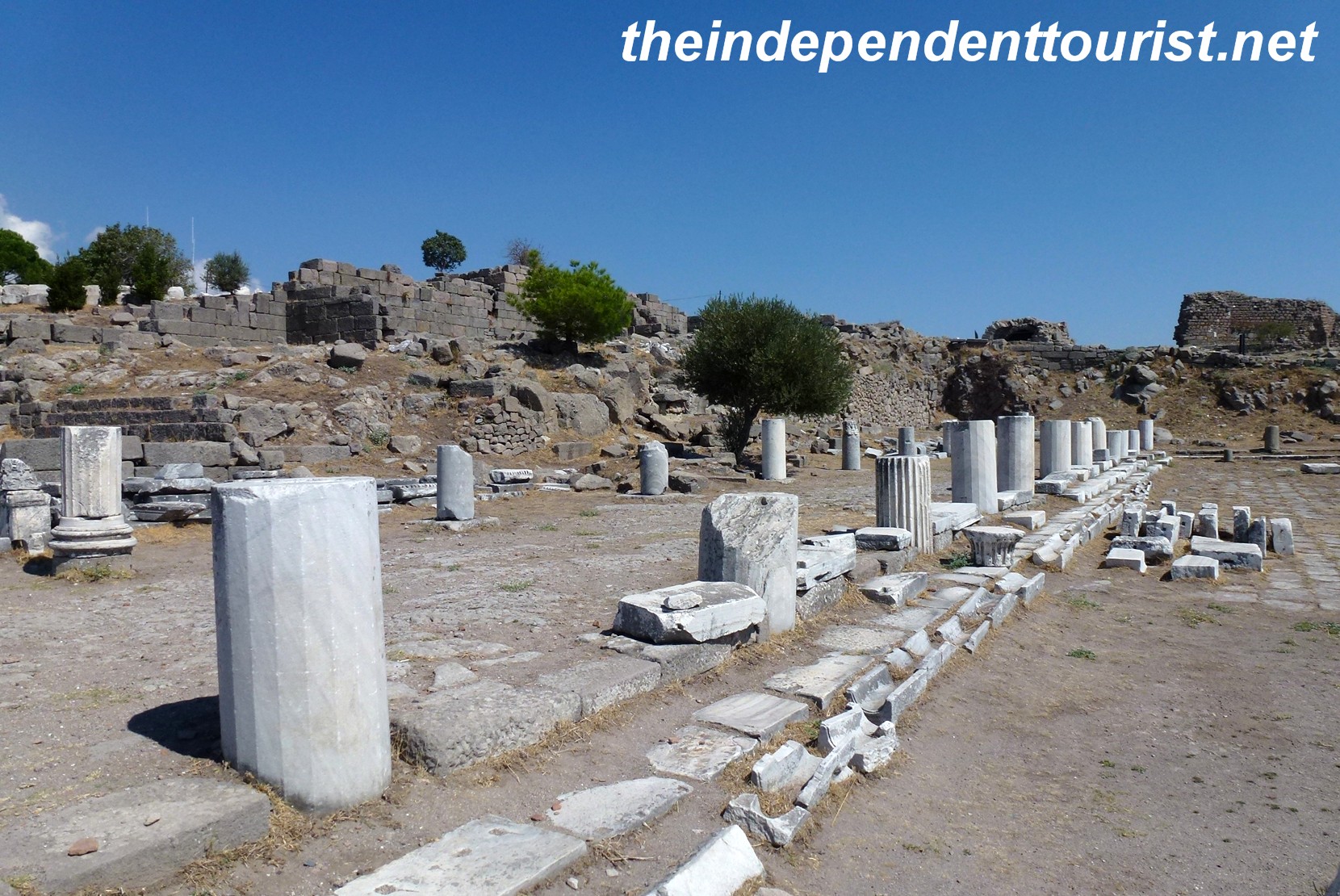
Although it doesn't look like much now, these are the ruins of the magnificent library of Pergamum that once held 200,000 scrolls -rivaling Alexandria as one of the great ancient libraries.

Although it doesn’t look like much now, these are the ruins of the magnificent library of Pergamum that once held 200,000 scrolls – rivaling Alexandria as one of the great ancient libraries.

Pergamum (Pergamos) is mentioned in The New Testament, in Revelation 1:11 as one of the seven churches in Asia and as the “seat of Satan” in Revelation 2:13.  Let’s just say he picked one heck of a spot. The reason for the label is probably due to the horrific martyr of Antipas, the bishop of Pergamum in 92 AD (he was roasted to death inside a bronze bull or ox at the Altar of Zeus).

The Altar of Zeus was located where the big tree is. The amazing friezes and other parts of the Altar structure are now in the Pergamon Museum in Berlin, Germany.

The Altar of Zeus was located where the big tree is. The amazing friezes and other parts of the Altar structure are now in the Pergamon Museum in Berlin, Germany.

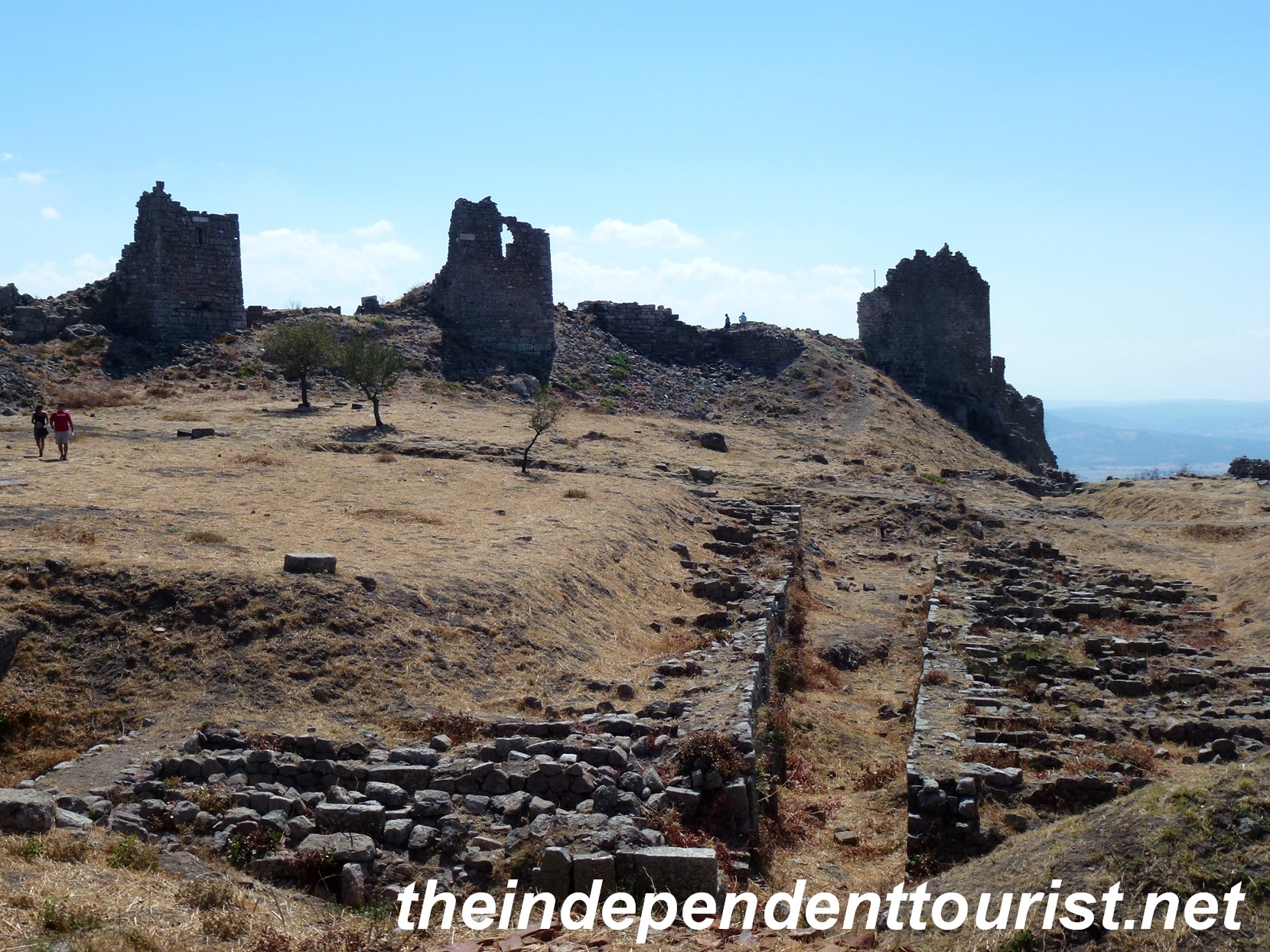
The ancient city walls of Pergamum, dating at least to 159 BC.

The ancient city walls of Pergamum, dating at least to 159 BC.

Another of the seven cities mentioned in Revelation, Smyrna, is located in modern Izmir. We did not have time to explore Smyrna opting for Pergamum instead. Izmir is more of a “working” city and does not receive a lot of tourists. We found a good restaurant along the harbor front and enjoyed the feeling of being in a “real” Turkish city.

A view along the seafront in Izmir.

A view along the seafront in Izmir.

Practicalities: Pergamum is a pretty easy day trip by car from Izmir, about 2 hours (100 km) north.  Since Pergamum is at the top of a very steep hill, there is a tram that will take you close to the top, or you can drive through the town and up the hill on a narrow road to find a small parking lot near the top. The entry fee is 20 TL per person and parking was 3.5 TL (about 2 TL to the USD as of July 2013).

Red Basilica

In addition to Pergamum, in the town of Bergama is the Red Basilica (Temple of the Egyptian Gods), which dates to the 2nd century AD and was once covered in marble – it must have been quite a sight then and it still is now.  It is huge, and pictures cannot do its immense size justice.

A view of the Red Basilica.

A view of the Red Basilica.

The Red Basilica ruins, still standing from the 2nd century AD.

The Red Basilica ruins, still standing from the 2nd century AD.

Later on, the Byzantines built a church inside the basilica. This was a place where the Romans worshiped the Egyptian Gods. The entry fee was 5 TL.  It’s worth a quick stop here. In addition to these sites, the Asclepieum (or Asklepion, dedicated to the serpent-god Asklepios) an ancient medical center ruin is about 8 km from the acropolis. Time didn’t allow us to stop here either.

References: Signage at Pergamum, DK Eyewitness Travel Turkey and Lonely Planet Turkey.

Ephesus and Kusadasi –Avoiding the Crowds

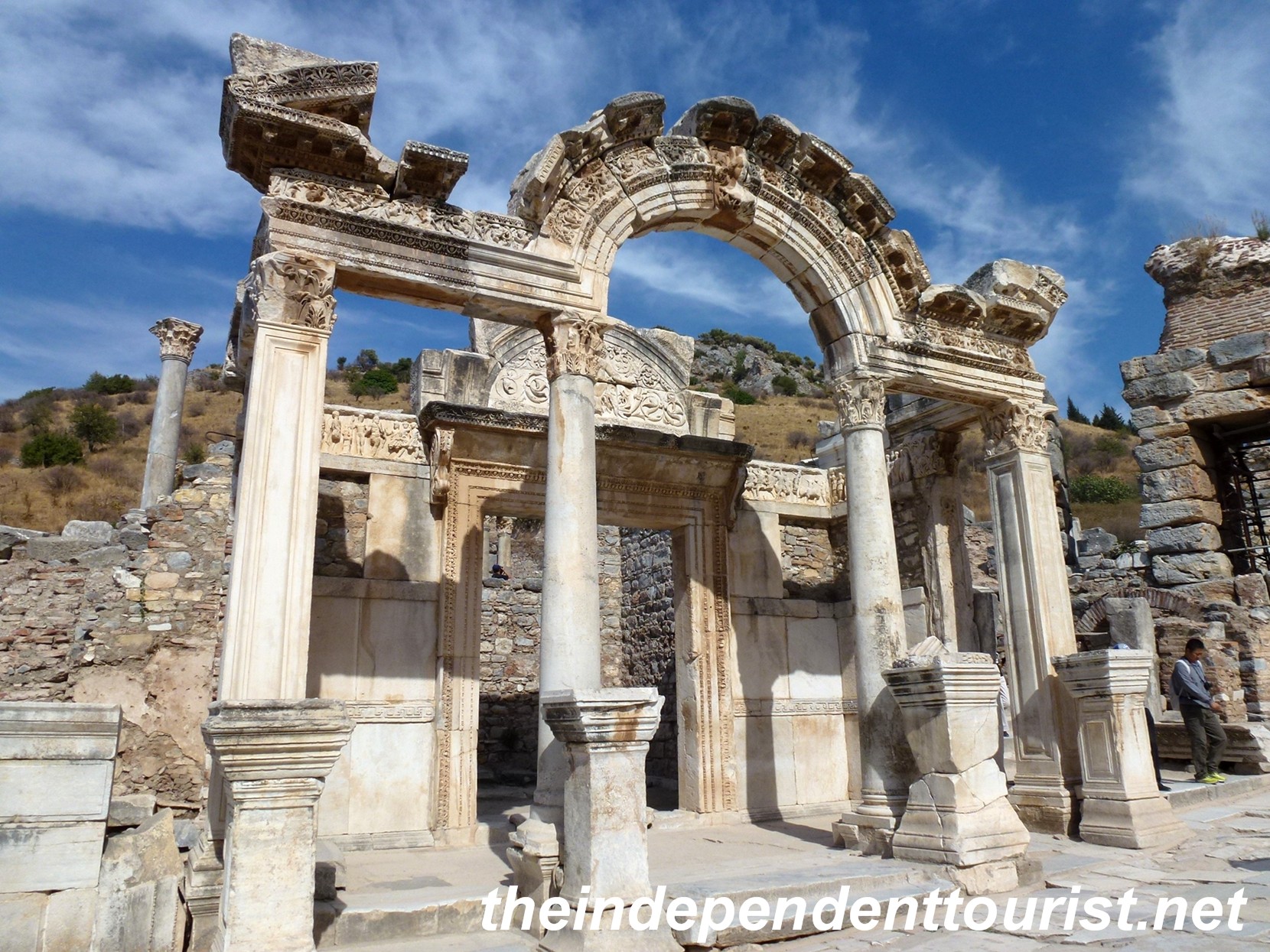
Temple of Hadrian (123 AD) in Ephesus, built to commemorate the Emperor's visit.

Temple of Hadrian (123 AD) in Ephesus, built to commemorate the Emperor’s visit.

A swastika at the Temple of Hadrian, a common symbol in classical Mediterranean times.

A swastika at the Temple of Hadrian, a common symbol in classical Mediterranean times.

The most popular tourist destination in Turkey (along with Istanbul) has to be Ephesus, located near the western Aegean coast port of Kusadasi. Due to Ephesus’ proximity to the coast, it is a popular cruise ship day-excursion. Be prepared for hordes of tourists. (For a map of major sites we visited in Turkey, click here).

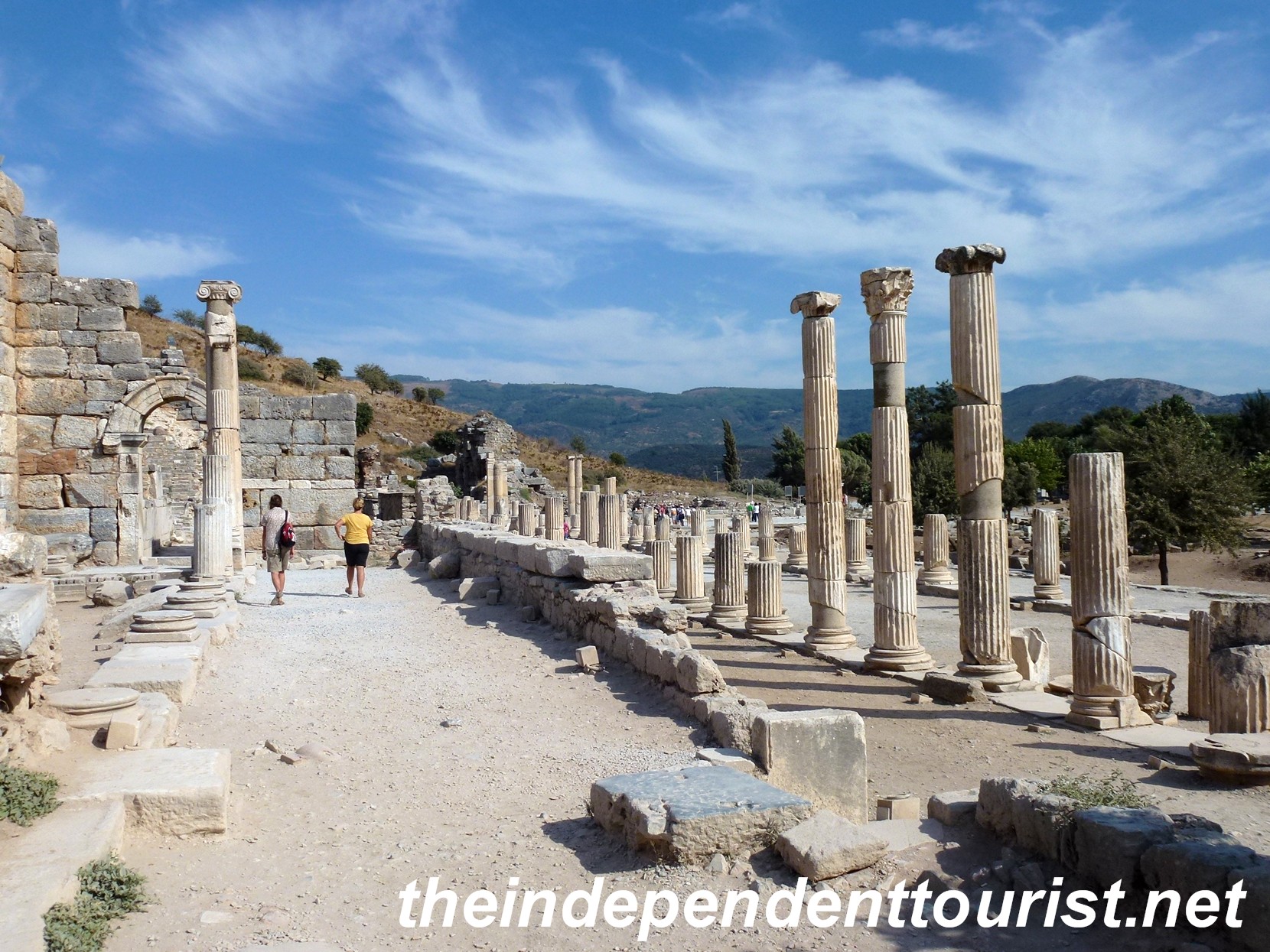
Kurets (or Curetes) Street, a major thoroughfare anciently and today in Ephesus.

Kurets (or Curetes) Street, a major thoroughfare anciently and today in Ephesus.

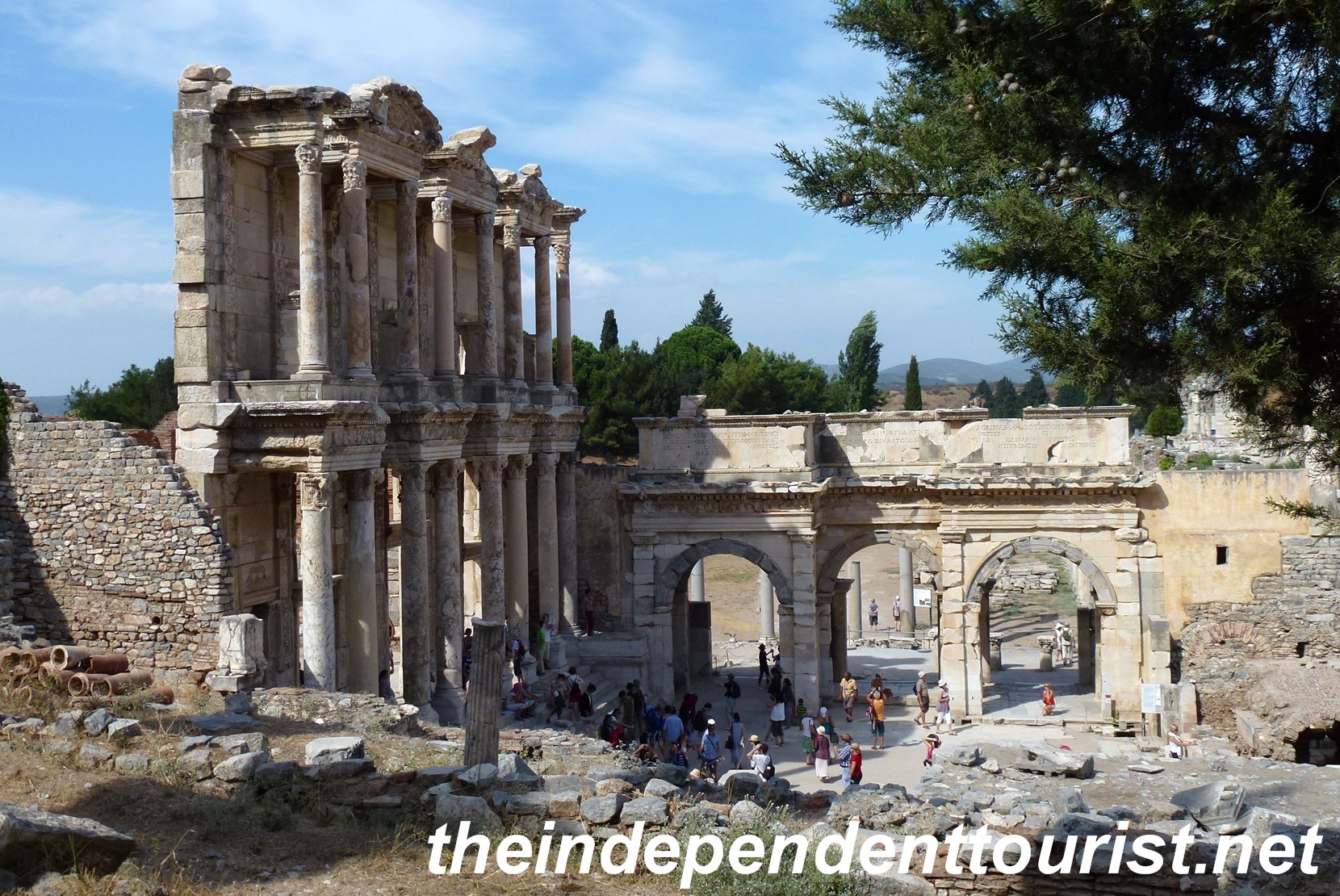
If you’re lucky enough to have your own transportation you can have the site nearly to yourself by visiting in the late afternoon.  In September of 2012, we had the most famous sight of Ephesus, the Library of Celsus, practically to ourselves around 4:30 pm, what a pleasure!

Robyn and I at the almost deserted Library of Celsus.

Robyn and I at the almost deserted Library of Celsus.

A different view of the Library of Celsus.

A different view of the Library of Celsus.

Detail of the stone work at the Library of Celsus.

Detail of the stone work at the Library of Celsus.

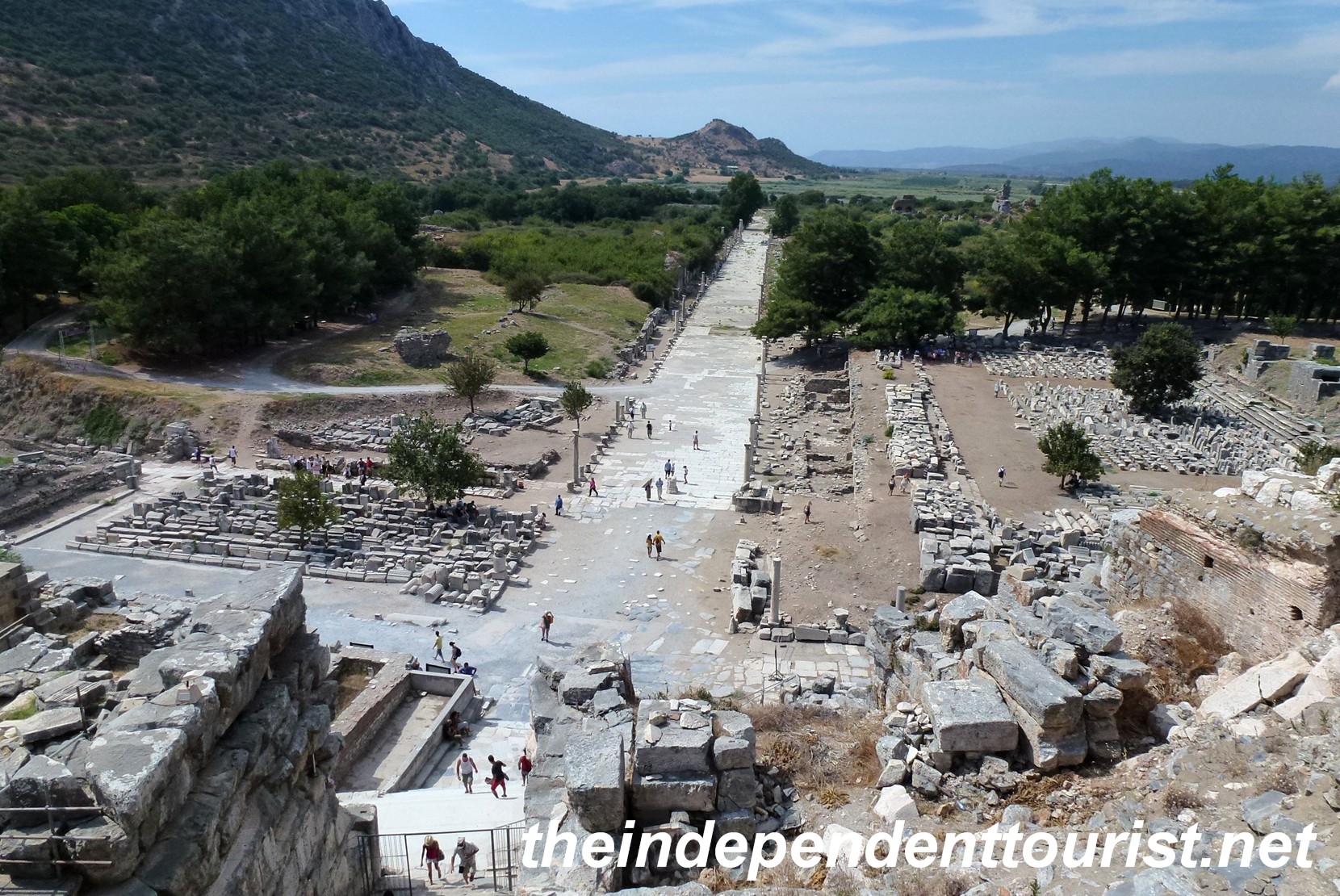
Harbor Street.  At the far end of this street was the seaport, which long ago silted up. This view is from the theater.

Harbor Street. At the far end of this street was the seaport, which long ago silted up. This view is from the theater.

The huge theater at Ephesus, which dates from the 2nd century BC, but most of what we see is from the Roman era.  It could seat 20,000-25,000 people.

The huge theater at Ephesus, which dates from the 2nd century BC, but most of what we see is from the Roman era. It could seat 20,000-25,000 people.

Ephesus in its prime (about 100 AD) was a major seaport (population of about 250,000) and the capital of Roman Asia Minor.  This was an important city of the early Christian Church—the Apostle Paul lived here for about 3 years. He also wrote his famous letter to the Ephesians, as documented in the New Testament. It’s very likely that the Apostle John lived here (the isle of Patmos is about 105 km or 60 miles away) and he may have brought Mary (Jesus’ mother) here. About 18% of the city has been excavated, and the main accessible ruins run along two main streets. For a reasonable visit, plan on at least 2-3 hours.

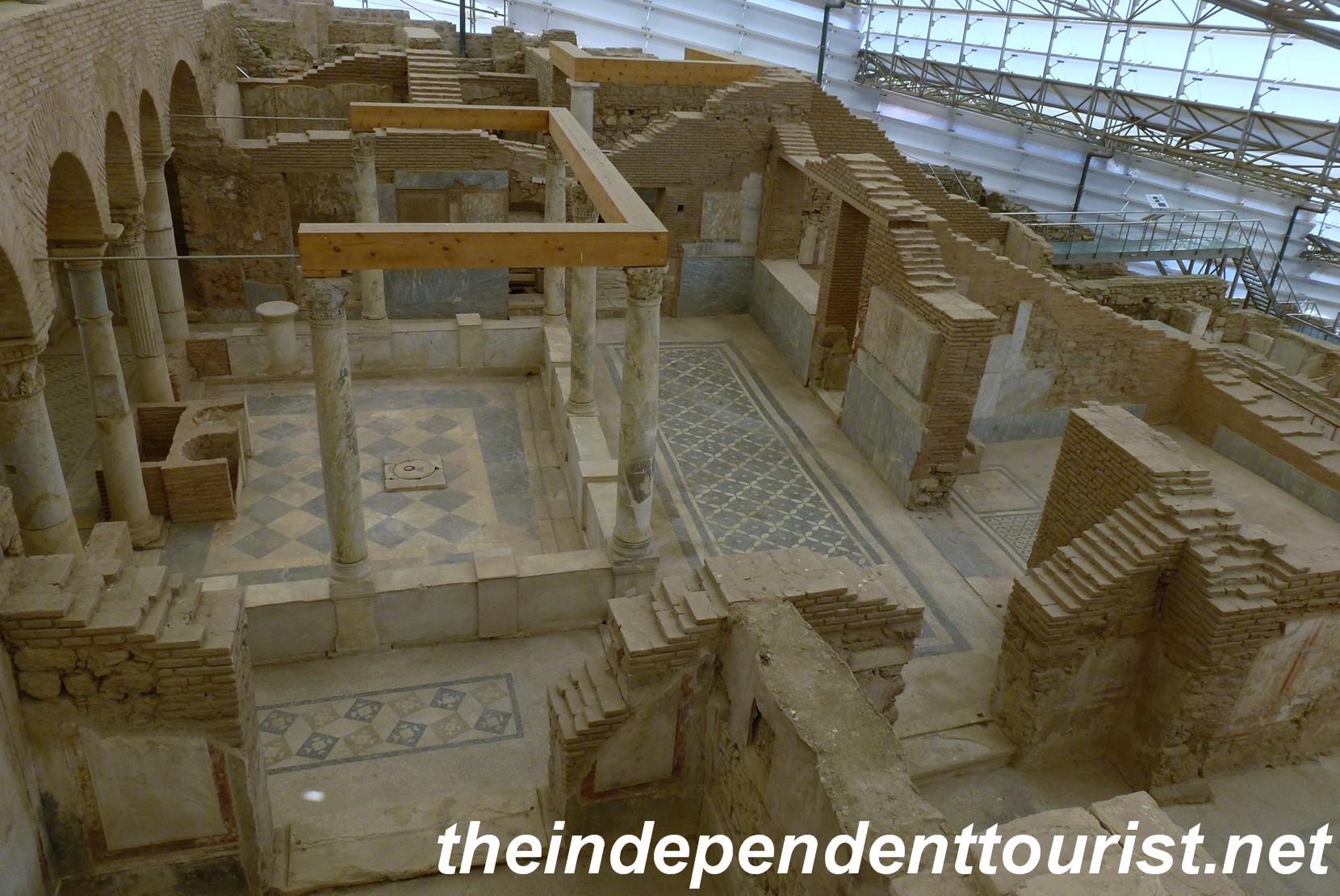
Another way to avoid the crowds is to visit the Terrace Houses (enclosed to protect the fragile frescoes), right near the Library of Celsus. The Terrace Houses require a separate entry fee (a barrier for many visitors). These ruins were homes of the very wealthy and they reminded me a bit of the buried cities of Pompeii and Herculaneum in Italy.

View of the frescoes and mosaics in the Terrace Houses.

View of the frescoes and mosaics in the Terrace Houses.

Another view in the Terrace Houses - note the mosaic floors.

Another view in the Terrace Houses – note the mosaic floors.

The houses had hot and cold running water (amazing), numerous frescoes and mosaics.  They are still doing excavation work on these houses. This separate area was a fascinating part of Ephesus and we were practically the only people visiting these ruins.

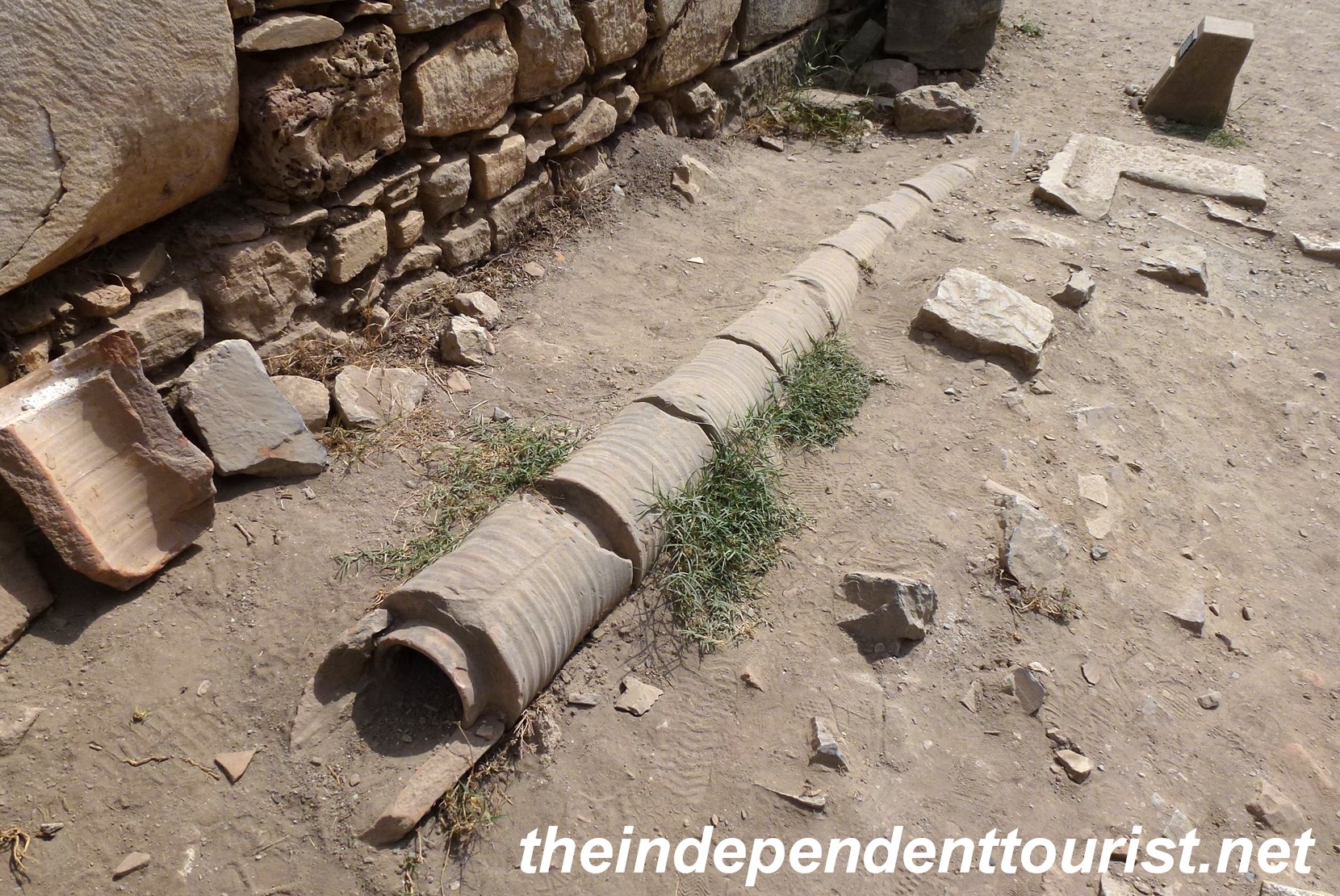
Part of Ephesus' plumbing system - must have taken some engineering to get hot and cold water to those wealthy people!

Part of Ephesus’ plumbing system – must have taken some engineering to get hot and cold water to those wealthy people!

The Government Agora, near the "top" of Kurets (or Curetes) street, where many of the sights are located.

The Government Agora, near the “top” of Kurets (or Curetes) street, where many of the sights are located.

Cost:  Car parking at Ephesus was 7.50 TL, the main entry fee was 25 TL, and the Terrace Houses cost another 15 TL. (1.9 TL per USD as of July 2013). Keep in mind there are other places to visit near Ephesus – the reconstructed House of Mary (mother of Jesus), as well as other tombs and ruins.

Since we were on our own driving tour, we spent a couple nights in Kusadasi at a pretty good hotel (Mr. Happy’s Liman Hotel) next to the port and then drove out to Ephesus (only about 19 km).  The area around the port of Kusadasi is quite nice, and we enjoyed wandering around and visiting the local shops, restaurants and a little island fortress just off the shore.

This little island fortress is near Kusadasi's harbor. Nice views from the island, and it can be reached by foot from the shore.

This little island fortress is near Kusadasi’s harbor. Nice views from the island, and it can be reached by foot from the shore.

The port of Kusadasi from our hotel terrace.

The port of Kusadasi from our hotel terrace.

One of our favorite restaurants in Turkey was in Kusadasi.

One of our favorite restaurants in Turkey was in Kusadasi.

There is pretty good beach south of the harbor a couple of kilometers. Don’t rush your visit to this part of Turkey!

References: Lonely Planet Turkey, DK Eyewitness Travel, Turkey.

Herakleia and Lake Bafa

The village of Kapikiri where ruins intermingle with the village homes and farm animals.

The village of Kapikiri where ruins intermingle with the village homes and farm animals.

I just love coming across “undiscovered” historical spots. On our way from Bodrum to Kusadasi, Turkey we decided on a whim to visit the ruins of Herakleia on Lake Bafa, located in the village of Kapikiri. At the southern end of the lake, off the main road (the 525) there is a sign pointing to Herakleia, about 10 km from the turn off. Lake Bafa anciently was an arm of the Aegean Sea, but eventually was closed off and is now brackish water (50/50 salt water and fresh water).

Temple of Athena, still standing after 2,000 years with finely cut stones and no mortar.

Temple of Athena, still standing after 2,000 years with finely cut stones and no mortar.

Byzantine castle ruins on the shore of Lake Bafa.

Byzantine castle ruins on the shore of Lake Bafa.

There are ancient (around 300 BC) and Byzantine-era (8th century AD) ruins to be found here. This location features prominently in Greek mythology as the home of Endymion – a comely shepherd boy who resisted temptation. The Byzantine monks considered Endymion a saint.

Temple of Endymion, who resisted the moon goddess Selene.

Temple of Endymion, who resisted the moon goddess Selene.

Byzantine monastery ruins on a rock island just offshore in Lake Bafa.

Byzantine monastery ruins on a rock island just offshore in Lake Bafa.

Part of the ancient necropolis of Herakleia - tombs cut right into the rock.

Part of the ancient necropolis of Herakleia – tombs cut right into the rock.

There were no other tourists at the time of our visit and not much in the way of signs— you have to just trust your instincts to find some of the ruins, although the local villagers were very friendly and willing to point things out. In return, we bought a few homemade trinkets.

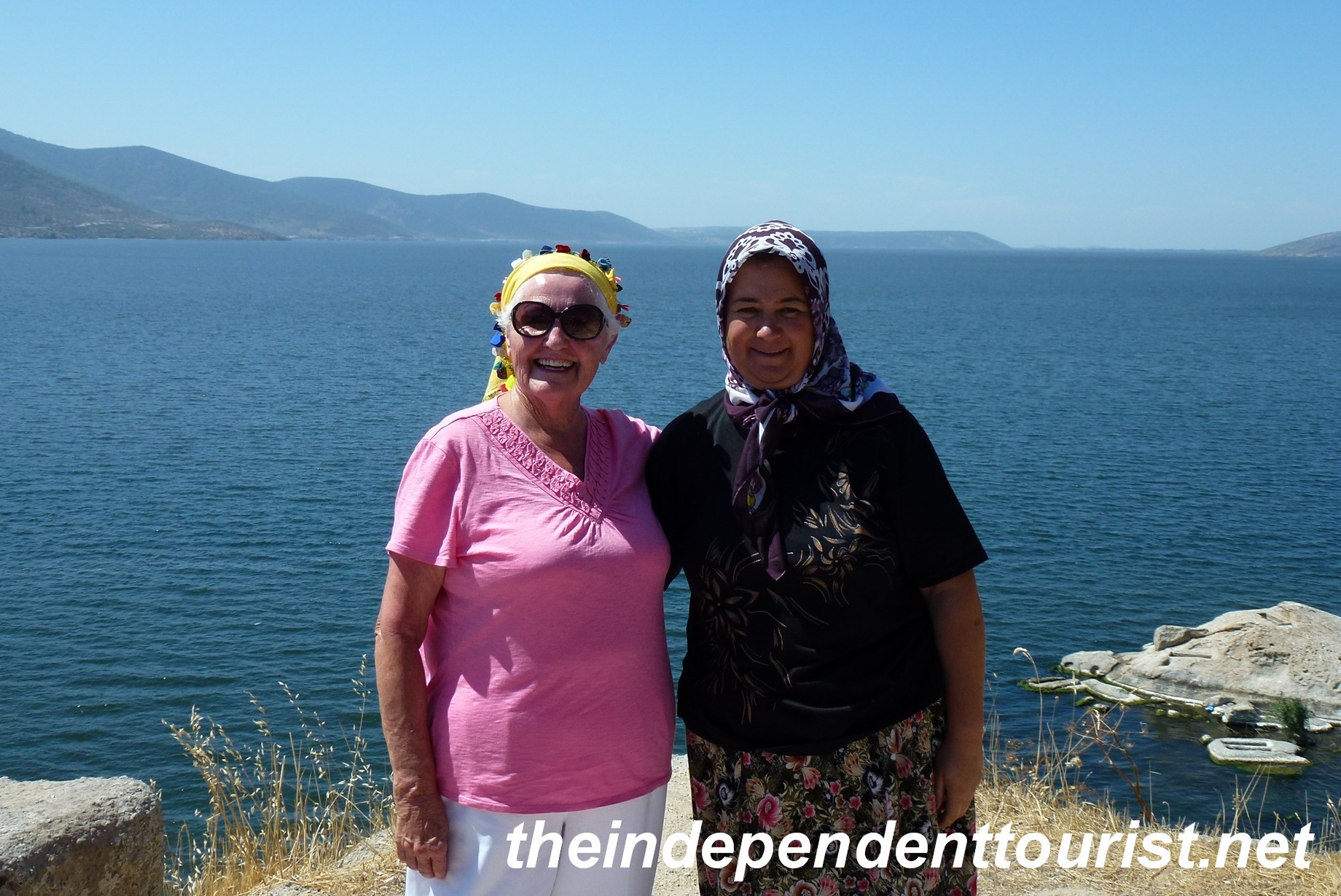
My mother-in-law modeling a head scarf with a local woman who spoke just a tiny bit of English and pointed out some of the sights for us.

My mother-in-law modeling a head scarf with a local woman who spoke just a tiny bit of English and pointed out some of the sights for us.

There is a lot more to see than we had time for – more monasteries in the hills and amphitheaters for example. If you love getting out and seeing things almost no other tourists see, go to Herakleia and Lake Bafa.

Giza Plateau – Home to the Greatest Wonder of the World

Regardless of which list of the “Wonders of the World” you consider your favorite or the most accurate (my son and I have argued about this), the Pyramids of Giza have to be on every list. For most tourists flying into Cairo, Egypt the first sight you see as your plane turns to make its approach into the Cairo International airport are the Pyramids at Giza. They look a bit surreal from the air, and I could hardly believe my eyes, seeing these massive structures for the first time. The scale and magnificence of the Pyramids of Giza pretty much defy description.

This photo of me by the Great Pyramid of Khufu (or Cheops) puts into perspective how massive these structrues are.

This photo of me by the Great Pyramid of Khufu (or Cheops) puts into perspective how massive these structrues are.

We still don’t really know how the ancient Egyptians (more accurately their slaves) managed to build these structures, with almost perfect engineering strength and accuracy. Built with stone blocks that weigh 2.5 to 15 tons, they have been standing almost 5,000 years. The greatest difference in the length between the four sides of any pyramid is 2 inches.  The largest pyramid is 450 feet high.

The Great Pyramid. 450 feet high. The haze is the smog of Cairo - which was very bad on the day of our visit.

The Great Pyramid. 450 feet high. The haze is the smog of Cairo – which was very bad on the day of our visit.

All this said, Giza was probably my least favorite spot of the places we visited in Egypt simply because the tourist crowds and smog of Cairo made our visit a little less appealing.  My favorite pyramids were south of Giza and Cairo, in Dahshur and Saqqara, which I will cover in another post. The main sights at Giza (which is just south of the Cairo suburbs), include the three large pyramids made so famous in many pictures and the Sphinx sculpture.

My in-laws at the Sphinx (Great Pyramid of Khufu in the background).

My in-laws at the Sphinx (Great Pyramid of Khufu in the background).

The three large pyramids are: The Great Pyramid (also known as the Pyramid of Khufu or Cheops), Pyramid of Khafre (Khufu’s son), and the relatively smaller third pyramid called Menkaure, who was Khafre’s successor).

The third of the great pyramids, Pyramid of Menkaure. It's quite a distance from the other two to this one (the little pyramid at the left is one of his queen's tombs).

The third of the great pyramids, Pyramid of Menkaure. It’s quite a distance from the other two to this one (the little pyramid at the left is one of his queen’s tombs).

These pyramids were built as tombs during 2600 – 2100 BC, making them over 4,500 years old. These were not the first pyramids built in Egypt, the oldest is the Step Pyramid (King Djoser’s Pyramid) in Saqqara (2665 BC). While these pyramids are the main attractions at Giza, there are other less-visited sites such as the much smaller Queen’s pyramids which are more intimate and fun – very few tourists visit these tombs, which are near the largest (Great) Pyramid.

In front of the Queen's pyramids next to the Great Pyramid.

In front of the Queen’s pyramids next to the Great Pyramid.

The Giza site is very spread out and somewhat confusing – there is no signage to speak of and I got differing directions as we tried to find a few other tombs (such as the Tomb of Khentkawes).

I believe this is the Tomb of Khentkawes, which was closed.

I believe this is the Tomb of Khentkawes, which was closed.

At the time we visited a few years ago, it was possible to only visit one pyramid on a given day (they also rotate closures), and we were able to visit the Pyramid of Khafre, the 2nd largest (slightly smaller than Great Pyramid, even though it looks larger).

My mother-in-law and wife in front of the Pyramid of Khafre. It's the only one with a bit of the brillant outer limestone layer left at the top.

My mother-in-law and wife in front of the Pyramid of Khafre. It’s the only one with a bit of the brillant outer limestone layer left at the top.

I could not get a picture inside this pyramid, and the tunnel is very long and steep.  Be prepared to stoop as you climb the whole tunnel length. It is also humid and stuffy in the main room.

Climbing out of the Queen's Pyramid, giving an idea of what the access tunnels are like.

Climbing out of the Queen’s Pyramid, giving an idea of what the access tunnels are like.

There really isn’t much to see, other than the sarcophagus of the Pharaoh Khafre, but it’s one of those things you have to do!  If you’re claustrophobic it’s probably a good idea to stay outside.  For an overview of places we visited in Egypt, click here.

My brother-in-law doing the touristy thing (why not?) in front of the Pyramid of Khafre.

My brother-in-law doing the touristy thing (why not?) in front of the Pyramid of Khafre.

References: DK Eyewitness Travel Egypt, Lonely Plant Egypt.

Gümüslük , Turkey – Ancient Myndos

In addition to the town of Bodrum, the Bodrum peninsula is beautiful and full of surprising finds. We were going take a day trip around the peninsula and ended up only getting about halfway, spending the day in the village of Gümüslük, on the very western end. For a map of the key places we visited in Turkey, click here.

Enjoying a mid-day meal overlooking the beautiful harbor.

Enjoying a mid-day meal overlooking the beautiful harbor.

It was a great spot—a quaint village with good seafood restaurants along the waterfront and beautiful views as a reward for hiking a nearby hill overlooking some of the ruins of ancient Myndos (founded by King Mausolus in about 350 BC).

The beautiful harbor and setting of Gümüslük, with some of the ruins of Myndos visible on what is now called "Rabbit Island" in center right of picture.

The beautiful harbor and setting of Gümüslük, with some of the ruins of Myndos visible on what is now called “Rabbit Island” in center right of picture.

Myndos was a large port city with a good harbor, but today the ruins are spread out over a large area and for the most part not easily accessible—some are under water, so bring your diving or snorkeling gear.

The ancient breakwater built by King Mausolus is visible just below the surface of the water. It originally was about 3 meters high.

The ancient breakwater built by King Mausolus is visible just below the surface of the water. It originally was about 3 meters high.

The primary draw for many tourists and locals is the natural setting. Since we were only about 25 km from Bodrum, I was surprised how quiet Gümüslük felt—seemingly unaffected by tourism, and yet our travel books said it is definitely growing.

Life on the beach - not a bad setting if you're a cow. There are some ruins of a temple nearby, but I doubt the cows appreciate the historic significance :)

Life on the beach – not a bad setting if you’re a cow. There are some ruins of a temple nearby, but I doubt the cows appreciate the historic significance 🙂

There are lots of good day trips from Bodrum, and I highly recommend a leisurely drive out on the peninsula as one of them.