Giza Plateau – Home to the Greatest Wonder of the World

Regardless of which list of the “Wonders of the World” you consider your favorite or the most accurate (my son and I have argued about this), the Pyramids of Giza have to be on every list. For most tourists flying into Cairo, Egypt the first sight you see as your plane turns to make its approach into the Cairo International airport are the Pyramids at Giza. They look a bit surreal from the air, and I could hardly believe my eyes, seeing these massive structures for the first time. The scale and magnificence of the Pyramids of Giza pretty much defy description.

This photo of me by the Great Pyramid of Khufu (or Cheops) puts into perspective how massive these structrues are.

This photo of me by the Great Pyramid of Khufu (or Cheops) puts into perspective how massive these structrues are.

We still don’t really know how the ancient Egyptians (more accurately their slaves) managed to build these structures, with almost perfect engineering strength and accuracy. Built with stone blocks that weigh 2.5 to 15 tons, they have been standing almost 5,000 years. The greatest difference in the length between the four sides of any pyramid is 2 inches.  The largest pyramid is 450 feet high.

The Great Pyramid. 450 feet high. The haze is the smog of Cairo - which was very bad on the day of our visit.

The Great Pyramid. 450 feet high. The haze is the smog of Cairo – which was very bad on the day of our visit.

All this said, Giza was probably my least favorite spot of the places we visited in Egypt simply because the tourist crowds and smog of Cairo made our visit a little less appealing.  My favorite pyramids were south of Giza and Cairo, in Dahshur and Saqqara, which I will cover in another post. The main sights at Giza (which is just south of the Cairo suburbs), include the three large pyramids made so famous in many pictures and the Sphinx sculpture.

My in-laws at the Sphinx (Great Pyramid of Khufu in the background).

My in-laws at the Sphinx (Great Pyramid of Khufu in the background).

The three large pyramids are: The Great Pyramid (also known as the Pyramid of Khufu or Cheops), Pyramid of Khafre (Khufu’s son), and the relatively smaller third pyramid called Menkaure, who was Khafre’s successor).

The third of the great pyramids, Pyramid of Menkaure. It's quite a distance from the other two to this one (the little pyramid at the left is one of his queen's tombs).

The third of the great pyramids, Pyramid of Menkaure. It’s quite a distance from the other two to this one (the little pyramid at the left is one of his queen’s tombs).

These pyramids were built as tombs during 2600 – 2100 BC, making them over 4,500 years old. These were not the first pyramids built in Egypt, the oldest is the Step Pyramid (King Djoser’s Pyramid) in Saqqara (2665 BC). While these pyramids are the main attractions at Giza, there are other less-visited sites such as the much smaller Queen’s pyramids which are more intimate and fun – very few tourists visit these tombs, which are near the largest (Great) Pyramid.

In front of the Queen's pyramids next to the Great Pyramid.

In front of the Queen’s pyramids next to the Great Pyramid.

The Giza site is very spread out and somewhat confusing – there is no signage to speak of and I got differing directions as we tried to find a few other tombs (such as the Tomb of Khentkawes).

I believe this is the Tomb of Khentkawes, which was closed.

I believe this is the Tomb of Khentkawes, which was closed.

At the time we visited a few years ago, it was possible to only visit one pyramid on a given day (they also rotate closures), and we were able to visit the Pyramid of Khafre, the 2nd largest (slightly smaller than Great Pyramid, even though it looks larger).

My mother-in-law and wife in front of the Pyramid of Khafre. It's the only one with a bit of the brillant outer limestone layer left at the top.

My mother-in-law and wife in front of the Pyramid of Khafre. It’s the only one with a bit of the brillant outer limestone layer left at the top.

I could not get a picture inside this pyramid, and the tunnel is very long and steep.  Be prepared to stoop as you climb the whole tunnel length. It is also humid and stuffy in the main room.

Climbing out of the Queen's Pyramid, giving an idea of what the access tunnels are like.

Climbing out of the Queen’s Pyramid, giving an idea of what the access tunnels are like.

There really isn’t much to see, other than the sarcophagus of the Pharaoh Khafre, but it’s one of those things you have to do!  If you’re claustrophobic it’s probably a good idea to stay outside.  For an overview of places we visited in Egypt, click here.

My brother-in-law doing the touristy thing (why not?) in front of the Pyramid of Khafre.

My brother-in-law doing the touristy thing (why not?) in front of the Pyramid of Khafre.

References: DK Eyewitness Travel Egypt, Lonely Plant Egypt.

Gümüslük , Turkey – Ancient Myndos

In addition to the town of Bodrum, the Bodrum peninsula is beautiful and full of surprising finds. We were going take a day trip around the peninsula and ended up only getting about halfway, spending the day in the village of Gümüslük, on the very western end. For a map of the key places we visited in Turkey, click here.

Enjoying a mid-day meal overlooking the beautiful harbor.

Enjoying a mid-day meal overlooking the beautiful harbor.

It was a great spot—a quaint village with good seafood restaurants along the waterfront and beautiful views as a reward for hiking a nearby hill overlooking some of the ruins of ancient Myndos (founded by King Mausolus in about 350 BC).

The beautiful harbor and setting of Gümüslük, with some of the ruins of Myndos visible on what is now called "Rabbit Island" in center right of picture.

The beautiful harbor and setting of Gümüslük, with some of the ruins of Myndos visible on what is now called “Rabbit Island” in center right of picture.

Myndos was a large port city with a good harbor, but today the ruins are spread out over a large area and for the most part not easily accessible—some are under water, so bring your diving or snorkeling gear.

The ancient breakwater built by King Mausolus is visible just below the surface of the water. It originally was about 3 meters high.

The ancient breakwater built by King Mausolus is visible just below the surface of the water. It originally was about 3 meters high.

The primary draw for many tourists and locals is the natural setting. Since we were only about 25 km from Bodrum, I was surprised how quiet Gümüslük felt—seemingly unaffected by tourism, and yet our travel books said it is definitely growing.

Life on the beach - not a bad setting if you're a cow. There are some ruins of a temple nearby, but I doubt the cows appreciate the historic significance :)

Life on the beach – not a bad setting if you’re a cow. There are some ruins of a temple nearby, but I doubt the cows appreciate the historic significance 🙂

There are lots of good day trips from Bodrum, and I highly recommend a leisurely drive out on the peninsula as one of them.

Egypt – Go Now

The great Sphinx at Giza.

The great Sphinx at Giza.

The news websites and TV stations flash scenes of angry crowds, fires and riots in Cairo and Americans stay away. What we don’t understand is that the news is focusing on a very small part of the country and even a very small part of Cairo.  Although it was a few years ago, we did a self-guided tour of Egypt and had a great time.

My wife and mother-in-law at the Luxor Temple.

My wife and mother-in-law at the Luxor Temple.

With the current political situation in Egypt many people would probably not consider a visit let alone a self-guided tour, and yet now is a good time to go, because there are far fewer tourists.  Over a series of posts I will share the highlights of our trip, but in this post I will provide a few tips and overview of our route (below):

  1. Getting around. I am a pretty brave car driver in other countries, but I have my limits. I will not drive in Cairo. I think Cairo traffic takes top prize in chaos, perhaps on par with India, and perhaps even more so. Our modes of transportation on our trip took various forms: we hired drivers for day trips, flew on Egypt Air (a great airline), and took a couple trips on trains, including an overnight train (in a sleeper cabin) from Cairo to Luxor—which was a fun experience.
    Arriving in Luxor after an overnight ride from Cairo.

    Arriving in Luxor after an overnight ride from Cairo.

    Interior of a train sleeper cabin. (A bed folds down above the seats).

    Interior of a train sleeper cabin. (A bed folds down above the seats).

    Making reservations on Egypt Air’s website for internal flights in Egypt was a bit of a nightmare. The Egypt Air New York office only wants to deal with the lucrative overseas flights.  Once we got to Egypt, it was easy to go into a local Egypt Air office and make changes, get seat assignments, etc. Cairo taxis are a bit of a challenge, in that there are no meters, and you have to guess what to pay the driver, or try to negotiate a fare before you hop in.

    Eating dinner with our driver (on left) and his colleague after a day of touring Cairo.

    Eating dinner with our driver (on left) and his colleague after a day of touring Cairo.

  2. Safety. Except for one taxi incident that my sister experienced in Cairo, where the driver acted a bit threatening and wanted more money (even though my brother-in-law had paid generously), the people were very friendly, and helpful. There were Tourist police (in white uniforms) in many locations and they provided directions and helped us cross very busy streets (cars are king, and pedestrians take their lives in their hands).
    Tourist police at the Pyramids of Giza.

    Tourist police at the Pyramids of Giza.

    We never feared for our safety, and walked the streets of Cairo and other locations at night.  In fact, the night scene is more lively when families and children come out to play (probably due to the generally hot climate).

    Cute Egyptian children.

    Cute Egyptian children.

  3. Tipping. Plan to give lots of tips (backsheesh). The local population lives on these tips, and the tips amount to perhaps 50 cents in many cases. You’ll find many locals at the tourist sites want to show you a few things and expect a tip in return.
  4. Best time to visit.  We visited during early November, and found the weather to be great.  Warm enough to go swimming, but cool enough to wander through the desert sights and not die of heat exhaustion.
  5. Cost. Egypt is inexpensive for the most part, especially if you’re doing a visit on your own. We stayed in a decent hotel in Luxor for 18 (USD) per night.  It was not fancy, but was a decent hotel. About 5 Egyptian Pounds to the USD.

    Purchasing some fruits from a street vendor (great oranges!).

    Purchasing some fruits from a street vendor (great oranges!).

  6. Standard of Living. Egypt is a poor country, and not the cleanest country.  We saw piles of trash in different places and dead animals occasionally. There are many unfinished buildings and others that are falling apart. It’s all just part of the experience.
    Typical housing in Cairo.

    Typical housing in Cairo.

    Street scene in Alexandria.

    Street scene in Alexandria.

  7. Culture shock.  When we flew from Luxor to Sharm el-Sheikh (Sinai Peninsula), we felt like we were entering another world. Sharm felt like Cancun and everything was far more expensive (similar to US prices). The Sinai Peninsula is completely different than the rest of the country. However, the hotel prices in Naama Bay (next to Sharm el-Sheikh) were still pretty good, my sister and her husband got a nice hotel room (Tropicana Rosetta) with a great pool for $50/night.

    Pool at the Tropicana Rosetta Hotel in Naama Bay.

    Pool at the Tropicana Rosetta Hotel in Naama Bay.

Itinerary

We spent about two weeks in Egypt. We started in Cairo for about 3 days, then took the train to Luxor and spent 4 days there, then flew to Sharm el-Sheikh for about 3 days, then flew back to Cairo and drove out to Alexandria for 2 days, then took  a train back to Cairo before flying home.

Major locations visited in Egypt.

Major locations visited in Egypt.

Bodrum— Where the Wealthy Turks Play

As I watched the sun set over the Castle of St. Peter, I thought “this is my kind of place” – with the history, natural beauty and great weather all coming together perfectly. For a map of places visited in Turkey, click here.

The sun sets over St. Peter's castle in Bodrum.

The sun sets over St. Peter’s castle in Bodrum.

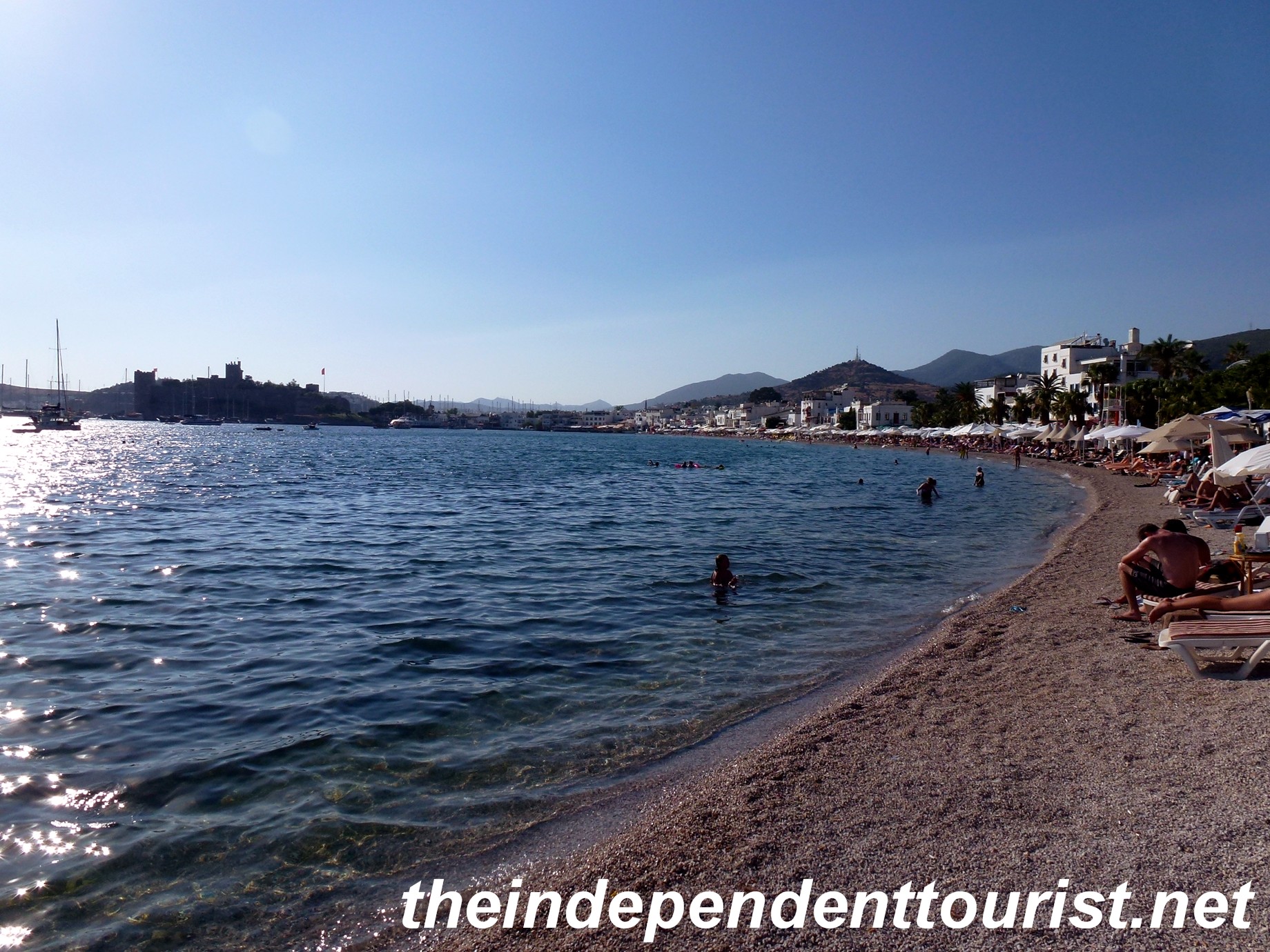
The city of Bodrum and the Bodrum peninsula are on the southwest coast of Turkey, with many beautiful coves, beaches and historic sites. No wonder this is a hot spot with well-heeled Turks.

A view of the beach at Bodrum.

A view of the beach at Bodrum.

As with many locations we visited, it would be easy to make Bodrum your base for a week or more to take advantage of all the things to see and do—water sports, day long cruises to nearby islands and beaches, start (or end) a 3-4 day gulet (wooden sailboat) cruise along the southern coast, visit ancient ruins in the town of Bodrum, or hike around the intriguing brackish Lake Bafa with its ancient and Byzantine ruins nearby, and take (long) day trips to the Roman ruins of Ephesus and Hierapolis if desired.

A street scene in Bodrum.

A street scene in Bodrum.

The history of Bodrum dates back to ancient times, and it lays claim to one of the ancient world wonders, the Mausoleum (355 BC, named for King Mausolus) which stood nearly intact for 1,900 years until the crusaders decided (very unfortunately) that the ancient stone would make great building blocks for things like St. Peter’s Castle.

The view of the harbor and Castle of St. Peter from our hotel.

The view of the harbor and Castle of St. Peter from our hotel.

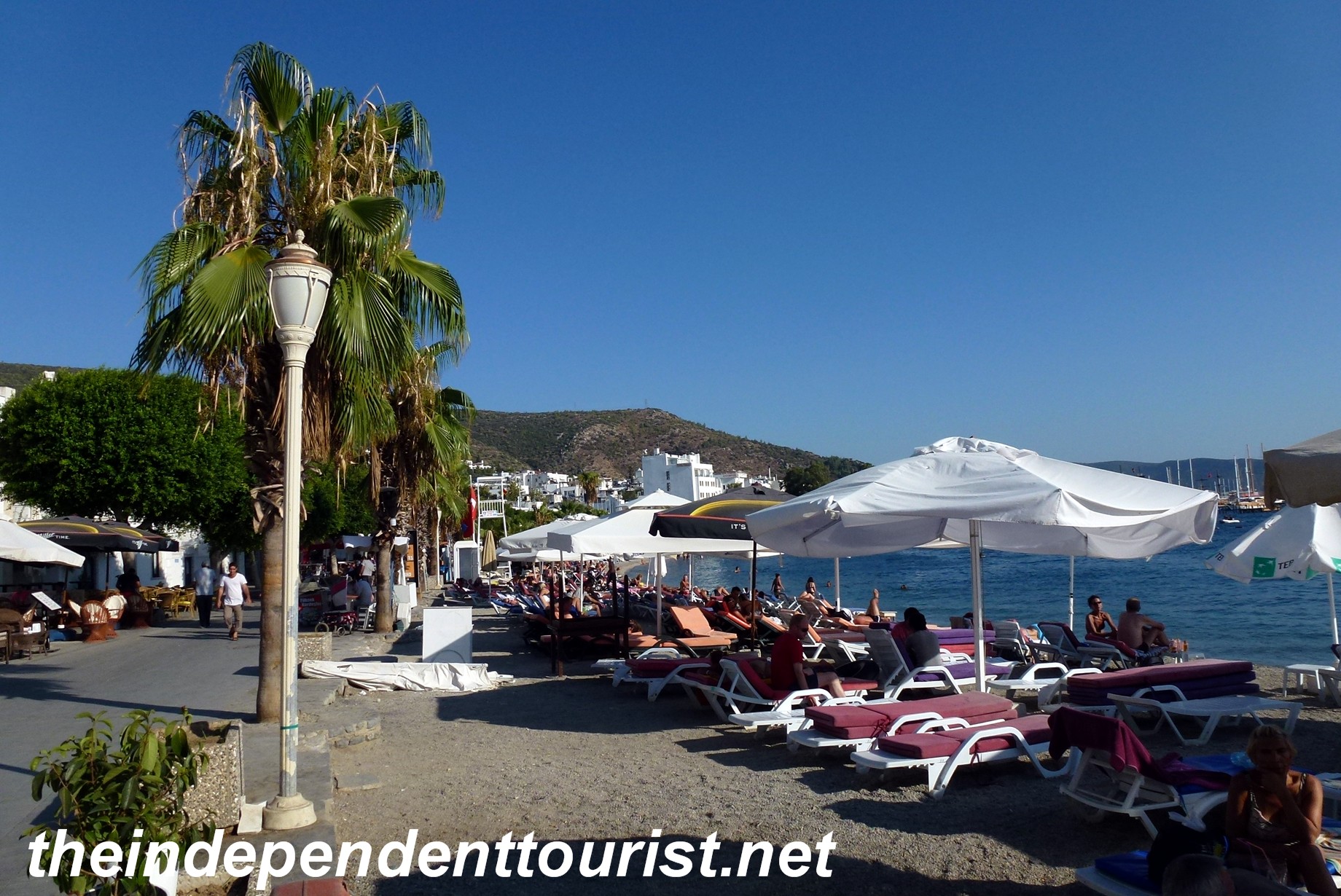
Our hotel (Angora) had a rooftop pool with a great view of the harbor and Castle of St. Peter. The only downside of the hotel was the Halikarnas disco next door, with music blaring until the wee hours of the morning.  This is a hot spot with many locals coming here to party.  There are beaches right in and near the town and the pedestrian walkway along the shore makes an enjoyable stroll with many restaurants and shops.

The beaches of Bodrum, right next to many restaurants and shops.

The beaches of Bodrum, right next to many restaurants and shops.

The main sight in Bodrum is the Castle of St. Peter, which sits on an isthmus dividing the two main bays of Bodrum.

A view of the Castle of St. Peter--in the late 1800's the castle became a prison and held up to 700 prisoners.

A view of the Castle of St. Peter–in the late 1800’s the castle became a prison and held up to 700 prisoners

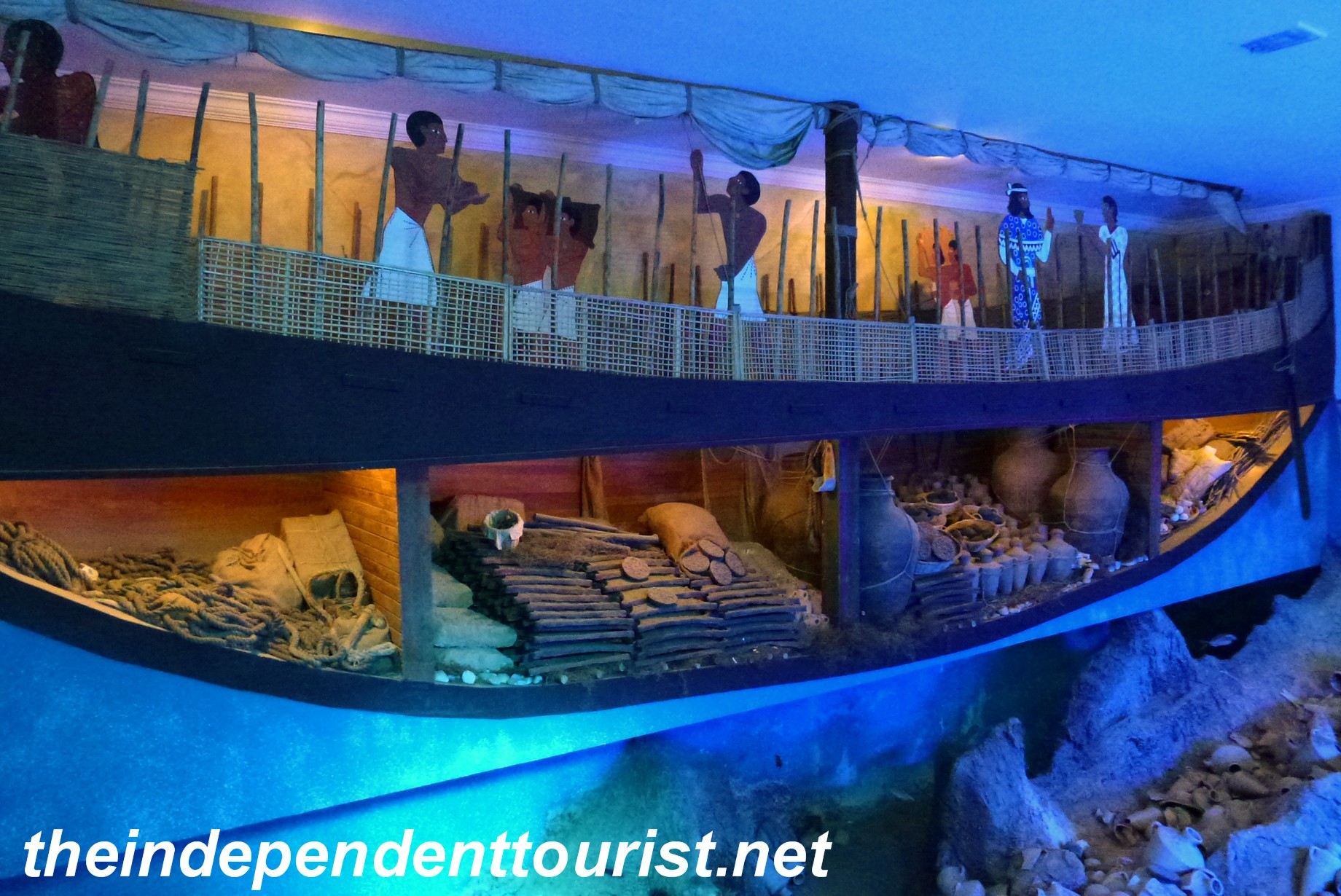
From the shipwreck, scientists have reconstructed what this 14th century BC ship must have looked like.

From the shipwreck, scientists have reconstructed what this 14th century BC ship must have looked like.

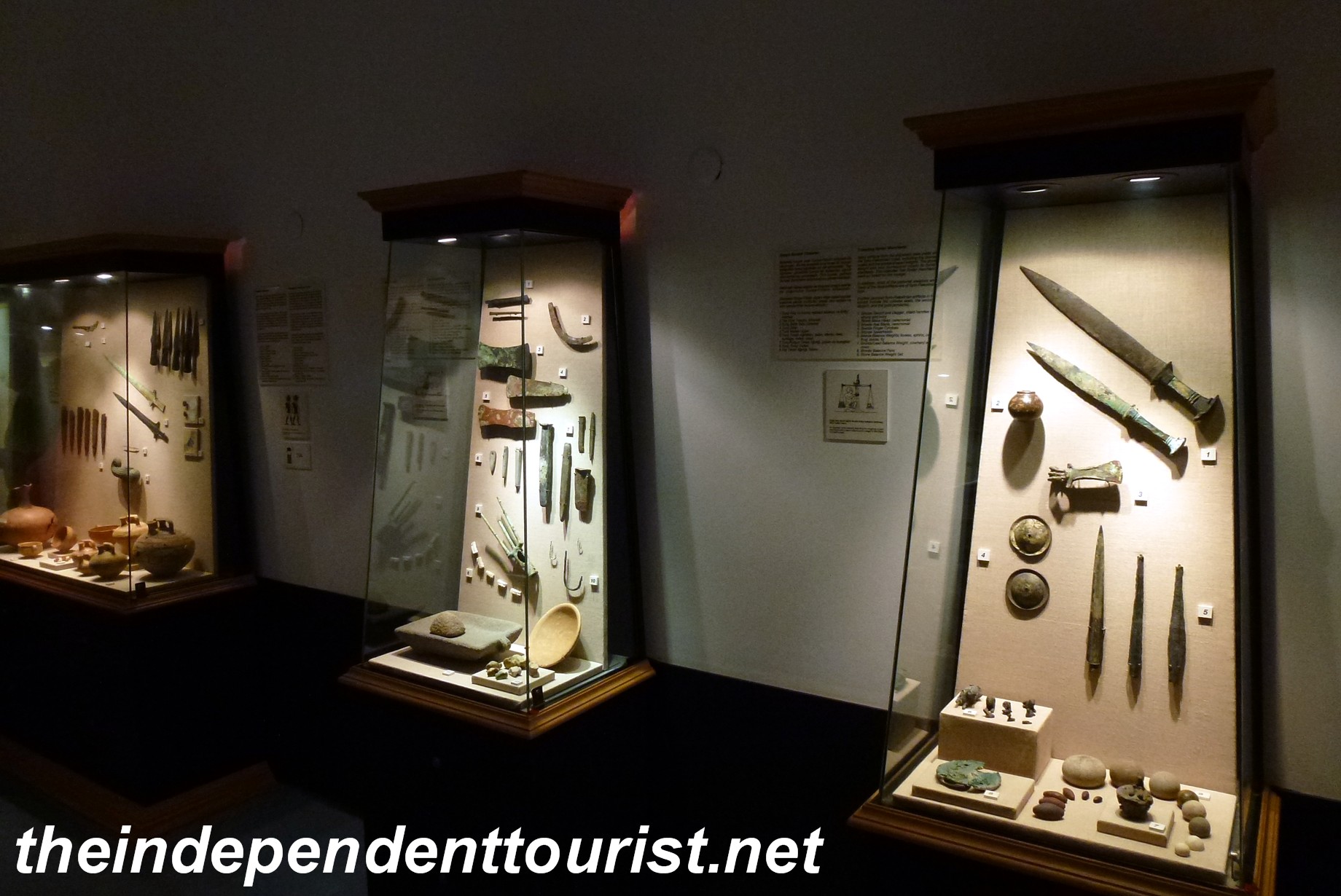
One of the many displays of artifacts from ancient shipwrecks in the Castle museum.

One of the many displays of artifacts from ancient shipwrecks in the Castle museum.

The castle was built by the Knights of St. John in 1406, and now houses a very good maritime museum, with all kinds of treasures (coins, glassware, gold, weapons, etc.) found in area shipwrecks including the oldest shipwreck ever discovered (14th century BC).  Some rooms (such as the English Tower) are decorated from the medieval period.  The castle entry fee was 20 TL per person (about 1.8 TL per USD).

The dungeon of the castle, way down a dark set of steps - note the poor fellow with his arms out of the grate in the floor--not a fun place to be.

The dungeon of the castle, way down a dark set of steps – note the poor fellow with his arms out of the grate in the floor–not a fun place to be.

The interior of the English Tower at the Castle of St. Peter.

The interior of the English Tower at the Castle of St. Peter.

Add Bodrum to your must do list of places to visit in Turkey.

A Day at the (Camel) Races

A camel on the road, he's not too worried about the speed limit.

A camel on the road, he’s not too worried about the speed limit.

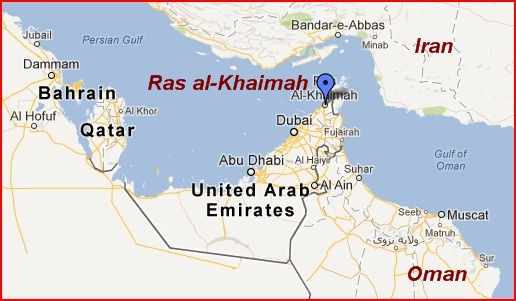
When visiting the United Arab Emirates (or UAE), do as the locals do and go to a camel race. I did this when a work colleague and I were visiting friends in the Emirate of Ras al-Khaimah (RAK for short and one of the seven Emirates that make up the UAE). The races happen early in the morning on the weekend, when the desert is cooler.

Ras al-Khaimah is at the northeastern end of the UAE.

Ras al-Khaimah is at the northeastern end of the UAE.

If you’ve been to a horse race, this is a little different (to say the least) and seemingly less organized, with no bleachers, except for sand dunes. Other than the pride of watching one’s camel win, I’m not sure what the motivation for the camel owners is, since there’s no alcohol or betting allowed (at least officially). The camels race by age group.

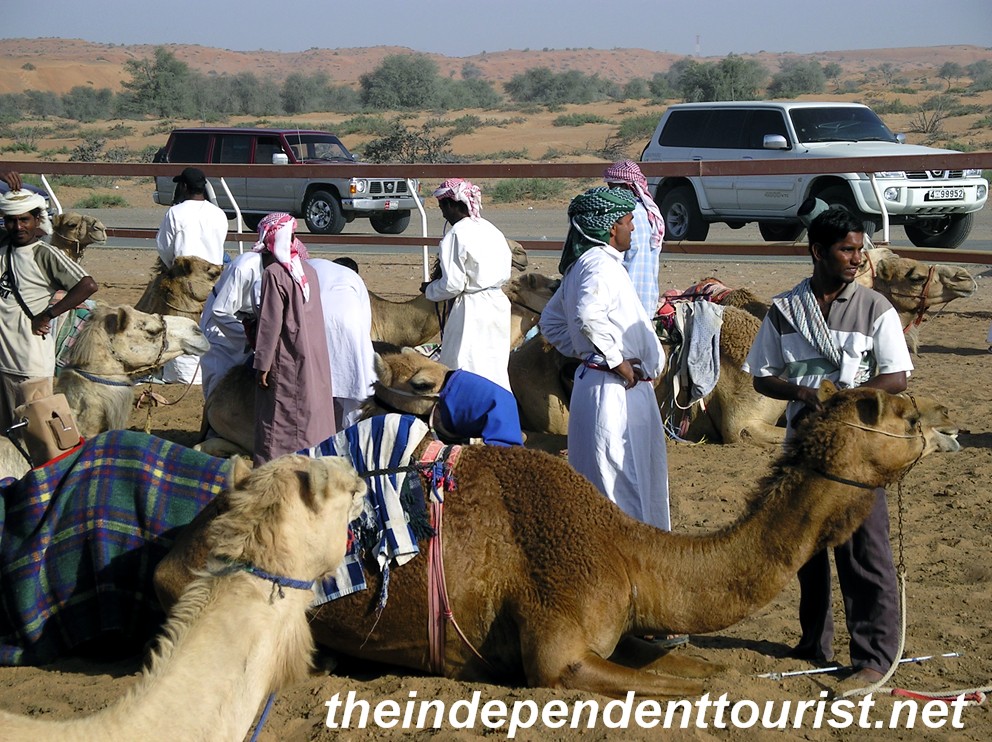
Camels in the paddock awaiting their race.

Camels in the paddock awaiting their race.

The starting line. The net rises and the camels are off!

The starting line. The net rises and the camels are off!

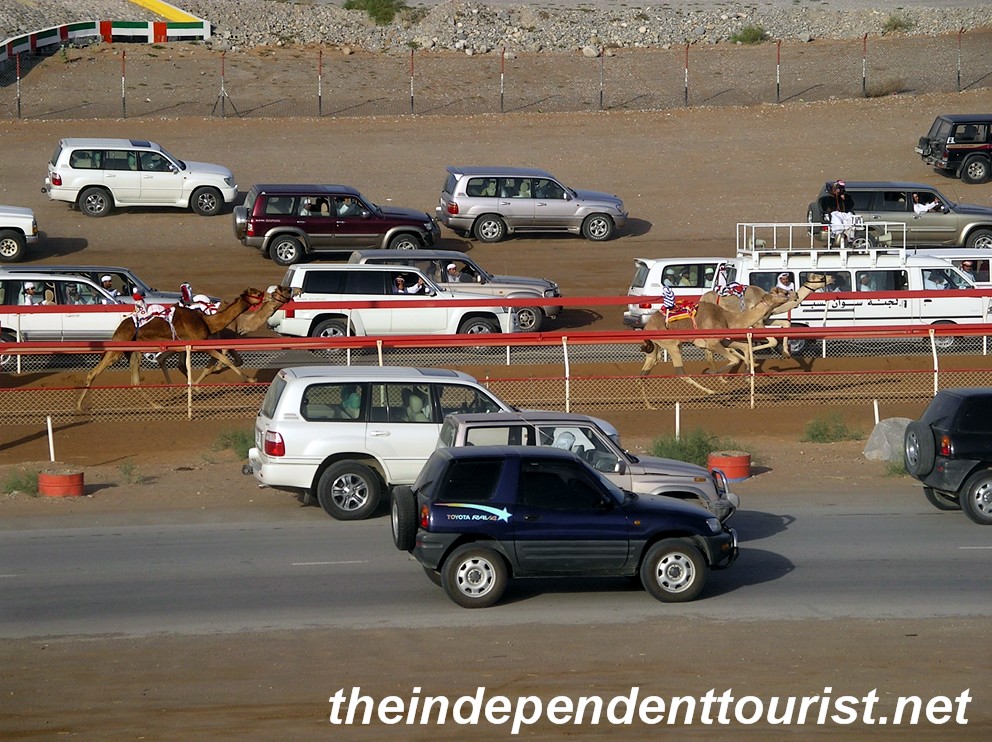
Once the camels start the race, everyone jumps in their SUV’s to follow—you’d better have a good driver because the cars are jostling around each other in the dust on either side of the track, and the people are whooping and hollering and hitting their horns to encourage their favorite camel. If you didn’t know better, you’d think the real race was the SUV’s. Since we didn’t have a camel in the race, we didn’t follow each heat the whole way (9 miles).

The camel track is in the middle between the rows of SUV's following.

The camel track is in the middle between the rows of SUV’s following.

You can see the mechanical jockey on the backs of the camels in the middle of the picture.

You can see the mechanical jockey on the backs of the camels in the middle of the picture.

Originally the camel jockeys were children from poor countries and in 2002 they were replaced by a remote controlled unit, with a light switch swatting the camel periodically to keep it motivated. Camels are fairly fast but sometimes stop and go different directions – watching them and the Emiratis is hilarious.

Leading the camels back to the stables after the race.

Leading the camels back to the stables after the race.

I think more than anything this is a social event. As we were watching the camels in paddock, an Emirati gentleman whom we did not know invited us to share in his meal being offered right off the back end of his SUV. What gracious hospitality. Wouldn’t it be great if we could spend less time fearing and fighting our Arab brethren and more time breaking bread and getting to know one another.

Aphrodisias (or Afrodisias) – Another historic “hidden” jewel in Turkey

The tetrapylon, a gateway to the Temple of Aphrodite, 85% of the blocks are original.

The tetrapylon, a gateway to the Temple of Aphrodite, 85% of the blocks are original.

A close-up of the  tetrapylon.

A close-up of the tetrapylon.

The ancient site of Aphrodisias isn’t really hidden, and even though it’s only about 90 minutes (100 km) by car from Pamukkale and Hierapolis (see my post here) it gets far fewer tourists. There were a few small buses that arrived after us, but nothing like the full parking lot of huge buses at Hierapolis. For a map of the major sites we visited in Turkey click here.

Paul and Brad at the Temple of Aphrodite doing their best Roman Emperor imitation.

Paul and Brad at the Temple of Aphrodite doing their best Roman Emperor imitation.

The site started as a shrine and was named after the Greek goddess of love (Aphrodite) in the 2nd century BC. The city had a population of 15,000 at its peak in the 3rd century AD. In Byzantine times the Temple of Aphrodite was turned into a Christian Church. The town was abandoned in the 12th century.

A view of the Temple of Aphrodite, converted into a Christian church in 500 AD by the Byzantines.

A view of the Temple of Aphrodite, converted into a Christian church in 500 AD by the Byzantines.

A view of the easern end of the stadium, this end was used for gladiatorial contests. The stadium could hold 30,000 people.

A view of the easern end of the stadium, this end was used for gladiatorial contests. The stadium could hold 30,000 people.

The Sebasteion, a temple to the deified Roman Emperors. Seventy of the original 190 reliefs have been recovered.

The Sebasteion, a temple to the deified Roman Emperors. Seventy of the original 190 reliefs have been recovered.

The Bouleuterion (or Council House). Preserved almost perfectly intact due to a mudslide.

The Bouleuterion (or Council House). Preserved almost perfectly intact due to a mudslide.

Some of the many elaborate sarcophagi around Aphrodisias.

Some of the many elaborate sarcophagi around Aphrodisias.

There are a number of well-preserved ruins here. The site requires a fair amount of walking, and the ruins are pretty well marked in English and Turkish, but allow enough time to wander – we found the huge stadium just by wandering a bit. To get to the site, park on the eastern side of the main road and a tractor/train takes you to the entrance across the road on the western side. In 2012, the entrance fee was 10 TL per person (1.8 TL to 1 USD) and parking and the train was an additional 7 TL. (References: Lonely Planet, Turkey 2010; DK Eyewitness Travel, Turkey 2008).

The theater, it held 7,000, and the seats were individually labled.

The theater, it held 7,000, and the seats were individually labled.

Snagov Monastery – The Final Resting Place of “Dracula” (or is it?)

A view of Lake Snagov from the monastery.

A view of Lake Snagov from the monastery.

Snagov Monastery Church - Vlad Tepes grave is located here.

Snagov Monastery Church – Vlad Tepes grave is located here.

North of Bucharest is Snagov Monastery on Lake Snagov (for a map of Romania and sites visited click here). This is where Vlad Ţepeş is believed to be buried. Vlad “The Impaler” Ţepeş, (the man who inspired the legend of “Dracula”) lived from 1431 to 1476. The name Dracula comes from his father who was known as “Vlad Dracul,”a member of the “Order of the Dragon.” In 1476, Vlad Ţepeş was killed by the Turks in a battle near Bucharest and his head was taken as a prize to Istanbul. It’s believed that his body was buried at this monastery, which has existed on this spot since the 14th century. The remains were exhumed in the 1930’s and it was clear that the corpse had been decapitated, consistent with Vlad Ţepeş’ death.

The simple grave of Vlad Tepes - A plaque and a candle mark the spot.

The simple grave of Vlad Tepes – A plaque and a candle mark the spot.

My wife and son standing over "Dracula's" grave.

My wife and son standing over “Dracula’s” grave.

Another view of the interior of the church at Snagov.

Another view of the interior of the church at Snagov.

Practicalities:

The monastery is located on a small island in Snagov Lake, at the northern end near the small village of Silestru. Let me say it here: you don’t need a boat to get to the monastery. Although both Lonely Planet and Rough Guide say you have to get a row boat, you can get to the monastery by foot, by crossing a small bridge. The road to the footbridge (located at the end of Vlad Ţepeş street) is not well marked (Silestru is just a little village), but wander around a bit or ask a local and I’m sure they’ll point you in the right direction. Park your car near the footbridge and if a man asks for a payment for leaving your car there, pay him and don’t quibble.

The footbridge from Silestru to Snagov Monastery.

The footbridge from Silestru to Snagov Monastery.

The street that leads to the footbridge to Snagov Monastery.

The street that leads to the footbridge to Snagov Monastery.

There isn’t too much to see here other than the small chapel and the grave marking Vlad Ţepeş resting spot. But, given the Dracula lore, we had to make the stop. There are a few tour buses who also visit here as part of a day trip from Bucharest (about 35 km south of Snagov), so I would suggest getting here first thing when the monastery opens.  We were leaving just as a crowd was arriving. Relative to other sights in Romania, the monastery was rather expensive, 15 lei per person (about 3 lei per USD).

Convento de Cristo, Tomar, Portugal

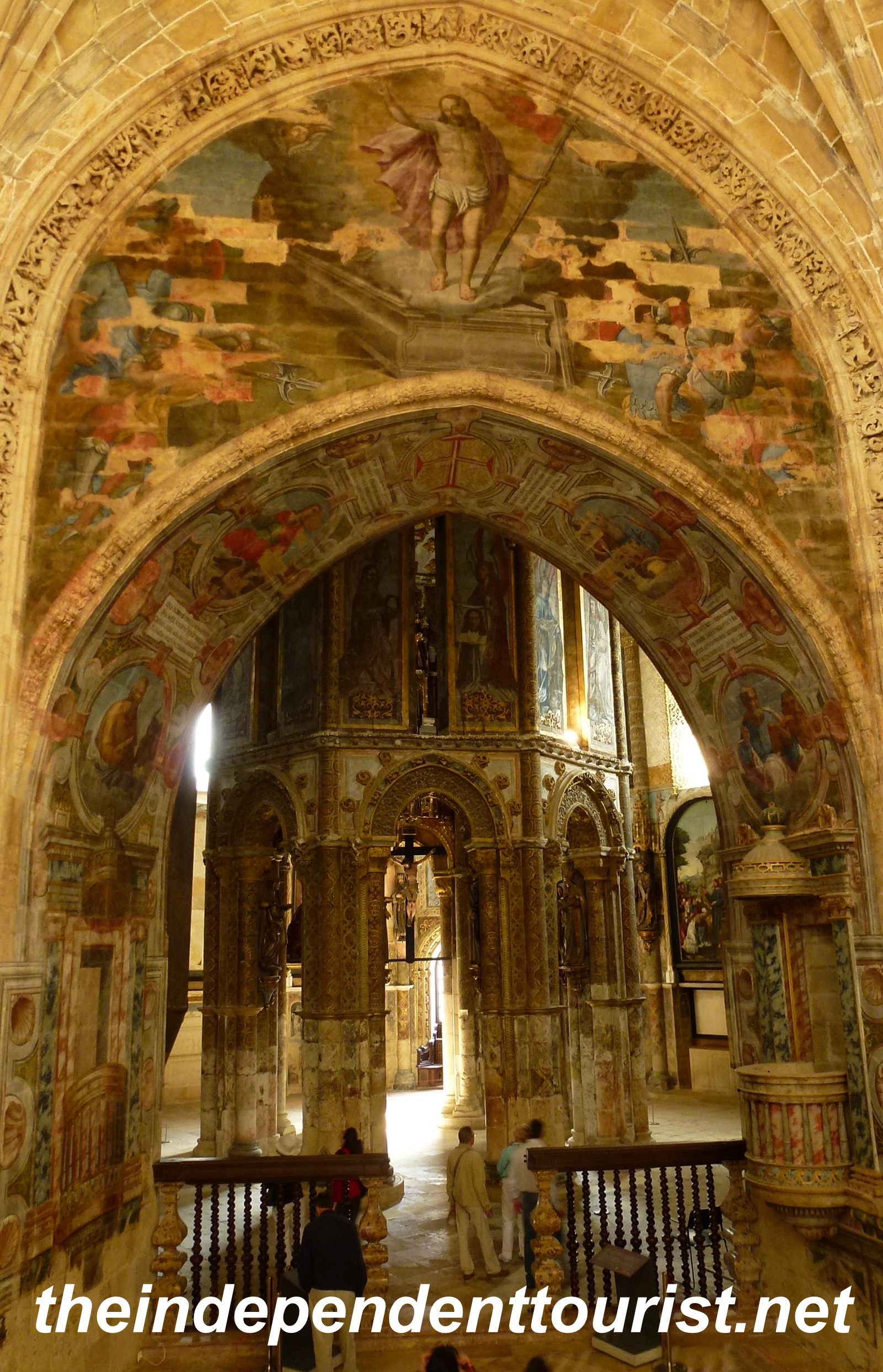
The Templar church (Oratory) was also a defensive tower, it has 16 sides, and was next to an exterior wall. The interior (see pictures below) is amazing.

The Templar church (Oratory) was also a defensive tower, it has 16 sides, and was next to an exterior wall. The interior (see pictures below) is amazing.

Huge fortress walls, a Templar castle-like church and a huge late-Gothic monastery all in one.  What more could you ask for? That’s what you get with the Convento de Cristo, in the town of Tomar, Portugal.

The entrace to the 12th century circular church from the 16th century chapter house.

The entrace to the 12th century circular church from the 16th century chapter house.

The circular ambulatory in the 12th century church.

The circular ambulatory in the 12th century church.

The 8 sided center column fans out to the 16 sided walls.

The 8 sided center column fans out to the 16 sided walls.

The fortress grounds and convent sit on a hill overlooking the town of Tomar—the walls are visible from the train station.  Ever since I got a book about the Great Monasteries of Europe (by Bernard Schütz) many years ago, I’ve wanted to visit Tomar. With my love of medieval history and interest in the Knights Templar, Tomar is a must do, and I finally had the chance to visit in 2012.

Tomar is 2 hours by train (137km) northeast of Lisbon.

Tomar is 2 hours by train (137km) northeast of Lisbon.

The fortified walls and entrance to the monastery.

The fortified walls and entrance to the monastery.

The original fortress was a Moorish settlement (9th to 12th centuries), and the Knights Templar made Tomar their headquarters in 1160. The Templars were heroes at the time due to their role in the Reconquista, helping push the Moors out of the Iberian Peninsula. The Knights brought with them architectural refinements from the Middle East (from their time defending the Holy Land) and the fortress structural design was considered ahead of its time for western Europe.

The intricate carvings of the main entry way into the church and chapter house.

The intricate carvings of the main entry way into the church and chapter house.

The highly decorated exterior of the 16th century chapter house addition.

The highly decorated exterior of the 16th century chapter house addition.

The famous chapter house west facade window, 1510-1513, late Gothic “Manueline” style (after King Manuel), symbolizes the Tree of Life or Tree of Jesse from the Bible.

The famous chpater house west facade window, 1510-1513, late Gothic “Manueline” style (after King Manuel), symbolizes the Tree of Life or Tree of Jesse from the Bible.

When the Order of the Knights Templar (or Order of the Temple) was disbanded in 1319, the fortress of Tomar was turned over to the Portuguese Order of Christ, becoming its headquarters in 1357. King Manuel and King João III in the 16th century added extensively to the site making this a very large monastery—the artistic work speaks to the wealth of Portugal as a world power at that time.

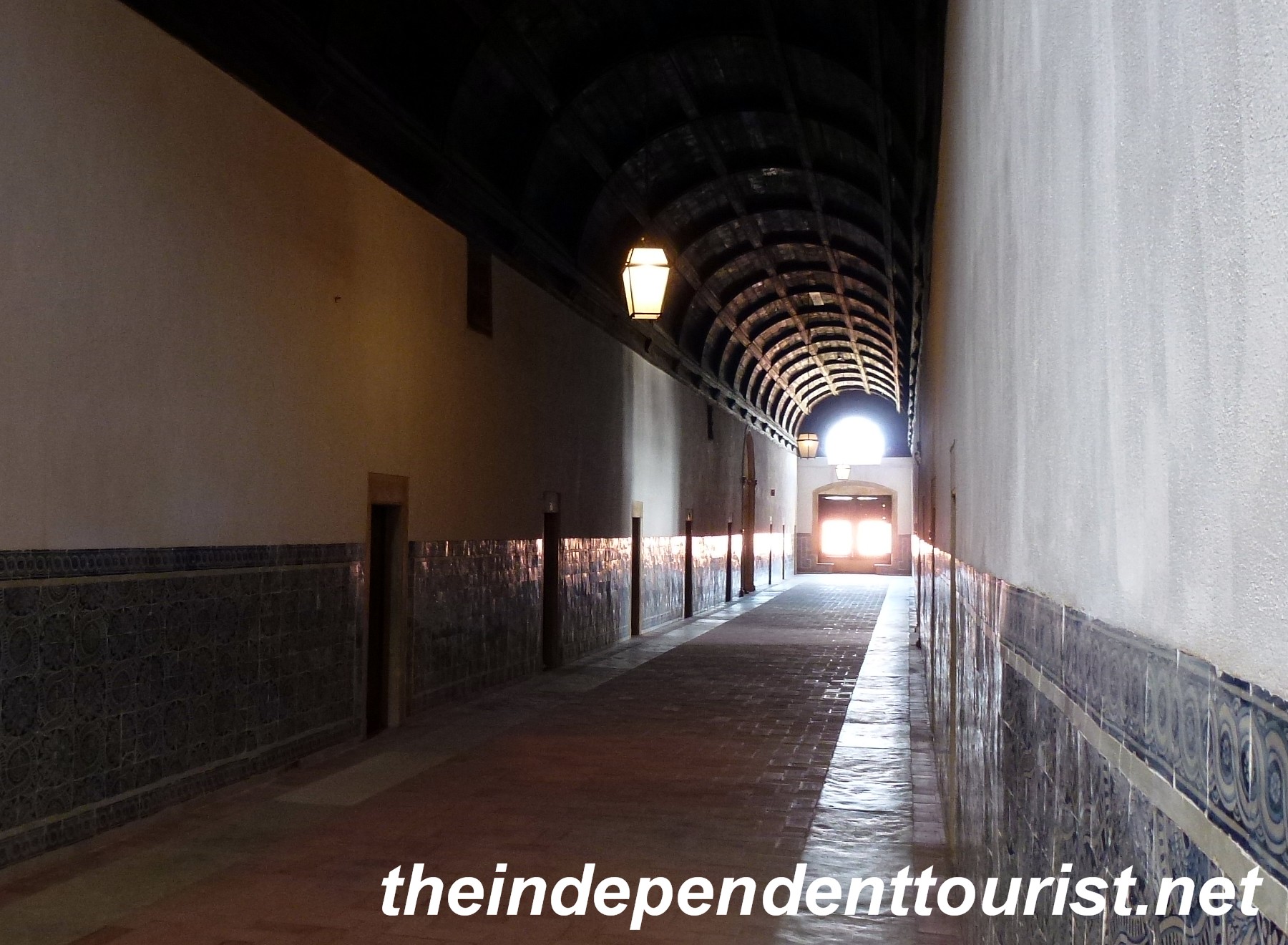
The monk's cells were finished around 1543 – 1545, the tiles are from the 17th century.

The monk’s cells were finished around 1543 – 1545, the tiles are from the 17th century.

The refectory was finished between 1535 – 1536 by King João III,  reserved for reading during meal times.

The refectory was finished between 1535 – 1536 by King João III, reserved for reading during meal times.

The kitchen of the monastery (16th century).

The kitchen of the monastery (16th century).

Tiles in the Portocarreiros Chapel, built 1626.

Tiles in the Portocarreiros Chapel, built 1626.

Practicalities:  Tomar is an easy day trip from Lisbon. It’s about a 2 hour train ride (€9.75 each way), and the train leaves from Station Apolónia (eastern side of Lisbon). It’s about a 15 minute hike from the Tomar train station up the hill to the Convento de Cristo. The entry fee was €6. There’s a lot to see, so allow at least a couple hours. I kept finding new cloisters (courtyards), rooms, and unique views and architectural features of the buildings at every turn.  The signage is comprehensive and in English. If you get hungry, there is a café on the site as well. Be sure to stroll out and see the terraces, gardens, walls and an aqueduct that was built in the 17th century and finally gave the monastery a consistent water supply.

Main cloister—started in 1530-1533, under King Joao III (1521-1557), considered a masterpiece of the European Renaissance.

Main cloister—started in 1530-1533, under King Joao III (1521-1557), considered a masterpiece of the European Renaissance.

References: Signposts throughout Convento de Cristo.

A Tale of Two Churches in Curtea de Argeş, Romania

Just about 2 ½ hours by car (155 km) from Bucharest are two very interesting churches, located in the town of Curtea de Argeş. Curtea de Argeş is the gateway to Poienari Castle (about 25 km north) and the Făgăraş Mountains (the Transylvanian Alps). One church, called the St. Nicholas Princely Court Church is the “oldest monument preserved in its original form in Wallachia” (this region of Romania) and the other is the Curtea de Argeş Monastery, a small “Taj – Mahal” like church (ok, not quite the Taj Mahal, but its exterior is still an example of amazing marble work) where the kings of modern Romania are buried.

The beautiful marble exterior of the Curtea de Arges Monastery.

The beautiful marble exterior of the Curtea de Arges Monastery.

Exterior view of St. Nicholas Princely Church.

Exterior view of St. Nicholas Princely Church.

St. Nicholas Princely Church

Curtea de Argeş was the seat of Romanian princes of Wallachia, and hence the name of this church. If you are a student of Byzantine religious history and artwork, St. Nicholas Princely Church is on your must-do list, it is one of the most important ecclesiastical buildings of its time. Completed in the 14th century (1340-1352), it has intact Byzantine frescoes from 1364-1369. A very nice gentleman gave us an impromptu tour—the church had just closed and he reopened it for us, he was a wealth of knowledge. The style of frescoes in this church is a mix of Italian and Byzantine influences, and many important priceless artifacts were found in the 14 tombs (buried on the church grounds) of the local ruling class, which are now in museums in Bucharest. The church is in the shape of Greek cross. There was a fee of 6 lei per person (about $2 USD).

A view of the highly decorated interior of St. Nicholas Church.

A view of the highly decorated interior of St. Nicholas Church.

The frescoed wall above the church entrance.

The frescoed wall above the church entrance.

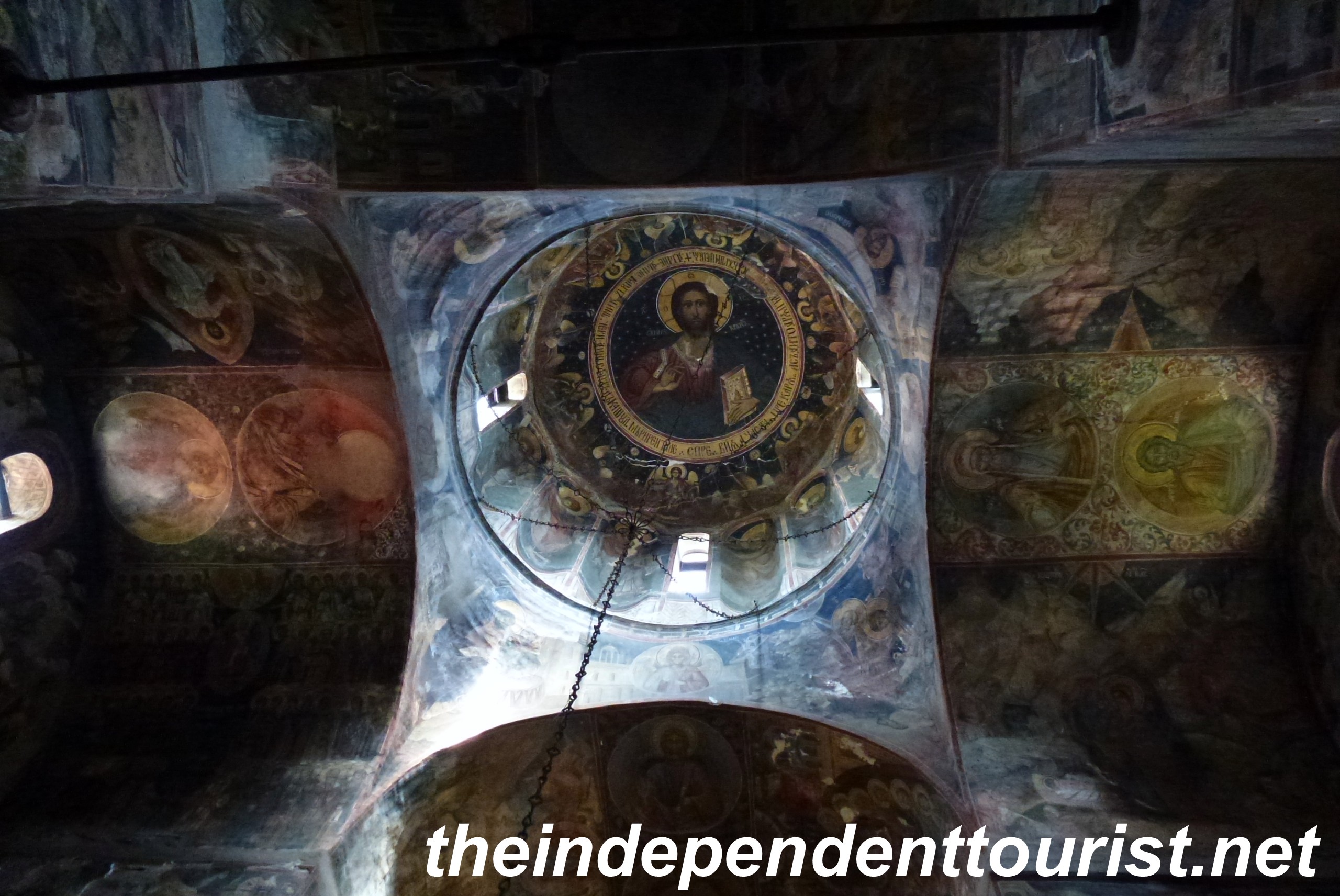
It may be hard to tell, but this is looking straight up at the cupola of the church.

It may be hard to tell, but this is looking straight up at the cupola of the church.

Curtea de Argeş Monastery

This monastery was originally built 1512 – 1521, with marble from Constantinople (Istanbul). Legend has it that the master stonemason’s wife is buried within the walls; it was a local custom that the mason had to bury a loved one alive in the church to ensure the success of his work, since ghosts were believed to keep buildings from collapsing. If you built many structures, you might run out of loved ones to bury—what a sad tale. The monastery had to be largely rebuilt in 1875, after years of neglect.

A view of the exterior of the Curtea de Arges Monastery.

A view of the exterior of the Curtea de Arges Monastery.

An interior view of the monastery.

An interior view of the monastery.

Another view of the interior of the monastery.

Another view of the interior of the monastery.

The church contains royal tombs–two kings and queens tombs lie here, King Carol (the first king of Romania) and his wife Elizabeth (the builders of the incredible Peleş Castle), and King Ferdinand and Queen Marie (granddaughter of Queen Victoria of England).  It was difficult to get photos in this church due to restrictions. The monastery is free.

References: Lonely Planet Romania Guide, 2010; Rough Guide Romania, 2008.

The Gate to Hell: The Ancient City of Hierapolis and Travertine Terrace Pools of Pamukkale

The theater at Hierapolis could seat 20,000.

The theater at Hierapolis could seat 20,000.

Put these sights on your “don’t miss” list in Turkey. The combination of the ruins of Hierapolis and the terraces of Pamukkale, famous for the brilliant white travertine pools make this an unforgettable destination. Hierapolis was founded in 190 BC and became part of the Roman Empire in 133 BC. Later on it was part of the Byzantine Empire and eventually faded into obscurity in the 6th century. Among other things, it was a spa town known for its thermal baths, and the warm water still runs here.

The northern gate to Hierapolis.

The northern gate to Hierapolis.

An elevated tomb at the extensive necropolis of Hierapolis.

An elevated tomb at the extensive necropolis of Hierapolis.

The Nymphaeum - in ancient times there would have been fountains everywhere on this structure. This is near Pluto's Gate.

The Nymphaeum – in ancient times there would have been fountains everywhere on this structure. This is near Pluto’s Gate.

The “Gate to Hell” reference applies to a spot on the site known as Pluto’s Gate (Pluto was a deity of the underworld), and the lethal vapors bubbling up from the waters running underneath the city were used to sacrifice animals as part of sacred pagan rites, with hallucinating priests performing the ceremonies (not unlike Delphi in Greece). This spot was undergoing excavation during our visit in 2012, and a recent article confirms this historical reference. Also, it’s believed that the apostle Philip met his death here (by stoning and crucifixion) in AD 80.

Frontinus Street - the main thoroughfare in Hierapolis.

Frontinus Street – a main thoroughfare in Hierapolis.

Swim in the warm waters among the ruins.

Swim in the warm waters among the ruins.

You can swim among the ruins, and this water is the basis for the white travertine terraces, which are just at the edge of the ancient city on a ridge overlooking the town. Pamukkale means “cotton castle” which is an apt description as you gaze at the terraces from below. The travertine terraces are formed from white limestone residue as the carbon dioxide escapes the water.

Where the ruins and travertine meet - this tomb is half-buried by the travertine residue.

Where the ruins and travertine meet – this tomb is half-buried by the travertine residue.

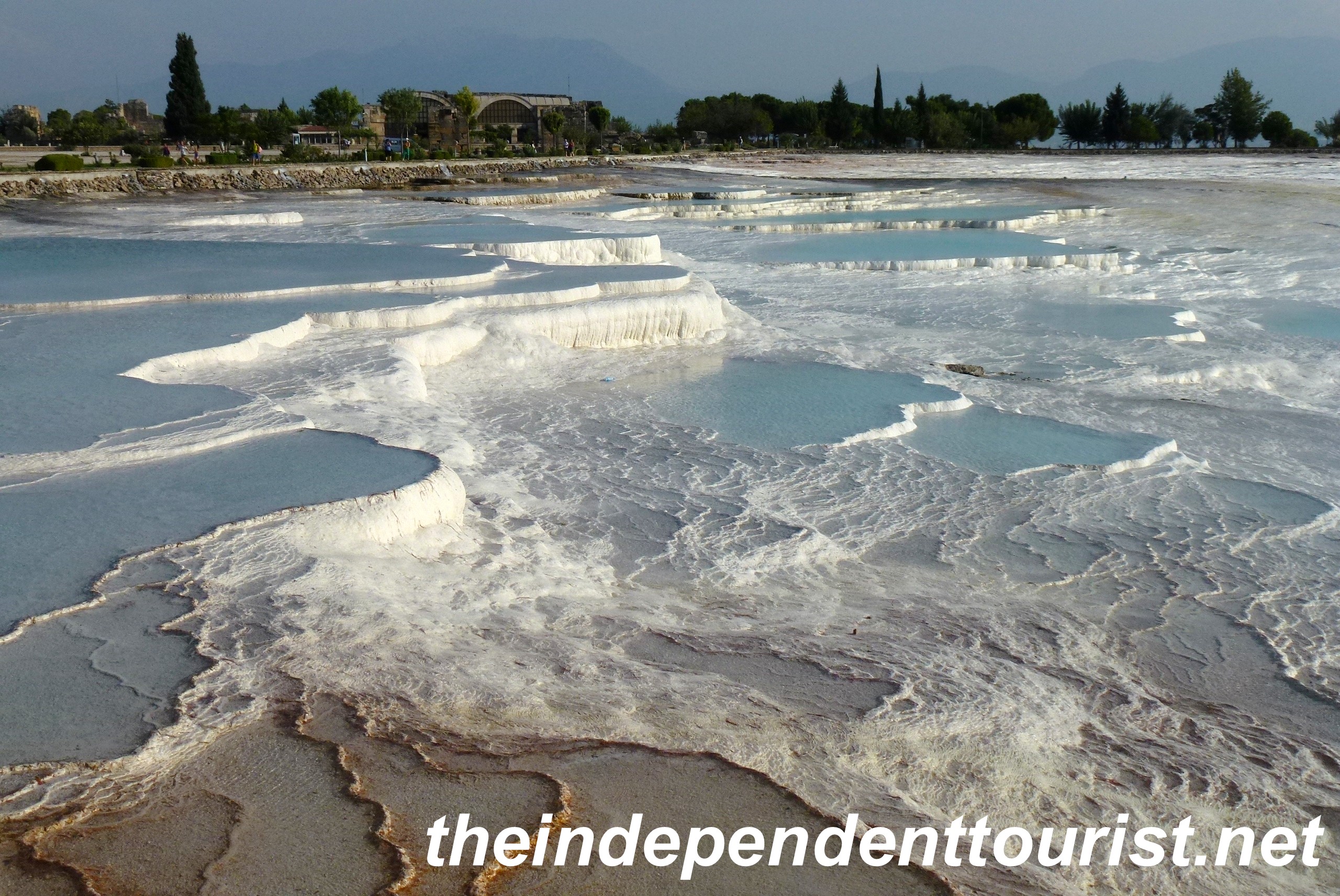
Some of the travertine terraces at Pamukkale.

Some of the travertine terraces at Pamukkale.

The setting sun reflecting on the travertine pools.

The setting sun reflecting on the travertine pools.

A few practical tips:

  • Visit the site in the afternoon (there is a parking fee of 5 TL and an entry fee of 20 TL per person (1.8 TL per USD) for both the ruins and travertine pools). By late afternoon the mobs and tour buses are leaving. We arrived about 3:30 pm (in September) and this was perfect timing to see everything and to watch the setting sun reflecting in the travertine pools.
  • Keep in mind the ruins of Hierapolis are significant and spread out. Depending on your interest in ruins, you can easily spend 2-3 hours exploring.
  • An ‘artificial’ section of the travertine pools are open for visitors to walk on.  Plan to take your shoes off and roll up your pants. The water is warm and the surface is a bit slippery.

    Walking and wading in the pools.

    Walking and wading in the pools.

  • The thermal pool with the marble column ruins is expensive and requires a separate entry fee which is about $30 US per person. We skipped the swimming but enjoyed the ambience. There is a snack shop right there and you can enjoy the picturesque setting for the price of a soft drink.
  • We stayed at the Hotel Venus in Pamukkale. It was an excellent small hotel, with a pool, nice large rooms, a very good restaurant and great breakfast buffet. It is just 5 minutes or so by car to the ruins. The room was €35 per night.

    Another excellent Turkish meal at the Hotel Venus, where we stayed.

    Another excellent Turkish meal at the Hotel Venus, where we stayed.

  • Pamukkale (which is about 15 km from the large city of Denizli), is a quiet little village and a great place to stay. The drive from Fethiye (on the south coast) took approximately 4 hours (about 200 km, on country roads).

Also fairly close to these sights are the ruins of Aphrodisias, which I will cover in a separate post.

References: DK Eyewitness Travel Turkey, 2008. Lonely Planet – Turkey, 2010.