Croatia-Part 3: Dubrovnik

We took an early morning bus (6:45 am) from the town of Korčula to Dubrovnik. The bus takes the 7 am ferry to Orebić on the mainland (about a 15 minute crossing).
Croatia-Dalmatian Coast

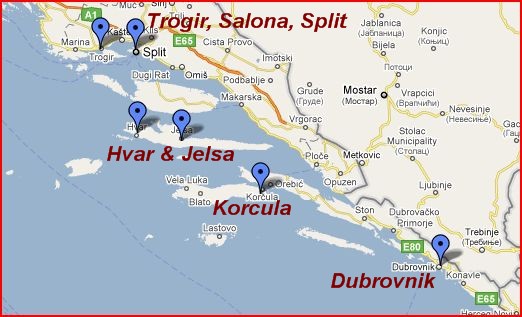
Map of Destinations we visited in Croatia.

The bus then drives along the Pelješac peninsula through the walled town of Ston and on to Dubrovnik’s main bus station. The whole ride, including a break, was about 2.5 hours, and cost about $18 per person.
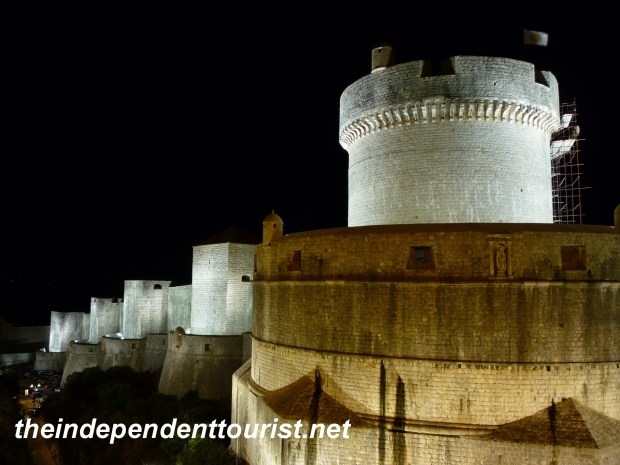
Minceta Tower Dubrovnik Croatia

Minceta Tower–night view of walls of Dubrovnik, Croatia.

From the bus station we caught a bus (#8) that took us right to our apartment, which was next to the Minčeta Tower, part of old Dubrovnik’s wall fortifications. The apartment was in a perfect location to visit the old city, other than a lot of stairs down to the Pile Gate. What struck us first about Dubrovnik is the size and massiveness of the walls surrounding the old town. The walls are up to 80 feet high in some places. One of the best activities in Dubrovnik is to buy a ticket (about $14) and walk around the entire length of the city walls. The views are excellent, and you meet interesting people along the walk (over a mile in length).
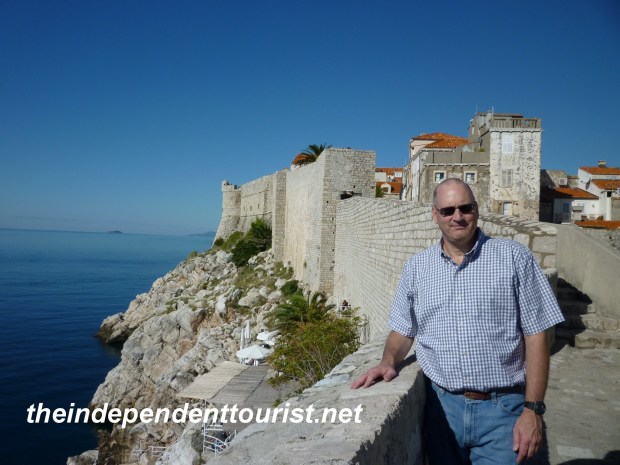
Walls of Dubrovnik Croatia

Walls of Dubrovnik.

Dubrovnik Croatia 1

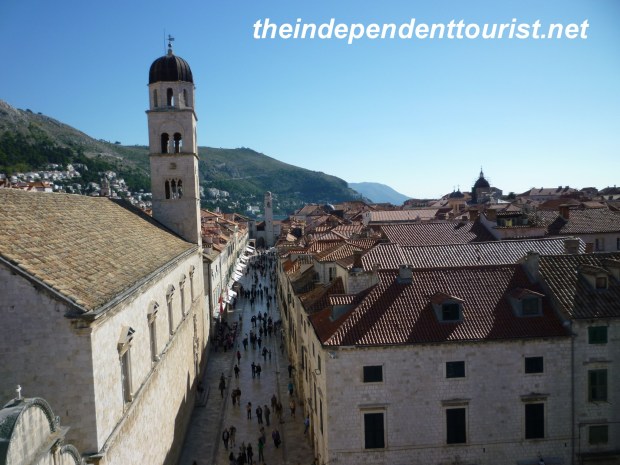
Main Street (Stradun) Dubrovnik.

We really loved Dubrovnik for many reasons—it’s stunning setting along the Adriatic coast, there are many things to do in the old town and there are a variety of tours that can be arranged from the old city to neighboring locations and other countries (Bosnia and Montenegro for example—see our blog on a day trip to Montenegro). Dubrovnik is also a popular cruise ship destination.  There were two ships in port during our stay in late October. It was enjoyable walking around in the evening after the cruise passengers have set sail.

We took a tour boat out to Lokrum island, which is just 700 meters from Dubrovnik. The boats operate about every hour. Once on Lokrum we hiked to an old Benedictine abbey and then to a fort (1800’s) at the north end of the island that offered a great view of the old city (below left). There are boats that go to other nearby islands and towns.
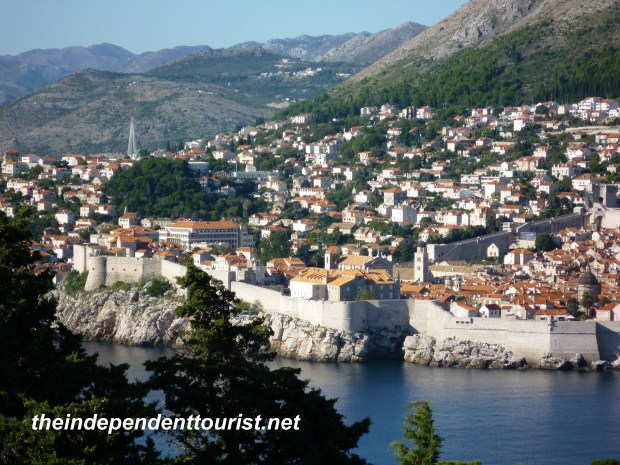
Dubrovnik Croatia 3

View of Dubrovnik from Lokrum Island.

The Franciscan and Dominican monasteries in Dubrovnik are worth visiting, in addition to the Cathedral and Jesuit church. We enjoyed walking through the narrow streets, up many stairs, and taking in the beauty of the old city. The several gate entrances to the city are fascinating in themselves. Wander off the main street and try some of the many restaurants and gelato shops on the inland (east) side of the old town.
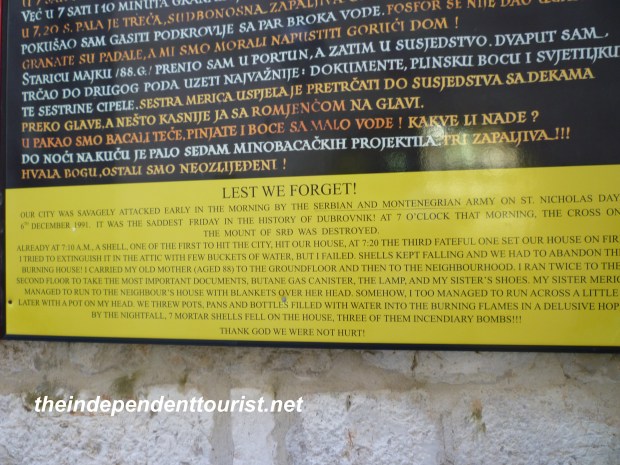
Dubrovnik War Croatia

Discription of attack on Dubrovnik in 1991.

You might remember that Dubrovnik was heavily shelled in the early 1990’s as Croatia sought its independence from Yugoslavia. The recovery was pretty quick, and it is hard to see any damage, except an occasional shell hole in a wall. The picture below tells one person’s story during that time. In the Rector’s Palace there is an exhibit on the Yugoslavian civil war. It is hard to believe that such a peaceful and beautiful place was being blown to bits less than 20 years ago.

If you can visit just one place in Croatia, make it Dubrovnik.
A Day Trip to Montenegro

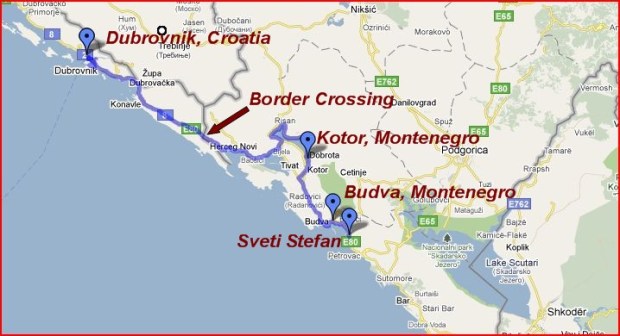
As part of our recent trip to Croatia, we took a day trip to Montenegro from Dubrovnik. There are many options for tours out of Dubrovnik, including Montenegro, but given our penchant for independence, we rented a car (about $90) and drove south, first to Kotor and then on to Budva.

Montenegro Day Trip

Day Trip from Dubrovnik to Montenegro.

The border crossing was simple (we just had to show our passports and rental car paperwork) and there were no lines, given that it was late October. We were warned by our rental car provider to keep to the speed limit, since the Montenegro police watch closely. We did see a few police along the roads, and I made sure we kept to the limit, even though others were driving faster. The roads were in good shape, the signage was clear, and there were plenty of fuel stations.

Kotor_Bay_Montenegro

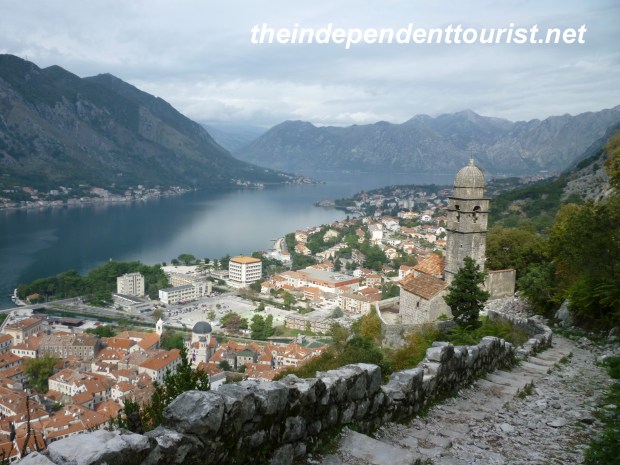
Kotor Bay from the walls above Kotor town.

It took us about two hours to reach Kotor, via Perast, following the shoreline of Kotor Bay-which feels more like a lake, because of the surrounding steep mountains and calm, deep water.

Kotor_Montenegro

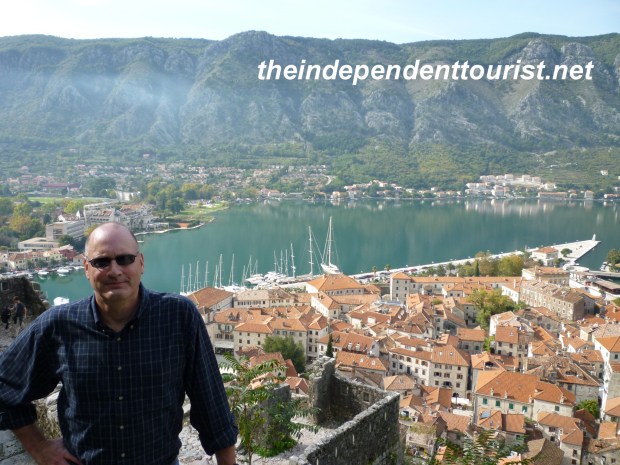
Kotor, Montenegro.

Kotor is a beautiful old fortified city. We hiked up the old walls behind the city all the way to the fort at the top. In the valley behind the fort, and not visible from Kotor, are the ruins of an old village.

Budva_Montenegro

Budva Montenegro.

From Kotor we drove to Budva, another old walled city right on the Adriatic coast.

Budva_2_Montenegro

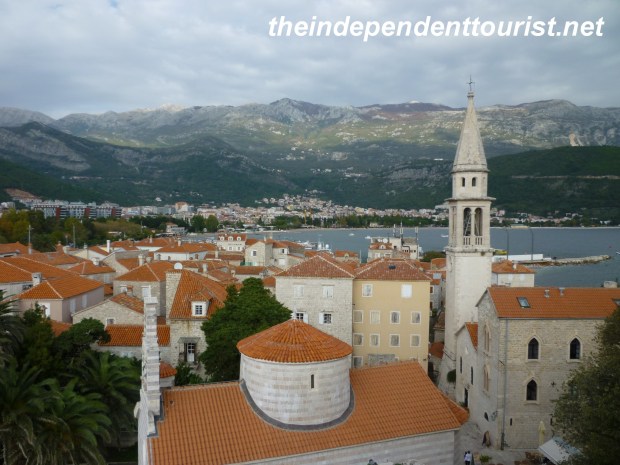
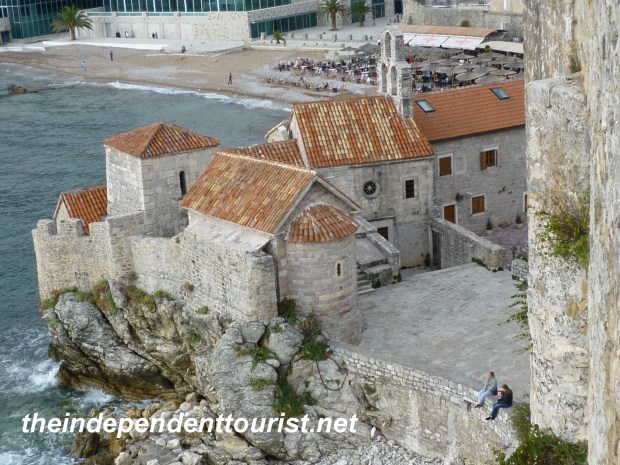
Dramatic old church buildings on coast at Budva.

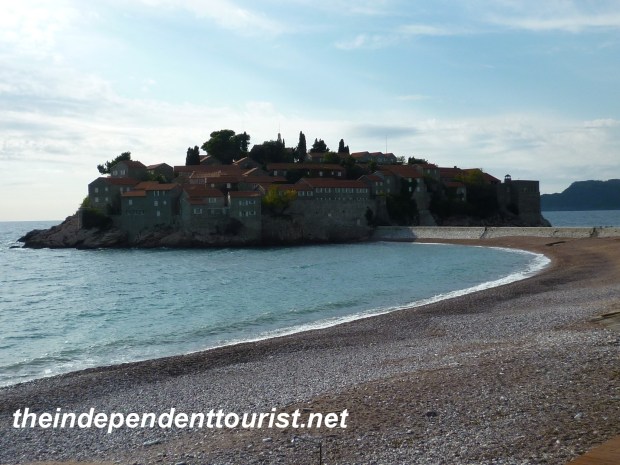
Budva is about 45 minutes by car from Kotor. We also went to Sveti Stefan (St Stephen), just south along the coast from Budva. It is a small island village that is now an exclusive hotel. The scenery all along our trip was beautiful. Even in October, the weather was in the 60’s F.

Sveti Stefan

The island hotel of Sveti Stefan.

Montenegro felt like a slightly poorer country than Croatia, but is rapidly developing, as evidenced by all the construction and real estate signs. I would love to go back and explore more of this small, but fascinating country.

Greek Theater, Taormina, Sicily, Italy

Tour of Sicily: Taormina and Syracuse (Siracusa)

Sicily Italy Map

Sites visited in Sicily.

Taormina

Our first stop was Taormina, about 45 minutes north of Catania. Taormina is compact town wedged between high cliffs and the sea. It was an easily defensible position anciently and in medieval times.

Greek Theater, Taormina, Sicily, Italy

Greek Theater, Taormina.

Roads and buildings seemed to be right on top of each other. Our B&B was on the north side of Taormina, right near the tram that takes visitors down to the beach area. We were within a 10 minute walk to the town. The main sight in Taormina is the Greek Amphitheater, rebuilt by the Romans in the 2nd century A.D.

The setting of this theater is one of the most spectacular in all of Europe, overlooking the town, sea and Mt. Etna.

Taormina Cathedral, Sicily, Italy

Taormina Duomo (Cathedral).

After visiting Taormina we drove up to the village of Castelmola. Set in the cliffs just above Taormina it provides a panoramic view of the whole area. Castelmola is a small village and there is a car park right off the road before entering the village. We hiked up to the castle ruins at the top of the village for a great view.

Castlemola, Taormina, Sicily, Italy

Taormina (with Castlemola at top of hill).

From Taormina, we drove south to Syracuse (about 2 hours), with a quick stop in Motta Sant’Anastasia (picture below-left), just to the southwest of Catania. The Norman tower (“Tower of Motta”), built around 1070, was not open. The town built on a rock outcropping above the plain is quite a sight.

Motta Sant'Anastasia, Sicily, Italy

Motta Sant’Anastasia

 Syracuse (Siracusa)

Our B&B in Syracuse was situated in an apartment building about halfway between the old part of the city (the island of Ortygia) and the Archeological Park Neapolis. Parking is limited in Syracuse-we had to find parking on the streets wherever we could. Once we found a spot, we tried not to move the car and walked around town for most of our stay. Ortygia is a small island connected to the mainland by a bridge. It is full of narrow alleyways, stately buildings and a very interesting Duomo (Cathedral-below) that incorporates the columns of a 5th century B.C. Greek temple and has a beautiful baroque facade. The Piazza del Duomo is quite beautiful as well. There is a good laundromat on Corso Umberto I just a few blocks from the bridge to Ortygia.

Syracuse Cathedral, Sicily, Italy

Syracuse Cathedral-Ortygia.

The next day we walked to the Archeological Park Neapolis which contains a number of old Greek and Roman ruins. We got there early to beat the tour buses.  The street signs are clear and point the way to the Neapolis area. There is one entry fee (about €10) that provides access to the entire historical area.   Sights include the ruins of a Roman amphitheater, Greek Theater (which workers were preparing for performances, held every two years), a votive area behind the theatre, the huge Altar of Heron where hundreds of animal sacrifices occurred, and the Quarry area including the cavernous Ear of Dionysius, where stone for the many monuments of Syracuse came from.

Altar of Heron, Sicily, Italy

Altar of Heron.

Ear of Dionysius, Sicily, Italy

Ear of Dionysius.

One of the other things we did that was very worthwhile was visiting the Catacombe di San Giovanni (Catacombs of St. John), which date from at least 300 B.C. There are at least 10,000 burial spots here.

San Giovanni Church, Syracuse, Sicily, Italy

San Giovanni Church.

It is located in the heart of modern Syracuse, close to the Neapolis. The church above ground is in ruins, but the catacombs below are quite well preserved. The only way to visit is with a guided tour. There are several tours each day, and we happened to arrive just as a tour was starting. The cost was about €4. The tour starts in the underground Cripta di San Marciano which is in the form of a Greek cross and includes some frescoes. The tour then proceeds through sections of the massive catacombs.

Catacombs of San Giovanni, Syracuse, Sicily, Italy

Catacombs di San Giovanni.


Ragusa Ibla, Sicily, Italy.

Tour of Sicily: Noto, Ragusa Ibla and Piazza Armerina

Sicily Italy Map

Sites visited in Sicily.

From Syracuse we drove to Noto, only about 45 minutes by car. Noto is a UNESCO Word Heritage site, with several stately streets, churches and palaces.

Cathedral of San Nicolo, Noto, Sicily, Italy

Cathedral of San Nicolo.

One of the more interesting things we noticed was that as we were driving into town, a convoy of 16 Ferraris passed us. After we found a place to park, we walked into the center of town and noticed all the Ferraris had parked in a row right in front of the town hall (Palazzo Ducezio) apparently for a meeting. A convention of Ferrari owners? Sicily is known as the home of the Mafia, and this was as close as we came to seeing any signs of it.

We climbed the bell tower of San Carlo al Corso church for a good view of the city.

San Carlo al Corso Church, Noto, Sicily, Italy

View from San Carlo al Corso Church Bell Tower.

From Noto we drove to Ragusa, another UNESCO World Heritage site (less than 60 minutes’ drive), and specifically to Ragusa Ibla, the old part of the city set on a hill top.

Ragusa Ibla, Sicily, Italy.

View of Ragusa Ibla (old city).

The drive itself is scenic, over the deep valleys on high modern bridges climbing the hilly countryside of this part of Sicily. There was a large car park just below Ragusa Ibla, which is separated from the newer part of the city by 340 steps. It is worth the climb up these stairs for a good view of Ragusa Ibla. We then went into Ibla, walking to the Duomo (San Giorgio), and then down to the town square, and out to Giardino Ibleo (gardens) overlooking the valley. Ragusa Ibla is a classic baroque town of the 1700’s.

San Giorgio Cathedral, Ragusa, Sicily, Italy

San Giorgio Cathedral

From Ragusa, we drove to Pozzallo and caught the night ferry to Malta (see Malta blog post).

Upon our return to Pozzallo from Malta, we drove up to Piazza Armerina (about a 2.5 hour drive), to visit the world famous mosaics of the Villa Romana del Casale, which is just a few kilometers outside the town.

Villa Romana del Casale, Piazza Armerina, Sicily, Italy

Villa Romana del Casale, near Piazza Armerina

I was surprised that the entry fee was only €3, and discovered the reason was due to the closure of part of the site due to restoration. Most of the site is covered by a glass structure, like a greenhouse. The Villa is large, with many rooms. The floor mosaics are in excellent condition due to their being covered by mud since the 12th century. The original owner must have been very wealthy to decorate the Villa so lavishly.

Piazza Armerina, Sicily, Italy

Piazza Armerina.


The town of Piazza Armerina is bypassed by most tour buses and tourists, and gave us a feel for a “real” Sicilian town. We wandered up and down a few streets and to the Duomo (Cathedral) for a good view of the surrounding countryside.

The next morning we drove northwest about 30 minutes to visit the ruins of Morgantina, originally inhabited around 1000 B.C. There are great views of the countryside and Mt. Etna in the distance. We found very few tourists at this site, making it a pleasant stop without crowds.

Morgantina, Sicily, Italy

Ruins in Morgantina

Temple of Castor and Pollux, Agrigento, Sicily, Italy

Tour of Sicily: Agrigento, Selinunte, and Segesta

Sicily Italy Map

Sites visited in Sicily.

These three locations are the main Greek Temple sites in Sicily. From Piazza Armerina we drove through Barrafranca and Pietraperzia on our way to Agrigento. The springtime clear air and verdant green hills made this 2.5 hour drive very enjoyable.

Temple of Castor and Pollux, Agrigento, Sicily, Italy

Temple of Castor and Pollux (city of Agrigento in background).

We had heard that the scenic aspects of the Valley of the Temples in Agrigento was somewhat spoiled by the city being so close to the site. We were pleasantly surprised that the view is still quite beautiful, and the Temples sit on a wooded ridge between Agrigento and the sea. The site is large, so plan on a good walk to see the various temples. We visited in the afternoon and the light was perfect since the sun was setting over the Mediterranean.

Temple of Concord, Agrigento, Sicily, Italy

Temple of Concord

 Our B&B was in the center of the old part of Agrigento high up on the hill, and had a fantastic view of the Valley of the Temples.  Several of the streets were just wide enough for a small car to pass with about 1-2 inches to spare on each side. Most tour buses go directly to the temples and do not go into Agrigento. We would recommend a visit to the old part of the city. We found a good restaurant and enjoyed climbing stairs between the levels of the old streets. We stopped at the Convento di Santo Spirito and just peeked in since it was getting ready to close. The nuns saw us and invited us in for a look and in Italian did their best to explain to us the various features of the historic abbey-very friendly people.

Temple E, Selinunte, Sicily, Italy

Temple E, Selinunte.

The next morning we drove to Selinunte (northwest along the southern coast), with a short detour through the hill top town of Caltabellotta. Of the three temple sites, Selinunte was probably the least interesting, although it has a great setting on the coastline. The site is very spread out—it is about a 15-20 minute walk between the two main temple areas (the Acropolis and the Eastern hill). If one is rushed for time, be sure to visit Temple E (490 BC) on the Eastern hill, which is closest to the main parking. The main thing I enjoyed was hiking around the ruins of Temple G (Eastern hill) with the tumbled columns and being struck by the size of the blocks for the columns.  How did they erect and assemble such huge stones for these temples? Amazing.

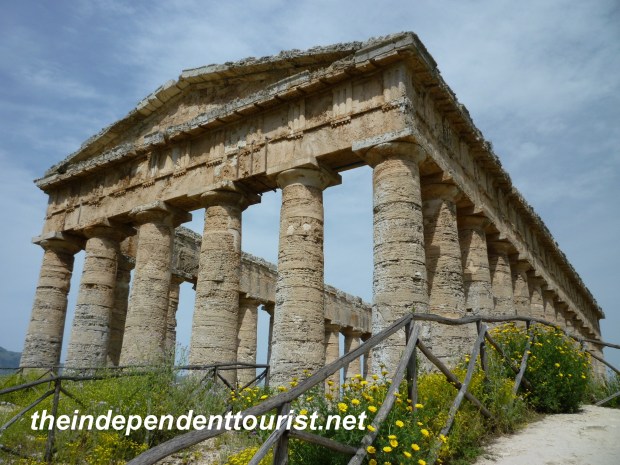
Segesta Temple, Sicily, Italy

Segesta Temple.

Segesta. Don’t miss Segesta. It is about 40 miles north of Selinunte, not too far off the road on the way to Palermo. This temple is in the countryside, and in a very peaceful setting. The temple was never finished. The car park is close to the temple. On the hill just to the east of the temple there is a 3rd century BC Greek Theater and the ruins of the ancient town of Segesta.

Segesta Theater, Sicily, Italy

Segesta Theater.

The view of the valley and temple of Segesta is incredible from the Theater. There are buses every 30 minutes that take visitors up to the Theater, or it can be walked.  I wish we had walked down to the car park rather than taken the bus given the picturesque views of the temple.


Monreale Cathedral, Sicily, Italy

Tour of Sicily: Erice and Monreale

Sicily Italy Map

Sites visited in Sicily.

Erice, Sicily, Italy

Street Scene-Erice

Erice is a well-preserved medieval town dramatically set on a high peak southwest of Palermo, and a good overnight stop between Segesta and Palermo. The views of the coast and the surrounding valleys are well worth the steep drive up the hill.

Erice, Sicily, Italy

Our B&B-Il Carmine, former monastery

Our B&B in Erice was an old monastery right inside the walls of the town. It was a great location, but the beds were hard! Our stay gave us an appreciation for the austerity the monks must have endured.

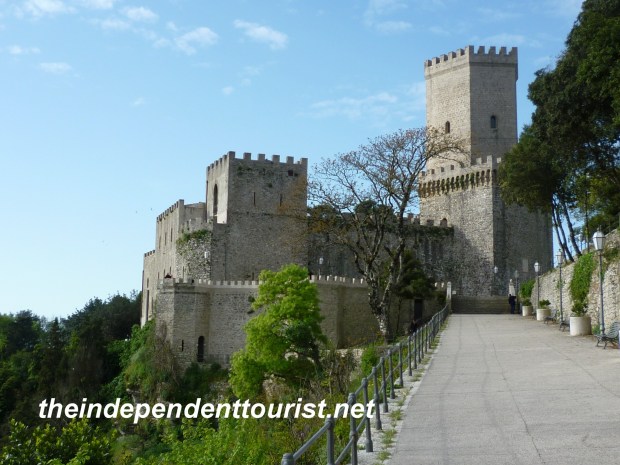
Norman Castle, Erice, Sicily

Norman Castle, Erice

Walking around the perimeter of Erice, wandering through the town square and visiting the castles make Erice a great stop. 

Monreale Cathedral, Sicily, Italy

Monreale Cathedral Interior

From Erice we drove to Monreale. The interior of the Monreale Cathedral (dating from 1172) has some of the finest gold mosaic biblical scenes in all of Europe, and I marveled at the effort and expense required to create these mosaics. Monreale is just a few miles from Palermo, so don’t miss it.

Monreale Cathedral, Sicily, Italy

Monreale Cathedral Apse Exterior

There is a convenient bus and car park just below the Cathedral. Like many churches and other sites in Sicily, Monreale cathedral closes in the middle of the day for a couple hours, so get there in the morning or the later afternoon


Caccomo, Sicily, Italy

Tour of Sicily: Cefalù and Caccamo

Sicily Italy Map

Sites visited in Sicily.

Cefalu, Sicily, Italy

Cefalu, Sicily

Cefalù is on the northern coast of Sicily, about 40 miles east of Palermo. We made a stop here on a day trip from Palermo. It’s fast road between the two cities, and we paid a couple small tolls as we got closer to Cefalù. The old town and Duomo are set below the rock cliffs (La Rocca) and the sea.

Cefalu Cathedral, Sicily, Italy

Cefalu Cathedral and Square.

La Rocca can be hiked, leading to some prehistoric ruins (Tempio di Diana) and 12th century castle ruins. If we had allowed more time, I would have loved to hike up La Rocca.  The Duomo of Cefalù is one of the great Norman Cathedrals of Sicily, and dates from 1131. There is a pleasant piazza right in front of the Duomo that is good for a relaxing meal. There is also a beach near the town, but it was cloudy and the sea was rough on the day we were there.

Caccomo, Sicily, Italy

Caccomo, Sicily

While in Cefalù, I saw a picture of the small town of Caccamo, and decided to take a side trip to this town on our way back to Palermo, and I’m glad we did. It was just about 6 miles off the Palermo-Cefalù highway. Caccamo is a quiet little town set on a hillside overlooking a valley. We went through the Norman castle at the west end of town (not too much to see, it is undergoing renovation), and then wandered the streets down to Chiesa Madre di Caccamo. Drive to the eastern side of the town for a great view of the town and valley.

Caccomo, Sicily, Italy

Chiesa Madre di Caccamo.


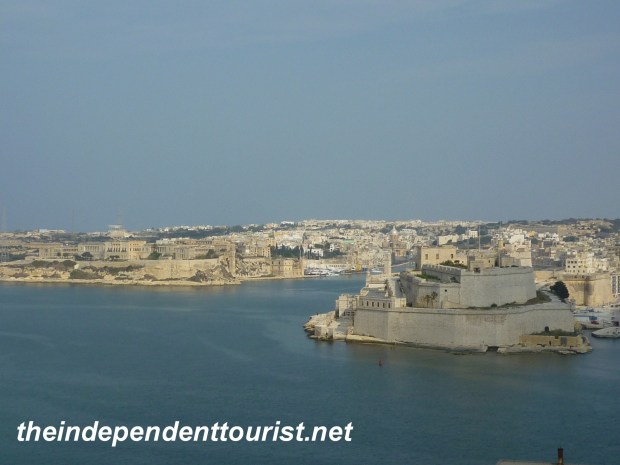
Valetta Harbor, Malta

Excursion to Malta

Malta Map

Islands of Malta.

We visited Malta as part of our trip to Sicily in April. It was a good time of year to visit weather-wise.  The temperatures were warm and sunny but not hot. Malta is only about 90 kilometers from Sicily, and we spent two nights and one day in Malta. We took a ferry (Virtuferries.com) from Pozzallo, Sicily to Valletta, Malta.

Virtu Ferries, Malta, Sicily

Sicily-Malta Ferry (Virtu Ferries).

The trip was about 90 minutes each way.   At the time, it cost about $110 per person roundtrip. It is also possible to fly from Catania on Air Malta, but it costs more and would likely take more time. Since the ferry is Maltese, the schedule is less convenient if one is traveling from Sicily to Malta than vice-versa. A lot of Maltese take day trips to Sicily to visit the mountains and escape the heat of Malta in the summer. So, we left Sicily late in the evening and returned early in the morning two days later.

Malta is very dry, rocky and the most densely populated country in Europe. The main island of Malta is small with a lot of traffic in a tightly congested area around Valletta, although outside the city the roads are a lot less busy.

Malta bus

Maltese Bus (all are the same retro style)

We rented a car (driving is on the left side), so we could have the freedom to see what we wanted—however we would suggest a good map-via a PDA/phone or GPS system, given the somewhat confusing road system and signage outside of Valletta. The local bus system would be a good alternative to driving. Visitmalta.com is a great website for learning about this country, and they have podcasts on a variety of topics, including information all about the movies filmed in Malta.

Given the recent history as a colony of the UK, English and Maltese are the official languages, and Italian is widely spoken. Malta’s long history means that there is a lot to see and do. It is full of prehistoric sights and more recent historic events—in particular the influence is evident of the Knights of Malta in the 1500’s, giving Valletta and the surrounding harbor its massive fortifications.

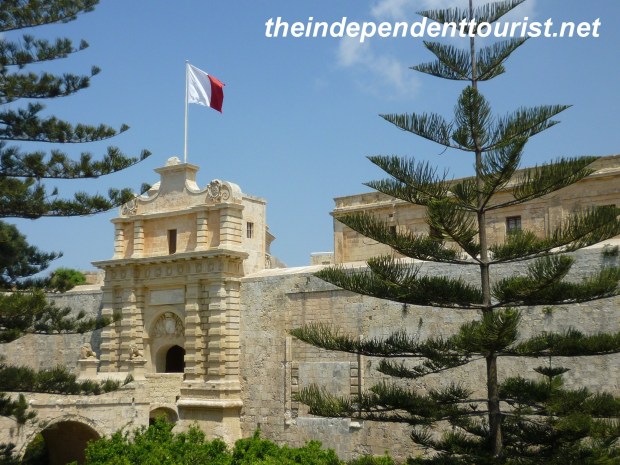
Mdina City Gate, Malta

City Gate, Mdina.

We used our Hilton Honors points and stayed in the Hilton in St. Julians, a very good location, about 15 minutes from Valletta. Many of the hotels on the island are located in this area. In one day we were able to visit the Hal-Saflieni Hypogeum, the old capital or “silent city” of Mdina, the ancient temples of Hagar Qim and Mnajdra, and the city of Valletta, all without feeling rushed.  We had considered hiring a tour guide for the day, given the shortness of our visit, however the guides we checked out wanted €150-200 for the day, plus a car rental, and we decided we could do our own tour easily enough.

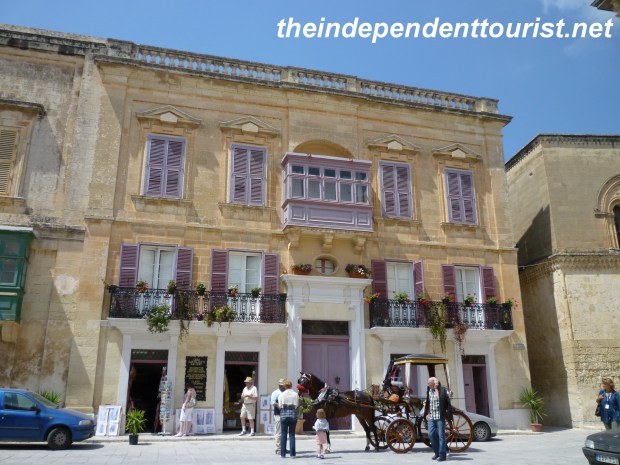
Mdina, Malta

Mdina Carriage Rides.

The Hypogeum, an underground prehistoric temple, was discovered by accident in 1902.  It is underneath a building on a modern street. Without the sign on the building, there would be no way of knowing what lies underneath. A guided tour is the only way to see it and the number of visitors allowed each day is limited to 80. In our opinion it was worth it, even if a bit overpriced (about $28 per person).   We could not take pictures inside the temple. We bought our tickets ahead of time (online) to avoid the chance of tickets being sold out due to tour groups and cruise ships. Ticket Information can be found on visitmalta.com.

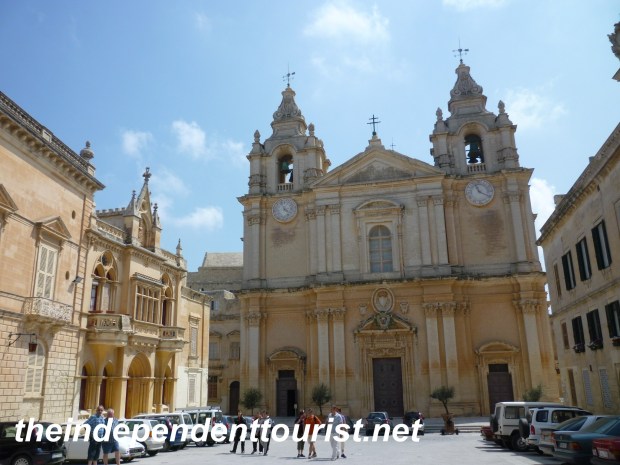
Co-Cathedral, St. Paul, Mdina, Malta

Co-Cathedral of St. Paul, Mdina.

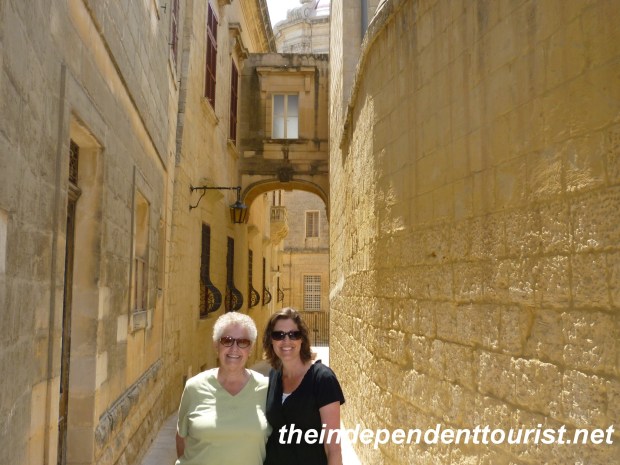
Mdina Street, Malta

Mdina Street Scene.

The city of Mdina, the old capital of Malta, is quite beautiful. It is called the silent city due to a lack of traffic in the old part of the city. The city sits on a slight hill, giving it a good defensive position and providing a good view of this part of the island.

There is plenty to do here in wandering the streets, visiting the co-Catherdral of St. Paul, taking a carriage ride, visiting the dungeons, and other exhibitions.

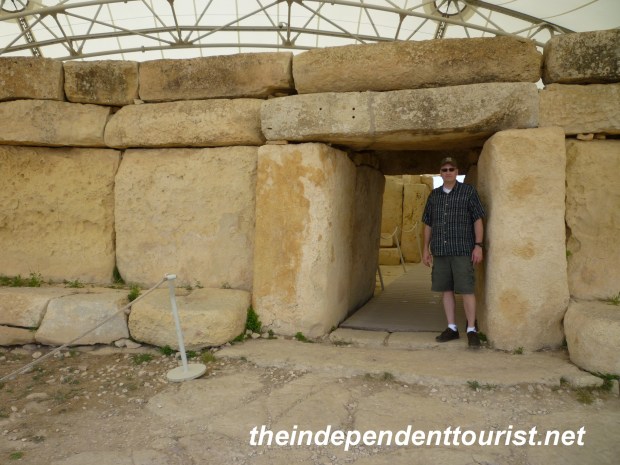
Hagar Qim Temple, Malta

Hagar Qim Temple

We then drove out to the temples of Hagar Qim and Mnajdra (they are within walking distance of each other).

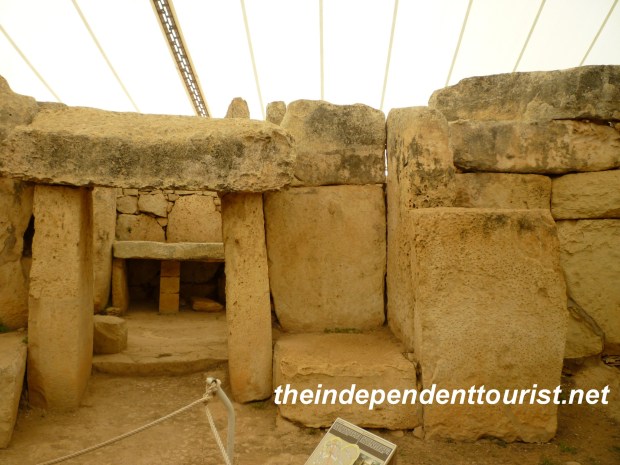
Mnajdra Temple, Malta

Mnajdra Temple.

These temples are on the other side of the island from Valletta, and the rural roads on that side of the island can be potholed and bumpy! These are some of the oldest man-made structures in the world (perhaps 3,500 BC). The temples are near the coast, above ground, and covered with a tent-like material (similar to the Denver airport main terminal roof) to protect them from the weather. It is possible to wander around and through the structures.

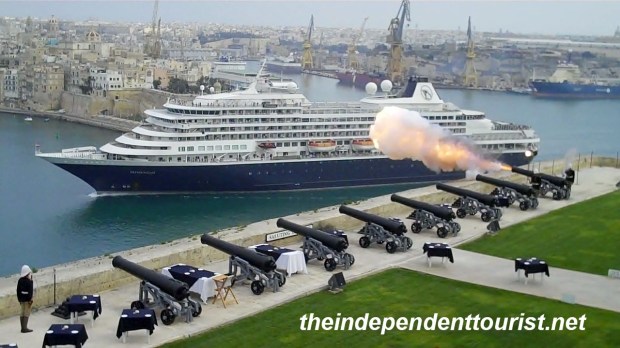
Valetta Harbor, Malta

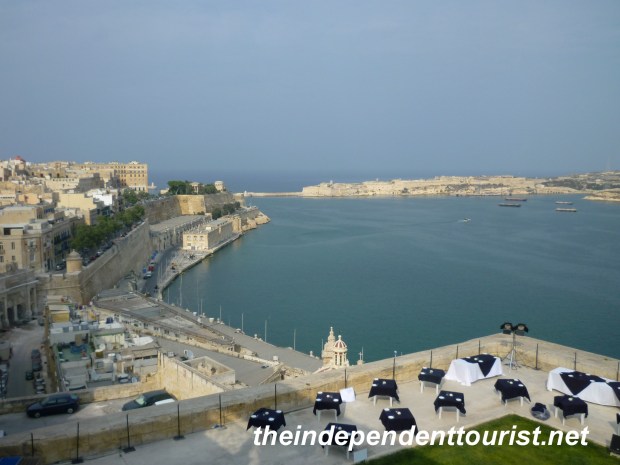
Valletta Harbor.

Our final stop for the day was Valletta. We found a parking garage close to the town and walked up to the main entrance to the old town. Our biggest mistake was getting something to eat before visiting the co-Cathedral of St. John. To our dismay, we found out that it closes at 4:30 pm, and we missed seeing Caravaggio’s “The Beheading of Saint John the Baptist” (completed in 1608). This was a huge disappointment, in addition to missing the Cathedral itself.  Be sure to get there before 4:30 pm! We loved the architecture of Valletta. Our favorite spot was the Upper Barraka Gardens, where we had a beautiful view of the harbor—pictures cannot do it justice, it is a beautiful setting. While we were there, we saw a cruise ship leaving and the Maltese cannon salute!

Valletta Harbor, Malta

Valletta Harbor.

Valletta Harbor, Malta

Another View-Valletta Harbor.

We would love to go back to Malta. We did not get to the beaches given our short stay. It would be a great vacation spot for at least a week with all the historical sites and beaches (including Gozo and Comino islands).

Colonia del Sacramento, Uruguay.

Across the Rio de la Plata to Colonia, Uruguay

Colonia del Sacramento, Uruguay Map

Ferry Route from Buenos Aires to Colonia, Uruguay.

While in Buenos Aires and staying in Puerto Madero, we decided to take a ferry to Colonia, Uruguay.  The town is formally known as “Colonia del Sacramento.” It was founded by the Portuguese in the 1600’s, and is now UNESCO World Heritage site.

Buquebus Travel operates ferries to Colonia and the terminal is at the north end of Puerto Madero. They have a fast ferry that crosses the Rio de la Plata (about 25 miles) in about 1 hour. The round trip cost is about $150 for two people. We spent 3 hours exploring Colonia, but an overnight stay would have been more ideal. We at least got a flavor of the historical town.

Argentina immigration and Uruguay immigration work side-by-side, so your passport is stamped by both countries (exit and entry) at the same time and in the same line, making the process quite efficient. Because of our short trip we did not bother to exchange money for Uruguay.

The Rio de la Plata is a huge estuary separating Argentina from Uruguay, at the confluence of the Paraná and Uruguay rivers leading to the Atlantic Ocean. The water is brown from the silt and does not look too inviting for a swim. My wife and I debated whether it was really fresh water given the proximity to the Atlantic Ocean and the fact the Rio looks more like a huge bay than a river. We touched our fingers in the water and convinced ourselves it is indeed fresh, and were amazed at the volume of water pouring into the Atlantic from this estuary.

Colonia del Sacramento, Uruguay.

Colonia del Sacramento, along the Rio de la Plata. 150 year-old lighthouse in background.

It was a Sunday, and the ferry was full. We were amused that the minute the ferry left the port the duty free shop on board opened and it was packed with people buying all kinds of goods for the entire one hour journey. In fact we wondered if duty free shopping was the main reason people got on the ferry!

Since this trip was spur of the moment, we were pleased to find a tourist information desk in the terminal upon arrival in Colonia. The staff was very helpful, and provided us a map of the town and suggestions of things to see.

Colonia del Sacramento, Uruguay.

Enjoying the ambience of Colonia town square.

The old part (Barrio Histórico) of Colonia was only about a 15 minute walk from the ferry terminal, and the stroll through the more modern part of the town was very enjoyable, with many trees along the broad, paved streets and two story buildings that appeared to be built in the 1800’s and early 1900’s. Although we were on foot, a lot of people rent ATV’s for trips around Colonia-there are rental places right by the ferry terminal.

Colonia del Sacramento, Uruguay.

Cobblestone Street, Colonia del Sacramento.

The old town was a Portuguese fortified port and was a strategic commercial center. The Spanish and Portuguese fought over Colonia for centuries. It has an old gate to the town that is part of the protective wall around its perimeter, cobblestone streets, a scenic town square, and a number of small restaurants and historic buildings.

Colonia del Sacramento, Uruguay.

Old City Gate, Colonia del Sacramento.

The setting is picturesque on a point of land in the Rio de la Plata, with wooded areas and beaches close by, and it feels very quiet and peaceful. Well worth the trip from Buenos Aires!

Palermo, Sicily, Italy

Tour of Sicily: Palermo

Sicily Italy Map

Sites visited in Sicily.

Of all the locations we visited in Sicily, Palermo was probably our least favorite. It has some interesting sights (shown below), but lacks much open space in the central area, and with a few exceptions, lacks any real grand attractions. There is a lot of trash everywhere, so it feels somewhat dirty, run down and overcrowded. Hey, this is Italy. In these regards, it is similar to Naples. We spent a day and a half in Palermo (including Monreale) and felt satisfied with what we saw in that time.

Cripta dei Cappuccini, Palermo, Sicily

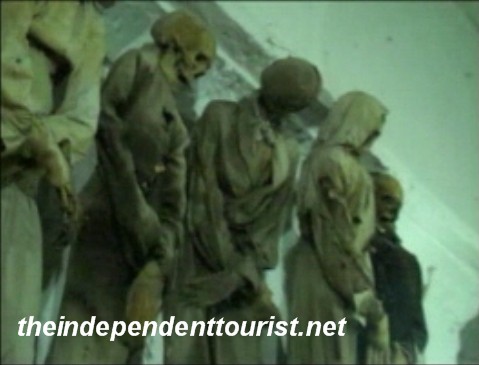
Skeletons in the burial dress in Cripta dei Cappuccini

Our first stop was the Cripta dei Cappuccini, in Convento dei Cappuccini. Seeing all the remains of men, women and children still dressed in their finest clothes of the period and displayed in standing form on the walls from the 1600’s to 1800’s was a sight I will never forget. The Convent is in the proximity of the main road from Monreale into Palermo.

Other sights in Palermo:

Palermo Cathedral, Palermo, Sicily

Palermo Cathedral.

The Palermo Cathedral is big, but more interesting from the outside than inside. It was rebuilt many times over the centuries, and like a number of churches in Palermo has Arabic as well as Norman influences. The exterior architecture has interesting features from the 1400’s-in particular the Portico and Towers.

Cappella Palatina, Palermo, Sicily

The mosaics of Cappella Palatina

The Cappella Palatina. Part of the Norman Palace in Palermo. This is the most stunning sight in Palermo, and almost equal to Monreale Cathedral. Founded in 1132. It has stunning gold mosaics and also intricate carved wood ceiling.

Palermo, Sicily, Italy

“Fountain of Shame” – Fontana Pretoria

Palermo, Sicily, Italy

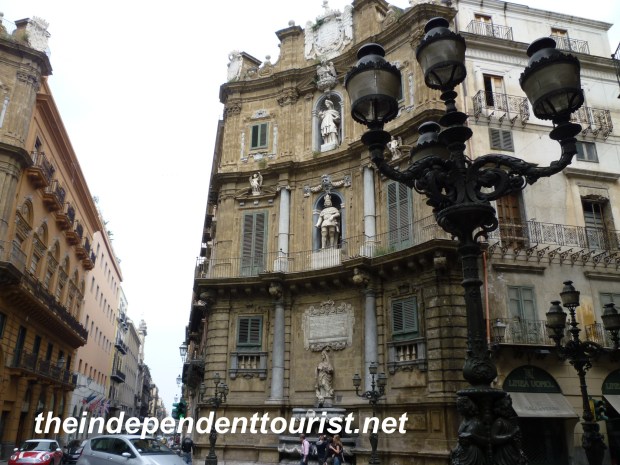
Quattro Canti intersection – Palermo (fashion district, dates from 1600’s)