Southwestern England Part 1: Nunney Castle, Wells Cathedral and Glastonbury Abbey

Southwest England

In August 2009, my wife, son, and I finally made it to Southwestern England—the counties of Somerset, Devon and Cornwall. We had wanted to visit this area for a long time. It is a beautiful area of England, but a little “out of the way” since there are no large cities in this region, and it “dead ends” literally at “Lands End.” This part of England is a little less visited by foreign tourists. It is popular summer destination for the British, however, and during August we found the area full of families and caravans (travel trailers) on vacation. In the U.S., most campers stay in State or National Parks. In England, it seems most of the caravan parks are privately owned, and most campers park in fields, or where possible, close to a beach area. As beaches in England go, the southwest has some of the best in England. Even if the temperatures are in the mid 70’s F, you will find locals out on the beach.

Be aware that many of the roads seem even narrower, more like Wales, with many cars pulling trailers that take up more than half the road, some spots are a very tight squeeze! Pull in your side mirrors to keep them from getting broken or scratched by the hedgerows and passing traffic.

The three sites below are all in close proximity, we were able to visit all 3 on the day of our arrival at Heathrow.
Nunney Castle

Nunney Castle is in the village of Nunney. It’s a smaller castle and is free of charge. It was constructed in the 1370’s for a veteran of the Hundred Years’ War with France. It has a moat around it, and 3 of the 4 outer walls and all four towers are intact. As with most castles in England, it fell victim to Cromwell’s parliamentary forces in the 1600’s, when castles were no match for gunpowder and cannons.
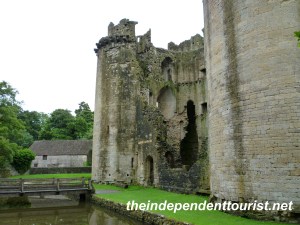
Another view of Nunney Castle

The castle is part of a park in the village, right next to a stream. It is considered a French design, and reminded us a little bit of Bonaguil Castle in France, with the round towers. Learn more here.

Wells Cathedral – West Facade

Wells Cathedral. Wells Cathedral (its construction is believed to have begun in the 12th century) is world-renowned for its exterior decorations on the West facade (see picture). There were originally 160 statues in niches on the western facade and towers of which 120 remain (another source says 127 of 176 remain–I did not count!).

Wells Market – Cathedral in background

The interior is known for its unusual and innovative inverted arches (making big “X’s” in the transept), to support the weight of the central tower, after the tower showed signs of weakening in the 14th century. Much of the stained glass is original from the 14th century also. Don’t miss the Chapter House and Lady Chapel with their incredible intricate ceiling vaulting. We also enjoyed wandering through the Saturday market in the town square of Wells, right next to the Cathedral.

Glastonbury Abbey

Glastonbury Abbey. Glastonbury town and abbey are steeped in legend going back to biblical times. This is one of the oldest inhabited sites in England. In the 1100’s, religious sites did everything they could to attract pilgrims, so the rumor spread that this was the burial spot of King Arthur and Guinevere, based on skeletons exhumed on the site. Glastonbury, a Benedictine abbey, was one of the richest monasteries in England and even today, the remaining ruins are beautiful. Unfortunately, much of the abbey’s stone was used by the local people for other buildings after King Henry VIII’s dissolution of the monasteries in the 1500’s. The grounds are well-kept, and there are some other interesting buildings on the site, including a 14th century Abbot’s kitchen.

Glastonbury Abbey View

For a great view of the surrounding area, visit Glastonbury Tor (tower) too. It’s a 15th century tower on a hill overlooking the town. There is almost no parking on the road leading to the tower, so I waited by the car while my wife and son quickly climbed up the hill to the tower.
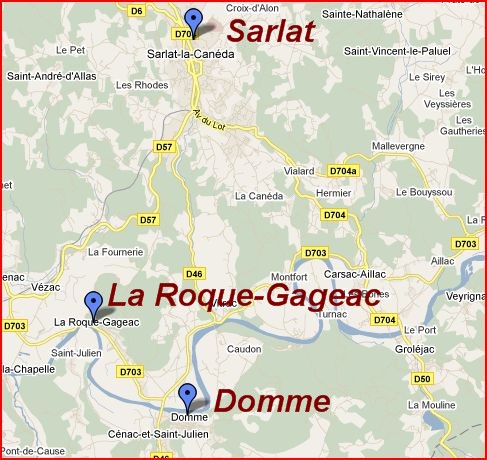
Dordogne, France Part 4 (of 4): Sarlat, La Roque Gageac and Domme

 Sarlat-la-Caneda (commonly called Sarlat) is a great base for exploring the Dordogne Region.  The town is large enough to provide a variety of accommodation and restaurant options.

Sarlat

Sarlat and the Dordogne Region of France.

Sarlat France

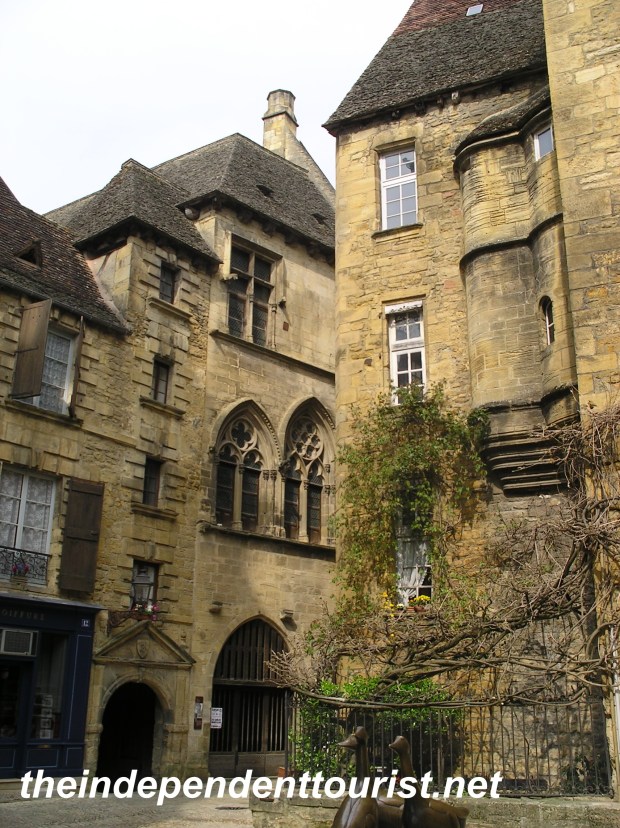
Architecture of Sarlat.

There are several inexpensive hotel chains on the south side of Sarlat, on Rue de Cahors, which are within walking distance of the town center. While Sarlat does not have many “must see” sights, the whole town itself is quaint, and worth a walking tour to enjoy the unique architecture, narrow streets and atmosphere. It was a loyal French village in the Hundred Years’ War, and therefore was protected and did well economically, hence why many buildings are well-preserved.

Manoir de la Malatrie

Manoir de la Malatrie, at entrance to La Roque Gageac.

The village of La Roque Gageac, only 14 km from Sarlat, occupies a narrow strip of land between the Dordogne River and a towering cliff on the north bank, epitomizes the Dordogne. It is considered by many to be one of the prettiest villages in France, and it is not difficult to see why.  As one drives from Beynac east along the D703 road, the Manoir de la Malatrie (now a hotel) is the first grand building we see. The style fits the Dordogne perfectly, even though it’s a 20th century reconstruction of the 15thcentury original manor house. The village comes into view right afterwards.

La Roque Gageac (5)

La Roque Gageac.

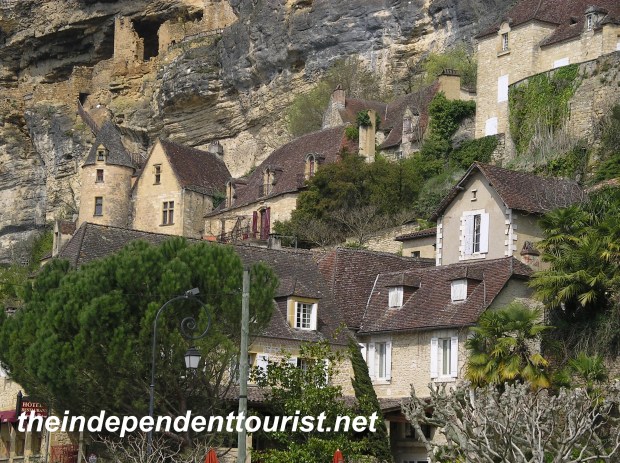
Every little street is picturesque. Homes are built right into the cliff, using the beige stone so common in the area. Take the time to explore the village and enjoy the enchanting setting along the peaceful Dordogne River.
Domme France

A gated entrance to Domme.

Domme is one of the many ‘Bastide’ towns established in the Dordogne during the Hundred Years’ War to provide strategic fortified population centers for strengthening the claims and position of both the French and English defenses. The Bastide towns are on higher elevations, which provided protection and early warnings of pending attacks and now provide great views of the valley. Domme is located just southeast of La Roque Gageac, along the D703.

Domme France (3)

Village of Domme.

Beneath the main town square there is a cave system that can be toured. Some tour books say that the caves were used during the Hundred Years’ War for hiding, but on our tour of the cave we learned that is was not discovered until the early 1900’s. If you have been to many caves, it may not be worth your time, but if not, it provides another interesting thing to do. There is also a little train that takes you on a short tour of the town. On the north side of the town, next to the church, a plaza provides a good view of the Dordogne Valley.

Dordogne, France Part 3: Commarque Castle (Chateâu de Commarque)

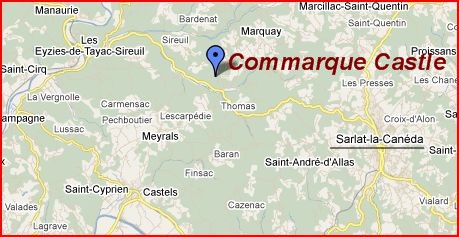
Commarque Castle Map

Commarque Castle is 15 km NW of Sarlat.

Commarque Castle is slightly off the beaten path , near Les Eyzies-de-Tayac-Sireuil.  I wouldn’t have even known about it had I not received a large picture book of France as a gift, which had a picture of the castle at sunset. It is not listed in the guidebooks I have on France, probably because it isn’t accessible without a car.  We drove to the Castle from Sarlat, which is only 15 kilometers away.  From the parking lot it’s another 600 meter walk to the castle on a trail through the forest.

Commarque Castle France (2)

Commarque Castle and Beune Valley.

Commarque Castle France

Village ruins, Commarque Castle.

As the view of the Valley of the Beune opens up, it’s a beautiful sight.  On the left hillside sits the castle and the village ruins, on the right side of the valley are niches carved in the rock wall, probably used as storage or possibly dwellings 700 years ago?  In the distance, nearly straight ahead, is another small castle, privately owned by an English person.  The Dordogne is a favorite spot of the English, and many have bought residences in the area.

Commarque Castle France (7)

Commarque church ruins and private castle in background.

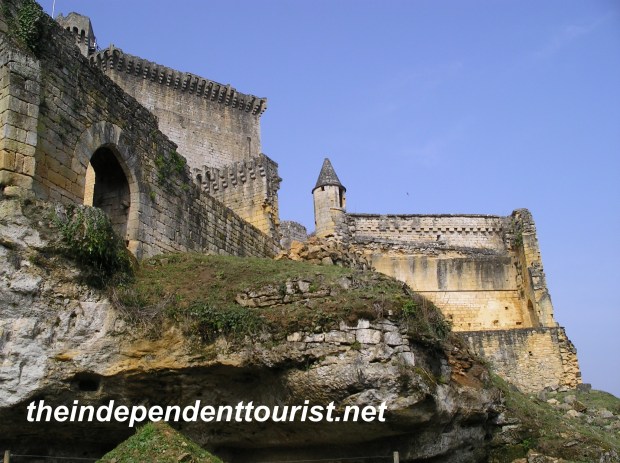
The castle’s early history is a bit uncertain.  It’s believed to have been founded in the 12th century, and to have been rebuilt in stone in the 14th century, with later additions continuing until the 18th century, when the castle and village appear to have been totally abandoned.  The English captured it during the Hundred Years’ War (1350’s – 1450’s) for several years.  This location was strategic—near the crossing of two main roads in medieval France and the site of a spring—essential for the village and castle life. Check out the castle’s website, http://www.commarque.com/htmfr/infos.php for more information.

Commarque Castle France (4)

Cave dwellings underneath Commarque Castle.

Commarque Castle is interesting for a several reasons.  First, it’s a quiet and peaceful setting in a secluded valley—we were there early in the morning, and had the castle to ourselves.  The sun was out, and the dew was just drying off the grass, with birds chirping and the sounds of a babbling brook nearby.  Second, there are several other buildings which made up the 13thcentury village that have been excavated fairly recently (1980’s), and add to the wonder of the site. Third, in the cliff directly underneath the castle there are living quarters carved out of the rock which can be visited.  Some of these dwellings are prehistoric, part of many which dot the Dordogne region. Fourth, it is possible to climb to the top of the castle keep (or donjon in French) for a great view of the village, and the private castle across the valley.

Commarque Castle France (9)

View of Commarque Castle donjon (tower keep).

If you love castles and sites that are less visited, take the drive out to Commarque, you won’t be disappointed.

Visiting France – An Overview

France

France-the largest country in Western Europe.

France is the birthplace of medieval Gothic architecture. Soaring cathedrals with priceless intricate stained glass windows (such as Chartres Cathedral) dot the country and take you back in time. The island fortress of Mont-St-Michel, exudes an incredible medieval feeling as one winds up the narrow alley through the village to the entrance to the monastery and moss-covered stone walls from centuries of damp sea air. In the beautiful Loire Valley, one finds the grand chateaux of the fifteenth and sixteenth centuries, which became a symbol of the excesses of the royal families, and led to the French Revolution in the late 1700’s. The Dordogne Valley offers the melding of the natural landscape and ancient architecture, such as the holy pilgrimage site of Rocamadour and other villages built right into the rock cliffs. Some of the best-preserved Roman ruins in Western Europe are not in Italy, but rather France (such as the Pont Du Gard aqueduct). It has some of the best prehistoric paintings (Lascaux Caves), and, if these sights weren’t enough, there’s also beauty in the natural landscapes— widely varied from green, fertile lowlands of Brittany in the northwest to the rocky “Massif Central” in the south center and soaring peaks of the French Alps in the southeast.

Le Man Cathedral 2_France

The Gothic flying buttresses of Cathédrale St.Julien, Le Mans.

Shown here are a few pictures of some less-visited sites (and one very overcrowded site!)

Blois Chateau France

Blois Chateau, in the heart of the city of Blois.

Puy-L'Eveque (2)

A view of the town from the Lot River.

When asked, many people might say, “oh yes, I’ve visited France” but in reality they’ve seen a few of the sights in Paris and that is about it. It’s like someone visiting New York City, and saying they’ve seen the U.S. France is a special part of Europe to me. I can’t say enough about the incredible array of sights that France has to offer tourists.

Eiffel Tower 1

Eiffel Tower near Seine River, Paris.

 Traveling by Car in France

We love to rent a car when we are in France, which allows us to meander on quiet country roads and visit pristine medieval villages where very few tourists venture.

Keep in mind that many of the main highways in France are “peage” or toll roads. Make sure you have a couple different credit cards that work in Europe, since I have found that some tolls booths accept one card (like a Visa) and another booth may accept another card (like American Express). Cash is also accepted at staffed toll booths. Even with the tolls, renting a car when traveling with 2-4 people is very economical. Get a diesel fuel car if you can, since the mileage tends to be much better. Cars with automatic transmissions are less common, more expensive to rent, and are less fuel efficient. Via Michelin is a great website for calculating distance (in kilometers), as well as cost for fuel and tolls between different cities in Europe.

Take some time to familiarize yourself with the European road signs prior to driving, and when on major highways, do not linger in the left lane, it is for passing only. When coming into a town, usually the key sights are in the center of town, so follow the signs to “Centre” and then look for the big blue “P” signs which indicate parking garages or lots.

Accommodations in France

For the traveler who wants an economical European trip, France can be a great place to go, especially if visiting off-season, and if you are ok with modular, generic and basic hotel rooms. France is the home of many inexpensive roadside hotel chains such as Formule 1 (typically shared bathroom), Etap (private bath), and Ibis (all part of the Accor Group). B&B Hotels are similar to Etap, and offer very basic rooms (a double bed usually with a 3rd single bed).  Another option is Hôtel Première Classe, which is even more basic (no carpet), with a tiny bathroom (smaller than most cruise ships!) and double bed with a 3rd single bed. All of these hotels are popular with Europeans on road trips. Many of these rooms are 30-40 Euros per night for 1-3 persons, and they are ubiquitous, usually just outside the towns on an intersection (roundabout) located near roadside restaurants or light industrial buildings. These are not quaint accommodations, but they are functional, cheap and plentiful. They have 24 hour automated check-in, and usually a very limited breakfast service for an additional fee. Most have wireless internet service too. Some of these hotels (such as Ibis and Etap) are also near train stations.

Restaurants in France

In the off season, trying to find restaurants open at convenient times is sometimes a challenge. We found that restaurants often close early (before 5 pm) during the winter or do not open until later (after 8 pm), if at all. Europeans generally eat later than we do in the U.S., but choices seem to be more limited in October-March. A good idea is to eat your main meal before 2 pm, or whenever you find a place open.

Language Considerations

As with any country, but especially in France, learning a few words is very helpful.  The French are not particularly fond of speaking English. Knowing a few words helps tremendously in navigating by car, asking a price, ordering off a menu, and seeking directions. I find French pronunciation somewhat challenging, but the effort will be appreciated. My family and I played a game as we traveled in France, thinking of all the English words that are French in origin—it was fun to see how many words we kept thinking of! The history of France and England are so closely interwoven it’s not surprising that so much of our vocabulary comes from France.

In future posts on France, we will explore various regions of this magnificent country.

Dordogne, France Part 1: Rocamadour

Rocamadour

Rocamadour is in south-central France

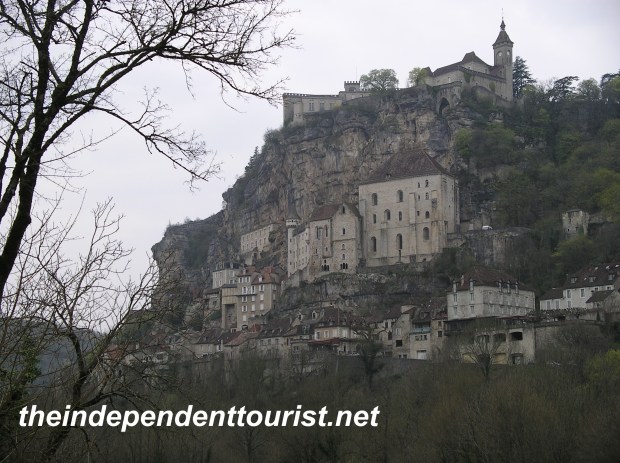
The Dordogne region and in particular the village of Rocamadour should be on everyone’s must-visit list in France. We have been to Rocamadour twice, and both times I was impressed how stunning the setting is—an almost vertical village nestled into a rock face on the side of the gorge of Alzou. The Dordogne region is full of many river gorges and rock cliffs with homes and villages built into the rock. In many cases, the cliffs provide a natural rear wall for the buildings.

Rocamadour France

Rocamadour (the Château is at top of cliff, the Basilica is the large building below the Château)

The village gets its name from St. Amadour, his body was said to have been found in an ancient niche (located in the Church square described below) in an undecayed state, and many miracles, mainly healings (at least 126) followed. Rocamadour became a very popular pilgrimage site in the 1100’s based on these miracles. During the Middle Ages, pilgrimage sites existed throughout Europe. These sites were typically associated with Christian relics and miracles. The rich and the poor would travel long distances to these sites to worship, be healed and forgiven. Kings and Lords of both England and France have travelled to Rocamadour. The village was occupied by the English in 1369 during the Hundred Years war.

The only convenient way to visit the Rocamadour is with a car.  There is a tourist information office at the top of the cliff, on the main road just across from the Château and also in the town itself.

Rocamadour France (3)

Main Street of Rocamadour

Rocamadour is a one (pedestrian) street town, with gates at either end, and parking is found either outside the Port du Figuier (east gate-very small parking lot), or below the village at the bottom of the gorge. Be prepared for lots of steps up to the town, and then up many more to visit the many chapels and Basilica of St. Sauveur (11th-13th centuries).

Rocamadour France (4)

Church Square nestled against the rock cliff face.

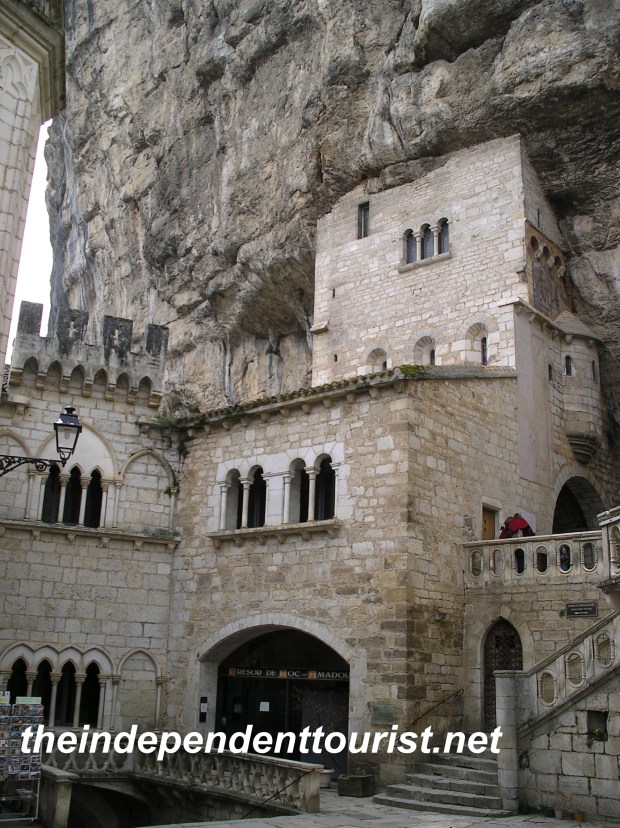
The seven chapels are built around the church square (which used to be a burial site), nestled underneath the rock cliff, at the top of the Grand Stairway. The Grand Stairway (Grand Escalier-216 steps), leads from the pedestrian street up to the center of the various chapels, including the Basilica.  Pilgrims for hundreds of years, and even today, climb the Grand Stairway on their knees in penance, sometimes carrying chains symbolizing their sins. Several of the chapels have been rebuilt.  It is worth spending a little time just enjoying the church square at the top of the Stairway. The medieval chapels on different levels in this compact area and the rock overhang give this place a very unique feeling, one is transported back in time, thinking about this area being filled with pilgrims.

Rocamadour France (6)

St. Michel’s Chapel and Church Square

The three chapels which are mostly original and the most interesting to visit are:  The Basilica (including the crypt), The Notre Dame chapel, and St. Michel’s chapel. All three of these buildings are built right into the cliff, with the sides of the chapels being cemented into the cliff, and the rock face forming the back wall and part of the ceiling in each chapel.  The niche where St. Amadour’s body was found is between the Notre Dame and St. Michel’s chapels.  Also, look carefully for the faded fresco near the door of the Notre Dame chapel.

Rocamadour France (5)

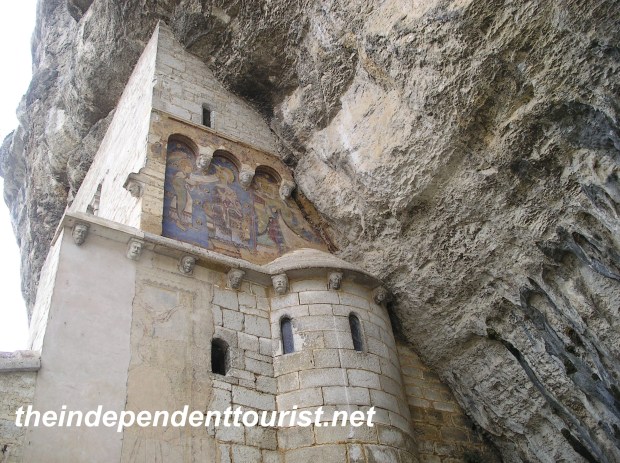
Frescoes high on St. Michel’s Chapel.

St. Michel’s Chapel, has remained almost completely intact since the 12th century.  It contains some excellent 12th century frescoes on the outside above the door (near the rock cliff) and inside the chapel as well. When we visited in November of 2003, this chapel was closed. When we visited in March of 2009, the chapel was open.   Rather than walking back down the Grand Stairway, take the narrow passage way through the Basilica and walk down the trail past the carved out rooms with the Stations of the Cross, which is interesting also.

Above the village at the top of the cliff, is Château de Rocamadour.  The interior is off limits to tourists, but we did buy tickets that allowed us to walk on its ramparts right above the village overlooking the gorge.

On our first visit to Rocamadour, we stayed in the village of Gramat, just a few kilometers from away, since in November there were no accommodations open in the town.

A Tour of Buenos Aires

I had always heard that Buenos Aires has a very European feel, and after visiting, I would agree. Most Argentines are of European descent. Wide boulevards, plazas, fountains, grand monuments and many parks make Buenos Aires a beautiful city. I have been there in both the fall (March) and spring (September). Those months are great times to visit. Please note that although there is no official visa required for Argentina, U.S. citizens are required to pay a fee upon entry to the country, payable in cash (exact change required) or by credit card. The fee went up to $140 in August 2010.  The entry permit is valid for 10 years.

I have stayed in the NH Jousten hotel, a decent business hotel in a central location (on Av. Corrientes) near the Av 9 de Julio (central boulevard in Buenos Aires). I have also stayed at the Hilton in Puerto Madero, which is a trendy mix of modern construction and renovated old warehouses. The Hilton hotel is relatively new with a huge atrium and many amenities.

Puerto Madero_Buenos Aires-Argentina

View of Puerto Madero, Buenos Aires

Puerto Madero has many restaurants (although fairly expensive by most standards: $25-50 per person), shops, marinas and a couple of old sailing ships from the late 1800’s that can be visited. There is also a ferry terminal nearby for trips to Uruguay (see my travel blog on Uruguay).

As might be expected, the beef is excellent and we found very good Italian food also. Prices drop dramatically by going just a little ways out from the central district. Four of us ate at an excellent fondue restaurant (La Rosadita) in the Palermo neighborhood for less than $55, including drinks. Argentineans eat late by U.S. standards-typically around 9 or 10 pm.

It is easy to arrange a day tour of Buenos Aires either through your hotel or through a transportation service directly. The main sights can be covered in ½ day. The areas usually covered are: La Boca (the old port and immigrant area), the historical center of Casa Rosada and Plaza de Mayo, and Recoleta (home of many embassies, and the famous La Recoleta Cemetery).

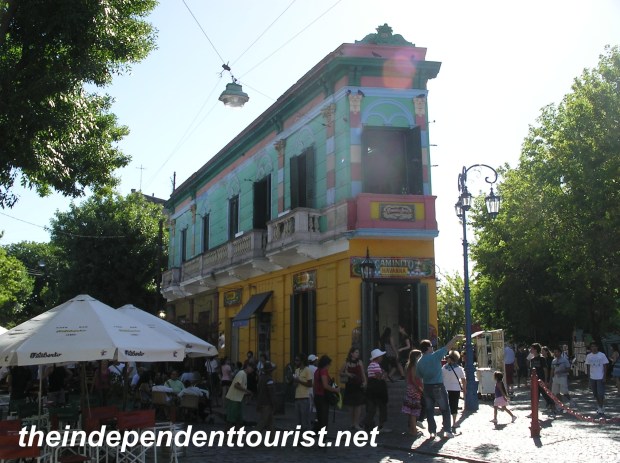
La Boca and Caminito Street. This area reminded us a little bit of New Orleans.

La Boca Buenos Aires Argentina

La Boca, Buenos Aires

Musicians, street performers, costumed tango dancers and many little shopping booths are found in this colorful area. A number of houses are made of brightly painted corrugated metal siding, which was an inexpensive building material for new immigrants. Be sure to explore the little alleyways behind the street facades-a lot of shops and interesting sights are hidden behind the street fronts.

Caminito Street Buenos Aires Argentina

Caminito Street, Buenos Aires

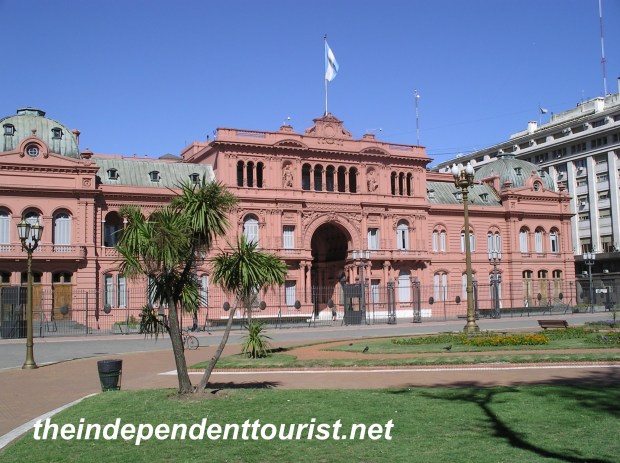
Casa Rosada (the Pink House-below). This is the historic residence of the President of Argentina. It houses a museum which we did not take the time to visit. The Plaza de Mayo is located by the Casa Rosada and is a gathering spot for demonstrations, tourists and great people watching. Nearby is Florida Street, a long pedestrian-only shopping street.

Casa Rosada Buenos Aires Argentina

Casa Rosada (Presidential Palace), Buenos Aires

Tango Shows. No visit to Buenos Aires would be complete without taking in a tango show. Our hotel recommended the Carlos Gardel show, whose name is synonymous with tango. Options include dinner and the show, or just the show, which is what we did. The cost for the show only (booked through the hotel) was $150 for two. The theater was packed on Saturday night, and the dining area was full (and tight!). For viewing the show only, we sat at a bar stool area overlooking the dining space, and had a great view of the stage. The show was very enjoyable-a mix of dance numbers and orchestra music.

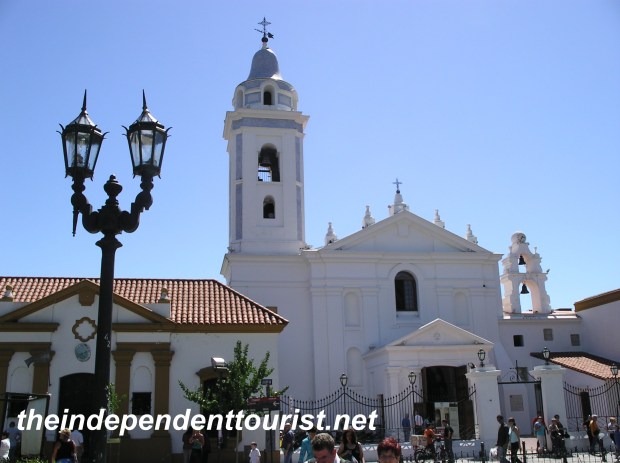
Recoleta. This is a highly fashionable area with many beautiful buildings and monuments.  Many buildings have a classical French design, including of course the French Embassy. The Church of Nuestra Señora de Pilar was built in 1732, and is the oldest Church in Buenos Aires.

The Church of Nuestra Senora de Pilar

The Church of Nuestra Senora de Pilar, Buenos Aires

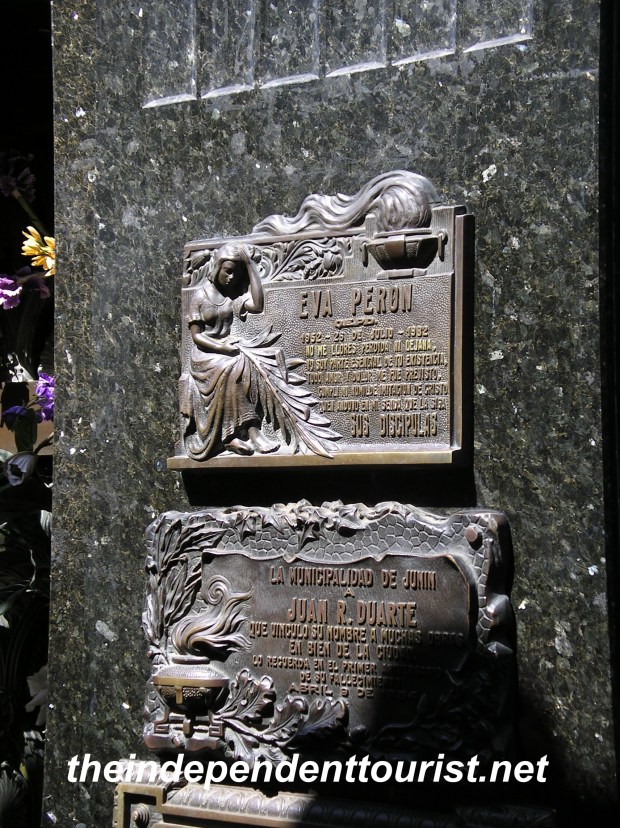
Next to the Church is La Recoleta Cemetery which is like a miniature city, with little streets lined with grand mausoleums which are beautifully decorated. Eva Perón, the beloved First Lady and political leader of the 1940’s and 50’s is interred here along with many other famous Argentineans.

Eva Peron Grave Recoleta Cemetery Buenos Aires Argentina

Eva Peron Grave Recoleta Cemetery Buenos Aires

La Recoleta Cemetery Buenos Aires Argentina

La Recoleta Cemetery, Buenos Aires

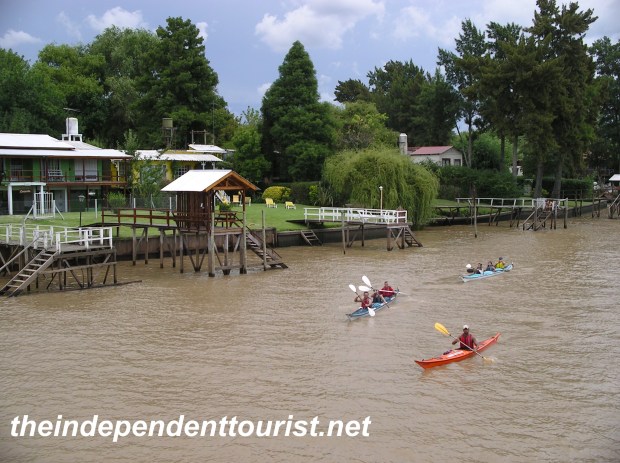
Parana River Delta
Parana River Delta Argentina

Parana River Delta

Parana River Delta (above). If time permits, it is also worthwhile to get outside the city. We visited Tigre and the Parana River Delta, and took a boat ride through the Delta. It is just about 18 miles from the heart of Buenos Aires, and many people have weekend homes in this area where they sail, swim, ski, relax and camp. These homes could have been anywhere and the area reminded me a little bit of the bayou country in Louisiana. There are some good shopping stalls in Tigre, I got some nice leather gifts at great prices.

From Buenos Aires, we also took a day trip across the Rio de la Plata to Colonia, Uruguay.  See our short blog on Uruguay.

On a future trip we hope to explore the countryside of Argentina.

Caltabellotta Sicily Italy

Tour of Sicily: Overview

Sicily Italy Map

Sites visited in Sicily.

We visited Sicily in late April. This is a great time of year to visit, due to the pleasant temperature (low 80’s F), spring flowers and the green landscape. The only downside we could find with this time of year is all the elementary age school children visiting many of the tourist sites—it must be the time of year for school field trips. Sicily has a little different feel than other parts of Italy. The architectural style of many buildings is Baroque, built following a devastating earthquake in the late 1600’s. Sicily is an autonomous region of Italy, and appears to be a little poorer economically than northern Italy. The island has been conquered by many different nationalities over the centuries. For a good short overview of the history of this strategic island, I recommend the book:  Sicily: Three Thousands Years of Human History, by Sandra Benjamin.

Given the range of history, the sights are quite varied—from beautiful natural scenery, Greek Temples and Roman ruins, to medieval towns, churches and grand Baroque architecture.

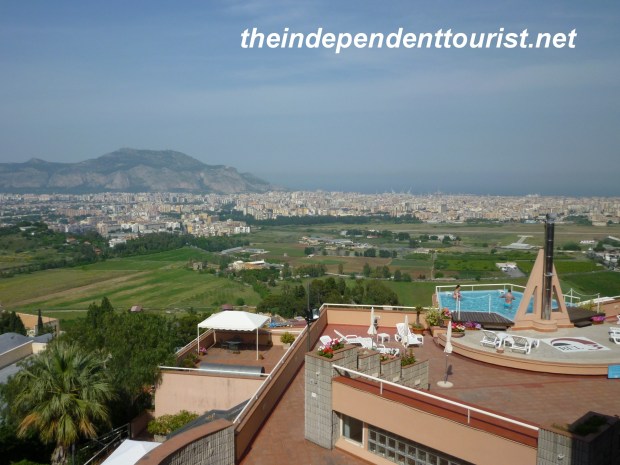
Hotel Bel 3 Palermo, Sicily, Italy

Hotel Bel 3 Palermo.

Since Sicily is the largest island in the Mediterranean, we flew in to Catania on the eastern coast, and flew out of Palermo (northwest coast), so we could make a counterclockwise tour of the island. Other options to get to the island include a train to Messina (via a short ferry ride) or a ferry from Naples. We rented a car at the Catania airport through Europe By Car. The roads are in good condition and it was easy to navigate to all the sites. There were very few toll roads (Catania-Taormina and Palermo-Cefalù were the only ones we encountered) or major highways, most roads are two lane. I expected to encounter a lot of slow truck traffic and was pleasantly surprised to find very little traffic in general. Most visitors to Sicily travel by tour bus. We did our best to visit sites at hours that would avoid the tourist busloads.

B&B Piazza Armerina, Sicily Italy

B&B private rooms in Piazza Armerina

There are relatively few hotels on the island, so we stayed in bed and breakfast (B&B) accommodations, allowing us to meet local families and get a flavor for life in Sicily. We used BBPlanet.com and Venere.com to arrange the B&B’s. We loved most of the B&B rooms and locations. The Sicilian people are very warm and helpful.  We spent about 10 days on Sicily, which allowed us to cover the island’s main sights and a few less visited sights. We also spent two nights on Malta, taking the ferry from Pozzallo (near Ragusa). See our post on Malta for more information.

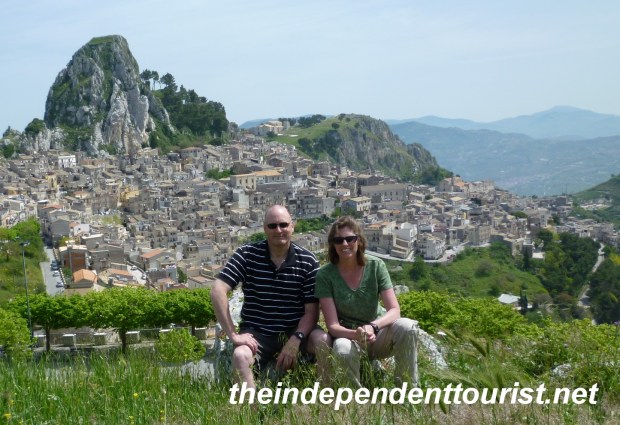
Caltabellotta Sicily Italy

The hilltop town of Caltabellotta in southwest Sicily

Although we had read that English was less widely spoken here, we didn’t have any problem communicating. Occasionally in restaurants ordering food was a challenge given our lack of Italian language skills, although knowing some Spanish certainly helped with understanding Italian vocabulary and in communicating. Plan on putting on some calories since good gelato can be found almost everywhere!

Temple of Heaven, Beijing, China

The Temple of Heaven-Beijing, China

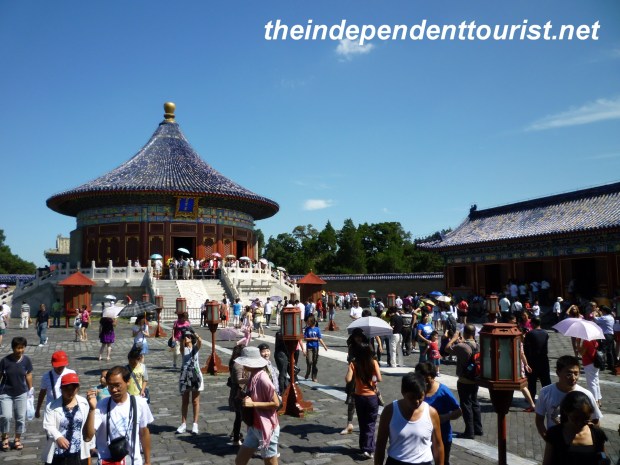
On a business trip to China in August 2010 I was in Beijing and took the opportunity to visit the Temple of Heaven complex. I had seen pictures of the round Temple, but I had no idea it was part of such a large complex covering about 675 acres on the south side of Beijing (to see more of Beijing click here).

Beijing is laid out in a series of concentric “ring roads” with the main historical area (Forbidden City and Tiananmen Square) in the center ring. I stayed at the Ascott Hotel on the west side of Beijing, about 15 minutes by taxi from the Forbidden City and about 15-20 minutes from the Temple of Heaven. The Ascott is a great business hotel, and my room (with a corporate discount) was less than $150/night. The rooms are large-actually small apartments with a clothes washer, small kitchen and living room. It is also within walking distance of the “Beijing Friendship Store” on Jian Guo Road which has about 5 floors of packed shopping stalls with everything you can imagine for sale-be prepared to be hounded by the shopkeepers!

I arrived at the North Gate of the Temple of Heaven after a $4 taxi ride from the Ascott, and paid about $10 for the entry fee, which included not only the Temple of Heaven itself, but some of the other important buildings on the site as well. (Be sure to verify what your ticket provides access to, since there are a few options). There is a nice souvenir map available at the ticket office.

Temple of Heaven, Beijing, China

Temple of Heaven, Beijing

The Temple of Heaven (or “Hall of Prayer for Good Harvests”) was built in 1420.  The other buildings date from the 1400’s and 1500’s. The Emperors’ annual procession (must have been quite impressive-over a mile long and included elephants, musicians, imperial guards and other officials) began in the Forbidden City and marched south to this complex. The extensive, tranquil gardens provide a good buffer to the exterior world. The Temple of Heaven is where Emperors would offer sacrifices and pray for a good harvest. The Emperors also lived here and fasted during the ceremonies, keeping themselves focused in a state of worship.

Hall of Fasting, Temple of Heaven, Beijing, China

Hall of Fasting

In addition to the Temple of Heaven, visit the Hall of Fasting, the Imperial Vault of Heaven, the Echo Wall, the Circular Mound Altar and the Divine Music Office, which has a display of interesting instruments and huge drums.

Imperial Vault of Heaven, Temple of Heaven, Beijing, China.

Imperial Vault of Heaven.

temple-of-heaven-kitchen

North Kitchen, Temple of Heaven, Beijing, China.

Other buildings include the kitchen complexes and the butcher house, which prepared the animal sacrifices. Apparently the animal sacrifices were beaten with mallets rather than butchered with a knife-not something I really want to think about too much.

A long covered walkway protected the sacrifices as they made their way from the Divine Kitchen to the altar in the Temple of Heaven. The walkway is open, but the kitchens and butcher house were not open during my visit.

Croatia-Part 1: Trogir, Salona and Split


Split and Surrounding Area

This is the first article in a three part series on the Dalmatian coast—a spectacular part of Croatia.  Croatia was one of the best and “easiest” vacations we have taken—we found it easy to confirm rooms, find food (restaurants were open almost all day), arrange services, and get around. The food is excellent—Italian fare, local meat dishes, and seafood are the most common menu items.  Most menus are in four languages (Croatian, English, German and Italian). The gelato is as good (or better) than that found in Italy. The Croatian people are friendly and many are fluent in English.


Croatia-Dalmatian Coast

Croatia-Dalmatian Coast.

We arranged most of our rooms throughout Croatia using hostelbookers.com.   Most rooms are “apartments” with a bedroom, bath, and small kitchen. In October, we found rooms for two people ranging from €30 to €60 per night.   Since we were visiting a couple islands too, we decided to rent cars for the day as needed. We arrived at the Split airport from Munich, Germany. The Split airport is tiny, and after the plane landed on the only runway, it turned around right on the runway and taxied in to the very small terminal building (there is construction going on at the airport to enlarge the terminal).

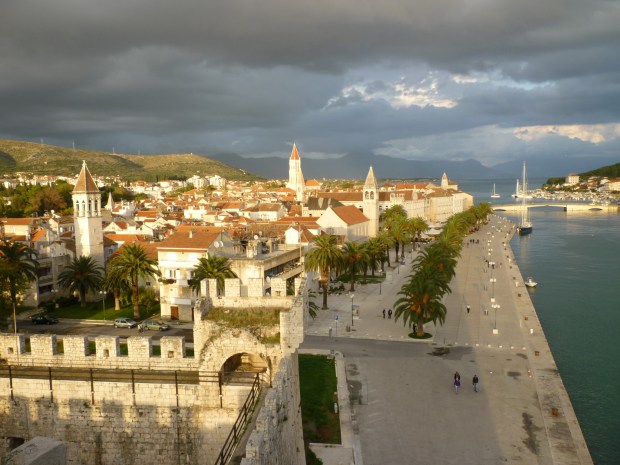
Trogir 2

View of Trogir from Kamerlengo Castle.

We had prearranged a car rental (EconomyCarRentals.com) at the airport, met the agent at the terminal and picked up our car and drove west to Trogir, just a few kilometers from the airport. Trogir is a historic Venetian town on a small island, right next to the mainland and our room was in the middle of the town.  Our host met us at the car park close to the island and walked us over a wooden bridge to our room.  Trogir is beautiful, and can be toured on foot in a few hours (or less). Most of the historic town centers we visited in Croatia are closed to autos, making a walking tour much more enjoyable.

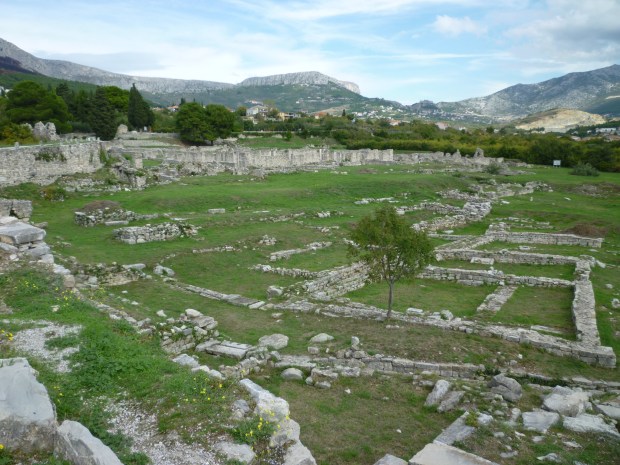
Solona Ruins

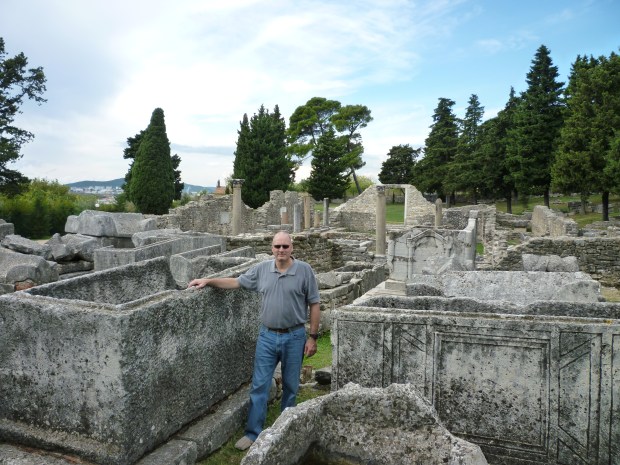
Roman city ruins of Salona.

The next day we drove to Salona, close to Split, to see the Roman city ruins. Although there are signs on the roads directing traffic to the ruins, they are still a bit difficult to find. The necropolis just outside the city ruins has many large tombs, and the city ruins are interesting too. Unfortunately, a busy highway and some industrial buildings nearby detract a bit from the site.

Solona Necropolis 2

Salona Necropolis.

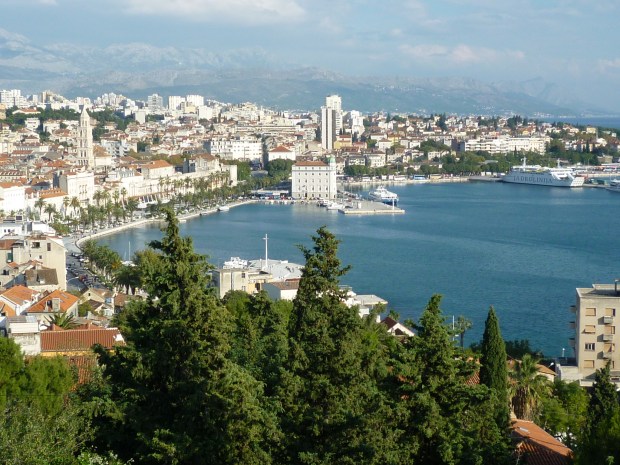
From Salona, we drove into Split, a fairly large city. Our room, the most expensive of the trip, was €60. It was a large apartment with a washing machine, and about 10 minutes’ walk from the old city center.  We loved Split. The old city is built in and around Diocletian’s Palace. From the west side of the old city there is a park on a hill that provides a great overlook of the city. It’s well worth the hike.

Split Croatia (4)

View of Split, Croatia.

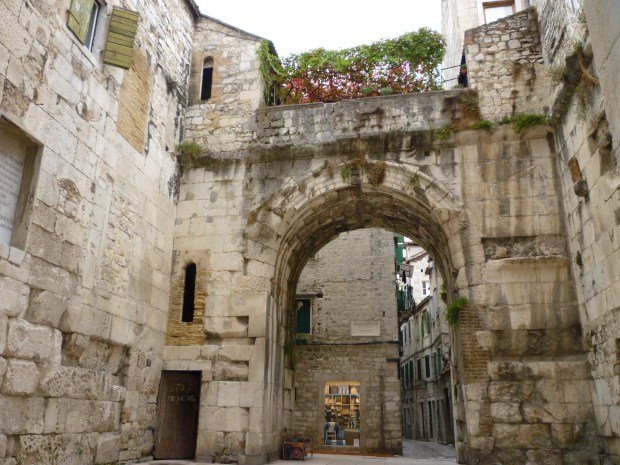
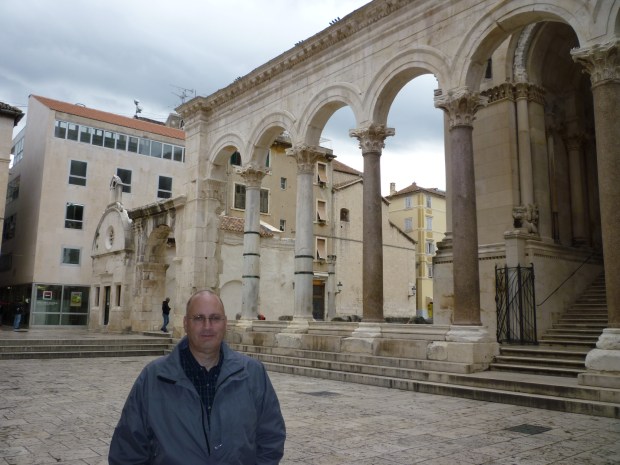
The old city is so densely built that it’s hard to get a perspective on the layout of the buildings. Some Roman buildings (Diocletian’s tomb-now a cathedral, and Temple of Jupiter) remain among the medieval buildings, and in some cases the walls of the Palace and structures are incorporated into the medieval buildings. Below the Peristyle (courtyard) is the basement of the Palace—part of which has been turned into shops. The rest of the Peristyle is open to visitors for a fee, well worth the cost (about $4). Climbing the stairs of the bell tower by the Peristyle provides a great view of the Palace and old city and puts it all into perspective.

Split Croatia (14)

Gate into Diocletian’s Palace.

Split Croatia (12)

Diocletian’s Palace-Peristyle.

Split is a major port, with ferry lines going to numerous locations (including Italy) and cruise ships passing through.

Croatia-Part 2: Hvar and Korcula

Hvar

From Split we took a ferry to Hvar island, about 45 minutes away. A few words about the main Croatian ferry line, Jadrolinija. It has regularly scheduled service to many island destinations.

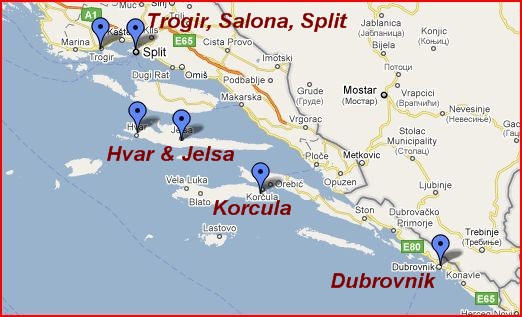
Croatia-Dalmatian Coast

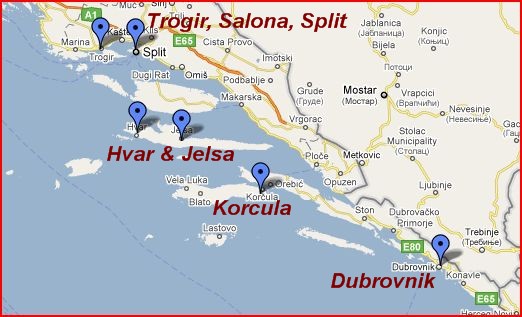
Map of Destinations we visited in Croatia.

However, I found their website a bit confusing when trying to plan our schedule, and I don’t think I’m the first person to think it’s confusing. The good news is that even in October, we found regular ferry service, and it is easiest to just ask the local ferry office or tourist information office upon arrival for schedule information. Keep in mind it’s much easier to travel by foot rather than having to take a car ferry. The passenger ferries go right to the main little towns and run more frequently, especially off-season.

Hvar Town Croatia 2

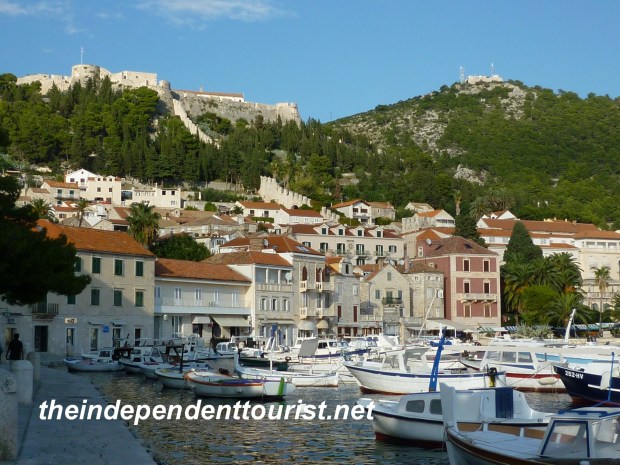
View of Hvar, Croatia.

Hvar town on Hvar island is nestled around a harbor with a 16th century fort overlooking the village and harbor. Our apartment was about 10-15 minutes away from the ferry dock and our host was kind enough to pick us up with our luggage and to drive us to their apartment home. We were able to easily walk to a grocery store and into Hvar. Hvar is a small town —very scenic with historic buildings, fortified walls and narrow streets.   On our first afternoon we went exploring and found a car rental service near the bus station and made arrangements to rent a car for the following day.

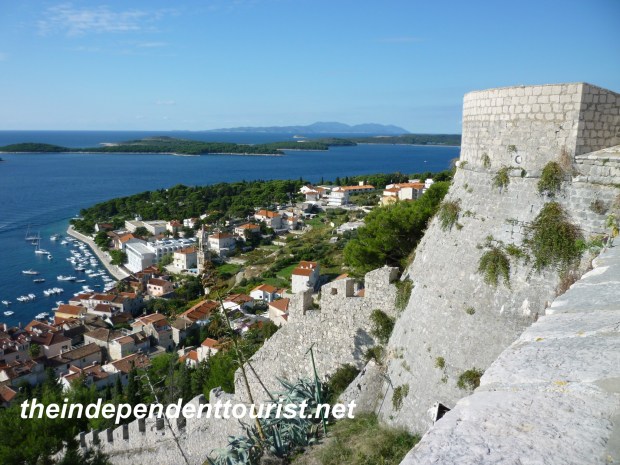
The next morning we drove up to Fort, and enjoyed the expansive view of Hvar, the Pakleni  islands, and the island of Vis in the distance.

Hvar Fort Croatia

View from Fort, Hvar Island.

We then drove out to the small towns of Stari Grad, Jelsa and Verboska (which are all close together) taking about an hour via the scenic route.  Traffic was sparse and the roads were very good, although narrow. These towns are also historic and attractive, although not quite as picturesque as Hvar itself.

Hvar Island Croatia 1

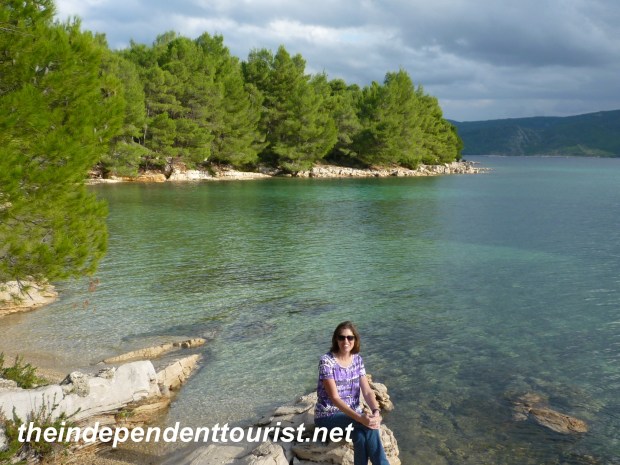
Beach area–near Jelsa, Hvar Island.

Near Jelsa there are some great beaches and secluded parks and trails that would be perfect to visit in swimming season (we were there in late October, and even then there were a few people on the beach).

Hvar island is about 80 km long, and we covered not quite half the distance, and felt we got a good feel for the island. We noticed the island is greener on the eastern side (facing the mainland) then the western side.

Hvar B&B

Our apartment–just a 10 minute walk from Hvar Town.

There are lots of apartments in Hvar town for rent, especially west of the Harbor. In the off-season, it should be very easy to find places to stay. There is a beautiful walkway along the shore to the west of town also.  While there were a few tourists this time of year (a few sailboats in port, and one cruise ship visited for half a day), the island was quiet, and very peaceful, even though it’s only 45 minutes from Split by ferry.

Korcula Croatia

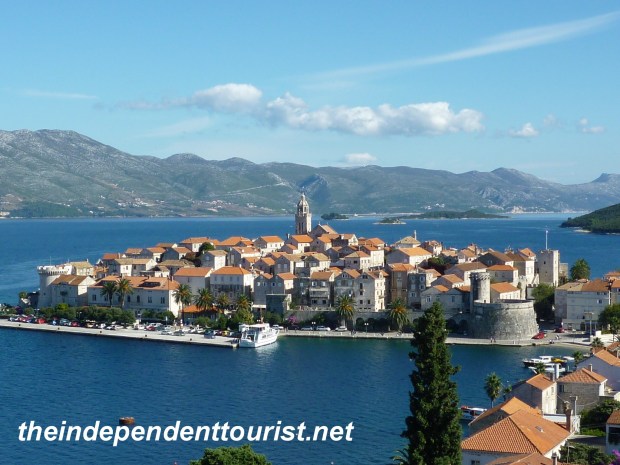
Korcula town.

Korčula

We took a passenger ferry from Hvar to Korčula (Krilo Ferries) that goes right to the town of Korčula on Korčula island. It was about a 90 minute trip. Coming into Korčula at night was stunning.  Although it’s a small town, we enjoyed seeing the old fortified towers and bell tower of the Cathedral lit up as we pulled into the harbor.

The town of Korčula is a perfect medieval-feeling town with narrow streets, archways, and towers and gates. There were lots of jewelry stores in the town, many selling coral earrings, bracelets and necklaces.  We found a great little shop right inside the main entrance (the “Land Gate”) to the old town.

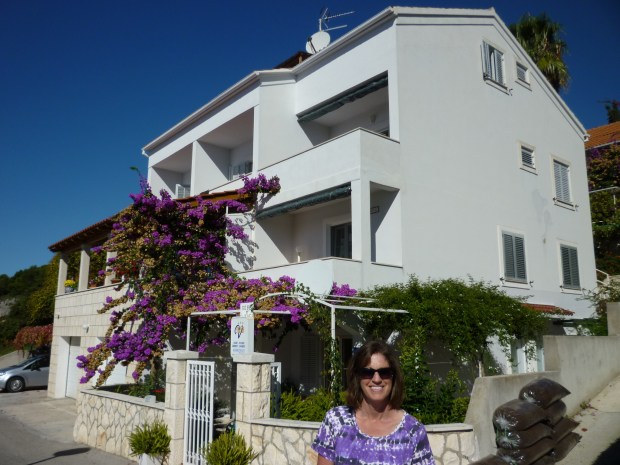
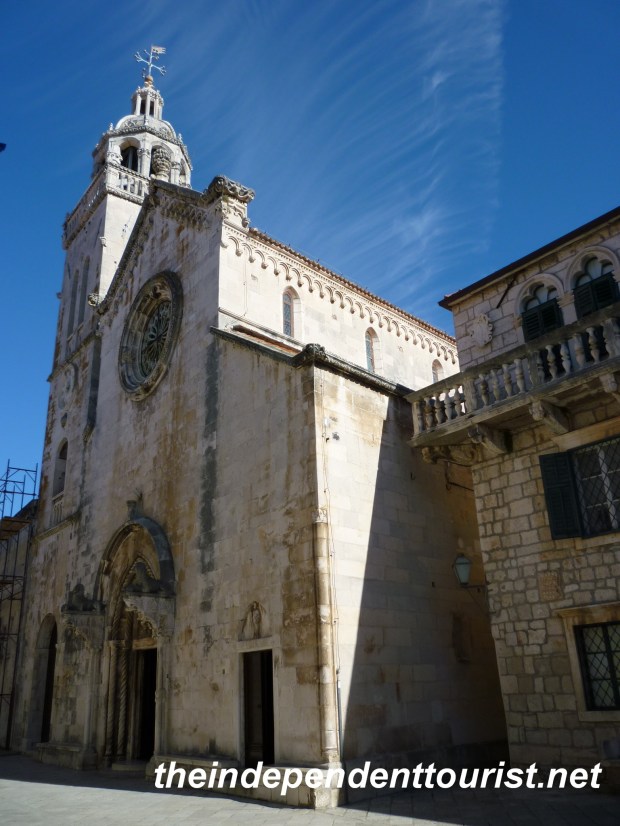
Our apartment was on the edge of the town, overlooking the water and the mainland. The water was so clear that I wanted to dive in from our 2nd story room!  The streets on the southeastern side of town are curved to break the winds that come in the winter and on the opposite side the streets are straight—interesting to view the difference from the main square.  The Cathedral of St. Mark (13th-15th centuries) is built on a trapezoidal shape for this reason.

Cathedral of St. Mark Korcula Croatia

Cathedral of St. Mark, Korcula, Croatia.

From the Land Gate, one can take stairs to the top (for a fee) and have a great view of the whole old town. Marco Polo’s house (really just a tower next to the shell of the old house) is open, and climbing to the top provides a nice view of the town and across to the Pelješac peninsula. We enjoyed just wandering the old streets, visiting a few museums and shops and relaxing on the balcony of our apartment in the bright sunshine. Given that we were only in Korčula for two nights and one day, we did not rent a car to explore more of the island. It was a perfect amount of time to see the old town, relax and enjoy the ambience.

As usual in Croatia, there were great restaurants in the old town and also just outside the Land Gate area.