Grand Canyon National Park

Two Days in Grand Canyon National Park

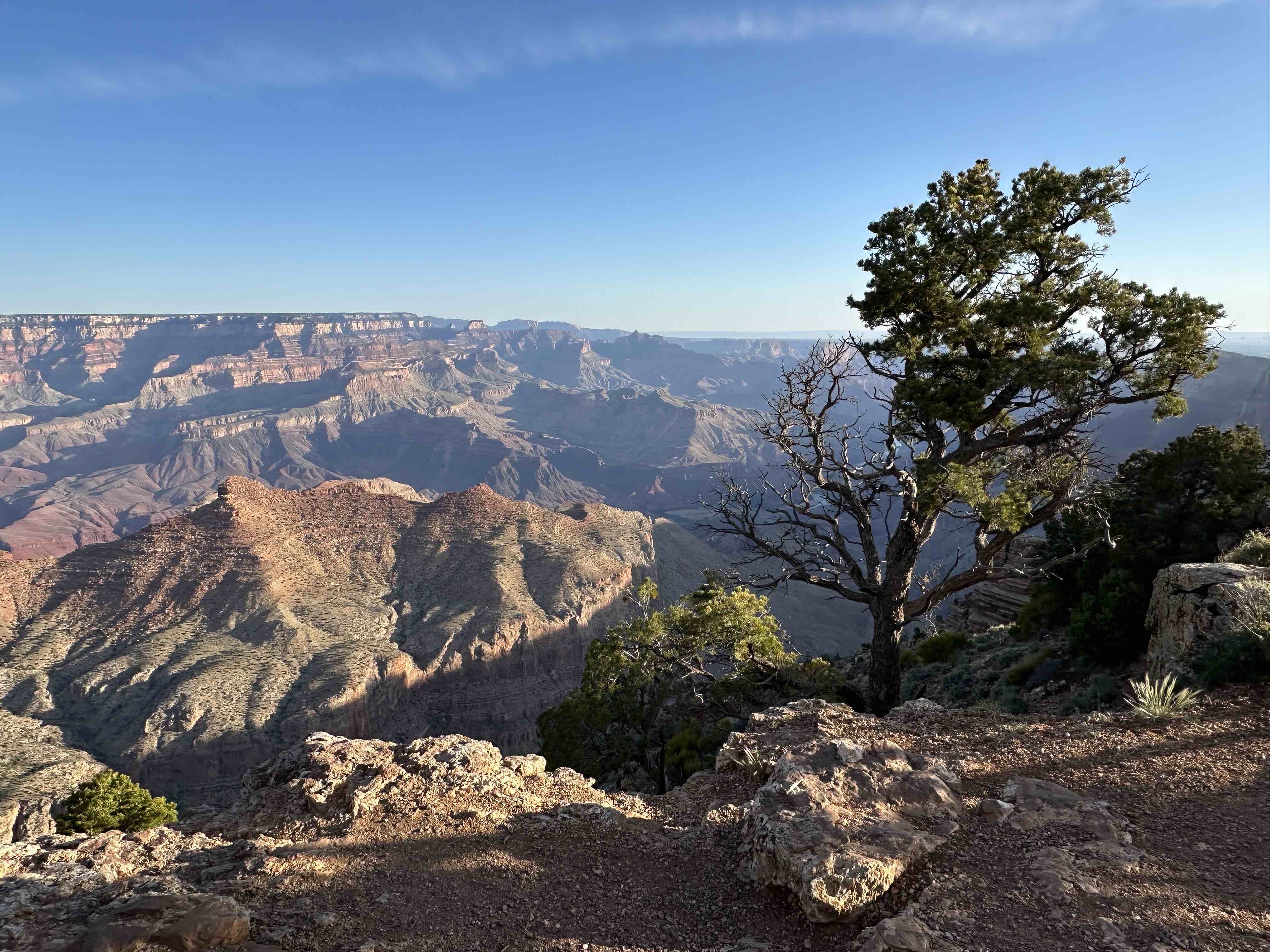
We spent 3 nights and two days in Grand Canyon National Park, Arizona. We camped at Mather Campground, not far from the South Rim Visitors Center and Village. There are small restaurants, shops, a grocery store and a laundry facility in the Village near this campground and Visitors Center. This location is central to everything on the South Rim. If camping is not your thing, there are lodges available in the Park also.

Helpful Tips

If you plan to visit and stay overnight or longer, plan ahead – we made our campground reservations about 6 months in advance. We visited the Park in May and while the Park was busy, it was not crazy. Also, the weather was perfect, with the highs in the low 80’s at the rim of the Canyon, which is about 7,000 feet in elevation. Keep in mind as you descend into the Canyon, the temperatures increase dramatically. To avoid the hassle of trying to find a parking spot at the various viewpoints, use the Park Shuttles, they are very useful and make regular stops.

Below are listed our main stops and activities in Grand Canyon National Park.

Desert View Viewpoint

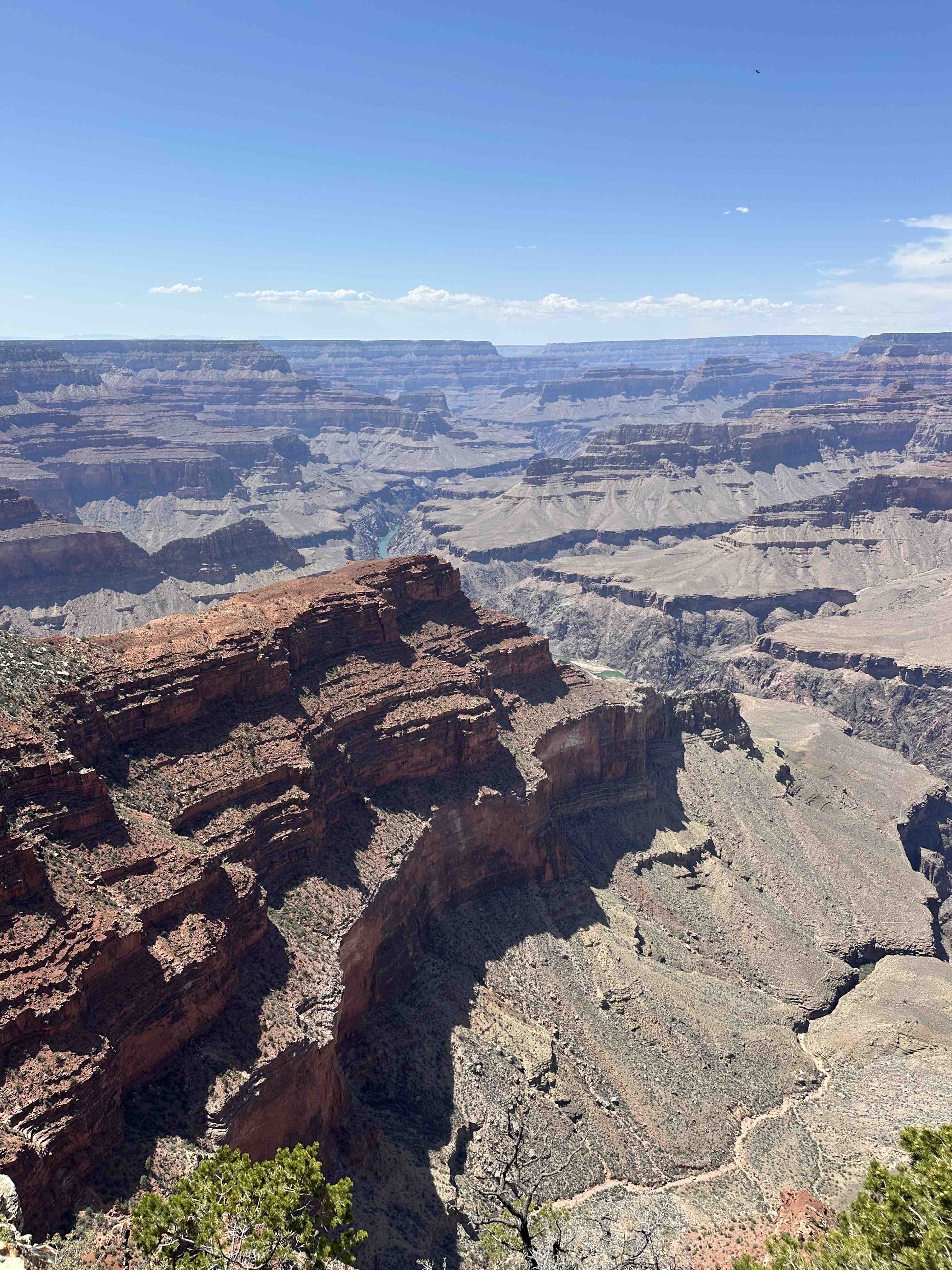
This viewpoint is located near the East Entrance to Grand Canyon National Park and is one of the few places you glimpse the Colorado river at the bottom of the Canyon.
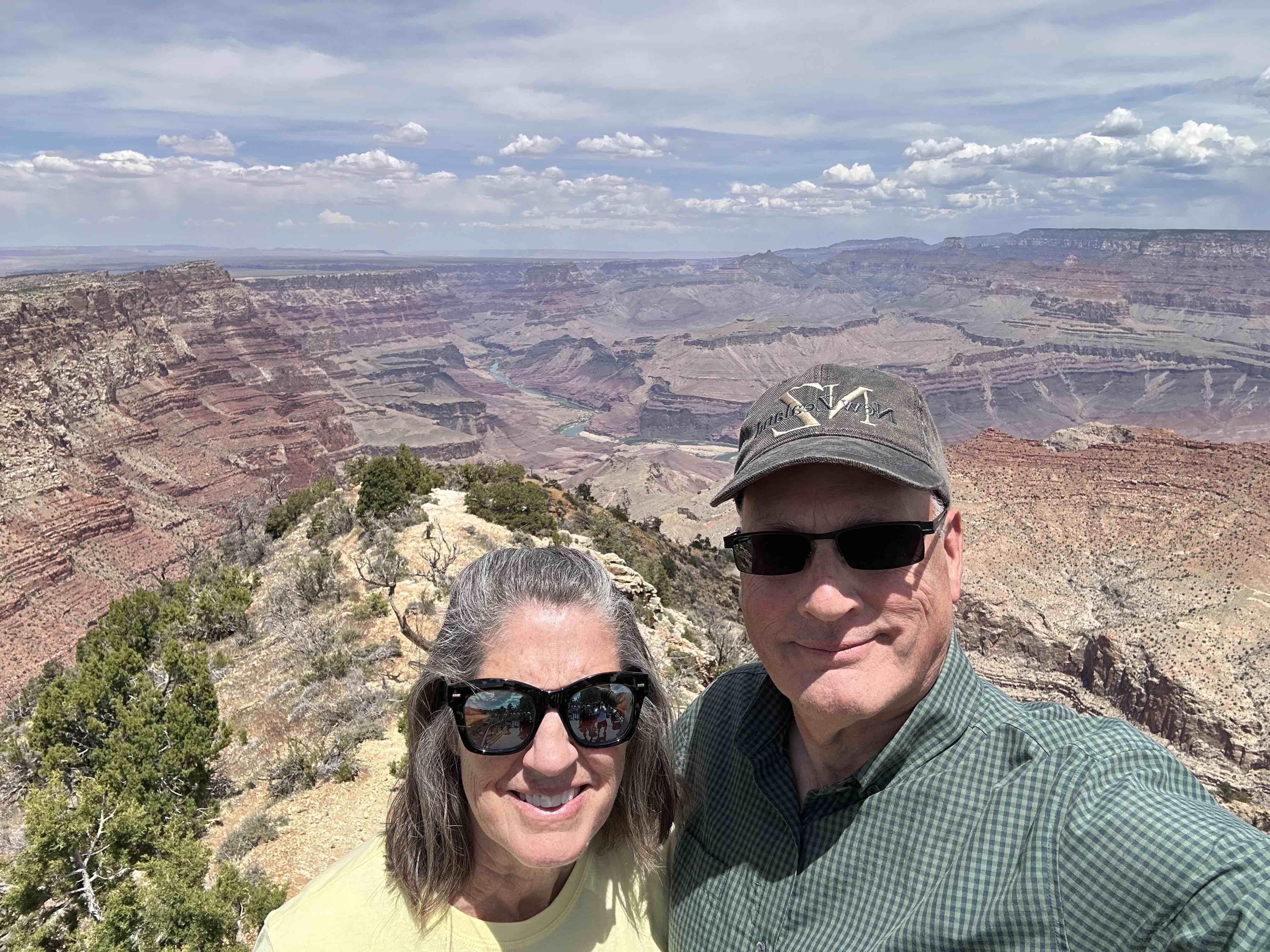
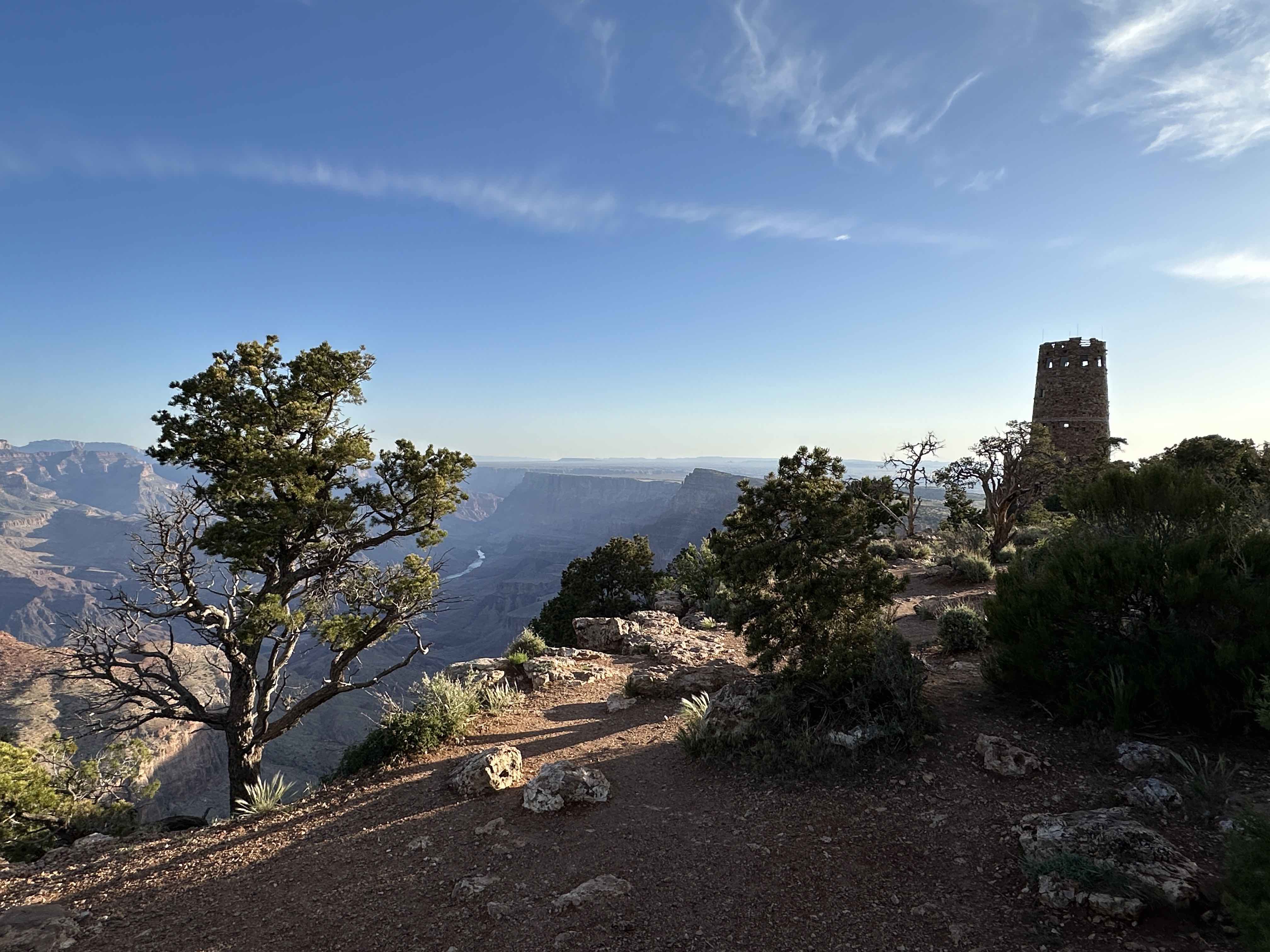
Desert View Viewpoint in the afternoon, Colorado River in the distance.

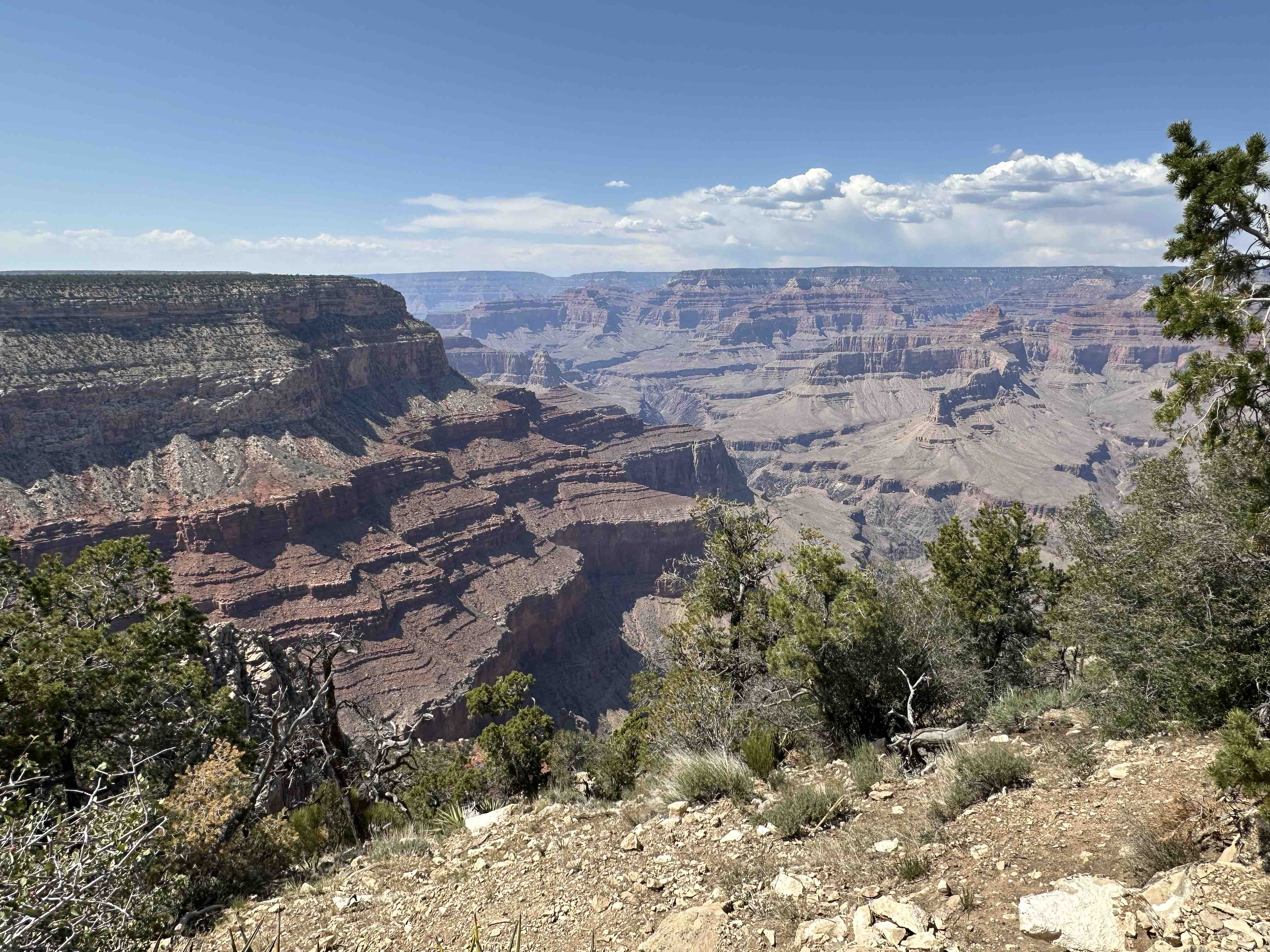
Moran Point

Mather Point/Visitors Center

There is a useful display at the Visitors Center of the various trails – their length, difficulty, and suggested turnaround points (unless you are backpacking into the Canyon for one or more nights). There are also several films about the Park and its Native American history.
Rim Trail

The Rim Trail extends from South Kaibab Trail on the east to Hermits Rest on the west (about 11 miles between these points). Most of it is paved and you can rent bicycles at the Visitors Center if you’d prefer to ride along this trail.
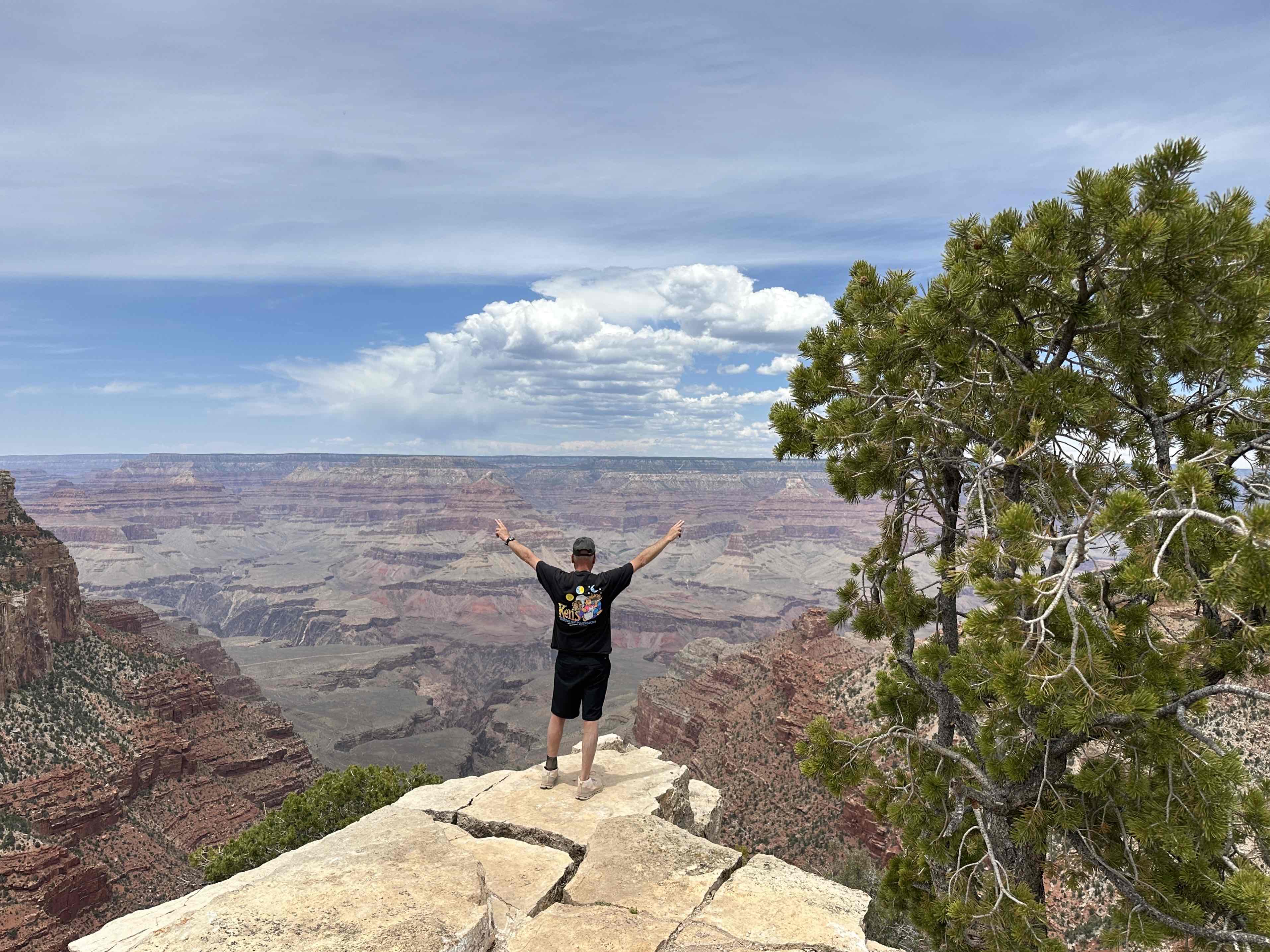
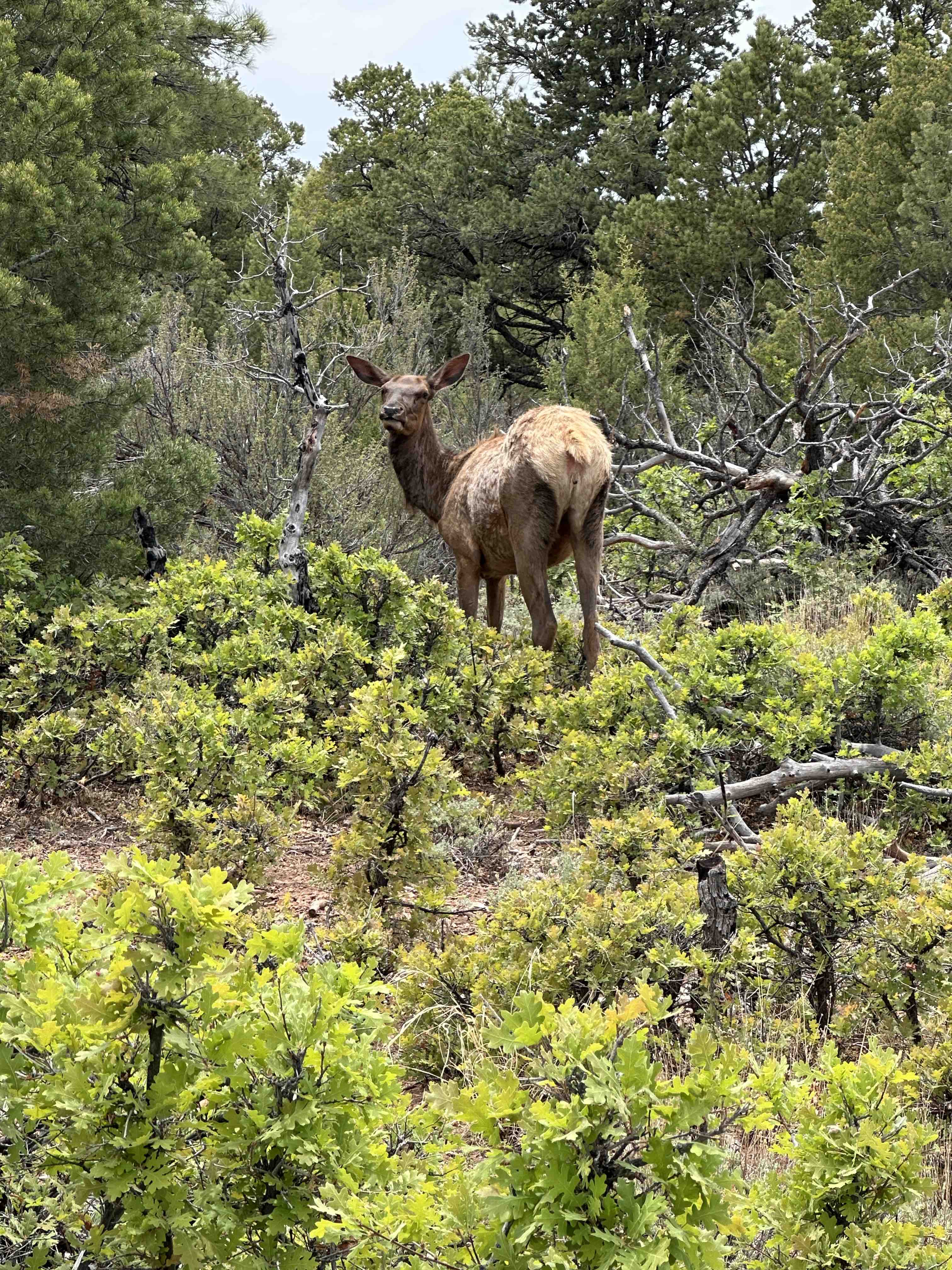
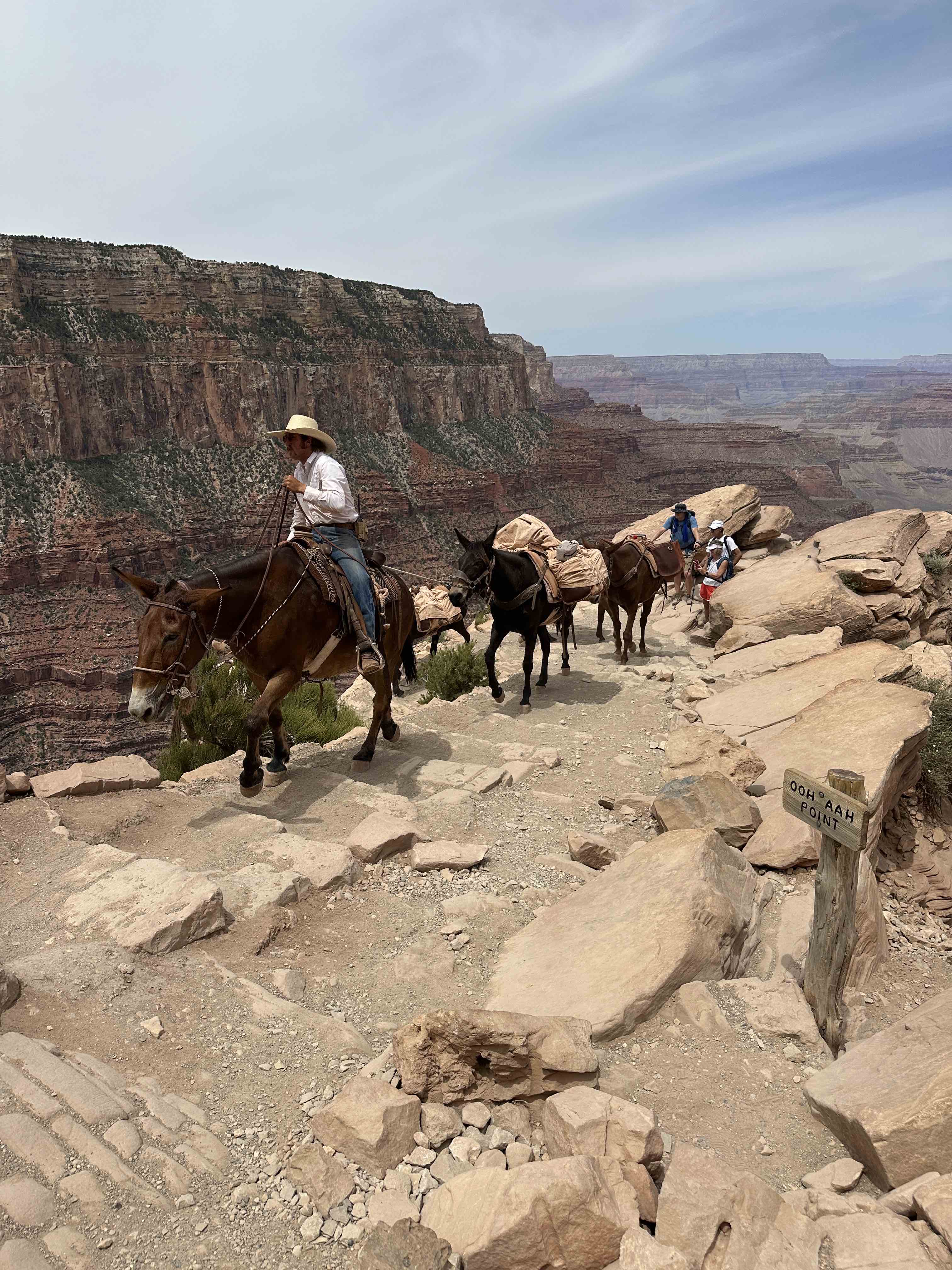
South Kaibab Trail

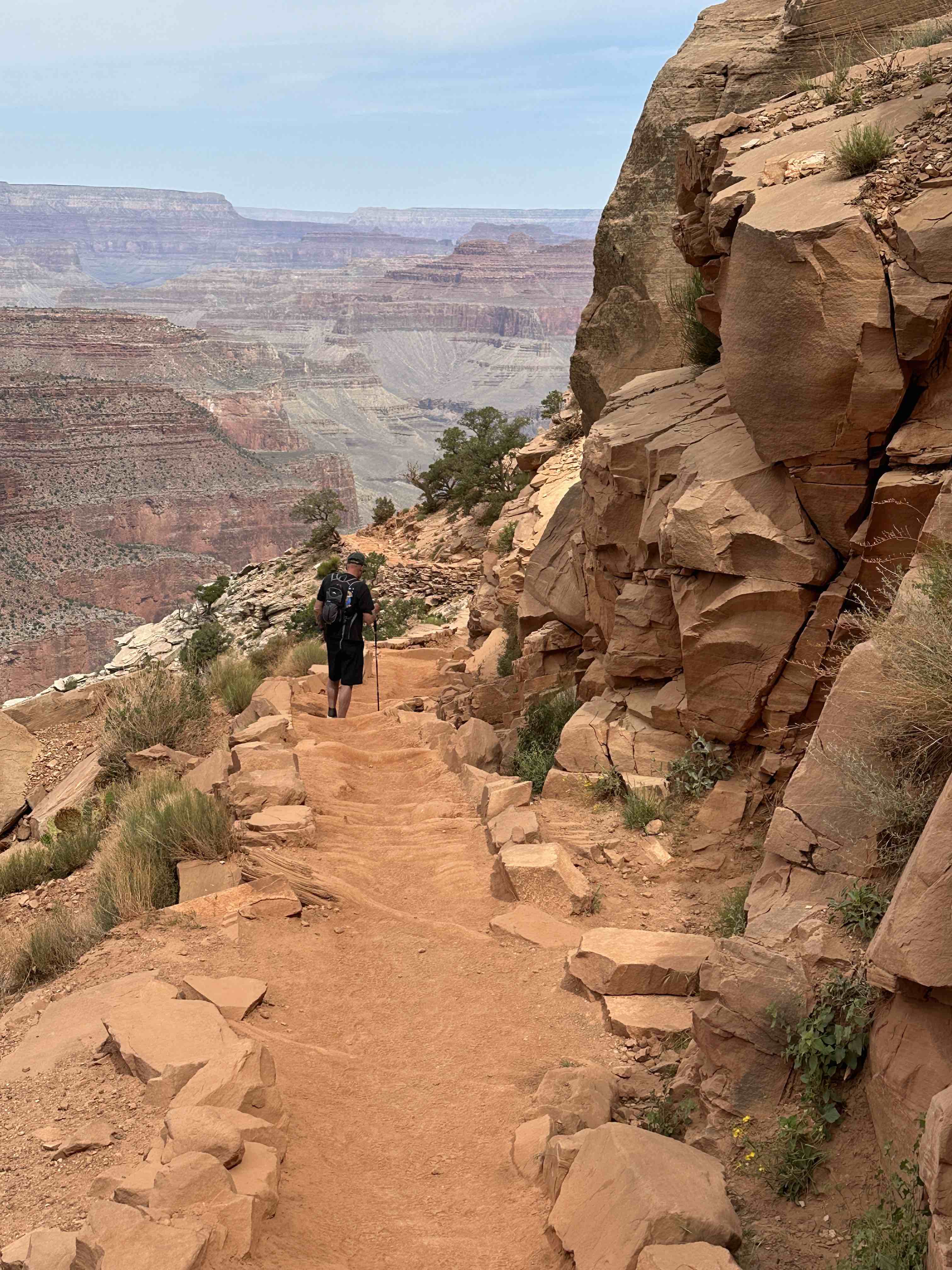
This was our favorite trail, because of the beauty and narrow canyon walls. It is one of the two main access points to descend into (or ascend out of) the Grand Canyon if you plan on hiking from rim to rim. We ran across several hikers either finishing their backpacking trip or starting out. It’s over 20 miles from rim to rim, depending on your route. Keep in mind there is no water on this trail, at least until you reach the Colorado River.

Do not underestimate the steepness of the trails or the heat, or the time required to hike back out of the Canyon if you’re doing a day hike. Even in the spring it felt pretty warm as we descended lower into the Canyon. I was glad I had brought as much water as I did.
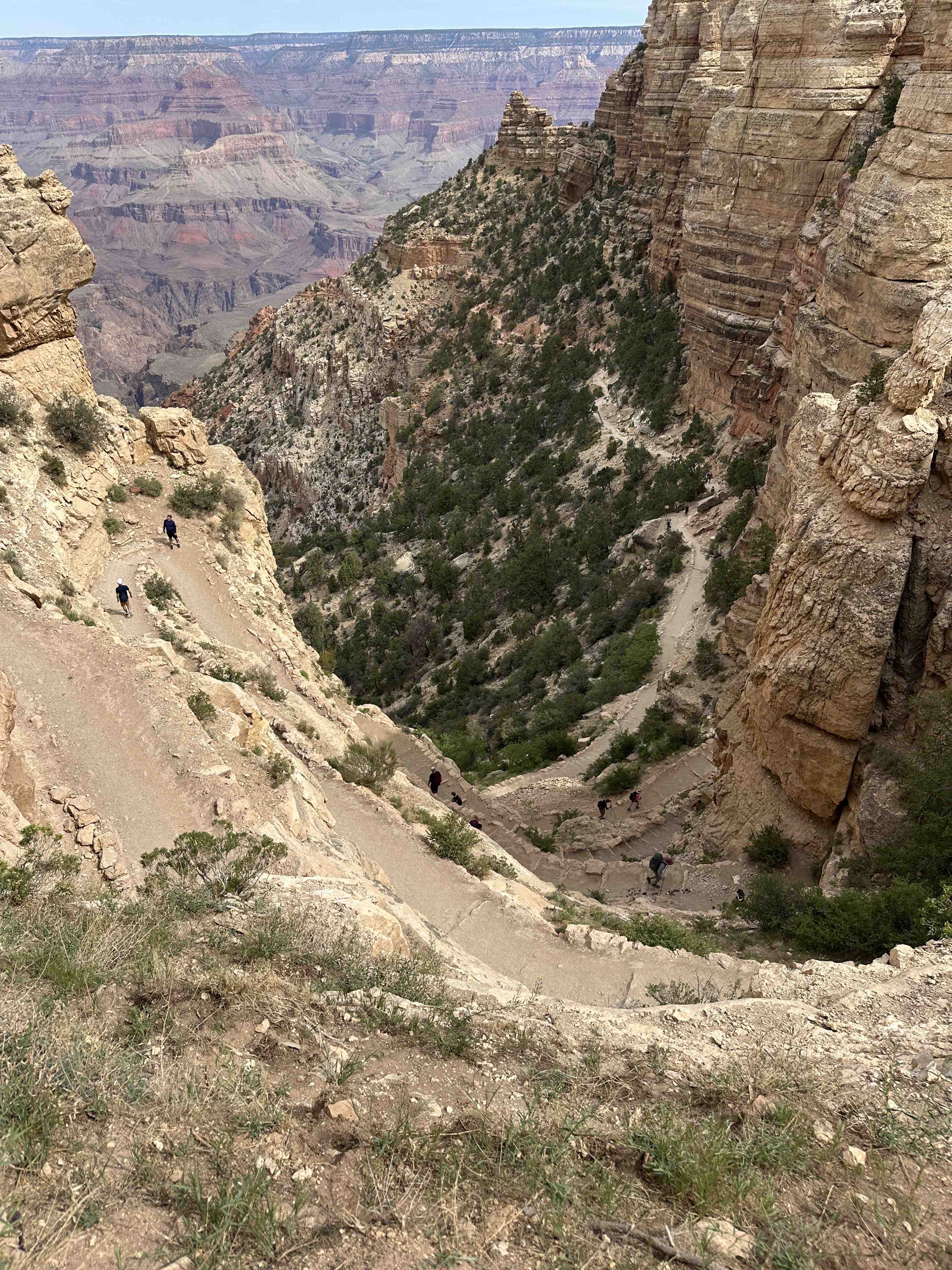
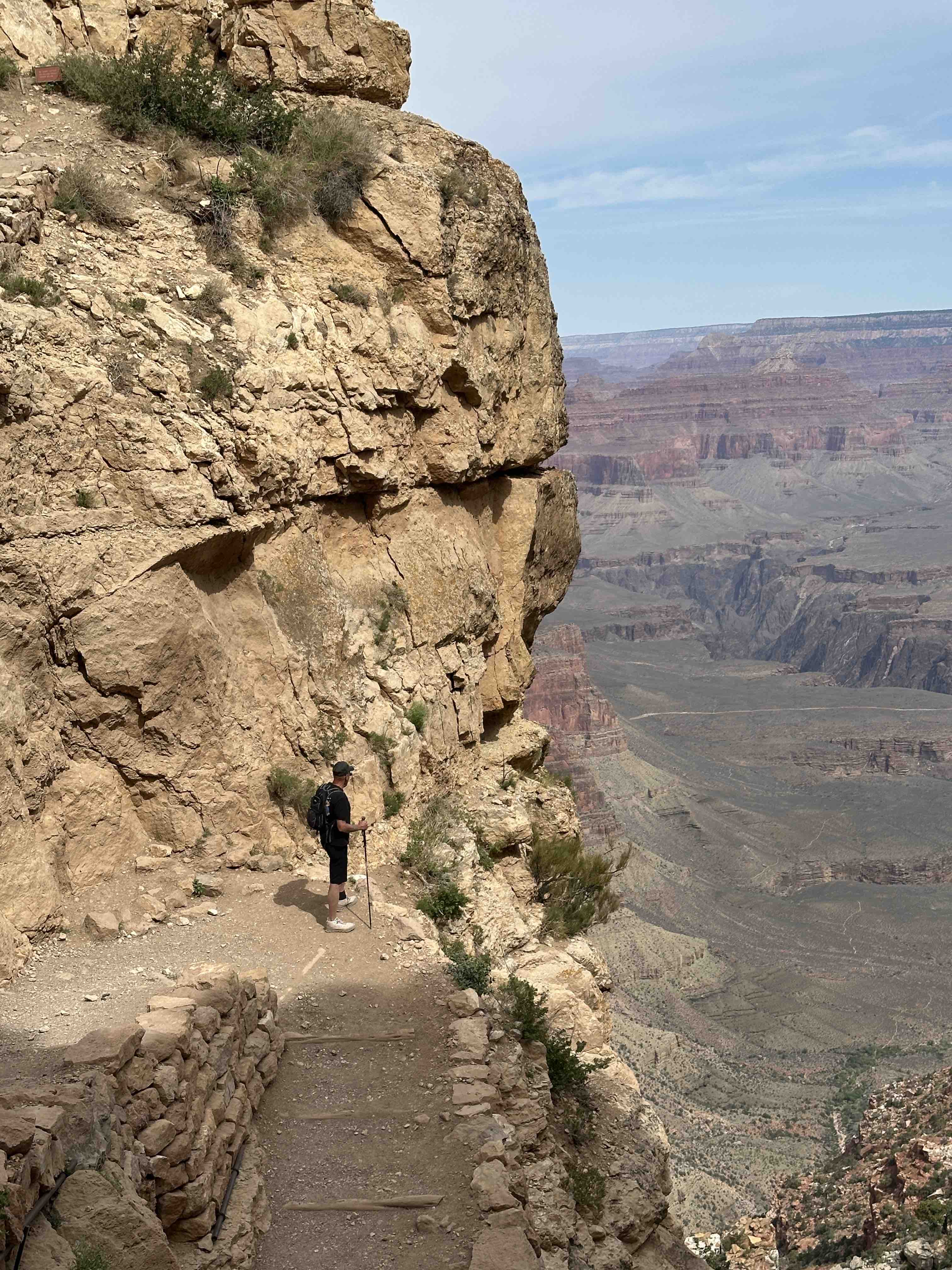
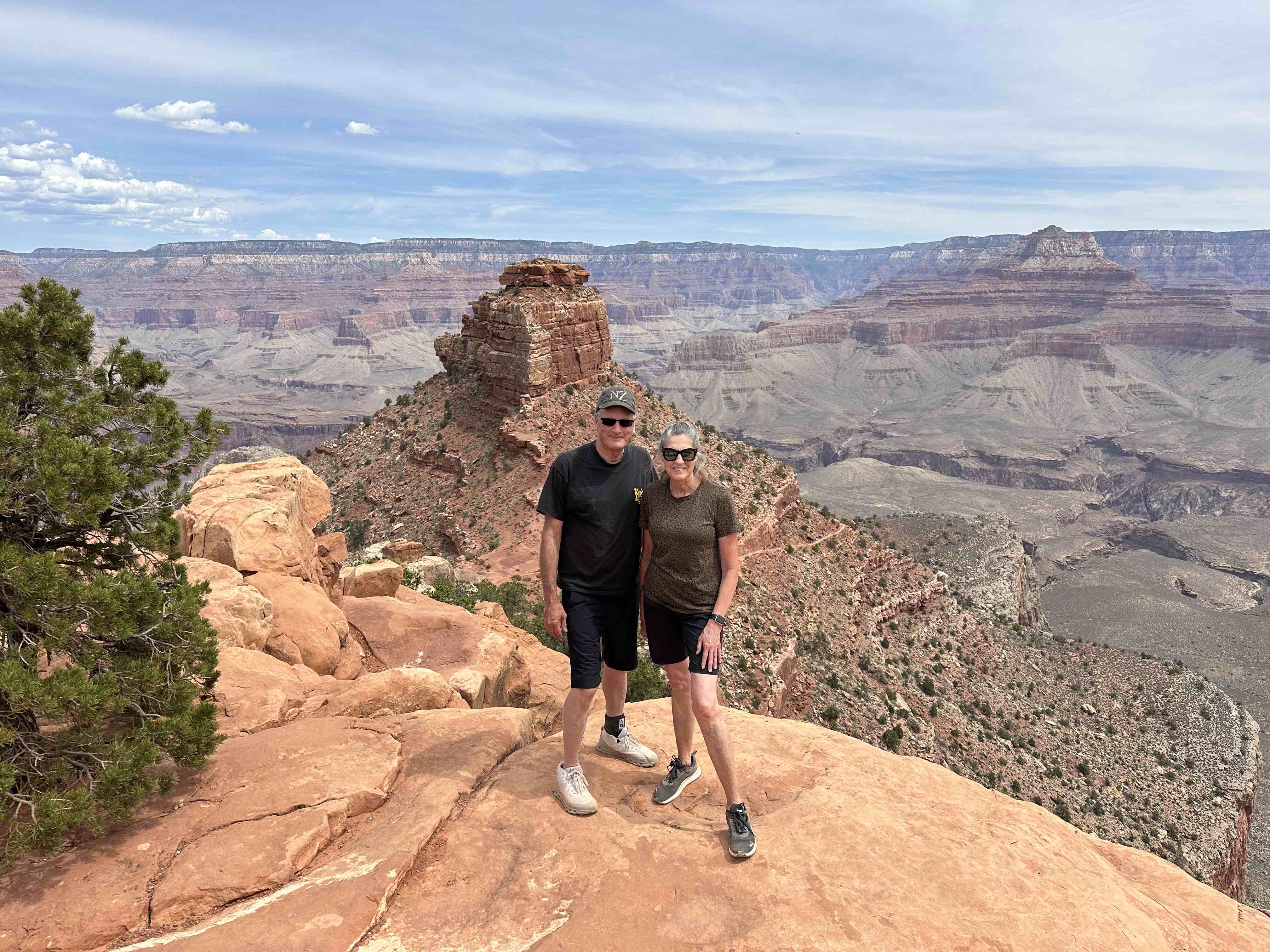
At our turn-around spot on South Kaibob Trail.

Hermits Rest

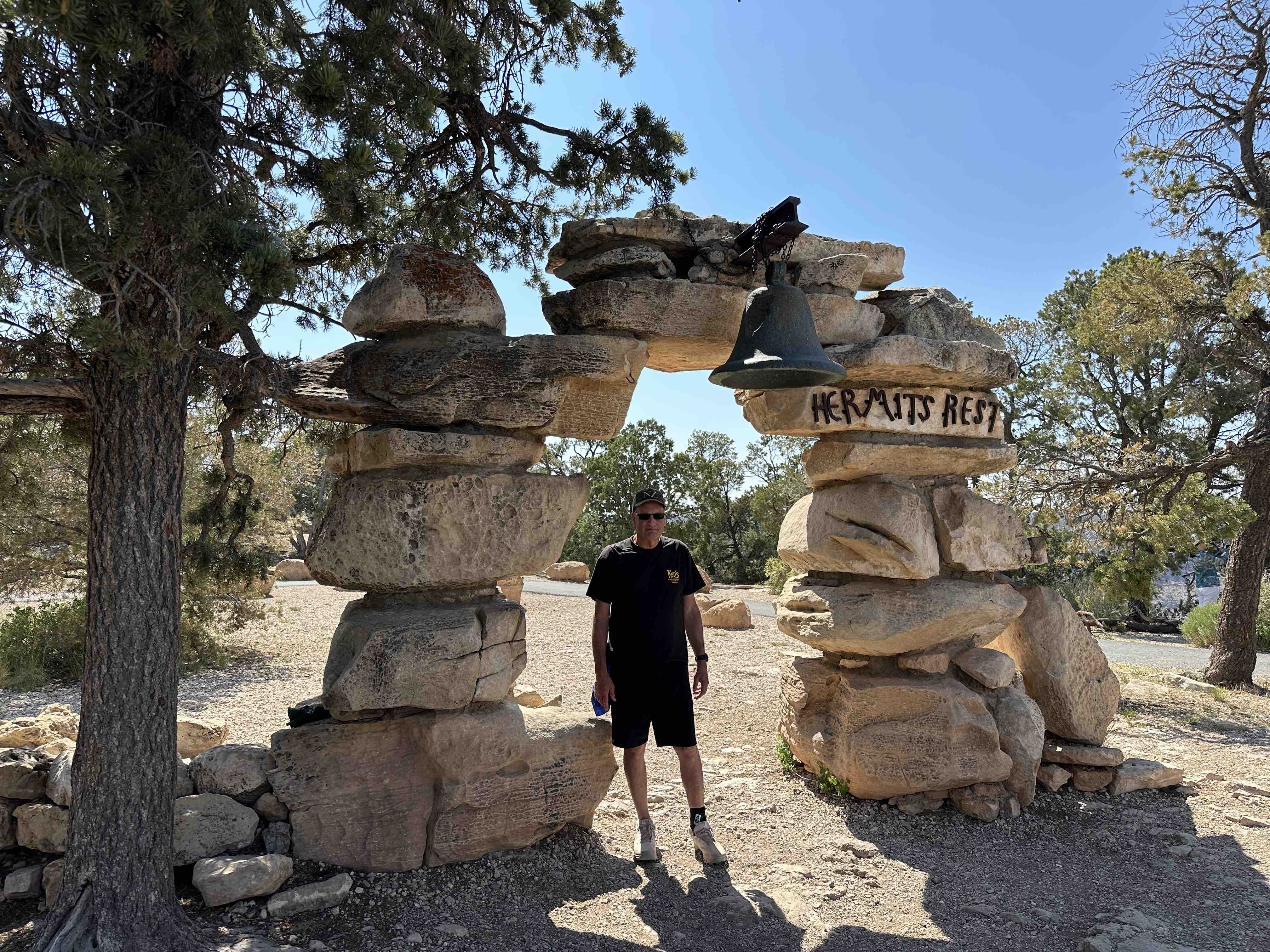
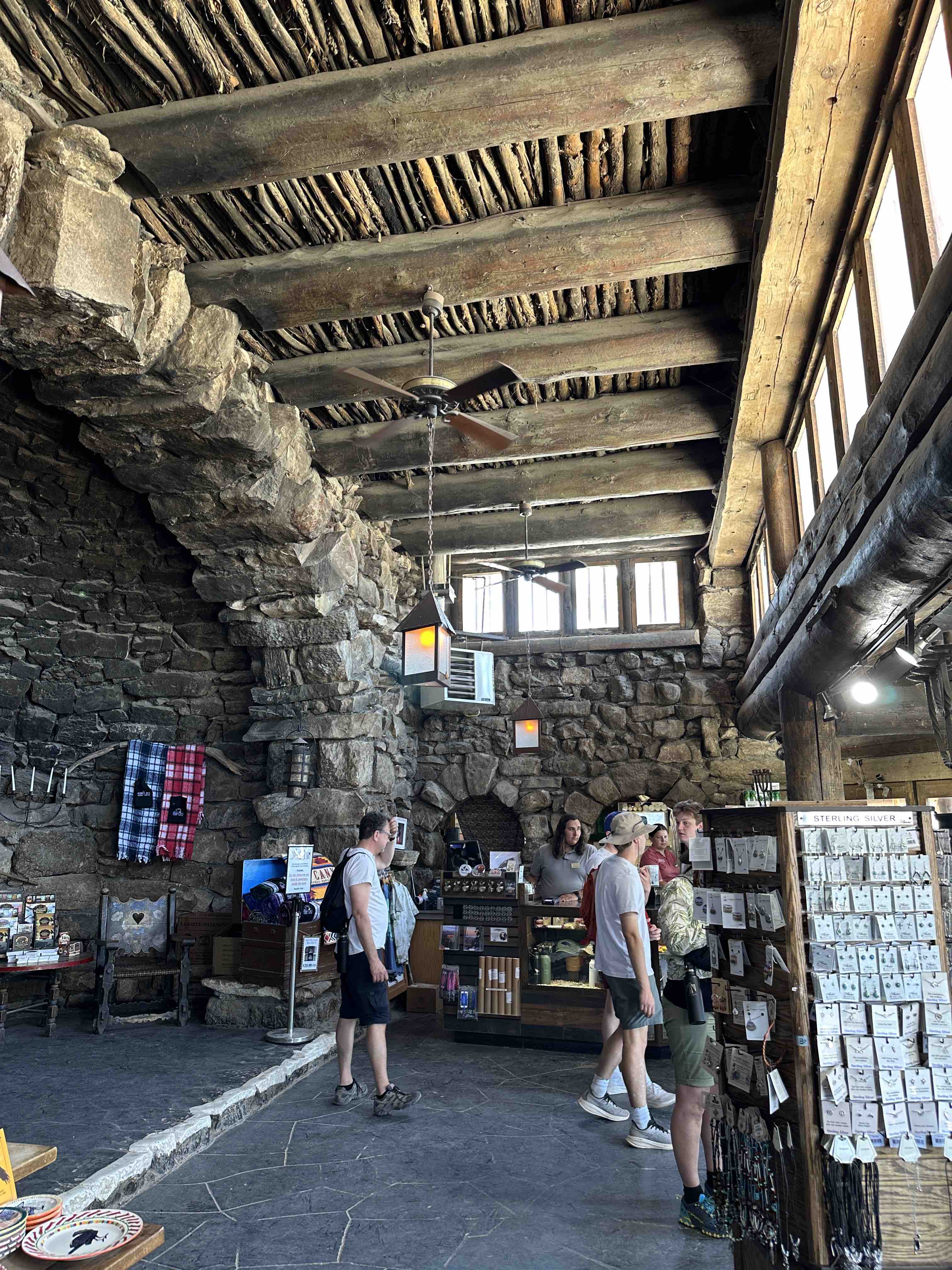
Hermits Rest is as far west as the South Rim Road (Desert View Drive) goes. This rest spot was established in 1914 for early visitors to the Park who arrived by horse and carriage. It is also the trailhead for Hermit Trail, which goes down to the Colorado River (about 9 miles one-way). We took the Park Shuttle out to Hermits Rest.
Bright Angel Trail

Bright Angel is another popular access trail for crossing the Canyon. There are several springs providing drinking water for hikers. As the signs say at each trailhead, hiking down is optional, hiking out is mandatory! We hiked about 3 miles down for a total of 6 miles round trip. It was the perfect length of day hike for us old-timers!
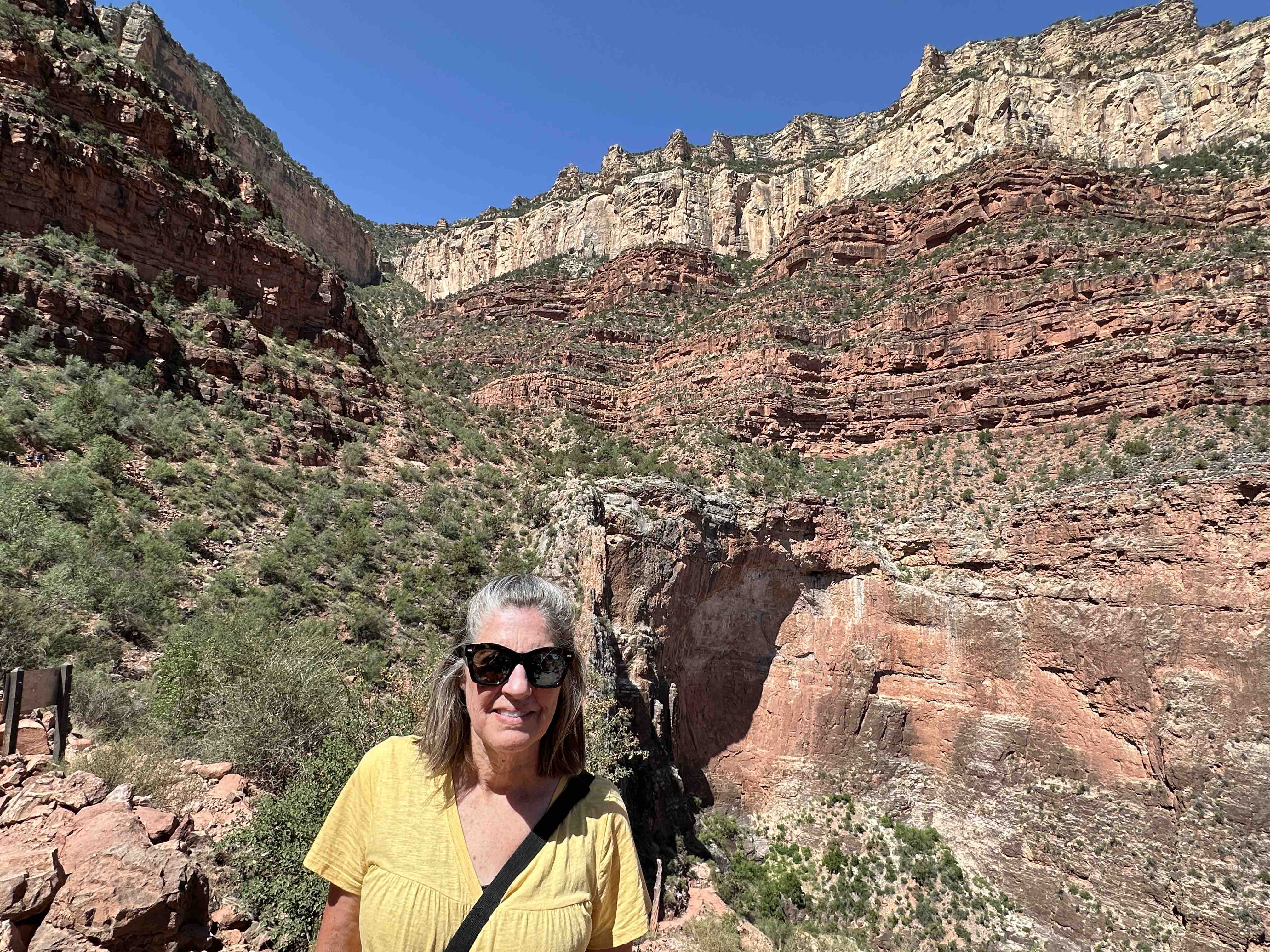
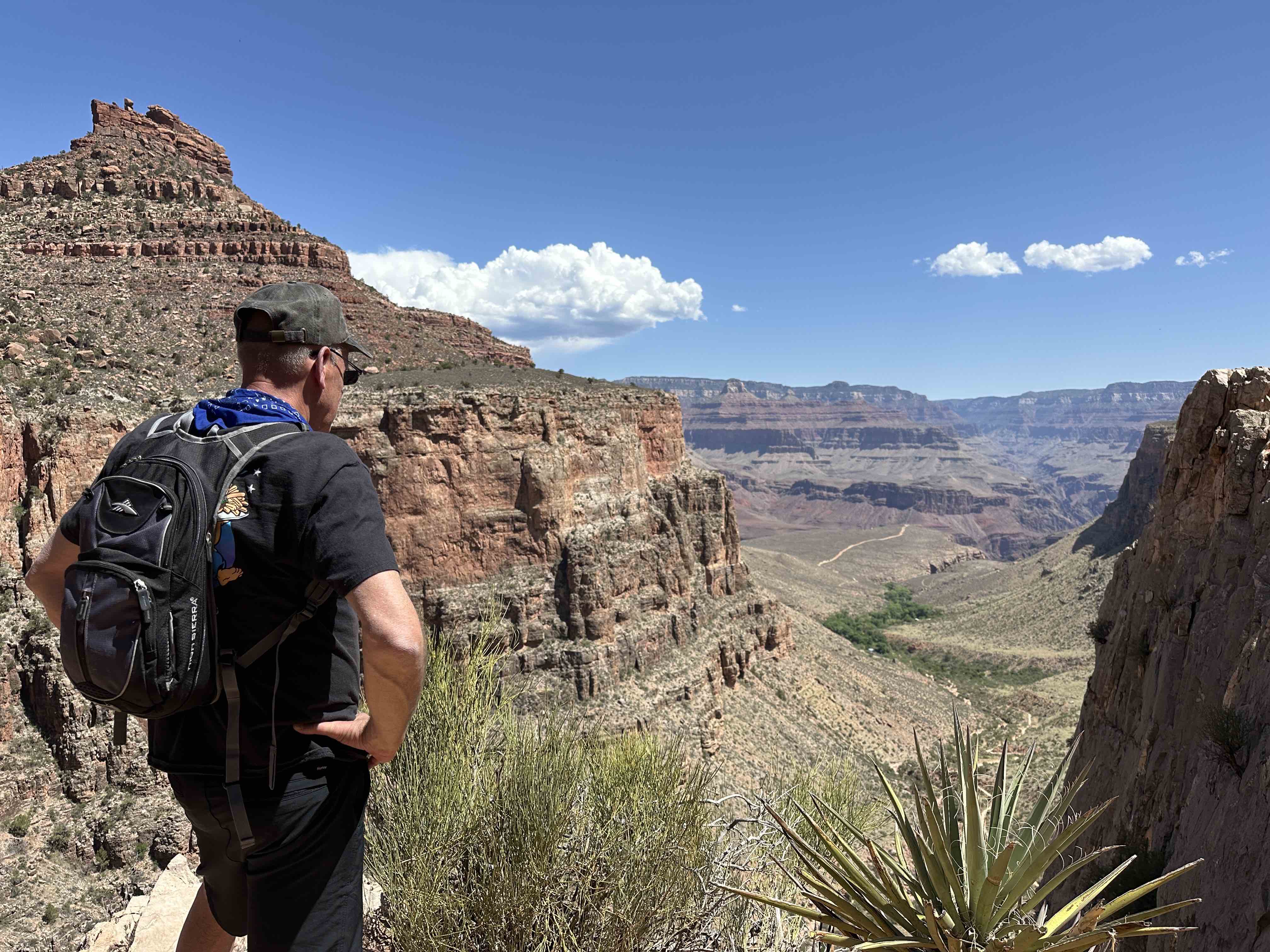
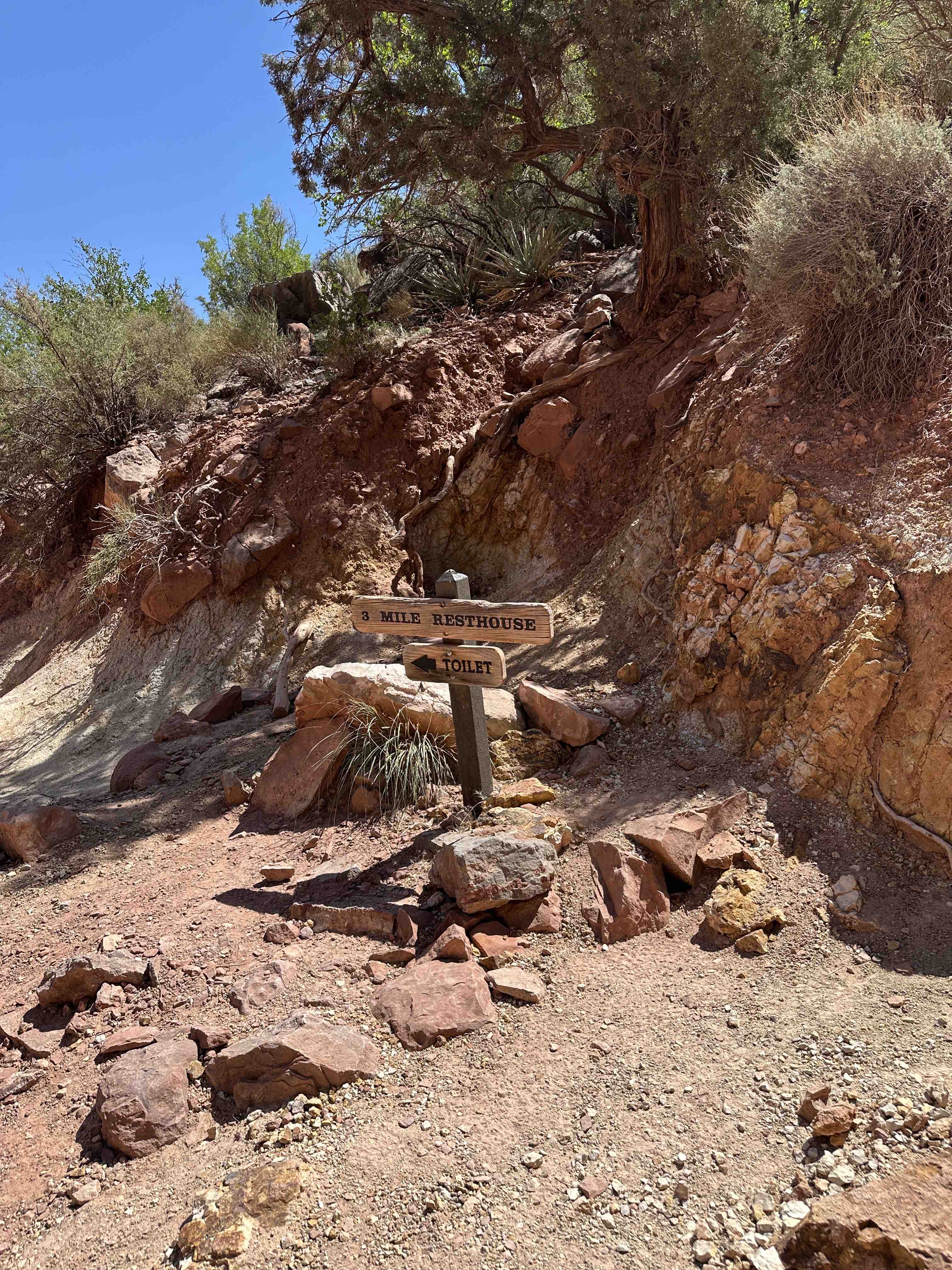
There is water available on the Bright Angel Trail and rest areas and toilets.

Grand Canyon National Park is fascinating and clearly one of our world’s natural wonders. There is lots to do here and something for every level of fitness. I highly recommend at least an overnight stay in the Park if your plans can accommodate that much time.

Grand Canyon Toroweap

Toroweap, the Lesser Known Observation Point at Grand Canyon National Park

Boasting close to six million visitors, Grand Canyon National Park was the second most visited National Park in 2016. In fact, the Grand Canyon has been the second most visited National Park since 1990, with numbers ranging from 4 to 5 million visitors per year. And why wouldn’t people want to see the Grand Canyon? With stunning views and breath taking heights, the canyon is a marvel to behold! However, for those of us who like to enjoy nature’s splendors in relative peace and calm, making the more traditional visit to the North or South Rim of the Grand Canyon can be slightly dissatisfying. Dealing with busloads of people at every observation point, fighting the hoards for the perfect photo op; somewhere along the line the spiritual experience that comes with beholding something truly magnificent is tainted.

Toroweap Grand Canyon

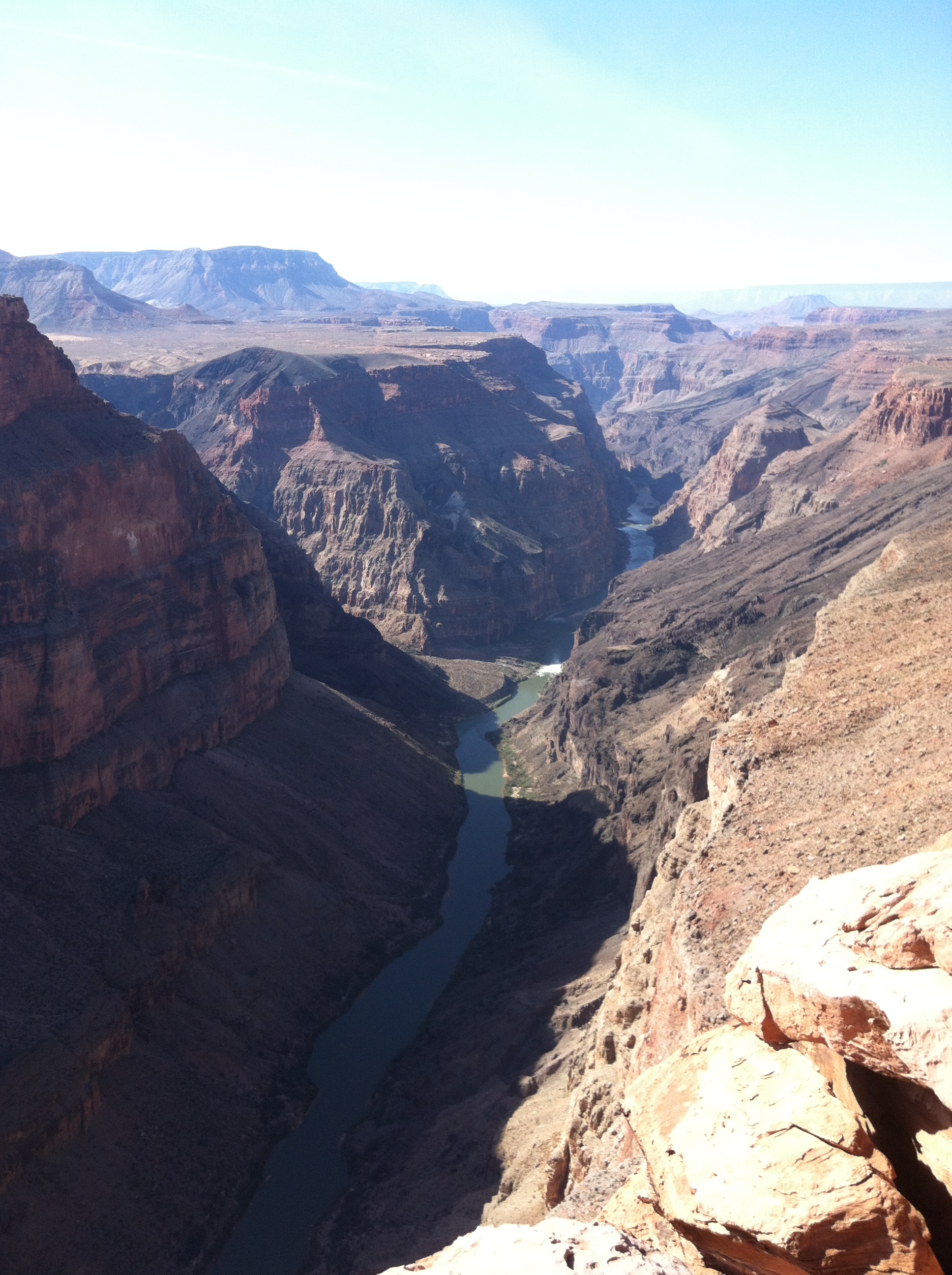
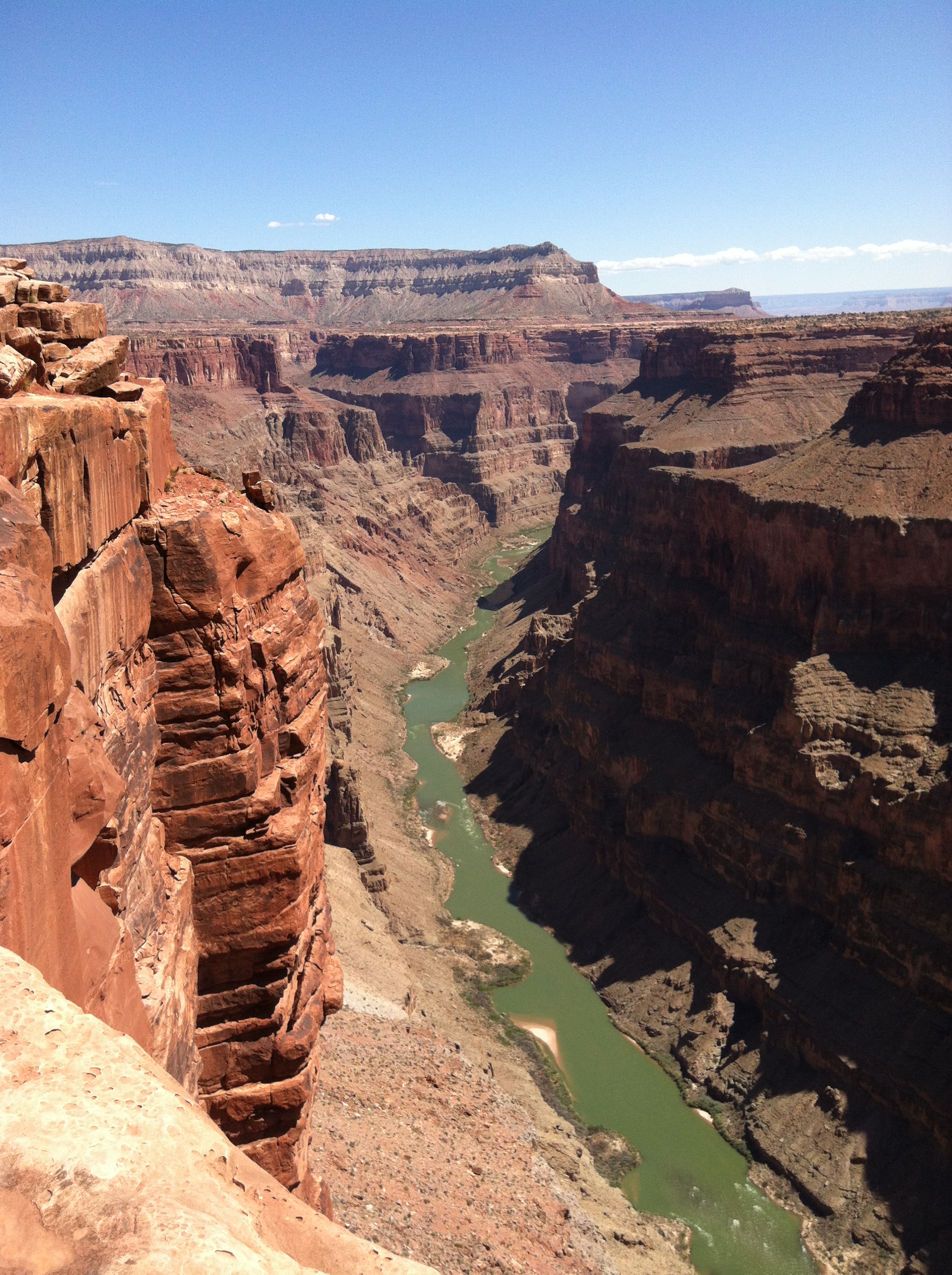
Looking East from Toroweap Overlook on the North Rim of the Grand Canyon

There is one observation point along the North Rim of the Grand Canyon that is still widely undiscovered, a place where visitors can enjoy the Grand Canyon in complete solitude, Toroweap, also known as Tuweep.

Toroweap Grand Canyon

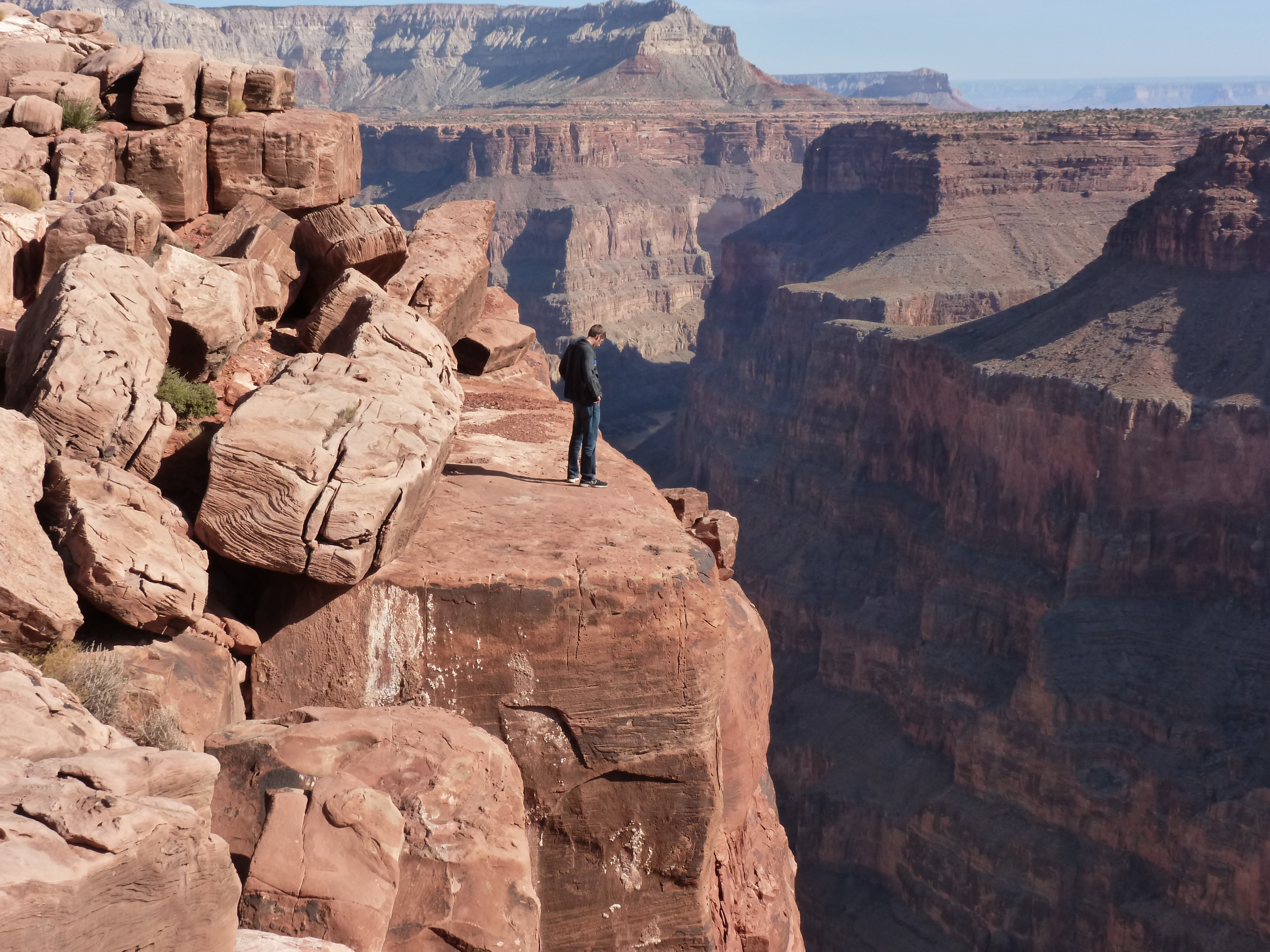
You don’t want to fall from there! The Colorado River lies 3,000 ft below

The names Toroweap and Tuweep are used interchangeably when referring to the area. “Tuweep” is the Paiute word for “the earth” and is used to refer to the general area. “Toroweap” is the Paiute word for “dry or barren valley” and refers specifically to the valley and the overlook.

Tuweep Grand Canyon

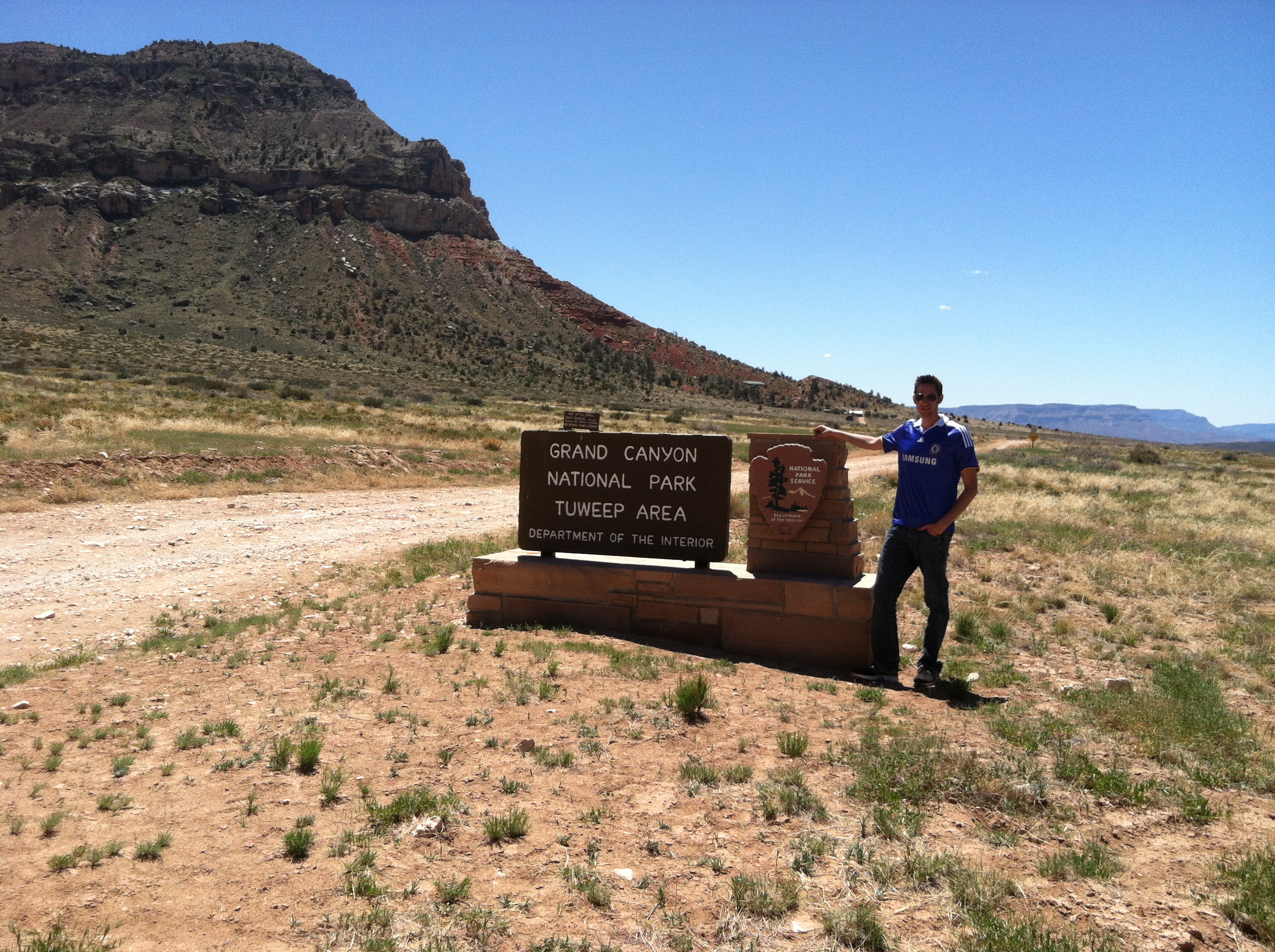
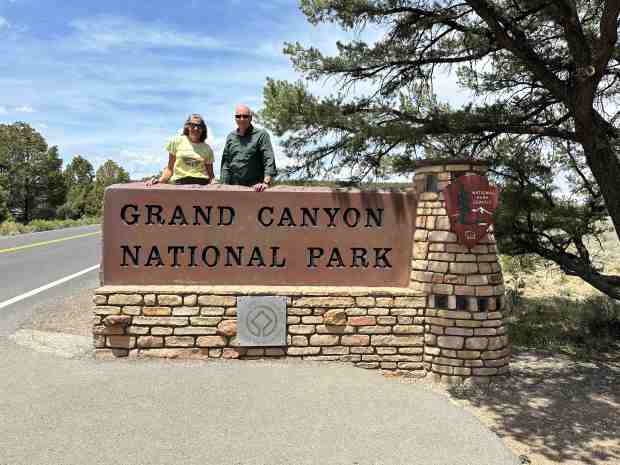
At the entrance to the Grand Canyon National Park

In 1870, John Wesley Powell was led to Tuweep by a Paiute guide. He spent time mapping out the area and naming many of the prominent features.

Toroweap Grand Canyon

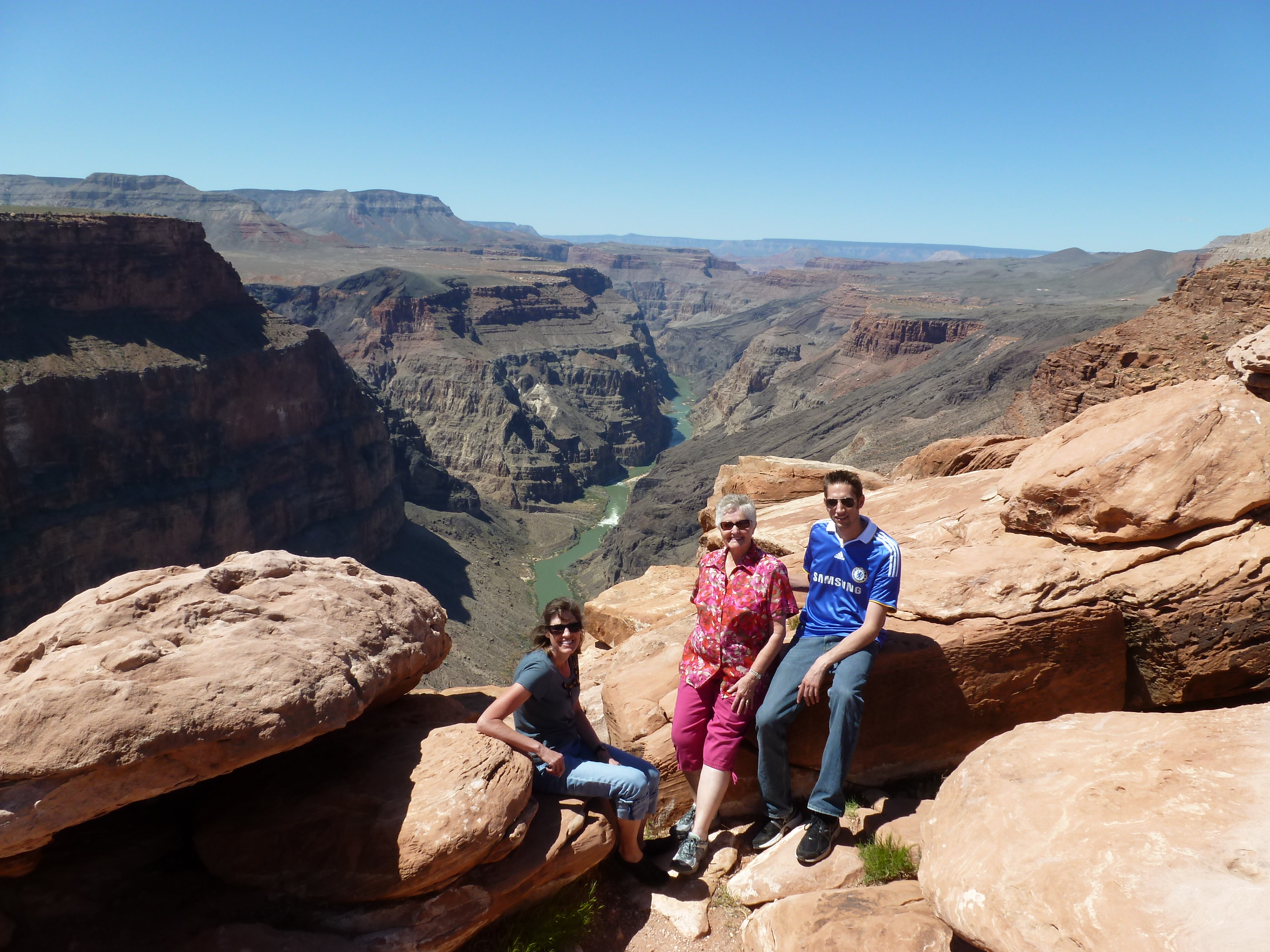
With my mom, Robyn, and my Grandma, Donna. We visited in the Spring and had beautiful weather.

Despite not being very far from civilization as the crow flies, Toroweap is a very remote area, with no amenities, so visitors need to be prepared with whatever they need for the excursion, water, food, gas for their vehicles, etc.

Toroweap Grand Canyon

Looking West from Toroweap Overlook

From St. George, Toroweap is roughly an 80 mile drive on unpaved roads. Taking the final Utah I-15 exit before entering Arizona, head South on County Hwy 5. The paved road becomes a dirt road the moment you cross into Arizona. Follow County Hwy 5 South to the old Mt. Trumbull Schoolhouse. Originally built in 1918, Mt. Trumbull Schoolhouse is a fun stop along the way to Toroweap. From the Schoolhouse, head East on County Hwy 5. You will be driving over Mt. Trumbull. Continue to follow the road as it turns South and into Grand Canyon National Park. Total driving time from St. George to Toroweap is between 3 and 3 ½ hours.

Note that the last 3 miles before arriving to the observation point are very rough. There is parking available at this point for vehicles with low clearance. Only vehicles with high clearance are suited to continue.

Toroweap Grand Canyon

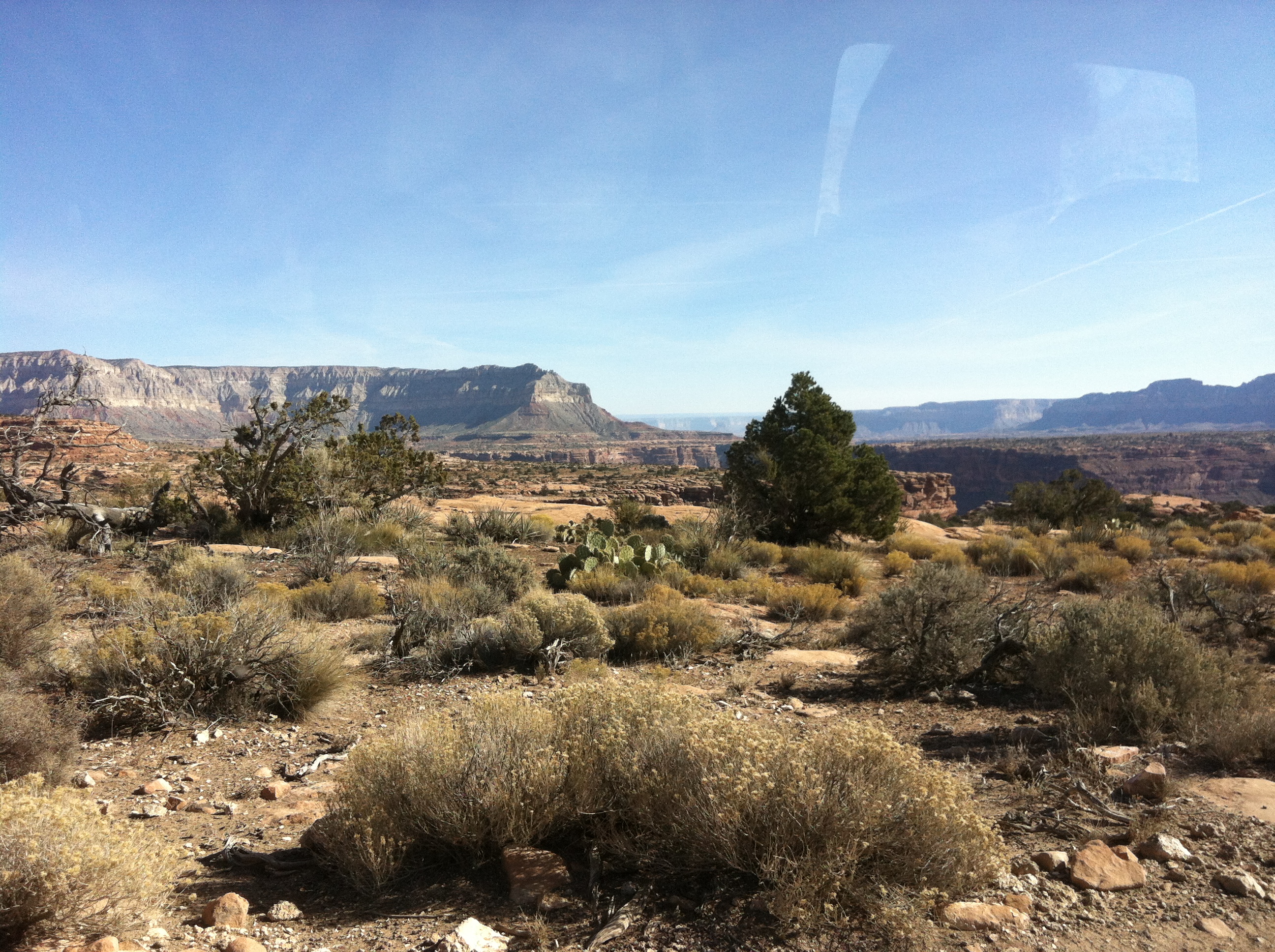
Taken from the 4-wheel drive section of the trip. Toroweap, dry or barren valley, was certainly named appropriately.

There is no entrance fee to enter the National Park at Toroweap. Near the overlook, there are several hikes to explore. There is also a campground with several available campsites, however, backcountry permits are required for camping and there is a small fee to spend the night. As I previously mentioned, there are no amenities. Be sure to bring sufficient water, food, clothing, gas for your vehicle, etc. Also be sure that your vehicle is in good condition, that you have a quality spare tire, and that you are ready to change a flat tire if needs be.

Toroweap Grand Canyon

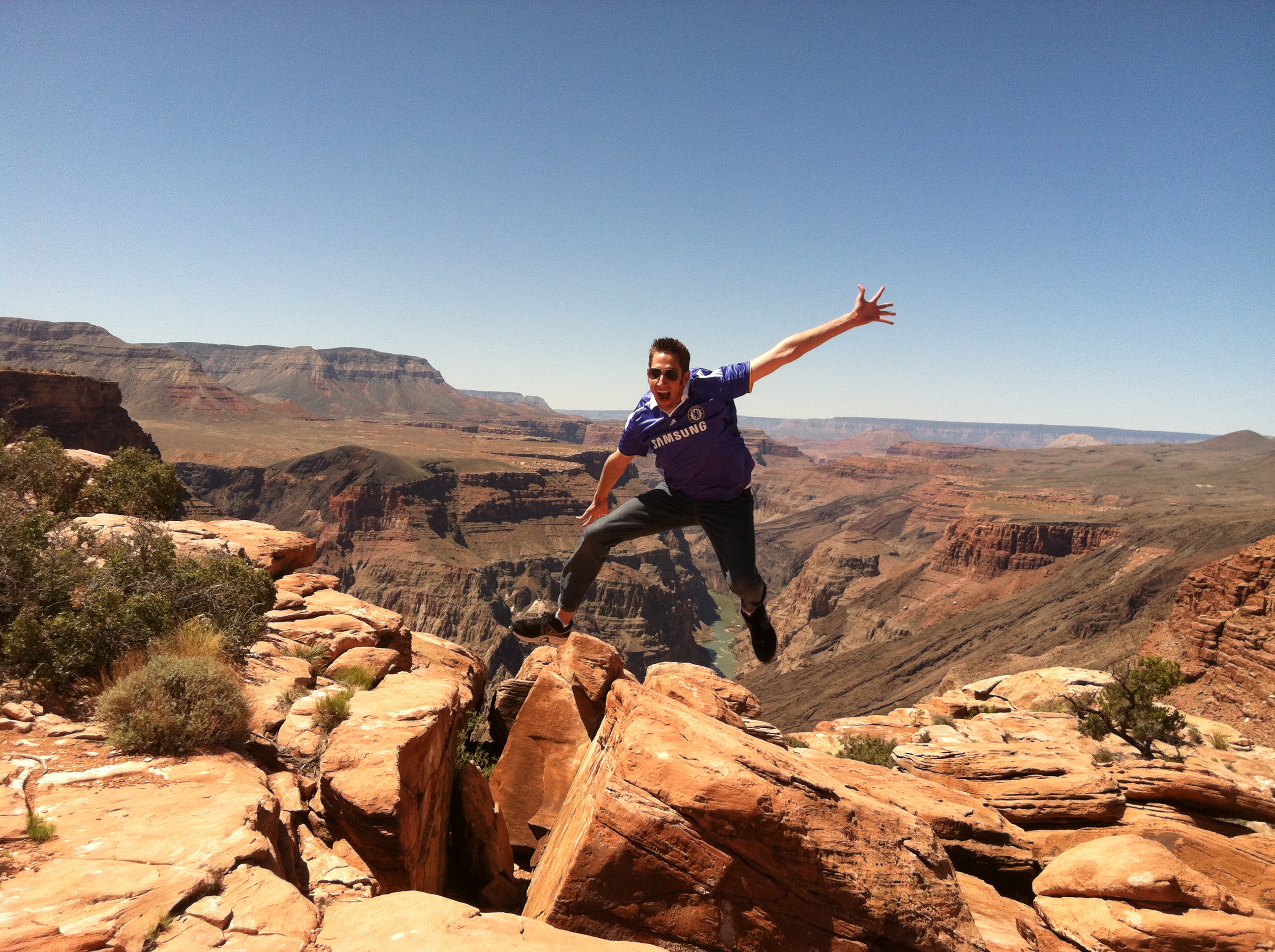
Nothing more fun than exploring nature’s beauty!)

For information regarding current conditions at Toroweap, hiking and camping in the area, etc. the National Parks website is very helpful.