Rhodes

The Island of Rhodes – East Coast

Rhodes Island

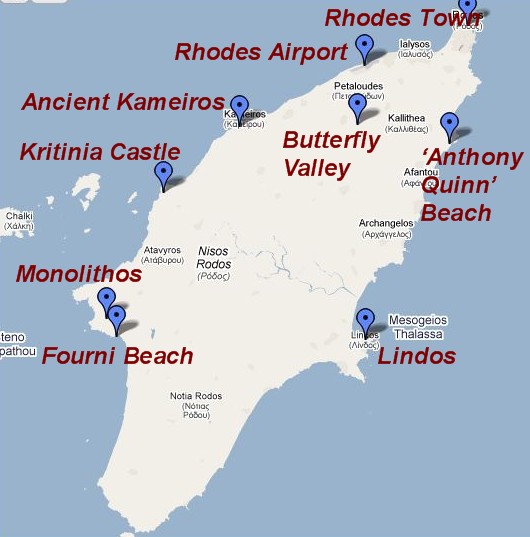
Map of Rhodes Island, Greece.

We spent one of our days on Rhodes driving down the East coast to Lindos. We rented a 5 passenger car at Margaritis rent-a-car in the new town of Rhodes for €30 per day (inclusive of all fees). The car rental is within walking distance of the Old City. As mentioned in my Greece Overview post, gasoline is expensive in Greece, about $8 per gallon. However, renting a car is an economical way to transport 5 people and to have the freedom to stop wherever you want.  Gas stations are plentiful throughout Rhodes.
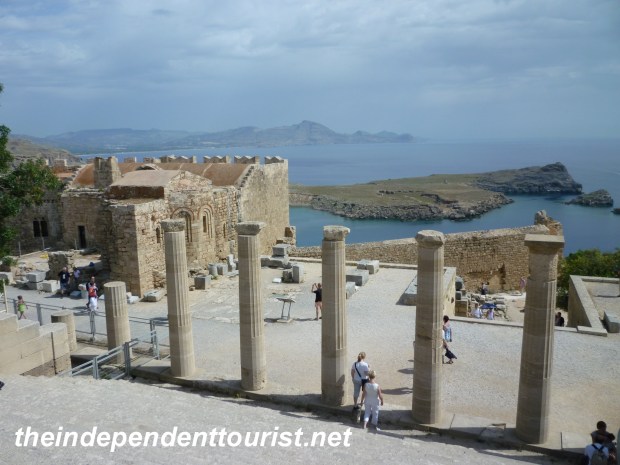
Lindos_Rhodes_Greece (6)

View from the Acropolis, Lindos, Rhodes.

Lindos

Our first (and farthest) stop was Lindos. Unfortunately, it is a very popular cruise ship day tour from Rhodes, so we had to contend with a lot of people in the little town as well as making their way up to the Acropolis. I was wondering if we would run into the same issue on the rest of the island, but outside of Rhodes old town and Lindos, the rest of the island is pretty quiet, especially the west coast.
Lindos_Rhodes_Greece (15)

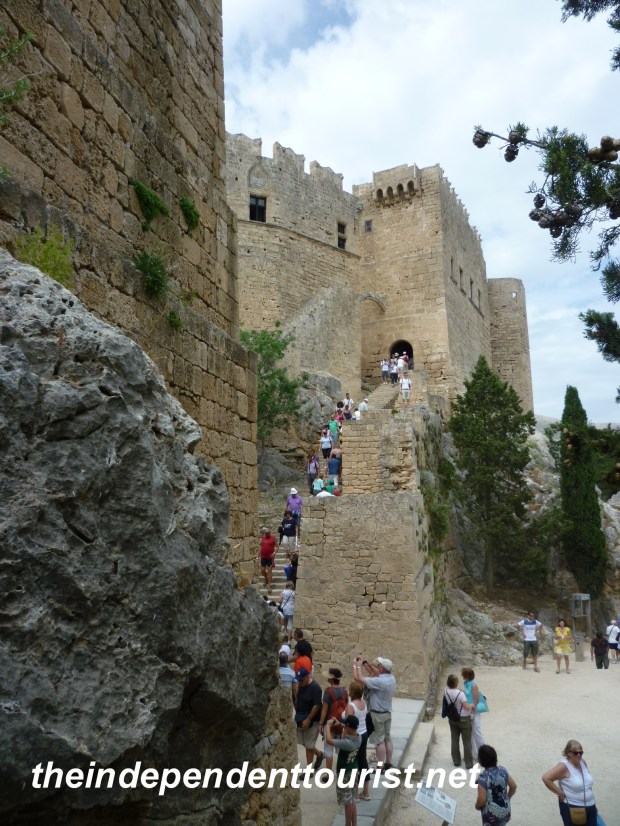
Hiking up to the fortress on the Acropolis, Lindos, Rhodes.

Lindos is about an hour’s drive south from Rhodes.  On the way, just outside of Rhodes, there are a fair amount of beach resorts and hotels (especially around Faliraki Beach).  The further south you go, the quieter the island becomes. Lindos is a great sight, with the glistening white town nestled below its Acropolis, set on the rugged coast line, with beautiful bays both to the north and to the south of the Acropolis hill. A few parking spots are available on the road leading in to town, at the turnoff from the main road.  It is just a minute walk down to the village square.
Church of the Virgin_Lindos_Rhodes_Greece (17)

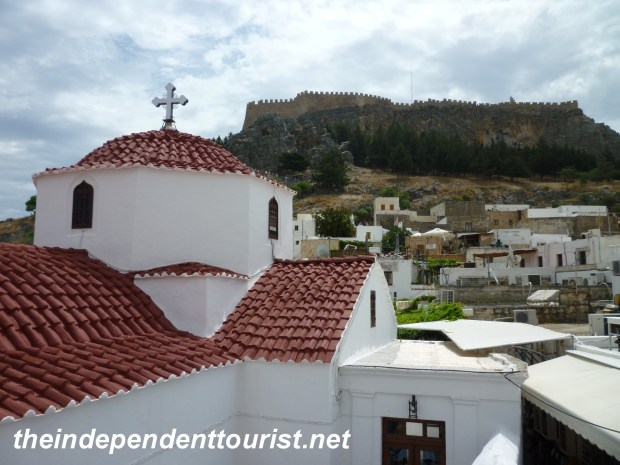
Church of the Virgin (Panagia), Lindos, Rhodes.

The town of Lindos is full of whitewashed buildings along pedestrian walkways filled with souvenir shops, restaurants, and even pedicure establishments—have your feet brushed up by the little fish in the tank!  Be sure to stop in the Byzantine church of the Panagia, (rebuilt in the 15th century) and admire the view from the stairs of the bell tower, and the 18th century frescoes inside the chapel.

The settlement of Lindos goes back to Neolithic times (3rd millennium B.C.), but the Greek history starts around 1,200 B.C. The Acropolis has a combination of historical sights, ranging from 4th century B.C. Temple of Lindian Athena to the fortifications and churches of Knights of Rhodes in the 13th and 14th century.  There is an entry fee of €6 to the Acropolis.  The views of Lindos town, and the bays north and south of the acropolis are excellent, and one can easily see why it was such a strategic settlement given the commanding views and natural harbors.
Lindos_Rhodes_Greece (18)

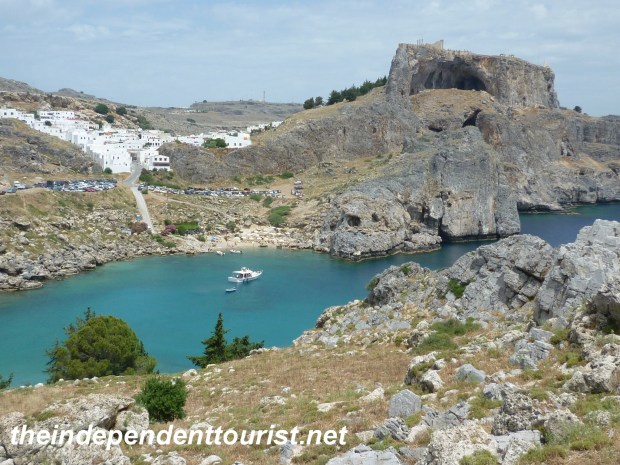
St. Paul’s Bay, Lindos, Rhodes.

From the Acropolis, looking to the south, is St. Paul’s bay, where the apostle Paul set shore. To reach the bay, just continue south on the main road a few hundred yards.  From the dirt parking lot, one can hike down to the beach or hike up the rocks for an excellent view of the bay with the Acropolis in the background.

Anthony Quinn Beach 

Our Hotel Attiki host, Mara, told us about ‘Anthony Quinn Beach,’ which is north of Lindos, about halfway back to Rhodes.  There are little hand-painted signs on the main road and on the side road that guide you to this bay, just a kilometer or so off the highway.  There are other beautiful bays close by too.  I guess that Anthony Quinn holds a special place in the Greeks’ hearts due to his movie “Zorba the Greek” (1964).
Anthony Quinn Beach_Rhodes_Greece (58)

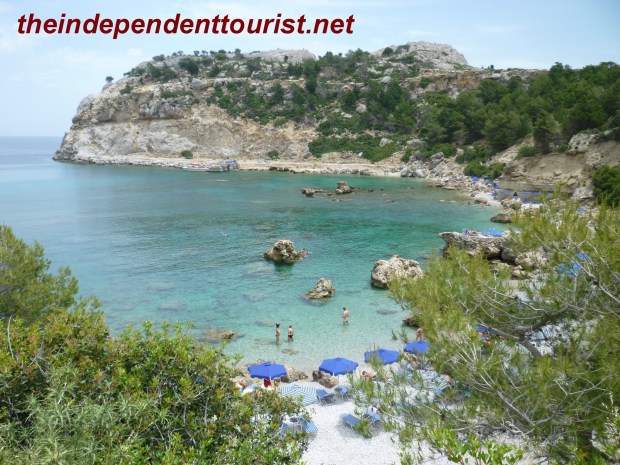
Anthony Quinn Beach, Lindos, Rhodes.

This bay is beautiful and calm, but rocky.  I personally don’t mind rocky beaches—less sand to get into everything! There are restrooms here for changing clothes, and lounge chairs that can be rented for €3 per day.  The water is very clear, and we enjoyed swimming here.  If you have a pair of water shoes, bring them!  Even though it was still in May, the water is cool but warm enough to swim in.  I would guess the water was in the low 70’s F.

Butterfly Valley
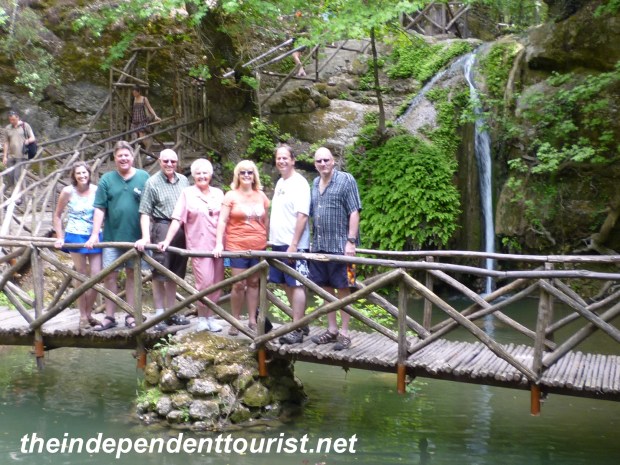
Butterfly Valley_Rhodes_Greece (59)

Butterfly Valley, Rhodes.

After our swim, we decided to drive back to Rhodes via the “Butterfly Valley” route which winds up through the hills of Rhodes, and the vegetation changes from dry scrub brush to evergreen trees.  Butterfly Valley is famous for the colorful moths that come out June through September due to an attraction to the storax trees.  We were there right prior to the peak season and saw just a few moths.  The walk up the valley along the beautiful stream reminded me of being in the mountains in Colorado.  We hiked all the way up to the Kalopetras monastery (a tiny church complex) built in 1782, supposedly 800 meters from the starting point, but it seemed more than a kilometer total.
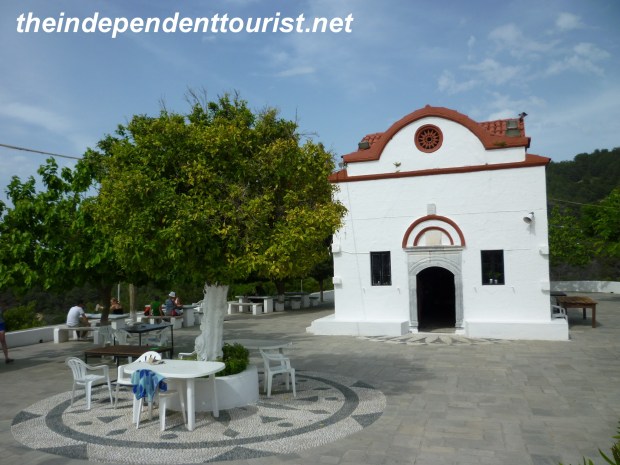
Kalopetra Monastery_Rhodes_Greece (61)

Kalopetra Monastery, Rhodes.

Overview of Greece

Greece Trip

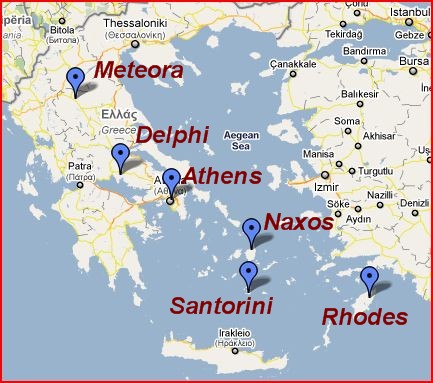
Our Primary Destinations in Greece (over two weeks).

I’ve had the opportunity to visit Greece twice—in the mid 1980’s and very recently (May-June 2011).  The country has changed a lot over the past 25 years. I recall when I visited the first time that the country felt quite poor, and for a visitor, it was inexpensive. Now that Greece is on the Euro, prices are much higher, and there is more evidence of prosperity—many nice homes and BMW’s speeding past us on smooth highways.


Athens_Demonstrators (3)

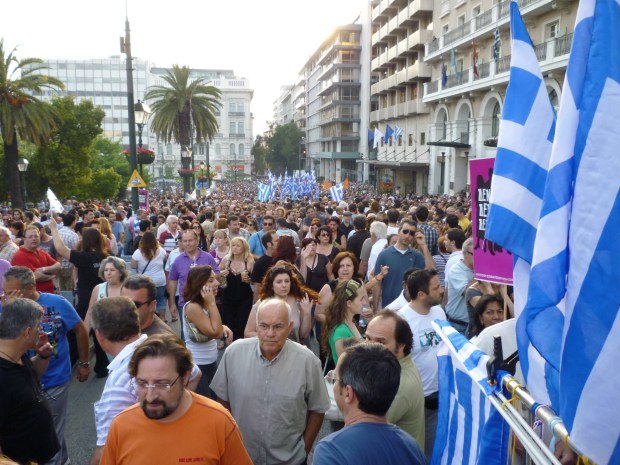
Syntagma Square, Athens – Government Austerity Demonstrations.

The current government debt problems are definitely a concern, and during our stay in Athens we ended up in the middle of a huge protest on Syntagma Square (an almost daily occurrence we understand). The protests are not violent and almost have a festive atmosphere.

Here is some information that I hope will be helpful in planning a visit to Greece.

Places to Visit

Greece is a large country, including about 2,000 islands. When planning to visit, one must decide how much of the country to cover, which will depend on time and budget. The mainland can be divided into roughly two parts–north of the Corinth Canal and south–the Peloponnese peninsula. The islands are quite varied in landscape and features, and very dispersed over the Aegean Sea. Since my first visit was focused on some sights of the Peloponnese peninsula and Thessalonki, we decided this time to visit 3 islands and a few other sites on the northern mainland. We chose the islands of Rhodes, Santorini and Naxos. These islands provided a great variety of natural and historic sights, and were relatively easy to get to. In future posts, I will review each of these islands. On the mainland, we rented a car and drove up to Delphi and then on to Meteora, which is about 5-6 hours by car from Athens. Delphi is an ancient Greek and Roman site, and Meteora has the famous monasteries dating from the 1300’s perched on rock pinnacles. Both sites were outstanding, and I will share more information on each in separate posts.  Our final day was spent in Athens.

West Coast_Naxos (12)

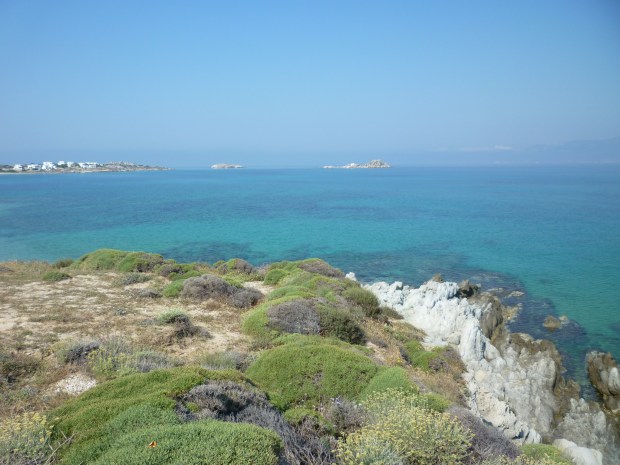
Naxos Island – West Coast.

Our itinerary provided a good mix of beautiful beaches, ancient Greek and Roman sites, medieval sites, natural scenery, and quaint towns.

Another option is to take a cruise through the islands and to some mainland ports. If you don’t mind large crowds, having just one day in a port, and missing the quiet evenings on shore, a cruise could be a good option, and saves the hassle of the transportation logistics between islands.

Food

Suffice it to say that we loved the Greek food. It is outstanding, especially if you like meat and seafood.  Most restaurants and tavernas offered a variety of Greek dishes and some Italian fare (pasta and pizzas).  It was hard to go wrong with a restaurant choice.  We loved the grilled meats (slouvaki), meatballs, moussaka and gyro sandwiches.

Eating in Meteora (2)

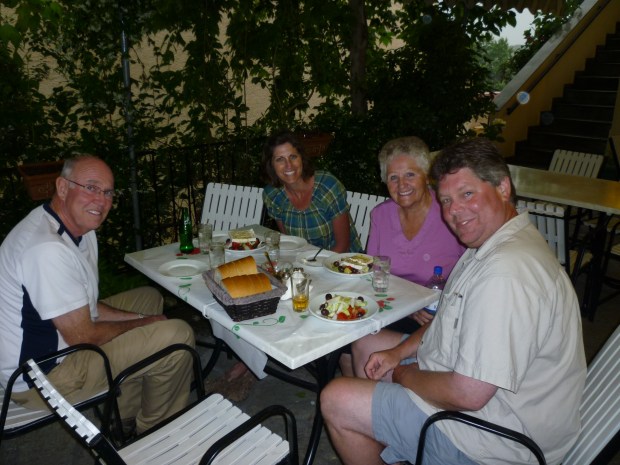
Enjoying our Greek salads!

We also couldn’t resist ordering Greek salads (tomatoes, cucumbers, onions, olives with a slab of feta cheese and a dash of olive oil) at every meal. We found great gelato most places too!

Language

As might be expected, in all the main tourist areas, English was widely spoken. What surprised us was that even in non-tourist locations like Lamia (3 hours north of Athens), we found storekeepers who were thrilled to see a tourist and spoke English quite well. We did learn a few Greek phrases which is always considerate and fun.

Driving

In spite of what many guide books and websites say, driving in Greece was no problem.  On the highways, just stay to the right and let those that want to drive 150 km/hour pass you. Even in Athens the traffic was quite orderly. We found most road signs in Greek and English, sometimes the English sign would be separately posted (Greek sign first, then 50 yards later an English sign). Some signs for small towns and other locations were only in Greek. Driving on the islands was very easy; there is little traffic outside the main towns. Gasoline was extremely expensive, almost $8 US per gallon. Around Athens there are tolls on the highways (most are 2 Euros or more), so be prepared for them.

Getting Around the Islands

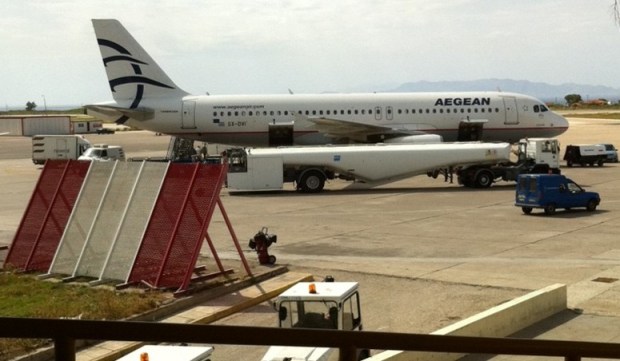
Aegean Airlines_Rhodes

Aegean Airlines plane on Rhodes.

We flew to Rhodes from Athens, and then to Santorini (via Athens). Flights on Aegean or Olympic Airlines are not cheap (between $90-200 per person per destination). We took the ferry from Santorini to Naxos.  Ferries are cheaper, but take longer and may be held up by weather.

Places to Stay

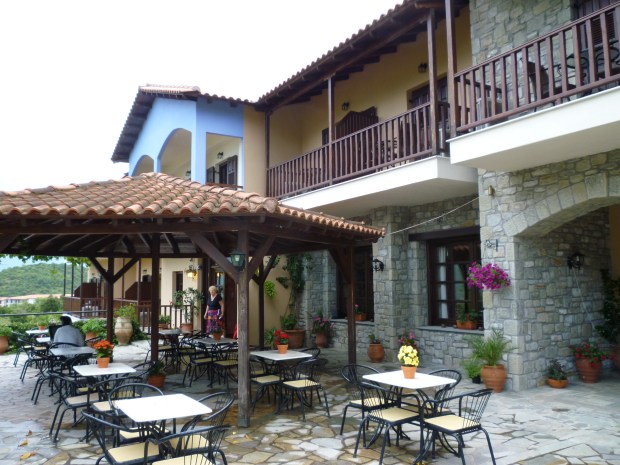
Doupiani House Hotel_Meteora  (2)

Our hotel (Doupiani House) in Meteora.

Except for Athens, we stayed in small hotels, and found the recommendations in the Lonely Planet guidebook and online at Booking.com to be very good. The hotel staffs were very helpful and friendly.   The only thing we didn’t like about most rooms was the hard beds! They seem to be standard in Greece.  Most of the little hotels also included free wireless internet access, and breakfast was included in a few.  Room rates varied from €34 per night (2 people) on Naxos to €100 per night on Santorini (for a hotel that was right on the edge of the caldera—worth it!).

Information on Greece

I used three guidebooks: Eyewitness Travel for the Greek Islands, Lonely Planet and Frommer’s.  Each guidebook provides a unique perspective and was helpful. Matt Barrett’s website on Greece also has a lot of information.