Kilmacduagh Abbey is about halfway between Galway and Ennis and just outside Burren National Park, in west-central Ireland. The area is full of natural and historic wonders. Kilmacduagh has one of the finest collections of monastic buildings in Ireland and is definitely worth a visit if your travel plans take you to The Burren or Galway area. The round tower’s lean is definitely noticeable, but it has somehow survived for 1,000 years. The Abbey was likely established in the 7th century by Saint Colman (Colman MacDuagh), son of Duagh. It was the center of a thriving community in the 12th century. A number of battles with the English were fought in the area and the Abbey was plundered, but survived in part, thank goodness. The Abbey became part of the order of St. Augustine in the 13th century.
This Abbey is free to visit. There are a few informational signs at the car park entrance.
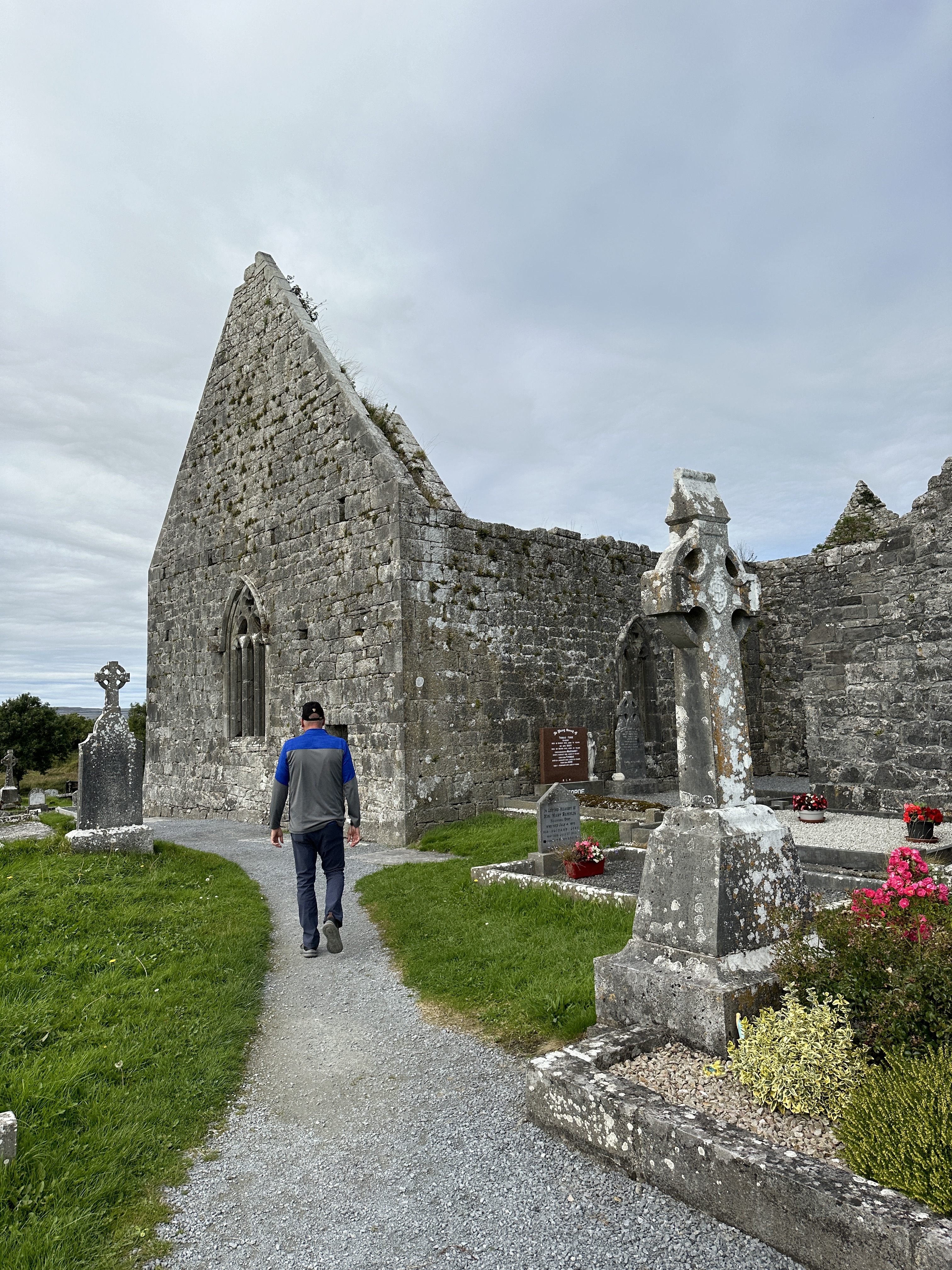
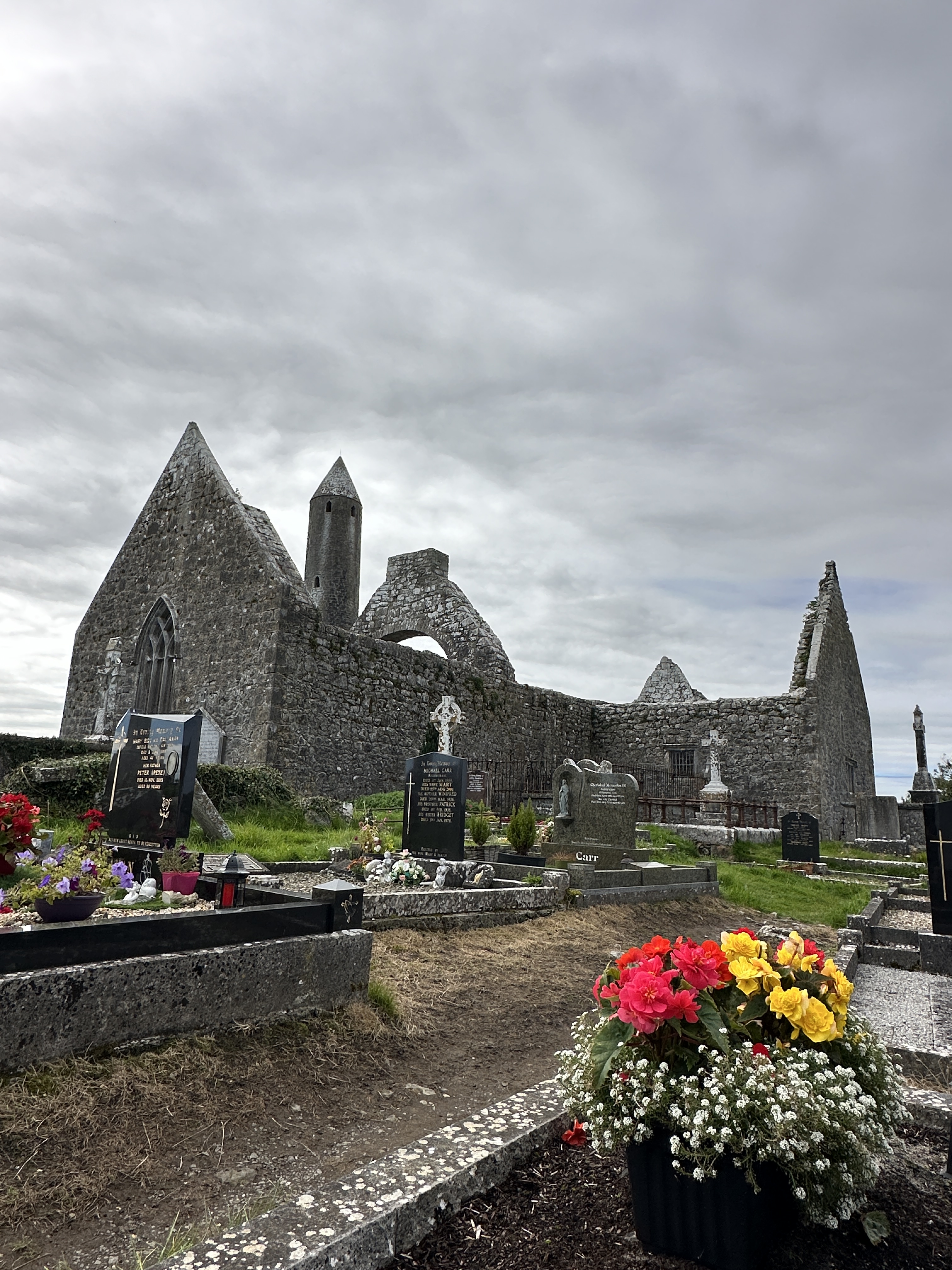
Views of the 11th century Cathedral and graveyard at Kilmacduagh (Saint Colman is buried in this graveyard).
The famous leaning tower at Kilmacduagh is about 2 feet out of alignment. It is 112 ft tall and likely dates from the 10th century (some sources say 12th century). In the 1800’s some work was done to refurbish the tower, particularly the conical roof.
The leaning tower at Kilmacduagh. Towers such as these were used for defensive purposes as well as serving as a belfry.
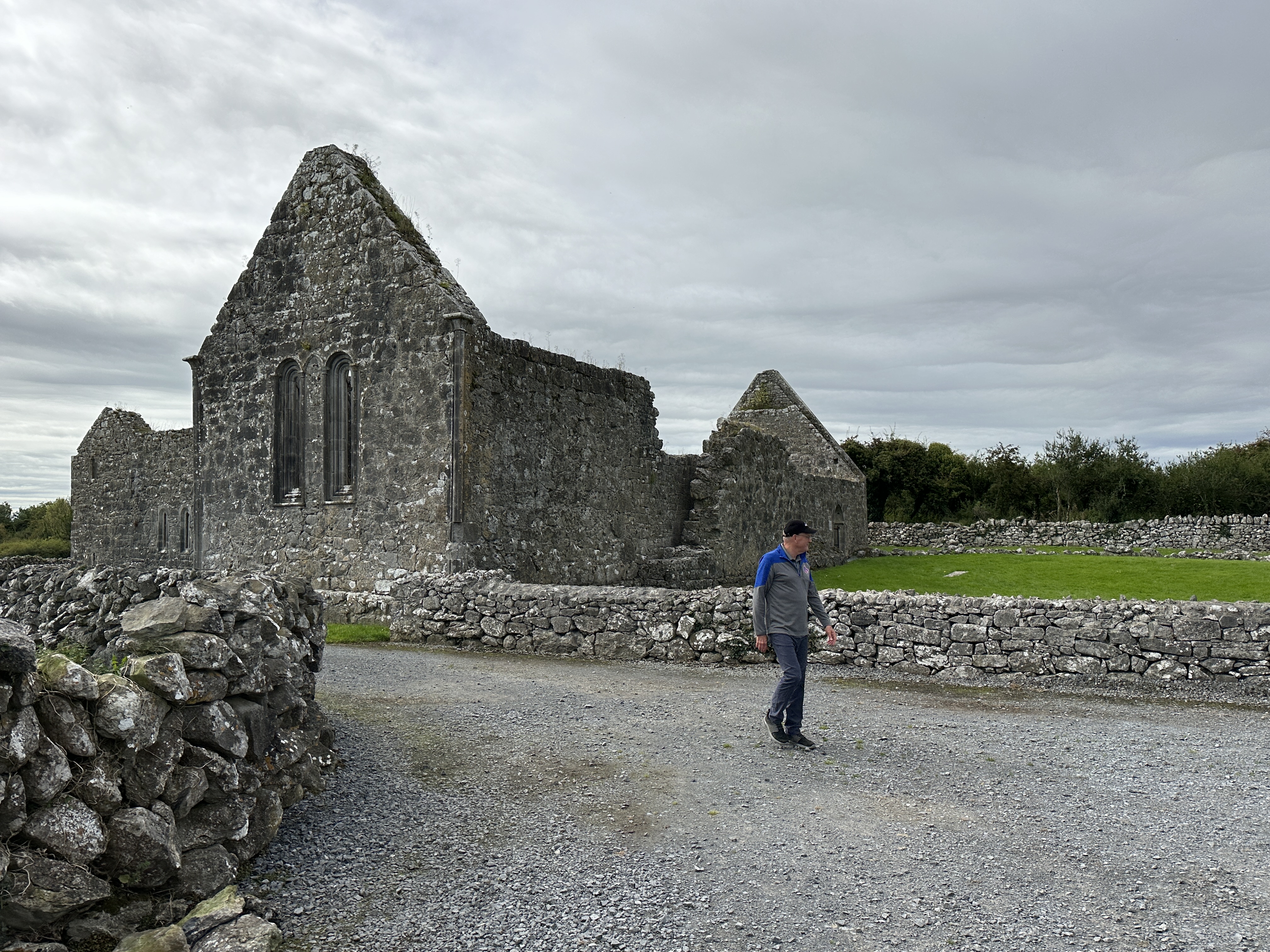
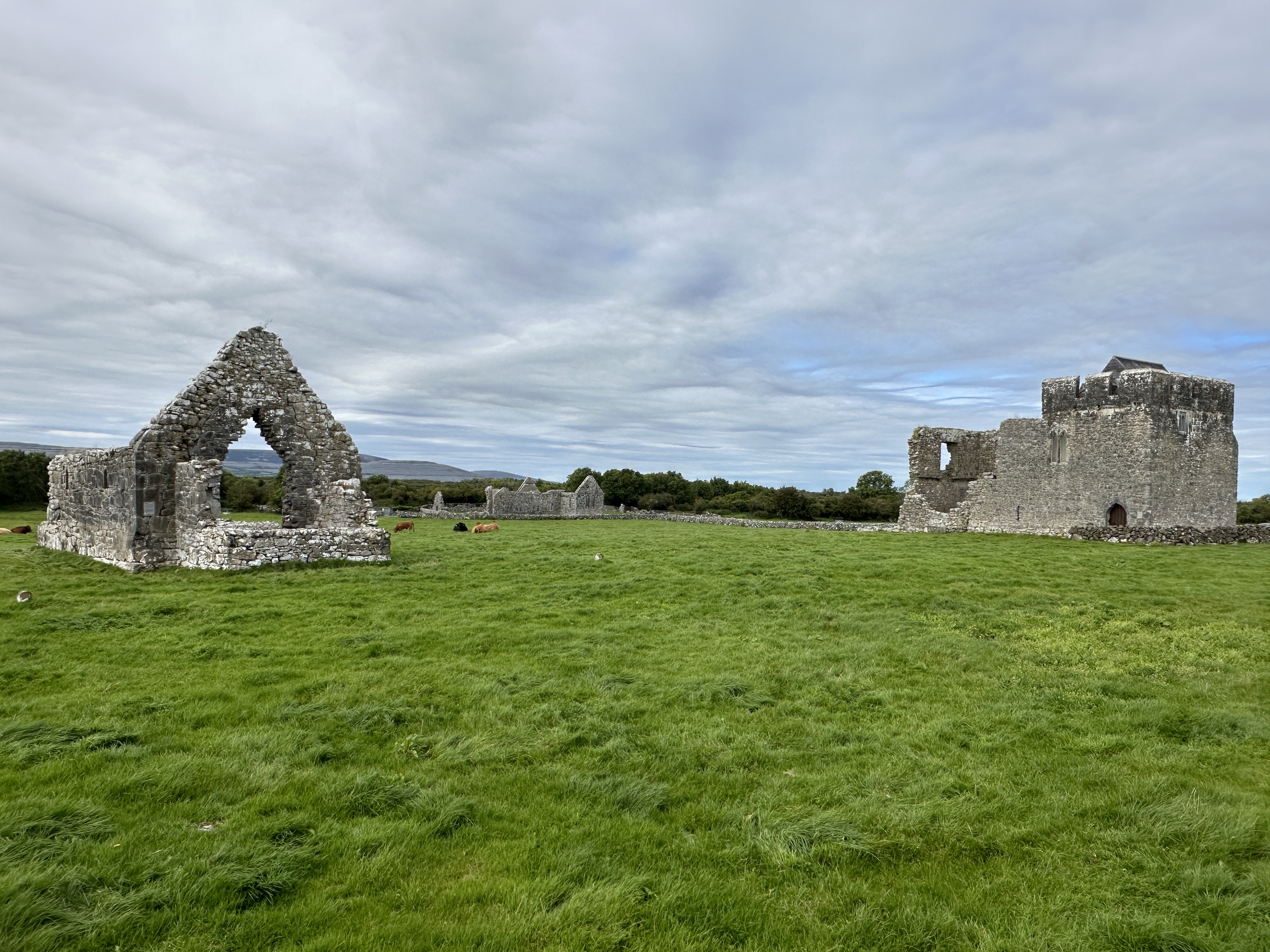
The 14th century Glebe House, possibly the Abbott’s residence. Insider tip – I believe you can access the Glebe House (and perhaps O’Heynes Church below) with a key from the keeper’s house across the street. I learned this later, unfortunately!
O’Heynes Church, a short walk from the other buildings at Kilmacduagh, was built in the 12th century.
Left – The little stone Church of St. John the Baptist is likely the oldest surviving structure at Kilmacduagh. Right – one other view of the Cathedral, Tower and graveyard.
About one hour south of Alghero by car (45 km or 28 miles) is the town of Bosa, home to Sardinia’s only navigable river (the Temo River). We visited Bosa as a day trip from Alghero and we made it part of an interesting loop drive – visiting Basilica della Santissima Trinità di Saccargia on the way (see below) and Nuraghe Santu Antine. It’s possible to visit all three sights in one day if you get going early from Alghero. (For a general map of the regions we visited in Sardinia, click here).
Bosa is an ancient town, it was established by the Phoenicians and continued to grow under the Romans. It’s easy to see why, Bosa is an ideal port location – close to the coast and at the mouth of the Temo River.
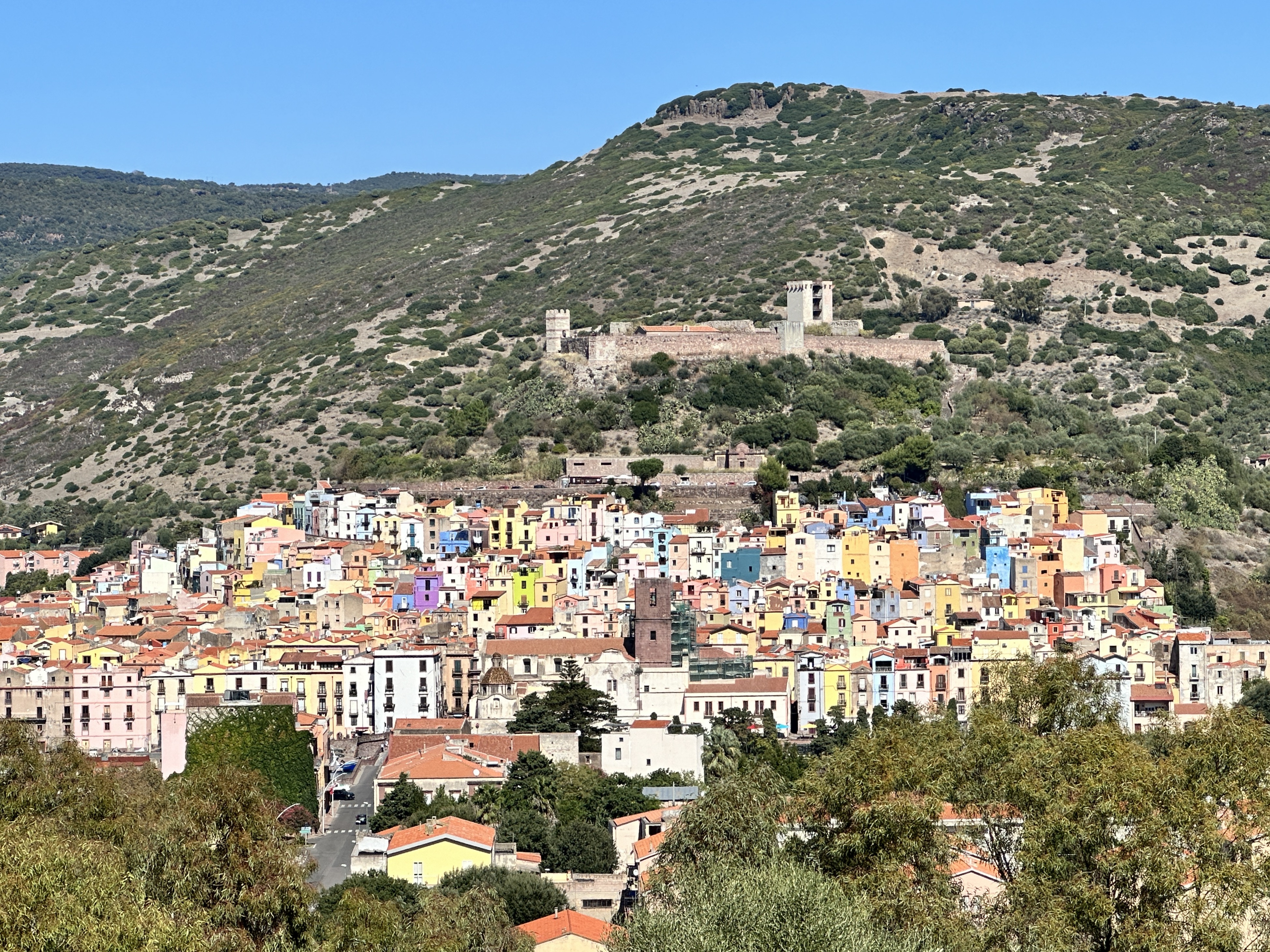
View of Bosa and its 13th century castle as seen from our drive into town.
Malaspina Castle
One of the main sights in Bosa is Malaspina Castle. You can drive up to the castle and park just below it. Even then, you have a steep walk up into the Castle. There is not much left of the Castle other than the walls (which you can walk), a few towers (which you can climb) and the 14th century Chiesa di Nostra Signora di Regnos Altos, which has some lovely frescoes.
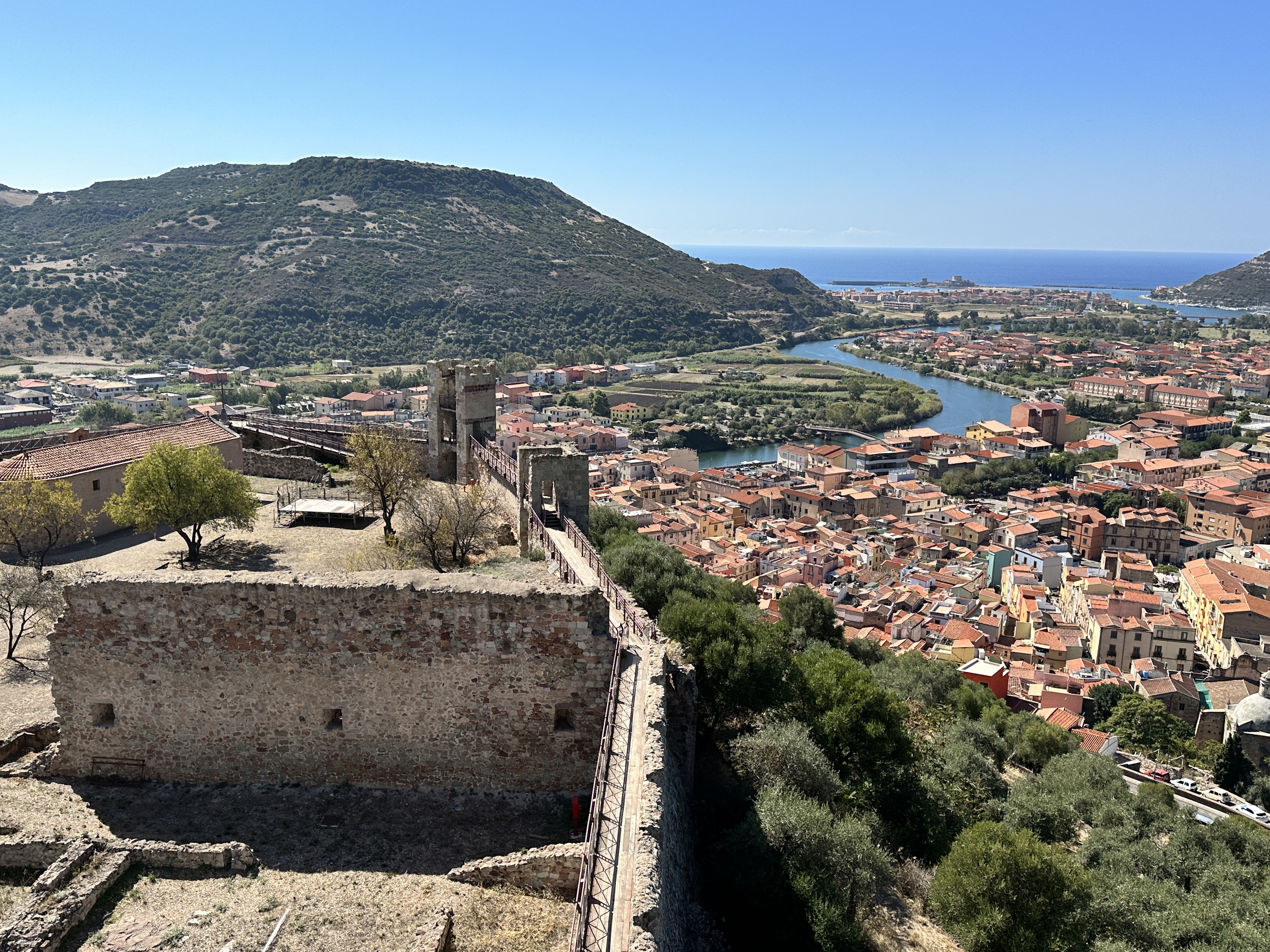
The view of Bosa from Malaspina Castle, built in the 12th and 13th centuries by a Tuscan noble family to protect Bosa from pirate raids.
14th century frescoes of Saints in the Chiesa di Nostra Signora di Regnos Altos, within the walls of Malaspina Castle.
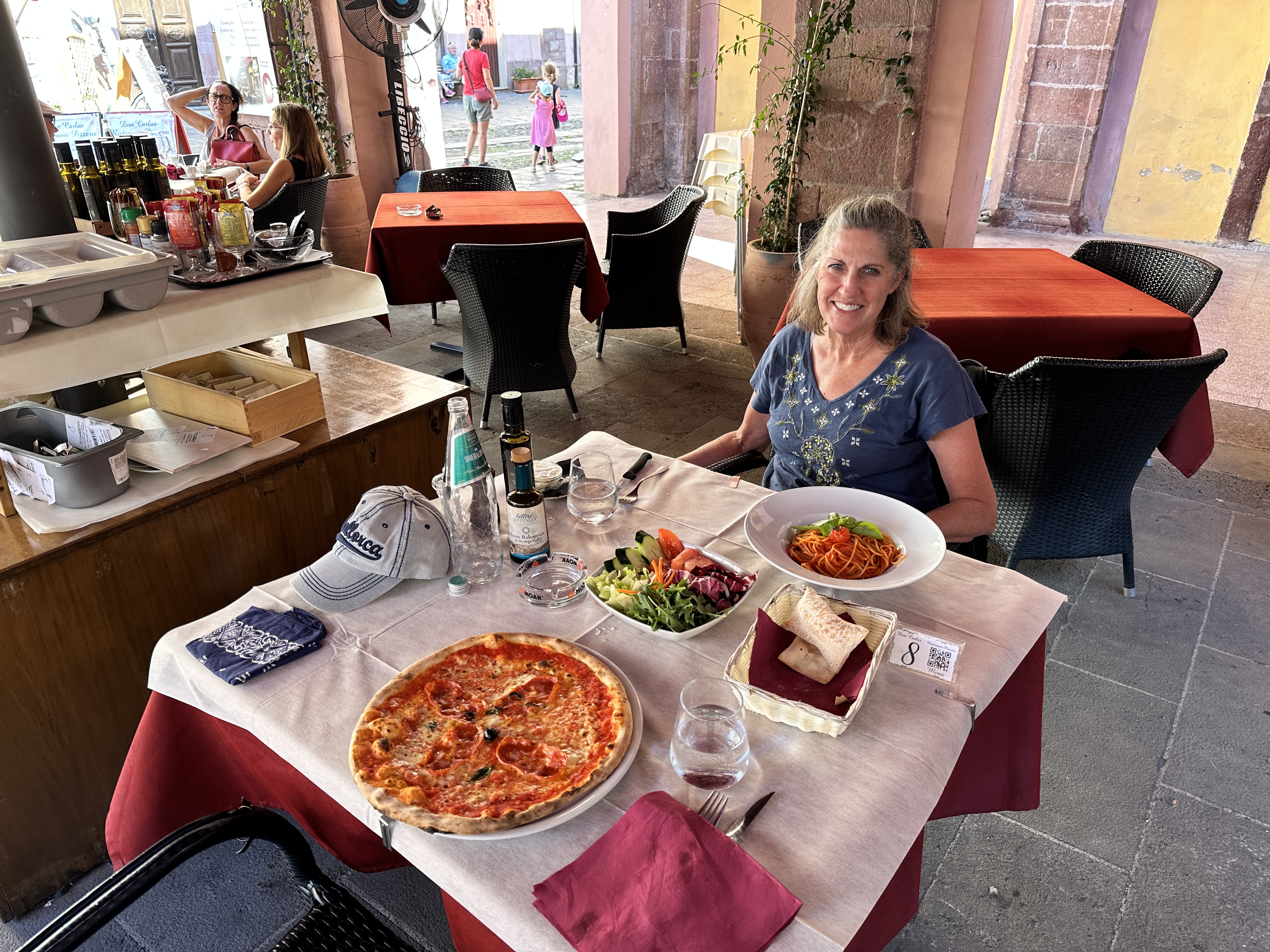
The old town of Bosa is a delight to wander, and as is possible in every Italian town, we enjoyed some great food!
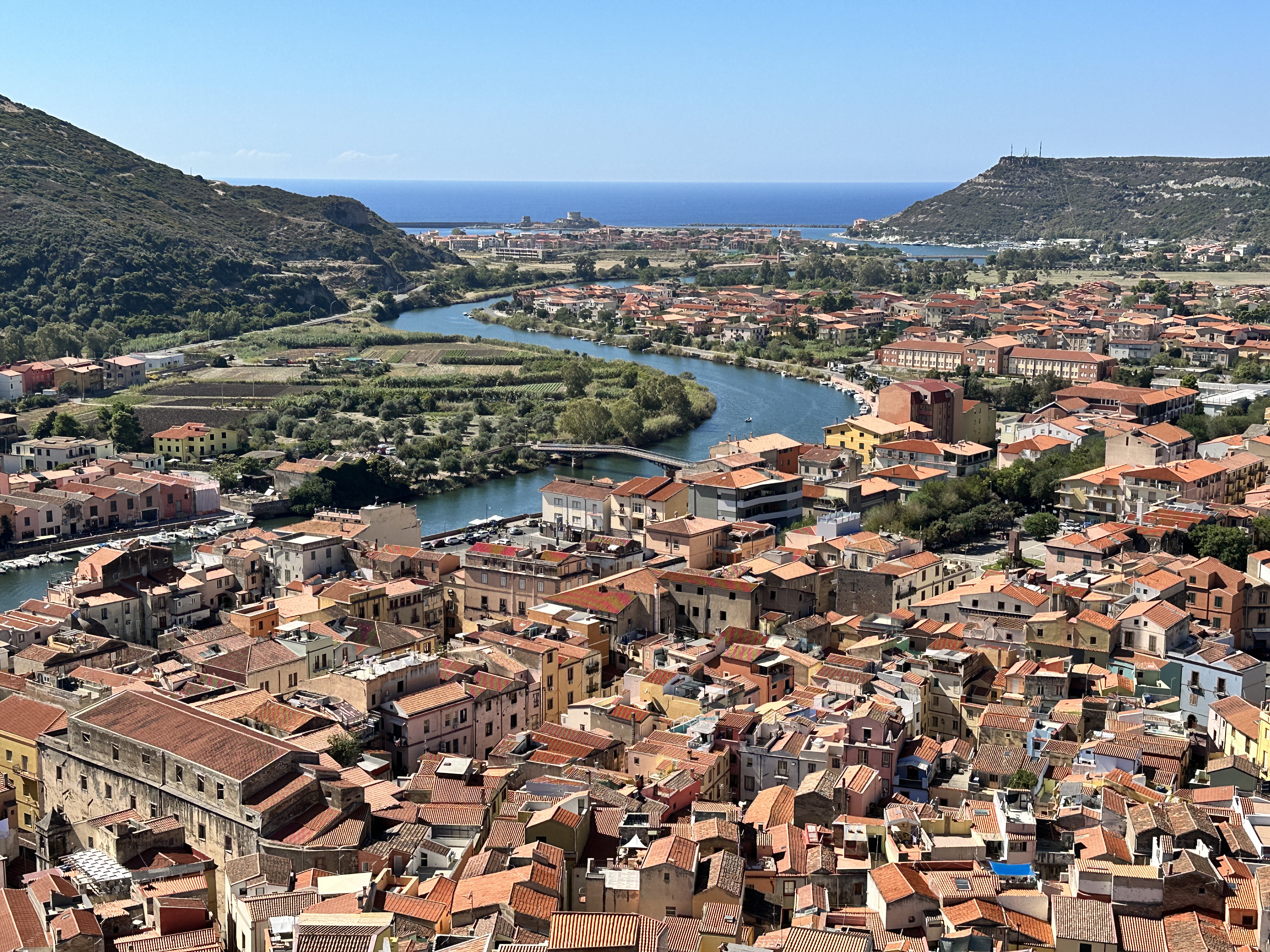
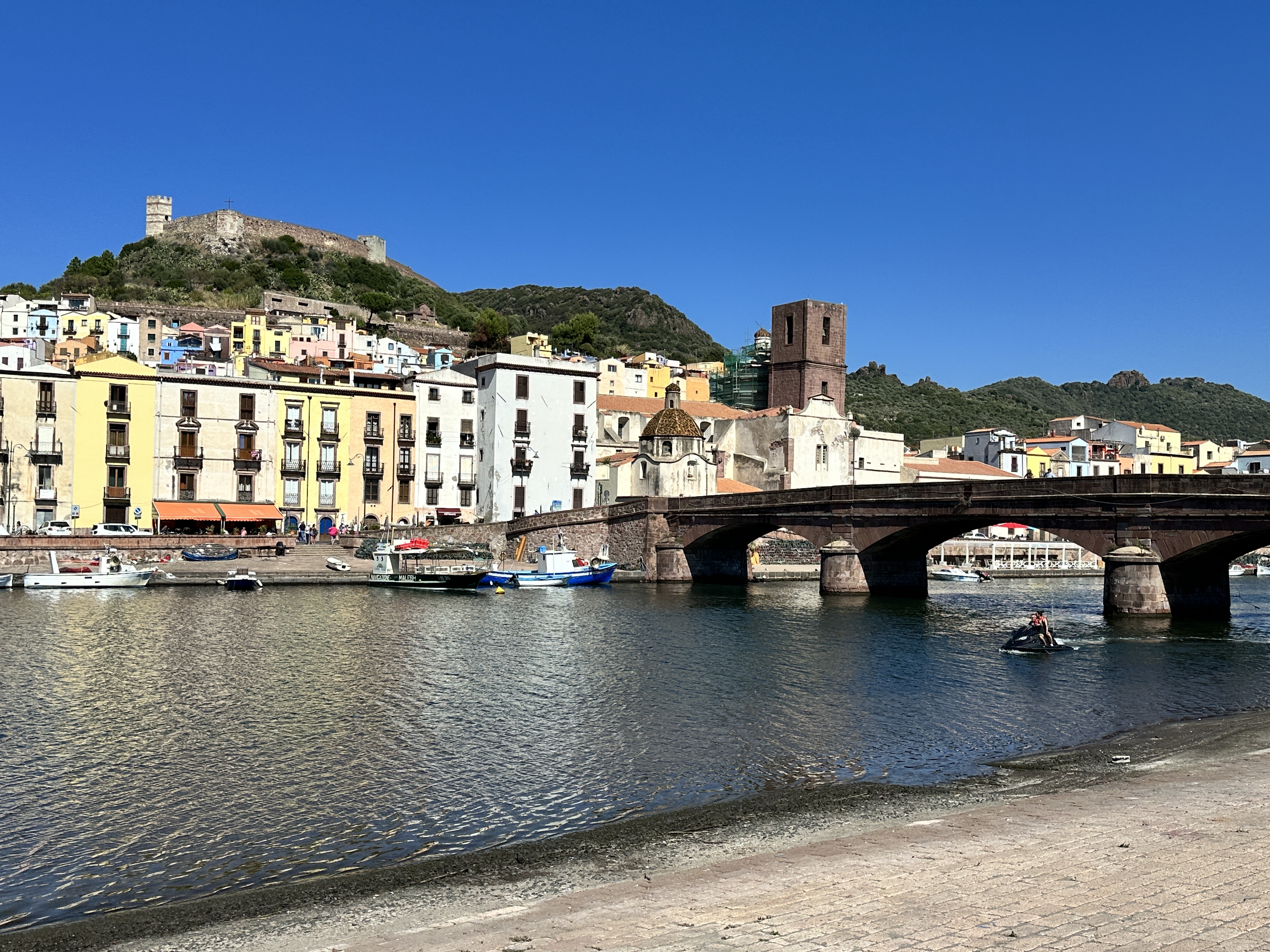
A postcard view of Bosa with the Malaspina Castle in the distance, the old town across the river, and Ponte Vecchio spanning the Temo River. We parked for free near this spot, just a short walk from the old town.
St. Peter’s Church
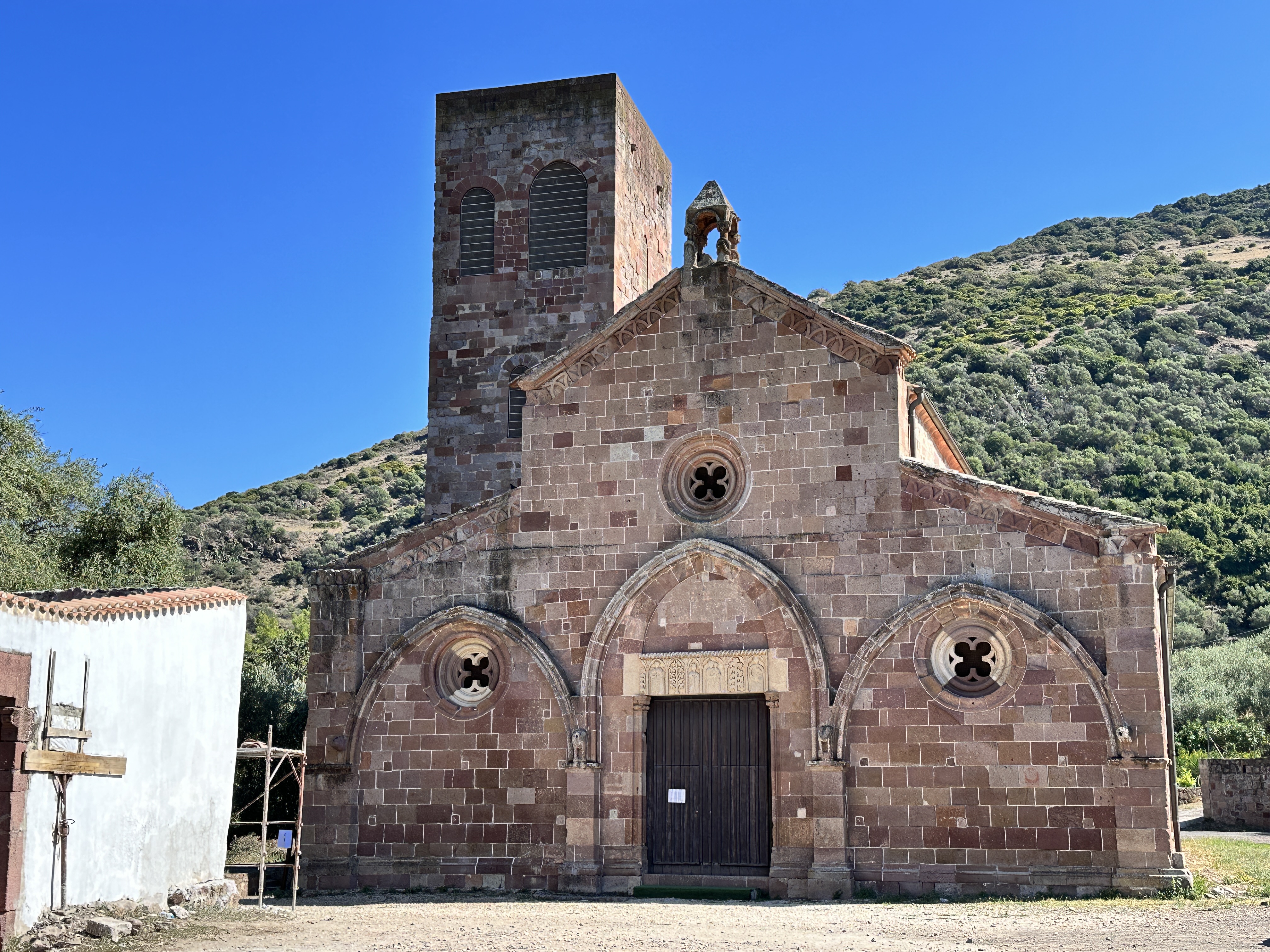
Just outside Bosa along the south shore of the Temo River is St. Peter’s Church, which dates from the second half of the 11th century. The Church can be visited, but was closed at the time of our visit. There is information posted about the Church near the entrance.
Views of St. Peter’s Church outside Bosa. The image on the right is a snapshot of a signpost at the Church, to at least provide a glimpse of the interior.
On the Drive to Bosa: Basilica della Santissima Trinità di Saccargia
The Church of the Holy Trinity Saccargia is about a 40-minute drive (50 km or 31 miles) from Alghero. It is well worth the “detour” to visit this fascinating 12th century Pisan-style basilica on the way to Bosa. The abbey was built on the site of a pre-existing monastery, of which there are some scant ruins.
Views of the exterior of The Church of the Holy Trinity Saccargia, constructed of alternating layers of white limestone and dark volcanic rock.Views of The Church of the Holy Trinity Saccargia’s nave. The frescoes are from the second half of the 12th century – amazingly well-preserved.Some interesting figures in the church – left – a face in the wall of the nave and right – cows carved into a pillar on the portico. Some believe the name of the Church comes from the Sardinian word for “cow with the spotted hide”, but this is not likely. The land surrounding the church is rural and probably has been perfect grazing pasture for centuries.
About 20 minutes south of The Church of the Holy Trinity Saccargia is the ancient archeological site of Nuraghe Santu Antine, also a very worthwhile stop before turning southwest on your drive towards Bosa. Since I covered our visits to Sardinia’s ancient Nuraghe in another post, I won’t comment further on it here.
After our visit to Bosa, we drove north along the west coast of Sardinia back to Alghero. It was a scenic, beautiful drive and the perfect end to another perfect day in Sardinia.
The island of Sardinia, Italy has so many lovely beaches it’s difficult to narrow down the list of “best beaches” but one that would have to be near the top is La Pelosa, near Stintino on the north west coast of Sardinia. This beach is so popular that you need to make reservations to visit it during the busy season (May – October). The reservations are not expensive nor difficult. To my knowledge, this is the only beach in Sardinia that requires a reservation. When you see it, you will understand why it is so popular.
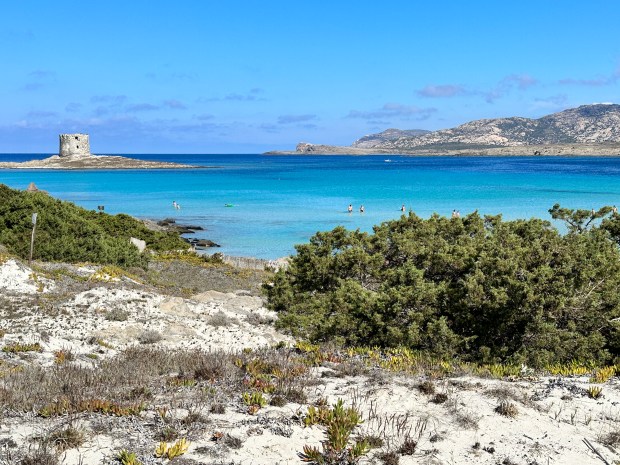
La Pelosa Beach, with its signature 16th century Aragonese Tower overlooking this beautiful bay.
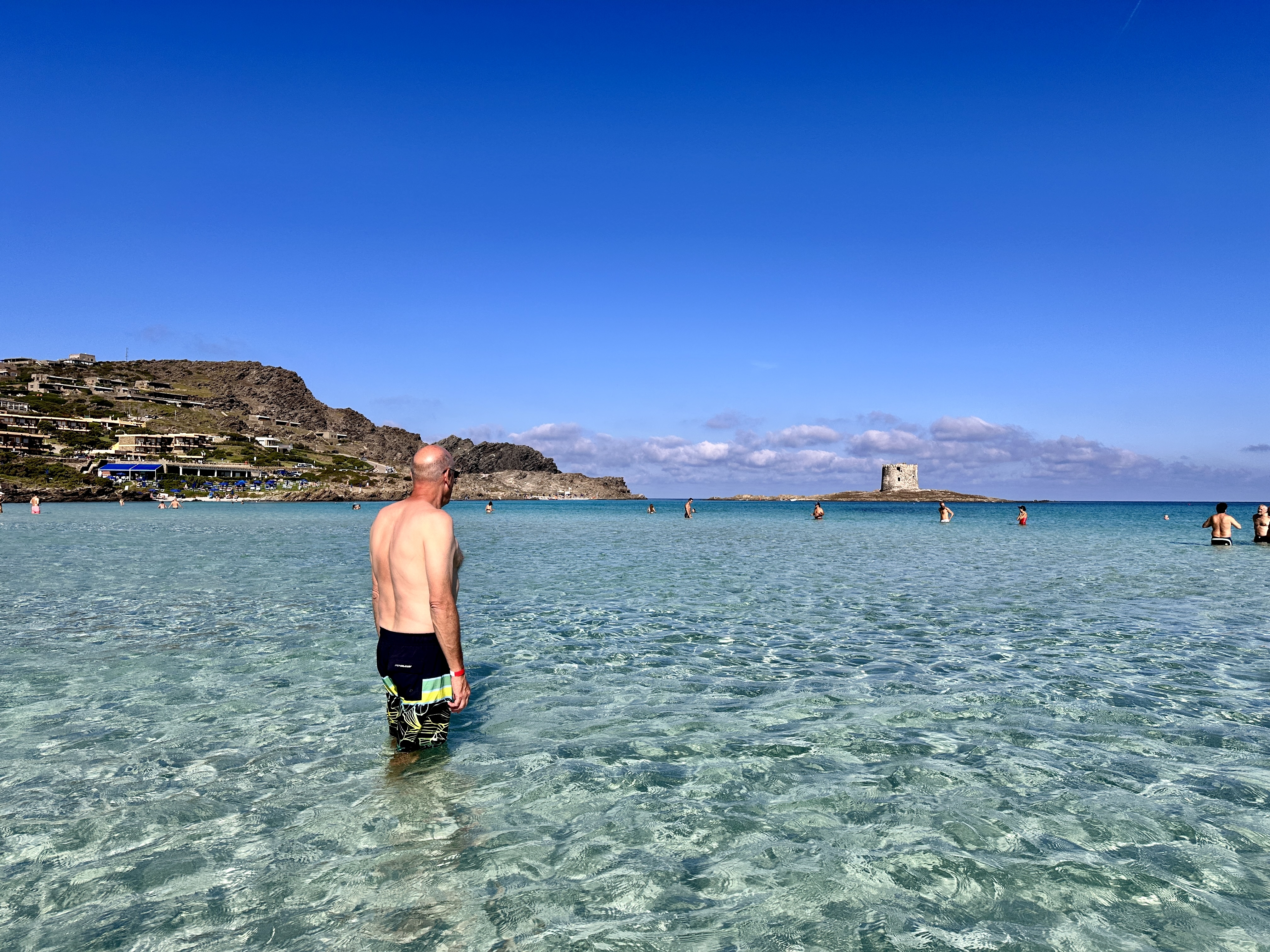
Other views of La Pelosa Beach, Sardinia.The water is calm and very shallow at La Pelosa, you can walk out a long way and the water may still not be up to your waist, making this a perfect beach for young children.
One of the boardwalks leading down to La Pelosa Beach.
There is paid parking along the street facing the beach – be sure to pay – you don’t want to get back to your parking spot after a lovely day at the beach and find your vehicle has been towed away! I recommend getting here early in the morning or later in the afternoon, not only will the beach be a little less busy, but convenient parking will be more plentiful too. We visited in early October, after an overnight stop in Castelsardo. The water was still warm and the beach was fairly busy, but it did not feel overcrowded at all. To check in at the beach, there is a kiosk where you get a wristband after showing your reservations on your phone or a hardcopy. Be sure to bring towel mats as well, to avoid taking home the precious sand – Sardinia is focused on keeping their beautiful sand where it belongs – on the beach.
Alghero
Less than an hour south of La Pelosa Beach is Alghero. Alghero was probably my favorite town in Sardinia. The combination of its magnificent setting and harbor, a beautiful old town with medieval towers and walls, and lively evening scene made this a perfect spot to stay for a few nights. We rented a lovely apartment that was just a ten minute walk from the old town.
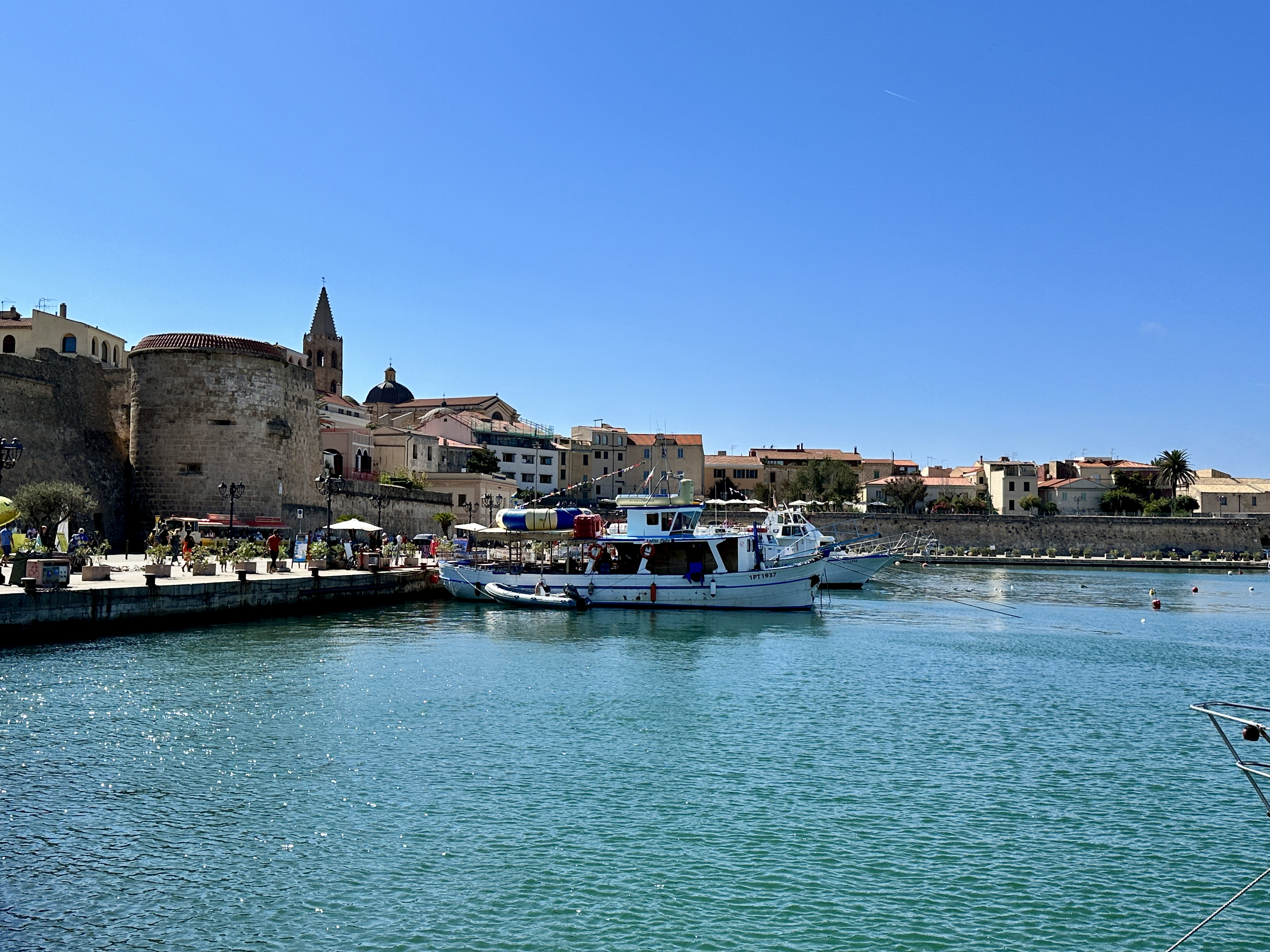
A view of Alghero’s Old Town from the Harbor.
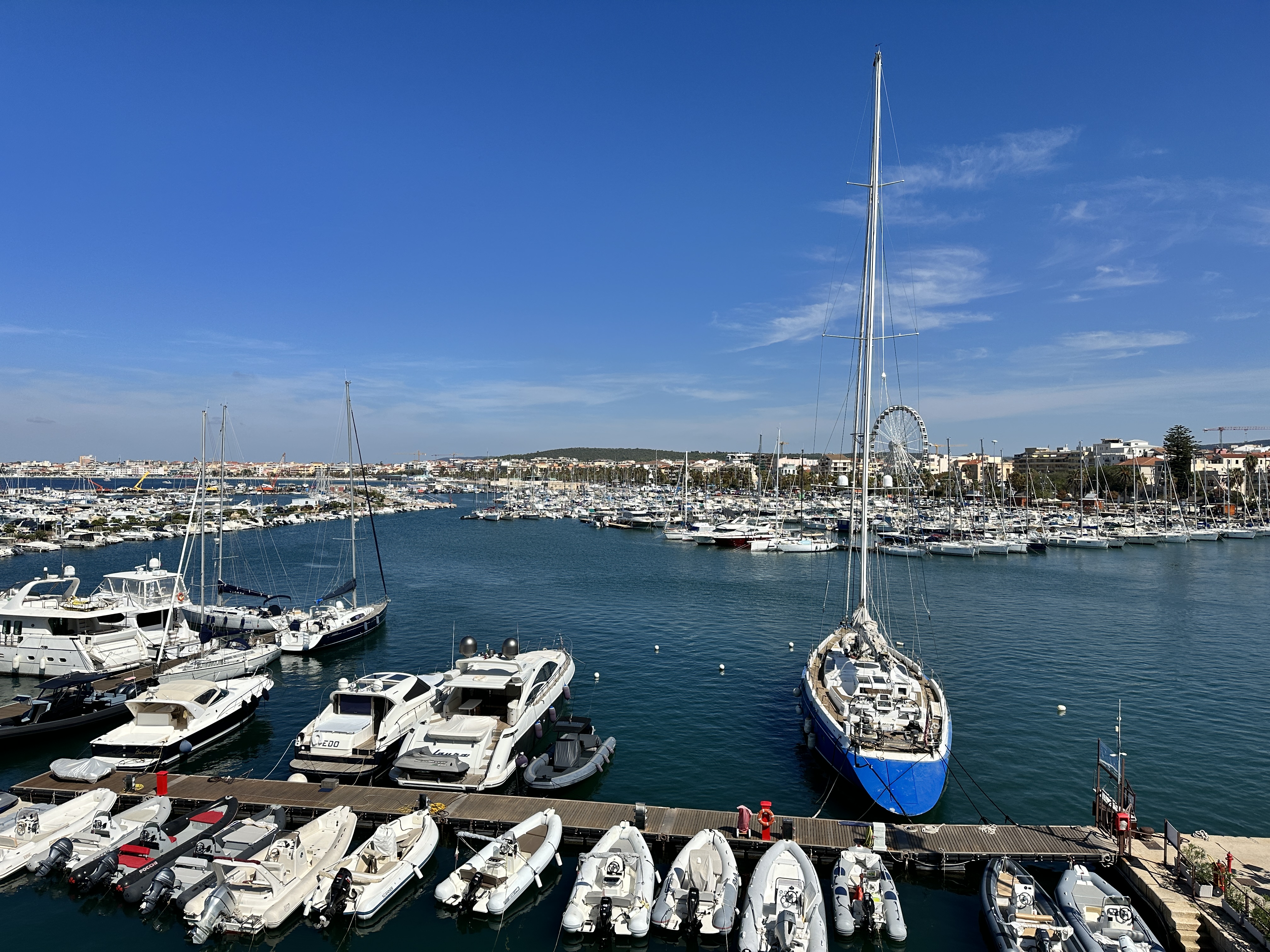
Views of Alghero’s Harbor from the city walls.
Alghero’s lively Old Town.
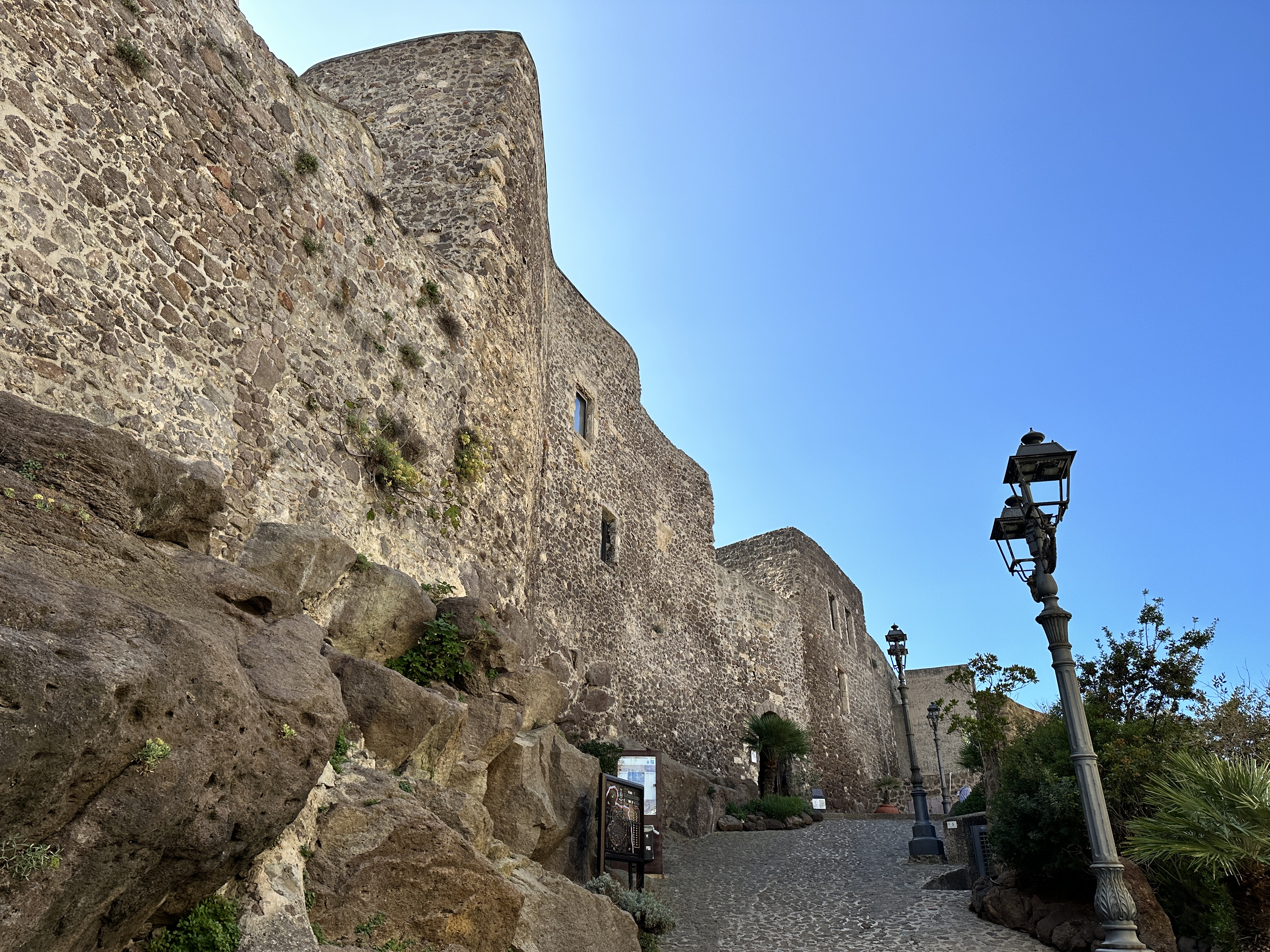
A great view of Alghero’s Old Town walls and towers.
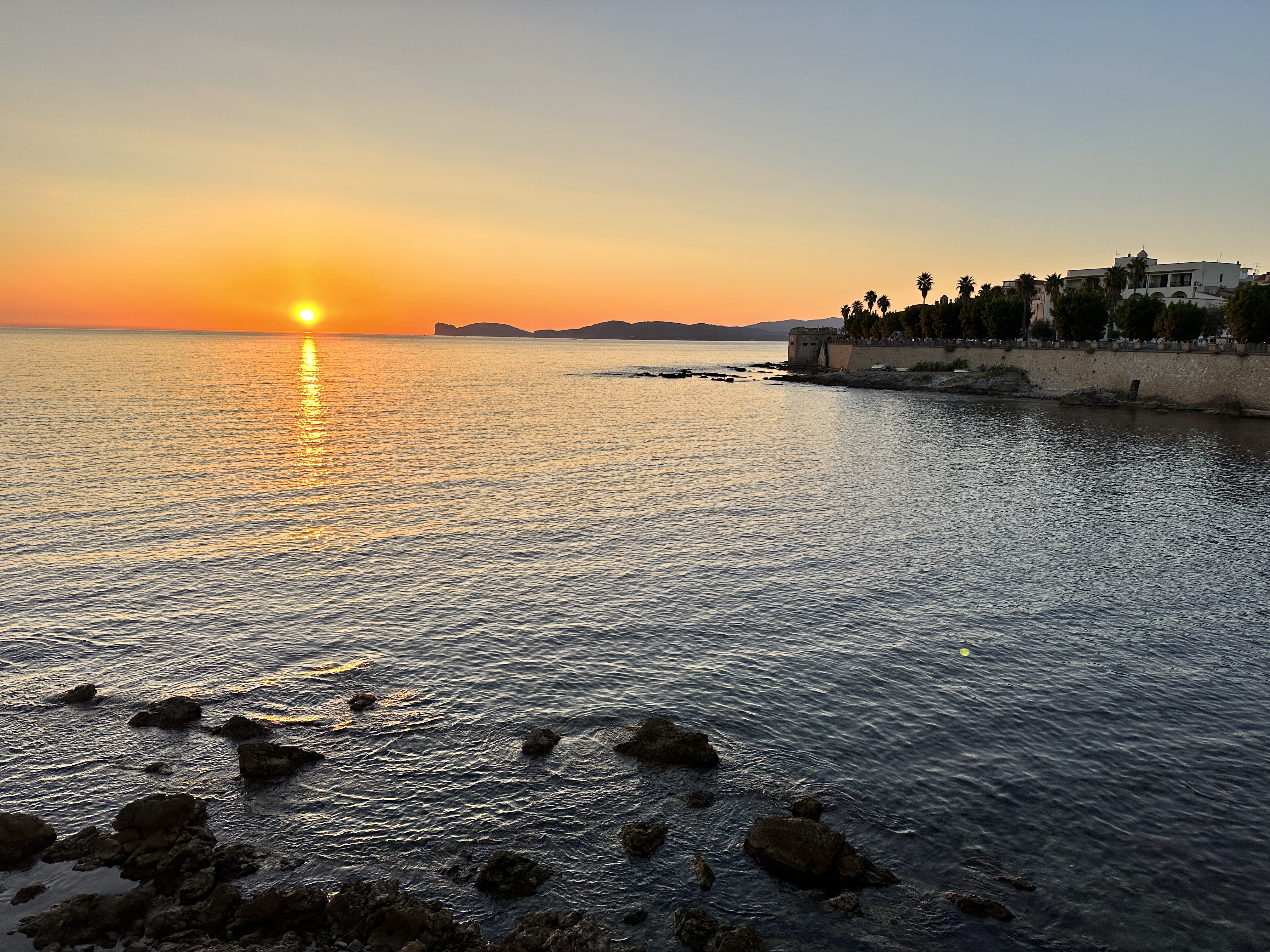
Alghero’s city walls are a perfect place to watch the sunset after another glorious day on this wonderful island.
Castelsardo is a very picturesque little town on the north coast of Sardinia and worth an overnight stop if convenient in your travels, or a least a short visit on your way to other destinations. For us, we stopped here overnight on our way to the magnificent beach at La Pelosa (near Stintino, on the very northwest tip of Sardinia) and then on to Alghero.
Castello dei Doria
The 13th century castle at the top of the hill in Castelsardo is named after the Genoese family who was entrusted with its care. It is open to visitors and there are a few rooms you can visit with various displays, including the Museum of Mediterranean Interweaving.
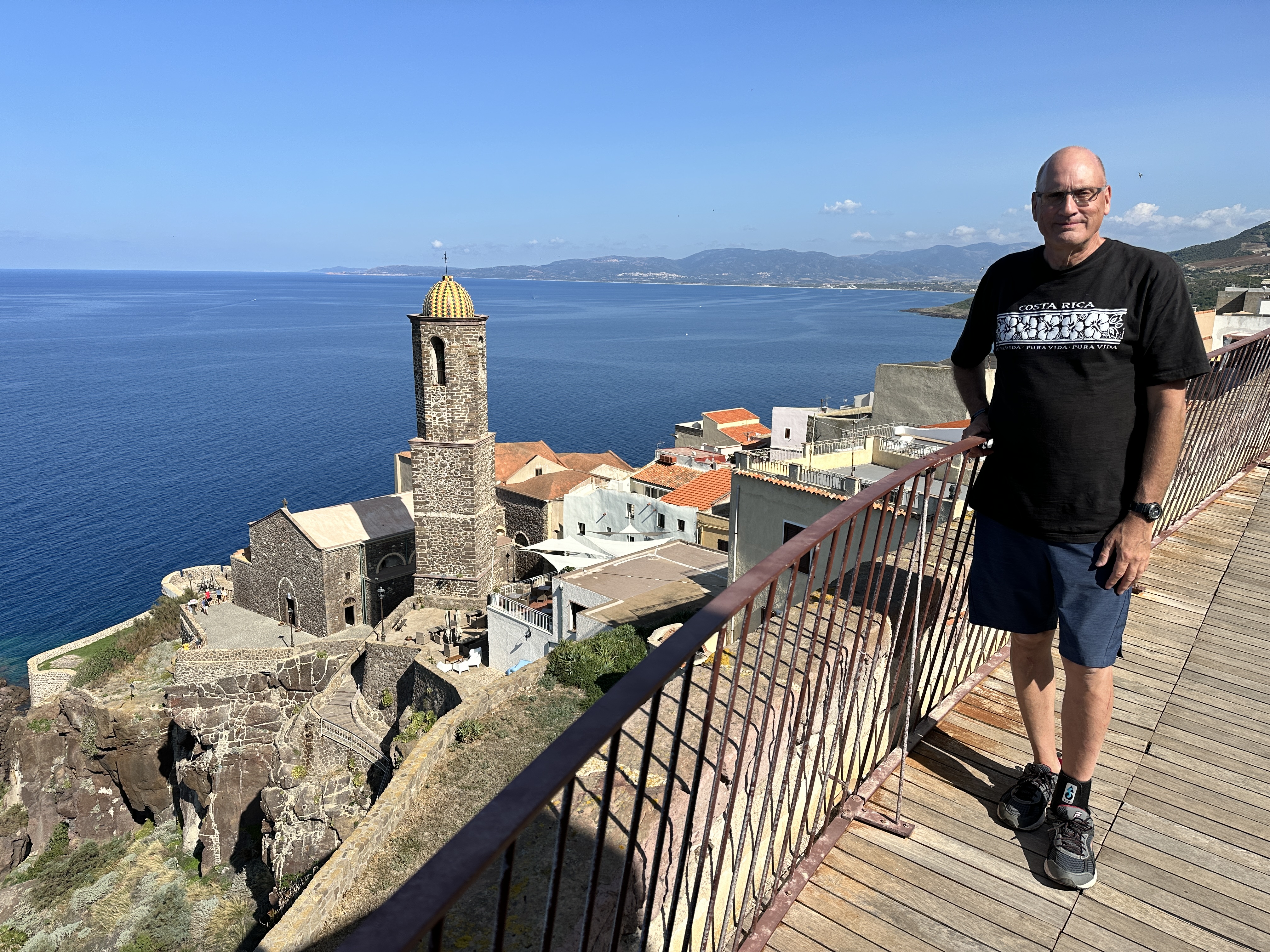
At the top of the town lies the Castello dei Doria, with great views of the countryside and Mediterranean Sea.
A view from the top of Castello dei Doria.
Street Wandering
As with any small European town, it is fun to just wander the narrow, steep streets. Our hotel was on one of these little streets. There was plenty of car parking outside the old town on the sea side of Castelsardo.
Left – restaurants offering tables in the narrow alleys of Castelsardo. Right – Robyn pointing out our accommodation for the night in the heart of the old town. The rooftop of our little hotel offered a wonderful view of the sea and is where we had breakfast.
View of Castelsardo’s 16th century Cathedral, with a magnificent view of the Mediterranean Sea and Sardinian coast line in the distance.
I loved this image of an old 1st story floor/ceiling, in a visitor’s center near the Castle. I can’t imagine trying to build anything that would be square and level in those days!
Some of the other 16th buildings near the Cathedral in Castelsardo’s old town.
Elephant Rock
Just off a road leading into Castelsardo from the east is this interesting volcanic rock formation, aptly named “Elephant Rock”. What is even more interesting is that within this rock there are two pre-nuragic tombs, dating to a time before Sardinia’s Nuraghe were built, likely 5,000 or more years ago. We just pulled off the side of the road to take a look.
Just outside of Castelsardo is this interesting volcanic rock containing ancient tombs, aptly name “Elephant Rock”.
Views of ancient tombs carved into Elephant Rock. In the right and left images you can see the horns of a bull carved into the stone. It was a little difficult to get these photos, Elephant Rock is taller than it appears.
Don’t miss beautiful Castelsardo if you have the chance!
From our start in Olbia and Sardinia’s Costa Esmeralda, we traveled north a short distance and took (with our rental car) the 15-minute ferry ride from Palau over to La Maddalena Island and town, which is part of the La Maddalena Archipelago, located at the very north east edge of Sardinia, Italy. We spent 3 nights on La Maddalena, which gave us enough time to see La Maddalena Island, Caprera Island (reached by bridge from La Maddalena) and then a day-trip boat tour of some of the other islands in the Archipelago. I’ll share a bit about each day below.
La Maddalena
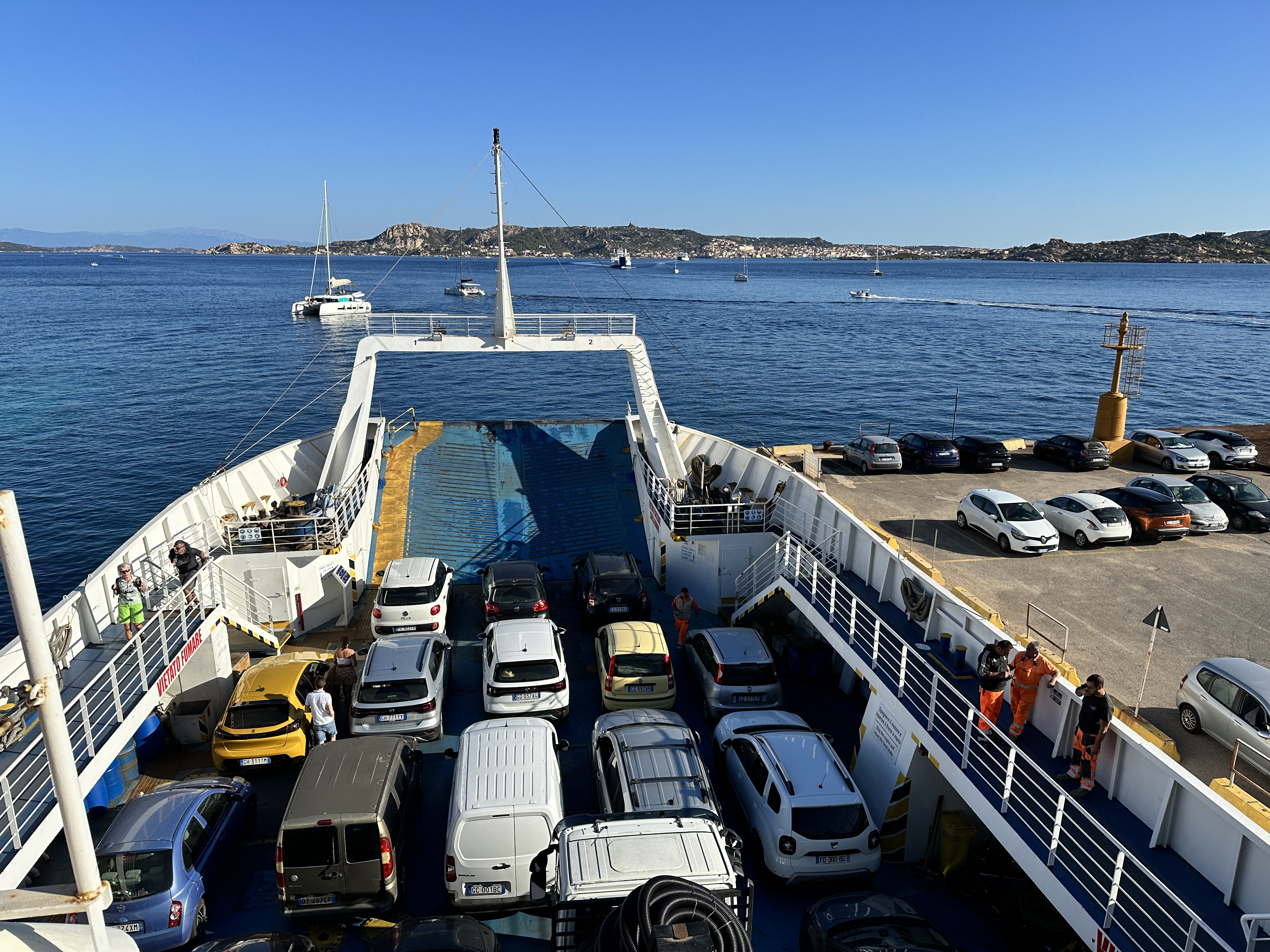
We caught a morning ferry to La Maddalena from Palau, no reservations were needed in October and the ferries run continuously all day. A round trip ticket for car and passengers was about 40 Euro.
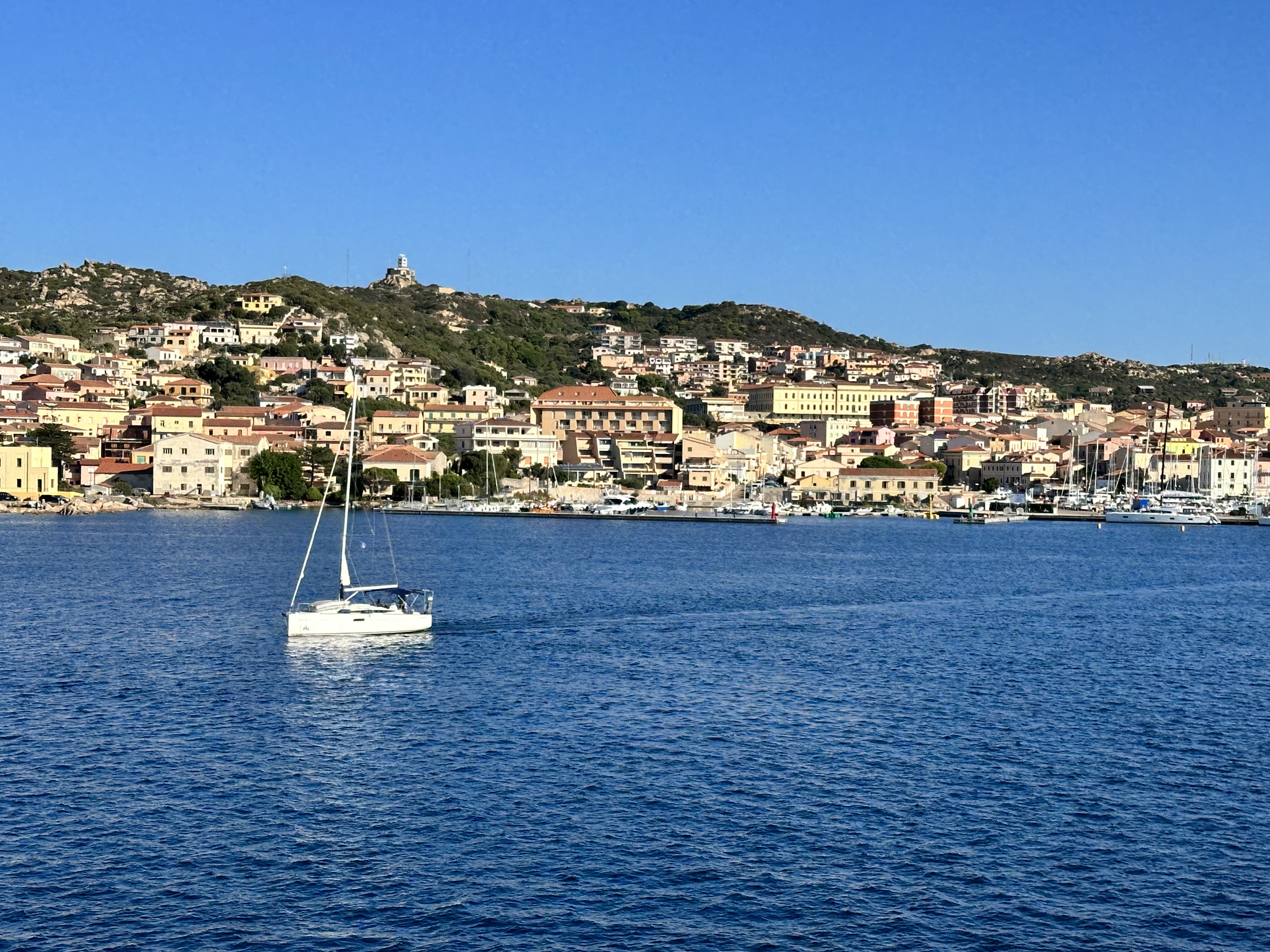
Left – our ferry, with La Maddalena in the distance. Right – a view of La Maddalena town and harbor from the ferry.
Upon arrival. we immediately headed for Cala Francese beach, not far from the main town and then explored a few other beaches around the island before checking into our hotel later in the afternoon. La Maddalena is not big, you could probably drive around the island in 30 minutes or less.
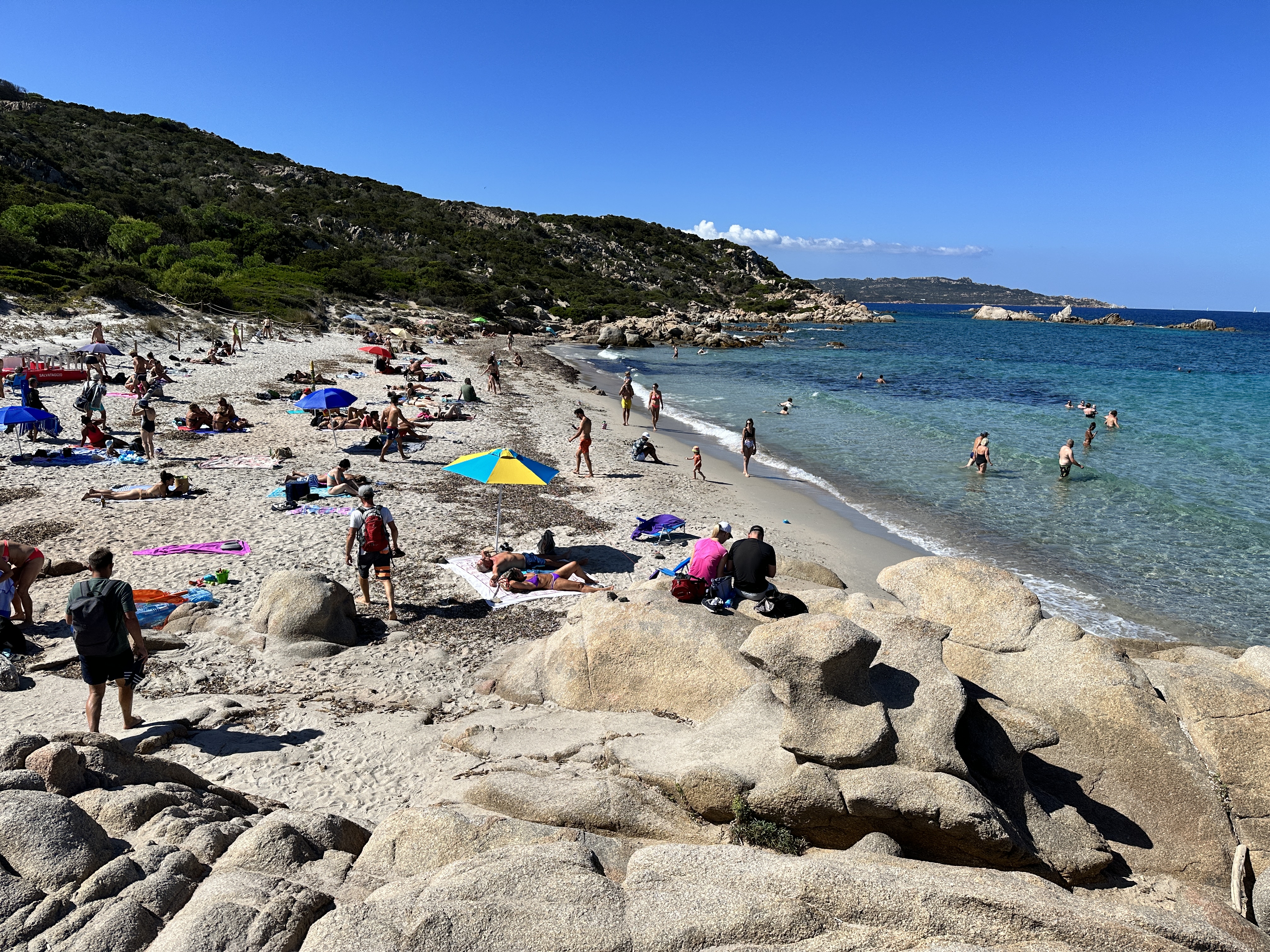
Above – Cala Francese, on the southwest coast of La Maddalena. You have to take a very short drive on a dirt road to get to the parking area and then walk on a trail for 5 minutes to get to the beach.Left – Spiaggia Bassa Trinita, Right – Spiaggia del Cardellino, both beaches are on the northwest coast of La Maddalena.
Cala Lunga, at the northern tip of La Maddalena.
Left – Spiaggia di Cala Spalmatore, on the eastern side of La Maddalena. Right – a view of La Maddalena town as we drove back after our tour of the island.
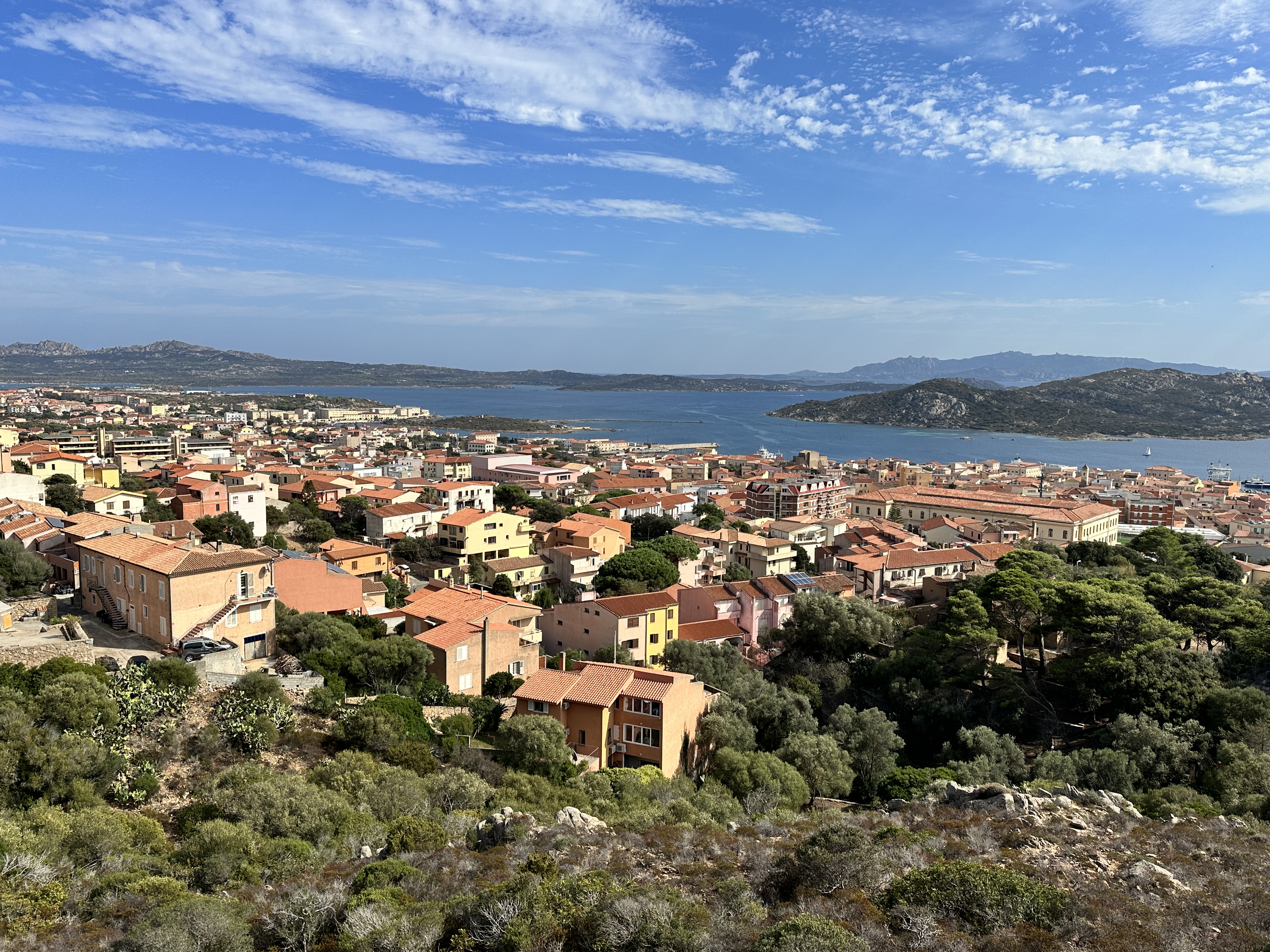
The town was fun to explore, and many boat tours are offered from the harbor.
Caprera Island
After a wonderful day on La Maddalena, we decided to spend our second day on Caprera, an island connected to La Maddalena via a bridge. Caprera is far less populated, and largely National Park land. There are numerous beaches and hiking trails and to start our day we decided to do a hike on the north end of the island, to the Batteria de Candeo, a really interesting site.
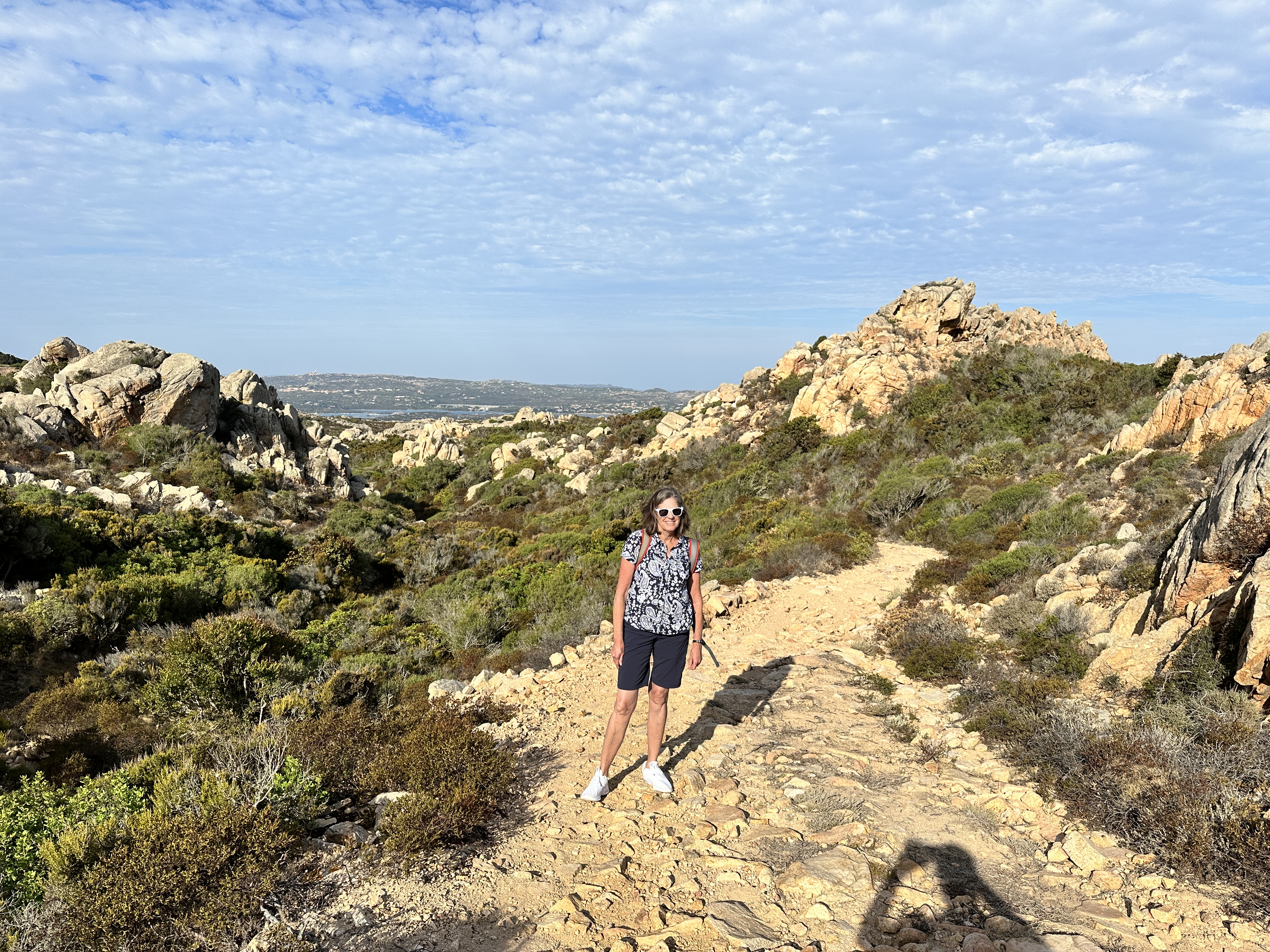
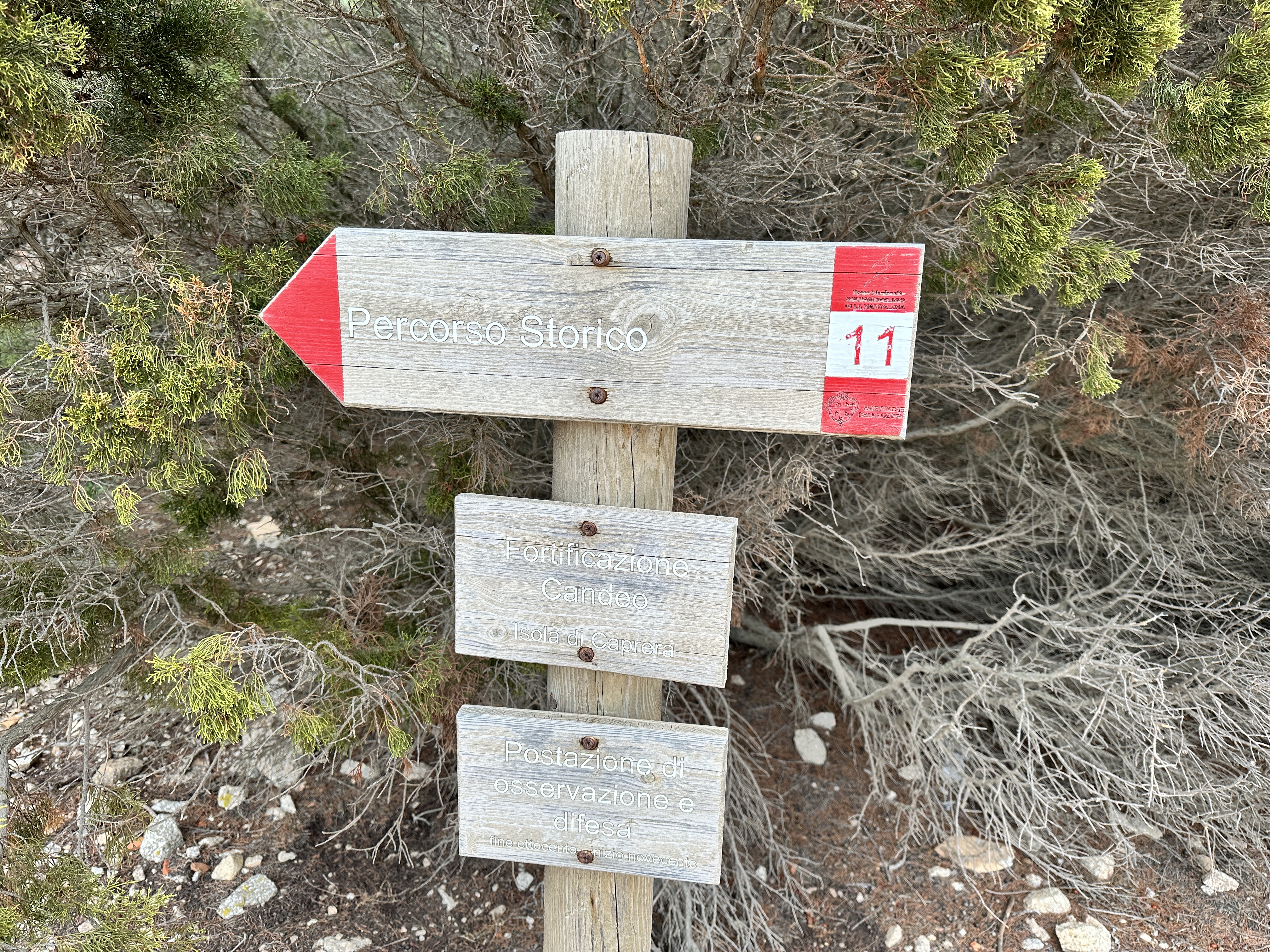
There are numerous trails criss-crossing the northern end of Caprera, and they are well signposted. There were very few people on the trails, we pretty much had them to ourselves.
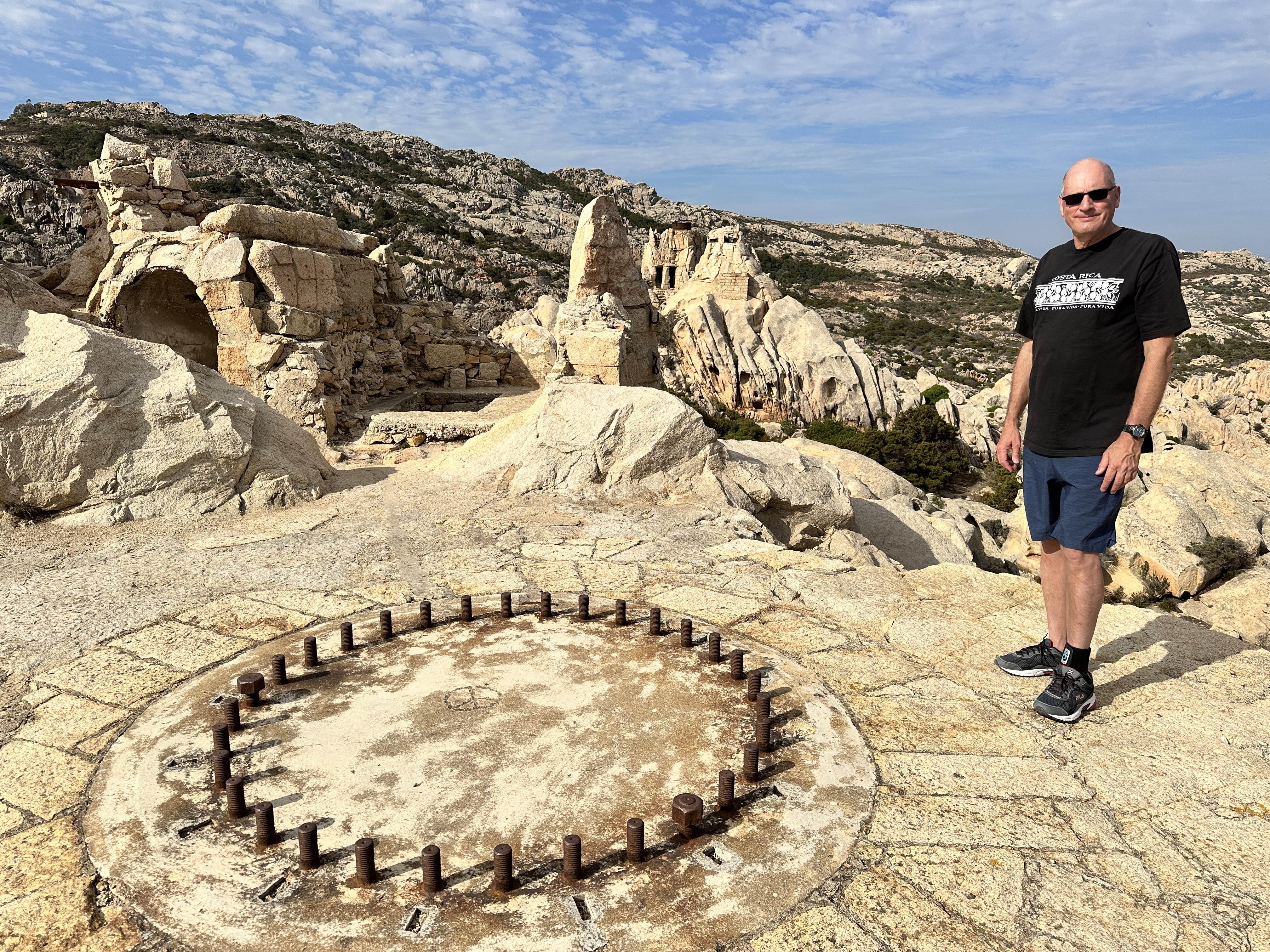
At the north end of Caprera is the military site of Batteria de Candeo, an anti-aircraft and ship emplacement built between World War I and World Ward II. It was built from the natural rock in the area and was well camouflaged – even today it looks like part of the natural landscape except for the doorways.
Other views of Candeo. Candeo can be accessed via the Caprera trail system.Other views and beaches accessed from the trail system in Caprera – left to right: Cala Crucitta, Cala Nepoletana, Cala Caprarese.
There are some beaches on the south end of the island also, such as Spiaggia Due Mari, for example. We visited the south end and spent a while lounging on Spiaggia Due Mari beach after our hike, but unfortunately I did not capture a photo!
Note: I had wanted to visit Cala Coticcio beach on Caprera, one of the most famous beaches in Sardinia. The only way to visit is with a guide (they limit access to this beach to preserve its natural state). I reserved a date with the guide, but I also needed a Park pass, and for some reason this was difficult to do online, so I gave up and cancelled our visit to this particular beach. It is a fairly long hike to Cala Coticcio and if we had done that hike, we would not have had time to do the hiking discussed above. I think it’s just a trade off on how you want to spend your time. As shown above, there are other stunning beaches and sights that don’t have the limitations of Cala Coticcio.
Day Trip Boat Tour
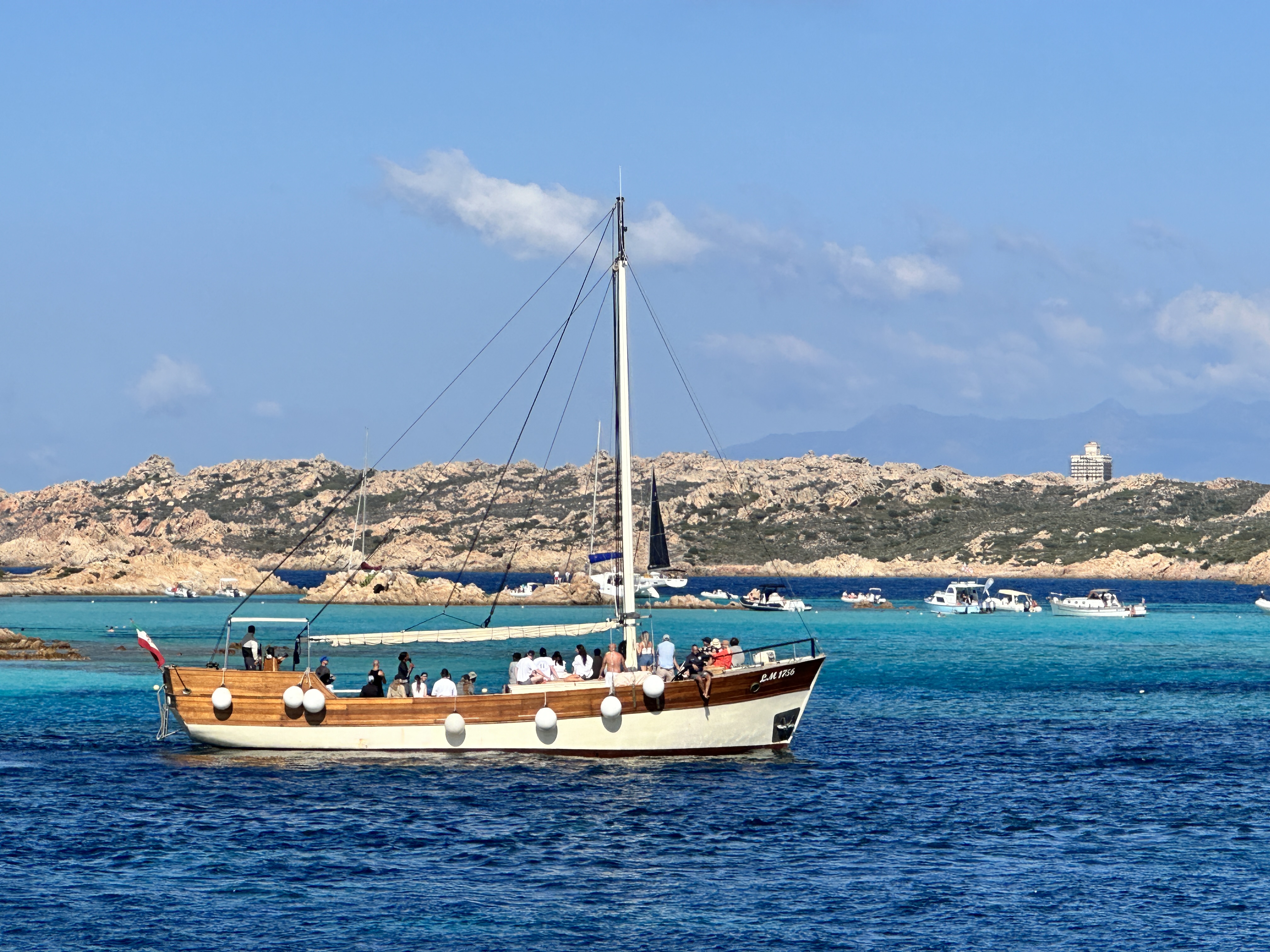
On our final day in La Maddalena, we decided to do a 6-hour boat tour of some other islands in the La Maddalena Archipelago and we’re glad we did. Below are photos from our various stops during the boat tour. It was a perfect day.
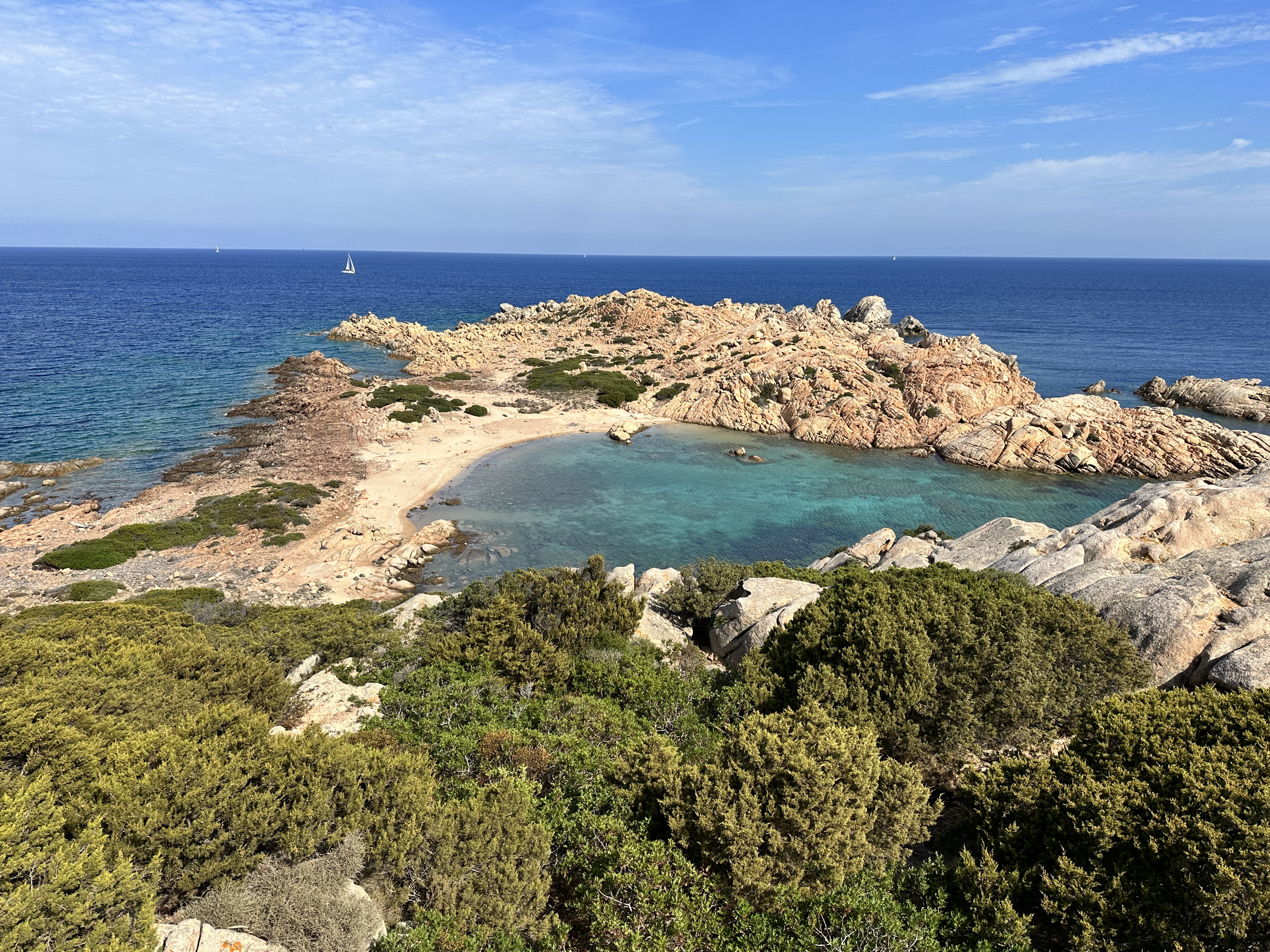
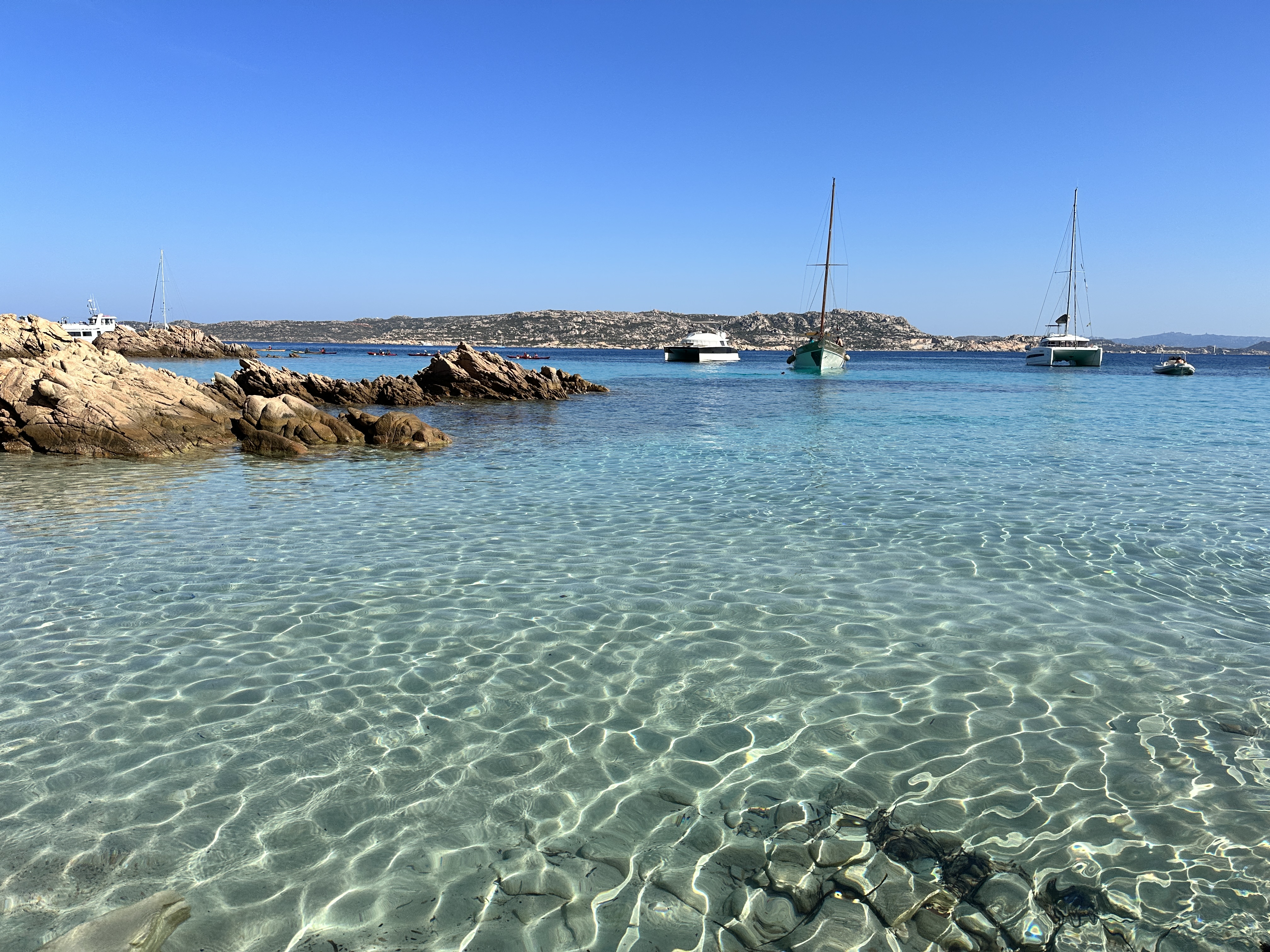
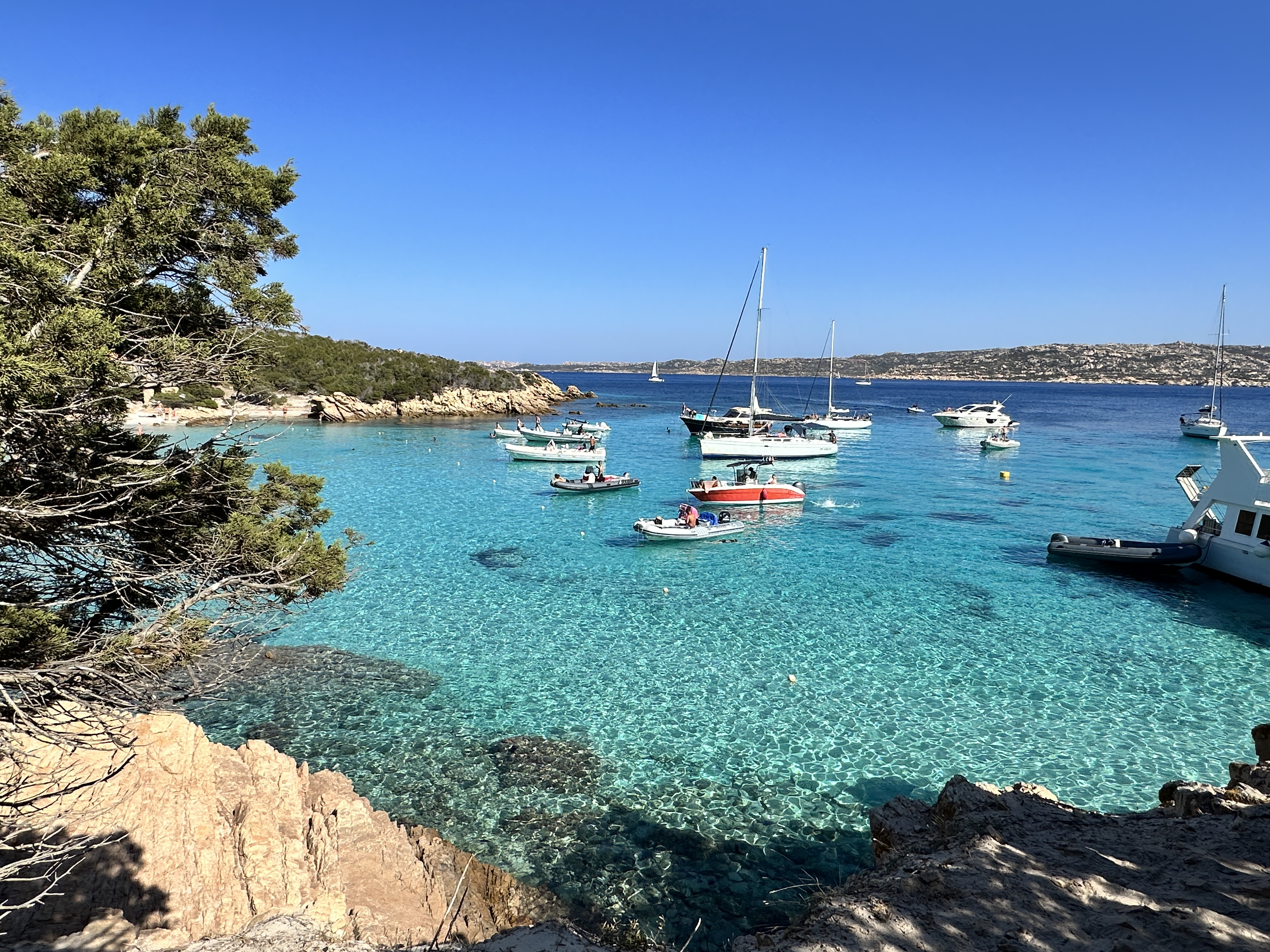
Buddelli Island and Pools – Buddelli Island is known for its pink sand beach (above left – small photo), but you cannot access the beach directly, they are trying to preserve and rehabilitate the pink sand. However, we did jump off the boat and swim in what they call the “Buddelli Pools” nearby – beautiful protected water.Santa Maria Island (above), we stopped at this island and beach for about 90 minutes. Spargi Island (above and below), the beaches here were stunning. We were able to swim and lounge for about two hours.Two more views of Spargi Island – with the wild boar terrorizing visitors on the left – we were warned to not bring food on the beach – the boar wandered around the beach area and were pretty aggressive in rummaging through beach bags! Another view of Spargi’s coves on the right – what a setting!
As with every other region of Sardinia, it would be easy to spend a week or more in these islands. The water was super clear, and the beaches were beautiful. If you go to Sardinia, don’t miss La Maddalena!
We started our Sardinia vacation by flying (from Frankfurt) into Olbia on the northeast coast of Sardinia. This was a great place to begin (and end) our Sardinian adventures. Olbia is ideally situated near the famous Costa Smeralda and the La Maddalena Archipelago, as well as other costal towns, archeological sites and beaches. (See here for an overview of regions we visited in Sardinia, we toured the island in a counter-clockwise route).
Olbia
While not a major tourist destination itself, Olbia has a lovely old town and is situated on a beautiful harbor. We spent our first night here, enjoying dinner in one of the many restaurants on the main pedestrian street and browsing the vendor booths lining the harbor promenade – a very festive atmosphere.
Views of Olbia and harbor, with Tavolara Island (right), the mountainous island with more beautiful beaches in the far distance.
The next morning we drove north toward Porto Cervo, the heart of Costa Smeralda, stopping at beaches along the way. Our first day started out cool, windy and slightly rainy, but by the afternoon it was warm and sunny. The weather didn’t stop us from enjoying the sights along the coast and wasn’t a factor for the rest of our trip.
Costa Smeralda
Costa Smeralda got its name and started becoming fashionable in the early 1960’s, due to development efforts led by Prince Karim Aga Khan. It’s maintained that status ever since. Our stay here was brief, given the many areas of Sardinia we wanted to visit. Below are a few images of the beautiful coastline of this region.
This sign, along the coastal road from Olbia to Porto Cervo lets you know you’re entering the fabled Costa Smeralda.
Capriccioli Beach
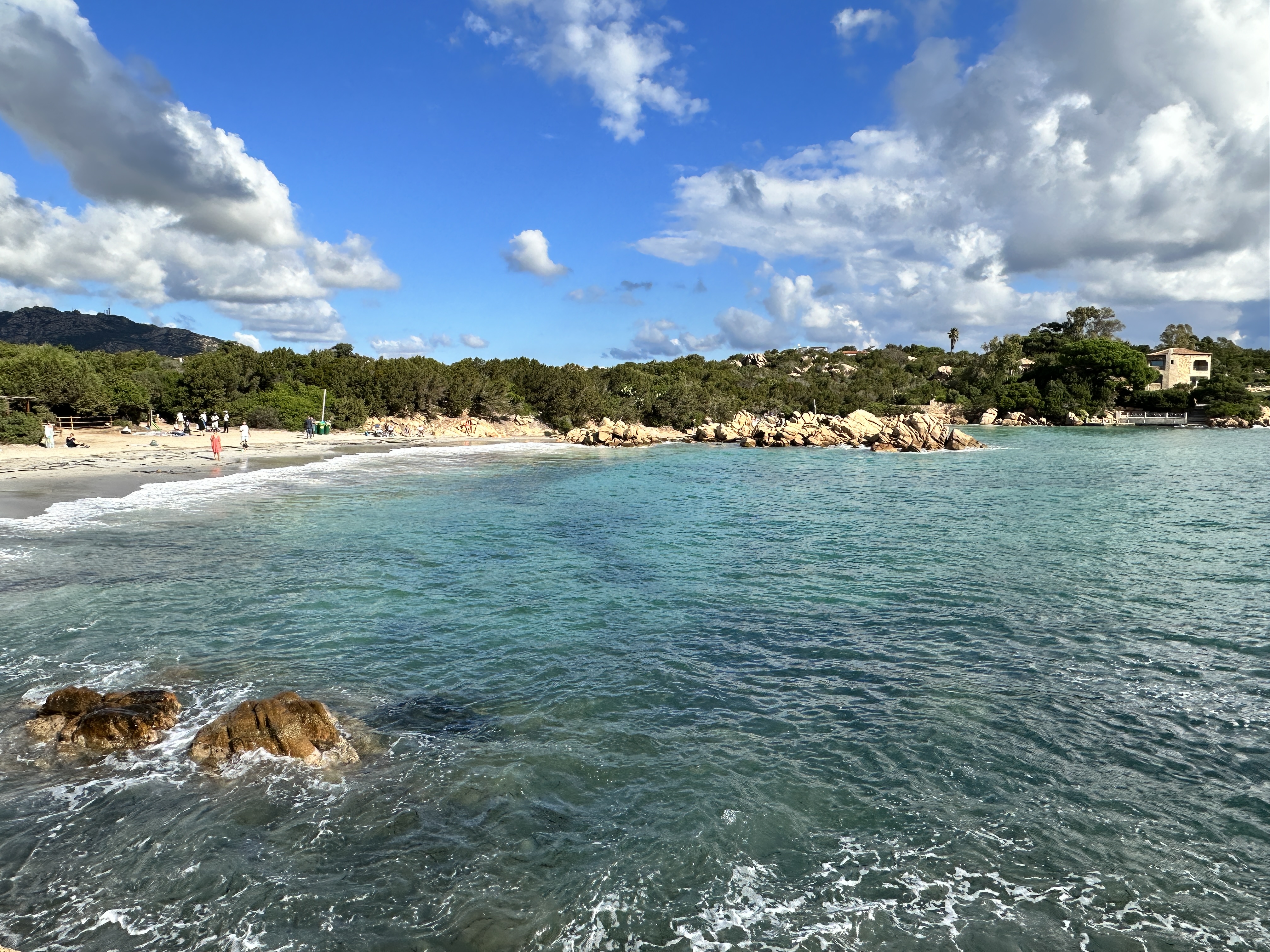
Spiaggia Principe, considered Sardinia’s most famous beach (although it’s only one of hundreds as beautiful), on Costa Esmarelda.
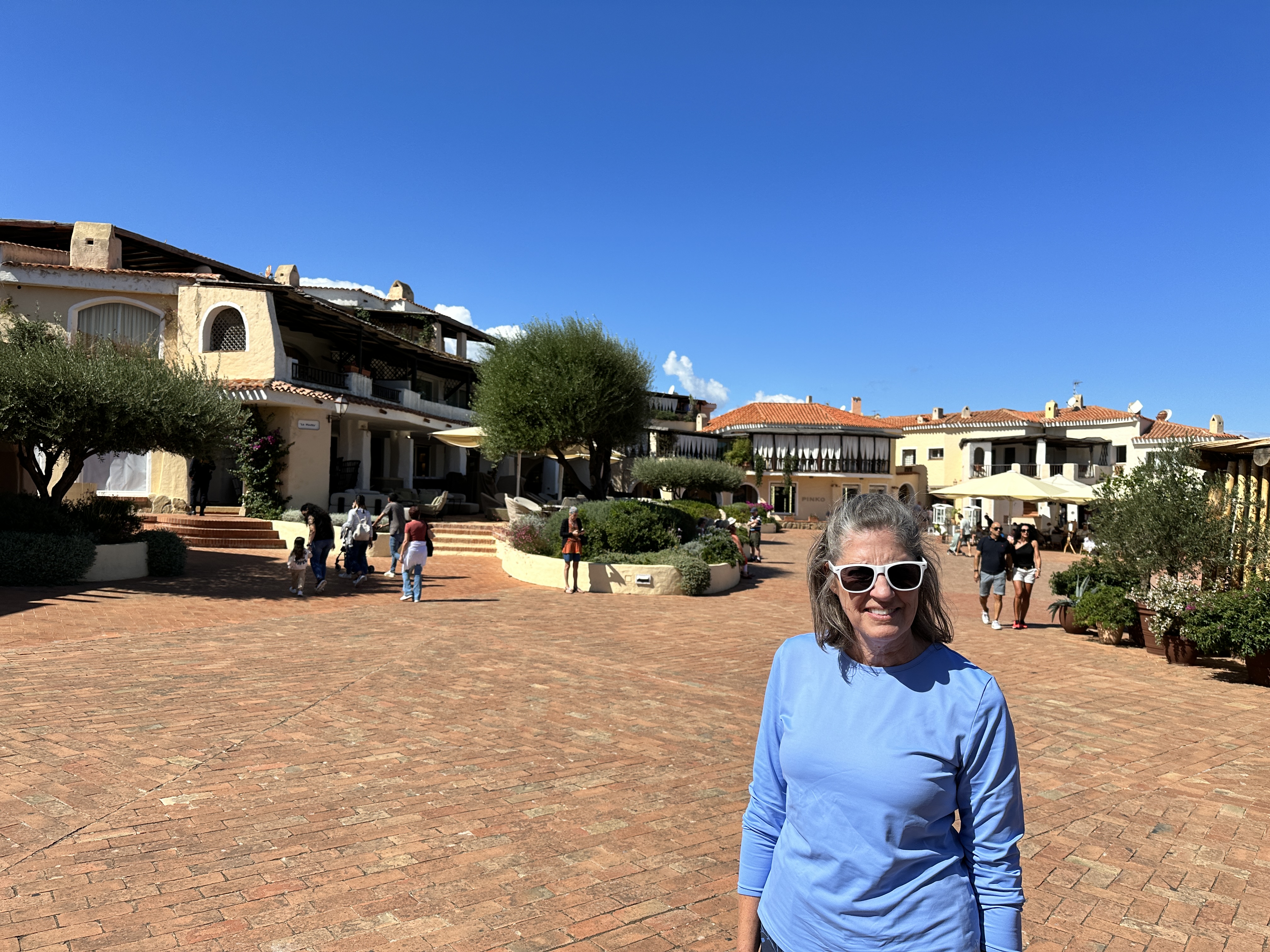
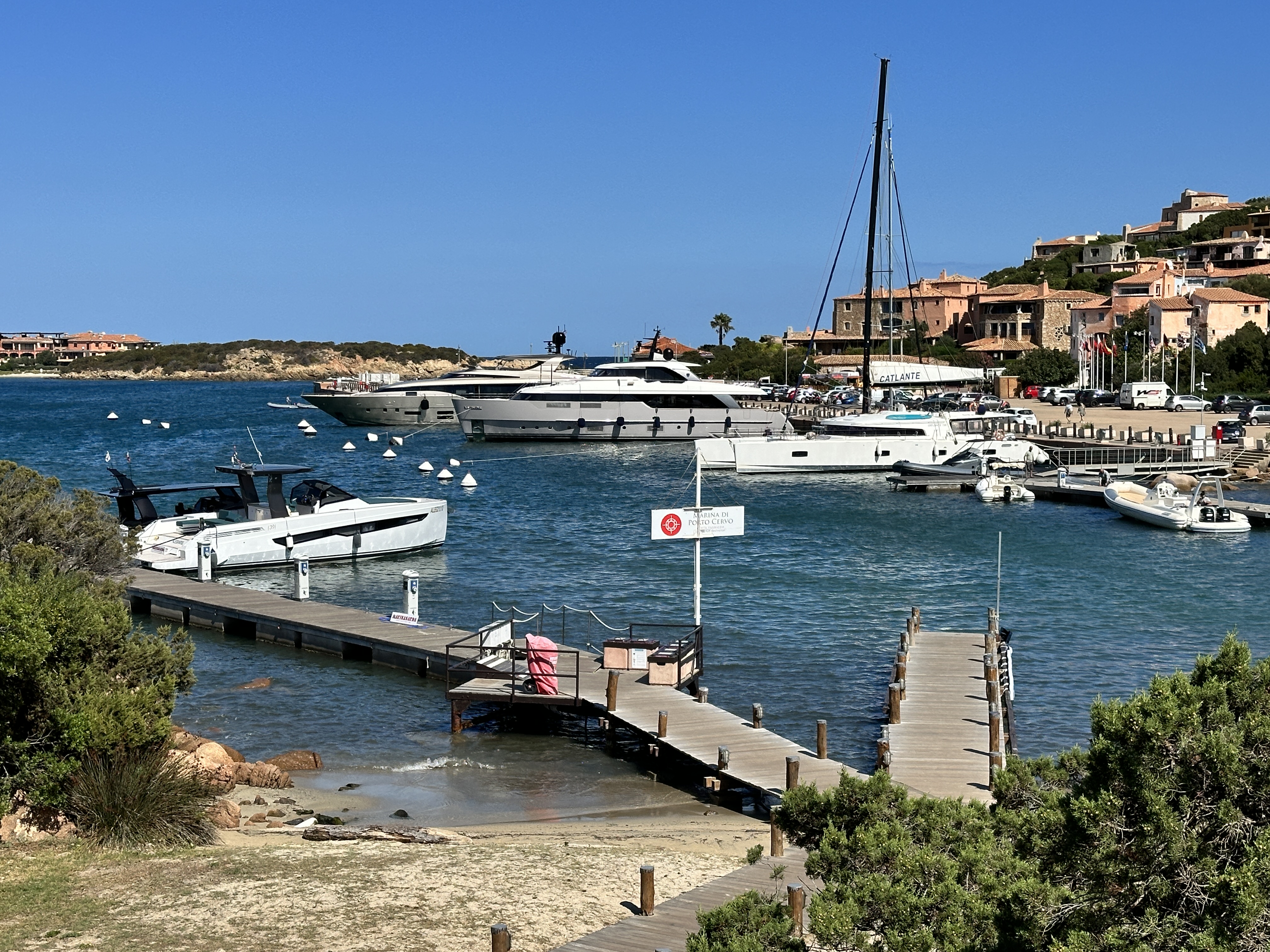
Porto Cervo, the center of Costa Smeralda, was pretty quiet in early October. We enjoyed walking around the harbor and the town, with many expensive shops.
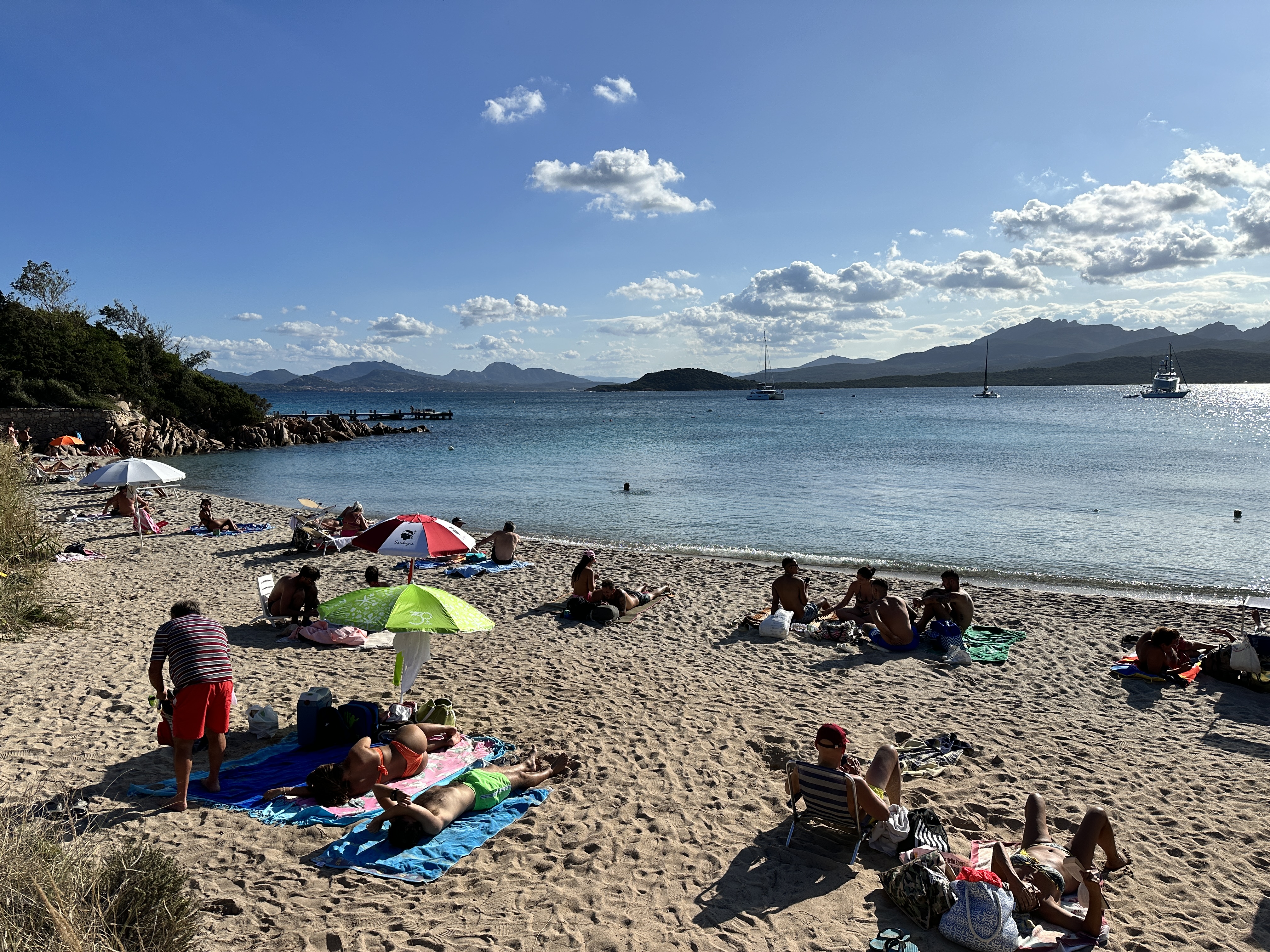
The calm, clear waters of La Celvia Beach, south of Porto Cervo.
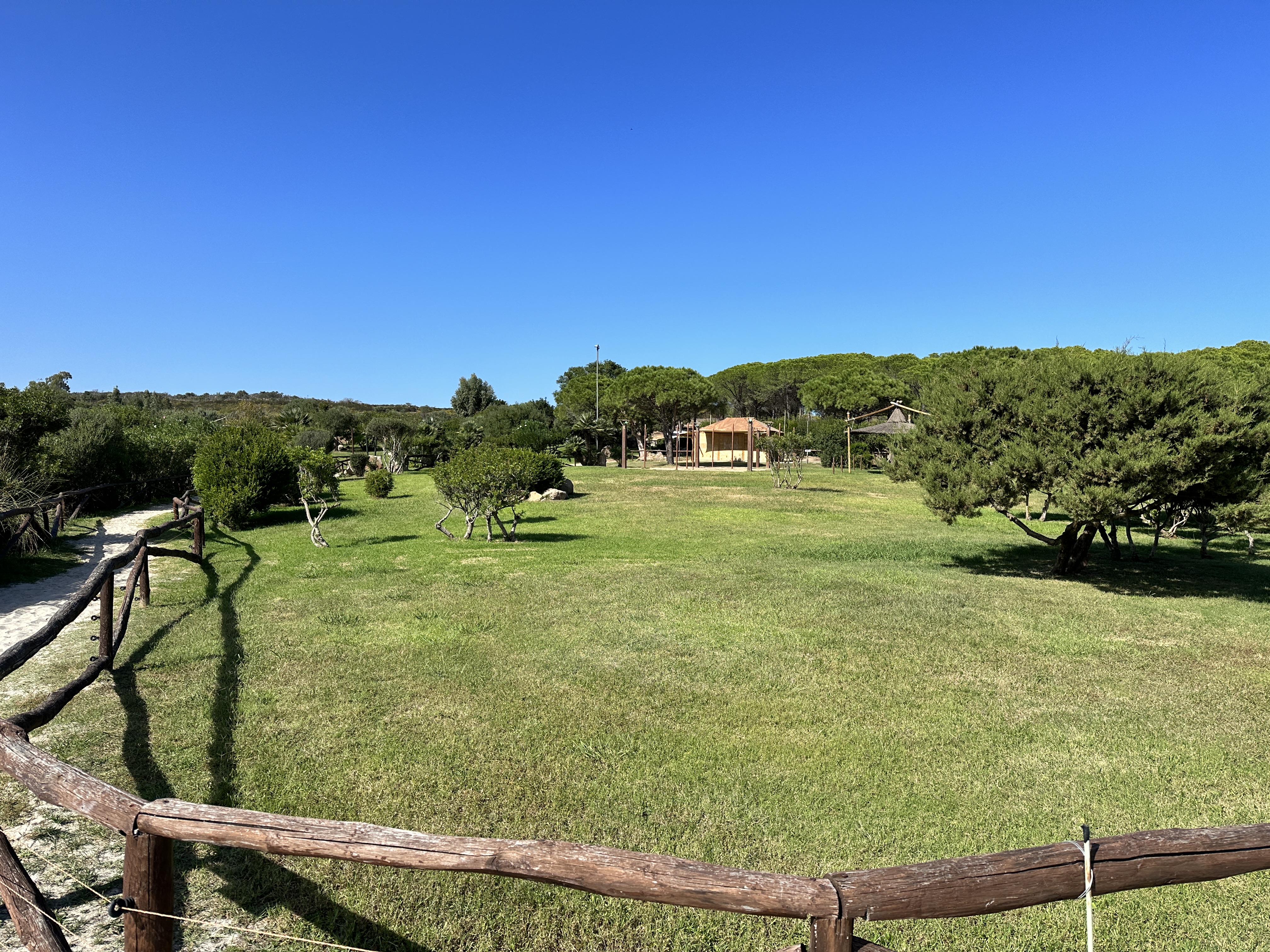
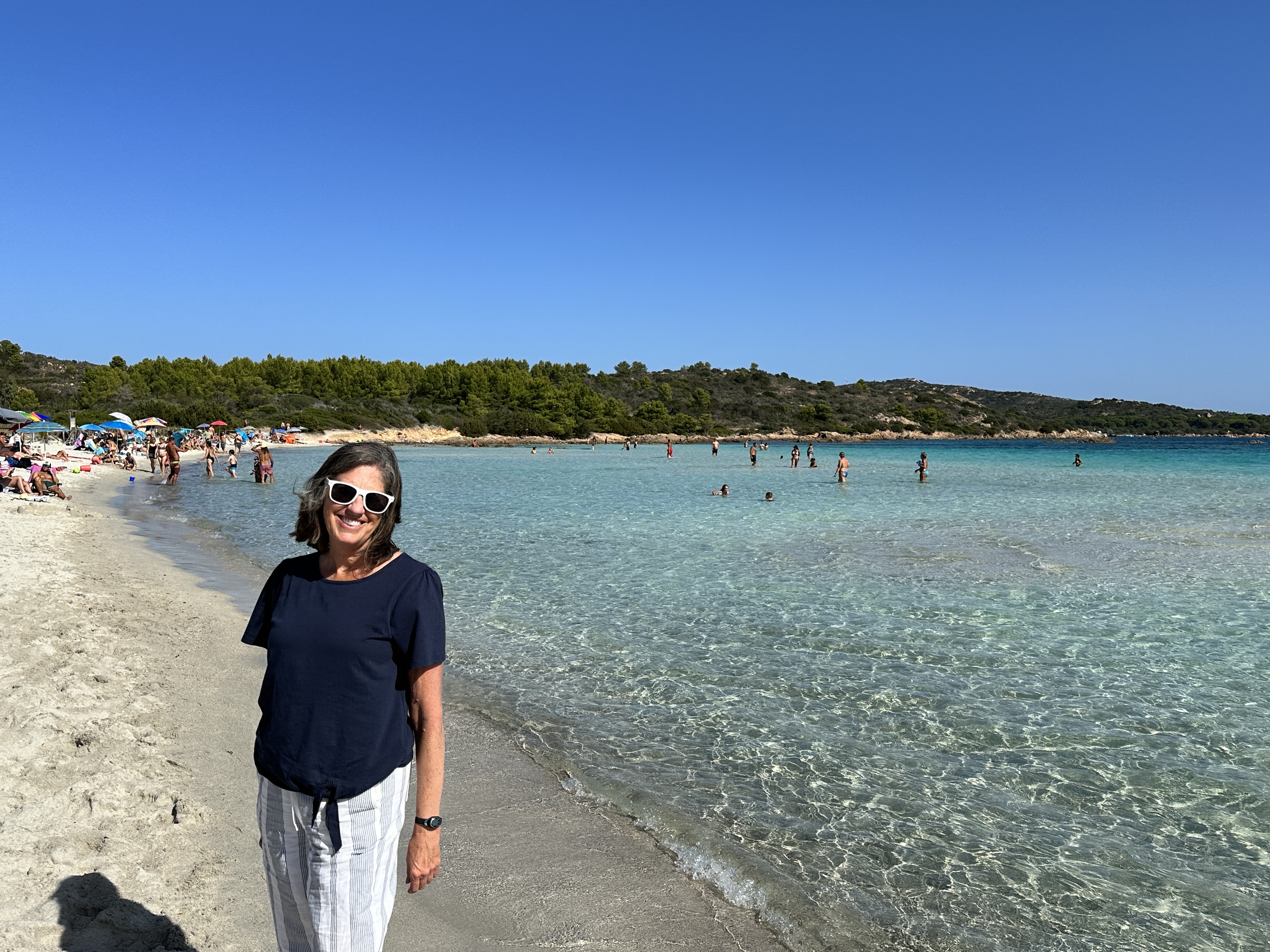
La Celvia beach (left and above), was just a short distance from our hotel in the Costa Smeralda resort area of Cala di Volpe (above right), and near a golf course as well as Capriccioli and Spiaggia Principe beaches. What more could you ask for!Although not directly part of Costa Smerelda, Spiaggia Cala Brandinchi, near San Teodoro, not far south of Olbia, is another great beach and park, with some lawn area just behind the beach for games or picnics. We were flying out of Sardinia shortly after our visit here and so we didn’t get to enjoy this beach for long!
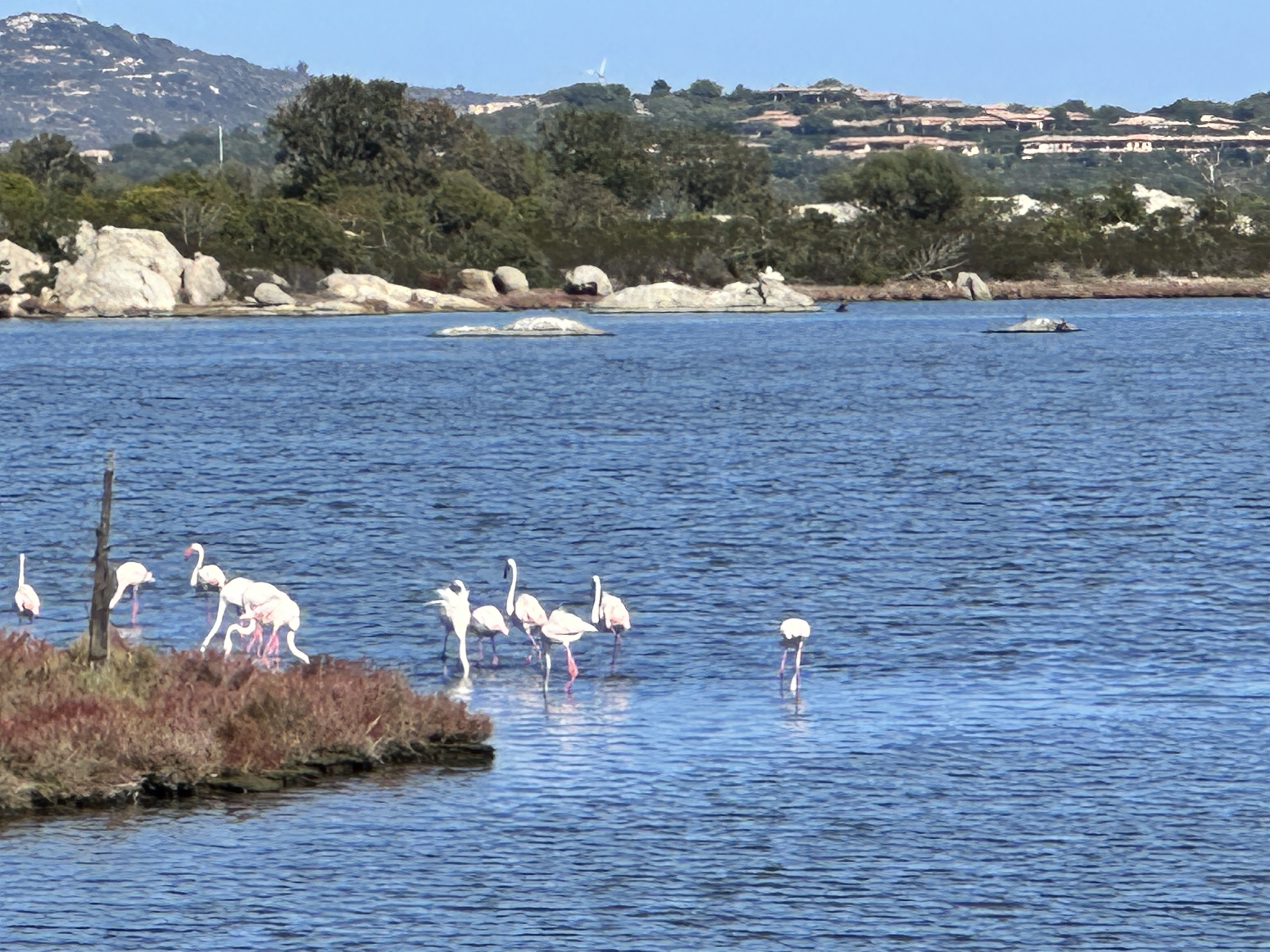
Real pink flamingoes near San Teodoro!
As with any region of Sardinia, it would be easy to spend your whole vacation right in (or around) Costa Esmeralda. If you want to live here, be ready to open your checkbook. It’s one of the most expensive regions in Europe and given its allure, it’s easy to see why.
As I have mentioned is previous posts, we LOVE the islands of the Mediterranean. They are some of my favorite destinations in world. After visiting Mallorca and Menorca (which belong to Spain), the next island on our list was Sardinia (part of Italy). We had been to Sardinia’s northern island neighbor, Corsica (part of France) years ago and from the beautiful southern coastal town of Bonafacio we could see Sardinia in the distance, only about 12 km (7.5 miles) away. We visited Sardinia in October, which is a great time to go – the water was still warm and the crowds were limited.
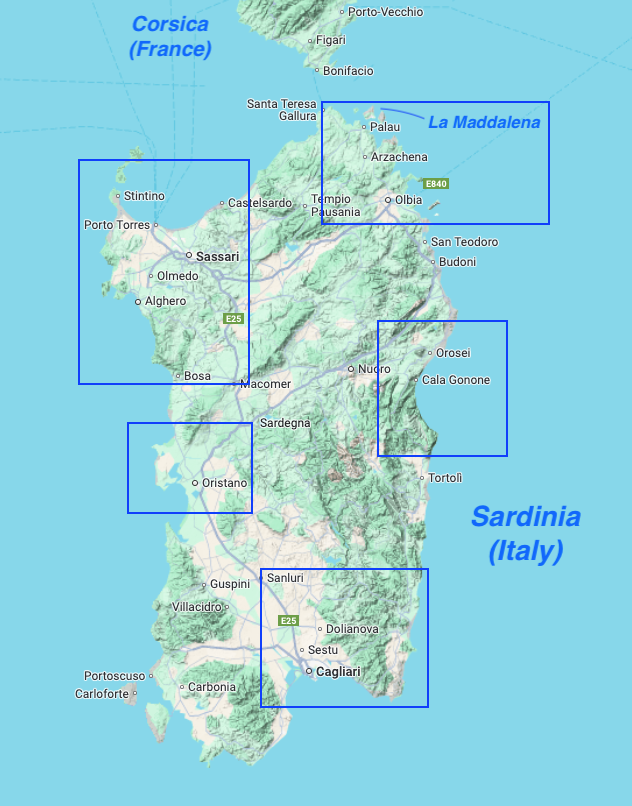
This map of Sardinia shows the five main regions we visited in Sardinia.
I will be sharing more posts on our Sardinian adventures soon, but first here are some things you may not know about about this beautiful island.
1. Sardinia is part of Italy
Although an autonomous region, Sardinia is definitely Italian. Some Americans have never heard of Sardinia and really have no idea that it’s part of Italy. The Sards have their own language but of course speak Italian, English, and other European languages quite fluently. It was easy for us to get by on English and a few Italian phrases. The food and gelato are wonderful, as in other regions of Italy.
2. Sardinia is big, and a relatively sparsely populated island
This is important to keep in mind when planning a trip – allow two or three weeks to see the whole island or if you have less time, perhaps concentrate your time in one region. Sardinia is the 2nd largest island in the Mediterranean (just slightly smaller than Sicily) but has just 1/3 of Sicily’s population. It is about 170 miles long and 90 miles wide. We covered a lot of ground in two weeks, but still did not see everything (see map above), including the southwest coast.
3. Sardinia boasts some of the most stunningly beautiful coastline (and water) in the world
Cala Goloritze, Gulf of Orosei, accessible only by boat or a 3.5 km hike. The color of the water was the most incredible turquoise hue I’ve ever seen.
Sardinia has an embarrassment of beaches – no matter where you are on the island, you’re close to some of the best beaches in the world. The Gulf of Orosei on the eastern side of the island has a breathtaking coast although it’s not easily accessible, except by boat or via some steep hiking trails.
4. There are hundreds of incredible beaches, many of which are undeveloped and uncrowded
La Pelosa Beach, near Stintino, Sardinia. You must make a reservation for this beach if visiting during high season. It is worth the hassle (which is not a big deal nor expensive).
Some beaches might have a refreshment stand, a few might be close to some resorts, but often there are no hotels or condos anywhere to be seen. Admittedly, there are (just a few) beaches that are so popular you must have reservations during the high season or can only be accessed with a guide, and there a few beaches that are not accessible at all – due to preservation efforts, speaking of which…
5. Sardinians take their beach sand seriously
From pink sand beaches to shiny quartz sand beaches to powdery white sand, the sand is beautiful everywhere. However, don’t even think about taking a sample home with you. You will be fined. You are also required to have mats underneath your beach towels so as to not inadvertently trap sand and take it home in your towels.
Spiaggia Rosa, on Budelli Island (near La Maddalena). You cannot set foot on this pink sand beach, they are protecting it for future generations. However you get a view of it from a boat tour, as in this photo.
Example of the fine quartz sand and pebbles found in Sardinia.
6. A car rental is essential
Unless you plan to go straight from the airport to a resort and straight back to the airport or plan on a tour by a group bus, a car is the only way to really see the island and reach some of the beaches and tourist sites. Some sights or hiking trails are remote. Since the island’s population is sparse, driving was not a problem – I did not feel rushed or on edge with crazy drivers pushing me to speed up or forcing me to get out of the way.
7. Sardinia offers something for everyone
Friendly, welcoming locals – check. Beautiful beaches – check. Warm, clear water – check and check. Charming medieval towns – check. Fascinating ancient historical sights – check. Remote mountains, rock climbing, forests and hiking trails – check, check, check and check. Diving – check. Excellent food – check. What more could a person want?
A view of Alghero, on the northwest coast of Sardinia, a beautiful medieval town, one of our favorites on Sardinia.
Nurhage La Prisigona Historical Site (14th century BC), near Arzachena, Sardinia.
8. Sardinia has its own island get-aways
As funny as it may sound, Sardinia can be considered a ‘mainland’ and just off its coast (such as the northeast coast) lie an archipelago of islands (the main island is La Maddalena – see map above) accessible by only ferry and smaller boat, some of which are part of a national park. These islands are home to some of the best beaches and best hikes anywhere in Sardinia.
The island of Spargi, part of the La Maddalena Archipelago. We could have stayed here our whole trip!
9. Sardinia is not just for the jet-setting crowd
In the 1960’s Coasta Esmeralda was popularized and has since become a jet-setting hotspot. This part of the northeast coast (near Olbia) certainly has some beautiful beaches and coastline. While you will find big yachts, high-end real estate, retail and eating establishments here, this is just one small enclave of the island. The rest of the island seems unfazed (and untouched) by the movie star and billionaire crowd.
View of Porto Cervo, the center of Coasta Esmeralda.
10. Go Now
Sardinia isn’t quite on the main tourist map yet, although posts like this don’t help! The majority of visitors are Italian (this is their backyard!), followed by French and Germans. On one of our boat tours, we were with some Swiss and Belgian tourists. We ran into a few tourists from the U.S., but not many. Very few tourists seem to explore the whole island, there are lots of “untouched” little mountain villages and quiet beaches to find solitude if that’s your thing.
The cute little village of Gavoi in north central Sardinia.
Word is getting out, so go now! Here’s one of my recommended websites for great information on Sardinia tourism. I read almost every post Claudia has written, very helpful. Of course, I will be publishing information on each region of Sardinia we visited over the course of the coming weeks.
Note: Featured image – Cala Marilou, Gulf of Orosei
As much as I’ve traveled within the U.S., once place I’d never visited until this year was Yosemite National Park in California. When we bought a camper van last year we put Yosemite on our list as one of the places we definitely wanted to visit. Yosemite is certainly one of the most stunningly beautiful places I have ever been, and the world knows it. You will find many Californians here (of course), plus people from around the world – we heard a lot of different languages being spoken on the trails and around the sights.
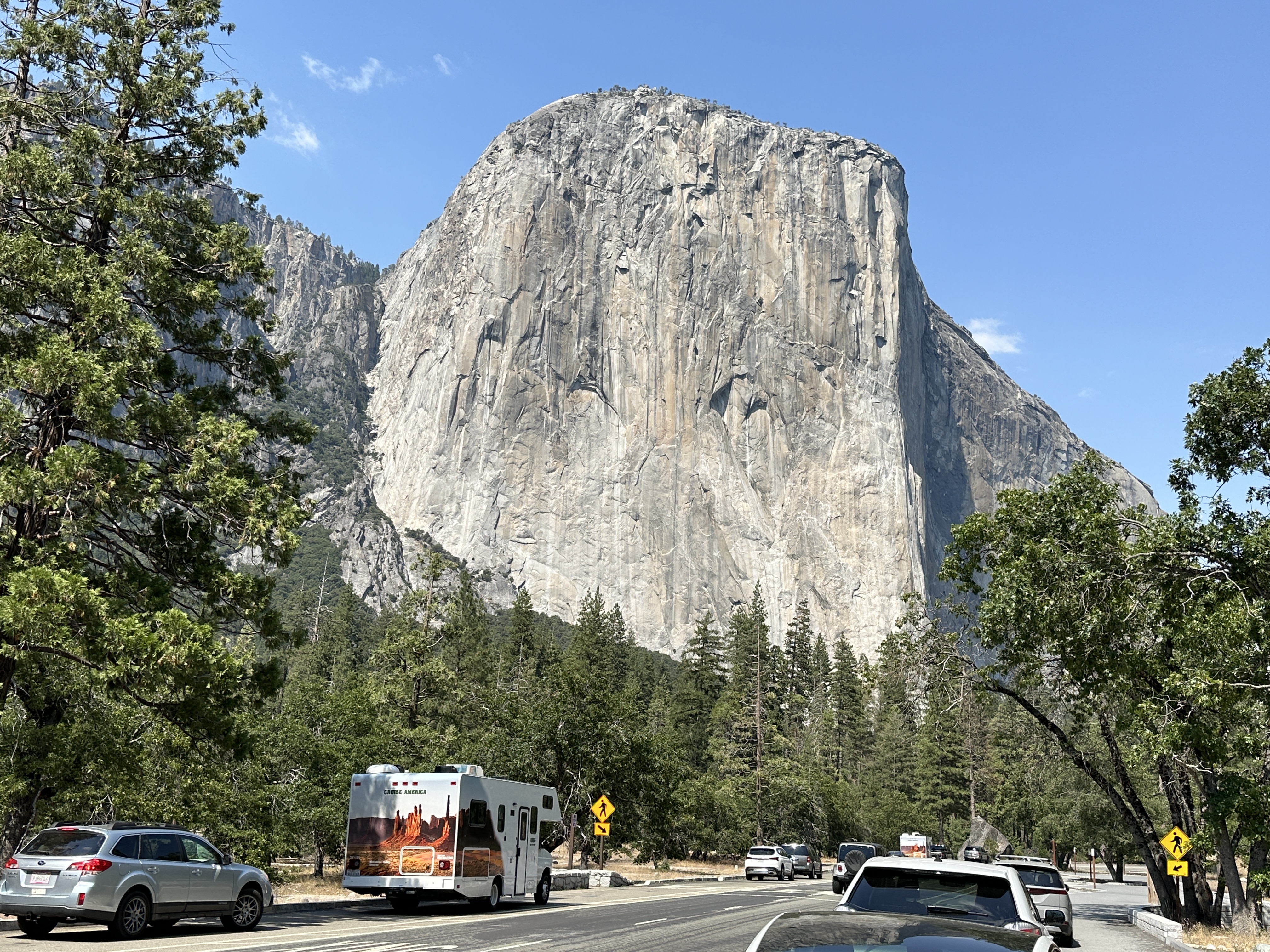
Views of Yosemite National Park, entering the Valley from the west.Left-Bridalveil Fall. Right – El Capitan – it’s difficult to capture in an image the sheer size of this granite monolith! We thought of Alex Honnold and his unbelievable free solo climb here in 2017. You can hike to the top via a tough 16+ mile trail.
Yosemite Falls
Views of Yosemite Falls. Right – the site of John Muir’s cabin in Yosemite – what a lovely location – you can see the separate upper and lower falls. We were fortunate that in late July the water was still flowing.
You can hike to the base of Lower Yosemite Falls if you don’t mind scrambling over big granite boulders – it was fun!
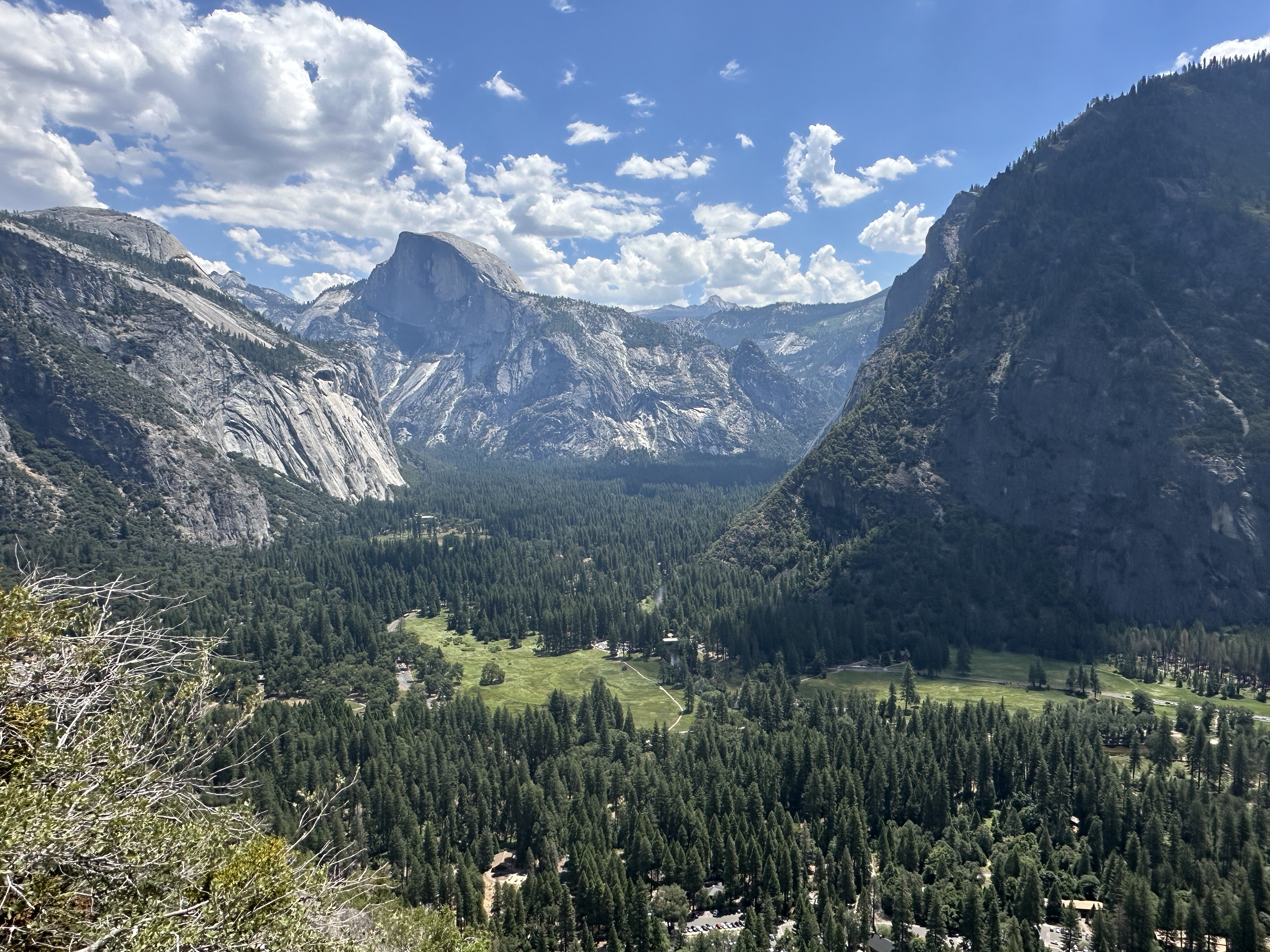
At the pool below Lower Yosemite Falls.We hiked up to Columbia Rock, on the trail that leads to the top of Yosemite Falls. It was steep, so be prepared! A view of Half Dome in the distance.
Merced River
Floating and wading in Merced River is a favorite pastime for families and children in Yosemite. Several campgrounds and trails are located right on or near the river.
Glacier Point Road
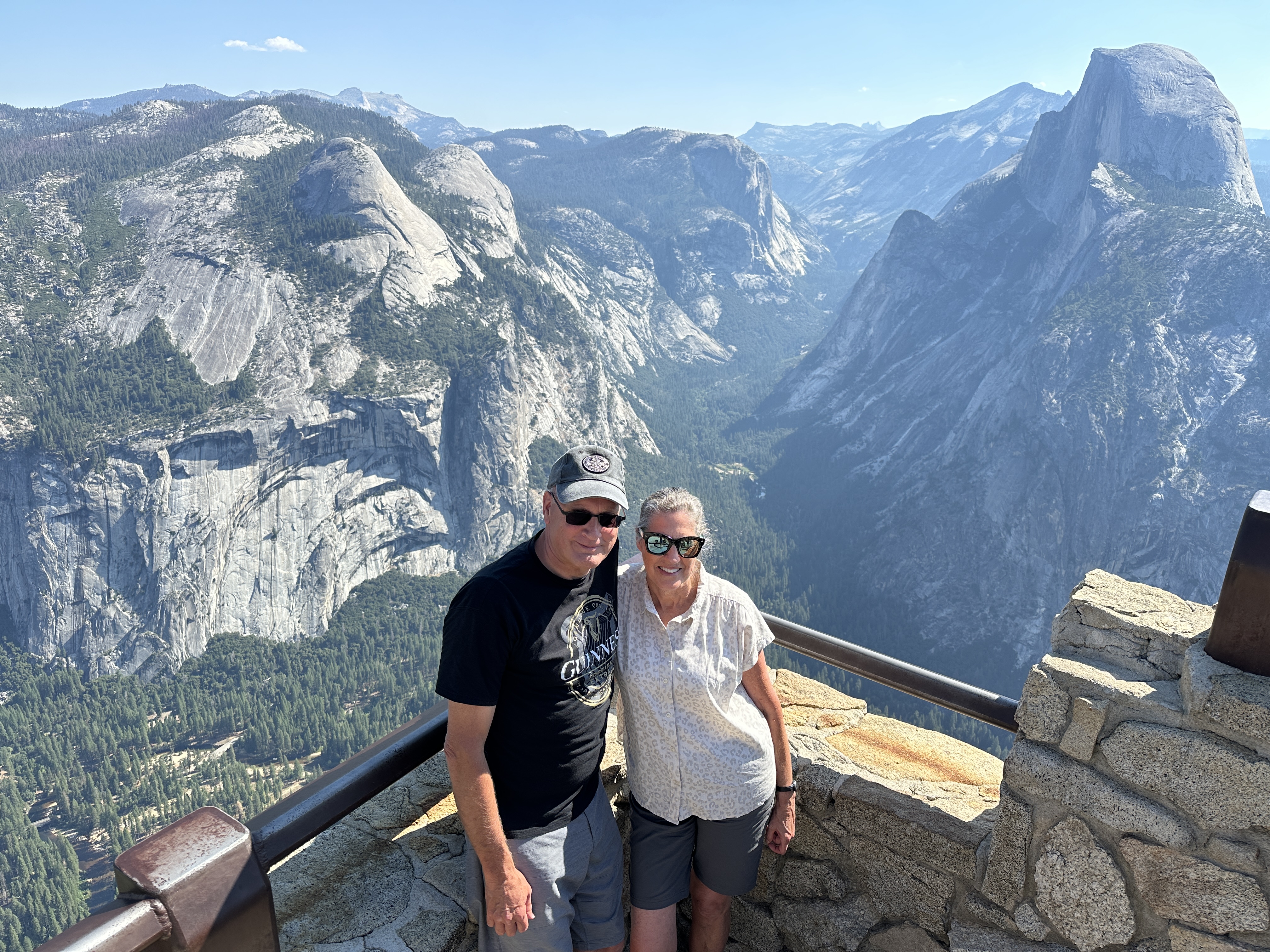
This 30 mile (or so) drive from Yosemite Valley is so worth it! The views from Glacier Point are awe-inspiring. If you plan ahead, you can get a tour shuttle up to the Point and take a steep one-way hike down to the Valley (about 4 miles). If I had been smart, we would have done this – the shuttle was already full when I called just a day or two in advance. There’s lots of parking at Glacier Point, but it does fill up – the good news is that people are coming and going all day long. There’s also a small gift shop and restrooms at the Point.
Views from Glacier Point – a great shot of Half Dome from here. If you really plan ahead and have the stamina, you can hike (about 8 miles) up to Half Dome and take the incredibly steep ladder/cable ascent to the top, we saw people at the top of Half Dome from Glacier Point. Permits are required. My nephew and his family did this just shortly after our visit.From the Glacier Point road, you can take a hike (less than 2 miles) to Taft Point (highly recommended!) with another great view of western Yosemite Valley. Right image – that’s me out on the rock looking straight down 3,500 ft. to the Valley floor at Taft Point!
This was the view (called Tunnel View) coming down from Glacier Point- every spot is a “Kodak Moment!”
Mirror Lake
Another great short hike (or bike ride most of the way) in Yosemite Valley (from Upper Pines campground) is to Mirror Lake, formed by Tenaya Creek. The lake is seasonal and in July it was more of a wide spot in the Creek, but with nice sandy play area!
Tips for Camping In Yosemite
If you want to camp within Yosemite and especially within Yosemite Valley, you need to plan (way) ahead. We started looking at campgrounds in February for a July trip and learned there is a four month rolling reservation window, meaning we had to book our campsite in March for July dates. We wanted to be in the Yosemite Village area, right in the heart of Yosemite Valley for my first visit (my wife had visited Yosemite as a child with her parents on several occasions). We spent 3 nights/2 full days in the Park. This was long enough to give us a good introduction to Yosemite. If you wanted to hike a lot of trails and explore the far reaches of the Park, then you might want to spend a week here.
Camping in Yosemite Valley has its pluses and minuses. The main plus is that you are very close to the well-known Yosemite attractions, the main minus is the lack of solitude. Even if you book (on recreation.gov) at the right time and date (at 7 am Pacific exactly 4 months from the date of your planned visit) there is no guarantee you will get a camping spot, they fill up within seconds of being released. We were lucky and were able to get a spot in Upper Pines Campground, right next to the Merced River, almost directly below Half Dome and within minutes of many Valley attractions. I wish I had taken photos of the campground. Don’t expect privacy – the campgrounds are always full, the spots are close together with a few pine trees scattered about. Bear lockers are provided and essential. While the campgrounds have the standard restrooms and water spigots, I don’t believe any of the campgrounds have RV hookups (e.g., water, electricity, sewer), but they do have dump stations where you can take care of your RV’s needs. There are several small stores in the Valley where you can get supplies and snacks, and several restaurants as well.
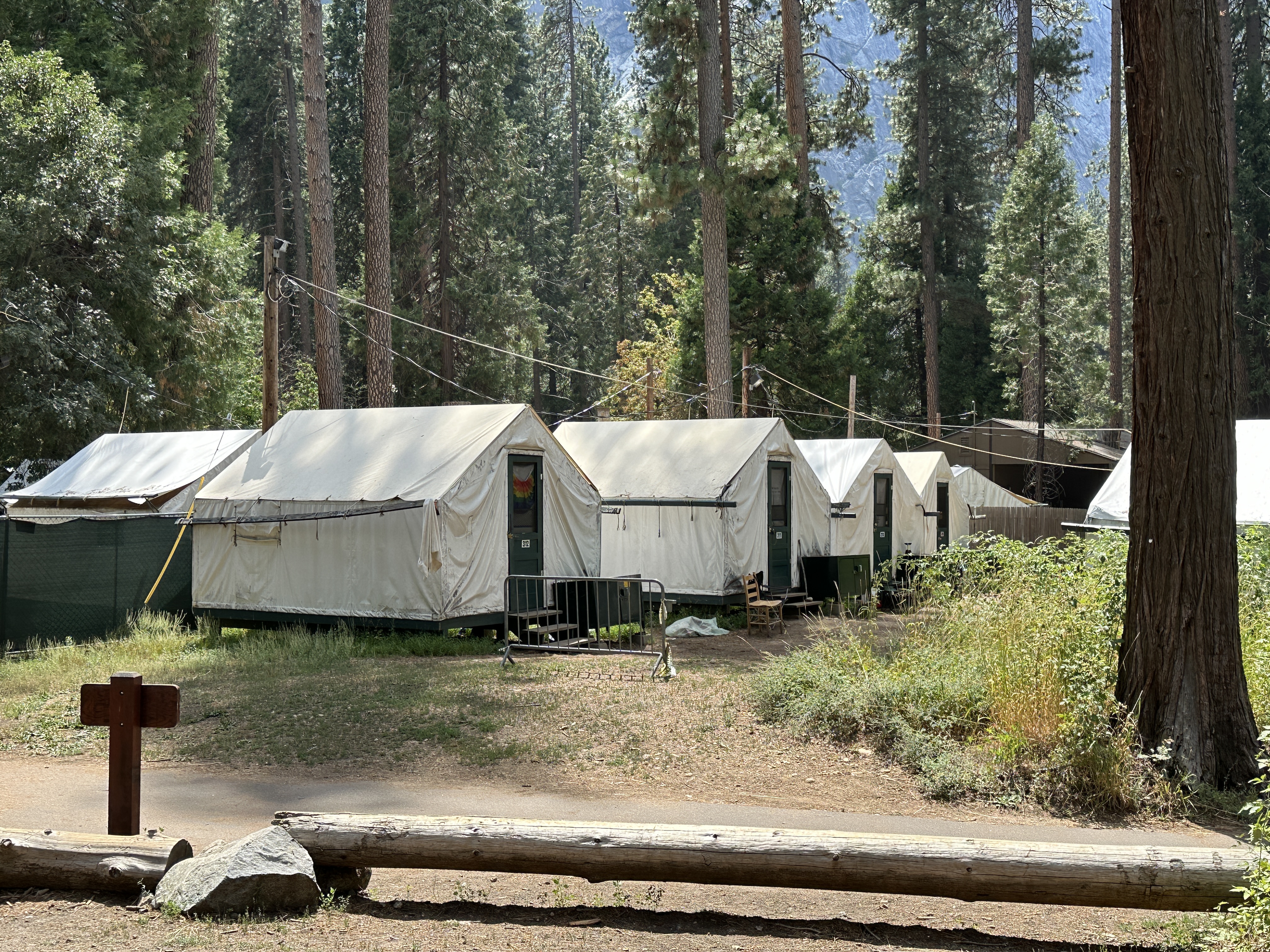
In addition to typical tent/RV campgrounds, you will find other accommodation options in the Park – from luxurious lodges to cabins, established tent communities and prison-like bunks in semi-open cinder block structures that have a table and not much else (the least appealing option in my mind, these are located in Housekeeping Village).
Some of the canvas tent accommodations available at Curry Village in Yosemite National Park.
Since we were on an extended camping trip (having also visited Lake Tahoe and Sequoia National Park as part of the same trip), access to laundry and shower facilities was helpful, these can be found at Curry Village and Housekeeping Village.
Getting Around
Given the volume of traffic and day trippers into Yosemite, car parking can be a challenge. If you can, bring your bicycle and leave your car or truck at the campsite, bikes are a great way to get around Yosemite Valley, the Village and adjacent hiking trails. I was glad we brought our bikes. You can also rent bicycles there.
Other Tips
The roads in Yosemite National Park are narrow, steep and windy, so driving is slow–it’s a big Park, so plan your time accordingly. During the summer months, if you do not have a camping (or other accommodation) reservations inside the Park you will need a timed reservation just to enter the Park, even for a day visit. The lines to enter the Park on a summer morning can be long (miles long). We came in via the Big Oak Flat entrance on the western side of the Park in the afternoon and had no wait. We left via the southwest entrance (Wawona, near Fish Camp) and saw a very long line of cars waiting to enter the Park at around 9 am. There are public buses that come to Yosemite as well from neighboring towns, and this might be an option depending on how long you want to stay.
I know my comments above may scare you away from visiting Yosemite, but in spite of the crowds, it is definitely worth the effort, just plan ahead and figure out your best options.
In addition to beautiful beaches, Menorca, Spain has some interesting and scenic towns to explore. During our short visit, we mixed in visits to the island’s towns, historic sites and beaches. The island is small and it only takes about 45 minutes by car to get from one end of the island to the other. Since the island is not large, any of these towns would be a good “home base” during your stay in Menorca. We decided to say in Cala Galdana, more of a resort area for our first time in Menorca which was also a good choice.
Map showing the relative locations of the major towns in Mencorca.
Ciutadella de Menorca
Ciutadella is located on the western end of Menorca and was a busier town than Mahón (discussed below), although that may have been due to the time of day we visited (early evening). Ciutadella is home to the main ferry route connecting Menorca to Mallorca. The town is ancient, dating back to the Carthaginians (~300 BC), and has a long (and at times sad) history, particularly in the 1500’s when the town came under siege by the Turks, who took the survivors and sold them into slavery in Constantinople (Istanbul).
This windmill stands out as a primary landmark as you enter Ciutadella.
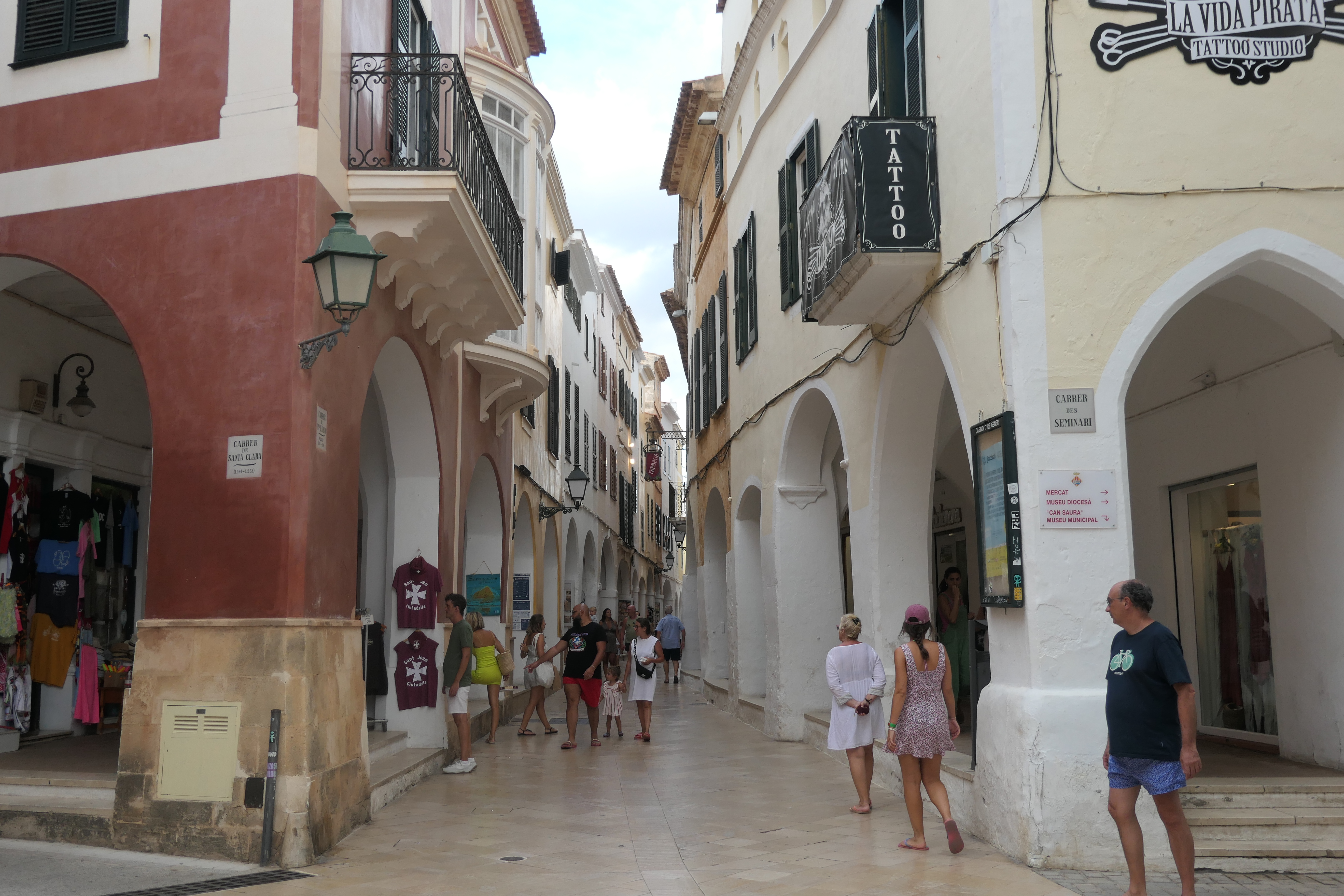
Street scenes in Ciutadella. There are some lovely pedestrian arcaded streets and shops and interesting architecture to be admired in Ciutadella.
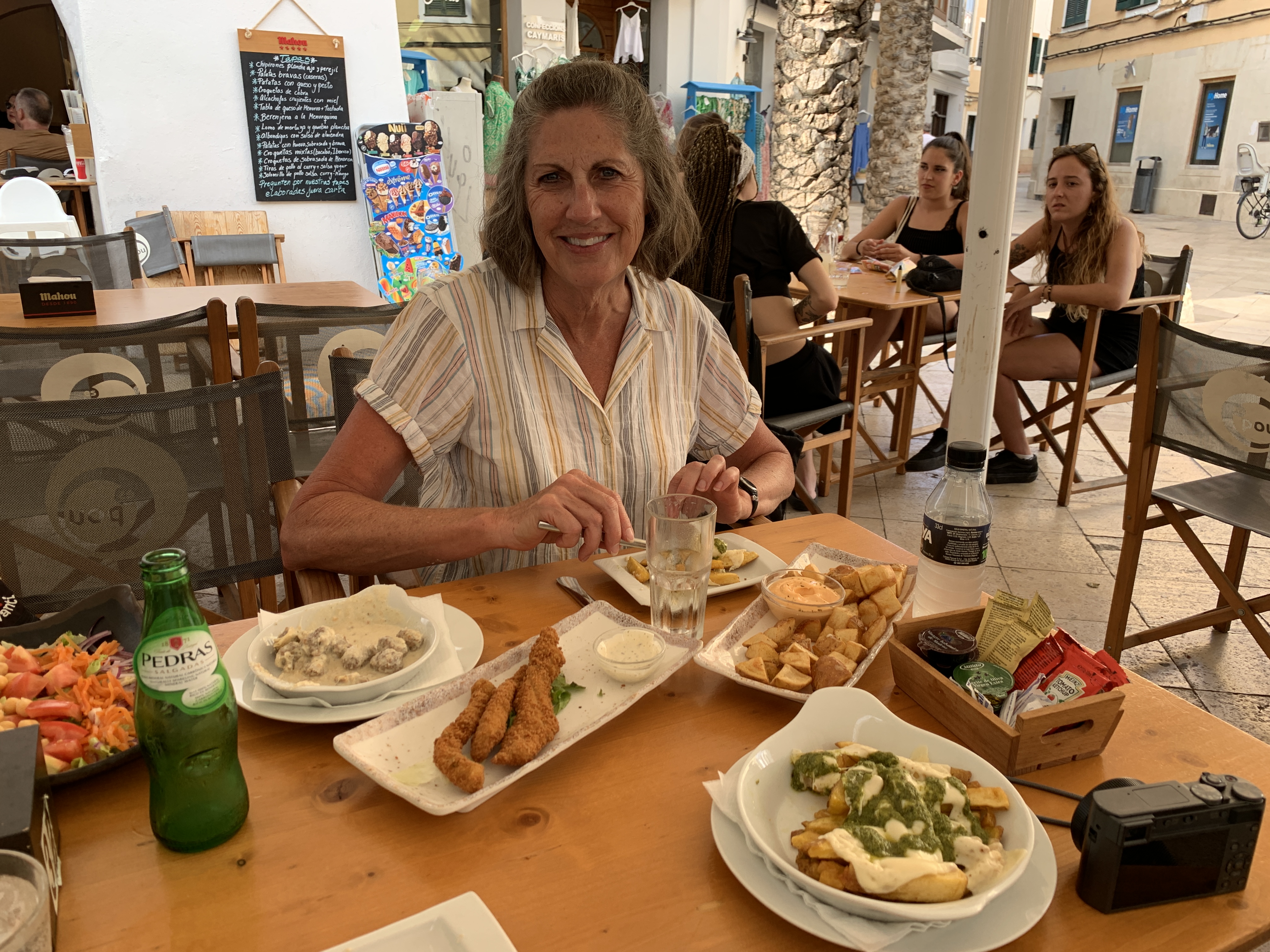
We enjoyed a great tapas meal in Ciutadella!
Mahón (or Maó)
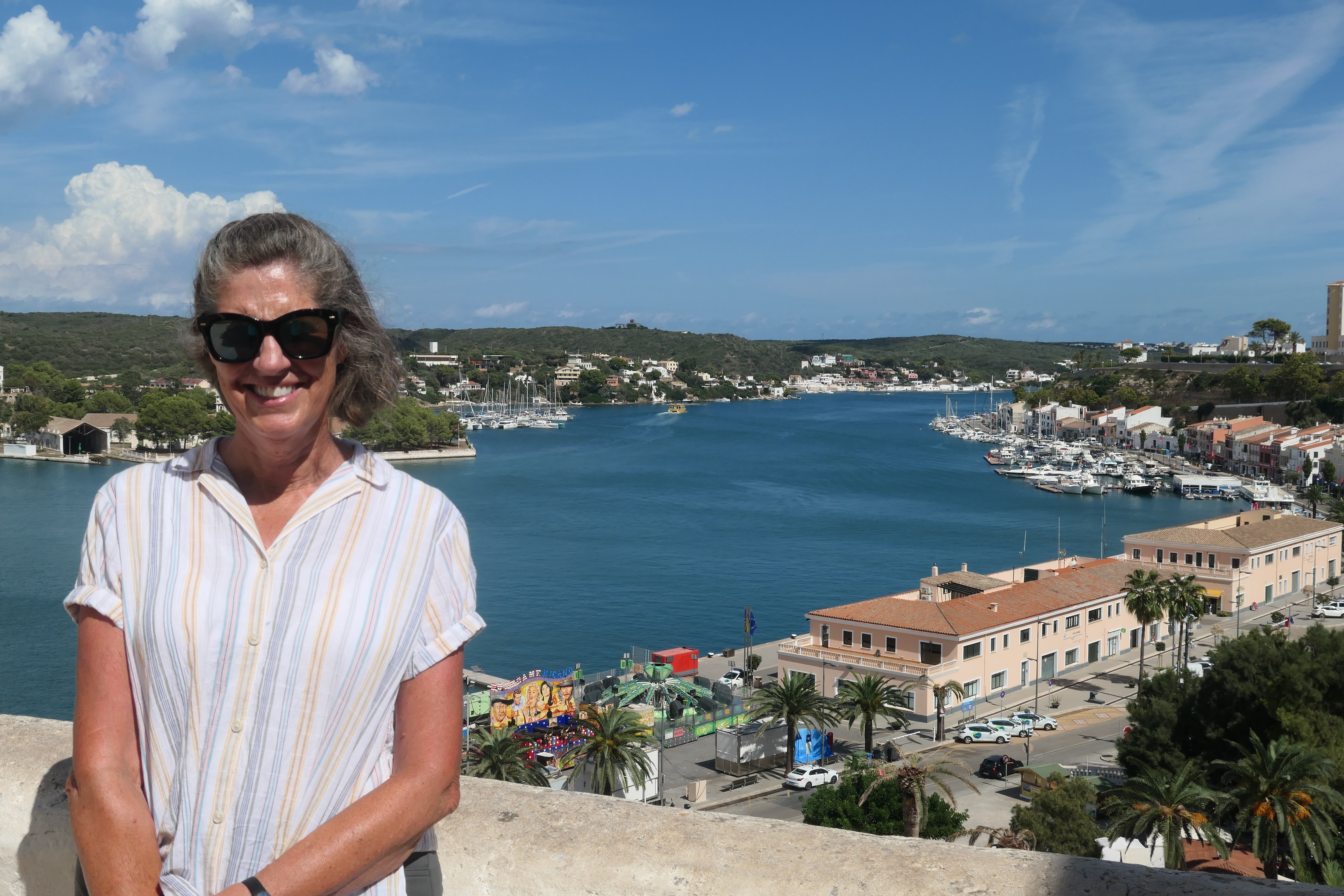
Mahón is the largest town in Menorca and the island’s capital, located on the eastern edge of the island. It’s also the location of the island’s airport if you fly here. The town is quite pretty, with a lovely setting and harbor. There are some rumors that the word mayonnaise originated here! We found the town to be pretty quiet, with few tourists wandering about. Numerous boat tours are available from Mahón and perhaps most tourists were out for the day.
We had fun wandering the streets along the harbor and admiring the yachts at berth and enjoying some great gelato! Nearby are a number of prehistoric sites that may be visited.
Views of Mahón‘s Harbor.Street scenes in Mahón.
Binibeca (or Binibeca Vell)
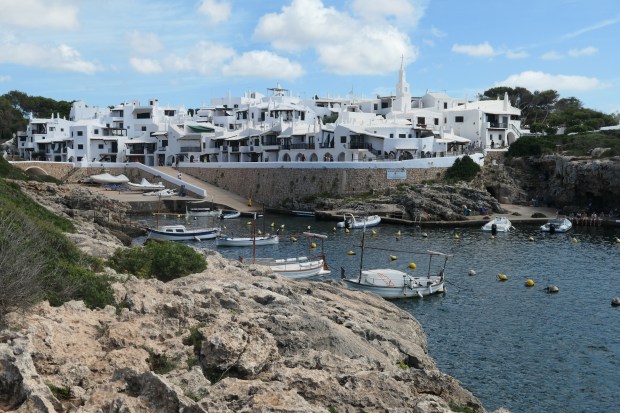
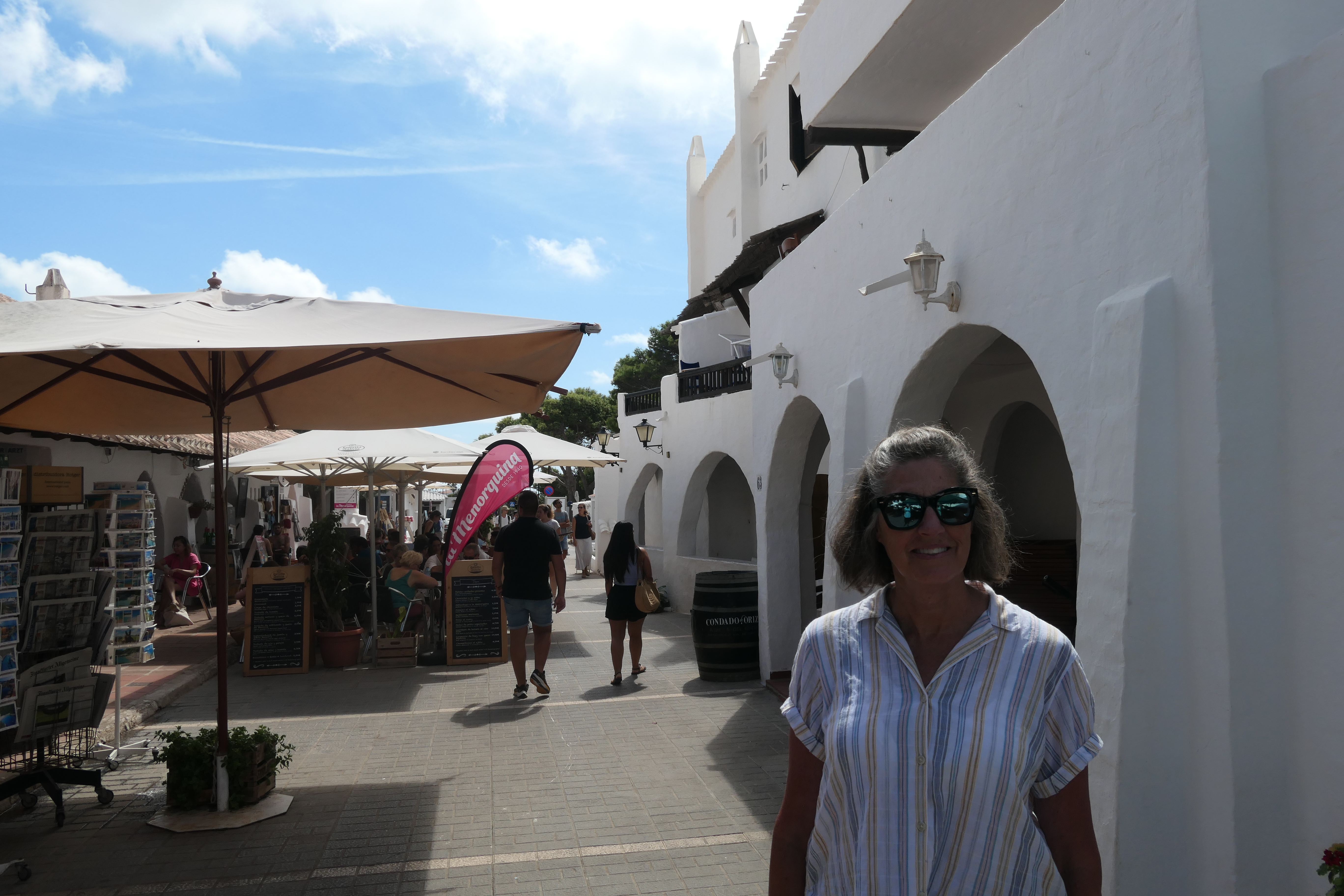
Binibeca is a white town on Menorca’s southeast shore that is relatively new but looks like an old fishing village! It reminded me a bit of the Greek islands. It certainly makes for a postcard view. The town was built in 1968, and is in a great location – close to Mahón and yet it feels somewhat remote. The area near Binibeca is a growing tourist spot, with many small hotels/resorts and homes popping up nearby in the years since the village was built. In addition, there are numerous beaches and coves within a short distance if you want to enjoy the warm clear water.
View of Binebeca and its small harbor.
Views of Binibeca. It would be hard to find a more uniform-looking town anywhere in Europe!
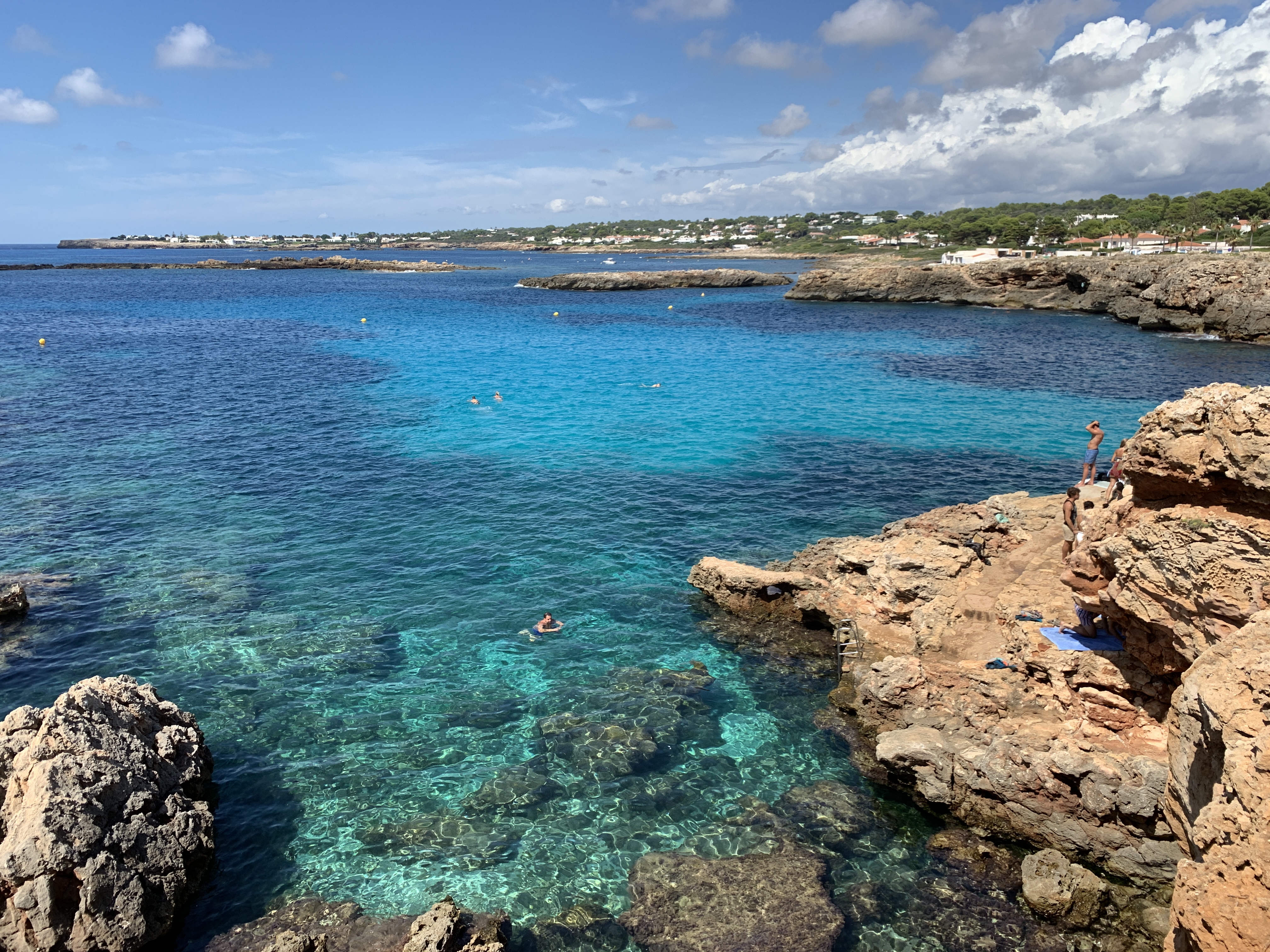
A short walk from Binibeca will take you to some amazing coves and clear water – inviting you to stay and take a dip! We came back on another day and took advantage of these clear, warm waters.
Fornells
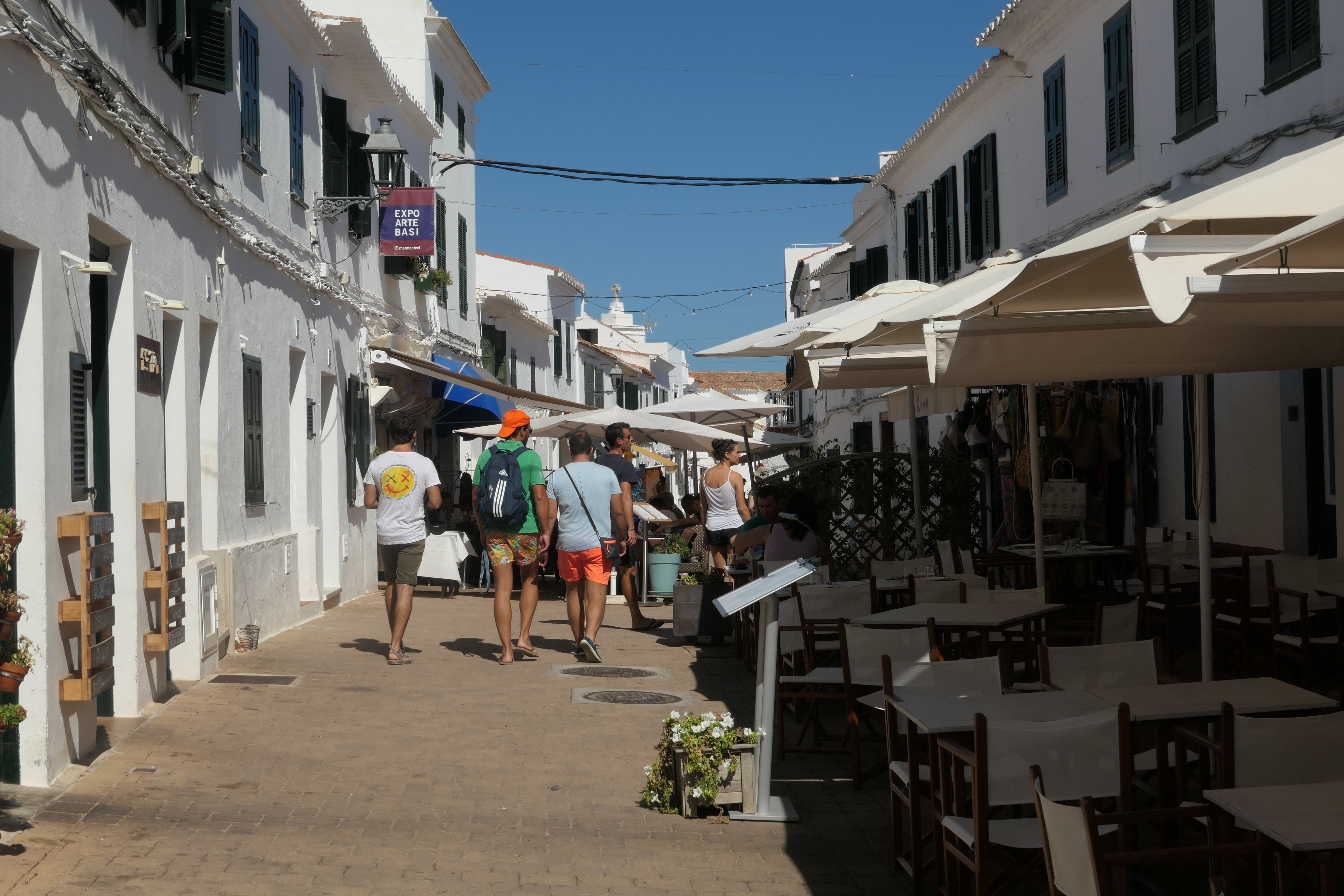
Fornells is the only major town on Menorca’s north shore and would make a great home base for visiting Menorca, if you want to enjoy a quieter experience and slower pace. Unlike Binibeca, this is an authentic fishing village and it’s known for its great seafood restaurants.
View of Fornells’ harbor.
Street scenes in Fornells.
Residences and vacation homes near Fornells on Menorca’s north shore – this area had a “California coast” feel.
One doesn’t have to go far from Fornells to find a great beach – Cala Tirant is just a couple kilometers as the crow files from Fornells, or an 8 km (4.5 mile) drive.
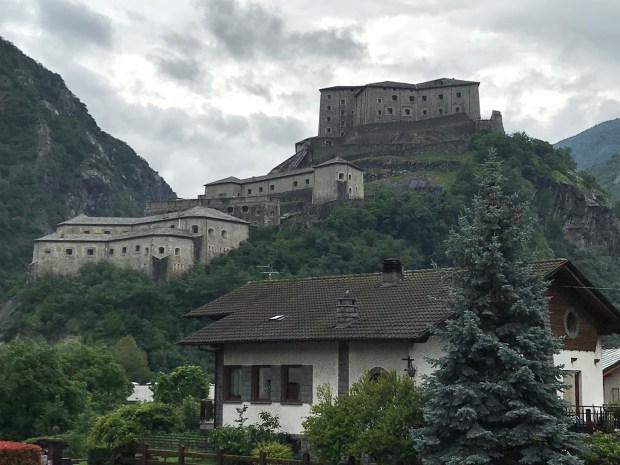
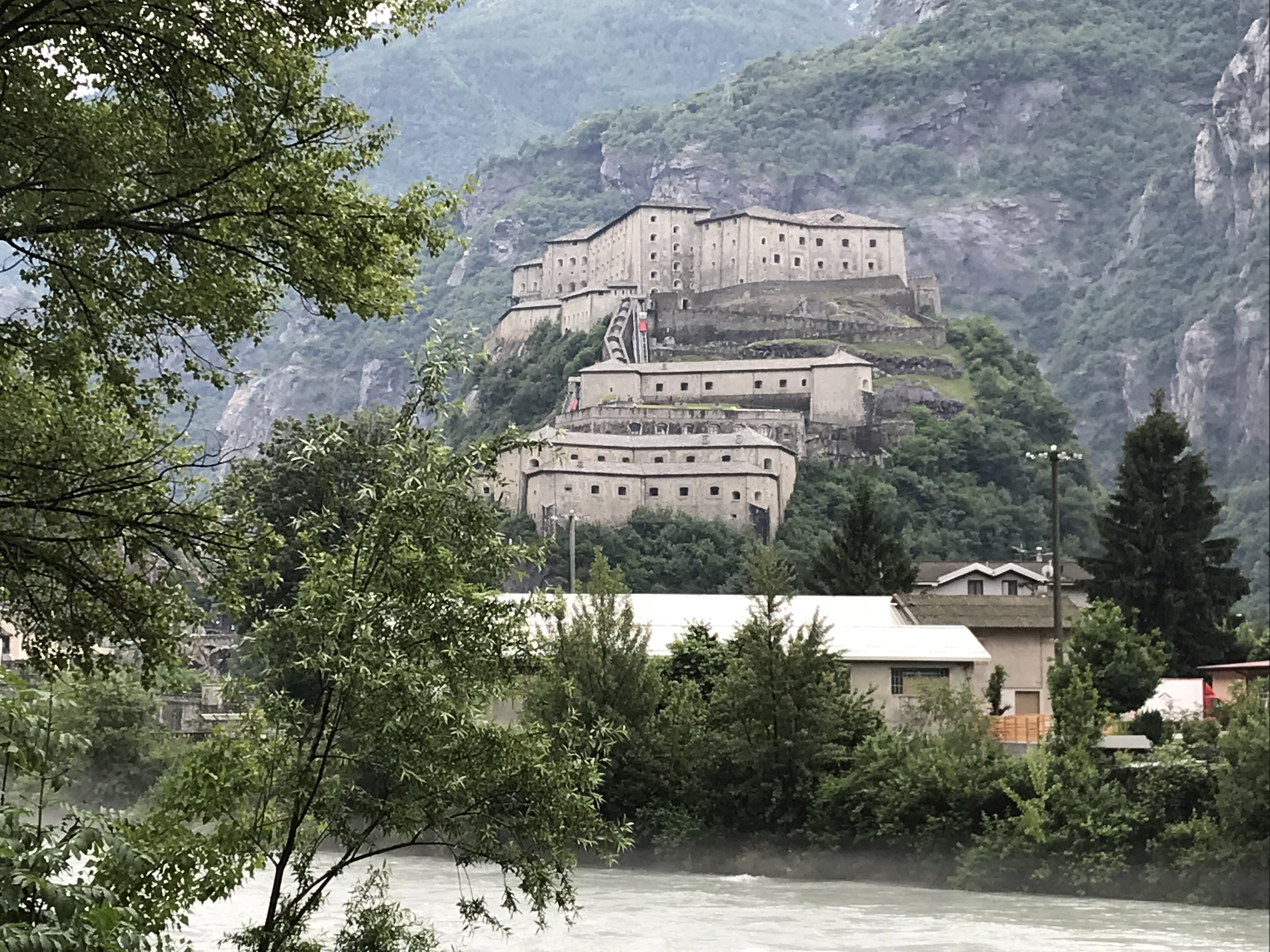
One of the great attractions in the Aosta Valley, Italy (see my overview of Aosta Valley here) is Bard Fortress. Named for the lords of Bard, it is a massive, stern-looking fortress complex sitting atop of a rocky outcropping in the narrow Aosta Valley along side the Dora Baltea river. It demands attention as you drive by.
The Bard Fortress complex. You take a series of trams to the top, known as Opera Carlo Alberto Headquarters, which in its military capacity housed a church, hospital, barracks and storage rooms.
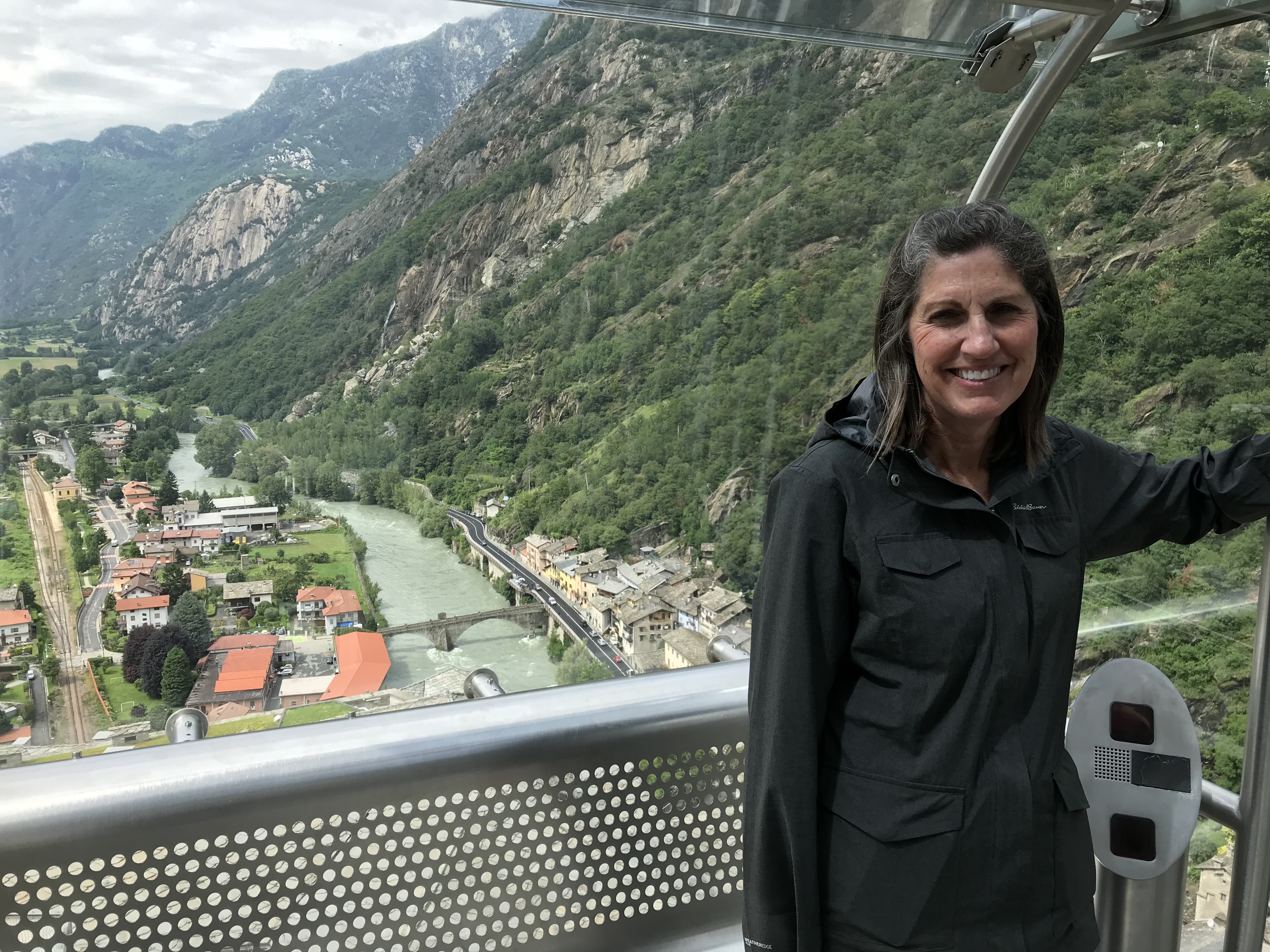
Taking a tram up to the fortress – it’s worth the ride just for the views.
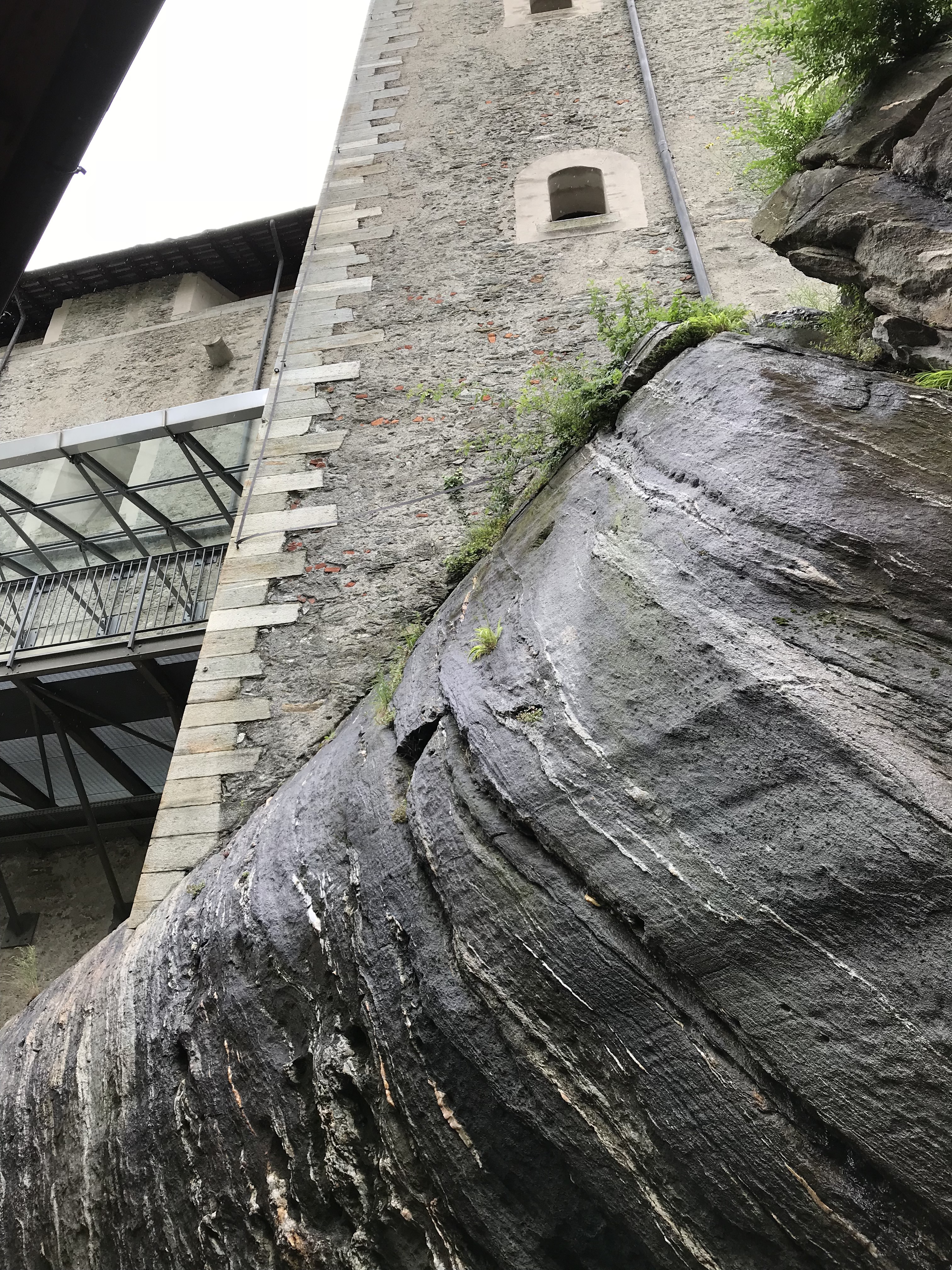
The fortress is built right on top of the rock – it must have taken some effort to get the foundation secured!
This strategic spot has been a defensive outpost since the 5th century CE and Bard Fortress sits atop ruins of past castles. It was a perfect place to control traffic passing through the Valley from Switzerland or France into Italy. There have been numerous conflicts here over the centuries ranging from the Goths and Burgunds, to the Lombards and Franks trying to seize control of this route and territory.
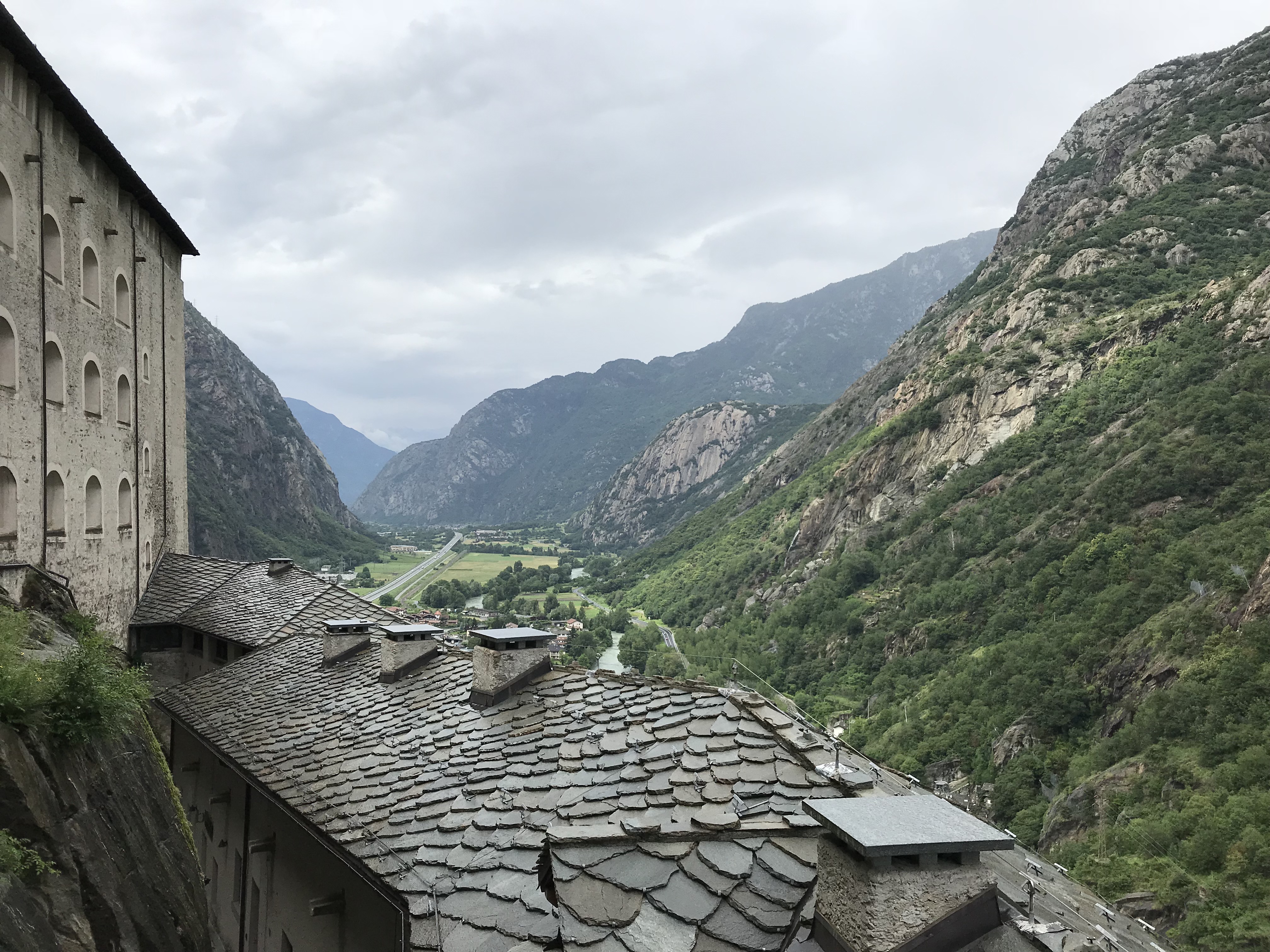
The fortress commands an impressive view of the Aosta Valley, this view is looking north.
Control of the passes through the Alps was critical to protecting pilgrims working their way south to Rome and the passage of goods flowing from southern to northern Europe as well as marking geographic boundaries for numerous kingdoms.
Napoleon, who became Emperor of France and conqueror of most of Europe, laid siege to the Fort on the 19th of May, 1800. Four hundred soldiers at the fort held back his army of 40,000 for nearly two weeks.
Covered passageway in the fortress to move soldiers and goods from one level to the next.
It wasn’t until Napoleon was able to get a 12 inch cannon blasting away on the 29th of May that the fort finally was destroyed and the small defending force surrendered on June 1st, a few days later. The fortress was rebuilt in 1830.
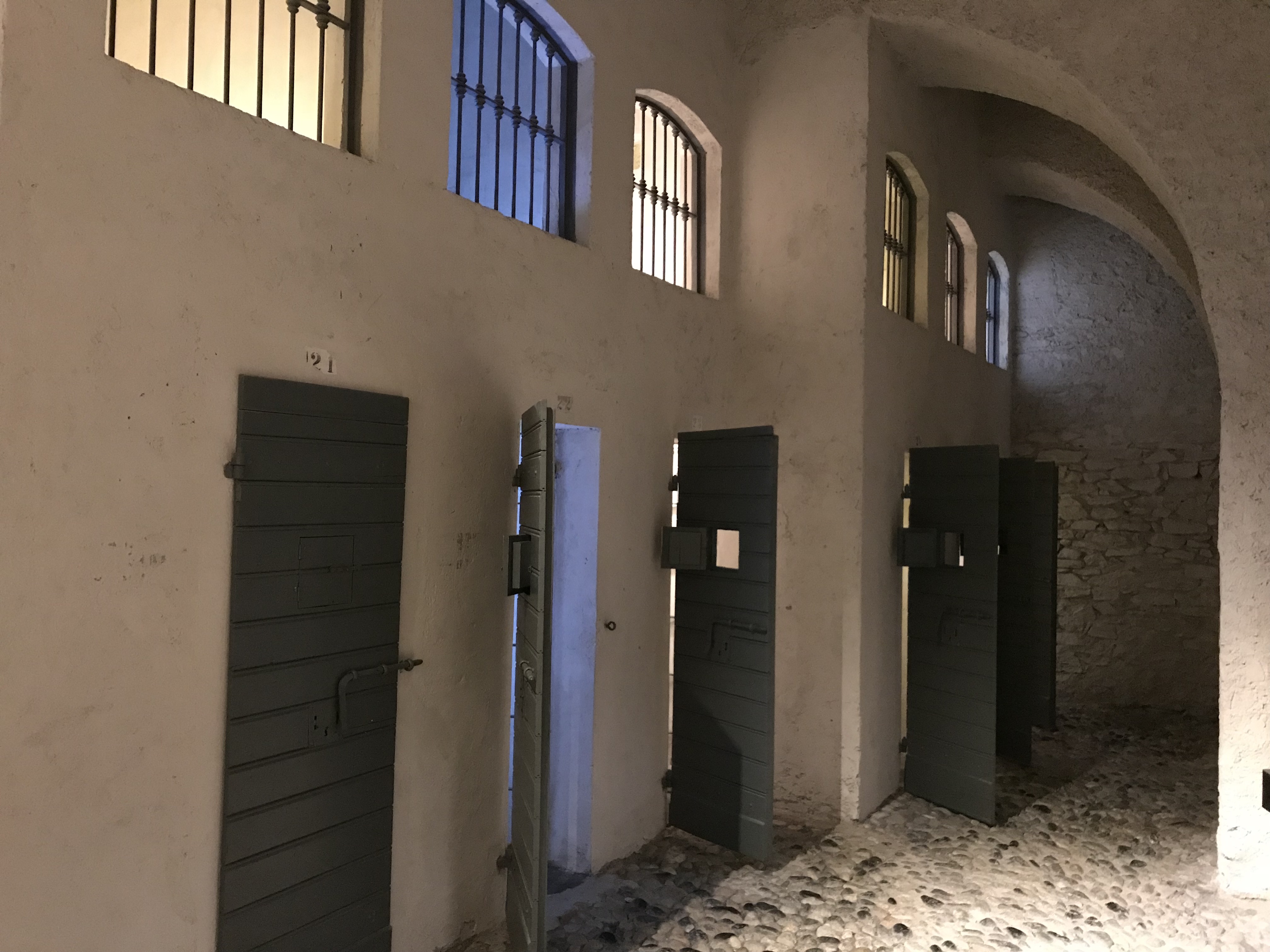
Some of the prison cells located in Bard Fortress.
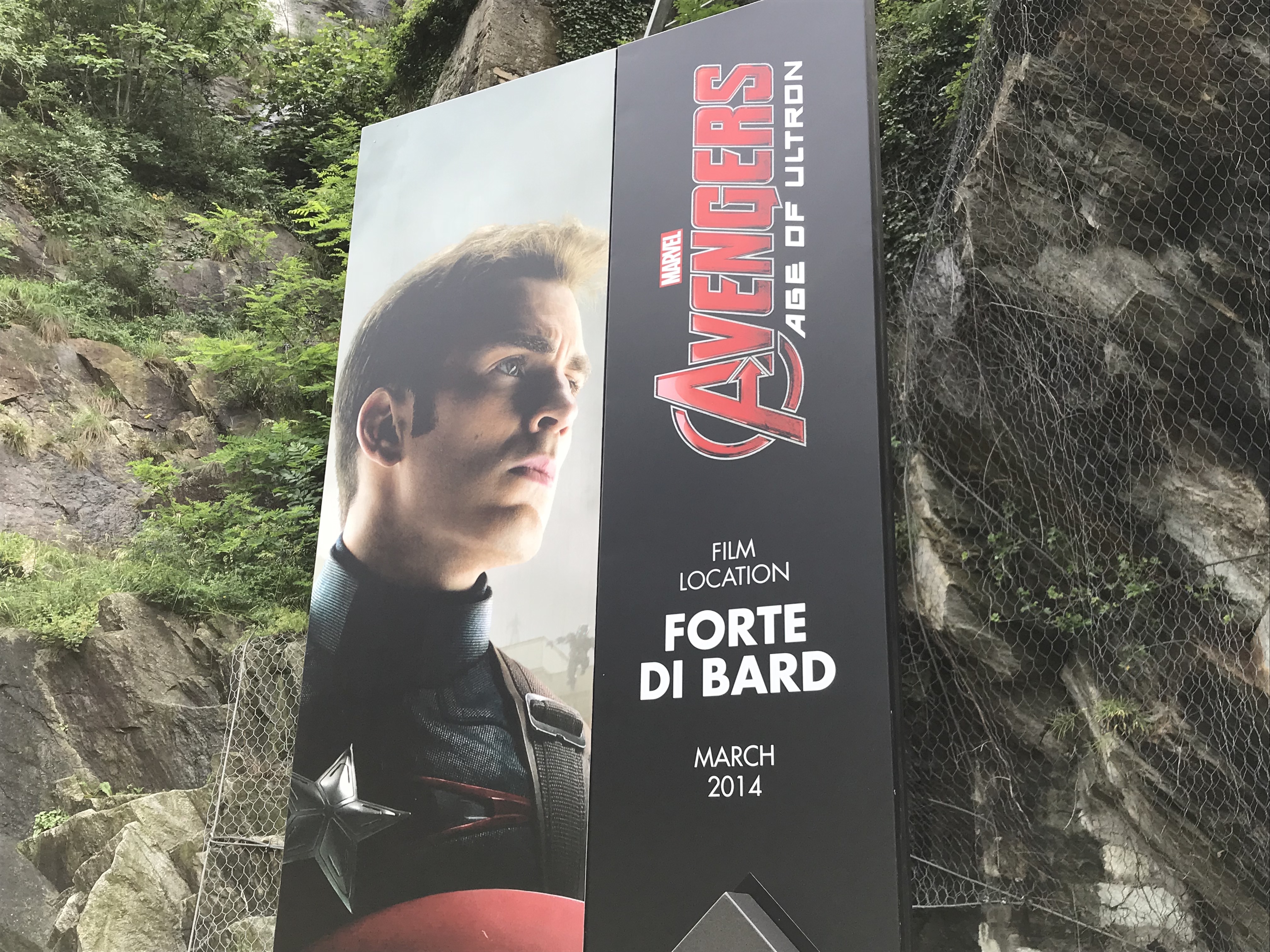
Thousands were imprisoned here at Bard Fortress in World War I. More recently it was used as a movie set in Marvel’s Avengers – Age of Ultronand the buildings now house exhibits, museums and music performances throughout the year.
A sign commemorating Bard Fortress as a movie set location.
Bard Medieval Village
As interesting as the Fortress is, the little medieval village (Bard village) nestled below it is fun to explore too – many of the buildings date back to the 14th century and have signs providing historical information.
A street in Bard Village.
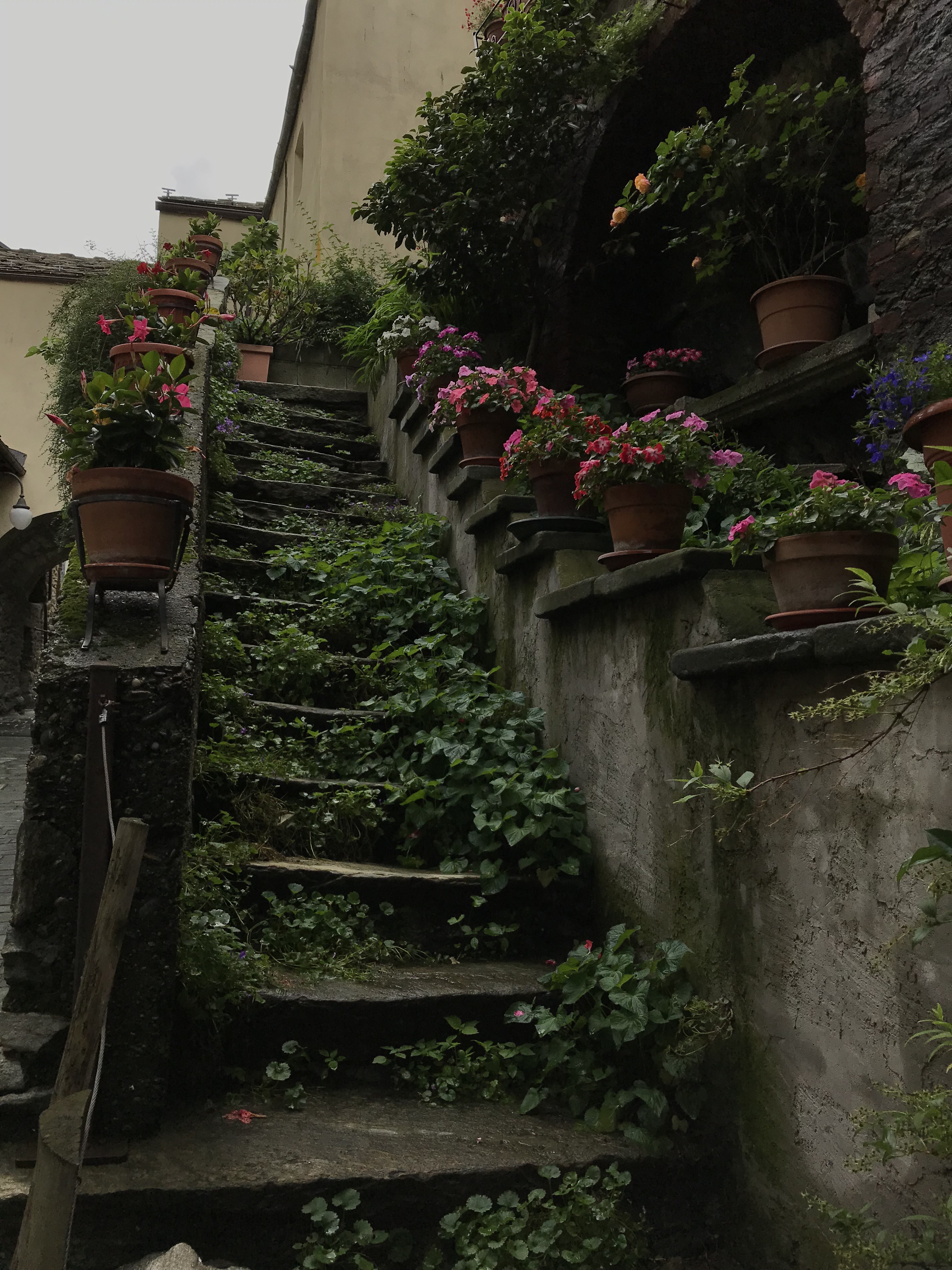
An old stairway in Bard Village.
Pockmarks remain from past battles in the streets of Bard Village.
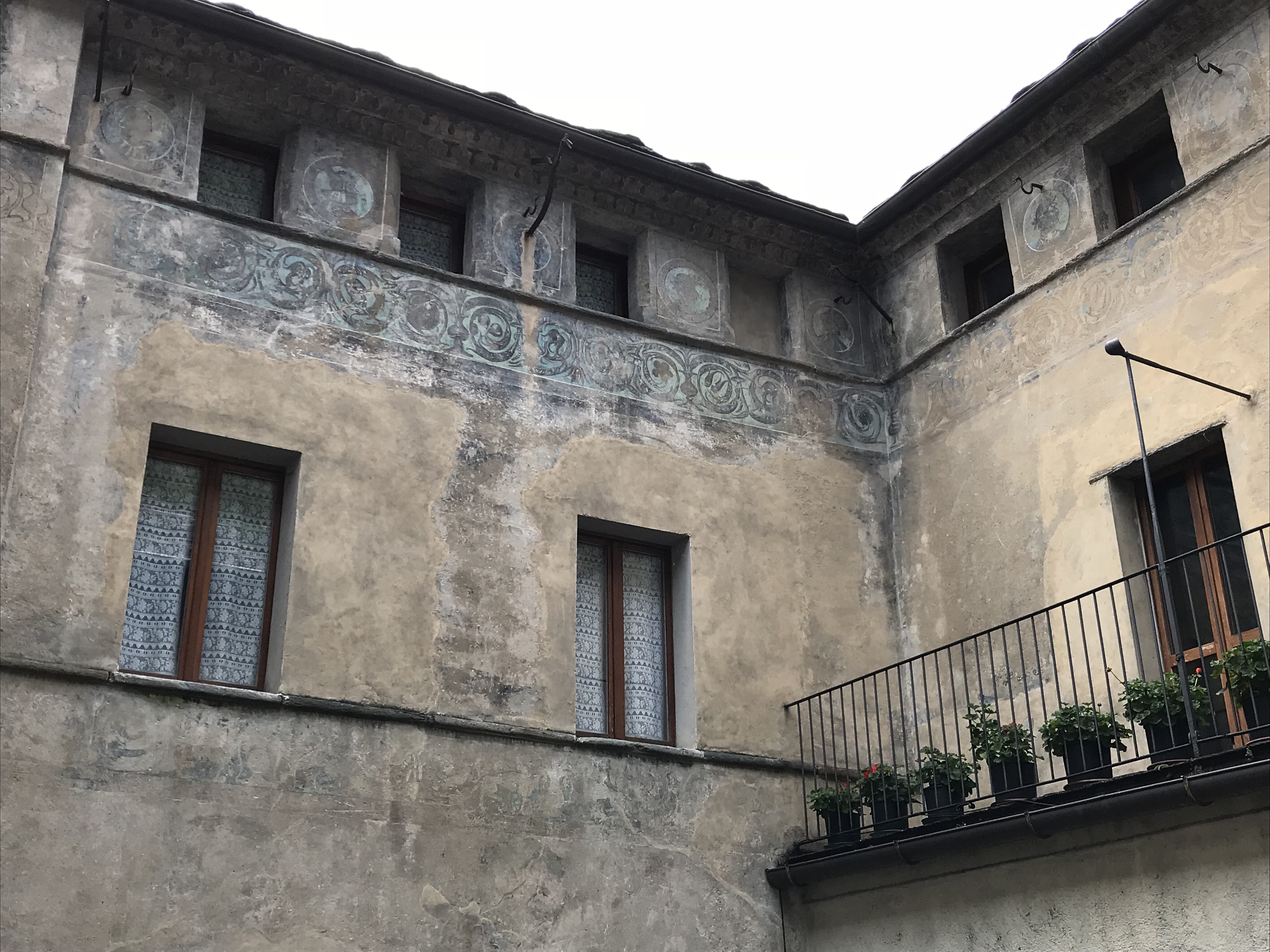
Remnants of 14th century decorative paintings on a building in Bard Village.
One more street scene in Bard Village.
Bard Fortress and the medieval village should be on your list if you visit the Aosta Valley!
































































 The Independent Tourist