Author: Paul Terry

I love to travel. I've been fortunate to visit about 75 countries so far. I prefer to travel independently to get off the beaten path a bit. I also try to find good deals to make my travels more affordable.

A Visit to Auschwitz

The main gate with its archway which says "Freedom Through Work" or "Work Makes You Free". New arrival prisoners would pass under this sign and hear a "orchestra" playing. Every day thousands would march out to their slave labor assignments and return carrying their dead fellow prisoners.

The main gate with its archway which says “Freedom Through Work” or “Work Makes You Free”. New arrival prisoners would pass under this sign and hear a “orchestra” playing. Every day thousands would march out to their slave labor assignments and return carrying their dead fellow prisoners.

Auschwitz is one of the most infamous and well known set of Nazi concentration camps from World War II. There are actually two main camps open to tourists, known as Auschwitz I and Auschwitz II (or Auschwitz-Birkenau). This post will focus on Auschwitz I. I will share more about Auschwitz-Birkenau in a separate post.

One of the fence lines at Auschwitz I. The building behind me was where the confiscated belongings of the prisoners were kept, along with the supplies of the poison gas.

One of the fence lines at Auschwitz I. The building behind me was where the confiscated belongings of the prisoners were kept, along with the supplies of the poison gas.

Auschwitz I was originally a Polish Army barracks and was turned into a concentration camp in 1940 on the orders of Heinrich Himmler, after the fall of Poland in 1939. The first prisoners were mainly Polish men who were political prisoners of the Third Reich.

Eventually others were sent here, including Polish women, Jews from all over Europe as well as Soviet prisoners of war. Soviet POW’s came to number about 10,000 starting in 1941 and were sectioned off in the camp to certain blocks (buildings). Within 5 months, 9,000 had died, due to hunger, brutality, exposure to freezing weather or being gassed.

In the center of this area, the SS officer in charge of the roll-call would receive reports of the prisoners present. If anyone was missing, the prisoners would have to stand at attention until the SS were satisfied, regardless of the weather and sometimes for 12 hours or more.

In the center of this area, the SS officer in charge of the roll-call would receive reports of the prisoners present. If anyone was missing, the prisoners would have to stand at attention until the SS were satisfied, regardless of the weather and sometimes for 12 hours or more.

The gallows, where many prisoners were hung as a warning to others. In July 1943, 12 Poles were hung, suspected of helping 3 prisoners escape.

The gallows, where many prisoners were hung as a warning to others. In July 1943, 12 Poles were hung, suspected of helping 3 prisoners escape.

Anne Frank (whose diary as a young girl about life in hiding from the Nazis in Amsterdam has been widely published) was held here but was later transferred to Bergen-Belsen camp where she died. Her father, Otto, somehow survived Auschwitz and returned to Amsterdam after the War. Another famous prisoner was Viktor E. Frankl, who wrote the book Man’s Search for Meaning based on his experiences at Auschwitz.

The crammed barracks. Sometimes 200 people were crowded into rooms mean to house 40 or 50 people.

The crammed barracks. Sometimes 200 people were crowded into rooms mean to house 40 or 50 people.

Lavatories at Auschwitz I.

Lavatories at Auschwitz I.

Some photos of victims at Auschwitz I.

Some photos of victims at Auschwitz I.

All in all, about 400,000 men, women and children were sent to Auschwitz I. At any given time, 13,000 – 16,000 would be housed in the camp. Due to the horrific conditions as well as the outright execution of numerous prisoners, the mortality rate was high, about two-thirds of the prisoners did not survive.
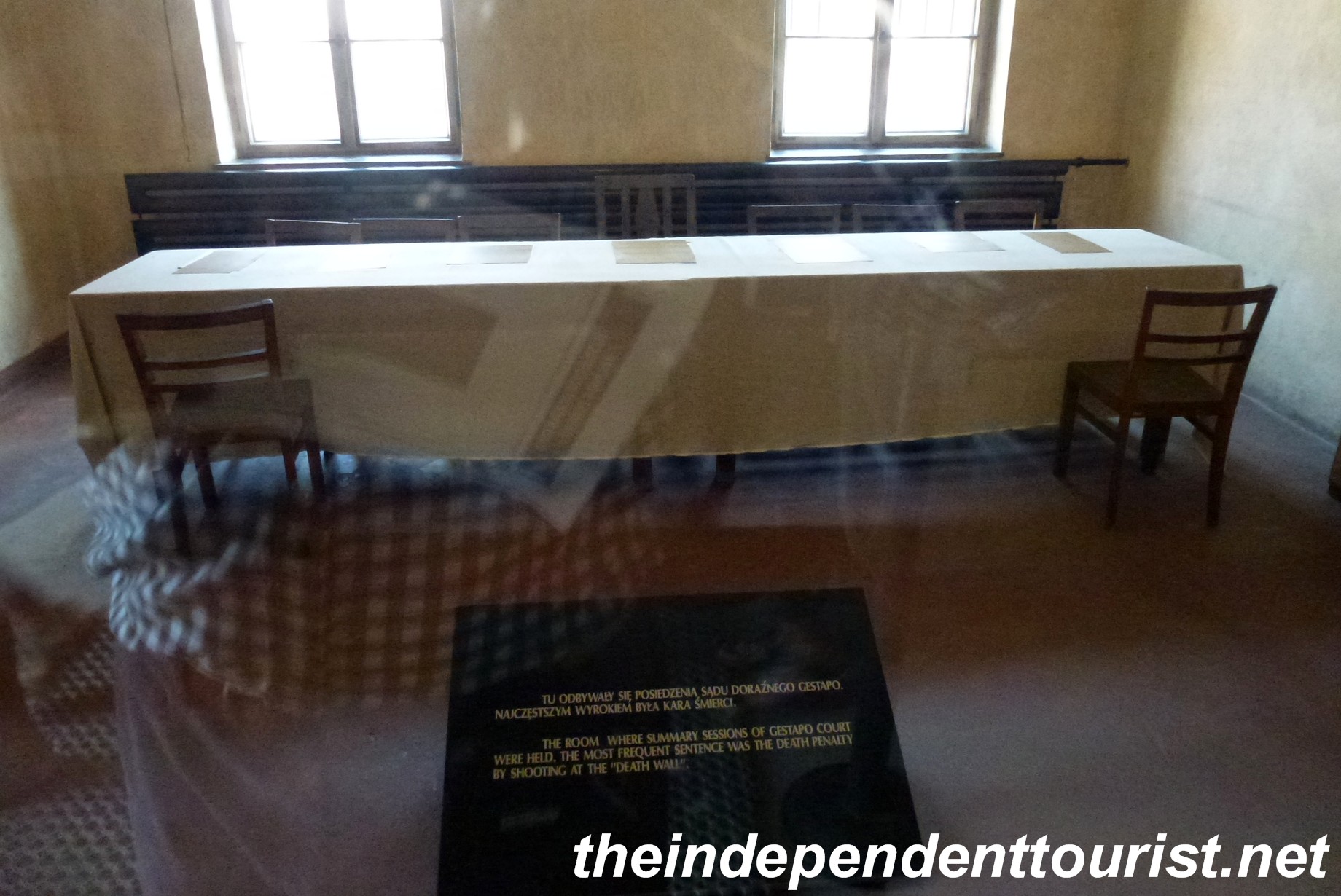
The room where execution decisions were made. (The poor picture quality is due to reflections on the glass in front of the room).

The room where execution decisions were made. (The poor picture quality is due to reflections on the glass in front of the room).

The infamous yard bertween cell Blocks 10 and 11. Block 11 was known as the "death block." Prisoners were tortured and shot here. From 1941 to 1943 several thousand were shot by the SS on this spot. Floggings also took place here and torture, such as being hung from a post by your wrists tied behind you. In the basement of cell Block 11 are a number of torture rooms. We were not allowed to take pictures inside that area.

The infamous yard bertween cell Blocks 10 and 11. Block 11 was known as the “death block.” Prisoners were tortured and shot here. From 1941 to 1943 several thousand were shot by the SS on this spot. Floggings also took place here and torture, such as being hung from a post by your wrists tied behind you. In the basement of cell Block 11 are a number of torture rooms. We were not allowed to take pictures inside that area.

This was the only concentration camp where prisoners were tattooed to aid in identification due to the large number of corpses.

There were 700 attempted escapes, about 400 were recaptured. If a Polish prisoner escaped, his family was rounded up and sent to Auschwitz, and made to stand under a sign indicating why they had been arrested, as a warning to other prisoners.

Initially, the mass killing of Jews was not part of the purpose of Auschwitz; it wasn’t until about 1943 that the Germans started perfecting their gassing techniques and killing Jews by the hundreds of thousands in Auschwitz-Birkenau. However, Auschwitz I was one of the experimental locations for large scale gassing operations.

Originally an ammunition bunker, this room became a gas chamber during the years 1941 – 1943. Thousands were gassed here, some immediately upon their arrival, including Jews, Soviet POW’s and some Polish prisoners as well.  Pellets of Zyklon B were dropped through the ceiling.

Originally an ammunition bunker, this room became a gas chamber during the years 1941 – 1943. Thousands were gassed here, some immediately upon their arrival, including Jews, Soviet POW’s and some Polish prisoners as well. Pellets of Zyklon B were dropped through the ceiling.

The ovens at Auschwitz I, which each could burn 2-3 corpses at a time and up to 350 per day. In July 1943, the burning of corpses stopped as the killing operations were moved to Auschwitz II.

The ovens at Auschwitz I, which each could burn 2-3 corpses at a time and up to 350 per day. In July 1943, the burning of corpses stopped as the killing operations were moved to Auschwitz II.

Practical Information:

Auschwitz (Oświęcim is Polish) is about 67 km (41 miles) southwest of Kraków and can be done as a day trip. We visited on our way into Kraków from Częstochowa. Allow at least four hours to see both camps, which are about 3 km (2 miles) from each other. Get your tickets and guide maps (essential) at Auschwitz I which is right next to the town. Auschwitz-Birkenau (also called Auschwitz II) is a much larger site, slightly farther out of town. Tours are available, but we felt the guidebooks did a great job explaining the history and operations of the camps. Also note if you get to Auschwitz I after 10 am (as I recall) you’ll be required to take a tour and won’t be able to walk around on your own. In Auschwitz I, many of the barrack buildings house different exhibits on life in the camp, the history of the holocaust, and experiences of different cultures and countries during the War.

Be forewarned: A visit here is gut-wrenching and depressing. However, the exhibits and information are well organized and almost overwhelming. Understanding this dark period of the world’s history is important so that we will never allow something like this to happen again.

References: Site plaques and brochures from Auschwitz. For an excellent review of the history of Auschwitz, read Auschwitz: A New History by Laurence Rees.


Patarei Prison – One of the Strangest Tourist Sites I’ve Visited

The entrance sign to the prison.

The entrance sign to the prison.

Just a 15-20 minute walk from the Old Town of Tallinn, Estonia is Patarei Prison, which was in use from 1920 to 2002. After paying a small entrance fee (about 3 euros), you can wander the dark (and I mean dark) hallways, decrepit cells, infirmary, library, offices, execution rooms and other areas.

My wife and son near the entrance to Patarei Prison.

My wife and son near the entrance to Patarei Prison.

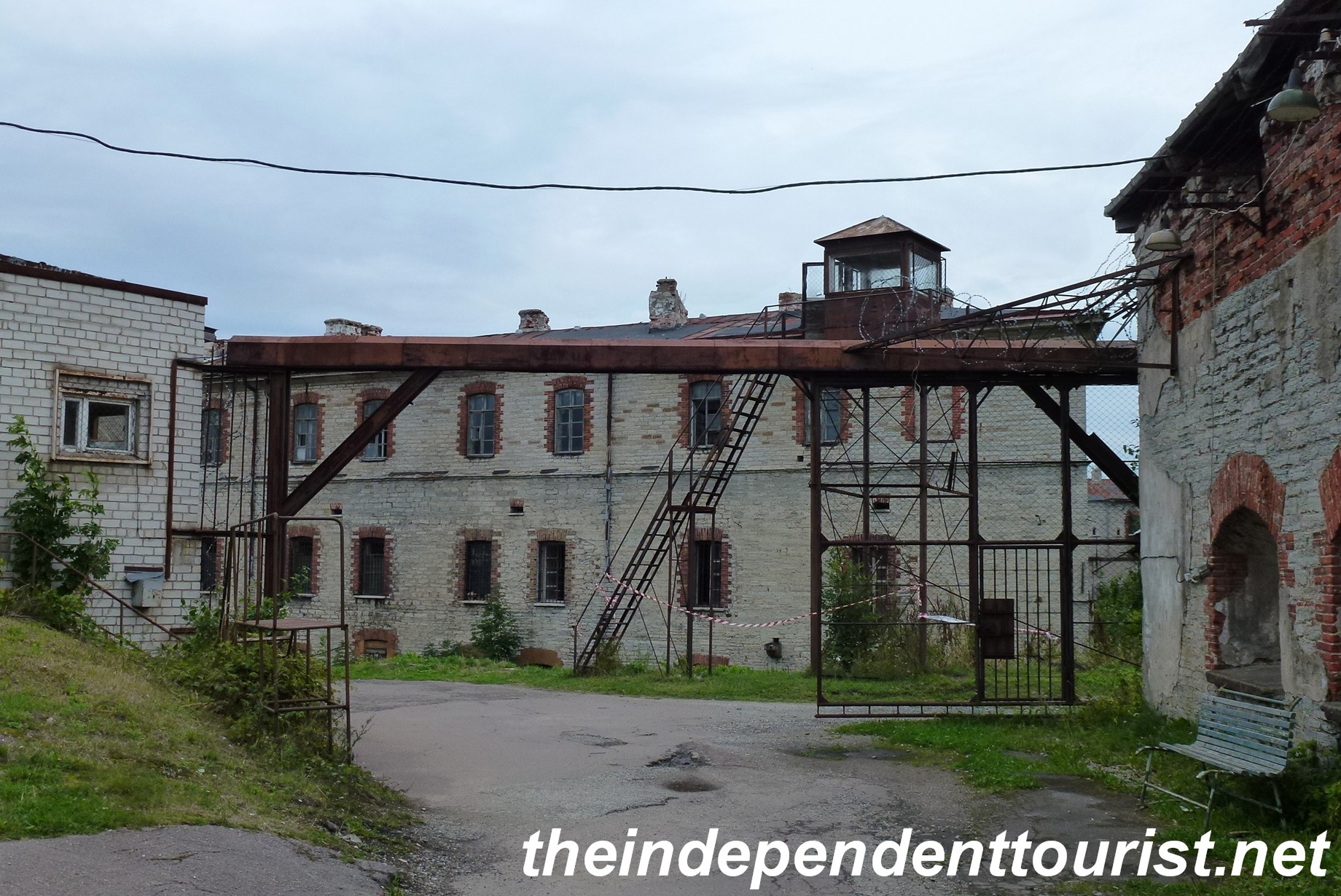
Another view of the prison grounds and buildings.

Another view of the prison grounds and buildings.

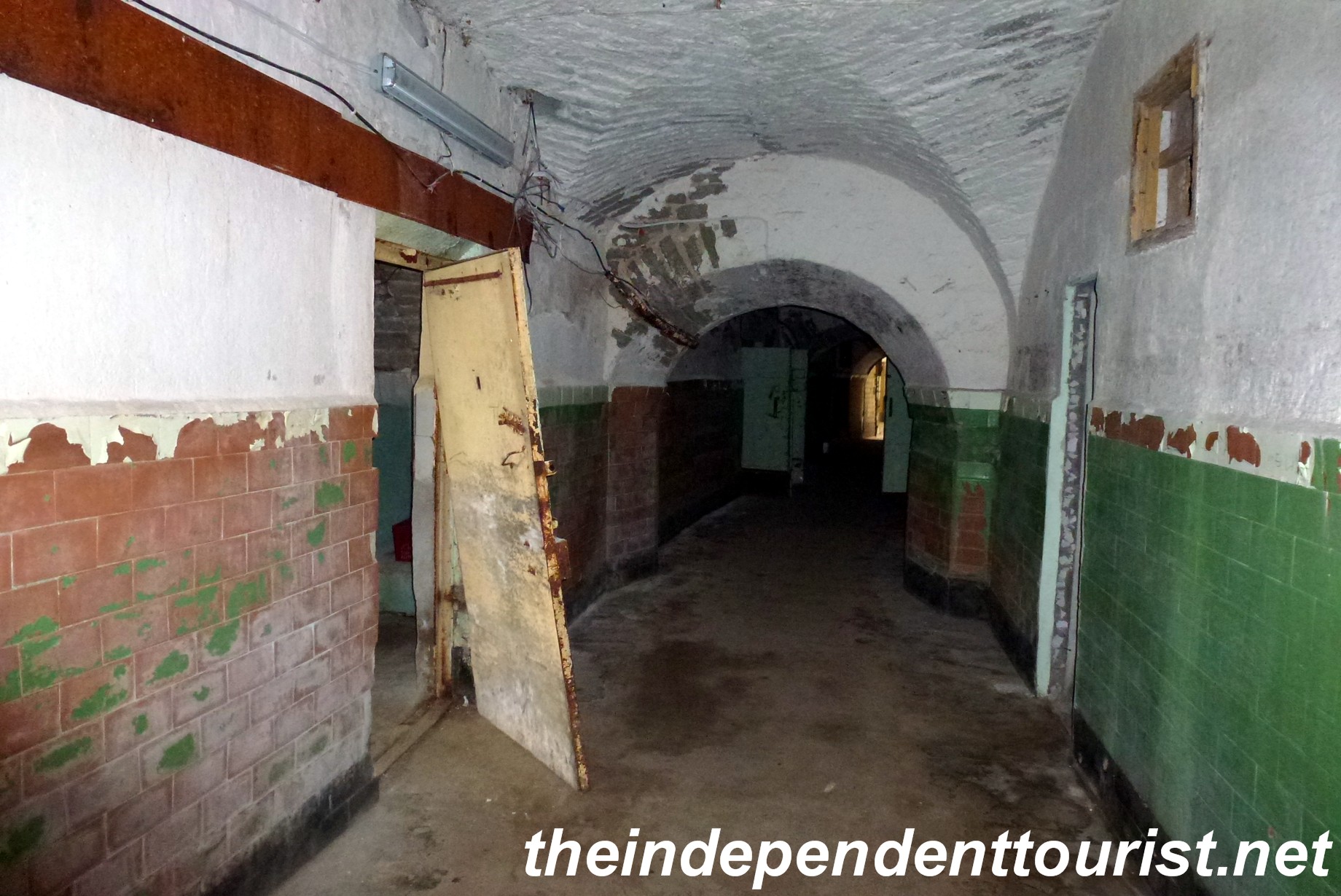
One of the prison's hallways, Notice how it's curved, this was a feature of the original fortress from the 1800's, so a shot could not be fired straight a long distance.

One of the prison’s hallways, Notice how it’s curved, this was a feature of the original fortress from the 1800’s, so a shot could not be fired straight a long distance.

A cell door with a small opening for sliding food to the prisoner.

A cell door with a small opening for sliding food to the prisoner.

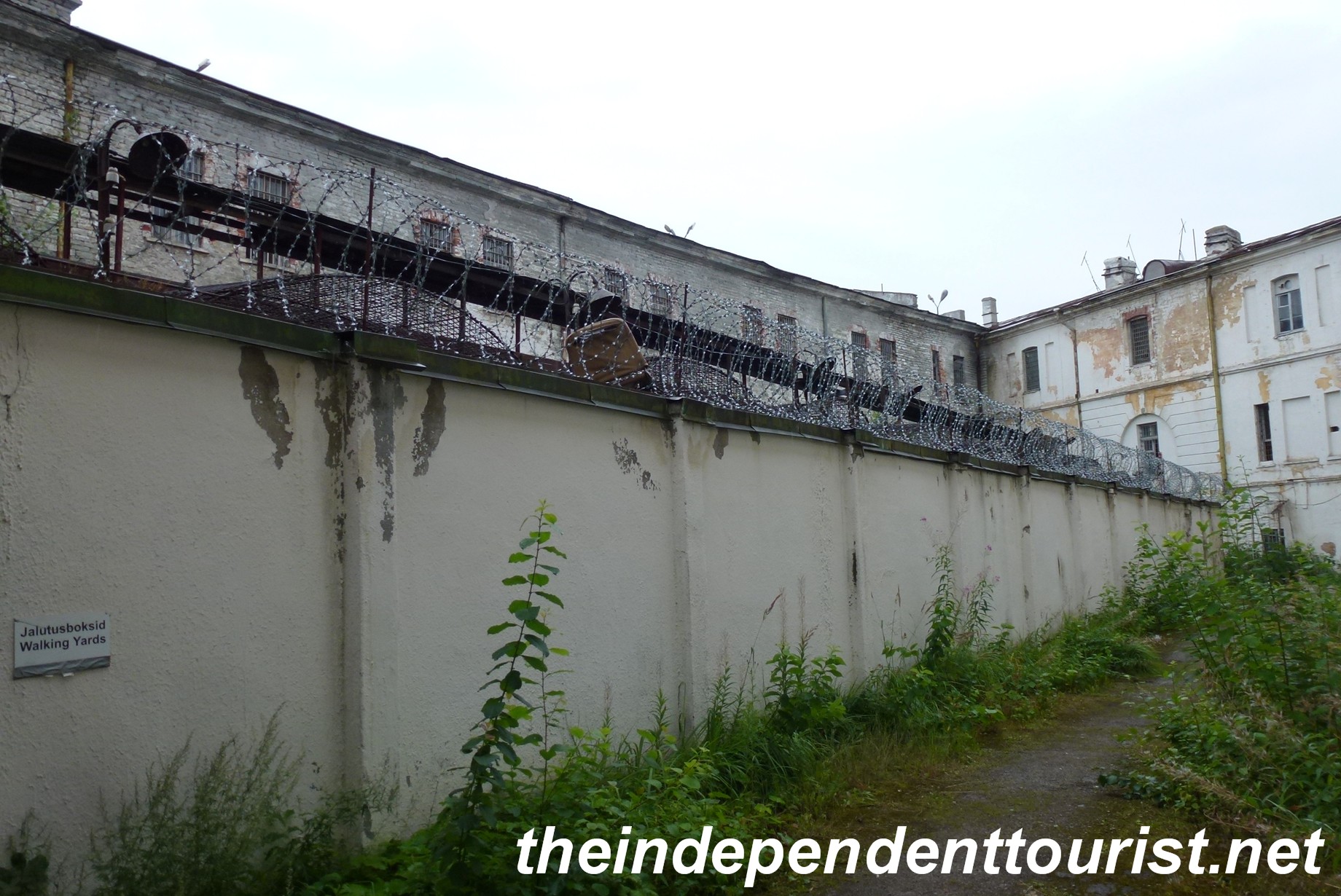
This is the courtyard and up until World War II the prisoners could walk in open space here. After the start of the Soviet occupation, the open-roof cells to the left were built. Prisoners would be crammed in these small "boxes" for an hour of fresh air.

This is the courtyard and up until World War II the prisoners could walk in open space here. After the start of the Soviet occupation, the open-roof cells to the left were built. Prisoners would be crammed in these small “boxes” for an hour of fresh air.

As can be seen from the images below, it’s as though the prisoners just up and left everything where it was, in its “natural” state. The fact that a visitor can wander through these buildings (which have no light other than the daylight coming through the windows) with no escorts is quite unusual.

One of the cell blocks with a lot of left over clothes and other items.

One of the cell blocks with a lot of left over clothes and other items.

The library - a number of books still on the shelves.

The library – a number of books still on the shelves.
The infirmary - I think I'll keep my own doctor and medical plan!

The infirmary – I think I’ll keep my own doctor and medical plan!

A small guidebook is available at the entrance, and a few rooms are sign posted, but for the most part you’re left with your imagination.

Toilet area - comfy!

Toilet area – comfy!

One of the cell areas - note the bedding and pillows still in place.

One of the cell areas – note the bedding and pillows still in place.

Many prisoners were held here while awaiting trial. Hundreds of people were also executed at the prison, the last execution taking place in 1991. One of the rooms used for shooting people was later painted over in brown paint to hide the blood stains.

One of the execution rooms. Hangings and poisonings took place here. Note the floorboards in the center of the picture, these would allow for the person to fall enough distance to complete the hanging.

One of the execution rooms. Hangings and poisonings took place here. Note the floorboards in the center of the picture, these would allow for the person to fall enough distance to complete the hanging.

The prison faces the sea, and was originally a fortress built to protect the city of Tallinn in 1840. It’s been open as a Cultural Park since 2007 to preserve the memory of what life was like for some unfortunate people during the Soviet occupation.

One of the guard's quarters.

One of the guard’s quarters.

For more information, visit: http://www.patarei.org.

Kraków—Part 3—Schindler’s Factory and the Jewish Quarter

The front facade of Schindler's Factory.

The front facade of Schindler’s Factory.

One of the highlights of a visit to Kraków is a stop at Schindler’s Factory, on the southeastern edge of the city in the district of Podgórze.  Oskar Schindler was immortalized in Steven Spielberg’s movie Schindler’s List (1993) as the man who saved about 1,200 Jews during World War II by employing them in his factory making goods for the German military.

Sign in front of the Factory Museum. "Whoever saves one life, saves the world entire."

Sign in front of the Factory Museum. “Whoever saves one life, saves the world entire.”

Photos of Jews saved by Oskar Schindler.

Photos of Jews saved by Oskar Schindler.

A photo of Oskar Schindler (left).

A photo of Oskar Schindler (left).

“For some, war leaves no choice; for others it makes choosing a must. A small gesture can yield irreversible consequences. It can either save a life or ruin it.” (A quote from the Schindler museum)

The factory building is still standing and is now an excellent museum, describing the invasion and occupation of Poland by Nazi Germany (1939 to 1945) and daily life in the huge Jewish Ghetto of Kraków, where thousands of Jews were crammed into tiny quarters after their homes and possessions were confiscated by the Nazis. There are numerous pictures, exhibits, stories and displays of what life was like during the Nazi occupation. I really can’t imagine the constant terror of not knowing what will be your fate – will you live through the night, will your family be taken from you, or will you be shot to death on a whim?
Prior to my visit, I had hoped to see the actual factory floor as an exhibit, but all that remains of the actual factory are a few machines, Schindler’s office and some of the goods manufactured in the factory. However, the well-organized museum is definitely worth visiting. Plan a few hours to see and absorb all the information.

Schindler's office and desk.

Schindler’s office and desk.

Some of the products Schindler's Factory produced.

Some of the products Schindler’s Factory produced.

One of the metal-working machines from Schindler's Factory.

One of the metal-working machines from Schindler’s Factory.

Schindler’s Factory is a long walk from the center of Kraków, or take a tram from the main post office in the Old Town. There are signs marking the way to the Factory from the tram stop.

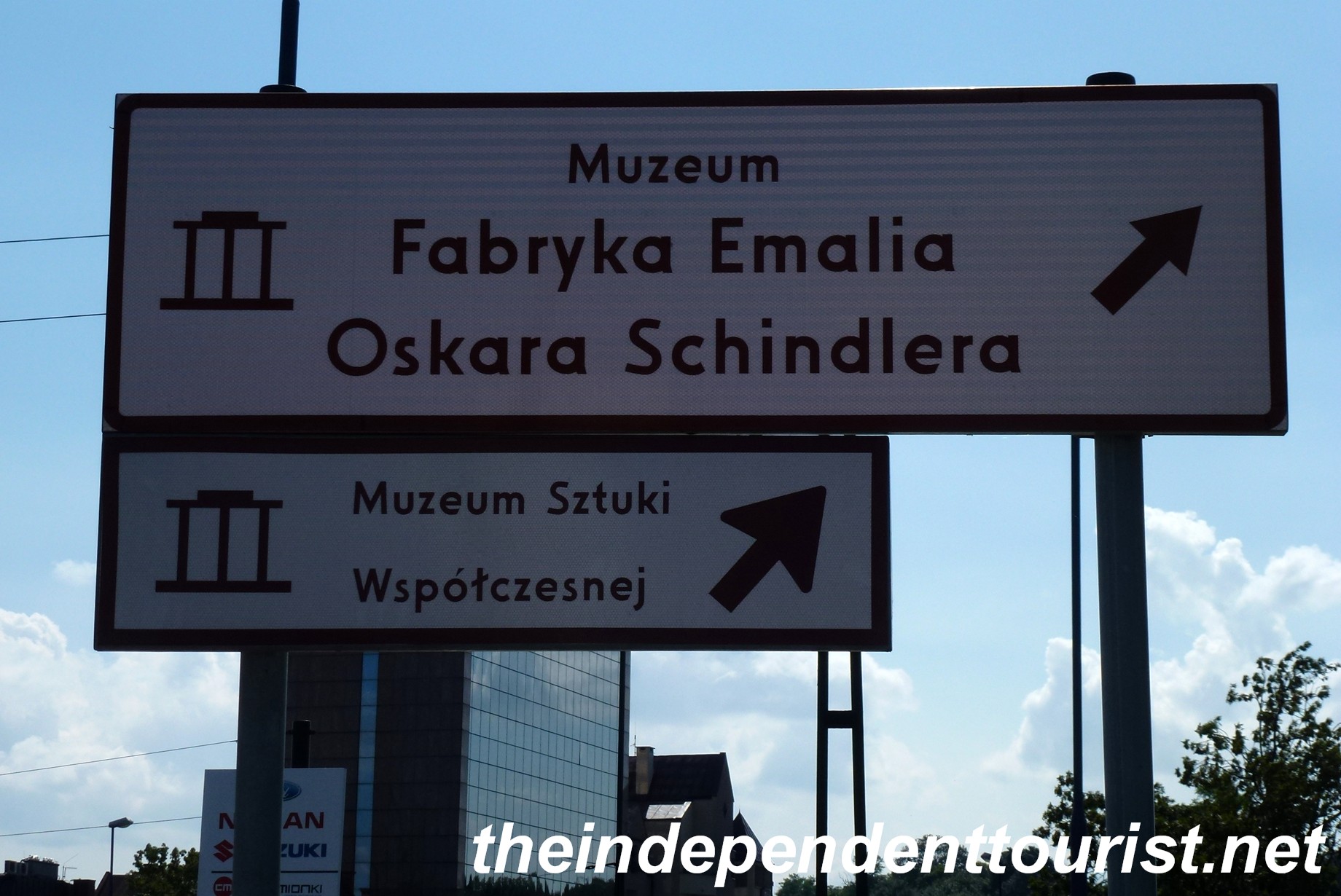
A sign pointing the way to Schindler's Factory.

A sign pointing the way to Schindler’s Factory.

Jewish Quarter

The Kraków district of Kazimierz (in between Old Town and Podgórze) is known as the Jewish quarter and it was a vibrant area prior to the deportation and extermination of the Jewish population during World War II.

ul Szeroka. The wide street or square that is the heart of the Jewish Quarter.

ul Szeroka. The wide street or square that is the heart of the Jewish Quarter.

Only about 10% of the Jews living in Kraków survived the war. The community has undergone something of a revival since the release of Schindler’s List.

The Remuh Cemetery. Dates from the mid-16th century. Many of the tombstones were buried to avoid desecration. One of the best-preserved Renaissance Jewish cemeteries in Europe.

The Remuh Cemetery. Dates from the mid-16th century. Many of the tombstones were buried to avoid desecration. One of the best-preserved Renaissance Jewish cemeteries in Europe.

Remuh Synagogue. The smallest synagogue in this area. Completed in 1558.

Remuh Synagogue. The smallest synagogue in this area. Completed in 1558.

Isaac's Synagogue interior. Kraków's largest synagogue, completed in 1644. A close inspection reveals the original wall paintings.

Isaac’s Synagogue interior. Kraków’s largest synagogue, completed in 1644. A close inspection reveals the original wall paintings.

We enjoyed visiting the synagogues, wandering the streets and squares in this community. On some of the houses, information is provided on the families who lived there during World War II and their fate.

Reference: Lonely Planet Travel Guide – Poland

Kraków – Part 2 – Wawel Castle

A miniature layout of Wawel Castle. The main castle and cathedral are at the far end of the display.

A miniature layout of Wawel Castle. The main castle and cathedral are at the far end of the display.

One of the premier tourist sites in Kraków is Wawel Castle, located on a hill above the Vistula River on the southern edge of the old town. Wawel Castle was the home of the Polish kingdom for about 500 years (12th century to 16th century).

A view of Wawel Castle from the Vistula River.

A view of Wawel Castle from the Vistula River.

A great way to see Wawel Castle's exterior is by a carriage ride.

A great way to see Wawel Castle’s exterior is by a carriage ride.

The Bernardyńska Gate to Wawel Castle.

The Bernardyńska Gate to Wawel Castle.

Although a few foundation remnants of the original Castle still exist, what we see today is mainly from the 16th century. Wawel suffered many attacks and lootings by the Swedish and Prussian armies over the centuries. It underwent significant restoration after World War I. Although the Castle sits on a bit of a hill, it cannot be seen from the main square in old Kraków.

The arcaded courtyard of Wawel Castle.

The arcaded courtyard of Wawel Castle.

One of the ceilings in Wawel Castle.

One of the ceilings in Wawel Castle.

In the Hall of the Senators, with its magnificent Biblical tapestries.

In the Hall of the Senators, with its magnificent Biblical tapestries.

In the Hall of the Deputies - although it's hard to tell, this is an image of the ceiling with 30 individually carved human heads, representing the cycle of life from birth to death. There were originally 194 carved heads (completed around the year 1535), these 30 are all that remain.

In the Hall of the Deputies – although it’s hard to tell, this is an image of the ceiling with 30 individually carved human heads, representing the cycle of life from birth to death. There were originally 194 carved heads (completed around the year 1535), these 30 are all that remain.

A major draw to the castle grounds is Wawel Cathedral, where numerous royal coronations and funerals have taken place. Inside, many of the tombs of Polish kings are seen. The current Cathedral dates from 1364, and is the third church on the site.

The exterior of Wawel Cathedral has a number of interesting facades.

The exterior of Wawel Cathedral has a number of interesting facades.

One of the chapels in Wawel Cathedral.

One of the chapels in Wawel Cathedral.

Another view of Wawel Cathedral, with its ornate decorations.

Another view of Wawel Cathedral, with its ornate decorations.

The Castle is very busy, so plan ahead – we bought our tickets the day before we wanted to visit, and each ticket has a specific entry time (you can wander the grounds for free). There are five different ticket options, so you have to decide what you want to visit, such as the State Rooms, the Royal Private Apartments, the Crown Treasury & Armory, Oriental Art Exhibit, or Lost Wawel (where you see some of the old original foundations and other artifacts found at Wawel from ancient times). We toured the State Apartments and really enjoyed the artwork and beauty of the ornate chambers.

Note that backpacks are not allowed in the interior rooms, and must be checked into a locker. Due to severe restrictions on photographs, it’s almost impossible to take pictures inside the Castle and the Cathedral – I captured just the few above. So, you’ll have to take my word for it…visiting Wawel Castle and Cathedral are must-dos on a visit to Kraków.

Kraków, Poland – One of Europe’s Finest Cities – Part 1

When people think of great European cities, the standard list includes Paris, London and Rome, which of course all certainly belong on the list. Not too many people would name Kraków, and largely because they don’t know much about it.

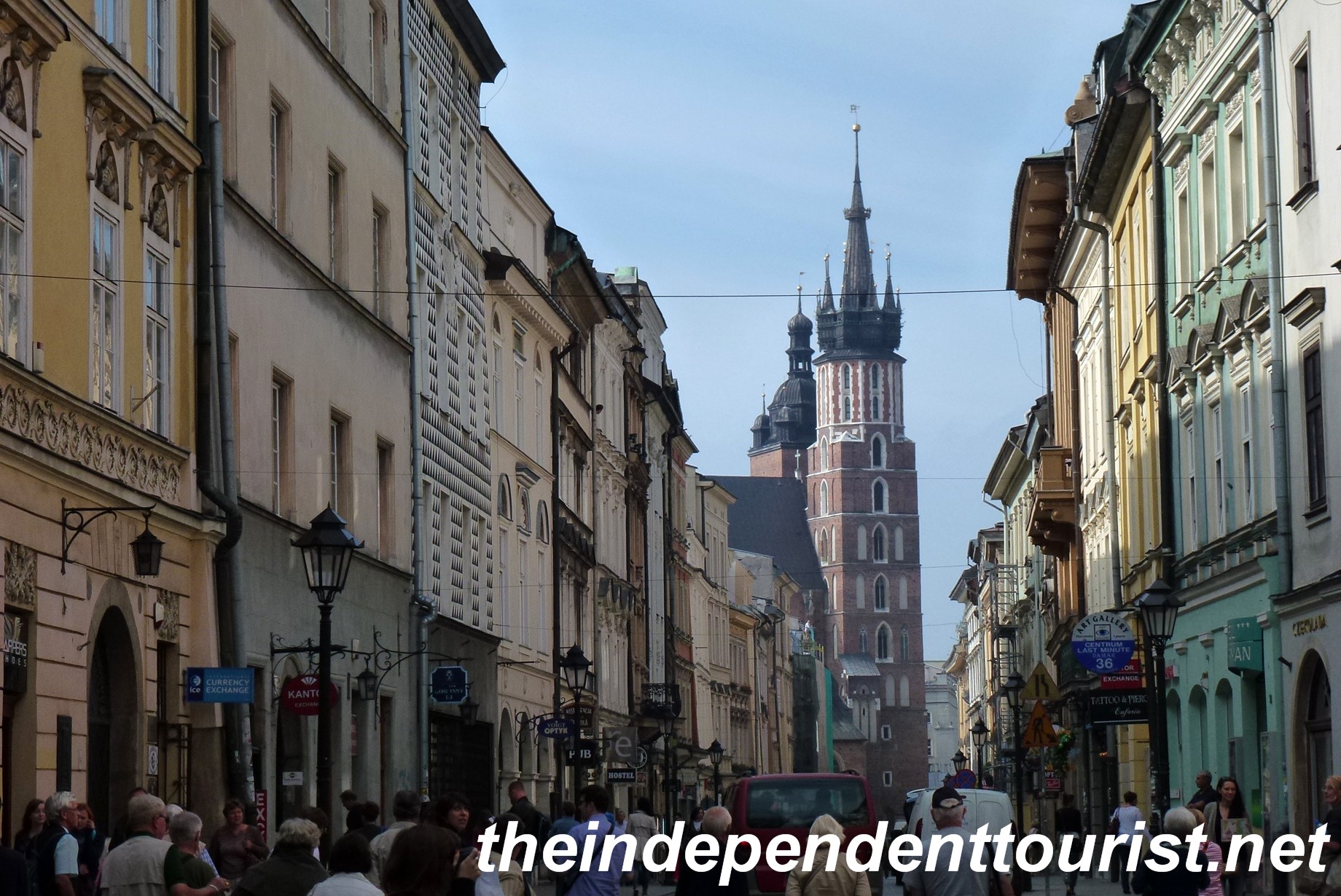
The Royal Way in Kraków, which is the main thoroughfare through the old town. Very little vehicular traffic allowed in the old town, making it a pleasant place to walk.

The Royal Way in Kraków, which is the main thoroughfare through the old town. Very little vehicular traffic allowed in the old town, making it a pleasant place to walk.

Kraków was our favorite city in Poland and it’s one of our favorite cities in Europe. We love it because there are many things to see, it has a very classy feel to it, the people were wonderful, we had a great place to stay and the food (if you like hearty fare) was excellent. Kraków is a large, modern city, but the charming old town is relatively compact.

Our perfect apartment in Krakow, just a few minutes by foot from the old town. It is called Krakow Parkside Apartments. Highly recommended.

Our perfect apartment in Krakow, just a few minutes by foot from the old town. It is called Krakow Parkside Apartments. Highly recommended.

This is the first of three posts on Kraków. This great city also makes a good base for exploring the remains of the infamous Auschwitz Death Camps as well, which are located about 66 km (41 miles) west.

For a map of places we visited in Poland, click here.

Below are a few of the things that make Kraków a great place to visit. The list of things to see could go on and on, with a number of other museums, churches, statues and other historic places that we simply did not have time to visit.

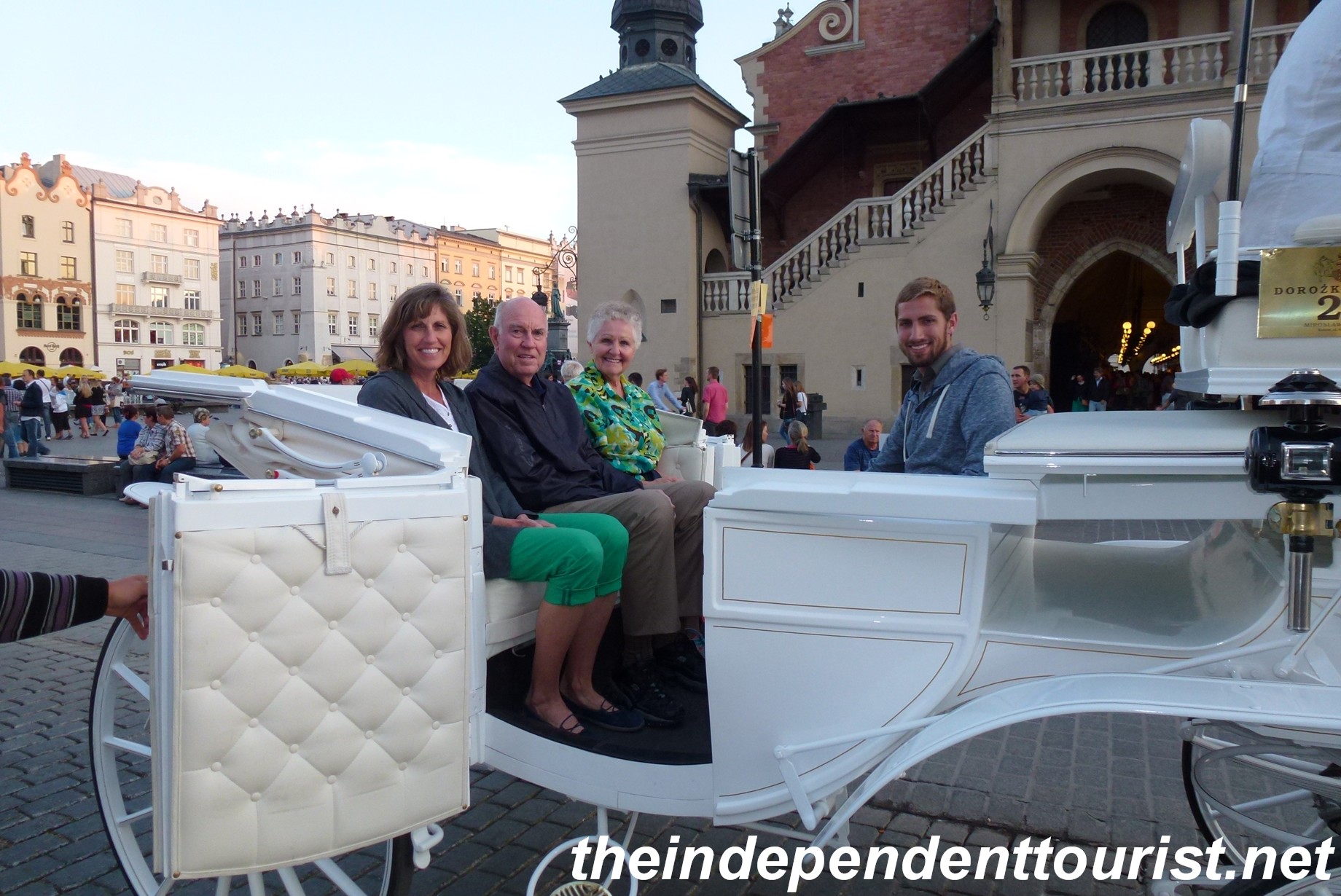
Horse Carriage Rides. A highlight of visiting Kraków is taking a carriage ride around the old town. The rides start in Rynek Square and go to the north edge of old town before heading to south to Wawel Castle and returning to the Square.

The stately horse carriages in Rynek Square.

The stately horse carriages in Rynek Square.

The ride cost about $10 US per person. It was a fun way to see the city and to enjoy the atmosphere. The carriages, drivers and horses are dressed up and ready to show you the town.

Getting ready for our ride.

Getting ready for our ride.

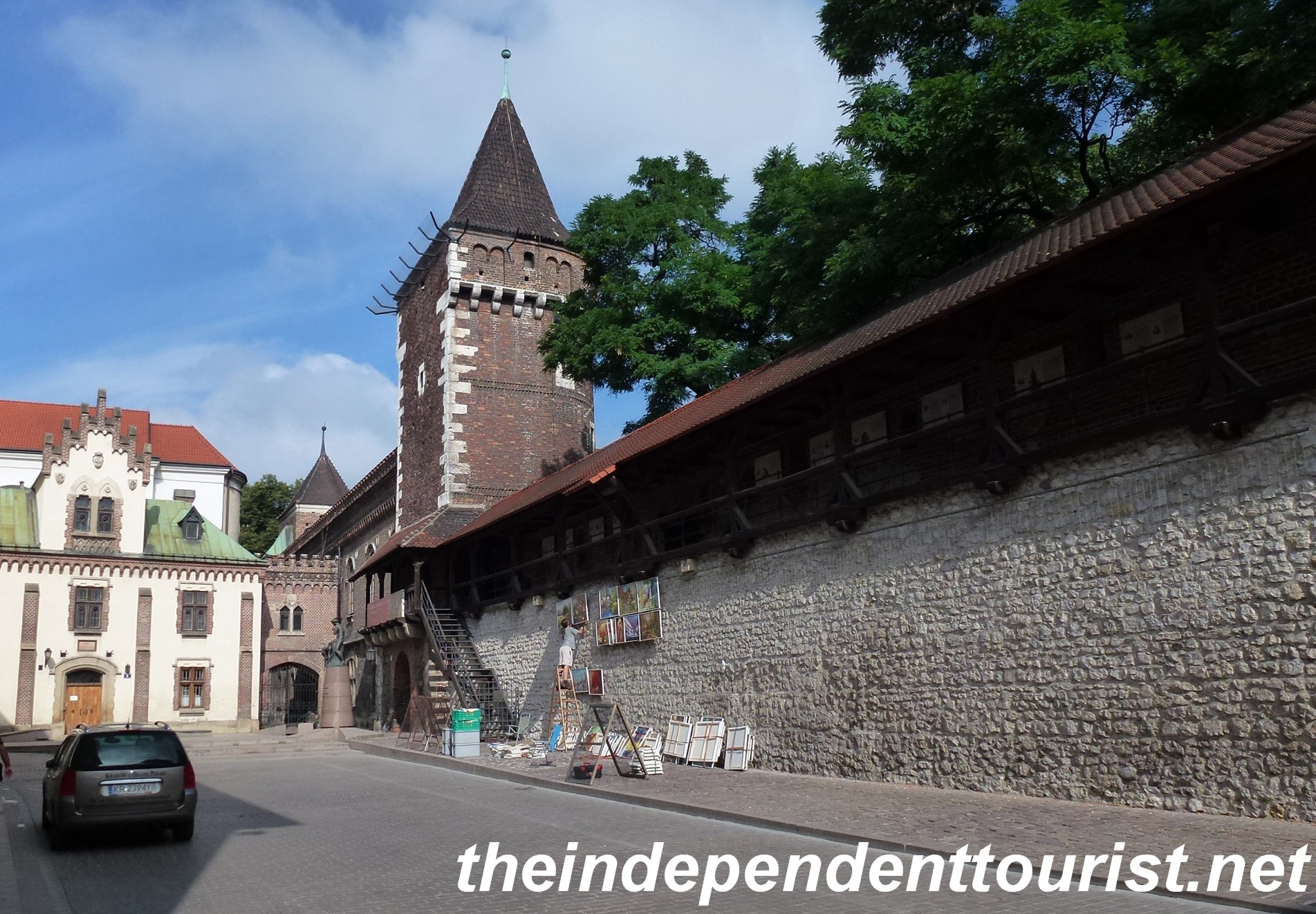
Kraków Fortifications. Much of the original city was destroyed in the 13th century by the Tatar invasions. The walls and towers we see today were built afterwards in the 13th – 15th centuries.

The Barbican, one of the few surviving structures of its kind in Europe. It was built around 1498. It has seven turrets, 130 loopholes (for firing arrows) and the walls are 3 meters thick. It helped defend the Florian Gate, which is part of the remaining defenses on the north side of Kraków's old town.

The Barbican, one of the few surviving structures of its kind in Europe. It was built around 1498. It has seven turrets, 130 loopholes (for firing arrows) and the walls are 3 meters thick. It helped defend the Florian Gate, which is part of the remaining defenses on the north side of Kraków’s old town.

What remains of these fortifications is on the north side of the old town. Although many of the old walls were torn down in the 19th century, there is a ring-shaped park and walking paths that encircle old Kraków, following the foundations of the city walls.

Part of the old city walls, near the Florian Gate, the only one of the eight original gates remaining.

Part of the old city walls, near the Florian Gate, the only one of the eight original gates remaining.

For a pleasant stroll and variety in exploring the town, take advantage of these paths.

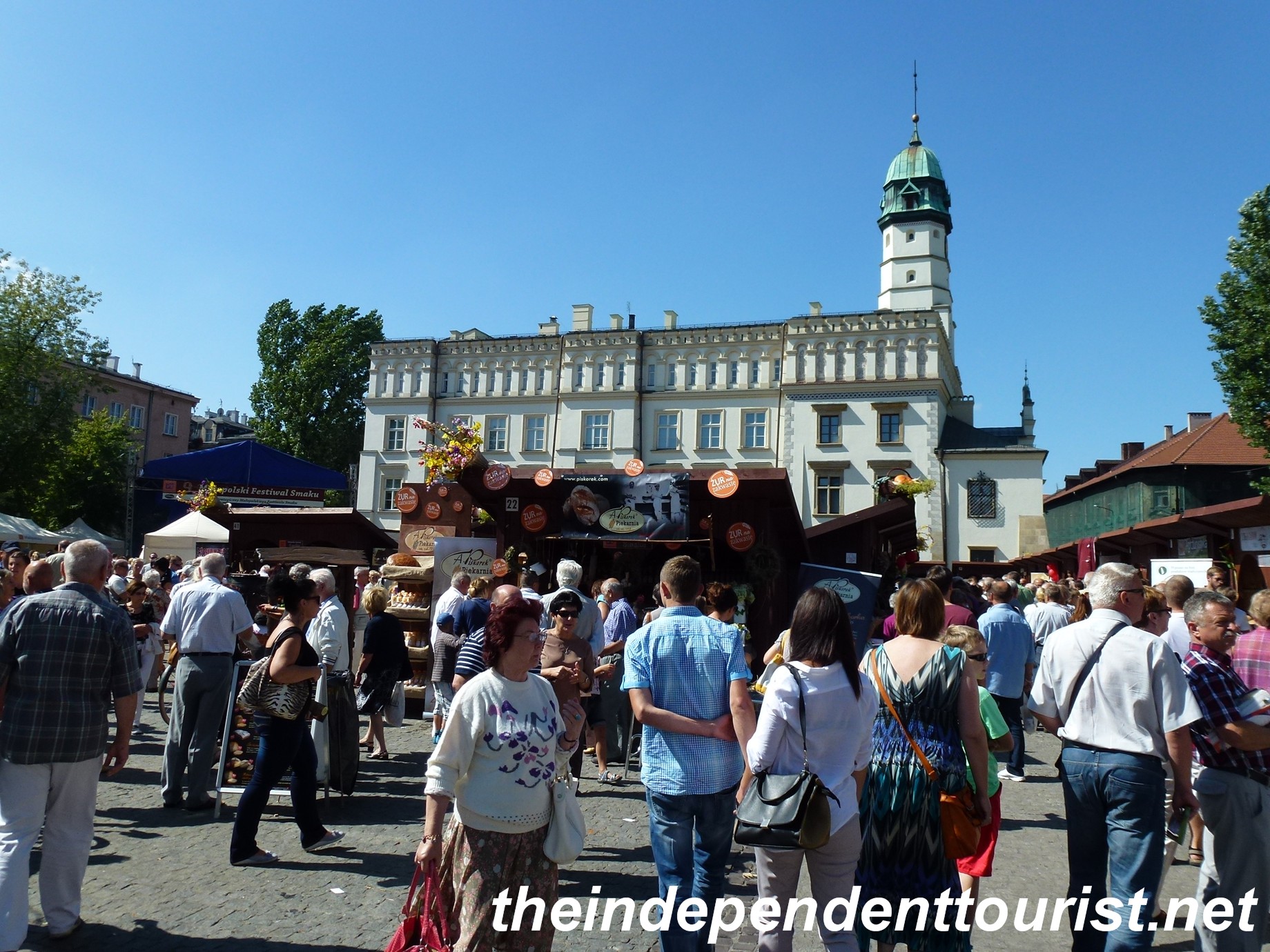
Rynek Główny (Square). This is the heart of old Kraków and is the largest medieval square in Europe. Its layout was drawn up in 1257. During our visit, there was a festival going on, with lots of music, dancing, and numerous food stalls – we found it hard to pass any of these up! Sausages, potatoes, breads, deserts and other Polish specialties were to be found everywhere.

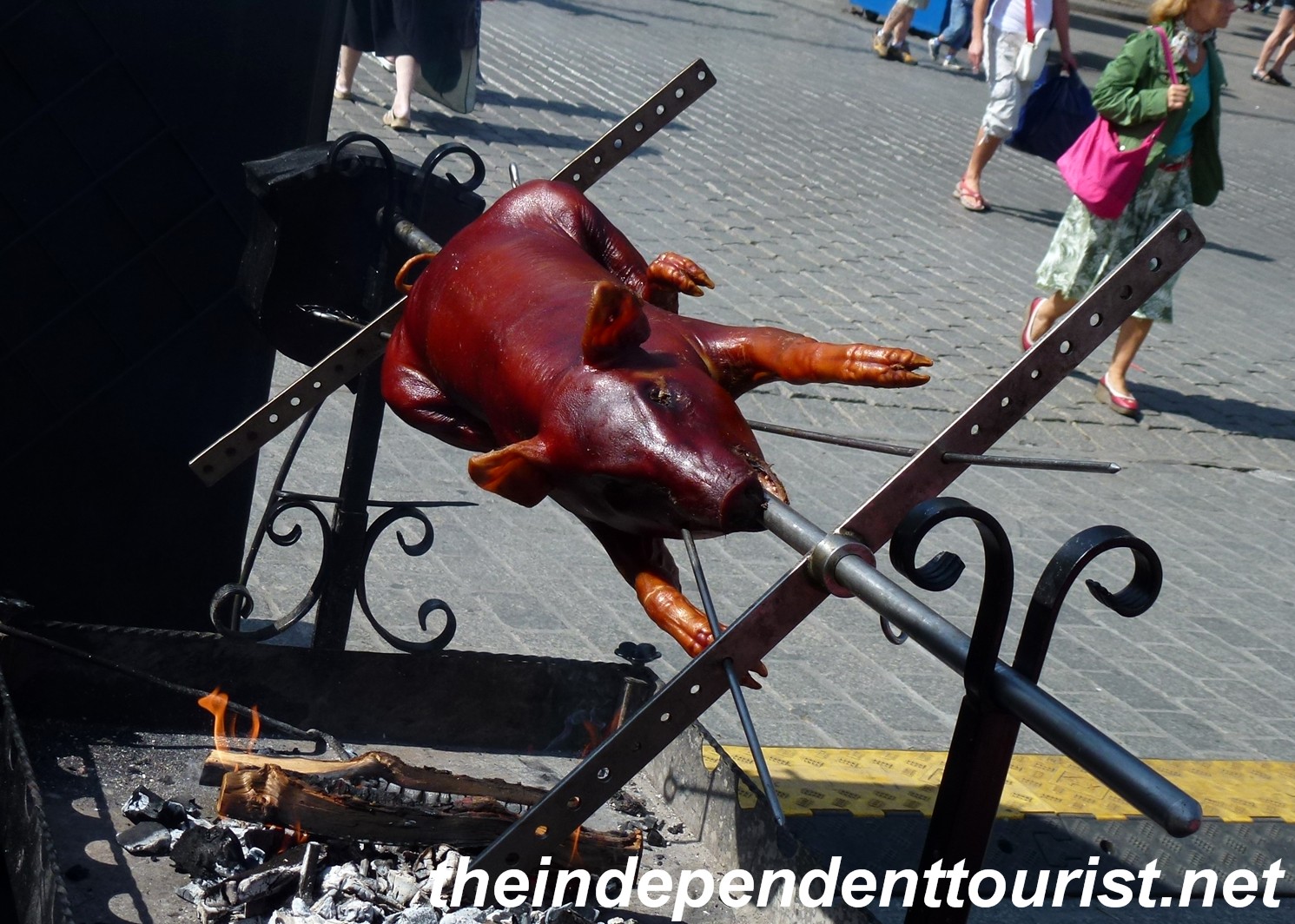
A roasting pig on Rynek Square.

A roasting pig on Rynek Square.

The tower on the left is the only remaining part of the 15th century Town Hall. On the right is the Cloth Hall, both are in the central part of Rynek Square.

The tower on the left is the only remaining part of the 15th century Town Hall. On the right is the Cloth Hall, both are in the central part of Rynek Square.

Also in Rynek Square is the Cloth Hall, which was the center of Kraków’s medieval clothing trade. There are numerous shops here (and a good place to get gelato), as well as the ticket office and entrance for the “Rynek Underground” exhibit, which provides an extensive view of excavated ruins underneath the Square, and exhibits of medieval life in Kraków.

A view of some of the medieval ruins in the extensive underground displays. Hard to get good photos, pretty dark down there.

A view of some of the medieval ruins in the extensive underground displays. Hard to get good photos, pretty dark down there.

Come to the Square at night for special atmosphere. There are lots of good restaurants around the Square.

Rynek Square at night.

Rynek Square at night.

St. Mary's Church with its uneven towers faces Rynek Square.

St. Mary’s Church with its uneven towers faces Rynek Square.

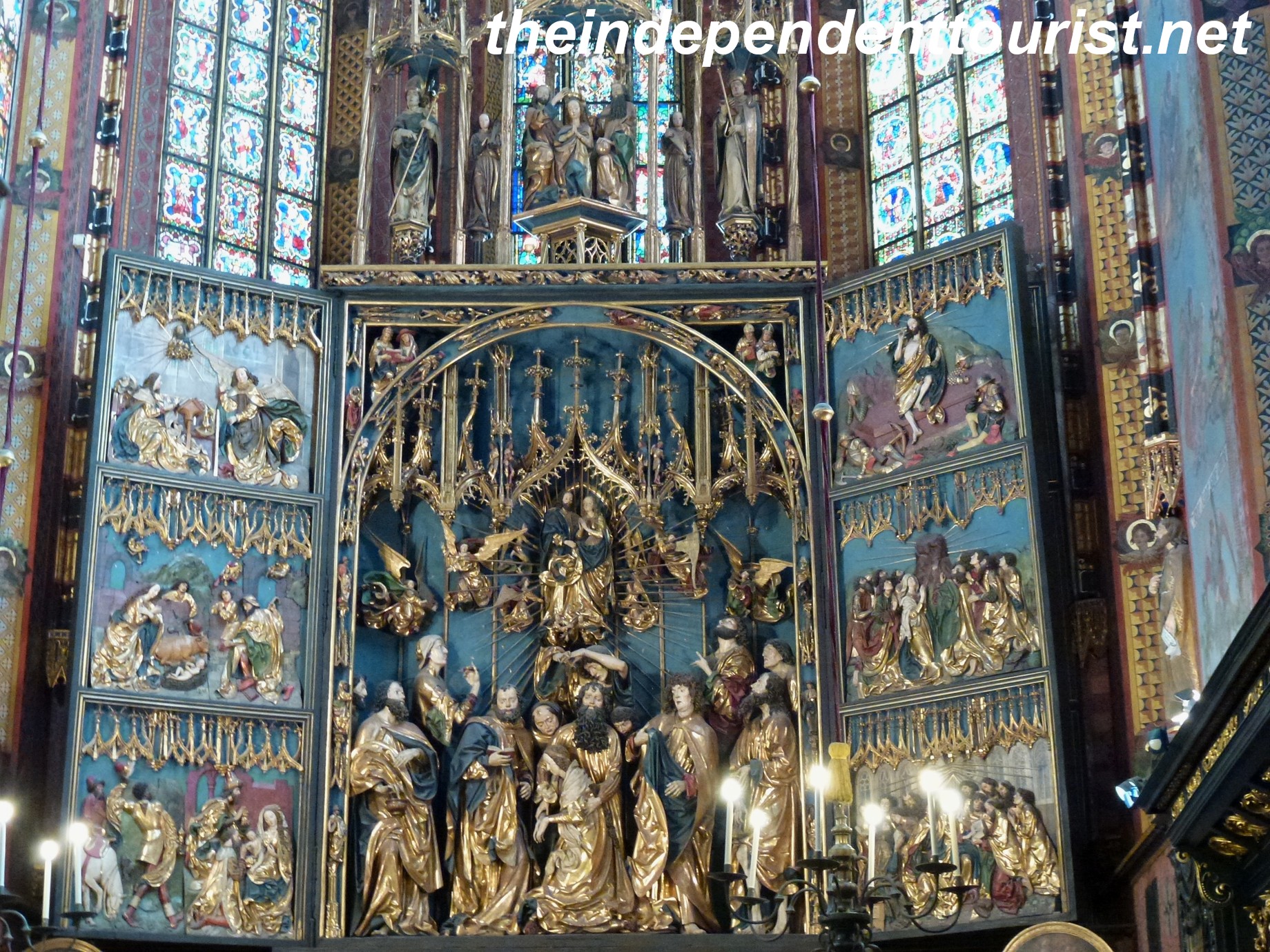
Rynek Square is also the location of St. Mary’s Church, one of the most beautiful churches in Poland (and Europe for that matter). It is home of the Veit Stoss wood-carved pentaptych (three panel) altarpiece which took 10 years to complete and was consecrated in 1489. It is magnificent, and is considered one of the most important pieces of medieval art of its kind.

The marvelous Veit Stoss pentaptych in St. Mary's Church, Krakow.

The marvelous Veit Stoss pentaptych in St. Mary’s Church, Krakow.

The pentaptych is only opened at certain times during the day, so check across the street (to the south of the visitor’s entrance) for times and tickets.

Another view in St. Mary's Church - it takes awhile to absorb all the artwork in this church.

Another view in St. Mary’s Church – it takes awhile to absorb all the artwork in this church.

Church of SS Peter & Paul. This is a Jesuit church dating back to 1583. It’s on the Royal Way from Rynek Square to Wawel Castle, and has statues of the 12 apostles on columns at the front gate.

Church of SS Peter & Paul. Note the statues of the 12 apostles in front.

Church of SS Peter & Paul. Note the statues of the 12 apostles in front.

We were able to attend a concert in the large open interior on a Sunday evening, with a talented ensemble playing a number of classical compositions, including Vivaldi, Chopin, Bach, Mozart, Handel and others. This was particularly delightful given the setting and acoustics of the church.

The musicians at our concert in the Church of SS Peter & Paul

The musicians at our concert in the Church of SS Peter & Paul

In future posts I will share some images of Wawel Castle and the Jewish Quarter, including Schindler’s Factory (recall the epic Steven Spielberg movie “Schindler’s List”).

Reference: Lonely Planet Travel Guide – Poland


Tallinn, Estonia – A Medieval Gem

If Tallinn were located in France or Germany it would be overrun with tourists. Since it’s on the Baltic coast of Estonia, most tourist traffic comes via cruise lines and only over the summer, which is how and when we visited in 2013. I love historical places and Tallinn is high on my list of great medieval towns. It’s also a UNESCO World Heritage Site.

A view of Old Town Tallinn (Toompea Hill) from St. Olav's Church (described below).

A view of Old Town Tallinn (Toompea Hill) from St. Olav’s Church (described below).

The city was founded in 1154, and the historic part of town hasn’t changed much in over the past 600 years. Old Town is about a 10-minute walk from the cruise ship pier and has a number of things to see (including one of the weirdest tourist sights I’ve visited).

The Old Town is walled with a number of towers, gates and narrow streets.

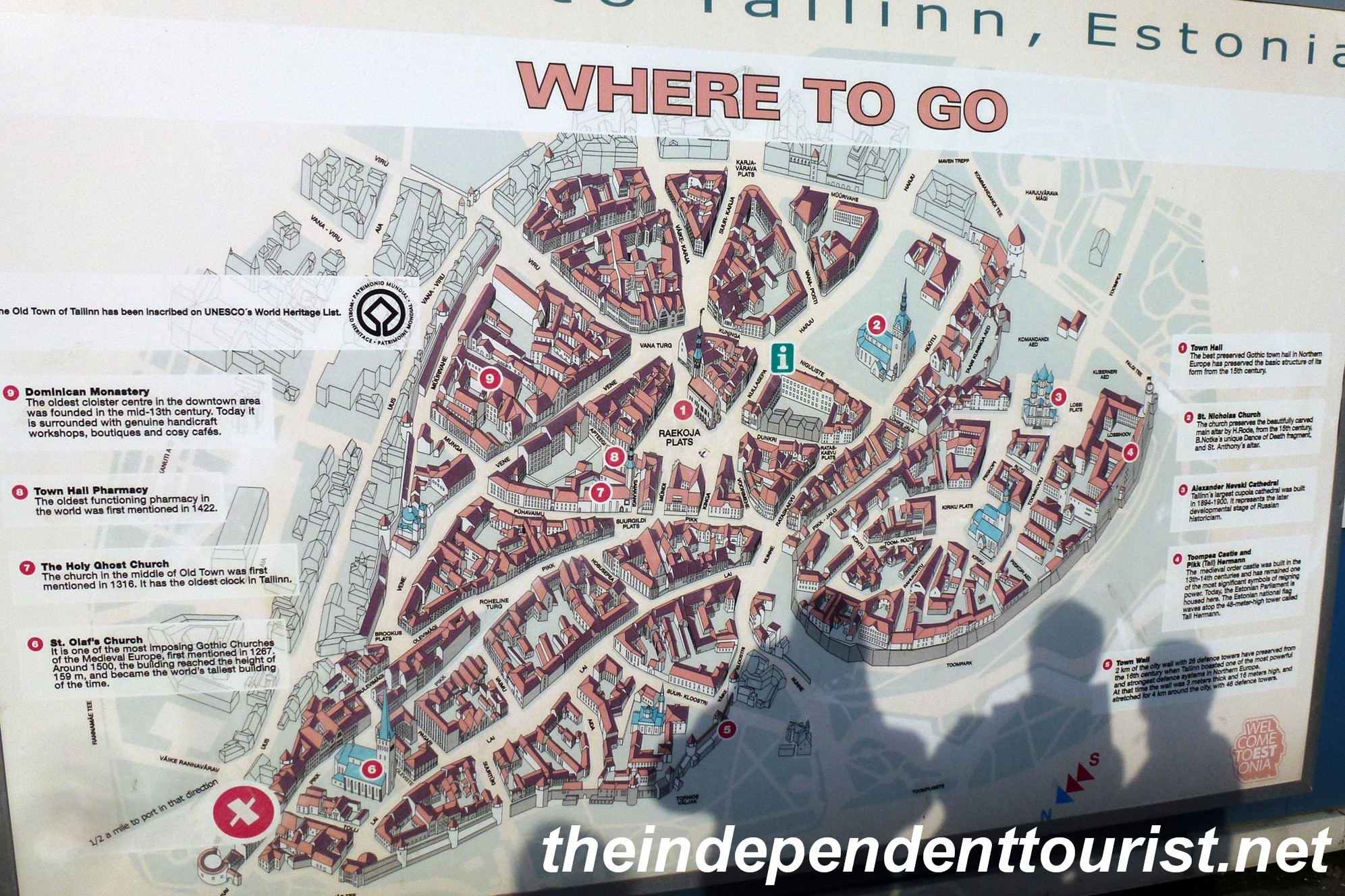
A large map of Tallinn Old Town greets cruise ship visitors.

A large map of Tallinn Old Town greets cruise ship visitors.

Here are a few of Tallinn’s interesting sites:

Toompea Hill. The “Upper Town” is the setting for Tallinn’s oldest church (St. Mary’s Cathedral), a Russian Orthodox Cathedral (Alexander Nevsky Cathedral) and Toompea Castle, which is the home of Estonia’s Parliament. The Hill provides great views of the Lower Old Town.

Exterior view of the Cathedral of St. Mary, Estonia's main Lutheran church. Originally built in 1233.

Exterior view of the Cathedral of St. Mary, Estonia’s main Lutheran church. Originally built in 1233.

The interior of the Cathedral of St. Mary.

The interior of the Cathedral of St. Mary.

The Alexander Nevsky Russian Orthodox Cathedral was built in 1900, and although it's not ancient, it has a number of beautiful mosaics and is a testament to Russian influence in this country.

The Alexander Nevsky Russian Orthodox Cathedral was built in 1900, and although it’s not ancient, it has a number of beautiful mosaics and is a testament to Russian influence in this country.

Town Hall and Square. The Town Hall as built in the early 1400’s and is the best preserved Gothic town hall in Northern Europe.

The Town Hall and Square. The center of Old Town Tallinn.

The Town Hall and Square. The center of Old Town Tallinn.

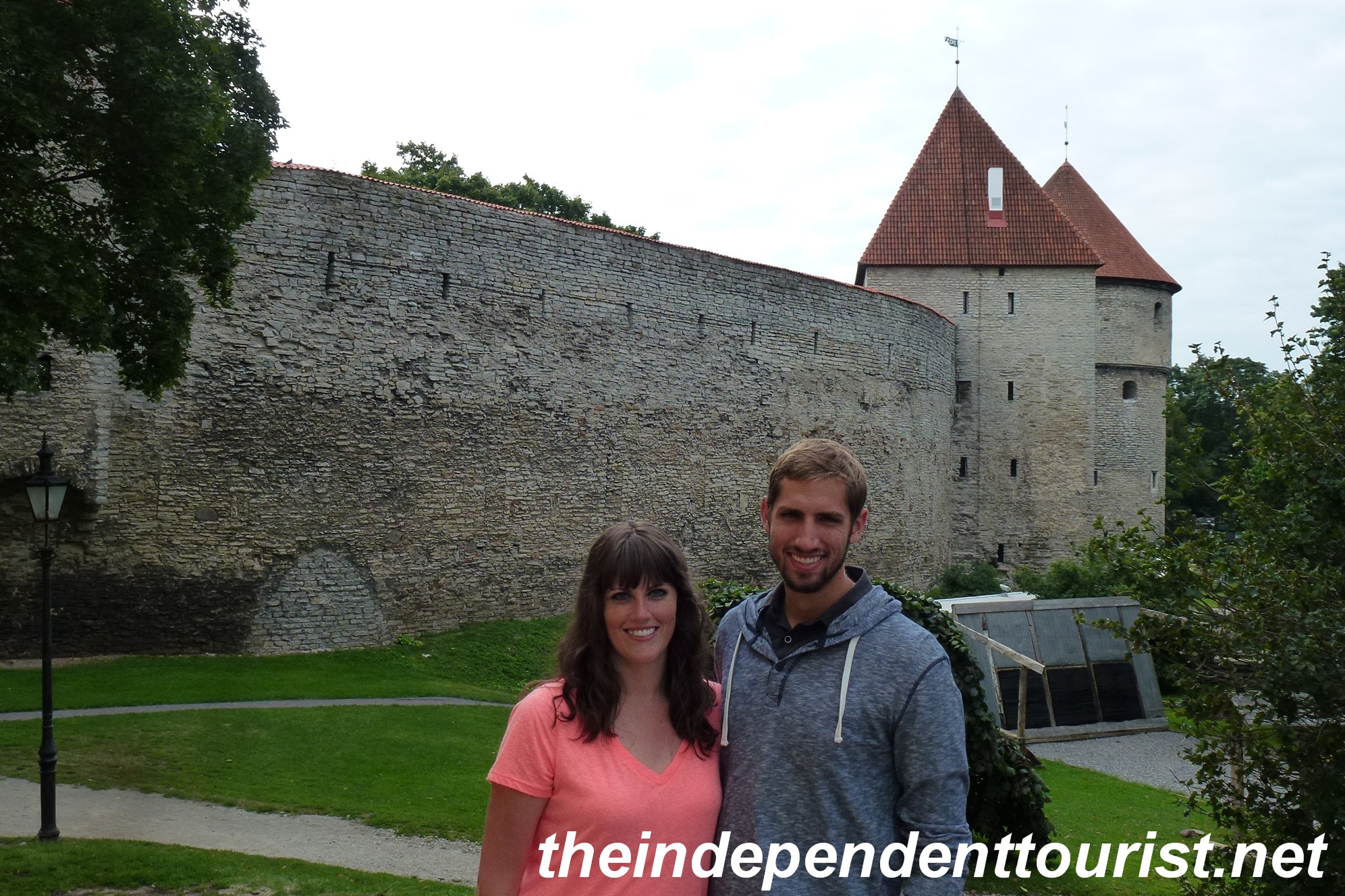
Old Town Walls and Towers. Two kilometers of the old walls are still standing. Just walking around these walls is a pleasure, and several towers are open as small museums, with underground passages that can be explored near Toompea Hill.

Fat Margaret (or Stout Margaret) Tower. This is the first sight most visitors see, the tower guards a main entrance into the Old Town and is now a Maritime museum.

Fat Margaret (or Stout Margaret) Tower. This is the first sight most visitors see, the tower guards a main entrance into the Old Town and is now a Maritime museum.


Part of the Old Town towers and walls, an area called Towers Square.

Part of the Old Town towers and walls, an area called Towers Square.

My daughter and son by another part of the walls. The walls are 4 meters wide in this area.

My daughter and son by another part of the walls. The walls are 4 meters wide in this area.

Old Town Streets. It’s worth just wandering the streets to see what you come across – there are many lovely shops and old buildings to wander around.

St. Catherine's Passage, one of Tallinn's most picturesque streets and home to St. Catherine's Guild, a collection of craft workshops housed in 15th -17th century rooms.

St. Catherine’s Passage, one of Tallinn’s most picturesque streets and home to St. Catherine’s Guild, a collection of craft workshops housed in 15th -17th century rooms.

Street scene in Old Town, Tallinn.

Street scene in Old Town, Tallinn.

The entrance to the House of the Brotherhood of the Black Heads, a guild of unmarried German merchants that had responsibility for the town's defenses in medieval times.

The entrance to the House of the Brotherhood of the Black Heads, a guild of unmarried German merchants that had responsibility for the town’s defenses in medieval times.

St. Olav’s Church. For about 75 years (1549 – 1625) this 14th century Gothic church was the tallest building in the world. You can climb the tower for great views of the Old Town and surrounding area. The spire is 124 m (406 ft) high.

View of Tallinn's walls and towers from Toompea Hill. St. Olav's Church has the tall spire on the right.

View of Tallinn’s walls and towers from Toompea Hill. St. Olav’s Church has the tall spire on the right.

St. Olav's Church - it's hard to get a good picture - such a tall building in a compact space.

St. Olav’s Church – it’s hard to get a good picture – such a tall building in a compact space.

Taking the stairs up the tower at St. Olav's Church.

Taking the stairs up the tower at St. Olav’s Church.

Patarei Prison. This fortress, which was turned into a prison in 1920, warrants its own blog post. It is about a 15-minute walk from the Old Town and inside it looks like the prisoners just walked out – bedding, books and all kinds of things were left behind. The prison was closed in 2002 and is now a museum (of sorts). More to come on this fascinating place!

My new cell at Paterei Prison!

My new cell at Paterei Prison!

Alexandria – One of the Great Cities of Ancient Times

Out of all the places I’ve visited in Egypt, Alexandria probably had the least to offer the tourist, and yet there was no way I was going to pass up an opportunity to go there, given its illustrious history. I’ve read that “Alexandria is the greatest historical city with the least to show” and that seems to be true, unfortunately. For a map of places visited in Egypt, click here, scroll to bottom of page.

A typical street scene in Alexandria. Very non-touristy!

A typical street scene in Alexandria. Very non-touristy!

Buying some fruit from a local Egyptian vendor.

Buying some fruit from a local Egyptian vendor.

Alexandria was the home of Queen Cleopatra and the city rivaled Rome in beauty. It was the center of scientific learning with a world-renown library (700,000 volumes). It also had a huge lighthouse (called Pharos) that was a wonder of the ancient world (394 feet high) and was in working order for 1,700 years (until an earthquake toppled it in 1303).

Alexandria was founded by Alexander the Great (in 331 BC) and was one of the greatest cities of antiquity. Alexander is buried here, but the exact location of his tomb is not known. The city of Cleopatra’s time is now largely under water and about 18 ft. below street level. Every so often there are major finds, such as the Roman catacombs discovered in 1900 when a donkey disappeared through the ground.

Here are a few things to see in Alexandria:

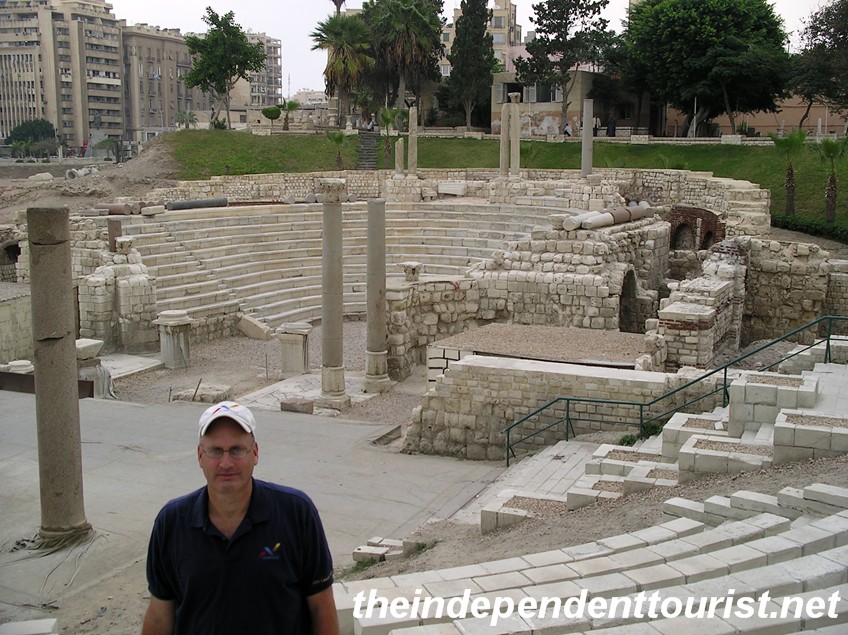
Roman Amphitheater (Kom Al-Dikka). This is the only Roman Amphitheater in Egypt. It is well preserved and if you stand in the right spot on the center stage, the acoustics allow you to hear your voice being amplified around the theater. There are more excavations going on in this area.

The Roman Amphitheater in Alexandria.

The Roman Amphitheater in Alexandria.

Pompey’s Pillar and Serapeum. This area contains several above-ground ruins and underground chambers. The Pillar was erected in AD 291 to support a statue of the Emperor Diocletian and is still standing in its original spot. The pillar takes its name from the Roman general Pompey who was murdered by Cleopatra’s brother (although he has nothing to do with the pillar). The Serapeum was a large temple complex which also had a huge library. The underground chambers show the foundation and library remains.

Pompey's Pillar and the surrounding ruins of the Serapeum.

Pompey’s Pillar and the surrounding ruins of the Serapeum.

Roman Catacombs (Kom Ash-Shuqqafa). Close to Pompey’s Pillar are the Roman catacombs, which is probably the most fascinating historical site in Alexandria. Unfortunately, I could not take pictures in the catacombs (except for one quick shot below). There are three underground levels, the lowest of which is flooded, but the other two levels are open and can be visited with a guide—even the 2nd level has some water on the floor, which you avoid by walking on planks. You descend via a staircase and enter a large rotunda with numerous rooms branching off in every direction. The catacombs were constructed in the 2nd century AD and eventually housed the remains of 300 people. Before visiting, be sure to check opening hours and days of the week.

An ancient sarcophagus at the entrance to the Roman catacombs.

An ancient sarcophagus at the entrance to the Roman catacombs.

One sneaky photo in the Roman catacombs.

One sneaky photo in the Roman catacombs.

The Al-Corniche. Alexandria is a long narrow city built along the Mediterranean shoreline. The Corniche is a popular socializing spot for locals, especially after dark, with street vendors selling all kinds of snacks and young couples strolling hand in hand enjoying the fresh breeze.

The Corniche in Alexandria.

The Corniche in Alexandria.

From the Corniche you can glimpse Fort Qaitbey, which was built in 1480 on the remains of the ancient Pharos lighthouse. The fort is open to the public but our short visit (just one full day) did not afford us time to go out and see it.

Reference Source: Lonely Planet Egypt

Fort Qaitbey is in the far distance at the right edge of the picture.

Fort Qaitbey is in the far distance at the right edge of the picture.

Częstochowa – Poland’s Spiritual Center

Between 4 and 5 million visitors from 80 countries visit this town each year. They come to visit the Monastery of Jasna Góra, and specifically to see the 14th century Black Madonna painting which according to legend was painted by St. Luke the Evangelist (author of the Gospel of Luke in the New Testament). It is credited with many miracles, such as the story of a looter who in 1430 attacked the painting with his sword two times but fell in pain and died before he could strike it a third time (the marks from his attack are visible).

Entrance to the Jasna Góra Monastery, on the south side of the complex.

Entrance to the Jasna Góra Monastery, on the south side of the complex.

The Black Madonna painting. It's apparently black from centuries of soot. No one really knows for sure of its origin, but it is credited with saving the town during the Swedish aggression in the 1600's.

The Black Madonna painting. It’s apparently black from centuries of soot. No one really knows for sure of its origin, but it is credited with saving the town during the Swedish aggression in the 1600’s.

This shrine is one of the great pilgrimage spots in the world, and famous visitors have included Pope John Paul II and Pope Benedict XVI. Many pilgrims arrive on foot after journeys of as long as 20 days. The painting is in the 14th century Chapel of Our Lady and may be viewed during the day except from 12:00 – 1:30 pm and after 9:20 pm when it is covered.

The 14th century Chapel of Our Lady at Jasna  Góra Monastery (the Black Madonna is at the lower center of the image, behind the gate).

The 14th century Chapel of Our Lady at Jasna Góra Monastery (the Black Madonna is at the lower center of the image, behind the gate).

In addition to the Chapel of Our Lady, be sure to visit the Basilica which dates from the 17th century and has many Baroque features—it reminded me of monasteries in Germany and Austria (such as Melk Abbey).

The Baroque Basilica at the Jasna  Góra Monastery.

The Baroque Basilica at the Jasna Góra Monastery.

The organ pipes in the Basilica of Jasna  Góra.

The organ pipes in the Basilica of Jasna Góra.

Other attractions include several museums, a treasury and the Bell Tower, Poland’s tallest historic church tower at 106 meters (348 feet), which can be climbed.

The asymmetrical architecture inside the Monastery, a bit like Wawel Cathedral in Kraków.

The asymmetrical architecture inside the Monastery, a bit like Wawel Cathedral in Kraków.

Częstochowa makes a great overnight stop from Toruń to Krakow. The main street (a long Polish name which is abbreviated to NMP) running directly east from the Monastery and adjacent Park Staszica has a number of good restaurants and hotels.

The Jasna Góra Monastery at sunset - it sits on a hill overlooking the town of Częstochowa. The Bell Tower is 106 m high.

The Jasna Góra Monastery at sunset – it sits on a hill overlooking the town of Częstochowa. The Bell Tower is 106 m high.

We arrived in the late afternoon and visited the Monastery at sunset, which was perfect. There was an outdoor service going on during our visit, which added to the atmosphere of the setting.

Climbing Mt. Sinai – An Unforgettable Experience

One of our most memorable experiences in Egypt was visiting St. Katherine’s Monastery and climbing to the summit of Mt. Sinai. It’s about a two and a half-hour drive through the unforgiving interior desert landscape from the resort of Na’ama Bay to St. Katherine’s Monastery, where the hike begins to Mt. Sinai.

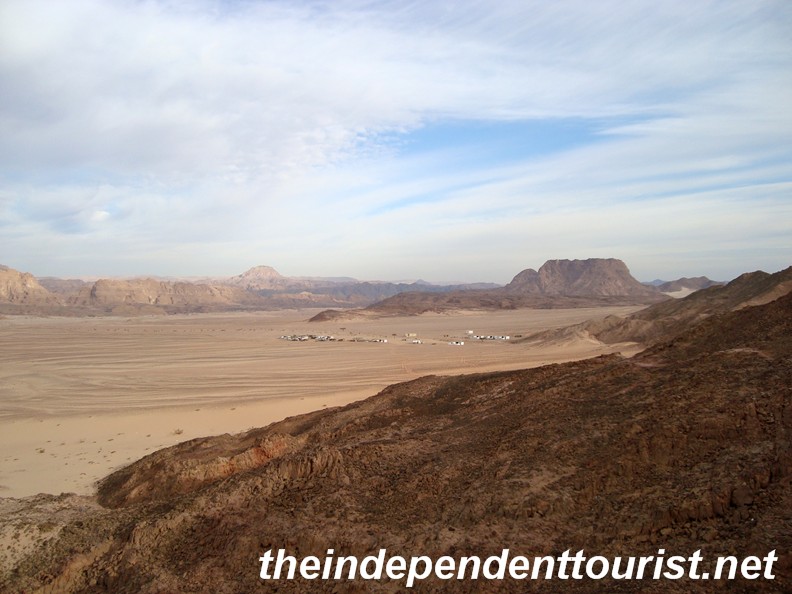
A view of the Sinai peninsula landscape on the way to Mt. Sinai.

A view of the Sinai peninsula landscape on the way to Mt. Sinai.

St. Katherine’s Monastery

This area has been a pilgrimage site for centuries and is holy ground to three religions: Christians, Muslims, and Jews. According to the Old Testament, this is the place of numerous revelations by God (including the Ten Commandments) to the prophet Moses. The Israelites camped in this area for some time after miraculously escaping from the Egyptian armies by crossing the Red Sea on dry land.

The Bell Tower at St. Katherine's Monastery. It houses 9 bells donated by Tsar Alexander II from Russia.

The Bell Tower at St. Katherine’s Monastery. It houses 9 bells donated by Tsar Alexander II from Russia.

Considered one of the oldest continually functioning monastic communities in the world, much of the compact monastery is off limits to tourists, but it is still worth a visit and is the spot where all tourists begin their hike up Mt. Sinai.

A view of the Monastery walls and some local camels.

A view of the Monastery walls and some local camels.

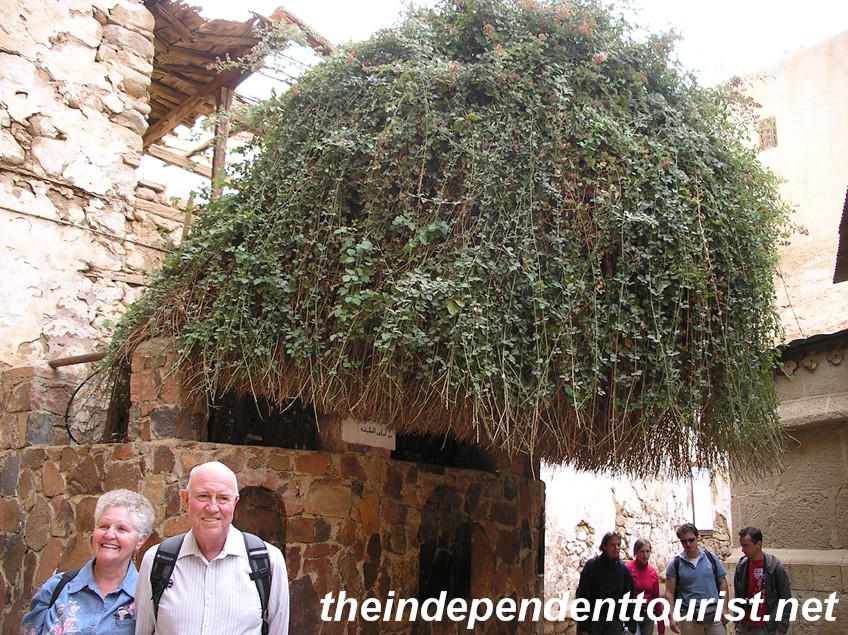
The 20 or so monks living here are Greek Orthodox and the first church was built here in about 337 AD, commemorating the spot where God spoke to Moses in the form of a burning bush. Interestingly, a descendant of an evergreen bush which grows nowhere else in the Sinai is found here.

This evergreen is believed to be a descendant of the burning bush. Transplanted here in the 10th century from the nearby chapel of the same name.

This evergreen is believed to be a descendant of the burning bush. Transplanted here in the 10th century from the nearby chapel of the same name.

The Byzantine Emperor Justinian fortified the location and built the main Basilica of the Transfiguration in 527 AD on the grounds of the original church which became the origin of the monastery.

Mt. Sinai

There are two ways to climb the Mount (altitude: 2,285 meters or 7,500 ft). There is the “camel path” which is wider and more “gently” sloping, or taking what is called the “Steps of Repentance” route– a very steep climb of 3,750 steps (hard on the knees) which was built by a monk doing penance—what a price to pay! We took the camel path, and it joins the “Steps of Repentance” path 750 steps below the summit.

On the trail with Mount Sinai behind me - about halfway up.

On the trail with Mount Sinai behind me – about halfway up.

Going through a narrow gorge. Getting ready for the final ascent.

Going through a narrow gorge. Getting ready for the final ascent.

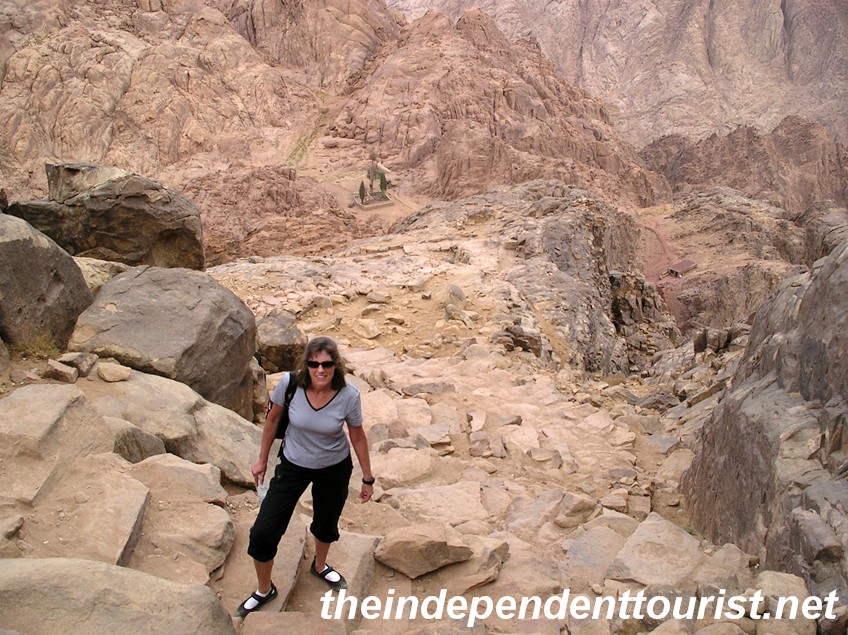
Hiking up the last 750 steps to the summit. In the distance below is Elijah's basin. The cypress tree is thought to be 1,000 years old. Those who traveled with Moses up the mountain waited here while he ascended to the summit to speak with God.

Hiking up the last 750 steps to the summit. In the distance below is Elijah’s basin. The cypress tree is thought to be 1,000 years old. Those who traveled with Moses up the mountain waited here while he ascended to the summit to speak with God.

You can take a camel up the path but we decided to hike it, and even at a good pace it took us about 2 hours to reach the summit from the Monastery. This is not an easy hike, and several members of our group ended up not making it to the top.

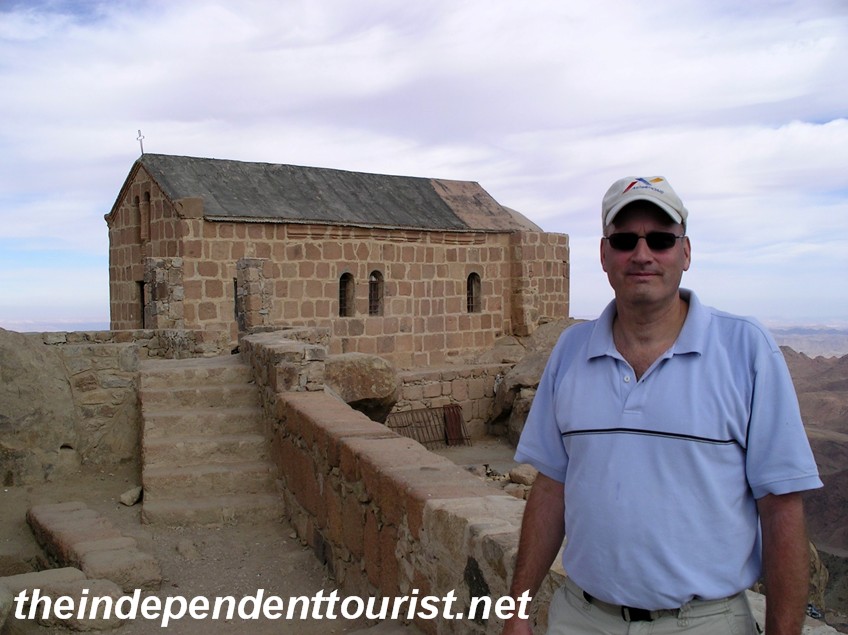
The Chapel of the Holy Trinity at the summit of Mt. Sinai.

The Chapel of the Holy Trinity at the summit of Mt. Sinai.

A magnificent view from the top of Mt. Sinai.

A magnificent view from the top of Mt. Sinai.

A lot of tourists leave at around 3 am to reach the summit for the sunrise. We were not that ambitious and arrived at the summit around noon. My wife and I had the top of this sacred mountain to ourselves at that time of day. The views are incredible and although the landscape is harsh (reminding me a bit of Death Valley), it was thrilling to be on the Mount which holds so much historical and religious significance to many people.

References: Lonely Planet Egypt, DK Eyewitness Travel Egypt.

Toruń – Poland’s Best Preserved Medieval City

About 106 miles (or 170 km) south of Gdansk is the medieval city of Toruń. It has been well preserved over the centuries and fortunately was not damaged in World War II. Toruń is the birthplace of Nicolaus Copernicus (1473 – 1543), the great mathematician and astronomer who placed the sun (rather than the earth) at the center of our solar system. His home is here along with his statue in the main square.

Nicolaus Copernicus' house in the center of Toruń.

Nicolaus Copernicus’ house in the center of Toruń.

Statue of Copernicus and the Town Hall tower, which you can climb for great views.

Statue of Copernicus and the Town Hall tower, which you can climb for great views.

There is a lot to see in Toruń, including some lovely medieval churches, the town square, the city walls and other historic buildings. The Town Hall is now a Regional Museum that includes other sites around Toruń. Be sure to climb the tower of the Town Hall to get a great view of the old town and surrounding countryside.

A view of Toruń, looking northeast along the Vistula river, from the Town Hall Tower.

A view of Toruń, looking northeast along the Vistula river, from the Town Hall Tower.

A view from the Toruń Town Hall Tower - The huge, late 13th century St. Mary's Church is on the right.

A view from the Toruń Town Hall Tower – The huge, late 13th century St. Mary’s Church is on the right.

The interior of St. Mary's Church. There are some well-preserved frescoes on some of the walls.

The interior of St. Mary’s Church. There are some well-preserved frescoes on some of the walls.

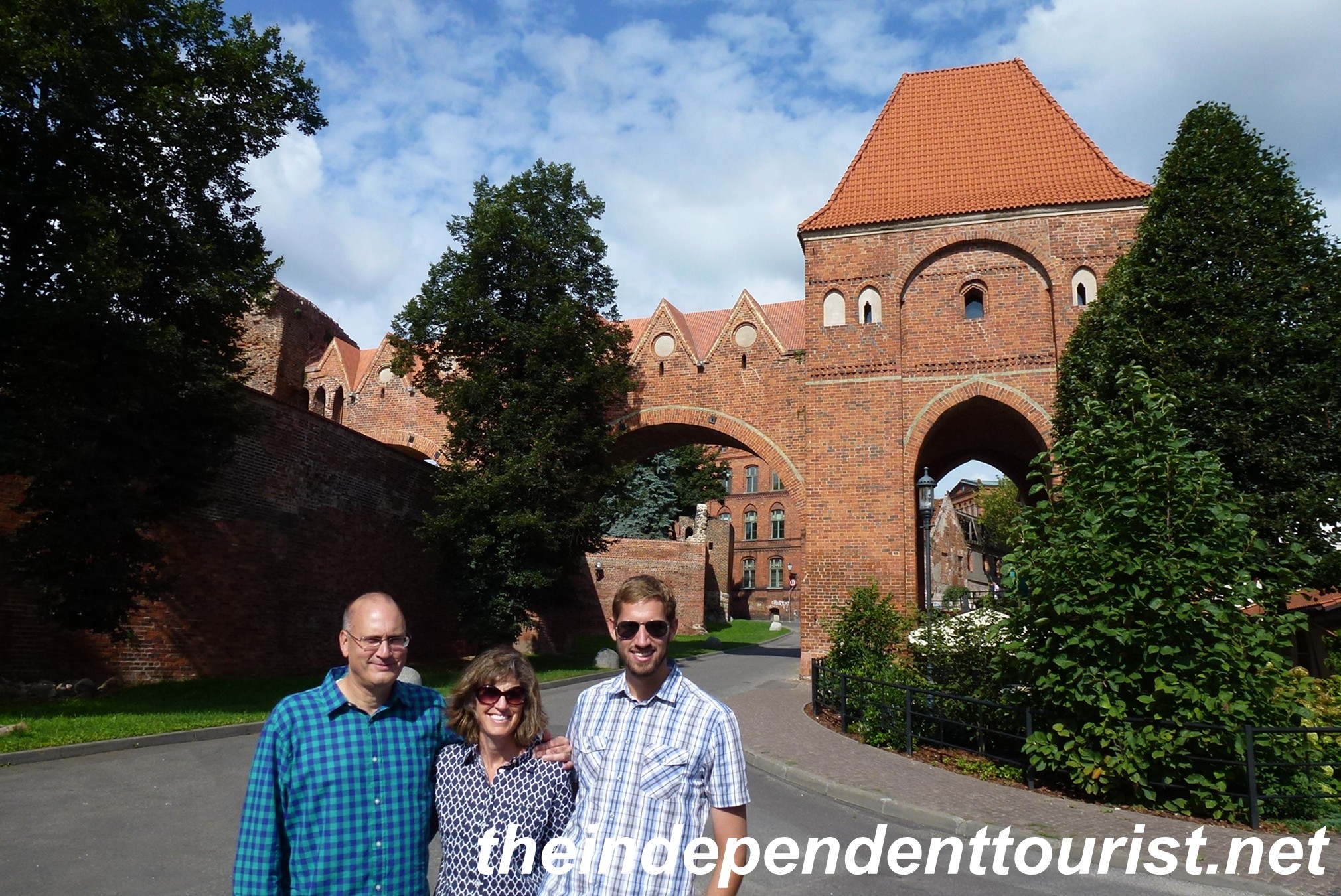
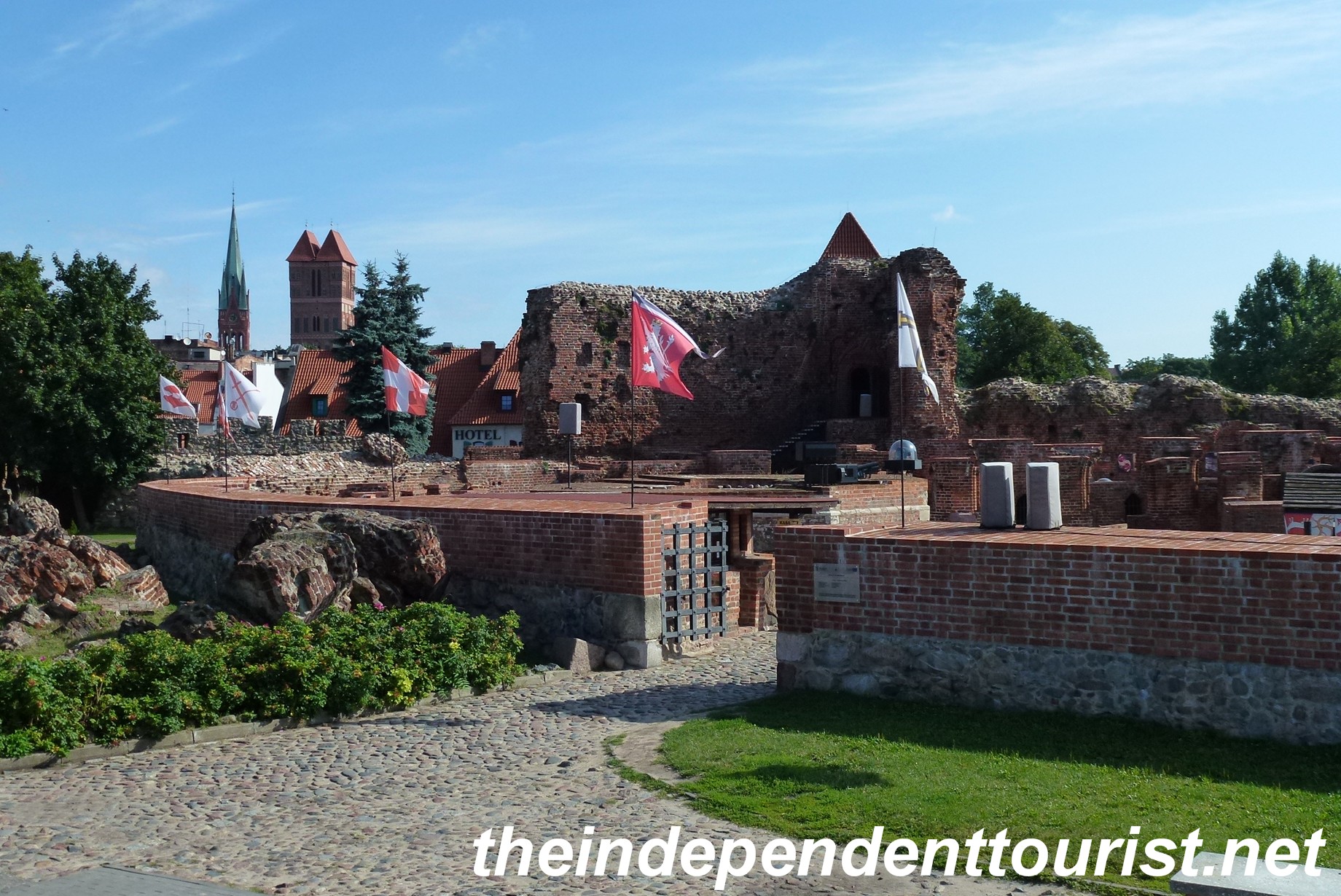
The ruins of the Teutonic Castle (from the early 1200’s) are limited; it was destroyed by the townsfolk in 1454 as part of a rebellion of the Teutonic rule—they did a good job!

The ruins of the Teutonic Knights' castle in Toruń.

The ruins of the Teutonic Knights’ castle in Toruń.

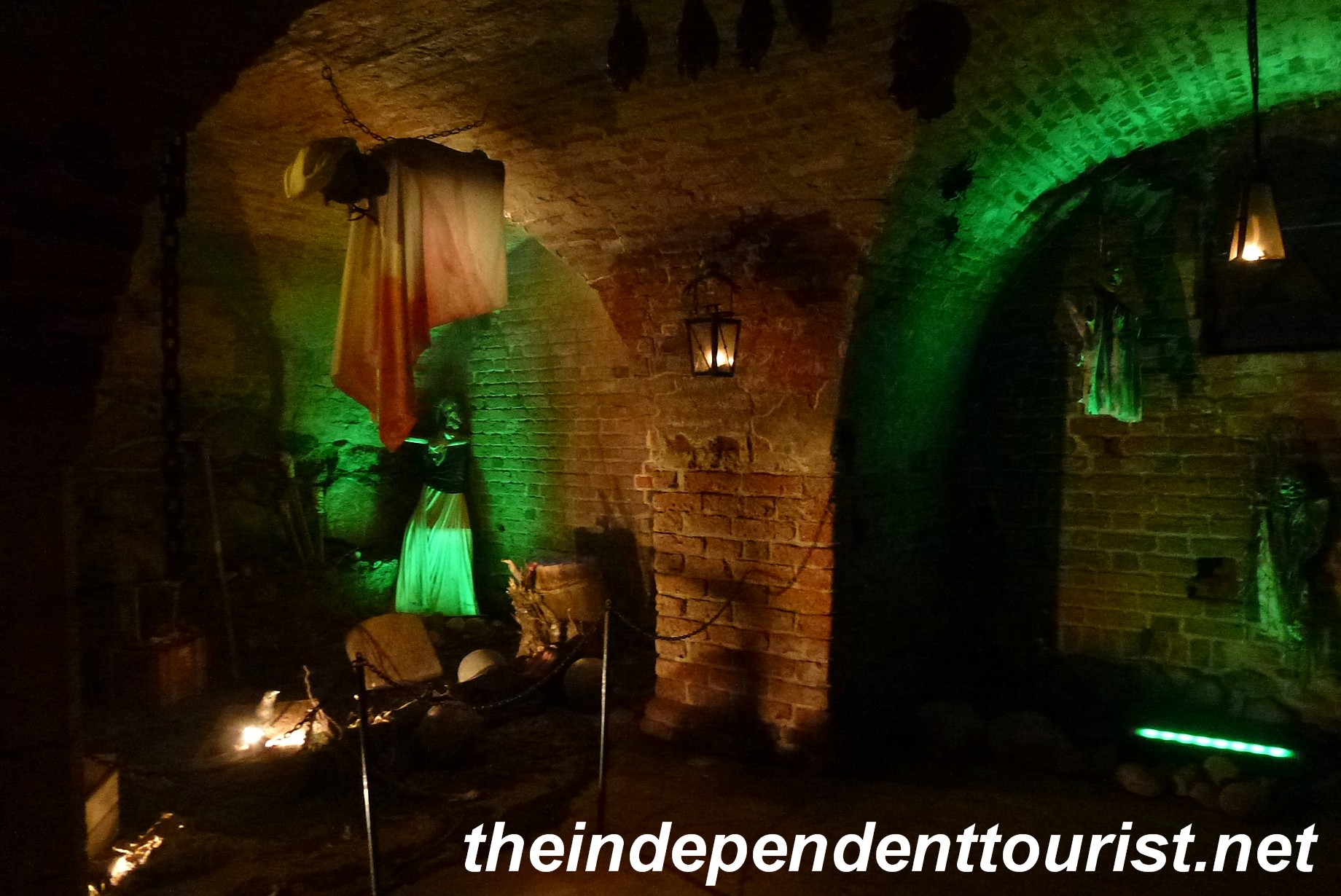
Some scary displays in the dungeon of the Knights' castle in Toruń.

Some scary displays in the dungeon of the Knights’ castle in Toruń.

However, there is a good display in the cellar/dungeon of the castle and a number of signs around the castle grounds explaining its history and features. The Latrine Tower and connecting bridge are well preserved.

The Latrine Tower of the Teutonic Castle in Toruń.

The Latrine Tower of the Teutonic Castle in Toruń.

We found that parking a car is nearly impossible in the old town, so we found a great car park right outside the city walls near a bridge over the Vistula River that was within walking distance of our apartment.

Toruń's city walls and the 15th century Burghers Hall, which was the home of the Brotherhood of St. George, whose membership comprised the elite of Toruń.

Toruń’s city walls and the 15th century Burghers Hall, which was the home of the Brotherhood of St. George, whose membership comprised the elite of Toruń.

We had a lovely stay in the old town at a place called Apartamenty Anielskie. Toruń is definitely worth an overnight stop. Take a walk along the east (river) side of the town to get some great views of the old city walls and gates.

The Leaning Tower, an interesting part of the city walls of Toruń. It started to lean because of the soft ground - about 5 degrees so far, but still standing!

The Leaning Tower, an interesting part of the city walls of Toruń. It started to lean because of the soft ground – about 5 degrees so far, but still standing!