Author: Paul Terry

I love to travel. I've been fortunate to visit about 75 countries so far. I prefer to travel independently to get off the beaten path a bit. I also try to find good deals to make my travels more affordable.

Ireland Day 1: Newgrange, Trim Castle and Bunratty Castle

After arriving in Dublin the prior evening and staying in a B&B close to the airport, we drove north to  Newgrange (about 55 km, near the town of Drogheda) and then southwest to the town of Trim, home of Trim Castle (another 45 km).  Finally, we drove all the way down to Limerick (about 233 km), visiting nearby Bunratty Castle in the late afternoon, and then spent the night in the Limerick area.

Newgrange. This unique burial ground dates from 3200 BC and much of it is intact, having escaped invaders over the centuries until it was discovered in 1699. Excavations took place in the 1960’s. This burial site is 500 years older than the pyramids of Giza, Egypt. It’s hard to get good pictures here, since access is tightly controlled and no pictures are allowed inside. The site consists of an entrance into the mound and a 62 foot long passageway to a small circular burial chamber, with a corbelled stone roof that has kept the chamber dry for 5,000 years. There is a small opening over the entrance door that is aligned such that on Dec. 21st (winter solstice) natural sunlight illuminates the long passageway and all the way into the chamber for 17 minutes—the world’s oldest solar observatory.  Many of the interior stones lining the passageway are decorated with geometric and circular patterns. Since we visited in March, we had no problem gaining access to the tomb (the only way to visit is with a tour guide from the Visitor’s Center), but I understand during the summer the lines can be long, so plan accordingly. There is a shuttle bus from the Visitor’s Center up to the site.  Newgrange is part of the Heritage Ireland system.

The Newgrange burial mound, entrance is on the right side. 3200 BC.

The entrance to Newgrange burial tomb. Note the small opening above the doorway where the sunlight of the winter solstice lights the passageway and tomb. Also, the horizontal stone in front is decorated with ancient geometric designs

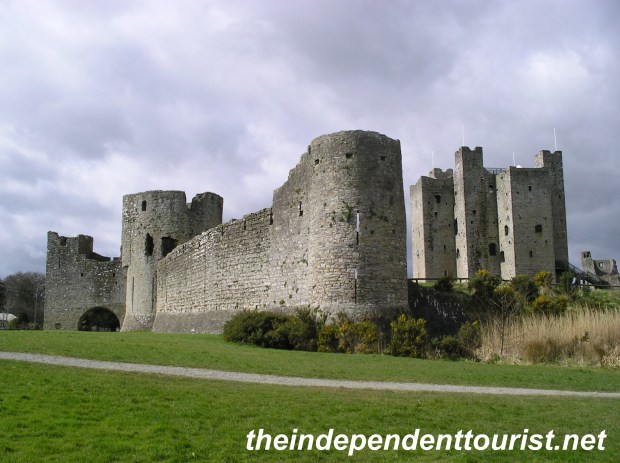
Trim Castle.  One of my favorite historical movies is Braveheart, about William Wallace (played by Mel Gibson), the Scottish patriot who fought for Scottish independence against King Edward I in the 1200’s. The castle was used in the movie as a setting for York, England. It was built in the 12thcentury and is the largest Norman castle in Ireland, meant to keep the Irish at bay after the Norman conquest of the British Isles. The tower keep is 70 feet high and has 20 sides, which provided defensive views in every direction.  The castle is set next to the River Boyne, and across the river part of the original town wall also remains. The only way to visit the inside of the Keep is by guided tour, which is twice per hour.  Having been in many castle keeps, we did not take this tour, and just wandered around the castle grounds. Trim Castle is also part of the Heritage Ireland system.

A view of the old city gate and Trim Castle in the distance

A view of Trim Castle from across the River Boyne

The huge walls defending Trim Castle

Bunratty Castle.  Rick Steves (travel book author) says to bypass this castle and adjacent Folk Park. Although this site is a bit touristy, I think it’s worth the visit. The castle was built in the 1400’s and the interior has been restored to the era of the early 1600’s. It’s privately owned (not part of Heritage Ireland). We did tour the interior, which has some unusual chandeliers. Medieval dinners and show are held in the castle, which we debated attending that evening.  However, the cost at the time was about $100/person, and $300 for the 3 of us seemed a bit steep, so we passed up the opportunity. There is also a Folk Park next door to the castle, showing rural life in Ireland at the end of the 19thcentury. You can wander into the shops and houses to get a feel for life during that era.

Bunratty Castle (near Limerick)

References: DK Eyewitness Travel Ireland 2006, Rick Steve’s Ireland 2007.

Eight Day Tour of Ireland

Franciscan Friary near Ardfert. There are many medieval church ruins throughout Ireland.

I suggest considering Ireland as an alternative to the more popular (and crowded) tourist magnet of England. It has just about everything for the European tourist: natural beauty, well-preserved ancient forts and castles, friendly people, hearty food and good infrastructure. We visited Ireland in the month of March, during Spring Break, since it was our son’s high school “graduation trip.” March was a good time to visit, with few tourists and cool but reasonable weather; although the downside is that some sites are not open. We decided to concentrate on southern Ireland. With my love of history, we focused on historical sites and some of the natural beauty of this country.  In future posts, I will provide more detail about our tour locations.

Our tour of Ireland

Our self-guided tour was counter-clockwise from Dublin and covered a lot of ground in 8 days: We flew into Dublin and drove north to Newgrange (prehistoric site from 3200 BC), on to Trim Castle (used in Braveheart), then to Limerick (Bunratty Castle), Dingle Peninsula, Ring of Kerry, Kinsale (close to Cork and Blarney Castle), Waterford (think crystal), Cashel, Kilkenny, Glendalough and finally back to Dublin.

Don’t miss the following:

Killarney and Ring of Kerry.  A classy town and beautiful setting next to high peaks and the Lakes of Killarney. Killarney is the gateway to the Ring of Kerry, which is loaded with historical spots and natural beauty. The western end of the Ring is the jump off point to Skellig Michael, an island monastery dating to 600 AD. I would have killed to get out there, but boats do not go out to the island until after Easter, and even then only when the seas are calm enough to do so.

Coastline of Ring of Kerry

Dingle Peninsula. Some of the bluest water I have seen anywhere was along the coast of this Peninsula just north of the Ring of Kerry.

Blarney Castle.While it is too touristy for my tastes, this is a great castle. I refused to kiss the Blarney Stone (at the top of the castle keep), but if you want the “gift of gab” go for it.

The world famous Blarney Castle

Rock of Cashel.This is one of the great medieval sights in the world, bar none. Home to the kings of Ireland for centuries, it sits on a rock outcropping above the town of Cashel in stunning fashion.

The stunning Rock of Cashel

Glendalough. I love the combination of history and natural beauty. A pristine setting for the monastery among the valleys and lakes, south of Dublin.

The Book of Kells, at Trinity College in Dublin. This richly illustrated book of the Four Gospels was written by monks in 800 AD and is now preserved in this historic university in Dublin.

Some tips for visiting Ireland:

Get a Heritage Ireland Card.  Like English Heritage, this card allows access to many historical sites for one fee. Cards can be purchased at your first site. Visit www.heritageireland.ie for more information.

Cost. Some people are surprised to find out that the Republic of Ireland is on the Euro. It is NOT part of Great Britain (as compared with Northern Ireland). Prices are pretty high in Ireland, although I think the UK is more expensive. Expect to pay about €35 per person for B&B’s. The upside is that Ireland is less visited than Great Britain.

Accommodations. Hotels are few except in the larger cities, and for the most part, Bed & Breakfasts are the norm. We did stay in a couple Travelodge hotels (Waterford and Dublin Airport) with decent, relatively inexpensive rooms. We enjoyed the places we stayed and found the proprietors very welcoming and helpful. Pick a location to work out of for a few days and then move to the next location. Ireland is small, and it’s easy to get many places from one central location.

Our B&B in Kenmare

Transportation. Unless you are part of a tour group, car is the main mode of transportation (driving is the same as the UK, left side of the road). Roads are in good condition, but most country roads are very narrow. There are very few “highways” as we think of them in the U.S.  Trains are possible, but only serve major towns and routes.

Weather. With very few mountains to block weather from the Atlantic, we experienced waves of clouds and showers followed by periods of sunshine.  Expect every type of weather.  We took light rain jackets and rain pants and were glad we did. Umbrellas are almost useless, given the sideways rain showers.

Battle, England—Where the Course of History Changed Forever

About 60 miles southwest of London is the town of Battle, the site of the famous “Battle of Hastings” that changed the course of history for England (and the western world). The battle takes its name from the coastal town of Hastings which is less than 10 miles away. It was here that William the Conqueror from Normandy (France) defeated Saxon King Harold on October 14, 1066. This monumental event began the long and bloody intertwined royal history between England and France. The battle raged all day, and King Harold’s army fought valiantly (after no rest from a long journey from the north of the country), but by the end of the day King Harold was dead and his army vanquished.

The battlefield of 1066 - The English were in the same location as where the picture was taken and the French were in the distance on the opposite hillside.

There was no town here in William’s day.  The famous Benedictine Abbey of Battle was built (begun in 1070) on the spot where Harold fell, as a penance by the Normans for the great loss of life that took place here and throughout William’s conquest of England.

One of the quaint buildings in the town of Battle

Town of Battle

The abbots of Battle were powerful, and the abbey played a role against invasions from France and other countries over the centuries, until it was surrendered by the monks during the “Dissolution of the Monasteries” under King Henry VIII in 1538.

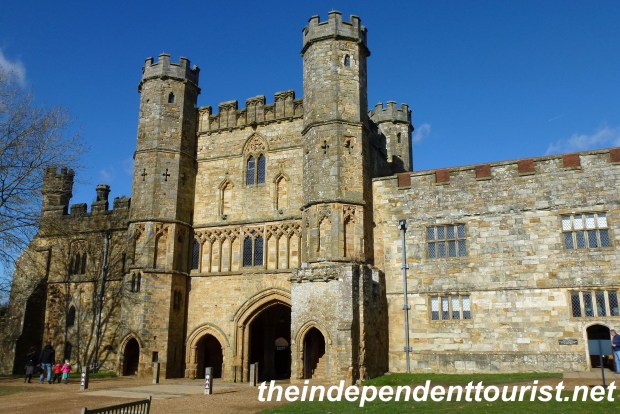
The Great Gatehouse, built in 1338, provided security for the Abbey

Abbey dormitory building (13th century)--its lower intact rooms are interesting

Although the original abbey church no longer stands (the foundation and outline can still be seen), other monastery buildings remain, as well as the spot marking King Harold’s death and the original battlefield, which thankfully has been preserved for almost 1,000 years.

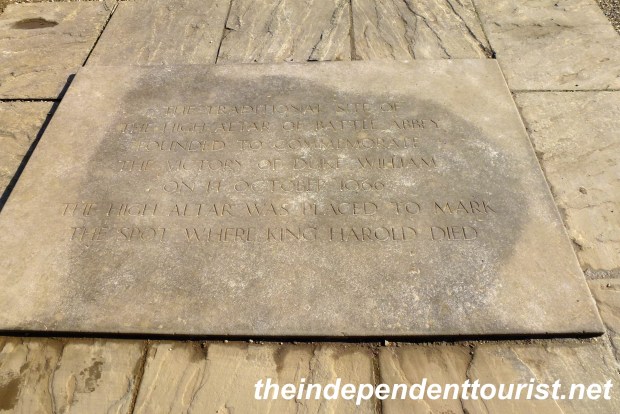
The spot where King Harold died; it reads: "The traditional site of the high altar of Battle Abbey founded to commemorate the victory of Duke William on 14 October, 1066. The high altar was placed to mark the spot where King Harold died."

The Novices Room - where new monks would learn the Rule of St. Benedict. This room sits underneath the main floor of the dormitory.

The Common Room or Warming House, where the monks would work or participate in some recreation in the winter.

The easiest way to get to Battle is by car. Southwest England has many great historical sites and towns, and Battle is one of them. Battle Abbey (and Battlefield) is under the administration of English Heritage.  In February 2012, the entrance fee was £7.30/person.  Included with the entrance fee is an audio guide tour and several trail routes of varying length that describe the historic battle and abbey.

Battle is about 60 miles southwest of London

Three Non-Touristy Towns in France

What I love about France is that it has something interesting to see at almost every turn.  In just about any part of the country, one can be charmed by the history, architecture, people, food and/or the natural scenery. We were on our way from Chartres to the Loire Valley by car and decided to take a day “detour” to the charming towns of Vitré and Le Mans. Both of these towns are not on the main tourist route but are worth a stop if you have the time. Our third stop was at the little village of Sainte Suzanne, in between Vitré and Le Mans.

The towns of Vitré, Sainte Suzanne and Le Mans are southwest of Paris

Vitré

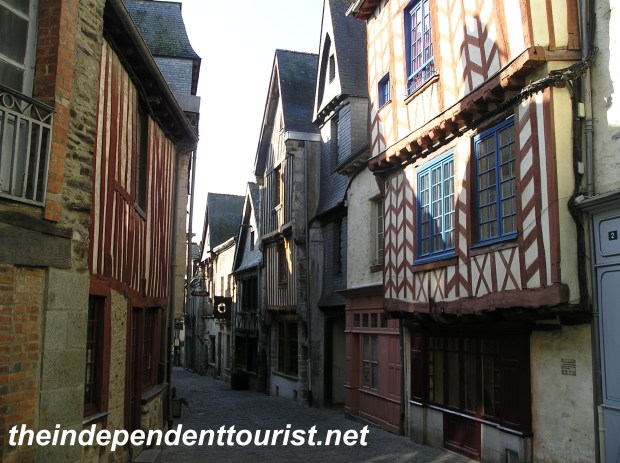
Vitré, at the very western edge of Brittany, is about 75 miles west of Le Mans. This part of France has a close historical connection with the UK (think “Brittany” and “Britain”), with the local (nearly extinct) Breton language being closer to Welsh and Cornish than French. Vitré feels a bit like England with the half-timbered homes along the narrow little streets. We found the locals very friendly, and one gentleman we met on the street serenaded us with a couple songs, including one from Elvis, when he found out we were from the U.S!  Vitré has a picture-perfect chateau (Chateau de Vitré), which is a museum, but since we were there on a Sunday morning it was closed.

A postcard view of Chateau de Vitré

A narrow little house in Vitré

One of the interesting old streets in Vitré

Le Mans

Long associated with automobiles (‘24 hours of Le Mans’) Le Mans also has one of the most striking Gothic cathedrals in France. The Cathédrale St.Julien which dates from the 12th century has huge flying buttresses. The cathedral has a number of stained glass windows from the 12th and 13thcenturies. The center of the town is also very historic and has some ancient walls remaining. On this trip, we just visited the Cathedral and the old section of the city right next to the Cathedral.

The Gothic flying buttresses of Cathédrale St.Julien, Le Mans

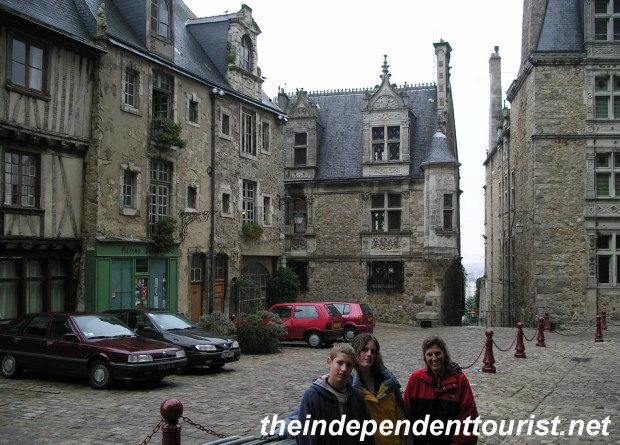
The elegant stone architecture of Le Mans

Sainte Suzanne

This is a charming little village just off the route from Le Mans to Vitré. It is no more than a few homes around an old castle, restored chateau and church. We enjoyed exploring the little streets and seeing the local life, which I suspect very few tourists ever have done.

Green pastures surround the village of Sainte Suzanne

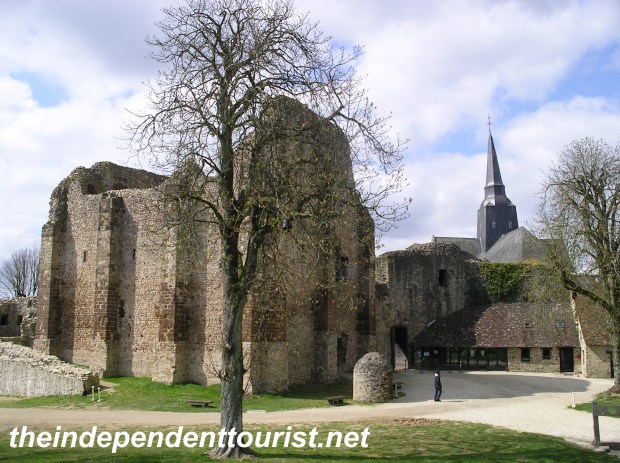
The old castle at the center of Sainte Suzanne

Southwestern England Part 5: Pendennis and Dartmouth Castles

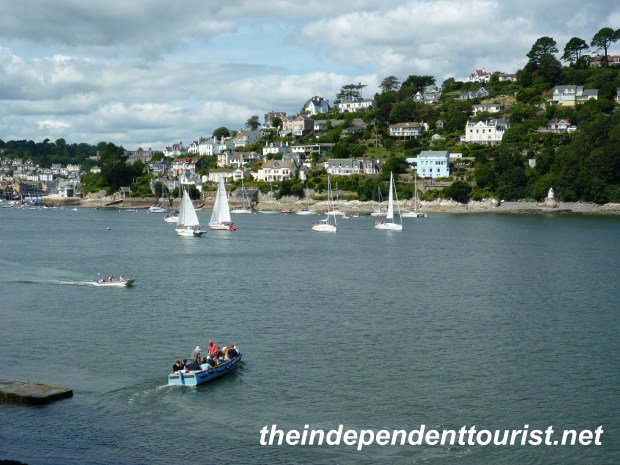
Homes along the River Dart, Dartmouth England

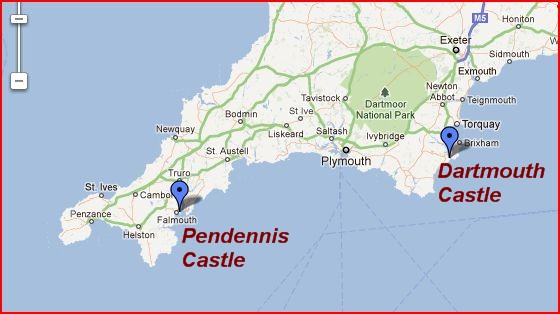
On the southern coast of England, there are two sights close to the historical town of Plymouth that are worth visiting for their natural scenery and the historical interest, Pendennis Castle (west of Plymouth in Cornwall) and Dartmouth Castle (east of Plymouth in Devon).

Pendennis Castle

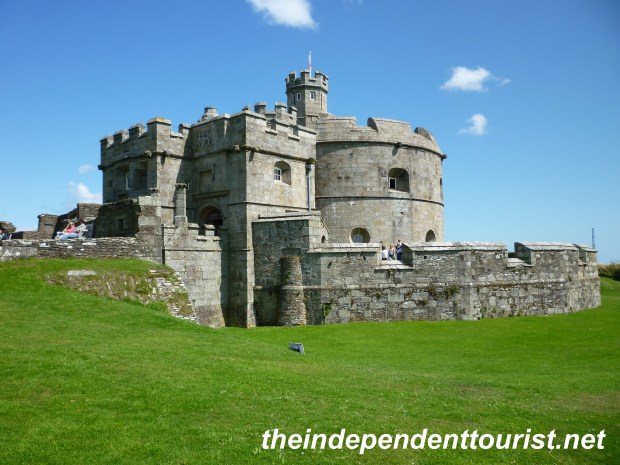
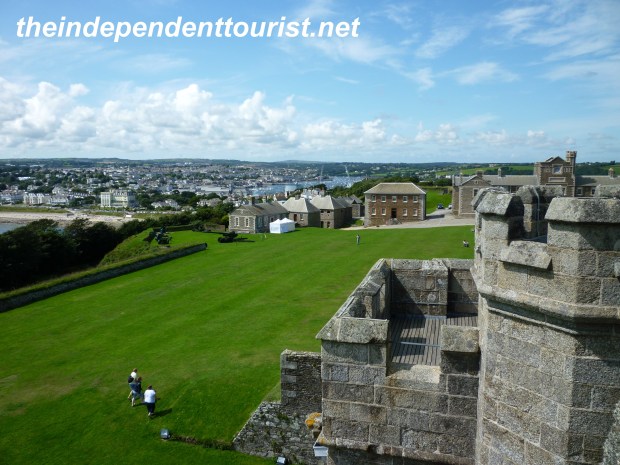
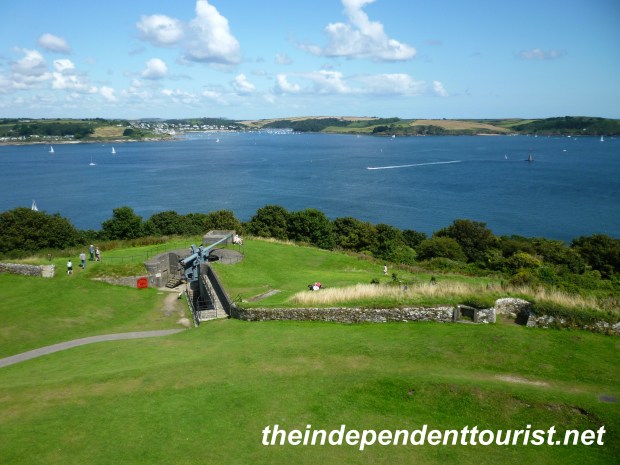
Pendennis Castle, located near the town of Falmouth, sits at the entrance to Falmouth Harbor (the Fal River Estuary), a strategic location and a great natural harbor. It is a large fort, with circular walls which made it harder to hit and damage during an attack by cannon.  During the time of King Henry the 8th(mid 1500’s) there were constant worries about the southern coast of England being invaded by France and Spain, since England was now Protestant and France and Spain were still loyal to the Pope.  Henry built a number of fortifications along the coast. While they are called castles, they really were forts rather than residences, built to defend likely invasion landing sites.

Pendennis Castle

View of the town of Falmouth from Pendennis Castle

The view of Falmouth Harbor from Pendennis Castle

The setting at the point where the castle is located is lovely, and we had great weather during our visit, making us just want to lie on the green grass, soak up the sun and enjoy the views of the boats passing by. It also saw action in WW I and WWII.  There is a guardhouse at the entrance to the castle grounds with some interesting exhibits.  Across the estuary is St. Mawes Castle, a sister castle to Pendennis, and is more original, since it was not altered or used in later years.  There is a ferry service between Falmouth and St. Mawes, saving a long drive around the estuary. Unfortunately our schedule did not allow us time to go to St. Mawes. Both Pendennis and St. Mawes are part of the English Heritage System, and your fee is covered with a membership card, a worthwhile purchase if you are visiting several English Heritage sites.

Dartmouth Castle

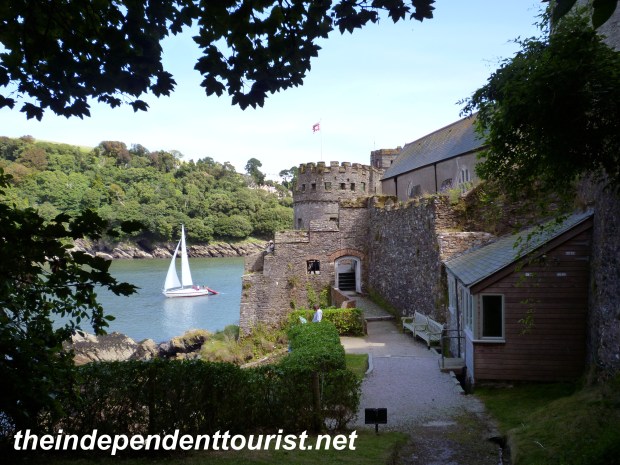
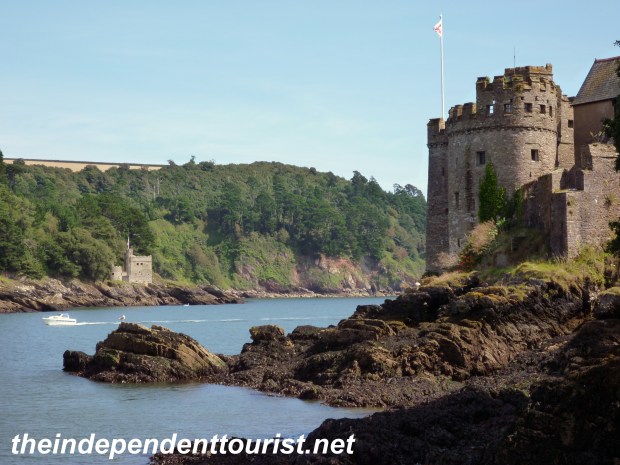
Dartmouth Castle is located in Dartmouth, at the mouth of the River Dart, in Devon. This is one of my favorite locations in Devon.  The setting of the castle along the steep banks of the narrow river entrance, with the beautiful homes of Dartmouth just in the distance is serene. Dartmouth Castle was built in the 15thcentury by Edward IV, and was used in later times as a southern coast defensive position.  There were great chains which were strung across the river entrance to stop enemy ships, which were raised and lowered with windlasses in the castle. This castle is not part of English Heritage, and requires a separate entrance fee. The town of Dartmouth is also charming, with half-timbered homes and a quaint inner harbor area.

My favorite image of the River Dart and Dartmouth Castle

Dartmouth Castle on the right, and the fortification across the Dart River used to hoist a chain across the river entrance

Dartmouth Castle along the River Dart

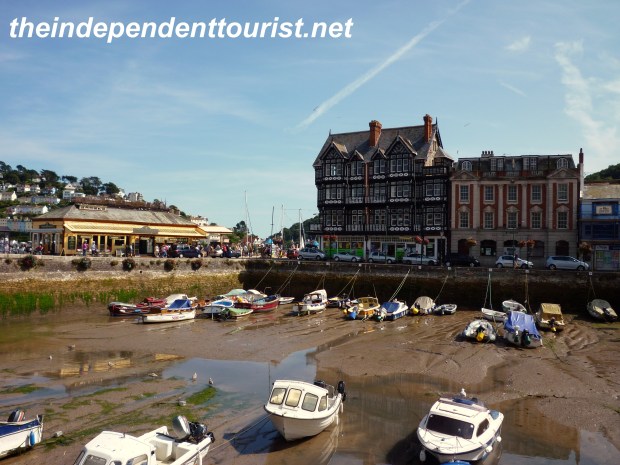
The tide is out in the inner harbor of Dartmouth

Locations of Pendennis and Dartmouth Castles from Plymouth, England. The most practical way to visit these locations is by car.

Seven Things to Do in Taos

For a fun getaway consider Taos, New Mexico. In summer of 2011 we finally visited “The Land of Enchantment.” We’ve lived in Colorado for 20 years, and have talked about visiting this little artsy village almost every year and finally did it! We spent a 3 day weekend headquartered in Taos and visited a number of sights in the surrounding area. At the time of our visit, the huge forest fires near Los Alamos were still raging, but winding down. Still, there was a fair amount of smoke in the air, but luckily it didn’t really affect our trip.

Downtown shops and restaurants in Taos

Taos is nestled against the Sangre de Cristo Mountains. The flags of Spain, Mexico and the U.S. have flown over Taos. It and Santa Fe are known for their unique architecture. Most of the historical construction is adobe, which is basically mud bricks made with straw for more strength. The adobe has to be resurfaced regularly (like yearly) to keep it intact. It is a high maintenance building material, but provides an interesting “southwestern” look to local buildings.

Here are seven things to keep you busy in the Taos area:

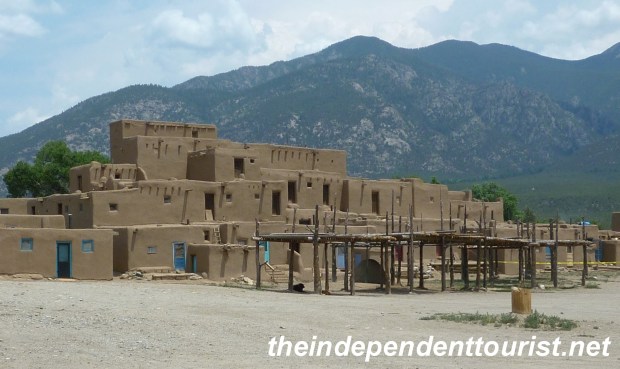
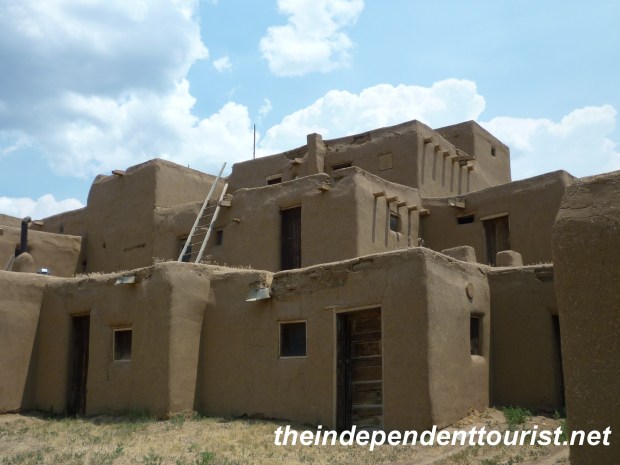
1. Taos Pueblo. Just three miles northwest of Taos is the Taos Pueblo, home of the Taos Pueblo Native Americans, and signature landmark of Taos. This is a living historical monument, with people living here as they have for perhaps 900 years (although I understand only about 25 live here full time). The homes are authentic—no running water or electricity. The water source is the Red Willow Creek which runs through the middle of the Pueblo. Bread is baked in outdoor adobe ovens. One cannot go into the homes without being invited, but it is possible to get a feel for the inside of the dwellings through the small shops located around the Pueblo. The entrance fee to the Pueblo is about $15/person with taxes plus a camera fee of $6.

Taos Pueblo with drying racks in front


Another part of Taos Pueblo

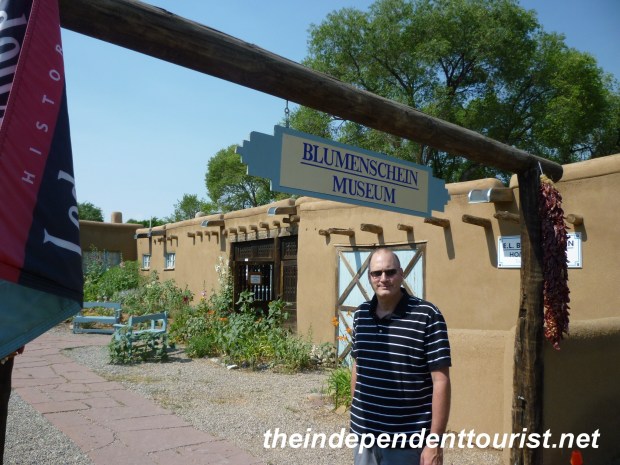
2. Ledoux Street. Named after a French trapper, this street had gates at each end in the 1800’s. Nowadays, this little street contains many art galleries. Taos is known for its artists, and this street has some wonderful examples. Don’t miss two museums on this street: Blumenschein Home and Museum, named after one of the founders of the Taos Society of Artists and Harwood Museum, which includes 2000 works of art and 17, 000 images from the 19th century to the present.

One of the many artist museums and shops on Ledoux Street

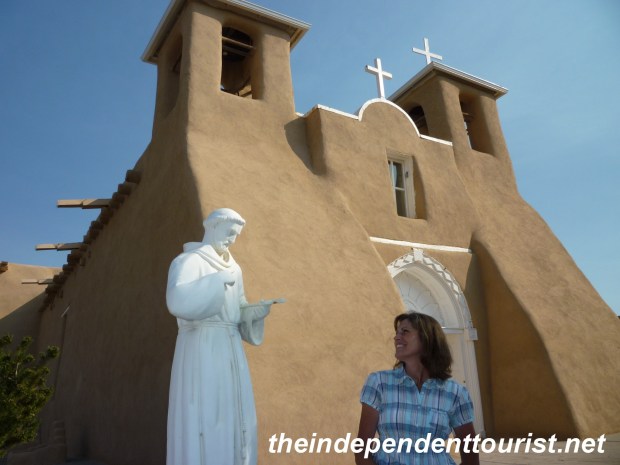
3. San Francisco de Asis Church. At the eastern end of Taos, is the Church of San Francisco, one of the most picturesque adobe churches in the area. Right next to the church are some dilapidated old adobe buildings which provide insight into the construction methods used with the timber and adobe materials. The church is usually open by 10 am.

The adobe San Francisco de Asis Church

4. Hacienda de los Martinez. With my love of history, I found this Hacienda, also made of adobe, quite interesting. It is just two miles west of Taos and was built in 1804. It has 21 rooms around two courtyards, including living and working areas. A good brochure provided with your ticket explains the use and history of each room, giving the visitor a good feel for what life was like on a ranch in New Mexico in the 1800’s. The cost is $8/person.

One of the courtyards and wells of the Hacienda
One of the living areas of the Hacienda
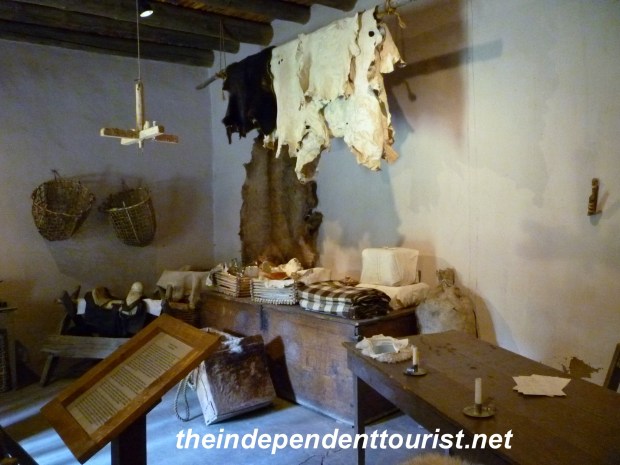
The tanner workshop at the Hacienda

5. Ojo Caliente Hot Springs and Spa. About 50 miles southeast of Taos is Ojo Caliente Hot Springs, which contains 7 mineral pools, including private hot pools which can be rented. It is a small modern resort that is in the middle of the New Mexico desert. Accommodations include cottages, hotel rooms, and a RV park. In addition to the spa and springs, hiking and bike trails add to the list of things to do. If you’re looking for solitude and relaxation, this is a quiet little spot with nice services. The entrance fee for 1 day was $30/person. Visit Ojospa.com for more information.

The entrance to the Ojo Caliente Resort
One of the seven pools of Ojo Caliente Resort

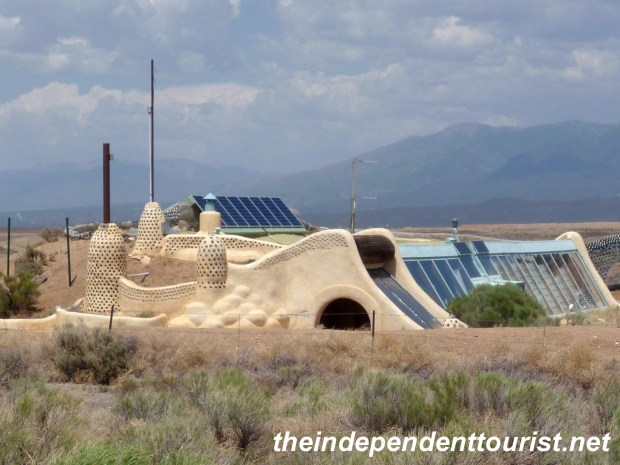
6. Earthship Biotecture. I wrote a separate post on our visit to Earthship country, just outside Taos amongst the sagebrush. Homes here are made of old discarded materials, such as tires, bottles, and cans which minimize the impact to the environment. There is a visitor’s center (open 7 days a week) providing information and a feel for the distinctive architecture and sustainable lifestyle.

One of the unique earthship homes near Taos

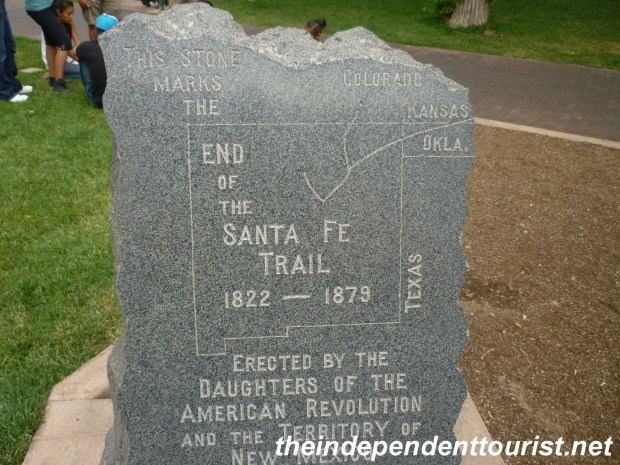
7. Visit Santa Fe. If we were to do our visit over again, we would stay in Santa Fe, since it has more accommodation and dining options, and visit Taos from Santa Fe. Santa Fe is a beautiful town, with lots of history also, as the end point of the famous Santa Fe Trail. We visited the historical part of town on one of our days. It’s about a 75 minute drive to Santa Fe from Taos.

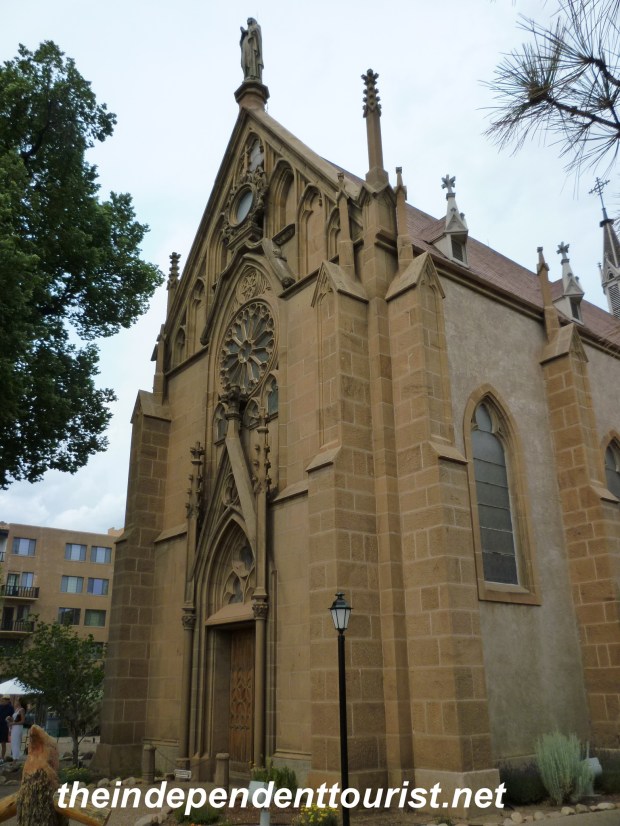
The Gothic Loretto Chapel in Santa Fe

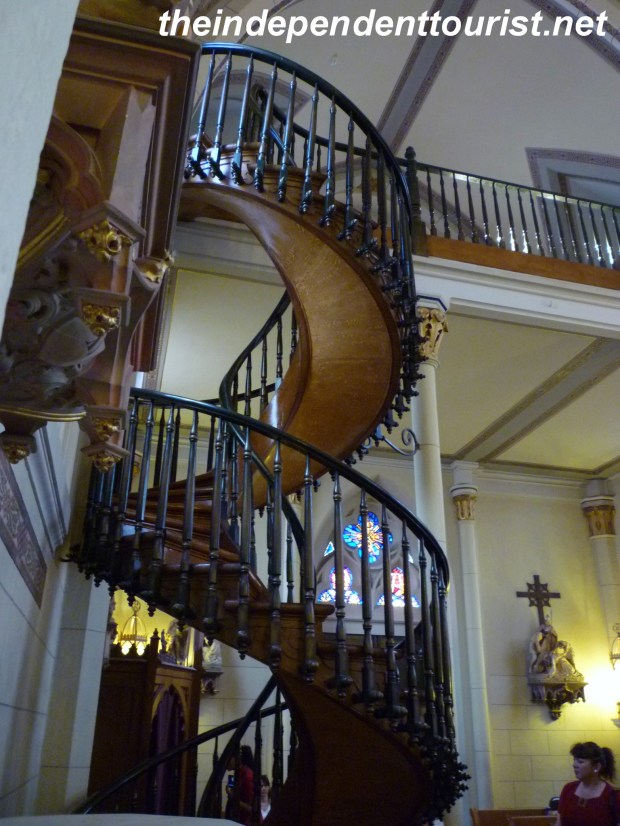
The miraculous staircase of the Loretto Chapel

One of the most interesting things in Santa Fe is the Gothic Loretto Chapel, built in 1873, open daily, and located in the heart of the historical district. This church contains a spiral wooden stair case that contains no center or side support! Even now, construction engineers don’t quite know how this staircase holds itself up. The entry fee is $3.

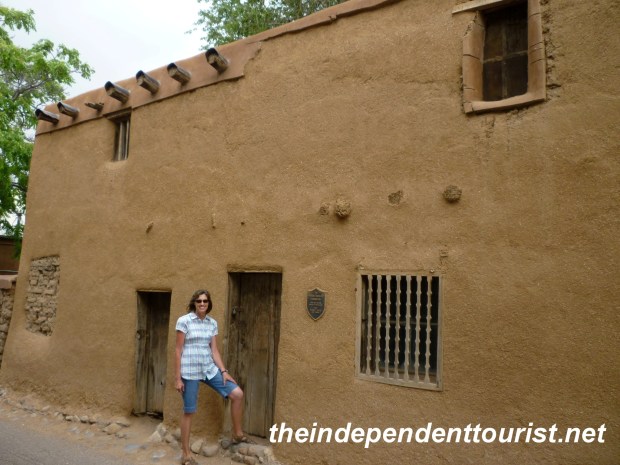
The oldest house in the U.S. (dates from 1646) in Santa Fe

This stone marks the end of the Santa Fe Trail in downtown Santa Fe.

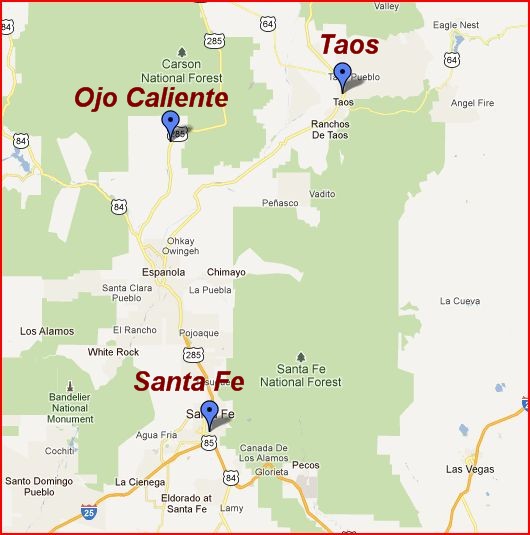
Location of Taos, Ojo Caliente and Santa Fe.

Southwestern England Part 4 – Tintagel Castle

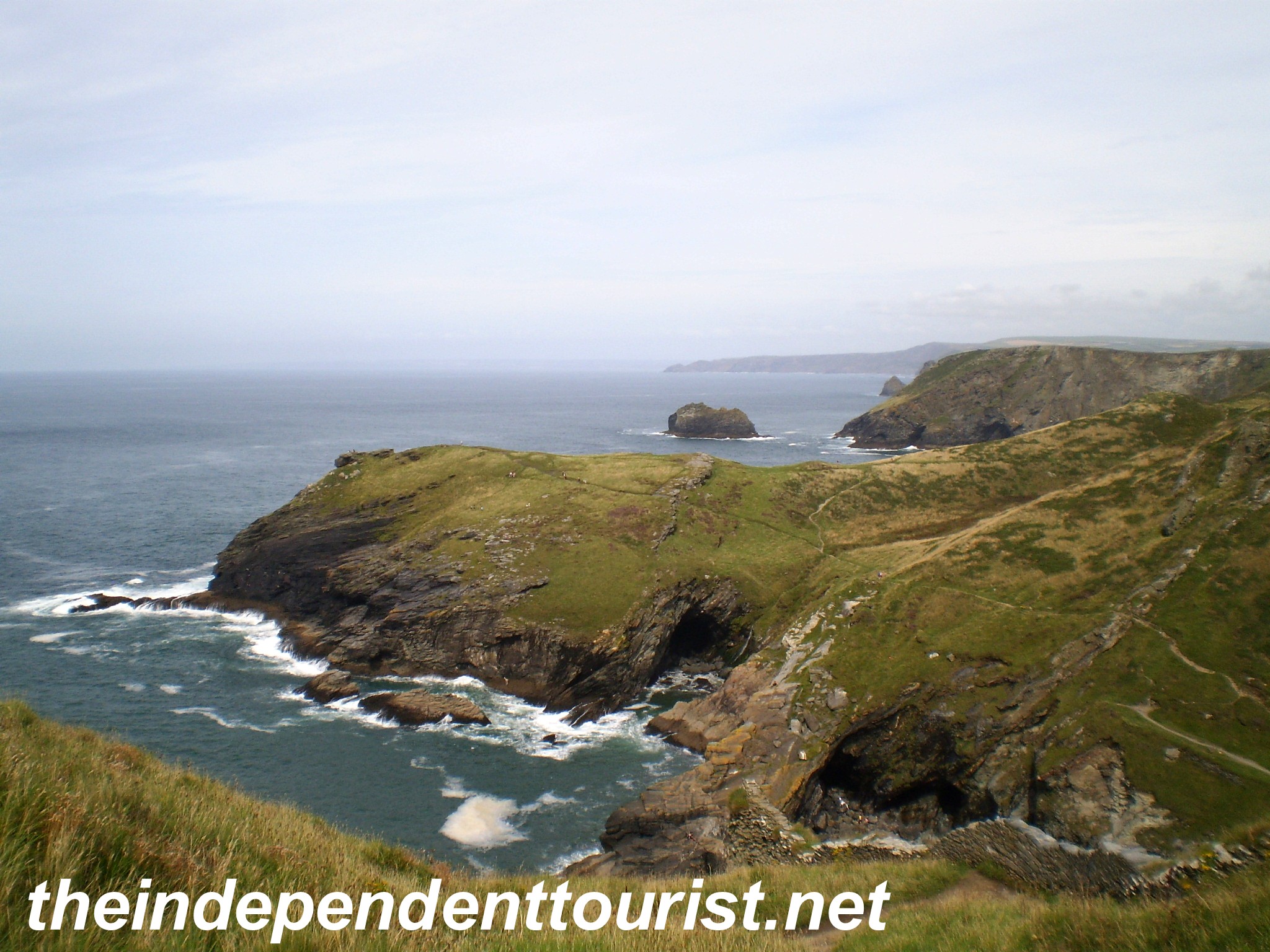
The Cornwall coast at Tintagel

Located on the western coast of Cornwall, the town of Tintagel and the castle ruins are way off the main highway and yet this is one of the most visited spots in Britain. The setting is magnificent and enchanting—right on the coast, with a waterfall, sea cave, and ancient ruins—is a magical place for the legend of King Arthur, the Knights of the Roundtable, Guinevere and Merlin the magician.  The castle ruins date from the 13th century; although there are ruins from an earlier castle, constructed by Reginald, son of King Henry I in 1145. The main castle was built in 1233, by Richard, 1st Earl of Cornwall and Knight of the Holy Roman Empire. The connection of King Arthur to Tintagel is based on the writings of 12thcentury Welsh writer Geoffrey of Monmouth. Cornwall and Tintagel also figure into the tragic love story of Tristan and Isolde, a Romeo and Juliet-type story intertwined with the time of King Arthur, and about the warring kings of Ireland and England.

The beach and waterfall at Tintagel

Looking east from Tintagel Island ruins (near center) to the mainland castle ruins (far center). Town of Tintagel in distance (upper left).

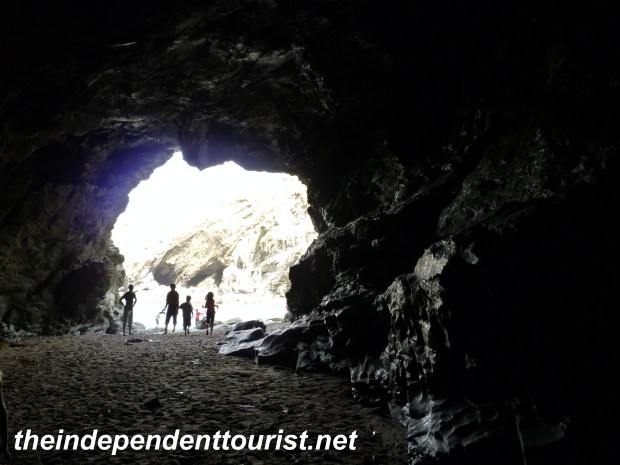
It’s about a 10-15 minute walk down to the castle setting and shoreline from the town. There is a boardwalk along the cliffs to the castle ruins on both the mainland and island (essentially part of the shoreline). The island is accessible via steep stairs cut into the rock. Unfortunately the castle is very ruined, with just a few walls remaining. On the bluff above the castle, there are some additional ruins and good coastline views. Directly across from the island outcrop, on the mainland are a few other castle ruins, also reached by a set of steep stairs. The castle buildings on both sides used to be connected by a narrow rock way which eroded centuries ago. Directly below the castle on the island is “Merlin’s Cave” accessible at low tide.

Merlin's Cave

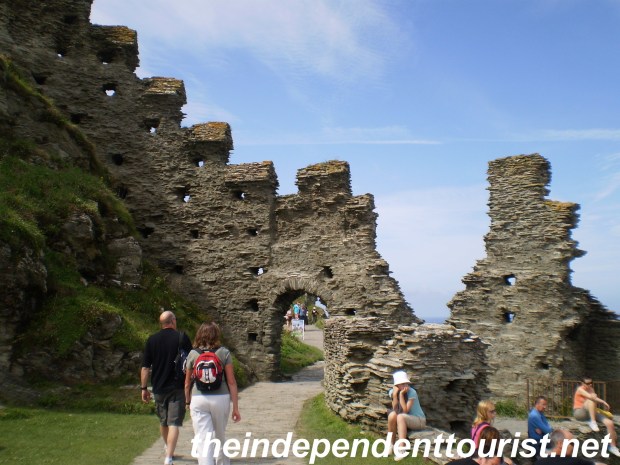
Tintagel Castle entrance

Other castle ruins

Tintagel is one of the many sites in England that is part of the English Heritage governing board of historical properties. A ticket to the site costs £5.50.  A yearly pass to all 400 sites that are part of English Heritage costs £46 per person, a good deal if you are visiting several historic sites.  Check out the English Heritage website.

Location of Tintagel at the southwest tip of England

If you have an interest in King Arthur, castles or very enchanting locations, go to Tintagel.

Reference:  The Illustrated Encyclopedia of Royal Britain by Charles Phillips, Metro Books, New York, New York, 2009

My 10 Favorite Things about Singapore

I have been to Singapore a number of times for business. However, it is a wonderful place to visit as a tourist too, since it provides the visitor with an introduction to many Asian cultures. It’s also one of the most efficient and cleanest cities in the world. More recently, it has become a major cruise ship destination.
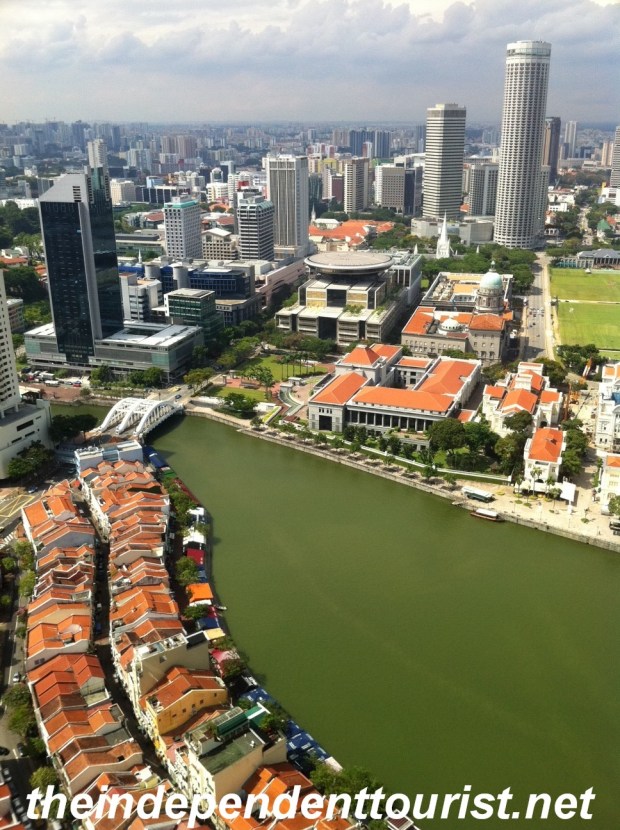
Looking northeast along the Singapore River from the financial district. Great restaurants line this river.

Singapore is home to about 4.5 million people on an island which is 247 square miles (plus some other very small islands), just a little smaller than New York City. Ethnic Chinese make up the majority of the population, followed by Malay, Indian and many other ethnic groups. There are about 100,000 expatriates working in the country too, since it is a commercial, shipping and financial hub in Asia, with a very strategic location. Singapore has one of the strongest economies in the world. Singapore gained its independence 1965 from Malaysia, having been a colony of Great Britain since the early 1800’s, except for a period of Japanese occupation during WWII and briefly belonging to Malaysia from 1963-1965.

One caution—Singapore is very densely populated, and the constant crowds (try going to a shopping mall on the weekend!) might be a shock for a person used to lots of open space. Also, Singapore has become quite expensive, partially due to the strong Singapore dollar compared to the US dollar. The current exchange rate is about 1.3 Sing dollars to 1 US dollar. Housing and hotels are very expensive, and is on par with the most expensive cities across the globe.

Here are my Favorite Things…

1. Changi Airport.The first impression of Singapore comes at the Changi International airport, an example of extreme efficiency and cleanliness. The airport has about every amenity one can think of, and is very easy to get in and out of quickly. Located on the eastern end of the island, it’s only about a 15-20 minute drive along the expressway to the heart of the city. If you are lucky enough to fly on Singapore Airlines, count your blessings—it’s one of the world’s most admired airlines. The planes are spotless and the flight attendants are lovely, gracious and attentive. If only our US airline counterparts could learn from them!

Spacious, efficient, and spotless – looking down at the immigration area of Changi Airport

2. Language. Since Singapore was a British colony, English is the official business language and spoken by most of the population. The accent is sometimes a little difficult to understand, but usually not a problem. The Singapore government also requires that the locals learn their ethnic mother tongue as well, a great way to keep traditions and culture alive in this diverse country.

3. Marina Bay.This is an area on the south side of Singapore, near the heart of the business district, with new restaurants, hotels, and office buildings. You can have a drink in the many restaurant open air lounges and enjoy the marvelous view. The Marina Bay Sands Hotel (part of the “Sands” hotel family) is gorgeous and yes, has a huge casino. If you plan on gambling, bring your passport, otherwise you will not be let in. Singaporeans are required to pay a fee (about $100 US) to gamble, I guess to prove they have the resources and to discourage gambling among the local population. Gambling is fairly new to Singapore. Most of the high rollers are from mainland China. There is a roof top lounge and pool area, but visitors are limited to specific days and times to not inconvenience the hotel guests, and the cost to ascend to the roof top is about $20 US.

Take a boat ride inside the shopping mall at Marina Bay Sands Hotel.
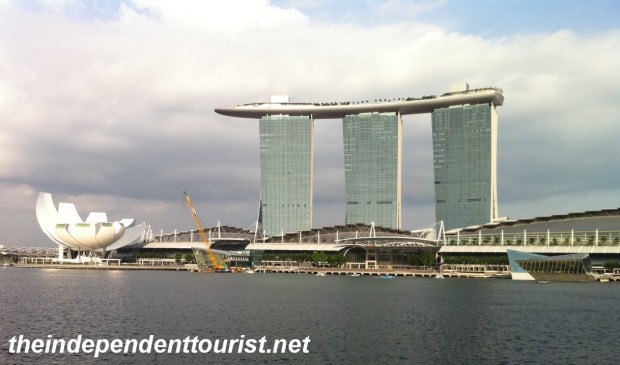
The three towers of the Marina Bay Sands Hotel (with the new Art Science Museum on the left).

The Merlion (left) at Marina Bay. The Merlion is a mythical creature with the head of a lion and the body of a fish–it brings together two very old names of Singapore – “Lion City” and “Sea Town.”
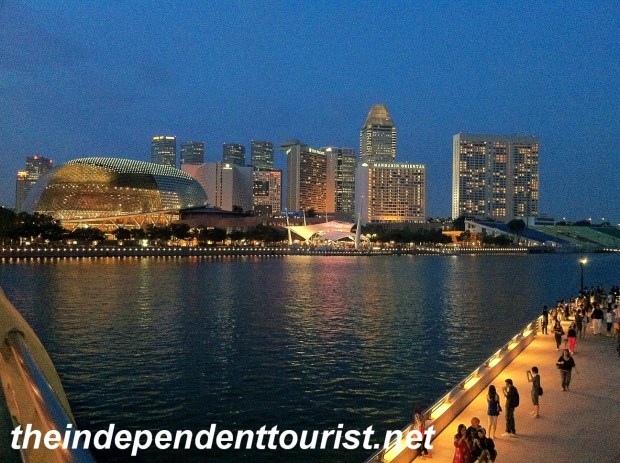
Marina Bay at night

4. Sentosa Island.  Sentosa is Singapore’s “weekend getaway” spot right south of the main island. I first visited Sentosa in the mid 1990’s, and at that time there was a golf resort, a few parks, some beaches and restaurants. Now, in 2011, it has totally changed. Wow. It wasn’t recognizable when I visited recently. New hotels (with more being built), shopping and attractions like Universal Studios have totally transformed this little island. Even still, it’s a great place to visit, and just a tram ride or taxi ride away from the HarbourFront shopping center.  Casinos, resorts, zip line rides, bike paths, beaches and indoor skydiving are a few of the attractions in this happening place. Also, there are nice views of the Singapore skyline from Sentosa. It costs about $20 US to take the tram both ways (from HabourFront, Harbour Tower 2).
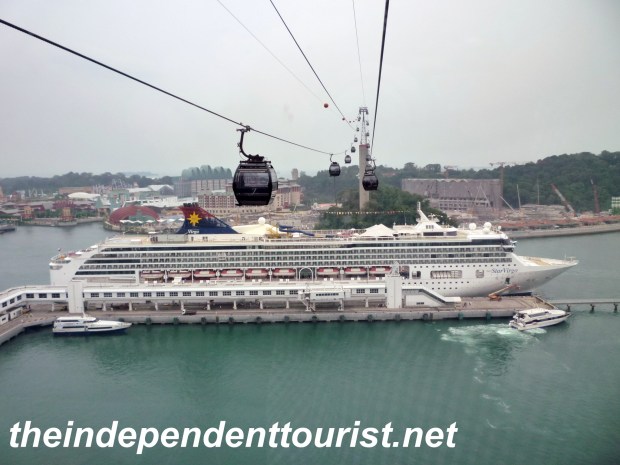
A cruise ship docked at HarbourFront and the tram between HarbourFront and Sentosa

The Hard Rock Hotel on Sentosa
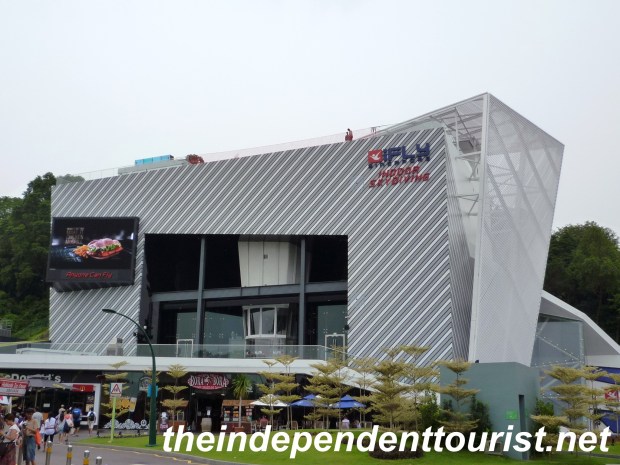
Try indoor skydiving on Sentosa Island (‘iFly Singapore’)
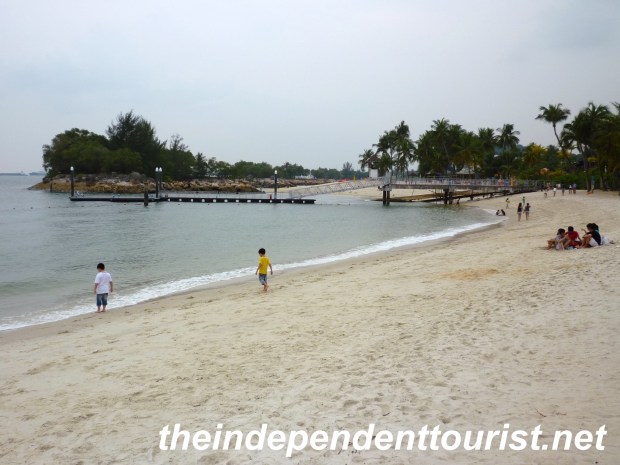
One of the many beaches on the south side of Sentosa Island

5. Fort Siloso (on Sentosa).  With my interest in history, I love going to places like Fort Siloso.  The Fort is at the west end of Sentosa, and feels “worlds away” from the modern Sentosa.  It was built in the 1880’s and saw action in WWII. There are lots of exhibits, living quarters, bunkers and tunnels, showing what military life was like in the heat and humidity of the tropics before air conditioning. It overlooks the Keppel Habour entrance, and has a pleasant, park-like atmosphere.  The Fort itself was built by the British and guarded Singapore during the early days of WWII until the British surrendered to the Japanese in 1942, which took place in a building at the Fort.

Entrance to the Fort.
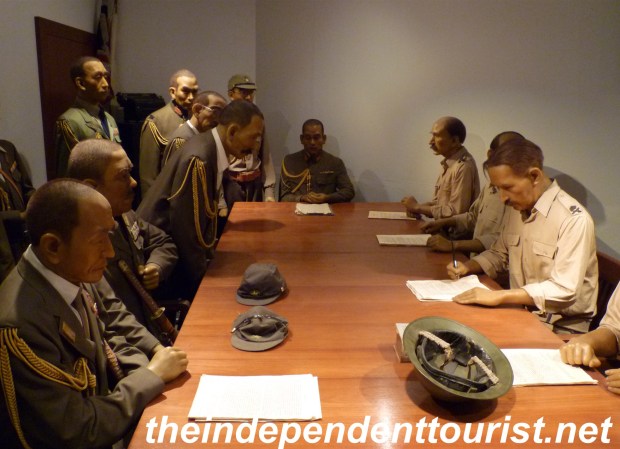
Scene of the British surrender to the Japanese in 1942.
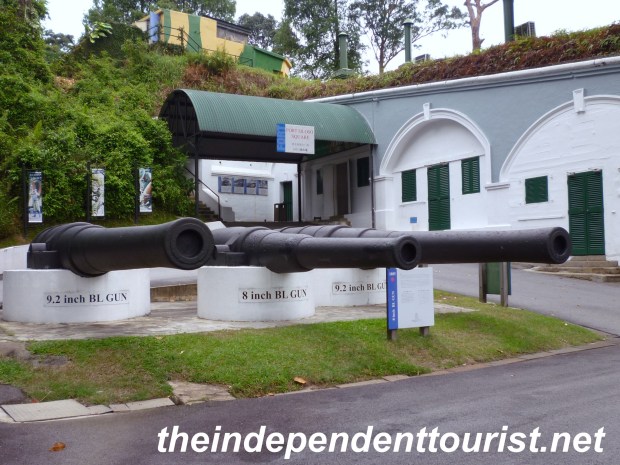
The main square at Fort Siloso and some of the huge guns used at the Fort.
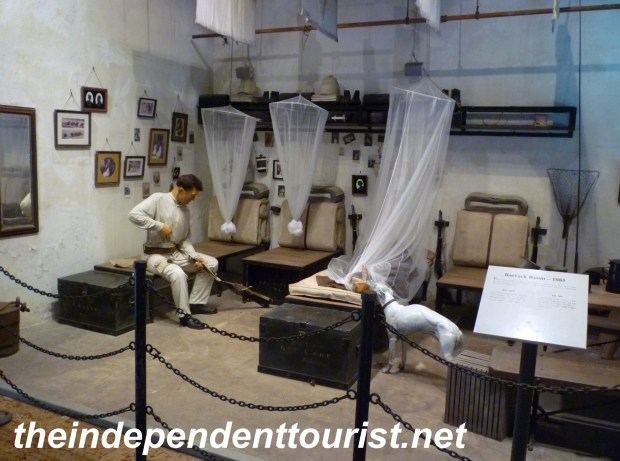
Barracks life at Fort Siloso in the 1800’s

6. Chinatown.There is an area near the financial district known as Chinatown. Very good restaurants and interesting shops in this part of town. I love the artwork and intricate glass figure paintings available in the shops. I also like the colonial architecture which provides a feel for the “old” Singapore and contrasts with the super modern office towers nearby. Chinatown is within walking distance of the Amara hotel, where I usually stay. With skyrocketing land values, I wonder how long this area will remain.
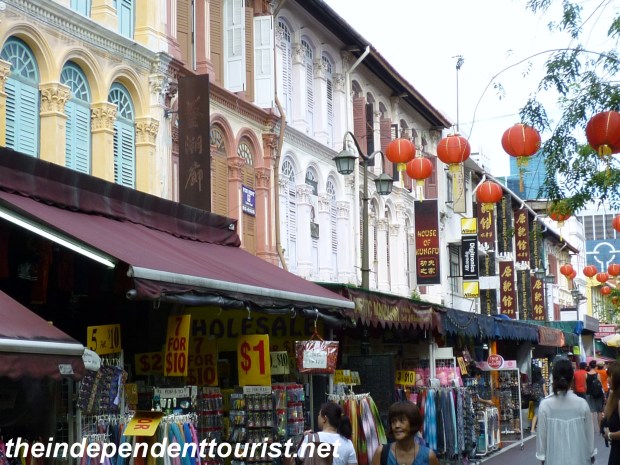
The Victorian architecture of Chinatown.
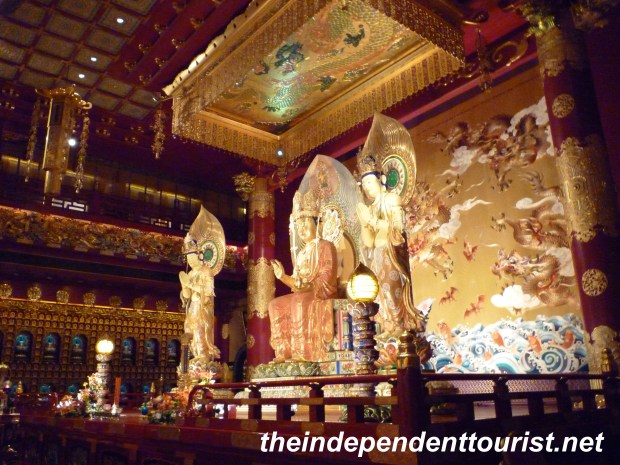
The elaborate interior of the Buddha Tooth Relic Temple in Chinatown.
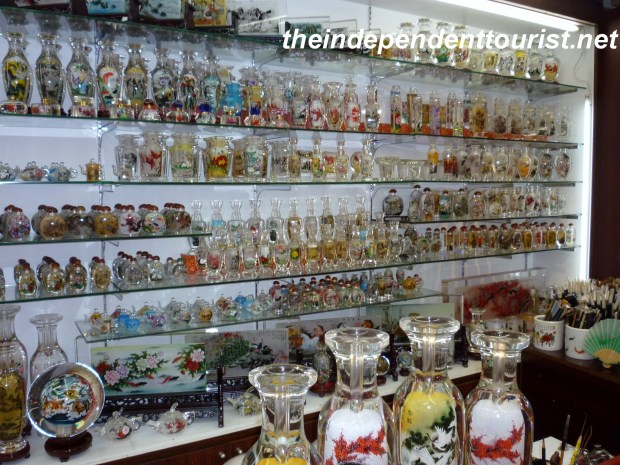
The delicately hand painted glass items–incredible patience to paint in the interiors of these objects.
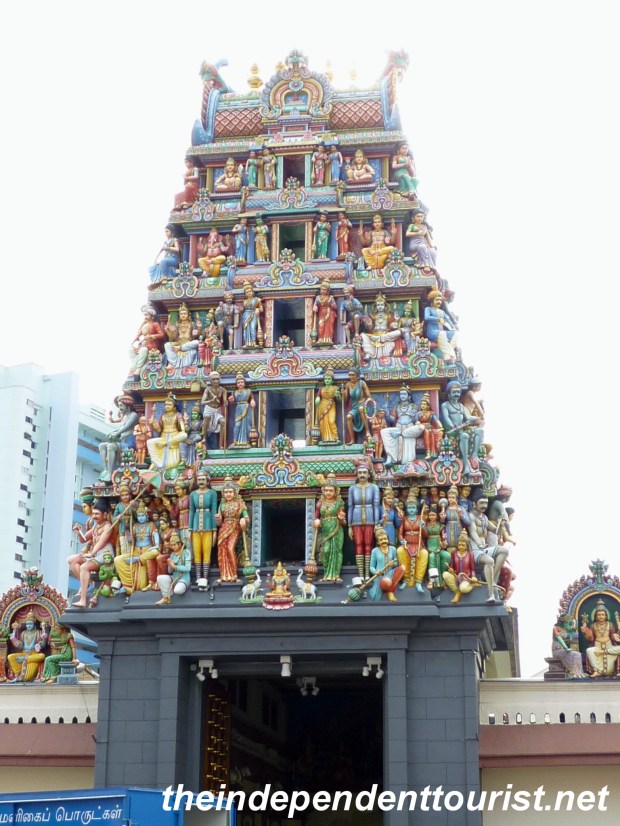
A Hindu temple in Chinatown. The entrance tower to the Sri Mariamman Temple — the oldest Hindu Temple in Singapore (1827).  Firewalking ceremonies are held every October or November.

7. Little India. Indians make up the 3rdlargest segment of the population. There is a “Little India” MRT (subway) stop, and if you like Indian food, this is a good place to visit. Many shops selling electronic goods, and some temples to be found in this quaint section of Singapore.

The interior of The Jungle Tandoor restaurant–reminded me of the Rainforest Cafe (although the food here was good).

Street scene in Little India

8. Lots of things to do near Singapore. Several Indonesian Islands are close by—see my post “Four Hours in Indonesia” for one example. Also, you can drive north and enter Malaysia (or take a day tour). The city of Johor Bahru is right across the Causeway from Singapore. Many years ago I took a day tour up the west coast of Malaysia through Johor Bahru and on to the city of Melaka, (aka Melacca) an interesting and historic port, formerly ruled by the Dutch.

The Tenah Merah Ferry Terminal, where trips to Indonesia begin.

9. Easy to get around. Since the island is so small, a car is really worthless in Singapore. Owning a car is extremely expensive and driving is limited by the government in the downtown area by high tolls as a way to limit congestion. Parking is also very limited and good public transportation makes a car unnecessary for the visitor. There is a very efficient, spotless, air-conditioned subway system (called MRT), with many routes and convenient stops. Most MRT rides will cost 1-3 Sing Dollars. Note that you receive a plastic card (ticket) when you purchase a fare and are charged a deposit, which is refundable upon turning in the card. There are also lots of taxis and buses available.

10. It’s safe. Finally, Singapore may be one of the safest countries in the world. Even with 4.5 million people stacked on top of each other, serious crime is almost unheard of. This is certainly due to the governments’ strict rules and policies, but also due to a strong sense of community among the diverse population. Don’t even think of doing drugs in Singapore. They have a mandatory death penalty of possession or sale of illegal drugs. For many other crimes, the penalty will be lashes by caning, a penalty so painful that it’s a strong deterrent to crime. The casual tourist has nothing to fear – just enjoy yourself and the sights in this Asian paradise.

A Day Tour of the Sacred Valley

Day Tour Route - Sacred Valley

On one of our 3 days in Cuzco we did a day tour of the Sacred Valley. We were on a mid-size bus with perhaps 35 people. The tour costs 35 NS per person (1 USD = 2.8 NS). Another option would be to rent a car, but signage on the roads is not very clear, and it was just easier for us to book a tour than to find a car to rent. The tour consisted of a stop at a small set of tourist shops (of course) not too far from Pisac, then the ruins of Pisac, a drive to Urubamba for lunch, then on to Ollantaytambo town and ruins, followed by a drive over a high plateau to the little town of Chinchero, and finally back to Cuzco via Poroy, which is the same town where the trains leave for Machu Picchu. A tourist ticket to visit the ruins below, in addition to others (see my other posts on Cuzco sites) costs 130 NS (about $46), for non-locals. The ticket can be purchased in Cuzco or at your first stop. Unfortunately it’s “all or nothing,” you cannot purchase individual site tickets.

A view of the Sacred Valley from Ollantaytambo

Pisac
The town of Pisac is quite small (about 4,000 inhabitants), and the ruins are set high in a valley behind the little town. It’s about a 2,000 foot drop in elevation from Cuzco to Pisac, and a very scenic drive. The ruins contain a variety of buildings and varying stone and adobe brick work. This Inca site was thought to contain a bit of everything—religious site, observatory, as well as residences. Due to our limited time with a tour group, we only were able to visit one portion of the site—it’s large, and still being excavated. The views of the valley from the ruins are quite spectacular, even with the heavy mist we had.

A view of the ruins of Pisac

A view of the valley and terraces at Pisac

Ollantaytambo
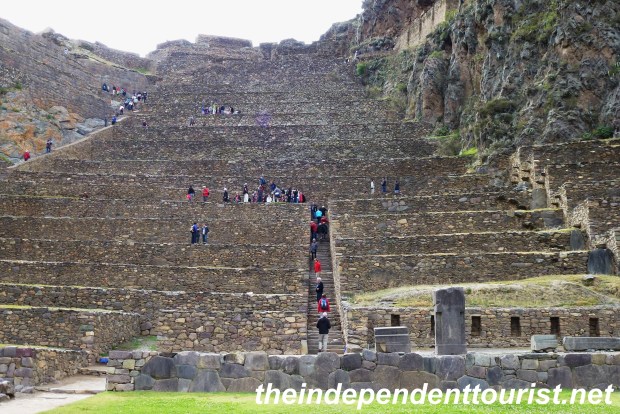
After lunch in Urubamba, our tour took us to Ollantaytambo, at the northwest end of the Sacred Valley, and the literal end of the road (at least in the direction of Machu Picchu). This is a nice small town, and is laid out on the original Inca city plan. The fortress ruins are very impressive, looking up from the town directly below. There are large terraces ascending straight up a narrow cleft in the mountain to the ruins at the top. This site was largely defensive in nature. The Inca fled here in 1537 after being defeated in Sacsayhuaman by the Spanish. They actually made a stand and won a battle against Pizzaro here, but eventually the Spanish conquered this city. In addition to the main ruins by the town, there are additional ruins on the other side of the small valley, to the southeast of the town. Ollantaytambo and Sacsayhuaman were my favorite Inca sites in addition to Machu Picchu. The trains to Machu Picchu make a short stop here on their way to Aguas Calientes.

Looking up at the ruins of Ollantaytambo

The ruins of Ollantaytambo

Temple of the Ten Niches at Ollantaytambo

Chinchero
We drove back down the road to Urubamba, and then south up over a high plateau in the Sacred Valley to the town of Chinchero. On this road are incredible views of the surrounding Andes mountains. This town is 12,500 feet (3,800 meters) in altitude, higher than Cuzco. The Incan past is very obvious in this little town, with the buildings along the streets built upon their original Inca foundations. The Inca, in fleeing to Ollantaytambo, laid waste to this town to slow the Spaniards. Too bad. Chinchero has a very interesting church, built in 1607, with the wood beam ceiling covered in intricate paintings. I could not take pictures inside, but it was very beautiful and worth the visit. We arrived very late in the afternoon, near sunset, so our visit to this interesting town was limited.

Growing crops at 12,500 feet (near Chinchero)

The soaring peak of Lagrimas Sagradas (Sacred Tears) 5,800 meters (about 19,000 ft) high.

A narrow street in Chinchero--houses built on Inca foundations

The 17th century church in Chinchero - built on Inca foundations, and decorated with ceiling paintings

Top 5 Reasons to Visit Northern Spain

A few years ago we spent two weeks in northern Spain, which receives fewer tourists than the more well-known southern Spain. There are a number of fascinating “out-of-way” spots in this part of the country, but for sake of brevity I’m sharing my top 5 reasons to visit this part of Spain below.

Pedraza de la Sierra - a perfect medieval village - one of the "out of the way" spots in northern Spain

1. Santiago de Compostela. The Cathedral and town are the end points of the El Camino de Santiago, the medieval pilgrimage route to the relics of St. James, said to be housed in the Cathedral (spreading the word of sacred relics was a way of encouraging pilgrimages and therefore money for the churches). Santiago de Compostela was the 3rd most important place of pilgrimage in Christendom (after Jerusalem and Rome). I’ll say more about the pilgrimage in another post. The Cathedral is a sight to behold, the current building dates from the 11th – 13th centuries, with Baroque exteriors and towers added in the 18th century. The interior altars, carvings and decorations are some of the finest in Europe. Due to the wetter climate in this part of the country, the towers are tinged with moss. In the Praza do Obradoiro (square) in front of the cathedral is the sea shell marker (symbol of St. James), which marks the end of the pilgrimage route.

The cathedral of Santiago de Compostela

The end of the El Camino de Santiago in front of the cathedral

2. Segovia. Segovia is located only 50 miles north of Madrid. What a perfect city for the tourist looking for layers of history: The Roman aqueduct is one of the largest in existence (built during the Emperor Trajan’s time – about 100 AD), still functional, and made of stone blocks without any mortar. The castle (known as the Alcazar) is one of the most picturesque in Europe (admittedly rebuilt after a fire in the 1800’s). Close to the castle is the Vera Cruz church, a 13thcentury 12-sided Romanesque structure, built by the Knights Templar. Entering this church is a step back in time. This is a great spot to get a picture of the castle too.

The Alcazar of Segovia

The Roman Aqueduct of Segovia (built around 100 AD)

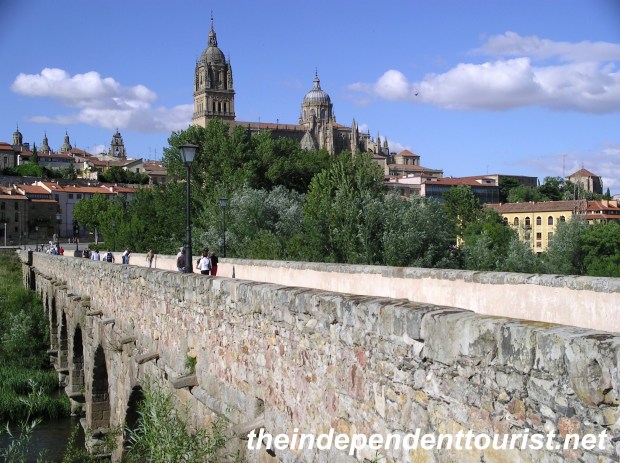
3. Salamanca. One of my favorite cities in Europe, let alone Spain. It has a famous university, plaza and two intertwined cathedrals. The city’s architecture is beautiful, dating from many historical periods. The Plaza de Mayor is one example—I had heard this was the most beautiful Plaza in Spain, and I now know why. Built in the early 1700’s, it is the “living room” of Salamanca. The university, founded in 1230, provided Columbus with travel information for his famous voyages. In one of the old lecture halls, there are wooden benches and tables dating from the 1200’s. The old (12th century) and “new” (16thcentury) cathedrals, built around each other, are some of the most fascinating structures in Europe, with unique paintings, frescoes and tombs. An old Roman bridge on the south side of the city is still in use.

Plaza de Mayor, Salamanca

The Roman bridge (foreground) and the cathedrals of Salamanca (in background).

4. Two of the greatest gothic cathedrals in Europe (Leon and Burgos). Although Spain has had many different cultural influences over the centuries, as evidenced in the varied architecture, it was definitely influenced by the medieval gothic cathedral construction of France. The 13th century cathedral of Leon is world-renown for its stained glass, all 19,350 square feet of it, much of it original. The Burgos gothic cathedral, also 13thcentury, has extremely elaborate stone carvings, and was altered and expanded in the 1400’s and 1500’s.
The gothic cathedral of Leon

Burgos Cathedral

5. It’s cooler and greener. Even in June, the weather in northern Spain was very pleasant, and could even be considered cool, with rain always a possibility (it rained on us one afternoon in Santiago de Compostela). The countryside was green and fresh. Visiting the mountain town of O Cebreiro felt more like Ireland than Spain, both due to the architecture and the surrounding green hills.

The beautiful green countryside of northern Spain

The stone houses of O Cebreiro

Information Sources: Rick Steve’s Spain 2006 and DK Eyewitness Spain 2006.