Author: Paul Terry

I love to travel. I've been fortunate to visit about 75 countries so far. I prefer to travel independently to get off the beaten path a bit. I also try to find good deals to make my travels more affordable.

Pnyx, Athens, Greece

A Day in Athens, Part I – Hidden Gems

Although a stop in Athens is pretty much mandatory on a “must see” list of Greece, it is my least favorite location in this wonderful country. It’s a huge city, and mostly modern. It’s grown up almost overnight, with most of the growth occurring in the last 100 years, even though the city is ancient. We spent just one full day in Athens and were able to see everything we wanted to, including some hidden gems that relatively few tourists visit. This is part one of a two-part post on Athens.
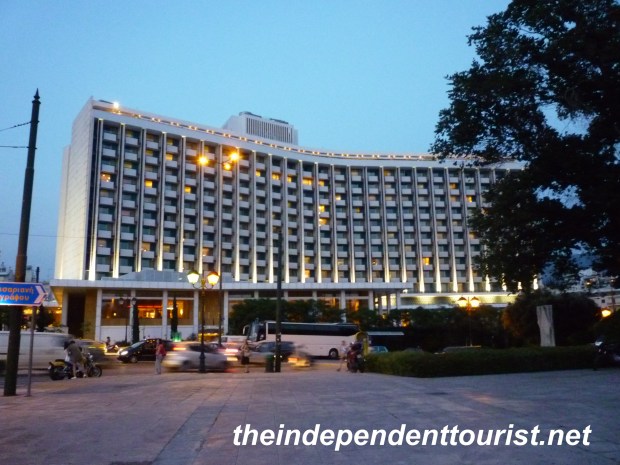
Athens Greece Hilton Hotel

Athens Hilton at dusk.

We visited Athens in early June. We stayed at the Athens Hilton, which is not appealing architecturally, but the rooms are very pleasant and the hotel has the usual Hilton amenities. From the west side of the hotel the Acropolis is visible, and it’s about a 20 minute walk along Vasilissis Sofias Avenue to the Plaka area near the Acropolis. There are not a lot of restaurants near the hotel (we found a few a couple blocks southwest of the hotel), so it’s better to plan to eat elsewhere for main meals.
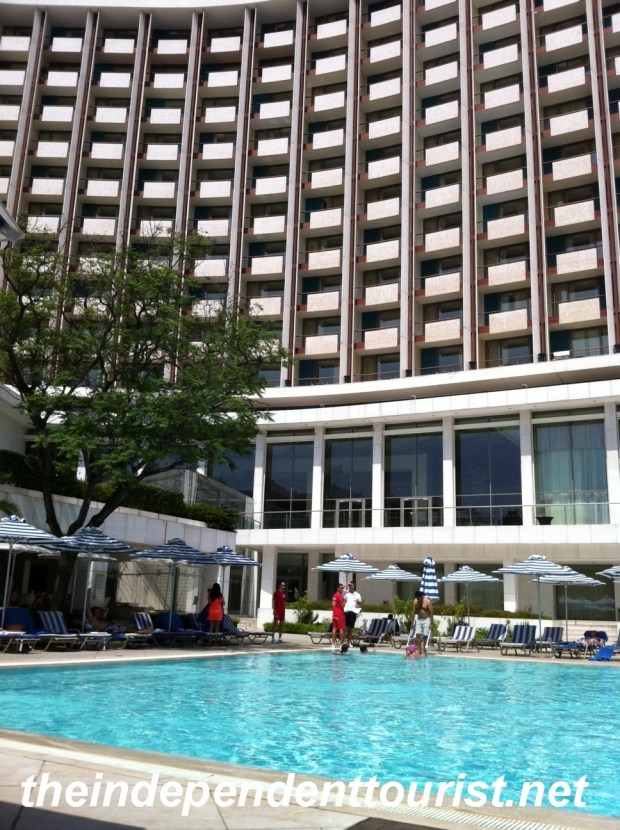
Athens Greece Hilton Hotel pool.

Pool at the Athens Hilton – felt good after a day in the city.

All of the sights below are within walking distance of each other and near the Acropolis.

The Acropolis

Although the Acropolis certainly doesn’t qualify as a “hidden gem,” getting there early in the morning during high season does. Our day started with a brisk walk from the Hilton to the Acropolis, arriving around 9 am, before the cruise ship crowds. We were very glad we got there early. By the time we left, the ticket lines were very long and the hill was mobbed. Most of the structures on the Acropolis were built 461 to 429 BC, during Athens’ Golden Age.
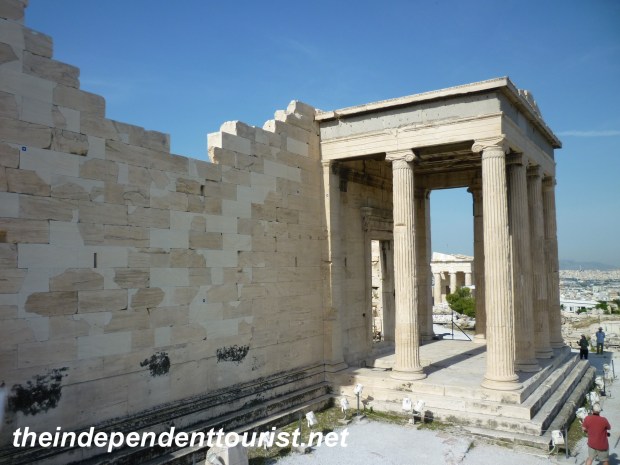
Acropolis, Athens, Greece, Erechtheion Temple

A side view of the Erechtheion Temple (406 BC).
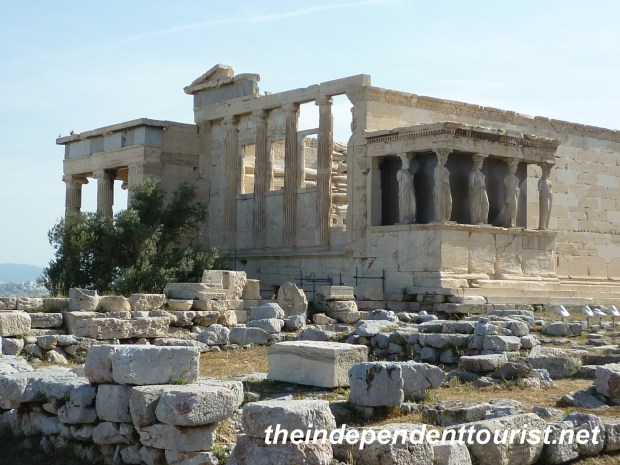
Erechtheion Temple, Acropolis, Athens, Greece.

The Erechtheion (406 BC) .

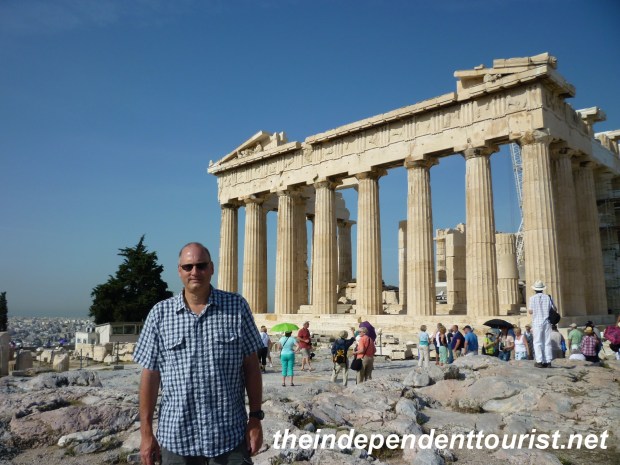
Parthenon, Acropolis, Athens, Greece.

The eastern end of the Parthenon.

I wonder if the Parthenon has ever NOT had scaffolding around it? When I visited Athens 25 years ago, the Parthenon had scaffolding around it then too. I realize major monuments like this require constant maintenance, and there is currently a large project underway. The city views are very good from the hill. The tickets to the Acropolis are €12 per person, and are valid for 5 days and include visits to 5 sights, including the Agora, Pnyx, Hadrian’s Library, the Temple of Zeus, and the Kerameikos Cemetery.
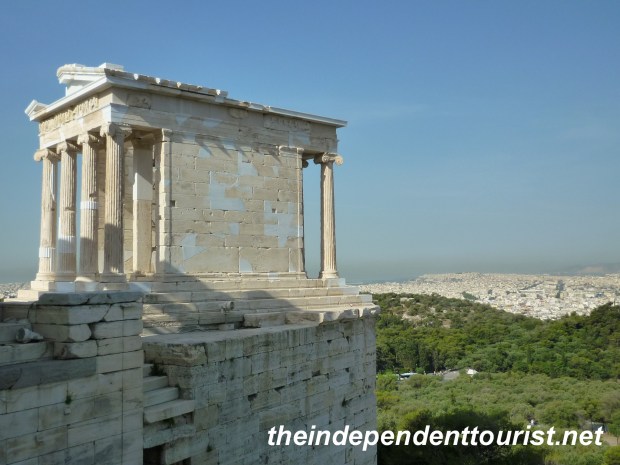
Temple of Athena Nike, Acropolis, Athens, Greece.

Temple of Athena Nike (427 – 424 BC), one of the most beautiful structures on the Acropolis.

Philopappos Hill

A gem hiding in plain sight of the Acropolis is Philopappos Hill, which is just a short walk to the southwest.  Amazingly, there were almost no tourists here. The Hill and main monument are dedicated to a Syrian Prince who was a generous benefactor to Athens. There are some interesting tombs, other ruins and monuments and great views of the Acropolis from the Hill. In between the Acropolis and Philopappos Hill is an interesting little Byzantine Church, Church of Ayios Demetrios Loubardiaris.
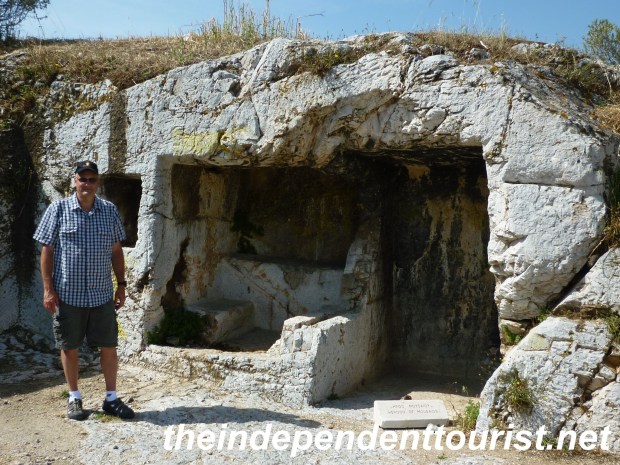
Heroon of Mousaios, Athens, Greece.

Ancient tomb on Philopappos Hill.

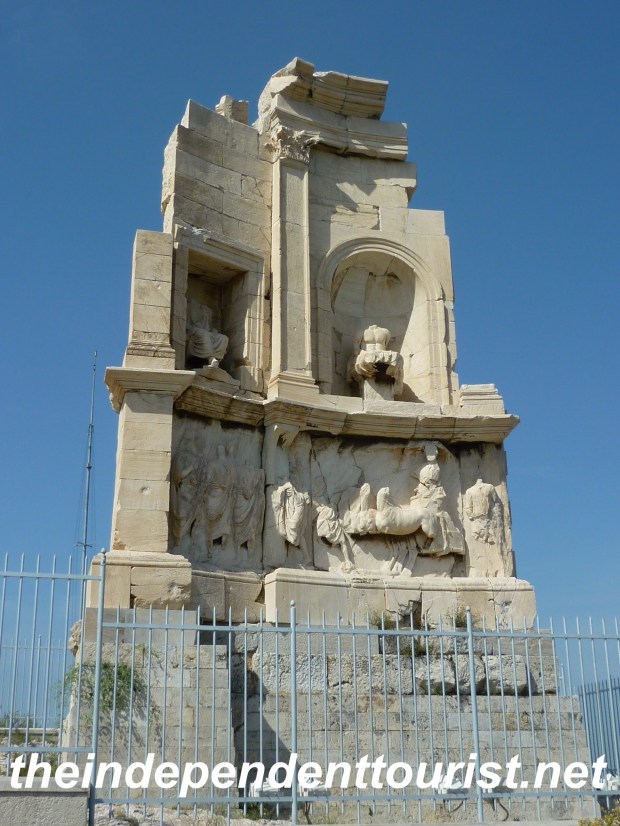
Philopappos Hill, Athens, Greece.

Monument to the Syrian Prince on Philopappos Hill.
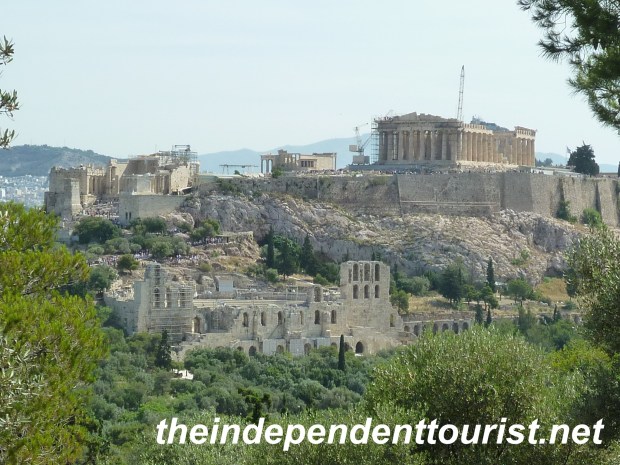
Acropolis, Athens, Greece.

View of the Acropolis from Philopappos Hill.

Ancient Neighborhoods

Walking around to the Acropolis’ north side, there are the remains of the ancient city nestled up to the Acropolis. I did not take pictures, since it was hard to make out what is in the picture. However, there are some ancient roads and house foundations carved into the rock that may be interesting to those interested in the history of the area. Once again, we had this area to ourselves, and it is free.

The Pnyx
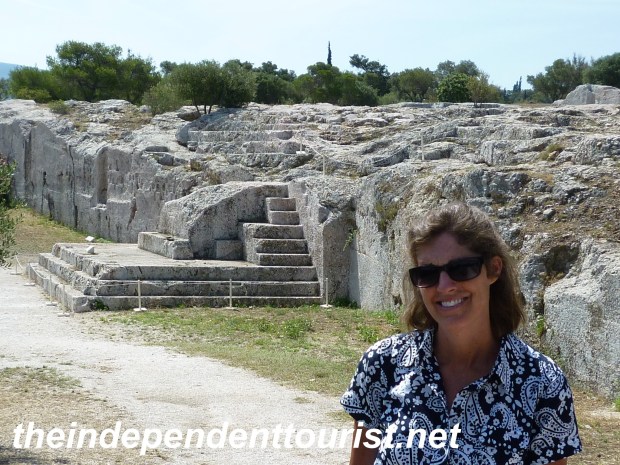
Pnyx, Athens, Greece.

Orator’s Bema (speaker’s platform) at the Pnyx.
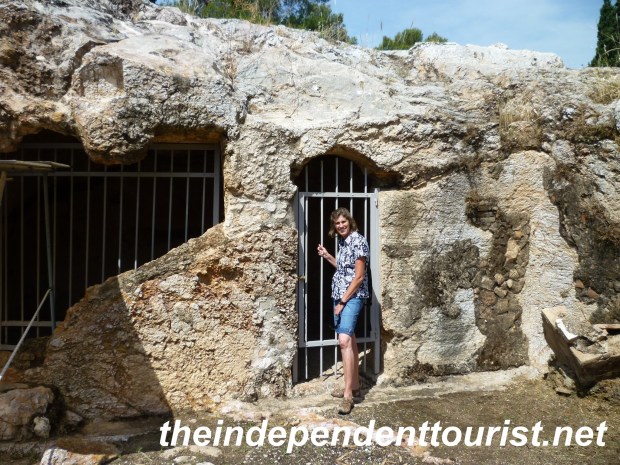
Pnyx, Athens, Greece.

A cave home (Sanctuary of Pan) at the Pnyx.

Another hidden gem is the Pnyx, just west of the Acropolis and next to the Ancient Agora. I missed this area on my first visit to Athens.  The Pnyx was an ancient (5thcentury BC) gathering place for speeches during the time of the statesman Pericles (495 – 429 BC), and was not discovered until 1835. Oratory platforms, an amphitheater, and home foundations are open to view.
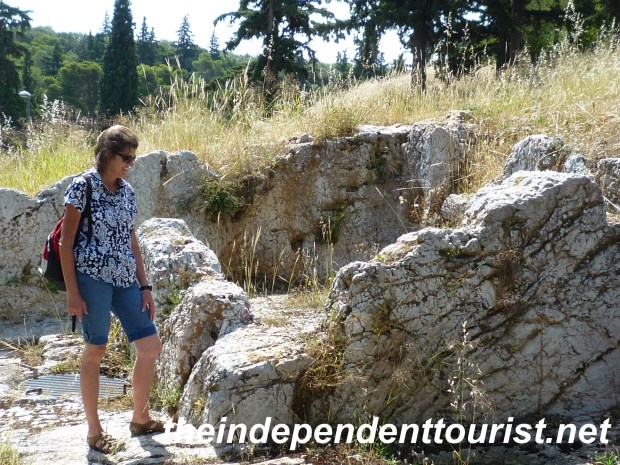
Pnyx, Athens, Greece

Robyn checking out the foundation of a home at the Pnyx.
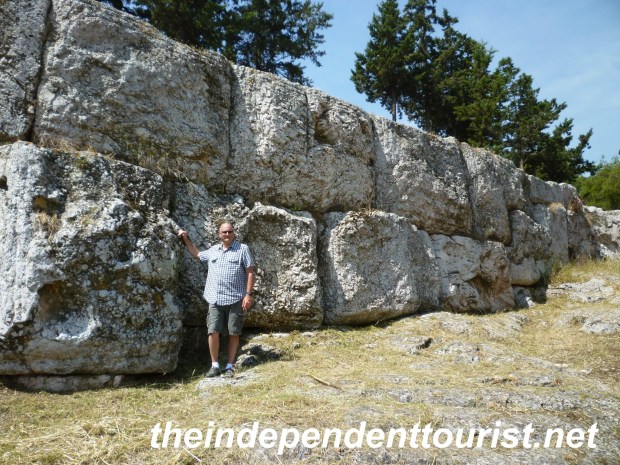
 

Pnyx, Athens, Greece

Huge stones of the retaining wall of the Pnyx – how did they position these huge blocks?

Kerameikos Cemetery

Further north of the Acropolis is the Kerameikos Cemetery.  It takes its name from the pottery (“ceramic”) made here during Athens Golden age. The cemetery is about a 10 minute walk beyond the Agora, and receives few visitors. This cemetery dates as far back as the Bronze Age (approximately 3500 – 1200 BC), and was the most important cemetery in ancient Athens. Excavations began in 1863.
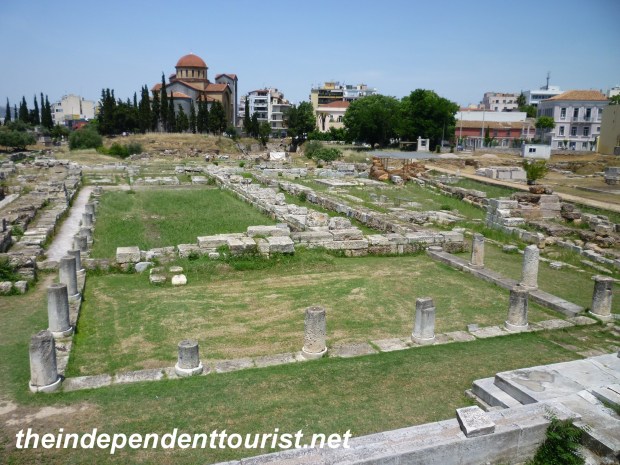
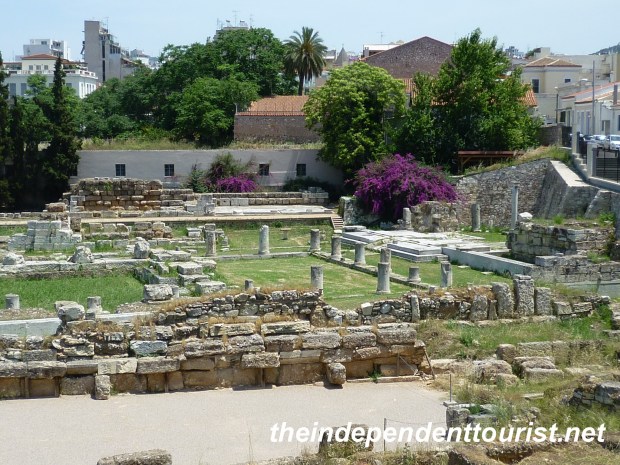
Kerameikos Cemetery.

A view of the Kerameikos Cemetery.

Kerameikos Cemetery.

Another view of the Kerameikos Cemetery.

Reference:  Fodor’s Guide to Greece, 9th Edition, 2010
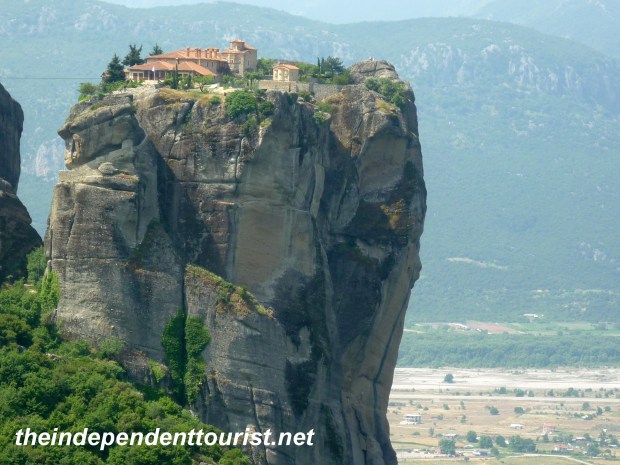
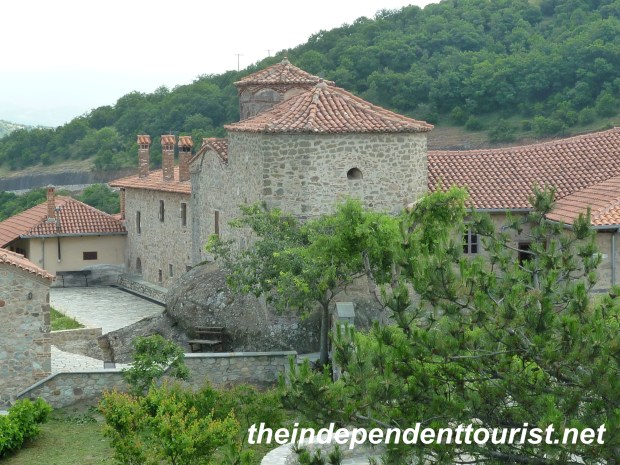
Holy Trinity Monastery, Meteora, Greece.

Meteora, Part II – For Your Eyes Only

My first introduction to Meteora was the 1981 James Bond film “For Your Eyes Only,” which starred Roger Moore and Carol Bouquet, with the theme song sung by Sheena Easton—a song that was stuck in my head during our visit! As with all James Bond movies, this movie covered a number of exotic locations, including Meteora, Greece.

I always find it fascinating how different many locations are from the supposed setting of the movie. The more one travels, the more one realizes how often different places (like Malta) are used as a filming location for movies set in Greece, Turkey or Israel, for example. In this case, Meteora was actually used for at least some of the scenes of For Your Eyes Only.

The part of the movie set in Meteora is where a young girl, a hopeful Olympic ice skater, is being sequestered by her coach and an evil sponsor, who has a small computer device that controls the U.S. nuclear submarine fleet’s missiles. The monastery used for the film is the Monastery of the Holy Trinity (in the movie called “St. Cyril’s”) which is the most isolated of those in Meteora, and perhaps the one with the most striking location, set on a huge standalone pinnacle, with an incredible view of the valley and city of Kalambaka below.

Holy Trinity Monastery, Meteora, Greece.

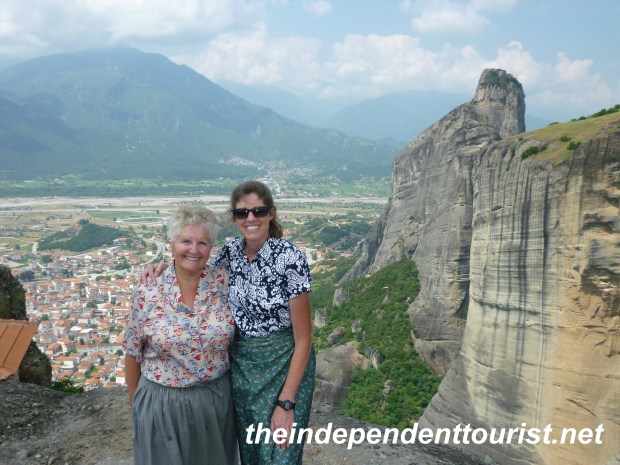
View of Kalambaka from Holy Trinity Monastery.

Holy Trinity Monastery, Meteora, Greece.

View of Holy Trinity Monastery

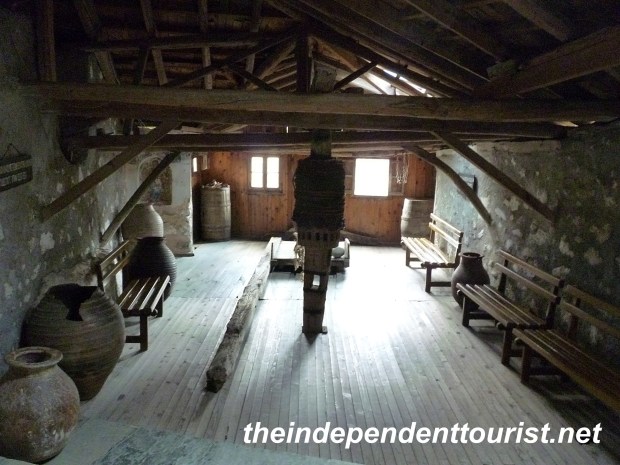
Several of the agents with Roger Moore reach the monastery via the windlass and basket, which is indeed high above the ground. In reality, the windlass was used to bring supplies and people up into the monastery in troubled times. In the movie, the windlass has an electric motor, which does not exist. Also in the movie, the windlass room is shown as an enclosed separate area, which is not accurate.

Holy Trinity Monastery, Meteora, Greece.

A long way up by basket….

Holy Trinity Monastery, Greece.

The windlass room (the winch in the center would be operated by hand in days past).

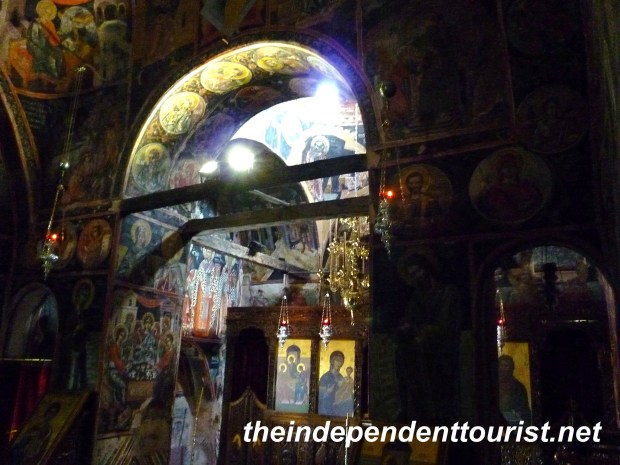
The chapel where the ice skater is held is much smaller in real life also.

Hol

The Chapel of Holy Trinity Monastery.

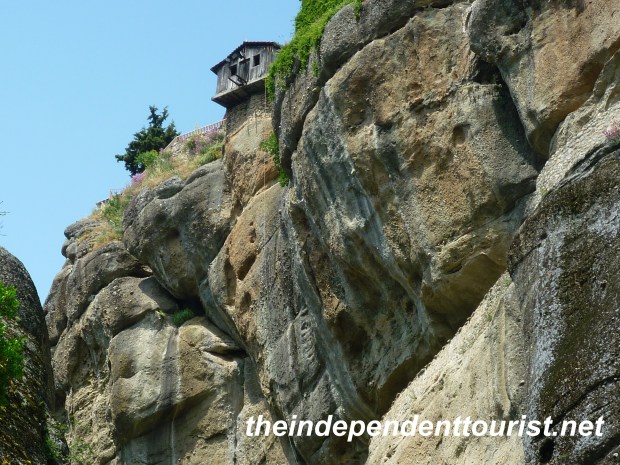
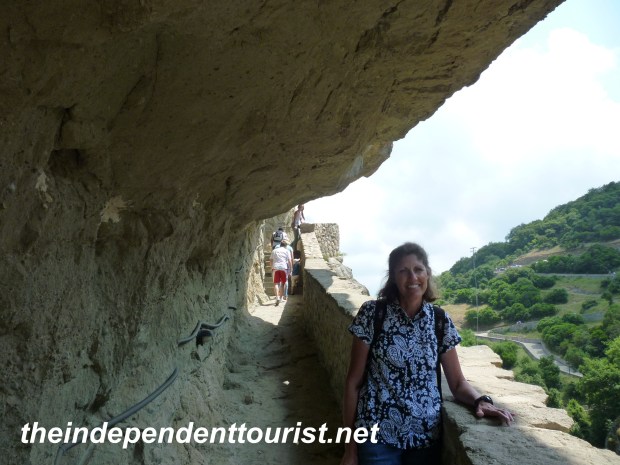
Unable to use the windlass, James Bond climbs the rock pinnacle using technical equipment, which is much more vertical than shown in several scenes in the movie. He would have found it easier to the use the long stairway, part of which is carved into the rock face.

Stairway to Holy Trinity Monastery, Meteora, Greece.

The carved stairway up to Holy Trinity Monastery.

It easy to see why Meteora was a setting for the film—it is truly unique, stunning and beautiful. For more information please see my post “Meteora—Nearly out of this World.”

Holy Trinity Monastery, Meteora, Greece.

Another view…

Monastery of St. Nicholas, Meteora, Greece.

Meteora – Nearly out of this World

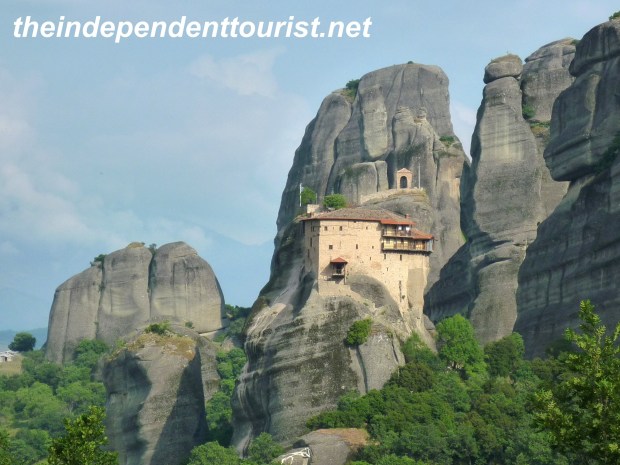
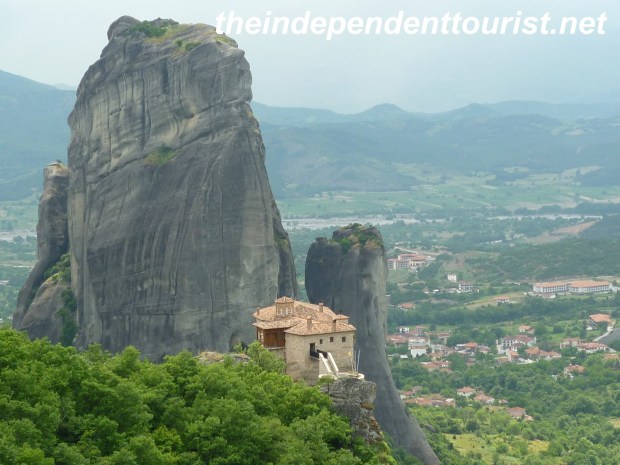
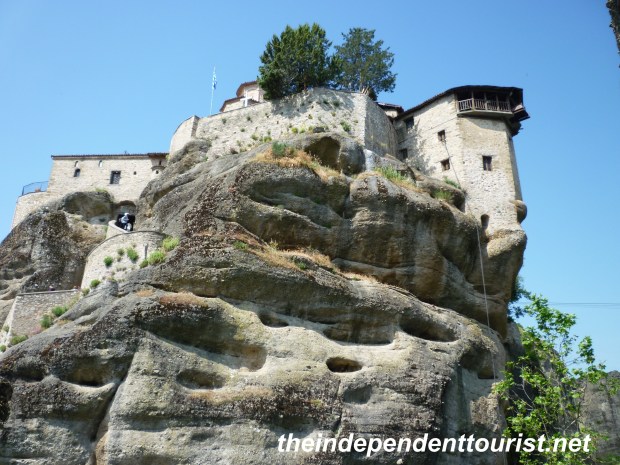
Roussanou Monastery, Meteora, Greece.

Monastery of Roussanou (aka Ayia Barabara–a Nunnery) in Meteora.

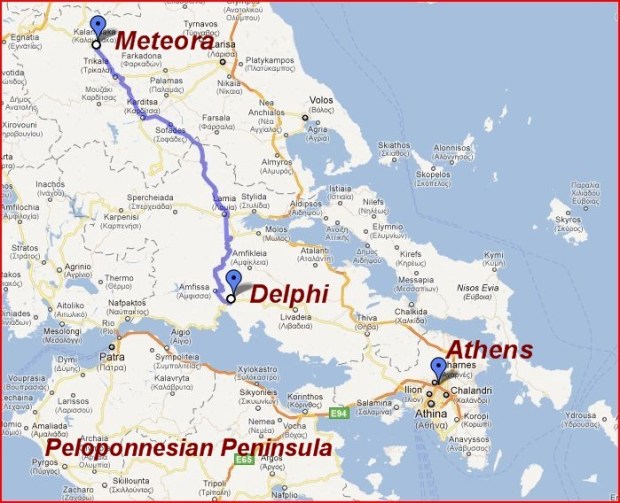
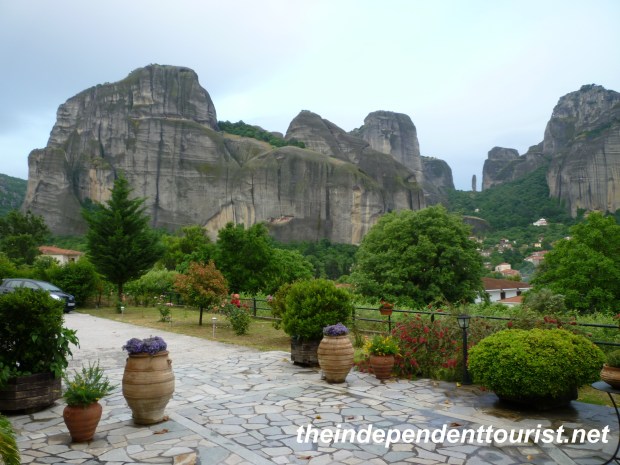
One of the great sights in the world, let alone Greece, is Meteora. The combination of stunning natural scenery—huge sandstone rock pinnacles–with medieval 14th century monasteries sitting on top of them is a sight I will not forget. About 5 hours by car northwest of Athens, Meteora (which is close to the fairly large town of Kalambaka) is well worth the drive, which we did by way of Delphi (about 3.5 hours from Delphi to Meteora). The word Meteora comes from a Greek word which means “to hang in midair” and after seeing this area, it’s easy to see how the word aptly describes the monasteries built on the tops and down the sides of the rocks.

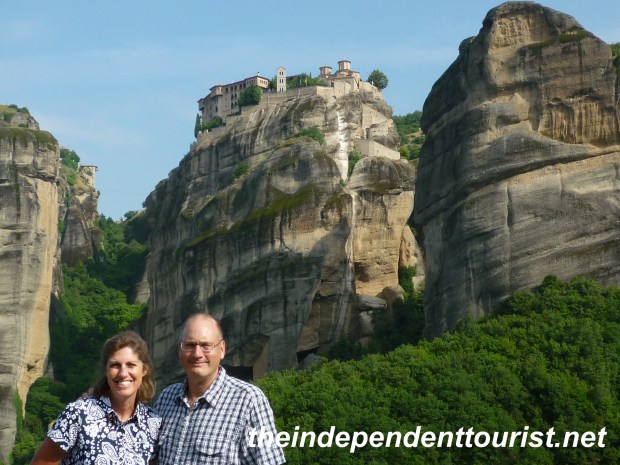
Holy Monastery of Varlaam, Meteora, Greece.

Holy Monastery of Varlaam (top-center).

Although the drive from Delphi to Meteora is initially through steep valleys and mountain passes, the mountains give way to a wide fertile valley (the Thessalian plain), which made me wonder what the setting would really be like. As we got close to Kalambaka, the rock pinnacles suddenly appeared in front of us as the gateway to Meteora and the mountains in the area.

Meteora Map, Greece.

Meteora is about 5 hours northwest of Athens and about 3 hours north of Delphi.

We visited in early June 2011 and the green vegetation of the valley floor and hills is a picturesque contrast with the dark sandstone rock pinnacles. The monasteries of Meteora blend with the surroundings and give the setting a surreal feeling.

Varlaam Monastery, Meteora, Greece.

Holy Monastery of Varlaam (looks like it could slide right off the rock!).

Monastery of St. Nicholas, Meteora, Greece.

Holy Monastery of St. Nicholas Anapafsas, the smallest monastery at Meteora,chapel built in 1388, 16th century frescoes

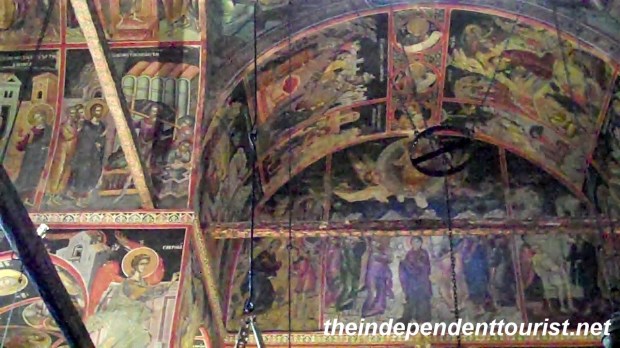
The rock pinnacles served as a retreat for religious orders during the Byzantine–Turkish wars of the 14thcentury. Within 200 years, 13 monasteries were established. Ruins of monasteries no longer standing can still be seen on some rock cliffs. The first monastery, Great Meteoron, was founded by St. Athanasios in the mid 1300’s; he also gave the name to the area, Meteora. Many of the monasteries have highly decorated chapels with frescoes of various biblical scenes. The taking of pictures is not officially allowed in the chapels, but I did take some non-flash video inside several of the chapels.

Great Meteron Monastery Interior, Meteora, Greece.

Frescoes in Great Meteron Monastery chapel.

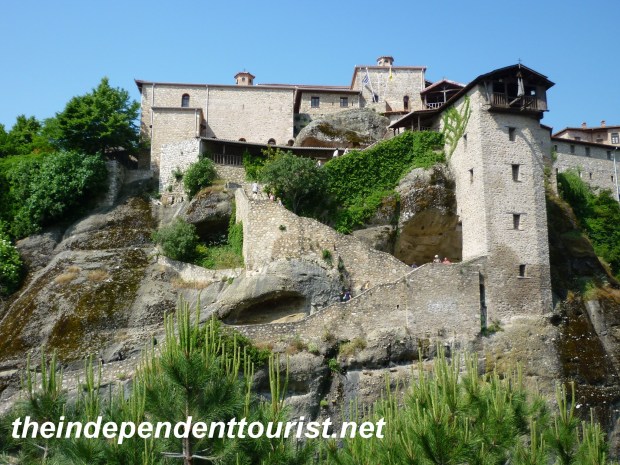
Great Meteron Monastery, Meteora, Greece.

View of the stairway and windlass tower of Great Meteron.

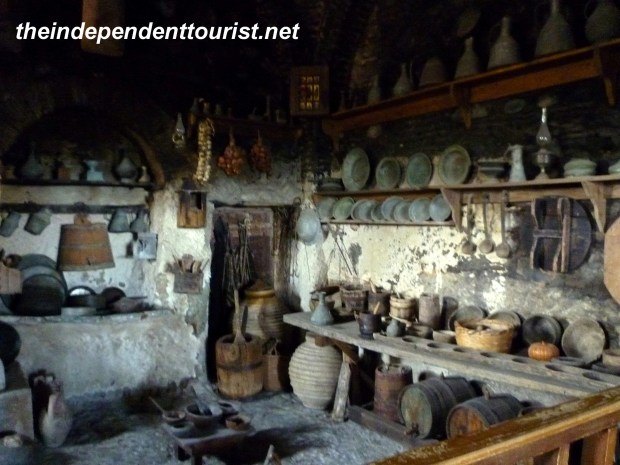
Kitchen, Great Meteron, Meteora, Greece.

The kitchen at Great Meteron (dated around 1557).

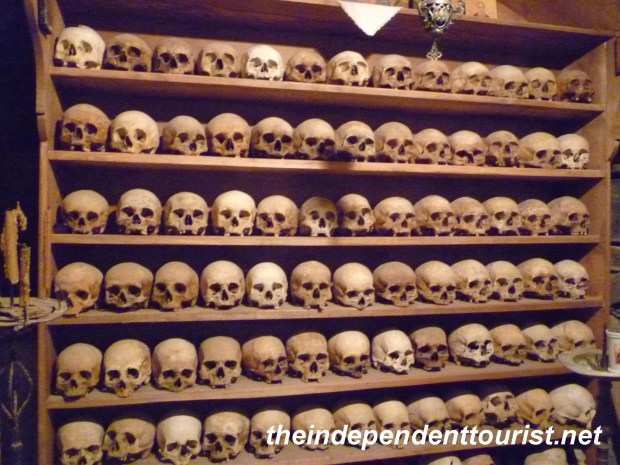
Great Meteron Ossuary, Meteora, Greece.

The Ossuary at Great Meteron.

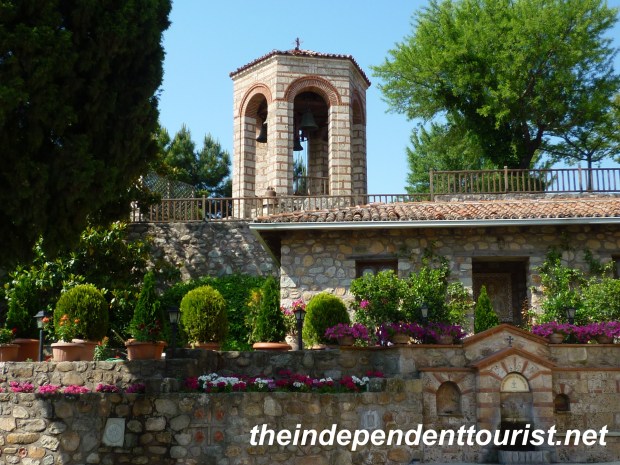
Great Meteron Monastery Courtyard, Meteora, Greece.

Neatly manicured courtyard at Grand Meteron Monastery.

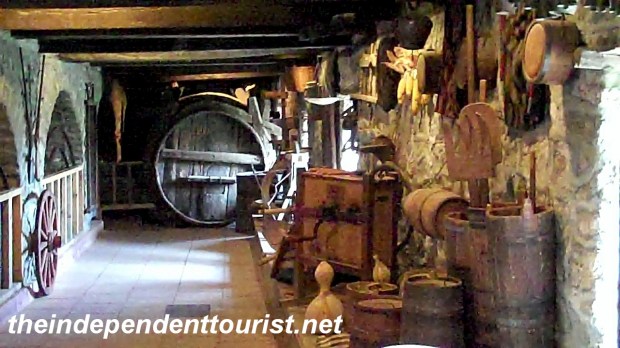
Storage room, Great Meteron Monastery, Meteora, Greece.

Tools storage room at Great Meteron Monastery.

Other features vary depending on the monastery—some have beautiful gardens and views. The largest, Great Meteoron, is almost a museum–with an old (dates from 1557) kitchen, Ossuary, and equipment storage rooms on display. The monasteries are in close proximity, but since some walking or hiking is required, at least 60-90 minutes per monastery is a good estimate.

Practical Information:

All monasteries can be visited in one full day, especially if you are staying in Kastraki or Kalambaka. We recommend Kastraki as a base, since it is so close to Meteora. A car is the easiest way to visit the monasteries, and allows you the freedom to arrive and leave at your leisure. There are also footpaths among the ravines, connecting the towns with the monasteries and if you have the time, they would be a lovely way to see the area.

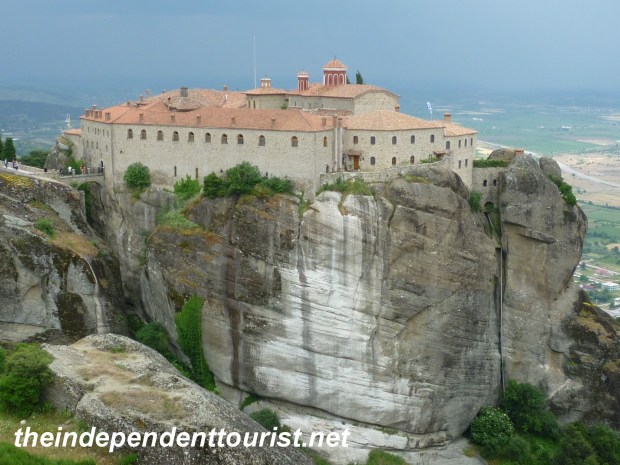
Holy Monastery of St. Stephen, Meteora, Greece.

Holy Monastery of St. Stephen is the most easily accessible.

Each monastery has a €2 entry fee per person.  Be prepared for stairs, and lots of them. One of the monasteries, St. Stephen’s, (actually a convent) is easily accessible from the car park and does not require stair climbing. Others require a hike down and up steep stairways. In the old days windlasses with nets or baskets were the only way up into the monasteries–ensuring safety during times of war.

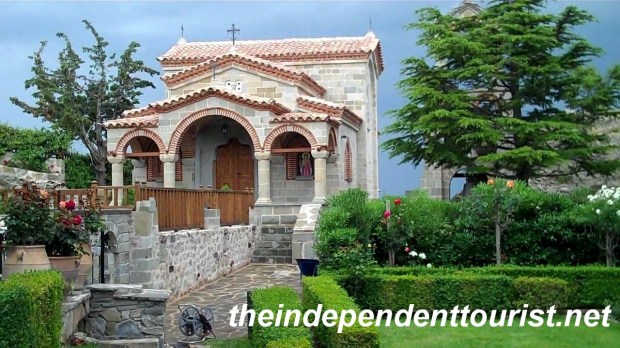
St. Stephens Monastery, Meteora, Greece.

Small chapel at St. Stephen’s.

The busiest monasteries are Great Meteron (aka Moni Megalo Meteoro or Monastery of the Transfiguration), St. Stephen’s, and to a lesser extent Varlaam. Be prepared for tour buses at Great Meteron.  We had the Holy Trinity and St. Anapafsas monasteries to ourselves.

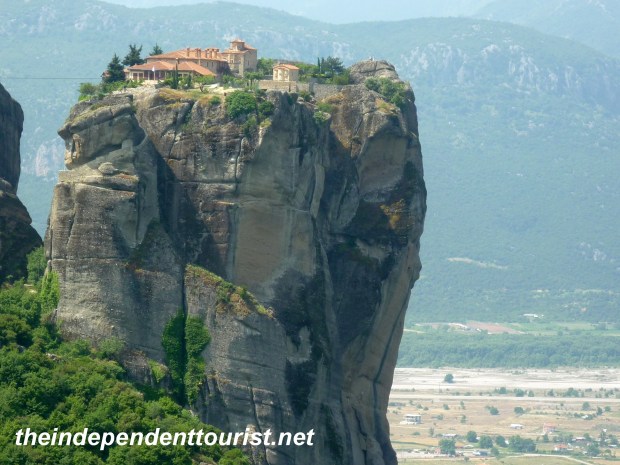
Holy Trinity Monastery, Meteora, Greece.

Holy Trinity Monastery of James Bond fame (see separate post).

As usual, getting to the monasteries earlier (or later) in the day will help in avoiding the crowds.  Check opening days and hours carefully. We visited on a Saturday and all of them were open, but some are closed other days of the week.  Most open at 9 am. There are small parking lots at each of the stairway trails to the monasteries.

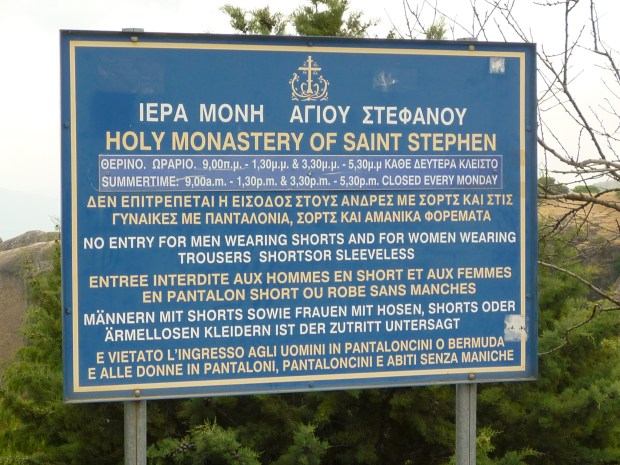
Holy Monastery of St. Stephen_Meteora (4)

Sign warning of dress standards at St. Stephen’s monastery.

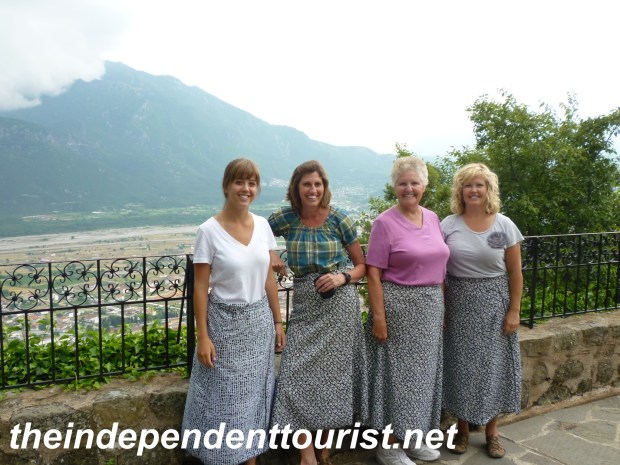
The monasteries are picky about dress.  They require women to wear dresses or skirts, although they have free wrap-around skirts available at the entrances. For men, shorts are not officially allowed, but we did see men in shorts at several of the monasteries. To avoid any hassle, men should wear long pants. Also, men, don’t try to wear the skirt wraps—the monks don’t appreciate this!

Holy Monastery of St. Stephen_Meteora (2)

Wearing skirts at St. Stephen’s.

We stayed in Kastraki, a small village just a couple of kilometers up the road from Kalambaka, it’s nestled among the rock pinnacles, with a great view. Our hotel, Doupiani House, was in a perfect location with many rooms having a balcony view of the rocks of Meteora.

Doupiani House hotel, Kastraki, Meteora, Greece.

View of Meteora from Doupiani House hotel, Kastraki.

References: Frommer’s Guide to Greece, Lonely Planet Greece Guidebook and information sign posts at Meteora.

Colonial Quito

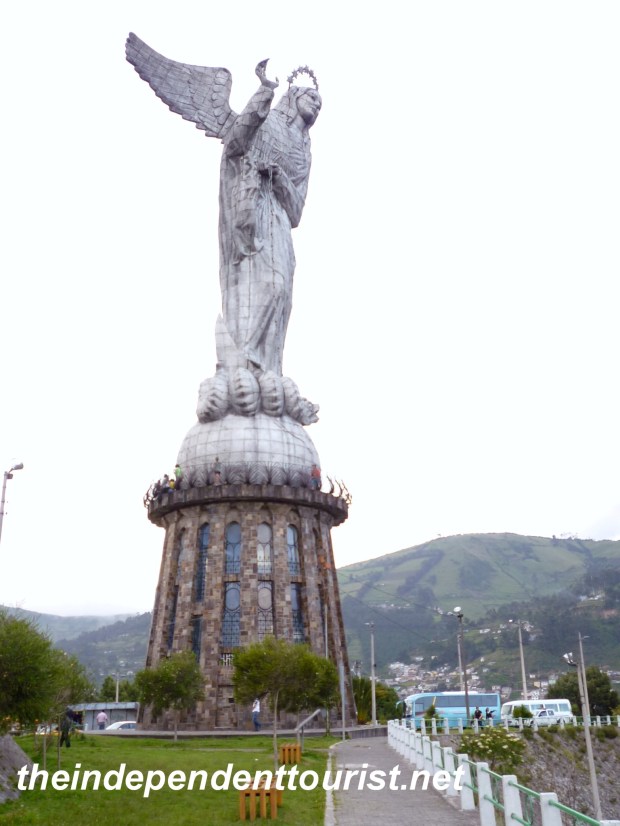
As I peered out the window of my plane as it flew into Quito, Ecuador from Lima, Peru I had the feeling that “this is paradise” –green cultivated fields, forests and striking mountains all around, compared with the desert landscape of Lima. Quito is a large city which runs north and south through large valleys and is surrounded by several volcanoes. The northern part of the city is the business center and more prosperous than the south. El Panecillo (‘little bread”) hill separates the two sections of the city and is crowned with a tall statue of the Virgin Mary, facing north, and immediately overlooking the colonial section. The residents of the south lament that the statue is facing north, and overlooking the blessed prosperity of this area while “turning her back on the south.” El Panecillo can be reached by taxi and has some snack and tourist trinket vendors. The views of Quito are excellent from this location.

El Panecillo_Quito_Ecuador

Virgin Mary Statue on top of El Panecillo.

Colonial District_Quito_Ecuador (2)

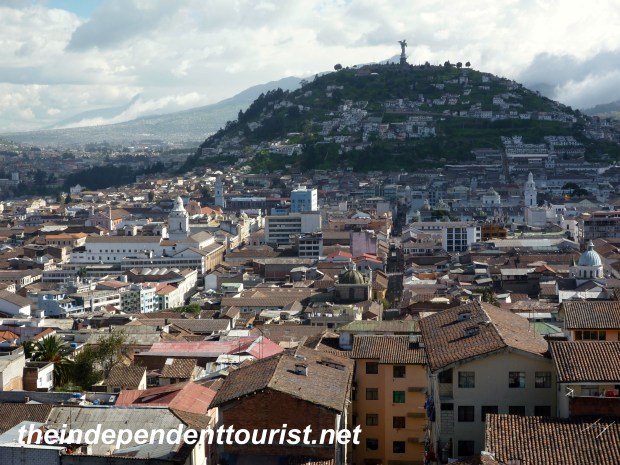
A view of colonial Quito with El Pancello in the distance.

Quito has the largest Spanish colonial district in South America. In the historical area are several beautiful 16th and 17thcentury Baroque churches, convents, old hospitals, and the presidential palace. According to my business partners this area is slowly being refurbished and brightened up, and has become much more vibrant than a few years ago. The cobblestone streets and colonial facades of the buildings give it an old world feel.

Colonial District_Quito_Ecuador (7)

Colonial Quito.

The dominant building in the colonial section is the presidential palace (Palacio del Gobierno), home of the current Ecuadorian president, Rafael Correa. The building is open for tours, but we did not visit. The palace faces the main square, Plaza Grande o de la Independencia. The Cathedral of Quito is also on this square.

Presidential Palace_Quito_Ecuador

Palacio del Gobierno (Presidential Palace).

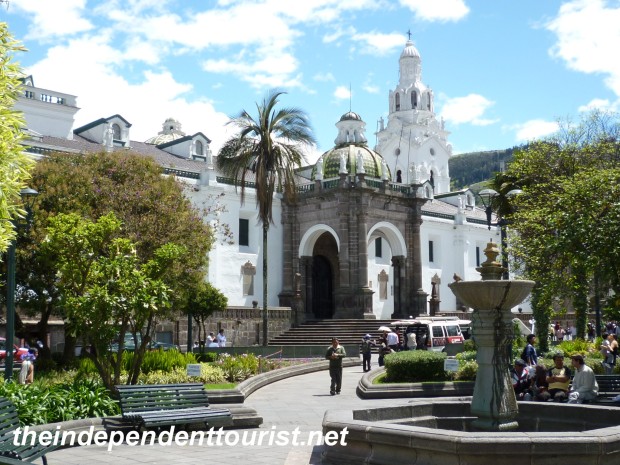
Catedral Metropolitana de Quito_Ecuador

Catedral Metropolitana de Quito.

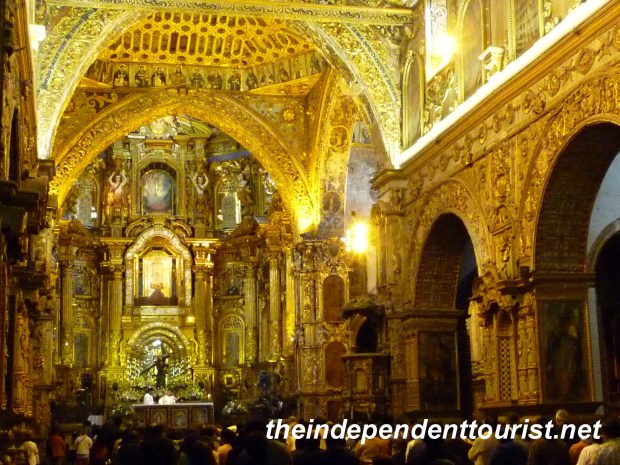
Just a couple blocks south and west of the presidential palace are the Church and Convent of San Francisco, dating from 1536, and the oldest existing church in Quito. The chapel is decorated in beautiful gold gilding.  The nearby cloisters have an interesting museum of religious art ($2 entry fee) from the 17th – 18th centuries and include paintings and drawings from Europe and many are scenes from the life of St. Frances (born 12thcentury). Also included are some alabaster figures made with real human skulls.

San Francisco Convent_Quito_Ecuador (3)

Church of San Francisco, Quito.

San Francisco Convent_Quito_Ecuador

Cloisters of San Francisco Convent, Quito.

Unfortunately no pictures are allowed. It was weird seeing these human-like figures of Christ and saints, knowing that they are partially human with the skulls providing the form for the heads!

On the east side of the street (Gabriel Garcia Moreno) in this area is the San Juan de Dios hospital which was founded in 1565 and was in operation until 1965-400 years! I am glad I live in the era of modern medicine.

Hospital San Juan de Dios_Quito_Ecuador

Hospital San Juan de Dios, Quito.

Hospital San Juan de Dios_Quito_Ecuador (3)

Hospital life in the 1500’s.

Just north of the colonial section is the gothic Basilica (Basilica del Voto Nacional), which looks like a medieval cathedral right out of France. It is actually just 130 years old and is still under construction (not unlike the cathedrals of Europe, some of which took centuries to complete). One can visit the roof for a small fee which provides great views of the city and colonial section, just a few blocks away. It was interesting to walk along the catwalk above the naïve and then climb the narrow ladders out to the rooftop access.

La Basilica de Quito_Ecuador (3)

The Gothic Basilica del Voto Nacional.

La Basilica de Quito_Ecuador

View from the rooftop of the Basilica.

Many of the buildings’ exteriors hide the beautiful courtyards contained within. We ate at a restaurant called Cialcote L, part of Cadena Hotelera which provides an example of the courtyard setting inside the building.

Cialcote L - Cadena Hotelera (2)

Cialcote L Restaurant courtyard.

Other information

Even though it’s almost on the equator, the year-round climate of Quito is very pleasant due to its elevation. Given more time, I would have liked to visit the nearby volcanoes. I stayed at the Radisson hotel, about halfway between the airport in the north part of the city and the colonial old town for about $90 per night. It’s a good hotel with large comfortable rooms and a very good restaurant. At the breakfast buffet, there was a serving container with popped popcorn…it was the first time I had seen popcorn served for breakfast!  I wish I would have had my camera handy! Taxis are pretty cheap in Quito, it was only $5 from my hotel to the colonial quarter, about a 15 minute ride, and $7 from the hotel to the airport, about 20 minutes away.

Safety

I was cautioned to pay attention to my small daypack which I carry when touring, which I did, but I never felt threatened or nervous in the colonial Quito, especially in the daytime. There were a few other tourists milling about also, but not many. I took several walks around the hotel at night and felt very safe, that part of the city is modern and feels about like any other large city. As always, pay attention to your surroundings and carry as little cash and valuables as possible.

Mitad del Mundo, Ecuador – The Middle of the World (Almost)

Location of Mitad del Mundo, near Quito, Ecuador

During a May 2011 business trip to Quito, Ecuador I visited Mitad del Mundo on a Saturday morning. This spot marks the location of the equator—half way between the north and south poles. Mitad del Mundo is about 45 minutes by car north of Quito. I hired the car and driver from the Radisson Hotel (where I was staying) for $70, which also included a visit to the old colonial part of Quito. A local bus would have been much cheaper, but I didn’t have the time. I enjoyed the drive out to the monument—through a valley with farms, small towns and many nice townhouses and homes.

Mitad del Mundo monument

The monument was built during the years 1979 to 1982. I’ve heard (according to those with the latest GPS tools), that the exact location of the equator is a few hundred yards to the north, but given the earth’s equatorial circumference of about 24,901 miles, the variance is less than .0006%—not enough for me to lose any sleep.

The equatorial line - right side is nothern hemisphere, left side is southern hemisphere

The site is basically a park that has a large stone monument noting the latitude and the hemispheres. The site entry cost was $2 (Ecuador uses the U.S. dollar) and there is another charge of $3 to go up to the observation platform on the monument. There are several little shops and restaurants, and a museum (where the equator actually is), so one could make a day of the visit. I got there about 10 am and shops were just opening for the day.

Shops at Mitad del Mundo

Additional shops at Mitad del Mundo

My driver asked if I also wanted to visit a nearby volcano, Puluhahua, to which I agreed. Ecuador has61 volcanoes (with 15 more on the Galapagos Islands), several of which surround Quito. The short drive up to the old crater from Mitad del Mundo was a bit like going into the alpine tundra in my home state of Colorado. If I hadn’t learned that Pululahua was a volcanic crater (3,356 meters elevation), I would have thought it was just a high small valley surrounded by peaks, but as we learned a little more from a local guide, I could more clearly see the crater, which last erupted in 500 BC.
Farming in Pululahua crater

On the way down from the crater, I caught sight of my first roasted cuy (guinea pig) by the side of the road—as tempting as it was, no one was there to sell the treat (darn), and I wasn’t quite ready for lunch.

Roasting cuy...yum!

I enjoyed this little trip, just to get into the countryside of this beautiful country for a few hours.

Temple of Poseidon, Greece.

Day Trips from Athens – Temple of Poseidon

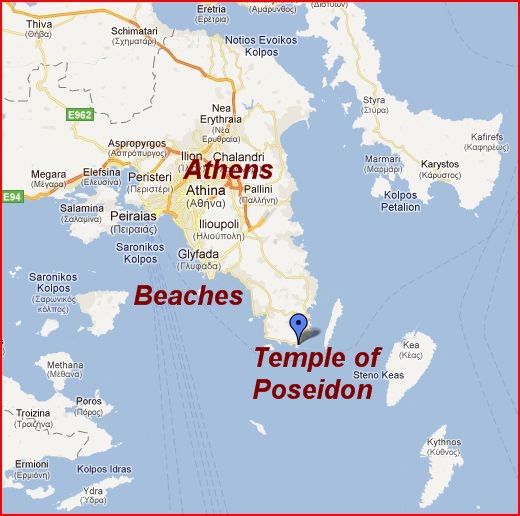
Temple of Poseidon, Greece Map.

The Temple of Poseidon is about an hour south of Athens by car.

South of Athens, at the end of a peninsula, lies the town of Sounion, and the majestic ruins of the Temple of Poseidon on a cliff overlooking the sea.  It’s about a one hour drive from the city and about a half hour from the Athens airport.

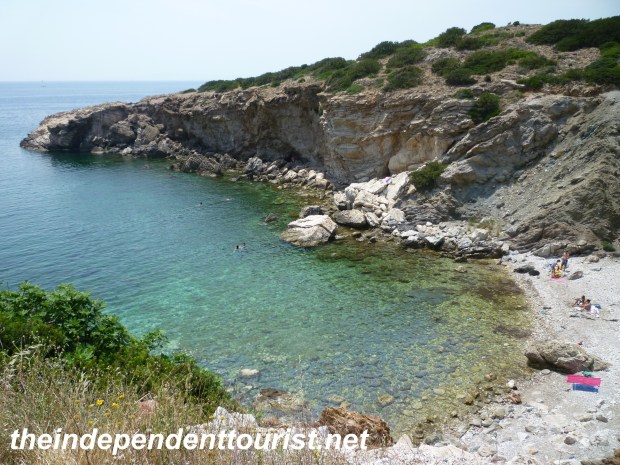
The west coast of the peninsula is a long string of beautiful coves and beaches. The closer to Athens one gets the busier the beach, especially on weekends. We were there on a Sunday in June, and the northern beaches were packed, but those nearer to Sounion were pretty quiet.

Sounion, Greece

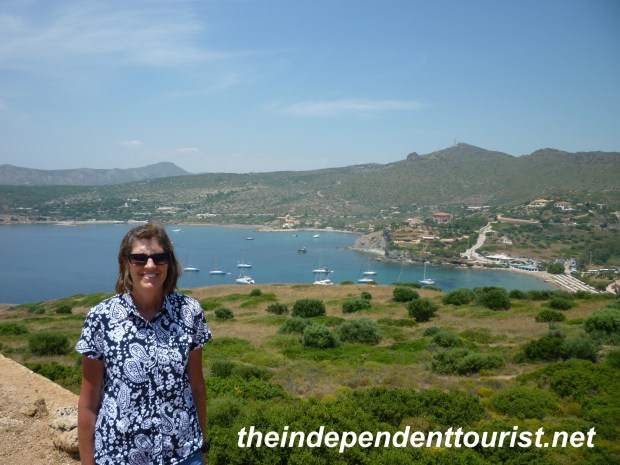
The bay and beach of Sounion

Beach, Sounion, Greece

One of the many coves and beaches near Sounion

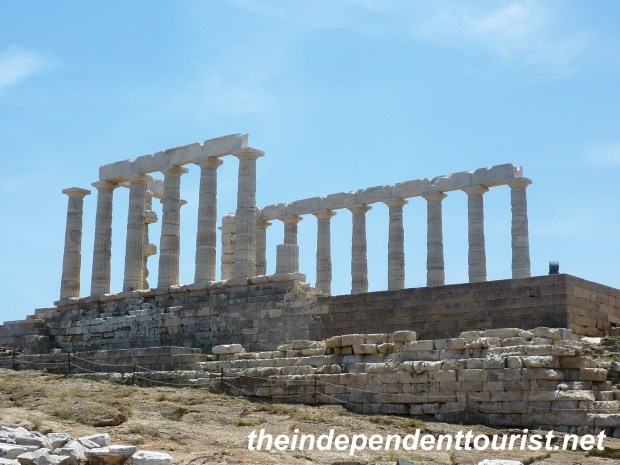
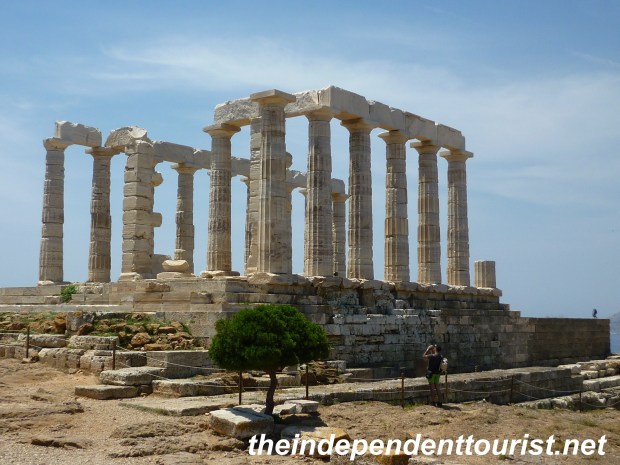
The temple was built between 444 and 400 BC.  It is quite well-preserved with 15 original columns still standing. Anciently, to sailors returning to Athens, the Temple of Poseidon was a landmark that indicated they were almost home.

Temple of Poseidon, Greece

Temple of Poseidon

Temple of Poseidon, Greece.

View of Temple of Poseidon from the stoa.

Temple of Poseidon, Greece

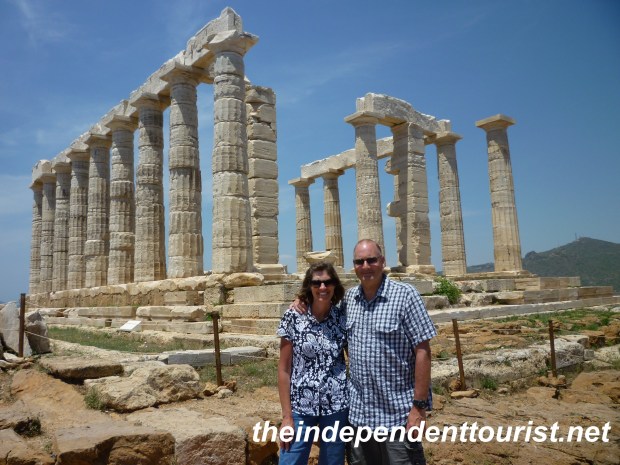
The original Doric columns of the Temple of Poseidon.

The best way to visit this area is with a rental car. If you are picking up a rental car at the Athens airport or dropping one off, and have a few hours, take the time to visit this area. We’re glad we did.

Treasury, Delphi, Greece

Day Trips from Athens – The Ancient Sacred Site of Delphi

Delphi Greece Map, Day Trip from Athens

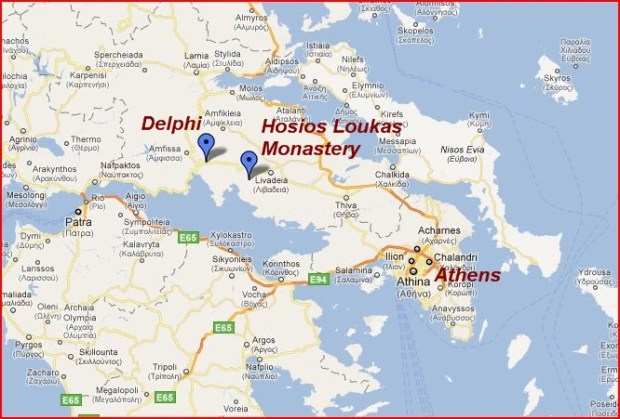
Delphi is about 2.5 hours northwest of Athens.

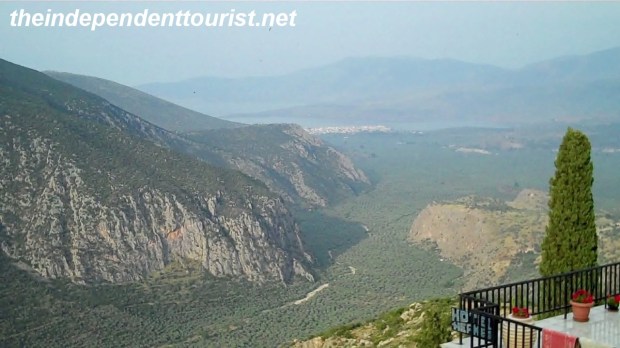
About 190 km northwest of Athens is the ancient center of the world, Delphi. We drove up from Athens (via a stop at Hosios Lukas monastery—see separate post). We stayed at the Hotel Varonos located on one of the two main streets in modern Delphi. This hotel has nice rooms, with decent size bathrooms, and our room had a good view of the large valley leading from the sacred city to the Gulf of Corinth in the distance to the south.

Delphi Greece Valley

Valley by Delphi with olive tree groves.

Although this post is entitled “Day Trips from Athens,” I highly recommend staying overnight in Delphi if possible, rather than doing a day trip from Athens.

Tholos, Delphi, Greece

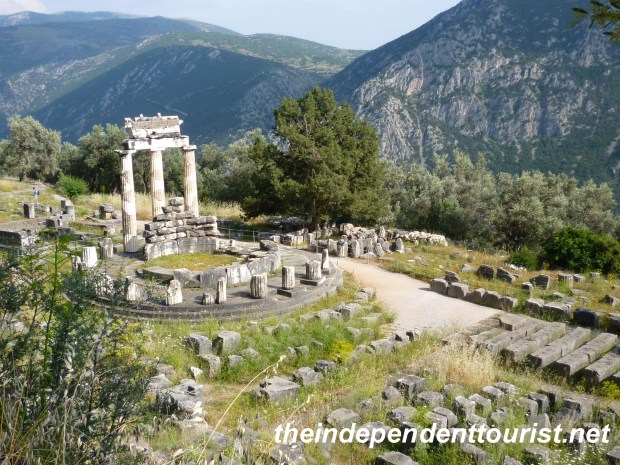
Tholos – Delphi (about 400 BC).

We did our visit in two increments–we visited the lower site (known as the Sanctuary of Athena), which is free of charge and therefore has less restricted visiting hours, upon our arrival in the afternoon. The lower site contains what may be the most famous sight in Delphi, the circular Tholos (about 400 B.C.) which is part of the Temple of Athena Pronaia. There are other ruins in the lower site also, including other structures associated with the temple, and a gymnasium foundation and circular pool.

The next morning we visited the main upper site. By staying in town, we were able to be at the gates of the ancient site early enough to avoid the crowds and enjoy the stunning ruins in peace. Please note that as of June 2011, the main site’s hours were shortened (closing earlier in the afternoon–around 3 pm) due to government cost-saving measures. When the gate opened at 8:30 am the line was short–perhaps about 10 people. One can walk from the modern town to the ancient ruins in no more than 10 minutes, along the main road which ancient Delphi straddles. Parking is limited (just a few small lots along the curving road), providing another reason to get there early before the tour buses take over.

Sacred Way, Delphi, Greece

Numerous offerings of the faithful were placed along the sides of the Sacred Way

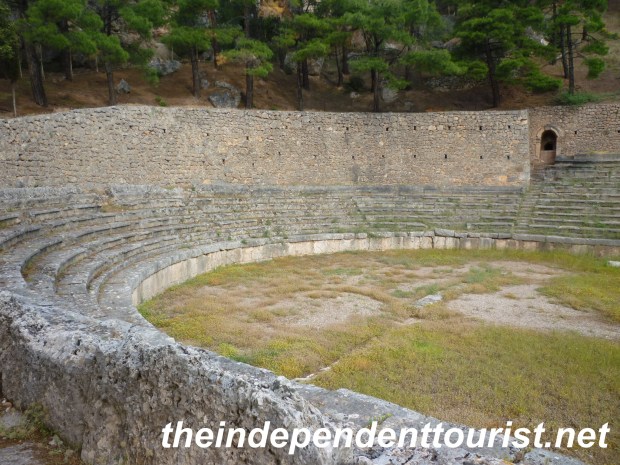
Stadium, Delphi, Greece

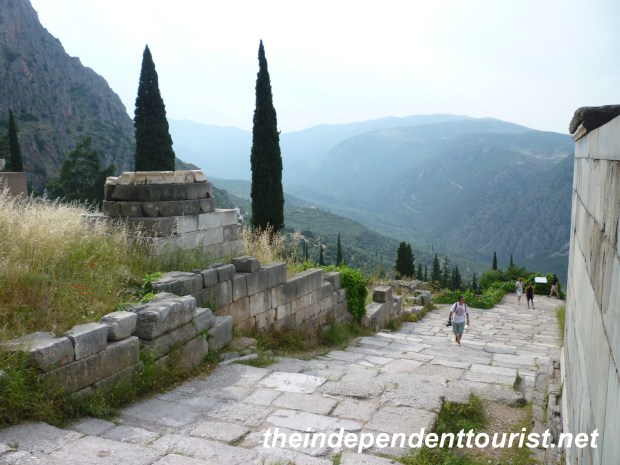
Delphi Stadium (2nd century BC).

After purchasing tickets (€6 each) at the entrance,we hiked along the Sacred Way all the way up to the stadium, which is the highest ruin on the hill (Delphi sits on a steep slope), and then worked our way down through the various monuments, taking in the grandeur of the setting and ancient ruins.

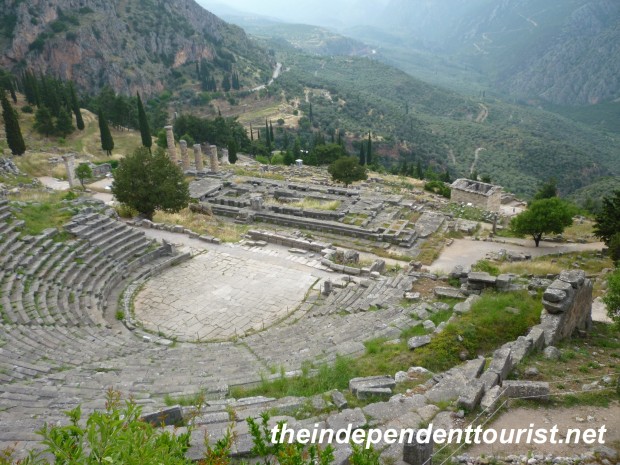
Roman Theater, Delphi, Greece.

The Roman Theater (seated 5,000) with a lovely view.

The location of ancient Delphi is quite beautiful, on a slope surrounded by mountains, and near a small spring (the Castalian Fountain). The fountain was used for purification anciently. From the well-preserved theater, the view overlooking the valley is a treat. There is also museum at the site, which we did not take time to visit.

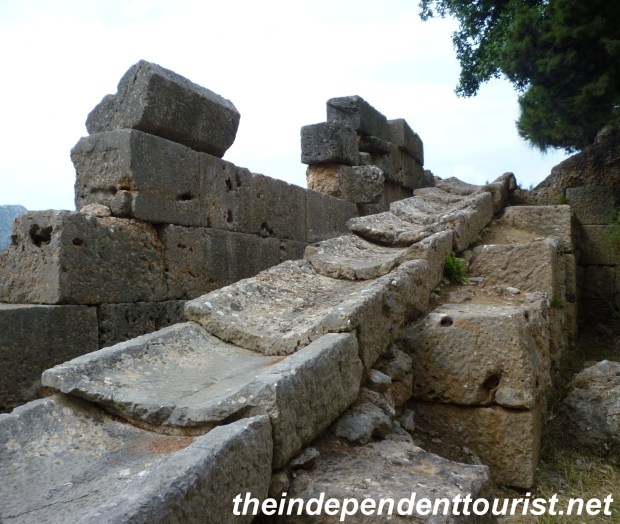
Delphi, Greece.

Stone drainage channel near Sacred Way.

Short History

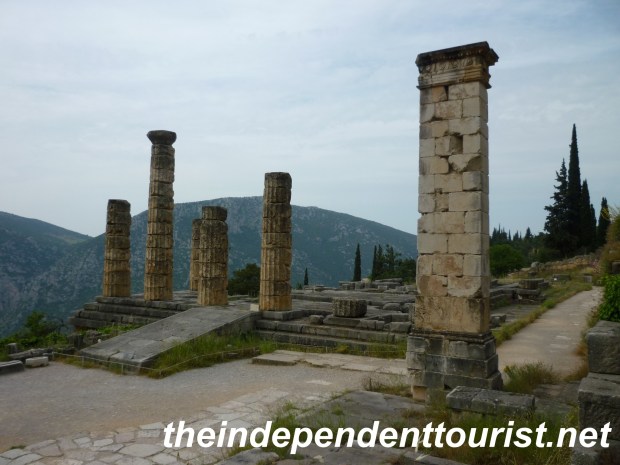
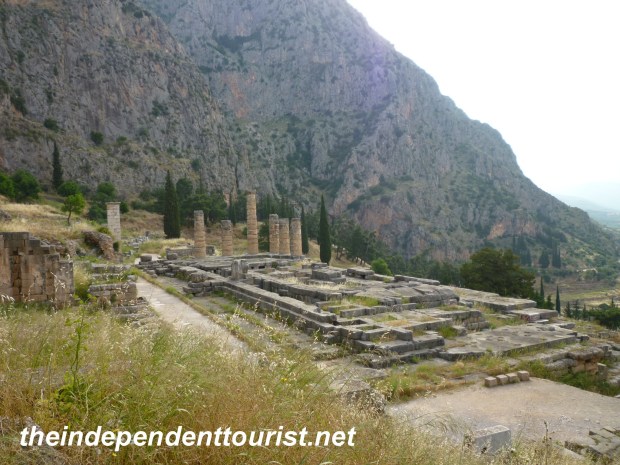
Temple of Apollo, Delphi, Greece.

Another view of Temple of Apollo.

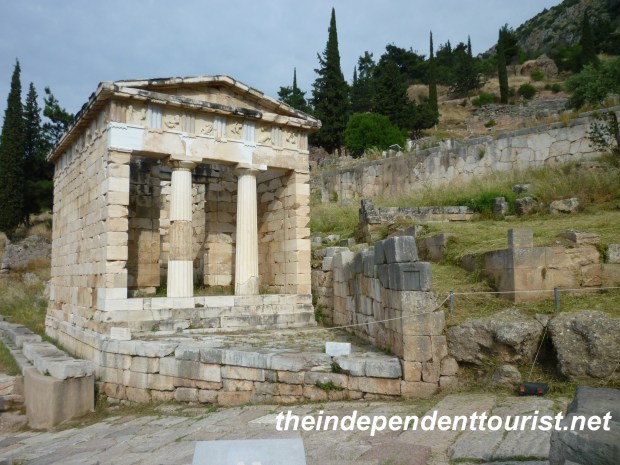
Although the area was originally settled by the Mycenaeans around 1500 BC, the worship of Apollo began in 7thcentury BC. The sovereign god of Delphi was Apollo, who guaranteed the enactment and observance of sacred laws, which were at the heart of the purpose of the great Oracle and sacred sanctuary. Government leaders and ordinary people from all over the Mediterranean region would come to the Sanctuary to seek the assistance of Apollo in matters of state and even personal problems. In order to hear a prophecy, the petitioner had to pay a special tax, go through a purification process and offer sacrifices. Greek cities also made offerings, housed in the many temple-like treasuries along the Sacred Way.

Treasury, Delphi, Greece

Athenian Treasury – Delphi.

Temple of Apollo, Delphi, Greece.

Temple of Apollo, Delphi.

The famous Oracle, believed to be in a sanctuary below the Temple of Apollo, would inhale the earth’s vapors (through a gap in the ground) and chew on bay leaves (Apollo was associated with the bay or laurel tree), then go into a trance and would provide unintelligible prophecies. Priests would interpret the prophecies, but their interpretations were often vague. Delphi, along with the rest of Greece, came under Roman domination in 146 BC. The riches of the city must have been amazing at their height. These riches were looted Roman leaders by several times, but owing to the vastness of its treasures, even during the reign of Constantine the Great (324-337 AD) there were still many works of art which were transported to Constantinople. The Oracle continued to function until 394 AD when pagan religious practices were largely abandoned as Christianity spread in the Roman Empire. The site of Delphi was buried over the centuries by earthquakes and landslides and a village was built on the top of the ruins. Eventually (late 1800’s) the modern village was relocated, and more thorough excavations by the French brought to light the incredible archeological artifacts visible to tourists today.

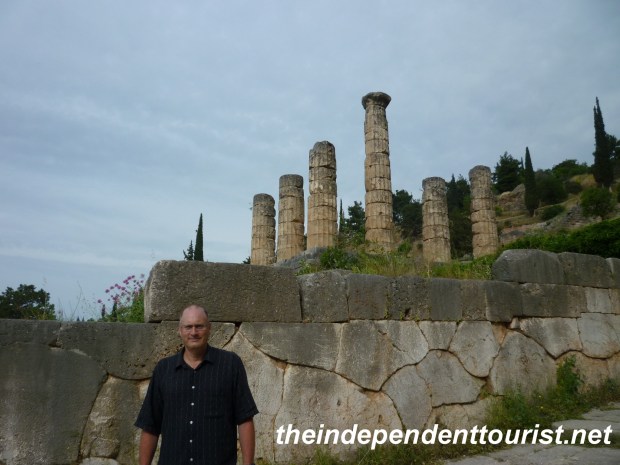
Temple of Apollo, Delphi, Greece.

The retaining wall of the Temple of Apollo – impressive for its careful construction, note how polygonal stones fit together (4th century BC).

Reference: Delphi: The Archeological Site and the Museum, published by D. Haitalis, Athens, Greece, 2008.

Day Trips from Athens – Hosios Lukas Monastery

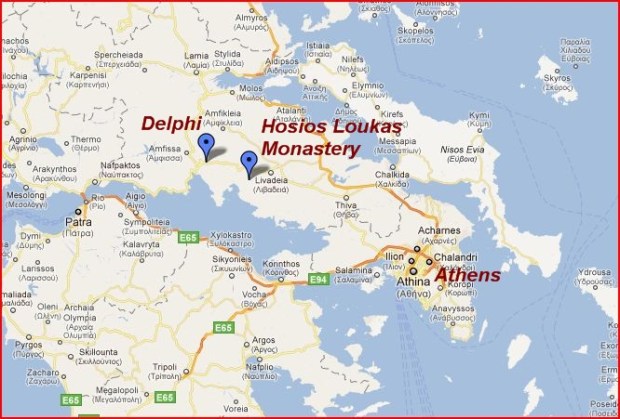
Map of day trips from Athens

Location of Hosios Lukas Monastery, about 2 hours from Athens.

Hosios Lukas Monastery is on the way to Delphi from Athens (about 152 km northwest), and takes about two hours by car. One of the advantages of renting a car is visiting sites like Hosios Lukas, which most bus tours bypass on their way to Delphi. Upon our arrival at the Athens airport (from Naxos Island) we rented a car from Auto Union through Economy Car Rentals, a European car rental consolidator. They met us at the airport upon our arrival and drove us to their off airport office.

Hosios Loukas Monastery (9)

View of the Refectory – Hosios Lukas Monastery.

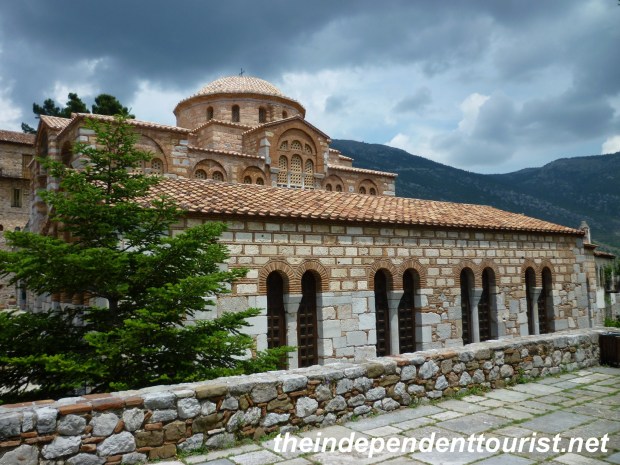
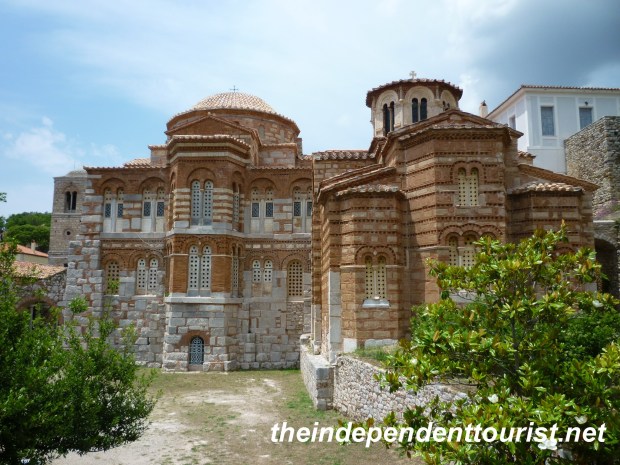
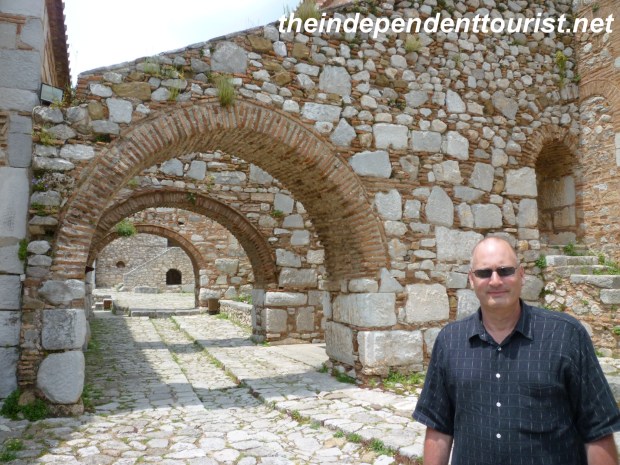
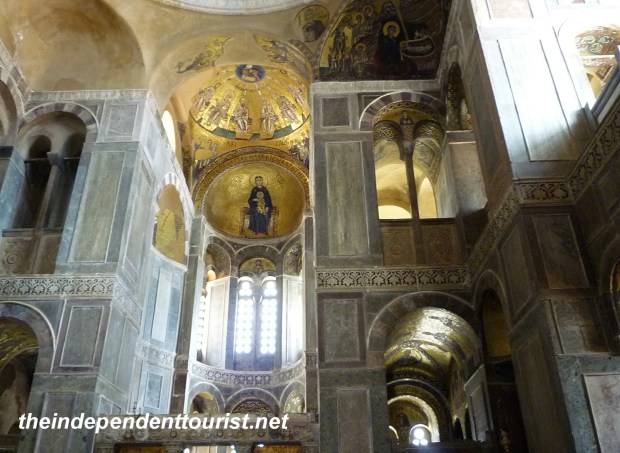
The monastery is just south of the town of Distomo, and about a 15 minute detour from the main route between Athens and Delphi. The monastery is an excellent example of Byzantine architecture and is known for its gold mosaics, wall paintings of the Katholikon (main) church, and 11th century frescoes in the crypt. Unfortunately, some of the mosaics were destroyed in an earthquake in 1593, but even so many remain. In addition, the monastery’s beautiful exteriors are a mix of red brick and huge stone blocks (from the nearby ancient Greek site of Steirion).

Hosios Lukas Monastery, Greece.

The beautiful stone work on the exterior of Hosios Lukas Monastery.

The site is on the slope of Mt. Elikon overlooking a green valley with high peaks all around. The monastery is still inhabited by a few monks.

Hosios Lukas Monastery, Greece.

The flying buttresses of the Hosios Lukas Church (note the stone work).

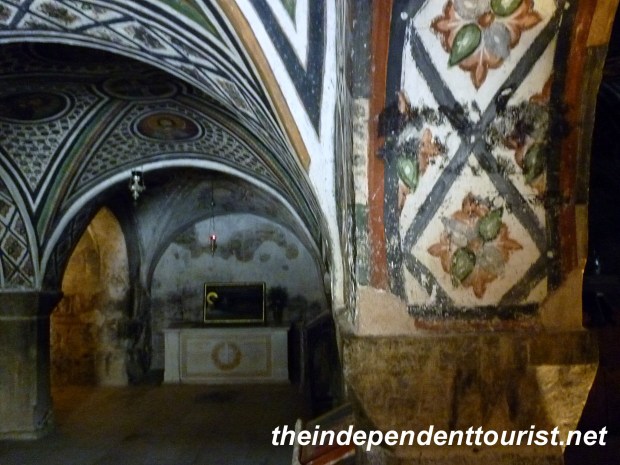
The monastery was founded in 961, and is named for Luke the Hermit (born 896 AD), who was from nearby Delphi. When he was 49 years old, he settled on the spot of the current monastery, and lived there until his death in 953. He became famous for his prophecy of the liberation of Crete from the Arabs, which was realized within 20 years of his prophecy. His tomb is in the crypt below the main church. We are able to walk into the crypt and wander through the paintings without supervision.

Hosios Lukas Monastery, Greece.

The tomb of Lukas in the crypt of main church

Crypt, Hosios Lukas Monastery, Greece.

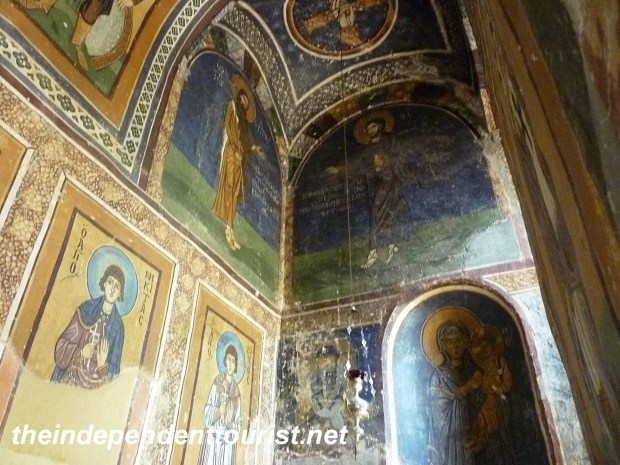
The 11th century frescoes in the main church crypt.

Most of the monastic buildings visible today date from the 11thcentury or later. The Hosios Lukas church became a model for other Greek churches of the period. A second smaller church, called Church of the Panaghia (Church of the Virgin Mary, or Church of Theotokos) is connected to the main church on the northeast corner. This church was started during Lukas’ lifetime, but was not finished until two years after his death. While it has a more austere interior, it still has some great wall paintings. In the connection between the two churches are relics of Loukas, including his hand bones.

Hosios Lukas Monastery, Greece.

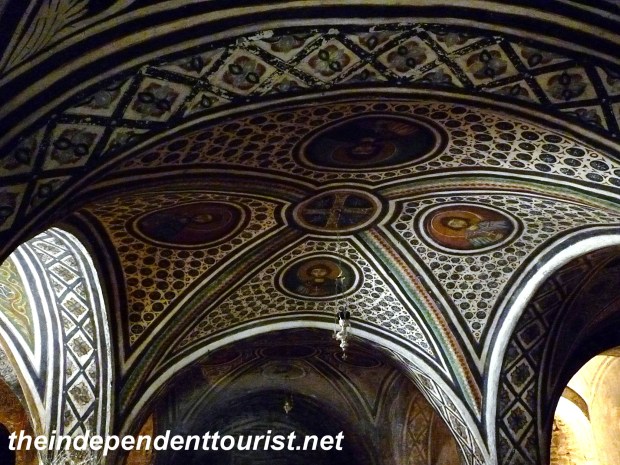
Interior mosaics of Hosios Lukas Church.

Hosios Lukas Monastery, Greece.

Interior paintings of Hosios Lukas Church (11th century).

Hosios Lukas Monastery, Greece.

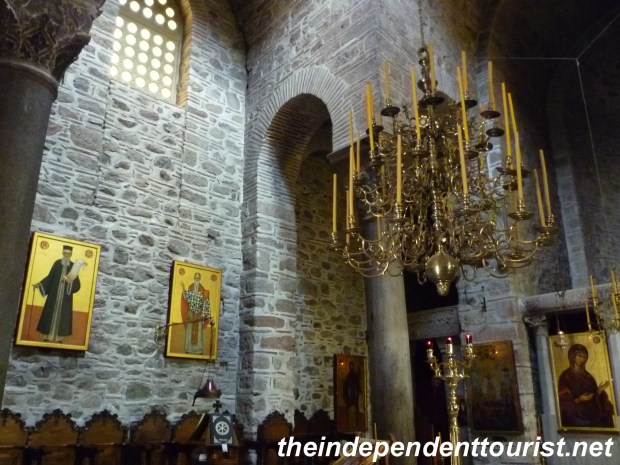
Church of the Panaghia interior.

Other interesting buildings are near the northeast entrance to the monastery, around the courtyard–including a stable, monk cells, and a hearth room blackened by soot from the warming fires over the centuries.

Hosios Lukas Monastery, Greece.

Monk walking the grounds of the monastery.

Hosios Lukas is only about 30 minutes from Delphi and well worth the stop. There is no entry fee and relatively few visitors, which made the visit very enjoyable.

References:  The Monastery of Hosios Lukas, Brief Illustrated Archaeological Guide, by Paul Lazarides, Hannibal Publishing House, Athens (no date given).

Fodor’s Greece Travel Guide, 2010.

Southwestern England Part 3 – St. Michael’s Mount

St. Michael's Mount England (2)

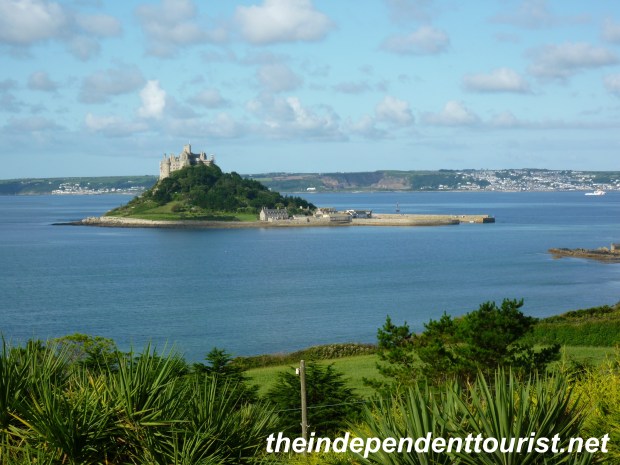
St, Michael’s Mount, in Cornwall, England.

St. Michael the Archangel in Christianity is the patron saint of high places. There are at least three major places in Europe that are holy sites associated with St. Michael: Mont St. Michel in Normandy, France; Skellig Michael off the southwest coast of Ireland; and St. Michael’s Mount near Penzance (Cornwall) England. Interestingly, all are islands, even though Mont St. Michel and St. Michael’s Mount were at one time part of the mainland. They are all monasteries and have an isolated feel about them, even with the visitors.

St. Michael's Mount_England_Map

Location of St. Michael’s Mount, Cornwall, England.

I have visited Mont St. Michel in France, and viewed Skellig Michael from a distance, longingly wishing I could visit (it was too early in the year and the sea was too rough).

St. Michael's Beach

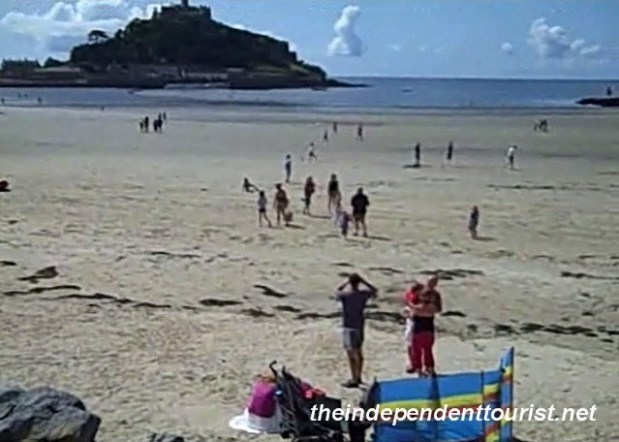
The beach at Marizion – St. Michael’s Mount in distance.

St. Michael’s Mount in England is impressive too and is located in a beautiful bay near the town of Penzance, which has a nice sandy beach—one of the warmest spots on the English coast—and the first place spring arrives in England.

We visited in August, the weather was in the 70’s F and the beach was pretty busy with English folks on holiday. Penzance is steeped in history- including raids of Barbary pirates and so is St. Michael’s Mount. It was a Benedictine monastery and founded in the 11th century. It had a close connection in medieval times with Mont St. Michel in France, as a subordinate sister monastery. The mount has been privately owned by the St. Aubyn family since the 1600’s but visitors have access through the UK National Trust, which manages many historical sites throughout the country (buy an annual pass if you are visiting several historical sites).

Visiting St. Michael’s Mount

St. Michael's Mount England (3)

With the tide in, a boat is needed to reach St. Michael’s Mount.

St. Michael's Mount England (4)

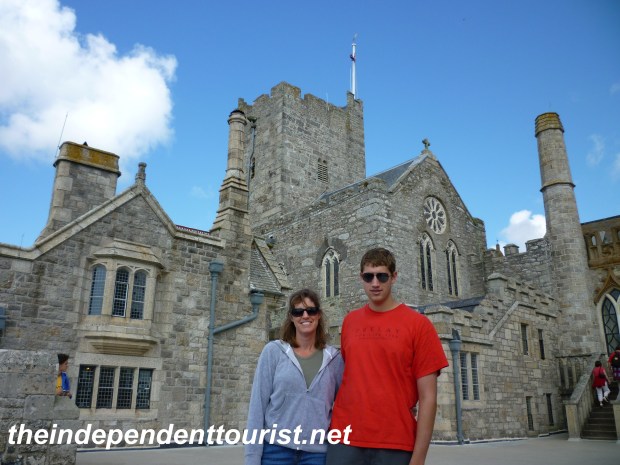
The Church at St. Michael’s Mount.

St. Michael's Chapel

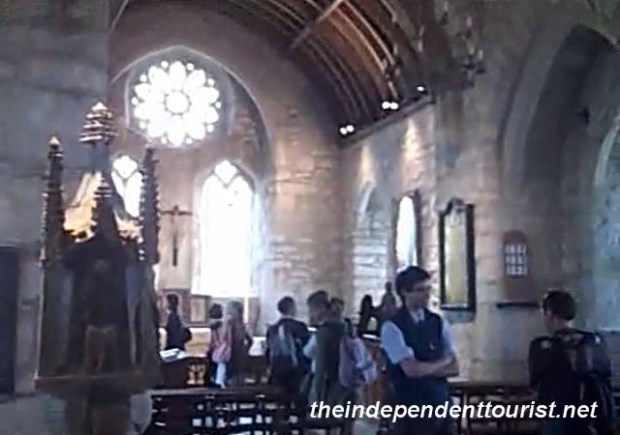
Interior of St. Michael’s Chapel.

St. Michael's Mount England (6)

View of courtyard, St. Michael’s Mount.

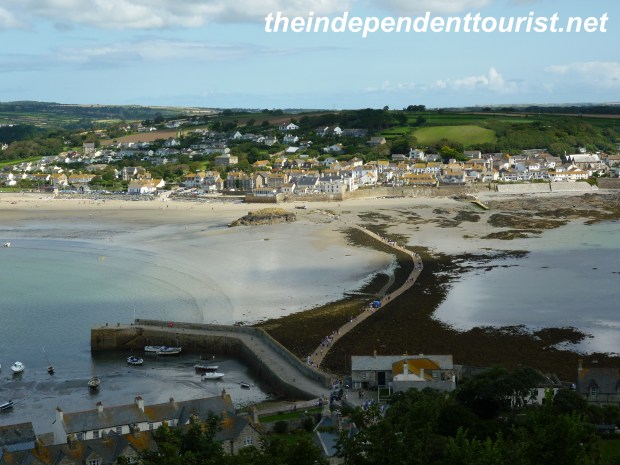
Depending on the time of visit, one can either walk out to the Mount, or take a boat (which does not operate in winter). We did both. The tide was in when we left in the morning (see picture above) and so we took a boat ride out to the harbor on the island. By the time we were ready to leave, the tide had gone out and we were able to walk back on the cobblestone path along the seabed (picture below). There is plenty of parking in Marazion, the small town opposite the Mount.

St. Michael's Mount England (7)

The pathway to St. Micahel’s Mount with the tide out.

St. Michael's Mount Castle

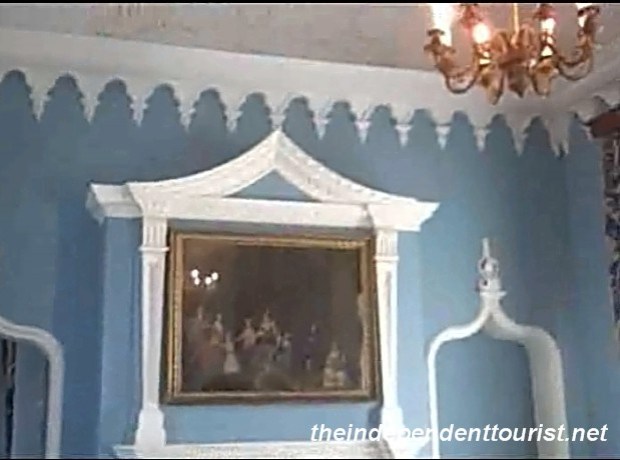
A castle room – St. Michael’s Mount.

St. Michael's Mount Castle 1

Another castle room – with the look of Wedgewood.

Once on the island, the ticket office is next to the harbor. There are several different tickets available: Castle only, Garden only and Castle and Garden. We chose the Castle only, but had a nice view of the Garden from the south side of the Castle walls. After purchasing our tickets we made the hike up the hill to the site. St. Michael’s Mount is about 250 feet in elevation and it’s a steep stone path to the top. Pictures of the interior are tightly controlled, but I was able to get a few. The main sights are the Castle and Chapel, in addition to the Gardens. Morning is a great time to visit for pictures of the island and the surrounding countryside. There is a gift shop and restaurant on the Mount near the harbor.

For more information, visit The National Trust.

The Byzantine Churches of Naxos Island, Greece

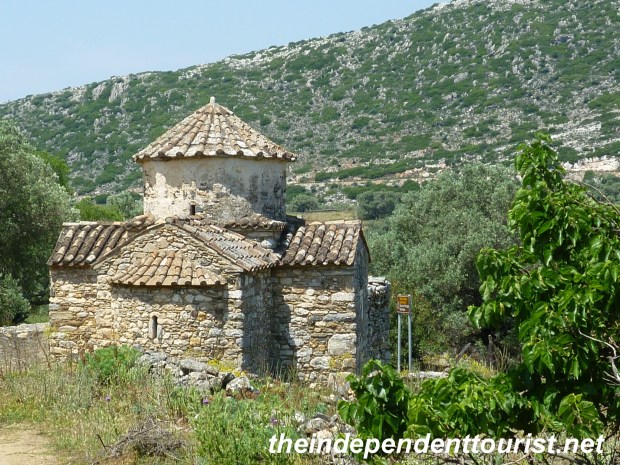
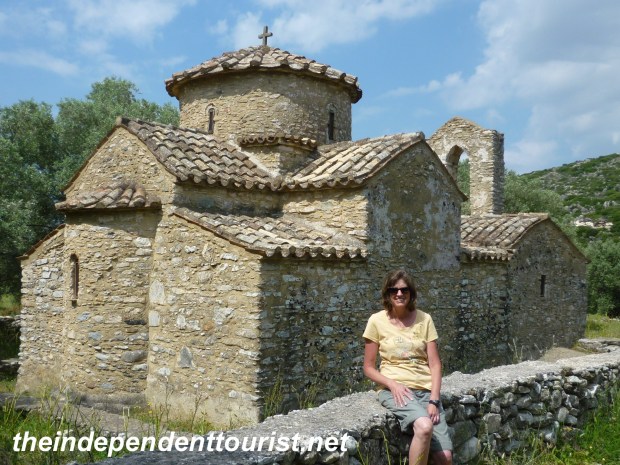
Church of Ayios Georgios Diasoritis_Naxos (6)

Church of Ayios Georgios Diasoritis, Naxos.

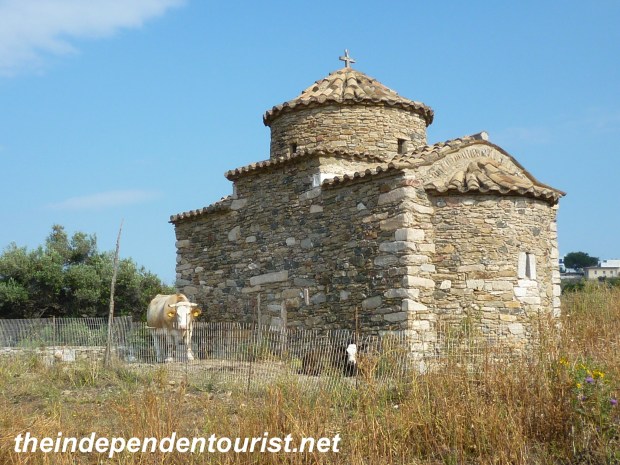
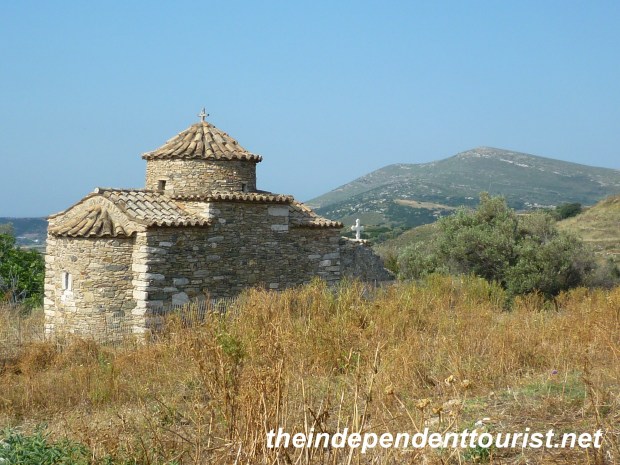
Small historical sights dot Naxos. Some of the best historical features are the little churches which were built during the Byzantine era (the Eastern Greek-Speaking Roman Empire) from the 6th to 15thcentury A.D.  Most of these little churches will not be mentioned in U.S. guide books, pick up (usually free) a local guidebook upon arrival from your host (see reference below).

Church of Ayios Nikolas_Naxos (4)

Church of Ayios Nikolas, Naxos, now in a cow pasture!

Church of Ayios Nikolas_Naxos (5)

Another view of Ayios Nikolas Church, Naxos.

Naxos Island Map

Naxos Island Locations.

Some of the churches are a little walk from the main road or parking, a few are right off the main roads between Naxos Town, Chalki, Moni and Apeiranthos. Many contain wall paintings. Some of the churches are open only a few hours a day, so plan your visit accordingly. We just missed getting in the Church of Panagia Damiotissa which closes at noon, but we were able to go into the Church of Panagia Dosiani (on the same road as Panagia Damiotissa and near the town of Moni), which dates to the 7thcentury A.D., and is one of the oldest Christian churches in existence. It is open mornings and afternoons. There are somewhat faint (7th & 8th century) frescoes on the walls and ceilings of the little apse (we could not take pictures inside). I loved seeing these paintings which have survived pretty well for over 1,300 years!  A small donation is requested at the door.

Church of Drosiani_Naxos (3)

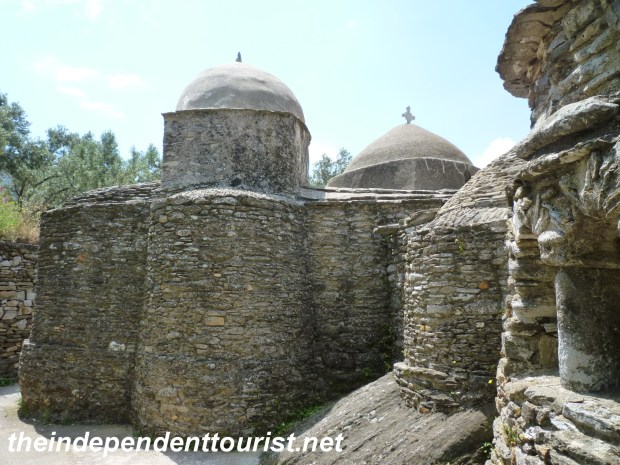
The ancient stone work of Panagia Drosiani, Naxos.

Church of Drosiani_Naxos (2)

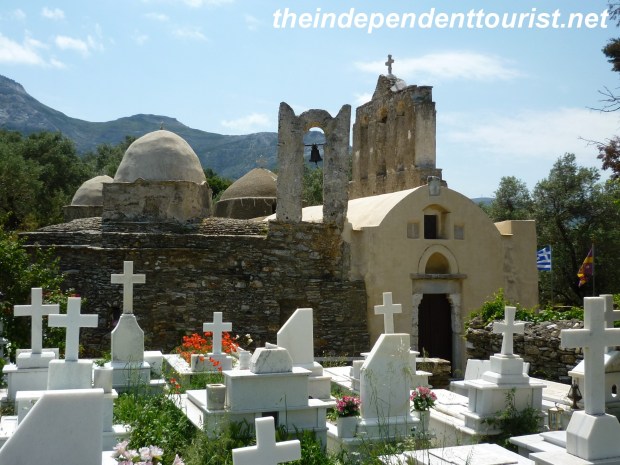
The cemetery of the Church of Drosiani, Naxos.

Church of Panagia Damiotissa_Naxos (1)

Church of Panagia Damiotissa, Naxos Island.

There are also small Venetian towers (forts) all over the island. The Venetians ruled Naxos from the 13th to the 16thcenturies. The forts could send signals to each other in times of danger.  Most are now private residences, but a few can be visited. These buildings form the centers of Naxos town and Aperienthos.  It’s fun to just drive around the island and let the little brown historical signs guide your stops along the way.

Reference:   Naxos Guidebook, 2009; www.redguidebooks.gr