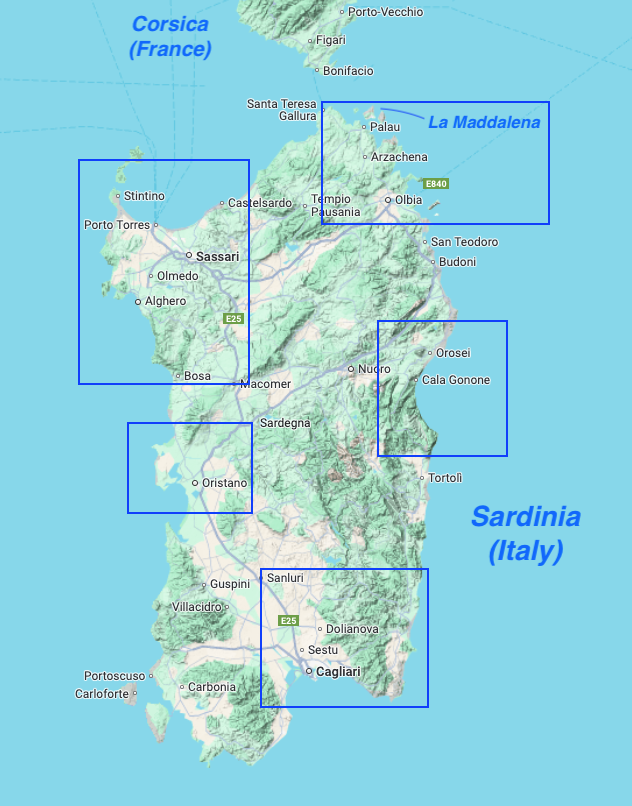
We started our Sardinia vacation by flying (from Frankfurt) into Olbia on the northeast coast of Sardinia. This was a great place to begin (and end) our Sardinian adventures. Olbia is ideally situated near the famous Costa Smeralda and the La Maddalena Archipelago, as well as other costal towns, archeological sites and beaches. (See here for an overview of regions we visited in Sardinia, we toured the island in a counter-clockwise route).
Olbia
While not a major tourist destination itself, Olbia has a lovely old town and is situated on a beautiful harbor. We spent our first night here, enjoying dinner in one of the many restaurants on the main pedestrian street and browsing the vendor booths lining the harbor promenade – a very festive atmosphere.
Views of Olbia and harbor, with Tavolara Island (right), the mountainous island with more beautiful beaches in the far distance.
The next morning we drove north toward Porto Cervo, the heart of Costa Smeralda, stopping at beaches along the way. Our first day started out cool, windy and slightly rainy, but by the afternoon it was warm and sunny. The weather didn’t stop us from enjoying the sights along the coast and wasn’t a factor for the rest of our trip.
Costa Smeralda
Costa Smeralda got its name and started becoming fashionable in the early 1960’s, due to development efforts led by Prince Karim Aga Khan. It’s maintained that status ever since. Our stay here was brief, given the many areas of Sardinia we wanted to visit. Below are a few images of the beautiful coastline of this region.
This sign, along the coastal road from Olbia to Porto Cervo lets you know you’re entering the fabled Costa Smeralda.
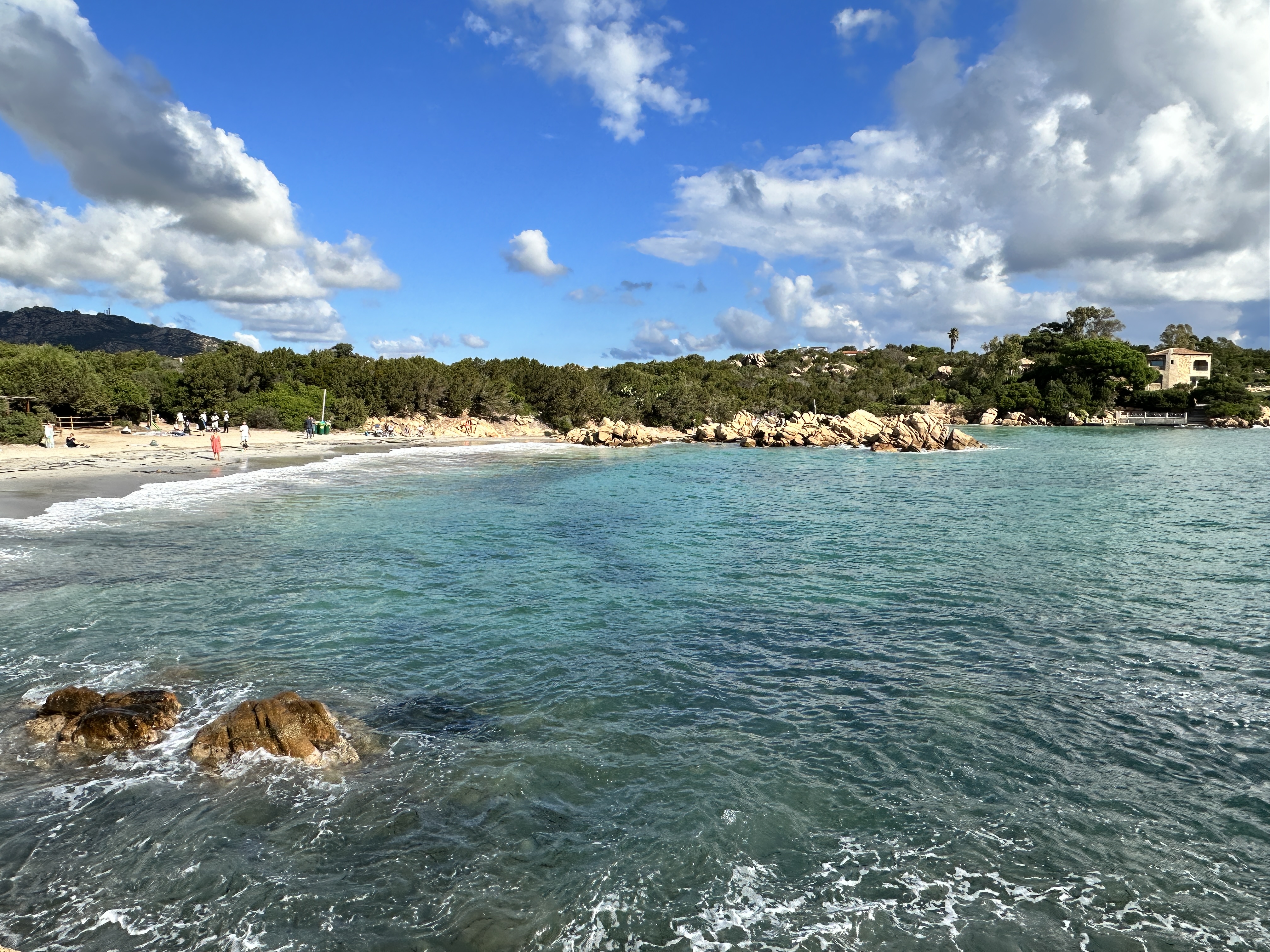
Capriccioli Beach
Spiaggia Principe, considered Sardinia’s most famous beach (although it’s only one of hundreds as beautiful), on Costa Esmarelda.
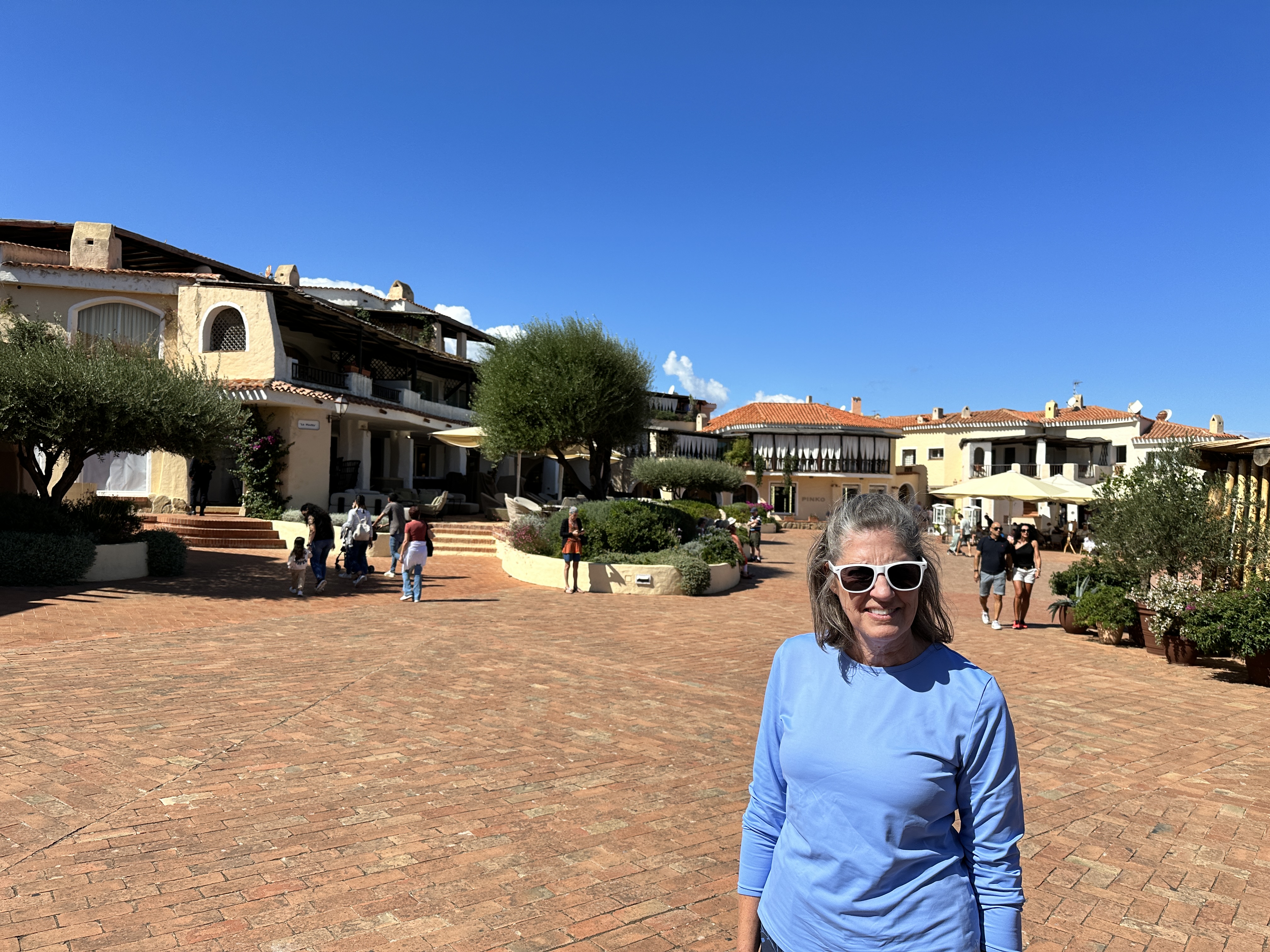
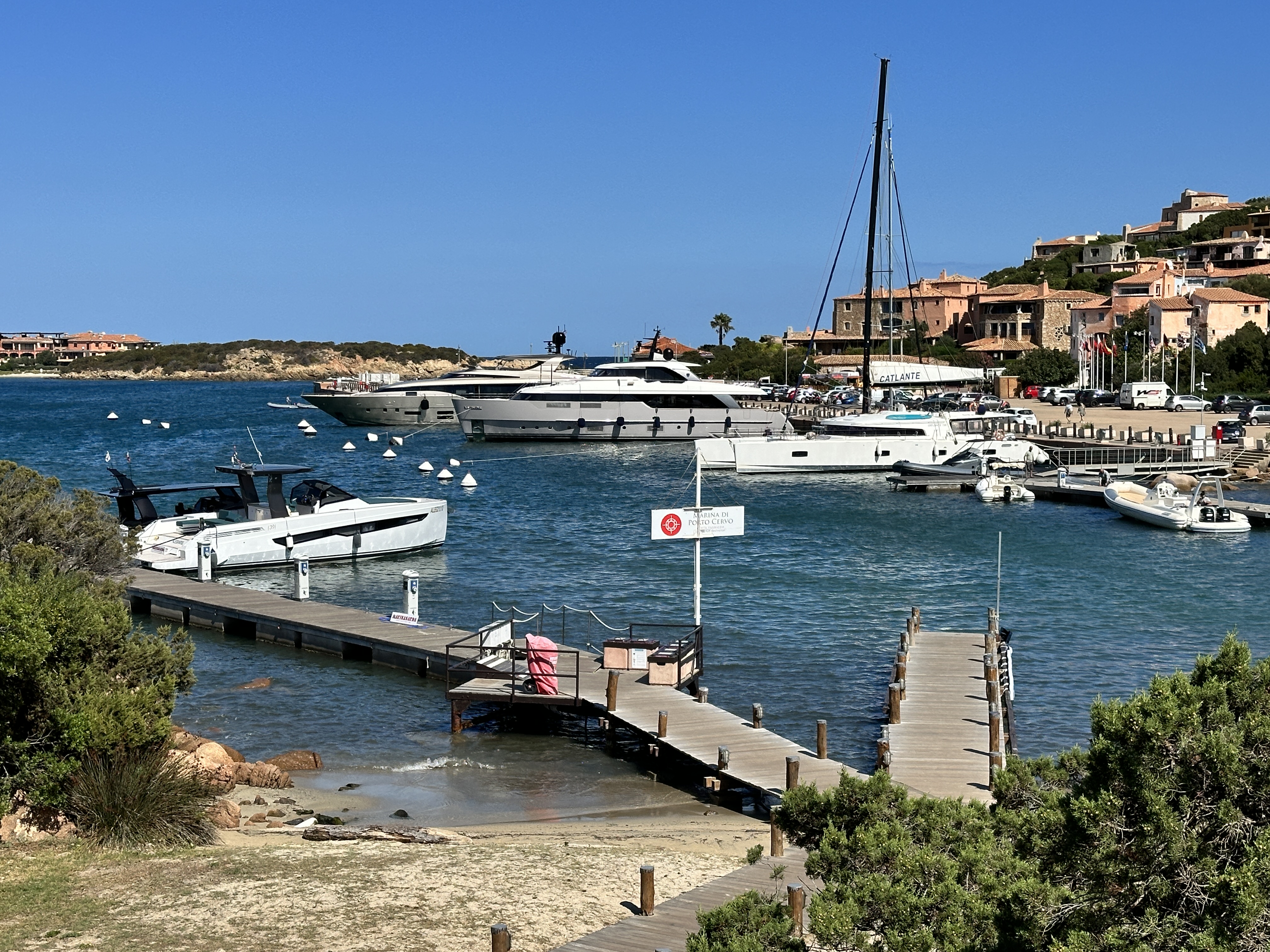
Porto Cervo, the center of Costa Smeralda, was pretty quiet in early October. We enjoyed walking around the harbor and the town, with many expensive shops.
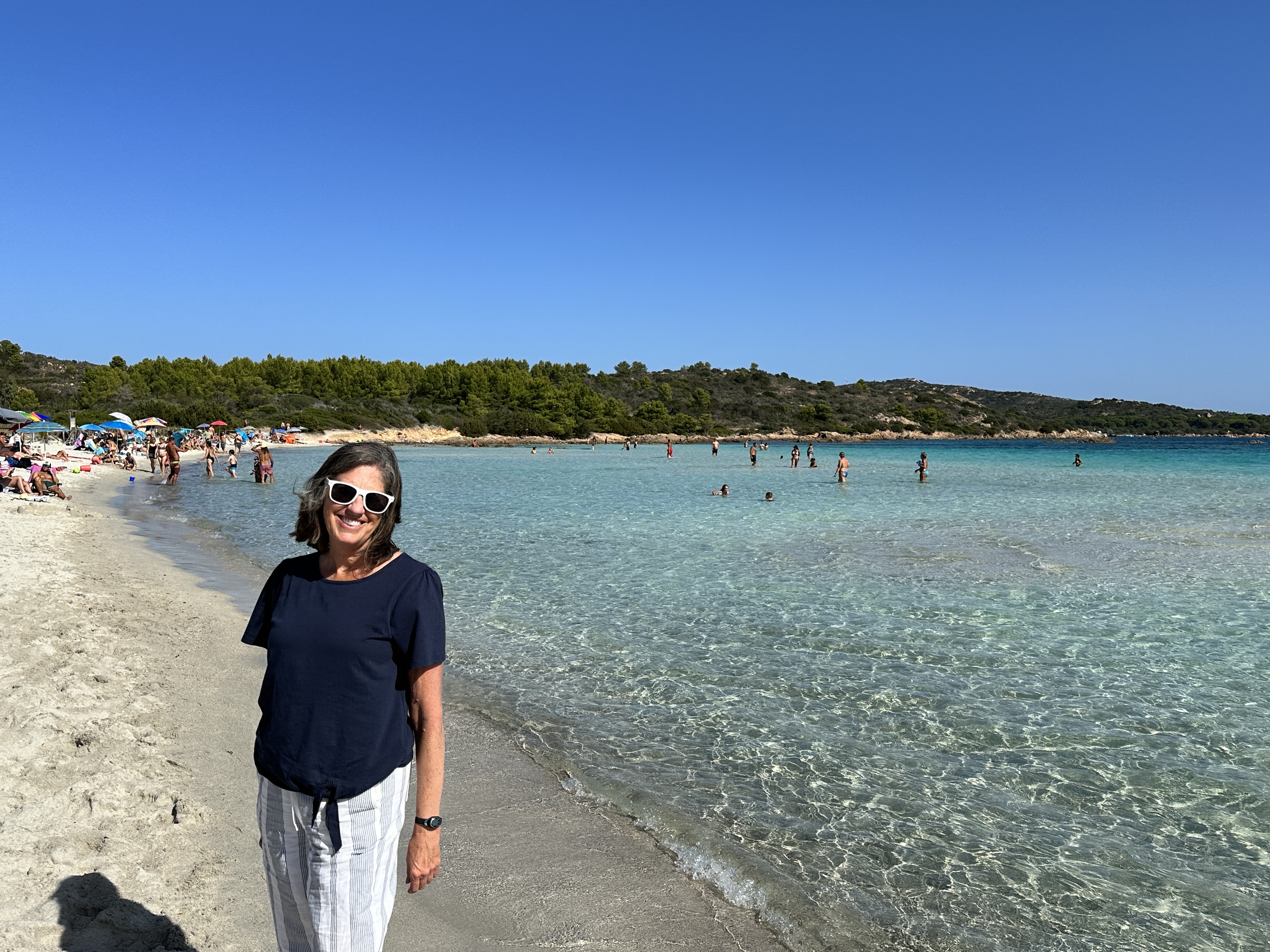
The calm, clear waters of La Celvia Beach, south of Porto Cervo.
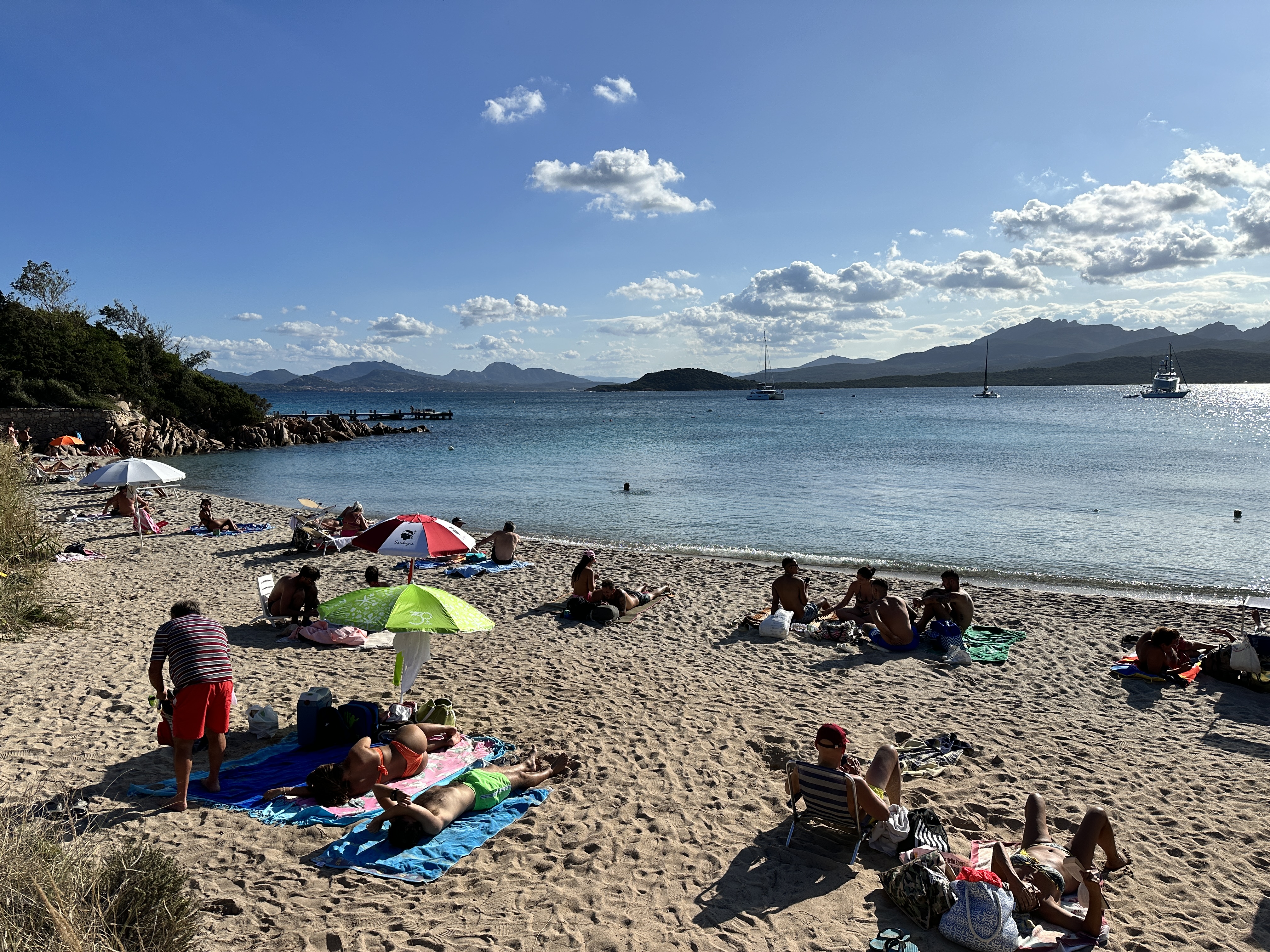
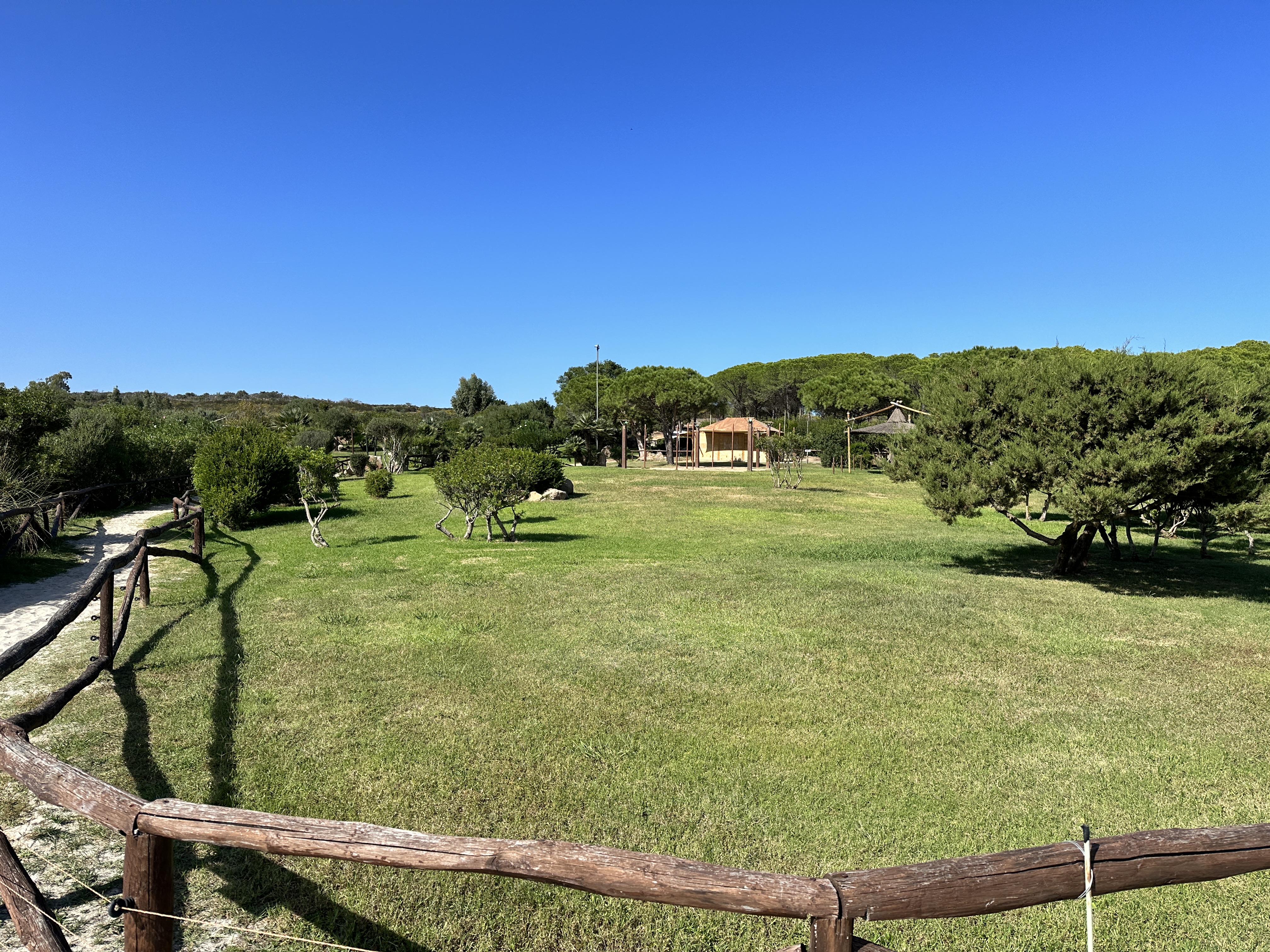
La Celvia beach (left and above), was just a short distance from our hotel in the Costa Smeralda resort area of Cala di Volpe (above right), and near a golf course as well as Capriccioli and Spiaggia Principe beaches. What more could you ask for!Although not directly part of Costa Smerelda, Spiaggia Cala Brandinchi, near San Teodoro, not far south of Olbia, is another great beach and park, with some lawn area just behind the beach for games or picnics. We were flying out of Sardinia shortly after our visit here and so we didn’t get to enjoy this beach for long!
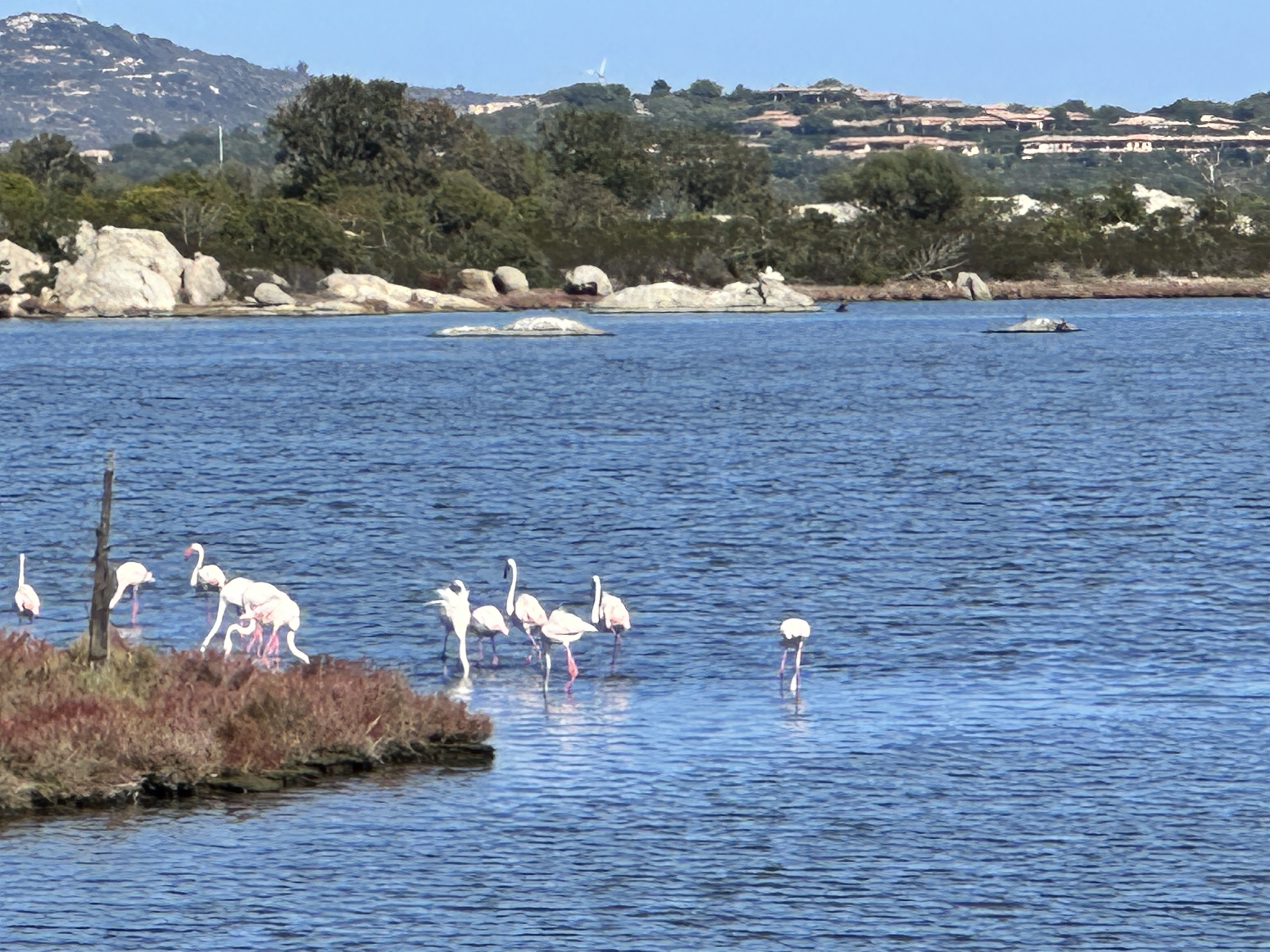
Real pink flamingoes near San Teodoro!
As with any region of Sardinia, it would be easy to spend your whole vacation right in (or around) Costa Esmeralda. If you want to live here, be ready to open your checkbook. It’s one of the most expensive regions in Europe and given its allure, it’s easy to see why.
As I have mentioned is previous posts, we LOVE the islands of the Mediterranean. They are some of my favorite destinations in world. After visiting Mallorca and Menorca (which belong to Spain), the next island on our list was Sardinia (part of Italy). We had been to Sardinia’s northern island neighbor, Corsica (part of France) years ago and from the beautiful southern coastal town of Bonafacio we could see Sardinia in the distance, only about 12 km (7.5 miles) away. We visited Sardinia in October, which is a great time to go – the water was still warm and the crowds were limited.
This map of Sardinia shows the five main regions we visited in Sardinia.
I will be sharing more posts on our Sardinian adventures soon, but first here are some things you may not know about about this beautiful island.
1. Sardinia is part of Italy
Although an autonomous region, Sardinia is definitely Italian. Some Americans have never heard of Sardinia and really have no idea that it’s part of Italy. The Sards have their own language but of course speak Italian, English, and other European languages quite fluently. It was easy for us to get by on English and a few Italian phrases. The food and gelato are wonderful, as in other regions of Italy.
2. Sardinia is big, and a relatively sparsely populated island
This is important to keep in mind when planning a trip – allow two or three weeks to see the whole island or if you have less time, perhaps concentrate your time in one region. Sardinia is the 2nd largest island in the Mediterranean (just slightly smaller than Sicily) but has just 1/3 of Sicily’s population. It is about 170 miles long and 90 miles wide. We covered a lot of ground in two weeks, but still did not see everything (see map above), including the southwest coast.
3. Sardinia boasts some of the most stunningly beautiful coastline (and water) in the world
Cala Goloritze, Gulf of Orosei, accessible only by boat or a 3.5 km hike. The color of the water was the most incredible turquoise hue I’ve ever seen.
Sardinia has an embarrassment of beaches – no matter where you are on the island, you’re close to some of the best beaches in the world. The Gulf of Orosei on the eastern side of the island has a breathtaking coast although it’s not easily accessible, except by boat or via some steep hiking trails.
4. There are hundreds of incredible beaches, many of which are undeveloped and uncrowded
La Pelosa Beach, near Stintino, Sardinia. You must make a reservation for this beach if visiting during high season. It is worth the hassle (which is not a big deal nor expensive).
Some beaches might have a refreshment stand, a few might be close to some resorts, but often there are no hotels or condos anywhere to be seen. Admittedly, there are (just a few) beaches that are so popular you must have reservations during the high season or can only be accessed with a guide, and there a few beaches that are not accessible at all – due to preservation efforts, speaking of which…
5. Sardinians take their beach sand seriously
From pink sand beaches to shiny quartz sand beaches to powdery white sand, the sand is beautiful everywhere. However, don’t even think about taking a sample home with you. You will be fined. You are also required to have mats underneath your beach towels so as to not inadvertently trap sand and take it home in your towels.
Spiaggia Rosa, on Budelli Island (near La Maddalena). You cannot set foot on this pink sand beach, they are protecting it for future generations. However you get a view of it from a boat tour, as in this photo.
Example of the fine quartz sand and pebbles found in Sardinia.
6. A car rental is essential
Unless you plan to go straight from the airport to a resort and straight back to the airport or plan on a tour by a group bus, a car is the only way to really see the island and reach some of the beaches and tourist sites. Some sights or hiking trails are remote. Since the island’s population is sparse, driving was not a problem – I did not feel rushed or on edge with crazy drivers pushing me to speed up or forcing me to get out of the way.
7. Sardinia offers something for everyone
Friendly, welcoming locals – check. Beautiful beaches – check. Warm, clear water – check and check. Charming medieval towns – check. Fascinating ancient historical sights – check. Remote mountains, rock climbing, forests and hiking trails – check, check, check and check. Diving – check. Excellent food – check. What more could a person want?
A view of Alghero, on the northwest coast of Sardinia, a beautiful medieval town, one of our favorites on Sardinia.
Nurhage La Prisigona Historical Site (14th century BC), near Arzachena, Sardinia.
8. Sardinia has its own island get-aways
As funny as it may sound, Sardinia can be considered a ‘mainland’ and just off its coast (such as the northeast coast) lie an archipelago of islands (the main island is La Maddalena – see map above) accessible by only ferry and smaller boat, some of which are part of a national park. These islands are home to some of the best beaches and best hikes anywhere in Sardinia.
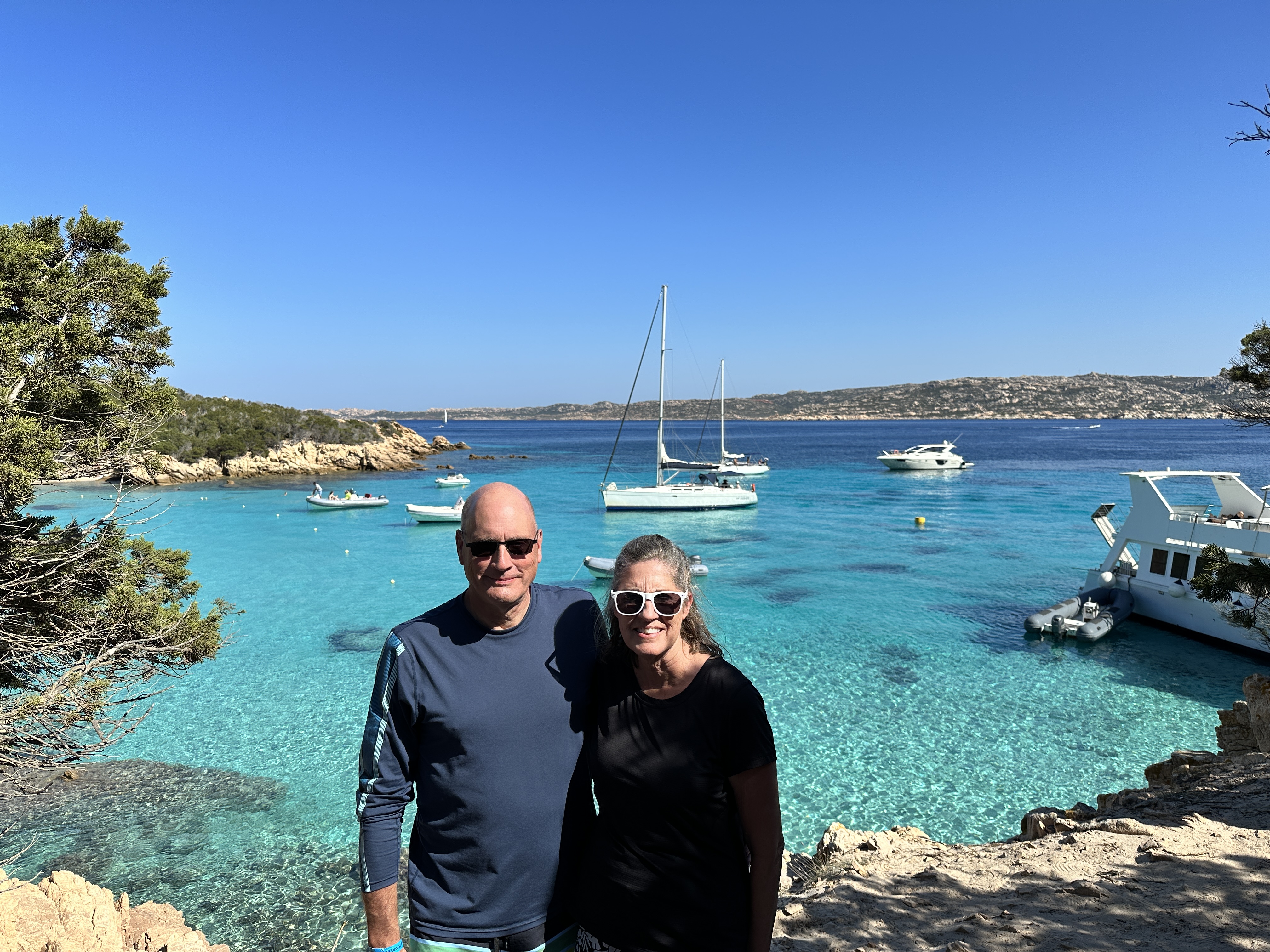
The island of Spargi, part of the La Maddalena Archipelago. We could have stayed here our whole trip!
9. Sardinia is not just for the jet-setting crowd
In the 1960’s Coasta Esmeralda was popularized and has since become a jet-setting hotspot. This part of the northeast coast (near Olbia) certainly has some beautiful beaches and coastline. While you will find big yachts, high-end real estate, retail and eating establishments here, this is just one small enclave of the island. The rest of the island seems unfazed (and untouched) by the movie star and billionaire crowd.
View of Porto Cervo, the center of Coasta Esmeralda.
10. Go Now
Sardinia isn’t quite on the main tourist map yet, although posts like this don’t help! The majority of visitors are Italian (this is their backyard!), followed by French and Germans. On one of our boat tours, we were with some Swiss and Belgian tourists. We ran into a few tourists from the U.S., but not many. Very few tourists seem to explore the whole island, there are lots of “untouched” little mountain villages and quiet beaches to find solitude if that’s your thing.
The cute little village of Gavoi in north central Sardinia.
Word is getting out, so go now! Here’s one of my recommended websites for great information on Sardinia tourism. I read almost every post Claudia has written, very helpful. Of course, I will be publishing information on each region of Sardinia we visited over the course of the coming weeks.
Note: Featured image – Cala Marilou, Gulf of Orosei
There is so much to see in Milan, one post cannot cover it all. This post covers three churches that really are worth a visit (in addition to the Milan Cathedral), along with a couple other spots we enjoyed, shown at the end of the post.
Santa Maria delle Grazie – The Last Supper
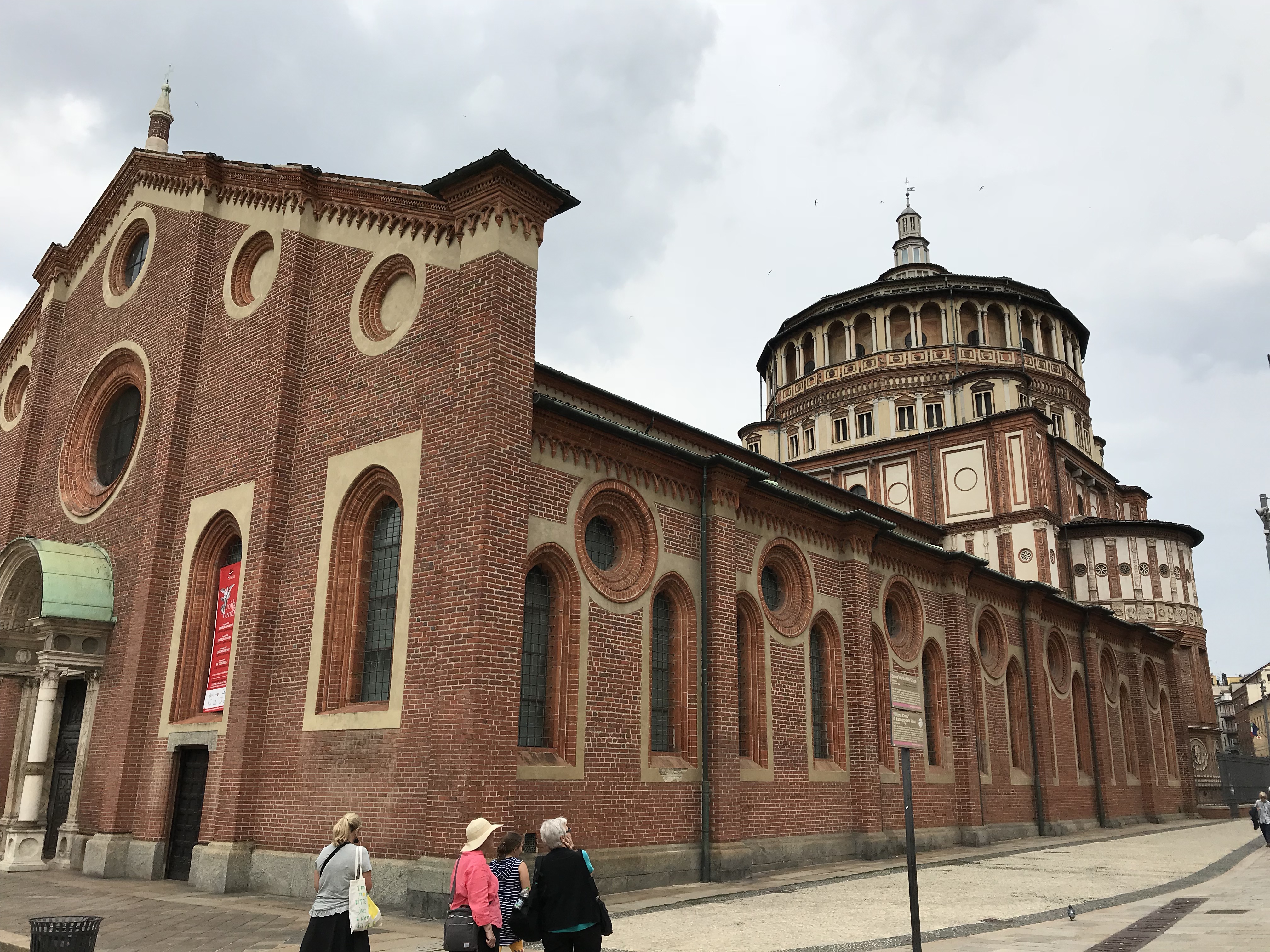
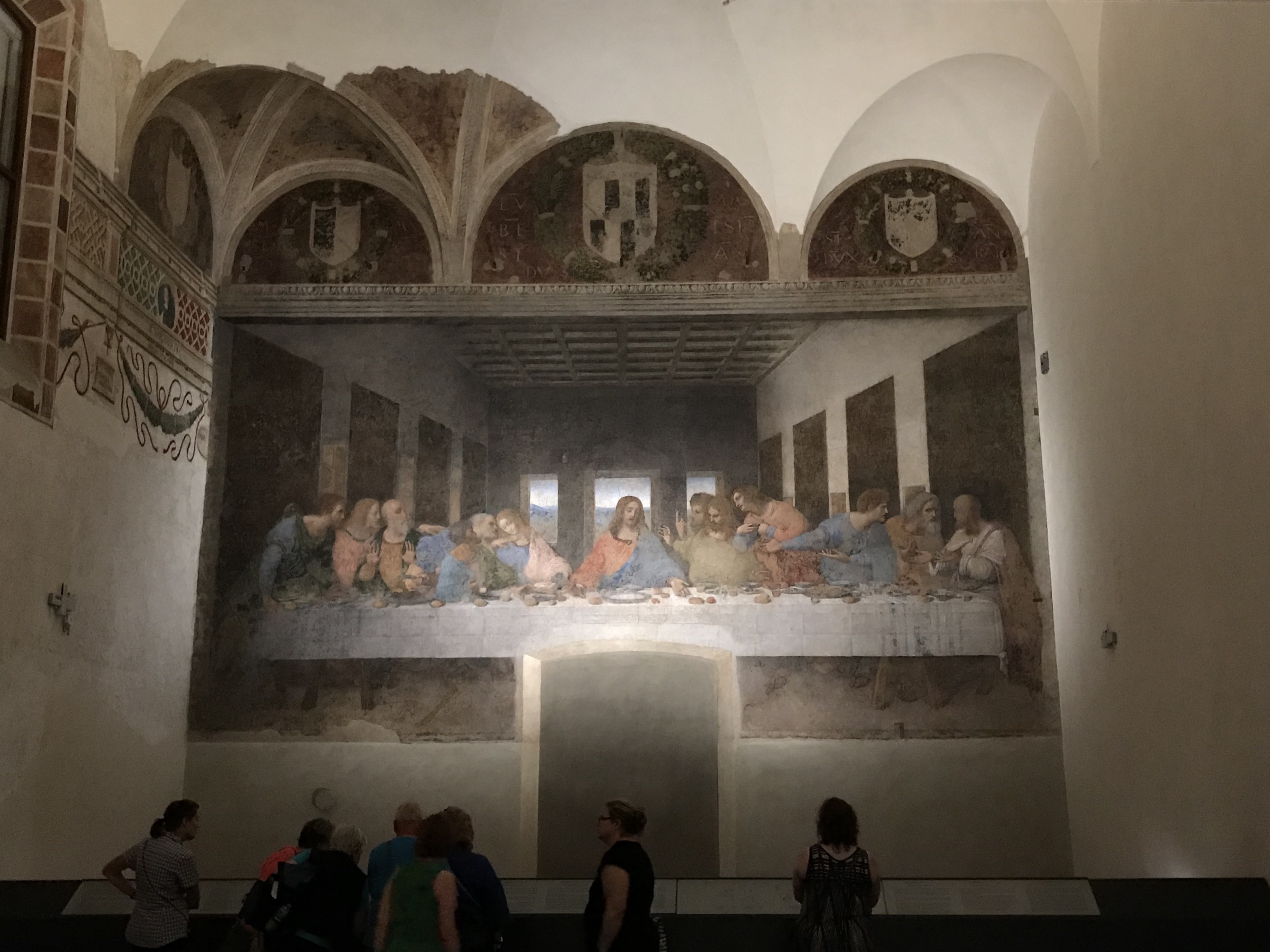
This is a 15th century convent, and home of Leonardo da Vinci’s Last Supper (known in Italian as Cenacolo), one of his most famous works of art and unfortunately one that has not stood up well to the test of time, due to the experimental technique Leonardo used – painting on dry plaster rather than wet. The fresco started deteriorating almost immediately. Also, the church was bombed in World War II but amazingly the wall with this painting survived intact – thank goodness.
Exterior of Santa Maria delle Grazie, home of the Last Supper.
The Last Supper (1495-1498) painting covers an entire end of the convent’s refectory (dining) room. Leonardo’s use of perspective gives the painting depth, almost like the scene is a continuation of the refectory. Some bright person decided to cut a doorway into the lower part of the painting back in 1652.
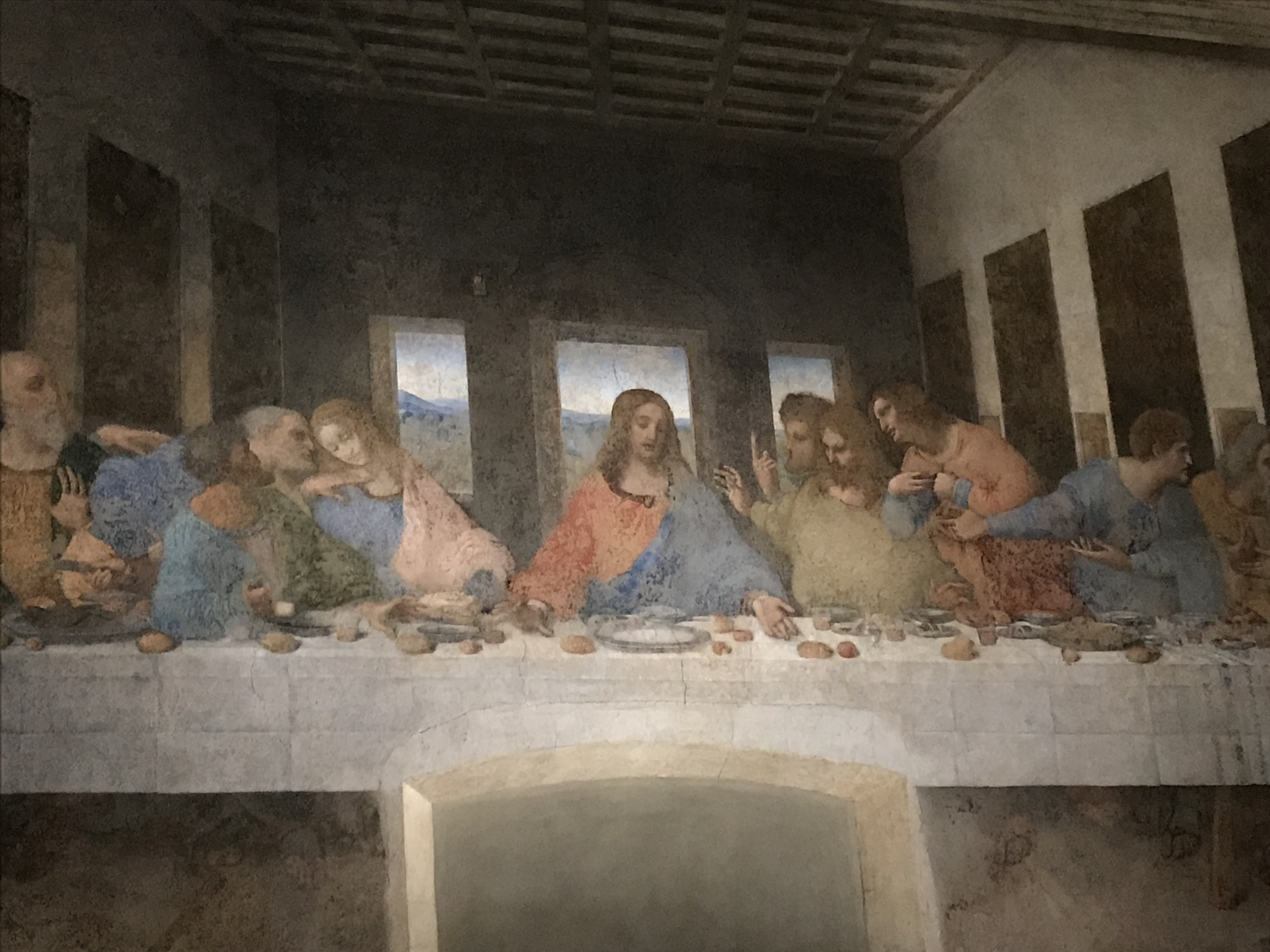
A closer view of the Last Supper – Jesus’ apostles asking “is it I?” when he announces one of them will betray him.
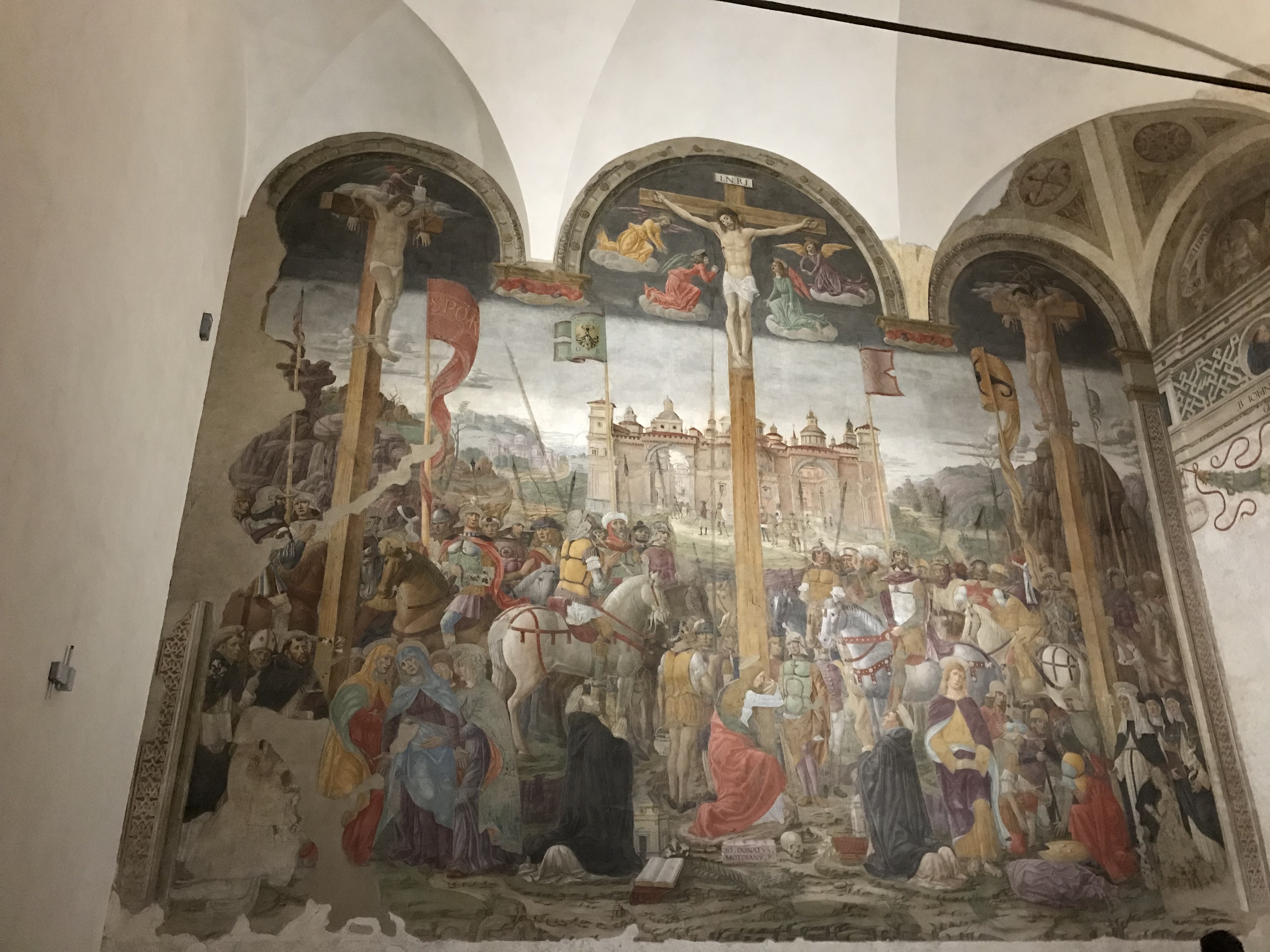
At the other end of the refectory is another painting, entitled the Crucifixion by Giovanni Donato, 1495. It does not receive near the attention of the Last Supper, but is another amazing work of art.
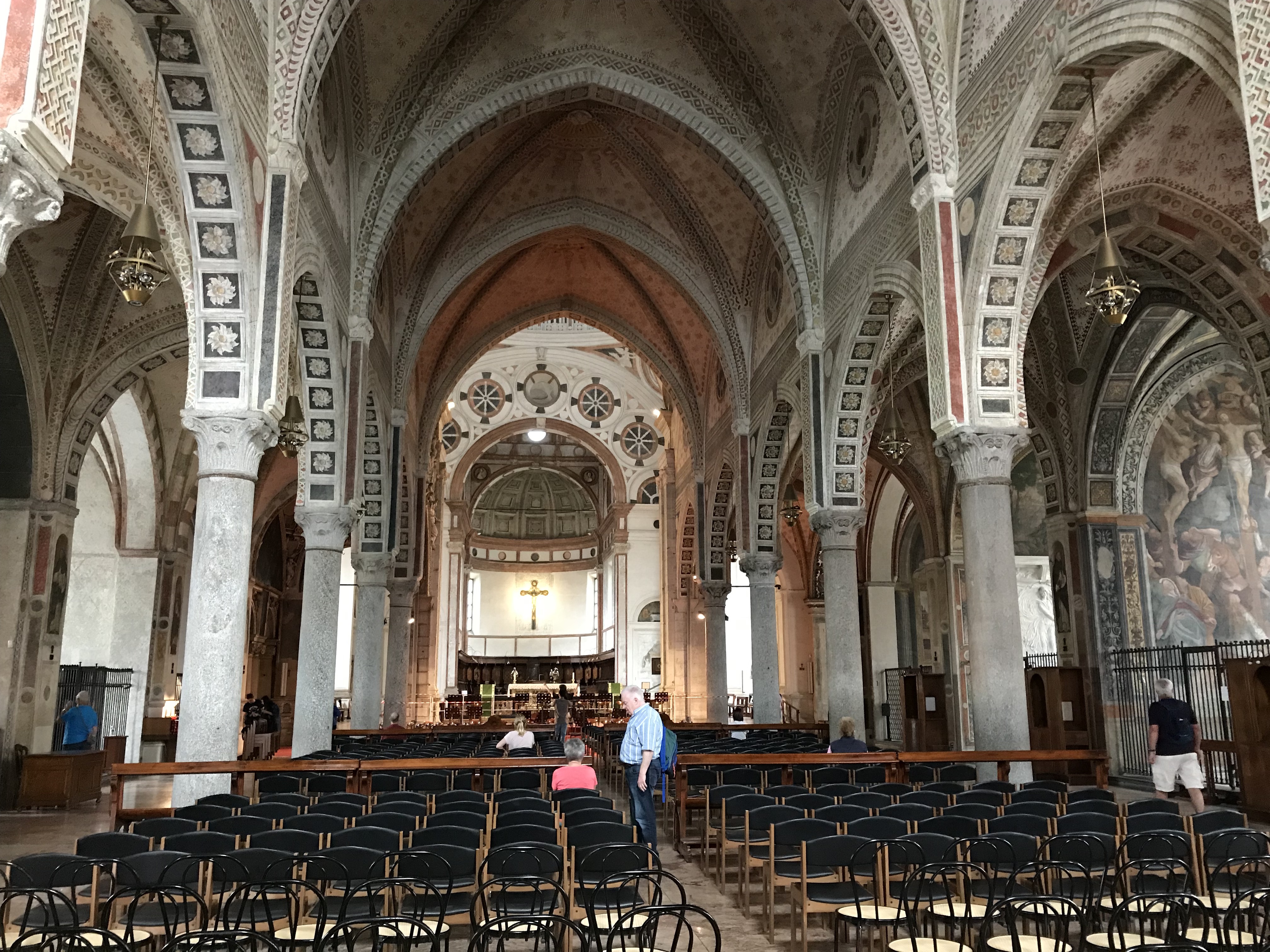
Main chapel of the Santa Maria delle Grazie Convent (which does not require any reservation or fee).
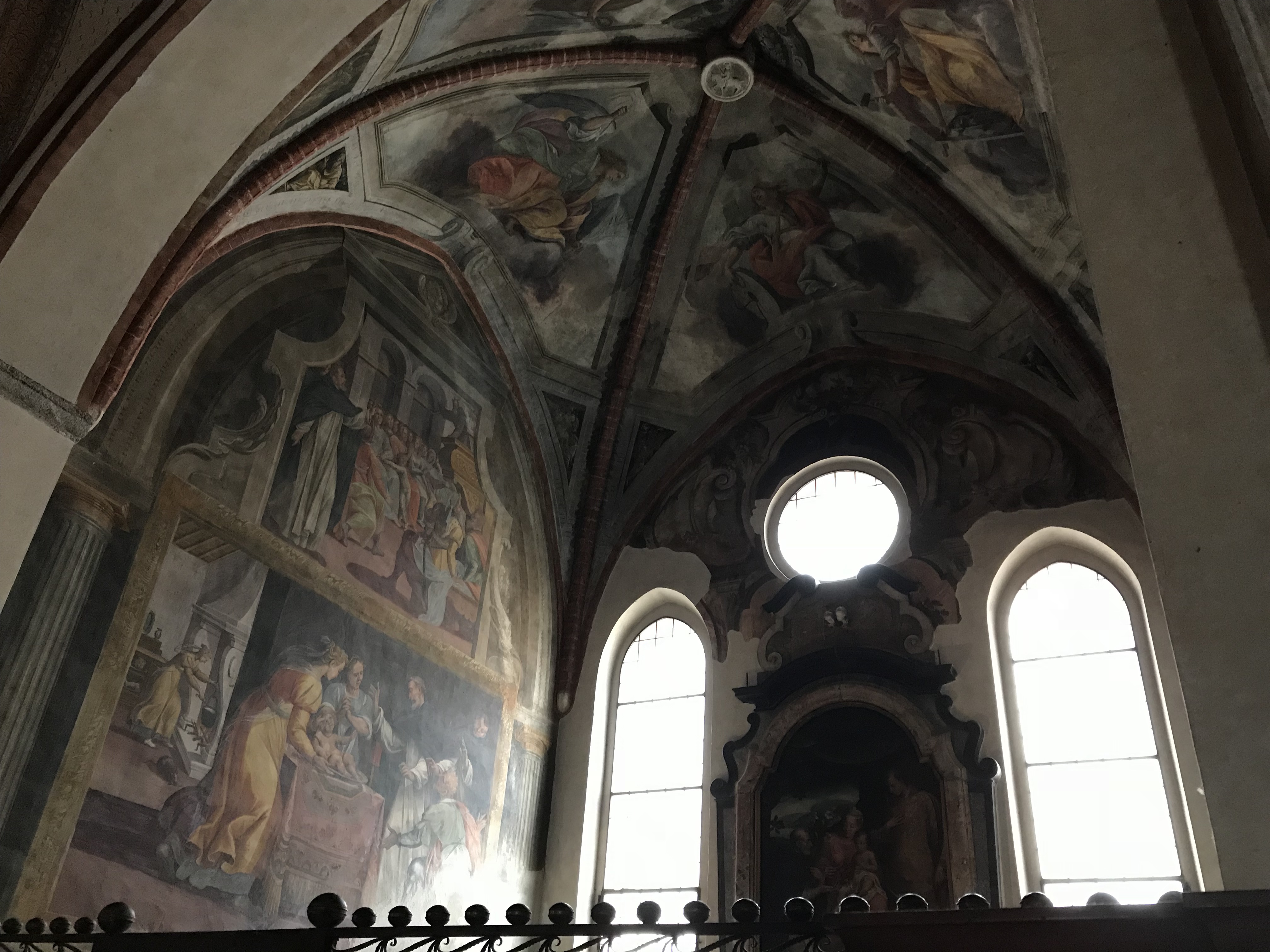
It’s worth spending a few minutes wandering around the main chapel of the Santa Maria delle Grazie Convent, there are many other beautiful works of art here.
Note: You must have a reservation to see the Last Supper; we booked our tickets in March for a May trip. Reservations can only be made 60 days in advance, and a limited number of people are allowed to see the painting at one time (groups of 25 or so). The small group was great, because it did not feel crowded in the room, but you are only allowed 15 minutes in the refectory and then ushered out. The site to secure your tickets/reservations is here. The Convent is west of the Milan’s center, we took a metro train to the nearest stop and walked about 15 minutes to the Convent.
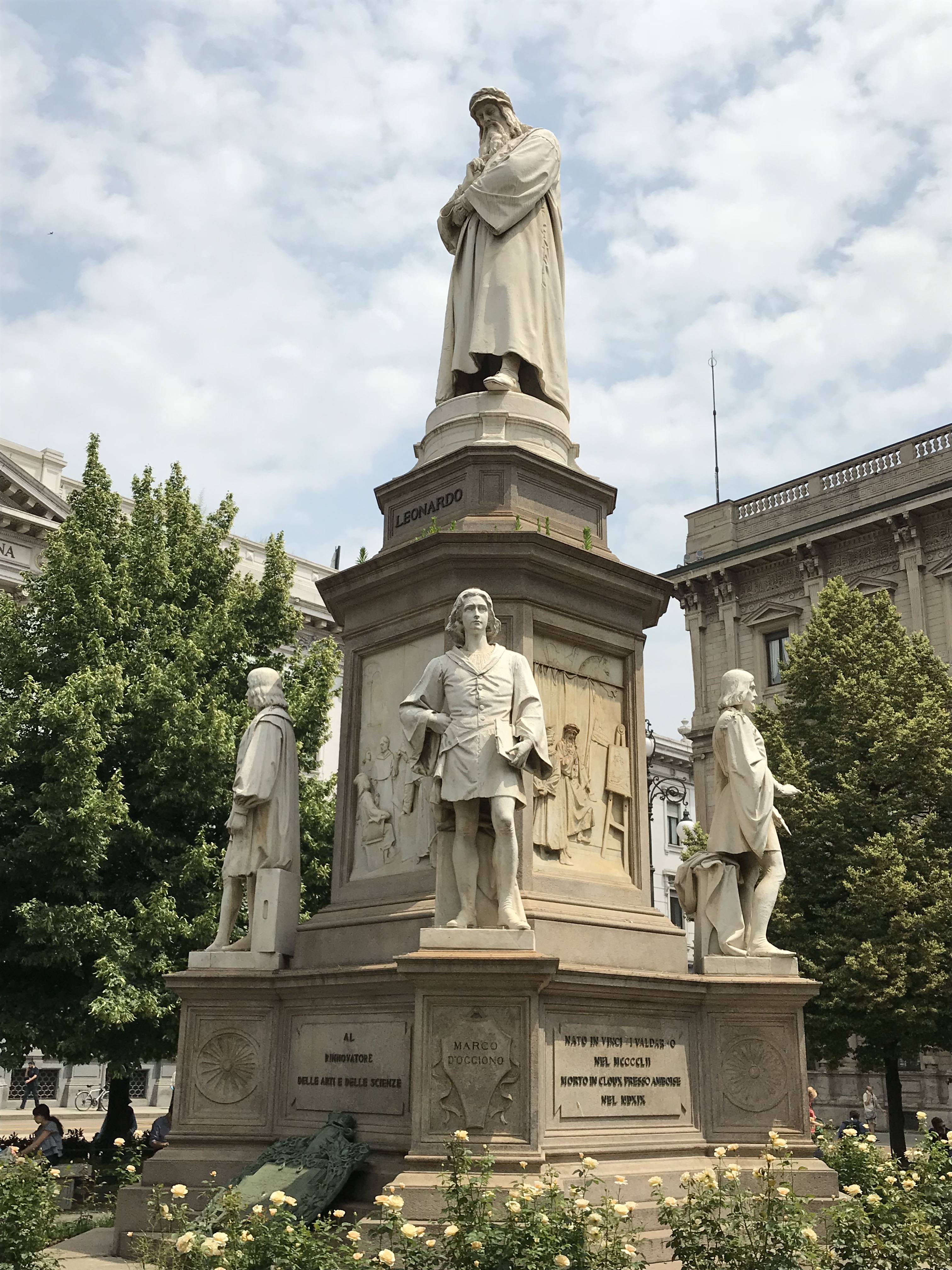
This statue of Leonardo da Vinci is just north of Milan’s main piazza and Galleria Vittorio Emanuele. He was an artist, inventor, scientist, and so much more.
Sant’ Ambrogio (St. Ambrose)
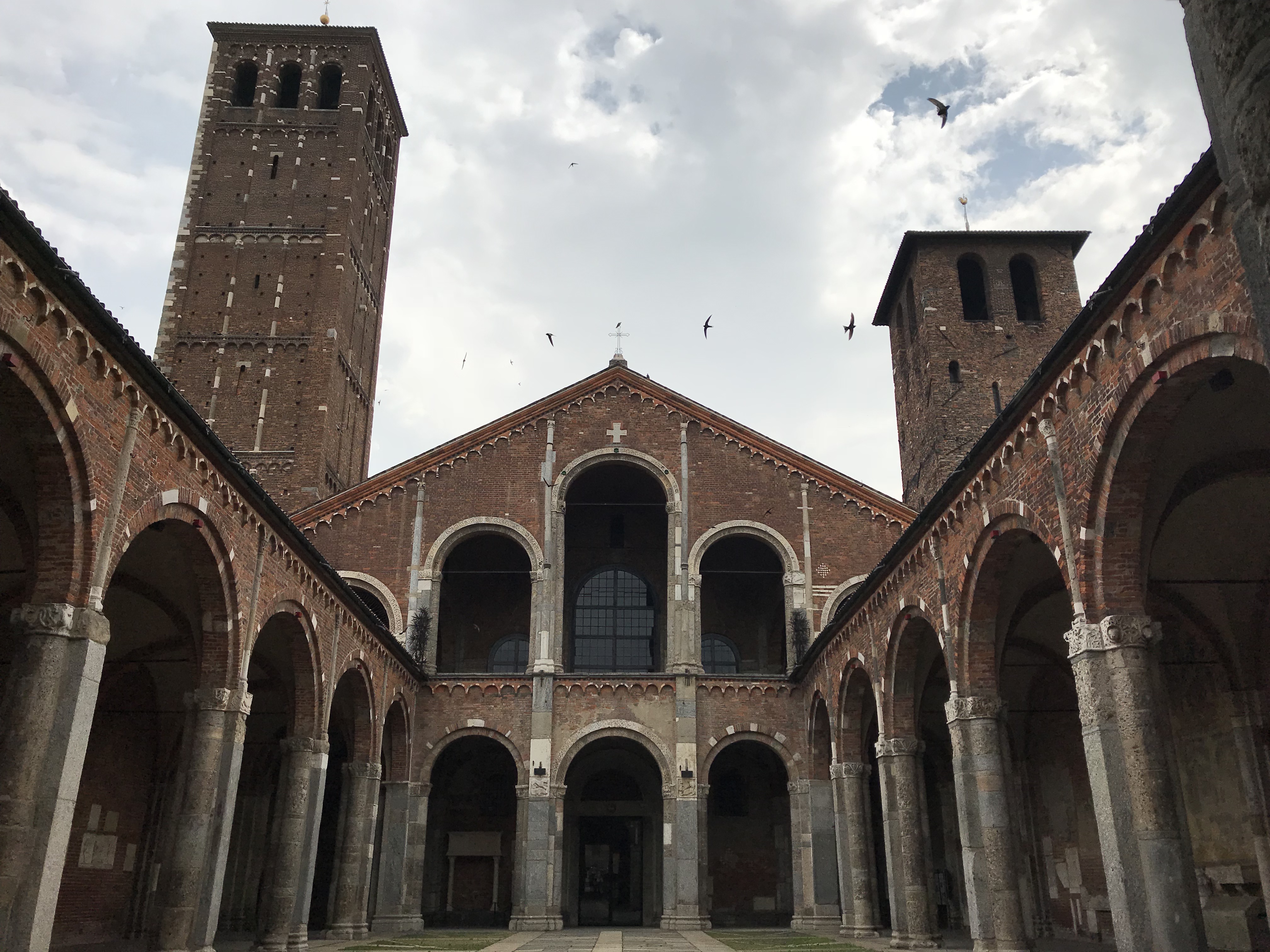
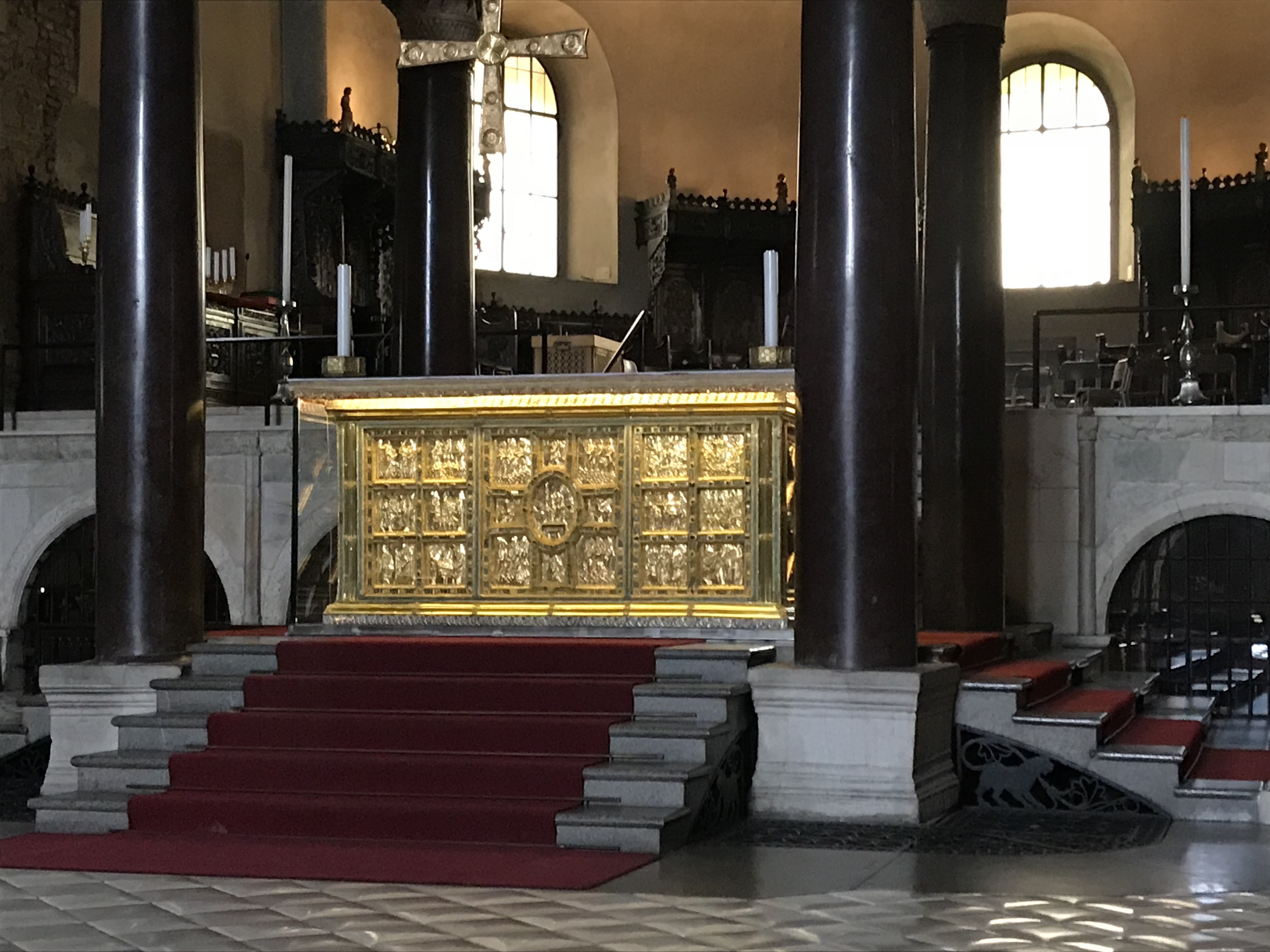
This church is named after a 4th century bishop of Milan. I loved this old Church, which is a bit off the main tourist route. It’s ancient (the current 11th century structure is built on top of the original 4th century church), and houses a priceless 9th century altar decorated with gold, silver and precious stones.
Entrance to the 11th century Basilica Sant’ Ambrogio. There are Roman and Byzantine artifacts scattered around the covered porticos.
The 9th century altar in the Basilica Sant’ Ambrogio, decorated with gold, silver, gems and pearls. In World War II, it was transported to the Vatican for safekeeping.
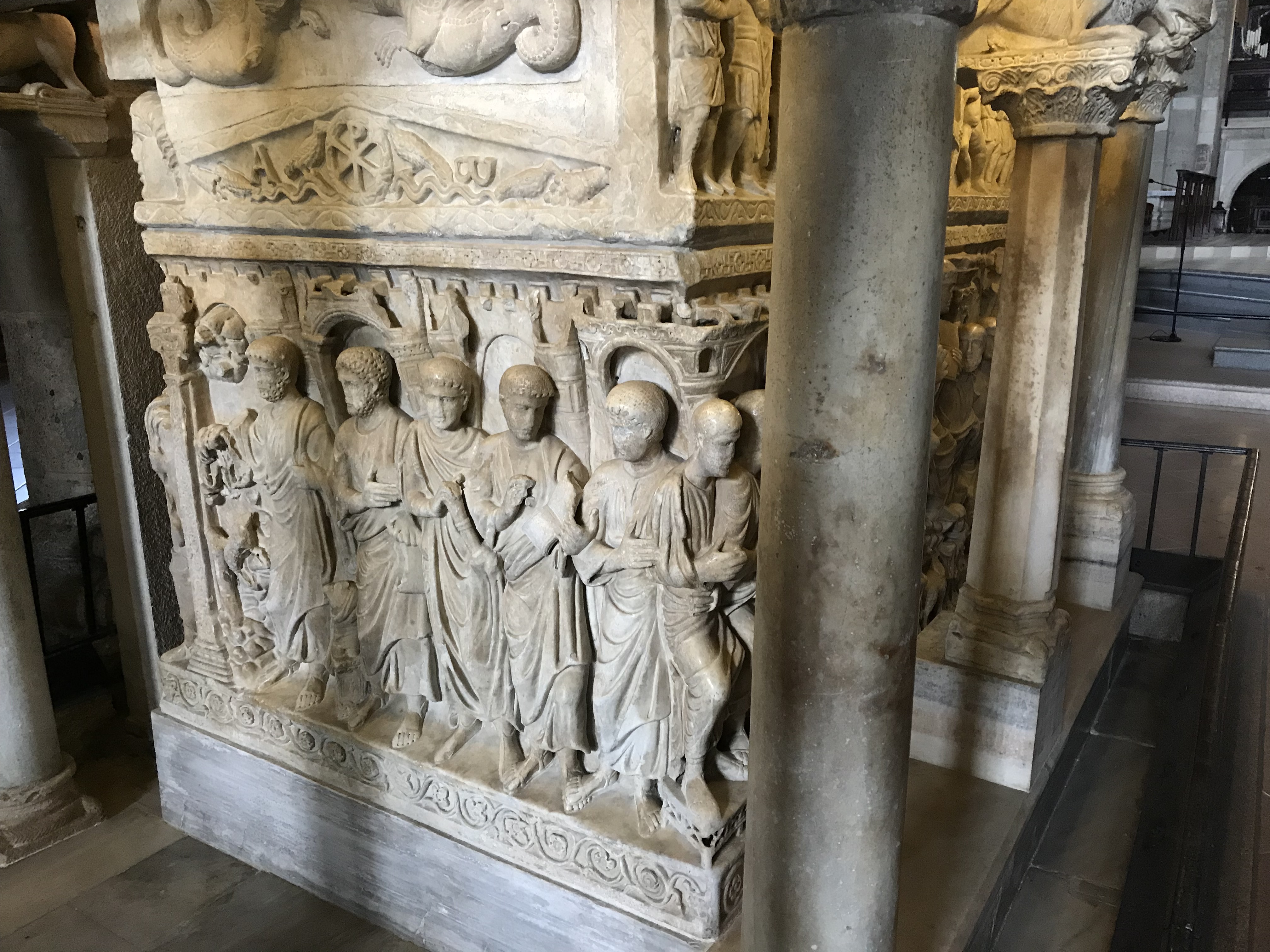
Near the amazing altar, a 4th century marble sarcophagus sits underneath the pulpit in the Basilica Sant’ Ambrogio.
San Maurizio al Monastero Maggiore
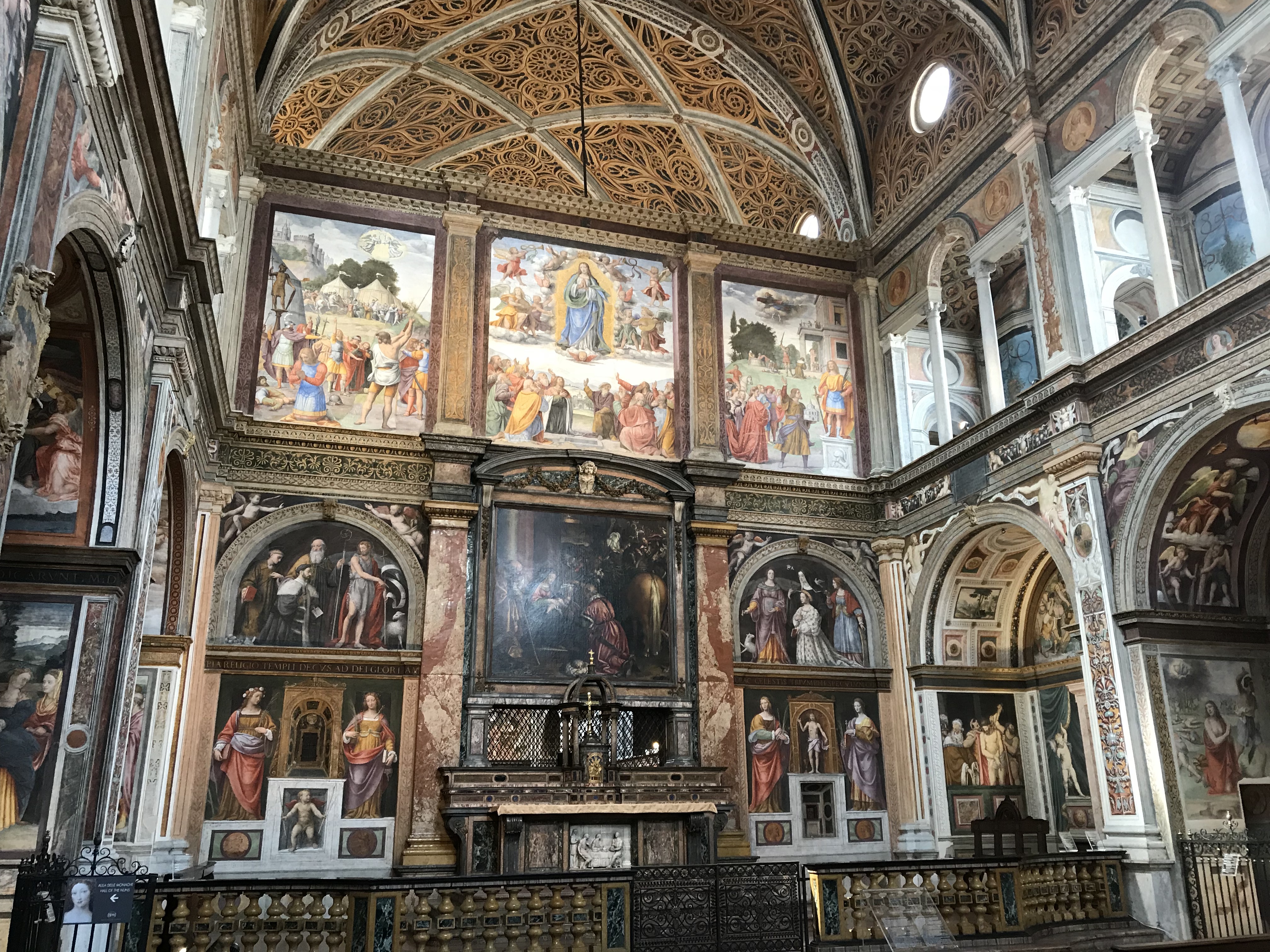
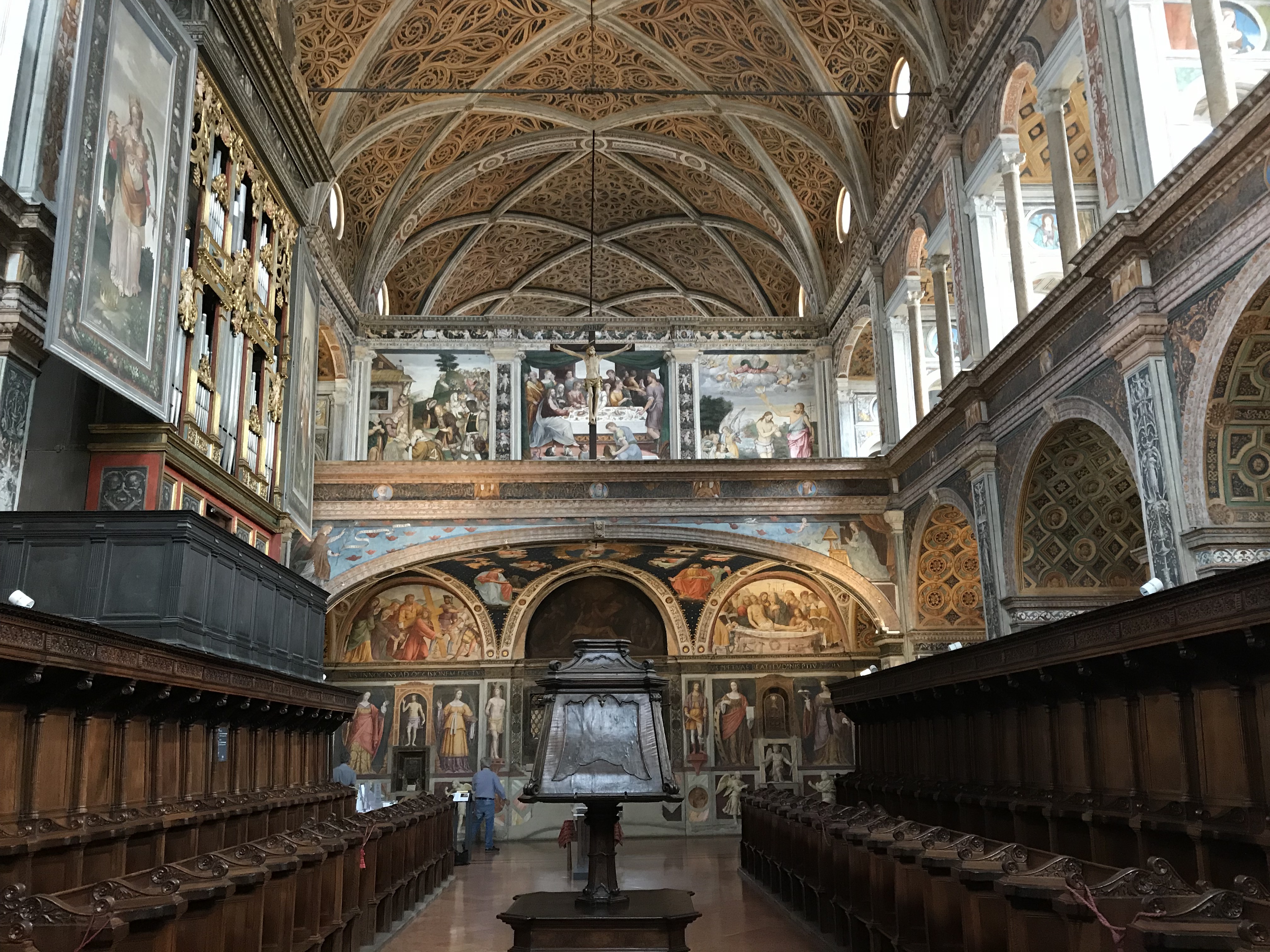
This monastery, which no longer serves as a church, is now a free art museum. The interior is stunning, and it would take weeks to absorb all the artwork.
Main chapel of San Maurizio al Monastero Maggiore.
Hall of the Nuns, San Maurizio al Monastero Maggiore
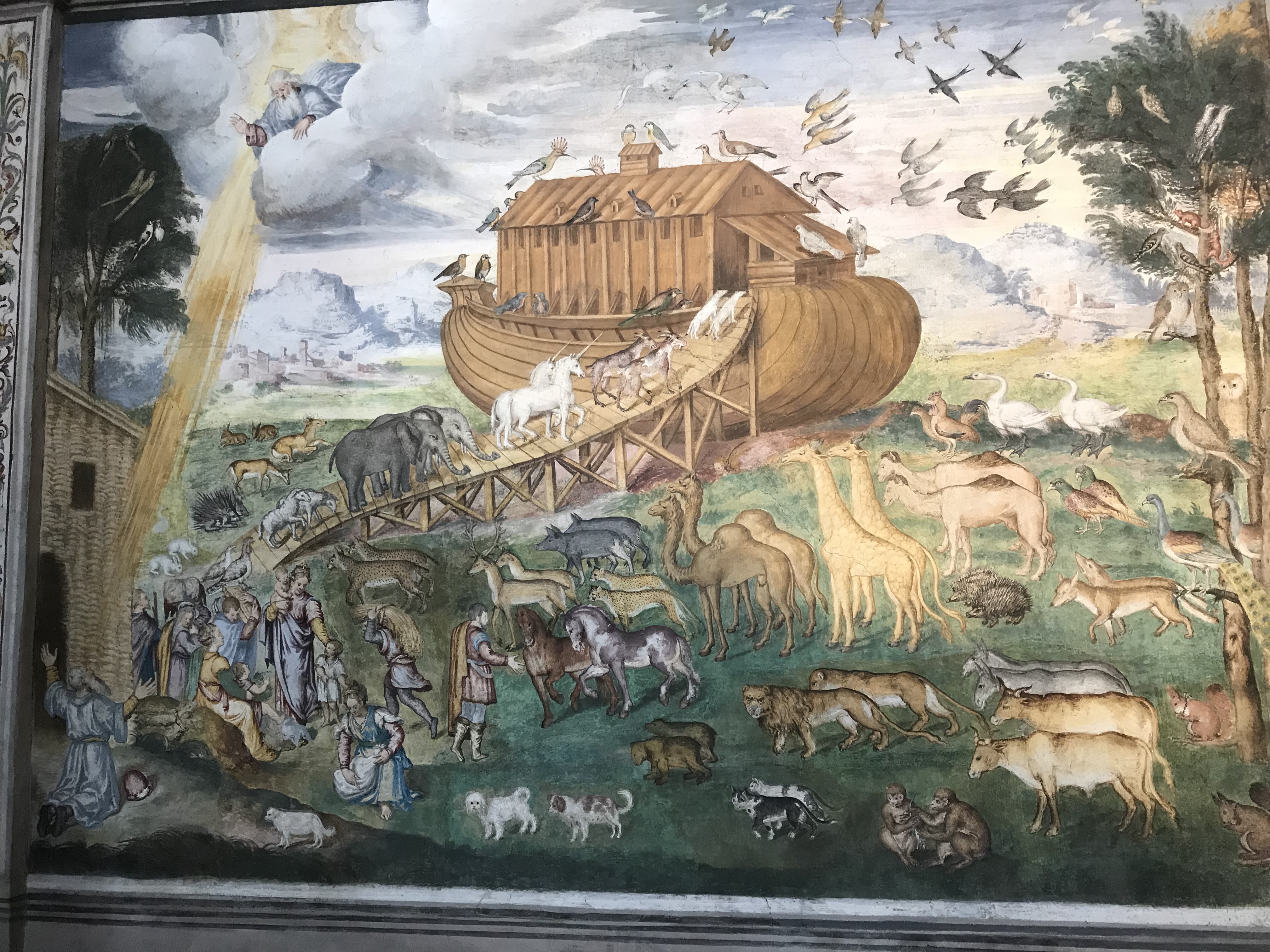
Close up of a painting of the story of Noah’s Ark, in the Hall of the Nuns, San Maurizio al Monastero Maggiore.
Sforza Castle
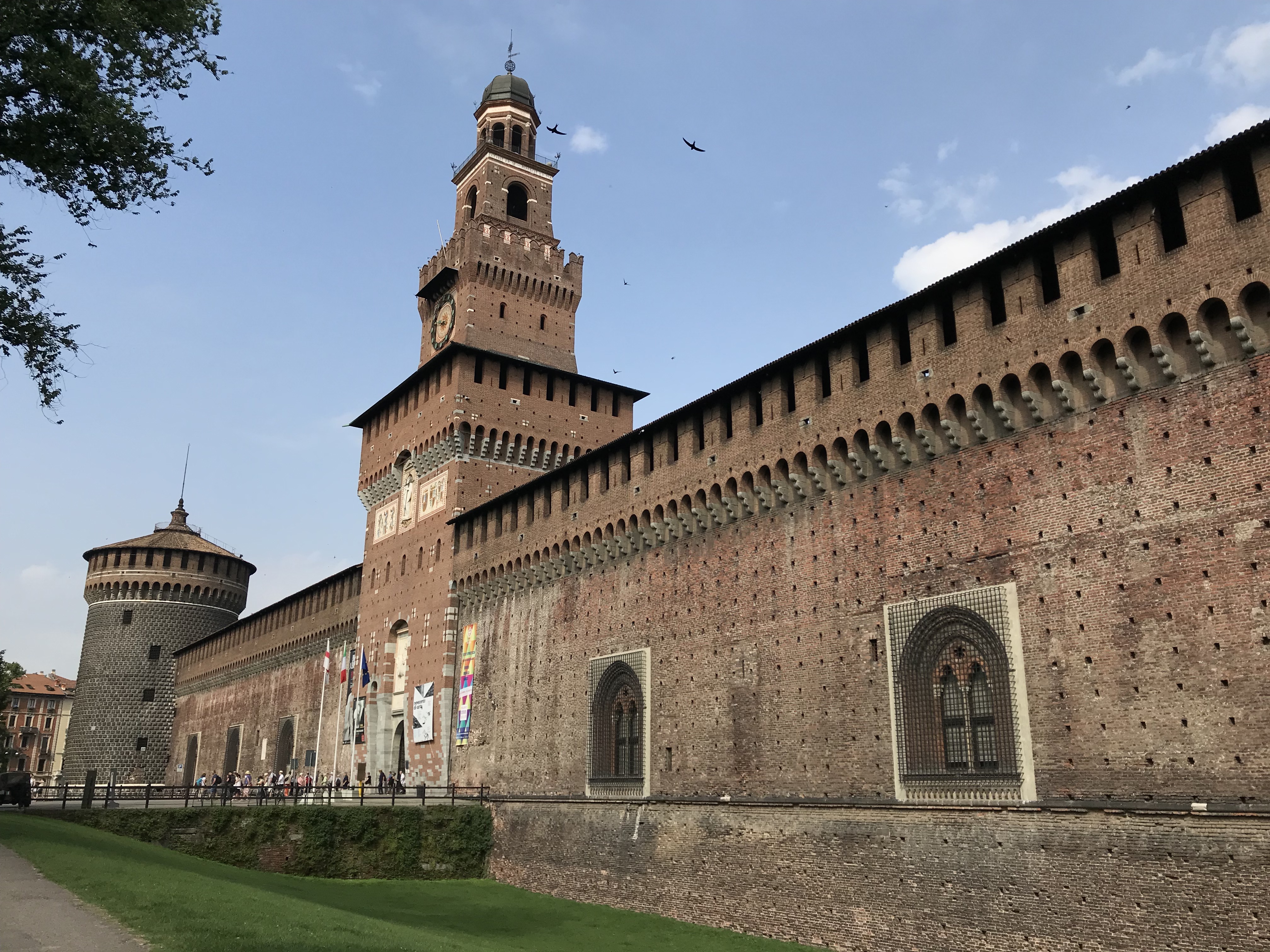
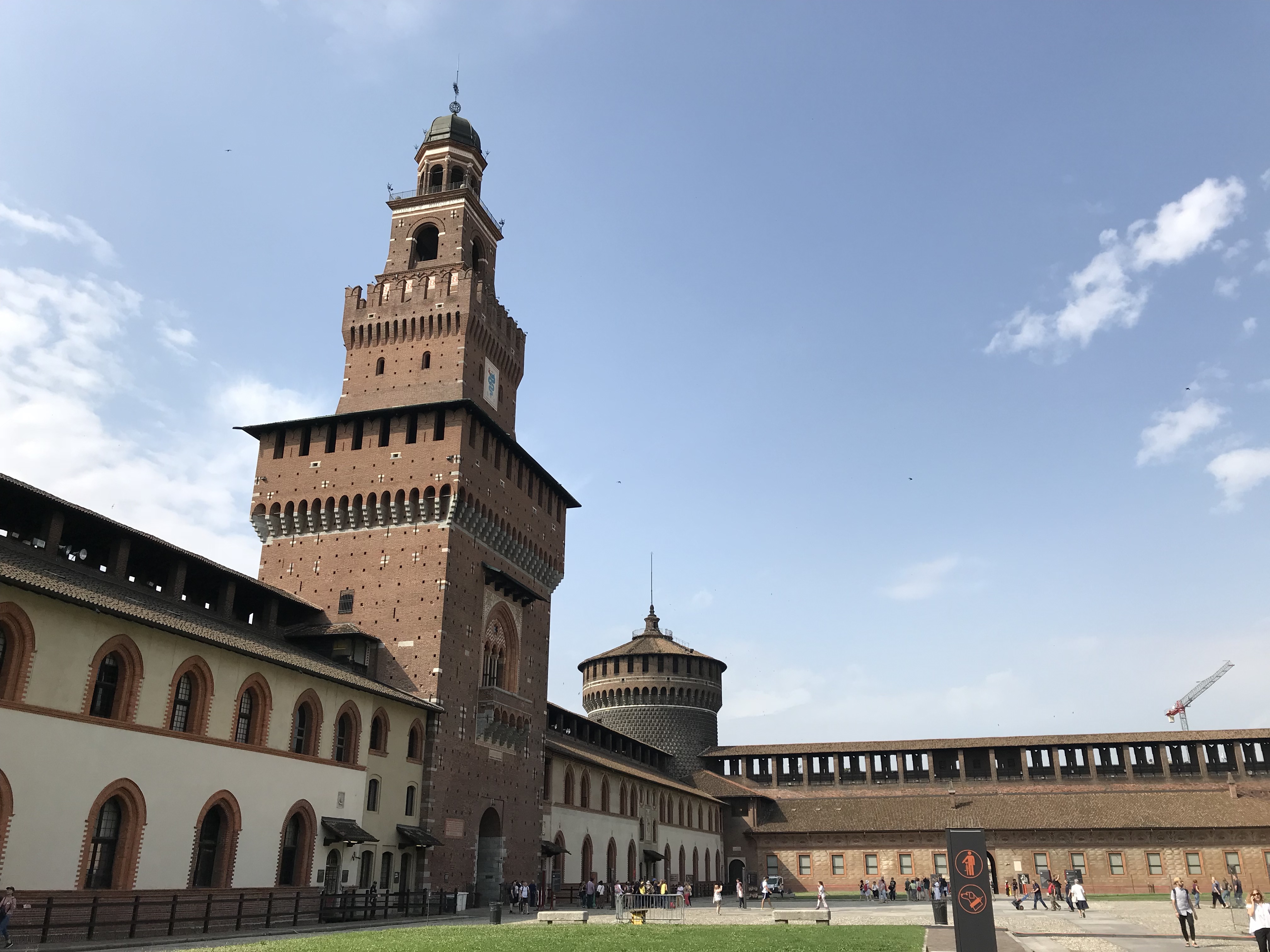
With everything else we were doing in our short time in Milan, we did not take the time to visit the interior of this castle which is now a museum. It is massive, and impressive from the exterior.The castle is just two metro stops northwest of the main piazza.
Exterior of Sforza Castle, with a dry moat.
Interior courtyard of Sforza Castle.
Milan’s Canals
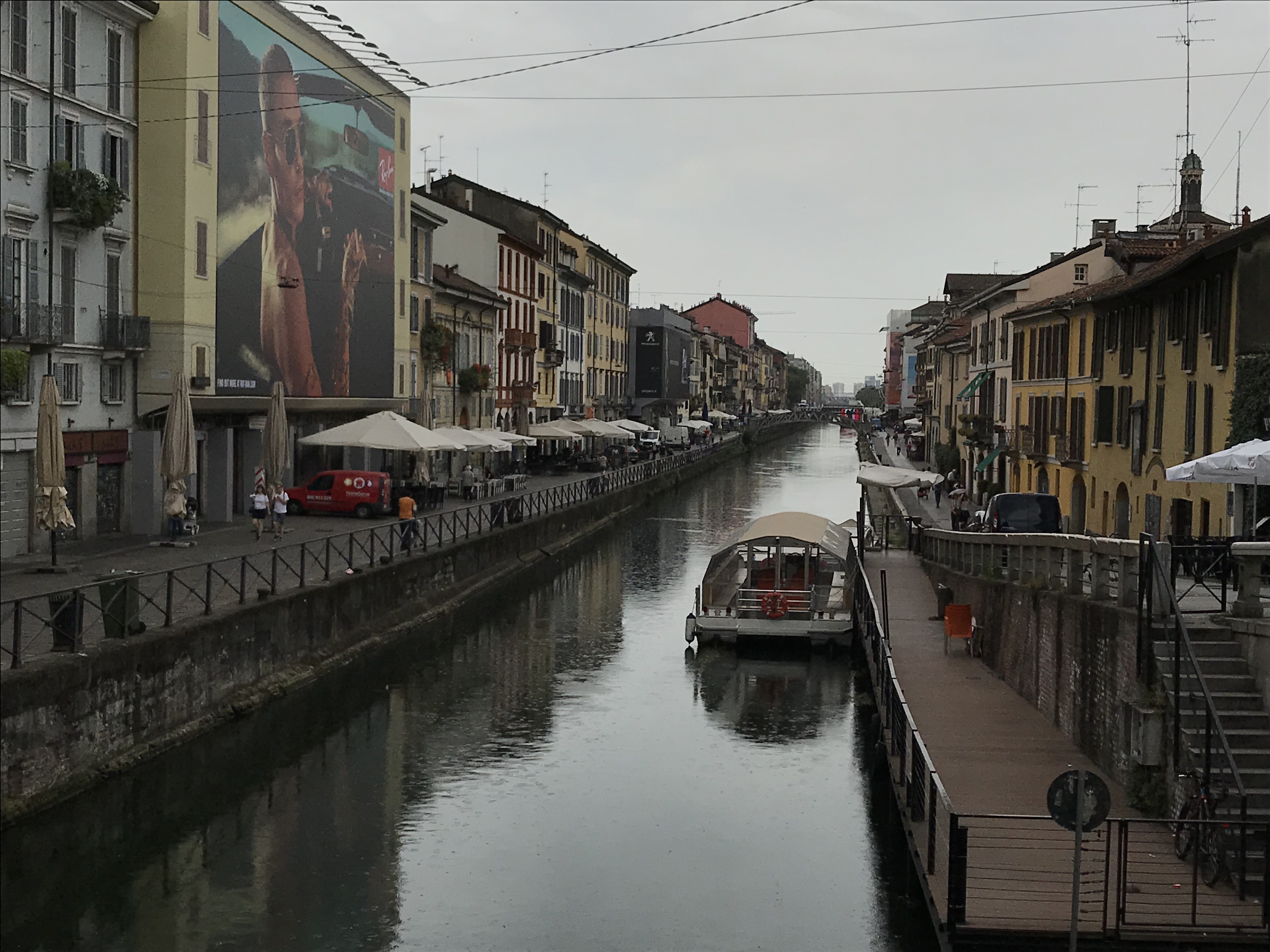
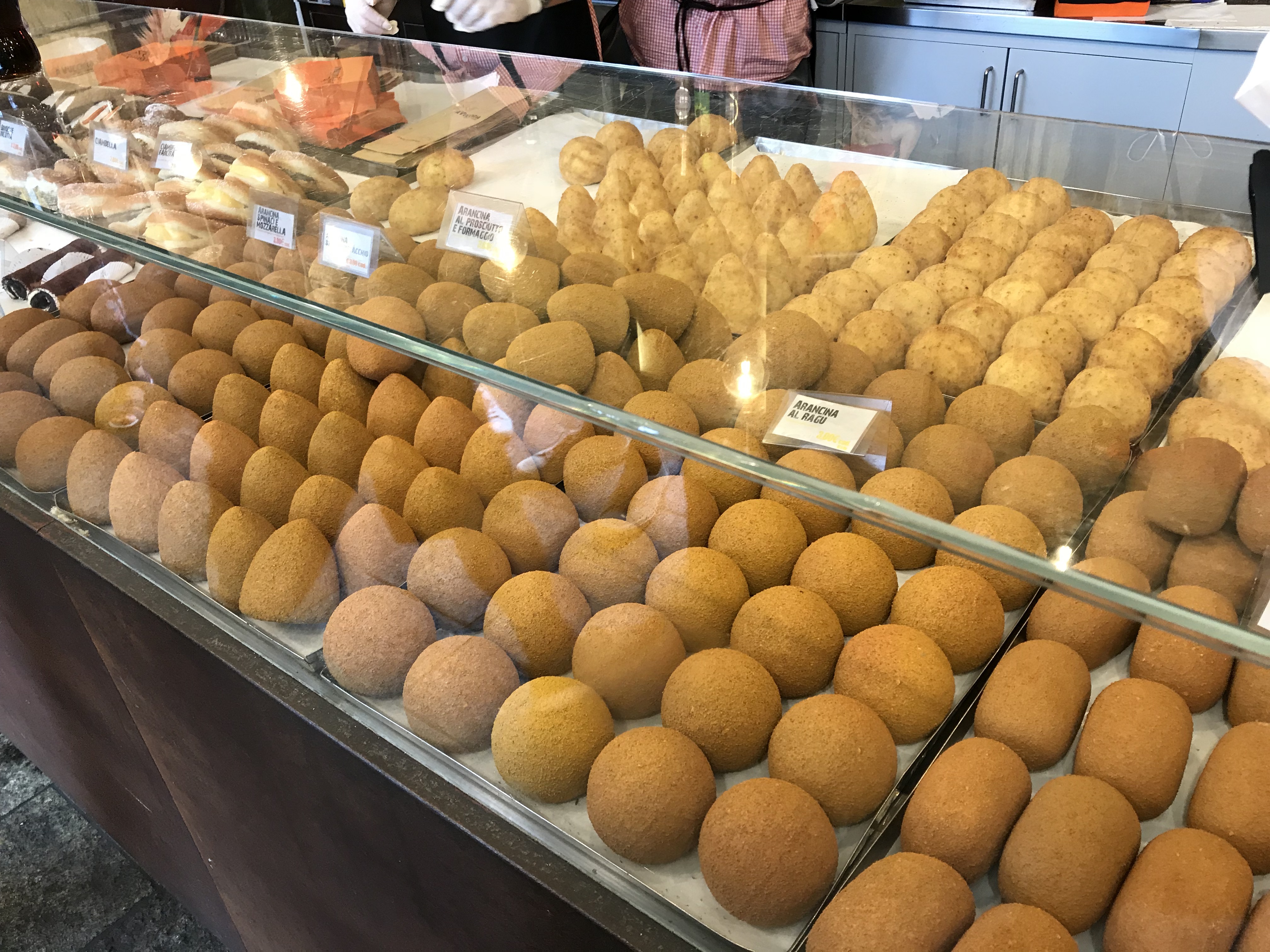
If you really want to get off the beaten track, check out Milan’s canals. I didn’t even know that Milan had canals, but we discovered these in our exploration of Milan. No tourists out here, and we found a great little shop with a variety of Arancini (or Arancina) that we had to sample!
A canal in Milan. The canals are south of the central piazza about a mile or perhaps 1.5 miles. We enjoyed the walk through the less touristy part of Milan.
A shop with a tasty variety of arancini, they are breaded, deep-fried rice balls filled with a variety of items – meat, sauce, ham, cheese, etc. This fun food is originally from Sicily.
Milan feels a world apart from the other areas of northern Italy I’ve described in my most recent posts. The mountains, lakes and small villages of northern Italy seem a far away place when one is in Milan. Milan is to Italy what New York is to the U.S. – a center of fashion, business and finance. For the tourist, there is a lot to see, and Milan is worth a day or two for the tourist, before or after visiting the surrounding lakes and mountains. Listed below are just a few sights, I will cover others including the renown Last Supper fresco in “Visiting Milan, Italy Part II”.
A good place to start your visit is in the heart of Milan, at the Piazza del Duomo, home of the huge Milan Duomo (Cathedral) and the predecessor of today’s shopping malls – the Galleria Vittorio Emanuele II.
Duomo (Cathedral)
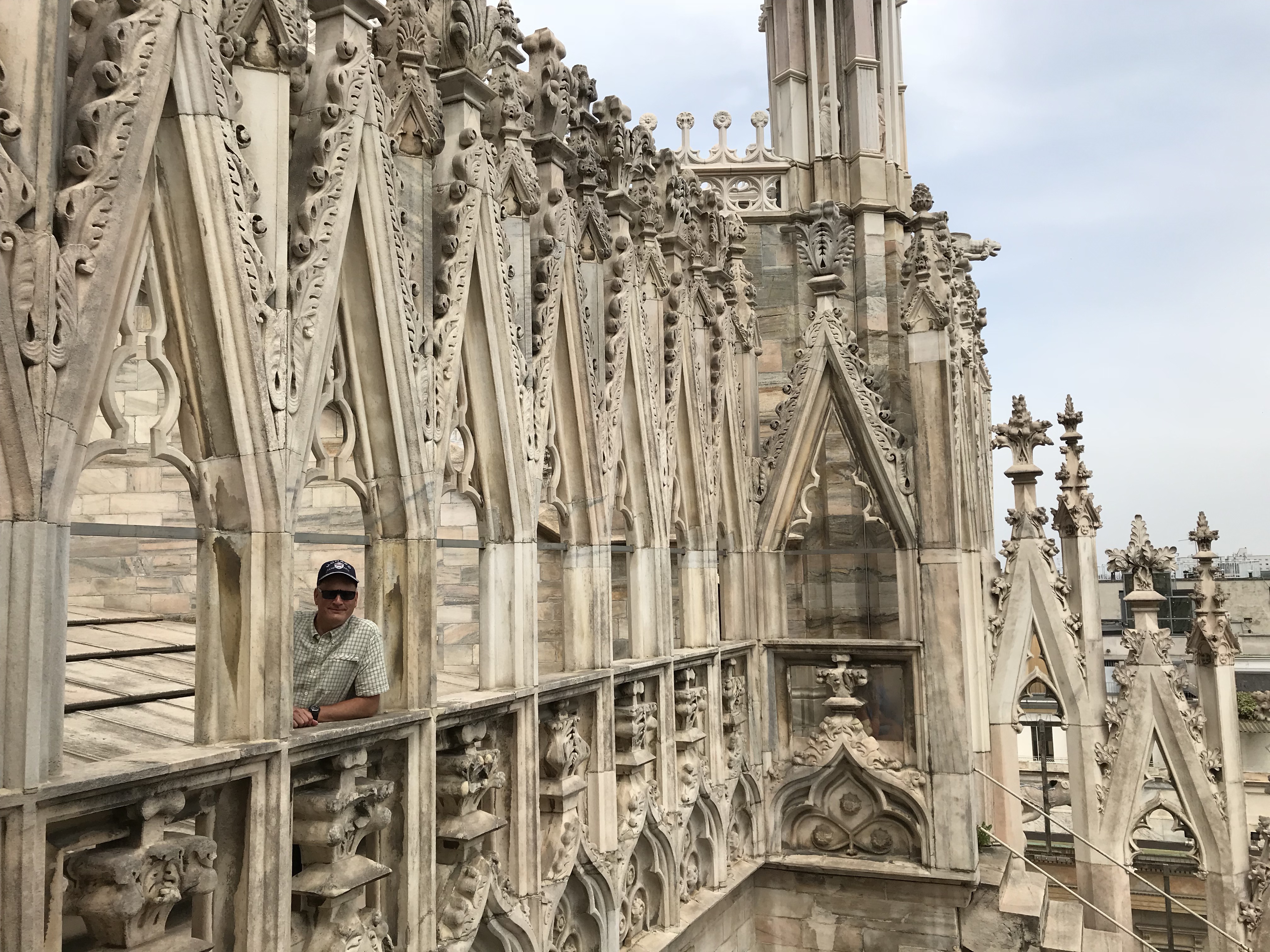
This is the #1 tourist sight in Milan. The cathedral is huge – 514 feet long, 301 ft across. Highly recommended is a visit to the roof – you can walk on the roof among the forest of spires, statues, and gargoyle figures with great views of the surrounding Piazza and cityscape–almost like being the hunchback of Notre Dame! I can’t imagine how all the weight of the marble stone work (and people!) has been successfully supported for over 6 centuries! As shown in the images below, there’s lots to see above, below and in the main cathedral, so plan a couple hours for your visit to the Duomo.
One of the many interesting figures on the roof of the Duomo.
The massiveness of the Duomo is felt as you wander through the archways and flying buttresses on the roof.
Getting up close and personal with the beautiful stone work on the roof of the Milan Duomo.
A view of the Piazza del Duomo from the roof of the Duomo, looking west. The entrance to the Galleria Vittorio Emanuele II is to the right, under the short towers.
Exterior view of the Milan Cathedral – it’s so large that it’s hard to get a good perspective on this marvel of engineering and art.
Interior of the Milan Cathedral – 52 pillars support the weight of the roof and expansive ceiling. The stained glass, statues, carvings and huge space all contribute to a feeling of awe.
Another interior view of the Milan Duomo. As can be seen, the restoration and upkeep work (with netting and scaffolding) on this size of building is never done.
A statue of San Bartolomeo (the apostle Bartholomew) with his own skin draped around him (legend says that his martyrdom was the result of his being skinned alive).
Your visit to the Duomo includes a visit to the interesting Duomo museum, well worth the time for a wander through. Some of the relics here are from ancient churches that existed on this spot prior to the present cathedral.
Also in the Duomo Museum is a scale wooden model of the cathedral, used by the architects and engineers to build the actual cathedral. The model’s front facade is somewhat different from the final result.
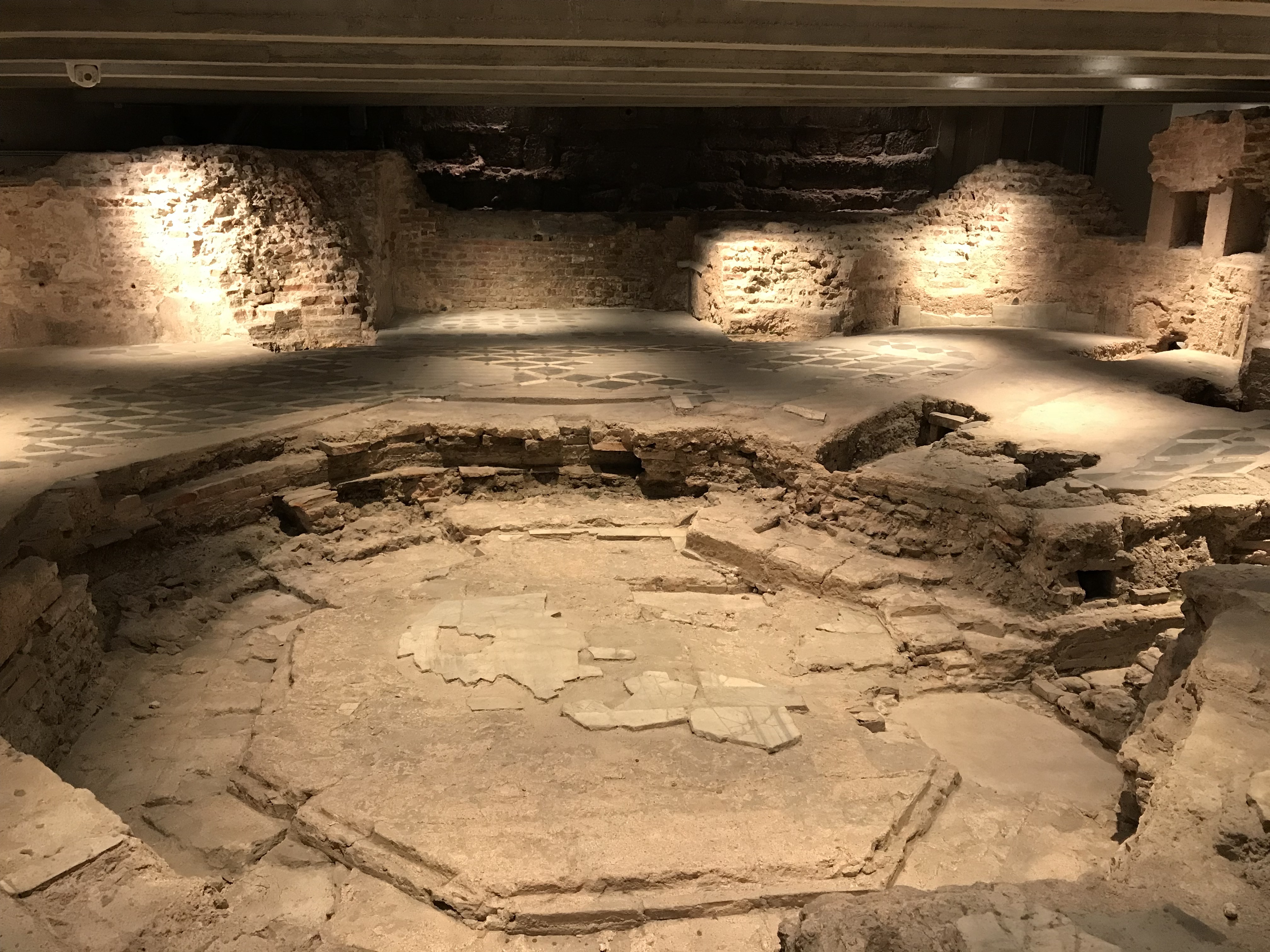
As is the case for many European cathedrals, the current Milan Duomo is built on top of earlier churches, and a visit below the current structure allows one to see excavations, such as this 4th century octagonal baptistry.
Galleria Vittorio Emanuele II
Located just a few steps from the Duomo, is perhaps the world’s first covered shopping mall – the Galleria Vittoria Emanuele II, this symbol of Milan dates back to 1865 (completed in 1878). The Galleria is named after Victor Emmanuel II, the first king of the united Kingdom of Italy (1861 – 1878). It has an expansive glass ceiling, mosaic floors and expensive shops and restaurants (and of course a McDonalds!), and the occasional model posing, since this is the fashion capital of Italy (if not the world!).
View of the interior of the Galleria Vittorio Emanuele II with its beautiful 19th century architecture and glass ceiling.
A photo shoot in the Galleria Vittorio Emanuele II, showing the mosaic floors along with this redhead model!
Street Scenes of Milan
Northeast of the Duomo is the where the high end shopping action is, and with the ‘guards’ at the store entrances, I didn’t even feel comfortable walking into the shops, plus in our travel clothes we felt a bit underdressed! The main ritzy shopping streets are Via Montenapoleone and Via Spiga. Bring your (fat) wallet and drive your McLaren up to the door and you’ll fit right in.
Drive this little McLaren 720 S around Milan and you can park where you want while you do your shopping!
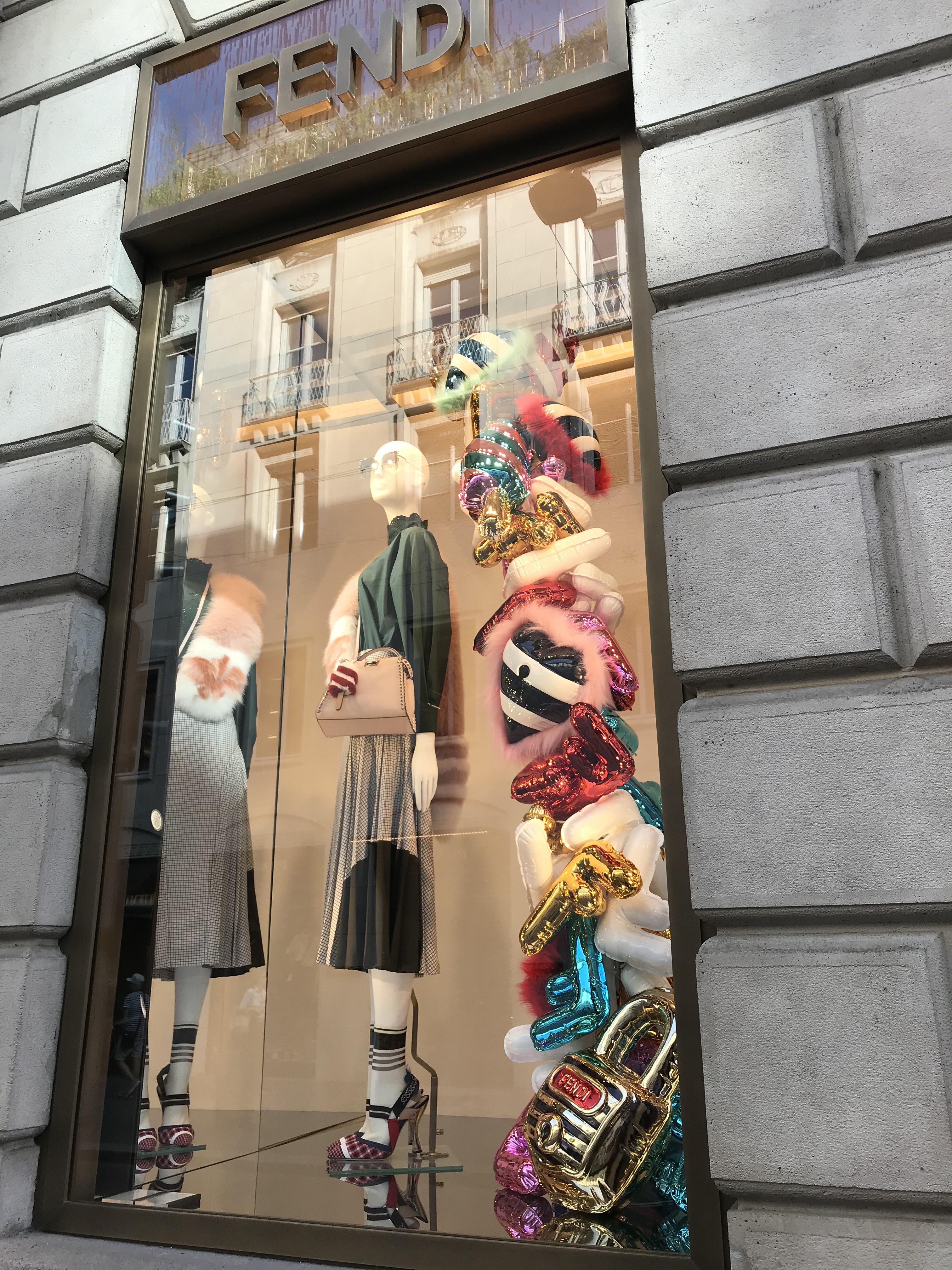
One of the window displays on Via Montenapoleone.
Another window display along Via Montenapoleone.
This chocolate display looks very tasty!
For those of us with dreams but few Euros, you can be entertained by the street performers in Milan.
In my next post we’ll cover some other interesting sights in Milan, including Leonardo da Vinci’s Last Supper (Cenacolo).
Just west of Lake Como in northern Italy is another beautiful lake–Lake Maggiore, which is the 2nd largest body of fresh water in Italy. Perhaps less famous than Lake Como, Maggiore is still another gorgeous lake in this lovely region of Italy, which it shares with Switzerland. We spent just one night here, but could have spent a lot longer. We visited two towns on the west coast of Maggiore, Baveno (where we stayed) and Stresa, just south of Baveno. Stresa is a bit bigger town with several very fancy (and historic) hotels. Here are a few images from our visit.
Baveno
We stayed one night in Baveno, before going on to Lake Como. We enjoyed a splendid afternoon strolling along the promenade and enjoying the serene setting.
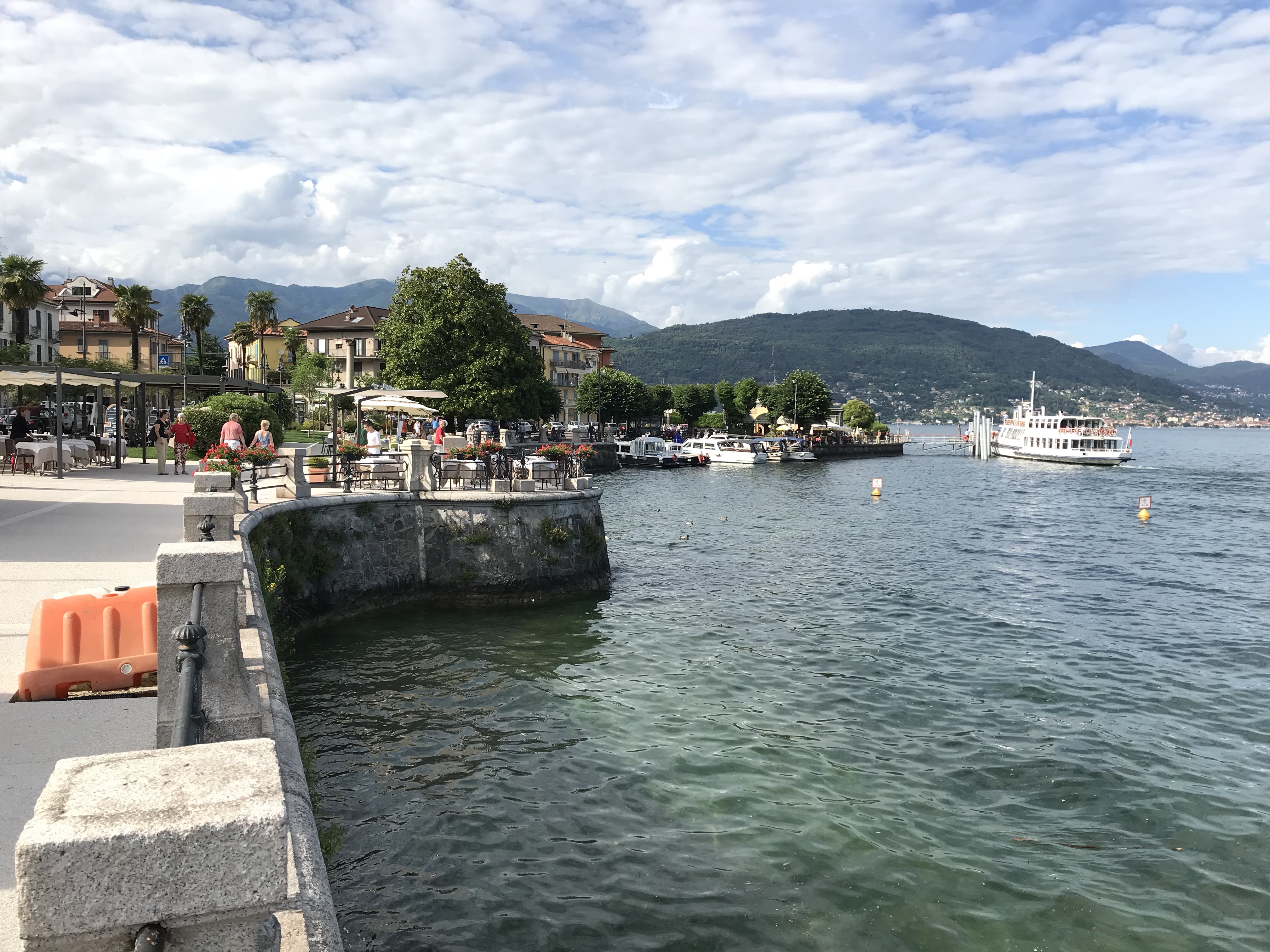
The town of Baveno, on the western coast of Lake Maggiore, at the widest point in the Lake. The ferry shown here takes you to nearby islands (discussed below) and the other side of the lake.
Another view of Baveno on Lake Maggiore. Does it get any prettier than this?
Locals enjoying the afternoon in Baveno.
Stresa
Stresa is a short drive south of Baveno, and has a bigger city feel than Baveno, even though it’s still a small town. More traffic, more shopping, more holiday villas and interesting history.
Isola Bella, home of the Borromeo family palace and gardens, dates back to 1630. One of three nearby islands (the others being Isola Pescatori and Isola Madre), Isola Bella sits a short distance off the shore from Stresa in Lake Maggiore. Passenger boats connect the islands with Stresa and Baveno.
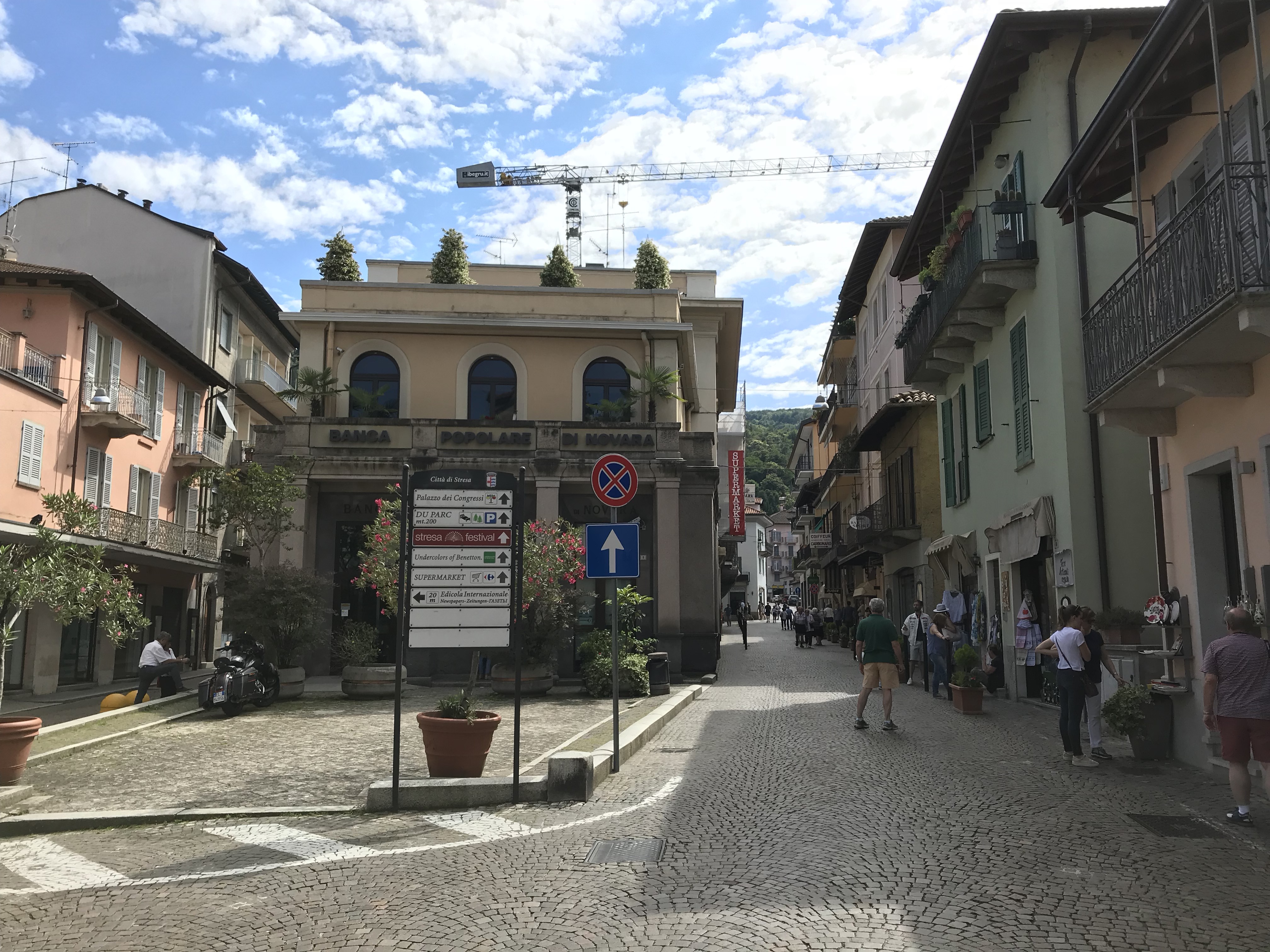
Stresa is a bigger town than Baveno, with many streets and shops to explore.
The Grand Hotel des Lles Borromees, one of the elegant hotels lining Lake Maggiore in Stresa, dates from the 19th century when Stresa was on the “grand tour” circuit of Europe. This hotel, built in 1862, was the first hotel on the shore of Lake Maggiore and has had some famous guests. Ernest Hemingway stayed here, as did Winston Churchill on his honeymoon. This hotel (as did others in the area), served as an infirmary in World War I.
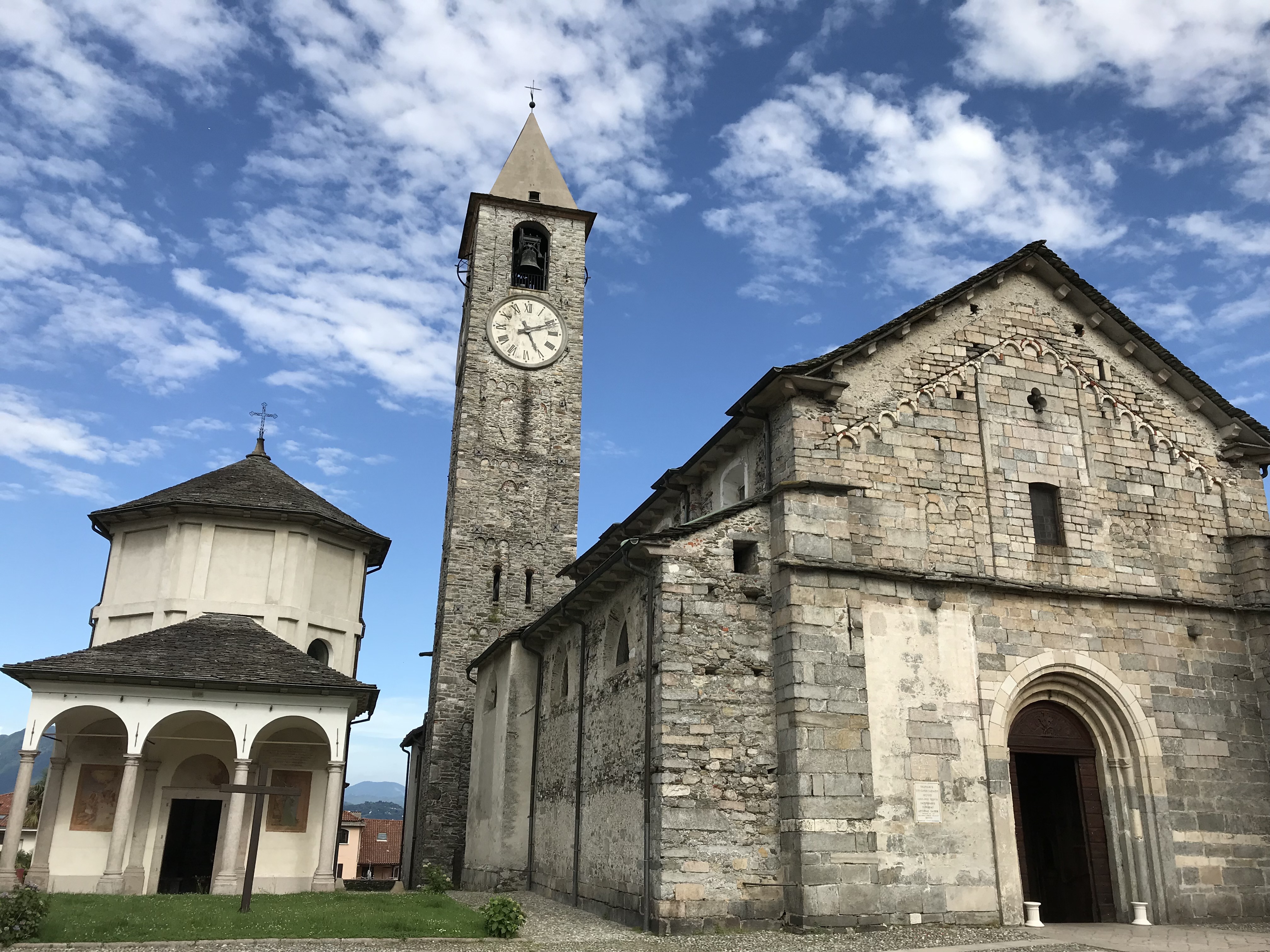
This old little church in Stresa was interesting to explore, with a baptistry right next door.
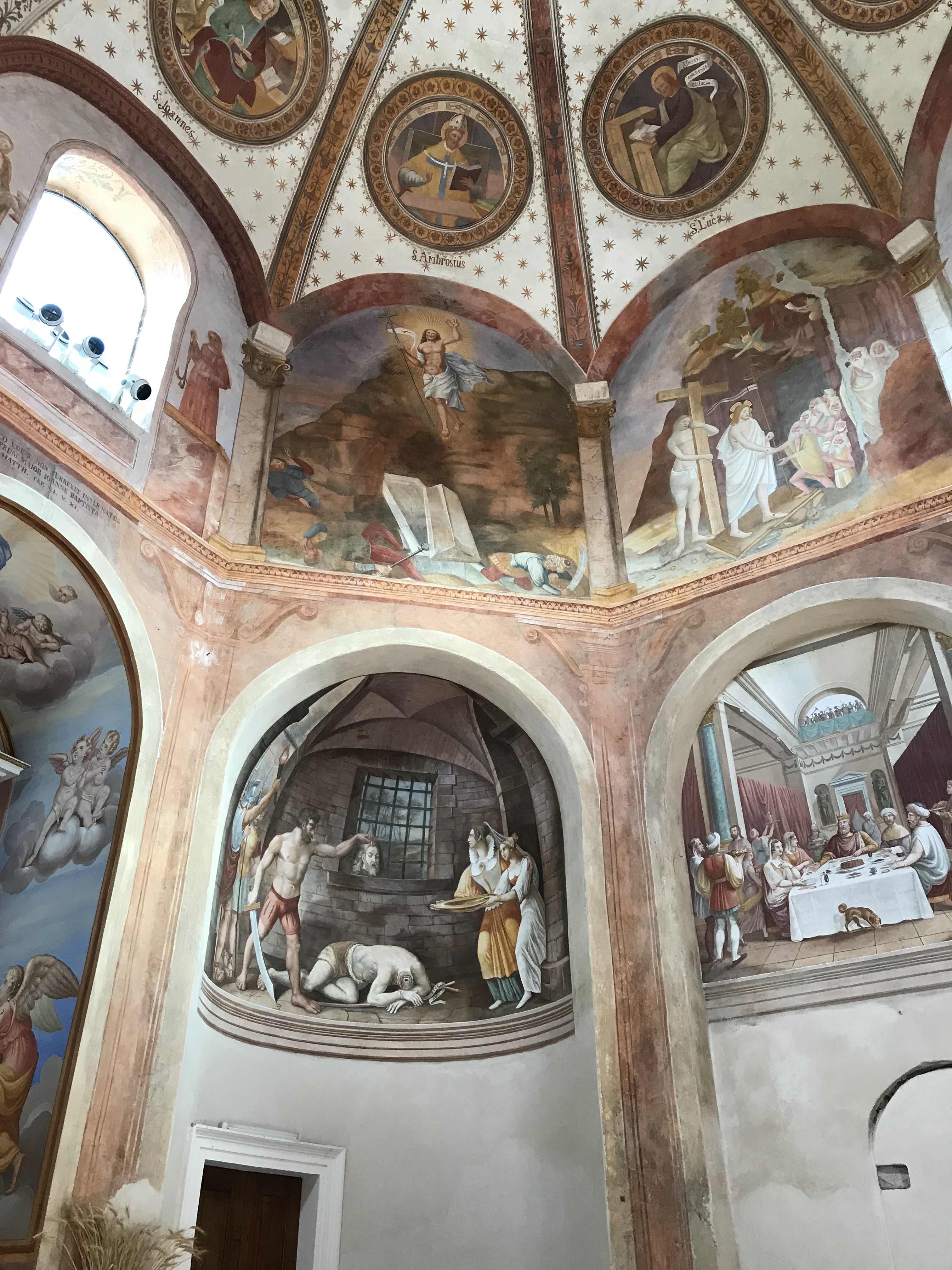
Inside the baptistry church at Stresa, with a gruesome painting of the beheading of John the Baptist.
Inside the Stresa Church.
If you find yourself in Milan and want to explore a little bit more of this stunning region of Italy, consider the beauty of Lake Maggiore, less than 60 miles away.
If there is another spot on the planet that is as beautiful when the sun is shining as Lake Como in Italy, I’d like to know about it. This is pretty much my idea of heaven–a long, crystal blue lake with picturesque old Italian villages surrounding it and dramatic mountains as a backdrop. For the tourist, this is about as good as it gets. Lake Como is not far from Milan and therefore it’s popular summer weekend getaway spot for locals as well as a primary tourist destination.
Bellagio
Our base for two nights was Bellagio, at the northern tip of the peninsula that separates the lake into two fingers (the lake is shaped like an inverted “Y”).
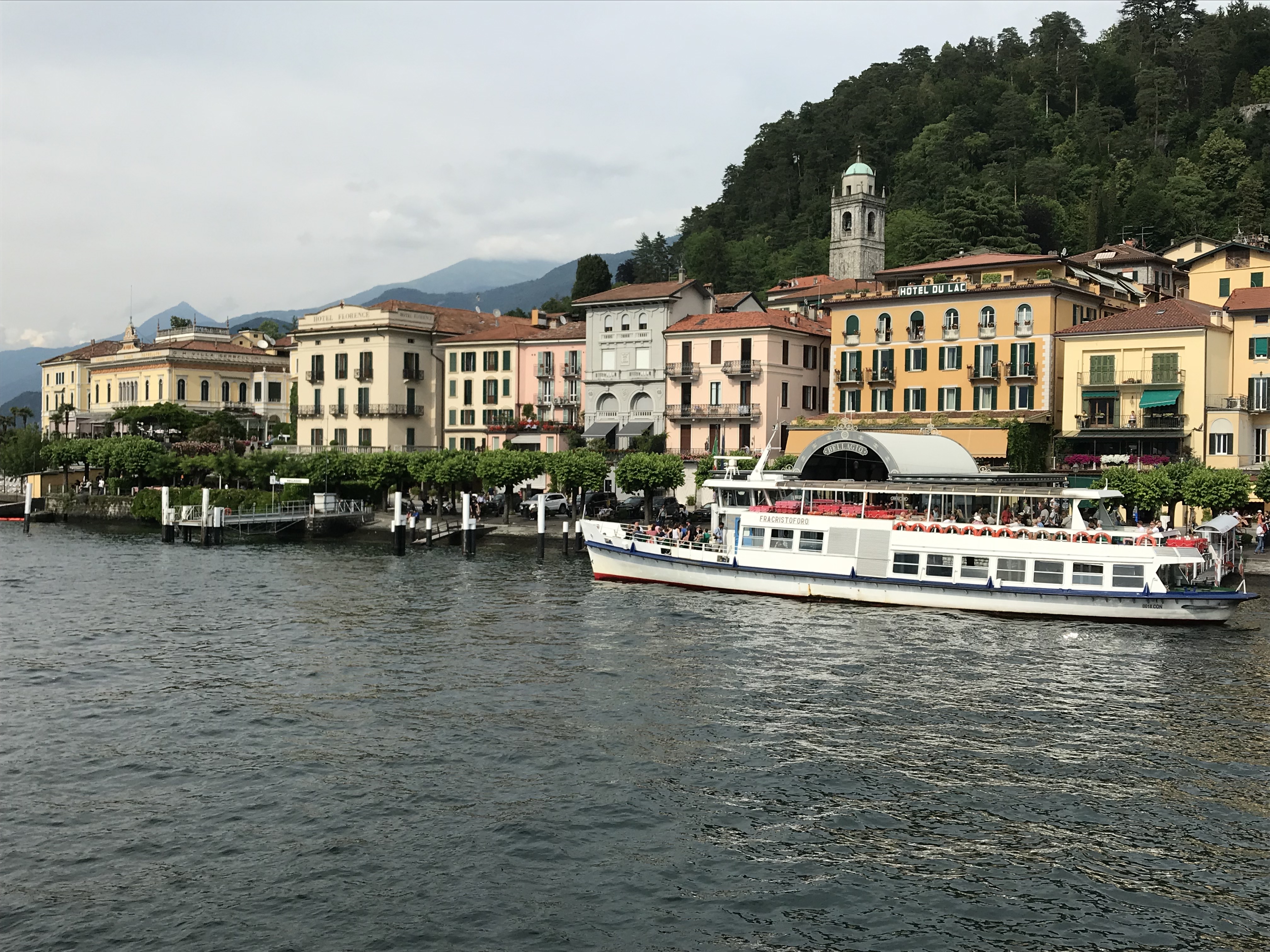
The cute town of Bellagio, probably the main tourist destination on Lake Como and our home for a couple nights.
Evening street scene in Bellagio.
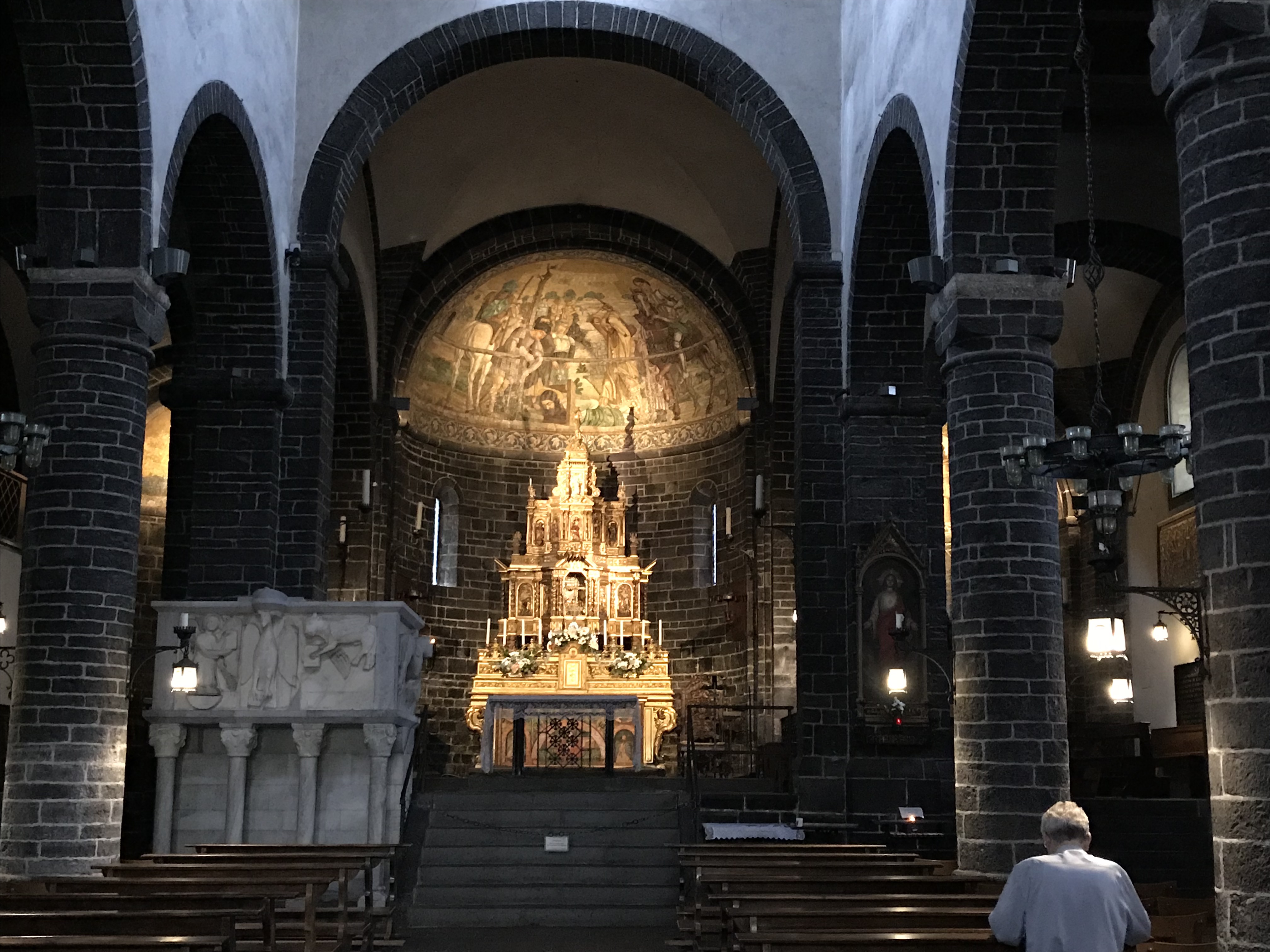
Interior of Bellagio’s 11th century San Giacomo Church.
Our apartment in Bellagio.
We arrived on a Sunday in June by car, and as to be expected on a beautiful Sunday, it was a nightmare finding a parking spot. Our apartment was in the heart of the old town (a pedestrian zone), so I had to find a spot at one of the few lots scattered around the loop road. After looping around the narrow peninsula 3 or 4 times, we found a parking spot that was within walking distance of our apartment.
We chose Bellagio because of its central location and it was a good one. We used the regular ferry system by obtaining a pedestrian day pass that took us to the towns on the west and east shores, it was perfect for the amount of time we had. Each crossing was about 20 minutes.
Example of a Lake Como ferry – this was a tiny one, most had open passenger decks that provided great views of the towns and lake scenery.
Varenna
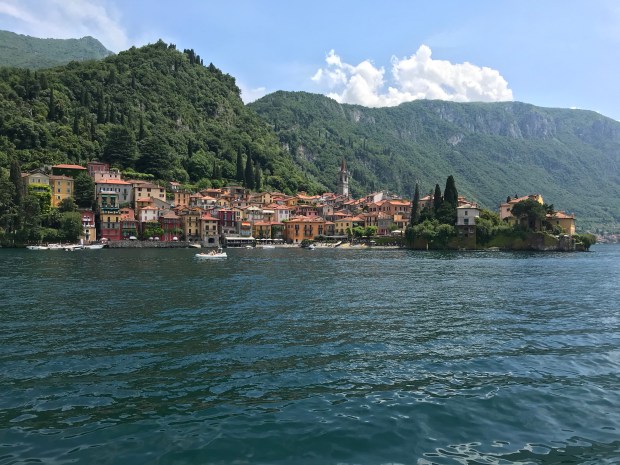
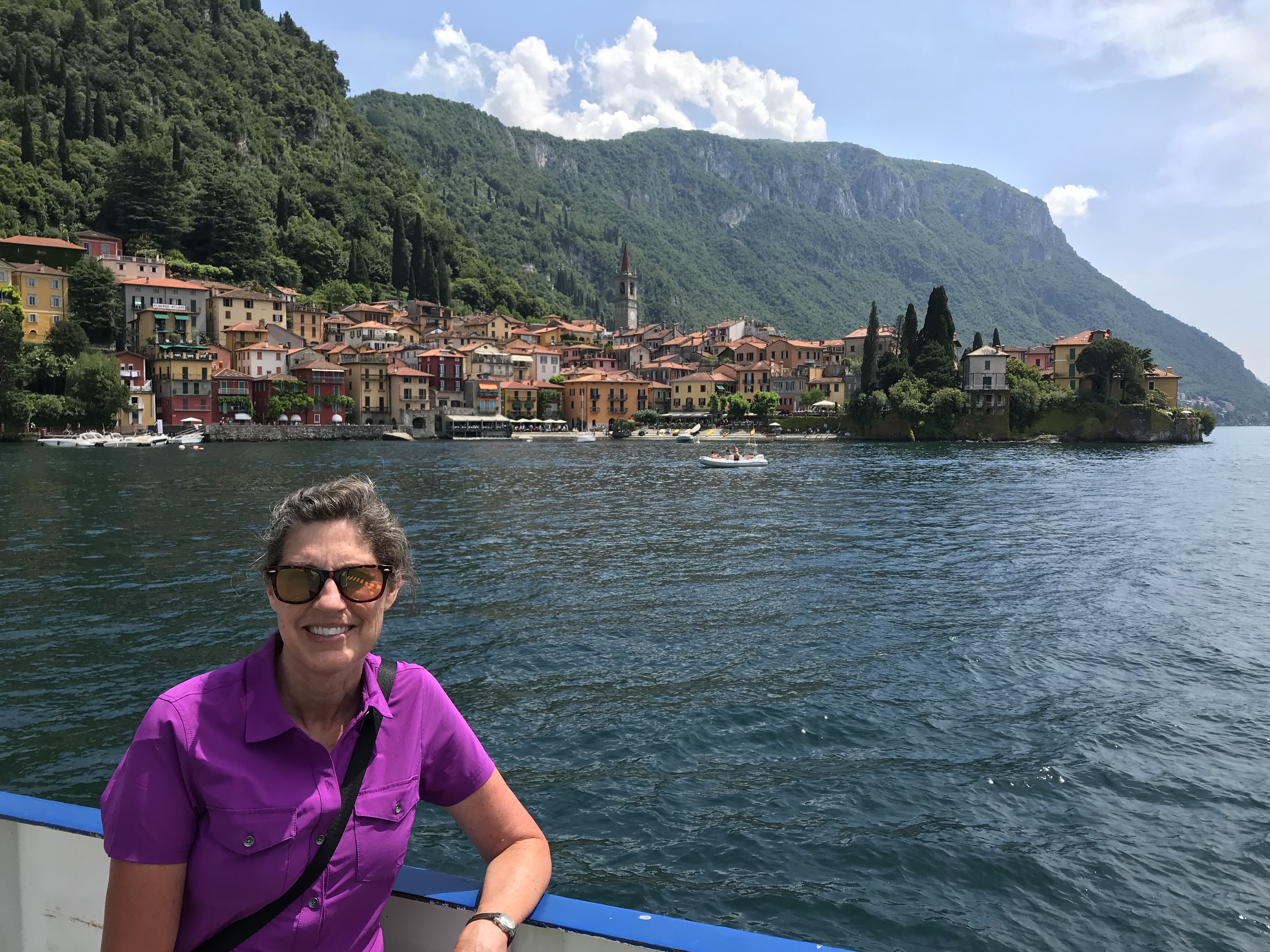
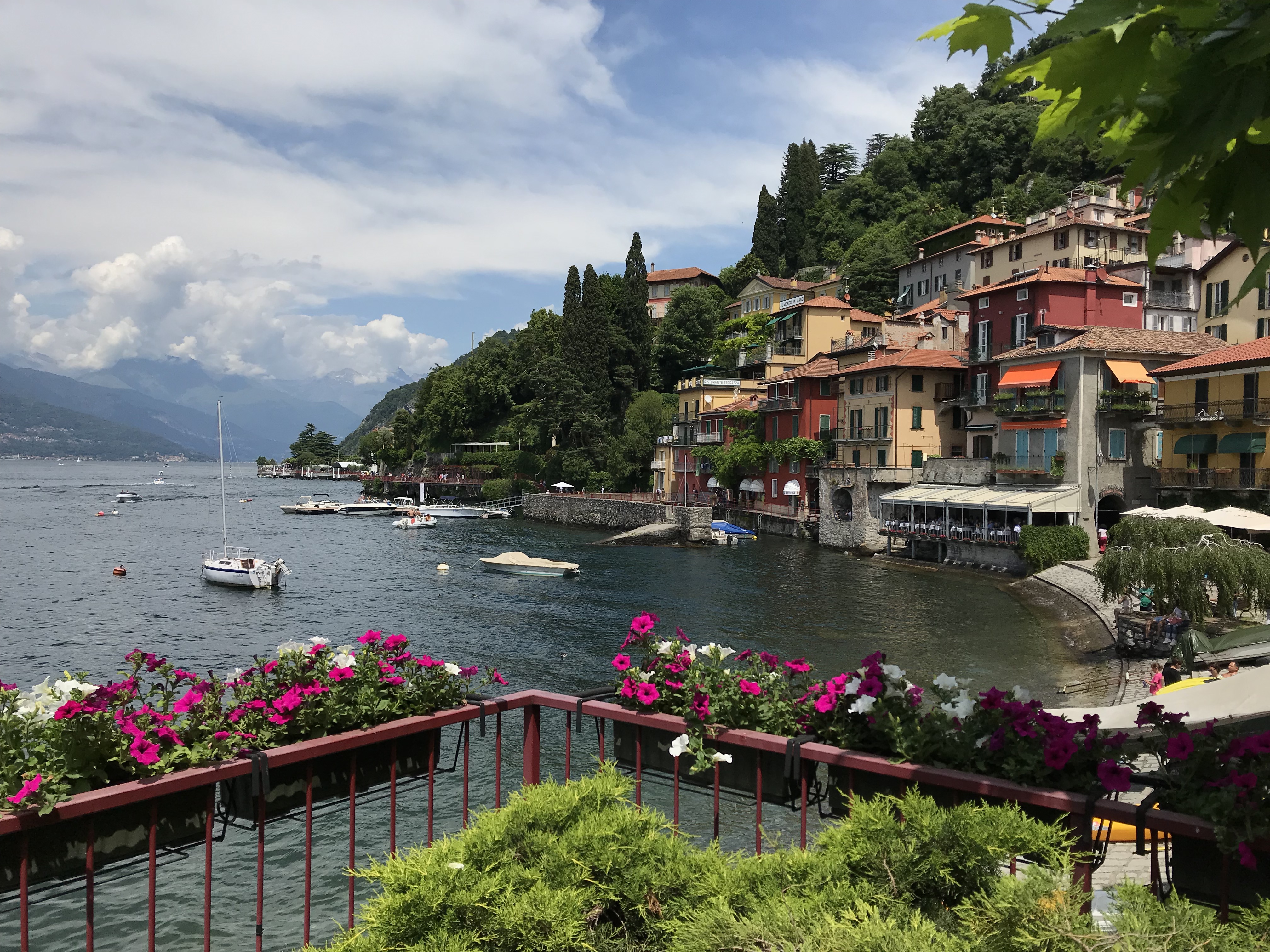
Varenna is s short distance north of Bellagio and probably the 2nd busiest town in terms of tourists, and it’s easy to see why – a quaint village hugging a little point on the lake with views from all directions.
Arriving into Varenna.
Another view of Varenna, I love the colors captured in this image.
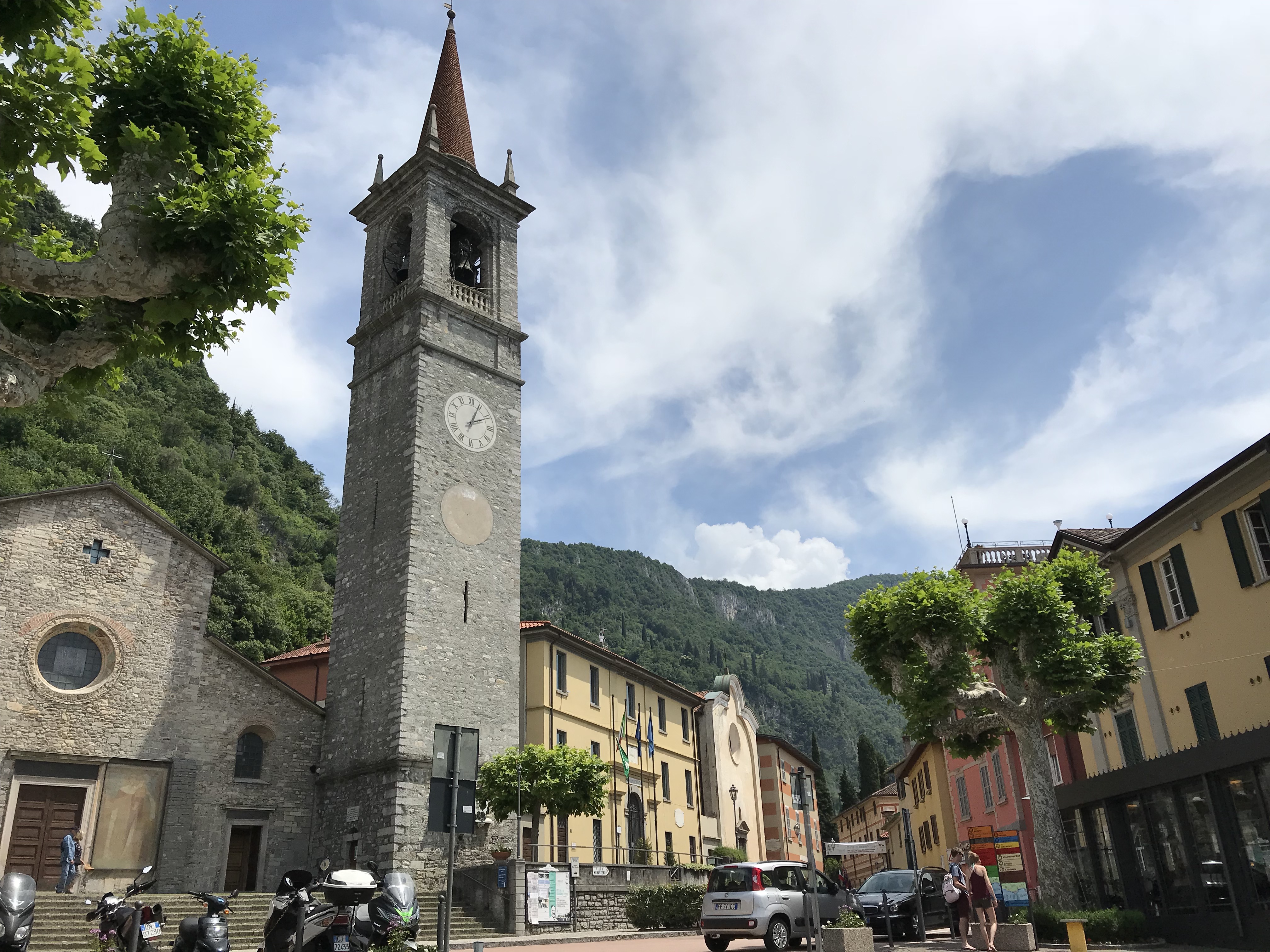
Varenna’s main town square. Just a block or two off the water and the scene quiets down dramatically!
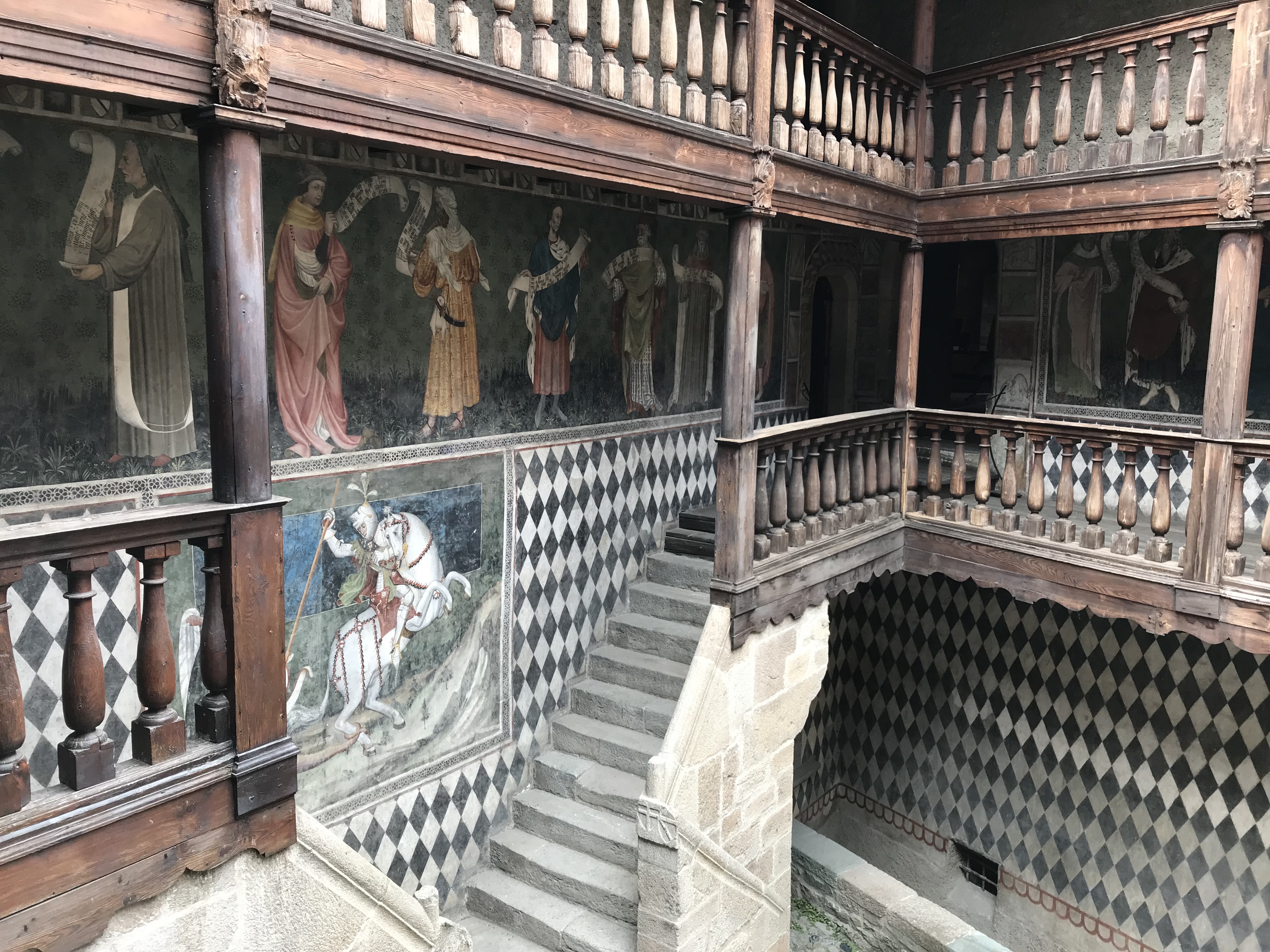
Varenna’s Church of San Giorgio has some 14th -15th century frescoes near the main altar.
Interior of San Giorgio church in Varenna.
One could spend weeks exploring the coastline villages of Lake Como, but since our two weeks in Italy were coming to an end, this wasn’t a bad way to spend a couple final days in paradise.
This is a view of the town of Menaggio, on the west shoreline of Lake Como.
Lake Como is known for its extravagant villas and as being a home for the rich and famous. With the bustling fashion capital of Milan just 83 km (52 miles to the south), this area reeks of wealth.
The 18th century Villa Carlotta, on the western shore of Lake Como, just directly across from Bellagio. It is now a national property.
A view of Bellagio from Villa Carlotta.
The drive along the shore of Lake Como to Bellagio from Como on the south is beautiful, but the road is extremely narrow with no shoulder – even in a little car I was a bit nervous with the buses, trucks and other traffic, but we made it safely. Just take your time and be alert, and dream of what lies ahead!
If you can’t visit all 72 castles (who could?) in the Aosta Valley of Italy then at least visit one–Fénis Castle. Dating back to the 12th century, Fénis is pretty much exactly what you’d expect from a medieval viscount stronghold, with crenellated walls, towers and frescoed rooms and courtyard in a dramatic setting in a valley surrounded by tall mountains.
Exterior view of Fénis Castle.
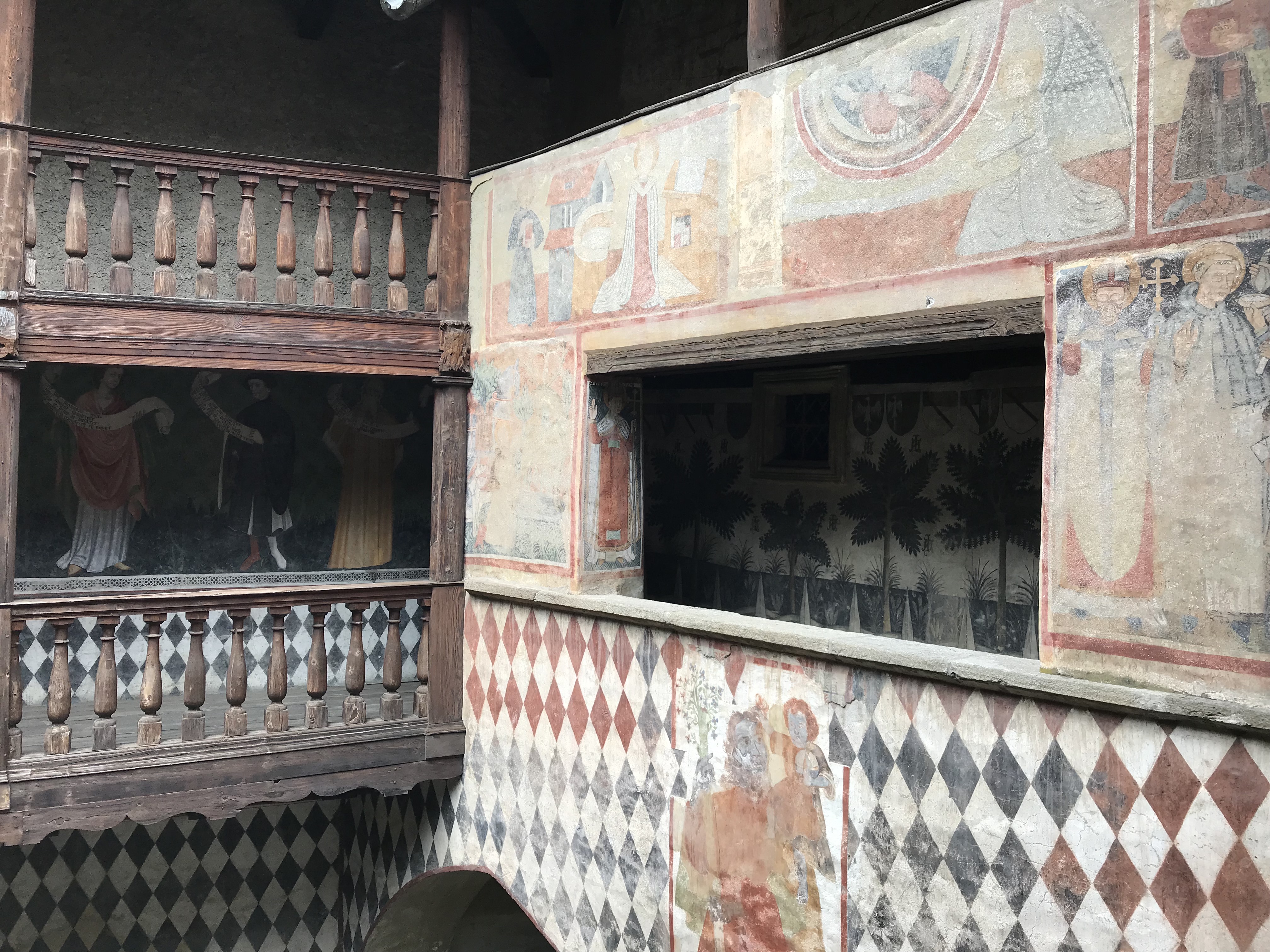
The inner courtyard of Fénis Castle. The frescoes date from the first quarter of the 15th century.
Another view of the inner courtyard.
The only way to visit the castle is to join a group tour offered at specific times throughout the day. Our tour was in Italian, but lucky for us the castle’s main rooms had explanatory information in English.
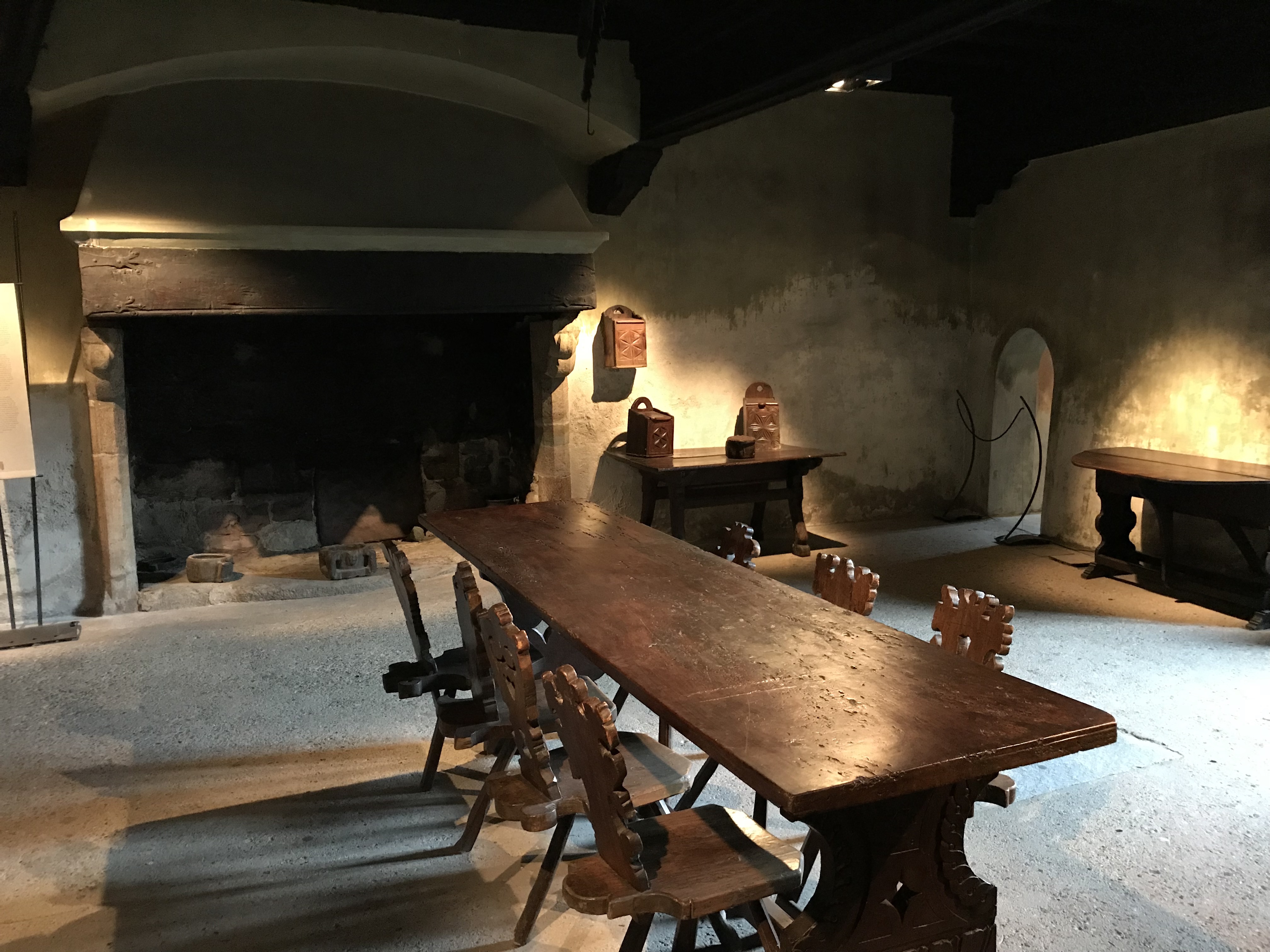
A dining room on the castle’s ground floor.
A room believed to be the kitchen on the ground floor.
The castle was built by the Challant family and much of the structure we see today is the result of additional construction work early in the 15th century.
A bedroom in the castle. The Challant’s living quarters were on the 1st floor (one floor up from the ground floor).
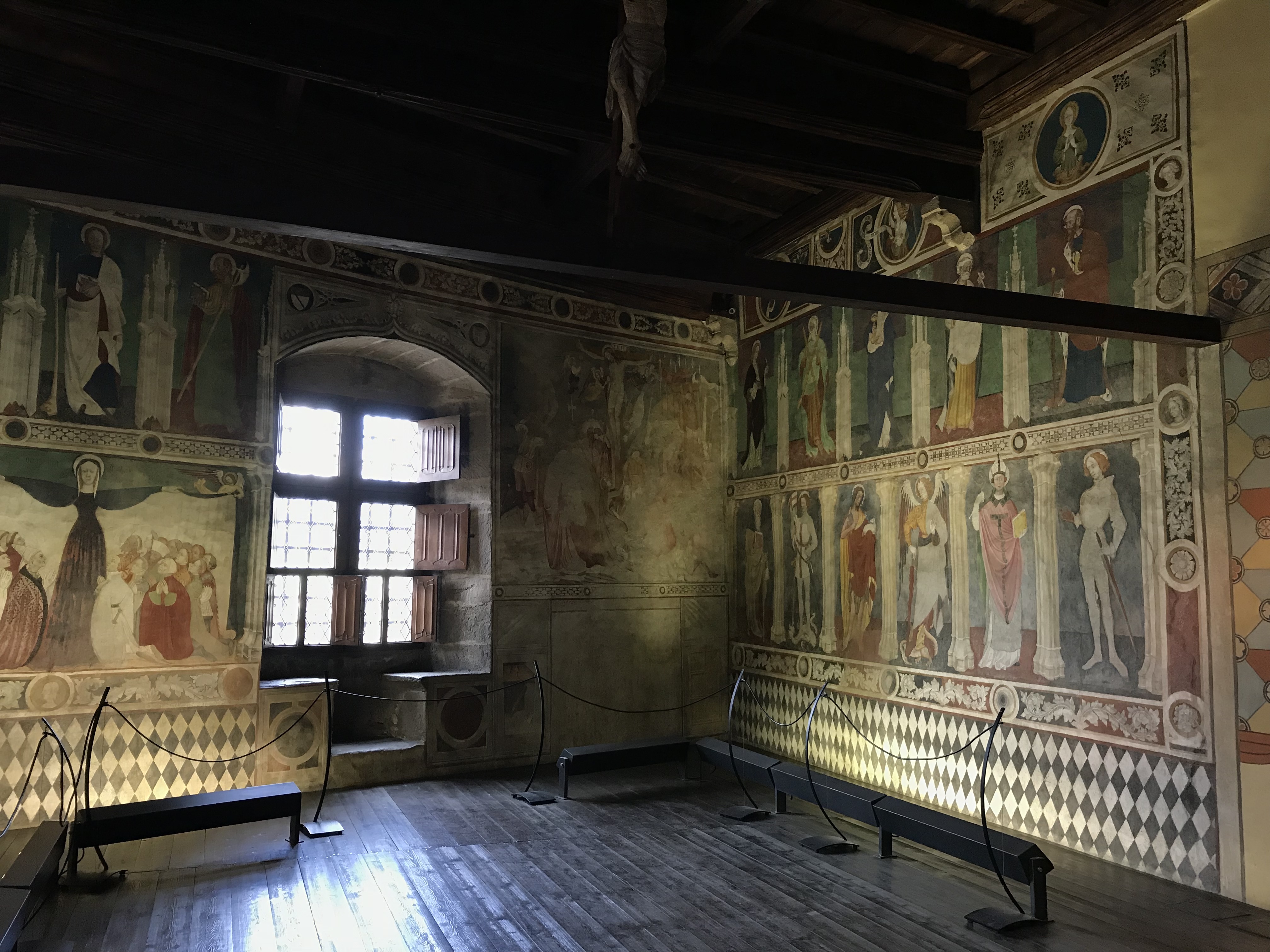
The 1st floor Great Hall, also frescoed.
15th century religious frescoes adorn the 1st floor chapel.
The castle was used as a hay barn, stables and granary in the 19th century until significant restoration started at the end of the 19th century and continued through the 1940’s.
A view of the inner walls of the Castle.
The corbelled dovecote tower on the castle’s western side.
Fénis Castle is about 15 km (9 miles) east of the town of Aosta. Don’t miss this great castle if you visit the magical Aosta Valley, one of Italy’s less visited regions.
Recently I’ve been sharing posts on the beautiful Aosta Valley in northern Italy. The town of Aosta is also quite lovely, sitting in a spectacular setting at the foot of the Alps. The town’s Roman ruins remind us of the importance of the route through the Alps and this valley in ancient times. The town was founded by the Salassian Gauls, whose lands covered the nearby Little and Great St. Bernard passes over the Alps. In 25 BCE Caesar Augusts (Octavian) defeated these Gauls and built up a grand city which became known as Aosta.
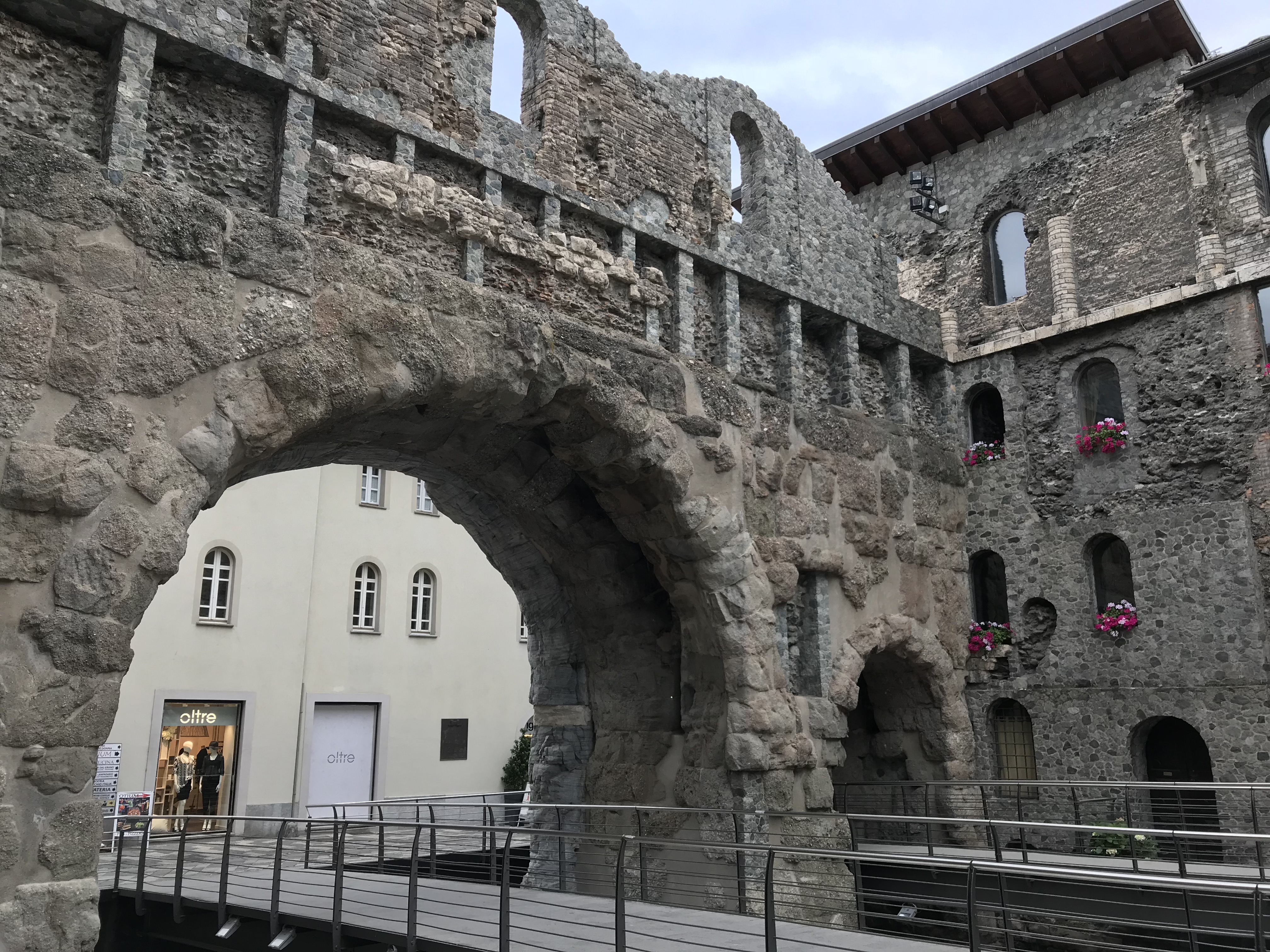
Arch of Augustus, erected in 25 BCE stands at the eastern edge of the old city (the roof was added in the 18th century).
The Porta Pretoria, near the Arch of Augustus, also dates back to 25 BCE.
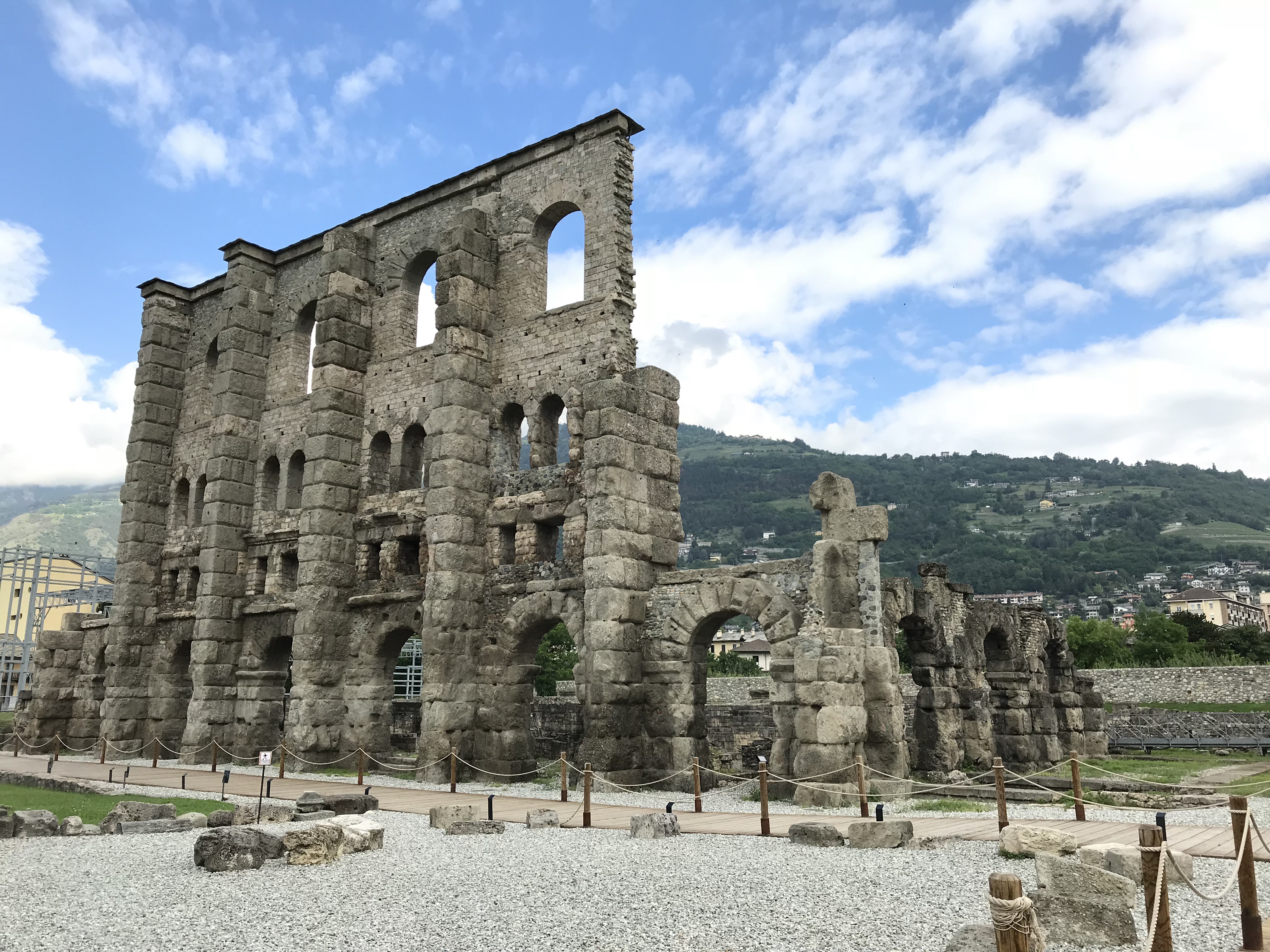
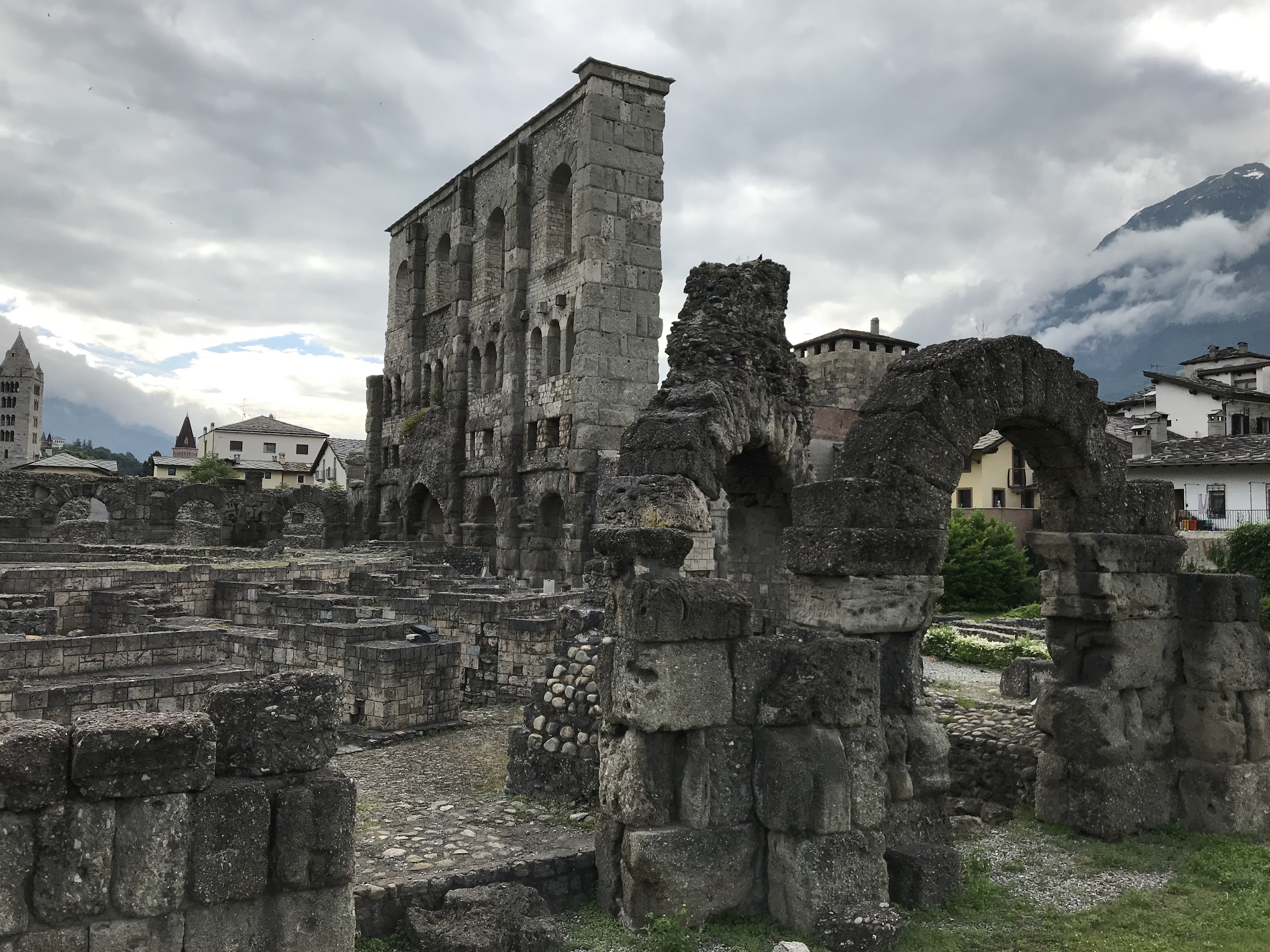
The flagship sight in Aosta is the Roman Theater, with one tall exterior section of wall remaining. Medieval buildings once stood around the wall, and they were removed during restorations.
Roman Theater in Aosta, built sometime after 25 BCE. The wall is 65 ft. high.
Seating area inside the Roman Theater.
Another view of the area around the Theater.
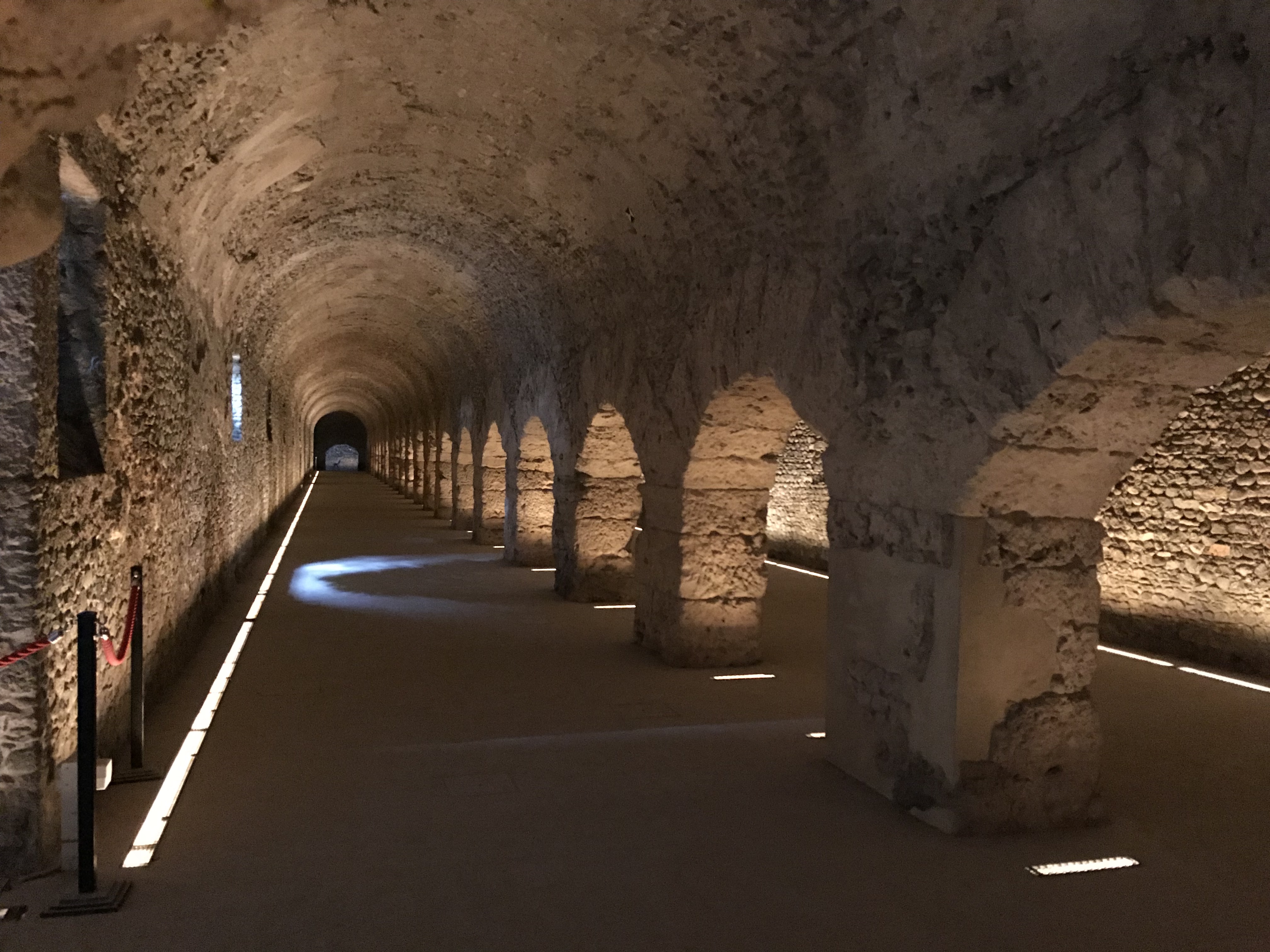
Some of Aosta’s Roman ruins are underground. This is the cryptoporticus, which sits underneath the Forum (marketplace), now occupied by Aosta’s Cathedral. Its function is unknown – storage, shops, or something else?
There are numerous Roman, pre-medieval and medieval tombs and ruins underneath Aosta, and some are accessible through the churches built on top of these sites. You can buy a pass and map to direct you to the sites.
Part of a Roman chariot. Various interesting artifacts have been unearthed and are on display in the underground museums.
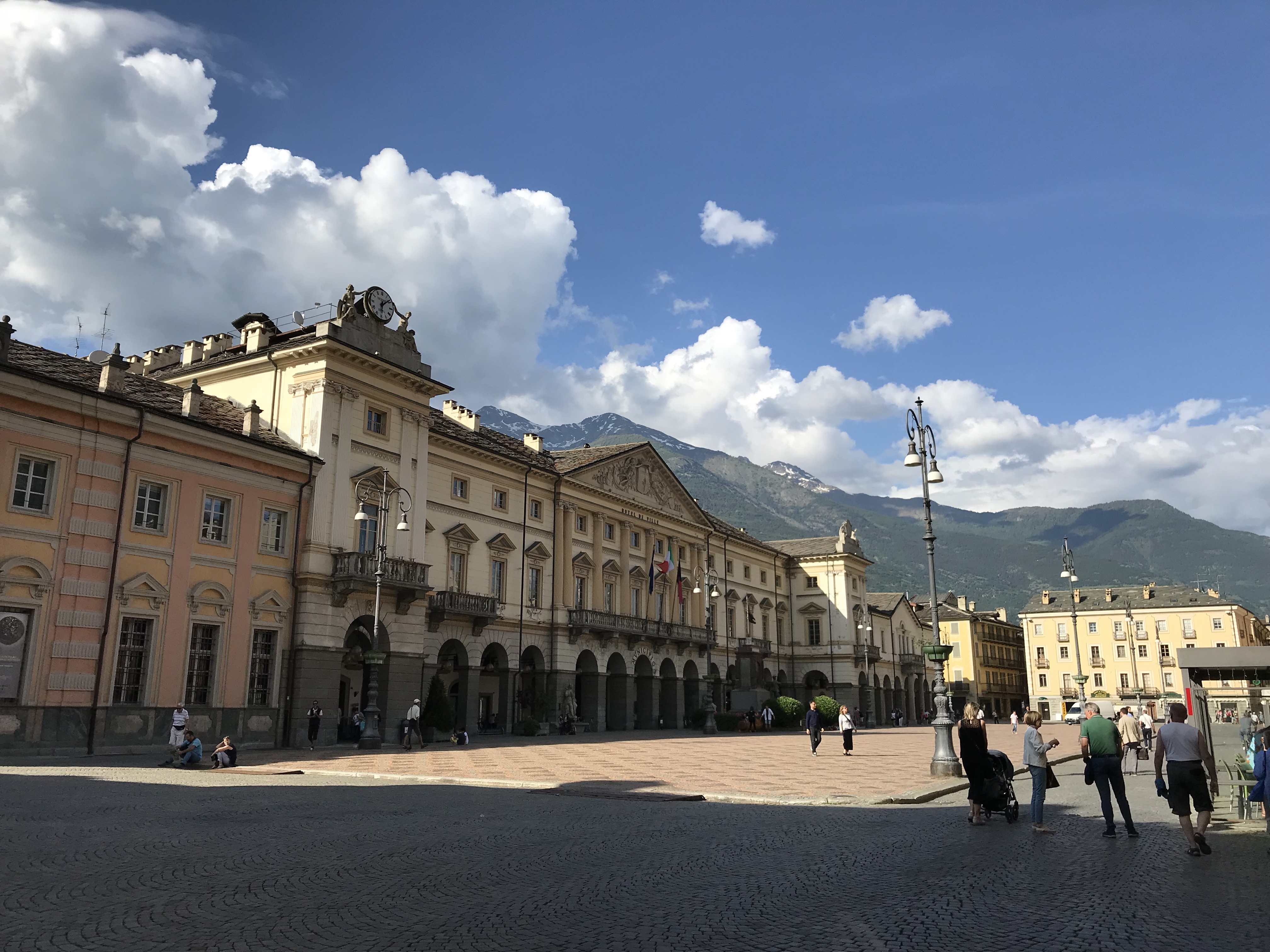
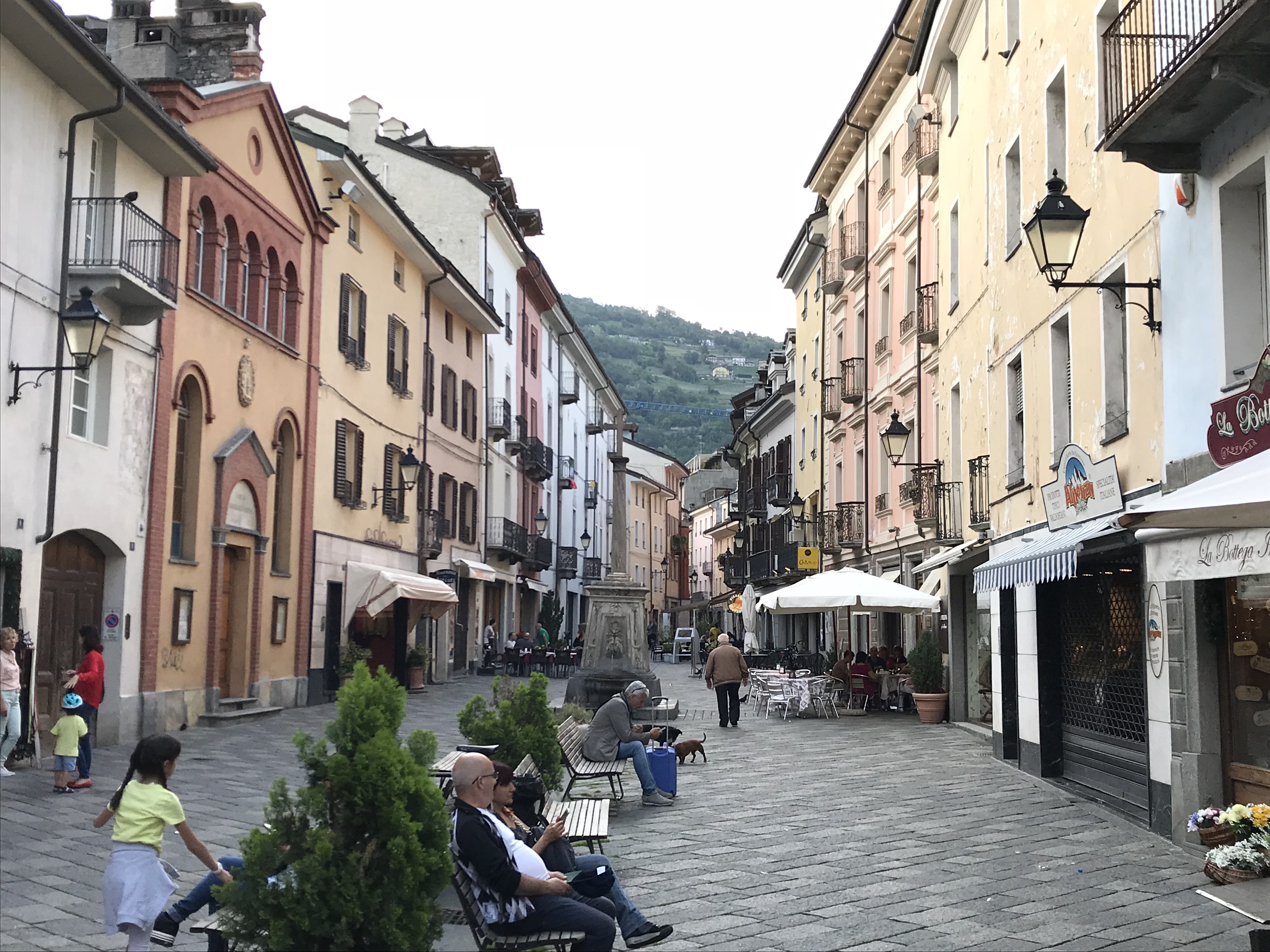
Aosta’s piazza (town square). The setting reminded us a bit of a Colorado ski town, nestled in the mountains.
Another street scene in Aosta.
Aosta makes a good base for exploring the Valley, we stayed in a small hotel just outside the city and enjoyed the quiet and scenic location.
We stayed at a little boutique hotel, La Bicoque, just north of the town of Aosta.
Savoia Castle is another wonderful sight in the Aosta Valley of Italy, it’s actually up a narrow side valley not far (33 km or 20 miles) from Bard Fortress. While this “modern” Italian castle does not have the ancient history of typical European castles, it evokes the past by having been built in the 15th century Lombard style. It’s worth seeing for its lovely interior, the mountain setting and to gain some insight into the personality of its builder, Queen Margherita.
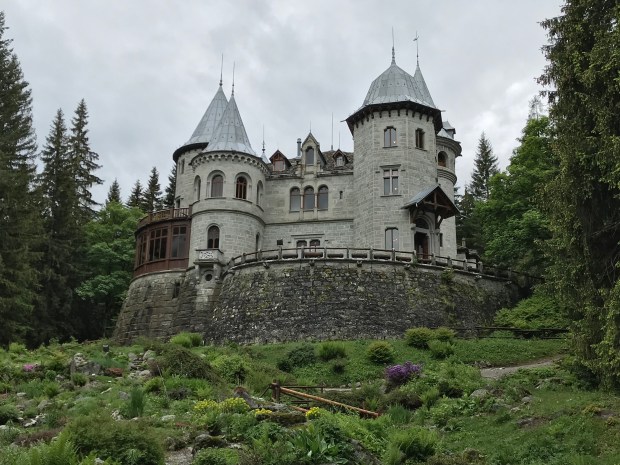
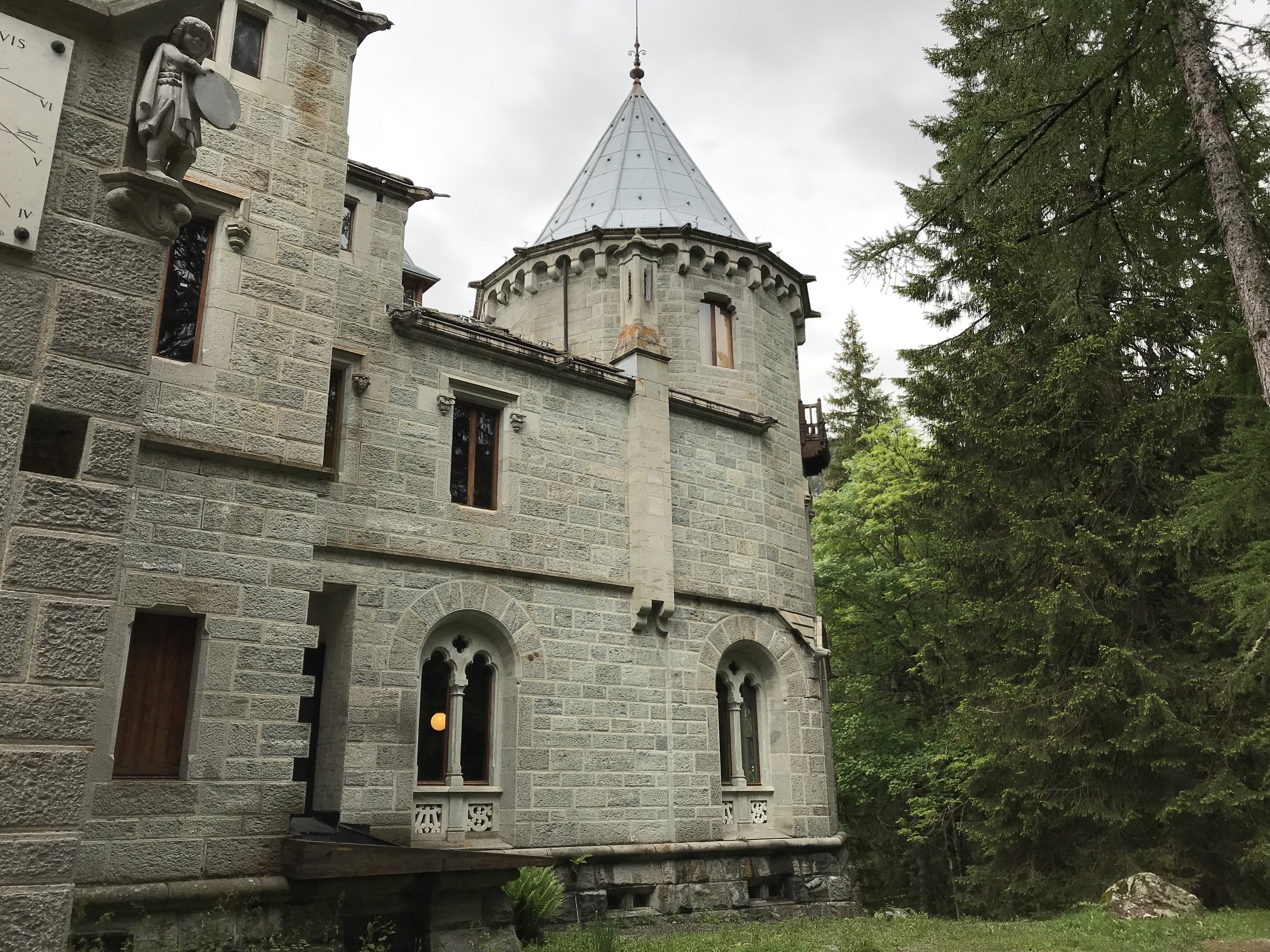
An exterior side view of Savoia Castle.
This castle was the project of the queen of Italy (Queen Margherita, widow of King Umberto I) and completed in 1904. She could escape the summer heat of Rome here in this gorgeous setting at the foot of the Italian Alps.
Photo of Queen Margherita (1851-1926). She was a smart, powerful figure who dealt with tremendous political turmoil in Italy at the time. Her husband, King Umberto I, was assassinated in 1900. Legend has it that the margherita pizza is named after her!
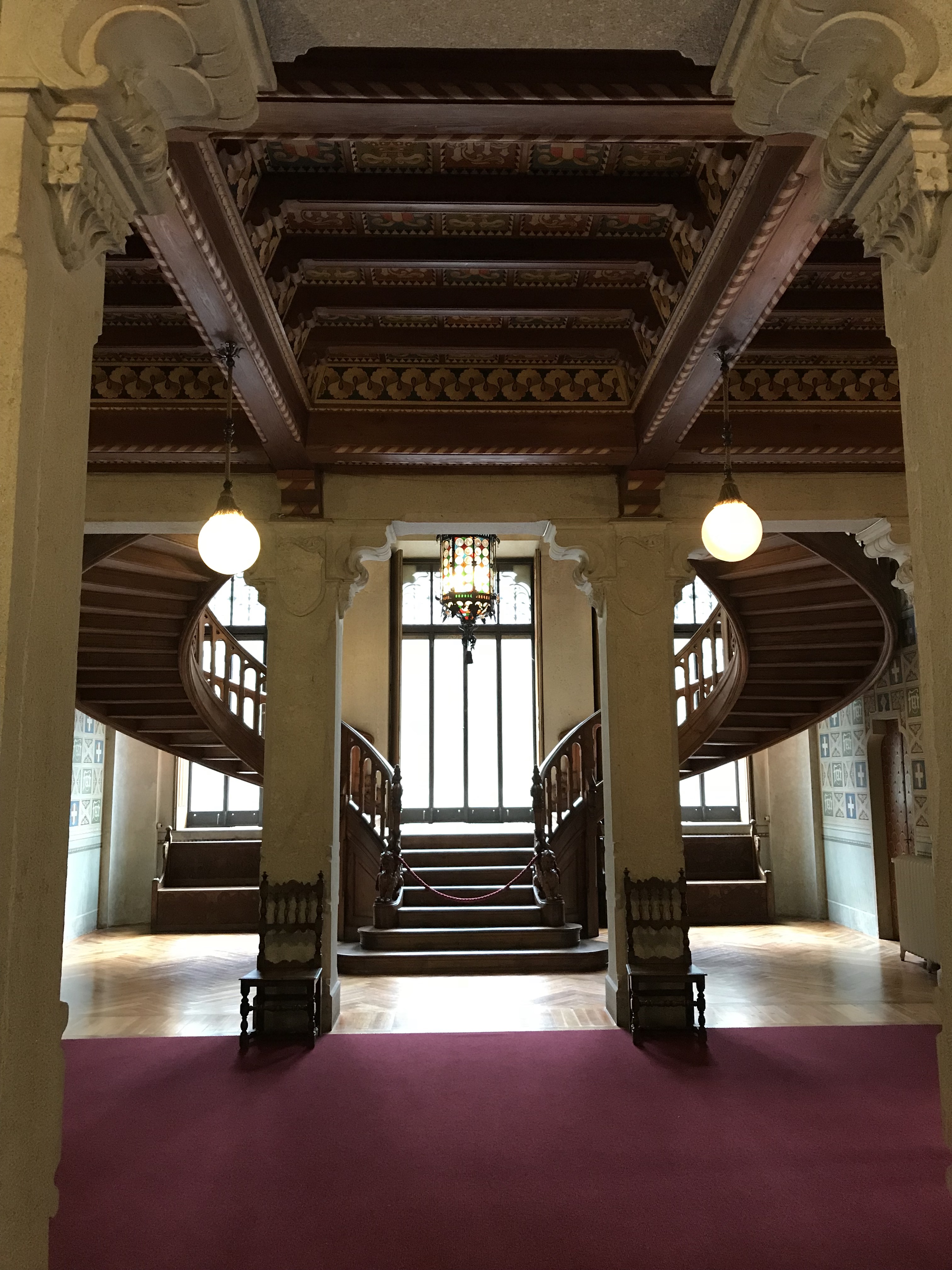
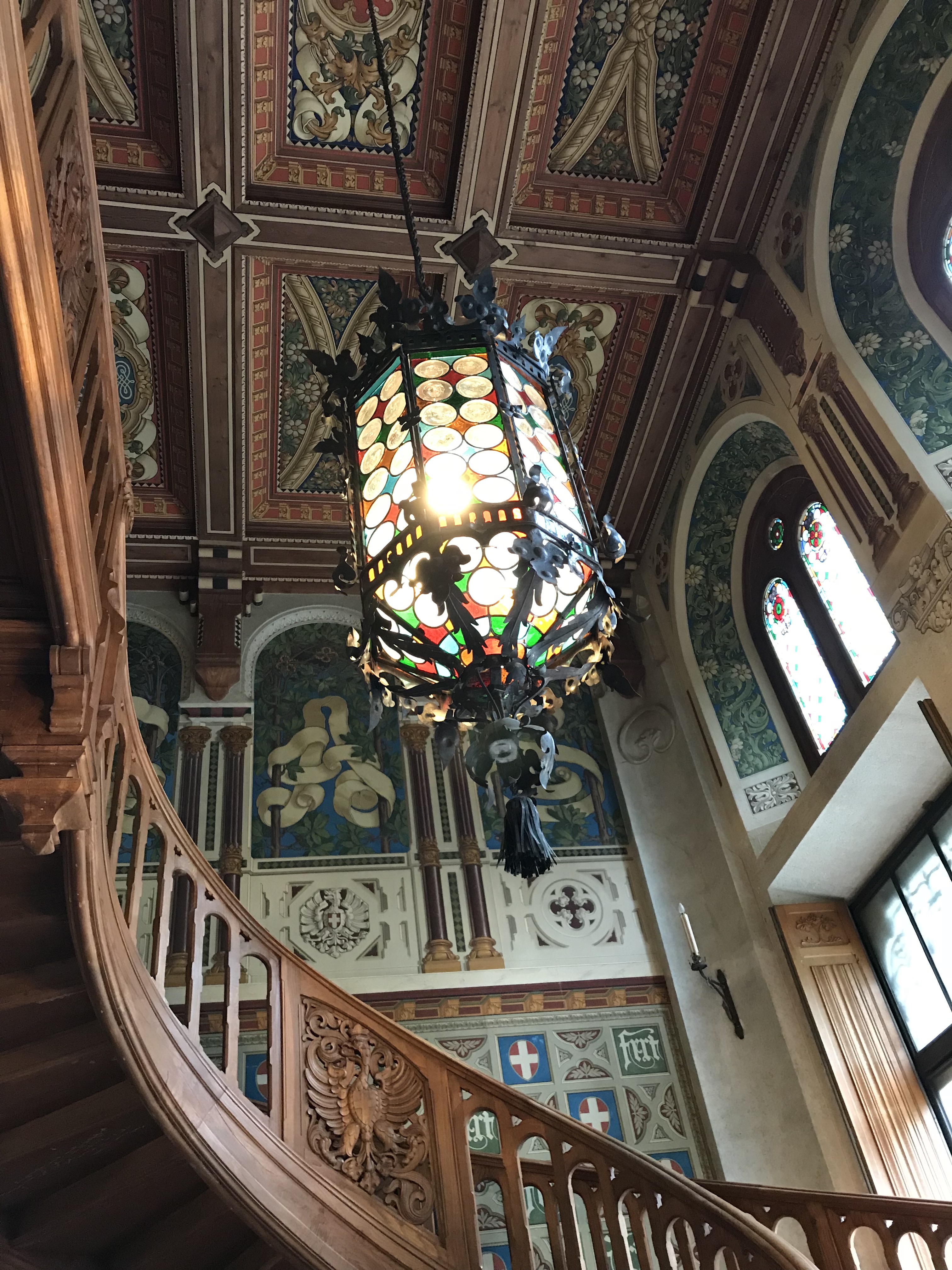
The castle’s entry way leads to this beautiful staircase. Note the fine wood ceiling displaying the royal coat of arms (detail below).
A view of the castle’s first floor ceiling detail showing the coat of arms and other royal symbolism.
The outstanding woodwork and artwork of the railings, walls and ceiling above the staircase.
Billiard room in Savoia Castle.
Formal dining area of Savoia Castle. The preparation area is behind the wooden screens. The actual kitchens were separate from the main residence.
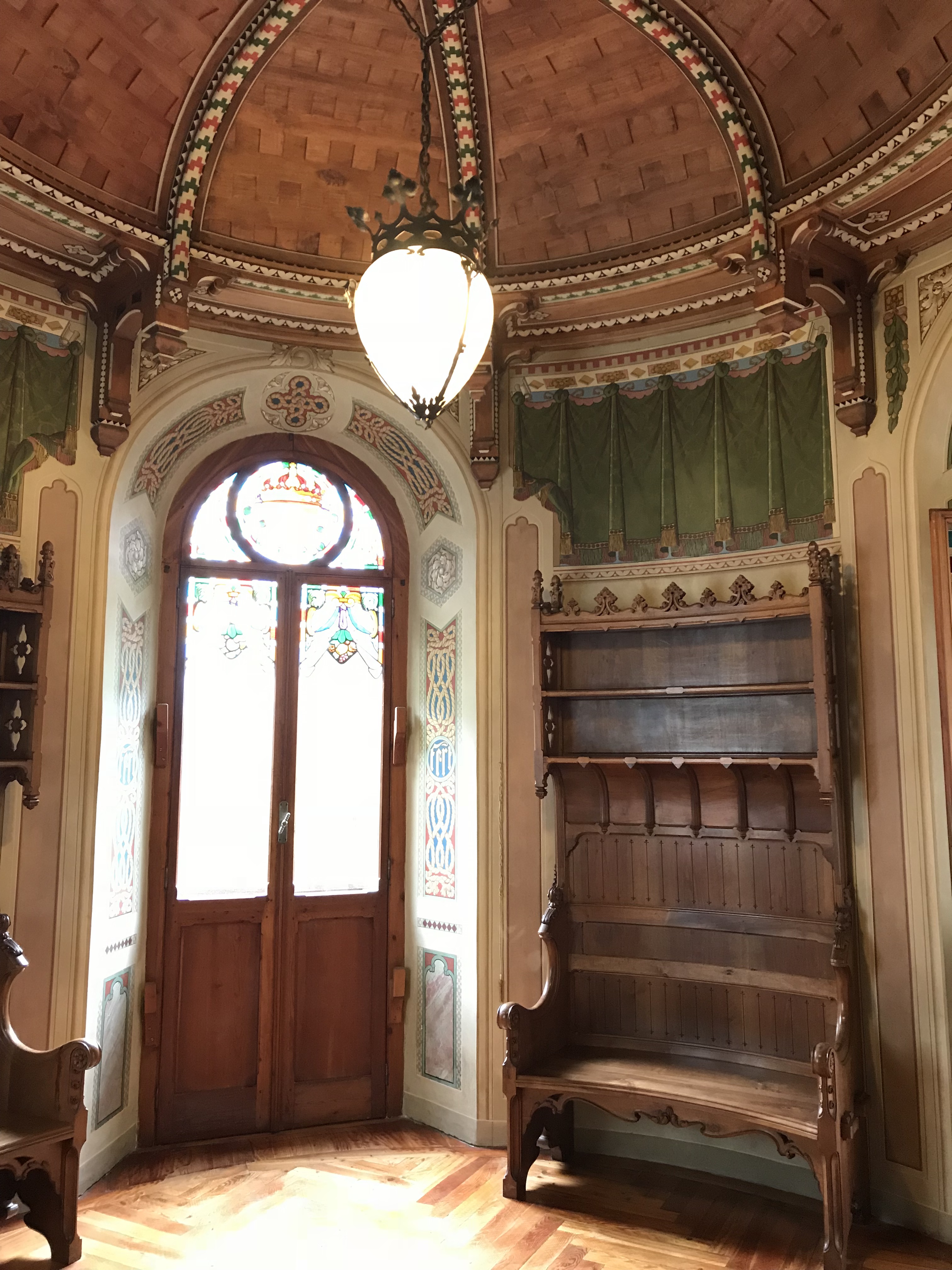
A reading alcove in Savoia Castle.
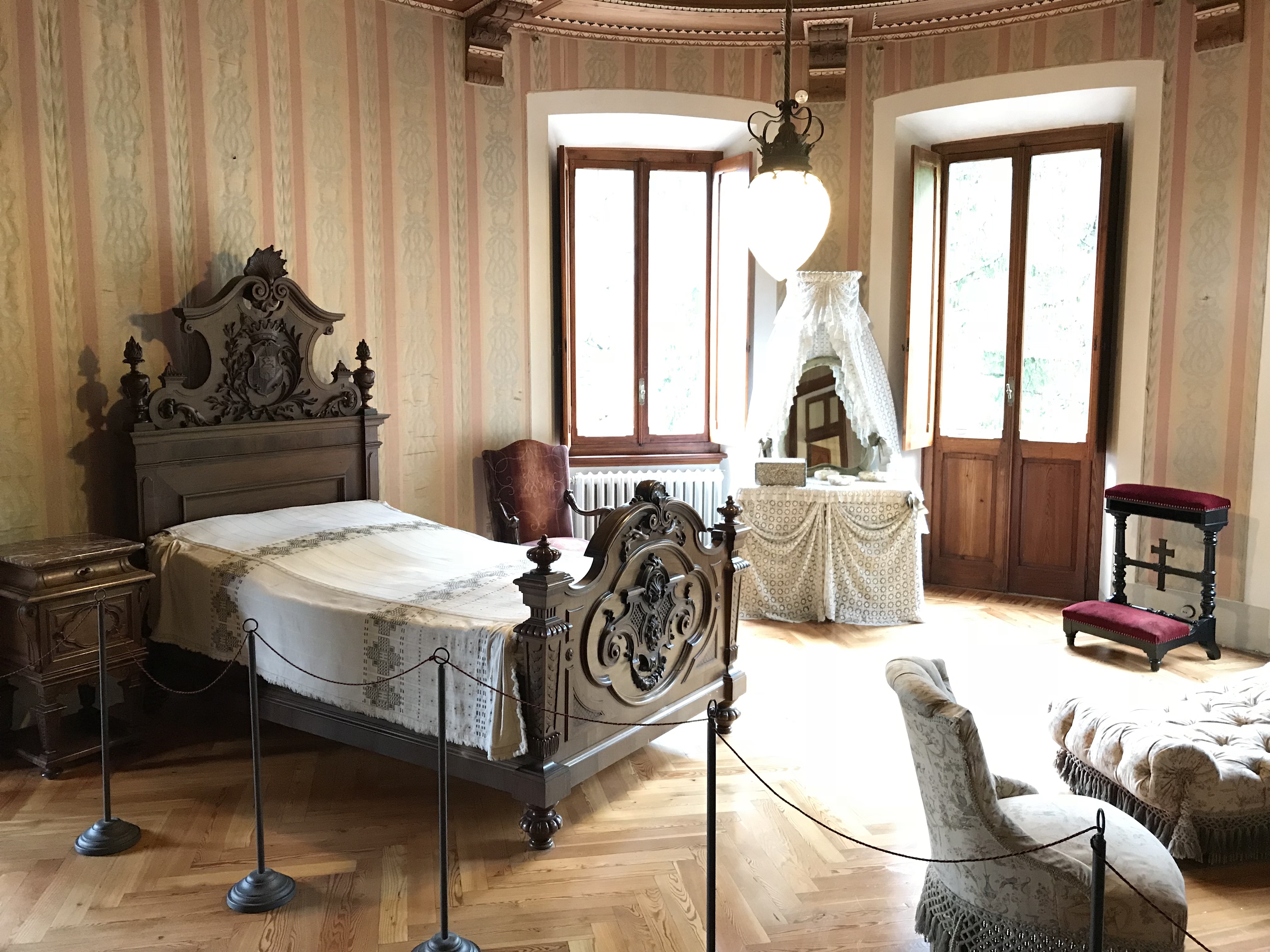
The Queen’s bedchamber in Savoia Castle.
The Queen’s bath. The castle had many conveniences not yet in wide use at the time (hot water, heating, electricity, plumbing).
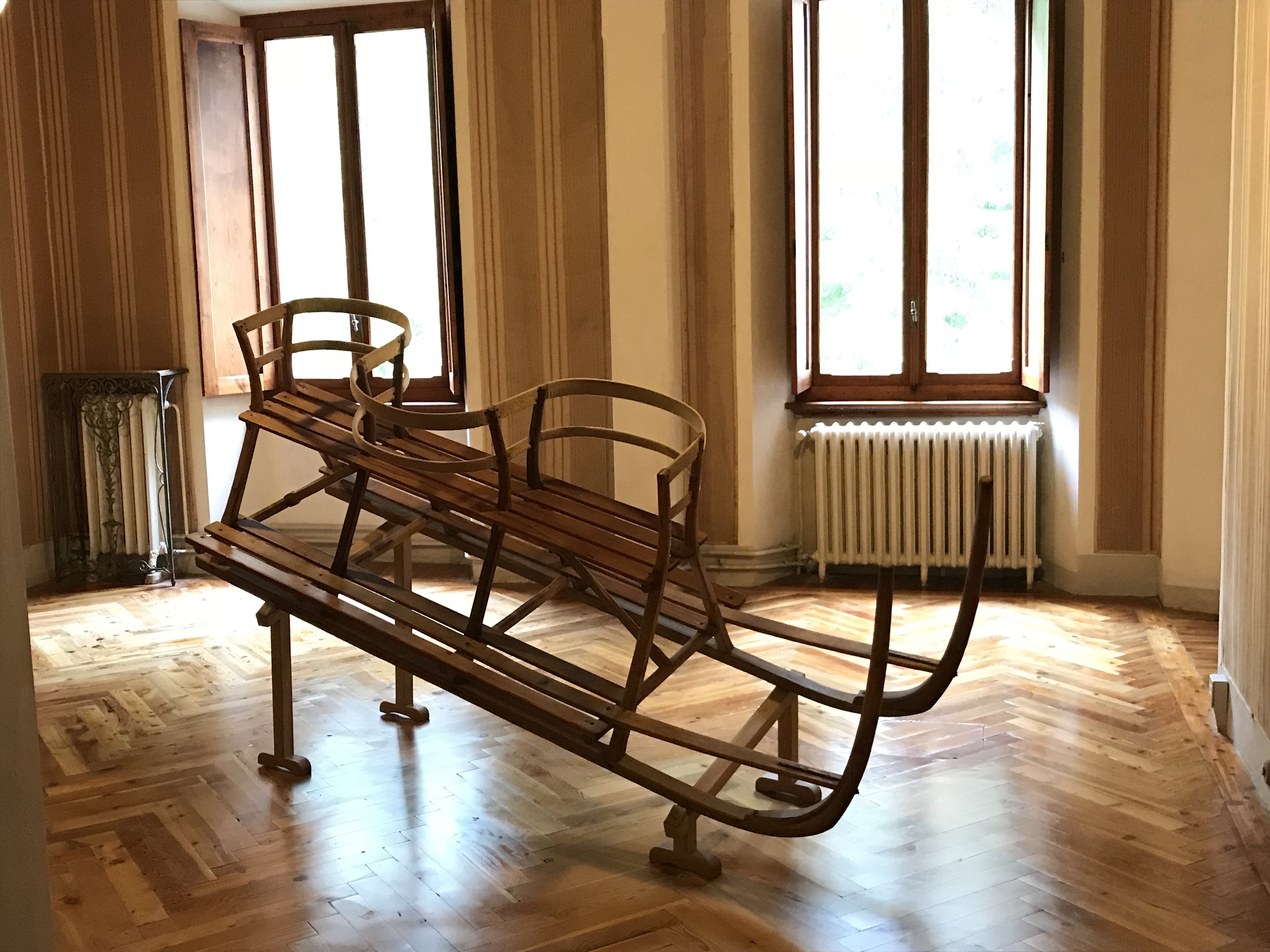
The queen would spend her summers at the castle. She entertained guests here and even took them on sleigh rides in the winter in her unique sleigh.
The sleigh the queen used where riders would sit “side saddle” and could have a great conversation! There is a photo in the castle of her with guests on a mountain pass in the sleigh.
This photo shows the dramatic mountain scenery and setting of Savoia Castle. Queen Margherita knew how to choose a location!
To visit the castle you must take a guided tour and they are offered in English only at certain times. However, when we visited, we were the only guests (it was a very rainy day) and even though an English tour was not scheduled at the time, the very kind guide was able to give us a tour and did her best to explain things in English–we were most appreciative. Photos are allowed without flash. There are also Botanical Gardens on the castle grounds, but given the wet weather we did not take the time to visit them.
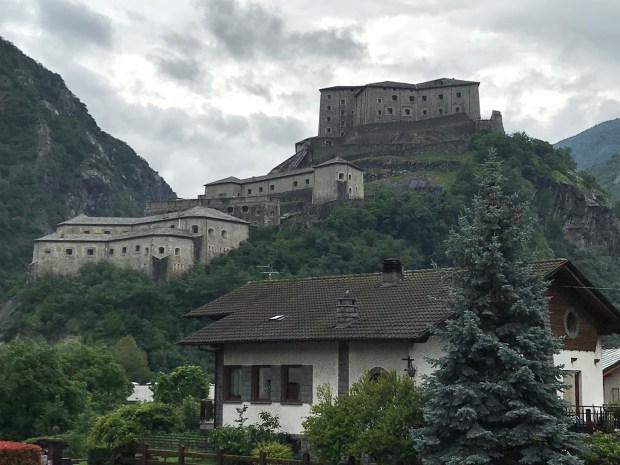
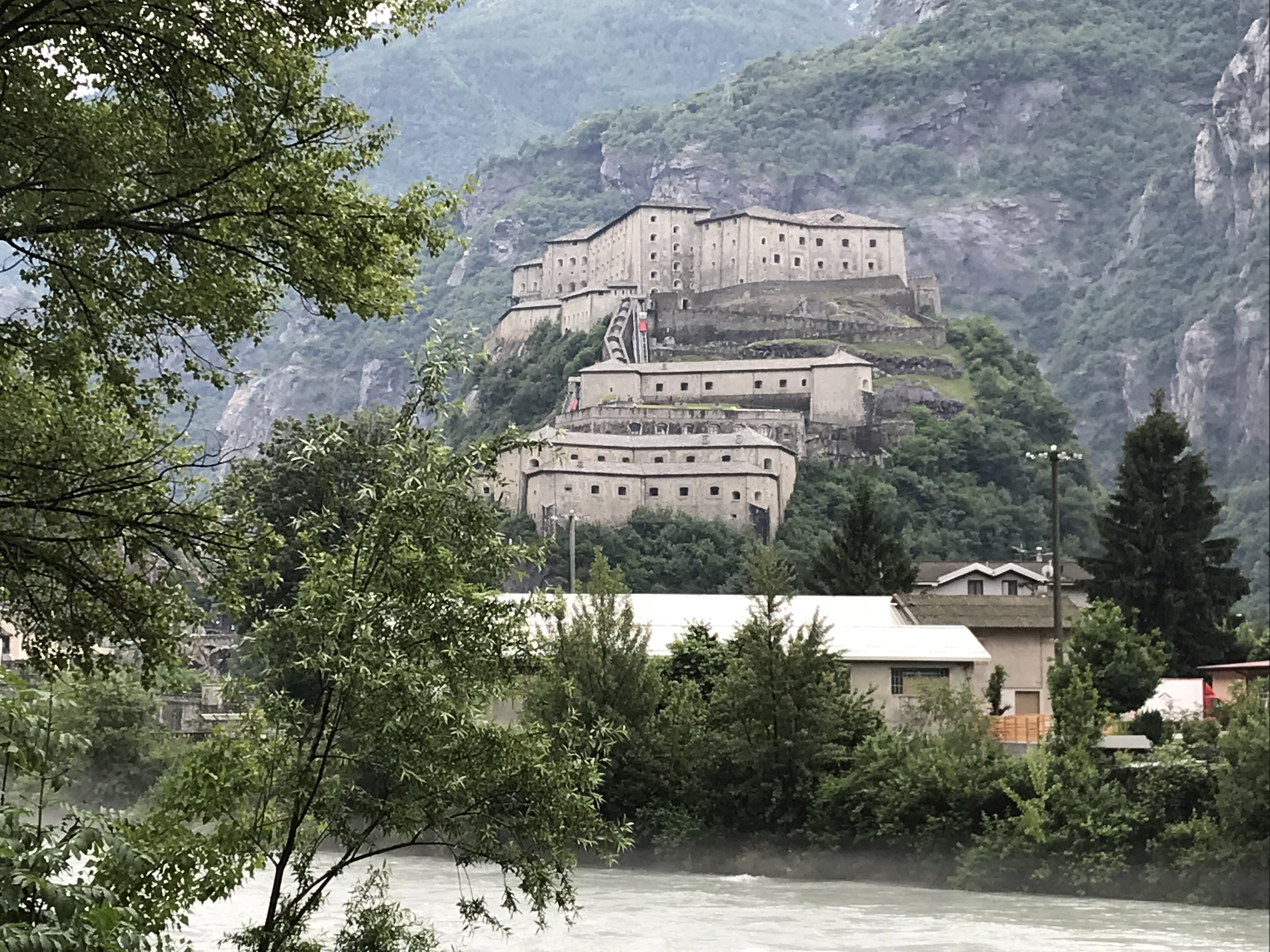
One of the great attractions in the Aosta Valley, Italy (see my overview of Aosta Valley here) is Bard Fortress. Named for the lords of Bard, it is a massive, stern-looking fortress complex sitting atop of a rocky outcropping in the narrow Aosta Valley along side the Dora Baltea river. It demands attention as you drive by.
The Bard Fortress complex. You take a series of trams to the top, known as Opera Carlo Alberto Headquarters, which in its military capacity housed a church, hospital, barracks and storage rooms.
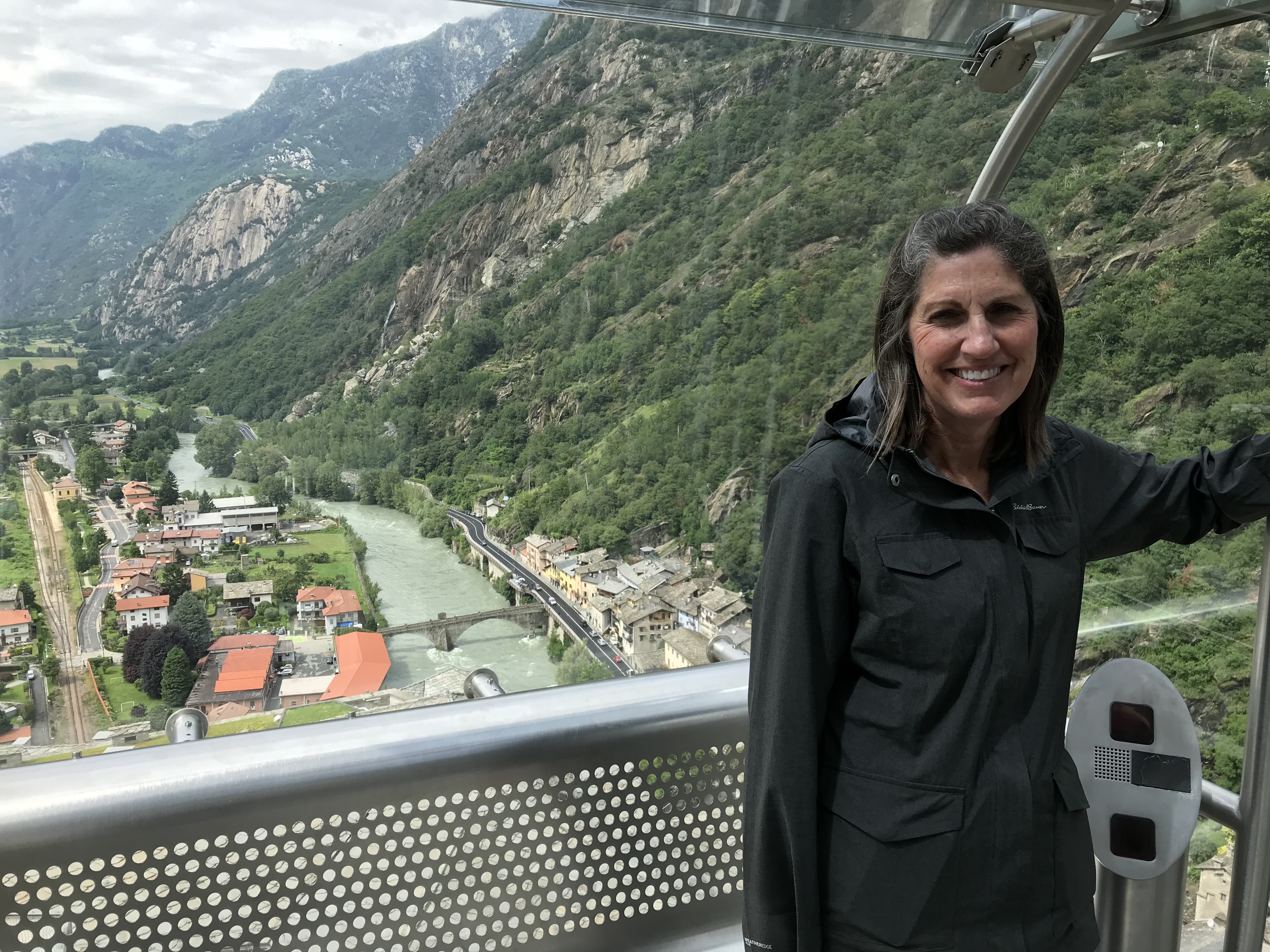
Taking a tram up to the fortress – it’s worth the ride just for the views.
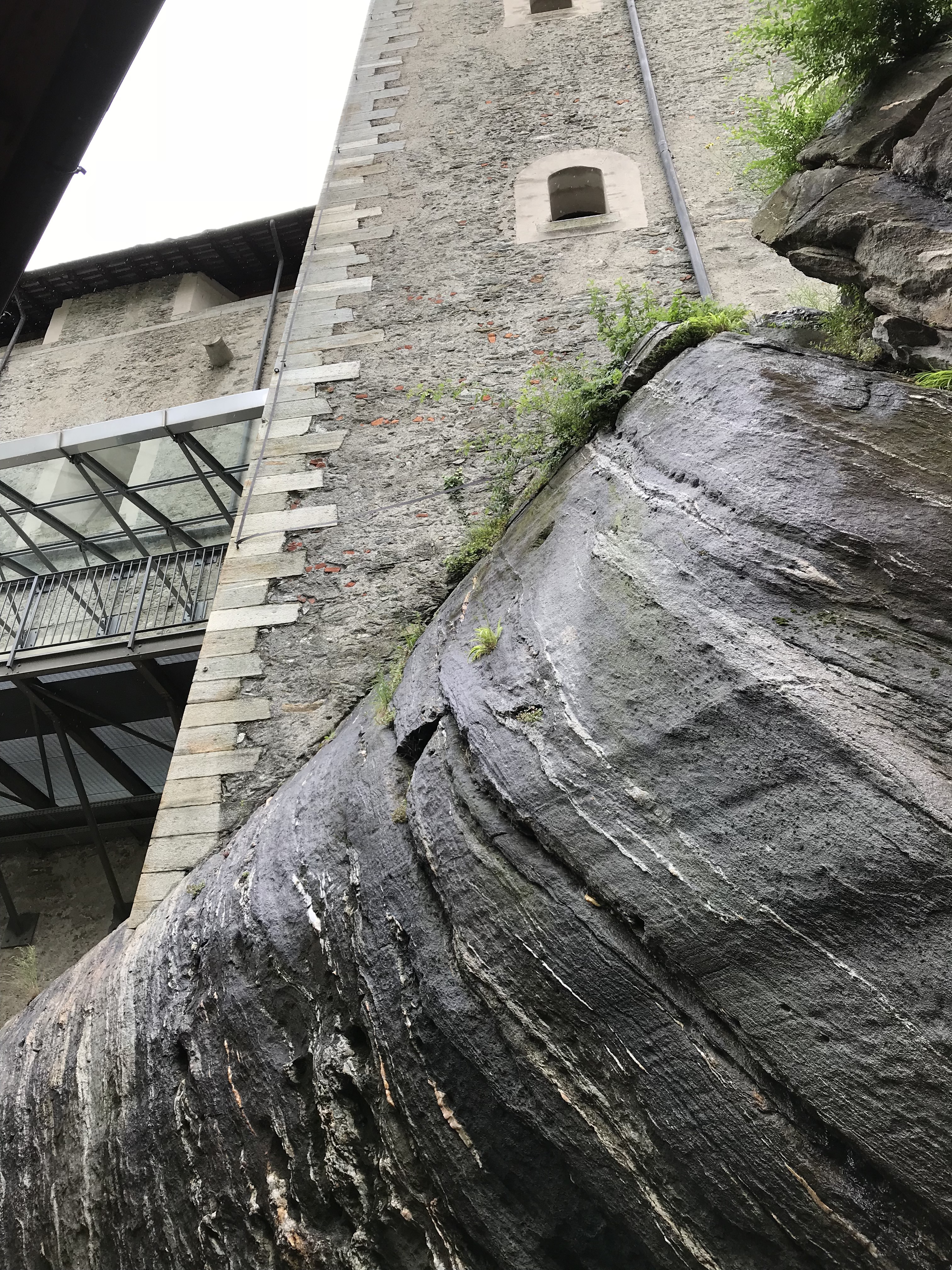
The fortress is built right on top of the rock – it must have taken some effort to get the foundation secured!
This strategic spot has been a defensive outpost since the 5th century CE and Bard Fortress sits atop ruins of past castles. It was a perfect place to control traffic passing through the Valley from Switzerland or France into Italy. There have been numerous conflicts here over the centuries ranging from the Goths and Burgunds, to the Lombards and Franks trying to seize control of this route and territory.
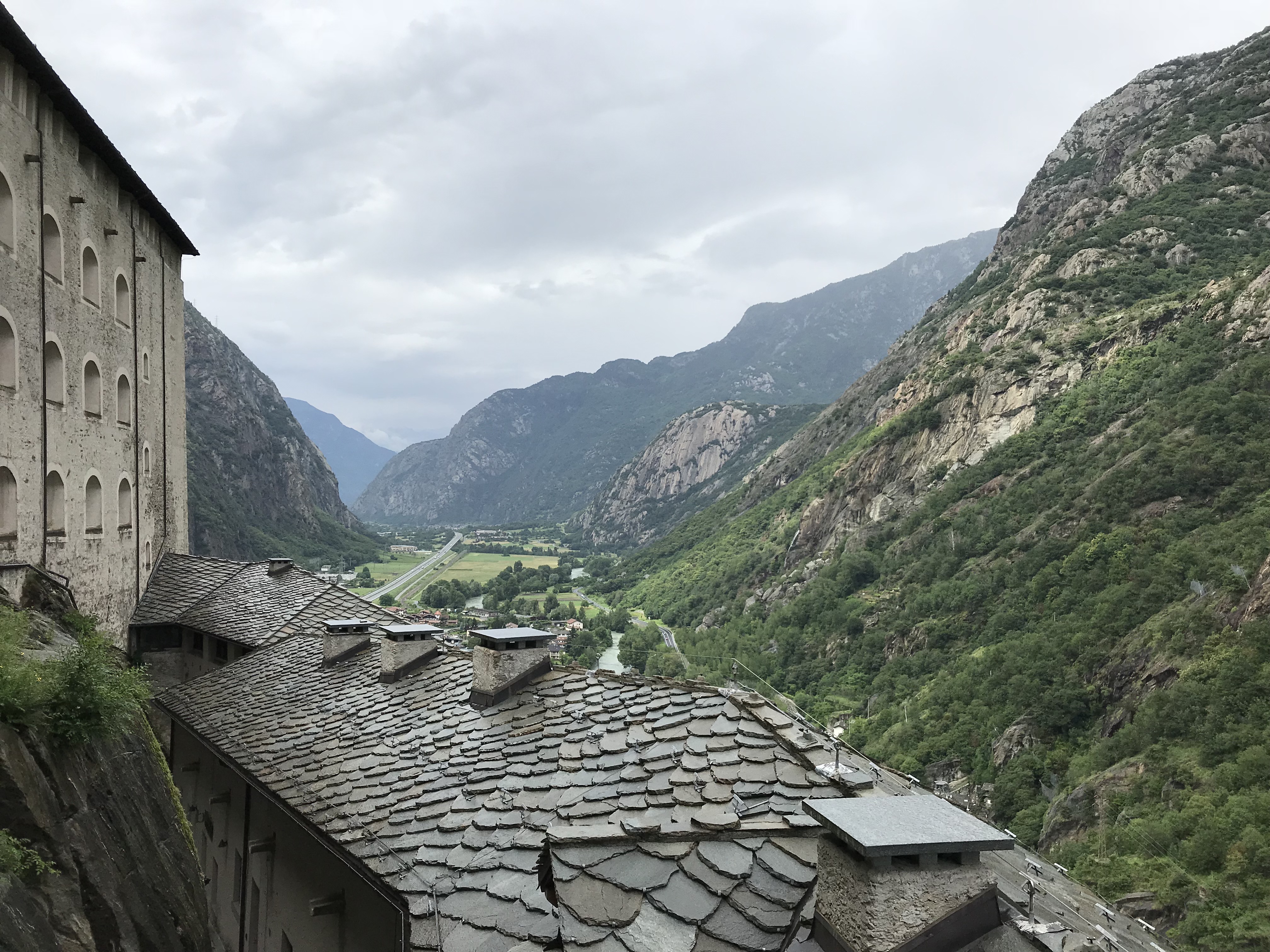
The fortress commands an impressive view of the Aosta Valley, this view is looking north.
Control of the passes through the Alps was critical to protecting pilgrims working their way south to Rome and the passage of goods flowing from southern to northern Europe as well as marking geographic boundaries for numerous kingdoms.
Napoleon, who became Emperor of France and conqueror of most of Europe, laid siege to the Fort on the 19th of May, 1800. Four hundred soldiers at the fort held back his army of 40,000 for nearly two weeks.
Covered passageway in the fortress to move soldiers and goods from one level to the next.
It wasn’t until Napoleon was able to get a 12 inch cannon blasting away on the 29th of May that the fort finally was destroyed and the small defending force surrendered on June 1st, a few days later. The fortress was rebuilt in 1830.
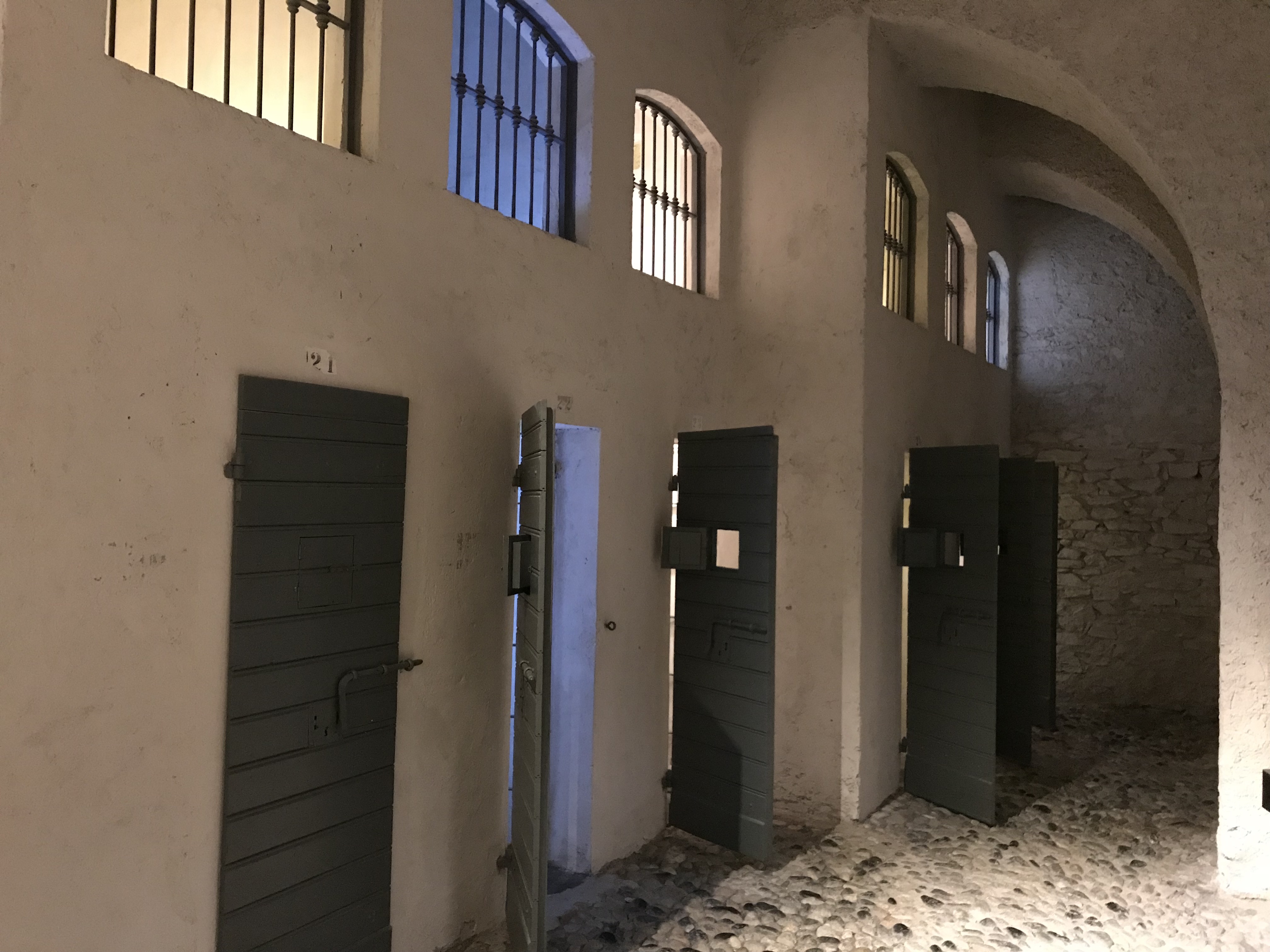
Some of the prison cells located in Bard Fortress.
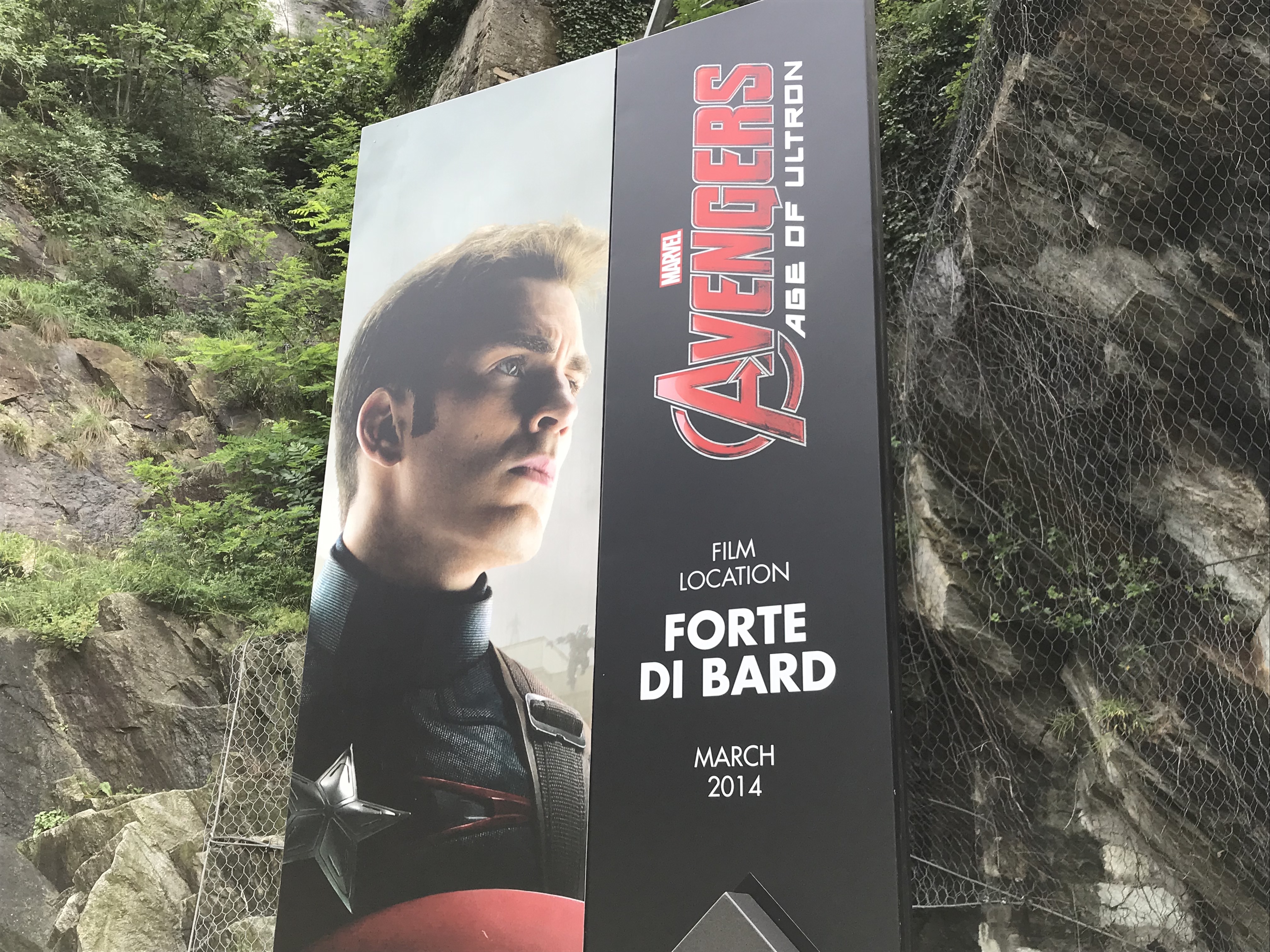
Thousands were imprisoned here at Bard Fortress in World War I. More recently it was used as a movie set in Marvel’s Avengers – Age of Ultronand the buildings now house exhibits, museums and music performances throughout the year.
A sign commemorating Bard Fortress as a movie set location.
Bard Medieval Village
As interesting as the Fortress is, the little medieval village (Bard village) nestled below it is fun to explore too – many of the buildings date back to the 14th century and have signs providing historical information.
A street in Bard Village.
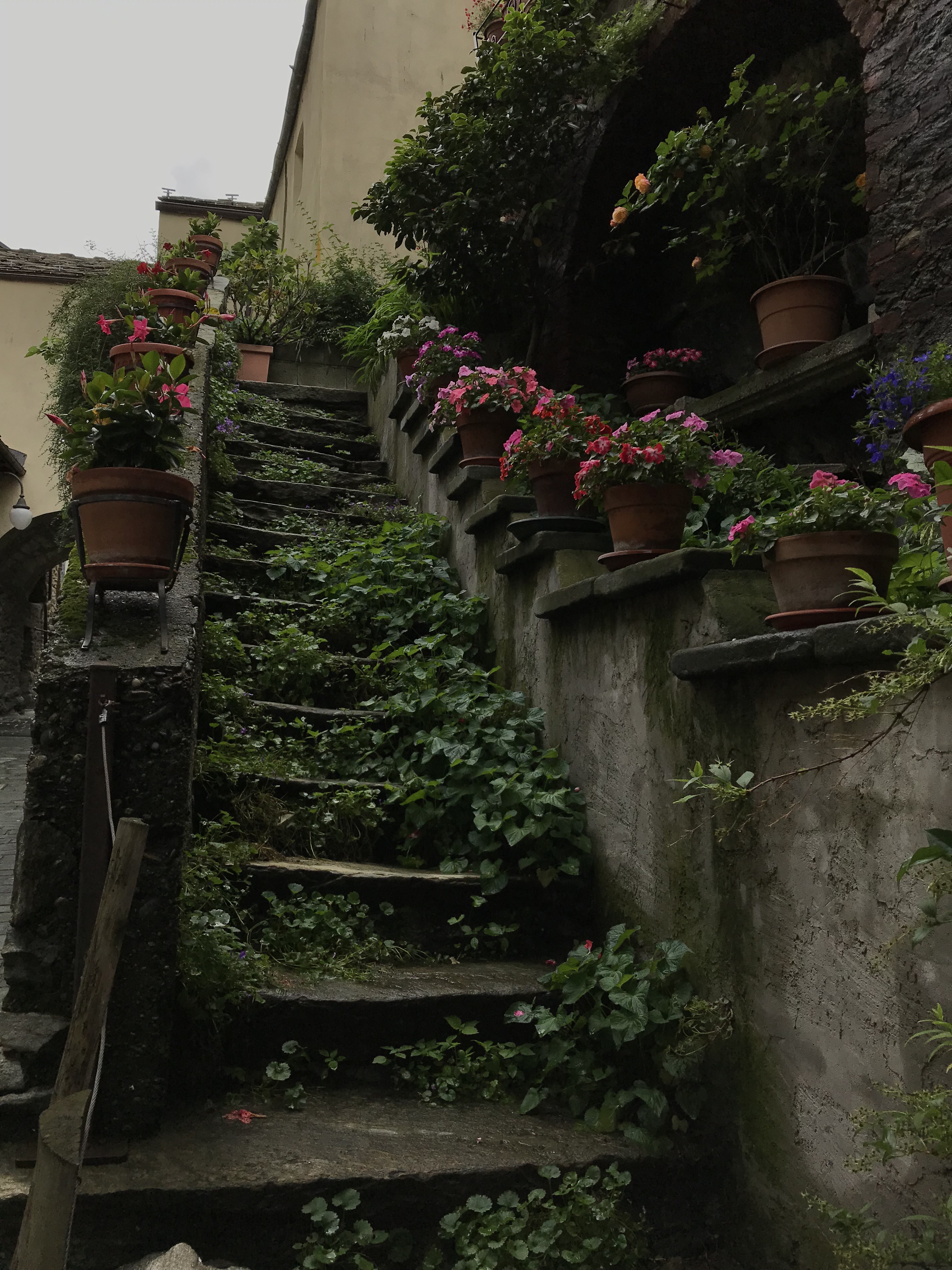
An old stairway in Bard Village.
Pockmarks remain from past battles in the streets of Bard Village.
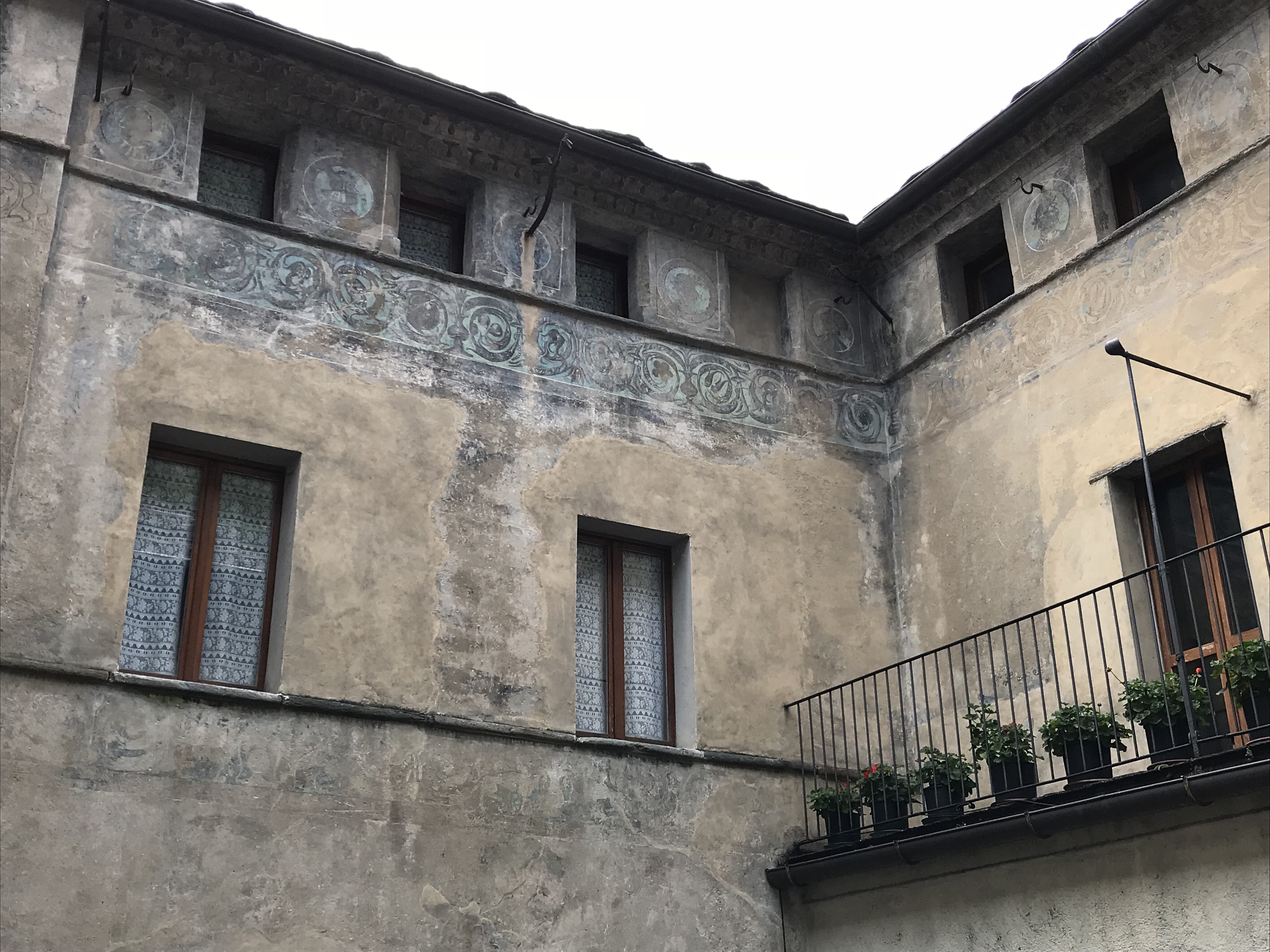
Remnants of 14th century decorative paintings on a building in Bard Village.
One more street scene in Bard Village.
Bard Fortress and the medieval village should be on your list if you visit the Aosta Valley!














































 The Independent Tourist