Visiting Prague and Nearby Castles

Prague, in the Czech Republic, is a beautiful city with striking architecture and an interesting history. It is a city that lends itself to walking. The Vltava River (the same river that runs through Český Krumlov) divides the two main tourist hubs, Old Town Square and Prague Castle hill.

Here are just a few highlights of Prague along with two castles outside the city.

Prague Castle

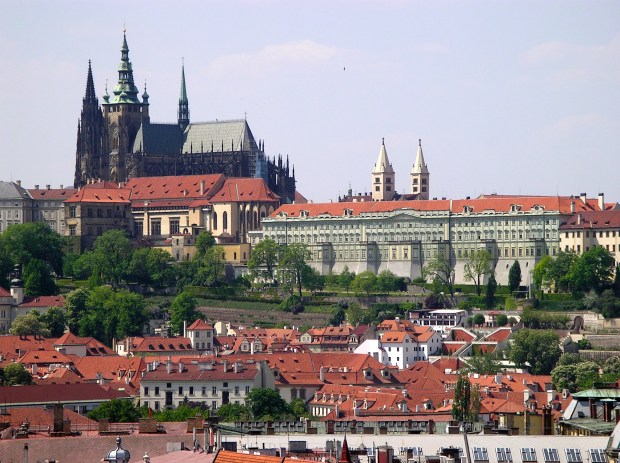
As castles go, it’s a little hard to recognize Prague Castle as such from the exterior – it just looks like a collection of buildings, and yet there is a lot to do here – palaces, museums, churches and shops. The castle area surrounds a large square which includes St. Vitus Cathedral. The cathedral is so massive and “shoehorned” into such a small area, it is difficult to get a good close-up photo of this stunning structure.

prague_czech-republic-13

A view of St. Vitus Cathedral (begun in 1344 and finished 600 years later), along with various buildings of Prague Castle.

prague_czech-republic-16

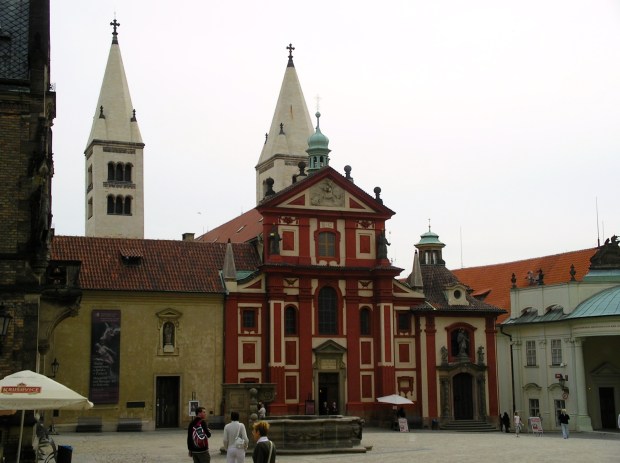
Basilica of St. George and Convent. This red building is Prague’s best-preserved Romanesque church. It dates from the 900’s. The convent to the left houses an art museum. These buildings are part of the Castle Square.

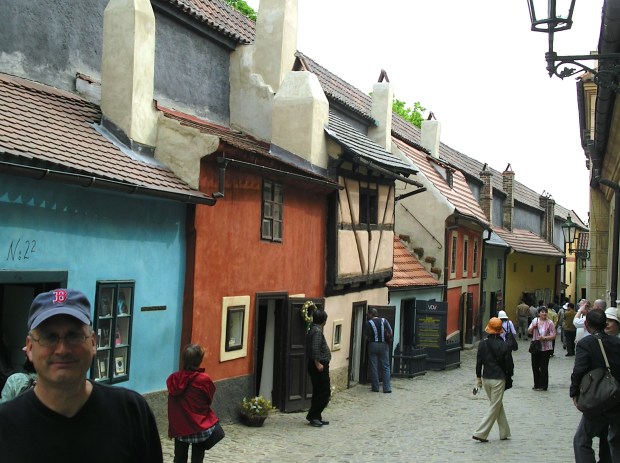
Golden Lane. This is an old medieval street just below the castle grounds.

prague_czech-republic-17

Golden Lane. Little shops in old medieval houses. A quaint little area in Prague’s Castle Quarter.

Charles Bridge

This bridge was built in the 14th century by King Charles IV and was the only bridge in Prague to cross the Vltava river until 1850.

prague_czech-republic-8

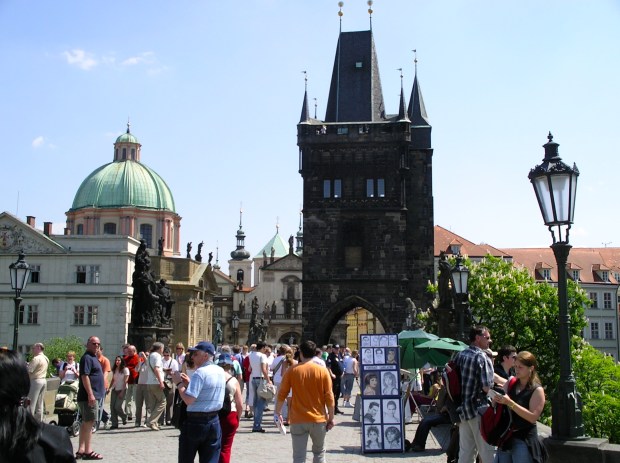
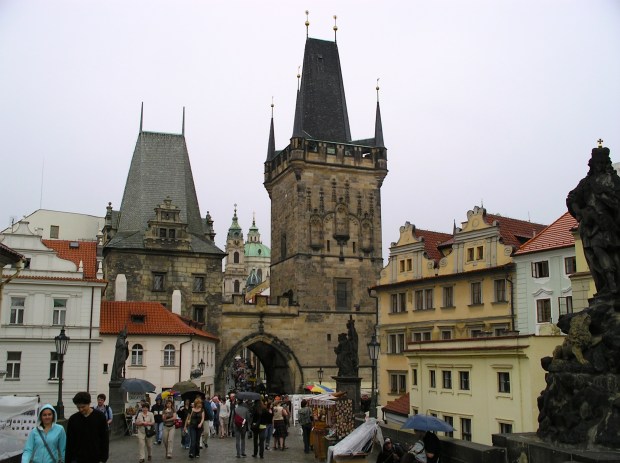
On the Charles Bridge, with lots of tourists moving between the Old Town Square and Prague Castle. Artists and various vendors line the bridge along with statues. The tower (on the east end, near Old Town Square) was originally a toll booth.

prague_czech-republic

The Castle (west) end of the Charles Bridge.

Old Town Square

Located on the east side of the Vltava river, this square dates from the 11th century. It was once the center for executions of convicts. A lane, called “The King’s Walk” connects Old Town Square to the famous (and busy) Charles Bridge which then leads to Prague Castle.

prague_czech-republic-3

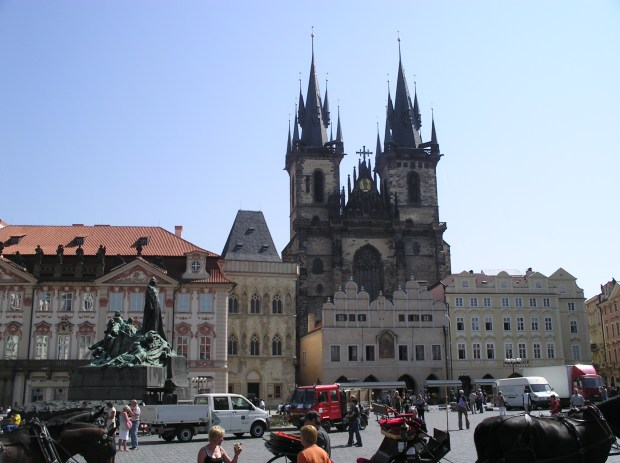
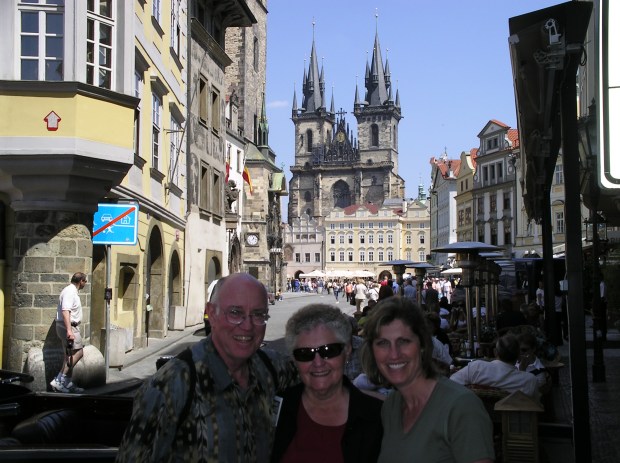
A view of Týn Church and Old Town Square.

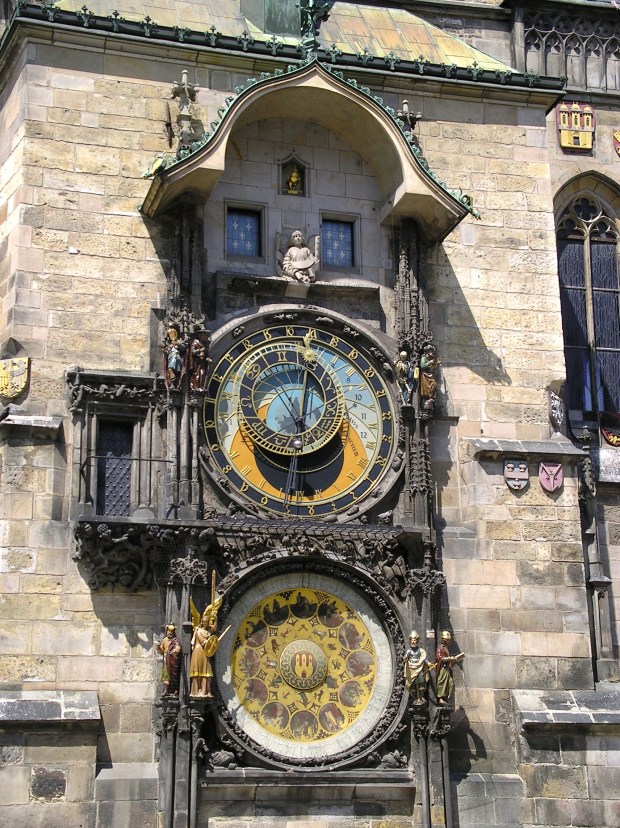
The Gothic Týn Church is a major landmark of the Square and has been the main church in this part of Prague since the 14th century. Nearby is the 15th century Old Town Hall and astronomical clock, which is quite fascinating–it tells time in a variety of ways (with Roman numerals, Gothic numbers and planetary symbols).

prague_czech-republic-10

The 15th century astronomical clock on the Old Town Hall. It was damaged in World War II and largely reconstructed.

prague_czech-republic-9

Another view of Old Town Square and Týn Church (the astronomical clock and Old Town Hall are just to the left of the church).

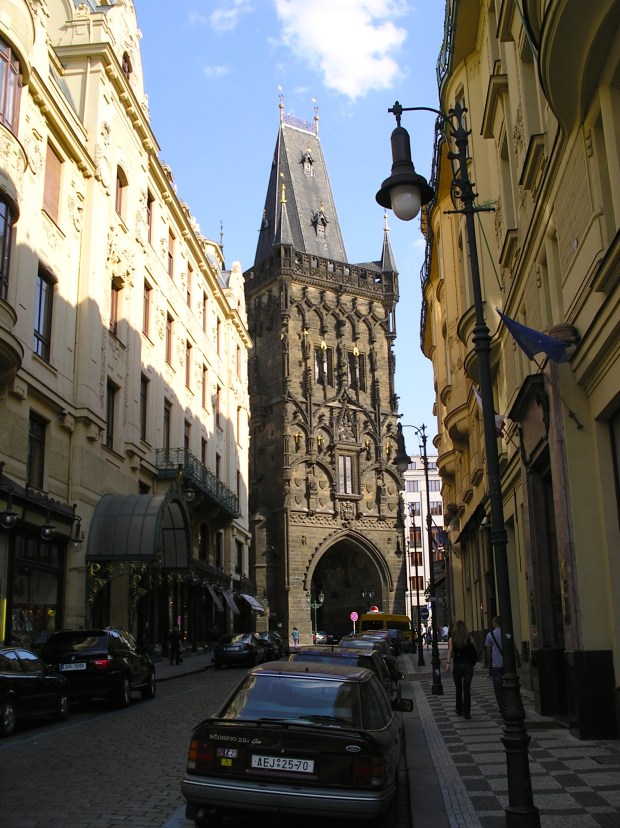
prague_czech-republic-14

A street scene in Old Town Prague.

Jewish Quarter

Close to the Vltava River, the Jewish Quarter contains several synagogues and a Ceremonial Hall which can be visited. In addition, there is an old Jewish cemetery (which was the only burial ground in Prague allowed for Jews for 300 years). Centuries ago, the Jews were required to live separately from Christians. Of the 120,000 Jews living in this area in 1939, only 10,000 survived to see liberation from the Nazis in 1945.

prague_czech-republic-4

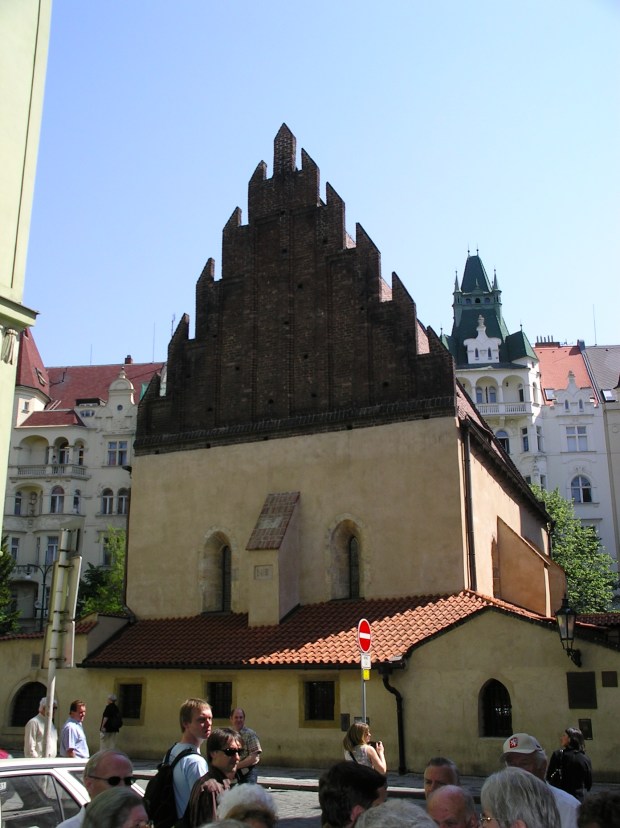
Old-New Synagogue. Built in 1270, it’s the oldest synagogue in central Europe.

Nearby Castles – Karlštejn and Konopiště

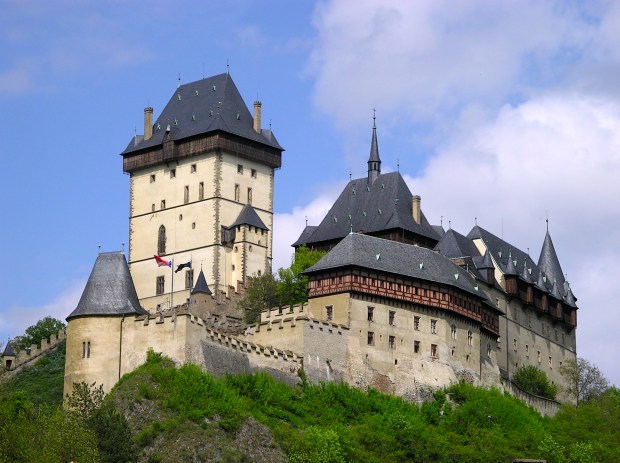
Twenty miles southwest of Prague is Karlštejn Castle, one of the Czech Republic’s great attractions. It is a bit of a hike up to the castle from the car park, but the route has lots of little shopping booths to keep you entertained along the way.

karlstejn-castle-3

Karlštejn Castle. Built in 1350 to house the crown jewels of the Holy Roman Empire. Reservations are required to see the Chapel of the Holy Cross where the crown jewels were housed.

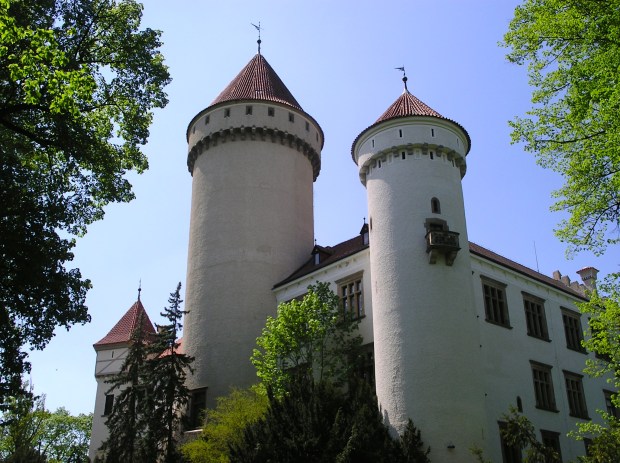
Konopiště Castle. This castle is 30 miles south of Prague. There is an interesting (and free) display of numerous statues of St. George “slaying the dragon” here.

konopiste-castle

Konopiště Castle. Construction began in the 14th century, but the castle was largely modernized around 1900 by Franz Ferdinand, heir to the Hapsburg throne. The castle houses an excellent medieval arms collection.


Getting Beyond Prague – Visiting Český Krumlov, Kutná Hora and Sedlec Bone Church

The Czech Republic is a wonderful country to visit, and while many tourists head straight to Prague, there is so much more to enjoy in this country. (I will share a bit about Prague and a couple nearby castles in my next post).

Here are some recommendations beyond Prague:

Český Krumlov

This town, located in the southern part of the Czech Republic, is about 170 (106 miles) south of Prague or 225 km (140 miles) northwest of Vienna. It is one of the most delightful medieval towns in Europe.

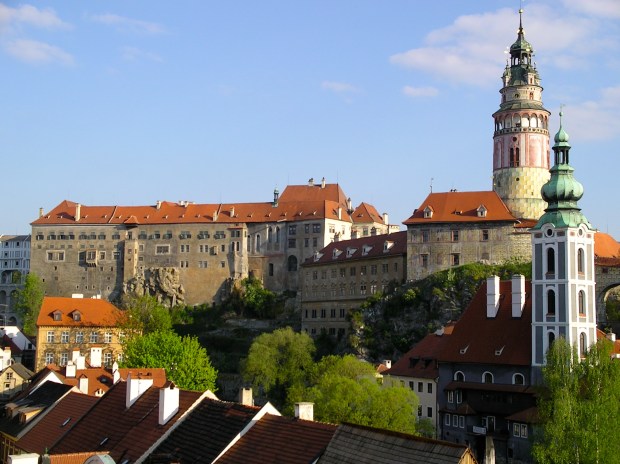
cesky-krumlov_czech-republic-3

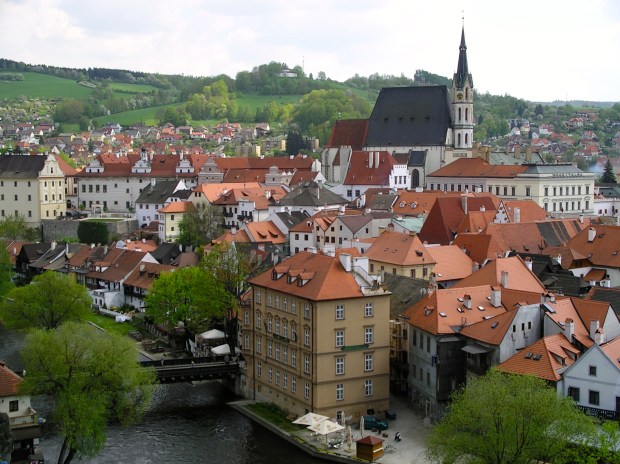
A view of the old town of Český Krumlov from the Krumlov Castle tower. The Church of St. Vitus dominates the skyline.

Although there have been various settlements in the area going back to 100 BCE, the town and castle we now see were founded in the 13th century. The town was under Communist rule after World War II, and since there was no money to modernize the town, it was (thankfully) preserved for today’s tourist.

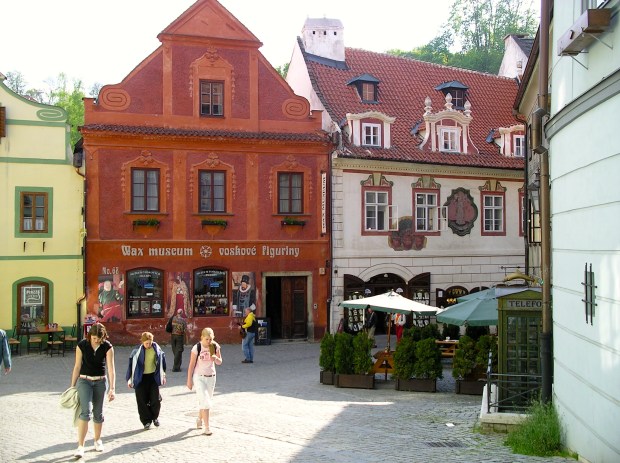
cesky-krumlov_czech-republic-6

A small square in Český Krumlov.

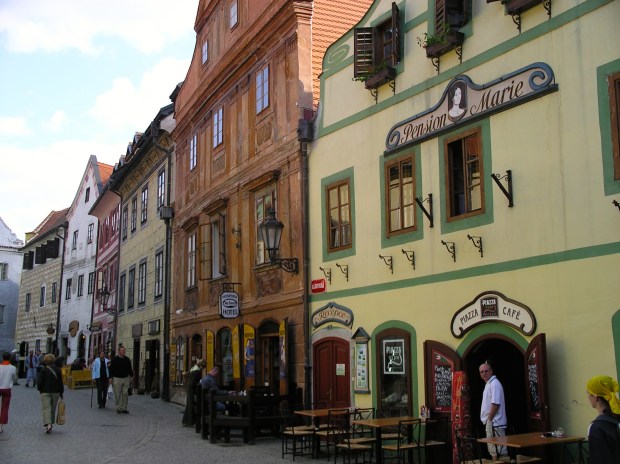
cesky-krumlov_czech-republic-7

Street scene in Český Krumlov.

cesky-krumlov_czech-republic-8

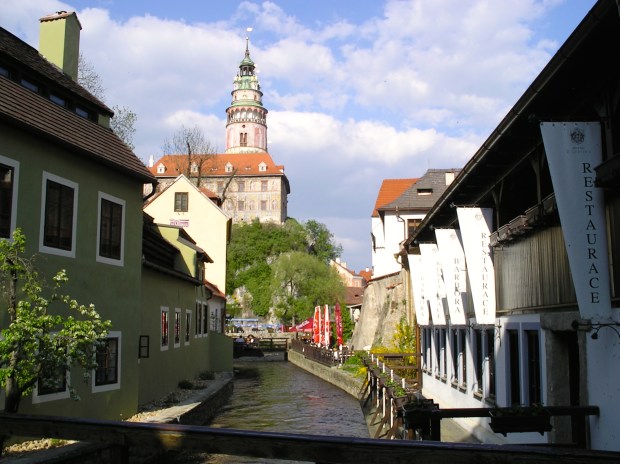
The Vltava River encompasses the old town, with the Castle and tower providing a scenic backdrop.

The Vltava river makes a u-shaped bend as it winds through the town, providing scenic views and foot bridges from almost every point, in addition to being a major venue for canoeing and rafting. The town is considered the Czech answer to picturesque Rothenburg, Germany. The major sight, besides the town itself, is the majestic castle (see featured image at top of post) and the adjacent Baroque Theater sitting on the hill above the town.

cesky-krumlov_czech-republic-4

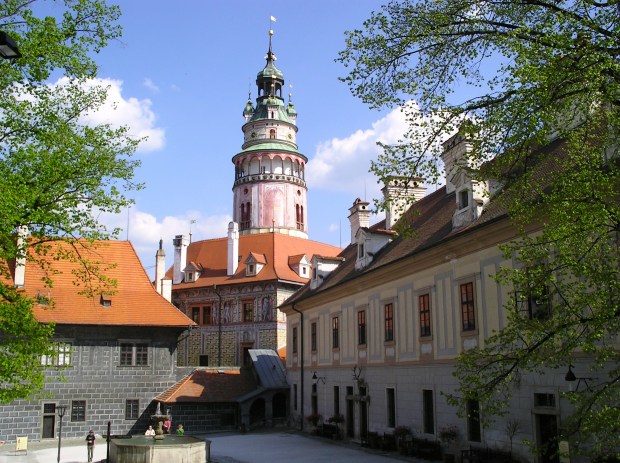
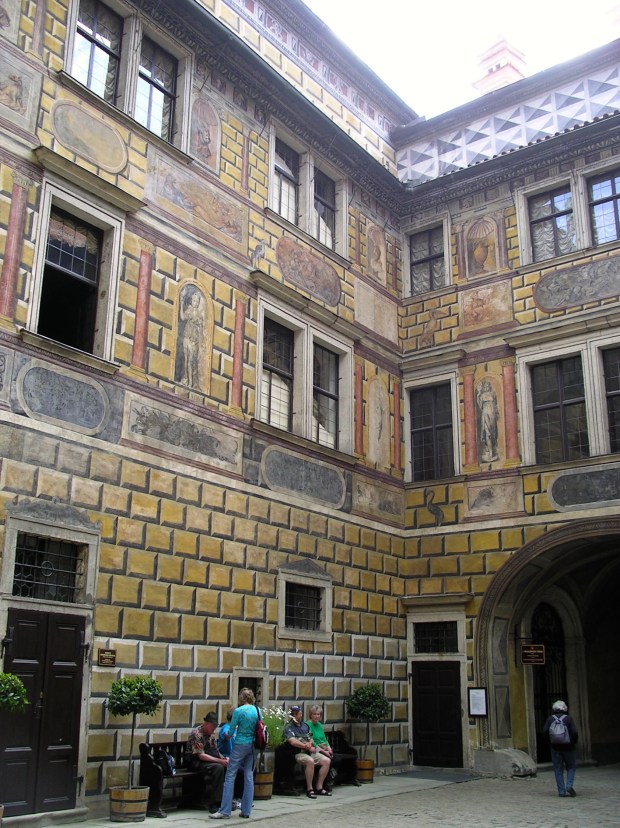
A courtyard at Krumlov Castle. You can climb the tower for good views of the town.

cesky-krumlov_czech-republic-2

The Krumlov Castle entrance. No photos were allowed inside the Castle.

Our hotel (Maleho Vitka) in the center of the old town was like Middle Earth (from The Hobbit), with winding corridors, unique “woodsy” rooms and furniture.

Kutná Hora and Sedlec Bone Church

Kutná Hora is about 64 km (40 miles) east of Prague and is considered a “typical” Czech city, not high on the tourist circuit. Its economy centuries ago was based on its silver mine.

kutna-hora_czech-republic-2

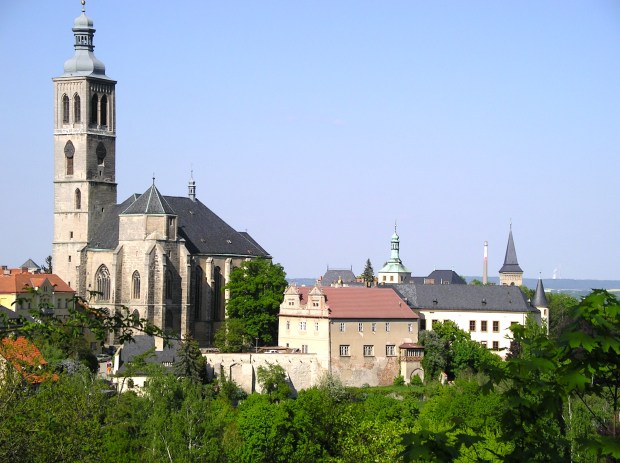
View of Kutná Hora town.

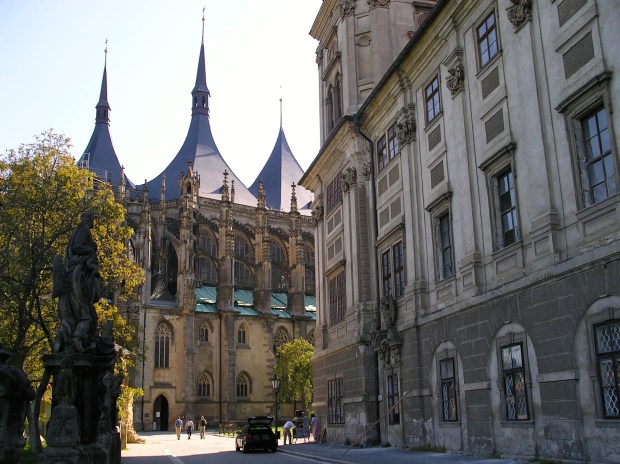
st-barbaras-cathedral_kutna-hora_czech-republic-3

The pointy roof of St. Barbara’s Cathedral in the background. The Cathedral was founded in 1388 and has original frescoes inside.

Other than seeing the Cathedral of St. Barbara, our main reason for visiting Kutná Hora was to go to the Sedlec Bone Church. Sedlec is a little town just a mile outside Kutná Hora.

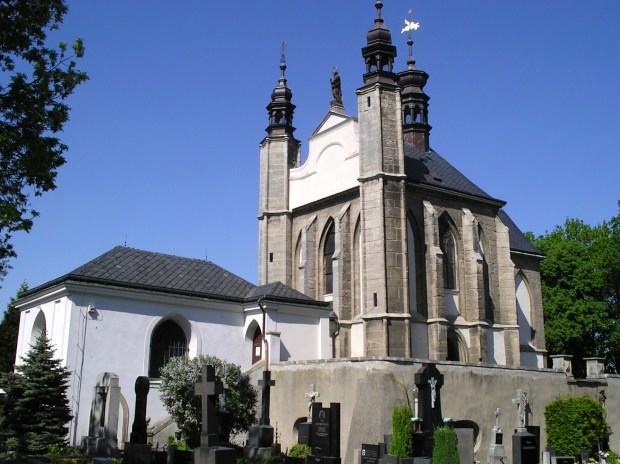
sedlec-bone-church_kutna-hora_czech-republic

The exterior of Sedlec Bone Church.

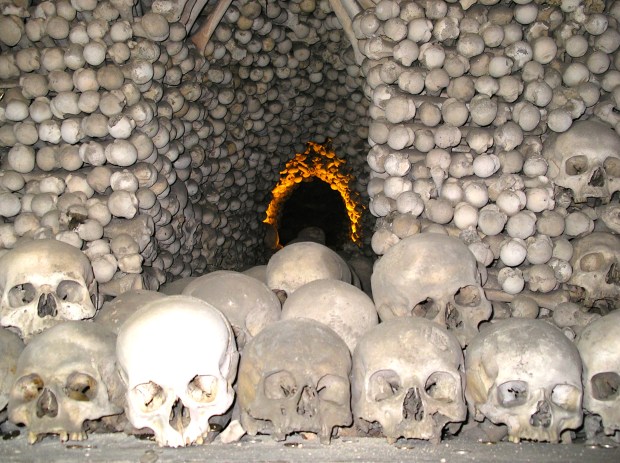
If you like seeing human bones in about every imaginable configuration, this is your place. The bones of about 40,000 people rest here.

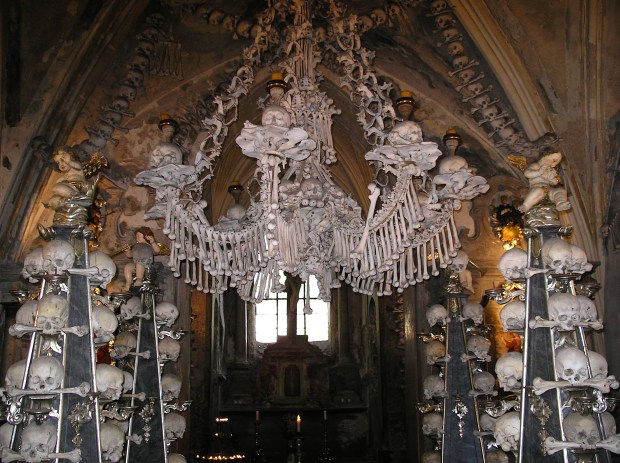
sedlec-bone-church_kutna-hora_czech-republic-7

The Sedlec Bone Church chandelier – it includes every bone in the human body.

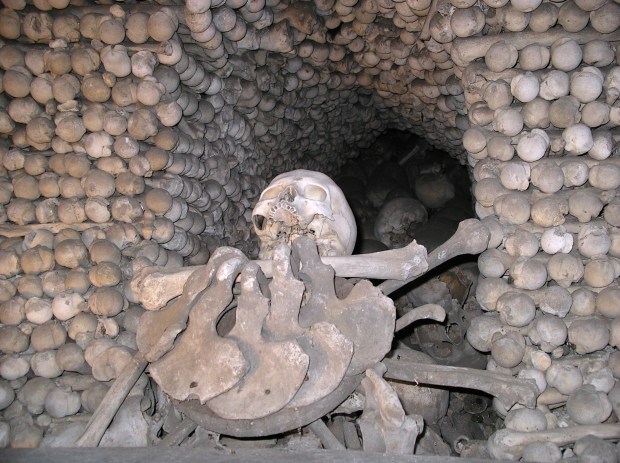
sedlec-bone-church_kutna-hora_czech-republic-3

Another unique configuration of bones.

sedlec-bone-church_kutna-hora_czech-republic-8

Lots of skulls and bones in every recess of the Church.

The plagues and wars of Middle Ages took their toll on the population and provided the “decorative” materials displayed by the monks in creative fashion throughout the church.


Five Must-See Arches in Arches National Park, Utah

Located in south-east Utah, Arches National Park was designated as a National Monument in 1929 (later designated as a National Park in 1971) to protect and showcase over 2,000 natural arches along with countless other interesting rock formations. Even with so much to see, visitors can get a great feel for the park and see a good portion of the arches and natural formations during a 24-hour visit. Highlighted in this post are my top 5 recommended arches (including an honorary 6th) for all Arches National Park patrons, and especially those with a time constraint. All of the arches below are accessible via well-marked trails and none are more than 3 miles round trip.

Delicate Arch

This is the most well-known arch in the world, and the design for the Utah auto license plate—do I need to give any other reasons?

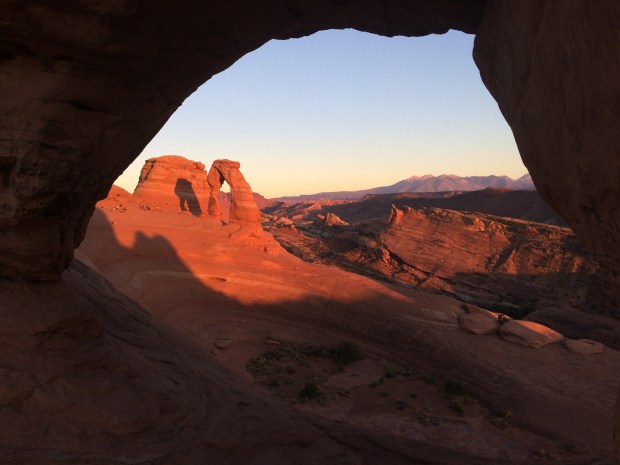
Delicate Arch

A view of Delicate Arch from Frame Arch

Located on the eastern side of the park, the trailhead for Delicate Arch is a 13 mile drive north from the visitor’s center. From the trailhead, the hike to Delicate Arch is 3 miles, round trip, with a steady moderate incline going out to the arch. I would highly recommend visiting at sunrise or sunset.

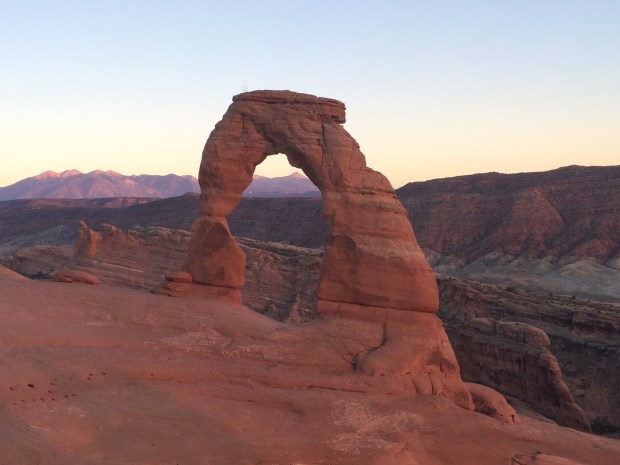
Delicate Arch

Delicate Arch at sunset with the La Sal mountain range in the background

Double Arch

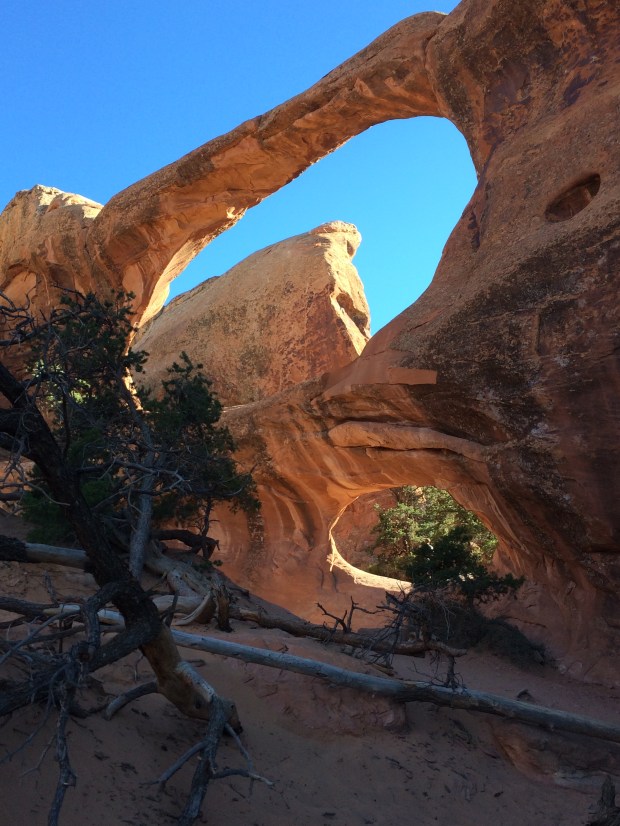
Most famous from a brief appearance in the movie Indiana Jones and the Last Crusade, Double Arch is unique in that two massive arches protrude from the same sandstone façade.

Double Arch

Double Arch

Double Arch is only a short walk (0.5 miles round trip) from the parking lot and is in close proximity to many other sites including North and South Windows, and the Turret Arch.

Balanced Rock

A view of another formation, Balanced Rock, from underneath Double Arch

Landscape Arch

Landscape Arch is the longest arch in Arches National Park, and at 290 feet wide at the base, it is considered to be the 5th longest natural arch in the world. Landscape Arch is located along the Devil’s Garden Trail (northern-most part of the park) and is approximately a 1.3 mile hike from the trailhead.

Landscape Arch

Landscape Arch

Navajo Arch

Not far from Landscape Arch, Navajo Arch is tucked away among sandstone rock faces. The arch itself acts as an entryway into a protected cove that gives the feeling of security and solitude. Navajo Arch likewise sits along the Devil’s Garden Trail, less than 0.5 miles beyond Landscape Arch.

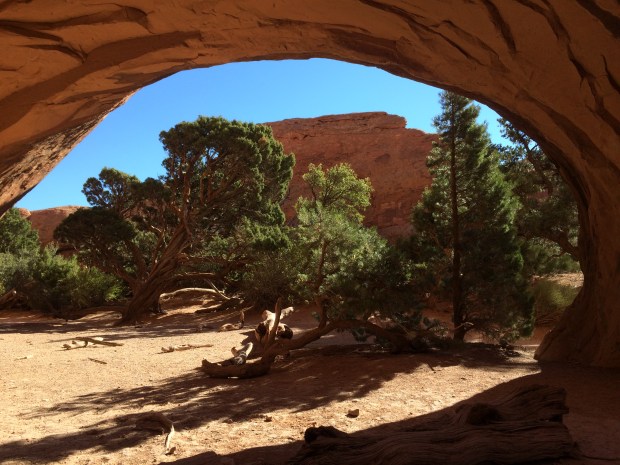
Navajo Arch

Navajo Arch, from the protected cove, facing westward

Double O Arch

Double O Arch (not to be confused with Double Arch) is a set of two arches cut out of the same sandstone façade.

Double O Arch

Double O Arch taken from the East side of the arches

Not only is Double O Arch a spectacular sight, but the hike to Double O Arch gives an incredible view of the surrounding landscape and northern section of the park. Double O Arch is also located on the Devil’s Garden Trail, roughly an additional 0.5 miles beyond Navajo Arch.

Double O Arch

Double O Arch as seen from the West side

Corona Arch

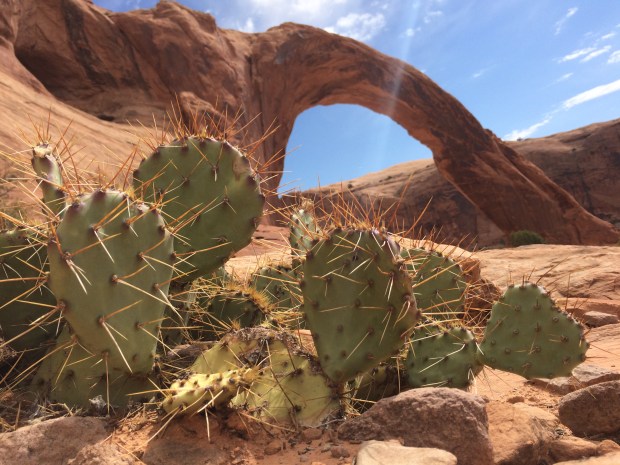
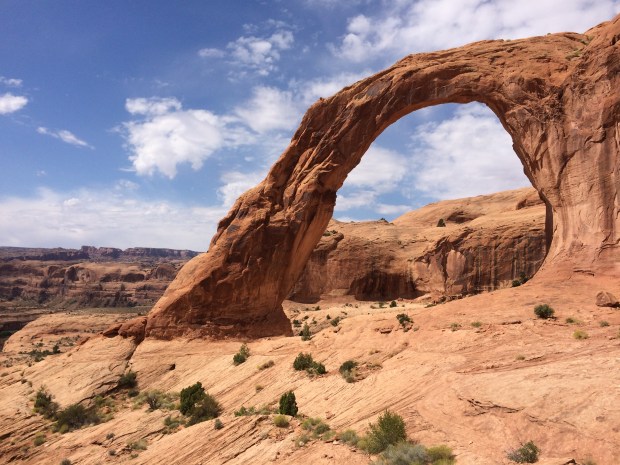
While not located in the National Park, Corona Arch is well worth the visit for anyone spending time in the town of Moab and Arches National Park.

Corona Arch

Corona Arch

Until a couple of years ago, Corona Arch was a popular spot for extreme sports enthusiasts who set up a rope swing from the top of the arch (See YouTube videos). BLM has since banned such activities at the arch. The trailhead for Corona Arch is located south of Arches National Park (take Potash Road from Highway 191 for 10 miles) along Potash Road. The trail itself is 3 miles round trip and is very well marked.

Corona Arch

Another view of Corona Arch

For more information on Arches and other National Parks in southern Utah click here.

A Few Sights in Austria

Austria is a beautiful country with so much to offer the tourist. During a road trip from southern Germany to the Czech Republic, we drove through a portion of Austria and made the following stops, knowing we could not do the entire country justice. The locations below are in order of our visit, from west to east.

Ehrenberg Castle. This is not a famous castle and while the castle is largely ruined, the hike up to it is very enjoyable. It sits on a steep hill in a beautiful valley (the featured image above is another view from the castle). The castle was built in the 13th century.

ehrenberg-castle_reutte_austria

The steep approach to Ehrenberg Castle.

It is located near the town of Reutte, just 18 km (or 11 miles) across the border from the famous Neuschwanstein Castle in Füssen, Germany. There are three other castles near Ehrenberg, all of which were constructed to protect an important salt trade route in medieval times. The castles are in the process of becoming connected as a unified castle museum.

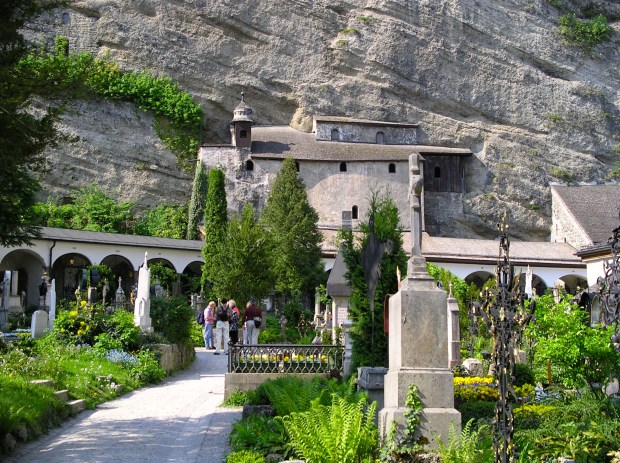
Salzburg. Salzburg is famous as the setting for the events in the musical and movie “The Sound of Music”, and for being the birthplace of Mozart.

salzburg_austria-4

St. Peter’s Cemetery, which inspired the graveyard hiding scene in the “Sound of Music”.

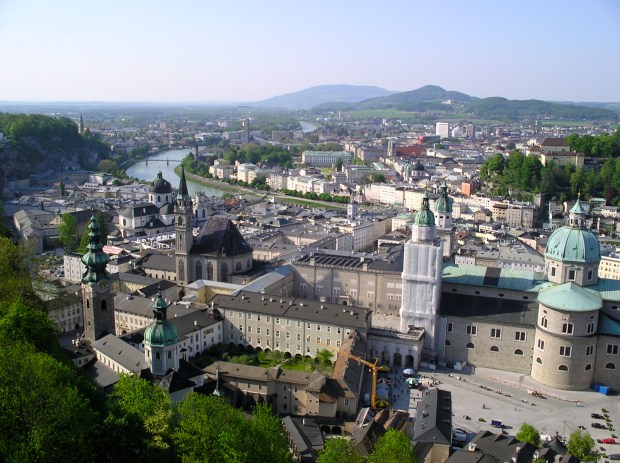
The town was an independent state until the time of Napoleon. The old town is nestled around its whitewashed castle (Hohensalzburg Fortress), from which good views of the town and surrounding area can be seen.

salzburg_austria

A view of Salzburg looking northwest from Hohensalzburg Fortress. The Salzach River meanders through the town.

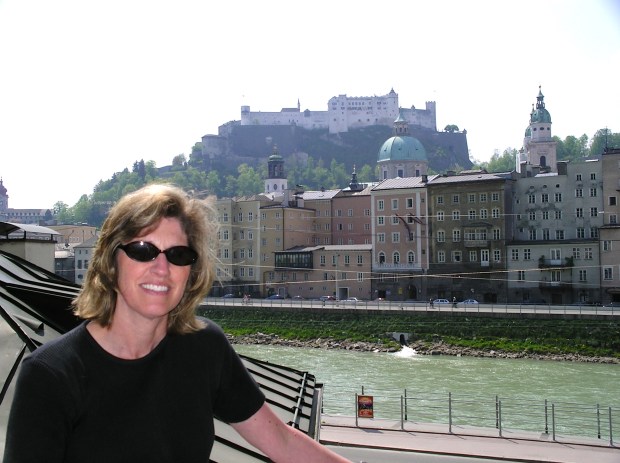
Hohensalzburg is one of the largest medieval castles in Europe and was so impressive that no one attacked the town for a span of 1,000 years. We enjoyed a wonderful concert at this castle. (Interestingly, if you google “Salzburg Castle” you’ll be directed to a castle in Germany, not the castle in Salzburg!)

salzburg_austria-7

A view of Hohensalzburg Fortress and old town.

The old town was not too heavily damaged in World War II, even though Hitler’s “Eagle’s Nest” hideout (Berchtesgaden) is just south of Salzburg. As mentioned above, Salzburg is also the birthplace of Mozart, one of the most famous classical composers of all time. His birthplace is a museum in the old town.

salzburg_austria-5

Mozart’s birthplace in 1756 (Geburtshaus).

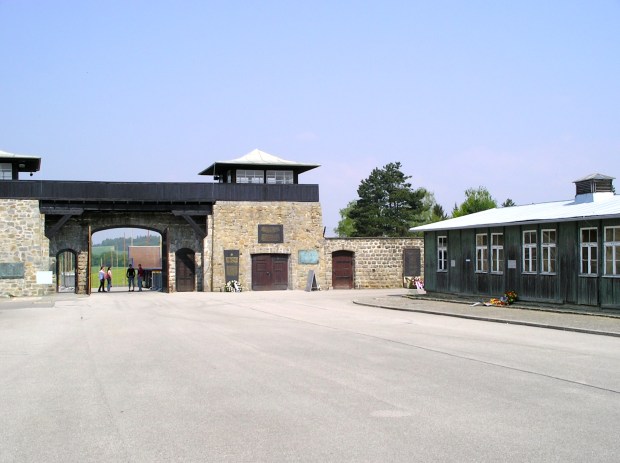
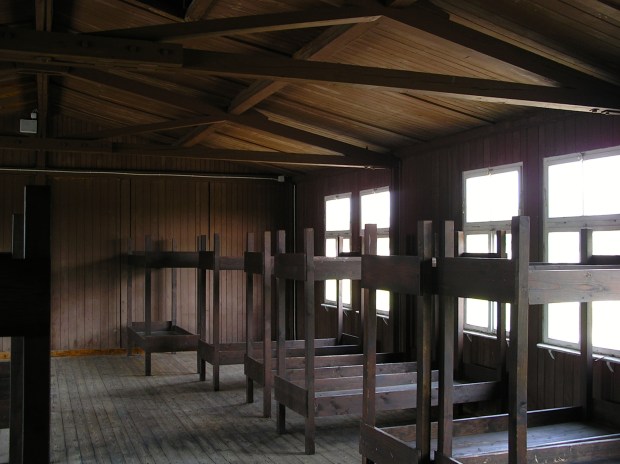
Mauthausen Concentration Camp. This Nazi slave-labor and death camp operated from 1938 to 1945. It is located 148 km (92 miles) east of Salzburg, on the Danube river. The prisoners worked in the nearby quarry and more than half its 206,000 prisoner/laborers perished from exhaustion or starvation.

mathausen-concentration-camp_austria-2

The entrance to Mauthausen (from the inside looking out).

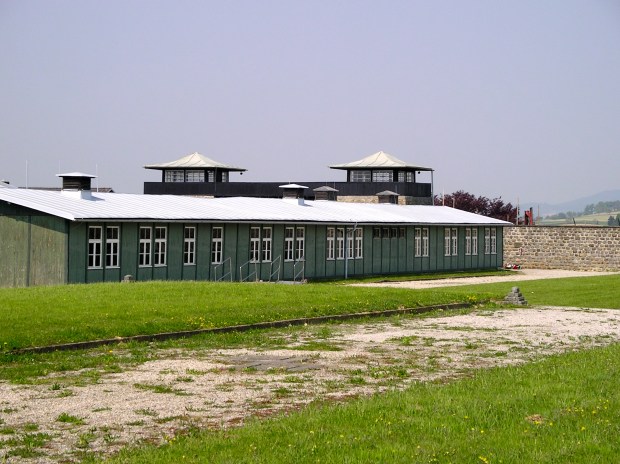
mathausen-concentration-camp_austria-5

The prisoner barracks, camp wall and guard towers.

mathausen-concentration-camp_austria-3

Prisoner barracks – interior.

mathausen-concentration-camp_austria-6

Cremation oven (the gas chamber was next door).

A relatively small camp, Mauthausen still packs an emotional punch to the gut, thinking about the horrors that transpired here. There are quite a few exhibits and displays explaining “life” in the camp.

Melk Abbey. An amazing contrast to Mauthausen, this is a beautiful 18th century baroque abbey located in Melk, on the Danube river, about 87 km (54 miles) from Vienna. If you like Baroque architecture, this is the place to go.

melk-abbey_austria

The interior of the Church at Melk Abbey.

There was an 11th century Benedictine abbey originally on this site, but it burned down. The library and church are the two most stunning features of Melk Abbey.

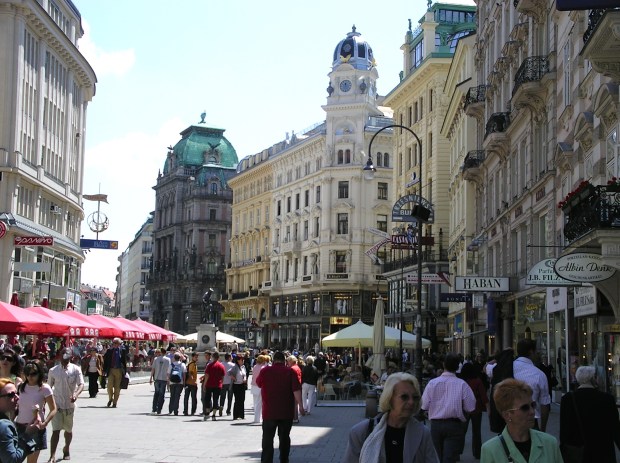
Vienna. Vienna is one of Europe’s great cities. Although it’s a large city, the old part is quite compact and is famous for its music and beautiful architecture.

vienna_austria-5

Street scene in Vienna.

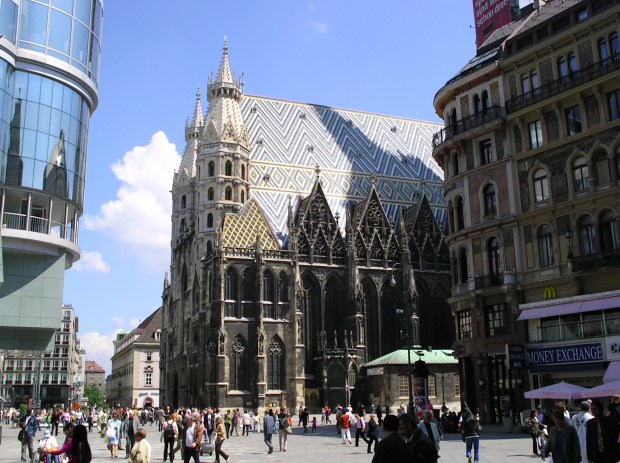
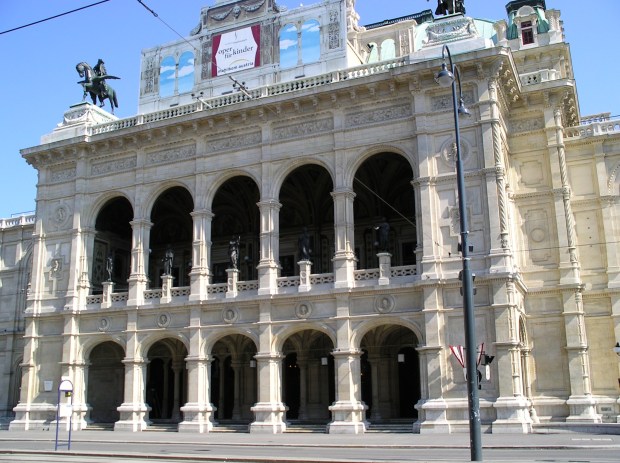
We visited St. Stephan’s Cathedral, the Opera House, and the Hofburg Palace.

vienna-st-stephans-cathedral_austria-4

A view of St. Stephan’s Cathedral, built in the mid 13th century. The roof was damaged by fire in World War II. The tiles are decorative and local citizens contributed to the rebuilding of the roof in 1952 by buying a tile.

vienna-opera-house_austria-2

The famous Vienna Opera House, rebuilt after World War II. We took a tour, and our tour guide reminded me of Count Dracula! This is the home of the Vienna State Opera and Philharmonic Orchestra, where they do 300 performances a year.

vienna-hofburg-palace_austria-6

A small view of the Hofburg Palace with various members of my family. The Palace is huge, and was continuously undergoing construction from the 13th century to the 20th century. It was the Imperial Palace of the Hapsburg Empire until 1918, and is still the home of the Vienna Boys’ Choir.

Outside of Vienna is the Schönbrunn Palace, which is nearly on scale with incredible Palace of Versailles near Paris. On another trip this would be a must-do.

5 Interesting Things to Do in Kochi, India

In this article our guest writer, Rohit Agarwal, explores Kochi, in the state of Kerala, India. See his bio below.

Kerala is a state in India that is blessed with inherent natural beauty, calm, peaceful beaches and very rich cultural heritage. Kerala’s financial capital Kochi is one of the most favourite holiday destinations of tourists. Kochi has variety of things to offer that fulfils wanderlust of travellers having altogether different interests. Right from marvellous beaches to huge museums and from jungle walks to folk dance theatres, Kochi  is full of attractions to make your stay here memorable. To celebrate a holiday that would have a never-fading impression on your mind, here is a list of a couple of interesting things you can do in Kochi.

Go for Kayaking in backwaters of river Periyar

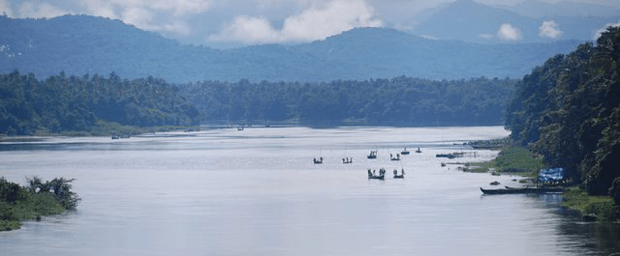
In Kochi, one can experience the pleasant Kerala backwaters while gliding the kayak. Many boat clubs and adventure sports companies provide excellent facilities of Kayaking in the river Periyar with complete safety and guidance.

picture1

Photo by Challlivan, CC BY-SA 3.0

The experience of kayaking in the morning while listening to chorus of birds at dawn and witnessing an alluring sunrise can be mesmerizing; while moonlight kayaking can soothe your soul and offer romantic moments to cherish forever. Considering such a perfect combination of thrill and bonding with nature, kayaking definitely should be on your list of must-do things in Kochi!

Visit a spa and get a rejuvenating Ayurvedic massage

It would be a bonus to have a perfect massage on a refreshing trip, wouldn’t it? Kochi has some extraordinarily luxurious spas that practice ancient art and science of Ayurveda to offer you a rejuvenating experience of massage. In this massage offered by the therapists trained under Ayurveda masters, you can experience each cell in your body getting relaxed and all your stress and tiredness vanishing!  During a visit to a close-to-nature city, Kochi, experiencing a completely natural massage will certainly reignite your life force.

Witness the Chinese Fishing Nets in action

It is said that Chinese Fishing Nets were introduced in Fort Kochi by the Chinese explorer, Zheng He. These nets are fixed land installations, which are used for an unusual method of fishing.

picture2

Photo by Kreativeart, CC BY-SA 4.0

Witnessing the use of these ancient objects by local fishermen is a very unique experience to have. An ideal place to watch fishermen use these nets is the Vasco da Gama square. There you can actually see these nets lowering into the sea and fish being caught in nets! The Vasco da Gama square also has food stalls that serve fresh and tasty seafood. Spending an evening here enjoying an amazing view of the sunset can be a mesmerising experience.

Experience live performance of Kathakali dance

Kathakali is one of the 7 classical Indian dance forms and is a dance-drama traditional to Kerala. The grand make-up of the artists and the graceful way of narrating meaningful mythological stories enthral the spectators.

picture3

Photo by AnastesMp, CC0 1.0

Learning the art of Kathakali is not an easy task. It requires years of intense training and it is evident from the performances one can experience while in Kochi. Places such as Cochin Cultural Centre, Kerala Kathakali Centre, Greenix Village offer the opportunity to watch Kathakali performance.

Evening walk on Princess street

Princess Street is the oldest street in Fort Kochi surrounded by buildings with civil colonial architecture. The street has a number of coffee shops where aroma of coffee and fresh bread fills the air and you feel like being in a western world!

picture4

Photo by Oboe, CC BY 3.0

The street has many restaurants and yes, shops! An evening walk along the old street, catching glimpse of remnants of European architecture and shopping ‘masala’ from tiny shops is surely a refreshing experience for anyone visiting Kochi.

The list is really unending as Kochi is an amazing tourist spot, but one thing is true for sure – Once you have been to Kochi you can’t stop yourself from falling in love with it!

Rohit Agarwal is a traveller and a blogger at Trans India Travels. A true nature lover at heart, Rohit was fascinated by cultural and biological diversity in India and is in search of the most interesting tourist sites in India.

Three Great Stops Along the Romantic Road in Germany

The Romantic Road, which winds its way through scenic old towns from central to southern Germany, covers a distance of almost 400 km (250 miles). It was a medieval trade route and several towns were at crossroads on that route.

This post will cover two of those scenic towns and the world famous Neuschwanstein Castle.

Rothenburg ob der Tauber. Rothenburg (located on the Tauber river and hence its name) is definitely one of the most interesting (and popular) small towns in Germany. It was saved from destruction during World War II by an American general, who, knowing of its historical significance, agreed not to bombard the town if it surrendered, which it did. Thank goodness. It retains its medieval feel, and there are lots of quaint buildings; most of which were built before 1400.

rothenburg_germany-6

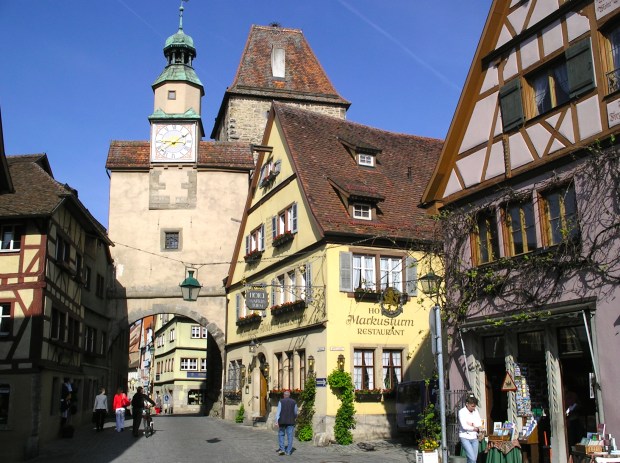
Every street is a postcard view in Rothenburg.

rothenburg_germany-12

One of the most famous street scenes in Rothenburg.

The most popular time to visit Rothenburg is December. It has a famous Christmas festival and market. With a little snow it would a picture-perfect Christmas village. We visited during the summer and had no complaints.

rothenburg_germany-10

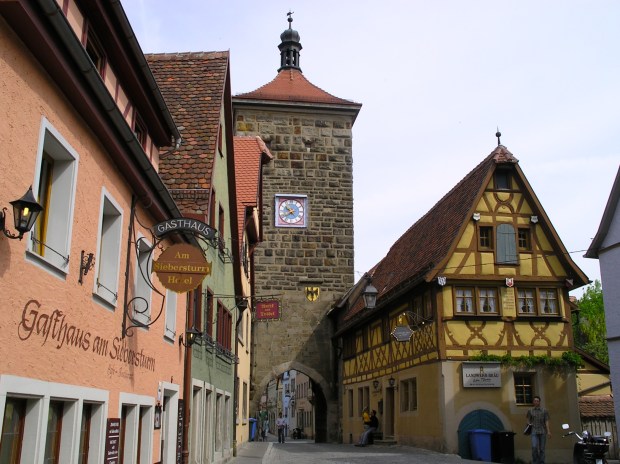
Another view of Rothenburg. There was an older inner section of the medieval town and hence why there are so many gates.

rothenburg_germany-8

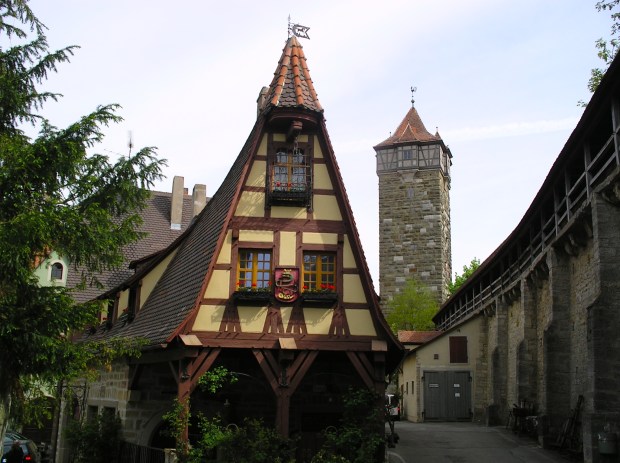
A timbered house, tower and section of the medieval wall in Rothenburg.

There are several “don’t miss” things to do in Rothenburg:

  1. Walk the town’s surrounding medieval walls on an old boardwalk.
  2. Visit Medieval Crime and Punishment Museum, which contains all kinds of creative medieval torture instruments.
  3. Take the Night Watchman’s tour. Hans Georg Baumgartner has been doing these tours for years, and they are a blast. He tells a bit about the history of Rothenburg with lots of humor as he walks you around the old town at dusk. He conducts tours in English and German at different times.
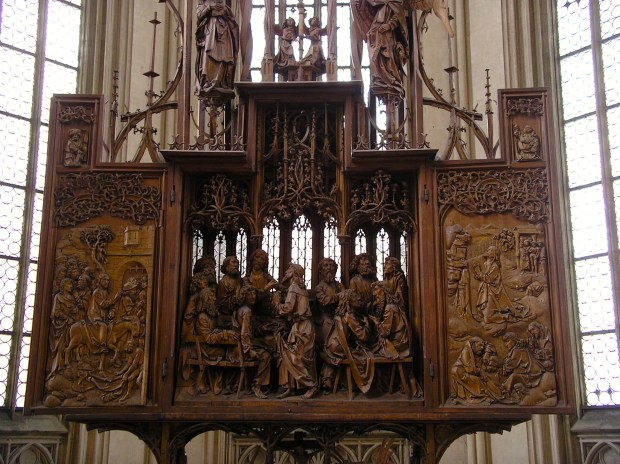
  4. Visit St. Jakob’s Church, which houses the Riemenschneider wood carving (Altar of the Holy Blood, 500 years old and 35 feet high).
rothenburg_germany-4

Hans Georg Baumgartner starting his Night Watchman’s tour in Rothenburg.

rothenburg_germany-13

The famous Altar of the Holy Blood by Tilman Riemenschneider. The carving took 5 years (1499-1504) to create. It’s located in the 14th century St. Jakob’s church in Rothenburg.

Dinkelsbühl. This great town is considered Rothenburg’s “little sister” and is only 49 km (30 miles) south of Rothenburg.

dinkelsbuhl_germany-6

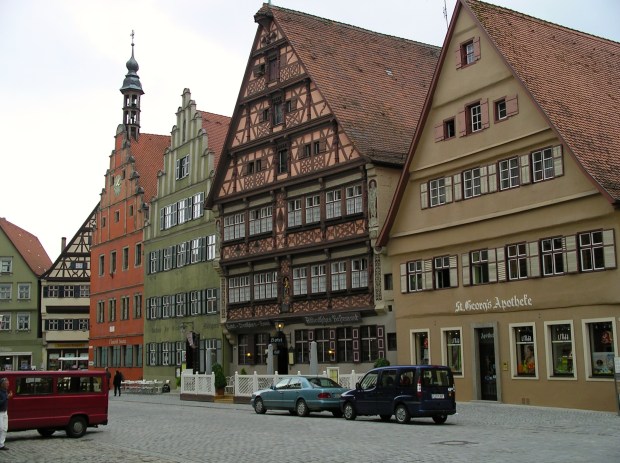
Street scene in Dinkelsbühl.

It has a moat, towers, gates, timbered buildings and a medieval wall surrounding the town (which, in addition to Rothenburg, is one of the few remaining in Germany). We found Dinkelsbühl a bit less touristy than Rothenburg. Amazingly it also miraculously escaped damage in World War II, except for a broken window in St. George’s Minster.

dinkelsbuhl_germany-4

A tower, moat, and wall surrounding Dinkelsbühl.

dinkelsbuhl_germany

One more scenic view outside the walls of Dinkelsbühl.

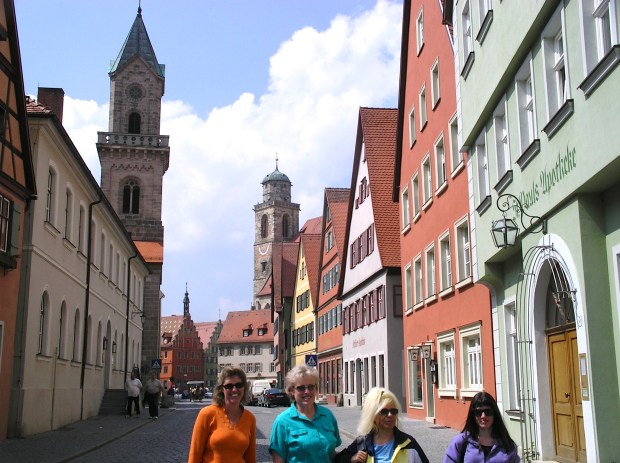
Don’t miss climbing the tower connected to the 15th century St.George’s Minster. The tower was originally a 12th century free standing structure, but later became part of the church structure.

dinkelsbuhl_germany-2

The tower of St. George’s Minster is in the distance.

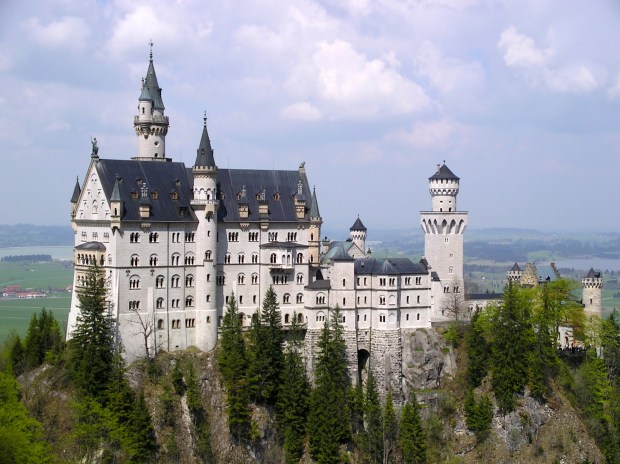
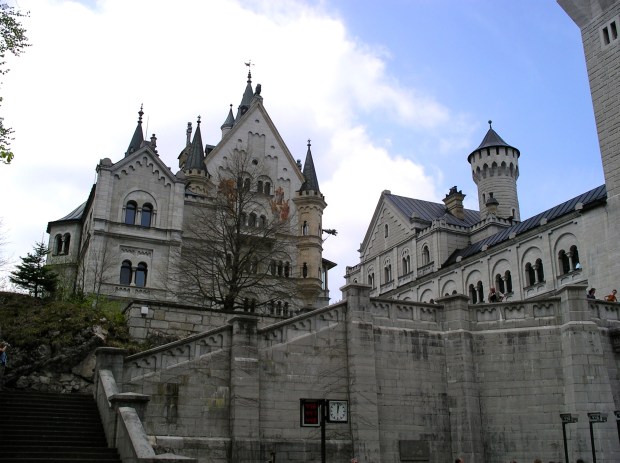
Neuschwanstein Castle. Just about everyone has seen a picture of this castle, nestled against the Bavarian Alps. This well-known castle marks the southern end of the Romantic Road, near the town of Füssen.

neuschwanstein-castle_germany-8

This image of Neuschwanstein was taken from Mary’s Bridge, a short hike to the south of the castle.

It’s been said that this castle was the inspiration for Cinderella’s castle at Walt Disney World. The castle was constructed by King Ludwig II, King of Bavaria in the late 1800’s.

neuschwanstein-castle_germany-4

Interior courtyard view of Neuschwanstein Castle.

He died at age 41 in 1886, having lived in his dream castle (a 17 year project) only 172 days! Only about one third of the interior was finished at the time of his death, it remains unfinished to this day.

neuschwanstein-castle_germany-5

Interior view of Neuschwanstein castle. The two figures represent the story of Tristan and Isolde, a romantic 12th century story, inspired by Celtic legend.

neuschwanstein-castle_germany-3

Looking up at Neuschwanstein Castle from the road you hike up (or take by carriage) to get you to the entrance.

While I prefer older, “real” castles, Neuschwanstein is a beauty and was built on the site of an older medieval castle. To get the best postcard view of this castle nestled in the mountains, you really have to be in a low flying airplane or helicopter. Also in the same area is the older Hohenschwangau Castle, which you see first as you arrive, but we did not take the time to visit it. Be forewarned – this area is mobbed by tourists, so plan your visit well in advance and ensure you get your tours and tickets set before arriving.


The Wonders of Angkor Archeological Park, Cambodia – Day 2


On our 2nd day in Angkor Archeological Park, we explored some temples that are further out from the main circuit, and therefore the crowds were thinner too. Many of these temples are in an area known as East Baray (a large ancient reservoir), on the eastern side of the Park.

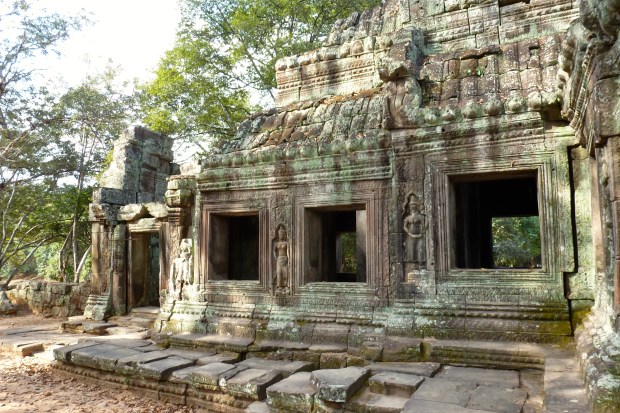
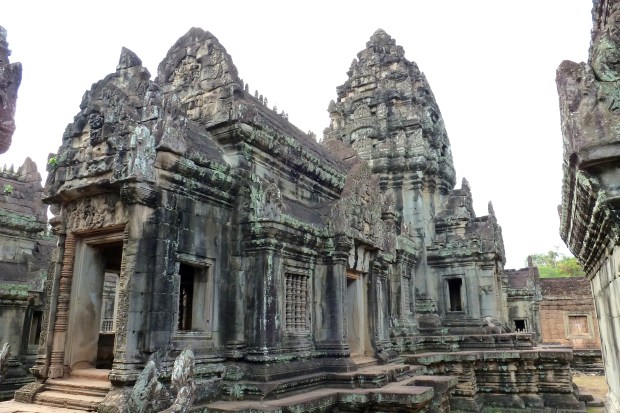
Banteay Kdei. We really enjoyed this temple, and had it almost completely to ourselves. It is a late 12th century temple, and is close to Ta Prohm, both geographically and style-wise.

banteay-kdei-23

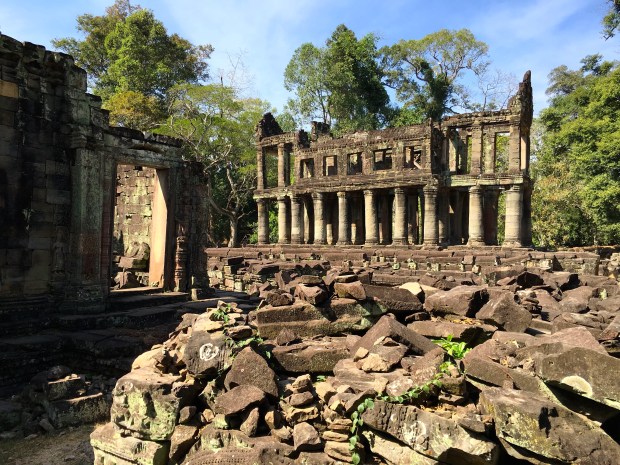
A perfect picture-window section of Banteay Kdei.

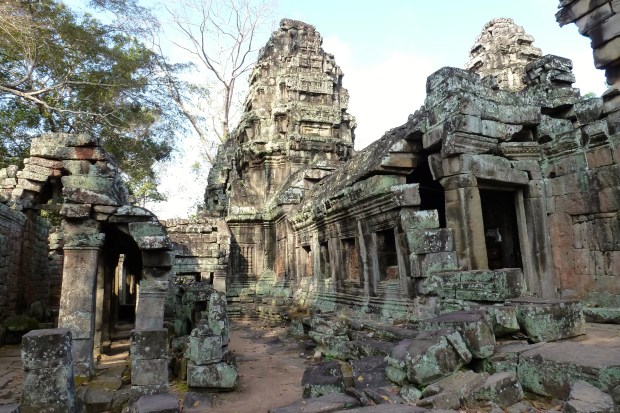
Parts of the temple are a jumble of blocks and other parts you wonder how they’re still standing.

banteay-kdei-16

It amazes me that you can walk around these parts of Banteay Kdei!

It was poorly constructed using a poor quality of sandstone, but who can complain after nearly 1,000 years.

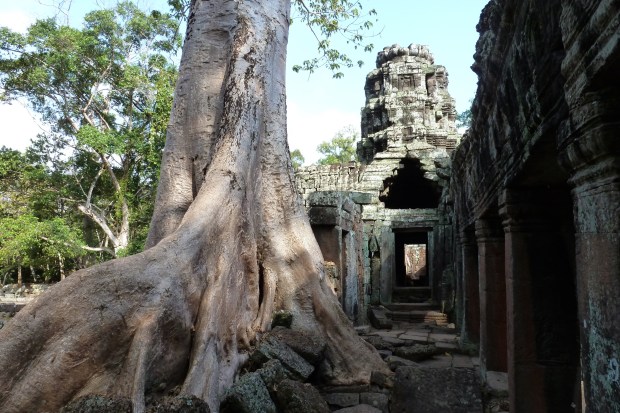
banteay-kdei-22

Another view of Banteay Kdei.

East Mebon. This temple was originally a man-made island, rising up out of the middle of the ancient East Baray reservoir, which is now dry. It is a late 10th century temple, and was dedicated to Hindu god Shiva, and is somewhat similar in style to Pre Rup, below.

east-mebon-5

East Mebon. This temple’s layout makes it difficult to get a good photo.

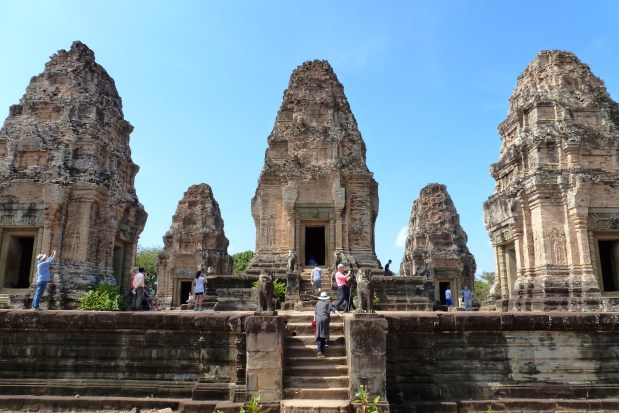
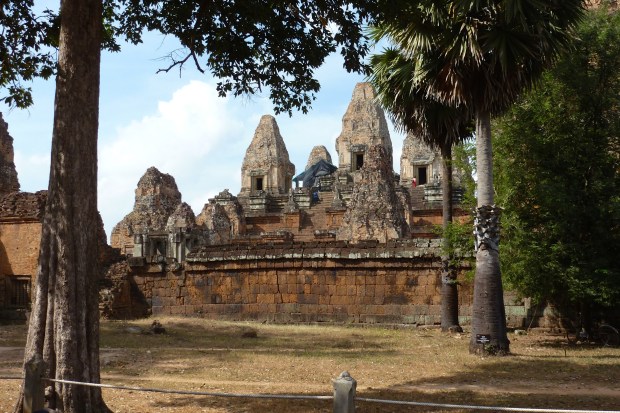
Pre Rup. This is another huge (and tall) state temple (meaning it defined a king’s capital city) and was built in the late 10th century, just a decade later than East Mebon. It has several imposing towers, and is another “mountain in stone” like Bayon.

pre-rup-1

A view of Pre Rup.

pre-rup-2

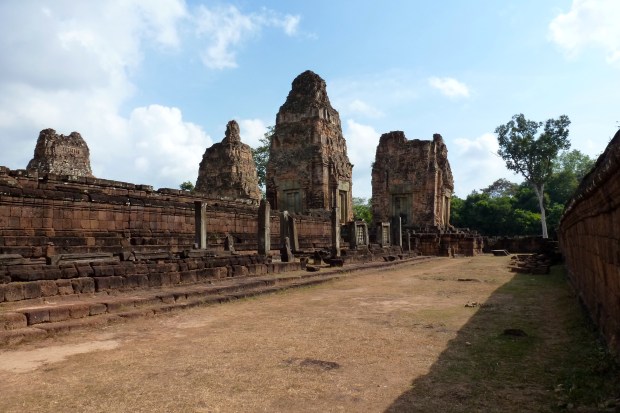
The courtyard around Pre Rup.

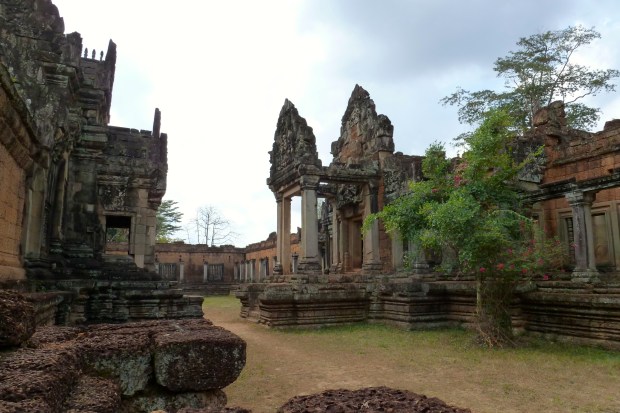
Banteay Samre. This mid 12th century temple is a bit isolated, at the eastern edge of Angkor Park, and hence is one of the least visited temples in the Park.

banteay-samre-3

The walls, entrance and courtyard at Banteay Samre.

banteay-samre-17

The main temple structure at Banteay Samre. The similarities to Angkor Wat are evident.

Banta Samre is surrounded by a large wall and is complete, meaning there are no ruined sections as a result of a well-planned reconstruction, and it has many well-preserved carvings. We had this temple to ourselves.

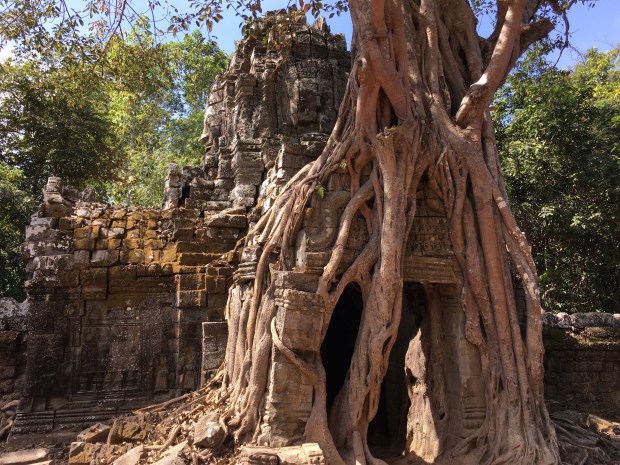
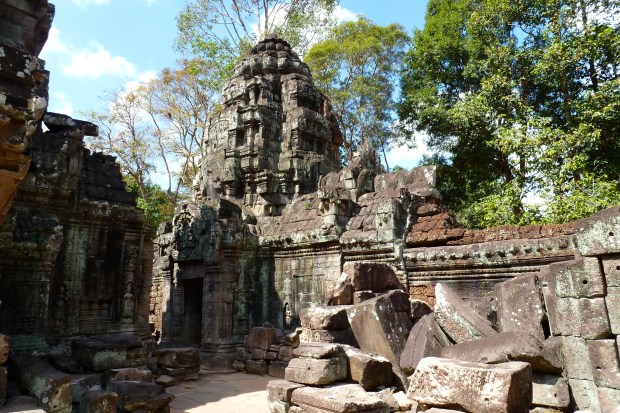
Ta Som. Another of my favorite temples, in the style of Bayon, late 12th century. This temple is north of East Mebon, but makes sense to visit after Banteay Samre if you continue a counter-clockwise route from south to north. It is a small temple, with the entrances being the most picturesque parts.

ta-som-1

The east entrance into Ta Som (note the faces in the tower behind the tree).

ta-som-1

Inside Ta Som temple.

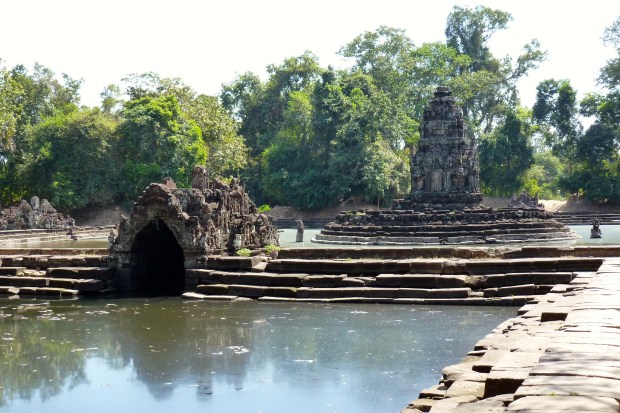
Neak Pean. This is a very unique small 12th century structure, located on a island, with eight pools surrounding it. For part of the year the pools are dry.

neak-pean-3

Neak Pean temple.

neak-pean-2

The marshy reservoir surrounding the island temple of Neak Pean.

The waters were thought to have healing properties. You walk out on a boardwalk across a strange looking shallow reservoir to get to the temple on the island.

Preah Khan. Another great, romantic late 12th century temple. From an interest standpoint, I would put it in the same class as Ta Prohm (See Day 1 post).

preah-khan-13

Exterior view of Preah Khan.

This is a large temple, with many different courtyards, and was the residence of King Jayavarman VII while his palace was being constructed in Angkor Thom.

preah-khan-19

View of carving detail at Preah Khan.

preah-khan-35

Interior hallway at Preah Khan.

preah-khan2

This structure at Preah Khan is unusual, having round columns. It may have been constructed at a later date.

Photo-wise, Preah Khan is interesting from multiple angles, with tree roots, vines and tumbled stone everywhere.

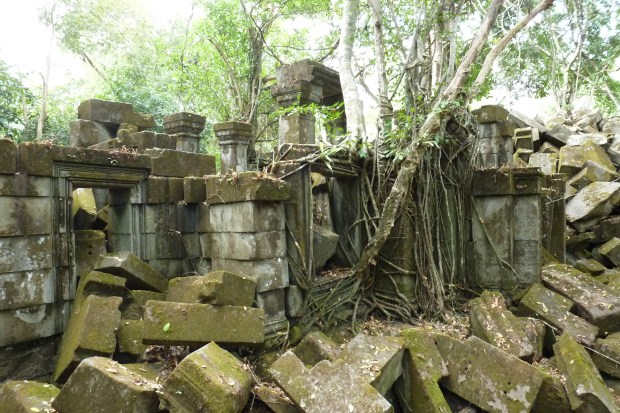
Beng Melea. Technically we visited Beng Melea on Day 3, but who is counting! This is an early 11th century temple, about 60 km southeast of Siem Reap. We hired a taxi for the round trip, and it cost about $50 USD. I had thought that since we were going so far out of Siem Reap, it would be pretty quiet. However, this temple is now on the tourist map, and there were a number of smaller tour buses here. Even so, it is still very worthwhile.

beng-melea81

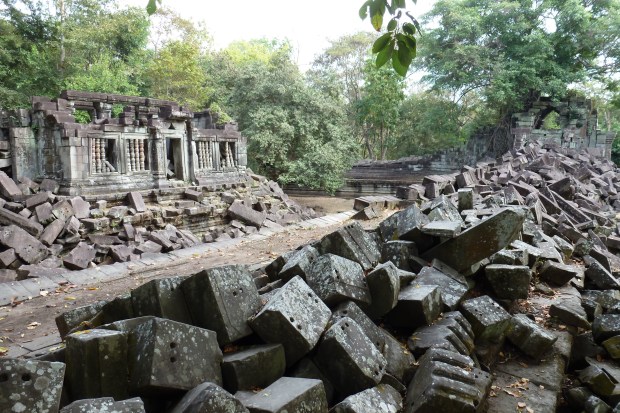
A view of Beng Melea. Much of the structure is ruined, giving it an “undiscovered” feel.

beng-melea32

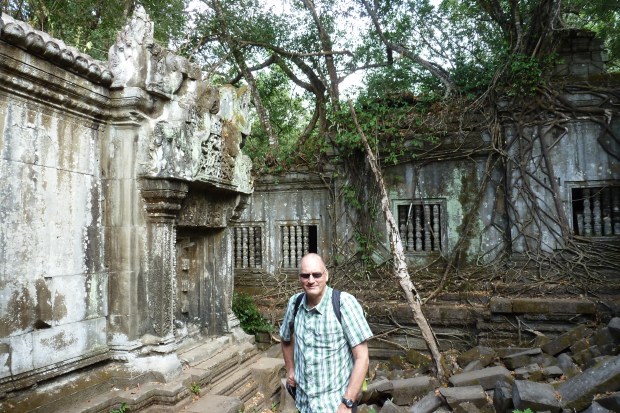
A part of Beng Melea that we had to ourselves.

Being on our own, my son and I were able to visit parts of the temple that the tour groups ignore (or don’t know about).

beng-melea78

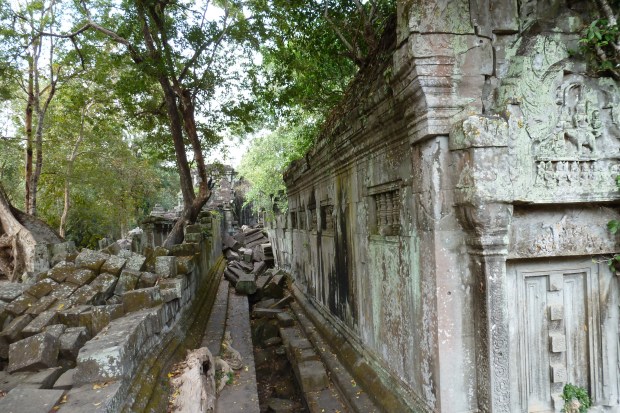
A section of wall at Beng Melea.

beng-melea73

Another secluded part of Beng Melea.

Although hard to tell, this temple is in the style of Angkor Wat, and since it was constructed prior to Angkor Wat, it may have served as a prototype for that great structure.

Angkor Archeological Park and the surrounding area can mesmerize the tourist for days. If you get a chance, visit this astounding cultural and architectural gem.


The Wonders of Angkor Archeological Park, Cambodia – Day 1

After getting settled in Siem Reap our first night, we were ready the next morning to hit the ground running and see the magnificent temples of Angkor Archeological Park. It is helpful to have a good map of the main temples when reviewing the post below and preparing for a visit. I thought the map referenced here was excellent. Listed below are the sights we visited on the first day:

The Royal City of Angkor Thom (Big Angkor).

Angkor Thom covers a large area (3 km2) and contains many interesting structures and is second only to Angkor Wat in terms of priority to visit. It is just north of Angkor Wat and as I suggest below, bypass Angkor Wat (for now) and head directly to Angkor Thom. Angkor Thom was a walled and moated royal city, the last capital of the Angkor Empire. Most of the buildings date from the late 12th century to the early 13th century. You can spend much of the day just exploring the structures here:

Bayon. One of the most famous temples in Angkor Thom. Its configuration represents a stone mountain and it served as the state temple of King Jayavarman VII.

bayon-58

A view of Bayon Temple.

bayon68

One of my favorite views of the towers at Bayon temple.

bayon-34

A passageway at Bayon.

There are 37 existing towers (out of 49 originally), most of which are carved with 4 faces, or in some cases 2 or 3 faces.

bayon-20

A closeup of the faces at Bayon.

It underwent several renovations under later kings.

Terrace of the Elephants and Terrace of the Leper King. The Elephant Terrace is 300 meters long and dates from the 12th century. It derives its name from the carved elephants on part of the walls. It fronts the Baphoun Temple and provides the backdrop for an impressive Royal City thoroughfare.

terrace-of-the-elephants-4

The Terrace of the Elephants.

terrace-of-the-elephants-1

The elephants from which the terrace derives its name.

The Terrace of the Leper King is just north of the Terrace of the Elephants and contains intricate carvings, many found on a hidden double wall that was just excavated in the late 1990’s.

terrace-of-the-leper-king-5

A close-up of the double wall at the Terrace of the Leper King.

terrace-of-the-leper-king-6

Close up of a carving at the Terrace of the Leper King.

Just east of these terraces are other small towers lined up in a row whose purpose is not clear. To the west of these terraces are the following temples:

Baphuon. Another state temple, and an earlier (mid 11th century) construction than Bayon. This pyramid temple underwent major restoration and rebuilding over almost a 40 year period.

baphuon-11

A view of Baphuon and the causeway leading up to the temple.

The restoration was interrupted during the Khmer Rouge dictatorship years in the 1970’s, and records regarding the restoration were unfortunately lost, leaving a huge pile of blocks!

baphuon30

A view from the top of Baphuon.

Phimeanakas. Close to Baphuon, this pyramid temple dates to the mid 10th century, and sits on the site of the Royal Palace, which no longer stands. However, there are enough remnants including walls, gates and pools to give an idea of the grandeur of the palace grounds.

phimeanakas-2

Phimeanakas Temple


baphuon38

A view of a gate, wall and pool on the Royal Palace grounds near Phimeanakas.

Outside of Angkor Thom.

Just to the east of Angkor Thom are two small but well restored temples, both similar in style to Angkor Wat. Both temples have Hindu and Buddhist themes in their carvings. They also look very similar to each other, but were actually built in different periods. The best news is that they don’t receive a lot of visitors, so they make a peaceful and pleasant stop and a good place to get photos without crowds.

Thommanom. This is the older temple of the two. Built in the 11th century.

thommanom11

Thommanom Temple

Chau Say Thevoda (or Chao Say Tevoda). Directly opposite of Thommanom on the south side of the road leading out of Angkor Thom. From the 12th century.

chau-say-thevoda-1

Chau Say Thevoda Temple.

Ta Keo. Ta Keo is just a bit further east of the two temples above, and different in style from the examples above. Ta Keo was constructed out of sandstone and very plain, without much decoration. It is an older temple, originating in the late 10th century.

ta-keo-8

Ta Keo Temple–the red sandstone is apparent.

Ta Prohm. Perhaps the most romantic and mysterious temple in the Angkor area, and definitely one of the most famous, having been a filming location for the movie Tomb Raider starring Angelina Jolie.

ta-prohm-12

Entrance to Ta Prohm.

ta-prohm-53

The famous “Tomb Raider” door.

ta-prohm

A panorama of the interior courtyard of Ta Prohm.

This temple has purposely been left more or less in its natural ruined state to show what the temples looked like during their rediscovery in the 19th century.

ta-prohm85

Another personal favorite view of Ta Prohm.

ta-prohm-32

One more view of Ta Prohm. Almost every inch of this temple is a postcard image.

Ta Prohm was built between the mid 12th century and early 13th century. It was a Buddhist monastery, and a very wealthy one at that – controlling 3000 villages and known for its stores of jewelry and gold. Definitely a must-do on any itinerary. Hint: Ta Som, a temple we visited on our 2nd day (my next post), was almost as stunning and far less busy.

Angkor Wat. The granddaddy of them all and the world’s largest religious monument. We saved a visit to this temple until the afternoon and we were glad we did for two reasons: a) Fewer tourists. Since this is the first temple one comes to after the ticket entrance, most tours stop here first. We came back in the afternoon, and while there were still some tourists, there were no where near the crowds we saw in the morning. b) The view. The typical morning haze and clouds in this region dissipate by the afternoon, and we were left with a glorious temple bathed in perfectly positioned afternoon sunshine.

angkor-wat-24

A perfectly blue sky in the afternoon at Angkor Wat.

angkor-wat64

A panorama of Angkor Wat.

Angkor Wat was a temple-mountain dedicated to the Hindu god, Vishnu. It dates from about mid 12th century. The towers are 65 meters high and it has an unusual western orientation (rather than eastern, as most other temples in Angkor).

angkor-wat-39

One of the courtyard and towers of Angkor Wat.

angkor-wat-49

A worship service at Angkor Wat.

Its large moat, enclosures and towers represent the Hindu universe. One could spend days exploring all the carvings and symbolism of this magnificent temple.

angkor-wat67

A view from the southeast corner of the Angkor Wat temple – almost no one goes out here.

Phnom Bakheng. The last temple we visited on our first day is pretty close to Angkor Wat, and required a 20 minute hike up the hill on which it is located. The temple itself is difficult to get a picture of, due to its orientation on the hill–it’s hard to step back and get a good view, and we found it a bit less impressive than the others.

phnom-bakheng-2

Phnom Bakheng temple.

phnom-bakheng-7

A view of Angkor Wat from the Phnom Bakheng temple.

The main reason for climbing the hill (and then climbing up the temple) is for the views overlooking the whole Angkor area and especially Angkor Wat. Many people (like us) make the hike up in the afternoon or right before sunset for the views. This temple is the oldest at Angkor, dating from the late 9th century and was the first state temple as Angkor became the capital city of the Khmer Empire. This temple is also undergoing restoration work.

More to come in my next post!


A Visit to Siem Reap, Cambodia – Overview

There aren’t a lot of words that can really describe the feeling of being at the world renown Angkor temple complex near Siem Reap. For me, being at Angkor Wat (featured image above) and the surrounding temples was the equivalent of seeing the pyramids of Egypt for the first time—I guess “awestruck” would be the best word I can come up with.

ta-som-14

The entrance to Ta Som temple, one of the most picturesque in Angkor.

These temples and the surrounding landscape are stunning in every sense of the word, the jungle growth surrounding (and covering) them just adds to their allure. In addition to the temples, there are reservoirs, canals and other interesting features of what was an incredible capital city. Angkor was the capital of the Khmer Empire (which covered parts of modern Cambodia, Thailand, Laos and Vietnam) for about 500 years, from the 9th century to the 12th century. Considering how magnificent the ruins are today, one can only imagine how palatial the city must have been almost a thousand years ago.

We arrived in Siem Reap in late afternoon after a 7-hour bus ride from Phnom Penh. The bus dropped us off at a central point and then the bus company provided taxis to take us to our various hotels. Siem Reap was larger than I expected, for some reason I was thinking it might be a fairly small town on the outskirts of the Angkor temple complex for which it is known. There is a fairly small central core old town where most of the tourists and related services are located.

banteay-kdei33

One of our meals in Siem Reap – with crocodile and other meats and fish (crocodile tasted like a fishy pork).

beng-melea1

You can get yourself a “happiness pizza” in some towns in Cambodia – a pizza that has a little marijuana in it!

Speaking of tourists, Siem Reap is definitely a major tourist hub with a modern small airport, and the town seemed overrun (at night) with tourists compared with Phnom Penh. We visited during the height of tourist season, since the weather is at its best in January.

siem-reap0

One of the main streets (Pub Street) at night in Siem Reap.

Even with all the tourists, we were able to see everything we had planned on during our 2 ½ days. It would be easy to spend a week here, since there are numerous temple ruins all over the region, not just in Siem Reap. My son and I visited one distant temple ruin (Beng Melea) which was about 60 km from Siem Reap on our 3rd day (we hired a taxi), while my wife and daughter visited a local museum and did some shopping.

beng-melea40

The ruins of Beng Melea temple – fewer visitors here and we were able to wander around uninhibited.

Admittedly, some people might get “temple fatigue” after a day or two, but that wasn’t a problem for us!

The ticket entrance to the Angkor temple complex is about 4 km (2.5 miles) north of the city, and the temples are located another couple kilometers beyond the entrance.

angkor-thom-south-gate9

The busy South Gate entrance into the Angkor Thom Temple complex, which is 1.5km north of Angkor Wat (the signature temple of Angkor Archeological Park, and the featured image of this post).

There are numerous transportation options, including joining a tour, getting a taxi, renting bicycles, mopeds, or doing as we did and hiring a tuk tuk that had room for 4 people. Since the terrain in this part of Cambodia is very flat, getting around on a bicycle or moped would not be difficult; however, the distances from the town to the temples and from temple to temple are significant enough that I would rather enjoy time at the sites.

Our tuk tuk (in our case a motorcycle pulling a cart) was $20 for the whole day.

banteay-kdei32

Our tuk tuk. The driver put up a hammock to rest while we toured.

We just pointed out on the map the temples we wanted to visit that day and our driver took us on a route to cover those temples. This was a great way to go, we could visit the temples on our own terms rather than having to be with a larger tour.

Practical Considerations:

Our hotel was within walking distance of the old part of the city where many restaurants, shopping bazaars and nightlife keep tourists occupied in the evenings. There is even a Hard Rock Café in town. Lots of variety of food is available, and many small tourist agencies which can arrange transportation or day trips to nearby locations also. Hotel accommodations vary from grand, large hotels to small boutiques.

The Angkor temple complex is huge, and we spent two days exploring it. We typically started at 8 am. The temples are open very early, but we found late afternoon also worked well for avoiding the peak crowds that come in around 10 am and leave around 2 pm. If you have just one day you can realistically visit 6 or 7 temples, and get a pretty good feel, but you probably won’t get to experience the quieter temples that are further off the beaten path (we visited 17 temples in 2 ½ days!). A pass for the Angkor temple complex is $40 USD for 3 days in a 7-day period, and most temples will require you to show your pass, so don’t lose it! There are lots of small vendors around the main temples to buy water and snacks.

In my next couple of posts, I will share more about the temples we visited each day.


A Day in Phnom Penh: A Bustling City with a Dark Past

From Krabi, Thailand we flew (via Bangkok) to Phnom Penh, Cambodia. Although many tourists head straight to Siem Reap to visit the ancient Angkor temple ruins and completely bypass Phnom Penh, we took an extra day to see this interesting city. I had heard about the horrors of the Khmer Rouge when I was a child and our visit allowed us to learn more about what had happened. More below on this.

As we talked with our taxi driver from the airport to the hotel, we ended up arranging with him to give us a tour of Phnom Penh for $15 per person, which we felt was reasonable to take the four of us around all day.

Our overall impression of Phnom Penh was that it is a little less wealthy than Bangkok and definitely less clean.

phnom-penh-6

My daughter, son and wife enjoying a typical street scene in Phnom Penh.

Royal Palace

One of the major attractions in Phnom Penh is the Royal Palace, not unlike the Royal Palace in Bangkok, but a little less ostentatious in décor.

phnom-penh-royal-palace-10

Part of the beautifully landscaped Royal Palace.

phnom-penh-royal-palace-19

Another view of the Royal Palace grounds.

phnom-penh-royal-palace-jade-buddha

An emerald Buddha in the Royal Palace.

It was also fun to just wander the streets a bit. We went into a large covered market that had about anything you can imagine.

meat-market

I wonder what kind of animal had the nice long tail, hanging in front of the counter?

phnom-penh-central-market-5

More delights available in the market!

We enjoyed Cambodian cuisine – many curry and seafood dishes, along with other oriental delights.

cambodian-dinner2

One of our meals in Phnom Penh.

We even tried fried tarantula (yuck)! All kinds of insects and other creatures were available for adventurous snacking.

phnom-penh-cockroach-and-spider-dinner-1

A nice street food pile of big spiders and beetles.

wat-phnom-12

The Wat Phnom, a famous temple in Phnom Penh.

wat-phnom-11

Inside the Wat Phnom.

In addition to various temples and the Royal Palace, the other primary sights relate to the tragic period of the Khmer Rouge regime (during which time Cambodia was known as Democratic Kampuchea) which lasted from 1975 to 1979. About 25% of Cambodia’s population perished during this period and many people were kicked out of their homes and relocated to other parts of the country.

The Khmer Rouge targeted anyone who was educated, especially those who might be sympathetic to Western values or beliefs, or anyone who was well-off economically. As a sign of how absurd things became, anyone who wore glasses was thought to be an intellectual and therefore an enemy of the state. So many people with poor eyesight got rid of their glasses. Undoubtedly many of the brightest minds in Cambodia perished during this period. I am old enough to remember hearing about the Khmer Rouge on the news and about the terrible atrocities. It was a bit surreal being here, where so much suffering had taken place.

Tuol Sleng Museum

Tuol Sleng prison, now a museum, was created from what was a high school. It was the most secretive of the country’s 196 prisons.

phnom-penh-toul-sleng-museum-3

Exterior view of the Tuol Sleng Prison, now a museum.

Most of the prisoners taken to this prison were accused of fictitious acts of treason, such as collaborating with foreign governments or spying for the CIA or KGB.

phnom-penh-toul-sleng-museum-21

Photos of some of the unfortunate victims at Tuol Sleng prison.

phnom-penh-toul-sleng-museum-6

An interrogation cell with shackles.

phnom-penh-toul-sleng-museum-12

Prisoner rules.

Typically, the entire family would be imprisoned. Most often, prisoners had no knowledge of the charges against them when arrested, but they were tortured until they confessed to whatever crimes they had been accused of. They were then marked for execution. At least 12,273 prisoners (and possibly many more) passed through this prison and only about 200 survived.

phnom-penh-toul-sleng-museum-30

Cells at Tuol Sleng prison–in an area that used to be classrooms.

phnom-penh-toul-sleng-museum-33

Some of the torture instruments used on the prisoners.

phnom-penh-toul-sleng-museum-1

My son and I with Mr. Chum Mey, a survivor of Tuol Sleng prison.

Eventually, the Khmer Rouge regime was ousted by the Vietnamese in 1979 after about four years of absolute hell. This museum is well done, with explanations posted throughout the site.
Choeung Ek Genocidal Center (Killing Fields)

This outdoor museum is another “must do” in Phnom Penh. It is located 15 kilometers (about 9 miles) south of the heart of the city (the drive out to the site is interesting in itself).

phnom-penh-3

Homes along a waterway (covered in foliage) on our way out to the Killing Fields.

phnom-penh-5

The dusty road out to the Killing Fields museum.

phnom-penh-choeung-ek-killing-fields-2

Entrance to the Choeung Ek Museum or Genocidal Center.

This site is where many of the prisoners of the Khmer Rouge were brought to be slaughtered and buried in open pits.

phnom-penh-choeung-ek-killing-fields-10

In the foreground are the burial pits. The tall structure contains neatly arranged skulls of many of the victims.

phnom-penh-choeung-ek-killing-fields-20

In the tall pagoda-like structure, the victims’ skulls are arranged by how they were murdered – axe, hammers, rods, etc.

There is a marked path with explanation signs and also a good audio guide available to explain what happened here.
phnom-penh-choeung-ek-killing-fields-14

As the sign says, babies were bashed against this tree trunk.
To say the least, it was a very somber experience, but well worth the visit to understand what the Cambodian people have suffered in their fairly recent past.

Even today, as you walk among the burial pits, it is not uncommon to find bits of clothing and bone.

phnom-penh-choeung-ek-killing-fields-12

The sign says “Don’t step on bone”. Bits of clothing of the victims is visible in the lower right.

phnom-penh-choeung-ek-killing-fields-15

A bin stacked with bones from excavations.

We enjoyed our day in Phnom Penh. It was a very worthwhile stop on our journey. From Phnom Penh we went on to Siem Reap, home of the world famous Angkor temples, including Angkor Wat. I will write about these magnificent temples in my next couple of posts.

Note: During our day excursion, our taxi driver stopped by a tourist agency, and we arranged bus transportation for the following day to go to Siem Reap. The cost was $15 per person for a decent bus to take us on the approximately 6-hour drive to Siem Reap. While you can also fly there, it was fun to drive through and see the countryside. Beware: Part of the road to Siem Reap is unpaved and VERY dusty. Our suitcases (in the lower storage area), were coated with fine dust by the end of our journey. You may want to consider wrapping your bag in cellophane before placing it in the storage area!

 Also, although Cambodia has its own currency, the US dollar is widely accepted and many prices are quoted in US dollars, so take plenty of small bills. If you pay in US dollars at a store, you will get Cambodian currency in return. These transactions make many prices more expensive than Thailand, although prices are still relatively cheap by U.S. standards.