Sights around the Plaza de Armas, Lima

Lima is about at the midpoint of the coast of Peru, right on the Pacific Ocean.

Lima is about at the midpoint of the coast of Peru, right on the Pacific Ocean.

The Plaza de Armas is the historical center of Lima. It dates from the 16th century, the start of the colonial era of Peru and the beginnings of the city of Lima. Severe earthquakes in 1687, 1746 and 1940 took their toll on this historic area, many buildings were severely damaged or destroyed, but some have survived, and the government has been working to restore many of the historic buildings.

The governmental palace on the historical Plaza de Armas.

The governmental palace on the historical Plaza de Armas.

An example of the excellent restoration work around the Plaza de Armas.

An example of the excellent restoration work around the Plaza de Armas.

There are many old churches near the Plaza de Armas, I’ll share a bit about three below.

The facade of the Iglesia de San Francisco.

The facade of the Iglesia de San Francisco.

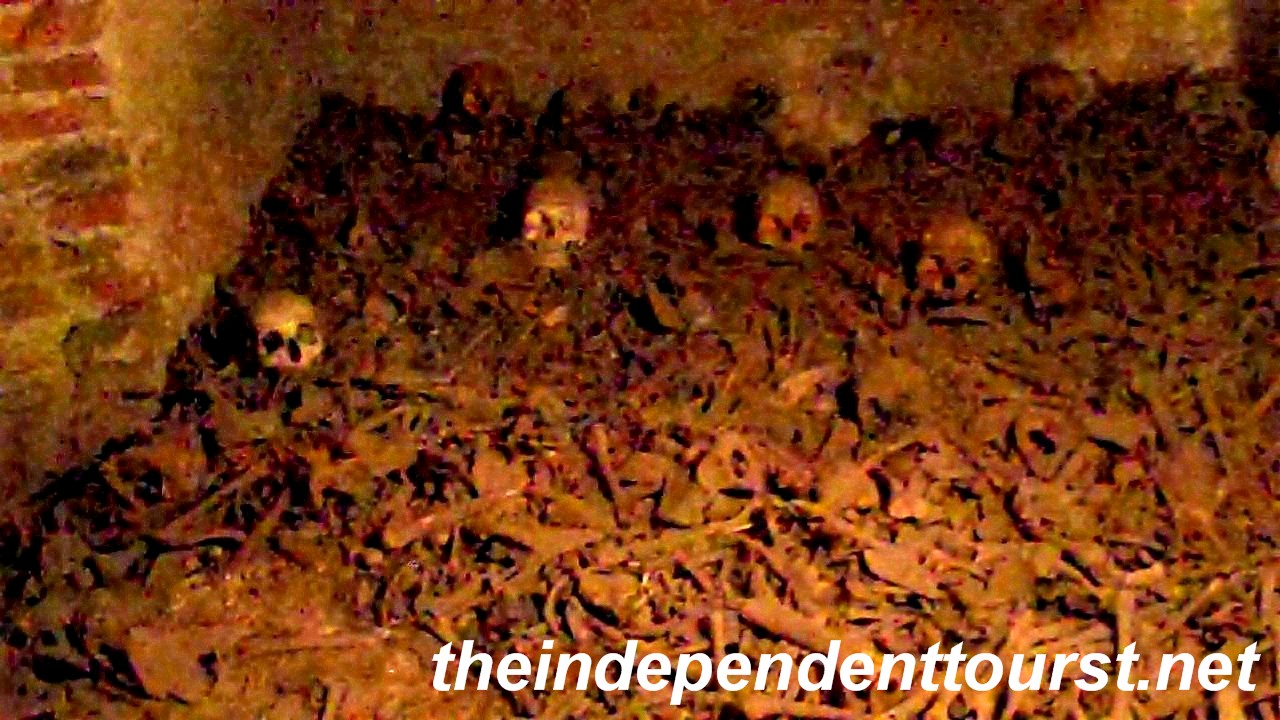
Iglesia de San Francisco. This church was built in the 17th century, and contains some fine artwork, including wood carvings in the choir, cloister ceilings, decorative tile and precious metals. I love catacombs and the ones below this church are extensive – the remains of 75,000 people are here. The catacombs are poorly lit and it was hard for me to get pictures (I took a few on my Flip video camera – please forgive the poor quality). The only way to visit the catacombs is via a tour (available in English). Next to the church is a beautiful monastery library with 400 year-old manuscripts but I was not allowed to take pictures there.

The main chapel in the Iglesia de San Francisco.

The main chapel in the Iglesia de San Francisco.

I'm guessing that much of the gold and silver decorating this altar came from Inca artifacts.

I’m guessing that much of the gold and silver decorating this altar came from Inca artifacts.

Note the bowed wall of this church - probably due to earthquakes over the centuries.

Note the bowed wall of this church – probably due to earthquakes over the centuries.

The tunnels of the catacombs are extensive.

The tunnels of the catacombs are extensive.

These bones aren't as neatly arranged as some...

These bones aren’t as neatly arranged as some…

Some of the neatly arranged bones in the catacombs.

Some of the neatly arranged bones in the catacombs.

Convento de Santo Domingo. This 16th century church stands out due to its pink exterior. From the convent’s bell tower, you get a pretty good view of Lima – one of the driest cities on earth. The cloister gardens are well manicured and this church also had an interesting library. The tombs of the first two Peruvian saints are buried here.

The pink Convento de Santo Domingo. (Climb to the top of the tower for a good view)

The pink Convento de Santo Domingo. (climb to the top of the tower for a good view.)

The library of the Convento de Santo Domingo.

The library of the Convento de Santo Domingo.

The cloisters of the Convento de Santo Domingo.

The cloisters of the Convento de Santo Domingo.

Decorative 17th century tiles imported from Spain.

Decorative 17th century tiles imported from Spain.

A view of the Lima Cathedral from the Convento de Santo Domingo.

A view of the Lima Cathedral from the Convento de Santo Domingo.

Lima Catedral (Cathedral). One of the most interesting features of this church is the tomb of Pizzaro, the Spanish explorer who founded Lima as part of the Spanish empire in 1535 and designed the layout for the cathedral. The cathedral had to be rebuilt after earthquakes in 1746 and 1940.

The Lima Cathedral on the Plaza de Armas.

The Lima Cathedral on the Plaza de Armas.

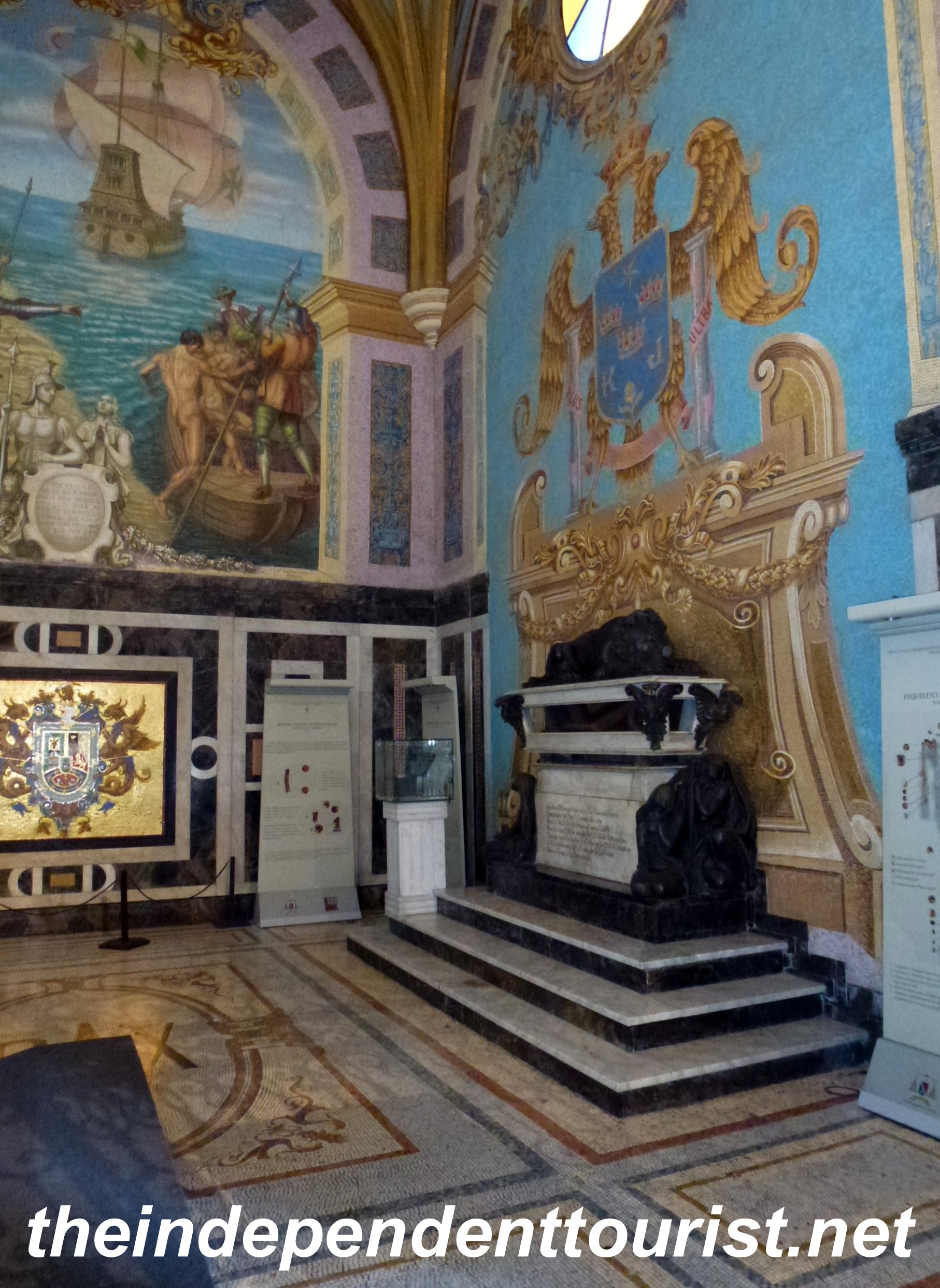
Pizzaro's tomb in the Lima Cathedral.

Pizzaro’s tomb in the Lima Cathedral.

Reference: Fodor’s Guide to Peru, 3rd Edition.

Pinara – A Lycian Gem

If you enjoy visiting ancient ruins without throngs of people everywhere, check out Pinara, located northwest of Kaş, not too far from Fethiye. This part of Turkey (known as the Lycian Way) is very scenic. (For a map of sites visited in Turkey, click here).

Kalkan Beach, one of the “postcard” images of Turkey. This stunning beach is just west of Kaş, right where the road turns north and inland towards Pinara.

Kalkan Beach, one of the postcard images of Turkey. This stunning beach is just west of Kaş, right where the road turns north and inland towards Pinara.

Pinara was one of the six major Lycian cities (beginning about 7th century BC). The better-known ruins of Xanthos, which was the capital of Lycia, are nearby as well as the ruins of Letoön.

A view of the theater at Pinara from the agora.

A view of the theater at Pinara from the agora.

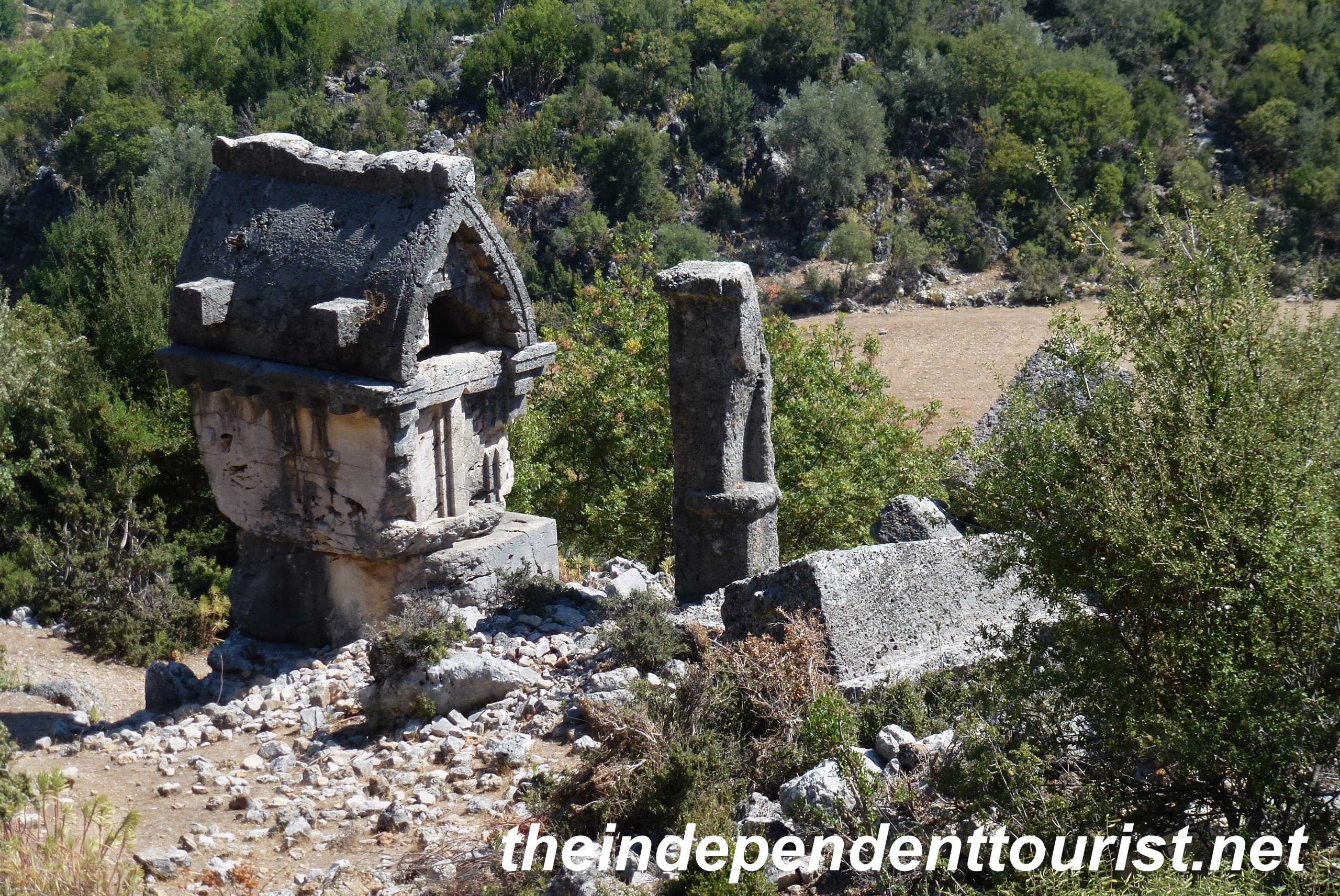
A free-standing tomb at Pinara.

A free-standing tomb at Pinara.

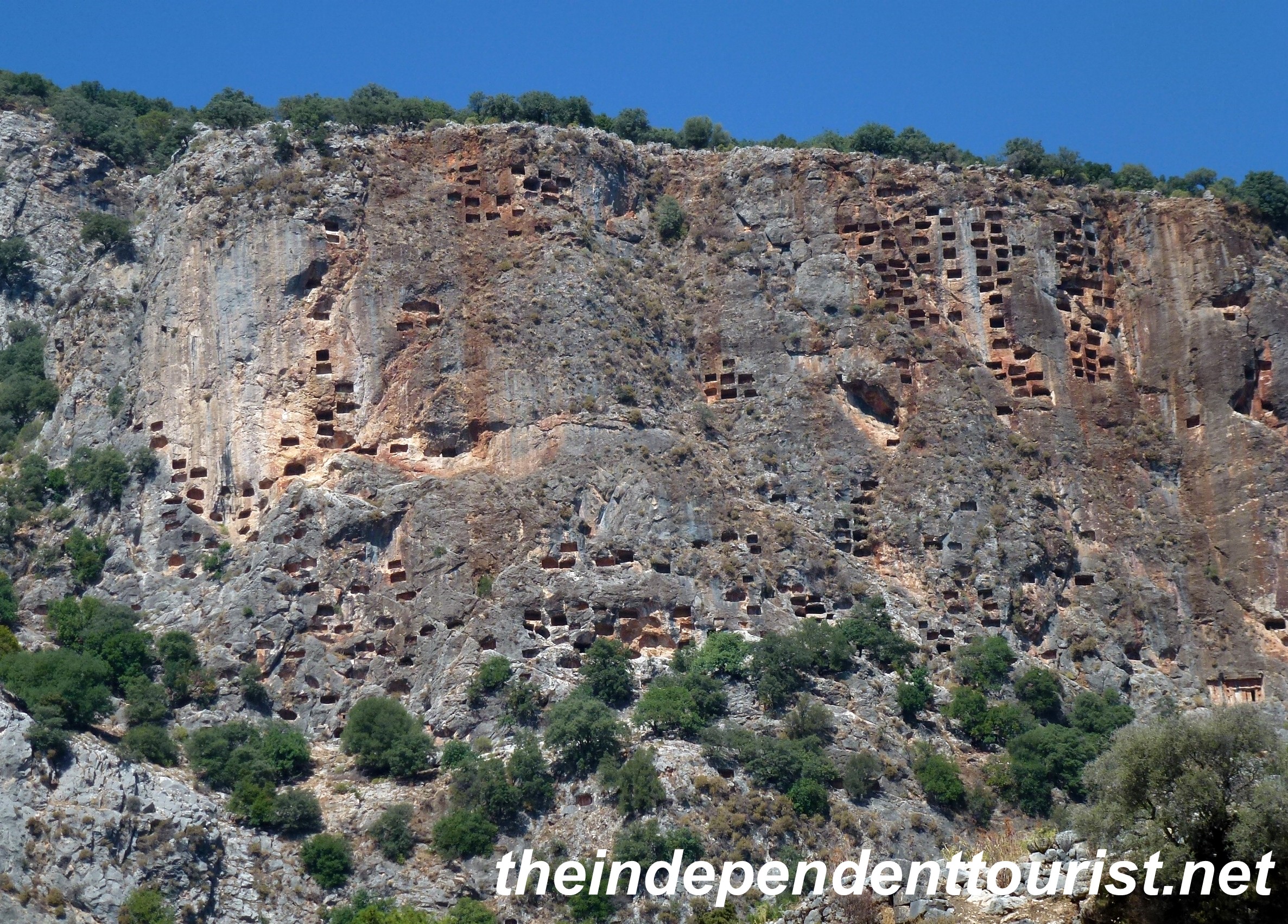
A view of Pinara from the theater.  The hilltop in the middle of the picture is round, giving Pinara it's name. The hillside is covered with tombs cut into the rock cliffs.

A view of Pinara from the theater. The hilltop in the middle of the picture is round, giving Pinara its name (Pinara means “round”). The hillside is covered with tombs cut into the rock cliffs.

Pinara_Turkey (13)

A closer view of the hillside – note the rock-cut tombs into the hillside. How did they do that?

Pinara is a large site and we moved our car a couple times to different locations to save some hiking back and forth. A short history of the site is posted at the entrance but no map was available. Signs point the way to some of the main ruins, but be sure to hike beyond the area around the first parking lot, since there are numerous hidden ruins along faint trails.

Practical Information

Pinara is about 6 km off the main road (D400). The last 2 km of road is dirt/gravel, which is passable by autos.  There were two caretakers at the site, and basic restrooms.  Bring your own water and snacks. The entry fee was 5 TL (1.8 Turkish Lira per USD). The easiest way to visit is by rental car; a brown sign on the main road marks the turnoff to the site, as with other tourist sites throughout Turkey.

One of the house tombs at PInara.

One of the house tombs at Pinara.

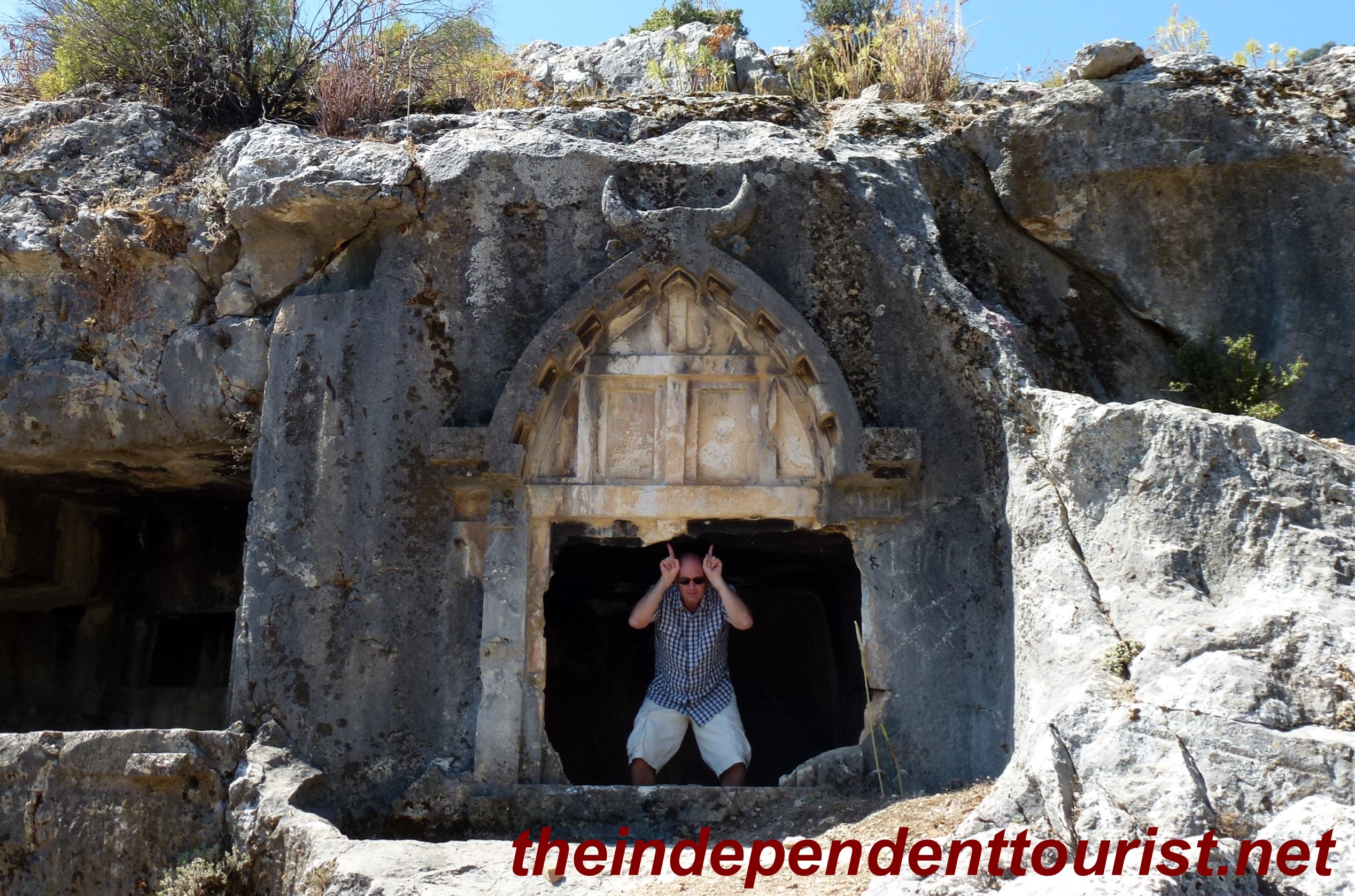
The "Bull-Headed" sarcophagus (note the top of the tomb), near the agora.

The “Bull-Headed” sarcophagus (note the top of the tomb), near the agora.

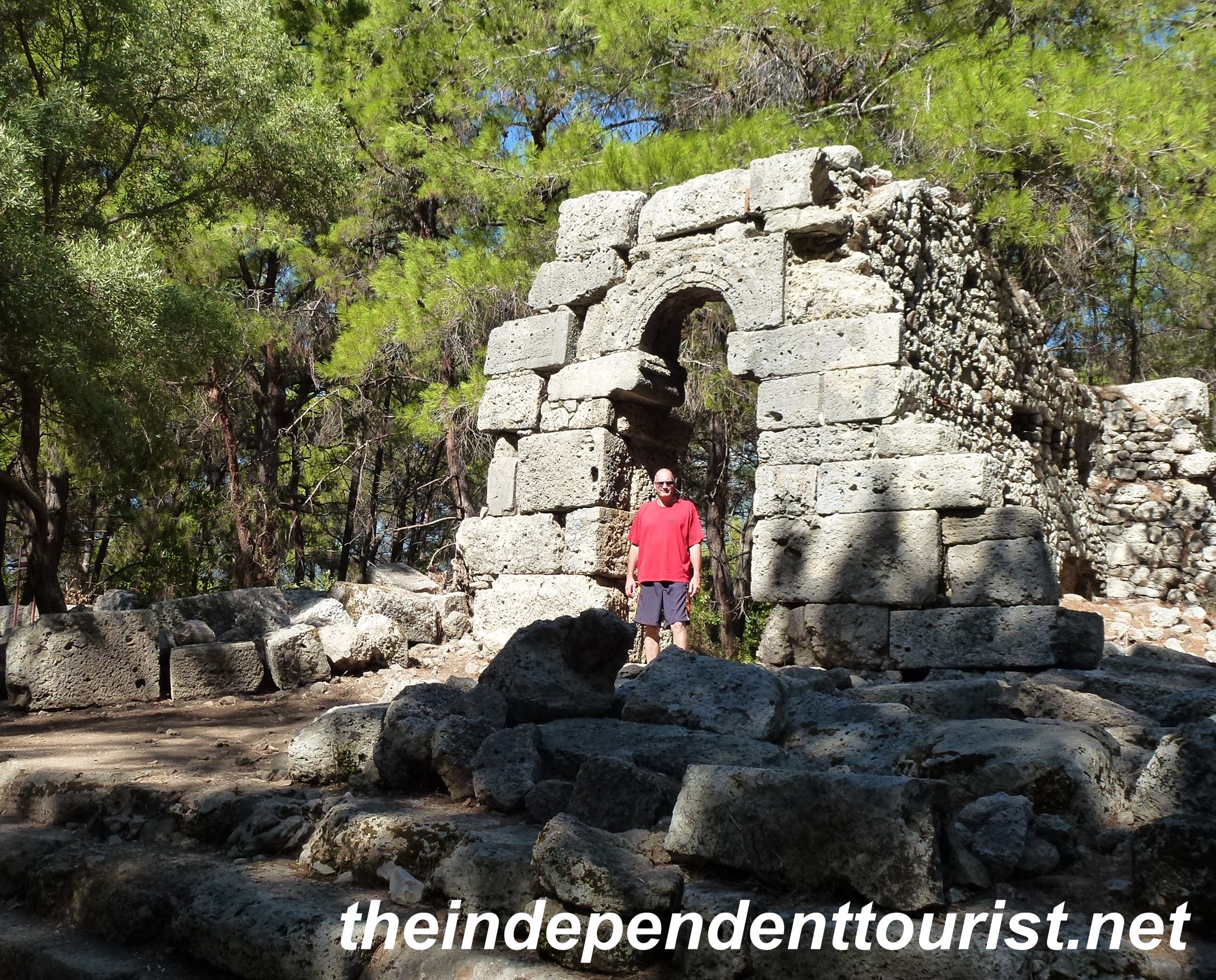
Allow at least two hours for your visit. A variety of ruins can be explored—a theater, temple foundations, tombs carved out of rock and free standing, an agora, and baths.  We also went up a steep dirt road a few kilometers behind Pinara just to explore the countryside.

I loved this place—the ruins are extensive and interesting, the countryside is scenic, and the fact that there are almost no tourists makes it a great stop.

The temple foundations at Pinara - note the fine stone-fitting work.

The temple foundations at Pinara – note the fine stone-fitting work.

From Phaselis to Kaş, Turkey – Land of the Sun (and Santa Claus)

We drove westward along the southwestern coast of Turkey from Antalya to Kaş in one day, although it’s a pretty long day (187 km of winding and beautiful coastal road) including several stops. After our first stop at the great beach and ruins of Phaselis (click here), we continued westward stopping at Cirali and Myra before getting to Kaş for the night (for a general map of our stops click here). This stretch of southwestern Turkey is known as the Lycian Way, due to the ancient Lycian civilization which inhabited this area and left many traces behind.

Cirali

This is a laid-back backpacker’s beach hangout about 7 km from the main highway with cheap ‘treehouse’ accommodations (think sleeping bags on wooden floors above ground level in the open), very casual outdoor cafes and a good (although with very little shade) beach. No wonder this stretch of Turkey is known as the Land of the Sun.

Examples of the "tree house" accomodations in Cirali.

Examples of the “tree house” accomodations in Cirali.

The beautiful beach at Cirali.

The beautiful beach at Cirali.

Not far from here are the enduring flames (from escaping natural gas), known as Yanartaş (“burning stone”), but since we visited during the day, we did not take the 2 km hike to the flames.  If you try to blow them out, they immediately light again. In ancient times, these flames helped provide a beacon to ships. This beach is also close to the ruins of Olympos, which we unfortunately did not have time to visit.

Myra (near Kale, AKA Demre)

The history of Myra and Lycia - Land of the Sun.

The history of Myra and Lycia – Land of the Sun.

Myra - note the tombs in the hillside.

Myra – note the tombs in the hillside.

View of the rock carved tombs at Myra.

View of the rock carved tombs at Myra.

The ancient city of Myra is just 2 km inland from Kale (no problem locating it with the excellent road signs). Myra dates from 5th century BC and was a significant port city. It was one of the major cities of the Lycian League. Myra is mentioned as a stopping point in St. Paul’s journey to Rome in 60 AD (see the New Testament, Acts 27:5).

Stone carving of actors' masks at the theater in Myra.

Stone carving of actors’ masks at the theater in Myra.

The Roman theater at Myra.

The Roman theater at Myra.

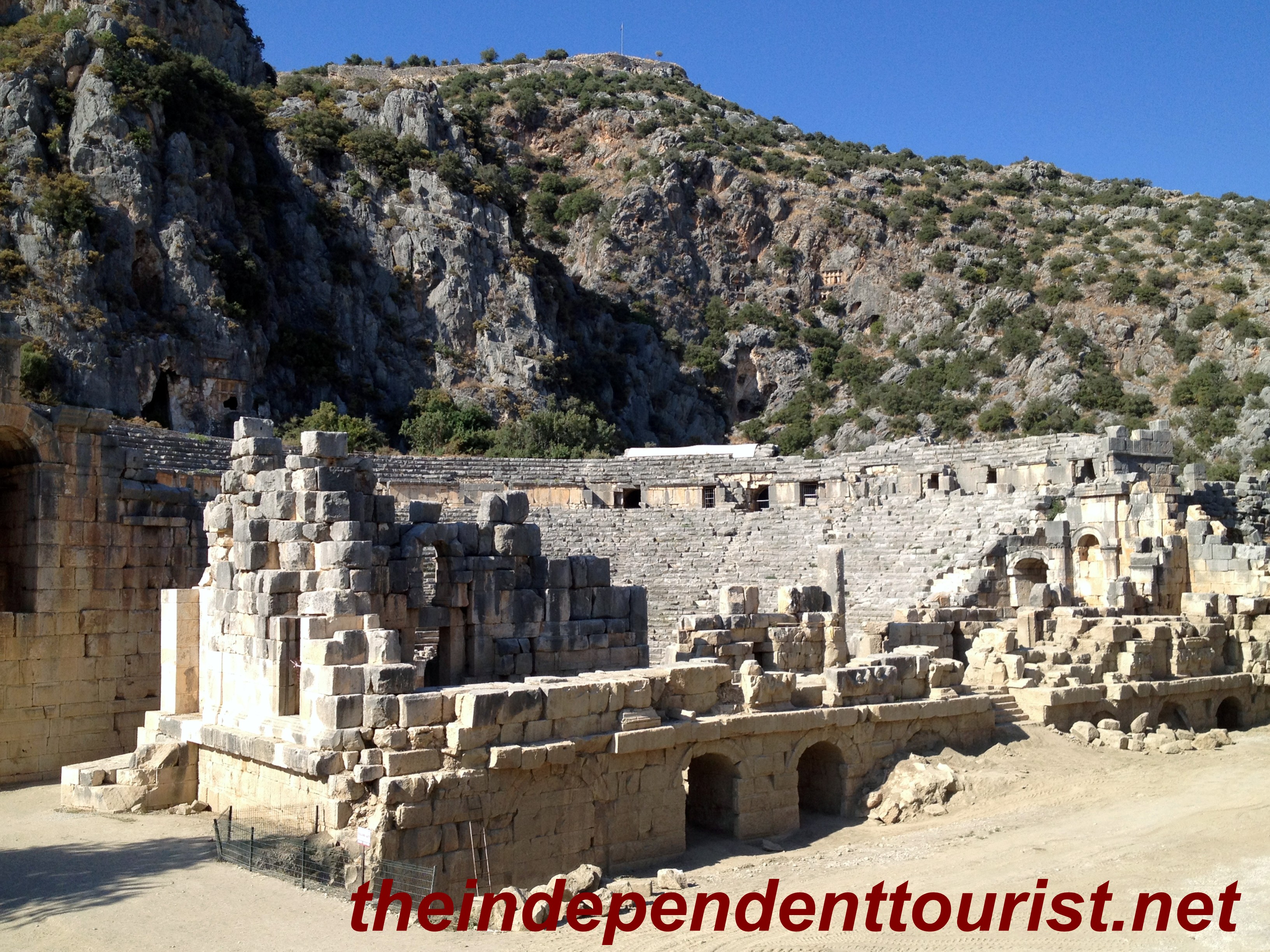
It became part of the Roman empire in 43 BC. Later, in the 4th century under the Byzantine Empire, Myra had its own bishop, St. Nicholas (died 343 AD), who eventually became today’s Santa Claus (“Jolly Old St. Nicholas…”).  St. Nicholas is the patron saint of Russia and lots of Russians love to make the pilgrimage here. The theater at Myra is huge and the nearby house tombs on the hill are a great example of Lycian architecture. The entry fee was 15 TL per person (1.8 Turkish Lira per USD).

Another view of the theater at Myra - there is a fortress at the top of the hill in the distance and tomb in the distance above the theater.

Another view of the theater at Myra – there is a fortress at the top of the hill in the distance and tomb in the distance above the theater.

Kaş

If I had had any idea how much there was to do around Kaş (pronounced “cash”), we would have spent more than one night here.

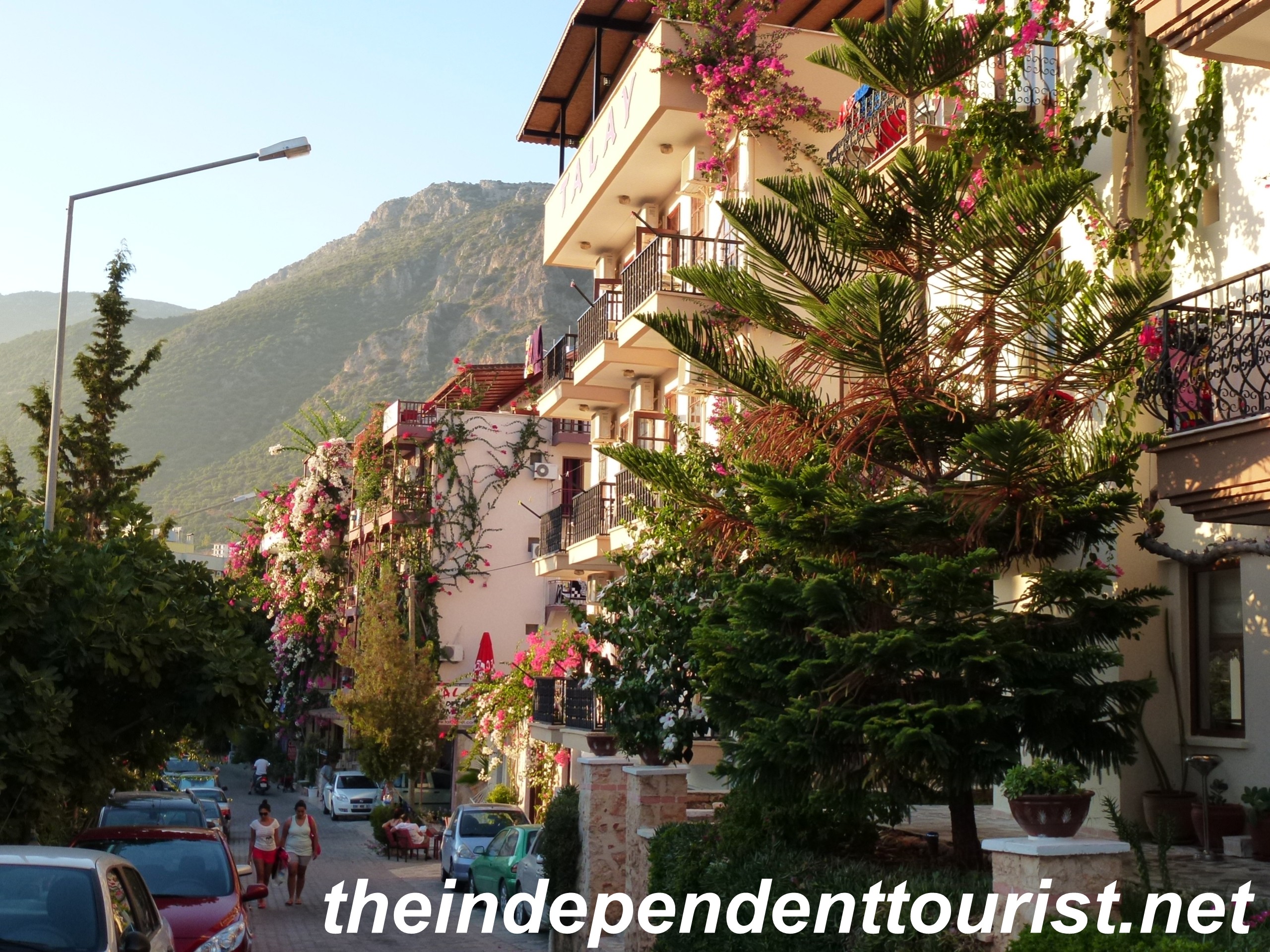
A street scene in Kas. The bougainvillea are everwhere.

A street scene in Kas. The bougainvillea are everwhere.

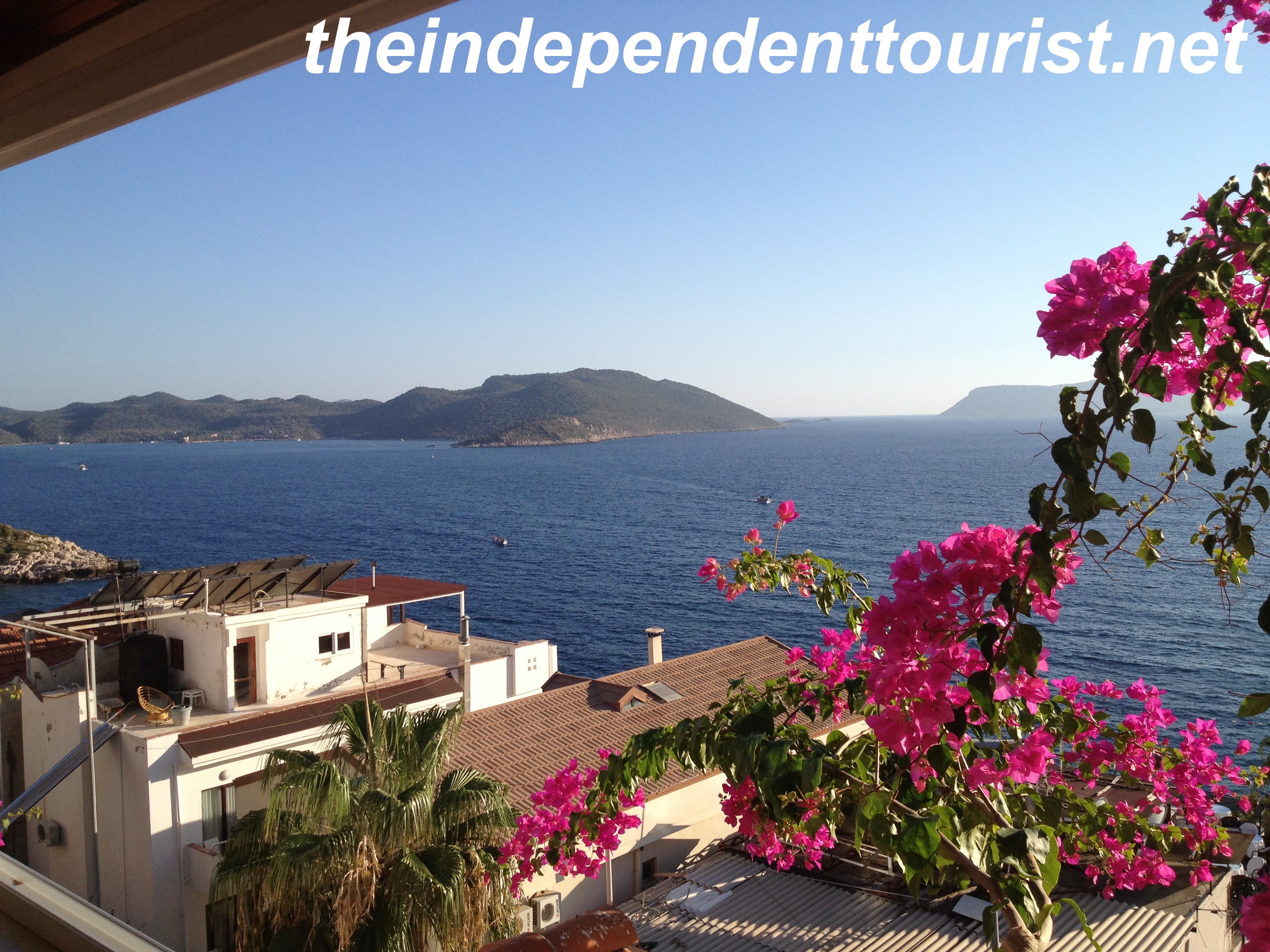
The town is in a beautiful setting, nestled on a steep hillside, with views of the Greek island of Meis (or Kastellorizo) just offshore. We had a good hotel here (Hotel Kayahan), with a fantastic view overlooking the harbor. The only downside to the hotel was that parking is extremely limted–we ended up parking about 200 yards away in a town square.

View from the terrace of the Kayahan Hotel.

View from the terrace of the Kayahan Hotel.

The terrace dining area of the Kayahan Hotel.

The terrace dining area of the Kayahan Hotel.

There are lots of day-trips by boat to be had out of Kaş, with options including secluded beaches, snorkeling, sea kayaking, sunken ruins (such as Kekova Island), a ferry ride to Meis or just lazing around Kaş itself. It would be very easy to spend an entire week in this spot with no chance of getting bored.

The Ghost Town of Rhyolite

The entrance to Rhyolite.

The entrance to Rhyolite.

When I think of “ghost towns” what normally comes to mind for me is a mining camp or old railway stop from the 1800’s with a few wooden structures. By comparison, Rhyolite is a relatively modern ghost town from the early 1900’s. It is located near the small town of Beatty, Nevada on Highway 374, one of the main entrances to Death Valley National Park. The town is now a national historic site. Mining was a major industry in this area in the 1800’s and early 1900’s. In Death Valley National Park, there were an estimated 6,000-10,000 mines.

Rhyolite is about 120 miles northwest of Las Vegas, NV.

Rhyolite is about 120 miles northwest of Las Vegas, NV.

The Las Vegas & Tonopah Train Depot, erected in 1909. One of the three railroads serving Rhyolite.

The Las Vegas & Tonopah Train Depot, erected in 1909. One of the three railroads serving Rhyolite.

I think this caboose is here for the duration...

I think this caboose is here for the duration…

Rhyolite was a boomtown whose economic heyday lasted 4 years, although the town survived for about 15 years. It all began when prospectors Shorty Harris and Ed Cross found gold in the area in 1904. The townsite was established in 1905.

Old Mercantile building, erected in 1906.

Old Mercantile building, erected in 1906.

Funding for the mining decreased due to the San Francisco earthquake in 1906, which destroyed the California Financial District, and then the New York Financial Panic of 1907. Even still, by 1908 the population of Rhyolite was 8,000, a pretty good-sized town for the area and time, but shortly thereafter the mines began to fail.  By 1910, the population was declining, and in 1919 the Post Office finally closed. By 1920, there were just 14 people left in Rhyolite.

The Cook Bank Building ruins - it cost $90,000 to build in 1908. Included a Post Office, bank, and business offices. Had electric lights, steam heating and marble floors.

The Cook Bank Building ruins – it cost $90,000 to build in 1908, a small fortune. The building included a Post Office in the basement, bank on the first floor, and business offices on the second and third floors. It also had electric lights, steam heating and marble floors all of which must have made it a showpiece in its day.

Tom Kelly's 3 room bottle house - built by Tom Kelly in 1906, to raffle it off. Use of sustainable materials would make the house popular today!

Tom Kelly’s three-room bottle house (visible wall is built out of bottles) – built by Tom Kelly in 1906. He wanted to raffle it off – not sure if he was successful. Use of sustainable materials would make the house popular today!

The Rhyolite town jail. Erected in 1907.

The Rhyolite town jail. Erected in 1907. It’s near the Red Light District – hmm…wonder why?

Ruins include a few homes, bank, school, mercantile, jail and train depot. Beatty is about 2 hours from Las Vegas, NV, and Rhyolite is about 5 miles west of Beatty. Keep in mind summers here are HOT. We visited in December and the weather was cool and pleasant.

Sights of Bucharest, Romania

At the end of our wonderful trip to Romania, we spent a couple days exploring Bucharest. We stayed in an apartment on the south side of the city, within walking distance to one of the main squares (Piata Unirii) where the tourist “hop on, hop off” buses depart (25 lei per person for the round trip), and close to several sights. The Bucharest airport is on the north side of the city, about 30 minutes from downtown.

On the open-air hop on, hop off bus tour of Bucharest.

On the open-air hop on, hop off bus tour of Bucharest.

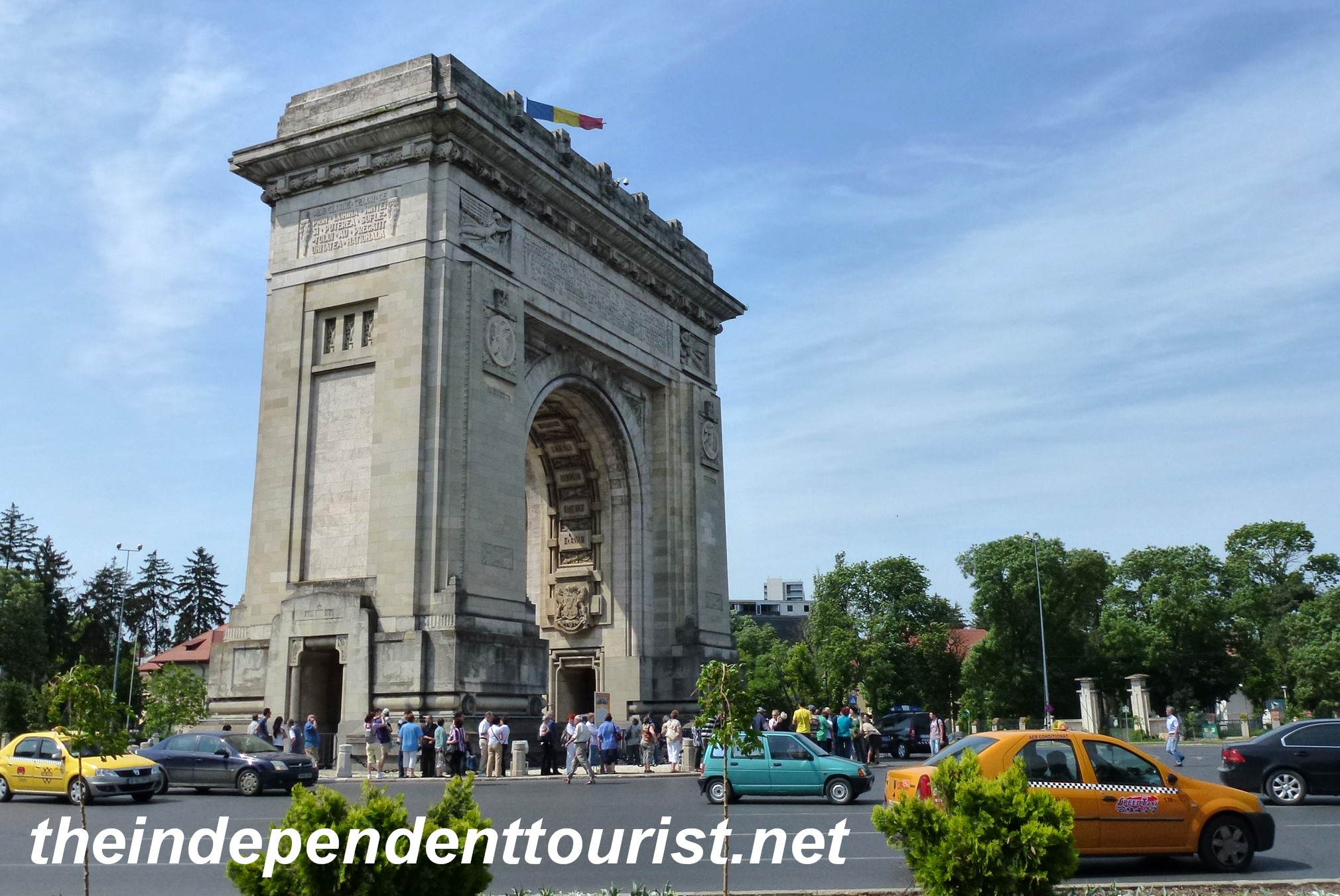
Bucharest's Triumphal Arch. Built in 1935 to commemorate the reunification of Romania in 1918. For a fee,you can climb to the top.

Paris? No, but almost – Bucharest’s Triumphal Arch. Built in 1935 to commemorate the reunification of Romania in 1918. For a fee, you can climb to the top.

The Romanians love the late Michael Jackson, even though when here on tour he said "Hello Budapest, I'm so glad to be here." Oops.

The Romanians love the late Michael Jackson, even though when here on tour he said “Hello Budapest, I’m so glad to be here.” Oops.

Having been to many European capitals I will admit that Bucharest doesn’t make my top 10; however, it still has a number of interesting sights, the two primary ones being the Parliament Palace and the Village Museum. I will cover the Village Museum in a separate post.

Palace of Parliament

The front view of the Palace of Parliament.

The front view of the Palace of Parliament.

“Huge” is an understatement. The Palace of the Parliament is the 2nd largest building in the world after the Pentagon, and was built in 1984 in the latter days of the Communist Regime under the dictator Ceauşescu.  On our tour we saw less than 2% of the building. It is 12 stories high, has 1,100 rooms and four underground levels including a nuclear bunker. About 20,000 workers labored around the clock to build it in 5 years.

One of the grand hallways in the Palace.

One of the hallways in the Palace.

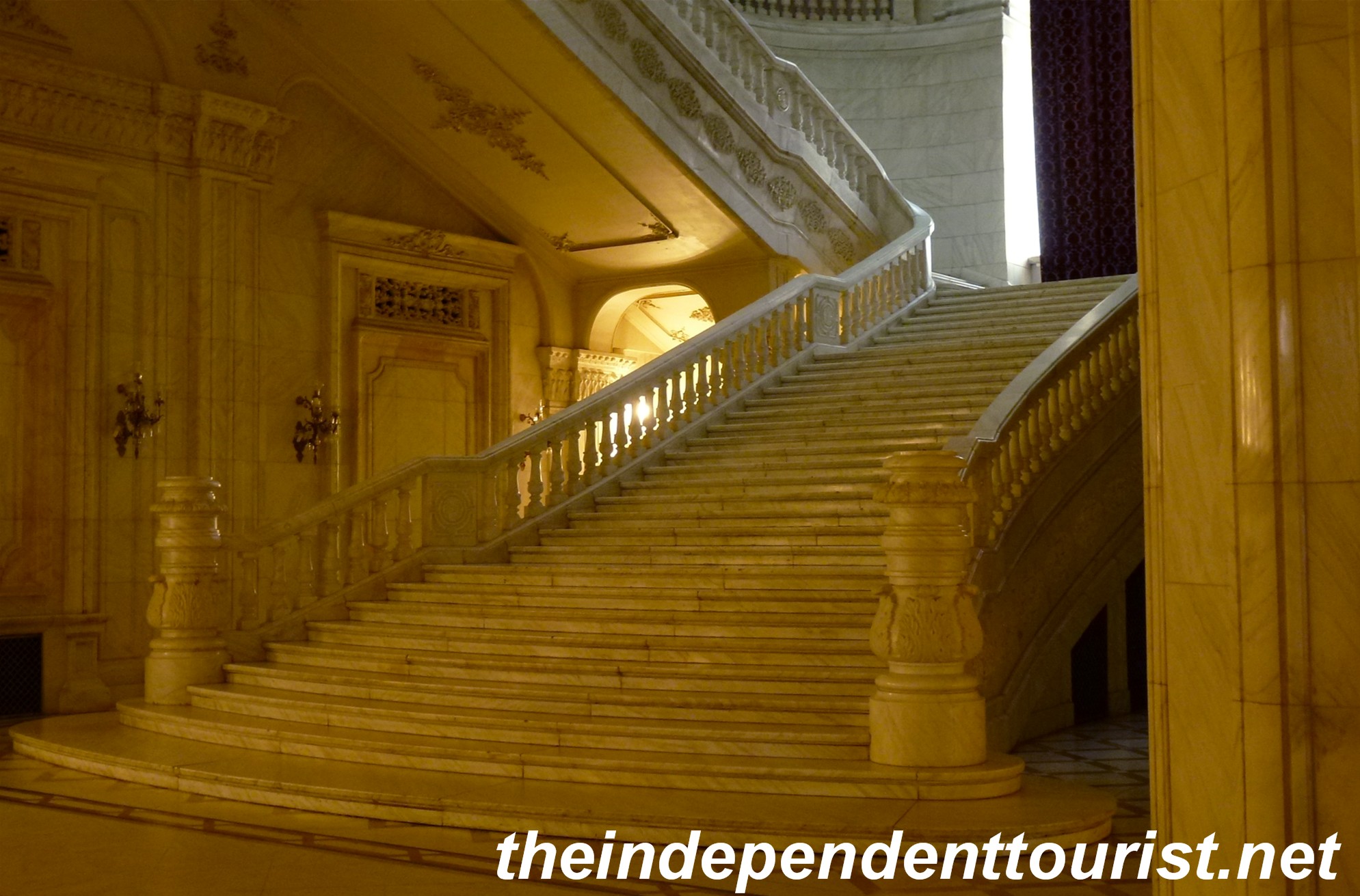
One massive staircase had to be rebuilt 3 times before Ceauşescu was satisfied. The saddest part is that for the cost of this immense building much could have been done to help the very poor average Romanian at the time.

One of the grand staircases in the Palace.

A grand staircase in the Palace.

One of the grand reception rooms in the Palace.

One of the Palace’s reception rooms in which foreign dignitaries were met.

The 2.5 ton chandelier in the Human Rights Hall of the Palace.

The 2.5 ton chandelier in the Human Rights Hall of the Palace.

Tips on visiting the Palace: Tours are conducted regularly and advance reservations are generally required. We lucked in to an English-speaking tour without reservations by arriving about 45 minutes early in the off season (May). Since this is still a functioning government building, they are very strict in regards to picture taking—security cameras are everywhere, and wandering off from the tour group is not allowed. Not wanting to spend time in a Romanian prison, I paid attention to our tour guide’s requirements. The cost was 25 lei per person plus 30 lei for a photography pass (about 3 lei per USD).

Looking east from the famous balcony of the Palace, towards the Piata Constitutiei.

Looking east from the famous balcony of the Palace, towards the Piata Constitutiei.

Bucharest’s Old Quarter

Another interesting area undergoing refurbishment is the city’s old quarter, not far from the Palace. There are many restaurants here, and a few historical sites such as the Princely Old Court Church, and some 15th century ruins.

Princely Old Court Church - the oldest church in Bucharest (1500's).

Princely Old Court Church – the oldest church in Bucharest (1500’s). There are excellent frescoes in this church.

The old quarter of Bucharest.

The old quarter of Bucharest.

Phaselis – Where Antiquity and the Blue Mediterranean Meet

One of my favorite stops in Turkey was the quiet beach park and historic site of Phaselis, which is 58 kilometers west of Antalya. Can you imagine anything better than relaxing on the beach of your choice in one of three small bays, each overlooking the calm, clear, blue water–surrounded by pine trees, with Roman ruins right behind you? I can’t! It is a picture-perfect setting. For a map of this location, click here.

A perfect setting - one of the three bays at Phaselis.

A perfect setting – one of the three bays at Phaselis.

Some of the ruins are right next to the water!

Some of the ruins are right next to the water!

History of Phaselis

Phaselis has a long history, having been founded in the 7th century BC and belonging to many kingdoms over the years. It was a strategic location, with a great harbor. Phaselis was a major trading partner with Syria, Greece, Egypt and other Mediterranean countries. Its main exports were timber, lilium (lily) oil and roses. It was a prosperous community that didn’t worry too much about its overseers.  Alexander the Great came through in 333 BC and the city decided that rather than fight him, they would welcome him outside the city gates with a golden crown–a smart move. Alexander spent time here peacefully before moving on.

The Roman Theater at Phaselis.

The Roman Theater at Phaselis.

In the agora at Phaselis.

In the agora at Phaselis.

The main street in Phaselis, heading down to the largest bay and harbor.

The main street in Phaselis, heading down to the largest bay and harbor.

Phaselis became part of the Roman Empire in 43 BC and enjoyed 300 years of peace and prosperity. After a brief decline, the city experienced a renaissance of sorts in the 8th century and continued on until it was abandoned during the collapse of the Byzantine Empire  in the 13th century. Much of what we see today are the Roman and Byzantine-era ruins.

Practical Information

Phaselis is a park, with picnic tables, nice restrooms (with showers) and a few small snack stands. The entrance fee was 8 TL per person (1.8 Turkish Lira to the USD). The best way to reach Phaselis is by car from Antalya, either as a day trip or, (as we did) as a stop on the way to Kaş. Day-trip boats from Antalya also bring tourists to spend the day snorkeling and swimming.  The area is big enough that even with a few tourist boats it does not feel crowded—in fact we had the middle bay pretty much to ourselves.

The largest bay at Phaselis with a few boats.

The largest bay at Phaselis with a few boats.

Reference: Information sign-posted in park.

Belém—The Launch Point for World Discovery

Just southwest of the heart of Lisbon, Portugal along the Rio Tejo (River Tagus) is the suburb of Belém (or Bethlehem). This spot was the launch point for many voyages of discovery in the 1400 and 1500’s. In 1498, Vasco da Gama sailed from here and was the first to circumnavigate Africa via the Cape of Good Hope, thereby establishing a sea route to India. Reaching India was of course the goal of Columbus in 1492 when he sailed west and landed in the Caribbean. This feat would soon make Portugal the leader in world trade, displacing the Venetians who ruled the merchant routes in the 1400’s. At Belém, the river becomes wide as it empties into the Atlantic Ocean.  Don’t miss visiting Belém on a trip to Lisbon. For information on Lisbon and a map of sights I visited in Portugal, click here.
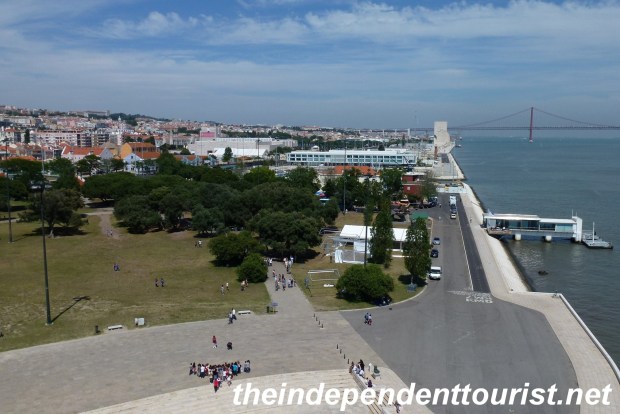
View towards Lisbon and the River Tagus from the Belem Tower.

View towards Lisbon and the River Tagus from the Belem Tower (the Discoveries Monument is in the distance at the river’s edge).

Getting to Belém

It is easy to get here from central Lisbon. Lisbon has a great subway (Metro) system.  Take the Metro to the Cais do Sodre stop and then take a bus right outside the station (about a 15 minute ride) to Belém just along the river front. There is a lot to see in Belem. Since I just had a couple hours, I visited the Belém Tower and the Mosteiro dos Jeronimos.  You can get a combination ticket to theses sights for 10 Euros, there is a kiosk at the monastery.  In addition to the main sights, there are some beautiful gardens along the river front and the town is worth exploring too, with several restaurants nearby.
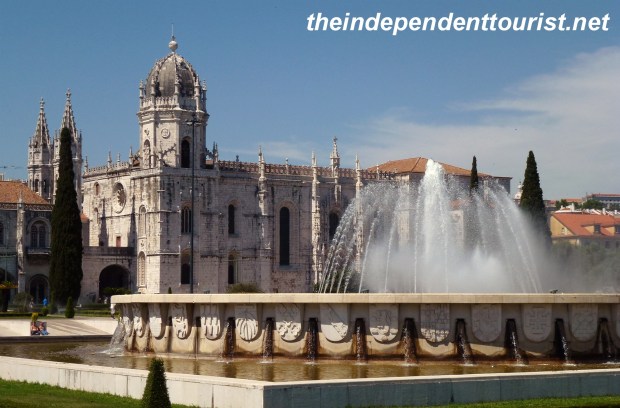
The gardens and fountain in front of the Belem Monastery.

The gardens and fountain in front of the Belem Monastery.

Belém Tower (Torre de Belém)

This tower is a symbol of Lisbon and dates to 1515—it was a defensive structure protecting the harbor of Lisbon. The tower’s decorative stone work is considered a classic of 16th century military architecture. It sits in the Tagus River’s edge, just in the water although when built it was on dry land—the water level has risen over 500 years. You can climb all the way to the top (6 levels, a great view from the roof level) and at each level there are exhibits about the history of the world explorations that began from Lisbon.
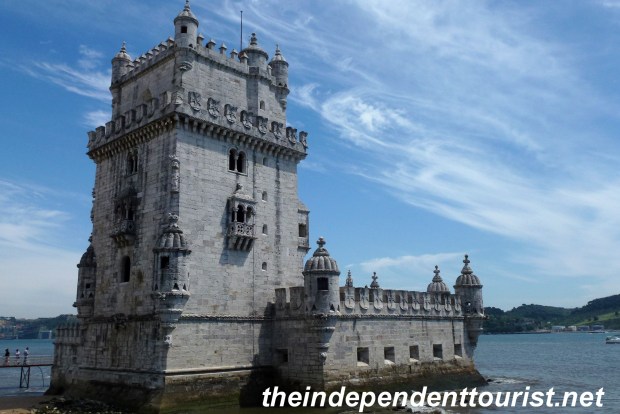
A view of the Belem Tower (built in 1515).

A view of the Belem Tower (built in 1515).

It was here where I learned why Brazil speaks Portuguese and the rest of Latin America speaks Spanish–due to an agreement (the Treaty of Tordesillas, 1494) by King Manuel I (1469-1521) of Portugal and the Crown of Spain. They drew a north-south line 370 leagues west of the Cape Verde Islands (off Africa), which was halfway between the Cape Verde Islands (Portuguese) and Columbus’s initial claims in the Caribbean for Spain. This line happened to run through eastern Brazil, although they didn’t know it at the time.
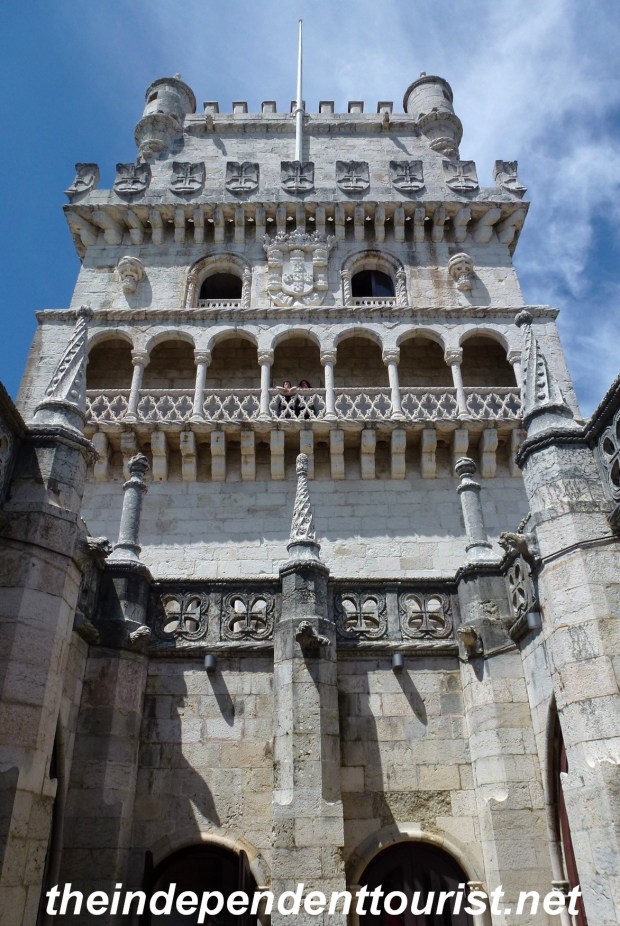
The intricate stonework of the Belem Tower.

The intricate stonework of the Belem Tower.

Belém Monastery (Mosteiro dos Jeronimos)

This is where the explorers and merchants would worship prior to leaving on long voyages and upon their safe return. The monastery was established in 1496 by King Manuel I, and the church was constructed in 1501. This masterpiece is considered one of the great architectural achievements of the 1500’s. From a technical standpoint, it was so well constructed that it survived a devastating earthquake in 1755 that leveled most of Lisbon. The “Manueline style” of decoration and architecture is an acknowledgement of the King’s influence. Vasco de Gama’s tomb is here.
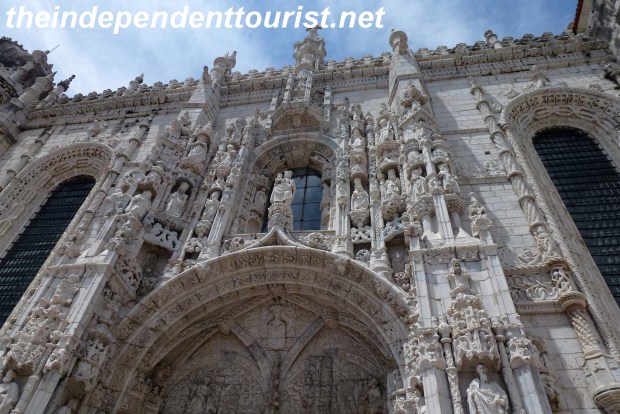
The intricate decorations above the doorway (south portal).
The intricate decorations above the doorway (south portal).

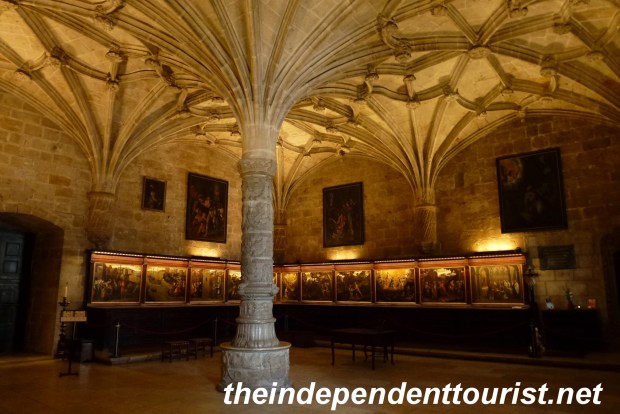
Inside the Sacristy with many paintings.
Inside the Sacristy with many paintings.

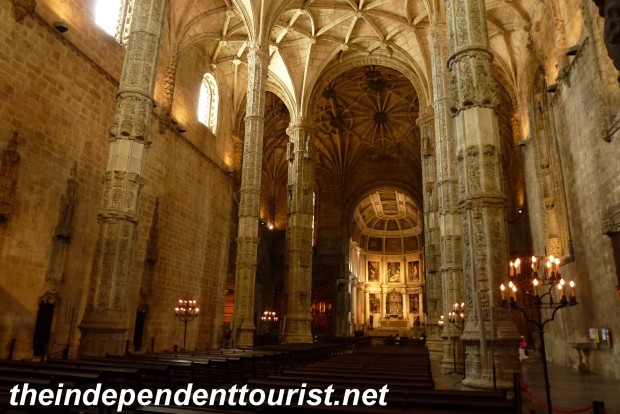
Interior view of the church.
Interior view of the church.

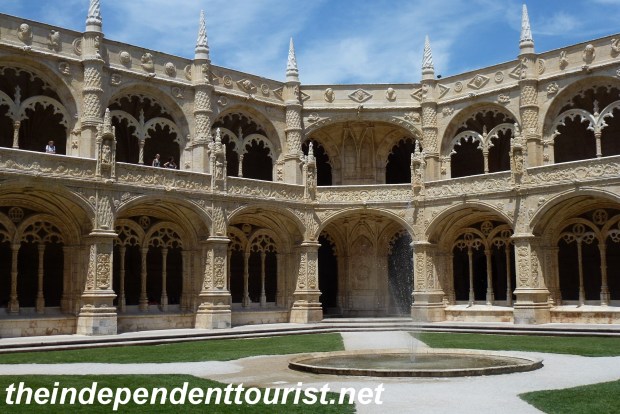
The cloisters of the monastery. The tracery decor is Manueline style.

The cloisters of the monastery. The tracery decor is Manueline style.

Discoveries Monument (Padrāo dos Descobrimentos)

Built in 1960 to commemorate the 500th anniversary of the death of Prince Henry the Navigator, the great uncle of King Manuel I. Just east of the Torre de Belém is the Discoveries Monument, paying homage to the many explorers and discoveries to come from Portugal. Inside is a multimedia exhibit on the history of Lisbon.

The Discoveries Monument. Henry the Navigator leads the way.

The Discoveries Monument. Henry the Navigator leads the way.

There are also several museums in Belém, including the Museum of Coaches (beautiful decorated old royal coaches), and the Maritime Museum; given more time these would be worthwhile to visit.

References:  Great Monasteries of Europe, by Bernhard Schütz, Abbeville Press Publishers, 2004; informational plaques at Belém Tower.
Termessos – A City That Defied Alexander the Great

A view of the theater at Termessos.

A view of the theater at Termessos.

A visit to the ancient city of Termessos is a great half-day trip from Antalya, Turkey.  We visited Termessos in the morning and then took a refreshing dip in the Mediterranean Sea at the Konyaalti Beach Park near Antalya in the afternoon. The ruins are about 35 km inland and sits in a narrow and high mountain valley—the road up to the site is good, although winding and somewhat steep. Anciently, this region was known as Pisidia, and due to the fierceness of the people and its strategic defensive location, Alexander could not conquer Termessos (in 333 BC). The Romans who came later chose an alliance with Termessos rather than risk war in 70 BC.

Part of the gymnasium ruins at Termessos.

Part of the gymnasium ruins at Termessos.

The ruins include a large theater in a dramatic setting, an agora, temples, tombs, a gymnasium, necropolis and remnants of houses.

The Tomb of Alcetas - note the figure on the horse above my shoulder.

The Tomb of Alcetas – note the carved figure on the horse above my shoulder.

A dramatic backdrop for the theater at Termessos, which held 4,000 people.
A dramatic backdrop for the Termessos theater, which held 4,000 people.

Some of the rock-carved tombs at Termessos.

Some of the rock-carved tombs at Termessos.

Practical Information

There are some interpretive signs at the site and also a small map available at the entrance. The ruins are inside the large Termessos National Park, which is known for its abundance of wildlife. At the entrance to the park is a restaurant and small botanical museum.  From the entrance, a 9 km paved road takes you up to the parking area at the base of the ruins. You will see ruins of some buildings and the massive walls on the road up to the site, giving a feel as to how large this city was.

There are toilets at the ruins but no water or snacks, so bring these items with you. It is a bit of a hike from the parking lot up to the main site, which is large, and mostly hidden from view from the base. The trails are fairly steep, so be prepared with good hiking shoes.  I suggest a loop route, going from the parking lot up to the left of the Artemis-Hadrian Temple (as recognized by the large doorway arch) and returning on the trail to the right (or behind the Artemis-Hadrian Temple). This return trail passes a number of interesting tombs in the rock hillside (see picture above).

The Temple of Artemis-Hadrian near the parking area. The trail behind this temple goes up to some tombs.

The Temple of Artemis-Hadrian near the parking area. The trail behind this temple goes up to some tombs.

Due to the climb from sea level, Termessos is definitely cooler than Antalya and was very comfortable in September. The entry fee was 5 TL per person (1.8 Turkish Lira (TL) to 1 USD in 2012).

Konyaalti Beach Park. On your way back to Antalya, stop at this great beach. There was a 4 TL parking fee, but the beach is free. The water and beach were very clean.

Konyaalti Beach - a great way to spend the afternoon after hiking around Termessos.

Konyaalti Beach – a great way to spend the afternoon after hiking around Termessos.

Antalya – The Gateway to the Lycian Way

A view of the old town of Antalya with the blue Mediterranean and mountains in the distance.

From Cappadocia we flew to Antalya (via Istanbul). Antalya is on the southwestern coast of Turkey, and has a beautiful setting, centered on a small scenic harbor with pebbly beaches and mountains nearby. It would be easy to spend a week here, by making Antalya your base for exploring this part of Turkey. We spent two nights at the Atelya Hotel in the heart of the old city (parking is tight in the old town, but the hotel had a smal enclosed parking area). For a map of our locations visited in Turkey please click here.

The beautiful coastline of Antalya. We ate at an excellent restaurant overlooking this beach.

The beautiful coastline of Antalya. We ate at an excellent restaurant overlooking this beach.

Anciently, there were six major cities that made up the Lycian League. The Lycian Way is a pathway that more or less follows the coast from Antalya west to Fethiye, connecting these ancient cities and wandering through the forests and along the coast. We were lazy and made this trip by car.

The interior courtyard of the Atelya Hotel, in the old part of Antalya.

The interior courtyard of the Atelya Hotel, in the old part of Antalya.

Antalya was founded in 159 BC and prospered in the Roman, Byzantine and Ottoman periods. There are remnants from these historical eras scattered around the town including walls, towers, mosques, minarets and gates still standing.

The 13th century Fluted Minaret - a major landmark of Antalya.This minaret was once covered in turquoise tiles.

The 13th century Fluted Minaret – a major landmark of Antalya.This minaret was once covered in turquoise tiles.

Hadrian's Gate - built to honor the visit of the Roman Emperor Hadrian in 130 AD. Located at the eastern edge of the old city.

Hadrian’s Gate – built to honor the visit of the Roman Emperor Hadrian in 130 AD. Located at the eastern edge of the old city.

The Hidirlik Tower in Karaalioglu Park, a Roman lighthouse.

The Hidirlik Tower in Karaalioglu Park, a Roman lighthouse.

Take time to explore Karaalioglu Park, set on a cliff overlooking the Mediterranean just to the east of the old town.  This side of town is quieter than the western side and has some good restaurants and interesting streets to wander. Antalya is a pretty big city (with a very nice modern airport), but once you’re in the historic area it feels more like a quaint town.

Near Karaalioglu Park. In September, it felt like Spring in Antalya.

Near Karaalioglu Park. In September, it felt like Spring in Antalya.

Antalya's old town shopping area.

Antalya’s old town shopping area.

A house in Antalya's old town - in need of some siding repair!

A house in Antalya’s old town – in need of some siding repair!

Nearby are beaches, waterfalls, and many historical sights. Inland (about 35 km) up in the mountains is the massive ancient Pisidian city of Termessos (which we’ll cover in another post). From Antalya you can work your way westward along the coast (the Lycian Way mentioned above)—with numerous ancient ruins and stunning natural scenery, and of course eastward to the grand restored Roman theater of Aspendos and the city of Side. I would seriously consider returning to Antalya and exploring more of this beautiful part of Turkey.

Göreme Open Air Museum in Cappadocia

We spent two very full days in Cappadocia, Turkey and we could have easily spent a week exploring this area. We had our own car, so we could choose the sites we wanted to visit. If you’re planning to take a tour of the area, you can arrange one locally and we noticed there are at least four main tour routes–going northwest, northeast, southwest and southeast from Göreme to cover the varied places of interest in the region. For a map of the sites we visited in Cappadocia, click here. For a map of sites visited in Turkey click here.

The ‘castle’ at Uchisar, near Goreme. This was a fortress and it sits at the top of a hill overlooking the area–rooms and passageways are carved out of the stone.

We stayed in the Canyon View Hotel right in Göreme, which was converted from an old church and built right into the hillside. It’s a decent hotel, and a short walk to the main shopping and dining areas. Göreme itself is a very pleasant and scenic town nestled among the “fair chimney” rock formations of Cappadocia, and a perfect home base during your visit.

Exterior view of our hotel in Goreme. We ate breakfast on the terrace in the upper right-great view!

Our room at the Canyon View Hotel in Goreme.

We visited the Open Air Museum in Göreme on our first day, after our exhilarating balloon ride. The Open Air Museum, which is a collection of rock-cut churches along a path in the Göreme Valley, is just a kilometer or so outside the town—we walked to it from our hotel. The Göreme Valley holds the greatest concentration of Byzantine rock-cut churches in Cappadocia. Originally this area was a settlement for 20 Byzantine monks, then became a pilgramage site in the 17th century.

A view of the Gorme Open Air Museum–a path winds among the rock formations and rock-cut churches and other rooms.

It seemed that the churches we visited mostly date from the 12th century.  This area was a center for religious thought and life from the 3rd and 4thcentury onwards.  One can get a feel for the life of the monks with all the various types of rooms—storage areas, eating areas, kitchens and of course the chapels.

The monks’ eating area–they would sit on the outer edge and use the table in the middle. Not a lot of leg room!

The Karanlik (Dark) Church–behind the wall is a beautiful chapel with well-preserved frescoes. Note how a part of the chapel is now exposed since the rock exterior has crumbled and eroded away. (Dates from end of 12th century).

Many of the chapels contain frescoes of scenes from the Bible, especially the life of Christ and acts of various saints. In some cases the frescoes are extremely well-preserved (with little daylight to damage them). Don’t miss the “Dark Church” (so-called since it has only one small window), the vivid frescoes look like they were painted yesterday. This church requires a separate entrance fee.  Photos are allowed in some churches, but not in the churches with the best frescoes. Don’t miss the Buckle Church (Tokali Kilise) outside the main musuem–just across the road.  It is large and one of the finest churches in Goreme. Your ticket for the Open Air Museum includes this church. Unfortunately, I was not allowed to take pictures inside.

The frescoes of the Carikli (Sandals) Chapel. (Dates from the end of the 12th century).

Interior of the St. Barbara Chapel. The chapels vary greatly in the detail of the artwork and frescoes.

The Open Air Museum is a UNESCO World Heritage Site, and the entrance fee is 15 Turkish Lira (TL) per person and another 8 TL for the Dark Church (the exchange rate is about 1.8 TL per USD).  There are well-marked walking paths to the various chapels in the valley with explanatory signs posted at each one. The Museum is open from 8 am to 7 pm April – October, and 8 am to 5 pm November – March. Allow at least two hours to visit the Open Air Museum.

At the entrance to a pottery shop and store near the Goreme Open Air Museum.

References: Area brochures, posted informational signs, Lonely Planet’s Guide to Turkey 2010, DK Eyewitness Travel Guide to Turkey 2008.