europe

Ancient Pergamum – One of Turkey’s Most Dramatic Sites (and the seat of Satan)

How I love going to a new location and seeing another great ancient ruin! As we drove into the modern city of Bergama, we looked up high on a hill behind the city and the first thing we saw is ancient Pergamum’s theater, dramatically situated on a very steep slope. For a map of sites visited in Turkey click here.
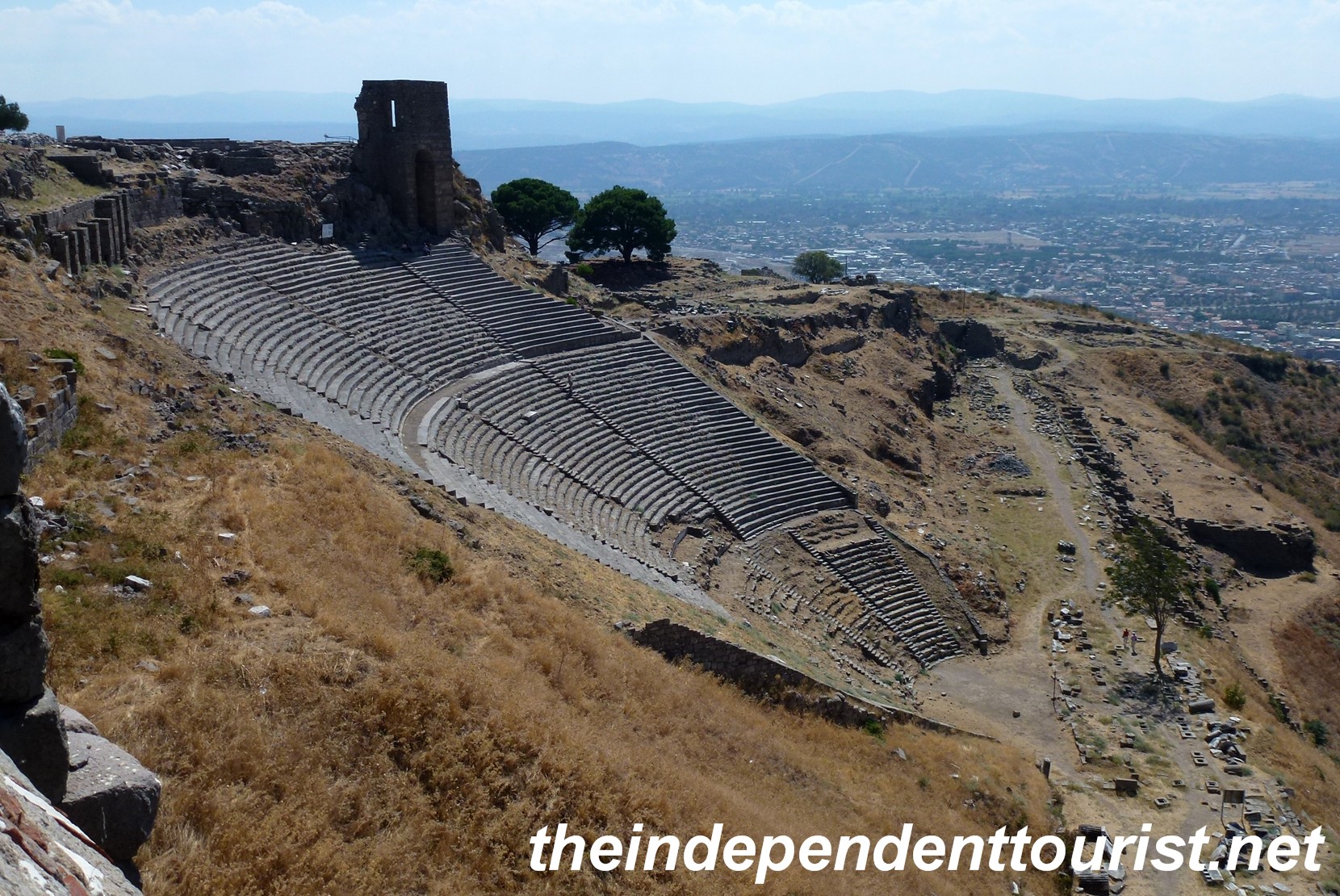
The theater at Pergamum. It could seat 10,000 people.

The theater at Pergamum. It could seat 10,000 people.

Exploring the theater at Pergamum.

Exploring the theater at Pergamum.

As usual, the Greeks picked an excellent natural setting for a theater, with a view that extends for miles. The acropolis of Pergamum covers a steep hilltop, and a lot of Greek and Roman civil engineering work went into creating a level building area.

These archways are part of the hillside infrastructure to support the Temple of Trajan and other buildings at Pergamum.

These archways are part of the hillside infrastructure to support the Temple of Trajan and other buildings at Pergamum.

Ruins of the Temple of Trajan, started during the reign of the Roman Emperor Trajan, 98 - 117 AD.

Ruins of the Temple of Trajan, started during the reign of the Roman Emperor Trajan, 98 – 117 AD.

Another view of the Temple of Trajan.

Another view of the Temple of Trajan.

Pergamum was settled by the Greeks in the 8th century BC, and ruled by one of Alexander the Great’s generals around 320 BC. It became part of the Roman Empire in 133 BC. Pergamum was a great center of learning, and had a huge library of 200,000 scrolls that were (probably unfortunately) given to Cleopatra by Marc Antony as a wedding gift in 41 BC.
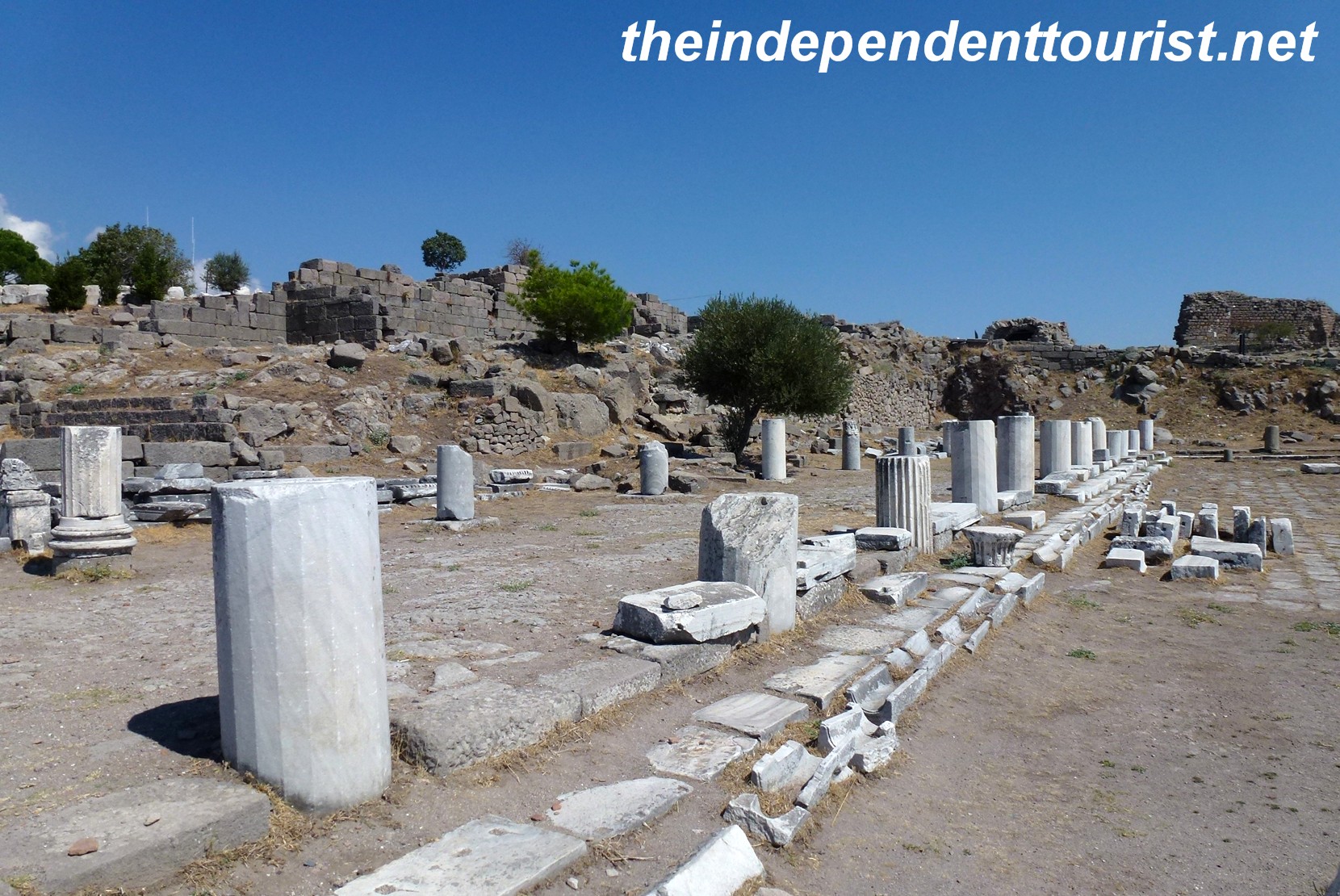
Although it doesn't look like much now, these are the ruins of the magnificent library of Pergamum that once held 200,000 scrolls -rivaling Alexandria as one of the great ancient libraries.

Although it doesn’t look like much now, these are the ruins of the magnificent library of Pergamum that once held 200,000 scrolls – rivaling Alexandria as one of the great ancient libraries.

Pergamum (Pergamos) is mentioned in The New Testament, in Revelation 1:11 as one of the seven churches in Asia and as the “seat of Satan” in Revelation 2:13.  Let’s just say he picked one heck of a spot. The reason for the label is probably due to the horrific martyr of Antipas, the bishop of Pergamum in 92 AD (he was roasted to death inside a bronze bull or ox at the Altar of Zeus).

The Altar of Zeus was located where the big tree is. The amazing friezes and other parts of the Altar structure are now in the Pergamon Museum in Berlin, Germany.
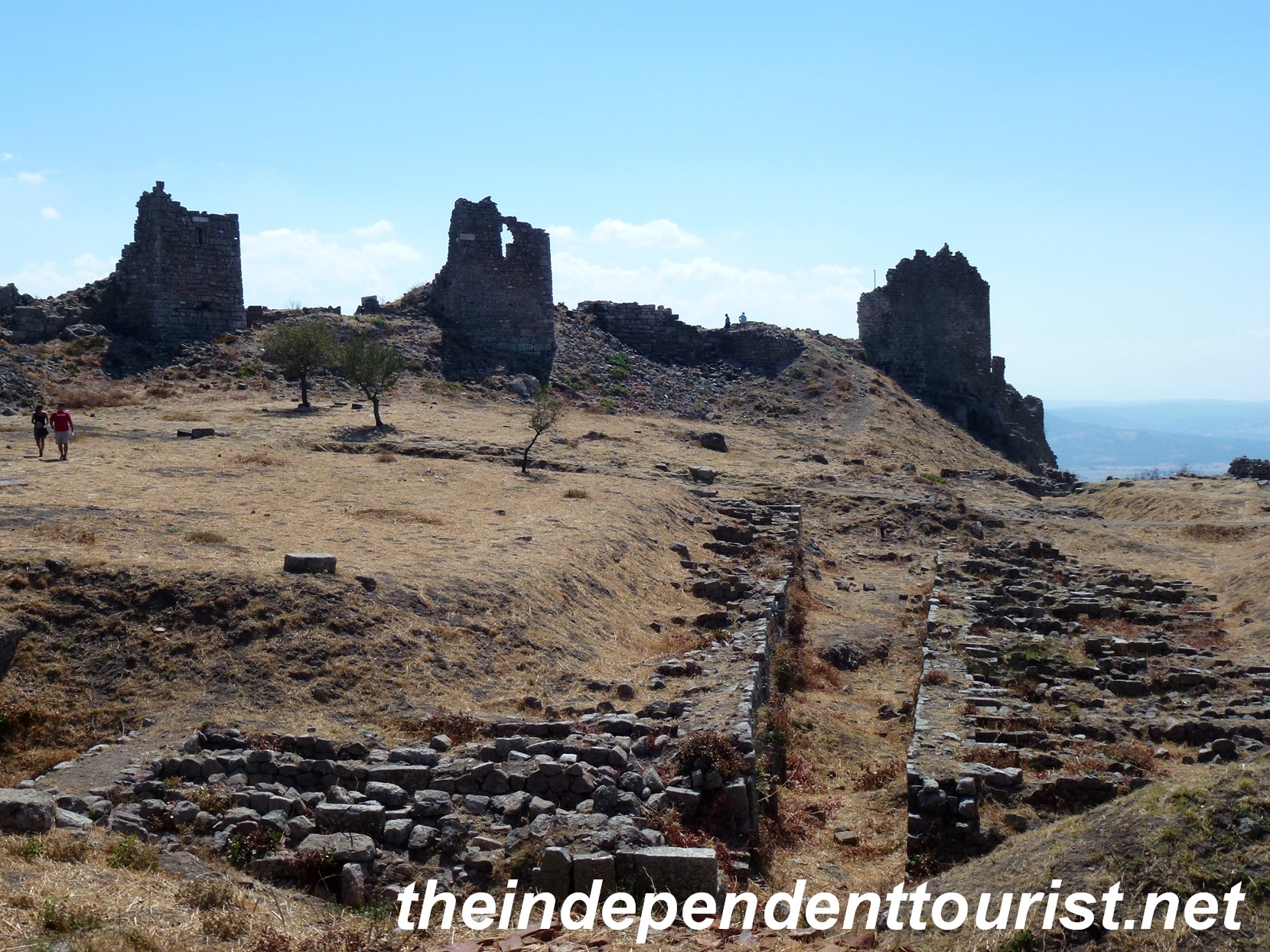
The Altar of Zeus was located where the big tree is. The amazing friezes and other parts of the Altar structure are now in the Pergamon Museum in Berlin, Germany.

The ancient city walls of Pergamum, dating at least to 159 BC.

The ancient city walls of Pergamum, dating at least to 159 BC.

Another of the seven cities mentioned in Revelation, Smyrna, is located in modern Izmir. We did not have time to explore Smyrna opting for Pergamum instead. Izmir is more of a “working” city and does not receive a lot of tourists. We found a good restaurant along the harbor front and enjoyed the feeling of being in a “real” Turkish city.

A view along the seafront in Izmir.

A view along the seafront in Izmir.

Practicalities: Pergamum is a pretty easy day trip by car from Izmir, about 2 hours (100 km) north.  Since Pergamum is at the top of a very steep hill, there is a tram that will take you close to the top, or you can drive through the town and up the hill on a narrow road to find a small parking lot near the top. The entry fee is 20 TL per person and parking was 3.5 TL (about 2 TL to the USD as of July 2013).

Red Basilica

In addition to Pergamum, in the town of Bergama is the Red Basilica (Temple of the Egyptian Gods), which dates to the 2nd century AD and was once covered in marble – it must have been quite a sight then and it still is now.  It is huge, and pictures cannot do its immense size justice.

A view of the Red Basilica.

A view of the Red Basilica.

The Red Basilica ruins, still standing from the 2nd century AD.

The Red Basilica ruins, still standing from the 2nd century AD.

Later on, the Byzantines built a church inside the basilica. This was a place where the Romans worshiped the Egyptian Gods. The entry fee was 5 TL.  It’s worth a quick stop here. In addition to these sites, the Asclepieum (or Asklepion, dedicated to the serpent-god Asklepios) an ancient medical center ruin is about 8 km from the acropolis. Time didn’t allow us to stop here either.

References: Signage at Pergamum, DK Eyewitness Travel Turkey and Lonely Planet Turkey.

Bran Castle and Raşnov Fortress – The Valley of the Roses

These two great medieval sights are about 16 km southwest of Braşov, and only 10 km apart, so they make a good day trip from Braşov. Raşnov gets its name from the Saxon word Rosenau, which means the Valley of the Roses. For a map of these locations, click here.

View of the town of Rasnov and surrounding “Valley of the Roses” from Rasnov Fortress.

Since we were traveling by car, our Pension recommended a great scenic drive to Raşnov, going by the ski resort area of Poiana Brasov. Driving through the Transylvanian mountains felt a bit like our home state of Colorado. This is a very pretty area of Romania.

Raşnov Fortress

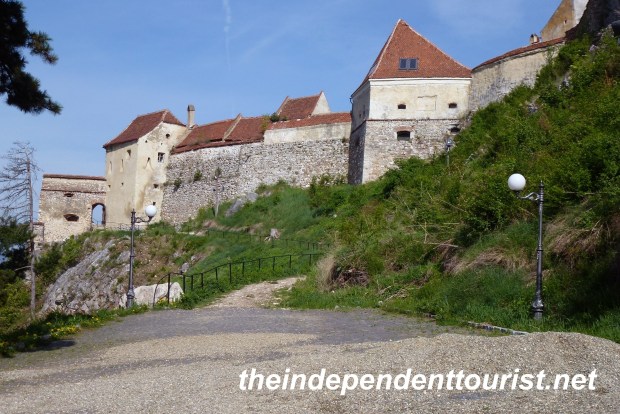
Raşnov Fortress sits at the top of a hill, overlooking the small town of Raşnov, and like Braşov, has a “Hollywood” sign in front of it on the hill.  Why the Romanians like to put these signs up is beyond me, but luckily Braşov and Raşnov are the only places that have these signs, to my knowledge.

View of Rasnov Fortress from the town of Rasnov.

Coming from the north, the fortress can be seen for miles. Since we were arriving through the heavily forested mountain passes from the south, we saw the parking lot before the fortress. We were the first visitors to arrive at the car park on a clear, sunny day in May. From the car park you can either walk up or take a little tractor-train up to the fortress for 3 lei per person (about 3.3 lei to the USD at the time of writing this post)We took the train up and walked down.

Another view of the little village inside the Fortress.

We arrived pretty early (around 9:30 am); the exhibits and shops weren’t open yet in the fortress—which gave the place a very peaceful feel. We enjoyed the views and wandering around the tiny village.

The village in Rasnov Fortress.

We had the site to ourselves. As we were leaving, a few other people were making their way up the hill. The fortress is believed to have been built in the 1200’s and functioned in a military capacity until the 1700’s. It withstood a Turkish invasion in 1335. Today it preserves the folk art of Romania through exhibits and shops; in medieval times the village within the fortress was known for glass making and weaving.There is an entry fee of 10 lei per person.

Walking up to the Fortress entrance.

In the town of Raşnov we wanted to visit the old St. Nicholas Orthodox Church (just to the west of the town center). It’s the oldest Romanian Orthodox Church in southeastern Transylvania, dating to the 1200’s. It contains paintings from the 16th century. Unfortunately, it was closed on Monday, the day of our visit.

Bran Castle

Exterior view of Bran Castle from the west.

Just 10 km west of Raşnov is the famous Bran Castle, long associated with “Dracula” or Vlad Ţepeş. The castle has very little historical connection with Vlad Ţepeş. That said, there is an extensive exhibit on Vlad Ţepeş and the Dracula legend in two of the castle’s rooms.

Hiking up the stairway to the castle entrance.

Information on Vlad Tepes (the inspiration for Dracula) at Bran Castle.

The castle may have been inspiration for the setting of Bram Stoker’s Dracula. Bran castle dates from the late 1300’s, and was built to help fortify Braşov from the Ottoman raids. In 1459 Vlad Ţepeş passed through the area and attacked Braşov, which is the only connection Bran Castle has to him. In 1920 the people of Brasov donated the castle to the royal family (Queen Mary and King Ferdinand) of Romania. This act saved the castle from falling into disrepair, and today the castle is in very good condition. The castle is still owned by the royal family’s descendants.

The Large Drawing Room inside the castle.

A secret passage stairway in the castle.

Bran is a very cool castle, and one of the finest in Europe. From the pictures we had seen, we thought the castle would be isolated in a mountain valley. We were a bit surprised to find that it is right at the edge of the small town of Bran, on a small hill. Bran Castle was the most touristy of the sites we visited in Romania—with lots of little shops at the entrance—and you can get your Dracula T-Shirt here! Even so, there were only a couple of small tour groups here in early May. We parked just outside the castle grounds for 10 lei for 4 hours, and the castle entrance fee was 25 lei per person.
A view of the Round Tower (oldest in the castle),courtyard and well below.

We also ate an early dinner in Bran, right across from the entrance to the castle, and had a very good, large meal for 3 people for $27! I would have thought prices would have been higher in this tourist spot. We found the restaurant prices throughout Romania to be quite cheap compared to Western Europe.

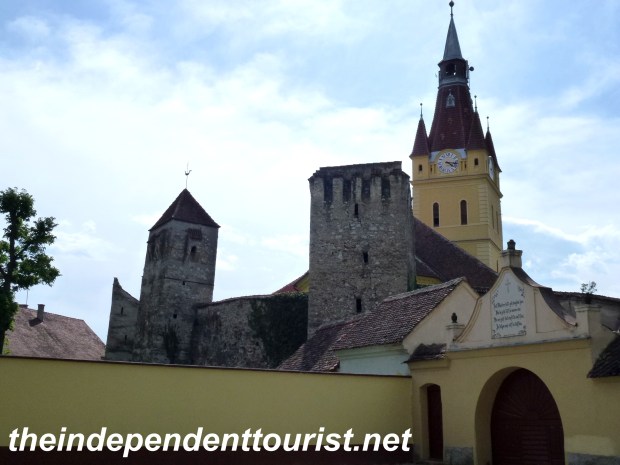
On our way back to Braşov, we stopped briefly at the town of Cristian, which is home to one of the many fortified churches in Transylvania. It wasn’t open, but it was fun to see our first of several fortified churches in this non-touristy town.

Cristian Fortified Church, on the road to Rasnov from Brasov.

Reference: Tourist Guide-Bran Castle by Compania de Administrare a Domeniului Bran, Nicoleta Petcu, 2010.

Peleş Castle – Livin’ the Dream

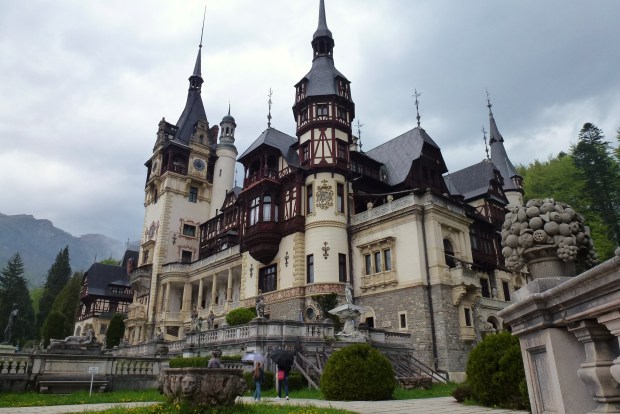
View of Peles Castle from the gardens.

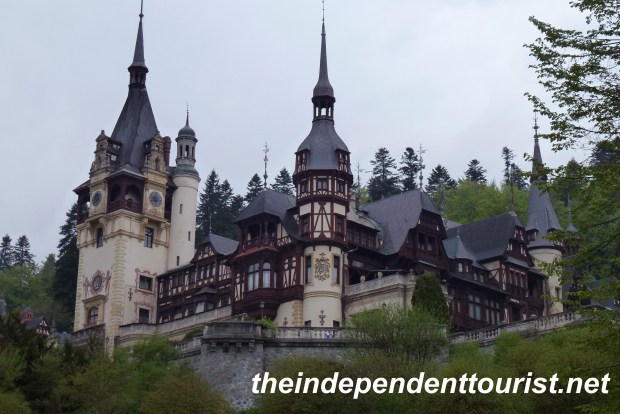
One of the highlights of Romania is a visit to Peleş Castle, located in Sinaia, about 110 km north of Bucharest or 50 km south of Braşov. We visited this fairytale palace on a day trip from Braşov. Although this castle is not old (it was started in 1875 and finished in 1914), it is a testament to what a King can build when money is apparently no object. It was the first European castle to have electricity, central heating—and even central vacuuming—very advanced for its time. It cost about $80 million at the time, and would be almost impossible to replicate today. The craftsmanship is really beyond compare. The main rooms are exquisitely decorated with materials from all over Europe and each has a unique feel – owing to the origin of the decorations as well as the building materials—Italian, German, Turkish, etc. Of special note is the incredible woodwork, and decorated leatherwork on the walls. There are excellent collections of medieval arms too.  A map of sites visited in Romania can be found here.

The German decor and woodwork in the dining room.

Turkish decor and furnishings in a sitting room.

The exquisite wooden circular staircase above the main reception room.

The stunning main reception room.

We owe this marvel to King Carol I and his wife, Elisbeta. It was intended to be their summer residence, and given its location at the threshold to the Transylvanian mountains, I can imagine how the setting and altitude made it a nice escape from the heat of Bucharest on the plains of Wallachia.

Some practicalities: The castle is to the west of the main road (E60) from Ploiesti to Brasov, and I didn’t see any signs to the castle until after we took the northernmost exit off the highway into Sinaia. Parking cost 10 lei (the current exchange rate is about 3.3 lei to 1 USD). Tickets to the castle can be bought in the courtyard of the castle.  It is possible to just view the exterior and wander the grounds by paying the parking fee only, but this would be a serious mistake. Note that it is a steep walk up hill from the parking areas to the castle itself.

View of Peles Castle from the walk leading up to the entrance.

There are 3 prices for tickets (30, 50 and 70 Romanian lei each), and a separate pass is required to take photographs (32 lei). The most expensive ticket includes getting to see the private apartments, a theater where performances are still held, and other areas off limits to the other tours. It also includes nearby Pelişor Palace, which, since we were on the last tour of the day, closed before we could get to it. Allow at least 2-3 hours for your visit. Since Romania is quite cheap by western European standards, the entry fees felt expensive, but in reality are well worth it. Guided tour is the only way to visit the castle interior and tours are offered in English as well as other languages.

One of the private apartments (fine leatherwork on the walls).

An interesting side note—this castle was used as a prop in the 2009 movie “The Brothers Bloom” starring Adrian Brody and Mark Ruffalo as con artist brothers. In the movie, it was the home of a young eccentric rich woman (played by Rachel Weisz) in New Jersey of all places, and at one point in the movie the castle is blown up! I was happy to see that through the magic of Hollywood, the castle is still there. This movie was a critical hit, but not at the box office.  If you enjoy offbeat humor, watch this movie.

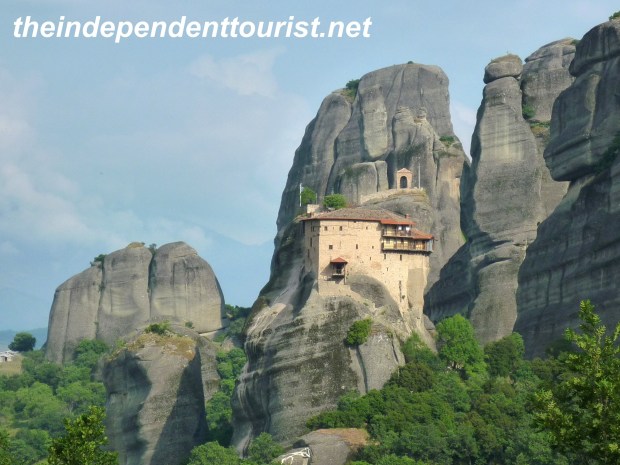
Monastery of St. Nicholas, Meteora, Greece.

Meteora – Nearly out of this World

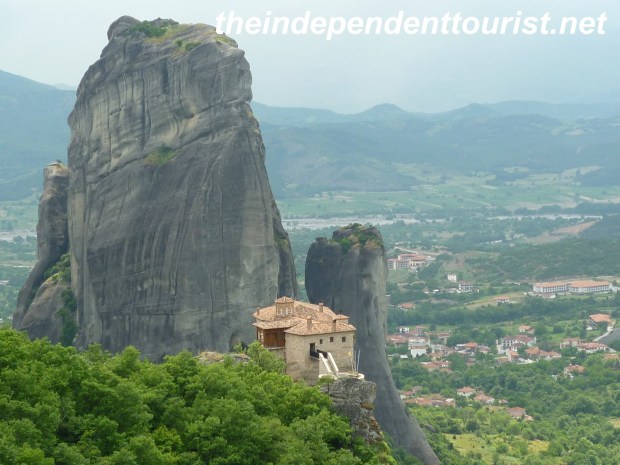
Roussanou Monastery, Meteora, Greece.

Monastery of Roussanou (aka Ayia Barabara–a Nunnery) in Meteora.

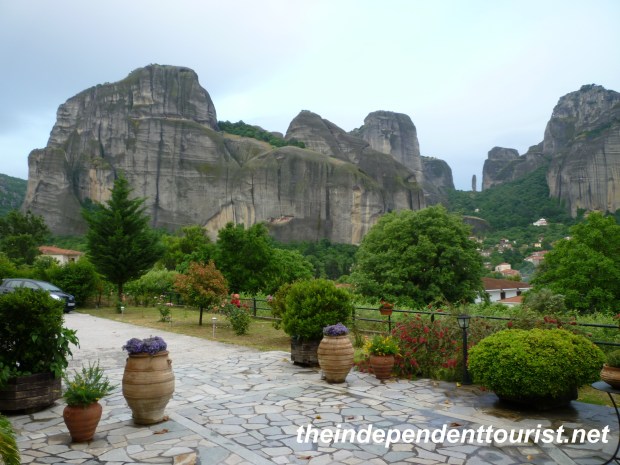
One of the great sights in the world, let alone Greece, is Meteora. The combination of stunning natural scenery—huge sandstone rock pinnacles–with medieval 14th century monasteries sitting on top of them is a sight I will not forget. About 5 hours by car northwest of Athens, Meteora (which is close to the fairly large town of Kalambaka) is well worth the drive, which we did by way of Delphi (about 3.5 hours from Delphi to Meteora). The word Meteora comes from a Greek word which means “to hang in midair” and after seeing this area, it’s easy to see how the word aptly describes the monasteries built on the tops and down the sides of the rocks.

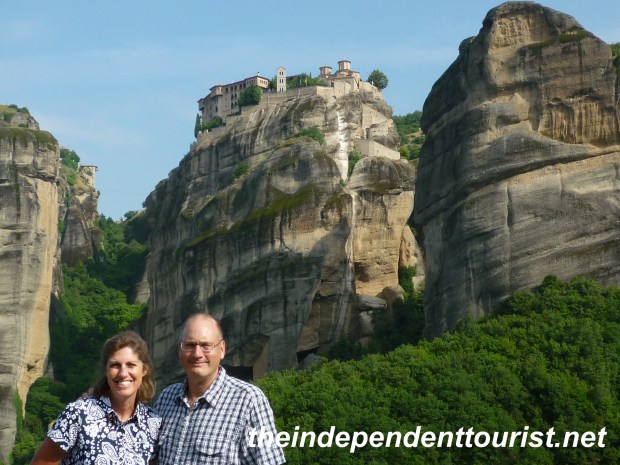
Holy Monastery of Varlaam, Meteora, Greece.

Holy Monastery of Varlaam (top-center).

Although the drive from Delphi to Meteora is initially through steep valleys and mountain passes, the mountains give way to a wide fertile valley (the Thessalian plain), which made me wonder what the setting would really be like. As we got close to Kalambaka, the rock pinnacles suddenly appeared in front of us as the gateway to Meteora and the mountains in the area.

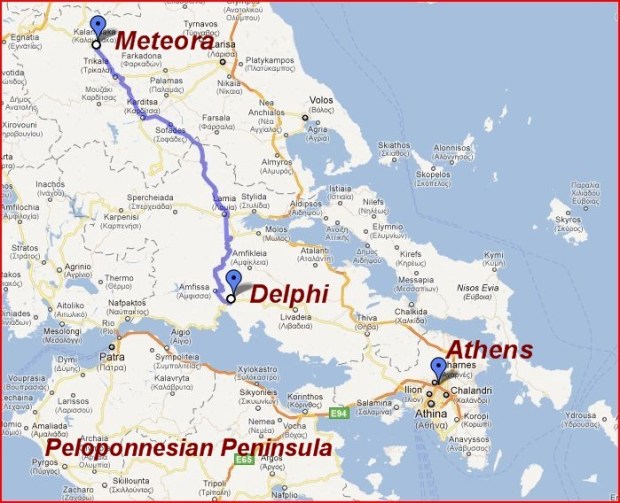
Meteora Map, Greece.

Meteora is about 5 hours northwest of Athens and about 3 hours north of Delphi.

We visited in early June 2011 and the green vegetation of the valley floor and hills is a picturesque contrast with the dark sandstone rock pinnacles. The monasteries of Meteora blend with the surroundings and give the setting a surreal feeling.

Varlaam Monastery, Meteora, Greece.

Holy Monastery of Varlaam (looks like it could slide right off the rock!).

Monastery of St. Nicholas, Meteora, Greece.

Holy Monastery of St. Nicholas Anapafsas, the smallest monastery at Meteora,chapel built in 1388, 16th century frescoes

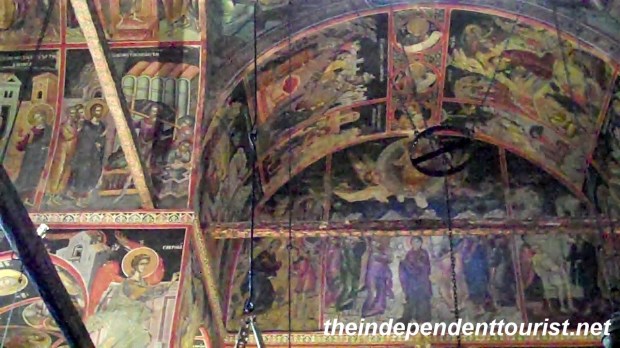
The rock pinnacles served as a retreat for religious orders during the Byzantine–Turkish wars of the 14thcentury. Within 200 years, 13 monasteries were established. Ruins of monasteries no longer standing can still be seen on some rock cliffs. The first monastery, Great Meteoron, was founded by St. Athanasios in the mid 1300’s; he also gave the name to the area, Meteora. Many of the monasteries have highly decorated chapels with frescoes of various biblical scenes. The taking of pictures is not officially allowed in the chapels, but I did take some non-flash video inside several of the chapels.

Great Meteron Monastery Interior, Meteora, Greece.

Frescoes in Great Meteron Monastery chapel.

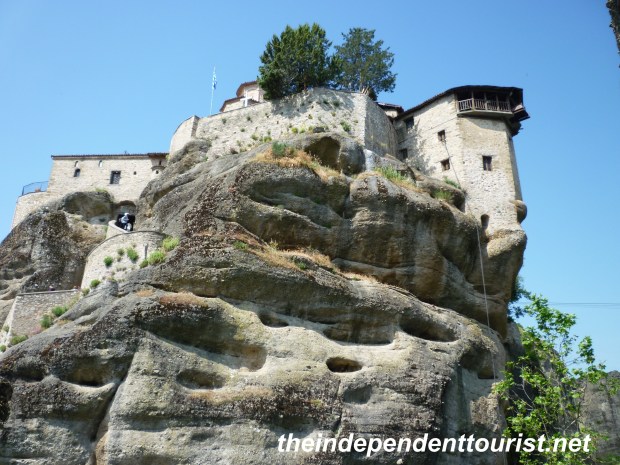
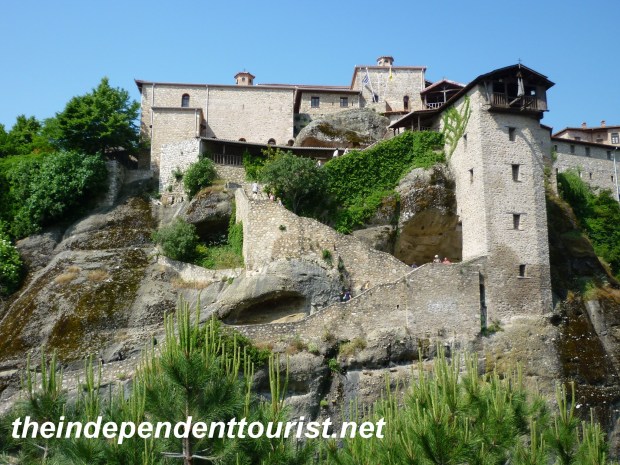
Great Meteron Monastery, Meteora, Greece.

View of the stairway and windlass tower of Great Meteron.

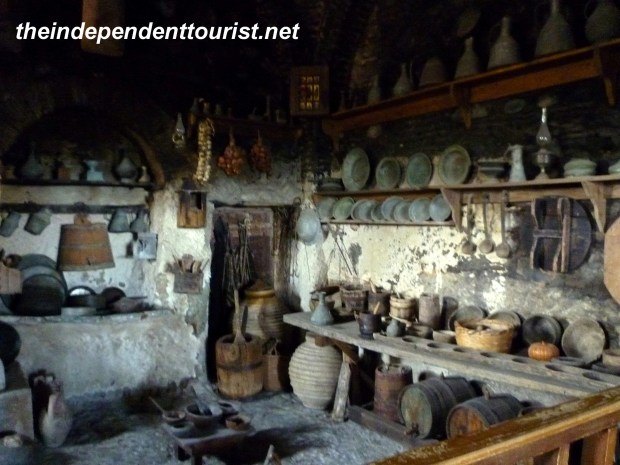
Kitchen, Great Meteron, Meteora, Greece.

The kitchen at Great Meteron (dated around 1557).

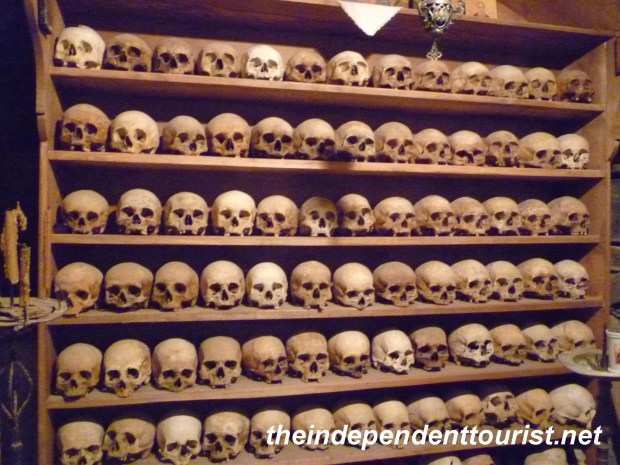
Great Meteron Ossuary, Meteora, Greece.

The Ossuary at Great Meteron.

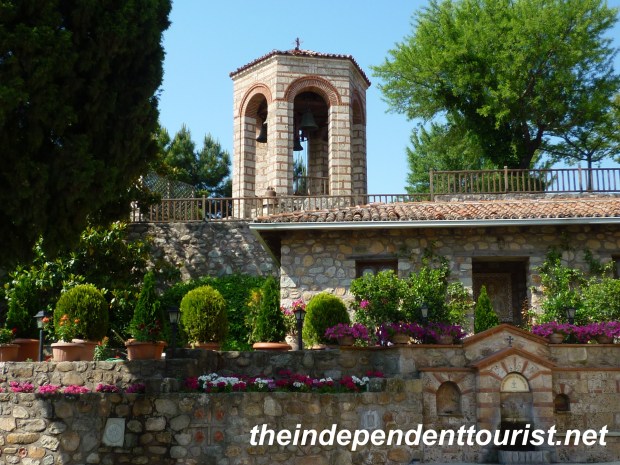
Great Meteron Monastery Courtyard, Meteora, Greece.

Neatly manicured courtyard at Grand Meteron Monastery.

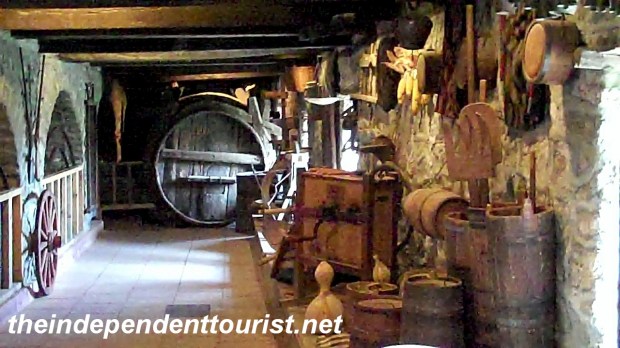
Storage room, Great Meteron Monastery, Meteora, Greece.

Tools storage room at Great Meteron Monastery.

Other features vary depending on the monastery—some have beautiful gardens and views. The largest, Great Meteoron, is almost a museum–with an old (dates from 1557) kitchen, Ossuary, and equipment storage rooms on display. The monasteries are in close proximity, but since some walking or hiking is required, at least 60-90 minutes per monastery is a good estimate.

Practical Information:

All monasteries can be visited in one full day, especially if you are staying in Kastraki or Kalambaka. We recommend Kastraki as a base, since it is so close to Meteora. A car is the easiest way to visit the monasteries, and allows you the freedom to arrive and leave at your leisure. There are also footpaths among the ravines, connecting the towns with the monasteries and if you have the time, they would be a lovely way to see the area.

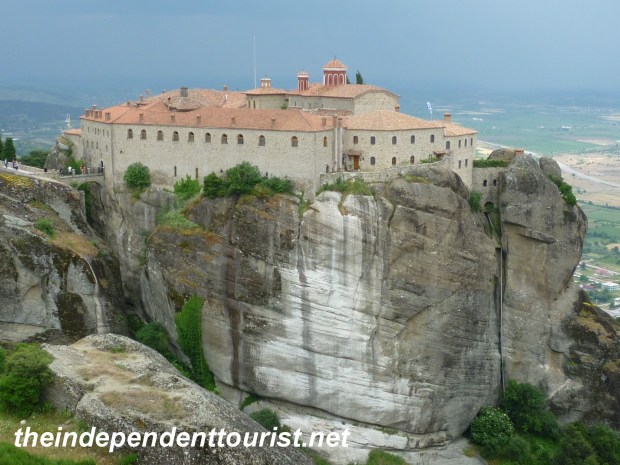
Holy Monastery of St. Stephen, Meteora, Greece.

Holy Monastery of St. Stephen is the most easily accessible.

Each monastery has a €2 entry fee per person.  Be prepared for stairs, and lots of them. One of the monasteries, St. Stephen’s, (actually a convent) is easily accessible from the car park and does not require stair climbing. Others require a hike down and up steep stairways. In the old days windlasses with nets or baskets were the only way up into the monasteries–ensuring safety during times of war.

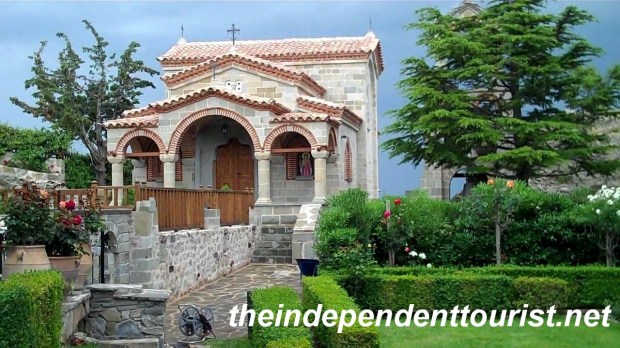
St. Stephens Monastery, Meteora, Greece.

Small chapel at St. Stephen’s.

The busiest monasteries are Great Meteron (aka Moni Megalo Meteoro or Monastery of the Transfiguration), St. Stephen’s, and to a lesser extent Varlaam. Be prepared for tour buses at Great Meteron.  We had the Holy Trinity and St. Anapafsas monasteries to ourselves.

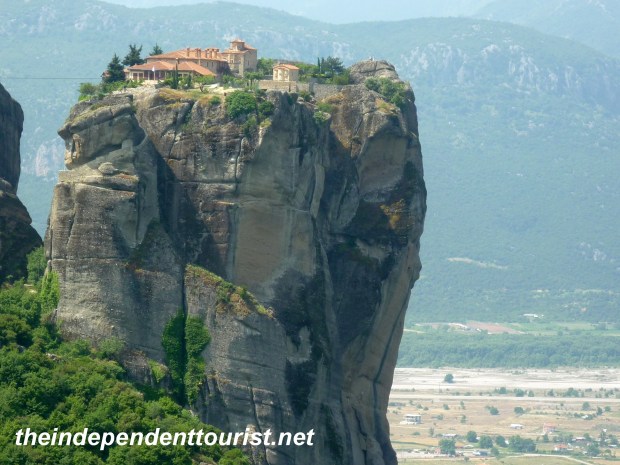
Holy Trinity Monastery, Meteora, Greece.

Holy Trinity Monastery of James Bond fame (see separate post).

As usual, getting to the monasteries earlier (or later) in the day will help in avoiding the crowds.  Check opening days and hours carefully. We visited on a Saturday and all of them were open, but some are closed other days of the week.  Most open at 9 am. There are small parking lots at each of the stairway trails to the monasteries.

Holy Monastery of St. Stephen_Meteora (4)

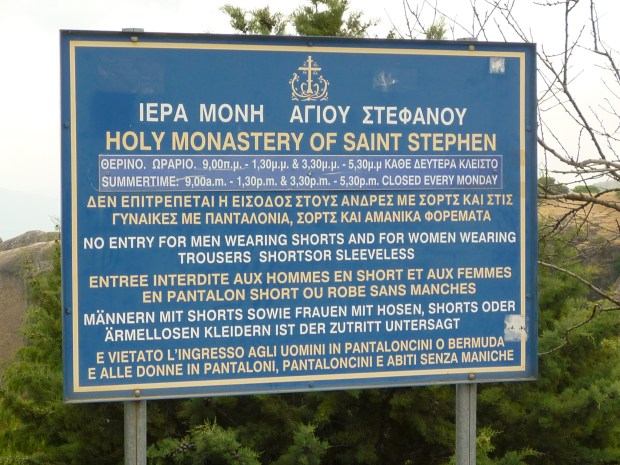
Sign warning of dress standards at St. Stephen’s monastery.

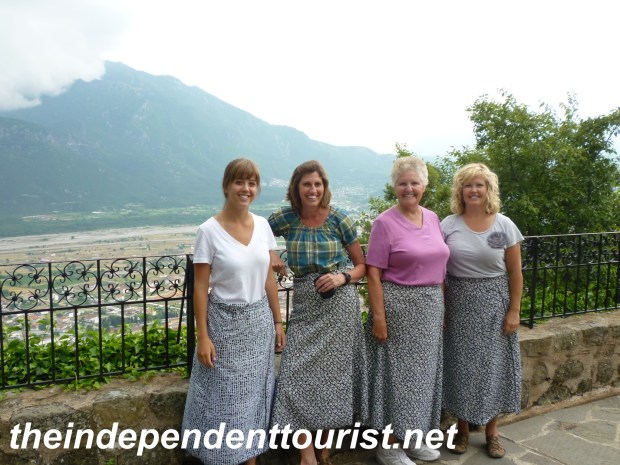
The monasteries are picky about dress.  They require women to wear dresses or skirts, although they have free wrap-around skirts available at the entrances. For men, shorts are not officially allowed, but we did see men in shorts at several of the monasteries. To avoid any hassle, men should wear long pants. Also, men, don’t try to wear the skirt wraps—the monks don’t appreciate this!

Holy Monastery of St. Stephen_Meteora (2)

Wearing skirts at St. Stephen’s.

We stayed in Kastraki, a small village just a couple of kilometers up the road from Kalambaka, it’s nestled among the rock pinnacles, with a great view. Our hotel, Doupiani House, was in a perfect location with many rooms having a balcony view of the rocks of Meteora.

Doupiani House hotel, Kastraki, Meteora, Greece.

View of Meteora from Doupiani House hotel, Kastraki.

References: Frommer’s Guide to Greece, Lonely Planet Greece Guidebook and information sign posts at Meteora.

Valetta Harbor, Malta

Excursion to Malta

Malta Map

Islands of Malta.

We visited Malta as part of our trip to Sicily in April. It was a good time of year to visit weather-wise.  The temperatures were warm and sunny but not hot. Malta is only about 90 kilometers from Sicily, and we spent two nights and one day in Malta. We took a ferry (Virtuferries.com) from Pozzallo, Sicily to Valletta, Malta.

Virtu Ferries, Malta, Sicily

Sicily-Malta Ferry (Virtu Ferries).

The trip was about 90 minutes each way.   At the time, it cost about $110 per person roundtrip. It is also possible to fly from Catania on Air Malta, but it costs more and would likely take more time. Since the ferry is Maltese, the schedule is less convenient if one is traveling from Sicily to Malta than vice-versa. A lot of Maltese take day trips to Sicily to visit the mountains and escape the heat of Malta in the summer. So, we left Sicily late in the evening and returned early in the morning two days later.

Malta is very dry, rocky and the most densely populated country in Europe. The main island of Malta is small with a lot of traffic in a tightly congested area around Valletta, although outside the city the roads are a lot less busy.

Malta bus

Maltese Bus (all are the same retro style)

We rented a car (driving is on the left side), so we could have the freedom to see what we wanted—however we would suggest a good map-via a PDA/phone or GPS system, given the somewhat confusing road system and signage outside of Valletta. The local bus system would be a good alternative to driving. Visitmalta.com is a great website for learning about this country, and they have podcasts on a variety of topics, including information all about the movies filmed in Malta.

Given the recent history as a colony of the UK, English and Maltese are the official languages, and Italian is widely spoken. Malta’s long history means that there is a lot to see and do. It is full of prehistoric sights and more recent historic events—in particular the influence is evident of the Knights of Malta in the 1500’s, giving Valletta and the surrounding harbor its massive fortifications.

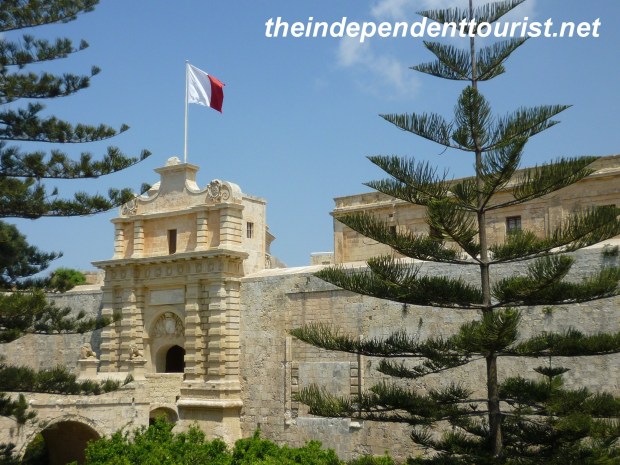
Mdina City Gate, Malta

City Gate, Mdina.

We used our Hilton Honors points and stayed in the Hilton in St. Julians, a very good location, about 15 minutes from Valletta. Many of the hotels on the island are located in this area. In one day we were able to visit the Hal-Saflieni Hypogeum, the old capital or “silent city” of Mdina, the ancient temples of Hagar Qim and Mnajdra, and the city of Valletta, all without feeling rushed.  We had considered hiring a tour guide for the day, given the shortness of our visit, however the guides we checked out wanted €150-200 for the day, plus a car rental, and we decided we could do our own tour easily enough.

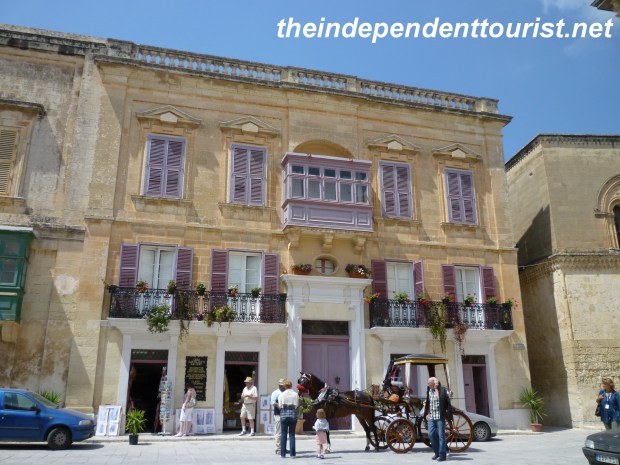
Mdina, Malta

Mdina Carriage Rides.

The Hypogeum, an underground prehistoric temple, was discovered by accident in 1902.  It is underneath a building on a modern street. Without the sign on the building, there would be no way of knowing what lies underneath. A guided tour is the only way to see it and the number of visitors allowed each day is limited to 80. In our opinion it was worth it, even if a bit overpriced (about $28 per person).   We could not take pictures inside the temple. We bought our tickets ahead of time (online) to avoid the chance of tickets being sold out due to tour groups and cruise ships. Ticket Information can be found on visitmalta.com.

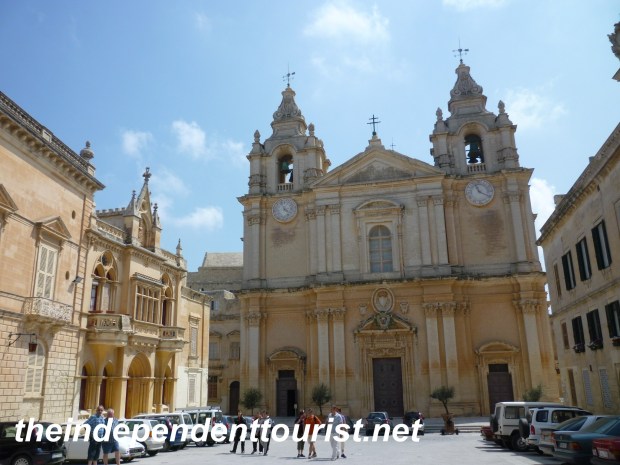
Co-Cathedral, St. Paul, Mdina, Malta

Co-Cathedral of St. Paul, Mdina.

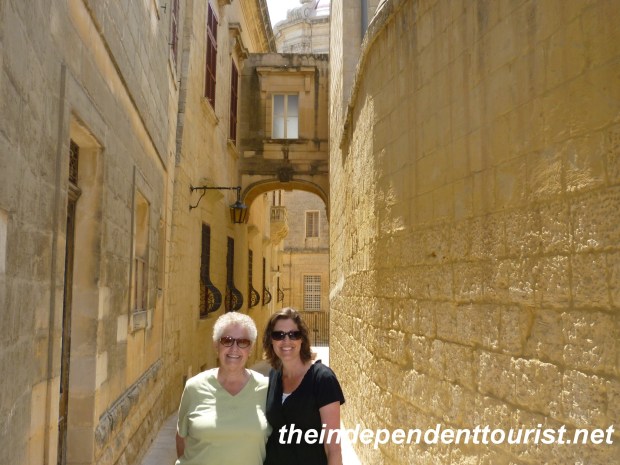
Mdina Street, Malta

Mdina Street Scene.

The city of Mdina, the old capital of Malta, is quite beautiful. It is called the silent city due to a lack of traffic in the old part of the city. The city sits on a slight hill, giving it a good defensive position and providing a good view of this part of the island.

There is plenty to do here in wandering the streets, visiting the co-Catherdral of St. Paul, taking a carriage ride, visiting the dungeons, and other exhibitions.

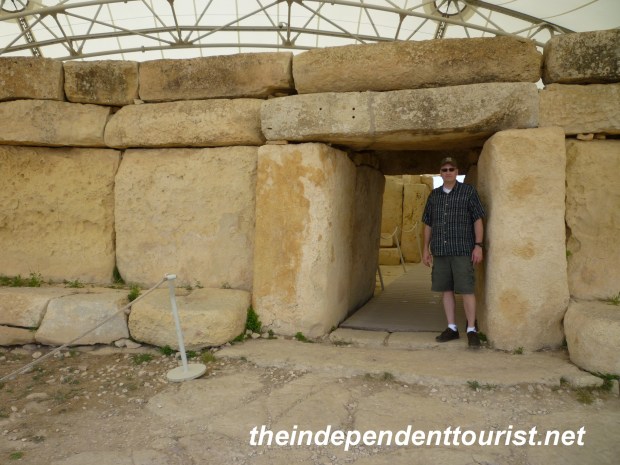
Hagar Qim Temple, Malta

Hagar Qim Temple

We then drove out to the temples of Hagar Qim and Mnajdra (they are within walking distance of each other).

Mnajdra Temple, Malta

Mnajdra Temple.

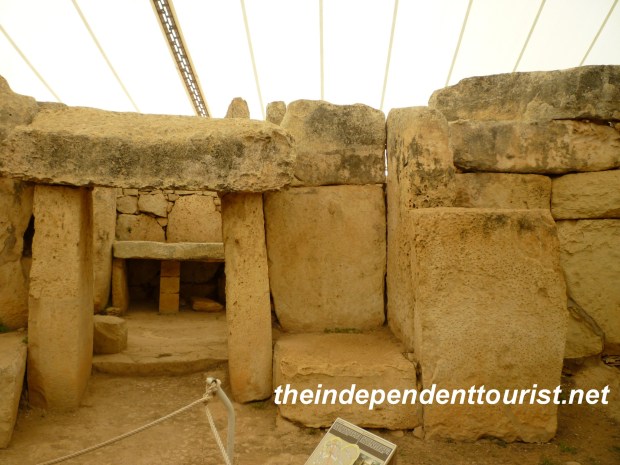
These temples are on the other side of the island from Valletta, and the rural roads on that side of the island can be potholed and bumpy! These are some of the oldest man-made structures in the world (perhaps 3,500 BC). The temples are near the coast, above ground, and covered with a tent-like material (similar to the Denver airport main terminal roof) to protect them from the weather. It is possible to wander around and through the structures.

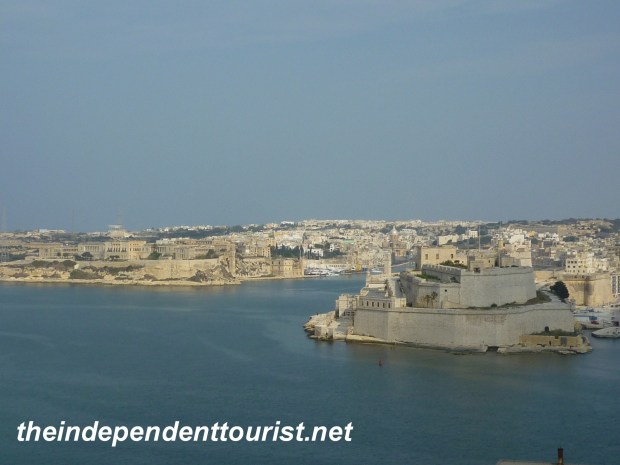
Valetta Harbor, Malta

Valletta Harbor.

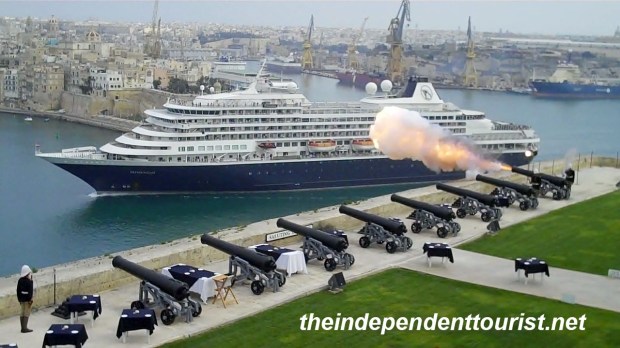
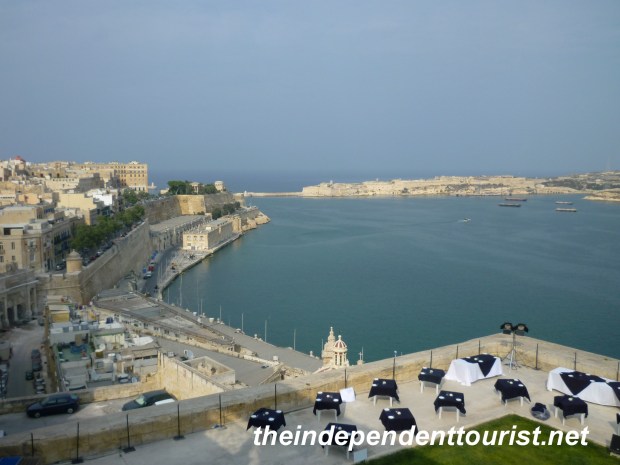
Our final stop for the day was Valletta. We found a parking garage close to the town and walked up to the main entrance to the old town. Our biggest mistake was getting something to eat before visiting the co-Cathedral of St. John. To our dismay, we found out that it closes at 4:30 pm, and we missed seeing Caravaggio’s “The Beheading of Saint John the Baptist” (completed in 1608). This was a huge disappointment, in addition to missing the Cathedral itself.  Be sure to get there before 4:30 pm! We loved the architecture of Valletta. Our favorite spot was the Upper Barraka Gardens, where we had a beautiful view of the harbor—pictures cannot do it justice, it is a beautiful setting. While we were there, we saw a cruise ship leaving and the Maltese cannon salute!

Valletta Harbor, Malta

Valletta Harbor.

Valletta Harbor, Malta

Another View-Valletta Harbor.

We would love to go back to Malta. We did not get to the beaches given our short stay. It would be a great vacation spot for at least a week with all the historical sites and beaches (including Gozo and Comino islands).