Exploring North Central Peru – Kuelap (“qway-lap”)

On the 2.5km hike to Kuelap

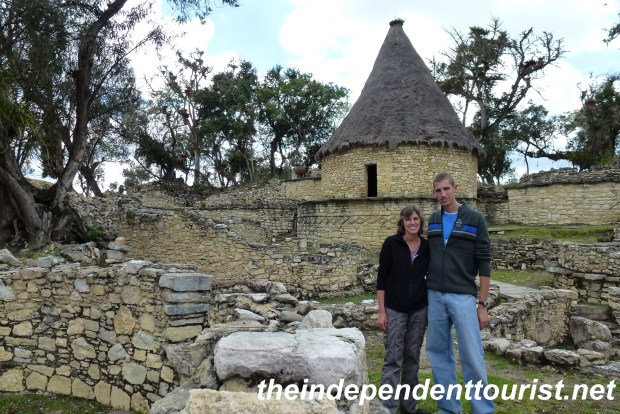
Housing area in Kuelap-the only restored structure on the site

If you’re looking for a less-discovered, uncrowded ancient historical site in Peru, consider Kuelap. It is located 45 miles (which takes about 2.5 hours due to a gravel road most of the way) south of Chachapoyas. The road is much improved from several years ago, when rains would make it nearly impassable. Our tour group included 13 people in a minivan. The tour cost 60 NS (1 USD = 2.8 nuevos soles) per person, and included lunch and the entry fee (10 NS). Most of the tourists were from Peru and other South American countries. When we arrived at the site, we were pleased to see just a few other minivans. After arriving at the parking lot, we hiked about 2.5 km up to the site itself.

The scenery from the mountaintop fortress of Kuelap. The dirt road seen near the bottom of the picture is the road to the site

The massive walls surrounding Kuelap

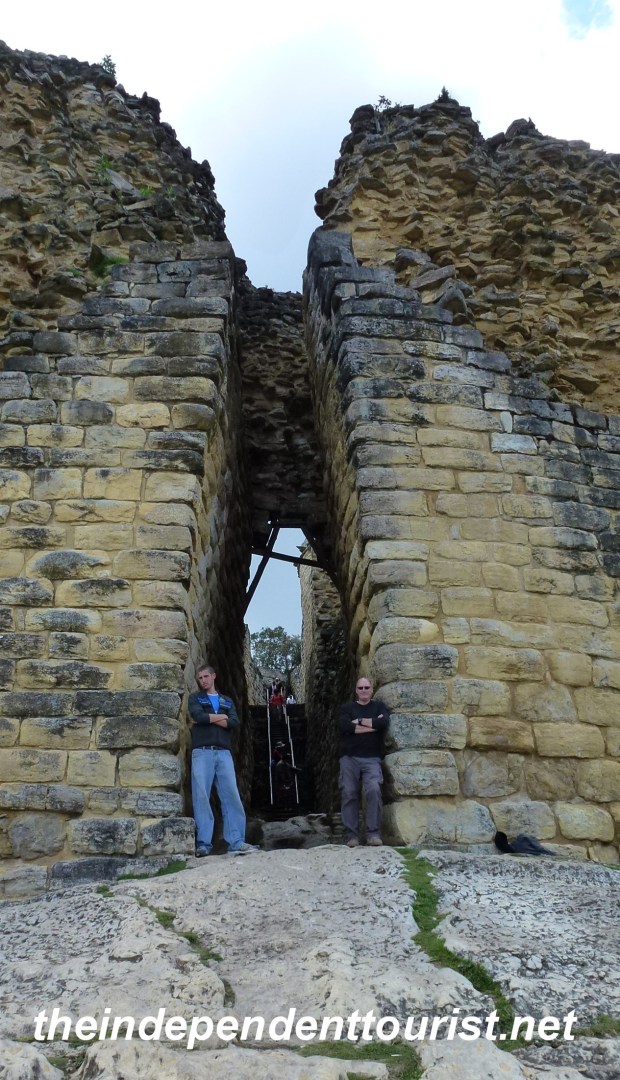
One of the main entrances to the site

Hiking up into the fortress

I knew little about Kuelap, but enough to know it is one of the great sights in Peru and I wanted to see it. Kuelap dates to the 6th(?) century AD, constructed by the Chachapoyan people, who apparently were warriors, given the defensive nature of Kuelap. We don’t know much about these people, but they were described as a “tall and fair” people by the Inca—supposedly blonde and blue-eyed, and even today I understand that there are some people in the area that fit this description, but they are not European descendants. They were eventually conquered by the Inca around 1472, and Kuelap was inhabited until 1670 when it was abandoned during the Spanish Conquest. It is one of the largest pre-Inca ruins in existence, set on a 10,000 foot mountain top ridge. Massive walls (reaching up to 60 feet high) surround the site, which is 600 meters in length. It is believed that about 2,500 – 3,000 people inhabited about 400 or more homes (most of which are circular) in the site. The site’s construction reminded me of castles in Europe—well built, but not to the exacting standards of the Inca. Based on the skeleton remains and large numbers of skull surgeries at Kuelap, archeologists believe a “medical” school was located here.

Templo Mayor (observatory? prison?)

Another view of the ruins in Kuelap

Decorative stonework in Kuelap buildings

The surrounding mountain scenery is beautiful, and from Kuelap, one is at equal height with most of the surrounding mountains.

Our tour van and restaurant for lunch

A great lunch - Lomo Saltado

Kuelap is 2.5 hours south (by car) of Chachapoyas

Visit now before this incredible site welcomes crowds like those at Machu Picchu!

Exploring North Central Peru—Chachapoyas

Chachapoyas is an 8-9 hour (285 miles) bus ride east from Chiclayo

The countryside of Chachapoyas (on the way to Kuelap)

Chachapoyas is a whitewashed town of about 25,000 located in a very interesting and beautiful part of Peru. It would be easy to spend 4-5 days touring the area—we spent two, exploring Kuelap ruins and Gocta Falls. A green, mountainous area, Chachapoyas is located between the very dry northwest part of Peru and the Amazon jungle region to the east.

Getting on the bus to start our overnight journey to Chachapoyas

To get to Chachapoyas, the logistics are as follows: a flight from Lima to Chiclayo, followed by an overnight (about 9 hour) bus ride from Chiclayo to Chachapoyas. Another option would be a flight from Lima to Cajamarca and then an 10 hour bus ride (mainly on a dirt road from what I understand) to Chachapoyas. There are no commercial flights to Chachapoyas, although there is a small airport where some small charter flights operate.

The comfortable semi-cama bus seats

The bus ride is not quite as bad as it might seem. The operator was Movil Tours. The bus is a double-decker, with more comfortable seats on the lower level and typical long-haul bus seats on the upper level. While the bus makes a few short stops, they are only to pick up and drop off passengers. Seats in the economy (upstairs) section cost 45 nuevos soles (NS) and 75 NS in the first class section. A small dinner (not too exciting) was served, with one movie shown (in Spanish of course). ($1 USD = 2.8 NS).

Hotel Vilaya in Chachapoyas

Our room at Hotel Vilaya--about $35/night (checking in at 6 am!)

The bus from Chiclayo arrives in Chachapoyas at about 6 am. Upon arrival, we asked for hotel recommendations, and took a taxi for 2 NS to the hotel, and got a triple room on the spot for 100 NS per night, with (very) early check-in being no problem. There are several decent, but certainly not fancy hotels in the town. After getting cleaned up, we then ventured down to the main square to arrange a tour to Kuelap which left at 8:30 am. The tourism industry here is just developing and at this time of year (October), it was no problem getting a hotel, or booking a tour. There are at least a half-dozen tour agencies on the main square, and from what we could tell, they all offer similar tours and at similar rates. The main tours in the area include: Kuelap, Gocta Falls, Revash, Karajia, Laguna de los Condores, and Quiocta Caves.

One of several tour operators on Plaza de Armas, Chachapoyas

Pedestrian street, Chachapoyas

Plaza de Armas, Chachapoyas

Four Hours in Indonesia

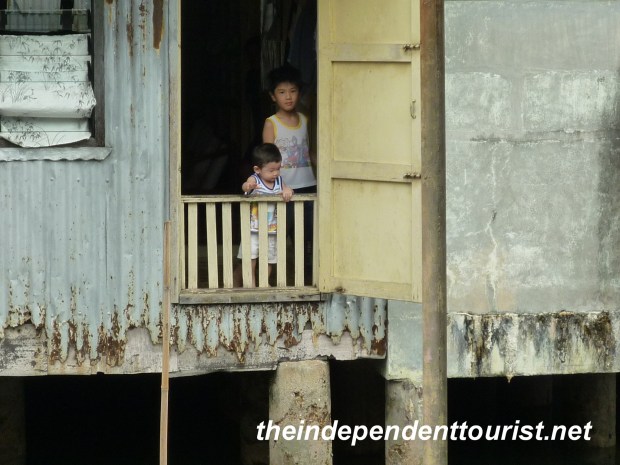
Kids at home in Tanjung Pinang, Bintan

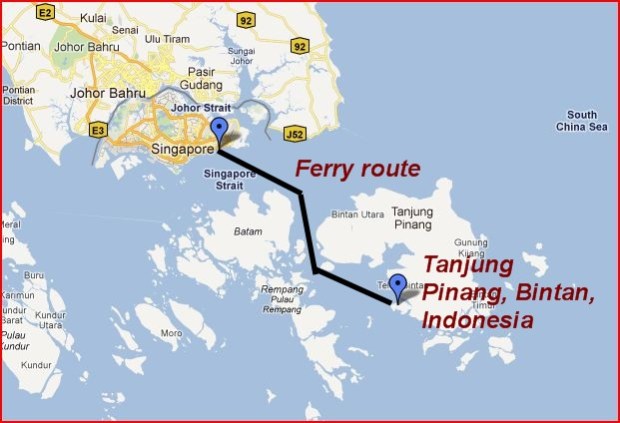
Ferry route to Tanjung Pinang from Singapore (about 2 hours)

On my last trip to Singapore I took a day-trip to Indonesia, since several islands are so close to Singapore. I had a choice of either Batam or Bintan islands, both of which are just a ferry ride away. As I searched the internet for information about both islands, I was surprised at how little information was available on the logistics and what to do on such a trip.

Here is some information I wish I had known…

Which island?

  • Batam. Batam is closer to Singapore and a little easier to get to (see ferry information below). However, I didn’t see much on the internet that enticed me about Batam. There are shopping malls, some modern mosques and temples, and factories, but not much in the way of historical sites from what I could tell.
  • Bintan.Bintan is divided into two very different parts: the beach resorts on the north side of the island and the “real” Indonesian southern side. I wasn’t interested in beach resorts, and wanted the real thing. From what I had seen on the internet, Tanjung Pinang (TP) looked like a very interesting, authentic Indonesian town, and is the primary ferry port on Bintan. I decided against my hotel concierge’s advice (I think he was more concerned about convenience and safety than I was) and went to Bintan. I was very glad I did. Upon arrival, most tourists have a bus waiting to take them to the north shore resorts. I noticed one other person from the U.S. on our ferry ride over and the rest appeared to be Singaporean or Indonesian.

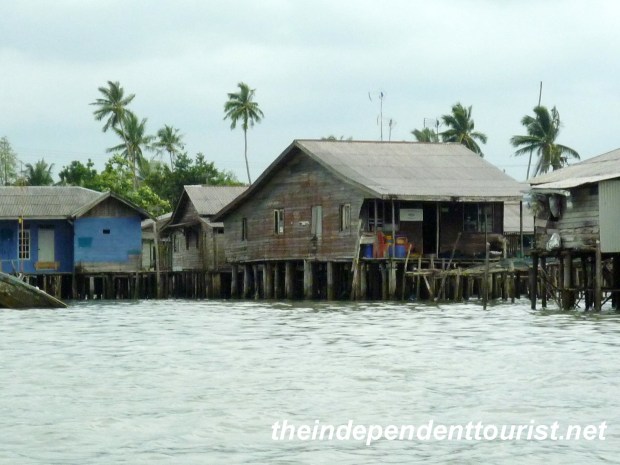
    Typical house on stilts in Tanjung Pinang

What about Indonesian visas (for U.S. visitors)?

  • As of September 2011, visas for U.S. citizens are purchased on arrival at the TP Ferry terminal. Cost was $10 USD, or $16 Singapore (Sing) dollars. Given the current exchange rate of 1 USD = 1.28 Singapore dollars, having exact US change (no change available) is a better deal. The visa document takes up an entire page of the passport, and is valid for 7 days.

What about language?

  • In my short stay on Bintan, English was hard to come by—I had to make a lot of gestures and do some writing of numbers. What a refreshing immersion just two hours from Singapore.

What about ferries?

  • Most ferries to Batam leave from the HarbourFront Ferry Terminal (southern tip of Singapore, by Sentosa Island resort) and are very frequent, about once per hour. Batam is only about a 45 minute ferry ride.
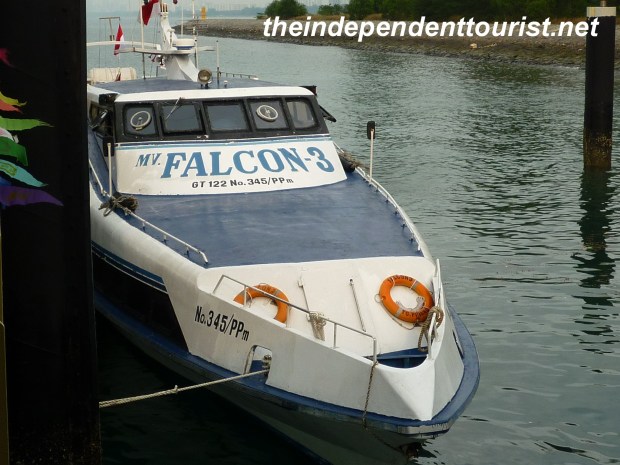
  • Ferries to Tanjung Pinang, Bintan leave from Tenah Merah Ferry Terminal, which is near the Changi International airport, on the southeastern side of Singapore. There are 3-4 ferries per day in each direction. I caught the 8:50 am ferry from Singapore to Bintan. Several ferry lines serve Bintan, mine was Falcon Ferries. I did not make reservations ahead of time; I simply got to the Ferry terminal about 90 minutes prior to my desired departure time to ensure I could get a seat on a Saturday morning—which was no problem—the ferry was probably 50-60% full. I understand the ferries are very full on Singapore holiday weekends, so plan ahead if that will be the case. I didn’t find the ferry websites too user-friendly, and it was easier just to go the terminal to purchase a ticket. The round trip cost was 50 Sing dollars or about $38 US. Don’t forget your passport! The journey took about 2 hours. The ferry served bottled water (free) and had some snacks available for purchase.
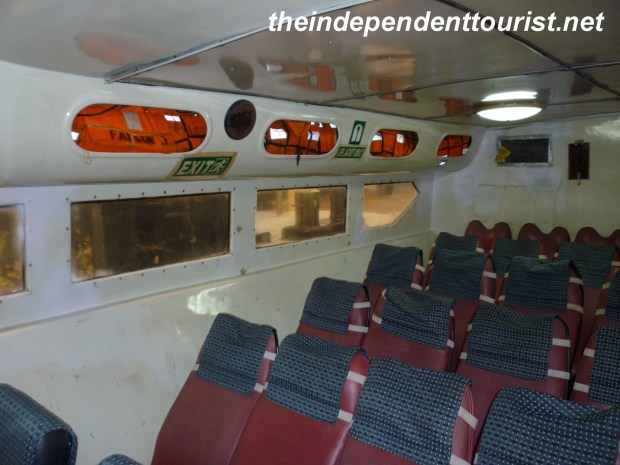
    Falcon Ferry Interior

    Our Ferry to Bintan, Indonesia

  • One other important note: You must confirm your return ferry trip by going to a local TP travel agency (best to do immediately upon arrival). The agency information is given with your ticket purchase. There is a small fee for this transaction (equivalent to $1.50 US). I decided to return on the 2:00 pm ferry, giving me about four hours on shore, which was perfect for my interests. Keep in mind that there is a one hour time change between the two countries, (Indonesia is one hour earlier than Singapore). My return ferry was only about 10% full.
What else?

  • There is an Indonesian departure tax (about $1.50 US) that must be paid at the Ferry terminal prior to going through security and immigration.

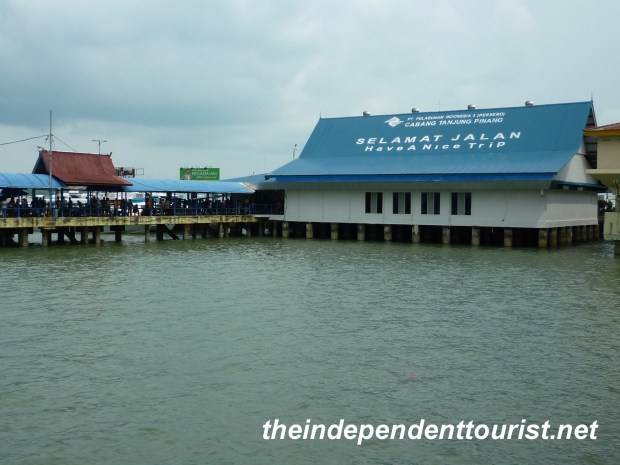
    Ferry Terminal, Tanjung Pinang

  • Indonesia is very inexpensive (although I am sure the resorts are not) compared with Singapore. Sing dollars seemed to be accepted about anywhere.
  • Food. I did not sample the local fare, since I did not want to spend time eating when I had only a few hours to explore, and I did not see much in the way of restaurants, just outdoor food stalls, and I was not sure of the sanitary conditions. I have eaten Indonesian food in other locations and enjoyed it.
  • Hotels. Since I took a day trip, I can’t speak about the TP hotels, although I saw one or two modest-looking hotels in my wandering through town.
  • There is a pier next to the ferry terminal with small boats (holding about 15 people) that take passengers to Penyengat Island (within view of TP) with the Sultan of Riau Grand Mosque. I didn’t figure this out until I was leaving, but it would be fun to take this ride next time.

What to do on Bintan?

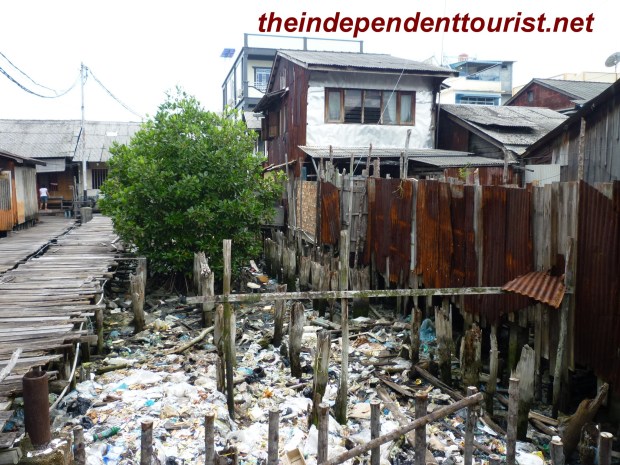
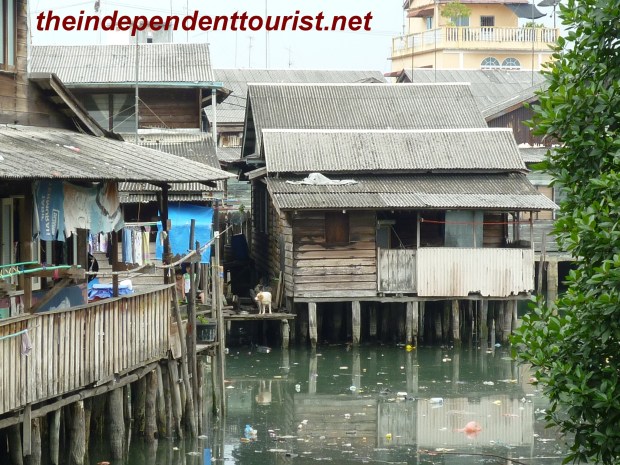
  • I had no guide book on Bintan and finding information on the internet or even in Singapore was somewhat difficult. So, I “winged it” and decided to simply wander around the town of TP and see what I found. Bintan has had a reputation in the past of being a center of prostitution for those coming from Singapore, but I was glad to see no overt evidence of this upon my arrival. I was the only Caucasian (and tourist from what I could tell) wandering around the town, and received many stares, and invitations for scooter taxi rides. I was cautious with my small backpack, but never felt any concern for my safety. The longer I wandered around the more comfortable I got. Coming from Singapore, TP was a shock and quite fascinating. I was a bit shocked by the poorer conditions (and trash heaps under the stilt houses)—a huge contrast to the sparkling clean, vibrant and wealthy Singapore—and I was also fascinated by how different the culture and town felt from anything in Singapore.

    No need for regular trash pick-up!

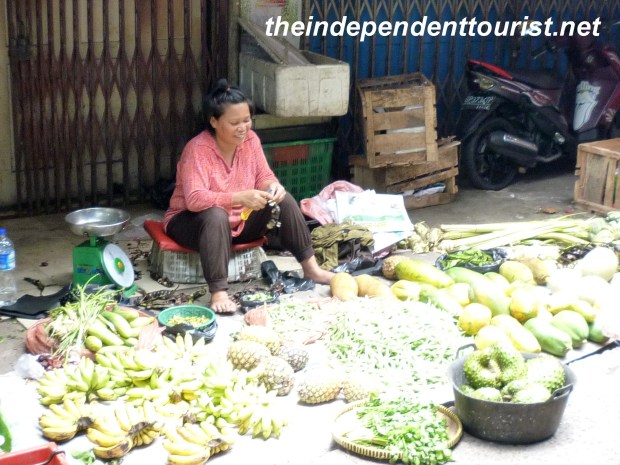
    Fresh fruits and vegetables in Tanjung Pinang

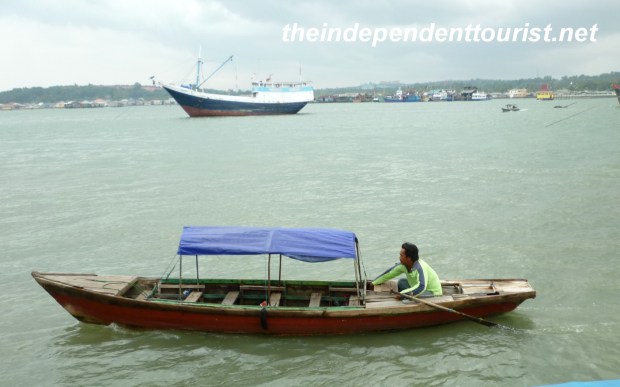
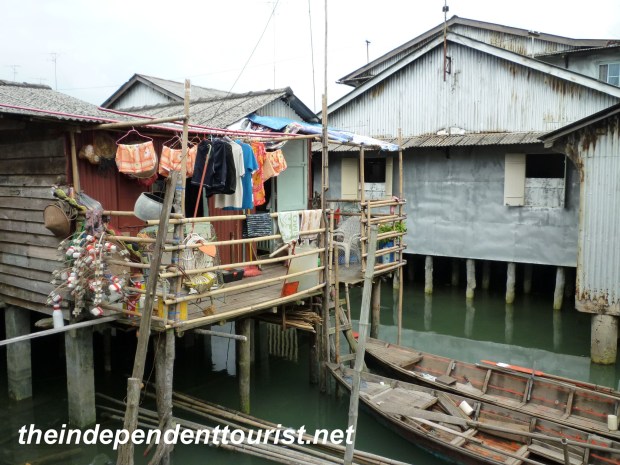
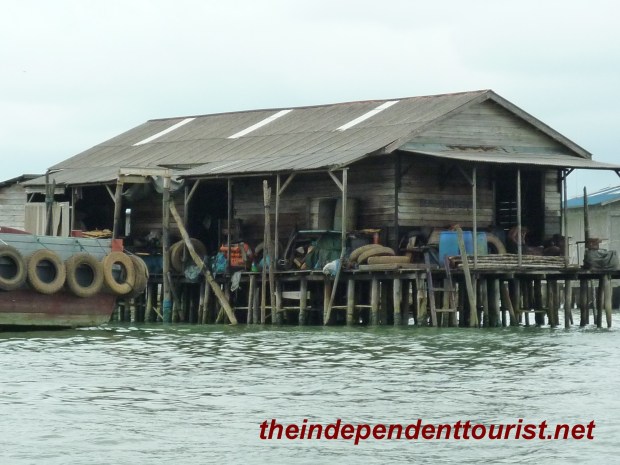
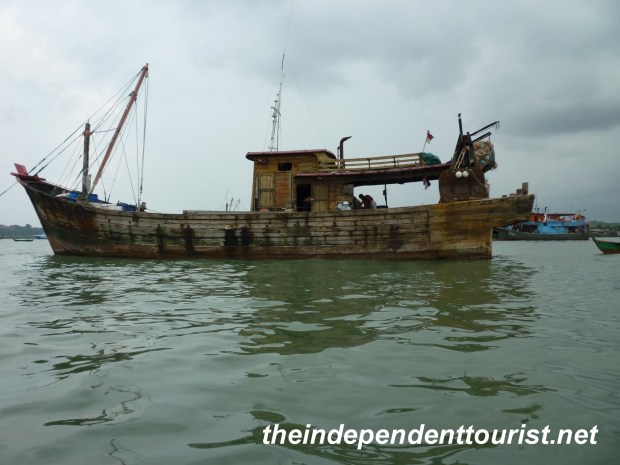
  • Harbor. I wandered down a street and found myself at the edge of the harbor, perhaps a quarter mile away from the ferry terminal. There were little rickety wooden boats with small in-board motors waiting to take locals across the bay. Through hand waving and some writing, I arranged a private “tour” (45 minutes) of the harbor for about $10 Sing dollars. I highly recommend this little tour—seeing the old, large wooden fishing boats (with a style totally different than what I had seen elsewhere) anchored (and in some cases looking like abandoned ghost ships) in the harbor was fascinating, along with the homes and warehouses built on stilts in the middle of the bay.

    My harbor cruise boat

    House on stilts in Tanjung Pinang Harbor

    Fishing boat, Tanjung Pinang Harbor

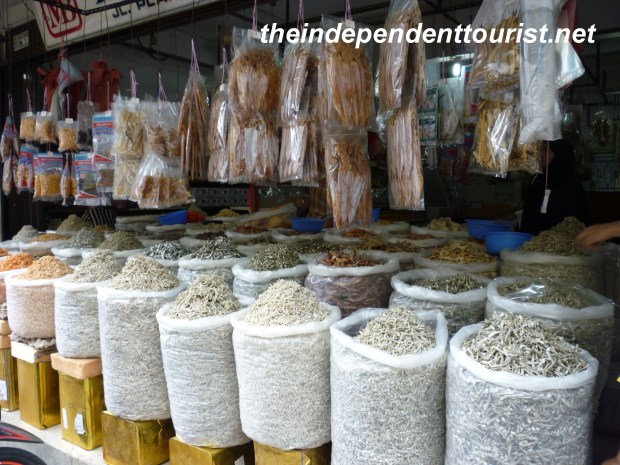
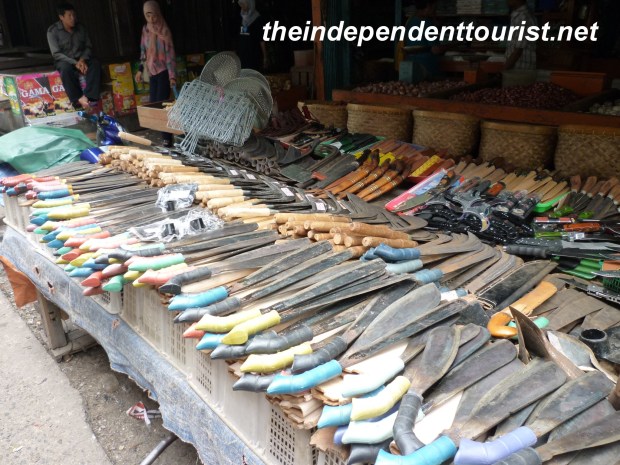
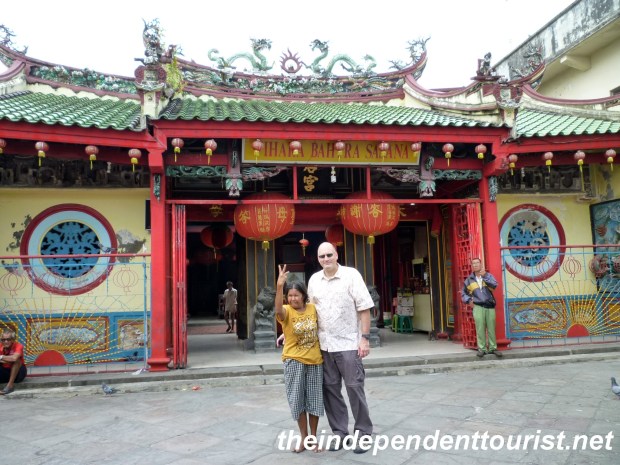
  • Street wandering. Just wandering the streets with the shops was fun. Spices and every type of little dried fish (and other unrecognizable seafood) was available. I also went to a Buddhist temple and got a tour from a little lady who made a lot of gestures and grunts about what I was seeing.

    Buddhist Temple Tanjung Pinang

    Bales of little dried fishes

    Looking for a machete? Lots of choices!

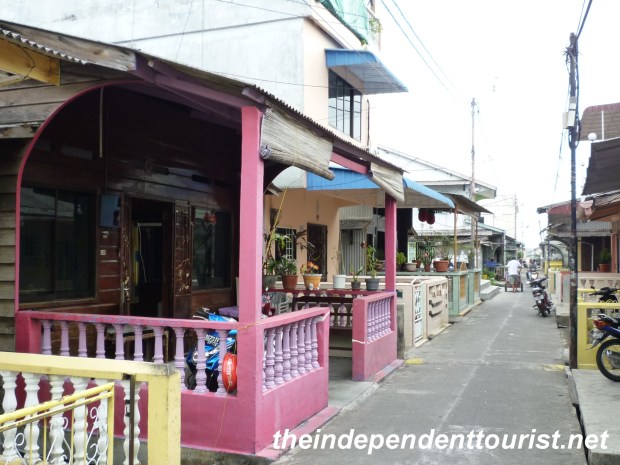
  • Houses on stilts. Further into the town I found a housing area, and realized that the whole neighborhood was over the water. I wandered through back alleys and enjoyed seeing how the “average” Indonesian lived in TP, over the water, with wooden and sometimes cement stilt foundations, with no lawns to mow or cars to park.

    Waterfront property in Tanjung Pinang

    Hard to believe this street is over the water...

    Tanjung Pinang neighborhood on stilts

If you have an extra day while in Singapore and want a completely different experience, take a day trip to Bintan. It was a blast. Plan about 10 hours total for the adventure mentioned above.

A Day in Athens – Part II

In addition to the “hidden gems” mentioned in the Part I post, we were able to see the following sights visited in our day-long stay in Athens.

The Ancient Agora

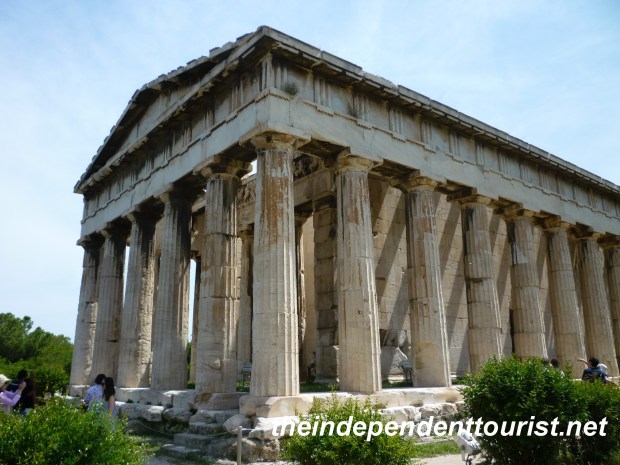
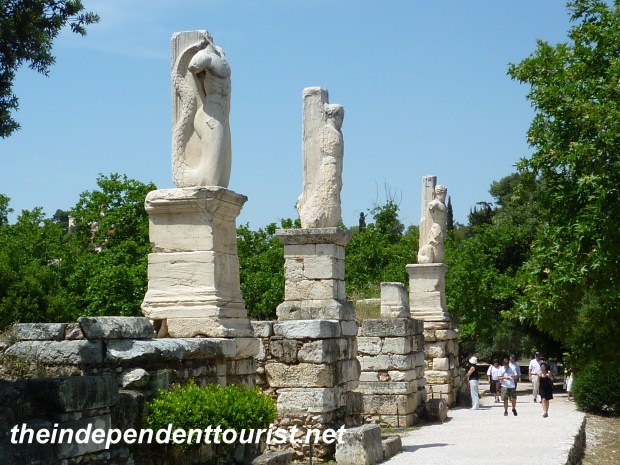
The Ancient Agora was the ancient commercial hub of Athens and contains the best preserved temple, the Hephaistion, which is a wonderful example of Doric architecture, and a little older than the Parthenon. On my first trip to Athens in the 1980’s you could actually walk into the temple. It is now roped off, but at least still accessible from the outside and beautiful. The Agora is worth time to wander among the ruins and has good views of the Acropolis just to the south. It also contains the reconstructed Stoa of Attalos II, which is now a museum.

Temple of Hephaistion, Athens

Ancient Agora, Athens

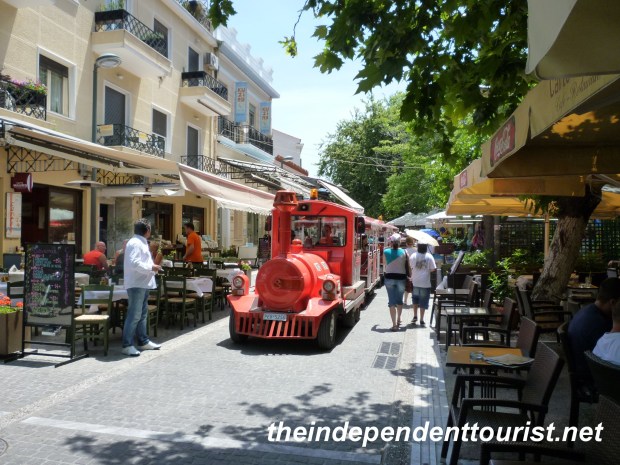
Right outside the Agora is Adrianou Street, filled with restaurants along the quiet street, overlooking the Agora.

Little train on Adrianou Street, Monastiraki (just outside of Ancient Agora)

Plaka & Monastiraki Square

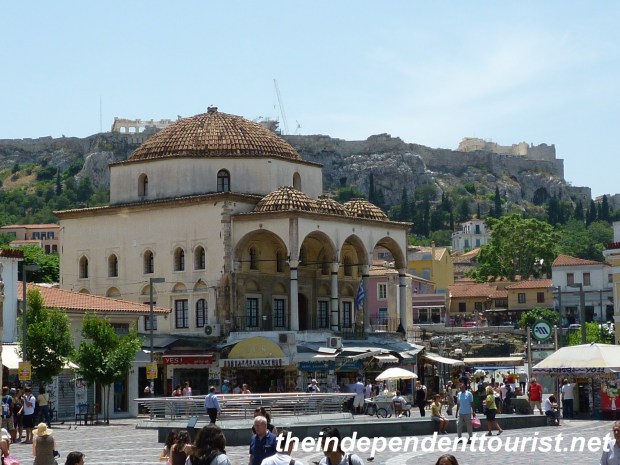
The Plaka area, right below the eastern side of the Acropolis, is full of restaurants, shops and quaint hotels. This is a great area to stay if you wish to be close to the heart of Athens. Monastiraki Square is near the Agora and is another lively older neighborhood dating from the Turkish occupation (18thcentury).

Tzistarakis Mosque, Monastiraki, Athens (18th century), (Acropolis in background)

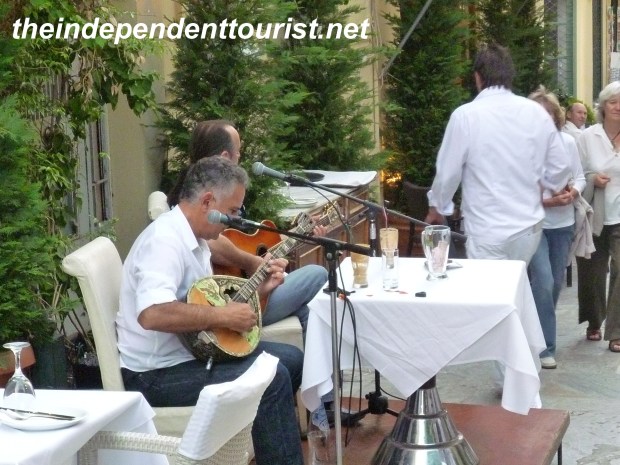
Music in the streets of Plaka, Athens

Temple of Olympian Zeus

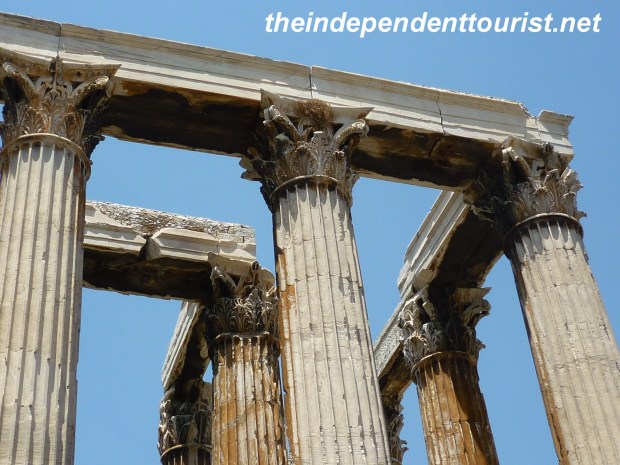
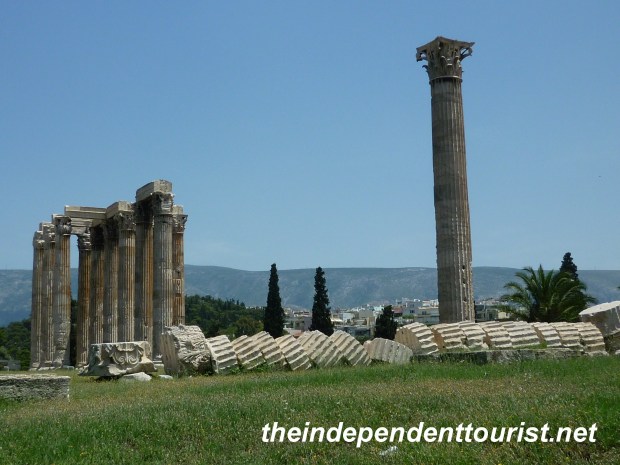
To the east of the Acropolis just outside the Plaka area, is the “new” part of ancient Athens, defined by Hadrian’s Gate, which dates to 132 AD. It has a number of Roman-era ruins, including the huge Temple of Olympian Zeus. Construction began on this colossal monument in 515 BC, and was originally made of limestone. Some of the building materials ended up being used in building Athens’ fortification walls.  The marble temple was begun in the 4thcentury BC, but progress was slow with long periods of inactivity, and it was not completed until much later–Caesar Augustus and finally Hadrian saw to its completion 124 – 132 AD. Hadrian loved the Greek culture and was well-respected in Athens. Statues of Zeus and Hadrian were worshipped here as co-equals. (reference:  plaques on site)

Detail of Corinthian Columns, Temple of Olympian Zeus, Athens

The fallen column (caused by storm in 1800's) of Temple of Olympian Zeus

It was one of the largest temples of the ancient world. Of the original 104 columns 16 survived until 1852 when a storm took one column down, which has been laying in sections ever since.

There are also some minor ruins dating back to the golden era of Athens.

Syntagma Square

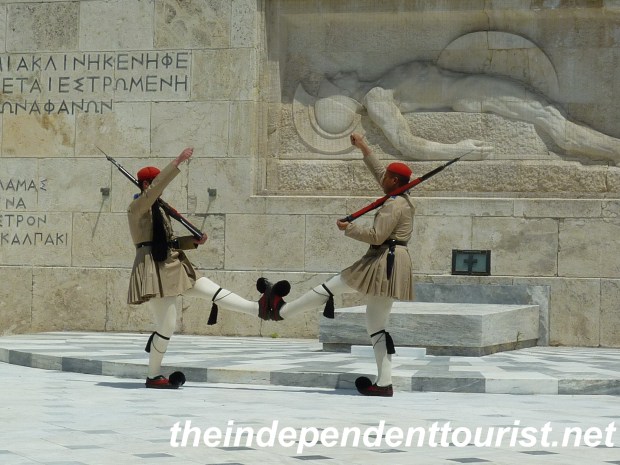
This square is within a short walk of the Acropolis and is currently “ground zero” for the anti-government demonstrations on the economic policies. In front of the parliament building (formerly a palace) is the Tomb of the Unknown Soldier and the changing of the guard ceremonies.  It is worth stopping by here to see the uniformed guards do their very solemn and perfectly timed routine.

Tomb of the Unknown Soldier, Syntagma Square, Athens (note sculpture of fallen soldier in background)

Pnyx, Athens, Greece

A Day in Athens, Part I – Hidden Gems

Although a stop in Athens is pretty much mandatory on a “must see” list of Greece, it is my least favorite location in this wonderful country. It’s a huge city, and mostly modern. It’s grown up almost overnight, with most of the growth occurring in the last 100 years, even though the city is ancient. We spent just one full day in Athens and were able to see everything we wanted to, including some hidden gems that relatively few tourists visit. This is part one of a two-part post on Athens.

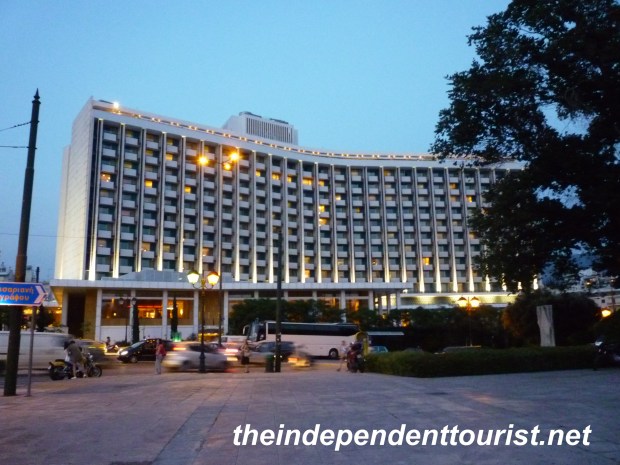
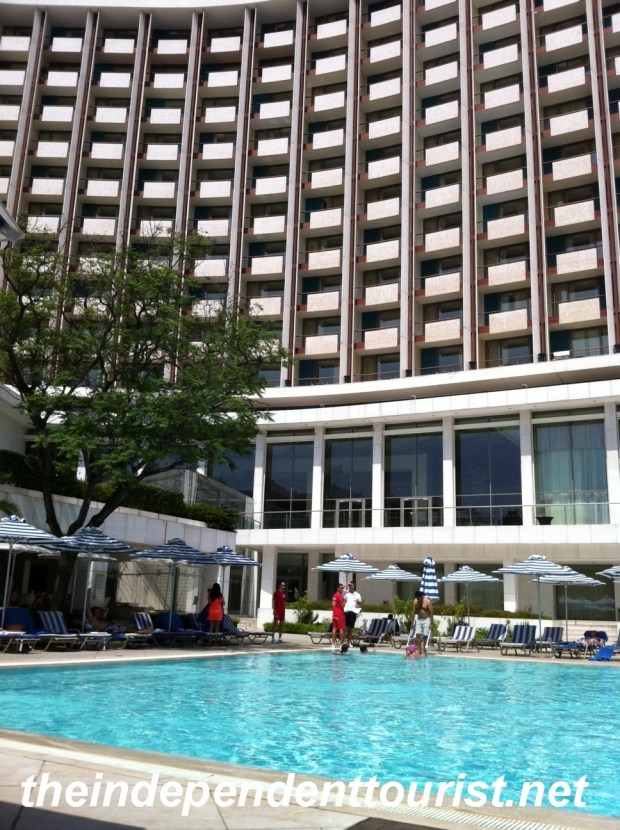
Athens Greece Hilton Hotel

Athens Hilton at dusk.

We visited Athens in early June. We stayed at the Athens Hilton, which is not appealing architecturally, but the rooms are very pleasant and the hotel has the usual Hilton amenities. From the west side of the hotel the Acropolis is visible, and it’s about a 20 minute walk along Vasilissis Sofias Avenue to the Plaka area near the Acropolis. There are not a lot of restaurants near the hotel (we found a few a couple blocks southwest of the hotel), so it’s better to plan to eat elsewhere for main meals.

Athens Greece Hilton Hotel pool.

Pool at the Athens Hilton – felt good after a day in the city.

All of the sights below are within walking distance of each other and near the Acropolis.

The Acropolis

Although the Acropolis certainly doesn’t qualify as a “hidden gem,” getting there early in the morning during high season does. Our day started with a brisk walk from the Hilton to the Acropolis, arriving around 9 am, before the cruise ship crowds. We were very glad we got there early. By the time we left, the ticket lines were very long and the hill was mobbed. Most of the structures on the Acropolis were built 461 to 429 BC, during Athens’ Golden Age.

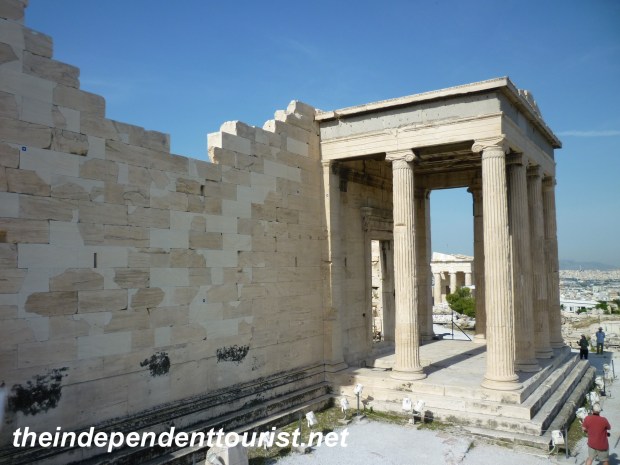
Acropolis, Athens, Greece, Erechtheion Temple

A side view of the Erechtheion Temple (406 BC).

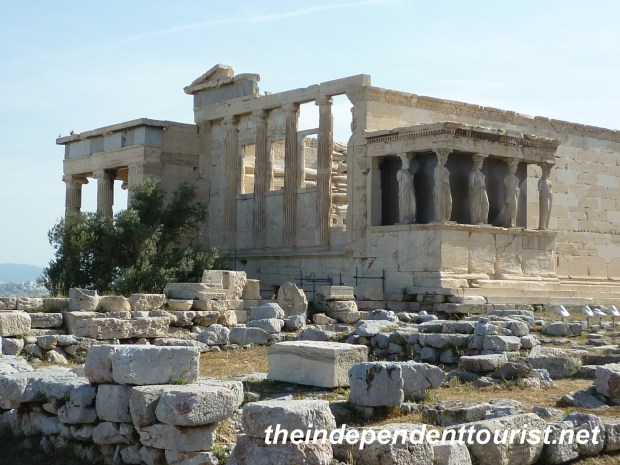
Erechtheion Temple, Acropolis, Athens, Greece.

The Erechtheion (406 BC) .

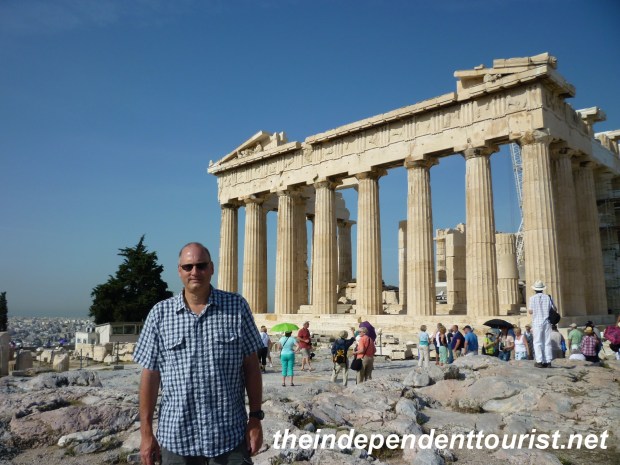
Parthenon, Acropolis, Athens, Greece.

The eastern end of the Parthenon.

I wonder if the Parthenon has ever NOT had scaffolding around it? When I visited Athens 25 years ago, the Parthenon had scaffolding around it then too. I realize major monuments like this require constant maintenance, and there is currently a large project underway. The city views are very good from the hill. The tickets to the Acropolis are €12 per person, and are valid for 5 days and include visits to 5 sights, including the Agora, Pnyx, Hadrian’s Library, the Temple of Zeus, and the Kerameikos Cemetery.

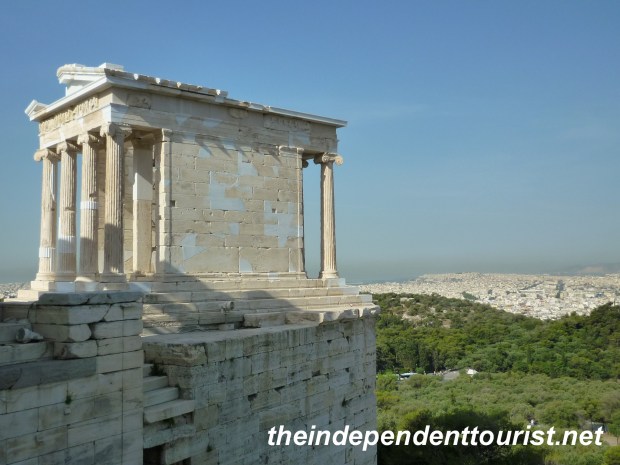
Temple of Athena Nike, Acropolis, Athens, Greece.

Temple of Athena Nike (427 – 424 BC), one of the most beautiful structures on the Acropolis.

Philopappos Hill

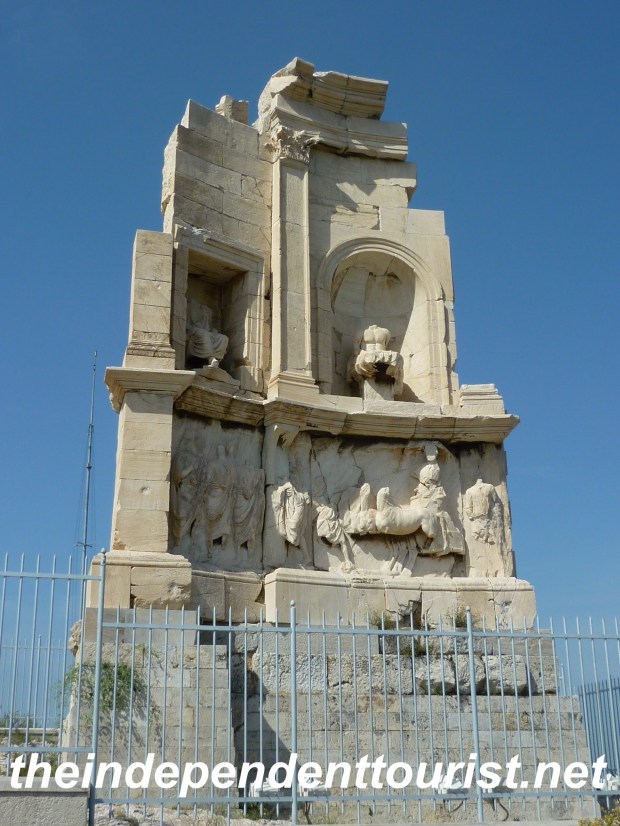
A gem hiding in plain sight of the Acropolis is Philopappos Hill, which is just a short walk to the southwest.  Amazingly, there were almost no tourists here. The Hill and main monument are dedicated to a Syrian Prince who was a generous benefactor to Athens. There are some interesting tombs, other ruins and monuments and great views of the Acropolis from the Hill. In between the Acropolis and Philopappos Hill is an interesting little Byzantine Church, Church of Ayios Demetrios Loubardiaris.
Heroon of Mousaios, Athens, Greece.

Ancient tomb on Philopappos Hill.

Philopappos Hill, Athens, Greece.

Monument to the Syrian Prince on Philopappos Hill.

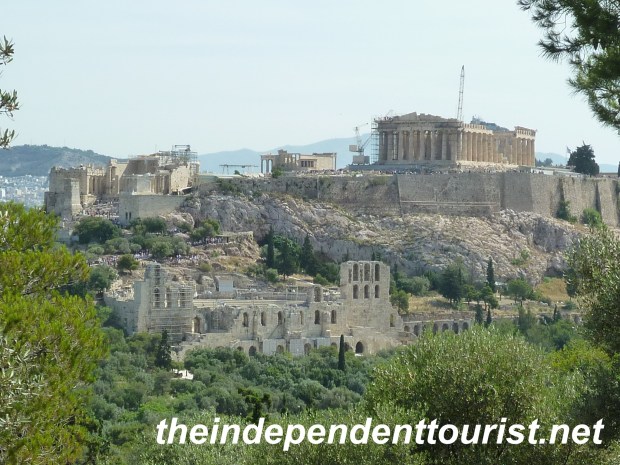
Acropolis, Athens, Greece.

View of the Acropolis from Philopappos Hill.

Ancient Neighborhoods

Walking around to the Acropolis’ north side, there are the remains of the ancient city nestled up to the Acropolis. I did not take pictures, since it was hard to make out what is in the picture. However, there are some ancient roads and house foundations carved into the rock that may be interesting to those interested in the history of the area. Once again, we had this area to ourselves, and it is free.

The Pnyx

Pnyx, Athens, Greece.

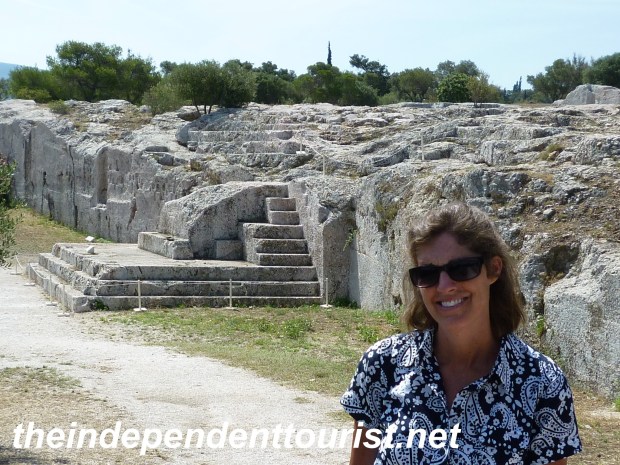
Orator’s Bema (speaker’s platform) at the Pnyx.

Pnyx, Athens, Greece.

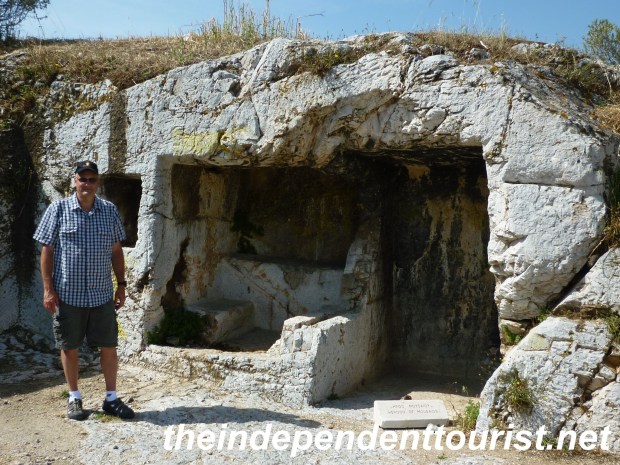
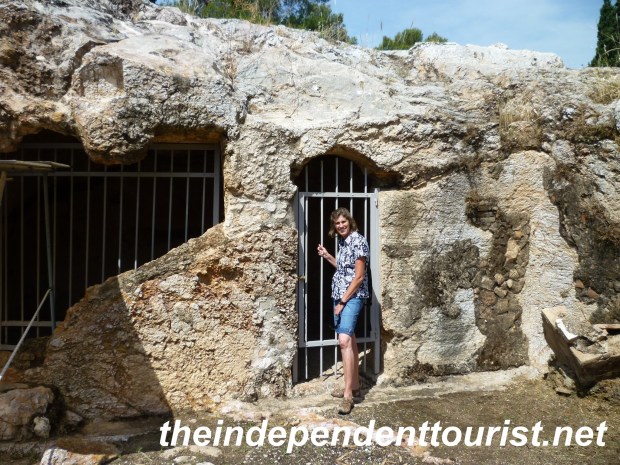
A cave home (Sanctuary of Pan) at the Pnyx.

Another hidden gem is the Pnyx, just west of the Acropolis and next to the Ancient Agora. I missed this area on my first visit to Athens.  The Pnyx was an ancient (5thcentury BC) gathering place for speeches during the time of the statesman Pericles (495 – 429 BC), and was not discovered until 1835. Oratory platforms, an amphitheater, and home foundations are open to view.

Pnyx, Athens, Greece

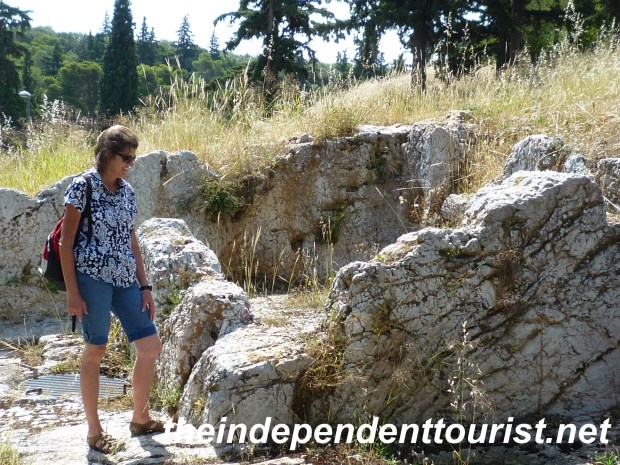
Robyn checking out the foundation of a home at the Pnyx.


Pnyx, Athens, Greece

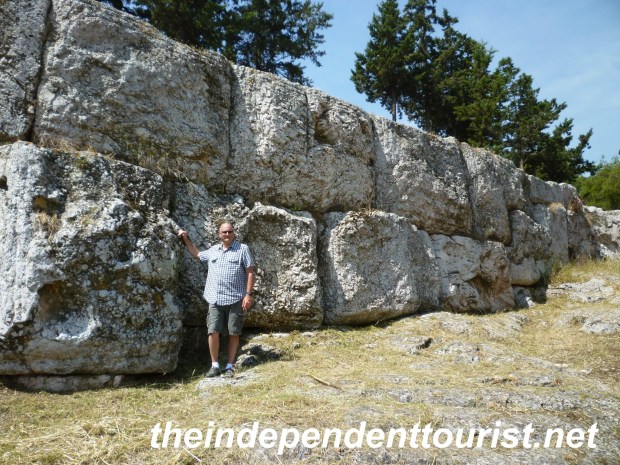
Huge stones of the retaining wall of the Pnyx – how did they position these huge blocks?

Kerameikos Cemetery

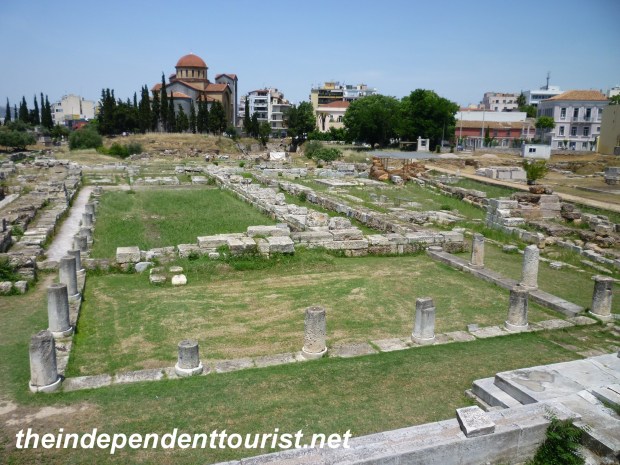
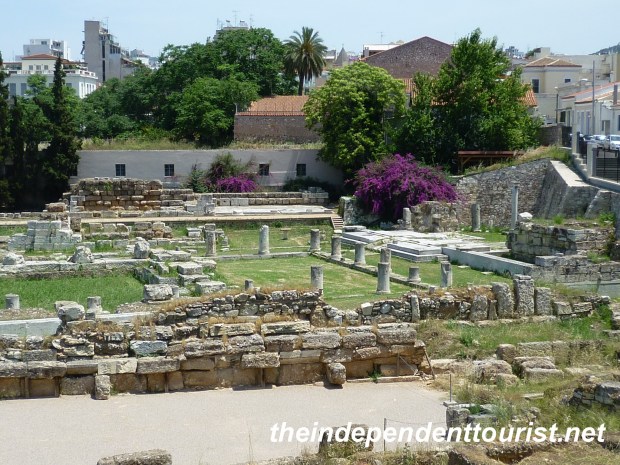
Further north of the Acropolis is the Kerameikos Cemetery.  It takes its name from the pottery (“ceramic”) made here during Athens Golden age. The cemetery is about a 10 minute walk beyond the Agora, and receives few visitors. This cemetery dates as far back as the Bronze Age (approximately 3500 – 1200 BC), and was the most important cemetery in ancient Athens. Excavations began in 1863.

Kerameikos Cemetery.

A view of the Kerameikos Cemetery.

Kerameikos Cemetery.

Another view of the Kerameikos Cemetery.

Reference:  Fodor’s Guide to Greece, 9th Edition, 2010

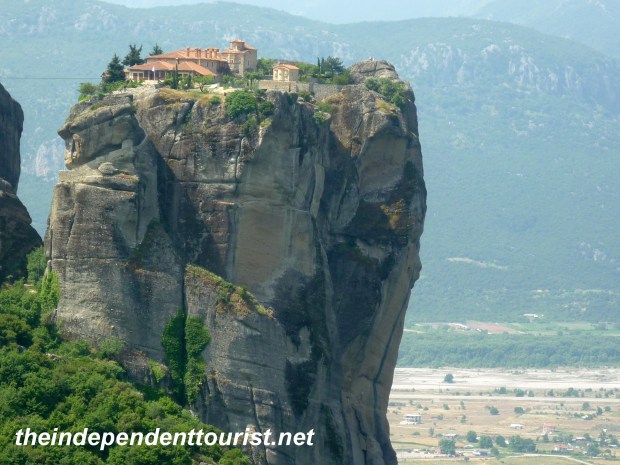
Holy Trinity Monastery, Meteora, Greece.

Meteora, Part II – For Your Eyes Only

My first introduction to Meteora was the 1981 James Bond film “For Your Eyes Only,” which starred Roger Moore and Carol Bouquet, with the theme song sung by Sheena Easton—a song that was stuck in my head during our visit! As with all James Bond movies, this movie covered a number of exotic locations, including Meteora, Greece.

I always find it fascinating how different many locations are from the supposed setting of the movie. The more one travels, the more one realizes how often different places (like Malta) are used as a filming location for movies set in Greece, Turkey or Israel, for example. In this case, Meteora was actually used for at least some of the scenes of For Your Eyes Only.

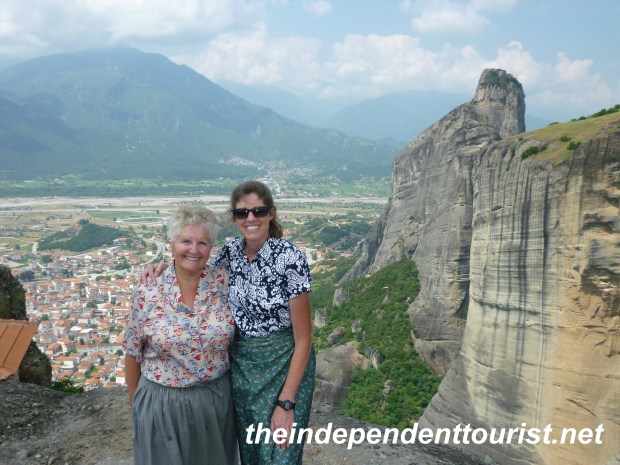
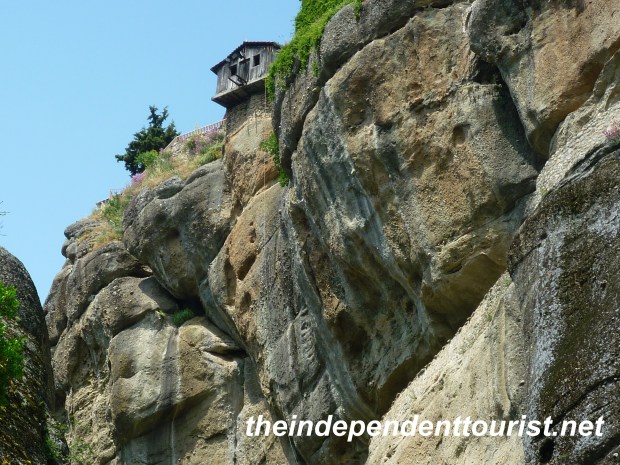
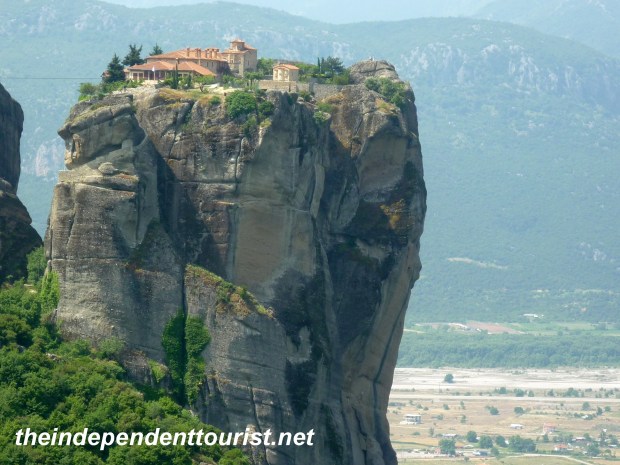
The part of the movie set in Meteora is where a young girl, a hopeful Olympic ice skater, is being sequestered by her coach and an evil sponsor, who has a small computer device that controls the U.S. nuclear submarine fleet’s missiles. The monastery used for the film is the Monastery of the Holy Trinity (in the movie called “St. Cyril’s”) which is the most isolated of those in Meteora, and perhaps the one with the most striking location, set on a huge standalone pinnacle, with an incredible view of the valley and city of Kalambaka below.

Holy Trinity Monastery, Meteora, Greece.

View of Kalambaka from Holy Trinity Monastery.

Holy Trinity Monastery, Meteora, Greece.

View of Holy Trinity Monastery

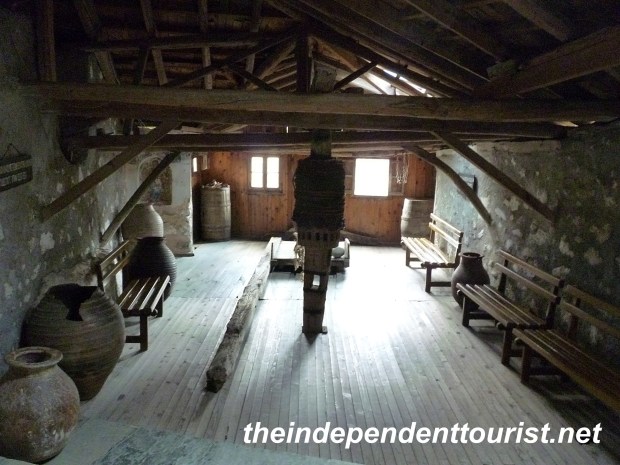
Several of the agents with Roger Moore reach the monastery via the windlass and basket, which is indeed high above the ground. In reality, the windlass was used to bring supplies and people up into the monastery in troubled times. In the movie, the windlass has an electric motor, which does not exist. Also in the movie, the windlass room is shown as an enclosed separate area, which is not accurate.

Holy Trinity Monastery, Meteora, Greece.

A long way up by basket….

Holy Trinity Monastery, Greece.

The windlass room (the winch in the center would be operated by hand in days past).

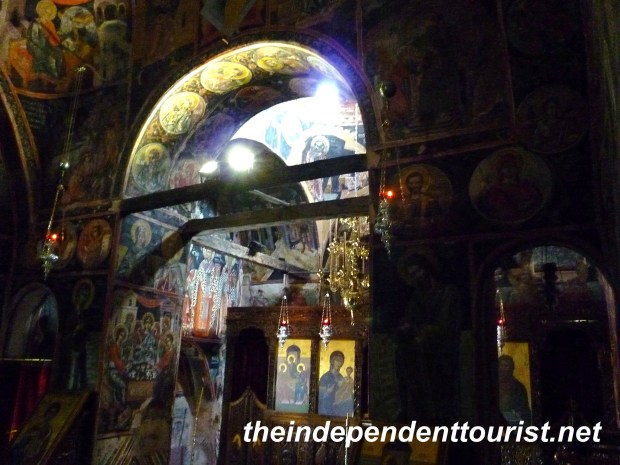
The chapel where the ice skater is held is much smaller in real life also.

Hol

The Chapel of Holy Trinity Monastery.

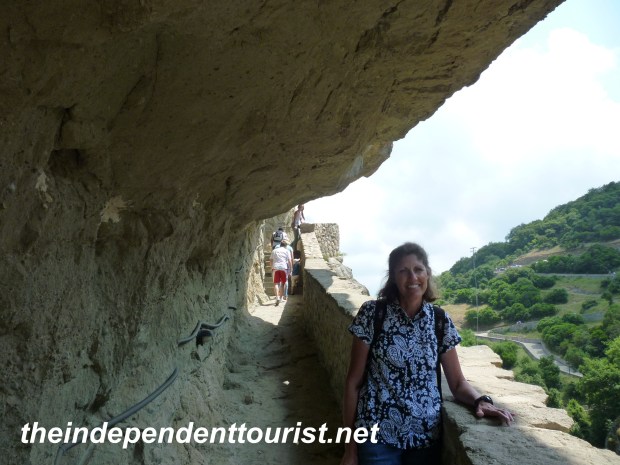
Unable to use the windlass, James Bond climbs the rock pinnacle using technical equipment, which is much more vertical than shown in several scenes in the movie. He would have found it easier to the use the long stairway, part of which is carved into the rock face.

Stairway to Holy Trinity Monastery, Meteora, Greece.

The carved stairway up to Holy Trinity Monastery.

It easy to see why Meteora was a setting for the film—it is truly unique, stunning and beautiful. For more information please see my post “Meteora—Nearly out of this World.”

Holy Trinity Monastery, Meteora, Greece.

Another view…

Monastery of St. Nicholas, Meteora, Greece.

Meteora – Nearly out of this World

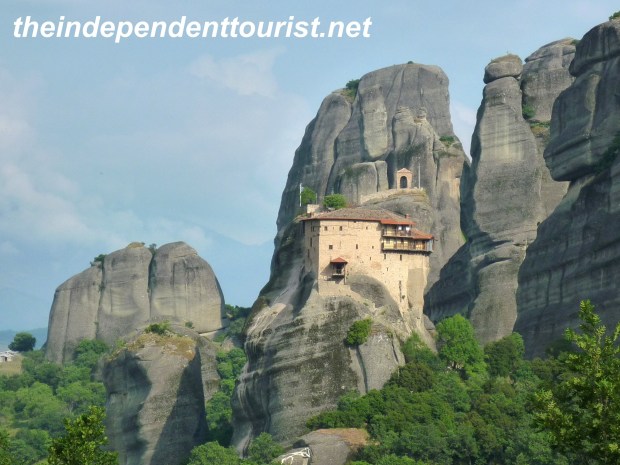
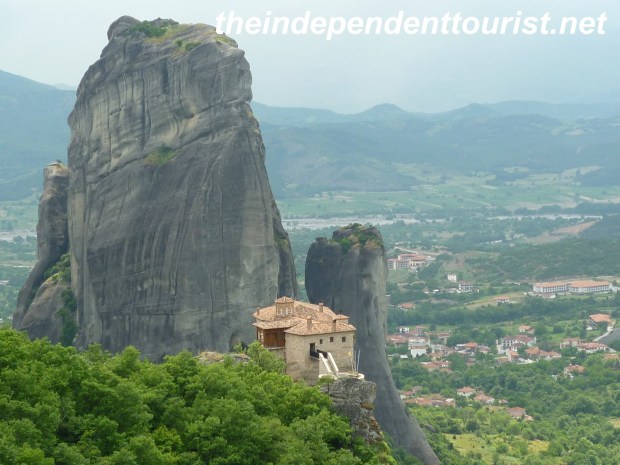
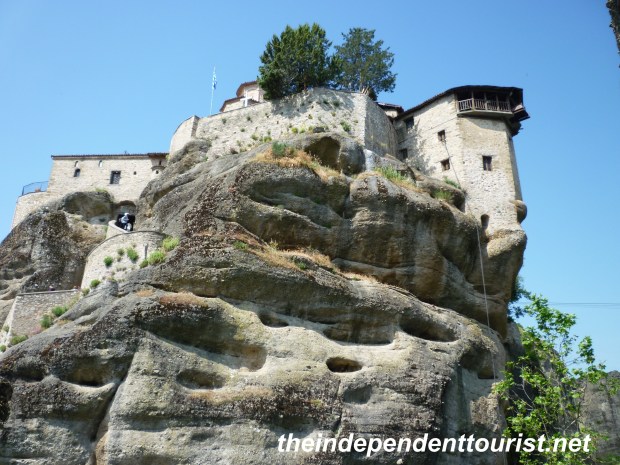
Roussanou Monastery, Meteora, Greece.

Monastery of Roussanou (aka Ayia Barabara–a Nunnery) in Meteora.

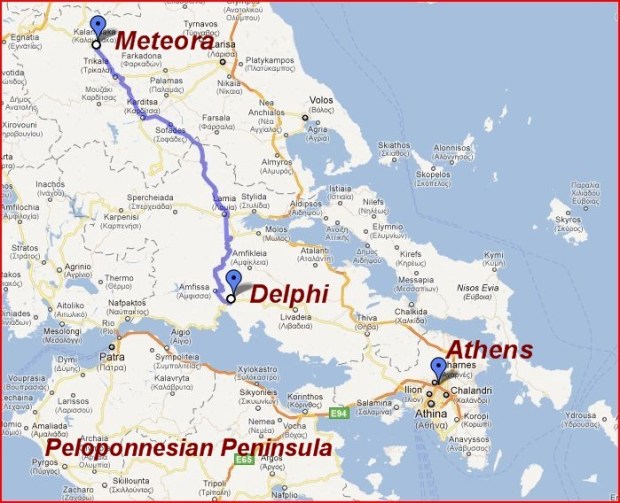
One of the great sights in the world, let alone Greece, is Meteora. The combination of stunning natural scenery—huge sandstone rock pinnacles–with medieval 14th century monasteries sitting on top of them is a sight I will not forget. About 5 hours by car northwest of Athens, Meteora (which is close to the fairly large town of Kalambaka) is well worth the drive, which we did by way of Delphi (about 3.5 hours from Delphi to Meteora). The word Meteora comes from a Greek word which means “to hang in midair” and after seeing this area, it’s easy to see how the word aptly describes the monasteries built on the tops and down the sides of the rocks.

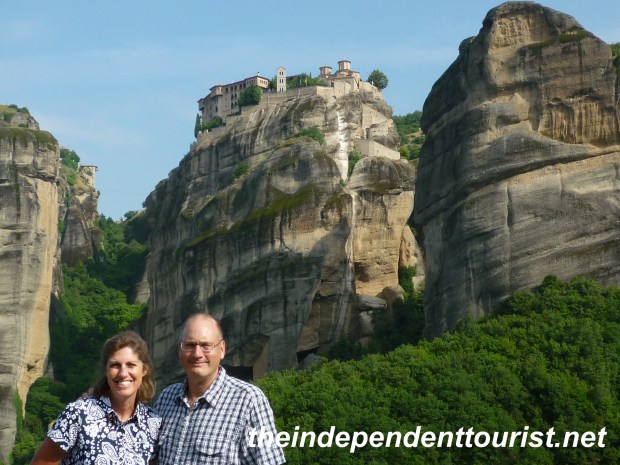
Holy Monastery of Varlaam, Meteora, Greece.

Holy Monastery of Varlaam (top-center).

Although the drive from Delphi to Meteora is initially through steep valleys and mountain passes, the mountains give way to a wide fertile valley (the Thessalian plain), which made me wonder what the setting would really be like. As we got close to Kalambaka, the rock pinnacles suddenly appeared in front of us as the gateway to Meteora and the mountains in the area.

Meteora Map, Greece.

Meteora is about 5 hours northwest of Athens and about 3 hours north of Delphi.

We visited in early June 2011 and the green vegetation of the valley floor and hills is a picturesque contrast with the dark sandstone rock pinnacles. The monasteries of Meteora blend with the surroundings and give the setting a surreal feeling.

Varlaam Monastery, Meteora, Greece.

Holy Monastery of Varlaam (looks like it could slide right off the rock!).

Monastery of St. Nicholas, Meteora, Greece.

Holy Monastery of St. Nicholas Anapafsas, the smallest monastery at Meteora,chapel built in 1388, 16th century frescoes

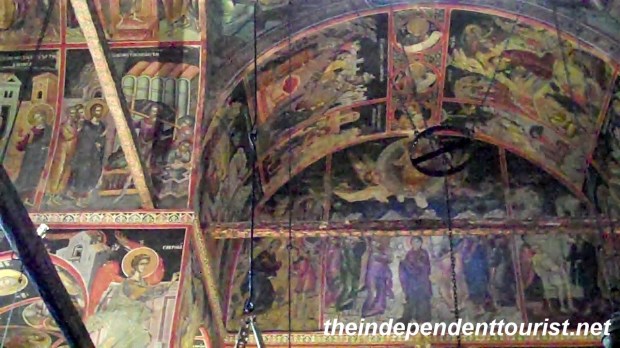
The rock pinnacles served as a retreat for religious orders during the Byzantine–Turkish wars of the 14thcentury. Within 200 years, 13 monasteries were established. Ruins of monasteries no longer standing can still be seen on some rock cliffs. The first monastery, Great Meteoron, was founded by St. Athanasios in the mid 1300’s; he also gave the name to the area, Meteora. Many of the monasteries have highly decorated chapels with frescoes of various biblical scenes. The taking of pictures is not officially allowed in the chapels, but I did take some non-flash video inside several of the chapels.

Great Meteron Monastery Interior, Meteora, Greece.

Frescoes in Great Meteron Monastery chapel.

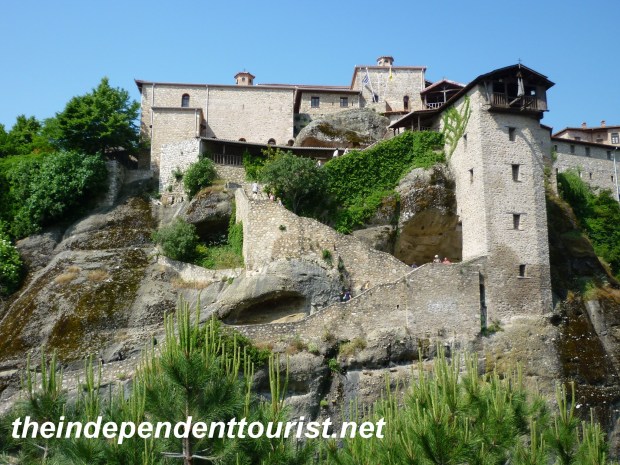
Great Meteron Monastery, Meteora, Greece.

View of the stairway and windlass tower of Great Meteron.

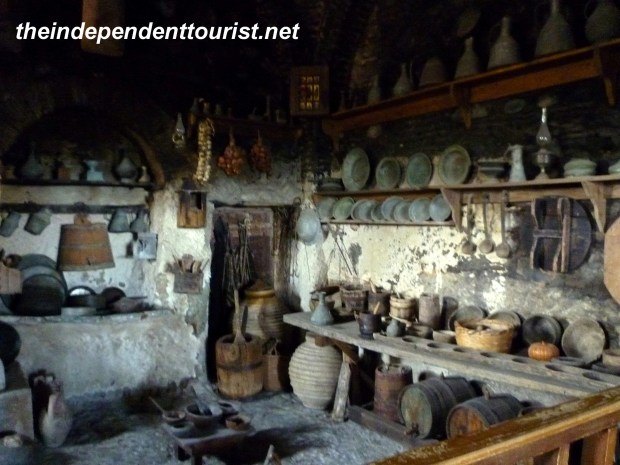
Kitchen, Great Meteron, Meteora, Greece.

The kitchen at Great Meteron (dated around 1557).

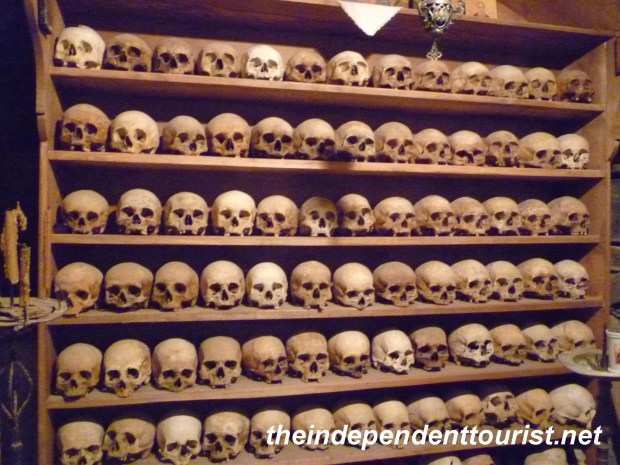
Great Meteron Ossuary, Meteora, Greece.

The Ossuary at Great Meteron.

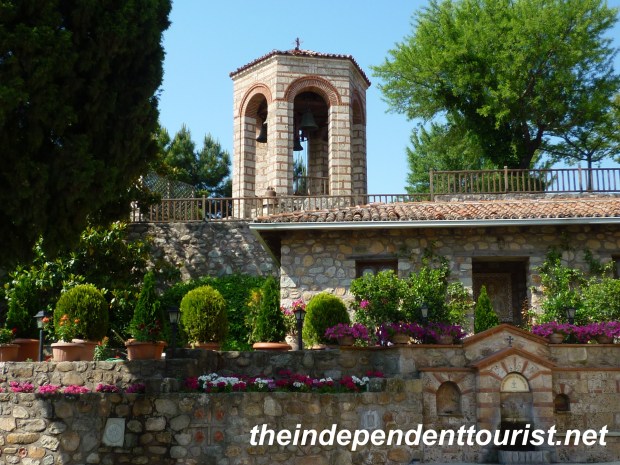
Great Meteron Monastery Courtyard, Meteora, Greece.

Neatly manicured courtyard at Grand Meteron Monastery.

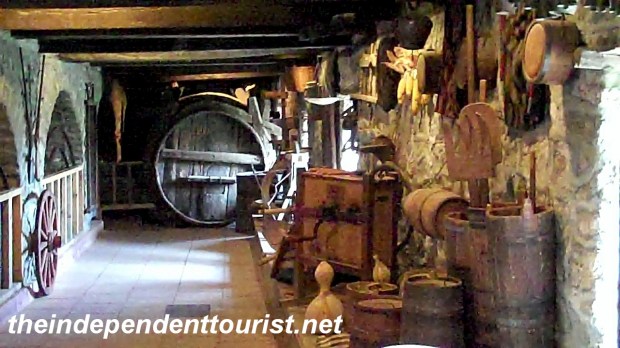
Storage room, Great Meteron Monastery, Meteora, Greece.

Tools storage room at Great Meteron Monastery.

Other features vary depending on the monastery—some have beautiful gardens and views. The largest, Great Meteoron, is almost a museum–with an old (dates from 1557) kitchen, Ossuary, and equipment storage rooms on display. The monasteries are in close proximity, but since some walking or hiking is required, at least 60-90 minutes per monastery is a good estimate.

Practical Information:

All monasteries can be visited in one full day, especially if you are staying in Kastraki or Kalambaka. We recommend Kastraki as a base, since it is so close to Meteora. A car is the easiest way to visit the monasteries, and allows you the freedom to arrive and leave at your leisure. There are also footpaths among the ravines, connecting the towns with the monasteries and if you have the time, they would be a lovely way to see the area.

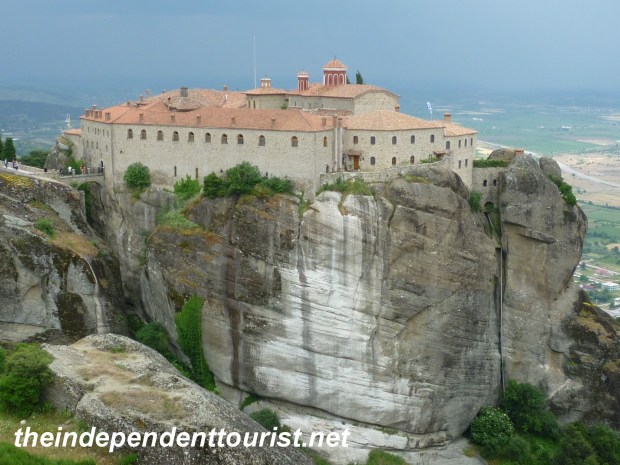
Holy Monastery of St. Stephen, Meteora, Greece.

Holy Monastery of St. Stephen is the most easily accessible.

Each monastery has a €2 entry fee per person.  Be prepared for stairs, and lots of them. One of the monasteries, St. Stephen’s, (actually a convent) is easily accessible from the car park and does not require stair climbing. Others require a hike down and up steep stairways. In the old days windlasses with nets or baskets were the only way up into the monasteries–ensuring safety during times of war.

St. Stephens Monastery, Meteora, Greece.

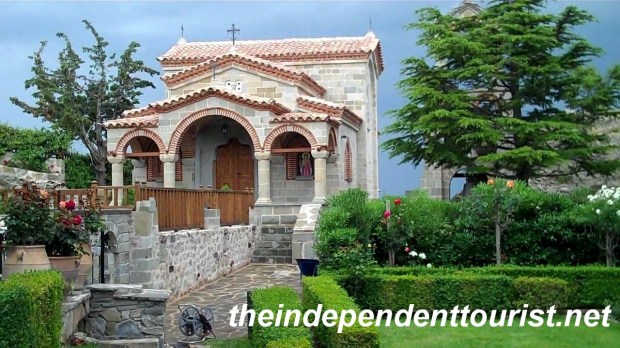
Small chapel at St. Stephen’s.

The busiest monasteries are Great Meteron (aka Moni Megalo Meteoro or Monastery of the Transfiguration), St. Stephen’s, and to a lesser extent Varlaam. Be prepared for tour buses at Great Meteron.  We had the Holy Trinity and St. Anapafsas monasteries to ourselves.

Holy Trinity Monastery, Meteora, Greece.

Holy Trinity Monastery of James Bond fame (see separate post).

As usual, getting to the monasteries earlier (or later) in the day will help in avoiding the crowds.  Check opening days and hours carefully. We visited on a Saturday and all of them were open, but some are closed other days of the week.  Most open at 9 am. There are small parking lots at each of the stairway trails to the monasteries.

Holy Monastery of St. Stephen_Meteora (4)

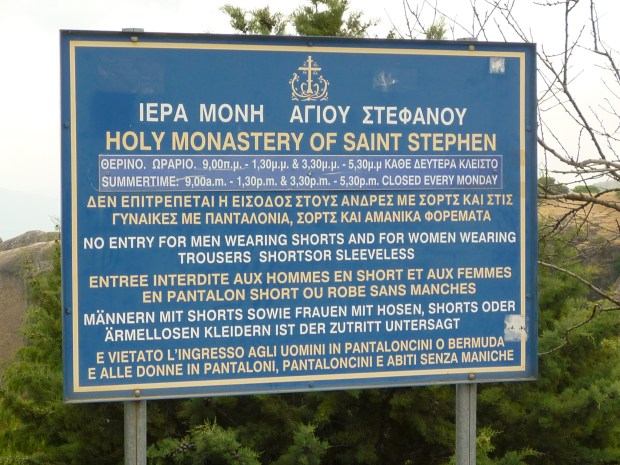
Sign warning of dress standards at St. Stephen’s monastery.

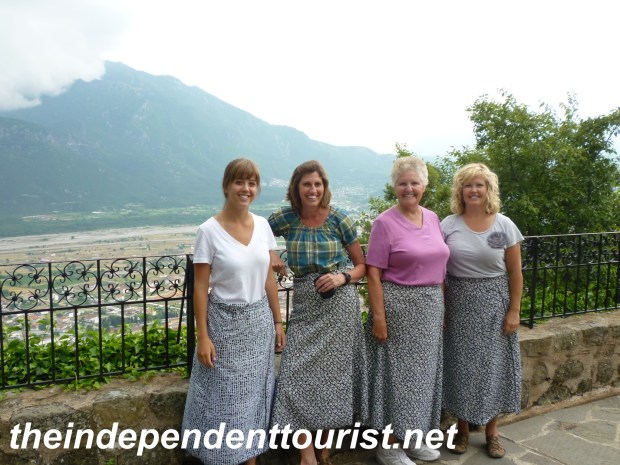
The monasteries are picky about dress.  They require women to wear dresses or skirts, although they have free wrap-around skirts available at the entrances. For men, shorts are not officially allowed, but we did see men in shorts at several of the monasteries. To avoid any hassle, men should wear long pants. Also, men, don’t try to wear the skirt wraps—the monks don’t appreciate this!

Holy Monastery of St. Stephen_Meteora (2)

Wearing skirts at St. Stephen’s.

We stayed in Kastraki, a small village just a couple of kilometers up the road from Kalambaka, it’s nestled among the rock pinnacles, with a great view. Our hotel, Doupiani House, was in a perfect location with many rooms having a balcony view of the rocks of Meteora.

Doupiani House hotel, Kastraki, Meteora, Greece.

View of Meteora from Doupiani House hotel, Kastraki.

References: Frommer’s Guide to Greece, Lonely Planet Greece Guidebook and information sign posts at Meteora.

Colonial Quito

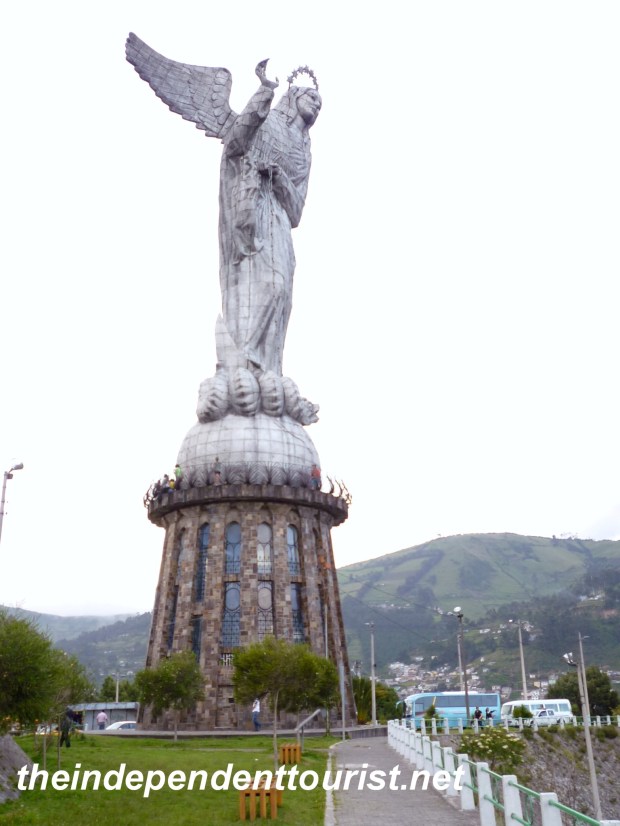
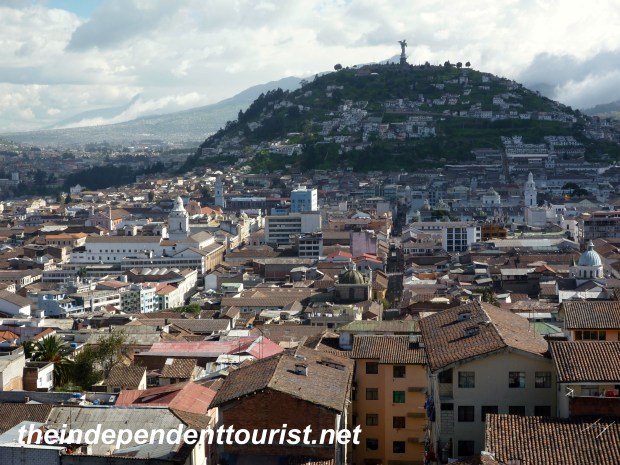
As I peered out the window of my plane as it flew into Quito, Ecuador from Lima, Peru I had the feeling that “this is paradise” –green cultivated fields, forests and striking mountains all around, compared with the desert landscape of Lima. Quito is a large city which runs north and south through large valleys and is surrounded by several volcanoes. The northern part of the city is the business center and more prosperous than the south. El Panecillo (‘little bread”) hill separates the two sections of the city and is crowned with a tall statue of the Virgin Mary, facing north, and immediately overlooking the colonial section. The residents of the south lament that the statue is facing north, and overlooking the blessed prosperity of this area while “turning her back on the south.” El Panecillo can be reached by taxi and has some snack and tourist trinket vendors. The views of Quito are excellent from this location.

El Panecillo_Quito_Ecuador

Virgin Mary Statue on top of El Panecillo.

Colonial District_Quito_Ecuador (2)

A view of colonial Quito with El Pancello in the distance.

Quito has the largest Spanish colonial district in South America. In the historical area are several beautiful 16th and 17thcentury Baroque churches, convents, old hospitals, and the presidential palace. According to my business partners this area is slowly being refurbished and brightened up, and has become much more vibrant than a few years ago. The cobblestone streets and colonial facades of the buildings give it an old world feel.

Colonial District_Quito_Ecuador (7)

Colonial Quito.

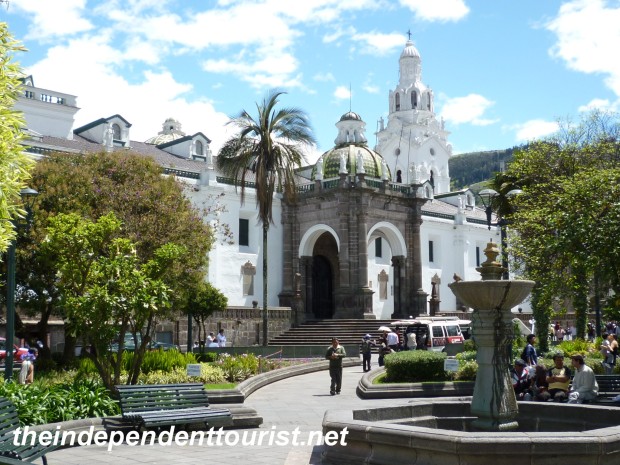
The dominant building in the colonial section is the presidential palace (Palacio del Gobierno), home of the current Ecuadorian president, Rafael Correa. The building is open for tours, but we did not visit. The palace faces the main square, Plaza Grande o de la Independencia. The Cathedral of Quito is also on this square.

Presidential Palace_Quito_Ecuador

Palacio del Gobierno (Presidential Palace).

Catedral Metropolitana de Quito_Ecuador

Catedral Metropolitana de Quito.

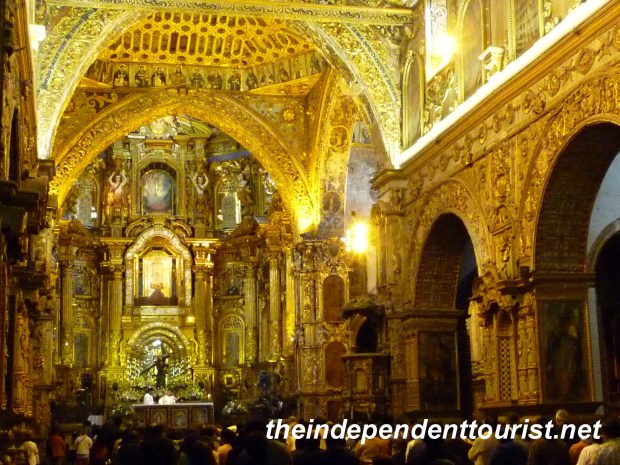
Just a couple blocks south and west of the presidential palace are the Church and Convent of San Francisco, dating from 1536, and the oldest existing church in Quito. The chapel is decorated in beautiful gold gilding.  The nearby cloisters have an interesting museum of religious art ($2 entry fee) from the 17th – 18th centuries and include paintings and drawings from Europe and many are scenes from the life of St. Frances (born 12thcentury). Also included are some alabaster figures made with real human skulls.

San Francisco Convent_Quito_Ecuador (3)

Church of San Francisco, Quito.

San Francisco Convent_Quito_Ecuador

Cloisters of San Francisco Convent, Quito.

Unfortunately no pictures are allowed. It was weird seeing these human-like figures of Christ and saints, knowing that they are partially human with the skulls providing the form for the heads!

On the east side of the street (Gabriel Garcia Moreno) in this area is the San Juan de Dios hospital which was founded in 1565 and was in operation until 1965-400 years! I am glad I live in the era of modern medicine.

Hospital San Juan de Dios_Quito_Ecuador

Hospital San Juan de Dios, Quito.

Hospital San Juan de Dios_Quito_Ecuador (3)

Hospital life in the 1500’s.

Just north of the colonial section is the gothic Basilica (Basilica del Voto Nacional), which looks like a medieval cathedral right out of France. It is actually just 130 years old and is still under construction (not unlike the cathedrals of Europe, some of which took centuries to complete). One can visit the roof for a small fee which provides great views of the city and colonial section, just a few blocks away. It was interesting to walk along the catwalk above the naïve and then climb the narrow ladders out to the rooftop access.

La Basilica de Quito_Ecuador (3)

The Gothic Basilica del Voto Nacional.

La Basilica de Quito_Ecuador

View from the rooftop of the Basilica.

Many of the buildings’ exteriors hide the beautiful courtyards contained within. We ate at a restaurant called Cialcote L, part of Cadena Hotelera which provides an example of the courtyard setting inside the building.

Cialcote L - Cadena Hotelera (2)

Cialcote L Restaurant courtyard.

Other information

Even though it’s almost on the equator, the year-round climate of Quito is very pleasant due to its elevation. Given more time, I would have liked to visit the nearby volcanoes. I stayed at the Radisson hotel, about halfway between the airport in the north part of the city and the colonial old town for about $90 per night. It’s a good hotel with large comfortable rooms and a very good restaurant. At the breakfast buffet, there was a serving container with popped popcorn…it was the first time I had seen popcorn served for breakfast!  I wish I would have had my camera handy! Taxis are pretty cheap in Quito, it was only $5 from my hotel to the colonial quarter, about a 15 minute ride, and $7 from the hotel to the airport, about 20 minutes away.

Safety

I was cautioned to pay attention to my small daypack which I carry when touring, which I did, but I never felt threatened or nervous in the colonial Quito, especially in the daytime. There were a few other tourists milling about also, but not many. I took several walks around the hotel at night and felt very safe, that part of the city is modern and feels about like any other large city. As always, pay attention to your surroundings and carry as little cash and valuables as possible.

Mitad del Mundo, Ecuador – The Middle of the World (Almost)

Location of Mitad del Mundo, near Quito, Ecuador

During a May 2011 business trip to Quito, Ecuador I visited Mitad del Mundo on a Saturday morning. This spot marks the location of the equator—half way between the north and south poles. Mitad del Mundo is about 45 minutes by car north of Quito. I hired the car and driver from the Radisson Hotel (where I was staying) for $70, which also included a visit to the old colonial part of Quito. A local bus would have been much cheaper, but I didn’t have the time. I enjoyed the drive out to the monument—through a valley with farms, small towns and many nice townhouses and homes.

Mitad del Mundo monument

The monument was built during the years 1979 to 1982. I’ve heard (according to those with the latest GPS tools), that the exact location of the equator is a few hundred yards to the north, but given the earth’s equatorial circumference of about 24,901 miles, the variance is less than .0006%—not enough for me to lose any sleep.

The equatorial line - right side is nothern hemisphere, left side is southern hemisphere

The site is basically a park that has a large stone monument noting the latitude and the hemispheres. The site entry cost was $2 (Ecuador uses the U.S. dollar) and there is another charge of $3 to go up to the observation platform on the monument. There are several little shops and restaurants, and a museum (where the equator actually is), so one could make a day of the visit. I got there about 10 am and shops were just opening for the day.

Shops at Mitad del Mundo

Additional shops at Mitad del Mundo

My driver asked if I also wanted to visit a nearby volcano, Puluhahua, to which I agreed. Ecuador has61 volcanoes (with 15 more on the Galapagos Islands), several of which surround Quito. The short drive up to the old crater from Mitad del Mundo was a bit like going into the alpine tundra in my home state of Colorado. If I hadn’t learned that Pululahua was a volcanic crater (3,356 meters elevation), I would have thought it was just a high small valley surrounded by peaks, but as we learned a little more from a local guide, I could more clearly see the crater, which last erupted in 500 BC.

Farming in Pululahua crater

On the way down from the crater, I caught sight of my first roasted cuy (guinea pig) by the side of the road—as tempting as it was, no one was there to sell the treat (darn), and I wasn’t quite ready for lunch.

Roasting cuy...yum!

I enjoyed this little trip, just to get into the countryside of this beautiful country for a few hours.

Temple of Poseidon, Greece.

Day Trips from Athens – Temple of Poseidon

Temple of Poseidon, Greece Map.

The Temple of Poseidon is about an hour south of Athens by car.

South of Athens, at the end of a peninsula, lies the town of Sounion, and the majestic ruins of the Temple of Poseidon on a cliff overlooking the sea.  It’s about a one hour drive from the city and about a half hour from the Athens airport.

The west coast of the peninsula is a long string of beautiful coves and beaches. The closer to Athens one gets the busier the beach, especially on weekends. We were there on a Sunday in June, and the northern beaches were packed, but those nearer to Sounion were pretty quiet.

Sounion, Greece

The bay and beach of Sounion

Beach, Sounion, Greece

One of the many coves and beaches near Sounion

The temple was built between 444 and 400 BC.  It is quite well-preserved with 15 original columns still standing. Anciently, to sailors returning to Athens, the Temple of Poseidon was a landmark that indicated they were almost home.

Temple of Poseidon, Greece

Temple of Poseidon

Temple of Poseidon, Greece.

View of Temple of Poseidon from the stoa.

Temple of Poseidon, Greece

The original Doric columns of the Temple of Poseidon.

The best way to visit this area is with a rental car. If you are picking up a rental car at the Athens airport or dropping one off, and have a few hours, take the time to visit this area. We’re glad we did.